EP4395209A1 - Data transmission control method and apparatus, computer-readable storage medium, computer device, and computer program product - Google Patents
Data transmission control method and apparatus, computer-readable storage medium, computer device, and computer program product Download PDFInfo
- Publication number
- EP4395209A1 EP4395209A1 EP23838559.5A EP23838559A EP4395209A1 EP 4395209 A1 EP4395209 A1 EP 4395209A1 EP 23838559 A EP23838559 A EP 23838559A EP 4395209 A1 EP4395209 A1 EP 4395209A1
- Authority
- EP
- European Patent Office
- Prior art keywords
- data transmission
- data
- network performance
- group
- object group
- Prior art date
- Legal status (The legal status is an assumption and is not a legal conclusion. Google has not performed a legal analysis and makes no representation as to the accuracy of the status listed.)
- Pending
Links
Images





Classifications
-
- H—ELECTRICITY
- H04—ELECTRIC COMMUNICATION TECHNIQUE
- H04L—TRANSMISSION OF DIGITAL INFORMATION, e.g. TELEGRAPHIC COMMUNICATION
- H04L47/00—Traffic control in data switching networks
- H04L47/10—Flow control; Congestion control
-
- H—ELECTRICITY
- H04—ELECTRIC COMMUNICATION TECHNIQUE
- H04L—TRANSMISSION OF DIGITAL INFORMATION, e.g. TELEGRAPHIC COMMUNICATION
- H04L1/00—Arrangements for detecting or preventing errors in the information received
- H04L1/0001—Systems modifying transmission characteristics according to link quality, e.g. power backoff
-
- H—ELECTRICITY
- H04—ELECTRIC COMMUNICATION TECHNIQUE
- H04L—TRANSMISSION OF DIGITAL INFORMATION, e.g. TELEGRAPHIC COMMUNICATION
- H04L12/00—Data switching networks
- H04L12/02—Details
- H04L12/16—Arrangements for providing special services to substations
- H04L12/18—Arrangements for providing special services to substations for broadcast or conference, e.g. multicast
-
- H—ELECTRICITY
- H04—ELECTRIC COMMUNICATION TECHNIQUE
- H04L—TRANSMISSION OF DIGITAL INFORMATION, e.g. TELEGRAPHIC COMMUNICATION
- H04L41/00—Arrangements for maintenance, administration or management of data switching networks, e.g. of packet switching networks
- H04L41/08—Configuration management of networks or network elements
- H04L41/0893—Assignment of logical groups to network elements
-
- H—ELECTRICITY
- H04—ELECTRIC COMMUNICATION TECHNIQUE
- H04L—TRANSMISSION OF DIGITAL INFORMATION, e.g. TELEGRAPHIC COMMUNICATION
- H04L41/00—Arrangements for maintenance, administration or management of data switching networks, e.g. of packet switching networks
- H04L41/14—Network analysis or design
- H04L41/145—Network analysis or design involving simulating, designing, planning or modelling of a network
-
- H—ELECTRICITY
- H04—ELECTRIC COMMUNICATION TECHNIQUE
- H04L—TRANSMISSION OF DIGITAL INFORMATION, e.g. TELEGRAPHIC COMMUNICATION
- H04L41/00—Arrangements for maintenance, administration or management of data switching networks, e.g. of packet switching networks
- H04L41/16—Arrangements for maintenance, administration or management of data switching networks, e.g. of packet switching networks using machine learning or artificial intelligence
-
- H—ELECTRICITY
- H04—ELECTRIC COMMUNICATION TECHNIQUE
- H04L—TRANSMISSION OF DIGITAL INFORMATION, e.g. TELEGRAPHIC COMMUNICATION
- H04L43/00—Arrangements for monitoring or testing data switching networks
- H04L43/04—Processing captured monitoring data, e.g. for logfile generation
-
- H—ELECTRICITY
- H04—ELECTRIC COMMUNICATION TECHNIQUE
- H04L—TRANSMISSION OF DIGITAL INFORMATION, e.g. TELEGRAPHIC COMMUNICATION
- H04L43/00—Arrangements for monitoring or testing data switching networks
- H04L43/08—Monitoring or testing based on specific metrics, e.g. QoS, energy consumption or environmental parameters
-
- H—ELECTRICITY
- H04—ELECTRIC COMMUNICATION TECHNIQUE
- H04L—TRANSMISSION OF DIGITAL INFORMATION, e.g. TELEGRAPHIC COMMUNICATION
- H04L41/00—Arrangements for maintenance, administration or management of data switching networks, e.g. of packet switching networks
- H04L41/14—Network analysis or design
- H04L41/142—Network analysis or design using statistical or mathematical methods
-
- H—ELECTRICITY
- H04—ELECTRIC COMMUNICATION TECHNIQUE
- H04L—TRANSMISSION OF DIGITAL INFORMATION, e.g. TELEGRAPHIC COMMUNICATION
- H04L41/00—Arrangements for maintenance, administration or management of data switching networks, e.g. of packet switching networks
- H04L41/14—Network analysis or design
- H04L41/147—Network analysis or design for predicting network behaviour
-
- H—ELECTRICITY
- H04—ELECTRIC COMMUNICATION TECHNIQUE
- H04L—TRANSMISSION OF DIGITAL INFORMATION, e.g. TELEGRAPHIC COMMUNICATION
- H04L43/00—Arrangements for monitoring or testing data switching networks
- H04L43/08—Monitoring or testing based on specific metrics, e.g. QoS, energy consumption or environmental parameters
- H04L43/0852—Delays
- H04L43/0864—Round trip delays
-
- H—ELECTRICITY
- H04—ELECTRIC COMMUNICATION TECHNIQUE
- H04L—TRANSMISSION OF DIGITAL INFORMATION, e.g. TELEGRAPHIC COMMUNICATION
- H04L43/00—Arrangements for monitoring or testing data switching networks
- H04L43/08—Monitoring or testing based on specific metrics, e.g. QoS, energy consumption or environmental parameters
- H04L43/0876—Network utilisation, e.g. volume of load or congestion level
- H04L43/0888—Throughput
-
- H—ELECTRICITY
- H04—ELECTRIC COMMUNICATION TECHNIQUE
- H04L—TRANSMISSION OF DIGITAL INFORMATION, e.g. TELEGRAPHIC COMMUNICATION
- H04L47/00—Traffic control in data switching networks
- H04L47/10—Flow control; Congestion control
- H04L47/28—Flow control; Congestion control in relation to timing considerations
- H04L47/283—Flow control; Congestion control in relation to timing considerations in response to processing delays, e.g. caused by jitter or round trip time [RTT]
-
- H—ELECTRICITY
- H04—ELECTRIC COMMUNICATION TECHNIQUE
- H04L—TRANSMISSION OF DIGITAL INFORMATION, e.g. TELEGRAPHIC COMMUNICATION
- H04L51/00—User-to-user messaging in packet-switching networks, transmitted according to store-and-forward or real-time protocols, e.g. e-mail
- H04L51/52—User-to-user messaging in packet-switching networks, transmitted according to store-and-forward or real-time protocols, e.g. e-mail for supporting social networking services
Definitions
- a person skilled in the art proposes a series of congestion control technologies, for example, a cubic binary increase congestion control (CUBIC) algorithm based on packet loss information, and a network congestion control algorithm based on bandwidth detection (BBR, Bottleneck Bandwidth and Round-trip propagation time (RTT)).
- CBR cubic binary increase congestion control
- BBR Bottleneck Bandwidth
- RTT Round-trip propagation time
- the congestion control algorithms in the related art are all control algorithms that are set based on expert experience and conform to fixed rules, which are difficult to adapt to changing network status and network services. Therefore, in the face of some new scenarios, the current congestion control algorithms cannot adapt to these new scenarios, which leads to degraded data transmission performance of a network and unstable network performance.
- An embodiment of the present disclosure provides a data transmission control method.
- the method is performed by a computer device and includes: obtaining historical network performance data of each of a plurality of data transmission objects, and calculating group network performance data of each of a plurality of object groups based on the historical network performance data, the plurality of object groups being obtained by dividing the plurality of data transmission objects; performing weighted calculation on the group network performance data of each object group, to obtain comprehensive network performance data of the plurality of data transmission objects; inputting the comprehensive network performance data and the group network performance data of each object group into a trained reinforcement learning (RL) model, to obtain a data transmission quality index of each object group; determining a data transmission parameter of the corresponding object group based on the data transmission quality index and the group network performance data of each object group; and determining, in response to receiving a data transmission request transmitted by any target data transmission object among the plurality of data transmission objects, a target data transmission parameter based on an object group to which the target data transmission object belongs, and controlling a data transmission process corresponding
- An embodiment of the present disclosure provides a data transmission control apparatus, including: an obtaining unit, configured to obtain historical network performance data of each of a plurality of data transmission objects, and calculate group network performance data of each of a plurality of object groups based on the historical network performance data, the plurality of object groups being obtained by dividing the plurality of data transmission objects; a first calculation unit, configured to perform weighted calculation on the group network performance data of each object group, to obtain comprehensive network performance data of the plurality of data transmission objects; a learning unit, configured to input the comprehensive network performance data and the group network performance data of each object group into a trained RL model, to obtain a data transmission quality index of each object group; a second calculation unit, configured to determine a data transmission parameter of the corresponding object group based on the data transmission quality index and the group network performance data of each object group; and a control unit, configured to determine, in response to receiving a data transmission request transmitted by any target data transmission object among the plurality of data transmission objects, a target data transmission parameter based on an object group to
- An embodiment of the present disclosure provides a computer-readable storage medium, having a plurality of executable instructions stored therein, the executable instructions, when executed by a processor, implementing the foregoing data transmission control method.
- An embodiment of the present disclosure provides a computer device, including a memory, a processor, and an executable instruction stored in the memory and executable on the processor, the processor implementing the foregoing data transmission control method when executing the executable instruction.
- An embodiment of the present disclosure provides a computer program product or a computer program, including an executable instruction, the executable instruction being stored in a computer-readable storage medium, a processor of a computer device implementing the foregoing data transmission control method when reading the executable instruction from the computer-readable storage medium and executing the executable instruction.
- the historical network performance data of each of a plurality of data transmission objects is obtained, and the group network performance data of each of the plurality of object groups is calculated based on the historical network performance data, the object group being a group obtained by dividing the plurality of data transmission objects. Then weighted calculation is performed on the group network performance data of each object group to obtain comprehensive network performance data.
- a trained RL model is invoked for prediction based on the comprehensive network performance data and the group network performance data of each object group, to obtain a data transmission quality index of each object group. Then the data transmission parameter of each object group is determined based on the data transmission quality index and the group network performance data.
- a period of time T 15 min.
- the period of time includes 100 sessions of an IP address of 192.168.0.0/24, 200 sessions of an IP address of 192.168.1.0/24, 200 sessions of an IP address of 192.168.2.0/24, 50 sessions of an IP address of 192.168.3.0/24, and 50 sessions of an IP address of 192.168.4.0/24. Therefore, a quantity of sessions in a UG 1 (UG_1) is 500, and a quantity of sessions in a UG 2 (UG_2) is 100.
- weighted calculation may be performed on the QoS data of the UGs by using an intelligent learning module in the server.
- the intelligent learning module may not only be located in the server, but also be located on a gateway or on a remote dedicated server.
- the intelligent learning module includes an RL model.
- the RL model may implement initialization parameter control for traffic transmission of a plurality of UGs. To be specific, the RL model may set congestion control parameters for traffic of the plurality of UGs.
- the server weights the QoS information based on the UG, where QoS data of a UG i is denoted as QoS_i, and a weight of the QoS_i is denoted as w_i.
- QoS_i QoS data of a UG i
- w_i a weight of the QoS_i
- the foregoing problems can be better resolved.
- Advantages of the conventional congestion control are retained by using the network measurement technology.
- a new congestion control parameter is set based on the conventional congestion control algorithm, which avoids a convergence challenge faced by a machine learning-based congestion control algorithm in the related art, and can ensure stability of the proposed adaptive congestion control method to some extent.
- the data transmission objects are divided into groups, and then the historical network performance data of each object group in a recent period is used to perform RL, to obtain the most suitable network data transmission parameter for each object group at a current time.
- fine-grained control may be performed on the network data transmission parameter, so as to match the most suitable network data transmission parameter for each data transmission object at the current time, which may greatly improve the data transmission performance of the data transmission object.
- the data transmission objects are divided into groups, and then the historical network performance data of each object group in a recent period is used to perform RL, to obtain the most suitable network data transmission parameter for each object group at a current time.
- fine-grained control may be performed on the network data transmission parameter, so as to match the most suitable network data transmission parameter for each data transmission object at the current time, which may greatly improve the data transmission performance of the data transmission object.
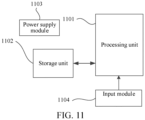
- FIG. 11 is a schematic structural diagram of a computer device according to an embodiment of the present disclosure.
- the computer device may include components such as a processing unit 1101 with one or more processing cores, a storage unit 1102 with one or more storage media, a power supply module 1103, and an input module 1104.
- a structure of the computer device shown in FIG. 11 does not constitute a limitation on the computer device, and may include more or fewer components than those shown in the figure, or some components may be combined, or different component deployment may be used.
- the processing unit 1101 is a control center of the computer device, which connects various parts of the entire computer device by using various interfaces and lines, and executes various functions of the computer device and performs data processing by running or executing at least one of a software program and/or modules stored in the storage unit 1102 and calling data stored in the storage unit 1102.
- the processing unit 1101 may include one or more processing cores.
- the processing unit 1101 may integrate an application processor and a modem.
- the application processor mainly processes an operating system, an object interface, an application program, and the like.
- the modem mainly processes wireless communication. It may be understood that the foregoing modem may not be integrated into the processing unit 1101.
- the storage unit 1102 may be configured to store a software program and a module, and the processing unit 1101 executes various function applications and performs data processing by running the software program and the module stored in the storage unit 1102.
- the storage unit 1102 may mainly include a program storage area and a data storage area.
- the program storage area may store an operating system, an application program required by at least one function (for example, a sound playback function, an image playback function, and web page access), and the like.
- the data storage area may store data created based on use of the computer device, and the like.
- the storage unit 1102 may include a high speed random access memory, and may further include a non-volatile memory, such as at least one magnetic disk storage device, a flash memory device, or another non-volatile solid state storage device.
- the storage unit 1102 may further include a memory controller to provide access to the storage unit 1102 by the processing unit 1101.
- the computer device further includes a power supply module 1103 that supplies power to each component.
- the power supply module 1103 may be logically connected to the processing unit 1101 by using a power management system, thereby implementing functions such as management of charging and discharging and power management through the power management system.
- the power supply module 1103 may further include any component such as one or more direct current or alternating current power supplies, a recharging system, a power failure detection circuit, a power converter or inverter, and a power state indicator.
- the processing unit 1101 runs the application programs stored in the storage unit 1102, to implement various functions, for example, implement the following functions: obtaining historical network performance data of each of a plurality of data transmission objects, and calculating group network performance data of each of a plurality of object groups based on the historical network performance data; performing weighted calculation on the group network performance data of the object groups, to obtain comprehensive network performance data; inputting the comprehensive network performance data and the group network performance data of each object group into a trained RL model, to obtain a data transmission quality index of each object group; determining a data transmission parameter of the corresponding object group based on the data transmission quality index and the group network performance data of each object group; and determining, in response to receiving a data transmission request transmitted by any target data transmission object among the plurality of data transmission objects, a target data transmission parameter based on an object group to which the target data transmission object belongs, and controlling a data transmission process based on the target data transmission parameter.
- an embodiment of the present disclosure provides a computer-readable storage medium, having a plurality of executable instructions stored therein.
- the executable instructions can be loaded by a processor to perform the operations in any one of the methods provided in the embodiments of the present disclosure.
- the executable instructions may perform the following operations: obtaining historical network performance data of each of a plurality of data transmission objects, and calculating group network performance data of each of a plurality of object groups based on the historical network performance data; performing weighted calculation on the group network performance data of the object groups, to obtain comprehensive network performance data; inputting the comprehensive network performance data and the group network performance data of each object group into a trained RL model, to obtain a data transmission quality index of each object group; determining a data transmission parameter of the corresponding object group based on the data transmission quality index and the group network performance data of each object group; and determining, in response to receiving a data transmission request transmitted by any target data transmission object among the plurality of data transmission objects, a target data transmission parameter based on an object group to which
- the computer-readable storage medium may include a read-only memory (ROM), a random access memory (RAM), a magnetic disk, an optical disc, or the like.
- the executable instructions stored in the computer-readable storage medium may perform the operations in any one of the methods in the embodiments of the present disclosure, the executable instructions may also implement beneficial effects that can be implemented by using any one of the methods provided in the embodiments of the present disclosure. For details, reference is made to the foregoing embodiments, and the details are not described herein again.
Landscapes
- Engineering & Computer Science (AREA)
- Signal Processing (AREA)
- Computer Networks & Wireless Communication (AREA)
- Databases & Information Systems (AREA)
- Artificial Intelligence (AREA)
- Computer Vision & Pattern Recognition (AREA)
- Environmental & Geological Engineering (AREA)
- Evolutionary Computation (AREA)
- Medical Informatics (AREA)
- Software Systems (AREA)
- Quality & Reliability (AREA)
- Data Mining & Analysis (AREA)
- Data Exchanges In Wide-Area Networks (AREA)
Abstract
Description
- This application is proposed based on
Chinese Patent Application No. 202210835843.8, filed on July 15, 2022 - The present disclosure relates to the field of communications technologies, and relates to, but is not limited to, a data transmission control method and apparatus, a computer-readable storage medium, a computer device, and a computer program product.
- In recent years, with the continuous rise of various short video services, audio and video traffic has shown explosive growth. A contradiction between ever-increasing user experience demands of a client and lagging network transmission performance has become a main contradiction that needs to be resolved urgently. Based on the above, a person skilled in the art proposes a series of congestion control technologies, for example, a cubic binary increase congestion control (CUBIC) algorithm based on packet loss information, and a network congestion control algorithm based on bandwidth detection (BBR, Bottleneck Bandwidth and Round-trip propagation time (RTT)). The foregoing congestion control algorithms may improve quality of network transmission to some extent.
- However, the congestion control algorithms in the related art are all control algorithms that are set based on expert experience and conform to fixed rules, which are difficult to adapt to changing network status and network services. Therefore, in the face of some new scenarios, the current congestion control algorithms cannot adapt to these new scenarios, which leads to degraded data transmission performance of a network and unstable network performance.
- Embodiments of the present disclosure provide a data transmission control method and apparatus, a computer-readable storage medium, a computer device, and a computer program product, which can improve data transmission performance of a network and stability of network performance.
- An embodiment of the present disclosure provides a data transmission control method. The method is performed by a computer device and includes: obtaining historical network performance data of each of a plurality of data transmission objects, and calculating group network performance data of each of a plurality of object groups based on the historical network performance data, the plurality of object groups being obtained by dividing the plurality of data transmission objects; performing weighted calculation on the group network performance data of each object group, to obtain comprehensive network performance data of the plurality of data transmission objects; inputting the comprehensive network performance data and the group network performance data of each object group into a trained reinforcement learning (RL) model, to obtain a data transmission quality index of each object group; determining a data transmission parameter of the corresponding object group based on the data transmission quality index and the group network performance data of each object group; and determining, in response to receiving a data transmission request transmitted by any target data transmission object among the plurality of data transmission objects, a target data transmission parameter based on an object group to which the target data transmission object belongs, and controlling a data transmission process corresponding to the data transmission request based on the target data transmission parameter.
- An embodiment of the present disclosure provides a data transmission control apparatus, including: an obtaining unit, configured to obtain historical network performance data of each of a plurality of data transmission objects, and calculate group network performance data of each of a plurality of object groups based on the historical network performance data, the plurality of object groups being obtained by dividing the plurality of data transmission objects; a first calculation unit, configured to perform weighted calculation on the group network performance data of each object group, to obtain comprehensive network performance data of the plurality of data transmission objects; a learning unit, configured to input the comprehensive network performance data and the group network performance data of each object group into a trained RL model, to obtain a data transmission quality index of each object group; a second calculation unit, configured to determine a data transmission parameter of the corresponding object group based on the data transmission quality index and the group network performance data of each object group; and a control unit, configured to determine, in response to receiving a data transmission request transmitted by any target data transmission object among the plurality of data transmission objects, a target data transmission parameter based on an object group to which the target data transmission object belongs, and control a data transmission process corresponding to the data transmission request based on the target data transmission parameter.
- An embodiment of the present disclosure provides a computer-readable storage medium, having a plurality of executable instructions stored therein, the executable instructions, when executed by a processor, implementing the foregoing data transmission control method.
- An embodiment of the present disclosure provides a computer device, including a memory, a processor, and an executable instruction stored in the memory and executable on the processor, the processor implementing the foregoing data transmission control method when executing the executable instruction.
- An embodiment of the present disclosure provides a computer program product or a computer program, including an executable instruction, the executable instruction being stored in a computer-readable storage medium, a processor of a computer device implementing the foregoing data transmission control method when reading the executable instruction from the computer-readable storage medium and executing the executable instruction.
- In the embodiments of the present disclosure, the historical network performance data of each of a plurality of data transmission objects is obtained, and the group network performance data of each of the plurality of object groups is calculated based on the historical network performance data, the object group being a group obtained by dividing the plurality of data transmission objects. Then weighted calculation is performed on the group network performance data of each object group to obtain comprehensive network performance data. A trained RL model is invoked for prediction based on the comprehensive network performance data and the group network performance data of each object group, to obtain a data transmission quality index of each object group. Then the data transmission parameter of each object group is determined based on the data transmission quality index and the group network performance data. Finally, when a data transmission request transmitted by any target data transmission object among the plurality of data transmission objects is received, a target data transmission parameter is determined based on an object group to which the target data transmission object belongs, and a data transmission process is controlled based on the target data transmission parameter. Therefore, according to the data transmission control method provided in the present disclosure, the data transmission objects are divided into groups, and then the historical network performance data of each object group in a recent period is used to perform RL, to obtain the most suitable network data transmission parameter for each object group at a current time. In this way, through the process of dividing the plurality of data transmission objects into groups and performing RL on the group network performance data of each object group, more accurate control of the data transmission parameter may be implemented, and the most suitable data transmission parameter may be matched for each data transmission object, so that the currently determined data transmission parameter is more suitable for a current network data transmission scenario, thereby improving scenario adaptability of the data transmission control method and data transmission performance of the network, and further improving the stability of the network performance.
- To describe technical solutions of embodiments of the present disclosure more clearly, accompanying drawings required for describing the embodiments are briefly described below. Apparently, the accompanying drawings in the following description merely show some embodiments of the present disclosure, and a person skilled in the art may still derive other accompanying drawings from these accompanying drawings without creative efforts.
-
FIG. 1 is a schematic diagram of a scenario for a data transmission control method according to an embodiment of the present disclosure. -
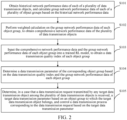
FIG. 2 is a schematic flowchart of a data transmission control method according to an embodiment of the present disclosure. -
FIG. 3 is a schematic diagram of a product side according to an embodiment of the present disclosure. -
FIG. 4 is another schematic flowchart of a data transmission control method according to an embodiment of the present disclosure. -
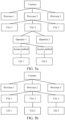
FIG. 5a is a schematic diagram of division of Internet Protocol (IP) addresses according to all rules according to an embodiment of the present disclosure. -
FIG. 5b is a schematic diagram of division of IP addresses according to partial rules according to an embodiment of the present disclosure. -
FIG. 6 is a schematic diagram of an implementation process of quality of service (QoS) information measurement by a network measurement module according to an embodiment of the present disclosure. -
FIG. 7 is a schematic diagram of a processing flow of an intelligent learning module according to an embodiment of the present disclosure. -
FIG. 8 is a schematic diagram of a processing process of an adaptive control module according to an embodiment of the present disclosure. -
FIG. 9 is still another schematic flowchart of a data transmission control method according to an embodiment of the present disclosure. -
FIG. 10 is a schematic structural diagram of a data transmission control apparatus according to an embodiment of the present disclosure. -
FIG. 11 is a schematic structural diagram of a computer device according to an embodiment of the present disclosure. - Technical solutions in embodiments of the present disclosure are clearly and completely described below with reference to accompanying drawings in the embodiments of the present disclosure. Apparently, the described embodiments are merely some of the embodiments of the present disclosure, but not all of the embodiments. All other embodiments obtained by a person skilled in the art based on the embodiments of the present disclosure without creative efforts fall within the protection scope of the present disclosure.
- Embodiments of the present disclosure provide a data transmission control method and apparatus, a computer-readable storage medium, a computer device, and a computer program product. The data transmission control method may be used in the data transmission control apparatus. The data transmission control apparatus may be integrated in the computer device, and the computer device may be a terminal or a server. The terminal may be a device such as a mobile phone, a tablet computer, a notebook computer, a smart television, a wearable smart device, a personal computer (PC), and an onboard terminal. The server may be an independent physical server, or may be a server cluster formed by a plurality of physical servers or a distributed system, and may further be a cloud server providing basic cloud computing services such as cloud service, a cloud database, cloud computing, a cloud function, cloud storage, a network service, cloud communication, a middleware service, a domain name service, a security service, a network acceleration service (such as through CDN, content delivery network), and a big data and artificial intelligence platform. The server may be a node in a blockchain.
-
FIG. 1 is a schematic diagram of a scenario for a data transmission control method according to an embodiment of the present disclosure. As shown inFIG. 1 , a data transmission control system includes at least a gateway server A and a terminal B. The terminal B may request the gateway server A to transmit specific data. To be specific, the terminal B may transmit a data transmission request to the gateway server A to request the gateway server A to transmit to-be-transmitted data, and the gateway server A may obtain request data in response to the data transmission request of the terminal B, and return the request data to the terminal B. Before the gateway server A receives the data transmission request of the terminal B, the gateway server A may obtain historical network performance data of each of a plurality of data transmission objects, and calculate group network performance data of each object group based on the historical network performance data, the object group being a group obtained by dividing the plurality of data transmission objects. Weighted calculation is performed on the group network performance data of each object group, to obtain comprehensive network performance data corresponding to the plurality of data transmission objects. Then a trained reinforcement learning (RL) model is invoked for prediction based on the comprehensive network performance data and the group network performance data of each object group, to obtain a data transmission quality index of each object group. Next, a data transmission parameter of each object group is calculated based on the data transmission quality index and the group network performance data of each object group. In some embodiments, the data transmission control system may further include a data storage unit. After the data transmission parameter of each object group is calculated, the data transmission parameter of each object group may be stored in the data storage unit. In this way, when the gateway server A receives the data transmission request transmitted by the terminal B, a target data transmission parameter corresponding to the object group may be determined based on the object group to which the terminal B belongs. Then a data transmission process of the terminal B is controlled based on the target data transmission parameter. In other words, the terminal B is used as a data transmission object, and the object group to which the terminal B belongs may be determined based on a terminal identifier of the terminal B. Then the data transmission parameter of the object group is obtained from the data storage unit, and the obtained data transmission parameter is determined as a target data transmission parameter of the terminal B. Afterward, the data transmission process of the terminal B may be controlled based on the target data transmission parameter, to return the request data to the terminal B. - For example, a short video application may be installed on the terminal B. A user performs a refresh operation through a client of the short video application. The client of the short video application generates a video recommendation request in response to the refresh operation performed by the user, and transmits the video recommendation request to the gateway server A as the data transmission request in this embodiment of the present disclosure. The gateway server A may adopt the data transmission control method provided in this embodiment of the present disclosure to calculate the data transmission parameter of each object group before responding to the video recommendation request transmitted by the terminal B through the client of the short video application. The object group herein may be different short video accounts in the short video application. When the gateway server A responds to the video recommendation request transmitted by the terminal B through the client of the short video application, the gateway server A may parse the video recommendation request to obtain the short video account of the user in the short video application. A mapping relationship exists between the short video account and the terminal B. Therefore, the object group to which the terminal B belongs may be determined based on the short video account. The target data transmission parameter corresponding to the object group may be determined based on the object group to which the terminal B belongs. Then the short video data transmission process of the video recommendation request transmitted by the terminal B through the client of the short video application is controlled based on the target data transmission parameter.
- The schematic diagram of a data transmission control scenario shown in
FIG. 1 is merely an example. The data transmission control scenario described in this embodiment of the present disclosure is intended to describe the technical solutions of the embodiments of the present disclosure more clearly, and does not constitute a limitation on the technical solutions provided in the embodiments of the present disclosure. A person of ordinary skill in the art may learn that with the evolution of data transmission control scenarios and the emergence of new service scenarios, the technical solutions provided in the embodiments of the present disclosure are also applicable to similar technical problems. - Based on the above implementation scenario, a detailed description is given below.
- In a scenario for network data transmission, when a relatively large amount of audio and video data needs to be transmitted, a problem of data transmission congestion may occur. To resolve the problem of data transmission congestion and improve data transmission efficiency and data transmission quality, a person skilled in the art proposes a plurality of congestion control algorithms to improve network transmission quality. In this regard, with the increasing maturity of the artificial intelligence technology in recent years, machine learning-based adaptive congestion control may automatically adapt to changes in network states and achieve benefits in network transmission performance in a manner such as parameter setting. These methods may improve the network data transmission quality by setting relevant parameters of congestion control through RL. However, these methods are hardly feasible because a parameter set is set through human experience and these methods are completely divorced from an existing congestion control mechanism. In addition, these methods have a problem of lack of stability, and therefore cannot be deployed and used in the existing network. In view of this, an embodiment of the present disclosure provides a data transmission control method, to alleviate the congestion problem during the data transmission to some extent and improve the data transmission performance.
- This embodiment of the present disclosure is to be described from the perspective of the data transmission control apparatus. The data transmission control apparatus may be integrated in a computer device. The computer device may be a terminal or a server.
FIG. 2 is a schematic flowchart of a data transmission control method according to an embodiment of the present disclosure. This embodiment of the present disclosure is described by using an example in which the data transmission control method is performed by a server in a computer device. The method includes the following operations S101 to S105: - At S101: Obtain historical network performance data of each of a plurality of data transmission objects, and calculate group network performance data of each of a plurality of object groups based on the historical network performance data.
- In this embodiment of the present disclosure, the plurality of data transmission objects may be all registered users of an application. For example, an instant messaging application or a short video application has an application server that provides data services, and a plurality of application clients registered with the application. Since each application client may be an object for data transmission by the application server of the application, it may be determined herein that all application clients registered with the application are the plurality of data transmission objects. Alternatively, in some cases, some clients registered with the application may be set as the plurality of data transmission objects. For example, in the foregoing short video application, among the application clients of the short video application, only some clients of registered users are member user clients. Then data transmission control may only be performed on these member user clients to optimize data transmission performance of these member user clients during data transmission, so as to provide good data transmission service and smooth viewing experience for these member user clients. Alternatively, in some cases, some users have lower demands for data transmission while other users have higher demands for data transmission. Then targeted optimization may be performed on the users with higher demands for data transmission, and the users with higher demands for data transmission are determined as the plurality of data transmission objects. Herein, a data transmission demand parameter of a user may be determined based on a frequency of data transmission of the user and an amount of data requested for transmission. When the data transmission demand parameter of any user is greater than a demand parameter threshold, it indicates that the user has a higher demand for data transmission. When the data transmission demand parameter of any user is less than or equal to the demand parameter threshold, it indicates that the user has a lower demand for data transmission. In other words, in this embodiment of the present disclosure, the plurality of data transmission objects may be personalized, which is not limited herein.
- The historical network performance data of the data transmission object may be data obtained by collecting statistics about the network performance data of the data transmission object within a period of time prior to a current moment. For example, statistics about the network performance data of the data transmission object may be periodically collected. For example, statistics about the network performance data within a time length between a last statistics collection moment and a current statistics collection moment are collected every T time interval. When the data transmission needs to be controlled, the statistical network performance data of the data transmission object collected most recently may be used as the historical network performance data of the data transmission object.
- In some embodiments, the network performance data of the data transmission object is a parameter for reflecting network transmission performance of the data transmission object during data transmission. The network performance data of the data transmission object can represent network quality of service (QoS) information of the data transmission object during data transmission. The historical network performance data of the data transmission object refers to network performance data within a historical time period, which is a parameter used for reflecting network transmission performance of the data transmission object during data transmission within the historical time period.
- For example, the network performance data may be the QoS information such as a minimum round-trip time (RTT) (which may be expressed as min_rtt), a maximum RTT (which may be expressed as max_rtt), a smooth RTT (which may be expressed as srtt), a maximum quantity of inflight packets (which may be expressed as max_inflight), an effective throughput (which may be expressed as goodput), a retransmission ratio (which may be expressed as retran_ratio), an initial window (which may be expressed as init cwnd), and a maximum window (which may be expressed as max_cwnd) of the data transmission object during data transmission.
- In some embodiments, the obtaining the historical network performance data of the plurality of data transmission objects and calculating group network performance data of each object group based on the historical network performance data may be implemented in the following manners: first obtaining Internet protocol (IP) address data of each of the plurality of data transmission objects, and obtaining the historical network performance data of each data transmission object; then dividing the plurality of data transmission objects into the plurality of object groups based on the IP address data of each data transmission object; and finally calculating the group network performance data of the object group based on the historical network performance data of the data transmission object in each object group.
- In this embodiment of the present disclosure, the object group is a group obtained by grouping the plurality of data transmission objects. The plurality of data transmission objects may be divided into a plurality of groups in any grouping manner, and each group may be referred to as an object group. In this way, the historical network performance data corresponding to the object group may be calculated based on the historical network performance data of the data transmission object in each object group. To be specific, the group network performance data of each object group may be calculated.
- In this embodiment of the present disclosure, the plurality of data transmission objects are divided into groups, which may be divided based on the IP address data of each data transmission object. For example, the IP address data may be an IP address of the data transmission object. As described above, the data transmission object may be a client of an application, and then the IP address of the data transmission object may be an IP address of a terminal loading the client. The terminal may be a terminal that may connect to the Internet and transmit data, such as a smartphone, a tablet, a smartwatch, or a personal computer.
- For example, the IP addresses of the plurality of data transmission objects and the historical network performance data of each data transmission object may be first obtained. Then the plurality of data transmission objects may be divided into a plurality of object groups based on the IP address of each data transmission object. For example, the data transmission objects corresponding to the IP addresses within a preset address interval may be divided into an object group. To be specific, the IP addresses of the data transmission objects are divided based on the preset address interval, and the data transmission objects corresponding to the IP addresses within the same preset address interval are divided into an object group. Next, the group network performance data of each object group is calculated based on the historical network performance data of the data transmission object included in each object group. The dividing based on the IP addresses of the data transmission objects may be dividing according to rules such as regions, operators, autonomous system (AS) numbers, and access patterns of the IP addresses. During the dividing based on the IP address data of the data transmission object, the dividing may be dividing according to all the rules or some rules. For example, during the dividing according to all the rules, the dividing may be dividing based on region + operator + AS number + access pattern. During the dividing according to some rules, the dividing may be dividing according to the rules such as region + operator, region + access pattern, or regions. It may be understood that the data transmission process of data transmission objects in the same object group has similar network forwarding paths, and also has similar network state information. To be specific, when the data transmission objects in the same object group perform data transmission control, the same data transmission parameter may be used for control.
- In some embodiments, that the group network performance data of each object group is calculated based on the historical network performance data of the data transmission object in each object group may be implemented in the following manners: first determining a historical network performance data set corresponding to the corresponding object group based on the historical network performance data of each data transmission object in each object group; and then calculating an average of the historical network performance data in each historical network performance data set, and determining the average corresponding to each historical network performance data set as the group network performance data of the corresponding object group.
- In this embodiment of the present disclosure, for the calculation of the group network performance data corresponding to each object group, the historical network performance data of the data transmission objects included in each object group may be averaged, to obtain the average of the historical network performance data. The average of the historical network performance data is determined as the group network performance data corresponding to the corresponding object group. For example, the data transmission object included in each object group may be determined first, and then the historical network performance data of each data transmission object in the object group may be determined, to obtain the historical network performance data set corresponding to each object group. Next, the average of the historical network performance data in each historical network performance data set may be calculated. In other words, all the historical network performance data in the historical network performance data set is summed, and then a result of the summation is divided by a quantity of the historical network performance data in the historical network performance data set, to obtain the average of the historical network performance data in the historical network performance data set, thereby obtaining the group network performance data corresponding to each object group.
- In some embodiments, before the average of the historical network performance data of the plurality of data transmission objects in each object group is calculated to calculate the group network performance data of the object group, anomaly detection may also be performed on the historical network performance data of each data transmission object to determine whether abnormal data exists in the historical network performance data of the data transmission object in the object group, thereby avoiding existence of the abnormal data in the historical network performance data of the data transmission object in the object group, so as to ensure accuracy of the calculation of the group network performance data. The anomaly detection may be performed on the historical network performance data of each data transmission object based on the historical network performance data in a time dimension of a preset length. The preset length is greater than a time length corresponding to the historical network performance data. For example, the historical network performance data of the data transmission object is QoS data within 1 hour before a current time, and then QoS data within 1 month before the current time of the data transmission object may be used to detect the QoS data of the data transmission object within 1 hour, to determine whether any apparent abnormality occurs in the QoS data. During implementation, the QoS data of the data transmission object within 1 hour before the current time may be predicted based on the QoS data of the data transmission object within 1 month before the current time, to obtain predicted QoS data. Then a difference between the predicted QoS data and measured QoS data is calculated. If the difference is greater than a preset ratio, it is determined that the historical network performance data of the data transmission object is abnormal.
- If it is determined that the QoS data of the data transmission object is abnormal, the historical network performance data of the data transmission object may be removed during the calculation of the group network performance data.
- At S 102: Perform weighted calculation on the group network performance data of each object group, to obtain comprehensive network performance data of the plurality of data transmission objects.
- Herein, after the group network performance data of each object group is calculated, weighted calculation may be further performed on the group network performance data of all object groups, to obtain overall network performance data of all data transmission objects, which may be referred to as the comprehensive network performance data herein.
- In some embodiments, the performing weighted calculation on the group network performance data to obtain the comprehensive network performance data may be implemented in the following manners: first obtaining a weight coefficient of each object group; and then performing weighted calculation on the group network performance data of the object groups based on the weight coefficients, to obtain the comprehensive network performance data corresponding to the plurality of data transmission objects.
- In this embodiment of the present disclosure, in the calculation of the comprehensive network performance data based on the group network performance data of the object groups, the weight coefficient corresponding to each object group may be obtained first, and the weighted calculation is performed on the group network performance data of the object groups based on the weight coefficients of the object groups, to obtain the comprehensive network performance data.
- In some embodiments, the weight coefficient of each object group may be obtained in the following manners: first obtaining a quantity of data transmission objects included in each object group; and then calculating a ratio of the quantity of data transmission objects in each object group to a quantity of the plurality of data transmission objects to obtain the weight coefficient of each object group, that is, determining a ratio of the quantity of data transmission objects in each object group to the quantity of the plurality of data transmission objects as the weight coefficient of the corresponding object group.
- In this embodiment of the present disclosure, the weight coefficient of each object group may be calculated based on the quantity of data transmission objects included in the corresponding object group. For example, the quantity of data transmission objects included in each object group may be obtained first, and then the ratio of the quantity of data transmission objects in each object group to the quantity of the plurality of data transmission objects described above is calculated. To be specific, a ratio of a quantity of members in each group to a total quantity of members is calculated, and then the weight coefficient of each object group is obtained.
- At S 103: Input the comprehensive network performance data and the group network performance data of each object group into a trained RL model, to obtain a data transmission quality index of each object group.
- Herein, the RL model is one of models in the field of machine learning. The RL model is a data processing model implemented based on RL. Inspired by behavioral psychology, RL mainly focuses on how an agent takes different actions in an environment to maximize cumulative rewards. RL is mainly composed of the agent, the environment, a state, an action, and a reward. After the agent performs an action, the environment may transition to a new state, and the environment may give a reward signal (positive reward or negative reward) for the new state. Then the agent performs a new action according to a strategy based on the new state and the reward fed back by the environment. The above process is a manner of interaction between the agent and the environment through the state, the action, and the reward. RL allows the agent to learn of a state it is in and an action it should take to obtain a maximum reward. Since a manner in which the agent interacts with the environment is similar to a manner in which the human interacts with the environment, RL may be considered as a general learning framework, which may be used to resolve a problem of general artificial intelligence. Therefore, RL is also referred to as a machine learning method of general artificial intelligence.
- In this embodiment of the present disclosure, setting of the network performance data during data transmission may be controlled based on the foregoing characteristics of the RL model. For example, a corresponding reward and environmental state may be set based on the comprehensive network performance data and group network performance data of each object group, so that a preset RL model learns a data transmission quality index corresponding to each object group. The data transmission quality index may be used for controlling the data transmission parameter of the corresponding object group to obtain a better reward value. In other words, the data transmission quality index is data outputted by the RL model to control the data transmission parameter of the corresponding object group.
- In some embodiments, the trained RL model is invoked for prediction based on the comprehensive network performance data and the group network performance data of each object group, to obtain a data transmission quality index of each object group. To be specific, RL may be performed on the comprehensive network performance data and the group network performance data of each object group based on the RL model, so as to obtain the data transmission quality index of each object group. In some embodiments, the data transmission quality index of each object group may be obtained in the following manners: first calculating an RL parameter of each object group based on the group network performance data of each object group; and then using the comprehensive network performance data as the state value of the RL model and the RL parameter as the reward value of the RL model, and inputting the state value and the reward value into the RL model, to obtain an outputted data transmission quality index of each object group.
- In some embodiments, the trained RL model may be any RL model. For example, the trained RL model may be a deep RL (DRL) model, a DRL model based on search and supervision, a DRL model based on a value function, and a DRL model based on a policy gradient.
- In this embodiment of the present disclosure, the RL parameter of each object group may be first calculated based on the group network performance data of each object group, the RL parameter is used as the reward value of the RL model, then the foregoing calculated comprehensive network performance data is used as the state value of the RL model, the reward value and the state value are inputted into the RL model, and RL processing is performed on the RL model based on the reward value and the state value described above, to obtain output parameters learned by the RL model. In other words, the data transmission quality index of each object group is outputted through the RL model.
- It may be understood that the calculated RL parameters are different for different object groups. To be specific, different reward values of the RL model lead to different learned output parameters. To be specific, for different object groups, the RL model may learn different output parameters. The output parameter may control the data transmission parameter of the corresponding object group, to continuously improve the RL parameters of the object groups. Therefore, the output parameter may also be referred to as the data transmission quality index.
- In some embodiments, the calculating the RL parameter of each object group based on the group network performance data of each object group may be implemented in the following manners: first extracting goodput data and smooth RTT data from the group network performance data of each object group; and then calculating a ratio of the corresponding goodput data to the corresponding smooth RTT data of each object group, and determining the ratio as the RL parameter of each object group.
- In this embodiment of the present disclosure, the RL parameter of each object group may be calculated by using the goodput data and the smooth RTT data in the group network performance data of each object group. The goodput data and the smooth RTT data may be first extracted from the group network performance data of each object group, then the ratio of the goodput data to the RTT data is calculated, and the ratio is used as the RL parameter of the corresponding object group. In this embodiment of the present disclosure, the ratio of the goodput data to the smooth RTT data is set as the RL parameter of the object group, which may mean that the ratio is used as the reward value of the RL model. A main consideration herein is that a learning goal of the RL model is to obtain a larger reward value, that is, to obtain a larger goodput and a shorter smooth RTT time, that is, to obtain higher QoS. Therefore, the ratio of the goodput data to the smooth RTT data is used as the reward value of the RL model.
- Herein, the throughput refers to a quantity of bits received per second excluding control data (when no frame exists, a device reduces a maximum rate). Goodput refers to a number of bits transmitted to a correct destination interface per unit time. In computer networks (including wireless networks), goodput is an application-level throughput, i.e. a number of useful information bits delivered by a network of a source address to a certain destination per unit of time. The amount of data considered excludes protocol overhead bits as well as retransmitted data packets. For example, if a file is transferred, the goodput that a user experiences corresponds to a file size in bits divided by a file transfer time. The goodput is always lower than throughput (a gross bit rate that is transferred physically), which generally is lower than a network access connection speed (a channel capacity or bandwidth). The goodput data refers to an amount of data transmitted by a network, the goodput data may measure performance of the network, and the goodput data refers to an effective amount of data transmitted by the network.
- The smooth RTT data refers to a weighted average RTT. Herein, the RTT refers to a difference between a time a packet segment is sent and a time a corresponding confirmation is received. The RTT may be calculated based on a timestamp value and a timestamp echo reply field included in a timestamp option in a TCP packet header. The weighted average RTT, also referred to as a smooth RTT, is an RTT obtained by performing weighted averaging on the RTT.
- In some embodiments, the RL model is adopted to learn the data transmission quality index of each object group. The RL model may be adopted to perform RL a plurality of times based on the comprehensive network performance data and the group network performance data of each object group, to obtain a plurality of data transmission quality indexes of each object group. Then the average of the plurality of data transmission quality indexes is further calculated, and a more accurate data transmission quality index of each object group is finally obtained. In this embodiment of the present disclosure, an average of output parameters obtained through RL the plurality of times is used as a final output parameter, which may avoid a problem that the learned data transmission quality index is inaccurate due to a learning error, so that accuracy of the learned data transmission quality index may be improved.
- At S104: Determine a data transmission parameter of the corresponding object group based on the data transmission quality index and the group network performance data of each object group.
- After the data transmission quality index of each object group is learned by using the RL model, the group network performance data of each object group may be further adjusted based on the data transmission quality index of each object group, so as to obtain the data transmission parameter of each object group. The data transmission process of the corresponding object group is controlled by using the data transmission parameter of each object group, so that a better data transmission effect may be obtained. To be specific, data transmission performance may be improved.
- In this embodiment of the present disclosure, the data transmission parameter is a control parameter for controlling the data transmission process. During data transmission, a network bandwidth of the corresponding data transmission object may be controlled based on the data transmission parameter of the data transmission object, thereby avoiding network congestion and ensure transmission performance of the entire network.
- In some embodiments, that the data transmission parameter of each object group is calculated based on the data transmission quality index and the group network performance data may be implemented in the following manners: first extracting goodput data and minimum RTT data of each object group from the group network performance data; and then calculating initial window data of the corresponding object group based on the goodput data, the minimum RTT data, and the data transmission quality index of each object group, and determining the data transmission parameter of the corresponding object group based on the initial window data of each object group.
- In this embodiment of the present disclosure, the adjusting the group network performance data of the corresponding object group based on the learned data transmission quality index of each object group may be first extracting the goodput data and the minimum RTT data from the group network performance data of each object group, then calculating the initial window data of each object group based on the goodput data, the minimum RTT data, and the learned data transmission quality index, and then determining the initial window data of each object group as the data transmission parameter of the corresponding object group. In some embodiments, the data transmission parameter of each object group and the corresponding object group may also be stored in association with each other. In this way, when the data transmission parameter needs to be used for data transmission control, the stored data may be queried for the data transmission parameter of the object group, thereby improving efficiency of data transmission.
- At S105: Determine, in response to receiving a data transmission request transmitted by any target data transmission object among the plurality of data transmission objects, a target data transmission parameter based on an object group to which the target data transmission object belongs (which is also referred to as a "target object group"), and control a data transmission process corresponding to the data transmission request based on the target data transmission parameter.
- After the data transmission parameter corresponding to each object group is determined, the data transmission process of the corresponding data transmission object may be controlled based on the data transmission parameter corresponding to each object group before statistics about the historical network performance data in a next period are collected.
- During the implementation, when the data transmission request transmitted by the target data transmission object is received, the object group corresponding to the target data transmission object may be determined first, then the target data transmission parameter of the object group is obtained, and the data transmission process of the target data transmission object is controlled based on the target data transmission parameter. For example, when a data transmission request transmitted from a client of an application to an application server is received, a target object group to which the client belongs may be determined, initial window data of the target object group is determined, and then the initial window data is adopted to control the data transmission process of the client.
- It may be learned from the foregoing description that according to the data transmission control method provided in the embodiments of the present disclosure, the historical network performance data of each of a plurality of data transmission objects is obtained, and the group network performance data of each object group is calculated based on the historical network performance data, the object group being a group obtained by dividing the plurality of data transmission objects. Then weighted calculation is performed on the group network performance data to obtain comprehensive network performance data. A trained RL model is invoked for prediction based on the comprehensive network performance data and the group network performance data of each object group, to obtain a data transmission quality index of each object group. Next, a data transmission parameter of each object group is calculated based on the data transmission quality index and the group network performance data. In this way, in response to receiving the data transmission request transmitted by the target data transmission object, a target data transmission parameter may be determined based on an object group to which the target data transmission object belongs, and a data transmission process is controlled based on the target data transmission parameter. Therefore, according to the data transmission control method provided in the embodiments of the present disclosure, the data transmission objects are divided into groups, and then RL is performed on the historical network performance data of each object group in a recent period, to obtain the most suitable network data transmission parameter for each object group at a current time. According to the method, fine-grained control may be performed on the network data transmission parameter, so as to match the most suitable network data transmission parameter for each data transmission object at the current time, which may greatly improve the data transmission performance of the data transmission object. In addition, the data transmission control method provided in the embodiments of the present disclosure may enable data transmission control at a finer granularity and a higher accuracy, as well as a more targeted setting for session parameters upon establishment of a connection. The method of setting a data transmission control parameter value for each object group that conform to a network feature of the object group is conducive to improving the overall transmission quality of the network system. In other words, through the process of dividing the plurality of data transmission objects into groups and performing RL on the group network performance data of each object group, more accurate control of the data transmission parameter may be implemented, and the most suitable data transmission parameter may be matched for each data transmission object, so that the currently determined data transmission parameter is more suitable for a current network data transmission scenario, thereby improving scenario adaptability of the data transmission control method and data transmission performance of the network, and further improving the stability of the network performance.
- In this embodiment of the present disclosure, content of user information is involved, for example, historical network performance data of each user (that is, historical network performance data of each data transmission object), a user group (UG) to which each user belongs (that is, an object group), and information such as a data transmission parameter of each object group. If data related to user information or enterprise information is involved, when the embodiments of the present disclosure are applied to specific products or technologies, user permission or consent needs to be obtained. In addition, relevant data collection and processing are to be strictly in accordance with the requirements of relevant national laws and regulations in an example application, informed consent or individual consent of a personal information subject needs to be obtained, and subsequent data use and processing are carried out within the scope of authorization of laws and regulations and the personal information subject.
- In some embodiments, the foregoing data transmission control method may be an adaptive congestion control technology for dividing into UGs in a network communication system, which belongs to the field of network traffic transmission performance optimization. In this embodiment of the present disclosure, a server first divides IP addresses of a client into different object groups based on information such as regions and operators, and collects statistics about network performance data of a network flow of each object group in a previous time period at intervals. The server outputs a network transmission parameter value (such as an initial transmission window and an initial transmission rate) applicable to each object group in this period through expert experience or artificial intelligence based on the collected network performance data in the previous period. When a new connection request from the client reaches the server, the server queries for an object group identifier and a network transmission parameter corresponding to the client based on the IP address of the client. The server responds to the client request based on the network transmission parameter, and transmits corresponding network data. The adaptive congestion control technology involved in the embodiments of the present disclosure has advantages such as strong stability, fine control, a high degree of adaptation, and a light weight, which can help improve the transmission performance of the entire network system while ensuring feasibility.
- The embodiments of the present disclosure are intended to resolve the problem that current network traffic cannot achieve adaptive congestion control, and to give consideration to the advantages such as the stability and fine control. The UG-oriented adaptive congestion control technology (that is, the foregoing object group) proposed in the embodiments of the present disclosure effectively resolves the stability problem encountered during execution of machine learning by combining historical information of network measurement with RL. Through division of UGs and UG-oriented network measurement, a specific initialized network parameter is set for each UG, to implement fine control of an initial stage of network traffic transmission.
-
FIG. 3 is a schematic diagram of a product side according to an embodiment of the present disclosure. As shown inFIG. 3 , acloud server 301A is connected to agateway server 302A. Thegateway server 302A divides client IP addresses into different UGs 303A according to different rules such as regions, operators, and access patterns, and sets an exclusive congestion control parameter for a session of a UG through RL based on the latest network state. When receiving a connection request from a client, thegateway server 302A may query UG identifiers corresponding to the client IP addresses for an (initialized) congestion control parameter matching the UG, and respond to the client request based on the congestion control parameter. - An embodiment of the present disclosure further provides a data transmission control method. The method may be used in a computer device, and the computer device may be a server.
FIG. 4 is another schematic flowchart of a data transmission control method according to an embodiment of the present disclosure. The method includes the following operations S201 to S209: - At S201: A server divides users into groups to obtain a plurality of UGs.
- Herein, the server may divide IP address of clients corresponding to the users according to rules such as regions, operators, AS numbers, and access patterns, and divide client IP addresses into different UGs. Connections (or sessions) of each UG have similar network forwarding paths and also have similar network state information. The division of the UGs is not limited to division of the IP addresses of all clients, or may be division of some specific IP address prefixes or some IP address prefixes whose traffic proportion is greater than a traffic proportion threshold.
- In some embodiments, the UGs may be divided according to all the rules (that is, regions, operators, AS numbers, and access patterns), or may be divided according to some rules such as region + operator, region + access pattern, and regions.
FIG. 5a and FIG. 5b are schematic diagrams of a scheme for dividing IP addresses of a user client.FIG. 5a shows division according to all rules, andFIG. 5b shows division according to some rules (regions).Table 1 UG division information table IP address prefix UG identifier 192.168.0.0/24 UG_1 192.168.1.0/24 UG_1 192.168.2.0/24 UG_1 192.168.3.0/24 UG_2 192.168.4.0/24 UG_2 - Table 1 is a table of UG division information. UGs may be divided according to the IP address prefixes. The IP addresses belonging to the same UG have the same UG identifier.
- At S202: The server collects statistics about QoS data within a statistical period, and calculates QoS data of each UG based on the collected QoS data.
- In this embodiment of the present disclosure, the server can record QoS information (that is, QoS data) and a client IP address of a network for each data stream. For example, when each stream ends, the server writes relevant QoS information and the client IP address for the stream to a log file of the server. The QoS information includes information such as a minimum RTT (min _rtt), a maximum RTT (max_rtt), a smooth RTT (srtt), a maximum quantity of inflight packets (max_inflight), a goodput, a retransmission ratio (retran_ratio), an initial window (init cwnd), and a maximum window (max_cwnd). To be specific, the foregoing QoS information indicates QoS of the network. After each data stream is transmitted, the server records the IP address for the data stream and the information such as the minimum RTT (min_rtt), the maximum RTT (max _rtt), the smooth RTT (srtt), the maximum quantity of inflight packets (max_inflight), the goodput, the retransmission ratio (retran_ratio), the initial window (init_cwnd), and the maximum window (max_cwnd) for the data stream, so as to obtain the QoS information for the data stream.
- The server may collect statistics about an average QoS and related quantiles (such as a 50% quantile or a 90% quantile of a QoS value) of each UG within a certain period of time (denoted as a statistical period T) every period T. For example, the server reads the QoS information and the client IP address for each stream one by one from the log file, and a correspondence between the IP address and the UG identifier is queried to obtain the UG identifier of each data stream. In addition, the QoS information of the data stream having the same UG identifier is averaged, or the relevant quantile (such as a 50% or 90% quantile) is obtained.
- For example, a period of time T = 15 min. The period of time includes 100 sessions of an IP address of 192.168.0.0/24, 200 sessions of an IP address of 192.168.1.0/24, 200 sessions of an IP address of 192.168.2.0/24, 50 sessions of an IP address of 192.168.3.0/24, and 50 sessions of an IP address of 192.168.4.0/24. Therefore, a quantity of sessions in a UG 1 (UG_1) is 500, and a quantity of sessions in a UG 2 (UG_2) is 100. In this embodiment of the present disclosure, it is assumed that the average QoS (QoS_avg_1) of 500 sessions in UG_1 is respectively a minimum average RTT (min_rtt_avg_1), a maximum average RTT (max_rtt_avg_1), an average smooth RTT (srtt avg_1), an average goodput (goodput_avg_1), an average retransmission ratio (retran_ratio_avg_1), an average initial window (init_cwnd_avg_1), and a maximum average window (max_cwnd_avg_1), and an average QoS (QoS_avg_2) of 100 sessions in UG_2 is respectively a minimum average RTT (min_rtt_avg_2), a maximum average RTT (max_rtt_avg_2), an average smooth RTT (srtt_avg_2), an average goodput (goodput_avg_2), an average retransmission ratio (retran_ratio_avg_2), an average initial window (init_cwnd_avg_2), and a maximum average window (max_cwnd_avg_2). Therefore, a reward value o2f UG_1 is goodput_avg_1/srtt_avg_1, and a reward value of UG_2 is goodput_avg_2/srtt_avg_2.
- In some embodiments, QoS information of each UG in the previous time period is measured and collected at intervals, which may be implemented by using a network measurement module in the server.
FIG. 6 is a schematic flowchart of implementation of QoS information measurement performed by a network measurement module according to an embodiment of the present disclosure. As shown inFIG. 6 ,session log information 601 andUG information 602 are first obtained, and then network measurement anddata statistics 603 are performed on the obtainedsession log information 601 andUG information 602, so as to obtain QoS information of different UGs, such as the QoS information of aUG 1, the QoS information of aUG 2, ..., and the QoS information of a UG n shown inFIG. 6 , n being an integer greater than 2. - At S203: The server performs weighted calculation on the QoS data of each UG, and uses data obtained through weighted calculation as a state value of an RL model.
- Further, the server may obtain a weight coefficient of each UG. The weight coefficient may be manually set by a user, or may be calculated based on a quantity of users in the UG. After the weight coefficient of each UG is determined, weighted calculation may be performed on the QoS data of the UGs based on the weight coefficient of each UG, and the result of the weighted calculation is used as the state value of the RL model.
- In some embodiments, weighted calculation may be performed on the QoS data of the UGs by using an intelligent learning module in the server. In some other embodiments, the intelligent learning module may not only be located in the server, but also be located on a gateway or on a remote dedicated server. The intelligent learning module includes an RL model. The RL model may implement initialization parameter control for traffic transmission of a plurality of UGs. To be specific, the RL model may set congestion control parameters for traffic of the plurality of UGs.
- In this embodiment of the present disclosure, the server weights the QoS information based on the UG, where QoS data of a UG i is denoted as QoS_i, and a weight of the QoS_i is denoted as w_i. In this case, the weighted QoS is shown in Formula (1):

- At S204: The server extracts goodput data and smooth RTT data in the QoS data of each UG, and calculates a ratio of the goodput data to the RTT data, the ratio being determined as a reward value of the RL model.
- In this embodiment of the present disclosure, the server extracts the goodput data goodput and the smooth RTT data srtt in the QoS data of each UG, and calculates the ratio of the goodput data goodput to the RTT data srtt, the ratio being determined as the reward value of the RL model. The formula for calculating the reward value Reward of the RL model is Formula (2) as follows:

- In some embodiments, the goodput data (goodput) in Formula (2) may also be replaced with a throughput or a downloading speed (download_speed) of data from an application layer to a network layer. In some other embodiments, the goodput data (goodput) in Formula (2) may also be replaced with the average RTT, the minimum RTT, or the maximum RTT.
- At S205: The server performs RL on the state value and the reward value corresponding to each UG based on the RL model, to obtain an RL parameter corresponding to each UG outputted by the RL model.
- After the state value and the reward value of the RL model are determined, the state value and the reward value described above may be inputted into the RL model for RL, and a parameter α outputted by the RL model may be obtained. Herein, the RL model may be one RL model or a plurality of RL models. Different UGs provide different reward values for the RL model. Therefore, the RL parameters learned by the RL model are also different for different UGs. For example, an output of the RL model may be one of parameter sets {-1, -0.5, 0, 0.5, 1} (which is denoted as α, the default value being 0).
-
FIG. 7 is a schematic diagram of a processing flow of an intelligent learning module according to an embodiment of the present disclosure. As shown inFIG. 7 , an input parameter of anRL model 701 inputted into anintelligent learning module 700 is UGweighted QoS data 702. The UGweighted QoS data 702 includes but is not limited to an RTT, goodput data (goodput), a maximum quantity of inflight packets (max_inflight), and a reward value. An output of theRL model 701 is a parameter α. - At S206: A server calculates a data transmission parameter corresponding to a corresponding UG based on an RL parameter corresponding to each UG and QoS information of each UG.
- Herein, after the RL parameter corresponding to each UG is learned, the data transmission parameter corresponding to the UG may be further calculated based on the RL parameter and the QoS information of each UG. The data transmission parameter herein may also be referred to as an initialized congestion control parameter. The data transmission parameter of each UG includes an initial transmission window init_cwnd and an initial RTT init_rtt. The initial transmission window init_cwnd and the initial RTT init_rtt may be calculated based on Formula (3) and Formula (4) as follows:


- For example, for the foregoing
UG 1, that is, UG_1, an initialized congestion control parameter of theUG 1, that is, the initial transmission window init_cwnd_1 of theUG 1 and the initial RTT init_rtt_1 of theUG 1, are calculated by using the following Formula (5) and Formula (6):

UG 1, and goodput_avg_1 represents an average goodput of theUG 1. - For each UG, the data transmission parameter of the UG may be calculated by using the foregoing method. Then the data transmission parameter of each UG may be saved for use. Table 2 shows an example table of saved initialized parameters.
Table 2 Table of initialized parameters UG ID Init_rtt Init_cwnd UG_1 Init_rtt_1 Init_cwnd_1 UG_2 Init_rtt_2 Init_cwnd_2 - In this embodiment of the present disclosure, the calculation process of the foregoing data transmission parameter may be implemented by using an adaptive control module.
FIG. 8 is a schematic diagram of a processing process of an adaptive control module according to an embodiment of the present disclosure. As shown inFIG. 8 , the adaptive control module calculates an initial congestion parameter value applicable to a UG (UG_i) for each UG through parameter calculation based on QoS information (QoS_i) and a parameter α of the UG i. In this embodiment of the present disclosure, the initial congestion parameters of all UGs jointly form an initial parameter list, such as init_rtt and init_cwnd corresponding to UG_1, UG_2, ..., and UG_n in the finally obtained data transmission parameters inFIG. 8 . - At S207: The server obtains an IP address of a user client when receiving a data transmission request transmitted by the user client.
- The server may obtain the IP address included in the data transmission request when receiving the data transmission request transmitted by the user client.
- At S208: The server determines corresponding group information based on the IP address of the user client, and determines a data transmission parameter corresponding to the group information.
- After the IP address of the user client is obtained, the group information corresponding to the user client may be further determined, and the table of initialized parameters may be further searched for an initialized parameter corresponding to the group based on the group information. To be specific, the corresponding data transmission parameter is found.
- At S209: The server responds to the data transmission request of the user client and transmits data to the user client based on the corresponding data transmission parameter.
- In this embodiment of the present disclosure, when the server receives the data transmission request from the user client (for example, the request may be a session request), a UG identifier (UG_i) is queried based on the IP address of the user client, and then the initial parameter list is queried based on the obtained UG_i to obtain the initial congestion parameters init_rtt and init_cwnd corresponding to UG_i. Finally, the server responds to the data transmission request of the user client with init_rtt and init_cwnd, and transmits the data.
- After the data transmission parameter of the UG corresponding to the user client is determined, the data transmission request of the user client may be responded based on the parameter, and request data is transmitted to the user client. For example, when it is determined based on a user ID that a UG to which a user belongs is UG_2, it may be determined that the initial RTT is Init_rtt_2 and the initial cwnd is Init_cwnd_2 in the initial data transmission parameters of the UG. In this way, the RTT in the initial network parameter during the transmission of the data to the user client may be set to Init_rtt_2, cwnd in the initial network parameter is set to Init_cwnd_2, and then the corresponding data transmission is performed.
- Congestion control algorithms in the related art may be divided into two types. The first type is a "rule-based" congestion control algorithm based on expert experience. This algorithm determines, based on packet loss information, delay information, or bandwidth detection information, whether a congestion phenomenon occurs in a current network, so as to perform an action such as congestion avoidance. However, these methods often rely on the experience of network personnel to set a manner of congestion avoidance, and lack strong adaptability to the network state and related services (such as audio and video services), resulting in less benefit from network transmission performance optimization. The other type of congestion control algorithm is mainly based on artificial intelligence. This algorithm either completely overturns the existing congestion control algorithm, or has many problems in aspects such as stability and fine control, and cannot be effectively deployed. However, through the UG-oriented adaptive congestion control method (that is, the foregoing data transmission control method) provided in the embodiments of the present disclosure, the foregoing problems can be better resolved. Advantages of the conventional congestion control are retained by using the network measurement technology. A new congestion control parameter is set based on the conventional congestion control algorithm, which avoids a convergence challenge faced by a machine learning-based congestion control algorithm in the related art, and can ensure stability of the proposed adaptive congestion control method to some extent. Meanwhile, in the embodiments of the present disclosure, client IP addresses are divided into different UGs according to rules such as regions, operators, and access patterns, and a specific initialized congestion control parameter is set for each UG by using a single RL module based on RL, thereby implementing refined and lightweight control of congestion avoidance during network traffic transmission. The adaptive congestion control method proposed in the embodiments of the present disclosure can achieve greater benefits in terms of setting of the initialized parameter by using the existing congestion control algorithm, which is beneficial to improving network transmission performance of video and audio traffic and enhancing competitiveness of the audio and video services.
-
FIG. 9 is still another schematic flowchart of a data transmission control method according to an embodiment of the present disclosure. As shown inFIG. 9 , the process may be performed by the following four modules: anetwork measurement module 10, anintelligent learning module 20, aparameter calculation module 30, and atransmission control module 40. Thenetwork measurement module 10 may obtain historicalnetwork performance data 101 of a plurality of users, and divide the users into a plurality of UGs based on IP addresses to obtainUG information 102 of each user, and determines group network performance data corresponding to each UG based on the historicalnetwork performance data 101 of each user. Further, thenetwork measurement module 10 may also perform weighted calculation on the group network performance data of the plurality of UGs, to obtain weightednetwork performance data 103. Theintelligent learning module 20 may use the weighted network performance data as a state value, and a ratio of a goodput to a smooth RTT in the group network performance data as a reward value, and perform RL through an RL model, to obtain a learned data transmission quality index. Theparameter calculation module 30 may calculate a data transmission parameter 302 corresponding to each UG by using a datatransmission quality index 301 learned by anRL model 201, so as to form a datatransmission parameter list 403. Thetransmission control module 40 may determine, based on the IP address of the user when receiving thedata transmission request 401 uploaded by the user, the UG to which the user belongs, to obtainUG information 402, then query the datatransmission parameter list 403 for the data transmission parameter corresponding to the UG, and use the corresponding data transmission parameter to performdata transmission control 404 on a data transmission process, thereby improving transmission performance of data transmission. - It may be learned from the foregoing description that according to the data transmission control method provided in the embodiments of the present disclosure, historical network performance data of a plurality of data transmission objects is obtained, and group network performance data of each object group (that is, the foregoing UG) is calculated based on the historical network performance data, the object group being a group obtained by dividing the plurality of data transmission objects. Weighted calculation is performed on the group network performance data to obtain comprehensive network performance data. A trained RL model is invoked for prediction based on the comprehensive network performance data and the group network performance data of each object group, to obtain a data transmission quality index of each object group. A data transmission parameter of each object group is calculated based on the data transmission quality index and the group network performance data. When the data transmission request transmitted by the target data transmission object is received, a target data transmission parameter is determined based on an object group to which the target data transmission object belongs, and a data transmission process is controlled based on the target data transmission parameter.
- Therefore, according to the data transmission control method provided in the embodiments of the present disclosure, the data transmission objects are divided into groups, and then the historical network performance data of each object group in a recent period is used to perform RL, to obtain the most suitable network data transmission parameter for each object group at a current time. According to the method, fine-grained control may be performed on the network data transmission parameter, so as to match the most suitable network data transmission parameter for each data transmission object at the current time, which may greatly improve the data transmission performance of the data transmission object.
- To better implement the foregoing data transmission control method, an embodiment of the present disclosure further provides a data transmission control apparatus. The data transmission control apparatus may be integrated in a terminal or a server.
-
FIG. 10 is a schematic structural diagram of a data transmission control apparatus according to an embodiment of the present disclosure. The data transmission control apparatus may include an obtainingunit 1001, afirst calculation unit 1002, alearning unit 1003, asecond calculation unit 1004, and acontrol unit 1005. The obtainingunit 1001 is configured to obtain historical network performance data of each of a plurality of data transmission objects, and calculate group network performance data of each of a plurality of object groups based on the historical network performance data, the plurality of object groups being obtained by dividing the plurality of data transmission objects. Thefirst calculation unit 1002 is configured to perform weighted calculation on the group network performance data of each object group, to obtain comprehensive network performance data of the plurality of data transmission objects. Thelearning unit 1003 is configured to input the comprehensive network performance data and the group network performance data of each object group into a trained RL model, to obtain a data transmission quality index of each object group. Thesecond calculation unit 1004 is configured to determine a data transmission parameter of the corresponding object group based on the data transmission quality index and the group network performance data of each object group. Thecontrol unit 1005 is configured to determine, in response to receiving a data transmission request transmitted by any target data transmission object among the plurality of data transmission objects, a target data transmission parameter based on an object group to which the target data transmission object belongs, and control a data transmission process corresponding to the data transmission request based on the target data transmission parameter. - In some embodiments, the learning unit is further configured to: calculate an RL parameter of the corresponding object group based on the group network performance data of each object group; determine the comprehensive network performance data as a state value of the RL model, and determine the RL parameter as a reward value of the RL model; and input the state value and the reward value into the trained RL model, and output the data transmission quality index of each object group by using the trained RL model.
- In some embodiments, the first calculation unit is further configured to: obtain the group network performance data of each object group; extract goodput data and smooth RTT data from the group network performance data of each object group; calculate a ratio of the goodput data to the smooth RTT data corresponding to each object group; and determine the ratio as the RL parameter of the corresponding object group.
- In some embodiments, the obtaining unit is further configured to: obtain IP address data of each of the plurality of data transmission objects, and obtain the historical network performance data of each data transmission object; divide the plurality of data transmission objects into the plurality of object groups based on the IP address data of each data transmission object; and calculate the group network performance data of the corresponding object group based on the historical network performance data of the data transmission object in each object group.
- In some embodiments, the second calculation unit is further configured to: determine a historical network performance data set corresponding to the corresponding object group based on the historical network performance data of each data transmission object in each object group; calculate an average of the historical network performance data in each historical network performance data set; and determine the average corresponding to each historical network performance data set as the group network performance data of the corresponding object group.
- In some embodiments, the first calculation unit is further configured to: obtain a weight coefficient of each object group; and perform weighted calculation on the group network performance data of each object group based on the weight coefficient, to obtain the comprehensive network performance data corresponding to the plurality of data transmission objects.
- In some embodiments, the first calculation unit is further configured to: obtain a quantity of data transmission objects included in each object group; and determine a ratio of the quantity of data transmission objects in each object group to a quantity of the plurality of data transmission objects as the weight coefficient of the corresponding object group.
- In some embodiments, the second calculation unit is further configured to: extract the goodput data and minimum RTT data of each object group from the group network performance data of each object group; calculate initial window data of the corresponding object group based on the goodput data, the minimum RTT data, and the data transmission quality index of each object group; and determine the data transmission parameter of the corresponding object group based on the initial window data of each object group.
- In some embodiments, the control unit is further configured to: obtain a target IP address of the target data transmission object in response to receiving the data transmission request transmitted by any target data transmission object among the plurality of data transmission objects; determine, based on the target IP address, a target object group to which the target data transmission object belongs; obtain the target data transmission parameter of the target object group; and perform data transmission on the target data transmission object based on the target data transmission parameter.
- The foregoing units may be implemented as independent entities, or may be combined arbitrarily, or may be implemented as the same entity or several entities. For specific implementation of the foregoing units, reference may be made to the foregoing method embodiments, and details are not described herein again.
- It may be learned from the foregoing description that in the data transmission control apparatus provided in the embodiments of the present disclosure, the historical network performance data of each of the plurality of data transmission objects is obtained by using the obtaining
unit 1001, and the group network performance data of each of the plurality of object groups is calculated based on the historical network performance data. Thefirst calculation unit 1002 is configured to perform weighted calculation on the group network performance data, to obtain the comprehensive network performance data of the plurality of data transmission objects. Thelearning unit 1003 is configured to input the comprehensive network performance data and the group network performance data of each object group into a trained RL model, to obtain the data transmission quality index of each object group. Thesecond calculation unit 1004 is configured to determine the data transmission parameter of the corresponding object group based on the data transmission quality index and the group network performance data of each object group. When a data transmission request transmitted by any target data transmission object among the plurality of data transmission objects is received, thecontrol unit 1005 is configured to determine a target data transmission parameter based on an object group to which the target data transmission object belongs, and control the data transmission process based on the target data transmission parameter. - Therefore, according to the data transmission control method provided in the embodiments of the present disclosure, the data transmission objects are divided into groups, and then the historical network performance data of each object group in a recent period is used to perform RL, to obtain the most suitable network data transmission parameter for each object group at a current time. According to the data transmission control method, fine-grained control may be performed on the network data transmission parameter, so as to match the most suitable network data transmission parameter for each data transmission object at the current time, which may greatly improve the data transmission performance of the data transmission object.
- An embodiment of the present disclosure further provides a computer device. The computer device may be a terminal or a server.
FIG. 11 is a schematic structural diagram of a computer device according to an embodiment of the present disclosure. The computer device may include components such as aprocessing unit 1101 with one or more processing cores, astorage unit 1102 with one or more storage media, apower supply module 1103, and aninput module 1104. A person skilled in the art may understand that a structure of the computer device shown inFIG. 11 does not constitute a limitation on the computer device, and may include more or fewer components than those shown in the figure, or some components may be combined, or different component deployment may be used. Theprocessing unit 1101 is a control center of the computer device, which connects various parts of the entire computer device by using various interfaces and lines, and executes various functions of the computer device and performs data processing by running or executing at least one of a software program and/or modules stored in thestorage unit 1102 and calling data stored in thestorage unit 1102. In some embodiments, theprocessing unit 1101 may include one or more processing cores. Theprocessing unit 1101 may integrate an application processor and a modem. The application processor mainly processes an operating system, an object interface, an application program, and the like. The modem mainly processes wireless communication. It may be understood that the foregoing modem may not be integrated into theprocessing unit 1101. - The
storage unit 1102 may be configured to store a software program and a module, and theprocessing unit 1101 executes various function applications and performs data processing by running the software program and the module stored in thestorage unit 1102. Thestorage unit 1102 may mainly include a program storage area and a data storage area. The program storage area may store an operating system, an application program required by at least one function (for example, a sound playback function, an image playback function, and web page access), and the like. The data storage area may store data created based on use of the computer device, and the like. In addition, thestorage unit 1102 may include a high speed random access memory, and may further include a non-volatile memory, such as at least one magnetic disk storage device, a flash memory device, or another non-volatile solid state storage device. Thestorage unit 1102 may further include a memory controller to provide access to thestorage unit 1102 by theprocessing unit 1101. - The computer device further includes a
power supply module 1103 that supplies power to each component. Thepower supply module 1103 may be logically connected to theprocessing unit 1101 by using a power management system, thereby implementing functions such as management of charging and discharging and power management through the power management system. Thepower supply module 1103 may further include any component such as one or more direct current or alternating current power supplies, a recharging system, a power failure detection circuit, a power converter or inverter, and a power state indicator. - In some embodiments, the computer device may further include an
input module 1104. Theinput module 1104 may be configured to receive inputted numeric or character information, and generate inputs of a keyboard, a mouse, a joystick, an optical or trackball signal that are related to object settings and function control. - Although not shown in the figure, the computer device may further include a display unit, and the like. Details are not described herein again. In this embodiment, the
processing unit 1101 in the computer device may load executable instructions corresponding to processes of one or more application programs into thestorage unit 1102 based on the following instructions. Theprocessing unit 1101 runs the application programs stored in thestorage unit 1102, to implement various functions, for example, implement the following functions: obtaining historical network performance data of each of a plurality of data transmission objects, and calculating group network performance data of each of a plurality of object groups based on the historical network performance data; performing weighted calculation on the group network performance data of the object groups, to obtain comprehensive network performance data; inputting the comprehensive network performance data and the group network performance data of each object group into a trained RL model, to obtain a data transmission quality index of each object group; determining a data transmission parameter of the corresponding object group based on the data transmission quality index and the group network performance data of each object group; and determining, in response to receiving a data transmission request transmitted by any target data transmission object among the plurality of data transmission objects, a target data transmission parameter based on an object group to which the target data transmission object belongs, and controlling a data transmission process based on the target data transmission parameter. - The computer device provided in the embodiments of the present disclosure belongs to the same concept as the method in the foregoing embodiment. For specific implementation of the foregoing operations, reference may be made to the foregoing embodiments, and details are not described herein again.
- A person of ordinary skill in the art may understand that, all or some of the operations of the various methods in the foregoing embodiments may be performed by using an instruction, or performed by using the instruction to control relevant hardware. The instruction may be stored in a computer-readable storage medium, and loaded and executed by a processor.
- Accordingly, an embodiment of the present disclosure provides a computer-readable storage medium, having a plurality of executable instructions stored therein. The executable instructions can be loaded by a processor to perform the operations in any one of the methods provided in the embodiments of the present disclosure. For example, the executable instructions may perform the following operations: obtaining historical network performance data of each of a plurality of data transmission objects, and calculating group network performance data of each of a plurality of object groups based on the historical network performance data; performing weighted calculation on the group network performance data of the object groups, to obtain comprehensive network performance data; inputting the comprehensive network performance data and the group network performance data of each object group into a trained RL model, to obtain a data transmission quality index of each object group; determining a data transmission parameter of the corresponding object group based on the data transmission quality index and the group network performance data of each object group; and determining, in response to receiving a data transmission request transmitted by any target data transmission object among the plurality of data transmission objects, a target data transmission parameter based on an object group to which the target data transmission object belongs, and controlling a data transmission process based on the target data transmission parameter.
- For specific implementation of the foregoing operations, reference may be made to the foregoing embodiments, and details are not described herein again.
- The computer-readable storage medium may include a read-only memory (ROM), a random access memory (RAM), a magnetic disk, an optical disc, or the like.
- Since the executable instructions stored in the computer-readable storage medium may perform the operations in any one of the methods in the embodiments of the present disclosure, the executable instructions may also implement beneficial effects that can be implemented by using any one of the methods provided in the embodiments of the present disclosure. For details, reference is made to the foregoing embodiments, and the details are not described herein again.
- According to an aspect of the embodiments of the present disclosure, a computer program product or a computer program is provided, including an executable instruction, the executable instruction being stored in a computer-readable storage medium. A processor of a computer device reads the executable instruction from the computer-readable storage medium. The processor executes the executable instruction, so that the computer device performs the methods provided in various alternative implementations of the foregoing data transmission control method.
- The data transmission control method and apparatus, the computer-readable storage medium, the computer device, and the computer program product provided in the embodiments of the present disclosure are described in detail above. The principles and the implementations of the present disclosure are described by using specific examples in this specification. The descriptions of the foregoing embodiments are merely intended to help understand the method of the present disclosure and the core idea thereof. In addition, a person skilled in the art may make modifications to the specific implementations and application scope according to the idea of the present disclosure. In conclusion, the content of this specification is not to be construed as a limitation on the present disclosure.
Claims (13)
- A method for controlling data transmission, executable by a computer device, the method comprising:obtaining historical network performance data of each of a plurality of data transmission objects, and calculating, based on the historical network performance data, group network performance data of each of a plurality of object groups each including one or more data transmission objects of the plurality of data transmission objects;performing weighted calculation on the group network performance data of the object groups, to obtain comprehensive network performance data of the plurality of data transmission objects;inputting the comprehensive network performance data and the group network performance data of each object group into a trained reinforcement learning (RL) model, to output data for controlling a data transmission parameter of each object group;for each object group of the plurality of object groups, determining the data transmission parameter of the object group based on the data output by the RL model and the group network performance data of the object group; anddetermining, in response to receiving a data transmission request transmitted by a target data transmission object among the plurality of data transmission objects, a target data transmission parameter based on an object group to which the target data transmission object belongs, and controlling a data transmission process corresponding to the data transmission request based on the target data transmission parameter.
- The method of claim 1, wherein inputting the comprehensive network performance data and the group network performance data of each object group into the trained RL model, to output the data for controlling the data transmission parameter of each object group comprises:for each object group, calculating an RL parameter of the object group based on the group network performance data of the object group;determining the comprehensive network performance data as a state value of the RL model, and determining the RL parameter as a reward value of the RL model; andinputting, into the RL model, the comprehensive network performance data as a state value of the RL model and the RL parameter of each object group as a reward value of the RL module, to output the data for controlling the data transmission parameter of each object group.
- The method of claim 2, wherein for each object group, calculating the RL parameter of the object group based on the group network performance data of the object group comprises:obtaining the group network performance data of the object group;extracting effective throughput data and smooth round-trip time (RTT) data from the group network performance data of the object group; andcalculating a ratio of the effective throughput data to the smooth RTT data as the RL parameter of the object group.
- The method of any one of claims 1 to 3, wherein obtaining historical network performance data of each of the plurality of data transmission objects, and calculating the group network performance data of each of the plurality of object groups based on the historical network performance data comprises:obtaining Internet protocol (IP) address data and the historical network performance data of each of the plurality of data transmission objects;dividing the plurality of data transmission objects into the plurality of object groups based on the IP address data of each data transmission object; andfor each object group, calculating the group network performance data of the object group based on the historical network performance data of the one or more data transmission objects in the object group.
- The method of claim 4, wherein for each object group, calculating the group network performance data of the object group based on the historical network performance data of the one or more data transmission objects in the object group comprises:determining a historical network performance data set corresponding to the object group based on the historical network performance data of each data transmission object in the object group;calculating an average of the historical network performance data in each historical network performance data set; anddetermining the average corresponding to each historical network performance data set as the group network performance data of the object group.
- The method of any one of claims 1 to 5, wherein performing weighted calculation on the group network performance data of the object groups, to obtain the comprehensive network performance data of the plurality of data transmission objects comprises:for each object group, obtaining a weight coefficient of the object group; andperforming weighted calculation on the group network performance data of the object groups based on the weight coefficients of the object groups, to obtain the comprehensive network performance data corresponding to the plurality of data transmission objects.
- The method of claim 6, wherein for each object group, obtaining the weight coefficient of the object group comprises:obtaining a quantity of data transmission objects in the object group; anddetermining a ratio of the quantity of data transmission objects in the object group to a quantity of the plurality of data transmission objects as the weight coefficient of the object group.
- The method of any one of claims 1 to 7, wherein for each object group, determining the data transmission parameter of the object group based on the data output by the RL model and the group network performance data of the object group comprises:extracting effective throughput data and minimum round-trip time (RTT) data of the object group from the group network performance data of the object group;calculating initial window data of the object group based on the effective throughput data, the minimum RTT data, and the data output by the RL model; anddetermining the data transmission parameter of the object group based on the initial window data of the object group.
- The method of any one of claims 1 to 8, wherein determining, in response to receiving a data transmission request transmitted by the target data transmission object among the plurality of data transmission objects, the target data transmission parameter based on the object group to which the target data transmission object belongs, and controlling the data transmission process corresponding to the data transmission request based on the target data transmission parameter comprises:obtaining a target Internet protocol (IP) address of the target data transmission object in response to receiving the data transmission request transmitted by the target data transmission object among the plurality of data transmission objects;determining, based on the target IP address, a target object group to which the target data transmission object belongs;obtaining the target data transmission parameter of the target object group; andperforming data transmission on the target data transmission object based on the target data transmission parameter.
- An apparatus for controlling data transmission, comprising:an obtaining unit, configured to obtain historical network performance data of each of a plurality of data transmission objects, and calculate, based on the historical network performance data, group network performance data of each of a plurality of object groups which are obtained by dividing the plurality of data transmission objects;a first calculation unit, configured to perform weighted calculation on the group network performance data of the object groups, to obtain comprehensive network performance data of the plurality of data transmission objects;a learning unit, configured to input the comprehensive network performance data and the group network performance data of each object group into a trained RL model, to output data for controlling a data transmission parameter of each object group;a second calculation unit, configured to: for each object group of the plurality of object groups, determine the data transmission parameter of the object group based on the data output by the RL model and the group network performance data of the object group; anda control unit, configured to determine, in response to receiving a data transmission request transmitted by a target data transmission object among the plurality of data transmission, a target data transmission parameter based on an object group to which the target data transmission object belongs, and control a data transmission process corresponding to the data transmission request based on the target data transmission parameter.
- A computer-readable storage medium having stored therein a plurality of executable instructions which, when executed by a processor, cause the processor to perform the method for controlling data transmission of any one of claims 1 to 9.
- A computer device, comprising a memory, a processor, and executable instructions stored in the memory and executable by the processor, the processor implementing the method for controlling data transmission of any one of claims 1 to 9 when executing the executable instructions.
- A computer program product or a computer program, comprising executable instructions, the executable instructions being stored in a computer-readable storage medium, and
a processor of a computer device implementing the method for controlling data transmission of any one of claims 1 to 9 when reading the executable instructions from the computer-readable storage medium and executing the executable instructions.
Applications Claiming Priority (2)
| Application Number | Priority Date | Filing Date | Title |
|---|---|---|---|
| CN202210835843.8A CN115208518B (en) | 2022-07-15 | 2022-07-15 | Data transmission control method, device and computer readable storage medium |
| PCT/CN2023/096237 WO2024012065A1 (en) | 2022-07-15 | 2023-05-25 | Data transmission control method and apparatus, computer-readable storage medium, computer device, and computer program product |
Publications (2)
| Publication Number | Publication Date |
|---|---|
| EP4395209A1 true EP4395209A1 (en) | 2024-07-03 |
| EP4395209A4 EP4395209A4 (en) | 2025-03-12 |
Family
ID=83581531
Family Applications (1)
| Application Number | Title | Priority Date | Filing Date |
|---|---|---|---|
| EP23838559.5A Pending EP4395209A4 (en) | 2022-07-15 | 2023-05-25 | DATA TRANSMISSION CONTROL METHOD AND APPARATUS, COMPUTER-READABLE STORAGE MEDIUM, COMPUTER DEVICE, AND COMPUTER PROGRAM PRODUCT |
Country Status (5)
| Country | Link |
|---|---|
| US (2) | US12489708B2 (en) |
| EP (1) | EP4395209A4 (en) |
| JP (1) | JP7661629B2 (en) |
| CN (1) | CN115208518B (en) |
| WO (1) | WO2024012065A1 (en) |
Families Citing this family (6)
| Publication number | Priority date | Publication date | Assignee | Title |
|---|---|---|---|---|
| CN115208518B (en) | 2022-07-15 | 2025-01-21 | 腾讯科技(深圳)有限公司 | Data transmission control method, device and computer readable storage medium |
| CN116527620A (en) * | 2023-06-25 | 2023-08-01 | 上海帜讯信息技术股份有限公司 | Machine learning transmission method, device and storage medium based on multiple message bodies |
| CN117033838A (en) * | 2023-06-29 | 2023-11-10 | 中国银行股份有限公司 | Historical browsing data storage method, device, computer equipment and storage medium |
| US20250039150A1 (en) * | 2023-07-27 | 2025-01-30 | Palo Alto Networks, Inc. | Load balancing secure network traffic |
| US12476941B2 (en) | 2023-07-27 | 2025-11-18 | Palo Alto Networks, Inc. | Load balancing secure network traffic |
| CN119520563B (en) * | 2024-11-14 | 2026-04-10 | 珠海格力电器股份有限公司 | Instruction issuing method and device, electronic equipment and storage medium |
Family Cites Families (18)
| Publication number | Priority date | Publication date | Assignee | Title |
|---|---|---|---|---|
| US8531954B2 (en) * | 2006-08-22 | 2013-09-10 | Centurylink Intellectual Property Llc | System and method for handling reservation requests with a connection admission control engine |
| CN101431469A (en) * | 2008-10-08 | 2009-05-13 | 东南大学 | P2P system rate control method based on game theory |
| CN102740368B (en) * | 2012-06-08 | 2015-07-08 | 华为软件技术有限公司 | Bandwidth adjusting method and business intelligent system |
| CN103532868B (en) * | 2013-11-01 | 2016-10-26 | 国网上海市电力公司 | Power system network bandwidth and flow control methods |
| CN103702344B (en) * | 2013-12-30 | 2017-06-13 | 中国联合网络通信集团有限公司 | The communication control method and system of a kind of wireless M2M terminals |
| WO2020013214A1 (en) | 2018-07-11 | 2020-01-16 | 三菱電機株式会社 | Network control device and network control method |
| CN110875915B (en) | 2018-09-04 | 2021-08-20 | 华为技术有限公司 | Data transmission method and device |
| JP7259978B2 (en) * | 2019-09-30 | 2023-04-18 | 日本電気株式会社 | Controller, method and system |
| US20220345377A1 (en) | 2019-09-30 | 2022-10-27 | Nec Corporation | Control apparatus, control method, and system |
| US11431609B2 (en) | 2020-04-30 | 2022-08-30 | Hewlett Packard Enterprise Development Lp | Dynamic network service data routing based on measured network performance data |
| CN111756646B (en) * | 2020-07-08 | 2023-09-29 | 腾讯科技(深圳)有限公司 | Network transmission control method, device, computer equipment and storage medium |
| US11601830B2 (en) * | 2020-11-23 | 2023-03-07 | Verizon Patent And Licensing Inc. | Systems and methods for autonomous network management using deep reinforcement learning |
| CN112714074B (en) * | 2020-12-29 | 2023-03-31 | 西安交通大学 | Intelligent TCP congestion control method, system, equipment and storage medium |
| CN112770353B (en) * | 2020-12-30 | 2022-10-28 | 武汉大学 | Method and device for training congestion control model and method and device for controlling congestion |
| US11606265B2 (en) * | 2021-01-29 | 2023-03-14 | World Wide Technology Holding Co., LLC | Network control in artificial intelligence-defined networking |
| US20230060623A1 (en) * | 2021-08-24 | 2023-03-02 | At&T Intellectual Property I, L.P. | Network improvement with reinforcement learning |
| US12066920B2 (en) * | 2022-05-13 | 2024-08-20 | Microsoft Technology Licensing, Llc | Automated software testing with reinforcement learning |
| CN115208518B (en) * | 2022-07-15 | 2025-01-21 | 腾讯科技(深圳)有限公司 | Data transmission control method, device and computer readable storage medium |
-
2022
- 2022-07-15 CN CN202210835843.8A patent/CN115208518B/en active Active
-
2023
- 2023-05-25 EP EP23838559.5A patent/EP4395209A4/en active Pending
- 2023-05-25 WO PCT/CN2023/096237 patent/WO2024012065A1/en not_active Ceased
- 2023-05-25 JP JP2024532531A patent/JP7661629B2/en active Active
-
2024
- 2024-02-28 US US18/589,799 patent/US12489708B2/en active Active
-
2025
- 2025-11-17 US US19/391,790 patent/US20260074996A1/en active Pending
Also Published As
| Publication number | Publication date |
|---|---|
| US12489708B2 (en) | 2025-12-02 |
| JP7661629B2 (en) | 2025-04-14 |
| CN115208518B (en) | 2025-01-21 |
| JP2024543201A (en) | 2024-11-19 |
| CN115208518A (en) | 2022-10-18 |
| US20260074996A1 (en) | 2026-03-12 |
| EP4395209A4 (en) | 2025-03-12 |
| US20240223503A1 (en) | 2024-07-04 |
| WO2024012065A1 (en) | 2024-01-18 |
Similar Documents
| Publication | Publication Date | Title |
|---|---|---|
| EP4395209A1 (en) | Data transmission control method and apparatus, computer-readable storage medium, computer device, and computer program product | |
| US20240414063A1 (en) | Method and apparatus for subscribing to analytics of model transfer status in network, and readable storage medium | |
| US11888744B2 (en) | Spin-leaf network congestion control method, node, system, and storage medium | |
| US11558302B2 (en) | Data transmission method and apparatus | |
| CN113572694A (en) | Congestion control method, device and system and computer storage medium | |
| US20220286402A1 (en) | Method and apparatus for controlling data packet sending, model training method and apparatus, and system | |
| EP4054134A1 (en) | Congestion control method and releated device | |
| Baklizi et al. | Fuzzy Logic Controller of Gentle Random Early Detection Based on Average Queue Length and Delay Rate. | |
| CN113452676B (en) | A detector allocation method and Internet of things detection system | |
| WO2024040976A1 (en) | Energy consumption control method and apparatus for network device | |
| CN101801036A (en) | Network traffic management method and system and common node | |
| CN118368246A (en) | Control method, device and equipment for network traffic | |
| US12052607B2 (en) | Communication apparatus, communication method, and program | |
| CN111897659B (en) | Method, system and device for controlling service processing frequency and electronic equipment | |
| CN117081995B (en) | A Method and System for Ensuring Cloud Network Service Level Protocol Based on Distributed Rate Limiting Strategy | |
| WO2023198174A1 (en) | Methods and systems for predicting sudden changes in datacenter networks | |
| CN116155823B (en) | Network congestion data processing method, device, system and computer equipment | |
| CN118227292A (en) | A method and system for dynamically controlling log reporting rate | |
| CN110311864A (en) | Method for routing and device based on entropy assessment in a kind of SDN network | |
| Reddy et al. | Deep reinforcement learning based quality of experience aware for multimedia video streaming | |
| HK40075793A (en) | Data transmission control method, device and computer readable storage medium | |
| Qiao et al. | Research on Application of BP Neural Network Based on Genetic Algorithm in Heartbeat Mechanism | |
| HK40075793B (en) | Data transmission control method, device and computer readable storage medium | |
| Zhang et al. | LearningCC: An online learning approach for congestion control | |
| CN113949706B (en) | Method and system for selecting mobile edge computing node |
Legal Events
| Date | Code | Title | Description |
|---|---|---|---|
| STAA | Information on the status of an ep patent application or granted ep patent |
Free format text: STATUS: THE INTERNATIONAL PUBLICATION HAS BEEN MADE |
|
| PUAI | Public reference made under article 153(3) epc to a published international application that has entered the european phase |
Free format text: ORIGINAL CODE: 0009012 |
|
| STAA | Information on the status of an ep patent application or granted ep patent |
Free format text: STATUS: REQUEST FOR EXAMINATION WAS MADE |
|
| 17P | Request for examination filed |
Effective date: 20240326 |
|
| AK | Designated contracting states |
Kind code of ref document: A1 Designated state(s): AL AT BE BG CH CY CZ DE DK EE ES FI FR GB GR HR HU IE IS IT LI LT LU LV MC ME MK MT NL NO PL PT RO RS SE SI SK SM TR |
|
| REG | Reference to a national code |
Ref country code: DE Ref legal event code: R079 Free format text: PREVIOUS MAIN CLASS: H04L0001000000 Ipc: H04L0041089300 |
|
| A4 | Supplementary search report drawn up and despatched |
Effective date: 20250207 |
|
| RIC1 | Information provided on ipc code assigned before grant |
Ipc: H04L 43/0888 20220101ALN20250203BHEP Ipc: H04L 43/0864 20220101ALN20250203BHEP Ipc: H04L 41/147 20220101ALN20250203BHEP Ipc: H04L 41/142 20220101ALN20250203BHEP Ipc: H04L 12/18 20060101ALI20250203BHEP Ipc: H04L 1/00 20060101ALI20250203BHEP Ipc: H04L 43/08 20220101ALI20250203BHEP Ipc: H04L 41/16 20220101ALI20250203BHEP Ipc: H04L 41/14 20220101ALI20250203BHEP Ipc: H04L 41/0893 20220101AFI20250203BHEP |
|
| DAV | Request for validation of the european patent (deleted) | ||
| DAX | Request for extension of the european patent (deleted) |