EP4394786A1 - Pharmaceutical assistance device, operation method for pharmaceutical assistance device, and operation program for pharmaceutical assistance device - Google Patents
Pharmaceutical assistance device, operation method for pharmaceutical assistance device, and operation program for pharmaceutical assistance device Download PDFInfo
- Publication number
- EP4394786A1 EP4394786A1 EP22875765.4A EP22875765A EP4394786A1 EP 4394786 A1 EP4394786 A1 EP 4394786A1 EP 22875765 A EP22875765 A EP 22875765A EP 4394786 A1 EP4394786 A1 EP 4394786A1
- Authority
- EP
- European Patent Office
- Prior art keywords
- prediction
- data
- preservation stability
- preservation
- prescription information
- Prior art date
- Legal status (The legal status is an assumption and is not a legal conclusion. Google has not performed a legal analysis and makes no representation as to the accuracy of the status listed.)
- Pending
Links
Images















Classifications
-
- G—PHYSICS
- G16—INFORMATION AND COMMUNICATION TECHNOLOGY [ICT] SPECIALLY ADAPTED FOR SPECIFIC APPLICATION FIELDS
- G16H—HEALTHCARE INFORMATICS, i.e. INFORMATION AND COMMUNICATION TECHNOLOGY [ICT] SPECIALLY ADAPTED FOR THE HANDLING OR PROCESSING OF MEDICAL OR HEALTHCARE DATA
- G16H20/00—ICT specially adapted for therapies or health-improving plans, e.g. for handling prescriptions, for steering therapy or for monitoring patient compliance
- G16H20/10—ICT specially adapted for therapies or health-improving plans, e.g. for handling prescriptions, for steering therapy or for monitoring patient compliance relating to drugs or medications, e.g. for ensuring correct administration to patients
-
- G—PHYSICS
- G06—COMPUTING OR CALCULATING; COUNTING
- G06N—COMPUTING ARRANGEMENTS BASED ON SPECIFIC COMPUTATIONAL MODELS
- G06N5/00—Computing arrangements using knowledge-based models
- G06N5/02—Knowledge representation; Symbolic representation
- G06N5/022—Knowledge engineering; Knowledge acquisition
Definitions
- the technology of the present disclosure relates to a pharmaceutical support device, a method for operating a pharmaceutical support device, and a program for operating a pharmaceutical support device.
- the biopharmaceutical has, for example, a protein, such as interferon or an antibody, as an active ingredient.
- the biopharmaceutical is preserved in a preservation solution. It is important to prescribe a preservation solution (also referred to as formulation prescription) suitable for the biopharmaceutical in order to stably maintain the quality of the biopharmaceutical.
- the preservation solution includes a buffer solution, an additive, and a surfactant.
- the prescription of the preservation solution is, for example, the type and concentration of each of the buffer solution, the additive, and the surfactant and a hydrogen ion exponent (Potential of Hydrogen (pH) value) of the preservation solution.
- Document 1 a technique has been proposed that predicts preservation stability of a protein against an additive on the basis of information of the protein in a biopharmaceutical and information of the additive in a preservation solution, using a molecular dynamics (MD) method or a machine learning model, without performing any test.
- MD molecular dynamics
- preservation stability of the preservation solution there are various types of preservation stability, such as preservation stability of the protein against aggregation and preservation stability of the protein against temperature, including the preservation stability of the protein against the additive described in Document 1.
- preservation stability of the protein against aggregation and preservation stability of the protein against temperature including the preservation stability of the protein against the additive described in Document 1.
- the plurality of types of preservation stability affect each other. Therefore, even in a case where the plurality of types of preservation stability are predicted individually, there is also a concern that it will not be possible to successfully search for the prescription of the preservation solution suitable for the biopharmaceutical.
- An embodiment according to the technology of the present disclosure provides a pharmaceutical support device, a method for operating a pharmaceutical support device, and a program for operating a pharmaceutical support device that can reduce a concern that it will not be possible to successfully search for a prescription of a preservation solution suitable for a biopharmaceutical.
- the feature amount includes at least one of a solvent accessible surface area of the protein, a spatial aggregation propensity of the protein, a space charge map of the protein, or an indicator showing compatibility between the protein and an additive included in the candidate preservation solution.
- a pharmaceutical support server 10 is connected to an operator terminal 11 through a network 12.
- the pharmaceutical support server 10 is an example of a "pharmaceutical support device" according to the technology of the present disclosure.
- the operator terminal 11 is installed, for example, in a pharmaceutical facility and is operated by an operator, such as a pharmacist, who is involved in the production of biopharmaceuticals in the pharmaceutical facility.
- the operator terminal 11 has a display 13 and an input device 14 such as a keyboard and a mouse.
- the network 12 is, for example, a wide area network (WAN) such as the Internet or a public communication network.
- WAN wide area network
- only one operator terminal 11 is connected to the pharmaceutical support server 10.
- a plurality of operator terminals 11 in a plurality of pharmaceutical facilities are connected to the pharmaceutical support server 10.
- the operator terminal 11 displays the plurality of first prediction data items 21_1 on the display 13 such that the operator views the plurality of first prediction data items 21_1.
- the operator narrows the plurality of target solutions predicted in the first stage down to the target solutions to be predicted in the second stage on the basis of the plurality of first prediction data items 21_1.
- the first predicted prescription information 18_1 includes a type 25 of an additive included in the target solution and a hydrogen ion exponent 26 of the target solution.
- the second predicted prescription information 18_2 includes a preservation temperature 27 in addition to the type 25 of the additive and the hydrogen ion exponent 26.
- the third predicted prescription information 18_3 includes a preservation period 28 in addition to the type 25 of the additive and the hydrogen ion exponent 26.
- a solution ID for uniquely identifying the target solution is given to the predicted prescription information 18. The operator creates the predicted prescription information 18, relying on the information of the antibody 37, his/her own experience, and the like.
- the type 25 of the additive is digitized as follows: an additive A is digitized as "1"; and an additive B is digitized as "2".
- the storage 50 is a hard disk drive that is provided in the computer constituting the pharmaceutical support server 10 or that is connected to the computer through a cable or a network.
- the storage 50 is a disk array in which a plurality of hard disk drives are connected.
- the storage 50 stores, for example, a control program, such as an operating system, various application programs, and various types of data associated with these programs.
- a solid state drive may be used instead of the hard disk drive.
- the RW control unit 66 controls the storage of various types of data in the storage 50 and the reading-out of various types of data in the storage 50.
- the RW control unit 66 stores the predicted prescription information group 16, the measured prescription information and measurement data set group 17, and the previous-stage prediction data group 22PS (in a case where the previous-stage prediction data group 22PS is included) from the receiving unit 65 in the storage 50.
- the prediction unit 67 derives the prediction data group 22 on the basis of the predicted prescription information group 16, the measured prescription information and measurement data set group 17, and the previous-stage prediction data group 22PS (in a case where the previous-stage prediction data group 22PS is included), using the preservation stability prediction model 61.
- the prediction unit 67 outputs the derived prediction data group 22 to the delivery control unit 68.
- the prediction unit 67 inputs the first predicted prescription information 18_1 and one of sets of the first measured prescription information 19_1 and the first measurement data 20_1 of a plurality of types of prepared solutions 35 to the aggregation preservation stability prediction model 61A such that temporary first prediction data is output from the aggregation preservation stability prediction model 61A.
- the prediction unit 67 repeats this process on the plurality of types of prepared solutions 35 such that a plurality of temporary first prediction data items are output from the aggregation preservation stability prediction model 61A.
- the prediction unit 67 calculates an average value of the plurality of temporary first prediction data items and sets the calculated average value as the first prediction data 21_1.
- the repetition of the series of processes is ended in a case where the prediction accuracy of the second prediction data 21_2L for learning with respect to the second correct answer data 21_2CA has reached a predetermined set level.
- the temperature preservation stability prediction model 61B in which the prediction accuracy has reached the set level in this manner is stored in the storage 50 and is used by the prediction unit 67.
- the learning may be ended in a case where the series of processes is repeated a set number of times, regardless of the prediction accuracy of the second prediction data 21_2L for learning with respect to the second correct answer data 21_2CA.
- the third correct answer data 21_3CA is data obtained by actually measuring the preservation stability of the prepared solution 35 in which the third measured prescription information 19_3L for learning has been registered.
- the third correct answer data 21_3CA is the SVP aggregation analysis data 40 in the preservation period 28 of the third measured prescription information 19_3L for learning.
- a value prepared in advance or a mask indicating that there is no data is registered.
- the first prediction data 21_1 predicted by the aggregation preservation stability prediction model 61A may be registered as the first measurement data 20_1L for learning.
- the third predicted prescription information 18_3, the preservation period 28 of the third measured prescription information 19_3, the third measurement data 20_3, the first prediction data 21_1, and the second prediction data 21_2 are input to the temporal deterioration preservation stability prediction model 61C.
- the third prediction data 21_3 is output from the temporal deterioration preservation stability prediction model 61C (Step ST330).
- the third prediction data 21_3 is output from the prediction unit 67 to the delivery control unit 68.
- the process in Step ST330 is repeatedly continued while the third prediction data 21_3 of all of the plurality of types of target solutions is not output (NO in Step ST340).
- the third prediction data group 22_3 is delivered to the operator terminal 11 which is the transmission source of the third prediction request 15_3 under the control of the delivery control unit 68 (Step ST350).
- the third prediction data group 22_3 is displayed on the display 13 of the operator terminal 11.
- the operator selects a target solution to be adopted as the preservation solution for the biopharmaceutical from the plurality of target solutions predicted in the second stage, on the basis of the third prediction data group 22_3.
- the prediction unit 67 uses the aggregation preservation stability prediction model 61A that outputs the first prediction data 21_1 indicating the preservation stability of the antibody 37 against aggregation, the temperature preservation stability prediction model 61B that outputs the second prediction data 21_2 indicating the preservation stability of the antibody 37 against temperature, and the temporal deterioration preservation stability prediction model 61C that outputs the third prediction data 21_3 indicating the preservation stability of the antibody 37 against temporal deterioration 37.
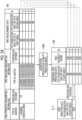
- the prediction unit 67 inputs the prediction data 21 obtained in the prediction process in the previous stage to the preservation stability prediction model 61 in the prediction process in the subsequent stage. Specifically, as illustrated in Fig. 33 , the first prediction data 21_1 obtained in the prediction in the first stage is input to the temperature preservation stability prediction model 61B in the prediction in the second stage. Further, the first prediction data 21_1 obtained in the prediction in the first stage and the second prediction data 21_2 obtained in the prediction in the second stage are input to the temporal deterioration preservation stability prediction model 61C in the prediction in the third stage.
- the candidate preservation solutions in stages in such a way that 1,000 target solutions are narrowed down to 100 target solutions in the first stage, the 100 target solutions are narrowed down to 10 target solutions in the second stage, and one target solution to be adopted as the preservation solution for the biopharmaceutical is selected from the 10 target solutions in the third stage.
- this method it is possible to increase the probability that the prescription of the preservation solution will be suitable for the biopharmaceutical, as compared to a case where one target solution to be adopted as the preservation solution for the biopharmaceutical is selected from, for example, 1,000 target solutions with one evaluation criterion.
- the measurement data 20 is time-series data measured at at least two time points like the SVP aggregation analysis data 40(1W) in the first week and the SVP aggregation analysis data 40(2W) in the second week in the first measurement data 20_1 illustrated in Fig. 12 and the DSC analysis data 41(1W) in the first week and the DSC analysis data 41(2W) in the second week in the second measurement data 20_2 illustrated in Fig. 13 . Therefore, it is possible to improve the prediction accuracy of the first prediction data 21_1 and the second prediction data 21_2 as compared to a case where the measurement data 20 is not time-series data.
- the predicted prescription information 18 includes the type 25 of the additive and the hydrogen ion exponent 26. Therefore, it is possible to select a preservation solution in which at least the type 25 of the additive and the hydrogen ion exponent 26 are suitable for the biopharmaceutical.
- the measurement data 20 includes the SVP aggregation analysis data 40 and the DSC analysis data 41 of the antibody 37 in the prepared solution 35. Therefore, the prediction data 21 that more accurately indicates the preservation stability of the prepared solution 35 can be output from the preservation stability prediction model 61.
- the biopharmaceutical including the antibody 37 as the protein is called an antibody drug and is widely used not only for the treatment of chronic diseases, such as cancer, diabetes, and rheumatoid arthritis, but also for the treatment of rare diseases such as hemophilia and a Crohn's disease. Therefore, according to the example in which the protein is the antibody 37, it is possible to further promote the development of antibody drugs widely used for the treatment of various diseases.
- the training of the aggregation preservation stability prediction model 61A illustrated in Fig. 21 , the training of the temperature preservation stability prediction model 61B illustrated in Fig. 25 , and the training of the temporal deterioration preservation stability prediction model 61C illustrated in Fig. 29 may be performed by the pharmaceutical support server 10 or may be performed by a device other than the pharmaceutical support server 10.
- the aggregation preservation stability prediction model 61A, the temperature preservation stability prediction model 61B, and the temporal deterioration preservation stability prediction model 61C may be continuously trained even after being stored in the storage 50.
- a reliability degree of the prediction data 21 is also input to the preservation stability prediction model.
- the aggregation preservation stability prediction model 130A outputs a first reliability degree 131_1 which is a reliability degree of the prediction of the first prediction data 21_1, in addition to the first prediction data 21_1.
- the first reliability degree 131_1 has a value between 0 and 1.
- the first reliability degree 131_1 obtained in the prediction in the first stage is input to a temperature preservation stability prediction model 130B.
- the temporal deterioration preservation stability prediction model 130C outputs a third reliability degree 131_3 which is a reliability degree of the prediction of the third prediction data 21_3, in addition to the third prediction data 21_3.
- the third reliability degree 131_3 has a value between 0 and 1 similarly to the first reliability degree 131_1 and the second reliability degree 131_2.
- the first reliability degree 131_1 and the second reliability degree 131_2 are examples of the "reliability degree obtained in the prediction process in the previous stage" according to the technology of the present disclosure.
- the first reliability degree 131_1 output by the aggregation preservation stability prediction model 130A is registered as the first reliability degree 131_1L for learning.
- the items of the first reliability degree for learning and the second reliability degree for learning are added to learning data for the temporal deterioration preservation stability prediction model 130C illustrated in Fig. 36 , which is not illustrated.
- the aggregation preservation stability prediction model 130A and the temperature preservation stability prediction model 130B output the first reliability degree 131_1 and the second reliability degree 131_2 in addition to the first prediction data 21_1 and the second prediction data 21_2, respectively.
- the prediction unit 67 also inputs the first reliability degree 131_1 to the temperature preservation stability prediction model 130B and also inputs the first reliability degree 131_1 and the second reliability degree 131_2 to the temporal deterioration preservation stability prediction model 130C. Therefore, it is possible to output the prediction data 21, in which the reliability degree 131 of the prediction data 21 obtained in the prediction process in the previous stage has been added, in the prediction process in the subsequent stage.
- the preservation stability prediction model 61 is configured to receive, as an input, antibody information 146 related to the antibody 37 and a feature amount 147 derived on the basis of the antibody information 146.
- the antibody information 146 and the feature amount 147 are added as learning data together with the predicted prescription information 18L for learning, the measured prescription information 19L for learning, and the like.
- the CPU of the pharmaceutical support server functions as a feature amount derivation unit 145 in addition to the processing units 65 to 68 according to the first embodiment.
- the feature amount derivation unit 145 derives the feature amount 147 on the basis of the first predicted prescription information 18_1 and the antibody information 146.
- the antibody information 146 includes an amino acid sequence 148 of the antibody 37 and a three-dimensional structure 149 of the antibody 37.
- the antibody information 146 is obtained by analyzing the antibody 37 with a well-known technique such as mass spectrometry, X-ray crystal structure analysis, or electron microscopy.
- the amino acid sequence 148 the order of peptide bonds of amino acids constituting the antibody 37, such as asparagine (abbreviated to ASn), glutamine (abbreviated to Glu), and arginine (abbreviated to Arg), is described from an amino terminal to a carboxyl terminal.
- the amino acid sequence 148 is also referred to as a primary structure.
- the feature amount derivation unit 145 derives, as the feature amount 147, a hydrophobic solvent accessible surface area (hereinafter, abbreviated to SASA) 150, a spatial aggregation propensity (hereinafter, abbreviated to SAP) 151, and a spatial charge map (hereinafter, abbreviated to SCM) 152 of the antibody 37.
- SASA 150 hydrophobic solvent accessible surface area
- SAP spatial aggregation propensity
- SCM spatial charge map
- the SASA 150, the SAP 151, and the SCM 152 are derived using a molecular dynamics method.
- the antibody information 146 may be digitized and input to the preservation stability prediction model 61 or 130.
- the information related to the prescription of the target solution that has not been actually adjusted is input as the predicted prescription information 18 to the preservation stability prediction model 61 or the like.
- the present disclosure is not limited thereto.
- information related to the prescription of the prepared solution 35 that has been actually prepared and subjected to the stress test that is, the measured prescription information 19 may be input as the predicted prescription information 18 to the preservation stability prediction model 61 or the like.
- the measurement data 20 is obtained by actually measuring the preservation stability of the prepared solution 35 whose measured prescription information 19 has been input as the predicted prescription information 18. Therefore, the operator determines whether to continue the stress test on the prepared solution 35 without any change or to give up and stop the stress test, on the basis of the prediction data 21 output from the preservation stability prediction model 61 or the like.
- the type 25 of the additive included in the target solution and the hydrogen ion exponent 26 of the target solution are given as examples of the predicted prescription information 18.
- the present disclosure is not limited thereto.
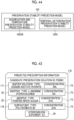
- the predicted prescription information may include a type 171 and a concentration 172 of the buffer solution included in the target solution, a concentration 173 of the additive, and a type 174 and a concentration 175 of the surfactant.
- a plurality of types of buffer solutions, additives, and surfactants are used as can be seen from L-arginine hydrochloride and purified white sugar which are the additives given as an example. In this case, a type and a concentration are registered for each of the plurality of types.
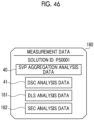
- the SEC analysis data 182 indicates a molecular weight distribution of the antibody 37 in the prepared solution 35.
- the DLS analysis data 181 and the SEC analysis data 182 are used as measurement data indicating the preservation stability of the antibody 37 against aggregation or temporal deterioration.
- the hardware configuration of the computer of the pharmaceutical support server 10 can be appropriately changed according to required performances, such as processing capacity, safety, and reliability. Further, not only the hardware but also an application program, such as the operation program 60, may be duplicated or may be dispersively stored in a plurality of storages in order to ensure safety and reliability.
- circuitry in which circuit elements, such as semiconductor elements, are combined can be used as the hardware structure of these various processors.
Landscapes
- Engineering & Computer Science (AREA)
- General Engineering & Computer Science (AREA)
- Theoretical Computer Science (AREA)
- Health & Medical Sciences (AREA)
- Software Systems (AREA)
- Evolutionary Computation (AREA)
- Physics & Mathematics (AREA)
- Computing Systems (AREA)
- General Physics & Mathematics (AREA)
- Mathematical Physics (AREA)
- Data Mining & Analysis (AREA)
- Computational Linguistics (AREA)
- Artificial Intelligence (AREA)
- Chemical & Material Sciences (AREA)
- Bioinformatics & Cheminformatics (AREA)
- Medicinal Chemistry (AREA)
- Epidemiology (AREA)
- General Health & Medical Sciences (AREA)
- Medical Informatics (AREA)
- Primary Health Care (AREA)
- Public Health (AREA)
- Medical Treatment And Welfare Office Work (AREA)
- Management, Administration, Business Operations System, And Electronic Commerce (AREA)
Abstract
Description
- The technology of the present disclosure relates to a pharmaceutical support device, a method for operating a pharmaceutical support device, and a program for operating a pharmaceutical support device.
- In recent years, biopharmaceuticals have attracted attention due to high drug efficacy and low side effects. The biopharmaceutical has, for example, a protein, such as interferon or an antibody, as an active ingredient. The biopharmaceutical is preserved in a preservation solution. It is important to prescribe a preservation solution (also referred to as formulation prescription) suitable for the biopharmaceutical in order to stably maintain the quality of the biopharmaceutical.
- The preservation solution includes a buffer solution, an additive, and a surfactant. The prescription of the preservation solution is, for example, the type and concentration of each of the buffer solution, the additive, and the surfactant and a hydrogen ion exponent (Potential of Hydrogen (pH) value) of the preservation solution.
- In the related art, in a case where the prescription of the preservation solution is determined, a plurality of types of preservation solutions are prepared, for example, while changing a combination of the buffer solution, the additive, and the surfactant, and the preservation stability of a protein in each preservation solution is checked by an actual test. However, it takes a lot of time and effort to perform this operation. Therefore, for example, as in "Theresa K. Cloutier, etc., Machine Learning Models of Antibody-Excipient Preferential Interactions for Use in Computational Formulation Design, Mol. Pharmaceuticals, 17, 9, 3589-3599, 2020." (hereinafter, referred to as Document 1), a technique has been proposed that predicts preservation stability of a protein against an additive on the basis of information of the protein in a biopharmaceutical and information of the additive in a preservation solution, using a molecular dynamics (MD) method or a machine learning model, without performing any test.
- For the preservation stability of the preservation solution, there are various types of preservation stability, such as preservation stability of the protein against aggregation and preservation stability of the protein against temperature, including the preservation stability of the protein against the additive described in
Document 1. In a case where a plurality of types of preservation stability are collectively predicted in a form of integrated preservation stability, prediction accuracy is reduced. As a result, there is a concern that it will not be possible to successfully search for the prescription of the preservation solution suitable for the biopharmaceutical. However, the plurality of types of preservation stability affect each other. Therefore, even in a case where the plurality of types of preservation stability are predicted individually, there is also a concern that it will not be possible to successfully search for the prescription of the preservation solution suitable for the biopharmaceutical. - An embodiment according to the technology of the present disclosure provides a pharmaceutical support device, a method for operating a pharmaceutical support device, and a program for operating a pharmaceutical support device that can reduce a concern that it will not be possible to successfully search for a prescription of a preservation solution suitable for a biopharmaceutical.
- According to the present disclosure, there is provided a pharmaceutical support device comprising a processor. The processor is configured to: use a plurality of machine learning models that output prediction data indicating preservation stability of a candidate preservation solution, which is a candidate for a preservation solution for a biopharmaceutical, at a future time point and that are provided for a plurality of types of the preservation stability, respectively; perform a prediction process of inputting prescription information related to a prescription of a candidate preservation solution to be predicted and measurement data obtained by actually measuring the preservation stability of a candidate preservation solution actually prepared to the machine learning model such that the prediction data is output from the machine learning model in stages using the plurality of machine learning models; and input the prediction data obtained in the prediction process in a previous stage to the machine learning model in the prediction process in a subsequent stage.
- Preferably, the plurality of machine learning models provided for the plurality of types of preservation stability, respectively, are models corresponding to at least two of preservation stability of a protein included in the biopharmaceutical against aggregation, preservation stability of the protein against temperature, and preservation stability of the protein against temporal deterioration.
- Preferably, the processor is configured to input prescription information of the candidate preservation solution actually prepared to the machine learning model.
- Preferably, the machine learning model outputs a reliability degree of the prediction data together with the prediction data, and the processor is configured to input the reliability degree obtained in the prediction process in the previous stage to the machine learning model in the prediction process in the subsequent stage.
- Preferably, the processor is configured to input a feature amount derived on the basis of protein information related to the protein included in the biopharmaceutical to the machine learning model.
- Preferably, the feature amount includes at least one of a solvent accessible surface area of the protein, a spatial aggregation propensity of the protein, a space charge map of the protein, or an indicator showing compatibility between the protein and an additive included in the candidate preservation solution.
- Preferably, the measurement data is time-series data measured at at least two time points.
- Preferably, the prescription information related to the prescription of the candidate preservation solution to be predicted includes at least one of a type of each of a buffer solution, an additive, and a surfactant included in the candidate preservation solution, a concentration of each of the buffer solution, the additive, and the surfactant, or a hydrogen ion exponent of the candidate preservation solution.
- Preferably, the measurement data includes at least one of aggregation analysis data of sub-visible particles of the protein in the candidate preservation solution included in the biopharmaceutical, analysis data of the protein in the candidate preservation solution by a dynamic light scattering method, analysis data of the protein in the candidate preservation solution by size exclusion chromatography, or analysis data of the protein in the candidate preservation solution by differential scanning calorimetry.
- Preferably, the protein included in the biopharmaceutical is an antibody.
- According to the present disclosure, there is provided a method for operating a pharmaceutical support device. The method comprises: using a plurality of machine learning models that output prediction data indicating preservation stability of a candidate preservation solution, which is a candidate for a preservation solution for a biopharmaceutical, at a future time point and that are provided for a plurality of types of the preservation stability, respectively; performing a prediction process of inputting prescription information related to a prescription of a candidate preservation solution to be predicted and measurement data obtained by actually measuring the preservation stability of a candidate preservation solution actually prepared to the machine learning model such that the prediction data is output from the machine learning model in stages using the plurality of machine learning models; and inputting the prediction data obtained in the prediction process in a previous stage to the machine learning model in the prediction process in a subsequent stage.
- According to the present disclosure, there is provided a program for operating a pharmaceutical support device. The program causes a computer to execute a process comprising: using a plurality of machine learning models that output prediction data indicating preservation stability of a candidate preservation solution, which is a candidate for a preservation solution for a biopharmaceutical, at a future time point and that are provided for a plurality of types of the preservation stability, respectively; performing a prediction process of inputting prescription information related to a prescription of a candidate preservation solution to be predicted and measurement data obtained by actually measuring the preservation stability of a candidate preservation solution actually prepared to the machine learning model such that the prediction data is output from the machine learning model in stages using the plurality of machine learning models; and inputting the prediction data obtained in the prediction process in a previous stage to the machine learning model in the prediction process in a subsequent stage.
- According to the technology of the present disclosure, it is possible to provide a pharmaceutical support device, a method for operating a pharmaceutical support device, and a program for operating a pharmaceutical support device that can reduce a concern that it will not be possible to successfully search for a prescription of a preservation solution suitable for a biopharmaceutical.
-
-
Fig. 1 is a diagram illustrating a pharmaceutical support server and an operator terminal. -
Fig. 2 is a diagram illustrating information exchanged between the pharmaceutical support server and the operator terminal in prediction of preservation stability of a protein against aggregation in a first stage. -
Fig. 3 is a diagram illustrating information exchanged between the pharmaceutical support server and the operator terminal in prediction of preservation stability of the protein against temperature in a second stage. -
Fig. 4 is a diagram illustrating information exchanged between the pharmaceutical support server and the operator terminal in prediction of preservation stability of the protein against temporal deterioration in a third stage. -
Fig. 5 is a diagram illustrating first predicted prescription information. -
Fig. 6 is a diagram illustrating second predicted prescription information. -
Fig. 7 is a diagram illustrating third predicted prescription information. -
Fig. 8 is a diagram illustrating first measured prescription information. -
Fig. 9 is a diagram illustrating second measured prescription information. -
Fig. 10 is a diagram illustrating third measured prescription information. -
Fig. 11 is a diagram illustrating a series of flows of preparation of a prepared solution, addition of an antibody, a stress test, and measurement of measurement data and the measurement data. -
Fig. 12 is a diagram illustrating first measurement data. -
Fig. 13 is a diagram illustrating second measurement data. -
Fig. 14 is a diagram illustrating third measurement data. -
Fig. 15 is a block diagram illustrating a computer constituting the pharmaceutical support server. -
Fig. 16 is a block diagram illustrating processing units of a CPU of the pharmaceutical support server. -
Fig. 17 is a diagram illustrating a preservation stability prediction model. -
Fig. 18 is a diagram illustrating an outline of prediction in the first stage using an aggregation preservation stability prediction model. -
Fig. 19 is a diagram illustrating details of the prediction in the first stage using the aggregation preservation stability prediction model. -
Fig. 20 is a table illustrating learning data for the aggregation preservation stability prediction model. -
Fig. 21 is a diagram illustrating an outline of a process of the aggregation preservation stability prediction model in a learning phase. -
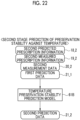
Fig. 22 is a diagram illustrating an outline of the prediction in the second stage using a temperature preservation stability prediction model. -
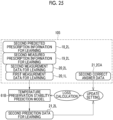
Fig. 23 is a diagram illustrating details of the prediction in the second stage using the temperature preservation stability prediction model. -
Fig. 24 is a table illustrating learning data for the temperature preservation stability prediction model. -
Fig. 25 is a diagram illustrating an outline of a process of the temperature preservation stability prediction model in the learning phase. -
Fig. 26 is a diagram illustrating an outline of prediction in a third stage using the temporal deterioration preservation stability prediction model. -
Fig. 27 is a diagram illustrating details of the prediction in the third stage using a temporal deterioration preservation stability prediction model. -
Fig. 28 is a table illustrating learning data for the temporal deterioration preservation stability prediction model. -
Fig. 29 is a diagram illustrating an outline of a process of the temporal deterioration preservation stability prediction model in the learning phase. -
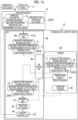
Fig. 30 is a flowchart illustrating a processing procedure of the pharmaceutical support server in the prediction in the first stage. -
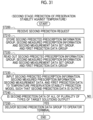
Fig. 31 is a flowchart illustrating a processing procedure of the pharmaceutical support server in the prediction in the second stage. -
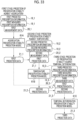
Fig. 32 is a flowchart illustrating a processing procedure of the pharmaceutical support server in the prediction in the third stage. -
Fig. 33 is a diagram illustrating an outline of the prediction in the first stage, the prediction in the second stage, and the prediction in the third stage. -
Fig. 34 is a diagram illustrating an aspect in which the aggregation preservation stability prediction model outputs a first reliability degree together with first prediction data. -
Fig. 35 is a diagram illustrating an aspect in which the first reliability degree is also input to the temperature preservation stability prediction model and a second reliability degree is output from the temperature preservation stability prediction model together with second prediction data. -
Fig. 36 is a diagram illustrating an aspect in which the first reliability degree and the second reliability degree are also input to the temporal deterioration preservation stability prediction model and a third reliability degree is output from the temporal deterioration preservation stability prediction model together with third prediction data. -
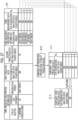
Fig. 37 is a table illustrating learning data for the temperature preservation stability prediction model according to a second embodiment. -
Fig. 38 is a diagram illustrating details of prediction in the first stage using the aggregation preservation stability prediction model according to the second embodiment. -
Fig. 39 is a diagram illustrating a feature amount derivation unit that derives a feature amount on the basis of antibody information. -
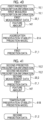
Fig. 40 is a diagram illustrating an aspect in which the feature amount is also input to the aggregation preservation stability prediction model. -
Fig. 41 is a diagram illustrating an aspect in which the feature amount is also input to the temperature preservation stability prediction model. -
Fig. 42 is a diagram illustrating an aspect in which the feature amount is also input to the temporal deterioration preservation stability prediction model. -
Fig. 43 is a diagram illustrating an aspect in which measured prescription information of a prepared solution that has been actually prepared is input as predicted prescription information to the preservation stability prediction model. -
Fig. 44 is a diagram illustrating another example of the preservation stability prediction model. -
Fig. 45 is a diagram illustrating another example of the predicted prescription information. -
Fig. 46 is a diagram illustrating another example of the measurement data. - As illustrated in
Fig. 1 as an example, apharmaceutical support server 10 is connected to anoperator terminal 11 through anetwork 12. Thepharmaceutical support server 10 is an example of a "pharmaceutical support device" according to the technology of the present disclosure. Theoperator terminal 11 is installed, for example, in a pharmaceutical facility and is operated by an operator, such as a pharmacist, who is involved in the production of biopharmaceuticals in the pharmaceutical facility. Theoperator terminal 11 has adisplay 13 and aninput device 14 such as a keyboard and a mouse. Thenetwork 12 is, for example, a wide area network (WAN) such as the Internet or a public communication network. In addition, inFig. 1 , only oneoperator terminal 11 is connected to thepharmaceutical support server 10. However, in practice, a plurality ofoperator terminals 11 in a plurality of pharmaceutical facilities are connected to thepharmaceutical support server 10. - As illustrated in
Fig. 2 as an example, theoperator terminal 11 transmits a first prediction request 15_1 to thepharmaceutical support server 10. The first prediction request 15_1 is a request for thepharmaceutical support server 10 to predict preservation stability of a candidate preservation solution, which is a candidate for a preservation solution for a biopharmaceutical, in a first stage, more specifically, to predict preservation stability of an antibody 37 (seeFig. 11 ), which is an active ingredient of the biopharmaceutical, against aggregation. The first prediction request 15_1 includes a first predicted prescription information group 16_1 and a first measured prescription information and first measurement data set group 17_1. - The first predicted prescription information group 16_1 includes a plurality of first predicted prescription information items 18_1. The first predicted prescription information 18_1 is information related to the prescription of the candidate preservation solution (hereinafter, referred to as a target solution) to be predicted in the first stage. In this embodiment, the target solution is not actually prepared. The first measured prescription information and first measurement data set group 17_1 includes a plurality of first measured prescription information items 19_1 and a plurality of first measurement data items 20_1. The first measured prescription information 19_1 is information related to the prescription of a candidate preservation solution (hereinafter, referred to as a prepared solution) 35 that has been actually prepared (see
Fig. 11 ). The first measurement data 20_1 is data obtained by actually measuring the preservation stability of theprepared solution 35 against aggregation. The operator operates theinput device 14 to input the first predicted prescription information 18_1, the first measured prescription information 19_1, and the first measurement data 20_1. In addition, the first prediction request 15_1 also includes, for example, terminal identification data (ID) for uniquely identifying theoperator terminal 11 which is a transmission source of the first prediction request 15_1, which is not illustrated. - In a case where the first prediction request 15_1 is received, the
pharmaceutical support server 10 derives first prediction data 21_1 indicating the preservation stability of the target solution against aggregation at a future time point. Thepharmaceutical support server 10 derives a plurality of first prediction data items 21_1 for a plurality of first predicted prescription information items 18_1, respectively. Thepharmaceutical support server 10 delivers a first prediction data group 22_1 composed of the plurality of first prediction data items 21_1 to theoperator terminal 11 which is the transmission source of the first prediction request 15_1. - In a case where the first prediction data group 22_1 is received, the
operator terminal 11 displays the plurality of first prediction data items 21_1 on thedisplay 13 such that the operator views the plurality of first prediction data items 21_1. The operator narrows the plurality of target solutions predicted in the first stage down to the target solutions to be predicted in the second stage on the basis of the plurality of first prediction data items 21_1. - As illustrated in
Fig. 3 as an example, after the prediction in the first stage is ended, theoperator terminal 11 transmits a second prediction request 15_2 to thepharmaceutical support server 10. The second prediction request 15_2 is a request for thepharmaceutical support server 10 to predict the preservation stability of the target solutions, which have been narrowed down in the first stage, in the second stage, more specifically, to predict the preservation stability of theantibody 37 against temperature. The second prediction request 15_2 includes a second predicted prescription information group 16_2, a second measured prescription information and second measurement data set group 17_2, and the first prediction data group 22_1. - The second predicted prescription information group 16_2 includes a plurality of second predicted prescription information items 18_2. The second predicted prescription information 18_2 is information related to the prescription of the target solution narrowed down in the first stage. The second measured prescription information and second measurement data set group 17_2 includes a plurality of second measured prescription information items 19_2 and a plurality of second measurement data items 20_2. The second measured prescription information 19_2 is information related to the prescription of the
prepared solution 35. The second measurement data 20_2 is data obtained by actually measuring the preservation stability of theprepared solution 35 against temperature. The operator also operates theinput device 14 to input the second predicted prescription information 18_2, the second measured prescription information 19_2, and the second measurement data 20_2. The first prediction data group 22_1 delivered from thepharmaceutical support server 10 in the prediction in the first stage is attached without any change. In addition, the second prediction request 15_2 also includes, for example, the terminal ID of theoperator terminal 11, which is not illustrated. - In a case where the second prediction request 15_2 is received, the
pharmaceutical support server 10 derives second prediction data 21_2 indicating the preservation stability of the target solution against temperature at a future time point. Thepharmaceutical support server 10 derives a plurality of second prediction data items 21_2 for a plurality of second predicted prescription information items 18_2, respectively. Thepharmaceutical support server 10 delivers a second prediction data group 22_2 composed of the plurality of second prediction data items 21_2 to theoperator terminal 11 which is the transmission source of the second prediction request 15_2. - In a case where the second prediction data group 22_2 is received, the
operator terminal 11 displays the plurality of second prediction data items 21_2 on thedisplay 13 such that the operator views the plurality of second prediction data items 21_2. The operator narrows the plurality of target solutions predicted in the second stage down to the target solutions to proceed to prediction in a third stage on the basis of the plurality of second prediction data items 21_2. - As illustrated in
Fig. 4 as an example, after the prediction in the second stage is ended, theoperator terminal 11 transmits a third prediction request 15_3 to thepharmaceutical support server 10. The third prediction request 15_3 is a request for thepharmaceutical support server 10 to predict the preservation stability of the target solutions, which have been narrowed down in the second stage, in the third stage, more specifically, to predict the preservation stability of theantibody 37 against temporal deterioration. The third prediction request 15_3 includes a third predicted prescription information group 16_3, a third measured prescription information and third measurement data set group 17_3, the first prediction data group 22_1, and the second prediction data group 22_2. - The third predicted prescription information group 16_3 includes a plurality of third predicted prescription information items 18_3. The third predicted prescription information 18_3 is information related to the prescriptions of the target solutions narrowed down in the second stage. The third measured prescription information and third measurement data set group 17_3 includes a plurality of third measured prescription information items 19_3 and a plurality of third measurement data items 20_3. The third measured prescription information 19_3 is information related to the prescription of the
prepared solution 35. The third measurement data 20_3 is data obtained by actually measuring the preservation stability of theprepared solution 35 against temporal deterioration. The operator also operates theinput device 14 to input the third predicted prescription information 18_3, the third measured prescription information 19_3, and the third measurement data 20_3. The first prediction data group 22_1 and the second prediction data group 22_2 delivered from thepharmaceutical support server 10 in the prediction in the first stage and the second stage are attached without any change. In addition, the third prediction request 15_3 also includes, for example, the terminal ID of theoperator terminal 11, which is not illustrated. - In a case where the third prediction request 15_3 is received, the
pharmaceutical support server 10 derives third prediction data 21_3 indicating preservation stability of the target solution against temporal deterioration at a future time point. Thepharmaceutical support server 10 derives a plurality of third prediction data items 21_3 for a plurality of third predicted prescription information items 18_3, respectively. Thepharmaceutical support server 10 delivers a third prediction data group 22_3 composed of the plurality of third prediction data items 21_3 to theoperator terminal 11 which is the transmission source of the third prediction request 15_3. - In a case where the third prediction data group 22_3 is received, the
operator terminal 11 displays the plurality of third prediction data items 21_3 on thedisplay 13 such that the operator views the plurality of third prediction data items 21_3. The operator selects a target solution to be adopted as the preservation solution for the biopharmaceutical from the plurality of target solutions predicted in the second stage on the basis of the plurality of third prediction data items 21_3. - In addition, hereinafter, in a case where the first prediction request 15_1, the second prediction request 15_2, and the third prediction request 15_3 are not particularly distinguished from one another, they may be collectively referred to as a
prediction request 15. Similarly, the first predicted prescription information group 16_1, the second predicted prescription information group 16_2, and the third predicted prescription information group 16_3 may be collectively referred to as a predictedprescription information group 16. In addition, the first measured prescription information and first measurement data set group 17_1, the second measured prescription information and second measurement data set group 17_2, and the third measured prescription information and third measurement data set group 17_3 may be collectively referred to as a measured prescription information and measurement data setgroup 17. - The first predicted prescription information 18_1, the second predicted prescription information 18_2, and the third predicted prescription information 18_3 may be collectively referred to as predicted
prescription information 18. Further, the first measured prescription information 19_1, the second measured prescription information 19_2, and the third measured prescription information 19_3 may be collectively referred to as measuredprescription information 19. In addition, the first measurement data 20_1, the second measurement data 20_2, and the third measurement data 20_3 may be collectively referred to asmeasurement data 20. Further, the first prediction data 21_1, the second prediction data 21_2, and the third prediction data 21_3 may be collectively referred to asprediction data 21. Furthermore, the first prediction data group 22_1, the second prediction data group 22_2, and the third prediction data group 22_3 may be collectively referred to as aprediction data group 22. - The predicted
prescription information 18 is an example of "prescription information related to a prescription of a candidate preservation solution to be predicted" according to the technology of the present disclosure. The measuredprescription information 19 is an example of "prescription information of a candidate preservation solution actually prepared" according to the technology of the present disclosure. - As illustrated in
Fig. 5 as an example, the first predicted prescription information 18_1 includes atype 25 of an additive included in the target solution and ahydrogen ion exponent 26 of the target solution. As illustrated inFig. 6 as an example, the second predicted prescription information 18_2 includes apreservation temperature 27 in addition to thetype 25 of the additive and thehydrogen ion exponent 26. As illustrated inFig. 7 as an example, the third predicted prescription information 18_3 includes apreservation period 28 in addition to thetype 25 of the additive and thehydrogen ion exponent 26. A solution ID for uniquely identifying the target solution is given to the predictedprescription information 18. The operator creates the predictedprescription information 18, relying on the information of theantibody 37, his/her own experience, and the like. For example, thetype 25 of the additive is digitized as follows: an additive A is digitized as "1"; and an additive B is digitized as "2". - As illustrated in
Fig. 8 as an example, the first measured prescription information 19_1 includes thetype 25 of the additive included in theprepared solution 35 and thehydrogen ion exponent 26 of theprepared solution 35. As illustrated inFig. 9 as an example, the second measured prescription information 19_2 includes thepreservation temperature 27 in addition to thetype 25 of the additive and thehydrogen ion exponent 26. As illustrated inFig. 10 as an example, the third measured prescription information 19_3 includes thepreservation period 28 in addition to thetype 25 of the additive and thehydrogen ion exponent 26. The solution ID is also given to the measuredprescription information 19. The measuredprescription information 19 is created by using, for example, twotypes 25 of additives and dividing thehydrogen ion exponent 26 into, for example, 6.5, 7.0, and 7.5 at an interval of 0.5. - As illustrated in
Fig. 11 as an example, the operator actually prepares theprepared solution 35 in atest tube 36 on the basis of the measuredprescription information 19. Then, theantibody 37 is added to theprepared solution 35. Then, a stress test including the repetition of freezing and thawing, stirring, and heating is performed for a predetermined period (for example, 4 weeks to 8 weeks). During the stress test, themeasurement data 20 is measured by ameasurement device 38.Fig. 11 illustrates an example in which measurement data 20(1W), measurement data 20(2W), measurement data 20(3W), measurement data 20(4W), ... are measured in the first week, the second week, the third week, the fourth week, ... of the stress test, respectively. Themeasurement device 38 transmits themeasurement data 20 to theoperator terminal 11. - The
measurement data 20 includes aggregation analysis data (hereinafter, referred to as SVP aggregation analysis data) 40 of sub-visible particles (SVPs) of theantibody 37 in theprepared solution 35 and analysis data (hereinafter, referred to as DSC analysis data) 41 of theantibody 37 in theprepared solution 35 by differential scanning calorimetry (DSC) as illustrated in the measurement data 20(1W) in the first week. The SVPaggregation analysis data 40 indicates the amount of SVPs of theantibody 37 in theprepared solution 35 that causes a reduction in the drug efficacy of the biopharmaceutical. It can be said that, as the value of the SVPaggregation analysis data 40 is larger, the preservation stability of theantibody 37 against aggregation is higher. TheDSC analysis data 41 indicates values related to thermophysical property values such as the glass transition point and crystallization temperature of theantibody 37 in theprepared solution 35. It can be said that, as the value of theDSC analysis data 41 is smaller, the preservation stability of theantibody 37 against temperature is higher. The SVPaggregation analysis data 40 and theDSC analysis data 41 in each week are distinguished by attaching, for example, (1W) indicating the first week and (2W) indicating the second week. - In addition, in
Fig. 11 , for convenience, only onemeasurement device 38 is illustrated. However, in practice,various measurement devices 38 that measure the SVPaggregation analysis data 40 and theDSC analysis data 41 are prepared. Further, inFig. 11 , only the preparation of oneprepared solution 35, the addition of theantibody 37, the stress test, and the measurement of themeasurement data 20 are illustrated. However, in practice, the preparation, the addition, the stress test, and the measurement of themeasurement data 20 are performed for each of a plurality of types ofprepared solutions 35. - As illustrated in
Fig. 12 as an example, the first measurement data 20_1 includes the SVP aggregation analysis data 40(1W) in the first week and the SVP aggregation analysis data 40(2W) in the second week. The SVP aggregation analysis data 40(1W) in the first week and the SVP aggregation analysis data 40(2W) in the second week are an example of "time-series data measured at at least two time points" according to the technology of the present disclosure. As illustrated inFig. 13 as an example, the second measurement data 20_2 includes the DSC analysis data 41(1W) in the first week and the DSC analysis data 41(2W) in the second week. The DSC analysis data 41(1W) in the first week and the DSC analysis data 41(2W) in the second week are an example of the "time-series data measured at at least two time points" according to the technology of the present disclosure. As illustrated inFig. 14 as an example, the third measurement data 20_3 includes the SVP aggregation analysis data 40(4W) in the fourth week. Similarly to the predictedprescription information 18 and the like, themeasurement data 20 is given the solution ID for uniquely identifying the prepared solution. - As illustrated in
Fig. 15 as an example, a computer constituting thepharmaceutical support server 10 comprises astorage 50, amemory 51, a central processing unit (CPU) 52, acommunication unit 53, adisplay 54, and aninput device 55. These units are connected to one another through abus line 56. - The
storage 50 is a hard disk drive that is provided in the computer constituting thepharmaceutical support server 10 or that is connected to the computer through a cable or a network. Alternatively, thestorage 50 is a disk array in which a plurality of hard disk drives are connected. Thestorage 50 stores, for example, a control program, such as an operating system, various application programs, and various types of data associated with these programs. In addition, a solid state drive may be used instead of the hard disk drive. - The
memory 51 is a work memory used by theCPU 52 to perform processes. TheCPU 52 loads the program stored in thestorage 50 to thememory 51 and performs a process corresponding to the program. Therefore, theCPU 52 controls the overall operation of each unit of the computer. TheCPU 52 is an example of a "processor" according to the technology of the present disclosure. In addition, thememory 51 may be provided in theCPU 52. - The
communication unit 53 controls the transmission of various types of information to an external device such as theoperator terminal 11. Thedisplay 54 displays various screens. The various screens have operation functions by a graphical user interface (GUI). The computer constituting thepharmaceutical support server 10 receives an input of an operation instruction from theinput device 55 through the various screens. Theinput device 55 is, for example, a keyboard, a mouse, a touch panel, and a microphone for voice input. - As illustrated in
Fig. 16 as an example, anoperation program 60 is stored in thestorage 50 of thepharmaceutical support server 10. Theoperation program 60 is an application program for causing the computer to function as thepharmaceutical support server 10. That is, theoperation program 60 is an example of "a program for operating a pharmaceutical support device" according to the technology of the present disclosure. A preservationstability prediction model 61 is also stored in thestorage 50. - In a case where the
operation program 60 is started, theCPU 52 of the computer constituting thepharmaceutical support server 10 functions as a receivingunit 65, a read and write (hereinafter, abbreviated to RW)control unit 66, aprediction unit 67, and adelivery control unit 68 in cooperation with thememory 51 and the like. - The receiving
unit 65 receives theprediction request 15 from theoperator terminal 11. As described above, theprediction request 15 includes the predictedprescription information group 16 and the measured prescription information and measurement data setgroup 17. In a case of the second prediction request 15_2 and the third prediction request 15_3, the first prediction data group 22_1 obtained in the prediction in the first stage and the second prediction data group 22_2 obtained in the prediction in the second stage (hereinafter, they are collectively referred to as a previous-stage prediction data group 22PS). Therefore, the receivingunit 65 receives theprediction request 15 to acquire the predictedprescription information group 16, the measured prescription information and measurement data setgroup 17, and the previous-stage prediction data group 22PS (in a case where the previous-stage prediction data group 22PS is included). The receivingunit 65 outputs the predictedprescription information group 16, the measured prescription information and measurement data setgroup 17, and the previous-stage prediction data group 22PS (in a case where the previous-stage prediction data group 22PS is included) to theRW control unit 66. In addition, the receivingunit 65 outputs the terminal ID of the operator terminal 11 (not illustrated) to thedelivery control unit 68. - The
RW control unit 66 controls the storage of various types of data in thestorage 50 and the reading-out of various types of data in thestorage 50. For example, theRW control unit 66 stores the predictedprescription information group 16, the measured prescription information and measurement data setgroup 17, and the previous-stage prediction data group 22PS (in a case where the previous-stage prediction data group 22PS is included) from the receivingunit 65 in thestorage 50. In addition, theRW control unit 66 reads out the predictedprescription information group 16, the measured prescription information and measurement data setgroup 17, and the previous-stage prediction data group 22PS (in a case where the previous-stage prediction data group 22PS is included) from thestorage 50 and outputs the predictedprescription information group 16, the measured prescription information and measurement data setgroup 17, and the previous-stage prediction data group 22PS (in a case where the previous-stage prediction data group 22PS is included) to theprediction unit 67. Furthermore, theRW control unit 66 reads out the preservationstability prediction model 61 from thestorage 50 and outputs the preservationstability prediction model 61 to theprediction unit 67. - The
prediction unit 67 derives theprediction data group 22 on the basis of the predictedprescription information group 16, the measured prescription information and measurement data setgroup 17, and the previous-stage prediction data group 22PS (in a case where the previous-stage prediction data group 22PS is included), using the preservationstability prediction model 61. Theprediction unit 67 outputs the derivedprediction data group 22 to thedelivery control unit 68. - The
delivery control unit 68 performs control to deliver theprediction data group 22 to theoperator terminal 11 which is the transmission source of theprediction request 15. In this case, thedelivery control unit 68 specifies theoperator terminal 11, which is the transmission source of theprediction request 15, on the basis of the terminal ID from the receivingunit 65. - As illustrated in
Fig. 17 as an example, the preservationstability prediction model 61 is composed of an aggregation preservationstability prediction model 61A, a temperature preservationstability prediction model 61B, and a temporal deterioration preservationstability prediction model 61C. The aggregation preservationstability prediction model 61A, the temperature preservationstability prediction model 61B, and the temporal deterioration preservationstability prediction model 61C are constructed by, for example, a neural network or a support vector regression (SVR) algorithm. The aggregation preservationstability prediction model 61A, the temperature preservationstability prediction model 61B, and the temporal deterioration preservationstability prediction model 61C are examples of a "machine learning model" according to the technology of the present disclosure. - As illustrated in
Fig. 18 as an example, in the prediction in the first stage, theprediction unit 67 inputs the first predicted prescription information 18_1, the first measured prescription information 19_1, and the first measurement data 20_1 to the aggregation preservationstability prediction model 61A. Then, the first prediction data 21_1 is output from the aggregation preservationstability prediction model 61A. In addition, similarly to the first predicted prescription information 18_1 and the like, the first prediction data 21_1 is given the solution ID. - As illustrated in Tables 80 and 81 of
Fig. 19 as an example, in the prediction in the first stage, theprediction unit 67 inputs the first predicted prescription information 18_1 and one of sets of the first measured prescription information 19_1 and the first measurement data 20_1 of a plurality of types ofprepared solutions 35 to the aggregation preservationstability prediction model 61A such that temporary first prediction data is output from the aggregation preservationstability prediction model 61A. Theprediction unit 67 repeats this process on the plurality of types ofprepared solutions 35 such that a plurality of temporary first prediction data items are output from the aggregation preservationstability prediction model 61A. Theprediction unit 67 calculates an average value of the plurality of temporary first prediction data items and sets the calculated average value as the first prediction data 21_1. The temporary first prediction data and thus the first prediction data 21_1 are data that predicts the SVP aggregation analysis data 40(4W) of the target solution in the fourth week which is represented by the first predicted prescription information 18_1. In addition, the first prediction data 21_1 may be the median value, maximum value, or minimum value of the plurality of temporary first prediction data items, instead of the average value, or may be a weighted average value calculated by multiplying the plurality of temporary first prediction data items by an appropriate weight. -
Fig. 19 illustrates a case where five temporary first prediction data items of No. 1 to No. 5 are derived for five types ofprepared solutions 35 of No. 1 to No. 5 in which thetype 25 of the additive is any one of L-arginine hydrochloride or L-histidine hydrochloride and the hydrogen ion exponent is any one of 6.5, 7.0, or 7.5. For the temporary first prediction data, No. 1 is 320, No. 2, No. 3, and No. 5 are 250, and No. 4 is 280. Therefore, the first prediction data 21_1 is (320 + 250 + 250 + 280 + 250)/5 = 270. - As in a table 85 illustrated in
Fig. 20 as an example, as learningdata 90 for the aggregation preservationstability prediction model 61A, a plurality of sets of first predicted prescription information 18_1L for learning, first measured prescription information 19_1L for learning, first measurement data 20_1L for learning, and first correct answer data 21_1CA (seeFig. 21 ) are stored in, for example, thestorage 50. The same content is registered in the first predicted prescription information 18_1L for learning and the first measured prescription information 19_1L for learning. The first measurement data 20_1L for learning is data obtained by actually measuring the preservation stability of theprepared solution 35 in which the first measured prescription information 19_1L for learning has been registered and is the SVP aggregation analysis data 40(1W) in the first week and the SVP aggregation analysis data 40(2W) in the second week. - Similarly, the first correct answer data 21_1CA is data obtained by actually measuring the preservation stability of the
prepared solution 35 in which the first measured prescription information 19_1L for learning has been registered. Specifically, the first correct answer data 21_1CA is the SVP aggregation analysis data 40(4W) in the fourth week. In addition, in a case where the first measurement data 20_1L for learning is not actually measured, a value prepared in advance or a mask indicating that there is no data is registered. - As illustrated in
Fig. 21 as an example, the learningdata 90 is given in a learning phase of the aggregation preservationstability prediction model 61A. The learningdata 90 is a set of the first predicted prescription information 18_1L for learning, the first measured prescription information 19_1L for learning, the first measurement data 20_1L for learning, and the first correct answer data 21_1CA registered in the table 85 illustrated inFig. 20 . The first predicted prescription information 18_1L for learning, the first measured prescription information 19_1L for learning, and the first measurement data 20_1L for learning in the learningdata 90 are input to the aggregation preservationstability prediction model 61A. As a result, first prediction data 21_1L for learning is output from the aggregation preservationstability prediction model 61A. - Loss calculation of the aggregation preservation
stability prediction model 61A using a loss function is performed on the basis of the first prediction data 21_1L for learning and the first correct answer data 21_1CA. Then, the update setting of various coefficients of the aggregation preservationstability prediction model 61A is performed according to a result of the loss calculation, and the aggregation preservationstability prediction model 61A is updated according to the update setting. - In the learning phase of the aggregation preservation
stability prediction model 61A, the series of processes of the input of the first predicted prescription information 18_1L for learning, the first measured prescription information 19_1L for learning, and the first measurement data 20_1L for learning to the aggregation preservationstability prediction model 61A, the output of the first prediction data 21_1L for learning from the aggregation preservationstability prediction model 61A, the loss calculation, the update setting, and the update of the aggregation preservation stability prediction model 61Ais repeated while the learningdata 90 is exchanged. The repetition of the series of processes is ended in a case where the prediction accuracy of the first prediction data 21_1L for learning with respect to the first correct answer data 21_1CA has reached a predetermined set level. The aggregation preservationstability prediction model 61A in which the prediction accuracy has reached the set level in this manner is stored in thestorage 50 and is used by theprediction unit 67. In addition, the learning may be ended in a case where the series of processes is repeated a set number of times, regardless of the prediction accuracy of the first prediction data 21_1L for learning with respect to the first correct answer data 21_1CA. - As illustrated in
Fig. 22 as an example, in the prediction in the second stage, theprediction unit 67 inputs the second predicted prescription information 18_2, thepreservation temperature 27 of the second measured prescription information 19_2, the second measurement data 20_2, and the first prediction data 21_1 to the temperature preservationstability prediction model 61B. Then, the second prediction data 21_2 is output from the temperature preservationstability prediction model 61B. In addition, similarly to the second predicted prescription information 18_2 and the like, the second prediction data 21_2 is also given the solution ID. The prediction in the second stage by the temperature preservationstability prediction model 61B is an example of a "prediction process in a subsequent stage" according to the technology of the present disclosure. In addition, the prediction in the first stage by the aggregation preservationstability prediction model 61A is an example of a "prediction process in a previous stage" according to the technology of the present disclosure, and the first prediction data 21_1 is an example of "prediction data obtained in the prediction process in the previous stage" according to the technology of the present disclosure. - As illustrated in tables 95 and 96 of
Fig. 23 as an example, in the prediction in the second stage, theprediction unit 67 inputs the second predicted prescription information 18_2, one of sets of thepreservation temperature 27 of the second measured prescription information 19_2 and the second measurement data 20_2 of a plurality of types ofprepared solutions 35, and the first prediction data 21_1 to the temperature preservationstability prediction model 61B such that temporary second prediction data is output from the temperature preservationstability prediction model 61B. Theprediction unit 67 repeats this process on the plurality of types ofprepared solutions 35 such that a plurality of temporary second prediction data items are output from the temperature preservationstability prediction model 61B. Theprediction unit 67 calculates an average value of the plurality of temporary second prediction data items and sets the calculated average value as the second prediction data 21_2. The temporary second prediction data and thus the second prediction data 21_2 are data that predicts the DSC analysis data 41(4W) in the fourth week in a case where the target solution represented by the second predicted prescription information 18_2 is heated at thepreservation temperature 27. In addition, instead of the average value, the second prediction data 21_2 may be the median value, maximum value, or minimum value of the plurality of temporary second prediction data items or may be a weighted average value calculated by multiplying the plurality of temporary second prediction data items by an appropriate weight. - As in the case illustrated in
Fig. 19 ,Fig. 23 illustrates a case where five temporary second prediction data items of No. 1 to No. 5 are derived for five types ofprepared solutions 35 of No. 1 to No. 5 in which thetype 25 of the additive is any one of L-arginine hydrochloride or L-histidine hydrochloride, the hydrogen ion exponent is any one of 6.5, 7.0, or 7.5, and thepreservation temperature 27 is any one of 40°C, 45°C, or 50°C. For the temporary second prediction data, No. 1 and No. 2 are 50, No. 3 is 48, No. 4 is 62, and No. 5 is 60. Therefore, the second prediction data 21_1 is (50 + 50 + 48 + 62 + 60)/5 = 54. - As illustrated in a table 100 of
Fig. 24 as an example, as learningdata 105 for the temperature preservationstability prediction model 61B, a plurality of sets of second predicted prescription information 18_2L for learning, thepreservation temperature 27 of second measured prescription information 19_2L for learning, the first measurement data 20_1L for learning, second measurement data 20_2L for learning, and second correct answer data 21_2CA (seeFig. 25 ) are stored in, for example, thestorage 50. The same content is registered in thepreservation temperature 27 of the second predicted prescription information for learning 18_2L and thepreservation temperature 27 of the second measured prescription information for learning 19_2L. The first measurement data 20_1L for learning is data obtained by actually measuring the preservation stability of theprepared solution 35 in which the second measured prescription information 19_2L for learning has been registered and is the SVP aggregation analysis data 40(4W) in the fourth week. The first measurement data 20_1L for learning is data corresponding to the first prediction data 21_1 in the operation phase of the temperature preservationstability prediction model 61B illustrated inFigs. 22 and23 . The second measurement data 20_2L for learning is data obtained by actually measuring the preservation stability of theprepared solution 35 in which the second measured prescription information 19_2L for learning has been registered and is the DSC analysis data 41(1W) in the first week and the DSC analysis data 41(2W) in the second week. - Further, similarly, the second correct answer data 21_2CA is data obtained by actually measuring the preservation stability of the
prepared solution 35 in which the second measured prescription information 19_2L for learning has been registered. Specifically, the second correct answer data 21_2CA is the DSC analysis data 41(4W) in the fourth week. In addition, in a case where the first measurement data 20_1L for learning is not actually measured, a value prepared in advance or a mask indicating that there is no data is registered. Alternatively, the first prediction data 21_1 predicted by the aggregation preservationstability prediction model 61A may be registered as the first measurement data 20_1L for learning. - As illustrated in
Fig. 25 as an example, the learningdata 105 is given in a learning phase of the temperature preservationstability prediction model 61B. The learningdata 105 is a set of the second predicted prescription information 18_2L for learning, the second measured prescription information 19_2L for learning, the first measurement data 20_1L for learning, the second measurement data 20_2L for learning, and the second correct answer data 21_2CA registered in the table 100 illustrated inFig. 24 . The second predicted prescription information 18_2L for learning, the second measured prescription information 19_2L for learning, the first measurement data 20_1L for learning, and the second measurement data 20_2L for learning in the learningdata 105 are input to the temperature preservationstability prediction model 61B. As a result, second prediction data 21_2L for learning is output from the temperature preservationstability prediction model 61B. - Loss calculation of the temperature preservation
stability prediction model 61B using the loss function is performed on the basis of the second prediction data 21_2L for learning and the second correct answer data 21_2CA. Then, the update setting of various coefficients of the temperature preservationstability prediction model 61B is performed according to a result of the loss calculation, and the temperature preservationstability prediction model 61B is updated according to the update setting. - In the learning phase of the temperature preservation
stability prediction model 61B, the series of processes of the input of the second predicted prescription information 18_2L for learning, the second measured prescription information 19_2L for learning, the first measurement data 20_1L for learning, and the second measurement data 20_2L for learning to the temperature preservationstability prediction model 61B, the output of the second prediction data 21_2L for learning from the temperature preservationstability prediction model 61B, the loss calculation, the update setting, and the update of the temperature preservationstability prediction model 61B is repeated while the learningdata 105 is exchanged. The repetition of the series of processes is ended in a case where the prediction accuracy of the second prediction data 21_2L for learning with respect to the second correct answer data 21_2CA has reached a predetermined set level. The temperature preservationstability prediction model 61B in which the prediction accuracy has reached the set level in this manner is stored in thestorage 50 and is used by theprediction unit 67. In addition, the learning may be ended in a case where the series of processes is repeated a set number of times, regardless of the prediction accuracy of the second prediction data 21_2L for learning with respect to the second correct answer data 21_2CA. - As illustrated in
Fig. 26 as an example, in the prediction in the third stage, theprediction unit 67 inputs third predicted prescription information 18_3, thepreservation period 28 of third measured prescription information 19_3, third measurement data 20_3, the first prediction data 21_1, and the second prediction data 21_2 to the temporal deterioration preservationstability prediction model 61C. Then, third prediction data 21_3 is output from the temporal deterioration preservationstability prediction model 61C. In addition, similarly to the third predicted prescription information 18_3 and the like, the third prediction data 21_3 is given the solution ID. The prediction in the third stage by the temporal deterioration preservationstability prediction model 61C is an example of the "prediction process in the subsequent stage" according to the technology of the present disclosure. In addition, the prediction in the first stage by the aggregation preservationstability prediction model 61A and the prediction in the second stage by the temperature preservationstability prediction model 61B are examples of the "prediction process in the previous stage" according to the technology of the present disclosure, and the first prediction data 21_1 and the second prediction data 21_2 are examples of the "prediction data obtained in the prediction process in the previous stage" according to the technology of the present disclosure. That is, the prediction in the second stage by the temperature preservationstability prediction model 61B is the "prediction process in the subsequent stage" with respect to the prediction in the first stage and is the "prediction process in the previous stage" with respect to the prediction in the third stage. - As illustrated in tables 110 and 111 of
Fig. 27 as an example, in the prediction in the third stage, theprediction unit 67 inputs the third predicted prescription information 18_3, one of sets of thepreservation period 28 of the third measured prescription information 19_3 and the third measurement data 20_3 of a plurality of types ofprepared solutions 35, the first prediction data 21_1, and the second prediction data 21_2 to the temporal deterioration preservationstability prediction model 61C such that temporary third prediction data is output from the temporal deterioration preservationstability prediction model 61C. Theprediction unit 67 repeats this process on the plurality of types ofprepared solutions 35 such that a plurality of temporary third prediction data items are output from the temporal deterioration preservationstability prediction model 61C. Theprediction unit 67 calculates an average value of the plurality of temporary third prediction data items and sets the calculated average value as the third prediction data 21_3. The temporary third prediction data and thus the third prediction data 21_3 are data that predicts the SVPaggregation analysis data 40 of the target solution represented by the third predicted prescription information 18_3 in the preservation period 28 (here, in the eighth week). In addition, instead of the average value, the third prediction data 21_3 may be the median value, maximum value, or minimum value of the plurality of temporary third prediction data items or may be a weighted average value calculated by multiplying the plurality of temporary third prediction data items by an appropriate weight. - As in the cases illustrated in
Figs. 19 and23 ,Fig. 27 illustrates a case where five temporary third prediction data items of No. 1 to No. 5 are derived for five types ofprepared solutions 35 of No. 1 to No. 5 in which thetype 25 of the additive is any one of L-arginine hydrochloride or L-histidine hydrochloride, the hydrogen ion exponent is any one of 6.5, 7.0, or 7.5, and thepreservation period 28 is any one of six weeks, seven weeks, or eight weeks. For the temporary third prediction data, No. 1 is 320, No. 2 and No. 3 are 380, No. 4 is 290, and No. 5 is 420. Therefore, the third prediction data 21_1 is (320 + 380 + 380 + 290 + 420)/5 = 358. - As illustrated in a table 115 illustrated in
Fig. 28 as an example, as learningdata 120 for the temporal deterioration preservationstability prediction model 61C, a plurality of sets of third predicted prescription information 18_3L for learning, thepreservation period 28 of third measured prescription information 19_3L for learning, the first measurement data 20_1L for learning, the second measurement data 20_2L for learning, third measurement data 20_3L for learning, and third correct answer data 21_3CA (seeFig. 29 ) are stored in, for example, thestorage 50. The same content is registered in thepreservation period 28 of the third predicted prescription information 18_3L for learning and thepreservation period 28 of the third measured prescription information 19_3L for learning. The first measurement data 20_1L for learning is data obtained by actually measuring the preservation stability of theprepared solution 35 in which the third measured prescription information 19_3L for learning has been registered and is the SVP aggregation analysis data 40(4W) in the fourth week. The first measurement data 20_1L for learning is data corresponding to the first prediction data 21_1 in the operation phase of the temporal deterioration preservationstability prediction model 61C illustrated inFigs. 26 and27 . The second measurement data 20_2L for learning is data obtained by actually measuring the preservation stability of theprepared solution 35 in which the third measured prescription information 19_3L for learning has been registered and is the DSC analysis data 41(4W) in the fourth week. The second measurement data 20_2L for learning is data corresponding to the second prediction data 21_2 in the operation phase of the temporal deterioration preservationstability prediction model 61C illustrated inFigs. 26 and27 . - Similarly, the third correct answer data 21_3CA is data obtained by actually measuring the preservation stability of the
prepared solution 35 in which the third measured prescription information 19_3L for learning has been registered. Specifically, the third correct answer data 21_3CA is the SVPaggregation analysis data 40 in thepreservation period 28 of the third measured prescription information 19_3L for learning. In addition, in a case where the first measurement data 20_1L for learning is not actually measured, a value prepared in advance or a mask indicating that there is no data is registered. Alternatively, the first prediction data 21_1 predicted by the aggregation preservationstability prediction model 61A may be registered as the first measurement data 20_1L for learning. Similarly, in a case where the second measurement data 20_2L for learning is not actually measured, a value prepared in advance or a mask indicating that there is no data may be registered, or the second prediction data 21_2 predicted by the temperature preservationstability prediction model 61B may be registered as the second measurement data 20_2L for learning. - As illustrated in
Fig. 29 as an example, the learningdata 120 is given in a learning phase of the temporal deterioration preservationstability prediction model 61C. The learningdata 120 is a set of the third predicted prescription information 18_3L for learning, the third measured prescription information 19_3L for learning, the first measurement data 20_1L for learning, the second measurement data 20_2L for learning, the third measurement data 20_3L for learning, and the third correct answer data 21_3CA registered in the table 115 illustrated inFig. 28 . The third predicted prescription information 18_3L for learning, the third measured prescription information 19_3L for learning, the first measurement data 20_1L for learning, the second measurement data 20_2L for learning, and the third measurement data 20_3L for learning in the learningdata 120 are input to the temporal deterioration preservationstability prediction model 61C. As a result, third prediction data 21_3L for learning is output from the temporal deterioration preservationstability prediction model 61C. - Loss calculation of the temporal deterioration preservation
stability prediction model 61C using the loss function is performed on the basis of the third prediction data 21_3L for learning and the third correct answer data 21_3CA. Then, the update setting of various coefficients of the temporal deterioration preservationstability prediction model 61C is performed according to a result of the loss calculation, and the temporal deterioration preservationstability prediction model 61C is updated according to the update setting. - In the learning phase of the temporal deterioration preservation
stability prediction model 61C, the series of processes of the input of the third predicted prescription information 18_3L for learning, the third measured prescription information 19_3L for learning, the first measurement data 20_1L for learning, the second measurement data 20_2L for learning, and the third measurement data 20_3L for learning to the temporal deterioration preservationstability prediction model 61C, the output of the third prediction data 21_3L for learning from the temporal deterioration preservationstability prediction model 61C, the loss calculation, the update setting, and the update of the temporal deterioration preservationstability prediction model 61C is repeated while the learningdata 120 is exchanged. The repetition of the series of processes is ended in a case where the prediction accuracy of the third prediction data 21_3L for learning with respect to the third correct answer data 21_3CAhas reached a predetermined set level. The temporal deterioration preservationstability prediction model 61C in which the prediction accuracy has reached the set level in this manner is stored in thestorage 50 and is used by theprediction unit 67. In addition, the learning may be ended in a case where the series of processes is repeated a set number of times, regardless of the prediction accuracy of the third prediction data 21_3L for learning with respect to the third correct answer data 21_3CA. - Next, the operation of the above-described configuration will be described with reference to flowcharts illustrated in
Figs. 30 ,31 , and32 . First, in a case where theoperation program 60 is started in thepharmaceutical support server 10, theCPU 52 of thepharmaceutical support server 10 functions as the receivingunit 65, theRW control unit 66, theprediction unit 67, and thedelivery control unit 68 as illustrated inFig. 16 . - The operator inputs the desired first predicted prescription information 18_1, first measured prescription information 19_1, and first measurement data 20_1 through the
input device 14 in order to predict the preservation stability of theantibody 37 against aggregation in the first stage. Then, the first prediction request 15_1 including the first predicted prescription information group 16_1 and the first measured prescription information and first measurement data set group 17_1 is transmitted from theoperator terminal 11 to thepharmaceutical support server 10. - As illustrated in
Fig. 30 as an example, in thepharmaceutical support server 10, the first prediction request 15_1 is received by the receivingunit 65. Therefore, the first predicted prescription information group 16_1 and the first measured prescription information and first measurement data set group 17_1 are acquired (Step ST100). The first predicted prescription information group 16_1 and the first measured prescription information and first measurement data set group 17_1 are output from the receivingunit 65 to theRW control unit 66 and are stored in thestorage 50 under the control of the RW control unit 66 (Step ST110). - The
RW control unit 66 reads out the first predicted prescription information group 16_1 and the first measured prescription information and first measurement data set group 17_1 from the storage 50 (Step ST120). The first predicted prescription information group 16_1 and the first measured prescription information and first measurement data set group 17_1 are output from theRW control unit 66 to theprediction unit 67. - As illustrated in
Figs. 18 and19 , theprediction unit 67 inputs the first predicted prescription information 18_1, the first measured prescription information 19_1, and the first measurement data 20_1 to the aggregation preservationstability prediction model 61A. As a result, the first prediction data 21_1 is output from the aggregation preservationstability prediction model 61A (Step ST130). The first prediction data 21_1 is output from theprediction unit 67 to thedelivery control unit 68. The process in Step ST130 is repeatedly continued while the first prediction data 21_1 of all of a plurality of types of target solutions is not output (NO in Step ST140). - In a case where the first prediction data 21_1 of all of the plurality of types of target solutions is output (YES in Step ST140), the first prediction data group 22_1 is delivered to the
operator terminal 11 which is the transmission source of the first prediction request 15_1 under the control of the delivery control unit 68 (Step ST150). - The first prediction data group 22_1 is displayed on the
display 13 of theoperator terminal 11. The operator narrows the plurality of target solutions predicted in the first stage down to the target solutions to proceed to the prediction in the second stage on the basis of the first prediction data group 22_1. - Then, the operator inputs the desired second predicted prescription information 18_2, second measured prescription information 19_2, and second measurement data 20_2 through the
input device 14 in order to predict the preservation stability of theantibody 37 against temperature in the second stage. Then, the second prediction request 15_2 including the second predicted prescription information group 16_2, the second measured prescription information and second measurement data set group 17_2, and the first prediction data group 22_1 obtained in the prediction in the first stage is transmitted from theoperator terminal 11 to thepharmaceutical support server 10. - As illustrated in
Fig. 31 as an example, in thepharmaceutical support server 10, the second prediction request 15_2 is received by the receivingunit 65. Therefore, the second predicted prescription information group 16_2, the second measured prescription information and second measurement data set group 17_2, and the first prediction data group 22_1 are acquired (Step ST200). The second predicted prescription information group 16_2, the second measured prescription information and second measurement data set group 17_2, and the first prediction data group 22_1 are output from the receivingunit 65 to theRW control unit 66 and are stored in thestorage 50 under the control of the RW control unit 66 (Step ST210). - The
RW control unit 66 reads out the second predicted prescription information group 16_2, the second measured prescription information and second measurement data set group 17_2, and the first prediction data group 22_1 from the storage 50 (Step ST220). The second predicted prescription information group 16_2, the second measured prescription information and second measurement data set group 17_2, and the first prediction data group 22_1 are output from theRW control unit 66 to theprediction unit 67. - As illustrated in
Figs. 22 and23 , in theprediction unit 67, the second predicted prescription information 18_2, thepreservation temperature 27 of the second measured prescription information 19_2, the second measurement data 20_2, and the first prediction data 21_1 are input to the temperature preservationstability prediction model 61B. As a result, the second prediction data 21_2 is output from the temperature preservationstability prediction model 61B (Step ST230). The second prediction data 21_2 is output from theprediction unit 67 to thedelivery control unit 68. The process in Step ST230 is repeatedly continued while the second prediction data 21_2 of all of the plurality of types of target solutions is not output (NO in Step ST240). - In a case where the second prediction data 21_2 of all of the plurality of types of target solutions is output (YES in Step ST240), the second prediction data group 22_2 is delivered to the
operator terminal 11 which is the transmission source of the second prediction request 15_2 under the control of the delivery control unit 68 (Step ST250). - The second prediction data group 22_2 is displayed on the
display 13 of theoperator terminal 11. The operator narrows the plurality of target solutions predicted in the second stage down to the target solutions to proceed to the prediction in the third stage on the basis of the second prediction data group 22_2. - Then, the operator inputs the desired third predicted prescription information 18_3, third measured prescription information 19_3, and third measurement data 20_3 through the
input device 14 in order to predict the preservation stability of theantibody 37 against temporal deterioration in the third stage. Then, the third prediction request 15_3 including the third predicted prescription information group 16_3, the third measured prescription information and third measurement data set group 17_3, the first prediction data 21_1 obtained in the prediction in the first stage, and the second prediction data 21_2 obtained in the prediction in the second stage is transmitted from theoperator terminal 11 to thepharmaceutical support server 10. - As illustrated in
Fig. 32 as an example, in thepharmaceutical support server 10, the third prediction request 15_3 is received by the receivingunit 65. Therefore, the third predicted prescription information group 16_3, the third measured prescription information and third measurement data set group 17_3, the first prediction data group 22_1, and the second prediction data group 22_2 are acquired (Step ST300). The third predicted prescription information group 16_3, the third measured prescription information and third measurement data set group 17_3, the first prediction data group 22_1, and the second prediction data group 22_2 are output from the receivingunit 65 to theRW control unit 66 and are stored in thestorage 50 under the control of the RW control unit 66 (Step ST310). - The
RW control unit 66 reads the third predicted prescription information group 16_3, the third measured prescription information and third measurement data set group 17_3, the first prediction data group 22_1, and the second prediction data group 22_2 from the storage 50 (Step ST320). The third predicted prescription information group 16_3, the third measured prescription information and third measurement data set group 17_3, the first prediction data group 22_1, and the second prediction data group 22_2 are output from theRW control unit 66 to theprediction unit 67. - As illustrated in
Figs. 26 and27 , in theprediction unit 67, the third predicted prescription information 18_3, thepreservation period 28 of the third measured prescription information 19_3, the third measurement data 20_3, the first prediction data 21_1, and the second prediction data 21_2 are input to the temporal deterioration preservationstability prediction model 61C. As a result, the third prediction data 21_3 is output from the temporal deterioration preservationstability prediction model 61C (Step ST330). The third prediction data 21_3 is output from theprediction unit 67 to thedelivery control unit 68. The process in Step ST330 is repeatedly continued while the third prediction data 21_3 of all of the plurality of types of target solutions is not output (NO in Step ST340). - In a case where the third prediction data 21_3 of all of the plurality of types of target solutions is output (YES in Step ST340), the third prediction data group 22_3 is delivered to the
operator terminal 11 which is the transmission source of the third prediction request 15_3 under the control of the delivery control unit 68 (Step ST350). - The third prediction data group 22_3 is displayed on the
display 13 of theoperator terminal 11. The operator selects a target solution to be adopted as the preservation solution for the biopharmaceutical from the plurality of target solutions predicted in the second stage, on the basis of the third prediction data group 22_3. - As described above, the
prediction unit 67 of theCPU 52 of thepharmaceutical support server 10 uses the preservationstability prediction model 61 that outputs theprediction data 21 indicating the preservation stability of the candidate preservation solution, which is a candidate for the preservation solution for the biopharmaceutical, at a future time point and that is provided for each of a plurality of types of preservation stability. Specifically, as illustrated inFig. 33 , theprediction unit 67 uses the aggregation preservationstability prediction model 61A that outputs the first prediction data 21_1 indicating the preservation stability of theantibody 37 against aggregation, the temperature preservationstability prediction model 61B that outputs the second prediction data 21_2 indicating the preservation stability of theantibody 37 against temperature, and the temporal deterioration preservationstability prediction model 61C that outputs the third prediction data 21_3 indicating the preservation stability of theantibody 37 againsttemporal deterioration 37. - The
prediction unit 67 performs in stages the prediction process of inputting the predictedprescription information 18 related to the prescription of the target solution and themeasurement data 20 obtained by actually measuring the preservation stability of theprepared solution 35 to the preservationstability prediction model 61 such that theprediction data 21 is output from the preservationstability prediction model 61. Specifically, as illustrated inFig. 33 , in the prediction in the first stage, the first predicted prescription information 18_1 and the first measurement data 20_1 are input to the aggregation preservationstability prediction model 61A such that the first prediction data 21_1 is output from the aggregation preservationstability prediction model 61A. Then, in the prediction in the second stage, the second predicted prescription information 18_2 and the second measurement data 20_2 are input to the temperature preservationstability prediction model 61B such that the second prediction data 21_2 is output from the temperature preservationstability prediction model 61B. Finally, in the prediction in the third stage, the third predicted prescription information 18_3 and the third measurement data 20_3 are input to the temporal deterioration preservationstability prediction model 61C such that the third prediction data 21_3 is output from the temporal deterioration preservationstability prediction model 61C. - Further, the
prediction unit 67 inputs theprediction data 21 obtained in the prediction process in the previous stage to the preservationstability prediction model 61 in the prediction process in the subsequent stage. Specifically, as illustrated inFig. 33 , the first prediction data 21_1 obtained in the prediction in the first stage is input to the temperature preservationstability prediction model 61B in the prediction in the second stage. Further, the first prediction data 21_1 obtained in the prediction in the first stage and the second prediction data 21_2 obtained in the prediction in the second stage are input to the temporal deterioration preservationstability prediction model 61C in the prediction in the third stage. - Therefore, as compared to a case where a plurality of types of preservation stability are collectively predicted in the form of integrated preservation stability and a case where the plurality of types of preservation stability are individually predicted, it is possible to reduce a concern that it will not be possible to successfully search for the prescription of the preservation solution suitable for the biopharmaceutical.
- It is not possible to prepare a large amount of learning
data 90 illustrated in the table 85 ofFig. 20 , a large amount of learningdata 105 illustrated in the table 100 ofFig. 24 , and a large amount of learningdata 120 illustrated in the table 115 ofFig. 28 . In addition, as described above, the preservation stability of the preservation solution varies widely. For this reason, it is difficult to collectively predict a plurality of types of preservation stability using one preservation stability prediction model. Therefore, the use of the technology of the present disclosure that divides the preservation stability to be predicted and predicts the preservation stability in stages makes it possible to more stably and accurately predict a plurality of types of preservation stability with a small amount of learning data. - In addition, for example, it is possible to use a method that narrows down the candidate preservation solutions in stages in such a way that 1,000 target solutions are narrowed down to 100 target solutions in the first stage, the 100 target solutions are narrowed down to 10 target solutions in the second stage, and one target solution to be adopted as the preservation solution for the biopharmaceutical is selected from the 10 target solutions in the third stage. According to this method, it is possible to increase the probability that the prescription of the preservation solution will be suitable for the biopharmaceutical, as compared to a case where one target solution to be adopted as the preservation solution for the biopharmaceutical is selected from, for example, 1,000 target solutions with one evaluation criterion.
- As illustrated in
Fig. 18 and the like, theprediction unit 67 also inputs the measuredprescription information 19 of theprepared solution 35 to the preservationstability prediction model 61. Therefore, it is possible to improve the prediction accuracy of theprediction data 21. In addition, as illustrated inFig. 19 and the like, in a case where the measuredprescription information 19 of a plurality of types ofprepared solutions 35 is input, it is possible to obtain theprediction data 21 with high prediction accuracy even though unknown content (for example, a hydrogen ion exponent of 6.8 inFigure 19 or apreservation temperature 27 of 42°C inFig. 23 ) is input as the predictedprescription information 18 of the target solution that has not actually been prepared. Therefore, it is possible to reduce the time and effort required to actually prepare the target solution. As a result, it is possible to promote the development of biopharmaceuticals. - The
measurement data 20 is time-series data measured at at least two time points like the SVP aggregation analysis data 40(1W) in the first week and the SVP aggregation analysis data 40(2W) in the second week in the first measurement data 20_1 illustrated inFig. 12 and the DSC analysis data 41(1W) in the first week and the DSC analysis data 41(2W) in the second week in the second measurement data 20_2 illustrated inFig. 13 . Therefore, it is possible to improve the prediction accuracy of the first prediction data 21_1 and the second prediction data 21_2 as compared to a case where themeasurement data 20 is not time-series data. - As illustrated in
Fig. 5 and the like, the predictedprescription information 18 includes thetype 25 of the additive and thehydrogen ion exponent 26. Therefore, it is possible to select a preservation solution in which at least thetype 25 of the additive and thehydrogen ion exponent 26 are suitable for the biopharmaceutical. - As illustrated in
Fig. 12 and the like, themeasurement data 20 includes the SVPaggregation analysis data 40 and theDSC analysis data 41 of theantibody 37 in theprepared solution 35. Therefore, theprediction data 21 that more accurately indicates the preservation stability of theprepared solution 35 can be output from the preservationstability prediction model 61. - The biopharmaceutical including the
antibody 37 as the protein is called an antibody drug and is widely used not only for the treatment of chronic diseases, such as cancer, diabetes, and rheumatoid arthritis, but also for the treatment of rare diseases such as hemophilia and a Crohn's disease. Therefore, according to the example in which the protein is theantibody 37, it is possible to further promote the development of antibody drugs widely used for the treatment of various diseases. - The training of the aggregation preservation
stability prediction model 61A illustrated inFig. 21 , the training of the temperature preservationstability prediction model 61B illustrated inFig. 25 , and the training of the temporal deterioration preservationstability prediction model 61C illustrated inFig. 29 may be performed by thepharmaceutical support server 10 or may be performed by a device other than thepharmaceutical support server 10. In addition, the aggregation preservationstability prediction model 61A, the temperature preservationstability prediction model 61B, and the temporal deterioration preservationstability prediction model 61C may be continuously trained even after being stored in thestorage 50. - In a second embodiment illustrated in
Figs. 34 to 37 as an example, a reliability degree of theprediction data 21 is also input to the preservation stability prediction model. - As illustrated in
Fig. 34 as an example, in a case where the first predicted prescription information 18_1, the first measured prescription information 19_1, and the first measurement data 20_1 are input to an aggregation preservationstability prediction model 130A according to the second embodiment, the aggregation preservationstability prediction model 130A outputs a first reliability degree 131_1 which is a reliability degree of the prediction of the first prediction data 21_1, in addition to the first prediction data 21_1. The first reliability degree 131_1 has a value between 0 and 1. A case where the first reliability degree 131_1 is 0 indicates that the reliability degree of the prediction of the first prediction data 21_1 is the lowest value, and a case where the first reliability degree 131_1 is 1 indicates that the reliability degree of the prediction of the first prediction data 21_1 is the highest value. - As illustrated in
Fig. 35 as an example, in the second embodiment, in theprediction unit 67, in addition to the second predicted prescription information 18_2, the second measured prescription information 19_2, the second measurement data 20_2, and the first prediction data 21_1 obtained in the prediction in the first stage, the first reliability degree 131_1 obtained in the prediction in the first stage is input to a temperature preservationstability prediction model 130B. In a case where the second predicted prescription information 18_2, the second measured prescription information 19_2, the second measurement data 20_2, the first prediction data 21_1, and the first reliability degree 131_1 are input to the temperature preservationstability prediction model 130B, the temperature preservationstability prediction model 130B outputs a second reliability degree 131_2 which is a reliability degree of the prediction of the second prediction data 21_2, in addition to the second prediction data 21_2. The second reliability degree 131_2 has a value between 0 and 1, similarly to the first reliability degree 131_1. A case where the second reliability degree 131_2 is 0 indicates that the reliability degree of the prediction of the second prediction data 21_2 is the lowest value, and a case where the second reliability degree 131_2 is 1 indicates that the reliability degree of the prediction of the second prediction data 21_2 is the highest value. The first reliability degree 131_1 is an example of a "reliability degree obtained in the prediction process in the previous stage" according to the technology of the present disclosure. - Further, as illustrated in
Fig. 36 as an example, in the second embodiment, in theprediction unit 67, in addition to the third predicted prescription information 18_3, the third measured prescription information 19_3, the third measurement data 20_3, the first prediction data 21_1 obtained in the prediction in the first stage, and the second prediction data 21_2 obtained in the prediction in the second stage, the first reliability degree 131_1 obtained in the prediction in the first stage and the second reliability degree 131_2 obtained in the prediction in the second stage are input to a temporal deterioration preservationstability prediction model 130C. In a case where the third predicted prescription information 18_3, the third measured prescription information 19_3, the third measurement data 20_3, the first prediction data 21_1, the first reliability degree 131_1, the second prediction data 21_2, and the second reliability degree 131_2 are input to the temporal deterioration preservationstability prediction model 130C, the temporal deterioration preservationstability prediction model 130C outputs a third reliability degree 131_3 which is a reliability degree of the prediction of the third prediction data 21_3, in addition to the third prediction data 21_3. The third reliability degree 131_3 has a value between 0 and 1 similarly to the first reliability degree 131_1 and the second reliability degree 131_2. A case where the third reliability degree 131_3 is 0 indicates that the reliability degree of the prediction of the third prediction data 21_3 is the lowest value, and a case where the third reliability degree 131_3 is 1 indicates that the reliability degree of the prediction of the third prediction data 21_3 is the highest value. The first reliability degree 131_1 and the second reliability degree 131_2 are examples of the "reliability degree obtained in the prediction process in the previous stage" according to the technology of the present disclosure. - As in a table 135 illustrated in
Fig. 37 as an example, in addition to each item such as the second predicted prescription information 18_2L for learning in the learningdata 105 for the temperature preservationstability prediction model 61B according to the first embodiment, an item of a first reliability degree 131_1L for learning is added to learning data for the temperature preservationstability prediction model 130B illustrated inFig. 35 . For the first measurement data 20_1L for learning which has been actually measured, the highest value of 1.0 is registered as the first reliability degree 131_1L for learning. In a case where the first measurement data 20_1L for learning is not actually measured and the first prediction data 21_1 predicted by the aggregation preservationstability prediction model 130A is registered as the first measurement data 20_1L for learning as surrounded by a broken line, the first reliability degree 131_1 output by the aggregation preservationstability prediction model 130A is registered as the first reliability degree 131_1L for learning. The items of the first reliability degree for learning and the second reliability degree for learning are added to learning data for the temporal deterioration preservationstability prediction model 130C illustrated inFig. 36 , which is not illustrated. Then, in a case where the first prediction data 21_1 predicted by the aggregation preservationstability prediction model 130A is registered as the first measurement data 20_1L for learning, the first reliability degree 131_1 is registered as the first reliability degree for learning. In a case where the second prediction data 21_2 predicted by the temperature preservationstability prediction model 130B is registered as the second measurement data 20_2L for learning, the second reliability degree 131_2 is registered as the second reliability degree for learning. In addition, for the first prediction data 21_1 predicted by the aggregation preservationstability prediction model 130A and the like, the same value, such as 0.5, may be registered as the first reliability degree for learning and the like. - As described above, in the second embodiment, the aggregation preservation
stability prediction model 130A and the temperature preservationstability prediction model 130B output the first reliability degree 131_1 and the second reliability degree 131_2 in addition to the first prediction data 21_1 and the second prediction data 21_2, respectively. Theprediction unit 67 also inputs the first reliability degree 131_1 to the temperature preservationstability prediction model 130B and also inputs the first reliability degree 131_1 and the second reliability degree 131_2 to the temporal deterioration preservationstability prediction model 130C. Therefore, it is possible to output theprediction data 21, in which the reliability degree 131 of theprediction data 21 obtained in the prediction process in the previous stage has been added, in the prediction process in the subsequent stage. - As illustrated in
Fig. 38 as an example, a weighted average of a plurality of temporary first prediction data items illustrated in a table 140 output from the aggregation preservationstability prediction model 130A may be calculated using the first reliability degree 131_1 as a weight, and the calculated weighted average value may be used as the first prediction data 21_1. In this case, it is possible to derive the first prediction data 21_1 in which the first reliability degree 131_1 has been reflected. In addition, a weighted average of a plurality of temporary second prediction data items output from the temperature preservationstability prediction model 130B may be calculated using the second reliability degree 131_2 as a weight, and the calculated weighted average value may be used as the second prediction data 21_2, which is not illustrated. Further, a weighted average of a plurality of temporary third prediction data items output from the temporal deterioration preservationstability prediction model 130C may be calculated using the third reliability degree 131_3 as a weight, and the calculated weighted average value may be used as the third prediction data 21_3. - Instead of the weighted average, temporary prediction data having the highest reliability degree 131 may be simply used as the
prediction data 21. - In a third embodiment illustrated in
Figs. 39 to 42 , the preservationstability prediction model 61 is configured to receive, as an input,antibody information 146 related to theantibody 37 and afeature amount 147 derived on the basis of theantibody information 146. In this case, in the training of the preservationstability prediction model 61, theantibody information 146 and thefeature amount 147 are added as learning data together with the predicted prescription information 18L for learning, the measured prescription information 19L for learning, and the like. - As illustrated in
Fig. 39 as an example, the CPU of the pharmaceutical support server according to the third embodiment functions as a featureamount derivation unit 145 in addition to theprocessing units 65 to 68 according to the first embodiment. The featureamount derivation unit 145 derives thefeature amount 147 on the basis of the first predicted prescription information 18_1 and theantibody information 146. - The
antibody information 146 includes anamino acid sequence 148 of theantibody 37 and a three-dimensional structure 149 of theantibody 37. Theantibody information 146 is obtained by analyzing theantibody 37 with a well-known technique such as mass spectrometry, X-ray crystal structure analysis, or electron microscopy. In theamino acid sequence 148, the order of peptide bonds of amino acids constituting theantibody 37, such as asparagine (abbreviated to ASn), glutamine (abbreviated to Glu), and arginine (abbreviated to Arg), is described from an amino terminal to a carboxyl terminal. Theamino acid sequence 148 is also referred to as a primary structure. The three-dimensional structure 149 indicates the secondary structure, tertiary structure, and quaternary structure of the amino acids constituting theantibody 37. Examples of the secondary structure include a β-sheet and a β-turn in addition to α-helix given as an example. The tertiary structure is, for example, a dimer coiled coil structure given as an example. Examples of the quaternary structure include a dimer, a trimer, and a tetramer. Someantibodies 37 do not have the quaternary structure (that is, someantibodies 37 are monomers). In this case, the quaternary structure is not registered as described in the example. Theantibody information 146 is an example of "protein information" according to the technology of the present disclosure. - The feature
amount derivation unit 145 derives, as thefeature amount 147, a hydrophobic solvent accessible surface area (hereinafter, abbreviated to SASA) 150, a spatial aggregation propensity (hereinafter, abbreviated to SAP) 151, and a spatial charge map (hereinafter, abbreviated to SCM) 152 of theantibody 37. As theSASA 150 is larger and theSAP 151 is larger, the stability of theantibody 37 is lower. TheSCM 152 indicates the degree of charge of theantibody 37 for each region of theantibody 37. TheSASA 150, theSAP 151, and theSCM 152 are derived using a molecular dynamics method. In addition, theSASA 150, theSAP 151, and theSCM 152 are derived on the basis of only theantibody information 146 without referring to the first predicted prescription information 18_1. Therefore, theSASA 150, theSAP 151, and theSCM 152 are common to each target solution. - Further, the feature
amount derivation unit 145 also derives, as thefeature amount 147, a preferential interaction coefficient (hereinafter, abbreviated to PIC) 153 described inDocument 1. ThePIC 153 indicates, for each region of theantibody 37, the ease of the binding between theantibody 37 and the additive, more specifically, the degree to which the surface of theantibody 37 is covered by the additive. Therefore, thePIC 153 is an indicator showing the compatibility between theantibody 37 and the additive. ThePIC 153 makes it possible to know the possibility that the aggregation of theantibody 37 causing a reduction in the drug efficacy of the biopharmaceutical will occur. ThePIC 153 is derived on the basis of both the first predicted prescription information 18_1 and theantibody information 146 unlike theSASA 150, theSAP 151, and theSCM 152. Therefore, thePIC 153 is different in each target solution. Therefore, a plurality of feature amounts 147 of each target solution have theSASA 150, theSAP 151, and theSCM 152 in common and havedifferent PICs 153. ThePIC 153 may be derived using a machine learning model, such as a support vector machine (SVM), instead of the molecular dynamics method. In addition, thefeature amount 147 is given the solution ID, similarly to the first predicted prescription information 18_1 and the like. - As illustrated in
Figs. 40 to 42 as an example, in the third embodiment, thefeature amount 147 is also input to the aggregation preservationstability prediction model 61A, the temperature preservationstability prediction model 61B, and the temporal deterioration preservationstability prediction model 61C. - As described above, in the third embodiment, the
feature amount 147 derived on the basis of theantibody information 146 related to theantibody 37 included in the biopharmaceutical is also input to the preservationstability prediction model 61. Therefore, it is possible to further improve the prediction accuracy of theprediction data 21. - The
feature amount 147 includes theSASA 150, theSAP 151, theSCM 152, and thePIC 153. Therefore, theprediction data 21 that more accurately indicates the preservation stability of the target solution can be output from the preservationstability prediction model 61. Further, thefeature amount 147 may include at least one of theSASA 150, theSAP 151, theSCM 152, or thePIC 153. -
Figs. 40 to 42 illustrate an example in which thefeature amount 147 is input to the aggregation preservationstability prediction model 61A, the temperature preservationstability prediction model 61B, and the temporal deterioration preservationstability prediction model 61C according to the first embodiment. However, the present disclosure is not limited to this example. Thefeature amount 147 may be input to the aggregation preservationstability prediction model 130A, the temperature preservationstability prediction model 130B, and the temporal deterioration preservationstability prediction model 130C according to the second embodiment. - Instead of or in addition to the
feature amount 147, theantibody information 146 may be digitized and input to the preservationstability prediction model 61 or 130. - In each of the above-described embodiments, the information related to the prescription of the target solution that has not been actually adjusted is input as the predicted
prescription information 18 to the preservationstability prediction model 61 or the like. However, the present disclosure is not limited thereto. As illustrated in a table 160 ofFig. 43 as an example, information related to the prescription of theprepared solution 35 that has been actually prepared and subjected to the stress test, that is, the measuredprescription information 19 may be input as the predictedprescription information 18 to the preservationstability prediction model 61 or the like. In this case, themeasurement data 20 is obtained by actually measuring the preservation stability of theprepared solution 35 whose measuredprescription information 19 has been input as the predictedprescription information 18. Therefore, the operator determines whether to continue the stress test on theprepared solution 35 without any change or to give up and stop the stress test, on the basis of theprediction data 21 output from the preservationstability prediction model 61 or the like. -
Fig. 43 illustrates a case where the first measured prescription information 19_1 as the first predicted prescription information 18_1 and the first measurement data 20_1 are input to the aggregation preservationstability prediction model 61A such that the first prediction data 21_1 is output from the aggregation preservationstability prediction model 61A. As described above, in the technology of the present disclosure, the predictedprescription information 18 and the measuredprescription information 19 may be information related to the prescription of theprepared solution 35 that has been actually prepared. Therefore, the technology of the present disclosure can also be used for determining whether or not to continue the stress test on theprepared solution 35 that has been actually prepared. - In each of the above-described embodiments, three types of preservation stability prediction models of the aggregation preservation stability prediction model, the temperature preservation stability prediction model, and the temporal deterioration preservation stability prediction model are given as an example. However, the present disclosure is not limited thereto. For example, two types of preservation stability prediction models of the aggregation preservation stability prediction model and the temperature preservation stability prediction model may be provided, or two types of preservation stability prediction models of the aggregation preservation stability prediction model and the temporal deterioration preservation stability prediction model may be provided. A preservation stability prediction model for predicting other types of preservation stability, such as the preservation stability of the
antibody 37 against the additive, may be added. - In each of the above-described embodiments, one type of preservation stability is predicted by one preservation stability prediction model. However, the present disclosure is not limited thereto. As illustrated in
Fig. 44 as an example, an aggregation and temperature preservation stability prediction model 165AB that collectively predicts the preservation stability of theantibody 37 against aggregation and the preservation stability of theantibody 37 against temperature and a temporal deterioration preservationstability prediction model 165C that predicts the preservation stability of theantibody 37 against temporal deterioration may be used as the preservationstability prediction models 165. The aggregation and temperature preservation stability prediction model 165AB is a model obtained by integrating the aggregation preservationstability prediction model stability prediction model antibody 37 against aggregation and the second prediction data 21_2 indicating the preservation stability of theantibody 37 against temperature. - In each of the above-described embodiments, the
type 25 of the additive included in the target solution and thehydrogen ion exponent 26 of the target solution are given as examples of the predictedprescription information 18. However, the present disclosure is not limited thereto. Like predictedprescription information 170 illustrated inFig. 45 as an example, the predicted prescription information may include atype 171 and aconcentration 172 of the buffer solution included in the target solution, aconcentration 173 of the additive, and atype 174 and aconcentration 175 of the surfactant. The same applies to the measuredprescription information 19. In some cases, a plurality of types of buffer solutions, additives, and surfactants are used as can be seen from L-arginine hydrochloride and purified white sugar which are the additives given as an example. In this case, a type and a concentration are registered for each of the plurality of types. - As described above, it is sufficient that the predicted prescription information include at least one of the
types concentrations hydrogen ion exponent 26 of the candidate preservation solution. Furthermore, a molecular formula of each of the buffer solution, the additive, and the surfactant may be added to the predicted prescription information. - In addition, the SVP
aggregation analysis data 40 and theDSC analysis data 41 are given as examples of themeasurement data 20. However, the present invention is not limited thereto. Likemeasurement data 180 illustrated inFig. 46 as an example, the measurement data may include analysis data (hereinafter, referred to as DLS analysis data) 181 of theantibody 37 in theprepared solution 35 by a dynamic light scattering (DLS) method and analysis data (hereinafter, referred to as SEC analysis data) 182 of theantibody 37 in theprepared solution 35 by size exclusion chromatography (SEC). TheDLS analysis data 181 indicates the amount of nanoparticles of theantibody 37 in theprepared solution 35, similarly to the SVPaggregation analysis data 40. TheSEC analysis data 182 indicates a molecular weight distribution of theantibody 37 in theprepared solution 35. TheDLS analysis data 181 and theSEC analysis data 182 are used as measurement data indicating the preservation stability of theantibody 37 against aggregation or temporal deterioration. - In addition, it is sufficient that the measurement data includes at least one of the SVP
aggregation analysis data 40, theDSC analysis data 41, theDLS analysis data 181, or theSEC analysis data 182. - The protein is not limited to the
antibody 37 given as an example. Examples of the protein include cytokine (interferon, interleukin, or the like), hormone (insulin, glucagon, follicle-stimulating hormone, erythropoietin, or the like), a growth factor (insulin-like growth factor (IGF)-1, basic fibroblast growth factor (bFGF), or the like), a blood coagulation factor (a seventh factor, an eighth factor, a ninth factor, or the like), an enzyme (a lysosomal enzyme, a deoxyribonucleic acid (DNA) degrading enzyme, or the like), a fragment crystallizable (Fc) fusion protein, a receptor, albumin, and a protein vaccine. In addition, examples of the antibody include a bispecific antibody, an antibody-drug conjugate, a low-molecular-weight antibody, and a sugar-chain-modified antibody. - An aspect in which the
prediction data 21 is provided to be viewed by the operator is not limited to the aspect in which theprediction data 21 is displayed on thedisplay 13. A printed matter of theprediction data 21 may be provided to the operator, or an e-mail to which theprediction data 21 has been attached may be transmitted to a portable terminal of the operator. - The
pharmaceutical support server 10 may be installed in each pharmaceutical facility or may be installed in a data center independent of the pharmaceutical facility. In addition, theoperator terminal 11 may be configured to have some or all of the functions of each of theprocessing units 65 to 67 of thepharmaceutical support server 10. - The hardware configuration of the computer constituting the
pharmaceutical support server 10 according to the technology of the present disclosure can be modified in various ways. For example, thepharmaceutical support server 10 may be configured by a plurality of computers separated as hardware in order to improve processing capacity and reliability. For example, the functions of the receivingunit 65 and theRW control unit 66 and the functions of theprediction unit 67 and thedelivery control unit 68 are distributed to two computers. In this case, thepharmaceutical support server 10 is configured by two computers. - As described above, the hardware configuration of the computer of the
pharmaceutical support server 10 can be appropriately changed according to required performances, such as processing capacity, safety, and reliability. Further, not only the hardware but also an application program, such as theoperation program 60, may be duplicated or may be dispersively stored in a plurality of storages in order to ensure safety and reliability. - In each of the above-described embodiments, for example, the following various processors can be used as a hardware structure of processing units performing various processes, such as the receiving
unit 65, theRW control unit 66, theprediction unit 67, thedelivery control unit 68, and the featureamount derivation unit 145. The various processors include, for example, theCPU 52 which is a general-purpose processor executing software (operation program 60) to function as various processing units as described above, a programmable logic device (PLD), such as a field programmable gate array (FPGA), which is a processor whose circuit configuration can be changed after manufacture, and a dedicated electric circuit, such as an application specific integrated circuit (ASIC), which is a processor having a dedicated circuit configuration designed to perform a specific process. - One processing unit may be configured by one of the various processors or by a combination of two or more processors of the same type or different types (for example, a combination of a plurality of FPGAs and/or a combination of a CPU and an FPGA). Further, a plurality of processing units may be configured by one processor.
- A first example of the configuration in which a plurality of processing units are configured by one processor is an aspect in which one processor is configured by a combination of one or more CPUs and software and functions as a plurality of processing units. A representative example of this aspect is a client computer or a server computer. A second example of the configuration is an aspect in which a processor that implements the functions of the entire system including a plurality of processing units using one integrated circuit (IC) chip is used. A representative example of this aspect is a system-on-chip (SoC). As described above, the various processing units are configured by using one or more of the above various processors as the hardware structure.
- In addition, more specifically, an electric circuit (circuitry) in which circuit elements, such as semiconductor elements, are combined can be used as the hardware structure of these various processors.
- In the technology of the present disclosure, the above-described various embodiments and/or various modification examples may be combined with each other as appropriate. In addition, it goes without saying that the present disclosure is not limited to each of the above-described embodiments, and various configurations can be adopted without departing from the gist of the present disclosure. Furthermore, the technology of the present disclosure extends to a storage medium that non-temporarily stores a program, in addition to the program.
- The above descriptions and illustrations are detailed descriptions of portions related to the technology of the present disclosure and are merely examples of the technology of the present disclosure. For example, the above description of the configurations, functions, operations, and effects is the description of examples of the configurations, functions, operations, and effects of portions related to the technology of the present disclosure. Therefore, unnecessary portions may be deleted or new elements may be added or replaced in the above descriptions and illustrations without departing from the gist of the technology of the present disclosure. In addition, in the above descriptions and illustrations, the description of, for example, common technical knowledge that does not need to be particularly described to enable the implementation of the technology of the present disclosure is omitted in order to avoid confusion and facilitate the understanding of portions related to the technology of the present disclosure.
- In the specification, "A and/or B" is synonymous with "at least one of A or B". That is, "A and/or B" means only A, only B, or a combination of A and B. Further, in the specification, the same concept as "A and/or B" is applied to a case where the connection of three or more matters is expressed by "and/or".
- All of the publications, the patent applications, and the technical standards described in the specification are incorporated by reference herein to the same extent as each individual document, each patent application, and each technical standard are specifically and individually stated to be incorporated by reference.
Claims (12)
- A pharmaceutical support device comprising:a processor,wherein the processor is configured to:use a plurality of machine learning models that output prediction data indicating preservation stability of a candidate preservation solution, which is a candidate for a preservation solution for a biopharmaceutical, at a future time point and that are provided for a plurality of types of the preservation stability, respectively;perform a prediction process of inputting prescription information related to a prescription of a candidate preservation solution to be predicted and measurement data obtained by actually measuring the preservation stability of a candidate preservation solution actually prepared to the machine learning model such that the prediction data is output from the machine learning model in stages using the plurality of machine learning models; andinput the prediction data obtained in the prediction process in a previous stage to the machine learning model in the prediction process in a subsequent stage.
- The pharmaceutical support device according to claim 1,
wherein the plurality of machine learning models provided for the plurality of types of preservation stability, respectively, are models corresponding to at least two of preservation stability of a protein included in the biopharmaceutical against aggregation, preservation stability of the protein against temperature, and preservation stability of the protein against temporal deterioration. - The pharmaceutical support device according to claim 1 or 2,
wherein the processor is configured to:
input prescription information of the candidate preservation solution actually prepared to the machine learning model. - The pharmaceutical support device according to any one of claims 1 to 3,wherein the machine learning model outputs a reliability degree of the prediction data together with the prediction data, andthe processor is configured to:
input the reliability degree obtained in the prediction process in the previous stage to the machine learning model in the prediction process in the subsequent stage. - The pharmaceutical support device according to any one of claims 1 to 4,
wherein the processor is configured to:
input a feature amount derived on the basis of protein information related to the protein included in the biopharmaceutical to the machine learning model. - The pharmaceutical support device according to claim 5,
wherein the feature amount includes at least one of a solvent accessible surface area of the protein, a spatial aggregation propensity of the protein, a space charge map of the protein, or an indicator showing compatibility between the protein and an additive included in the candidate preservation solution. - The pharmaceutical support device according to any one of claims 1 to 6,
wherein the measurement data is time-series data measured at at least two time points. - The pharmaceutical support device according to any one of claims 1 to 7,
wherein the prescription information related to the prescription of the candidate preservation solution to be predicted includes at least one of a type of each of a buffer solution, an additive, and a surfactant included in the candidate preservation solution, a concentration of each of the buffer solution, the additive, and the surfactant, or a hydrogen ion exponent of the candidate preservation solution. - The pharmaceutical support device according to any one of claims 1 to 8,
wherein the measurement data includes at least one of aggregation analysis data of sub-visible particles of the protein in the candidate preservation solution included in the biopharmaceutical, analysis data of the protein in the candidate preservation solution by a dynamic light scattering method, analysis data of the protein in the candidate preservation solution by size exclusion chromatography, or analysis data of the protein in the candidate preservation solution by differential scanning calorimetry. - The pharmaceutical support device according to any one of claims 1 to 9,
wherein the protein included in the biopharmaceutical is an antibody. - A method for operating a pharmaceutical support device, the method comprising:using a plurality of machine learning models that output prediction data indicating preservation stability of a candidate preservation solution, which is a candidate for a preservation solution for a biopharmaceutical, at a future time point and that are provided for a plurality of types of the preservation stability, respectively;performing a prediction process of inputting prescription information related to a prescription of a candidate preservation solution to be predicted and measurement data obtained by actually measuring the preservation stability of a candidate preservation solution actually prepared to the machine learning model such that the prediction data is output from the machine learning model in stages using the plurality of machine learning models; andinputting the prediction data obtained in the prediction process in a previous stage to the machine learning model in the prediction process in a subsequent stage.
- A program for operating a pharmaceutical support device, the program causing a computer to execute a process comprising:using a plurality of machine learning models that output prediction data indicating preservation stability of a candidate preservation solution, which is a candidate for a preservation solution for a biopharmaceutical, at a future time point and that are provided for a plurality of types of the preservation stability, respectively;performing a prediction process of inputting prescription information related to a prescription of a candidate preservation solution to be predicted and measurement data obtained by actually measuring the preservation stability of a candidate preservation solution actually prepared to the machine learning model such that the prediction data is output from the machine learning model in stages using the plurality of machine learning models; andinputting the prediction data obtained in the prediction process in a previous stage to the machine learning model in the prediction process in a subsequent stage.
Applications Claiming Priority (2)
| Application Number | Priority Date | Filing Date | Title |
|---|---|---|---|
| JP2021160000 | 2021-09-29 | ||
| PCT/JP2022/033705 WO2023053893A1 (en) | 2021-09-29 | 2022-09-08 | Pharmaceutical assistance device, operation method for pharmaceutical assistance device, and operation program for pharmaceutical assistance device |
Publications (2)
| Publication Number | Publication Date |
|---|---|
| EP4394786A1 true EP4394786A1 (en) | 2024-07-03 |
| EP4394786A4 EP4394786A4 (en) | 2024-12-04 |
Family
ID=85782357
Family Applications (1)
| Application Number | Title | Priority Date | Filing Date |
|---|---|---|---|
| EP22875765.4A Pending EP4394786A4 (en) | 2021-09-29 | 2022-09-08 | PHARMACEUTICAL AID DEVICE, OPERATING METHOD FOR PHARMACEUTICAL AID DEVICE AND OPERATING PROGRAM FOR PHARMACEUTICAL AID DEVICE |
Country Status (5)
| Country | Link |
|---|---|
| US (1) | US20240242096A1 (en) |
| EP (1) | EP4394786A4 (en) |
| JP (1) | JP7851948B2 (en) |
| CN (1) | CN118043898A (en) |
| WO (1) | WO2023053893A1 (en) |
Families Citing this family (2)
| Publication number | Priority date | Publication date | Assignee | Title |
|---|---|---|---|---|
| WO2025051632A1 (en) * | 2023-09-08 | 2025-03-13 | Bayer Aktiengesellschaft | Predicting the stability of vitamin supplements |
| WO2025142130A1 (en) * | 2023-12-25 | 2025-07-03 | 富士フイルム株式会社 | Pharmaceutical product development assistance device, operation method for pharmaceutical product development assistance device, and operation program for pharmaceutical product development assistance device |
Family Cites Families (2)
| Publication number | Priority date | Publication date | Assignee | Title |
|---|---|---|---|---|
| JP7046814B2 (en) * | 2015-12-30 | 2022-04-04 | ジェネンテック, インコーポレイテッド | Use of tryptophan derivatives for protein formulations |
| EP4022622B1 (en) * | 2019-08-26 | 2025-10-01 | Amgen Inc. | Systems and methods for prediction of protein formulation properties |
-
2022
- 2022-09-08 CN CN202280065701.6A patent/CN118043898A/en active Pending
- 2022-09-08 WO PCT/JP2022/033705 patent/WO2023053893A1/en not_active Ceased
- 2022-09-08 EP EP22875765.4A patent/EP4394786A4/en active Pending
- 2022-09-08 JP JP2023550514A patent/JP7851948B2/en active Active
-
2024
- 2024-03-27 US US18/618,765 patent/US20240242096A1/en active Pending
Also Published As
| Publication number | Publication date |
|---|---|
| CN118043898A (en) | 2024-05-14 |
| EP4394786A4 (en) | 2024-12-04 |
| WO2023053893A1 (en) | 2023-04-06 |
| JP7851948B2 (en) | 2026-04-27 |
| JPWO2023053893A1 (en) | 2023-04-06 |
| US20240242096A1 (en) | 2024-07-18 |
Similar Documents
| Publication | Publication Date | Title |
|---|---|---|
| US20240242096A1 (en) | Pharmaceutical support device, method for operating pharmaceutical support device, and program for operating pharmaceutical support device | |
| US20240233862A1 (en) | Pharmaceutical support device, method for operating pharmaceutical support device, and program for operating pharmaceutical support device | |
| US20240233863A1 (en) | Pharmaceutical support device, method for operating pharmaceutical support device, and program for operating pharmaceutical support device | |
| Al‐Inany et al. | Meta‐analysis of recombinant versus urinary‐derived FSH: an update | |
| AlSaad et al. | Harnessing artificial intelligence to predict ovarian stimulation outcomes in in vitro fertilization: scoping review | |
| US20250068803A1 (en) | Pharmaceutical support device, operation method of pharmaceutical support device, and operation program of pharmaceutical support device | |
| Ohannessian et al. | Ovarian responsiveness in women receiving fertility treatment after methotrexate for ectopic pregnancy: a systematic review and meta-analysis | |
| Bühler et al. | Comparative effectiveness of recombinant human follicle-stimulating hormone alfa (r-hFSH-alfa) versus highly purified urinary human menopausal gonadotropin (hMG HP) in assisted reproductive technology (ART) treatments: a non-interventional study in Germany | |
| US20250061253A1 (en) | Pharmaceutical support device, operation method of pharmaceutical support device, and operation program of pharmaceutical support device | |
| JP2017512999A (en) | Structural investigation of proteins dispersed in liquid phase by Raman spectroscopy | |
| Barrett et al. | Status toward the implementation of precision dosing in children | |
| Kutlesic et al. | Prolactin and hyperprolactinaemia in endometriosis-related infertility: are there clinically significant connections? | |
| US11887710B2 (en) | Precision-based immuno-molecular augmentation (PBIMA) computerized system, method, and therapeutic vaccine | |
| Duan et al. | Performance of human and server prediction in CAPRI rounds 38‐45 | |
| B. da Silva et al. | Rational design of chymotrypsin inhibitor 2 by optimizing non-native interactions | |
| Meyer et al. | The utility of protein structure as a predictor of site-wise dN/dS varies widely among HIV-1 proteins | |
| Voros et al. | CART (Cocaine-and Amphetamine-Regulated Transcript): A New Identified Intrafollicular Mediator in Ovulation Induction Protocols | |
| Nabizadeh et al. | Rational design of hyper-glycosylated human chorionic gonadotropin analogs (a bioinformatics approach) | |
| Bian et al. | Understanding the reversible binding of a multichain protein–protein complex through free-energy calculations | |
| Ribeiro Silva et al. | Association between serum progesterone levels on the day of frozen–thawed embryo transfer and pregnancy and neonatal outcomes | |
| CN120299744B (en) | Medication effect determining method for An Luoti Ni and related device | |
| WO2025142130A1 (en) | Pharmaceutical product development assistance device, operation method for pharmaceutical product development assistance device, and operation program for pharmaceutical product development assistance device | |
| CN111100909A (en) | Method for calculating genetic heterogeneity in tumor | |
| Dhillon-Smith et al. | A comparison of progesterone via vaginal oil capsules versus pessaries for luteal phase support in assisted reproduction treatment: a multicentre cohort study of 42 291 cycles | |
| Kitchen et al. | Homology model for oncostatin M based on NMR structural data |
Legal Events
| Date | Code | Title | Description |
|---|---|---|---|
| STAA | Information on the status of an ep patent application or granted ep patent |
Free format text: STATUS: THE INTERNATIONAL PUBLICATION HAS BEEN MADE |
|
| PUAI | Public reference made under article 153(3) epc to a published international application that has entered the european phase |
Free format text: ORIGINAL CODE: 0009012 |
|
| STAA | Information on the status of an ep patent application or granted ep patent |
Free format text: STATUS: REQUEST FOR EXAMINATION WAS MADE |
|
| 17P | Request for examination filed |
Effective date: 20240327 |
|
| AK | Designated contracting states |
Kind code of ref document: A1 Designated state(s): AL AT BE BG CH CY CZ DE DK EE ES FI FR GB GR HR HU IE IS IT LI LT LU LV MC MK MT NL NO PL PT RO RS SE SI SK SM TR |
|
| A4 | Supplementary search report drawn up and despatched |
Effective date: 20241107 |
|
| RIC1 | Information provided on ipc code assigned before grant |
Ipc: C12M 1/00 20060101ALI20241031BHEP Ipc: G16H 20/10 20180101AFI20241031BHEP |
|
| DAV | Request for validation of the european patent (deleted) | ||
| DAX | Request for extension of the european patent (deleted) |