EP4394718A1 - Media file encapsulation method and device, media file decapsulation method and device, and storage medium - Google Patents
Media file encapsulation method and device, media file decapsulation method and device, and storage medium Download PDFInfo
- Publication number
- EP4394718A1 EP4394718A1 EP22860189.4A EP22860189A EP4394718A1 EP 4394718 A1 EP4394718 A1 EP 4394718A1 EP 22860189 A EP22860189 A EP 22860189A EP 4394718 A1 EP4394718 A1 EP 4394718A1
- Authority
- EP
- European Patent Office
- Prior art keywords
- recommended viewport
- media
- information
- file
- viewport
- Prior art date
- Legal status (The legal status is an assumption and is not a legal conclusion. Google has not performed a legal analysis and makes no representation as to the accuracy of the status listed.)
- Pending
Links
Images




Classifications
-
- H—ELECTRICITY
- H04—ELECTRIC COMMUNICATION TECHNIQUE
- H04N—PICTORIAL COMMUNICATION, e.g. TELEVISION
- H04N21/00—Selective content distribution, e.g. interactive television or video on demand [VOD]
- H04N21/20—Servers specifically adapted for the distribution of content, e.g. VOD servers; Operations thereof
- H04N21/21—Server components or server architectures
- H04N21/218—Source of audio or video content, e.g. local disk arrays
- H04N21/21805—Source of audio or video content, e.g. local disk arrays enabling multiple viewpoints, e.g. using a plurality of cameras
-
- G—PHYSICS
- G06—COMPUTING OR CALCULATING; COUNTING
- G06T—IMAGE DATA PROCESSING OR GENERATION, IN GENERAL
- G06T19/00—Manipulating three-dimensional [3D] models or images for computer graphics
-
- H—ELECTRICITY
- H04—ELECTRIC COMMUNICATION TECHNIQUE
- H04N—PICTORIAL COMMUNICATION, e.g. TELEVISION
- H04N13/00—Stereoscopic video systems; Multi-view video systems; Details thereof
- H04N13/20—Image signal generators
- H04N13/261—Image signal generators with monoscopic-to-stereoscopic image conversion
-
- H—ELECTRICITY
- H04—ELECTRIC COMMUNICATION TECHNIQUE
- H04N—PICTORIAL COMMUNICATION, e.g. TELEVISION
- H04N21/00—Selective content distribution, e.g. interactive television or video on demand [VOD]
- H04N21/40—Client devices specifically adapted for the reception of or interaction with content, e.g. set-top-box [STB]; Operations thereof
- H04N21/43—Processing of content or additional data, e.g. demultiplexing additional data from a digital video stream; Elementary client operations, e.g. monitoring of home network or synchronising decoder's clock; Client middleware
- H04N21/431—Generation of visual interfaces for content selection or interaction; Content or additional data rendering
-
- H—ELECTRICITY
- H04—ELECTRIC COMMUNICATION TECHNIQUE
- H04N—PICTORIAL COMMUNICATION, e.g. TELEVISION
- H04N21/00—Selective content distribution, e.g. interactive television or video on demand [VOD]
- H04N21/40—Client devices specifically adapted for the reception of or interaction with content, e.g. set-top-box [STB]; Operations thereof
- H04N21/43—Processing of content or additional data, e.g. demultiplexing additional data from a digital video stream; Elementary client operations, e.g. monitoring of home network or synchronising decoder's clock; Client middleware
- H04N21/435—Processing of additional data, e.g. decrypting of additional data, reconstructing software from modules extracted from the transport stream
-
- H—ELECTRICITY
- H04—ELECTRIC COMMUNICATION TECHNIQUE
- H04N—PICTORIAL COMMUNICATION, e.g. TELEVISION
- H04N21/00—Selective content distribution, e.g. interactive television or video on demand [VOD]
- H04N21/40—Client devices specifically adapted for the reception of or interaction with content, e.g. set-top-box [STB]; Operations thereof
- H04N21/43—Processing of content or additional data, e.g. demultiplexing additional data from a digital video stream; Elementary client operations, e.g. monitoring of home network or synchronising decoder's clock; Client middleware
- H04N21/437—Interfacing the upstream path of the transmission network, e.g. for transmitting client requests to a VOD server
-
- H—ELECTRICITY
- H04—ELECTRIC COMMUNICATION TECHNIQUE
- H04N—PICTORIAL COMMUNICATION, e.g. TELEVISION
- H04N21/00—Selective content distribution, e.g. interactive television or video on demand [VOD]
- H04N21/40—Client devices specifically adapted for the reception of or interaction with content, e.g. set-top-box [STB]; Operations thereof
- H04N21/47—End-user applications
- H04N21/472—End-user interface for requesting content, additional data or services; End-user interface for interacting with content, e.g. for content reservation or setting reminders, for requesting event notification, for manipulating displayed content
- H04N21/4728—End-user interface for requesting content, additional data or services; End-user interface for interacting with content, e.g. for content reservation or setting reminders, for requesting event notification, for manipulating displayed content for selecting a Region Of Interest [ROI], e.g. for requesting a higher resolution version of a selected region
-
- H—ELECTRICITY
- H04—ELECTRIC COMMUNICATION TECHNIQUE
- H04N—PICTORIAL COMMUNICATION, e.g. TELEVISION
- H04N21/00—Selective content distribution, e.g. interactive television or video on demand [VOD]
- H04N21/80—Generation or processing of content or additional data by content creator independently of the distribution process; Content per se
- H04N21/81—Monomedia components thereof
- H04N21/816—Monomedia components thereof involving special video data, e.g 3D video
Definitions
- One or more embodiments of the present disclosure provides a file unpacking device, including: a processor and a memory, the memory being configured to store a computer program, and the processor being configured to call and run the computer program stored in the memory, to perform the method in the second aspect.
- a real-world audiovisual scene (A) is captured by an audio sensor and a set of cameras or a camera device with multiple lenses and sensors.
- the acquisition produces a set of digital image/video (Bi) and audio (Ba) signals.
- Cameras/lenses typically cover all directions around the center point of a camera set or a camera device, thus the video is called a 360-degree video.
- the decoding device unpacks the media file resources according to file format requirements of the immersive media, to obtain the audio stream and the video stream.
- the decoding process on the decoding device is inverse to the coding process on the coding device.
- the decoding device performs audio decoding on the audio stream to restore the audio content.
- This clause describes the use of timing metadata tracks to transmit viewport information in a V3C transport format, consisting of intrinsic and extrinsic camera parameters, including viewport portion and rotation information as well as viewport camera parameters.
- the viewport information timing metadata track only references a related V3C atlas track, not a V3C video component track directly.
- the viewport information timing metadata track containing the "cdtg" track reference collectively describes the referenced track and track group.
- the timing metadata track is linked to one or more V3C atlas tracks with a "cdsc" track reference, it describes each V3C atlas track individually.
- Any sample in the viewport information timing metadata track can be marked as a sync sample.
- the particular sample in the timing metadata track if at least one media sample with the same decoding time in the referenced V3C atlas track is a sync sample, the particular sample is marked as a sync sample; otherwise, the sample may or may not be marked as a sync sample.
- a codec parameter value for this track as defined in RFC 6381 is set to "6vpt".
- viewport_type indicates viewport types of all samples corresponding to the current sample entry, and value meanings thereof are shown in Table 1 below.
- User-defined viewport_description a null-terminated string that provides text description information of the recommended viewport.
- dynamic_int_camera_flag the value of which is 0 indicates that the intrinsic camera parameters of all samples corresponding to the current sample entry are constant.
- the timing metadata indicates the recommended initial viewport information when playing an associated V3C media track, consisting of the initial viewport position and rotation.
- the initial viewport position (cam_pos_x, cam_pos_y, cam_pos_z) is equal to (0, 0, 0) relative to the global coordinate axes and the initial view rotation (cam_quat x, cam_quat_y, cam_quat_z) is equal to (0,0,0) relative to the global coordinate axes.
- the metadata track needs to be present and be associated with the media track.
- ExtCameraInfoStruct() the extrinsic camera parameters represented by ExtCameraInfoStruct() are present in the sample entry or sample level. The simultaneous occurrence of the following two situations is prohibited. For all the samples, dynamic_ext_camera_flag[i] is equal to 0, and camera_extrinsic_flag[i] is equal to 0.
- the present disclosure by associating the recommended viewport with the feature information of the immersive media corresponding to the recommended viewport, that is, incorporating feature information of the immersive media corresponding to the recommended viewport into the metadata of the recommended viewport, after acquiring the metadata of the recommended viewport, the file unpacking device can request consumption of the media file of the immersive media corresponding to the recommended viewport according to the feature information of the immersive media corresponding to the recommended viewport, without applying for the consumption of the entire media file of the immersive media, thereby saving bandwidth and decoding resources, and improving decoding efficiency.
- FIG. 5 is an interaction flowchart of a media file packing method according to an embodiment of the present disclosure. As shown in FIG. 5 , the method includes the following steps: S501: A file packing device acquires content of immersive media, and determines a recommended viewport of the immersive media according to the content of the immersive media.
- the above-mentioned immersive media may be multi-view video media.
- the above-mentioned immersive media may be point cloud media.
- the above-mentioned immersive media includes not only multi-view video media, but also point cloud media.
- the manners in which the file packing device acquires the content of the immersive media include, but are not limited to, the following manners:
- the embodiments of the present disclosure do not limit the manners of determining the recommended viewport of the immersive media according to the content of the immersive media. For details, reference may be made to existing technologies, which are not repeated here.
- the file packing device determines feature information of the immersive media corresponding to the recommended viewport.
- the feature information of the immersive media described in the embodiments of the present disclosure may be understood as information that can uniquely indicate the immersive media.
- the feature information of the immersive media may include view information or camera information or the like corresponding to the immersive media.
- the view information of the multi-view video media corresponding to the recommended viewport includes: at least one of viewpoint group information, viewpoint information and camera information of the multi-view video media corresponding to the recommended viewport.
- the alternative group selection information of the point cloud tiles include at least one of identification information of component tracks corresponding to the point cloud tiles and the quality rankings corresponding to the point cloud tiles.
- the component track may be understood as a track that packs data code streams of the point cloud tiles.
- the component track may include: an Occ.Track, a Geo track, an Att track, and the like.
- the file packing device transmits first indication information to a file unpacking device, the first indication information being used for indicating metadata of the recommended viewport, and the metadata of the recommended viewport including the feature information of the immersive media corresponding to the recommended viewport, such that the file unpacking device requests, from the file packing device and according to the feature information of the immersive media corresponding to the recommended viewport, the media file of the immersive media corresponding to the recommended viewport.
- the file packing device adds the feature information of the immersive media corresponding to the recommended viewport to the metadata of the recommended viewport, to generate the metadata track of the recommended viewport.
- First indication information is then transmitted to the file packing device.
- the first indication information may be DASH signaling, which is used for indicating the metadata of the recommended viewport, for example, the first indication information includes the track identifier of the metadata track of the recommended viewport.
- the file unpacking device determines, according to the current application scenario, whether to request the metadata of the recommended viewport.
- the file unpacking device determines, according to the current application scenario, whether to request the metadata of the recommended viewport. For example, if determining that the current network is poor or the device fails or does not consume according to the recommended viewport, the file unpacking device determines not to request the metadata of the recommended viewport. If determining that the current network is good or consumes according to the recommended viewport, the file unpacking device determines to request the metadata of the recommended viewport.
- the file packing device transmits a metadata track of the recommended viewport to the file unpacking device according to the first request information.
- the second request information is used for requesting the media file of the immersive media corresponding to the recommended viewport.
- a video track of the immersive media is divided according to viewpoints or viewpoint groups, and the recommended viewport is associated with view information of the multi-view video media corresponding to the recommended viewport, that is, the metadata of the recommended viewport includes the view information of the multi-view video media corresponding to the recommended viewport
- S608 includes S608-A: S608-A:
- the file unpacking device transmits the second request information to the file packing device according to the view information of the multi-view video media corresponding to the recommended viewport, the second request information including the view information of the multi-view video media corresponding to the recommended viewport.
- the corresponding second request information includes the identification information of the component tracks corresponding to the point cloud tiles.
- the file packing device can transmit the component tracks to the file unpacking device according to the identification information of the component tracks.
- the file unpacking device obtains the media file of the immersive media corresponding to the recommended viewport according to the described steps, unpacks the media file corresponding to the recommended viewport to obtain the code stream of the immersive media corresponding to the recommended viewport, and then decodes the code stream of the immersive media corresponding to the recommended viewport, to obtain the content of the immersive media corresponding to the recommended viewport.
- the specific unpacking and packing modes may refer to existing technologies, and are not repeated here.
- the recommended viewport is associated with the view information of the multi-view video media corresponding to the recommended viewport, so that the file unpacking device directly requests corresponding media resources, thereby saving bandwidth and decoding resources.
- Step 26 The file packing device transmits a metadata track of the recommended viewport to the file unpacking device.
- Step 28 The file unpacking device requests media resources corresponding to the recommended viewport and consume the media resources according to its own network conditions and decoding capability in combination with the alternative group selection information of the point cloud tiles corresponding to the recommended viewport.
- the file unpacking device transmits the second request information to the file packing device, and the second request information includes the alternative group selection information (AlternativesSelectInfoStruct) of the point cloud tiles.
- the file packing device can find all alternative groups through alternate_group_id in AlternativesSelectInfoStruct, and then selects a corresponding component track from each alternative group according to AlternativeInfoStruct or track_id, and transmits the selected component track to the file unpacking device, so that the file unpacking device decodes and consumes the component track.
- tile0 corresponds to three alternative groups, and each alternative group includes two component tracks.
- component track 1 and component track 1' constitute an alternative group, and in some embodiments, component track 1 is Occ.Track and component track 1' is Occ.Track'.
- Component track 2 and component track 2' constitute an alternative group, and in some embodiments, component track 2 is Geo.Track and component track 2' is Geo.Track'.
- Component track 3 and component track 3' constitute an alternative group, and in some embodiments, component track 3 is Att.Track and component track 3' is Att.Track'.
- tile1 corresponds to three alternative groups, and each alternative group includes two component tracks.
- component track 11 and component track 11' constitute an alternative group, and in some embodiments, component track 11 is Occ.Track and component track 11' is Occ.Track'.
- Component track 12 and component track 12' constitute an alternative group, and in some embodiments, component track 12 is Geo.Track and component track 12' is Geo.Track'.
- Component track 13 and component track 13' constitute an alternative group, and in some embodiments, component track 13 is Att.Track and component track 13' is Att.Track'.
- the quality rankings of the tracks in one alternative group are different.
- the file unpacking device carries quality ranking 0 and quality ranking 1 in the second request information.
- the file packing device queries tile0 and tile1 according to quality ranking 0 and quality ranking 1, and transmits the component tracks of the three alternative groups corresponding to tile0 and the component tracks of the three alternative groups corresponding to tile1 to the file unpacking device.
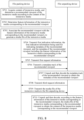
- FIG. 8 is an interaction flowchart of a media file packing method according to an embodiment of the present disclosure. As shown in FIG. 8 , the method includes the following steps:
- the file unpacking device request the media file of the entire immersive media, and then decodes part of the media file according to actual needs.
- Example 1 In a case that the immersive media is a multi-view video, the packing process specifically includes the following steps:
- Example 2 In a case that the immersive media is point cloud media, the packing process specifically includes the following steps:
- Step 43 The file packing device generates a recommended viewport metadata track, where recommended viewport metadata includes the alternative group selection information of the point cloud tiles corresponding to the recommended viewport.
- the processing unit 12 is specifically configured to determine view information of the multi-view video media corresponding to the recommended viewport as the feature information of the immersive media corresponding to the recommended viewport.
- the packing unit 13 is specifically configured to associate the recommended viewport with the view information of the multi-view video media corresponding to the recommended viewport.
- the view information of the multi-view video media corresponding to the recommended viewport includes: at least one of viewpoint group information, viewpoint information and camera information of the multi-view video media corresponding to the recommended viewport.
- the camera information includes: the number of cameras associated with the recommended viewport, and identifiers of the cameras associated with the recommended viewport.
- the packing unit 13 is further configured to add a first flag to the metadata of the recommended viewport.
- the first flag is used for indicating that the recommended viewport is associated with the view information of the multi-view video media corresponding to the recommended viewport.
- the processing unit 12 is specifically configured to determine alternative group selection information of point cloud tiles corresponding to the recommended viewport as the feature information of the immersive media corresponding to the recommended viewport.
- the alternative group selection information of the point cloud tiles includes at least one of identification information of component tracks corresponding to the point cloud tiles and the quality rankings corresponding to the point cloud tiles.
- the packing unit 13 is specifically configured to associate the recommended viewport with the alternative group selection information of the point cloud tiles corresponding to the recommended viewport.
- the alternative group selection information of the point cloud tiles corresponding to the recommended viewport further includes: at least one of the number of alternative groups corresponding to the point cloud tiles, identifiers of the alternative groups, and the number of component tracks selected from the alternative groups.
- the transmitting and receiving unit 14 is specifically configured to: in a case that the alternative group selection information of the point cloud tiles includes the identification information of the component tracks corresponding to the point cloud tiles, transmit the component tracks corresponding to the point cloud tiles to the file unpacking device; or
- the alternative group selection information of the point cloud tiles includes the quality rankings corresponding to the point cloud tiles, transmit the component tracks corresponding to the quality rankings to the file unpacking device.
- the packing unit 13 is specifically configured to add a second flag to the metadata of the recommended viewport.
- the second flag is used for indicating that the recommended viewport is associated with the alternative group selection information of the point cloud tiles corresponding to the recommended viewport.
- the immersive media includes at least one of multi-view video media and point cloud media.
- the processing unit 22 is further configured to determine whether the metadata of the recommended viewport includes a first flag.
- the first flag is used for indicating that the recommended viewport is associated with the view information of the multi-view video media corresponding to the recommended viewport.
- the transmitting and receiving unit 21 is configured to query, according to the view information of the multi-view video media corresponding to the recommended viewport, a media file corresponding to the view information in received media files of the immersive media, the processing unit 22 is specifically configured to unpack and then decode a queried media file corresponding to the view information, to obtain the content of the immersive media corresponding to the recommended viewport.
- the processing unit 22 is configured to: determine whether the metadata of the recommended viewport includes a second flag, the second flag being used for indicating that the recommended viewport is associated with the alternative group selection information of the point cloud tiles corresponding to the recommended viewport; and in response to determining that the metadata of the recommended viewport includes the second flag, query, according to alternative group selection information of the point cloud tiles corresponding to the recommended viewport, the media file corresponding to the alternative group selection information in the received media files of the immersive media.
- the alternative group selection information of the point cloud tiles corresponding to the recommended viewport further includes: at least one of the number of alternative groups corresponding to the point cloud tiles, identifiers of the alternative groups, and the number of component tracks selected from the alternative groups.
- FIG. 11 is a schematic block diagram of a computing device according to an embodiment of the present disclosure.
- the computing device may be the described file packing device or file unpacking device, or the computing device has the functions of the file packing device and the file unpacking device.
- the computing device 40 may include: a memory 41 and a processor 42.
- the memory 41 is configured to store a computer program, and transmits the computer program to the processor 42.
- the processor 42 may call and run the computer program from the memory 41 to implement the methods in the embodiments of the present disclosure.
- the processor 42 may be configured to perform the foregoing method embodiments according to instructions in the computer program.
- the processor 42 may include, but is not limited to: a general-purpose processor, a digital signal processor (DSP), an application-specific integrated circuit (ASIC), a field-programmable gate array (FPGA), or other programmable logic devices, discrete gate or transistor logic devices, and discrete hardware components, or the like.
- DSP digital signal processor
- ASIC application-specific integrated circuit
- FPGA field-programmable gate array
- the memory 41 includes, but is not limited to: a volatile memory and/or a non-volatile memory.
- the non-volatile memory may be a read-only memory (ROM), a programmable ROM (PROM), an erasable PROM (EPROM), an electrically PROM (EEPROM), or a flash memory.
- the volatile memory may be a random access memory (RAM) serving as an external cache.
- RAMs in many forms, for example, a static RAM (SRAM), a Dynamic RAM (DRAM), a synchronous DRAM (SDRAM), a double data rate SDRAM (DDRSDRAM), an enhanced SDRAM (ESDRAM), a synch link DRAM (SLDRAM), and a direct rambus RAM (DRRAM), are available.
- SRAM static RAM
- DRAM Dynamic RAM
- SDRAM synchronous DRAM
- DDRSDRAM double data rate SDRAM
- ESDRAM enhanced SDRAM
- SLDRAM synch link DRAM
- DRRAM direct rambus RAM
- the computer program may be divided into one or more modules, and the one or more modules are stored in the memory 41 and executed by the processor 42 to complete the methods provided in some embodiments of the present disclosure.
- the one or more modules may be a series of computer program instruction segments capable of accomplishing specific functions, and the instruction segments are used for describing the execution process of the computer program in a video production device.
- the processor 42 can control the transceiver 43 to communicate with other devices, and specifically, can transmit information or data to other devices, or receive information or data from other devices.
- the transceiver 43 may include a transmitter and a receiver.
- the transceiver 43 may further include antennas, and the number of antennas may be one or more.
- the bus system further includes a power bus, a control bus, and a status signal bus.
- the present disclosure further provides a computer storage medium, having a computer program stored thereon.
- the computer program when executed by a computer, enables the computer to perform the methods in the foregoing method embodiments.
- Some embodiments of the present disclosure further provide a computer program product including instructions. The instructions, when executed by a computer, causes the computer to perform the methods in the foregoing method embodiments.
- implementation may be entirely or partially performed in the form of a computer program product.
- the computer program product includes one or more computer instructions.
- the computer may be a general-purpose computer, a special-purpose computer, a computer network, or another programmable apparatus.
- the computer instructions may be stored in a computer readable storage medium or transmitted from one computer readable storage medium to another computer readable storage medium.
- the computer instructions may be transmitted from one website, computer, server or data center to another website, computer, server or data center in a wired (for example, a coaxial cable, an optical fiber or a digital subscriber line (DSL)) or wireless (for example, infrared, wireless or microwave) manner.
- the computer readable storage medium may be any available medium capable of being accessed by a computer or include one or more data storage devices integrated by an available medium, such as a server and a data center.
- the available medium may be a magnetic medium (such as a floppy disk, a hard disk, or a magnetic tape), an optical medium (such as a digital video disc (DVD)), a semiconductor medium (such as a solid state disk (SSD)) or the like.
- the disclosed system, apparatus, and method may be implemented in other manners.
- the foregoing described apparatus embodiments are merely exemplary.
- the module division is merely logical function division and may be other division in actual implementation.
- a plurality of modules or components may be combined or integrated into another system, or some features may be ignored or not performed.
- the displayed or discussed mutual couplings or direct couplings or communication connections may be implemented through some interfaces.
- the indirect couplings or communication connections between the apparatuses or modules may be implemented in electronic, mechanical, or other forms.
- modules described as separate parts may or may not be physically separate, and the parts displayed as modules may or may not be physical modules, may be located in one position, or may be distributed on a plurality of network units. Some or all of the modules may be selected according to actual needs to achieve the objectives of the solutions of the embodiments. For example, functional modules in the embodiments of the present disclosure may be integrated into one processing module, or each of the modules may exist alone physically, or two or more modules are integrated into one module.
Landscapes
- Engineering & Computer Science (AREA)
- Multimedia (AREA)
- Signal Processing (AREA)
- Databases & Information Systems (AREA)
- General Engineering & Computer Science (AREA)
- Computer Hardware Design (AREA)
- Computer Graphics (AREA)
- Software Systems (AREA)
- Physics & Mathematics (AREA)
- General Physics & Mathematics (AREA)
- Theoretical Computer Science (AREA)
- Human Computer Interaction (AREA)
- Two-Way Televisions, Distribution Of Moving Picture Or The Like (AREA)
Abstract
Description
- Present disclosure is proposed based on
Chinese Patent Application No. 202110970077.1, filed on August 23, 2021 - Embodiments of the present disclosure relate to the field of video processing technologies, and in particular, to a media file packing method and apparatus, a media file unpacking method and apparatus, a device, and a storage medium.
- Immersive media refers to media content that can bring about immersive experience for consumers. Immersive media can be divided into three degrees of freedom (DoF) media, 3DoF+ media and 6DoF media according to the degrees of freedom of users when consuming media content.
- After packing immersive media, a file packing device transmits information about a recommended viewport to a user, so that the user can consume media resources corresponding to the recommended viewport. However, in the current video stream packing mode, the file packing device can recommend a viewport to a file unpacking device, but cannot recommend media resources corresponding to the recommended viewport to the file unpacking device, resulting in waste of decoding resources and low decoding efficiency.
- The present disclosure provides a media file packing method and apparatus, a media file unpacking method and apparatus, a device, and a storage medium. A file unpacking device can request a media file associated with a recommended viewport, thereby saving bandwidth and decoding resources, and improving decoding efficiency.
- One or more embodiments of the present disclosure provides a media file packing method, applied to a file packing device. The method includes:
- acquiring content of immersive media, and determining a recommended viewport of the immersive media according to the content of the immersive media;
- determining feature information of the immersive media corresponding to the recommended viewport;
- associating the recommended viewport with the feature information of the immersive media corresponding to the recommended viewport, to generate a media file of the immersive media; and
- transmitting first indication information to a file unpacking device, the first indication information being used for indicating metadata of the recommended viewport, and the metadata of the recommended viewport including the feature information of the immersive media corresponding to the recommended viewport, such that the file unpacking device requests, from the file packing device and according to the feature information of the immersive media corresponding to the recommended viewport, the media file of the immersive media corresponding to the recommended viewport.
- One or more embodiments of the present disclosure provides a media file packing method, applied to a file unpacking device. The method includes:
- receiving first indication information transmitted by a file packing device, the first indication information being used for indicating metadata of a recommended viewport, the metadata of the recommended viewport including feature information of immersive media corresponding to the recommended viewport, and the recommended viewport being determined according to content of the immersive media; and
- in response to the first indication information, determining whether to request the metadata of the recommended viewport, and determining whether to request a media file of the immersive media corresponding to the recommended viewport, the media file of the immersive media corresponding to the recommended viewport being determined by associating the recommended viewport with the feature information of the immersive media corresponding to the recommended viewport.
- One or more embodiments of the present disclosure provides a media file packing apparatus, applied to a file packing device. The apparatus includes:
- an acquiring unit, configured to acquire content of immersive media, and determine a recommended viewport of the immersive media according to the content of the immersive media;
- a processing unit, configured to determine feature information of the immersive media corresponding to the recommended viewport;
- a packing unit, configured to associate the recommended viewport with the feature information of the immersive media corresponding to the recommended viewport, to generate a media file of the immersive media; and
- a transmitting and receiving unit, configured to transmit first indication information to a file unpacking device, the first indication information being used for indicating metadata of the recommended viewport, and the metadata of the recommended viewport including the feature information of the immersive media corresponding to the recommended viewport, such that the file unpacking device requests, from the file packing device and according to the feature information of the immersive media corresponding to the recommended viewport, the media file of the immersive media corresponding to the recommended viewport.
- One or more embodiments of the present disclosure provides a media file unpacking apparatus, applied to a file unpacking device. The apparatus includes:
- a transmitting and receiving unit, configured to receive first indication information transmitted by a file packing device, the first indication information being used for indicating metadata of a recommended viewport, the metadata of the recommended viewport including feature information of immersive media corresponding to the recommended viewport, and the recommended viewport being determined according to content of the immersive media; and
- a processing unit, configured to, in response to the first indication information, determine whether to request the metadata of the recommended viewport, and determine whether to request a media file of the immersive media corresponding to the recommended viewport, the media file of the immersive media corresponding to the recommended viewport being determined by associating the recommended viewport with the feature information of the immersive media corresponding to the recommended viewport.
- One or more embodiments of the present disclosure provides a file packing device, including: a processor and a memory, the memory being configured to store a computer program, and the processor being configured to call and run the computer program stored in the memory, to perform the method in the first aspect.
- One or more embodiments of the present disclosure provides a file unpacking device, including: a processor and a memory, the memory being configured to store a computer program, and the processor being configured to call and run the computer program stored in the memory, to perform the method in the second aspect.
- In one or more embodiments of the present disclosure, a computing device is provided, including: a processor and a memory, the memory being configured to store a computer program, and the processor being configured to call and run the computer program stored in the memory, to perform the method in the first aspect and/or the second aspect.
- In one or more embodiments of the present disclosure, a computer-readable storage medium is provided, used for storing a computer program, the computer program causing a computer to perform the method in the first aspect and/or the second aspect.
- In conclusion, in one or more embodiments of the present disclosure, a file packing device acquires content of immersive media, and determines a recommended viewport of the immersive media according to the content of the immersive media; the file packing device determines feature information of the immersive media corresponding to the recommended viewport; the file packing device associates the recommended viewport with the feature information of the immersive media corresponding to the recommended viewport, to generate a media file of the immersive media; and the file packing device transmits first indication information to a file unpacking device, the first indication information being used for indicating metadata of the recommended viewport, and the metadata of the recommended viewport including the feature information of the immersive media corresponding to the recommended viewport, such that the file unpacking device requests, from the file packing device and according to the feature information of the immersive media corresponding to the recommended viewport, the media file of the immersive media corresponding to the recommended viewport. That is, in one or more embodiments of the present disclosure, by associating the recommended viewport with the feature information of the immersive media corresponding to the recommended viewport, after acquiring the metadata of the recommended viewport, the file unpacking device can request consumption of the media file of the immersive media corresponding to the recommended viewport according to the feature information of the immersive media corresponding to the recommended viewport, without applying for the consumption of the entire media file of the immersive media, thereby saving bandwidth and decoding resources, and improving decoding efficiency.
- To describe the technical solutions in the embodiments of the present disclosure more clearly, the following briefly introduces the accompanying drawings required for describing the embodiments. Apparently, the accompanying drawings in the following description show only some embodiments of the present disclosure, and a person of ordinary skill in the art may still derive other drawings from these accompanying drawings without creative efforts.
-
FIG. 1 schematically shows a schematic diagram of three degrees of freedom. -
FIG. 2 schematically shows a schematic diagram of three degrees of freedom+. -
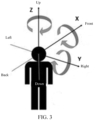
FIG. 3 schematically shows a schematic diagram of six degrees of freedom. -
FIG. 4A is a schematic diagram of a coding-decoding process of an immersive media system according to an embodiment of the present disclosure. -
FIG. 4B is a schematic diagram of a coding-decoding process of V3C media according to an embodiment of the present disclosure. -
FIG. 5 is an interaction flowchart of a media file packing method according to an embodiment of the present disclosure. -
FIG. 6 is an interaction flowchart of a media file packing method according to an embodiment of the present disclosure. -
FIG. 7 is a schematic diagram of a multi-track container according to an embodiment of the present disclosure. -
FIG. 8 is an interaction flowchart of a media file packing method according to an embodiment of the present disclosure. -
FIG. 9 is a schematic structural diagram of a media file packing apparatus according to an embodiment of the present disclosure. -
FIG. 10 is a schematic structural diagram of a media file packing apparatus according to an embodiment of the present disclosure. -
FIG. 11 is a schematic block diagram of a computing device according to an embodiment of the present disclosure. - The technical solutions in embodiments of the present disclosure are clearly and completely described below with reference to the accompanying drawings in the embodiments of the present disclosure. Apparently, the described embodiments are merely some rather than all of the embodiments of the present disclosure. All other embodiments obtained by a person of ordinary skill in the art based on the embodiments of the present disclosure without creative efforts shall fall within the protection scope of the present disclosure.
- In the specification, claims, and the foregoing accompanying drawings of the present disclosure, the terms "first", "second", and so on are intended to distinguish similar objects but do not necessarily indicate a specific order or sequence. It is to be understood that such used data is interchangeable where appropriate so that the embodiments of the present disclosure described here can be implemented in an order other than those illustrated or described here. Moreover, the terms "include", "contain" and any other variants mean to cover the non-exclusive inclusion, for example, a process, method, system, product, or server that includes a list of steps or units is not necessarily limited to those expressly listed steps or units, but may include other steps or units not expressly listed or inherent to such a process, method, system, product, or device.
- The embodiments of the present disclosure relate to a data processing technology for immersive media.
- Before introducing the technical solution of the present disclosure, the following first introduces the relevant knowledge of the present disclosure:
- Multi-view/multi-viewpoint video: referring to a video with depth information captured from multiple angles by using multiple camera arrays. The multi-view/multi-viewpoint video, also called a free-view/free-viewpoint video, is immersive media that provides a six-degree-of-freedom experience.
- Point cloud: a point cloud is a group of discrete point sets randomly distributed in space that express the spatial structure and surface attributes of a three-dimensional object or scene. Each point in the point cloud has at least three-dimensional location information, and depending on different application scenarios, may also have color, material or other information. Typically, each point in a point cloud has the same number of additional attributes.
- V3C volumetric media: visual volumetric video-based coding media, referring to immersive media that is captured from visual content in three-dimensional space, provides 3DoF+ and 6DoF viewing experience, is coded with a traditional video, and contains volume video type tracks in file packing, including a multi-view video, and a video coding point cloud, etc.
- PCC: Point Cloud Compression.
- G-PCC: Geometry-based Point Cloud Compression.
- V-PCC: Video-based Point Cloud Compression.
- Image set: indicating region information on a 2D plane frame, region information in 3D presentation space, and a mapping relationship therebetween and necessary parameter information required for mapping.
- Track: track, a collection of media data in the process of media file packing. A media file may be composed of multiple tracks, for example, a media file may contain a video track, an audio track, and a subtitle track.
- Component track: referring to a point cloud geometry data track or point cloud attribute data track.
- Sample: sample, a packing unit in a media file packing process. A media track is composed of lots of samples. For example, a sample of a video track is usually a video frame.
- DoF: Degree of Freedom. In a mechanical system, DoF refers to the number of independent coordinates. In addition to the degree of freedom of translation, there are also degrees of freedom of rotation and vibration. In the embodiments of the present disclosure, DoF refers to the degree of freedom in which a user supports movement and generates content interaction when viewing immersive media.
- 3DoF: three degrees of freedom, referring to three degrees of freedom in which the head of the user head rotates around X, Y and Z axes.
FIG. 1 schematically shows a schematic diagram of three degrees of freedom. As shown inFIG. 1 , the user head can rotate at a certain place or point on three axes. The user can turn his/her head, bow his/her head up and down, or shake his/her head. Through the three-degree-of-freedom experience, the user can immerse himself/herself in a scene 360 degrees. If a picture is static, it can be understood as a panoramic picture. If the panoramic picture is dynamic, it is a panoramic video, that is, a VR video. However, VR video have certain limitations. Users cannot move, and cannot choose any place to watch. - 3DoF+: that is, on the basis of three degrees of freedom, the user also has the degree of freedom to do a finite movement along the X, Y and Z axes, which may also be called restricted six degrees of freedom, and the corresponding media stream may be called a restricted six-degree-of-freedom media stream.
FIG. 2 schematically shows a schematic diagram of three degrees of freedom+. - 6DoF: that is, on the basis of three degrees of freedom, the user also has the freedom to move freely along the X, Y and Z axes, and the corresponding media stream may be called a six-degree-of-freedom media stream.
FIG. 3 schematically shows a schematic diagram of six degrees of freedom. 6DoF media refers to a six-degree-of-freedom video, which refers to that the video can provide users with a high-degree-of-freedom viewing experience of freely moving the viewpoint in the directions of the X, Y and Z axes of a three-dimensional space and freely rotating the viewpoint around the X, Y and Z axes. 6DoF media is a video combination at different views in space captured by a camera array. In order to facilitate the expression, storage, compression and processing of 6DoF media, 6DoF media data is expressed as a combination of the following information: texture maps acquired by multiple cameras, depth maps corresponding to the texture maps of the multiple cameras, and corresponding 6DoF media content description metadata. The metadata includes parameters of the multiple cameras, as well as description information such as splicing layout and edge protection of the 6DoF media. On a coding side, the texture map information and the corresponding depth map information of the multiple cameras are spliced, and the description data of the splicing mode is written into the metadata according to the defined syntax and semantics. The spliced depth map and texture map information of the multiple cameras are coded by planar video compression and transmitted to a terminal for decoding, and then 6DoF virtual viewpoints requested by the user are synthesized, thereby providing the user with viewing experience of 6DoF media. - AVS: Audio Video Coding Standard.
- ISOBMFF: International Standard Organization (ISO) based Media File Format. ISOBMFF is a packing standard for media files, and the most typical ISOBMFF file is a Moving Picture Experts Group 4 (MP4) file.
- DASH: dynamic adaptive streaming over HTTP. HTTP-based dynamic adaptive streaming is an adaptive bit-rate streaming technology that enables high-quality streaming media to be delivered over the Internet through traditional HTTP web servers.
- MPD: media presentation description. Media presentation description signaling in DASH is used for describing media fragment information.
- HEVC: High Efficiency Video Coding, the international video coding standard HEVC/H.265.
- VVC: versatile video coding, the international video coding standard VVC/H.266.
- Intra (picture) Prediction: intra prediction.
- Inter (picture) Prediction: inter prediction.
- SCC: screen content coding.
- Immersive media refers to media content that can bring about an immersive experience for consumers. Immersive media can be divided into 3DoF media, 3DoF+ media and 6DoF media according to the degrees of freedom of users when consuming media content. Common 6DoF media include multi-view video and point cloud media.
- View video is usually obtained by a camera array photographing a scene from multiple angles to form texture information (color information, etc.) and depth information (spatial distance information, etc.) of the scene, plus mapping information from 2D plane frames to 3D presentation space, that is, forming 6DoF media that can be consumed on the user side.
- A point cloud is a group of discrete point sets randomly distributed in space that express the spatial structure and surface attributes of a three-dimensional object or scene. Each point in the point cloud has at least three-dimensional location information, and depending on different application scenarios, may also have color, material or other information. Typically, each point in a point cloud has the same number of additional attributes.
- Point cloud can flexibly and conveniently express the spatial structure and surface properties of a three-dimensional object or scene, and is thus widely used, including Virtual Reality (VR) games, Computer Aided Design (CAD), Geography Information System (GIS), Autonomous Navigation System (ANS), digital cultural heritage, free viewpoint broadcasting, three-dimensional immersive telepresence, three-dimensional reconstruction of biological tissues and organs, etc.
- There are mainly the following ways to obtain point cloud: computer generation, 3D laser scanning, 3D photogrammetry, etc. Computers can generate point clouds of virtual three-dimensional objects and scenes. 3D scanning can obtain point clouds of static real-world three-dimensional objects or scenes, and can obtain millions of point clouds per second. 3D photography can obtain point clouds of static real-world three-dimensional objects or scenes, and can obtain tens of millions of point clouds per second. In addition, in the medical field, point clouds of biological tissues and organs can be obtained from MRI, CT, and electromagnetic positioning information. These technologies reduce the cost and time period of point cloud data acquisition, and improve the accuracy of the data. The transformation of point cloud data acquisition modes has made it possible to acquire a large amount of point cloud data. With the continuous accumulation of large-scale point cloud data, the efficient storage, transmission, release, sharing and standardization of point cloud data have become the key to point cloud applications.
- After coding the point cloud media, the coded data stream needs to be packed and transmitted to the user. Correspondingly, on the point cloud media player side, it is necessary to unpack the point cloud file first, then decode same, and finally present the decoded data stream. Therefore, in an unpacking link, after obtaining specific information, the efficiency of the decoding link can be improved to a certain extent, thus bringing better experience for the presentation of point cloud media.
-
FIG. 4A is a schematic diagram of a coding-decoding process of an immersive media system according to an embodiment of the present disclosure. As shown inFIG. 4A , the immersive media system includes a coding device and a decoding device. The coding device may refer to a computer device used by the provider of immersive media. The computer device may be a terminal (such as a personal computer (PC) and a smart mobile device (such as a smart phone)) or a server. The decoding device may refer to a computer device used by the user of the immersive media. The computer device may be a terminal (such as a personal computer (PC) and a smart mobile device (such as a smart phone), or a VR device (such as a VR helmet and VR glasses)). The data processing process of the immersive media includes a data processing process on the coding device side and a data processing process on a decoding device side. - The data processing process on the coding device side mainly includes:
- (1) the acquisition and production process of media content of the immersive media; and
- (2) the coding and file packing process of the immersive media. The data processing process on the decoding device side mainly includes:
- (3) the file unpacking and decoding process of the immersive media; and
- (4) the rendering process of the immersive media.
- In addition, the transmission process involving the immersive media between the coding device and the decoding device can be carried out based on various transmission protocols. The transmission protocols here may include, but are not limited to: a Dynamic Adaptive Streaming over HTTP (DASH) protocol, an HTTP Live Streaming (HLS) protocol, a Smart Media Transport Protocol (SMTP), a Transmission Control Protocol (TCP), etc.
- Each process involved in the data processing process of the immersive media is described in detail below with reference to
FIG. 4A . - A real-world audiovisual scene (A) is captured by an audio sensor and a set of cameras or a camera device with multiple lenses and sensors. The acquisition produces a set of digital image/video (Bi) and audio (Ba) signals. Cameras/lenses typically cover all directions around the center point of a camera set or a camera device, thus the video is called a 360-degree video.
- In an implementation, a capture device may refer to a hardware component provided in a coding device, for example, the capture device refers to a microphone, a camera, a sensor, etc. In another implementation, the capture device may also be a hardware apparatus connected to the coding device, such as a camera connected to the server.
- The capture device may include, but is not limited to: an audio device, a camera device, and a sensing device. The audio device may include an audio sensor, a microphone, etc. The camera device may include an ordinary camera, a stereo camera, a light field camera, etc. The sensing device may include a laser device, a radar device, etc.
- There may be multiple capture devices. These capture devices are deployed at some specific locations in real space to simultaneously capture audio content and video content from different angles in the space. The captured audio content and video content are synchronized in both time and space. The media content captured by the capture devices is called raw data of the immersive media.
- The captured audio content is itself content suitable for audio coding of the immersive media. The captured video content can only become the content suitable for video coding of the immersive media after a series of production procedures. The production procedures include:
- [1] Splicing. Since the captured video content is captured by the capture devices at different angles, splicing refers to splicing the video content captured from these various angles into a complete video that can reflect the 360-degree visual panorama of the real space, that is, the spliced video is a panoramic video (or spherical video) represented in three-dimensional space.
- [2] Projection. Projection refers to the process of mapping a three-dimensional video formed by splicing onto a 2-Dimension (2D) image, and the 2D image formed by the projection is called a projected image. Projection modes may include, but are not limited to: latitude and longitude map projection, regular hexahedron projection.
- [3] Region-wise packing. The projected image may be directly coded, or the projected image may be coded after region-wise packing. In practice, it has been found that in the data processing process of immersive media, coding the two-dimensional projected image after region-wise packing can greatly improve the video coding efficiency of immersive media. Therefore, region-wise packing technology is widely used in video processing of immersive media. The so-called region-wise packing refers to the process of converting the projected image by region, and the region-wise packing process converts the projected image into a packed image. The process of region-wise packing specifically includes: dividing the projected image into multiple mapped regions, then converting the multiple mapped regions to obtain multiple packed regions, and mapping the multiple packed regions into a 2D image to obtain the packed image. The mapped regions refer to regions obtained by division in the projected image before performing region-wise packing. The packed regions refer to regions located in the packed image after performing region-wise packing.
- The conversion may include, but is not limited to: mirroring, rotation, rearrangement, up-sampling, down-sampling, changing the resolution of the regions, moving, etc.
- Since the capture device can only capture the panoramic video, after the video is processed by the coding device and transmitted to the decoding device for corresponding data processing, the user on the decoding device side can only watch 360-degree video information by performing some specific actions (such as head rotation), but the corresponding video changes cannot be obtained by performing non-specific actions. The VR experience is not good. Therefore, it is necessary to provide additional depth information that matches the panoramic video to enable the user to obtain better immersion and better VR experience, which involves six degrees of freedom (6DoF) production technology. When the user can move more freely in a simulated scene, it is called 6DoF. When using 6DoF production technology to produce video content of immersive media, the capture device generally uses light field cameras, laser devices, radar devices, etc. to capture point cloud data or light field data in space. Moreover, in the process of executing the described production procedures [1]-[3], some specific processing is required, such as the cutting and mapping of point cloud data, the calculation process of depth information, etc.
- Images (Bi) of the same time instance are spliced, possibly rotated, projected and mapped onto the packed image (D).
- Audio coding can be performed directly on the captured audio content to form an audio stream of the immersive media. After the above-mentioned production procedures [1]-[2] or [1]-[3], video coding is performed on the projected image or the packed image to obtain a video stream of the immersive media. For example, the packed image (D) is coded as a coded image (Ei) or a coded video bitstream (Ev). The captured audio (Ba) is coded into an audio bitstream (Ea). Afterwards, according to a specific media container file format, the coded image, video and/or audio are combined into a media file (F) for file playback or a sequence of initialization segments and media segments (Fs) for streaming. The coding device also incorporates metadata, such as projection and region information, into the file or fragments, to help render the decoded packed image.
- If 6DoF production technology is used, a specific coding mode (such as point cloud coding) needs to be used for coding during the video coding process. The audio stream and the video stream in a file container according to the file format of the immersive media (such as ISO base media file format (ISOBMFF)) to form a media file resource of the immersive media. The media file resource may be a media file or a media file in which media fragments form the immersive media. Media presentation description (MPD) is employed to record the metadata of the media file resource of the immersive media according to file format requirements of the immersive media. The metadata here is a general term for information related to the presentation of the immersive media. The metadata may include description information of the media content, description information of a viewport, signaling information related to the presentation of the media content, and the like. As shown in
FIG. 4A , the coding device stores the media presentation description information and media file resources formed after the data processing process. - The immersive media system supports a box. The box refers to a data block or object including metadata, that is, the box contains the metadata of the corresponding media content. The immersive media may include multiple boxes, such as, a sphere region zooming box, which contains metadata for describing sphere region zooming information; a 2D region zooming box, which contains metadata for describing 2D region zoom information; and A region wise packing box, which contains metadata for describing corresponding information in a region-wise packing process, and so on.
- The fragments Fs are delivered to a player by using a delivery mechanism.
- The decoding device can dynamically and adaptively obtain the media file resources and the corresponding media presentation description information of the immersive media from the coding device through the recommendation of the coding device or according to the user needs of the decoding device. For example, the decoding device can determine the orientation and position of the user according to the tracking information of the head/eyes/body of the user, and then dynamically request the coding device to obtain corresponding media file resources based on the determined orientation and position. The media file resources and the media presentation description information are transmitted from the coding device to the decoding device through a transmission mechanism (such as DASH or SMT). The process of file unpacking on the decoding device is inverse to the process of file packing on the coding device. The decoding device unpacks the media file resources according to file format requirements of the immersive media, to obtain the audio stream and the video stream. The decoding process on the decoding device is inverse to the coding process on the coding device. The decoding device performs audio decoding on the audio stream to restore the audio content.
- In addition, the decoding process of the video stream by the decoding device includes the following steps:
- [1] Decode the video stream to obtain a flat image. According to the metadata provided by the media presentation description information, if the metadata indicates that the immersive media has been subjected to the region-wise packing process, the flat image refers to the packed image. If the metadata indicates that the immersive medium has not been subjected to the region-wise packing process, the flat image refers to the projected image.
- [2] If the metadata indicates that the immersive medium has been subjected to the region-wise packing process, the decoding device performs region-wise unpacking on the packed image to obtain the projected image. Here, the region-wise unpacking is inverse to the region-wise packing. The region-wise unpacking refers to a process of inversely converting the packed image by region. The region-wise unpacking enables the packed image to be converted into the projected image. The process of region-wise unpacking specifically includes: inversely converting the multiple packed regions in the packed image according to the instructions of the metadata, respectively, to obtain multiple mapped regions, and mapping the multiple mapped regions to a 2D image to obtain the projected image. Inverse conversion refers to processing that is inverse to the conversion, for example: if the conversion refers to a 90-degree counterclockwise rotation, and the inverse conversion refers to a 90-degree clockwise rotation.
- [3] The projected image is reconstructed according to the media presentation description information so as to be converted into a 3D image. The reconstruction here refers to processing of re-projecting a two-dimensional projected image into 3D space.
- The decoding device renders, according to the metadata in the media presentation description information related to rendering and a viewport, the audio content obtained by audio decoding and the 3D image obtained by video decoding. After the rendering is completed, the playback and output of the 3D image are realized. In particular, if the production technology of 3DoF and 3DoF+ is adopted, the decoding device mainly renders the 3D image based on the current viewpoint, disparity, depth information, etc., and if the 6DoF production technology is adopted, the decoding device mainly renders the 3D image in the viewport based on the current viewpoint. The viewpoint refers to the viewing position of the user. Disparity refers to the visual difference caused by the two eyes of the user or the visual difference caused by movement. The viewport refers to the viewing region.
- The immersive media system supports a box. The box refers to a data block or object including metadata, that is, the box contains the metadata of the corresponding media content. The immersive media may include multiple boxes, such as, a sphere region zooming box, which contains metadata for describing sphere region zooming information; a 2D region zooming box, which contains metadata for describing 2D region zoom information; and A region wise packing box, which contains metadata for describing corresponding information in a region-wise packing process, and so on.
- For example, as shown in
FIG. 4A , a file (F) output by the coding device is the same as a file (F') output by the decoding device. The decoding device processes the file (F') or received fragments (F's) to extract coded bitstreams (E'a, E'v and/or E'i), and parses the metadata. Viewport related video data can be carried in multiple tracks. Before decoding, these tracks can be rewritten in a bitstream and merged into a single video bitstream E'v. The audio, video and/or image are then decoded into decoded signals (B'a is an audio signal, and D' is an image/video signal). The decoded image/video (D') is displayed on the screen of a head-mounted display or any other display device based on the current viewing direction or viewport, and information such as projection, spherical coverage, rotation and regions in the metadata. The current viewing direction is determined based on head tracking information and/or eye tracking information. At the same time, the decoded audio signal (B'a) is rendered, for example, listened to by the user through earphones. In addition to the video and audio signals being rendered, the current viewing direction can also be employed to optimize decoding. In the related delivery of the viewport, the current viewing direction is also passed to a policy module, which determines a video track to be received based on the viewing direction. -
FIG. 4B is a schematic diagram of a coding-decoding process of V3C media according to an embodiment of the present disclosure. As shown inFIG. 4B , an immersive media system includes a file packing device and a file unpacking device. In some embodiments, the file packing device may be understood as the described coding device, and the file unpacking device may be understood as the described decoding device. - A real-world or synthetic vision scene (A) is captured by a set of cameras, or a camera device with multiple lenses and sensors, or a virtual camera. An acquisition result is source volume data (B). One or more volume frames are coded as V3C bitstreams, including an atlas bitstream, at most one occupancy bitstream, a geometry bitstream, and zero or multiple attribute bitstreams (Ev).
- Afterwards, according to a specific media container file format, one or more coded bitstreams are packed into a media file (F) for local playback or a sequence (Fs) of initialization segments and media segments for streaming. The media container file format is an ISO base media file format specified in ISO/IEC 14496-12. The file packing devices can also incorporate metadata into files or segments. The fragments Fs are delivered to a player by using a delivery mechanism.
- The file (F) output by the file packing device is the same as a file (F') that the file unpacking device takes as input. The file unpacking device process the file (F') or received fragments (F's) to extract encoded bitstreams (E'v), and parses the metadata. A V3C bitstream is then decoded into a decoded signal (D'). The decoded signal (D') obtained after decoding is reconstructed, rendered and displayed on the screen of a head mounted display or any other display device based on the current viewing direction or viewport. The current viewing direction is determined based on head tracking information, and/or eye tracking information. In the related delivery of the viewport, the current viewing direction is also passed to a policy module, which determines a track to be received based on the viewing direction.
- The above-mentioned process applies to both real-time and on-demand use cases.
- The following introduces syntactic structures involved in the embodiments of the present disclosure:
-
             aligned(8) class ExtCameraInfoStruct() {
               unsigned int(8)[4] cam_pos_x;
               unsigned int(8)[4] cam_pos_y;
               unsigned int(8)[4] cam_pos_z;
               signed int(32) cam_quat x;
               signed int(32) cam_quat_y;
               signed int(32) cam_quat_z;
             }
- cam_pos_x, cam_pos_y and cam_pos_z: respectively represent the x, y, and z coordinates of the camera position in meters in the global reference coordinate system. These values are represented in a 32-bit binary floating-point format, with four bytes parsed in big-endian order and according to the parsing procedure specified in IEEE 754.
- cam_quat x, cam_quat_y and cam_quat_z: respectively represent the x, y, and z components of camera rotation represented by quaternons. These values range from -230 to 230, including -230 and 230. When no rotation component is present, it is inferred that the values are equal to 0. The values of the rotation components can be calculated as follows:


             aligned(8) class IntCameraInfoStruct() {
               unsigned int(10) camera_id;
               bit(3) reserved = 0;
               unsigned int(3) camera_type;
               if (camera_type == 0) {
                   signed int(32) erp_horizontal_fov;
                   signed int(32) erp_vertical_fov;
               }
               if (camera_type == 1) {
                   signed int(32) perspective_horizontal_fov;
                   unsigned int(8)[4] perspective_aspect_ratio;
               }
               if (camera_type == 2) {
                   unsigned int(8)[4] ortho_aspect_ratio;
                   unsigned int(8)[4] ortho_horizontal_size;
               }
               unsigned int(8)[4] clipping_near_plane;
               unsigned int(8)[4] clipping_far_plane;
             }
- camera_id: is an identifier number used for identifying parameters for a given viewport camera.
- camera_type: indicates the projection mode of the viewport camera.
Value 0 specifies an ERP projection.Value 1 specifies a perspective projection.Value 2 specifies an orthogonal projection. Values in therange 3 to 255 are reserved for future use by ISO/IEC. - erp_horizontal_fov: specifies a longitude range, in radians, of the ERP projection corresponding to the horizontal size of a viewport region. The value ranges from 0 to 2π.
- erp_vertical_fov: specifies a latitude range, in radians, of the ERP projection corresponding to the vertical size of the viewport region. The value ranges from 0 to π.
- perspective_horizontal_fov: specifies the horizontal field of view of the perspective projection in radians, and the value ranges from 0 to π. A perspective aspect ratio specifies the relative aspect ratio of a perspectively projected (horizontal/vertical) viewport. The value is represented in a 32-bit binary floating-point format, with four bytes parsed in big-endian order and according to the parsing procedure specified in IEEE 754.
- ortho_aspect_ratio: specifies the relative aspect ratio of an orthogonally projected (horizontal/vertical) viewport. The value is represented in a 32-bit binary floating-point format, with four bytes parsed in big-endian order and according to the parsing procedure specified in IEEE 754.
- ortho_horizontal_size: specifies an orthogonal horizontal size in meters. The value is represented in a 32-bit binary floating-point format, with four bytes parsed in big-endian order and according to the parsing procedure specified in IEEE 754.
- Clipping _near_plane and clipping_far_plane: represent the near and far depths (or distances) based on the near and far clipping planes (in meters) of the viewport. These values are represented in a 32-bit binary floating-point format, with four bytes parsed in big-endian order and according to the parsing procedure specified in IEEE 754.
             aligned(8) class ViewportInfoStruct(ext_camera_flag, int_camera_flag) {
               if (ext_camera_flag == 1) {
                   unsigned int(1) center_view_flag;
                   bit(6) reserved = 0;
                   if (center_view_flag == 0) {
                       unsigned int(1) left_view_flag;
                   } else {
                       bit(1) reserved = 0; }
                   ExtCameraInfoStruct extCamInfo();
               }
               if (int_camera_flag == 1) {
                   IntCameraInfoStruct intCamInfo();
               }
             }
- center_view_flag: is a flag indicating whether a signaled viewport position corresponds to the center of the viewport or to one of two stereoscopic positions of the viewport.
Value 1 indicates that the signaled viewport position corresponds to the center of the viewport.Value 0 indicates that the signaled viewport position corresponds to one of the two stereoscopic positions of the viewport. - left_view_flag: is a flag indicating whether the transmitted viewport information corresponds to a right stereoscopic position or a left stereoscopic position of the viewport.
Value 1 indicates that the signaled viewport information corresponds to the left stereoscopic position of the viewport.Value 0 indicates that the signaled viewport information corresponds to the right stereoscopic position of the viewport. - extCamInfo: is an instance of the extrinsic camera information structure, which is used for defining extrinsic camera parameters of the viewport.
- intCamInfo: is an instance of the intrinsic camera information structure, which defines intrinsic camera parameters of the viewport.
 box type: '6vpt'
 Included in: Sample Description Box ('stsd')
 Mandatory: No
 Number: 0 or 1
             aligned(8) class ViewportInfoConfigurationBox
 extends FullBox('6vpC', version=0, 0) {
               unsigned int(7) viewport_type;
               bit(1) reserved = 0;
               string viewport_description;
               unsigned int(1) dynamic_int_camera_flag;
               unsigned int(1) dynamic_ext_camera_flag;
               bit(6) reserved = 0;
               if (dynamic_int_camera_flag == 0) {
                   IntCameraInfoStruct(); }
               if (dynamic_ext_camera_flag == 0) {
                   ExtCameraInfoStruct();
               }
             }
             aligned(8) class ViewportInfoSampleEntry() extends MetadataSampleEntry ('6vpt') {
               ViewportInfoConfigurationBox();
             }
viewport_type: indicates viewport types of all samples corresponding to the current sample entry, and value meanings thereof are shown in Table 1 below.
| | Meanings | |
| 0 | Recommended viewport generated according to the intention of a director or a | |
| 1 | Recommended viewport based on viewing statistics of the | |
| 2 | Recommended viewport generated according to the remaining viewports selected by the | |
| 3 | Recommended initial viewport | |
| 4 | Recommended viewport associated with a specific space region | |
| 5...239 | Reserved | |
| 240...255 | User-defined |
viewport_description: a null-terminated string that provides text description information of the recommended viewport.
dynamic_int_camera_flag: the value of which is 0 indicates that the intrinsic camera parameters of all samples corresponding to the current sample entry are constant. If the value of dynamic_ext_camera_flag is 0, the value of dynamic_int_camera_flag is also necessarily 0.
dynamic_ext_camera_flag: the value of which is 0 indicates that the extrinsic camera parameters of all the samples corresponding to the current sample entry are constant.
             aligned(8) class ViewportInfoSample() {
               unsigned int(8) num_viewports;
               for (i=1; i <= num_viewports; i++){
                   unsigned int(7) viewport_id[i];
                   unsigned int(1) viewport_cancel _flag[i];
                   if (viewport_cancel_flag[i] == 0) {
                       unsigned int(1) camera_extrinsic_flag[i];
                       unsigned int(1) camera_intrinsic_flag[i];
                       bit(6) reserved = 0;
                       ViewportInfoStruct(camera_extrinsic_flag[i], camera_intrinsic_flag[i]);
                   }
               }
             }
- num_viewports: represents the number of viewports in the sample that signaled.
- viewport_id[i]: is an identifier used for identifying an ith viewport.
- viewport_cancel_flag[i]: equal to 1 indicates that the viewport with id of viewport_id[i] is canceled. The viewport information indicating the ith viewport is as follows.
- camera_intrinsic_flag[i]: equal to 1 indicates that the intrinsic camera parameters are present in the ith viewport of the current sample. If dynamic_int_camera_flag[i] is equal to 0, camera_intrinsic_flag[i] is equal to 0. In addition, when camera_extrinsic_flag[i] is equal to 0, camera_intrinsic_flag[i] is set to 0.
- camera_extrinsic_flag[i]: equal to 1 indicates that the extrinsic camera parameters are present in the ith viewport of the current sample. If dynamic_ext_camera_flag[i] is equal to 0, camera_intrinsic_flag[i] is equal to 0.
S501: A file packing device acquires content of immersive media, and determines a recommended viewport of the immersive media according to the content of the immersive media.
- Manner 1: the file packing device acquires the content of the immersive media from an acquisition device, for example, the file packing device acquires multi-view video data acquired by a multi-view camera, or acquires point cloud data from a point cloud acquisition device.
- Manner 2: the file packing device acquires the content of the immersive media from a storage device, for example, after acquiring multi-view video data, a multi-view camera stores the multi-view video data in the storage device, or after acquiring point cloud data, a point cloud device stores the point cloud data in the storage device.
S502-A: The file packing device determines view information of the multi-view video media corresponding to the recommended viewport as the feature information of the immersive media corresponding to the recommended viewport.
S502-B: The file packing device determines alternative group selection information of point cloud tiles corresponding to the recommended viewport as the feature information of the immersive media corresponding to the recommended viewport.
             aligned(8) class AssociatedViewInfoStruct() {
             unsigned int(8) num _view_groups;
                   for (i=0; i < num_view_groups; i++) {
               unsigned int(16) view_group_id;
             }
                   unsigned int(8) num_views;
                   for (i=0; i < num_views; i++) {
               unsigned int(16) view_id;
 }
                   unsigned int(8) num_cameras;
                   for (i=0; i < num_cameras; i++) {
               unsigned int(16) camera_id;
 }
             }
- num_view_groups: indicates the number of viewpoint groups associated with the recommended viewport.
- view_group_id: indicates the identifier of a viewpoint group.
- num_views: indicates the number of viewpoints associated with the recommended viewport. The values of num_view_groups and num_views cannot be both 0.
- view_id: indicates the identifiers of the viewpoints associated with the recommended viewport.
- num_cameras: indicates the number of photographic cameras.
- camera_id: indicates the identifier of each photographic camera.
S503-B: the file packing device associates the recommended viewport with the alternative group selection information of the point cloud tiles corresponding to the recommended viewport.
             aligned(8) class AltemativeInfoStruct{
               unsigned int(8) alternative_type;
               if(alternative_type && 00000001){
                   unsigned int(8) quality_ranking;
               }
               if(alternative_type && 00000010){
                   unsigned int(1) lossless_flag;
                   bit(7) reserved }
               if(alternative_type && 00000100){
             unsigned int(32) bitrate;
               }
               if(alternative_type && 00001000){
             unsigned int(8) framerate;
               }
               if(alternative_type && 00010000){
               unsigned int(32) codec_type;
               }
             }
- alternative_type: is a difference attribute type of an alternative track. According to the value of the difference type, the track may have one or more difference attributes.
- quality_ranking: quality ranking information. The smaller the value of this field is, the higher the quality of the corresponding track is.
- lossless_flag: the value of this field is 0, indicating that the corresponding track uses lossy coding; and the value of this field is 1, indicating that the corresponding track uses lossless coding.
- Bitrate: bit rate information, indicating the bit rate of the corresponding track.
- Framerate: frame rate information, indicating the frame rate of the corresponding track.
- codec_type: a coding type, indicating the coding type of the corresponding track.
             aligned(8) class AlternativesSelectInfoStruct() {
             unsigned int(8) num_altemative_groups;
             for (i=0; i < num_alternative_groups; i++) {
             unsigned int(16) alternate_group_id;
             unsigned int(8) num_selections;
             for(j=0; j < num_selections; j++){
             unsigned int(32) track_id;
             AlternativeInfoStruct();
             }
 }
             }
- num_alternative_groups: the number of the alternative groups corresponding to the point cloud tiles.
- alternate_group_id: indicates the identifier of each alternative group.
- num_selections: indicates the number of the component tracks selected from the alternative groups.
- track_id: indicates the identification information of the component tracks corresponding to the point cloud tiles.
- S601: A file packing device acquires content of immersive media, and determines a recommended viewport of the immersive media according to the content of the immersive media.
- S602: The file packing device determines feature information of the immersive media corresponding to the recommended viewport.
- S603: The file packing device associates the recommended viewport with the feature information of the immersive media corresponding to the recommended viewport, to generate a media file of the immersive media.
- S604: The file packing device transmits first indication information to a file unpacking device, the first indication information being used for indicating metadata of the recommended viewport, and the metadata of the recommended viewport including the feature information of the immersive media corresponding to the recommended viewport, such that the file unpacking device requests, from the file packing device and according to the feature information of the immersive media corresponding to the recommended viewport, the media file of the immersive media corresponding to the recommended viewport.
S608-A: The file unpacking device transmits the second request information to the file packing device according to the view information of the multi-view video media corresponding to the recommended viewport, the second request information including the view information of the multi-view video media corresponding to the recommended viewport.
S608-B: The file unpacking device transmits the second request information to the file packing device according to the alternative group selection information of the point cloud tiles corresponding to the recommended viewport, the second request information including the alternative group selection information of the point cloud tiles.
S609-A: The file packing device transmits the media file corresponding to the view information to the file unpacking device.
S609-B: In a case that the alternative group selection information of the point cloud tiles includes the identification information of the component tracks corresponding to the point cloud tiles, transmit the component tracks corresponding to the point cloud tiles to the file unpacking device; in some embodiments, in a case that the alternative group selection information of the point cloud tiles includes the quality rankings corresponding to the point cloud tiles, transmit the component tracks corresponding to the quality rankings to the file unpacking device.
- Step 11: the file packing device determines a recommended viewport of the multi-view video according to the content of the multi-view video.
- Step 12: In a case that an atlas information track of the multi-view video is divided according to viewpoint groups, the file packing device associates the recommended viewport of the multi-view video with corresponding viewpoint group information, to generate a media file F1.
- Step 13: The file packing device generates a recommended viewport metadata track, where recommended viewport metadata includes viewpoint group information corresponding to the recommended viewport.
- Step 14: The file packing device transmits first indication information to the file unpacking device, where the first indication information may be DASH signaling, and the first indication information is used for indicating the metadata of the recommended viewport.
- Step 15: The file unpacking device transmits first request information to the file packing device according to the first indication information, the first request information being used for requesting the metadata of the recommended viewport.
- Step 16: The file packing device transmits a metadata track of the recommended viewport to the file unpacking device.
- Step 17: The file unpacking device decodes the metadata track of the recommended viewport to obtain the viewpoint group information corresponding to the recommended viewport included in the metadata of the recommended viewport.
- Step 18: The file unpacking device requests media resources corresponding to the recommended viewport and consume the media resources according to its own network conditions and decoding capability in combination with the viewpoint group information corresponding to the recommended viewport.
- Step 21: the file packing device determines a recommended viewport of the point cloud media according to the content of the point cloud media.
- Step 22: In a case that the compression mode of the point cloud media is VPCC, and the point cloud media is organized according to point cloud tiles, and the point cloud tiles have different quality rankings, the recommended viewport is associated with the alternative group selection information of the corresponding point cloud tiles to generate a media file F2.
             aligned(8) class ViewportInfoSample() {
               unsigned int(8) num_viewports;
               for (i=1; i <= num_viewports; i++){
                   unsigned int(7) viewport_id[i];
                   unsigned int(1) viewport_cancel_flag[i];
                   if (viewport_cancel_flag[i] == 0) {
                       unsigned int(1) camera_extrinsic_flag[i];
                       unsigned int(1) camera_intrinsic_flag[i];
                       unsigned int(1) view_id_flag[i];
                       unsigned int(1) alter_info_flag[i];
                       bit(4) reserved = 0;
                       ViewportInfoStruct(camera_extrinsic_flag[i]
, camera_intrinsic_flag[i]);
                   }
                       if(view_id_flag[i] == 1){
               AssociatedViewInfoStruct();
             }
             if(alter_info_flag[i] == 1){
               AlternativesSelectInfoStruct();
             }
             }
             }
- num_viewports: indicates the number of viewports indicated in a sample.
- viewport_id[i]: indicates the identifier of the corresponding viewport.
- viewport_cancel_flag[i]: the value thereof being 1 indicates that the viewport of which the viewport identifier value is viewport_id[i] is canceled.
- camera_intrinsic_flag[i]: the value thereof being 1 indicates that the ith viewport in the current sample has intrinsic camera parameters. If the value of dynamic_int_camera _flag is 0, the value of this field is necessarily 0. Moreover, when the value of camera_extrinsic_flag[i] is 0, the value of this field is necessarily 0.
- camera_extrinsic_flag[i]: the value thereof being 1 indicates that the ith viewport in the current sample has extrinsic camera parameters. If the value of dynamic_ext_camera_flag is 0, the value of this field is necessarily 0.
- view_id_flag[i]: the value thereof being 1 indicates that the ith viewport in the current sample is associated with corresponding view information, for example, the recommended viewport is associated with the view information of the multi-view video media corresponding to the recommended viewport.
- alter_info_flag[i]: the value thereof being 1 indicates that the ith viewport in the current sample is associated with corresponding alternative group selection information, for example, the recommended viewport is associated with the alternative group selection information of the point cloud tiles corresponding to the recommended viewport.
- S701: A file packing device acquires content of immersive media, and determines a recommended viewport of the immersive media according to the content of the immersive media.
- S702: The file packing device determines feature information of the immersive media corresponding to the recommended viewport.
- S703: The file packing device associates the recommended viewport with the feature information of the immersive media corresponding to the recommended viewport, to generate a media file of the immersive media.
- S704: The file packing device transmits first indication information to a file unpacking device, the first indication information being used for indicating metadata of the recommended viewport, and the metadata of the recommended viewport including the feature information of the immersive media corresponding to the recommended viewport.
- S710-A1: The file unpacking device queries, according to the view information of the multi-view video media corresponding to the recommended viewport, a media file corresponding to the view information in received media files of the immersive media.
- S710-A2: The file unpacking device unpacks and then decodes a queried media file corresponding to the view information, to obtain the content of the immersive media corresponding to the recommended viewport.
- Step 31: the file packing device determines a recommended viewport of the multi-view video according to the content of the multi-view video.
- Step 32: In a case that an atlas information track of the multi-view video is divided according to viewpoint groups, the file packing device associates the recommended viewport of the multi-view video with corresponding viewpoint group information, to generate a media file F1.
- Step 33: The file packing device generates a recommended viewport metadata track, where recommended viewport metadata includes viewpoint group information corresponding to the recommended viewport.
- Step 34: The file packing device transmits first indication information to the file unpacking device, where the first indication information may be DASH signaling, and the first indication information is used for indicating the metadata of the recommended viewport.
- Step 35: The file unpacking device transmits first request information to the file packing device according to the first indication information, the first request information being used for requesting the metadata of the recommended viewport.
- Step 36: The file packing device transmits a metadata track of the recommended viewport to the file unpacking device.
- Step 37: The file unpacking device decodes the metadata track of the recommended viewport to obtain the viewpoint group information corresponding to the recommended viewport included in the metadata of the recommended viewport.
- Step 38: The file unpacking device decodes media resources corresponding to the recommended viewport and consume the media resources according to its own network conditions and decoding capability in combination with the viewpoint group information corresponding to the recommended viewport.
- Step 41: the file packing device determines a recommended viewport of the point cloud media according to the content of the point cloud media.
- Step 42: In a case that the compression mode of the point cloud media is VPCC, and the point cloud media is organized according to point cloud tiles, and the point cloud tiles have different quality rankings, the recommended viewport is associated with the alternative group selection information of the corresponding point cloud tiles to generate a media file F2.
- an acquiring
unit 11, configured to acquire content of immersive media, and determine a recommended viewport of the immersive media according to the content of the immersive media; - a
processing unit 12, configured to determine feature information of the immersive media corresponding to the recommended viewport; - a
packing unit 13, configured to associate the recommended viewport with the feature information of the immersive media corresponding to the recommended viewport, to generate a media file of the immersive media; and - a transmitting and receiving
unit 14, configured to transmit first indication information to a file unpacking device, the first indication information being used for indicating metadata of the recommended viewport, and the metadata of the recommended viewport including the feature information of the immersive media corresponding to the recommended viewport, such that the file unpacking device requests, from the file packing device and according to the feature information of the immersive media corresponding to the recommended viewport, the media file of the immersive media corresponding to the recommended viewport.
- a transmitting and receiving unit 21, configured to receive first indication information transmitted by a file packing device, the first indication information being used for indicating metadata of a recommended viewport, the metadata of the recommended viewport including feature information of immersive media corresponding to the recommended viewport, and the recommended viewport being determined according to content of the immersive media; and
- a
processing unit 22, configured to, in response to the first indication information, determine whether to request the metadata of the recommended viewport, and determine whether to request a media file of the immersive media corresponding to the recommended viewport, the media file of the immersive media corresponding to the recommended viewport being determined by associating the recommended viewport with the feature information of the immersive media corresponding to the recommended viewport.
the
a
a general-purpose processor, a digital signal processor (DSP), an application-specific integrated circuit (ASIC), a field-programmable gate array (FPGA), or other programmable logic devices, discrete gate or transistor logic devices, and discrete hardware components, or the like.
a volatile memory and/or a non-volatile memory. The non-volatile memory may be a read-only memory (ROM), a programmable ROM (PROM), an erasable PROM (EPROM), an electrically PROM (EEPROM), or a flash memory. The volatile memory may be a random access memory (RAM) serving as an external cache. Through illustrative but not limited description, RAMs in many forms, for example, a static RAM (SRAM), a Dynamic RAM (DRAM), a synchronous DRAM (SDRAM), a double data rate SDRAM (DDRSDRAM), an enhanced SDRAM (ESDRAM), a synch link DRAM (SLDRAM), and a direct rambus RAM (DRRAM), are available.
a
Claims (31)
- A media file packing method, applied to a file packing device, the method comprising:acquiring content of immersive media, and determining a recommended viewport of the immersive media according to the content of the immersive media;determining feature information of the immersive media corresponding to the recommended viewport;associating the recommended viewport with the feature information of the immersive media corresponding to the recommended viewport, to generate a media file of the immersive media; andtransmitting first indication information to a file unpacking device, the first indication information being used for indicating metadata of the recommended viewport, and the metadata of the recommended viewport comprising the feature information of the immersive media corresponding to the recommended viewport, such that the file unpacking device requests, from the file packing device and according to the feature information of the immersive media corresponding to the recommended viewport, the media file of the immersive media corresponding to the recommended viewport.
- The method according to claim 1, wherein the immersive media comprises at least one of multi-view video media and point cloud media;
in a case that the immersive media is the multi-view video media, and a video track of the immersive media is divided according to viewpoints or viewpoint groups, the determining feature information of the immersive media corresponding to the recommended viewport comprises:determining view information of the multi-view video media corresponding to the recommended viewport as the feature information of the immersive media corresponding to the recommended viewport; andthe associating the recommended viewport with the feature information of the immersive media corresponding to the recommended viewport comprises:
associating the recommended viewport with the view information of the multi-view video media corresponding to the recommended viewport. - The method according to claim 2, wherein in a case that the recommended viewport is associated with the view information of the multi-view video media corresponding to the recommended viewport, the method further comprises:
adding a first flag to the metadata of the recommended viewport, the first flag being used for indicating that the recommended viewport is associated with the view information of the multi-view video media corresponding to the recommended viewport; and the view information of the multi-view video media corresponding to the recommended viewport comprises: at least one of viewpoint group information, viewpoint information and camera information of the multi-view video media corresponding to the recommended viewport. - The method according to claim 3, wherein in a case that the view information of the multi-view video media corresponding to the recommended viewport is the viewpoint group information, the viewpoint group information comprises: the number of viewpoint groups associated with the recommended viewport, and identifiers of the viewpoint groups associated with the recommended viewport.
- The method according to claim 3, wherein in a case that the view information of the multi-view video media corresponding to the recommended viewport is the viewpoint information, the viewpoint information comprises: the number of viewpoints associated with the recommended viewport, and identifiers of the viewpoints associated with the recommended viewport.
- The method according to claim 3, wherein in a case that the view information of the multi-view video media corresponding to the recommended viewport is the camera information, the camera information comprises: the number of cameras associated with the recommended viewport, and identifiers of the cameras associated with the recommended viewport.
- The method according to claim 1, wherein the immersive media comprises at least one of multi-view video media and point cloud media;in a case that the immersive media is point cloud media, and the point cloud media is packed according to point cloud tiles and the point cloud tiles of the point cloud media have different quality rankings, the determining feature information of the immersive media corresponding to the recommended viewport comprises: determining alternative group selection information of point cloud tiles corresponding to the recommended viewport as the feature information of the immersive media corresponding to the recommended viewport, the alternative group selection information of the point cloud tiles comprising at least one of identification information of component tracks corresponding to the point cloud tiles and the quality rankings corresponding to the point cloud tiles; andthe associating the recommended viewport with the feature information of the immersive media corresponding to the recommended viewport comprises: associating the recommended viewport with the alternative group selection information of the point cloud tiles corresponding to the recommended viewport.
- The method according to claim 7, wherein in a case that the recommended viewport is associated with the alternative group selection information of the point cloud tiles corresponding to the recommended viewport, the method further comprises:adding a second flag to the metadata of the recommended viewport, the second flag being used for indicating that the recommended viewport is associated with the alternative group selection information of the point cloud tiles corresponding to the recommended viewport; andthe alternative group selection information of the point cloud tiles corresponding to the recommended viewport comprises: at least one of the number of alternative groups corresponding to the point cloud tiles, identifiers of the alternative groups, and the number of component tracks selected from the alternative groups.
- The method according to any one of claims 1 to 8, further comprising:receiving first request information transmitted by the file unpacking device, the first request information being used for requesting the metadata of the recommended viewport;transmitting a metadata track of the recommended viewport to the file unpacking device according to the first request information;receiving second request information transmitted by the file unpacking device, the second request information being used for requesting the media file of the immersive media corresponding to the recommended viewport; andtransmitting, according to the second request information, the media file of the immersive media corresponding to the recommended viewport to the file unpacking device.
- The method according to claim 9, wherein in a case that the second request information comprises the view information of the multi-view video media corresponding to the recommended viewport, the transmitting, according to the second request information, the media file of the immersive media corresponding to the recommended viewport to the file unpacking device comprises:
transmitting the media file corresponding to the view information to the file unpacking device. - The method according to claim 9, wherein in a case that the second request information comprises the alternative group selection information of the point cloud tiles, the transmitting, according to the second request information, the media file of the immersive media corresponding to the recommended viewport to the file unpacking device comprises:in a case that the alternative group selection information of the point cloud tiles comprises the identification information of the component tracks corresponding to the point cloud tiles, transmitting the component tracks corresponding to the point cloud tiles to the file unpacking device; orin a case that the alternative group selection information of the point cloud tiles comprises the quality rankings corresponding to the point cloud tiles, transmitting the component tracks corresponding to the quality rankings to the file unpacking device.
- The method according to any one of claims 1 to 8, further comprising:receiving first request information transmitted by the file unpacking device, the first request information being used for requesting the metadata of the recommended viewport;transmitting a metadata track of the recommended viewport to the file unpacking device according to the first request information;receiving third request information transmitted by the file unpacking device, the third request information being used for requesting the media file of the immersive media; andtransmitting the media file of the immersive media to the file unpacking device according to the third request information.
- A media file unpacking method, applied to a file unpacking device, the method comprising:receiving first indication information transmitted by a file packing device, the first indication information being used for indicating metadata of a recommended viewport, the metadata of the recommended viewport comprising feature information of immersive media corresponding to the recommended viewport, and the recommended viewport being determined according to content of the immersive media; andin response to the first indication information, determining whether to request the metadata of the recommended viewport, and determining whether to request a media file of the immersive media corresponding to the recommended viewport, the media file of the immersive media corresponding to the recommended viewport being determined by associating the recommended viewport with the feature information of the immersive media corresponding to the recommended viewport.
- The method according to claim 13, wherein the immersive media comprises at least one of multi-view video media and point cloud media.
- The method according to claim 14, further comprising:in response to determining to request the metadata of the recommended viewport, transmitting first request information to the file packing device, the first request information being used for requesting the metadata of the recommended viewport;receiving a metadata track of the recommended viewport transmitted by the file packing device, and unpacking and then decoding the metadata track of the recommended viewport to obtain the metadata of the recommended viewport;transmitting second request information to the file packing device according to the feature information of the immersive media corresponding to the recommended viewport in the metadata of the recommended viewport, the second request information being used for requesting the media file of the immersive media corresponding to the recommended viewport; andreceiving the media file of the immersive media corresponding to the recommended viewport that is transmitted by the file packing device, and unpacking and then decoding the media file of the immersive media corresponding to the recommended viewport, to obtain content of the immersive media corresponding to the recommended viewport.
- The method according to claim 15, wherein in a case that the immersive media is multi-view video media, a video track of the immersive media is divided according to viewpoints or viewpoint groups, and the recommended viewport is associated with view information of the multi-view video media corresponding to the recommended viewport, the transmitting second request information to the file packing device according to the feature information of the immersive media corresponding to the recommended viewport in the metadata of the recommended viewport comprises:
transmitting the second request information to the file packing device according to the view information of the multi-view video media corresponding to the recommended viewport, the second request information comprising the view information of the multi-view video media corresponding to the recommended viewport. - The method according to claim 16, wherein before the transmitting the second request information to the file packing device according to the view information of the multi-view video media corresponding to the recommended viewport, the method further comprises:determining whether the metadata of the recommended viewport comprises a first flag, the first flag being used for indicating that the recommended viewport is associated with the view information of the multi-view video media corresponding to the recommended viewport; andthe transmitting the second request information to the file packing device according to the view information of the multi-view video media corresponding to the recommended viewport comprises:
in response to determining that the metadata of the recommended viewport comprises the first flag, transmitting the second request information to the file packing device according to the view information of the multi-view video media corresponding to the recommended viewport. - The method according to claim 15, wherein in a case that the immersive media is the point cloud media, the point cloud media is packed according to point cloud tiles, the point cloud tiles of the point cloud media have different quality rankings, the recommended viewport is associated with alternative group selection information of the point cloud tiles corresponding to the recommended viewport, and the alternative group selection information of the point cloud tiles comprises at least one of identification information of component tracks corresponding to the point cloud tiles and quality rankings corresponding to the point cloud tiles, the transmitting second request information to the file packing device according to the feature information of the immersive media corresponding to the recommended viewport in the metadata of the recommended viewport comprises:
transmitting the second request information to the file packing device according to the alternative group selection information of the point cloud tiles corresponding to the recommended viewport, the second request information comprising the alternative group selection information of the point cloud tiles. - The method according to claim 18, wherein before the transmitting the second request information to the file packing device according to the alternative group selection information of the point cloud tiles corresponding to the recommended viewport, the method further comprises:determining whether the metadata of the recommended viewport comprises a second flag, the second flag being used for indicating that the recommended viewport is associated with the alternative group selection information of the point cloud tiles corresponding to the recommended viewport; andthe transmitting the second request information to the file packing device according to the alternative group selection information of the point cloud tiles corresponding to the recommended viewport comprises:
in response to determining that the metadata of the recommended viewport comprises the second flag, transmitting the second request information to the file packing device according to the alternative group selection information of the point cloud tiles corresponding to the recommended viewport. - The method according to claim 14, further comprising:in response to determining to request the metadata of the recommended viewport, transmitting first request information to the file packing device, the first request information being used for requesting the metadata of the recommended viewport;receiving a metadata track of the recommended viewport transmitted by the file packing device, and unpacking and then decoding the metadata track of the recommended viewport to obtain the metadata of the recommended viewport;transmitting third request information to the file packing device, the third request information being used for requesting the media file of the immersive media;receiving the media file of the immersive media transmitted by the file packing device; andunpacking and then decoding, according to the feature information of the immersive media corresponding to the recommended viewport, the media file of the immersive media corresponding to the recommended viewport to obtain the content of the immersive media corresponding to the recommended viewport.
- The method according to claim 20, wherein in a case that the immersive media is the multi-view video media, a video track of the immersive media is divided according to viewpoints or viewpoint groups, and the recommended viewport is associated with view information of the multi-view video media corresponding to the recommended viewport, the unpacking and then decoding, according to the feature information of the immersive media corresponding to the recommended viewport, the media file of the immersive media corresponding to the recommended viewport to obtain the content of the immersive media corresponding to the recommended viewport comprises:querying, according to the view information of the multi-view video media corresponding to the recommended viewport, a media file corresponding to the view information in received media files of the immersive media; andunpacking and then decoding a queried media file corresponding to the view information, to obtain the content of the immersive media corresponding to the recommended viewport.
- The method according to claim 21, wherein before the querying, according to the view information of the multi-view video media corresponding to the recommended viewport, a media file corresponding to the view information in received media files of the immersive media, the method further comprises:determining whether the metadata of the recommended viewport comprises a first flag, the first flag being used for indicating that the recommended viewport is associated with the view information of the multi-view video media corresponding to the recommended viewport; andthe querying, according to the view information of the multi-view video media corresponding to the recommended viewport, a media file corresponding to the view information in received media files of the immersive media comprises:
in response to determining that the metadata of the recommended viewport comprises the first flag, querying, according to the view information of the multi-view video media corresponding to the recommended viewport, the media file corresponding to the view information in the received media files of the immersive media. - The method according to claim 20, wherein in a case that the immersive media is the point cloud media, the point cloud media is packed according to point cloud tiles, the point cloud tiles of the point cloud media have different quality rankings, the recommended viewport is associated with alternative group selection information of the point cloud tiles corresponding to the recommended viewport, and the alternative group selection information of the point cloud tiles comprises at least one of identification information of component tracks corresponding to the point cloud tiles and quality rankings corresponding to the point cloud tiles, the unpacking and then decoding, according to the feature information of the immersive media corresponding to the recommended viewport, the media file of the immersive media corresponding to the recommended viewport to obtain the content of the immersive media corresponding to the recommended viewport comprises:querying, according to alternative group selection information of point cloud tiles corresponding to the recommended viewport, a media file corresponding to the alternative group selection information in received media files of the immersive media; andunpacking and then decoding a queried media file corresponding to the alternative group selection information, to obtain the content of the immersive media corresponding to the recommended viewport.
- The method according to claim 23, wherein before the querying, according to alternative group selection information of point cloud tiles corresponding to the recommended viewport, a media file corresponding to the alternative group selection information in received media files of the immersive media, the method further comprises:determining whether the metadata of the recommended viewport comprises a second flag, the second flag being used for indicating that the recommended viewport is associated with the alternative group selection information of the point cloud tiles corresponding to the recommended viewport; andthe querying, according to alternative group selection information of point cloud tiles corresponding to the recommended viewport, a media file corresponding to the alternative group selection information in received media files of the immersive media comprises:
in response to determining that the metadata of the recommended viewport comprises the second flag, querying, according to alternative group selection information of the point cloud tiles corresponding to the recommended viewport, the media file corresponding to the alternative group selection information in the received media files of the immersive media. - The method according to claim 16, 17, 21 or 22, wherein the view information of the multi-view video media corresponding to the recommended viewport comprises: at least one of viewpoint group information, viewpoint information and camera information of the multi-view video media corresponding to the recommended viewport.
- The method according to claim 25, wherein in a case that the view information of the multi-view video media corresponding to the recommended viewport is the viewpoint group information, the viewpoint group information comprises: the number of viewpoint groups associated with the recommended viewport, and identifiers of the viewpoint groups associated with the recommended viewport.
- The method according to claim 25, wherein in a case that the view information of the multi-view video media corresponding to the recommended viewport is the viewpoint information, the viewpoint information comprises: the number of viewpoints associated with the recommended viewport, and identifiers of the viewpoints associated with the recommended viewport.
- The method according to claim 25, wherein in a case that the view information of the multi-view video media corresponding to the recommended viewport is the camera information, the camera information comprises: the number of cameras associated with the recommended viewport, and identifiers of the cameras associated with the recommended viewport.
- The method according to claim 18, 19, 23 or 24, wherein the alternative group selection information of the point cloud tiles corresponding to the recommended viewport further comprises: at least one of the number of alternative groups corresponding to the point cloud tiles, identifiers of the alternative groups, and the number of component tracks selected from the alternative groups.
- A computing device, comprising:
a processor and a memory, the memory being configured to store a computer program, and the processor being configured to call and run the computer program stored in the memory, to perform the method according to any one of claims 1 to 12 or 13 to 29. - A computer-readable storage medium, used for storing a computer program, the computer program causing a computer to perform the method according to any one of claims 1 to 12 or 13 to 29.
Applications Claiming Priority (2)
| Application Number | Priority Date | Filing Date | Title |
|---|---|---|---|
| CN202110970077.1A CN115941995B (en) | 2021-08-23 | 2021-08-23 | Media file encapsulation and decapsulation method, device, equipment and storage medium |
| PCT/CN2022/109524 WO2023024843A1 (en) | 2021-08-23 | 2022-08-01 | Media file encapsulation method and device, media file decapsulation method and device, and storage medium |
Publications (2)
| Publication Number | Publication Date |
|---|---|
| EP4394718A1 true EP4394718A1 (en) | 2024-07-03 |
| EP4394718A4 EP4394718A4 (en) | 2024-10-16 |
Family
ID=85322457
Family Applications (1)
| Application Number | Title | Priority Date | Filing Date |
|---|---|---|---|
| EP22860189.4A Pending EP4394718A4 (en) | 2021-08-23 | 2022-08-01 | Media file encapsulation method and device, media file decapsulation method and device, and storage medium |
Country Status (4)
| Country | Link |
|---|---|
| US (1) | US20230421819A1 (en) |
| EP (1) | EP4394718A4 (en) |
| CN (2) | CN115941995B (en) |
| WO (1) | WO2023024843A1 (en) |
Family Cites Families (14)
| Publication number | Priority date | Publication date | Assignee | Title |
|---|---|---|---|---|
| CN100469130C (en) * | 2005-11-17 | 2009-03-11 | 腾讯科技(深圳)有限公司 | A video image window switching control method and system |
| US11412312B2 (en) * | 2016-09-28 | 2022-08-09 | Idomoo Ltd | System and method for generating customizable encapsulated media files |
| CN108616557B (en) * | 2016-12-13 | 2022-01-25 | 中兴通讯股份有限公司 | Panoramic video transmission method, device, terminal, server and system |
| CN108632674B (en) * | 2017-03-23 | 2021-09-21 | 华为技术有限公司 | Panoramic video playing method and client |
| CN108111899B (en) * | 2017-12-29 | 2021-05-11 | 中兴通讯股份有限公司 | Video transmission method and device, client, server and storage medium |
| EP3518087A1 (en) * | 2018-01-29 | 2019-07-31 | Thomson Licensing | Method and network equipment for tiling a sphere representing a spherical multimedia content |
| CN108235131B (en) * | 2018-01-30 | 2020-07-03 | 重庆邮电大学 | A DASH-based Panoramic Video Adaptive Transmission Method |
| WO2019199379A1 (en) * | 2018-04-13 | 2019-10-17 | Futurewei Technologies, Inc. | Immersive media metrics for virtual reality content with multiple viewpoints |
| CN110876051B (en) * | 2018-08-29 | 2023-04-11 | 中兴通讯股份有限公司 | Video data processing method, video data transmission method, video data processing system, video data transmission device and video data transmission device |
| US11831861B2 (en) * | 2019-08-12 | 2023-11-28 | Intel Corporation | Methods for viewport-dependent adaptive streaming of point cloud content |
| US11704867B2 (en) * | 2019-09-27 | 2023-07-18 | Intel Corporation | Methods for timed metadata priority rank signaling for point clouds |
| IL297255B1 (en) * | 2020-04-14 | 2026-01-01 | Interdigital Patent Holdings Inc | Partial access support in isobmff containers for video-based point cloud streams |
| CN121056690A (en) * | 2020-12-02 | 2025-12-02 | 腾讯科技(深圳)有限公司 | Data processing methods, apparatus and storage media for immersive media files |
| CN113852829A (en) * | 2021-09-01 | 2021-12-28 | 腾讯科技(深圳)有限公司 | Method, device and storage medium for encapsulating and decapsulating point cloud media files |
-
2021
- 2021-08-23 CN CN202110970077.1A patent/CN115941995B/en active Active
- 2021-08-23 CN CN202511242633.8A patent/CN121151590A/en active Pending
-
2022
- 2022-08-01 EP EP22860189.4A patent/EP4394718A4/en active Pending
- 2022-08-01 WO PCT/CN2022/109524 patent/WO2023024843A1/en not_active Ceased
-
2023
- 2023-09-11 US US18/464,760 patent/US20230421819A1/en active Pending
Also Published As
| Publication number | Publication date |
|---|---|
| EP4394718A4 (en) | 2024-10-16 |
| CN115941995B (en) | 2025-08-08 |
| CN115941995A (en) | 2023-04-07 |
| CN121151590A (en) | 2025-12-16 |
| WO2023024843A1 (en) | 2023-03-02 |
| US20230421819A1 (en) | 2023-12-28 |
Similar Documents
| Publication | Publication Date | Title |
|---|---|---|
| JP6984841B2 (en) | Image processing method, terminal and server | |
| US20230421810A1 (en) | Encapsulation and decapsulation methods and apparatuses for point cloud media file, and storage medium | |
| CN114556962B (en) | Multi-view video processing method and device | |
| US12615389B2 (en) | Media file packing and unpacking method, apparatus and device, and storage medium | |
| US20250379901A1 (en) | Method, apparatus and device for encapsulating media file, and storage medium | |
| CN114095737B (en) | Media file encapsulation and decapsulation method, device, equipment and storage medium | |
| US20260032275A1 (en) | Method and apparatus for encapsulating point cloud file, method and apparatus for decapsulating point cloud file, device, and storage medium | |
| US20230421774A1 (en) | Packaging and unpackaging method and apparatus for point cloud media file, and storage medium | |
| EP4394718A1 (en) | Media file encapsulation method and device, media file decapsulation method and device, and storage medium | |
| CN115086635B (en) | Multi-view video processing method, device and equipment and storage medium | |
| HK40084291A (en) | Media file encapsulation and decapsulation method, apparatus, device, and storage medium | |
| HK40084291B (en) | Media file encapsulation and decapsulation method, apparatus, device, and storage medium | |
| EP4387238A1 (en) | File encapsulation method and apparatus for free-viewpoint video, device and storage medium | |
| HK40065639B (en) | Packaging method and unpackaging method for media file, apparatuses, devices and storage medium | |
| HK40065639A (en) | Packaging method and unpackaging method for media file, apparatuses, devices and storage medium | |
| HK40074377A (en) | Method and apparatus for processing multi-viewing-angle video, device, and storage medium | |
| HK40074377B (en) | Method and apparatus for processing multi-viewing-angle video, device, and storage medium | |
| HK40065640B (en) | Method, apparatus, device and storage medium for encapsulating and decapsulating media file | |
| HK40083059A (en) | Method, apparatus, device and storage medium for encapsulating and decapsulating media file | |
| HK40086079B (en) | Method, apparatus, device, and storage medium for encapsulating point cloud media file | |
| HK40086079A (en) | Method, apparatus, device, and storage medium for encapsulating point cloud media file | |
| HK40083059B (en) | Method, apparatus, device and storage medium for encapsulating and decapsulating media file | |
| CN116137664A (en) | Point cloud media file encapsulation method, device, equipment and storage medium | |
| HK40065640A (en) | Method, apparatus, device and storage medium for encapsulating and decapsulating media file | |
| HK40084577B (en) | Method, apparatus, device, and storage medium for encapsulating file of free view video |
Legal Events
| Date | Code | Title | Description |
|---|---|---|---|
| STAA | Information on the status of an ep patent application or granted ep patent |
Free format text: STATUS: THE INTERNATIONAL PUBLICATION HAS BEEN MADE |
|
| PUAI | Public reference made under article 153(3) epc to a published international application that has entered the european phase |
Free format text: ORIGINAL CODE: 0009012 |
|
| STAA | Information on the status of an ep patent application or granted ep patent |
Free format text: STATUS: REQUEST FOR EXAMINATION WAS MADE |
|
| 17P | Request for examination filed |
Effective date: 20230926 |
|
| AK | Designated contracting states |
Kind code of ref document: A1 Designated state(s): AL AT BE BG CH CY CZ DE DK EE ES FI FR GB GR HR HU IE IS IT LI LT LU LV MC MK MT NL NO PL PT RO RS SE SI SK SM TR |
|
| A4 | Supplementary search report drawn up and despatched |
Effective date: 20240917 |
|
| RIC1 | Information provided on ipc code assigned before grant |
Ipc: H04N 21/431 20110101ALI20240911BHEP Ipc: H04N 13/261 20180101ALI20240911BHEP Ipc: G06T 19/00 20110101AFI20240911BHEP |
|
| DAV | Request for validation of the european patent (deleted) | ||
| DAX | Request for extension of the european patent (deleted) |