EP4394696A1 - Security check ct object recognition method and apparatus - Google Patents
Security check ct object recognition method and apparatus Download PDFInfo
- Publication number
- EP4394696A1 EP4394696A1 EP22860072.2A EP22860072A EP4394696A1 EP 4394696 A1 EP4394696 A1 EP 4394696A1 EP 22860072 A EP22860072 A EP 22860072A EP 4394696 A1 EP4394696 A1 EP 4394696A1
- Authority
- EP
- European Patent Office
- Prior art keywords
- dimensional
- target object
- identifying
- security inspection
- dimension
- Prior art date
- Legal status (The legal status is an assumption and is not a legal conclusion. Google has not performed a legal analysis and makes no representation as to the accuracy of the status listed.)
- Granted
Links
Images


Classifications
-
- G—PHYSICS
- G06—COMPUTING OR CALCULATING; COUNTING
- G06V—IMAGE OR VIDEO RECOGNITION OR UNDERSTANDING
- G06V10/00—Arrangements for image or video recognition or understanding
- G06V10/70—Arrangements for image or video recognition or understanding using pattern recognition or machine learning
- G06V10/84—Arrangements for image or video recognition or understanding using pattern recognition or machine learning using probabilistic graphical models from image or video features, e.g. Markov models or Bayesian networks
-
- G—PHYSICS
- G01—MEASURING; TESTING
- G01V—GEOPHYSICS; GRAVITATIONAL MEASUREMENTS; DETECTING MASSES OR OBJECTS; TAGS
- G01V5/00—Prospecting or detecting by the use of ionising radiation, e.g. of natural or induced radioactivity
- G01V5/20—Detecting prohibited goods, e.g. weapons, explosives, hazardous substances, contraband or smuggled objects
- G01V5/22—Active interrogation, i.e. by irradiating objects or goods using external radiation sources, e.g. using gamma rays or cosmic rays
-
- G—PHYSICS
- G01—MEASURING; TESTING
- G01N—INVESTIGATING OR ANALYSING MATERIALS BY DETERMINING THEIR CHEMICAL OR PHYSICAL PROPERTIES
- G01N23/00—Investigating or analysing materials by the use of wave or particle radiation, e.g. X-rays or neutrons, not covered by groups G01N3/00 – G01N17/00, G01N21/00 or G01N22/00
- G01N23/02—Investigating or analysing materials by the use of wave or particle radiation, e.g. X-rays or neutrons, not covered by groups G01N3/00 – G01N17/00, G01N21/00 or G01N22/00 by transmitting the radiation through the material
- G01N23/04—Investigating or analysing materials by the use of wave or particle radiation, e.g. X-rays or neutrons, not covered by groups G01N3/00 – G01N17/00, G01N21/00 or G01N22/00 by transmitting the radiation through the material and forming images of the material
- G01N23/046—Investigating or analysing materials by the use of wave or particle radiation, e.g. X-rays or neutrons, not covered by groups G01N3/00 – G01N17/00, G01N21/00 or G01N22/00 by transmitting the radiation through the material and forming images of the material using tomography, e.g. computed tomography [CT]
-
- G—PHYSICS
- G01—MEASURING; TESTING
- G01V—GEOPHYSICS; GRAVITATIONAL MEASUREMENTS; DETECTING MASSES OR OBJECTS; TAGS
- G01V5/00—Prospecting or detecting by the use of ionising radiation, e.g. of natural or induced radioactivity
-
- G—PHYSICS
- G06—COMPUTING OR CALCULATING; COUNTING
- G06T—IMAGE DATA PROCESSING OR GENERATION, IN GENERAL
- G06T12/00—Tomographic reconstruction from projections
- G06T12/20—Inverse problem, i.e. transformations from projection space into object space
-
- G—PHYSICS
- G06—COMPUTING OR CALCULATING; COUNTING
- G06T—IMAGE DATA PROCESSING OR GENERATION, IN GENERAL
- G06T12/00—Tomographic reconstruction from projections
- G06T12/30—Image post-processing, e.g. metal artefact correction
-
- G—PHYSICS
- G06—COMPUTING OR CALCULATING; COUNTING
- G06T—IMAGE DATA PROCESSING OR GENERATION, IN GENERAL
- G06T3/00—Geometric image transformations in the plane of the image
- G06T3/40—Scaling of whole images or parts thereof, e.g. expanding or contracting
-
- G—PHYSICS
- G06—COMPUTING OR CALCULATING; COUNTING
- G06V—IMAGE OR VIDEO RECOGNITION OR UNDERSTANDING
- G06V10/00—Arrangements for image or video recognition or understanding
- G06V10/20—Image preprocessing
- G06V10/26—Segmentation of patterns in the image field; Cutting or merging of image elements to establish the pattern region, e.g. clustering-based techniques; Detection of occlusion
-
- G—PHYSICS
- G06—COMPUTING OR CALCULATING; COUNTING
- G06V—IMAGE OR VIDEO RECOGNITION OR UNDERSTANDING
- G06V10/00—Arrangements for image or video recognition or understanding
- G06V10/40—Extraction of image or video features
- G06V10/44—Local feature extraction by analysis of parts of the pattern, e.g. by detecting edges, contours, loops, corners, strokes or intersections; Connectivity analysis, e.g. of connected components
-
- G—PHYSICS
- G06—COMPUTING OR CALCULATING; COUNTING
- G06V—IMAGE OR VIDEO RECOGNITION OR UNDERSTANDING
- G06V10/00—Arrangements for image or video recognition or understanding
- G06V10/40—Extraction of image or video features
- G06V10/44—Local feature extraction by analysis of parts of the pattern, e.g. by detecting edges, contours, loops, corners, strokes or intersections; Connectivity analysis, e.g. of connected components
- G06V10/457—Local feature extraction by analysis of parts of the pattern, e.g. by detecting edges, contours, loops, corners, strokes or intersections; Connectivity analysis, e.g. of connected components by analysing connectivity, e.g. edge linking, connected component analysis or slices
-
- G—PHYSICS
- G06—COMPUTING OR CALCULATING; COUNTING
- G06V—IMAGE OR VIDEO RECOGNITION OR UNDERSTANDING
- G06V10/00—Arrangements for image or video recognition or understanding
- G06V10/40—Extraction of image or video features
- G06V10/48—Extraction of image or video features by mapping characteristic values of the pattern into a parameter space, e.g. Hough transformation
-
- G—PHYSICS
- G06—COMPUTING OR CALCULATING; COUNTING
- G06V—IMAGE OR VIDEO RECOGNITION OR UNDERSTANDING
- G06V10/00—Arrangements for image or video recognition or understanding
- G06V10/70—Arrangements for image or video recognition or understanding using pattern recognition or machine learning
- G06V10/77—Processing image or video features in feature spaces; using data integration or data reduction, e.g. principal component analysis [PCA] or independent component analysis [ICA] or self-organising maps [SOM]; Blind source separation
- G06V10/7715—Feature extraction, e.g. by transforming the feature space, e.g. multi-dimensional scaling [MDS]; Mappings, e.g. subspace methods
-
- G—PHYSICS
- G06—COMPUTING OR CALCULATING; COUNTING
- G06V—IMAGE OR VIDEO RECOGNITION OR UNDERSTANDING
- G06V20/00—Scenes; Scene-specific elements
- G06V20/50—Context or environment of the image
- G06V20/52—Surveillance or monitoring of activities, e.g. for recognising suspicious objects
-
- G—PHYSICS
- G06—COMPUTING OR CALCULATING; COUNTING
- G06V—IMAGE OR VIDEO RECOGNITION OR UNDERSTANDING
- G06V20/00—Scenes; Scene-specific elements
- G06V20/60—Type of objects
- G06V20/64—Three-dimensional [3D] objects
-
- G—PHYSICS
- G01—MEASURING; TESTING
- G01N—INVESTIGATING OR ANALYSING MATERIALS BY DETERMINING THEIR CHEMICAL OR PHYSICAL PROPERTIES
- G01N2223/00—Investigating materials by wave or particle radiation
- G01N2223/40—Imaging
- G01N2223/401—Imaging image processing
-
- G—PHYSICS
- G01—MEASURING; TESTING
- G01N—INVESTIGATING OR ANALYSING MATERIALS BY DETERMINING THEIR CHEMICAL OR PHYSICAL PROPERTIES
- G01N2223/00—Investigating materials by wave or particle radiation
- G01N2223/40—Imaging
- G01N2223/419—Imaging computed tomograph
-
- G—PHYSICS
- G01—MEASURING; TESTING
- G01N—INVESTIGATING OR ANALYSING MATERIALS BY DETERMINING THEIR CHEMICAL OR PHYSICAL PROPERTIES
- G01N23/00—Investigating or analysing materials by the use of wave or particle radiation, e.g. X-rays or neutrons, not covered by groups G01N3/00 – G01N17/00, G01N21/00 or G01N22/00
- G01N23/02—Investigating or analysing materials by the use of wave or particle radiation, e.g. X-rays or neutrons, not covered by groups G01N3/00 – G01N17/00, G01N21/00 or G01N22/00 by transmitting the radiation through the material
- G01N23/04—Investigating or analysing materials by the use of wave or particle radiation, e.g. X-rays or neutrons, not covered by groups G01N3/00 – G01N17/00, G01N21/00 or G01N22/00 by transmitting the radiation through the material and forming images of the material
-
- G—PHYSICS
- G06—COMPUTING OR CALCULATING; COUNTING
- G06T—IMAGE DATA PROCESSING OR GENERATION, IN GENERAL
- G06T2211/00—Image generation
- G06T2211/40—Computed tomography
- G06T2211/428—Real-time
-
- G—PHYSICS
- G06—COMPUTING OR CALCULATING; COUNTING
- G06T—IMAGE DATA PROCESSING OR GENERATION, IN GENERAL
- G06T2211/00—Image generation
- G06T2211/40—Computed tomography
- G06T2211/441—AI-based methods, deep learning or artificial neural networks
-
- G—PHYSICS
- G06—COMPUTING OR CALCULATING; COUNTING
- G06V—IMAGE OR VIDEO RECOGNITION OR UNDERSTANDING
- G06V2201/00—Indexing scheme relating to image or video recognition or understanding
- G06V2201/05—Recognition of patterns representing particular kinds of hidden objects, e.g. weapons, explosives, drugs
-
- G—PHYSICS
- G06—COMPUTING OR CALCULATING; COUNTING
- G06V—IMAGE OR VIDEO RECOGNITION OR UNDERSTANDING
- G06V2201/00—Indexing scheme relating to image or video recognition or understanding
- G06V2201/07—Target detection
-
- G—PHYSICS
- G06—COMPUTING OR CALCULATING; COUNTING
- G06V—IMAGE OR VIDEO RECOGNITION OR UNDERSTANDING
- G06V2201/00—Indexing scheme relating to image or video recognition or understanding
- G06V2201/12—Acquisition of 3D measurements of objects
Definitions
- the present disclosure relates to a field of security inspection computed tomography (CT), and in particular to a method and an apparatus of identifying at least one target object for a security inspection CT.
- CT computed tomography
- Patent Document 1 proposes a method and an apparatus for CT detection, which may separately identify a three-dimensional tomographic image and a two-dimensional image of an object, then obtain a recognition result of explosives through the former, and obtain a recognition result of other prohibited items through the latter.
- the present disclosure proposes a method and an apparatus of identifying at least one target object for a security inspection CT, which may improve a recognition effect on a three-dimensional shaped target object.
- Embodiments of the present disclosure provide a method of identifying at least one target object for a security inspection CT, including: performing a dimension reduction on three-dimensional CT data to generate a plurality of two-dimensional dimension-reduced views; performing a target identification on a plurality of two-dimensional views to obtain a set of two-dimensional semantic descriptions of the at least one target object, where the plurality of two-dimensional views include the plurality of two-dimensional dimension-reduced views; and performing a dimension increase on the set of two-dimensional semantic descriptions to obtain a three-dimensional recognition result of the at least one target object.
- the performing a dimension increase on the set of two-dimensional semantic descriptions to obtain a three-dimensional recognition result of the at least one target object includes: mapping the set of two-dimensional semantic descriptions to a three-dimensional space by using a back-projection method, so as to obtain a three-dimensional probability map; and performing a feature extraction on the three-dimensional probability map to obtain the three-dimensional recognition result of the at least one target object.
- the mapping the set of two-dimensional semantic descriptions to a three-dimensional space by using a back-projection method so as to obtain a three-dimensional probability map includes: mapping the set of two-dimensional semantic descriptions to the three-dimensional space by voxel driving or pixel driving so as to obtain a semantic feature matrix, and compressing the semantic feature matrix into the three-dimensional probability map.
- the generating the set of three-dimensional image semantic descriptions for the at least one connected component includes: extracting all probability values for each connected component, performing a principal component analysis to obtain an analysis set, and statistically generating the set of three-dimensional image semantic descriptions by using the analysis set as a valid voxel volume of object.
- the performing a target identification on each of the plurality of two-dimensional views includes: performing the target identification for two-dimensional images by using at least one or a combination of an image processing method, a classic machine learning method, or a deep learning method.
- the plurality of directions are arbitrary directions and are not limited to a direction orthogonal to a traveling direction of an object during a detection process.
- the plurality of two-dimensional views further include a two-dimensional DR image, and the two-dimensional DR image is acquired by a DR imaging device.
- the three-dimensional recognition result is projected onto the two-dimensional DR image and output as a recognition result of the two-dimensional DR image.
- Embodiments of the present disclosure further provide a machine-readable storage medium having a program thereon, where the program is configured to cause a computer to: perform a dimension reduction on three-dimensional CT data to generate a plurality of two-dimensional dimension-reduced views; perform a target identification on a plurality of two-dimensional views to obtain a set of two-dimensional semantic descriptions of the at least one target object, where the plurality of two-dimensional views include the plurality of two-dimensional dimension-reduced views; and perform a dimension increase on the set of two-dimensional semantic descriptions to obtain a three-dimensional recognition result of the at least one target object.
- FIG. 1 shows a flowchart of a method of identifying at least one target object for a security inspection CT according to the first embodiment.
- the method of identifying the at least one target object for the security inspection CT is applicable to a security inspection CT system, and may be performed, for example, in a security inspection CT device or in a server connected to the security inspection CT device.
- At least one or a combination of an image processing method for two-dimensional images, a classic machine learning method, or a deep learning method may be used as a method of identifying at least one target object in a two-dimensional view.
- parallel operations may be performed on each voxel, so that a computing speed is fast, and a real-time performance of the security inspection may be improved.
- the apparatus 100 of identifying the at least one target object for the security inspection CT may be implemented in a form of hardware, or implemented as a software module running on one or more processors, or implemented in a combination thereof.
- the communication module in the apparatus 100 of identifying the at least one target object for the security inspection CT may support an establishment of a direct (e.g., wired) communication channel or a wireless communication channel between the apparatus 100 of identifying the at least one target object for the security inspection CT and an external electronic device, and may perform communication via the established communication channel.
- the communication module may receive the three-dimensional CT data, etc. from the CT scanning device via the network.
Landscapes
- Engineering & Computer Science (AREA)
- Physics & Mathematics (AREA)
- General Physics & Mathematics (AREA)
- Theoretical Computer Science (AREA)
- Multimedia (AREA)
- Computer Vision & Pattern Recognition (AREA)
- Health & Medical Sciences (AREA)
- General Health & Medical Sciences (AREA)
- Life Sciences & Earth Sciences (AREA)
- Software Systems (AREA)
- General Life Sciences & Earth Sciences (AREA)
- Evolutionary Computation (AREA)
- Medical Informatics (AREA)
- Databases & Information Systems (AREA)
- High Energy & Nuclear Physics (AREA)
- Computing Systems (AREA)
- Artificial Intelligence (AREA)
- Geophysics (AREA)
- Analytical Chemistry (AREA)
- Nuclear Medicine, Radiotherapy & Molecular Imaging (AREA)
- Pulmonology (AREA)
- Radiology & Medical Imaging (AREA)
- Chemical & Material Sciences (AREA)
- Probability & Statistics with Applications (AREA)
- Biochemistry (AREA)
- Immunology (AREA)
- Pathology (AREA)
- Analysing Materials By The Use Of Radiation (AREA)
- Image Analysis (AREA)
- Investigating Or Analysing Materials By Optical Means (AREA)
- Algebra (AREA)
- Mathematical Analysis (AREA)
- Mathematical Optimization (AREA)
- Mathematical Physics (AREA)
- Pure & Applied Mathematics (AREA)
Abstract
Description
- The present disclosure claims priority to
Chinese patent Application No. 202110998653.3 filed on August 27, 2021 - The present disclosure relates to a field of security inspection computed tomography (CT), and in particular to a method and an apparatus of identifying at least one target object for a security inspection CT.
- At present, in a field of security inspection, CT devices are often used to identify target objects such as prohibited items. When identifying a target object using a security inspection CT device, traditional technologies mainly include: obtaining a three-dimensional tomographic image containing a material attribute information by using a CT reconstruction technology, dividing the three-dimensional image into several suspected objects, and performing statistics and classification of material attributes on the suspected object.
- Although the above-mentioned traditional technologies may have good performance in identifying prohibited items with strong separability in material properties such as explosives and drugs, they exhibit obvious limitations in identifying target objects with strong three-dimensional shape features and complex material composition and physical properties.
- In order to solve such limitations, Patent Document 1 proposes a method and an apparatus for CT detection, which may separately identify a three-dimensional tomographic image and a two-dimensional image of an object, then obtain a recognition result of explosives through the former, and obtain a recognition result of other prohibited items through the latter.
- Patent document 1:
109975335A - Although Patent Document 1 attempts to improve the above limitations, the inventors of the present disclosure found through research that Patent Document 1 still has the following technical problems:
- (1) A projection is only performed in a direction orthogonal to a traveling direction (Z direction) of an object during a detection process. Under some placement postures of the object, a projection region may be too small and a shape information may be incompletely expressed, so that it is difficult to accurately identify a target object. In addition, the projection performed in this way may cause the object to be blocked by other objects, and then the shape information of the object may be lost, so that it is difficult to accurately identify the target object.
- (2) In this method, although a two-dimensional projection image obtained from the three-dimensional tomographic image may be used to identify prohibited items other than explosives, the identification operation is only limited to a two-dimensional plane, and a recognition result in a three-dimensional space may not be obtained. Since an information content of the two-dimensional image is significantly lower than that of the three-dimensional data, the advantages of the security inspection CT device may not be fully utilized without an effective integration of the two-dimensional recognition result.
- The present disclosure proposes a method and an apparatus of identifying at least one target object for a security inspection CT, which may improve a recognition effect on a three-dimensional shaped target object.
- Embodiments of the present disclosure provide a method of identifying at least one target object for a security inspection CT, including: performing a dimension reduction on three-dimensional CT data to generate a plurality of two-dimensional dimension-reduced views; performing a target identification on a plurality of two-dimensional views to obtain a set of two-dimensional semantic descriptions of the at least one target object, where the plurality of two-dimensional views include the plurality of two-dimensional dimension-reduced views; and performing a dimension increase on the set of two-dimensional semantic descriptions to obtain a three-dimensional recognition result of the at least one target object.
- In the above-mentioned method of identifying the at least one target object for the security inspection CT, the performing a dimension increase on the set of two-dimensional semantic descriptions to obtain a three-dimensional recognition result of the at least one target object includes: mapping the set of two-dimensional semantic descriptions to a three-dimensional space by using a back-projection method, so as to obtain a three-dimensional probability map; and performing a feature extraction on the three-dimensional probability map to obtain the three-dimensional recognition result of the at least one target object.
- In the above-mentioned method of identifying the at least one target object for the security inspection CT, the mapping the set of two-dimensional semantic descriptions to a three-dimensional space by using a back-projection method so as to obtain a three-dimensional probability map includes: mapping the set of two-dimensional semantic descriptions to the three-dimensional space by voxel driving or pixel driving so as to obtain a semantic feature matrix, and compressing the semantic feature matrix into the three-dimensional probability map.
- In the above-mentioned method of identifying the at least one target object for the security inspection CT, the voxel driving includes: mapping each voxel in the three-dimensional CT data to a pixel in each two-dimensional view, querying and accumulating a two-dimensional semantic description information corresponding to the pixel, and generating the semantic feature matrix; and the pixel driving includes: mapping each pixel in the two-dimensional view to a straight line in the three-dimensional CT data, traversing each pixel in each two-dimensional view or each pixel in a region of interest , propagating a two-dimensional semantic description information corresponding to the pixel into the three-dimensional space along the straight line, and generating the semantic feature matrix, where the region of interest is given by the set of two-dimensional semantic descriptions.
- In the above-mentioned method of identifying the at least one target object for the security inspection CT, in the voxel driving or the pixel driving, a correspondence relationship between the voxel and the pixel is obtained by a mapping function or a lookup table.
- In the above-mentioned method of identifying the at least one target object for the security inspection CT, the performing a feature extraction on the three-dimensional probability map to obtain the three-dimensional recognition result of the at least one target object includes: performing the feature extraction on the three-dimensional probability map by using at least one or a combination of an image processing method, a classic machine learning method, or a deep learning method, so as to obtain a set of three-dimensional image semantic descriptions as the three-dimensional recognition result.
- In the above-mentioned method of identifying the at least one target object for the security inspection CT, the performing a feature extraction on the three-dimensional probability map to obtain the three-dimensional recognition result of the at least one target object includes: performing a binarization on the three-dimensional probability map to obtain a three-dimensional binary map; performing a connected component analysis on the three-dimensional binary map to obtain at least one connected component; and generating the set of three-dimensional image semantic descriptions for the at least one connected component.
- In the above-mentioned method of identifying the at least one target object for the security inspection CT, the performing a connected component analysis includes: performing a connected component labeling on the three-dimensional binary map, and performing a mask operation on each labeled region to obtain the at least one connected component.
- In the above-mentioned method of identifying the at least one target object for the security inspection CT, the generating the set of three-dimensional image semantic descriptions for the at least one connected component includes: extracting all probability values for each connected component, performing a principal component analysis to obtain an analysis set, and statistically generating the set of three-dimensional image semantic descriptions by using the analysis set as a valid voxel volume of object.
- In the above-mentioned method of identifying the at least one target object for the security inspection CT, the set of three-dimensional image semantic descriptions includes a category information and/or a confidence level, in units of one or more of voxels, three-dimensional volumes of interest, or three-dimensional CT images; or the set of three-dimensional image semantic descriptions includes at least one of a category information, a position information of the at least one target object, or a confidence level, in units of three-dimensional volumes of interest and/or three-dimensional CT images.
- In the above-mentioned method of identifying the at least one target object for the security inspection CT, the position information includes a three-dimensional bounding box.
- In the above-mentioned method of identifying the at least one target object for the security inspection CT, the set of two-dimensional semantic descriptions includes a category information and/or a confidence level, in units of one or more of pixels, regions of interest, or two-dimensional images; or the set of two-dimensional semantic descriptions includes at least one of a category information, a confidence level, or a position information of the at least one target object, in units of regions of interest and/or two-dimensional images.
- In the above-mentioned method of identifying the at least one target object for the security inspection CT, the performing a target identification on each of the plurality of two-dimensional views includes: performing the target identification for two-dimensional images by using at least one or a combination of an image processing method, a classic machine learning method, or a deep learning method.
- In the above-mentioned method of identifying the at least one target object for the security inspection CT, the performing a dimension reduction on three-dimensional CT data to generate a plurality of two-dimensional dimension-reduced views includes: setting a plurality of directions for the three-dimensional CT data; and projecting or rendering according to the plurality of directions.
- In the above-mentioned method of identifying the at least one target object for the security inspection CT, the plurality of directions are arbitrary directions and are not limited to a direction orthogonal to a traveling direction of an object during a detection process.
- In the above-mentioned method of identifying the at least one target object for the security inspection CT, the plurality of two-dimensional views further include a two-dimensional DR image, and the two-dimensional DR image is acquired by a DR imaging device.
- In the above-mentioned method of identifying the at least one target object for the security inspection CT, the three-dimensional recognition result is projected onto the two-dimensional DR image and output as a recognition result of the two-dimensional DR image.
- Embodiments of the present disclosure further provide an apparatus of identifying at least one target object for a security inspection CT, including: a dimension reduction module configured to perform a dimension reduction on three-dimensional CT data to generate a plurality of two-dimensional dimension-reduced views; a two-dimensional identification module configured to perform a target identification on a plurality of two-dimensional views to obtain a set of two-dimensional semantic descriptions of the at least one target object, where the plurality of two-dimensional views include the plurality of two-dimensional dimension-reduced views; and a dimension increase module configured to perform a dimension increase on the set of two-dimensional semantic descriptions to obtain a three-dimensional recognition result of the at least one target object.
- Embodiments of the present disclosure further provide a machine-readable storage medium having a program thereon, where the program is configured to cause a computer to: perform a dimension reduction on three-dimensional CT data to generate a plurality of two-dimensional dimension-reduced views; perform a target identification on a plurality of two-dimensional views to obtain a set of two-dimensional semantic descriptions of the at least one target object, where the plurality of two-dimensional views include the plurality of two-dimensional dimension-reduced views; and perform a dimension increase on the set of two-dimensional semantic descriptions to obtain a three-dimensional recognition result of the at least one target object.
- As described above, in the present disclosure, a dimension reduction is performed on three-dimensional CT data to generate a plurality of two-dimensional dimension-reduced views, a target recognition is performed using a plurality of two-dimensional views including the plurality of two-dimensional dimension-reduced views to obtain a set of two-dimensional semantic descriptions, and then a dimension increase is performed on the set of two-dimensional semantic descriptions to obtain a three-dimensional recognition result. That is, the dimensions are firstly reduced from three dimensions to two dimensions for identification and then increased to generate a three-dimensional result. In this way, it is possible to effectively recognize a target object with complex material composition and physical properties and having shape features through a two-dimensional identification, and also possible to effectively integrate two-dimensional recognition results to provide a three-dimensional recognition result with a rich information content. In this way, a recognition effect of the at least one target object may be improved, and requirements for real-time performance of a security inspection may be met.
-
-
FIG. 1 shows a flowchart of a method of identifying at least one target object for a security inspection CT according to a first embodiment; -
FIG. 2 shows a flowchart of an example of a dimension reduction; -
FIG. 3 shows a flowchart of an example of a dimension increase; -
FIG. 4 shows a flowchart of an example of a three-dimensional feature extraction; -
FIG. 5 shows a flowchart of a method of identifying at least one target object for a security inspection CT according to a second embodiment; -
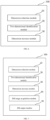
FIG. 6 shows a schematic diagram of an example of an apparatus of identifying at least one target object for a security inspection CT according to a third embodiment; and -
FIG. 7 shows a schematic diagram of another example of an apparatus of identifying at least one target object for a security inspection CT according to the third embodiment. - Exemplary embodiments of the present disclosure will be described in more detail below with reference to the accompanying drawings. Although exemplary embodiments of the present disclosure are shown in the accompanying drawings, it should be understood that the present disclosure may be implemented in various forms and should not be limited to embodiments set forth herein. Rather, these embodiments are provided for a clearer understanding of the present disclosure.
- The terms "first", "second", etc. in the specification and claims of the present disclosure are used to distinguish similar objects, rather than describe a specific order or sequence. It should be understood that data used in this way are interchangeable under appropriate circumstances so that embodiments of the present disclosure described herein may be implemented in an order other than that illustrated or described. Furthermore, the terms "include" and "have" and any variations thereof are intended to cover non-exclusive inclusions, such as processes, methods, systems, products or devices that include a series of steps or units, not limited to those explicitly listed, but may include other steps or units not expressly listed. Herein, the same or similar reference numerals represent constitute elements having the same or similar functions.
- As the first embodiment of the present disclosure, a method of identifying at least one target object for a security inspection CT is provided.
FIG. 1 shows a flowchart of a method of identifying at least one target object for a security inspection CT according to the first embodiment. The method of identifying the at least one target object for the security inspection CT is applicable to a security inspection CT system, and may be performed, for example, in a security inspection CT device or in a server connected to the security inspection CT device. - As shown in
FIG. 1 , in step S10, a dimension reduction is performed. That is, a dimension reduction is performed on three-dimensional CT data to generate a plurality of two-dimensional dimension-reduced views. - For example, as shown in
FIG. 2 , step S10 may include step S11 and step S12. - In step S11, a plurality of directions are set for the three-dimensional CT data. Here, the plurality of directions are arbitrary directions and are not limited to a specific direction such as a direction orthogonal to a traveling direction of an object during a detection process.
- In addition, while setting the plurality of directions, or before and after setting the plurality of directions, optionally, it is possible to perform a preprocessing operation on three-dimensional volume data, such as filtering an invalid voxel and pre-calculating a geometric parameter required by projection or rendering, so that a subsequent processing speed may be improved.
- In step S12, a projection or rendering is performed according to the plurality of directions to obtain the plurality of two-dimensional dimension-reduced views.
- As an example, a ray casting may be performed based on a CT image slice sequence. From each pixel of the image, a ray may be emitted in a specific direction, and the ray passes through the entire image sequence. In this process, a sampling is performed on the image sequence to obtain an attribute or color information, and attribute or color values are accumulated according to a particular model until the ray passes through the entire image sequence. The finally obtained attribute or color value may be used as the dimensional-reduced two-dimensional view.
- In the present disclosure, the two-dimensional dimension-reduced view is obtained by projecting in any direction, then it is possible to avoid that the dimension reduction is performed only in a specific direction, such as a direction orthogonal to the traveling direction of the object during the detection process. In this way, the following problems caused by performing the dimension reduction only in a specific direction may be solved: (1) under some placement postures of objects, an area of the object after dimension reduction is too small and a shape information is incompletely expressed, so that it is difficult to accurately identify the target object; (2) the shape information of the object is lost because the object is blocked by other objects, so that it is difficult to accurately identify the target object.
- In step S20, a two-dimensional identification is performed. That is, a target identification is performed on a plurality of two-dimensional views to obtain a set of two-dimensional semantic descriptions of the at least one target object. Here, the plurality of two-dimensional views include the plurality of two-dimensional dimension-reduced views obtained in step S10 described above.
- For example, at least one or a combination of an image processing method for two-dimensional images, a classic machine learning method, or a deep learning method may be used as a method of identifying at least one target object in a two-dimensional view.
- For example, a two-dimensional view may be input into a neural network model and a set of two-dimensional semantic descriptions may be output.
- For example, a deep learning-based target detection neural network may be used to detect a two-dimensional position of the at least one target object. A convolutional neural network used in a target detection task is a typical structure of deep learning in a computer vision task. Such convolutional neural network has characteristics of local connection, weight sharing, and spatial resampling, etc. These characteristics give the convolutional neural network a certain degree of translation and scaling invariance. Here, the set of two-dimensional semantic descriptions includes a category information and/or a confidence level, in units of one or more of pixels, regions of interest, or two-dimensional images. Alternatively, the set of two-dimensional semantic descriptions may include at least one of a category information, a confidence level, or a position information of the at least one target object, in units of regions of interest and /or two-dimensional images. The category information indicates a category to which the at least one target object belongs, such as guns, knives, etc. The position information may contain center coordinates, a bounding box, etc. The confidence level represents a possibility of an existence of the at least one target object, and may be a normalized scalar or vector.
- In other words, the set of two-dimensional semantic descriptions includes at least one information selected from: a category information of the target object to which a pixel belongs, a confidence level, etc.; a category information of the at least one target object contained in a region of interest, a position information of the at least one target object, a confidence level, etc.; or a category information of the at least one target object contained in a two-dimensional image, a position information of the at least one target object, a confidence level, etc. The at least one information may be information contained in one group, or may be information contained in different groups.
- In addition to the category information, the confidence level and the position information, the set of descriptions for two-dimensional semantic information may further include a posture of the at least one target object, a number of the at least one target object, and other semantic information.
- The method of identifying the at least one target object for the two-dimensional view of the present disclosure is not particularly limited, as long as it is a method that may obtain the above-mentioned set of two-dimensional semantic descriptions based on the two-dimensional view.
- As mentioned above, in the present disclosure, the two-dimensional recognition result of the at least one target object is expressed in the form of a set of two-dimensional semantic descriptions. Such set of two-dimensional semantic descriptions is input in step S30 and the dimensions are increased to three, so that the two-dimensional recognition results may be integrated into a three-dimensional result. In addition, the set of two-dimensional semantic descriptions is flexible, and may contain abundant information.
- In step S30, a dimension increase is performed. That is, a dimension increase is performed on the set of two-dimensional semantic descriptions to obtain a three-dimensional recognition result of the at least one target object.
- For example, as shown in
FIG. 3 , step S30 may include step S31 and step S32. - In step S31, the set of two-dimensional semantic descriptions is mapped to a three-dimensional space by using a back-projection method, so as to obtain a three-dimensional probability map. The back-projection may be considered as a reverse process of projection.
- Optionally, the back-projection process may be implemented by voxel driving or pixel driving method. For example, it is possible to obtain a semantic feature matrix by voxel driving or pixel driving, and compress the semantic feature matrix into a three-dimensional probability map.
- Here, the voxel driving includes: mapping each voxel in the three-dimensional CT data to a pixel in each two-dimensional view, querying and accumulating the two-dimensional semantic description information corresponding to the pixel, and generating a semantic feature matrix.
- For a correspondence relationship between the voxel and the pixel, a mapping function or a lookup table may be established to increase a computing speed.
- As mentioned above, according to the voxel driving, each voxel in the three-dimensional CT data is traversed to obtain the semantic feature matrix thereof sequentially, and finally the semantic feature matrix is compressed to obtain the three-dimensional probability map.
- In the voxel driving, parallel operations may be performed on each voxel, so that a computing speed is fast, and a real-time performance of the security inspection may be improved.
- The pixel driving includes: mapping each pixel in the two-dimensional view to a straight line in the three-dimensional CT data, traversing each pixel in each two-dimensional view or each pixel in the region of interest, propagating the two-dimensional semantic description information corresponding to the pixel into the three-dimensional space along the straight line, and generating a semantic feature matrix. The region of interest is given by the set of two-dimensional semantic descriptions. The correspondence relationship between the voxel and the pixel may also be obtained through a mapping function or a lookup table.
- As mentioned above, according to the pixel driving, for each pixel in the plurality of two-dimensional views, the semantic feature matrix thereof is obtained sequentially, and finally the semantic feature matrix is compressed to obtain the three-dimensional probability map.
- In the pixel driving, it is also possible to perform parallel operations on pixels, which is also helpful to increase the computing speed and improve the real-time performance of the security inspection.
- According to the above description of voxel driving and pixel driving, the semantic feature matrix is generated from the two-dimensional semantic description information according to a spatial correspondence thereof, and it is a matrix obtained through digitization and intensification based on the two-dimensional semantic description information. For example, for the category information in the set of two-dimensional semantic descriptions, the semantic feature matrix may be obtained separately according to the category of each target object. For example, it may be assumed that the corresponding value in the semantic feature matrix is 1 when the target object belongs to the category, and the corresponding value in the semantic feature matrix is 0 when the target object does not belong to the category. In addition, for other semantic information in the set of two-dimensional semantic descriptions, the semantic feature matrix may also be obtained in a similar way.
- Typical methods for compressing the semantic feature matrix include weighted average, principal component analysis, etc. In this case, the input is the semantic feature matrix, and the output is the probability map.
- As an example, assuming there are two two-dimensional views and two sets of two-dimensional semantic descriptions, and the semantic information on a pixel (or region of interest or two-dimensional image) is numerically represented as 1 or 0, then the two sets of two-dimensional semantic descriptions may be mapped to the three-dimensional space by using a back-projection method, so as to generate the semantic feature matrix corresponding to the three-dimensional space. The values in the matrix are vectors composed of 0 or 1. A probability map value of the voxel in the corresponding three-dimensional space may be calculated using a weighted average method. For example, if the semantic feature matrix value of a voxel is v=[0,1], the probability map value of the voxel is 0.5 in a case that the weights are the same. When compressing the semantic feature matrix corresponding to all target object categories, the dimension of the output probability map value is determined by the number of target object categories. The method of obtaining the probability map value explained here is just an example, and the probability map value may also be obtained in other ways. For example, the weights may be different, and the semantic feature matrix values may be weighted with different weights to obtain the probability map value.
- As another example, one or more vectors in the three-dimensional semantic feature matrix may be used as input variable(s) in a principal component analysis. A principal component analysis may be performed on such input variable to obtain an output variable as a principal component. The output variable may be normalized as a probability map value for the corresponding voxel.
- By using the above-mentioned calculation method, it may not only ensure the real-time performance of the calculation, but also effectively integrate the two-dimensional recognition results to improve the final recognition effect.
- In step S32, a feature extraction is performed on the three-dimensional probability map to obtain the three-dimensional recognition result of the at least one target object.
- For example, for the three-dimensional probability map, the feature extraction is performed using at least one or a combination of an image processing method, a classic machine learning method, or a deep learning method, so as to obtain a set of three-dimensional image semantic descriptions as the three-dimensional recognition result.
- As an example, the three-dimensional probability map is input into a deep learning model, and a three-dimensional recognition result such as a confidence level and a three-dimensional bounding box is output. The deep learning model used here may adopt technologies such as a classification neural network or an object detection network with a few layers. By using such technologies, the information content contained in the original three-dimensional CT data may be effectively simplified and abstracted through the above steps, and is closer to an ultimate goal of identifying prohibited items, then it is possible to quickly and accurately extract the set of three-dimensional semantic descriptions using a simple feature extraction method.
- Here, the set of three-dimensional image semantic descriptions includes a category information and/or a confidence level, in units of one or more of voxels, three-dimensional volumes of interest, or three-dimensional CT images. Alternatively, the set of three-dimensional image semantic descriptions includes at least one of a category information, a position information of the at least one target object, or a confidence level, in units of three-dimensional volumes of interest and/or three-dimensional CT images. The position information of the at least one target object in the three-dimensional CT image may include a three-dimensional bounding box.
- In other words, the set of three-dimensional image semantic descriptions includes at least one selected from: a category information of a target object to which a voxel belongs, a confidence level, etc.; a category information of at least one target object contained in a three-dimensional volume of interest (VOI), a position information of the at least one target object, a confidence level, etc.; a category information of at least one target object contained in a three-dimensional CT image, a position information of the at least one target object, a confidence level, etc. The at least one information may be information contained in one group, or may be information contained in different groups.
- Since the set of three-dimensional image semantic descriptions is generated from the three-dimensional probability map generated based on the set of two-dimensional semantic descriptions, there is consistency or mutual conversion between types of the semantic information contained in the set of three-dimensional image semantic descriptions and types of the semantic information contained in the set of two-dimensional semantic descriptions.
- In the present disclosure, through the above-mentioned dimension increase, a dimension increase is performed on the set of two-dimensional semantic descriptions to obtain a three-dimensional recognition result of the at least one target object, so that the problem of significantly reduced information content caused when the two-dimensional identification is performed only by dimension reduction is solved. Then, a loss of information content may be reduced while the two-dimensional identification is used, and both the real-time performance and the accuracy of the security inspection may be considered.
- As another example of step S32, for example, an image processing method may be used. As shown in
FIG. 4 , step S32 may include steps S321 to S323. - In step S321, a binarization is performed on the three-dimensional probability map to obtain a three-dimensional binary map.
- In step S322, a connected component analysis is performed on the three-dimensional binary image to obtain at least one connected component.
- As an example, a connected component labeling may be performed on the three-dimensional binary image, and a mask operation may be performed on each labeled region to obtain at least one connected component.
- In step S323, a set of three-dimensional image semantic descriptions is generated for the at least one connected component.
- Then, the set of three-dimensional image semantic descriptions may include a three-dimensional bounding box. The three-dimensional bounding box may give a spatial boundary of the target object in the three-dimensional image, and a position, a range, a posture, a shape, etc. of the target object may be shown more intuitively, which is helpful for security personnel to accurately determine whether the target object is a dangerous item.
- As an example, all probability values for each connected component may be extracted, a principal component analysis may be performed to obtain an analysis set, and the analysis set may be used as a valid voxel volume of object. A set of three-dimensional image semantic descriptions may be statistically generated for the valid voxel volume. In this way, the accuracy of three-dimensional identification may be further improved.
- In the first embodiment, a dimension reduction is performed on three-dimensional CT data to generate a plurality of two-dimensional dimension-reduced views, a target recognition is performed using a plurality of two-dimensional views including the plurality of two-dimensional dimension-reduced views to obtain a set of two-dimensional semantic descriptions, and then a dimension increase is performed on the set of two-dimensional semantic descriptions to obtain a three-dimensional recognition result. That is, the dimensions are firstly reduced from three dimensions to two dimensions for identification and then increased to generate a three-dimensional result. In this way, it is possible to effectively recognize a target object with complex material composition and physical properties and having shape features through a two-dimensional identification, and also possible to effectively integrate two-dimensional recognition results to provide a three-dimensional recognition result with a rich information content. In this way, a recognition effect of the target object may be improved, and requirements for real-time performance of a security inspection may be met.
- As the second embodiment of the present disclosure, another method of identifying at least one target object for a security inspection CT is provided.
FIG. 5 shows a flowchart of the method of identifying the at least one target object for the security inspection CT according to the first embodiment. - The second embodiment differs from the first embodiment in that: in the second embodiment, not only the two-dimensional dimension-reduced image generated from the three-dimensional CT data is used, but also two-dimensional digital radiography (DR) data is used for identifying the at least one target object.
- For example, in step S20, the plurality of two-dimensional views further include a two-dimensional DR image, and the target identification is also performed on the two-dimensional DR image to obtain a set of two-dimensional semantic descriptions of the at least one target object. Here, the two-dimensional DR image is acquired by a DR imaging device provided independently from the security CT device. The two-dimensional DR image is an image of the same security inspection object as the three-dimensional CT data.
- In the second embodiment, as shown in
FIG. 5 , step S40 may be performed before step S20. In step S40, a two-dimensional DR image is acquired from the DR imaging device and is used as one of the plurality of two-dimensional views. Step S40 may be performed in parallel with step S10. - In this case, in step S30, the dimension increase is performed not only on the set of two-dimensional semantic descriptions of the two-dimensional dimension-reduced image, but also on the set of two-dimensional semantic descriptions of the two-dimensional DR image, so as to obtain a three-dimensional recognition result.
- The two-dimensional DR image is a two-dimensional image with different principles and properties from the two-dimensional dimension-reduced image generated by performing a dimension reduction on the three-dimensional CT data. By using such two-dimensional DR image for the target identification, it is possible to increase the information content used for identification, and the accuracy of identification may be improved.
- In the second embodiment, as shown in
FIG. 5 , step S50 may be optionally performed after step S30. In step S50, the three-dimensional recognition result generated in step S30 is projected onto the two-dimensional DR image, and then a recognition result of the two-dimensional DR image is output. - Due to work habits and requirements, some security personnel want to confirm the recognition result in the two-dimensional DR image. However, if the recognition result of the two-dimensional DR image is used directly, when the target object in the DR image is seriously blocked or has a special placement posture, the information of the target object may be incomplete, which affects the recognition accuracy. A three-dimensional recognition result is obtained by effectively integrating the semantic information of several two-dimensional views, so that it is more accurate and reliable. Therefore, by projecting the three-dimensional recognition result onto the two-dimensional DR image as the recognition result for output, the accuracy of the recognition result may be improved while meeting the work requirements of security personnel to confirm the recognition result through the two-dimensional DR image.
- In addition, the result of step S30 and the result of step S50 may be output simultaneously.
- In this case, the three-dimensional recognition result and the recognition result in the two-dimensional DR image may be compared and verified with each other, which is helpful to the security personnel to more accurately determine whether the target object is a dangerous item.
- As the third embodiment of the present disclosure, an apparatus of identifying at least one target object for a security inspection CT is provided.
FIG. 6 shows a schematic diagram of the apparatus of identifying the at least one target object for the security inspection CT according to the first embodiment. - As shown in
FIG. 6 , anapparatus 100 of identifying at least one target object for a security inspection CT in this embodiment includes adimension reduction module 10, a two-dimensional identification module 20, and adimension increase module 30. - The
dimension reduction module 10 is used to perform a dimension reduction on three-dimensional CT data to generate a plurality of two-dimensional dimension-reduced views. That is, thedimension reduction module 10 may perform step S10 in the first and second embodiments described above. - The two-
dimensional identification module 20 is used to perform a target identification on a plurality of two-dimensional views to obtain a set of two-dimensional semantic descriptions of the at least one target object. Here, the plurality of two-dimensional views include the plurality of two-dimensional dimension-reduced views. That is, the two-dimensional identification module 20 may perform step S20 in the first and second embodiments described above. - The
dimension increase module 30 is used to perform a dimension increase on the set of two-dimensional semantic descriptions to obtain a three-dimensional recognition result of the at least one target object. That is, thedimension increase module 30 may perform step S30 in the first and second embodiments described above. - For the processing of the
dimension reduction module 10, the two-dimensional identification module 20 and thedimension increase module 30, reference may be made to the first and second embodiments described above, and details will not be repeated here. - In addition, as shown in
FIG. 7 , theapparatus 100 of identifying the at least one target object for the security inspection CT may further include a DRimage acquisition module 40. The DRimage acquisition module 40 is used to acquire a two-dimensional DR image from a DR imaging device as one of the plurality of two-dimensional views. That is, the DRimage acquisition module 40 may perform step S40 in the second embodiment. - The
apparatus 100 of identifying the at least one target object for the security inspection CT may further include aDR output module 50. TheDR output module 50 is used to project the three-dimensional recognition result generated by thedimension increase module 30 to the two-dimensional DR image, and then a recognition result of the two-dimensional DR image is output. That is, theDR output module 50 may perform step S50 in the second embodiment. - In the present disclosure, the
apparatus 100 of identifying the at least one target object for the security inspection CT may be implemented in a form of hardware, or implemented as a software module running on one or more processors, or implemented in a combination thereof. - For example, the
apparatus 100 of identifying the at least one target object for the security inspection CT may be implemented in a combination of software and hardware by any suitable electronic device such as a desktop computer, a tablet computer, a smart phone, a server, etc. provided with a processor. For example, theapparatus 100 of identifying the at least one target object for the security inspection CT may be a control computer of a security inspection CT system, or a server connected to a security inspection CT scanning device in the security inspection CT system, etc. - In addition, the
apparatus 100 of identifying the at least one target object for the security inspection CT may be implemented as a software module on any suitable electronic device such as a desktop computer, a tablet computer, a smart phone, a server, etc., e.g., a software module installed on a control computer of the security inspection CT system, or a software module installed on a server connected to the security inspection CT scanning device in the security inspection CT system. - The processor of the
apparatus 100 of identifying the at least one target object for the security inspection CT may perform the method of identifying the at least one target object for the security inspection CT described above. - The
apparatus 100 of identifying the at least one target object for the security inspection CT may further include a memory (not shown), a communication module (not shown), and the like. - The memory of the
apparatus 100 of identifying the at least one target object for the security inspection CT may store steps for executing the method of identifying the at least one target object for the security inspection CT described above, and data related to target identification for the security inspection CT, etc. The memory may be, for example, ROM (read Only Memory image), RAM (Random Access Memory), etc. The memory has a storage space for program codes for executing any step in the above-mentioned method of identifying the at least one target object for the security inspection CT. When these program codes are read and executed by the processor, the above-mentioned method of identifying the at least one target object for the security inspection CT may be performed. These program codes may be read from or written into one or more computer program products. These computer program products include program code carriers such as hard disks, compact disks (CDs), memory cards or floppy disks. Such computer program products are generally portable or fixed storage units. The program codes for performing any of the steps in the above-mentioned methods may also be downloaded through a network. The program codes may be, for example, compressed in a suitable form. - The communication module in the
apparatus 100 of identifying the at least one target object for the security inspection CT may support an establishment of a direct (e.g., wired) communication channel or a wireless communication channel between theapparatus 100 of identifying the at least one target object for the security inspection CT and an external electronic device, and may perform communication via the established communication channel. For example, the communication module may receive the three-dimensional CT data, etc. from the CT scanning device via the network. - In addition, the
apparatus 100 of identifying the at least one target object for the security inspection CT may further include an output part such as a display, a microphone, and a speaker, etc. to output the target recognition result. - The above-mentioned
apparatus 100 of identifying the at least one target object for the security inspection CT may be implemented to achieve the same effects as the first and second embodiments described above. - Although embodiments and specific examples of the present disclosure have been described above with reference to the accompanying drawings, those skilled in the art may make various modifications and variations without departing from the spirit and scope of the present disclosure. Such modifications and variations fall within the scope defined by the claims.
Claims (19)
- A method of identifying at least one target object for a security inspection CT, comprising:performing a dimension reduction on three-dimensional CT data to generate a plurality of two-dimensional dimension-reduced views;performing a target identification on a plurality of two-dimensional views to obtain a set of two-dimensional semantic descriptions of the at least one target object, wherein the plurality of two-dimensional views comprise the plurality of two-dimensional dimension-reduced views; andperforming a dimension increase on the set of two-dimensional semantic descriptions to obtain a three-dimensional recognition result of the at least one target object.
- The method of identifying the at least one target object for the security inspection CT according to claim 1, wherein the performing a dimension increase on the set of two-dimensional semantic descriptions to obtain a three-dimensional recognition result of the at least one target object comprises:mapping the set of two-dimensional semantic descriptions to a three-dimensional space by using a back-projection method, so as to obtain a three-dimensional probability map; andperforming a feature extraction on the three-dimensional probability map to obtain the three-dimensional recognition result of the at least one target object.
- The method of identifying the at least one target object for the security inspection CT according to claim 2, wherein the mapping the set of two-dimensional semantic descriptions to a three-dimensional space by using a back-projection method so as to obtain a three-dimensional probability map comprises:
mapping the set of two-dimensional semantic descriptions to the three-dimensional space by voxel driving or pixel driving so as to obtain a semantic feature matrix, and compressing the semantic feature matrix into the three-dimensional probability map. - The method of identifying the at least one target object for the security inspection CT according to claim 3, wherein the voxel driving comprises:mapping each voxel in the three-dimensional CT data to a pixel in each two-dimensional view, querying and accumulating a two-dimensional semantic description information corresponding to the pixel, and generating the semantic feature matrix; andwherein the pixel driving comprises:
mapping each pixel in the two-dimensional view to a straight line in the three-dimensional CT data, traversing each pixel in each two-dimensional view or each pixel in a region of interest, propagating a two-dimensional semantic description information corresponding to the pixel into the three-dimensional space along the straight line, and generating the semantic feature matrix, wherein the region of interest is given by the set of two-dimensional semantic descriptions. - The method of identifying the at least one target object for the security inspection CT according to claim 4, wherein in the voxel driving or the pixel driving, a correspondence relationship between the voxel and the pixel is obtained by a mapping function or a lookup table.
- The method of identifying the at least one target object for the security inspection CT according to claim 2, wherein the performing a feature extraction on the three-dimensional probability map to obtain the three-dimensional recognition result of the at least one target object comprises:
performing the feature extraction on the three-dimensional probability map by using at least one or a combination of an image processing method, a classic machine learning method, or a deep learning method, so as to obtain a set of three-dimensional image semantic descriptions as the three-dimensional recognition result. - The method of identifying the at least one target object for the security inspection CT according to claim 6, whereina binarization is performed on the three-dimensional probability map to obtain a three-dimensional binary map;a connected component analysis is performed on the three-dimensional binary map to obtain at least one connected component; andthe set of three-dimensional image semantic descriptions is generated for the at least one connected component.
- The method of identifying the at least one target object for the security inspection CT according to claim 7, wherein performing the connected component analysis comprises:
performing a connected component labeling on the three-dimensional binary map, and performing a mask operation on each labeled region to obtain the at least one connected component. - The method of identifying the at least one target object for the security inspection CT according to claim 7, wherein the generating the set of three-dimensional image semantic descriptions for the at least one connected component comprises:
extracting all probability values for each connected component, performing a principal component analysis to obtain an analysis set, and statistically generating the set of three-dimensional image semantic descriptions by using the analysis set as a valid voxel volume of object. - The method of identifying the at least one target object for the security inspection CT according to claim 6, wherein the set of three-dimensional image semantic descriptions comprises a category information and/or a confidence level, in units of one or more of voxels, three-dimensional volumes of interest, or three-dimensional CT images; or
the set of three-dimensional image semantic descriptions comprises at least one of a category information, a position information of the at least one target object, or a confidence level, in units of three-dimensional volumes of interest and/or three-dimensional CT images. - The method of identifying the at least one target object for the security inspection CT according to claim 10, wherein the position information comprises a three-dimensional bounding box.
- The method of identifying the at least one target object for the security inspection CT according to claim 1, wherein the set of two-dimensional semantic descriptions comprises a category information and/or a confidence level, in units of one or more of pixels, regions of interest, or two-dimensional images; or
the set of two-dimensional semantic descriptions comprises at least one of a category information, a confidence level, or a position information of the at least one target object, in units of regions of interest and/or two-dimensional images. - The method of identifying the at least one target object for the security inspection CT according to claim 1, wherein performing the target identification on each of the plurality of two-dimensional views comprises:
performing the target identification for two-dimensional images by using at least one or a combination of an image processing method, a classic machine learning method, or a deep learning method. - The method of identifying the at least one target object for the security inspection CT according to claim 1, wherein the performing a dimension reduction on three-dimensional CT data to generate a plurality of two-dimensional dimension-reduced views comprises:setting a plurality of directions for the three-dimensional CT data; andprojecting or rendering according to the plurality of directions.
- The method of identifying the at least one target object for the security inspection CT according to claim 14, wherein the plurality of directions are arbitrary directions and are not limited to a direction orthogonal to a traveling direction of an object during a detection process.
- The method of identifying the at least one target object for the security inspection CT according to any one of claims 1 to 15, wherein the plurality of two-dimensional views further comprise a two-dimensional DR image, and the two-dimensional DR image is acquired by a DR imaging device.
- The method of identifying the at least one target object for the security inspection CT according to claim 16, wherein the three-dimensional recognition result is projected onto the two-dimensional DR image and output as a recognition result of the two-dimensional DR image.
- An apparatus of identifying at least one target object for a security inspection CT, comprising:a dimension reduction module configured to perform a dimension reduction on three-dimensional CT data to generate a plurality of two-dimensional dimension-reduced views;a two-dimensional identification module configured to perform a target identification on a plurality of two-dimensional views to obtain a set of two-dimensional semantic descriptions of the at least one target object, wherein the plurality of two-dimensional views comprise the plurality of two-dimensional dimension-reduced views; anda dimension increase module configured to perform a dimension increase on the set of two-dimensional semantic descriptions to obtain a three-dimensional recognition result of the at least one target object.
- A machine-readable storage medium having a program thereon, wherein the program is configured to cause a computer to:perform a dimension reduction on three-dimensional CT data to generate a plurality of two-dimensional dimension-reduced views;perform a target identification on a plurality of two-dimensional views to obtain a set of two-dimensional semantic descriptions of the at least one target object, wherein the plurality of two-dimensional views comprise the plurality of two-dimensional dimension-reduced views; andperform a dimension increase on the set of two-dimensional semantic descriptions to obtain a three-dimensional recognition result of the at least one target object.
Applications Claiming Priority (2)
| Application Number | Priority Date | Filing Date | Title |
|---|---|---|---|
| CN202110998653.3A CN113792623B (en) | 2021-08-27 | 2021-08-27 | Security check CT target object identification method and device |
| PCT/CN2022/104606 WO2023024726A1 (en) | 2021-08-27 | 2022-07-08 | Security check ct object recognition method and apparatus |
Publications (3)
| Publication Number | Publication Date |
|---|---|
| EP4394696A1 true EP4394696A1 (en) | 2024-07-03 |
| EP4394696A4 EP4394696A4 (en) | 2025-07-16 |
| EP4394696B1 EP4394696B1 (en) | 2026-04-01 |
Family
ID=79182374
Family Applications (1)
| Application Number | Title | Priority Date | Filing Date |
|---|---|---|---|
| EP22860072.2A Active EP4394696B1 (en) | 2021-08-27 | 2022-07-08 | Security check ct object recognition method and apparatus |
Country Status (5)
| Country | Link |
|---|---|
| US (1) | US20240212336A1 (en) |
| EP (1) | EP4394696B1 (en) |
| JP (1) | JP7675277B2 (en) |
| CN (2) | CN113792623B (en) |
| WO (1) | WO2023024726A1 (en) |
Families Citing this family (8)
| Publication number | Priority date | Publication date | Assignee | Title |
|---|---|---|---|---|
| JP7387117B2 (en) * | 2021-08-09 | 2023-11-28 | 株式会社Mujin | Computing systems, methods and non-transitory computer-readable media |
| CN113792623B (en) * | 2021-08-27 | 2022-12-13 | 同方威视技术股份有限公司 | Security check CT target object identification method and device |
| CN115830243A (en) * | 2022-12-28 | 2023-03-21 | 北京航星机器制造有限公司 | CT three-dimensional target detection method based on deep learning |
| CN116453063B (en) * | 2023-06-12 | 2023-09-05 | 中广核贝谷科技有限公司 | Target detection and recognition method and system based on fusion of DR image and projection image |
| CN118736207B (en) * | 2024-09-03 | 2025-01-28 | 同方威视技术股份有限公司 | Target recognition method and device for three-dimensional CT data and ray scanning detection system |
| CN121640016A (en) * | 2024-09-03 | 2026-03-10 | 同方威视技术股份有限公司 | Target recognition methods, devices, and X-ray scanning detection systems based on 3D CT data |
| CN119693935B (en) * | 2025-02-21 | 2025-06-03 | 杭州睿影科技有限公司 | Method and device for marking items |
| CN120976774A (en) * | 2025-10-22 | 2025-11-18 | 中国石油集团西部钻探工程有限公司 | Three-dimensional crack identification methods, devices, electronic equipment, storage media and products |
Family Cites Families (27)
| Publication number | Priority date | Publication date | Assignee | Title |
|---|---|---|---|---|
| AU2001239926A1 (en) * | 2000-02-25 | 2001-09-03 | The Research Foundation Of State University Of New York | Apparatus and method for volume processing and rendering |
| US8223919B2 (en) * | 2003-04-25 | 2012-07-17 | Rapiscan Systems, Inc. | X-ray tomographic inspection systems for the identification of specific target items |
| JP4828839B2 (en) * | 2005-03-07 | 2011-11-30 | 株式会社東芝 | X-ray computed tomography apparatus, image processing apparatus and image processing method |
| EP2345003B1 (en) * | 2008-09-30 | 2019-01-16 | Analogic Corporation | 3d segmentation of ct images of baggage scanned for automated threat detection with potentially touching objects are separated by erosion and erroneously split objects are merged again based on a connectivity or compactness measure of the object parts in question |
| US8180139B2 (en) * | 2009-03-26 | 2012-05-15 | Morpho Detection, Inc. | Method and system for inspection of containers |
| US20140010437A1 (en) * | 2011-03-22 | 2014-01-09 | Ram C. Naidu | Compound object separation |
| CN103901489B (en) * | 2012-12-27 | 2017-07-21 | 清华大学 | Check method, display methods and the equipment of object |
| CN104658028B (en) * | 2013-11-18 | 2019-01-22 | 清华大学 | Method and apparatus for rapidly marking objects in three-dimensional images |
| EP3097540B1 (en) * | 2014-01-23 | 2018-07-11 | Yissum Research Development Company of The Hebrew University of Jerusalem Ltd. | Method of repeat computed tomography scanning and system thereof |
| CN105094725B (en) * | 2014-05-14 | 2019-02-19 | 同方威视技术股份有限公司 | Image display method |
| CN105784731B (en) * | 2014-06-25 | 2019-02-22 | 同方威视技术股份有限公司 | A method and security inspection system for locating a target in a three-dimensional CT image |
| US10037603B2 (en) * | 2015-05-04 | 2018-07-31 | Siemens Healthcare Gmbh | Method and system for whole body bone removal and vascular visualization in medical image data |
| CN108882897B (en) * | 2015-10-16 | 2022-01-25 | 瓦里安医疗系统公司 | Method and system for imaging patient |
| JP7005622B2 (en) * | 2017-07-12 | 2022-01-21 | 株式会社ソニー・インタラクティブエンタテインメント | Recognition processing device, recognition processing method and program |
| US10572963B1 (en) * | 2017-07-14 | 2020-02-25 | Synapse Technology Corporation | Detection of items |
| CN109166183B (en) * | 2018-07-16 | 2023-04-07 | 中南大学 | Anatomical landmark point identification method and identification equipment |
| CN111126242B (en) * | 2018-10-16 | 2023-03-21 | 腾讯科技(深圳)有限公司 | Semantic segmentation method, device and equipment for lung image and storage medium |
| CN109493417B (en) * | 2018-10-31 | 2023-04-07 | 深圳大学 | Three-dimensional object reconstruction method, device, equipment and storage medium |
| CN109975335B (en) | 2019-03-07 | 2024-01-12 | 北京航星机器制造有限公司 | A CT detection method and device |
| US11403765B2 (en) * | 2019-08-14 | 2022-08-02 | Lawrence Livermore National Security, Llc | Automatic threat recognition system and method using material disambiguation informed by physics in x-ray CT images of baggage |
| CN112444784B (en) * | 2019-08-29 | 2023-11-28 | 北京市商汤科技开发有限公司 | Three-dimensional target detection and neural network training methods, devices and equipment |
| US11568656B2 (en) * | 2019-10-01 | 2023-01-31 | Lawrence Livermore National Security, Llc | 3D segmentation using space carving and 2D convolutional neural networks |
| CN111652966B (en) * | 2020-05-11 | 2021-06-04 | 北京航空航天大学 | Three-dimensional reconstruction method and device based on multiple visual angles of unmanned aerial vehicle |
| CN111968240B (en) * | 2020-09-04 | 2022-02-25 | 中国科学院自动化研究所 | 3D Semantic Annotation Method of Photogrammetry Grid Based on Active Learning |
| WO2022107245A1 (en) * | 2020-11-18 | 2022-05-27 | 日本電気株式会社 | Map generation device, map generation method, and non-transitory computer-readable medium having program stored thereon |
| CN112598619A (en) * | 2020-11-23 | 2021-04-02 | 西安科锐盛创新科技有限公司 | Method for establishing intracranial vascular simulation three-dimensional narrowing model based on transfer learning |
| CN113792623B (en) * | 2021-08-27 | 2022-12-13 | 同方威视技术股份有限公司 | Security check CT target object identification method and device |
-
2021
- 2021-08-27 CN CN202110998653.3A patent/CN113792623B/en active Active
- 2021-08-27 CN CN202211300926.3A patent/CN115661810A/en active Pending
-
2022
- 2022-07-08 EP EP22860072.2A patent/EP4394696B1/en active Active
- 2022-07-08 WO PCT/CN2022/104606 patent/WO2023024726A1/en not_active Ceased
- 2022-07-08 US US18/293,704 patent/US20240212336A1/en active Pending
- 2022-07-08 JP JP2024504228A patent/JP7675277B2/en active Active
Also Published As
| Publication number | Publication date |
|---|---|
| JP7675277B2 (en) | 2025-05-12 |
| CN113792623B (en) | 2022-12-13 |
| US20240212336A1 (en) | 2024-06-27 |
| CN113792623A (en) | 2021-12-14 |
| EP4394696A4 (en) | 2025-07-16 |
| EP4394696B1 (en) | 2026-04-01 |
| CN115661810A (en) | 2023-01-31 |
| WO2023024726A1 (en) | 2023-03-02 |
| JP2024529423A (en) | 2024-08-06 |
| KR20240025683A (en) | 2024-02-27 |
Similar Documents
| Publication | Publication Date | Title |
|---|---|---|
| US20240212336A1 (en) | Security check ct object recognition method and apparatus | |
| EP3101594A1 (en) | Saliency information acquisition device and saliency information acquisition method | |
| CN111626163B (en) | Human face living body detection method and device and computer equipment | |
| CN108564579B (en) | A kind of concrete crack detection method and detection device based on space-time correlation | |
| CN109363697B (en) | A method and device for identifying breast imaging lesions | |
| CN112633297A (en) | Target object identification method and device, storage medium and electronic device | |
| CN111223065A (en) | Image correction method, irregular text recognition method, device, storage medium and device | |
| CN111415373A (en) | Target tracking and segmenting method, system and medium based on twin convolutional network | |
| CN111666813A (en) | Subcutaneous sweat gland extraction method based on three-dimensional convolutional neural network of non-local information | |
| CN112149570B (en) | Multi-person living body detection method, device, electronic equipment and storage medium | |
| US20200364875A1 (en) | Document boundary detection using deep learning model and image processing algorithms | |
| CN112001362A (en) | Image analysis method, image analysis device and image analysis system | |
| CN111242925A (en) | Target detection method, device and electronic device for CT image data | |
| CN114663626B (en) | Baggage fast modeling method, device and storage medium based on single frame sampling | |
| CN115294557A (en) | Image processing method, image processing device, electronic device, and storage medium | |
| Prasad et al. | Mobile plant species classification: a low computational aproach | |
| CN116824624A (en) | A cow identification method, system, equipment and storage medium | |
| CN115223173A (en) | Object identification method and device, electronic equipment and storage medium | |
| CN114445788A (en) | Vehicle parking detection method and device, terminal equipment and readable storage medium | |
| CN118097724B (en) | Palm vein-based identity recognition method and device, readable storage medium and equipment | |
| CN116420176A (en) | Method and apparatus for distinguishing different configuration states of an object based on an image representation of the object | |
| CN112633038B (en) | Data processing method, device, computer equipment, and computer-readable storage medium | |
| HK40107975A (en) | Security check ct object recognition method and apparatus | |
| CN116052175B (en) | Text detection method, electronic device, storage medium and computer program product | |
| CN112634397A (en) | Data processing method, data processing device, computer equipment and computer readable storage medium |
Legal Events
| Date | Code | Title | Description |
|---|---|---|---|
| STAA | Information on the status of an ep patent application or granted ep patent |
Free format text: STATUS: THE INTERNATIONAL PUBLICATION HAS BEEN MADE |
|
| PUAI | Public reference made under article 153(3) epc to a published international application that has entered the european phase |
Free format text: ORIGINAL CODE: 0009012 |
|
| STAA | Information on the status of an ep patent application or granted ep patent |
Free format text: STATUS: REQUEST FOR EXAMINATION WAS MADE |
|
| 17P | Request for examination filed |
Effective date: 20240130 |
|
| AK | Designated contracting states |
Kind code of ref document: A1 Designated state(s): AL AT BE BG CH CY CZ DE DK EE ES FI FR GB GR HR HU IE IS IT LI LT LU LV MC MK MT NL NO PL PT RO RS SE SI SK SM TR |
|
| REG | Reference to a national code |
Ref country code: HK Ref legal event code: DE Ref document number: 40107975 Country of ref document: HK |
|
| DAV | Request for validation of the european patent (deleted) | ||
| DAX | Request for extension of the european patent (deleted) | ||
| REG | Reference to a national code |
Ref country code: DE Ref legal event code: R079 Free format text: PREVIOUS MAIN CLASS: G06T0007000000 Ipc: G01V0005220000 Ref document number: 602022033707 Country of ref document: DE |
|
| A4 | Supplementary search report drawn up and despatched |
Effective date: 20250613 |
|
| RIC1 | Information provided on ipc code assigned before grant |
Ipc: G01V 5/22 20240101AFI20250606BHEP Ipc: G06T 11/00 20060101ALI20250606BHEP Ipc: G06V 10/77 20220101ALI20250606BHEP Ipc: G06V 20/52 20220101ALI20250606BHEP Ipc: G06V 20/64 20220101ALI20250606BHEP Ipc: G06V 10/26 20220101ALI20250606BHEP Ipc: G06V 10/44 20220101ALI20250606BHEP Ipc: G01N 23/04 20180101ALN20250606BHEP |
|
| REG | Reference to a national code |
Ref country code: DE Ref legal event code: R079 Free format text: PREVIOUS MAIN CLASS: G01V0005220000 Ipc: G06V0010770000 Ref document number: 602022033707 Country of ref document: DE |
|
| GRAP | Despatch of communication of intention to grant a patent |
Free format text: ORIGINAL CODE: EPIDOSNIGR1 |
|
| STAA | Information on the status of an ep patent application or granted ep patent |
Free format text: STATUS: GRANT OF PATENT IS INTENDED |
|
| GRAS | Grant fee paid |
Free format text: ORIGINAL CODE: EPIDOSNIGR3 |
|
| RIC1 | Information provided on ipc code assigned before grant |
Ipc: G06V 10/77 20220101AFI20260120BHEP Ipc: G06V 20/52 20220101ALI20260120BHEP Ipc: G06V 20/64 20220101ALI20260120BHEP Ipc: G06V 10/26 20220101ALI20260120BHEP Ipc: G06V 10/44 20220101ALI20260120BHEP Ipc: G01V 5/22 20240101ALI20260120BHEP Ipc: G06T 12/30 20260101ALI20260120BHEP Ipc: G01N 23/04 20180101ALN20260120BHEP |
|
| GRAA | (expected) grant |
Free format text: ORIGINAL CODE: 0009210 |
|
| STAA | Information on the status of an ep patent application or granted ep patent |
Free format text: STATUS: THE PATENT HAS BEEN GRANTED |
|
| INTG | Intention to grant announced |
Effective date: 20260129 |
|
| AK | Designated contracting states |
Kind code of ref document: B1 Designated state(s): AL AT BE BG CH CY CZ DE DK EE ES FI FR GB GR HR HU IE IS IT LI LT LU LV MC MK MT NL NO PL PT RO RS SE SI SK SM TR |
|
| REG | Reference to a national code |
Ref country code: CH Ref legal event code: F10 Free format text: ST27 STATUS EVENT CODE: U-0-0-F10-F00 (AS PROVIDED BY THE NATIONAL OFFICE) Effective date: 20260401 Ref country code: GB Ref legal event code: FG4D |
|
| REG | Reference to a national code |
Ref country code: IE Ref legal event code: FG4D |
|
| REG | Reference to a national code |
Ref country code: DE Ref legal event code: R096 Ref document number: 602022033707 Country of ref document: DE |