EP4394682A1 - Trade processing program, method for processing trade, and information processing apparatus - Google Patents
Trade processing program, method for processing trade, and information processing apparatus Download PDFInfo
- Publication number
- EP4394682A1 EP4394682A1 EP23199377.5A EP23199377A EP4394682A1 EP 4394682 A1 EP4394682 A1 EP 4394682A1 EP 23199377 A EP23199377 A EP 23199377A EP 4394682 A1 EP4394682 A1 EP 4394682A1
- Authority
- EP
- European Patent Office
- Prior art keywords
- node
- transaction
- authorization
- time
- transfer
- Prior art date
- Legal status (The legal status is an assumption and is not a legal conclusion. Google has not performed a legal analysis and makes no representation as to the accuracy of the status listed.)
- Pending
Links
Images








Classifications
-
- G—PHYSICS
- G06—COMPUTING OR CALCULATING; COUNTING
- G06Q—INFORMATION AND COMMUNICATION TECHNOLOGY [ICT] SPECIALLY ADAPTED FOR ADMINISTRATIVE, COMMERCIAL, FINANCIAL, MANAGERIAL OR SUPERVISORY PURPOSES; SYSTEMS OR METHODS SPECIALLY ADAPTED FOR ADMINISTRATIVE, COMMERCIAL, FINANCIAL, MANAGERIAL OR SUPERVISORY PURPOSES, NOT OTHERWISE PROVIDED FOR
- G06Q30/00—Commerce
- G06Q30/018—Certifying business or products
- G06Q30/0185—Product, service or business identity fraud
-
- G—PHYSICS
- G06—COMPUTING OR CALCULATING; COUNTING
- G06Q—INFORMATION AND COMMUNICATION TECHNOLOGY [ICT] SPECIALLY ADAPTED FOR ADMINISTRATIVE, COMMERCIAL, FINANCIAL, MANAGERIAL OR SUPERVISORY PURPOSES; SYSTEMS OR METHODS SPECIALLY ADAPTED FOR ADMINISTRATIVE, COMMERCIAL, FINANCIAL, MANAGERIAL OR SUPERVISORY PURPOSES, NOT OTHERWISE PROVIDED FOR
- G06Q10/00—Administration; Management
- G06Q10/06—Resources, workflows, human or project management; Enterprise or organisation planning; Enterprise or organisation modelling
- G06Q10/063—Operations research, analysis or management
- G06Q10/0631—Resource planning, allocation, distributing or scheduling for enterprises or organisations
-
- G—PHYSICS
- G06—COMPUTING OR CALCULATING; COUNTING
- G06Q—INFORMATION AND COMMUNICATION TECHNOLOGY [ICT] SPECIALLY ADAPTED FOR ADMINISTRATIVE, COMMERCIAL, FINANCIAL, MANAGERIAL OR SUPERVISORY PURPOSES; SYSTEMS OR METHODS SPECIALLY ADAPTED FOR ADMINISTRATIVE, COMMERCIAL, FINANCIAL, MANAGERIAL OR SUPERVISORY PURPOSES, NOT OTHERWISE PROVIDED FOR
- G06Q20/00—Payment architectures, schemes or protocols
- G06Q20/38—Payment protocols; Details thereof
- G06Q20/40—Authorisation, e.g. identification of payer or payee, verification of customer or shop credentials; Review and approval of payers, e.g. check credit lines or negative lists
-
- G—PHYSICS
- G06—COMPUTING OR CALCULATING; COUNTING
- G06Q—INFORMATION AND COMMUNICATION TECHNOLOGY [ICT] SPECIALLY ADAPTED FOR ADMINISTRATIVE, COMMERCIAL, FINANCIAL, MANAGERIAL OR SUPERVISORY PURPOSES; SYSTEMS OR METHODS SPECIALLY ADAPTED FOR ADMINISTRATIVE, COMMERCIAL, FINANCIAL, MANAGERIAL OR SUPERVISORY PURPOSES, NOT OTHERWISE PROVIDED FOR
- G06Q20/00—Payment architectures, schemes or protocols
- G06Q20/38—Payment protocols; Details thereof
- G06Q20/389—Keeping log of transactions for guaranteeing non-repudiation of a transaction
-
- G—PHYSICS
- G06—COMPUTING OR CALCULATING; COUNTING
- G06Q—INFORMATION AND COMMUNICATION TECHNOLOGY [ICT] SPECIALLY ADAPTED FOR ADMINISTRATIVE, COMMERCIAL, FINANCIAL, MANAGERIAL OR SUPERVISORY PURPOSES; SYSTEMS OR METHODS SPECIALLY ADAPTED FOR ADMINISTRATIVE, COMMERCIAL, FINANCIAL, MANAGERIAL OR SUPERVISORY PURPOSES, NOT OTHERWISE PROVIDED FOR
- G06Q20/00—Payment architectures, schemes or protocols
- G06Q20/38—Payment protocols; Details thereof
- G06Q20/40—Authorisation, e.g. identification of payer or payee, verification of customer or shop credentials; Review and approval of payers, e.g. check credit lines or negative lists
- G06Q20/405—Establishing or using transaction specific rules
-
- G—PHYSICS
- G06—COMPUTING OR CALCULATING; COUNTING
- G06Q—INFORMATION AND COMMUNICATION TECHNOLOGY [ICT] SPECIALLY ADAPTED FOR ADMINISTRATIVE, COMMERCIAL, FINANCIAL, MANAGERIAL OR SUPERVISORY PURPOSES; SYSTEMS OR METHODS SPECIALLY ADAPTED FOR ADMINISTRATIVE, COMMERCIAL, FINANCIAL, MANAGERIAL OR SUPERVISORY PURPOSES, NOT OTHERWISE PROVIDED FOR
- G06Q2220/00—Business processing using cryptography
-
- G—PHYSICS
- G06—COMPUTING OR CALCULATING; COUNTING
- G06Q—INFORMATION AND COMMUNICATION TECHNOLOGY [ICT] SPECIALLY ADAPTED FOR ADMINISTRATIVE, COMMERCIAL, FINANCIAL, MANAGERIAL OR SUPERVISORY PURPOSES; SYSTEMS OR METHODS SPECIALLY ADAPTED FOR ADMINISTRATIVE, COMMERCIAL, FINANCIAL, MANAGERIAL OR SUPERVISORY PURPOSES, NOT OTHERWISE PROVIDED FOR
- G06Q40/00—Finance; Insurance; Tax strategies; Processing of corporate or income taxes
- G06Q40/04—Trading; Exchange, e.g. stocks, commodities, derivatives or currency exchange
Definitions
- a trade for which a particular time is designated may be appropriately performed.
- a trade processing program causes a computer of each of nodes manage a distributed ledger related to a financial asset to execute a process including registering, in the distributed ledger, authorization transactions, the authorization transactions each including a transfer source account, a transfer destination account, a transfer amount of the financial asset, and a transfer time of the financial asset, and the authorization transactions each authorizing transfer of the financial asset based on a request from the transfer source account of the financial asset, for an authorization transaction out of the registered authorization transactions for which a self node manages the transfer destination account, requesting a first other node to verify the authorization transaction after a management time managed by the self node has reached a transfer time included in the authorization transaction, and issuing a request transaction that requests transfer of a financial asset related to the authorization transaction based on a result of the verification performed by the first other node, and returning, in a case where a request for verification of the authorization transaction is accepted from a second other node, to the second other node a result of the verification of whether
- a token receiver is caused to solve a time-lock puzzle that takes a certain period of time for decryption, and when that encryption is successfully decrypted, a private key desired for issuing a transaction for token transfer is released to allow transfer of a fund.
- a scheduling function that manages issuing of transactions is provided inside and outside the blockchain, thereby the trade at the designated time is realized.
- Computer processing usually executes processes with the scheduling function. The processing assumes that a time at which a process is executed with the scheduling function is trusted. For this reason, when the scheduling function is attacked by a malicious user, an other node may perform processing of a transaction even when a designated time has not been reached for the trade, and the trade may be authorized.
- one of tasks to be solved by the present embodiment is that "in a time-designated trade in the blockchain, the trade is discarded in a case where a transaction is issued at a time other than the designated time and execution and a result of the trade at the designated time-designated time are ensured".
- the timestamp of the block data is the time at which a miner records the block data, and the verification in the record of the timestamp only determines whether the time is later than the timestamp of the previous block. Although it may be verified that, for example, there is no difference in a longer period of time than a certain period of time from the timestamp of the previous block in some cases depending on the types of blockchain, there is no sufficient verification in terms of accuracy. Thus, one of the tasks to be solved by the present embodiment is not solved since execution of a transaction at a time at which the transaction is normally desired to be executed is not sufficiently ensured due to a large difference between the timestamp of the block data and the current time.
- a method for handling time information in the blockchain is described.
- Each of the nodes participating in the blockchain sets the current time by, for example, being synchronized with a time server.
- nodes operate at relatively accurate time (although the time is not completely accurate, the accurate time is set in a range of a deviation of about milliseconds to several seconds). However, since the times of the nodes are not completely synchronized with each other, a slight time deviation occurs in each node.
- a malicious user or the like may intentionally set the time with deviation.
- the block is accepted unless the time is set to a significantly abnormal time in the system (the reason for it is that, since it is assumed that there is deviation in time, ensuring accuracy of all the node is impossible).
- the timestamp of the block data is time information shared by all the nodes.
- the trade is not executed at the time as designated by the sender because it is not ensured that the time is accurate.
- FIG. 1 is an explanatory diagram illustrating an overview of the embodiment.
- a trade system includes a plurality of blockchain (BC) nodes 1a to 1d that share and manage a BC ledger related to a financial asset (hereinafter, also referred to as a "token").
- Each of the BC nodes 1a to 1d includes a time trade execution unit 10 that executes a trade based on a transaction for which a particular time is designated.
- BC nodes 1a to 1d are not particularly distinguished from each other, they are simply referred to as BC nodes 1.
- the BC node 1a is a node that manages an account of "userA” (hereafter also referred to as a “sender node”) exemplifying a transfer source account (hereafter also referred to as a "sender") of a financial asset.
- the BC node 1b is a node that manages an account of "userB” (hereafter also referred to as a “receiver node”) exemplifying a transfer destination account (hereafter also referred to as a "receiver”) of the financial asset.
- BC Nodes 1c and 1d are nodes that manage accounts other than the accounts of "userA" and "userB”.
- a token transfer process is realized by a smart contract using a blockchain technique.
- the token transfer process may be executed by all the BC nodes 1a to 1d participating in a blockchain network.
- the result of the token transfer process may be verified by all the BC nodes 1a to 1d participating in the blockchain network.
- the time-designated withdrawal approval includes “from” indicating the account of the sender, "to” indicating the account of the receiver, "amount” indicating a token amount (transfer amount) approved to be withdrawn, and "date” indicating the time (transfer time) at which the withdrawal is allowed.
- the time-designated withdrawal approval indicates that the withdrawal is allowed at or later than the time indicated by “date” and indicates that a trade of the withdrawal fails at or earlier than the time indicated by "date”.
- the BC node 1b as the receiver node requests, with respect to a trade of the time-designated withdrawal approval corresponding to a receiver (userB) managed by the self node, other nodes to verify the trade of the time-designated withdrawal approval at or later than the time at which the system time (management time) of the self node is "date”. Based on this verification result, the BC node 1b issues a withdrawal request transaction (S3).
- This withdrawal request transaction includes "account” representing an account of a receiver who performs the withdrawal.
- the withdrawal request transaction serves as a transaction for searching a token that the account of "account” is allowed to withdraw at the current time point and executes token transfer.
- the nodes that verify the trade of the time-designated withdrawal approval extract a list of the time-designated withdrawal approvals (time-designated withdrawal approvals corresponding to "account" included in the withdrawal request) from the BC ledger.
- the BC nodes 1a, 1c, and 1d perform the following determination and return the determination to the BC node 1b as a verification result (S4).
- the withdrawal request transaction is discarded (the trade is not approved).
- the token is transferred (trade is approved) based on the withdrawal approval information.
- whether to approve the trade is determined based on the verification result of each node in the process of verifying the transaction of the blockchain.
- the trade is not executed at a time other than the designated time and the token may be transferred at or later than the designated time.
- one of tasks is that, in a time-designated trade in the blockchain, the trade is discarded in a case where a transaction is issued at a time other than the designated time and execution and a result of the trade at the designated time-designated time are ensured" is solved, and a safe trade for which a time is designated is realized.
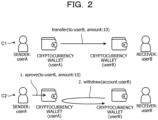
- FIG. 2 is an explanatory diagram illustrating examples of the token transfer methods.
- case C1 indicates a method in which the sender (userA) executes a remittance transaction
- case C2 indicates a method in which the receiver (userB) executes a remittance transaction.
- case C1 the remittance is executed immediately at a timing of execution of the transaction by the sender. This method is usually used because the remittance is executed on the spot in normal remittance such as payment in a store.
- case C2 is a method in which the token amount allowed to be withdrawn is first designated by the sender side, and then, the receiver side transfers the token by the amount approved to be withdrawn. By setting the token in a reserved state in the form of withdrawal approval, this method may be used for conditional remittance in which, for example, the receiver may withdraw when a particular condition is satisfied.
- the trade system according to the embodiment is different from the related art in that, the trade system according to the embodiment is realized based on the method of case C2.
- FIG. 3 is a block diagram illustrating an example of a hardware configuration of an information processing apparatus according to the embodiment.
- the hardware configuration of an information processing apparatus 100 is equivalent to that of a usual computer such as a personal computer (PC) and corresponds to each node, each host terminal, and the like in the trade system.
- PC personal computer
- the information processing apparatus 100 includes a computation device 101 such as a central processing unit (CPU), a main storage device 102 such as a random-access memory (RAM), an auxiliary storage device 103 such as a hard disk drive (HDD) or a solid-state drive (SSD), and a network interface 104.
- the computation device 101, the main storage device 102, the auxiliary storage device 103, and the network interface 104 are coupled to each other via a data bus 105.
- the auxiliary storage device 103 stores various types of data 102b such as various types of setting, the BC ledger, and so forth referred to by the computation device 101 at the time of execution.
- Various functions of the information processing apparatus 100 are described as a program 102a.
- the computation device 101 loads the program 102a onto the main storage device 102 and sequentially executes the program 102a to provide the various functions.
- a plurality of computers may cooperate with each other through cloud computing to provide the various functions of the information processing apparatus 100.
- the information processing apparatus 100 may transmit and receive messages to and from a user (or an application operated by a user) or a communication device via the network interface 104 coupled to a network N.
- the program 102a is not necessarily stored in the auxiliary storage device 103.
- the information processing apparatus 100 may read and execute the program 102a stored in a readable storage medium.
- the storage medium readable by the information processing apparatus 100 corresponds to, for example, a portable recording medium such as a compact disc read-only memory (CD-ROM), a Digital Versatile Disc (DVD), a Universal Serial Bus (USB) memory, a semiconductor memory such as flash memory, a hard disk drive, or the like.
- the program 102a may be stored in an external apparatus coupled to the network N, and the information processing apparatus 100 may read the program 102a from the external apparatus through the network interface 104 and execute the program 102a.
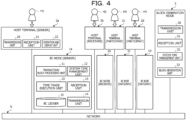
- the host terminals 2a to 2d are not particularly distinguished from each other, they are simply referred to as host terminals 2.
- Indications in [ ] described in the host terminals 2a to 2d in the drawing are the owners (account) of the host terminals 2a to 2d.
- the host terminal 2a is a terminal owned by a sender H1.
- the host terminal 2b is a terminal owned by a receiver H2.
- the host terminals 2c and 2d are terminals owned by a participant H3 being an account other than the sender H1 and the receiver H2.
- indications in [ ] described in the BC nodes 1a to 1d in the drawing are the accounts managed by the BC nodes.
- the BC node 1a is a node that manages the sender H1.
- the BC node 1b is a node that manages the receiver H2.
- the BC nodes 1c and 1d are nodes that manages the participant H3.
- the reception unit 21 is a processing unit that receives various types of data transmitted from the BC nodes 1 via the network N. For example, the reception unit 21 receives, from the BC nodes 1, responses to, for example, the request for transfer of the financial asset by the sender H1.
- the BC nodes 1 each include the time trade execution unit 10, a transaction/block processing unit 11, a system time management unit 12, a reception unit 13, a transmission unit 14, and a BC ledger 15.
- the time trade execution unit 10 is a processing unit that executes a trade related to the above-described time-designated withdrawal approval.
- the transaction/block processing unit 11 is a processing unit that performs processing such as issuing of a transaction and verification of a block in a blockchain (BC). The details of the processes related to the time trade execution unit 10 and the transaction/block processing unit 11 will be described later.
- the system time management unit 12 is a processing unit that manages the system time of the BC node 1.
- the system time management unit 12 has a timing function such as a real time clock (RTC) and times the system time synchronized with a network time protocol (NTP) server or the like. According to a request from the time trade execution unit 10 or the like, the system time management unit 12 notifies of the timed system time.
- RTC real time clock
- NTP network time protocol
- the reception unit 13 is a processing unit that receives, in response to a request from the time trade execution unit 10, the transaction/block processing unit 11, and the like, various types of data in the other nodes (the BC nodes and the block generation node 3) and the like via the network N.
- the transmission unit 14 is a processing unit that transmits data that the host terminals 2, the other nodes (the BC nodes and the block generation node 3), and the like notify via the network N.
- the block generation node 3 is a node responsible for a process of forming issued transactions into a block and transmitting the block to the nodes.
- the block generation node 3 includes a transmission unit 30, a reception unit 31, a system time management unit 32, and a block generation unit 33.
- the transmission unit 30 is a processing unit that transmits various types of data to the BC nodes 1 via the network N.
- the reception unit 31 is a processing unit that receives data that the BC nodes 1 notify via the network N.
- the system time management unit 32 is a processing unit that manages the system time of the block generation node 3.
- the block generation unit 33 is a processing unit that generates blocks of the blockchain.
- the block generation unit 33 generates blocks of the blockchain based on known techniques such as a mining node in Bitcoin and Ordering Service of Hyperledger (registered trademark) Fabric (The Ordering Service, Hyperledger Fabric, "https://hyperledger-fabric.readthedocs.io/en/release-2.0/orderer/ordering_service.html”), which is an open-source software (OSS) of a consortium type blockchain.
- OSS open-source software
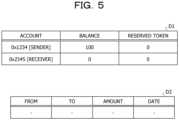
- the withdrawal approval data D2 is data related to the time-designated withdrawal approval (approve()) having been described with reference to FIG. 1 .
- the withdrawal approval data D2 is empty, and the initial state is a state in which the trade has not been registered yet.
- the execution result of the issued transaction data is verified by the different nodes (1b to 1d) from the node (1a) that has issued the transaction.
- the block generation node 3 generates a block of the BC by mining or the like (S22), and the notified transactions are summarized as block data.
- the transaction/block processing unit 11 of the BC node 1a verifies the block distributed from the block generation node 3, enters the block in the BC ledger 15 (S26 and S27), and obtains a BC ledger 15 entry completion (S28).
- the time trade execution unit 10 of the BC node 1a refers to the BC ledger 15 to obtain the withdrawal approval data D2 (S29) and updates the withdrawal approval list (S30).
- the transaction/block processing units 11 of the BC nodes 1c and 1d verify the block distributed from the block generation node 3, enter the block in the BC ledger 15 (S31 and S32), and obtain the BC ledger 15 entry completion (S33).
- the time trade execution units 10 of the BC nodes 1c and 1d refer to the BC ledger 15 to obtain the withdrawal approval data D2 (S34) and update the withdrawal approval list (S35).
- the initial state is the state illustrated in FIG. 5 .
- the token balance data D1 of the accounts in the initial state are in a state in which the 0x1234 (sender) has 100 tokens and the 0x2345 (receiver) has 0 tokens.
- the withdrawal approval data D2 is empty, and the initial state is a state in which the trade has not been registered yet.
- the token balance of each account is as follows: 100 tokens for 0x1234 (sender), 0 tokens for 0x2345 (receiver 1), and 0 tokens for 0x3456 (receiver 2).
- the withdrawal approval data is empty. No trade is registered in the withdrawal approval data D2 in the initial state.
Landscapes
- Business, Economics & Management (AREA)
- Engineering & Computer Science (AREA)
- Accounting & Taxation (AREA)
- Strategic Management (AREA)
- Theoretical Computer Science (AREA)
- General Physics & Mathematics (AREA)
- Physics & Mathematics (AREA)
- Finance (AREA)
- General Business, Economics & Management (AREA)
- Economics (AREA)
- Development Economics (AREA)
- Human Resources & Organizations (AREA)
- Entrepreneurship & Innovation (AREA)
- Marketing (AREA)
- Computer Security & Cryptography (AREA)
- Technology Law (AREA)
- Tourism & Hospitality (AREA)
- Quality & Reliability (AREA)
- Operations Research (AREA)
- Game Theory and Decision Science (AREA)
- Educational Administration (AREA)
- Software Systems (AREA)
- Information Retrieval, Db Structures And Fs Structures Therefor (AREA)
- Multimedia (AREA)
- Computer Hardware Design (AREA)
- General Engineering & Computer Science (AREA)
- Financial Or Insurance-Related Operations Such As Payment And Settlement (AREA)
Abstract
Description
- The embodiment discussed herein is related to a trade processing program, a method for processing a trade, and an information processing apparatus.
- Today, a decentralized finance (DeFi), which is a distributed-type finance different from a centralized finance brokered by banks and securities companies, becomes a focus of attention. Since the DeFi is a mechanism in which the safety of trades is ensured by the entire community without a central administrator, it is expected that the liquidity of the market is improved by unmanned brokerage of trades and autonomous operation.
- To construct a system of the DeFi, application of a blockchain (also referred to as "BC" or "distributed ledger" hereinafter) is considered. As one of approaches to the application of the BC, studies for realizing a financial system (also referred to as "trade system" hereinafter) using tokens issued in the BC have started.
-
U.S. Patent Application Publication No. 2022/0058641 , Japanese National Publication of International Patent Application No.2019-514089 2020-524425 - Usually, in a financial system, money and bonds are transferred with a date designated for redemption of bonds, payment of dividends, and the like. In contrast, it is assumed that, in the blockchain (BC), a plurality of nodes asynchronously execute processes. Accordingly, there is a barrier to realizing a financial system using the BC in that appropriate performance of processes or trades for which particular times are designated is difficult.
- In one aspect, it is an object to provide a trade processing program, a method for processing a trade, and an information processing apparatus with which a trade for which a particular time is designated may be appropriately performed.
- A trade for which a particular time is designated may be appropriately performed.
- According to an aspect of the embodiments, a trade processing program causes a computer of each of nodes manage a distributed ledger related to a financial asset to execute a process including registering, in the distributed ledger, authorization transactions, the authorization transactions each including a transfer source account, a transfer destination account, a transfer amount of the financial asset, and a transfer time of the financial asset, and the authorization transactions each authorizing transfer of the financial asset based on a request from the transfer source account of the financial asset, for an authorization transaction out of the registered authorization transactions for which a self node manages the transfer destination account, requesting a first other node to verify the authorization transaction after a management time managed by the self node has reached a transfer time included in the authorization transaction, and issuing a request transaction that requests transfer of a financial asset related to the authorization transaction based on a result of the verification performed by the first other node, and returning, in a case where a request for verification of the authorization transaction is accepted from a second other node, to the second other node a result of the verification of whether the transfer time included in the authorization transaction is later than the management time.
-
-
FIG. 1 is an explanatory diagram illustrating an overview of an embodiment; -
FIG. 2 is an explanatory diagram illustrating examples of a token transfer methods; -
FIG. 3 is a block diagram illustrating an example of a hardware configuration of an information processing apparatus according to the embodiment; -
FIG. 4 is an explanatory diagram illustrating an example of an entire configuration of a trade system according to the embodiment; -
FIG. 5 is an explanatory diagram illustrating an example of data registered in a blockchain (BC) ledger; -
FIG. 6A is a flowchart illustrating an example of processing for a withdrawal registration; -
FIG. 6B is the flowchart illustrating the example of the processing for the withdrawal registration; -
FIG. 7 is an explanatory diagram illustrating an example of the data registered in the BC ledger; -
FIG. 8 is an explanatory diagram illustrating an example of the data registered in the BC ledger; -
FIG. 9A is a flowchart illustrating an example of processing for a withdrawal wait/withdrawal execution; -
FIG. 9B is the flowchart illustrating the example of the processing for the withdrawal wait/withdrawal execution; -
FIG. 10 is an explanatory diagram illustrating an example of the data registered in the BC ledger; -
FIG. 11 is a flowchart illustrating an example of a case where the withdrawal request fails; -
FIG. 12A is a flowchart illustrating an example of processing for retransmission of a withdrawal request; -
FIG. 12B is the flowchart illustrating the example of the processing for the retransmission of the withdrawal request; -
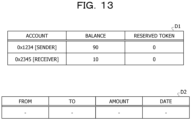
FIG. 13 is an explanatory diagram illustrating an example of the data registered in the BC ledger; -
FIG. 14 is an explanatory diagram illustrating an example of the data registered in the BC ledger; -
FIG. 15A is a flowchart illustrating an example of processing for the withdrawal registration; -
FIG. 15B is the flowchart illustrating the example of the processing for the withdrawal registration; -
FIG. 16 is an explanatory diagram illustrating an example of the data registered in the BC ledger; -
FIG. 17A is a flowchart illustrating an example of processing for a withdrawal wait/withdrawal execution; -
FIG. 17B is the flowchart illustrating the example of the processing for the withdrawal wait/withdrawal execution; and -
FIG. 18 is an explanatory diagram illustrating an example of the data registered in the BC ledger. - Hereinafter, a trade processing program, a method for processing a trade, and an information processing apparatus according to an embodiment will be described with reference to the drawings. In the embodiment, elements having the same functions are denoted by the same reference numerals, thereby omitting redundant description thereof. The trade processing program, the method for processing a trade, and the information processing apparatus described according to the following embodiment are merely exemplary and do not limit the embodiment. Portions of the embodiment below may be appropriately combined as long as the portions do not contradict each other.
- As a mechanism of a trade for which a time is designated in a blockchain, there is Ethereum alarm clock (https://www.ethereum-alarm-clock.com/). With this Ethereum alarm clock, first, a trade is registered in a Time node that manages a transaction for which time is designated. After that, the Time node sequentially checks a current time and a trade list and issues a transaction of a trade for which the designated time is reached, thereby executing the trade at the designated time.
- In a mechanism of a trade for which time is designated in a blockchain, there is a schedule execution method using time encryption (Japanese National Publication of International Patent Application No.
2020-524425 - In the above-described mechanism of a trade for which time is designated in a blockchain, a scheduling function that manages issuing of transactions is provided inside and outside the blockchain, thereby the trade at the designated time is realized. Computer processing usually executes processes with the scheduling function. The processing assumes that a time at which a process is executed with the scheduling function is trusted. For this reason, when the scheduling function is attacked by a malicious user, an other node may perform processing of a transaction even when a designated time has not been reached for the trade, and the trade may be authorized.
- A problem here is that, due to the processing in which time data that serves as the trigger is entirely trusted, the time is not necessarily verified in a BC node that perform the trade. Since the vulnerability of a trade for which time information held by a particular node is assumed to be trusted increases, it is desirable to determine the trade by the entirety of the BC.
- In view of the above-described problem, one of tasks to be solved by the present embodiment is that "in a time-designated trade in the blockchain, the trade is discarded in a case where a transaction is issued at a time other than the designated time and execution and a result of the trade at the designated time-designated time are ensured".
- From the viewpoint of verifying a time at which a trade is executed in a node that verifies a transaction, there is related art in which verification is performed by using the latest timestamp of block data as in
U.S. Patent Application Publication No. 2022/0058641 , "DEVICE AND METHOD FOR PROCESSING DATA OF TRANSACTIONS BASED ON BLOCK CHAIN, AND STORAGE MEDIUM". - However, the timestamp of the block data is the time at which a miner records the block data, and the verification in the record of the timestamp only determines whether the time is later than the timestamp of the previous block. Although it may be verified that, for example, there is no difference in a longer period of time than a certain period of time from the timestamp of the previous block in some cases depending on the types of blockchain, there is no sufficient verification in terms of accuracy. Thus, one of the tasks to be solved by the present embodiment is not solved since execution of a transaction at a time at which the transaction is normally desired to be executed is not sufficiently ensured due to a large difference between the timestamp of the block data and the current time.
- A method for handling time information in the blockchain is described. Each of the nodes participating in the blockchain sets the current time by, for example, being synchronized with a time server.
- Thus, many nodes operate at relatively accurate time (although the time is not completely accurate, the accurate time is set in a range of a deviation of about milliseconds to several seconds). However, since the times of the nodes are not completely synchronized with each other, a slight time deviation occurs in each node.
- A malicious user or the like may intentionally set the time with deviation. In the case of the bitcoin, even when the miner intentionally causes the time to deviate, the block is accepted unless the time is set to a significantly abnormal time in the system (the reason for it is that, since it is assumed that there is deviation in time, ensuring accuracy of all the node is impossible).
- From the above, in the blockchain, it is difficult to execute processing by referring to common time information. As in
U.S. Patent Application Publication No. 2022/0058641 described above, the timestamp of the block data is time information shared by all the nodes. However, there is a possibility that the trade is not executed at the time as designated by the sender because it is not ensured that the time is accurate. -
FIG. 1 is an explanatory diagram illustrating an overview of the embodiment. As illustrated inFIG. 1 , a trade system according to the embodiment includes a plurality of blockchain (BC)nodes 1a to 1d that share and manage a BC ledger related to a financial asset (hereinafter, also referred to as a "token"). Each of theBC nodes 1a to 1d includes a timetrade execution unit 10 that executes a trade based on a transaction for which a particular time is designated. In the following description, in a case where theBC nodes 1a to 1d are not particularly distinguished from each other, they are simply referred to asBC nodes 1. - The
BC node 1a is a node that manages an account of "userA" (hereafter also referred to as a "sender node") exemplifying a transfer source account (hereafter also referred to as a "sender") of a financial asset. TheBC node 1b is a node that manages an account of "userB" (hereafter also referred to as a "receiver node") exemplifying a transfer destination account (hereafter also referred to as a "receiver") of the financial asset.BC Nodes - In the trade system according to the embodiment, a token transfer process is realized by a smart contract using a blockchain technique. The token transfer process may be executed by all the
BC nodes 1a to 1d participating in a blockchain network. The result of the token transfer process may be verified by all theBC nodes 1a to 1d participating in the blockchain network. - First, in the
BC node 1a as the sender node, based on a request of the sender (userA), a transaction (time-designated withdrawal approval) that authorizes (approves) transfer of a financial asset is issued (S1). After the issued transaction is authorized by each BC node, the transaction is registered in the BC ledger of each BC node (S2). - The time-designated withdrawal approval (approve ()) includes "from" indicating the account of the sender, "to" indicating the account of the receiver, "amount" indicating a token amount (transfer amount) approved to be withdrawn, and "date" indicating the time (transfer time) at which the withdrawal is allowed. The time-designated withdrawal approval indicates that the withdrawal is allowed at or later than the time indicated by "date" and indicates that a trade of the withdrawal fails at or earlier than the time indicated by "date".
- The
BC node 1b as the receiver node requests, with respect to a trade of the time-designated withdrawal approval corresponding to a receiver (userB) managed by the self node, other nodes to verify the trade of the time-designated withdrawal approval at or later than the time at which the system time (management time) of the self node is "date". Based on this verification result, theBC node 1b issues a withdrawal request transaction (S3). - This withdrawal request transaction includes "account" representing an account of a receiver who performs the withdrawal. The withdrawal request transaction serves as a transaction for searching a token that the account of "account" is allowed to withdraw at the current time point and executes token transfer.
- Based on the withdrawal request, the nodes that verify the trade of the time-designated withdrawal approval (
BC nodes BC nodes BC node 1b as a verification result (S4). -- In a case where no withdrawal approval is present for a designated time at or later than the system time of the node, the withdrawal request transaction is discarded (the trade is not approved). -- In a case where the withdrawal approval is present for a designated time at or later than the system time of the node, the token is transferred (trade is approved) based on the withdrawal approval information. - As described above, with the trade system according to the embodiment, whether to approve the trade is determined based on the verification result of each node in the process of verifying the transaction of the blockchain. Thus, it is ensured that the trade is not executed at a time other than the designated time and the token may be transferred at or later than the designated time. Accordingly, with the trade system according to the embodiment, one of tasks is that, in a time-designated trade in the blockchain, the trade is discarded in a case where a transaction is issued at a time other than the designated time and execution and a result of the trade at the designated time-designated time are ensured" is solved, and a safe trade for which a time is designated is realized.
- Roughly classified, two token transfer methods exist.
FIG. 2 is an explanatory diagram illustrating examples of the token transfer methods. - As illustrated in
FIG. 2 , case C1 indicates a method in which the sender (userA) executes a remittance transaction, and case C2 indicates a method in which the receiver (userB) executes a remittance transaction. - In case C1, the remittance is executed immediately at a timing of execution of the transaction by the sender. This method is usually used because the remittance is executed on the spot in normal remittance such as payment in a store. Meanwhile, case C2 is a method in which the token amount allowed to be withdrawn is first designated by the sender side, and then, the receiver side transfers the token by the amount approved to be withdrawn. By setting the token in a reserved state in the form of withdrawal approval, this method may be used for conditional remittance in which, for example, the receiver may withdraw when a particular condition is satisfied. The trade system according to the embodiment is different from the related art in that, the trade system according to the embodiment is realized based on the method of case C2.
-
FIG. 3 is a block diagram illustrating an example of a hardware configuration of an information processing apparatus according to the embodiment. As illustrated inFIG. 3 , the hardware configuration of aninformation processing apparatus 100 is equivalent to that of a usual computer such as a personal computer (PC) and corresponds to each node, each host terminal, and the like in the trade system. - For example, the
information processing apparatus 100 includes acomputation device 101 such as a central processing unit (CPU), amain storage device 102 such as a random-access memory (RAM), anauxiliary storage device 103 such as a hard disk drive (HDD) or a solid-state drive (SSD), and anetwork interface 104. Thecomputation device 101, themain storage device 102, theauxiliary storage device 103, and thenetwork interface 104 are coupled to each other via adata bus 105. - The
auxiliary storage device 103 stores various types ofdata 102b such as various types of setting, the BC ledger, and so forth referred to by thecomputation device 101 at the time of execution. Various functions of theinformation processing apparatus 100 are described as aprogram 102a. Thecomputation device 101 loads theprogram 102a onto themain storage device 102 and sequentially executes theprogram 102a to provide the various functions. A plurality of computers may cooperate with each other through cloud computing to provide the various functions of theinformation processing apparatus 100. Theinformation processing apparatus 100 may transmit and receive messages to and from a user (or an application operated by a user) or a communication device via thenetwork interface 104 coupled to a network N. - The
program 102a is not necessarily stored in theauxiliary storage device 103. For example, theinformation processing apparatus 100 may read and execute theprogram 102a stored in a readable storage medium. The storage medium readable by theinformation processing apparatus 100 corresponds to, for example, a portable recording medium such as a compact disc read-only memory (CD-ROM), a Digital Versatile Disc (DVD), a Universal Serial Bus (USB) memory, a semiconductor memory such as flash memory, a hard disk drive, or the like. Theprogram 102a may be stored in an external apparatus coupled to the network N, and theinformation processing apparatus 100 may read theprogram 102a from the external apparatus through thenetwork interface 104 and execute theprogram 102a. -
FIG. 4 is an explanatory diagram illustrating an example of an entire configuration of the trade system according to the embodiment. As illustrated inFIG. 4 , the trade system according to the embodiment includeshost terminals 2a to 2d and ablock generation node 3 in addition to the above-describedBC nodes 1a to 1d. In this trade system, theBC nodes 1a to 1d, thehost terminals 2a to 2d, and theblock generation node 3 are communicably coupled to each other via the network N such as a local area network (LAN) or the Internet. - In the following description, in a case where the
host terminals 2a to 2d are not particularly distinguished from each other, they are simply referred to ashost terminals 2. Indications in [ ] described in thehost terminals 2a to 2d in the drawing are the owners (account) of thehost terminals 2a to 2d. For example, thehost terminal 2a is a terminal owned by a sender H1. Thehost terminal 2b is a terminal owned by a receiver H2. Thehost terminals - Likewise, indications in [ ] described in the
BC nodes 1a to 1d in the drawing are the accounts managed by the BC nodes. For example, theBC node 1a is a node that manages the sender H1. TheBC node 1b is a node that manages the receiver H2. TheBC nodes - The
host terminals 2 each include atransmission unit 20, areception unit 21, and an operation anddisplay unit 22. Thetransmission unit 20 is a processing unit that transmits various types of data to theBC nodes 1 via the network N. For example, thetransmission unit 20 notifies theBC nodes 1 of an instruction such as a request for transfer of a financial asset by the sender H1. - The
reception unit 21 is a processing unit that receives various types of data transmitted from theBC nodes 1 via the network N. For example, thereception unit 21 receives, from theBC nodes 1, responses to, for example, the request for transfer of the financial asset by the sender H1. - The operation and
display unit 22 is a processing unit that accepts operational input by the user (the sender H1, the receiver H2, and the participant H3) and performs display output to the user. For example, the operation anddisplay unit 22 accepts transfer content of the financial asset by the sender H1. The operation anddisplay unit 22 displays and outputs the responses from theBC nodes 1 to the transfer request based on the transfer content accepted from the sender H1. - The
BC nodes 1 each include the timetrade execution unit 10, a transaction/block processing unit 11, a systemtime management unit 12, areception unit 13, atransmission unit 14, and aBC ledger 15. - The time
trade execution unit 10 is a processing unit that executes a trade related to the above-described time-designated withdrawal approval. The transaction/block processing unit 11 is a processing unit that performs processing such as issuing of a transaction and verification of a block in a blockchain (BC). The details of the processes related to the timetrade execution unit 10 and the transaction/block processing unit 11 will be described later. - The system
time management unit 12 is a processing unit that manages the system time of theBC node 1. For example, the systemtime management unit 12 has a timing function such as a real time clock (RTC) and times the system time synchronized with a network time protocol (NTP) server or the like. According to a request from the timetrade execution unit 10 or the like, the systemtime management unit 12 notifies of the timed system time. - The
reception unit 13 is a processing unit that receives, in response to a request from the timetrade execution unit 10, the transaction/block processing unit 11, and the like, various types of data in the other nodes (the BC nodes and the block generation node 3) and the like via the network N. Thetransmission unit 14 is a processing unit that transmits data that thehost terminals 2, the other nodes (the BC nodes and the block generation node 3), and the like notify via the network N. - The
BC ledger 15 is data related to the blockchain and is a distributed ledger related to financial assets shared and managed by theBC nodes 1. - The
block generation node 3 is a node responsible for a process of forming issued transactions into a block and transmitting the block to the nodes. Theblock generation node 3 includes atransmission unit 30, areception unit 31, a systemtime management unit 32, and ablock generation unit 33. - The
transmission unit 30 is a processing unit that transmits various types of data to theBC nodes 1 via the network N. Thereception unit 31 is a processing unit that receives data that theBC nodes 1 notify via the network N. Similarly to the systemtime management unit 12 of theBC nodes 1, the systemtime management unit 32 is a processing unit that manages the system time of theblock generation node 3. - The
block generation unit 33 is a processing unit that generates blocks of the blockchain. For example, theblock generation unit 33 generates blocks of the blockchain based on known techniques such as a mining node in Bitcoin and Ordering Service of Hyperledger (registered trademark) Fabric (The Ordering Service, Hyperledger Fabric, "https://hyperledger-fabric.readthedocs.io/en/release-2.0/orderer/ordering_service.html"), which is an open-source software (OSS) of a consortium type blockchain. - Next the details of the following procedure in a case where a remittance trade is executed at a designated time are described. 0: Initial state, 1: Withdrawal approval registration, 2: Withdrawal wait/withdrawal execution
-
FIG. 5 is an explanatory diagram illustrating an example of data registered in theBC ledger 15, indicating, for example, an initial state of the data registered in theBC ledger 15. As illustrated inFIG. 5 , the data registered in theBC ledger 15 includes token balance data D1 and withdrawal approval data D2. - In the token balance data D1, "account" indicates an account address of the user, "balance" indicates a balance of tokens, and "reserved token" indicates the token amount reserved for remittance by the withdrawal approval.
- Although description is made with an account-type token management technique that manages the balances of the tokens on an account-by-account basis for ease of understanding according to the present embodiment, a similar performance is possible also with an unspent transaction output (UTXO)-type technique. In the illustrated example (initial state), it is registered for the account of 0x1234 [sender] in the token balance data D1 that the balance of the token is 100 and the token amount for which the remittance is reserved by the withdrawal approval is 0. For the account of 0x2345 [receiver], it is registered that the balance of the token is 0 and the token amount for which the remittance is reserved by withdrawal approval is 0.
- The withdrawal approval data D2 is data related to the time-designated withdrawal approval (approve()) having been described with reference to
FIG. 1 . In the illustrated example, the withdrawal approval data D2 is empty, and the initial state is a state in which the trade has not been registered yet. -
FIGs. 6A and6B are a flowchart illustrating an example of processing for the withdrawal registration (FIG. 6B illustrates a continuation of the processing inFIG. 6A ). - As illustrated in
FIG. 6A , theBC node 1a [sender] accepts a transaction issuing request related to a time-designated trade registration from thehost terminal 2a [sender] (S11). For example, theBC node 1a accepts a transaction issuing request in which the addresses of the [sender] and the [receiver] (from and to), the token amount to be remitted (amount), and the time (date) at which the withdrawal is allowed are designated. Although any method may be used to designate a time according to the embodiment, a format that may be used for comparison in an electronic calculator is desirable. For example, a value obtained by converting universal coordinated time into milliseconds may be used. Herein, time information is expressed in an ISO 8601 format. Based on this requested content, theBC node 1a issues a transaction including a time at which the withdrawal is allowed (S12 to S21). - For example, the transaction/
block processing unit 11 creates a transaction and gives a signature on it based on the requested content (S12) and notifies the other nodes (BC nodes 1b to 1d) of a verification request for the created transaction (S13 and S14). - After receiving the verification request for the transaction, the transaction/
block processing units 11 of theBC nodes block processing units 11 give a signature on it (S15) and return the verification result for the transaction to theBC node 1a (S16). Likewise, after receiving the verification request for the transaction, the transaction/block processing unit 11 of theBC node 1b verifies the transaction data. Then, the transaction/block processing unit 11 gives a signature on it (S17) and returns the verification result for the transaction to theBC node 1a (S18). - As described above, in the trade system according to the embodiment, the execution result of the issued transaction data is verified by the different nodes (1b to 1d) from the node (1a) that has issued the transaction.
- Although there are various types of methods for verifying transaction data for individual blockchains, according to the present embodiment, description is given with a method in which each node verifies transaction data before being formed into blocks based on Transaction Flow (Transaction Flow, Hyperledger Fabric, "https://hyperledger-fabric.readthedocs.io/ja/latest/txflow.html") in Hyperledger Fabric. Also in the case of another blockchain such as Ethereum, verification may be similarly performed with respect to the points that the transaction is verified by the other nodes than the issuing node and the point that the result may be verified even after the execution.
- Next, the transaction/
block processing unit 11 of theBC node 1a issues a transaction for which the execution result is verified and notifies theblock generation node 3 of the issued transaction (S19). Theblock generation node 3 returns a completion notification related to the notified transaction to theBC node 1a (S20). The transaction/block processing unit 11 of theBC node 1a notifies thehost terminal 2a of the completion notification from the block generation node 3 (S21). - The
block generation node 3 generates a block of the BC by mining or the like (S22), and the notified transactions are summarized as block data. - Next, as illustrated in
FIG. 6B , theblock generation node 3 distributes a block including the notified transaction to theBC nodes 1a to 1d (S23 to S25), and the block is shared by all the participants (all theBC nodes 1a to 1d) in the blockchain. - For example, the transaction/
block processing unit 11 of theBC node 1a verifies the block distributed from theblock generation node 3, enters the block in the BC ledger 15 (S26 and S27), and obtains aBC ledger 15 entry completion (S28). - When the trade is registered as described above, the information on an item for which the withdrawal is approved is updated. Accordingly, the time
trade execution unit 10 of theBC node 1a refers to theBC ledger 15 to obtain the withdrawal approval data D2 (S29) and updates the withdrawal approval list (S30). - Likewise, the transaction/
block processing units 11 of theBC nodes block generation node 3, enter the block in the BC ledger 15 (S31 and S32), and obtain theBC ledger 15 entry completion (S33). - When the trade is registered as described above, the information on an item for which the withdrawal is approved is updated. Accordingly, the time
trade execution units 10 of theBC nodes BC ledger 15 to obtain the withdrawal approval data D2 (S34) and update the withdrawal approval list (S35). - Likewise, the transaction/
block processing unit 11 of theBC node 1b verifies the block distributed from theblock generation node 3, enters the block in the BC ledger 15 (S36 and S37), and obtains theBC ledger 15 entry completion (S38). - When the trade is registered as described above, the information on an item for which the withdrawal is approved is updated. Accordingly, the time
trade execution unit 10 of theBC node 1b refers to theBC ledger 15 to obtain the withdrawal approval data D2 (S39) and updates the withdrawal approval list (S40). Since the time-designated withdrawal approval of the [receiver] which is the account managed by the self node is newly included in the withdrawal approval list, the timetrade execution unit 10 registers this time-designated withdrawal approval as an event (S41). -
FIG. 7 is an explanatory diagram illustrating an example of the data registered in theBC ledger 15, exemplifying, for example, a state of theBC ledger 15 after the update due to the distribution of the block. For example, as is clearly understood from a comparison betweenFIGs. 5 and7 , the value of reserved token has been changed inFIG. 7 . As illustrated inFIG. 7 , the timetrade execution unit 10 of each node monitors the update of the withdrawal approval data D2. In a case where there is an update (addition of the time-designated withdrawal approval) in the information on the account related to the self node, the timetrade execution unit 10 of the node registers the updated time-designated withdrawal approval as an event (S41) and transitions to a withdrawal wait state. -
FIG. 8 is an explanatory diagram illustrating an example of the data registered in theBC ledger 15, exemplifying, for example, a state in which another trade of a different withdrawal time is registered in the withdrawal approval data D2 inFIG. 7 . In the example illustrated inFIG. 8 , a second trade is registered after the trade in which the parameters of the withdrawal approval data D2 are set to " (from: 0x1234, to: 0x2345, amount: 10, date: 20221001T120000)". For example, a trade with the amount of 20 and the date of 20221001T130000 as differences from the first registration is further registered in addition to the first registration. For each trade registered in this manner, the timetrade execution unit 10 determines whether the trade is a trade in which the account related to the self node is "to" and registers an event in a case where the account is "to" in the trade. -
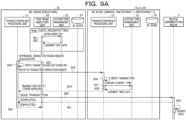
FIGs. 9A and9B are a flowchart illustrating an example of processing for the withdrawal wait/withdrawal execution (FIG. 9B illustrates a continuation of the processing inFIG. 9A ). - As illustrated in
FIG. 9A , the timetrade execution unit 10 of theBC node 1b set in a wait state after S41 waits for processing until the designated time of the time-designated withdrawal approval registered as an event is reached based on the current time data (system time) obtained from the systemtime management unit 12 of the self node (S51 and S52). - Next, after the system time has reached a designated time, the time
trade execution unit 10 of theBC node 1b notifies the transaction/block processing unit 11 of a request to issue a transaction that executes the withdrawal (S53). Here, it is assumed that the current time is 12:00 on October 1, 2022. Thus, the timetrade execution unit 10 notifies the transaction/block processing unit 11 of a request to issue a withdrawal request transaction for which the date is "20221001T120000". - Next, the transaction/
block processing unit 11 of theBC node 1b creates the transaction and gives the signature on it for the transaction for which the issuing request is accepted (S54) and notifies the other nodes (BC nodes - After receiving the verification request for the transaction, the transaction/
block processing units 11 of theBC nodes block processing units 11 obtain the current time data (system time) from the system time management unit 12 (S57 and S58). Next, the transaction/block processing units 11 of theBC nodes BC node 1b of a result of checking whether the system time is later than the designated time of the transaction (the trade is approved/the trade is not approved, S59). - The transaction/
block processing unit 11 of theBC node 1b having received the notification that the trade is approved issues the transaction for which the issuing request has been received and notifies theblock generation node 3 of the issued transaction (S60). Theblock generation node 3 returns the completion notification related to the notified transaction to theBC node 1b (S61). The transaction/block processing unit 11 of theBC node 1b notifies the timetrade execution unit 10 of the completion notification from the block generation node 3 (S62). The transaction/block processing unit 11 of theBC node 1b having received the notification that the trade is not approved discards the transaction for which the issuing request is received. - The
block generation node 3 generates a block of the BC by mining or the like (S63), and the notified transactions are summarized as block data. - Next, as illustrated in
FIG. 9B , theblock generation node 3 distributes a block including the notified transaction to theBC nodes 1a to 1d (S64 and S65). Thus, the block including the notified transaction is shared by all the participants (all theBC nodes 1a to 1d) in the blockchain. - The transaction/
block processing unit 11 of theBC node 1b verifies the block distributed from theblock generation node 3, enters the block in the BC ledger 15 (S66 and S67), and obtains theBC ledger 15 entry completion (S68). Likewise, the transaction/block processing units 11 of theBC nodes block generation node 3, enter the block in the BC ledger 15 (S69 and S70), and obtain theBC ledger 15 entry completion (S71). - As described above, the transaction having received an issuing request checks whether there is a trade for which a withdrawal is allowed based on the system time of the other nodes that verify the transaction. When there is a withdrawal approval, the transaction/
block processing unit 11 of theBC node 1b transfers the token amount approved in the trade from the account of the sender to the account of the receiver. When there is not a withdrawal approval, the transaction/block processing unit 11 of theBC node 1b determines that the trade is unable to be executed and discards the transaction of the withdrawal. - According to the present embodiment, it is assumed that the trade of the transaction is executed in a case where greater than or equal to the majority of the nodes approve the trade, and the trade fails and the token is not transferred in a case where smaller than the majority of the nodes approve the trade (the number of the nodes that determine to approve the trade desired to execute the trade may be determined by a policy of the blockchain).
- In the illustrated example, since the system time is 12:00 on October 1, 2022 or later in all of the three nodes, the item with the date "20221001T120000"" corresponds as the trade for which withdrawal is allowed. Thus, the result indicating that the trade is approved that authorizes the execution of the trade is returned to the
BC node 1b. Accordingly, the transaction/block processing unit 11 of theBC node 1b transfers 10 tokens set in the amount from the sender to the receiver. Although only one corresponding trade exists in the present embodiment, in a case where a plurality of corresponding trades exist, the token transfer for them may be collectively executed. - When the withdrawal trade is executed by the above-described transaction, the trade of the withdrawal approval data for which the transfer has been executed is deleted, and the value of the reserved token is reduced. Accordingly, the state of the
BC ledger 15 after the execution of the trade is updated. -
FIG. 10 is an explanatory diagram illustrating an example of the data registered in theBC ledger 15, illustrating, for example, the updated content of theBC ledger 15 exemplified byFIG. 8 . As illustrated inFIG. 10 , in the updatedBC ledger 15, the first trade of the withdrawal approval data D2 exemplified inFIG. 8 is executed at or later than 12:00 on October 1, 2022. For example, the amount of 10 is transferred from the 0x1234 [sender] to 0x2345 [receiver]. For example, in the token balance data D1, the balance of 0x1234 [sender] is 90, and the balance of 0x2345 [receiver] is 10. - At the time point of 12:00 on October 1, 2022, a trade (transfer of the token of 20 with "20221001T130000" as the date) the designated time of which has not reached has not been executed. As described above, according to the present embodiment, since each node may verify the trade based on the time-designated withdrawal approval, and only a trade the designated time of which has reached may be executed, one of the above-described tasks is solved.
- It is assumed that the system times of the different nodes are not synchronized with each other in the blockchain (BC). Thus, even when the system time of the node that has issued the transaction has reached the designated time, there is an error from the actual time, and the trade is not necessarily executed. Accordingly, a process to ensure the trade when such a withdrawal request failure occurs is described.
- Similarly to the above-described case, the initial state is the state illustrated in
FIG. 5 . For example, the token balance data D1 of the accounts in the initial state are in a state in which the 0x1234 (sender) has 100 tokens and the 0x2345 (receiver) has 0 tokens. The withdrawal approval data D2 is empty, and the initial state is a state in which the trade has not been registered yet. - The withdrawal approval registration is performed similarly to the above-described case (the flowchart is similar to that illustrated in
FIGs. 6A and6B ). The state of the updated withdrawal approval data D2 is a state in which a single withdrawal approval is registered as illustrated inFIG. 7 . - First, a case where the withdrawal request for the first time fails is described.
FIG. 11 is a flowchart illustrating an example of the case where the withdrawal request fails. - As illustrated in
FIG. 11 , similar processing to that in the above-described case is performed (S81 to S84), and the fact that the designated time has been reached triggers transmission of a transaction verification request to each node by the transaction/block processing unit 11 of theBC node 1b (S85 and S86). - However, in the present case, an error occurs in the system time of the receiver node, and the withdrawal is requested earlier than the actual time. For example, it is assumed that the current time is 11:59 on October 1, 2022, but the system time of the receiver node is 12:00 on October 1, 2022. The error in the system time may be caused by an external factor by a malicious user, may occur accidentally due to an internal factor, or may be caused intentionally.
- Similarly to the above-described case, the
BC nodes BC node 1b (S87 to S94). - As in the case of the receiver node, there may a case where a node with an earlier time returns that the trade is approved. However, most of the nodes operate at more accurate time, and accordingly, the result that the trade is not approved is returned. In the illustrated example, the
BC node 1c returns that the trade is approved, and theBC nodes - According to the policy of the present embodiment, the trade is unable to be executed in a case where a result indicating that a trade is approved is not obtained from a majority of the nodes. Accordingly, the transaction/
block processing unit 11 of theBC node 1b returns, to the timetrade execution unit 10, a result indicating that the trade of this transaction fails (S95). Upon reception of the result of the trade failure, the timetrade execution unit 10 of theBC nodes 1 transitions to the wait state again (S96). - Depending on the form of the blockchain, unlike the present embodiment, the result of the transaction verification is unable to be explicitly received in some cases. Even in this case, similar processing may be performed when the time
trade execution unit 10 monitors theBC ledger 15 and checks whether the issued transaction is successful. In this case, when the token is not transferred even after a certain period of time has elapsed, the trade is determined to be a failure and the timetrade execution unit 10 transitions to the wait state again. - Next, the case of retransmitting the withdrawal request having failed for the first time is described.
FIGs. 12A and12B are a flowchart illustrating an example of processing for retransmission of the withdrawal request (FIG. 12B illustrates a continuation of the processing inFIG. 12A ). - After waiting for a certain period of time, for example, a wait time of one minute or the like (S101), the time
trade execution unit 10 of theBC node 1b that has transitioned to the wait state in S96 ofFIG. 11 performs similar processing to that in S53 to S71. - For example, the transaction/
block processing unit 11 of theBC node 1b transmits the transaction verification request to each node in order to issue a transaction for withdrawal again (S104 and S105). Similarly to the first time, the transaction/block processing units 11 of theBC nodes - As a result, the result of approval to the trade is obtained from the majority of the nodes. Accordingly, the transaction/
block processing unit 11 of theBC node 1b transmits transaction issuance to the block generation node 3 (S114), the transaction issuance is shared by all the participants in the blockchain, and the withdrawal trade is executed. - When the withdrawal trade is executed, the trade of the withdrawal approval data for which the transfer has been executed is deleted, and the value of the reserved token is reduced.
-
FIG. 13 is an explanatory diagram illustrating an example of the data registered in theBC ledger 15. As illustrated inFIG. 13 , the trade having been dropped for the first time since the designated time has not been reached is recognized as the trade the designated time of which has been reached by each node in the blockchain by a second retransmission, and the transfer of 10 tokens is executed. - As described above, in the trade system according to the embodiment, even in a case where the system time differs between the nodes, a trade result at a designated time may be ensured by verifying the time between the nodes in the blockchain and controlling retransmission of the failed trade.
- In the following, a case where a certain problem occurs in the receiver node and a transaction is unable to be issued at a designated time is described.
- In each of the above-described cases, whether the withdrawal request transaction is executed at the designated time is verified with the receiver node as the starting point. However, when an error occurs in the node serving as the starting point, the subsequent processing is not necessarily executed, and the execution of the time-designated trade is not necessarily ensured. Accordingly, in the present case, by making the node that issues the transaction redundant so as to ensure the trade at the designated time even in a case where the receiver node is unable to issue the withdrawal request transaction.
-
FIG. 14 is an explanatory diagram illustrating an example of the data registered in theBC ledger 15, indicating, for example, the initial state of the data registered in theBC ledger 15 in the present case. - As illustrated in
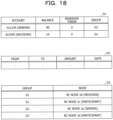
FIG. 14 , in the token balance data D1, the token balance of each account is as follows: 100 tokens for 0x1234 (sender), 0 tokens for 0x2345 (receiver 1), and 0 tokens for 0x3456 (receiver 2). The withdrawal approval data is empty. No trade is registered in the withdrawal approval data D2 in the initial state. - In the present case, group data D3 is newly added to the
BC ledger 15. The group data D3 is data that defines groups for making the nodes redundant, and a group is designated on a node-by-node basis. Each account is assigned with group information. Each node monitors the time-designated trade belonging to the same group similarly to the trade of its own account and issues an alternative transaction when it is desired. - For example, it is defined in the group data D3 that the
BC node 1b as the [receiver] and theBC node 1c as the [participant] belong to the same group "G1". It is also defined in the group data D3 that theBC node 1a as the [sender] and theBC node 1d as the [participant] belong to the same group "G2". -
FIGs. 15A and15B are a flowchart illustrating an example of processing for the withdrawal registration (FIG. 15B illustrates a continuation of the processing inFIG. 15A ). As illustrated inFIG. 15A andFIG. 15B , for the withdrawal registration, the same processing (S131 to S158) as that of S11 to S38 ofFIGs. 6A and6B described above is performed. - For example, transactions for which the execution results have been verified are summarized as the block data by the
block generation node 3, and the block data is shared by all the participants in the blockchain. When a trade is registered in theBC ledger 15, information on an item for which the withdrawal is approved is updated. -
FIG. 16 is an explanatory diagram illustrating an example of the data registered in theBC ledger 15, exemplifying, for example, a state of theBC ledger 15 after the update due to the distribution of the block (S143 to S145). As illustrated inFIG. 16 , a trade in which the parameters of the withdrawal approval data D2 are set to " (from: 0x1234, to: 0x2345, amount: 10, date: 20221001T120000)" is registered in the updatedBC ledger 15. The account belonging to "G1" being the same group as that of the [receiver] of this trade is the [participant] belonging to theBC node 1c. - The time
trade execution unit 10 of each node monitors the update of the withdrawal approval data D2, and in a case where the information on the account related to the self node is updated, transitions to the withdrawal wait state. Although the trades are checked while the accounts are limited only to the account managed by the self node up to the previous case, in the present case, the accounts belonging to the same group are also checked. For example, since the account 0x2345 belongs to group G1, the timetrade execution units 10 of both theBC nodes -
FIGs. 17A and17B are a flowchart illustrating an example of processing for the withdrawal wait/withdrawal execution (FIG. 17B illustrates a continuation of the processing inFIG. 17A ). - As illustrated in
FIG. 17A , in the present case, the timetrade execution unit 10 of theBC node 1b as the receiver is in the wait state (S171 and S172), and theBC node 1c belonging to group G1 is also in the wait state (S173 and S174) similarly to theBC node 1b. - Next, the fact that the designated time has been reached triggers issuance of a transaction that executes the withdrawal by the transaction/
block processing unit 11 of theBC node 1c similarly to that of theBC node 1b (S175 to S190). - It is assumed that it has reached 12:00 on October 1, 2022, and a transaction of the withdrawal approval with the date of "20221001T120000" is issued. Normally, the
BC node 1b owned by the account of the receiver is to issue the transaction. However, here, it is assumed that nothing is done because the system time of theBC node 1b is significantly deviated due to a certain problem. In a case where theBC node 1b does not issue the transaction, theBC node 1c that belongs to the same group and is in the wait state starts operation (S175 and after) in order to make the withdrawal request. - For example, the time
trade execution unit 10 of theBC node 1c waits until the designated time based on the system time of the self node (S173 and S174). When the designated time is reached, the transaction that executes the withdrawal is issued. Here, it is assumed that theBC node 1c, which is a redundant node, starts the operation after waiting for a certain period of time, for example, one minute or the like from the designated time so as not to conflict with the node that normally execute the operation. - Next, in order to confirm that the node that is normally to execute the operation (
BC node 1b) has not issued the transaction, the timetrade execution unit 10 of theBC node 1c obtains the data of theBC ledger 15 and checks the state of the time-designated trade (S175 to S177). When it is determined, through these processes, that the receiver node has not moved, the timetrade execution unit 10 of the redundant node make the withdrawal request instead (S178). - The issued transaction checks whether there is a trade for which the withdrawal is allowed based on the system time of the nodes that verify the transaction (S180 to S189). In the present case, since two nodes out of the three nodes allow the withdrawal of the trade of the date of "20221001T120000" (since the time of the
BC node 1b as the receiver is deviated), the two nodes return the result of the approval to the trade that authorizes the trade execution, and 10 tokens set in the amount are transferred from the sender to the receiver. - When the withdrawal trade is executed, the trade of the withdrawal approval data for which the transfer has been executed is deleted, and the value of the reserved token is reduced.
-
FIG. 18 is an explanatory diagram illustrating an example of the data registered in theBC ledger 15, exemplifying, for example, a state of theBC ledger 15 after the withdrawal trade. As illustrated inFIG. 18 , since the withdrawal trade is performed by the redundant node (BC node 1c), it is possible to ensure that the trade is executed at the designated time by the redundant node even in the case where the receiver node that is to normally execute the trade does not correctly operate. - Setting information of the groups may be in a form other than management in the
BC ledger 15. For example, the redundancy may be set for an organization to which the nodes belong by using, for example, Membership Service Providers of Hyperledger Fabric (Membership Service Providers, Hyperledger Fabric, "https://hyperledger-fabric.readthedocs.io/ja/latest/msp.html"). In a case where it is difficult to set groups in advance similarly to the present embodiment, similar processing may be realized by dynamically creating groups. - As described above, each of the nodes that manage the
BC ledger 15 registers, in theBC ledger 15, authorization transactions. Each of the authorization transactions includes a transfer source account, a transfer destination account, a transfer amount of the financial asset, and a transfer time of the financial asset and authorizes transfer of the financial asset based on a request from the transfer source account of the financial asset. For an authorization transaction out of the registered authorization transactions for which a self node manages the transfer destination account, the node requests an other node to verify the authorization transaction after a management time managed by the self node has reached a transfer time included in the authorization transaction, and the node issues a request transaction that requests transfer of a financial asset related to the authorization transaction based on a result of the verification performed by the other node. The node returns, in a case where a request for verification of the authorization transaction is accepted from an other node, to the other node a result of the verification of whether the transfer time included in the authorization transaction is later than the management time. - Accordingly, in a trade system including the nodes that manage the
BC ledger 15, a safe time-designated trade by a blockchain may be realized. As a result, a time-designated trade similar to that of bonds may be executed by using a token in the blockchain. This contributes to realization of a finance system in a decentralized finance (DeFi). With transfer management of the token by using a withdrawal approval, the token remains at a sender and is not transferred until the token is actually withdrawn and transferred. Thus, cancellation before a designated time may be performed only by returning a balance approved to be withdrawn to the original. This facilitates cancellation of the trade before the time compared to, for example, a method for transferring to another account once by using an escrow, and accordingly, improves usability. - The following appendices are further disclosed in relation to the embodiment including the embodiment example described above.
Claims (15)
- A trade processing program, whereinnodes manage a distributed ledger related to a financial asset, and the program that is for causing a computer of each of the nodes to execute a process, the process includingregistering, in the distributed ledger, authorization transactions, the authorization transactions each including a transfer source account, a transfer destination account, a transfer amount of the financial asset, and a transfer time of the financial asset, and the authorization transactions each authorizing transfer of the financial asset based on a request from the transfer source account of the financial asset,for an authorization transaction out of the registered authorization transactions for which a self node manages the transfer destination account, requesting a first other node to verify the authorization transaction after a management time managed by the self node has reached a transfer time included in the authorization transaction, and issuing a request transaction that requests transfer of a financial asset related to the authorization transaction based on a result of the verification performed by the first other node, andreturning, in a case where a request for verification of the authorization transaction is accepted from a second other node, to the second other node a result of the verification of whether the transfer time included in the authorization transaction is later than the management time.
- The trade processing program according to claim 1, wherein
the issuing requests again the verification of the authorization transaction after a predetermined period of time has elapsed in a case where the issuing of the request transaction is denied base on the result of the verification performed by the first other node. - The trade processing program according to claim 1, wherein,
for an authorization transaction out of the registered authorization transactions for which a third other node manages the transfer destination account, in a case where a request transaction related to the authorization transaction has not been issued after a predetermined period of time has elapsed from a time at which the management time reaches a transfer time included in the authorization transaction, the issuing requests a fourth other node to verify the authorization transaction and issues, in place of the third other node, a request transaction related to the authorization transaction based on a result of the verification performed by the fourth other node. - The trade processing program according to claim 3, wherein,
for the authorization transaction out of the registered authorization transactions for which the third other node that belongs to an identical group to a group of the self node manages the transfer destination account, the issuing issues, in place of the third other node, the request transaction related to the authorization transaction. - The trade processing program according to claim 1, whereina plurality of the first other nodes are provided, andthe issuing requests to the plurality of first other nodes to perform the verification and issues the request transaction based on results of the verification performed by the plurality of first other nodes.
- A trade processing method comprising:registering, by a computer of each nodes which manage a distributed ledger related to a financial asset, in the distributed ledger, authorization transactions, the authorization transactions each including a transfer source account, a transfer destination account, a transfer amount of the financial asset, and a transfer time of the financial asset, and the authorization transactions each authorizing transfer of the financial asset based on a request from the transfer source account of the financial asset,for an authorization transaction out of the registered authorization transactions for which a self node manages the transfer destination account, requesting a first other node to verify the authorization transaction after a management time managed by the self node has reached a transfer time included in the authorization transaction, and issuing a request transaction that requests transfer of a financial asset related to the authorization transaction based on a result of the verification performed by the first other node, andreturning, in a case where a request for verification of the authorization transaction is accepted from a second other node, to the second other node a result of the verification of whether the transfer time included in the authorization transaction is later than the management time.
- The trade processing method according to claim 6, wherein
the issuing requests again the verification of the authorization transaction after a predetermined period of time has elapsed in a case where the issuing of the request transaction is denied base on the result of the verification performed by the first other node. - The trade processing method according to claim 6, wherein,
for an authorization transaction out of the registered authorization transactions for which a third other node manages the transfer destination account, in a case where a request transaction related to the authorization transaction has not been issued after a predetermined period of time has elapsed from a time at which the management time reaches a transfer time included in the authorization transaction, the issuing requests a fourth other node to verify the authorization transaction and issues, in place of the third other node, a request transaction related to the authorization transaction based on a result of the verification performed by the fourth other node. - The trade processing program according to claim 8, wherein,
for the authorization transaction out of the registered authorization transactions for which the third other node that belongs to an identical group to a group of the self node manages the transfer destination account, the issuing issues, in place of the third other node, the request transaction related to the authorization transaction. - The trade processing program according to claim 6, whereina plurality of the first other nodes are provided, andthe issuing requests to the plurality of first other nodes to perform the verification and issues the request transaction based on results of the verification performed by the plurality of first other nodes.
- An information processing apparatus which manages a distributed ledger related to a financial asset comprising:
a computation device configured to execute a processing of:registering, in the distributed ledger, authorization transactions, the authorization transactions each including a transfer source account, a transfer destination account, a transfer amount of the financial asset, and a transfer time of the financial asset, and the authorization transactions each authorizing transfer of the financial asset based on a request from the transfer source account of the financial asset,for an authorization transaction out of the registered authorization transactions for which a self node manages the transfer destination account, requesting a first other node to verify the authorization transaction after a management time managed by the self node has reached a transfer time included in the authorization transaction, and issuing a request transaction that requests transfer of a financial asset related to the authorization transaction based on a result of the verification performed by the first other node, andreturning, in a case where a request for verification of the authorization transaction is accepted from a second other node, to the second other node a result of the verification of whether the transfer time included in the authorization transaction is later than the management time. - The information processing apparatus according to claim 11, wherein
the issuing requests again the verification of the authorization transaction after a predetermined period of time has elapsed in a case where the issuing of the request transaction is denied base on the result of the verification performed by the first other node. - The information processing apparatus according to claim 11, wherein,
for an authorization transaction out of the registered authorization transactions for which a third other node manages the transfer destination account, in a case where a request transaction related to the authorization transaction has not been issued after a predetermined period of time has elapsed from a time at which the management time reaches a transfer time included in the authorization transaction, the issuing requests a fourth other node to verify the authorization transaction and issues, in place of the third other node, a request transaction related to the authorization transaction based on a result of the verification performed by the fourth other node. - The information processing apparatus according to claim 13, wherein,
for the authorization transaction out of the registered authorization transactions for which the third other node that belongs to an identical group to a group of the self node manages the transfer destination account, the issuing issues, in place of the third other node, the request transaction related to the authorization transaction. - The information processing apparatus according to claim 11, whereina plurality of the first other nodes are provided, andthe issuing requests to the plurality of first other nodes to perform the verification and issues the request transaction based on results of the verification performed by the plurality of first other nodes.
Applications Claiming Priority (1)
| Application Number | Priority Date | Filing Date | Title |
|---|---|---|---|
| JP2022212717A JP2024095433A (en) | 2022-12-28 | 2022-12-28 | Transaction processing program, transaction processing method, and information processing device |
Publications (1)
| Publication Number | Publication Date |
|---|---|
| EP4394682A1 true EP4394682A1 (en) | 2024-07-03 |
Family
ID=88192063
Family Applications (1)
| Application Number | Title | Priority Date | Filing Date |
|---|---|---|---|
| EP23199377.5A Pending EP4394682A1 (en) | 2022-12-28 | 2023-09-25 | Trade processing program, method for processing trade, and information processing apparatus |
Country Status (3)
| Country | Link |
|---|---|
| US (1) | US20240221002A1 (en) |
| EP (1) | EP4394682A1 (en) |
| JP (1) | JP2024095433A (en) |
Citations (3)
| Publication number | Priority date | Publication date | Assignee | Title |
|---|---|---|---|---|
| US20210166218A1 (en) * | 2019-12-01 | 2021-06-03 | Bank Of America Corporation | Reusable near field communication ("nfc") device for pre-stage point-of-sale ("pos") payments |
| JP2021518592A (en) * | 2018-03-14 | 2021-08-02 | ソニー・インタラクティブエンタテインメント エルエルシー | Secure decentralized video game trading platform |
| US20220058641A1 (en) | 2020-08-19 | 2022-02-24 | Hon Hai Precision Industry Co., Ltd. | Device and method for processing data of transactions based on block chain, and storage medium |
Family Cites Families (5)
| Publication number | Priority date | Publication date | Assignee | Title |
|---|---|---|---|---|
| WO2015164492A1 (en) * | 2014-04-22 | 2015-10-29 | Savir Omer | System and method for selling vehicles by leveraging peer pricing data |
| US20170228731A1 (en) * | 2016-02-09 | 2017-08-10 | Fmr Llc | Computationally Efficient Transfer Processing and Auditing Apparatuses, Methods and Systems |
| CN111917864B (en) * | 2017-02-22 | 2023-08-22 | 创新先进技术有限公司 | Service verification method and device |
| CN107196900B (en) * | 2017-03-24 | 2020-04-24 | 创新先进技术有限公司 | Consensus checking method and device |
| AU2019253110B2 (en) * | 2018-04-13 | 2022-09-01 | Plaid Inc. | Secure permissioning of access to user accounts, including secure distribution of aggregated user account data |
-
2022
- 2022-12-28 JP JP2022212717A patent/JP2024095433A/en active Pending
-
2023
- 2023-09-18 US US18/369,337 patent/US20240221002A1/en not_active Abandoned
- 2023-09-25 EP EP23199377.5A patent/EP4394682A1/en active Pending
Patent Citations (3)
| Publication number | Priority date | Publication date | Assignee | Title |
|---|---|---|---|---|
| JP2021518592A (en) * | 2018-03-14 | 2021-08-02 | ソニー・インタラクティブエンタテインメント エルエルシー | Secure decentralized video game trading platform |
| US20210166218A1 (en) * | 2019-12-01 | 2021-06-03 | Bank Of America Corporation | Reusable near field communication ("nfc") device for pre-stage point-of-sale ("pos") payments |
| US20220058641A1 (en) | 2020-08-19 | 2022-02-24 | Hon Hai Precision Industry Co., Ltd. | Device and method for processing data of transactions based on block chain, and storage medium |
Also Published As
| Publication number | Publication date |
|---|---|
| US20240221002A1 (en) | 2024-07-04 |
| JP2024095433A (en) | 2024-07-10 |
Similar Documents
| Publication | Publication Date | Title |
|---|---|---|
| US11669811B2 (en) | Blockchain-based digital token utilization | |
| AU2022200068B2 (en) | Telecommunication system and method for settling session transactions | |
| Robinson | Survey of crosschain communications protocols | |
| US12476831B2 (en) | Compute services for a platform of services associated with a blockchain | |
| US10901983B2 (en) | System and method for universal blockchain interoperability | |
| US11153069B2 (en) | Data authentication using a blockchain approach | |
| EP4332870A1 (en) | Transaction data processing method and apparatus, computer device and storage medium | |
| US20220084020A1 (en) | System and method for scaling blockchain networks with secure off-chain payment hubs | |
| US20190172026A1 (en) | Cross blockchain secure transactions | |
| US20220051235A1 (en) | Settlement system, settlement method, user device, and settlement program | |
| US20230119035A1 (en) | Platform services verification | |
| US20190251199A1 (en) | Transactions Across Blockchain Networks | |
| EP3439231A1 (en) | Private node, processing method for private node, and program for same | |
| US10693646B2 (en) | Event execution using a blockchain approach | |
| US20200134719A1 (en) | Distributed ledger implementation for entity formation and monitoring system | |
| WO2019191688A1 (en) | Digital asset exchange | |
| JP2023106055A (en) | Evidence management method, evidence management system and node | |
| JP7688652B2 (en) | Event streams, which are sequences of events related to the blockchain | |
| KR102139551B1 (en) | Method and server for managing testament | |
| CN112613877B (en) | Intelligent contract triggering method and device applied to block chain network and related equipment | |
| CN111640002A (en) | Block chain-based mortgage loan method and device | |
| CN112612856B (en) | Block chain-based data processing method and device | |
| US20250062924A1 (en) | Data processing method and apparatus for multi-blockchain, device, and computer-readable storage medium | |
| JP2022032116A (en) | Data migration method, data migration system, and node | |
| WO2025191520A1 (en) | Decentralized systems and methods for response generation to api calls |
Legal Events
| Date | Code | Title | Description |
|---|---|---|---|
| PUAI | Public reference made under article 153(3) epc to a published international application that has entered the european phase |
Free format text: ORIGINAL CODE: 0009012 |
|
| STAA | Information on the status of an ep patent application or granted ep patent |
Free format text: STATUS: REQUEST FOR EXAMINATION WAS MADE |
|
| 17P | Request for examination filed |
Effective date: 20231208 |
|
| AK | Designated contracting states |
Kind code of ref document: A1 Designated state(s): AL AT BE BG CH CY CZ DE DK EE ES FI FR GB GR HR HU IE IS IT LI LT LU LV MC ME MK MT NL NO PL PT RO RS SE SI SK SM TR |
|
| REG | Reference to a national code |
Ref country code: DE Ref legal event code: R079 Free format text: PREVIOUS MAIN CLASS: G06Q0020380000 Ipc: G06Q0010063100 |
|
| GRAP | Despatch of communication of intention to grant a patent |
Free format text: ORIGINAL CODE: EPIDOSNIGR1 |
|
| STAA | Information on the status of an ep patent application or granted ep patent |
Free format text: STATUS: GRANT OF PATENT IS INTENDED |
|
| RIC1 | Information provided on ipc code assigned before grant |
Ipc: G06Q 10/0631 20230101AFI20260323BHEP Ipc: G06Q 20/40 20120101ALI20260323BHEP Ipc: G06Q 40/04 20120101ALI20260323BHEP Ipc: G06Q 20/38 20120101ALI20260323BHEP |