EP4393994A1 - Conductive rubber composition for sensing - Google Patents
Conductive rubber composition for sensing Download PDFInfo
- Publication number
- EP4393994A1 EP4393994A1 EP22860916.0A EP22860916A EP4393994A1 EP 4393994 A1 EP4393994 A1 EP 4393994A1 EP 22860916 A EP22860916 A EP 22860916A EP 4393994 A1 EP4393994 A1 EP 4393994A1
- Authority
- EP
- European Patent Office
- Prior art keywords
- rubber
- mass
- strain
- sensing
- rubber composition
- Prior art date
- Legal status (The legal status is an assumption and is not a legal conclusion. Google has not performed a legal analysis and makes no representation as to the accuracy of the status listed.)
- Pending
Links
- 229920001971 elastomer Polymers 0.000 title claims abstract description 239
- 239000005060 rubber Substances 0.000 title claims abstract description 239
- 239000000203 mixture Substances 0.000 title claims abstract description 76
- 239000006229 carbon black Substances 0.000 claims abstract description 55
- 229920000459 Nitrile rubber Polymers 0.000 claims abstract description 28
- NLHHRLWOUZZQLW-UHFFFAOYSA-N Acrylonitrile Chemical group C=CC#N NLHHRLWOUZZQLW-UHFFFAOYSA-N 0.000 claims abstract description 21
- OKTJSMMVPCPJKN-UHFFFAOYSA-N Carbon Chemical compound [C] OKTJSMMVPCPJKN-UHFFFAOYSA-N 0.000 claims description 31
- 239000002041 carbon nanotube Substances 0.000 claims description 31
- 229910021393 carbon nanotube Inorganic materials 0.000 claims description 31
- LZZYPRNAOMGNLH-UHFFFAOYSA-M Cetrimonium bromide Chemical compound [Br-].CCCCCCCCCCCCCCCC[N+](C)(C)C LZZYPRNAOMGNLH-UHFFFAOYSA-M 0.000 claims description 18
- 238000001179 sorption measurement Methods 0.000 claims description 10
- 230000004043 responsiveness Effects 0.000 abstract description 28
- 235000019241 carbon black Nutrition 0.000 description 51
- 239000012530 fluid Substances 0.000 description 26
- 238000007789 sealing Methods 0.000 description 25
- 239000010410 layer Substances 0.000 description 21
- 238000010521 absorption reaction Methods 0.000 description 15
- DOIRQSBPFJWKBE-UHFFFAOYSA-N dibutyl phthalate Chemical compound CCCCOC(=O)C1=CC=CC=C1C(=O)OCCCC DOIRQSBPFJWKBE-UHFFFAOYSA-N 0.000 description 14
- 239000003921 oil Substances 0.000 description 13
- 230000000052 comparative effect Effects 0.000 description 12
- 238000013329 compounding Methods 0.000 description 10
- XLOMVQKBTHCTTD-UHFFFAOYSA-N Zinc monoxide Chemical compound [Zn]=O XLOMVQKBTHCTTD-UHFFFAOYSA-N 0.000 description 9
- 230000008602 contraction Effects 0.000 description 9
- 238000012360 testing method Methods 0.000 description 8
- 229920006231 aramid fiber Polymers 0.000 description 7
- 230000005611 electricity Effects 0.000 description 6
- 238000005336 cracking Methods 0.000 description 5
- 238000001514 detection method Methods 0.000 description 5
- 238000000034 method Methods 0.000 description 5
- 238000004073 vulcanization Methods 0.000 description 5
- 235000014692 zinc oxide Nutrition 0.000 description 5
- 239000011787 zinc oxide Substances 0.000 description 5
- 229910052799 carbon Inorganic materials 0.000 description 4
- 238000005259 measurement Methods 0.000 description 4
- 229910052751 metal Inorganic materials 0.000 description 4
- 239000002184 metal Substances 0.000 description 4
- 239000003963 antioxidant agent Substances 0.000 description 3
- 238000007373 indentation Methods 0.000 description 3
- 238000004898 kneading Methods 0.000 description 3
- 239000007788 liquid Substances 0.000 description 3
- 239000000463 material Substances 0.000 description 3
- 238000012544 monitoring process Methods 0.000 description 3
- 239000000126 substance Substances 0.000 description 3
- 239000004636 vulcanized rubber Substances 0.000 description 3
- ZNRLMGFXSPUZNR-UHFFFAOYSA-N 2,2,4-trimethyl-1h-quinoline Chemical compound C1=CC=C2C(C)=CC(C)(C)NC2=C1 ZNRLMGFXSPUZNR-UHFFFAOYSA-N 0.000 description 2
- 244000043261 Hevea brasiliensis Species 0.000 description 2
- XEEYBQQBJWHFJM-UHFFFAOYSA-N Iron Chemical compound [Fe] XEEYBQQBJWHFJM-UHFFFAOYSA-N 0.000 description 2
- 239000005062 Polybutadiene Substances 0.000 description 2
- 235000021355 Stearic acid Nutrition 0.000 description 2
- NINIDFKCEFEMDL-UHFFFAOYSA-N Sulfur Chemical compound [S] NINIDFKCEFEMDL-UHFFFAOYSA-N 0.000 description 2
- 230000003078 antioxidant effect Effects 0.000 description 2
- 239000002134 carbon nanofiber Substances 0.000 description 2
- 239000003795 chemical substances by application Substances 0.000 description 2
- 230000007423 decrease Effects 0.000 description 2
- 230000001066 destructive effect Effects 0.000 description 2
- 235000014113 dietary fatty acids Nutrition 0.000 description 2
- 210000003414 extremity Anatomy 0.000 description 2
- 229930195729 fatty acid Natural products 0.000 description 2
- 239000000194 fatty acid Substances 0.000 description 2
- 150000004665 fatty acids Chemical class 0.000 description 2
- 230000006870 function Effects 0.000 description 2
- 229920003049 isoprene rubber Polymers 0.000 description 2
- 238000004519 manufacturing process Methods 0.000 description 2
- 150000002739 metals Chemical class 0.000 description 2
- DEQZTKGFXNUBJL-UHFFFAOYSA-N n-(1,3-benzothiazol-2-ylsulfanyl)cyclohexanamine Chemical compound C1CCCCC1NSC1=NC2=CC=CC=C2S1 DEQZTKGFXNUBJL-UHFFFAOYSA-N 0.000 description 2
- 229920003052 natural elastomer Polymers 0.000 description 2
- 229920001194 natural rubber Polymers 0.000 description 2
- QIQXTHQIDYTFRH-UHFFFAOYSA-N octadecanoic acid Chemical compound CCCCCCCCCCCCCCCCCC(O)=O QIQXTHQIDYTFRH-UHFFFAOYSA-N 0.000 description 2
- OQCDKBAXFALNLD-UHFFFAOYSA-N octadecanoic acid Natural products CCCCCCCC(C)CCCCCCCCC(O)=O OQCDKBAXFALNLD-UHFFFAOYSA-N 0.000 description 2
- 230000000704 physical effect Effects 0.000 description 2
- 239000004033 plastic Substances 0.000 description 2
- 229920003023 plastic Polymers 0.000 description 2
- 229920001084 poly(chloroprene) Polymers 0.000 description 2
- 229920002857 polybutadiene Polymers 0.000 description 2
- 230000001105 regulatory effect Effects 0.000 description 2
- 239000008117 stearic acid Substances 0.000 description 2
- 229910052717 sulfur Inorganic materials 0.000 description 2
- 239000011593 sulfur Substances 0.000 description 2
- 229910000838 Al alloy Inorganic materials 0.000 description 1
- 229910001369 Brass Inorganic materials 0.000 description 1
- 239000006237 Intermediate SAF Substances 0.000 description 1
- 238000007696 Kjeldahl method Methods 0.000 description 1
- 239000004902 Softening Agent Substances 0.000 description 1
- 238000005411 Van der Waals force Methods 0.000 description 1
- -1 aluminum alloy Chemical class 0.000 description 1
- 235000006708 antioxidants Nutrition 0.000 description 1
- 239000004760 aramid Substances 0.000 description 1
- 230000015572 biosynthetic process Effects 0.000 description 1
- VTEKOFXDMRILGB-UHFFFAOYSA-N bis(2-ethylhexyl)carbamothioylsulfanyl n,n-bis(2-ethylhexyl)carbamodithioate Chemical compound CCCCC(CC)CN(CC(CC)CCCC)C(=S)SSC(=S)N(CC(CC)CCCC)CC(CC)CCCC VTEKOFXDMRILGB-UHFFFAOYSA-N 0.000 description 1
- 238000009954 braiding Methods 0.000 description 1
- 239000010951 brass Substances 0.000 description 1
- 125000004432 carbon atom Chemical group C* 0.000 description 1
- 238000005229 chemical vapour deposition Methods 0.000 description 1
- 238000000354 decomposition reaction Methods 0.000 description 1
- 230000001627 detrimental effect Effects 0.000 description 1
- 238000010586 diagram Methods 0.000 description 1
- 230000000694 effects Effects 0.000 description 1
- 238000010891 electric arc Methods 0.000 description 1
- 238000005516 engineering process Methods 0.000 description 1
- 239000010696 ester oil Substances 0.000 description 1
- 238000009472 formulation Methods 0.000 description 1
- 239000010720 hydraulic oil Substances 0.000 description 1
- 239000004615 ingredient Substances 0.000 description 1
- 230000000977 initiatory effect Effects 0.000 description 1
- 238000002347 injection Methods 0.000 description 1
- 239000007924 injection Substances 0.000 description 1
- 229910052742 iron Inorganic materials 0.000 description 1
- 238000002955 isolation Methods 0.000 description 1
- 210000003141 lower extremity Anatomy 0.000 description 1
- 239000002048 multi walled nanotube Substances 0.000 description 1
- 210000003205 muscle Anatomy 0.000 description 1
- 239000002245 particle Substances 0.000 description 1
- JTJMJGYZQZDUJJ-UHFFFAOYSA-N phencyclidine Chemical compound C1CCCCN1C1(C=2C=CC=CC=2)CCCCC1 JTJMJGYZQZDUJJ-UHFFFAOYSA-N 0.000 description 1
- 238000005268 plasma chemical vapour deposition Methods 0.000 description 1
- 238000002360 preparation method Methods 0.000 description 1
- 230000002787 reinforcement Effects 0.000 description 1
- 230000003252 repetitive effect Effects 0.000 description 1
- 238000011160 research Methods 0.000 description 1
- 230000035945 sensitivity Effects 0.000 description 1
- 239000002356 single layer Substances 0.000 description 1
- 239000002109 single walled nanotube Substances 0.000 description 1
- 239000000243 solution Substances 0.000 description 1
- 239000010935 stainless steel Substances 0.000 description 1
- 229910001220 stainless steel Inorganic materials 0.000 description 1
- 238000007619 statistical method Methods 0.000 description 1
- 229920003048 styrene butadiene rubber Polymers 0.000 description 1
- 238000003786 synthesis reaction Methods 0.000 description 1
- 238000009864 tensile test Methods 0.000 description 1
- 238000002230 thermal chemical vapour deposition Methods 0.000 description 1
- 210000001364 upper extremity Anatomy 0.000 description 1
- 238000010792 warming Methods 0.000 description 1
- XLYOFNOQVPJJNP-UHFFFAOYSA-N water Substances O XLYOFNOQVPJJNP-UHFFFAOYSA-N 0.000 description 1
Images



Classifications
-
- H—ELECTRICITY
- H01—ELECTRIC ELEMENTS
- H01B—CABLES; CONDUCTORS; INSULATORS; SELECTION OF MATERIALS FOR THEIR CONDUCTIVE, INSULATING OR DIELECTRIC PROPERTIES
- H01B1/00—Conductors or conductive bodies characterised by the conductive materials; Selection of materials as conductors
- H01B1/20—Conductive material dispersed in non-conductive organic material
- H01B1/24—Conductive material dispersed in non-conductive organic material the conductive material comprising carbon-silicon compounds, carbon or silicon
-
- C—CHEMISTRY; METALLURGY
- C08—ORGANIC MACROMOLECULAR COMPOUNDS; THEIR PREPARATION OR CHEMICAL WORKING-UP; COMPOSITIONS BASED THEREON
- C08K—Use of inorganic or non-macromolecular organic substances as compounding ingredients
- C08K3/00—Use of inorganic substances as compounding ingredients
- C08K3/02—Elements
- C08K3/04—Carbon
- C08K3/041—Carbon nanotubes
-
- C—CHEMISTRY; METALLURGY
- C08—ORGANIC MACROMOLECULAR COMPOUNDS; THEIR PREPARATION OR CHEMICAL WORKING-UP; COMPOSITIONS BASED THEREON
- C08K—Use of inorganic or non-macromolecular organic substances as compounding ingredients
- C08K2201/00—Specific properties of additives
- C08K2201/001—Conductive additives
-
- C—CHEMISTRY; METALLURGY
- C08—ORGANIC MACROMOLECULAR COMPOUNDS; THEIR PREPARATION OR CHEMICAL WORKING-UP; COMPOSITIONS BASED THEREON
- C08K—Use of inorganic or non-macromolecular organic substances as compounding ingredients
- C08K2201/00—Specific properties of additives
- C08K2201/002—Physical properties
- C08K2201/006—Additives being defined by their surface area
-
- F—MECHANICAL ENGINEERING; LIGHTING; HEATING; WEAPONS; BLASTING
- F15—FLUID-PRESSURE ACTUATORS; HYDRAULICS OR PNEUMATICS IN GENERAL
- F15B—SYSTEMS ACTING BY MEANS OF FLUIDS IN GENERAL; FLUID-PRESSURE ACTUATORS, e.g. SERVOMOTORS; DETAILS OF FLUID-PRESSURE SYSTEMS, NOT OTHERWISE PROVIDED FOR
- F15B15/00—Fluid-actuated devices for displacing a member from one position to another; Gearing associated therewith
- F15B15/08—Characterised by the construction of the motor unit
- F15B15/10—Characterised by the construction of the motor unit the motor being of diaphragm type
- F15B15/103—Characterised by the construction of the motor unit the motor being of diaphragm type using inflatable bodies that contract when fluid pressure is applied, e.g. pneumatic artificial muscles or McKibben-type actuators
Definitions
- This disclosure relates to a conductive rubber composition for sensing.
- a rubber actuator (which is so-called “McKibben type”) comprising a rubber tube that expands and contracts using a working fluid and a sleeve (mesh reinforcement structure) that covers the outer surface of the rubber tube has been known.
- McKibben type comprising a rubber tube that expands and contracts using a working fluid and a sleeve (mesh reinforcement structure) that covers the outer surface of the rubber tube.
- sleeve mesh reinforcement structure
- the present disclosure is to solve the technical problems of the aforementioned prior art, and to provide a conductive rubber composition for sensing that has good responsiveness of changes in electrical resistance to strain and can accurately detect the occurrence of cracks.
- the loss tangent (tan ⁇ ) at 1% strain is an indicator of low strain loss and is related to the amount of friction between carbon blacks at low strain.
- the hysteresis loss (Wd/Ws) at 70% elongation is an indicator of high strain loss and is related to the amount of friction between carbon blacks at high strain. Therefore, when the amount of friction between carbon blacks is smaller at low strain and the amount of friction between carbon blacks is larger at high strain, the change in electrical resistance due to expansion and contraction during use (high strain) becomes large, and the responsiveness of changes in electrical resistance to strain becomes better.
- the hysteresis loss (Wd/Ws) at 70% elongation is measured by the method described in the Examples.
- the loss tangent (tan ⁇ ) at 1% strain and the hysteresis loss (Wd/Ws) at 70% elongation of the conductive rubber composition for sensing mentioned above can be adjusted by selecting the appropriate amount and properties of carbon black used in the rubber composition.
- the conductive rubber composition for sensing of this disclosure contains a rubber component, which provides rubber elasticity to the composition and allows the rubber composition to expand and contract.
- the rubber component of the conductive rubber composition for sensing of this disclosure contains 80% by mass or more of, preferably contains 90% by mass or more of, acrylonitrile-butadiene rubber (NBR) with an acrylonitrile unit content of more than 45% by mass.
- NBR acrylonitrile-butadiene rubber
- the rubber component preferably consists solely of the acrylonitrile-butadiene rubber with an acrylonitrile unit content of more than 45% by mass.
- the acrylonitrile-butadiene rubber with an acrylonitrile unit content of more than 45% by mass has excellent oil resistance, and therefore, the conductive rubber composition for sensing of this disclosure, in which 80% by mass or more of the rubber component consists of acrylonitrile-butadiene rubber with an acrylonitrile unit content of more than 45% by mass, has high oil resistance and is suitable for applications requiring oil resistance, e.g., rubber tubes for rubber actuators. Furthermore, when the rubber component consists solely of the acrylonitrile-butadiene rubber with an acrylonitrile unit content of more than 45% by mass, oil resistance is further improved.
- the acrylonitrile unit content of the acrylonitrile-butadiene rubber (NBR) is more than 45% by mass, and when it exceeds 45% by mass, it is preferable from the viewpoint of oil resistance.
- the acrylonitrile unit content of the acrylonitrile-butadiene rubber (NBR) is preferably 50% by mass or less in terms of fatigue resistance and crack extension resistance.
- the acrylonitrile unit content (bound acrylonitrile content) of the acrylonitrile-butadiene rubber (NBR) can be measured by the Kjeldahl method according to JIS K6384.
- the rubber component may further contain other rubber components.
- various rubber components that provide rubber elasticity to the composition can be utilized.
- the other rubber components include acrylonitrile-butadiene rubber (NBR) with an acrylonitrile unit content of 45% by mass or less, natural rubber (NR), synthetic isoprene rubber (IR), butadiene rubber (BR), styrene-butadiene rubber (SBR), chloroprene rubber (CR), etc.
- NBR acrylonitrile-butadiene rubber
- NR natural rubber
- IR synthetic isoprene rubber
- BR butadiene rubber
- SBR styrene-butadiene rubber
- CR chloroprene rubber
- the number of rubber components used may be one or two or more.
- the cetyltrimethylammonium bromide (CTAB) adsorption specific surface area of the carbon black is further preferred to be 120 m 2 /g or more from the viewpoint of further facilitating detection of changes in electrical resistance, and is preferred to be 160 m 2 /g or less from the viewpoint of workability.
- the carbon black is not limited as long as it meets the above conditions, and includes, for example, GPF, FEF, HAF, ISAF, and SAF grade carbon blacks. These carbon blacks may be used alone or in combination of two or more.
- the sleeve 120 is cylindrical and covers the outer surface of the rubber tube 110.
- the sleeve 120 is a structure of braided cords oriented in a predetermined direction, and the oriented cords intersect to form a repeated rhombus shape.
- the sleeve 120 by having this shape, pantographically deforms and follows the rubber tube 110 while regulating its contraction and expansion.
- the locking ring 220 engages the sleeve 120. Specifically, the sleeve 120 is folded outwardly in the radial direction D R through the locking ring 220.
- the rubber tube 110 illustrated in FIG. 4 has a two-layer structure consisting of an inner layer rubber 111 located on the inner surface side of the rubber tube and an outer layer rubber 112 located on the outer surface side of the rubber tube 110, adjacent to the outer side in the radial direction D R of the inner layer rubber 111.
- the conductive rubber composition for sensing of this disclosure described above has excellent oil resistance, therefore can be applied to the inner layer rubber 111 that is in contact with the working fluid. If the oil resistance of the inner layer rubber 111 is insufficient, the working fluid may penetrate to the space between the inner layer rubber 111 and the outer layer rubber 112, which may reduce the durability of the rubber tube 110. However, by applying the conductive rubber composition for sensing of this disclosure as described above to the inner layer rubber 111, cracks in the inner layer rubber 111 can be detected at an early stage, and by preventing the ingress of working fluid and replacing the rubber tube 110 at the appropriate time, the rubber actuator can be prevented from stopping functioning.
- the actuator body 100 contracts, the rubber tube 110 expands, resulting in a thinner film thickness of the rubber tube 110.
- the dimensions (distance) of carbon blacks (and carbon nanotubes) in the film thickness direction are narrowed and carbon blacks (and carbon nanotubes) are brought closer together.
- the distance between the carbon blacks (and carbon nanotubes) is shortened, thereby the conductivity of the rubber tube 110 increases, in other words, the electrical resistance of the rubber tube 110 decreases.
- the repetition of contraction and expansion due to the working fluid may cause cracks in the rubber tube 110.
- the pattern of change in the electrical resistance is different at each stage of the process: no cracks, in the early stages of cracking, and with cracks. Therefore, the dynamic behavior of the change in electrical resistance caused by strain due to the occurrence of cracks in the rubber tube 110 can be analyzed using statistical methods or learned by an AI, so that the occurrence of cracks in the rubber tube 110 can be detected from the dynamic behavior of the change in electrical resistance.
- Rubber compositions having the formulations provided in Table 1 were prepared by kneading them in a usual manner.
- the type, properties, and compounding amount of carbon black used, as well as the compounding amount of carbon nanotubes, are provided in Table 2.
- Vulcanization accelerator A N-cyclohexyl-2-benzothiazolylsulfenamide, Product name "SANCELER CM-G”, made by Sanshin Chemical Co.
- Vulcanization accelerator B Tetrakis(2-ethylhexyl)thiuram disulfide, Product name "NOCCELER TOT”, made by Ouchi Shinko Chemical Industrial Co., LTD.
- Surfer Product name "HK200-5", made by Hosoi Chemical Industry, indicated in Table 1 as the amount of sulfur component.
- the prepared test specimens were subjected to 70% elongation for 10 times using a tensile testing machine (K18003) made by System One at room temperature and a distance of 20 mm between chucks (10 repetitive cycles of 0% to 70% elongation to 0%), and then hysteresis loss [-] at a tensile speed of 6 mm/sec (Wd/Ws, energy lost/energy stored) was calculated.
- the hysteresis loss was calculated by the ratio (ABCDA/ABCEA) of the area corresponding to ABCDA to the area corresponding to ABCEA in the stress-strain curve diagram provided in FIG. 5 .
- FIG. 6 An example of the strain dependence of electrical resistance is provided in FIG. 6 .
- a rubber with a sufficiently large S/n ratio has a large change in electrical resistance due to strain, thus has strain responsiveness, while a rubber with a small S/n ratio has a small change in electrical resistance due to strain, thus has no strain responsiveness.
- Two aramid fibers of 2200 dtex were used as the base yarn and were subjected to lower twist of 12 times/10 cm and another upper twist of 12 times/10 cm to produce an aramid fiber cord with a diameter of 0.7 mm.
- a mesh-like sleeve made by braiding 64 aramid fiber cords was prepared. The sleeve had a mesh-like tubular structure with 64 aramid fiber cords observed circumferentially in the transverse cross-section.
- this sleeve had a mesh-like tubular structure consisting of 32 aramid fiber cords arranged in an equally spaced, parallel, spiral pattern, alternately braided with 32 other aramid fiber cords that are diagonally interlaced with these 32 aramid fiber cords and also arranged in an equally spaced, parallel, and spiral pattern.
- the angle of each cord with respect to the axial direction of the sleeve was 25 degrees.
- the rubber actuators with the structure illustrated in FIGS. 2 and 3 were fabricated using the rubber tube and the mesh-like sleeve described above.
- the length between the sealing mechanism 200 and the sealing mechanism 300 was 250 mm.
- UF46 made by Cosmo Super Epoch Co., Ltd. was used as the hydraulic oil for the rubber tube.
- Hydraulic fluid was injected into the rubber tube to fully displace the air in the rubber tube with the hydraulic fluid.
- the injection of hydraulic fluid was performed so that the pressure of the hydraulic fluid in the rubber tube repeated 0 MPa and 5 MPa every 3 seconds, respectively, and the expansion and contraction were repeated until the tube cracked, the crack was extended, and the actuator could no longer perform its function.
- the conductive rubber composition for sensing of this disclosure has a good responsiveness of changes in electrical resistance to strain, and thus can be used, as an example, to detect the occurrence of cracks from the changes in electrical resistance, as applied to the rubber tubes in rubber actuators.
Landscapes
- Chemical & Material Sciences (AREA)
- Medicinal Chemistry (AREA)
- Organic Chemistry (AREA)
- Polymers & Plastics (AREA)
- Health & Medical Sciences (AREA)
- Chemical Kinetics & Catalysis (AREA)
- Nanotechnology (AREA)
- Materials Engineering (AREA)
- Engineering & Computer Science (AREA)
- Physics & Mathematics (AREA)
- Dispersion Chemistry (AREA)
- Spectroscopy & Molecular Physics (AREA)
- Compositions Of Macromolecular Compounds (AREA)
- Conductive Materials (AREA)
Abstract
Description
- This disclosure relates to a conductive rubber composition for sensing.
- A rubber actuator (which is so-called "McKibben type") comprising a rubber tube that expands and contracts using a working fluid and a sleeve (mesh reinforcement structure) that covers the outer surface of the rubber tube has been known. For rubber products that repeatedly deform, such as the rubber tube of the rubber actuator, it is possible to measure the amount of deformation of the rubber member from the electrical resistance of the rubber member (
Patent Document 1 below). - PTL 1:
JP 2008-037906 A - According to the art described in the
above Patent Document 1, the amount of deformation of the rubber member can be determined by measuring the electrical resistance of the rubber member. However, it is not possible to detect the presence or absence of cracks in the rubber member. For rubber actuators that are filled with oil or other liquids, early detection of cracks in the rubber tube is important because cracks in the rubber tube may cause the tube to rupture or render the rubber actuator unusable. - The inventors examined the electrical resistance of the rubber tube during one cycle of expansion and contraction of the rubber actuator and immediately monitored the electrical resistance of the rubber tube during expansion and contraction, and found that the waveform of electrical resistance of one cycle before cracking, at the initial stage of cracking, and in the advanced state of cracking changed due to strain caused by the cracking (
FIG. 1 ). However, with general conductive rubber, it is difficult to capture the changes in the waveform of electrical resistance due to strain caused by such cracks, and it is difficult to confirm the early stages of crack initiation by monitoring the electrical resistance alone. Accordingly, the use of conductive rubber composition for sensing with good responsiveness of changes in the electrical resistance to strain makes it possible to detect the occurrence of cracks with high accuracy. - Therefore, the present disclosure is to solve the technical problems of the aforementioned prior art, and to provide a conductive rubber composition for sensing that has good responsiveness of changes in electrical resistance to strain and can accurately detect the occurrence of cracks.
- The gist of the conductive rubber composition for sensing in accordance with the present disclosure to solve the above technical problems is as follows.
- [1] A conductive rubber composition for sensing, containing a rubber component and carbon black,
- wherein the rubber component contains 80% by mass or more of acrylonitrile-butadiene rubber with an acrylonitrile unit content of more than 45% by mass,
- a loss tangent (tan δ) at 1% strain is 0.6 or less, and
- a hysteresis loss (Wd/Ws) at 70% elongation is 0.43 or more.
- [2] The conductive rubber composition for sensing according to [1], wherein the loss tangent (tan δ) at 1% strain is 0.58 or less.
- [3] The conductive rubber composition for sensing according to [1] or [2], wherein the hysteresis loss (Wd/Ws) at 70% elongation is 0.45 or more.
- [4] The conductive rubber composition for sensing according to any one of [1] to [3], wherein the rubber component consists solely of the acrylonitrile-butadiene rubber with an acrylonitrile unit content of more than 45% by mass.
- [5] The conductive rubber composition for sensing according to any one of [1] to [4], wherein the carbon black content is 40 parts by mass or more and 55 parts by mass or less per 100 parts by mass of the rubber component.
- [6] The conductive rubber composition for sensing according to any one of [1] to [5], wherein the carbon black has a cetyltrimethylammonium bromide (CTAB) adsorption specific surface area of 110 m2/g or more.
- [7] The conductive rubber composition for sensing according to any one of [1] to [6], further containing a carbon nanotube,
wherein the carbon nanotube content is 1 part by mass or more and 5 parts by mass or less per 100 parts by mass of the rubber component. - According to the present disclosure, it is possible to provide a conductive rubber composition for sensing that has good responsiveness of changes in electrical resistance to strain and can accurately detect the occurrence of cracks.
- In the accompanying drawings:
-
FIG. 1 provides the waveform of electrical resistance for one cycle with respect to an example rubber actuator; -
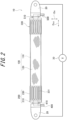
FIG. 2 is a side view of an example rubber actuator; -
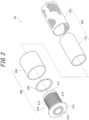
FIG. 3 is a partially exploded perspective view of an example rubber actuator; -
FIG. 4 is a partial cross-sectional view of an example rubber tube; -
FIG. 5 explains the hysteresis loss (Wd/Ws) at 70% elongation; -
FIG. 6 provides examples of changes in electrical resistance with and without responsiveness, respectively; and -
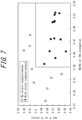
FIG. 7 provides the relationship between the loss tangent (tan δ) at 1% strain and the hysteresis loss (Wd/Ws) at 70% elongation for the rubber compositions of the Examples and Comparative Examples. - The following is a detailed illustration of the conductive rubber composition for sensing of this disclosure, based on the embodiments thereof.
- The conductive rubber composition for sensing of this disclosure includes a rubber component and carbon black. Here, the conductive rubber composition for sensing of this disclosure is characterized in that the rubber component contains 80% by mass or more of acrylonitrile-butadiene rubber with an acrylonitrile unit content of more than 45% by mass, a loss tangent (tan δ) at 1% strain is 0.6 or less, and a hysteresis loss (Wd/Ws) at 70% elongation is 0.43 or more.
- The loss tangent (tan δ) at 1% strain is an indicator of low strain loss and is related to the amount of friction between carbon blacks at low strain. On the other hand, the hysteresis loss (Wd/Ws) at 70% elongation is an indicator of high strain loss and is related to the amount of friction between carbon blacks at high strain. Therefore, when the amount of friction between carbon blacks is smaller at low strain and the amount of friction between carbon blacks is larger at high strain, the change in electrical resistance due to expansion and contraction during use (high strain) becomes large, and the responsiveness of changes in electrical resistance to strain becomes better. In this disclosure, when 80% by mass or more of the rubber component consists of acrylonitrile-butadiene rubber with an acrylonitrile unit content of more than 45% by mass, in a range where the loss tangent (tan δ) at 1% strain is 0.6 or less and the hysteresis loss (Wd/Ws) at 70% elongation is 0.43 or more, the electrical resistance changes reproducibly when strain is applied, and the electrical resistance returns reversibly when the strain is removed. This is thought to improve the responsiveness of changes in electrical resistance to strain.
- As described above, the conductive rubber composition for sensing of this disclosure has better responsiveness of changes in electrical resistance to strain. Therefore, by combining the conductive rubber composition for sensing of this disclosure with AI learning that uses electrical resistance as an input, it is possible to detect the occurrence of cracks from the dynamic behavior of changes in electrical resistance (AI sensing).
- In addition, in the conductive rubber composition for sensing of this disclosure, 80% by mass or more of the rubber component consists of acrylonitrile-butadiene rubber with an acrylonitrile unit content of more than 45% by mass, and the acrylonitrile-butadiene rubber with an acrylonitrile unit content of more than 45% by mass has high oil resistance. Therefore, the conductive rubber composition for sensing of this disclosure has high oil resistance and is suitable for applications where oil resistance is required, e.g., rubber tubes for rubber actuators.
- The conductive rubber composition for sensing of this disclosure has a loss tangent (tan δ) at 1% strain of 0.6 or less, and preferably of 0.58 or less. When the loss tangent (tan δ) at 1% strain exceeds 0.6, the amount of friction between carbon blacks at low strain is large and the responsiveness of changes in electrical resistance to strain is insufficient. On the other hand, when the loss tangent (tan δ) at 1% strain is 0.58 or less, the amount of friction between carbon blacks at low strain is further reduced and the responsiveness of changes in electrical resistance to strain is improved. In addition, from the viewpoint of ease of making rubber compositions with a Wd/Ws at 70% elongation of 0.43 or more, the loss tangent (tan δ) at 1% strain is preferably 0.15 or more.
- In the present disclosure, the loss tangent (tan δ) at 1% strain is measured by the method described in the Examples.
- The conductive rubber composition for sensing of this disclosure has a hysteresis loss (Wd/Ws) at 70% elongation of 0.43 or more, and preferably of 0.45 or more. When the hysteresis loss (Wd/Ws) at 70% elongation is less than 0.43, the amount of friction between carbon blacks at high strain is small and the responsiveness of changes in electrical resistance to strain is insufficient. On the other hand, when the hysteresis loss (Wd/Ws) at 70% elongation is 0.45 or more, the amount of friction between carbon blacks at high strain is further increased and the responsiveness of changes in electrical resistance to strain is improved. In addition, from the viewpoint of ease of manufacturing the rubber composition with a tan δ at 1% strain of 0.6 or less, the hysteresis loss (Wd/Ws) at 70% elongation is preferably 0.6 or less.
- In the present disclosure, the hysteresis loss (Wd/Ws) at 70% elongation is measured by the method described in the Examples.
- The loss tangent (tan δ) at 1% strain and the hysteresis loss (Wd/Ws) at 70% elongation of the conductive rubber composition for sensing mentioned above can be adjusted by selecting the appropriate amount and properties of carbon black used in the rubber composition.
- The conductive rubber composition for sensing of this disclosure contains a rubber component, which provides rubber elasticity to the composition and allows the rubber composition to expand and contract.
- The rubber component of the conductive rubber composition for sensing of this disclosure contains 80% by mass or more of, preferably contains 90% by mass or more of, acrylonitrile-butadiene rubber (NBR) with an acrylonitrile unit content of more than 45% by mass. In addition, the rubber component preferably consists solely of the acrylonitrile-butadiene rubber with an acrylonitrile unit content of more than 45% by mass. The acrylonitrile-butadiene rubber with an acrylonitrile unit content of more than 45% by mass has excellent oil resistance, and therefore, the conductive rubber composition for sensing of this disclosure, in which 80% by mass or more of the rubber component consists of acrylonitrile-butadiene rubber with an acrylonitrile unit content of more than 45% by mass, has high oil resistance and is suitable for applications requiring oil resistance, e.g., rubber tubes for rubber actuators. Furthermore, when the rubber component consists solely of the acrylonitrile-butadiene rubber with an acrylonitrile unit content of more than 45% by mass, oil resistance is further improved.
- The acrylonitrile unit content of the acrylonitrile-butadiene rubber (NBR) is more than 45% by mass, and when it exceeds 45% by mass, it is preferable from the viewpoint of oil resistance. The acrylonitrile unit content of the acrylonitrile-butadiene rubber (NBR) is preferably 50% by mass or less in terms of fatigue resistance and crack extension resistance.
- The acrylonitrile unit content (bound acrylonitrile content) of the acrylonitrile-butadiene rubber (NBR) can be measured by the Kjeldahl method according to JIS K6384.
- The rubber component may further contain other rubber components. As such other rubber components, various rubber components that provide rubber elasticity to the composition can be utilized. The other rubber components include acrylonitrile-butadiene rubber (NBR) with an acrylonitrile unit content of 45% by mass or less, natural rubber (NR), synthetic isoprene rubber (IR), butadiene rubber (BR), styrene-butadiene rubber (SBR), chloroprene rubber (CR), etc. The number of rubber components used may be one or two or more.
- The conductive rubber composition for sensing of this disclosure contains carbon black, which provides conductivity to the composition and enables sensing of the rubber composition.
- The carbon black content is preferably 40 parts by mass or more and 55 parts by mass or less per 100 parts by mass of the rubber component. When the carbon black content is 40 parts by mass or more per 100 parts by mass of the rubber component, the electrical resistance of the rubber composition becomes sufficiently low (electricity flows sufficiently) and changes in electrical resistance are even easier to detect. When the carbon black content is 55 parts by mass or less per 100 parts by mass of the rubber component, the electrical resistance of the rubber composition becomes sufficiently high (electricity does not flow too much) and changes in electrical resistance are further easier to detect, and also, the hardness of the rubber composition becomes lower and which makes it suitable for application to, for example, rubber tubes in rubber actuators.
- Note that when the electrical resistance is sufficiently high, the electrical resistance changes when the rubber is strained because electricity does not flow too much, and the electrical resistance changes immediately without any delay, making it suitable for use in crack detection. Also, when the electrical resistance is sufficiently low, electricity will flow and energize sufficiently, making it suitable for use in crack detection. In addition, when the carbon black content is 40 parts by mass or more and 55 parts by mass or less per 100 parts by mass of the rubber component, it is possible to detect changes in electrical resistance due to strain without delay and with high sensitivity.
- The carbon black preferably has a cetyltrimethylammonium bromide (CTAB) adsorption specific surface area of 110 m2/g or more. When the CTAB adsorption specific surface area of the carbon black is 110 m2/g or more, the particle size of the carbon black is sufficiently small and the electrical resistance is sufficiently low, making it even easier to detect the changes in electrical resistance and further improving responsiveness.
- The cetyltrimethylammonium bromide (CTAB) adsorption specific surface area of the carbon black is further preferred to be 120 m2/g or more from the viewpoint of further facilitating detection of changes in electrical resistance, and is preferred to be 160 m2/g or less from the viewpoint of workability.
- Note that in this document, the cetyltrimethylammonium bromide (CTAB) adsorption specific surface area of carbon black is a value measured in accordance with JIS K6217-3, and is the external surface area of carbon black, not including micropores, expressed as the specific surface area of carbon black adsorbed with CTAB (cetyltrimethylammonium bromide).
- The compressed dibutyl phthalate (24M4DBP) absorption amount of carbon black is preferably 90 mL/100 g or more. The 24M4DBP absorption amount of carbon black is a physical property related to the structure of carbon black, and the higher the 24M4DBP absorption amount, the lower the electrical resistance of the rubber composition. In addition, the 24M4DBP absorption amount of carbon black is also an indicator of high strain loss and is related to the amount of friction between carbon blacks at high strain. At high strain, the greater the amount of friction between carbon blacks, the greater the change in electrical resistance due to expansion and contraction (high strain) during use, and the better the responsiveness of changes in electrical resistance to strain. Therefore, when the 24M4DBP absorption amount of carbon black is 90 mL/100 g or more, the electrical resistance of the rubber composition is sufficiently low, and the responsiveness of changes in electrical resistance to strain is even better.
- In addition, the compressed dibutyl phthalate (24M4DBP) absorption amount of carbon black is preferably 130 mL/100 g or less from the viewpoint of reducing variation due to kneading.
- Note that in this document, the compressed dibutyl phthalate (24M4DBP) absorption amount of carbon black is determined by measuring dibutyl phthalate (DBP) absorption amount after four repeated applications of pressure at 24,000 psi, in accordance with ISO 6894. The 24M4DBP absorption amount is used to determine the DBP absorption amount based on the true structure of non-destructive structure form (primary structure), eliminating the DBP absorption amount based on the deformable and destructive structure form (secondary structure) caused by the so-called van der Waals forces. Thus, it is an index to evaluate the skeletal structure of carbon black, which is mainly composed of primary structure.
- The carbon black is not limited as long as it meets the above conditions, and includes, for example, GPF, FEF, HAF, ISAF, and SAF grade carbon blacks. These carbon blacks may be used alone or in combination of two or more.
- The conductive rubber composition for sensing of this disclosure preferably further contains a carbon nanotube. The carbon nanotube acts to improve the conductivity of the composition.
- The carbon nanotube content is preferably 1 part by mass or more and 5 parts by mass or less, and more preferably 2 parts by mass or more and 5 parts by mass or less per 100 parts by mass of the rubber component. When the carbon nanotube content is 1 part by mass or more per 100 parts by mass of the rubber component, the electrical resistance of the rubber composition becomes sufficiently low (electricity flows sufficiently), and the change in electrical resistance is even easier to detect. Also, when the carbon nanotube content is 5 parts by mass or less per 100 parts by mass of the rubber component, the electrical resistance of the rubber composition becomes sufficiently high (electricity does not flow too much), and the change in electrical resistance is even easier to detect. Therefore, when the carbon nanotube content is in the range of 1 part by mass or more to 5 parts by mass or less per 100 parts by mass of the rubber component, the change in electrical resistance is even easier to detect, and thus the responsiveness is further improved.
- The carbon nanotube (CNT) is a structure composed of carbon atoms ranging from several nm to several tens of nm in diameter, and have an extremely fine tube-like structure.
- The carbon nanotube can be a single-walled nanotube or a multi-walled nanotube.
- The carbon nanotube is preferably 0.1 µm to 30 µm in length, and more preferably 0.1 µm to 10 µm in length.
- Also, the carbon nanotube is preferably 10 nm to 300 nm in diameter, and more preferably 100 nm to 250 nm in diameter.
- The carbon nanotube can be synthesized by plasma CVD (chemical vapor deposition), thermal CVD, surface decomposition, fluidized vapor synthesis, arc discharge, or other methods, or commercial products can also be used. For example, carbon nanotubes made by KUMHO, vapor grown carbon fibers VGCF® (registered trademark) made by Showa Denko, and carbon nanotubes made by Materials Technologies Research (MTR) in USA, can be used as commercially available carbon nanotubes.
- The rubber composition of this disclosure can be produced, for example, by compounding the rubber component with carbon black and further compounding with a carbon nanotube(s) if desired, using a Banbury mixer, rolls, etc., and then kneading, warming, and extruding, etc.
- In addition to the ingredients mentioned above, the conductive rubber composition for sensing may contain softening agents, stearic acid, antioxidants, zinc oxide (zinc white), vulcanization accelerators, vulcanizing agents, etc., selected as appropriate to the extent not detrimental to the purpose of this disclosure. Commercial products can be suitably used as these compounding agents.
- The conductive rubber composition for sensing of this disclosure described above can be used for sensing (perceiving, detecting, monitoring, apprehending) the amount of strain because of its good responsiveness of changes in electrical resistance to strain. The conductive rubber composition for sensing can be used for various rubber products, and is especially suitable for rubber tubes for rubber actuators. In addition to rubber actuators, the conductive rubber composition for sensing of this disclosure can be converted to any rubber member that generates strain when used, such as tires, anti-vibration rubber, isolation rubber, conveyor belts, crawlers, gloves, etc., as appropriate, and it goes without saying that the applications are not limited to the above examples but can be applied in a wide range.
- A rubber actuator in a suitable embodiment using the conductive rubber composition for sensing of this disclosure is illustrated in
FIG. 2 . Therubber actuator 10 illustrated inFIG. 2 comprises anactuator body 100 composed of atubular rubber tube 110 that expands and contracts due to fluid pressure, and asleeve 120 that covers the outer surface of therubber tube 110 with a tubular structure of braided cords oriented in a predetermined direction. The conductive rubber composition for sensing of this disclosure as described above is used in therubber tube 110. -
FIG. 2 is a side view of therubber actuator 10 according to this embodiment. As illustrated inFIG. 2 , therubber actuator 10 comprises anactuator body 100, asealing mechanism 200, and asealing mechanism 300. Therubber actuator 10 is provided with a connectingpart 20 at each end. Aresistance measuring device 30 is connected to each connectingpart 20. - The
actuator body 100 is composed of arubber tube 110 and asleeve 120. A working fluid flows into theactuator body 100 through a fitting 400 and apassage hole 410. Here, therubber actuator 10 is actuated by fluid pressure and may be pneumatic or hydraulic, and when a liquid is used as the working fluid, the liquid may be oil, water, etc. When the rubber actuator is a hydraulic type, hydraulic fluid conventionally used in hydraulic drive systems can be used as the working fluid. - The
actuator body 100 contracts in the axial direction DAX and expands in the radial direction DR of theactuator body 100 as the working fluid flows into therubber tube 110. Also, theactuator body 100 expands in the axial direction DAX and contracts in the radial direction DR of theactuator body 100 as the working fluid flows out of therubber tube 110. This change in the shape of theactuator body 100 allows therubber actuator 10 to function as an actuator. - Such a
rubber actuator 10 is a so-called McKibben type and can be applied for artificial muscles, as well as for body limbs of robots (upper limbs, lower limbs, etc.) that require higher capacity (contractile force). The members constituting the body limb and the like are connected to the connectingparts 20. In this embodiment, theresistance measuring device 30 is connected to the connectingparts 20, but the connecting point of theresistance measuring device 30 is not limited to this, and, for example, the device may be directly connected to both ends of therubber tube 110. - The
sealing mechanism 200 and thesealing mechanism 300 seal both ends of theactuator body 100 in the axial direction DAX. Specifically, thesealing mechanism 200 includes a sealingmember 210 and acaulking member 230. The sealingmember 210 seals the end in the axial direction DAX of theactuator body 100. Thecaulking member 230 caulks theactuator body 100 together with the sealingmember 210. Anindentation 231 is formed on the outer circumference of thecaulking member 230, which is the mark where thecaulking member 230 was caulked by the jig. - The difference between the
sealing mechanism 200 and thesealing mechanism 300 is that the roles offittings 400, 500 (and passage holes 410, 510) are different. - The fitting 400 provided in the
sealing mechanism 200 protrudes so that a hose (conduit) connected to the drive pressure source of therubber actuator 10, specifically, the compressor of the working fluid, can be attached. The working fluid that flows through the fitting 400 passes through thepassage hole 410 and into the interior of theactuator body 100, specifically, therubber tube 110. - On the other hand, the fitting 500 provided in the
sealing mechanism 300 protrudes so that it can be used as a vent when injecting the working fluid into therubber actuator 10. When the working fluid is injected into therubber actuator 10 in the early stages of operation of therubber actuator 10, the gas originally present inside therubber actuator 10 is expelled from the fitting 500 through thepassage hole 510. -
FIG. 3 is a partially exploded perspective view of therubber actuator 10. As illustrated inFIG. 3 , therubber actuator 10 comprises anactuator body 100 and asealing mechanism 200. - The
actuator body 100 is composed of arubber tube 110 and asleeve 120, as described above. - The
rubber tube 110 is a cylindrical tubular body that expands and contracts due to fluid pressure. Therubber tube 110 repeatedly contracts and expands due to the working fluid, and is applied with the conductive rubber composition for sensing of this disclosure as described above. - The
sleeve 120 is cylindrical and covers the outer surface of therubber tube 110. Thesleeve 120 is a structure of braided cords oriented in a predetermined direction, and the oriented cords intersect to form a repeated rhombus shape. Thesleeve 120, by having this shape, pantographically deforms and follows therubber tube 110 while regulating its contraction and expansion. - In
FIG. 3 , thesealing mechanism 200 seals the end of theactuator body 100 in the axial direction DAX. Thesealing mechanism 200 is composed of a sealingmember 210, alocking ring 220, and acaulking member 230. - The sealing
member 210 has atrunk part 211 and abrim part 212. A metal such as stainless steel can be suitably used as the sealingmember 210, but it is not limited to such metals, and a hard plastic material or the like can also be used. - The
trunk part 211 has a circular tubular shape, and apassage hole 215 through which the working fluid passes are formed in thetrunk part 211. Thepassage hole 215 is connected to the passage hole 410 (seeFIG. 2 ). Therubber tube 110 is inserted onto thetrunk part 211. - The
brim part 212 is connected to thetrunk part 211 and is located on the end side in the axial direction DAX of theactuator 10 than thetrunk part 211. Thebrim part 212 has a larger outer diameter along the radial direction DR than thetrunk part 211. Thebrim part 212 secures therubber tube 110 and thelocking ring 220 inserted onto thetrunk part 211. - The outer surface of the
trunk part 211 is formed with a concavo-convex part 213. The concavo-convex part 213 contributes to the slip control of therubber tube 110 inserted onto thetrunk part 211. It is preferable that three or more convex parts are formed by the concavo-convex part 213. - In addition, at a position closer to the
brim part 212 of thetrunk part 211, asmall diameter part 214 is formed, which has a smaller outer diameter than thetrunk part 211. - The
locking ring 220 engages thesleeve 120. Specifically, thesleeve 120 is folded outwardly in the radial direction DR through thelocking ring 220. - The outer diameter of the
locking ring 220 is larger than the outer diameter of thetrunk part 211. Thelocking ring 220 locks thesleeve 120 at the position of thesmall diameter part 214 of thetrunk part 211. In other words, thelocking ring 220 locks thesleeve 120 at the position, outward in the radial direction DR of thetrunk part 211 and adjacent to thebrim part 212. - The
locking ring 220 is shaped in two parts in this embodiment in order to be locked to thesmall diameter part 214, which is smaller than thetrunk part 211. Thelocking ring 220 is not limited to be configured in two parts, but may be divided into more parts, or some of the divided parts may be rotatably connected. - The
locking ring 220 can be made of the same metal or hard plastic material as the sealingmember 210. - The
caulking member 230 caulks theactuator body part 100 together with the sealingmember 210. Metals such as aluminum alloy, brass and iron can be used as thecaulking member 230. When thecaulking member 230 is caulked by a caulking jig, anindentation 231 is formed on thecaulking member 230, as illustrated inFIG. 2 . -
FIG. 4 is a partial cross-sectional view of therubber tube 110 according to one embodiment. - The
rubber tube 110 illustrated inFIG. 4 has a two-layer structure consisting of aninner layer rubber 111 located on the inner surface side of the rubber tube and anouter layer rubber 112 located on the outer surface side of therubber tube 110, adjacent to the outer side in the radial direction DR of theinner layer rubber 111. - The conductive rubber composition for sensing of this disclosure described above has excellent oil resistance, therefore can be applied to the
inner layer rubber 111 that is in contact with the working fluid. If the oil resistance of theinner layer rubber 111 is insufficient, the working fluid may penetrate to the space between theinner layer rubber 111 and theouter layer rubber 112, which may reduce the durability of therubber tube 110. However, by applying the conductive rubber composition for sensing of this disclosure as described above to theinner layer rubber 111, cracks in theinner layer rubber 111 can be detected at an early stage, and by preventing the ingress of working fluid and replacing therubber tube 110 at the appropriate time, the rubber actuator can be prevented from stopping functioning. - On the other hand, since the
outer layer rubber 112 is in contact with thesleeve 120, it is preferable to apply a rubber composition that has excellent crack resistance, wear resistance, sliding properties, etc., and can withstand loads from thesleeve 120 side. - Note that the
rubber tube 110 is not limited to be configured in a two-layer structure, but may have a single-layer structure, or may have three or more layers. When therubber tube 110 has a laminated structure of three or more layers, it is preferable to apply the conductive rubber composition for sensing of this disclosure as described above to the innermost layer. - As described above, the
rubber tube 110 repeatedly contracts and expands due to the working fluid, and is applied with the conductive rubber composition for sensing of this disclosure. - Here, the higher the contraction rate of the
actuator body 100, the lower the electrical resistance of the actuator body 100 (rubber tube 110). This is because when fluid flows into theactuator body 100 and theactuator body 100 contracts in the axial direction DAX, therubber tube 110 expands in the radial direction DR within a predetermined range regulated by thesleeve 120, and the thickness of therubber tube 110 becomes thinner, thereby the distance between the carbon blacks (and carbon nanotubes) in therubber tube 110 is shortened. - Specifically, when the
actuator body 100 contracts, therubber tube 110 expands, resulting in a thinner film thickness of therubber tube 110. As a result, the dimensions (distance) of carbon blacks (and carbon nanotubes) in the film thickness direction are narrowed and carbon blacks (and carbon nanotubes) are brought closer together. - That is, as the contraction rate of the
actuator body 100 increases and the length of theactuator body 100 decreases, the distance between the carbon blacks (and carbon nanotubes) is shortened, thereby the conductivity of therubber tube 110 increases, in other words, the electrical resistance of therubber tube 110 decreases. - The repetition of contraction and expansion due to the working fluid may cause cracks in the
rubber tube 110. As provided inFIG. 1 , the pattern of change in the electrical resistance is different at each stage of the process: no cracks, in the early stages of cracking, and with cracks. Therefore, the dynamic behavior of the change in electrical resistance caused by strain due to the occurrence of cracks in therubber tube 110 can be analyzed using statistical methods or learned by an AI, so that the occurrence of cracks in therubber tube 110 can be detected from the dynamic behavior of the change in electrical resistance. - The present disclosure is described in more detail below with examples, but this disclosure is not limited in any way to the following examples.
- Rubber compositions having the formulations provided in Table 1 were prepared by kneading them in a usual manner. The type, properties, and compounding amount of carbon black used, as well as the compounding amount of carbon nanotubes, are provided in Table 2.
[Table 1] Substance Name Compounding Amount (parts by mass) NBR *1 100 Carbon black (CB) *2 Variable Carbon nanotube (CNT) *3 Variable Ester oil *4 7.5 Hydrogenated fatty acid *5 1 Antioxidant *6 1.5 Zinc oxide *7 4.97 Vulcanization accelerator A *8 0.5 Vulcanization accelerator B *9 0.6 Sulfur *10 0.6 *1 NBR: Acrylonitrile-butadiene rubber, acrylonitrile unit content = 48% by mass, product name "N215SL" made by JSR Corporation.
*2 Carbon black: The type, properties and compounding amount of carbon black used are provided in Table 2.
*3 Carbon nanotube: Product name "CNT K-Nanos-100P", made by Kumho, with the compounding amount provided in Table 2.
*4 Estel oil: Product name "TP-95", made by HallStar Company.
*5 Hydrogenated fatty acid: Product name "Stearic acid 50S", made by New Japan Chemical Co., LTD.
*6 Antioxidant: Polymerized 2,2,4-trimethyl-1,2-dihydroquinoline, Product name "NONFLEX RD", made by Seiko Chemical Co., LTD.
*7 Zinc oxide: Product name "Zinc Oxide Type 2 granulated product", made by Hakusui Tech Co., LTD.
*8 Vulcanization accelerator A: N-cyclohexyl-2-benzothiazolylsulfenamide, Product name "SANCELER CM-G", made by Sanshin Chemical Co.
*9 Vulcanization accelerator B: Tetrakis(2-ethylhexyl)thiuram disulfide, Product name "NOCCELER TOT", made by Ouchi Shinko Chemical Industrial Co., LTD.
*10 Surfer: Product name "HK200-5", made by Hosoi Chemical Industry, indicated in Table 1 as the amount of sulfur component. - Rubber sheets of 1 mm thickness were prepared from the resulting rubber compositions and vulcanized them at 155°C for 45 minutes to produce vulcanized rubber sheets. Strip-shaped test pieces of 4.7 mm × 40 mm were prepared from the vulcanized rubber sheets. The loss tangent (tan δ) at 1% strain and the hysteresis loss (Wd/Ws) at 70% elongation were measured and the presence or absence of strain responsiveness was evaluated on the specimens by the following methods.
- The tan δ values of the prepared specimens were measured using a spectrometer (made by Toyo Seiki Co., Ltd.) in accordance with JIS K 6394 at a test environment temperature of 30°C, distance between chucks of 10 mm, initial strain of 150 µm, dynamic strain of 1%, and frequency of 52 Hz.
- The prepared test specimens were subjected to 70% elongation for 10 times using a tensile testing machine (K18003) made by System One at room temperature and a distance of 20 mm between chucks (10 repetitive cycles of 0% to 70% elongation to 0%), and then hysteresis loss [-] at a tensile speed of 6 mm/sec (Wd/Ws, energy lost/energy stored) was calculated. The hysteresis loss was calculated by the ratio (ABCDA/ABCEA) of the area corresponding to ABCDA to the area corresponding to ABCEA in the stress-strain curve diagram provided in
FIG. 5 . - Dynamic electrical measurements were performed simultaneously with the above Wd/Ws measurements. The electrical resistance measurements were sampled at
DC 10 V and 200 Hz. The electrical resistance values differ reproducibly due to strain, and the ratio of the signal value (S), which is the difference between the minimum and maximum electrical resistance values within the region of 10% elongation to 70% elongation to 10% elongation, to the standard deviation (n) of the electrical resistance values within the region of 0% to 10% elongation was evaluated using the following criteria to determine whether it is sufficient. - ○: S/n ratio is 9 or more, with strain responsiveness
- ×: S/n ratio is less than 9, no strain responsiveness
- An example of the strain dependence of electrical resistance is provided in
FIG. 6 . As provided inFIG. 6 , a rubber with a sufficiently large S/n ratio has a large change in electrical resistance due to strain, thus has strain responsiveness, while a rubber with a small S/n ratio has a small change in electrical resistance due to strain, thus has no strain responsiveness. - The results of the above tests are provided in Table 2 and
FIG. 7 . - The rubber compositions of Examples 11 and 13, and Comparative Examples 8 and 9 were applied to the inner layer rubber of the two-layer rubber tube comprising the inner layer rubber and the outer layer rubber illustrated in
FIG. 4 to produce cylindrical rubber tubes. - Two aramid fibers of 2200 dtex were used as the base yarn and were subjected to lower twist of 12 times/10 cm and another upper twist of 12 times/10 cm to produce an aramid fiber cord with a diameter of 0.7 mm. A mesh-like sleeve made by braiding 64 aramid fiber cords was prepared. The sleeve had a mesh-like tubular structure with 64 aramid fiber cords observed circumferentially in the transverse cross-section. Specifically, this sleeve had a mesh-like tubular structure consisting of 32 aramid fiber cords arranged in an equally spaced, parallel, spiral pattern, alternately braided with 32 other aramid fiber cords that are diagonally interlaced with these 32 aramid fiber cords and also arranged in an equally spaced, parallel, and spiral pattern. The angle of each cord with respect to the axial direction of the sleeve was 25 degrees.
- The rubber actuators with the structure illustrated in
FIGS. 2 and3 were fabricated using the rubber tube and the mesh-like sleeve described above. The length between thesealing mechanism 200 and thesealing mechanism 300 was 250 mm. In addition, as the hydraulic oil for the rubber tube, UF46 made by Cosmo Super Epoch Co., Ltd. was used. - Hydraulic fluid was injected into the rubber tube to fully displace the air in the rubber tube with the hydraulic fluid. The injection of hydraulic fluid was performed so that the pressure of the hydraulic fluid in the rubber tube repeated 0 MPa and 5 MPa every 3 seconds, respectively, and the expansion and contraction were repeated until the tube cracked, the crack was extended, and the actuator could no longer perform its function.
- At this time, we attempted to detect the occurrence of cracks by monitoring electrical resistance, and succeeded in detecting cracks using AI for the rubber actuators that use the rubber samples of Examples 11 and 13, which were evaluated as "with strain responsiveness", for the rubber tubes. On the other hand, occurrence of cracks could not be detected in the rubber actuators that use the rubber samples of Comparative Examples 8 and 9, which were evaluated as "no strain responsiveness", for the rubber tubes.
[Table 2] Compounding Amount of Carbon Black (parts by mass) Physical Properties of Carbon Black Compounding Amount of Carbon Nanotube (parts by mass) High-strain Loss Low-strain Loss Strain Responsiveness CB1 *11 CB2 *12 CB3 *13 CB4 *14 CTAB (m2/g) 24M4DBP (mL/100g) Wd/Ws tan δ Example 1 55 - - - 112 100 - 0.444 0.566 ○ Example 2 60 - - - 112 100 - 0.475 0.568 ○ Example 3 65 - - - 112 100 - 0.501 0.568 ○ Example 4 70 - - - 112 100 - 0.515 0.566 ○ Example 5 40 - - - 112 100 2 0.455 0.548 ○ Example 6 45 - - - 112 100 2 0.473 0.557 ○ Example 7 55 - - - 112 100 2 0.514 0.559 ○ Example 8 60 - - - 112 100 2 0.512 0.567 ○ Example 9 - 50 - - 123 100 - 0.435 0.585 ○ Example 10 - 55 - - 123 100 - 0.455 0.576 ○ Example 11 - 60 - - 123 100 - 0.474 0.574 ○ Example 12 - 65 - - 123 100 - 0.502 0.567 ○ Example 13 50 - - - 112 100 2 0.500 0.571 ○ Comparative Example 1 45 - - - 112 100 - 0.419 0.555 × Comparative Example 2 - 45 - - 123 100 - 0.413 0.573 × Comparative Example 3 - - 55 - 83 72 - 0.406 0.603 × Comparative Example 4 - - 60 - 83 72 - 0.427 0.606 × Comparative Example 5 - - 65 - 83 72 - 0.456 0.620 × Comparative Example 6 - - 70 - 83 72 - 0.464 0.610 × Comparative Example 7 - - 75 - 83 72 - 0.480 0.609 × Comparative Example 8 - - 50 - 83 72 3 0.377 0.583 × Comparative Example 9 - - - 50 74 90 - 0.396 0.580 × *11 CB1: CTAB adsorption specific surface area = 112 m2/g, 24M4DBP absorption amount = 100 mL/100 g, Product name "Seast 6", made by Tokai Carbon Co., Ltd.
*12 CB2: CTAB adsorption specific surface area = 123 m2/g, 24M4DBP absorption amount = 100 mL/100 g, Product name "Asahi #78", made by Asahi Carbon Co., Ltd.
*13 CB3: CTAB adsorption specific surface area = 83 m2/g, 24M4DBP absorption amount = 72 mL/100 g, Product name "Asahi #70L", made by Asahi Carbon Co., Ltd.
*14 CB4: CTAB adsorption specific surface area = 74 m2/g, 24M4DBP absorption amount = 90 mL/100 g, Product name "Asahi #70K", made by Asahi Carbon Co., Ltd. - The results provided in Table 2 and
FIG. 7 indicate that when the rubber component contains 80% by mass or more of acrylonitrile-butadiene rubber with an acrylonitrile unit content of more than 45% by mass, the responsiveness of changes in electrical resistance to strain becomes better in the range where the loss tangent (tan δ) at 1% strain is 0.6 or less and the hysteresis loss (Wd/Ws) at 70% elongation is 0.43 or more, and thus the occurrence of cracks can be detected. - The conductive rubber composition for sensing of this disclosure has a good responsiveness of changes in electrical resistance to strain, and thus can be used, as an example, to detect the occurrence of cracks from the changes in electrical resistance, as applied to the rubber tubes in rubber actuators.
-
- 10:
- Rubber actuator
- 20:
- Connecting part
- 30:
- Resistance measurement device
- 100:
- Actuator body
- 110:
- Rubber tube
- 111:
- Inner layer rubber
- 112:
- Outer layer rubber
- 120:
- Sleeve
- 200:
- Sealing mechanism
- 210:
- Sealing member
- 211:
- Trunk part
- 212:
- Brim part
- 213:
- Concavo-convex part
- 214:
- Small diameter part
- 215:
- Passage hole
- 220:
- Locking ring
- 230:
- Caulking member
- 231:
- Indentation
- 300:
- Sealing member
- 400, 500:
- Fitting
- 410, 510:
- Passage hole
- DAX:
- Axial direction
- DR:
- Radial direction
Claims (7)
- A conductive rubber composition for sensing, containing a rubber component and carbon black,wherein the rubber component contains 80% by mass or more of acrylonitrile-butadiene rubber with an acrylonitrile unit content of more than 45% by mass,a loss tangent (tan δ) at 1% strain is 0.6 or less, anda hysteresis loss (Wd/Ws) at 70% elongation is 0.43 or more.
- The conductive rubber composition for sensing according to claim 1, wherein the loss tangent (tan δ) at 1% strain is 0.58 or less.
- The conductive rubber composition for sensing according to claim 1 or 2, wherein the hysteresis loss (Wd/Ws) at 70% elongation is 0.45 or more.
- The conductive rubber composition for sensing according to any one of claims 1 to 3, wherein the rubber component consists solely of the acrylonitrile-butadiene rubber with an acrylonitrile unit content of more than 45% by mass.
- The conductive rubber composition for sensing according to any one of claims 1 to 4, wherein the carbon black content is 40 parts by mass or more and 55 parts by mass or less per 100 parts by mass of the rubber component.
- The conductive rubber composition for sensing according to any one of claims 1 to 5, wherein the carbon black has a cetyltrimethylammonium bromide (CTAB) adsorption specific surface area of 110 m2/g or more.
- The conductive rubber composition for sensing according to any one of claims 1 to 6, further containing a carbon nanotube,
wherein the carbon nanotube content is 1 part by mass or more and 5 parts by mass or less per 100 parts by mass of the rubber component.
Applications Claiming Priority (2)
| Application Number | Priority Date | Filing Date | Title |
|---|---|---|---|
| JP2021137538A JP2023031817A (en) | 2021-08-25 | 2021-08-25 | Conductive rubber composition for sensing |
| PCT/JP2022/021632 WO2023026620A1 (en) | 2021-08-25 | 2022-05-26 | Conductive rubber composition for sensing |
Publications (2)
| Publication Number | Publication Date |
|---|---|
| EP4393994A1 true EP4393994A1 (en) | 2024-07-03 |
| EP4393994A4 EP4393994A4 (en) | 2025-01-22 |
Family
ID=85321674
Family Applications (1)
| Application Number | Title | Priority Date | Filing Date |
|---|---|---|---|
| EP22860916.0A Pending EP4393994A4 (en) | 2021-08-25 | 2022-05-26 | Conductive rubber composition for sensing |
Country Status (5)
| Country | Link |
|---|---|
| US (1) | US12305016B2 (en) |
| EP (1) | EP4393994A4 (en) |
| JP (1) | JP2023031817A (en) |
| CN (1) | CN117881733A (en) |
| WO (1) | WO2023026620A1 (en) |
Families Citing this family (3)
| Publication number | Priority date | Publication date | Assignee | Title |
|---|---|---|---|---|
| JP2024131802A (en) * | 2023-03-16 | 2024-09-30 | 株式会社ブリヂストン | Conductive rubber composition for sensing |
| JP7808350B2 (en) * | 2024-01-24 | 2026-01-29 | ダイヤゴム株式会社 | Manufacturing method for anti-static and chemical protective rubber gloves |
| US20260160281A1 (en) * | 2024-12-11 | 2026-06-11 | Nutech Ventures | Mechanisms for damage detection and autonomous repair of puncture damage for self-healing artificial muscles |
Family Cites Families (7)
| Publication number | Priority date | Publication date | Assignee | Title |
|---|---|---|---|---|
| EP0207450B1 (en) * | 1985-07-03 | 1990-09-12 | Mitsuboshi Belting Ltd. | Pressure-sensitive conductive rubber material |
| JP2006208052A (en) * | 2005-01-25 | 2006-08-10 | Bridgestone Corp | Distortion sensor for rubber article |
| JP2008037906A (en) * | 2006-08-02 | 2008-02-21 | Shinshu Univ | Rubber material and strain sensor using the same |
| JP6660554B2 (en) * | 2015-12-14 | 2020-03-11 | 住友ゴム工業株式会社 | Developing roller |
| WO2019230350A1 (en) * | 2018-05-30 | 2019-12-05 | 株式会社ブリヂストン | Rubber composition and pneumatic tire |
| JP7488150B2 (en) * | 2020-08-05 | 2024-05-21 | 株式会社ブリヂストン | Conductive rubber composition for sensing |
| JP7833269B2 (en) | 2021-08-25 | 2026-03-19 | 株式会社ブリヂストン | Conductive rubber composition for sensing |
-
2021
- 2021-08-25 JP JP2021137538A patent/JP2023031817A/en active Pending
-
2022
- 2022-05-26 WO PCT/JP2022/021632 patent/WO2023026620A1/en not_active Ceased
- 2022-05-26 EP EP22860916.0A patent/EP4393994A4/en active Pending
- 2022-05-26 US US18/292,166 patent/US12305016B2/en active Active
- 2022-05-26 CN CN202280057715.3A patent/CN117881733A/en active Pending
Also Published As
| Publication number | Publication date |
|---|---|
| US12305016B2 (en) | 2025-05-20 |
| JP2023031817A (en) | 2023-03-09 |
| CN117881733A (en) | 2024-04-12 |
| WO2023026620A1 (en) | 2023-03-02 |
| US20240336762A1 (en) | 2024-10-10 |
| EP4393994A4 (en) | 2025-01-22 |
Similar Documents
| Publication | Publication Date | Title |
|---|---|---|
| US12305016B2 (en) | Conductive rubber composition for sensing | |
| JP7488150B2 (en) | Conductive rubber composition for sensing | |
| EP4393993A1 (en) | Conductive rubber composition for sensing | |
| Najipoor et al. | Assessment of failures of nitrile rubber vulcanizates in rapid gas decompression (RGD) testing: Effect of physico-mechanical properties | |
| JPWO2018084123A1 (en) | Hydraulic actuator | |
| JP2023031814A (en) | Conductive rubber composition for sensing | |
| JP7650752B2 (en) | Conductive rubber composition for sensing | |
| EP4428187A1 (en) | Conductive rubber composition for sensing | |
| WO2020080545A1 (en) | Actuator | |
| WO2023026619A1 (en) | Conductive rubber composition for sensing | |
| JP2023031815A (en) | Conductive rubber composition for sensing | |
| JP2023031813A (en) | Conductive rubber composition for sensing | |
| JP2023031816A (en) | Conductive rubber composition for sensing | |
| WO2024189956A1 (en) | Conductive rubber composition for sensing | |
| JP6946766B2 (en) | Evaluation method of interfacial adhesive strength | |
| JP2017214966A (en) | Hydraulic actuator | |
| JP5881542B2 (en) | Rubber composition for tread | |
| US12415902B2 (en) | Adhesive for tennis ball | |
| JP2006208052A (en) | Distortion sensor for rubber article | |
| JP2020066640A (en) | Rubber composition for actuator, vulcanized rubber for actuator and actuator | |
| JP2020066641A (en) | Rubber composition for actuator, vulcanized rubber for actuator and actuator | |
| Abd-Ali | Diaphragm actuator design with new rubber compounds | |
| AU2017404208A1 (en) | Conveyor belt rubber composition and conveyor belt | |
| AU2018203160B2 (en) | Rubber composition for conveyor belt, and conveyor belt | |
| WO2026080854A1 (en) | Carbon black pellets containing carbon nanotubes |
Legal Events
| Date | Code | Title | Description |
|---|---|---|---|
| STAA | Information on the status of an ep patent application or granted ep patent |
Free format text: STATUS: THE INTERNATIONAL PUBLICATION HAS BEEN MADE |
|
| PUAI | Public reference made under article 153(3) epc to a published international application that has entered the european phase |
Free format text: ORIGINAL CODE: 0009012 |
|
| STAA | Information on the status of an ep patent application or granted ep patent |
Free format text: STATUS: REQUEST FOR EXAMINATION WAS MADE |
|
| 17P | Request for examination filed |
Effective date: 20240129 |
|
| AK | Designated contracting states |
Kind code of ref document: A1 Designated state(s): AL AT BE BG CH CY CZ DE DK EE ES FI FR GB GR HR HU IE IS IT LI LT LU LV MC MK MT NL NO PL PT RO RS SE SI SK SM TR |
|
| DAV | Request for validation of the european patent (deleted) | ||
| DAX | Request for extension of the european patent (deleted) | ||
| A4 | Supplementary search report drawn up and despatched |
Effective date: 20250103 |
|
| RIC1 | Information provided on ipc code assigned before grant |
Ipc: H01B 1/24 20060101ALI20241219BHEP Ipc: C08K 7/06 20060101ALI20241219BHEP Ipc: C08K 3/04 20060101ALI20241219BHEP Ipc: C08L 9/02 20060101AFI20241219BHEP |