EP4393903A1 - Method for purifying linear alpha olefins - Google Patents
Method for purifying linear alpha olefins Download PDFInfo
- Publication number
- EP4393903A1 EP4393903A1 EP22217073.0A EP22217073A EP4393903A1 EP 4393903 A1 EP4393903 A1 EP 4393903A1 EP 22217073 A EP22217073 A EP 22217073A EP 4393903 A1 EP4393903 A1 EP 4393903A1
- Authority
- EP
- European Patent Office
- Prior art keywords
- reactor
- inert gas
- catalyst
- hours
- stream
- Prior art date
- Legal status (The legal status is an assumption and is not a legal conclusion. Google has not performed a legal analysis and makes no representation as to the accuracy of the status listed.)
- Granted
Links
Images



Classifications
-
- C—CHEMISTRY; METALLURGY
- C07—ORGANIC CHEMISTRY
- C07C—ACYCLIC OR CARBOCYCLIC COMPOUNDS
- C07C5/00—Preparation of hydrocarbons from hydrocarbons containing the same number of carbon atoms
- C07C5/22—Preparation of hydrocarbons from hydrocarbons containing the same number of carbon atoms by isomerisation
- C07C5/23—Rearrangement of carbon-to-carbon unsaturated bonds
- C07C5/25—Migration of carbon-to-carbon double bonds
- C07C5/2506—Catalytic processes
- C07C5/2512—Catalytic processes with metal oxides
-
- B—PERFORMING OPERATIONS; TRANSPORTING
- B01—PHYSICAL OR CHEMICAL PROCESSES OR APPARATUS IN GENERAL
- B01J—CHEMICAL OR PHYSICAL PROCESSES, e.g. CATALYSIS OR COLLOID CHEMISTRY; THEIR RELEVANT APPARATUS
- B01J21/00—Catalysts comprising the elements, oxides, or hydroxides of magnesium, boron, aluminium, carbon, silicon, titanium, zirconium, or hafnium
- B01J21/02—Boron or aluminium; Oxides or hydroxides thereof
- B01J21/04—Alumina
-
- B—PERFORMING OPERATIONS; TRANSPORTING
- B01—PHYSICAL OR CHEMICAL PROCESSES OR APPARATUS IN GENERAL
- B01J—CHEMICAL OR PHYSICAL PROCESSES, e.g. CATALYSIS OR COLLOID CHEMISTRY; THEIR RELEVANT APPARATUS
- B01J23/00—Catalysts comprising metals or metal oxides or hydroxides, not provided for in group B01J21/00
- B01J23/90—Regeneration or reactivation
- B01J23/92—Regeneration or reactivation of catalysts comprising metals, oxides or hydroxides provided for in groups B01J23/02 - B01J23/36
-
- B—PERFORMING OPERATIONS; TRANSPORTING
- B01—PHYSICAL OR CHEMICAL PROCESSES OR APPARATUS IN GENERAL
- B01J—CHEMICAL OR PHYSICAL PROCESSES, e.g. CATALYSIS OR COLLOID CHEMISTRY; THEIR RELEVANT APPARATUS
- B01J38/00—Regeneration or reactivation of catalysts, in general
- B01J38/02—Heat treatment
-
- B—PERFORMING OPERATIONS; TRANSPORTING
- B01—PHYSICAL OR CHEMICAL PROCESSES OR APPARATUS IN GENERAL
- B01J—CHEMICAL OR PHYSICAL PROCESSES, e.g. CATALYSIS OR COLLOID CHEMISTRY; THEIR RELEVANT APPARATUS
- B01J38/00—Regeneration or reactivation of catalysts, in general
- B01J38/04—Gas or vapour treating; Treating by using liquids vaporisable upon contacting spent catalyst
-
- C—CHEMISTRY; METALLURGY
- C07—ORGANIC CHEMISTRY
- C07C—ACYCLIC OR CARBOCYCLIC COMPOUNDS
- C07C11/00—Aliphatic unsaturated hydrocarbons
- C07C11/02—Alkenes
- C07C11/107—Alkenes with six carbon atoms
-
- C—CHEMISTRY; METALLURGY
- C07—ORGANIC CHEMISTRY
- C07C—ACYCLIC OR CARBOCYCLIC COMPOUNDS
- C07C11/00—Aliphatic unsaturated hydrocarbons
- C07C11/02—Alkenes
- C07C11/107—Alkenes with six carbon atoms
- C07C11/113—Methylpentenes
-
- C—CHEMISTRY; METALLURGY
- C07—ORGANIC CHEMISTRY
- C07C—ACYCLIC OR CARBOCYCLIC COMPOUNDS
- C07C7/00—Purification; Separation; Use of additives
- C07C7/04—Purification; Separation; Use of additives by distillation
-
- C—CHEMISTRY; METALLURGY
- C07—ORGANIC CHEMISTRY
- C07C—ACYCLIC OR CARBOCYCLIC COMPOUNDS
- C07C7/00—Purification; Separation; Use of additives
- C07C7/148—Purification; Separation; Use of additives by treatment giving rise to a chemical modification of at least one compound
-
- C—CHEMISTRY; METALLURGY
- C07—ORGANIC CHEMISTRY
- C07C—ACYCLIC OR CARBOCYCLIC COMPOUNDS
- C07C2521/00—Catalysts comprising the elements, oxides or hydroxides of magnesium, boron, aluminium, carbon, silicon, titanium, zirconium or hafnium
- C07C2521/02—Boron or aluminium; Oxides or hydroxides thereof
- C07C2521/04—Alumina
Definitions
- the present disclosure relates to methods for purifying a linear alpha olefin product stream from an oligomerization reaction.
- Linear olefins are a class of hydrocarbons useful as raw materials in the petrochemical industry and among these the linear alpha olefins, unbranched olefins whose double bond is located at a terminus of the chain, form an important subclass.
- Linear alpha olefins can be converted to linear primary alcohols by hydroformylation. Hydroformylation can also be used to prepare aldehydes, which in turn can be oxidized to afford synthetic fatty acids, especially those with an odd carbon number, useful in the production of lubricants.
- Linear alpha olefins are also used in the production of detergents, such as linear alkylbenzenesulfonates, which are prepared by Fiedel-Crafts reaction of benzene with linear olefins followed by sulfonation.
- Another important use of linear alpha olefins relates to production of linear low-density polyethylene (LLDPE) through catalytic co-polymerization with ethylene.
- Preparation of alpha olefins is based largely on oligomerization of ethylene, which has a corollary that the alpha-olefins produced have an even number of carbon atoms.
- Oligomerization processes for ethylene mainly utilize organoaluminum compounds or transition metals as catalysts. Oligomerization methods are typically carried out in the presence of a catalyst that includes a zirconium component, such as zirconium tetraisobutyrate, and an aluminum component as activator, such as ethyl aluminum sesquichloride.
- the effluent from the reactor used to produce the linear alpha olefins is directed to one or more distillation columns to separate the various fractions of linear alpha olefins.
- the present disclosure also provides a catalytic process for selective isomerization of 2-ethyl-1-butene in a linear alpha olefin product stream that includes periodically regenerating the modified alumina catalyst using a non-oxidizing environment for a time period and at a temperature that enables continued use of the catalyst at peak performance levels.
- the present disclosure includes, without limitation, the following embodiments.
- Linear alpha olefins comprise a class of industrially important alpha-olefins, including 1-butene, 1-hexene, 1-octene, 1-decene, 1-dodecene, 1-tetradecene, 1-hexadecene, 1-octadecene, and higher blends of C 20 -C 24 , C 24 -C 30 , and C 20 -C 30 olefins.
- Linear alpha olefins are useful intermediates for the manufacture of detergents, synthetic lubricants, copolymers, plasticizers, and many other important products.
- the linear alpha olefin product can be isolated using procedures including aqueous caustic catalyst quench followed by water washing and final product recovery by distillation.
- the liquid product including the solvent (e.g., toluene) with the dissolved ethylene can be fed to the separation train 16 as noted above.
- the unconsumed ethylene can be separated from the linear alpha olefin product and the solvent.
- the ethylene can be recycled back to the reactor.
- the heavier fractions can be routed to the subsequent separation section where the heavier fractions can be divided into the different linear alpha olefin fractions (e.g., Cs, C 10 , >C 12 ).
- the solvent can be recovered and also recycled back to the reactor.
- the polymeric material is soluble in at least one of the linear alpha olefins, such that the flushed toluene can exit the separation train essentially free of the polymeric material and can be recycled back to the toluene source for subsequent flushing of the reactor.
- 2-ethyl-1-butene can be converted to a higher boiling point isomer such as cis-/trans-3-methyl-2-pentene using an isomerization catalyst. This equilibrium limited reaction is shown below:
- the first stream 101 can be contacted with the isomerization catalyst at, for example, i) a temperature of 40 °C to 100 °C, or 40 °C to 60 °C, or at least any one of, equal to any one of, or between any two of 40, 42, 44, 46, 48, 50, 52, 54, 56, 58, 60, 65, 70, 75, 80, 85, 90, 95 and 100 °C; ii) a pressure of 0.1 barg to 10 barg or at least any one of, equal to any one of, or between any two of 0.1, 0.2, 0.3, 0.4, 0.5, 1, 2, 3, 4, 5, 6, 7, 8, 9 and 10 barg; and/or iii) a liquid hourly space velocity (LHSV) of 0.5 h -1 to 10 hr -1 , or at least any one of, equal to any one of, or between any two of 0.5, 1, 2, 3, 4, 5, 6, 7, 8, 9 and 10 hr -1 or any combinations thereof.
- LHSV
- the type of distillation column may vary, with examples including columns with bubble cap trays, valve trays, or sieve trays.
- Use of an isomerization catalyst as contemplated in this disclosure can reduce the number of stages that might otherwise be required to achieve very high degrees of purity for certain linear alpha olefins, such as 1-hexene.
- the number of distillation stages required to achieve a high degree of linear alpha olefin purity is about 150 stages or less or about 120 stages or less (e.g., about 80 to about 150 stages).
- the third stream 103 can be formed as the top distillate of the distillation column and the fourth stream 104 can be formed as the bottom distillate of the distillation column.
- external side reactors containing the catalyst can be positioned to receive a feed stream from a stage of the distillation column and the effluent from the side reactor can be fed back to a stage of the distillation column.
- One or more side reactors can be operated, for example, as either plug flow reactors (otherwise known as tubular reactors) or continuous stirred-tank reactors (CSTR), and can be operated at temperatures and pressures that are independent of the distillation column operating temperature and pressure.
- the 1-hexene feed containing impurities can be fed to a tubular reactor in either upflow or downflow mode.
- the isomerization catalyst can selectively isomerize 2-ethyl-1-butene, in the presence of 1-hexene (and hexane and other isomer(s) of 1-hexene, if present), to form 3-methyl-2-pentene.
- the catalyst material is an activated alumina material, such as high bulk density gamma-alumina, low or medium bulk density large pore gamma-alumina, and low bulk density large pore boehmite and gamma-alumina.
- the alumina material has i) a BET surface area of 200 m 2 /g to 550 m 2 /g or at least any one of, equal to any one of, or between any two of 200, 210, 220, 230, 240, 250, 260, 270, 280, 290, 300, 310, 320, 330, 340, 350, 360, 370, 380, 390, 400, 410, 420, 430, 440, 450, 460, 470, 480, 490, 500, 510, 520, 530, 540 and 550 m 2 /g; ii) an average particle size of 1 mm to 8 mm or at least any one of, equal to any one of, or between any two of 1 , 2, 3, 4, 5, 6, 7 and 8 mm; and/or iii) an average crush strength of 0.5 to 40 kg, or at least any one of, equal to any one of, or between any two of 0.5, 1, 5, 10, 15, 20,
- alumina materials are commercially available as alumina materials chemically modified to increase the presence of acidic functional groups.
- a "modified alumina” as used herein refers to an alumina material chemically modified to enhance the acid functionality of the alumina.
- a non-limiting example of a commercially available modified alumina is SELEXSORB ® CD available from BASF Corporation.
- SELEXSORB ® CD available from BASF Corporation.
- there are known processes for preparing ⁇ -Al 2 O 3 with rich Br ⁇ nsted acid sites and reduced Lewis acid sites using a sol-gel method with NH 4 BF 4 as a modifier See J. Phys. Chem. C 2014, 118, 12, 6226-6234 .
- the alumina material utilized in the present disclosure is characterized by the presence of sufficient Br ⁇ nsted acid sites for adsorption and isomerization of 2-ethyl-1-butene.
- the alumina material will have at least 0.01 mmol/g catalyst of Br ⁇ nsted acid sites (e.g., at least 0.02 or at least 0.03 or at least 0.04 mmol/g), but typically less than 0.5 mmol/g catalyst of Br ⁇ nsted acid sites (e.g., less than 0.4 or less than 0.3 or less than 0.2 or less than 0.1 or less than 0.09 mmol/g).
- the catalyst contains a high density of Br ⁇ nsted acid sites, the catalyst is more prone to non-selective isomerization, which could result in undesirable 1-hexene conversion.
- Concentration of Br ⁇ nsted acid sites can be measured by FTIR spectroscopy using pyridine as probe molecule, as set forth in the Experimental.
- the nature of the Bronsted acid sites of the modified alumina catalyst is that they are weak in strength, that is, the pyridine probe molecules held by the Bronsted sites can be desorbed under vacuum at about or above 150 °C.
- the isomerization catalyst can be characterized based on how much of the undesirable first isomer is converted to the second isomer.
- the isomerization catalyst is capable of converting about 80 wt.% or greater of 2-ethyl-1-butene (e.g., about 85 wt.% or greater or about 90 wt.% or greater or about 95 wt.% or greater) to the second isomer in about 1 hour at a pressure of about 0.1-10 barg, a temperature of about 40 - 100 °C, and a Liquid Hourly Space Velocity of about 0.5 - 10.0 h -1 .
- about 3 wt.% or less of 1-hexene e.g., about 2 wt.% or less or about 1 wt.% or less
- an isomerization catalyst as contemplated herein can enable purification of 1-hexene or other linear alpha olefins to a purity of about 99.5 wt.% or greater in the distillation column overhead stream.
- the overhead product stream from the distillation column is characterized by very low impurity content, such as about 0.3 wt.% or less, or about 0.2 wt.% or less, or about 0.15 wt.% or less of branched olefins, such as 2-ethyl-1-butene.
- the overhead product stream is also characterized by very low n-hexane content, such as about 200 ppm or less or about 150 ppm or less n-hexane.
- the regenerating process will involve stopping the linear alpha olefin product stream feed to the catalytic reactor and introducing a non-oxidizing environment to the reactor at time on stream intervals of no more than about 200 hours.
- the reactor is subjected to the non-oxidizing environment for a time period of about 15 hours or greater and the non-oxidizing environment has a temperature of about 250 °C or greater for at least a portion of the time period.
- such a regeneration process can be used repeatedly to return the catalyst to the same performance level as fresh catalyst.
- the time interval between regeneration steps can vary, and will depend in part on the moisture level in the feed stream. Higher levels of moisture in the feed will often necessitate shorter intervals between regeneration processes. For example, a low moisture feed having less than about 10 ppm water could enable longer intervals between regeneration steps, such as greater than about 120, or greater than about 140, or greater than about 160, or greater than about 180 hours as the interval period (e.g., about 150 to about 300 hours or even higher).
- higher levels of moisture in the feed may lead to shorter intervals, such as less than about 150 hours, or less than about 130 hours, or less than about 110 hours, or less than about 100 hours (e.g., about 80 to about 150 hours).
- the non-oxidizing environment is typically any environment that is inert to the modified alumina catalyst. Examples include a vacuum environment or an inert gas environment, such as nitrogen or a noble gas environment.
- the non-oxidizing environment will be substantially or completely free of oxygen.
- the regeneration process utilizing the non-oxidizing environment will be conducted in sequential stages.
- the regeneration process can include a first lower temperature stage that comprises passing an inert gas through the reactor at an inert gas temperature of about 200 °C or less for a time period of about 2 hours or greater. This lower temperature regeneration step is useful to purge water and any residual physisorbed hydrocarbons from the catalyst bed.
- the lower temperature stage can include passing the inert gas through the reactor at an inert gas temperature of about 150 °C or less, such as about 40 °C to about 150 °C.
- the lower temperature stage itself may contain multiple stages at different temperatures, such as two or three temperature levels within the above-noted temperature range.
- the total regeneration time for the lower temperature stage can vary, but is typically about 4 hours or greater. In certain embodiments, the total regeneration time for the lower temperature stage is about 2 to about 6 hours or about 4 to about 6 hours. Higher temperatures usually enable shorter time periods for this regeneration step. Accordingly, one of skill can elect to use lower temperatures combined with longer time periods or opt for higher temperatures and shorter time periods within the ranges noted above.
- the inert gas flow rate during this stage is typically about 120 to about 300 cm 3 /min, such as about 150 to about 250 cm 3 /min.
- the regeneration process can include a second higher temperature stage, such as a stage that comprises passing the inert gas through the reactor at an inert gas temperature of about 250 °C or greater for a time period of about 8 hours or greater.
- This higher temperature step can advantageously provide further removal of adsorbed compounds on the Bronsted acid sites.
- the higher temperature stage can include passing the inert gas through the reactor at an inert gas temperature of about 300 °C or less, such as an inert gas temperature of about 250 °C to about 300 °C.
- the higher temperature stage itself may contain multiple stages at different temperatures, such as two or three temperature levels within the above-noted temperature range.
- the total regeneration time for the higher temperature stage can vary, but is typically about 14 hours or less. In certain embodiments, the total regeneration time for the lower temperature stage is about 8 to about 14 hours or about 10 to about 12 hours. Higher temperatures usually enable shorter time periods for this regeneration step. Accordingly, one of skill can elect to use lower temperatures combined with longer time periods or opt for higher temperatures and shorter time periods within the ranges noted above.
- the inert gas flow rate during this stage is typically about 120 to about 300 cm 3 /min, such as about 150 to about 250 cm 3 /min.
- the regeneration process further includes periodically introducing an oxidizing gas to the reactor, such as air or purified oxygen.
- oxidizing gas is introduced at a gas temperature of about 300 °C to about 450 °C for a time period of 1 hour to 24 hours or longer (e.g., at least 1 hour or longer or at least 10 hours or longer or at least 15 hours or longer or at least 20 hours or longer).
- the regeneration time to remove carbonaceous species is dependent on the temperature and concentration of oxygen.
- the regeneration under oxidative environment can be applied when the regeneration under non-oxidative environment is not improving the catalyst performance comparable to fresh catalyst. That is, in a plant operation, such oxidative regeneration can be applied when the catalyst performance after non-oxidative regeneration declines quickly to a predetermined threshold level of performance, such as defined by conversion selectivity or cycle length.
- the FTIR spectroscopy measurement process used was as follows.
- the alumina catalyst was ground into fine powder and pressed (under 10 ton pressure) into a self-supported thin wafer of 0.65 cm diameter (having a surface area of 1.33 cm 2 ) and a weight of 0.02 g (i.e., 0.015 g/cm 2 ).
- the sample wafer was heated to a maximum of 280 °C under vacuum or flow of N 2 (depending on fresh or spent catalyst) for 4 to 24 h.
- the catalyst wafer was cooled and exposed to pyridine vapor at 100 °C for 30 min and then desorbed at 100 °C under vacuum.
- Infrared spectra of pretreated and pyridine adsorbed sample were recorded at room temperature as an average of 16 runs at 4 cm -2 resolution using Perkin-Elmer Spectrum One FTIR Spectrometer.
- Table 3 shows feed and product stream (at time on stream 56.3 h) compositions. 2E1B and 1-H conversions were found to be 98.73% and 0.09%. 2E1B was mostly converted to cis- and trans-3-methyl-2-pentene.
- Feed and Product Stream Composition Composition 1 wt.% Feed Stream Product Stream 2 3-methyl-1-pentene 0.019 0.005 1-Hexene (1-H) 98.370 98.281 2-Ethyl-1-butene (2E1B) 1.026 0.013 Hexane 0.045 0.123 Trans-3-hexene 0.028 0.037 Cis-3-hexene 0.010 0.015 Trans-2-hexene 0.212 0.238 Cis-3-methyl-2-pentene 0.009 0.318 Cis-2-hexene 0.275 0.332 Trans-3-methyl-2-pentene 0.006 0.638 Conversions 2E1B 98.73% 1-H 0.09% 1 Feed contained 60-70 ppm water; 2 At time on stream 56.3 hours
- Example 1 The experiment of Example 1 was repeated with a slightly different catalyst loading (Selexsorb ® CD; 24.34 g; 36 cm 3 ) and using the same catalyst drying process of Example 1.
- Example 2 Compared to catalyst regeneration in Example 1, a longer duration of N 2 flow with an addition of a step was used in Example 2.
- the catalyst was regenerated by first purging the catalyst bed by flowing N 2 (170 cm 3 /min) at 45 °C for 2 h, then heating at 5 °C/min to 60 °C and held for 12 h, then heating at 5 °C/min to 150 °C and held for 4 h, then heating at 5 °C/min to 280°C and held for 12 h before cooling to 45 °C for re-introduction of feed to the reactor.
- Total regeneration time was about 30 hours with four temperature steps under N 2 flow of 170 cm 3 /min.
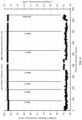
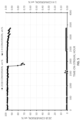
- Example 2 the catalyst life increased with the increase of duration of N 2 flow with an addition of a step and shorter duration (relative to Example 1) between the regenerations. As shown graphically in FIG. 4 , catalyst performance was maintained over time. Most of the regeneration steps occurred after no more than 200 hours of time on stream. TABLE 4.
- Feed and Product Stream Composition Composition 1 wt.% Feed Stream Product Stream 2 3-methyl-1-pentene 0.070 0.082 1-Hexene 98.662 98.626 2-Ethyl-1-butene 0.995 0.025 Hexane 0.003 0.031 Trans-3-hexene 0.019 0.020 Cis-3-hexene 0.007 0.005 Trans-2-hexene 0.086 0.100 Cis-3-methyl-2-pentene 0.061 0.360 Cis2-hexene 0.019 0.031 Trans-3-methyl-2-pentene 0.078 0.719 Conversions 2E1B 97.49% 1-H 1-H 0.04% 1 Feed contained 40-70 ppm water; 2 At time on stream 126.6 hours
- 1-Hexene feed was dried by using Nitrogen gas purging for 0.5 h.
- the catalytic test was started by flowing 1-hexene feed at about 0.1 mL/min, catalyst bed temperature was 45°C and inlet pressure was 1.5 psig.
- Table 5 shows feed and product stream (at time on stream 192 h) compositions. 2E1B and 1-H conversions were found to be 97.72% and 0.01%. 2E1B was mostly converted to cis- and trans-3-methyl-2-pentene.
- the air regeneration consisted of (a) stopping 1-hexene feed stream and passing N 2 gas to purge hydrocarbon for about an hour, (b) flowing air at 200 cm 3 /min and raising catalyst bed temperature (5 °C/min) to 110 °C and holding for 2 hours, (c) increasing temperature (1 °C/min) to 350 °C and holding for 5 hours.
- the catalyst bed temperature was cool down to room temperature and purge N 2 before catalytic testing.
- the air regeneration step was able to return the catalyst to the same performance level as fresh catalyst after catalyst performance began to degrade following repeated N 2 regeneration.
- Example 3 the catalyst life increased with frequent catalyst N 2 regeneration (relative to Example 1). As shown graphically in FIG. 5 , catalyst performance was maintained over time, with no appreciable drop in performance (with regular regeneration) for more than 2500 hours. Most of the regeneration steps occurred after no more than 200 hours of time on stream. Table 6 below provides the frequency and type of regeneration used at each regeneration step. TABLE 5.
- Regeneration Schedule Regeneration Type After Time on Stream N 2 regeneration 144 N 2 regeneration 288 N 2 regeneration 408 N 2 regeneration 504 N 2 regeneration 648 N 2 regeneration 768 N 2 regeneration 888 N 2 regeneration 1008 N 2 regeneration 1128 N 2 regeneration 1248 N 2 regeneration 1368 N 2 regeneration 1488 N 2 regeneration 1632 N 2 regeneration 1752 N 2 regeneration 1872 O 2 regeneration 1924 N 2 regeneration 2044 N 2 regeneration 2164 N 2 regeneration 2284 N 2 regeneration 2404 N 2 regeneration 2524 N 2 regeneration 2644 N 2 regeneration 2764 N 2 regeneration 2884 N 2 regeneration 3004 N 2 regeneration 3124 N 2 regeneration 3244 N 2 regeneration 3364
Landscapes
- Chemical & Material Sciences (AREA)
- Organic Chemistry (AREA)
- Chemical Kinetics & Catalysis (AREA)
- Engineering & Computer Science (AREA)
- Materials Engineering (AREA)
- Water Supply & Treatment (AREA)
- Analytical Chemistry (AREA)
- Oil, Petroleum & Natural Gas (AREA)
- Thermal Sciences (AREA)
- Physics & Mathematics (AREA)
- General Chemical & Material Sciences (AREA)
- Organic Low-Molecular-Weight Compounds And Preparation Thereof (AREA)
- Catalysts (AREA)
- Low-Molecular Organic Synthesis Reactions Using Catalysts (AREA)
Abstract
Description
- The present disclosure relates to methods for purifying a linear alpha olefin product stream from an oligomerization reaction.
- Linear olefins are a class of hydrocarbons useful as raw materials in the petrochemical industry and among these the linear alpha olefins, unbranched olefins whose double bond is located at a terminus of the chain, form an important subclass. Linear alpha olefins can be converted to linear primary alcohols by hydroformylation. Hydroformylation can also be used to prepare aldehydes, which in turn can be oxidized to afford synthetic fatty acids, especially those with an odd carbon number, useful in the production of lubricants. Linear alpha olefins are also used in the production of detergents, such as linear alkylbenzenesulfonates, which are prepared by Fiedel-Crafts reaction of benzene with linear olefins followed by sulfonation. Another important use of linear alpha olefins relates to production of linear low-density polyethylene (LLDPE) through catalytic co-polymerization with ethylene.
- Preparation of alpha olefins is based largely on oligomerization of ethylene, which has a corollary that the alpha-olefins produced have an even number of carbon atoms. Oligomerization processes for ethylene mainly utilize organoaluminum compounds or transition metals as catalysts. Oligomerization methods are typically carried out in the presence of a catalyst that includes a zirconium component, such as zirconium tetraisobutyrate, and an aluminum component as activator, such as ethyl aluminum sesquichloride. Typically, the effluent from the reactor used to produce the linear alpha olefins is directed to one or more distillation columns to separate the various fractions of linear alpha olefins.
- It is desirable to purify the alpha olefin products of oligomerization reactions to a very high purity level, such as a purity level of greater than 99.5 wt.%. Achieving such a high degree of purity can be challenging using conventional separation processes due to the presence of impurities with a boiling point very close to the boiling point of the target alpha olefin products. There remains a need in the art for improvements in separation processes for such products.
- Example implementations of the present disclosure are directed to processes for purifying a linear alpha olefin product stream that involve use of a modified alumina to isomerize 2-ethyl-1-butene to an isomer that is more easily removed from 1-hexene by distillation. In this manner, use of the modified alumina catalyst can improve separation efficiency of the distillation column and enable purification of the target linear alpha olefin to very high purity levels. The present disclosure also provides a catalytic process for selective isomerization of 2-ethyl-1-butene in a linear alpha olefin product stream that includes periodically regenerating the modified alumina catalyst using a non-oxidizing environment for a time period and at a temperature that enables continued use of the catalyst at peak performance levels.
- The present disclosure includes, without limitation, the following embodiments.
- Embodiment 1: A catalytic process for selective isomerization of 2-ethyl-1-butene in a linear alpha olefin product stream, comprising: feeding a linear alpha olefin product stream comprising at least one linear alpha olefin, such as 1-hexene, and 2-ethyl-1-butene to a reactor housing a modified alumina catalyst to isomerize at least a portion of the 2-ethyl-1-butene to cis- or trans-3-methyl-2-pentene, the period during which said feeding occurs being time on stream; withdrawing an effluent from the reactor containing less 2-ethyl-1-butene than the linear alpha olefin product stream; and periodically regenerating the modified alumina catalyst by stopping the feeding step and introducing a non-oxidizing environment to the reactor at time on stream intervals of no more than about 200 hours, wherein the reactor is subjected to the non-oxidizing environment for a time period of about 15 hours or greater and wherein the non-oxidizing environment has a temperature of about 250 °C or greater for at least a portion of the time period.
- Embodiment 2: The catalytic process of
Embodiment 1, wherein the non-oxidizing environment comprises a vacuum environment or an inert gas environment, such as nitrogen or a noble gas environment. - Embodiment 3: The catalytic process of
Embodiment - Embodiment 4: The catalytic process of any one of
Embodiments 1 to 3, wherein the first lower temperature stage comprises one or more of: passing the inert gas through the reactor at an inert gas temperature of about 150 °C or less; passing the inert gas through the reactor at an inert gas temperature of about 40 °C to about 150 °C; passing the inert gas through the reactor at multiple inert gas temperatures ranging from about 40 °C to about 150 °C, wherein the inert gas temperature is increased to each of the multiple inert gas temperatures at a rate of about 1 to about 5 °C/min; passing the inert gas through the reactor for a time period of about 4 hours or greater; and passing the inert gas through the reactor for a time period of about 2 to about 6 hours. - Embodiment 5: The catalytic process of any one of
Embodiments 1 to 4, wherein the second higher temperature stage comprises one or more of: passing the inert gas through the reactor at an inert gas temperature of about 300 °C or less; passing the inert gas through the reactor at an inert gas temperature of about 250 °C to about 300 °C; passing the inert gas through the reactor for a time period of about 14 hours or less; and passing the inert gas through the reactor for a time period of about 8 to about 12 hours. - Embodiment 6: The catalytic process of any one of
Embodiments 1 to 5, wherein the transition from the first lower temperature stage to the second higher temperature stage occurs at a rate of about 1 to about 5 °C/min. - Embodiment 7: The catalytic process of any one of
Embodiments 1 to 6, wherein the inert gas flow rate is about 120 to about 300 cm3/min. - Embodiment 8: The catalytic process of any one of
Embodiments 1 to 7, further comprising periodically regenerating the modified alumina catalyst by stopping the feeding step and introducing an oxidizing gas to the reactor. - Embodiment 9: The catalytic process of any one of
Embodiments 1 to 8, wherein the oxidizing gas comprises oxygen at a gas temperature of about 300 °C to about 450 °C, optionally introducing the oxidizing gas for a time period of 1 to 24 hours. - Embodiment 10: The catalytic process of any one of
Embodiments 1 to 9, wherein the modified alumina catalyst is capable of converting about 80 wt.% or greater of 2-ethyl-1-butene to cis- or trans-3-methyl-2-pentene at a pressure of about 0.1 - 10 barg, a temperature of about 40 - 100 °C, and a Liquid Hourly Space Velocity of about 0.5 - 10 h-1, and wherein about 3 wt.% or less of 1-hexene is converted to a different isomer under the same reaction conditions. - Embodiment 11: The catalytic process of any one of
Embodiments 1 to 10, further comprising feeding the effluent from the reactor to a distillation column to produce an overhead stream comprising the linear alpha olefin and a bottoms stream comprising cis- or trans-3-methyl-2-pentene. - Embodiment 12: The catalytic process of any one of
Embodiments 1 to 11, wherein the overhead stream comprises about 99.5 wt.% 1-hexene or greater and about 0.15 wt.% of 2-ethyl-1-butene or an isomer thereof or less. - Embodiment 13: The catalytic process of any one of
Embodiments 1 to 12, wherein the modified alumina catalyst has about 0.01 to about 0.5 mmol/g catalyst of Bronsted acid sites as determined by FTIR spectroscopy using pyridine as probe molecule. - Embodiment 14: The catalytic process of any one of
Embodiments 1 to 13, wherein the modified alumina catalyst has about 0.04 to about 0.2 mmol/g catalyst of Bronsted acid sites as determined by FTIR spectroscopy using pyridine as probe molecule. - Embodiment 15: A catalytic process for selective isomerization of 2-ethyl-1-butene in a linear alpha olefin product stream, comprising: feeding a linear alpha olefin product stream comprising at least one linear alpha olefin, such as 1-hexene, and 2-ethyl-1-butene to a reactor housing a modified alumina catalyst to isomerize at least a portion of the 2-ethyl-1-butene to cis- or trans-3-methyl-2-pentene; and withdrawing an effluent from the reactor containing less 2-ethyl-1-butene than the linear alpha olefin product stream, wherein the modified alumina catalyst has about 0.01 to about 0.5 mmol/g catalyst of Bronsted acid sites as determined by FTIR spectroscopy using pyridine as probe molecule, such as about 0.04 to about 0.2 mmol/g catalyst of Brønsted acid sites as determined by FTIR spectroscopy using pyridine as probe molecule.
- Embodiment 16: A catalytic reactor system for selective isomerization of 2-ethyl-1-butene in a linear alpha olefin product stream, comprising a catalytic reactor containing a bed of a modified alumina catalyst, wherein the modified alumina catalyst has about 0.01 to about 0.5 mmol/g catalyst of Brønsted acid sites as determined by FTIR spectroscopy using pyridine as probe molecule, such as about 0.04 to about 0.2 mmol/g catalyst of Brønsted acid sites as determined by FTIR spectroscopy using pyridine as probe molecule; the catalytic reactor in fluid communication with a source of alpha olefin product comprising at least one linear alpha olefin, such as 1-hexene, and 2-ethyl-1-butene. Optionally, the source of alpha olefin product is the effluent from an oligomerization reactor.
- These and other features, aspects, and advantages of the present disclosure will be apparent from a reading of the following detailed description together with the accompanying figures, which are briefly described below. The present disclosure includes any combination of two, three, four or more features or elements set forth in this disclosure, regardless of whether such features or elements are expressly combined or otherwise recited in a specific example implementation described herein. This disclosure is intended to be read holistically such that any separable features or elements of the disclosure, in any of its aspects and example implementations, should be viewed as combinable, unless the context of the disclosure clearly dictates otherwise.
- It will therefore be appreciated that this Brief Summary is provided merely for purposes of summarizing some example implementations so as to provide a basic understanding of some aspects of the disclosure. Accordingly, it will be appreciated that the above described example implementations are merely examples and should not be construed to narrow the scope or spirit of the disclosure in any way. Other example implementations, aspects and advantages will become apparent from the following detailed description taken in conjunction with the accompanying figures which illustrate, by way of example, the principles of some described example implementations.
- Having thus described aspects of the disclosure in the foregoing general terms, reference will now be made to the accompanying figures, which are not necessarily drawn to scale, and wherein:
-
FIG. 1 is a block diagram of an ethylene oligomerization system according to an example implementation of the present disclosure; -
FIG. 2 is block diagram of an example of a purification process of 1 -hexene according to an example implementation of the present disclosure; -
FIG. 3 graphically illustrates 1-hexene and 2E1B conversion rates over time during the experiment of Example 1; -
FIG. 4 graphically illustrates 1-hexene and 2E1B conversion rates over time during the experiment of Example 2; -
FIG. 5 graphically illustrates 1-hexene and 2E1B conversion rates over time during the experiment of Example 3; and -
FIG. 6 graphically illustrates the FTIR spectra for unmodified gamma alumina. - Some implementations of the present disclosure will now be described more fully hereinafter with reference to the accompanying figures, in which some, but not all implementations of the disclosure are shown. Indeed, various implementations of the disclosure may be embodied in many different forms and should not be construed as limited to the implementations set forth herein; rather, these example implementations are provided so that this disclosure will be thorough and complete, and will fully convey the scope of the disclosure to those skilled in the art. Like reference numerals refer to like elements throughout.
- Unless specified otherwise or clear from context, references to first, second or the like should not be construed to imply a particular order. A feature described as being above another feature (unless specified otherwise or clear from context) may instead be below, and vice versa; and similarly, features described as being to the left of another feature else may instead be to the right, and vice versa. Also, while reference may be made herein to quantitative measures, values, geometric relationships or the like, unless otherwise stated, any one or more if not all of these may be absolute or approximate to account for acceptable variations that may occur, such as those due to engineering tolerances or the like.
- All ranges disclosed herein are inclusive of the endpoints, and the endpoints are independently combinable with each other (e.g., ranges of "up to 25 wt. %, or, more specifically, 5 wt. % to 20 wt. %", is inclusive of the endpoints and all intermediate values of the ranges of "5 wt. % to 25 wt. %," etc.). "Combination" is inclusive of blends, mixtures, alloys, reaction products, and the like.
- The terms "about" or "approximately" are defined as being close to as understood by one of ordinary skill in the art. In one non-limiting embodiment, the terms are defined to be within 10%, preferably within 5%, more preferably within 1%, and most preferably within 0.5%.
- As used herein, unless specified otherwise or clear from context, the "or" of a set of operands is the "inclusive or" and thereby true if and only if one or more of the operands is true, as opposed to the "exclusive or" which is false when all of the operands are true. Thus, for example, "[A] or [B]" is true if [A] is true, or if [B] is true, or if both [A] and [B] are true. Further, the articles "a" and "an" mean "one or more," unless specified otherwise or clear from context to be directed to a singular form.
- The present disclosure provides a modified alumina catalyst having Bronsted acid sites that enable the catalyst to selectively isomerize 2-ethyl-1-butene to cis- or trans-3-methyl-2-pentene in the presence of 1-hexene in order to increase the purity level of 1-hexene produced by ethylene oligomerization. Without being bound by theory of operation, it is believed that the strength and density of Brønsted acid sites in the catalyst play an important role in the selective isomerization. In certain embodiments, the modified alumina catalyst is characterized by having 0.01 to about 0.5 mmol/g catalyst of Bronsted acid sites as determined by FTIR spectroscopy using pyridine as probe molecule.
- The present disclosure also provides a catalytic process for selective isomerization of 2-ethyl-1-butene in a linear alpha olefin product stream that includes periodically regenerating the modified alumina catalyst using a non-oxidizing environment for a time period and at a temperature that enables continued use of the catalyst at peak performance levels.
- Linear alpha olefins (LAOs) are olefins with a chemical formula CxH2x, distinguished from other mono-olefins with a similar molecular formula by linearity of the hydrocarbon chain and the position of the double bond at the primary or alpha position. Linear alpha olefins comprise a class of industrially important alpha-olefins, including 1-butene, 1-hexene, 1-octene, 1-decene, 1-dodecene, 1-tetradecene, 1-hexadecene, 1-octadecene, and higher blends of C20-C24, C24-C30, and C20-C30 olefins. Linear alpha olefins are useful intermediates for the manufacture of detergents, synthetic lubricants, copolymers, plasticizers, and many other important products.
- Existing processes for the production of linear alpha olefins typically rely on the oligomerization of ethylene. For example, linear alpha olefins can be prepared by the catalytic oligomerization of ethylene in the presence of a Ziegler-Natta-type catalyst or non-Ziegler-Natta-type catalyst.
- Oligomerization can occur at temperatures of 10 to 200° C, for example, 20 to 100° C, for example, 50 to 90° C, for example, 55 to 80° C, for example, 60 to 70° C. Operating pressures can be 1 to 5 MegaPascals (MPa), for example, 2 to 4 MPa. The process can be continuous and mean residence times can be 10 minutes to 20 hours, for example 30 minutes to 4 hours, for example, 1 to 2 hours. Residence times can be chosen so as to achieve the desired conversion at high selectivity.
- The process can be conducted in solution using an inert solvent, which is advantageously non-reactive with the catalyst composition. Examples of desirable organic solvents can include, but are not limited to, aromatic hydrocarbon solvents which can be unsubstituted or substituted with halogens, for example, toluene, benzene, xylene, monochlorobenzene, dichlorobenzene, chlorotoluene; aliphatic paraffin hydrocarbons, for example, pentane, hexane, heptane, octane, nonane, decane; alicyclic hydrocarbon compounds, for example, cyclohexane, decahydronaphthalene; and halogenated alkanes, for example, dichloroethane and dichlorobutane.
- The process can be carried out in any reactor, such as a loop reactor, a plug-flow reactor, or a bubble column reactor. Oligomerization of ethylene is an exothermic reaction that can be cooled by a surplus flow of ethylene. The gases leaving at a top portion of the reactor can be cooled using a series of external coolers and condensers. The gas phase, after further cooling, can be recycled.
- A bottom stream leaving the oligomerization reactor from a bottom portion can contain the active catalyst and unreacted ethylene. The reaction can be terminated to avoid undesirable side reactions by removing catalyst components from the organic phase through extraction with a caustic aqueous phase. Contact with the caustic aqueous phase can result in formation of nonreactive minerals corresponding to the catalyst components.
- The organic phase, after passage through the catalyst removal system, can pass through a molecular sieve absorption bed and can then be fed to a distillation column to recover dissolved ethylene. Recovered ethylene can be recycled via an ethylene recycle loop while the product is fed to an intermediate vessel, after which the product can be fed to a separation section. In certain embodiments, the linear alpha olefins produced from the reactor can be directed into a separation train.
- As illustrated in
FIG. 1 , thesystem 10 can include areactor 12, a toluene (or other solvent)source 14, and aseparation train 16. In normal production mode,reactants 18, such as ethylene, solvent, and a catalyst can be fed into thereactor 12 to produce linear alpha olefins and various impurities such as branched olefins and polymeric material. After the reaction, adischarge stream 20 can be directed into theseparation train 16, wherein the discharge stream can include unreacted reactants, the produced linear alpha olefins, such as C4-C20+ olefins, solvent, catalyst, and various impurities. Theseparation train 16 can be configured to separate the linear alpha olefins from the solvent, catalyst, various impurities, and any unreacted ethylene. Theseparation train 16 can separate each linear alpha olefin, for example, yielding a C4 stream, C6 stream, Cs stream, and so on. Theseparation train 16 can also separate the linear alpha olefins into certain fractions, such as C4-C10 fraction, C11-C17 fraction, C18-C20 fraction, C20+ fractions, or any other desired fraction. - The linear alpha olefin product can be isolated using procedures including aqueous caustic catalyst quench followed by water washing and final product recovery by distillation. For example, the liquid product including the solvent (e.g., toluene) with the dissolved ethylene can be fed to the
separation train 16 as noted above. In a first column, the unconsumed ethylene can be separated from the linear alpha olefin product and the solvent. The ethylene can be recycled back to the reactor. The heavier fractions can be routed to the subsequent separation section where the heavier fractions can be divided into the different linear alpha olefin fractions (e.g., Cs, C10, >C12). The solvent can be recovered and also recycled back to the reactor. - Polymer fouling within the reactor can occur during the oligomerization reaction process. Such fouling is typically detected by, for example, reduced effluent flow rates, reduced internal condenser performance, increased differential pressure at various locations within the reactor, and the like. Such fouling can be treated by flushing the reactor with toluene or another solvent to remove polymeric material by-product. The flushed toluene comprising the polymeric material can be directed into a separation train comprising the linear alpha olefin reaction products. The polymeric material is soluble in at least one of the linear alpha olefins, such that the flushed toluene can exit the separation train essentially free of the polymeric material and can be recycled back to the toluene source for subsequent flushing of the reactor.
- If the desired alpha olefin product in an ethylene oligomerization product stream is 1-hexene having a boiling point of 63.48 °C, one example of a problematic impurity is 2-ethyl-1-butene, which has a boiling point of 64.67 °C. See, for example, a typical 1-hexene product stream composition set forth in Table 1 below.
TABLE 1 Component B.P., °C 1-Hexene Isomers, wt.% 2-Ethyl-1-Butene 63.4 0.763 3-methyl-1 -Pentene 54.0 0.00216 n-Hexane 68.73 0.133 Trans-3-Hexene 67 0.049 Cis-3-Hexene 67 0.017 Trans-2-Hexene 67.9 0.261 Cis-2-Hexene 67.9 0.347 Trans 3-Methyl 2-Pentene 67-68 0.00438 Cis 3-Methyl 2-Pentene 67-68 0.00354 1-Hexene 63.85 - However, 2-ethyl-1-butene can be converted to a higher boiling point isomer such as cis-/trans-3-methyl-2-pentene using an isomerization catalyst. This equilibrium limited reaction is shown below:

- According to the present disclosure, in certain embodiments, the
separation train 16 ofFIG. 1 will include at least one isomerization reactor and at least one distillation column. One example purification system is shown inFIG. 2 . As shown,system 100 can include areactor 110 and aseparation unit 112. Afirst stream 101 containing 1-hexene and 2-ethyl-1-butene can be fed to thereactor 110. In thereactor 110, thefirst stream 101 can be contacted with an isomerization catalyst to form asecond stream 102 containing 1-hexene and 3-methyl-2-pentene. Thesecond stream 102 is typically fed to aseparation unit 112. In theseparation unit 112, the second stream can be separated to form a third stream containing 1-hexene and a fourth stream containing the 3-methyl-2-pentene. - The feed stream to the
reactor 110 can vary in composition, but is typically at least 96 wt.% or at least 98 wt.% 1-hexene (e.g., about 96 wt.% to about 98.5 wt.% or about 98 wt.% to about 98.5 wt.%) and at least 0.5 wt.% or at least 0.8 wt.% 2-ethyl-1-butene (e.g., about 0.5 wt.% to about 1.5 wt.% or about 0.8 wt.% to about 1.2 wt.%). - The
reactor 110 can be any suitable reactor, including, but not limited to, a fixed bed reactor, moving bed reactor, trickle bed reactor, rotating bed reactor, slurry reactor, or fluidized bed reactor. In certain embodiments, thereactor 110 can be a fixed bed reactor, and can include a stationary bed containing the isomerization catalyst such that thefirst stream 101 can be passed through and/or over the stationary bed. In thereactor 110,stream 101 can be contacted with the isomerization catalyst to selectively isomerize 2-ethyl-1-butene in the first stream into 3-methyl-2-pentene. - The
first stream 101 can be contacted with the isomerization catalyst at, for example, i) a temperature of 40 °C to 100 °C, or 40 °C to 60 °C, or at least any one of, equal to any one of, or between any two of 40, 42, 44, 46, 48, 50, 52, 54, 56, 58, 60, 65, 70, 75, 80, 85, 90, 95 and 100 °C; ii) a pressure of 0.1 barg to 10 barg or at least any one of, equal to any one of, or between any two of 0.1, 0.2, 0.3, 0.4, 0.5, 1, 2, 3, 4, 5, 6, 7, 8, 9 and 10 barg; and/or iii) a liquid hourly space velocity (LHSV) of 0.5 h-1 to 10 hr-1, or at least any one of, equal to any one of, or between any two of 0.5, 1, 2, 3, 4, 5, 6, 7, 8, 9 and 10 hr-1 or any combinations thereof. - The 2-ethyl-1-butene conversion for the isomerization reaction can be 50 % to 100 % by weight, such as 70 % to 100 %, or 80 % to 99.9 %, or at least any one of, equal to any one of, or between any two of 50, 55, 60, 65, 70, 75, 80, 85, 90, 95, 96, 97, 97.5, 97.6, 97.8, 98, 98.5, 99, 99.5, 99.7, 99.8, 99.9 and 100 %. The total selectivity for 3-methyl-2-pentene for the isomerization reaction can be 50 % to 100 % by weight, or at least any one of, equal to any one of, or between any two of 50, 55, 60, 65, 70, 75, 80, 85, 90, 95, 99 and 100 % by weight. 1-Hexene conversion during the isomerization reaction can be less than 10 % by weight, or less than 5 %, or less than 3 %, or less than 2.5 %, or less than 2.0%, or less than 1.5 %, or less than 1.0 %, or less than 0.5 %, such as 0.5 % to 10 %, or less than, equal to any one of, or between any two of 0.5, 1, 1.5, 2, 3, 4, 5, 6, 7, 8, 9, and 10 % by weight.
- The type of distillation column (e.g., separation unit 112) may vary, with examples including columns with bubble cap trays, valve trays, or sieve trays. Use of an isomerization catalyst as contemplated in this disclosure can reduce the number of stages that might otherwise be required to achieve very high degrees of purity for certain linear alpha olefins, such as 1-hexene. For example, in certain embodiments, the number of distillation stages required to achieve a high degree of linear alpha olefin purity (e.g., a purity of about 99.5 wt.% or greater) is about 150 stages or less or about 120 stages or less (e.g., about 80 to about 150 stages).
- The
second stream 102 can be separated by distillation in the distillation column to form thethird stream 103 containing 1-hexene and thefourth stream 104 containing 3-methyl-2-pentene. The distillation column operation conditions for separation of thesecond stream 102 can include i) a temperature of 50 °C to 100 °C, or 55 °C to 75 °C, or at least any one of, equal to any one of, or between any two of 50, 55, 60, 65, 70, 75, 80, 85, 90, 95 and 100 °C; and/or ii) a pressure of 0 barg to 3 barg, or at least any one of, equal to any one of, or between any two of 0, 0.01, 0.1, 0.5, 1, 1.5, 2, 2.5 and 3 barg. The boiling points of cis and trans 3-methyl-2-pentene, are different enough from 1-hexene, such that through distillation of the second stream, 3-methyl-2-pentene can be separated from 1-hexane. In certain embodiments, thethird stream 103 can be formed as the top distillate of the distillation column and thefourth stream 104 can be formed as the bottom distillate of the distillation column. - Alternatively, instead of using a catalyst bed upstream of a distillation column as shown in
FIG. 2 , external side reactors containing the catalyst can be positioned to receive a feed stream from a stage of the distillation column and the effluent from the side reactor can be fed back to a stage of the distillation column. One or more side reactors can be operated, for example, as either plug flow reactors (otherwise known as tubular reactors) or continuous stirred-tank reactors (CSTR), and can be operated at temperatures and pressures that are independent of the distillation column operating temperature and pressure. The 1-hexene feed containing impurities can be fed to a tubular reactor in either upflow or downflow mode. - The isomerization catalyst can selectively isomerize 2-ethyl-1-butene, in the presence of 1-hexene (and hexane and other isomer(s) of 1-hexene, if present), to form 3-methyl-2-pentene. In some embodiments, the catalyst material is an activated alumina material, such as high bulk density gamma-alumina, low or medium bulk density large pore gamma-alumina, and low bulk density large pore boehmite and gamma-alumina.
- High surface area alumina materials, also sometimes referred to as "gamma alumina" or "activated alumina," typically exhibit a BET surface area in excess of 60 m2/g, often up to about 200 m2/g or higher. Such activated alumina is usually a mixture of the gamma and delta phases of alumina, but may also contain substantial amounts of eta, kappa and theta alumina phases. "BET surface area" has its usual meaning of referring to the Brunauer, Emmett, Teller method for determining surface area by N2 adsorption.
- In certain embodiments, the alumina material has i) a BET surface area of 200 m2/g to 550 m2/g or at least any one of, equal to any one of, or between any two of 200, 210, 220, 230, 240, 250, 260, 270, 280, 290, 300, 310, 320, 330, 340, 350, 360, 370, 380, 390, 400, 410, 420, 430, 440, 450, 460, 470, 480, 490, 500, 510, 520, 530, 540 and 550 m2/g; ii) an average particle size of 1 mm to 8 mm or at least any one of, equal to any one of, or between any two of 1 , 2, 3, 4, 5, 6, 7 and 8 mm; and/or iii) an average crush strength of 0.5 to 40 kg, or at least any one of, equal to any one of, or between any two of 0.5, 1, 5, 10, 15, 20, 25, 30, 35 and 40 kg, or any combination thereof.
- Certain useful alumina materials are commercially available as alumina materials chemically modified to increase the presence of acidic functional groups. A "modified alumina" as used herein refers to an alumina material chemically modified to enhance the acid functionality of the alumina. A non-limiting example of a commercially available modified alumina is SELEXSORB® CD available from BASF Corporation. Further, there are known processes for preparing γ-Al2O3 with rich Brønsted acid sites and reduced Lewis acid sites using a sol-gel method with NH4BF4 as a modifier. See J. Phys. .
- The alumina material utilized in the present disclosure is characterized by the presence of sufficient Brønsted acid sites for adsorption and isomerization of 2-ethyl-1-butene. For example, in certain embodiments, the alumina material will have at least 0.01 mmol/g catalyst of Brønsted acid sites (e.g., at least 0.02 or at least 0.03 or at least 0.04 mmol/g), but typically less than 0.5 mmol/g catalyst of Brønsted acid sites (e.g., less than 0.4 or less than 0.3 or less than 0.2 or less than 0.1 or less than 0.09 mmol/g). If the catalyst contains a high density of Brønsted acid sites, the catalyst is more prone to non-selective isomerization, which could result in undesirable 1-hexene conversion. Concentration of Brønsted acid sites can be measured by FTIR spectroscopy using pyridine as probe molecule, as set forth in the Experimental. The nature of the Bronsted acid sites of the modified alumina catalyst is that they are weak in strength, that is, the pyridine probe molecules held by the Bronsted sites can be desorbed under vacuum at about or above 150 °C.
- As noted above, in certain embodiments, the isomerization catalyst can be characterized based on how much of the undesirable first isomer is converted to the second isomer. For example, in certain embodiments, the isomerization catalyst is capable of converting about 80 wt.% or greater of 2-ethyl-1-butene (e.g., about 85 wt.% or greater or about 90 wt.% or greater or about 95 wt.% or greater) to the second isomer in about 1 hour at a pressure of about 0.1-10 barg, a temperature of about 40 - 100 °C, and a Liquid Hourly Space Velocity of about 0.5 - 10.0 h-1. In some embodiments, about 3 wt.% or less of 1-hexene (e.g., about 2 wt.% or less or about 1 wt.% or less) is converted to a different isomer under the same reaction conditions noted above
- Use of an isomerization catalyst as contemplated herein can enable purification of 1-hexene or other linear alpha olefins to a purity of about 99.5 wt.% or greater in the distillation column overhead stream. In certain embodiments, the overhead product stream from the distillation column is characterized by very low impurity content, such as about 0.3 wt.% or less, or about 0.2 wt.% or less, or about 0.15 wt.% or less of branched olefins, such as 2-ethyl-1-butene. Where the target linear alpha olefin is 1-hexene, in certain embodiments, the overhead product stream is also characterized by very low n-hexane content, such as about 200 ppm or less or about 150 ppm or less n-hexane.
- It has been surprisingly discovered that periodically regenerating the modified alumina catalyst as set forth herein can lead to strong catalyst performance that, in certain embodiments, is sustainable over thousands of hours. Typically, the regenerating process will involve stopping the linear alpha olefin product stream feed to the catalytic reactor and introducing a non-oxidizing environment to the reactor at time on stream intervals of no more than about 200 hours. In certain embodiments, the reactor is subjected to the non-oxidizing environment for a time period of about 15 hours or greater and the non-oxidizing environment has a temperature of about 250 °C or greater for at least a portion of the time period. As set forth in the Experimental below, such a regeneration process can be used repeatedly to return the catalyst to the same performance level as fresh catalyst.
- The time interval between regeneration steps can vary, and will depend in part on the moisture level in the feed stream. Higher levels of moisture in the feed will often necessitate shorter intervals between regeneration processes. For example, a low moisture feed having less than about 10 ppm water could enable longer intervals between regeneration steps, such as greater than about 120, or greater than about 140, or greater than about 160, or greater than about 180 hours as the interval period (e.g., about 150 to about 300 hours or even higher). Conversely, higher levels of moisture in the feed (e.g., about 30 ppm or higher such as about 30 to about 80 ppm) may lead to shorter intervals, such as less than about 150 hours, or less than about 130 hours, or less than about 110 hours, or less than about 100 hours (e.g., about 80 to about 150 hours).
- The non-oxidizing environment is typically any environment that is inert to the modified alumina catalyst. Examples include a vacuum environment or an inert gas environment, such as nitrogen or a noble gas environment. The non-oxidizing environment will be substantially or completely free of oxygen.
- In certain embodiments, the regeneration process utilizing the non-oxidizing environment will be conducted in sequential stages. For example, the regeneration process can include a first lower temperature stage that comprises passing an inert gas through the reactor at an inert gas temperature of about 200 °C or less for a time period of about 2 hours or greater. This lower temperature regeneration step is useful to purge water and any residual physisorbed hydrocarbons from the catalyst bed.
- In certain embodiments, the lower temperature stage can include passing the inert gas through the reactor at an inert gas temperature of about 150 °C or less, such as about 40 °C to about 150 °C. The lower temperature stage itself may contain multiple stages at different temperatures, such as two or three temperature levels within the above-noted temperature range. The total regeneration time for the lower temperature stage can vary, but is typically about 4 hours or greater. In certain embodiments, the total regeneration time for the lower temperature stage is about 2 to about 6 hours or about 4 to about 6 hours. Higher temperatures usually enable shorter time periods for this regeneration step. Accordingly, one of skill can elect to use lower temperatures combined with longer time periods or opt for higher temperatures and shorter time periods within the ranges noted above. The inert gas flow rate during this stage is typically about 120 to about 300 cm3/min, such as about 150 to about 250 cm3/min.
- In certain embodiments, the regeneration process can include a second higher temperature stage, such as a stage that comprises passing the inert gas through the reactor at an inert gas temperature of about 250 °C or greater for a time period of about 8 hours or greater. This higher temperature step can advantageously provide further removal of adsorbed compounds on the Bronsted acid sites.
- In certain embodiments, the higher temperature stage can include passing the inert gas through the reactor at an inert gas temperature of about 300 °C or less, such as an inert gas temperature of about 250 °C to about 300 °C. The higher temperature stage itself may contain multiple stages at different temperatures, such as two or three temperature levels within the above-noted temperature range. The total regeneration time for the higher temperature stage can vary, but is typically about 14 hours or less. In certain embodiments, the total regeneration time for the lower temperature stage is about 8 to about 14 hours or about 10 to about 12 hours. Higher temperatures usually enable shorter time periods for this regeneration step. Accordingly, one of skill can elect to use lower temperatures combined with longer time periods or opt for higher temperatures and shorter time periods within the ranges noted above. The inert gas flow rate during this stage is typically about 120 to about 300 cm3/min, such as about 150 to about 250 cm3/min.
- The non-oxidizing environment may be insufficient to fully regenerate the catalyst after a certain number of hours on stream due to build-up of carbon/coke on the catalyst surface. Accordingly, in certain embodiments, the regeneration process further includes periodically introducing an oxidizing gas to the reactor, such as air or purified oxygen. In certain embodiments, oxidizing gas is introduced at a gas temperature of about 300 °C to about 450 °C for a time period of 1 hour to 24 hours or longer (e.g., at least 1 hour or longer or at least 10 hours or longer or at least 15 hours or longer or at least 20 hours or longer). The regeneration time to remove carbonaceous species is dependent on the temperature and concentration of oxygen. The regeneration under oxidative environment can be applied when the regeneration under non-oxidative environment is not improving the catalyst performance comparable to fresh catalyst. That is, in a plant operation, such oxidative regeneration can be applied when the catalyst performance after non-oxidative regeneration declines quickly to a predetermined threshold level of performance, such as defined by conversion selectivity or cycle length.
- It is advantageous to avoid subjecting the catalyst material to abrupt temperature changes during the regeneration process, which could lead to degradation of the catalyst structure. Thus, when it is desired to change the regeneration temperature, such changes are typically achieved using relatively small rates of temperature change, such as temperature increases or decreases at a rate of about 1 to about 5 °C/min.
- The following examples utilize Selexsorb® CD catalyst commercially available from BASF Corporation. Table 2 below provides certain characteristics of the catalyst material.
TABLE 2 Commercial Name Selexsorb® CD Chemical Composition (wt.%) Al2O3 95.1% (plus proprietary modifier) LOI (250-1100 °C) 4.5% Surface Area, m2/g 420 Crush Strength, lb (kg) 10 (5) Bulk Density, lbs/ft3 (kg/m3) 43 (689) Acidity1 Bronsted acid site 0.12 mmol/g catalyst Lewis acid site 0.80 mmol/g catalyst 1Measured by FTIR spectroscopy using pyridine as probe molecule - The FTIR spectroscopy measurement process used was as follows. The alumina catalyst was ground into fine powder and pressed (under 10 ton pressure) into a self-supported thin wafer of 0.65 cm diameter (having a surface area of 1.33 cm2) and a weight of 0.02 g (i.e., 0.015 g/cm2). The sample wafer was heated to a maximum of 280 °C under vacuum or flow of N2 (depending on fresh or spent catalyst) for 4 to 24 h. The catalyst wafer was cooled and exposed to pyridine vapor at 100 °C for 30 min and then desorbed at 100 °C under vacuum. Infrared spectra of pretreated and pyridine adsorbed sample were recorded at room temperature as an average of 16 runs at 4 cm-2 resolution using Perkin-Elmer Spectrum One FTIR Spectrometer.
- To determine acid sites, the Beer-Lambert-Bouguer law was applied in the form of

- Selexsorb® CD catalyst (size 1.4-1.7 mm, full sphere, 17.56 g, 25 cm3) was loaded in 1-inch OD stainless steel tubular reactor, and glass inserts were added at both ends of the catalyst bed. Catalyst was dried under N2 flow (170 cm3/min) at 45°C for 2 h, then heating at 5°C/min to 150°C and held for 2 h, then heating at 5°C/min to 280°C and held for 12 h. The catalyst bed temperature was cool down to 45°C and N2 flow was stopped for introduction of feed to the reactor.
- 1-Hexene feed was dried by using Molecular Sieve 4A. The catalytic test was started by flowing 1-hexene feed at about 0.4 mL/min (feed rates varied at the start up, rates are shown in
FIG. 3 ), catalyst bed temperature was 45°C and inlet pressure was 1.5 psig. - Table 3 below shows feed and product stream (at time on stream 56.3 h) compositions. 2E1B and 1-H conversions were found to be 98.73% and 0.09%. 2E1B was mostly converted to cis- and trans-3-methyl-2-pentene.
- 2E1B conversion decreased with time on stream. The catalyst was regenerated by first purging the catalyst bed flowing N2 (170 cm3/min) at 45 °C for 2 h, then heating at 5°C/min to 150 °C and held for 2 h, then heating at 5°C/min to 280 °C and held for 12 h before cooling to 45 °C for re-introduction of feed to the reactor. Total regeneration time was 16 hours with three temperature steps under N2 flow of 170 cm3/min.
- The regeneration process was repeated periodically as catalyst performance declined. Most of the regeneration steps in this example occurred after 300 hours of time on stream. As shown graphically in
FIG. 3 , catalyst performance declined over time and the periodic regeneration process was unable to return the catalyst to its original performance level.TABLE 3. Feed and Product Stream Composition Composition1 wt.% Feed Stream Product Stream2 3-methyl-1-pentene 0.019 0.005 1-Hexene (1-H) 98.370 98.281 2-Ethyl-1-butene (2E1B) 1.026 0.013 Hexane 0.045 0.123 Trans-3-hexene 0.028 0.037 Cis-3-hexene 0.010 0.015 Trans-2-hexene 0.212 0.238 Cis-3-methyl-2-pentene 0.009 0.318 Cis-2-hexene 0.275 0.332 Trans-3-methyl-2-pentene 0.006 0.638 Conversions 2E1B 98.73% 1-H 0.09% 1Feed contained 60-70 ppm water; 2At time on stream 56.3 hours - The experiment of Example 1 was repeated with a slightly different catalyst loading (Selexsorb® CD; 24.34 g; 36 cm3) and using the same catalyst drying process of Example 1.
- Compared to catalyst regeneration in Example 1, a longer duration of N2 flow with an addition of a step was used in Example 2. The catalyst was regenerated by first purging the catalyst bed by flowing N2 (170 cm3/min) at 45 °C for 2 h, then heating at 5 °C/min to 60 °C and held for 12 h, then heating at 5 °C/min to 150 °C and held for 4 h, then heating at 5 °C/min to 280°C and held for 12 h before cooling to 45 °C for re-introduction of feed to the reactor. Total regeneration time was about 30 hours with four temperature steps under N2 flow of 170 cm3/min.
- Table 4 below shows feed and product stream (at time on stream 126.6 h) compositions. 2E1B and 1-H conversions were found to be 97.47% and 0.04%. 2E1B was mostly converted to cis- and trans-3-methyl-2-pentene.
- In Example 2, the catalyst life increased with the increase of duration of N2 flow with an addition of a step and shorter duration (relative to Example 1) between the regenerations. As shown graphically in
FIG. 4 , catalyst performance was maintained over time. Most of the regeneration steps occurred after no more than 200 hours of time on stream.TABLE 4. Feed and Product Stream Composition Composition1 wt.% Feed Stream Product Stream2 3-methyl-1-pentene 0.070 0.082 1-Hexene 98.662 98.626 2-Ethyl-1-butene 0.995 0.025 Hexane 0.003 0.031 Trans-3-hexene 0.019 0.020 Cis-3-hexene 0.007 0.005 Trans-2-hexene 0.086 0.100 Cis-3-methyl-2-pentene 0.061 0.360 Cis2-hexene 0.019 0.031 Trans-3-methyl-2-pentene 0.078 0.719 Conversions 2E1B 97.49% 1-H 1-H 0.04% 1Feed contained 40-70 ppm water; 2At time on stream 126.6 hours - Selexsorb® CD catalyst (size 2.8-3.2 mm, full sphere, 6.1 g, 9 cm3) was loaded in 0.5-inch OD stainless steel tubular reactor, and glass inserts were added at both ends of the catalyst bed. Catalyst was dried under N2 flow (200 cm3/min) at 45 °C for 2 h, then heating at 2 °C/min to 150 °C and held for 2 h, then heating at 2°C/min to 280 °C and held for 12 h. The catalyst bed temperature was cool down to 45°C and N2 flow was stopped for introduction of feed to the reactor.
- 1-Hexene feed was dried by using Nitrogen gas purging for 0.5 h. The catalytic test was started by flowing 1-hexene feed at about 0.1 mL/min, catalyst bed temperature was 45°C and inlet pressure was 1.5 psig. Table 5 below shows feed and product stream (at time on stream 192 h) compositions. 2E1B and 1-H conversions were found to be 97.72% and 0.01%. 2E1B was mostly converted to cis- and trans-3-methyl-2-pentene.
- 2-Ethyl 1-butene conversion decreased with time on stream. The catalyst was periodically regenerated by first purging the catalyst bed flowing N2 (200 cm3/min) at 45 °C for 2 h, then heating at 2 °C/min to 150°C and held for 2 h, then heating at 2 °C/min to 280 °C and held for 12 h before cooling to 45 °C for re-introduction of feed to the reactor. Total N2 regeneration time was about 16 hours with three temperature steps under N2 flow of 200 cm3/min. The catalyst was also subjected to an air regeneration step once during the experiment at the 1924 hour mark. The air regeneration consisted of (a) stopping 1-hexene feed stream and passing N2 gas to purge hydrocarbon for about an hour, (b) flowing air at 200 cm3/min and raising catalyst bed temperature (5 °C/min) to 110 °C and holding for 2 hours, (c) increasing temperature (1 °C/min) to 350 °C and holding for 5 hours. The catalyst bed temperature was cool down to room temperature and purge N2 before catalytic testing. The air regeneration step was able to return the catalyst to the same performance level as fresh catalyst after catalyst performance began to degrade following repeated N2 regeneration.
- In Example 3, the catalyst life increased with frequent catalyst N2 regeneration (relative to Example 1). As shown graphically in
FIG. 5 , catalyst performance was maintained over time, with no appreciable drop in performance (with regular regeneration) for more than 2500 hours. Most of the regeneration steps occurred after no more than 200 hours of time on stream. Table 6 below provides the frequency and type of regeneration used at each regeneration step.TABLE 5. Feed and Product Stream Composition Composition1 wt.% Feed Stream Product Stream2 3-methyl-1-pentene 0.05 0.072 1-Hexene 98.3 98.29 2-Ethyl-1-butene 0.922 0.021 Hexane 0.003 0.011 Trans-3-hexene 0.019 0.02 Cis-3-hexene 0.007 0.01 Trans-2-hexene 0.16 0.15 Cis-3-methyl-2-pentene 0.046 0.701 Cis2-hexene 0.019 0.02 Composition1 wt.% Trans-3-methyl-2-pentene 0.48 0.705 Conversions 2E1B 97.72% 1-H 0.01% 1Feed contained 55-70 ppm water; 2At time on stream 192 hours TABLE 6. Regeneration Schedule Regeneration Type After Time on Stream N2 regeneration 144 N2 regeneration 288 N2 regeneration 408 N2 regeneration 504 N2 regeneration 648 N2 regeneration 768 N2 regeneration 888 N2 regeneration 1008 N2 regeneration 1128 N2 regeneration 1248 N2 regeneration 1368 N2 regeneration 1488 N2 regeneration 1632 N2 regeneration 1752 N2 regeneration 1872 O2 regeneration 1924 N2 regeneration 2044 N2 regeneration 2164 N2 regeneration 2284 N2 regeneration 2404 N2 regeneration 2524 N2 regeneration 2644 N2 regeneration 2764 N2 regeneration 2884 N2 regeneration 3004 N2 regeneration 3124 N2 regeneration 3244 N2 regeneration 3364 - In a separate experiment, a fresh sample of Selexsorb® CD was analyzed using FTIR spectroscopy using pyridine as probe molecule to measure Bronsted and Lewis acid sites. Spent catalyst from Example 2, after catalytic testing for about 850 hours with frequent N2 regeneration at 280 °C, was also subjected to the same acid site analysis as a comparison. The results are set forth in Table 7 below. Each sample was pretreated as indicated in Table 7 prior to analysis. As shown, the longer N2 treatment of the spent catalyst was able to recover the Bronsted acid sites, which is consistent with the results set forth in Examples 1-3.
TABLE 7 Catalyst and Pretreatment Condition Bronsted acid site, µmol/g Lewis acid site, µmol/g Total acid site, µmol/g Selexsorb® CD fresh (under vacuum, 70° C 4 h, 150°C 4 h, 280°C 4h)122 795 917 Selexsorb® CD Spent (under vacuum, 70 ° C 4 h, 150 °C 4 h, 280°C 4h)31 506 537 Selexsorb® CD Spent (under N2 flow, 70 ° C 4 h, 150 °C 4 h, 280 °C 24h)146 509 655 - The experiment of Example 1 was repeated using different alumina catalysts: Selexsorb® CDL available from BASF Corporation and Actisorb® 100-1 available from Clariant Ltd. Unlike Selexsorb® CD, neither of these adsorbents are believed to have Bronsted acid sites within the ranges set forth in the present disclosure.
- Selexsorb® CDL and Actisorb® 100-1 were catalytically tested using the same catalyst pretreatment and test conditions as described in Example 1. The results are provided in Table 8 below. A shown, neither alumina-based catalyst was able to convert a significant amount of 2E1B to cis- and trans-3-methyl-2-pentene.
TABLE 8 Selexsorb® CDL Actisorb® 100-1 Hours on stream % 2E1B Conv. % 1-H Conv. Hours on stream % 2E1B Conv. % 1-H Conv. 0.72 21.6 0 0.74 6.12 0.3 1.45 17.5 0 1.47 1.42 0 2.17 16.2 0 2.21 1.06 0 2.91 17.2 0 2.94 1.46 0 - An unmodified gamma alumina was analyzed using FTIR spectroscopy using pyridine as probe molecule to measure Bronsted and Lewis acid sites as described above. The FTIR spectrum is set forth in
FIG. 6 , and shows a peak at 1450 cm-1 (Lewis acid site), but no peak at around 1545 cm-1 (characteristic peak for Bronsted acid site). This is consistent with the belief that the presence of Bronsted acid sites is important for strong 2E1B conversion performance. - In general, the invention may alternately comprise, consist of, or consist essentially of, any appropriate components herein disclosed. The invention may additionally, or alternatively, be formulated so as to be devoid, or substantially free, of any components, materials, ingredients, adjuvants or species used in the prior art compositions or that are otherwise not necessary to the achievement of the function and/or objectives of the present invention.
- Many modifications and other implementations of the disclosure will come to mind to one skilled in the art to which this disclosure pertains having the benefit of the teachings presented in the foregoing descriptions and the associated figures. Therefore, it is to be understood that the disclosure is not to be limited to the specific implementations disclosed herein and that modifications and other implementations are intended to be included within the scope of the appended claims. Although specific terms are employed herein, they are used in a generic and descriptive sense only and not for purposes of limitation.
Claims (14)
- A catalytic process for selective isomerization of 2-ethyl-1-butene in a linear alpha olefin product stream, comprising:feeding a linear alpha olefin product stream comprising at least one linear alpha olefin, such as 1-hexene, and 2-ethyl-1-butene to a reactor housing a modified alumina catalyst to isomerize at least a portion of the 2-ethyl-1-butene to cis- or trans-3-methyl-2-pentene, the period during which said feeding occurs being time on stream;withdrawing an effluent from the reactor containing less 2-ethyl-1-butene than the linear alpha olefin product stream; andperiodically regenerating the modified alumina catalyst by stopping the feeding step and introducing a non-oxidizing environment to the reactor at time on stream intervals of no more than about 200 hours, wherein the reactor is subjected to the non-oxidizing environment for a time period of about 15 hours or greater and wherein the non-oxidizing environment has a temperature of about 250 °C or greater for at least a portion of the time period.
- The catalytic process of claim 1, wherein the non-oxidizing environment comprises a vacuum environment or an inert gas environment, such as nitrogen or a noble gas environment.
- The catalytic process of claim 1 or 2, wherein the regenerating comprises passing an inert gas through the reactor in two sequential stages comprising i) a first lower temperature stage comprising passing the inert gas through the reactor at an inert gas temperature of about 200 °C or less for a time period of about 2 hours or greater; and ii) a second higher temperature stage comprising passing the inert gas through the reactor at an inert gas temperature of about 250 °C or greater for a time period of about 8 hours or greater.
- The catalytic process of claim 3, wherein the first lower temperature stage comprises one or more of:passing the inert gas through the reactor at an inert gas temperature of about 150 °C or less;passing the inert gas through the reactor at an inert gas temperature of about 40 °C to about 150 °C;passing the inert gas through the reactor at multiple inert gas temperatures ranging from about 40 °C to about 150 °C, wherein the inert gas temperature is increased to each of the multiple inert gas temperatures at a rate of about 1 to about 5 °C/min;passing the inert gas through the reactor for a time period of about 4 hours or greater; andpassing the inert gas through the reactor for a time period of about 2 to about 6 hours.
- The catalytic process of claim 3, wherein the second higher temperature stage comprises one or more of:passing the inert gas through the reactor at an inert gas temperature of about 300 °C or less;passing the inert gas through the reactor at an inert gas temperature of about 250 °C to about 300 °C;passing the inert gas through the reactor for a time period of about 14 hours or less; andpassing the inert gas through the reactor for a time period of about 8 to about 12 hours.
- The catalytic process of any one of claims 3 to 5, wherein the transition from the first lower temperature stage to the second higher temperature stage occurs at a rate of about 1 to about 5 °C/min.
- The catalytic process of any one of claims 3 to 6, wherein the inert gas flow rate is about 120 to about 300 cm3/min.
- The catalytic process of any one of claims 1 to 7, further comprising periodically regenerating the modified alumina catalyst by stopping the feeding step and introducing an oxidizing gas to the reactor.
- The catalytic process of claim 8, wherein the oxidizing gas comprises oxygen at a gas temperature of about 300 °C to about 450 °C, optionally introducing the oxidizing gas for a time period of 1 to 24 hours.
- The catalytic process of any one of claims 1 to 9, wherein the modified alumina catalyst is capable of converting about 80 wt.% or greater of 2-ethyl-1-butene to cis- or trans-3-methyl-2-pentene at a pressure of about 0.1 - 10 barg, a temperature of about 40 - 100 °C, and a Liquid Hourly Space Velocity of about 0.5 - 10 h-1, and wherein about 3 wt.% or less of 1-hexene is converted to a different isomer under the same reaction conditions.
- The catalytic process of any one of claims 1 to 10, further comprising feeding the effluent from the reactor to a distillation column to produce an overhead stream comprising the linear alpha olefin and a bottoms stream comprising cis- or trans-3-methyl-2-pentene.
- The catalytic process of claim 11, wherein the overhead stream comprises about 99.5 wt.% 1-hexene or greater and about 0.15 wt.% of 2-ethyl-1-butene or an isomer thereof or less.
- The catalytic process of any one of claims 1 to 12, wherein the modified alumina catalyst has about 0.01 to about 0.5 mmol/g catalyst of Brønsted acid sites as determined by FTIR spectroscopy using pyridine as probe molecule.
- The catalytic process of claim 13, wherein the modified alumina catalyst has about 0.04 to about 0.2 mmol/g catalyst of Brønsted acid sites as determined by FTIR spectroscopy using pyridine as probe molecule.
Priority Applications (5)
| Application Number | Priority Date | Filing Date | Title |
|---|---|---|---|
| EP22217073.0A EP4393903B1 (en) | 2022-12-29 | 2022-12-29 | Method for purifying linear alpha olefins |
| JP2025538322A JP7863691B2 (en) | 2022-12-29 | 2023-12-28 | Method for purifying linear alpha-olefins |
| KR1020257025360A KR20250130373A (en) | 2022-12-29 | 2023-12-28 | Method for purifying linear alpha olefins |
| CN202380095110.8A CN121079285A (en) | 2022-12-29 | 2023-12-28 | Methods for purifying linear α-olefins |
| PCT/IB2023/063300 WO2024141961A1 (en) | 2022-12-29 | 2023-12-28 | Method for purifying linear alpha olefins |
Applications Claiming Priority (1)
| Application Number | Priority Date | Filing Date | Title |
|---|---|---|---|
| EP22217073.0A EP4393903B1 (en) | 2022-12-29 | 2022-12-29 | Method for purifying linear alpha olefins |
Publications (2)
| Publication Number | Publication Date |
|---|---|
| EP4393903A1 true EP4393903A1 (en) | 2024-07-03 |
| EP4393903B1 EP4393903B1 (en) | 2025-10-29 |
Family
ID=84689036
Family Applications (1)
| Application Number | Title | Priority Date | Filing Date |
|---|---|---|---|
| EP22217073.0A Active EP4393903B1 (en) | 2022-12-29 | 2022-12-29 | Method for purifying linear alpha olefins |
Country Status (4)
| Country | Link |
|---|---|
| EP (1) | EP4393903B1 (en) |
| KR (1) | KR20250130373A (en) |
| CN (1) | CN121079285A (en) |
| WO (1) | WO2024141961A1 (en) |
Citations (2)
| Publication number | Priority date | Publication date | Assignee | Title |
|---|---|---|---|---|
| RU2206557C1 (en) * | 2001-11-13 | 2003-06-20 | Открытое акционерное общество "Нижнекамскнефтехим" | 1-hexene purification method |
| DE10336015A1 (en) * | 2002-08-05 | 2004-02-26 | Institut Français du Pétrole | Process for the purification of linear olefins |
-
2022
- 2022-12-29 EP EP22217073.0A patent/EP4393903B1/en active Active
-
2023
- 2023-12-28 WO PCT/IB2023/063300 patent/WO2024141961A1/en not_active Ceased
- 2023-12-28 CN CN202380095110.8A patent/CN121079285A/en active Pending
- 2023-12-28 KR KR1020257025360A patent/KR20250130373A/en active Pending
Patent Citations (2)
| Publication number | Priority date | Publication date | Assignee | Title |
|---|---|---|---|---|
| RU2206557C1 (en) * | 2001-11-13 | 2003-06-20 | Открытое акционерное общество "Нижнекамскнефтехим" | 1-hexene purification method |
| DE10336015A1 (en) * | 2002-08-05 | 2004-02-26 | Institut Français du Pétrole | Process for the purification of linear olefins |
Non-Patent Citations (3)
| Title |
|---|
| EMEIS, C.A., JOURNAL OF CATALYSIS, vol. 141, 1993, pages 347 |
| GABRIENKO, A.A. ET AL., JOURNAL OF PHYSICAL CHEMISTRY, vol. 122, 2018, pages 25386 |
| J. PHYS. CHEM. C, vol. 118, no. 12, 2014, pages 6226 - 6234 |
Also Published As
| Publication number | Publication date |
|---|---|
| JP2025542474A (en) | 2025-12-25 |
| WO2024141961A1 (en) | 2024-07-04 |
| EP4393903B1 (en) | 2025-10-29 |
| KR20250130373A (en) | 2025-09-01 |
| CN121079285A (en) | 2025-12-05 |
Similar Documents
| Publication | Publication Date | Title |
|---|---|---|
| US7977522B2 (en) | Process of producing olefins | |
| TWI397523B (en) | Process for producing olefins | |
| US8389784B2 (en) | Method of producing propylene containing biomass-origin carbon | |
| JP4390556B2 (en) | Olefin isomerization process | |
| HUE032458T2 (en) | Process for the double bond isomerization of olefins | |
| EP1670737B1 (en) | Diisobutylene process | |
| US20090203946A1 (en) | Process for making higher olefins | |
| US12465961B2 (en) | Method for flushing reactor | |
| CN1298376A (en) | Process for the hydrogenation of phenylacetylene in a styrene-containing medium by means of a catalyst | |
| US20170158596A1 (en) | Selective removal of impurities in acetic acid production processes | |
| EP4393903B1 (en) | Method for purifying linear alpha olefins | |
| EP3089954B1 (en) | Process for obtaining olefins by metathesis | |
| KR20150070196A (en) | Catalyst mixture for olefin metathesis reactions, method for producing same, and method for producing propylene using same | |
| EP1814833B1 (en) | Diisobutylene process | |
| JP7863691B2 (en) | Method for purifying linear alpha-olefins | |
| EP3303269B1 (en) | Process for the selective hydrogenation of acetylene to ethylene | |
| EP0001330A1 (en) | Process for increasing hydrogenation rate of polyolefins | |
| EP3377467B1 (en) | Feed sources for butanediol production processes | |
| JP2007153825A (en) | Method for producing α-olefin | |
| CN120398645A (en) | A method for purifying coal-based ethanol and a method for promoting the dehydrogenation amination of coal-based ethanol to produce acetonitrile | |
| JP2007153826A (en) | Method for producing α-olefin | |
| JP2007153827A (en) | Method for producing α-olefin | |
| EP2873459A1 (en) | Catalyst bed configuration for olefin conversion and process for obtaining olefins |
Legal Events
| Date | Code | Title | Description |
|---|---|---|---|
| PUAI | Public reference made under article 153(3) epc to a published international application that has entered the european phase |
Free format text: ORIGINAL CODE: 0009012 |
|
| STAA | Information on the status of an ep patent application or granted ep patent |
Free format text: STATUS: THE APPLICATION HAS BEEN PUBLISHED |
|
| AK | Designated contracting states |
Kind code of ref document: A1 Designated state(s): AL AT BE BG CH CY CZ DE DK EE ES FI FR GB GR HR HU IE IS IT LI LT LU LV MC ME MK MT NL NO PL PT RO RS SE SI SK SM TR |
|
| STAA | Information on the status of an ep patent application or granted ep patent |
Free format text: STATUS: REQUEST FOR EXAMINATION WAS MADE |
|
| 17P | Request for examination filed |
Effective date: 20241227 |
|
| GRAP | Despatch of communication of intention to grant a patent |
Free format text: ORIGINAL CODE: EPIDOSNIGR1 |
|
| STAA | Information on the status of an ep patent application or granted ep patent |
Free format text: STATUS: GRANT OF PATENT IS INTENDED |
|
| RIC1 | Information provided on ipc code assigned before grant |
Ipc: B01J 38/04 20060101ALI20250509BHEP Ipc: B01J 38/02 20060101ALI20250509BHEP Ipc: B01J 23/92 20060101ALI20250509BHEP Ipc: C07C 11/113 20060101ALI20250509BHEP Ipc: C07C 7/148 20060101ALI20250509BHEP Ipc: C07C 11/107 20060101ALI20250509BHEP Ipc: B01J 21/04 20060101ALI20250509BHEP Ipc: C07C 5/25 20060101AFI20250509BHEP |
|
| INTG | Intention to grant announced |
Effective date: 20250527 |
|
| GRAS | Grant fee paid |
Free format text: ORIGINAL CODE: EPIDOSNIGR3 |
|
| GRAA | (expected) grant |
Free format text: ORIGINAL CODE: 0009210 |
|
| STAA | Information on the status of an ep patent application or granted ep patent |
Free format text: STATUS: THE PATENT HAS BEEN GRANTED |
|
| AK | Designated contracting states |
Kind code of ref document: B1 Designated state(s): AL AT BE BG CH CY CZ DE DK EE ES FI FR GB GR HR HU IE IS IT LI LT LU LV MC ME MK MT NL NO PL PT RO RS SE SI SK SM TR |
|
| REG | Reference to a national code |
Ref country code: CH Ref legal event code: F10 Free format text: ST27 STATUS EVENT CODE: U-0-0-F10-F00 (AS PROVIDED BY THE NATIONAL OFFICE) Effective date: 20251029 Ref country code: GB Ref legal event code: FG4D |
|
| REG | Reference to a national code |
Ref country code: IE Ref legal event code: FG4D |
|
| REG | Reference to a national code |
Ref country code: DE Ref legal event code: R096 Ref document number: 602022023891 Country of ref document: DE |
|
| PGFP | Annual fee paid to national office [announced via postgrant information from national office to epo] |
Ref country code: AT Payment date: 20260113 Year of fee payment: 4 |
|
| REG | Reference to a national code |
Ref country code: NL Ref legal event code: FP |
|
| PGFP | Annual fee paid to national office [announced via postgrant information from national office to epo] |
Ref country code: FR Payment date: 20251226 Year of fee payment: 4 Ref country code: NL Payment date: 20251226 Year of fee payment: 4 |
|
| PGFP | Annual fee paid to national office [announced via postgrant information from national office to epo] |
Ref country code: BE Payment date: 20251229 Year of fee payment: 4 |
|
| PG25 | Lapsed in a contracting state [announced via postgrant information from national office to epo] |
Ref country code: ES Free format text: LAPSE BECAUSE OF FAILURE TO SUBMIT A TRANSLATION OF THE DESCRIPTION OR TO PAY THE FEE WITHIN THE PRESCRIBED TIME-LIMIT Effective date: 20251029 |
|
| REG | Reference to a national code |
Ref country code: LT Ref legal event code: MG9D |
|
| PG25 | Lapsed in a contracting state [announced via postgrant information from national office to epo] |
Ref country code: NO Free format text: LAPSE BECAUSE OF FAILURE TO SUBMIT A TRANSLATION OF THE DESCRIPTION OR TO PAY THE FEE WITHIN THE PRESCRIBED TIME-LIMIT Effective date: 20260129 |
|
| PGFP | Annual fee paid to national office [announced via postgrant information from national office to epo] |
Ref country code: DE Payment date: 20251229 Year of fee payment: 4 |
|
| PG25 | Lapsed in a contracting state [announced via postgrant information from national office to epo] |
Ref country code: HR Free format text: LAPSE BECAUSE OF FAILURE TO SUBMIT A TRANSLATION OF THE DESCRIPTION OR TO PAY THE FEE WITHIN THE PRESCRIBED TIME-LIMIT Effective date: 20251029 Ref country code: AT Free format text: LAPSE BECAUSE OF FAILURE TO SUBMIT A TRANSLATION OF THE DESCRIPTION OR TO PAY THE FEE WITHIN THE PRESCRIBED TIME-LIMIT Effective date: 20251029 Ref country code: FI Free format text: LAPSE BECAUSE OF FAILURE TO SUBMIT A TRANSLATION OF THE DESCRIPTION OR TO PAY THE FEE WITHIN THE PRESCRIBED TIME-LIMIT Effective date: 20251029 |
|
| REG | Reference to a national code |
Ref country code: AT Ref legal event code: MK05 Ref document number: 1851441 Country of ref document: AT Kind code of ref document: T Effective date: 20251029 |
|
| PG25 | Lapsed in a contracting state [announced via postgrant information from national office to epo] |
Ref country code: RS Free format text: LAPSE BECAUSE OF FAILURE TO SUBMIT A TRANSLATION OF THE DESCRIPTION OR TO PAY THE FEE WITHIN THE PRESCRIBED TIME-LIMIT Effective date: 20260129 |
|
| PG25 | Lapsed in a contracting state [announced via postgrant information from national office to epo] |
Ref country code: IS Free format text: LAPSE BECAUSE OF FAILURE TO SUBMIT A TRANSLATION OF THE DESCRIPTION OR TO PAY THE FEE WITHIN THE PRESCRIBED TIME-LIMIT Effective date: 20260228 |
|
| PG25 | Lapsed in a contracting state [announced via postgrant information from national office to epo] |
Ref country code: PT Free format text: LAPSE BECAUSE OF FAILURE TO SUBMIT A TRANSLATION OF THE DESCRIPTION OR TO PAY THE FEE WITHIN THE PRESCRIBED TIME-LIMIT Effective date: 20260302 |
|
| PG25 | Lapsed in a contracting state [announced via postgrant information from national office to epo] |
Ref country code: PL Free format text: LAPSE BECAUSE OF FAILURE TO SUBMIT A TRANSLATION OF THE DESCRIPTION OR TO PAY THE FEE WITHIN THE PRESCRIBED TIME-LIMIT Effective date: 20251029 |
|
| PG25 | Lapsed in a contracting state [announced via postgrant information from national office to epo] |
Ref country code: LV Free format text: LAPSE BECAUSE OF FAILURE TO SUBMIT A TRANSLATION OF THE DESCRIPTION OR TO PAY THE FEE WITHIN THE PRESCRIBED TIME-LIMIT Effective date: 20251029 |
|
| PG25 | Lapsed in a contracting state [announced via postgrant information from national office to epo] |
Ref country code: BG Free format text: LAPSE BECAUSE OF FAILURE TO SUBMIT A TRANSLATION OF THE DESCRIPTION OR TO PAY THE FEE WITHIN THE PRESCRIBED TIME-LIMIT Effective date: 20251029 |