EP4393872A1 - Carbon matrix composite vanadium nitride nano array, and preparation method therefor and use thereof - Google Patents
Carbon matrix composite vanadium nitride nano array, and preparation method therefor and use thereof Download PDFInfo
- Publication number
- EP4393872A1 EP4393872A1 EP23818743.9A EP23818743A EP4393872A1 EP 4393872 A1 EP4393872 A1 EP 4393872A1 EP 23818743 A EP23818743 A EP 23818743A EP 4393872 A1 EP4393872 A1 EP 4393872A1
- Authority
- EP
- European Patent Office
- Prior art keywords
- carbon matrix
- vanadium nitride
- nanoarray
- matrix composite
- preparation
- Prior art date
- Legal status (The legal status is an assumption and is not a legal conclusion. Google has not performed a legal analysis and makes no representation as to the accuracy of the status listed.)
- Pending
Links
Images



Classifications
-
- C—CHEMISTRY; METALLURGY
- C01—INORGANIC CHEMISTRY
- C01B—NON-METALLIC ELEMENTS; COMPOUNDS THEREOF; METALLOIDS OR COMPOUNDS THEREOF NOT COVERED BY SUBCLASS C01C
- C01B21/00—Nitrogen; Compounds thereof
- C01B21/06—Binary compounds of nitrogen with metals, with silicon, or with boron, or with carbon, i.e. nitrides; Compounds of nitrogen with more than one metal, silicon or boron
- C01B21/0602—Binary compounds of nitrogen with metals, with silicon, or with boron, or with carbon, i.e. nitrides; Compounds of nitrogen with more than one metal, silicon or boron with two or more other elements chosen from metals, silicon or boron
-
- H—ELECTRICITY
- H01—ELECTRIC ELEMENTS
- H01M—PROCESSES OR MEANS, e.g. BATTERIES, FOR THE DIRECT CONVERSION OF CHEMICAL ENERGY INTO ELECTRICAL ENERGY
- H01M4/00—Electrodes
- H01M4/02—Electrodes composed of, or comprising, active material
- H01M4/36—Selection of substances as active materials, active masses, active liquids
- H01M4/58—Selection of substances as active materials, active masses, active liquids of inorganic compounds other than oxides or hydroxides, e.g. sulfides, selenides, tellurides, halogenides or LiCoFy; of polyanionic structures, e.g. phosphates, silicates or borates
-
- C—CHEMISTRY; METALLURGY
- C01—INORGANIC CHEMISTRY
- C01B—NON-METALLIC ELEMENTS; COMPOUNDS THEREOF; METALLOIDS OR COMPOUNDS THEREOF NOT COVERED BY SUBCLASS C01C
- C01B21/00—Nitrogen; Compounds thereof
- C01B21/06—Binary compounds of nitrogen with metals, with silicon, or with boron, or with carbon, i.e. nitrides; Compounds of nitrogen with more than one metal, silicon or boron
- C01B21/0615—Binary compounds of nitrogen with metals, with silicon, or with boron, or with carbon, i.e. nitrides; Compounds of nitrogen with more than one metal, silicon or boron with transition metals other than titanium, zirconium or hafnium
- C01B21/0617—Binary compounds of nitrogen with metals, with silicon, or with boron, or with carbon, i.e. nitrides; Compounds of nitrogen with more than one metal, silicon or boron with transition metals other than titanium, zirconium or hafnium with vanadium, niobium or tantalum
-
- C—CHEMISTRY; METALLURGY
- C01—INORGANIC CHEMISTRY
- C01B—NON-METALLIC ELEMENTS; COMPOUNDS THEREOF; METALLOIDS OR COMPOUNDS THEREOF NOT COVERED BY SUBCLASS C01C
- C01B32/00—Carbon; Compounds thereof
- C01B32/05—Preparation or purification of carbon not covered by groups C01B32/15, C01B32/20, C01B32/25, C01B32/30
-
- H—ELECTRICITY
- H01—ELECTRIC ELEMENTS
- H01M—PROCESSES OR MEANS, e.g. BATTERIES, FOR THE DIRECT CONVERSION OF CHEMICAL ENERGY INTO ELECTRICAL ENERGY
- H01M10/00—Secondary cells; Manufacture thereof
- H01M10/05—Accumulators with non-aqueous electrolyte
- H01M10/052—Li-accumulators
- H01M10/0525—Rocking-chair batteries, i.e. batteries with lithium insertion or intercalation in both electrodes; Lithium-ion batteries
-
- H—ELECTRICITY
- H01—ELECTRIC ELEMENTS
- H01M—PROCESSES OR MEANS, e.g. BATTERIES, FOR THE DIRECT CONVERSION OF CHEMICAL ENERGY INTO ELECTRICAL ENERGY
- H01M10/00—Secondary cells; Manufacture thereof
- H01M10/05—Accumulators with non-aqueous electrolyte
- H01M10/054—Accumulators with insertion or intercalation of metals other than lithium, e.g. with magnesium or aluminium
-
- H—ELECTRICITY
- H01—ELECTRIC ELEMENTS
- H01M—PROCESSES OR MEANS, e.g. BATTERIES, FOR THE DIRECT CONVERSION OF CHEMICAL ENERGY INTO ELECTRICAL ENERGY
- H01M4/00—Electrodes
- H01M4/02—Electrodes composed of, or comprising, active material
- H01M4/36—Selection of substances as active materials, active masses, active liquids
-
- H—ELECTRICITY
- H01—ELECTRIC ELEMENTS
- H01M—PROCESSES OR MEANS, e.g. BATTERIES, FOR THE DIRECT CONVERSION OF CHEMICAL ENERGY INTO ELECTRICAL ENERGY
- H01M4/00—Electrodes
- H01M4/02—Electrodes composed of, or comprising, active material
- H01M4/36—Selection of substances as active materials, active masses, active liquids
- H01M4/362—Composites
- H01M4/364—Composites as mixtures
-
- H—ELECTRICITY
- H01—ELECTRIC ELEMENTS
- H01M—PROCESSES OR MEANS, e.g. BATTERIES, FOR THE DIRECT CONVERSION OF CHEMICAL ENERGY INTO ELECTRICAL ENERGY
- H01M4/00—Electrodes
- H01M4/02—Electrodes composed of, or comprising, active material
- H01M4/36—Selection of substances as active materials, active masses, active liquids
- H01M4/58—Selection of substances as active materials, active masses, active liquids of inorganic compounds other than oxides or hydroxides, e.g. sulfides, selenides, tellurides, halogenides or LiCoFy; of polyanionic structures, e.g. phosphates, silicates or borates
- H01M4/583—Carbonaceous material, e.g. graphite-intercalation compounds or CFx
-
- H—ELECTRICITY
- H01—ELECTRIC ELEMENTS
- H01M—PROCESSES OR MEANS, e.g. BATTERIES, FOR THE DIRECT CONVERSION OF CHEMICAL ENERGY INTO ELECTRICAL ENERGY
- H01M4/00—Electrodes
- H01M4/02—Electrodes composed of, or comprising, active material
- H01M4/36—Selection of substances as active materials, active masses, active liquids
- H01M4/58—Selection of substances as active materials, active masses, active liquids of inorganic compounds other than oxides or hydroxides, e.g. sulfides, selenides, tellurides, halogenides or LiCoFy; of polyanionic structures, e.g. phosphates, silicates or borates
- H01M4/583—Carbonaceous material, e.g. graphite-intercalation compounds or CFx
- H01M4/587—Carbonaceous material, e.g. graphite-intercalation compounds or CFx for inserting or intercalating light metals
-
- H—ELECTRICITY
- H01—ELECTRIC ELEMENTS
- H01M—PROCESSES OR MEANS, e.g. BATTERIES, FOR THE DIRECT CONVERSION OF CHEMICAL ENERGY INTO ELECTRICAL ENERGY
- H01M4/00—Electrodes
- H01M4/02—Electrodes composed of, or comprising, active material
- H01M4/62—Selection of inactive substances as ingredients for active masses, e.g. binders, fillers
- H01M4/624—Electric conductive fillers
- H01M4/625—Carbon or graphite
-
- Y—GENERAL TAGGING OF NEW TECHNOLOGICAL DEVELOPMENTS; GENERAL TAGGING OF CROSS-SECTIONAL TECHNOLOGIES SPANNING OVER SEVERAL SECTIONS OF THE IPC; TECHNICAL SUBJECTS COVERED BY FORMER USPC CROSS-REFERENCE ART COLLECTIONS [XRACs] AND DIGESTS
- Y02—TECHNOLOGIES OR APPLICATIONS FOR MITIGATION OR ADAPTATION AGAINST CLIMATE CHANGE
- Y02E—REDUCTION OF GREENHOUSE GAS [GHG] EMISSIONS, RELATED TO ENERGY GENERATION, TRANSMISSION OR DISTRIBUTION
- Y02E60/00—Enabling technologies; Technologies with a potential or indirect contribution to GHG emissions mitigation
- Y02E60/10—Energy storage using batteries
Definitions
- the present invention relates to the technical field of nanomaterials and electrochemistry, and in particular, to a carbon matrix composite vanadium nitride nanoarray and a preparation method therefor and use thereof.
- Lithium-ion batteries have become the leading technology in the market of portable electronics in the twenty-first century.
- lithium-ion batteries may not be the best solution in terms of cost and availability.
- Sodium-ion batteries work similarly to lithium-ion batteries, and sodium, as one of alkali metals, has the characteristics of abundant reserves, low cost, and the like, so sodium-ion batteries are more cost-effective than lithium-ion batteries in terms of safety performance and large-scale energy storage. Therefore, following the lithium-ion batteries, the sodium-ion batteries have become another research direction with a promising future.
- the vanadium pentoxide and the organic solvent may be used at a ratio of (0.1-2) mmol:(20-60) mL.
- the organic solvent may include at least one of ethanol, n-propanol, and n-butanol.
- the solvothermal reaction may be conducted at a reaction temperature of 100 °C to 200 °C for a reaction time of 9 h to 48 h.
- conditions for the calcination include calcination at 500 °C to 600 °C for 0.5 h to 3 h.
- a third objective of the present invention is to provide use of the above carbon matrix composite vanadium nitride nanoarray as an anode active material of a sodium-ion battery and/or a lithium-ion battery.
- An embodiment of the present invention provides a method for preparing a carbon matrix composite vanadium nitride nanoarray, including the following steps:
- the preparation method provided by the present invention is simple to operate, short in preparation time, and low in cost, and the carbon matrix composite vanadium nitride nanoarray electrode material prepared thereby has a relatively high specific capacitance value, relatively stable cycling stability, and relatively high flexibility, enabling a great application prospect in the field of anode materials for supercapacitors.
- another embodiment of the present invention provides a carbon matrix composite vanadium nitride nanoarray prepared by the above preparation method.
- the carbon matrix composite vanadium nitride nanoarray includes a three-dimensional flexible carbon matrix and a vanadium nitride nanosheet growing thereon, and the vanadium nitride nanosheet is composed of vanadium nitride nanoparticles.
- FIG. 4 shows an EDS element distribution map of the carbon matrix composite vanadium nitride nanoarray. It can be seen from FIG. 4 that elements C, N, and V are present and uniformly distributed on the carbon matrix, indicating that the vanadium nitride nanosheets uniformly grow on the surface of the carbon matrix.
- the carbon matrix composite vanadium nitride nanoarray prepared according to Example 1 is used as an anode active material of a lithium-ion battery and a sodium-ion battery.
- the assembly method of the lithium-ion battery and the sodium-ion battery is the same as the common method, and will not be elaborated herein.
- the carbon matrix composite vanadium nitride nanoarray was taken for example to act as an anode active material of a sodium-ion battery to assemble the sodium-ion battery.
- the graphical results of electrochemical testing are shown in FIGs. 5-7 .
- FIG. 5 shows a rate performance curve of the sodium-ion battery. It can be seen from FIG. 5 that the reversible capacity of the sodium-ion battery is 335.7 mAh/g at a current density of 0.1 A/g and still 153.7 mAh/g at a current density of 1 A/g, which indicates that the carbon matrix composite vanadium nitride nanoarray prepared according to Example 1 exhibits excellent cycling stability when acting as the anode active material of the sodium-ion battery.
- the carbon matrix composite vanadium nitride nanoarray prepared according to Example 3 was taken for example to act as an anode active material of a sodium-ion battery to assemble the sodium-ion battery.
- the sodium-ion battery was subject to electrochemical testing. It was measured that the reversible capacity of the sodium-ion battery was 326 mAh/g at a current density of 0.1 A/g and 142 mAh/g at a current density of 1 A/g, indicating excellent cycling stability; the capacity could achieve 182 mAh/g after 500 cycles at a current density of 1 A/g; and its charge transfer resistance obtained by alternating-current impedance testing was 483 S2, indicating excellent high-cycle and high-rate characteristics.
- the carbon matrix composite vanadium nitride nanoarray prepared according to Example 5 was taken for example to act as an anode active material of a sodium-ion battery to assemble the sodium-ion battery.
- the sodium-ion battery was subject to electrochemical testing. It was measured that: the reversible capacity of the sodium-ion battery was 325 mAh/g at a current density of 0.1 A/g and 143 mAh/g at a current density of 1 A/g, indicating excellent cycling stability; the capacity could achieve 186 mAh/g after 500 cycles at a current density of 1 A/g; and its charge transfer resistance obtained by alternating-current impedance testing was 453 S2, indicating excellent high-cycle and high-rate characteristics.
Landscapes
- Chemical & Material Sciences (AREA)
- Chemical Kinetics & Catalysis (AREA)
- Electrochemistry (AREA)
- General Chemical & Material Sciences (AREA)
- Inorganic Chemistry (AREA)
- Organic Chemistry (AREA)
- Engineering & Computer Science (AREA)
- Composite Materials (AREA)
- Materials Engineering (AREA)
- Manufacturing & Machinery (AREA)
- Crystallography & Structural Chemistry (AREA)
- Battery Electrode And Active Subsutance (AREA)
Abstract
Description
- The present invention relates to the technical field of nanomaterials and electrochemistry, and in particular, to a carbon matrix composite vanadium nitride nanoarray and a preparation method therefor and use thereof.
- To meet the ever-increasing demand for energy, it is necessary to develop sustainable energy storage technologies and materials. Lithium-ion batteries have become the leading technology in the market of portable electronics in the twenty-first century. However, lithium-ion batteries may not be the best solution in terms of cost and availability. Sodium-ion batteries work similarly to lithium-ion batteries, and sodium, as one of alkali metals, has the characteristics of abundant reserves, low cost, and the like, so sodium-ion batteries are more cost-effective than lithium-ion batteries in terms of safety performance and large-scale energy storage. Therefore, following the lithium-ion batteries, the sodium-ion batteries have become another research direction with a promising future.
- The specific capacity of the entire sodium-ion battery is limited by the capacity of its electrode material. In experimental research, metal sodium is generally used as a battery anode. However, the metal sodium will cause many safety problems such as a low melting point of a sodium anode, and is prone to forming sodium dendrites during cycling, resulting in short circuits and failure of the battery and certain potential safety hazards. Therefore, the metal sodium anode is not suitable for the commercialization of sodium-ion batteries. It is an important goal of sodium-ion battery research to develop an anode material that has high energy density and power density, relatively good cycling performance, and reliable safety performance.
- Transition metal nitrides are widely applied to anode materials due to their relatively high electron conductivity. Among the transition metal nitrides, vanadium nitride (VN) has good thermal stability and chemical stability, high theoretical specific capacity, good conductivity (1.6 × 10⁶ S m-1), and, compared with traditional anode materials, higher theoretical specific capacity and wider potential window, and thus is a very potential electrode material. However, electron conduction losses may be caused due to its huge volume expansion (about 240%) occurring during lithium storage and sodium storage, resulting in its short service life and low coulombic efficiency.
- Therefore, it is of great significance to design and synthesize a suitable nanostructure as the anode material of high-performance lithium-ion batteries and sodium-ion batteries and improve the electrochemical activity of vanadium nitride.
- In view of the foregoing, the prevent invention provides a carbon matrix composite vanadium nitride nanoarray and a preparation method therefor and use thereof to solve the problems of relatively poor capacitive performance and cycling stability of existing lithium-ion batteries and sodium-ion batteries.
- To achieve the above objective, the present invention makes use of the following technical solution:
a method for preparing a carbon matrix composite vanadium nitride nanoarray, including the following steps: - S1: dissolve vanadium pentoxide into an organic solvent to obtain a mixed solution;
- S2: place a carbon matrix into the mixed solution to undergo a solvothermal reaction, and wash and dry a product of the reaction to obtain a precursor; and
- S3: heat and calcine the precursor in an ammonia atmosphere to obtain the carbon matrix composite vanadium nitride nanoarray.
- According to the above technical solution, in the step S1, the vanadium pentoxide and the organic solvent may be used at a ratio of (0.1-2) mmol:(20-60) mL.
- According to the above technical solution, the organic solvent may include at least one of ethanol, n-propanol, and n-butanol.
- According to the above technical solution, the carbon matrix may include carbon cloth, carbon skeleton, or graphene.
- According to the above technical solution, in the step S2, the solvothermal reaction may be conducted at a reaction temperature of 100 °C to 200 °C for a reaction time of 9 h to 48 h.
- According to the above technical solution, in the step S3, conditions for the calcination include calcination at 500 °C to 600 °C for 0.5 h to 3 h.
- On the basis of the above technical solution, a second objective of the present invention is to provide a carbon matrix composite vanadium nitride nanoarray, which is obtained by the above method for preparing a carbon matrix composite vanadium nitride nanoarray.
- According to the above technical solution, a three-dimensional flexible carbon matrix and a vanadium nitride nanosheet growing thereon are included, and the vanadium nitride nanosheet is composed of vanadium nitride nanoparticles.
- According to the above technical solution, the vanadium nitride nanosheet may have a diameter of 150 nm to 300 nm.
- On the basis of the above technical solution, a third objective of the present invention is to provide use of the above carbon matrix composite vanadium nitride nanoarray as an anode active material of a sodium-ion battery and/or a lithium-ion battery.
- Compared with the prior art, the present invention has the following advantages:
- (1)The present invention makes use of the three-dimensional flexible carbon matrix, which can accelerate electron transport, and a three-dimensional porous structure composed of the vanadium nitride nanosheet boosts the diffusion of an electrolyte, which can expedite the diffusion of hydroxyl ions in the aqueous electrolyte to the surface of the electrode, facilitating electron transport and rapid electrochemical reactions.
- (2)The present invention provides a composite structure of the vanadium nitride nanoparticles and the three-dimensional flexible carbon matrix, which can effectively alleviate the volume change generated during an electrode reaction process, significantly improve the cycle life of the battery, provide excellent electrochemical performance, and enhance the charge-discharge efficiency.
- (3)The preparation method provided by the present invention is simple to operate, short in preparation time, and low in cost, and the electrode material prepared thereby has a relatively high specific capacitance value, relatively stable cycling stability, and relatively high flexibility, enabling a great application prospect in the field of anode materials for supercapacitors.
- To describe the technical solutions of the present invention or in the prior art more clearly, the following briefly describes the accompanying drawings required for describing the embodiments or the prior art. Apparently, the accompanying drawings in the following description show some embodiments of the present invention, and a person of ordinary skill in the art may further derive other accompanying drawings from these accompanying drawings without creative efforts.
-
FIG. 1 shows an X-ray diffraction (XRD) pattern of the carbon matrix composite vanadium nitride nanoarray according to Example 1 of the present invention; -
FIG. 2 shows a low-magnification field emission scanning electron microscope image of the carbon matrix composite vanadium nitride nanoarray according to Example 1 of the present invention; -
FIG. 3 shows a high-magnification field emission scanning electron microscope image of the carbon matrix composite vanadium nitride nanoarray according to Example 1 of the present invention; -
FIG. 4 shows an energy dispersive spectroscopy (EDS) element distribution map of the carbon matrix composite vanadium nitride nanoarray according to Example 1 of the present invention; -
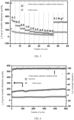
FIG. 5 shows a battery rate performance curve when the carbon matrix composite vanadium nitride nanoarray according to Example 1 of the present invention is used as an anode of a sodium-ion battery; -
FIG. 6 shows a battery cycling performance curve at a current density of 1 A/g when the carbon matrix composite vanadium nitride nanoarray according to Example 1 of the present invention is used as an anode of a sodium-ion battery; and -
FIG. 7 shows an alternating-current impedance spectrum when the carbon matrix composite vanadium nitride nanoarray according to Example 1 of the present invention is used as an anode of a sodium-ion battery. - To make the foregoing objectives, features, and advantages of the present invention clearer and more comprehensible, the embodiments of the present invention will be further described in detail below with reference to the accompanying drawings.
- It should be noted that, in the description of the embodiments of the present application, the description of the term "some embodiments" means that the specific features, structures, materials, or characteristics described in combination with the embodiments or examples are included in at least one embodiment or example of the present invention. In this specification, the schematic representation of the above term does not necessarily refer to the same embodiment or example. Moreover, the specific features, structures, materials, or characteristics described may be combined in any suitable manner in any one or more embodiments or examples.
- In the embodiments of the present invention, "in a range of..." includes both end values, for example, "in a range of 1 to 100" includes both end values of 1 and 100.
- An embodiment of the present invention provides a method for preparing a carbon matrix composite vanadium nitride nanoarray, including the following steps:
- S1: weigh vanadium pentoxide V2O5 and dissolve the same into an organic solvent, and sufficiently stir a resulting mixture until the V2O5 is completely dissolved to obtain a mixed solution;
- S2: add a carbon matrix and the mixed solution into a reactor, and then place the reactor into an oven for heating to undergo a solvothermal reaction; wash a product of the reaction with absolute ethyl alcohol several times to remove impurities; and place the product into the oven for drying to obtain a precursor; and
- S3: heat and calcine the precursor in an ammonia atmosphere, and naturally cool the calcined precursor to room temperature to obtain the carbon matrix composite vanadium nitride nanoarray.
- Specifically, in the step S1, the vanadium pentoxide and the organic solvent may be used at a ratio of (0.1-2) mmol:(20-60) mL. The organic solvent may include at least one of ethanol, n-propanol, and n-butanol. The carbon matrix may include carbon cloth, carbon skeleton, or graphene. Therefore, they can be selected for application in different scenarios, which broadens the application scenarios.
- Specifically, in the step S2, the solvothermal reaction may be conducted at a reaction temperature of 100 °C to 200 °C for a reaction time of 9 h to 48 h. Therefore, the vanadium pentoxide V2O5 in the reaction system can grow uniformly and firmly on the surface of the carbon matrix to form vanadium nitride nanosheets with appropriate thickness and regular arrangement. If the reaction temperature is too low, the nanosheets are not easy to form; on the contrary, if the temperature is too high, the reaction is too violent, which is also not conducive to the formation of the nanosheets.
- Specifically, in the step S3, conditions for the calcination include calcination at 500 °C to 600 °C for 0.5 h to 3 h. Therefore, vanadium oxide on the vanadium oxide/carbon matrix precursor is oxidized into the vanadium nitride through high-temperature nitriding reduction, wherein ammonia gas with great chemical activity is decomposed into active nitrogen atoms and active hydrogen atoms at 600 °C, and the hydrogen atoms bring away oxygen atoms in the vanadium oxide while the nitrogen atoms supplement atom vacancies to nitride the vanadium oxide into the vanadium nitride.
- The present invention provides a porous vanadium nitride nanosheet growing on the surface of the three-dimensional flexible carbon matrix by a hydrothermal synthesis method and high-temperature nitriding reduction, which can effectively alleviate the volume change generated during an electrode reaction process, significantly improve the cycle life of the battery, provide excellent electrochemical performance, and enhance the charge-discharge efficiency on one hand; and on the other hand, this integrated design contains no conductive agent and binder as well as other additives, improving the utilization rate of active substances in the electrode material.
- Furthermore, the preparation method provided by the present invention is simple to operate, short in preparation time, and low in cost, and the carbon matrix composite vanadium nitride nanoarray electrode material prepared thereby has a relatively high specific capacitance value, relatively stable cycling stability, and relatively high flexibility, enabling a great application prospect in the field of anode materials for supercapacitors.
- On the basis of the above technical solution, another embodiment of the present invention provides a carbon matrix composite vanadium nitride nanoarray prepared by the above preparation method. The carbon matrix composite vanadium nitride nanoarray includes a three-dimensional flexible carbon matrix and a vanadium nitride nanosheet growing thereon, and the vanadium nitride nanosheet is composed of vanadium nitride nanoparticles.
- Here, the vanadium nitride nanosheet may have a diameter of 150 nm to 300 nm. Therefore, compared with existing vanadium nitride composite electrode materials, the carbon matrix composite vanadium nitride nanoarray prepared by the embodiment of the present invention has a smaller diameter and a larger contact area with an electrolyte, so that the ion transport path is shorter and the electrical performance is better.
- On the basis of the above technical solution, yet another embodiment of the present invention provides use of the above carbon matrix composite vanadium nitride nanoarray as an anode active material of a sodium-ion battery and/or a lithium-ion battery.
- The carbon matrix composite vanadium nitride nanoarray provided by the embodiment of the present invention makes use of the three-dimensional flexible carbon matrix as a substrate, which can accelerate electron transport, and a three-dimensional porous structure composed of the vanadium nitride nanosheet boosts the diffusion of an electrolyte, which can expedite the diffusion of hydroxyl ions in the aqueous electrolyte to the surface of the electrode, facilitating electron transport and rapid electrochemical reactions.
- On the basis of the above embodiments, the following examples are provided to further describe the present invention. It should be understood that these examples are only intended to illustrate the present invention rather than to limit the scope of the present invention. The experimental methods in the following examples are generally carried out according to the conditions recommended by the manufacturer if no conditions are indicated herein. The percentages and parts are calculated by mass, unless otherwise stated.
- This example provides a method for preparing a carbon matrix composite vanadium nitride nanoarray, including the following steps:
- 1)0.3 mmol of V2O5 was weighed and dissolved into 40 mL of n-propanol, and a resulting mixture was sufficiently stirred until the V2O5 was completely dissolved to obtain a mixed solution;
- 2)the mixed solution and a carbon matrix were added into a reactor, and then the reactor was placed into an oven for heating at 100 °C for 24 h to undergo a solvothermal reaction; a product of the reaction was washed with absolute ethyl alcohol 3 times and then was placed into the oven for drying to obtain a precursor; and
- 3)the precursor was heated and calcined at 550 °C for 1 h in an ammonia atmosphere and then naturally cooled to room temperature to obtain the carbon matrix composite vanadium nitride nanoarray.
- The carbon matrix composite vanadium nitride nanoarray prepared according to Example 1 was taken for example to conduct morphological and structural characterization. The graphical results are shown in
FIGs. 1-4 . -
FIG. 1 shows an XRD pattern of the carbon matrix composite vanadium nitride nanoarray. It can be seen fromFIG. 1 that a characteristic peak of nanoparticles can match with a crystal phase of vanadium nitride (JCPDS: 03-065-9409) well, illustrating that this sample includes vanadium nitride nanoparticles. -
FIG. 2 andFIG. 3 respectively show a low-magnification field emission scanning electron microscope image and a high-magnification field emission scanning electron microscope image of the carbon matrix composite vanadium nitride nanoarray. It can be seen fromFIG. 2 that the pore distribution of the three-dimensional flexible carbon matrix is in a range of 30 µm to 200 µm. It can be seen fromFIG. 3 that the vanadium nitride nanosheets have a diameter in a range of 150 nm to 300 nm and are uniformly distributed on the three-dimensional flexible carbon matrix to form a good array structure. -
FIG. 4 shows an EDS element distribution map of the carbon matrix composite vanadium nitride nanoarray. It can be seen fromFIG. 4 that elements C, N, and V are present and uniformly distributed on the carbon matrix, indicating that the vanadium nitride nanosheets uniformly grow on the surface of the carbon matrix. - The carbon matrix composite vanadium nitride nanoarray prepared according to Example 1 is used as an anode active material of a lithium-ion battery and a sodium-ion battery. The assembly method of the lithium-ion battery and the sodium-ion battery is the same as the common method, and will not be elaborated herein. The carbon matrix composite vanadium nitride nanoarray was taken for example to act as an anode active material of a sodium-ion battery to assemble the sodium-ion battery. The graphical results of electrochemical testing are shown in
FIGs. 5-7 . -
FIG. 5 shows a rate performance curve of the sodium-ion battery. It can be seen fromFIG. 5 that the reversible capacity of the sodium-ion battery is 335.7 mAh/g at a current density of 0.1 A/g and still 153.7 mAh/g at a current density of 1 A/g, which indicates that the carbon matrix composite vanadium nitride nanoarray prepared according to Example 1 exhibits excellent cycling stability when acting as the anode active material of the sodium-ion battery. -
FIG. 6 andFIG. 7 respectively show a cycling performance curve and an alternating-current impedance spectrum of the sodium-ion battery obtained at a current density of 1 A/g. It can be seen fromFIG. 6 that the capacity can reach up to 196.6 mAh/g after 500 cycles at a current density of 1 A/g. It can be seen fromFIG. 7 that the charge transfer resistance is 436 Ω. The above results indicate that the carbon matrix composite vanadium nitride nanoarray has excellent high-cycle and high-rate characteristics, and is a potential anode material of long-life lithium-ion batteries and sodium-ion batteries. - This example provides a method for preparing a carbon matrix composite vanadium nitride nanoarray, including the following steps:
- 1) 0.3 mmol of V2O5 was weighed and dissolved into 40 mL of n-propanol, and a resulting mixture was sufficiently stirred until the V2O5 was completely dissolved to obtain a mixed solution;
- 2) the mixed solution and a carbon matrix were added into a reactor, and then the reactor was placed into an oven for heating at 100 °C for 48 h to undergo a solvothermal reaction; a product of the reaction was washed with absolute ethyl alcohol 3 times and then was placed into the oven for drying to obtain a precursor; and
- 3) the precursor was heated and calcined at 550 °C for 1 h in an ammonia atmosphere and then naturally cooled to room temperature to obtain the carbon matrix composite vanadium nitride nanoarray.
- The carbon matrix composite vanadium nitride nanoarray prepared according to Example 2 was taken for example to act as an anode active material of a sodium-ion battery to assemble the sodium-ion battery. The sodium-ion battery was subject to electrochemical testing. It was measured that the reversible capacity of the sodium-ion battery was 332 mAh/g at a current density of 0.1 A/g and 149 mAh/g at a current density of 1 A/g, indicating excellent cycling stability; the capacity could achieve 190 mAh/g after 500 cycles at a current density of 1 A/g; and its charge transfer resistance obtained by alternating-current impedance testing was 457 S2, indicating excellent high-cycle and high-rate characteristics.
- This example provides a method for preparing a carbon matrix composite vanadium nitride nanoarray, including the following steps:
- 1)0.3 mmol of V2O5 was weighed and dissolved into 40 mL of n-butanol, and a resulting mixture was sufficiently stirred until the V2O5 was completely dissolved to obtain a mixed solution;
- 2)the mixed solution and a carbon matrix were added into a reactor, and then the reactor was placed into an oven for heating at 100 °C for 24 h to undergo a solvothermal reaction; a product of the reaction was washed with absolute ethyl alcohol 3 times and then was placed into the oven for drying to obtain a precursor; and
- 3) the precursor was heated and calcined at 550 °C for 1 h in an ammonia atmosphere and then naturally cooled to room temperature to obtain the carbon matrix composite vanadium nitride nanoarray.
- The carbon matrix composite vanadium nitride nanoarray prepared according to Example 3 was taken for example to act as an anode active material of a sodium-ion battery to assemble the sodium-ion battery. The sodium-ion battery was subject to electrochemical testing. It was measured that the reversible capacity of the sodium-ion battery was 326 mAh/g at a current density of 0.1 A/g and 142 mAh/g at a current density of 1 A/g, indicating excellent cycling stability; the capacity could achieve 182 mAh/g after 500 cycles at a current density of 1 A/g; and its charge transfer resistance obtained by alternating-current impedance testing was 483 S2, indicating excellent high-cycle and high-rate characteristics.
- This example provides a method for preparing a carbon matrix composite vanadium nitride nanoarray, including the following steps:
- 1) 0.25 mmol of V2O5 was weighed and dissolved into 40 mL of n-propanol, and a resulting mixture was sufficiently stirred until the V2O5 was completely dissolved to obtain a mixed solution;
- 2) the mixed solution and a carbon matrix were added into a reactor, and then the reactor was placed into an oven for heating at 100 °C for 24 h to undergo a solvothermal reaction; a product of the reaction was washed with absolute ethyl alcohol 3 times and then was placed into the oven for drying to obtain a precursor; and
- 3) the precursor was heated and calcined at 550 °C for 1 h in an ammonia atmosphere and then naturally cooled to room temperature to obtain the carbon matrix composite vanadium nitride nanoarray.
- The carbon matrix composite vanadium nitride nanoarray prepared according to Example 4 was taken for example to act as an anode active material of a sodium-ion battery to assemble the sodium-ion battery. The sodium-ion battery was subject to electrochemical testing. It was measured that the reversible capacity of the sodium-ion battery was 334 mAh/g at a current density of 0.1 A/g and 151 mAh/g at a current density of 1 A/g, indicating excellent cycling stability; the capacity could achieve 193 mAh/g after 500 cycles at a current density of 1 A/g; and its charge transfer resistance obtained by alternating-current impedance testing was 442 S2, indicating excellent high-cycle and high-rate characteristics.
- This example provides a method for preparing a carbon matrix composite vanadium nitride nanoarray, including the following steps:
- 1) 0.35 mmol of V2O5 was weighed and dissolved into 40 mL of n-propanol, and a resulting mixture was sufficiently stirred until the V2O5 was completely dissolved to obtain a mixed solution;
- 2) the mixed solution and a carbon matrix were added into a reactor, and then the reactor was placed into an oven for heating at 100 °C for 24 h to undergo a solvothermal reaction; a product of the reaction was washed with absolute ethyl alcohol 3 times and then was placed into the oven for drying to obtain a precursor; and
- 3) the precursor was heated and calcined at 550 °C for 1 h in an ammonia atmosphere and then naturally cooled to room temperature to obtain the carbon matrix composite vanadium nitride nanoarray.
- The carbon matrix composite vanadium nitride nanoarray prepared according to Example 5 was taken for example to act as an anode active material of a sodium-ion battery to assemble the sodium-ion battery. The sodium-ion battery was subject to electrochemical testing. It was measured that the reversible capacity of the sodium-ion battery was 329 mAh/g at a current density of 0.1 A/g and 152 mAh/g at a current density of 1 A/g, indicating excellent cycling stability; the capacity could achieve 187 mAh/g after 500 cycles at a current density of 1 A/g; and its charge transfer resistance obtained by alternating-current impedance testing was 449 S2, indicating excellent high-cycle and high-rate characteristics.
- This example provides a method for preparing a carbon matrix composite vanadium nitride nanoarray, including the following steps:
- 1) 0.3 mmol of V2O5 was weighed and dissolved into 60 mL of n-propanol, and a resulting mixture was sufficiently stirred until the V2O5 was completely dissolved to obtain a mixed solution;
- 2) the mixed solution and a carbon matrix were added into a reactor, and then the reactor was placed into an oven for heating at 100 °C for 24 h to undergo a solvothermal reaction; a product of the reaction was washed with absolute ethyl alcohol 3 times and then was placed into the oven for drying to obtain a precursor; and
- 3) the precursor was heated and calcined at 550 °C for 1 h in an ammonia atmosphere and then naturally cooled to room temperature to obtain the carbon matrix composite vanadium nitride nanoarray.
- The carbon matrix composite vanadium nitride nanoarray prepared according to Example 5 was taken for example to act as an anode active material of a sodium-ion battery to assemble the sodium-ion battery. The sodium-ion battery was subject to electrochemical testing. It was measured that: the reversible capacity of the sodium-ion battery was 325 mAh/g at a current density of 0.1 A/g and 143 mAh/g at a current density of 1 A/g, indicating excellent cycling stability; the capacity could achieve 186 mAh/g after 500 cycles at a current density of 1 A/g; and its charge transfer resistance obtained by alternating-current impedance testing was 453 S2, indicating excellent high-cycle and high-rate characteristics.
- Although the present invention is disclosed as above, the protection scope disclosed in the present invention is not limited thereto. Those skilled in the art can make various changes and modifications without departing from the spirit and scope of the present invention, and all these changes and modifications shall fall within the protection scope of the present invention.
Claims (10)
- A method for preparing a carbon matrix composite vanadium nitride nanoarray, characterized in that the method comprises the following steps:S1: dissolve vanadium pentoxide into an organic solvent to obtain a mixed solution;S2: place a carbon matrix into the mixed solution to undergo a solvothermal reaction, and wash and dry a product of the reaction to obtain a precursor; andS3: heat and calcine the precursor in an ammonia atmosphere to obtain the carbon matrix composite vanadium nitride nanoarray.
- The preparation method according to claim 1, characterized in that in the step S1, the vanadium pentoxide and the organic solvent are used at a ratio of (0.1-2) mmol:(20-60) mL.
- The preparation method according to claim 2, characterized in that the organic solvent comprises at least one of ethanol, n-propanol, and n-butanol.
- The preparation method according to claim 2 or 3, characterized in that the carbon matrix comprises carbon cloth, carbon skeleton, or graphene.
- The preparation method according to claim 1, characterized in that in the step S2, the solvothermal reaction is conducted at a reaction temperature of 100 °C to 200 °C for a reaction time of 9 h to 48 h.
- The preparation method according to claim 5, characterized in that in the step S3, conditions for the calcination comprise calcination at 500 °C to 600 °C for 0.5 h to 3 h.
- A carbon matrix composite vanadium nitride nanoarray, characterized in that the carbon matrix composite vanadium nitride nanoarray is prepared by the method for preparing a carbon matrix composite vanadium nitride nanoarray according to any one of claims 1 to 6.
- The carbon matrix composite vanadium nitride nanoarray according to claim 7, characterized in that the carbon matrix composite vanadium nitride nanoarray comprises a three-dimensional flexible carbon matrix and a vanadium nitride nanosheet growing on the carbon matrix, and the vanadium nitride nanosheet is composed of vanadium nitride nanoparticles.
- The carbon matrix composite vanadium nitride nanoarray according to claim 8, characterized in that the vanadium nitride nanosheet has a diameter of 150 nm to 300 nm.
- Use of the carbon matrix composite vanadium nitride nanoarray prepared by the preparation method according to any one of claims 1 to 6 or the carbon matrix composite vanadium nitride nanoarray according to any one of claims 7 to 9 as an anode active material of a sodium-ion battery and/or a lithium-ion battery.
Applications Claiming Priority (2)
| Application Number | Priority Date | Filing Date | Title |
|---|---|---|---|
| CN202210630317.8A CN114804039B (en) | 2022-06-06 | 2022-06-06 | Carbon matrix composite vanadium nitride nano array and preparation method and application thereof |
| PCT/CN2023/075370 WO2023236575A1 (en) | 2022-06-06 | 2023-02-10 | Carbon matrix composite vanadium nitride nano array, and preparation method therefor and use thereof |
Publications (2)
| Publication Number | Publication Date |
|---|---|
| EP4393872A1 true EP4393872A1 (en) | 2024-07-03 |
| EP4393872A4 EP4393872A4 (en) | 2025-06-25 |
Family
ID=82520890
Family Applications (1)
| Application Number | Title | Priority Date | Filing Date |
|---|---|---|---|
| EP23818743.9A Pending EP4393872A4 (en) | 2022-06-06 | 2023-02-10 | CARBON MATRIX COMPOSITE VANADIUM NITRIDE NANO-NETWORK, ITS PREPARATION METHOD AND USE |
Country Status (3)
| Country | Link |
|---|---|
| EP (1) | EP4393872A4 (en) |
| CN (1) | CN114804039B (en) |
| WO (1) | WO2023236575A1 (en) |
Families Citing this family (4)
| Publication number | Priority date | Publication date | Assignee | Title |
|---|---|---|---|---|
| CN114804039B (en) * | 2022-06-06 | 2023-06-30 | 武汉理工大学 | Carbon matrix composite vanadium nitride nano array and preparation method and application thereof |
| CN117776122B (en) * | 2023-12-27 | 2025-11-28 | 郑州轻工业大学 | Method for preparing layered heterojunction through topology conversion, prepared layered heterojunction and application of layered heterojunction |
| CN118866562B (en) * | 2024-08-30 | 2025-01-03 | 宁夏大学 | A carbon/vanadium nitride/manganese oxide composite material and its preparation method and application |
| CN119797425B (en) * | 2025-01-14 | 2025-10-10 | 桂林理工大学 | Vanadium-based oxide positive electrode material for water-based zinc ion battery and preparation method thereof |
Family Cites Families (14)
| Publication number | Priority date | Publication date | Assignee | Title |
|---|---|---|---|---|
| GB1318467A (en) * | 1970-09-08 | 1973-05-31 | Hollandse Metallurg Ind Billit | Methods of preparation of a material containing vanadium carbonitride and or vanadium nitride |
| CN101597035A (en) * | 2009-06-27 | 2009-12-09 | 四川大学 | A kind of preparation method of nano vanadium nitride electrode material |
| CN102092691B (en) * | 2010-11-16 | 2012-11-21 | 华南师范大学 | Preparation method of vanadium nitride nanocrystal |
| CN102485644A (en) * | 2010-12-02 | 2012-06-06 | 池建平 | Method for preparing vanadium nitride |
| CN104016314B (en) * | 2014-06-26 | 2016-02-17 | 济南顺源新材料科技有限公司 | A kind of preparation method of vanadium nitride |
| CN104229759B (en) * | 2014-09-09 | 2016-05-04 | 华中科技大学 | Grapheme tube coated metal nitride nano band and preparation method thereof |
| CN104505509B (en) * | 2014-12-09 | 2017-01-04 | 武汉科技大学 | A kind of carbon coated porous vanadium nitride nano wire film and preparation method thereof |
| CN105742633B (en) * | 2016-04-08 | 2018-03-20 | 武汉理工大学 | Porous oxygen-enriched vanadium nitride nanometer sheet and its preparation method and application |
| CN107999114A (en) * | 2017-12-19 | 2018-05-08 | 成都玖奇新材料科技有限公司 | Electrochemical reduction nitrogen ammonia non-precious metal catalyst |
| CN108579788B (en) * | 2018-04-29 | 2020-12-01 | 浙江工业大学 | A composite cobalt vanadium nitride nanowire electrocatalyst and its preparation method and application |
| CN110433846A (en) * | 2019-08-22 | 2019-11-12 | 浙江工业大学 | A kind of phosphorus doping nitridation cobalt nanowire elctro-catalyst and its preparation method and application |
| CN110444408B (en) * | 2019-08-30 | 2021-05-18 | 哈尔滨理工大学 | A kind of vanadium nitride nanosheet flexible composite electrode material and its preparation method and application |
| CN112133895A (en) * | 2020-09-13 | 2020-12-25 | 武汉科技大学 | A flexible self-supporting vanadium-based heterojunction/graphene composite material and its preparation method and application |
| CN114804039B (en) * | 2022-06-06 | 2023-06-30 | 武汉理工大学 | Carbon matrix composite vanadium nitride nano array and preparation method and application thereof |
-
2022
- 2022-06-06 CN CN202210630317.8A patent/CN114804039B/en active Active
-
2023
- 2023-02-10 EP EP23818743.9A patent/EP4393872A4/en active Pending
- 2023-02-10 WO PCT/CN2023/075370 patent/WO2023236575A1/en not_active Ceased
Also Published As
| Publication number | Publication date |
|---|---|
| CN114804039A (en) | 2022-07-29 |
| WO2023236575A1 (en) | 2023-12-14 |
| EP4393872A4 (en) | 2025-06-25 |
| CN114804039B (en) | 2023-06-30 |
Similar Documents
| Publication | Publication Date | Title |
|---|---|---|
| EP4393872A1 (en) | Carbon matrix composite vanadium nitride nano array, and preparation method therefor and use thereof | |
| Zong et al. | Cobalt and oxygen double doping induced C@ MoS 2–CoS 2–O@ C nanocomposites with an improved electronic structure and increased active sites as a high-performance anode for sodium-based dual-ion batteries | |
| CN117525331A (en) | Lithium iron manganese phosphate material, preparation method thereof, positive electrode plate and lithium ion battery | |
| CN109879320B (en) | α-MoO3-xNano-belt and preparation method thereof, electrode material and energy storage device | |
| CN108598405B (en) | Preparation method of three-dimensional graphene tin oxide carbon composite negative electrode material | |
| CN103219168A (en) | A kind of Li4Ti5O12/graphene composite electrode material and preparation method thereof | |
| CN111463418B (en) | Carbon-coated nickel selenide ultrathin nanosheet composite material and preparation method thereof | |
| CN108933237B (en) | Preparation method and application of lithium ion battery positive electrode material | |
| CN110304658B (en) | Nb for lithium ion battery18W16O93Negative electrode material and preparation method thereof | |
| CN106505246A (en) | Preparation method of a multi-level porous structure manganese tetraoxide/carbon nanosheet lithium ion battery negative electrode material | |
| CN109616331A (en) | A core-shell type nickel hydroxide nanosheet/manganese cobalt oxide composite electrode material and preparation method thereof | |
| CN115911299A (en) | A self-supporting high-entropy oxide/graphene composite material and its preparation method and application | |
| CN111717934A (en) | Preparation method of metal iron ion doped MoS2 anode material for sodium ion battery | |
| CN113540428A (en) | 3DOM graphene carbon supported monodisperse NiO nanocrystalline material, preparation and application | |
| CN106299344B (en) | A kind of nickel titanate negative electrode material of sodium ion battery and preparation method thereof | |
| CN117855436A (en) | A sodium vanadium fluorophosphate-based positive electrode material and its preparation method and application | |
| CN114335457B (en) | Preparation method and application of monoclinic molybdenum dioxide/nitrogen-doped carbon nanotube three-dimensional nanocomposite material | |
| CN109279663B (en) | Borate sodium-ion battery negative electrode material and preparation and application thereof | |
| CN115207285A (en) | Molybdenum disulfide@tungsten disulfide@carbon cloth electrode material, preparation method and application | |
| Li et al. | Formation of hollow spheres structures Co/CoO/ZnO@ NC from metal-organic frameworks as a anode for lithium-ion batteries | |
| CN113526552A (en) | A kind of lithium ion battery composite positive electrode active material and preparation method thereof | |
| CN106784652A (en) | Barium oxide/carbon nano tube flexible film and its preparation method and application | |
| CN114050245B (en) | A composite cathode material with a spring-like sheet structure and its preparation method and application | |
| CN118352489A (en) | A method for preparing NaxV2O5/C nanosheet lithium ion battery negative electrode material | |
| Pu et al. | Porous oxygen-doped vanadium nitride nanoparticles derived from vanadium hexacyanoferrate as advanced cathode materials for aqueous zinc-ion battery |
Legal Events
| Date | Code | Title | Description |
|---|---|---|---|
| STAA | Information on the status of an ep patent application or granted ep patent |
Free format text: STATUS: THE INTERNATIONAL PUBLICATION HAS BEEN MADE |
|
| PUAI | Public reference made under article 153(3) epc to a published international application that has entered the european phase |
Free format text: ORIGINAL CODE: 0009012 |
|
| STAA | Information on the status of an ep patent application or granted ep patent |
Free format text: STATUS: REQUEST FOR EXAMINATION WAS MADE |
|
| 17P | Request for examination filed |
Effective date: 20240328 |
|
| AK | Designated contracting states |
Kind code of ref document: A1 Designated state(s): AL AT BE BG CH CY CZ DE DK EE ES FI FR GB GR HR HU IE IS IT LI LT LU LV MC ME MK MT NL NO PL PT RO RS SE SI SK SM TR |
|
| A4 | Supplementary search report drawn up and despatched |
Effective date: 20250527 |
|
| RIC1 | Information provided on ipc code assigned before grant |
Ipc: H01M 4/587 20100101ALI20250521BHEP Ipc: H01M 10/0525 20100101ALI20250521BHEP Ipc: H01M 4/583 20100101ALI20250521BHEP Ipc: H01M 4/58 20100101ALI20250521BHEP Ipc: H01M 4/36 20060101ALI20250521BHEP Ipc: H01M 10/054 20100101ALI20250521BHEP Ipc: C01B 21/06 20060101ALI20250521BHEP Ipc: C01B 32/05 20170101ALI20250521BHEP Ipc: H01M 4/62 20060101ALI20250521BHEP Ipc: C01B 21/00 20060101AFI20250521BHEP |
|
| DAV | Request for validation of the european patent (deleted) | ||
| DAX | Request for extension of the european patent (deleted) | ||
| STAA | Information on the status of an ep patent application or granted ep patent |
Free format text: STATUS: THE APPLICATION IS DEEMED TO BE WITHDRAWN |