EP4390608A1 - Controlling energy loads to meet an energy budget assigned to a site - Google Patents
Controlling energy loads to meet an energy budget assigned to a site Download PDFInfo
- Publication number
- EP4390608A1 EP4390608A1 EP23218263.4A EP23218263A EP4390608A1 EP 4390608 A1 EP4390608 A1 EP 4390608A1 EP 23218263 A EP23218263 A EP 23218263A EP 4390608 A1 EP4390608 A1 EP 4390608A1
- Authority
- EP
- European Patent Office
- Prior art keywords
- energy
- site
- loads
- energy usage
- time duration
- Prior art date
- Legal status (The legal status is an assumption and is not a legal conclusion. Google has not performed a legal analysis and makes no representation as to the accuracy of the status listed.)
- Granted
Links
Images





Classifications
-
- G—PHYSICS
- G05—CONTROLLING; REGULATING
- G05D—SYSTEMS FOR CONTROLLING OR REGULATING NON-ELECTRIC VARIABLES
- G05D23/00—Control of temperature
- G05D23/19—Control of temperature characterised by the use of electric means
- G05D23/1919—Control of temperature characterised by the use of electric means characterised by the type of controller
- G05D23/1923—Control of temperature characterised by the use of electric means characterised by the type of controller using thermal energy, the cost of which varies in function of time
-
- F—MECHANICAL ENGINEERING; LIGHTING; HEATING; WEAPONS; BLASTING
- F24—HEATING; RANGES; VENTILATING
- F24F—AIR-CONDITIONING; AIR-HUMIDIFICATION; VENTILATION; USE OF AIR CURRENTS FOR SCREENING
- F24F11/00—Control or safety arrangements
- F24F11/30—Control or safety arrangements for purposes related to the operation of the system, e.g. for safety or monitoring
- F24F11/46—Improving electric energy efficiency or saving
- F24F11/47—Responding to energy costs
-
- F—MECHANICAL ENGINEERING; LIGHTING; HEATING; WEAPONS; BLASTING
- F24—HEATING; RANGES; VENTILATING
- F24F—AIR-CONDITIONING; AIR-HUMIDIFICATION; VENTILATION; USE OF AIR CURRENTS FOR SCREENING
- F24F11/00—Control or safety arrangements
- F24F11/50—Control or safety arrangements characterised by user interfaces or communication
- F24F11/56—Remote control
- F24F11/58—Remote control using Internet communication
-
- F—MECHANICAL ENGINEERING; LIGHTING; HEATING; WEAPONS; BLASTING
- F24—HEATING; RANGES; VENTILATING
- F24F—AIR-CONDITIONING; AIR-HUMIDIFICATION; VENTILATION; USE OF AIR CURRENTS FOR SCREENING
- F24F11/00—Control or safety arrangements
- F24F11/62—Control or safety arrangements characterised by the type of control or by internal processing, e.g. using fuzzy logic, adaptive control or estimation of values
- F24F11/63—Electronic processing
- F24F11/64—Electronic processing using pre-stored data
-
- F—MECHANICAL ENGINEERING; LIGHTING; HEATING; WEAPONS; BLASTING
- F24—HEATING; RANGES; VENTILATING
- F24F—AIR-CONDITIONING; AIR-HUMIDIFICATION; VENTILATION; USE OF AIR CURRENTS FOR SCREENING
- F24F11/00—Control or safety arrangements
- F24F11/62—Control or safety arrangements characterised by the type of control or by internal processing, e.g. using fuzzy logic, adaptive control or estimation of values
- F24F11/63—Electronic processing
- F24F11/65—Electronic processing for selecting an operating mode
-
- H—ELECTRICITY
- H02—GENERATION; CONVERSION OR DISTRIBUTION OF ELECTRIC POWER
- H02J—ELECTRIC POWER NETWORKS; CIRCUIT ARRANGEMENTS OR SYSTEMS FOR SUPPLYING OR DISTRIBUTING ELECTRIC POWER; SYSTEMS FOR STORING ELECTRIC ENERGY
- H02J13/00—Circuit arrangements for providing remote monitoring or remote control of equipment in a power distribution network
- H02J13/12—Monitoring network conditions, e.g. electrical magnitudes or operational status
-
- H—ELECTRICITY
- H02—GENERATION; CONVERSION OR DISTRIBUTION OF ELECTRIC POWER
- H02J—ELECTRIC POWER NETWORKS; CIRCUIT ARRANGEMENTS OR SYSTEMS FOR SUPPLYING OR DISTRIBUTING ELECTRIC POWER; SYSTEMS FOR STORING ELECTRIC ENERGY
- H02J13/00—Circuit arrangements for providing remote monitoring or remote control of equipment in a power distribution network
- H02J13/14—Circuit arrangements for providing remote monitoring or remote control of equipment in a power distribution network the power network being locally controlled, e.g. home energy management systems [HEMS]
-
- H—ELECTRICITY
- H02—GENERATION; CONVERSION OR DISTRIBUTION OF ELECTRIC POWER
- H02J—ELECTRIC POWER NETWORKS; CIRCUIT ARRANGEMENTS OR SYSTEMS FOR SUPPLYING OR DISTRIBUTING ELECTRIC POWER; SYSTEMS FOR STORING ELECTRIC ENERGY
- H02J3/00—Circuit arrangements for AC mains or AC distribution networks
- H02J3/003—Load forecast, e.g. methods or systems for forecasting future load demand
-
- F—MECHANICAL ENGINEERING; LIGHTING; HEATING; WEAPONS; BLASTING
- F24—HEATING; RANGES; VENTILATING
- F24F—AIR-CONDITIONING; AIR-HUMIDIFICATION; VENTILATION; USE OF AIR CURRENTS FOR SCREENING
- F24F2120/00—Control inputs relating to users or occupants
- F24F2120/10—Occupancy
-
- F—MECHANICAL ENGINEERING; LIGHTING; HEATING; WEAPONS; BLASTING
- F24—HEATING; RANGES; VENTILATING
- F24F—AIR-CONDITIONING; AIR-HUMIDIFICATION; VENTILATION; USE OF AIR CURRENTS FOR SCREENING
- F24F2120/00—Control inputs relating to users or occupants
- F24F2120/20—Feedback from users
-
- F—MECHANICAL ENGINEERING; LIGHTING; HEATING; WEAPONS; BLASTING
- F24—HEATING; RANGES; VENTILATING
- F24F—AIR-CONDITIONING; AIR-HUMIDIFICATION; VENTILATION; USE OF AIR CURRENTS FOR SCREENING
- F24F2130/00—Control inputs relating to environmental factors not covered by group F24F2110/00
- F24F2130/10—Weather information or forecasts
-
- F—MECHANICAL ENGINEERING; LIGHTING; HEATING; WEAPONS; BLASTING
- F24—HEATING; RANGES; VENTILATING
- F24F—AIR-CONDITIONING; AIR-HUMIDIFICATION; VENTILATION; USE OF AIR CURRENTS FOR SCREENING
- F24F2140/00—Control inputs relating to system states
- F24F2140/50—Load
-
- F—MECHANICAL ENGINEERING; LIGHTING; HEATING; WEAPONS; BLASTING
- F24—HEATING; RANGES; VENTILATING
- F24F—AIR-CONDITIONING; AIR-HUMIDIFICATION; VENTILATION; USE OF AIR CURRENTS FOR SCREENING
- F24F2140/00—Control inputs relating to system states
- F24F2140/60—Energy consumption
-
- H—ELECTRICITY
- H02—GENERATION; CONVERSION OR DISTRIBUTION OF ELECTRIC POWER
- H02J—ELECTRIC POWER NETWORKS; CIRCUIT ARRANGEMENTS OR SYSTEMS FOR SUPPLYING OR DISTRIBUTING ELECTRIC POWER; SYSTEMS FOR STORING ELECTRIC ENERGY
- H02J2103/00—Details of circuit arrangements for mains or AC distribution networks
- H02J2103/30—Simulating, planning, modelling, reliability check or computer assisted design [CAD] of electric power networks
-
- H—ELECTRICITY
- H02—GENERATION; CONVERSION OR DISTRIBUTION OF ELECTRIC POWER
- H02J—ELECTRIC POWER NETWORKS; CIRCUIT ARRANGEMENTS OR SYSTEMS FOR SUPPLYING OR DISTRIBUTING ELECTRIC POWER; SYSTEMS FOR STORING ELECTRIC ENERGY
- H02J2105/00—Networks for supplying or distributing electric power characterised by their spatial reach or by the load
- H02J2105/10—Local stationary networks having a local or delimited stationary reach
- H02J2105/12—Local stationary networks having a local or delimited stationary reach supplying households or buildings
-
- H—ELECTRICITY
- H02—GENERATION; CONVERSION OR DISTRIBUTION OF ELECTRIC POWER
- H02J—ELECTRIC POWER NETWORKS; CIRCUIT ARRANGEMENTS OR SYSTEMS FOR SUPPLYING OR DISTRIBUTING ELECTRIC POWER; SYSTEMS FOR STORING ELECTRIC ENERGY
- H02J2105/00—Networks for supplying or distributing electric power characterised by their spatial reach or by the load
- H02J2105/50—Networks for supplying or distributing electric power characterised by their spatial reach or by the load for selectively controlling the operation of the loads
- H02J2105/52—Networks for supplying or distributing electric power characterised by their spatial reach or by the load for selectively controlling the operation of the loads for limitation of the power consumption in the networks or in one section of the networks, e.g. load shedding or peak shaving
-
- H—ELECTRICITY
- H02—GENERATION; CONVERSION OR DISTRIBUTION OF ELECTRIC POWER
- H02J—ELECTRIC POWER NETWORKS; CIRCUIT ARRANGEMENTS OR SYSTEMS FOR SUPPLYING OR DISTRIBUTING ELECTRIC POWER; SYSTEMS FOR STORING ELECTRIC ENERGY
- H02J2105/00—Networks for supplying or distributing electric power characterised by their spatial reach or by the load
- H02J2105/50—Networks for supplying or distributing electric power characterised by their spatial reach or by the load for selectively controlling the operation of the loads
- H02J2105/54—Networks for supplying or distributing electric power characterised by their spatial reach or by the load for selectively controlling the operation of the loads according to a non-electrical condition, e.g. temperature
- H02J2105/55—Networks for supplying or distributing electric power characterised by their spatial reach or by the load for selectively controlling the operation of the loads according to a non-electrical condition, e.g. temperature according to an economic condition, e.g. tariff-based load management
Definitions
- the energy usage reduction plan is based at least in part on an occupancy of the site.
- the instructions control the one or more of the energy loads to draw energy from a local energy source of the site.
- the controller is a member of a federated learning system; and the machine learning model is trained using the federated learning system.
- the energy management system 150 includes a transceiver that is operable to send and receive information to and from the controller 110, the remote energy source 130, and/or a cloud computing system 102.
- the energy management system 150 is operable to manage one or more of the energy loads 160 and the local energy sources 180 within the site 204.
- the energy loads 160 can include but are not limited to, HVAC systems, water heaters, power storage system, renewable energy generation systems, lighting systems, elevator systems, large machine systems, and the like.
- the schedule 208 can be programmed by a user to instruct the emergency management system 150A to automatically reduce the temperature of the HVAC system 160A to 70 degrees Fahrenheit during the hours (e.g., 10:00pm to 8:00am) when the occupants of the site 204 are sleeping.
- the schedule 208 can be programmed by a user to instruct the emergency management system 150A to automatically maintain the temperature of the HVAC system 160A at 60 degrees Fahrenheit during the entire time the occupants of the site 204 are away from the site 204 and on vacation.
- machine learning techniques can be implemented using machine learning and/or natural language processing techniques.
- machine learning techniques are run on so-called "learning machines,” which can be implemented as programmable computers operable to run sets of machine learning algorithms and/or natural language processing algorithms.
- Machine learning algorithms incorporate knowledge from a variety of disciplines, including neurophysiology, cognitive science/psychology, physics (statistical mechanics), control theory, computer science, artificial intelligence, statistics/mathematics, pattern recognition, computer vision, parallel processing and hardware (e.g., digital/analog/VLSI/optical).
- the data sources 402 that generate "real world” data are accessed, and the "real world” data is applied to the models 416 to generate usable versions of the results 420.
- the results 420 can be fed back to the classifier 410 and used by the ML algorithms 412 as additional training data for updating and/or refining the models 416.
- FIG. 7 illustrates an example of a computer system 700 that can be used to implement the controller 120 described herein.
- the computer system 700 includes an exemplary computing device ("computer") 702 configured for performing various aspects of the content-based semantic monitoring operations described herein in accordance embodiments of the invention.
- exemplary computer system 700 includes network 714, which connects computer 702 to additional systems (not depicted) and can include one or more wide area networks (WANs) and/or local area networks (LANs) such as the Internet, intranet(s), and/or wireless communication network(s).
- WANs wide area networks
- LANs local area networks
- Computer 702 and additional system are in communication via network 714, e.g., to communicate data between them.
Landscapes
- Engineering & Computer Science (AREA)
- General Engineering & Computer Science (AREA)
- Chemical & Material Sciences (AREA)
- Combustion & Propulsion (AREA)
- Mechanical Engineering (AREA)
- Signal Processing (AREA)
- Physics & Mathematics (AREA)
- Fuzzy Systems (AREA)
- Mathematical Physics (AREA)
- Power Engineering (AREA)
- Human Computer Interaction (AREA)
- General Physics & Mathematics (AREA)
- Automation & Control Theory (AREA)
- Management, Administration, Business Operations System, And Electronic Commerce (AREA)
Abstract
Description
- The present disclosure relates in general to programmable computers operable to control energy loads such as a heating, ventilation and air conditioning (HVAC) system to meet an energy demand budget assigned to a site.
- Energy providers offer so-called "demand response" (DR) programs that offer incentives to customers for reducing their energy usage when the demand for energy (e.g., electricity) is high. During such high demand periods, an energy service provide can call a DR "event," which means the energy service provider will asked or remotely signaled to reduce energy usage. In return, the customer can receive compensation in the form of bill credits, a reduced rate, or other forms of compensation.
- Open Automated Demand Response (Open-ADR) is a research and standards development effort for energy management led by North American research labs and companies. The typical use is to implement a DR by sending information and signals directly to a customer's energy management system (EMS) - a "smart" network that controls and communicates with a customer's equipment - to cause the customer's electrical power-using devices to be placed in a mode that consumes less energy during DR "events," peak-demand pricing, or emergencies.
- According to a first aspect of the invention there is provided a thermostat of a heating, ventilation and air conditioning (HVAC) system. The thermostat includes a controller operable to perform operations that include receiving an energy budget for a site, the energy budget including an allocated maximum total energy usage by energy loads of the site over a predetermined time duration. The method further includes generating an energy usage forecast for the energy loads over the predetermined time duration; and based at least in part on a determination that the energy usage forecast exceeds the energy budget, generating an energy usage reduction plan. The energy usage reduction plan includes instructions operable to control one or more of the energy loads such that an actual total energy usage by the energy loads over the predetermined time duration does not exceed the energy budget. The energy loads include the HVAC system.
- Optionally, the operations further including monitoring the actual energy usage at the site during the predetermined time duration.
- Optionally, updating the energy usage forecast based at least in part on the actual energy usage at the site during the predetermined time duration.
- Optionally, the instructions control the one or more of the energy loads to draw energy from a local energy source of the site.
- Optionally, the energy usage reduction plan is based at least in part on an occupancy of the site.
- Optionally, the energy usage reduction plan is based at least in part on an assessment of a comfort level of occupants of the site.
- Optionally, the energy usage reduction plan is based at least in part on local site information selected from the group consisting of a size of the site; a forecasted weather condition at the site; a capacity of at least one of the energy loads; a usage schedule of the at least one of the energy loads; a temperature set point of the thermostat operable to control the at least one of the energy loads; and one or more user constraints.
- Optionally, the controller being operable to utilize a machine learning algorithm that includes a machine learning model of the site and the energy loads.
- Optionally, the machine learning algorithm being operable to generate the energy usage forecast and the energy usage reduction plan.
- Optionally, the controller being a member of a federated learning system; and the machine learning model is trained using the federated learning system.
- According to a second aspect of the invention there is provided a method of operating a controller of a thermostat of a heating, ventilation and air conditioning (HVAC) system, wherein the method includes operating the controller to receive an energy budget for a site, the energy budget including an allocated maximum total energy usage by energy loads of the site over a predetermined time duration. The method further includes operating the controller to generate an energy usage forecast for the energy loads over the predetermined time duration; and based at least in part on a determination that the energy usage forecast exceeds the energy budget, generate an energy usage reduction plan. The energy usage reduction plan includes instructions operable to control one or more of the energy loads such that an actual total energy usage by the energy loads over the predetermined time duration does not exceed the energy budget. The energy loads include the HVAC system.
- Optionally, the method further includes operating the controller to monitor the actual energy usage at the site during the predetermined time duration.
- Optionally, the method further includes updating the energy usage forecast based at least in part on the actual energy usage at the site during the predetermined time duration.
- Optionally, the instructions control the one or more of the energy loads to draw energy from a local energy source of the site.
- Optionally, the energy usage reduction plan is based at least in part on an occupancy of the site.
- Optionally, the energy usage reduction plan is based at least in part on an assessment of a comfort level of occupants of the site.
- Optionally, the energy usage reduction plan is based at least in part on local site information selected from the group consisting of a size of the site; a forecasted weather condition at the site; a capacity of at least one of the energy loads; a usage schedule of the at least one of the energy loads; a temperature set point of the thermostat operable to control the at least one of the energy loads; and one or more user constraints.
- Optionally, the controller is operable to utilize a machine learning algorithm that includes a machine learning model of the site and the energy loads.
- Optionally, the machine learning algorithm is operable to generate the energy usage forecast and the energy usage reduction plan.
- Optionally, the controller is a member of a federated learning system; and the machine learning model is trained using the federated learning system.
- The foregoing features and elements may be combined in various combinations without exclusivity, unless expressly indicated otherwise. Features which are described in the context of separate aspects and embodiments may be used together and/or be interchangeable. Similarly, features described in the context of a single embodiment may also be provided separately or in any suitable subcombination. These features and elements as well as the operation thereof will become more apparent in light of the following description and the accompanying drawings. It should be understood, however, that the following description and drawings are intended to be illustrative and explanatory in nature and non-limiting.
- Certain exemplary embodiments will now be described in greater detail by way of example only with reference to the accompanying drawings, in which like elements are numbered alike:
-
FIG. 1 is a simplified block diagram of a system having a controller operable to control energy loads to meet an energy budget assigned to a site -
FIG. 2 is a simplified block diagram of a system having a controller operable to control energy loads to meet an energy budget assigned to a site; -
FIG. 3 is a flow diagram illustrating a computer-implemented method; -
FIG. 4 is a simplified block diagram illustrating a classifier; -
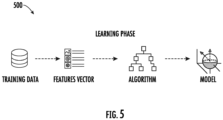
FIG. 5 is a simplified block diagram of a learning phase that can be used to train the classifier shown inFIG. 4 ; -
FIG. 6 is a simplified block diagram illustrating a federated learning system; and -
FIG. 7 is a block diagram of a programmable computer system. - A detailed description of one or more embodiments of the disclosed systems and methods are presented herein by way of exemplification and not limitation with reference to the Figures.
- Embodiments of the present invention provide computer systems, computer-implemented methods, and computer program products operable to address a DR in the form of an energy budget for a site that allocates a maximum total energy usage to a site over a predetermined time duration. In embodiments, the energy usage can cover a variety of energy forms generated by a variety of energy sources, including, for example, electricity, natural gas, light, and the like. According to an embodiment of the invention, a controller receives an energy budget for a site, the energy budget including an allocated maximum total energy usage by energy loads of the site over a predetermined time duration. An energy usage forecast for the energy loads over the predetermined time duration is generated, and, based at least in part on a determination that the energy usage forecast exceeds the energy budget, an energy usage reduction plan is created and implemented. The energy usage reduction plan includes instructions that control one or more of the energy loads such that an actual total energy usage by the energy loads over the predetermined time duration does not exceed the energy budget.
-
FIG. 1 is a simplified block diagram of asystem 100 having acontroller 110 operable to, in accordance with an embodiment,control energy loads 160 to meet anenergy budget 112 assigned to a site 204 (shown inFIG. 2 ) by a remote energy source 130 (e.g., a utility service provider). In some embodiments, the controller is integrated into an existing controller of theenergy loads 160, including, for example a thermostat that controls temperature settings ofcertain energy loads 160 such as HVAC systems and/or water heating systems. In embodiments of the invention, theenergy budget 112 allocates a maximum total energy usage to a site over a predetermined time duration. Thecontroller 110 is operable to perform the methodology 300 depicted inFIG. 3 to receive theenergy budget 112, generate or predict anenergy forecast 114 for thesite 204 over the predetermined time duration, and compare theenergy budget 112 to theenergy forecast 114 to determine whether nor not thesite 204 will stay within theenergy budget 204 over the predetermined time duration. - In embodiments of the invention, the
energy forecast 114 is generated or predicted using machine learning algorithms 412 and models 416 (e.g., a model of the site 204 (shown inFIG. 2 ) and/or a model of one or more of the energy loads 160) trained usingvarious data sources 170, data from anenergy management system 150 of thesite 204, and input from asensor network 140 that measures events at thesite 204. For example, thesensor network 140 can provide data about whether or not thesite 204 is occupied, as well as data about the comfort level being experienced by the occupants of thesite 204. In accordance with embodiments of the invention, the term site can include, but is not limited to, office buildings, manufacturing locations, warehouse areas, homes, apartments, or any types of areas that utilize electricity. Theenergy management system 150 includes a transceiver that is operable to send and receive information to and from thecontroller 110, theremote energy source 130, and/or acloud computing system 102. Theenergy management system 150 is operable to manage one or more of theenergy loads 160 and the local energy sources 180 within thesite 204. In the example case of buildings, the energy loads 160 can include but are not limited to, HVAC systems, water heaters, power storage system, renewable energy generation systems, lighting systems, elevator systems, large machine systems, and the like. - In some embodiments of the invention, the
controller 110 generates anenergy reduction plan 118 when the comparison between theenergy budget 112 and theenergy forecast 114 indicates that thesite 204 will not stay within theenergy budget 204 over the predetermined time duration. The energyusage reduction plan 118 includes instructions that control (e.g., through the energy management system 150) one or more of the energy loads 160 such that an actualtotal energy usage 116 by the energy loads over the predetermined time duration does not exceed theenergy budget 112. As described in greater detail in connection with the description of the methodology 300 (shown inFIG. 3 ), theactual energy usage 116 is also used to update theenergy forecast 114 and perform additional iterations of theenergy forecast 114 andenergy budget 112 comparison to determine whether theenergy reduction plan 118 is working. - The
cloud computing system 102 can be in wired or wireless electronic communication with one or all of the components of thesystem 100.Cloud computing system 102 can supplement, support, or replace some or all of the functionality of the components of thesystem 100. Additionally, some or all of the functionality of the components of thesystem 100 can be implemented as a node of thecloud computing system 102. -
FIG. 2 is a simplified block diagram of asystem 110A having acontroller 110A operable to, in accordance with an embodiment, control energy loads to meet an energy budget (e.g.,energy budget 112 shown inFIG. 1 ) assigned to asite 204. Thesystem 110A performs substantially the same as thesystem 110 except additional detail are provided about thesystem 110A. More specifically, in thesystem 110A, thecontroller 110A and theenergy management system 150A are incorporated within athermostat 206 that controls anHVAC system 160A of thesite 204. Aschedule 208 has been programmed into thethermostat 206, where the schedule programs the temperature settings of theHVAC system 160A. For example, during winter months theschedule 208 can be programmed by a user to instruct theemergency management system 150A to automatically reduce the temperature of theHVAC system 160A to 70 degrees Fahrenheit during the hours (e.g., 10:00pm to 8:00am) when the occupants of thesite 204 are sleeping. As another example, during a one-week winter vacation taken by the occupants of thesite 204, theschedule 208 can be programmed by a user to instruct theemergency management system 150A to automatically maintain the temperature of theHVAC system 160A at 60 degrees Fahrenheit during the entire time the occupants of thesite 204 are away from thesite 204 and on vacation. As another example, theschedule 208 can be programmed by a user to instruct theemergency management system 150A to automatically maintain the temperature of theHVAC system 160A at 60 degrees Fahrenheit during winter months when all of the occupants of thesite 204 are at work or school (e.g., between 8:00am and 3:30pm). Continuing with a description of how thesystem 100A compares with the system 100 (shown inFIG. 1 ), theremote energy source 130 can be autility company 130A; theremote data source 170 can be aweather forecast 170A; and the local energy source 180 can be a local solar energy source/system 180A. -
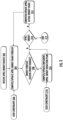
FIG. 3 is a flow diagram illustrating a methodology 300 in accordance with embodiments. The methodology 300 is implemented bycontrollers FIGS. 1 and2 ) in communication with the components of thesystem FIGS. 1 and2 ) to controlenergy loads FIGS. 1 and2 ) to meet an energy demand budget (e.g.,energy budget 112 shown inFIG. 1 ) assigned to a site (e.g.,site 204 shown inFIG. 2 ). The methodology 300 begins atblock 302 where thecontroller FIG. 3 , the time duration is a month, and the particular month covered by the time duration is April. However, in embodiments of the invention other time durations can be used. For example, the time duration can be from 4pm through 8pm on an upcoming Wednesday evening. In embodiments, the energy budget is received atblock 302 sufficiently in advance of the energy budget's time duration to allow the methodology 300 to be performed, and particularly to allow the operations atblock 304 to be performed. For example, the energy budget can be received atblock 302 on a Tuesday evening, and the time duration of the energy budget can be the following day, Wednesday, from 4pm through 8pm. Accordingly, in embodiments, the time duration of the energy budget happens subsequently to the energy budget being received at thecontroller - At
block 304, the methodology 300 uses the energy budget received atblock 302 and user constraints accessed or entered at block 306 to compute and/or update a forecast (or prediction) of the energy usage that will occur at thesite 204 in April. The user constraints at block 306 can be any user preference input to thesystem FIGS. 1 and2 ). For example, the user constraints can be the load operation schedule 208 (shown inFIG. 2 ) entered at the smart thermostat 206 (shown inFIG. 2 ) to control energy loads (e.g., lighting, HVAC, water heaters, and the like) based on user preference and/or user occupancy at thesite 204. In another example the user constraint can be a preference to use thelocal energy sources 180, 180A (shown inFIGS. 1 and2 ) as often as possible. In embodiments of the invention, the operations atblock 304 can be performed using machine learning algorithms 412 and models 416 (shown inFIG. 4 ) trained to compute and/or update the forecast (or prediction) of the energy usage that will occur in April at the site. In some embodiments of the invention, the machine learning algorithms 412 andmodels 416 can be trained in a federated learning system 600 (shown inFIG. 6 ). - From
block 304, the methodology 300 moves to decision block 308 and determines whether or not the computed/updated energy usage exceeds the energy budget. If the answer to the inquiry atdecision block 308 is no, the methodology 300 moves to decision block 310 to determine whether the predetermined time duration (e.g., April) has ended. If the answer to the inquiry atdecision block 310 is yes, the methodology 300 moves to block 312 and ends. If the answer to the inquiry atdecision block 310 is no, the methodology 300 moves to block 314 and computes or updates the actual energy usage at thesite 204 to-date and returns to block 306 to compute and update the energy forecast taking into account the actual energy usage to-date. If the answer to the inquiry atdecision block 308 is yes, the methodology 300 moves to block 316 and computes/updates/implements an energy reduction plan operable to include instructions (e.g., issued through theenergy management system FIGS. 1 and2 ) that control one or more of the energy loads 160, 160A such that an actual total energy usage by the energy loads 160, 10A over the predetermined time duration (e.g., April) does not exceed the energy budget. The operations at block 318 incorporate user constraints into the operations atblock 316. In some embodiments of the invention, the user constraints accessed or generated at block 318 can be the same as the user constraints accessed or generated at block 306. In some embodiment of the invention, the user constraints accessed or generated at block 318 can be constraints targeted specifically for how the emergency reduction plan is computed/updated/implemented. For example, the user can have difficulty sleeping in warmer temperatures so can define for block 318 a constraint that the computed/updated/implemented energy reduction plan cannot raise HVAC temperatures above 75 degrees Fahrenheit when the outdoor temperature is above 75 degrees Fahrenheit during the hours between 9:30 pm and 8:00am (i.e., the hours when the user sleeps) unless thesystem site 204 is not occupied. - In embodiments of the invention, the operations at
block 316 can be performed using machine learning algorithms 412 and models 416 (shown inFIG. 4 ) trained to compute and/or update the energy reduction plan. In some embodiments of the invention, the machine learning algorithms 412 andmodels 416 can be trained in a federated learning system 600 (shown inFIG. 6 ). - From
block 316, the methodology 300 returns to the input to decision block 310 to determine whether the predetermined time duration (e.g., April) has ended. If the answer to the inquiry atdecision block 310 is yes, the methodology 300 moves to block 312 and ends. If the answer to the inquiry atdecision block 310 is no, the methodology 300 moves to block 314 and computes or updates the actual energy usage at thesite 204 to-date and returns to block 306 to compute and update the energy forecast taking into account the actual energy usage to-date determined atblock 314 and the energy reduction plan determined atblock 316. - Additional details of machine learning techniques that can be used to implement functionality of the
controller - The basic function of learning machines and their machine learning algorithms is to recognize patterns by interpreting unstructured sensor data through a kind of machine perception. Unstructured real-world data in its native form (e.g., images, sound, text, or time series data) is converted to a numerical form (e.g., a vector having magnitude and direction) that can be understood and manipulated by a computer. The machine learning algorithm performs multiple iterations of learning-based analysis on the real-world data vectors until patterns (or relationships) contained in the real-world data vectors are uncovered and learned. The learned patterns/relationships function as predictive models that can be used to perform a variety of tasks, including, for example, classification (or labeling) of real-world data and clustering of real-world data. Classification tasks often depend on the use of labeled datasets to train the classifier (i.e., the model) to recognize the correlation between labels and data. This is known as supervised learning. Examples of classification tasks include identifying objects in images (e.g., stop signs, pedestrians, lane markers, etc.), recognizing gestures in video, detecting voices, detecting voices in audio, identifying particular speakers, transcribing speech into text, and the like. Clustering tasks identify similarities between objects, which the clustering task groups according to those characteristics in common and which differentiate them from other groups of objects. These groups are known as "clusters."
- An example of machine learning techniques that can be used to implement embodiments of the invention will be described with reference to
FIGS. 4 and5 .FIG. 4 depicts a block diagram showing aclassifier system 400 capable of implementing various predicting and determining aspects of the embodiments described herein. More specifically, the functionality of thesystem 400 is used in embodiments of the invention to generate various models and/or sub-models that can be used to implement predicting and determining functionality in embodiments of the invention. Theclassifier system 400 includesmultiple data sources 402 in communication (e.g., through a network 404) with aclassifier 410. In some embodiments of the invention, thedata sources 402 can bypass thenetwork 404 and feed directly into theclassifier 410. Thedata sources 402 provide data/information inputs that will be evaluated by theclassifier 410 in accordance with embodiments of the invention. Thedata sources 402 also provide data/information inputs that can be used by theclassifier 410 to train and/or update model(s) 416 created by theclassifier 410. Thedata sources 402 can be implemented as a wide variety of data sources, including but not limited to, sensors operable to gather real time data, data repositories (including training data repositories), and outputs from other classifiers. Thenetwork 404 can be any type of communications network, including but not limited to local networks, wide area networks, private networks, the Internet, and the like. - The
classifier 410 can be implemented as algorithms executed by a programmable computer such as the computing system 700 (shown inFIG. 7 ). As shown inFIG. 4 , theclassifier 410 includes a suite of machine learning (ML) algorithms 412; and model(s) 416 that are relationship (or prediction) algorithms generated (or learned) by the ML algorithms 412. Thealgorithms 412, 416 of theclassifier 410 are depicted separately for ease of illustration and explanation. In embodiments of the invention, the functions performed by thevarious algorithms 412, 416 of theclassifier 410 can be distributed differently than shown. In some embodiments of the invention, natural language processing (NLP) algorithms can be integrated within the ML algorithms 412. - Referring now to
FIGS. 4 and5 collectively,FIG. 5 depicts an example of alearning phase 500 performed by the ML algorithms 412 to generate the above-describedmodels 416. In thelearning phase 500, theclassifier 410 extracts features from the training data and coverts the features to vector representations that can be recognized and analyzed by the ML algorithms 412. The features vectors are analyzed by the ML algorithm 412 to "classify" the training data against the target model (or the model's task) and uncover relationships between and among the classified training data. Examples of suitable implementations of the ML algorithms 412 include but are not limited to neural networks, support vector machines (SVMs), logistic regression, decision trees, hidden Markov Models (HMMs), etc. The learning or training performed by the ML algorithms 412 can be supervised, unsupervised, or a hybrid that includes aspects of supervised and unsupervised learning. Supervised learning is when training data is already available and classified/labeled. Unsupervised learning is when training data is not classified/labeled so must be developed through iterations of theclassifier 410 and the ML algorithms 412. Unsupervised learning can utilize additional learning/training methods including, for example, clustering, anomaly detection, neural networks, deep learning, and the like. - When the
models 416 are sufficiently trained by the ML algorithms 412, thedata sources 402 that generate "real world" data are accessed, and the "real world" data is applied to themodels 416 to generate usable versions of theresults 420. In some embodiments of the invention, theresults 420 can be fed back to theclassifier 410 and used by the ML algorithms 412 as additional training data for updating and/or refining themodels 416. -
FIG. 6 depicts afederated learning system 600 that can be used to train machine learning algorithms 412 andmodels 416 to perform the operations depicted atblocks 304, 318 of the methodology 300 (shown inFIG. 3 ). As shown, thefederated learning system 600 includes anaggregation server 602 communicatively coupled to servers and data repositories for various data owners. Data Owner A maintains Server A and Data A (or data repository A); Data Owner B maintains Server B and Data B (or data repository B); and Data Owner C maintains Server C and Data C (or data repository C). In some embodiments of the invention, the Data Owners A-C are individual sites (e.g.,site 204 shown inFIG. 2 ) that utilize a controller (e.g.,controller FIGS. 1 and2 ) to implement the methodology 300 (shown inFIG. 3 ) but are each a separate entity/site at a separate physical location. - The
federated learning system 600 can implement any type of federated learning. In general, federated learning is a process of computing a common or global ML model by using input from several locally resident ML models that have been trained using private and locally held data. In some embodiments of the invention, the federated learning process implemented by thefederated learning system 600 includes theaggregation server 602 generating an initial version of a global or common ML model and broadcasting it to each of the Servers A-C. Each of the Servers A-C, includes training data and test data. Each of the Servers A-C uses its local test data to train its own local ML model in a privacy-preserving way (to avoid leakage of sensitive inferences about its data) and sends parameters of its local ML model to theaggregation server 602, which collects the parameters of the various ML models from the Servers A-C, uses them to calculate updated parameters for the global ML model, and sends the global ML model parameters back to the Servers A-C for a new round of local ML model training based on the global ML model parameters. After several rounds of continuously updating the global ML model in this fashion, a desired model performance level is reached. Theaggregation server 602 then shares this global ML model with each of the Servers A-C for use on each of the Server's private and locally held data. -
FIG. 7 illustrates an example of acomputer system 700 that can be used to implement the controller 120 described herein. Thecomputer system 700 includes an exemplary computing device ("computer") 702 configured for performing various aspects of the content-based semantic monitoring operations described herein in accordance embodiments of the invention. In addition tocomputer 702,exemplary computer system 700 includesnetwork 714, which connectscomputer 702 to additional systems (not depicted) and can include one or more wide area networks (WANs) and/or local area networks (LANs) such as the Internet, intranet(s), and/or wireless communication network(s).Computer 702 and additional system are in communication vianetwork 714, e.g., to communicate data between them. -
Exemplary computer 702 includesprocessor cores 704, main memory ("memory") 710, and input/output component(s) 712, which are in communication viabus 703.Processor cores 704 includes cache memory ("cache") 706 and controls 708, which include branch prediction structures and associated search, hit, detect and update logic, which will be described in more detail below.Cache 706 can include multiple cache levels (not depicted) that are on or off-chip fromprocessor 704.Memory 710 can include various data stored therein, e.g., instructions, software, routines, etc., which, e.g., can be transferred to/fromcache 706 bycontrols 708 for execution byprocessor 704. Input/output component(s) 712 can include one or more components that facilitate local and/or remote input/output operations to/fromcomputer 702, such as a display, keyboard, modem, network adapter, etc. (not depicted). - Embodiments of the invention described herein can be a system, a method, and/or a computer program product at any possible technical detail level of integration. The computer program product may include a computer readable storage medium (or media) having computer readable program instructions thereon for causing a controller or processor to carry out aspects of the embodiments of the invention.
- The computer readable storage medium can be a tangible device that can retain and store instructions for use by an instruction execution device. The computer readable storage medium may be, for example, but is not limited to, an electronic storage device, a magnetic storage device, an optical storage device, an electromagnetic storage device, a semiconductor storage device, or any suitable combination of the foregoing. A non-exhaustive list of more specific examples of the computer readable storage medium includes the following: a portable computer diskette, a hard disk, a random access memory (RAM), a read-only memory (ROM), an erasable programmable read-only memory (EPROM or Flash memory), a static random access memory (SRAM), a portable compact disc read-only memory (CD-ROM), a digital versatile disk (DVD), a memory stick, a floppy disk, a mechanically encoded device such as punch-cards or raised structures in a groove having instructions recorded thereon, and any suitable combination of the foregoing. A computer readable storage medium, as used herein, is not to be construed as being transitory signals per se, such as radio waves or other freely propagating electromagnetic waves, electromagnetic waves propagating through a waveguide or other transmission media (e.g., light pulses passing through a fiber-optic cable), or electrical signals transmitted through a wire.
- For the sake of brevity, conventional techniques related to making and using the disclosed embodiments may or may not be described in detail herein. In particular, various aspects of computing systems and specific computer programs to implement the various technical features described herein are well known. Accordingly, in the interest of brevity, many conventional implementation details are only mentioned briefly or are omitted entirely without providing the well-known system and/or process details.
- Many of the function units of the systems described in this specification have been labeled or described as modules. Embodiments of the invention apply to a wide variety of module implementations. For example, a module can be implemented as a hardware circuit including custom VLSI circuits or gate arrays, off-the-shelf semiconductors such as logic chips, transistors, or other discrete components. A module can also be implemented in programmable hardware devices such as field programmable gate arrays, programmable array logic, programmable logic devices or the like. Modules can also be implemented in software for execution by various types of processors. An identified module of executable code can, for instance, include one or more physical or logical blocks of computer instructions which can, for instance, be organized as an object, procedure, or function. Nevertheless, the executables of an identified module need not be physically located together but can include disparate instructions stored in different locations which, when joined logically together, function as the module and achieve the stated purpose for the module.
- The various components, modules, sub-function, and the like of the systems illustrated herein are depicted separately for ease of illustration and explanation. In embodiments of the invention, the operations performed by the various components, modules, sub-functions, and the like can be distributed differently than shown without departing from the scope of the various embodiments described herein unless it is specifically stated otherwise.
- For convenience, some of the technical operations described herein are conveyed using informal expressions. For example, a processor that has data stored in its cache memory can be described as the processor "knowing" the data. Similarly, a user sending a load-data command to a processor can be described as the user "telling" the processor to load data. It is understood that any such informal expressions in this detailed description should be read to cover, and a person skilled in the relevant art would understand such informal expressions to cover, the formal and technical description represented by the informal expression.
- The terms "about," "substantially," "approximately," and variations thereof, are intended to include the degree of error associated with measurement of the particular quantity based upon the equipment available at the time of filing the application. For example, "about" can include a range of ± 8% or 5%, or 2% of a given value.
- The terminology used herein is for the purpose of describing particular embodiments only and is not intended to be limiting. As used herein, the singular forms "a", "an" and "the" are intended to include the plural forms as well, unless the context clearly indicates otherwise. It will be further understood that the terms "comprises" and/or "comprising," when used in this specification, specify the presence of stated features, integers, steps, operations, elements, and/or components, but do not preclude the presence or addition of one or more other features, integers, steps, operations, element components, and/or groups thereof.
- While the present invention has been described with reference to an exemplary embodiment or embodiments, it will be understood by those skilled in the art that various changes may be made and equivalents may be substituted for elements thereof without departing from the scope of the present invention as set out in the appended claims. In addition, many modifications may be made to adapt a particular situation or material to the teachings of the present disclosure without departing from the scope as defined by the claims. Therefore, it is intended that the present invention not be limited to the particular embodiment disclosed, but that the present disclosure will include all embodiments falling within the scope of the appended claims.
Claims (15)
- A thermostat (206) of a heating, ventilation and air conditioning (HVAC) system (160A), the thermostat comprising a controller (110) operable to perform operations comprising:receiving an energy budget (112) for a site, the energy budget comprising an allocated maximum total energy usage by energy loads (160) of the site over a predetermined time duration;generating an energy usage forecast (114) for the energy loads over the predetermined time duration; andbased at least in part on a determination that the energy usage forecast exceeds the energy budget, generating an energy usage reduction plan (118);wherein the energy usage reduction plan comprises instructions operable to control one or more of the energy loads such that an actual total energy usage by the energy loads over the predetermined time duration does not exceed the energy budget; andwherein the energy loads include the HVAC system.
- The thermostat of claim 1, wherein the operations further comprise monitoring the actual energy usage (116) at the site during the predetermined time duration.
- The thermostat of claim 2, wherein the operations further comprise updating the energy usage forecast based at least in part on the actual energy usage at the site during the predetermined time duration.
- The thermostat of any of the preceding claims, wherein the instructions control the one or more of the energy loads to draw energy from a local energy source (190) of the site.
- The thermostat of any of the preceding claims, wherein the energy usage reduction plan is based at least in part on an occupancy of the site (204); and/or
wherein the energy usage reduction plan is based at least in part on an assessment of a comfort level of occupants of the site. - The thermostat of any of the preceding claims, wherein the energy usage reduction plan is based at least in part on local site information selected from the group consisting ofa size of the site;a forecasted weather condition (170A) at the site;a capacity of at least one of the energy loads;a usage schedule of the at least one of the energy loads;a temperature set point of the thermostat operable to control the at least one of the energy loads; andone or more user constraints.
- The thermostat of any of the preceding claims, wherein the controller is operable to utilize a machine learning algorithm that includes a machine learning model of the site and the energy loads; and/or
wherein the machine learning algorithm (412) is operable to generate the energy usage forecast and the energy usage reduction plan. - The thermostat of any of the preceding claims, wherein:the controller is a member of a federated learning system (600); andthe machine learning model is trained using the federated learning system.
- A method of operating a controller (110) of a thermostat (206) of a heating, ventilation and air conditioning (HVAC) system (160A), wherein the method operates the controller to:receive an energy budget (112) for a site, the energy budget comprising an allocated maximum total energy usage by energy loads (160) of the site over a predetermined time duration;generate an energy usage forecast (114) for the energy loads over the predetermined time duration; andbased at least in part on a determination that the energy usage forecast exceeds the energy budget, generate an energy usage reduction plan (118);wherein the energy usage reduction plan comprises instructions operable to control one or more of the energy loads such that an actual total energy usage by the energy loads over the predetermined time duration does not exceed the energy budget; andwherein the energy loads include the HVAC system.
- The method of claim 9 further comprising operating the controller to monitor the actual energy usage (116) at the site during the predetermined time duration, and/or
operating the controller to update the energy usage forecast based at least in part on the actual energy usage at the site during the predetermined time duration. - The method of any one of claims 9 and 10, wherein the instructions control the one or more of the energy loads to draw energy from a local energy source of the site (204).
- The method of any one of claims 9 to 11, wherein the energy usage reduction plan is based at least in part on an occupancy of the site; and/or
wherein the energy usage reduction plan is based at least in part on an assessment of a comfort level of occupants of the site. - The method of any one of claims 9 to 12, wherein the energy usage reduction plan is based at least in part on local site information selected from the group consisting of:a size of the site;a forecasted weather condition (170A) at the site;a capacity of at least one of the energy loads;a usage schedule of the at least one of the energy loads;a temperature set point of a thermostat operable to control the at least one of the energy loads; andone or more user constraints.
- The method of any one of claims 9 to 13, wherein the controller is operable to utilize a machine learning algorithm that includes a machine learning model of the site and the energy loads; and/or
wherein the machine learning algorithm (412) is operable to generate the energy usage forecast and the energy usage reduction plan. - The method of any one of claims 9 to 14, wherein:the controller is a member of a federated learning system (600); andthe machine learning model is trained using the federated learning system.
Applications Claiming Priority (1)
| Application Number | Priority Date | Filing Date | Title |
|---|---|---|---|
| US202263434519P | 2022-12-22 | 2022-12-22 |
Publications (2)
| Publication Number | Publication Date |
|---|---|
| EP4390608A1 true EP4390608A1 (en) | 2024-06-26 |
| EP4390608B1 EP4390608B1 (en) | 2026-05-20 |
Family
ID=89224248
Family Applications (1)
| Application Number | Title | Priority Date | Filing Date |
|---|---|---|---|
| EP23218263.4A Active EP4390608B1 (en) | 2022-12-22 | 2023-12-19 | ENERGY BULT CONTROL TO FULFILLE A SITE-ASSIGNED ENERGY BUDGET |
Country Status (3)
| Country | Link |
|---|---|
| US (1) | US20240210062A1 (en) |
| EP (1) | EP4390608B1 (en) |
| CN (1) | CN118242739A (en) |
Families Citing this family (1)
| Publication number | Priority date | Publication date | Assignee | Title |
|---|---|---|---|---|
| US12348476B2 (en) * | 2023-10-30 | 2025-07-01 | Zoom Communications, Inc. | Message generation based on multichannel context |
Citations (3)
| Publication number | Priority date | Publication date | Assignee | Title |
|---|---|---|---|---|
| US20190378020A1 (en) * | 2018-05-04 | 2019-12-12 | Johnson Controls Technology Company | Building energy system with energy data stimulation for pre-training predictive building models |
| US20210216902A1 (en) * | 2020-01-09 | 2021-07-15 | International Business Machines Corporation | Hyperparameter determination for a differentially private federated learning process |
| US20220253078A1 (en) * | 2021-02-09 | 2022-08-11 | Alarm.Com Incorporated | Smart energy scheduling |
Family Cites Families (4)
| Publication number | Priority date | Publication date | Assignee | Title |
|---|---|---|---|---|
| WO2010135372A1 (en) * | 2009-05-18 | 2010-11-25 | Alarm.Com Incorporated | Remote device control and energy monitoring |
| US8886361B1 (en) * | 2009-06-22 | 2014-11-11 | The Southern Company | Energy decision management system |
| US20150112763A1 (en) * | 2013-10-18 | 2015-04-23 | Gridpoint, Inc. | Real time energy consumption management of appliances, devices, and equipment used in high-touch and on-demand services and operations |
| US9835352B2 (en) * | 2014-03-19 | 2017-12-05 | Opower, Inc. | Method for saving energy efficient setpoints |
-
2023
- 2023-12-19 EP EP23218263.4A patent/EP4390608B1/en active Active
- 2023-12-21 CN CN202311768557.5A patent/CN118242739A/en active Pending
- 2023-12-21 US US18/392,332 patent/US20240210062A1/en active Pending
Patent Citations (3)
| Publication number | Priority date | Publication date | Assignee | Title |
|---|---|---|---|---|
| US20190378020A1 (en) * | 2018-05-04 | 2019-12-12 | Johnson Controls Technology Company | Building energy system with energy data stimulation for pre-training predictive building models |
| US20210216902A1 (en) * | 2020-01-09 | 2021-07-15 | International Business Machines Corporation | Hyperparameter determination for a differentially private federated learning process |
| US20220253078A1 (en) * | 2021-02-09 | 2022-08-11 | Alarm.Com Incorporated | Smart energy scheduling |
Non-Patent Citations (1)
| Title |
|---|
| GENG LONGLING ET AL: "Evaluation of Smart Home Systems and Novel UV-Oriented Solution for Integration, Resilience, Inclusiveness & Sustainability", 2022 6TH INTERNATIONAL CONFERENCE ON UNIVERSAL VILLAGE (UV), IEEE, 22 October 2022 (2022-10-22), pages 1 - 386, XP034383551, DOI: 10.1109/UV56588.2022.10185519 * |
Also Published As
| Publication number | Publication date |
|---|---|
| CN118242739A (en) | 2024-06-25 |
| EP4390608B1 (en) | 2026-05-20 |
| US20240210062A1 (en) | 2024-06-27 |
Similar Documents
| Publication | Publication Date | Title |
|---|---|---|
| KR102822140B1 (en) | Artificial intelligence model-based inference of a building's energy usage and how to save it methods, devices, and systems for delivering solutions | |
| Moreno et al. | Big data: the key to energy efficiency in smart buildings | |
| US11247580B2 (en) | Apparatus and method for predicting failure of electric car charger | |
| US10896378B2 (en) | Fast detection of energy consumption anomalies in buildings | |
| Li et al. | Short term predictions of occupancy in commercial buildings—Performance analysis for stochastic models and machine learning approaches | |
| Rodger | A fuzzy nearest neighbor neural network statistical model for predicting demand for natural gas and energy cost savings in public buildings | |
| US20240289596A1 (en) | Systems and Methods for Analysis of Home Telematics Using Generative AI | |
| da Silva et al. | Performance evaluation of LSTM neural networks for consumption prediction | |
| Dorokhova et al. | Rule-based scheduling of air conditioning using occupancy forecasting | |
| Coraci et al. | An innovative heterogeneous transfer learning framework to enhance the scalability of deep reinforcement learning controllers in buildings with integrated energy systems | |
| US20170169344A1 (en) | Methods, systems, and computer readable media for a data-driven demand response (dr) recommender | |
| US11815863B2 (en) | Predictive modeling and control for water resource infrastructure | |
| US20200408566A1 (en) | Automatic Diagnostics Generation in Building Management | |
| Khosrowpour et al. | Occupant workstation level energy-use prediction in commercial buildings: Developing and assessing a new method to enable targeted energy efficiency programs | |
| EP3985460B1 (en) | Controller, control system and method to control a facility and to generate a control model by learning | |
| US12008070B2 (en) | Method and apparatus for predicting time-series data | |
| US11371741B2 (en) | Air conditioning apparatus and method for controlling using learned sleep modes | |
| Luo et al. | Quantifying the effect of multiple load flexibility strategies on commercial building electricity demand and services via surrogate modeling | |
| US20250137675A1 (en) | Systems and methods for learning and utilizing occupant tolerance in demand response | |
| US20250155151A1 (en) | Systems and methods for environmental control | |
| CN106485342A (en) | Enterprise operation is made with facility energy using the analysis engine that is mutually related | |
| US20240210062A1 (en) | Controlling energy loads to meet an energy budget assigned to a site | |
| Olaru et al. | Electricity production and consumption modeling through fuzzy logic | |
| CN121073061A (en) | Ordered electricity utilization management method and system based on user behavior analysis | |
| US12313277B1 (en) | System for controlling heating ventilation and air conditioning (HVAC) systems |
Legal Events
| Date | Code | Title | Description |
|---|---|---|---|
| PUAI | Public reference made under article 153(3) epc to a published international application that has entered the european phase |
Free format text: ORIGINAL CODE: 0009012 |
|
| STAA | Information on the status of an ep patent application or granted ep patent |
Free format text: STATUS: THE APPLICATION HAS BEEN PUBLISHED |
|
| AK | Designated contracting states |
Kind code of ref document: A1 Designated state(s): AL AT BE BG CH CY CZ DE DK EE ES FI FR GB GR HR HU IE IS IT LI LT LU LV MC ME MK MT NL NO PL PT RO RS SE SI SK SM TR |
|
| STAA | Information on the status of an ep patent application or granted ep patent |
Free format text: STATUS: REQUEST FOR EXAMINATION WAS MADE |
|
| 17P | Request for examination filed |
Effective date: 20241220 |
|
| GRAP | Despatch of communication of intention to grant a patent |
Free format text: ORIGINAL CODE: EPIDOSNIGR1 |
|
| STAA | Information on the status of an ep patent application or granted ep patent |
Free format text: STATUS: GRANT OF PATENT IS INTENDED |
|
| RIC1 | Information provided on ipc code assigned before grant |
Ipc: G05D 23/19 20060101AFI20250722BHEP Ipc: F24F 11/00 20180101ALI20250722BHEP Ipc: F24F 11/47 20180101ALI20250722BHEP Ipc: F24F 11/58 20180101ALI20250722BHEP Ipc: F24F 11/64 20180101ALI20250722BHEP Ipc: F24F 120/10 20180101ALI20250722BHEP Ipc: F24F 120/20 20180101ALI20250722BHEP Ipc: F24F 130/10 20180101ALI20250722BHEP Ipc: F24F 140/50 20180101ALI20250722BHEP Ipc: F24F 140/60 20180101ALI20250722BHEP |
|
| INTG | Intention to grant announced |
Effective date: 20250811 |
|
| GRAS | Grant fee paid |
Free format text: ORIGINAL CODE: EPIDOSNIGR3 |
|
| GRAA | (expected) grant |
Free format text: ORIGINAL CODE: 0009210 |
|
| STAA | Information on the status of an ep patent application or granted ep patent |
Free format text: STATUS: THE PATENT HAS BEEN GRANTED |