EP4389827A1 - Aminoglycoside-linked photosensitizers - Google Patents
Aminoglycoside-linked photosensitizers Download PDFInfo
- Publication number
- EP4389827A1 EP4389827A1 EP22306956.8A EP22306956A EP4389827A1 EP 4389827 A1 EP4389827 A1 EP 4389827A1 EP 22306956 A EP22306956 A EP 22306956A EP 4389827 A1 EP4389827 A1 EP 4389827A1
- Authority
- EP
- European Patent Office
- Prior art keywords
- compound
- formula
- compound according
- neo
- infections
- Prior art date
- Legal status (The legal status is an assumption and is not a legal conclusion. Google has not performed a legal analysis and makes no representation as to the accuracy of the status listed.)
- Withdrawn
Links
Images




Classifications
-
- A—HUMAN NECESSITIES
- A61—MEDICAL OR VETERINARY SCIENCE; HYGIENE
- A61P—SPECIFIC THERAPEUTIC ACTIVITY OF CHEMICAL COMPOUNDS OR MEDICINAL PREPARATIONS
- A61P31/00—Antiinfectives, i.e. antibiotics, antiseptics, chemotherapeutics
- A61P31/04—Antibacterial agents
-
- C—CHEMISTRY; METALLURGY
- C07—ORGANIC CHEMISTRY
- C07H—SUGARS; DERIVATIVES THEREOF; NUCLEOSIDES; NUCLEOTIDES; NUCLEIC ACIDS
- C07H15/00—Compounds containing hydrocarbon or substituted hydrocarbon radicals directly attached to hetero atoms of saccharide radicals
- C07H15/20—Carbocyclic rings
- C07H15/22—Cyclohexane rings, substituted by nitrogen atoms
-
- C—CHEMISTRY; METALLURGY
- C09—DYES; PAINTS; POLISHES; NATURAL RESINS; ADHESIVES; COMPOSITIONS NOT OTHERWISE PROVIDED FOR; APPLICATIONS OF MATERIALS NOT OTHERWISE PROVIDED FOR
- C09B—ORGANIC DYES OR CLOSELY-RELATED COMPOUNDS FOR PRODUCING DYES, e.g. PIGMENTS; MORDANTS; LAKES
- C09B47/00—Porphines; Azaporphines
Definitions
- the present invention concerns conjugate compounds made with an antibiotic and a photosensitizer and their different uses, notably to treat bacterial infections, notably multi-drug resistant bacterial infections.
- aPDT antibacterial photodynamic therapy
- aPDI photodynamic inactivation
- PS photosensitizers
- ROS reactive oxygen species
- Persister cells are a bacterial subpopulation of cells not genetically different from the rest of the population but that show tolerance to antibiotics. Persister cells are as threatening as drug-resistant bacteria.
- the present invention fulfills these needs.
- conjugate compounds obtained by coupling a photosensitizer to an aminoglycoside derivative, can positively influence singlet oxygen formation of the photosensitizer by preventing aggregation.
- Said conjugate compounds improve the bacteria-killing efficacy due to a synergistic effect of the photosensitizer and the aminoglycoside derivative.
- a first object of the present invention is a compound of formula (I): wherein R is an aminoglycoside derivative, optionally bonded to a linker.
- Another object of the present invention is a pharmaceutical composition
- a pharmaceutical composition comprising at least one compound of formula (I) and at least one pharmaceutically acceptable support.
- Another object of the invention is a compound according to the invention, for use as a medicament.
- a further object of the invention is a compound according to the invention for use in the treatment of bacterial infections, especially multi-drug bacteria related infections.
- a first object of the present invention is a compound of formula (I): wherein R is an aminoglycoside derivative, optionally bonded to a linker.
- the compound of formula (I) corresponds to a photosensitizer which is covalently bonded to an aminoglycoside derivative.
- said compound is also called “conjugate compound” in the present application.
- photosensitizer it is meant a molecule used in photodynamic therapy that can be activated by a light source in order to generate reactive oxygen species that can damage bacteria cell.
- photodynamic therapy it is meant a form of phototherapy involving light and a photosensitizer, used in conjunction with molecular oxygen to elicit cell death (phototoxicity).
- reactive oxygen species it is meant a chemical that comprises singlet oxygen.
- the photosensitizers are classified based on their chemical structures.
- phosensitizers are organic molecules, which may be natural or synthetic, and which are composed of aromatic substructures with a strong electron-delocalized system.
- groups of photosensitizers one may quote porphyrin derivatives, chlorin derivatives or phtalocyanine derivatives.
- the compounds of formula (I) comprise chlorin e6 (Ce6) as photosensitizer.
- R is an aminoglycoside derivative, optionally bonded to a linker, which is covalently bonded to the photosensitizer chlorin e6, via an amide bond as disclosed in formula (I).
- aminoglycoside derivative a natural or synthetic molecule composed of one or several amine substituted sugar units with or without antibiotic properties.
- the aminoglycoside derivatives have between 2 and 5 amine substituted sugar units, more preferably 3 amine substituted sugar units.
- linker it is meant a linear saturated or unsaturated hydrocarbon group comprising from 1 to 20, preferably 1 to 10, more preferably 2 to 6 carbon atoms.
- the hydrocarbon group may be optionally substituted by one or more heteroatoms such as nitrogen, phosphate or sulfur.
- the hydrocarbon linker is between the chlorin e6 and the aminoglycoside derivative.
- the linker is -CH 2 -S-CH 2 -; or -(CH2)n- with n being an integer from 1 to 20, preferably 1 to 10, more preferably 2 to 6; or -CH 2 -S-(CH 2 )m-with m being an integer from 1 to 20, preferably 1 to 10, more preferably 2 to 6; or -CH 2 -NH-CH 2 -.
- the compound has the formula (I-1): wherein R' corresponds to an aminoglycoside derivative and X is a linker.
- the aminoglycoside derivative may be chosen from tobramycin, streptomycin, neomycin, netilmicin, kamamycin, gentamicin and their derivatives.
- the conjugate compound of the invention has the following formula (II'): wherein
- the conjugate compound of the invention has the following formula (II): wherein
- alkyl it is meant a linear hydrocarbon group preferably comprising from 1 to 20 carbon atoms, in particular from 1 to 15 carbon atoms, preferably from 2 to 6 carbon atoms (C 2 -C 6 group) or a branched or cyclic hydrocarbon group comprising from 3 to 20 carbon atoms.
- alkyl groups include methyl, ethyl, n-propyl, isopropyl, n-butyl, isobutyl, tert-butyl, n-pentyl, isopentyl, n-hexyl, n-tridecyl, cyclohexyl and cyclohexylmethyl groups, and preferably ethyl, propyl, n-hexyl, n-tridecyl, cyclohexyl or cyclohexylmethyl group.
- the alkyl is not substituted.
- (C 1 -C 6 ) alkyl it is meant a linear hydrocarbon group comprising from 1 to 6 carbon atoms or a branched or cyclic hydrocarbon group comprising from 3 to 6 carbon atoms.
- Examples of (C 1 -C 6 ) alkyl groups include methyl, ethyl, n-propyl, isopropyl, n-butyl, isobutyl, tert-butyl, n-pentyl, isopentyl, n-hexyl or cyclohexyl.
- the (C 1 -C 6 ) alkyl is not substituted.
- heteroalkyl an alkyl group as previously defined above, in which at least one carbon atom is substituted by a heteroatom, and which may be optionally substituted.
- the heteroatom may be nitrogen, oxygen, phosphorus or sulfur.
- the heteroatom is nitrogen.
- the compound has the formula (I) wherein R is selected from tobramycin and its derivatives.
- tobramycin derivatives compounds that are derived from tobramycin by at least one chemical reaction.
- said chemical reaction may be the alkylation of a free-amine group.
- the conjugate compound has the following formula (II-1):
- Said compound is also called “Tobra-Ce6" in the examples.
- the compound has the formula (I) wherein R is selected from amikacin and its derivatives.
- amikacin derivatives compounds that are derived from amikacin by at least one chemical reaction.
- said chemical reaction may be the alkylation of a free-amine group.
- the conjugate compound has the following formula (II-2):
- the conjugate has the following formula (IV):
- Said compound is of formula (I), wherein R is an amikacin derivative and the chlorin e6 is covalently bonded to another free amine group of said amikacin derivative.
- the compound of formula (I) wherein R is an amikacin derivative is chosen among compounds of formula (II-2) or (IV), more preferably the compound is of formula (IV).
- the compound has the formula (I) wherein R is selected from netilmilcin and its derivatives.
- netilmycin derivatives compounds that are derived from netilmilcin by at least one chemical reaction.
- said chemical reaction may be the alkylation of a free-amine group.
- the compound is of formula (II), wherein (a) is a double bond, R 1 is H, R 2 is -NH 2 , R 3 is a -NHCH 2 CH 3 , R 4 is H, R 5 is OH, R 6 is CH 3 , R 7 is NHCH 3, , R 9 is OH and R 10 is H.
- the compound has the formula (I) wherein R is selected from kamanycin and its derivatives.
- kanamycin derivatives compounds that are derived from kamanycin by at least one chemical reaction. Said chemical reaction is for example the alkylation of free amine group.
- the compound is of formula (II), wherein (a) is a single bond, R 1 is -OH, R 2 is -OH or NH 2 , R 3 is a -NH 2 , R 4 is -CH 2 OH, R 5 is H, R 6 is OH, R 7 is NH 2 , R 9 is OH and R 10 is OH.
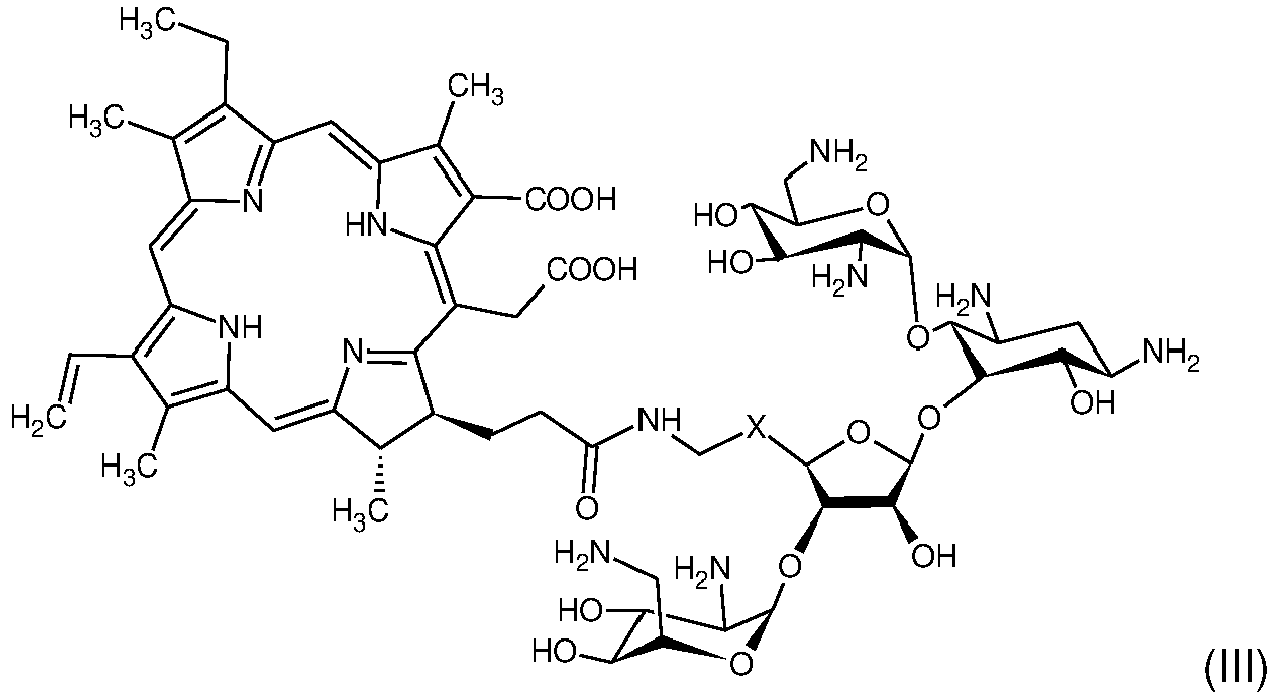
- the compound is of formula (III):
- R is a neomycin derivative and X is a linker.
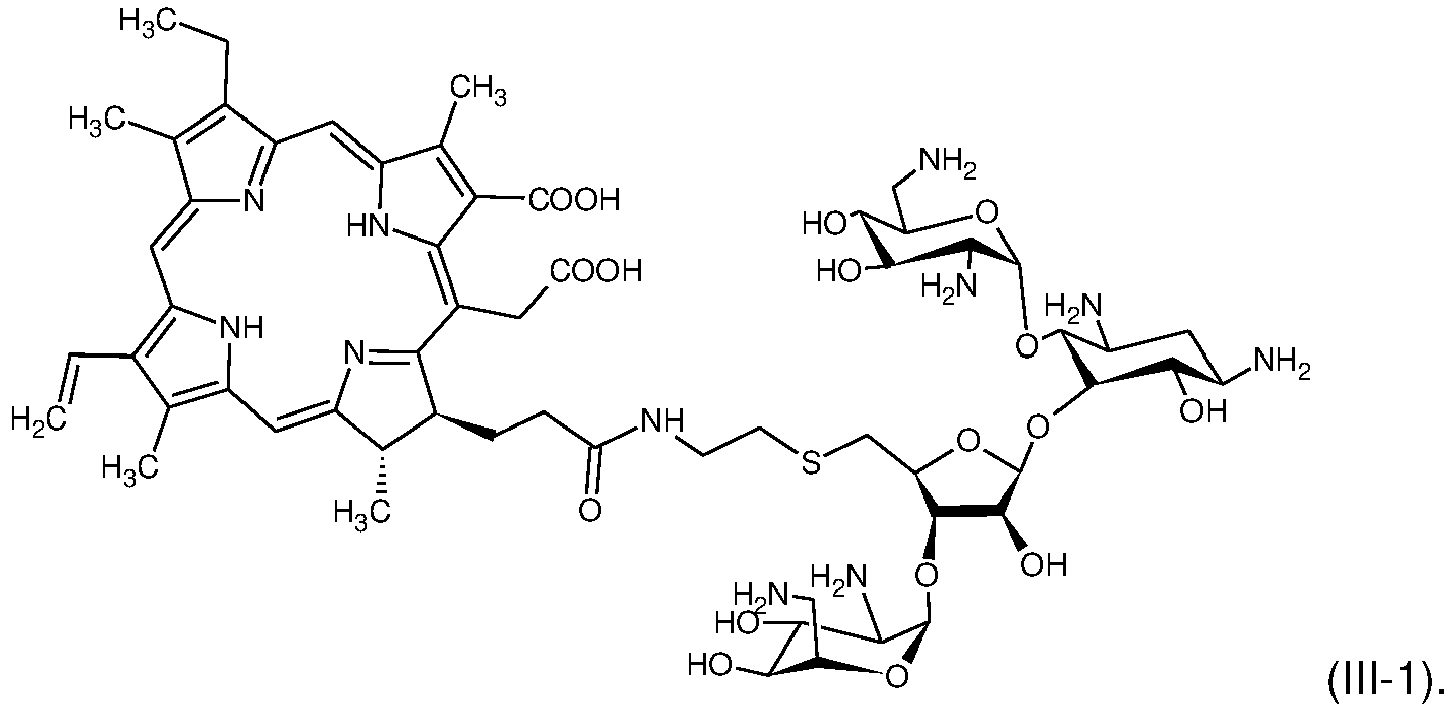
- the compound is of formula (III-1):
- Said compound is of formula (I), wherein R is a neomycin derivative which is bonded to a linker -CH 2 -S-CH 2 -.
- Said compound is called "Neo-Ce6" in the examples.
- neomycin derivatives compounds that is derived from neomycin by at least one chemical reaction. For example, the alkylation of a free-amine group.
- the present invention also relates to the use of a compound as defined above, in particular having the formula (I), (I-1), (II), (II'), (II-1),(II-2), (III), (III-1) and (IV) as a medicament.
- the compound of the invention may be used in the treatment of bacterial infections and/or fungal infections.
- treatment it is meant the curative treatment of bacterial infections.
- a curative treatment is defined as a treatment that completely treat (cure) or partially treat bacterial infections.
- bacteria infection includes the presence of bacteria, in or on a subject, which, if its growth was inhibited, would result in a benefit to the subject.
- bacterial infection in addition to referring to the presence of bacteria also refers to normal flora, which is not desirable.
- infection includes infection caused by bacteria.
- bacterial infections are urinary tract infection (UTI), kidney infections (pyelonephritis), gynecological and obstetrical infections, respiratory tract infection (RTI), acute exacerbation of chronic bronchitis (AECB), Community-acquired pneumonia (CAP), hospital-acquired pneumonia (HAP), ventilator associated pneumonia (VAP), intra-abdominal pneumonia (IAI), acute otitis media, acute sinusitis, chancroid, chlamydia, skin infections and bacteremia.
- UMI urinary tract infection
- kidney infections kidney infections
- RTI respiratory tract infection
- RTI respiratory tract infection
- AECB acute exacerbation of chronic bronchitis
- CAP Community-acquired pneumonia
- HAP hospital-acquired pneumonia
- VAP ventilator associated pneumonia
- IAI intra-abdominal pneumonia
- fungal infections includes the presence of fungi, in or on a subject, which, if its growth was inhibited, would result in a benefit to the subject.
- fungal infections in addition to referring to the presence of fungi also refers to normal flora, which is not desirable.
- infections also includes infection caused by fungi. Examples of such fungal infections are candidiasis, blastomycosis, coccidioidomycosis, aspergillosis, pneumocystis, vaginal yeast infections, dermaphytosis or onichomycosis.
- the pathogenic yeasts are preferably chosen among Candida species (including Candida albicans, Candida stellatoidea, Candida tropicalis, Candida pseudotropicalis, Candida krusei, Candida parapsilosis, Candida. Guilliermondii), Aspergillus species (including Aspergillus fumigatus, Aspergillus flavus ), Pneumocytis jirovecii and Cryptococcus neoformans.
- Candida species including Candida albicans, Candida stellatoidea, Candida tropicalis, Candida pseudotropicalis, Candida krusei, Candida parapsilosis, Candida. Guilliermondii
- Aspergillus species including Aspergillus fumigatus, Aspergillus flavus
- Pneumocytis jirovecii and Cryptococcus neoformans are preferably chosen among Candida species (including Candida albicans, Candida stellatoidea, Candida tropical
- growth refers to the growth of one or more microorganisms and includes reproduction or population expansion of a microorganism, such as bacteria.
- the term also includes maintenance of on-going metabolic processes of a microorganism, including processes that keep the microorganism alive.
- the compound of the invention is used in the treatment of fungal infections.
- the compound of the invention is used in the treatment of multi-drug resistant bacteria related infections.
- the bacteria are preferably chosen among Gram-positive bacteria or Gram-negative bacteria.
- the compound is used in the treatment of a bacterial infection caused by Gram-positive bacteria.
- the Gram-positive bacteria is preferably chosen among Staphylococcus, Streptococcus, Staphylococcus species (including Staphylococcus aureus, Staphylococcus epidermidis ), Streptococcus species (including Streptococcus pneumonia , Streptococcus agalactiae ), Enterococcus species (including Enterococcus faecalis and Enterococcus faecium ) .
- the compound is used in the treatment of a bacterial infection caused by Gram-negative bacteria.
- the Gram-negative bacteria is preferably chosen among Acinetobacter species (including Acinetobacter baumannii ) , Citrobacter species, Escherichia species (including Escherichia coli ) , Haemophilus influenza, Morganella morganii, Klebsiella species (including Klebsiella pneumonia ) , Enterobacter species (including Enterobacter cloacae ), Neisseria gonorrhoeae, Burkholderia species (including Burkholderia cepacia), ( Proteus species (including Proteus mirabilis ), Serratia species (including Serratia marcescens ), Pseudomonas aeruginosa.
- Acinetobacter species including Acinetobacter baumannii
- Citrobacter species including Escherichia coli
- Haemophilus influenza Morganella morganii
- Klebsiella species including Klebsiella pneumonia
- Enterobacter species including Enterobacter cloa
- the compound of the invention is usually included in a pharmaceutical composition.
- Said pharmaceutical composition typically comprises at least one compound according to the invention, in a pharmaceutically acceptable support.
- the amount of compound of formula (I) in the composition according to the invention may vary in a broad range depending upon the patient, the mode of administration and the expected effect.
- the compound or composition according to the invention can be administered orally or non-orally, for instance via topical, parenteral, intramuscular, intravenous, cutaneous, nasal or rectal route.
- the pharmaceutical composition of the invention can present different forms including granules, powders, tablets, capsules, syrups, emulsions, suspensions, and forms used for non-oral administration, for instance injections, sprays, transdermal patches or suppositories. These pharmaceutical forms can be prepared via known conventional techniques.
- an excipient for example lactose, sucrose, starch or mannitol
- a desintegrant for example calcium carbonate, calcium carboxymethylcellulose, alginic acid, sodium carboxymethylcellulose, colloidal silicon dioxide, sodium croscarmellose, crospovidone, guar gum, magnesium aluminium silicate, microcrystalline cellulose, cellulose powder, pregelatinised starch, sodium alginate or starch glycolate
- a binder for example alpha-starch, gum arabic, carboxymethylcellulose, polyvinylpyrrolidone, hydroxypropylcellulose, alginic acid, carbomer, dextrin, ethylcellulose, sodium alginate, maltodextrin, liquid glucose, magnesium aluminium silicate, hydroxyethylcellulose, methylcellulose or guar gum
- a lubricant for example talc, magnesium stearate or polyethylene 6000
- the tablet can be coated via the known techniques, in order to mask the taste (for example with cocoa powder, mint, borneol or cinnamon powder) or to allow enteric dissolution or sustained release of the active principles.
- Coating products that can be used are, for example, ethylcellulose, hydroxymethylcellulose, polyoxyethylene glycol, cellulose acetophthalate, hydroxypropylmethylcellulose phthalate and Eudragit ® (methacrylic acid-acrylic acid copolymer), Opadry ® (hydroxypropylmethylcellulose + macrogol + titanium oxide + lactose monohydrate).
- Pharmaceutically acceptable colorants may be added (for example yellow iron oxide, red iron oxide or quinoline yellow lake).
- the pharmaceutical forms for injection can be obtained, for example, by the following process: the active principle is dissolved, suspended or emulsified either in an aqueous medium (for example distilled water, physiological saline or Ringer's solution) or in an oily medium (for example olive oil, sesame seed oil, cottonseed oil, corn oil or propylene glycol), with a dispersant (for example Tween ® 80, HCO ® 60 (Nikko Chemicals), polyethylene glycol, carboxymethylcellulose or sodium alginate), a preserving agent (for example methyl p-hydroxybenzoate, propyl p-hydroxybenzoate, benzyl alcohol, chlorobutanol or phenol), an isotonicity agent (for example sodium chloride, glycerol, sorbitol or glucose) and optionally other additives, such as, if desired, a solubilizing agent (for example sodium salicylate or sodium acetate) or a stabilizer (for example human serum albumin).
- compositions for external use can be obtained from a solid, semi-solid or liquid composition containing the active principle.
- the active principle can be treated with excipients (for example lactose, mannitol, starch, microcrystalline cellulose or sucrose) and a thickener (for example natural gums, cellulose derivatives or acrylic polymers) so as to convert them into powder.
- excipients for example lactose, mannitol, starch, microcrystalline cellulose or sucrose
- a thickener for example natural gums, cellulose derivatives or acrylic polymers
- compositions may optionally contain a pH regulator (for example carbonic acid, phosphoric acid, citric acid, hydrochloric acid or sodium hydroxide) and a preserving agent (for example a p-hydroxybenzoic acid ester, chlorobutanol or benzalkonium chloride).
- a pH regulator for example carbonic acid, phosphoric acid, citric acid, hydrochloric acid or sodium hydroxide
- a preserving agent for example a p-hydroxybenzoic acid ester, chlorobutanol or benzalkonium chloride.
- the present application also relates to a process of sterilization of a medical device, comprising at least the following steps:
- the compound of formula (I) can be sprayed or deposited by dipping the medical device in a liquid composition (for example a solution) comprising said compound.
- a liquid composition for example a solution
- the medical device may be any device that is used in medicine, surgery or therapy. It may be invasive or non-invasive.
- the medical device may be a bandage, a stethoscope, examination gloves, a colostomy bag, an oxygen mask, a thermometer, a blood transfusion tube, a catheter, a balloon catheter, a prosthetic heart valve, a stent or a pacemaker.
- MB2 NHS-ester was obtained from Sigma-Aldrich.
- Ce6 was purchased form Bertin Bioreagent, dicyclohexylcarbodiimide (DCC), N-hydrosuccinimide (NHS), neomycin and tobramycin from Sigma.
- the NHS ester of Chlorin e6 was prepared by reacting Chlorin e6 (1.0 eq), dicyclohexyl carbodiimide (1.5 eq) and NHS (1.5 eq) in dry DMSO for 24 hours. The resultant crude mixture was frozen in aliquots for further use following the reported procedure in Khadem et al. 1999.
- the previously synthesized compound 4 was reacted with Ce-6 NHS ester to get the final protected compound.
- the purification was performed in two steps. The first step was performed with the eluant chloroform/Ethanol/NH 4 OH (7.8/2/0.16). The silica gel with the product of lowest migration was recovered and eluted with methanol. The second purification step used the eluent chloroform/Ethanol/NH 4 OH (7.8/2/0.39) and the product of fastest migration recovered. The silica gel was then recovered and placed in Eppendorf tubes and the product was eluted in methanol. The resin and the solvent were separated by centrifucation and the elution step was repeated 3 times. The sample was dried and finally, removal of the butyloxycarbonyl groups was performed in trifluoroacetic acid (90%) for 10 minutes at room temperature.
- Singlet oxygen production was evaluated using the Singlet Oxygen Sensor Green kit from Molecular Probes. Reagents were prepared accordingly to the manufacturer and the final concentration of 2.5 ⁇ M of the reagent was used for all experiments. Dilutions of both the compounds, photosensitizers and SOSGR reagent were made in cation-adjusted Mueller-Hinton-II broth (MHB-CA) (Becton, Dickinson and Company, USA) to mimic experimental settings. Irradiation was done at 660 nm for 5 minutes (857 mJ/mm 2 ) with the Solis-660C lamp from ThorLabs on a total volume of 120 ⁇ L placed in transparent 96-well plate (Nunclon Delta Surface, Thermo Scientific).
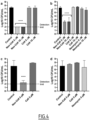
- Results show for Ce6-AG conjugates higher singlet oxygen production for both compounds when compared to Ce6 ( Figure 1 ).
- Ce6 is poorly soluble in water which can lead to self-quenching and sub-optimal therapeutic efficacy. Thanks to the AG moiety, Neo-Ce6 and Tobra-Ce6 are highly soluble which could positively influence singlet oxygen formation by preventing aggregation.
- Acinetobacter baumannii DSM30011, Bacillus subtilis 168, Pseudomonas aeruginosa PA14, P. aeruginosa PAO1, Staphylococcus aureus Mu50, S . aureus Newman and S. aureus USA300 were all grown in MHB-CA at 37°C with an agitation of 180 rpm.
- Candida albicans SC5314 was grown in yeast extract peptone dextrose broth at 35°C with an agitation of 180 rpm.
- Neo-Ce6 MICs are shown in Table 1. Synergy was evaluated according to the fractional inhibitory concentration (FIC) for irradiated samples treated with the compounds only (Doern, 2014). The combination of neomycin and Ce6 in a Neo-Ce6 compound had a synergistic effect against A. baumannii DSM30011, B. subtilis 13517, and S . aureus strains USA300, Mu50 and Newman. Neo-Ce6 also demonstrated high inhibition against pathogenic yeast C. albicans SC5314.
- FIC fractional inhibitory concentration
- Acinetobacter baumannii DSM30011, Bacillus subtilis 168, Pseudomonas aeruginosa PA14, P. aeruginosa PAO1, Staphylococcus aureus Mu50, S . aureus Newman and S. aureus USA300 were all grown in MHB-CA at 37°C with an agitation of 180 rpm.
- Candida albicans SC5314 was grown in yeast extract peptone dextrose broth at 35°C with an agitation of 180 rpm.
- Cells were brought to stationary phase by incubating them in MHB-CA for at least 18 hours at 37°C with 180 rpm and diluted to an optical density of 1.0 just before the experiment. Cells were incubated for 20 minutes with either the compounds, photosensitizers alone, or aminoglycosides alone. Unless stated otherwise, a concentration of 10 ⁇ M was used for all experiments and samples were irradiated for 30 minutes at 660 nm with the Solis-660C lamp from ThorLabs, receiving a total of 5 J/mm 2 . After illumination, cells were washed with phosphate-buffered saline (PBS) 1X, serially diluted and plated on Mueller-Hinton agar. The next day, colony forming units (CFUs) were counted.
- PBS phosphate-buffered saline
- CFUs colony forming units
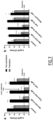
- Mean CFU drops for irradiated samples are as follows. In S . aureus Mu50, survival dropped by 4.9, 5.4 and 3.2 log10 CFU/mL for Neo-Ce6, Tobra-Ce6 and Ce6, respectively. In S . aureus Newman, survival was slightly higher. Survival dropped by about 4.3, 3.9 and 3.6 log10 CFU/mL for Neo-Ce6, Tobra-Ce6 and Ce6, respectively. Finally, in S . aureus USA300, survival dropped by 5.6, 3.5 and 3.2 log10 CFU/mL for Neo-Ce6, Tobra-Ce6 and Ce6, respectively.
- non-irradiated samples treated with Neo-Ce6 always display a weak but significant drop in CFUs ( Figures 3b, 3d, 3f ). Although the p is often low, this result has been seen in a few species, indicating the neomycin part of the compound may still have an antibiotic effect when linked to Ce6. Plus, this effect may be additive as neomycin alone at the same concentration does not lead to significantly less survival, except in S . aureus USA300.
- Gram-negative species are usually more resilient to aPDT than Gram-positive but we did have successful killing in most of our Gram-negative strains.
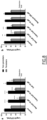
- A. baumannii DSM30011 CFUs were under the detection limit in irradiated samples with Neo-Ce6 ( Figure 4a ).
- E. coli MG1655 mutants containing kanamycin-resistance cassettes also showed low survival following aPDT. Survival was also close to the detection limit for non-irradiated samples ( Figure 4b ).
- Irradiated samples in Gram-positive B. subtilis 168 were also close to the detection limit ( Figure 4c ).
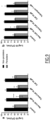
- aeruginosa PAO1 were also used in aPDT. Survival dropped 3.8 and 2.6 log10 CFU/mL for irradiated P. aeruginosa PA14 cells treated with 10 ⁇ M of Neo-Ce6 and Tobra-Ce6, respectively ( Figure 5a ).
- Neo-Ce6 showed a similar drop as in PA14 (3.6 Iog10 CFU/mL), while Tobra-Ce6 had slightly more effect (3.5 log10 CFU/mL) ( Figure 5c ). This is also seen in tobramycin alone, which led to a drop of survival of about 2.3 log10 CFU/mL ( Figure 5d ).
- Neo-Ce6 and Tobra-Ce6 caused strong drop in survival for biofilms of A. baumannii DSM3001, P. aeruginosa species and S . aureus Mu50.
- Neo-Ce6 showed the most effect against A. baumannii DSM30011(2.3 Iog10 CFU/mL), S . aureus Mu50 and P . aeruginosa PAO1 biofilm cells, reducing bacterial load by about 1.9 Iog10 CFU/mL.
- Tobra-Ce6 had its strongest effect on A. baumannii DSM30011 with more than 4 log10 CFU/mL drop in survival and a drop of 1.7 log10 CFU/mL in P. aeruginosa PA14.
- Table 2 aPDT results for biofilm cells expressed in drop in the log10 CFU/mL compared to controls. Bold results show that the survival was significantly lower than the control following one-way ANOVA. + irradiation - irradiation Neo-Ce6 Tobra-Ce6 Ce6 Neo-Ce6 Tobra-Ce6 Ce6 Neo Tobra A . baumannii DSM30011 2.62 4.17 0.71 1.79 1.58 0.45 1.33 0.93 P . aeruginosa PA14 1.38 1.69 0.60 0.83 0.85 0.29 0.01 0.79 P . aeruginosa PAO1 1.97 1.25 0.25 1.03 0.79 0.28 0.28 0.39 S .
- aureus USA300 0.80 0.14 0.73 0.18 0.28 0.33 0.16 0.26
- aureus Mu50 1.92 1.32 0.36 0.74 0.37 -0.005 0.18 -0.02
- aureus Newman 1.15 1.36 0.57 0.23 0.49 -0.19 -0.07 0.25
- Antibacterial PDT did lead to persister death in most tested species. Some species, like P. aeruginosa PA14 persister cells did show more resilience however. In Gram-negative A. baumannii DSM30011 and Gram-positive species S . aureus USA300 and Newman, aPDT against persister cells often led to CFU being under the detection limit.
- S . aureus USA300 a stable plateau was obtained following 6 hours of incubation with 2 mM of neomycin.
- the resulting persister cells were close to or under the detection limit after aPDT with Neo-Ce6 and Tobra-Ce6 at 10 ⁇ M ( Figure 6a ).
- Ce6 alone also resulted in some killing as shown in Figure 7a .
- Neomycin alone resulted in no significant drop in survival, as expected. This control is crucial to make sure that a persister state has been achieved.
- CFUs were also lowered in samples that were not irradiated, showing that the synergistic penetration of the compounds may lead to an effect of neomycin even in cells in a persister state.
- the production of singlet oxygen may not be the factor leading to cell death.
- S . aureus Newman cells were treated for 24 hours with 1 mM of neomycin. Survival for irradiated persister cells treated with Neo-Ce6 and Tobra-Ce6 is significantly lower than in cells treated with Ce6 alone ( Figure 7a ). Although this synergy does exist, like in S . aureus USA300, there is no significant difference in survival for irradiated and non-irradiated samples, except for Ce6.
Landscapes
- Chemical & Material Sciences (AREA)
- Health & Medical Sciences (AREA)
- Organic Chemistry (AREA)
- General Health & Medical Sciences (AREA)
- Life Sciences & Earth Sciences (AREA)
- Communicable Diseases (AREA)
- Chemical Kinetics & Catalysis (AREA)
- Genetics & Genomics (AREA)
- Molecular Biology (AREA)
- Biochemistry (AREA)
- Engineering & Computer Science (AREA)
- Oncology (AREA)
- Biotechnology (AREA)
- General Chemical & Material Sciences (AREA)
- Medicinal Chemistry (AREA)
- Nuclear Medicine, Radiotherapy & Molecular Imaging (AREA)
- Pharmacology & Pharmacy (AREA)
- Animal Behavior & Ethology (AREA)
- Public Health (AREA)
- Veterinary Medicine (AREA)
- Pharmaceuticals Containing Other Organic And Inorganic Compounds (AREA)
Abstract
Description
- The present invention concerns conjugate compounds made with an antibiotic and a photosensitizer and their different uses, notably to treat bacterial infections, notably multi-drug resistant bacterial infections.
- The rise in antibiotic resistance is a global threat to modern medicine. Indeed, excessive use and misuse of antibiotics have led to the spread of multidrug-resistant bacteria in the last years. These facts combined with the low discovery of new antibiotics leads to the threat of returning to the "pre-antibiotic era». Thus, there is an urgent need to find new alternatives to treat bacterial infections.
- One promising strategy is the use of antibacterial photodynamic therapy (aPDT) or photodynamic inactivation (aPDI). This technique uses molecules called photosensitizers (PS) which can be activated by light to produce reactive oxygen species (ROS) to kill bacteria. In combination with light, some photosensitizers have shown great potential in eradicating bacterial communities and biofilms. Moreover, it is known that bacteria do not develop resistance to aPDT because of the wide range of cellular components targeted by the produced ROS. However, even though the use of PS in aPDT is quite promising, some limitations have been identified. Most photosensitizers are poorly water-soluble organic molecules; therefore, they have the tendency to aggregate in biological media leading to a lower singlet oxygen production and a lower efficiency of the aPDT. Moreover, the morphological configuration of some bacteria membrane, especially Gram-negative species, makes it difficult for photosensitizers to reach the periplasmic space and cytoplasm and make the treatment less effective. The best-known alternatives to overcome these limitations is in the use of membrane-disorganizing agents like detergents and antibiotics prior or after aPDT which requires more expensive and complicated protocols of treatment.
- Thus, there is a need for compounds that are more efficient against bacterial infections, notably which can be caused by Gram-negative or Gram-positive bacteria, and especially efficient against multidrug-resistant bacterial infections.
- There is also a need to find new treatments that do not allow the development of resistance by the bacteria.
- There is also a need for compounds comprising photosensitizers that can be efficient in biological media and against all bacteria types. Compounds should be active against bacteria in their different forms including planktonic, persistent, or biofilm states. Persister cells are a bacterial subpopulation of cells not genetically different from the rest of the population but that show tolerance to antibiotics. Persister cells are as threatening as drug-resistant bacteria.
- The present invention fulfills these needs.
- Indeed, as shown in the examples, the inventors have discovered that conjugate compounds, obtained by coupling a photosensitizer to an aminoglycoside derivative, can positively influence singlet oxygen formation of the photosensitizer by preventing aggregation. Said conjugate compounds improve the bacteria-killing efficacy due to a synergistic effect of the photosensitizer and the aminoglycoside derivative.
- Thus, a first object of the present invention is a compound of formula (I):

- Another object of the present invention is a pharmaceutical composition comprising at least one compound of formula (I) and at least one pharmaceutically acceptable support.
- Another object of the invention is a compound according to the invention, for use as a medicament.
- A further object of the invention is a compound according to the invention for use in the treatment of bacterial infections, especially multi-drug bacteria related infections.
- A first object of the present invention is a compound of formula (I):

- More specifically, the compound of formula (I) corresponds to a photosensitizer which is covalently bonded to an aminoglycoside derivative. Thus, said compound is also called "conjugate compound" in the present application.
- By "photosensitizer", it is meant a molecule used in photodynamic therapy that can be activated by a light source in order to generate reactive oxygen species that can damage bacteria cell.
- By "photodynamic therapy", it is meant a form of phototherapy involving light and a photosensitizer, used in conjunction with molecular oxygen to elicit cell death (phototoxicity).
- By "reactive oxygen species", it is meant a chemical that comprises singlet oxygen.
- Conventional photosensitizers used for aPDT correspond notably to molecules described in Ghorbani J, Rahban D, Aghamiri S, Teymouri A, Bahador A. Laser Ther. 2018 Dec 31;27(4):293-302.
- Generally, the photosensitizers are classified based on their chemical structures. Preferably, phosensitizers are organic molecules, which may be natural or synthetic, and which are composed of aromatic substructures with a strong electron-delocalized system. As groups of photosensitizers, one may quote porphyrin derivatives, chlorin derivatives or phtalocyanine derivatives.
- According to the invention, the compounds of formula (I) comprise chlorin e6 (Ce6) as photosensitizer.
- R is an aminoglycoside derivative, optionally bonded to a linker, which is covalently bonded to the photosensitizer chlorin e6, via an amide bond as disclosed in formula (I).
- By "aminoglycoside derivative", it is meant a natural or synthetic molecule composed of one or several amine substituted sugar units with or without antibiotic properties. Preferably, the aminoglycoside derivatives have between 2 and 5 amine substituted sugar units, more preferably 3 amine substituted sugar units.
- By "linker", it is meant a linear saturated or unsaturated hydrocarbon group comprising from 1 to 20, preferably 1 to 10, more preferably 2 to 6 carbon atoms. The hydrocarbon group may be optionally substituted by one or more heteroatoms such as nitrogen, phosphate or sulfur. The hydrocarbon linker is between the chlorin e6 and the aminoglycoside derivative. As an example, the linker is -CH2-S-CH2-; or -(CH2)n- with n being an integer from 1 to 20, preferably 1 to 10, more preferably 2 to 6; or -CH2-S-(CH2)m-with m being an integer from 1 to 20, preferably 1 to 10, more preferably 2 to 6; or -CH2-NH-CH2-.
- Preferably, the compound has the formula (I-1):

- Preferably, the aminoglycoside derivative may be chosen from tobramycin, streptomycin, neomycin, netilmicin, kamamycin, gentamicin and their derivatives.
- Preferably, the conjugate compound of the invention has the following formula (II'):

- X is a linker;
- (a) is single or a double bond ;
- R1 is -NH2 or -OH or -H;
- R2 is -NH2 or -OH;
- R3 is a group -NH(R8), wherein R8 is H, a (C1-C6) alkyl group or a group -C(=O)-(CH(OH)CH2-CH2)-NH2;
- R4 is -CH2NH2, -CH2OH or -H;
- R5 is -OH or -H;
- R6 is an alkyl group or -OH;
- R7 is -H, -OH, -NH2 or an heteroalkyl group;
- R9 is -NH2 or -OH; and
- R10 is -H or -OH.
- Preferably, the conjugate compound of the invention has the following formula (II):

- (a) is single or a double bond ;
- R1 is -NH2 or -OH or -H;
- R2 is -NH2 or -OH;
- R3 is a group -NH(R8), wherein R8 is H, a (C1-C6) alkyl group or a group -C(=O)-(CH(OH)CH2-CH2)-NH2;
- R4 is -CH2NH2, -CH2OH or -H;
- R5 is -OH or -H;
- R6 is an alkyl group or -OH;
- R7 is -H, -OH, -NH2 or an heteroalkyl group;
- R9 is -NH2 or -OH; and
- R10 is -H or -OH.
- By "alkyl", it is meant a linear hydrocarbon group preferably comprising from 1 to 20 carbon atoms, in particular from 1 to 15 carbon atoms, preferably from 2 to 6 carbon atoms (C2-C6 group) or a branched or cyclic hydrocarbon group comprising from 3 to 20 carbon atoms. Examples of alkyl groups include methyl, ethyl, n-propyl, isopropyl, n-butyl, isobutyl, tert-butyl, n-pentyl, isopentyl, n-hexyl, n-tridecyl, cyclohexyl and cyclohexylmethyl groups, and preferably ethyl, propyl, n-hexyl, n-tridecyl, cyclohexyl or cyclohexylmethyl group. Of course, the alkyl is not substituted.
- By "(C1-C6) alkyl", it is meant a linear hydrocarbon group comprising from 1 to 6 carbon atoms or a branched or cyclic hydrocarbon group comprising from 3 to 6 carbon atoms. Examples of (C1-C6) alkyl groups include methyl, ethyl, n-propyl, isopropyl, n-butyl, isobutyl, tert-butyl, n-pentyl, isopentyl, n-hexyl or cyclohexyl. Of course, the (C1-C6) alkyl is not substituted.
- By "heteroalkyl", it is meant an alkyl group as previously defined above, in which at least one carbon atom is substituted by a heteroatom, and which may be optionally substituted. The heteroatom may be nitrogen, oxygen, phosphorus or sulfur. Preferably, the heteroatom is nitrogen.
- Preferably, the compound has the formula (I) wherein R is selected from tobramycin and its derivatives.
- By "tobramycin derivatives", it is meant compounds that are derived from tobramycin by at least one chemical reaction. For example, said chemical reaction may be the alkylation of a free-amine group.
- More preferably, the conjugate compound has the following formula (II-1):

- Said compound is also called "Tobra-Ce6" in the examples.
- Said compound is a compound of formula (II), wherein:
- (a) is a single bond;
- R1 is NH2;
- R2 is OH;
- R3 is NH2;
- R4 is CH2NH2;
- R5 is H;
- R6 is OH; and
- R7 is H;
- R9 is NH2; and
- R10 is OH.
- Alternatively, preferably, the compound has the formula (I) wherein R is selected from amikacin and its derivatives.
- By "amikacin derivatives", it is meant compounds that are derived from amikacin by at least one chemical reaction. For example, said chemical reaction may be the alkylation of a free-amine group.
- More preferably, the conjugate compound has the following formula (II-2):

- Said compound is a compound of formula (II), wherein:
- (a) is a single bond;
- R1 is -OH;
- R2 is -OH;
- R3 is a -NHC(=O)-(CH(OH)CH2-CH2)-NH2;
- R4 is CH2OH;
- R5 is H;
- R6 is OH;
- R7 is NH2;
- R9 is OH; and
- R10 is OH.
- Alternatively, preferably, the conjugate has the following formula (IV):

- Said compound is of formula (I), wherein R is an amikacin derivative and the chlorin e6 is covalently bonded to another free amine group of said amikacin derivative.
- Preferably, the compound of formula (I) wherein R is an amikacin derivative is chosen among compounds of formula (II-2) or (IV), more preferably the compound is of formula (IV).
- Preferably, the compound has the formula (I) wherein R is selected from netilmilcin and its derivatives.
- By "netilmycin derivatives", it is meant compounds that are derived from netilmilcin by at least one chemical reaction. For example, said chemical reaction may be the alkylation of a free-amine group.
- Preferably, the compound is of formula (II), wherein (a) is a double bond, R1 is H, R2 is -NH2, R3 is a -NHCH2CH3, R4 is H, R5 is OH, R6 is CH3, R7 is NHCH3,, R9 is OH and R10 is H.
- Preferably, the compound has the formula (I) wherein R is selected from kamanycin and its derivatives.
- By "kanamycin derivatives", it is meant compounds that are derived from kamanycin by at least one chemical reaction. Said chemical reaction is for example the alkylation of free amine group.
- Preferably, the compound is of formula (II), wherein (a) is a single bond, R1 is -OH, R2 is -OH or NH2, R3 is a -NH2, R4 is -CH2OH, R5 is H, R6 is OH, R7 is NH2, R9 is OH and R10 is OH.
- Preferably, the compound is of formula (III):

- Wherein R is a neomycin derivative and X is a linker.
- Preferably, the compound is of formula (III-1):

- Said compound is of formula (I), wherein R is a neomycin derivative which is bonded to a linker -CH2-S-CH2-.
- Said compound is called "Neo-Ce6" in the examples.
- By "neomycin derivatives", it is meant compounds that is derived from neomycin by at least one chemical reaction. For example, the alkylation of a free-amine group.
- The present invention also relates to the use of a compound as defined above, in particular having the formula (I), (I-1), (II), (II'), (II-1),(II-2), (III), (III-1) and (IV) as a medicament.
- The compound of the invention may be used in the treatment of bacterial infections and/or fungal infections.
- By "treatment", it is meant the curative treatment of bacterial infections. A curative treatment is defined as a treatment that completely treat (cure) or partially treat bacterial infections.
- The expression "bacterial infection" as used herein, includes the presence of bacteria, in or on a subject, which, if its growth was inhibited, would result in a benefit to the subject. As such, the term "bacterial infection" in addition to referring to the presence of bacteria also refers to normal flora, which is not desirable. The term "infection" includes infection caused by bacteria. Examples of such bacterial infections are urinary tract infection (UTI), kidney infections (pyelonephritis), gynecological and obstetrical infections, respiratory tract infection (RTI), acute exacerbation of chronic bronchitis (AECB), Community-acquired pneumonia (CAP), hospital-acquired pneumonia (HAP), ventilator associated pneumonia (VAP), intra-abdominal pneumonia (IAI), acute otitis media, acute sinusitis, chancroid, chlamydia, skin infections and bacteremia.
- The expression "fungal infections" as used herein, includes the presence of fungi, in or on a subject, which, if its growth was inhibited, would result in a benefit to the subject. As such, the term "fungal infections" in addition to referring to the presence of fungi also refers to normal flora, which is not desirable. The term "infections" also includes infection caused by fungi. Examples of such fungal infections are candidiasis, blastomycosis, coccidioidomycosis, aspergillosis, pneumocystis, vaginal yeast infections, dermaphytosis or onichomycosis.
- The pathogenic yeasts are preferably chosen among Candida species (including Candida albicans, Candida stellatoidea, Candida tropicalis, Candida pseudotropicalis, Candida krusei, Candida parapsilosis, Candida. Guilliermondii), Aspergillus species (including Aspergillus fumigatus, Aspergillus flavus), Pneumocytis jirovecii and Cryptococcus neoformans.
- The term "growth" as used herein, refers to the growth of one or more microorganisms and includes reproduction or population expansion of a microorganism, such as bacteria. The term also includes maintenance of on-going metabolic processes of a microorganism, including processes that keep the microorganism alive.
- Preferably, the compound of the invention is used in the treatment of fungal infections.
- Preferably, the compound of the invention is used in the treatment of multi-drug resistant bacteria related infections.
- The bacteria are preferably chosen among Gram-positive bacteria or Gram-negative bacteria.
- Preferably, the compound is used in the treatment of a bacterial infection caused by Gram-positive bacteria.
- The Gram-positive bacteria is preferably chosen among Staphylococcus, Streptococcus, Staphylococcus species (including Staphylococcus aureus, Staphylococcus epidermidis), Streptococcus species (including Streptococcus pneumonia, Streptococcus agalactiae), Enterococcus species (including Enterococcus faecalis and Enterococcus faecium).
- Preferably, the compound is used in the treatment of a bacterial infection caused by Gram-negative bacteria.
- The Gram-negative bacteria is preferably chosen among Acinetobacter species (including Acinetobacter baumannii), Citrobacter species, Escherichia species (including Escherichia coli), Haemophilus influenza, Morganella morganii, Klebsiella species (including Klebsiella pneumonia), Enterobacter species (including Enterobacter cloacae), Neisseria gonorrhoeae, Burkholderia species (including Burkholderia cepacia), (Proteus species (including Proteus mirabilis), Serratia species (including Serratia marcescens), Pseudomonas aeruginosa.
- The compound of the invention is usually included in a pharmaceutical composition. Said pharmaceutical composition typically comprises at least one compound according to the invention, in a pharmaceutically acceptable support.
- The amount of compound of formula (I) in the composition according to the invention may vary in a broad range depending upon the patient, the mode of administration and the expected effect.
- The compound or composition according to the invention can be administered orally or non-orally, for instance via topical, parenteral, intramuscular, intravenous, cutaneous, nasal or rectal route.
- The pharmaceutical composition of the invention can present different forms including granules, powders, tablets, capsules, syrups, emulsions, suspensions, and forms used for non-oral administration, for instance injections, sprays, transdermal patches or suppositories. These pharmaceutical forms can be prepared via known conventional techniques.
- The preparation of an orally administered solid pharmaceutical form can be for instance performed by the following process: an excipient (for example lactose, sucrose, starch or mannitol), a desintegrant (for example calcium carbonate, calcium carboxymethylcellulose, alginic acid, sodium carboxymethylcellulose, colloidal silicon dioxide, sodium croscarmellose, crospovidone, guar gum, magnesium aluminium silicate, microcrystalline cellulose, cellulose powder, pregelatinised starch, sodium alginate or starch glycolate), a binder (for example alpha-starch, gum arabic, carboxymethylcellulose, polyvinylpyrrolidone, hydroxypropylcellulose, alginic acid, carbomer, dextrin, ethylcellulose, sodium alginate, maltodextrin, liquid glucose, magnesium aluminium silicate, hydroxyethylcellulose, methylcellulose or guar gum) and a lubricant (for example talc, magnesium stearate or polyethylene 6000) are added to the active principle and the mixture obtained is then tabletted. If necessary, the tablet can be coated via the known techniques, in order to mask the taste (for example with cocoa powder, mint, borneol or cinnamon powder) or to allow enteric dissolution or sustained release of the active principles. Coating products that can be used are, for example, ethylcellulose, hydroxymethylcellulose, polyoxyethylene glycol, cellulose acetophthalate, hydroxypropylmethylcellulose phthalate and Eudragit® (methacrylic acid-acrylic acid copolymer), Opadry® (hydroxypropylmethylcellulose + macrogol + titanium oxide + lactose monohydrate). Pharmaceutically acceptable colorants may be added (for example yellow iron oxide, red iron oxide or quinoline yellow lake).
- The pharmaceutical forms for injection can be obtained, for example, by the following process: the active principle is dissolved, suspended or emulsified either in an aqueous medium (for example distilled water, physiological saline or Ringer's solution) or in an oily medium (for example olive oil, sesame seed oil, cottonseed oil, corn oil or propylene glycol), with a dispersant (for example Tween® 80, HCO® 60 (Nikko Chemicals), polyethylene glycol, carboxymethylcellulose or sodium alginate), a preserving agent (for example methyl p-hydroxybenzoate, propyl p-hydroxybenzoate, benzyl alcohol, chlorobutanol or phenol), an isotonicity agent (for example sodium chloride, glycerol, sorbitol or glucose) and optionally other additives, such as, if desired, a solubilizing agent (for example sodium salicylate or sodium acetate) or a stabilizer (for example human serum albumin).
- Pharmaceutical forms for external use (topical use) can be obtained from a solid, semi-solid or liquid composition containing the active principle. For example, to obtain a solid form, the active principle can be treated with excipients (for example lactose, mannitol, starch, microcrystalline cellulose or sucrose) and a thickener (for example natural gums, cellulose derivatives or acrylic polymers) so as to convert them into powder. The liquid pharmaceutical compositions are prepared in substantially the same way as the forms for injection, as indicated previously. The semi-solid pharmaceutical forms are preferably in the form of aqueous or oily gels or in the form of pomades. These compositions may optionally contain a pH regulator (for example carbonic acid, phosphoric acid, citric acid, hydrochloric acid or sodium hydroxide) and a preserving agent (for example a p-hydroxybenzoic acid ester, chlorobutanol or benzalkonium chloride).
- The present application also relates to a process of sterilization of a medical device, comprising at least the following steps:
- a) depositing at least one compound of formula (I) on the surface of said medical device;
- b) optionally incubating the medical device of step a); and then
- c) irradiatiating the surface of said device with a light source at a wavelength of 660 nm.
- For step a), the compound of formula (I) can be sprayed or deposited by dipping the medical device in a liquid composition (for example a solution) comprising said compound.
- The medical device may be any device that is used in medicine, surgery or therapy. It may be invasive or non-invasive. For example, the medical device may be a bandage, a stethoscope, examination gloves, a colostomy bag, an oxygen mask, a thermometer, a blood transfusion tube, a catheter, a balloon catheter, a prosthetic heart valve, a stent or a pacemaker.
- The present invention is now illustrated by the following figures and examples.
-
-
Figure 1 : Photosensitizer-aminoglycoside conjugates: A) Neo-MB, B) Neo-Ce6 and C) Tobra-Ce6. Fluorescence measured using the SOSGR kit (2.5 µM) after 5-minute irradiation at 660 nm with the Solis 660C lamp (857 mJ/mm2). The experiments were performed in MHB-CA. (a) Curves with increasing concentrations of Ce6 or compounds are shown. (b) Fluorescence intensity measured for a concentration of 0.6 µM. -
Figure 2 : Comparison between aPDT with Neo-Ce6 and unlinked neomycin and Ce6 in a selection of Gram-negative species. With A. baumannii DSM3011 (a), K. pneumoniae LM21 (b) and P. aeruginosa PA14 (c). Results are shown for the samples after irradiation (168 mJ/mm2). -
Figure 3 : Log10 CFU/ml in S. aureus species, with or without irradiation. In a and b, S. aureus Mu50 with and without irradiation respectively, in c and d, S. aureus Newman with and without irradiation respectively and in e and f, S. aureus USA300 with and without irradiation respectively. Irradiated samples received 5 J/mm2. -
Figure 4 : Log10 CFU/ml in Gram-negative and Gram-positive species following aPDT with Neo-Ce6. In a and b, A. baumannii DSM3001 with and without irradiation respectively, and in c and d, B. subtilis 168 with and without irradiation. Irradiated samples received a total of 168 mJ/mm2. -
Figure 5 : Log10 CFU/mL in P. aeruginosa species, with or without irradiation. In a and b, P. aeruginosa PA14 with and without irradiation, respectively, and in c and d, P. aeruginosa PAO1 with and without irradiation, respectively. Irradiated samples received 5 J/mm2. -
Figure 6 : Log10 CFU/mL in S. aureus USA300 persister cells following aPDT with Neo-Ce6 and Tobra-Ce6. With (a) or without (b) irradiation. Samples received a total of 5 J/mm2. Statistics were done using 2way ANOVA, comparing the mean of each column to the mean of the control for individual categories. -
Figure 7 : Log10 CFU/mL in S. aureus Newman persister cells following aPDT with Neo-Ce6 and Tobra-Ce6. With (a) or without (b) irradiation. Samples received a total of 5 J/mm2. Statistics were done using 2way ANOVA, comparing the mean of each column to the mean of the control for individual categories. -
Figure 8 : Log10 CFU/mL in A. baumannii DSM30011 non-persister and persister cells following aPDT with Neo-Ce6 and Tobra-Ce6. With (a) or without (b) irradiation. Samples received a total of 5 J/mm2. Statistics were done using 2way ANOVA, comparing the mean of each column to the mean of the control for individual categories. -
Figure 9 : Log10 CFU/mL in P. aeruginosa PA14 non-persister and persister cells following aPDT with Neo-Ce6 and Tobra-Ce6. With (a) or without (b) irradiation. Samples received a total of 5 J/mm2. Statistics were done using 2way ANOVA, comparing the mean of each column to the mean of the control for individual categories. - Atto MB2 NHS-ester was obtained from Sigma-Aldrich. Ce6 was purchased form Bertin Bioreagent, dicyclohexylcarbodiimide (DCC), N-hydrosuccinimide (NHS), neomycin and tobramycin from Sigma.
- Commercially available tobramycin was protected to
NHBoc tobramycin 1 by reacting the five amino groups with-di-tert-butyl dicarbonate. Then the primary alcohol of 1 was selectively transformed to sulfonate leavinggroup yielding compound 2. Its substitution reaction with sodium azide affordedazide 3. Reduction of 3 with H2 and Pd/C was unsuccessful and conducted with a complicated mixture of products while the mild azide reduction using Staudinger conditions (PPh3, H2O) successfully afforded desiredamineTobramycin 4. - Finally,
amine 4 was reacted with Ce-6-NHS ester and the NHBoc protections were cleaved to yield Tobramycin Ce-6.
-

- a) Boc2O, DMSO/H2O, 60°C 12h, 88% yield
- b) TIBSCI, Py, 69%
- c) NaN3, DMF/H2O, 46%
- d) PPh3, H2O, THF 69%
- e)
Ce 6 NHS ester (synthesized), DIEA, DMF - f) TFA, CH2Cl2/H2O
-
Compounds ChemMedChem 2012, 7, 1237-1244compound 4 from 3 and data are in agreement with literature (ChemMedChem 2014, 9, 2164-2171 - To a solution of commercially available tobramycin (1 g, 2.1 mmol) in DMSO/H2O (24 mL/4 mL) was added di-tert-butyl dicarbonate (2.6 g, 11,8 mmol, 5.5 eq.). The resulting mixture was heated at 60° C for 5 h and at room temperature for 2 h. Then 30% aqueous ammonia (10 ml) was added dropwise and the mixture was stirred for 30 min allowing the formation of a white precipitate. This solid was isolated by filtration, washed with H2O (2 x 50 mL) and dried in vacuo to yield tobramycineNHBoc 1 (1.8 g, 88% yield).). 1H NMR (400 MHz, CD3OD) δ = 5.11 (br, 1H), 5.08 (br, 1H), 3.94 (d, 1H, J = 8 Hz), 3.80-3.77 (m, 1H), 3.72 (t, 2H, J = 8 Hz), 3.63-3.61 (m, 3H), 3.48-3.36 (m, 9H), 2.16-2.10 (m, 1H), 2.08- 1.95 (m, 1H), 1.66 (q, 1H, J = 12 Hz), 1;46 (bs, 45H). 13C NMR (100 MHz, CD3OD) δ = 159.7, 159.2, 158.1, 157.8, 157.6, 84.1, 81.1, 80.9, 80.6, 80.2, 80.0, 77.1, 74.8, 73.5, 72.1, 69.7, 66.4, 62.3, 57.7, 51.5; 50.9; 44.4, 42.1, 36.1, 34.4, 28.9; LCMS (ESI+): m/z calculated for [C43H77N5O19]+ : 968, found [M+H]+ = 969.
- To a solution of tobramycinNHBoc 1 (1 g, 1.03 mmol) in pyridine (10 mL) was added 2,4,6-triisopropylbenzenesulfonyl chloride (1.56 g, 2.17 mmol, 5 eq.). The reaction was stirred at room temperature for 12 h. Then HCl 1 N was added (3 mL) followed by H2O (10 mL) and AcOEt (10 mL). The organic layer was separated, washed with H2O, then dried over Na2SO4 and concentrated under vacuum. The crude residue was purified by silicagel chromatography (CH2Cl2/MeOH (9.5/0.5)) to afford tobramycinOTIBS 2 (880 mg, 69 % yield); 1H NMR (400 MHz, CD3OD) δ = 5.06-5.05 (br, 2H), 4.41 (d, 1H, J = 8 Hz), 4.18 (d, 1H, J = 8 Hz), 4.17-4.11 (m, 3H), 3.59 (t, 1H, J = 8 Hz), 3.50-3.40 (m, 12H), 2.95 (hex, J = 8 Hz, 3H), 2.12-2.03 (m, 2H), 1.68 (q, J = 12 Hz, 1H), 1.46-1.40 (m, 45H), 1.25 (m, 18H). 13C NMR (100 MHz, CD3OD) δ = 159.5, 157.8, 155.4, 152.4, 130.8, 130.1, 129.3, 126.4, 125.1, 80.8, 80.4, 76.7, 73.5, 72.1, 71.7, 69.1, 66.6, 57.14, 41.9, 35.6, 30.9, 28.8, 25.3, 23.8; HRMS (ESI+): m/z calculated for [C58H100N5O21S1+1 H+]+ : 1234,6632, found [M+H]+ = 1234,6636.
- To a solution of tobramycinOTIBS 2 (228 mg, 0.19 mmol) in DMF (2 mL) was added sodium azide (97 mg, 1.5 mmol, 8 eq) and the solution was heated at 65°C for 24 h. After cooling to room temperature, CH3CN (3 ml) was added and the excess of salts was filtred on P4 filter and discarded. The yellowish solution was concentrated under vacuum and purified by silicagel column chromatography (CH2Cl2/MeOH 95/5) to yield 140 mg of tobramycinN3 3 (140 mg, 76% yield). 1H NMR (400 MHz, CD3OD) δ = 5.10-5.07 (bs, 2H), 4.16 (d, 1H, J = 8 Hz), 4.16 (dd, 1H, J = 4; 8 Hz), 4.17-4.11 (m, 3H), 3.71 (t, 1H, J = 8 Hz), 3.66-3.50 (m, 4H), 3.49-3.36 (m, 11H), 2.95 (hex, J = 12 Hz, 3H), 2.12-2.06 (m, 1H), 2.05-1.98 (m, 1H), 1.66 (q, J = 12Hz, 1H), 1.44 (bs, 45H); 13C NMR (100 MHz, CD3OD) δ = 159.5, 159.4, 157.9, 157.8, 99.6, 83.3, 82.8, 80.9, 80.4, 80.2, 76.9, 73.5, 71.9, 70.3, 66.4, 66.6, 57.1, 52.7, 51.2, 41.9, 35.9, 34.0, 30.7, 28.9; HRMS (ESI+) : m/z calculated for [C43H76N8O18+1H+]+ : 994.5434, found [M+H]+ = 994.5440.
- To a solution of tobramycinN3 3 (15 mg, 0.016 mmol) in THF (1mL) was added triphenylphosphine (8 mg, 0.032 mmol, 2 eq.) and the solution was stirred for 30 min before to add H2O (0.1 mL). The mixture was stirred for 1 hour at room temperature and then concentrated under vacuum. The crude was purified on silicagel column chromatography (CH2Cl2/
MeOH 9/1) to afford tobramycinNH2 4 (10 mg, 69% yield). 1H NMR (400 MHz, CD3OD) δ =5.11 (bs, 2H), 4.04-3.94 (m, 2H), 3.69 (t, 1H, J = 8 Hz), 3.65-3.38 (m, 11H), 3.18 (t, J = 8 Hz, 1H), 3.10-3.04 (m, 1H), 2.80-2.72 (m, 1H), 2.14-1.96 (m, 2H), 1.64 (q, J = 12Hz, 1H), 1.45 (bs, 45H); 13C NMR (100 MHz, CD3OD) δ = 159.4, 159.2, 158.0, 157.8, 99.6, 99.2, 83.8, 80.9, 80.4, 80.2, 79.9, 76.9, 73.7, 72.3, 67.5, 66.5, 54.5, 51.5, 50.9, 43.5, 42.0, 36.0, 34.1, 28.9; HRMS (ESI+) : m/z calculated for [C43H78N6O18+1H+]+ : 968,5529 found [M+H]+ = 968.5565. - The NHS ester of Chlorin e6 was prepared by reacting Chlorin e6 (1.0 eq), dicyclohexyl carbodiimide (1.5 eq) and NHS (1.5 eq) in dry DMSO for 24 hours. The resultant crude mixture was frozen in aliquots for further use following the reported procedure in Khadem et al. 1999.
- The previously synthesized
compound 4 was reacted with Ce-6 NHS ester to get the final protected compound. For Tobra-Ce6, the purification was performed in two steps. The first step was performed with the eluant chloroform/Ethanol/NH4OH (7.8/2/0.16). The silica gel with the product of lowest migration was recovered and eluted with methanol. The second purification step used the eluent chloroform/Ethanol/NH4OH (7.8/2/0.39) and the product of fastest migration recovered. The silica gel was then recovered and placed in Eppendorf tubes and the product was eluted in methanol. The resin and the solvent were separated by centrifucation and the elution step was repeated 3 times. The sample was dried and finally, removal of the butyloxycarbonyl groups was performed in trifluoroacetic acid (90%) for 10 minutes at room temperature. - Singlet oxygen production was evaluated using the Singlet Oxygen Sensor Green kit from Molecular Probes. Reagents were prepared accordingly to the manufacturer and the final concentration of 2.5 µM of the reagent was used for all experiments. Dilutions of both the compounds, photosensitizers and SOSGR reagent were made in cation-adjusted Mueller-Hinton-II broth (MHB-CA) (Becton, Dickinson and Company, USA) to mimic experimental settings. Irradiation was done at 660 nm for 5 minutes (857 mJ/mm2) with the Solis-660C lamp from ThorLabs on a total volume of 120 µL placed in transparent 96-well plate (Nunclon Delta Surface, Thermo Scientific). Quickly, after illumination, 100 µL of the reaction were transferred to a 96-well black plate (Optiplate-96F, Perkin Elmer). Relative light units (RLU) emitted by the SOSGR were read on a PerkinElmer Victor X5 at 485/535 nm.
- Results show for Ce6-AG conjugates higher singlet oxygen production for both compounds when compared to Ce6 (
Figure 1 ). Ce6 is poorly soluble in water which can lead to self-quenching and sub-optimal therapeutic efficacy. Thanks to the AG moiety, Neo-Ce6 and Tobra-Ce6 are highly soluble which could positively influence singlet oxygen formation by preventing aggregation. - Acinetobacter baumannii DSM30011, Bacillus subtilis 168, Pseudomonas aeruginosa PA14, P. aeruginosa PAO1, Staphylococcus aureus Mu50, S. aureus Newman and S. aureus USA300 were all grown in MHB-CA at 37°C with an agitation of 180 rpm. Candida albicans SC5314 was grown in yeast extract peptone dextrose broth at 35°C with an agitation of 180 rpm.
- Minimal inhibitory concentrations (MICs) for selected bacteria were investigated according to the EUCAST guidelines. Serial dilutions of the compounds, photosensitizers and aminoglycosides were made in MHB-CA in 384-well plates. Stationary-phase cells were diluted in MHB-CA to have a final concentration of 5.5 × 10⁵ CFU/mL. Samples were incubated in the dark for 20 minutes at 37°C and either irradiated at 660 nm for 30 minutes with a LED device or kept in the dark. Irradiated samples received a total of 168 mJ/mm2. Plates were then incubated at 37°C for 18 hours and MICs were evaluated visually. Triplicates were done and the synergy, or fractional inhibitory concentration (FIC), was calculated according to Doern et al., 2014:

- MICs are shown in Table 1. Synergy was evaluated according to the fractional inhibitory concentration (FIC) for irradiated samples treated with the compounds only (Doern, 2014). The combination of neomycin and Ce6 in a Neo-Ce6 compound had a synergistic effect against A. baumannii DSM30011, B. subtilis 13517, and S. aureus strains USA300, Mu50 and Newman. Neo-Ce6 also demonstrated high inhibition against pathogenic yeast C. albicans SC5314.


- Acinetobacter baumannii DSM30011, Bacillus subtilis 168, Pseudomonas aeruginosa PA14, P. aeruginosa PAO1, Staphylococcus aureus Mu50, S. aureus Newman and S. aureus USA300 were all grown in MHB-CA at 37°C with an agitation of 180 rpm. Candida albicans SC5314 was grown in yeast extract peptone dextrose broth at 35°C with an agitation of 180 rpm.
- Cells were brought to stationary phase by incubating them in MHB-CA for at least 18 hours at 37°C with 180 rpm and diluted to an optical density of 1.0 just before the experiment. Cells were incubated for 20 minutes with either the compounds, photosensitizers alone, or aminoglycosides alone. Unless stated otherwise, a concentration of 10 µM was used for all experiments and samples were irradiated for 30 minutes at 660 nm with the Solis-660C lamp from ThorLabs, receiving a total of 5 J/mm2. After illumination, cells were washed with phosphate-buffered saline (PBS) 1X, serially diluted and plated on Mueller-Hinton agar. The next day, colony forming units (CFUs) were counted.
- Globally, we observed a drop in survival following aPDT for all strains and all compounds. Photosensitizers and aminoglycosides alone impacted survival for some strains, but not as much as the compounds. Irradiation by all tested light sources never affected the survival of control samples and samples being incubated with the aminoglycosides alone. In addition, we also tested adding unlinked neomycin and Ce6 to samples to confirm that Neo-Ce6 acted differently than both molecules separately. Results show survival was not as low in samples containing unlinked neomycin and Ce6 (
Figure 2 ). - In S. aureus species Mu50 and USA300, survival was often close or below the detection limit in irradiated samples treated with Neo-Ce6 (
Figures 3a, 3e ). Tobra-Ce6 did lead to high bacterial death in Mu50 (Figure 3a ), showing a significant difference (p = 0.0086) when compared to Ce6 alone. However, this is the only S. aureus strain for which Tobra-Ce6 leads to significantly less survival than Ce6 alone. On the other hand, except in S. aureus Newman, Neo-Ce6 leads to significantly more bacterial death than Ce6. - Mean CFU drops for irradiated samples are as follows. In S. aureus Mu50, survival dropped by 4.9, 5.4 and 3.2 log10 CFU/mL for Neo-Ce6, Tobra-Ce6 and Ce6, respectively. In S. aureus Newman, survival was slightly higher. Survival dropped by about 4.3, 3.9 and 3.6 log10 CFU/mL for Neo-Ce6, Tobra-Ce6 and Ce6, respectively. Finally, in S. aureus USA300, survival dropped by 5.6, 3.5 and 3.2 log10 CFU/mL for Neo-Ce6, Tobra-Ce6 and Ce6, respectively.
- As shown in
Figure 3 , non-irradiated samples treated with Neo-Ce6 always display a weak but significant drop in CFUs (Figures 3b, 3d, 3f ). Although the p is often low, this result has been seen in a few species, indicating the neomycin part of the compound may still have an antibiotic effect when linked to Ce6. Plus, this effect may be additive as neomycin alone at the same concentration does not lead to significantly less survival, except in S. aureus USA300. - As described earlier, Gram-negative species are usually more resilient to aPDT than Gram-positive but we did have successful killing in most of our Gram-negative strains. For example, A. baumannii DSM30011 CFUs were under the detection limit in irradiated samples with Neo-Ce6 (
Figure 4a ). E. coli MG1655 mutants containing kanamycin-resistance cassettes also showed low survival following aPDT. Survival was also close to the detection limit for non-irradiated samples (Figure 4b ). Irradiated samples in Gram-positive B. subtilis 168 were also close to the detection limit (Figure 4c ).
Clinically relevant species P. aeruginosa PA14 and P. aeruginosa PAO1 were also used in aPDT. Survival dropped 3.8 and 2.6 log10 CFU/mL for irradiated P. aeruginosa PA14 cells treated with 10 µM of Neo-Ce6 and Tobra-Ce6, respectively (Figure 5a ). In P. aeruginosa PAO1, Neo-Ce6 showed a similar drop as in PA14 (3.6 Iog10 CFU/mL), while Tobra-Ce6 had slightly more effect (3.5 log10 CFU/mL) (Figure 5c ). This is also seen in tobramycin alone, which led to a drop of survival of about 2.3 log10 CFU/mL (Figure 5d ). However, irradiated samples treated with Tobra-Ce6 remain significantly lower than samples incubated with tobramycin alone (p = 0.046). - Compounds Neo-Ce6 and Tobra-Ce6 caused strong drop in survival for biofilms of A. baumannii DSM3001, P. aeruginosa species and S. aureus Mu50. Neo-Ce6 showed the most effect against A. baumannii DSM30011(2.3 Iog10 CFU/mL), S. aureus Mu50 and P. aeruginosa PAO1 biofilm cells, reducing bacterial load by about 1.9 Iog10 CFU/mL. Tobra-Ce6 had its strongest effect on A. baumannii DSM30011 with more than 4 log10 CFU/mL drop in survival and a drop of 1.7 log10 CFU/mL in P. aeruginosa PA14.
Table 2: aPDT results for biofilm cells expressed in drop in the log10 CFU/mL compared to controls. Bold results show that the survival was significantly lower than the control following one-way ANOVA. + irradiation - irradiation Neo-Ce6 Tobra-Ce6 Ce6 Neo-Ce6 Tobra-Ce6 Ce6 Neo Tobra A. baumannii DSM30011 2.62 4.17 0.71 1.79 1.58 0.45 1.33 0.93 P. aeruginosa PA14 1.38 1.69 0.60 0.83 0.85 0.29 0.01 0.79 P. aeruginosa PAO1 1.97 1.25 0.25 1.03 0.79 0.28 0.28 0.39 S. aureus USA300 0.80 0.14 0.73 0.18 0.28 0.33 0.16 0.26 S. aureus Mu50 1.92 1.32 0.36 0.74 0.37 -0.005 0.18 -0.02 S. aureus Newman 1.15 1.36 0.57 0.23 0.49 -0.19 -0.07 0.25 - Antibacterial PDT did lead to persister death in most tested species. Some species, like P. aeruginosa PA14 persister cells did show more resilience however. In Gram-negative A. baumannii DSM30011 and Gram-positive species S. aureus USA300 and Newman, aPDT against persister cells often led to CFU being under the detection limit.
- Persister plateau and AG concentration varied from one species to another. In S. aureus USA300, a stable plateau was obtained following 6 hours of incubation with 2 mM of neomycin. The resulting persister cells were close to or under the detection limit after aPDT with Neo-Ce6 and Tobra-Ce6 at 10 µM (
Figure 6a ). Ce6 alone also resulted in some killing as shown inFigure 7a . Neomycin alone resulted in no significant drop in survival, as expected. This control is crucial to make sure that a persister state has been achieved. CFUs were also lowered in samples that were not irradiated, showing that the synergistic penetration of the compounds may lead to an effect of neomycin even in cells in a persister state. As there are no significant differences between irradiated and non-irradiated samples, however, the production of singlet oxygen may not be the factor leading to cell death. In S. aureus Newman, cells were treated for 24 hours with 1 mM of neomycin. Survival for irradiated persister cells treated with Neo-Ce6 and Tobra-Ce6 is significantly lower than in cells treated with Ce6 alone (Figure 7a ). Although this synergy does exist, like in S. aureus USA300, there is no significant difference in survival for irradiated and non-irradiated samples, except for Ce6. - Difference in irradiated and non-irradiated samples was found in Gram-negative bacteria A. baumannii DSM30011 where Neo-Ce6 leads to CFUs close to the detection limit (
Figure 8a ). Persister cells were obtained after incubation with 200 µM of neomycin for 24 hours. Treatment in aPDT led to a drop of 3.5 and 1.8 log10 CFU/mL for Neo-Ce6 and Tobra-Ce6, while non-irradiated samples incubated with Neo-Ce6 only showed a 1.4 log10 CFU/mL difference with the control (Figure 8b ). - In P. aeruginosa PA14, persister cells were obtained by treating with 1 mM of tobramycin for 24 hours. The effect of aPDT was not as impactful (
Figures 9a, 9b ), but there was a slight drop of 1.6 and 1.1 log10 CFU/mL for Neo-Ce6 and Tobra-Ce6, respectively.
Claims (15)
- Compound which is chosen from the compounds of formula (I) :

- Compound according to claim 1, wherein the linker is -CH2-S-CH2-; -(CH2)n- with n being an integer from 1 to 20, preferably 1 to 10, more preferably 2 to 6; -CH2-S-(CH2)m-with m being an integer from 1 to 20, preferably 1 to 10, more preferably 2 to 6; or -CH2-NH-CH2-.
- Compound according to claim 1 or 2, which is chosen from the compounds of formula (I-1):

- Compound according to any one of claims 1 to 3, wherein the compound has the following formula (II):
 wherein (a) is single or a double bond ;R1 is -NH2 or -OH or -H;R2 is -NH2 or -OH;R3 is a group -NH(R8), wherein R8 is H, a (C1-C6) alkyl group or a group -C(=O)-(CH2(OH)CH2)-NH2;R4 is -CH2NH2, -CH2OH or -H;R5 is -OH or -H;R6 is an alkyl group or -OH;R7 is -H, -OH, -NH2 or an heteroalkyl group;R9 is -OH or NH2; andR10 is -H or -OH.
 - Compound according to any one of the claims 1 to 4, wherein R is selected from tobramycin and its derivatives.
- Compound according to any one of the claims 1 to 3, having the formula (III):
- Compound according to claim 6, having the following formula (III-1):
- A pharmaceutical composition comprising at least one compound of formula (I) according to any one of claim 1 to 7, and at least one pharmaceutically acceptable support.
- The compound according to any one of claims 1 to 7, for use as a medicament.
- The compound according to any one of claims 1 to 7, for use in the treatment of infections.
- The compound according to any one of claims 1 to 7, for use in the treatment of bacterial infections and/or fungal infections.
- The compound for use according to claim 11 wherein the bacterial infection is a multi-drug resistant bacteria-related infection.
- The compound according to any one of claims 1 to 7, for use in the treatment of infections caused by Gram-positive bacteria, such as S. aureus.
- The compound according to any one of claims 1 to 7, for use in the treatment of infections caused by Gram-negative bacteria, such as P. aeruginosa.
- A process of sterilization of a medical device, comprising at least the following steps:a) depositing at least one compound of formula (I) according to any one of claims 1 to 7 on the surface of said medical device;b) optionally incubating the medical device of step a); and thenc) irradiatiating the surface of said device with a light source at a wavelength of 660 nm.
Priority Applications (2)
| Application Number | Priority Date | Filing Date | Title |
|---|---|---|---|
| EP22306956.8A EP4389827A1 (en) | 2022-12-20 | 2022-12-20 | Aminoglycoside-linked photosensitizers |
| PCT/EP2023/087080 WO2024133549A1 (en) | 2022-12-20 | 2023-12-20 | Aminoglycoside-linked photosensitizers |
Applications Claiming Priority (1)
| Application Number | Priority Date | Filing Date | Title |
|---|---|---|---|
| EP22306956.8A EP4389827A1 (en) | 2022-12-20 | 2022-12-20 | Aminoglycoside-linked photosensitizers |
Publications (1)
| Publication Number | Publication Date |
|---|---|
| EP4389827A1 true EP4389827A1 (en) | 2024-06-26 |
Family
ID=84901541
Family Applications (1)
| Application Number | Title | Priority Date | Filing Date |
|---|---|---|---|
| EP22306956.8A Withdrawn EP4389827A1 (en) | 2022-12-20 | 2022-12-20 | Aminoglycoside-linked photosensitizers |
Country Status (2)
| Country | Link |
|---|---|
| EP (1) | EP4389827A1 (en) |
| WO (1) | WO2024133549A1 (en) |
-
2022
- 2022-12-20 EP EP22306956.8A patent/EP4389827A1/en not_active Withdrawn
-
2023
- 2023-12-20 WO PCT/EP2023/087080 patent/WO2024133549A1/en not_active Ceased
Non-Patent Citations (8)
| Title |
|---|
| ANGEW. CHEM. INT. ED., vol. 51, 2012, pages 5652 - 5656 |
| BIOORG. MED. CHEM, vol. 7, 1999, pages 1361 - 1371 |
| CHEMMEDCHEM, vol. 7, 2012, pages 1237 - 1244 |
| CHEMMEDCHEM, vol. 9, 2014, pages 2164 - 2171 |
| GHORBANI JRAHBAN DAGHAMIRI STEYMOURI ABAHADOR A, LASER THER, vol. 27, no. 4, 31 December 2018 (2018-12-31), pages 293 - 302 |
| HAN HAIJIE ET AL: "Biofilm microenvironment activated supramolecular nanoparticles for enhanced photodynamic therapy of bacterial keratitis", JOURNAL OF CONTROLLED RELEASE, ELSEVIER, AMSTERDAM, NL, vol. 327, 11 September 2020 (2020-09-11), pages 676 - 687, XP086327851, ISSN: 0168-3659, [retrieved on 20200911], DOI: 10.1016/J.JCONREL.2020.09.014 * |
| NATHAN W. LUEDTKE ET AL: "Cellular Uptake of Aminoglycosides, Guanidinoglycosides, and Poly-arginine", JOURNAL OF THE AMERICAN CHEMICAL SOCIETY, vol. 125, no. 41, 1 October 2003 (2003-10-01), pages 12374 - 12375, XP055107228, ISSN: 0002-7863, DOI: 10.1021/ja0360135 * |
| NIEVES INGRID ET AL: "A porphycene-gentamicin conjugate for enhanced photodynamic inactivation of bacteria", BIOORGANIC CHEMISTRY, ACADEMIC PRESS INC., NEW YORK, NY, US, vol. 97, 11 February 2020 (2020-02-11), XP086096040, ISSN: 0045-2068, [retrieved on 20200211], DOI: 10.1016/J.BIOORG.2020.103661 * |
Also Published As
| Publication number | Publication date |
|---|---|
| WO2024133549A1 (en) | 2024-06-27 |
Similar Documents
| Publication | Publication Date | Title |
|---|---|---|
| DK167768B1 (en) | FLUORESCING MONO OR POLYAMIDES OF AN AMINODICARBOXYLIC ACID AND A TETRAPYRROL COMPOUND CONTAINING AT LEAST ONE CARBOXYL GROUP AND THERAPEUTIC PREPARATION CONTAINING THESE COMPOUNDS | |
| AU2020356793B2 (en) | PH/glutathione-responsive β-carbolines/cycloketene derivatives and their preparation and application | |
| US9376381B2 (en) | High penetration prodrug compositions of peptides and peptide-related compounds | |
| CN107987081B (en) | Chlorin e6 derivative and pharmaceutically acceptable salt thereof, and preparation method and application thereof | |
| EP2660247A2 (en) | High penetration prodrug compositions of peptides and peptide-related compounds | |
| US9890181B2 (en) | Silicon phthalocyanine complex, preparation method and medicinal application thereof | |
| US20150291648A1 (en) | N-substituted second generation derivatives of antifungal antibiotic amphotericin b and methods of their preparation and application | |
| US20100261639A1 (en) | Triazole-based aminoglycoside-peptide conjugates and methods of use | |
| AU2018230805A2 (en) | Antimicrobial compounds, compositions, and uses thereof | |
| US9605013B2 (en) | Derivatives of hemin with antibacterial and antiviral activity | |
| CN107400142B (en) | A kind of boric acid and boric acid ester compound and its application | |
| CA2446429C (en) | Aloe-emodin derivatives and their use in the treatment of neoplastic pathologies | |
| EP3265130B1 (en) | Antibacterial sideromycins | |
| CN104718190B (en) | Pyridinone compounds for photodynamic therapy | |
| WO2024133549A1 (en) | Aminoglycoside-linked photosensitizers | |
| US12410178B2 (en) | Small cationic ortho-5,15-di-heteroaryl-porphyrin derivatives and their applications in photoinactivation of microorganisms | |
| CN113896620B (en) | Bavacrol derivatives, pharmaceutically acceptable salts thereof, and preparation method and application thereof | |
| US7612036B2 (en) | Peptoid compounds | |
| Zadvornykh et al. | Antibacterial activity of cationic amphiphil conjugates with ciprofloxacin | |
| WO2020251933A1 (en) | Compositions comprising fullerenyl mesochlorin nano-photosensitizers with covalently bound antibiotics and their uses in combination therapy | |
| US10875895B2 (en) | Antibacterial cell-penetrating peptides | |
| Dahiya et al. | Synthesis and antimicrobial screening of peptidyl derivatives of bromocoumarins/methylimidazoles | |
| WO2004080455A1 (en) | Antibacterial agent and anticancer agent | |
| KR20150014910A (en) | Compounds for the treatment of ischemia-reperfusion-related diseases | |
| CN115710304A (en) | Daptomycin derivatives, and preparation method and pharmaceutical application thereof |
Legal Events
| Date | Code | Title | Description |
|---|---|---|---|
| PUAI | Public reference made under article 153(3) epc to a published international application that has entered the european phase |
Free format text: ORIGINAL CODE: 0009012 |
|
| STAA | Information on the status of an ep patent application or granted ep patent |
Free format text: STATUS: THE APPLICATION HAS BEEN PUBLISHED |
|
| AK | Designated contracting states |
Kind code of ref document: A1 Designated state(s): AL AT BE BG CH CY CZ DE DK EE ES FI FR GB GR HR HU IE IS IT LI LT LU LV MC ME MK MT NL NO PL PT RO RS SE SI SK SM TR |
|
| RAP3 | Party data changed (applicant data changed or rights of an application transferred) |
Owner name: COMMISSARIAT A L'ENERGIE ATOMIQUE ET AUX ENERGIESALTERNATIVES Owner name: ECOLE NORMALE SUPERIEURE PARIS-SACLAY Owner name: UNIVERSITE PARIS-SACLAY Owner name: CENTRE NATIONAL DE LA RECHERCHE SCIENTIFIQUE |
|
| STAA | Information on the status of an ep patent application or granted ep patent |
Free format text: STATUS: THE APPLICATION IS DEEMED TO BE WITHDRAWN |
|
| 18D | Application deemed to be withdrawn |
Effective date: 20250103 |