EP4389704A1 - Spherical crystalline silica powder and method for producing same - Google Patents
Spherical crystalline silica powder and method for producing same Download PDFInfo
- Publication number
- EP4389704A1 EP4389704A1 EP22858532.9A EP22858532A EP4389704A1 EP 4389704 A1 EP4389704 A1 EP 4389704A1 EP 22858532 A EP22858532 A EP 22858532A EP 4389704 A1 EP4389704 A1 EP 4389704A1
- Authority
- EP
- European Patent Office
- Prior art keywords
- silica powder
- crystalline silica
- spherical
- spherical crystalline
- powder
- Prior art date
- Legal status (The legal status is an assumption and is not a legal conclusion. Google has not performed a legal analysis and makes no representation as to the accuracy of the status listed.)
- Pending
Links
Images
Classifications
-
- C—CHEMISTRY; METALLURGY
- C01—INORGANIC CHEMISTRY
- C01B—NON-METALLIC ELEMENTS; COMPOUNDS THEREOF; METALLOIDS OR COMPOUNDS THEREOF NOT COVERED BY SUBCLASS C01C
- C01B33/00—Silicon; Compounds thereof
- C01B33/113—Silicon oxides; Hydrates thereof
- C01B33/12—Silica; Hydrates thereof, e.g. lepidoic silicic acid
- C01B33/18—Preparation of finely divided silica neither in sol nor in gel form; After-treatment thereof
-
- C—CHEMISTRY; METALLURGY
- C01—INORGANIC CHEMISTRY
- C01B—NON-METALLIC ELEMENTS; COMPOUNDS THEREOF; METALLOIDS OR COMPOUNDS THEREOF NOT COVERED BY SUBCLASS C01C
- C01B33/00—Silicon; Compounds thereof
- C01B33/113—Silicon oxides; Hydrates thereof
- C01B33/12—Silica; Hydrates thereof, e.g. lepidoic silicic acid
-
- C—CHEMISTRY; METALLURGY
- C08—ORGANIC MACROMOLECULAR COMPOUNDS; THEIR PREPARATION OR CHEMICAL WORKING-UP; COMPOSITIONS BASED THEREON
- C08K—Use of inorganic or non-macromolecular organic substances as compounding ingredients
- C08K3/00—Use of inorganic substances as compounding ingredients
- C08K3/34—Silicon-containing compounds
- C08K3/36—Silica
-
- C—CHEMISTRY; METALLURGY
- C08—ORGANIC MACROMOLECULAR COMPOUNDS; THEIR PREPARATION OR CHEMICAL WORKING-UP; COMPOSITIONS BASED THEREON
- C08L—COMPOSITIONS OF MACROMOLECULAR COMPOUNDS
- C08L101/00—Compositions of unspecified macromolecular compounds
-
- C—CHEMISTRY; METALLURGY
- C09—DYES; PAINTS; POLISHES; NATURAL RESINS; ADHESIVES; COMPOSITIONS NOT OTHERWISE PROVIDED FOR; APPLICATIONS OF MATERIALS NOT OTHERWISE PROVIDED FOR
- C09C—TREATMENT OF INORGANIC MATERIALS, OTHER THAN FIBROUS FILLERS, TO ENHANCE THEIR PIGMENTING OR FILLING PROPERTIES ; PREPARATION OF CARBON BLACK ; PREPARATION OF INORGANIC MATERIALS WHICH ARE NO SINGLE CHEMICAL COMPOUNDS AND WHICH ARE MAINLY USED AS PIGMENTS OR FILLERS
- C09C1/00—Treatment of specific inorganic materials other than fibrous fillers; Preparation of carbon black
- C09C1/28—Compounds of silicon
- C09C1/30—Silicic acid
-
- C—CHEMISTRY; METALLURGY
- C09—DYES; PAINTS; POLISHES; NATURAL RESINS; ADHESIVES; COMPOSITIONS NOT OTHERWISE PROVIDED FOR; APPLICATIONS OF MATERIALS NOT OTHERWISE PROVIDED FOR
- C09C—TREATMENT OF INORGANIC MATERIALS, OTHER THAN FIBROUS FILLERS, TO ENHANCE THEIR PIGMENTING OR FILLING PROPERTIES ; PREPARATION OF CARBON BLACK ; PREPARATION OF INORGANIC MATERIALS WHICH ARE NO SINGLE CHEMICAL COMPOUNDS AND WHICH ARE MAINLY USED AS PIGMENTS OR FILLERS
- C09C3/00—Treatment in general of inorganic materials, other than fibrous fillers, to enhance their pigmenting or filling properties
- C09C3/04—Physical treatment, e.g. grinding or treatment with ultrasonic vibrations
- C09C3/043—Drying, calcination
-
- C—CHEMISTRY; METALLURGY
- C01—INORGANIC CHEMISTRY
- C01P—INDEXING SCHEME RELATING TO STRUCTURAL AND PHYSICAL ASPECTS OF SOLID INORGANIC COMPOUNDS
- C01P2002/00—Crystal-structural characteristics
- C01P2002/70—Crystal-structural characteristics defined by measured X-ray, neutron or electron diffraction data
-
- C—CHEMISTRY; METALLURGY
- C01—INORGANIC CHEMISTRY
- C01P—INDEXING SCHEME RELATING TO STRUCTURAL AND PHYSICAL ASPECTS OF SOLID INORGANIC COMPOUNDS
- C01P2002/00—Crystal-structural characteristics
- C01P2002/80—Crystal-structural characteristics defined by measured data other than those specified in group C01P2002/70
- C01P2002/88—Crystal-structural characteristics defined by measured data other than those specified in group C01P2002/70 by thermal analysis data, e.g. TGA, DTA, DSC
-
- C—CHEMISTRY; METALLURGY
- C01—INORGANIC CHEMISTRY
- C01P—INDEXING SCHEME RELATING TO STRUCTURAL AND PHYSICAL ASPECTS OF SOLID INORGANIC COMPOUNDS
- C01P2004/00—Particle morphology
- C01P2004/30—Particle morphology extending in three dimensions
- C01P2004/32—Spheres
-
- C—CHEMISTRY; METALLURGY
- C01—INORGANIC CHEMISTRY
- C01P—INDEXING SCHEME RELATING TO STRUCTURAL AND PHYSICAL ASPECTS OF SOLID INORGANIC COMPOUNDS
- C01P2004/00—Particle morphology
- C01P2004/60—Particles characterised by their size
- C01P2004/61—Micrometer sized, i.e. from 1-100 micrometer
-
- C—CHEMISTRY; METALLURGY
- C01—INORGANIC CHEMISTRY
- C01P—INDEXING SCHEME RELATING TO STRUCTURAL AND PHYSICAL ASPECTS OF SOLID INORGANIC COMPOUNDS
- C01P2004/00—Particle morphology
- C01P2004/60—Particles characterised by their size
- C01P2004/62—Submicrometer sized, i.e. from 0.1-1 micrometer
-
- C—CHEMISTRY; METALLURGY
- C01—INORGANIC CHEMISTRY
- C01P—INDEXING SCHEME RELATING TO STRUCTURAL AND PHYSICAL ASPECTS OF SOLID INORGANIC COMPOUNDS
- C01P2006/00—Physical properties of inorganic compounds
- C01P2006/12—Surface area
-
- C—CHEMISTRY; METALLURGY
- C01—INORGANIC CHEMISTRY
- C01P—INDEXING SCHEME RELATING TO STRUCTURAL AND PHYSICAL ASPECTS OF SOLID INORGANIC COMPOUNDS
- C01P2006/00—Physical properties of inorganic compounds
- C01P2006/12—Surface area
- C01P2006/13—Surface area thermal stability thereof at high temperatures
-
- C—CHEMISTRY; METALLURGY
- C01—INORGANIC CHEMISTRY
- C01P—INDEXING SCHEME RELATING TO STRUCTURAL AND PHYSICAL ASPECTS OF SOLID INORGANIC COMPOUNDS
- C01P2006/00—Physical properties of inorganic compounds
- C01P2006/32—Thermal properties
-
- C—CHEMISTRY; METALLURGY
- C01—INORGANIC CHEMISTRY
- C01P—INDEXING SCHEME RELATING TO STRUCTURAL AND PHYSICAL ASPECTS OF SOLID INORGANIC COMPOUNDS
- C01P2006/00—Physical properties of inorganic compounds
- C01P2006/80—Compositional purity
-
- C—CHEMISTRY; METALLURGY
- C01—INORGANIC CHEMISTRY
- C01P—INDEXING SCHEME RELATING TO STRUCTURAL AND PHYSICAL ASPECTS OF SOLID INORGANIC COMPOUNDS
- C01P2006/00—Physical properties of inorganic compounds
- C01P2006/80—Compositional purity
- C01P2006/82—Compositional purity water content
Definitions
- the present invention relates to a spherical crystalline silica powder and a method for producing the same.
- Silica powders are widely used as fillers for resins.
- spherical silica powders can be filled to high degree with good dispersibility in resins, and therefore, are used preferably as sealing material fillers for semiconductor elements.
- Sealing material fillers for semiconductor elements preferably have a high coefficient of thermal expansion so as to prevent the occurrence of warping or cracking in the sealing material due to temperature changes during reflow or temperature changes during temperature cycle tests, etc.
- spherical silica powders produced by a flame fusion method which is one method for producing a spherical silica powder, are amorphous and therefore, tend to have a low coefficient of thermal expansion.
- Patent Document 1 attempts have been made to improve the coefficient of thermal expansion and the thermal conductivity of spherical amorphous silica powders by heating at a high temperature to crystallize the amorphous silica powders.
- crystalline silica powders take on different crystal structures depending on pressure and temperature. Examples of crystal structures of crystalline silica powders include a-quartz, cristobalite, and tridymite.
- Patent Document 2 discloses a silica powder having two or more kinds of crystal forms selected from ⁇ -quartz, tridymite, and cristobalite.
- Patent Document 3 proposes obtaining a spherical amorphous silica with a reduced dielectric tangent by heat treating, at a prescribed temperature for a prescribed time, a spherical amorphous silica powder obtained by a powder melting method.
- the problem of the present invention is to provide: a spherical crystalline silica powder which enables a resin molded article having a high coefficient of linear thermal expansion and a low dielectric tangent to be obtained; and a method for producing the same.
- the present inventors discovered that by crystallizing a spherical amorphous silica powder, then bringing into contact with an acid and further subjecting to a heat treatment, it is possible to obtain a spherical crystalline silica powder having a high coefficient of linear thermal expansion and a further reduced dielectric tangent, and that the number of water molecules desorbed at 50°C-1,000°C in the obtained spherical crystalline silica powder is 10 ⁇ mol/g or less, which led to the completion of the present invention.
- the present invention has the following embodiments.
- a spherical crystalline silica powder which enables a resin molded article having a high coefficient of linear thermal expansion and a low dielectric tangent to be obtained; and a method for producing the same.
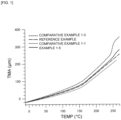
- Fig. 1 is a graph showing the thermal expansion behavior, as measured by thermomechanical analysis (TMA), of test pieces comprising a silica powder of Example 1-5, Comparative Example 1-1 (amorphous silica powder), Comparative Example 1-3 (spherical cristobalite crystal), or a reference example (ground quartz).
- TMA thermomechanical analysis
- the number of water molecules desorbed at 50°C-1,000°C when the temperature is increased from 25°C to 1,000°C at a condition of 30°C/min (hereinafter also referred to simply as the "number of desorbed water molecules" or the “number of desorbed H 2 O molecules”) is 10 ⁇ mol/g or less, and 10 mass% or more of the total powder is ⁇ -quartz crystal.
- Spherical means having a projected view with a shape close to circular when observed with a microscope, or the like. Due to being spherical, the powder can be filled at a high content in a resin without fluidity being reduced. Average circularity and a method for measuring the same will be described later.
- Crystallization here means that the degree of crystallization is 20% or more. A method for measuring the degree of crystallization will be described later. Conventionally, attempts to crystallize a spherical amorphous silica powder have involved trying to raise thermal conductivity by configuring the degree of crystallization to be 80% or more (for example, Patent Documents 1 and 2).
- a spherical crystalline silica which has a number of desorbed water molecules of 10 ⁇ mol/g or less and in which 10 mass% or more of the total powder is ⁇ -quartz crystal, irrespective of the degree of crystallization (in both cases in which the degree of crystallization is less than 80% and cases in which the degree of crystallization exceeds 80%), enables a resin molded article having a low dielectric tangent and a high coefficient of linear thermal expansion to be obtained.
- the number of desorbed water molecules was calculated from the measured area value by drawing a calibration curve using a standard substance with a known amount of dehydration.
- the number of desorbed H 2 O molecules is preferably less than 10 ⁇ mol/g, more preferably 9 ⁇ mol/g or less, even more preferably 8.8 ⁇ mol/g or less, and particularly preferably 8.5 ⁇ mol/g or less.
- the number of desorbed H 2 O molecules is preferably less than 10 ⁇ mol/g, more preferably 8 ⁇ mol/g or less, even more preferably 6 ⁇ mol/g or less, and particularly preferably 4 ⁇ mol/g or less.
- An example of a method for rendering the number of desorbed water molecules so as to be 10 ⁇ mol/g or less is a method involving crystallizing a spherical amorphous silica powder, and then performing a step for bringing the powder into contact with an acid and further subjecting to a heat treatment. The details of the production method will be described later.
- the amount of hydroxyl groups in the surface of the powder can be reduced and thereby it is possible to reduce the number of desorbed water molecules.
- the crystal form of the spherical crystalline silica powder changes depending on the heating temperature during crystallization, etc., and therefore, there are times when a suitable crystal phase cannot be controlled in the case of a temperature for reducing the hydroxyl groups in the surface of the powder becoming high or a time for reducing the hydroxyl groups in the surface of the powder becoming long. Further, the dielectric tangent of the resin molded article may become high.
- the degree of crystallization of the total spherical crystalline silica powder (hereinafter also referred to simply as the "degree of crystallization"), as measured by an X-ray diffraction method, is preferably 30-98%, more preferably 35-90%, even more preferably 38-85%, and even further preferably 38-80%.
- the degree of crystallization so as to be 30-98%, a spherical crystalline silica powder having a high coefficient of linear thermal expansion can easily be obtained.
- the degree of crystallization is calculated from a ratio of the integral area of a peak of a reference crystalline silica measured by X-ray diffraction (XRD) and an integral area of a peak of the spherical crystalline silica (integral area of peak of spherical crystalline silica/integral area of peak of reference crystalline silica).
- XRD X-ray diffraction
- the degree of crystallization can be adjusted by adjusting the temperature and/or time in the step of crystallizing the spherical amorphous silica powder. Further, the degree of crystallization can also be adjusted by adjusting the temperature and/or time in the step of further heating the powder after crystallization. The degree of crystallization becomes higher with a higher temperature and with a longer time.
- the preferred temperatures and/or times in the crystallization step and the heating step are described below.
- the degree of crystallization is adjusted by temperature or time, there are times when it is difficult to control a suitable crystal phase. Therefore, from the perspective of facilitating control of the crystal phase, it is preferable to adjust the degree of crystallization by using the crystallizing agent described later.
- the average circularity of the spherical crystalline silica powder is preferably 0.80 or more, more preferably 0.85 or more, and even more preferably 0.90 or more.
- 10 mass% or more of the total spherical crystalline silica powder is ⁇ -quartz crystal, preferably 20 mass% or more of the total spherical crystalline silica powder is ⁇ -quartz crystal, and more preferably 30 mass% or more of the total spherical crystalline silica powder is ⁇ -quartz crystal.
- 40 mass% or more of the total spherical crystalline silica powder may be ⁇ -quartz crystal, and 45 mass% or more of the total spherical crystalline silica powder may be ⁇ -quartz crystal.
- spherical crystalline silica powder is ⁇ -quartz crystal
- Preferably 0-70 mass% of the total spherical crystalline silica powder is cristobalite crystal, more preferably 0-50 mass% of the total spherical crystalline silica powder is cristobalite crystal, even more preferably 0-40 mass% of the total spherical crystalline silica powder is cristobalite crystal, and particularly preferably 0-36 mass% of the total spherical crystalline silica powder is cristobalite crystal.
- the spherical crystalline silica powder does not have to comprise cristobalite crystal. In the case of comprising cristobalite crystal, by configuring the content thereof to be 70 mass% or less, a resin molded article having a high coefficient of linear thermal expansion and a low dielectric tangent can be produced more easily.
- Preferably 0-70 mass% of the total spherical crystalline silica powder is tridymite crystal and more preferably 0-40 mass% of the total spherical crystalline silica powder is tridymite crystal.
- the spherical crystalline silica powder does not have to comprise tridymite crystal.
- the content thereof by configuring the content thereof to be 70 mass% or less, a resin molded article having a high coefficient of linear thermal expansion and a low dielectric tangent can be produced more easily.
- the content of each crystalline form in the spherical crystalline silica powder can be measured by X-ray diffraction measurement and analyzed by Rietveld analysis.
- the average particle diameter (volume-based cumulative 50% diameter D 50 ) of the spherical crystalline silica powder is preferably 0.1-100 ⁇ m, more preferably 0.2-50 ⁇ m, and even more preferably 0.3-10 ⁇ m.
- the average particle diameter of the spherical crystalline silica powder so as to be 0.1-100 ⁇ m, filling properties in a resin are likely to be better.
- "Volume-based cumulative 50% diameter D 50" means a particle diameter corresponding to a cumulative value of 50% in a volume-based cumulative particle size distribution measured by using a laser diffraction particle size distribution measuring device (refraction index: 1.50).
- the specific surface area of the spherical crystalline silica powder is preferably less than 6 m 2 /g, more preferably 5.5 m 2 /g or less, and even more preferably 5 m 2 /g or less.
- the specific surface area of the spherical crystalline silica powder is preferably no less than 1 m 2 /g.
- the specific surface area of the spherical crystalline silica powder may be 1-6 m 2 /g. Note that the specific surface area of the spherical crystalline silica powder indicates a value measured according to the single point BET method by using a fully automated specific surface area and diameter measuring device.
- an alkali metal compound or an alkaline earth metal compound, etc. may be used as a crystallizing agent with an objective of promoting crystallization.
- the content of alkaline earth metal elements (Be, Mg, Ca, Sr, Ba, etc.) remaining in the powder is, by oxide conversion, preferably less than 10,000 ⁇ g/g and more preferably less than 9,000 ⁇ g/g.
- the content of alkali metal elements (Li, Na, etc.) remaining in the powder is, by oxide conversion, preferably less than 30,000 ⁇ g/g.
- the content (oxide conversion) of the alkali metal compounds and the alkaline earth metal elements in the spherical crystalline silica powder is measured by using an ICP optical emission spectrometer.
- the spherical crystalline silica powder prefferably has a content of U of 10 ppb or less, a content of Th of 20 ppb or less, a content of Fe of 200 ppb or less, and/or a content of Al of 1 mass% or less (10,000 ppm or less).
- the content of the above impurities in the spherical crystalline silica powder is measured by using an ICP optical emission spectrometer.
- the coefficient of linear thermal expansion (CTE1) at or below a glass transition temperature Tg is preferably 3.5 ⁇ 10 -5 /K-4.5 ⁇ 10 -5 /K, more preferably 3.7 ⁇ 10 -5 /K-4.3 ⁇ 10 -5 /K, and even more preferably 3.8 ⁇ 10 -5 /K-4.0 ⁇ 10 -5 /K. Since the coefficient of linear thermal expansion (CTE1) at or below the glass transition temperature Tg is high, it is possible to prevent warping and cracking during a temperature cycle when a product is used.
- the coefficient of linear thermal expansion (CTE2) in a temperature region exceeding the temperature glass transition temperature Tg is preferably 10.0 ⁇ 10 -5 /K-11.5 ⁇ 10 -5 /K, more preferably 10.5 ⁇ 10 -5 /K-11.3 ⁇ 10 -5 /K, and even more preferably 10.6 ⁇ 10 -5 /K-11.1 ⁇ 10 -5 /K. Since the coefficient of linear thermal expansion (CTE2) in a temperature region exceeding the glass transition temperature Tg is high, it is possible to prevent warping and cracking during reflow.
- a liquid-state epoxy resin for example "JER 828” manufactured by Mitsubishi Chemical Corporation
- a hardening agent 4,4-Diaminodiphenylmethane
- a spherical crystalline silica powder is mixed so as to be 40 vol.% thereof, and the mixture is cured at 200°C to make a cured body.
- the cured body is processed to a test piece with a size of 4 mm ⁇ 4 mm ⁇ 15 mm.
- the method for measuring the coefficients of linear thermal expansion CTE1, CTE2 is performed using a thermal mechanical analysis device in conditions with a measurement range of -10°C-270°C and a temperature increase rate of 5°C/minute, and the coefficient of linear thermal expansion (CTE1) at or below the glass transition temperature Tg and the coefficient of linear thermal expansion (CTE2) in a temperature region exceeding the glass transition temperature Tg are calculated.
- the dielectric tangent of a resin sheet made using the spherical crystalline silica powder by the method described later is preferably 7.0 ⁇ 10 -4 or less, more preferably, 6.9 ⁇ 10 -4 or less, and even more preferably 6.8 ⁇ 10 -4 or less.
- the dielectric constant ( ⁇ r) of a resin sheet made using the spherical crystalline silica powder by the method described later is preferably 2.5 or more, more preferably 2.6 or more, and even more preferably 2.65 or more.
- the dielectric constant ( ⁇ r) becomes higher and electronic instruments and communication instruments, etc., can be further miniaturized.
- the method for making resin sheets involves obtaining a resin composition by mixing a polyethylene resin powder and a spherical crystalline silica powder such that the content of the spherical crystalline silica powder filled therein is 40 vol.%, loading the obtained resin composition into a 3 cm-diameter metal frame at an amount such that the thickness thereof is approximately 3 mm, rendering into a sheet by a nanoimprinting device, and cutting the obtained sheet into 1.5 cm ⁇ 1.5 cm sizes to obtain resin sheets for testing.
- the method for measuring the dielectric constant and dielectric tangent involves connecting a 36 GHz cavity resonator to a vector network analyzer, arranging a resin sheet for testing so as to cover a 10 mm-diameter hole provided in the cavity resonator, and measuring a resonance frequency (f0) and an unloaded Q value (Qu). The same measurement is repeated five times with the evaluation sample being rotated 90 degrees after each measurement, and average values of the obtained f0 and Qu values are used as measured values.
- Analytical software is used to calculate the dielectric constant from f0 and the dielectric tangent (tan ⁇ c) from Qu. Note that as measurement conditions, measurement temperature is 20°C and humidity is 60%RH.
- the thermal conductivity of the spherical crystalline silica powder, measured in a resin sheet made by the method described later, is preferably 0.48 W/mK or more, more preferably 0.50 W/mK or more, and even more preferably 0.55 W/mK or more.
- the thermal conductivity of the fabricated resin sheets can be improved.
- the thermal conductivity can be improved by crystallizing a spherical amorphous silica powder. It was discovered that after crystallization, by bringing the silica powder into contact with an acid and subjecting to a heat treatment, the thermal conductivity is further improved.
- Thermal conductivity is a value calculated by multiplying the thermal diffusivity, measured by the method described below, by specific gravity and specific heat.
- the thermal diffusivity was determined by a laser flash method using a processed resin sheet.
- a xenon flash analyzer (product name: LFA 447 NanoFlash; manufactured by Netzsch) was used as the measurement device.
- a liquid-state epoxy resin for example, "JER 828” manufactured by Mitsubishi Chemical Corporation
- a hardening agent (4,4-Diaminodiphenylmethane)
- a spherical crystalline silica powder is filled so as to be 40 vol.% thereof, and the mixture is cured at 200°C to make a cured body.
- the cured body is processed to a disk-shaped test piece having a diameter of 10 mm ⁇ a thickness of 1 mm.
- the specific gravity of the powder was determined by using the Archimedes method.
- the specific heat was determined by using a differential scanning calorimeter (product name: Q2000; manufactured by TA Instruments) and increasing the temperature from room temperature to 200°C at a temperature increase rate of 10°C/minute in a nitrogen atmosphere.
- the spherical crystalline silica powder according to the present embodiment can be filled at a high content and with good dispersibility in a resin, and therefore, can be used as filler of resin molded articles for various uses such as electronic instruments and communication instruments, etc.
- the spherical crystalline silica powder according to the present embodiment can be preferably used to produce a semiconductor sealing material for electronic instruments and communication instruments, etc., which have a high-frequency band applied therein.
- a resin molded article comprising the spherical crystalline silica powder can suppress cracking and warping, etc., in temperature cycles during use and temperature changes before and after a reflow process.
- the production method may also comprise a step (i') of preparing a spherical amorphous silica powder before step (i).
- step (i') which the production method may comprise arbitrarily, a spherical amorphous silica powder is prepared.
- the spherical amorphous silica powder it is possible to use a powder produced by a conventional and publicly-known method. However, from the viewpoints of productivity and production cost, it is preferable to use a spherical amorphous silica powder produced by a flame fusion method.
- an ore powder is sprayed into a high-temperature flame formed by a combustible gas and a supporting gas by using a burner and fused and spheroidized at a temperature equal to or higher than the ore powder melting point (for example, a temperature of 1,800°C or more).
- the raw material is preferably a mineral and/or ore ground product.
- the mineral or ore include silica sand and silica stone.
- the average particle diameter of the raw material is not limited and may be selected, as appropriate, from the viewpoint of workability.
- the average particle diameter (volume-based cumulative 50% diameter D 50 ) of the raw material is preferably 0.1-100 ⁇ m, more preferably 0.2-50 ⁇ m, and even more preferably 0.3-10 ⁇ m.
- the obtained spherical amorphous silica powder is classified as necessary.
- the average circularity of the spherical amorphous silica powder is preferably 0.80 or more, more preferably 0.85 or more, and even more preferably 0.90 or more.
- the method for measuring the average circularity is as described above.
- the average particle diameter (volume-based cumulative 50% diameter D 50 ) of the spherical amorphous silica powder is preferably 0.1-100 ⁇ m, more preferably 0.2-50 ⁇ m, and even more preferably 0.3-10 ⁇ m.
- the spherical amorphous silica powder is heated to obtain a spherical crystalline silica powder.
- the spherical amorphous silica powder is crystallized by being heated at a prescribed temperature to obtain a crystalline silica powder.
- the heating temperature is preferably 900-1,250°C, more preferably 950-1,200°C, and even more preferably 1,000-1,200 °C.
- the heating time is preferably 2-40 hours, more preferably 3-30 hours, and even more preferably 4-24 hours.
- the heating method is not particularly limited and may be performed with a publicly-known electric furnace, or the like. Thereafter, the powder is cooled to an ambient temperature (26°C).
- the spherical crystalline silica powder enables a resin molded article having a high coefficient of linear thermal expansion and a low dielectric tangent to be obtained even with a lower degree of crystallization than conventional, and therefore, the crystallization step can be performed under conditions that are more moderate than those conventionally used (low temperature and/or short time).
- crystallizing agent with an objective of promoting crystallization.
- the crystallizing agent include oxides and carbonates, etc., of alkali metals or alkaline earth metals.
- Specific examples of the crystallizing agent include MgCOs, CaCOs, SrCOs, Li 2 O, Na 2 O, etc., and it is preferable to use one or more crystallizing agents selected therefrom.
- the raw material spherical amorphous silica powder and the crystallizing agent are mixed (for example, mixing for 2-10 minutes using a grinder such as a vibrating mill or some kind of mixer, etc.), and thereafter heated in an electric furnace, or the like.
- the proportion at which the crystallizing agent is used is preferably 1-10 moles, more preferably 2-8 moles, and even more preferably 3-5 moles with respect to 100 moles of the spherical amorphous silica powder.
- the amorphous silica powder (preferably, a mixture of the spherical amorphous silica powder and a crystallizing agent) may be mixed with a solvent and thereafter heated to obtain a spherical crystalline silica powder.
- a solvent include water and alcohol.
- the amount of solvent used may be 1-30 ml with respect to 10 g of the spherical amorphous silica powder.
- the silica powder After being crystallized, the silica powder can, as necessary, be crushed and classified by using a vibrating sieve, etc.
- step (ii) the spherical crystalline silica powder is brought into contact with an acid.
- the acid include acids with an acid dissociation constant pK a at 25°C of 7.0 or less, preferably or 6.0 or less, and more preferably of 5.0 or less.
- Specific examples of the acid include acetic acid, nitric acid, hydrochloric acid, phosphoric acid, and sulfuric acid, etc., and it is preferable to use one or more acids selected therefrom.
- the amount of acid used may be 50-1,000 ml and may be 100-500 ml with respect to 10 g of the spherical crystalline silica powder.
- the method for bringing the spherical crystalline silica powder into contact with the acid is not particularly limited and may, for example, be performed by adding the acid to the spherical crystalline silica powder and mixing.
- the mixing method is not particularly limited and may, for example, be performed by putting the spherical crystalline silica powder and an acid aqueous solution into a beaker and stirring at 10-90°C (preferably 30-70°C) for 10-600 minutes (preferably 30-180 minutes).
- step (iii) after undergoing the treatment in step (ii), the spherical crystalline silica powder is heated at 800-1,400°C.
- the heating temperature is preferably 900-1,300°C and more preferably 1,000-1,200°C.
- the heating time is preferably 30 minutes-24 hours, more preferably 1-12 hours, and even more preferably 2-8 hours.
- the heating method is not particularly limited and a publicly-known electric furnace, or the like, may be used.
- the spherical crystalline silica powder After allowing to cool naturally inside the electric furnace, the spherical crystalline silica powder is recovered in a state of 110°C-300°C and further cooled to 25°C in an environment with a humidity of 40%RH or less.
- the method may comprise, after step (iii), a step of classifying so as to achieve a desired average particle diameter.
- the number of desorbed water molecules, the degree of crystallization, the crystal form, the average particle diameter (volume-based cumulative 50% diameter D 50 ), the average circularity, and the impurity content, etc., of the obtained spherical crystalline silica powder are as described above, and therefore, descriptions thereof are omitted here.
- the resin composition according to the present embodiment comprises the spherical crystalline silica powder described above and a resin.
- the resin examples include thermoplastic resins and thermosetting resins.
- the resin include: polyethylene resins; polypropylene resins; epoxy resins; silicone resins; phenol resins; melamine resins; urea resins; unsaturated polyester resins; fluorine resins; polyamide-based resins such as polyimide resins, polyamide imide resins, and polyether imide resins; polyester-based resins such as polybutylene terephthalate resins and polyethylene terephthalate resins; polyphenylene sulfide resins; fully aromatic polyester resins; polysulfone resins; liquid crystal polymer resins; polyether sulfone resins; polycarbonate resins; maleimide modified resins; ABS resins; AAS (acrylonitrile-acrylic rubber-styrene) resins; and AES (acrylonitrile-ethylene-propylene-diene rubber-styrene) resins.
- the foregoing may be used alone or as a combination of two
- the resin composition When the resin composition is to be used as a high-frequency band substrate or an insulating material, it is possible to employ a publicly-known low-dielectric resin material that is used in such a use. Specifically, it is possible to use at least one resin selected from hydrocarbon-based elastomer resins, polyphenylene-ether resins, and aromatic polyene-based resins. Among the foregoing, a hydrocarbon-based elastomer resin or polyphenylene-ether resin is preferable. The ratio of the foregoing resins is preferably 20-95 mass% and more preferably 30-95 mass% with respect to the total mass of the resin composition.
- the content of the spherical crystalline silica powder in the resin composition is not particularly limited and may be adjusted, as appropriate, according to objectives.
- the spherical crystalline silica powder when applied in a high-frequency substrate material or an insulating material use, may be blended in the range of 5-80 mass% and more preferably in the range of 5-70 mass% with respect to the total mass of the resin composition.
- the blending ratios of the resin and the spherical crystalline silica powder in the resin composition can be adjusted, as appropriate, in accordance with targeted dielectric properties such as the coefficient of linear thermal expansion and the dielectric tangent.
- the amount of the resin can be adjusted in the range of 10-10,000 parts by mass with respect to 100 parts by mass of the spherical crystalline silica powder.
- the resin composition may have a hardening agent, a hardening accelerator, a mold release agent, a coupling agent, a coloring agent, or the like, blended therein.
- the method for producing the resin composition is not particularly limited, and the resin composition may be produced, for example, by stirring, dissolving, mixing, and dispersing prescribed amounts of each material.
- the devices used for mixing, stirring, and dispersing, etc., the mixture are not particularly limited, and it is possible to use a grinding machine, a three-roller miller, a ball mill, a planetary mixer, etc., provided with a device for stirring and heating. Further, the foregoing devices may be used in combination, as appropriate.
- resin compositions comprising the spherical crystalline silica powder according to the present embodiment can achieve a high coefficient of linear thermal expansion and a low dielectric tangent. Due thereto, resin compositions comprising the spherical crystalline silica powder according to the present embodiment can be preferably used to produce semiconductor sealing materials for electronic instruments and communication instruments, etc., which have a high-frequency band applied therein. Obtained resin molded articles can suppress cracking and warping, etc., in temperature cycles during use and temperature changes before and after a reflow process.
- a spherical amorphous silica powder (“FB-5D” manufactured by Denka Co., Ltd., average particle diameter D 50 : 4.5 ⁇ m) and CaCOs were weighed so that the molar ratio (SiO 2 :CaCO 3 ) was 100:3 and dry-blended for three minutes in a vibration mixer (manufactured by Resodyn Corporation). 50 g of the mixture was put into an alumina crucible, then 5 ml of pure water was added thereto and mixed. Thereafter, the crucible was placed in an electric furnace and subjected to a heat treatment for 12 hours with an electrical furnace interior temperature of 1,000°C (step (i)).
- the mixture was cooled to 200°C inside the furnace, then cooled to room temperature in a desiccator (23°C-10%RH), and the powder thus obtained was crushed using a mortar and classified with a sieve having a mesh size of 200 ⁇ m.
- the obtained powder was put in a 500 ml beaker, 500 ml of 1M acetic acid was added dropwise thereto, and stirred and mixed for 60 minutes (step (ii)). Thereafter, the mixture was filtered to remove the acetic acid, the obtained residue was put in an alumina crucible, placed in an electric furnace, and subjected to a heat treatment for four hours with an electric furnace interior temperature of 1,000°C (step (iii)). After the heat treatment, the mixture was cooled to 200°C inside the furnace and then cooled to room temperature in a desiccator (23°C-10%RH) to obtain the spherical crystalline silica powder of Example 1-1.
- a desiccator 23°C-10%RH
- Example 1-2 Other than setting the heating temperature in step (iii) to 1,200°C, the spherical crystalline silica powder of Example 1-2 was obtained by the same method as in Example 1-1.
- the spherical crystalline silica powder of Example 1-3 was obtained by the same method as in Example 1-1.
- the spherical crystalline silica powder of Example 1-4 was obtained by the same method as in Example 1-1.
- the spherical crystalline silica powder of Example 1-5 was obtained by the same method as in Example 1-1.
- a spherical amorphous silica powder (“FB-5D” manufactured by Denka Co., Ltd, average particle diameter D 50 : 4.5 ⁇ m) was used as the silica powder of Comparative Example 1 (that is, steps (i)-(iii) were not carried out).
- a spherical amorphous silica powder ("FB-5D” manufactured by Denka Co., Ltd., average particle diameter D 50 : 4.5 ⁇ m) and CaCOs were weighed so that the molar ratio (SiO 2 :CaCO 3 ) was 100:1 and dry-blended for three minutes in a vibration mixer (manufactured by Resodyn Corporation).
- the mixture was put in a crucible, placed in an electric furnace, the temperature was increased in air at a temperature increase rate of 10°C/min. to 1,300°C, and kept at 1,300°C for four hours (step (i)).
- the mixture was allowed to cool naturally to an ambient temperature in the furnace to obtain the silica powder of Comparative Example 1-3.
- Example 2-1 A spherical amorphous silica powder ("SFP-30M” manufactured by Denka Co., Ltd., average particle diameter D 50 : 0.68 ⁇ m) and CaCOs were weighed so that the molar ratio (SiO 2 :CaCO 3 ) was 100:3 and dry-blended for three minutes in a vibration mixer (manufactured by Resodyn Corporation). 50 g of the mixture was put into an alumina crucible, and 5 ml of pure water was added thereto and mixed. Thereafter, the crucible was placed in an electric furnace and subjected to a heat treatment for 12 hours with an electrical furnace interior temperature of 1,100°C (step (i)).
- SFP-30M manufactured by Denka Co., Ltd., average particle diameter D 50 : 0.68 ⁇ m
- CaCOs weighed so that the molar ratio (SiO 2 :CaCO 3 ) was 100:3 and dry-blended for three minutes in a vibration mixer (manufact
- the mixture was cooled to 200°C inside the furnace, then cooled to room temperature in a desiccator (23°C-10%RH), and the powder thus obtained was crushed using a mortar and classified with a sieve having a mesh size of 200 ⁇ m.
- the obtained powder was put in a 500 ml beaker, 500 ml of 1M acetic acid was added dropwise thereto, and stirred and mixed for 60 minutes (step (ii)). Thereafter, the mixture was filtered to remove the acetic acid, the obtained residue was put in an alumina crucible, placed in an electric furnace, and subjected to a heat treatment for four hours with an electric furnace interior temperature of 1,000°C (step (iii)). After the heat treatment, the mixture was cooled to 200°C inside the furnace and then cooled to room temperature in a desiccator (23°C-10%RH) to obtain the spherical crystalline silica powder of Example 2-1.
- a desiccator 23°C-10%RH
- the spherical crystalline silica powder of Example 2-2 was obtained by the same method as in Example 2-1.
- the silica powder of Comparative Example 2-1 was obtained by the same method as in Example 2-1.
- the silica powder of Comparative Example 2-2 was obtained by the same method as in Example 2-2.
- a spherical amorphous silica powder (“SFP-30M” manufactured by Denka Co., Ltd., average particle diameter D 50 : 0.68 ⁇ m) was used as the silica powder of Comparative Example 2-3 (that is, steps (i)-(iii) were not carried out).
- the spherical crystalline silica powder of Example 3-1 was obtained by the same method as in Example 1-1.
- the spherical crystalline silica powder of Example 3-2 was obtained by the same method as in Example 1-1.
- the silica powder of Comparative Example 3-1 was obtained by the same method as in Example 3-1.
- Rietveld method software (product name: Integrated powder X-ray software Jade+9.6, manufactured by MDI) was used in quantitative analysis of the crystal form. Note that X-ray diffraction measurement was performed on a sample obtained by adding ⁇ -alumina (internal reference substance) (manufactured by NIST), which is a reference sample for X-ray diffraction, to the silica powder such that the content of the ⁇ -alumina was 50 mass% (based on the total weight of the spherical crystalline silica powder after the addition), and the ratio (mass%) of each kind of crystal form was calculated by Rietveld analysis.
- ⁇ -alumina internal reference substance
- Tables 1-3 show the ratio of ⁇ -quartz crystal as “Qua (wt%)” and show the ratio of cristobalite crystal as “Cri (wt%)”.
- the degree of crystallization was calculated by the following formula.
- Degree of crystallization integral area of peak of obtained crystalline silica/peak area of crystalline silica standard substance.
- Tables 1-3 show the ratio of ⁇ -quartz crystal as “Qua (wt%)” and show the ratio of cristobalite crystal as “Cri (wt%)”.
- Impurities in the silica powders obtained in the examples and comparative examples were measured as described below.
- ICP optical emission spectroscopy ICP optical emission spectrometer, product name: CIROS-120, manufactured by Spectro Analytical Instruments GmbH
- the content of impurities in the spherical crystalline silica powder was measured.
- a liquid-state epoxy resin (“JER 828” manufactured by Mitsubishi Chemical Company) and a hardening agent (4,4-Diaminodiphenylmethane) were mixed at a weight ratio of 4:1, a silica powder was mixed therein so as to be 40 vol.% thereof, and the mixture was cured at 200°C for four hours to make a cured body. Thereafter, the cured body was processed to ultimately obtain a test piece with a size of 4 mm ⁇ 4 mm ⁇ 15 mm.
- TMA device (TMA 4000SA manufactured by Bruker Corporation) was used to evaluate the coefficient of linear thermal expansion.
- the temperature increase rate was set at 3°C/min.
- the measurement temperature was set at -10°C-270°C
- the atmosphere was set to a nitrogen atmosphere
- the coefficient of linear thermal expansion (CTE1) at or below the glass transition temperature Tg (155-160°C or less) and the coefficient of thermal linear expansion (CTE2) in a temperature region exceeding the glass transition temperature Tg (exceeding 160°C) were calculated.
- the results are shown in Tables 1-3.
- Fig. 1 shows the thermal expansion behavior measured for test pieces using the silica powder of the reference example, Example 1-5, Comparative Example 1-1, and Comparative Example 1-3.
- the resin molded article comprising the silica powder of Example 1-5 demonstrated thermal expansion behavior resembling that of the resin molded article comprising ground quartz (reference example).
- the resin molded article comprising the reference example (ground quartz) and the resin molded article comprising the silica powder of Example 1-5 have higher coefficients of linear thermal expansion (CTE1 and CTE2) than the resin molded article comprising the silica powder of Comparative Example 1-1 (spherical amorphous silica powder).
- the silica powder and a polyethylene resin powder (product name: Flo-thene ® UF-20S, manufactured by Sumitomo Seika Chemicals Co., Ltd.) or a polypropylene (PP) powder (Flow-blen QB200, manufactured by Sumitomo Seika Chemicals Co., Ltd.) were weighed so that the filled content of the silica powder was 40 vol.% and mixed using a vibration mixer (manufactured by Resodyn Corporation) with an acceleration rate of 60 G and a processing time of two minutes to obtain a resin composition.
- a vibration mixer manufactured by Resodyn Corporation
- the obtained resin composition was loaded, at an amount such that the thickness thereof was approximately 0.3 mm, into a metal frame with a diameter of 3 cm and was rendered into a sheet by a nanoimprinting device (product name: X-300, manufactured by SCIVAX Corporation) under conditions of 30,000 N and 140°C for five minutes.
- the obtained sheet was cut into 1.5 cm ⁇ 1.5 cm sizes to obtain evaluation samples.
- a 36 GHz cavity resonator manufactured by Samtech. Co., Ltd.
- a vector network analyzer product name: 85107, manufactured by Keysight Technologies
- an evaluation sample was arranged so as to cover a 10 mm-diameter hole provided in the cavity resonator, and a resonance frequency (f0) and an unloaded Q value (Qu) were measured.
- the same measurement was repeated five times with the evaluation sample being rotated 90 degrees after each measurement.
- Average values of the obtained f0 and Qu values were used as measured values and analytical software (software manufactured by Samtech. Co., Ltd.) was used to calculate the dielectric constant from f0 and the dielectric tangent (tan ⁇ c) from Qu. Note that measurements were carried out in conditions with a measurement temperature of 20°C and a humidity of 60%RH.
- thermogravimetric differential thermal analysis device high-sensitivity simultaneous thermogravimetric differential balance STA 2500 Regulus, manufactured by Netzsch
- increasing the temperature from 25°C at 10°C/min. was used as the amount of dehydration.
- the thermal conductivity of the resin composition was calculated by multiplying thermal diffusivity, specific gravity, and specific heat. After being cured, a sample sheet was processed to 10 mm ⁇ 10 mm ⁇ 1 mm and thermal diffusivity was determined by a laser flash method. A xenon flash analyzer (product name: LFA 447 NanoFlash, manufactured by Netzsch) was used as the measurement device. The specific gravity was determined by using the Archimedes method. The specific heat was determined by using a differential scanning calorimeter (product name: Q2000, manufactured by TA Instruments) and increasing the temperature from room temperature to 200°C at a temperature increase rate of 10°C/min. in a nitrogen atmosphere.
- Example 1-1 100 3 1000 12 Acetic acid 1000 4 46.8 0 46.8 3.3 8000 530 3.8 10.7 2.76 6.3.E-04 1.7 0.584
- Example 1-2 1200 4 57.5 1.7 59.2 3.1 6000 510 3.9 10.7 2.65 5.7.E-04 1.2 0.642
- Example 1-3 100 5 Acetic acid 1100 4 74.4 0 74.4 3.5 4000 590 3.8 10.6 2.89 59E-04 1.5 0.698
- Example 1-4 1200 4 77.3 3.2 80.5 3.5 5000 520 3.9
- Example 3-1 100 3 1200 4 Nitric acid 1000 4 45.0 35.9 80.85 3.1 4000 3200 42 11.1 2.84 6.2.E-04 1.5 0.739 Comp Ex 3-1 - - - 45.0 35.9 80.85 17.2 28000 2600 4.2 11.1 2.90 1.5.E-03 1.5 0.719
- Example 3-2 100 3 1100 6 Nitric acid 1100 4 65.1 19.0 84.10 3.3 5000 2100 4 10,7 2.83 6.8.E-04 1.4 0.770 Comp Ex 3-2 - - - - 65.1
- the spherical crystalline silica powders of the examples in which the number of desorbed water molecules is 10 ⁇ mol/g or less and 10 mass% or more of the total powder is ⁇ -quartz crystal all enabled a resin molded article having high coefficients of linear thermal expansion (CTE1 and CTE2) and a low dielectric tangent to be obtained. Further, the obtained resin molded articles have a high dielectric constant and a high thermal conductivity. Furthermore, the coefficient of linear thermal expansion (CTE2) is approximately the same as that of the reference example (ground quartz), and therefore, the thermal behavior of the resin molded article near the reflow temperature can be controlled easily.
- CTE1 and CTE2 coefficients of linear thermal expansion
- CTE2 coefficient of linear thermal expansion
- the spherical crystalline silica powder of each of the examples could realize a high thermal conductivity of 0.48 W/mK or more.
- thermal conductivity improves as a raw material amorphous spherical silica goes through a process comprising being crystallized (step (i)), and further, being brought into contact with an acid and subjected to a heat treatment (steps (ii) and (iii)).
- the spherical crystalline silica powder according to the present invention has a characteristic of enabling a resin molded article having a high coefficient of linear thermal expansion and a low dielectric tangent to be obtained.
- a resin molded article comprising such a spherical crystalline silica powder can, for example, be suitably used as a sealing material filler of a semiconductor element.
Landscapes
- Chemical & Material Sciences (AREA)
- Organic Chemistry (AREA)
- Inorganic Chemistry (AREA)
- Health & Medical Sciences (AREA)
- Chemical Kinetics & Catalysis (AREA)
- Medicinal Chemistry (AREA)
- Polymers & Plastics (AREA)
- Silicon Compounds (AREA)
- Compositions Of Macromolecular Compounds (AREA)
Abstract
(i) heating a spherical amorphous silica powder to obtain a spherical crystalline silica powder;
(ii) bringing the spherical crystalline silica powder into contact with an acid; and
(iii) heating, at 800-1,400°C, the spherical crystalline silica powder treated by (ii).
Description
- The present invention relates to a spherical crystalline silica powder and a method for producing the same.
- Silica powders are widely used as fillers for resins. In particular, spherical silica powders can be filled to high degree with good dispersibility in resins, and therefore, are used preferably as sealing material fillers for semiconductor elements. Sealing material fillers for semiconductor elements preferably have a high coefficient of thermal expansion so as to prevent the occurrence of warping or cracking in the sealing material due to temperature changes during reflow or temperature changes during temperature cycle tests, etc. However, spherical silica powders produced by a flame fusion method, which is one method for producing a spherical silica powder, are amorphous and therefore, tend to have a low coefficient of thermal expansion. Here, attempts have been made to improve the coefficient of thermal expansion and the thermal conductivity of spherical amorphous silica powders by heating at a high temperature to crystallize the amorphous silica powders (for example, Patent Document 1).
It is known that crystalline silica powders take on different crystal structures depending on pressure and temperature. Examples of crystal structures of crystalline silica powders include a-quartz, cristobalite, and tridymite.Patent Document 2 discloses a silica powder having two or more kinds of crystal forms selected from α-quartz, tridymite, and cristobalite. - Note that accompanying an increase in information communication volumes in the communications field, the application of high-frequency bands in electronic instruments and communication instruments, etc., has become more widespread. Accompanying the application of high-frequency bands, materials having a low dielectric tangent are demanded in order to prevent circuit signal transmission losses. Patent Document 3 proposes obtaining a spherical amorphous silica with a reduced dielectric tangent by heat treating, at a prescribed temperature for a prescribed time, a spherical amorphous silica powder obtained by a powder melting method.
- Patent Document 1:
WO 2016/031823 A - Patent Document 2:
JP 2005-231973 A - Patent Document 3:
JP 2021-38138 A - The problem of the present invention is to provide: a spherical crystalline silica powder which enables a resin molded article having a high coefficient of linear thermal expansion and a low dielectric tangent to be obtained; and a method for producing the same.
- The present inventors discovered that by crystallizing a spherical amorphous silica powder, then bringing into contact with an acid and further subjecting to a heat treatment, it is possible to obtain a spherical crystalline silica powder having a high coefficient of linear thermal expansion and a further reduced dielectric tangent, and that the number of water molecules desorbed at 50°C-1,000°C in the obtained spherical crystalline silica powder is 10 µmol/g or less, which led to the completion of the present invention.
- The present invention has the following embodiments.
- [1] A spherical crystalline silica powder in which the number of water molecules desorbed at 50°C-1,000°C when the temperature is increased from 25°C to 1,000°C at a condition of 30°C/min. is 10 µmol/g or less, and
in which 10 mass% or more of the total powder is α-quartz crystal. - [2] The spherical crystalline silica powder described in [1], wherein the degree of crystallization of the total powder, as measured by an X-ray diffraction method, is 30-98%.
- [3] The spherical crystalline silica powder described in [1] or [2], wherein 20-90 mass% of the total powder is α-quartz crystal.
- [4] The spherical crystalline silica powder described in any one of [1] to [3], wherein 0-70 mass% of the total powder is cristobalite crystal.
- [5] The spherical crystalline silica powder described in any one of [1] to [4], wherein the content of alkaline-earth metal elements therein is less than 10,000 µg/g by oxide conversion.
- [6] A resin composition comprising the spherical crystalline silica powder described in any one of [1] to [5], and a resin.
- [7] A method for producing a spherical crystalline silica powder, the method comprising:
- (i) heating a spherical amorphous silica powder to obtain a spherical crystalline silica powder;
- (ii) bringing the spherical crystalline silica powder into contact with an acid; and
- (iii) heating, at 800-1,400°C, the spherical crystalline silica powder treated by (ii).
- [8] The production method described in [7], wherein the spherical crystalline silica powder is obtained by heating a mixture of a spherical amorphous silica powder and a solvent in (i).
- According to the present invention it is possible to provide: a spherical crystalline silica powder which enables a resin molded article having a high coefficient of linear thermal expansion and a low dielectric tangent to be obtained; and a method for producing the same.
-
Fig. 1 is a graph showing the thermal expansion behavior, as measured by thermomechanical analysis (TMA), of test pieces comprising a silica powder of Example 1-5, Comparative Example 1-1 (amorphous silica powder), Comparative Example 1-3 (spherical cristobalite crystal), or a reference example (ground quartz). - Hereinafter, embodiments of the present invention will be described in detail. The present invention is not limited to the following embodiments and can be carried out with modifications, as appropriate, as long as the effects of the invention are not inhibited. Note that herein, "-" with regard to numerical ranges means "... or more and ... or less". For example, "X-Y" means X more and Y or less. Note that herein, a "powder" means an "aggregate of particles".
- In the spherical crystalline silica powder according to the present embodiment, the number of water molecules desorbed at 50°C-1,000°C when the temperature is increased from 25°C to 1,000°C at a condition of 30°C/min (hereinafter also referred to simply as the "number of desorbed water molecules" or the "number of desorbed H2O molecules") is 10 µmol/g or less, and 10 mass% or more of the total powder is α-quartz crystal.
- "Spherical" means having a projected view with a shape close to circular when observed with a microscope, or the like. Due to being spherical, the powder can be filled at a high content in a resin without fluidity being reduced. Average circularity and a method for measuring the same will be described later.
- "Crystalline" here means that the degree of crystallization is 20% or more. A method for measuring the degree of crystallization will be described later. Conventionally, attempts to crystallize a spherical amorphous silica powder have involved trying to raise thermal conductivity by configuring the degree of crystallization to be 80% or more (for example, Patent Documents 1 and 2). However, it was discovered that, surprisingly, a spherical crystalline silica which has a number of desorbed water molecules of 10 µmol/g or less and in which 10 mass% or more of the total powder is α-quartz crystal, irrespective of the degree of crystallization (in both cases in which the degree of crystallization is less than 80% and cases in which the degree of crystallization exceeds 80%), enables a resin molded article having a low dielectric tangent and a high coefficient of linear thermal expansion to be obtained.
- The "number of desorbed water molecules" was measured by using a Pyrolyzer GC/MS system (comprising a combination of a gas chromatography mass spectrometer (JMS-Q1500GC) manufactured by JEOL Ltd., and a multi-shot pyroloyzer (EGA/PY-3030D) manufactured by Frontier Laboratories, Ltd.), increasing the temperature from 25°C to 1,000°C at 30°C/min., and measuring an area value of an obtained mass chromatogram (m/z=18) in a 50°C-1,000°C range. The number of desorbed water molecules was calculated from the measured area value by drawing a calibration curve using a standard substance with a known amount of dehydration.
- In one embodiment, the number of desorbed H2O molecules is preferably less than 10 µmol/g, more preferably 9 µmol/g or less, even more preferably 8.8 µmol/g or less, and particularly preferably 8.5 µmol/g or less.
- In one embodiment, the number of desorbed H2O molecules is preferably less than 10 µmol/g, more preferably 8 µmol/g or less, even more preferably 6 µmol/g or less, and particularly preferably 4 µmol/g or less.
- An example of a method for rendering the number of desorbed water molecules so as to be 10 µmol/g or less is a method involving crystallizing a spherical amorphous silica powder, and then performing a step for bringing the powder into contact with an acid and further subjecting to a heat treatment. The details of the production method will be described later.
- By adjusting the temperature or time of the crystallization step, the amount of hydroxyl groups in the surface of the powder can be reduced and thereby it is possible to reduce the number of desorbed water molecules. However, as described above, the crystal form of the spherical crystalline silica powder changes depending on the heating temperature during crystallization, etc., and therefore, there are times when a suitable crystal phase cannot be controlled in the case of a temperature for reducing the hydroxyl groups in the surface of the powder becoming high or a time for reducing the hydroxyl groups in the surface of the powder becoming long. Further, the dielectric tangent of the resin molded article may become high.
- The degree of crystallization of the total spherical crystalline silica powder (hereinafter also referred to simply as the "degree of crystallization"), as measured by an X-ray diffraction method, is preferably 30-98%, more preferably 35-90%, even more preferably 38-85%, and even further preferably 38-80%. By configuring the degree of crystallization so as to be 30-98%, a spherical crystalline silica powder having a high coefficient of linear thermal expansion can easily be obtained. The degree of crystallization is calculated from a ratio of the integral area of a peak of a reference crystalline silica measured by X-ray diffraction (XRD) and an integral area of a peak of the spherical crystalline silica (integral area of peak of spherical crystalline silica/integral area of peak of reference crystalline silica).
- The degree of crystallization can be adjusted by adjusting the temperature and/or time in the step of crystallizing the spherical amorphous silica powder. Further, the degree of crystallization can also be adjusted by adjusting the temperature and/or time in the step of further heating the powder after crystallization. The degree of crystallization becomes higher with a higher temperature and with a longer time. The preferred temperatures and/or times in the crystallization step and the heating step are described below. Furthermore, it is possible to adjust the degree of crystallization by using a crystallizing agent described later. When the degree of crystallization is adjusted by temperature or time, there are times when it is difficult to control a suitable crystal phase. Therefore, from the perspective of facilitating control of the crystal phase, it is preferable to adjust the degree of crystallization by using the crystallizing agent described later.
- From the viewpoint of reducing viscosity when mixed in a resin, the average circularity of the spherical crystalline silica powder is preferably 0.80 or more, more preferably 0.85 or more, and even more preferably 0.90 or more.
- The method for measuring the "average circularity" is as described below. After fixing the spherical crystalline silica powder with a carbon tape, an osmium coating is applied. Thereafter, the powder is photographed at a magnification of 500-50,000 using a scanning electron microscope, a projected area (S) and a projected perimeter (L) of a particle constituting are calculated using an image analysis device, and then the circularity is calculated from formula (1) below. Circularities are calculated for 200 arbitrary particles and the average value thereof is used as the average circularity.

- 10 mass% or more of the total spherical crystalline silica powder is α-quartz crystal, preferably 20 mass% or more of the total spherical crystalline silica powder is α-quartz crystal, and more preferably 30 mass% or more of the total spherical crystalline silica powder is α-quartz crystal.
- By comprising 10 mass% or more of α-quartz crystal, it is possible to obtain a resin molded article having a high coefficient of linear thermal expansion and a low dielectric tangent. Further, thermal expansion behavior close to that of a ground quartz powder can be demonstrated when configured as resin molded article. A ground quartz powder has little dimensional change due to thermal expansion at the reflow temperature vicinity when configured as a resin molded article. Due thereto, it is possible to easily suppress cracking and warping, etc., of the molded article caused by temperature changes before and after a reflow process.
- In one embodiment, 40 mass% or more of the total spherical crystalline silica powder may be α-quartz crystal, and 45 mass% or more of the total spherical crystalline silica powder may be α-quartz crystal.
- In one embodiment, preferably 20-90 mass% of the spherical crystalline silica powder is α-quartz crystal, more preferably 25-85 mass% of the total spherical crystalline silica powder is α-quartz crystal, and even more preferably 30-70 mass% of the total spherical crystalline silica powder is α-quartz crystal.
- Preferably 0-70 mass% of the total spherical crystalline silica powder is cristobalite crystal, more preferably 0-50 mass% of the total spherical crystalline silica powder is cristobalite crystal, even more preferably 0-40 mass% of the total spherical crystalline silica powder is cristobalite crystal, and particularly preferably 0-36 mass% of the total spherical crystalline silica powder is cristobalite crystal. The spherical crystalline silica powder does not have to comprise cristobalite crystal. In the case of comprising cristobalite crystal, by configuring the content thereof to be 70 mass% or less, a resin molded article having a high coefficient of linear thermal expansion and a low dielectric tangent can be produced more easily.
- Preferably 0-70 mass% of the total spherical crystalline silica powder is tridymite crystal and more preferably 0-40 mass% of the total spherical crystalline silica powder is tridymite crystal. The spherical crystalline silica powder does not have to comprise tridymite crystal. In the case of comprising tridymite crystal, by configuring the content thereof to be 70 mass% or less, a resin molded article having a high coefficient of linear thermal expansion and a low dielectric tangent can be produced more easily.
- The content of each crystalline form in the spherical crystalline silica powder can be measured by X-ray diffraction measurement and analyzed by Rietveld analysis.
- The average particle diameter (volume-based cumulative 50% diameter D50) of the spherical crystalline silica powder is preferably 0.1-100 µm, more preferably 0.2-50 µm, and even more preferably 0.3-10 µm. By configuring the average particle diameter of the spherical crystalline silica powder so as to be 0.1-100 µm, filling properties in a resin are likely to be better. "Volume-based cumulative 50% diameter D50" means a particle diameter corresponding to a cumulative value of 50% in a volume-based cumulative particle size distribution measured by using a laser diffraction particle size distribution measuring device (refraction index: 1.50).
- The specific surface area of the spherical crystalline silica powder is preferably less than 6 m2/g, more preferably 5.5 m2/g or less, and even more preferably 5 m2/g or less. By configuring the specific surface area of the spherical crystalline silica powder so as to be 6 m2/g or less, it is easy to achieve a lower dielectric tangent. Note that the lower limit of the specific surface area of the spherical crystalline silica powder is preferably no less than 1 m2/g.
- In one embodiment, the specific surface area of the spherical crystalline silica powder may be 1-6 m2/g. Note that the specific surface area of the spherical crystalline silica powder indicates a value measured according to the single point BET method by using a fully automated specific surface area and diameter measuring device.
- When producing the spherical crystalline silica powder, an alkali metal compound or an alkaline earth metal compound, etc., may be used as a crystallizing agent with an objective of promoting crystallization. From the viewpoint of further reducing the dielectric tangent, the content of alkaline earth metal elements (Be, Mg, Ca, Sr, Ba, etc.) remaining in the powder is, by oxide conversion, preferably less than 10,000 µg/g and more preferably less than 9,000 µg/g. The content of alkali metal elements (Li, Na, etc.) remaining in the powder is, by oxide conversion, preferably less than 30,000 µg/g.
- The content (oxide conversion) of the alkali metal compounds and the alkaline earth metal elements in the spherical crystalline silica powder is measured by using an ICP optical emission spectrometer.
- From the viewpoint of reducing impurities, it is preferable for the spherical crystalline silica powder to have a content of U of 10 ppb or less, a content of Th of 20 ppb or less, a content of Fe of 200 ppb or less, and/or a content of Al of 1 mass% or less (10,000 ppm or less). The content of the above impurities in the spherical crystalline silica powder is measured by using an ICP optical emission spectrometer.
- In a test piece (resin molded article) made using the spherical crystalline silica powder by the method described below, the coefficient of linear thermal expansion (CTE1) at or below a glass transition temperature Tg is preferably 3.5×10⁻⁵/K-4.5×10-5/K, more preferably 3.7×10⁻⁵/K-4.3×10-5/K, and even more preferably 3.8×10⁻⁵/K-4.0×10-5/K. Since the coefficient of linear thermal expansion (CTE1) at or below the glass transition temperature Tg is high, it is possible to prevent warping and cracking during a temperature cycle when a product is used.
- In a test piece (resin molded article) made using the spherical crystalline silica powder by the method described below, the coefficient of linear thermal expansion (CTE2) in a temperature region exceeding the temperature glass transition temperature Tg is preferably 10.0×10⁻⁵/K-11.5×10-5/K, more preferably 10.5×10⁻⁵/K-11.3×10-5/K, and even more preferably 10.6×10⁻⁵/K-11.1×10-5/K. Since the coefficient of linear thermal expansion (CTE2) in a temperature region exceeding the glass transition temperature Tg is high, it is possible to prevent warping and cracking during reflow.
- As a method for making test pieces, a liquid-state epoxy resin (for example "JER 828" manufactured by Mitsubishi Chemical Corporation) and a hardening agent (4,4-Diaminodiphenylmethane) are mixed at a weight ratio of 4:1, a spherical crystalline silica powder is mixed so as to be 40 vol.% thereof, and the mixture is cured at 200°C to make a cured body. The cured body is processed to a test piece with a size of 4 mm × 4 mm × 15 mm.
- The method for measuring the coefficients of linear thermal expansion CTE1, CTE2 is performed using a thermal mechanical analysis device in conditions with a measurement range of -10°C-270°C and a temperature increase rate of 5°C/minute, and the coefficient of linear thermal expansion (CTE1) at or below the glass transition temperature Tg and the coefficient of linear thermal expansion (CTE2) in a temperature region exceeding the glass transition temperature Tg are calculated.
- The dielectric tangent of a resin sheet made using the spherical crystalline silica powder by the method described later is preferably 7.0×10⁻⁴ or less, more preferably, 6.9×10⁻⁴ or less, and even more preferably 6.8×10⁻⁴ or less. By configuring the dielectric tangent (tanδ) so as to be 7.0×10⁻⁴ or less, it is possible to more effectively prevent circuit signal transmission losses in electronic instruments and communication instruments having a high-frequency band applied therein.
- The dielectric constant (εr) of a resin sheet made using the spherical crystalline silica powder by the method described later is preferably 2.5 or more, more preferably 2.6 or more, and even more preferably 2.65 or more. By configuring the dielectric constant (εr) so as to be 2.5 or more, the dielectric constant becomes higher and electronic instruments and communication instruments, etc., can be further miniaturized.
- It was discovered that by crystallizing a spherical amorphous silica powder, then bringing into contact with an acid and further subjecting to a heat treatment, it is possible to obtain a spherical crystalline silica powder having a high coefficient of linear thermal expansion and a further reduced dielectric tangent.
- The method for making resin sheets involves obtaining a resin composition by mixing a polyethylene resin powder and a spherical crystalline silica powder such that the content of the spherical crystalline silica powder filled therein is 40 vol.%, loading the obtained resin composition into a 3 cm-diameter metal frame at an amount such that the thickness thereof is approximately 3 mm, rendering into a sheet by a nanoimprinting device, and cutting the obtained sheet into 1.5 cm × 1.5 cm sizes to obtain resin sheets for testing.
- The method for measuring the dielectric constant and dielectric tangent involves connecting a 36 GHz cavity resonator to a vector network analyzer, arranging a resin sheet for testing so as to cover a 10 mm-diameter hole provided in the cavity resonator, and measuring a resonance frequency (f0) and an unloaded Q value (Qu). The same measurement is repeated five times with the evaluation sample being rotated 90 degrees after each measurement, and average values of the obtained f0 and Qu values are used as measured values. Analytical software is used to calculate the dielectric constant from f0 and the dielectric tangent (tan δc) from Qu. Note that as measurement conditions, measurement temperature is 20°C and humidity is 60%RH.
- The thermal conductivity of the spherical crystalline silica powder, measured in a resin sheet made by the method described later, is preferably 0.48 W/mK or more, more preferably 0.50 W/mK or more, and even more preferably 0.55 W/mK or more. By configuring the thermal conductivity so as to be 0.48 W/mK or more, the thermal conductivity of the fabricated resin sheets can be improved.
- The thermal conductivity can be improved by crystallizing a spherical amorphous silica powder. It was discovered that after crystallization, by bringing the silica powder into contact with an acid and subjecting to a heat treatment, the thermal conductivity is further improved.
- Thermal conductivity is a value calculated by multiplying the thermal diffusivity, measured by the method described below, by specific gravity and specific heat.
- The thermal diffusivity was determined by a laser flash method using a processed resin sheet. A xenon flash analyzer (product name: LFA 447 NanoFlash; manufactured by Netzsch) was used as the measurement device. As a method for making resin sheets, a liquid-state epoxy resin (for example, "JER 828" manufactured by Mitsubishi Chemical Corporation) and a hardening agent (4,4-Diaminodiphenylmethane) are mixed at a weight ratio of 4:1, a spherical crystalline silica powder is filled so as to be 40 vol.% thereof, and the mixture is cured at 200°C to make a cured body. The cured body is processed to a disk-shaped test piece having a diameter of 10 mm × a thickness of 1 mm.
- The specific gravity of the powder was determined by using the Archimedes method.
- The specific heat was determined by using a differential scanning calorimeter (product name: Q2000; manufactured by TA Instruments) and increasing the temperature from room temperature to 200°C at a temperature increase rate of 10°C/minute in a nitrogen atmosphere.
- The spherical crystalline silica powder according to the present embodiment can be filled at a high content and with good dispersibility in a resin, and therefore, can be used as filler of resin molded articles for various uses such as electronic instruments and communication instruments, etc. In particular, since it is possible to obtain a resin molded article having a high coefficient of thermal expansion and a low dielectric tangent, the spherical crystalline silica powder according to the present embodiment can be preferably used to produce a semiconductor sealing material for electronic instruments and communication instruments, etc., which have a high-frequency band applied therein. A resin molded article comprising the spherical crystalline silica powder can suppress cracking and warping, etc., in temperature cycles during use and temperature changes before and after a reflow process.
- The method for producing the spherical crystalline silica powder according to the present embodiment comprises:
- (i) heating a spherical amorphous silica powder to obtain a spherical crystalline silica powder;
- (ii) bringing the spherical crystalline silica powder into contact with an acid; and
- (iii) heating, at 800-1,400°C the spherical crystalline silica powder treated by (ii).
- The production method may also comprise a step (i') of preparing a spherical amorphous silica powder before step (i).
- In step (i'), which the production method may comprise arbitrarily, a spherical amorphous silica powder is prepared. As the spherical amorphous silica powder, it is possible to use a powder produced by a conventional and publicly-known method. However, from the viewpoints of productivity and production cost, it is preferable to use a spherical amorphous silica powder produced by a flame fusion method. In a flame fusion method, an ore powder is sprayed into a high-temperature flame formed by a combustible gas and a supporting gas by using a burner and fused and spheroidized at a temperature equal to or higher than the ore powder melting point (for example, a temperature of 1,800°C or more).
- From the viewpoint of cost reduction, the raw material is preferably a mineral and/or ore ground product. Examples of the mineral or ore include silica sand and silica stone. The average particle diameter of the raw material is not limited and may be selected, as appropriate, from the viewpoint of workability.
- The average particle diameter (volume-based cumulative 50% diameter D50) of the raw material is preferably 0.1-100 µm, more preferably 0.2-50 µm, and even more preferably 0.3-10 µm.
- The obtained spherical amorphous silica powder is classified as necessary.
- The average circularity of the spherical amorphous silica powder is preferably 0.80 or more, more preferably 0.85 or more, and even more preferably 0.90 or more. The method for measuring the average circularity is as described above.
- The average particle diameter (volume-based cumulative 50% diameter D50) of the spherical amorphous silica powder is preferably 0.1-100 µm, more preferably 0.2-50 µm, and even more preferably 0.3-10 µm.
- In step (i), the spherical amorphous silica powder is heated to obtain a spherical crystalline silica powder. The spherical amorphous silica powder is crystallized by being heated at a prescribed temperature to obtain a crystalline silica powder. In order for 10 mass% or more of the total powder to become α-quartz crystal, the heating temperature is preferably 900-1,250°C, more preferably 950-1,200°C, and even more preferably 1,000-1,200 °C. The heating time is preferably 2-40 hours, more preferably 3-30 hours, and even more preferably 4-24 hours. The heating method is not particularly limited and may be performed with a publicly-known electric furnace, or the like. Thereafter, the powder is cooled to an ambient temperature (26°C).
- The spherical crystalline silica powder enables a resin molded article having a high coefficient of linear thermal expansion and a low dielectric tangent to be obtained even with a lower degree of crystallization than conventional, and therefore, the crystallization step can be performed under conditions that are more moderate than those conventionally used (low temperature and/or short time).
- It is possible to use a crystallizing agent with an objective of promoting crystallization. Examples of the crystallizing agent include oxides and carbonates, etc., of alkali metals or alkaline earth metals. Specific examples of the crystallizing agent include MgCOs, CaCOs, SrCOs, Li2O, Na2O, etc., and it is preferable to use one or more crystallizing agents selected therefrom. When a crystallizing agent is used, the raw material spherical amorphous silica powder and the crystallizing agent are mixed (for example, mixing for 2-10 minutes using a grinder such as a vibrating mill or some kind of mixer, etc.), and thereafter heated in an electric furnace, or the like.
- The proportion at which the crystallizing agent is used is preferably 1-10 moles, more preferably 2-8 moles, and even more preferably 3-5 moles with respect to 100 moles of the spherical amorphous silica powder.
- In step (i), the amorphous silica powder (preferably, a mixture of the spherical amorphous silica powder and a crystallizing agent) may be mixed with a solvent and thereafter heated to obtain a spherical crystalline silica powder. By heating the mixture of the spherical amorphous silica powder and the solvent, the degree of crystallization and the crystal form can be easily adjusted. Examples of the solvent include water and alcohol. The amount of solvent used may be 1-30 ml with respect to 10 g of the spherical amorphous silica powder.
- After being crystallized, the silica powder can, as necessary, be crushed and classified by using a vibrating sieve, etc.
- In step (ii), the spherical crystalline silica powder is brought into contact with an acid. Examples of the acid include acids with an acid dissociation constant pKa at 25°C of 7.0 or less, preferably or 6.0 or less, and more preferably of 5.0 or less. Specific examples of the acid include acetic acid, nitric acid, hydrochloric acid, phosphoric acid, and sulfuric acid, etc., and it is preferable to use one or more acids selected therefrom.
- The amount of acid used, for example, may be 50-1,000 ml and may be 100-500 ml with respect to 10 g of the spherical crystalline silica powder.
- The method for bringing the spherical crystalline silica powder into contact with the acid is not particularly limited and may, for example, be performed by adding the acid to the spherical crystalline silica powder and mixing.
- The mixing method is not particularly limited and may, for example, be performed by putting the spherical crystalline silica powder and an acid aqueous solution into a beaker and stirring at 10-90°C (preferably 30-70°C) for 10-600 minutes (preferably 30-180 minutes).
- Thereafter, the mixture is washed a plurality of times using water or ethanol and filtered to remove the acid, and the obtained powder is heated in step (iii).
- In step (iii), after undergoing the treatment in step (ii), the spherical crystalline silica powder is heated at 800-1,400°C. The heating temperature is preferably 900-1,300°C and more preferably 1,000-1,200°C. By heating the spherical crystalline silica powder at 800-1,400°C, the number of desorbed water molecules can be reduced without significantly influencing the content of the α-quartz crystal and cristobalite crystal. Further, the degree of crystallization can be adjusted easily.
- The heating time is preferably 30 minutes-24 hours, more preferably 1-12 hours, and even more preferably 2-8 hours. The heating method is not particularly limited and a publicly-known electric furnace, or the like, may be used.
- After allowing to cool naturally inside the electric furnace, the spherical crystalline silica powder is recovered in a state of 110°C-300°C and further cooled to 25°C in an environment with a humidity of 40%RH or less.
- The method may comprise, after step (iii), a step of classifying so as to achieve a desired average particle diameter.
- The number of desorbed water molecules, the degree of crystallization, the crystal form, the average particle diameter (volume-based cumulative 50% diameter D50), the average circularity, and the impurity content, etc., of the obtained spherical crystalline silica powder are as described above, and therefore, descriptions thereof are omitted here.
- [Resin Composition] The resin composition according to the present embodiment comprises the spherical crystalline silica powder described above and a resin.
- Examples of the resin include thermoplastic resins and thermosetting resins. Examples of the resin include: polyethylene resins; polypropylene resins; epoxy resins; silicone resins; phenol resins; melamine resins; urea resins; unsaturated polyester resins; fluorine resins; polyamide-based resins such as polyimide resins, polyamide imide resins, and polyether imide resins; polyester-based resins such as polybutylene terephthalate resins and polyethylene terephthalate resins; polyphenylene sulfide resins; fully aromatic polyester resins; polysulfone resins; liquid crystal polymer resins; polyether sulfone resins; polycarbonate resins; maleimide modified resins; ABS resins; AAS (acrylonitrile-acrylic rubber-styrene) resins; and AES (acrylonitrile-ethylene-propylene-diene rubber-styrene) resins. The foregoing may be used alone or as a combination of two or more.
- When the resin composition is to be used as a high-frequency band substrate or an insulating material, it is possible to employ a publicly-known low-dielectric resin material that is used in such a use. Specifically, it is possible to use at least one resin selected from hydrocarbon-based elastomer resins, polyphenylene-ether resins, and aromatic polyene-based resins. Among the foregoing, a hydrocarbon-based elastomer resin or polyphenylene-ether resin is preferable. The ratio of the foregoing resins is preferably 20-95 mass% and more preferably 30-95 mass% with respect to the total mass of the resin composition.
- The content of the spherical crystalline silica powder in the resin composition is not particularly limited and may be adjusted, as appropriate, according to objectives. For example, when applied in a high-frequency substrate material or an insulating material use, the spherical crystalline silica powder may be blended in the range of 5-80 mass% and more preferably in the range of 5-70 mass% with respect to the total mass of the resin composition.
- The blending ratios of the resin and the spherical crystalline silica powder in the resin composition can be adjusted, as appropriate, in accordance with targeted dielectric properties such as the coefficient of linear thermal expansion and the dielectric tangent. For example, the amount of the resin can be adjusted in the range of 10-10,000 parts by mass with respect to 100 parts by mass of the spherical crystalline silica powder.
- In a range that does not hinder the effects of the present invention, the resin composition may have a hardening agent, a hardening accelerator, a mold release agent, a coupling agent, a coloring agent, or the like, blended therein.
- The method for producing the resin composition is not particularly limited, and the resin composition may be produced, for example, by stirring, dissolving, mixing, and dispersing prescribed amounts of each material. The devices used for mixing, stirring, and dispersing, etc., the mixture are not particularly limited, and it is possible to use a grinding machine, a three-roller miller, a ball mill, a planetary mixer, etc., provided with a device for stirring and heating. Further, the foregoing devices may be used in combination, as appropriate.
- As described above, resin compositions comprising the spherical crystalline silica powder according to the present embodiment can achieve a high coefficient of linear thermal expansion and a low dielectric tangent. Due thereto, resin compositions comprising the spherical crystalline silica powder according to the present embodiment can be preferably used to produce semiconductor sealing materials for electronic instruments and communication instruments, etc., which have a high-frequency band applied therein. Obtained resin molded articles can suppress cracking and warping, etc., in temperature cycles during use and temperature changes before and after a reflow process.
- The present invention shall be explained in more detail by referring to the examples below, but interpretation of the present invention is not to be limited by these examples.
- [Reference example] 10 g of a ground quartz powder ("silicon dioxide 99.9%" manufactured by Fujifilm Wako Pure Chemical Corporation, average particle diameter D50: 20.7 µm) was put into an alumina crucible and subjected to a heat treatment for four hours at an electric furnace internal temperature of 1,000°C. After the heat treatment, the mixture was cooled to 200°C inside the furnace, then cooled to room temperature in a desiccator (23°C-10%RH), and the powder thus obtained was used as the silica powder of the reference example.
- A spherical amorphous silica powder ("FB-5D" manufactured by Denka Co., Ltd., average particle diameter D50: 4.5 µm) and CaCOs were weighed so that the molar ratio (SiO2:CaCO3) was 100:3 and dry-blended for three minutes in a vibration mixer (manufactured by Resodyn Corporation). 50 g of the mixture was put into an alumina crucible, then 5 ml of pure water was added thereto and mixed. Thereafter, the crucible was placed in an electric furnace and subjected to a heat treatment for 12 hours with an electrical furnace interior temperature of 1,000°C (step (i)). After the heat treatment, the mixture was cooled to 200°C inside the furnace, then cooled to room temperature in a desiccator (23°C-10%RH), and the powder thus obtained was crushed using a mortar and classified with a sieve having a mesh size of 200 µm.
- The obtained powder was put in a 500 ml beaker, 500 ml of 1M acetic acid was added dropwise thereto, and stirred and mixed for 60 minutes (step (ii)). Thereafter, the mixture was filtered to remove the acetic acid, the obtained residue was put in an alumina crucible, placed in an electric furnace, and subjected to a heat treatment for four hours with an electric furnace interior temperature of 1,000°C (step (iii)). After the heat treatment, the mixture was cooled to 200°C inside the furnace and then cooled to room temperature in a desiccator (23°C-10%RH) to obtain the spherical crystalline silica powder of Example 1-1.
- Other than setting the heating temperature in step (iii) to 1,200°C, the spherical crystalline silica powder of Example 1-2 was obtained by the same method as in Example 1-1.
- Other than weighing the spherical amorphous silica powder and the CaCOs in step (i) so that the molar ratio thereof was 100:5 and setting the heating temperature in step (iii) to 1,100°C, the spherical crystalline silica powder of Example 1-3 was obtained by the same method as in Example 1-1.
- Other than weighing the spherical amorphous silica powder and the CaCOs in step (i) so that the molar ratio thereof was 100:5 and setting the heating temperature in step (iii) to 1,200°C, the spherical crystalline silica powder of Example 1-4 was obtained by the same method as in Example 1-1.
- Other than setting the heat treatment conditions in step (i) so as to be 1,200°C for 24 hours and using 500 ml of 1M nitric acid instead of the acetic acid in step (ii), the spherical crystalline silica powder of Example 1-5 was obtained by the same method as in Example 1-1.
- A spherical amorphous silica powder ("FB-5D" manufactured by Denka Co., Ltd, average particle diameter D50: 4.5 µm) was used as the silica powder of Comparative Example 1 (that is, steps (i)-(iii) were not carried out).
- 10 g of the spherical amorphous silica powder of Comparative Example 1-1 was filled in an alumina crucible and subjected to a heat treatment for four hours with an electric furnace interior temperature of 1,000°C. After the heat treatment, the mixture was cooled to 200°C inside the furnace and then cooled to room temperature in a desiccator (23°C-10%RH) to obtain the silica powder of Comparative Example 1-2. Note that when the degree of crystallization was measured using the method described later, the silica powder of Comparative Example 1-2 had the same degree of crystallization as Comparative Example 1-1, crystallization had not proceeded, and the silica powder had remained amorphous.
- A spherical amorphous silica powder ("FB-5D" manufactured by Denka Co., Ltd., average particle diameter D50: 4.5 µm) and CaCOs were weighed so that the molar ratio (SiO2:CaCO3) was 100:1 and dry-blended for three minutes in a vibration mixer (manufactured by Resodyn Corporation). The mixture was put in a crucible, placed in an electric furnace, the temperature was increased in air at a temperature increase rate of 10°C/min. to 1,300°C, and kept at 1,300°C for four hours (step (i)). The mixture was allowed to cool naturally to an ambient temperature in the furnace to obtain the silica powder of Comparative Example 1-3.
- [Example 2-1] A spherical amorphous silica powder ("SFP-30M" manufactured by Denka Co., Ltd., average particle diameter D50: 0.68 µm) and CaCOs were weighed so that the molar ratio (SiO2:CaCO3) was 100:3 and dry-blended for three minutes in a vibration mixer (manufactured by Resodyn Corporation). 50 g of the mixture was put into an alumina crucible, and 5 ml of pure water was added thereto and mixed. Thereafter, the crucible was placed in an electric furnace and subjected to a heat treatment for 12 hours with an electrical furnace interior temperature of 1,100°C (step (i)). After the heat treatment, the mixture was cooled to 200°C inside the furnace, then cooled to room temperature in a desiccator (23°C-10%RH), and the powder thus obtained was crushed using a mortar and classified with a sieve having a mesh size of 200 µm.
- The obtained powder was put in a 500 ml beaker, 500 ml of 1M acetic acid was added dropwise thereto, and stirred and mixed for 60 minutes (step (ii)). Thereafter, the mixture was filtered to remove the acetic acid, the obtained residue was put in an alumina crucible, placed in an electric furnace, and subjected to a heat treatment for four hours with an electric furnace interior temperature of 1,000°C (step (iii)). After the heat treatment, the mixture was cooled to 200°C inside the furnace and then cooled to room temperature in a desiccator (23°C-10%RH) to obtain the spherical crystalline silica powder of Example 2-1.
- Other than setting the heat treatment conditions in step (i) so as to be 1,000°C for six hours, the spherical crystalline silica powder of Example 2-2 was obtained by the same method as in Example 2-1.
- Other than not carrying out step (iii), the silica powder of Comparative Example 2-1 was obtained by the same method as in Example 2-1.
- Other than not carrying out step (iii), the silica powder of Comparative Example 2-2 was obtained by the same method as in Example 2-2.
- A spherical amorphous silica powder ("SFP-30M" manufactured by Denka Co., Ltd., average particle diameter D50: 0.68 µm) was used as the silica powder of Comparative Example 2-3 (that is, steps (i)-(iii) were not carried out).
- 10 g of the spherical amorphous silica powder of Comparative Example 2-3 was filled in an alumina crucible and subjected to a heat treatment for four hours with an electric furnace interior temperature of 1,000°C. After the heat treatment, the mixture was cooled to 200°C inside the furnace and then cooled to room temperature in a desiccator (23°C-10%RH) to obtain the silica powder of Comparative Example 2-4. Note that when the degree of crystallization was measured using the method described later, the silica powder of Comparative Example 2-4 had the same degree of crystallization as Comparative Example 2-3, crystallization had not proceeded, and the silica powder had remained amorphous.
- Other than setting the heat treatment conditions in step (i) so as to be 1,200°C for four hours and using 500 ml of 1M nitric acid instead of the acetic acid in step (ii), the spherical crystalline silica powder of Example 3-1 was obtained by the same method as in Example 1-1.
- Other than setting the heat treatment conditions in step (i) so as to be 1,100°C for six hours, using 500 ml of 1M nitric acid instead of the acetic acid in step (ii), and setting the heat treatment conditions in step (iii) so as to be 1,100°C for four hours, the spherical crystalline silica powder of Example 3-2 was obtained by the same method as in Example 1-1.
- Other than not carrying out steps (ii) and (iii), the silica powder of Comparative Example 3-1 was obtained by the same method as in Example 3-1.
- Other than not carrying out steps (ii) and (iii), the silica powder of Comparative Example 3-2 was obtained by the same method as in Example 3-2.
- Physical properties were measured by the methods described below for the silica powders obtained in the examples and comparative examples. The results are shown in Tables 1-3.
(XRD measurement: identification of crystal form in powder, measurement of content thereof, and measurement of degree of crystallization) - Using a sample horizontal type multipurpose X-ray diffraction device (product name: RINT-Ultima IV, manufactured by Rigaku Corporation) as a measurement device, X-ray diffraction patterns of the powders obtained in the examples and comparative examples were measured under the following measurement conditions.
- X-ray source: CuKα
- Tube voltage: 40 kV
- Tube current: 40 mA
- Scanning speed: 10.0°/min.
- 2θ scanning range: 10°-80°
- Rietveld method software (product name: Integrated powder X-ray software Jade+9.6, manufactured by MDI) was used in quantitative analysis of the crystal form. Note that X-ray diffraction measurement was performed on a sample obtained by adding α-alumina (internal reference substance) (manufactured by NIST), which is a reference sample for X-ray diffraction, to the silica powder such that the content of the α-alumina was 50 mass% (based on the total weight of the spherical crystalline silica powder after the addition), and the ratio (mass%) of each kind of crystal form was calculated by Rietveld analysis.
- Tables 1-3 show the ratio of α-quartz crystal as "Qua (wt%)" and show the ratio of cristobalite crystal as "Cri (wt%)".
- For each crystal, an integral area of a reference crystalline peak and of a crystalline peak of a fabricated sample were determined, and the ratio of the crystalline areas was used as the degree of crystallization. That is, the degree of crystallization was calculated by the following formula.
- Degree of crystallization = integral area of peak of obtained crystalline silica/peak area of crystalline silica standard substance.
- Tables 1-3 show the ratio of α-quartz crystal as "Qua (wt%)" and show the ratio of cristobalite crystal as "Cri (wt%)".
- Impurities in the silica powders obtained in the examples and comparative examples were measured as described below.
- 1.2 ml of 46% hydrofluoric acid and 5 ml of ultrapure water were added to 1.0 g of the silica powder, and this was dried on a 120°C hotplate. 0.3 ml of 96% sulfuric acid was added to the obtained residue, and after heating, the liquid component was rendered to 6 ml to create a measurement sample. Further, the solid component generated was filtered and recovered, and after heating the filter paper by an electric furnace at 500°C for two hours, the obtained solid component was subjected to alkaline dissolution and salt dissolution before being rendered to 6 ml. Thereafter, measurement samples were analyzed using ICP optical emission spectroscopy (ICP optical emission spectrometer, product name: CIROS-120, manufactured by Spectro Analytical Instruments GmbH) and the content of impurities in the spherical crystalline silica powder was measured.
- A liquid-state epoxy resin ("JER 828" manufactured by Mitsubishi Chemical Company) and a hardening agent (4,4-Diaminodiphenylmethane) were mixed at a weight ratio of 4:1, a silica powder was mixed therein so as to be 40 vol.% thereof, and the mixture was cured at 200°C for four hours to make a cured body. Thereafter, the cured body was processed to ultimately obtain a test piece with a size of 4 mm × 4 mm × 15 mm.
- A TMA device (TMA 4000SA manufactured by Bruker Corporation) was used to evaluate the coefficient of linear thermal expansion.
- For measurement conditions, the temperature increase rate was set at 3°C/min., the measurement temperature was set at -10°C-270°C, and the atmosphere was set to a nitrogen atmosphere, and from the obtained results, the coefficient of linear thermal expansion (CTE1) at or below the glass transition temperature Tg (155-160°C or less) and the coefficient of thermal linear expansion (CTE2) in a temperature region exceeding the glass transition temperature Tg (exceeding 160°C) were calculated. The results are shown in Tables 1-3.
- Note that the coefficients of thermal expansion of a resin composition which did not have the silica powder mixed therein were 3.4×10⁻⁵ (CTE1) and 9.7×10⁻⁵ (CTE2).
-
Fig. 1 shows the thermal expansion behavior measured for test pieces using the silica powder of the reference example, Example 1-5, Comparative Example 1-1, and Comparative Example 1-3. As shown infig. 1 , the resin molded article comprising the silica powder of Example 1-5 demonstrated thermal expansion behavior resembling that of the resin molded article comprising ground quartz (reference example). The resin molded article comprising the reference example (ground quartz) and the resin molded article comprising the silica powder of Example 1-5 have higher coefficients of linear thermal expansion (CTE1 and CTE2) than the resin molded article comprising the silica powder of Comparative Example 1-1 (spherical amorphous silica powder). When the silica powder of Comparative Example 1-3 (having spherical cristobalite crystal; not including α-quartz crystal) is used, although the coefficient of linear thermal expansion is high, changes in reflow temperatures (240-260°C) are large and there are cases in which it is difficult to adjust the thermal expansion behavior of the resin molded article near this temperature. In contrast thereto, in the resin molded article comprising the silica powder of Example 1-5, there is not a large change in the coefficient of linear thermal expansion near the reflow temperature, and therefore, it is easy to control the thermal expansion behavior of the resin molded article. - The silica powder and a polyethylene resin powder (product name: Flo-thene® UF-20S, manufactured by Sumitomo Seika Chemicals Co., Ltd.) or a polypropylene (PP) powder (Flow-blen QB200, manufactured by Sumitomo Seika Chemicals Co., Ltd.) were weighed so that the filled content of the silica powder was 40 vol.% and mixed using a vibration mixer (manufactured by Resodyn Corporation) with an acceleration rate of 60 G and a processing time of two minutes to obtain a resin composition. The obtained resin composition was loaded, at an amount such that the thickness thereof was approximately 0.3 mm, into a metal frame with a diameter of 3 cm and was rendered into a sheet by a nanoimprinting device (product name: X-300, manufactured by SCIVAX Corporation) under conditions of 30,000 N and 140°C for five minutes. The obtained sheet was cut into 1.5 cm × 1.5 cm sizes to obtain evaluation samples.
- Next, a 36 GHz cavity resonator (manufactured by Samtech. Co., Ltd.) was connected to a vector network analyzer (product name: 85107, manufactured by Keysight Technologies), an evaluation sample was arranged so as to cover a 10 mm-diameter hole provided in the cavity resonator, and a resonance frequency (f0) and an unloaded Q value (Qu) were measured. The same measurement was repeated five times with the evaluation sample being rotated 90 degrees after each measurement. Average values of the obtained f0 and Qu values were used as measured values and analytical software (software manufactured by Samtech. Co., Ltd.) was used to calculate the dielectric constant from f0 and the dielectric tangent (tan δc) from Qu. Note that measurements were carried out in conditions with a measurement temperature of 20°C and a humidity of 60%RH.
- An area value in a 50°C-1,000°C range in a mass chromatogram (m/z=18) was measured, the mass chromatogram having been obtained by using a Pyrolyzer GC/MS system (comprising a combination of a gas chromatography mass spectrometer (JMS-Q1500GC) manufactured by JEOL Ltd. and a multi-shot pyroloyzer (EGA/PY-3030D) manufactured by Frontier Laboratories, Ltd.), and increasing the temperature from 25°C to 1,000°C at 30°C/min. The number of desorbed water molecules was calculated from the measured area value by drawing a calibration curve with aluminum hydroxide (manufactured by Kojundo Chemical Lab. Co., Ltd.) as a standard substance with a known amount of dehydration.
- In calculating the amount of dehydration of the aluminum hydroxide used as the standard substance, the amount of decrease in specific gravity from 200° to 320°C using a thermogravimetric differential thermal analysis device (high-sensitivity simultaneous thermogravimetric differential balance STA 2500 Regulus, manufactured by Netzsch) and increasing the temperature from 25°C at 10°C/min. was used as the amount of dehydration.
- The thermal conductivity of the resin composition was calculated by multiplying thermal diffusivity, specific gravity, and specific heat. After being cured, a sample sheet was processed to 10 mm × 10 mm × 1 mm and thermal diffusivity was determined by a laser flash method. A xenon flash analyzer (product name: LFA 447 NanoFlash, manufactured by Netzsch) was used as the measurement device. The specific gravity was determined by using the Archimedes method. The specific heat was determined by using a differential scanning calorimeter (product name: Q2000, manufactured by TA Instruments) and increasing the temperature from room temperature to 200°C at a temperature increase rate of 10°C/min. in a nitrogen atmosphere.
[TABLE 1] Step (i) Step (ii) Step (iii) XRD EGA-MS ICP Coefficient of linear thermal expansion (10-5/K) Resin sheet Specific surface area Thermal conductivity Raw material amorphous spherical silica D50: 4.5 µm Ratio (molar ratio) Firing conditions Acid wash (acid used) Temp (°C) Time (h) Qua Cri Degree of crystallization No. of water molecules CaO amount (oxide conversion) Al amount CTE1 CTE2 SiO2 CaCO3 Temp (°C) Time (h) (wt%) (wt%) (%) (µmol/g) (µg/g) (ppm) × 10-5/K × 10-5/K Dielectric constant (ε r) Dielectric dissipation factor (tan δ) BET(m2/g) W/(m*K) Example 1-1 100 3 1000 12 Acetic acid 1000 4 46.8 0 46.8 3.3 8000 530 3.8 10.7 2.76 6.3.E-04 1.7 0.584 Example 1-2 1200 4 57.5 1.7 59.2 3.1 6000 510 3.9 10.7 2.65 5.7.E-04 1.2 0.642 Example 1-3 100 5 Acetic acid 1100 4 74.4 0 74.4 3.5 4000 590 3.8 10.6 2.89 59E-04 1.5 0.698 Example 1-4 1200 4 77.3 3.2 80.5 3.5 5000 520 3.9 10.7 2.68 6.1.E-04 1.2 0.720 Example 1-5 100 3 1200 24 Nitric acid 1000 4 50.5 29.3 79.7 3.2 3000 1100 4.1 10.9 2.84 6.2.E-04 1.3 0.754 Comp Ex 1-1 - - - - - - - 1.48 0 1.48 38.2 32 580 3.4 9.7 2.81 8.4.E-04 2.3 0.458 Comp Ex 1-2 - - - - - 1000 4 1.48 0 1.48 5.5 30 560 3.4 9.7 2.69 4.7.E-04 2.2 0.471 Comp Ex 1-3 100 1 1300 4 - - - 0 95.6 95.6 3.5 900 4000 4.6 11.8 2.62 1.3.E-03 - 0.760 Ref Ex 1 (ground quartz) - - - - - 1000 4 100 0 100 - 60 610 3.9 10.8 2.84 3.5.E-04 - 0.948 [TABLE 2] Step (i) Step (ii) Step (iii) XRD EGA-MS ICP Coefficient of linear thermal expansion (10-5/K) Resin sheet Specific surface area Thermal conductivity Raw material amorphous spherical silica D50: 0.68 µm Ratio (molar ratio) Firing conditions Acid wash (acid used) Temp (°C) Time (h) Qua Cri Degree of crystallization No. of water molecules CaO amount (oxide conversion) Al amount CTE1 CTE2 SiO2 CaCO3 Temp (°C) Time (h) (wt%) (wt%) (%) (µmol/g) (µg/g) (ppm) × 10-5/K × 10-5/K Dielectric constant (ε r) Dielectric dissipation factor (tan δ) BET(m2/g) W/(m*K) Comp Ex 2-1 100 3 1100 12 Acetic acid 38.5 34.5 73 18.2 3000 160 4.1 11 2.75 1.4.E-03 4.7 0.732 Example 2-1 100 3 1100 12 1000 4 37.9 35.6 73.5 82 2800 140 4.1 11.1 2.69 6.2.E-04 4.5 0.754 Comp Ex 2-2 100 3 1000 6 Acetic acid 31.1 8.1 39.2 21.5 3200 170 3.8 10.6 2.84 1.5.E-03 5.1 0.548 Example 2-2 100 3 1000 6 1000 4 30.8 8.5 39.3 8.5 2400 180 3.9 10.7 2.68 5.9.E-04 5 0.576 Comp Ex 2-3 - - - - - - - 0 0 0 36.1 10 150 3.4 9.7 2.69 1.1E-03 6 0.439 Comp Ex 2-4 - - - - - 1000 4 0 0 0 17.4 10 160 3.4 9.7 2.78 6.6.E-04 5.9 0.452 [TABLE 3] Step (i) Step (ii) Step (iii) XRD EGA-MS ICP Coefficient of linear thermal expansion (10-5/K) Resin conversion sheet Specific surface area Thermal conductivity Raw material amorphous spherical silica D50: 4.5 µm Ratio (molar ratio) Firing conditions Acid wash (acid used) Temp (°C) Time (h) Qua Cri Degree of crystallization No. of water molecules CaO amount (oxide conversion) Al amount CTE1 CTE2 SiO2 CaCO3 Temp (°C) Time (h) (wt%) (wt%) (%) (µmol/g) (µ g/g) (ppm) × 10-5/K × 10-5/K Dielectric constant (ε r) Dielectric dissipation factor (tan δ) BET(m2/g) W/(m*K) Example 3-1 100 3 1200 4 Nitric acid 1000 4 45.0 35.9 80.85 3.1 4000 3200 42 11.1 2.84 6.2.E-04 1.5 0.739 Comp Ex 3-1 - - - 45.0 35.9 80.85 17.2 28000 2600 4.2 11.1 2.90 1.5.E-03 1.5 0.719 Example 3-2 100 3 1100 6 Nitric acid 1100 4 65.1 19.0 84.10 3.3 5000 2100 4 10,7 2.83 6.8.E-04 1.4 0.770 Comp Ex 3-2 - - - 65.1 19.0 84.10 17.8 24000 1200 3.9 10.7 2.89 1.7.E-03 1.5 0.757 - As shown in Tables 1-3, the spherical crystalline silica powders of the examples in which the number of desorbed water molecules is 10 µmol/g or less and 10 mass% or more of the total powder is α-quartz crystal all enabled a resin molded article having high coefficients of linear thermal expansion (CTE1 and CTE2) and a low dielectric tangent to be obtained. Further, the obtained resin molded articles have a high dielectric constant and a high thermal conductivity. Furthermore, the coefficient of linear thermal expansion (CTE2) is approximately the same as that of the reference example (ground quartz), and therefore, the thermal behavior of the resin molded article near the reflow temperature can be controlled easily.
- In contrast thereto, results show that the amorphous silica powders of Comparative Example 1-1 and Comparative Example 2-3, in which the number of desorbed water molecules exceeds 10 µmol/g and in which less than 10 mass% thereof is α-quartz crystal, have low coefficients of linear thermal expansion and a high dielectric tangent.
- The results also show that although the amorphous silica powders of Comparative Example 1-2 and Comparative Example 2-4, in which less than 10 mass% thereof is α-quartz crystal, have a low dielectric tangent, the coefficients of linear thermal expansion (CTE1 and CTE2) are low.
- The results further show that in the crystalline silica powder of Comparative Example 1-3 which does not comprise α-quartz crystal, the coefficient of linear thermal expansion is a high value but the dielectric tangent is high. As shown in Table 1, in the silica powder of Comparative Example 1-3, there is a large change in the thermal expansion behavior of the resin molded product near the reflow temperature, and therefore, it is difficult to control the thermal expansion behavior of the resin molded article.
- The results show that in the silica powders of Comparative Examples 2-1, 2-2, 3-1, and 3-2, in which the number of desorbed water molecules exceeds 10 µmol/g, the coefficients of linear thermal expansion are high values but the dielectric tangent is high.
- Focusing on thermal conductivity, the spherical crystalline silica powder of each of the examples could realize a high thermal conductivity of 0.48 W/mK or more. As is clear from Tables 1-3, it was discovered that thermal conductivity improves as a raw material amorphous spherical silica goes through a process comprising being crystallized (step (i)), and further, being brought into contact with an acid and subjected to a heat treatment (steps (ii) and (iii)).
- As described above, the spherical crystalline silica powder according to the present invention has a characteristic of enabling a resin molded article having a high coefficient of linear thermal expansion and a low dielectric tangent to be obtained. A resin molded article comprising such a spherical crystalline silica powder can, for example, be suitably used as a sealing material filler of a semiconductor element.
Claims (8)
- A spherical crystalline silica powder in which the number of water molecules desorbed at 50°C-1,000°C when the temperature is increased from 25°C to 1,000°C at a condition of 30°C/min. is 10 µmol/g or less, and
in which 10 mass% or more of the total powder is α-quartz crystal. - The spherical crystalline silica powder according to claim 1, wherein the degree of crystallization of the total powder, as measured by an X-ray diffraction method, is 30-98%.
- The spherical crystalline silica powder according to claim 1 or 2, wherein 20-90 mass% of the total powder is α-quartz crystal.
- The spherical crystalline silica powder according to claim 1 or 2, wherein 0-70 mass% of the total powder is cristobalite crystal.
- The spherical crystalline silica powder according to claim 1 or 2, wherein the content of alkaline-earth metal elements therein is less than 10,000 µg/g by oxide conversion.
- A resin composition comprising the spherical crystalline silica powder according to claim 1 or 2 and a resin.
- A method for producing a spherical crystalline silica powder, the method comprising:(i) heating a spherical amorphous silica powder to obtain a spherical crystalline silica powder;(ii) bringing the spherical crystalline silica powder into contact with an acid; and(iii) heating, at 800-1,400°C, the spherical crystalline silica powder treated by (ii).
- The method for producing a spherical crystalline silica powder according to claim 7, wherein the spherical crystalline silica powder is obtained by heating a mixture of a spherical amorphous silica powder and a solvent in (i).
Applications Claiming Priority (2)
| Application Number | Priority Date | Filing Date | Title |
|---|---|---|---|
| JP2021134709 | 2021-08-20 | ||
| PCT/JP2022/031305 WO2023022215A1 (en) | 2021-08-20 | 2022-08-19 | Spherical crystalline silica powder and method for producing same |
Publications (2)
| Publication Number | Publication Date |
|---|---|
| EP4389704A1 true EP4389704A1 (en) | 2024-06-26 |
| EP4389704A4 EP4389704A4 (en) | 2025-07-02 |
Family
ID=85239868
Family Applications (1)
| Application Number | Title | Priority Date | Filing Date |
|---|---|---|---|
| EP22858532.9A Pending EP4389704A4 (en) | 2021-08-20 | 2022-08-19 | SPHERICAL CRYSTALLINE SILICON DIOXIDE POWDER AND METHOD FOR PRODUCING SAME |
Country Status (7)
| Country | Link |
|---|---|
| US (1) | US20240351893A1 (en) |
| EP (1) | EP4389704A4 (en) |
| JP (1) | JP7557633B2 (en) |
| KR (1) | KR20240043154A (en) |
| CN (1) | CN117794860A (en) |
| TW (1) | TWI870689B (en) |
| WO (1) | WO2023022215A1 (en) |
Families Citing this family (1)
| Publication number | Priority date | Publication date | Assignee | Title |
|---|---|---|---|---|
| CN118760268B (en) * | 2024-07-29 | 2025-02-11 | 江苏晶辉新材料科技有限公司 | A temperature control system for pickling reactor used in quartz sand production |
Family Cites Families (16)
| Publication number | Priority date | Publication date | Assignee | Title |
|---|---|---|---|---|
| GB1156066A (en) * | 1967-03-23 | 1969-06-25 | Pilkington Brothers Ltd | Improvements in or relating to the Production of Powdered Cristobalite. |
| JPH0222119A (en) * | 1988-07-11 | 1990-01-25 | Tokuyama Soda Co Ltd | Crystalline silicon oxide and its manufacturing method |
| JP2545293B2 (en) * | 1990-05-17 | 1996-10-16 | 日東化学工業株式会社 | Method for producing opal-like substances |
| JP2839725B2 (en) * | 1990-12-28 | 1998-12-16 | 新日鐵化学株式会社 | Method for producing high-purity crystalline silica |
| CN1035608C (en) * | 1992-01-21 | 1997-08-13 | 亓飞 | Continuous electrofusion method for non-hydroxy transparent quartz glass |
| JPH08259214A (en) * | 1995-03-16 | 1996-10-08 | Shunsuke Yamane | Formation of quartz from metal oxide-added silicon dioxide |
| JP3875780B2 (en) * | 1997-10-29 | 2007-01-31 | 三菱化学株式会社 | Manufacturing method of high purity powder |
| CN1315725C (en) * | 1999-12-28 | 2007-05-16 | 株式会社渡边商行 | Method for producing silica particles, synthetic quartz powder and synthetic quartz glass |
| JP2005231973A (en) * | 2004-02-23 | 2005-09-02 | Sumitomo Chemical Co Ltd | Silica particles and method for producing the same |
| CN106660813B (en) | 2014-08-25 | 2019-06-11 | 新日铁住金高新材料株式会社 | Spherical crystalline silica particles and method for producing the same |
| CN106268037A (en) * | 2016-09-06 | 2017-01-04 | 安徽丰磊制冷工程有限公司 | A kind of resistant to elevated temperatures fusion-jetting polypropylene composite electret air filting material and preparation method thereof |
| SG10202111099VA (en) * | 2017-04-05 | 2021-11-29 | Nippon Steel Chemical & Mat Co Ltd | Spherical crystalline silica particles and method for producing same |
| FI3950588T3 (en) | 2019-03-26 | 2024-02-08 | Denka Company Ltd | Spherical silica powder |
| MY204687A (en) * | 2019-05-31 | 2024-09-10 | Nippon Steel Chemical & Mat Co Ltd | Spherical crystalline silica particles, spherical silica particle mixture, and composite material |
| JP7015888B2 (en) | 2020-04-24 | 2022-02-03 | デンカ株式会社 | Spherical silica powder |
| CN111470767B (en) * | 2020-05-08 | 2022-07-05 | 江苏永鼎光纤科技有限公司 | Method for recycling and reusing solid waste quartz powder in tube outside deposition process |
-
2022
- 2022-08-19 JP JP2023542450A patent/JP7557633B2/en active Active
- 2022-08-19 EP EP22858532.9A patent/EP4389704A4/en active Pending
- 2022-08-19 US US18/684,435 patent/US20240351893A1/en active Pending
- 2022-08-19 CN CN202280054186.1A patent/CN117794860A/en active Pending
- 2022-08-19 KR KR1020247008761A patent/KR20240043154A/en active Pending
- 2022-08-19 WO PCT/JP2022/031305 patent/WO2023022215A1/en not_active Ceased
- 2022-08-19 TW TW111131325A patent/TWI870689B/en active
Also Published As
| Publication number | Publication date |
|---|---|
| KR20240043154A (en) | 2024-04-02 |
| CN117794860A (en) | 2024-03-29 |
| JP7557633B2 (en) | 2024-09-27 |
| JPWO2023022215A1 (en) | 2023-02-23 |
| US20240351893A1 (en) | 2024-10-24 |
| WO2023022215A1 (en) | 2023-02-23 |
| TWI870689B (en) | 2025-01-21 |
| TW202317474A (en) | 2023-05-01 |
| EP4389704A4 (en) | 2025-07-02 |
Similar Documents
| Publication | Publication Date | Title |
|---|---|---|
| EP3950588B1 (en) | Spherical silica powder | |
| JP5073064B2 (en) | Low temperature co-fired ceramic powder and special raw materials and their use | |
| US20200123059A1 (en) | Boron aluminum silicate mineral material, low temperature co-fired ceramic composite material, low temperature co-fired ceramic, composite substrate and preparation methods thereof | |
| CN109415266B (en) | Dielectric ceramic material and preparation method thereof | |
| CN116730619B (en) | Low-loss microcrystalline glass material for LTCC (Low temperature Co-fired ceramic) and preparation method thereof | |
| Peng et al. | The modification of sintering and microwave dielectric properties of Mn2+ doped LiZnPO4 ceramic | |
| US20240351893A1 (en) | Spherical crystalline silica powder and method for producing same | |
| KR101703369B1 (en) | Low thermal expansion filler, method for producing same, and glass composition | |
| CN111377721B (en) | A kind of low temperature co-fired ceramic material and preparation method thereof | |
| EP4549391A1 (en) | Magnesium oxide powder and resin composition using same | |
| TWI896879B (en) | Inorganic oxide powder, method for producing the same, and resin composition | |
| US20230332032A1 (en) | Oxide powder and method for producing same, and resin composition | |
| JP4533994B2 (en) | Plasma corrosion resistant material, manufacturing method thereof and member thereof | |
| CN115697907B (en) | Spherical crystalline silica particles and process for producing the same | |
| JP4569857B2 (en) | Dielectric ceramic composition and dielectric resonator | |
| Zhang et al. | Effect of quenching-free method on the microstructure and properties of low-temperature sintered glass-ceramic composites | |
| CN109796136B (en) | A low-temperature co-fired ceramic material composited with BLMT glass and Li2Zn3Ti4O12 ceramics and preparation method thereof | |
| JP7671345B2 (en) | Inorganic oxide powder, its manufacturing method, and resin composition | |
| EP4549389A1 (en) | Magnesium oxide powder and resin composition which uses same | |
| US20060247118A1 (en) | Porcelain composition | |
| Chao et al. | The Influence of CaF 2 Doping on the Sintering Behavior and Microwave Dielectric Properties of CaO-B 2 O 3-SiO 2 Glass-Ceramics for LTCC Applications | |
| KR20120050012A (en) | Glass ceramic compositions for low temperature sintering | |
| CN120943530A (en) | A low-expansion-coefficient glass powder for LTCC and its preparation method | |
| Lim et al. | Fabrication and characterization of glass-ceramic+ Al/sub 2/O/sub 3/composition for LTCC (low temperature co-fired ceramic) | |
| JP2003212645A (en) | Low temperature sinterable dielectric composition and production method therefor |
Legal Events
| Date | Code | Title | Description |
|---|---|---|---|
| STAA | Information on the status of an ep patent application or granted ep patent |
Free format text: STATUS: THE INTERNATIONAL PUBLICATION HAS BEEN MADE |
|
| PUAI | Public reference made under article 153(3) epc to a published international application that has entered the european phase |
Free format text: ORIGINAL CODE: 0009012 |
|
| STAA | Information on the status of an ep patent application or granted ep patent |
Free format text: STATUS: REQUEST FOR EXAMINATION WAS MADE |
|
| 17P | Request for examination filed |
Effective date: 20240314 |
|
| AK | Designated contracting states |
Kind code of ref document: A1 Designated state(s): AL AT BE BG CH CY CZ DE DK EE ES FI FR GB GR HR HU IE IS IT LI LT LU LV MC MK MT NL NO PL PT RO RS SE SI SK SM TR |
|
| DAV | Request for validation of the european patent (deleted) | ||
| DAX | Request for extension of the european patent (deleted) | ||
| A4 | Supplementary search report drawn up and despatched |
Effective date: 20250604 |
|
| RIC1 | Information provided on ipc code assigned before grant |
Ipc: C09C 3/04 20060101ALI20250528BHEP Ipc: C09C 1/28 20060101ALI20250528BHEP Ipc: C08L 101/00 20060101ALI20250528BHEP Ipc: C08K 3/36 20060101ALI20250528BHEP Ipc: C01B 33/12 20060101ALI20250528BHEP Ipc: C01B 33/18 20060101AFI20250528BHEP |
|
| STAA | Information on the status of an ep patent application or granted ep patent |
Free format text: STATUS: THE APPLICATION IS DEEMED TO BE WITHDRAWN |