EP4389532A2 - High voltage pdu design - Google Patents
High voltage pdu design Download PDFInfo
- Publication number
- EP4389532A2 EP4389532A2 EP23217338.5A EP23217338A EP4389532A2 EP 4389532 A2 EP4389532 A2 EP 4389532A2 EP 23217338 A EP23217338 A EP 23217338A EP 4389532 A2 EP4389532 A2 EP 4389532A2
- Authority
- EP
- European Patent Office
- Prior art keywords
- housing
- gasket
- pdu
- disposed
- rib
- Prior art date
- Legal status (The legal status is an assumption and is not a legal conclusion. Google has not performed a legal analysis and makes no representation as to the accuracy of the status listed.)
- Pending
Links
- 238000009826 distribution Methods 0.000 claims abstract description 18
- 238000010586 diagram Methods 0.000 description 7
- XAGFODPZIPBFFR-UHFFFAOYSA-N aluminium Chemical group [Al] XAGFODPZIPBFFR-UHFFFAOYSA-N 0.000 description 6
- 229910052782 aluminium Inorganic materials 0.000 description 6
- 238000009434 installation Methods 0.000 description 5
- 238000001746 injection moulding Methods 0.000 description 3
- 238000012986 modification Methods 0.000 description 2
- 230000004048 modification Effects 0.000 description 2
- 240000007643 Phytolacca americana Species 0.000 description 1
- 235000009074 Phytolacca americana Nutrition 0.000 description 1
- 238000004378 air conditioning Methods 0.000 description 1
- 230000004075 alteration Effects 0.000 description 1
- 230000008878 coupling Effects 0.000 description 1
- 238000010168 coupling process Methods 0.000 description 1
- 238000005859 coupling reaction Methods 0.000 description 1
- 230000003247 decreasing effect Effects 0.000 description 1
- 230000000694 effects Effects 0.000 description 1
- 239000013013 elastic material Substances 0.000 description 1
- 230000007717 exclusion Effects 0.000 description 1
- 230000008676 import Effects 0.000 description 1
- 238000003780 insertion Methods 0.000 description 1
- 230000037431 insertion Effects 0.000 description 1
- 238000004519 manufacturing process Methods 0.000 description 1
- 230000007246 mechanism Effects 0.000 description 1
- 238000000034 method Methods 0.000 description 1
- 238000000465 moulding Methods 0.000 description 1
- 230000008569 process Effects 0.000 description 1
- 238000000926 separation method Methods 0.000 description 1
- 229910001220 stainless steel Inorganic materials 0.000 description 1
- 239000010935 stainless steel Substances 0.000 description 1
- 238000005728 strengthening Methods 0.000 description 1
Images









Classifications
-
- B—PERFORMING OPERATIONS; TRANSPORTING
- B60—VEHICLES IN GENERAL
- B60R—VEHICLES, VEHICLE FITTINGS, OR VEHICLE PARTS, NOT OTHERWISE PROVIDED FOR
- B60R16/00—Electric or fluid circuits specially adapted for vehicles and not otherwise provided for; Arrangement of elements of electric or fluid circuits specially adapted for vehicles and not otherwise provided for
- B60R16/02—Electric or fluid circuits specially adapted for vehicles and not otherwise provided for; Arrangement of elements of electric or fluid circuits specially adapted for vehicles and not otherwise provided for electric constitutive elements
- B60R16/023—Electric or fluid circuits specially adapted for vehicles and not otherwise provided for; Arrangement of elements of electric or fluid circuits specially adapted for vehicles and not otherwise provided for electric constitutive elements for transmission of signals between vehicle parts or subsystems
- B60R16/0238—Electrical distribution centers
-
- H—ELECTRICITY
- H02—GENERATION; CONVERSION OR DISTRIBUTION OF ELECTRIC POWER
- H02B—BOARDS, SUBSTATIONS OR SWITCHING ARRANGEMENTS FOR THE SUPPLY OR DISTRIBUTION OF ELECTRIC POWER
- H02B1/00—Frameworks, boards, panels, desks, casings; Details of substations or switching arrangements
- H02B1/26—Casings; Parts thereof or accessories therefor
- H02B1/28—Casings; Parts thereof or accessories therefor dustproof, splashproof, drip-proof, waterproof or flameproof
-
- H—ELECTRICITY
- H02—GENERATION; CONVERSION OR DISTRIBUTION OF ELECTRIC POWER
- H02G—INSTALLATION OF ELECTRIC CABLES OR LINES, OR OF COMBINED OPTICAL AND ELECTRIC CABLES OR LINES
- H02G3/00—Installations of electric cables or lines or protective tubing therefor in or on buildings, equivalent structures or vehicles
- H02G3/02—Details
- H02G3/08—Distribution boxes; Connection or junction boxes
-
- H—ELECTRICITY
- H01—ELECTRIC ELEMENTS
- H01H—ELECTRIC SWITCHES; RELAYS; SELECTORS; EMERGENCY PROTECTIVE DEVICES
- H01H85/00—Protective devices in which the current flows through a part of fusible material and this current is interrupted by displacement of the fusible material when this current becomes excessive
- H01H85/02—Details
- H01H85/20—Bases for supporting the fuse; Separate parts thereof
- H01H85/2045—Mounting means or insulating parts of the base, e.g. covers, casings
-
- H—ELECTRICITY
- H02—GENERATION; CONVERSION OR DISTRIBUTION OF ELECTRIC POWER
- H02B—BOARDS, SUBSTATIONS OR SWITCHING ARRANGEMENTS FOR THE SUPPLY OR DISTRIBUTION OF ELECTRIC POWER
- H02B1/00—Frameworks, boards, panels, desks, casings; Details of substations or switching arrangements
- H02B1/20—Bus-bar or other wiring layouts, e.g. in cubicles, in switchyards
-
- H—ELECTRICITY
- H02—GENERATION; CONVERSION OR DISTRIBUTION OF ELECTRIC POWER
- H02B—BOARDS, SUBSTATIONS OR SWITCHING ARRANGEMENTS FOR THE SUPPLY OR DISTRIBUTION OF ELECTRIC POWER
- H02B1/00—Frameworks, boards, panels, desks, casings; Details of substations or switching arrangements
- H02B1/26—Casings; Parts thereof or accessories therefor
- H02B1/46—Boxes; Parts thereof or accessories therefor
-
- H—ELECTRICITY
- H02—GENERATION; CONVERSION OR DISTRIBUTION OF ELECTRIC POWER
- H02G—INSTALLATION OF ELECTRIC CABLES OR LINES, OR OF COMBINED OPTICAL AND ELECTRIC CABLES OR LINES
- H02G3/00—Installations of electric cables or lines or protective tubing therefor in or on buildings, equivalent structures or vehicles
- H02G3/02—Details
- H02G3/08—Distribution boxes; Connection or junction boxes
- H02G3/088—Dustproof, splashproof, drip-proof, waterproof, or flameproof casings or inlets
-
- H—ELECTRICITY
- H02—GENERATION; CONVERSION OR DISTRIBUTION OF ELECTRIC POWER
- H02G—INSTALLATION OF ELECTRIC CABLES OR LINES, OR OF COMBINED OPTICAL AND ELECTRIC CABLES OR LINES
- H02G3/00—Installations of electric cables or lines or protective tubing therefor in or on buildings, equivalent structures or vehicles
- H02G3/02—Details
- H02G3/08—Distribution boxes; Connection or junction boxes
- H02G3/14—Fastening of cover or lid to box
Definitions
- Embodiments of the present disclosure relate to power distribution units and, more particularly, to power distribution units suitable for high-voltage applications.
- PDUs Power distribution modules
- PDUs are sealed electrical boxes that are installed into high-voltage applications, such as automotive environments, to ensure circuits are protected, controlled, and/or sensed.
- PDUs may consist of fuses and relays, for example. The PDUs thus protect and distribute current throughout the environment.
- the electrical bus may consist of a network of direct wires, busbars or a combination of wires and busbars.
- the housing of the PDU is aluminum, a plastic support structure may be disposed within the housing to fix the electrical bus.
- the PDU may have many fuses and relays which are close to one another. Once connected to the busbars and cables, the configuration within the PDU may be quite complex and the components weighty. Creepage of electrical current between different components may be a concern, particularly due to the high voltages being received into the PDU.
- PDUs may be installed in an upright position, or they may be installed sideways, or even upside down.
- the PDUs house fuses and relays which, by design, may become damaged or destroyed and must then be replaced. Particularly if the PDU is mounted in an upside-down position, a gasket disposed between the housing and a cover may get lost or damaged during the installation of new fuses or relays.
- An exemplary embodiment of a power distribution unit in accordance with the present disclosure may include a housing, a cover, and a gasket assembly.
- the housing which holds one or more fuses, relays, cables, and busbars, includes a channel located along a perimeter of the housing.
- the cover is to be placed over the housing.
- the gasket assembly includes a gasket, multiple gasket ribs, and a gasket connector. The gasket is placed in the channel so that the gasket is sandwiched between the housing and the cover when the cover is placed over the housing.
- the gasket ribs are located around and attached to the gasket and are placed into gasket rib receivers in the housing.
- the gasket connector prevents the cover from being secured over the housing without the gasket.
- a power distribution unit in accordance with the present disclosure may include a housing, a cover, and a gasket.
- the housing holds one or more fuses, relays, busbars, and cables, and has four sides, two long sides and two short sides, where the long sides are parallel to one another and perpendicular to the short sides.
- the housing also includes first and second ribs, the first rib being located on an inside wall of the first long side and the second rib being located on an inside wall of the second long side.
- the housing also has a top frame that is located over the first rib and the second rib so that the top frame is perpendicular to the first long side and the second long side of the housing.
- the cover is secured over an opening of the housing.
- the gasket is sandwiched between the housing and the cover and forms an airtight seal between the housing and the cover.
- a novel power distribution unit includes several design features suitable for use in high-voltage environments.
- the novel PDU housing features weight-reducing slots and ribs that both increase strength and prevent warpage of the housing walls, and top frames to increase strength.
- the plastic support structure within the housing includes features to prevent creepage and ensure clearance between bolts, as well as two different types of stop ribs to minimize the chance of cable terminals touching one another.
- the new gasket design has many features to ensure that the gasket does not fall out of the housing and prevents the cover from being installed over the housing without the gasket.
- the gasket assembly further includes an optional gasket connector plate to simplify the manufacture of the housing.
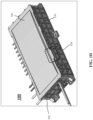
- FIGs. 1A-1E are representative drawings of a power distribution unit (PDU) 100 for high-voltage applications, according to exemplary embodiments.
- FIG. 1A is an exploded perspective view
- FIG. 1B is a bottom perspective view
- FIG. 1C is a side view
- FIG. 1D is a top perspective view with cover
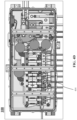
- FIG. 1E is an overhead view of the PDU 100.
- the PDU 100 is a longer, larger structure and has several additional features not found in legacy PDUs.
- PDUs are designed to house fuses and/or relays, which are used to support circuits within the application environment.
- the PDUs fuses and/or relays may be used to protect and enable air conditioning units, lighting systems, power trains, and so on, of the vehicle.
- the PDU 100 features a housing 102 in which reside relays 118a-d (collectively, "relays 118") and fuses (four of which are indicated) 120a-120d (collectively, "fuses 120"), as illustrated in FIG. 1E .
- the relays 118 and fuses 120 may be a single size or may vary in size.
- the relays 118 and fuses 120 may be connected to one or more busbars, with three busbars 130a-c (collectively, "busbars 130") being indicated.
- the relays 118 and fuses 120 are further connected to cables, which enable coupling to the outside circuitry, with cables 108a-d, cables 1 10a-b, cables 112a-b, cable 114, and cable 116 being indicated. Some of the cables may be ground or power cables.
- the number and arrangement of relays 118, fuses 120, and the number and type of cables and busbars may vary, as the PDU 100 may be customized for a particular application or generalized for wide distribution.
- the PDU 100 features a gasket 104 and a cover 106.
- the housing 102 and the cover 106 are made of a light-weight aluminum.
- the PDU 100 further includes a support structure 132, which occupies the interior of the housing 102, helps to hold the busbars 130 in place, and provides additional support to the housing.
- the support structure 132 is plastic.
- the PDU 100 may be mounted "upside-down", with the components being opposite to what is shown in FIG. 1A .
- the PDU 100 may be mounted to a bottom surface of the vehicle chassis, with a bottom surface 136 of the housing 102 being mounted to the chassis, the gasket 104 being installed around the circumference of the opening of the housing 102 (opposite the bottom surface 136), and the cover 106 being placed over the opening, thus sandwiching the gasket in between the housing and the cover, with the cover and gasket being "underneath" the housing.
- the PDU 100 may be mounted in an "upright” position or may be mounted to a surface sideways (e.g., orthogonal to the arrangement depicted in FIG. 1A ). No matter how the PDU 100 is connected, the special design of the gasket assembly ensures an airtight seal of the cover 106 to the housing 102.
- the gasket 104 of the PDU 100 is specially designed to prevent its detachment from the housing 102. Further, the PDU 100 is designed so that the cover 106 will not successfully attach to the housing 102 in the absence of the gasket 104. Gasket ribs 122a-h (collectively, “gasket ribs 122") and a gasket connector 124 are visible in the gasket 104 ( FIG. 1E ).
- gasket 104 gasket ribs 122, and gasket connector 124, as well as the features of the housing 102 and cover 106 designed to support the new gasket design, are described in detail in FIGs. 5A-5H and 6A-6B , below.
- An optional feature in support of the new gasket design is also described in detail in FIGs. 7A-7B , below.
- the PDU 100 has additional design features not found in legacy PDUs.
- the exemplary PDU 100 includes cavities, ribs, and top frames in the housing 102, which reduce the weight, reduce possible warpage, and increase the strength of the housing.
- the support structure 132 includes special walls and ribs to prevent creepage and improve clearance.
- the housing 102 is designed with cavities or slots, with cavities 128a-b (collectively, "cavities 128") indicated in FIG. 1B .
- the bottom surface 136 of the PDU 100 has several rows of cavities 128, with five rows being visible along the long side of the housing 102.
- the shape and size of the cavities may vary, with some cavities being shaped based on component arrangement inside the housing 102.
- many of the cavities 128 are generally rectangular-cube-shaped voids in the bottom surface 136, although there is quite a bit of variety of both depth and dimension of the cavities 128. Because the PDU 100 is a bit larger than typical legacy PDUs, the cavities 128 provide voids in the bottom surface 136 of the housing, thus decreasing the overall weight of the housing 102.
- the PDU 100 features a plurality of ribs along the long sides of the housing 102 to provide both support and prevent warpage.
- Ribs 126a-f (collectively, "ribs 126") are shown in FIG. 1E , with ribs 126a-c being disposed on one long side of the housing 102 and ribs 126d-f being disposed on the other long side of the housing.
- An external view of a rib 126 is shown in FIG. 1D .
- the ribs 126 are described more particularly in FIGs. 2A-2D , below.
- the rib 126 are disposed on the long sides of the housing 102, to structurally enhance the housing, and to prevent warpage of the housing.
- the ribs also provide support for the top frames.
- top frames 134a-c are top frames 134a-c (collectively, "top frames 134"), shown in FIG. 1E .
- the top frames 134 are disposed orthogonally across the two long sides of the housing 102 and act as braces between the two long sides of the housing 102, thus increasing the strength of the housing.
- the top frames 134 are disposed on top of pairs of ribs 126.
- top frame 134a is disposed between rib 126a and rib 126d
- top frame 134b is disposed between rib 126b and rib 126e
- top frame 134c is disposed between rib 126c and rib 126f.
- the top frames 134 help to avoid distortion of the housing 102 as well as improving the structural integrity of the housing.
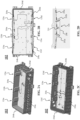
- FIGs. 2A-2D are representative drawings of the PDU housing 102 for the PDU 100, according to exemplary embodiments.
- FIG. 2A is a first side perspective view
- FIG. 2B is an overhead view
- FIG. 2C is a second side perspective view
- FIG. 2D is a detail view of the housing 102.
- the already introduced ribs 126 are shown.
- the housing 102 has four walls 204a-d (collectively, "walls 204"), with walls 204a and 204c being the longer than walls 204b and 204d.
- the wall 204a and wall 204c may hereinafter be referred to respectively as long wall 204a and long wall 204b; the wall 204b and wall 204d may hereinafter be referred to respectively as short wall 204b and short wall 204d.
- the ribs 126 are disposed on the long side walls 204a and 204c. Ribs 126a-c are located on the wall 204a while ribs 126d-f are located on the wall 204c.
- each rib 126 has a trapezoid structure that extends inward from the wall 204 inside the housing 102.
- a side 202a extends away from the wall 204 at a first angle, ⁇
- a second side 202b extends away from the wall at a second angle, ⁇
- the ribs 126 each have an aperture 210 disposed approximately in the center of the trapezoid shape, equidistant from the wall 204 and the middle side 208.
- the ribs 126 are not trapezoid shaped but still include a side, like the middle side 208, that is parallel to the wall 204.
- the ribs 126 are formed along with the housing 102 and are made of aluminum. In some embodiments, the ribs 126 are made separately and attached to the inside walls of the housing 102.
- the ribs 126 both increase the strength of the housing 102, particularly the long walls 204a and 204c on which they reside. Further, the ribs 126 are designed to prevent warpage of the long walls 204a and 204c of the housing 102.
- FIG. 2B includes deflection indicators 206a and 206b while FIG. 2D includes deflection indicator 206c (collectively, "deflection indicators 206").
- the deflection indicators 206 show how the respective walls 204a and 204c (the long walls) of the housing 102 are likely to warp inward without the ribs 126.
- the ribs 126 prevent the walls 204a and 204c from deflecting in this way, thus further strengthening the housing 102.
- FIGs. 3A-3D are representative drawings of a first PDU support structure 300 for the PDU 100, according to exemplary embodiments.
- FIG. 3A is a side view of a support structure according to the prior art
- FIG. 3B is a cross-sectional perspective view
- FIG. 3C is a side view of the novel support structure 300
- FIG. 3D is an overhead view of the PDU, indicating location of the support structures.
- the PDU 100 includes a support structure 132 that enhances the housing 102, particularly providing a structure for the support and affixation of the busbars 130.
- Busbar 130c is shown in FIG. 3D along with the support structure 132.
- the PDU 100 features a first support structure, a special wall in the support structure 132.
- FIGs. 3B and 3C show how the support structure 132 is seated on the housing 102.
- a busbar 130e is connected to a busbar 130f (collectively, "busbars 130") with a bolt 302 secured by an insert bushing 304.
- a second bolt 306 is adjacent the busbar 130f and secured by an insert bushing 308.
- the support structure 132 includes a fastener cavity 310 to contain the insert bushing 304 of the bolt 302 (e.g., larger bolt) and a fastener cavity 314 to contain the insert bushing 308 of the bolt 306 (e.g., smaller bolt).
- a housing cavity 312 provides a space for the fastener cavity 310, which is formed during injecting molding of the support structure 132.
- the bolt 302 is inserted through the busbars 130e and 130f, then the insert bushing 304 is inserted through the fastener cavity 310 and pushed upward to secure the bolt 302.
- the insert bushing 304 is press-fit into the housing cavity 312 when the housing cavity is manufactured by machine process.
- the insert bushing 304 is insert molded with the fastener cavity 310 when the fastener cavity is formed during injection molding process.
- An extension 316 is shown in between fastener cavity 310 and fastener cavity 314.
- the extension 316 is the "special wall" of the support structure 132 which helps to ensure a clearance between the bolt 302 and the housing 102, where clearance is the shortest distance between two conductive parts in air.
- the extension 316 also helps to prevent creepage of current between the bottom of bolt 302 and the housing 102, which is aluminum, where creepage is the distance along a surface.
- FIG. 3A shows a support structure 356 and a housing 358.
- the housing includes the portion 360 which extends beneath an insert bushing 366. Creepage 362, the distance along the surface of the housing 358, is shown, as well as clearance 364, the shortest distance (in air) between the insert bushing 366 and the housing 358.
- both the creepage and the clearance are positively affected by the presence of the extension 316 of the support structure 132.
- a creepage 318 between the insert bushing 304 and the aluminum housing 102 travels a greater distance than for the creepage 362 of the prior art assembly.
- a clearance 320 between the bolt 302 and the housing 102 is greater than for the clearance 320 of the prior art assembly.
- the extension 316 in the support structure 132 which is plastic, mitigates the creepage of current by increasing the current path between the insert bushing 304 and the housing 102 as well as increasing the clearance of current between bolt 302 and the housing 102.
- Arrows in FIG. 3D shows that the special wall support structure may be placed in many locations within the PDU 100.
- FIGs. 4A-4C are representative drawings of a second PDU support structure for the PDU 100, according to exemplary embodiments.
- FIG. 4A is a perspective view and FIG. 4B is a side view of the support structure,
- FIG. 4C is a close-up view of a pair of stop ribs, and
- FIG. 4D is an overhead view of the PDU, indicating location of the support structure. Fuses 120e-g are visible in FIG. 4A with fuses 120f-g also being visible in FIG. 4B (collectively, "fuses 120").
- Each fuse has a fuse terminal, with fuse terminal 412a being part of fuse 120e, fuse terminal 412b being part of fuse 120f, and fuse terminal 412c being part of fuse 120g (collectively, "fuses 120" and “fuse terminals 412").
- the fuse terminals 412a-c are connected to respective cable terminals 410a-c (collectively, “cable terminals 410").
- the fuse terminals 412 connect the fuses 120 to cables which connect to external circuitry needing protection from the fuses.
- the cables are two-part cables, with cable 108d having a first portion with cable terminal 408d and bolt 406d and a second portion with a cable terminal 408b and bolt 406b and cable 108e having a first portion with cable terminal 408e and bolt 406e and a second portion with cable terminal 408c and bolt 406c; cable terminal 408a and bolt 406a are also part of a two-part cable (shown in FIG. 4D ) (collectively, "cables 108", “cable terminals 408", and “bolts 406").
- the first portions of the cables 108 are connected to busbar 410 while the second portions are connected to busbar 130.
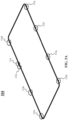
- rectangles 322a, 322b and 322c shows which portion of the cables are positive, with the remaining cables being negative.
- the longer portions of the two-part cables are positive while the shorter portions of the two-part cables are negative.
- a location indicator 414 is shown in the overhead view of FIG. 4D , with the PDU 100 having many cables, busbars, fuses, and relays in a somewhat crowded/compressed configuration.
- the end portions of one or more cables 108 may touch the bolt of a different cable or a different cable portion, in the case of two-part cables.
- Wrong position indicators 418 in FIG. 4B show that, if the ends of the cables are allowed to move significantly from their intended position bolted into the busbar 410, they may accidentally touch the bolt of another cable portion.
- the cable terminal 408b of cable 108d or the cable terminal 408c of cable 108e may accidentally touch the bolt 406e of cable 108e.
- the support structure 132 of the housing 102 of the PDU 100 includes support structures, known herein as stop ribs and stop walls, to prevent these occurrences.
- the PDU 100 features: stop ribs 402a-e (collectively, “stop ribs 402”) and stop walls 404a-c (collectively, "stop walls 404"). Stop rib 402a is adjacent cable terminal 408a, stop ribs 402b and 402c are disposed on either side of cable terminal 408b, and stop ribs 402d and 402e are disposed on either side of cable terminal 408c.
- the support structure 132 of the housing 102 is preferably plastic. Accordingly, the stop ribs 402 and stop walls 404 may be created using injection molding or a similar operation in which molds are made to conform to predefined shapes. Two stop ribs 402 are shaped so that the cable terminals 410 fit snugly between them. FIG. 4C illustrates how stop ribs 402b and 402c are shaped so that, at the distal end, the stop ribs 402b and 402c are a distance, d, apart.
- the stop ribs 402 are thus designed to limit the side-to-side movement of the cable terminals 408 of the cables 108, thus preventing the cable terminals from ending up too close to other cable terminals , as shown by wrong position indicators 418.
- Side-to-side rotation occurs when, as the bolt 406 is being rotated to secure the cable terminal 408 to the busbar 410, the cable terminal moves in a leftward direction and/or a rightward direction, rather than being stationary.
- the wrong position indicators 418 in FIG. 4B show side-to-side rotation of the cable terminals 408b and 408c.
- the stop ribs 402 also have a vertical component, with the stop ribs being raised higher than the busbar 410.
- the stop walls 404 are also formed using injection molding operations, in some embodiments, to form vertical structures that, on the one hand, create a space for the first portion of the cables and, on the other hand, raise the second portion of the cables. This both separates the two portions of the cables 108 and, in the case of the first portions, prevents significant side-to-side movement of the first portions.
- stop walls 404a and 404b isolate the cable terminal 408d of the first portion of cable 108d and also minimizes the side-to-side movement of the cable terminal 408d. Simultaneously, the stop wall 404b raises the second portion of the cable 108d, which is longer than the first portion, which has the effect of separating the two portions of the cable 108d.
- the stop walls 404b and 404c operate similarly for cable 108e. Since the stop ribs 402 already limit side-to-side movement of the cable terminals 408 of the second (longer) portion of each cable, the stop walls 404 limit side-to-side movement of the first (shorter) portion of each cable.
- FIGs. 5A-5H , FIGs. 6A-6E , and, optionally, FIGs. 7A-7B are illustrations of components of a gasket assembly of the PDU 100, according to exemplary embodiments.
- the gasket assembly consists of the following components: a gasket 104 (also known as the gasket body 104), gasket ribs 122, a gasket connector 124, a pin 502, which includes a base 602, a spring 604 (of the pin 502), a channel 516 (of the housing 102), gasket rib receivers 512 (of the housing 102), a housing cavity 612 including a first slanted floor 608, a second slanted floor 610, a pin stop 606, and a gasket connector receiver 618, and a pin cylinder 614 (of the cover 106).
- the optional components of the gasket assembly include a gasket connector plate 702 and a gasket connector plate receiver 706 (of the housing 102).
- FIGs. 5A-5H are representative drawings of a gasket for the PDU 100, according to exemplary embodiments.
- FIG. 5A is a perspective view of the gasket
- FIG. 5B is a perspective view of the gasket rib holder in the housing 102
- FIG. 5C is a perspective view of the gasket ribs inside the gasket rib holder
- FIG. 5D is a perspective view of the gasket rib and part of the gasket
- FIG. 5E is a cross-sectional perspective view of the gasket ribs inside the gasket ribs holder
- FIG. 5F is a perspective view of the gasket rib and gasket connector inside housing
- FIG. 5G is a perspective view of the gasket rib and part of the gasket
- FIG. 5A is a perspective view of the gasket
- FIG. 5B is a perspective view of the gasket rib holder in the housing 102
- FIG. 5C is a perspective view of the gasket ribs inside the gasket
- 5H is a perspective view of a long gasket rib and part of the gasket.
- the gasket assembly which includes the gasket 104 and the modifications to the housing 102 and cover 106 that enable the gasket assembly, is a clever design that both prevents the gasket 104 from being separated from the housing 102 and, in case the gasket does become removed, prevents the cover 106 from closing over the housing.
- legacy PDUs may be installed bottom-side up.
- the PDU 100 is designed to also be installed bottom-side up. Whether installed bottom-side up, sideways, or upright, the gasket assembly of the PDU 100 is designed to prevent its separation from the housing 102. Further, legacy PDUs make it possible to install the cover onto the housing, even when the gasket is missing.
- the PDU 100 gasket assembly is designed to prevent the cover from being installed without the gasket.
- the gasket 104 which is placed around the perimeter of the housing 102 ( FIG. 1E ), may also be known herein as the gasket body (to distinguish from other gasket components). Recall that the gasket 104 features a plurality of gasket ribs 122.
- the gasket ribs 122 are shown in greater detail in FIGs. 5A , 5C-5E , 5G, and 5H .
- the gasket ribs 122 are trapezoid-shaped. Notice that gasket rib 122b is an elongated trapezoid shape, as compared to the other gasket ribs (cf. FIGs. 5E and 5H ).
- the gasket 104 may have more longer gasket ribs, such as the gasket rib 122b, than are shown in FIG. 5A .
- the gasket ribs 122 may be arranged in another way, as the illustration is not meant to be limiting.
- the gasket ribs 122 help to keep the gasket in place in the housing 102.
- the housing 102 features gasket rib receivers 512 disposed around its perimeter, along its open edge, and a channel 516 disposed along its perimeter, for receiving the gasket 104 (see FIGs. 5B-5C, 5E, and 5F ).
- the gasket ribs 122 are inserted into respective gasket rib receivers 512 around the gasket 104.
- the gasket ribs 122, gasket rib receivers 512, and channel 516 form the part of the gasket assembly that ensures the gasket body 104 will stay with the housing 102 once the cover 106 is removed, even if the PDU 100 is installed upside down (bottom-side up).
- the gasket 104 also features the gasket connector 124, detailed in FIG. 5F .
- the gasket connector 124 features a first portion 504, a second portion 506, and a third portion 508, all of which extend from the gasket body 104.
- the gasket connector 124 also features an aperture 514, which, in some embodiments, is disposed in a plane with the first portion 504 and the second portion 506, for receiving a pin 502.
- the gasket connector 124 help to keep the gasket body 104 in place in the housing 102.
- the gasket connector 124 prevents the cover 106 from being attached to the housing 102 when the gasket body 104 has been removed. The mechanisms by which the gasket connector 124 achieves this result is described in more detail in FIGs. 6A- 6C , below.
- the gasket body 104 features three gasket levels 5 10a-c (collectively, "gasket levels 510").
- the gasket levels 510 provide depth to the gasket body 104 as the gasket body is inserted into the channel 516 of the housing 102.
- gasket level 510c is thicker (wider) than gasket level 510b, which is thicker (wider) than gasket level 510a, with the channel 516 of the housing 102 also being thicker (wider) at the bottom of the channel to accommodate the gradation of shape of the gasket body 104.
- the gasket levels 510a-c may be in the same plane as the gasket ribs 122, as shown in FIG. 5C .
- the gasket body 104 may have two levels 510a and 510b, as shown in FIG. 5E .
- the gasket body 104 may be squeezed together to fit into the channel 516 of the housing 102, to ensure a snug fit.
- FIG. 5E shows that, in exemplary embodiments, the gasket ribs 122 fit into the gasket rib receivers 512 such that the gasket ribs are planar to a top surface 518 of the housing 102.
- the gasket body 104 is disposed above the top surface 518. This ensures that the gasket 104 provides a buffer between the housing 102 and the cover 106 when the cover is installed over the housing.
- the gasket 104 being disposed above the top surface 518 helps to ensure air-tightness of the PDU 100 once the cover 106 is secured to the housing 102, in some embodiments.
- FIGs. 6A-6E are representative drawings of a gasket connector assembly 600 for the PDU 100, according to exemplary embodiments.
- FIG. 6A is a side view of the gasket connector assembly with the pin in a first position
- FIG. 6B is a side view of the gasket connector assembly with the pin in a second position
- FIG. 6C is side view of the gasket connector assembly with pin moving from the first position to the second position
- FIGs. 6D-6E are perspective overhead views of the housing portion of the gasket connector assembly.
- the cover 106 is shown in FIGs. 6A and 6B while the housing 102 in shown in all illustrations.
- the gasket connector 124 is shown in FIG. 6B .
- the cover 106 features a pin cylinder 614 that is sized to receive the pin 502.
- the housing 102 includes a housing cavity 612 which accommodates movement of the pin 502 from a first position (B) to a second position (A) ( FIG. 6C ).
- the third portion 508 of the gasket connector 124 In the top of the housing cavity 612 is shown the third portion 508 of the gasket connector 124 (see FIG. 5F ), disposed beneath the pin cylinder 614 of the cover 106.
- the pin 502 is disposed in both the pin cylinder 614 (cover 106) and the third portion 508 of the gasket connector 124.
- the pin 502 is a base 602 and a spring 604, in exemplary embodiments.
- the pin 502 is a cylindrical shaft and the base 602 has an upper surface that is orthogonal to the pin and a lower surface that is slanted.
- the spring 604 is wound around the cylindrical shaft.
- the housing cavity 612 is shaped with the pin 502, the base 602, and the spring 604 in mind.
- the housing cavity has a first slanted floor 608 and a second slanted floor 610.
- the first slanted floor has a pin stop 606 at one end of the slanted floor 608, which is a small cylindrical space inside which the pin 502 is inserted when the pin is in the B position.
- the base 602 of the pin 502 is slanted at its bottom at a degree similar to the angle of the second slanted floor 610 of the housing cavity 612. When the pin 502 is moved from position A to position B, the base 602 slides along the second slanted floor 610 while the bottom of the pin 502 simultaneously slides along the first slanted floor 608 until it rests inside the cylindrical pin stop 606.
- the spring 604 makes these actions possible, as the tension of the spring pushes the pin into the pin stop 606 as the pin 502 is slid from the A position to the B position.
- the pin stop 606 enables the pin 502 to be "locked" at the B location. Notice that the pin 502 is in a lower position, denoted B ', when the pin is at the B location while the pin is in a higher position, denoted A ', when the pin is at the A location.
- the housing 102 includes a gasket connector receiver 618 for receiving the gasket connector 124.
- the gasket connector receiver 618 features a first portion 620 for receiving the first portion 504 (where the first portion 620 corresponds to position B of the pin 502) of the gasket connector 124, a second portion 622 for receiving the second portion 506 of the gasket connector, and a third portion 624 for receiving the third portion 508 of the gasket connector (see FIG. 5D for shape of the gasket connector).
- the part of the gasket connector receiver 618 that receives the first portion 504 is bulbous, to facilitate insertion of the gasket connector 124 into the gasket connector receiver of the housing 102.
- the housing looks like the illustrations of FIGs. 6D-6E , with just the pin 502 and spring 604 visible and in the B position (position 622 of the gasket connector receiver 618).
- the gasket connector 124 is inserted into the gasket connector receiver 618 of the housing 102.
- the gasket 104 including the gasket ribs 122 and the gasket connector 124 is made of an elastic material that can compress somewhat.
- the gasket connector 124 may be disposed over the pin 502.
- the pin 502 is then moved from the B position to the A position and inserted until it pokes through the aperture 514 of the gasket connector 124, such as is shown in FIG.
- the pin 502 is thus in the A position which is also the third portion 624 of the gasket connector receiver 618.
- the tension of the spring 604 simplifies the movement of the pin 502.
- the pin 502 automatically moves from position A to position B due to the force of the spring 604 when the gasket 104 is removed (or falls away from the housing 102).
- the cover 106 can be attached to the housing 102.
- FIG. 6A shows that cover 106 is separated from the housing 102 by the pin 502 whereas, in FIG. 6B , the cover 106 is mated with the housing 102.
- the pin 502 (in the B position) blocks the cover 106 from being coupled with the housing 102, whereas, in FIG. 6B the pin, in the A position, fits into the pin cylinder 614 and is thus able to be directly coupled to the housing 102.
- FIGs. 7A-7B are representative drawings of an optional gasket connector plate, according to exemplary embodiments.
- FIG. 7A is an exploded perspective view of the gasket connector plate before installation and
- FIG. 7B is a perspective view of the gasket connector plate after installation.
- a gasket connector plate 702 may be used to simplify the upper portion of the housing portion.
- the housing 102 will still have the housing cavity 612 with the first and second slanted floors 608 and 610, shown in FIGs. 6A-6C .
- the top surface of the housing 102 may be cut with a gasket connector plate receiver 706.
- the gasket connector plate receiver 706 is a rounded rectangular structure disposed over the housing cavity 612, with two screw receivers 710a-b (collectively, "screw receivers 710"), which are cylindrical structures drilled adjacent the housing cavity.
- the gasket connector plate 702 includes a pair of screw apertures 708a-b (collectively, “screw apertures 708") and a gasket connector assembly opening 712, which looks much like the gasket connector receiver 618 ( FIGs. 6D-6E ).
- the gasket connector plate 702 is inserted into the gasket connector plate receiver 706 and secured to the housing 102 with a pair of screws 704a-b (collectively, "screws 704").
- the gasket connector plate 702 is made of aluminum, stainless steel, or hard plastic.
Landscapes
- Engineering & Computer Science (AREA)
- Power Engineering (AREA)
- Architecture (AREA)
- Civil Engineering (AREA)
- Structural Engineering (AREA)
- Mechanical Engineering (AREA)
- Connector Housings Or Holding Contact Members (AREA)
- Connection Or Junction Boxes (AREA)
Abstract
Description
- Embodiments of the present disclosure relate to power distribution units and, more particularly, to power distribution units suitable for high-voltage applications.
- Power distribution modules (PDUs) are sealed electrical boxes that are installed into high-voltage applications, such as automotive environments, to ensure circuits are protected, controlled, and/or sensed. PDUs may consist of fuses and relays, for example. The PDUs thus protect and distribute current throughout the environment.
- Current is moved around the PDU using an electrical bus. The electrical bus may consist of a network of direct wires, busbars or a combination of wires and busbars. Although the housing of the PDU is aluminum, a plastic support structure may be disposed within the housing to fix the electrical bus.
- The PDU may have many fuses and relays which are close to one another. Once connected to the busbars and cables, the configuration within the PDU may be quite complex and the components weighty. Creepage of electrical current between different components may be a concern, particularly due to the high voltages being received into the PDU.
- PDUs may be installed in an upright position, or they may be installed sideways, or even upside down. The PDUs house fuses and relays which, by design, may become damaged or destroyed and must then be replaced. Particularly if the PDU is mounted in an upside-down position, a gasket disposed between the housing and a cover may get lost or damaged during the installation of new fuses or relays.
- It is with respect to these and other considerations that the present improvements may be useful.
- This Summary is provided to introduce a selection of concepts in a simplified form that are further described below in the Detailed Description. This Summary is not intended to identify key or essential features of the claimed subject matter, nor is it intended as an aid in determining the scope of the claimed subject matter.
- An exemplary embodiment of a power distribution unit in accordance with the present disclosure may include a housing, a cover, and a gasket assembly. The housing, which holds one or more fuses, relays, cables, and busbars, includes a channel located along a perimeter of the housing. The cover is to be placed over the housing. The gasket assembly includes a gasket, multiple gasket ribs, and a gasket connector. The gasket is placed in the channel so that the gasket is sandwiched between the housing and the cover when the cover is placed over the housing. The gasket ribs are located around and attached to the gasket and are placed into gasket rib receivers in the housing. The gasket connector prevents the cover from being secured over the housing without the gasket.
- Another exemplary embodiment of a power distribution unit in accordance with the present disclosure may include a housing, a cover, and a gasket. The housing holds one or more fuses, relays, busbars, and cables, and has four sides, two long sides and two short sides, where the long sides are parallel to one another and perpendicular to the short sides. The housing also includes first and second ribs, the first rib being located on an inside wall of the first long side and the second rib being located on an inside wall of the second long side. The housing also has a top frame that is located over the first rib and the second rib so that the top frame is perpendicular to the first long side and the second long side of the housing. The cover is secured over an opening of the housing. The gasket is sandwiched between the housing and the cover and forms an airtight seal between the housing and the cover.
-
-
FIGs. 1A-1E are diagrams illustrating a power distribution unit, in accordance with exemplary embodiments; -
FIGs. 2A-2D are diagrams illustrating a housing for the power distribution unit ofFIGs. 1A-1E , in accordance with exemplary embodiments; -
FIGs. 3A-3D are diagrams illustrating a support structure design for the power distribution unit ofFIGs. 1A-1E , in accordance with exemplary embodiments; -
FIGs. 4A-4D are diagrams illustrating a second support structure design for the power distribution unit ofFIGs. 1A-1E , in accordance with exemplary embodiments; -
FIGs. 5A-5H are diagrams illustrating a gasket design for the power distribution unit ofFIGs. 1A-1E , in accordance with exemplary embodiments; -
FIGs. 6A-6C are diagrams illustrating a gasket connector assembly for the power distribution unit ofFIGs. 1A-1E , in accordance with exemplary embodiments; and -
FIGs. 7A-7B are diagrams illustrating an optional gasket connector assembly insert for the power distribution unit ofFIGs. 1A-1E , in accordance with exemplary embodiments. - A novel power distribution unit (PDU) includes several design features suitable for use in high-voltage environments. Larger than legacy PDUs, the novel PDU housing features weight-reducing slots and ribs that both increase strength and prevent warpage of the housing walls, and top frames to increase strength. The plastic support structure within the housing includes features to prevent creepage and ensure clearance between bolts, as well as two different types of stop ribs to minimize the chance of cable terminals touching one another. The new gasket design has many features to ensure that the gasket does not fall out of the housing and prevents the cover from being installed over the housing without the gasket. The gasket assembly further includes an optional gasket connector plate to simplify the manufacture of the housing.
- For the sake of convenience and clarity, terms such as "top", "bottom", "upper", "lower", "vertical", "horizontal", "lateral", "transverse", "radial", "inner", "outer", "left", and "right" may be used herein to describe the relative placement and orientation of the features and components, each with respect to the geometry and orientation of other features and components appearing in the perspective, exploded perspective, and cross-sectional views provided herein. Said terminology is not intended to be limiting and includes the words specifically mentioned, derivatives therein, and words of similar import.
-
FIGs. 1A-1E are representative drawings of a power distribution unit (PDU) 100 for high-voltage applications, according to exemplary embodiments.FIG. 1A is an exploded perspective view,FIG. 1B is a bottom perspective view,FIG. 1C is a side view,FIG. 1D is a top perspective view with cover, andFIG. 1E is an overhead view of thePDU 100. Designed particularly for high-voltage applications, thePDU 100 is a longer, larger structure and has several additional features not found in legacy PDUs. - PDUs are designed to house fuses and/or relays, which are used to support circuits within the application environment. In an automobile, for example, the PDUs fuses and/or relays may be used to protect and enable air conditioning units, lighting systems, power trains, and so on, of the vehicle. The
PDU 100 features ahousing 102 in which residerelays 118a-d (collectively, "relays 118") and fuses (four of which are indicated) 120a-120d (collectively, "fuses 120"), as illustrated inFIG. 1E . The relays 118 and fuses 120 may be a single size or may vary in size. The relays 118 and fuses 120 may be connected to one or more busbars, with threebusbars 130a-c (collectively, "busbars 130") being indicated. The relays 118 and fuses 120 are further connected to cables, which enable coupling to the outside circuitry, withcables 108a-d, cables 1 10a-b,cables 112a-b,cable 114, and cable 116 being indicated. Some of the cables may be ground or power cables. The number and arrangement of relays 118, fuses 120, and the number and type of cables and busbars may vary, as thePDU 100 may be customized for a particular application or generalized for wide distribution. - As shown in
FIG. 1A , in addition to thehousing 102, thePDU 100 features agasket 104 and acover 106. In exemplary embodiments, thehousing 102 and thecover 106 are made of a light-weight aluminum. ThePDU 100 further includes asupport structure 132, which occupies the interior of thehousing 102, helps to hold thebusbars 130 in place, and provides additional support to the housing. In exemplary embodiments, thesupport structure 132 is plastic. - As is typical for legacy PDUs, the
PDU 100 may be mounted "upside-down", with the components being opposite to what is shown inFIG. 1A . In automotive applications, for example, thePDU 100 may be mounted to a bottom surface of the vehicle chassis, with abottom surface 136 of thehousing 102 being mounted to the chassis, thegasket 104 being installed around the circumference of the opening of the housing 102 (opposite the bottom surface 136), and thecover 106 being placed over the opening, thus sandwiching the gasket in between the housing and the cover, with the cover and gasket being "underneath" the housing. Alternatively, thePDU 100 may be mounted in an "upright" position or may be mounted to a surface sideways (e.g., orthogonal to the arrangement depicted inFIG. 1A ). No matter how thePDU 100 is connected, the special design of the gasket assembly ensures an airtight seal of thecover 106 to thehousing 102. - When the legacy PDU is attached in such an upside down arrangement, the cover and, more likely, the gasket may be lost during replacement of the relays or fuses. To address this, in exemplary embodiments, the
gasket 104 of thePDU 100 is specially designed to prevent its detachment from thehousing 102. Further, thePDU 100 is designed so that thecover 106 will not successfully attach to thehousing 102 in the absence of thegasket 104.Gasket ribs 122a-h (collectively, "gasket ribs 122") and agasket connector 124 are visible in the gasket 104 (FIG. 1E ). Thegasket 104,gasket ribs 122, andgasket connector 124, as well as the features of thehousing 102 and cover 106 designed to support the new gasket design, are described in detail inFIGs. 5A-5H and 6A-6B, below. An optional feature in support of the new gasket design is also described in detail inFIGs. 7A-7B , below. - In addition to the many novel features of the
gasket 104, thePDU 100 has additional design features not found in legacy PDUs. Theexemplary PDU 100 includes cavities, ribs, and top frames in thehousing 102, which reduce the weight, reduce possible warpage, and increase the strength of the housing. Thesupport structure 132 includes special walls and ribs to prevent creepage and improve clearance. Each of these features is described in the following pages and illustrations. - In exemplary embodiments, the
housing 102 is designed with cavities or slots, withcavities 128a-b (collectively, "cavities 128") indicated inFIG. 1B . Thebottom surface 136 of thePDU 100 has several rows of cavities 128, with five rows being visible along the long side of thehousing 102. The shape and size of the cavities may vary, with some cavities being shaped based on component arrangement inside thehousing 102. InFIG. 1B , many of the cavities 128 are generally rectangular-cube-shaped voids in thebottom surface 136, although there is quite a bit of variety of both depth and dimension of the cavities 128. Because thePDU 100 is a bit larger than typical legacy PDUs, the cavities 128 provide voids in thebottom surface 136 of the housing, thus decreasing the overall weight of thehousing 102. - In exemplary embodiments, the
PDU 100 features a plurality of ribs along the long sides of thehousing 102 to provide both support and prevent warpage.Ribs 126a-f (collectively, "ribs 126") are shown inFIG. 1E , withribs 126a-c being disposed on one long side of thehousing 102 andribs 126d-f being disposed on the other long side of the housing. An external view of arib 126 is shown inFIG. 1D . Theribs 126 are described more particularly inFIGs. 2A-2D , below. In exemplary embodiments, therib 126 are disposed on the long sides of thehousing 102, to structurally enhance the housing, and to prevent warpage of the housing. The ribs also provide support for the top frames. - Another feature that addresses the largess of the
PDU 100 over legacy PDUs aretop frames 134a-c (collectively, "top frames 134"), shown inFIG. 1E . In exemplary embodiments, the top frames 134 are disposed orthogonally across the two long sides of thehousing 102 and act as braces between the two long sides of thehousing 102, thus increasing the strength of the housing. In exemplary embodiments, the top frames 134 are disposed on top of pairs ofribs 126. Thus,top frame 134a is disposed betweenrib 126a andrib 126d;top frame 134b is disposed betweenrib 126b andrib 126e; andtop frame 134c is disposed betweenrib 126c andrib 126f. Like theribs 126, the top frames 134 help to avoid distortion of thehousing 102 as well as improving the structural integrity of the housing. -
FIGs. 2A-2D are representative drawings of thePDU housing 102 for thePDU 100, according to exemplary embodiments.FIG. 2A is a first side perspective view,FIG. 2B is an overhead view,FIG. 2C is a second side perspective view, andFIG. 2D is a detail view of thehousing 102. The already introducedribs 126 are shown. Thehousing 102 has fourwalls 204a-d (collectively, "walls 204"), withwalls walls wall 204a andwall 204c may hereinafter be referred to respectively aslong wall 204a andlong wall 204b; thewall 204b andwall 204d may hereinafter be referred to respectively asshort wall 204b andshort wall 204d. In a non-limiting example, theribs 126 are disposed on thelong side walls Ribs 126a-c are located on thewall 204a whileribs 126d-f are located on thewall 204c. - As illustrated particularly in the overhead detail view of
FIG. 2D , in exemplary embodiments, eachrib 126 has a trapezoid structure that extends inward from the wall 204 inside thehousing 102. Aside 202a extends away from the wall 204 at a first angle, α, asecond side 202b extends away from the wall at a second angle, β, and amiddle side 208 is parallel to the wall, thus forming the trapezoid shape, with α = β, in a non-limiting embodiment. Theribs 126 each have anaperture 210 disposed approximately in the center of the trapezoid shape, equidistant from the wall 204 and themiddle side 208. In other embodiments, theribs 126 are not trapezoid shaped but still include a side, like themiddle side 208, that is parallel to the wall 204. In exemplary embodiments, theribs 126 are formed along with thehousing 102 and are made of aluminum. In some embodiments, theribs 126 are made separately and attached to the inside walls of thehousing 102. - In exemplary embodiments, the
ribs 126 both increase the strength of thehousing 102, particularly thelong walls ribs 126 are designed to prevent warpage of thelong walls housing 102.FIG. 2B includesdeflection indicators FIG. 2D includesdeflection indicator 206c (collectively, "deflection indicators 206"). The deflection indicators 206 show how therespective walls housing 102 are likely to warp inward without theribs 126. In exemplary embodiments, theribs 126 prevent thewalls housing 102. -
FIGs. 3A-3D are representative drawings of a firstPDU support structure 300 for thePDU 100, according to exemplary embodiments.FIG. 3A is a side view of a support structure according to the prior art,FIG. 3B is a cross-sectional perspective view andFIG. 3C is a side view of thenovel support structure 300, whileFIG. 3D is an overhead view of the PDU, indicating location of the support structures. Recall fromFIG. 1E that thePDU 100 includes asupport structure 132 that enhances thehousing 102, particularly providing a structure for the support and affixation of thebusbars 130.Busbar 130c is shown inFIG. 3D along with thesupport structure 132. In several locations, indicated with arrows, thePDU 100 features a first support structure, a special wall in thesupport structure 132. -
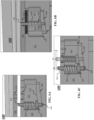
FIGs. 3B and 3C show how thesupport structure 132 is seated on thehousing 102. Abusbar 130e is connected to abusbar 130f (collectively, "busbars 130") with abolt 302 secured by aninsert bushing 304. Asecond bolt 306 is adjacent thebusbar 130f and secured by aninsert bushing 308. In exemplary embodiments, thesupport structure 132 includes afastener cavity 310 to contain theinsert bushing 304 of the bolt 302 (e.g., larger bolt) and afastener cavity 314 to contain theinsert bushing 308 of the bolt 306 (e.g., smaller bolt). Ahousing cavity 312 provides a space for thefastener cavity 310, which is formed during injecting molding of thesupport structure 132. In exemplary embodiments, thebolt 302 is inserted through thebusbars insert bushing 304 is inserted through thefastener cavity 310 and pushed upward to secure thebolt 302. In exemplary embodiments, theinsert bushing 304 is press-fit into thehousing cavity 312 when the housing cavity is manufactured by machine process. Theinsert bushing 304 is insert molded with thefastener cavity 310 when the fastener cavity is formed during injection molding process. - An extension316 is shown in between
fastener cavity 310 andfastener cavity 314. Theextension 316 is the "special wall" of thesupport structure 132 which helps to ensure a clearance between thebolt 302 and thehousing 102, where clearance is the shortest distance between two conductive parts in air. In exemplary embodiments, theextension 316 also helps to prevent creepage of current between the bottom ofbolt 302 and thehousing 102, which is aluminum, where creepage is the distance along a surface. - To understand how the
extension 316 in thesupport structure 132 help with both clearance and creepage, refer to the prior art image ofFIG. 3A , which shows asupport structure 356 and ahousing 358. Instead of having theextension 316, the housing includes theportion 360 which extends beneath an insert bushing 366.Creepage 362, the distance along the surface of thehousing 358, is shown, as well asclearance 364, the shortest distance (in air) between the insert bushing 366 and thehousing 358. - In comparing the prior art image of
FIG. 3A and the PDU support structure 300 (FIG. 3C ), both the creepage and the clearance are positively affected by the presence of theextension 316 of thesupport structure 132. Acreepage 318 between theinsert bushing 304 and thealuminum housing 102 travels a greater distance than for thecreepage 362 of the prior art assembly. Similarly, aclearance 320 between thebolt 302 and thehousing 102 is greater than for theclearance 320 of the prior art assembly. Thus, in exemplary embodiments, theextension 316 in thesupport structure 132, which is plastic, mitigates the creepage of current by increasing the current path between theinsert bushing 304 and thehousing 102 as well as increasing the clearance of current betweenbolt 302 and thehousing 102. Arrows inFIG. 3D shows that the special wall support structure may be placed in many locations within thePDU 100. -
FIGs. 4A-4C are representative drawings of a second PDU support structure for thePDU 100, according to exemplary embodiments.FIG. 4A is a perspective view andFIG. 4B is a side view of the support structure,FIG. 4C is a close-up view of a pair of stop ribs, andFIG. 4D is an overhead view of the PDU, indicating location of the support structure.Fuses 120e-g are visible inFIG. 4A withfuses 120f-g also being visible inFIG. 4B (collectively, "fuses 120"). Each fuse has a fuse terminal, withfuse terminal 412a being part offuse 120e, fuse terminal 412b being part offuse 120f, and fuse terminal 412c being part offuse 120g (collectively, "fuses 120" and "fuse terminals 412"). Thefuse terminals 412a-c are connected to respective cable terminals 410a-c (collectively, "cable terminals 410"). - The fuse terminals 412 connect the fuses 120 to cables which connect to external circuitry needing protection from the fuses. In a non-limiting example, the cables are two-part cables, with
cable 108d having a first portion withcable terminal 408d andbolt 406d and a second portion with acable terminal 408b andbolt 406b andcable 108e having a first portion withcable terminal 408e andbolt 406e and a second portion withcable terminal 408c andbolt 406c;cable terminal 408a andbolt 406a are also part of a two-part cable (shown inFIG. 4D ) (collectively, "cables 108", "cable terminals 408", and "bolts 406"). The first portions of the cables 108 are connected to busbar 410 while the second portions are connected tobusbar 130. Referring back toFIG. 3D ,rectangles - A
location indicator 414 is shown in the overhead view ofFIG. 4D , with thePDU 100 having many cables, busbars, fuses, and relays in a somewhat crowded/compressed configuration. During installation, it is possible that the end portions of one or more cables 108 may touch the bolt of a different cable or a different cable portion, in the case of two-part cables.Wrong position indicators 418 inFIG. 4B show that, if the ends of the cables are allowed to move significantly from their intended position bolted into thebusbar 410, they may accidentally touch the bolt of another cable portion. Thecable terminal 408b ofcable 108d or thecable terminal 408c ofcable 108e may accidentally touch thebolt 406e ofcable 108e. - Thus, according to exemplary embodiments, the
support structure 132 of thehousing 102 of thePDU 100 includes support structures, known herein as stop ribs and stop walls, to prevent these occurrences. In exemplary embodiments, thePDU 100 features: stopribs 402a-e (collectively, "stop ribs 402") and stopwalls 404a-c (collectively, "stop walls 404").Stop rib 402a isadjacent cable terminal 408a, stopribs cable terminal 408b, and stopribs cable terminal 408c. - Recall that the
support structure 132 of thehousing 102 is preferably plastic. Accordingly, the stop ribs 402 and stop walls 404 may be created using injection molding or a similar operation in which molds are made to conform to predefined shapes. Two stop ribs 402 are shaped so that thecable terminals 410 fit snugly between them.FIG. 4C illustrates how stopribs stop ribs wrong position indicators 418. Side-to-side rotation occurs when, as the bolt 406 is being rotated to secure the cable terminal 408 to thebusbar 410, the cable terminal moves in a leftward direction and/or a rightward direction, rather than being stationary. Thewrong position indicators 418 inFIG. 4B show side-to-side rotation of thecable terminals FIG. 4A , the stop ribs 402 also have a vertical component, with the stop ribs being raised higher than thebusbar 410. - The stop walls 404 are also formed using injection molding operations, in some embodiments, to form vertical structures that, on the one hand, create a space for the first portion of the cables and, on the other hand, raise the second portion of the cables. This both separates the two portions of the cables 108 and, in the case of the first portions, prevents significant side-to-side movement of the first portions. For example, stop
walls cable terminal 408d of the first portion ofcable 108d and also minimizes the side-to-side movement of thecable terminal 408d. Simultaneously, thestop wall 404b raises the second portion of thecable 108d, which is longer than the first portion, which has the effect of separating the two portions of thecable 108d. Thestop walls cable 108e. Since the stop ribs 402 already limit side-to-side movement of the cable terminals 408 of the second (longer) portion of each cable, the stop walls 404 limit side-to-side movement of the first (shorter) portion of each cable. -
FIGs. 5A-5H ,FIGs. 6A-6E , and, optionally,FIGs. 7A-7B , are illustrations of components of a gasket assembly of thePDU 100, according to exemplary embodiments. The gasket assembly consists of the following components: a gasket 104 (also known as the gasket body 104),gasket ribs 122, agasket connector 124, apin 502, which includes abase 602, a spring 604 (of the pin 502), a channel 516 (of the housing 102), gasket rib receivers 512 (of the housing 102), ahousing cavity 612 including a firstslanted floor 608, a secondslanted floor 610, apin stop 606, and agasket connector receiver 618, and a pin cylinder 614 (of the cover 106). The optional components of the gasket assembly include agasket connector plate 702 and a gasket connector plate receiver 706 (of the housing 102). -
FIGs. 5A-5H are representative drawings of a gasket for thePDU 100, according to exemplary embodiments.FIG. 5A is a perspective view of the gasket;FIG. 5B is a perspective view of the gasket rib holder in thehousing 102;FIG. 5C is a perspective view of the gasket ribs inside the gasket rib holder;FIG. 5D is a perspective view of the gasket rib and part of the gasket;FIG. 5E is a cross-sectional perspective view of the gasket ribs inside the gasket ribs holder;FIG. 5F is a perspective view of the gasket rib and gasket connector inside housing;FIG. 5G is a perspective view of the gasket rib and part of the gasket; andFIG. 5H is a perspective view of a long gasket rib and part of the gasket. The gasket assembly, which includes thegasket 104 and the modifications to thehousing 102 and cover 106 that enable the gasket assembly, is a clever design that both prevents thegasket 104 from being separated from thehousing 102 and, in case the gasket does become removed, prevents thecover 106 from closing over the housing. - Recall that legacy PDUs may be installed bottom-side up. The
PDU 100 is designed to also be installed bottom-side up. Whether installed bottom-side up, sideways, or upright, the gasket assembly of thePDU 100 is designed to prevent its separation from thehousing 102. Further, legacy PDUs make it possible to install the cover onto the housing, even when the gasket is missing. ThePDU 100 gasket assembly is designed to prevent the cover from being installed without the gasket. - The
gasket 104, which is placed around the perimeter of the housing 102 (FIG. 1E ), may also be known herein as the gasket body (to distinguish from other gasket components). Recall that thegasket 104 features a plurality ofgasket ribs 122. Thegasket ribs 122 are shown in greater detail inFIGs. 5A ,5C-5E ,5G, and 5H . In a non-limiting embodiment, thegasket ribs 122 are trapezoid-shaped. Notice thatgasket rib 122b is an elongated trapezoid shape, as compared to the other gasket ribs (cf.FIGs. 5E and5H ). Thegasket 104 may have more longer gasket ribs, such as thegasket rib 122b, than are shown inFIG. 5A . Or thegasket ribs 122 may be arranged in another way, as the illustration is not meant to be limiting. - In exemplary embodiments, the
gasket ribs 122 help to keep the gasket in place in thehousing 102. Accordingly, thehousing 102 featuresgasket rib receivers 512 disposed around its perimeter, along its open edge, and achannel 516 disposed along its perimeter, for receiving the gasket 104 (seeFIGs. 5B-5C, 5E, and 5F ). Thegasket ribs 122 are inserted into respectivegasket rib receivers 512 around thegasket 104. Thegasket ribs 122,gasket rib receivers 512, andchannel 516 form the part of the gasket assembly that ensures thegasket body 104 will stay with thehousing 102 once thecover 106 is removed, even if thePDU 100 is installed upside down (bottom-side up). - The
gasket 104 also features thegasket connector 124, detailed inFIG. 5F . In exemplary embodiments, thegasket connector 124 features a first portion 504, a second portion 506, and athird portion 508, all of which extend from thegasket body 104. Thegasket connector 124 also features anaperture 514, which, in some embodiments, is disposed in a plane with the first portion 504 and the second portion 506, for receiving apin 502. Along with thegasket ribs 122, thegasket connector 124 help to keep thegasket body 104 in place in thehousing 102. Additionally, in exemplary embodiments, thegasket connector 124 prevents thecover 106 from being attached to thehousing 102 when thegasket body 104 has been removed. The mechanisms by which thegasket connector 124 achieves this result is described in more detail inFIGs. 6A- 6C, below. - In exemplary embodiments, as illustrated in
FIG. 5G , thegasket body 104 features three gasket levels 5 10a-c (collectively, "gasket levels 510"). The gasket levels 510 provide depth to thegasket body 104 as the gasket body is inserted into thechannel 516 of thehousing 102. In some embodiments,gasket level 510c is thicker (wider) thangasket level 510b, which is thicker (wider) thangasket level 510a, with thechannel 516 of thehousing 102 also being thicker (wider) at the bottom of the channel to accommodate the gradation of shape of thegasket body 104. As an alternative, thegasket levels 510a-c may be in the same plane as thegasket ribs 122, as shown inFIG. 5C . Or thegasket body 104 may have twolevels FIG. 5E . By having gasket levels 510, thegasket body 104 may be squeezed together to fit into thechannel 516 of thehousing 102, to ensure a snug fit. -
FIG. 5E shows that, in exemplary embodiments, thegasket ribs 122 fit into thegasket rib receivers 512 such that the gasket ribs are planar to atop surface 518 of thehousing 102. However, thegasket body 104 is disposed above thetop surface 518. This ensures that thegasket 104 provides a buffer between thehousing 102 and thecover 106 when the cover is installed over the housing. Although not water-tight, thegasket 104 being disposed above thetop surface 518 helps to ensure air-tightness of thePDU 100 once thecover 106 is secured to thehousing 102, in some embodiments. -
FIGs. 6A-6E are representative drawings of agasket connector assembly 600 for thePDU 100, according to exemplary embodiments.FIG. 6A is a side view of the gasket connector assembly with the pin in a first position,FIG. 6B is a side view of the gasket connector assembly with the pin in a second position,FIG. 6C is side view of the gasket connector assembly with pin moving from the first position to the second position, andFIGs. 6D-6E are perspective overhead views of the housing portion of the gasket connector assembly. Thecover 106 is shown inFIGs. 6A and 6B while thehousing 102 in shown in all illustrations. Thegasket connector 124 is shown inFIG. 6B . - In exemplary embodiments, the
cover 106 features apin cylinder 614 that is sized to receive thepin 502. In exemplary embodiments, thehousing 102 includes ahousing cavity 612 which accommodates movement of thepin 502 from a first position (B) to a second position (A) (FIG. 6C ). In the top of thehousing cavity 612 is shown thethird portion 508 of the gasket connector 124 (seeFIG. 5F ), disposed beneath thepin cylinder 614 of thecover 106. When thegasket connector assembly 600 is in the A position, thepin 502 is disposed in both the pin cylinder 614 (cover 106) and thethird portion 508 of thegasket connector 124. - Accompanying the
pin 502 is a base 602 and aspring 604, in exemplary embodiments. Thepin 502 is a cylindrical shaft and thebase 602 has an upper surface that is orthogonal to the pin and a lower surface that is slanted. Thespring 604 is wound around the cylindrical shaft. Thehousing cavity 612 is shaped with thepin 502, thebase 602, and thespring 604 in mind. - The housing cavity has a first
slanted floor 608 and a secondslanted floor 610. The first slanted floor has apin stop 606 at one end of the slantedfloor 608, which is a small cylindrical space inside which thepin 502 is inserted when the pin is in the B position. Thebase 602 of thepin 502 is slanted at its bottom at a degree similar to the angle of the secondslanted floor 610 of thehousing cavity 612. When thepin 502 is moved from position A to position B, the base 602 slides along the secondslanted floor 610 while the bottom of thepin 502 simultaneously slides along the firstslanted floor 608 until it rests inside thecylindrical pin stop 606. Thespring 604 makes these actions possible, as the tension of the spring pushes the pin into the pin stop 606 as thepin 502 is slid from the A position to the B position. Thepin stop 606 enables thepin 502 to be "locked" at the B location. Notice that thepin 502 is in a lower position, denoted B', when the pin is at the B location while the pin is in a higher position, denoted A', when the pin is at the A location. - With the
pin 502 at the B position, thegasket 104 is installed into thehousing 102 of thePDU 100. Thehousing 102 includes agasket connector receiver 618 for receiving thegasket connector 124. Thegasket connector receiver 618 features afirst portion 620 for receiving the first portion 504 (where thefirst portion 620 corresponds to position B of the pin 502) of thegasket connector 124, asecond portion 622 for receiving the second portion 506 of the gasket connector, and athird portion 624 for receiving thethird portion 508 of the gasket connector (seeFIG. 5D for shape of the gasket connector). In exemplary embodiments, the part of thegasket connector receiver 618 that receives the first portion 504 is bulbous, to facilitate insertion of thegasket connector 124 into the gasket connector receiver of thehousing 102. - Before installing the
gasket 104 is installed into thehousing 102, the housing looks like the illustrations ofFIGs. 6D-6E , with just thepin 502 andspring 604 visible and in the B position (position 622 of the gasket connector receiver 618). To install thegasket 104, thegasket connector 124 is inserted into thegasket connector receiver 618 of thehousing 102. In exemplary embodiments, thegasket 104 including thegasket ribs 122 and thegasket connector 124, is made of an elastic material that can compress somewhat. Thus, upon installation, thegasket connector 124 may be disposed over thepin 502. Thepin 502 is then moved from the B position to the A position and inserted until it pokes through theaperture 514 of thegasket connector 124, such as is shown inFIG. 5E . Thepin 502 is thus in the A position which is also thethird portion 624 of thegasket connector receiver 618. The tension of thespring 604 simplifies the movement of thepin 502. In exemplary embodiments, thepin 502 automatically moves from position A to position B due to the force of thespring 604 when thegasket 104 is removed (or falls away from the housing 102). Once thepin 502 is in the A position, thecover 106 can be attached to thehousing 102. - Without the
gasket 104, thepin 502 remains in the B position and thecover 106 cannot be attached to thehousing 102.FIG. 6A shows thatcover 106 is separated from thehousing 102 by thepin 502 whereas, inFIG. 6B , thecover 106 is mated with thehousing 102. In exemplary embodiments, the pin 502 (in the B position) blocks thecover 106 from being coupled with thehousing 102, whereas, inFIG. 6B the pin, in the A position, fits into thepin cylinder 614 and is thus able to be directly coupled to thehousing 102. -
FIGs. 7A-7B are representative drawings of an optional gasket connector plate, according to exemplary embodiments.FIG. 7A is an exploded perspective view of the gasket connector plate before installation andFIG. 7B is a perspective view of the gasket connector plate after installation. Because the housing portion of the gasket assembly is somewhat complex, agasket connector plate 702 may be used to simplify the upper portion of the housing portion. Thehousing 102 will still have thehousing cavity 612 with the first and secondslanted floors FIGs. 6A-6C . - To simplify the
housing cavity 612, the top surface of thehousing 102 may be cut with a gasketconnector plate receiver 706. In exemplary embodiments, the gasketconnector plate receiver 706 is a rounded rectangular structure disposed over thehousing cavity 612, with twoscrew receivers 710a-b (collectively, "screw receivers 710"), which are cylindrical structures drilled adjacent the housing cavity. - The
gasket connector plate 702 includes a pair ofscrew apertures 708a-b (collectively, "screw apertures 708") and a gasketconnector assembly opening 712, which looks much like the gasket connector receiver 618 (FIGs. 6D-6E ). Thegasket connector plate 702 is inserted into the gasketconnector plate receiver 706 and secured to thehousing 102 with a pair ofscrews 704a-b (collectively, "screws 704"). In exemplary embodiments, thegasket connector plate 702 is made of aluminum, stainless steel, or hard plastic. - As used herein, an element or step recited in the singular and proceeded with the word "a" or "an" should be understood as not excluding plural elements or steps, unless such exclusion is explicitly recited. Furthermore, references to "one embodiment" of the present disclosure are not intended to be interpreted as excluding the existence of additional embodiments that also incorporate the recited features.
- While the present disclosure refers to certain embodiments, numerous modifications, alterations, and changes to the described embodiments are possible without departing from the sphere and scope of the present disclosure, as defined in the appended claims. Accordingly, it is intended that the present disclosure is not limited to the described embodiments, but that it has the full scope defined by the language of the following claims, and equivalents thereof.
Claims (15)
- A power distribution unit (PDU) comprising:a housing comprising a channel disposed along a perimeter of the housing, the housing to hold one or more fuses and one or more relays;a cover to be placed over the housing; anda gasket assembly comprising:a gasket to be placed in the channel, wherein the gasket is sandwiched between the housing and the cover when the cover is placed over the housing;a plurality of gasket ribs disposed around and attached to the gasket, the gasket ribs to be inserted into gasket rib receivers in the housing; anda gasket connector to ensure the gasket is in the channel before the cover is secured over the housing.
- The PDU of claim 1, the gasket assembly further comprising:a pin comprising a cylindrical shaft;a base comprising an upper surface orthogonal to the pin and a slanted lower surface; anda spring wound around the cylindrical shaft, preferably further comprising a pin aperture through which the pin is inserted.
- The PDU of any of the preceding claims, wherein the gasket connector is inserted into a gasket connector receiver in the housing.
- The PDU of any of the claims 2 or 3, the gasket assembly further comprising a housing cavity comprising:a first slanted floor, wherein the slanted lower surface of the pin slides along the first slanted floor;a second slanted floor disposed beneath the first slanted floor, wherein a bottom portion of the pin slides along the second slanted floor; anda pin stop located at one end of the second slanted floor, wherein the pin rests in the pin stop when in a first position.
- The PDU of claim 4, the housing cavity further comprising a first portion, a second portion, and a third portion, wherein the pin rests in the third portion when in a second position, preferably wherein the cover cannot be secured to the housing when the pin is in the first position, and/or wherein the cover can be secured to the housing when the pin is in the second position.
- The PDU of any of the claims 2-5, the cover further comprising a second pin cylinder, wherein the cover cannot be secured to the housing unless the pin is in the second pin cylinder.
- The PDU of any of the preceding claims, further comprising a support structure disposed within the housing, wherein the support structure comprises:a first fastener cavity to contain a bolt, wherein the bolt affixes a busbar to the support structure;a second fastener cavity to contain a second bolt, wherein the second bolt affixes the busbar to the support structure; andan extension of the support structure between the first fastener cavity and the second fastener cavity.
- The PDU of any of the preceding claims, further comprising a support structure disposed within the housing, wherein the support structure comprises:a first stop rib disposed on one side of a busbar, the busbar to connect to a fuse; anda second stop rib disposed on a second side of the busbar;wherein the first stop rib and the second stop rib limit side-to-side rotation of a cable terminal.
- The PDU of claim 8, the support structure further comprising:a first stop wall disposed on a first side of a second cable terminal; anda second stop wall disposed on a second side of the second cable terminal, the cable terminal and the second cable terminal forming a two-part cable;wherein the first stop wall and the second stop wall limit side-to-side rotation of the second cable terminal.
- The PDU of claim 1, the housing further comprising:
a plurality of cavities disposed on a bottom surface of the housing, the plurality of cavities to reduce a weight of the housing. - The PDU of claim 1, the housing further comprising:a first rib disposed on a first side of the housing;a second rib disposed on a second side of the housing, wherein the first side is parallel to the second side, the first and second ribs to mitigate warpage of the first and second sides, preferably further comprising a top frame disposed orthogonally between the first side and the second side, the top frame to improve structural integrity of the PDU, more preferably wherein the top frame is disposed over the first rib and the second rib.
- A power distribution unit (PDU) comprising:a housing to hold one or more fuses and one or more relays, the housing comprising a first side, a second side perpendicular to the first side, a third side perpendicular to the second side and parallel to the first side, and a fourth side perpendicular to the first side and parallel to the second side, the housing further comprising:a first rib disposed on an inside wall of the first side, wherein the first rib is trapezoid-shaped;a second rib disposed on an inside wall of the second side, wherein the second rib is trapezoid-shaped; anda top frame disposed over the first rib and the second rib, the top frame being perpendicular to the first side and the third side;a cover to be secured over an opening of the housing; anda gasket sandwiched between the housing and the cover, the gasket to form an airtight seal between the housing and the cover.
- The PDU of claim 12, the housing further comprising a plurality of cavities disposed on a bottom surface of the housing, the plurality of cavities to reduce a weight of the housing.
- The PDU of claim 12, further comprising a support structure inside the housing, the support structure to hold one or more busbars, the support structure further comprising:a first stop rib disposed on one side of a busbar of the one or more busbars, the busbar to connect to a fuse; anda second stop rib disposed on a second side of the busbar;wherein the first stop rib and the second stop rib limit side-to-side rotation of a cable terminal.
- The PDU of claim 14, the support structure further comprising:a first stop wall disposed one side of a second cable terminal; anda second stop wall disposed on a second side of the second cable terminal, the cable terminal and the second cable terminal being part of a two-part cable;wherein the first stop wall and the second stop wall limit side-to-side rotation of the second cable terminal.
Applications Claiming Priority (1)
| Application Number | Priority Date | Filing Date | Title |
|---|---|---|---|
| CN202211643225.XA CN118232252A (en) | 2022-12-20 | 2022-12-20 | High voltage PDU design |
Publications (2)
| Publication Number | Publication Date |
|---|---|
| EP4389532A2 true EP4389532A2 (en) | 2024-06-26 |
| EP4389532A3 EP4389532A3 (en) | 2024-08-28 |
Family
ID=89223648
Family Applications (1)
| Application Number | Title | Priority Date | Filing Date |
|---|---|---|---|
| EP23217338.5A Pending EP4389532A3 (en) | 2022-12-20 | 2023-12-15 | High voltage pdu design |
Country Status (3)
| Country | Link |
|---|---|
| US (1) | US20240204492A1 (en) |
| EP (1) | EP4389532A3 (en) |
| CN (1) | CN118232252A (en) |
Family Cites Families (22)
| Publication number | Priority date | Publication date | Assignee | Title |
|---|---|---|---|---|
| US3837120A (en) * | 1972-05-15 | 1974-09-24 | Westinghouse Electric Corp | Dishwasher inner door panel and gasket arrangement |
| US6396769B1 (en) * | 1999-10-04 | 2002-05-28 | Rany Polany | System for housing a personal S.C.U.B.A diving audio system |
| US6526698B2 (en) * | 2001-06-08 | 2003-03-04 | Lg Electronics Inc. | Door gasket mounting structure for a refrigerator |
| US6646864B2 (en) * | 2001-11-19 | 2003-11-11 | Otter Products, Llc | Protective case for touch screen device |
| US7230823B2 (en) * | 2003-08-20 | 2007-06-12 | Otter Products, Llc | Protective membrane for touch screen device |
| TWI333805B (en) * | 2003-10-03 | 2010-11-21 | Osram Sylvania Inc | Housing for electronic ballast |
| KR100728382B1 (en) * | 2005-07-15 | 2007-06-13 | 엘지전자 주식회사 | Refrigerator Door Gasket |
| US8242874B2 (en) * | 2005-08-23 | 2012-08-14 | Lear Corporation | Electrical connector housing |
| JP2007165048A (en) * | 2005-12-12 | 2007-06-28 | Smc Corp | Signal input / output device |
| US7420811B2 (en) * | 2006-09-14 | 2008-09-02 | Tsung-Wen Chan | Heat sink structure for light-emitting diode based streetlamp |
| US7304235B1 (en) * | 2007-03-02 | 2007-12-04 | Arlington Industries, Inc. | Electrical box assembly for recessed mounting of high and low voltage components |
| DE102007016222B3 (en) * | 2007-04-04 | 2008-11-06 | Semikron Elektronik Gmbh & Co. Kg | Power semiconductor module in pressure contact design and method for producing the same |
| KR20090005289U (en) * | 2007-11-28 | 2009-06-02 | 한국단자공업 주식회사 | Packing fixing structure of box |
| US20110084549A1 (en) * | 2008-04-23 | 2011-04-14 | Littelfuse, Inc. | Flexible power distribution module |
| JP5696691B2 (en) * | 2012-06-20 | 2015-04-08 | 住友電装株式会社 | Electrical junction box |
| US9226418B2 (en) * | 2012-09-21 | 2015-12-29 | Thomas & Betts International, Llc | Electrical box with drip point compartments |
| DE102013224588A1 (en) * | 2013-11-29 | 2015-06-03 | Continental Automotive Gmbh | Electronic assembly with a housing made of a plastic part and a metal part |
| RS61754B1 (en) * | 2015-03-12 | 2021-05-31 | Aees Inc | Low profile terminal assembly |
| US11142147B2 (en) * | 2019-06-28 | 2021-10-12 | Sumitomo Wiring Systems, Ltd. | Power distribution box assembly for a vehicle |
| WO2021003736A1 (en) * | 2019-07-11 | 2021-01-14 | Suzhou Littelfuse Ovs Co., Ltd. | Fuse apparatus with integrated solenoids |
| IT202000009811A1 (en) * | 2020-05-05 | 2021-11-05 | Te Connectivity Italia Distribution Srl | HOUSING PART FOR AN ELECTRICAL CONNECTOR WITH IMPROVED SEALING AND HOUSING SYSTEM |
| US12438343B2 (en) * | 2022-09-27 | 2025-10-07 | Littelfuse, Inc. | Modular power distribution unit |
-
2022
- 2022-12-20 CN CN202211643225.XA patent/CN118232252A/en active Pending
-
2023
- 2023-12-14 US US18/539,445 patent/US20240204492A1/en active Pending
- 2023-12-15 EP EP23217338.5A patent/EP4389532A3/en active Pending
Also Published As
| Publication number | Publication date |
|---|---|
| US20240204492A1 (en) | 2024-06-20 |
| CN118232252A (en) | 2024-06-21 |
| EP4389532A3 (en) | 2024-08-28 |
Similar Documents
| Publication | Publication Date | Title |
|---|---|---|
| US9211852B2 (en) | Conductive plate and joint connector | |
| KR102344362B1 (en) | Battery Module | |
| CN1178312C (en) | Battery | |
| CN114447663A (en) | Header seal for header connector of power connector system | |
| CN1069454C (en) | Box for installation of electrical connection box | |
| CN107836048A (en) | Battery module, battery pack including battery module, and vehicle including battery pack | |
| US20200127253A1 (en) | Battery module and protecting assembly thereof | |
| EP2676334A1 (en) | Electrical connector and connector system | |
| JP2003229106A (en) | Power supply | |
| AU2012231403A1 (en) | Capacitor assembly | |
| ES2370783T3 (en) | LAMP SOCKET WITH FILLING COMPOUND. | |
| BRPI1103373A2 (en) | Electric switch | |
| EP4389532A2 (en) | High voltage pdu design | |
| WO2020216219A1 (en) | Wiring terminal and air conditioner | |
| BRPI1101314A2 (en) | connector and method of installing the connector | |
| US11631917B2 (en) | Connection structure of electrical junction box | |
| CN109546407B (en) | Panel Mount Electrical Connectors with Moisture Resistant Mating Surfaces | |
| JP6639311B2 (en) | Gas insulated switchgear | |
| CN115843401A (en) | Connecting terminal, use of a connecting terminal and method for mounting a connecting terminal | |
| EP4346034A1 (en) | Modular power distribution unit | |
| KR20170123889A (en) | Cable assembly and battery module having the same | |
| EP4246764A1 (en) | Battery charger including a sealed battery interface | |
| CN210298298U (en) | Electric protection device | |
| CN120185282A (en) | Motor | |
| AU677737B2 (en) | Multisocket module for socket outlets |
Legal Events
| Date | Code | Title | Description |
|---|---|---|---|
| PUAI | Public reference made under article 153(3) epc to a published international application that has entered the european phase |
Free format text: ORIGINAL CODE: 0009012 |
|
| STAA | Information on the status of an ep patent application or granted ep patent |
Free format text: STATUS: THE APPLICATION HAS BEEN PUBLISHED |
|
| AK | Designated contracting states |
Kind code of ref document: A2 Designated state(s): AL AT BE BG CH CY CZ DE DK EE ES FI FR GB GR HR HU IE IS IT LI LT LU LV MC ME MK MT NL NO PL PT RO RS SE SI SK SM TR |
|
| PUAL | Search report despatched |
Free format text: ORIGINAL CODE: 0009013 |
|
| AK | Designated contracting states |
Kind code of ref document: A3 Designated state(s): AL AT BE BG CH CY CZ DE DK EE ES FI FR GB GR HR HU IE IS IT LI LT LU LV MC ME MK MT NL NO PL PT RO RS SE SI SK SM TR |
|
| RIC1 | Information provided on ipc code assigned before grant |
Ipc: H01H 85/20 20060101ALI20240723BHEP Ipc: B60R 16/023 20060101AFI20240723BHEP |
|
| STAA | Information on the status of an ep patent application or granted ep patent |
Free format text: STATUS: REQUEST FOR EXAMINATION WAS MADE |
|
| 17P | Request for examination filed |
Effective date: 20250227 |