-
The present invention relates to conjugate compounds comprising a disease-targeting moiety and at least one PARP inhibitor moiety and pharmaceutical compositions comprising the conjugate compounds. The present invention relates to the use of the conjugate compounds for use in the treatment of cancer. The present invention further relates to methods of treatment of cancer and for patient selection.
BACKGROUND OF THE INVENTION
-
Prostate cancer (PCa) is the fifth leading cause of cancer-related deaths in men worldwide with an estimated 360,000 deaths in 2018 (Bray et al., 2018). Most of these deaths are associated with metastatic castration-resistant PCa (mCRPC), a lethal form of PCa that arises from progression and spread of the disease during androgen deprivation therapy. Currently approved life-prolonging treatments for mCRPC include taxanes (docetaxel and cabazitaxel), an immunotherapeutic agent (sipuleucel-T), androgen receptor pathway inhibitors (abiraterone, enzalutamide), and a bone targeting alpha-emitting radionuclide (radium-223 chloride) (Gillessen et al., 2015). Despite the different mechanisms of action of these therapies, patients with mCRPC inevitably progress and develop resistance. Thus, there is a critical need for new treatment options that improve outcomes and quality of life for these patients.
-
There is a need in the art for improved means and methods which allow for a targeted treatment of cancer, such as PSMA-positive tumors.
SUMMARY OF THE INVENTION
-
According to the present invention this object is solved by a conjugate compound comprising
- a disease-targeting moiety (T),
- at least one PARP inhibitor moiety (P),
- a cleavable linker (X) connecting the PARP inhibitor moiety (P) to the conjugate compound, and
- optionally, a chelating agent (C),
- or a salt, solvate or tautomer thereof.
-
According to the present invention this object is solved by a pharmaceutical composition comprising at least one conjugate compound of the present invention and optionally pharmaceutically acceptable carrier and/or excipient(s).
-
According to the present invention this object is solved by providing the conjugate compound of the present invention as vehicle for the specific delivery of at least one PARP inhibitor moiety to cells expressing the target the disease-targeting moiety (T) recognizes or binds to, wherein said cells are preferably tumor cells.
-
According to the present invention this object is solved by providing the conjugate compound of the present invention as vehicle for the specific delivery of at least one PARP inhibitor moiety to PSMA-positive cells and tumors, or to NAALADaseL- or mGluR8-positive cells and tumors.
-
According to the present invention this object is solved by providing the conjugate compound of the present invention or the pharmaceutical composition of the present invention for use in medicine.
-
According to the present invention this object is solved by providing the conjugate compound of the present invention or the pharmaceutical composition of the present invention for use in the treatment of cancer.
-
According to the present invention this object is solved by providing the conjugate compound of the present invention or the pharmaceutical composition of the present invention for use in patient selection.
-
According to the present invention this object is solved by a method of treatment of cancer comprising the administration of a therapeutically effective amount of a conjugate compound or pharmaceutical composition of the present invention to a cancer patient.
-
According to the present invention this object is solved by a method of patient selection comprising the administration of a conjugate compound or pharmaceutical composition of the present invention to a cancer patient and performing molecular imaging, such as positron emission tomography (PET) or single-photon emission computed tomography (SPECT).
DESCRIPTION OF THE PREFERRED EMBODIMENTS OF THE INVENTION
-
Before the present invention is described in more detail below, it is to be understood that this invention is not limited to the particular methodology, protocols and reagents described herein as these may vary. It is also to be understood that the terminology used herein is for the purpose of describing particular embodiments only and is not intended to limit the scope of the present invention which will be limited only by the appended claims. Unless defined otherwise, all technical and scientific terms used herein have the same meanings as commonly understood by one of ordinary skill in the art. For the purpose of the present invention, all references cited herein are incorporated by reference in their entireties.
-
Concentrations, amounts, and other numerical data may be expressed or presented herein in a range format. It is to be understood that such a range format is used merely for convenience and brevity and thus should be interpreted flexibly to include not only the numerical values explicitly recited as the limits of the range, but also to include all the individual numerical values or sub-ranges encompassed within that range as if each numerical value and sub-range is explicitly recited. As an illustration, a numerical range of "1 to 21" should be interpreted to include not only the explicitly recited values of 1 to 21, but also include individual values and sub-ranges within the indicated range. Thus, included in this numerical range are individual values such as 1, 2, 3, 4, 5 .... 17, 18, 19, 20, 21 and sub-ranges such as from 2 to 10, 8 to 15, etc. This same principle applies to ranges reciting only one numerical value, such as "at least 90%". Furthermore, such an interpretation should apply regardless of the breadth of the range or the characteristics being described.
Conjugate compounds
-
As outlined above, the present invention provides a conjugate compound.
-
The conjugate compound of the present invention comprises
- a disease-targeting moiety (T),
- at least one PARP inhibitor moiety (P),
- a cleavable linker (X) connecting the PARP inhibitor moiety (P) to the conjugate compound, and
- optionally, a chelating agent (C),
or a salt, solvate or tautomer thereof.
- disease-targeting moiety (T)
-
The disease-targeting moiety (T) preferably comprises a peptide or small molecule, which internalizes upon binding to a cell surface biomarker.
-
The term "peptides" as used herein refer to peptides comprising natural and/or non-natural amino acids, L- and/or D-amino acids as well as peptidomimetics.
-
Said peptide or small molecule preferably targets the prostate-specific membrane antigen (PSMA), somatostatin receptor ( SSTR subtypes 2, 3, and 5), gastrin-releasing peptide receptor (GRPR), C-X-C motif chemokine receptor 4 (CXCR4), αvβ6-integrin, αvβ8-integrin, α5β1-integrin, αvβ1-integrin, folate receptor (FR), neurotensin receptor 1 (NTSR1), and/or melanocortin receptor 1 (MC1R).
-
Examples of such peptides or small molecules are
- urea derivatives targeting prostate specific membrane antigen (PSMA),
- somatostatin analogs (SSTR),
- bombesin analogs (GRPR),
- ligands for CXCR4,
- RGD-motif containing peptides (αvβ6, αvβ8, α5β1 or αvβ1 integrins),
- folic acid analogs,
- neurotensin analogs and/or
- melanocortin analogs.
-
In one embodiment, the disease-targeting moiety (T) comprises monomers or multimers.
-
The disease-targeting moiety (T) can comprise further component(s). Said further component(s) can be additional structural components to optimize the pharmacokinetic properties of the disease-targeting moiety, including but not limited to PEG linker(s), albumin-binding domain(s), amino acid(s) or amino acid sequence(s) and/or peptidomimetics.
-
In one embodiment, the disease-targeting moiety (i) targets PSMA and preferably comprises Glu-urea-Glu (EuE), Glu-urea-Lys (EuK) and/or other urea-based peptides or peptidomimetics, such as Lys-urea-aminoadipic acid (Lys-urea-Aad).
- PARP inhibitor moiety (P)
-
Preferably, the PARP inhibitor moiety (P) comprises or consists of rucaparib, olaparib, talazoparib, niraparib or analogs thereof.
-
An analog refers to a PARP inhibitor moiety (P) that has been modified for conjugation and/or cleavage.
-
For example, the PARP inhibitor moiety (P) can comprise parts of the cleavable bond, such as a thiol group after cleavage.
-
In some embodiments, the conjugate compounds comprise two or more PARP inhibitor moieties (P), such as 2 or 3.
-
In some embodiments, the PARP inhibitor moiety (P) can be connected via an anchor unit (A), such as a lysine or cysteine, to the conjugate compound. Thereby, the PARP inhibitor moiety (P) is preferably connected via the cleavable linker (X) to said anchor unit (A).
- cleavable linker (X)
-
The PARP moiety (P) is preferably connected via the cleavable linker (X) to the conjugate compound.
-
The cleavable linker (X) allows intracellular or extracellular release of the PARP moiety (P) upon enzymatic cleavage or redox reaction.
-
The cleavable linker (X) preferably comprises a substrate for enzyme cleavage or redox reaction.
-
Examples for such substrates are a substrate for substrate for prostate specific antigen (PSA), caspases or cathepsins or for the antioxidant glutathione.
-
Examples for cathepsin B linker are valine-citrulline-p-aminobenzyloxycarbonyl (PABC) and valine-alanine-PABC.
-
Preferably, the conjugate compounds of the present invention selectively deliver PARP inhibitor(s) to target-positive cells, such as PSMA-positive tumor cells.
-
The cleavable linker is preferably cleaved intracellularly, i.e. after uptake of the conjugate compound into the target tumor cell, thereby releasing the PARP inhibitor.
-
In the embodiment where the cleavable linker comprises a disulfide bridge, the cleavage is carried out intracellularly by glutathione (GSH) for release of the PARP inhibitor(s).
-
Thus, the conjugate compounds of the present invention serve as vehicles for the specific delivery of the PARP inhibitor(s) to target-expressing cells, such as PSMA-positive cells, in particular tumor-targeted delivery of PARP inhibitor(s).
- Chelating agent (C)
-
The conjugate compound preferably comprises a chelating agent (C).
-
In one embodiment, the chelating agent (C) is a macrocyclic chelator or a non-cyclic chelating agent.
-
Preferred examples of macrocyclic chelators are:
- 1,4,7,10-tetraazacyclododecane (cyclen),
- 2-(7-(4-aminobutyl)-4,10-bis(carboxymethyl)-1,4,7,10-tetraazacyclododecan-1-yl)pentanedioic acid (MMC),
- 2,2',2"-(10-(2,6-dioxotetrahydro-2H-pyran-3-yl)-1,4,7,10-tetraazacyclododecane-1,4,7-triyl)triacetic acid (DOTAGA),
- 2,2',2",2‴-(1,4,7,10-tetraazacyclododecane-1,4,7,10-tetrayl)tetraacetic acid (DOTA),
- 2,2',2"-(1,4,7-triazacyclononane-1,4,7-triyl)triacetic acid (NOTA),
- 2-[1,4,7-triazacyclononan-1-yl-4,7-bis(tBu-ester)]-1,5-pentanedioic acid (NODAGA),
- 1,4,7,10-tetraazacyclo- dodecane-1,4,7,10-tetrakis[methylene(2-carboxyethyl)phosphinic acid] (DOTPI),
- N,N'-Di(2-hydroxybenzyl)ethylenediamine-N,N'-diacetic acid monohydrochloride (HBED),
- N,N'-bis-[2-hydroxy-5-(carboxyethyl)benzyl]ethylenediamine-N,N'-diacetic acid (HBED-CC),
- 2,2',2",2‴-(1,4,7,10-tetraazacyclododecane-1,4,7,10-tetrayl)tetraacetamide (DOTAM),
- 3,3',3"-(((1,4,7-triazonane-1,4,7-triyl)tris(methylene))tris(hydroxyphosphoryl)) tripropanoic acid (TRAP),
- 3-(((4,7-bis((hydroxy(hydroxymethyl)phosphoryl)methyl)-1,4,7-triazonan-1-yl)methyl)(hydroxy)phosphoryl)propanoic acid (NOPO),
- 3,6,9,15-Tetraazabicyclo[9.3.1]pentadeca-1(15),11,13-triene-3,6,9-triacetic acid (PCTA), and
- ethylenediaminetetraacetic acid (EDTA), and
- derivatives thereof.
-
The chelating agent (C) is preferably selected from the group consisting of cyclen, DOTAGA, DOTA, NOTA, NODAGA, DOTPI, HBED, HBED-CC, DOTAM, TRAP, NOPO, PCTA and EDTA and derivatives thereof.
-
The chelating agent (C) can comprise or contain a radionuclide.
-
The radionuclide is preferably selected from 44Sc, 45Ti, 47Sc, 59Fe, 60Cu, 61Cu, 62Cu, 64Cu, 67Cu, 67Ga, 68Ga, 89Sr, 90Y, 94mTc, 99mTc, 111In, 149Pm, 153Gd, 153Sm, 161Tb, 166Ho, 177Lu, 186Re, 188Re, 203Pb, 211At, 212Bi, 212Pb or 225Ac.
-
In a preferred embodiment, the conjugate compound of the present invention has the general formula (I) or (II)
T-(S)m-(C)n-X-(P)o (I)
wherein
- T is said disease-targeting moiety, as defined herein,
- S is a functional spacer,
- m is 0 or 1,
- C is said chelating agent, as defined herein,
- n is 0 or 1,
- A is an anchor unit, such as lysine or cysteine,
- X is said cleavable linker, as defined herein,
- P is said PARP inhibitor moiety, as defined herein,
- o is at least 1, preferably 1, 2 or 3,
- or a salt, solvate or tautomer thereof.
-
The conjugate compounds with general formula I have a linear structure.
-
The conjugate compounds with general formula II have a branched structure.
- Functional spacer (S)
-
Preferably the functional spacer (S) comprises at least two amino acids or amino acid derivatives, preferably
- non-natural amino acids,
such as aminohexanoic acid (Ahx), naphthylalanine (Nal), trans-4-(aminomethyl)-cyclohexanecarboxylic acid (TXA), - D-amino acids,
- such as D-phenylalanine, D-tyrosine, D-aspartic acid, D-lysine, β-amino acids,
- such as β-alanine (βA),
and combinations thereof,
and/or the functional spacer (S) comprises polyethylenglycol (PEG), preferably (PEG)n wherein n is 1 to 24.
-
The functional spacer (S) can comprise 2 to 10 amino acids or amino acid derivatives, such as 2, 3, 4, 5, 6, 7, 8, 9 or 10.
-
The functional spacer (S) preferably comprises or consists of an amino acid sequence selected from
| TXA-L-Nal, | |
| D-Asp-D-Tyr-D-Phe-D-Phe-Ahx | [SEQ ID NO. 1], |
| D-Lys-D-Asp-β-Ala-TXA-L-Nal | [SEQ ID NO. 2], |
| D-Lys-D-Asp-D-Tyr-D-Phe-D-Phe-Ahx | [SEQ ID NO. 3], |
| D-Lys-D-Asp-D-Tyr-D-Phe-L-Nal-Ahx | [SEQ ID NO. 4], |
| D-Lys-D-Asp-D-Tyr-D-Phe-D-Phe-Ahx-Ahx | [SEQ ID NO. 5], |
| D-Asp-D-Asp-β-Ala-TXA-L-Nal | [SEQ ID NO. 6], |
| D-Asp-D-Asp-D-Tyr-D-Phe-D-Phe-Ahx-Ahx | [SEQ ID NO. 7], |
| D-Lys-D-Asp-D-Asp-β-Ala-TXA-L-Nal-D-Lys | [SEQ ID NO. 8], |
| D-Lys-D-Asp-D-Asp-D-Tyr-D-Phe-D-Phe-Ahx-D-Lys | [SEQ ID NO. 9], |
| D-Asp-D-Asp-β-Ala-TXA-L-Nal-D-Lys | [SEQ ID NO. 10], |
| D-Lys(D-Lys)-D-Asp-D-Asp-D-Tyr-D-Phe-D-Phe-Ahx | [SEQ ID NO. 11], |
| D-Lys(D-Lys)-D-Asp-D-Asp-D-Tyr-D-Phe-L-Nal-Ahx | [SEQ ID NO. 12], |
| D-Lys(D-Lys)-D-Asp-D-Asp-D-Tyr-D-Phe-D-Phe-Ahx-Ahx, | [SEQ ID NO. 13], and |
| D-Lys(D-Lys)-D-Asp-D-Asp-β-Ala-TXA-L-Nal-D-Lys | [SEQ ID NO. 14]. |
-
In one embodiment conjugate compound of the present invention has a linear structure and has the general formula (I)
T-(S)m-(C)n-X-(P)o (I)
wherein, preferably,
- T targets PSMA and preferably comprises Glu-urea-Glu (EuE), Glu-urea-Lys (EuK) and/or other urea-based peptides or peptidomimetics, such as Lys-urea-aminoadipic acid (Lys-urea-Aad),
- P comprises or consists of rucaparib and o is 1 or 2,
- m is 1 and S is as defined herein above,
- n is 1 and C is as defined herein above,
- X comprises a substrate for glutathione.
-
Preferably, the conjugate compounds of general formula I have one of the following structures
| PSMARuc-14: | Ruc-SS-MMC-D-Asp-D-Asp-β-Ala-TXA-L-Nal-KuE (Ruc-SS-MMC - SEQ ID NO. 6 - KuE), |
| PSMARuc-15: | Ruc-SS-MMC-D-Asp-D-Asp-D-Tyr-D-Phe-D-Phe-Ahx-Ahx-KuE (Ruc-SS-MMC - SEQ ID NO. 7 - KUE), or |
| PSMARuc-18: | Ruc-SS-MMC-D-Asp-D-Asp-β-Ala-TXA-L-Nal-D-Lys-EuE (Ruc-S S-MMC - SEQ ID NO. 10 - KUE), |
or a salt, solvate or tautomer thereof.
- PSMARuc-14: (((1S)-5-((2S)-2-((1R,4S)-4-((3-((2R)-2-((2R)-2-(4-(4,10-bis(carboxymethyl)-7-(4-(3-((3-((4-(8-fluoro-1-oxo-2,3,4, 6-tetrahydro-1H-azepino[5,4,3-cd]indol-5-yl)benzyl)(methyl)amino)-3-oxopropyl)disulfaneyl)propanamido)butyl)-1,4,7,10-tetraazacyclododecan-1-yl)-4-carboxybutanamido)-3-carboxypropanamido)-3-carboxypropanamido)propanamido)methyl)cyclohexane-1-carboxamido)-3 -(naphthalen-2-yl)propanamido)-1-carboxypentyl)carbamoyl)-L-glutamic acid
- PSMARuc-15: (3 S,7S,28R,31R,34R,37R,40R)-28,31-dibenzyl-45-(4,10-bis(carboxymethyl)-7-(4-(3-((3-((4-(8-fluoro-1-oxo-2,3,4, 6-tetrahydro-1H-azepino[5,4,3-cd]indol-5-yl)benzyl)(methyl)amino)-3-oxopropyl)disulfaneyl)propanamido)butyl)-1,4,7,10-tetraazacyclododecan-1-yl)-37,40-bis(carboxymethyl)-34-(4-hydroxybenzyl)-5,13,20,27,30,33,36,39,42-nonaoxo-4,6,12,19,26,29,32,35,38,41-decaazapentatetracontane-1,3,7,45-tetracarboxylic acid,
- PSMARuc-18:(3S,10R,15S,19S)-1-((1R,4S)-4-((8R,11R)-16-(4,10-bis(carboxymethyl)-7-(4-(3-((3-((4-(8-fluoro-1-oxo-2,3,4,6-tetrahydro-1H-azepino[5,4,3-cd]indol-5-yl)benzyl)(methyl)amino)-3-oxopropyl)disulfaneyl)propanamido)butyl)-1,4,7,10-tetraazacyclododecan-1-yl)-16-carboxy-8,11-bis(carboxymethyl)-3,7,10,13-tetraoxo-2,6,9,12-tetraazahexadecyl)cyclohexyl)-3-(naphthalen-2-ylmethyl)-1,4,12, 17-tetraoxo-2,5, 11, 16, 18-pentaazahenicosane-10,15,19,21-tetracarboxylic acid.
-
In one embodiment conjugate compound of the present invention has a branched structure and has the general formula (II)
wherein, preferably,
- T targets PSMA and preferably comprises Glu-urea-Glu (EuE), Glu-urea-Lys (EuK) and/or other urea-based peptides or peptidomimetics, such as Lys-urea-aminoadipic acid (Lys-urea-Aad),
- P comprises or consists of rucaparib and o is 1 or 2,
- m is 1 and S is as defined herein above,
- n is 1 and C is as defined herein above,
- X comprises a substrate for glutathione.
-
Preferably, the conjugate compounds of general formula II have one of the following structures
- PSMARuc-9: DOTAGA-D-Lys(Ruc-SS)-D-Asp-β-Ala-TXA-L-Nal-KuE
(DOTAGA - SEQ ID NO. 2 - KuE, wherein Lys of SEQ ID NO. 2 has Ruc-SS attached), - PSMARuc-10: DOTAGA-D-Lys(Ruc-SS)-D-Asp-D-Tyr-D-Phe-D-Phe-Ahx-KuE
(DOTAGA - SEQ ID NO. 3 - KuE, wherein Lys of SEQ ID NO. 3 has Ruc-SS attached), - PSMARuc-11: DOTAGA-D-Lys(Ruc-SS)-D-Asp-D-Tyr-D-Phe-L-Nal-Ahx-KuE
(DOTAGA - SEQ ID NO. 4 - KuE, wherein Lys of SEQ ID NO. 4 has Ruc-SS attached), - PSMARuc-12: DOTAGA-D-Lys(Ruc-SS)-D-Asp-D-Tyr-D-Phe-D-Phe-Ahx-Ahx-KuE
(DOTAGA - SEQ ID NO. 5 - KuE, wherein Lys of SEQ ID NO. 2 has Ruc-SS attached), - PSMARuc-16: DOTAGA-D-Lys(Ruc-SS)-D-Asp-D-Asp-β-Ala-TXA-L-Nal-D-Lys-EuE,
(DOTAGA - SEQ ID NO. 8 - EuE, wherein the first Lys of SEQ ID NO. 8 has Ruc-SS attached), - PSMARuc-17: DOTAGA-D-Lys(Ruc-SS)-D-Asp-D-Asp-D-Tyr-D-Phe-D-Phe-Ahx-D-Lys-EuE
(DOTAGA - SEQ ID NO. 9 - EuE, wherein the first Lys of SEQ ID NO. 9 has Ruc-SS attached), - PSMARuc2-10 (10Lys): DOTAGA-D-Lys(D-Lys(Ruc-SS)2)-D-Asp-D-Asp-D-Tyr-D-Phe-D-Phe-Ahx-KuE
(DOTAGA - SEQ ID NO. 11 - KuE, wherein the D-Lys(D-Lys) of SEQ ID NO. 11 each have Ruc-SS attached), - PSMARuc2-11 (11Lys): DOTAGA-D-Lys(D-Lys(Ruc-SS)2)-D-Asp-D-Asp-D-Tyr-D-Phe-L-Nal-Ahx-KuE
(DOTAGA - SEQ ID NO. 12 - KuE, wherein the D-Lys(D-Lys) of SEQ ID NO. 12 each have Ruc-SS attached), - PSMARuc2-12 (12Lys): DOTAGA-D-Lys(D-Lys(Ruc-SS)2)-D-Asp-D-Asp-D-Tyr-D-Phe-D-Phe-Ahx-Ahx-KuE
(DOTAGA - SEQ ID NO. 13 - KuE, wherein the D-Lys(D-Lys) of SEQ ID NO. 13 each have Ruc-SS attached), - PSMARuc2-16 (16Lys): DOTAGA-D-Lys(D-Lys(Ruc-SS)2)-D-Asp-D-Asp-β-Ala-TXA-L-Nal-D-Lys-EuE
(DOTAGA - SEQ ID NO. 14 - EuE, wherein the D-Lys(D-Lys) of SEQ ID NO. 14 each have Ruc-SS attached),
or
- PSMARuc2-17 (17Lys): DOTAGA-D-Lys(D-Lys(Ruc-SS)2)-D-Asp-D-Asp-D-Tyr-D-Phe-D-Phe-Ahx-D-Lys-EuE
(DOTAGA - SEQ ID NO. 11 - EuE, wherein the D-Lys(D-Lys) of SEQ ID NO. 11 each have Ruc-SS attached),
or a salt, solvate or tautomer thereof. - PSMARuc-9: (((1S)-1-carboxy-5-((2S)-2-(4-((3-((2R)-3-carboxy-2-((2R)-2-(4-carboxy-4-(4,7,10-tris(carboxymethyl)-1,4,7,10-tetraazacyclododecan-1-yl)butanamido)-6-(3-((3-((4-(8-fluoro-1-oxo-2,3,4,6-tetrahydro-1H-azepino[5,4,3-cd]indol-5-yl)benzyl)(methyl)amino)-3-oxopropyl)disulfaneyl)propanamido)hexanamido)propanamido)propanamido)methyl)cyclohe xane-1-carboxamido)-3-(naphthalen-2-yl)propanamido)pentyl)carbamoyl)-L-glutamic acid,
- PSMARuc-10: (3S,7S,21R,24R,27R,30R,33R)-21,24-dibenzyl-30-(carboxymethyl)-33-(4-(3-((3-((4-(8-fluoro-1-oxo-2,3,4,6-tetrahydro-1H-azepino[5,4,3-cd]indol-5-yl)benzyl)(methyl)amino)-3-oxopropyl)disulfaneyl)propanamido)butyl)-27-(4-hydroxybenzyl)-5,13,20,23,26,29,32,35-octaoxo-38-(4,7,10-tris(carboxymethyl)-1,4,7,10-tetraazacyclododecan-1-yl)-4,6,12,19,22,25,28,31,34-nonaazaoctatriacontane-1,3,7,38-tetracarboxylic acid,
- PSMARuc-11: (3S,7S,21S,24R,27R,30R,33R)-24-benzyl-30-(carboxymethyl)-33-(4-(3-((3-((4-(8-fluoro-1-oxo-2,3,4,6-tetrahydro-1H-azepino[5,4,3-cd]indol-5-yl)benzyl)(methyl)amino)-3-oxopropyl)disulfaneyl)propanamido)butyl)-27-(4-hydroxybenzyl)-21-(naphthalen-2-ylmethyl)-5,13,20,23,26,29,32,35-octaoxo-38-(4,7,10-tris(carboxymethyl)-1,4,7,10-tetraazacyclododecan-1-yl)-4,6,12,19,22,25,28,31,34-nonaazaoctatriacontane-1,3,7,38-tetracarboxylic acid,
- PSMARuc-12: (3S,7S,28R,31R,34R,37R,40R)-28,31-dibenzyl-37-(carboxymethyl)-40-(4-(3-((3-((4-(8-fluoro-1-oxo-2,3,4,6-tetrahydro-1H-azepino[5,4,3-cd]indol-5-yl)benzyl)(methyl)amino)-3-oxopropyl)disulfaneyl)propanamido)butyl)-34-(4-hydroxybenzyl)-5,13,20,27,30,33,36,39,42-nonaoxo-45-(4,7,10-tris(carboxymethyl)-1,4,7,10-tetraazacyclododecan-1-yl)-4,6,12,19,26,29,32,35,38,41-decaazapentatetracontane-1,3,7,45-tetracarboxylic acid,
- PSMARuc-16: (3S,10R,15S,19S)-1-(4-((16R,19R,22R)-16-(4-carboxy-4-(4,7,10-tris(carboxymethyl)-1,4,7,10-tetraazacyclododecan-1-yl)butanamido)-19,22-bis(carboxymethyl)-1-(4-(8-fluoro-1-oxo-2,3,4,6-tetrahydro-1H-azepino[5,4,3-cd]indol-5-yl)phenyl)-2-methyl-3,10,17,20,23,27-hexaoxo-6,7-dithia-2,11,18,21,24,28-hexaazanonacosan-29-yl)cyclohexyl)-3-(naphthalen-2-ylmethyl)-1,4,12,17-tetraoxo-2,5,11,16,18-pentaazahenicosane-10,15,19,21-tetracarboxylic acid,
- PSMARuc-17: (3S,7S,12R,26R,29R,32R,35R,38R,41R)-26,29-dibenzyl-35,38-bis(carboxymethyl)-41-(4-(3-((3-((4-(8-fluoro-1-oxo-2,3,4,6-tetrahydro-1H-azepino[5,4,3-cd]indol-5-yl)benzyl)(methyl)amino)-3-oxopropyl)disulfaneyl)propanamido)butyl)-32-(4-hydroxybenzyl)-5,10,18,25,28,31,34,37,40,43-decaoxo-46-(4,7,10-tris(carboxymethyl)-1,4,7,10-tetraazacyclododecan-1-yl)-4,6,11,17,24,27,30,33,36,39,42-undecaazahexatetracontane-1,3,7,12,46-pentacarboxylic acid,
- PSMARuc2-10 (10Lys): (3S,7S,21R,24R,27R,30R,33R,36R)-21,24-dibenzyl-30,33-bis(carboxymethyl)-36-((R)-16-(3-((3-((4-(8-fluoro-1-oxo-2,3,4,6-tetrahydro-1H-azepino[5,4,3-cd]indol-5-yl)benzyl)(methyl)amino)-3-oxopropyl)disulfaneyl)propanamido)-1-(4-(8-fluoro-1-oxo-2,3,4,6-tetrahydro-1H-azepino[5,4,3-cd]indol-5-yl)phenyl)-2-methyl-3,10,17-trioxo-6,7-dithia-2,11,18-triazadocosan-22-yl)-27-(4-hydroxybenzyl)-5,13,20,23,26,29,32,35,38-nonaoxo-41-(4,7,10-tris(carboxymethyl)-1,4,7,10-tetraazacyclododecan-1-yl)-4,6,12,19,22,25,28,31,34,37-decaazahentetracontane-1,3,7,41-tetracarboxylic acid,
- PSMARuc2-11 (11Lys): (3S,7S,21R,24R,27R,30R,33R,36R)-24-benzyl-30,33-bis(carboxymethyl)-3 6-((R)-16-(3 -((3 -((4-(8-fluoro-1 -oxo-2,3,4,6-tetrahydro- 1H-azepino[5,4,3-cd]indol-5-yl)benzyl)(methyl)amino)-3-oxopropyl)disulfaneyl)propanamido)-1-(4-(8-fluoro-1-oxo-2,3,4,6-tetrahydro-1H-azepino[5,4,3-cd]indol-5-yl)phenyl)-2-methyl-3,10,17-trioxo-6,7-dithia-2,11,18-triazadocosan-22-yl)-27-(4-hydroxybenzyl)-21-(naphthalen-2-ylmethyl)-5,13,20,23,26,29,32,3 5,3 8-nonaoxo-41-(4,7,10-tris(carboxymethyl)-1,4,7,10-tetraazacyclododecan-1-yl)-4,6,12,19,22,25,28,31,34,37-decaazahentetracontane-1,3,7,41-tetracarboxylic acid,
- PSMARuc2-12 (12Lys): (3S,7S,28R,31R,34R,37R,40R,43R)-28,31-dibenzyl-37,40-bis(carboxymethyl)-43 -((R)-16-(3 -((3 -((4-(8-fluoro-1 -oxo-2,3,4,6-tetrahydro- 1H-azepino[5,4,3-cd]indol-5-yl)benzyl)(methyl)amino)-3-oxopropyl)disulfaneyl)propanamido)-1-(4-(8-fluoro-1-oxo-2,3,4,6-tetrahydro-1H-azepino[5,4,3-cd]indol-5-yl)phenyl)-2-methyl-3,10,17-trioxo-6,7-dithia-2,11,18-triazadocosan-22-yl)-34-(4-hydroxybenzyl)-5,13,20,27,30,33,36,39,42,45-decaoxo-48-(4,7,10-tris(carboxymethyl)-1,4,7,10-tetraazacyclododecan-1-yl)-4,6,12,19,26,29,32,35,38,41,44-undecaazaoctatetracontane-1,3,7,48-tetracarboxylic acid,
- PSMARuc2-16 (16Lys): (3S,10R,15S,19S)-1-((1R,4S)-4-((16R,23R,26R,29R)-23-(4-carboxy-4-(4,7,10-tris(carboxymethyl)-1,4,7,10-tetraazacyclododecan-1-yl)butanamido)-26,29-bis(carboxymethyl)-16-(3-((3-((4-(8-fluoro-1-oxo-2,3,4,6-tetrahydro-1H-azepino[5,4,3-cd]indol-5-yl)benzyl)(methyl)amino)-3-oxopropyl)disulfaneyl)propanamido)-1-(4-(8-fluoro-1-oxo-2,3,4,6-tetrahydro-1H-azepino[5,4,3-cd]indol-5-yl)phenyl)-2-methyl-3,10,17,24,27,30,34-heptaoxo-6,7-dithia-2,11,18,25,28,31,35-heptaazahexatriacontan-36-yl)cyclohexyl)-3-(naphthalen-2-ylmethyl)-1,4,12,17-tetraoxo-2,5,11,16,18-pentaazahenicosane-10,15,19,21-tetracarboxylic acid,
- PSMARuc2-17 (17Lys): (3S,7S,12R,26R,29R,32R,35R,38R,41R)-26,29-dibenzyl-35,38-bis(carboxymethyl)-41 -((R)-16-(3 -((3 -((4-(8-fluoro-1 -oxo-2,3,4,6-tetrahydro- 1H-azepino[5,4,3-cd]indol-5-yl)benzyl)(methyl)amino)-3-oxopropyl)disulfaneyl)propanamido)-1-(4-(8-fluoro-1-oxo-2,3,4,6-tetrahydro-1H-azepino[5,4,3-cd]indol-5-yl)phenyl)-2-methyl-3,10,17-trioxo-6,7-dithia-2,11,18-triazadocosan-22-yl)-32-(4-hydroxybenzyl)-5,10,18,25,28,31,34,37,40,43-decaoxo-46-(4,7,10-tris(carboxymethyl)-1,4,7,10-tetraazacyclododecan-1-yl)-4,6,11,17,24,27,30,33,36,39,42-undecaazahexatetracontane-1,3,7,12,46-pentacarboxylic acid.
Pharmaceutical compositions and medical uses
-
As outlined above, the present invention provides a pharmaceutical composition comprising at least one conjugate compound of the present invention and, optionally, pharmaceutically acceptable carrier and/or excipient(s).
-
The pharmaceutical compositions according to the present invention are very well suited for all the uses and methods described herein.
-
A "pharmaceutically acceptable carrier or excipient" refers to any vehicle wherein or with which the pharmaceutical compositions according to the invention may be formulated. It includes a saline solution such as phosphate buffer saline. In general, a diluent or carrier is selected based upon the mode and route of administration, and standard pharmaceutical practice.
-
As outlined above, the present invention provides the conjugate compound of the present invention as vehicle for the specific delivery of at least one PARP inhibitor moiety to cells expressing the target the disease-targeting moiety (T) recognizes or binds to.
Said target cells are preferably tumor cells.
-
As outlined above, the present invention provides the conjugate compound of the present invention as vehicle for the specific delivery of at least one PARP inhibitor moiety to PSMA-positive cells and tumors,
or to NAALADaseL- or mGluR8-positive cells and tumors.
-
Preferably, the conjugate compound as vehicle for the specific delivery of at least one PARP inhibitor moiety to PSMA-positive cells and tumors, or to NAALADaseL- or mGluR8-positive cells and tumors:
- has general formula I, wherein
- T targets PSMA and preferably comprises Glu-urea-Glu (EuE), Glu-urea-Lys (EuK) and/or other urea-based peptides or peptidomimetics, such as Lys-urea-aminoadipic acid (Lys-urea-Aad),
- P comprises or consists of rucaparib and o is 1 or 2.
- preferably having one of the following structures
- PSMARuc-14: Ruc-SS-MMC-D-Asp-D-Asp-β-Ala-TXA-L-Nal-KuE,
- PSMARuc-15: Ruc-SS-MMC-D-Asp-D-Asp-D-Tyr-D-Phe-D-Phe-Ahx-Ahx-KuE, or
- PSMARuc-18: Ruc-SS-MMC-D-Asp-D-Asp-β-Ala-TXA-L-Nal-D-Lys-EuE,
- or a salt, solvate or tautomer thereof.
-
Preferably, the conjugate compound as vehicle for the specific delivery of at least one PARP inhibitor moiety to PSMA-positive cells and tumors, or to NAALADaseL- or mGluR8-positive cells and tumors:
- Has general formula II, wherein
- T targets PSMA and preferably comprises Glu-urea-Glu (EuE), Glu-urea-Lys (EuK) and/or other urea-based peptides or peptidomimetics, such as Lys-urea-aminoadipic acid (Lys-urea-Aad),
- P comprises or consists of rucaparib and o is 1 or 2,
- preferably having one of the following structures
- PSMARuc-9: DOTAGA-D-Lys(Ruc-SS)-D-Asp-β-Ala-TXA-L-Nal-KuE,
- PSMARuc-10: DOTAGA-D-Lys(Ruc-SS)-D-Asp-D-Tyr-D-Phe-D-Phe-Ahx-KuE,
- PSMARuc-11: DOTAGA-D-Lys(Ruc-SS)-D-Asp-D-Tyr-D-Phe-L-Nal-Ahx-KuE,
- PSMARuc-12: DOTAGA-D-Lys(Ruc-SS)-D-Asp-D-Tyr-D-Phe-D-Phe-Ahx-Ahx-KuE,
- PSMARuc-16: DOTAGA-D-Lys(Ruc-SS)-D-Asp-D-Asp-β-Ala-TXA-L-Nal-D-Lys-EuE,
- PSMARuc-17: DOTAGA-D-Lys(Ruc-SS)-D-Asp-D-Asp-D-Tyr-D-Phe-D-Phe-Ahx-D-Lys-EuE,
- PSMARuc2-10 (10Lys): DOTAGA-D-Lys(D-Lys(Ruc-SS)2)-D-Asp-D-Asp-D-Tyr-D-Phe-D-Phe-Ahx-KuE,
- PSMARuc2-11 (11Lys): DOTAGA-D-Lys(D-Lys(Ruc-SS)2)-D-Asp-D-Asp-D-Tyr-D-Phe-L-Nal-Ahx-KuE,
- PSMARuc2-12 (12Lys): DOTAGA-D-Lys(D-Lys(Ruc-SS)2)-D-Asp-D-Asp-D-Tyr-D-Phe-D-Phe-Ahx-Ahx-KuE,
- PSMARuc2-16 (16Lys): DOTAGA-D-Lys(D-Lys(Ruc-SS)2)-D-Asp-D-Asp-β-Ala-TXA-L-Nal-D-Lys-EuE, or
- PSMARuc2-17 (17Lys): DOTAGA-D-Lys(D-Lys(Ruc-SS)2)-D-Asp-D-Asp-D-Tyr-D-Phe-D- Phe- Ahx -D- L ys- EuE,
- or a salt, solvate or tautomer thereof.
-
As outlined above, the present invention provides the compound or the pharmaceutical composition of the present invention for use in medicine.
-
As outlined above, the present invention provides the compound or the pharmaceutical composition of the present invention for use in the treatment of cancer.
-
The cancer to be treated is preferably
- a PSMA-positive tumor,
such as
- prostate cancer, wherein the prostate cancer can be metastatic prostate cancer and/or biochemically recurrent prostate cancer,
- glioma,
- lung cancer,
- tumors expressing the target, wherein the target is selected from the somatostatin receptor ( SSTR subtypes 2, 3, and 5), gastrin-releasing peptide receptor (GRPR), C-X-C motif chemokine receptor 4 (CXCR4), αvβ6-integrin, αvβ8-integrin, α5β1-integrin, αvβ1-integrin, folate receptor (FR), neurotensin receptor 1 (NTSR1), and melanocortin receptor 1 (MC1R).
-
A "PSMA-positive tumor" or "PSMA-expressing tumor" as used herein refers to a tumor that expresses PSMA as determined by standard of care clinical tests, including immunohistochemistry and a PSMA-PET or SPECT scan.
-
A PSMA-positive tumor or cancer is preferably prostate cancer, such as castration sensitive metastatic prostate cancer (mCRPC), primary prostate cancer.
-
"Tumors expressing the target" refers to all tumors in patients that have been tested positive for the respective target, preferably via histology or imaging.
-
Said tumors include, but are not limited to:
- Target = SSTR2: e.g. neuroendocrine tumors (NET), gastroenteropancreatic NET (GEP-NET), small cell lung cancer, pituitary tumors, insulinomas, breast cancers and pancreatic cancers,
- Target = GRPR: e.g. prostate cancer, breast cancer, small cell lung cancer, non-small cell lung cancer,
- Target = CXCR4 (confirmed in 23 tumor types): e.g. hematological malignancy, breast cancer, colorectal cancer, esophageal cancer, renal cancer, gynecologic cancer, pancreatic cancer and liver cancer,
- Target = Avb6: epithelial cancers, e.g. pancreatic cancer, head and neck cancer,
- Target = Avb8: epithelial cancers, e.g. lung, brain, ovarian, endometrial, melanoma, breast, prostate, colon, skin, and stomach,
- Target = A5b1: e.g. oral squamous cell carcinoma and ovarian cancer,
- Target = Avb1: cancer-associated fibroblasts in various tumor types,
- Target = folate receptor: e.g. breast, cervical, colorectal, renal, nasopharyngeal, ovarian, and endometrial (in general epithelial cancers),
- Target = neurotensin-1: e.g. pancreatic, lung, breast, prostate cancers and colon cancer,
- Target = melanocortin-1: melanoma.
-
For example, the cancer treatment can be several cycles of treatment, such as daily applications. Exemplary doses can be similar or lower than clinically used doses of PARPi.
-
Preferred routes of administration are intravenous, intraperitoneal, oral, nasal, as solution or spray, more preferably intravenous or intraperitoneal.
-
In a preferred embodiment, the use for cancer treatment is in combination with another therapy, preferably
- - chemotherapy,
- - hormonal therapy,
such as hormonal therapy of mCRPC, - - immune-checkpoint blockade,
- - DNA damage response (DDR) inhibiting agents,
such as ATR/ATM inhibitors, AR targeting agents, DNA damaging agents, AKT inhibitors, - antiangiogenic agents,
- tubulin inhibitors,
such as MMAE (maytansine) and mertansine (DM1) or further conjugates of agents wherein the agents themselves are to toxic for systemic application (e.g. antibody-drug-conjugates),
and/or
- standard of care treatment.
-
In case of chemotherapy or the use of a chemotherapeutic agent, a "chemotherapeutic agent" as used herein refers to all chemotherapeutic and cytotoxic agents comprising the clinically approved chemotherapeutic agents.
-
In a preferred embodiment, the use for cancer treatment is in combination with external beam radiation therapy.
-
In a preferred embodiment, the cancer treatment is in combination with endoradiotherapy, e.g. targeted radioligand therapy (RLT) or peptide receptor radiotherapy (PRRT),
preferably comprising using therapeutic isotopes in RLT or PRRT agent(s), said therapeutic isotopes being selected from 47Sc, 67Cu, 67Ga, 89Sr, 90Y, 149Pm, 149Tb, 153Sm, 161Tb, 166Ho, 177Lu, 186Re, 188Re, 211At, 212Bi, 212Pb or 225Ac in RLT or PRRT agents.
-
For example, the conjugate compounds, not radiolabeled or cold-labelled (labelled with a stable isotope), can be given as single dose or treatment cycles, in combination with single or multiple cycles of endoradiotherapy (e.g. RLT or PRRT) with targeted alpha- or beta-emitting ligands. Preferably, both compounds have the same target, e.g. PSMA, SSTR2, or others. In the case of PSMA-targeted therapy, RLT could be treatment with PSMA-targeting ligands, such as [177Lu]-PSMA-617 or [177Lu]-rhPSMA, which are typically given in several cycles with intervals of six to eight weeks in between each application. In the case of SSTR2-targeted therapy, PRRT could be treatment with SSTR2-targetings ligands, such as [177Lu]-DOTA-TATE or [177Lu]-DOTA-LM3, which are typically given in several cycles with intervals of six to eight weeks in between each application.
-
As outlined above, the present invention provides the compound or the pharmaceutical composition of the present invention for use in patient selection.
-
Said use preferably comprises molecular imaging, such as positron emission tomography (PET) or single-photon emission computed tomography (SPECT) with said compound or said pharmaceutical composition.
-
"Patient selection" as used herein refers to the determination whether the patient will likely benefit from the treatment with a compound or pharmaceutical composition of the present invention. The procedure for "patient selection" will consist of administering a sub-pharmacologic dose of the radiolabeled form of the compound and confirming accumulation in tumors, preferably by PET or SPECT.
Methods of treatment and patient selection
-
As outlined above, the present invention provides a method of treatment of cancer comprising the administration of a therapeutically effective amount of a conjugate compound or pharmaceutical composition of the present invention to a cancer patient.
-
The cancer to be treated is preferably
- a PSMA-positive tumor,
such as
- prostate cancer, wherein the prostate cancer can be metastatic prostate cancer and/or biochemically recurrent prostate cancer,
- glioma,
- lung cancer,
- tumors expressing the target, wherein the target is selected from somatostatin-receptor ( SSTR subtypes 2, 3, and 5), gastrin-releasing peptide receptor (GRPR), C-X-C motif chemokine receptor 4 (CXCR4), αvβ6-integrin, αvβ8-integrin, α5β1-integrin, αvβ1-integrin, folate receptor (FR), neurotensin receptor 1 (NTSR1), and melanocortin receptor 1 (MC1R).
-
As discussed above, a "PSMA-positive tumor" or "PSMA-expressing tumor" as used herein refers to a tumor that expresses PSMA as determined by standard of care clinical tests, including immunohistochemistry and a PSMA-PET or SPECT scan.
-
A PSMA-positive tumor or cancer is preferably prostate cancer, such as castration sensitive metastatic prostate cancer (mCRPC), primary prostate cancer.
-
"Tumors expressing the target" refers to all tumors in patients that have been tested positive for the respective target, preferably via histology or imaging.
Please see above for exemplary tumors.
-
For example, the cancer treatment can be several cycles of treatment, such as daily applications. Exemplary doses can be similar or lower than clinically used doses of PARPi.
-
Preferred routes of administration are intravenous, intraperitoneal, oral, nasal, as solution or spray, more preferably intravenous or intraperitoneal.
-
In a preferred embodiment, and as discussed above, the use for cancer treatment is in combination with another therapy, preferably
- - chemotherapy,
- - hormonal therapy,
such as hormonal therapy of mCRPC, - - immune-checkpoint blockade,
- - DNA damage response (DDR) inhibiting agents,
such as ATR/ATM inhibitors, AR targeting agents, DNA damaging agents, AKT inhibitors, - antiangiogenic agents,
- tubulin inhibitors,
such as MMAE (maytansine) and mertansine (DM1) or further conjugates of agents wherein the agents themselves are to toxic for systemic application (e.g. antibody-drug-conjugates),
and/or
- standard of care treatment.
-
In a preferred embodiment, the cancer treatment is in combination with external beam radiation therapy.
-
In a preferred embodiment, the cancer treatment is in combination with targeted radioligand therapy (RLT) or peptide receptor radiotherapy (PRRT),
preferably comprising using therapeutic isotopes in RLT or PRRT agent(s), said therapeutic isotopes being selected from 47Sc, 67Cu, 67Ga, 89Sr, 90Y, 149Pm, 149Tb, 153Sm, 161Tb, 166Ho, 177Lu, 186Re, 188Re, 211At, 212Bi, 212Pb or 225Ac in RLT or PRRT agents.
-
A "therapeutically effective amount" of a conjugate compound of the present invention refers to the amount which has to be administered to a subject in need thereof in order to achieve a desired therapeutic result or outcome. Therapeutically effective amounts and suitable administration regimen will be determined from preclinical and clinical studies designed by qualified medical personnel.
-
For example, the conjugate compounds, not radiolabeled or cold-labelled (labelled with a stable isotope), can be given as single dose or treatment cycles, in combination with single or multiple cycles of endoradiotherapy (e.g. RLT or PRRT) with targeted alpha- or beta-emitting ligands. Preferably, both compounds have the same target, e.g. PSMA, SSTR2, or others. In the case of PSMA-targeted therapy, RLT could be treatment with PSMA-targeting ligands, such as [177Lu]-PSMA-617 or [177Lu]-rhPSMA, which are typically given in several cycles with intervals of six to eight weeks in between each application. In the case of SSTR2-targeted therapy, PRRT could be treatment with SSTR2-targetings ligands, such as [177Lu]-DOTA-TATE or [177Lu]-DOTA-LM3, which are typically given in several cycles with intervals of six to eight weeks in between each application.
-
As outlined above, the present invention provides a method of patient selection comprising the administration of a sub-pharmacologic amount of a conjugate compound or pharmaceutical composition of the present invention to a cancer patient and performing molecular imaging, such as positron emission tomography (PET) or single-photon emission computed tomography (SPECT).
Further description of preferred embodiments
-
PARP inhibitors as mono- and combination therapy agents in prostate cancer. Inhibitors of the DNA repair enzyme Poly(ADP-ribose)Polymerase 1/2 (PARP) have been approved for treatment of numerous indications in patients with breast, ovarian, pancreatic and prostate cancer, among others. Currently, 4 PARPi are FDA and/or EMA approved, namely Olaparib, Rucaparib, Talazoparib and Niraparib (Deeks 2015; Syed 2017; Hoy 2018). Olaparib and Rucaparib (Ruc), have recently been approved for the treatment of mCRPC patients (Deeks, 2015 and Syed, 2017). Patient eligibility is based on mutations in the DNA damage repair machinery, i.e. the presence of homologous recombination deficiencies (HRD). HRD in combination with pharmacological PARP inhibition leads to synthetic lethality in the absence of functional DNA repair pathways. In the TRITON2 trial (NCT02952534) that led to the accelerated FDA approval of Ruc, 44% of patients showed an objective response, including a small number of patients with complete response and 30-40% with a partial response (Abida et al., 2020). Both PARP inhibitors (PARPi) are approved as monotherapy agents in PC patients with BRCA1/2 mutations. Olaparib treatment is also approved for 12 other HRD gene alterations, including ATM and PALB2. Although up to 25% of PC patients exhibit HRD gene alterations, only around 5% have BRCA1/2 mutations, which seem to be associated with more consistent and durable responses than other HRD gene alterations.
-
In order to extend the promising anti-tumor activity of PARPi to PC patients without HRD, the interest in creating a synthetic lethality phenotype in non-HRD/BRCA-functional patients by combining PARPi with other drugs emerged. Hence, almost in parallel to the approval of monotherapy, clinical studies were initiated to explore the potential of PARPi in combination with other PC therapies. Currently, over a dozen clinical trials are ongoing combining PARPi with temozolomide, AR-targeting, immunotherapy, irradiation and radionuclide therapy (Antonorakis et al., 2020; Nizialek et al., 2020; Pezaro 2020; Virtanen et al., 2019). Several trials include both patients with and without HRD alterations. Importantly, preclinical studies have already shown that combination therapies can be effective in tumors without an HRD phenotype, supporting the concept that synthetic lethality can be induced by drug combinations. Similar findings in the clinic would extend the benefits of PARPi combination treatment to an even larger number of PC patients and could improve survival rates. However, early clinical evidence indicates significant systemic toxicity associated with combinatorial dosing regimens, often requiring dose reductions and leading to more severe adverse events than use of either monotherapy alone (Rajan et al., 2012; Takebe et al., 2019). Strategies that improve the tolerability of combination therapy using PARPi would address an important clinical need in urologic oncology and allow continued clinical development of critically needed new therapies for PC.
-
PSMA as a tumor-selective biomarker for PC therapy. Prostate-specific membrane antigen (PSMA) is a transmembrane glycoprotein that has 100 to 1000-fold higher expression in PC cells compared to normal prostate epithelial cells. The vast majority of prostate cancers overexpress PSMA at the cell surface. Importantly, PSMA overexpression has been found to be even higher with increasing de-differentiation or castration-resistant disease, making it an attractive biomarker for targeted probe development (Ghosh et al., 2004). Indeed, a multitude of high-affinity, PSMA-directed small molecules have been translated into patients over the last decade. Increasingly, radiolabeled PSMA analogs (with gallium-68 (68Ga) or Fluorine-18) for positron emission tomography (PET) have been used for assessing tumor burden in patients with biochemical recurrence or advanced disease, staging of primary disease, and monitoring treatment response (Hoffmann et al., 2019; Fendler et al., 2019; Eiber et al., 2015; Fendler et al., 2016).
-
Here, we disclose an innovative strategy that introduces selective delivery of PARP inhibitors to cells expressing tumor biomarkers (e.g. cell surface receptors).
-
Ruc as an ideal agent for bioconjugate development and combination therapy of mCRPC. Among all FDA approved PARPi, namely Olaparib, Rue, Veliparib and Talazoparib (Deeks 2015; Syed 2017; Hoy 2018), Ruc is the only one with an indole-based fluorochrome embedded in its structure, rendering it a potent anti-cancer drug and a biocompatible fluorophore at the same time (Kossatz et al., 2018). This allows direct imaging to track the delivery, target-engagement, distribution, and clearance of Ruc without the need of external labeling techniques (Figure 1). Thus, Ruc fluorescence can become integral in understanding and optimizing Ruc-based treatment strategies. In the present case, Ruc fluorescence allows to straightforwardly validate and monitor PSMA-dependent delivery of PARPi.
-
PSMA-targeted radioligand therapy (RLT) for combination with Ruc. PSMA is also the target structure for PSMA-targeted 177Lu-RLT, which was recently granted breakthrough therapy designation by the FDA, after publication of the VISION trial data, which showed prolonged median overall survival (15.3 vs. 11.3 months) in late stage mCRPC patients compared to standard therapy (Sartor et al., 2021). The VISION trial employed PSMA-617, a PSMA analog of particular importance because of its versatile drug design that provides 68Ga-PET and therapeutic utility with the same PSMA-targeting motif (Benesova et al., 2015; Fendler et al., 2017). Subsequently, 177Lu-PSMA-617 ("Pluvicto") was FDA approved for treatment of metastatic castration-resistant prostate cancer on March 23rd, 2022
(https://www.fda.gov/drugs/resources-information-approved-drugs/fda-approves-pluvicto-metastatic-castration-resistant-prostate-cancer). Other 177Lu-labelled PSMA-targeting agents are currently in phase III clinical evaluation. When used with the therapeutic, beta-emitting radionuclide, lutetium-177 (177Lu), precise systemic delivery of cytotoxic radiation to tumors is achieved (Heinzel et al., 2019; Yadav et al., 2019). Despite the immense potential of 177Lu-PSMA therapy, a significant subset of patients show a limited or no response, for reasons that are not well understood. The radiation produced by the ionizing beta particles of 177Lu result in both DNA single-strand breaks (SSB) and double-strand breaks (DSB), which are lethal if unrepaired. Therefore, the combination of RLT and PARPi can be an immensely powerful treatment to induce a synthetic lethality state, even in absence of HRD, which could benefit a much larger patient population than current PARPi treatment and lead to improved therapeutic outcomes compared to RLT alone.
-
This invention produces a PC-targeted PARPi that can be used, e.g. to augment the antitumor effect of 177Lu-PSMA-617, which was also recently clinically approved by the FDA for treatment of mCRPC or other therapeutic agents (e.g. chemotherapy, external beam irradiation, hormonal therapy).
-
Furthermore, the new conjugate compounds can substantially reduce the hematotoxicity of PARP inhibitors because PSMA is not expressed by hematopoietic cells. By eliminating or reducing the side effects of systemic PARP inhibition, tumor specific delivery of PARP inhibitors can facilitate the use of this therapy in earlier stages of prostate cancer, for example in combination with hormonal therapy of castration sensitive metastatic prostate cancer (mCRPC) or in combination with external beam radiotherapy of primary prostate cancer. This appears feasible because DNA repair defects are often present already at the time of prostate cancer diagnosis. Therefore, this invention leads not only to a more effective palliative radionuclide therapy of advanced mCRPC, but can also serve for novel treatment approaches that result in long-term remissions in mCRPC and increase the likelihood of cure for high-risk localized prostate cancer.
-
Our invention centers on the development of a selective drug delivery system for PARPi to PC cells that express the prostate specific membrane antigen (PSMA). PSMA has already proven to be an effective cellular target for delivery of radioactive cargo for imaging and therapy. We disclose herein targeted drug conjugates that deliver a PARPi, e.g. Rucaparib (Ruc), to tumors via PSMA, thereby inducing PARP inhibition preferably in PSMA+ cells. Consequently, limiting PARP inhibition to PSMA+ cells should enable safe and effective combination therapies, e.g. with radioligand therapy and other PC treatment.
-
Our invention is also highly suitable with respect to other tumor types, wherein said tumors in particular express the following targets: somatostatin receptor ( SSTR subtypes 2, 3, and 5), gastrin-releasing peptide receptor (GRPR), C-X-C motif chemokine receptor 4 (CXCR4), αvβ6-integrin, αvβ8-integrin, α5β1-integrin, αvβ1-integrin, folate receptor (FR), neurotensin receptor 1 (NTSR1), and/or melanocortin receptor 1 (MC1R). In these instances, conjugates of PARPi with molecules targeting the aforementioned targets will be employed alone or in combination with other therapeutic agents for the respective disease entities.
Synthesis of PSMA-Ruc conjugates and their characterization
-
We successfully synthesized a library of 18 PSMA-Ruc conjugates and examined their potential for PSMA-mediated Ruc delivery. As shown in Figure 2 and Table 1, the chemical composition of the conjugates include
- PSMA-targeting vectors based on EuK and EuE urea analogs (Robu et al., 2018; Petrov et al., 2021; Kelly et al., 2017; Hensbergen et al., 2020),
- different linkers for affinity/pharmacokinetic (PK) optimization, and
- different chelators (DOTAGA or multimodality chelator (MMC),
leading to branched or linear conjugates, respectively, that allow direct radiolabeling for quantitative assessment of binding and biodistribution.
-
We also synthesized conjugates with 2 Rucaparib moieties (Figure 3C). The structures of all synthesized conjugates are shown in Table 1.
-
Incorporation of a radiometal chelator into the bioconjugates allows to employ the same methodology used during preclinical development of 68Ga/177Lu-PSMA-617 (Umbricht et al., 2017; Umbricht et al., 2018).
-
The conjugates also contain a cleavable disulfide linker that undergoes glutathione (GSH) mediated cleavage for cytoplasmic release of Ruc in target cells.
Table 1 | | Formula | Spacer | Structure |
| Conjugate compounds with one Ruc |
| - without chelator |
| 7 | | Nal-TXA | |
| 8 | | Ahx-ffyd | |
| - with chelator |
| 9 | | Nal-TXA-βA-d | branched |
| 10 | | Ahx-ffyd | branched |
| 11 | | Ahx-Nal-fyd | branched |
| 12 | | Ahx-Ahx-ffyd | branched |
| 13* | | Nal-TXA-βA-d | branched |
| 14 | | Nal-TXA-βA-dd | linear |
| 15 | | Ahx-Ahx-ffydd | linear |
| 16 | | k-Nal-TXA-βA-dd | branched |
| 17 | | k-Ahx-ffydd | branched |
| 18 | | k-Nal-TXA-βA-dd | linear |
| Conjugate compounds with 2 Ruc and with chelator |
| 10Lys | | Ahx- ffydd | branched |
| 11Lys | | Ahx-Nal-fydd | branched |
| 11LysSub* | | Ahx-Nal-fydd | branched |
| 12Lys | | Ahx-Ahx-ffydd | branched |
| 16Lys | | k-Nal-TXA-βA-dd | branched |
| 17Lys | | k-Ahx-ffydd | branched |
| * Compounds 13 and 11LysSub are controls, they do not contain a cleavable bond. |
-
Using the radiolabeled PSMA-Ruc conjugates, we confirmed that most conjugates exhibited binding and internalization properties that were comparable to
68Ga-PSMA-617 (
Figure 3A) and could be blocked in the presence of the known PSMA inhibitor, 2-PMPA (Yao and Bacich, 2006) (
Figure 3B). Labelling with non-radioactive Ga allowed further characterization of binding and revealed excellent binding affinities in the low nanomolar range (IC50: 1 to <10 nM), similar to
natGa-PSMA-617 (Table 2).
Table 2: Summary of ligand characterization, including cell uptake, affinity (IC50) and logD-values. | Ligand | Spacer | % bound of total applied dose | IC50 [nM] | logD (n-oct/PBS) |
| [natGa] PSMA-617 | -Nal-TXA- | 10.23 ± 0.86 | 1.75 ± 0.16 | -3.62 ±0.49 |
| 7 | -Nal-TXA- | | 9.52 ± 2.41 | -2.98 ± 0.21 |
| 8 | -Ahx-ffyd- | | 1.58 ± 0.94 | -2.83 ± 0.07 |
| [natGa]9 | -Nal-TXA-βA-d- | 8.00 ± 1.27 | 3.03 ± 0.20 | -2.10 ± 0.24 |
| [natGa]10 | -Ahx-ffyd- | 6.18 ± 0.75 | 1.34 ± 0.18 | -2.33 ± 0.23 |
| [natGa]11 | -Ahx-Nal-fyd- | 6.45 ± 1.16 | 5.34 ± 1.45 | -3.11 ± 0.08 |
| [natGa]12 | -(Ahx)z-ffyd- | 3.48 ± 0.45 | 2.12 ± 0.52 | -2.36 ± 0.13 |
| [natGa]13-NC | -Nal-TXA-βA-d- | 10.8 ± 2.07 | 0.67 ± 0.09 | -2.58 ± 0.05 |
| [natGa]14 | -Nal-TXA-βA-dd- | 6.46 ± 0.98 | 2.19 ± 0.37 | -3.42 ± 0.15 |
| [natGa]15 | -(AhX)2-ffydd- | 6.50 ± 0.50 | 4.28 ± 0.95 | -3.40 ± 0.07 |
| [natGa]16 | -k-Nal-c(Hex)-βA-dd- | 5.32 ± 0.11 | 0.82 ± 0.54 | -3.05 ± 0.14 |
| [natGa]17 | -k-Ahx-ffydd- | 5.84 ± 0.59 | 1.38 ± 0.77 | -3.62 ± 0.49 |
| [natGa]18 | -k-Nal-c(Hex)-βA-dd- | 6.54 ± 1.29 | 0.69 ± 0.48 | -2.98 ± 0.21 |
-
In a next step, we utilized the intrinsic fluorescence of Ruc to track its intracellular delivery as part of the PSMA-Ruc conjugates and translocation to the nucleus following cleavage of the disulfide bond by GSH. We observed that free Ruc localized in the cell nucleus of PSMA-expressing and non-expressing cells non-selectively, as expected. However, the Ruc-based fluorescence signal from PSMA-Ruc conjugates had a distinctly different localization pattern indicated by detection at the cell membrane (where PSMA is localized) and in the cell nucleus (where PARP1 is localized) of PC3-PIP cells (Figure 4A). No Ruc fluorescence was observed in PSMA-negative PC3-flu cells. Flow cytometry confirmed the microscopy findings and showed that incubation with PSMA-Ruc conjugates produced fluorescence only in PSMA-expressing cells, leading to an up to 40-fold higher Ruc accumulation in PC3-PIP compared to PC3-flu cells (Figure 4B). Conjugates with 2 Ruc-moieties (10Lys-17Lys) led to a higher amount of Ruc-related fluorescence than the corresponding single-Ruc variants, indicating that we can further increase the PSMA-dependent PARPi delivery of conjugates.
-
We determined the serum stability of PSMA-Ruc conjugates to confirm that Ruc will not be released from the conjugates in vivo before reaching PSMA-expressing tumor cells (Figure 5A). In addition, we showed that exposure to GSH indeed lead to effective release of Ruc within a 30 min incubation period by analyzing the occurrence of intact conjugate and free rucparib (Figure 5B).
PSMA-Ruc conjugates induce selective cytotoxicity in vitro
-
We tested the effect of PSMA-Ruc conjugates on prostate cancer cell lines to determine if i) they have a similar potency as free Rucaparib and ii) they can induce this cytotoxicity selectively (Figure 6).
-
We observed that free Ruc had similar cytotoxic effects on the cell viability in both PSMA+ (LNCaP) and PSMA- (PC3) cells, resulting in cell viability of 30-50% compared to untreated cells. In contrast, PSMA-Ruc conjugates only induced cytotoxic effects in PSMA+ cells, where the cell viability was 50-60% compared to untreated cells. In PSMA- negative cells, cell viability was >80% and similar to the untreated controls. Importantly, the non-cleavable control (conjugate 13), did not show cytotoxic effects in PSMA+ cells, demonstrating the need for intracellular release of Ruc to exert cytotoxic effects. Hence, PSMA-Ruc conjugates showed PSMA-selective cytotoxicity, while free Ruc did not. Differences in potency of monotherapies potentially arise from saturation of PSMA at the high concentrations of Ruc needed to exert cytotoxic effects in monotherapy.
PSMA-Ruc in combination with 177Lu-PSMA treatment in vitro.
-
We also tested the PSMA-Ruc conjugates in combination therapy with 177Lu-PSMA RLT to explore its radiosensitization potential in comparison to Ruc. Here, we used a low concentration of Ruc (1 µM; compared to 20 µM for mono-treatment) alone and in combination with 177Lu-PSMA RLT (0.1875 MBq/well). We tested the treatment combination in two PSMA-positive (LNCaP, C42) and PSMA-negative (DU145, PC3) cell lines, to explore the PSMA-specificity of the observed effects. Figure 7 shows an example of the combination therapy effects of conjugate 15, which shows strongly synergistic cytotoxicity in a PSMA-dependent manner. Combination with free Rucaparib showed similar synergistic cytotoxic effects, but was not PSMA-dependent. We subsequently analyzed the synergistic cytotoxicity in 3 PSMA-positive (LNCaP, C42, PC3-PiP) and 2 PSMA-negative (PC3, DU145) cell lines (Figure 8). Hereby, we defined synergistic cytotoxicity as a viability lower than treatment with RLT only and lower than 50% compared to vehicle treated cells at the end of the 72h treatment period. In LNCaP cells, which have high PSMA expression and the highest degree of HRD (and should therefore be sensitive to PARP inhibition), all conjugates exhibited synergistic cytoxicity comparable or stronger than Ruc + RLT. In C42 cells, 6 conjugates exhibited synergistic cytotoxicity and in PC3-PiP cells 7 exhibited synergistic cytotoxicity. Conjugates 11, 12, 14, 15 and 18 showed synergistic cytotoxicity in all PSMA-positive cell lines, as did Ruc + RLT. In the PSMA-negative cell lines, none of the conjugates showed synergistic cytoxicity, while Ruc+RLT showed synergistic cytoxicity in PC3 cells, despite the absence of PSMA. The non-cleavable control (referred to as 13 or 13-NC) did not show synergistic cytotoxicity in any of the tested cell lines.
PSMA-selective in vivo imaging using a PSMA-Ruc conjugate
-
Based on in vitro data that identified PSMA-Ruc-11 as a promising agent for in vivo testing, we performed an imaging study with 68Ga-PSMA-Ruc-11 (Figure 9). We prepared the PC3-PIP/PC3-flu bilateral tumor model that is routinely used in proof-of-concept studies with PSMA-targeted agents (Chen et al., 2011; Banerjee et al., 2014; Harmatys et al., 2018; Ray Banerjee et al., 2016). PET/CT imaging revealed 68Ga-PSMA-Ruc-11 uptake in PSMA+ PC3-PIP tumors and no accumulation in PSMA- PC3-Flu tumors at 60 min p.i. (Figure 9A). These findings demonstrate retention of PSMA-targeting properties after payload conjugation. We also made the observation that the biodistribution profile of 68Ga-PSMA-Ruc-11 was similar to 68Ga-PSMA-617, with uptake limited to PSMA-expressing tumors and kidneys, and fundamentally different from the typical biodistribution of PARPi (e.g., 18F-Olaparib, Wilson et al. 2019), which is characterized by low tumor uptake and high gut uptake. We subsequently also conducted an imaging and biodistribution study with 68Ga-PSMA-Ruc-9, 68Ga-PSMA-Ruc-16 and 68Ga-PSMA-Ruc-18 using the PC3-PIP/PC3-flu bilateral tumor model (Figure 10). Conjugates 16 and 18 showed selective uptake in PC3-PiP tumors and low uptake in PC3-Flu tumors and other organs, resulting in PiP:Flu ratios of >8 and PiP/muscle ratios >25 60 min p.i. The selective accumulation of the PSMA-targeted Ruc conjugates in PSMA-expressing tumors could also be observed on PET/CT images (Figure 10B) and the full biodistribution data (Figure 10C).
-
The following examples and drawings illustrate the present invention without, however, limiting the same thereto.
BRIEF DESCRIPTION OF THE DRAWINGS
-
- Figure 1 . Characteristics of the PARP inhibitor Rucaparib (Ruc).
Ruc (A) is intrinsically fluorescent, which enables intracellular drug-tracking (B) and quantification, since fluorescence intensity is correlated with the Ruc concentration (C). MFI - mean fluorescence intensity.
- Figure 2 . Design of the PSMA-Ruc conjugates of the invention.
Design of linear (A) and branched (B) PSMA-Ruc conjugates and conjugates with two Ruc moieties (C).
- Figure 3 . Characterization of PSMA-binding properties of PSMA-Ruc conjugates in LNCaP cells.
Conjugates 9-13 are branched and 14-15 are linear. Conjugate 13 is a non-cleavable control.
- (A) Binding and internalization after 60 min incubation with 0.4 nM 68Ga-labelled conjugates.
- (B) Binding specificity was determined via PMPA blocking. Displayed are mean values of three biological replicates.
-
Figure 4
.
PSMA-dependent delivery of Ruc via PSMA-Ruc conjugates.
- (A) After incubation with conjugate 11, only PSMA+ cells showed Ruc fluorescence at the membrane and in the cell nucleus, where PARP1 is located. Free Ruc showed non-selective uptake in PSMA+ and PSMA- cells.
- (B) Flow cytometry confirmed the PSMA-dependency of uptake of PSMA-Ruc conjugates. PC3-PIP or PC3-flu were incubated with 0.5 µM Ruc or PSMA-Ruc conjugate for 30 min before flow cytometry. NC - non-cleavable.
-
Figure 5
.
Stability of PSMA-Ruc conjugates in serum and after GSH exposure.
- (A) After incubation in human serum, PSMA-Ruc conjugate 11 remains largely stable (93%) for 2 hours and is still 74% intact after 24 hours. The non-cleavable control 13 also remained stable (2h: 94%, 24h: 89%).
- (B) Exposure to GSH lead to effective release of Ruc. After 30 min of exposure 50-90% of the detected metabolites represented free Ruc.
- Figure 6 . Cell viability after treatment of PSMA + and PSMA- cells
with Ruc, PSMA-Ruc conjugates or controls at 20 µM for 72h.
Ruc: free Rucaparib, 7-12: branched PSMA-Ruc conjugates, 13: non-cleavable control, 14-15: linear PSMA-Ruc conjugates. All cells were pretreated with 10 mM GSH and contained 0,2% DSMO.
- Figure 7 . Cell viability in PSMA+ and PSMA- cell lines.
Cells (PSMA+: LNCaP, C42; PSMA-: DU145, PC3) were treated for 72 h with 1 µM free Ruc, 1 µM Conj. 15, 0.1875 MBq RLT(177Lu-PSMA-I&T) or the combination of both. Viability was assessed via Alamar Blue assay and calculated relative to untreated control. All samples (except untreated control) contained 10 mM GSH, 0,2% DSMO. PDC-peptide drug conjugate.
- Figure 8 . Assessment of cytotoxicity of PSMA-Ruc conjugates with one Ruc moiety per ligand.
Cells (PSMA+: LNCaP, C42, PC3-PiP; PSMA-: DU145, PC3) were treated for 72 h with 1 µM free Ruc, 1 µM Conj. 15, 0.1875 MBq RLT(177Lu-PSMA-I&T) or the combination of both. Viability was assessed via Alamar Blue assay and calculated relative to the vehicle control (containing 10 mM GSH and 0,2% DMSO). NC-non-cleavable control. Synergistic cytotoxicity was defined as viability lower than RLT only (dotted line) and lower than 50% (solid line). Conditions with synergistic cytoxicity are represended by dotted bars.
- Figure 9 . Proof-of-concept of PSMA-dependent Ruc delivery in vivo.
PET (A) and biodistribution (B) data show specific PSMA-targeting of 68Ga-PSMA-Ruc-11, where uptake is limited to PSMA+ tumors and kidneys (n=3 mice). 68Ga-PSMA-Ruc-11 showed no organ uptake other than kidneys, in contrast to free PARPi, e.g. 18F-Olaparib, which shows high liver and gut uptake (see Wilson et al. (2019)).
- Figure 10 . In vivo imaging and biodistribution data of several PSMA-Ruc conjugates in vivo.
Tumor-to-organ ratios (A), PET (B, n=2 mice/group) and biodistribution (C, n=5 mice/group) data show specific PSMA-targeting for 68Ga-PSMA-Ruc-9, 68Ga-PSMA-Ruc-16 and 68Ga-PSMA-Ruc-18 where uptake is limited to PSMA+ tumors and kidneys at 1 h post-injection.
EXAMPLES
EXAMPLE 1 Synthesis of PSMA-Ruc conjugates and their characterization
General information
-
Chemical synthesis. For the reactions performed in this work, all protected amino acid analogs and coupling reagents were purchased from Carbolution Chemicals (St. Ingbert, Germany), Iris Biotech (Marktredwitz, Germany), Alfa Aesar (Karlsruhe, Germany) or Bachem (Bubendorf, Switzerland). The 2-chlorotrityl chloride (2-CTC) resin was obtained from Carbolution Chemicals. DOTAGA-anhydride was delivered by Chematech (Dijon, France). Rucaparib was obtained from Selleckchem (Berlin, Germany), and PSMA-617 from MedChemExpress (Sollentuna, Sweden), respectively. All solvents were purchased from Sigma-Aldrich (Munich, Germany), VWR (Darmstadt, Germany), Carl Roth (Karlsruhe, Germany) or Iris Biotech, of analytical, for synthesis, peptide or HPLC grade and used without further purification. Unless otherwise noted, all other used chemicals and reagents for the performed syntheses were obtained from Sigma-Aldrich, VWR, Merck (Darmstadt, Germany), abcr (Karlsruhe, Germany) or Alfa Aesar. Solid phase syntheses were performed in 20 mL plastic syringes from B. Braun, which were equipped with a frit from Roland Vetter Laborbedarf (Ammerbuch, Germany). By drawing up the syringe, reaction or wash solutions were added to the resin. Complete mixing was accomplished on a rotating unit. The equivalents (eq.) of amino acids were referred to the theoretical loading given by the manufacturer. Column chromatography was performed using a 100-fold excess of silica gel (40-63 µm grain size, Si 60, 230-400 mesh ASTM) from Merck at 1 bar overpressure. The respective eluent ratios were described in the experimental procedures. For detection of product fractions after column chromatography, thin-layer reaction controls (TLC) were performed on aluminum foils coated with silica gel 60 F254 obtained from Merck using different mixtures of organic solvents. The respective eluent ratios were described in the experimental procedures as well. Via UV absorption at 254 nm the substances were hereby detected. Semi-preparative reversed phase high-performance liquid chromatography (RP-HPLC) was realized on the following devices:
- a) Waters (Milford, USA) instrument including a Waters 2545 (Binary Gradient Module), Waters SFO (System Fluidics Organizer), Waters 2996 (Photodiode Array Detector), and Waters 2767 (Sample Manager), respectively. The applied flow rate was 40 mL/min.
- b) Shimadzu (Shimadzu Deutschland GmbH, Neufahrn, Germany) RP-HPLC system including a CBM-20A communications bus module, SPD-M20A prominence diode array detector, LC-20AP prominence preparative liquid chromatograph (for both pumps). The applied flow rate was 20 mL/min.
As eluents linear gradients of water (H2O; with 0.1% (v/v) trifluoroacetic acid (TFA), buffer A) and acetonitrile (MeCN; with 0.1% (v/v) TFA, buffer B) were applied for the purification of all compounds using a C18-column (Reprosil 100 C18, 5 µm, 150 × 30 mm, Dr. Maisch, Ammerbuch-Entringen, Germany). The UV-detection was carried out at 220, and 254 nm, respectively. All final compounds were analyzed via electrospray ionization mass spectrometry (ESI-MS) coupled to an analytical RP-HPLC system (HPLC-ESI-MS) to confirm a purity of ≥95% (λ = 220 and 254 nm). Here, the LC-MS spectra were acquired on two devices:
- a) UltiMate 3000 UHPLC (Dionex, Sunnyvale, USA) equipped with a LCQ Fleet mass spectrometer (ThermoFisher Scientific, Waltham, USA) and two different C18 columns (Hypersil Gold aQ 175 Å, 3 µm, 150 mm × 2.1 mm or Accucore C18, 80 Å, 2.6 µm, 50 × 2.1 mm, constant flow 0.9 mL/min) from Thermo Scientific.
- b) Shimadzu RP-HPLC system (DGU-20A3 prominence degasser, LC-30AD Nexera liquid chromatograph (for both pumps), SIL-30AC Nexera autosampler, CBM-20A prominence communications bus module, RF-20A prominence fluorescence detector, CTO-20AC prominence column oven, SPD-M20A prominence diode array detector) coupled to a Shimadzu liquid chromatograph mass spectrometer LCMS-2020 under usage of a FCV-20AH2 valve unit (Shimadzu). A constant flow rate of 0.75 mL/min (RP-HPLC coupled to MS) or 1 mL/min (RP-HPLC without MS) was applied. As column a C18 column from Dr. Maisch (ReproSil Gold 120, C18, 5 µm) was used.
-
For both systems, linear gradients of H2O (0.1% (v/v) TFA or formic acid) and acetonitrile (MeCN; 0.1% (v/v) TFA or formic acid) were used for analytical purposes (respective gradients are noted in the experimental procedures). For logD measurements, cell binding, and internalization as well as biodistribution studies, a Wizard2® 2480 automatic γ-counter from PerkinElmer (Waltham, USA) was used.
-
Cell culture. For cell culture, trypsin-EDTA (10 ×), Roswell Park Memorial Institute-1640 Medium (RPMI-1640), fetal calf serum (FCS), and phosphate buffered saline (1 ×, PBS; pH 7.4) were purchased from Gibco, ThermoFisher. Poly-L-lysine solution (0.01% in sterile water) was purchased from Merck, bovine serum albumin (BSA) from Carl Roth, and alamarBlue HS cell viability reagent from ThermoFisher Scientific, respectively. For cell studies, the following cell lines were used: prostate carcinoma cell lines LNCaP, PC3, PC3-PiP, C42, and DU145, respectively. The cell lines were purchased from American Type Culture Collection (ATCC, Manassas, USA) and from the German Collection of Microorganisms and Cell Cultures (DSMZ, Braunschweig, Germany). All cell lines were cultured in RPMI-1640 medium supplemented with 10% (v/v) heat inactivated FCS (v/v) (Gibco, ThermoFisher Scientific) and 1% (v/v) penicillin/streptomycin (10,000 U/mL, Gibco, ThermoFisher Scientific) in a 37 °C incubator with a 5% (g/v) CO2 atmosphere.
Synthesis section and analytical data
General procedures
-
GP-1: Loading of 2-CTC resin: Solid phase peptide synthesis (SPPS) was performed according to standard Fmoc-strategy (Merrifield, 1963; Carpino and Han, 972). First, dry 2-CTC resin (1.0 eq.; 0.97 mmol/g) was mixed with a solution of the Fmoc-protected amino acid derivative (Fmoc-AA-OH; 1.2 eq.) and N,N-diisopropylethylamine (DIPEA; 2.5 eq.) in anhydrous (anhyd.) dichloromethane (DCM; 10 mL/g resin) at room temperature (RT) for 2 h under constant shaking. Next, unconjugated 2-chlorotritylchloride groups were capped by addition of methanol (MeOH; 1.0 mL/g resin) and DIPEA (0.2 mL/g resin). After shaking the resin for 15 min, the resin was filtered, and washed with DCM (3 ×),
N,
N-diisopropylethylamine (DMF; 3 ×), DMF/MeOH 1: 1 (
v/
v) (1×), and MeOH (3 ×), respectively. Subsequent drying under vacuum overnight enabled the calculation of resin loading (n):
-
Formula 1. Determination of resin loading n [mmol/g]. m1: mass of free resin [g]; m2: mass of loaded resin [g]; MAA: molecular weight of Fmoc-protected amino acid derivative [g/mol]; MHCl: molecular weight of HCl [36.46 g/mol].
-
In cases the resin loading was not determined, a resin loading of 100% was assumed. Hereby, after capping, the resin was washed with DCM (3×), and DMF (5×), respectively.
-
GP-2: On-resin Fmoc-deprotection: The resin was treated with a solution of 20% (v/v) Piperidin in DMF (1 × 15 min, 1×10 min) at RT. Afterwards, the resin was washed with DMF (8×).
-
GP-3: On-resin peptide synthesis with HATU/HOBt: A solution (0.1-0.2 M) of Fmoc-AA-OH (2.0 eq.), O-(7-azabenzotriazol-1-yl)-N,N,N',N'-tetramethyluroniumhexafluorophosphate (HATU; 2.0 eq.), 1-hydroxybenzotriazole (HOBt×H2O; 2.0 eq.), and DIPEA (5.0 eq.), respectively, in DMF was stirred for 15 min at RT. The pre-activated solution was added to the resin-bound, free amine and shaken for 1 h at RT. Subsequently, the resin was filtered and washed with DMF (5×). For coupling with resin-bound secondary amines, a pre-activated solution (0.1-0.2 M) of Fmoc-AA-OH (3.5 eq.), HATU (3.5 eq.), HOBt×H2O (3.5 eq.), and DIPEA (7.0 eq.), respectively, was added to the resin. After 3 h of shaking at RT, the resin was washed with DMF (5×).
-
GP-4: Cleavage of linear peptides from the resin: For complete cleavage, the resin was first washed with DCM (3×) and then treated with a solution of 20% (v/v) hexafluoroisopropanol in DCM (1×15 min, 2×10 min). In a next step, the solvent was evaporated under reduced pressure.
-
GP-5: Trityl-, Pbf-, Boc-, and t Bu-deprotection in solution: The starting material was dissolved in a mixture of TFA/DCM/triisopropylsilane (TIPS)/H2O/DCM (90/5/2.5/2.5, v/v/v) and stirred for 60 min at RT. The progress of the reaction was monitored by HPLC-ESI-MS. The reaction was stopped by addition of an excess of toluene. Afterwards, the volatiles were removed under reduced pressure. End products were purified via semipreparative RP-HPLC and lyophilized, resulting in TFA salts.
-
GP-6: Coupling of TFP-esters in solution: A solution of the free amine (1.0 eq.) and DIPEA (7.0 eq.) in DMF (1.3 mM) was preincubated for 5 min at RT. Afterwards, the TFP-ester (1.5 eq.) was added, and the mixture was stirred for 16 h at RT. Finally, the crude product was purified via semipreparative RP-HPLC.
-
GP-7: Standard amino acid coupling in solution: The corresponding acid (1.2 eq.), HOBt×H2O (1.2 eq.), 2-(1H-benzotriazole-1-yl)-1,1,3,3-tetramethylaminium tetrafluoroborate (TBTU; 1.2 eq) as well as DIPEA (5.0 eq.) were dissolved in DMF (0.12 M), and incubated for 15 min at RT. The pre-activated solution was added to the deprotected, free amine (1.0 eq.), dissolved in a small amount of DMF. After stirring the reaction solution for 16-24 h at RT, the solvent was evaporated. The hereby remaining residue was redissolved in EtOAc and extracted with saturated (sat.) ammonium chloride (NH4Cl)-, sat. NaHCO3- as well as sat. NaCl-solution (each 1×). In a next step, the organic phase was dried over Na2SO4, filtered, and the solvents were removed under reduced pressure, respectively. In case of deprotected starting materials, the extraction was not performed. Here, after the reaction step, the volatiles were removed under reduced pressure and the product was purified via semipreparative RP-HPLC.
-
GP-8: Reductive deprotection in solution: To a solution of the starting material in MeOH palladium on carbon (10% (w/w) Pd/C) was added. The resulting suspension was hydrated by flushing the flask with hydrogen (H2; 1 atm.) for 2-4 h. Reaction progress was monitored by analytical HPLC-ESI-MS. After removal of the catalyst via filtration over Celite®, the solvent was removed under reduced pressure. The crude product was directly used in the next reaction step without further purification.
-
GP-9: On-resin Dde-deprotection: The orthogonal Dde-deprotection was performed by treating the resin with a solution of hydrazine hydrate (2% (v/v)) in DMF for 15 min. The step was repeated for another 15 min with fresh hydrazine solution. The reaction progress was monitored by HPLC-ESI-MS. After completion of deprotection, the resin was washed with DMF (8×).
-
GP-10: Preparation of non-radioactive natGa-complexed PSMA-ligands: A solution of the PSMA-inhibitor (2.0 mM; 10 µL) in dimethyl sulfoxide (DMSO) and a solution of Ga(NO3)3 (2.0 mM; 10 µL) in H2O/DMSO (16% H2O (v/v)) were mixed and heated at 45 °C for 40 min under shaking. Chelate formation was analyzed via RP-HPLC and ESI-MS. The resulting 1.0 mM solution was used without further purification in in vitro experiments.
Building blocks for EuK- and EuE-based PSMA ligands
Rucaparib containing building blocks
3-((3-((4-(8-Fluoro-1-oxo-2,3,4,6-tetrahydro-1H-azepino[5,4,3-cd]indol-5-yl)benzyl)-(methyl)amino)-3-oxopropyl)disulfaneyl)propanoic acid (Ruc-SS-OH) (1):
-
-
To a solution of rucaparib*HCl (40.0 mg, 112 µmol, 1.0 eq.) in DMF (15 mL), 3,3-dithiopropionic acid (47.0 mg, 222 µmol, 2.0 eq.) was added (GP-7). After evaporation of the solvents under reduced pressure and semipreparative RP-HPLC purification (35-60% buffer B, 15 min, buffer A and B without TFA addition), pure 1 (43.4 mg, 84.3 µmol, 76%) was obtained as yellow powder.
-
RP-HPLC (5-95%, 10 min): t R = 7.79 min. MS (ESI, positive): m/z = 516.4 [M+H+], 1031.4 [2M+H+].
2,3,5,6-tetrafluorophenyl3-((3-((4-(8-fluoro-1-oxo-2,3,4,6-tetrahydro-1H-azepino [5,4,3-cd]indol-5-yl)benzyl)(methyl)amino)-3-oxopropyl)disulfaneyl)propanoate (Ruc-SS-OTFP) (2):
-
-
1 (5.00 mg, 9.70 µmol, 1.0 eq.) in anhydr. THF (1.5 mL) was cooled to 0 °C. N,N'-Dicyclohexylcarbodiimide (2.00 mg, 9.7 µmol, 1.0 eq.) and tetrafluorophenol (3.00 mg, 19.4 µmol, 2.0 eq.) were added subsequently. The mixture was stirred at RT for 16 h. After removal of the solvents in vacuo, semipreparative RP-HPLC (20-60% buffer B, 15 min, buffer A and B without TFA addition) led to pure 2 (4.16 mg, 6.28 µmol, 64%) in form of a beige powder.
-
RP-HPLC (5-95%, 10 min): t R = 6.77 min. MS (ESI, positive): m/z = 664.32 [M+H+], 1326.48 [2M].
8-((4-(8-Fluoro-1-oxo-2,3,4,6-tetrahydro-1H-azepino[5,4,3-cd]indol-5-yl)benzyl)(methyl)-amino-8-oxooctanoic acid (Ruc-Sub-OH) (3):
-
-
For the preparation of 3, rucaparib*HCl (15.0 mg, 41.7 µmol, 1.0 eq.) was coupled to suberic acid (15.0 mg, 83.4 µmol, 2.0 eq.) according to GP-7. After removal of the solvents under reduced pressure and semipreparative RP-HPLC purification (35-60% buffer B, 15 min, buffer A and B without TFA addition), 3 (6.12 mg, 12.7 µmol, 30%) was obtained as yellowish powder.
-
RP-HPLC (5-95%, 10 min): tR = 10.72 min. MS (ESI, positive): m/z = 480.3 [M+H+], 959.60 [2M+2H+].
2,3,5,6-Tetrafluorophenyl-8-((4-(8-fluoro-1-oxo-2,3,4,6-tetrahydro-1H-azepino[5,4,3-cd]indol-5-yl)benzyl)(methyl)amino)-8-oxooctanoate (Ruc-Sub-OTFP) (4):
-
-
As described for 2, 3 (25.0 mg, 52.1 µmol, 1.0 eq.) gave 4 (14.6 mg, 23.2 µmol, 44%) after semipreparative RP-HPLC purification (20-60% buffer B, 15 min, buffer A and B without TFA addition).
-
RP-HPLC (5-95%, 10 min): tR = 5.13 min. MS (ESI, positive): m/z = 628.5 [M+H+], 1255.8 [2M+H+].
N-(4-(8-Fluoro-1-oxo-2,3,4,6-tetrahydro-1H-azepino[5,4,3-cd]indol-5-yl)benzyl)-3-mercapto-N-methylpropanamide (Ruc-SH) (5):
-
-
Rucaparib*HCl (5.00 mg, 13.9 µmol, 1.0 eq.) and 3-mercaptopropionic acid (1.60 mg, 14.5 µmol, 1.05 eq.) were coupled according to GP-7. After evaporation of the solvents under reduced pressure and semipreparative RP-HPLC purification (35-60% buffer B, 15 min, buffer A and B without TFA addition), 5 (1.30 mg, 3.16 µmol, 22%) was obtained as yellow powder. RP-HPLC (10-95%, 15 min): tR = 12,55 min. MS (ESI, positive): m/z = 412.2 [M+H+].
The PSMA targeting motif
(S)-Di-tert-butyl-2-(1Himidazole-1-carboxamido)pentanedioate (6):
-
-
The synthesis of imidazole 6 was performed as previously described (Weineisen et al., 2014). Briefly, a solution of L-di-tert-butylglutamate∗HCl (500 mg, 1.69 mmol, 1.0 eq.) in DCM (15.0 mL) was first treated with NEt3 (600 µL, 427 mg, 4.22 mmol, 2.5 eq.) and 4-(dimethylamino)pyridine (DMAP; 8.00 mg, 67.6 µmol, 0.04 eq.) at 0 °C. After stirring the reaction mixture for 5 min, 1,1'-carbonyldiimidazole (CDI; 328 mg, 2.02 mmol, 1.2 eq.), dissolved in DCM, was slowly added over a period of 20 min. Subsequently, the mixture was stirred for 20 h under warming to RT. The reaction was then stopped with sat. NaHCO3-solution (8.00 mL) and the organic phase was washed with H2O (2×), sat. NaCl-solution (2×), dried over Na2SO4 as well as filtrated. Evaporation of the solvents under reduced pressure led to 6 (529 mg, 1.49 mmol, 88%) as colorless oil. The crude product was directly used without further purification steps.
-
RP-HPLC (5-95%, 8 min): tR = 2.07 min. MS (ESI, positive): m/z = 355.14 [M+2H+], 708.89 [2M+H+].
N 2-(((S)-1,5-di-tert-butoxy-1,5-dioxopentan-2-yl)carbamoyl)-N6 -(1-(4,4-dimethyl-2,6-dioxocyclohexylidene)ethyl)-L-lysine (K(Dde)uE(O t Bu)2) (7):
-
-
The synthesis of 7 was accomplished similarly to a literature procedure (Weineisen et al., 2014). 2-CTC resin (2.00 g, 1.93 mmol, 1.0 eq; resin loading: 0.97 mmol/g resin) was loaded with Fmoc-L-Lys(Dde)-OH (1.30 g, 2.32 mmol, 1.2 eq.) according to GP-1. After Fmoc-removal (GP-2), a solution of 6 (1.37 g, 3.87 mmol, 2.0 eq.) and NEt3 (700 µL, 450 mg, 4.45 mmol, 2.3 eq.) in dichloroethane (DCE; 20.0 mL), cooled to 0 °C, was added to the resin. The resin was shaken for 16 h at RT. Afterwards, the resin was washed with DCE (5×) and DMF (5×). Resin-bound 7 was used for the generation of the KuE-derived PSMA-ligands according to solid phase peptide synthesis/standard Fmoc-strategy.
-
RP-HPLC (5-95%, 8 min): tR = 3.30 min. MS (ESI, positive): m/z = 596.11 [M+H+], 1212.65 [2M+Na+].
(S)-5-(tert-butoxy)-4-(3-((S)-1,5-di-tert-butoxy-1,5-dioxopentan-2-yl)ureido)-5-oxopentanoic acid ((O t Bu)EuE(O t Bu)2) (8):
-
-
The synthesis of 8 was performed similarly to the literature (Weineisen et al., 2014; Robu et al., 2018). Here, 6 (1.80 g, 5.09 mmol, 1.0 eq.) in DCE (40.0 mL) was treated with NEt3 (1.50 mL, 1.03 g, 10.1 mmol, 2.0 eq.) and H-L-Glu(Bzl)-O t Bu∗HCl (1.70 g, 5.09 mmol, 1.0 eq.) at 0 °C. The mixture was then stirred for 20 h at RT. After evaporation of the solvent under reduced pressure, the crude product was purified via column chromatography (EtOAc/cyclohexane/NEt3 500/500/0.8 (v/v/v)). Removal of the solvents yielded (O t Bu)E(Bzl)uE(O t Bu)2 (2.52 g, 4.37 mmol, 86%) as colorless oil. The reductive deprotection was subsequently performed according to GP-8, leading to 8 (1.98 g, 4.06 mmol, 93%) as colorless oil.
-
RP-HPLC (5-95%, 10 min): t R = 9.71 min. MS (ESI, positive): m/z = 489.5 [M+H+], 977.8 [2M+H+].
N 2-((S)-5-(tert-butoxy)-4-(3-((S)-1,5-di-tert-butoxy-1,5-dioxopentan-2-yl)ureido)-5-oxo-pentanoyl)-N 6-(1-(4,4-dimethyl-2,6-dioxocyclohexylidene)ethyl)-L-lysine (K(Dde)-(O t Bu)EuE(O t Bu)2) (9):
-
-
The synthesis of 9 was accomplished similarly to a literature procedure (Weineisen et al., 2014; Robu et al., 2018). In short, 2-CTC resin (2.00 g, 1.93 mmol, 1.0 eq; resin loading: 1.03 mmol/g resin) was loaded with Fmoc-D-Lys(Dde)-OH (1.30 g, 2.32 mmol, 1.2 eq.) according to GP-1. After Fmoc-removal (GP-2), the resin was treated with a solution of 8 (1.42 g, 2.90 mmol, 1.5 eq.) according to GP-3. Resin-bound 9 was used for the generation of EuE-based PSMA-ligands according to solid phase peptide synthesis/standard Fmoc-strategy.
-
RP-HPLC (5-95%, 10 min): tR = 9.45 min. MS (ESI, positive): m/z = 781.6 [M+H+].
Generation of the composite conjugates
Synthesis of EuK-based PSMA ligands
-
General synthesis procedure. The peptide structures for the synthesis of the PSMA-targeting ligands were achieved in accordance with GP-2, GP-3, GP-4, GP-5, and GP-9, respectively, via standard solid phase peptide synthesis. As starting point, K(Dde)uE(O t Bu)2 (7) was Dde-deprotected according to GP-9. The coupling of further amino acid analogues or amino acids was achieved according to GP-2 and GP-3 following Fmoc-strategy. For DOTAGA coupling, the Fmoc-deprotected resin was treated with a solution of DOTAGA anhydride (4.0 eq.) and DIPEA (10 eq.) in DMSO (0.07 mM) for 48 h. Subsequently, the PSMA ligand was cleaved from the resin according to GP-4. After global deprotection of the acid labile protection groups, performed after GP-5, the ligands were purified via semipreparative RP-HPLC. Finally, the Ruc-derivative was coupled under basic conditions according to GP-6 and the product was obtained after RP-HPLC purification.
Ruc-SS-TXA-L-Nal-KuE (PSMARuc-7) (10):
-
-
The peptide sequence was synthesized according to the general synthesis procedure. The following amino acid analogues were coupled to 7 (100 mg resin, 96.9 µmol, 1.0 eq.): N-Fmoc-3-(2-naphthyl)-L-alanin (Fmoc-L-Nal-OH), and trans-4-(Fmoc-aminome-thyl)-cyclohexanecarboxylic acid (Fmoc-TXA), respectively. After semipreparative RP-HPLC purification (20-60%, buffer B, 15 min), 2 (2.00 mg, 3.01 µmol, 1.5 eq.) was coupled according to GP-6. Via semipreparative RP-HPLC purification (20-60%, buffer B, 15 min, buffer A and B without TFA addition), 10 (1.41 mg, 1.22 µmol, 60%) was yielded as beige powder. RP-HPLC (10-95%, 15 min): t R = 11.64 min. MS (ESI, positive): m/z = 1154.5 [M+2H+], 577.6 [M/2].
RUC-SS-D-Asp-D- Tyr-D- Phe-D- Phe-Ahx-KuE (Ruc-SS-dyff-Ahx-KuE) (PSMARuc-8) (11):
-
-
11 was synthesized as 10 by coupling Fmoc-6-Ahx-OH, Fmoc-D-Phe-OH, Fmoc-D-Phe-OH, Fmoc-D-Tyr(O t Bu)-OH, and Fmoc-D-Asp(OtBu)-OH to 7 (100 mg resin, 96.9 µmol, 1.0 eq.). After semipreparative RP-HPLC purification (20-60%, buffer B, 15 min), 2 (2.00 mg, 3.01 µmol, 1.5 eq.) was coupled according to GP-6. Semipreparative RP-HPLC purification (20-60%, buffer B, 15 min, buffer A and B without TFA addition), yielded 11 (2.11 mg, 1.40 µmol, 69%) as beige solid.
-
RP-HPLC (10-95%, 15 min): t R = 11.32 min. MS (ESI, positive): m/z = 1503.6 [M+2H+], 752.3 [M/2].
DOTAGA-n-Lys(Ruc-SS)-n-Asp-β-Ala-TXA-L-Nal-KuE (DOTAGA-k(Ruc-SS)-d-βA-TXA-Nal-KuE) (PSMARuc-9) (12):
-
-
As already described for 10, the following amino acid sequence was coupled to 7 (100 mg resin, 96.9 µmol, 1.0 eq.): Fmoc-L-Nal-OH, Fmoc-TXA, Fmoc-β-Ala-OH, Fmoc-D-Asp(OtBu)-OH, Fmoc-D-Lys(Boc)-OH, and DOTAGA-anhydride, respectively. After semipreparative RP-HPLC purification (20-60%, buffer B, 15 min), 2 (2.00 mg, 3.01 µmol, 1.5 eq.) was coupled according to GP-6. Semipreparative RP-HPLC purification (15-50%, buffer B, 15 min, buffer A and B without TFA addition) resulted in 12 (1.89 mg, 0.98 µmol, 48%) as white solid. RP-HPLC (10-95%, 15 min): t R = 9.81 min. MS (ESI, positive): m/z = 1926.7 [M+2H+], 964.0 [M/2].
DOTAGA-D-Lys(Ruc-SS)-D-Asp-D-Tyr-D-Phe-D-Phe-Ahx-KuE (DOTAGA-k(Ruc-SS)-dyff-Ahx-KuE) (PSMARuc-10) 13:
-
-
The synthesis of 13 was accomplished in similarity to 10, using Fmoc-6-Ahx-OH, Fmoc-D-Phe-OH, Fmoc-D-Phe-OH, Fmoc-D-Tyr(OtBu)-OH, Fmoc-D-Asp(OtBu)-OH, Fmoc-D-Lys(Boc)-OH, and DOTAGA-anhydride, respectively. The crude product was purified via semipreparative RP-HPLC (20-60%, buffer B, 15 min), and 2 (2.00 mg, 3.01 µmol, 1.5 eq.) was coupled according to GP-6. Semipreparative RP-HPLC purification (15-50%, buffer B, 15 min, buffer A and B without TFA addition), yielded 13 (1.04 mg, 0.49 µmol, 24%) as white solid.
-
RP-HPLC (10-95%, 15 min): tR = 9.90 min. MS (ESI, positive): m/z = 1045.6 [M/2].
DOTAGA-D-Lys(Ruc-SS)-D-Asp-D-Tyr-D-Phe-L-Nal-Ahx-KuE (DOTAGA-k(Ruc-SS)-dyf-Nal-Ahx-KuE) (PSMARuc-11) (14):
-
-
The synthesis of 14 was accomplished in similarity to 10, using Fmoc-6-Ahx- OH, Fmoc-L-Nal-OH, Fmoc-D-Phe-OH, Fmoc-D-Tyr(O t Bu)-OH, Fmoc-D-Asp(O t Bu)-OH, Fmoc-D-Lys(Boc)-OH, and DOTAGA-anhydride, as amino acid analogues. After coupling of 2 (2.00 mg, 3.01 µmol, 1.5 eq.) according to GP-6, and semipreparative RP-HPLC purification (15-50%, buffer B, 15 min, buffer A and B without TFA addition), 14 (2.67 mg, 1.24 µmol, 62%) was aquired as white solid.
-
RP-HPLC (10-95%, 15 min): tR = 10.57 min. MS (ESI, positive): m/z = 1070.7 [M/2].
DOTAGA-D-Lys(Ruc-SS)-D-Asp-D-Tyr-D-Phe-D-Phe-Ahx-Ahx-KuE (DOTAGA-k(Ruc-SS)-dyff-Ahx-Ahx-KuE) (PSMARuc-12) (15):
-
-
The synthesis of 15 was accomplished in similarity to 10, using Fmoc-6-Ahx-OH, Fmoc-6-Ahx-OH, Fmoc-D-Phe-OH, Fmoc-D-Phe-OH, Fmoc-D-Tyr(OtBu)-OH, Fmoc-D-Asp(O t Bu)-OH, Fmoc-D-Lys(Boc)-OH, and DOTAGA-anhydride. After coupling of 2 (2.00 mg, 3.01 µmol, 1.5 eq.) in accordance with GP-6, and semipreparative RP-HPLC purification (20-60%, buffer B, 15 min, buffer A and B without TFA addition), 15 (0.91 mg, 0.41 µmol, 20%) was obtained as beige solid.
-
RP-HPLC (10-95%, 15 min): t R = 9.88 min. MS (ESI, positive): m/z = 1102.2 [M/2].
DOTAGA-n-Lys(Ruc-Sub)-n-Asp-β-Ala-TXA-L-Nal-KuE (DOTAGA-k(Ruc-Sub)-d-βA-TXA-Nal-KuE) (PSMARuc-13) (16):
-
-
In similarity to 12, 16 was synthesized through coupling of 4 (1.89 mg, 3.01 µmol, 1.5 eq.) instead of 2. After semipreparative RP-HPLC purification (20-60%, buffer B, 15 min, buffer A and B without TFA addition), 16 (3.00 mg, 1.58 µmol, 78%) was acquired as a white solid. RP-HPLC (10-95%, 15 min): t R = 9.72 min. MS (ESI, positive): m/z = 1890.7 [M+2H+], 946.0 [M/2].
Ruc-SS-MMC-n-Asp-n-Asp-β-Ala-TXA-L-Nal-KuE (Ruc-SS-MMC-dd-βA-TXA-Nal-KuE) (PSMARuc-14) (17):
-
-
The synthesis of 17 was accomplished in similarity to 10, using Fmoc-L-Nal-OH, Fmoc-TXA, Fmoc-β-Ala-OH, Fmoc-D-Asp(O t Bu)-OH, Fmoc-D-Asp(O t Bu)-OH, and MMC(O t Bu)3-NH(Boc), respectively. After semipreparative RP-HPLC (20-50%, buffer B, 15 min), conjugation of 2 (2.00 mg, 3.01 µmol, 1.5 eq.) in accordance with GP-6, and semipreparative RP-HPLC purification (20-60%, buffer B, 15 min, buffer A and B without TFA addition), 17 (2.11 mg, 1.47 µmol, 1.5%) was acquired as beige powder.
-
RP-HPLC (10-95%, 15 min): t R = 9.65 min. MS (ESI, positive): m/z = 1925.6 [M+1H+], 964.0 [M/2].
Ruc-SS-MMC-D-Asp-D-Asp-D-Tyr-D-Phe-D-Phe-Ahx-Ahx-KuE (Ruc-SS-MMC-ddyff-Ahx-Ahx-KuE) (PSMARuc-15) (18):
-
-
The synthesis was accomplished in similarity to 10, using Fmoc-6-Ahx-OH, Fmoc-6-Ahx-OH, Fmoc-D-Phe-OH, Fmoc-D-Phe-OH, Fmoc-D-Tyr(O t Bu)-OH, Fmoc-D-Asp(O t Bu)-OH, Fmoc-D-Asp(O t Bu)-OH, and MMC(O t Bu)3-NH(Boc), respectively. The crude product was purified via semipreparative RP-HPLC (20-50%, buffer B, 15 min). After conjugation of 2 (2.00 mg, 3.01 µmol, 1.5 eq.) in accordance with GP-6, and semipreparative RP-HPLC purification (20-60%, buffer B, 15 min, buffer A and B without TFA addition), 18 (1.09 mg, 0.49 µmol, 24%) was acquired as beige powder.
-
RP-HPLC (10-95%, 15 min): t R = 9.69 min. MS (ESI, positive): m/z = 1102.2 [M/2].
DOTAGA-D-Lys(D-Lys(Ruc-SS)2)-D-Asp-D-Asp-D-Tyr-D-Phe-D-Phe-Ahx-KuE (DOTAGA- k(k(Ruc-SS)2)-ddyff-Ahx-KuE) (PSMARuc-10Lys2) (19):
-
-
The synthesis of 19 was accomplished in similarity to 10, using Fmoc-6-Ahx-OH, Fmoc-D-Phe-OH, Fmoc-D-Phe-OH, Fmoc-D-Tyr(O t Bu)-OH, Fmoc-D-Asp(O t Bu)-OH, Fmoc-D-Asp(O t Bu)-OH, Fmoc-D-Lys(Alloc)-OH, Boc-D-Lys(Boc)-OH, and DOTAGA-anhydride, respectively. The crude product was purified via semipreparative RP-HPLC (20-50%, buffer B, 15 min). Then, 2 (4.00 mg, 6.03 µmol, 3.0 eq.) was coupled according to GP-6. After semipreparative RP-HPLC purification (20-50%, buffer B, 15 min, buffer A and B without TFA addition), 19 (1.23 mg, 0.43 µmol, 21%) was acquired as beige solid.
-
RP-HPLC (10-95%, 15 min): t R = 10.76 min. MS (ESI, positive): m/z = 1416.2 [M/2].
DOTAGA-D-Lys(D-Lys(Ruc-SS)2)-D-Asp-D-Asp-D-Tyr-D-Phe-L-Nal-Ahx-KuE (DOTAGA-k(k(Ruc-SS)2)-ddyf-Nal-Ahx-KuE) (PSMARuc-11Lys2) (20):
-
-
The synthesis of 20 was accomplished in similarity to 10, using Fmoc-6-Ahx-OH, Fmoc-L-Nal-OH, Fmoc-D-Phe-OH, Fmoc-D-Tyr(O t Bu)-OH, Fmoc-D-Asp(O t Bu)-OH, Fmoc-D-Asp(O t Bu)-OH, Fmoc-D-Lys(Alloc)-OH, Boc-D-Lys(Boc)-OH, and DOTAGA-anhydride, respectively. The crude product was purified via semipreparative RP-HPLC (20-50%, buffer B, 15 min). After conjugation of 2 (2.00 mg, 3.01 µmol, 1.5 eq.) in accordance with GP-6, and semipreparative RP-HPLC purification (20-50%, buffer B, 15 min, buffer A and B without TFA addition), 20 (1.12 mg, 0.38 µmol, 19%) was acquired as beige solid.
-
RP-HPLC (10-95%, 15 min): t R = 10.82 min. MS (ESI, positive): m/z = 1441.0 [M/2].
DOTAGA-D-Lys(D-Lys(Ruc-SS)2)-D-Asp-D-Asp-D-Tyr-D-Phe-D-Phe-Ahx-Ahx-KuE (DOTAGA-k(k(Ruc-SS)2)-ddyff-Ahx-Ahx-KuE) (PSMARuc-12Lys2) (21):
-
-
The synthesis was accomplished in accordance with 10, using Fmoc-6-Ahx-OH, Fmoc-6-Ahx-OH, Fmoc-D-Phe-OH, Fmoc-D-Phe-OH, Fmoc-D-Tyr(O t Bu)-OH, Fmoc-D-Asp(O t Bu)-OH, Fmoc-D-Asp(O t Bu)-OH, Fmoc-D-Lys(Alloc)-OH, Boc-D-Lys(Boc)-OH, and DOTAGA-anhydride, respectively. After conjugation of 2 (2.00 mg, 3.01 µmol, 1.5 eq.) in accordance with GP-6, and semipreparative RP-HPLC purification (20-50%, buffer B, 15 min, buffer A and B without TFA addition), 21 (1.67 mg, 0.56 µmol, 28%) was acquired as beige solid. RP-HPLC (10-95%, 15 min): t R = 11.01 min. MS (ESI, positive): m/z = 1472.5 [M/2], 982.0 [M/3].
DOTAGA-D-Lys(D-Lys(Ruc-Sub)2)-D-Asp-D-Asp-D-Tyr-D-Phe-L-Nal-Ahx-KuE (DOTAGA-k(k(Ruc-Sub)2)-ddyf-Nal-Ahx-KuE) (PSMARucSub-11Lys2) (22):
-
-
As already described for 10, the following amino acid sequence was coupled to 7 (100 mg resin, 96.9 µmol, 1.0 eq.): Fmoc-6-Ahx-OH, Fmoc-L-Nal-OH, Fmoc-D-Phe-OH, Fmoc-D-Tyr(O t Bu)-OH, Fmoc-D-Asp(O t Bu)-OH, Fmoc-D-Asp(O t Bu)-OH, Fmoc-D-Lys(Alloc)-OH, Boc-D-Lys(Boc)-OH, and DOTAGA-anhydride, respectively. After semipreparative RP-HPLC purification (20-60%, buffer B, 15 min), and coupling of 4 (3.78 mg, 6.03 µmol, 3.0 eq.) according to GP-6, 22 (0.96 mg, 0.34 µmol, 17%) was obtained as beige powder after semipreparative RP-HPLC purification (20-60%, buffer B, 15 min, buffer A and B without TFA addition).
-
RP-HPLC (10-95%, 15 min): t R = 10.64 min. MS (ESI, positive): m/z = 1405.0 [M/2], 937.0 [M/3].
Synthesis of EuE-based PSMA ligands
-
General synthesis procedure. The peptide structures for the synthesis of the PSMA-targeting ligands were achieved according to GP-2, GP-3, GP-4, GP-5, and GP-9, respectively, via standard solid phase peptide synthesis. First, K(Dde)-(O t Bu)EuE(O t Bu)2 (9) was Dde-deprotected according to GP-9. The coupling of further amino acid analogues or amino acids was achieved according to GP-2 and GP-3 following Fmoc-strategy. For DOTAGA coupling, the Fmoc-deprotected resin was treated with a solution of DOTAGA anhydride (4.0 eq.) and DIPEA (10 eq.) in DMSO (0.07 mM) for 48 h. Afterwards, the PSMA ligand was cleaved from the resin according to GP-4 and globally deprotected according to GP-5. The crude ligands were purified via semipreparative RP-HPLC. After coupling of the Ruc-derivative according to GP-6, the final product was acquired after semipreparative RP-HPLC purification.
DOTAGA-n-Lys(Ruc-SS)-n-Asp-n-Asp-β-Ala-TXA-L-Nal-n-Lys-EuE (DOTAGA-k(Ruc-Sub)-dd-βA-TXA-Nal-k-EuE) (PSMARuc-16) (23):
-
-
The peptide sequence of 23 was synthesized according to the general synthesis procedure of this chapter. The following amino acid analogues were coupled to 9 (100 mg resin, 103 µmol, 1.0 eq.): Fmoc-L-Nal-OH, Fmoc-TXA, Fmoc-β-Ala-OH, Fmoc-D-Asp(O t Bu)-OH, Fmoc-D-Asp(O t Bu)-OH, Fmoc-D-Lys(Boc)-OH, and DBCO-acid, respectively. 2 (2.00 mg, 3.01 µmol, 1.5 eq.) was then coupled according to GP-6. Via semipreparative RP-HPLC purification (20-60%, buffer B, 15 min, buffer A and B without TFA addition), 23 (3.74 mg, 1.72 µmol, 85%) was yielded as white solid.
-
RP-HPLC (10-95%, 15 min): t R = 9.63 min. MS (ESI, positive): m/z = 1086.1 [M/2].
DOTAGA-D-Lys(Ruc-SS)-D-Asp-D-Asp-D-Tyr-D-Phe-D-Phe-Ahx-D-Lys-EuE (DOTAGA-k(Ruc-SS)-ddyff-Ahx-k-EuE) (PSMARuc-17) (24):
-
-
The synthesis of 24 was accomplished in similarity to 23, using Fmoc-6-Ahx-OH, Fmoc-D-Phe-OH, Fmoc-D-Phe-OH, Fmoc-D-Tyr(O t Bu)-OH, Fmoc-D-Asp(O t Bu)-OH, Fmoc-D-Asp(O t Bu)-OH, Fmoc-D-Lys(Boc)-OH, and DOTAGA-anhydride, respectively. The crude product was purified via semipreparative RP-HPLC (5-30%, buffer B, 15 min). 2 (2.00 mg, 3.01 µmol, 1.5 eq.) was then coupled according to GP-6. After semipreparative RP-HPLC purification (20-60%, buffer B, 15 min, buffer A and B without TFA addition), 24 (1.48 mg, 0.63 µmol, 31%) was acquired as beige powder.
-
RP-HPLC (10-95%, 15 min): t R = 9.79 min. MS (ESI, positive): m/z = 1167.7 [M/2].
Ruc-SS-MMC-n-Asp-n-Asp-β-Ala-TXA-L-Nal-n-Lys-EuE (Ruc-SS-MMC-dd-βA-TXA-Nal-k-EuE) (PSMARuc-18) (25):
-
-
The synthesis was accomplished in similarity to 23, using Fmoc-L-Nal-OH, Fmoc-TXA, Fmoc-β-Ala-OH, Fmoc-D-Asp(O t Bu)-OH, Fmoc-D-Asp(O t Bu)-OH, and MMC(O t Bu)3-NH(Boc), respectively. The crude product was purified via semipreparative RP-HPLC (5-30%, buffer B, 15 min). Then, 2 (2.00 mg, 3.01 µmol, 1.5 eq.) was coupled according to GP-6. Via semipreparative RP-HPLC purification (20-50%, buffer B, 15 min, buffer A and B without TFA addition), 25 (0.91 mg, 0.39 µmol, 19%) was acquired as white powder.
-
RP-HPLC (10-95%, 15 min): t R = 9.50 min. MS (ESI, positive): m/z = 1028.6 [M/2].
DOTAGA-D-Lys(D-Lys(Ruc-SS)2)-D-Asp-D-Asp-P-Ala-TXA-L-Nal-D-Lys-EuE (DOTAGA- k(k(Ruc-SS)z)-dd-βA-TXA-Nal-k-EuE) (PSMARuc-16-Lys2) (26):
-
-
The synthesis of the title compound was accomplished in similarity to 23, using Fmoc-L-Nal-OH, Fmoc-TXA, Fmoc-β-Ala-OH, Fmoc-D-Asp(O t Bu)-OH, Fmoc-D-Asp(O t Bu)-OH, Fmoc-D-Lys(Alloc)-OH, Boc-D-Lys(Boc)-OH, and DBCO-acid, respectively. The crude product was purified via semipreparative RP-HPLC (5-30%, buffer B, 15 min). According to GP-6, 2 (4.00 mg, 6.03 µmol, 3.0 eq.) was coupled. After semipreparative RP-HPLC purification (20-50%, buffer B, 15 min, buffer A and B without TFA addition), 26 (1.89 mg, 0.67 µmol, 33%) was acquired as beige solid.
-
RP-HPLC (10-95%, 15 min): t R = 10.55 min. MS (ESI, positive): m/z = 1398.9 [M/2], 933.0 [M/3].
DOTAGA-D-Lys(D-Lys(Ruc-SS)2)-D-Asp-D-Asp-D-Tyr-D-Phe-D-Phe-Ahx-D-Lys-EuE (DOTAGA-k(k(Ruc-SS)2)-ddyff-Ahx-k-EuE) (PSMARuc-17-Lys2) (27):
-
-
The synthesis of 24 was accomplished in similarity to 23, using Fmoc-6-Ahx-OH, Fmoc-D-Phe-OH, Fmoc-D-Phe-OH, Fmoc-D-Tyr(O t Bu)-OH, Fmoc-D-Asp(O t Bu)-OH, Fmoc-D-Asp(O t Bu)-OH, Fmoc-D-Lys(Alloc)-OH, Boc-D-Lys(Boc)-OH, and DBCO-acid, respectively. The crude product was purified via semipreparative RP-HPLC (5-30%, buffer B, 15 min). According to GP-6, 2 (4.00 mg, 6.03 µmol, 3.0 eq.) was coupled. After semi-preparative RP-HPLC purifi- cation (20-60%, buffer B, 15 min, buffer A and B without TFA addition), 27 (1.29 mg, 0.43 µmol, 21%) was acquired as beige solid.
-
RP-HPLC (10-95%, 15 min): t R = 10.64 min. MS (ESI, positive): m/z = 1480.5 [M/2].
natGa-labeled PSMA ligands
-
The labeling with Ga(NO3)3 was conducted as described under GP-10. Hereby, the resulting 1.0 mM solution was directly used in in vitro experiments.
68Ga-labeled PSMA ligands
-
The PSMA-targeting compounds were radiolabeled according to the literature (Weineisen et al., 2014; Notni et al., 2011) using a fully automated synthesis module (GallElut+ from Scintomics GmbH, Germany). The following reaction steps were controlled by a computer program from Scintomics (Scintomics Control Center). In a first step, the 68Ge/68Ga-generator with SnO2 matrix (iTHEMBA labs, South Africa) was eluted with 0.1 M aq. HCl. Hereby, a fraction of 1.25 mL containing ca. 80% of the entire activity (ca. 300 MBq) was transferred to a mixture of the PSMA ligand (10 nmol) in aq. HEPES solution (2.7 M, pH 2; 75 µL). The radioactive mixture was heated to 95 °C, then passed through a previously with EtOH (5 mL) and H2O (10 mL) purged SPE cartridge (Waters SepPak® C8 light, sorbent amount 50 mg). Afterwards, the cartridge was purged with H2O (10 mL) and air (10 mL). Into a round bottom flask, the radiolabeled product was finally eluted with EtOH/H2O (1:1 (v/v)) and the cartridge was purged with PBS (1 mL; pH 7.4) and H2O (1 mL), respectively. After evaporation of EtOH under reduced pressure, the tracer was used without further purification in in vitro and in vivo experiments. Radiochemical purity was controlled using Radio-TLC (1.0 M sodium citrate buffer and 0.06 M NH4OAc/MeOH buffer (1/1 ; v/v)).
EXAMPLE 2 Ruc fluorescence correlates with Ruc concentration
-
To analyze Ruc fluorescence in cells, 500.000 cells/well were seeded into a 96 well plate and incubated with increasing amounts of Ruc for 30 min at 37°C. Untreated control and the 7-AAD single stain control were incubated with Medium (RPMI, 10%FCS, 1%PS) only. Afterwards cells were put on ice, washed twice with PBS, resuspended in FACS Buffer (5%FCS in PBS) and transferred into the flow cytometry tubes (obtained from VWR Catalog Number 734-0001). Prior to flow cytometry cells were incubated with eBioscience™ 7-AAD Viability Staining Solution (obtained from Thermo Fisher Scientific Catalog Number 00-6993-50) according to manufacturer's instructions. Flow Cytometry was performed using a FACS Canto II cytometer (BD Bioscience). Data was analyzed with the FlowJoTM software version 10.6.2 (BD Bioscience).
EXAMPLE 3 PSMA-Ruc conjugates show PSMA-specific internalization and high affinity to PSMA-expressing cells
-
To determine ligand internalization, LNCaP cells were seeded in a 96 V-bottom well plate at a density of 100,000 cells/well in 5% BSA (w/v)/RPMI medium (100 µL/well) and incubated for 30 min at 37 °C. Afterwards, solutions (25 µL/well) of either 5% BSA (w/v)/RPMI medium or of 2-PMPA (final concentration: 10 µM) in 5% BSA (w/v)/RPMI medium for blockade were added. Then, a solution of the 68Ga-labeled PSMA-ligand (25 µL/well; 0.4 nM final concentration; AM = 26-30 MBq/nmol) was added to all wells, and the cells were incubated for 5, 15, 30, and 60 min, respectively, at 37 °C. Hereby, each time point was performed in triplicates and each experiment was repeated three times. The internalization process was terminated by placing the plate for 5 min on ice. The free radioligand was obtained by centrifugation of the plate at 600 g for 3 min and removal of the supernatant. Each well was then washed with ice-cold PBS and the fractions of the first two steps were combined. For removal of cell-bound PSMA-ligand, the cells were treated in a next step with ice-cold 2-PMPA-solution (10 µM in PBS; 150 µL/well; 15 min on ice), centrifuged (600 g, 3 min), and washed with ice-cold PBS (150 µL/well). The fractions were again combined. For the analysis of internalized radioligand, the fractions of a 1.0 N NaOH (150 µL/well; 10 min on ice) treatment as well as a concomitant washing step with 1.0 N NaOH (150 µL/well) were pooled. Free, surface bound, and internalized activity, respectively, was measured in a γ-counter.
-
For IC50 value determination, LNCaP cells were seeded in a 96 V-bottom well plate at a density of 100,000 cells/well in 1% BSA (w/v)/HBSS (Hank's balanced salt solution, ThermoFisher Scientific; 100 µL/well) and incubated for 15 min on ice. In the meantime, dilution series of the compounds were prepared in 1% BSA (w/v)/HBSS in a separate 96 U-bottom deep well plate ranging from 12 µM to 153.6 pM in 1:5 dilution steps. Next, solutions (25 µL/well) of either 1% BSA (w/v)/HBSS (control) or of the respective dilution series were transferred to the LNCaP cells containing plate. Hereby, each concentration was pipetted in triplicates and each experiment was repeated three times. Subsequently, [68Ga]-PSMA-617 (25 µL/well; 0.4 nM final concentration; AM = 26-30 MBq/nmol) in 1% BSA (w/v)/HBSS was added to all wells and the plate was incubated for 60 min on ice. Afterwards, the experiment was terminated by centrifugation at 600 g for 3 min and removal of the supernatant. The cells were then washed with ice-cold HBSS (150 µL/well), centrifuged (600 g, 3 min), and the supernatant as well as the washing fraction were combined, representing the amount of free, unbound radioligand. Bound radioligand was obtained by lysis of the cells with 1.0 N NaOH (150 µL/well; 10 min on ice). Afterwards, the plate was washed a second time with 1.0 N NaOH (150 µL/well). Hereby, the washing step was combined with the NaOH fraction. The quantification of bound and free radioligand was finally accomplished via measuring the samples in a γ-counter.
-
Lipophilicity of the conjugates was determine after radiolabeling with 68Ga. The PSMA ligand (0.80 MBq) was dissolved in PBS (500 µL/pH 7.4) in a reaction vial (1.5 mL; n = 10). Afterwards, n-octanol was added (500 µL) and the mixture was rigorously vortexed for 3 min. Subsequent centrifugation (Biofuge 15, Heraus Sepatech, Osterode, Germany) at 13,000 rpm for 5 min led to a phase separation. After measuring 100 µL of each phase in a γ-counter, the distribution coefficient (logD (O/PBS)) was calculated with Microsoft Excel.
EXAMPLE 4 PSMA-Ruc conjugates show PSMA-dependent uptake of Ruc Microscopy + flow
-
For microscopic analysis, black clear-bottom 96 well cell culture plates with cover-glass bottom (µ plate 96 well black; ibidi) were coated with poly-L-lysine (0.01% (w/v) in sterile water). Cells were seeded at a density of 20-40,000 cells/well and cultured for 24 h at 37 °C. Subsequently, the PSMA ligands (1 µM; 100 µL/well) were directly added with or without blocking and ligand treatment was accomplished for 5, 60 or 180 min at 37 °C, while in case of GSH preincubation, GSH-OEt (10 mM; 100 µL/well) was applied for 1 h at 37 °C prior to ligand treatment. For the latter case, the PSMA ligands (1 µM, 100 µL/well) were added after removal of the GSH containing medium and the incubation time was 60 min at 37 °C. Afterwards, cells were washed with PBS (2×) and fixed with 4% (w/v) PFA in PBS for 8 min at RT (pH 7.4, 100 µL/well). CellMask™ Green Plasma Membrane Stain was used to stain the cell membrane, whereas for cell nuclei DRAQ5™ was used. Before imaging, cells were washed with PBS (3×) and mounted in PBS (150 µL/well). Finally, cells were imaged using an EVOS M7000 microscope (Thermo Fisher Scientific).
-
For flow cytometry analysis of Rue-fluorescence in cells after incubation with PSMA-Ruc conjugates, 500.000 cells/well were seeded into a 96 well plate and incubated with a PSMA-Ruc conjugate for 30 min at 37°C. Untreated controls and the 7-AAD single stain control were incubated with Medium (RPMI, 10%FCS, 1%PS) only. Afterwards cells were put on ice, washed twice with PBS, resuspended in FACS Buffer (5%FCS in PBS) and transferred into the flow cytometry tubes (obtained from VWR Catalog Number 734-0001). Prior to flow cytometry cells were incubated with eBioscience™ 7-AAD Viability Staining Solution (obtained from Thermo Fisher Scientific Catalog Number 00-6993-50) according to manufacturer's instructions. Flow Cytometry was performed using a FACS Canto II cytometer (BD Bioscience). Data was analyzed with the FlowJoTM software version 10.6.2 (BD Bioscience).
EXAMPLE 5 Serum stability and GSH-dependent Ruc release of PSMA-Ruc conjugates
-
For serum stability analysis, 13.5 µL human serum were mixed with 1.5 µL of an aqueous solution of the test compound (200 µM final concentration) and incubated at 37 °C for 0.5, 1, 2, and 24 h, respectively. Afterwards, 25.0 µL MeCN were added, the suspension was centrifuged (14,000 rpm, 30 min, 4 °C), the supernatant was recovered, and finally analyzed by HPLC-ESI-MS using a linear elution gradient from 10 to 95% (v/v) MeCN/0.1% (v/v) TFA in water/0.1% (v/v) TFA for 15 min.
-
For the analysis of GSH cleavage capability, we added GSH-OEt in PBS (10 mM, 15 µL) to the PSMA ligands (160 µM, 0.5 µL) and incubated for 5, 15, and 30 min, respectively, at 37 °C in reaction vials (1.5 mL). Afterwards, the samples were diluted with MeCN (30 µL) and analyzed by HPLC-ESI-MS using a linear elution gradient from 10 to 95% (v/v) MeCN/0.1% (v/v) TFA in water/0.1% (v/v) TFA for 15 min.
EXAMPLE 6 PSMA-Ruc conjugates induce selective cytotoxicity in vitro
-
Black, clear-bottom 96 well culture plates were coated with poly-L-lysine. Afterwards, the plates were washed with PBS (1 × 100 µL), cells were seeded (2000 cells/well for PC3, 10000 cells/well for LNCaP), and cultured for 24 h (PC3) or 48 h (LNCaP) at 37 °C. The culture medium was removed, and new culture medium containing 10 mM GSH-OEt was added and incubated for 1 h at 37 °C. After removal of the GSH-OEt medium, new culture medium containing the PSMA-Ruc conjugates was added. After 72 h of incubation at 37 °C, cells were treated with Alamar Blue for visualization of cell viability. Results are shown in Figure 6. The graph displays the mean and standard deviation of biological replicates. Each data points represents one biological replicate.
EXAMPLE 7 PSMA-Ruc in combination with 177Lu-PSMA treatment in vitro
-
Black, clear-bottom 96 well culture plates were coated with poly-L-lysine. Afterwards, the plates were washed with PBS (1 × 100 µL), cells were seeded (2000 cells/well for PC3, 10000 cells/well for LNCaP), and cultured for 24 h to 48 h at 37 °C. The culture medium was removed and fresh medium containing 10 mM GSH-OEt (for PSMA-Ruc-conjugate treatment; treatment for 1 h at 37 °C), 0.1875 MBq RLT (177Lu-PSMA-I&T; treatment for 72 h) or rucaparib (0.1 - 1 µM) or both was added. After a total incubation time of 72 h, the cell viability was tested by use of Alamar Blue. The graphs display the mean and standard deviation of at least 3 biological replicates.
Results are shown in Figures 7 to 9.
EXAMPLE 8 PSMA-selective in vivo imaging using a PSMA-Ruc conjugate
-
Radiolabeling. Generator-produced 68GaCl3 (t1/2 = 68 min) was purchased from the MD Anderson radiopharmacy (Houston, TX) and converted to 68Ga as previously described (Zhernosekov et al., 2007). PSMA-617, PSMA-Ruc-9, PSMA-Ruc-16 and PSMA-Ruc-18 (15 nmol each) were dissolved in 0.2 M sodium acetate buffer (pH 4.2; 100 µL), mixed with 68Ga (155-296 MBq; 100-150 µL), radiolabeled for 15 min at 95°C and purified using an activated Sep-Pak Light C18 (Waters) cartridge.
-
In vivo experiment. Athymic nude mice were subcutaneously injected with 4×10⁶ PC3-PIP (PSMA+) and 3×10⁶ PC3-Flu (PSMA-) cells to produce a bilateral tumor model.
-
Conjugate 11: Mice were injected with 7.4 MBq of68Ga-PSMA-Ruc-11 or 68Ga-PSMA-617 (positive control) via the tail vein and PET/CT imaging was performed 1 hour post-injection. At the completion of the imaging study, mice were euthanized and organs were resected, weight, and analyzed by gamma counting to determine tracer biodistribution. Data are ported as percentage of injected activity per gram of tissue (%IA/g).
-
Results are shown in Figure 9.
-
Conjugates 9, 16 and 18: 10 days after xenografting when tumor size reached ~5- to 10-mm maximum diameter, mice (n=5/conjugate) were injected with 2 nmol of 68Ga-PSMA-Ruc-9 (0.5±0.1 MBq), 68Ga-PSMA-Ruc-16 (7.4±0.7 MBq), 68Ga-PSMA-Ruc-18 (15.2±5.1 MBq) or 68Ga-PSMA-617 (8.0±0.6 MBq; positive control) via the tail vein and PET/CT imaging (n=2/conjugate) was performed 1 hour post-injection, except for 68Ga-PSMA-Ruc-9 due to low specific activity. At the completion of the imaging study, mice were euthanized and organs were resected, weighted, and analyzed by gamma counting to determine tracer biodistribution. Biodistribution data are reported as percentage of injected dose per gram of tissue (%ID/g). Results are shown in Figure 10.
-
The features disclosed in the foregoing description, in the claims and/or in the accompanying drawings may, both separately and in any combination thereof, be material for realizing the invention in diverse forms thereof.
REFERENCES
-
- Abida, W., Patnaik, A., Campbell, D., Shapiro, J., Bryce, A.H., McDermott, R., Sautois, B., Vogelzang, N.J., Bambury, R.M., Voog, E., Zhang, J., Piulats, J.M., Ryan, C.J., Merseburger, A.S., Daugaard, G., Heidenreich, A., Fizazi, K., Higano, C.S., Krieger, L.E., Sternberg, C.N., Watkins, S.P., Despain, D., Simmons, A.D., Loehr, A., Dowson, M., Golsorkhi, T., Chowdhury, S., and investigators, T. "Rucaparib in Men With Metastatic Castration-Resistant Prostate Cancer Harboring a BRCA1 or BRCA2 Gene Alteration." J Clin Oncol 38, no. 32 (2020): 3763-72.
- Antonarakis, E.S., Gomella, L.G., and Petrylak, D.P. "When and How to Use PARP Inhibitors in Prostate Cancer: A Systematic Review of the Literature with an Update on OnGoing Trials." .
- Banerjee, S.R., Pullambhatla, M., Foss, C.A., Nimmagadda, S., Ferdani, R., Anderson, C.J., Mease, R.C., and Pomper, M.G. "64Cu-labeled inhibitors of prostate-specific membrane antigen for PET imaging of prostate cancer." J Med Chem 57, no. 6 (2014): 2657-69.
- Benesova, M., Schafer, M., Bauder-Wust, U., Afshar-Oromieh, A., Kratochwil, C., Mier, W., Haberkorn, U., Kopka, K., and Eder, M. "Preclinical Evaluation of a Tailor-Made DOTA-Conjugated PSMA Inhibitor with Optimized Linker Moiety for Imaging and Endoradiotherapy of Prostate Cancer." J Nucl Med 56, no. 6 (2015): 914-20.
- Bray, F., Ferlay, J., Soerjomataram, I., Siegel, R.L., Torre, L.A., and Jemal, A. "Global cancer statistics 2018: GLOBOCAN estimates of incidence and mortality worldwide for 36 cancers in 185 countries." CA .
- Carpino, L. A.; Han, G. Y., 9-Fluorenylmethoxycarbonyl amino-protecting group. The Journal of Organic Chemistry 1972, 37 (22), 3404-3409.
- Chen, Y., Pullambhatla, M., Foss, C.A., Byun, Y., Nimmagadda, S., Senthamizhchelvan, S., Sgouros, G., Mease, R.C., and Pomper, M.G. "2-(3-{1-Carboxy-5-[(6-[18F]fluoro-pyridine-3-carbonyl)-amino]-pentyl}-ureido)-pentanedioic acid, [18F]DCFPyL, a PSMA-based PET imaging agent for prostate cancer." Clinical cancer research : an official journal of the American Association for .
- Deeks, E.D. "Olaparib: first global approval." Drugs 75, no. 2 (2015): 231-40.
- Eiber, M., Maurer, T., Souvatzoglou, M., Beer, A.J., Ruffani, A., Haller, B., Graner, F.P., Kubler, H., Haberkorn, U., Eisenhut, M., Wester, H.J., Gschwend, J.E., and Schwaiger, M. "Evaluation of Hybrid (6)(8)Ga-PSMA Ligand PET/CT in 248 Patients with Biochemical Recurrence After Radical Prostatectomy." J Nucl Med 56, no. 5 (2015): 668-74.
- Fendler, W.P., Schmidt, D.F., Wenter, V., Thierfelder, K.M., Zach, C., Stief, C., Bartenstein, P., Kirchner, T., Gildehaus, F.J., Gratzke, C., and Faber, C. "68Ga-PSMA PET/CT Detects the Location and Extent of Primary Prostate Cancer." J Nucl Med 57, no. 11 (2016): 1720-25.
- Fendler, W.P., Rahbar, K., Herrmann, K., Kratochwil, C., and Eiber, M. "(177)Lu-PSMA Radioligand Therapy for Prostate Cancer." J Nucl Med 58, no. 8 (2017): 1196-200.
- Fendler, W.P., Calais, J., Eiber, M., Flavell, R.R., Mishoe, A., Feng, F.Y., Nguyen, H.G., Reiter, R.E., Rettig, M.B., Okamoto, S., Emmett, L., Zacho, H.D., Ilhan, H., Wetter, A., Rischpler, C., Schoder, H., Burger, I.A., Gartmann, J., Smith, R., Small, E.J., Slavik, R., Carroll, P.R., Herrmann, K., Czernin, J., and Hope, T.A. "Assessment of 68Ga-PSMA-11 PET Accuracy in Localizing Recurrent Prostate Cancer: A Prospective Single-Arm Clinical Trial." JAMA Oncol (2019).
- Ghosh, A., and Heston, W.D. "Tumor target prostate specific membrane antigen (PSMA) and its regulation in prostate cancer." J Cell Biochem 91, no. 3 (2004): 528-39.
- Gillessen, S., Omlin, A., Attard, G., de Bono, J.S., Efstathiou, E., Fizazi, K., Halabi, S., Nelson, P.S., Sartor, O., Smith, M.R., Soule, H.R., Akaza, H., Beer, T.M., Beltran, H., Chinnaiyan, A.M., Daugaard, G., Davis, I.D., De Santis, M., Drake, C.G., Eeles, R.A., Fanti, S., Gleave, M.E., Heidenreich, A., Hussain, M., James, N.D., Lecouvet, F.E., Logothetis, C.J., Mastris, K., Nilsson, S., Oh, W.K., Olmos, D., Padhani, A.R., Parker, C., Rubin, M.A., Schalken, J.A., Scher, H.I., Sella, A., Shore, N.D., Small, E.J., Sternberg, C.N., Suzuki, H., Sweeney, C.J., Tannock, I.F., and Tombal, B. "Management of patients with advanced prostate cancer: recommendations of the St Gallen Advanced Prostate Cancer Consensus Conference (APCCC) 2015." Ann Oncol 26, no. 8 (2015): 1589-604.
- Harmatys, K.M., Overchuk, M., Chen, J., Ding, L., Chen, Y., Pomper, M.G., and Zheng, G. "Tuning Pharmacokinetics to Improve Tumor Accumulation of a Prostate-Specific Membrane Antigen-Targeted Phototheranostic Agent." Bioconjug Chem 29, no. 11 (2018): 3746-56.
- Heinzel, A., Boghos, D., Mottaghy, F.M., Gaertner, F., Essler, M., von Mallek, D., and Ahmadzadehfar, H. "(68)Ga-PSMA PET/CT for monitoring response to (177)Lu-PSMA-617 radioligand therapy in patients with metastatic castration-resistant prostate cancer." Eur J Nucl Med Mol Imaging 46, no. 5 (2019): 1054-62.
- Hensbergen, A.W., Buckle, T., van Willigen, D.M., Schottelius, M., Welling, M.M., van der Wijk, F.A., Maurer, T., van der Poel, H.G., van der Pluijm, G., van Weerden, W.M., Wester, H.-J., and van Leeuwen, F.W.B. "Hybrid Tracers Based on Cyanine Backbones Targeting Prostate-Specific Membrane Antigen: Tuning Pharmacokinetic Properties and Exploring Dye-Protein Interaction." Journal of Nuclear Medicine 61, no. 2 (2020): 234-41.
- Hoffmann, M.A., Wieler, H.J., Baues, C., Kuntz, N.J., Richardsen, I., and Schreckenberger, M. "The Impact of 68Ga-PSMA PET/CT and PET/MRI on the Management of Prostate Cancer." Urology (2019).
- Hoy, S.M. "Talazoparib: First Global Approval." Drugs 78, no. 18 (2018): 1939-46.
- Kelly, J.M., Amor-Coarasa, A., Nikolopoulou, A., Kim, D., Williams, C., Vallabhajosula, S., and Babich, J.W. "Assessment of PSMA targeting ligands bearing novel chelates with application to theranostics: Stability and complexation kinetics of 68Ga3+, 111In3+, 177Lu3+ and 225Ac3+." Nuclear Medicine and Biology 55 (2017): 38-46.
- Kossatz, S., Carney, B., Farley, C., Weber, W.A., Drain, C.M., and Reiner, T. "Direct Imaging of Drug Distribution and Target Engagement of the PARP Inhibitor Rucaparib." .
- Merrifield, R. B., Solid Phase Peptide Synthesis. I. The Synthesis of a Tetrapeptide. Journal of the American Chemical Society 1963, 85 (14), 2149-2154.
- Nizialek, E., and Antonarakis, E.S. "PARP Inhibitors in Metastatic Prostate Cancer: Evidence to Date." Cancer Manag Res 12 (2020): 8105-14.
- Notni, J.; Šimeček, J.; Hermann, P.; Wester, H.-J., TRAP, a Powerful and Versatile Framework for Gallium-68 Radiopharmaceuticals. Chemistry - A European Journal 2011, 17 (52), 14718-14722.
- Pezaro, C. "PARP inhibitor combinations in prostate cancer." Ther Adv Med Oncol 12 (2020): 1758835919897537.
- Petrov, S.A., Zyk, N.Y., Machulkin, A.E., Beloglazkina, E.K., and Majouga, A.G. "PSMA-targeted low-molecular double conjugates for diagnostics and therapy." Eur J Med Chem 225 (2021): 113752.
- Rajan, A., Carter, C.A., Kelly, R.J., Gutierrez, M., Kummar, S., Szabo, E., Yancey, M.A., Ji, J., Mannargudi, B., Woo, S., Spencer, S., Figg, W.D., and Giaccone, G. "A phase I combination study of olaparib with cisplatin and gemcitabine in adults with solid tumors." .
- Ray Banerjee, S., Chen, Z., Pullambhatla, M., Lisok, A., Chen, J., Mease, R.C., and Pomper, M.G. "Preclinical Comparative Study of 68Ga-Labeled DOTA, NOTA, and HBED-CC Chelated Radiotracers for Targeting PSMA." Bioconjug Chem 27, no. 6 (2016): 1447-55.
- Robu, S., Schmidt, A., Eiber, M., Schottelius, M., Giinther, T., Hooshyar Yousefi, B., Schwaiger, M., and Wester, H.-J. "Synthesis and preclinical evaluation of novel 18F-labeled Glu-urea-Glu-based PSMA inhibitors for prostate cancer imaging: a comparison with 18F-DCFPyl and 18F-PSMA-1007." .
- Sartor, O., de Bono, J., Chi, K.N., Fizazi, K., Herrmann, K., Rahbar, K., Tagawa, S.T., Nordquist, L.T., Vaishampayan, N., El-Haddad, G., Park, C.H., Beer, T.M., Armour, A., Perez-Contreras, W.J., DeSilvio, M., Kpamegan, E., Gericke, G., Messmann, R.A., Morris, M.J., Krause, B.J., and Investigators, V. "Lutetium-177-PSMA-617 for Metastatic Castration-Resistant Prostate Cancer." N Engl J Med (2021).
- Syed, Y.Y. "Rucaparib: First Global Approval." Drugs 77, no. 5 (2017): 585-92.
- Takebe, N., Quinn, M., Gupta, G., and Chen, A.P. "PARP Inhibition to Enhance Response to Chemotherapy." In Targeting Cell Survival Pathways to Enhance Response to Chemotherapy, 231-57: Elsevier, 2019.
- Umbricht, C.A., Benešová, M., Schmid, R.M., Türler, A., Schibli, R., van der Meulen, N.P., and Müller, C. "44Sc-PSMA-617 for radiotheragnostics in tandem with 177Lu-PSMA-617-preclinical investigations in comparison with 68Ga-PSMA-11 and 68Ga-PSMA-617." .
- Umbricht, C.A., Benešová, M., Schibli, R., and Müller, C. "Preclinical Development of Novel PSMA-Targeting Radioligands: Modulation of Albumin-Binding Properties To Improve Prostate Cancer Therapy." .
- Virtanen, V., Paunu, K., Ahlskog, J.K., Varnai, R., Sipeky, C., and Sundvall, M. "PARP Inhibitors in Prostate Cancer-The Preclinical Rationale and Current Clinical Development." Genes (Basel) 10, no. 8 (2019).
- Weineisen, M.; Simecek, J.; Schottelius, M.; Schwaiger, M.; Wester, H. J., Synthesis and preclinical evaluation of DOTAGA-conjugated PSMA ligands for functional imaging and endoradiotherapy of prostate cancer. Ejnmmi Res 2014, 4 (1), 63.
- Wilson, T. C., Xavier, M. A., Knight, J., Verhoog, S., Torres, J. B., Mosley, M., Hopkins, S. L., Wallington, S., Allen, P. D., Kersemans, V., Hueting, R., Smart, S., Gouverneur, V., & Cornelissen, B. (2019). PET imaging of PARP expression using 18F-olaparib. Journal of Nuclear Medicine, 60(4), 504-510.
- Yadav, M.P., Ballal, S., Sahoo, R.K., Dwivedi, S.N., and Bal, C. "Radioligand Therapy With (177)Lu-PSMA for Metastatic Castration-Resistant Prostate Cancer: A Systematic Review and Meta-Analysis." AJR Am J Roentgenol (2019): 1-11.
- Yao, V., and Bacich, D.J. "Prostate specific membrane antigen (PSMA) expression gives prostate cancer cells a growth advantage in a physiologically relevant folate environment in vitro." The Prostate 66, no. 8 (2006): 867-75.
-
Zhernosekov, Filosofov, D. V., Baum, R. P., Aschoff, P., Bihl, H., Razbash, A. A., Jahn, M., Jennewein, M., & Rosch, F. (2007). Processing of Generator-Produced 68Ga for Medical Application. The Journal of Nuclear Medicine (1978), 48(10), 1741-1748. https://doi. org/10.2967/j numed.107.040378
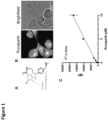


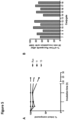


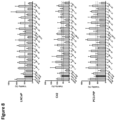
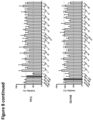


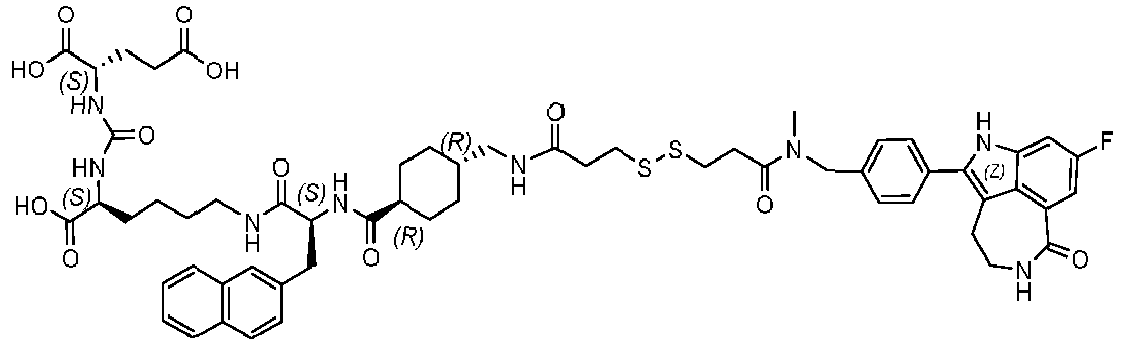


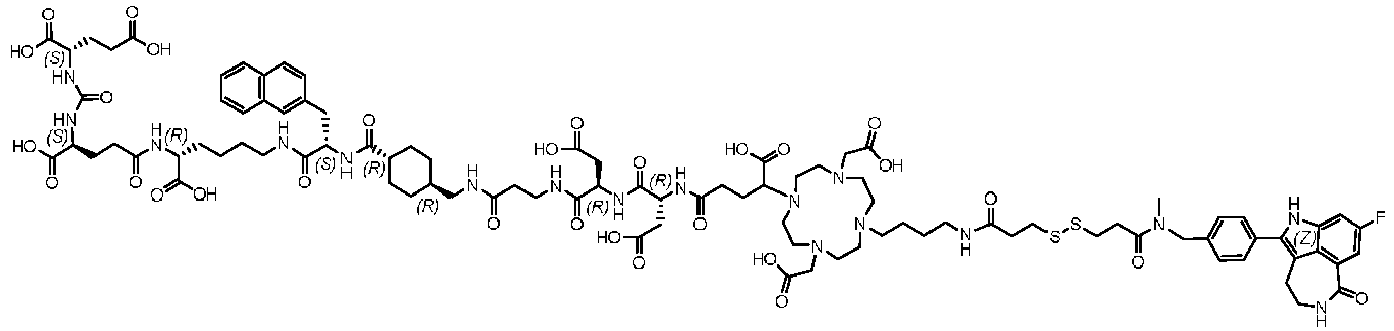


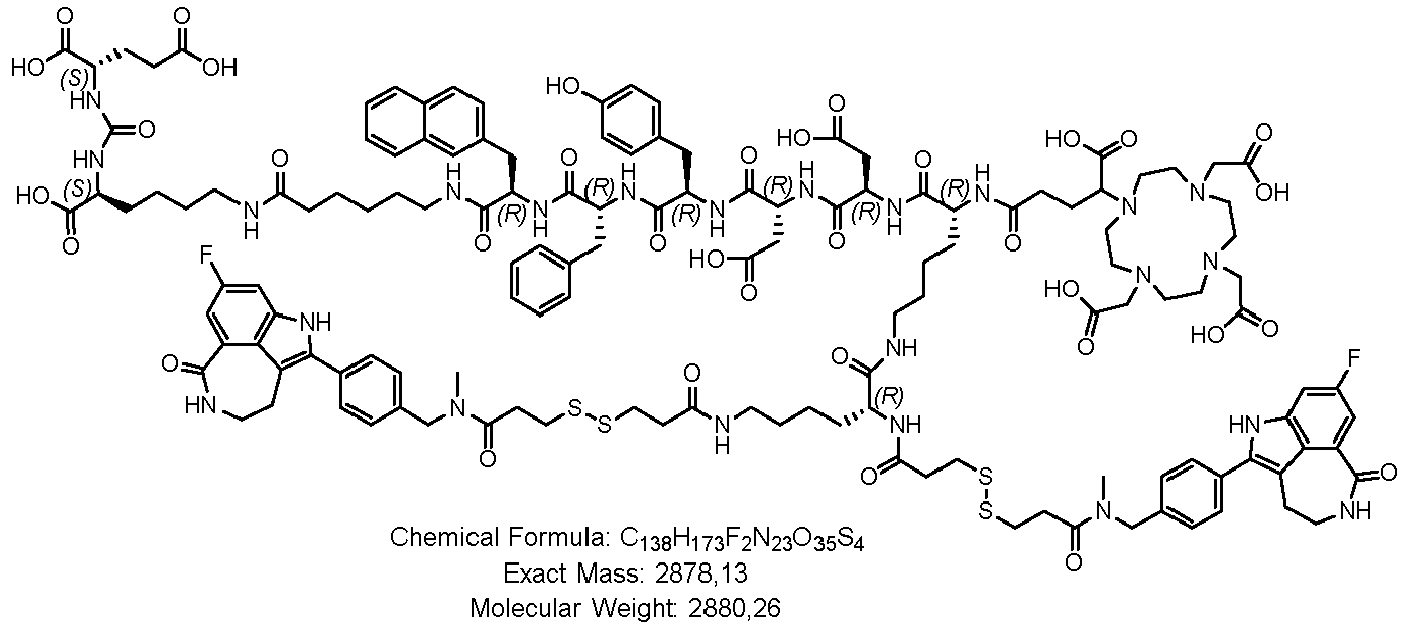


 T is said disease-targeting moiety,S is a functional spacer,m is 0 or 1,C is said chelating agent,n is 0 or 1,A is an anchor unit, such as lysine or cysteine,X is said cleavable linker,P is said PARP inhibitor moietyo is at least 1, preferably 1, 2 or 3,or a salt, solvate or tautomer thereof.