EP4388228B1 - Vorrichtung und verfahren zur bestimmung einer temperatur eines öls, mit dem ein getriebe eines fahrzeugs geschmiert und gekühlt wird - Google Patents
Vorrichtung und verfahren zur bestimmung einer temperatur eines öls, mit dem ein getriebe eines fahrzeugs geschmiert und gekühlt wird Download PDFInfo
- Publication number
- EP4388228B1 EP4388228B1 EP22755164.5A EP22755164A EP4388228B1 EP 4388228 B1 EP4388228 B1 EP 4388228B1 EP 22755164 A EP22755164 A EP 22755164A EP 4388228 B1 EP4388228 B1 EP 4388228B1
- Authority
- EP
- European Patent Office
- Prior art keywords
- temperature
- oil
- vehicle
- depending
- drive
- Prior art date
- Legal status (The legal status is an assumption and is not a legal conclusion. Google has not performed a legal analysis and makes no representation as to the accuracy of the status listed.)
- Active
Links
Images

Classifications
-
- F—MECHANICAL ENGINEERING; LIGHTING; HEATING; WEAPONS; BLASTING
- F16—ENGINEERING ELEMENTS AND UNITS; GENERAL MEASURES FOR PRODUCING AND MAINTAINING EFFECTIVE FUNCTIONING OF MACHINES OR INSTALLATIONS; THERMAL INSULATION IN GENERAL
- F16H—GEARING
- F16H57/00—General details of gearing
- F16H57/04—Features relating to lubrication or cooling or heating
- F16H57/0412—Cooling or heating; Control of temperature
- F16H57/0413—Controlled cooling or heating of lubricant; Temperature control therefor
-
- F—MECHANICAL ENGINEERING; LIGHTING; HEATING; WEAPONS; BLASTING
- F16—ENGINEERING ELEMENTS AND UNITS; GENERAL MEASURES FOR PRODUCING AND MAINTAINING EFFECTIVE FUNCTIONING OF MACHINES OR INSTALLATIONS; THERMAL INSULATION IN GENERAL
- F16H—GEARING
- F16H57/00—General details of gearing
- F16H57/04—Features relating to lubrication or cooling or heating
- F16H57/0467—Elements of gearings to be lubricated, cooled or heated
- F16H57/0476—Electric machines and gearing, i.e. joint lubrication or cooling or heating thereof
-
- B—PERFORMING OPERATIONS; TRANSPORTING
- B60—VEHICLES IN GENERAL
- B60Y—INDEXING SCHEME RELATING TO ASPECTS CROSS-CUTTING VEHICLE TECHNOLOGY
- B60Y2200/00—Type of vehicle
- B60Y2200/90—Vehicles comprising electric prime movers
-
- F—MECHANICAL ENGINEERING; LIGHTING; HEATING; WEAPONS; BLASTING
- F16—ENGINEERING ELEMENTS AND UNITS; GENERAL MEASURES FOR PRODUCING AND MAINTAINING EFFECTIVE FUNCTIONING OF MACHINES OR INSTALLATIONS; THERMAL INSULATION IN GENERAL
- F16H—GEARING
- F16H2200/00—Transmissions for multiple ratios
- F16H2200/0021—Transmissions for multiple ratios specially adapted for electric vehicles
Definitions
- the invention relates to a device and a method for determining a temperature of an oil used to lubricate and cool a transmission of a vehicle.
- Transmissions are lubricated and cooled with oil. It is desirable to set the oil temperature within a range where the temperature is low enough to achieve sufficient oil quality and cooling, and high enough to keep oil viscosity and associated losses in the transmission low. This requires knowledge of the oil temperature.
- One way to determine the oil temperature is to install a temperature sensor in an oil circuit where the oil circulates. In this case, the temperature is measured directly with the temperature sensor.
- the registration WO 2019/121183 A1 discloses an apparatus and method for determining a temperature of an oil.
- the temperature sensor in the oil circuit is omitted.
- the method for determining a temperature of an oil used to lubricate and cool a transmission of a vehicle provides that a A physical model is configured to determine the temperature of the oil depending on input variables that characterize a temperature of a rotor driving the transmission of a vehicle drive designed as an electric machine, a speed of the rotor, a torque of the rotor, a temperature of a stator of the drive, a temperature of a coolant used to cool the vehicle and/or the stator of the drive, a volume flow of the coolant, and an ambient temperature of the vehicle.
- the input variables are recorded and the temperature of the oil is determined using the physical model depending on the input variables. This solution offers savings compared to a solution with a temperature sensor.
- the savings are reduced costs compared to the solution with a temperature sensor and a reduction in the required installation space, particularly in the transmission, compared to the solution with a temperature sensor. This also results in greater flexibility for the design of the transmission and the vehicle. This approach is particularly suitable for a drive axle in which the drive, power electronics for controlling the drive, and the transmission are constructed together in a single unit.
- the physical model determines a coolant temperature at an outlet of a cooling system for the drive as a function of a stator temperature, the coolant temperature, and the coolant volume flow rate, with the oil temperature being determined as a function of the coolant temperature at the outlet, the rotor temperature, the rotor speed, and the rotor torque.
- the dependence of the coolant temperature at the outlet on these input variables can be determined particularly easily using characteristic maps for a static and a dynamic temperature increment on a test bench. This allows for simple parameterization of the physical model.
- the physical model is used to determine an ambient temperature in an installation space of the transmission as a function of the ambient temperature of the vehicle, with the temperature of the oil being determined as a function of the ambient temperature in the installation space of the transmission.
- a dependence of the ambient temperature in the installation space on the ambient temperature of the vehicle is possible with heat sources, mass points, and Thermal resistances of given vehicle components arranged between two mass points can be easily modeled.
- the physical model preferably comprises a thermal resistance and two mass points connected by the thermal resistance, wherein the thermal resistance characterizes the amount of heat exchanged between the two mass points, and the ambient temperature in the installation space is determined as a function of the amount of heat transferred by the thermal resistance.
- the thermal resistance models thermal movements between the mass points.
- the thermal resistance can be constant or variable. This allows the oil temperature to be determined more precisely using the physical model.
- the thermal resistance is preferably determined as a function of an operating parameter of the vehicle.
- a component protection mechanism is triggered based on the calculated oil temperature if the calculated oil temperature is outside a specified range, or otherwise not triggered. This component protection provides protection against extreme operating conditions without the temperature sensor and extends the service life of transmission components.
- a torque of the drive is at least temporarily reduced when the calculated temperature exceeds a predetermined first threshold. This protects components from excessively high temperatures.
- an increase in the torque of the drive, in particular of the electric motor, is permitted at least temporarily when the calculated oil temperature falls below a predetermined second threshold. This reduces losses if the oil temperature is already low enough.
- the calculated oil temperature is stored in a memory.
- the memory is a data logger for recording the calculated temperature.
- the device comprises a processor which is designed to carry out the method according to one of the above-mentioned exemplary embodiments, a memory and an interface, wherein the memory comprises a physical model, wherein the interface is designed to receive a temperature of a rotor of a drive of the vehicle, in particular of an electric machine, to receive a rotational speed of the rotor, to receive a torque of the rotor, to receive a temperature of a stator of the drive, to receive a temperature of a coolant with which the vehicle and/or the stator of the drive is cooled, to receive a volume flow of the coolant, to receive an ambient temperature of the vehicle and wherein the interface is designed to output the temperature of the oil, wherein the processor is designed to carry out the method.
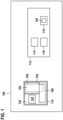
- FIG. 1 depicts a schematic view of a vehicle 100.
- the vehicle 100 includes a drive 102.
- the drive 102 is an electric machine.
- the drive 102 includes a rotor 104 and a stator 106.
- the vehicle 100 includes a transmission 108.
- the transmission 108 is driven by the drive 102 via the rotor 104.
- the vehicle 100 provides an installation space 110 for the transmission 108.
- the transmission 108 is cooled and lubricated with oil.
- the vehicle includes a device 112 for determining a temperature of the oil.
- the device 112 includes a processor 114, a memory 116, and an interface 118.
- the memory 116 includes a physical model 120.
- the physical model 120 is configured to determine a temperature of the oil depending on input variables that characterize a temperature of the rotor 104, a rotational speed of the rotor 104, a torque of the rotor 104, a temperature of the stator 106, a temperature of a coolant used to cool the vehicle 100 and/or the stator 106, a volume flow of the coolant, and an ambient temperature of the vehicle 100.
- the coolant circulates in a cooling system for the drive 102.
- the oil circulates in an oil circuit.
- a temperature sensor is provided neither in nor on the oil circuit.
- the interface 118 is configured to receive the input variables. For example, the input variables are received via a controller area network of the vehicle 100.
- the interface 118 is configured to output the oil temperature.
- the processor 114 is configured to perform a method for determining the temperature of the oil, which is described below.
- the drive 102 and the gear 108 are integrated with a power electronics 122 in a unit 124 in the installation space 110.
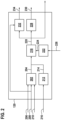
- Figure 2 a schematic view of the physical model 120 is shown.
- the physical model 120 comprises a first module 202 which is designed to determine a first output variable 204 which characterizes the temperature of the coolant at the outlet of the cooling system for the drive 102.
- the first module 202 is designed to determine the first output variable 204 as a function of a first input variable 206, which characterizes the temperature of the rotor, a second input variable 208, which characterizes the temperature of the coolant, and a third input variable 210, which characterizes a volume flow of the coolant.
- the physical model 120 includes a second module 212 configured to determine a second output variable 214 that characterizes the ambient temperature of the transmission 108.
- the second module 212 is configured to determine the second output variable 214 as a function of a fourth input variable 216 that characterizes the ambient temperature of the vehicle 100.
- the physical model 120 includes a third module 218 configured to determine a third output variable 220 that characterizes the oil temperature.
- the third module 218 is configured to determine the third output variable 220 as a function of the first output variable 204 and the second output variable 214.
- the third output variable 220 i.e., the oil temperature calculated without a temperature sensor in the transmission 108 or an oil circuit for the oil, is output by the physical model 120.
- the physical model 120 includes a fourth module 222 for switching the third module 218 on or off with a switching signal 224 that switches the third module 218 on or off depending on a state 226 of the vehicle.
- the third module 218 is switched on when the vehicle 100 is operating and switched off when the vehicle 100 is not operating or when an error is detected in one of the input variables for the physical model 120.
- the physical model 120 comprises a fifth module 228 for triggering a protective mechanism depending on the third output variable 220.
- the fifth module 228 is designed to output a fourth output variable 230 which triggers a protective mechanism or not.
- the fifth module 228 is designed to determine the fourth output variable 230 depending on the third output variable 220.
- a Torque limitation for the torque of drive 102 is determined depending on the calculated oil temperature. This protective mechanism for component protection is triggered in the example if the calculated oil temperature is outside a predetermined range or otherwise not triggered.
- the torque of drive 102 is at least temporarily reduced in the example if the calculated oil temperature exceeds a predetermined first threshold.
- An increase in the torque of drive 102 is at least temporarily permitted in the example if the calculated oil temperature falls below a predetermined second threshold.
- the physical model 120 includes a sixth module 232 for storing the third output variable 220.
- the oil temperature is stored in the memory 106.
- the second input variable 208 or the coolant temperature, which is defined by the second input variable 208 is also stored in the memory 106.
- the sixth module 232 is configured to output a two-dimensional histogram for the third output variable 220 and the second input variable 208.
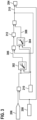
- Figure 3 a schematic view of the first module 202 of the physical model 102 is shown.
- a second input variable for the first characteristic map 302 and the second characteristic map 304 is the third input variable 210, which characterizes the volume flow of the coolant.
- the first characteristic map 302 maps the input variables to a target increase 306 of the coolant temperature under steady-state conditions.
- the second characteristic map 304 maps the input variables to a time constant 308.
- a difference between the target increase 306 and an actual increase 310 is integrated with an integrator 312 and divided by the time constant 308 to determine a new value for the actual increase 310.
- the first output variable 204 which characterizes the temperature of the coolant, is determined as a function of a sum of the actual increase 310 and the second input variable 208, which characterizes the temperature of the coolant.
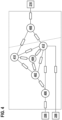
- the second module 212 includes a first mass point 402 for a temperature of the transmission 108 and a second mass point 404 for the temperature of the oil.
- the second module 212 includes a third mass point 406 for a temperature of a seal of the transmission 108 and a fourth mass point 408 for the ambient temperature of the vehicle 100.
- the second module 212 comprises a fifth mass point 410 and a sixth mass point 412 for temperatures at further masses of the vehicle 100.
- the second module 212 also includes a static resistance between the third ground point 406 and a first input of the second module 212 for the first input variable 206, which characterizes the temperature of the rotor.
- the second module 212 also includes a variable resistor between the fourth ground point 408 and a second input of the second module 212 for the second input variable 208, which characterizes the temperature of the coolant.
- the second module 212 also includes a static resistance between the fourth ground point 408 and a third input of the second module 212 for the fourth input variable 216, which characterizes the ambient temperature of the vehicle 100.
- the static resistances between the fourth mass point 408 and the fifth mass point 410 or between the fourth mass point 408 and the sixth mass point 412, as well as the static resistance connecting the fourth mass point 408 to the third input of the second module 212, can be configured depending on a vehicle speed.
- FIG. 5 A method for determining the temperature of the oil used to lubricate and cool the transmission 108 of the vehicle 100 is schematically illustrated. The method begins, for example, when the vehicle 100 is turned on.
- a step 500 the input variables are recorded.
- the temperature of the rotor, the speed of the rotor 104, the torque of the rotor 104, the temperature of the stator 106, the temperature of the coolant, the volume flow and the ambient temperature of the vehicle are recorded as input variables.
- a step 502 is then executed.
- step 502 the physical model 120 is used to determine a temperature of the coolant at the outlet of the cooling system for the drive 102.
- the temperature of the coolant at the outlet of the cooling system is determined depending on the temperature of the stator 106, the temperature of the coolant and the volume flow of the coolant.
- a step 504 is then executed.
- step 504 an ambient temperature in the installation space 110 of the transmission 108 is determined using the physical model 120.
- the ambient temperature in the installation space 110 is determined depending on the ambient temperature of the vehicle 100, whereby the temperature of the oil is determined depending on the ambient temperature in the installation space 110 of the transmission 108.
- the ambient temperature in the installation space 110 is determined depending on an amount of heat that is transferred by at least one thermal resistance that the physical model 120 includes.
- the thermal resistance is determined, for example, depending on an operating variable of the vehicle 100.
- the operating variable is, for example, a vehicle speed or a gear in which the transmission 108 is operated.
- a step 506 is then executed.
- step 506 the temperature of the oil is determined using the physical model 120.
- the calculated temperature of the oil and/or the ambient temperature of the vehicle 100 with which the calculated temperature of the oil was determined is stored in the memory 116.
- the temperature of the oil is determined depending on the temperature of the coolant at the outlet and depending on the temperature of the rotor 104 and depending on the speed of the rotor 104 and depending on the torque of the rotor 104.
- a step 508 is then executed.
- step 508 a component protection mechanism is triggered depending on the calculated oil temperature if the calculated oil temperature is outside a predetermined range or otherwise not triggered.
- component protection is triggered if the calculated oil temperature exceeds a predetermined first threshold.
- step 510 is executed.
- step 512 is executed if the calculated oil temperature falls below a predetermined second threshold. Otherwise, step 500 is executed.
- step 510 the torque of the drive 102 is at least temporarily reduced.
- step 500 is executed.
- step 512 an increase in the torque of the drive 102 is at least temporarily permitted.
- step 500 is executed.
- the method ends, for example, when the vehicle 100 is switched off or an error is detected in at least one of the input variables.
Landscapes
- Engineering & Computer Science (AREA)
- General Engineering & Computer Science (AREA)
- Mechanical Engineering (AREA)
- General Details Of Gearings (AREA)
- Electric Propulsion And Braking For Vehicles (AREA)
Description
- Die Erfindung betrifft eine Vorrichtung und ein Verfahren zur Bestimmung einer Temperatur eines Öls, mit dem ein Getriebe eines Fahrzeugs geschmiert und gekühlt wird.
- Getriebe, insbesondere Getriebe von Fahrzeugen, werden mit Öl geschmiert und gekühlt. Wünschenswert ist es, eine Temperatur des Öls in einem Bereich einzustellen, in welchem die Temperatur niedrig genug ist, um eine ausreichende Qualität des Öls und eine ausreichende Kühlwirkung zu erreichen und in welchem die Temperatur hoch genug ist, um eine Viskosität des Öls und damit einhergehende Verluste im Getriebe gering zu halten. Dazu sind Kenntnisse über die Temperatur des Öls erforderlich.
- Eine Möglichkeit, die Temperatur des Öls zu bestimmen, besteht darin, einen Temperatursensor in einem Ölkreislauf, in welchem das Öl zirkuliert, einzusetzen. Die Temperatur wird in diesem Fall mit dem Temperatursensor direkt gemessen.
- Die Anmeldung
WO 2019/121183 A1 offenbart eine Vorrichtung und ein Verfahren zur Bestimmung einer Temperatur eines Öls. - Bei der Vorrichtung und dem Verfahren nach den unabhängigen Ansprüchen entfällt der Temperatursensor im Ölkreislauf.
- Das Verfahren zur Bestimmung einer Temperatur eines Öls, mit dem ein Getriebe eines Fahrzeugs geschmiert und gekühlt wird, sieht vor, dass ein physikalisches Modell dazu konfiguriert ist, die Temperatur des Öls abhängig von Eingangsgrößen zu bestimmen, die eine Temperatur eines das Getriebe antreibenden Rotors eines als Elektromaschine ausgebildeten Antriebs des Fahrzeugs, eine Drehzahl des Rotors, ein Drehmoment des Rotors, eine Temperatur eines Stators des Antriebs, eine Temperatur eines Kühlmittels, mit dem das Fahrzeug und/oder der Stator des Antriebs gekühlt wird, einen Volumenstrom des Kühlmittels und eine Umgebungstemperatur des Fahrzeugs charakterisieren, wobei die Eingangsgrößen erfasst und die Temperatur des Öls mit dem physikalischen Modell abhängig von den Eingangsgrößen bestimmt wird. Diese Lösung bringt Ersparnisse gegenüber einer Lösung mit Temperatursensor. Die Ersparnisse sind gegenüber der Lösung mit Temperatursensor reduzierte Kosten und ein gegenüber der Lösung mit Temperatursensor reduzierter benötigter Bauraum insbesondere im Getriebe. Daraus resultiert zudem eine größere Flexibilität für ein Design des Getriebes und des Fahrzeugs. Besonders geeignet ist dieses Vorgehen für eine Antriebsachse, bei welcher der Antrieb, eine Leistungselektronik zum Ansteuern des Antriebs und das Getriebe zusammen in einer Einheit konstruiert sind.
- Vorzugsweise wird mit dem physikalischen Modell eine Temperatur des Kühlmittels an einem Auslass eines Kühlsystems für den Antrieb abhängig von einer Temperatur des Stators, der Temperatur des Kühlmittels und dem Volumenstrom des Kühlmittels bestimmt, wobei die Temperatur des Öls abhängig von der Temperatur des Kühlmittels am Auslass und abhängig von der Temperatur des Rotors und abhängig von der Drehzahl des Rotors und abhängig vom Drehmoment des Rotors bestimmt wird. Eine Abhängigkeit der Temperatur des Kühlmittels am Auslass von diesen Eingangsgrößen ist mittels Kennfeldern für ein statisches und ein dynamisches Temperaturinkrement an einem Prüfstand besonders einfach bestimmbar. Dadurch wird das physikalische Modell einfach parametriert.
- Vorzugsweise wird mit dem physikalischen Modell eine Umgebungstemperatur in einem Einbauraum des Getriebes abhängig von der Umgebungstemperatur des Fahrzeugs bestimmt, wobei die Temperatur des Öls abhängig von der Umgebungstemperatur im Einbauraum des Getriebes bestimmt wird. Eine Abhängigkeit der Umgebungstemperatur im Einbauraum von der Umgebungstemperatur des Fahrzeugs ist mit Wärmequellen, Massepunkten und zwischen je zwei Massepunkten angeordneten thermischen Widerständen von vorgegebenen Bauteilen des Fahrzeugs gut modellierbar.
- Vorzugsweise umfasst das physikalische Modell einen thermischen Widerstand und zwei Massepunkte welche durch den thermischen Widerstand verbunden sind, wobei der thermische Widerstand eine Wärmemenge charakterisiert, die zwischen den zwei Massepunkten ausgetauscht wird, wobei die Umgebungstemperatur im Einbauraum abhängig von einer Wärmemenge bestimmt wird, die vom thermischen Widerstand übertragen wird. Der thermische Widerstand modelliert Wärmebewegungen zwischen den Massepunkten. Der thermische Widerstand kann konstant oder variabel sein. Dadurch wird die Temperatur des Öls mit dem physikalischen Modell genauer bestimmbar. Vorzugsweise wird der thermische Widerstand abhängig von einer Betriebsgröße des Fahrzeugs bestimmt.
- Vorzugsweise wird abhängig von der berechneten Temperatur des Öls ein Schutzmechanismus zum Komponentenschutz ausgelöst, wenn die berechnete Temperatur des Öls außerhalb eines vorgegebenen Bereichs liegt oder anderenfalls nicht ausgelöst. Dieser Komponentenschutz bietet ohne den Temperatursensor einen Schutz vor extremen Betriebsbedingungen und verlängert eine Lebensdauer von Komponenten des Getriebes.
- Vorzugsweise wird ein Drehmoment des Antriebs, insbesondere der Elektromaschine, zumindest vorrübergehend reduziert, wenn die berechnete Temperatur eine vorgegebene erste Schwelle übersteigt. Dadurch werden Komponenten vor einer zu hohen Temperatur geschützt.
- Vorzugsweise wird eine Erhöhung des Drehmoments des Antriebs, insbesondere der Elektromaschine, zumindest vorrübergehend erlaubt, wenn die berechnete Temperatur des Öls eine vorgegebene zweite Schwelle unterschreitet. Dadurch werden die Verluste reduziert, wenn die Öltemperatur bereits niedrig genug ist. Vorzugsweise wird die berechnete Temperatur des Öls in einem Speicher gespeichert. Der Speicher ist ein Datenlogger zur Erfassung der berechneten Temperatur.
- Die Vorrichtung umfasst einen Prozessor, der dazu ausgebildet ist, das Verfahren nach einem der oben erwähnten Ausführungsbeispiele durchzuführen, einen Speicher und eine Schnittstelle, wobei der Speicher ein physikalisches Modell umfasst, wobei die Schnittstelle ausgebildet ist, eine Temperatur eines Rotors eines Antriebs des Fahrzeugs, insbesondere einer Elektromaschine, zu empfangen, eine Drehzahl des Rotors zu empfangen, ein Drehmoment des Rotors zu empfangen, eine Temperatur eines Stators des Antriebs zu empfangen, eine Temperatur eines Kühlmittels, mit dem das Fahrzeug und/oder der Stator des Antriebs gekühlt wird, zu empfangen, einen Volumenstrom des Kühlmittels zu empfangen eine Umgebungstemperatur des Fahrzeugs zu empfangen und wobei die Schnittstelle ausgebildet ist, die Temperatur des Öls auszugeben, wobei der Prozessor ausgebildet ist, das Verfahren auszuführen.
- Weitere vorteilhafte Ausführungsformen sind der folgenden Beschreibung und der Zeichnung entnehmbar. In der Zeichnung zeigt:
-
Fig. 1 eine schematische Ansicht eines Fahrzeugs, -
Fig. 2 eine schematische Ansicht eines physikalischen Modells, -
Fig. 3 eine schematische Ansicht eines ersten Moduls des physikalischen Modells, -
Fig. 4 eine schematische Ansicht eines zweiten Moduls des physikalischen Modells, -
Fig. 5 Schritte in einem Verfahren nach der Erfindung zur Bestimmung einer Temperatur eines Öls. -
Figur 1 stellt eine schematische Ansicht eines Fahrzeugs 100 dar. Das Fahrzeug 100 umfasst einen Antrieb 102. Im Beispiel ist der Antrieb 102 eine Elektromaschine. Der Antrieb 102 umfasst einen Rotor 104 und einen Stator 106. Das Fahrzeug 100 umfasst ein Getriebe 108. Das Getriebe 108 wird vom Antrieb 102 über den Roter 104 angetrieben. Das Fahrzeug 100 sieht für das Getriebe 108 einen Einbauraum 110 vor. Das Getriebe 108 wird mit Öl gekühlt und geschmiert. - Das Fahrzeug umfasst eine Vorrichtung 112 zur Bestimmung einer Temperatur des Öls.
- Die Vorrichtung 112 umfasst einen Prozessor 114, einen Speicher 116 und eine Schnittstelle 118.
- Der Speicher 116 umfasst ein physikalisches Modell 120. Das physikalische Modell 120 ist dazu konfiguriert, eine Temperatur des Öls abhängig von Eingangsgrößen zu bestimmen, die eine Temperatur des Rotors 104, eine Drehzahl des Rotors 104, ein Drehmoment des Rotors 104, eine Temperatur des Stators 106, eine Temperatur eines Kühlmittels, mit dem das Fahrzeug 100 und/oder der Stator 106 gekühlt wird, einen Volumenstrom des Kühlmittels und eine Umgebungstemperatur des Fahrzeugs 100 charakterisieren. Das Kühlmittel zirkuliert im Beispiel in einem Kühlsystem für den Antrieb 102. Das Öl zirkuliert im Beispiel in einem Ölkreislauf. Weder im noch am Ölkreislauf ist ein Temperatursensor vorgesehen.
- Die Schnittstelle 118 ist ausgebildet die Eingangsgrößen zu empfangen. Beispielsweise werden die Eingangsgrößen über ein Controller Area Netzwerk des Fahrzeugs 100 empfangen. Die Schnittstelle 118 ist ausgebildet, die Temperatur des Öls auszugeben.
- Der Prozessor 114 ist ausgebildet ein Verfahren zur Bestimmung der Temperatur des Öls auszuführen, das im Folgenden beschrieben wird.
- Der Antrieb 102 und das Getriebe 108 sind im Beispiel mit einer Leistungselektronik 122 in einer Einheit 124 im Einbauraum 110 integriert.
- In
Figur 2 ist eine schematische Ansicht des physikalischen Modells 120 dargestellt. - Das physikalische Modell 120 umfasst ein erstes Modul 202 das zur Bestimmung einer ersten Ausgangsgröße 204 ausgebildet ist, die Temperatur des Kühlmittels am Auslass des Kühlsystems für den Antrieb 102 charakterisiert. Das erste Modul 202 ist ausgebildet, die erste Ausgangsgröße 204 abhängig von einer ersten Eingangsgröße 206, die die Temperatur des Rotors charakterisiert, einer zweiten Eingangsgröße 208, die die Temperatur des Kühlmittels charakterisiert und einer dritten Eingangsgröße 210, die einen Volumenstrom des Kühlmittels charakterisiert, zu bestimmen.
- Das physikalische Modell 120 umfasst ein zweites Modul 212 das zur Bestimmung einer zweiten Ausgangsgröße 214 ausgebildet ist, die die Umgebungstemperatur des Getriebes 108 charakterisiert. Das zweite Modul 212 ist ausgebildet, die zweite Ausgangsgröße 214 abhängig von einer vierten Eingangsgröße 216 zu bestimmen, die die Umgebungstemperatur des Fahrzeugs 100 charakterisiert.
- Das physikalische Modell 120 umfasst ein drittes Modul 218 das zur Bestimmung einer dritten Ausgangsgröße 220 ausgebildet ist, die die Temperatur des Öls charakterisiert. Das dritte Modul 218 ist ausgebildet, die dritte Ausgangsgröße 220 abhängig von der ersten Ausgangsgröße 204 und der zweiten Ausgangsgröße 214 zu bestimmen. Im Beispiel wird die dritte Ausgangsgröße 220, d.h. die ohne Temperatursensor im Getriebe 108 oder einem Ölkreislauf für das Öl berechnete Temperatur des Öls, vom physikalischen Modell 120 ausgegeben.
- Das physikalische Modell 120 umfasst ein viertes Modul 222 zum Ein- oder Ausschalten des dritten Moduls 218 mit einem Schaltsignal 224, das abhängig von einem Zustand 226 des Fahrzeugs das dritte Modul 218 einschaltet oder ausschaltet. Im Beispiel wird das dritte Modul 218 eingeschaltet, wenn das Fahrzeug 100 betrieben wird und ausgeschaltet, wenn das Fahrzeug 100 nicht betrieben wird oder wenn ein Fehler in einer der Eingangsgrößen für das physikalische Modell 120 erkannt wird.
- Das physikalische Modell 120 umfasst ein fünftes Modul 228 zum Auslösen eines Schutzmechanismus abhängig von der dritten Ausgangsgröße 220. Das fünfte Modul 228 ist im Beispiel ausgebildet, einen vierte Ausgangsgröße 230 auszugeben, die einen Schutzmechanismus auslöst oder nicht.
- Das fünfte Modul 228 ist ausgebildet, abhängig von dritten Ausgangsgröße 220, die vierte Ausgangsgröße 230 zu bestimmen. Im Beispiel wird eine Drehmomentbegrenzung für das Drehmoment des Antriebs 102 abhängig von der berechneten Temperatur des Öls bestimmt. Dieser Schutzmechanismus zum Komponentenschutz wird im Beispiel ausgelöst, wenn die berechnete Temperatur des Öls außerhalb eines vorgegebenen Bereichs liegt oder anderenfalls nicht ausgelöst. Das Drehmoment des Antriebs 102 wird im Beispiel zumindest vorrübergehend reduziert, wenn die berechnete Temperatur des Öls eine vorgegebene erste Schwelle übersteigt. Eine Erhöhung des Drehmoments des Antriebs 102 wird im Beispiel zumindest vorrübergehend erlaubt, wenn die berechnete Temperatur des Öls eine vorgegebene zweite Schwelle unterschreitet.
- Das physikalische Modell 120 umfasst ein sechstes Modul 232 zum Speichern der dritten Ausgangsgröße 220. Beispielsweise wird die Temperatur des Öls im Speicher 106 gespeichert. Im Beispiel wird zudem die zweite Eingangsgröße 208 oder die Temperatur des Kühlmittels, die durch die zweite Eingangsgröße 208 definiert ist, im Speicher 106 gespeichert. Das sechste Modul 232 ist im Beispiel dazu ausgebildet, ein zweidimensionales Histogramm für die dritte Ausgangsgröße 220 und die zweite Eingangsgröße 208 auszugeben.
- In
Figur 3 ist eine schematische Ansicht des ersten Moduls 202 des physikalischen Modells 102 dargestellt. - Im ersten Modul 202 wird eine erste Eingangsgröße für ein erstes Kennfeld 302 und ein zweites Kennfeld 304 abhängig von einer Differenz der ersten Eingangsgröße 206, die die Temperatur des Rotors charakterisiert und der zweiten Eingangsgröße 208, die die Temperatur des Kühlmittels charakterisiert bestimmt.
- Eine zweite Eingangsgröße für das erste Kennfeld 302 und das zweite Kennfeld 304 ist die dritte Eingangsgröße 210, die den Volumenstrom des Kühlmittels charakterisiert.
- Das erste Kennfeld 302 bildet die Eingangsgrößen auf eine Sollerhöhung 306 der Temperatur des Kühlmittels bei stationären Bedingungen ab.
- Das zweite Kennfeld 304 bildet die Eingangsgrößen auf eine Zeitkonstante 308 ab.
- Eine Differenz zwischen der Sollerhöhung 306 und einer Isterhöhung 310 wird mit einem Integrierer 312 integriert und durch die Zeitkonstante 308 geteilt, um einen neuen Wert für die Isterhöhung 310 zu bestimmen.
- Die erste Ausgangsgröße 204, die Temperatur des Kühlmittels charakterisiert, wird abhängig von einer Summe der Isterhöhung 310 und der zweiten Eingangsgröße 208, die die Temperatur des Kühlmittels charakterisiert, bestimmt.
- In
Figur 4 ist eine schematische Ansicht des zweiten Moduls 212 des physikalischen Modells 102 dargestellt. - Das zweite Modul 212 umfasst einen ersten Massenpunkt 402 für eine Temperatur des Getriebes 108 und einen zweiten Massenpunkt 404 für die Temperatur des Öls.
- Das zweite Modul 212 umfasst einen dritten Massenpunkt 406 für eine Temperatur einer Dichtung des Getriebes 108 und einen vierten Massenpunkt 408 für die Umgebungstemperatur des Fahrzeugs 100.
- Das zweite Modul 212 umfasst im Beispiel einen fünften Massenpunkt 410 und einen sechsten Massenpunkt 412 für Temperaturen an weiteren Massen des Fahrzeugs 100.
- Der erste Massenpunkt 402 und der dritte Massenpunkt 406 sind im Beispiel Wärmequellen. Die Massenpunkte sind im Beispiel durch folgende thermische Widerstände verbunden, die mit Rth X,Y gekennzeichnet sind, wobei X einen Massenpunkt und Y einen anderen Massenpunkt eines Paares von Massenpunkten die durch diesen Widerstand verbunden sind, s einen statischen und v einen variablen thermischen Widerstand kennzeichnet. Für variable Widerstände ist zudem ein Parameter angegeben, der eine Betriebsgröße des Fahrzeugs kennzeichnet, die den Widerstand beeinflusst:
- Rth 406, 402, s
- Rth 402, 404, v, Drehzahl des Antriebs
- Rth 402, 410, v, Drehzahl des Antriebs
- Rth 402, 412, v, Drehzahl des Antriebs
- Rth 404, 410, v, Drehzahl des Antriebs
- Rth 404, 412, v, Drehzahl des Antriebs
- Rth 408, 410,
- Rth 408, 412, s
- Rth 410, 412, s
- Das zweite Modul 212 umfasst zudem einen statischen Widerstand zwischen dem dritten Massepunkt 406 und einem ersten Eingang des zweiten Moduls 212 für die erste Eingangsgröße 206, die die Temperatur des Rotors charakterisiert.
- Das zweite Modul 212 umfasst zudem einen variablen Widerstand zwischen dem vierten Massepunkt 408 und einem zweiten Eingang des zweiten Moduls 212 für die zweite Eingangsgröße 208, die die Temperatur des Kühlmittels charakterisiert.
- Das zweite Modul 212 umfasst zudem einen statischen Widerstand zwischen dem vierten Massepunkt 408 und einem dritten Eingang des zweiten Moduls 212 für die vierte Eingangsgröße 216, die die Umgebungstemperatur des Fahrzeugs 100 charakterisiert.
- Die statischen Widerstände zwischen dem vierten Massenpunkt 408 und dem fünften Massenpunkt 410 oder zwischen dem vierten Massenpunkt 408 und dem sechsten Massenpunkt 412, sowie der statische Widerstand, der den vierten Massenpunkt 408 mit dem dritten Eingang des zweiten Moduls 212 verbindet, können abhängig von einer Fahrzeuggeschwindigkeit ausgebildet sein.
- In
Figur 5 ist ein Verfahren zur Bestimmung der Temperatur des Öls, mit dem das Getriebe 108 des Fahrzeugs 100 geschmiert und gekühlt wird schematisch dargestellt. Das Verfahren beginnt beispielsweise wenn das Fahrzeug 100 eingeschaltet wird. - In einem Schritt 500 werden die Eingangsgrößen erfasst.
- Im Beispiel werden als Eingangsgrößen die Temperatur des Rotors, die Drehzahl des Rotors 104, das Drehmoment des Rotors 104, die Temperatur des Stators 106, die Temperatur des Kühlmittels, der Volumenstrom und die Umgebungstemperatur des Fahrzeugs erfasst.
- Anschließend wird ein Schritt 502 ausgeführt.
- Im Schritt 502 wird mit dem physikalischen Modell 120 eine Temperatur des Kühlmittels am Auslass des Kühlsystems für den Antrieb 102 bestimmt.
- Im Beispiel wird die Temperatur des Kühlmittels am Auslass des Kühlsystems abhängig von der Temperatur des Stators 106, der Temperatur des Kühlmittels und dem Volumenstrom des Kühlmittels bestimmt.
- Anschließend wird ein Schritt 504 ausgeführt.
- Im Schritt 504 wird mit dem physikalischen Modell 120 eine Umgebungstemperatur im Einbauraum 110 des Getriebes 108 bestimmt.
- Im Beispiel wird die Umgebungstemperatur im Einbauraum 110 abhängig von der Umgebungstemperatur des Fahrzeugs 100 bestimmt wird, wobei die Temperatur des Öls abhängig von der Umgebungstemperatur im Einbauraum 110 des Getriebes 108 bestimmt.
- Die Umgebungstemperatur im Einbauraum 110 wird im Beispiel abhängig von einer Wärmemenge bestimmt wird, die von wenigsten einem thermischen Widerstand den das physikalische Modell 120 umfasst, übertragen wird.
- Der thermische Widerstand wird beispielsweise abhängig von einer Betriebsgröße des Fahrzeugs 100 bestimmt.
- Die Betriebsgröße ist beispielsweise eine Fahrzeuggeschwindigkeit oder ein Gang, in dem das Getriebe 108 betrieben wird.
- Anschließend wird ein Schritt 506 ausgeführt.
- Im Schritt 506 wird die Temperatur des Öls mit dem physikalischen Modell 120 bestimmt.
- Es kann vorgesehen sein, dass die berechnete Temperatur des Öls und/oder die Umgebungstemperatur des Fahrzeugs 100, mit der die berechnete Temperatur des Öls bestimmt wurde, im Speicher 116 gespeichert wird.
- Im Beispiel wird die Temperatur des Öls abhängig von der Temperatur des Kühlmittels am Auslass und abhängig von der Temperatur des Rotor 104 und abhängig von der Drehzahl des Rotors 104 und abhängig vom Drehmoment des Rotors 104 bestimmt.
- Anschließend wird ein Schritt 508 ausgeführt.
- Im Schritt 508 wird abhängig von der berechneten Temperatur des Öls ein Schutzmechanismus zum Komponentenschutz ausgelöst, wenn die berechnete Temperatur des Öls außerhalb eines vorgegebenen Bereichs liegt oder anderenfalls nicht ausgelöst. Im Beispiel wird der Komponentenschutz ausgelöst, wenn die berechnete Temperatur des Öls eine vorgegebene erste Schwelle übersteigt. In diesem Fall wird ein Schritt 510 ausgeführt. Im Beispiel wird ein Schritt 512 ausgeführt, wenn die berechnete Temperatur des Öls eine vorgegebene zweite Schwelle unterschreitet. Anderenfalls wird der Schritt 500 ausgeführt.
- Im Schritt 510 wird das Drehmoment des Antriebs 102 zumindest vorrübergehend reduziert.
- Anschließend wird der Schritt 500 ausgeführt.
- Im Schritt 512 wird eine Erhöhung des Drehmoments des Antriebs 102 zumindest vorrübergehend erlaubt.
- Anschließend wird der Schritt 500 ausgeführt.
- Das Verfahren endet beispielsweise wenn das Fahrzeug 100 ausgeschaltet wird, oder ein Fehler in wenigstens einer der Eingangsgrößen festgestellt wird.
Claims (10)
- Verfahren zur Bestimmung einer Temperatur eines Öls, mit dem ein Getriebe (108) eines Fahrzeugs (100) geschmiert und gekühlt wird, wobei ein physikalisches Modell (120) dazu konfiguriert ist, die Temperatur des Öls abhängig von Eingangsgrößen zu bestimmen, die ein Drehmoment eines das Getriebe antreibenden Rotors (104) eines als Elektromaschine ausgebildeten Antriebs (102) des Fahrzeugs, eine Temperatur eines Stators (106) des Antriebs (102), eine Temperatur eines Kühlmittels, mit dem das Fahrzeug (100) und/oder der Stator (106) des Antriebs (102) gekühlt wird, einen Volumenstrom des Kühlmittels und eine Umgebungstemperatur des Fahrzeugs (100) charakterisieren, wobei die Eingangsgrößen erfasst (500) und die Temperatur des Öls mit dem physikalischen Modell (120) abhängig von den Eingangsgrößen bestimmt wird (502, 504, 506), dadurch gekennzeichnet, dass das physikalische Modell (120) dazu konfiguriert ist, die Temperatur des Öls abhängig von Eingangsgrößen zu bestimmen, die zusätzlich eine Temperatur des Rotors (104) des Antriebs (102) des Fahrzeugs und eine Drehzahl des Rotors (104) charakterisieren.
- Verfahren nach Anspruch 1, dadurch gekennzeichnet, dass mit dem physikalischen Modell (120) eine Temperatur des Kühlmittels an einem Auslass eines Kühlsystems für den Antrieb (102) abhängig von einer Temperatur des Stators (106), der Temperatur des Kühlmittels und dem Volumenstrom des Kühlmittels bestimmt wird (502), wobei die Temperatur des Öls abhängig von der Temperatur des Kühlmittels am Auslass und abhängig von der Temperatur des Rotor (104) und abhängig von der Drehzahl des Rotors (104) und abhängig vom Drehmoment des Rotors (104) bestimmt wird (506).
- Verfahren nach einem der vorherigen Ansprüche, dadurch gekennzeichnet, dass mit dem physikalischen Modell (120) eine Umgebungstemperatur in einem Einbauraum (110) des Getriebes (108) abhängig von der Umgebungstemperatur des Fahrzeugs (100) bestimmt wird (504), wobei die Temperatur des Öls abhängig von der Umgebungstemperatur im Einbauraum (110) des Getriebes (108) bestimmt wird (506).
- Verfahren nach Anspruch 3, dadurch gekennzeichnet, dass das physikalische Modell (120) einen thermischen Widerstand und zwei Massepunkte umfasst, welche durch den thermischen Widerstand verbunden sind, wobei der thermische Widerstand eine Wärmemenge charakterisiert, die zwischen den zwei Massepunkten ausgetauscht wird, wobei die Umgebungstemperatur im Einbauraum (110) abhängig von einer Wärmemenge bestimmt wird (504), die vom thermischen Widerstand übertragen wird.
- Verfahren nach Anspruch 4, dadurch gekennzeichnet, dass der thermische Widerstand abhängig von einer Betriebsgröße des Fahrzeugs (100) bestimmt wird (504).
- Verfahren nach einem der vorherigen Ansprüche, dadurch gekennzeichnet, dass abhängig von der berechneten Temperatur des Öls ein Schutzmechanismus zum Komponentenschutz ausgelöst wird wenn die berechnete Temperatur des Öls außerhalb eines vorgegebenen Bereichs liegt oder anderenfalls nicht ausgelöst wird.
- Verfahren nach einem der vorherigen Ansprüche, dadurch gekennzeichnet, dass ein Drehmoment des Antriebs (102), insbesondere der Elektromaschine, zumindest vorrübergehend reduziert wird (510), wenn die berechnete Temperatur des Öls eine vorgegebene erste Schwelle übersteigt (508).
- Verfahren nach Anspruch 7, dadurch gekennzeichnet, dass eine Erhöhung des Drehmoments des Antriebs (102), insbesondere der Elektromaschine, zumindest vorrübergehend erlaubt wird (512), wenn die berechnete Temperatur des Öls eine vorgegebene zweite Schwelle unterschreitet (508).
- Verfahren nach einem der vorherigen Ansprüche, dadurch gekennzeichnet, dass die berechnete Temperatur des Öls in einem Speicher (116) gespeichert wird (506).
- Vorrichtung (112) zur Bestimmung einer Temperatur eines Öls, mit dem ein Getriebe (108) eines Fahrzeugs (100) geschmiert und gekühlt wird, dadurch gekennzeichnet, dass die Vorrichtung (112) einen Prozessor (114), der dazu ausgebildet ist, das Verfahren nach einem der Ansprüche 1 bis 9 durchzuführen, einen Speicher (116) und eine Schnittstelle (118) aufweist, wobei der Speicher (116) das physikalisches Modell (120) umfasst, wobei die Schnittstelle (118) ausgebildet ist, die Temperatur des Rotors (104) des als Elektromaschine ausgebildeten Antriebs (102) des Fahrzeugs (100) die Drehzahl des Rotors (104), das Drehmoment des Rotors (104) , die Temperatur des Stators (106) des Antriebs (102), die Temperatur des Kühlmittels, mit dem das Fahrzeug (100) und/oder der Stator (106) des Antriebs gekühlt wird, den Volumenstrom des Kühlmittels und die Umgebungstemperatur des Fahrzeugs (100) zu empfangen und die Temperatur des Öls auszugeben.
Applications Claiming Priority (2)
| Application Number | Priority Date | Filing Date | Title |
|---|---|---|---|
| DE102021209051.6A DE102021209051A1 (de) | 2021-08-18 | 2021-08-18 | Vorrichtung und Verfahren zur Bestimmung einer Temperatur eines Öls, mit dem ein Getriebe eines Fahrzeugs geschmiert und gekühlt wird |
| PCT/EP2022/070805 WO2023020788A1 (de) | 2021-08-18 | 2022-07-25 | Vorrichtung und verfahren zur bestimmung einer temperatur eines öls, mit dem ein getriebe eines fahrzeugs geschmiert und gekühlt wird |
Publications (2)
| Publication Number | Publication Date |
|---|---|
| EP4388228A1 EP4388228A1 (de) | 2024-06-26 |
| EP4388228B1 true EP4388228B1 (de) | 2025-07-09 |
Family
ID=82940043
Family Applications (1)
| Application Number | Title | Priority Date | Filing Date |
|---|---|---|---|
| EP22755164.5A Active EP4388228B1 (de) | 2021-08-18 | 2022-07-25 | Vorrichtung und verfahren zur bestimmung einer temperatur eines öls, mit dem ein getriebe eines fahrzeugs geschmiert und gekühlt wird |
Country Status (3)
| Country | Link |
|---|---|
| EP (1) | EP4388228B1 (de) |
| DE (1) | DE102021209051A1 (de) |
| WO (1) | WO2023020788A1 (de) |
Families Citing this family (1)
| Publication number | Priority date | Publication date | Assignee | Title |
|---|---|---|---|---|
| CN119393514B (zh) * | 2024-12-31 | 2025-04-15 | 珠海嵘波驱动科技有限公司 | 一种动力系统热交换方法、装置、设备及介质 |
Family Cites Families (2)
| Publication number | Priority date | Publication date | Assignee | Title |
|---|---|---|---|---|
| CN111902658B (zh) * | 2017-12-21 | 2023-10-13 | Vhit公司 | 电动设备 |
| US20220216820A1 (en) * | 2019-04-19 | 2022-07-07 | Nidec Corporation | Drive device |
-
2021
- 2021-08-18 DE DE102021209051.6A patent/DE102021209051A1/de active Pending
-
2022
- 2022-07-25 WO PCT/EP2022/070805 patent/WO2023020788A1/de not_active Ceased
- 2022-07-25 EP EP22755164.5A patent/EP4388228B1/de active Active
Also Published As
| Publication number | Publication date |
|---|---|
| EP4388228A1 (de) | 2024-06-26 |
| DE102021209051A1 (de) | 2023-02-23 |
| WO2023020788A1 (de) | 2023-02-23 |
Similar Documents
| Publication | Publication Date | Title |
|---|---|---|
| EP2145112B1 (de) | Einrichtung und verfahren zur störungsüberwachung | |
| DE102008008642B4 (de) | Öltemperaturvorhersage und Fahrzeugschutz | |
| DE102016206765B4 (de) | Vorrichtung und Verfahren zum Ansteuern einer in einem Fahrzeug angeordneten Synchronmaschine | |
| DE102014100893B4 (de) | Verfahren und Vorrichtung zum Steuern eines Elektromotors, der zum Betreiben einer Fluidpumpe verwendet wird | |
| WO2019063252A1 (de) | VERFAHREN ZUR VERSCHLEIßPRÄDIKTION UND KRAFTFAHRZEUG | |
| DE102019101163B3 (de) | Elektrische Antriebseinheit und Verfahren zur Temperaturberechnung in einer elektrischen Antriebseinheit | |
| EP0204164A2 (de) | Verfahren zur Begrenzung der Drehzahl eines Antriebsmotors einer Rotationsoffsetdruckmaschine | |
| EP1399656A1 (de) | Verfahren zum überwachen eines kühlflüssigkeitskreislaufs einer brennkraftmaschine | |
| DE102014216310A1 (de) | Verfahren zur Bestimmung einer Temperatur einer Leistungs- und Ansteuerelektronik eines elektrischen Antriebssystems | |
| DE112020002015T5 (de) | Antriebsvorrichtung | |
| DE102011111912A1 (de) | Verfahren und System zum Berechnen der Temperatur eines Öls in einer Fahrzeugachse für variable Ölwechselintervalle | |
| EP3273071B1 (de) | Temperaturermittlungsverfahren in einer hydraulikanordnung | |
| DE4126314A1 (de) | Verfahren und vorrichtung zur ermittlung von stoerungen in der motorleistung durch pruefen des momentanen zustandes der motorleistung | |
| WO2023020788A1 (de) | Vorrichtung und verfahren zur bestimmung einer temperatur eines öls, mit dem ein getriebe eines fahrzeugs geschmiert und gekühlt wird | |
| DE102022120965A1 (de) | Verfahren zum vorhersagen der rotortemperatur für einen elektromotor | |
| DE102008041893A1 (de) | Vorrichtung und Verfahren zur Steuerung eines Elektromotors | |
| DE102021203514A1 (de) | Verfahren zum Steuern eines Antriebsstrangs eines Kraftfahrzeugs | |
| DE102015202305A1 (de) | Verfahren und Vorrichtung zum Betreiben einer elektrischen Maschine, Kraftfahrzeug | |
| DE3544024A1 (de) | Heizgeraet, insbesondere fahrzeugzusatzheizgeraet | |
| DE102013215907B4 (de) | Verfahren zur Ermittlung einer Öltemperatur bei einem Getriebe | |
| EP2791751B1 (de) | Steuervorrichtung für einen kühlerlüfter, kühlerlüfteranordnung und verfahren | |
| DE102018222364A1 (de) | Steuerungsvorrichtung und Verfahren zur Regelung eines Volumenstroms eines Fluids in einem Antriebsstrang eines Kraftfahrzeugs | |
| EP3124304B1 (de) | Verfahren zum betreiben einer hybridantriebseinrichtung für ein kraftfahrzeug sowie entsprechende hybridantriebseinrichtung | |
| DE102018005948A1 (de) | Verfahren zum Betreiben eines Kraftfahrzeuges | |
| DE102023203608A1 (de) | Verfahren zum Betreiben einer Kühlmittelpumpe für einen Kühlmittelkreislauf eines Kraftfahrzeugs, entsprechende Kühlmittelpumpe sowie Verfahren zum Betreiben eines Kühlmittelkreislaufs und Kühlmittelkreislauf |
Legal Events
| Date | Code | Title | Description |
|---|---|---|---|
| STAA | Information on the status of an ep patent application or granted ep patent |
Free format text: STATUS: UNKNOWN |
|
| STAA | Information on the status of an ep patent application or granted ep patent |
Free format text: STATUS: THE INTERNATIONAL PUBLICATION HAS BEEN MADE |
|
| PUAI | Public reference made under article 153(3) epc to a published international application that has entered the european phase |
Free format text: ORIGINAL CODE: 0009012 |
|
| STAA | Information on the status of an ep patent application or granted ep patent |
Free format text: STATUS: REQUEST FOR EXAMINATION WAS MADE |
|
| 17P | Request for examination filed |
Effective date: 20240318 |
|
| AK | Designated contracting states |
Kind code of ref document: A1 Designated state(s): AL AT BE BG CH CY CZ DE DK EE ES FI FR GB GR HR HU IE IS IT LI LT LU LV MC MK MT NL NO PL PT RO RS SE SI SK SM TR |
|
| DAV | Request for validation of the european patent (deleted) | ||
| DAX | Request for extension of the european patent (deleted) | ||
| GRAP | Despatch of communication of intention to grant a patent |
Free format text: ORIGINAL CODE: EPIDOSNIGR1 |
|
| STAA | Information on the status of an ep patent application or granted ep patent |
Free format text: STATUS: GRANT OF PATENT IS INTENDED |
|
| INTG | Intention to grant announced |
Effective date: 20250425 |
|
| GRAS | Grant fee paid |
Free format text: ORIGINAL CODE: EPIDOSNIGR3 |
|
| GRAA | (expected) grant |
Free format text: ORIGINAL CODE: 0009210 |
|
| STAA | Information on the status of an ep patent application or granted ep patent |
Free format text: STATUS: THE PATENT HAS BEEN GRANTED |
|
| AK | Designated contracting states |
Kind code of ref document: B1 Designated state(s): AL AT BE BG CH CY CZ DE DK EE ES FI FR GB GR HR HU IE IS IT LI LT LU LV MC MK MT NL NO PL PT RO RS SE SI SK SM TR |
|
| REG | Reference to a national code |
Ref country code: GB Ref legal event code: FG4D Free format text: NOT ENGLISH |
|
| REG | Reference to a national code |
Ref country code: CH Ref legal event code: EP |
|
| REG | Reference to a national code |
Ref country code: IE Ref legal event code: FG4D Free format text: LANGUAGE OF EP DOCUMENT: GERMAN |
|
| REG | Reference to a national code |
Ref country code: DE Ref legal event code: R096 Ref document number: 502022004614 Country of ref document: DE |
|
| PGFP | Annual fee paid to national office [announced via postgrant information from national office to epo] |
Ref country code: DE Payment date: 20250924 Year of fee payment: 4 |
|
| PGFP | Annual fee paid to national office [announced via postgrant information from national office to epo] |
Ref country code: IT Payment date: 20250731 Year of fee payment: 4 |
|
| PGFP | Annual fee paid to national office [announced via postgrant information from national office to epo] |
Ref country code: AT Payment date: 20251020 Year of fee payment: 4 Ref country code: FR Payment date: 20250902 Year of fee payment: 4 |
|
| REG | Reference to a national code |
Ref country code: NL Ref legal event code: MP Effective date: 20250709 |
|
| PG25 | Lapsed in a contracting state [announced via postgrant information from national office to epo] |
Ref country code: PT Free format text: LAPSE BECAUSE OF FAILURE TO SUBMIT A TRANSLATION OF THE DESCRIPTION OR TO PAY THE FEE WITHIN THE PRESCRIBED TIME-LIMIT Effective date: 20251110 |
|
| PG25 | Lapsed in a contracting state [announced via postgrant information from national office to epo] |
Ref country code: NL Free format text: LAPSE BECAUSE OF FAILURE TO SUBMIT A TRANSLATION OF THE DESCRIPTION OR TO PAY THE FEE WITHIN THE PRESCRIBED TIME-LIMIT Effective date: 20250709 |
|
| PG25 | Lapsed in a contracting state [announced via postgrant information from national office to epo] |
Ref country code: IS Free format text: LAPSE BECAUSE OF FAILURE TO SUBMIT A TRANSLATION OF THE DESCRIPTION OR TO PAY THE FEE WITHIN THE PRESCRIBED TIME-LIMIT Effective date: 20251109 |
|
| PG25 | Lapsed in a contracting state [announced via postgrant information from national office to epo] |
Ref country code: NO Free format text: LAPSE BECAUSE OF FAILURE TO SUBMIT A TRANSLATION OF THE DESCRIPTION OR TO PAY THE FEE WITHIN THE PRESCRIBED TIME-LIMIT Effective date: 20251009 |
|
| REG | Reference to a national code |
Ref country code: LT Ref legal event code: MG9D |
|
| PG25 | Lapsed in a contracting state [announced via postgrant information from national office to epo] |
Ref country code: FI Free format text: LAPSE BECAUSE OF FAILURE TO SUBMIT A TRANSLATION OF THE DESCRIPTION OR TO PAY THE FEE WITHIN THE PRESCRIBED TIME-LIMIT Effective date: 20250709 |
|
| PG25 | Lapsed in a contracting state [announced via postgrant information from national office to epo] |
Ref country code: HR Free format text: LAPSE BECAUSE OF FAILURE TO SUBMIT A TRANSLATION OF THE DESCRIPTION OR TO PAY THE FEE WITHIN THE PRESCRIBED TIME-LIMIT Effective date: 20250709 |
|
| PG25 | Lapsed in a contracting state [announced via postgrant information from national office to epo] |
Ref country code: GR Free format text: LAPSE BECAUSE OF FAILURE TO SUBMIT A TRANSLATION OF THE DESCRIPTION OR TO PAY THE FEE WITHIN THE PRESCRIBED TIME-LIMIT Effective date: 20251010 |
|
| PG25 | Lapsed in a contracting state [announced via postgrant information from national office to epo] |
Ref country code: SE Free format text: LAPSE BECAUSE OF FAILURE TO SUBMIT A TRANSLATION OF THE DESCRIPTION OR TO PAY THE FEE WITHIN THE PRESCRIBED TIME-LIMIT Effective date: 20250709 |
|
| PG25 | Lapsed in a contracting state [announced via postgrant information from national office to epo] |
Ref country code: LV Free format text: LAPSE BECAUSE OF FAILURE TO SUBMIT A TRANSLATION OF THE DESCRIPTION OR TO PAY THE FEE WITHIN THE PRESCRIBED TIME-LIMIT Effective date: 20250709 |
|
| PG25 | Lapsed in a contracting state [announced via postgrant information from national office to epo] |
Ref country code: BG Free format text: LAPSE BECAUSE OF FAILURE TO SUBMIT A TRANSLATION OF THE DESCRIPTION OR TO PAY THE FEE WITHIN THE PRESCRIBED TIME-LIMIT Effective date: 20250709 Ref country code: PL Free format text: LAPSE BECAUSE OF FAILURE TO SUBMIT A TRANSLATION OF THE DESCRIPTION OR TO PAY THE FEE WITHIN THE PRESCRIBED TIME-LIMIT Effective date: 20250709 |
|
| PG25 | Lapsed in a contracting state [announced via postgrant information from national office to epo] |
Ref country code: RS Free format text: LAPSE BECAUSE OF FAILURE TO SUBMIT A TRANSLATION OF THE DESCRIPTION OR TO PAY THE FEE WITHIN THE PRESCRIBED TIME-LIMIT Effective date: 20251009 |
|
| PG25 | Lapsed in a contracting state [announced via postgrant information from national office to epo] |
Ref country code: ES Free format text: LAPSE BECAUSE OF FAILURE TO SUBMIT A TRANSLATION OF THE DESCRIPTION OR TO PAY THE FEE WITHIN THE PRESCRIBED TIME-LIMIT Effective date: 20250709 |
|
| REG | Reference to a national code |
Ref country code: CH Ref legal event code: H13 Free format text: ST27 STATUS EVENT CODE: U-0-0-H10-H13 (AS PROVIDED BY THE NATIONAL OFFICE) Effective date: 20260224 |
|
| PG25 | Lapsed in a contracting state [announced via postgrant information from national office to epo] |
Ref country code: RO Free format text: LAPSE BECAUSE OF FAILURE TO SUBMIT A TRANSLATION OF THE DESCRIPTION OR TO PAY THE FEE WITHIN THE PRESCRIBED TIME-LIMIT Effective date: 20250709 Ref country code: LU Free format text: LAPSE BECAUSE OF NON-PAYMENT OF DUE FEES Effective date: 20250725 |
|
| REG | Reference to a national code |
Ref country code: BE Ref legal event code: MM Effective date: 20250731 |
|
| PG25 | Lapsed in a contracting state [announced via postgrant information from national office to epo] |
Ref country code: SM Free format text: LAPSE BECAUSE OF FAILURE TO SUBMIT A TRANSLATION OF THE DESCRIPTION OR TO PAY THE FEE WITHIN THE PRESCRIBED TIME-LIMIT Effective date: 20250709 |
|
| PG25 | Lapsed in a contracting state [announced via postgrant information from national office to epo] |
Ref country code: DK Free format text: LAPSE BECAUSE OF FAILURE TO SUBMIT A TRANSLATION OF THE DESCRIPTION OR TO PAY THE FEE WITHIN THE PRESCRIBED TIME-LIMIT Effective date: 20250709 |
|
| PG25 | Lapsed in a contracting state [announced via postgrant information from national office to epo] |
Ref country code: BE Free format text: LAPSE BECAUSE OF NON-PAYMENT OF DUE FEES Effective date: 20250731 |
|
| PG25 | Lapsed in a contracting state [announced via postgrant information from national office to epo] |
Ref country code: CH Free format text: LAPSE BECAUSE OF NON-PAYMENT OF DUE FEES Effective date: 20250731 Ref country code: CZ Free format text: LAPSE BECAUSE OF FAILURE TO SUBMIT A TRANSLATION OF THE DESCRIPTION OR TO PAY THE FEE WITHIN THE PRESCRIBED TIME-LIMIT Effective date: 20250709 |
|
| PG25 | Lapsed in a contracting state [announced via postgrant information from national office to epo] |
Ref country code: SK Free format text: LAPSE BECAUSE OF FAILURE TO SUBMIT A TRANSLATION OF THE DESCRIPTION OR TO PAY THE FEE WITHIN THE PRESCRIBED TIME-LIMIT Effective date: 20250709 Ref country code: EE Free format text: LAPSE BECAUSE OF FAILURE TO SUBMIT A TRANSLATION OF THE DESCRIPTION OR TO PAY THE FEE WITHIN THE PRESCRIBED TIME-LIMIT Effective date: 20250709 |
|
| PLBE | No opposition filed within time limit |
Free format text: ORIGINAL CODE: 0009261 |
|
| STAA | Information on the status of an ep patent application or granted ep patent |
Free format text: STATUS: NO OPPOSITION FILED WITHIN TIME LIMIT |