EP4386631A1 - Data processing system and data processing method for deep neural network model - Google Patents
Data processing system and data processing method for deep neural network model Download PDFInfo
- Publication number
- EP4386631A1 EP4386631A1 EP23213702.6A EP23213702A EP4386631A1 EP 4386631 A1 EP4386631 A1 EP 4386631A1 EP 23213702 A EP23213702 A EP 23213702A EP 4386631 A1 EP4386631 A1 EP 4386631A1
- Authority
- EP
- European Patent Office
- Prior art keywords
- bit
- bits
- bit set
- type
- sets
- Prior art date
- Legal status (The legal status is an assumption and is not a legal conclusion. Google has not performed a legal analysis and makes no representation as to the accuracy of the status listed.)
- Pending
Links
Images


Classifications
-
- G—PHYSICS
- G06—COMPUTING OR CALCULATING; COUNTING
- G06N—COMPUTING ARRANGEMENTS BASED ON SPECIFIC COMPUTATIONAL MODELS
- G06N3/00—Computing arrangements based on biological models
- G06N3/02—Neural networks
- G06N3/04—Architecture, e.g. interconnection topology
- G06N3/045—Combinations of networks
- G06N3/0455—Auto-encoder networks; Encoder-decoder networks
-
- H—ELECTRICITY
- H03—ELECTRONIC CIRCUITRY
- H03M—CODING; DECODING; CODE CONVERSION IN GENERAL
- H03M13/00—Coding, decoding or code conversion, for error detection or error correction; Coding theory basic assumptions; Coding bounds; Error probability evaluation methods; Channel models; Simulation or testing of codes
- H03M13/27—Coding, decoding or code conversion, for error detection or error correction; Coding theory basic assumptions; Coding bounds; Error probability evaluation methods; Channel models; Simulation or testing of codes using interleaving techniques
-
- G—PHYSICS
- G06—COMPUTING OR CALCULATING; COUNTING
- G06N—COMPUTING ARRANGEMENTS BASED ON SPECIFIC COMPUTATIONAL MODELS
- G06N3/00—Computing arrangements based on biological models
- G06N3/02—Neural networks
- G06N3/04—Architecture, e.g. interconnection topology
- G06N3/0495—Quantised networks; Sparse networks; Compressed networks
-
- H—ELECTRICITY
- H03—ELECTRONIC CIRCUITRY
- H03M—CODING; DECODING; CODE CONVERSION IN GENERAL
- H03M13/00—Coding, decoding or code conversion, for error detection or error correction; Coding theory basic assumptions; Coding bounds; Error probability evaluation methods; Channel models; Simulation or testing of codes
- H03M13/65—Purpose and implementation aspects
- H03M13/6577—Representation or format of variables, register sizes or word-lengths and quantization
-
- H—ELECTRICITY
- H04—ELECTRIC COMMUNICATION TECHNIQUE
- H04L—TRANSMISSION OF DIGITAL INFORMATION, e.g. TELEGRAPHIC COMMUNICATION
- H04L1/00—Arrangements for detecting or preventing errors in the information received
- H04L1/004—Arrangements for detecting or preventing errors in the information received by using forward error control
- H04L1/0041—Arrangements at the transmitter end
-
- H—ELECTRICITY
- H04—ELECTRIC COMMUNICATION TECHNIQUE
- H04L—TRANSMISSION OF DIGITAL INFORMATION, e.g. TELEGRAPHIC COMMUNICATION
- H04L1/00—Arrangements for detecting or preventing errors in the information received
- H04L1/004—Arrangements for detecting or preventing errors in the information received by using forward error control
- H04L1/0045—Arrangements at the receiver end
-
- H—ELECTRICITY
- H04—ELECTRIC COMMUNICATION TECHNIQUE
- H04L—TRANSMISSION OF DIGITAL INFORMATION, e.g. TELEGRAPHIC COMMUNICATION
- H04L1/00—Arrangements for detecting or preventing errors in the information received
- H04L1/004—Arrangements for detecting or preventing errors in the information received by using forward error control
- H04L1/0056—Systems characterized by the type of code used
- H04L1/0071—Use of interleaving
Definitions
- the invention relates to a data processing system and a data processing method for a deep neural network (DNN) model.
- DNN deep neural network
- One of the exemplary embodiments provides a data processing system that includes a memory and a processor.
- the memory is configured to store a deep neural network (DNN) model
- the processor is coupled to the memory and configured to perform following steps.
- a plurality of weights are read from a transmission data of the DNN model.
- Each of the weights is quantized into a plurality of bits, where the bits sequentially include a first-type bit, a plurality of second-type bits, a third-type bit, and a plurality of fourth-type bits.
- the first-type bit in each of the weights is interleaved into a first bit set.
- Each of the second-type bits in each of the weights is sequentially interleaved into a plurality of second bit sets, and a second compression rate of each of the second bit sets is read in response to the second bit sets being compressible.
- the third-type bit in each of the weights is interleaved into a third bit set, and a third compression rate of the third bit set is read in response to the third bit set being compressible.
- Each of the second bit sets is compressed with the second compression rate, and the third bit set is compressed with the third compression rate.
- the first bit set, each of the compressed second bit sets, and the compressed third bit set are sequentially coded to generate a first encoded data corresponding to the transmission data.
- the first encoded data are transmitted to an external device via a network.
- the processor is further configured to receive a second encoded data from the external device, decode the second encoded data to generate the first bit set, the compressed second bit sets, and the compressed third bit set, decompress each of the compressed second bit sets and the compressed third bit set, sequentially de-interleave the first bit set, each of the second bit sets, and the third bit set, and reconstruct a plurality of de-interleaved bits generated after the first bit set, each of the second bit sets, and the third bit set are de-interleaved as a plurality of reconstructed weights.
- he first-type bit is a most significant bit.
- the processor is further configured to quantize each of the weights into the bits based on an IEEE standard 754 for binary floating-point arithmetic (IEEE 754).
- the first-type bit is a sign bit.
- the second-type bits and the third-type bit are exponent bias bits.
- the memory is further configured to store a compression rate data
- the processor is further configured to dynamically determine whether the second bit sets and the third bit set are compressible based on the compression rate data and a distribution condition of 0s and 1s in each of the second bit sets and the third bit set, and read the second compression rate and the third compression rate, where the compression rate data include historical statistics.
- One of the exemplary embodiments provides a data processing method for a DNN model, and the data processing method includes following steps.
- a plurality of weights are read from a transmission data.
- Each of the weights is quantized into a plurality of bits, where the bits sequentially include a first-type bit, a plurality of second-type bits, a third-type bit, and a plurality of fourth-type bits.
- the first-type bit in each of the weights is interleaved into a first bit set.
- Each of the second-type bits in each of the weights is sequentially interleaved into a plurality of second bit sets, and a second compression rate of each of the second bit sets is read in response to the second bit sets being compressible.
- the third-type bit in each of the weights is interleaved into a third bit set, and a third compression rate of the third bit set is read in response to the third bit set being compressible.
- Each of the second bit sets is compressed with the second compression rate, and the third bit set is compressed with the third compression rate.
- the first bit set, each of the compressed second bit sets, and the compressed third bit set are sequentially coded to generate first encoded data corresponding to the transmission data.
- the first encoded data are transmitted to an external device.
- the data processing system and the data processing method for the DNN model incorporate techniques such as quantization, block-interleaving, lossless compression, channel coding, and the like. These techniques may achieve prediction accuracy similar to that of an original network model while optimizing the utilization of resources for storing/transmitting the DNN model.
- a data processing system and a data processing method provided in one or more embodiments of the invention may be applied to determine whether each bit is compressible and compress the bits that are compressible.
- bits that exhibit incompressibility and require protection are referred to as first-type bits
- bits that have the potential for substantial compression but do not necessitate protection are referred to as second-type bits
- bits that are compressible and require protection are referred to as third-type bits
- bits that pose challenges for compression but do not necessitate protection and may be even ignored are referred to as fourth-type bits.
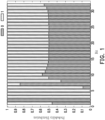
- FIG. 1 is a probability distribution diagram illustrating a binary value of each bit as 1 or 0 in an IEEE 754 32-bit representation of parameters in one of layers of a four-layer fully connected DNN model with an MNIST dataset.
- the first bit is a sign bit, with a 50% probability of being 1 or 0, and since the first bit is the sign bit, it is extremely important in the parameters and is categorized as the first-type bits that exhibit incompressibility and require protection.
- the second bit to the fifth bit are exponent bias bits, with a 100% probability of being 1 or 0, and the exponent bias bits are crucial in the parameters and are categorized as the second-type bits that have the potential for substantial compression but do not necessitate protection.
- the sixth bit is also an exponent bias bit, with a 10% probability of being 0 and a 90% probability of being 1, and the sixth bit is important in the parameters and categorized as the third-type bit that are compressible and require protection.
- the seventh bit to the thirty-second bit are also some exponent bias bits and fractions, with the lowest importance in the parameters, and these bits are categorized as the fourth-type bits that pose challenges for compression but do not necessitate protection and may even be omitted from transmission.
- the probability distribution diagram in FIG. 1 contains statistical results of one of the layers in the four-layer fully connected DNN model with the MNIST dataset.
- the second bit to the fifth bits are the second-type bits
- the sixth bit is the third-type bit
- the statistical results may vary, such as the second to the sixth bits being the second-type bits
- the seventh bit being the third-type bit.
- a large amount of statistical data shows that, despite slight differences in the probability distribution of binary values of bits being 1 or 0 in different networks, different layers, different compression modules, and different datasets, the probability distributions are all similar to the probability distribution shown in FIG. 1 .
- the data processing system and the data processing method for the DNN model provided in one or more embodiments of the invention are further applied to perform steps such as interleaving and compression (source coding) to process the transmission data of the DNN model.
- FIG. 2 is a schematic diagram illustrating an architecture of a data processing system 1 according to an embodiment of the invention.
- the data processing system 1 includes a memory 11 and a processor 12.
- the memory 11 is configured to store a DNN model 110, and the processor 12 is coupled to the memory 11.
- the data processing system 1 may be implemented by a computer device, such as a desktop computer, a laptop computer, a tablet computer, a workstation, or any other computer device with computing, display, and networking functions, which should however not be construed as a limitation in the invention.
- the memory 11 may be a static random access memory (SRAM), a dynamic random access memory (DRAM), or any other type of memory.
- the processor 12 may be a central processing unit (CPU), a microprocessor, or an embedded controller, which should however not be construed as a limitation in the invention.
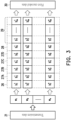
- FIG. 3 is a schematic diagram illustrating the processing of a transmission data 21 by the data processing system 1 depicted in FIG. 2 .
- the processor 12 reads n weights W 1 , W 2 , ..., and W n from the transmission data 21 of the DNN model 110.
- the processor 12 quantizes each of the weights W 1 , W 2 , ..., and W n into m bits. Specifically, the processor 12 quantizes the weight W 1 into m bits b 1 1 , b 2 1 , b 3 1 , ... , b m 1 , quantizes the weight W 2 into m bits b 1 2 , b 2 2 , b 3 2 , ... , b m 2 , and the rest may be deduced therefrom until the weight W n is quantized into m bits b 1 n , b 2 n , b 3 n , ... , b m n .
- the first bit b 1 1 is the first-type bit
- the second bit b 2 1 to the fifth bit b 5 1 are the second-type bits
- the sixth bit b 6 1 is the third-type bit
- the seventh bit b 7 1 to the m th bit b m 1 are the fourth-type bits.
- bits obtained by quantizing each of the weights W 2 ..., and W n are also categorized into four types.
- the category of the bits contained in each of the first-type to the fourth-type bits serves as an embodiment and should however not be construed as a limitation in the invention.
- the bits exhibit incompressibility and require protection they are referred to as the first-type bits in the invention.
- the bits that have the potential for substantial compression but do not necessitate protection are referred to as the second-type bits in the invention.
- the bits that are compressible and require protection are referred to as the third-type bits in the invention.
- the bits that pose challenges for compression but do not necessitate protection or may even be ignored are referred to as the fourth-type bits in the invention.
- the processor 12 After the processor 12 quantizes each of the weights W 1 , W 2 , ..., and W n into a plurality of bits, the processor 12 interleaves the first-type bits (the first bits) in each of the weights W 1 , W 2 , ..., and W n into a first bit set 26. The processor 12 determines whether the first bit set 26 is compressible. Since all the first bits in the first bit set 26 are the first-type bits that exhibit incompressibility and require protection, the processor 12 does not compress the first bit set 26. Generally, the first bits are the most significant bits.
- the processor 12 sequentially interleaves each of the second-type bits (e.g., the second bit to the fifth bit) in each of the weights W 1 , W 2 , ..., and W n into a plurality of second bit sets. For instance, the processor 12 interleaves the second bit b 2 1 , b 2 2 , ... , and b 2 n in each of the weights W 1 , W 2 , ..., and W n into a second bit set 27A, interleaves the third bit b 3 1 , b 3 2 , ... , and b 3 n in each of the weights W 1 , W 2 , ..., and W n into a second bit set 27B, interleaves the fourth bit b 4 1 , b 4 2 , ... , and b 4 n in each of the weights W 1 , W 2 , ..., and W n into a second bit set 27C, and interleaves the fifth bit b 5 1 ,
- the processor 12 determines whether each of the second bit sets 27A-27D is compressible. Since the second bit to the fifth bit in each of the second bit sets 27A-27D are the second-type bits that have the potential for substantial compression but do not necessitate protection, the processor 12 compresses each of the second bit sets 27A-27D. In response to the second bit sets 27A-27D being compressible, the processor 12 reads a second compression rate corresponding to the compression of each of the second bit sets 27A-27D. The second compression rate for compressing each of the second bit sets 27A-27D may be the same or different.
- the processor 12 interleaves the third-type bits (e.g., the sixth bits b 6 1 , b 6 2 , ... , and b 6 n ) ) in each of the weights W 1 , W 2 , ..., and W n into a third bit set 28.
- the processor 12 determines whether the third bit set 28 is compressible. Since the sixth bit in the third bit set 28 is the third-type bit that is compressible and require protection, the processor 12 compresses the third bit set 28. In response to the third bit set 28 being compressible, the processor 12 reads a third compression rate for compressing the third bit set 28.
- the processor 12 interleaves the fourth-type bits (e.g., the seventh bit to the m th bit) in each of the weights W 1 , W 2 , ..., and W n into a plurality of fourth bit sets 29.
- the processor 12 determines whether each of the fourth bit sets 29 is compressible. Since the seventh bit to the m th bit in each of the fourth bit sets 29 are the fourth-type bits that pose challenges for compression but do not necessitate protection or may be even ignored, the processor 12 does not compress each of the fourth bit sets 29.
- the processor 12 may determine whether each of the second bit sets 27A-27D and the third bit set 28 is compressible, and if so, the processor 12 reads the second compression rate and the third compression rate. In an embodiment, the processor 12 may determine from the compression rate data stored in the memory 11 whether each of the second bit sets 27A-27D and the third bit set 28 is compressible, and if so, the processor 12reads the second compression rate and the third compression rate.
- the compression rate data may be generated based on experimental data or statistical data.
- the processor 12 may further dynamically determined based on the compression rate data and according to a distribution condition of 0s and 1s in each of the second bit sets 27A-27D and the third bit set 28 whether each of the second bit sets 27A-27D and the third bit set 28 is compressible, and if so, the processor 12 reads the second compression rate and the third compression rate.
- the processor 12 After the processor 12 reads the second compression rate and the third compression rate, the processor 12 compresses each of the second bit sets 27A-27D with the second compression rate and compresses the third bit set 28 with the third compression rate. Then, the uncompressed first bit set 26, the compressed second bit sets 27A-27D, and the compressed third bit set 28 are sequentially coded to generate first encoded data 30 corresponding to the transmission data 21. After the first encoded data 30 are generated by coding, the processor 12 transmits the first encoded data 30 to an external device 3 via a network 2.
- the network 2 may be a cable communication network or a wireless communication network, and the amount of the first encoded data 30 is much less than the amount of the transmission data 21, which may reduce the use of memory and improve transmission efficiency when exchanging data between a parameter server and a plurality of user equipment (UE) in federated learning, for instance,
- UE user equipment
- the data processing system 1 shown in FIG. 2 may serve as the parameter server, and the external device 3 may serve as the UE.
- the data processing system 1 shown in FIG. 2 may serve as the UE, and the external device 3 may serve as the parameter server.
- the data processing system 1 when the data processing system 1 receives second encoded data from the external device 3 via the network 2, the data processing system 1 is also required to decode, decompress, and de-interleave the second encoded data to generate reconstructed weights.
- the processor 12 of the data processing system 1 when the processor 12 of the data processing system 1 receives the second encoded data from the external device 3 via the network 2, the processor 12 decodes the second encoded data to generate the first bit set, the compressed second bit sets, and the compressed third bit set; the processor 12 decompresses each of the compressed second bit sets and the compressed third bit set; the processor 12 sequentially de-interleaves the first bit set, each of the second bit sets, and the third bit set; based on the first bit set, each of the second bit sets, and the third bit set generated after de-interleaving, the processor 12 reconstructs the de-interleaved bits as a plurality of reconstructed weights.
- FIG. 4A and FIG. 4B are schematic diagrams illustrating a data processing method according to an embodiment of the invention.
- the data processing method depicted in FIG. 4A corresponds to the schematic diagram illustrating the processing of the transmission data 21 by the data processing system 1 in FIG. 3 ; that is, the weights W 1 , W 2 , ..., and W n of the transmission data 21 are quantized, interleaved, compressed, and coded to generate the first encoded data 30 corresponding to the transmission data.
- the data processing method depicted in in FIG. 4B includes decoding, decompressing, and de-interleaving the second encoded data after receiving the second encoded data, so as to generate the reconstructed weights W' 1 , W' 2 , ..., and W' n .
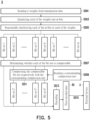
- FIG. 5 is a flowchart illustrating a data processing method 5 according to an embodiment of the invention.
- the steps of the data processing method 5 in FIG. 5 are implemented by the processor 12 in the data processing system 1 as shown in FIG. 2 and may refer to the schematic diagram illustrating the processing of the transmission data 21 by the data processing system 1 in FIG. 3 . Therefore, please refer to FIG. 2 , FIG. 3 , and FIG. 5 together.
- the steps of the data processing method 5 includes S501, S503, S505, S507, S509, S511, S513, and S515.
- step S501 the processor 12 reads n weights W 1 , W 2 , ..., and W n from the transmission data 21 of the DNN model 110.
- step S503 the processor 12 quantizes each of the weights W 1 , W 2 , ..., and W n into m bits.
- the m bits sequentially include the first-type bit that is extremely important, non-compressible, and requires protection, a plurality of second-type bits that are extremely important, highly compressible, and requires no protection, the third-type bit that is important, compressible, and requires protection, and the fourth-type bit that is of the lowest importance, poses challenges for compression, requires no protection, and may even not be transmitted.
- step S505 the processor 12 sequentially interleaves each of the m bits in each of the weights W 1 , W 2 , ..., and W n into m bit sets, e.g., a bit set 1 to a bit set m shown in FIG. 5 .
- m bit sets e.g., a bit set 1 to a bit set m shown in FIG. 5 .
- Relevant details of interleaving each of the bits in each of the weights W 1 , W 2 , ..., and W n into the bit set in step S505 have been explained in the previous description and will not be further elaborated hereinafter.
- the processor 12 determines whether each of the bit sets is compressible. Specifically, the processor 12 determines the type of each bit in each bit set to decide whether to compress the bit set. In an embodiment, the processor 12 may determine whether each bit set c is compressible according to the compression rate data stored in the memory 11. In another embodiment, the processor 12 may dynamically determine whether each bit set is compressible based on the distribution condition of 0s and 1s in each bit set.
- the processor 12 determines that the bit in the bit set 1 is the first-type bit that is extremely important, non-compressible, and requires protection, the processor 12 determines that the bits in the bit set 2 to the bit set 5 are the second-type bits that are extremely important, highly compressible, and requires no protection, the processor 12 determines that the bit in the bit set 6 is the third-type bit that is important, compressible, and requires protection, and the processor 12 determines that the bits in the bit set 7 to the bit set m are the fourth-type bits that are of the lowest importance, pose challenges for compression, require no protection, and may even not be transmitted.
- step S509 the processor 12 reads a compression rate corresponding to each compressible bit set. For instance, the processor 12 reads the second compression rate corresponding to each of the bit set 2 to the bit set 5 and reads the third compression rate corresponding to the bit set 6.
- step S511 the processor 12 compresses the bit set 2 to the bit set 5 respectively with the second compression rate corresponding to each of the bit set 2 to the bit set 5 to generate a compressed bit set 2' to a compressed bit set 5' and compresses the bit set 6 with the third compression rate corresponding to the bit set 6 to generate a compressed bit set 6'.
- step S513 the processor 12 sequentially codes the uncompressed bit set 1, the compressed bit set 2' to the compressed bit set 5', and the compressed bit set 6' to generate the first encoded data 30 corresponding to the transmission data 21.
- step S515 the processor 12 transmits the first encoded data 30 to the external device 3 via the network 2.
- the data processing system and the data processing method for the DNN model incorporate techniques such as quantization, block-interleaving, lossless compression, channel coding, and the like. These techniques may achieve prediction accuracy similar to that of the original network model while optimizing the utilization of resources for storing/transmitting the DNN model.
Landscapes
- Engineering & Computer Science (AREA)
- Physics & Mathematics (AREA)
- Theoretical Computer Science (AREA)
- Computer Networks & Wireless Communication (AREA)
- Signal Processing (AREA)
- Probability & Statistics with Applications (AREA)
- Biophysics (AREA)
- Evolutionary Computation (AREA)
- Artificial Intelligence (AREA)
- Biomedical Technology (AREA)
- Health & Medical Sciences (AREA)
- Computational Linguistics (AREA)
- Data Mining & Analysis (AREA)
- Life Sciences & Earth Sciences (AREA)
- General Health & Medical Sciences (AREA)
- Molecular Biology (AREA)
- Computing Systems (AREA)
- General Engineering & Computer Science (AREA)
- General Physics & Mathematics (AREA)
- Mathematical Physics (AREA)
- Software Systems (AREA)
- Compression, Expansion, Code Conversion, And Decoders (AREA)
Abstract
A data processing method (5) for a DNN model (110) includes: reading weights (W1-Wn) of transmission data (21); quantizing each weight into bits sequentially including first, second, third, and fourth-type bits; sequentially interleaving the first-type bit into a first bit set (26); sequentially interleaving each second-type bit into second bit sets (27A-27D) and reading a second compression rate in response to the compressible second bit sets; interleaving the third-type bit into a third bit set (28) and reading a third compression rate in response to the compressible third bit set; compressing each second bit set with the second compression rate, and compressing the third bit set with the third compression rate; sequentially coding the first bit set, each compressed second bit set, and the compressed third bit set to generate first encoded data (30) corresponding to the transmission data; transmitting the first encoded data to an external device (3).
Description
- The invention relates to a data processing system and a data processing method for a deep neural network (DNN) model.
- In the realm of B5G/6G communications, the convergence of artificial intelligence (Al) and machine learning (ML) has emerged as a dominant trend. This convergence is characterized by the exchange and sharing of substantial model information between transmitting and receiving ends through wireless communication techniques. In this context, a deep neural network (DNN) has emerged as a primary driver behind the recent achievements of ML across diverse applications.
- However, the realization of such accomplishments frequently requires the utilization of large and intricate DNN models, encompassing millions or even billions of parameters. Such a characteristic poses a notable challenge concerning the storage and transmission of the voluminous DNN models. Beyond the considerable memory requirements for DNN model storage, the compression of parameters becomes imperative when transmitting them through noisy channels, with compression techniques often reducing the bit precision (e.g., compressing from 32 bits to 4 bits or 8 bits). Such compression may potentially impact accuracy and introduce the risk of errors in the transmitted models.
- Consequently, one of the challenges to address lies in the effective compression of data while preserving model accuracy during the transmission of the DNN models.
- One of the exemplary embodiments provides a data processing system that includes a memory and a processor. The memory is configured to store a deep neural network (DNN) model, and the processor is coupled to the memory and configured to perform following steps. A plurality of weights are read from a transmission data of the DNN model. Each of the weights is quantized into a plurality of bits, where the bits sequentially include a first-type bit, a plurality of second-type bits, a third-type bit, and a plurality of fourth-type bits. The first-type bit in each of the weights is interleaved into a first bit set. Each of the second-type bits in each of the weights is sequentially interleaved into a plurality of second bit sets, and a second compression rate of each of the second bit sets is read in response to the second bit sets being compressible. The third-type bit in each of the weights is interleaved into a third bit set, and a third compression rate of the third bit set is read in response to the third bit set being compressible. Each of the second bit sets is compressed with the second compression rate, and the third bit set is compressed with the third compression rate. The first bit set, each of the compressed second bit sets, and the compressed third bit set are sequentially coded to generate a first encoded data corresponding to the transmission data. The first encoded data are transmitted to an external device via a network.
- In an embodiment of the invention, the processor is further configured to receive a second encoded data from the external device, decode the second encoded data to generate the first bit set, the compressed second bit sets, and the compressed third bit set, decompress each of the compressed second bit sets and the compressed third bit set, sequentially de-interleave the first bit set, each of the second bit sets, and the third bit set, and reconstruct a plurality of de-interleaved bits generated after the first bit set, each of the second bit sets, and the third bit set are de-interleaved as a plurality of reconstructed weights.
- In an embodiment of the invention, he first-type bit is a most significant bit.
- In an embodiment of the invention, the processor is further configured to quantize each of the weights into the bits based on an IEEE standard 754 for binary floating-point arithmetic (IEEE 754).
- In an embodiment of the invention, the first-type bit is a sign bit.
- In an embodiment of the invention, the second-type bits and the third-type bit are exponent bias bits.
- In an embodiment of the invention, the memory is further configured to store a compression rate data, and the processor is further configured to dynamically determine whether the second bit sets and the third bit set are compressible based on the compression rate data and a distribution condition of 0s and 1s in each of the second bit sets and the third bit set, and read the second compression rate and the third compression rate, where the compression rate data include historical statistics.
- One of the exemplary embodiments provides a data processing method for a DNN model, and the data processing method includes following steps. A plurality of weights are read from a transmission data. Each of the weights is quantized into a plurality of bits, where the bits sequentially include a first-type bit, a plurality of second-type bits, a third-type bit, and a plurality of fourth-type bits. The first-type bit in each of the weights is interleaved into a first bit set. Each of the second-type bits in each of the weights is sequentially interleaved into a plurality of second bit sets, and a second compression rate of each of the second bit sets is read in response to the second bit sets being compressible. The third-type bit in each of the weights is interleaved into a third bit set, and a third compression rate of the third bit set is read in response to the third bit set being compressible. Each of the second bit sets is compressed with the second compression rate, and the third bit set is compressed with the third compression rate. The first bit set, each of the compressed second bit sets, and the compressed third bit set are sequentially coded to generate first encoded data corresponding to the transmission data. The first encoded data are transmitted to an external device.
- In light of the foregoing, the data processing system and the data processing method for the DNN model, as provided in one or more embodiments of the invention, incorporate techniques such as quantization, block-interleaving, lossless compression, channel coding, and the like. These techniques may achieve prediction accuracy similar to that of an original network model while optimizing the utilization of resources for storing/transmitting the DNN model.
- The accompanying drawings are included to provide a further understanding of the invention, and the accompanying drawings are incorporated in and constitute a part of this specification. The drawings illustrate the embodiments of the invention, and together with the description, serve to explain the principle of the invention.
-
FIG. 1 is a probability distribution diagram illustrating a binary value of each bit as 1 or 0 in an IEEE 754 32-bit representation of parameters in one of layers of a four-layer fully connected DNN model with an MNIST dataset. -
FIG. 2 is a schematic diagram illustrating an architecture of a data processing system according to an embodiment of the invention. -
FIG. 3 is a schematic diagram illustrating the processing of a transmission data by the data processing system depicted inFIG. 2 . -
FIG. 4A and FIG. 4B are schematic diagrams illustrating a data processing method according to an embodiment of the invention. -
FIG. 5 is a flowchart illustrating a data processing method according to an embodiment of the invention. - Some embodiments of the invention will be described in detail in conjunction with the accompanying drawings. Reference numbers referred to in the following description are considered as denoting the same or similar components when the same reference numbers appear in different drawings. These embodiments should be construed as part of the invention and do not reveal all possible implementations of the invention.
- According to findings from statistical analysis, when parameters in one of layers of a four-layer fully connected DNN model with an MNIST dataset are represented using a 32-bit representation of an IEEE standard 754 for binary floating-point arithmetic (IEEE 754), the probability of a binary value of each bit being 1 or 0 is associated with the position of the bit. When the DNN model is transmitted, in order to save the bandwidth occupied by wireless transmission for sharing and exchanging, the parameters are compressed first. Therefore, through the findings from the statistical analysis, four types of bits are initially identified: bits that exhibit incompressibility and require protection, bits that have the potential for substantial compression but do not necessitate protection, bits that are compressible and require protection, and bits that pose challenges for compression but do not necessitate protection. By employing an interleaving module or an interleaving process, bits of different types are interleaved, and then subsequent compression and coding processes are executed to diminish dimensions of the transmission parameters and alleviate the transmission-related burden.
- A data processing system and a data processing method provided in one or more embodiments of the invention may be applied to determine whether each bit is compressible and compress the bits that are compressible. For explanatory purposes, in the invention, bits that exhibit incompressibility and require protection are referred to as first-type bits, bits that have the potential for substantial compression but do not necessitate protection are referred to as second-type bits, bits that are compressible and require protection are referred to as third-type bits, and bits that pose challenges for compression but do not necessitate protection and may be even ignored are referred to as fourth-type bits.
-
FIG. 1 is a probability distribution diagram illustrating a binary value of each bit as 1 or 0 in an IEEE 754 32-bit representation of parameters in one of layers of a four-layer fully connected DNN model with an MNIST dataset. With reference toFIG. 1 , the first bit is a sign bit, with a 50% probability of being 1 or 0, and since the first bit is the sign bit, it is extremely important in the parameters and is categorized as the first-type bits that exhibit incompressibility and require protection. The second bit to the fifth bit are exponent bias bits, with a 100% probability of being 1 or 0, and the exponent bias bits are crucial in the parameters and are categorized as the second-type bits that have the potential for substantial compression but do not necessitate protection. The sixth bit is also an exponent bias bit, with a 10% probability of being 0 and a 90% probability of being 1, and the sixth bit is important in the parameters and categorized as the third-type bit that are compressible and require protection. The seventh bit to the thirty-second bit are also some exponent bias bits and fractions, with the lowest importance in the parameters, and these bits are categorized as the fourth-type bits that pose challenges for compression but do not necessitate protection and may even be omitted from transmission. - It should be specifically mentioned that the probability distribution diagram in
FIG. 1 contains statistical results of one of the layers in the four-layer fully connected DNN model with the MNIST dataset. For instance, the second bit to the fifth bits are the second-type bits, and the sixth bit is the third-type bit, but in other layers of the DNN model, the statistical results may vary, such as the second to the sixth bits being the second-type bits, and the seventh bit being the third-type bit. However, a large amount of statistical data shows that, despite slight differences in the probability distribution of binary values of bits being 1 or 0 in different networks, different layers, different compression modules, and different datasets, the probability distributions are all similar to the probability distribution shown inFIG. 1 . Based on such probability distribution characteristics, in addition to performing steps such as quantization and channel coding, the data processing system and the data processing method for the DNN model provided in one or more embodiments of the invention are further applied to perform steps such as interleaving and compression (source coding) to process the transmission data of the DNN model. -
FIG. 2 is a schematic diagram illustrating an architecture of adata processing system 1 according to an embodiment of the invention. With reference toFIG. 2 , thedata processing system 1 includes amemory 11 and aprocessor 12. Thememory 11 is configured to store aDNN model 110, and theprocessor 12 is coupled to thememory 11. - Practically, the
data processing system 1 may be implemented by a computer device, such as a desktop computer, a laptop computer, a tablet computer, a workstation, or any other computer device with computing, display, and networking functions, which should however not be construed as a limitation in the invention. Thememory 11 may be a static random access memory (SRAM), a dynamic random access memory (DRAM), or any other type of memory. Theprocessor 12 may be a central processing unit (CPU), a microprocessor, or an embedded controller, which should however not be construed as a limitation in the invention. -
FIG. 3 is a schematic diagram illustrating the processing of atransmission data 21 by thedata processing system 1 depicted inFIG. 2 . With reference toFIG. 2 and3 , theprocessor 12 reads n weights W1, W2, ..., and Wn from thetransmission data 21 of theDNN model 110. - Next, the
processor 12 quantizes each of the weights W1, W2, ..., and Wn into m bits. Specifically, theprocessor 12 quantizes the weight W1 intom bits 

m bits 

- For instance, in
FIG. 3 , among them bits 
first bit 
second bit 
fifth bit 


- After the
processor 12 quantizes each of the weights W1, W2, ..., and Wn into a plurality of bits, theprocessor 12 interleaves the first-type bits (the first bits) in each of the weights W1, W2, ..., and Wn into a first bit set 26. Theprocessor 12 determines whether the first bit set 26 is compressible. Since all the first bits in the first bit set 26 are the first-type bits that exhibit incompressibility and require protection, theprocessor 12 does not compress the first bit set 26. Generally, the first bits are the most significant bits. - Similarly, the
processor 12 sequentially interleaves each of the second-type bits (e.g., the second bit to the fifth bit) in each of the weights W1, W2, ..., and Wn into a plurality of second bit sets. For instance, theprocessor 12 interleaves thesecond bit 

third bit 


fifth bit 

- The
processor 12 determines whether each of the second bit sets 27A-27D is compressible. Since the second bit to the fifth bit in each of the second bit sets 27A-27D are the second-type bits that have the potential for substantial compression but do not necessitate protection, theprocessor 12 compresses each of the second bit sets 27A-27D. In response to the second bit sets 27A-27D being compressible, theprocessor 12 reads a second compression rate corresponding to the compression of each of the second bit sets 27A-27D. The second compression rate for compressing each of the second bit sets 27A-27D may be the same or different. - For the third-type bits, the
processor 12 interleaves the third-type bits (e.g., the sixth bits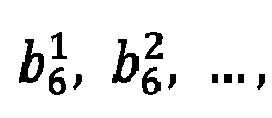

processor 12 determines whether the third bit set 28 is compressible. Since the sixth bit in the third bit set 28 is the third-type bit that is compressible and require protection, theprocessor 12 compresses the third bit set 28. In response to the third bit set 28 being compressible, theprocessor 12 reads a third compression rate for compressing the third bit set 28. - For the fourth-type bits, the
processor 12 interleaves the fourth-type bits (e.g., the seventh bit to the mth bit) in each of the weights W1, W2, ..., and Wn into a plurality of fourth bit sets 29. Theprocessor 12 determines whether each of the fourth bit sets 29 is compressible. Since the seventh bit to the mth bit in each of the fourth bit sets 29 are the fourth-type bits that pose challenges for compression but do not necessitate protection or may be even ignored, theprocessor 12 does not compress each of the fourth bit sets 29. - The
processor 12 may determine whether each of the second bit sets 27A-27D and the third bit set 28 is compressible, and if so, theprocessor 12 reads the second compression rate and the third compression rate. In an embodiment, theprocessor 12 may determine from the compression rate data stored in thememory 11 whether each of the second bit sets 27A-27D and the third bit set 28 is compressible, and if so, the processor 12reads the second compression rate and the third compression rate. Here, the compression rate data may be generated based on experimental data or statistical data. In another embodiment, theprocessor 12 may further dynamically determined based on the compression rate data and according to a distribution condition of 0s and 1s in each of the second bit sets 27A-27D and the third bit set 28 whether each of the second bit sets 27A-27D and the third bit set 28 is compressible, and if so, theprocessor 12 reads the second compression rate and the third compression rate. - After the
processor 12 reads the second compression rate and the third compression rate, theprocessor 12 compresses each of the second bit sets 27A-27D with the second compression rate and compresses the third bit set 28 with the third compression rate. Then, the uncompressed first bit set 26, the compressed second bit sets 27A-27D, and the compressed third bit set 28 are sequentially coded to generate first encodeddata 30 corresponding to thetransmission data 21. After the first encodeddata 30 are generated by coding, theprocessor 12 transmits the first encodeddata 30 to anexternal device 3 via anetwork 2. Thenetwork 2 may be a cable communication network or a wireless communication network, and the amount of the first encodeddata 30 is much less than the amount of thetransmission data 21, which may reduce the use of memory and improve transmission efficiency when exchanging data between a parameter server and a plurality of user equipment (UE) in federated learning, for instance, - In an embodiment, when the parameter server intends to share parameters of the DNN model with a plurality of UE, the
data processing system 1 shown inFIG. 2 may serve as the parameter server, and theexternal device 3 may serve as the UE. In another embodiment, when the UE intends to share the parameters of the DNN model with the parameter server, thedata processing system 1 shown inFIG. 2 may serve as the UE, and theexternal device 3 may serve as the parameter server. - On the contrary, when the
data processing system 1 receives second encoded data from theexternal device 3 via thenetwork 2, thedata processing system 1 is also required to decode, decompress, and de-interleave the second encoded data to generate reconstructed weights. - In an embodiment, when the
processor 12 of thedata processing system 1 receives the second encoded data from theexternal device 3 via thenetwork 2, theprocessor 12 decodes the second encoded data to generate the first bit set, the compressed second bit sets, and the compressed third bit set; theprocessor 12 decompresses each of the compressed second bit sets and the compressed third bit set; theprocessor 12 sequentially de-interleaves the first bit set, each of the second bit sets, and the third bit set; based on the first bit set, each of the second bit sets, and the third bit set generated after de-interleaving, theprocessor 12 reconstructs the de-interleaved bits as a plurality of reconstructed weights. -
FIG. 4A and FIG. 4B are schematic diagrams illustrating a data processing method according to an embodiment of the invention. The data processing method depicted inFIG. 4A corresponds to the schematic diagram illustrating the processing of thetransmission data 21 by thedata processing system 1 inFIG. 3 ; that is, the weights W1, W2, ..., and Wn of thetransmission data 21 are quantized, interleaved, compressed, and coded to generate the first encodeddata 30 corresponding to the transmission data. The data processing method depicted in inFIG. 4B includes decoding, decompressing, and de-interleaving the second encoded data after receiving the second encoded data, so as to generate the reconstructed weights W'1, W'2, ..., and W'n. -
FIG. 5 is a flowchart illustrating adata processing method 5 according to an embodiment of the invention. The steps of thedata processing method 5 inFIG. 5 are implemented by theprocessor 12 in thedata processing system 1 as shown inFIG. 2 and may refer to the schematic diagram illustrating the processing of thetransmission data 21 by thedata processing system 1 inFIG. 3 . Therefore, please refer toFIG. 2 ,FIG. 3 , andFIG. 5 together. The steps of thedata processing method 5 includes S501, S503, S505, S507, S509, S511, S513, and S515. - In step S501, the
processor 12 reads n weights W1, W2, ..., and Wn from thetransmission data 21 of theDNN model 110. - In step S503, the
processor 12 quantizes each of the weights W1, W2, ..., and Wn into m bits. The m bits sequentially include the first-type bit that is extremely important, non-compressible, and requires protection, a plurality of second-type bits that are extremely important, highly compressible, and requires no protection, the third-type bit that is important, compressible, and requires protection, and the fourth-type bit that is of the lowest importance, poses challenges for compression, requires no protection, and may even not be transmitted. - In step S505, the
processor 12 sequentially interleaves each of the m bits in each of the weights W1, W2, ..., and Wn into m bit sets, e.g., a bit set 1 to a bit set m shown inFIG. 5 . Relevant details of interleaving each of the bits in each of the weights W1, W2, ..., and Wn into the bit set in step S505 have been explained in the previous description and will not be further elaborated hereinafter. - In step S507, the
processor 12 determines whether each of the bit sets is compressible. Specifically, theprocessor 12 determines the type of each bit in each bit set to decide whether to compress the bit set. In an embodiment, theprocessor 12 may determine whether each bit set c is compressible according to the compression rate data stored in thememory 11. In another embodiment, theprocessor 12 may dynamically determine whether each bit set is compressible based on the distribution condition of 0s and 1s in each bit set. - For instance, the
processor 12 determines that the bit in the bit set 1 is the first-type bit that is extremely important, non-compressible, and requires protection, theprocessor 12 determines that the bits in the bit set 2 to the bit set 5 are the second-type bits that are extremely important, highly compressible, and requires no protection, theprocessor 12 determines that the bit in the bit set 6 is the third-type bit that is important, compressible, and requires protection, and theprocessor 12 determines that the bits in the bit set 7 to the bit set m are the fourth-type bits that are of the lowest importance, pose challenges for compression, require no protection, and may even not be transmitted. - If the bit set is compressible, in step S509, the
processor 12 reads a compression rate corresponding to each compressible bit set. For instance, theprocessor 12 reads the second compression rate corresponding to each of the bit set 2 to the bit set 5 and reads the third compression rate corresponding to the bit set 6. - Then, in step S511, the
processor 12 compresses the bit set 2 to the bit set 5 respectively with the second compression rate corresponding to each of the bit set 2 to the bit set 5 to generate a compressed bit set 2' to a compressed bit set 5' and compresses the bit set 6 with the third compression rate corresponding to the bit set 6 to generate a compressed bit set 6'. - In step S513, the
processor 12 sequentially codes the uncompressed bit set 1, the compressed bit set 2' to the compressed bit set 5', and the compressed bit set 6' to generate the first encodeddata 30 corresponding to thetransmission data 21. - In step S515, the
processor 12 transmits the first encodeddata 30 to theexternal device 3 via thenetwork 2. - To sum up, the data processing system and the data processing method for the DNN model, as provided in one or more embodiments of the invention, incorporate techniques such as quantization, block-interleaving, lossless compression, channel coding, and the like. These techniques may achieve prediction accuracy similar to that of the original network model while optimizing the utilization of resources for storing/transmitting the DNN model.
-
- 1: data processing system
- 11: memory
- 110: DNN model
- 12: processor
- 21: transmission data
- 26: first bit set
- 27A-27D: second bit sets
- 28: third bit set
- 29: fourth bit set
- 3: external device
- 30: first encoded data
- 5: data processing method
-

- w 1,w 2, ... , and wn : weight
- w' 1,w' 2, ... , and w'n : reconstructed weight
Claims (14)
- A data processing system (1), comprising:a memory (11), configured to store a deep neural network model (110); anda processor (12), coupled to the memory (11) and configured to perform following steps:reading a plurality of weights (W1, W2, ..., and Wn) from a transmission data (21) of the deep neural network model (110);quantizing each of the weights (Wi, W2, ..., and Wn) into a plurality of bits,wherein the bits sequentially comprise a first-type bit, a plurality of second-type bits, a third-type bit, and a plurality of fourth-type bits;interleaving the first-type bit in each of the weights (Wi, W2, ..., and Wn) into a first bit set (26);sequentially interleaving each of the second-type bits in each of the weights (Wi, W2, ..., and Wn) into a plurality of second bit sets (27A-27D), and reading a second compression rate of each of the second bit sets (27A-27D) in response to the second bit sets (27A-27D) being compressible;interleaving the third-type bit in each of the weights (Wi, W2, ..., and Wn) into a third bit set (28), and reading a third compression rate of the third bit set (28) in response to the third bit set (28) being compressible;compressing each of the second bit sets (27A-27D) with the second compression rate, and compressing the third bit set (28) with the third compression rate;sequentially coding the first bit set (26), each of the compressed second bit sets (27A-27D), and the compressed third bit set (28) to generate a first encoded data (30) corresponding to the transmission data (21); andtransmitting the first encoded data (30) to an external device (3) via a network.
- The data processing system as claimed in claim 1, wherein the processor (12) is further configured to:receive a second encoded data from the external device (3);decode the second encoded data to generate the first bit set (26), the compressed second bit sets (27A-27D), and the compressed third bit set (28);decompress each of the compressed second bit sets (27A-27D) and the compressed third bit set (28);sequentially de-interleave the first bit set (26), each of the second bit sets (27A-27D), and the third bit set (28); andreconstruct a plurality of de-interleaved bits generated after the first bit set (26), each of the second bit sets (27A-27D), and the third bit set (28) are de-interleaved as a plurality of reconstructed weights (W'1, W'2, ..., and W'n).
- The data processing system as claimed in claim 1, wherein the first-type bit is a most significant bit.
- The data processing system as claimed in claim 1, wherein the processor (12) is further configured to:
quantize each of the weights (Wi, W2, ..., and Wn) into the bits based on an IEEE standard 754 for binary floating-point arithmetic. - The data processing system as claimed in claim 4, wherein the first-type bit is a sign bit.
- The data processing system as claimed in claim 4, wherein the second-type bits and the third-type bit are exponent bias bits.
- The data processing system as claimed in claim 1, wherein the memory (11) is further configured to store a compression rate data, and the processor (12) is further configured to:
dynamically determine whether the second bit sets (27A-27D) and the third bit set (28) are compressible based on the compression rate data and a distribution condition of 0s and 1s in each of the second bit sets (27A-27D) and the third bit set (28), and read the second compression rate and the third compression rate, wherein the compression rate data comprise historical statistics. - A data processing method (5) for a deep neural network model (110), comprising:reading a plurality of weights (W1, W2, ..., and Wn) from a transmission data (21);quantizing each of the weights (W1, W2, ..., and Wn) into a plurality of bits, wherein the bits sequentially comprise a first-type bit, a plurality of second-type bits, a third-type bit, and a plurality of fourth-type bits;interleaving the first-type bit in each of the weights (W1 W2, ..., and Wn) into a first bit set (26);sequentially interleaving each of the second-type bits in each of the weights (Wi, W2, ..., and Wn) into a plurality of second bit sets (27A-27D), and reading a second compression rate of each of the second bit sets (27A-27D) in response to the second bit sets (27A-27D) being compressible;interleaving the third-type bit in each of the weights (Wi, W2, ..., and Wn) into a third bit set (28), and reading a third compression rate of the third bit set (28) in response to the third bit set (28) being compressible;compressing each of the second bit sets (27A-27D) with the second compression rate, and compressing the third bit set (28) with the third compression rate;sequentially coding the first bit set (26), each of the compressed second bit sets (27A-27D), and the compressed third bit set (28) to generate a first encoded data (30) corresponding to the transmission data (21); andtransmitting the first encoded data (30) to an external device (3).
- The data processing method as claimed in claim 8, further comprising:receiving a second encoded data from the external device (3);decoding the second encoded data to generate the first bit set (26), the compressed second bit sets (27A-27D), and the compressed third bit set (28);decompressing each of the compressed second bit sets (27A-27D) and the compressed third bit set (28);sequentially de-interleaving the first bit set (26), each of the second bit sets (27A-27D), and the third bit set (28); andreconstructing a plurality of de-interleaved bits generated after the first bit set (26), each of the second bit sets (27A-27D), and the third bit set (28) are de-interleaved as a plurality of reconstructed weights (W'1, W'2, ..., and W'n).
- The data processing method as claimed in claim 8, wherein the first-type bit is a most significant bit.
- The data processing method as claimed in claim 8, further comprising:
quantizing each of the weights (Wi, W2, ..., and Wn) into the bits based on an IEEE standard 754 for binary floating-point arithmetic. - The data processing method as claimed in claim 11, wherein the first-type bit is a sign bit.
- The data processing method as claimed in claim 11, wherein the second-type bits and the third-type bits are exponent bias bits.
- The data processing method as claimed in claim 8, further comprising:
dynamically determining whether the second bit sets (27A-27D) and the third bit set (28) are compressible based on a compression rate data and a distribution condition of 0s and 1s in each of the second bit sets (27A-27D) and the third bit set (28), and reading the second compression rate and the third compression rate, wherein the compression rate data comprise historical statistics.
Applications Claiming Priority (2)
| Application Number | Priority Date | Filing Date | Title |
|---|---|---|---|
| US202263433020P | 2022-12-16 | 2022-12-16 | |
| TW112138426A TW202427268A (en) | 2022-12-16 | 2023-10-06 | Data processing system and data processing method for deep neural network model |
Publications (1)
| Publication Number | Publication Date |
|---|---|
| EP4386631A1 true EP4386631A1 (en) | 2024-06-19 |
Family
ID=89072979
Family Applications (1)
| Application Number | Title | Priority Date | Filing Date |
|---|---|---|---|
| EP23213702.6A Pending EP4386631A1 (en) | 2022-12-16 | 2023-12-01 | Data processing system and data processing method for deep neural network model |
Country Status (2)
| Country | Link |
|---|---|
| US (1) | US12334956B2 (en) |
| EP (1) | EP4386631A1 (en) |
Citations (1)
| Publication number | Priority date | Publication date | Assignee | Title |
|---|---|---|---|---|
| US20210209474A1 (en) * | 2018-05-29 | 2021-07-08 | Peking University | Compression method and system for frequent transmission of deep neural network |
Family Cites Families (13)
| Publication number | Priority date | Publication date | Assignee | Title |
|---|---|---|---|---|
| US10659118B2 (en) | 2016-04-19 | 2020-05-19 | Samsung Electronics Co., Ltd. | Method and apparatus for explicit CSI reporting in advanced wireless communication systems |
| US10917662B2 (en) | 2018-03-08 | 2021-02-09 | Mediatek Inc. | Method and apparatus for dealing with compressed bitstream interleaving |
| US11210586B1 (en) | 2018-04-20 | 2021-12-28 | Perceive Corporation | Weight value decoder of neural network inference circuit |
| US11049013B1 (en) | 2018-04-20 | 2021-06-29 | Perceive Corporation | Encoding of weight values stored on neural network inference circuit |
| CN112437930A (en) | 2018-07-12 | 2021-03-02 | 华为技术有限公司 | Generating a compressed representation of a neural network with skilled inference speed and power consumption |
| US12242956B2 (en) | 2019-03-22 | 2025-03-04 | Qualcomm Incorporated | Systems and methods of cross layer rescaling for improved quantization performance |
| TWI745697B (en) | 2019-05-24 | 2021-11-11 | 創鑫智慧股份有限公司 | Computing system and compressing method thereof for neural network parameters |
| US11750258B2 (en) | 2020-03-12 | 2023-09-05 | Samsung Electronics Co., Ltd. | Method and apparatus for CSI reporting |
| KR20210136476A (en) * | 2020-05-07 | 2021-11-17 | 삼성전자주식회사 | Compressing device and method using parameters of a quad-tree method |
| US12505348B2 (en) | 2020-10-21 | 2025-12-23 | Qualcomm Incorporated | Personalized neural network pruning |
| US20220147792A1 (en) | 2020-11-12 | 2022-05-12 | United Microelectronics Centre (Hong Kong) Limited | Processor, and method for generating binarized weights for a neural network |
| US20220318633A1 (en) | 2021-03-26 | 2022-10-06 | Qualcomm Incorporated | Model compression using pruning quantization and knowledge distillation |
| CN113225114B (en) | 2021-04-16 | 2022-03-04 | 中原工学院 | A wireless communication signal transmission and reception method based on precoding joint optimization |
-
2023
- 2023-11-29 US US18/522,242 patent/US12334956B2/en active Active
- 2023-12-01 EP EP23213702.6A patent/EP4386631A1/en active Pending
Patent Citations (1)
| Publication number | Priority date | Publication date | Assignee | Title |
|---|---|---|---|---|
| US20210209474A1 (en) * | 2018-05-29 | 2021-07-08 | Peking University | Compression method and system for frequent transmission of deep neural network |
Non-Patent Citations (2)
| Title |
|---|
| LU HANG ET AL: "Distilling Bit-level Sparsity Parallelism for General Purpose Deep Learning Acceleration", PROCEEDINGS OF THE 1ST WORKSHOP ON DIGITAL TWIN & EDGE AI FOR INDUSTRIAL IOT, ACMPUB27, NEW YORK, NY, USA, 18 October 2021 (2021-10-18), pages 963 - 976, XP058992406, ISBN: 978-1-4503-9970-8, DOI: 10.1145/3466752.3480123 * |
| WIEDEMANN SIMON ET AL: "DeepCABAC: A Universal Compression Algorithm for Deep Neural Networks", IEEE JOURNAL OF SELECTED TOPICS IN SIGNAL PROCESSING, IEEE, US, vol. 14, no. 4, 24 January 2020 (2020-01-24), pages 700 - 714, XP011805149, ISSN: 1932-4553, [retrieved on 20200810], DOI: 10.1109/JSTSP.2020.2969554 * |
Also Published As
| Publication number | Publication date |
|---|---|
| US20240204804A1 (en) | 2024-06-20 |
| US12334956B2 (en) | 2025-06-17 |
Similar Documents
| Publication | Publication Date | Title |
|---|---|---|
| US9735805B2 (en) | Encoder, decoder and method | |
| JP3017379B2 (en) | Encoding method, encoding device, decoding method, decoder, data compression device, and transition machine generation method | |
| US11722148B2 (en) | Systems and methods of data compression | |
| CN116506073B (en) | Industrial computer platform data rapid transmission method and system | |
| US20220224947A1 (en) | Coding method and related device | |
| US11863799B2 (en) | Image encoding method and apparatus, image decoding method and apparatus, and chip | |
| CN113630125A (en) | Data compression method, data encoding method, data decompression method, data encoding device, data decompression device, electronic equipment and storage medium | |
| US7245241B2 (en) | Image coding with scalable context quantization | |
| US10616580B2 (en) | Apparatus and method for encoding video | |
| US11323205B2 (en) | Polar code encoding method and apparatus | |
| CN113644986A (en) | Encoding method and device | |
| US11615286B2 (en) | Computing system and compressing method for neural network parameters | |
| US10075183B2 (en) | Compression and encryption of a file | |
| US12334956B2 (en) | Data processing system and data processing method for deep neural network model | |
| CN118573189A (en) | Adaptive quantization coding method, device, equipment and storage medium | |
| CN118244993A (en) | Data storage method, data processing method and device, electronic device, and medium | |
| US20080175312A1 (en) | Method and system of compressing and decompressing data | |
| CN117972323A (en) | Method and system for low-rank tensor data compression and missing value recovery | |
| CN113364466B (en) | Data processing system | |
| TW202427268A (en) | Data processing system and data processing method for deep neural network model | |
| CN118694375A (en) | A method and computing device for compressing numerical data | |
| CN117951100A (en) | Data compression method, device and computer storage medium | |
| CN113452377A (en) | Compression and decompression of weights | |
| US6794999B1 (en) | Resilient parameterized prefix codes for adaptive coding | |
| CN116661707B (en) | Data processing method and device and electronic equipment |
Legal Events
| Date | Code | Title | Description |
|---|---|---|---|
| PUAI | Public reference made under article 153(3) epc to a published international application that has entered the european phase |
Free format text: ORIGINAL CODE: 0009012 |
|
| STAA | Information on the status of an ep patent application or granted ep patent |
Free format text: STATUS: REQUEST FOR EXAMINATION WAS MADE |
|
| 17P | Request for examination filed |
Effective date: 20231201 |
|
| AK | Designated contracting states |
Kind code of ref document: A1 Designated state(s): AL AT BE BG CH CY CZ DE DK EE ES FI FR GB GR HR HU IE IS IT LI LT LU LV MC ME MK MT NL NO PL PT RO RS SE SI SK SM TR |