EP4385296A1 - Adjustable mount for implement camera - Google Patents
Adjustable mount for implement camera Download PDFInfo
- Publication number
- EP4385296A1 EP4385296A1 EP23216204.0A EP23216204A EP4385296A1 EP 4385296 A1 EP4385296 A1 EP 4385296A1 EP 23216204 A EP23216204 A EP 23216204A EP 4385296 A1 EP4385296 A1 EP 4385296A1
- Authority
- EP
- European Patent Office
- Prior art keywords
- camera
- distance
- crop
- optimal
- rows
- Prior art date
- Legal status (The legal status is an assumption and is not a legal conclusion. Google has not performed a legal analysis and makes no representation as to the accuracy of the status listed.)
- Pending
Links
- 238000000034 method Methods 0.000 claims description 17
- 230000008569 process Effects 0.000 description 5
- 238000010586 diagram Methods 0.000 description 4
- 238000012544 monitoring process Methods 0.000 description 3
- 230000008859 change Effects 0.000 description 2
- 238000012417 linear regression Methods 0.000 description 2
- 230000011218 segmentation Effects 0.000 description 2
- 238000004364 calculation method Methods 0.000 description 1
- 238000013527 convolutional neural network Methods 0.000 description 1
- 238000009313 farming Methods 0.000 description 1
- 230000008676 import Effects 0.000 description 1
- 238000012986 modification Methods 0.000 description 1
- 230000004048 modification Effects 0.000 description 1
- 230000009467 reduction Effects 0.000 description 1
- 239000002689 soil Substances 0.000 description 1
Images





Classifications
-
- A—HUMAN NECESSITIES
- A01—AGRICULTURE; FORESTRY; ANIMAL HUSBANDRY; HUNTING; TRAPPING; FISHING
- A01B—SOIL WORKING IN AGRICULTURE OR FORESTRY; PARTS, DETAILS, OR ACCESSORIES OF AGRICULTURAL MACHINES OR IMPLEMENTS, IN GENERAL
- A01B69/00—Steering of agricultural machines or implements; Guiding agricultural machines or implements on a desired track
- A01B69/001—Steering by means of optical assistance, e.g. television cameras
Definitions
- the present invention relates to a system and method for autonomously adjusting a position of a camera mounted on an agricultural machine.
- Maintaining the proper perspective is important for accurate data gathering and it is known to manually adjust the camera at multiple points in time, including but not limited to, during the initial pre-operation setup, during operation in the field, and when the agricultural machine travels between fields of different crops.
- an operator will adjust the camera's mounted position on the agricultural machine by manually, physically attaching the camera to the agricultural machine at the desired position.
- the camera's fixed perspective is no longer ideal for the height of the crop being traversed by the agricultural machine. Therefore, the data being captured by the camera may not be accurate because the camera is blocked due to the height of the crop.
- a method for autonomously adjusting a position of a camera mounted to an agricultural machine comprises obtaining an image of an object from the camera, using the image to determine whether the camera is at an optimal position from the object, and if it is determined that the camera is not at the optimal position, raising or lowering the camera.
- an adjustable camera system 20 according to embodiments of the present invention is shown.
- the system 20 includes a camera 28 coupled to a mounting assembly 38.
- the mounting assembly 38 is adapted to raise and lower the camera 28.
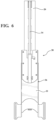
- the mounting assembly 38 includes a mounting arm 36 having a length configured to adjust between a retracted position, as reflected in Figure 5 , and an extended position, as reflected in Figure 6 .
- An exemplary mounting arm 36 comprises a telescoping arm.
- the mounting arm 36 comprises a mounting bracket 22, a rail 26 and an actuator 34.
- the mounting bracket 22 is adapted for mounting to an agricultural machine 24.
- FIG. 3B A second embodiment of the mounting assembly 38' is shown in Figure 3B , where like primed reference numerals represent similar elements as those described above. Only significant differences between the two embodiments are reflected in the Figures and the description below.
- the mounting assembly 38' in the second embodiment includes a mounting bracket 22', a rail 26', a camera mount 46 and an actuator 34'.
- the rail 26' is fixedly coupled to the mounting bracket 22'
- the camera mount 46 is slidingly coupled to the rail 26'
- the camera 28 is mounted to the camera mount 46.
- the actuator 34' is coupled between camera mount 46 and the rail 26', and is configured to slide the camera mount 46 along the rail 26'.
- FIG. 3C A third embodiment of the mounting assembly 38" is shown in Figure 3C , where like double-primed reference numerals represent similar elements as those described above. Only significant differences between the embodiments are reflected in the Figures and the description below.
- the mounting assembly 38" in the third embodiment includes a mounting bracket 22", a camera mount 46" and an actuator 34".
- the camera mount 46" is slidingly coupled to the mounting bracket 22", and the camera 28 is mounted to the camera mount 46".
- the actuator 34" is coupled between camera mount 46" and the mounting bracket 22", and is configured to slide the camera mount 46" along the mounting bracket 22".
- the mounting bracket 22" has a taller height dimension than the height dimension of the mounting brackets 22, 22' in the previously described embodiments.
- the camera 28 may rotate, or pivot, about a vertical axis 42 that runs parallel with the length of the rail 26, 26' and the mounting bracket 22".
- the camera 28 may also be equipped to pan up and down by rotating, or pivoting, about an axis 44 that runs perpendicular to the vertical axis 42.
- the mounting bracket 22, 22', 22" may be attached to a foldable toolbar 48.
- the foldable toolbar 48 preferably is configured with opposite end sections 49 (only one end section shown) pivotally mounted via a pivotal connection 53 on a central toolbar section 51.
- the toolbar end sections 49 are foldable for storage and transport.
- the mounting bracket 22, 22', 22" and attached camera 28 are preferably attached to the toolbar 48 on one of the end sections 49.
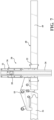
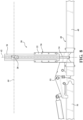
- the toolbar 48 is in an unfolded position, as reflected in Figures 7-8 , allowing actuator 34, 34', 34" to raise and lower the camera 28.
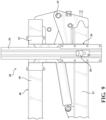
- the actuator 34, 34', 34" is fully retracted and the toolbar 48 is folded, as reflected in Figures 9-10 , which enables reduction in size of the transport envelope.
- the adjustable camera system 20 also includes a controller 40 to automatically adjust the height of the camera 28.
- Figure 12 illustrates an exemplary method 100 for automatically adjusting the height of the camera 28 using the system reflected in Figure 11 .
- the camera 28 obtains images 30 of the field (step 102), and the controller 40 determines whether the image 30 is in focus (step 104). If the controller 40 determines that the image 30 is in focus, then the camera 28 is at an optimal distance from the top of the crop rows, and the system 20 returns to step 102 to continue monitoring the camera images 30. If at step 104 the controller 40 determines that the image 30 is not in focus, then the controller 40 determines whether the position of the camera 28 is too high above the top of the crop rows (step 106).
- the controller 40 includes a convolutional neural network based semantic segmentation model 50.
- the model 50 is trained to identify crop rows using annotated images 52 of crop at various growth stages.
- the annotated images 52 include weak annotations 54 defining row positions on the images 52.
- Each weak annotation 54 comprises a line drawn above the crop row, and the model 50 is trained to infer larger scale row features in the image 52.
- the controller 40 applies a linear regression model to a kernel-based calculation of intensity peaks from the generated image mask. For example, the controller 40 may divide the pixel-wise classification 58 into 6 rows and 2 columns (step 120), i.e., into 12 sections. Alternatively, rather than dividing the entire pixel-wise classification 58 into sections, the controller 40 may focus on sections closer to the classified rows 60. The number of columns selected depends on the number of crop rows being analyzed.
- the controller 40 identifies the intensity peaks 64 within each section (step 122) by identifying the points with the highest number of crop row pixels across the width of each section. The intensity peaks 64 correspond to the center of the crop row within each section.
- the controller 40 applies a linear regression model to the intensity peaks 64 to create regression lines 66 representing the crop rows in the image 62 (step 124).
- Figure 15-17 illustrates a processed image 84 when the camera is at the optimal distance from the top of the crop rows.
- the regression lines 66a, 66b align with expected stationary lines 68a, 68b, and the distance between the regression lines 66a, 66b D measured is equal to the distance between the expected stationary lines 68a, 68b D optimal .
- the present invention uses this optimal distance D optimal to determine whether to raise or lower the camera 28.
- the average distance between the crop rows measured from the image 30 D measured will be greater than the optimal distance D optimal because the image 30 will appear to expand the distance between the crop rows.
- the average distance between the regression lines 66a, 66b D measured will be less than the optimal distance D optimal because the image 30 will appear to compress the distance between the crop rows.
- the system determines the average distance D measured between the regression lines 66 (step 126) and determines whether the average distance D measured between the regression lines 66 is equal to the optimal distance D optimal (step 128). If the distances are equal, then the camera 28 is at an optimal distance from the top of the crop rows, and the system 20 returns to step 114 to continue monitoring the camera images 30. If at step 128 the system 20 determines that the distances are not equal, then the system 20 determines whether the average distance D measured between the regression lines 66 is greater than the optimal distance D optimal (step 130).
- the system 20 may be configured with a list of predetermined optimal distances D optimal , selectable by the operator of the harvester.
- the predetermined optimal distances D optimal may depend on a number of factors, such as the type of crop or the actual distance between crop rows.
Landscapes
- Life Sciences & Earth Sciences (AREA)
- Engineering & Computer Science (AREA)
- Mechanical Engineering (AREA)
- Soil Sciences (AREA)
- Environmental Sciences (AREA)
- Guiding Agricultural Machines (AREA)
Abstract
An adjustable camera system comprises a camera, a mounting assembly and a controller. The mounting assembly is coupled to the camera and adapted to raise and lower the camera. The controller is configured to use an image of an object from the camera to determine whether the camera is at an optimal position from the object. If the controller determines that the camera is not at the optimal position, the controller sends a signal to the mounting assembly to raise or lower the camera.
Description
- This application is a continuation-in-part of
U.S. Patent Application No. 17/499,237 entitled TRAILED IMPLEMENT WITH VISION GUIDANCE, which was filed on October 12, 2021 U.S. Patent Application No. 17/499,333 entitled PRECISION CULTIVATOR WITH VISION GUIDANCE, which was filed on October 12, 2021 - The present invention relates to a system and method for autonomously adjusting a position of a camera mounted on an agricultural machine.
- Cameras are known to be mounted on farming equipment to visually capture the surrounding area. The data from the cameras is known to be used for monitoring the spatial relationship between the agricultural machine to which it is attached and the crops growing in the field. The data captured by the cameras is used for multiple purposes, including but not limited to, assisting with autonomous control of the agricultural machine. Therefore, the placement and resulting perspective of the camera with respect to the crop is critically important. Currently, cameras are manually positioned on and attached to an agricultural machine prior to beginning work on a field of crop and are manually adjusted throughout the process of working on the field, as necessary. The manual adjustment of the camera can be a time-consuming and burdensome task, particularly when necessary while working in the middle of a field.
- Maintaining the proper perspective is important for accurate data gathering and it is known to manually adjust the camera at multiple points in time, including but not limited to, during the initial pre-operation setup, during operation in the field, and when the agricultural machine travels between fields of different crops. During the initial set-up, prior to operation of the agricultural machine, an operator will adjust the camera's mounted position on the agricultural machine by manually, physically attaching the camera to the agricultural machine at the desired position. During operation, as the agricultural machine travels across the field or fields, the rows of crop may be growing at different rates. As a result, the camera's fixed perspective is no longer ideal for the height of the crop being traversed by the agricultural machine. Therefore, the data being captured by the camera may not be accurate because the camera is blocked due to the height of the crop. Another scenario during operation is when the agricultural machine moves from a field growing one type of crop to a different field growing a different type of crop, the spacing of the crop rows may change. For example, if the prior field has 15 inch spacing between the rows and the next field has 38 inch spacing between the rows, this change would also impact the perspective of the camera's position with respect to the rows of crop.
- Therefore, there is a need for a camera that is mounted to an agricultural machine that automatically and autonomously adjusts its position to gain the correct perspective with respect to the crop prior to starting work on a field of crop and as the agricultural machine is working on the field to yield accurate information.
- The current invention satisfies these needs by configuring a system that autonomously adjusts a position of a camera mounted to an agricultural machine. According to one embodiment, an adjustable camera system comprises a camera, a mounting assembly and a controller. The mounting assembly is coupled to the camera and adapted to raise and lower the camera. The controller is configured to use an image of an object from the camera to determine whether the camera is at an optimal position from the object. If the controller determines that the camera is not at the optimal position, the controller sends a signal to the mounting assembly to raise or lower the camera.
- According to another embodiment, there is provided a method for autonomously adjusting a position of a camera mounted to an agricultural machine. The method comprises obtaining an image of an object from the camera, using the image to determine whether the camera is at an optimal position from the object, and if it is determined that the camera is not at the optimal position, raising or lowering the camera.
- Other objects and purposes of the invention, and variations thereof, will be apparent upon reading the following specification and inspecting the accompanying drawings.
- Advantages of the present disclosure will be readily appreciated as the same becomes better understood by reference to the following detailed description when considered in connection with the accompanying drawings, wherein:
-
Figure 1 illustrates a perspective view of an adjustable camera system mounted on an agricultural machine according to one embodiment of the present invention; -
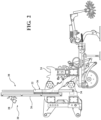
Figure 2 illustrates a side view of the adjustable camera system and agricultural machine ofFigure 1 ; -
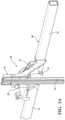
Figure 3A illustrates a perspective view of the adjustable camera system ofFigure 1 in a retracted position; -
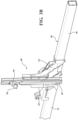
Figure 3B illustrates a perspective view of an alternative embodiment of an adjustable camera system; -
Figure 3C illustrates a perspective view of another alternative embodiment of an adjustable camera system; -
Figure 4 illustrates a side view of the adjustable camera system ofFigure 3A ; -
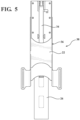
Figure 5 illustrates a rear view of the adjustable camera system ofFigure 3A ; -
Figure 6 illustrates a rear view of the adjustable camera system ofFigure 5 in an extended position; -
Figure 7 illustrates a front view of the adjustable camera system ofFigure 1 attached to an unfolded tool bar in a retracted position; -
Figure 8 illustrates a front view of the adjustable camera system and tool bar ofFigure 7 where the adjustable camera system is in an extended position; -
Figure 9 illustrates a front view of the adjustable camera system and tool bar ofFigure 7 where the tool bar is in a folded position; -
Figure 10 illustrates a perspective view of the adjustable camera system and tool bar ofFigure 9 ; -
Figure 11 illustrates a block diagram of the adjustable camera system according to one embodiment of the present invention; -
Figure 12 illustrates a flow diagram of an exemplary method performed by the adjustable camera system according to one embodiment of the present invention; -
Figure 13 illustrates a flow diagram illustrating the processing performed on an image by the adjustable camera system; -
Figure 14 illustrates a flow diagram of an exemplary method performed by the adjustable camera system according to another embodiment of the present invention; -
Figure 15 illustrates a processed image from the adjustable camera system when the camera is at an optimal distance from the top of the crop rows; -
Figure 16 illustrates a processed image from the adjustable camera system when the camera is lower than an optimal distance from the top of the crop rows; and -
Figure 17 illustrates a processed image from the adjustable camera system when the camera is higher than an optimal distance from the top of the crop rows. - Certain terminology will be used in the following description for convenience and reference only and will not be limiting. For example, the words "upwardly", "downwardly", "rightwardly" and "leftwardly" will refer to directions in the drawings to which reference is made. The words "inwardly" and "outwardly" will refer to directions toward and away from, respectively, the geometric center of the arrangement and designated parts thereof. The terminology will include the words specifically mentioned, derivatives thereof, and words of similar import.
- Referring to the Figures, wherein like numerals indicate like or corresponding parts throughout the several views, an
adjustable camera system 20 according to embodiments of the present invention is shown. Thesystem 20 includes acamera 28 coupled to amounting assembly 38. Themounting assembly 38 is adapted to raise and lower thecamera 28. Referring toFigures 1-3A and4-10 , in one embodiment, themounting assembly 38 includes amounting arm 36 having a length configured to adjust between a retracted position, as reflected inFigure 5 , and an extended position, as reflected inFigure 6 . Anexemplary mounting arm 36 comprises a telescoping arm. Themounting arm 36 comprises amounting bracket 22, arail 26 and anactuator 34. Themounting bracket 22 is adapted for mounting to anagricultural machine 24. Themounting bracket 22 may attach directly to theagricultural machine 24, or it may attach to any type of attachment or implement on theagricultural machine 24. Therail 26 is slidingly coupled to the mountingbracket 22, and thecamera 28 is mounted to a distal end of therail 26. Theactuator 34 is coupled between the mountingbracket 22 and therail 26, and is configured to slide therail 26 along the mountingbracket 22.Figure 5 shows the rail in a retracted position with respect to the mountingbracket 22, andFigure 6 shows therail 26 in an extended position with respect to the mountingbracket 22. Theactuator 34 can be, but is not limited to, a hydraulic cylinder actuator, a linear actuator, or a rack and pinion. Hydraulic or electric power actuation may be provided by theagricultural machine 24 or implement as is commonly known. - A second embodiment of the mounting assembly 38' is shown in
Figure 3B , where like primed reference numerals represent similar elements as those described above. Only significant differences between the two embodiments are reflected in the Figures and the description below. - The mounting assembly 38' in the second embodiment includes a mounting bracket 22', a rail 26', a
camera mount 46 and anactuator 34'. The rail 26' is fixedly coupled to the mounting bracket 22', thecamera mount 46 is slidingly coupled to the rail 26', and thecamera 28 is mounted to thecamera mount 46. Theactuator 34' is coupled betweencamera mount 46 and the rail 26', and is configured to slide thecamera mount 46 along the rail 26'. - A third embodiment of the mounting
assembly 38" is shown inFigure 3C , where like double-primed reference numerals represent similar elements as those described above. Only significant differences between the embodiments are reflected in the Figures and the description below. - The mounting
assembly 38" in the third embodiment includes a mountingbracket 22", acamera mount 46" and anactuator 34". Thecamera mount 46" is slidingly coupled to the mountingbracket 22", and thecamera 28 is mounted to thecamera mount 46". Theactuator 34" is coupled betweencamera mount 46" and the mountingbracket 22", and is configured to slide thecamera mount 46" along the mountingbracket 22". In this embodiment, the mountingbracket 22" has a taller height dimension than the height dimension of the mountingbrackets 22, 22' in the previously described embodiments. - As shown in
Figure 8 , thecamera 28 may rotate, or pivot, about avertical axis 42 that runs parallel with the length of therail 26, 26' and the mountingbracket 22". Thecamera 28 may also be equipped to pan up and down by rotating, or pivoting, about anaxis 44 that runs perpendicular to thevertical axis 42. - Referring to
Figures 7-10 , the mountingbracket foldable toolbar 48. Thefoldable toolbar 48 preferably is configured with opposite end sections 49 (only one end section shown) pivotally mounted via apivotal connection 53 on acentral toolbar section 51. Thetoolbar end sections 49 are foldable for storage and transport. The mountingbracket camera 28 are preferably attached to thetoolbar 48 on one of theend sections 49. During operation, thetoolbar 48 is in an unfolded position, as reflected inFigures 7-8 , allowingactuator camera 28. During storage and transport, theactuator toolbar 48 is folded, as reflected inFigures 9-10 , which enables reduction in size of the transport envelope. - The
adjustable camera system 20 is configured to automatically reposition thecamera 28 so that it is at an optimal distance from the top of the crop rows. If thesystem 20 determines that thecamera 28 is at the optimal distance, it does not adjust the height of thecamera 28. If thesystem 20 determines that thecamera 28 is too high, it lowers thecamera 28. If thesystem 20 determines that thecamera 28 is too low, thesystem 20 raises thecamera 28. - Referring to
Figure 11 , in one embodiment, theadjustable camera system 20 also includes acontroller 40 to automatically adjust the height of thecamera 28.Figure 12 illustrates anexemplary method 100 for automatically adjusting the height of thecamera 28 using the system reflected inFigure 11 . Thecamera 28 obtainsimages 30 of the field (step 102), and thecontroller 40 determines whether theimage 30 is in focus (step 104). If thecontroller 40 determines that theimage 30 is in focus, then thecamera 28 is at an optimal distance from the top of the crop rows, and thesystem 20 returns to step 102 to continue monitoring thecamera images 30. If atstep 104 thecontroller 40 determines that theimage 30 is not in focus, then thecontroller 40 determines whether the position of thecamera 28 is too high above the top of the crop rows (step 106). If thecontroller 40 determines that the position of thecamera 28 is too high, thecontroller 40 sends a signal to retract theactuator camera 28. If atstep 106 thecontroller 40 determines that the position of thecamera 28 is not too high, then thecontroller 40 sends a signal to extend theactuator camera 28. Thesystem 20 then returns to step 102 to process thenext image 30. - Referring to
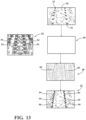
Figure 13 , in one embodiment, thecontroller 40 includes a convolutional neural network basedsemantic segmentation model 50. Themodel 50 is trained to identify crop rows using annotatedimages 52 of crop at various growth stages. The annotatedimages 52 includeweak annotations 54 defining row positions on theimages 52. Eachweak annotation 54 comprises a line drawn above the crop row, and themodel 50 is trained to infer larger scale row features in theimage 52. -
Figure 14 illustrates anexemplary process 112 performed by theadjustable camera system 20 to raise and lower the position of thecamera 28. Referring toFigures 13 and14 , thecamera 28 obtains animage 30 of the field, which includesimages 30 of the rows of crop 32 (step 114). Thecontroller 40 processes theimage 30 to identify the top of the crop rows (step 116). In one embodiment, to identify the top of the crop rows, thesemantic segmentation model 50 segments the image 30 (step 118) to create apixel-wise classification 58 of theimage 30. Thepixel-wise classification 58 distinguishes thecrop rows 60 from the other parts of the plant and any other background information, including the soil and other plants that may be in theimage 30. Thecontroller 40 applies a linear regression model to a kernel-based calculation of intensity peaks from the generated image mask. For example, thecontroller 40 may divide thepixel-wise classification 58 into 6 rows and 2 columns (step 120), i.e., into 12 sections. Alternatively, rather than dividing the entirepixel-wise classification 58 into sections, thecontroller 40 may focus on sections closer to theclassified rows 60. The number of columns selected depends on the number of crop rows being analyzed. Thecontroller 40 identifies the intensity peaks 64 within each section (step 122) by identifying the points with the highest number of crop row pixels across the width of each section. The intensity peaks 64 correspond to the center of the crop row within each section. Thecontroller 40 applies a linear regression model to the intensity peaks 64 to createregression lines 66 representing the crop rows in the image 62 (step 124). - Because the actual distance between crop rows is known and fixed, when the
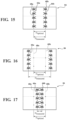
camera 28 is at an optimal distance from the top of the crop rows, the average distance between the crop rows in theimages 30 will also be fixed. The fixed distance is reflected inFigures 15-17 as expectedstationary lines Figure 15 illustrates a processedimage 84 when the camera is at the optimal distance from the top of the crop rows. Here, theregression lines stationary lines regression lines stationary lines camera 28. If thecamera 28 is too close to the top of the crop rows, as reflected inFigure 16 , the average distance between the crop rows measured from the image 30 Dmeasured will be greater than the optimal distance Doptimal because theimage 30 will appear to expand the distance between the crop rows. Likewise, if thecamera 28 is too far from the top of the crop rows, as reflected inFigure 17 , the average distance between theregression lines image 30 will appear to compress the distance between the crop rows. - Referring back to
Figure 14 , the system determines the average distance Dmeasured between the regression lines 66 (step 126) and determines whether the average distance Dmeasured between the regression lines 66 is equal to the optimal distance Doptimal (step 128). If the distances are equal, then thecamera 28 is at an optimal distance from the top of the crop rows, and thesystem 20 returns to step 114 to continue monitoring thecamera images 30. If atstep 128 thesystem 20 determines that the distances are not equal, then thesystem 20 determines whether the average distance Dmeasured between the regression lines 66 is greater than the optimal distance Doptimal (step 130). If thesystem 20 determines that the average distance Dmeasured between the regression lines 66 is greater than the optimal distance Doptimal, thecontroller 40 sends a signal to extend theactuator controller 40 sends a signal to retract theactuator system 20 then returns to step 114 to process thenext image 30. - The
system 20 may be configured with a list of predetermined optimal distances Doptimal, selectable by the operator of the harvester. The predetermined optimal distances Doptimal may depend on a number of factors, such as the type of crop or the actual distance between crop rows. - The invention has been described in an illustrative manner, and it is to be understood that the terminology which has been used is intended to be in the nature of words of description rather than of limitation. Directional references employed or shown in the description, figures or claims, such as top, bottom, upper, lower, upward, downward, lengthwise, widthwise, longitudinal, lateral, vertical, horizontal, and the like, are relative terms employed for ease of description and are not intended to limit the scope of the invention in any respect. Many modifications and variations of the present invention are possible in light of the above teachings. It is, therefore, to be understood that within the scope of the appended claims, the invention may be practiced other than as specifically described.
Claims (24)
- An adjustable camera system comprising:a camera;a mounting assembly coupled to the camera and adapted to raise and lower the camera; anda controller configured to use an image of an object from the camera to determine whether the camera is at an optimal position from the object, and if the controller determines that the camera is not at the optimal position, the controller sends a signal to the mounting assembly to raise or lower the camera.
- The adjustable camera system according to claim 1, wherein the mounting assembly comprises:a mounting bracket;a camera mount slidingly coupled to the mounting bracket; andan actuator coupled between the camera mount and the mounting bracket, wherein the actuator is configured to slide the camera mount along the mounting bracket;wherein the camera is coupled to the camera mount and if the controller determines that the camera is not at the optimal position, the controller sends a signal to the actuator to slide the camera mount along the mounting bracket.
- The adjustable camera system according to claim 2, wherein the controller determines whether the camera is at the optimal position by determining whether the image is in focus.
- The adjustable camera system according to claim 3, wherein:the mounting bracket is adapted for attachment to an agricultural machine;the object comprises rows of crop; andthe controller determines whether the camera is at the optimal position by determining whether a distance between the rows of crop in the image equals an optimal distance.
- The adjustable camera system according to claim 4, wherein if the controller determines that the distance between the rows of crop in the image is greater than the optimal distance, the controller sends a signal to the actuator to raise the camera.
- The adjustable camera system according to claim 4, wherein if the controller determines that the distance between the rows of crop in the image is less than the optimal distance, the controller sends a signal to the actuator to lower the camera.
- The adjustable camera system according to claim 4, further comprising a toolbar having a central section and an end section connected to the central section by a pivotal connection, wherein the mounting bracket is attached to the end section of the toolbar.
- The adjustable camera system according to claim 7, wherein the end section of the toolbar and the attached camera pivot about the pivotal connection between an unfolded position and a folded position.
- The adjustable camera system according to claim 4, wherein the camera mount is pivotally coupled to the mounting bracket.
- The adjustable camera system according to claim 2, wherein the mounting assembly comprises a mounting arm having a length configured to adjust between a retracted position and an extended position; and wherein:the camera is mounted to one end of the mounting arm; andif the controller determines that the camera is not at the optimal position, the controller sends a signal to the mounting arm to adjust the length of the mounting arm.
- The adjustable camera system according to claim 10, wherein the mounting arm comprises a telescoping arm.
- The adjustable camera system according to claim 10, wherein the controller determines whether the camera is at the optimal position by determining whether the image is in focus.
- The adjustable camera system according to claim 12, wherein the mounting arm comprises:a mounting bracket;a rail slidingly coupled to the mounting bracket; andan actuator coupled between the mounting bracket and the rail, wherein the actuator is configured to slide the rail along the mounting bracket, and wherein if the controller determines that the camera is not at the optimal position, the controller sends a signal to the actuator to slide the rail along the mounting bracket.
- The adjustable camera system according to claim 13, wherein:the mounting bracket is adapted for attachment to an agricultural machine;the object comprises rows of crop; andthe controller determines whether the camera is at the optimal position by determining whether a distance between the rows of crop in the image equals an optimal distance.
- The adjustable camera system according to claim 14, wherein if the controller determines that the distance between the rows of crop in the image is greater than the optimal distance, the controller sends a signal to the actuator to raise the camera.
- The adjustable camera system according to claim 14, wherein if the controller determines that the distance between the rows of crop in the image is less than the optimal distance, the controller sends a signal to the actuator to lower the camera.
- The adjustable camera system according to claim 14, further comprising a toolbar having a central section and an end section connected to the central section by a pivotal connection, wherein the mounting bracket is attached to the end section of the toolbar.
- The adjustable camera system according to claim 17, wherein the end section of the toolbar and the attached camera pivot about the pivotal connection between an unfolded position and a folded position.
- The adjustable camera system according to claim 14, wherein the camera is pivotally coupled to the rail.
- A method for autonomously adjusting a position of a camera mounted to an agricultural machine, the method comprising:obtaining an image of an object from the camera;using the image to determine whether the camera is at an optimal position from the object; andif it is determined that the camera is not at the optimal position, raising or lowering the camera.
- The method according to claim 20, wherein the step of determining whether the camera is at the optimal position comprises determining whether the image is in focus.
- The method according to claim 21, wherein the object comprises rows of crop and wherein the step of determining whether the camera is at the optimal position comprises determining whether a distance between the rows of crop in the image equals an optimal distance.
- The method according to claim 22, further comprising the step of determining whether the distance between the rows of crop is greater than the optimal distance, and if it determined that the distance between the rows of crop is greater than the optimal distance, raising the camera.
- The method according to claim 22, further comprising the step of determining whether the distance between the rows of crop is less than the optimal distance, and if it is determined that the distance between the rows of crop is less than the optimal distance, lowering the camera.
Applications Claiming Priority (1)
| Application Number | Priority Date | Filing Date | Title |
|---|---|---|---|
| US18/081,807 US12382850B2 (en) | 2021-10-12 | 2022-12-15 | Adjustable mount for implement camera |
Publications (1)
| Publication Number | Publication Date |
|---|---|
| EP4385296A1 true EP4385296A1 (en) | 2024-06-19 |
Family
ID=89222024
Family Applications (1)
| Application Number | Title | Priority Date | Filing Date |
|---|---|---|---|
| EP23216204.0A Pending EP4385296A1 (en) | 2022-12-15 | 2023-12-13 | Adjustable mount for implement camera |
Country Status (2)
| Country | Link |
|---|---|
| EP (1) | EP4385296A1 (en) |
| CA (1) | CA3221641A1 (en) |
Citations (3)
| Publication number | Priority date | Publication date | Assignee | Title |
|---|---|---|---|---|
| EP3932162A1 (en) * | 2020-07-02 | 2022-01-05 | CLAAS E-Systems GmbH | System for determining the position of a camera of a camera assembly relative to a ground plane |
| EP3967119A1 (en) * | 2020-09-09 | 2022-03-16 | Deere & Company | Auto-positioning camera for drawn implements |
| EP3984341A1 (en) * | 2020-10-14 | 2022-04-20 | Amazonen-Werke H. Dreyer SE & Co. KG | System for detecting rows of plants |
-
2023
- 2023-12-01 CA CA3221641A patent/CA3221641A1/en active Pending
- 2023-12-13 EP EP23216204.0A patent/EP4385296A1/en active Pending
Patent Citations (3)
| Publication number | Priority date | Publication date | Assignee | Title |
|---|---|---|---|---|
| EP3932162A1 (en) * | 2020-07-02 | 2022-01-05 | CLAAS E-Systems GmbH | System for determining the position of a camera of a camera assembly relative to a ground plane |
| EP3967119A1 (en) * | 2020-09-09 | 2022-03-16 | Deere & Company | Auto-positioning camera for drawn implements |
| EP3984341A1 (en) * | 2020-10-14 | 2022-04-20 | Amazonen-Werke H. Dreyer SE & Co. KG | System for detecting rows of plants |
Also Published As
| Publication number | Publication date |
|---|---|
| CA3221641A1 (en) | 2024-06-15 |
Similar Documents
| Publication | Publication Date | Title |
|---|---|---|
| EP3552474B1 (en) | A system for controlling an operative parameter of a harvesting header | |
| US11272655B2 (en) | Modular smart implement for precision agriculture | |
| EP3299996B1 (en) | Agricultural machines with image processing system | |
| US9769982B2 (en) | Method and apparatus for automatically controlling a cut height of an agricultural harvester | |
| EP1374661B1 (en) | Method and device to regulate positioning of a crop collecting device in a harvester | |
| US11521382B2 (en) | Machine vision plant tracking system for precision agriculture | |
| US10602665B2 (en) | Two armed robotic system for adjusting the height of an agricultural tool | |
| EP2862432A1 (en) | Header height sensor | |
| US20250221327A1 (en) | Precision cultivator with vision guidance | |
| US12382850B2 (en) | Adjustable mount for implement camera | |
| EP3598886B1 (en) | Self-propelled harvester | |
| US11985912B2 (en) | Weeding device for crops having seedling avoidance function | |
| US12284933B2 (en) | Methods of operating a tillage implement | |
| EP4385296A1 (en) | Adjustable mount for implement camera | |
| EP4165963A1 (en) | Trailed implement with visional guidance | |
| CN115868316A (en) | A system and method for automatic regulation of ratooning rice stubble height and harvester | |
| EP4226751A1 (en) | Machine vision plant tracking system for precision agriculture | |
| CN116491322A (en) | Cotton topping machine and topping method capable of dynamically identifying cotton buds | |
| CN108575258A (en) | A kind of tuberous root crops intelligence cutting method and device | |
| AU2024306133A1 (en) | Apparatus and method for multi-row agricultural mechanization | |
| US20230016410A1 (en) | System for detecting crop characteristics | |
| CA3138537A1 (en) | Trailed implement with vision guidance | |
| EP3982709B1 (en) | Methods of operating tillage implements and working fields | |
| EP4602904A1 (en) | Attachable machine and method for adjusting an attachable machine |
Legal Events
| Date | Code | Title | Description |
|---|---|---|---|
| PUAI | Public reference made under article 153(3) epc to a published international application that has entered the european phase |
Free format text: ORIGINAL CODE: 0009012 |
|
| STAA | Information on the status of an ep patent application or granted ep patent |
Free format text: STATUS: THE APPLICATION HAS BEEN PUBLISHED |
|
| AK | Designated contracting states |
Kind code of ref document: A1 Designated state(s): AL AT BE BG CH CY CZ DE DK EE ES FI FR GB GR HR HU IE IS IT LI LT LU LV MC ME MK MT NL NO PL PT RO RS SE SI SK SM TR |
|
| STAA | Information on the status of an ep patent application or granted ep patent |
Free format text: STATUS: REQUEST FOR EXAMINATION WAS MADE |
|
| 17P | Request for examination filed |
Effective date: 20241219 |