EP4383825A1 - Device and method - Google Patents
Device and method Download PDFInfo
- Publication number
- EP4383825A1 EP4383825A1 EP22853155.4A EP22853155A EP4383825A1 EP 4383825 A1 EP4383825 A1 EP 4383825A1 EP 22853155 A EP22853155 A EP 22853155A EP 4383825 A1 EP4383825 A1 EP 4383825A1
- Authority
- EP
- European Patent Office
- Prior art keywords
- configuration information
- network
- gap
- base station
- time gap
- Prior art date
- Legal status (The legal status is an assumption and is not a legal conclusion. Google has not performed a legal analysis and makes no representation as to the accuracy of the status listed.)
- Pending
Links
- 238000000034 method Methods 0.000 title claims abstract description 21
- 238000004891 communication Methods 0.000 claims abstract description 90
- 238000012545 processing Methods 0.000 claims abstract description 86
- 230000008569 process Effects 0.000 claims abstract description 7
- 230000001960 triggered effect Effects 0.000 claims description 3
- 230000004048 modification Effects 0.000 description 17
- 238000012986 modification Methods 0.000 description 17
- 230000005540 biological transmission Effects 0.000 description 9
- 238000010586 diagram Methods 0.000 description 9
- 230000004044 response Effects 0.000 description 9
- 230000011664 signaling Effects 0.000 description 7
- 238000005259 measurement Methods 0.000 description 6
- 230000000737 periodic effect Effects 0.000 description 5
- 230000007246 mechanism Effects 0.000 description 4
- 230000006870 function Effects 0.000 description 3
- 101150096310 SIB1 gene Proteins 0.000 description 2
- 230000000694 effects Effects 0.000 description 2
- 230000006978 adaptation Effects 0.000 description 1
- 230000006399 behavior Effects 0.000 description 1
- 230000003247 decreasing effect Effects 0.000 description 1
- 230000009977 dual effect Effects 0.000 description 1
- 230000007774 longterm Effects 0.000 description 1
- 238000010295 mobile communication Methods 0.000 description 1
- 230000008520 organization Effects 0.000 description 1
- NRNCYVBFPDDJNE-UHFFFAOYSA-N pemoline Chemical compound O1C(N)=NC(=O)C1C1=CC=CC=C1 NRNCYVBFPDDJNE-UHFFFAOYSA-N 0.000 description 1
- 230000002085 persistent effect Effects 0.000 description 1
- 239000007787 solid Substances 0.000 description 1
Images



Classifications
-
- H—ELECTRICITY
- H04—ELECTRIC COMMUNICATION TECHNIQUE
- H04W—WIRELESS COMMUNICATION NETWORKS
- H04W76/00—Connection management
- H04W76/30—Connection release
-
- H—ELECTRICITY
- H04—ELECTRIC COMMUNICATION TECHNIQUE
- H04W—WIRELESS COMMUNICATION NETWORKS
- H04W36/00—Hand-off or reselection arrangements
- H04W36/14—Reselecting a network or an air interface
-
- H—ELECTRICITY
- H04—ELECTRIC COMMUNICATION TECHNIQUE
- H04W—WIRELESS COMMUNICATION NETWORKS
- H04W48/00—Access restriction; Network selection; Access point selection
- H04W48/08—Access restriction or access information delivery, e.g. discovery data delivery
- H04W48/12—Access restriction or access information delivery, e.g. discovery data delivery using downlink control channel
-
- H—ELECTRICITY
- H04—ELECTRIC COMMUNICATION TECHNIQUE
- H04W—WIRELESS COMMUNICATION NETWORKS
- H04W72/00—Local resource management
- H04W72/12—Wireless traffic scheduling
- H04W72/1215—Wireless traffic scheduling for collaboration of different radio technologies
-
- H—ELECTRICITY
- H04—ELECTRIC COMMUNICATION TECHNIQUE
- H04W—WIRELESS COMMUNICATION NETWORKS
- H04W76/00—Connection management
- H04W76/10—Connection setup
- H04W76/15—Setup of multiple wireless link connections
-
- H—ELECTRICITY
- H04—ELECTRIC COMMUNICATION TECHNIQUE
- H04W—WIRELESS COMMUNICATION NETWORKS
- H04W76/00—Connection management
- H04W76/20—Manipulation of established connections
- H04W76/27—Transitions between radio resource control [RRC] states
-
- H—ELECTRICITY
- H04—ELECTRIC COMMUNICATION TECHNIQUE
- H04W—WIRELESS COMMUNICATION NETWORKS
- H04W88/00—Devices specially adapted for wireless communication networks, e.g. terminals, base stations or access point devices
- H04W88/02—Terminal devices
- H04W88/06—Terminal devices adapted for operation in multiple networks or having at least two operational modes, e.g. multi-mode terminals
Definitions
- the present disclosure relates to an apparatus and a method.
- 3GPP Release 17 a work item has been launched for formulating functions to monitor for incoming information (for example, sound or data) from networks of a plurality of telecommunications operators for devices each mounted with a plurality of subscriber identity module (SIM) cards.
- SIM subscriber identity module
- NPLs 1 to 4 each describe the introduction of a switching procedure that uses a time gap for a multi-SIM user equipment (UE) to receive, in a case where the UE is in a connected state in a mobile network, network information in another mobile network.
- UE multi-SIM user equipment
- the use of an existing radio wave quality measurement mechanism has been studied.
- NPL 4 describes that the time gap includes a periodic time gap and an aperiodic time gap and that a parameter of the time gap is provided from the multi-SIM UE to a network by using radio resource control (RRC) signaling.
- RRC radio resource control
- NPL 5 describes that RRC context information (hereinafter, also referred to as configuration information) about the UE is maintained in a state in which the UE is connected to a base station (RRC_CONNECTED), but is not maintained in a state in which the UE is not connected to a base station (RRC_IDLE and RRC_INACTIVE).
- RRC context information hereinafter, also referred to as configuration information
- NPL 4 uses a measurement mechanism and configuration information about an aperiodic time gap is not released unless otherwise explicitly indicated. Signaling for explicitly indicating the release of the configuration information, however, wastes power or radio resources.
- An object of the present disclosure is to provide an apparatus and a method that each make it possible to reduce the consumption of power or radio resources while releasing configuration information about an aperiodic time gap.
- An apparatus (200) includes: a communication processing unit (235) configured to process communication with a first network and communication with a second network different from the first network; and an information obtaining unit (231) configured to obtain configuration information associated with an aperiodic gap that is a gap for switching the apparatus to the second network in a case where the apparatus is in an RRC connected state in the first network.
- the communication processing unit is configured to switch the apparatus to the second network in the gap indicated by the configuration information in a case where the apparatus is in the radio resource control, RRC, connected state in the first network, and the apparatus does not maintain the configuration information.
- An apparatus (100) in a first network includes: a communication processing unit (145) configured to communicate with a user equipment (200); and an information obtaining unit (141) configured to obtain configuration information associated with an aperiodic gap that is a gap for switching the user equipment to a second network different from the first network in a case where the user equipment is in an RRC connected state in the first network.
- the communication processing unit is configured to receive an RRC message including the configuration information from the user equipment or transmit an RRC message including the configuration information to the user equipment, and the apparatus does not maintain the configuration information.
- a method performed by an apparatus (200) includes: processing communication with a first network and communication with a second network different from the first network; and obtaining configuration information associated with an aperiodic gap that is a gap for switching the apparatus to the second network in a case where the apparatus is in an RRC connected state in the first network.
- the apparatus is switched to the second network in the gap indicated by the configuration information in a case where the apparatus is in the radio resource control, RRC, connected state in the first network, and the apparatus does not maintain the configuration information.
- a method performed by an apparatus (100) in a first network includes: communicating with a user equipment (200); and obtaining configuration information associated with an aperiodic gap that is a gap for switching the user equipment to a second network different from the first network in a case where the user equipment is in an RRC connected state in the first network.
- An RRC message including the configuration information is received from the user equipment or an RRC message including the configuration information is transmitted to the user equipment, and the apparatus does not maintain the configuration information.
- the present disclosure it is possible to reduce the consumption of power or radio resources while releasing configuration information about an aperiodic time gap. Note that, instead of or in addition to this advantageous effect, the present disclosure may yield another advantageous effect.
- the system 1 includes a base station 100 and a user equipment (UE) 200.
- UE user equipment
- the system 1 is a system compliant with technical specifications (TSs) in 3GPP. More specifically, for example, the system 1 is a system compliant with the TSs of 5G or new radio (NR). Naturally, the system 1 is not limited to this example.
- TSs technical specifications
- NR new radio
- the base station 100 is a node in a radio access network (RAN) and communicates with a UE (for example, UE 200) located within a coverage area 10 of the base station 100.
- RAN radio access network
- the base station 100 communicates with a UE (for example, UE 200) by using a RAN protocol stack.
- the protocol stack includes protocols of RRC, service data adaptation protocol (SDAP), packet data convergence protocol (PDCP), radio link control (RLC), medium access control (MAC), and physical (PHY) layers.
- SDAP service data adaptation protocol
- PDCP packet data convergence protocol
- RLC radio link control
- MAC medium access control
- PHY physical layers.
- the protocol stack does not have to include all of these protocols, but may include some of these protocols.
- the base station 100 is a gNB.
- the gNB is a node that provides NR user plane and control plane protocol terminations towards a UE and is connected to a 5G core network (5GC) via an NG interface.
- the base station 100 may be an en-gNB.
- the en-gNB is a node that provides NR user plane and control plane protocol terminations toward a UE and operates as a secondary node in E-UTRA-NR dual connectivity (EN-DC).
- the base station 100 may include a plurality of nodes.
- the plurality of nodes may include a first node that hosts higher layers included in the protocol stack and a second node that hosts lower layers included in the protocol stack.
- the higher layers may include the RRC layer, the SDAP layer, and the PDCP layer, while the lower layers may include the RLC layer, the MAC layer, and the PHY layer.
- the first node may be a central unit (CU) and the second node may be a distributed unit (DU).
- the plurality of nodes may include a third node that performs lower level processing of the PHY layer and the second node may perform higher level processing of the PHY layer.
- the third node may be a radio unit (RU).
- the base station 100 may be one of the plurality of nodes and may be connected to another unit of the plurality of nodes.
- the base station 100 may be an integrated access and backhaul (IAB) donor or an IAB node.
- IAB integrated access and backhaul
- the UE 200 communicates with a base station.
- the UE 200 communicates with the base station 100 in a case where the UE 200 is located within the coverage area 10 of the base station 100.
- the UE 200 communicates with a base station (for example, base station 100) by using the protocol stack.
- a base station for example, base station 100
- the UE 200 is mountable with two or more SIM cards. That is, the UE 200 is a multi-SIM UE or a multi-SIM device. The UE 200 is capable of performing communication in two or more mobile networks that correspond to the two or more respective SIM cards.
- the UE 200 is capable of performing communication in a mobile network (hereinafter, referred to as "first mobile network”) that corresponds to one of the two or more SIM cards and includes the base station 100. Further, the UE 200 is capable of performing communication in another mobile network (hereinafter, referred to as "second mobile network”) that corresponds to the other one of the two or more SIM cards.
- the first mobile network is different from the second mobile network.
- the UE 200 is capable of performing communication in the first mobile network including the base station 100 and the second mobile network including a base station 300.
- the UE 200 may be in an RRC connected state (RRC_CONNECTED) in the first mobile network and be in an RRC idle state (RRC_IDLE) or an RRC inactive state (RRC_INACTIVE) in the second mobile network.
- RRC_CONNECTED RRC connected state
- RRC_IDLE RRC idle state
- RRC_INACTIVE RRC inactive state
- network information to be received by the UE 200 may be transmitted by the base station 300.
- a configuration of the base station 100 will be described with reference to FIGS. 3 and 4 .
- a configuration of the base station 300 may also be the same as the configuration of the base station 100.
- the base station 100 includes a radio communication unit 110, a network communication unit 120, a storage unit 130, and a processing unit 140.
- the radio communication unit 110 wirelessly transmits and receives signals.
- the radio communication unit 110 receives a signal from a UE and transmits a signal to the UE.
- the network communication unit 120 receives a signal from a network and transmits a signal to the network.
- the storage unit 130 stores various kinds of information for the base station 100.
- the processing unit 140 provides various functions of the base station 100.
- the processing unit 140 includes an information obtaining unit 141, a control unit 143, and a communication processing unit 145.
- the processing unit 140 may further include another component in addition to these components. That is, the processing unit 140 may also perform an operation other than operations of these components. Specific operations of the information obtaining unit 141, the control unit 143, and the communication processing unit 145 will be described in detail later.
- the processing unit 140 communicates with a UE (for example, UE 200) via the radio communication unit 110.
- the processing unit 140 communicates with another node (for example, a network node in the core network or another base station) via the network communication unit 120.
- the base station 100 includes an antenna 181, a radio frequency (RF) circuit 183, a network interface 185, a processor 187, a memory 189, and a storage 191.
- RF radio frequency
- the antenna 181 converts signals into radio waves and emits the radio waves into the air. In addition, the antenna 181 receives radio waves from the air and converts the radio waves into signals.
- the antenna 181 may include a transmitting antenna and a receiving antenna or may be a single antenna for transmission and reception.
- the antenna 181 may be a directional antenna and may include a plurality of antenna elements.
- the RF circuit 183 performs analog processing on signals that are transmitted and received via the antenna 181.
- the RF circuit 183 may include a high-frequency filter, an amplifier, a modulator, a lowpass filter, and the like.
- the network interface 185 is, for example, a network adaptor, and transmits a signal to a network and receives a signal from the network.
- the processor 187 performs digital processing on signals that are transmitted and received via the antenna 181 and the RF circuit 183.
- the digital processing includes processing of the RAN protocol stack.
- the processor 187 also performs processing on signals that are transmitted and received via the network interface 185.
- the processor 187 may include a plurality of processors or may be a single processor.
- the plurality of processors may include a baseband processor that performs the digital processing and one or more processors that perform other processing.
- the memory 189 stores a program to be executed by the processor 187, a parameter associated with the program, and other various kinds of information.
- the memory 189 may include at least one of a read only memory (ROM), an erasable programmable read only memory (EPROM), an electrically erasable programmable read only memory (EEPROM), a random access memory (RAM), and a flash memory.
- ROM read only memory
- EPROM erasable programmable read only memory
- EEPROM electrically erasable programmable read only memory
- RAM random access memory
- flash memory a flash memory
- the storage 191 stores various kinds of information.
- the storage 191 may include at least one of a solid state drive (SSD) and a hard disc drive (HDD).
- SSD solid state drive
- HDD hard disc drive
- the radio communication unit 110 may be implemented by the antenna 181 and the RF circuit 183.
- the network communication unit 120 may be implemented by the network interface 185.
- the storage unit 130 may be implemented by the storage 191.
- the processing unit 140 may be implemented by the processor 187 and the memory 189.
- Part or the whole of the processing unit 140 may be virtualized.
- the part or the whole of the processing unit 140 may be implemented as a virtual machine.
- the part or the whole of the processing unit 140 may operate as a virtual machine on a physical machine (that is, hardware) including a processor, a memory, and the like and a hypervisor.
- the base station 100 may include a memory (that is, memory 189) that stores a program and one or more processors (that is, processor 187) capable of executing the program and the one or more processors may perform operations of the processing unit 140 by executing the program.
- the program may be a program for causing the processors to execute the operations of the processing unit 140.
- FIGS. 5 and 6 An example of a configuration of the UE 200 according to embodiments of the present disclosure will be described with reference to FIGS. 5 and 6 .
- the UE 200 includes a radio communication unit 210, a storage unit 220, and a processing unit 230.
- the radio communication unit 210 wirelessly transmits and receives signals. For example, the radio communication unit 210 receives a signal from a base station and transmits a signal to the base station. For example, the radio communication unit 210 receives a signal from another UE and transmits a signal to the other UE.
- the storage unit 220 stores various kinds of information for the UE 200.
- the processing unit 230 provides various functions of the UE 200.
- the processing unit 230 includes an information obtaining unit 231, a control unit 233, and a communication processing unit 235.
- the processing unit 230 may further include another component in addition to these components. That is, the processing unit 230 may also perform an operation other than operations of these components. Specific operations of the information obtaining unit 231, the control unit 233, and the communication processing unit 235 will be described in detail later.
- the processing unit 230 communicates with a base station (for example, the base station 100 or the base station 300) or another UE via the radio communication unit 210.
- a base station for example, the base station 100 or the base station 300
- another UE via the radio communication unit 210.
- the UE 200 includes an antenna 281, an RF circuit 283, a processor 285, a memory 287, and a storage 289.
- the antenna 281 converts signals into radio waves and emits the radio waves into the air. In addition, the antenna 281 receives radio waves from the air and converts the radio waves into signals.
- the antenna 281 may include a transmitting antenna and a receiving antenna or may be a single antenna for transmission and reception.
- the antenna 281 may be a directional antenna and may include a plurality of antenna elements.
- the RF circuit 283 performs analog processing on signals that are transmitted and received via the antenna 281.
- the RF circuit 283 may include a high-frequency filter, an amplifier, a modulator, a lowpass filter, and the like.
- the processor 285 performs digital processing on signals that are transmitted and received via the antenna 281 and the RF circuit 283.
- the digital processing includes processing of the RAN protocol stack.
- the processor 285 may include a plurality of processors or may be a single processor.
- the plurality of processors may include a baseband processor that performs the digital processing and one or more processors that perform other processing.
- the memory 287 stores a program to be executed by the processor 285, a parameter associated with the program, and other various kinds of information.
- the memory 287 may include at least one of a ROM, an EPROM, an EEPROM, a RAM, and a flash memory. The whole or part of the memory 287 may be included in the processor 285.
- the storage 289 stores various kinds of information.
- the storage 289 may include at least one of an SSD and an HDD.
- the radio communication unit 210 may be implemented by the antenna 281 and the RF circuit 283.
- the storage unit 220 may be implemented by the storage 289.
- the processing unit 230 may be implemented by the processor 285 and the memory 287.
- the processing unit 230 may be implemented by a system on a chip (SoC) including the processor 285 and the memory 287.
- SoC system on a chip
- the SoC may include the RF circuit 283 and the radio communication unit 210 may also be implemented by the SoC.
- the UE 200 may include a memory (that is, memory 287) that stores a program and one or more processors (that is, processor 285) capable of executing the program and the one or more processors may perform operations of the processing unit 230 by executing the program.
- the program may be a program for causing the processors to execute the operations of the processing unit 230.
- the base station 100 is connected to the UE 200 in the first mobile network and transmits configuration information about an aperiodic time gap for communication in the second mobile network to the UE 200.
- the base station 100 releases the configuration information about the aperiodic time gap. The following describes an operation of the base station 100 and relevant information in detail.
- the base station 100 obtains configuration information about an aperiodic time gap for communication in the second mobile network.
- the aperiodic time gap is a time gap in which the UE 200 and the base station 100 are in the RRC connected state.
- the communication in the second mobile network may be the transmission of the network information in the second mobile network and the aperiodic time gap may be an aperiodic time gap for the network information.
- the communication in the second mobile network may be other aperiodic communication.
- the communication in the second mobile network may be aperiodic measurement.
- the aperiodic time gap may be set for the UE 200 to receive the network information in the second mobile network.
- the aperiodic time gap is a time gap for the UE 200 to switch from the first mobile network to the second mobile network.
- the UE 200 whose RRC state in the first mobile network is RRC_CONNECTED receives the network information in the second mobile network by switching to the second mobile network in a set time gap.
- the configuration information about the aperiodic time gap includes period information associated with the setting period of the aperiodic time gap and the aperiodic time gap is set within the setting period.
- the aperiodic time gap and the setting period will be described in detail with reference to FIG. 7 .
- network information is transmitted from the base station 300 in the second mobile network and a time gap is set in an aperiodic manner to allow the UE 200 to receive desired network information of the network information.
- the network information is, for example, a system information block (SIB).
- SIB system information block
- gaps 41 to 45 that are time gaps are respectively set to allow a SIB 51 to a SIB 55 to be received. Meanwhile, it is unnecessary to receive a SIB 57 and the time gap corresponding to the SIB 57 is not thus set.
- no time gap is set after the gap 45. In this way, the time gap setting has an end and a time gap is set with no periodicity. That is, a time gap is aperiodic.
- a time gap can also be considered non-persistent or semi-persistent.
- MIB master information block
- a time gap is aperiodic, causing a setting period. That is, the setting period is a parameter of the aperiodic time gap.
- the setting period is indicated as the number of times an aperiodic time gap is set and the period information includes the number of times an aperiodic time gap is set.
- a setting period 20 is a period in which an aperiodic time gap is set three times.
- the setting period 20 is a period in which the three gaps 41 to 45 are set.
- the number of times an aperiodic time gap is set indicating the setting period may be the number of times a repetition period of communication associated with a time gap is repeated.
- the number of times an aperiodic time gap is set may be a measurement gap repetition period (MGRP) in a measurement gap mechanism.
- the number of times an aperiodic time gap is set may be the number of times the transmission periodicity of a specific SIB in the first mobile network or the second mobile network is repeated.
- the number of times an aperiodic time gap is set indicating the setting period may be the number of times a period for communication associated with a time gap is repeated.
- the number of times an aperiodic time gap is set may be the number of times an SSB measurement timing configuration (SMTC) window in the first mobile network or the second mobile network is repeated.
- SMTC SSB measurement timing configuration
- the base station 100 (communication processing unit 145) transmits an RRC message including configuration information about an aperiodic time gap to the UE 200.
- the RRC message including the configuration information may be, for example, an RRCReconfiguration message or an RRCResume message. This makes it possible to transmit the configuration information about the aperiodic time gap to the UE 200 without additionally defining a new RRC message.
- the RRC message including the configuration information may be an RRC message defined for an aperiodic time gap. This makes it possible to communicate the configuration information about the aperiodic time gap without modifying an existing RRC message.
- the base station 100 releases configuration information about an aperiodic time gap for the UE 200. Specifically, the base station 100 (control unit 143) releases the configuration information when the setting period of the aperiodic time gap expires.
- the base station 100 manages the configuration information for communication with the UE 200 in accordance with the state of the communication between the UE 200 and the base station 100. Specifically, the base station 100 releases the configuration information in the RRC idle state (RRC_IDLE) and maintains the configuration information in the RRC inactive state (RRC_INACTIVE) or the RRC connected state (RRC_CONNECTED).
- RRC_IDLE the configuration information in the RRC idle state
- RRC_INACTIVE RRC inactive state
- RRC_CONNECTED RRC connected state
- the base station 100 releases configuration information about an aperiodic time gap whose setting period expires. Specifically, when the number of time gaps reaches the number of times an aperiodic time gap is set indicated by the period information included in the configuration information, the base station 100 releases the configuration information. Referring to FIG. 7 , when the third gap 45 ends, the base station 100 considers that the setting period 20 expires and releases the configuration information about the aperiodic time gap. This is because no gap is set after the expiration of the setting period 20 and the configuration information is thus unnecessary.
- the expiration of the setting period of an aperiodic time gap is defined and no gap is thus set after the expiration of the setting period. Therefore, while a periodic time gap that keeps on being periodically set unless configuration information is released may have an issue about decreased communication efficiency, an aperiodic time gap does not have the issue. In addition, the behaviors of the base station 100 and the UE 200 after the expiration of the setting period are not discussed.
- the configuration information about the aperiodic time gap keeps on being maintained, raising an issue that computational resources such as the storage capacity of a memory remain occupied.
- the pieces of configuration information about the time gaps that keep on being maintained may make it impossible to maintain configuration information about another time gap.
- the end of a periodic time gap and the release of the configuration information are explicitly indicated by using signaling.
- the expiration of the setting period makes it possible to determine the end of an aperiodic time gap.
- the UE 200 and the base station 100 are each capable of autonomously determine the end of an aperiodic time gap that is a condition for releasing the configuration information. Releasing the configuration information upon the expiration of the setting period as described above therefore makes it possible to release the configuration information without signaling.
- the UE 200 is connected to the base station 100 in the first mobile network and receives configuration information about an aperiodic time gap for communication in the second mobile network from the base station 100. When the setting period of an aperiodic time gap expires, the UE 200 releases the configuration information about the aperiodic time gap.
- the following describes an operation of the UE 200 and relevant information in detail. Note that the contents which are substantially the same as the description of an operation of the base station 100 will not be described in detail.
- the UE 200 receives an RRC message including configuration information about an aperiodic time gap from the base station 100.
- the UE 200 (information obtaining unit 231) obtains the configuration information included in the RRC message.
- the UE 200 may request the base station 100 to transmit the RRC message.
- the UE 200 may transmit a UEAssistanceInformation message or an RRCResumeRequest message.
- the RRC message may include request information indicating that the base station 100 is requested to configure an aperiodic time gap.
- the UE 200 may transmit an RRC message defined for an aperiodic time gap. The defined RRC message indicates that the base station 100 is requested to configure an aperiodic time gap.
- the UE 200 communicates with the second mobile network in an aperiodic time gap.
- the UE 200 receives, in an aperiodic time gap, network information transmitted from the second mobile network.
- the UE 200 switches from the first mobile network to the second mobile network in the aperiodic time gap based on configuration information received from the base station 100.
- the UE 200 then waits for the reception of network information from the base station 300 in the second mobile network within the time gap. In other words, the UE 200 monitors for the network information.
- the UE 200 receives the network information.
- the UE 200 switches from the second mobile network to the first mobile network once going out of the aperiodic time gap.
- the UE 200 releases configuration information about an aperiodic time gap. Specifically, the UE 200 (control unit 233) releases the configuration information when the setting period of the aperiodic time gap expires.
- the UE 200 manages the configuration information for communication with the UE 200 in accordance with the state of the communication between the UE 200 and the base station 100 as with the base station 100. In addition, the UE 200 releases configuration information about an aperiodic time gap whose setting period expires. Specifically, when the number of time gaps reaches the number of times an aperiodic time gap is set indicated by the period information included in the configuration information, the UE 200 releases the configuration information. In this way, the UE 200 autonomously releases the configuration information about the aperiodic time gap without explicit release indication from the base station 100.
- FIG. 8 An example of processing according to embodiments of the present disclosure will be described with reference to FIG. 8 .
- the base station 100 in the first mobile network and the UE 200 are in the connected state.
- the base station 100 configures an aperiodic time gap (S410). For example, the base station 100 generates configuration information about an aperiodic time gap including period information indicating a setting period.
- the base station 100 transmits an RRC message including the configuration information about the aperiodic time gap to the UE 200 (S420).
- the RRC message is an RRCReconfiguration message or an RRCResume message.
- the RRC message may include other configuration information.
- the UE 200 When the UE 200 receives the RRC message including the configuration information about the aperiodic time gap, the UE 200 transmits a response RRC message serving as a response to the RRC message to the base station 100 (S430).
- the response RRC message is an RRCReconfigurationComplete message or an RRCResumeComplete message.
- the UE 200 obtains configuration information about an aperiodic time gap (S440). For example, the UE 200 obtains the configuration information about the aperiodic time gap included in the received RRC message.
- the UE 200 communicates with another network within the aperiodic time gap (S450). For example, the UE 200 switches to the second mobile network within the aperiodic time gap based on the obtained configuration information and waits for the reception of network information to be transmitted from the base station 300 in the second mobile network.
- S450 aperiodic time gap
- the base station 100 and the UE 200 release the configuration information about the time gap (S460). For example, when the number of time gaps reaches the number of times an aperiodic time gap is set, the base station 100 and the UE 200 each release the configuration information about the aperiodic time gap.
- the UE 200 and the base station 100 in the first mobile network that are in the RRC connected state communicate an RRC message including configuration information about an aperiodic time gap for communication in the second mobile network
- the configuration information includes period information associated with a setting period in which the aperiodic time gap is set
- the configuration information is released when the setting period expires.
- the setting period of an aperiodic time gap is indicated as the number of times an aperiodic time gap is set and the expiration of the setting period includes the number of aperiodic time gaps reaching the number of times an aperiodic time gap is set.
- the information indicating the setting period according to embodiments of the present disclosure is not limited to this example.
- the setting period may be indicated as setting time for which an aperiodic time gap is set and the expiration of the setting period may include the expiration of the setting time.
- the information indicating the setting time may include the length of the setting time, the start time point and the end time point of the setting time, or the start time point or the end time point of the setting time and the length of the setting time.
- the period information includes the information indicating the setting time.
- the setting period 20 is indicated, for example, as length 31 of the setting time.
- the setting period 20 may be indicated, for example, as a start time point 33 and an end time point 35 of the setting time.
- the setting period 20 may be indicated as the start time point 33 or the end time point 35 of the setting time and the length 31 of the setting time.
- the length of the setting time indicating the setting period may be a numerical value that is a specific unit such as a second or a millisecond.
- the length of the setting time indicating the setting period may be the product of the number of times an aperiodic time gap is set and a period for the number of times an aperiodic time gap is set in the embodiments described above.
- the length of the setting time may be indicated as the number of times an aperiodic time gap is set ⁇ MGRP, the number of times an aperiodic time gap is set ⁇ the transmission periodicity of a specific SIB, the number of times an aperiodic time gap is set ⁇ SMTC, or the like.
- the setting period is indicated as the time length or the time points. This makes it possible to directly control the setting period on time. It is therefore possible to more accurately control a time gap on time as compared with a case where the setting period is indicated as the number of times an aperiodic time gap is set.
- the setting period may be indicated as a setting pattern of an aperiodic time gap and the expiration of the setting period may include a pattern of an aperiodic time gap matching the setting pattern.
- the period information includes the setting pattern.
- the setting pattern may be a setting interval between time gaps. This makes it possible to indicate the setting period of a time gap without the number of times an aperiodic time gap is set and the setting time.
- the base station 100 configures an aperiodic time gap and transmits configuration information about the aperiodic time gap to the UE 200.
- the subject that configures the time gap according to embodiments of the present disclosure is not limited to this example.
- the UE 200 may transmit configuration information about an aperiodic time gap to the base station 100. More specifically, the UE 200 (control unit 233) obtains the configuration information about the aperiodic time gap. The UE 200 (communication processing unit 235) then transmits an RRC message including the configuration information about an aperiodic time gap to the base station 100.
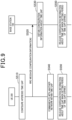
- FIG. 9 An example of processing according to the present modification example will be described with reference to FIG. 9 .
- the base station 100 in the first mobile network and the UE 200 are in the connected state.
- the UE 200 configures an aperiodic time gap (S510). For example, the UE 200 generates configuration information about an aperiodic time gap including period information indicating a setting period.
- the UE 200 transmits an RRC message including the configuration information about the aperiodic time gap to the base station 100 (S520).
- the RRC message is a UEAssistanceInformation message or an RRCResumeComplete message. This makes it possible to transmit the configuration information about the aperiodic time gap to the base station 100 without additionally defining a new RRC message.
- the base station 100 obtains configuration information about an aperiodic time gap (S530). For example, the base station 100 obtains the configuration information about the aperiodic time gap included in the received RRC message.
- the UE 200 communicates with another network within the aperiodic time gap (S540). For example, the UE 200 switches to the second mobile network within the aperiodic time gap configured in the UE 200 and waits for the reception of network information to be transmitted from the base station 300 in the second mobile network.
- S540 aperiodic time gap
- the base station 100 and the UE 200 each release the configuration information about the time gap (S550).
- the UE 200 configures an aperiodic time gap and transmits configuration information about the aperiodic time gap to the base station 100.
- the UE 200 may, however, decide an aperiodic time gap and transmit information (for example, period information or the like) for identifying the decided aperiodic time gap to the base station 100.
- the UE 200 may receive or transmit another RRC message that is transmitted without being triggered by the expiration of the setting period of an aperiodic time gap.
- the other RRC message includes information associated with the release of configuration information about an aperiodic time gap.
- the information associated with the release of configuration information about an aperiodic time gap may indicate a report of the release.
- the base station 100 and the UE 200 each release the configuration information about the aperiodic time gap.
- at least one of the base station 100 or the UE 200 includes information indicating the report of the release in the RRC message.
- the RRC message is an existing RRC message.
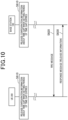
- FIG. 10 An example of processing according to the present modification example will be described with reference to FIG. 10 .
- the base station 100 in the first mobile network and the UE 200 are in the connected state.
- the base station 100 and the UE 200 each release the configuration information about the aperiodic time gap (S610).
- the base station 100 transmits an RRC message to the UE 200 for another purpose (S620).
- the base station 100 transmits an RRC message for another purpose irrespective of an aperiodic time gap.
- the RRC message for the other purpose is an existing RRC message which requests a response.
- the existing RRC message that requests a response is an RRCReconfiguration or RRCResume message.
- the UE 200 When the UE 200 receives the RRC message for the other purpose, the UE 200 transmits an RRC message including information associated with the release of configuration information about an aperiodic time gap to the base station 100 (S630). For example, the UE 200 transmits a response RRC message that is an RRC message serving as a response to the received RRC message for the other purpose and including information indicating a report of the release of the configuration information about the aperiodic time gap. For example, the response RRC message is an RRCReconfigurationComplete message or an RRCResumeComplete message.
- a second RRC message serving as a response to a first RRC message transmitted from the base station 100 to the UE 200 includes the information associated with the release in the example of FIG. 10 , but the first RRC message may include the information associated with the release.
- an RRC message spontaneously transmitted by the UE 200 to the base station 100 may include the information associated with the release.
- the information associated with the release may be information for requesting the release.
- the base station 100 or the UE 200 may release the configuration information about the aperiodic time gap upon receiving another RRC message including the information for requesting the release.
- the UE 200 may release the configuration information about the aperiodic time gap upon receiving the other RRC message.
- the base station 100 may release the configuration information about the aperiodic time gap upon receiving the other RRC message.
- a notification of the release of an aperiodic time gap is issued by using an existing RRC message, making it possible to synchronize the configuration information about the aperiodic time gap without consuming power and radio resources only for the release.
- the system 1 is a system compliant with the TSs of 5G or NR.
- the system 1 according to embodiments of the present disclosure is not limited to this example.
- the system 1 may be a system compliant with other TSs in 3GPP.
- the system 1 may be a system compliant with the TSs of long term evolution (LTE), LTE advanced (LTE-A), or 4G and the base station 100 may be an evolved node B (eNB).
- the base station 100 may be an ng-eNB.
- the system 1 may be a system compliant with the TSs of 3G and the base station 100 may be a Node B.
- the system 1 may be a system compliant with next generation (for example, 6G) TSs.
- next generation for example, 6G
- system 1 may be a system compliant with TSs of another standards organization for mobile communications.
- steps in a process described in the present specification do not necessarily have to be executed chronologically in the order described in the flowchart or the sequence diagram.
- steps in a process may be executed in an order different from the order described as the flowchart or the sequence diagram or may be executed in parallel.
- some of steps in a process may be removed or a further step may be added to the process.
- a method including the operations of one or more components of the apparatus described in the present specification or there may be provided a program for causing a computer to execute the operations of the components.
- a non-transitory tangible computer-readable storage medium having stored therein the program.
- a user equipment may be referred to by another name such as mobile station, mobile terminal, mobile apparatus, mobile unit, subscriber station, subscriber terminal, subscriber apparatus, subscriber unit, wireless station, wireless terminal, wireless apparatus, wireless unit, remote station, remote terminal, remote apparatus, or remote unit.
- “transmit” may mean performing processing of at least one layer in a protocol stack used for transmission or physically transmitting a signal wirelessly or by wire.
- “transmit” may mean a combination of performing the processing of the at least one layer and physically transmitting a signal wirelessly or by wire.
- “receive” may mean performing processing of at least one layer in a protocol stack used for reception or physically receiving a signal wirelessly or by wire.
- “receive” may mean a combination of performing the processing of the at least one layer and physically receiving a signal wirelessly or by wire.
- the at least one layer may be replaced with at least one protocol.
- "obtain/acquire” may mean obtaining/acquiring information from stored information, obtaining/acquiring information from information received from another node, or obtaining/acquiring information by generating the information.
- a user equipment (200) comprising:
- the user equipment according to Feature 3, wherein the information indicating the setting time includes length (31) of the setting time, a start time point (33) and an end time point (35) of the setting time, or the start time point or the end time point of the setting time and the length of the setting time.
- the user equipment according to any one of Features 1 to 4, wherein the RRC message is an RRC message defined for the aperiodic time gap.
- the communication processing unit is configured to receive an RRCReconfiguration message or an RRCResume message including the configuration information from the base station or transmit a UEAssistanceInformation message or an RRCResumeComplete message including the configuration information to the base station.
- the user equipment according to any one of Features 1 to 7, wherein the communication in the second mobile network includes transmission of network information in the second mobile network.
- the user equipment according to Feature 8 wherein the network information includes a system information block (SIB).
- SIB system information block
- a base station (100) in a first mobile network comprising:
- a method performed by a base station (100) in a first mobile network comprising:
- a non-transitory tangible computer-readable storage medium having stored therein a program for causing a computer to execute operations of:
- a non-transitory tangible computer-readable storage medium having stored therein a program for causing a computer to execute operations of:
Landscapes
- Engineering & Computer Science (AREA)
- Computer Networks & Wireless Communication (AREA)
- Signal Processing (AREA)
- Computer Security & Cryptography (AREA)
- Mobile Radio Communication Systems (AREA)
Abstract
Description
- This application is based on
Japanese Patent Application No. 2021-128805, filed on August 5, 2021 - The present disclosure relates to an apparatus and a method.
- In 3rd Generation Partnership Project (3GPP) Release 17, a work item has been launched for formulating functions to monitor for incoming information (for example, sound or data) from networks of a plurality of telecommunications operators for devices each mounted with a plurality of subscriber identity module (SIM) cards.
- For example,
NPLs 1 to 4 each describe the introduction of a switching procedure that uses a time gap for a multi-SIM user equipment (UE) to receive, in a case where the UE is in a connected state in a mobile network, network information in another mobile network. To implement the switching procedure, the use of an existing radio wave quality measurement mechanism has been studied. In particular, NPL 4 describes that the time gap includes a periodic time gap and an aperiodic time gap and that a parameter of the time gap is provided from the multi-SIM UE to a network by using radio resource control (RRC) signaling. - In addition, NPL 5 describes that RRC context information (hereinafter, also referred to as configuration information) about the UE is maintained in a state in which the UE is connected to a base station (RRC_CONNECTED), but is not maintained in a state in which the UE is not connected to a base station (RRC_IDLE and RRC_INACTIVE).
-
- NPL 1: 3GPP TSG-RAN WG2 Meeting #113-e, Online, Jan 25th - Feb 05th 2021, R2-2100474, vivo, "[post112-e][256][Multi-SIM] Network switching details (vivo)"
- NPL 2: 3GPP TSG-RAN WG2 Meeting #113 electronic, Online, Jan 25 - Feb 5, 2021, R2-2101951, Nokia, "Report on LTE legacy, Mobility, DCCA, Multi-SIM and RAN slicing"
- NPL 3: 3GPP TSG-RAN WG2 Meeting #113 bis electronic, Online, April 12 - April 20, 2021, R2-2104301, Nokia, "Report on LTE legacy, Mobility, DCCA, Multi-SIM and RAN slicing"
- NPL 4: 3GPP TSG-RAN WG2 Meeting #114 electronic, Online, May 19-27, 2021, R2-2106471, Nokia, "Report on LTE legacy, Mobility, DCCA, Multi-SIM and RAN slicing"
- NPL 5: 3GPP TS 38.331 V16.5.0 (2021-06), "3rd Generation Partnership Project; Technical Specification Group Radio Access Network; NR; Radio Resource Control (RRC) protocol specification (Release 16)"
- A detailed study by the inventors has revealed the following issue. That is, the method described in NPL 4 uses a measurement mechanism and configuration information about an aperiodic time gap is not released unless otherwise explicitly indicated. Signaling for explicitly indicating the release of the configuration information, however, wastes power or radio resources.
- An object of the present disclosure is to provide an apparatus and a method that each make it possible to reduce the consumption of power or radio resources while releasing configuration information about an aperiodic time gap.
- An apparatus (200) according to an aspect of the present disclosure includes: a communication processing unit (235) configured to process communication with a first network and communication with a second network different from the first network; and an information obtaining unit (231) configured to obtain configuration information associated with an aperiodic gap that is a gap for switching the apparatus to the second network in a case where the apparatus is in an RRC connected state in the first network. The communication processing unit is configured to switch the apparatus to the second network in the gap indicated by the configuration information in a case where the apparatus is in the radio resource control, RRC, connected state in the first network, and the apparatus does not maintain the configuration information.
- An apparatus (100) in a first network according to an aspect of the present disclosure includes: a communication processing unit (145) configured to communicate with a user equipment (200); and an information obtaining unit (141) configured to obtain configuration information associated with an aperiodic gap that is a gap for switching the user equipment to a second network different from the first network in a case where the user equipment is in an RRC connected state in the first network. The communication processing unit is configured to receive an RRC message including the configuration information from the user equipment or transmit an RRC message including the configuration information to the user equipment, and the apparatus does not maintain the configuration information.
- A method performed by an apparatus (200) according to an aspect of the present disclosure includes: processing communication with a first network and communication with a second network different from the first network; and obtaining configuration information associated with an aperiodic gap that is a gap for switching the apparatus to the second network in a case where the apparatus is in an RRC connected state in the first network. The apparatus is switched to the second network in the gap indicated by the configuration information in a case where the apparatus is in the radio resource control, RRC, connected state in the first network, and the apparatus does not maintain the configuration information.
- A method performed by an apparatus (100) in a first network according to an aspect of the present disclosure includes: communicating with a user equipment (200); and obtaining configuration information associated with an aperiodic gap that is a gap for switching the user equipment to a second network different from the first network in a case where the user equipment is in an RRC connected state in the first network. An RRC message including the configuration information is received from the user equipment or an RRC message including the configuration information is transmitted to the user equipment, and the apparatus does not maintain the configuration information.
- According to the present disclosure, it is possible to reduce the consumption of power or radio resources while releasing configuration information about an aperiodic time gap. Note that, instead of or in addition to this advantageous effect, the present disclosure may yield another advantageous effect.
-
-
FIG. 1 is an explanatory diagram illustrating an example of a schematic configuration of a system according to embodiments of the present disclosure. -
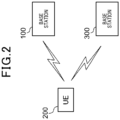
FIG. 2 is an explanatory diagram for explaining an example of a case where a user equipment according to embodiments of the present disclosure is mounted with two SIM cards. -
FIG. 3 is a block diagram illustrating an example of a schematic functional configuration of a base station according to embodiments of the present disclosure. -
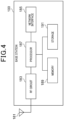
FIG. 4 is a block diagram illustrating an example of a schematic hardware configuration of the base station according to embodiments of the present disclosure. -
FIG. 5 is a block diagram illustrating an example of a schematic functional configuration of the user equipment according to embodiments of the present disclosure. -
FIG. 6 is a block diagram illustrating an example of a schematic hardware configuration of the user equipment according to embodiments of the present disclosure. -
FIG. 7 is a diagram for explaining an example of a setting period of an aperiodic time gap according to embodiments of the present disclosure. -
FIG. 8 is a flowchart for explaining an example of a schematic flow of processing according to embodiments of the present disclosure. -
FIG. 9 is a flowchart for explaining an example of a schematic flow of processing according to a second modification example of embodiments of the present disclosure. -
FIG. 10 is a flowchart for explaining an example of a schematic flow of processing according to a third modification example of embodiments of the present disclosure. Description of Embodiments - Hereinafter, embodiments of the present disclosure will be described in detail with reference to the appended drawings. In the present specification and the drawings, elements to which similar descriptions are applicable are denoted with the same reference signs, thereby omitting duplicate descriptions.
- Descriptions will be given in the following order:
- 1. Configuration of System
- 2. Configuration of Base Station
- 3. Configuration of User Equipment
- 4. Operation Examples
- 5. Modification Examples
- An example of a configuration of a
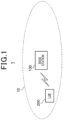
system 1 according to embodiments of the present disclosure will be described with reference toFIG. 1 . Referring toFIG. 1 , thesystem 1 includes abase station 100 and a user equipment (UE) 200. - For example, the
system 1 is a system compliant with technical specifications (TSs) in 3GPP. More specifically, for example, thesystem 1 is a system compliant with the TSs of 5G or new radio (NR). Naturally, thesystem 1 is not limited to this example. - The
base station 100 is a node in a radio access network (RAN) and communicates with a UE (for example, UE 200) located within acoverage area 10 of thebase station 100. - For example, the
base station 100 communicates with a UE (for example, UE 200) by using a RAN protocol stack. For example, the protocol stack includes protocols of RRC, service data adaptation protocol (SDAP), packet data convergence protocol (PDCP), radio link control (RLC), medium access control (MAC), and physical (PHY) layers. Alternatively, the protocol stack does not have to include all of these protocols, but may include some of these protocols. - For example, the
base station 100 is a gNB. The gNB is a node that provides NR user plane and control plane protocol terminations towards a UE and is connected to a 5G core network (5GC) via an NG interface. Alternatively, thebase station 100 may be an en-gNB. The en-gNB is a node that provides NR user plane and control plane protocol terminations toward a UE and operates as a secondary node in E-UTRA-NR dual connectivity (EN-DC). - The
base station 100 may include a plurality of nodes. The plurality of nodes may include a first node that hosts higher layers included in the protocol stack and a second node that hosts lower layers included in the protocol stack. The higher layers may include the RRC layer, the SDAP layer, and the PDCP layer, while the lower layers may include the RLC layer, the MAC layer, and the PHY layer. The first node may be a central unit (CU) and the second node may be a distributed unit (DU). Note that the plurality of nodes may include a third node that performs lower level processing of the PHY layer and the second node may perform higher level processing of the PHY layer. The third node may be a radio unit (RU). - Alternatively, the
base station 100 may be one of the plurality of nodes and may be connected to another unit of the plurality of nodes. - The
base station 100 may be an integrated access and backhaul (IAB) donor or an IAB node. - The
UE 200 communicates with a base station. For example, theUE 200 communicates with thebase station 100 in a case where theUE 200 is located within thecoverage area 10 of thebase station 100. - For example, the
UE 200 communicates with a base station (for example, base station 100) by using the protocol stack. - In particular, the
UE 200 is mountable with two or more SIM cards. That is, theUE 200 is a multi-SIM UE or a multi-SIM device. TheUE 200 is capable of performing communication in two or more mobile networks that correspond to the two or more respective SIM cards. - For example, the
UE 200 is capable of performing communication in a mobile network (hereinafter, referred to as "first mobile network") that corresponds to one of the two or more SIM cards and includes thebase station 100. Further, theUE 200 is capable of performing communication in another mobile network (hereinafter, referred to as "second mobile network") that corresponds to the other one of the two or more SIM cards. The first mobile network is different from the second mobile network. - Referring to the example of
FIG. 2 , for example, theUE 200 is capable of performing communication in the first mobile network including thebase station 100 and the second mobile network including abase station 300. For example, theUE 200 may be in an RRC connected state (RRC_CONNECTED) in the first mobile network and be in an RRC idle state (RRC_IDLE) or an RRC inactive state (RRC_INACTIVE) in the second mobile network. In such a case, while theUE 200 is connected to thebase station 100 in the first mobile network, communication may occur between theUE 200 and thebase station 300 in the second mobile network. For example, network information to be received by theUE 200 may be transmitted by thebase station 300. - An example of a configuration of the
base station 100 according to embodiments of the present disclosure will be described with reference toFIGS. 3 and4 . Note that a configuration of thebase station 300 may also be the same as the configuration of thebase station 100. - First, an example of a functional configuration of the
base station 100 according to embodiments of the present disclosure will be described with reference toFIG. 3 . Referring toFIG. 3 , thebase station 100 includes aradio communication unit 110, anetwork communication unit 120, astorage unit 130, and aprocessing unit 140. - The
radio communication unit 110 wirelessly transmits and receives signals. For example, theradio communication unit 110 receives a signal from a UE and transmits a signal to the UE. - The
network communication unit 120 receives a signal from a network and transmits a signal to the network. - The
storage unit 130 stores various kinds of information for thebase station 100. - The
processing unit 140 provides various functions of thebase station 100. Theprocessing unit 140 includes aninformation obtaining unit 141, acontrol unit 143, and acommunication processing unit 145. Note that theprocessing unit 140 may further include another component in addition to these components. That is, theprocessing unit 140 may also perform an operation other than operations of these components. Specific operations of theinformation obtaining unit 141, thecontrol unit 143, and thecommunication processing unit 145 will be described in detail later. - For example, the processing unit 140 (communication processing unit 145) communicates with a UE (for example, UE 200) via the
radio communication unit 110. For example, theprocessing unit 140 communicates with another node (for example, a network node in the core network or another base station) via thenetwork communication unit 120. - Next, an example of a hardware configuration of the
base station 100 according to embodiments of the present disclosure will be described with reference toFIG. 4 . Referring toFIG. 4 , thebase station 100 includes anantenna 181, a radio frequency (RF)circuit 183, anetwork interface 185, aprocessor 187, amemory 189, and astorage 191. - The
antenna 181 converts signals into radio waves and emits the radio waves into the air. In addition, theantenna 181 receives radio waves from the air and converts the radio waves into signals. Theantenna 181 may include a transmitting antenna and a receiving antenna or may be a single antenna for transmission and reception. Theantenna 181 may be a directional antenna and may include a plurality of antenna elements. - The
RF circuit 183 performs analog processing on signals that are transmitted and received via theantenna 181. TheRF circuit 183 may include a high-frequency filter, an amplifier, a modulator, a lowpass filter, and the like. - The
network interface 185 is, for example, a network adaptor, and transmits a signal to a network and receives a signal from the network. - The
processor 187 performs digital processing on signals that are transmitted and received via theantenna 181 and theRF circuit 183. The digital processing includes processing of the RAN protocol stack. Theprocessor 187 also performs processing on signals that are transmitted and received via thenetwork interface 185. Theprocessor 187 may include a plurality of processors or may be a single processor. The plurality of processors may include a baseband processor that performs the digital processing and one or more processors that perform other processing. - The
memory 189 stores a program to be executed by theprocessor 187, a parameter associated with the program, and other various kinds of information. Thememory 189 may include at least one of a read only memory (ROM), an erasable programmable read only memory (EPROM), an electrically erasable programmable read only memory (EEPROM), a random access memory (RAM), and a flash memory. The whole or part of thememory 189 may be included in theprocessor 187. - The
storage 191 stores various kinds of information. Thestorage 191 may include at least one of a solid state drive (SSD) and a hard disc drive (HDD). - The
radio communication unit 110 may be implemented by theantenna 181 and theRF circuit 183. Thenetwork communication unit 120 may be implemented by thenetwork interface 185. Thestorage unit 130 may be implemented by thestorage 191. Theprocessing unit 140 may be implemented by theprocessor 187 and thememory 189. - Part or the whole of the
processing unit 140 may be virtualized. In other words, the part or the whole of theprocessing unit 140 may be implemented as a virtual machine. In this case, the part or the whole of theprocessing unit 140 may operate as a virtual machine on a physical machine (that is, hardware) including a processor, a memory, and the like and a hypervisor. - Given the hardware configuration described above, the
base station 100 may include a memory (that is, memory 189) that stores a program and one or more processors (that is, processor 187) capable of executing the program and the one or more processors may perform operations of theprocessing unit 140 by executing the program. The program may be a program for causing the processors to execute the operations of theprocessing unit 140. - An example of a configuration of the
UE 200 according to embodiments of the present disclosure will be described with reference toFIGS. 5 and6 . - First, an example of a functional configuration of the
UE 200 according to embodiments of the present disclosure will be described with reference toFIG. 5 . Referring toFIG. 5 , theUE 200 includes aradio communication unit 210, astorage unit 220, and aprocessing unit 230. - The
radio communication unit 210 wirelessly transmits and receives signals. For example, theradio communication unit 210 receives a signal from a base station and transmits a signal to the base station. For example, theradio communication unit 210 receives a signal from another UE and transmits a signal to the other UE. - The
storage unit 220 stores various kinds of information for theUE 200. - The
processing unit 230 provides various functions of theUE 200. Theprocessing unit 230 includes aninformation obtaining unit 231, acontrol unit 233, and acommunication processing unit 235. Note that theprocessing unit 230 may further include another component in addition to these components. That is, theprocessing unit 230 may also perform an operation other than operations of these components. Specific operations of theinformation obtaining unit 231, thecontrol unit 233, and thecommunication processing unit 235 will be described in detail later. - For example, the processing unit 230 (communication processing unit 235) communicates with a base station (for example, the
base station 100 or the base station 300) or another UE via theradio communication unit 210. - Next, an example of a hardware configuration of the
UE 200 according to embodiments of the present disclosure will be described with reference toFIG. 6 . Referring toFIG. 6 , theUE 200 includes anantenna 281, anRF circuit 283, aprocessor 285, amemory 287, and astorage 289. - The
antenna 281 converts signals into radio waves and emits the radio waves into the air. In addition, theantenna 281 receives radio waves from the air and converts the radio waves into signals. Theantenna 281 may include a transmitting antenna and a receiving antenna or may be a single antenna for transmission and reception. Theantenna 281 may be a directional antenna and may include a plurality of antenna elements. - The
RF circuit 283 performs analog processing on signals that are transmitted and received via theantenna 281. TheRF circuit 283 may include a high-frequency filter, an amplifier, a modulator, a lowpass filter, and the like. - The
processor 285 performs digital processing on signals that are transmitted and received via theantenna 281 and theRF circuit 283. The digital processing includes processing of the RAN protocol stack. Theprocessor 285 may include a plurality of processors or may be a single processor. The plurality of processors may include a baseband processor that performs the digital processing and one or more processors that perform other processing. - The
memory 287 stores a program to be executed by theprocessor 285, a parameter associated with the program, and other various kinds of information. Thememory 287 may include at least one of a ROM, an EPROM, an EEPROM, a RAM, and a flash memory. The whole or part of thememory 287 may be included in theprocessor 285. - The
storage 289 stores various kinds of information. Thestorage 289 may include at least one of an SSD and an HDD. - The
radio communication unit 210 may be implemented by theantenna 281 and theRF circuit 283. Thestorage unit 220 may be implemented by thestorage 289. Theprocessing unit 230 may be implemented by theprocessor 285 and thememory 287. - The
processing unit 230 may be implemented by a system on a chip (SoC) including theprocessor 285 and thememory 287. The SoC may include theRF circuit 283 and theradio communication unit 210 may also be implemented by the SoC. - Given the hardware configuration described above, the
UE 200 may include a memory (that is, memory 287) that stores a program and one or more processors (that is, processor 285) capable of executing the program and the one or more processors may perform operations of theprocessing unit 230 by executing the program. The program may be a program for causing the processors to execute the operations of theprocessing unit 230. - Examples of operations of the
base station 100 and theUE 200 according to embodiments of the present disclosure will be described with reference toFIGS. 7 and8 . - The
base station 100 is connected to theUE 200 in the first mobile network and transmits configuration information about an aperiodic time gap for communication in the second mobile network to theUE 200. When the setting period of an aperiodic time gap expires, thebase station 100 releases the configuration information about the aperiodic time gap. The following describes an operation of thebase station 100 and relevant information in detail. - The base station 100 (control unit 143) obtains configuration information about an aperiodic time gap for communication in the second mobile network. The aperiodic time gap is a time gap in which the
UE 200 and thebase station 100 are in the RRC connected state. For example, the communication in the second mobile network may be the transmission of the network information in the second mobile network and the aperiodic time gap may be an aperiodic time gap for the network information. Note that the communication in the second mobile network may be other aperiodic communication. For example, the communication in the second mobile network may be aperiodic measurement. - The aperiodic time gap may be set for the
UE 200 to receive the network information in the second mobile network. In other words, the aperiodic time gap is a time gap for theUE 200 to switch from the first mobile network to the second mobile network. TheUE 200 whose RRC state in the first mobile network is RRC_CONNECTED receives the network information in the second mobile network by switching to the second mobile network in a set time gap. - The configuration information about the aperiodic time gap includes period information associated with the setting period of the aperiodic time gap and the aperiodic time gap is set within the setting period. The aperiodic time gap and the setting period will be described in detail with reference to
FIG. 7 . - In the example of
FIG. 7 , network information is transmitted from thebase station 300 in the second mobile network and a time gap is set in an aperiodic manner to allow theUE 200 to receive desired network information of the network information. The network information is, for example, a system information block (SIB). For example,gaps 41 to 45 that are time gaps are respectively set to allow aSIB 51 to aSIB 55 to be received. Meanwhile, it is unnecessary to receive aSIB 57 and the time gap corresponding to theSIB 57 is not thus set. In addition, no time gap is set after thegap 45. In this way, the time gap setting has an end and a time gap is set with no periodicity. That is, a time gap is aperiodic. In other words, a time gap can also be considered non-persistent or semi-persistent. Note that the transmission of a SIB other than a SIB1 is temporarily scheduled based on a master information block (MIB) and the SIB1. It thus seems appropriate to receive the other SIB by using an aperiodic time gap. - As described above, a time gap is aperiodic, causing a setting period. That is, the setting period is a parameter of the aperiodic time gap. For example, the setting period is indicated as the number of times an aperiodic time gap is set and the period information includes the number of times an aperiodic time gap is set. In the example of
FIG. 7 , asetting period 20 is a period in which an aperiodic time gap is set three times. Thesetting period 20 is a period in which the threegaps 41 to 45 are set. - The number of times an aperiodic time gap is set indicating the setting period may be the number of times a repetition period of communication associated with a time gap is repeated. For example, the number of times an aperiodic time gap is set may be a measurement gap repetition period (MGRP) in a measurement gap mechanism. In addition, for example, the number of times an aperiodic time gap is set may be the number of times the transmission periodicity of a specific SIB in the first mobile network or the second mobile network is repeated.
- In addition, the number of times an aperiodic time gap is set indicating the setting period may be the number of times a period for communication associated with a time gap is repeated. For example, the number of times an aperiodic time gap is set may be the number of times an SSB measurement timing configuration (SMTC) window in the first mobile network or the second mobile network is repeated.
- This makes it possible to indicate the setting period of an aperiodic time gap. In addition, counting time gaps makes it possible to determine the expiration of the setting period. It is thus possible to reduce an increasing amount of information and suppress the complication of processing.
- The base station 100 (communication processing unit 145) transmits an RRC message including configuration information about an aperiodic time gap to the
UE 200. - The RRC message including the configuration information may be, for example, an RRCReconfiguration message or an RRCResume message. This makes it possible to transmit the configuration information about the aperiodic time gap to the
UE 200 without additionally defining a new RRC message. - In addition, the RRC message including the configuration information may be an RRC message defined for an aperiodic time gap. This makes it possible to communicate the configuration information about the aperiodic time gap without modifying an existing RRC message.
- The
base station 100 releases configuration information about an aperiodic time gap for theUE 200. Specifically, the base station 100 (control unit 143) releases the configuration information when the setting period of the aperiodic time gap expires. - First, the
base station 100 manages the configuration information for communication with theUE 200 in accordance with the state of the communication between theUE 200 and thebase station 100. Specifically, thebase station 100 releases the configuration information in the RRC idle state (RRC_IDLE) and maintains the configuration information in the RRC inactive state (RRC_INACTIVE) or the RRC connected state (RRC_CONNECTED). - In addition to the above, the
base station 100 releases configuration information about an aperiodic time gap whose setting period expires. Specifically, when the number of time gaps reaches the number of times an aperiodic time gap is set indicated by the period information included in the configuration information, thebase station 100 releases the configuration information. Referring toFIG. 7 , when thethird gap 45 ends, thebase station 100 considers that thesetting period 20 expires and releases the configuration information about the aperiodic time gap. This is because no gap is set after the expiration of thesetting period 20 and the configuration information is thus unnecessary. - Different from a periodic time gap, the expiration of the setting period of an aperiodic time gap is defined and no gap is thus set after the expiration of the setting period. Therefore, while a periodic time gap that keeps on being periodically set unless configuration information is released may have an issue about decreased communication efficiency, an aperiodic time gap does not have the issue. In addition, the behaviors of the
base station 100 and theUE 200 after the expiration of the setting period are not discussed. - The configuration information about the aperiodic time gap, however, keeps on being maintained, raising an issue that computational resources such as the storage capacity of a memory remain occupied. In addition, when pieces of configuration information about a plurality of time gaps are introduced as TSs, the pieces of configuration information about the time gaps that keep on being maintained may make it impossible to maintain configuration information about another time gap.
- In contrast, the end of a periodic time gap and the release of the configuration information are explicitly indicated by using signaling. Meanwhile, the expiration of the setting period makes it possible to determine the end of an aperiodic time gap. Thus, when a mechanism for release in a periodic time gap is applied, only the release of the configuration information is explicitly indicated by using signaling. However, the
UE 200 and thebase station 100 are each capable of autonomously determine the end of an aperiodic time gap that is a condition for releasing the configuration information. Releasing the configuration information upon the expiration of the setting period as described above therefore makes it possible to release the configuration information without signaling. - The
UE 200 is connected to thebase station 100 in the first mobile network and receives configuration information about an aperiodic time gap for communication in the second mobile network from thebase station 100. When the setting period of an aperiodic time gap expires, theUE 200 releases the configuration information about the aperiodic time gap. The following describes an operation of theUE 200 and relevant information in detail. Note that the contents which are substantially the same as the description of an operation of thebase station 100 will not be described in detail. - The UE 200 (communication processing unit 235) receives an RRC message including configuration information about an aperiodic time gap from the
base station 100. The UE 200 (information obtaining unit 231) obtains the configuration information included in the RRC message. - Note that the
UE 200 may request thebase station 100 to transmit the RRC message. For example, theUE 200 may transmit a UEAssistanceInformation message or an RRCResumeRequest message. Further, the RRC message may include request information indicating that thebase station 100 is requested to configure an aperiodic time gap. In addition, theUE 200 may transmit an RRC message defined for an aperiodic time gap. The defined RRC message indicates that thebase station 100 is requested to configure an aperiodic time gap. - The UE 200 (communication processing unit 235) communicates with the second mobile network in an aperiodic time gap. For example, the UE 200 (communication processing unit 235) receives, in an aperiodic time gap, network information transmitted from the second mobile network.
- The
UE 200 switches from the first mobile network to the second mobile network in the aperiodic time gap based on configuration information received from thebase station 100. TheUE 200 then waits for the reception of network information from thebase station 300 in the second mobile network within the time gap. In other words, theUE 200 monitors for the network information. When the network information is transmitted within the time gap, theUE 200 receives the network information. TheUE 200 switches from the second mobile network to the first mobile network once going out of the aperiodic time gap. - Note that no communication is performed between the
base station 100 in the first mobile network and theUE 200 within the aperiodic time gap. - The
UE 200 releases configuration information about an aperiodic time gap. Specifically, the UE 200 (control unit 233) releases the configuration information when the setting period of the aperiodic time gap expires. - The
UE 200 manages the configuration information for communication with theUE 200 in accordance with the state of the communication between theUE 200 and thebase station 100 as with thebase station 100. In addition, theUE 200 releases configuration information about an aperiodic time gap whose setting period expires. Specifically, when the number of time gaps reaches the number of times an aperiodic time gap is set indicated by the period information included in the configuration information, theUE 200 releases the configuration information. In this way, theUE 200 autonomously releases the configuration information about the aperiodic time gap without explicit release indication from thebase station 100. - An example of processing according to embodiments of the present disclosure will be described with reference to
FIG. 8 . InFIG. 8 , thebase station 100 in the first mobile network and theUE 200 are in the connected state. - The
base station 100 configures an aperiodic time gap (S410). For example, thebase station 100 generates configuration information about an aperiodic time gap including period information indicating a setting period. - The
base station 100 transmits an RRC message including the configuration information about the aperiodic time gap to the UE 200 (S420). For example, the RRC message is an RRCReconfiguration message or an RRCResume message. Note that the RRC message may include other configuration information. - When the
UE 200 receives the RRC message including the configuration information about the aperiodic time gap, theUE 200 transmits a response RRC message serving as a response to the RRC message to the base station 100 (S430). For example, the response RRC message is an RRCReconfigurationComplete message or an RRCResumeComplete message. - The
UE 200 obtains configuration information about an aperiodic time gap (S440). For example, theUE 200 obtains the configuration information about the aperiodic time gap included in the received RRC message. - The
UE 200 communicates with another network within the aperiodic time gap (S450). For example, theUE 200 switches to the second mobile network within the aperiodic time gap based on the obtained configuration information and waits for the reception of network information to be transmitted from thebase station 300 in the second mobile network. - When the setting period of an aperiodic time gap expires, the
base station 100 and theUE 200 release the configuration information about the time gap (S460). For example, when the number of time gaps reaches the number of times an aperiodic time gap is set, thebase station 100 and theUE 200 each release the configuration information about the aperiodic time gap. - In this way, according to embodiments of the present disclosure, the
UE 200 and thebase station 100 in the first mobile network that are in the RRC connected state communicate an RRC message including configuration information about an aperiodic time gap for communication in the second mobile network, the configuration information includes period information associated with a setting period in which the aperiodic time gap is set, and the configuration information is released when the setting period expires. This allows thebase station 100 and theUE 200 to each release the configuration information autonomously based on the configuration information about the aperiodic time gap. That is, it is possible to release the configuration information without signaling. It is thus possible to reduce the consumption of power or radio resources while releasing configuration information about an aperiodic time gap - First to fourth modification examples according to embodiments of the present disclosure will be described with reference to
FIGS. 7 ,9 , and10 . Note that two or more of these modification examples may be combined. - In the embodiments of the present disclosure described above, the setting period of an aperiodic time gap is indicated as the number of times an aperiodic time gap is set and the expiration of the setting period includes the number of aperiodic time gaps reaching the number of times an aperiodic time gap is set. However, the information indicating the setting period according to embodiments of the present disclosure is not limited to this example.
- As the first modification example of embodiments of the present disclosure, the setting period may be indicated as setting time for which an aperiodic time gap is set and the expiration of the setting period may include the expiration of the setting time. More specifically, the information indicating the setting time may include the length of the setting time, the start time point and the end time point of the setting time, or the start time point or the end time point of the setting time and the length of the setting time. The period information includes the information indicating the setting time.
- Referring to
FIG. 7 , thesetting period 20 is indicated, for example, aslength 31 of the setting time. In addition, thesetting period 20 may be indicated, for example, as a start time point 33 and an end time point 35 of the setting time. In addition, thesetting period 20 may be indicated as the start time point 33 or the end time point 35 of the setting time and thelength 31 of the setting time. - The length of the setting time indicating the setting period may be a numerical value that is a specific unit such as a second or a millisecond.
- In addition, the length of the setting time indicating the setting period may be the product of the number of times an aperiodic time gap is set and a period for the number of times an aperiodic time gap is set in the embodiments described above. For example, the length of the setting time may be indicated as the number of times an aperiodic time gap is set × MGRP, the number of times an aperiodic time gap is set × the transmission periodicity of a specific SIB, the number of times an aperiodic time gap is set × SMTC, or the like.
- In this way, the setting period is indicated as the time length or the time points. This makes it possible to directly control the setting period on time. It is therefore possible to more accurately control a time gap on time as compared with a case where the setting period is indicated as the number of times an aperiodic time gap is set.
- In addition, as another modification example, the setting period may be indicated as a setting pattern of an aperiodic time gap and the expiration of the setting period may include a pattern of an aperiodic time gap matching the setting pattern. The period information includes the setting pattern. For example, the setting pattern may be a setting interval between time gaps. This makes it possible to indicate the setting period of a time gap without the number of times an aperiodic time gap is set and the setting time.
- In the embodiments of the present disclosure described above, the
base station 100 configures an aperiodic time gap and transmits configuration information about the aperiodic time gap to theUE 200. However, the subject that configures the time gap according to embodiments of the present disclosure is not limited to this example. - As the second modification example of embodiments of the present disclosure, the
UE 200 may transmit configuration information about an aperiodic time gap to thebase station 100. More specifically, the UE 200 (control unit 233) obtains the configuration information about the aperiodic time gap. The UE 200 (communication processing unit 235) then transmits an RRC message including the configuration information about an aperiodic time gap to thebase station 100. - An example of processing according to the present modification example will be described with reference to
FIG. 9 . InFIG. 9 , thebase station 100 in the first mobile network and theUE 200 are in the connected state. - The
UE 200 configures an aperiodic time gap (S510). For example, theUE 200 generates configuration information about an aperiodic time gap including period information indicating a setting period. - The
UE 200 transmits an RRC message including the configuration information about the aperiodic time gap to the base station 100 (S520). For example, the RRC message is a UEAssistanceInformation message or an RRCResumeComplete message. This makes it possible to transmit the configuration information about the aperiodic time gap to thebase station 100 without additionally defining a new RRC message. - The
base station 100 obtains configuration information about an aperiodic time gap (S530). For example, thebase station 100 obtains the configuration information about the aperiodic time gap included in the received RRC message. - The
UE 200 communicates with another network within the aperiodic time gap (S540). For example, theUE 200 switches to the second mobile network within the aperiodic time gap configured in theUE 200 and waits for the reception of network information to be transmitted from thebase station 300 in the second mobile network. - When the setting period of an aperiodic time gap expires, the
base station 100 and theUE 200 each release the configuration information about the time gap (S550). - Note that it has been described above that the
UE 200 configures an aperiodic time gap and transmits configuration information about the aperiodic time gap to thebase station 100. TheUE 200 may, however, decide an aperiodic time gap and transmit information (for example, period information or the like) for identifying the decided aperiodic time gap to thebase station 100. - In the embodiments of the present disclosure described above, no signaling is performed for the release of configuration information about an aperiodic time gap. However, processing for releasing configuration information about an aperiodic time gap according to embodiments of the present disclosure is not limited to this example.
- As the third modification example of embodiments of the present disclosure, the UE 200 (communication processing unit 235) may receive or transmit another RRC message that is transmitted without being triggered by the expiration of the setting period of an aperiodic time gap. The other RRC message includes information associated with the release of configuration information about an aperiodic time gap.
- More specifically, the information associated with the release of configuration information about an aperiodic time gap may indicate a report of the release. For example, when the setting period of an aperiodic time gap expires, the
base station 100 and theUE 200 each release the configuration information about the aperiodic time gap. After that, when transmitting an RRC message for another purpose, at least one of thebase station 100 or theUE 200 includes information indicating the report of the release in the RRC message. The RRC message is an existing RRC message. - An example of processing according to the present modification example will be described with reference to
FIG. 10 . InFIG. 10 , thebase station 100 in the first mobile network and theUE 200 are in the connected state. - When the setting period of an aperiodic time gap expires, the
base station 100 and theUE 200 each release the configuration information about the aperiodic time gap (S610). - The
base station 100 transmits an RRC message to theUE 200 for another purpose (S620). For example, thebase station 100 transmits an RRC message for another purpose irrespective of an aperiodic time gap. Note that the RRC message for the other purpose is an existing RRC message which requests a response. For example, the existing RRC message that requests a response is an RRCReconfiguration or RRCResume message. - When the
UE 200 receives the RRC message for the other purpose, theUE 200 transmits an RRC message including information associated with the release of configuration information about an aperiodic time gap to the base station 100 (S630). For example, theUE 200 transmits a response RRC message that is an RRC message serving as a response to the received RRC message for the other purpose and including information indicating a report of the release of the configuration information about the aperiodic time gap. For example, the response RRC message is an RRCReconfigurationComplete message or an RRCResumeComplete message. - Note that a second RRC message serving as a response to a first RRC message transmitted from the
base station 100 to theUE 200 includes the information associated with the release in the example ofFIG. 10 , but the first RRC message may include the information associated with the release. In addition, an RRC message spontaneously transmitted by theUE 200 to thebase station 100 may include the information associated with the release. - In addition, the information associated with the release may be information for requesting the release. Specifically, the
base station 100 or theUE 200 may release the configuration information about the aperiodic time gap upon receiving another RRC message including the information for requesting the release. For example, in a case where thebase station 100 transmits the other RRC message including the information for requesting the release, theUE 200 may release the configuration information about the aperiodic time gap upon receiving the other RRC message. In addition, in a case where theUE 200 transmits the other RRC message including the information for requesting the release, thebase station 100 may release the configuration information about the aperiodic time gap upon receiving the other RRC message. - In this way, a notification of the release of an aperiodic time gap is issued by using an existing RRC message, making it possible to synchronize the configuration information about the aperiodic time gap without consuming power and radio resources only for the release.
- In the example described in embodiments of the present disclosure, the
system 1 is a system compliant with the TSs of 5G or NR. However, thesystem 1 according to embodiments of the present disclosure is not limited to this example. - In the fourth modification example of embodiments of the present disclosure, the
system 1 may be a system compliant with other TSs in 3GPP. As an example, thesystem 1 may be a system compliant with the TSs of long term evolution (LTE), LTE advanced (LTE-A), or 4G and thebase station 100 may be an evolved node B (eNB). Alternatively, thebase station 100 may be an ng-eNB. As another example, thesystem 1 may be a system compliant with the TSs of 3G and thebase station 100 may be a Node B. As yet another example, thesystem 1 may be a system compliant with next generation (for example, 6G) TSs. - Alternatively, the
system 1 may be a system compliant with TSs of another standards organization for mobile communications. - While embodiments of the present disclosure have been described above, the present disclosure is not limited to the embodiments. It will be understood by those skilled in the art that the embodiments are merely examples and various changes can be made without departing from the scope and the spirit of the present disclosure.
- For example, steps in a process described in the present specification do not necessarily have to be executed chronologically in the order described in the flowchart or the sequence diagram. For example, steps in a process may be executed in an order different from the order described as the flowchart or the sequence diagram or may be executed in parallel. In addition, some of steps in a process may be removed or a further step may be added to the process.
- For example, there may be provided a method including the operations of one or more components of the apparatus described in the present specification or there may be provided a program for causing a computer to execute the operations of the components. Moreover, there may be provided a non-transitory tangible computer-readable storage medium having stored therein the program. Naturally, such a method, program, and non-transitory tangible computer-readable storage medium are also included in the present disclosure.
- For example, in the present disclosure, a user equipment (UE) may be referred to by another name such as mobile station, mobile terminal, mobile apparatus, mobile unit, subscriber station, subscriber terminal, subscriber apparatus, subscriber unit, wireless station, wireless terminal, wireless apparatus, wireless unit, remote station, remote terminal, remote apparatus, or remote unit.
- For example, in the present disclosure, "transmit" may mean performing processing of at least one layer in a protocol stack used for transmission or physically transmitting a signal wirelessly or by wire. Alternatively, "transmit" may mean a combination of performing the processing of the at least one layer and physically transmitting a signal wirelessly or by wire. Similarly, "receive" may mean performing processing of at least one layer in a protocol stack used for reception or physically receiving a signal wirelessly or by wire. Alternatively, "receive" may mean a combination of performing the processing of the at least one layer and physically receiving a signal wirelessly or by wire. The at least one layer may be replaced with at least one protocol.
- For example, in the present disclosure, "obtain/acquire" may mean obtaining/acquiring information from stored information, obtaining/acquiring information from information received from another node, or obtaining/acquiring information by generating the information.
- For example, in the present disclosure, "include" and "comprise" do not mean that listed items alone are included, but mean that listed items alone may be included or a further item may be included in addition to the listed items.
- For example, in the present disclosure, "or" does not mean exclusive OR, but means inclusive OR.
- Note that the technical features included in the embodiments may be represented as the following features. Naturally, the present disclosure is not limited to the following features.
- A user equipment (200) comprising:
- a communication processing unit (235) configured to communicate with a base station (100) in a first mobile network; and
- an information obtaining unit (231) configured to obtain configuration information about an aperiodic time gap for communication in a second mobile network, wherein
- the communication processing unit is configured to receive a radio resource control, RRC, message including the configuration information from the base station or transmit an RRC message including the configuration information to the base station,
- the aperiodic time gap is a time gap in which the user equipment and the base station are in an RRC connected state, and
- the configuration information includes period information associated with a setting period (20) in which the aperiodic time gap is set and is released when the setting period expires.
- The user equipment according to
Feature 1, wherein - the setting period is indicated as a number of times the aperiodic time gap is set,
- the period information includes the number of times the aperiodic time gap is set, and
- expiration of the setting period includes a number of the aperiodic time gaps reaching the number of times the aperiodic time gap is set.
- The user equipment according to
Feature 1 or 2, wherein - the setting period is indicated as setting time for which the aperiodic time gap is set,
- the period information includes information indicating the setting time, and
- expiration of the setting period includes expiration of the setting time.
- The user equipment according to Feature 3, wherein the information indicating the setting time includes length (31) of the setting time, a start time point (33) and an end time point (35) of the setting time, or the start time point or the end time point of the setting time and the length of the setting time.
- The user equipment according to any one of
Features 1 to 4, wherein the RRC message is an RRC message defined for the aperiodic time gap. - The user equipment according to any one of
Features 1 to 5, wherein - the communication processing unit is configured to receive or transmit another RRC message that is transmitted without being triggered by expiration of the setting period, and
- the other RRC message includes information associated with release of the configuration information.
- The user equipment according to any one of
Features 1 to 6, wherein the communication processing unit is configured to receive an RRCReconfiguration message or an RRCResume message including the configuration information from the base station or transmit a UEAssistanceInformation message or an RRCResumeComplete message including the configuration information to the base station. - The user equipment according to any one of
Features 1 to 7, wherein the communication in the second mobile network includes transmission of network information in the second mobile network. - The user equipment according to Feature 8, wherein the network information includes a system information block (SIB).
- A base station (100) in a first mobile network, comprising:
- a communication processing unit (145) configured to communicate with a user equipment (200); and
- an information obtaining unit (141) configured to obtain configuration information about an aperiodic time gap for communication in a second mobile network, wherein
- the communication processing unit is configured to receive a radio resource control, RRC, message including the configuration information from the user equipment or transmit an RRC message including the configuration information to the user equipment,
- the aperiodic time gap is a time gap in which the user equipment and the base station are in an RRC connected state, and
- the configuration information includes period information associated with a setting period (20) in which the aperiodic time gap is set and is released when the setting period expires.
- A method performed by a user equipment (200), comprising:
- communicating with a base station (100) in a first mobile network;
- obtaining configuration information about an aperiodic time gap for communication in a second mobile network; and
- receiving an RRC message including the configuration information from the base station or transmitting an RRC message including the configuration information to the base station, wherein
- the aperiodic time gap is a time gap in which the user equipment and the base station are in an RRC connected state, and
- the configuration information includes period information associated with a setting period (20) in which the aperiodic time gap is set and is released when the setting period expires.
- A method performed by a base station (100) in a first mobile network, comprising:
- communicating with a user equipment (200);
- obtaining configuration information about an aperiodic time gap for communication in a second mobile network; and
- receiving an RRC message including the configuration information from the user equipment or transmitting an RRC message including the configuration information to the user equipment, wherein
- the aperiodic time gap is a time gap in which the user equipment and the base station are in an RRC connected state, and
- the configuration information includes period information associated with a setting period (20) in which the aperiodic time gap is set and is released when the setting period expires.
- A program for causing a computer to execute operations of:
- communicating with a base station (100) in a first mobile network;
- obtaining configuration information about an aperiodic time gap for communication in a second mobile network; and
- receiving an RRC message including the configuration information from the base station or transmitting an RRC message including the configuration information to the base station, wherein
- the aperiodic time gap is a time gap in which a user equipment (200) and the base station are in an RRC connected state, and
- the configuration information includes period information associated with a setting period (20) in which the aperiodic time gap is set and is released when the setting period expires.
- A program for causing a computer to execute operations of:
- communicating with a user equipment (200) in a first mobile network;
- obtaining configuration information about an aperiodic time gap for communication in a second mobile network; and
- receiving an RRC message including the configuration information from the user equipment or transmitting an RRC message including the configuration information to the user equipment, wherein
- the aperiodic time gap is a time gap in which the user equipment and a base station (100) in the first mobile network are in an RRC connected state, and
- the configuration information includes period information associated with a setting period (20) in which the aperiodic time gap is set and is released when the setting period expires.
- A non-transitory tangible computer-readable storage medium having stored therein a program for causing a computer to execute operations of:
- communicating with a base station (100) in a first mobile network;
- obtaining configuration information about an aperiodic time gap for communication in a second mobile network; and
- receiving an RRC message including the configuration information from the base station or transmitting an RRC message including the configuration information to the base station, wherein
- the aperiodic time gap is a time gap in which a user equipment (200) and the base station are in an RRC connected state, and
- the configuration information includes period information associated with a setting period (20) in which the aperiodic time gap is set and is released when the setting period expires.
- A non-transitory tangible computer-readable storage medium having stored therein a program for causing a computer to execute operations of:
- communicating with a user equipment (200) in a first mobile network;
- obtaining configuration information about an aperiodic time gap for communication in a second mobile network; and
- receiving an RRC message including the configuration information from the user equipment or transmitting an RRC message including the configuration information to the user equipment, wherein
- the aperiodic time gap is a time gap in which the user equipment and a base station (100) in the first mobile network are in an RRC connected state, and
- the configuration information includes period information associated with a setting period (20) in which the aperiodic time gap is set and is released when the setting period expires.
Claims (14)
- An apparatus (200) comprising:a communication processing unit (235) configured to process communication with a first network and communication with a second network different from the first network; andan information obtaining unit (231) configured to obtain configuration information associated with an aperiodic gap that is a gap for switching the apparatus to the second network in a case where the apparatus is in an RRC connected state in the first network, whereinthe communication processing unit is configured to switch the apparatus to the second network in the gap indicated by the configuration information in a case where the apparatus is in the radio resource control, RRC, connected state in the first network, andthe apparatus does not maintain the configuration information.
- The apparatus according to claim 1, whereinthe communication processing unit is configured to switch the apparatus to the second network in a setting period (20) of the gap indicated by the configuration information, andthe configuration information is released.
- The apparatus according to claim 2, wherein the configuration information is released without reception of a message for an instruction to release the configuration information.
- The apparatus according to any one of claims 1 to 3, wherein the configuration information is not stored in the apparatus.
- The apparatus according to any one of claims 1 to 4, wherein the communication processing unit is configured to receive an RRC message including the configuration information from a base station (100) in the first network or transmit an RRC message including the configuration information to the base station.
- The apparatus according to any one of claims 1 to 5, wherein the communication processing unit is configured to receive system information about the second network in the gap.
- The apparatus according to any one of claims 1 to 6, wherein the configuration information includes a start time point (33) of a setting period of the gap and length (31) of the setting period.
- The apparatus according to any one of claims 1 to 7, whereinthe communication processing unit is configured to receive or transmit another RRC message that is transmitted without being triggered by expiration of a setting period of the gap, andthe other RRC message includes information associated with release of the configuration information.
- The apparatus according to claim 5, wherein the communication processing unit is configured to receive an RRCReconfiguration message or an RRCResume message including the configuration information from the base station or transmit a UEAssistanceInformation message or an RRCResumeComplete message including the configuration information to the base station.
- The apparatus according to claim 6, wherein the system information includes a system information block (SIB).
- The apparatus according to any one of claims 1 to 10, wherein the configuration information is not maintained after expiration of a setting period of the gap.
- An apparatus (100) in a first network, comprising:a communication processing unit (145) configured to communicate with a user equipment (200); andan information obtaining unit (141) configured to obtain configuration information associated with an aperiodic gap that is a gap for switching the user equipment to a second network different from the first network in a case where the user equipment is in an RRC connected state in the first network, whereinthe communication processing unit is configured to receive an RRC message including the configuration information from the user equipment or transmit an RRC message including the configuration information to the user equipment, andthe apparatus does not maintain the configuration information.
- A method performed by an apparatus (200), comprising:processing communication with a first network and communication with a second network different from the first network; andobtaining configuration information associated with an aperiodic gap that is a gap for switching the apparatus to the second network in a case where the apparatus is in an RRC connected state in the first network, whereinthe apparatus is switched to the second network in the gap indicated by the configuration information in a case where the apparatus is in the radio resource control, RRC, connected state in the first network, andthe apparatus does not maintain the configuration information.
- A method performed by an apparatus (100) in a first network, comprising:communicating with a user equipment (200); andobtaining configuration information associated with an aperiodic gap that is a gap for switching the user equipment to a second network different from the first network in a case where the user equipment is in an RRC connected state in the first network, whereinan RRC message including the configuration information is received from the user equipment or an RRC message including the configuration information is transmitted to the user equipment, andthe apparatus does not maintain the configuration information.
Applications Claiming Priority (2)
| Application Number | Priority Date | Filing Date | Title |
|---|---|---|---|
| JP2021128805 | 2021-08-05 | ||
| PCT/JP2022/030006 WO2023013737A1 (en) | 2021-08-05 | 2022-08-04 | Device and method |
Publications (2)
| Publication Number | Publication Date |
|---|---|
| EP4383825A1 true EP4383825A1 (en) | 2024-06-12 |
| EP4383825A4 EP4383825A4 (en) | 2024-11-13 |
Family
ID=85155774
Family Applications (1)
| Application Number | Title | Priority Date | Filing Date |
|---|---|---|---|
| EP22853155.4A Pending EP4383825A4 (en) | 2021-08-05 | 2022-08-04 | DEVICE AND METHOD |
Country Status (5)
| Country | Link |
|---|---|
| US (1) | US20240172327A1 (en) |
| EP (1) | EP4383825A4 (en) |
| JP (1) | JP7692045B2 (en) |
| CN (1) | CN117716737A (en) |
| WO (1) | WO2023013737A1 (en) |
Cited By (1)
| Publication number | Priority date | Publication date | Assignee | Title |
|---|---|---|---|---|
| EP4280638A4 (en) * | 2021-01-13 | 2024-11-06 | Denso Corporation | User equipment and base station |
Family Cites Families (2)
| Publication number | Priority date | Publication date | Assignee | Title |
|---|---|---|---|---|
| US20240073765A1 (en) * | 2021-01-13 | 2024-02-29 | Samsung Electronics Co., Ltd. | Coordinated switching gap operations by ue comprising plurality of sims in wireless network |
| EP4302569A4 (en) * | 2021-03-30 | 2024-12-25 | Samsung Electronics Co., Ltd. | Method and apparatus for managing link for a musim ue in a wireless communication system |
-
2022
- 2022-08-04 JP JP2023540412A patent/JP7692045B2/en active Active
- 2022-08-04 CN CN202280053015.7A patent/CN117716737A/en active Pending
- 2022-08-04 EP EP22853155.4A patent/EP4383825A4/en active Pending
- 2022-08-04 WO PCT/JP2022/030006 patent/WO2023013737A1/en not_active Ceased
-
2024
- 2024-02-02 US US18/431,236 patent/US20240172327A1/en active Pending
Cited By (1)
| Publication number | Priority date | Publication date | Assignee | Title |
|---|---|---|---|---|
| EP4280638A4 (en) * | 2021-01-13 | 2024-11-06 | Denso Corporation | User equipment and base station |
Also Published As
| Publication number | Publication date |
|---|---|
| US20240172327A1 (en) | 2024-05-23 |
| JP7692045B2 (en) | 2025-06-12 |
| WO2023013737A1 (en) | 2023-02-09 |
| JPWO2023013737A1 (en) | 2023-02-09 |
| CN117716737A (en) | 2024-03-15 |
| EP4383825A4 (en) | 2024-11-13 |
Similar Documents
| Publication | Publication Date | Title |
|---|---|---|
| EP3827619B1 (en) | Transmission of network slicing constraints in wireless networks | |
| CN109167747B (en) | Communication method and communication device | |
| US20240214994A1 (en) | Signal transmission method and communication apparatus | |
| CN112291820A (en) | Switching method and device | |
| EP4247080A1 (en) | Base station and user device | |
| EP4247079A1 (en) | Base station and user device | |
| EP4247078A1 (en) | Base station and user apparatus | |
| US20230354297A1 (en) | User equipment, base station and method | |
| EP4383825A1 (en) | Device and method | |
| EP4383826A1 (en) | Device and method | |
| CN116456363A (en) | Information configuration method, transmission method, device, base station, LMF and terminal | |
| EP4319306A1 (en) | Device and method | |
| US20230354265A1 (en) | User equipment, network node, and base station | |
| EP4412266A1 (en) | Device and method | |
| EP4395416A1 (en) | First device, second device, and method | |
| CN117412387A (en) | Communication method and communication device | |
| WO2022202574A1 (en) | Device and method | |
| EP4395385A1 (en) | Device and method | |
| EP4395388A1 (en) | Device and method | |
| EP4395386A1 (en) | Device and method | |
| EP4723767A1 (en) | Ambient iot transaction identifier management | |
| EP4412327A1 (en) | Device and method | |
| US20230354264A1 (en) | Base station, user equipment, and network node | |
| EP4395387A1 (en) | Device and method | |
| WO2022153747A1 (en) | User device, base station, and network node |
Legal Events
| Date | Code | Title | Description |
|---|---|---|---|
| STAA | Information on the status of an ep patent application or granted ep patent |
Free format text: STATUS: THE INTERNATIONAL PUBLICATION HAS BEEN MADE |
|
| PUAI | Public reference made under article 153(3) epc to a published international application that has entered the european phase |
Free format text: ORIGINAL CODE: 0009012 |
|
| STAA | Information on the status of an ep patent application or granted ep patent |
Free format text: STATUS: REQUEST FOR EXAMINATION WAS MADE |
|
| 17P | Request for examination filed |
Effective date: 20240130 |
|
| AK | Designated contracting states |
Kind code of ref document: A1 Designated state(s): AL AT BE BG CH CY CZ DE DK EE ES FI FR GB GR HR HU IE IS IT LI LT LU LV MC MK MT NL NO PL PT RO RS SE SI SK SM TR |
|
| STAA | Information on the status of an ep patent application or granted ep patent |
Free format text: STATUS: EXAMINATION IS IN PROGRESS |
|
| A4 | Supplementary search report drawn up and despatched |
Effective date: 20241015 |
|
| DAV | Request for validation of the european patent (deleted) | ||
| DAX | Request for extension of the european patent (deleted) | ||
| RIC1 | Information provided on ipc code assigned before grant |
Ipc: H04W 88/06 20090101ALI20241009BHEP Ipc: H04W 76/15 20180101ALI20241009BHEP Ipc: H04W 72/20 20230101ALI20241009BHEP Ipc: H04W 36/14 20090101ALI20241009BHEP Ipc: H04W 48/10 20090101AFI20241009BHEP |
|
| 17Q | First examination report despatched |
Effective date: 20241025 |