EP4383394A1 - Gel polymer electrolyte based on a cross-linked polymer - Google Patents
Gel polymer electrolyte based on a cross-linked polymer Download PDFInfo
- Publication number
- EP4383394A1 EP4383394A1 EP22867776.1A EP22867776A EP4383394A1 EP 4383394 A1 EP4383394 A1 EP 4383394A1 EP 22867776 A EP22867776 A EP 22867776A EP 4383394 A1 EP4383394 A1 EP 4383394A1
- Authority
- EP
- European Patent Office
- Prior art keywords
- electrolyte
- cross
- linked
- gel
- polymer
- Prior art date
- Legal status (The legal status is an assumption and is not a legal conclusion. Google has not performed a legal analysis and makes no representation as to the accuracy of the status listed.)
- Pending
Links
- 239000005518 polymer electrolyte Substances 0.000 title claims abstract description 21
- 229920006037 cross link polymer Polymers 0.000 title abstract description 21
- 239000003792 electrolyte Substances 0.000 claims abstract description 28
- XLYOFNOQVPJJNP-UHFFFAOYSA-N water Substances O XLYOFNOQVPJJNP-UHFFFAOYSA-N 0.000 claims abstract description 28
- HRPVXLWXLXDGHG-UHFFFAOYSA-N Acrylamide Chemical compound NC(=O)C=C HRPVXLWXLXDGHG-UHFFFAOYSA-N 0.000 claims abstract description 20
- 239000000178 monomer Substances 0.000 claims abstract description 13
- BCAIDFOKQCVACE-UHFFFAOYSA-N 3-[dimethyl-[2-(2-methylprop-2-enoyloxy)ethyl]azaniumyl]propane-1-sulfonate Chemical group CC(=C)C(=O)OCC[N+](C)(C)CCCS([O-])(=O)=O BCAIDFOKQCVACE-UHFFFAOYSA-N 0.000 claims abstract description 8
- ZIUHHBKFKCYYJD-UHFFFAOYSA-N n,n'-methylenebisacrylamide Chemical compound C=CC(=O)NCNC(=O)C=C ZIUHHBKFKCYYJD-UHFFFAOYSA-N 0.000 claims abstract description 7
- 150000003839 salts Chemical class 0.000 claims abstract description 7
- 239000007864 aqueous solution Substances 0.000 claims abstract description 5
- 229920001577 copolymer Polymers 0.000 claims description 19
- 239000000243 solution Substances 0.000 claims description 11
- 239000003431 cross linking reagent Substances 0.000 claims description 5
- 239000008367 deionised water Substances 0.000 claims description 3
- 229910021641 deionized water Inorganic materials 0.000 claims description 3
- PTFCDOFLOPIGGS-UHFFFAOYSA-N Zinc dication Chemical compound [Zn+2] PTFCDOFLOPIGGS-UHFFFAOYSA-N 0.000 claims description 2
- 229910001914 chlorine tetroxide Inorganic materials 0.000 claims 1
- VLTRZXGMWDSKGL-UHFFFAOYSA-M perchlorate Chemical compound [O-]Cl(=O)(=O)=O VLTRZXGMWDSKGL-UHFFFAOYSA-M 0.000 claims 1
- 239000002243 precursor Substances 0.000 claims 1
- 239000011245 gel electrolyte Substances 0.000 abstract description 25
- VHYFNPMBLIVWCW-UHFFFAOYSA-N 4-Dimethylaminopyridine Chemical compound CN(C)C1=CC=NC=C1 VHYFNPMBLIVWCW-UHFFFAOYSA-N 0.000 abstract description 12
- 239000007787 solid Substances 0.000 abstract description 8
- 229960000549 4-dimethylaminophenol Drugs 0.000 abstract description 6
- 239000000463 material Substances 0.000 abstract description 5
- 150000002500 ions Chemical class 0.000 abstract description 4
- 125000003368 amide group Chemical group 0.000 abstract description 3
- 125000000129 anionic group Chemical group 0.000 abstract description 3
- 125000002091 cationic group Chemical group 0.000 abstract description 3
- 238000003487 electrochemical reaction Methods 0.000 abstract description 3
- 230000014759 maintenance of location Effects 0.000 abstract description 3
- 239000007822 coupling agent Substances 0.000 abstract description 2
- 239000000499 gel Substances 0.000 description 17
- 239000008151 electrolyte solution Substances 0.000 description 10
- 229940021013 electrolyte solution Drugs 0.000 description 10
- 238000002360 preparation method Methods 0.000 description 10
- 229920000642 polymer Polymers 0.000 description 8
- 239000011701 zinc Substances 0.000 description 8
- OKTJSMMVPCPJKN-UHFFFAOYSA-N Carbon Chemical compound [C] OKTJSMMVPCPJKN-UHFFFAOYSA-N 0.000 description 6
- 239000011159 matrix material Substances 0.000 description 6
- 238000012360 testing method Methods 0.000 description 6
- NWONKYPBYAMBJT-UHFFFAOYSA-L zinc sulfate Chemical class [Zn+2].[O-]S([O-])(=O)=O NWONKYPBYAMBJT-UHFFFAOYSA-L 0.000 description 6
- 229910000368 zinc sulfate Inorganic materials 0.000 description 6
- 238000006243 chemical reaction Methods 0.000 description 5
- 229910052751 metal Inorganic materials 0.000 description 5
- 229920002401 polyacrylamide Polymers 0.000 description 5
- 239000011686 zinc sulphate Substances 0.000 description 5
- 235000009529 zinc sulphate Nutrition 0.000 description 5
- XKRFYHLGVUSROY-UHFFFAOYSA-N Argon Chemical compound [Ar] XKRFYHLGVUSROY-UHFFFAOYSA-N 0.000 description 4
- SECXISVLQFMRJM-UHFFFAOYSA-N N-Methylpyrrolidone Chemical compound CN1CCCC1=O SECXISVLQFMRJM-UHFFFAOYSA-N 0.000 description 4
- HCHKCACWOHOZIP-UHFFFAOYSA-N Zinc Chemical compound [Zn] HCHKCACWOHOZIP-UHFFFAOYSA-N 0.000 description 4
- 238000005516 engineering process Methods 0.000 description 4
- 238000007654 immersion Methods 0.000 description 4
- KWGKDLIKAYFUFQ-UHFFFAOYSA-M lithium chloride Chemical compound [Li+].[Cl-] KWGKDLIKAYFUFQ-UHFFFAOYSA-M 0.000 description 4
- 239000002184 metal Substances 0.000 description 4
- VNWKTOKETHGBQD-UHFFFAOYSA-N methane Chemical compound C VNWKTOKETHGBQD-UHFFFAOYSA-N 0.000 description 4
- 229910052725 zinc Inorganic materials 0.000 description 4
- 239000011149 active material Substances 0.000 description 3
- QVGXLLKOCUKJST-UHFFFAOYSA-N atomic oxygen Chemical compound [O] QVGXLLKOCUKJST-UHFFFAOYSA-N 0.000 description 3
- 230000008901 benefit Effects 0.000 description 3
- 239000011230 binding agent Substances 0.000 description 3
- 229910052799 carbon Inorganic materials 0.000 description 3
- 238000001035 drying Methods 0.000 description 3
- 238000000840 electrochemical analysis Methods 0.000 description 3
- 238000004146 energy storage Methods 0.000 description 3
- 239000000203 mixture Substances 0.000 description 3
- 239000001301 oxygen Substances 0.000 description 3
- 229910052760 oxygen Inorganic materials 0.000 description 3
- 238000006116 polymerization reaction Methods 0.000 description 3
- 239000000843 powder Substances 0.000 description 3
- 238000010526 radical polymerization reaction Methods 0.000 description 3
- 229910052493 LiFePO4 Inorganic materials 0.000 description 2
- 239000002033 PVDF binder Substances 0.000 description 2
- 229910052786 argon Inorganic materials 0.000 description 2
- 239000004020 conductor Substances 0.000 description 2
- 238000002484 cyclic voltammetry Methods 0.000 description 2
- -1 dimethyl-3-sulfopropyl Chemical group 0.000 description 2
- 239000000017 hydrogel Substances 0.000 description 2
- NUJOXMJBOLGQSY-UHFFFAOYSA-N manganese dioxide Chemical compound O=[Mn]=O NUJOXMJBOLGQSY-UHFFFAOYSA-N 0.000 description 2
- 239000003960 organic solvent Substances 0.000 description 2
- 229920002981 polyvinylidene fluoride Polymers 0.000 description 2
- USHAGKDGDHPEEY-UHFFFAOYSA-L potassium persulfate Chemical compound [K+].[K+].[O-]S(=O)(=O)OOS([O-])(=O)=O USHAGKDGDHPEEY-UHFFFAOYSA-L 0.000 description 2
- 239000012266 salt solution Substances 0.000 description 2
- 238000003756 stirring Methods 0.000 description 2
- JIAARYAFYJHUJI-UHFFFAOYSA-L zinc dichloride Chemical class [Cl-].[Cl-].[Zn+2] JIAARYAFYJHUJI-UHFFFAOYSA-L 0.000 description 2
- ONDPHDOFVYQSGI-UHFFFAOYSA-N zinc nitrate Chemical class [Zn+2].[O-][N+]([O-])=O.[O-][N+]([O-])=O ONDPHDOFVYQSGI-UHFFFAOYSA-N 0.000 description 2
- 229920000049 Carbon (fiber) Polymers 0.000 description 1
- 239000004971 Cross linker Substances 0.000 description 1
- UFHFLCQGNIYNRP-UHFFFAOYSA-N Hydrogen Chemical compound [H][H] UFHFLCQGNIYNRP-UHFFFAOYSA-N 0.000 description 1
- HBBGRARXTFLTSG-UHFFFAOYSA-N Lithium ion Chemical compound [Li+] HBBGRARXTFLTSG-UHFFFAOYSA-N 0.000 description 1
- RTAQQCXQSZGOHL-UHFFFAOYSA-N Titanium Chemical compound [Ti] RTAQQCXQSZGOHL-UHFFFAOYSA-N 0.000 description 1
- 239000006230 acetylene black Substances 0.000 description 1
- 239000013543 active substance Substances 0.000 description 1
- 239000002041 carbon nanotube Substances 0.000 description 1
- 229910021393 carbon nanotube Inorganic materials 0.000 description 1
- 239000003575 carbonaceous material Substances 0.000 description 1
- 230000008859 change Effects 0.000 description 1
- 239000002131 composite material Substances 0.000 description 1
- 239000002482 conductive additive Substances 0.000 description 1
- 238000007334 copolymerization reaction Methods 0.000 description 1
- 238000004132 cross linking Methods 0.000 description 1
- 230000003247 decreasing effect Effects 0.000 description 1
- 238000007872 degassing Methods 0.000 description 1
- 238000013461 design Methods 0.000 description 1
- BABWHSBPEIVBBZ-UHFFFAOYSA-N diazete Chemical compound C1=CN=N1 BABWHSBPEIVBBZ-UHFFFAOYSA-N 0.000 description 1
- 238000009826 distribution Methods 0.000 description 1
- 230000005518 electrochemistry Effects 0.000 description 1
- 230000007613 environmental effect Effects 0.000 description 1
- 125000001495 ethyl group Chemical group [H]C([H])([H])C([H])([H])* 0.000 description 1
- 239000000446 fuel Substances 0.000 description 1
- 239000011521 glass Substances 0.000 description 1
- 229910002804 graphite Inorganic materials 0.000 description 1
- 239000010439 graphite Substances 0.000 description 1
- 239000001257 hydrogen Substances 0.000 description 1
- 229910052739 hydrogen Inorganic materials 0.000 description 1
- 229920001477 hydrophilic polymer Polymers 0.000 description 1
- 239000003999 initiator Substances 0.000 description 1
- 239000011244 liquid electrolyte Substances 0.000 description 1
- 229910001416 lithium ion Inorganic materials 0.000 description 1
- 238000004519 manufacturing process Methods 0.000 description 1
- 239000007769 metal material Substances 0.000 description 1
- 238000000034 method Methods 0.000 description 1
- 230000003647 oxidation Effects 0.000 description 1
- 238000007254 oxidation reaction Methods 0.000 description 1
- JRKICGRDRMAZLK-UHFFFAOYSA-L persulfate group Chemical class S(=O)(=O)([O-])OOS(=O)(=O)[O-] JRKICGRDRMAZLK-UHFFFAOYSA-L 0.000 description 1
- 239000003505 polymerization initiator Substances 0.000 description 1
- 238000012545 processing Methods 0.000 description 1
- 230000001681 protective effect Effects 0.000 description 1
- 238000010926 purge Methods 0.000 description 1
- 239000007870 radical polymerization initiator Substances 0.000 description 1
- 230000009467 reduction Effects 0.000 description 1
- 238000011160 research Methods 0.000 description 1
- 239000002904 solvent Substances 0.000 description 1
- 239000000725 suspension Substances 0.000 description 1
- 239000010936 titanium Substances 0.000 description 1
- 229910052719 titanium Inorganic materials 0.000 description 1
- 238000004832 voltammetry Methods 0.000 description 1
- 239000011592 zinc chloride Chemical class 0.000 description 1
- 235000005074 zinc chloride Nutrition 0.000 description 1
- 229960001763 zinc sulfate Drugs 0.000 description 1
- CITILBVTAYEWKR-UHFFFAOYSA-L zinc trifluoromethanesulfonate Chemical class [Zn+2].[O-]S(=O)(=O)C(F)(F)F.[O-]S(=O)(=O)C(F)(F)F CITILBVTAYEWKR-UHFFFAOYSA-L 0.000 description 1
- ZMLPZCGHASSGEA-UHFFFAOYSA-M zinc trifluoromethanesulfonate Chemical class [Zn+2].[O-]S(=O)(=O)C(F)(F)F ZMLPZCGHASSGEA-UHFFFAOYSA-M 0.000 description 1
- RXBXBWBHKPGHIB-UHFFFAOYSA-L zinc;diperchlorate Chemical class [Zn+2].[O-]Cl(=O)(=O)=O.[O-]Cl(=O)(=O)=O RXBXBWBHKPGHIB-UHFFFAOYSA-L 0.000 description 1
Images

Classifications
-
- H—ELECTRICITY
- H01—ELECTRIC ELEMENTS
- H01M—PROCESSES OR MEANS, e.g. BATTERIES, FOR THE DIRECT CONVERSION OF CHEMICAL ENERGY INTO ELECTRICAL ENERGY
- H01M10/00—Secondary cells; Manufacture thereof
- H01M10/05—Accumulators with non-aqueous electrolyte
- H01M10/056—Accumulators with non-aqueous electrolyte characterised by the materials used as electrolytes, e.g. mixed inorganic/organic electrolytes
- H01M10/0564—Accumulators with non-aqueous electrolyte characterised by the materials used as electrolytes, e.g. mixed inorganic/organic electrolytes the electrolyte being constituted of organic materials only
- H01M10/0565—Polymeric materials, e.g. gel-type or solid-type
-
- H—ELECTRICITY
- H01—ELECTRIC ELEMENTS
- H01M—PROCESSES OR MEANS, e.g. BATTERIES, FOR THE DIRECT CONVERSION OF CHEMICAL ENERGY INTO ELECTRICAL ENERGY
- H01M2300/00—Electrolytes
- H01M2300/0017—Non-aqueous electrolytes
- H01M2300/0065—Solid electrolytes
- H01M2300/0082—Organic polymers
-
- H—ELECTRICITY
- H01—ELECTRIC ELEMENTS
- H01M—PROCESSES OR MEANS, e.g. BATTERIES, FOR THE DIRECT CONVERSION OF CHEMICAL ENERGY INTO ELECTRICAL ENERGY
- H01M2300/00—Electrolytes
- H01M2300/0085—Immobilising or gelification of electrolyte
-
- Y—GENERAL TAGGING OF NEW TECHNOLOGICAL DEVELOPMENTS; GENERAL TAGGING OF CROSS-SECTIONAL TECHNOLOGIES SPANNING OVER SEVERAL SECTIONS OF THE IPC; TECHNICAL SUBJECTS COVERED BY FORMER USPC CROSS-REFERENCE ART COLLECTIONS [XRACs] AND DIGESTS
- Y02—TECHNOLOGIES OR APPLICATIONS FOR MITIGATION OR ADAPTATION AGAINST CLIMATE CHANGE
- Y02E—REDUCTION OF GREENHOUSE GAS [GHG] EMISSIONS, RELATED TO ENERGY GENERATION, TRANSMISSION OR DISTRIBUTION
- Y02E60/00—Enabling technologies; Technologies with a potential or indirect contribution to GHG emissions mitigation
- Y02E60/10—Energy storage using batteries
Definitions
- This invention relates to the electrochemical industry, in particular to gel polymer electrolytes for rechargeable water batteries.
- aqueous batteries have a number of disadvantages that hinder the commercialization of various rechargeable aqueous battery technologies.
- One of them is the narrow window of electrochemical stability of water, i.e., limited operating voltage. Water is used as a solvent and has a narrow difference between the oxidation potential, where the oxygen evolution reaction occurs, and the reduction potential, where the hydrogen evolution reaction occurs, which differ from each other by a voltage window of 1.23 V [ S.Z. Qiao et al., Science Advances 2020, 6, 21, eaba4098 ].
- This narrow window of electrochemical stability limits the operating potential of the battery, resulting in insufficient energy density and reducing the number of usable electrode pairs for a stable electrochemical battery.
- the most studied aqueous battery system is a cell with an electrode pair of a zinc metal anode and a manganese dioxide cathode, which have a potential difference of about 2 volts [ C. Zhi et al, Current Opinion in Electrochemistry 2021, 30, 100769, 2451-9103 ].
- this type of electrolyte significantly increases the cost of a water battery, making it an unattractive solution [ G. Balakrishna et al, Sustainable Energy Fuels 2021, 5, 1619-1654 ].
- Gel polymer electrolytes have a porous structure of hydrophilic polymer chains filled with an aqueous electrolyte.
- Polymer gels in addition to flexibility, mechanical strength, high ionic conductivity and the protective effect of the metal zinc anode, can increase the electrochemical stability of water, thereby expanding the operating window of aqueous batteries [ A. J. F. Romero et al, Polymers 2020, 12, 2812 ].
- the above-mentioned advantages are associated with chemically cross-linked polymers and polyacrylamide-based polymer gel electrolytes are the most promising option because they have a strong hydrophilic amide group [ Z.
- the electrochemical stability of water is achieved by trapping water molecules in the structure of a cross-linked polymer gel, and amide groups enhance this trapping ability [ T. Shikata, Phys. Chem. Chem. Phys. 2014, 16, 13262-13270 ].
- the polymer gel electrolyte and especially polyacrylamide-based polymer gels can be modified by various methods such as grafting, copolymerization, double cross-linking, etc.
- the second component of the copolymer is [2-(Methacryloyloxy)ethyl]dimethyl-(3-sulfopropyl), which has a zwitterionic structure, meaning that it contains positive and negative ionic charges in the same monomer, which provide benefits such as high ionic conductivity and powerful water retention capacity, making an operating voltage window of up to 2.4 volts achievable [ S. N. Chung et al, ElectrochimicaActa 2019, 319, 672-681 ].
- the disadvantage of this analogue is the inability to use the electrolyte at a voltage above 2.4 V.
- the cross-linked copolymer gel electrolyte for aqueous batteries is composed of acrylamide and [2-(methacryloyloxy)ethyl]dimethyl-(3-sulfopropyl) monomers, which are polymerized in an aqueous electrolyte solution.
- the aim of the invention is to create a chemically cross-linked gel polymer electrolyte for secondary water batteries, which increases the electrochemical stability of water, thereby expanding the operating voltage range.
- the technical result consists in expanding the operating voltage range by means of a chemically cross-linked gel polymer electrolyte for secondary water batteries. It provides high electrochemical stability and high ionic conductivity.
- the invention proposes a cross-linked polymer, which consists of acrylamide (AA), [2-(Methacryloyloxy)ethyl]dimethyl-(3-sulfopropyl) (DMAPS) and N, N'-methylenebisacrylamide (MBA ).
- AA and DMAP are monomers and MBA is the coupling agent.
- the cross-linked polymer gel electrolyte is designed to be used both as a separator and as an electrolyte. It is placed between the negative (anode) and positive (cathode) electrodes.
- AA amide group, cationic and anionic groups of DMAP provide high ionic conductivity and strong water holding capacity in the cross-linked polymer gel electrolyte.
- a gel polymer electrolyte consists of a chemically cross-linked copolymer matrix with an aqueous electrolyte solution trapped within the matrix.
- a copolymer consisting of acrylamide and [2-(Methacryloyloxy)ethyl]dimethyl-(3-sulfopropyl) monomers or their derivatives, and the cross-linking agent N, N'-methylenebisacrylamide.
- Electrolyte salts, as well as persulfate salts can be used as a free radical polymerization initiator, both together and separately. Polymerization can be carried out in aqueous solution or directly in electrolyte solutions, followed by drying and immersion in the electrolyte, immersion without drying, or use without immersion.
- This invention will be used in water batteries as a cross-linked copolymer gel electrolyte and separator with a quasi-solid structure.
- the electrolyte is located between the anode and cathode electrodes, separates them, and provides an aqueous environment for the ions. It provides high electrochemical stability and high ionic conductivity.
- embodiments of the present invention provide solutions to the limited operating potential window of aqueous batteries using a cross-linked polymer gel electrolyte.
- the invention is a quasi-solid cross-linked polymer matrix containing a dissociated salt in the structure.
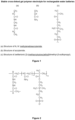
- the cross-linked polymer consists of acrylamide (AA), [2-(Methacryloyloxy)ethyl]dimethyl-(3-sulfopropyl) (DMAPS) and N,N'-methylenebisacrylamide (MBA), the structures of the components are shown in figure 1 .
- AA and DMAP are monomers, and MBA is the binding agent.
- the structure of a cross-linked polymer is shown in Figure 2 .
- the cross-linked polymer gel electrolyte is designed to be used both as a separator and as an electrolyte. It is placed between the negative (anode) and positive (cathode) electrodes. As a separator it prevents direct contact between the electrodes, and as an electrolyte it provides a medium in which ions pass from one electrode to another or from electrode to electrolyte and vice versa.
- the AA amide group, cationic and anionic groups of DMAP provide high ionic conductivity and strong water holding capacity in the cross-linked polymer gel electrolyte.
- the invention due to its high ionic conductivity, has high reversibility of the electrochemical reaction and high electrochemical stability due to the retention of water in the hydrophilic structure.
- Thermocatalytic free radical polymerization of monomers AA, DMAPS and cross-linker MBA is used to obtain a cross-linked copolymer matrix.
- This matrix is a container for one or a mixture of various electrolyte solutions of varying concentrations, such as zinc sulfate, zinc trifluoromethanesulfonate, zinc perchlorate, zinc chloride, zinc nitrate and other electrolyte salts.
- the copolymer is immersed in an electrolyte solution. The thickness and shape of the resulting material depend on the design of the mold.
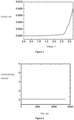
- Electrochemical linear voltammetry test of the cross-linked copolymer gel electrolyte from Preparation Example 1 shows high electrochemical stability up to 2.6 volts ( Figure 3 ), after which the oxygen evolution reaction begins.
- the chronoamperometric test ( Figure 4 ) at a constant potential of 2.2 volts shows the stability of the polymer gel electrolyte without significant changes in current.
- a rechargeable water battery based on a cross-linked copolymer gel electrolyte consists of current leads, active materials of the anode and cathode electrodes, a binder and carbon conductive additives for active materials.
- the current conductor for a water battery can be any electrically conductive materials.
- the current lead for a water battery with an operating voltage window above 2 volts can be made of titanium metal or carbon-based materials such as carbon paper, carbon nanotube paper, carbon fabric, graphite, and others.
- the anode and cathode may be any suitable active material.
- the cross-linked polymer gel electrolyte rechargeable aqueous battery of the example battery used for cyclic voltammetry testing exhibits the usual cathodic and anodic reaction pairs of these electrodes without any additional reactions.
- the degassed solution is transferred into a glass mold with a thickness of 0.5 mm and kept at a temperature of 60°C for 3 hours.
- the resulting cross-linked copolymer gel is dried at 60°C in a vacuum chamber to obtain a dried film, which is then immersed in a 2 mol/liter electrolyte solution ZnSO4 for 24 hours.
- a quasi-solid cross-linked gel polymer electrolyte was obtained.
- a quasi-solid cross-linked gel polymer electrolyte was prepared in the same manner as described in Preparation Example 1, except that the electrolyte solution consisted of 2 moles/liter ZnSO4 and 2 moles/liter LiCl.
- a quasi-solid cross-linked gel polymer electrolyte is prepared in the same manner as described in Preparation Example 1, except that 8 ml of deionized water is replaced with a 2.5 mol/L Zn(CF3SO3)2 electrolyte solution, purging the electrolyte solution with argon before adding AA, and DMAPS, remove the polymerization initiator potassium persulfate, induce Zn(CF3SO3)2, initiate free radical polymerization, and after the polymerization process, the next step is immersion in 2.5 mol/L Zn(CF3SO3)2.CF3SO3)2 solution without drying.
- a rechargeable aqueous battery is assembled by assembling a cathode, a cross-linked copolymer gel electrolyte, and an anode into a battery cell.
- a metal zinc anode with a thickness of 0.5 mm was used as is without additional processing.
- Zinc metal is also used as an anodic current collector.
- a commercial LiFePO4 cathode (MTI corp.) is mixed with acetylene black powder and polyvinylidene fluoride (PVDF) binder in a mass ratio of 90:6:4, respectively. The mixture was dissolved in the organic solvent N-methyl-2 pyrrolidone (NMP), and the resulting suspension was cast onto a carbon paper pantograph and dried.
- the resulting cathode has a mass distribution of the active substance of about 3-4 mg/cm2.
- a cross-linked gel polymer electrolyte was obtained using the preparation given in example 2.
Landscapes
- Chemical & Material Sciences (AREA)
- Engineering & Computer Science (AREA)
- Condensed Matter Physics & Semiconductors (AREA)
- Dispersion Chemistry (AREA)
- General Physics & Mathematics (AREA)
- Inorganic Chemistry (AREA)
- Physics & Mathematics (AREA)
- Manufacturing & Machinery (AREA)
- Chemical Kinetics & Catalysis (AREA)
- Electrochemistry (AREA)
- General Chemical & Material Sciences (AREA)
- Secondary Cells (AREA)
- Addition Polymer Or Copolymer, Post-Treatments, Or Chemical Modifications (AREA)
Abstract
Description
- This invention relates to the electrochemical industry, in particular to gel polymer electrolytes for rechargeable water batteries.
- The rapid production growth of clean energy is commensurately increasing the demand for large-scale energy storage systems, where low cost and high fire safety are critical. Modern commercial technologies based on lithium-ion batteries (LIB) are still expensive despite the fact that their price is gradually decreasing [Ziegler, Energy Environ. sci. 2021,14, 1635-1651], and most importantly, LIBs have a serious fire safety problem due to the use of flammable organic solvents [Diaz et al, J. Electrochem. Soc. 2020, 167, 090559]. Aqueous batteries are made using promising technology for large-scale energy storage systems because they have important characteristics such as low cost, environmental friendliness and non-flammable materials. These advantages have led to diverse research towards advanced aqueous batteries with a variety of electrodes and multiple electrolytes, which can be used in a variety of applications, from flexible and wearable devices to large-scale energy storage systems [A. J. F. Romero and others, Polymers 2020, 12, 2812].
- However, aqueous batteries have a number of disadvantages that hinder the commercialization of various rechargeable aqueous battery technologies. One of them is the narrow window of electrochemical stability of water, i.e., limited operating voltage. Water is used as a solvent and has a narrow difference between the oxidation potential, where the oxygen evolution reaction occurs, and the reduction potential, where the hydrogen evolution reaction occurs, which differ from each other by a voltage window of 1.23 V [S.Z. Qiao et al., Science Advances 2020, 6, 21, eaba4098]. This narrow window of electrochemical stability limits the operating potential of the battery, resulting in insufficient energy density and reducing the number of usable electrode pairs for a stable electrochemical battery. The most studied aqueous battery system is a cell with an electrode pair of a zinc metal anode and a manganese dioxide cathode, which have a potential difference of about 2 volts [C. Zhi et al, Current Opinion in Electrochemistry 2021, 30, 100769, 2451-9103]. Although there are various water-in-salt electrolyte technologies that solve the problem of narrow operating potential, however, this type of electrolyte significantly increases the cost of a water battery, making it an unattractive solution [G. Balakrishna et al, Sustainable Energy Fuels 2021, 5, 1619-1654].
- One possible solution is to replace liquid electrolytes with a composite based on a polymer gel electrolyte. Gel polymer electrolytes have a porous structure of hydrophilic polymer chains filled with an aqueous electrolyte. Polymer gels, in addition to flexibility, mechanical strength, high ionic conductivity and the protective effect of the metal zinc anode, can increase the electrochemical stability of water, thereby expanding the operating window of aqueous batteries [A. J. F. Romero et al, Polymers 2020, 12, 2812]. The above-mentioned advantages are associated with chemically cross-linked polymers and polyacrylamide-based polymer gel electrolytes are the most promising option because they have a strong hydrophilic amide group [Z. Niu et al, Chem. Eur. J. 2019, 25, 14480 -14494]. The electrochemical stability of water is achieved by trapping water molecules in the structure of a cross-linked polymer gel, and amide groups enhance this trapping ability [T. Shikata, Phys. Chem. Chem. Phys. 2014, 16, 13262-13270]. In addition, the polymer gel electrolyte and especially polyacrylamide-based polymer gels can be modified by various methods such as grafting, copolymerization, double cross-linking, etc. There is a promising gel electrolyte based on poly(acrylamide-co-[2-(methacryloyloxy) ethyl] dimethyl-3-sulfopropyl) crystalline type proposed by Q. Wang et al. [Adv. Mater. 2019, 1900248] for supercapacitor systems. The proposed copolymer was obtained by polymerization in an electrolyte solution. The second component of the copolymer is [2-(Methacryloyloxy)ethyl]dimethyl-(3-sulfopropyl), which has a zwitterionic structure, meaning that it contains positive and negative ionic charges in the same monomer, which provide benefits such as high ionic conductivity and powerful water retention capacity, making an operating voltage window of up to 2.4 volts achievable [S. N. Chung et al, ElectrochimicaActa 2019, 319, 672-681]. The disadvantage of this analogue is the inability to use the electrolyte at a voltage above 2.4 V.
- There is an invention (No.
US010957939B2, 2021 - In the present invention, the cross-linked copolymer gel electrolyte for aqueous batteries is composed of acrylamide and [2-(methacryloyloxy)ethyl]dimethyl-(3-sulfopropyl) monomers, which are polymerized in an aqueous electrolyte solution.
- The aim of the invention is to create a chemically cross-linked gel polymer electrolyte for secondary water batteries, which increases the electrochemical stability of water, thereby expanding the operating voltage range.
- The technical result consists in expanding the operating voltage range by means of a chemically cross-linked gel polymer electrolyte for secondary water batteries. It provides high electrochemical stability and high ionic conductivity.
- This technical result is achieved due to the fact that the invention proposes a cross-linked polymer, which consists of acrylamide (AA), [2-(Methacryloyloxy)ethyl]dimethyl-(3-sulfopropyl) (DMAPS) and N, N'-methylenebisacrylamide (MBA ). AA and DMAP are monomers and MBA is the coupling agent. An aqueous solution of an electrolyte salt in the structure of a cross-linked polymer to form a quasi-solid gel electrolyte material. The cross-linked polymer gel electrolyte is designed to be used both as a separator and as an electrolyte. It is placed between the negative (anode) and positive (cathode) electrodes. As a separator it prevents direct contact between the electrodes, and as an electrolyte it provides a medium in which ions pass from one electrode to another or from electrode to electrolyte and vice versa. The AA amide group, cationic and anionic groups of DMAP provide high ionic conductivity and strong water holding capacity in the cross-linked polymer gel electrolyte.
- The invention, due to its high ionic conductivity, has high reversibility of the electrochemical reaction and high electrochemical stability due to the retention of water in the hydrophilic structure. A gel polymer electrolyte consists of a chemically cross-linked copolymer matrix with an aqueous electrolyte solution trapped within the matrix. A copolymer consisting of acrylamide and [2-(Methacryloyloxy)ethyl]dimethyl-(3-sulfopropyl) monomers or their derivatives, and the cross-linking agent N, N'-methylenebisacrylamide. Electrolyte salts, as well as persulfate salts, can be used as a free radical polymerization initiator, both together and separately. Polymerization can be carried out in aqueous solution or directly in electrolyte solutions, followed by drying and immersion in the electrolyte, immersion without drying, or use without immersion.
- This invention will be used in water batteries as a cross-linked copolymer gel electrolyte and separator with a quasi-solid structure. The electrolyte is located between the anode and cathode electrodes, separates them, and provides an aqueous environment for the ions. It provides high electrochemical stability and high ionic conductivity.
- Accordingly, embodiments of the present invention provide solutions to the limited operating potential window of aqueous batteries using a cross-linked polymer gel electrolyte.
- The invention is a quasi-solid cross-linked polymer matrix containing a dissociated salt in the structure. The cross-linked polymer consists of acrylamide (AA), [2-(Methacryloyloxy)ethyl]dimethyl-(3-sulfopropyl) (DMAPS) and N,N'-methylenebisacrylamide (MBA), the structures of the components are shown in
figure 1 . AA and DMAP are monomers, and MBA is the binding agent. The structure of a cross-linked polymer is shown inFigure 2 . An aqueous solution of an electrolyte salt in the structure of a cross-linked polymer to form a quasi-solid gel electrolyte material. The cross-linked polymer gel electrolyte is designed to be used both as a separator and as an electrolyte. It is placed between the negative (anode) and positive (cathode) electrodes. As a separator it prevents direct contact between the electrodes, and as an electrolyte it provides a medium in which ions pass from one electrode to another or from electrode to electrolyte and vice versa. The AA amide group, cationic and anionic groups of DMAP provide high ionic conductivity and strong water holding capacity in the cross-linked polymer gel electrolyte. The invention, due to its high ionic conductivity, has high reversibility of the electrochemical reaction and high electrochemical stability due to the retention of water in the hydrophilic structure. - Thermocatalytic free radical polymerization of monomers AA, DMAPS and cross-linker MBA is used to obtain a cross-linked copolymer matrix. This matrix is a container for one or a mixture of various electrolyte solutions of varying concentrations, such as zinc sulfate, zinc trifluoromethanesulfonate, zinc perchlorate, zinc chloride, zinc nitrate and other electrolyte salts. To obtain a cross-linked gel-electrolyte copolymer, the copolymer is immersed in an electrolyte solution. The thickness and shape of the resulting material depend on the design of the mold.
- Embodiments of the invention will be described in detail below by way of examples, which are illustrated in the accompanying drawings. In the figures, similar structures and/or compositions will be identified using identical reference symbols.
- To carry out electrochemical tests, a symmetrical Swagelok cell made of carbon electrodes was used. Electrochemical linear voltammetry test of the cross-linked copolymer gel electrolyte from Preparation Example 1 shows high electrochemical stability up to 2.6 volts (
Figure 3 ), after which the oxygen evolution reaction begins. The chronoamperometric test (Figure 4 ) at a constant potential of 2.2 volts shows the stability of the polymer gel electrolyte without significant changes in current. - A rechargeable water battery based on a cross-linked copolymer gel electrolyte consists of current leads, active materials of the anode and cathode electrodes, a binder and carbon conductive additives for active materials. The current conductor for a water battery can be any electrically conductive materials. The current lead for a water battery with an operating voltage window above 2 volts can be made of titanium metal or carbon-based materials such as carbon paper, carbon nanotube paper, carbon fabric, graphite, and others. The anode and cathode may be any suitable active material.
- The cross-linked polymer gel electrolyte rechargeable aqueous battery of the example battery used for cyclic voltammetry testing (
Figure 5 ) exhibits the usual cathodic and anodic reaction pairs of these electrodes without any additional reactions. - The accompanying drawings, which are included in and constitute a part of the specification, illustrate embodiments of the present invention and explain the principles of the invention in addition to the description.
-
Figure 1 shows an example of the structure of the components used for the cross-linked copolymer gel electrolyte. Shown is 1 - the structure of N, N'-methylenebisacrylamide, 2 - the structure of acrylamide and 3 - [2-(Methacryloyloxy)ethyl]dimethyl-(3-sulfopropyl). -
Figure 2 shows an example of the structure of a cross-linked copolymer. Shown is 1 - N,N'-methylenebisacrylamide cross-linking agent, 2 - polyacrylamide, 3 - poly-[2-(Methacryloyloxy)ethyl]dimethyl-(3-sulfopropyl). -
Figure 3 shows the linear voltammetric test curve of a cross-linked copolymer gel electrolyte with 2 M ZnSO4 electrolyte salt solution as an example. The electrochemical test was carried out in a symmetrical cell of carbon electrodes with a potential change rate of 1 mV/s. The cross-linked gel polymer electrolyte was prepared as described in Preparation Example 1. -
Figure 4 shows the chronoamperometric test curve at a constant voltage of 2.2 V of a cross-linked copolymer gel electrolyte with 2 M ZnSO4 electrolyte salt solution as an example. The electrochemical test was carried out on a symmetrical cell of carbon electrodes. The cross-linked gel polymer electrolyte was prepared as described in Preparation Example 1. -
Figure 5 shows the cyclic voltammetry test curve of Zn electrolyte/crosslinked polymer gel with 2M ZnSO4 and 2M LiCl electrolyte/LiFePO4 battery. A cross-linked gel polymer electrolyte was prepared using the preparation given in Example 2. The battery was assembled in the manner described in the battery example. - 1 g of AA monomer powder and 1 g of DMAPS monomer powder are added to 8 ml of deionized water and stirred until completely dissolved. Then 0.001 g of crosslinking agent is added to the solution and dissolved. The solution is thoroughly purged with pure argon with constant stirring for at least 30 minutes to remove dissolved oxygen. Then 0.005 g of the initiator of free radical polymerization of potassium persulfate is added to the solution, dissolved and the final solution must be stirred for 1 hour at a temperature not exceeding 25°C with further degassing in a vacuum chamber until bubbles no longer form in the solution or 15-minute ultrasonic stirring at room temperature. The degassed solution is transferred into a glass mold with a thickness of 0.5 mm and kept at a temperature of 60°C for 3 hours. The resulting cross-linked copolymer gel is dried at 60°C in a vacuum chamber to obtain a dried film, which is then immersed in a 2 mol/liter electrolyte solution ZnSO4 for 24 hours. A quasi-solid cross-linked gel polymer electrolyte was obtained.
- A quasi-solid cross-linked gel polymer electrolyte was prepared in the same manner as described in Preparation Example 1, except that the electrolyte solution consisted of 2 moles/liter ZnSO4 and 2 moles/liter LiCl.
- A quasi-solid cross-linked gel polymer electrolyte is prepared in the same manner as described in Preparation Example 1, except that 8 ml of deionized water is replaced with a 2.5 mol/L Zn(CF3SO3)2 electrolyte solution, purging the electrolyte solution with argon before adding AA, and DMAPS, remove the polymerization initiator potassium persulfate, induce Zn(CF3SO3)2, initiate free radical polymerization, and after the polymerization process, the next step is immersion in 2.5 mol/L Zn(CF3SO3)2.CF3SO3)2 solution without drying.
- A rechargeable aqueous battery is assembled by assembling a cathode, a cross-linked copolymer gel electrolyte, and an anode into a battery cell. A metal zinc anode with a thickness of 0.5 mm was used as is without additional processing. Zinc metal is also used as an anodic current collector. A commercial LiFePO4 cathode (MTI corp.) is mixed with acetylene black powder and polyvinylidene fluoride (PVDF) binder in a mass ratio of 90:6:4, respectively. The mixture was dissolved in the organic solvent N-methyl-2 pyrrolidone (NMP), and the resulting suspension was cast onto a carbon paper pantograph and dried. The resulting cathode has a mass distribution of the active substance of about 3-4 mg/cm2. A cross-linked gel polymer electrolyte was obtained using the preparation given in example 2.
Claims (5)
- Gel polymer electrolyte (GPE) based on a cross-linked copolymer for rechargeable water batteries, characterized in that the copolymer is formed from two or more types of monomers, such as acrylamide (AA) and [2-(methacryloyloxy)ethyl]dimethyl-(3- sulfopropyl) ammonium hydroxide (DMAPS) and their derivatives, as well as the crosslinking agent N, N'-methylenebisacrylamide (MBA).
- Gel polymer electrolyte, according to the claim 1, characterized in that the content of deionized water is controlled in the range from 5% to 80% by varying the total mass percentage of the monomers acrylamide (AA) and [2-(Methacryloyloxy)ethyl]dimethyl-(3-sulfopropyl) ammonium hydroxide (DMAPS) to the total mass of the precursor solution.
- Gel polymer electrolyte, according to the claim 1, characterized in that the mass percentage of AA : DMAPS monomers can be from 95:5 to 5:95.
- Gel polymer electrolyte, according to the claim 1, characterized in that the mass percentage of the MBA cross-linking agent relative to the total mass of AA and DMAPS monomers varies from 0.05% to 5%.
- Gel polymer electrolyte, according to the claim 1, characterized in that it comprise an aqueous solution of one or a combination of electrolyte salts of various concentrations having the formula M+X" where:M+ is Zn2+, Mn2+, Li+, Co2+X is Cl-, SO4 2-, NOs-, ClO4 -, CF3SO3; OH-
Applications Claiming Priority (2)
| Application Number | Priority Date | Filing Date | Title |
|---|---|---|---|
| KZ20210549 | 2021-09-10 | ||
| PCT/KZ2022/000013 WO2023038508A1 (en) | 2021-09-10 | 2022-09-01 | Gel polymer electrolyte based on a cross-linked polymer |
Publications (2)
| Publication Number | Publication Date |
|---|---|
| EP4383394A1 true EP4383394A1 (en) | 2024-06-12 |
| EP4383394A4 EP4383394A4 (en) | 2024-12-11 |
Family
ID=85506861
Family Applications (1)
| Application Number | Title | Priority Date | Filing Date |
|---|---|---|---|
| EP22867776.1A Pending EP4383394A4 (en) | 2021-09-10 | 2022-09-01 | GEL POLYMER ELECTROLYTE BASED ON A CROSS-LINKED POLYMER |
Country Status (3)
| Country | Link |
|---|---|
| US (1) | US20240186573A1 (en) |
| EP (1) | EP4383394A4 (en) |
| WO (1) | WO2023038508A1 (en) |
Families Citing this family (5)
| Publication number | Priority date | Publication date | Assignee | Title |
|---|---|---|---|---|
| KR102737064B1 (en) * | 2023-04-21 | 2024-12-02 | 세종대학교산학협력단 | Hydrogel electrolyte including superconcentrated lithium salt and aqueous lithium ion battery using the same |
| CN118336152A (en) * | 2024-04-15 | 2024-07-12 | 常州大学 | A PAM-based gel electrolyte and preparation method thereof and gel electrolyte battery |
| CN119674434B (en) * | 2024-12-06 | 2025-09-23 | 安徽大学 | Gel polymer electrolyte diaphragm and preparation method thereof and zinc ion battery |
| CN120400885A (en) * | 2025-04-27 | 2025-08-01 | 浙江大学 | Preparation method and application of hydrogel composite electrode |
| CN120348969B (en) * | 2025-06-23 | 2025-10-14 | 紫金矿业新能源新材料科技(长沙)有限公司 | A solid oxide electrolytic cell electrolyte material and preparation method thereof |
Family Cites Families (7)
| Publication number | Priority date | Publication date | Assignee | Title |
|---|---|---|---|---|
| JPH0368647A (en) * | 1989-08-08 | 1991-03-25 | Mitsubishi Heavy Ind Ltd | Electricity-responsive gel |
| RU2003039C1 (en) * | 1992-02-14 | 1993-11-15 | Dolskaya Yuliya S | Helium electrolyte for auxiliary and membrane electrodes and process for manufacturing same |
| AU2006280527B2 (en) * | 2005-08-19 | 2010-09-23 | Lg Energy Solution, Ltd. | Electrolyte comprising eutectic mixture and electrochemical device using the same |
| US10957939B2 (en) | 2017-11-07 | 2021-03-23 | City University Of Hong Kong | Rechargeable polyacrylamide based polymer electrolyte zinc-ion batteries |
| CN109810225B (en) * | 2019-03-13 | 2020-11-27 | 同济大学 | A kind of crystalline composite gel electrolyte and its preparation method and application |
| CN112530711A (en) * | 2020-12-04 | 2021-03-19 | 简伟 | Gel electrolyte and preparation method and application thereof |
| CN112679660B (en) * | 2020-12-21 | 2023-04-07 | 沈阳大学 | Preparation method of gel polymer electrolyte with double-network structure |
-
2022
- 2022-09-01 EP EP22867776.1A patent/EP4383394A4/en active Pending
- 2022-09-01 US US18/286,122 patent/US20240186573A1/en active Pending
- 2022-09-01 WO PCT/KZ2022/000013 patent/WO2023038508A1/en not_active Ceased
Also Published As
| Publication number | Publication date |
|---|---|
| WO2023038508A1 (en) | 2023-03-16 |
| EP4383394A4 (en) | 2024-12-11 |
| US20240186573A1 (en) | 2024-06-06 |
Similar Documents
| Publication | Publication Date | Title |
|---|---|---|
| EP4383394A1 (en) | Gel polymer electrolyte based on a cross-linked polymer | |
| JP5174376B2 (en) | Non-aqueous lithium ion secondary battery | |
| Gou et al. | To improve the interfacial compatibility of cellulose-based gel polymer electrolytes: A cellulose/PEGDA double network-based gel membrane designed for lithium ion batteries | |
| Lin et al. | A self-healing polymerized-ionic-liquid-based polymer electrolyte enables a long lifespan and dendrite-free solid-state Li metal batteries at room temperature | |
| KR100613799B1 (en) | Solid electrolyte secondary battery | |
| CN113698718B (en) | Zwitterionic hydrogel, electrolyte, secondary battery or super capacitor, and electric equipment | |
| KR100613800B1 (en) | Solid electrolyte secondary battery | |
| KR102771528B1 (en) | Hydrogel electrolyte and zinc ion battery using the same | |
| CN113892205A (en) | Electrolyte membrane for all-solid-state battery and all-solid-state battery comprising same | |
| CN110854476A (en) | Lithium-air battery and preparation method thereof | |
| JP5076884B2 (en) | Secondary battery electrode and secondary battery employing the electrode | |
| Wan et al. | Borax-crosslinked hydrogel electrolyte membranes for quasi-solid state aqueous energy storage devices | |
| CN115395093A (en) | Electrolyte for high-voltage polymer lithium battery, lithium battery and preparation method | |
| CN115775909A (en) | High-concentration lithium salt sulfide composite solid electrolyte membrane, and preparation method and application thereof | |
| KR20030077453A (en) | Gel electrolyte, process for producing the same, and use thereof | |
| KR20170050278A (en) | Polymer Electrolyte comprising Lithium Nitrate and All-Solid-State Battery comprising The Same | |
| CN114024089A (en) | Hydrophilic modified polymer composite membrane and preparation method and application thereof | |
| Swiderska-Mocek et al. | Compatibility of polymer electrolyte based on N-methyl-N-propylpiperidinium bis (trifluoromethanesulphonyl) imide ionic liquid with LiMn2O4 cathode in Li-ion batteries | |
| JP2003331838A (en) | Lithium secondary battery | |
| CN117691178B (en) | Single-ion composite solid electrolytes and their preparation and application, lithium-ion batteries | |
| WO2026011569A1 (en) | Quasi-solid polymer electrolyte, preparation method therefor and use thereof | |
| KR101529210B1 (en) | Separator for lithium secondary battery and lithium secondary battery comprising the same | |
| JP4161437B2 (en) | Lithium battery | |
| CN118040035A (en) | Preparation and application of ultrathin polymer-based solid electrolyte based on electrospinning | |
| CN113921813B (en) | Novel high specific energy sea water battery |
Legal Events
| Date | Code | Title | Description |
|---|---|---|---|
| STAA | Information on the status of an ep patent application or granted ep patent |
Free format text: STATUS: THE INTERNATIONAL PUBLICATION HAS BEEN MADE |
|
| PUAI | Public reference made under article 153(3) epc to a published international application that has entered the european phase |
Free format text: ORIGINAL CODE: 0009012 |
|
| STAA | Information on the status of an ep patent application or granted ep patent |
Free format text: STATUS: REQUEST FOR EXAMINATION WAS MADE |
|
| 17P | Request for examination filed |
Effective date: 20240308 |
|
| AK | Designated contracting states |
Kind code of ref document: A1 Designated state(s): AL AT BE BG CH CY CZ DE DK EE ES FI FR GB GR HR HU IE IS IT LI LT LU LV MC MK MT NL NO PL PT RO RS SE SI SK SM TR |
|
| A4 | Supplementary search report drawn up and despatched |
Effective date: 20241112 |
|
| RIC1 | Information provided on ipc code assigned before grant |
Ipc: H01M 50/411 20210101ALI20241106BHEP Ipc: H01M 10/0565 20100101AFI20241106BHEP |
|
| DAV | Request for validation of the european patent (deleted) | ||
| DAX | Request for extension of the european patent (deleted) |