EP4383267A1 - Computer-implemented method for mapping a scan protocol for scanning a patient to a standardized scan protocol - Google Patents
Computer-implemented method for mapping a scan protocol for scanning a patient to a standardized scan protocol Download PDFInfo
- Publication number
- EP4383267A1 EP4383267A1 EP22212018.0A EP22212018A EP4383267A1 EP 4383267 A1 EP4383267 A1 EP 4383267A1 EP 22212018 A EP22212018 A EP 22212018A EP 4383267 A1 EP4383267 A1 EP 4383267A1
- Authority
- EP
- European Patent Office
- Prior art keywords
- protocol
- scan
- standardized
- scan protocol
- textual
- Prior art date
- Legal status (The legal status is an assumption and is not a legal conclusion. Google has not performed a legal analysis and makes no representation as to the accuracy of the status listed.)
- Pending
Links
- 238000000034 method Methods 0.000 title claims abstract description 65
- 238000013507 mapping Methods 0.000 title claims abstract description 57
- 238000003384 imaging method Methods 0.000 claims abstract description 47
- 238000004422 calculation algorithm Methods 0.000 claims abstract description 17
- 238000012545 processing Methods 0.000 claims description 26
- 238000011524 similarity measure Methods 0.000 claims description 24
- 210000003484 anatomy Anatomy 0.000 claims description 16
- 210000000746 body region Anatomy 0.000 claims description 11
- 238000004590 computer program Methods 0.000 claims description 3
- 238000004891 communication Methods 0.000 description 9
- 238000002595 magnetic resonance imaging Methods 0.000 description 7
- 238000004364 calculation method Methods 0.000 description 6
- 238000002591 computed tomography Methods 0.000 description 6
- 230000008569 process Effects 0.000 description 6
- 238000004140 cleaning Methods 0.000 description 5
- 238000002583 angiography Methods 0.000 description 3
- 210000000056 organ Anatomy 0.000 description 3
- 238000006243 chemical reaction Methods 0.000 description 2
- 238000007408 cone-beam computed tomography Methods 0.000 description 2
- 230000001419 dependent effect Effects 0.000 description 2
- 238000002059 diagnostic imaging Methods 0.000 description 2
- 238000002599 functional magnetic resonance imaging Methods 0.000 description 2
- 210000004185 liver Anatomy 0.000 description 2
- 238000009206 nuclear medicine Methods 0.000 description 2
- 238000007781 pre-processing Methods 0.000 description 2
- 230000000717 retained effect Effects 0.000 description 2
- 208000024891 symptom Diseases 0.000 description 2
- 238000002604 ultrasonography Methods 0.000 description 2
- 238000012285 ultrasound imaging Methods 0.000 description 2
- 208000003174 Brain Neoplasms Diseases 0.000 description 1
- 206010011878 Deafness Diseases 0.000 description 1
- 101100172132 Mus musculus Eif3a gene Proteins 0.000 description 1
- 238000012879 PET imaging Methods 0.000 description 1
- 238000003491 array Methods 0.000 description 1
- 230000001413 cellular effect Effects 0.000 description 1
- 230000008859 change Effects 0.000 description 1
- 230000000295 complement effect Effects 0.000 description 1
- 238000013170 computed tomography imaging Methods 0.000 description 1
- 239000002872 contrast media Substances 0.000 description 1
- 238000013500 data storage Methods 0.000 description 1
- 238000013079 data visualisation Methods 0.000 description 1
- 238000013135 deep learning Methods 0.000 description 1
- 238000003745 diagnosis Methods 0.000 description 1
- 238000009792 diffusion process Methods 0.000 description 1
- 238000013535 dynamic contrast enhanced MRI Methods 0.000 description 1
- 230000002708 enhancing effect Effects 0.000 description 1
- 230000003203 everyday effect Effects 0.000 description 1
- 238000000605 extraction Methods 0.000 description 1
- 238000001914 filtration Methods 0.000 description 1
- 238000000799 fluorescence microscopy Methods 0.000 description 1
- 230000006870 function Effects 0.000 description 1
- 230000010370 hearing loss Effects 0.000 description 1
- 231100000888 hearing loss Toxicity 0.000 description 1
- 208000016354 hearing loss disease Diseases 0.000 description 1
- 210000003127 knee Anatomy 0.000 description 1
- 238000010801 machine learning Methods 0.000 description 1
- 238000007726 management method Methods 0.000 description 1
- 230000007246 mechanism Effects 0.000 description 1
- 201000006417 multiple sclerosis Diseases 0.000 description 1
- 230000003287 optical effect Effects 0.000 description 1
- 230000010363 phase shift Effects 0.000 description 1
- 238000002600 positron emission tomography Methods 0.000 description 1
- 238000002360 preparation method Methods 0.000 description 1
- 230000005855 radiation Effects 0.000 description 1
- 238000001959 radiotherapy Methods 0.000 description 1
- 238000004088 simulation Methods 0.000 description 1
- 238000002603 single-photon emission computed tomography Methods 0.000 description 1
- 210000001519 tissue Anatomy 0.000 description 1
- 238000003325 tomography Methods 0.000 description 1
- 230000008733 trauma Effects 0.000 description 1
- 230000001960 triggered effect Effects 0.000 description 1
Images

Classifications
-
- G—PHYSICS
- G16—INFORMATION AND COMMUNICATION TECHNOLOGY [ICT] SPECIALLY ADAPTED FOR SPECIFIC APPLICATION FIELDS
- G16H—HEALTHCARE INFORMATICS, i.e. INFORMATION AND COMMUNICATION TECHNOLOGY [ICT] SPECIALLY ADAPTED FOR THE HANDLING OR PROCESSING OF MEDICAL OR HEALTHCARE DATA
- G16H10/00—ICT specially adapted for the handling or processing of patient-related medical or healthcare data
- G16H10/60—ICT specially adapted for the handling or processing of patient-related medical or healthcare data for patient-specific data, e.g. for electronic patient records
-
- G—PHYSICS
- G16—INFORMATION AND COMMUNICATION TECHNOLOGY [ICT] SPECIALLY ADAPTED FOR SPECIFIC APPLICATION FIELDS
- G16H—HEALTHCARE INFORMATICS, i.e. INFORMATION AND COMMUNICATION TECHNOLOGY [ICT] SPECIALLY ADAPTED FOR THE HANDLING OR PROCESSING OF MEDICAL OR HEALTHCARE DATA
- G16H30/00—ICT specially adapted for the handling or processing of medical images
- G16H30/40—ICT specially adapted for the handling or processing of medical images for processing medical images, e.g. editing
-
- G—PHYSICS
- G16—INFORMATION AND COMMUNICATION TECHNOLOGY [ICT] SPECIALLY ADAPTED FOR SPECIFIC APPLICATION FIELDS
- G16H—HEALTHCARE INFORMATICS, i.e. INFORMATION AND COMMUNICATION TECHNOLOGY [ICT] SPECIALLY ADAPTED FOR THE HANDLING OR PROCESSING OF MEDICAL OR HEALTHCARE DATA
- G16H15/00—ICT specially adapted for medical reports, e.g. generation or transmission thereof
-
- G—PHYSICS
- G16—INFORMATION AND COMMUNICATION TECHNOLOGY [ICT] SPECIALLY ADAPTED FOR SPECIFIC APPLICATION FIELDS
- G16H—HEALTHCARE INFORMATICS, i.e. INFORMATION AND COMMUNICATION TECHNOLOGY [ICT] SPECIALLY ADAPTED FOR THE HANDLING OR PROCESSING OF MEDICAL OR HEALTHCARE DATA
- G16H30/00—ICT specially adapted for the handling or processing of medical images
- G16H30/20—ICT specially adapted for the handling or processing of medical images for handling medical images, e.g. DICOM, HL7 or PACS
-
- G—PHYSICS
- G16—INFORMATION AND COMMUNICATION TECHNOLOGY [ICT] SPECIALLY ADAPTED FOR SPECIFIC APPLICATION FIELDS
- G16H—HEALTHCARE INFORMATICS, i.e. INFORMATION AND COMMUNICATION TECHNOLOGY [ICT] SPECIALLY ADAPTED FOR THE HANDLING OR PROCESSING OF MEDICAL OR HEALTHCARE DATA
- G16H50/00—ICT specially adapted for medical diagnosis, medical simulation or medical data mining; ICT specially adapted for detecting, monitoring or modelling epidemics or pandemics
- G16H50/70—ICT specially adapted for medical diagnosis, medical simulation or medical data mining; ICT specially adapted for detecting, monitoring or modelling epidemics or pandemics for mining of medical data, e.g. analysing previous cases of other patients
Definitions
- the invention relates to mapping scan protocols, which are usually designated by a user, to standardized protocols, especially according to identifier code dictionary such as the RadLex Playbook IDs (RPIDs) and the RadLex IDs (RIDs) therein.
- RPIDs RadLex Playbook IDs
- RIDs RadLex IDs
- Protocols In the field of radiology, imaging procedures are performed every day to scan the patients for diagnosis. Each of such procedures require precise specifications such as a set of imaging parameters for accurately scanning the patient. In order to use precise specifications, such parameters are documented as a protocol. Scan protocols often comprise textual parameters, e.g., textual descriptions like information about the scan area, focused tissue, organs and/or a clinical intent. Such a documentation, especially in larger institutions is done manually by users (e.g., radiologists). Protocols are usually developed for an individual institution having unique practices and local settings: types of modalities, types of scanner and types of procedure performed i.e., a trauma center does not perform the same procedures as a cancer center.
- the protocols should be consistent throughout a given medical institution. Scanning the patient based on a scan protocol acquires medical images.
- the medical images are often based on the DICOM standard.
- the medical images generally comprise the scan protocol, e.g., the medical images comprise tags, wherein the tags comprise a tag description and a tag value.
- the tag description is for example a label for the tag value, wherein the tag value can be set and/or filled by the user.
- a medical image and/or a scan protocol comprise as "Scan area" as tag description and "Heart, left chamber” as tag value.
- RadLex playbook which is a reference for mapping is the effort towards addressing this gap.
- the RadLex playbook is available at the URL: http://playbook.radlex.org/playbook/SearchRadlexAction currently in its version 2.5 of February 2018. It shall, however, be understood that also later versions of the RadLex playbook are included when the RadLex playbook is mentioned herein.
- each scan protocol (synonym: scan study) is mapped to a standardized identifier code SIC which in this case is termed a "RadLex ID" or "RPID” for short.
- RPID mapping is useful for standardizing the imaging procedures and/or scan protocols, for comparing similar procedures and studies across several regions and for facilitating including the dose and radiation managements across different institutions. In this way, also false alerts may be reduced in frequency or eliminated entirely.
- the task of RPID prediction of a scan study i.e., of mapping the scan study to an RPID) depends on many factors including modality, body region, study description, and much more. Manual mapping of such records occurring in thousands of exams per day is a cumbersome job for the radiologists.
- mapping scan protocols to standardized scan protocols, wherein the standardized scan protocols, their naming and/or labels are harmonized, such that the scan protocols can be shared and read across different institutions and/or countries.
- mapping of the scan protocols needs to be performed in a in a cost-effective, less time-consuming, and consistent way.
- nomenclature and representation of scan protocols representing meaningful information pertaining to clinical intent of the imaging protocol is required.
- mapping scan protocols to standardized scan protocols, especially for mapping user created, single and/or multistep scan protocols to standardized protocols, e.g., mapping them to RadLex playbook.
- a method for mapping a scan protocol for scanning a patient to a standardized scan protocol comprises the steps:
- the computer implemented method can be implemented and/or executed by a computer, computer system or network and/or by a cloud computing system.
- the method is for mapping one or more scan protocols to a standardized scan protocol. Mapping means especially finding, relating and/or connecting exactly or at least one standardized scan protocol for/with the scan protocol, wherein the standardized scan protocol is the most related, most similar scan protocol of the standardized scan protocols and/or has the same clinical intent as the scan protocol.
- the scan protocol is a protocol for imaging, especially medical imaging.
- the scan protocol is a protocol for magnetic resonance imaging, computed tomography imaging and/or PET imaging.
- the scan protocol can be based on the DICOM standard.
- the scan protocol is especially stored as DICOM data and/or the scan protocol is comprised by DICOM data, e.g., comprised by medical image data, wherein the medical image data are based on the DICOM standard.
- the scan protocol is especially a user defined, user adapted or customized scan protocol.
- the scan protocol comprises textual information and preferably numerical information.
- the scan protocol comprises tags, for example, DICOM tags, tag descriptions and/or tag values.
- the scan protocol comprises preferably a description of the scan, especially textual information, parameter of the scan, a scan modality, scan area and/or clinical intent.
- the scan protocol can be in different languages, especially in any official language spoken in the world.
- the standardized scan protocol is especially harmonized scan protocol.
- the standardized scan protocol is, for example, in a universal and/or common language, for example, the standardized scan protocol is in English or Latin. Particularly, the standardized scan protocol is based on the RadLex playbook and/or has a RadLex playbook ID.
- the step of receiving a scan protocol is for example implemented and/or based on an interface.
- the scan protocol is provided by a local system, a scanner, database, and/or PACS.
- the received scan protocol is preferably based on the DICOM standard.
- the scan protocol comprises protocol information.
- the protocol information can be related to imaging parameters, also called scanning.
- the protocol information is especially describing and/or pertaining to settings and parameters of scanning the patient.
- the protocol information especially comprises textual, numerical, image data and/or information.
- the textual protocol parameter is extracted out of the received scan protocol.
- the textual protocol parameter is especially a string, one or more words, a sentence, a tag, a tag description, a tag value and/or text.
- a combined dataset is generated and/or determined. For example, all extracted textual protocol parameters are combined and/or stacked together as the combined dataset.
- the combined dataset is especially a string and/or text dataset.
- the combined dataset can be configured as a text dataset and/or as a vector, wherein the entries of the vector are the extracted textual protocol parameters.
- the combined dataset comprises the extracted textual protocol parameters and/or is based on them.
- the combined dataset comprises the extracted textual protocol parameters translated into another language, for example, translated into English and/or a RadLex IDs and/or RadLex terms.
- a keyword score is calculated, the determined and/or generated.
- a plurality of keyword scores is determined based on the combined dataset.
- the keyword score is determined by applying keyword scoring algorithm on the combined dataset.
- the keyword scoring algorithm is, for example, based on machine learning and/or deep learning. Alternatively, and/or additionally, the keyword scoring algorithm can be an analytical term and/or mathematical formula.
- the keyword score is based on the combined dataset and/or the keyword scoring algorithm is a function which maps the combined dataset to a vector and/or real numbers.
- the keyword score is, for example, a score which rates how similar the scan protocol is to the standardized scan protocol for.
- the keyword score rates how often the textual protocol parameters of the combined dataset are used in the standardized protocol.
- the keyword scoring algorithm rates and/or scores which standardized scan protocol uses the same textual protocol parameters.
- the keyword scoring algorithm compares each standardized scan protocol and/or the protocol information's of the standardized scan protocol with the combined dataset, especially the extracted textual protocol parameters of the combined dataset.
- a selected standardized scan protocol is determined and/or a standardized scan protocol is selected out of a plurality of standardized scan protocols.
- the selection of the standardized scan protocol is based on the keyword score and/or keyword scores.
- the standardized scan protocol with the highest keyword score and/or the highest keyword scores for the scan protocol is selected as the selected standardized scan protocol.
- the standardized scan protocol which has the most similarity and/or same clinical intent based on the protocol information, especially on the textual protocol parameters is determined.
- the scan protocol is then mapped to the selected standardized protocol. For example, the scan protocol is connected with the selected standardized protocol and/or the scan protocol is labeled with the selected standardized protocol.
- the invention is based on the idea to provide a method to standardize and/or harmonize scan protocols, which can be built and/or adapted by a user and/or are based on local languages.
- the computer implemented method uses the textual information of the scan protocol and keyword score to determine the best fitting standardized protocol for the scan protocol. By extracting and using the textual information, instead of using the numeric parameters of the scan protocol and/or analyzing acquired images, the most reliable and useful information are used for mapping a scan protocol to a standardized scan protocol with the same clinical intent. By generating the combined dataset, a faster calculation and/or determination of the keyword score and therefore of the selected standardized protocol can be achieved.
- the method comprises determining of at least one protocol attribute.
- the at least one protocol attribute is determined for the received scan protocol.
- the determination of the protocol attribute is based on the extracted textual protocol parameters.
- the protocol attribute is determined based on the combined dataset.
- for each extracted textual protocol parameter at least one and/or exactly one protocol attribute is determined.
- the protocol attribute is especially a standardized attribute.
- the protocol attribute is an attribute of the RadLex and/or the protocol attribute is a RadLex ID and/or connected to a RadLex attribute.
- the protocol attribute is determined by mapping the extracted textual protocol parameters to the protocol attribute, best fitting protocol attribute and/or especially mapping them to the RadLex ontology and/or to RadLex ID.
- the protocol attribute is determined by translating the textual protocol parameter into another and/or standardized language and/or ontology, for example, translating the textual protocol parameters into English, Latin and/or a RadLex entry.
- the protocol attribute retains and/or is related to a clinical intent.
- the textual protocol parameter is mapped to a protocol attribute which has the same clinical intent.
- the protocol attribute is a protocol attribute out of a plurality of protocol attributes.
- the protocol attributes can be comprised by the RadLex, RadLex Playbook, an ontology and/or a database.
- the protocol attributes are stored in the first database, for example, on a computer, a cloud and/or a public database.
- the first database is the RadLex ontology.
- the first database also comprises standardized scan protocols.
- the standardized scan protocols are for example protocols and/or entries of the RadLex playbook.
- the first database for example comprises RadLex IDs, RadLex ontology and/or the RadLex playbook.
- each of the standardized scan protocols is associated with at least one protocol attribute.
- each of the standardized scan protocols comprises at least one, preferably a plurality of, protocol attributes.
- the comprised protocol attributes of a standardized scan protocols are especially the protocol attribute which describes the clinical intent.
- the standardized scan protocol comprises as the protocol attributes the complex entries and/or RadLex IDs retaining the scanning of the patient.
- the combined dataset is determined based on the protocol attributes.
- the protocol attributes, which are determined for the received scan protocol and/or the extracted textual protocol parameters, are combined and/or stacked together as the combined dataset.
- the combined dataset comprises the determined protocol attributes for the received scan protocol.
- This embodiment is based on the idea to determine for the scan protocol a plurality of protocol attributes, which are standardized, for example, as part of RadLex.
- a combined dataset can be determined which is comprising the most useful information in a standardized form for determining the standardized scan protocol.
- the step extracting at least one textual protocol parameter comprises extracting a protocol name, an anatomical region, a high-level category description, a scan mode, a scanner model, a protocol customization information and/or a scan time is extracted as extracted textual protocol.
- This embodiment is based on the idea to use the textual protocol parameter's and/or textual information which comprise the most valuable information for determining a standardized scan protocol as mapping partner for a scan protocol.
- this textual protocol parameters the resources of the computer, computer system and/or cloud computing system (CPU, RAM) are very effective and/or economical.
- the step of determining at least one keyword score is based on the weighting and/or usage of weights.
- the extracted textual protocol parameters and/or the determined protocol attributes are weighted in the step of the determination of the keyword score.
- the keyword scoring algorithm uses weights to reflect the influence and/or influence of the content on the keyword score. This is based on the idea that some protocol attributes and/or some extracted textual protocol parameters are more useful or effective than others.
- the extracted textual protocol parameter describing the scanning area has more informational content for selecting a standardized scan protocol with the same clinical intent than an extracted textual protocol parameter describing the name of institution of image acquisition.
- Especially extracted textual protocol parameters and/or protocol attributes related to a scan region, body region and/or anatomical information are weighted highest and/or used with a bigger weight or weighting factor than other extracted textual protocol parameters and/or protocol attributes.
- the step of determining at least one keyword score at least one similarity measure is calculated and/or determined as one of the keyword scores.
- a plurality of similarity measures can be determined.
- the similarity measure is especially a measure for the similarity between the standardized scan protocol and the scan protocol, especially the similarity of the protocol attributes comprised by the standardized scan protocol and the protocol attributes and/or the extracted textual protocol parameters of the scan protocol and/or combined dataset.
- the similarity measure is especially related to a comparison, similarity and/or an intersection, textual intersection and/or information intersection of the scan protocol and the standardized scan protocols and/or between the extracted textual parameters and/or protocol attributes of the combined dataset of the scan protocol with the standardized scan protocol.
- a similarity measure and/or the keyword score is calculated and/or determined for each pair of scan protocol and standardized scan protocol of the plurality of scan protocols in the first database.
- the similarity measure quantifies the number of protocol attributes of the scan protocol that are also in the standardized protocol. For example, 100% of the protocol attributes of the standardized scan protocol are also in the scan protocol.
- the step of determining the keyword score comprises determining at least one, especially a plurality of, part scores.
- the part scores are especially a measure of the similarity between the textual protocol parameters and/or protocol attributes with the standardized protocol with the standardized scan protocols of the first database. For example, different part scores are reflecting the similarity of different subsections of textual protocol parameters and/or protocol attributes with the standardized scan protocol.
- the step of the determining the selected standardized scan protocol comprises a score sorting of the keyword scores, part scores and/or similarity measures. For example, for each combination of standardized scan protocol and scan protocol, combined dataset, protocol attributes and/or textual information, a plurality of keyword scores, part scores and/or similarity measures are determined, wherein the selection of the selected standardized scan protocol is based on the sorting. For example, the keyword scores are numerical sorted, wherein the standardized scan protocol is selected as the selected scan protocol that has the highest keyword scores and/or the highest keyword score.
- the method comprises the step of checking the received scan protocol if it is a single step or a multistep protocol.
- the step of checking is preferably before the step of determining the extracted textual parameters.
- a multistep protocol is for example a scan protocol that has more than one clinical intent, for example scanning different subsections and/or different organs of the patient.
- medical images are acquired for a patient in with a scan protocol, wherein the scan protocol comprises MR scanning of the liver and afterwards MR scanning of the heart, wherein such a scan protocol is a two step protocol, since the scan protocol has two different clinical intents (liver, heart).
- the scan protocol is split into split scan protocols.
- the number of splits of the multistep scan protocol is determined, wherein the scan protocol is split into this number of split scan protocols.
- the split scan protocols are used as received scan protocols for determining the textual information, combined dataset and/or determining the selected standardized scan protocol.
- the method according to the invention and/or the mapping of the scan protocol to the standardized scan protocol is executed for each of the split scan protocols.
- the step of generating the combined dataset comprises checking the extracted textual protocol parameters for spelling mistakes and/or abbreviations.
- the step of determining the protocol attributes can comprise the step of checking for spelling mistakes and/or abbreviations.
- the extracted textual protocol parameters and/or protocol attributes with spelling mistakes and/or abbreviations are corrected and/or presented to a user to correct them.
- the generation of the combined dataset and/or determining of the protocol attributes is based and/or carried out on the corrected textual protocol parameters.
- the step of extracting textual protocol parameters comprises separating the extracted textual protocol parameters with more than one word into single words.
- the single words and/or the extracted textual protocol parameters are used and/or set as tokens, wherein the tokens are mapped to protocol attributes.
- the determination of the selected standardized scan protocol is based on additional information.
- the additional information can comprise a similarity measure for a similarity of images comprised or acquired by the received scan protocol with images of the standardized scan protocol.
- the additional information can comprise numeric parameters and/or settings of the received scan protocol with the standardized scan protocol.
- the determination of the standardized scan protocol that should be mapped to the received scan protocol can use the textual protocol parameters in combination with information regarding the similarity of images and/or numeric parameters and/or settings.
- the object of the invention is also achieved by an apparatus for mapping a scan protocol to a standardized scan protocol.
- the apparatus comprising at least one processing unit, and a memory communicatively coupled to the one or more processing units.
- the memory comprises a protocol mapping module configured to perform the aforementioned method steps.
- the object of the invention is also achieved by a system for mapping a scan protocol to a standardized scan protocol.
- the system comprises a first database comprising a plurality of standardized scan protocols and an apparatus as mentioned above.
- the object of the present invention is also achieved by a computer-program product having machine-readable instructions stored therein, which when executed by one or more processing units, cause the processing units to perform a method as described above.
- Disclosed embodiments provide systems and methods for mapping a scan protocol to a standardized scan protocol.
- scan protocols refers to a set of specifications required for performing imaging procedure a patient and/or describing the parameter and/or settings of an medical imaging scan.
- the term “scan protocol” can also refer to the term "imaging protocol” and/or used as synonyms.
- Scan protocols contain information that define the imaging procedures and serve as guidelines for imaging practices.
- the scan protocol can also comprise information, especially textual information, to describe the scanning of the patient, e.g., to describe the region, body region, organ, tissue and/or details of scanning the patient.
- Examples of such information include a unique name, a modality used (e.g., Computed Tomography (CT), Magnetic Resonance (MR), Nuclear Medicine (NM), X-rays (XR), Ultrasound (US), etc.), body area scanned (e.g., head, chest, etc.), list of clinical indications justifying the use of this specific protocol, list of types of imaging sequences and associated set of parameters, additional comments (e.g., describing the fact that this imaging procedure is a fast acquisition procedure to be used for uncooperative adults or non-sedated children), and patient handling (e.g., preparation, positioning in the scanner, administration of contrast agent, etc.).
- CT Computed Tomography
- MR Magnetic Resonance
- NM Nuclear Medicine
- XR X-rays
- US Ultrasound
- body area scanned e.g., head, chest, etc.
- additional comments e.g., describing the fact that this imaging procedure is a fast acquisition procedure to be used for uncooperative adults or non-sed
- the scan protocols define and/or describe the settings used on the imaging equipment to acquire the images and directs the imaging technologist who operates the scanner in how to perform the examination.
- the protocol as described here will result in an imaging study (also referred as image data) that comprise at least one medical image acquired by scanning the patient based on the scan protocol.
- the image data and/or imaging study preferably comprises the scan protocol and/or information about the scan protocol.
- scan protocols refer to the imaging protocols that have been customized by the user or clinician for scanning the patient.
- the system 100 may be realized as a server-client arrangement or a cloud computing environment.
- the system 100 is realized as a server-client arrangement.
- the system 100 comprises an apparatus 102 which may be a remote server capable of providing cloud-based services such as data storage services, data simulation services, data visualization services, etc. based on the data from one or more user devices 110.
- the system 100 comprises a processing unit 104, memory 106, a first database 108 and a user device 110.
- the apparatus 102, the first database 108 and the user device 110 are communicatively coupled to each other.
- the communication between the apparatus 102, the first database 108, and preferably an user device 110 may be enabled via a communication network (not shown).
- the apparatus 102 may be directly or indirectly coupled to communication network.
- the apparatus 102 may be directly coupled to network via a hardwired network connection.
- the apparatus 102 may be wirelessly coupled to network via wireless communication channel established between the apparatus 102 and wireless access point (i.e., WAP) which in turn may be directly coupled to network.
- WAP may be, for example, an IEEE 802.11a, 802.11b, 802.11g, 802.11ac, 802.11ae, Wi-Fi ® , RFID, and/or BluetoothTM (including BluetoothTM Low Energy) device that is capable of establishing wireless communication channel between user device and WAP.
- the apparatus 102 may be wirelessly coupled to network via wireless communication channel established between the apparatus 102 and cellular network / bridge which may be directly coupled to network.
- User devices 110 may execute an operating system, examples of which may include but are not limited to, Android ® , Apple ® iOS ® , Mac ® OS X ® ; Red Hat ® Linux ® , or a custom operating system.
- some or all of the IEEE 802.11x specifications may use Ethernet protocol and carrier sense multiple access with collision avoidance (i.e., CSMA/CA) for path sharing.
- the various 802.11x specifications may use phase-shift keying (i.e., PSK) modulation or complementary code keying (i.e., CCK) modulation, for example, BluetoothTM (including BluetoothTM Low Energy) is a telecommunications industry specification that allows, e.g., mobile phones, computers, smart phones, and other electronic devices to be interconnected using a short-range wireless connection. Other forms of interconnection (e.g., Near Field Communication (NFC)) may also be used.
- NFC Near Field Communication
- the apparatus 102 comprises the processing unit 104 and the memory 106.
- the term apparatus 102 as used herein refers to a structure and/or module that include programmable and/or non-programmable components configured to store, process and/or share information.
- the apparatus 102 includes any arrangement of physical or virtual computational entities capable of enhancing information to perform various computational tasks.
- the apparatus 102 may be both single hardware server and/or plurality of hardware servers operating in a parallel or distributed architecture.
- the apparatus 102 may include components such as memory, a processor, a network adapter and the like, to store, process and/or share information with other computing components, such as user device/user equipment.
- the apparatus 102 is implemented as a computer program that provides various services (such as database service) to other devices, modules or apparatus.
- the system 100 comprises the first database 108 comprising a plurality of standardized scan protocols, especially associated with scan attributes. Additionally, the standardized scan protocols may also be associated with patient specific information. Throughout the present disclosure the term "database" as used in the first database 108 information is stored in the cells of the database 108.
- the term "standardized scan protocols" refer in particular to a set of standard specifications required for performing imaging procedure of a patient and/or standard information required to describe the scan protocol, the acquired images and/or clinical intent.
- the standardized scan protocol preferably comprises standardized descriptions, labels, DICOM tags, information and/or clinical intend.
- the standardized scan protocols may be the scan protocols that are considered as a healthcare standard defined by a group or association specializing in radiology. Standardized scan protocols are preferably listed and/or comprised by the RadLex ontology and/or the RadLex Playbook.
- the standardized scan protocols may be the scan protocols that are predefined by a manufacturer of an imaging modality (such as a CT scanner). Such standardized scan protocols are by defaults available in the scanner.
- the term "standardized scan protocols" refer to to a set of standard specifications required for performing imaging procedure of a patient that have been clustered and associated with imaging identifiers, protocol attributes and/or patient specific information.
- the standardized scan protocols represent a clinical intent of the protocol.
- the standardized scan protocol may be the scan protocols that have been historically used by the radiologists to perform particular imaging procedures.
- the standardized scan protocols may also be the customized imaging protocols that have been determined by the radiologists during an imaging procedure and harmonized to represent clinical intent.
- imaging identifiers and/or “protocol attributes” refers to an identifier associated with the scan protocol that represents a clinical intent of the scan protocol.
- clinical intent refers to intent of the scan protocol that is the basis for scanning the patient. Notably, the clinical intent is derived based on various fields available in the standardized scan protocols such as anatomies, purpose of study, scanning technique, and patient information.
- the standardized scan protocols, imaging identifiers, protocol attributes and/or the association between the standardized scan protocols and corresponding imaging identifiers or protocol attributes are stored in the first database 108.
- the first database 108 also comprises a plurality of clusters.
- each cluster in the plurality of clusters is associated with a standardized scan protocol based on a clinical intent of the information.
- the clinical intent is derived based on various fields available in the harmonized imaging protocols such as anatomies, purpose of study, scanning technique, and patient information.
- the standard imaging protocols may be received from imaging modalities and other data repositories, and then harmonized to represent clinical intent of the imaging protocol.
- the harmonized protocols are then stored in the first database 108, especially as standardized scan protocols.
- the processing unit 104 is configured to receive, by an interface, a scan protocol, wherein the scan protocol comprises information pertaining to set of imaging parameters for imaging/scanning a patient. Further, the processing unit 104 is configured to determine at least one imaging identifier and/or protocol attribute for the received scan protocol based on a clinical intent of the received scan protocol. The processing unit 104 is also configured to extract textual protocol parameter out of the received scan protocol. Furthermore, the processing unit 104 is configured to determine a combined dataset, to determine a keyword score and/or to determine a selected standardized scan protocol and/or to map the received scan protocol to the selected standardized scan protocol.
- the apparatus 102 comprises a processing unit 104 for performing the method steps as aforementioned.
- the processing unit 104 may refer to any type of computational circuit, including, but not limited to, a microprocessor, microcontroller, complex instruction set computing microprocessor, reduced instruction set computing microprocessor, very long instruction word microprocessor, explicitly parallel instruction computing microprocessor, graphics processor, digital signal processor, or any other type of processing circuit.
- the processing unit 104 may also include embedded controllers, such as generic or programmable logic devices or arrays, application specific integrated circuits, single-chip computers, and the like.
- a processing unit 104 may comprise hardware elements and software elements.
- the processing unit 104 can be configured for multithreading, i.e., the processing unit 104 may host different calculation processes at the same time, executing them either in parallel or switching between active and passive calculation processes.
- the apparatus 102 comprises a memory 106.
- the memory 106 may comprise a volatile memory and a non-volatile memory.
- the memory 106 may be coupled for communication with the processing unit 104.
- the processing unit 104 may execute instructions and/or code stored in the memory 106.
- a variety of computer-readable storage media may be stored in and accessed from the memory 106.
- the memory 106 may include any suitable elements for storing data and machine-readable instructions, such as read only memory, random access memory, erasable programmable read only memory, electrically erasable programmable read only memory, a hard drive, a removable media drive for handling compact disks, digital video disks, diskettes, magnetic tape cartridges, memory cards, and the like.
- the memory 106 comprises a protocol mapping module 200 configured to perform the method steps as described in greater detail in FIG 3 .
- the protocol mapping module 200 is stored in the form of machine-readable instructions on any of the above-mentioned storage media and may be in communication to and executed by the one or more processing units 104.
- FIG 3 in conjunction with FIGS 1 and 2 , a flowchart depicting steps of a method 300 for mapping a scan protocol to a standardized scan protocol is described, in accordance with one embodiment of the present invention.
- the method 300 comprises steps 302 to 312 and may be implemented on the system 100.
- the scan protocol is received, wherein the scan protocol especially comprises information pertaining to a set of imaging parameters for imaging a patient is received.
- the scan protocol may be received from the user device 110.
- the scan protocol may be determined based on clinical indications of the patient on whom the scanning is to be performed.
- the scan protocol may be determined by the radiologist performing the scan.
- the scan protocol is determined by the radiologist based on the clinical indications such as one or more symptoms of the patient.
- clinical indications for a patient may include symptoms such as "hearing loss in left ear," with the note to perform an "MRI of the head.”
- Examples that are under the general category “MRI of the head” may include “brain tumor,” “multiple sclerosis,” “angiography,” “MR without contrast,” “internal auditory canal,” “eye-orbit,” and so forth.
- a radiologist reading this order may decide that the order is best fulfilled by using the "internal auditory canal” protocol. Subsequently, the radiologists determine a set of imaging parameters for operating an imaging modality.
- Nonlimiting examples of imaging modality or medical device may be ultrasound imaging device, CT, magnetic resonance imaging (MRI), functional MRI (e.g., fMRI, DCE-MRI, and diffusion MRI), cone beam computed tomography (CBCT), Spiral CT, positron emission tomography (PET), single photon emission computed tomography (SPECT), X-ray, optical tomography, fluorescence imaging, ultrasound imaging, radiotherapy portal imaging and so forth.
- MRI magnetic resonance imaging
- functional MRI e.g., fMRI, DCE-MRI, and diffusion MRI
- CBCT cone beam computed tomography
- Spiral CT positron emission tomography
- PET positron emission tomography
- SPECT single photon emission computed tomography
- X-ray optical tomography
- fluorescence imaging ultrasound imaging, radiotherapy portal imaging and so forth.
- one or more keywords based on clinical indications of the patient such as "MRI of the head”, “knee MRI”, “angiography” and so forth may also be entered as input data to the user device 110. Subsequently, the one or more keywords and/or scan protocol is received by the processing unit 104 for further processing.
- the at least one textual protocol parameter is preferably determined based on the clinical intent of the received scan protocol.
- textual protocol parameters related and/or describing the clinical intent of the scan protocol are extracted.
- the textual protocol parameter comprises, describes and/or is related to a textual, phonetic, spoken language based description of the scan protocol.
- the textual protocol parameters are in a special embodiment free of numbers and/or comprise only letters.
- the textual protocol parameters have preferably a string format.
- the textual protocol parameters comprise DICOM tags, DICOM tag descriptions and/or DICOM tag values of the scan protocol.
- a combined dataset is determined.
- the combined data set can for example be a combination, list, table, or text comprising the extracted textual protocol parameters.
- the keyword score is determined by applying a keyword scoring algorithm to the combined dataset.
- a selected standardized scan protocol is determined, wherein the selected standardized scan protocol is selected out of a plurality of standardized scan protocols.
- the scan protocol which was received in step 302, is mapped to the selected standardized protocol.
- the mapping is especially stored, e.g., in the first database, and/or is presented to a user, e.g., presented on a display or monitor.
- a plurality of standardized scan protocol are determined based on the at least one keyword score. For example, a number of most fitting standardized scan protocols and/or best mapping partners are determined, e.g., the standardized scan protocols with the highest keyword scores.
- the determined standardized scan protocols can be presented in a hierarchical manner. It should be noted that the information of the harmonized imaging protocol is arranged in a hierarchical manner and/or sorted based on keyword scores and/or based on a predefined set of rules.
- the predefined set of rules can be based on anatomy, sub-anatomy, process, study type levels for describing the hierarchy, and so forth.
- the keyword score is preferably determined for all or a plurality of combination of the combined data set with all or a plurality of the standardized scan protocols. For example, for each combination of the combined data set and standardized scan protocol a keyword score is determined.
- the standardized scan protocols are scan protocols comprised by the RadLex Playbook.
- the standardized scan protocols comprise textual scan parameters, e.g., a description of the standardized scan protocol, scan attributes and/or parameters.
- the generation of the combined data set can comprise techniques such as data cleaning.
- the information from the text fields in the received scan protocol e.g., the extracted textual parameters
- words which do not carry information about the clinical intent of the scan protocol can be removed from the single string.
- words not related to anatomical region, body size and protocol name such as the machine name, institute name are removed during data cleaning.
- the data cleaning and domain specific preprocessing techniques are performed to replace generic words in the scan protocol with RadLex specific words. For example, Angio/Angiogram is replaced with Angiography using the predefined set of rules.
- the keyword score is for example a similarity measure and/or based on a similarity measure.
- the combined data set is compared against the first database and/or the standardized scan protocols.
- the similarity measure is preferably based on the Jaccard average similarity or Jaccard similarity index. It should be noted that the Jaccard similarity index compares members for two sets to see which members are shared and which are distinct.
- the Jaccard similarity index is a measure of similarity for the two sets of data, with a range from 0 to 1. The higher the percentage, the more similar the two datasets which are being mapped with each other.
- the mapping score may be 1. Furthermore, if an exact match for the received scan protocol is not found in the RadLex Playbook, then the mapping score may be 0.9, 0.8, 0.7, 0.6, 0.5, 0.4, 0.3 and so forth.
- the selected standardized scan protocol can be determined by comparing the keyword score and/or similarity measure with a threshold value to determine whether the keyword score is below the threshold value or above the threshold value.
- the threshold value may be a numerical value of accuracy of mapping below which the accuracy of mapping is not considered as optimal. In an example, the threshold value may be a value 0.3.
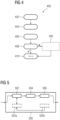
- Figure 4 shows a flow chart of a method for mapping a scan protocol to a standardized scan protocol as another example of the invention.
- the method is configured to map single and/or multi step scan protocols.
- the method for mapping the scan protocol utilizes the textual scan parameters which are generally more indicative of the clinical intent of the study and maps both single-region and multi-region protocols with a single, unified algorithm.
- the method utilizes the textual information from the scan protocol data and the elements from the RadLex Playbook as tokens and a keyword score, especially a similarity measure. It should be noted that extracted textual parameters concerning the body region and/or anatomy attributes are assigned the highest importance (or weightage) to identify the right clinical intent and/or selected standardized scan protocol.
- the method relies on the mapping of tokens using a token mapping dictionary to associated playbook attributes such that protocols with similar intent are clustered within same RadLex ID. It should be understood that if no single RadLex exam can specify the complete clinical intent of a multi-region study, a sub-split rule engine allows for mapping a multi-step multi-region protocol to multiple RadLex exams to utilize the optimal set of Playbook exams.
- a list of extracted textual protocol parameters can be as highlighted in the below table. Out of this, one or more of the following can be used: Table 1: Textual scan parameters Textual scan parameter Remarks ProtocolName Name of the scan protocol AnatomicalRegion Body region associated to the scan step of the protocol LevelsName Description of the high-level category for the scan protocol StepsName Description of actual steps performed during the scan ProtocolStepID Incremental ID for each step (starts at 0) StepsGroupName Identifies the type of scan steps (ScanType / ReconType) ScanMode Mode of scan acquisition CustomProtocol Identifier for Custom protocols (True/False) BodySize Identifier of Patient Body Type (Adult/Child) LastUpdated Datetime: Date and time when the scan was triggered
- the steps of the method 400 for mapping a scan protocol to a standardized scan protocol of figure 4 can be configured as following.
- the scan protocol which should be mapped to a standardized scan protocol is received.
- a conversion into a table or common data format can be applied. For example, a conversion from JSON format to CSV format is utilized. From a module or interface the scan protocol is received in JSON format. Depending on the scanner plugin version, multiple formats of JSON are used in different scanners. In step 404 the scan protocol in JSON formats is converted into a scan protocol in a CSV format.
- step 406 data cleaning, filtering and extraction is applied to the scan protocol.
- the various parameters related to a scan performed on the scanner especially the textual scan parameters according to table 1 are identified to contain the information related to the clinical intent of the study.
- These textual scan parameters are extracted from the processed CSV and the data values can be validated.
- the selected data is grouped based on identifier columns ProtocolName, ScannerModel, BodySize, LastUpdated and each group is considered a singular scan protocol.
- parameter column AnatomicalRegion and LevelsName are verified to have clean and expected values via a lookup dictionary.
- StepsGroupName is filtered for the 'ScanType' values and 'ReconType' values are ignored.
- subsequent duplicate steps with exactly similar parameter columns LevelsName, AnatomicalRegion, StepsName, ScanMode are ignored.
- a sub-split ID is assigned to signify the multiple starts of the scan protocol, if there is a change in the parameter column AnatomicalRegion at the later 'Topogram' scan step.
- Such scan protocols are considered multi-region and will be assigned multiple RadLex IDs for the combination of steps based on the sub-split ID.
- step 408 the standardized scan protocols are clustered.
- the standardized scan protocols are well-versed and designed by experts, the clinical intent of the protocols is already understood and can be tagged with an appropriate RadLex Playbook Identifier (RPID) by the expert.
- RPID RadLex Playbook Identifier
- step 408 comprises an algorithm to directly lookup the database for any standard protocol identified in the user data.
- Any scan protocol not identified in the Standard Protocols Master Database is processed further and a RadLex ID is predicted through the keyword-based algorithm, particularly the keyword scoring algorithm 500.
- a step 410 which can comprise sub steps the identified and/or predicted RadLex ID are associated for the plurality of the scan protocols and/or a RadLex exam description is determined. Any additional information can be utilized to post process the determined standardized scan protocols. The determined standardized scan protocols are presented to the user .
- Figure 5 provides an overview of the keyword scoring algorithm 500.
- the method step 502 comprises a data preprocessing and sub-split. From the extracted textual protocol parameters and/or the text of parameter columns ProtocolName & StepsName, words are split into 'tokens' and the list of the tokens are stored in the first database and/or token database. The identified tokens (English or non-English) are verified and mapped to respective Playbook attribute and/or multiple protocol attributes like body region, anatomy, modality, reason, population etc. The abbreviated tokens as well as orthographic, typographic and data errors are corrected and mapped to associated Playbook attribute.
- As RadLex Playbook is an optimal set of certain combination of playbook attributes, cases may happen where multiple tokens related to various attributes are identified in the protocol steps. For that combination of steps, rules are written to prioritize certain keywords which results in a RadLex ID mapping that suits the clinical intent of the study. Additionally, rules are written to form new 'keyword tokens' with better contextual meaning after combining multiple 'keyword tokens' retained in the multi-token translator step. The new 'keyword tokens' are also appended to the column 'keywords' in the Playbook.
- ProtocolName ProtocolName
- LevelsName AnatomicalRegion
- BodySize BodySize
- StepsName are joined (or combined) together to form the combined data set, which is a string. It is quite straight-forward for the single-step protocols. For multi-step protocols, a combined string is formed for the specific split scan protocols generated at the multi-step protocol sub-split step.
- the step 502 may comprise sub steps 502a and 502b.
- the extracted keyword and/or token are stored in and/or retrieved from the database, e.g., token_db.
- the information from the standardized scan protocols and/or any domain knowledge for the scan protocol and/or the combined data set is determined and stored in and/or retrieved from the first database.
- the sub steps are performed as and when necessary.
- the method step 504 comprises a keyword scoring mechanism. Based on the plurality of the combined data set multiple token similarity measures are calculated with respect to the Playbook attributes for each of the Radlex Exams.
- a similarity measure namely, part score based on the Jaccard similarity index and/or textual intersection is determined.
- the part score compares the members for two sets, combined data set A and attribute set B to see which members are shared i.e., the number of intersecting words is determined. Squaring the number of intersecting words in the numerator pushes the score higher for a high number of matches. It should be understood that normalizing the score using the length of the attribute set B returns a whole number for a full match and/or intersection, and for a partial match and/or intersection, a fraction is returned. It should be appreciated that the calculated part score is not dependent of the length of the combined data set A.
- the part score formula is utilized to determine and/or calculate a plurality of scores with respect to the various protocol attributes as identified from the RadLex Playbook.
- bp_total_score is calculated for the plurality of the combined data set A as per the part score formula described above.
- modality_score is calculated for the plurality of the combined data set A as per the part score formula described above.
- reason_score is calculated for the plurality of the combined data set A as per the part score formula described above.
- population_score is calculated for the plurality of the combined data set A as per the part score formula described above.
- Similarity A B # A ⁇ B Avg # A , # B
- the Jaccard similarity index compares members for two sets to see which members are shared and which are distinct i.e., the number of intersecting words is determined. It should be understood that normalizing the similarity index using the average of the string lengths (of A and B) is better when A and B are dissimilar with long length. It should be understood that the calculated similarity score is dependent of the length of the combined data set A so, this requires the combined data set to be pre-processed to remove duplicates tokens and/or tokens which are non-contributing to the clinical intent of the study to suppress any skewness in the similarity score.
- the similarity score formula is utilized to determine and/or calculate a sim_score with respect to the combined data set A and the Automated_Long_Name B identified in the RadLex Playbook for the plurality of the RadLex protocols.
- Keyword A B # A ⁇ B # A
- the Jaccard similarity index compares members for two sets to see which members are shared and which are distinct i.e., the number of intersecting words is determined. It should be understood that normalizing the score using the length of the non-intersected tokens A in the combined data set after similarity score calculation is better when A and B are dissimilar with long length. This requires the combined data set to be pre-processed to remove duplicates tokens and/or tokens which are non-contributing to the clinical intent of the study to suppress any skewness in the similarity score.
- the keyword score formula is utilized to determine and/or calculate a keyword_score with respect to non-intersected tokens remaining after similarity score calculation A and the set of tokens in 'keywords' column B identified in the RadLex Playbook for the plurality of the RadLex protocols.
- the RadLex IDs are sorted in the step 506, firstly on the bp_total_score, secondly on the match_score and finally on the final_score.
- the RadLex ID with the highest score out of the plurality of the RadLex protocols is selected as the final RPID label for the given combined data set.
- Case I In case, multiple RadLex IDs somehow get exactly equal scores, verify that the Body Region and Anatomy are different and select the first RadLex ID.
- the selected RadLex ID may be less suited or relevant with respect to the clinical intent of the study due to various reasons and/or certain Playbook attribute are likely to be missing from the selected RadLex ID.
- the final score would lie below a certain threshold, which can be a single value for the final score and/or multiple thresholds for the plurality of the similarity scores.
- RadLex Playbook attribute values are extracted from the combined textual information of the scan protocol and are combined in an ordered fashion like how the Automated_Long_Name is constructed for a RadLex standardized scan protocol. This generated Custom Tag would be much more suited to correctly define the clinical intent of the study.
Landscapes
- Health & Medical Sciences (AREA)
- Engineering & Computer Science (AREA)
- Epidemiology (AREA)
- General Health & Medical Sciences (AREA)
- Medical Informatics (AREA)
- Primary Health Care (AREA)
- Public Health (AREA)
- Nuclear Medicine, Radiotherapy & Molecular Imaging (AREA)
- Radiology & Medical Imaging (AREA)
- Measuring And Recording Apparatus For Diagnosis (AREA)
Abstract
Computer-implemented method (300, 400) for mapping a scan protocol for scanning a patient to a standardized scan protocol, comprising the steps: receiving (302) a scan protocol, wherein the scan protocol comprises protocol information pertaining to set of imaging parameters for imaging a patient; extracting (304) at least one textual protocol parameter from the received scan protocol; generating (306) based on the extracted textual protocol parameters a combined dataset; determining (308) at least one keyword score, wherein a keyword scoring algorithm (500) is applied to the combined dataset to determine the at least one keyword score; determining (310) based on the at least one keyword score a selected standardized scan protocol, wherein the selected standardized scan protocol is selected out of a plurality of standardized scan protocols; mapping (312) the scan protocol to the selected standardized protocol.
Description
- The invention relates to mapping scan protocols, which are usually designated by a user, to standardized protocols, especially according to identifier code dictionary such as the RadLex Playbook IDs (RPIDs) and the RadLex IDs (RIDs) therein.
- The naming, the comprised textual parameters and/or textual description of scan protocols are currently not standardized across different countries or even different institutions. This impedes efforts to compare different types of scan protocols and to establish national or international registries, for example of applied doses.
- In the field of radiology, imaging procedures are performed every day to scan the patients for diagnosis. Each of such procedures require precise specifications such as a set of imaging parameters for accurately scanning the patient. In order to use precise specifications, such parameters are documented as a protocol. Scan protocols often comprise textual parameters, e.g., textual descriptions like information about the scan area, focused tissue, organs and/or a clinical intent. Such a documentation, especially in larger institutions is done manually by users (e.g., radiologists). Protocols are usually developed for an individual institution having unique practices and local settings: types of modalities, types of scanner and types of procedure performed i.e., a trauma center does not perform the same procedures as a cancer center. In particular, for larger institutions (e.g., network of hospitals covering a large population area), multiple radiology departments exist and over the years, develop their own protocols, even if they interact frequently. As practice evolves over time, regular updates of these protocols are necessary to maintain efficiency, diagnostic accuracy, and quality of care. The protocols should be consistent throughout a given medical institution. Scanning the patient based on a scan protocol acquires medical images. The medical images are often based on the DICOM standard. The medical images generally comprise the scan protocol, e.g., the medical images comprise tags, wherein the tags comprise a tag description and a tag value. The tag description is for example a label for the tag value, wherein the tag value can be set and/or filled by the user. For example, a medical image and/or a scan protocol comprise as "Scan area" as tag description and "Heart, left chamber" as tag value.
- The Radiological Society of North America (RSNA) has developed the so-called RadLex playbook which is a reference for mapping is the effort towards addressing this gap. The RadLex playbook is available at the URL: http://playbook.radlex.org/playbook/SearchRadlexAction currently in its version 2.5 of February 2018. It shall, however, be understood that also later versions of the RadLex playbook are included when the RadLex playbook is mentioned herein.
- In the RadLex playbook, each scan protocol (synonym: scan study) is mapped to a standardized identifier code SIC which in this case is termed a "RadLex ID" or "RPID" for short. RPID mapping is useful for standardizing the imaging procedures and/or scan protocols, for comparing similar procedures and studies across several regions and for facilitating including the dose and radiation managements across different institutions. In this way, also false alerts may be reduced in frequency or eliminated entirely. The task of RPID prediction of a scan study (i.e., of mapping the scan study to an RPID) depends on many factors including modality, body region, study description, and much more. Manual mapping of such records occurring in thousands of exams per day is a cumbersome job for the radiologists.
- In light of the above, there is a need for a method for mapping scan protocols to standardized scan protocols, wherein the standardized scan protocols, their naming and/or labels are harmonized, such that the scan protocols can be shared and read across different institutions and/or countries. Furthermore, the mapping of the scan protocols needs to be performed in a in a cost-effective, less time-consuming, and consistent way. Moreover, nomenclature and representation of scan protocols representing meaningful information pertaining to clinical intent of the imaging protocol is required.
- It is an object of the present invention to provide systems and methods for mapping scan protocols to standardized scan protocols, especially for mapping user created, single and/or multistep scan protocols to standardized protocols, e.g., mapping them to RadLex playbook. This object is provided by the subject-matter of the independent claims.
- According to a first aspect, a method for mapping a scan protocol for scanning a patient to a standardized scan protocol is provided. The method comprises the steps:
- Receiving a scan protocol, wherein the scan protocol comprises protocol information pertaining to set of imaging parameters for imaging a patient,
- Extracting at least one textual protocol parameter from the received scan protocol,
- Generating based on the extracted textual protocol parameters a combined dataset,
- Determining at least one keyword score, wherein a keyword scoring algorithm is applied to the combined dataset to determine the at least one keyword score,
- Determining based on the at least one keyword score a selected standardized scan protocol, wherein the selected standardized scan protocol is selected out of a plurality of standardized scan protocols,
- Mapping the scan protocol to the selected standardized protocol.
- The computer implemented method can be implemented and/or executed by a computer, computer system or network and/or by a cloud computing system. The method is for mapping one or more scan protocols to a standardized scan protocol. Mapping means especially finding, relating and/or connecting exactly or at least one standardized scan protocol for/with the scan protocol, wherein the standardized scan protocol is the most related, most similar scan protocol of the standardized scan protocols and/or has the same clinical intent as the scan protocol. The scan protocol is a protocol for imaging, especially medical imaging. For example, the scan protocol is a protocol for magnetic resonance imaging, computed tomography imaging and/or PET imaging. The scan protocol can be based on the DICOM standard. The scan protocol is especially stored as DICOM data and/or the scan protocol is comprised by DICOM data, e.g., comprised by medical image data, wherein the medical image data are based on the DICOM standard. The scan protocol is especially a user defined, user adapted or customized scan protocol.
- The scan protocol comprises textual information and preferably numerical information. For example, the scan protocol comprises tags, for example, DICOM tags, tag descriptions and/or tag values. The scan protocol comprises preferably a description of the scan, especially textual information, parameter of the scan, a scan modality, scan area and/or clinical intent. The scan protocol can be in different languages, especially in any official language spoken in the world. The standardized scan protocol is especially harmonized scan protocol. The standardized scan protocol is, for example, in a universal and/or common language, for example, the standardized scan protocol is in English or Latin. Particularly, the standardized scan protocol is based on the RadLex playbook and/or has a RadLex playbook ID.
- The step of receiving a scan protocol is for example implemented and/or based on an interface. For example, the scan protocol is provided by a local system, a scanner, database, and/or PACS. The received scan protocol is preferably based on the DICOM standard. The scan protocol comprises protocol information. The protocol information can be related to imaging parameters, also called scanning. The protocol information is especially describing and/or pertaining to settings and parameters of scanning the patient. The protocol information especially comprises textual, numerical, image data and/or information.
- In the step of extracting at least one textual protocol parameter. The textual protocol parameter is extracted out of the received scan protocol. The textual protocol parameter is especially a string, one or more words, a sentence, a tag, a tag description, a tag value and/or text.
- Based on the extracted textual protocol parameter a combined dataset is generated and/or determined. For example, all extracted textual protocol parameters are combined and/or stacked together as the combined dataset. The combined dataset is especially a string and/or text dataset. The combined dataset can be configured as a text dataset and/or as a vector, wherein the entries of the vector are the extracted textual protocol parameters. The combined dataset comprises the extracted textual protocol parameters and/or is based on them. For example, the combined dataset comprises the extracted textual protocol parameters translated into another language, for example, translated into English and/or a RadLex IDs and/or RadLex terms.
- Based on the combined dataset and therefore based on the extracted textual protocol parameters a keyword score is calculated, the determined and/or generated. In particular, a plurality of keyword scores is determined based on the combined dataset. The keyword score is determined by applying keyword scoring algorithm on the combined dataset. The keyword scoring algorithm is, for example, based on machine learning and/or deep learning. Alternatively, and/or additionally, the keyword scoring algorithm can be an analytical term and/or mathematical formula. The keyword score is based on the combined dataset and/or the keyword scoring algorithm is a function which maps the combined dataset to a vector and/or real numbers. The keyword score is, for example, a score which rates how similar the scan protocol is to the standardized scan protocol for. In particular, the keyword score rates how often the textual protocol parameters of the combined dataset are used in the standardized protocol. For example, the keyword scoring algorithm rates and/or scores which standardized scan protocol uses the same textual protocol parameters. For example, the keyword scoring algorithm compares each standardized scan protocol and/or the protocol information's of the standardized scan protocol with the combined dataset, especially the extracted textual protocol parameters of the combined dataset.
- Based on the at least one keyword score and/or based on several keyword scores a selected standardized scan protocol is determined and/or a standardized scan protocol is selected out of a plurality of standardized scan protocols. The selection of the standardized scan protocol is based on the keyword score and/or keyword scores. In particular, the standardized scan protocol with the highest keyword score and/or the highest keyword scores for the scan protocol is selected as the selected standardized scan protocol. Especially the standardized scan protocol which has the most similarity and/or same clinical intent based on the protocol information, especially on the textual protocol parameters, is determined. The scan protocol is then mapped to the selected standardized protocol. For example, the scan protocol is connected with the selected standardized protocol and/or the scan protocol is labeled with the selected standardized protocol.
- The invention is based on the idea to provide a method to standardize and/or harmonize scan protocols, which can be built and/or adapted by a user and/or are based on local languages. The computer implemented method uses the textual information of the scan protocol and keyword score to determine the best fitting standardized protocol for the scan protocol. By extracting and using the textual information, instead of using the numeric parameters of the scan protocol and/or analyzing acquired images, the most reliable and useful information are used for mapping a scan protocol to a standardized scan protocol with the same clinical intent. By generating the combined dataset, a faster calculation and/or determination of the keyword score and therefore of the selected standardized protocol can be achieved.
- According to a preferred embodiment of the invention the method comprises determining of at least one protocol attribute. The at least one protocol attribute is determined for the received scan protocol. The determination of the protocol attribute is based on the extracted textual protocol parameters. Alternatively, the protocol attribute is determined based on the combined dataset. In particular, for each extracted textual protocol parameter at least one and/or exactly one protocol attribute is determined. The protocol attribute is especially a standardized attribute. Especially, the protocol attribute is an attribute of the RadLex and/or the protocol attribute is a RadLex ID and/or connected to a RadLex attribute. For example, the protocol attribute is determined by mapping the extracted textual protocol parameters to the protocol attribute, best fitting protocol attribute and/or especially mapping them to the RadLex ontology and/or to RadLex ID. In particular, the protocol attribute is determined by translating the textual protocol parameter into another and/or standardized language and/or ontology, for example, translating the textual protocol parameters into English, Latin and/or a RadLex entry. The protocol attribute retains and/or is related to a clinical intent. In other words, the textual protocol parameter is mapped to a protocol attribute which has the same clinical intent.
- The protocol attribute is a protocol attribute out of a plurality of protocol attributes. The protocol attributes can be comprised by the RadLex, RadLex Playbook, an ontology and/or a database. The protocol attributes are stored in the first database, for example, on a computer, a cloud and/or a public database. For example, the first database is the RadLex ontology. The first database also comprises standardized scan protocols. The standardized scan protocols are for example protocols and/or entries of the RadLex playbook. The first database for example comprises RadLex IDs, RadLex ontology and/or the RadLex playbook. In particular, each of the standardized scan protocols is associated with at least one protocol attribute. Especially each of the standardized scan protocols comprises at least one, preferably a plurality of, protocol attributes. The comprised protocol attributes of a standardized scan protocols are especially the protocol attribute which describes the clinical intent. Preferably, the standardized scan protocol comprises as the protocol attributes the complex entries and/or RadLex IDs retaining the scanning of the patient. In the step of determining the combined dataset the combined dataset is determined based on the protocol attributes. The protocol attributes, which are determined for the received scan protocol and/or the extracted textual protocol parameters, are combined and/or stacked together as the combined dataset. In other words, the combined dataset comprises the determined protocol attributes for the received scan protocol.
- This embodiment is based on the idea to determine for the scan protocol a plurality of protocol attributes, which are standardized, for example, as part of RadLex. By extracting the textual information out of the scan protocol and mapping the extracted textual protocol parameters to the standardized protocol attributes, a combined dataset can be determined which is comprising the most useful information in a standardized form for determining the standardized scan protocol.
- Preferably, the step extracting at least one textual protocol parameter comprises extracting a protocol name, an anatomical region, a high-level category description, a scan mode, a scanner model, a protocol customization information and/or a scan time is extracted as extracted textual protocol. This embodiment is based on the idea to use the textual protocol parameter's and/or textual information which comprise the most valuable information for determining a standardized scan protocol as mapping partner for a scan protocol. By choosing this textual protocol parameters the resources of the computer, computer system and/or cloud computing system (CPU, RAM) are very effective and/or economical.
- According to a preferred embodiment of the invention, the step of determining at least one keyword score is based on the weighting and/or usage of weights. In other words, the extracted textual protocol parameters and/or the determined protocol attributes are weighted in the step of the determination of the keyword score. For example, the keyword scoring algorithm uses weights to reflect the influence and/or influence of the content on the keyword score. This is based on the idea that some protocol attributes and/or some extracted textual protocol parameters are more useful or effective than others. For example, the extracted textual protocol parameter describing the scanning area has more informational content for selecting a standardized scan protocol with the same clinical intent than an extracted textual protocol parameter describing the name of institution of image acquisition. Especially extracted textual protocol parameters and/or protocol attributes related to a scan region, body region and/or anatomical information are weighted highest and/or used with a bigger weight or weighting factor than other extracted textual protocol parameters and/or protocol attributes.
- According to an embodiment of the invention in the step of determining at least one keyword score at least one similarity measure is calculated and/or determined as one of the keyword scores. Especially for determining a plurality of keyword scores, a plurality of similarity measures can be determined. The similarity measure is especially a measure for the similarity between the standardized scan protocol and the scan protocol, especially the similarity of the protocol attributes comprised by the standardized scan protocol and the protocol attributes and/or the extracted textual protocol parameters of the scan protocol and/or combined dataset. The similarity measure is especially related to a comparison, similarity and/or an intersection, textual intersection and/or information intersection of the scan protocol and the standardized scan protocols and/or between the extracted textual parameters and/or protocol attributes of the combined dataset of the scan protocol with the standardized scan protocol. For example, a similarity measure and/or the keyword score is calculated and/or determined for each pair of scan protocol and standardized scan protocol of the plurality of scan protocols in the first database. For example, the similarity measure quantifies the number of protocol attributes of the scan protocol that are also in the standardized protocol. For example, 100% of the protocol attributes of the standardized scan protocol are also in the scan protocol.
- Particularly, the step of determining the keyword score comprises determining at least one, especially a plurality of, part scores. The part scores are especially a measure of the similarity between the textual protocol parameters and/or protocol attributes with the standardized protocol with the standardized scan protocols of the first database. For example, different part scores are reflecting the similarity of different subsections of textual protocol parameters and/or protocol attributes with the standardized scan protocol.
- Preferably, the step of the determining the selected standardized scan protocol comprises a score sorting of the keyword scores, part scores and/or similarity measures. For example, for each combination of standardized scan protocol and scan protocol, combined dataset, protocol attributes and/or textual information, a plurality of keyword scores, part scores and/or similarity measures are determined, wherein the selection of the selected standardized scan protocol is based on the sorting. For example, the keyword scores are numerical sorted, wherein the standardized scan protocol is selected as the selected scan protocol that has the highest keyword scores and/or the highest keyword score.
- According to a preferred embodiment of the invention the method comprises the step of checking the received scan protocol if it is a single step or a multistep protocol. The step of checking is preferably before the step of determining the extracted textual parameters. A multistep protocol is for example a scan protocol that has more than one clinical intent, for example scanning different subsections and/or different organs of the patient. For example, medical images are acquired for a patient in with a scan protocol, wherein the scan protocol comprises MR scanning of the liver and afterwards MR scanning of the heart, wherein such a scan protocol is a two step protocol, since the scan protocol has two different clinical intents (liver, heart). If the step checking the received scan protocol has as the result that it is a multistep protocol, the scan protocol is split into split scan protocols. Especially, the number of splits of the multistep scan protocol is determined, wherein the scan protocol is split into this number of split scan protocols. Especially, the split scan protocols are used as received scan protocols for determining the textual information, combined dataset and/or determining the selected standardized scan protocol. In other words, the method according to the invention and/or the mapping of the scan protocol to the standardized scan protocol is executed for each of the split scan protocols.
- Preferably, the step of generating the combined dataset comprises checking the extracted textual protocol parameters for spelling mistakes and/or abbreviations. The step of determining the protocol attributes can comprise the step of checking for spelling mistakes and/or abbreviations. Particularly, the extracted textual protocol parameters and/or protocol attributes with spelling mistakes and/or abbreviations are corrected and/or presented to a user to correct them. The generation of the combined dataset and/or determining of the protocol attributes is based and/or carried out on the corrected textual protocol parameters. By checking and correcting the extracted textual protocol parameters and/or the protocol attributes a more reliable keyword scoring and/or similarity measure can be calculated and/or determined.
- According to a preferred embodiment of the invention, the step of extracting textual protocol parameters comprises separating the extracted textual protocol parameters with more than one word into single words. The single words and/or the extracted textual protocol parameters are used and/or set as tokens, wherein the tokens are mapped to protocol attributes.
- Preferably, the determination of the selected standardized scan protocol is based on additional information. The additional information can comprise a similarity measure for a similarity of images comprised or acquired by the received scan protocol with images of the standardized scan protocol. The additional information can comprise numeric parameters and/or settings of the received scan protocol with the standardized scan protocol. In other words, the determination of the standardized scan protocol that should be mapped to the received scan protocol can use the textual protocol parameters in combination with information regarding the similarity of images and/or numeric parameters and/or settings.
- The object of the invention is also achieved by an apparatus for mapping a scan protocol to a standardized scan protocol. The apparatus comprising at least one processing unit, and a memory communicatively coupled to the one or more processing units. The memory comprises a protocol mapping module configured to perform the aforementioned method steps.
- The object of the invention is also achieved by a system for mapping a scan protocol to a standardized scan protocol. The system comprises a first database comprising a plurality of standardized scan protocols and an apparatus as mentioned above.
- The object of the present invention is also achieved by a computer-program product having machine-readable instructions stored therein, which when executed by one or more processing units, cause the processing units to perform a method as described above.
- The above-mentioned attributes, features, and advantages of this invention and the manner of achieving them, will become more apparent and understandable (clear) with the following description of embodiments of the invention in conjunction with the corresponding drawings. The illustrated embodiments are intended to illustrate, but not limit the invention.
- The present invention is further described hereinafter with reference to illustrated embodiments shown in the accompanying drawings, in which:
- FIG 1
- illustrates a system for mapping a scan protocol for scanning a patient to a standardized scan protocol;
- FIG 2
- illustrates an apparatus for mapping a scan protocol for scanning a patient to a standardized scan protocol;
- FIG 3
- illustrates a flowchart depicting steps of a method for mapping a scan protocol for scanning a patient to a standardized scan protocol;
- FIG 4
- illustrates a flow chart of another embodiment of the method for mapping a scan protocol;
- FIG 5
- illustrates an example of a keyword scoring algorithm.
- Hereinafter, embodiments for carrying out the present invention are described in detail. The various embodiments are described with reference to the drawings, wherein like reference numerals are used to refer to like elements throughout. In the following description, for purpose of explanation, numerous specific details are set forth in order to provide a thorough understanding of one or more embodiments. It may be evident that such embodiments may be practiced without these specific details.
- Disclosed embodiments provide systems and methods for mapping a scan protocol to a standardized scan protocol. Throughout the present disclosure, the term "scan protocols" as used herein refers to a set of specifications required for performing imaging procedure a patient and/or describing the parameter and/or settings of an medical imaging scan. The term "scan protocol" can also refer to the term "imaging protocol" and/or used as synonyms. Scan protocols contain information that define the imaging procedures and serve as guidelines for imaging practices. The scan protocol can also comprise information, especially textual information, to describe the scanning of the patient, e.g., to describe the region, body region, organ, tissue and/or details of scanning the patient. Examples of such information include a unique name, a modality used (e.g., Computed Tomography (CT), Magnetic Resonance (MR), Nuclear Medicine (NM), X-rays (XR), Ultrasound (US), etc.), body area scanned (e.g., head, chest, etc.), list of clinical indications justifying the use of this specific protocol, list of types of imaging sequences and associated set of parameters, additional comments (e.g., describing the fact that this imaging procedure is a fast acquisition procedure to be used for uncooperative adults or non-sedated children), and patient handling (e.g., preparation, positioning in the scanner, administration of contrast agent, etc.).
- Furthermore, the scan protocols define and/or describe the settings used on the imaging equipment to acquire the images and directs the imaging technologist who operates the scanner in how to perform the examination. The protocol as described here will result in an imaging study (also referred as image data) that comprise at least one medical image acquired by scanning the patient based on the scan protocol. The image data and/or imaging study preferably comprises the scan protocol and/or information about the scan protocol. For the purpose of the present disclosure, the term "scan protocols" refer to the imaging protocols that have been customized by the user or clinician for scanning the patient.
- Referring to
FIG 1 , asystem 100 for mapping a scan protocol for scanning a patient to a standardized scan protocol is described, in accordance with one embodiment of the present invention. Thesystem 100 may be realized as a server-client arrangement or a cloud computing environment. In an exemplary implementation, thesystem 100 is realized as a server-client arrangement. Thesystem 100 comprises anapparatus 102 which may be a remote server capable of providing cloud-based services such as data storage services, data simulation services, data visualization services, etc. based on the data from one ormore user devices 110. Thesystem 100 comprises aprocessing unit 104,memory 106, afirst database 108 and auser device 110. Theapparatus 102, thefirst database 108 and theuser device 110 are communicatively coupled to each other. The communication between theapparatus 102, thefirst database 108, and preferably anuser device 110 may be enabled via a communication network (not shown). - In some implementations, the
apparatus 102 may be directly or indirectly coupled to communication network. For example, theapparatus 102 may be directly coupled to network via a hardwired network connection. Alternatively, theapparatus 102 may be wirelessly coupled to network via wireless communication channel established between theapparatus 102 and wireless access point (i.e., WAP) which in turn may be directly coupled to network. WAP may be, for example, an IEEE 802.11a, 802.11b, 802.11g, 802.11ac, 802.11ae, Wi-Fi®, RFID, and/or BluetoothTM (including BluetoothTM Low Energy) device that is capable of establishing wireless communication channel between user device and WAP. In other examples, theapparatus 102 may be wirelessly coupled to network via wireless communication channel established between theapparatus 102 and cellular network / bridge which may be directly coupled to network.User devices 110 may execute an operating system, examples of which may include but are not limited to, Android®, Apple® iOS®, Mac® OS X®; Red Hat® Linux®, or a custom operating system. - In some implementations, some or all of the IEEE 802.11x specifications may use Ethernet protocol and carrier sense multiple access with collision avoidance (i.e., CSMA/CA) for path sharing. The various 802.11x specifications may use phase-shift keying (i.e., PSK) modulation or complementary code keying (i.e., CCK) modulation, for example, BluetoothTM (including BluetoothTM Low Energy) is a telecommunications industry specification that allows, e.g., mobile phones, computers, smart phones, and other electronic devices to be interconnected using a short-range wireless connection. Other forms of interconnection (e.g., Near Field Communication (NFC)) may also be used.
- According to an embodiment, the
apparatus 102 comprises theprocessing unit 104 and thememory 106. Throughout the present disclosure, theterm apparatus 102 as used herein refers to a structure and/or module that include programmable and/or non-programmable components configured to store, process and/or share information. Optionally, theapparatus 102 includes any arrangement of physical or virtual computational entities capable of enhancing information to perform various computational tasks. Furthermore, it should be appreciated that theapparatus 102 may be both single hardware server and/or plurality of hardware servers operating in a parallel or distributed architecture. In an example, theapparatus 102 may include components such as memory, a processor, a network adapter and the like, to store, process and/or share information with other computing components, such as user device/user equipment. Optionally, theapparatus 102 is implemented as a computer program that provides various services (such as database service) to other devices, modules or apparatus. - In an embodiment, the
system 100 comprises thefirst database 108 comprising a plurality of standardized scan protocols, especially associated with scan attributes. Additionally, the standardized scan protocols may also be associated with patient specific information. Throughout the present disclosure the term "database" as used in thefirst database 108 information is stored in the cells of thedatabase 108. - The term "standardized scan protocols" refer in particular to a set of standard specifications required for performing imaging procedure of a patient and/or standard information required to describe the scan protocol, the acquired images and/or clinical intent. The standardized scan protocol preferably comprises standardized descriptions, labels, DICOM tags, information and/or clinical intend. In an example, the standardized scan protocols may be the scan protocols that are considered as a healthcare standard defined by a group or association specializing in radiology. Standardized scan protocols are preferably listed and/or comprised by the RadLex ontology and/or the RadLex Playbook. In another example, the standardized scan protocols may be the scan protocols that are predefined by a manufacturer of an imaging modality (such as a CT scanner). Such standardized scan protocols are by defaults available in the scanner. In particular, the term "standardized scan protocols" refer to to a set of standard specifications required for performing imaging procedure of a patient that have been clustered and associated with imaging identifiers, protocol attributes and/or patient specific information. In an example, the standardized scan protocols represent a clinical intent of the protocol. In another example, the standardized scan protocol may be the scan protocols that have been historically used by the radiologists to perform particular imaging procedures. In another example, the standardized scan protocols may also be the customized imaging protocols that have been determined by the radiologists during an imaging procedure and harmonized to represent clinical intent.
- Throughout the present disclosure, the term "imaging identifiers" and/or "protocol attributes" refers to an identifier associated with the scan protocol that represents a clinical intent of the scan protocol. The term "clinical intent" as used herein refers to intent of the scan protocol that is the basis for scanning the patient. Notably, the clinical intent is derived based on various fields available in the standardized scan protocols such as anatomies, purpose of study, scanning technique, and patient information.
- It will be appreciated that the standardized scan protocols, imaging identifiers, protocol attributes and/or the association between the standardized scan protocols and corresponding imaging identifiers or protocol attributes are stored in the
first database 108. Furthermore, thefirst database 108 also comprises a plurality of clusters. Herein, each cluster in the plurality of clusters is associated with a standardized scan protocol based on a clinical intent of the information. Notably, the clinical intent is derived based on various fields available in the harmonized imaging protocols such as anatomies, purpose of study, scanning technique, and patient information. Furthermore, the standard imaging protocols may be received from imaging modalities and other data repositories, and then harmonized to represent clinical intent of the imaging protocol. The harmonized protocols are then stored in thefirst database 108, especially as standardized scan protocols. - The
processing unit 104 is configured to receive, by an interface, a scan protocol, wherein the scan protocol comprises information pertaining to set of imaging parameters for imaging/scanning a patient. Further, theprocessing unit 104 is configured to determine at least one imaging identifier and/or protocol attribute for the received scan protocol based on a clinical intent of the received scan protocol. Theprocessing unit 104 is also configured to extract textual protocol parameter out of the received scan protocol. Furthermore, theprocessing unit 104 is configured to determine a combined dataset, to determine a keyword score and/or to determine a selected standardized scan protocol and/or to map the received scan protocol to the selected standardized scan protocol. - Referring to
FIG 2 , illustrated is anapparatus 102 for mapping a scan protocol to a standardized scan protocol, in accordance with one embodiment of the present invention. Theapparatus 102 comprises aprocessing unit 104 for performing the method steps as aforementioned. Theprocessing unit 104, as used herein, may refer to any type of computational circuit, including, but not limited to, a microprocessor, microcontroller, complex instruction set computing microprocessor, reduced instruction set computing microprocessor, very long instruction word microprocessor, explicitly parallel instruction computing microprocessor, graphics processor, digital signal processor, or any other type of processing circuit. Theprocessing unit 104 may also include embedded controllers, such as generic or programmable logic devices or arrays, application specific integrated circuits, single-chip computers, and the like. In general, aprocessing unit 104 may comprise hardware elements and software elements. Theprocessing unit 104 can be configured for multithreading, i.e., theprocessing unit 104 may host different calculation processes at the same time, executing them either in parallel or switching between active and passive calculation processes. - The
apparatus 102 comprises amemory 106. Thememory 106 may comprise a volatile memory and a non-volatile memory. Thememory 106 may be coupled for communication with theprocessing unit 104. Theprocessing unit 104 may execute instructions and/or code stored in thememory 106. A variety of computer-readable storage media may be stored in and accessed from thememory 106. Thememory 106 may include any suitable elements for storing data and machine-readable instructions, such as read only memory, random access memory, erasable programmable read only memory, electrically erasable programmable read only memory, a hard drive, a removable media drive for handling compact disks, digital video disks, diskettes, magnetic tape cartridges, memory cards, and the like. - The
memory 106 comprises a protocol mapping module 200 configured to perform the method steps as described in greater detail inFIG 3 . The protocol mapping module 200 is stored in the form of machine-readable instructions on any of the above-mentioned storage media and may be in communication to and executed by the one ormore processing units 104. Referring toFIG 3 , in conjunction withFIGS 1 and 2 , a flowchart depicting steps of a method 300 for mapping a scan protocol to a standardized scan protocol is described, in accordance with one embodiment of the present invention. The method 300 comprisessteps 302 to 312 and may be implemented on thesystem 100. - At
step 302, the scan protocol is received, wherein the scan protocol especially comprises information pertaining to a set of imaging parameters for imaging a patient is received. The scan protocol may be received from theuser device 110. The scan protocol may be determined based on clinical indications of the patient on whom the scanning is to be performed. The scan protocol may be determined by the radiologist performing the scan. In an example, the scan protocol is determined by the radiologist based on the clinical indications such as one or more symptoms of the patient. In an example, clinical indications for a patient may include symptoms such as "hearing loss in left ear," with the note to perform an "MRI of the head." Within this general examination type, there are many options of clinical scan protocols that are used specifically by the imaging center or radiology department. Examples that are under the general category "MRI of the head" may include "brain tumor," "multiple sclerosis," "angiography," "MR without contrast," "internal auditory canal," "eye-orbit," and so forth. A radiologist reading this order may decide that the order is best fulfilled by using the "internal auditory canal" protocol. Subsequently, the radiologists determine a set of imaging parameters for operating an imaging modality. Nonlimiting examples of imaging modality or medical device may be ultrasound imaging device, CT, magnetic resonance imaging (MRI), functional MRI (e.g., fMRI, DCE-MRI, and diffusion MRI), cone beam computed tomography (CBCT), Spiral CT, positron emission tomography (PET), single photon emission computed tomography (SPECT), X-ray, optical tomography, fluorescence imaging, ultrasound imaging, radiotherapy portal imaging and so forth. It will be appreciated that once the scan protocol is determined by the radiologist, the information pertaining to the scan protocol is entered in the user device as input data. In another example, one or more keywords based on clinical indications of the patient such as "MRI of the head", "knee MRI", "angiography" and so forth may also be entered as input data to theuser device 110. Subsequently, the one or more keywords and/or scan protocol is received by theprocessing unit 104 for further processing. - At
step 304, at least one textual protocol parameter is extracted and/or determined from the received scan protocol. The at least one textual protocol parameter is preferably determined based on the clinical intent of the received scan protocol. For example, textual protocol parameters related and/or describing the clinical intent of the scan protocol are extracted. The textual protocol parameter comprises, describes and/or is related to a textual, phonetic, spoken language based description of the scan protocol. The textual protocol parameters are in a special embodiment free of numbers and/or comprise only letters. The textual protocol parameters have preferably a string format. For example, the textual protocol parameters comprise DICOM tags, DICOM tag descriptions and/or DICOM tag values of the scan protocol. Atstep 306, based on the extracted textual protocol parameters a combined dataset is determined. The combined data set can for example be a combination, list, table, or text comprising the extracted textual protocol parameters. - At
step 308, at least one keyword score is determined. The keyword score is determined by applying a keyword scoring algorithm to the combined dataset. - At the
step 310, based on the at least one keyword score a selected standardized scan protocol is determined, wherein the selected standardized scan protocol is selected out of a plurality of standardized scan protocols. - At the
step 312, the scan protocol, which was received instep 302, is mapped to the selected standardized protocol. The mapping is especially stored, e.g., in the first database, and/or is presented to a user, e.g., presented on a display or monitor. - In an embodiment of the invention at step 310 a plurality of standardized scan protocol are determined based on the at least one keyword score. For example, a number of most fitting standardized scan protocols and/or best mapping partners are determined, e.g., the standardized scan protocols with the highest keyword scores. The determined standardized scan protocols can be presented in a hierarchical manner. It should be noted that the information of the harmonized imaging protocol is arranged in a hierarchical manner and/or sorted based on keyword scores and/or based on a predefined set of rules. The predefined set of rules can be based on anatomy, sub-anatomy, process, study type levels for describing the hierarchy, and so forth.
- The keyword score is preferably determined for all or a plurality of combination of the combined data set with all or a plurality of the standardized scan protocols. For example, for each combination of the combined data set and standardized scan protocol a keyword score is determined. Herein, the standardized scan protocols are scan protocols comprised by the RadLex Playbook. The standardized scan protocols comprise textual scan parameters, e.g., a description of the standardized scan protocol, scan attributes and/or parameters.
- The generation of the combined data set can comprise techniques such as data cleaning. In an example, the information from the text fields in the received scan protocol, e.g., the extracted textual parameters, are combined as a single string. Additionally, words which do not carry information about the clinical intent of the scan protocol can be removed from the single string. In an example, words not related to anatomical region, body size and protocol name such as the machine name, institute name are removed during data cleaning. Further, the data cleaning and domain specific preprocessing techniques are performed to replace generic words in the scan protocol with RadLex specific words. For example, Angio/Angiogram is replaced with Angiography using the predefined set of rules.
- The keyword score is for example a similarity measure and/or based on a similarity measure. In an example, the combined data set is compared against the first database and/or the standardized scan protocols. The similarity measure is preferably based on the Jaccard average similarity or Jaccard similarity index. It should be noted that the Jaccard similarity index compares members for two sets to see which members are shared and which are distinct. The Jaccard similarity index is a measure of similarity for the two sets of data, with a range from 0 to 1. The higher the percentage, the more similar the two datasets which are being mapped with each other. The Jaccard average similarity is given by:

- It should be understood that normalizing the similarity index using the average of the string lengths (of A and B) is better when A and B are dissimilar with long length, and wherein #(AUB) reduces the overall similarity index value. It will be appreciated that the calculated value of keyword score determines whether or not the received scan protocol can be accurately associated with a corresponding standardized scan protocol having a similar clinical intent.
- In case there is an exact matching based on the combined string, then the mapping score may be 1. Furthermore, if an exact match for the received scan protocol is not found in the RadLex Playbook, then the mapping score may be 0.9, 0.8, 0.7, 0.6, 0.5, 0.4, 0.3 and so forth.
- The selected standardized scan protocol can be determined by comparing the keyword score and/or similarity measure with a threshold value to determine whether the keyword score is below the threshold value or above the threshold value. The threshold value may be a numerical value of accuracy of mapping below which the accuracy of mapping is not considered as optimal. In an example, the threshold value may be a value 0.3.
-
Figure 4 shows a flow chart of a method for mapping a scan protocol to a standardized scan protocol as another example of the invention. The method is configured to map single and/or multi step scan protocols. - The method for mapping the scan protocol utilizes the textual scan parameters which are generally more indicative of the clinical intent of the study and maps both single-region and multi-region protocols with a single, unified algorithm. The method utilizes the textual information from the scan protocol data and the elements from the RadLex Playbook as tokens and a keyword score, especially a similarity measure. It should be noted that extracted textual parameters concerning the body region and/or anatomy attributes are assigned the highest importance (or weightage) to identify the right clinical intent and/or selected standardized scan protocol.
- The method relies on the mapping of tokens using a token mapping dictionary to associated playbook attributes such that protocols with similar intent are clustered within same RadLex ID. It should be understood that if no single RadLex exam can specify the complete clinical intent of a multi-region study, a sub-split rule engine allows for mapping a multi-step multi-region protocol to multiple RadLex exams to utilize the optimal set of Playbook exams.
- Developing a token mapping dictionary involves right interpretation of the clinical intent of the study and requires domain knowledge.
- A list of extracted textual protocol parameters can be as highlighted in the below table. Out of this, one or more of the following can be used:
Table 1: Textual scan parameters Textual scan parameter Remarks ProtocolName Name of the scan protocol AnatomicalRegion Body region associated to the scan step of the protocol LevelsName Description of the high-level category for the scan protocol StepsName Description of actual steps performed during the scan ProtocolStepID Incremental ID for each step (starts at 0) StepsGroupName Identifies the type of scan steps (ScanType / ReconType) ScanMode Mode of scan acquisition CustomProtocol Identifier for Custom protocols (True/False) BodySize Identifier of Patient Body Type (Adult/Child) LastUpdated Datetime: Date and time when the scan was triggered - The steps of the
method 400 for mapping a scan protocol to a standardized scan protocol offigure 4 can be configured as following. - At the
step 402 the scan protocol, which should be mapped to a standardized scan protocol is received. - In an optional step 404 a conversion into a table or common data format can be applied. For example, a conversion from JSON format to CSV format is utilized. From a module or interface the scan protocol is received in JSON format. Depending on the scanner plugin version, multiple formats of JSON are used in different scanners. In
step 404 the scan protocol in JSON formats is converted into a scan protocol in a CSV format. - At the
step 406 data cleaning, filtering and extraction is applied to the scan protocol. Out of the various parameters related to a scan performed on the scanner, especially the textual scan parameters according to table 1 are identified to contain the information related to the clinical intent of the study. These textual scan parameters are extracted from the processed CSV and the data values can be validated. - In particular, during the cleaning, the selected data is grouped based on identifier columns ProtocolName, ScannerModel, BodySize, LastUpdated and each group is considered a singular scan protocol. For each group, parameter column AnatomicalRegion and LevelsName are verified to have clean and expected values via a lookup dictionary.
- Then, for each group, parameter column StepsGroupName is filtered for the 'ScanType' values and 'ReconType' values are ignored. Within the filtered ScanType steps, subsequent duplicate steps with exactly similar parameter columns LevelsName, AnatomicalRegion, StepsName, ScanMode are ignored.
- For a multi-step scan protocol with multiple 'Topogram' scan steps, a sub-split ID is assigned to signify the multiple starts of the scan protocol, if there is a change in the parameter column AnatomicalRegion at the later 'Topogram' scan step. Such scan protocols are considered multi-region and will be assigned multiple RadLex IDs for the combination of steps based on the sub-split ID.
- At an
optional step 408 the standardized scan protocols are clustered. The standardized scan protocols are well-versed and designed by experts, the clinical intent of the protocols is already understood and can be tagged with an appropriate RadLex Playbook Identifier (RPID) by the expert. For the protocols offered under various Siemens' scanners, a Standard Protocols Master Database has been developed which lists all the known protocols and their associated parameters along with the RadLex ID tag. Especially, step 408 comprises an algorithm to directly lookup the database for any standard protocol identified in the user data. - Any scan protocol not identified in the Standard Protocols Master Database is processed further and a RadLex ID is predicted through the keyword-based algorithm, particularly the
keyword scoring algorithm 500. - In a
step 410, which can comprise sub steps the identified and/or predicted RadLex ID are associated for the plurality of the scan protocols and/or a RadLex exam description is determined. Any additional information can be utilized to post process the determined standardized scan protocols. The determined standardized scan protocols are presented to the user . -
Figure 5 provides an overview of thekeyword scoring algorithm 500. - The
method step 502 comprises a data preprocessing and sub-split. From the extracted textual protocol parameters and/or the text of parameter columns ProtocolName & StepsName, words are split into 'tokens' and the list of the tokens are stored in the first database and/or token database. The identified tokens (English or non-English) are verified and mapped to respective Playbook attribute and/or multiple protocol attributes like body region, anatomy, modality, reason, population etc. The abbreviated tokens as well as orthographic, typographic and data errors are corrected and mapped to associated Playbook attribute. - Certain non-English tokens related to attribute pharmaceutical are retained and used as 'keyword tokens'. These 'keyword tokens' are added to a new column 'keywords' in the RadLex Playbook and associated with any related RadLex Exams based on the attribute mapping.
- Recognizing the optimal set of multi-region RadLex Exams in Playbook, some of the multi-step protocols cannot be mapped to a single RadLex ID. These scan protocols are split into multiple combination of steps based on parameter columns LevelsName, AnatomicalRegion and StepsName. This novel rule engine allows for a multi-step multi-region protocol to be mapped to multiple RadLex IDs such that the complete clinical intent is properly identified. For a multi-step single-region protocol, no sub-split is performed (unless special case).
- As RadLex Playbook is an optimal set of certain combination of playbook attributes, cases may happen where multiple tokens related to various attributes are identified in the protocol steps. For that combination of steps, rules are written to prioritize certain keywords which results in a RadLex ID mapping that suits the clinical intent of the study. Additionally, rules are written to form new 'keyword tokens' with better contextual meaning after combining multiple 'keyword tokens' retained in the multi-token translator step. The new 'keyword tokens' are also appended to the column 'keywords' in the Playbook.
- The extracted textual protocol parameters and/or text-based parameter columns ProtocolName, LevelsName, AnatomicalRegion, BodySize, StepsName are joined (or combined) together to form the combined data set, which is a string. It is quite straight-forward for the single-step protocols. For multi-step protocols, a combined string is formed for the specific split scan protocols generated at the multi-step protocol sub-split step.
- The
step 502 may comprisesub steps - The
method step 504 comprises a keyword scoring mechanism. Based on the plurality of the combined data set multiple token similarity measures are calculated with respect to the Playbook attributes for each of the Radlex Exams. - A similarity measure namely, part score based on the Jaccard similarity index and/or textual intersection is determined. The part score formula is expressed as:

- It should be noted that the part score compares the members for two sets, combined data set A and attribute set B to see which members are shared i.e., the number of intersecting words is determined. Squaring the number of intersecting words in the numerator pushes the score higher for a high number of matches. It should be understood that normalizing the score using the length of the attribute set B returns a whole number for a full match and/or intersection, and for a partial match and/or intersection, a fraction is returned. It should be appreciated that the calculated part score is not dependent of the length of the combined data set A. The part score formula is utilized to determine and/or calculate a plurality of scores with respect to the various protocol attributes as identified from the RadLex Playbook.
- For the combined set of Playbook attributes Body_Region and Anatomic_Focus B identified in the RadLex Playbook for the plurality of the RadLex protocols, bp_total_score is calculated for the plurality of the combined data set A as per the part score formula described above.
- For the combined set of Playbook attribute Modality B identified in the RadLex Playbook for the plurality of the RadLex protocols, modality_score is calculated for the plurality of the combined data set A as per the part score formula described above.
- For the combined set of Playbook attribute Reason B identified in the RadLex Playbook for the plurality of the RadLex protocols, reason_score is calculated for the plurality of the combined data set A as per the part score formula described above.
- For the combined set of Playbook attribute Population B identified in the RadLex Playbook for the plurality of the RadLex protocols, population_score is calculated for the plurality of the combined data set A as per the part score formula described above.
- Another similarity measure namely, similarity score based on the Jaccard similarity index and/or textual intersection is determined. The similarity score formula is expressed as:

- It should be noted that the Jaccard similarity index compares members for two sets to see which members are shared and which are distinct i.e., the number of intersecting words is determined. It should be understood that normalizing the similarity index using the average of the string lengths (of A and B) is better when A and B are dissimilar with long length. It should be understood that the calculated similarity score is dependent of the length of the combined data set A so, this requires the combined data set to be pre-processed to remove duplicates tokens and/or tokens which are non-contributing to the clinical intent of the study to suppress any skewness in the similarity score.
- The similarity score formula is utilized to determine and/or calculate a sim_score with respect to the combined data set A and the Automated_Long_Name B identified in the RadLex Playbook for the plurality of the RadLex protocols.
- Another similarity measure namely, keyword score based on the Jaccard similarity index and/or textual intersection is determined. The keyword score formula is expressed as:

- It should be noted that the Jaccard similarity index compares members for two sets to see which members are shared and which are distinct i.e., the number of intersecting words is determined. It should be understood that normalizing the score using the length of the non-intersected tokens A in the combined data set after similarity score calculation is better when A and B are dissimilar with long length. This requires the combined data set to be pre-processed to remove duplicates tokens and/or tokens which are non-contributing to the clinical intent of the study to suppress any skewness in the similarity score.
- The keyword score formula is utilized to determine and/or calculate a keyword_score with respect to non-intersected tokens remaining after similarity score calculation A and the set of tokens in 'keywords' column B identified in the RadLex Playbook for the plurality of the RadLex protocols.
- After all calculations of the individual scores, different combinations of scores are formed based on the Playbook attributes which are associated with the clinical intent of the study. The various combined scores and their priorities are as follows:
- bp_total_score, body region and anatomy are assigned the highest importance and/or weightage
- match_score is a combination and/or summation of modality_score, reason_score, keyword_score. Modality, reason for scan and pharmaceutical are assigned the second highest importance and/or weightage
- final_score is a combination and/or summation of all calculated scores, namely bp_total_score, match_score, sim_score, population_score. This is set as the final level of importance and/or weightage.
- Based on the defined priority of the scores, the RadLex IDs are sorted in the
step 506, firstly on the bp_total_score, secondly on the match_score and finally on the final_score. - The RadLex ID with the highest score out of the plurality of the RadLex protocols is selected as the final RPID label for the given combined data set.
- Special Cases:
Case I: In case, multiple RadLex IDs somehow get exactly equal scores, verify that the Body Region and Anatomy are different and select the first RadLex ID. - In case, Body region and Anatomy are also exactly similar, then generally the issue is with the pharmaceutical attribute of the mapped RPID. To resolve these cases, if the combined string does not contain keywords related to contrast, then assuming the study is non-contrast, the scores are re-calculated after appending 'without' to the combined string. Finally, the RadLex ID with the highest score is now selected as the final RPID label for the given combined string.
- Case II: For certain CT scan protocols, the selected RadLex ID may be less suited or relevant with respect to the clinical intent of the study due to various reasons and/or certain Playbook attribute are likely to be missing from the selected RadLex ID. In such cases, the final score would lie below a certain threshold, which can be a single value for the final score and/or multiple thresholds for the plurality of the similarity scores.
- To resolve such mismatches, RadLex Playbook attribute values are extracted from the combined textual information of the scan protocol and are combined in an ordered fashion like how the Automated_Long_Name is constructed for a RadLex standardized scan protocol. This generated Custom Tag would be much more suited to correctly define the clinical intent of the study.
Claims (12)
- Computer-implemented method (300, 400) for mapping a scan protocol for scanning a patient to a standardized scan protocol, comprising the steps:- Receiving (302,402) a scan protocol, wherein the scan protocol comprises protocol information pertaining to set of imaging parameters for imaging a patient,- Extracting (304) at least one textual protocol parameter from the received scan protocol,- Generating (306) based on the extracted textual protocol parameters a combined dataset,- Determining (308) at least one keyword score, wherein a keyword scoring algorithm (500) is applied to the combined dataset to determine the at least one keyword score,- Determining (310) based on the at least one keyword score a selected standardized scan protocol, wherein the selected standardized scan protocol is selected out of a plurality of standardized scan protocols,- Mapping (312) the scan protocol to the selected standardized scan protocol- Providing the mapping of the scan protocol to the selected standardized scan protocol.
- Method (300, 400) according to claim 1, further comprising the step:- Determining, for the received scan protocol, based on the extracted textual protocol parameters at least one protocol attribute, wherein the protocol attribute pertains to a clinical intent of the received scan protocol, wherein the determined protocol attribute is one out of a plurality of protocol attributes which are stored in a first database, wherein the first database comprises the plurality of standardized scan protocols, wherein each of the standardized scan protocols is associated with at least one out of the plurality of protocol attributes, wherein the plurality of protocol attributes represent a clinical intent of the associated standardized scan protocol, wherein in the step determining (306) the combined dataset is generated based on the determined protocol attribute.
- Method according to claim 1 or 2, wherein the step extracting at least one textual protocol parameter comprises extracting a protocol name, an anatomical region, a high-level category description, a scan mode, a scanner model, a protocol customization information and/or a scan time as extracted textual protocol.
- Method (300, 400) according to one of the preceding claims, wherein the step determining (308) at least one keyword score is based on a weighting of the extracted textual protocol parameters and/or of the protocol attributes, wherein extracted textual protocol parameters and/or the protocol attributes pertaining to a body region and/or anatomical information are weighted highest.
- Method (300, 400) according to one of the preceding claims, wherein the step determining (308) at least one keyword score comprises determining a similarity measure as at least one of the keyword scores, wherein the similarity measure is determined based on the combined dataset and/or the first database.
- Method (300, 400) according to claim 5, the step determining (308) at least one keyword score comprises determining a part score as a similarity measure, wherein the part score is based on a textual intersection between the combined dataset and standardized scan protocols of the first database.
- Method (300, 400) according to claim 5 or 6, wherein the step determining (310) based on the at least one keyword score a selected standardized scan protocol comprises a score sorting of the keyword scores and/or similarity measures, wherein the standardized scan protocol related to the highest keyword score and/or similarity measure is selected as standardized scan protocol.
- Method (300, 400) according to one of the preceding claims, comprising the step:- Checking the received scan protocol if it is a single step or a multistep scan protocol, wherein the received scan protocol is split into split scan protocols, if the received scan protocol is a multistep multiregion scan protocol, wherein the step extracting at least one textual protocol parameter is based on the split scan protocols.
- Method (300, 400) according to one of the preceding claims, wherein generating the combined dataset comprises checking the extracted textual protocol parameters and/or protocol attributes for spelling mistakes and/or abbreviations, wherein the spelling mistakes and/or abbreviations are corrected in the extracted textual protocol parameters and/or protocol attributes.
- An apparatus (102) for mapping a scan protocol to standardized scan protocol, the apparatus comprising:at least one processing unit (104); anda memory (106) communicatively coupled to the at least one processing unit (104), the memory (106) comprising a protocol mapping module (200) configured to perform the method steps as claimed in claims 1 to 9.
- A system (100) for mapping a scan protocol to a standardized scan protocol, the system (100) comprising:a first database (108) comprising a plurality of standardized scan protocols; andan apparatus (102) as claimed in claim 10.
- A computer program product comprising machine readable instructions, that when executed by a processing unit (104), cause the processing unit (100) to perform a method (300, 400) according to claims 1 to 9.
Priority Applications (2)
| Application Number | Priority Date | Filing Date | Title |
|---|---|---|---|
| EP22212018.0A EP4383267A1 (en) | 2022-12-07 | 2022-12-07 | Computer-implemented method for mapping a scan protocol for scanning a patient to a standardized scan protocol |
| US18/519,381 US20240194327A1 (en) | 2022-12-07 | 2023-11-27 | Computer-implemented method for mapping a scan protocol for scanning a patient to a standardized scan protocol |
Applications Claiming Priority (1)
| Application Number | Priority Date | Filing Date | Title |
|---|---|---|---|
| EP22212018.0A EP4383267A1 (en) | 2022-12-07 | 2022-12-07 | Computer-implemented method for mapping a scan protocol for scanning a patient to a standardized scan protocol |
Publications (1)
| Publication Number | Publication Date |
|---|---|
| EP4383267A1 true EP4383267A1 (en) | 2024-06-12 |
Family
ID=84440007
Family Applications (1)
| Application Number | Title | Priority Date | Filing Date |
|---|---|---|---|
| EP22212018.0A Pending EP4383267A1 (en) | 2022-12-07 | 2022-12-07 | Computer-implemented method for mapping a scan protocol for scanning a patient to a standardized scan protocol |
Country Status (2)
| Country | Link |
|---|---|
| US (1) | US20240194327A1 (en) |
| EP (1) | EP4383267A1 (en) |
Citations (1)
| Publication number | Priority date | Publication date | Assignee | Title |
|---|---|---|---|---|
| US20170124290A1 (en) * | 2015-10-29 | 2017-05-04 | Ananda Hegde | Method and system for generating electronic medical reports |
Family Cites Families (16)
| Publication number | Priority date | Publication date | Assignee | Title |
|---|---|---|---|---|
| US6371123B1 (en) * | 1999-06-11 | 2002-04-16 | Izex Technology, Inc. | System for orthopedic treatment protocol and method of use thereof |
| US7814025B2 (en) * | 2002-05-15 | 2010-10-12 | Navio Systems, Inc. | Methods and apparatus for title protocol, authentication, and sharing |
| US8515774B2 (en) * | 2004-02-18 | 2013-08-20 | Siemens Aktiengesellschaft | Method and system for measuring quality of performance and/or compliance with protocol of a clinical study |
| US9501803B2 (en) * | 2007-04-12 | 2016-11-22 | Siemens Industry, Inc. | Devices, systems, and methods for monitoring energy systems |
| US20140310243A1 (en) * | 2010-08-16 | 2014-10-16 | Mr. Steven James McGee | Heart beacon cycle |
| JP5952835B2 (en) * | 2011-02-04 | 2016-07-13 | コーニンクレッカ フィリップス エヌ ヴェKoninklijke Philips N.V. | Imaging protocol updates and / or recommenders |
| KR101827277B1 (en) * | 2015-03-01 | 2018-02-08 | 엘지전자 주식회사 | Broadcast signal transmission device, broadcast signal reception device, broadcast signal transmission method, and broadcast signal reception method |
| EP3324319A1 (en) * | 2016-11-22 | 2018-05-23 | Siemens Healthcare GmbH | Method of mapping a medical imaging acquisition protocol to a lexicon |
| EP3471106B1 (en) * | 2017-10-10 | 2025-06-04 | Siemens Healthineers AG | Method and system for supporting clinical decisions |
| US12148521B2 (en) * | 2017-10-30 | 2024-11-19 | Koninklijke Philips N.V. | Closed-loop radiological follow-up recommendation system |
| US20220028541A1 (en) * | 2019-06-27 | 2022-01-27 | Mahana Therapeutics, Inc. | Methods and systems for treating gastrointestinal and inflammatory health conditions using prescription digital therapeutics in combination with other therapies |
| US20220028529A1 (en) * | 2019-06-27 | 2022-01-27 | Mahana Therapeutics, Inc. | Methods and systems for treating gastrointestinal and inflammatory health conditions using prescription digital therapeutics |
| US20220028528A1 (en) * | 2019-06-27 | 2022-01-27 | Mahana Therapeutics, Inc. | Methods and systems for treating health conditions using prescription digital therapeutics |
| AU2020357886A1 (en) * | 2019-10-01 | 2022-04-21 | Sirona Medical Inc. | AI-assisted medical image interpretation and report generation |
| WO2021108398A1 (en) * | 2019-11-29 | 2021-06-03 | GE Precision Healthcare LLC | Automated protocoling in medical imaging systems |
| DE102021120540A1 (en) * | 2021-08-06 | 2023-02-09 | Siemens Healthcare Gmbh | RECOMMEND AT LEAST ONE IMAGING PROTOCOL TO SCAN A PATIENT |
-
2022
- 2022-12-07 EP EP22212018.0A patent/EP4383267A1/en active Pending
-
2023
- 2023-11-27 US US18/519,381 patent/US20240194327A1/en active Pending
Patent Citations (1)
| Publication number | Priority date | Publication date | Assignee | Title |
|---|---|---|---|---|
| US20170124290A1 (en) * | 2015-10-29 | 2017-05-04 | Ananda Hegde | Method and system for generating electronic medical reports |
Non-Patent Citations (1)
| Title |
|---|
| THUSITHA MABOTUWANA ET AL: "Mapping Institution-Specific Study Descriptions to RadLex Playbook Entries", JOURNAL OF DIGITAL IMAGING, vol. 27, no. 3, 15 January 2014 (2014-01-15), pages 321 - 330, XP055193586, ISSN: 0897-1889, DOI: 10.1007/s10278-013-9663-y * |
Also Published As
| Publication number | Publication date |
|---|---|
| US20240194327A1 (en) | 2024-06-13 |
Similar Documents
| Publication | Publication Date | Title |
|---|---|---|
| Adams et al. | Artificial intelligence solutions for analysis of X-ray images | |
| JP5952835B2 (en) | Imaging protocol updates and / or recommenders | |
| JP6034192B2 (en) | Medical information system with report verifier and report enhancer | |
| Ojeda et al. | The utility of deep learning: evaluation of a convolutional neural network for detection of intracranial bleeds on non-contrast head computed tomography studies | |
| CN103069423B (en) | Systems and methods for assisting report authoring | |
| US10600136B2 (en) | Identification of medical concepts for imaging protocol selection | |
| US12562257B2 (en) | Systems and methods for medical data processing | |
| US20140288970A1 (en) | Identifying relevant imaging examination recommendations for a patient from prior medical reports of the patient to facilitate determining a follow up imaging examination(s) for the patient | |
| US20170177795A1 (en) | Method and system for visualization of patient history | |
| US11630874B2 (en) | Method and system for context-sensitive assessment of clinical findings | |
| Guo et al. | Deep learning with weak annotation from diagnosis reports for detection of multiple head disorders: a prospective, multicentre study | |
| US20240079102A1 (en) | Methods and systems for patient information summaries | |
| JP2025066653A (en) | Method for providing medical imaging determination support data | |
| WO2018073707A1 (en) | System and method for workflow-sensitive structured finding object (sfo) recommendation for clinical care continuum | |
| US20180068436A1 (en) | Multiple algorithm lesion segmentation | |
| CN111279424B (en) | Device, system and method for optimizing image acquisition workflow | |
| US12340894B2 (en) | Recommending at least one imaging protocol for scanning a patient | |
| US20240194327A1 (en) | Computer-implemented method for mapping a scan protocol for scanning a patient to a standardized scan protocol | |
| Andreychenko et al. | A methodology for selection and quality control of the radiological computer vision deployment at the megalopolis scale | |
| US20240331879A1 (en) | Automated alerting system for relevant examinations | |
| Shibata et al. | Deep-learning assessment of hippocampal magnetic susceptibility in Alzheimer's disease | |
| US20200027534A1 (en) | Device, system, and method for updating problem lists | |
| CN116504411A (en) | Subscription and retrieval of medical imaging data | |
| US20260088156A1 (en) | Technique for medical imaging control based on a request message | |
| JP2013506900A (en) | Document identification using image-based queries |
Legal Events
| Date | Code | Title | Description |
|---|---|---|---|
| PUAI | Public reference made under article 153(3) epc to a published international application that has entered the european phase |
Free format text: ORIGINAL CODE: 0009012 |
|
| STAA | Information on the status of an ep patent application or granted ep patent |
Free format text: STATUS: THE APPLICATION HAS BEEN PUBLISHED |
|
| AK | Designated contracting states |
Kind code of ref document: A1 Designated state(s): AL AT BE BG CH CY CZ DE DK EE ES FI FR GB GR HR HU IE IS IT LI LT LU LV MC ME MK MT NL NO PL PT RO RS SE SI SK SM TR |
|
| STAA | Information on the status of an ep patent application or granted ep patent |
Free format text: STATUS: REQUEST FOR EXAMINATION WAS MADE |
|
| 17P | Request for examination filed |
Effective date: 20241209 |