EP4383158A1 - Method and system for estimation of optimal markdown pricing based on customer regret - Google Patents
Method and system for estimation of optimal markdown pricing based on customer regret Download PDFInfo
- Publication number
- EP4383158A1 EP4383158A1 EP23204950.2A EP23204950A EP4383158A1 EP 4383158 A1 EP4383158 A1 EP 4383158A1 EP 23204950 A EP23204950 A EP 23204950A EP 4383158 A1 EP4383158 A1 EP 4383158A1
- Authority
- EP
- European Patent Office
- Prior art keywords
- markdown
- price
- products
- demand
- parameters
- Prior art date
- Legal status (The legal status is an assumption and is not a legal conclusion. Google has not performed a legal analysis and makes no representation as to the accuracy of the status listed.)
- Withdrawn
Links
Images


Classifications
-
- G—PHYSICS
- G06—COMPUTING OR CALCULATING; COUNTING
- G06Q—INFORMATION AND COMMUNICATION TECHNOLOGY [ICT] SPECIALLY ADAPTED FOR ADMINISTRATIVE, COMMERCIAL, FINANCIAL, MANAGERIAL OR SUPERVISORY PURPOSES; SYSTEMS OR METHODS SPECIALLY ADAPTED FOR ADMINISTRATIVE, COMMERCIAL, FINANCIAL, MANAGERIAL OR SUPERVISORY PURPOSES, NOT OTHERWISE PROVIDED FOR
- G06Q30/00—Commerce
- G06Q30/02—Marketing; Price estimation or determination; Fundraising
- G06Q30/0201—Market modelling; Market analysis; Collecting market data
- G06Q30/0206—Price or cost determination based on market factors
-
- G—PHYSICS
- G06—COMPUTING OR CALCULATING; COUNTING
- G06F—ELECTRIC DIGITAL DATA PROCESSING
- G06F17/00—Digital computing or data processing equipment or methods, specially adapted for specific functions
- G06F17/10—Complex mathematical operations
- G06F17/18—Complex mathematical operations for evaluating statistical data, e.g. average values, frequency distributions, probability functions, regression analysis
-
- G—PHYSICS
- G06—COMPUTING OR CALCULATING; COUNTING
- G06Q—INFORMATION AND COMMUNICATION TECHNOLOGY [ICT] SPECIALLY ADAPTED FOR ADMINISTRATIVE, COMMERCIAL, FINANCIAL, MANAGERIAL OR SUPERVISORY PURPOSES; SYSTEMS OR METHODS SPECIALLY ADAPTED FOR ADMINISTRATIVE, COMMERCIAL, FINANCIAL, MANAGERIAL OR SUPERVISORY PURPOSES, NOT OTHERWISE PROVIDED FOR
- G06Q10/00—Administration; Management
- G06Q10/08—Logistics, e.g. warehousing, loading or distribution; Inventory or stock management
- G06Q10/087—Inventory or stock management, e.g. order filling, procurement or balancing against orders
-
- G—PHYSICS
- G06—COMPUTING OR CALCULATING; COUNTING
- G06Q—INFORMATION AND COMMUNICATION TECHNOLOGY [ICT] SPECIALLY ADAPTED FOR ADMINISTRATIVE, COMMERCIAL, FINANCIAL, MANAGERIAL OR SUPERVISORY PURPOSES; SYSTEMS OR METHODS SPECIALLY ADAPTED FOR ADMINISTRATIVE, COMMERCIAL, FINANCIAL, MANAGERIAL OR SUPERVISORY PURPOSES, NOT OTHERWISE PROVIDED FOR
- G06Q30/00—Commerce
- G06Q30/02—Marketing; Price estimation or determination; Fundraising
- G06Q30/0201—Market modelling; Market analysis; Collecting market data
-
- G—PHYSICS
- G06—COMPUTING OR CALCULATING; COUNTING
- G06Q—INFORMATION AND COMMUNICATION TECHNOLOGY [ICT] SPECIALLY ADAPTED FOR ADMINISTRATIVE, COMMERCIAL, FINANCIAL, MANAGERIAL OR SUPERVISORY PURPOSES; SYSTEMS OR METHODS SPECIALLY ADAPTED FOR ADMINISTRATIVE, COMMERCIAL, FINANCIAL, MANAGERIAL OR SUPERVISORY PURPOSES, NOT OTHERWISE PROVIDED FOR
- G06Q30/00—Commerce
- G06Q30/02—Marketing; Price estimation or determination; Fundraising
- G06Q30/0201—Market modelling; Market analysis; Collecting market data
- G06Q30/0202—Market predictions or forecasting for commercial activities
-
- G—PHYSICS
- G06—COMPUTING OR CALCULATING; COUNTING
- G06Q—INFORMATION AND COMMUNICATION TECHNOLOGY [ICT] SPECIALLY ADAPTED FOR ADMINISTRATIVE, COMMERCIAL, FINANCIAL, MANAGERIAL OR SUPERVISORY PURPOSES; SYSTEMS OR METHODS SPECIALLY ADAPTED FOR ADMINISTRATIVE, COMMERCIAL, FINANCIAL, MANAGERIAL OR SUPERVISORY PURPOSES, NOT OTHERWISE PROVIDED FOR
- G06Q30/00—Commerce
- G06Q30/02—Marketing; Price estimation or determination; Fundraising
- G06Q30/0207—Discounts or incentives, e.g. coupons or rebates
-
- G—PHYSICS
- G06—COMPUTING OR CALCULATING; COUNTING
- G06Q—INFORMATION AND COMMUNICATION TECHNOLOGY [ICT] SPECIALLY ADAPTED FOR ADMINISTRATIVE, COMMERCIAL, FINANCIAL, MANAGERIAL OR SUPERVISORY PURPOSES; SYSTEMS OR METHODS SPECIALLY ADAPTED FOR ADMINISTRATIVE, COMMERCIAL, FINANCIAL, MANAGERIAL OR SUPERVISORY PURPOSES, NOT OTHERWISE PROVIDED FOR
- G06Q30/00—Commerce
- G06Q30/02—Marketing; Price estimation or determination; Fundraising
- G06Q30/0207—Discounts or incentives, e.g. coupons or rebates
- G06Q30/0223—Discounts or incentives, e.g. coupons or rebates based on inventory
-
- G—PHYSICS
- G06—COMPUTING OR CALCULATING; COUNTING
- G06Q—INFORMATION AND COMMUNICATION TECHNOLOGY [ICT] SPECIALLY ADAPTED FOR ADMINISTRATIVE, COMMERCIAL, FINANCIAL, MANAGERIAL OR SUPERVISORY PURPOSES; SYSTEMS OR METHODS SPECIALLY ADAPTED FOR ADMINISTRATIVE, COMMERCIAL, FINANCIAL, MANAGERIAL OR SUPERVISORY PURPOSES, NOT OTHERWISE PROVIDED FOR
- G06Q30/00—Commerce
- G06Q30/02—Marketing; Price estimation or determination; Fundraising
- G06Q30/0207—Discounts or incentives, e.g. coupons or rebates
- G06Q30/0234—Rebates after completed purchase
-
- G—PHYSICS
- G06—COMPUTING OR CALCULATING; COUNTING
- G06Q—INFORMATION AND COMMUNICATION TECHNOLOGY [ICT] SPECIALLY ADAPTED FOR ADMINISTRATIVE, COMMERCIAL, FINANCIAL, MANAGERIAL OR SUPERVISORY PURPOSES; SYSTEMS OR METHODS SPECIALLY ADAPTED FOR ADMINISTRATIVE, COMMERCIAL, FINANCIAL, MANAGERIAL OR SUPERVISORY PURPOSES, NOT OTHERWISE PROVIDED FOR
- G06Q30/00—Commerce
- G06Q30/02—Marketing; Price estimation or determination; Fundraising
- G06Q30/0283—Price estimation or determination
-
- G—PHYSICS
- G06—COMPUTING OR CALCULATING; COUNTING
- G06Q—INFORMATION AND COMMUNICATION TECHNOLOGY [ICT] SPECIALLY ADAPTED FOR ADMINISTRATIVE, COMMERCIAL, FINANCIAL, MANAGERIAL OR SUPERVISORY PURPOSES; SYSTEMS OR METHODS SPECIALLY ADAPTED FOR ADMINISTRATIVE, COMMERCIAL, FINANCIAL, MANAGERIAL OR SUPERVISORY PURPOSES, NOT OTHERWISE PROVIDED FOR
- G06Q90/00—Systems or methods specially adapted for administrative, commercial, financial, managerial or supervisory purposes, not involving significant data processing
Definitions
- the disclosure herein generally relates to an estimation of optimal markdown pricing and, more particularly, a system and method for estimation of an optimal markdown pricing based on a customer regret.
- Pricing is a core aspect of any retail industry, that sells products to customers. As the retail industry is often characterized by slim profit margins, pricing is one of the most powerful ways to attract shunning customers and increase profitability. Hence it is necessary to implement a pricing strategy for retailers to compete and make profit in the market. The success of the pricing strategy implementation depends on several factors, such as target customer, market competition, retailer formats, etc.
- the retailer's plan for seasonal products will include both a regular pricing and a post-season clearance markdown price to achieve maximum sales revenues for the entire item life cycle or entire season.
- the existing techniques for estimating an optimal markdown price are limited to factors such as market competition, and retailer formats.
- the existing state-of-art techniques are limited and do not gain deeper understanding of customers' strategic reactions and emotional reactions to retailers' pricing structure, customer characteristics and behavior nor is does any state-of-art technique explicitly utilize inventory data.
- Embodiments of the present disclosure present technological improvements as solutions to one or more of the above-mentioned technical problems recognized by the inventors in conventional systems. For example, in one embodiment, a system for estimation of an optimal markdown pricing based on a customer regret is provided.
- the system includes a memory storing instructions, one or more communication interfaces, and one or more hardware processors coupled to the memory via the one or more communication interfaces, wherein the one or more hardware processors are configured by the instructions to receive a plurality of inputs from a plurality of sources, via one or more hardware processors, wherein the plurality of inputs is associated with seasonal fashion apparels and comprises a set of transactional information and a plurality of product information associated with a plurality of products for a current regular period, a historic regular period and a historic markdown period, a fitness threshold, a markdown sale criteria, and an inventory data.
- the system is further configured for identifying a first set of products using the plurality of inputs based on a fitness score via the one or more hardware processors, wherein the first set of products comprises of seasonal fashion apparels sold in the historic regular period and the historic markdown period.
- the system is further configured for identifying a set of similar products from the first set of products, via the one or more hardware processors, based on a binary mapping technique using the plurality of product information from the current regular period.
- the system is further configured for estimating a set of behavioral model parameters using the set of similar products, via the one or more hardware processors, wherein the set of behavioral model parameters comprises a customer regret parameter and a set of reservation price parameters.
- the system is further configured for updating the set of reservation price parameters to obtain a set of scaled reservation price parameters and a potential market size, via the one or more hardware processors, using the plurality of product information for the current regular period and the historic regular period based on a scaling technique.
- the system is further configured for determining a markdown demand for the plurality of products of the current regular period, via the one or more hardware processors, using the set of scaled distribution parameters, the potential market size, and the customer regret parameter.
- the system is further configured for estimating an optimal markdown price for the plurality of products of the current regular period, via the one or more hardware processors, using the markdown demand and the inventory data.
- a method for estimation of an optimal markdown pricing based on a customer regret includes receiving a plurality of inputs from a plurality of sources wherein the plurality of inputs is associated with seasonal fashion apparels and comprises a set of transactional information and a plurality of product information associated with a plurality of products for a current regular period, a historic regular period and a historic markdown period, a fitness threshold, a markdown sale criteria, and an inventory data.
- the method further includes identifying a first set of products using the plurality of inputs based on a fitness score, wherein the identified first set of products comprises of seasonal fashion apparels sold in the historic regular period and the historic markdown period.
- the method further includes identifying a set of similar products from the first set of products based on a binary mapping technique using the plurality of product information from the current regular period.
- the method further includes estimating a set of behavioral model parameters using the set of similar products wherein the set of behavioral model parameters comprises a customer regret parameter and a set of reservation price parameters.
- the method further includes updating the set of reservation price parameters to obtain a set of scaled reservation price parameters and a potential market size using the plurality of product information for the current regular period and the historic regular period based on a scaling technique.
- the method further includes determining a markdown demand for the plurality of products of the current regular period using the set of scaled distribution parameters, the potential market size and the customer regret parameter.
- the method further includes estimating an optimal markdown price for the plurality of products of the current regular period using the markdown demand and the inventory data.
- a non-transitory computer readable medium comprising one or more instructions, which when executed by one or more hardware processors causes a method for estimation of an optimal markdown pricing based on a customer regret.
- the method includes receiving a plurality of inputs from a plurality of sources wherein the plurality of inputs is associated with seasonal fashion apparels and comprises a set of transactional information and a plurality of product information associated with a plurality of products for a current regular period, a historic regular period and a historic markdown period, a fitness threshold, a markdown sale criteria, and an inventory data.
- the method further includes identifying a first set of products using the plurality of inputs based on a fitness score, wherein the first set of products comprises of seasonal fashion apparels sold in the historic regular period and the historic markdown period.
- the method further includes identifying a set of similar products from the first set of products based on a binary mapping technique using the plurality of product information from the current regular period.
- the method further includes estimating a set of behavioral model parameters using the set of similar products wherein the set of behavioral model parameters comprises a customer regret parameter and a set of reservation price parameters.
- the method further includes updating the set of reservation price parameters to obtain a set of scaled reservation price parameters and a potential market size using the plurality of product information for the current regular period and the historic regular period based on a scaling technique.
- the method further includes determining a markdown demand for the plurality of products of the current regular period using the set of scaled distribution parameters, the potential market size and the customer regret parameter.
- the method further includes estimating an optimal markdown price for the plurality of products of the current regular period using the markdown demand and the inventory data.
- FIG. 1 through FIG.5 where similar reference characters denote corresponding features consistently throughout the figures, there are shown preferred embodiments and these embodiments are described in the context of the following exemplary system and/or method.
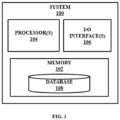
- FIG. 1 is an exemplary block diagram of a system 100 for estimation of an optimal markdown pricing based on a customer regret in accordance with some embodiments of the present disclosure.
- the system 100 includes a processor(s) 104, communication interface device(s), alternatively referred as input/output (I/O) interface(s) 106, and one or more data storage devices or a memory 102 operatively coupled to the processor(s) 104.
- the system 100 with one or more hardware processors is configured to execute functions of one or more functional blocks of the system 100.
- the processor(s) 104 can be one or more hardware processors 104.
- the one or more hardware processors 104 can be implemented as one or more microprocessors, microcomputers, microcontrollers, digital signal processors, central processing units, state machines, logic circuitries, and/or any devices that manipulate signals based on operational instructions.
- the one or more hardware processors 104 is configured to fetch and execute computer-readable instructions stored in the memory 102.
- the system 100 can be implemented in a variety of computing systems including laptop computers, notebooks, hand-held devices such as mobile phones, workstations, mainframe computers, servers, a network cloud and the like.
- the I/O interface(s) 106 can include a variety of software and hardware interfaces, for example, a web interface, a graphical user interface, a touch user interface (TUI) and the like and can facilitate multiple communications within a wide variety of networks N/W and protocol types, including wired networks, for example, LAN, cable, etc., and wireless networks, such as WLAN, cellular, or satellite.
- the I/O interface (s) 106 can include one or more ports for connecting a number of devices (nodes) of the system 100 to one another or to another server.
- the memory 102 may include any computer-readable medium known in the art including, for example, volatile memory, such as static random-access memory (SRAM) and dynamic random-access memory (DRAM), and/or non-volatile memory, such as read only memory (ROM), erasable programmable ROM, flash memories, hard disks, optical disks, and magnetic tapes.
- volatile memory such as static random-access memory (SRAM) and dynamic random-access memory (DRAM)
- DRAM dynamic random-access memory
- non-volatile memory such as read only memory (ROM), erasable programmable ROM, flash memories, hard disks, optical disks, and magnetic tapes.
- the memory 102 may include a database 108 configured to include information regarding estimation of optimal markdown pricing based on customer regret.
- the memory 102 may comprise information pertaining to input(s)/output(s) of each step performed by the processor(s) 104 of the system 100 and methods of the present disclosure.
- the database 108 may be external (not shown) to the system 100 and coupled to the system via the I/O interface 106.
- the system 100 supports various connectivity options such as BLUETOOTH ® , USB, ZigBee and other cellular services.
- the network environment enables connection of various components of the system 100 using any communication link including Internet, WAN, MAN, and so on.
- the system 100 is implemented to operate as a stand-alone device.
- the system 100 may be implemented to work as a loosely coupled device to a smart computing environment. The components and functionalities of the system 100 are described further in detail.
- FIG.2 is an example functional block diagram of the various modules of the system 100 of FIG.1 , in accordance with some embodiments of the present disclosure. As depicted in the architecture, the FIG.2 illustrates the functions of the modules of the system 100 that includes for estimation of the optimal markdown pricing based on the customer regret.
- the functional block diagram 200 of the system 100 is configured for estimation of optimal markdown pricing based on customer regret.
- the system 100 comprises an input module 202 configured for receiving a plurality of inputs from a plurality of sources, wherein the plurality of inputs is associated with seasonal fashion apparels.
- the system 100 further comprises a first set of products identifier 204 configured for identifying a first set of products using the plurality of inputs based on a fitness score.
- the system 100 further comprises a set of similar products identifier 206 configured for identifying a set of similar products from the first set of products based on a binary mapping technique.
- the system 100 further comprises a behavioral model parameters estimator 208 configured for estimating a set of behavioral model parameters using the set of similar products.
- the set of behavioral model parameters comprises a customer regret parameter and a set of reservation price parameters.
- the system 100 further comprises an updater 210 configured for updating the set of reservation price parameters to obtain a set of scaled reservation price parameters and a potential market size.
- the system 100 further comprises a markdown demand determiner 212 configured for determining a markdown demand for the plurality of products of the current regular period.
- the system 100 further comprises a optimal markdown price estimator 214 configured for estimating an optimal markdown price for the plurality of products of the current regular period.
- the various modules of the system 100 and the functional blocks in FIG.2 are configured for estimation of the optimal markdown pricing based on the customer regret are implemented as at least one of a logically self-contained part of a software program, a self-contained hardware component, and/or, a self-contained hardware component with a logically self-contained part of a software program embedded into each of the hardware component that when executed perform the above method described herein.
- FIGS.3A-3B is an exemplary flow diagram illustrating a method 300 for estimation of the optimal markdown pricing based on the customer regret using the system 100 of FIG. 1 according to an embodiment of the present disclosure.
- a plurality of inputs is received from a plurality of sources at the input module 202.
- the plurality of inputs is associated with seasonal fashion apparels.
- the plurality of inputs comprises a set of transactional information and a plurality of product information associated with a plurality of products for a current regular period, a historic regular period and a historic markdown period, a fitness threshold, a markdown sale criteria, and an inventory data.
- the regular period refers to a first-time duration when the plurality of product of seasonal fashion apparels are available at a base price and the markdown period refers to a second time duration when the plurality of product of seasonal fashion apparels are available at a discounted price.
- the base price is a price of the product before it is marked down permanently.
- the set of transactional information comprises several attributes including a transaction date, a product id, a price, a quantity, household/consumer id and a store id.
- the transaction date is a date of a transaction
- a the product id is a key identifier of a product purchased during the transaction
- the price is a price at which product was purchased during the transaction
- the quantity is a quantity of the product purchased during the transaction by a consumer
- the household/consumer id is a key identifier for the consumer who purchased the product
- the store id is a key identifier for the store/shop from where the product was purchased.
- a first set of products is identified using the plurality of inputs at the first set of products identifier 204.
- the first set of products is identified based on a fitness score.
- the first set of products comprises of seasonal fashion apparels sold in the historic regular period and the historic markdown period.
- the first set of products are identified using several steps as illustrated in the flowchart 400 of FIG.4 .
- a set of product metric is identified for each product from the plurality of product information.
- the set of product metric comprises an average price, a standard deviation and percentage sales.
- the set of product metric is identified, wherein the set of product metric comprises below details:
- a fitness score is computed for each product.
- the fitness score is computed using the plurality of inputs and the set of product metric
- the first set of products is identified using the fitness score based on the fitness threshold and the markdown sale criteria.
- the fitness threshold is a predefined scalar value used to compare against fitness score to aid the selection or identification of first set of products and the markdown sale criteria is a selection process for products from the first set of products based on comparison of markdown sales between a predefined scalar lower limit value of sales, a Min. Sale_perc m and a predefined upper limit value of sales, and a Max.Sale_perc m .
- the first set of products is identified based on the fitness threshold and the markdown sale criteria as shown below: fitness score > fitness threshold Min . Sale _ perc m ⁇ Sale _ perc m ⁇ Max . Sale _ perc m
- the predefined values for the set of pre-defined coefficients ( c 1 , c 2 and c 3 ), the fitness threshold and the markdown sale criteria can be as listed below:
- a set of similar products is identified from the first set of products in the set of similar products identifier 206.
- the set of similar products is identified based on a binary mapping technique using the plurality of product information from the current regular period.
- the binary mapping technique comprises of assigning an attribute matching score based on a comparison between the first set of products and the plurality of product from the current regular period.
- the attribute matching score is assigned based on a season attribute, a gender attribute, a category attribute, a sub-category attribute, an item description attribute and a price attribute.
- the binary mapping technique identifies a set of similar products from the historic regular period and the historic markdown period for the products sold in the current regular period based on attribute matching score.
- a ⁇ Cosine Score' is computed as a cosine distance between the description of the products.
- W i w 1 ⁇ Price score + w 2 ⁇ Cosine score
- the set of similar products is identified for a given product.
- a set of behavioral model parameters is estimated using the set of similar products in the behavioral model parameters estimator 208.
- the set of behavioral model parameters comprises a customer regret parameter and a set of reservation price parameters.
- the set of behavioral model parameters is estimated using several steps as illustrated in the flowchart (500) of FIG.5 .
- a regular price, a markdown price, a regular demand, a markdown demand, a no-purchase demand, a combined regular price, a combined markdown price, a combined regular demand, a combined markdown demand and a combined no-purchase demand is identified for a set of similar products.
- the regular demand ( N r ) refers to the number of customers who purchase during regular period.
- the markdown demand ( N m ) refers to the number of customers who purchase during markdown period.
- the No-purchase demand ( N 0 ) refers to the number of customers who visited the store, inspected the product but chose not to buy.
- a combined regular price ( P r ) is calculated as a weighted mean of the regular prices ( P r ) of similar products, where the weights are identified from the equation.4
- a combined markdown price ( P m ) calculated as a weighted mean of the markdown prices ( P r ) of similar products.
- the combined regular demand ( N r ) is calculated as a weighted mean of regular demand ( N r ) wherein the weights are identified from the equation.4 and combined markdown demand ( N m ) is as a weighted mean of markdown demand of similar products, where markdown demand is identified using the actual service level ( r ) and sales in the historic markdown period, wherein the actual service level is the fraction of demand that the retailer can satisfy in the historic markdown period
- a perceived service level and an actual service level is estimated for the historic markdown period.
- the perceived service level is the customer assumed probability that a product will be available during the historic markdown period.
- the perceived service level and the actual service level is estimated based on a minimum estimation error.
- the minimum estimation error is a heuristic technique given by identifying a value from a range of values to give a minimum error.
- r ⁇ argmin r ⁇ 0.4 0.9 est . error r
- the customer regret parameter and the set of reservation price parameters is estimated based on a constraint non-linear optimization technique.
- the set of reservation price parameters includes a pair of Weibull distribution parameters ( ⁇ , k ) and a threshold reservation price ( v 1 ).
- the set of reservation price parameters is updated based on a scaling technique at the updater 210.
- the set of reservation price parameters is updated to obtain a set of scaled reservation price parameters and a potential market size.
- the set of scaled reservation price parameters and the potential market size is obtained using the plurality of product information for the current regular period and the historic regular period.
- the scale factor is a ratio between price of current regular period and the historic regular period.
- the scaling technique comprises of multiplying the scale factor with the set of reservation price parameters to obtain a set of scaled reservation price parameters and a potential market size.
- the scaling technique comprises of multiplying a scale factor (the ratio between price of current regular period and the historic regular period) to obtain the scaled threshold reservation price v 1 new (Equation 11), and Weibull distribution parameter, ⁇ new (Equation 12).
- the potential market size ( N new ) is calculated based on the current regular period demand ( N new ) , and scaled parameters ( ⁇ n ew , v 1 new ) as in the Equation 13.
- a markdown demand is determined for the plurality of products of the current regular period at the markdown demand determiner 212.
- the markdown demand is determined using the set of scaled reservation price parameters, the potential market size and the customer regret parameter.
- an optimal markdown price is estimated for the plurality of products of the current regular period in the optimal markdown price estimator 214.
- the optimal markdown price is estimated using the markdown demand and the inventory data.
- the optimal markdown price is estimated as the price for which the markdown demand formulation ( N m ) become equal to the inventory remaining at markdown ( I m ) obtained from the inventory data.
- N new e ⁇ P m ⁇ new k ⁇ e ⁇ v 1 new ⁇ new k I m
- Equation 15 The above nonlinear equation (equation 15) is solved based on root finding algorithms including a Gauss-Newton method.
- This disclosure relates generally to an estimation of an optimal markdown pricing based on a customer regret.
- Pricing is a core aspect of any retail industry, and one of the pricing strategies used by retailers to attract customers is price reduction, wherein a seasonal product is sold at a markdown price after a predictable regular sale.
- the existing techniques for estimating an optimal markdown price are limited to factors such as market competition, and retailer formats and do not gain deeper understanding of customers' reactions nor explicitly utilizes inventory data.
- the disclosure estimates optimal markdown pricing in several steps including estimation of a set of behavioral model parameters comprising a customer regret parameter and a set of reservation price parameters, determining a markdown demand, and estimating the optimal markdown price using the markdown demand and inventory data.
- Such computer-readable storage means contain program-code means for implementation of one or more steps of the method, when the program runs on a server or mobile device or any suitable programmable device.
- the hardware device can be any kind of device which can be programmed including e.g., any kind of computer like a server or a personal computer, or the like, or any combination thereof.
- the device may also include means which could be e.g., hardware means like e.g., an application-specific integrated circuit (ASIC), a field-programmable gate array (FPGA), or a combination of hardware and software means, e.g., an ASIC and an FPGA, or at least one microprocessor and at least one memory with software processing components located therein.
- the means can include both hardware means and software means.
- the method embodiments described herein could be implemented in hardware and software.
- the device may also include software means. Alternatively, the embodiments may be implemented on different hardware devices, e.g., using a plurality of CPUs.
- the embodiments herein can comprise hardware and software elements.
- the embodiments that are implemented in software include but are not limited to, firmware, resident software, microcode, etc.
- the functions performed by various components described herein may be implemented in other components or combinations of other components.
- a computer-usable or computer readable medium can be any apparatus that can comprise, store, communicate, propagate, or transport the program for use by or in connection with the instruction execution system, apparatus, or device.
- a computer-readable storage medium refers to any type of physical memory on which information or data readable by a processor may be stored.
- a computer-readable storage medium may store instructions for execution by one or more processors, including instructions for causing the processor(s) to perform steps or stages consistent with the embodiments described herein.
- the term "computer-readable medium” should be understood to include tangible items and exclude carrier waves and transient signals, i.e., be non-transitory. Examples include random access memory (RAM), read-only memory (ROM), volatile memory, nonvolatile memory, hard drives, CD ROMs, DVDs, flash drives, disks, and any other known physical storage media.
Landscapes
- Business, Economics & Management (AREA)
- Engineering & Computer Science (AREA)
- Development Economics (AREA)
- Accounting & Taxation (AREA)
- Finance (AREA)
- Strategic Management (AREA)
- Physics & Mathematics (AREA)
- General Physics & Mathematics (AREA)
- Entrepreneurship & Innovation (AREA)
- Theoretical Computer Science (AREA)
- Economics (AREA)
- General Business, Economics & Management (AREA)
- Marketing (AREA)
- Game Theory and Decision Science (AREA)
- Data Mining & Analysis (AREA)
- Operations Research (AREA)
- Computational Mathematics (AREA)
- Mathematical Physics (AREA)
- Pure & Applied Mathematics (AREA)
- Mathematical Optimization (AREA)
- Mathematical Analysis (AREA)
- Bioinformatics & Cheminformatics (AREA)
- Bioinformatics & Computational Biology (AREA)
- Evolutionary Biology (AREA)
- Human Resources & Organizations (AREA)
- Life Sciences & Earth Sciences (AREA)
- Probability & Statistics with Applications (AREA)
- Tourism & Hospitality (AREA)
- Algebra (AREA)
- Quality & Reliability (AREA)
- Databases & Information Systems (AREA)
- Software Systems (AREA)
- General Engineering & Computer Science (AREA)
- Management, Administration, Business Operations System, And Electronic Commerce (AREA)
Abstract
This disclosure relates generally to estimation of optimal markdown pricing based on customer regret. Pricing is a core aspect of any retail industry, and one of the pricing strategies used by retailers to attract customers is price reduction, wherein a seasonal product is sold at a markdown price after a predictable regular sale. The existing techniques for estimating an optimal markdown price are limited to factors such as market competition, and retailer formats and do not gain deeper understanding of customers' reactions nor explicitly utilizes inventory data. The disclosure estimates optimal markdown pricing in several steps including estimation of a set of behavioral model parameters comprising a customer regret parameter and a set of reservation price parameters, determining a markdown demand, and estimating the optimal markdown price using the markdown demand and inventory data.
Description
- The present application claims priority to
Indian application number 202221070162, filed on December 05, 2022 - The disclosure herein generally relates to an estimation of optimal markdown pricing and, more particularly, a system and method for estimation of an optimal markdown pricing based on a customer regret.
- Pricing is a core aspect of any retail industry, that sells products to customers. As the retail industry is often characterized by slim profit margins, pricing is one of the most powerful ways to attract shunning customers and increase profitability. Hence it is necessary to implement a pricing strategy for retailers to compete and make profit in the market. The success of the pricing strategy implementation depends on several factors, such as target customer, market competition, retailer formats, etc.
- One of the pricing strategies used by retailers to attract customers is price reduction, wherein a seasonal product is sold at a markdown price after a predictable regular sale. Hence, the retailer's plan for seasonal products will include both a regular pricing and a post-season clearance markdown price to achieve maximum sales revenues for the entire item life cycle or entire season.
- The existing techniques for estimating an optimal markdown price are limited to factors such as market competition, and retailer formats. The existing state-of-art techniques are limited and do not gain deeper understanding of customers' strategic reactions and emotional reactions to retailers' pricing structure, customer characteristics and behavior nor is does any state-of-art technique explicitly utilize inventory data. Hence, there is a need for a technique to consider the above factors while estimating the optimal markdown price of seasonal products, such as fashion goods.
- Embodiments of the present disclosure present technological improvements as solutions to one or more of the above-mentioned technical problems recognized by the inventors in conventional systems. For example, in one embodiment, a system for estimation of an optimal markdown pricing based on a customer regret is provided.
- The system includes a memory storing instructions, one or more communication interfaces, and one or more hardware processors coupled to the memory via the one or more communication interfaces, wherein the one or more hardware processors are configured by the instructions to receive a plurality of inputs from a plurality of sources, via one or more hardware processors, wherein the plurality of inputs is associated with seasonal fashion apparels and comprises a set of transactional information and a plurality of product information associated with a plurality of products for a current regular period, a historic regular period and a historic markdown period, a fitness threshold, a markdown sale criteria, and an inventory data. The system is further configured for identifying a first set of products using the plurality of inputs based on a fitness score via the one or more hardware processors, wherein the first set of products comprises of seasonal fashion apparels sold in the historic regular period and the historic markdown period. The system is further configured for identifying a set of similar products from the first set of products, via the one or more hardware processors, based on a binary mapping technique using the plurality of product information from the current regular period. The system is further configured for estimating a set of behavioral model parameters using the set of similar products, via the one or more hardware processors, wherein the set of behavioral model parameters comprises a customer regret parameter and a set of reservation price parameters. The system is further configured for updating the set of reservation price parameters to obtain a set of scaled reservation price parameters and a potential market size, via the one or more hardware processors, using the plurality of product information for the current regular period and the historic regular period based on a scaling technique. The system is further configured for determining a markdown demand for the plurality of products of the current regular period, via the one or more hardware processors, using the set of scaled distribution parameters, the potential market size, and the customer regret parameter. The system is further configured for estimating an optimal markdown price for the plurality of products of the current regular period, via the one or more hardware processors, using the markdown demand and the inventory data.
- In another aspect, a method for estimation of an optimal markdown pricing based on a customer regret is provided. The method includes receiving a plurality of inputs from a plurality of sources wherein the plurality of inputs is associated with seasonal fashion apparels and comprises a set of transactional information and a plurality of product information associated with a plurality of products for a current regular period, a historic regular period and a historic markdown period, a fitness threshold, a markdown sale criteria, and an inventory data. The method further includes identifying a first set of products using the plurality of inputs based on a fitness score, wherein the identified first set of products comprises of seasonal fashion apparels sold in the historic regular period and the historic markdown period. The method further includes identifying a set of similar products from the first set of products based on a binary mapping technique using the plurality of product information from the current regular period. The method further includes estimating a set of behavioral model parameters using the set of similar products wherein the set of behavioral model parameters comprises a customer regret parameter and a set of reservation price parameters. The method further includes updating the set of reservation price parameters to obtain a set of scaled reservation price parameters and a potential market size using the plurality of product information for the current regular period and the historic regular period based on a scaling technique. The method further includes determining a markdown demand for the plurality of products of the current regular period using the set of scaled distribution parameters, the potential market size and the customer regret parameter. The method further includes estimating an optimal markdown price for the plurality of products of the current regular period using the markdown demand and the inventory data.
- In yet another aspect, a non-transitory computer readable medium is provided comprising one or more instructions, which when executed by one or more hardware processors causes a method for estimation of an optimal markdown pricing based on a customer regret. The method includes receiving a plurality of inputs from a plurality of sources wherein the plurality of inputs is associated with seasonal fashion apparels and comprises a set of transactional information and a plurality of product information associated with a plurality of products for a current regular period, a historic regular period and a historic markdown period, a fitness threshold, a markdown sale criteria, and an inventory data. The method further includes identifying a first set of products using the plurality of inputs based on a fitness score, wherein the first set of products comprises of seasonal fashion apparels sold in the historic regular period and the historic markdown period. The method further includes identifying a set of similar products from the first set of products based on a binary mapping technique using the plurality of product information from the current regular period. The method further includes estimating a set of behavioral model parameters using the set of similar products wherein the set of behavioral model parameters comprises a customer regret parameter and a set of reservation price parameters. The method further includes updating the set of reservation price parameters to obtain a set of scaled reservation price parameters and a potential market size using the plurality of product information for the current regular period and the historic regular period based on a scaling technique. The method further includes determining a markdown demand for the plurality of products of the current regular period using the set of scaled distribution parameters, the potential market size and the customer regret parameter. The method further includes estimating an optimal markdown price for the plurality of products of the current regular period using the markdown demand and the inventory data.
- It is to be understood that both the foregoing general description and the following detailed description are exemplary and explanatory only and are not restrictive of the invention, as claimed.
- The accompanying drawings, which are incorporated in and constitute a part of this disclosure, illustrate exemplary embodiments and, together with the description, serve to explain the disclosed principles:
-
FIG.1 illustrates an exemplary system for estimation of an optimal markdown pricing based on customer regret, according to some embodiments of the present disclosure. -
FIG.2 is a functional block diagram for estimation of optimal markdown pricing based on customer regret, according to some embodiments of the present disclosure. -
FIG.3A andFIG.3B is a flow diagram illustrating a method (300) for estimation of an optimal markdown pricing based on a customer regret, in accordance with some embodiments of the present disclosure. -
FIG.4 is a flow diagram (400) illustrating the method (300) for identification of the first set of products during estimation of optimal markdown pricing based on customer regret, in accordance with some embodiments of the present disclosure. -
FIG.5 is a flow diagram (500) illustrating the method (300) for estimation of the set of behavioral model parameters during estimation of optimal markdown pricing based on customer regret, in accordance with some embodiments of the present disclosure. - Exemplary embodiments are described with reference to the accompanying drawings. In the figures, the left-most digit(s) of a reference number identifies the figure in which the reference number first appears. Wherever convenient, the same reference numbers are used throughout the drawings to refer to the same or like parts. While examples and features of disclosed principles are described herein, modifications, adaptations, and other implementations are possible without departing from the scope of the disclosed embodiments.
- Customers are regret-prone, and anticipation of regret affects a customer's purchase decisions. Customers experience high price regret when they miss an opportunity to purchase products at low price and stockout regret when they are unable to purchase products due to stockouts. Hence, under the intensity of such regret, rationalizing the identification of optimal markdown pricing of seasonal products under inventory concerns should also be considered along with customer's regret.
- Referring now to the drawings, and more particularly to
FIG. 1 through FIG.5 , where similar reference characters denote corresponding features consistently throughout the figures, there are shown preferred embodiments and these embodiments are described in the context of the following exemplary system and/or method. -
FIG. 1 is an exemplary block diagram of asystem 100 for estimation of an optimal markdown pricing based on a customer regret in accordance with some embodiments of the present disclosure. - In an embodiment, the
system 100 includes a processor(s) 104, communication interface device(s), alternatively referred as input/output (I/O) interface(s) 106, and one or more data storage devices or amemory 102 operatively coupled to the processor(s) 104. Thesystem 100 with one or more hardware processors is configured to execute functions of one or more functional blocks of thesystem 100. - Referring to the components of the
system 100, in an embodiment, the processor(s) 104, can be one ormore hardware processors 104. In the preferred embodiment, the one ormore hardware processors 104 can be implemented as one or more microprocessors, microcomputers, microcontrollers, digital signal processors, central processing units, state machines, logic circuitries, and/or any devices that manipulate signals based on operational instructions. Among other capabilities, the one ormore hardware processors 104 is configured to fetch and execute computer-readable instructions stored in thememory 102. Thesystem 100 can be implemented in a variety of computing systems including laptop computers, notebooks, hand-held devices such as mobile phones, workstations, mainframe computers, servers, a network cloud and the like. - The I/O interface(s) 106 can include a variety of software and hardware interfaces, for example, a web interface, a graphical user interface, a touch user interface (TUI) and the like and can facilitate multiple communications within a wide variety of networks N/W and protocol types, including wired networks, for example, LAN, cable, etc., and wireless networks, such as WLAN, cellular, or satellite. In an embodiment, the I/O interface (s) 106 can include one or more ports for connecting a number of devices (nodes) of the
system 100 to one another or to another server. - The
memory 102 may include any computer-readable medium known in the art including, for example, volatile memory, such as static random-access memory (SRAM) and dynamic random-access memory (DRAM), and/or non-volatile memory, such as read only memory (ROM), erasable programmable ROM, flash memories, hard disks, optical disks, and magnetic tapes. - Further, the
memory 102 may include adatabase 108 configured to include information regarding estimation of optimal markdown pricing based on customer regret. Thememory 102 may comprise information pertaining to input(s)/output(s) of each step performed by the processor(s) 104 of thesystem 100 and methods of the present disclosure. In an embodiment, thedatabase 108 may be external (not shown) to thesystem 100 and coupled to the system via the I/O interface 106. - Functions of the components of
system 100 are explained in conjunction with functional overview of thesystem 100 inFIG.2 and flow diagram ofFIG.3A andFIG.3B for estimation of the optimal markdown pricing based on the customer regret. - The
system 100 supports various connectivity options such as BLUETOOTH®, USB, ZigBee and other cellular services. The network environment enables connection of various components of thesystem 100 using any communication link including Internet, WAN, MAN, and so on. In an exemplary embodiment, thesystem 100 is implemented to operate as a stand-alone device. In another embodiment, thesystem 100 may be implemented to work as a loosely coupled device to a smart computing environment. The components and functionalities of thesystem 100 are described further in detail. -
FIG.2 is an example functional block diagram of the various modules of thesystem 100 ofFIG.1 , in accordance with some embodiments of the present disclosure. As depicted in the architecture, theFIG.2 illustrates the functions of the modules of thesystem 100 that includes for estimation of the optimal markdown pricing based on the customer regret. - As depicted in
FIG.2 , the functional block diagram 200 of thesystem 100 is configured for estimation of optimal markdown pricing based on customer regret. - The
system 100 comprises aninput module 202 configured for receiving a plurality of inputs from a plurality of sources, wherein the plurality of inputs is associated with seasonal fashion apparels. Thesystem 100 further comprises a first set of products identifier 204 configured for identifying a first set of products using the plurality of inputs based on a fitness score. Thesystem 100 further comprises a set ofsimilar products identifier 206 configured for identifying a set of similar products from the first set of products based on a binary mapping technique. Thesystem 100 further comprises a behavioralmodel parameters estimator 208 configured for estimating a set of behavioral model parameters using the set of similar products. The set of behavioral model parameters comprises a customer regret parameter and a set of reservation price parameters. Thesystem 100 further comprises anupdater 210 configured for updating the set of reservation price parameters to obtain a set of scaled reservation price parameters and a potential market size. Thesystem 100 further comprises amarkdown demand determiner 212 configured for determining a markdown demand for the plurality of products of the current regular period. Thesystem 100 further comprises a optimalmarkdown price estimator 214 configured for estimating an optimal markdown price for the plurality of products of the current regular period. - The various modules of the
system 100 and the functional blocks inFIG.2 are configured for estimation of the optimal markdown pricing based on the customer regret are implemented as at least one of a logically self-contained part of a software program, a self-contained hardware component, and/or, a self-contained hardware component with a logically self-contained part of a software program embedded into each of the hardware component that when executed perform the above method described herein. - Functions of the components of the
system 100 are explained in conjunction with functional modules of thesystem 100 stored in thememory 102 and further explained in conjunction with flow diagram ofFIGS.3A-3B . TheFIGS.3A-3B with reference toFIG.1 , is an exemplary flow diagram illustrating amethod 300 for estimation of the optimal markdown pricing based on the customer regret using thesystem 100 ofFIG. 1 according to an embodiment of the present disclosure. - The steps of the method of the present disclosure will now be explained with reference to the components of the
system 100 ofFIG. 1 for estimation of optimal markdown pricing based on customer regret and the modules 202-214 as depicted inFIG.2 and the flow diagrams as depicted inFIGS.3A-3B . Although process steps, method steps, techniques or the like may be described in a sequential order, such processes, methods and techniques may be configured to work in alternate orders. In other words, any sequence or order of steps that may be described does not necessarily indicate a requirement that the steps to be performed in that order. The steps of processes described herein may be performed in any order practical. Further, some steps may be performed simultaneously. - Initially, at
step 302 of themethod 300, a plurality of inputs is received from a plurality of sources at theinput module 202. The plurality of inputs is associated with seasonal fashion apparels. - The plurality of inputs comprises a set of transactional information and a plurality of product information associated with a plurality of products for a current regular period, a historic regular period and a historic markdown period, a fitness threshold, a markdown sale criteria, and an inventory data.
- The regular period refers to a first-time duration when the plurality of product of seasonal fashion apparels are available at a base price and the markdown period refers to a second time duration when the plurality of product of seasonal fashion apparels are available at a discounted price. The base price is a price of the product before it is marked down permanently.
- In an embodiment, the set of transactional information comprises several attributes including a transaction date, a product id, a price, a quantity, household/consumer id and a store id. The transaction date is a date of a transaction, a the product id is a key identifier of a product purchased during the transaction, the price is a price at which product was purchased during the transaction, the quantity is a quantity of the product purchased during the transaction by a consumer, the household/consumer id is a key identifier for the consumer who purchased the product and the store id is a key identifier for the store/shop from where the product was purchased.
- The plurality of product information comprises several attributes including a product identification (ID), an item description, a price, a brand name, a season, a gender, a product size, and a product category/subcategory. The product Id is a key identifier of the product purchased during the transaction, the item description is the name of the product, the brand name is a brand of the product, the price is the current day price of the product, the season is the specific season for which the product is sold such as summer, Fall, spring, etc. The gender is the assigned gender for the product, the product size is the size of the product and the product category/subcategory specifies product category for the product.
- At
step 304 of themethod 300, a first set of products is identified using the plurality of inputs at the first set ofproducts identifier 204. The first set of products is identified based on a fitness score. The first set of products comprises of seasonal fashion apparels sold in the historic regular period and the historic markdown period. - In another embodiment, the first set of products are identified using several steps as illustrated in the
flowchart 400 ofFIG.4 . - At
step 402 of theflowchart 400, a set of product metric is identified for each product from the plurality of product information. The set of product metric comprises an average price, a standard deviation and percentage sales. - In the preferred embodiment, for each product, the set of product metric is identified, wherein the set of product metric comprises below details:
- a) Regular Price (Pr ), calculated as the mean of the selling prices in the historic regular period,
- b) Markdown Price (Pm ), calculated as the mean of the selling prices in the historic markdown period,
- c) Standard deviation during the historic regular period (SDr ), calculated as the standard deviation of the selling price in the historic regular period,
- d) Standard deviation during the historic markdown period (SDm ), calculated as the standard deviation of the selling price in the historic markdown period, and
- e) Sale_percm is calculated as part of a total sales (in percentage) that was sold in the historic markdown period.
- At
step 404 of theflowchart 400, a fitness score is computed for each product. The fitness score is computed using the plurality of inputs and the set of product metric - In the preferred embodiment, the fitness score for each product is computed based on the below equation:

- c1, c2 and c3 are a set of pre-defined coefficients,
- SDr is the standard deviation of the price in the historic regular period,
- SDm is the standard deviation of the price in the historic markdown period,
- Pr is the average price in the historic regular period, and
- Pm is the average price in the historic markdown period.
- At
step 406 of theflowchart 400, the first set of products is identified using the fitness score based on the fitness threshold and the markdown sale criteria. - In the preferred embodiment, the fitness threshold is a predefined scalar value used to compare against fitness score to aid the selection or identification of first set of products and the markdown sale criteria is a selection process for products from the first set of products based on comparison of markdown sales between a predefined scalar lower limit value of sales, a Min. Sale_percm and a predefined upper limit value of sales, and a Max.Sale_percm .
- The first set of products is identified based on the fitness threshold and the markdown sale criteria as shown below:

- In an example scenario, based on heuristic experiments, the predefined values for the set of pre-defined coefficients (c 1,c 2 and c 3 ), the fitness threshold and the markdown sale criteria can be as listed below:
- i) c 1 = 1
- ii) c 2 = 1
- iii) c 3 = 1
- iv) fitnessthreshold = 5
- v) Min.Markdownsale = 30
- vi) Max. Markdownsale = 50
- Referring to
FIG.3A , atstep 306 of themethod 300, a set of similar products is identified from the first set of products in the set ofsimilar products identifier 206. The set of similar products is identified based on a binary mapping technique using the plurality of product information from the current regular period. - In the preferred embodiment, the binary mapping technique comprises of assigning an attribute matching score based on a comparison between the first set of products and the plurality of product from the current regular period. The attribute matching score is assigned based on a season attribute, a gender attribute, a category attribute, a sub-category attribute, an item description attribute and a price attribute.
- The binary mapping technique identifies a set of similar products from the historic regular period and the historic markdown period for the products sold in the current regular period based on attribute matching score.
- In item description match, a `Cosine Score' is computed as a cosine distance between the description of the products. In price match, a "Price Difference" which is the absolute difference between the price of both the products is computed to calculate the `Price Score' as follows:

Pricedifference is absolute difference between the prices - Further, based on above computed values, a weightage (Wi ) is assigned to each of the identified set of similar products:

- w1 is the weightage value assigned to Pricescore, and
- w2 is the weightage value assigned to Cosinescore
- Based on the weightage the set of similar products is identified for a given product.
- At
step 308 of themethod 300, a set of behavioral model parameters is estimated using the set of similar products in the behavioralmodel parameters estimator 208. The set of behavioral model parameters comprises a customer regret parameter and a set of reservation price parameters. - In an embodiment, the set of behavioral model parameters is estimated using several steps as illustrated in the flowchart (500) of
FIG.5 . - At
step 502 of theflowchart 500, a regular price, a markdown price, a regular demand, a markdown demand, a no-purchase demand, a combined regular price, a combined markdown price, a combined regular demand, a combined markdown demand and a combined no-purchase demand is identified for a set of similar products. - The regular demand (Nr ) refers to the number of customers who purchase during regular period. The markdown demand (Nm ) refers to the number of customers who purchase during markdown period. The No-purchase demand (N 0) refers to the number of customers who visited the store, inspected the product but chose not to buy.
- In an embodiment, a combined regular price (
P r ) is calculated as a weighted mean of the regular prices (Pr ) of similar products, where the weights are identified from the equation.4 Similarly, a combined markdown price (P m ) calculated as a weighted mean of the markdown prices (Pr ) of similar products.

- k is the total number of similar products, and
- Wi is the weightage assigned to similar products.
- In an embodiment, the combined regular demand (
N r ) is calculated as a weighted mean of regular demand (Nr ) wherein the weights are identified from the equation.4 and combined markdown demand (N m ) is as a weighted mean of markdown demand of similar products, where markdown demand is identified using the actual service level (r) and sales in the historic markdown period, wherein the actual service level is the fraction of demand that the retailer can satisfy in the historic markdown period The combined no-purchase demand (N 0) is estimated from multiplying a factor (Q) with the sum of combined regular demand (N r ) and combined markdown demand (N m ) as expressed below:
- k is the total number of similar products, and
- Wi is the weightage assigned to similar products.
- At
step 504 of theflowchart 500, a perceived service level and an actual service level is estimated for the historic markdown period. The perceived service level is the customer assumed probability that a product will be available during the historic markdown period. The perceived service level and the actual service level is estimated based on a minimum estimation error. - The minimum estimation error is a heuristic technique given by identifying a value from a range of values to give a minimum error.

- r̃ is the estimated service level, and
- est. error(r) is the estimation error for a value of service level r.
- In an embodiment, the perceived service level is calculated via the probability weighting function

- s is the estimated service level,
- r is the service level, and
- θ is a deviation parameter.
- At
step 506 of theflowchart 500, the customer regret parameter and the set of reservation price parameters is estimated based on a constraint non-linear optimization technique. The set of reservation price parameters includes a pair of Weibull distribution parameters (λ, k) and a threshold reservation price (v 1). - The customer regret parameter and the set of reservation price parameters is estimated using the combined regular price, the combined markdown price, the combined regular demand, the combined markdown demand, the combined no-purchase demand, the perceived service level and the actual service level based on a constraint non-linear optimization technique.
- In an embodiment, the parameter estimation problem can be formulated as a maximum log-likelihood estimation problem based on the three demands (combined regular, combined markdown and combined No-purchase), which is solved via the constraint non-linear optimization technique as expressed below:

- F(x) = 1 - e -(x/λ)
k is the cumulative distribution function of the reservation price, -
F (x) = 1 - F(x), - v 1 is threshold reservation price,
-
N 0 is combined no purchase demand, -
N m is combined markdown demand, -
N r is combined regular demand, and -
P r is the combined regular price. - Referring to
FIG.3B , at thestep 310 of themethod 300, the set of reservation price parameters is updated based on a scaling technique at theupdater 210. The set of reservation price parameters is updated to obtain a set of scaled reservation price parameters and a potential market size. The set of scaled reservation price parameters and the potential market size is obtained using the plurality of product information for the current regular period and the historic regular period. - The scale factor is a ratio between price of current regular period and the historic regular period.
- In an embodiment, the scaling technique comprises of multiplying the scale factor with the set of reservation price parameters to obtain a set of scaled reservation price parameters and a potential market size. The scaling technique comprises of multiplying a scale factor (the ratio between price of current regular period and the historic regular period) to obtain the scaled threshold reservation price v 1
new (Equation 11), and Weibull distribution parameter, λnew (Equation 12). Also, the potential market size (Nnew ) is calculated based on the current regular period demand (Nnew ), and scaled parameters (λ new , v 1new ) as in the Equation 13.


- At
step 312 of themethod 300, a markdown demand is determined for the plurality of products of the current regular period at themarkdown demand determiner 212. The markdown demand is determined using the set of scaled reservation price parameters, the potential market size and the customer regret parameter. - In an embodiment, the markdown demand is determined as follows:

- Nm is the markdown demand,
- Pm is the markdown price,
- Nnew is the potential market size,
- F(x) = 1 - e-(x/λ
new )k is the cumulative distribution function of the reservation price, - λnew and k are Weibull distribution parameters, and
- v 1
new is the threshold reservation price. - At
step 314 of themethod 300, an optimal markdown price is estimated for the plurality of products of the current regular period in the optimalmarkdown price estimator 214. The optimal markdown price is estimated using the markdown demand and the inventory data. - In an embodiment, the optimal markdown price is estimated as the price for which the markdown demand formulation (Nm ) become equal to the inventory remaining at markdown (Im ) obtained from the inventory data.

- The above nonlinear equation (equation 15) is solved based on root finding algorithms including a Gauss-Newton method.
- The written description describes the subject matter herein to enable any person skilled in the art to make and use the embodiments. The scope of the subject matter embodiments is defined by the claims and may include other modifications that occur to those skilled in the art. Such other modifications are intended to be within the scope of the claims if they have similar elements that do not differ from the literal language of the claims or if they include equivalent elements with insubstantial differences from the literal language of the claims.
- This disclosure relates generally to an estimation of an optimal markdown pricing based on a customer regret. Pricing is a core aspect of any retail industry, and one of the pricing strategies used by retailers to attract customers is price reduction, wherein a seasonal product is sold at a markdown price after a predictable regular sale. The existing techniques for estimating an optimal markdown price are limited to factors such as market competition, and retailer formats and do not gain deeper understanding of customers' reactions nor explicitly utilizes inventory data. The disclosure estimates optimal markdown pricing in several steps including estimation of a set of behavioral model parameters comprising a customer regret parameter and a set of reservation price parameters, determining a markdown demand, and estimating the optimal markdown price using the markdown demand and inventory data.
- It is to be understood that the scope of the protection is extended to such a program and in addition to a computer-readable means having a message therein; such computer-readable storage means contain program-code means for implementation of one or more steps of the method, when the program runs on a server or mobile device or any suitable programmable device. The hardware device can be any kind of device which can be programmed including e.g., any kind of computer like a server or a personal computer, or the like, or any combination thereof. The device may also include means which could be e.g., hardware means like e.g., an application-specific integrated circuit (ASIC), a field-programmable gate array (FPGA), or a combination of hardware and software means, e.g., an ASIC and an FPGA, or at least one microprocessor and at least one memory with software processing components located therein. Thus, the means can include both hardware means and software means. The method embodiments described herein could be implemented in hardware and software. The device may also include software means. Alternatively, the embodiments may be implemented on different hardware devices, e.g., using a plurality of CPUs.
- The embodiments herein can comprise hardware and software elements. The embodiments that are implemented in software include but are not limited to, firmware, resident software, microcode, etc. The functions performed by various components described herein may be implemented in other components or combinations of other components. For the purposes of this description, a computer-usable or computer readable medium can be any apparatus that can comprise, store, communicate, propagate, or transport the program for use by or in connection with the instruction execution system, apparatus, or device.
- The illustrated steps are set out to explain the exemplary embodiments shown, and it should be anticipated that ongoing technological development will change the manner in which particular functions are performed. These examples are presented herein for purposes of illustration, and not limitation. Further, the boundaries of the functional building blocks have been arbitrarily defined herein for the convenience of the description. Alternative boundaries can be defined so long as the specified functions and relationships thereof are appropriately performed. Alternatives (including equivalents, extensions, variations, deviations, etc., of those described herein) will be apparent to persons skilled in the relevant art(s) based on the teachings contained herein. Such alternatives fall within the scope of the disclosed embodiments. Also, the words "comprising," "having," "containing," and "including," and other similar forms are intended to be equivalent in meaning and be open ended in that an item or items following any one of these words is not meant to be an exhaustive listing of such item or items, or meant to be limited to only the listed item or items. It must also be noted that as used herein and in the appended claims, the singular forms "a," "an," and "the" include plural references unless the context clearly dictates otherwise.
- Furthermore, one or more computer-readable storage media may be utilized in implementing embodiments consistent with the present disclosure. A computer-readable storage medium refers to any type of physical memory on which information or data readable by a processor may be stored. Thus, a computer-readable storage medium may store instructions for execution by one or more processors, including instructions for causing the processor(s) to perform steps or stages consistent with the embodiments described herein. The term "computer-readable medium" should be understood to include tangible items and exclude carrier waves and transient signals, i.e., be non-transitory. Examples include random access memory (RAM), read-only memory (ROM), volatile memory, nonvolatile memory, hard drives, CD ROMs, DVDs, flash drives, disks, and any other known physical storage media.
- It is intended that the disclosure and examples be considered as exemplary only, with a true scope of disclosed embodiments being indicated by the following claims.
Claims (15)
- A processor-implemented method (300) comprising steps ofreceiving a plurality of inputs from a plurality of sources, via one or more hardware processors, wherein the plurality of inputs is associated with seasonal fashion apparels and comprises a set of transactional information and a plurality of product information associated with a plurality of products for a current regular period, a historic regular period and a historic markdown period, a fitness threshold, a markdown sale criteria, and an inventory data (302);identifying a first set of products from the plurality of products using the plurality of inputs based on a fitness score via the one or more hardware processors, wherein the first set of products comprises of seasonal fashion apparels sold in the historic regular period and the historic markdown period (304);identifying a set of similar products from the identified first set of products, via the one or more hardware processors, based on a binary mapping technique using the plurality of product information from the current regular period (306);estimating a set of behavioral model parameters using the identified set of similar products, via the one or more hardware processors, wherein the set of behavioral model parameters comprises a customer regret parameter and a set of reservation price parameters (308);updating the set of reservation price parameters to obtain a set of scaled reservation price parameters and a potential market size, via the one or more hardware processors, using the plurality of product information for the current regular period and the historic regular period based on a scaling technique (310);determining a markdown demand for the plurality of products of the current regular period, via the one or more hardware processors, using the set of scaled distribution parameters, the potential market size and the customer regret parameter (312); andestimating an optimal markdown price for the plurality of products of the current regular period, via the one or more hardware processors, using the determined markdown demand and the inventory data (314).
- The processor implemented method of claim 1, wherein the identification of the first set of products (400) comprises:identifying a set of product metric for each of the plurality of products from the plurality of product information, wherein the set of product metric comprises an average price, a standard deviation and percentage sales (402);computing a fitness score for each of the plurality of products using the plurality of inputs and the identified set of product metric (404); andidentifying the first set of products using the computed fitness score based on the fitness threshold and the markdown sale criteria (406).
- The processor implemented method of claim 1, wherein the binary mapping technique comprises of assigning an attribute matching score based on a comparison between the first set of products and the plurality of product from the current regular period, wherein the attribute matching score is assigned based on a season attribute, a gender attribute, a category attribute, a sub-category attribute, an item description attribute, and a price attribute.
- The processor implemented method of claim 1, wherein the estimation of the set of behavioral model parameters (500) comprises:identifying a regular price, a markdown price, a regular demand, a markdown demand, a no-purchase demand, a combined regular price, a combined markdown price, a combined regular demand, a combined markdown demand and a combined no-purchase demand for the set of similar products (502);estimating a perceived service level and an actual service level for the historic markdown period based on a minimum estimation error, wherein the minimum estimation error is heuristic technique given by identifying a value from a range of values to give a minimum error (504); andestimating the customer regret parameter and the set of reservation price parameters using the combined regular price, the combined markdown price, the combined regular demand, the combined markdown demand, the combined no-purchase demand, the perceived service level and the actual service level based on a constraint non-linear optimization technique, wherein the set of reservation price parameters includes a pair of Weibull distribution parameters (λ, k) and a threshold reservation price (v 1)(506).
- The processor implemented method of claim 1, wherein the scaling technique comprises of multiplying a scale factor with the set of reservation price parameters to obtain a set of scaled reservation price parameters and a potential market size, wherein the scale factor is a ratio between price of current regular period and the historic regular period.
- The processor implemented method of claim 1, the markdown demand is determined as follows:
 Nm is the markdown demand,Pm is the markdown price,F(x) = 1 - e -(x/λ
new )k is the cumulative distribution function of the reservation price,λnew and k are Weibull distribution parameters,Nnew is the potential market size, andv 1new is the threshold reservation price. - A system (100) comprising:a memory (102) storing instructions;one or more communication interfaces (106); andone or more hardware processors (104) coupled to the memory (102) via the one or more communication interfaces (106), wherein the one or more hardware processors (104) are configured by the instructions to:receive a plurality of inputs from a plurality of sources, via one or more hardware processors, wherein the plurality of inputs is associated with seasonal fashion apparels and comprises a set of transactional information and a plurality of product information associated with a plurality of products for a current regular period, a historic regular period and a historic markdown period, a fitness threshold, a markdown sale criteria, and an inventory data;identify a first set of products from the plurality of products using the plurality of inputs based on a fitness score via the one or more hardware processors, wherein the first set of products comprises of seasonal fashion apparels sold in the historic regular period and the historic markdown period;identify a set of similar products from the identified first set of products, via the one or more hardware processors, based on a binary mapping technique using the plurality of product information from the current regular period;estimate a set of behavioral model parameters using the set of similar products, via the one or more hardware processors, wherein the set of behavioral model parameters comprises a customer regret parameter and a set of reservation price parameters;update the set of reservation price parameters to obtain a set of scaled reservation price parameters and a potential market size, via the one or more hardware processors, using the plurality of product information for the current regular period and the historic regular period based on a scaling technique;determine a markdown demand for the plurality of products from the current regular period, via the one or more hardware processors, using the set of scaled distribution parameters, the potential market size, and the customer regret parameter; andestimate an optimal markdown price for the plurality of products from the current regular period, via the one or more hardware processors, using the determined markdown demand and the inventory data.
- The system (100) of claim 7, wherein the identification of the first set of products comprises:identifying a set of product metric for each of the plurality of products from the plurality of product information, wherein the set of product metric comprises an average price, a standard deviation and percentage sales;computing a fitness score for each of the plurality of products using the plurality of inputs and the identified set of product metric; andidentifying the first set of products using the computed fitness score based on the fitness threshold and the markdown sale criteria.
- The system (100) of claim 7, wherein the binary mapping technique comprises of assigning an attribute matching score based on a comparison between the first set of products and the plurality of product from the current regular period, wherein the attribute matching score is assigned based on a season attribute, a gender attribute, a category attribute, a sub-category attribute, an item description attribute, and a price attribute.
- The system (100) of claim 7, wherein the estimation of the set of behavioral model parameters comprises:identifying a regular price, a markdown price, a regular demand, a markdown demand, a no-purchase demand, a combined regular price, a combined markdown price, a combined regular demand, a combined markdown demand and a combined no-purchase demand for the set of similar products;estimating a perceived service level and an actual service level for the historic markdown period based on a minimum estimation error, wherein the minimum estimation error is heuristic technique given by identifying a value from a range of values to give a minimum error; andestimating the customer regret parameter and the set of reservation price parameters using the combined regular price, the combined markdown price, the combined regular demand, the combined markdown demand, the combined no-purchase demand, the perceived service level and the actual service level based on a constraint non-linear optimization technique, wherein the set of reservation price parameters includes a pair of Weibull distribution parameters (λ, k) and a threshold reservation price (v 1);
- The system (100) of claim 7, wherein the scaling technique comprises of multiplying a scale factor with the set of reservation price parameters to obtain a set of scaled reservation price parameters and a potential market size, wherein the scale factor is a ratio between price of current regular period and the historic regular period.
- The system (100) of claim 7, the markdown demand is determined as follows:
 Nm is the markdown demand,Pm is the markdown price,F(x) = 1 - e -(x/λ
new )k is the cumulative distribution function of the reservation price,λ new and k are Weibull distribution parameters,Nnew is the potential market size, andv 1new is the threshold reservation price. - One or more non-transitory machine-readable information storage mediums comprising one or more instructions which when executed by one or more hardware processors cause:receiving a plurality of inputs from a plurality of sources, wherein the plurality of inputs is associated with seasonal fashion apparels and comprises a set of transactional information and a plurality of product information associated with a plurality of products for a current regular period, a historic regular period and a historic markdown period, a fitness threshold, a markdown sale criteria, and an inventory data;identifying a first set of products from the plurality of products using the plurality of inputs based on a fitness score, wherein the first set of products comprises of seasonal fashion apparels sold in the historic regular period and the historic markdown period, wherein the identification of the first set of products comprises:identifying a set of product metric for each of the plurality of products from the plurality of product information, wherein the set of product metric comprises an average price, a standard deviation and percentage sales;computing a fitness score for each of the plurality of products using the plurality of inputs and the identified set of product metric; andidentifying the first set of products using the computed fitness score based on the fitness threshold and the markdown sale criteria;identifying a set of similar products from the identified first set of products, based on a binary mapping technique using the plurality of product information from the current regular period, wherein the binary mapping technique comprises of assigning an attribute matching score based on a comparison between the first set of products and the plurality of product from the current regular period and, wherein the attribute matching score is assigned based on a season attribute, a gender attribute, a category attribute, a sub-category attribute, an item description attribute, and a price attribute;estimating a set of behavioral model parameters using the identified set of similar products, wherein the set of behavioral model parameters comprises a customer regret parameter and a set of reservation price parameters, wherein the estimation of the set of behavioral model parameters comprises:identifying a regular price, a markdown price, a regular demand, a markdown demand, a no-purchase demand, a combined regular price, a combined markdown price, a combined regular demand, a combined markdown demand and a combined no-purchase demand for the set of similar products;estimating a perceived service level and an actual service level for the historic markdown period based on a minimum estimation error, wherein the minimum estimation error is heuristic technique given by identifying a value from a range of values to give a minimum error; andestimating the customer regret parameter and the set of reservation price parameters using the combined regular price, the combined markdown price, the combined regular demand, the combined markdown demand, the combined no-purchase demand, the perceived service level and the actual service level based on a constraint non-linear optimization technique, wherein the set of reservation price parameters includes a pair of Weibull distribution parameters (λ, k) and a threshold reservation price (v 1);updating the set of reservation price parameters to obtain a set of scaled reservation price parameters and a potential market size, using the plurality of product information for the current regular period and the historic regular period based on a scaling technique;determining a markdown demand for the plurality of products of the current regular period, using the set of scaled distribution parameters, the potential market size and the customer regret parameter; andestimating an optimal markdown price for the plurality of products of the current regular period, using the determined markdown demand and the inventory data.
- The one or more non-transitory machine-readable information storage mediums of claim 13, wherein the scaling technique comprises of multiplying a scale factor with the set of reservation price parameters to obtain a set of scaled reservation price parameters and a potential market size, wherein the scale factor is a ratio between price of current regular period and the historic regular period.
- The one or more non-transitory machine-readable information storage mediums of claim 13, the markdown demand is determined as follows:
 Nm is the markdown demand,Pm is the markdown price,F(x) = 1 - e -(x/λ
new )k is the cumulative distribution function of the reservation price,λ new and k are Weibull distribution parameters,Nnew is the potential market size, andv1new is the threshold reservation price.
Applications Claiming Priority (1)
| Application Number | Priority Date | Filing Date | Title |
|---|---|---|---|
| IN202221070162 | 2022-12-05 |
Publications (1)
| Publication Number | Publication Date |
|---|---|
| EP4383158A1 true EP4383158A1 (en) | 2024-06-12 |
Family
ID=88506712
Family Applications (1)
| Application Number | Title | Priority Date | Filing Date |
|---|---|---|---|
| EP23204950.2A Withdrawn EP4383158A1 (en) | 2022-12-05 | 2023-10-20 | Method and system for estimation of optimal markdown pricing based on customer regret |
Country Status (2)
| Country | Link |
|---|---|
| US (1) | US20240185282A1 (en) |
| EP (1) | EP4383158A1 (en) |
Families Citing this family (2)
| Publication number | Priority date | Publication date | Assignee | Title |
|---|---|---|---|---|
| EP4492309A1 (en) * | 2023-07-14 | 2025-01-15 | Tata Consultancy Services Limited | A method and a system for optimizing e-commerce markdown price based on contextual bandit technique |
| US20250371591A1 (en) * | 2024-05-29 | 2025-12-04 | Maplebear Inc. | Machine-Learning Detection of Seasonal Items from a Catalog Database Maintained by an Online System |
Citations (2)
| Publication number | Priority date | Publication date | Assignee | Title |
|---|---|---|---|---|
| US20130103458A1 (en) * | 2011-10-19 | 2013-04-25 | Oracle International Corporation | Markdown optimization system using a reference price |
| WO2022031269A1 (en) * | 2020-08-04 | 2022-02-10 | Walmart Apollo, Llc | Methods and apparatuses for automatically recommending markdowns |
Family Cites Families (3)
| Publication number | Priority date | Publication date | Assignee | Title |
|---|---|---|---|---|
| CN103854209A (en) * | 2014-04-01 | 2014-06-11 | 宁波保税区攀峒信息科技有限公司 | Prospected transaction based business model capable of realizing selling by any person and purchasing for others by any person |
| CA2982930A1 (en) * | 2017-10-18 | 2019-04-18 | Kari Saarenvirta | System and method for selecting promotional products for retail |
| US11288691B2 (en) * | 2018-11-29 | 2022-03-29 | Revionics Inc. | Systems and methods for price markdown optimization |
-
2023
- 2023-10-20 EP EP23204950.2A patent/EP4383158A1/en not_active Withdrawn
- 2023-10-24 US US18/493,434 patent/US20240185282A1/en active Pending
Patent Citations (2)
| Publication number | Priority date | Publication date | Assignee | Title |
|---|---|---|---|---|
| US20130103458A1 (en) * | 2011-10-19 | 2013-04-25 | Oracle International Corporation | Markdown optimization system using a reference price |
| WO2022031269A1 (en) * | 2020-08-04 | 2022-02-10 | Walmart Apollo, Llc | Methods and apparatuses for automatically recommending markdowns |
Non-Patent Citations (1)
| Title |
|---|
| ÖZER ÖZALP ET AL: "Markdown or Everyday-Low-Price? The Role of Consumer Regret and Availability Misperception", SSRN ELECTRONIC JOURNAL, 1 January 2013 (2013-01-01), US, XP093138628, ISSN: 1556-5068, DOI: 10.2139/ssrn.2212888 * |
Also Published As
| Publication number | Publication date |
|---|---|
| US20240185282A1 (en) | 2024-06-06 |
Similar Documents
| Publication | Publication Date | Title |
|---|---|---|
| US12039564B2 (en) | Method and system for generation of at least one output analytic for a promotion | |
| US8676632B1 (en) | Pricing and forecasting | |
| US10430859B2 (en) | System and method of generating a recommendation of a product or service based on inferring a demographic characteristic of a customer | |
| US20220207542A1 (en) | Machine learning for marketing of branded consumer products | |
| US8117061B2 (en) | System and method of using demand model to generate forecast and confidence interval for control of commerce system | |
| US20170278173A1 (en) | Personalized bundle recommendation system and method | |
| US20160379244A1 (en) | Method and system for forecasting a campaign performance using predictive modeling | |
| US20240185282A1 (en) | Method and system for estimation of optimal markdown pricing based on customer regret | |
| US20160379243A1 (en) | Method and system for forecasting a campaign performance using predictive modeling | |
| US20160140490A1 (en) | Inventory management system and method thereof | |
| US20220237670A1 (en) | Anomaly detection for an e-commerce pricing system | |
| US20150127449A1 (en) | Systems and methods for optimizing marketing decisions based on visitor profitability | |
| US11861882B2 (en) | Systems and methods for automated product classification | |
| US20220222689A1 (en) | Methods and apparatus for surge-adjusted forecasting | |
| US12079831B2 (en) | Methods and apparatus for electronically determining item pricing | |
| EP3376445A1 (en) | Method and system for retail stock allocation | |
| US12614206B2 (en) | Method and system for generation of at least one output analytics for a promotion | |
| CN113421148A (en) | Commodity data processing method and device, electronic equipment and computer storage medium | |
| EP4312167A1 (en) | Retail space planning through pattern recognition | |
| US20090024446A1 (en) | Providing a model of a life cycle of an enterprise offering | |
| US20240378492A1 (en) | Systems and methods for training and using a machine-learning model for determining the similarity of entities | |
| US12020191B2 (en) | Methods and apparatus for automatic sale forecasts using machine learning processes | |
| US12518528B2 (en) | Methods and systems for ordering images in a graphical user interface | |
| US12572954B2 (en) | Methods and apparatus for determining item demand and pricing using machine learning processes | |
| CN117726361A (en) | Determination methods, devices, equipment and storage media for goods distribution methods |
Legal Events
| Date | Code | Title | Description |
|---|---|---|---|
| PUAI | Public reference made under article 153(3) epc to a published international application that has entered the european phase |
Free format text: ORIGINAL CODE: 0009012 |
|
| STAA | Information on the status of an ep patent application or granted ep patent |
Free format text: STATUS: THE APPLICATION HAS BEEN PUBLISHED |
|
| AK | Designated contracting states |
Kind code of ref document: A1 Designated state(s): AL AT BE BG CH CY CZ DE DK EE ES FI FR GB GR HR HU IE IS IT LI LT LU LV MC ME MK MT NL NO PL PT RO RS SE SI SK SM TR |
|
| STAA | Information on the status of an ep patent application or granted ep patent |
Free format text: STATUS: THE APPLICATION HAS BEEN WITHDRAWN |
|
| 18W | Application withdrawn |
Effective date: 20240704 |