EP4383147A1 - Quantum codes with transversal logical t gate - Google Patents
Quantum codes with transversal logical t gate Download PDFInfo
- Publication number
- EP4383147A1 EP4383147A1 EP22306813.1A EP22306813A EP4383147A1 EP 4383147 A1 EP4383147 A1 EP 4383147A1 EP 22306813 A EP22306813 A EP 22306813A EP 4383147 A1 EP4383147 A1 EP 4383147A1
- Authority
- EP
- European Patent Office
- Prior art keywords
- quantum
- triply
- logical
- gate
- code
- Prior art date
- Legal status (The legal status is an assumption and is not a legal conclusion. Google has not performed a legal analysis and makes no representation as to the accuracy of the status listed.)
- Pending
Links
Images


Classifications
-
- G—PHYSICS
- G06—COMPUTING OR CALCULATING; COUNTING
- G06N—COMPUTING ARRANGEMENTS BASED ON SPECIFIC COMPUTATIONAL MODELS
- G06N10/00—Quantum computing, i.e. information processing based on quantum-mechanical phenomena
- G06N10/70—Quantum error correction, detection or prevention, e.g. surface codes or magic state distillation
-
- G—PHYSICS
- G06—COMPUTING OR CALCULATING; COUNTING
- G06N—COMPUTING ARRANGEMENTS BASED ON SPECIFIC COMPUTATIONAL MODELS
- G06N10/00—Quantum computing, i.e. information processing based on quantum-mechanical phenomena
- G06N10/20—Models of quantum computing, e.g. quantum circuits or universal quantum computers
Definitions
- the present invention concerns the field of quantum computation and more particularly of a fault tolerant implementation of a transversal logical T gate used for universal quantum computation. It relates to a system implementing triply even quantum codes and more specifically to triply even quantum polar codes with a transversal logical T gate and a method of constructing the triply even quantum polar codes.
- Quantum computers make use of quantum phenomena such as superposition and entanglement to perform computation. Through precise control of these phenomena, it is in principle possible for quantum computers to outperform their classical counterparts. Quantum computation is based on the manipulation of quantum bits or "qubits" which can be regarded as a superposition of the 1 and 0 states of a quantum physical variable.
- a qubit is the basic unit of quantum information, also called quantum state
- ⁇ ⁇ ⁇
- ⁇ and ⁇ are complex numbers satisfying the normalization constraint,
- 2 1.
- ⁇ ⁇ is a vector in a complex linear vector space, known as the Hilbert space.
- 1 ⁇ is an orthogonal basis of the Hilbert state, known as the computational basis. This basis is not unique.
- phase basis which corresponds to the set ⁇
- + ⁇ :
- ⁇ ⁇ :
- ⁇ ⁇ can also be written as a superposition of basis states
- ⁇ ⁇ in Eq. (1) can be expressed in the phase basis, as follows:
- ⁇ ⁇ ⁇ + ⁇ 2
- the basis states can be extended to N qubits, where N > 1, by tensor products.
- u ( u 1 , ..., u N ) E ⁇ 0,1 ⁇ N
- u ⁇
- ( u 1 , ..., u N ) ⁇ :
- u ⁇ ⁇ 0,1 ⁇ N ⁇ is the computational basis on N qubits.
- N qubit quantum state can be written as a superposition of the N qubit computational basis states:
- ⁇ ⁇ ⁇ u ⁇ 0,1 N ⁇ u
- 2 1.
- ⁇ ⁇ can also be written as superposition of N qubit phase basis states, which are tensor products of
- ⁇ ⁇ on N qubits is said to be entangled if it is not possible to write
- ⁇ N ⁇ are single qubit states.
- Quantum information is performed by applying quantum gates on qubits.
- quantum gates Some examples of these quantum gates are Pauli, Hadamard, Phase, CNOT, and Controlled-Z gates.
- Pauli gates are a set of four quantum gates, denoted by I, X, Y, Z, which act on a single qubit. Their action in the computational basis is as follows: I
- 0 ⁇
- 1 ⁇
- 0 ⁇
- 1 ⁇
- 0 ⁇
- 1 ⁇ ⁇
- 0 ⁇ i
- 1 ⁇ ⁇ i
- Pauli gates are extended to act on N qubits by tensor product.
- X ⁇ Z is a Pauli operator on two qubits.
- H The Hadamard gate, denoted by H , acts on a single qubit. It maps a computational basis state to a phase basis state and vice-versa. Its action in the computational basis is as follow: H
- 0 ⁇
- 1 ⁇
- the phase gate R ⁇ corresponding to a ⁇ ⁇ [0, ⁇ ] is a single qubit gate, which act as follows in the amplitude basis, R ⁇
- x ⁇ e 2 i ⁇ x
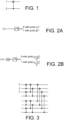
- Fig. 1 represents a Controlled-NOT (CNOT) gate the CNOT 2 ⁇ 1 .
- the gate takes as input two qubits with control on the second qubit and target on the first qubit.
- Each horizontal wire carries a single qubit from left to right.
- the action of the gate takes place at the target qubit while the control qubit is unaffected by this action.
- the gate CNOT 2 ⁇ 1 acts similarly to the classical reversible XOR gate, denoted XOR 2 ⁇ 1 , in the computational basis, that is: CNOT 2 ⁇ 1
- y ⁇
- x ⁇ y denotes the XOR (sum modulo 2) of binary values x and y .
- the CNOT 2 ⁇ 1 gate and the classical XOR gate are represented by the same circuit except to the fact that the CNOT gate acts on two qubits, while the XOR gate acts on two bits.
- CNOT 2 ⁇ 1 acts as the XOR 1 ⁇ 2 gate (with reversed control and target) in the phase basis.
- 0 ⁇ :
- 1 ⁇ :
- - ⁇ we have the following: CNOT 2 ⁇ 1
- y ⁇ ⁇
- CZ The controlled- Z gate, denoted by CZ, takes as input two qubits. Its action in the computational basis is as follows: CZ
- y ⁇ ⁇ 1 xy
- Figs. 2A and 2B represent quantum measurement circuits on a qubit in computational and phases bases.
- the single wire on the input carries a single qubit while the double wire on the output carries a single classical bit.
- a quantum measurement on a qubit is performed with respect to an orthogonal basis, and the measurement outcome gives classical information. After the measurement, the qubit collapses randomly into one of the basis states, depending on the measurement outcome.
- Fig. 2A represents the measurement of the qubit
- ⁇ ⁇ ⁇
- the measurement output is 0 with probability
- the computational basis measurement is also known as the Pauli Z measurement as
- Fig. 2B represents the measurement of the qubit
- ⁇ ⁇ ⁇
- the measurement circuit is equivalent to first applying the Hadamard gate on
- the phase basis measurement is also known as the Pauli X measurement as
- Quantum computers Although various technologies exist for implementing quantum computers, they all share the same shortcomings, namely that the qubits are affected by external noise and decoherence. Whereas bits in classical computers are materialized at the physical level by on/off states of transistor switches with high error margins, there is no such security for qubits. Indeed, the fragile superposition of states of a qubit may easily be disturbed by its environment and collapse, resulting in a loss of information. Quantum computers therefore fundamentally require error correction codes and fault tolerance at the physical level.
- Quantum error correcting codes entangle several physical qubits, which act as a logical qubit. Entanglement between physical qubits is used to protect the logical information from error. More precisely, entanglement defines a correlation between physical qubits in terms of their Pauli operators, and an error happening on physical qubits changes the correlation. It is possible to detect this change in correlation by doing joint quantum measurements, in a way that the logical information is not collapsed.
- the classical information learned by doing this measurement is called a 'syndrome'.
- the extracted syndrome is given as an input to a classical decoder, which generates an estimate of the error that has happened.
- quantum error correcting codes such as stabilizer codes, Calderbank-Steane-Shor (CSS) codes, and triorthogonal quantum codes.
- a stabilizer code on N physical qubits is defined using a subgroup of the N qubit Pauli group G N .
- the codespace corresponding to the stabilizer code is the subset of the N qubit Hilbert space, stabilized by the subgroup .
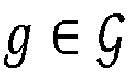
- a Pauli operator g ⁇ G N stabilizes a quantum state
- ⁇ ⁇
- a subset C of quantum states is said to be stabilized by a subgroup G ⁇ G N if every element g ⁇ G stabilizes every quantum state
- a generating set is independent if any g i ⁇ G cannot be written as a product of elements from ⁇ g 1 , g 2 , ..., g N ⁇ ⁇ ⁇ g i ⁇ .
- Stabilizer codes are suitable for detecting Pauli errors.
- ⁇ ⁇ on which a random N -qubit Pauli error E ⁇ G N happens. Since any two elements of G N either commute or anti-commute, then, for any g i ⁇ G , we have the following: g i E
- ⁇ ⁇ ⁇ 1 a E
- the syndrome measurement of stabilizer codes corresponds to measuring all the generators g 1 , g 2 , ..., g N . Based on the extracted syndrome, an estimate ⁇ of E is then generated using a classical decoder.
- the CSS code may be associated with two classical codes on N bits, with parity check matrices H X and H Z , where H X is a binary matrix whose rows are vectors u ⁇ ⁇ 0,1 ⁇ N such that X u ⁇ G X , and H Z is a binary matrix whose rows are vectors v ⁇ ⁇ 0,1 ⁇ N , such that Z v ⁇ G Z .
- H X H Z ⁇ 0 mod 2
- H Z ⁇ is the transpose of H Z .
- H X , H Z ⁇ 0,1 N be the spaces generated by the rows of matrices H X , H Z , respectively.
- H Z ⁇ be the space orthogonal to H Z . Then, from Eq. (19), we have H X ⁇ H Z ⁇ .
- Quantum polar codes are of CSS type that can be constructed on the basis of classical polar codes.
- Fig. 3 represents the encoding of classical polar codes using reversible XOR gates.
- P N u F u J ⁇ 0,1 N is a codeword of the polar code P N F u F .
- P N j be the jth column of P N , for j ⁇ ⁇ 1, ..., N - 1 ⁇ .
- the frozen set (equivalently, the information set ) are determined in a channel specific way as follows. Given N copies of a classical channel W , one first synthesizes a set of virtual channels W ( i ) , i ⁇ ⁇ 1, ..., N ⁇ , based on a channel combining and splitting procedure. For sufficiently large N , the virtual channels are either very close to a noiseless channel or close to a noisy channel. This phenomenon is called channel polarization.
- the set (equivalently, ) is selected based on this channel polarization phenomenon.
- the synthesized virtual channels are ordered from the best to worst in terms of their reliability, using either the Bhattacharyya parameter or the Log-likehood ratio (LLR).
- the least reliable indices that is, the last 1 - RN elements of are chosen to be in the frozen set .
- the first RN elements of are chosen to be in the information set .
- a triorthogonal quantum code is defined with respect to a corresponding triorthogonal matrix where any three of its rows are orthogonal.
- G is said to be triorthogonal if the following two conditions hold.
- G G 1 G 0 of size M ⁇ N, M ⁇ N, such that G 1 and G 0 are not empty and each row in G 1 has odd weight and each row in G 0 has even weight.
- G ⁇ be the space orthogonal to .
- i ⁇ 1 , ... , M ⁇ K G Z Z G ⁇ i
- the triorthogonal code encodes K logical qubits into N physical qubits.
- a logical gate in order to process the logical quantum information encoded in a logical quantum state of a given code, a logical gate has to be applied on it.
- a simple example of a fault tolerant logical gate is the transversal logical gate which is configured to apply individually a quantum gate on each qubit of the code state
- the T gate is often considered for universal quantum computing. It is an important ingredient for fault tolerant quantum computing and therefore, it is very interesting to implement the logical T gate in a transversal manner.
- the controlled Z gate belonging to the Clifford unitary is a two qubit gate that can propagate an error on one of the qubits to the other qubit.
- An object of the present invention is to remedy the aforementioned drawbacks by proposing a quantum processing system that implements a logical T gate in a transverse mode which can thus be efficiently used for fault tolerant quantum computations. Another object is to propose a method for efficiently constructing a quantum code whose properties ensure the implementation of a transverse logical T gate.
- the present invention concerns a method of constructing a triply even quantum code, comprising the following steps:
- This code can be used in a noisy scenario such that an error do not propagate to multiple qubits during its implementation and is thus, very useful for fault tolerant quantum computation.
- the triply even matrix G ' is a submatrix of a polar transform matrix P N' wherein, at least one column is punctured from said triply even matrix G ' such that the triply even quantum code is a triply even quantum polar code.
- the construction of the triply even matrix G ' comprises the following steps:
- the method comprises a step of applying a transversal logical T gate on the qubits of a triply even quantum code or a triply even quantum polar code enabling to process the logical quantum information encoded in the triply even quantum code or the triply even quantum polar code.
- This transversal logical T gate implementation is significantly simpler and less resource intensive than the state of the art method based on the magic state distillation, while enabling efficient fault tolerant quantum computing.
- the present invention also concerns a quantum processing system configured to implement a transversal action of a logical T gate on a triply even quantum code encoding K logical qubits into N physical qubits wherein, the logical T gate is a tensor product of K elementary logical gates acting on the corresponding K logical qubits.
- the triply even quantum code is advantageously constructed according to the above method.
- the action of the logical T gate is identical to the action of a tensor product of N products of elementary physical T i and S i gates such that the logical T gate is equivalent to first applying a transversal physical T gate and then a transversal physical S gate.
- the triply even quantum code is a triply even quantum polar code constructed according to the above method.
- the quantum processing system is configured to implement a set of quantum logical gates composed of the logical CNOT gate, logical H gate, and the logical T gate.
- the present invention also concerns a computing system comprising a classical processing system, a classical-quantum interface, and a quantum processing system according to the above features.
- the classical processing system comprises a syndrome extractor and a classical decoder, the syndrome extractor being configured to extract a syndrome out of quantum measurements implemented by the quantum processing system, and the classical decoder being configured to decode the triply even quantum code or the triply even quantum polar code by implementing successive cancellation decoding.
- the concept of the present invention is to determine the properties of a quantum code on which a logical T gate can be implemented in a transverse manner.
- the present invention proposes to use a logical T gate on a subclass of triorthogonal quantum codes, namely triply even quantum codes, in a transverse way.
- a triply even quantum code is associated to a corresponding triply even matrix.
- the columns in G ' that need to be deleted may be permuted so that they become the first K columns.
- the matrix G obtained after deleting K columns from G' in the above manner, has the first K rows with odd weights. This puncturing procedure is useful to construct a triorthogonal matrix G having rows with odd weights and thus, to construct a triorthogonal quantum code out of an original triorthogonal matrix G' having only rows with even weights.
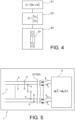
- Fig. 4 schematically represents a method of constructing a triply even quantum code according to an embodiment of the present invention.
- Step E1 concerns the construction of a triply even matrix G' of size M ' ⁇ N ' satisfying the triply-even conditions defined in Eqs. (28), (29) and (30).
- Step E2 concerns the construction of a triorthogonal matrix G out of the triply even matrix G'.
- the triorthogonal quantum code associated with the triorthogonal matrix G which encodes K logical qubits into N physical qubits is defined as a triply even quantum code Q1 associated with the triply even matrix G' .
- triply even quantum codes Q1 are a subclass of triorthogonal quantum codes, that are constructed by combining triply even matrices and triorthogonal quantum codes.
- the triply even codes Q1 constructed according to the above steps are advantageous in the sense that they enable the logical T gate to be implemented fault tolerantly and therefore, to be used for fault tolerant quantum computing.
- Fig. 5 schematically represents a quantum processing system according to an embodiment of the present invention.
- the quantum processing system 1 comprises different types of quantum gates 3 (for example, CNOT gates, H gates, and T gates) that are interconnected by wires 5 to form quantum circuits 7.
- the quantum circuits are configured to implement different kinds of quantum codes and logical quantum gates.
- the wires 5 carry qubits around the circuits 7, while the quantum gates 3 execute some operations on the qubits to make quantum computations.
- One technology is based on the energy levels of ions trapped in an electric or magnetic field at a temperature near absolute zero using also laser pulses, optical pumping, etc.
- Another technology may use nuclear magnetic resonance where transformations may be constructed from magnetic field pulses applied to spins in a strong magnetic field, etc.
- Other technologies use physical systems based on small semiconductors called quantum dots bounding the spin of electrons. Other systems may take advantage of electrons or ions trapped in synthetic diamonds.
- the quantum processing system 1 is configured to implement the method described in relation to Fig. 4 and to implement a transversal logical T gate (noted T ⁇ ) on the triply even quantum code Q1 encoding K logical qubits into N physical qubits.
- Eq. (33) defines the logical gate T ⁇ as a tensor product of K elementary logical gates T ⁇ i configured to act on the corresponding K logical qubits of the triply even quantum code Q1.
- the right hand side of Eq. (33) defines the action of a tensor product of N products of elementary physical T i and S i gates on the corresponding N physical qubits thus, guarantying the transversal property of the logical gate T ⁇ .
- T ⁇ be the transpose of the complex conjugate of T. Then, from Eqs. (36) and (39), we have the following: ⁇ N T ⁇
- u ⁇ ⁇ e i ⁇ wt u 4
- Quantum polar codes of CSS type can be constructed on the basis of classical polar codes.
- the encoding of CSS quantum polar codes is done by applying the quantum CNOT gate recursively on an N' qubit quantum state where
- u ⁇ Z where u ⁇ 0,1 Z
- v ⁇ ⁇ X where v ⁇ 0,1 X .
- u and v we may take any vectors in 0,1 Z and 0,1 X , respectively, but they should be known to both the encoder and decoder.
- the remaining subset is used to encode an arbitrary quantum state
- the uncoded quantum state can be written as:
- Q N' denotes the quantum polar transform on N' qubits, that is, the quantum operator on N' qubits defined by the recursive application of the CNOT gate.
- CNOT 2 ⁇ 1 acts as the reversible XOR gate XOR 2 ⁇ 1 in the computational basis, while it acts as XOR 1 ⁇ 2 in the phase basis.
- the quantum polar transform Q N' acts as classical polar transform in the computational basis, while it acts as the opposite polar transform in the phase basis.
- the polar transform and the opposite polar transform are described by the matrices P N , and P N ′ ⁇ , respectively.
- a triply even quantum polar code is a triply even quantum code, where the associated triply even matrix G' of size M' ⁇ N' is a submatrix of the polar transform matrix P N' , and where one or more columns are punctured from G'.
- Fig. 6 schematically represents a method of constructing a triply even quantum polar code according to a preferred embodiment of the present invention.
- the method of construction is implemented by the quantum processing system 1 described in relation to Fig. 5 .
- step E11 we have an initial set of indices associated to a binary matrix P N ′ ⁇ of size N' ⁇ N'.
- N' instances of synthesized virtual channels are obtained by applying the channel combining and splitting procedure on a given classical channel W.
- the synthesized virtual channels W ( i ) , i ⁇ ⁇ 1, ..., N' ⁇ are then ordered according to their polarization property from best to worst channel.
- the set of the synthesized virtual channels (also called rows) are ordered according to their polarization property from best to worst channel (or row). Let represent the corresponding ordered set of indices.
- the ith element of is denoted by O i .
- Steps E13- E14 concern the selection of a subset of rows of the original polar transform matrix P N ′ ⁇ according to the ordered set O(i).. Each new row is selected only if, when added to the set of the previously selected rows, it does not violate the triply-even properties defined in Eqs. (28)-(30).
- step E13 the elements in are read sequentially from the beginning to the end, and a row of P N ′ ⁇ corresponding to an element O i is selected if the resultant matrix is triply even and rejected if it is not. More precisely, after the ( i - 1)th element O i ⁇ 1 has been read, let be the set such that the corresponding rows of P N' are selected.
- the remaining set at the end after O N ′ corresponds to the desired set defining the triply even matrix of size J ⁇ N .
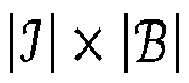
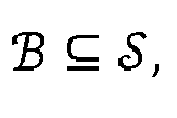
- the puncturing procedure is used on to obtain a triorthogonal matrix P N ′ ⁇ J B of size J ⁇ B where which is used to construct a triply even quantum polar code Q2 encoding K qubits from the triply even matrix as described before.
- the quantum processing system 1 depicted in Fig. 5 is configured to implement a transversal action of a logical T gate on the triply even quantum polar code Q2 constructed according to the method of Fig.6 .
- the quantum processing system 1 is configured to implement a universal set of quantum logical gates composed of the CNOT, Hadamard, and T logical gates on triply even quantum codes Q1 or triply even quantum polar codes Q2.
- the present invention is mainly concerned with the implementation of T gates.
- the implementation of the CNOT logical gate is also transversal while the implementation of the Hadmard gate can also be done in a fault tolerant way, using a known method by Paetznick and Reichardt, Phys. Rev. Lett, 111, 9 (2013), arxiv:1304.3709 .
- Figs. 7A and 7B schematically represent a numerical simulation related to the triply even quantum polar codes constructed according to the method of Fig. 6 .
- the simulation considers triply even codes encoding only one qubit, hence only one column is deleted from For example, the last N' th column is deleted from thus, obtaining after the deletion.
- the deleted position is treated as an erasure.
- the simulation considers a quantum erasure channel, which is associated with two classical erasure channels corresponding to X and Z erasures, respectively.
- the logical X and Z error rates of the triply even code, under SC decoding, of both triply even and optimal polar code of the same rate, are given in Figs. 7A and 7B , respectively.
- the curve C1 (dotted line) represents the logical X error rate of the triply even code with respect to the X erasure probabilty.
- the curve C2 (continuous line) represents the logical X error rate of the optimal polar code of the same rate, constructed using the polarization based procedure.
- the logical Z error rate C3 (dotted line) of the triply even code is compared with the logical Z error rate C4 (continuous line) of the optimal polar code.
- a minor performance degradation for both X and Z logical error rates of the triply even codes is apparent when compared to the polarization based construction. This performance degradation is acceptable for practical applications. For example, consider the logical error rate 10 -15 .
- the X erasure probability is between 0.3 and 0.4, while for optimal polar codes it is between 0.4 and 0.5. Further, the Z erasure probability is between 10 -3 and 10 -2 for both triply even and optimal polar codes.
- the triply even code has an asymmetric error capacity in the sense that it can correct more X errors than Z errors.
- the X erasure probability is between 0.3 and 0.4
- the Z error probability is between 10 -3 and 10 -2 . Note that a triply even code that corrects more Z errors than X errors can be constructed by a simple change of basis.
- Fig. 8 schematically represents a computing system according to a preferred embodiment of the present invention.
- the computing system 11 comprises a quantum processing system 1, a classical processing system 13 and a classical-quantum interface 15.
- the quantum processing system 1 is coupled to the classical processing system 13 via the classical-quantum interface 15.
- the quantum processing system 1 is configured to implement a transversal action of a logical T gate on a triply even quantum code or a triply even quantum polar code, as described above.
- the classical-quantum interface 15 comprises a syndrome extractor 17 configured to extract a syndrome out of quantum measurements implemented by the quantum processing system 1.
- the classical processing system 13 comprises a classical decoder 19 configured to decode the triply even quantum code or the triply even quantum polar code constructed according to the above methods by implementing successive cancelation decoding.
Landscapes
- Engineering & Computer Science (AREA)
- General Physics & Mathematics (AREA)
- Theoretical Computer Science (AREA)
- Physics & Mathematics (AREA)
- Mathematical Analysis (AREA)
- Data Mining & Analysis (AREA)
- Evolutionary Computation (AREA)
- Condensed Matter Physics & Semiconductors (AREA)
- Computational Mathematics (AREA)
- Mathematical Optimization (AREA)
- Pure & Applied Mathematics (AREA)
- Computing Systems (AREA)
- General Engineering & Computer Science (AREA)
- Mathematical Physics (AREA)
- Software Systems (AREA)
- Artificial Intelligence (AREA)
- Error Detection And Correction (AREA)
Abstract
Description
- The present invention concerns the field of quantum computation and more particularly of a fault tolerant implementation of a transversal logical T gate used for universal quantum computation. It relates to a system implementing triply even quantum codes and more specifically to triply even quantum polar codes with a transversal logical T gate and a method of constructing the triply even quantum polar codes.
- Quantum computers make use of quantum phenomena such as superposition and entanglement to perform computation. Through precise control of these phenomena, it is in principle possible for quantum computers to outperform their classical counterparts. Quantum computation is based on the manipulation of quantum bits or "qubits" which can be regarded as a superposition of the 1 and 0 states of a quantum physical variable.
- A qubit is the basic unit of quantum information, also called quantum state |ψ〉 which corresponds to a superposition of basis states |0〉 and |1〉, as follows:


- A qubit |ψ〉 can also be written as a superposition of basis states |+〉 and |+〉. The quantum state or qubit |ψ〉 in Eq. (1) can be expressed in the phase basis, as follows:

- The basis states can be extended to N qubits, where N > 1, by tensor products. For a binary vector u = (u 1, ..., uN ) E {0,1} N , let | u 〉 = |(u 1, ..., uN )〉 := |u 1〉 ⊗···⊗ |uN 〉. Then, the set { | u 〉 | u ∈ {0,1} N } is the computational basis on N qubits.
- Any N qubit quantum state can be written as a superposition of the N qubit computational basis states:

- A quantum state |ψ〉 on N qubits is said to be entangled if it is not possible to write |ψ〉 as a tensor product of N single qubit quantum states, that is:

- The processing of quantum information is performed by applying quantum gates on qubits. Some examples of these quantum gates are Pauli, Hadamard, Phase, CNOT, and Controlled-Z gates.
- Pauli gates are a set of four quantum gates, denoted by I, X, Y, Z, which act on a single qubit. Their action in the computational basis is as follows:


- Note that Y = i ZX, and X2 = Y2 = Z 2 = I, where I is the identity operator in Eq. (6). From Eq. (7), Pauli X acts like a NOT gate in the computational basis. From Eq. (8), it also follows that Z|+〉 = |-〉 and |-〉 = |+〉, hence Pauli Z acts like a NOT gate in the phase basis.
- Pauli gates are extended to act on N qubits by tensor product. For example, X ⊗ Z is a Pauli operator on two qubits.
- Let


elements 
- The Hadamard gate, denoted by H, acts on a single qubit. It maps a computational basis state to a phase basis state and vice-versa. Its action in the computational basis is as follow:

- The phase gate Rθ corresponding to a θ ∈ [0,π] is a single qubit gate, which act as follows in the amplitude basis,

- The S and T gates are two important phase gates, which correspond to


-
Fig. 1 represents a Controlled-NOT (CNOT) gate the CNOT2→1. The gate takes as input two qubits with control on the second qubit and target on the first qubit. Each horizontal wire carries a single qubit from left to right. The action of the gate takes place at the target qubit while the control qubit is unaffected by this action. The gate CNOT2→1 acts similarly to the classical reversible XOR gate, denoted XOR2→1, in the computational basis, that is:
- The CNOT2→1 gate and the classical XOR gate are represented by the same circuit except to the fact that the CNOT gate acts on two qubits, while the XOR gate acts on two bits.
- It is worth noting that CNOT2→1 acts as the XOR1→2 gate (with reversed control and target) in the phase basis. Precisely, let |
0 〉 := |+〉 and |1 〉 := |-〉, then we have the following:
- The controlled-Z gate, denoted by CZ, takes as input two qubits. Its action in the computational basis is as follows:

-
Figs. 2A and 2B represent quantum measurement circuits on a qubit in computational and phases bases. The single wire on the input carries a single qubit while the double wire on the output carries a single classical bit. - In general, a quantum measurement on a qubit is performed with respect to an orthogonal basis, and the measurement outcome gives classical information. After the measurement, the qubit collapses randomly into one of the basis states, depending on the measurement outcome.
- In particular,
Fig. 2A represents the measurement of the qubit |ψ〉 = α|0〉 + β |1〉 in the computational basis. The measurement output is 0 with probability |α|2 and 1 with probability |β|2. If the measurement outcome is 0, then the output state is |0〉 and if the measurement outcome is 1, then the output state is |1〉. - The computational basis measurement is also known as the Pauli Z measurement as |0〉 and |1〉 are eigenstates of the Pauli gate Z.
-
Fig. 2B represents the measurement of the qubit |ψ〉 = α|0〉 + β |1〉 in the phase basis {|+〉, |-〉}. The measurement circuit is equivalent to first applying the Hadamard gate on |ψ〉, and then measuing it in the computational basis. - The phase basis measurement is also known as the Pauli X measurement as |+〉 and |-〉 are eigenstates of the Pauli gate X.
- Although various technologies exist for implementing quantum computers, they all share the same shortcomings, namely that the qubits are affected by external noise and decoherence. Whereas bits in classical computers are materialized at the physical level by on/off states of transistor switches with high error margins, there is no such security for qubits. Indeed, the fragile superposition of states of a qubit may easily be disturbed by its environment and collapse, resulting in a loss of information. Quantum computers therefore fundamentally require error correction codes and fault tolerance at the physical level.
- Quantum error correcting codes entangle several physical qubits, which act as a logical qubit. Entanglement between physical qubits is used to protect the logical information from error. More precisely, entanglement defines a correlation between physical qubits in terms of their Pauli operators, and an error happening on physical qubits changes the correlation. It is possible to detect this change in correlation by doing joint quantum measurements, in a way that the logical information is not collapsed. The classical information learned by doing this measurement is called a 'syndrome'. The extracted syndrome is given as an input to a classical decoder, which generates an estimate of the error that has happened.
- There are different types of quantum error correcting codes such as stabilizer codes, Calderbank-Steane-Shor (CSS) codes, and triorthogonal quantum codes.
- Hereafter, we use the following notations and definitions:
- 1. For u = (u1, ..., uN ) ∈ {0,1}N, we define X( u ) := X u
1 ⊗ X u2 ⊗···⊗ XuN , and similarly Z( u ) := Z u1 ⊗ Z u2 ⊗···⊗ ZuN . - 2. Moreover, supp( u ) := {i = 1, ... , N | ui = 1} and wt( u ):= |supp( u )|.
- 3. Further, for u , v ∈ {0,1} N , we define u · v := Σ iuivi .
- A stabilizer code on N physical qubits is defined using a subgroupof the N qubit Pauli group

 . A Pauli operator

eigenvalue 1, that is:
- A subset C of quantum states is said to be stabilized by a subgroup

- Note that for C to be non-empty, it is sufficient to have
 commute with each other, meaning that, for any two
elements 

- The subgroupcan be completely specified by a generating set G = {g 1, g 2, ..., gN }. A generating set is independent if any gi ∈ G cannot be written as a product of elements from {g 1, g 2, ..., gN } \ {gi }. The size of an independent generating set determines the number of logical qubits encoded by the stabillizer code. Precisely, if the number of elements in an independent generating set is equal to N - K, then the stabilizer code encodes K qubits. When K = 0, the code does not encode any quantum information, as it has only one fixed quantum state in its codespace, called a stabilizer state.

- Stabilizer codes are suitable for detecting Pauli errors. Consider a code state |ψ〉, on which a random N-qubit Pauli error


- The syndrome measurement of stabilizer codes corresponds to measuring all the generators g 1, g 2, ..., g N. Based on the extracted syndrome, an estimate Ê of E is then generated using a classical decoder.
- The CSS codes are an important subclass of stabilizer codes. A stabilizer code is a CSS code if there exists a generating set G = Gx U Gz of the stabilizer group, such that any gx ∈ Gx can be written as a tensor product of I and X, that is, gx = Xu := X u
1 ⊗ X u2 ⊗···⊗ XuN , for some u = (u 1, u 2, ···, uN ) ∈ {0,1} N , and similarly any gz ∈ GZ can be written as a tensor product of I and Z, that is, gz = Zv := Z v1 ⊗ Z v2 ⊗...⊗ Z vN for some v = (v 1, v 2, ···, vN ) ∈ {0,1} N . Since, gx and gz must commute with each other, this imposes the following constraint on vectors u and :
- The CSS code may be associated with two classical codes on N bits, with parity check matrices HX and HZ, where HX is a binary matrix whose rows are vectors u ∈ {0,1} N such that Xu ∈ GX, and HZ is a binary matrix whose rows are vectors v ∈ {0,1}N, such that Zv ∈ GZ. Then, Eq. (18) is equivalent to:


- Let
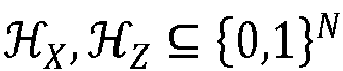


-
Let 2K,K ≥ 0 be the number of elements in the quotient group


- Quantum polar codes are of CSS type that can be constructed on the basis of classical polar codes.
-
Fig. 3 represents the encoding of classical polar codes using reversible XOR gates. - The encoding of classical polar codes is done by applying the reversible XOR gate recursively on an N bit input u = (u1, u 2, ···,uN ) ∈ {0,1}N, where N = 2n , n > 0. For a set of positions


 is called the 'frozen set'. The remaining positions

 is called the 'information set'.
- In the following, we denote by
 , and frozen vector

- The example in
Fig. 3 represents the encoding of a classical polar code of codelength N = 23encoding 5 bits and where 3 bits are frozen. In this example, the frozen set is

- The action of the reversible XOR gate XOR2→1 on u = (u1, u2) ∈ {0, 1}2 gives u ' = (u 1 ⊗ u 2, u 2). The vector u' can be expressed as u' = P 2 u, where P2 is the following matrix:

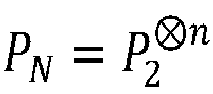
- Classical polar transform, that is, the recursive application of XOR2→1 on N = 2n qubits, is given by the matrix


- For any vector of information bits


 .
.
- Classical polar codes have an efficient decoder known as 'successive cancellation' (SC) decoder. SC decoder takes as input the frozen vector


- To construct a classical polar code, its frozenand information
 sets have to be determined. The frozen set
 (equivalently, the information set
 ) are determined in a channel specific way as follows. Given N copies of a classical channel W, one first synthesizes a set of virtual channels W (i) , i ∈ {1, ..., N}, based on a channel combining and splitting procedure. For sufficiently large N, the virtual channels are either very close to a noiseless channel or close to a noisy channel. This phenomenon is called channel polarization.
- The set(equivalently,
 ) is selected based on this channel polarization phenomenon. The synthesized virtual channels are ordered from the best to worst in terms of their reliability, using either the Bhattacharyya parameter or the Log-likehood ratio (LLR).
- Letbe the corresponding ordered set of indices, then, for a polar code of rate R, the least reliable indices, that is, the last 1 - RN elements of
 are chosen to be in the frozen set
 . Equivalently, the first RN elements of
 are chosen to be in the information set
 .
.
- A triorthogonal quantum code is defined with respect to a corresponding triorthogonal matrix where any three of its rows are orthogonal.
- More precisely, consider a binary matrix G of size M × N. Let G (i) ∈ {0,1}N, i E {1, ...,M} be the ith row vector of G. Then, G is said to be triorthogonal if the following two conditions hold.
- 1)

- 2)

- Consider a triorthogonal matrix
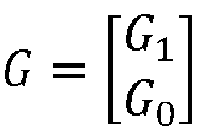 be the space generated by the rows of G and let
 . Further,


- Then, a triorthogonal quantum code corresponding to a given triorthogonal matrix G is a CSS code, defined by the following X and Z type generators:


- It should be noted that in order to process the logical quantum information encoded in a logical quantum state of a given code, a logical gate has to be applied on it.
- In particular, consider a quantum gate U that acts on the uncoded quantum states. Let |φ̃〉 be the logical state corresponding to the uncoded quantum state |φ〉. Let Ũ be the logical version of the quantum gate U. Then, Ũ acts on |φ̃〉, as follows:


- However, to be usable in a noisy scenario, a fault tolerant procedure for a logical gate Ũ is needed, so that an error do not propagate to multiple qubits during its implementation.
- A simple example of a fault tolerant logical gate is the transversal logical gate which is configured to apply individually a quantum gate on each qubit of the code state |φ̃〉 preventing thus, an error on one qubit to propagate to other qubits.
- The T gate is often considered for universal quantum computing. It is an important ingredient for fault tolerant quantum computing and therefore, it is very interesting to implement the logical T gate in a transversal manner.
- It has been shown by Bravyi and Haah, Phys. Rev. A, 86, 5 (2012 ), arxiv:1209.2426, that for triorthogonal codes, the logical T gate is transversal up to a Clifford unitary, as follows:

- However, the controlled Z gate belonging to the Clifford unitary is a two qubit gate that can propagate an error on one of the qubits to the other qubit. Practically, this implies that the logical T gate as defined in Eq. (27) is not fault tolerant for triorthogonal quantum codes. An error caused by a noise on a qubit may propagate to other qubits. Therefore, the implementation of the logical T gate on triorthogonal codes, according to the prior art cannot be efficiently used for fault tolerant quantum computations.
- An object of the present invention is to remedy the aforementioned drawbacks by proposing a quantum processing system that implements a logical T gate in a transverse mode which can thus be efficiently used for fault tolerant quantum computations. Another object is to propose a method for efficiently constructing a quantum code whose properties ensure the implementation of a transverse logical T gate.
- The present invention concerns a method of constructing a triply even quantum code, comprising the following steps:
- construct a matrix G' of size M' × N' satisfying triply-even properties, said matrix G' is said to be a triply even matrix G',
- construct out of said triply even matrix G', a triorthogonal matrix G of size M × N comprising a non-empty set of K rows with odd weights where M = M', and N = N' - K, for 0 ≤ K ≤ M',
- define a triorthogonal quantum code associated with the triorthogonal matrix G that encodes K logical qubits into N physical qubits, said triorthogonal quantum code is said to be a triply even quantum code associated with the triply even matrix G'.
- This code can be used in a noisy scenario such that an error do not propagate to multiple qubits during its implementation and is thus, very useful for fault tolerant quantum computation.
- Advantageously, the triply even matrix G' is a submatrix of a polar transform matrix PN' wherein, at least one column is punctured from said triply even matrix G' such that the triply even quantum code is a triply even quantum polar code.
- Advantageously, the construction of the triply even matrix G' comprises the following steps:
- order a set of rows corresponding to synthesized virtual channels according to their polarization property from the best to the worst channel,
- select a subset of N' rows of the polar transform

- Advantageously, the method comprises a step of applying a transversal logical T gate on the qubits of a triply even quantum code or a triply even quantum polar code enabling to process the logical quantum information encoded in the triply even quantum code or the triply even quantum polar code.
- This transversal logical T gate implementation is significantly simpler and less resource intensive than the state of the art method based on the magic state distillation, while enabling efficient fault tolerant quantum computing.
- The present invention also concerns a quantum processing system configured to implement a transversal action of a logical T gate on a triply even quantum code encoding K logical qubits into N physical qubits wherein, the logical T gate is a tensor product of K elementary logical gates acting on the corresponding K logical qubits. the triply even quantum code is advantageously constructed according to the above method.
- Advantageously, the action of the logical T gate is identical to the action of a tensor product of N products of elementary physical Ti and Si gates such that the logical T gate is equivalent to first applying a transversal physical T gate and then a transversal physical S gate.
- Advantageously, the triply even quantum code is a triply even quantum polar code constructed according to the above method.
- Advantageously, the quantum processing system is configured to implement a set of quantum logical gates composed of the logical CNOT gate, logical H gate, and the logical T gate.
- The present invention also concerns a computing system comprising a classical processing system, a classical-quantum interface, and a quantum processing system according to the above features.
- Advantageously, the classical processing system comprises a syndrome extractor and a classical decoder, the syndrome extractor being configured to extract a syndrome out of quantum measurements implemented by the quantum processing system, and the classical decoder being configured to decode the triply even quantum code or the triply even quantum polar code by implementing successive cancellation decoding.
- The present invention will be better understood from the description of the following embodiments, by way of illustration and in no way limitative thereto:
-
Fig. 1 , already described, represents a Controlled-NOT gate the CNOT2→1 known from the prior art; -
Figs. 2A and 2B , already described, represent quantum measurement circuits on a qubit in computational and phases bases, known from the prior art; -
Fig. 3 , already described, represents the encoding of classical polar codes using reversible XOR gates, known from the prior art; -
Fig. 4 schematically represents a method of constructing a triply even quantum code, according to an embodiment of the present invention; -
Fig. 5 schematically represents a quantum processing system, according to an embodiment of the present invention; -
Fig. 6 schematically represents a method of constructing a triply even quantum polar code, according to a preferred embodiment of the present invention; -
Figs. 7A and 7B , schematically represent a numerical simulation related to the triply even quantum polar codes constructed according to the method ofFig. 6 ; and -
Fig. 8 schematically represents a computing system, according to a preferred embodiment of the present invention. - The concept of the present invention is to determine the properties of a quantum code on which a logical T gate can be implemented in a transverse manner.
- In particular, the present invention proposes to use a logical T gate on a subclass of triorthogonal quantum codes, namely triply even quantum codes, in a transverse way.
- A triply even quantum code is associated to a corresponding triply even matrix. In general, a matrix G is said to be triply even if for any three of its rows G (i) , G (j) , G (k) , we have the following properties:


- The triply even matrices are a subset of triorthogonal matrices, satisfying a stronger condition than in Eq. (22), that is, G (i) · G (j) = 0 (mod 4). From Eq. (28), the number of rows with odd weights in a triply even matrix is equal to zero.
- The rows of a triply even matrix G generate a triply even space, that is, for any

 is divisible by 8. A triply even matrix cannot therefore be directly used to construct a triorthogonal quantum code.
- However, there exists a known technique called puncturing procedure, described in Krishna and Tillich, arXiv: 1811.03112, which allows removing some columns from a triorthogonal matrix G' to yield a new triorthogonal matrix G.
- For example, consider a triply even matrix G' of size M' × N'. By deleting K linearly independent columns, a triorthogonal matrix G of size M × N, where M = M', and N = N' - K, for 0 ≤ K ≤ M' may be obtained. The columns in G' that need to be deleted may be permuted so that they become the first K columns. Then, by doing Gaussian elimination on G', a matrix G" in the reduced row echelon form is obtained, as follows:


- The matrix G, obtained after deleting K columns from G' in the above manner, has the first K rows with odd weights. This puncturing procedure is useful to construct a triorthogonal matrix G having rows with odd weights and thus, to construct a triorthogonal quantum code out of an original triorthogonal matrix G' having only rows with even weights.
-
Fig. 4 schematically represents a method of constructing a triply even quantum code according to an embodiment of the present invention. - Step E1 concerns the construction of a triply even matrix G' of size M' × N' satisfying the triply-even conditions defined in Eqs. (28), (29) and (30).
- Step E2 concerns the construction of a triorthogonal matrix G out of the triply even matrix G'. In fact, since any triply even matrix is triorthogonal, the puncturing method described above may be used to obtain a new triorthogonal matrix of the from

- At step E3, the triorthogonal quantum code associated with the triorthogonal matrix G which encodes K logical qubits into N physical qubits, is defined as a triply even quantum code Q1 associated with the triply even matrix G'.
- Hence, triply even quantum codes Q1 are a subclass of triorthogonal quantum codes, that are constructed by combining triply even matrices and triorthogonal quantum codes.
- As set out by the present invention, the triply even codes Q1 constructed according to the above steps are advantageous in the sense that they enable the logical T gate to be implemented fault tolerantly and therefore, to be used for fault tolerant quantum computing.
-
Fig. 5 schematically represents a quantum processing system according to an embodiment of the present invention. - The
quantum processing system 1 comprises different types of quantum gates 3 (for example, CNOT gates, H gates, and T gates) that are interconnected bywires 5 to formquantum circuits 7. The quantum circuits are configured to implement different kinds of quantum codes and logical quantum gates. Thewires 5 carry qubits around thecircuits 7, while thequantum gates 3 execute some operations on the qubits to make quantum computations. - Various technologies exist for materializing or implementing qubits, quantum gates, and quantum circuits. One technology is based on the energy levels of ions trapped in an electric or magnetic field at a temperature near absolute zero using also laser pulses, optical pumping, etc. Another technology may use nuclear magnetic resonance where transformations may be constructed from magnetic field pulses applied to spins in a strong magnetic field, etc. Other technologies use physical systems based on small semiconductors called quantum dots bounding the spin of electrons. Other systems may take advantage of electrons or ions trapped in synthetic diamonds.
- Different examples of physical systems materializing qubits, quantum gates and quantum circuits can be found in the reference book entitled "Quantum computation and quantum information" authored by M.A. Nielsen and I.L. Chuang, Cambridge University Press, 2016.
- According to an embodiment of the present invention, the
quantum processing system 1 is configured to implement the method described in relation toFig. 4 and to implement a transversal logical T gate (noted T̃) on the triply even quantum code Q1 encoding K logical qubits into N physical qubits. The triply even quantum code Q1 is defined using a triorthogonal matrix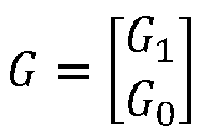

- The present invention reveals that the triply even quantum code Q1 has a transversal logical T gate (i.e., T̃ ) according to the following property:

- The left hand side of Eq. (33) defines the logical gate T̃ as a tensor product of K elementary logical gates T̃i configured to act on the corresponding K logical qubits of the triply even quantum code Q1. The right hand side of Eq. (33) defines the action of a tensor product of N products of elementary physical Ti and Si gates on the corresponding N physical qubits thus, guarantying the transversal property of the logical gate T̃.
- Eq. (33) implies that the Clifford unitary U in Eq. (27) does not contain any controlled Z gate knowing that


- To prove the validity of Eq. (33) for triply even quantum codes, recall first that the X and Z type generators of the triply even code is as follows:


- On the other hand, the relation between G' and G can be expressed as follows:


- From Eq. (37), it follows that



- Let T † be the transpose of the complex conjugate of T. Then, from Eqs. (36) and (39), we have the following:

- Introducing T † = ST, into Eq. (40), we directly obtain the above Eq. (33) which states that the logical T gate is transverse for a triply-even quantum code Q1 and is thus, fault tolerant.
- Quantum polar codes of CSS type can be constructed on the basis of classical polar codes. The encoding of CSS quantum polar codes is done by applying the quantum CNOT gate recursively on an N' qubit quantum state


- The remaining subset


- Then, the encoded quantum state is given by

- It is known that CNOT2→1 acts as the reversible XOR gate XOR2→1 in the computational basis, while it acts as XOR1→2 in the phase basis. Hence, the quantum polar transform QN' acts as classical polar transform in the computational basis, while it acts as the opposite polar transform in the phase basis. The polar transform and the opposite polar transform are described by the matrices PN, and


- A triply even quantum polar code is a triply even quantum code, where the associated triply even matrix G' of size M' × N' is a submatrix of the polar transform matrix PN' , and where one or more columns are punctured from G'.
-
Fig. 6 schematically represents a method of constructing a triply even quantum polar code according to a preferred embodiment of the present invention. - The method of construction is implemented by the
quantum processing system 1 described in relation toFig. 5 . - At step E11, we have an initial set of indices


- At step E12, N' instances of synthesized virtual channels
 represent the corresponding ordered set of indices. The ith element of
 is denoted by

- Steps E13- E14 concern the selection of a subset of rows


- In particular, at step E13, the elements inare read sequentially from the beginning to the end, and a row of


- Let


 . Then, the


- In particular, at the beginning, when the first row is selected, the first condition only, i.e. Eq. (28) has to be checked. When the second row is selected, only the first two conditions Eqs. (28) and (29) have to be checked. Afterwards, all the three conditions i.e., Eqs. (28)-(30) have to be checked.
- At step E14, the remaining setat the end after

 defining the triply even matrix


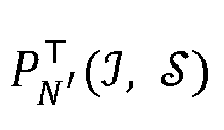
- At step E15, the puncturing procedure is used on


- According to an embodiment of the present invention, the
quantum processing system 1 depicted inFig. 5 is configured to implement a transversal action of a logical T gate on the triply even quantum polar code Q2 constructed according to the method ofFig.6 . - Advantageously, the
quantum processing system 1 is configured to implement a universal set of quantum logical gates composed of the CNOT, Hadamard, and T logical gates on triply even quantum codes Q1 or triply even quantum polar codes Q2. The present invention is mainly concerned with the implementation of T gates. However, the implementation of the CNOT logical gate is also transversal while the implementation of the Hadmard gate can also be done in a fault tolerant way, using a known method by Paetznick and Reichardt, Phys. Rev. Lett, 111, 9 (2013), arxiv:1304.3709. -
Figs. 7A and 7B , schematically represent a numerical simulation related to the triply even quantum polar codes constructed according to the method ofFig. 6 . - In this simulation, N' is taken to be 210 and a classical erasure channel W with erasure probability e = 0.2 is considered to obtain the triply even matrix

Fig.6 . - In particular, the simulation considers triply even codes encoding only one qubit, hence only one column is deleted from


- The simulation considers a quantum erasure channel, which is associated with two classical erasure channels corresponding to X and Z erasures, respectively. The logical X and Z error rates of the triply even code, under SC decoding, of both triply even and optimal polar code of the same rate, are given in
Figs. 7A and 7B , respectively. - In
Fig. 7A , the curve C1 (dotted line) represents the logical X error rate of the triply even code with respect to the X erasure probabilty. The curve C2 (continuous line) represents the logical X error rate of the optimal polar code of the same rate, constructed using the polarization based procedure. Similarly, inFigure 8B , the logical Z error rate C3 (dotted line) of the triply even code is compared with the logical Z error rate C4 (continuous line) of the optimal polar code. A minor performance degradation for both X and Z logical error rates of the triply even codes is apparent when compared to the polarization based construction. This performance degradation is acceptable for practical applications. For example, consider the logical error rate 10-15. For triply even codes, the X erasure probability is between 0.3 and 0.4, while for optimal polar codes it is between 0.4 and 0.5. Further, the Z erasure probability is between 10-3 and 10-2 for both triply even and optimal polar codes. - Finally, it is noted from
Figures 7A and 7B that the triply even code has an asymmetric error capacity in the sense that it can correct more X errors than Z errors. For example, for the logical error rate 10-15, the X erasure probability is between 0.3 and 0.4, while the Z error probability is between 10-3 and 10-2. Note that a triply even code that corrects more Z errors than X errors can be constructed by a simple change of basis. -
Fig. 8 schematically represents a computing system according to a preferred embodiment of the present invention. - The
computing system 11 comprises aquantum processing system 1, aclassical processing system 13 and a classical-quantum interface 15. Thequantum processing system 1 is coupled to theclassical processing system 13 via the classical-quantum interface 15. - The
quantum processing system 1 is configured to implement a transversal action of a logical T gate on a triply even quantum code or a triply even quantum polar code, as described above. - The classical-
quantum interface 15 comprises asyndrome extractor 17 configured to extract a syndrome out of quantum measurements implemented by thequantum processing system 1. - The
classical processing system 13 comprises aclassical decoder 19 configured to decode the triply even quantum code or the triply even quantum polar code constructed according to the above methods by implementing successive cancelation decoding.
Claims (11)
- Method of constructing a triply even quantum code, comprising the following steps:- construct a matrix G' of size M' × N' satisfying triply-even properties, said matrix G' is said to be a triply even matrix G',- construct out of said triply even matrix G', a triorthogonal matrix G of size M × N comprising a non-empty set of K rows with odd weights where M = M', and N = N' - K, for 0 ≤ K ≤ M',- define a triorthogonal quantum code associated with the triorthogonal matrix G that encodes K logical qubits into N physical qubits, said triorthogonal quantum code is said to be a triply even quantum code associated with the triply even matrix G'.
- Method according to claim 1, characterized in that the triply even matrix G' is a submatrix of a polar transform matrix

- Method according to claim 1 or 2, characterized in that the construction of the triply even matrix G' comprises the following steps:- order a set of rows corresponding to synthesized virtual channels according to their polarization property from the best to the worst channel,- select a subset of N' rows of the polar transform

- Method according to anyone of the preceding claims, characterized in that it comprises a step of applying a transversal logical T gate on the qubits of a triply even quantum code or a triply even quantum polar code enabling to process the logical quantum information encoded in the triply even quantum code or the triply even quantum polar code.
- Quantum processing system (1), characterised in that it is configured to implement a transversal action of a logical T gate on a triply even quantum code (Q1) encoding K logical qubits into N physical qubits wherein, the logical T gate is a tensor product of K elementary logical gates Ti acting on the corresponding K logical qubits.
- Quantum processing system (1) according to claim 5, characterised in that the action of the logical T gate is identical to the action of a tensor product of N products of elementary physical Ti and Si gates such that the logical T gate is equivalent to first applying a transversal physical T gate and then a transversal physical S gate.
- Quantum processing system according to claim 5 or 6, characterised in that said triply even quantum code (Q1) is constructed according to the method of claim 1.
- Quantum processing system according to claim 5 or 6, characterised in that said triply even quantum code is a triply even quantum polar code (Q2) constructed according to the method of claim 2 or 3.
- Quantum processing system according to anyone of claim 5 to 8, characterised in that it is configured to implement a set of quantum logical gates composed of the logical CNOT gate, logical H gate, and the logical T gate.
- Computing system comprising a classical processing system (13), a classical-quantum interface (15), and a quantum processing system (1) according to anyone of claims 5 to 9.
- Computing system according to claim 10, characterised in that the classical processing system (13) comprises a syndrome extractor (17) and a classical decoder (19), the syndrome extractor (17) being configured to extract a syndrome out of quantum measurements implemented by the quantum processing system, and the classical decoder (19) being configured to decode the triply even quantum code or the triply even quantum polar code by implementing successive cancellation decoding.
Priority Applications (3)
| Application Number | Priority Date | Filing Date | Title |
|---|---|---|---|
| EP22306813.1A EP4383147A1 (en) | 2022-12-07 | 2022-12-07 | Quantum codes with transversal logical t gate |
| US19/135,251 US20260203637A1 (en) | 2022-12-07 | 2023-12-07 | Quantum codes with transversal logical t gate |
| PCT/EP2023/084686 WO2024121296A1 (en) | 2022-12-07 | 2023-12-07 | Quantum codes with transversal logical t gate |
Applications Claiming Priority (1)
| Application Number | Priority Date | Filing Date | Title |
|---|---|---|---|
| EP22306813.1A EP4383147A1 (en) | 2022-12-07 | 2022-12-07 | Quantum codes with transversal logical t gate |
Publications (1)
| Publication Number | Publication Date |
|---|---|
| EP4383147A1 true EP4383147A1 (en) | 2024-06-12 |
Family
ID=85283737
Family Applications (1)
| Application Number | Title | Priority Date | Filing Date |
|---|---|---|---|
| EP22306813.1A Pending EP4383147A1 (en) | 2022-12-07 | 2022-12-07 | Quantum codes with transversal logical t gate |
Country Status (3)
| Country | Link |
|---|---|
| US (1) | US20260203637A1 (en) |
| EP (1) | EP4383147A1 (en) |
| WO (1) | WO2024121296A1 (en) |
-
2022
- 2022-12-07 EP EP22306813.1A patent/EP4383147A1/en active Pending
-
2023
- 2023-12-07 WO PCT/EP2023/084686 patent/WO2024121296A1/en not_active Ceased
- 2023-12-07 US US19/135,251 patent/US20260203637A1/en active Pending
Non-Patent Citations (5)
| Title |
|---|
| ANIRUDH KRISHNA ET AL: "Magic state distillation with punctured polar codes", ARXIV.ORG, CORNELL UNIVERSITY LIBRARY, 201 OLIN LIBRARY CORNELL UNIVERSITY ITHACA, NY 14853, 7 November 2018 (2018-11-07), XP081047453 * |
| BRAVYIHAAH: "Phys. Rev. A", ARXIV:1209.2426, vol. 86, 2012, pages 5 |
| JEONGWAN HAAH: "Towers of generalized divisible quantum codes", ARXIV.ORG, CORNELL UNIVERSITY LIBRARY, 201 OLIN LIBRARY CORNELL UNIVERSITY ITHACA, NY 14853, 25 September 2017 (2017-09-25), XP080823399 * |
| M.A. NIELSENI.L. CHUANG: "Quantum computation and quantum information", 2016, CAMBRIDGE UNIVERSITY PRESS |
| PAETZNICKREICHARDT: "Phys. Rev. Lett", ARXIV:1304.3709, vol. 111, 2013, pages 9 |
Also Published As
| Publication number | Publication date |
|---|---|
| WO2024121296A1 (en) | 2024-06-13 |
| US20260203637A1 (en) | 2026-07-16 |
Similar Documents
| Publication | Publication Date | Title |
|---|---|---|
| US6128764A (en) | Quantum error-correcting codes and devices | |
| Chamberland et al. | Fault-tolerant quantum computing in the Pauli or Clifford frame with slow error diagnostics | |
| Colomer et al. | Reinforcement learning for optimal error correction of toric codes | |
| Lao et al. | Magic state injection on the rotated surface code | |
| Jain et al. | Quantum spherical codes | |
| Biswas et al. | Noise-adapted recovery circuits for quantum error correction | |
| Ollivier et al. | Quantum convolutional codes: fundamentals | |
| Wang | Quantum error correction with the GKP code and concatenation with stabilizer codes | |
| Choukroun et al. | Deep quantum error correction | |
| US20260119957A1 (en) | Decoding quantum error correction codes using transformer neural networks | |
| Komoto et al. | Quantum error correction near the coding theoretical bound | |
| Aasen et al. | A topologically fault-tolerant quantum computer with four dimensional geometric codes | |
| Chinni et al. | Neural decoder for topological codes using pseudo-inverse of parity check matrix | |
| Gottesman | Quantum Error Correction and | |
| Tansuwannont et al. | Clifford gates with logical transversality for self-dual CSS codes | |
| EP4428765A1 (en) | System for performing a quantum gate and operation of a quantum error correcting code using this quantum gate | |
| Steane | Quantum error correction | |
| Chau | Good quantum-convolutional error-correction codes and their decoding algorithm exist | |
| WO2024121296A1 (en) | Quantum codes with transversal logical t gate | |
| EP4336414B1 (en) | Fault tolerant preparation of quantum polar codes | |
| US20240256939A1 (en) | Linear-optical encoded ghz measurements and fault-tolerant quantum computation and communication | |
| Senekane et al. | A quantum algorithm for single parity check code | |
| Epping et al. | On the error analysis of quantum repeaters with encoding | |
| JP2005269105A (en) | Quantum error correction method and apparatus, and quantum information sharing method and apparatus | |
| JP4552577B2 (en) | Quantum state restoration device |
Legal Events
| Date | Code | Title | Description |
|---|---|---|---|
| PUAI | Public reference made under article 153(3) epc to a published international application that has entered the european phase |
Free format text: ORIGINAL CODE: 0009012 |
|
| STAA | Information on the status of an ep patent application or granted ep patent |
Free format text: STATUS: REQUEST FOR EXAMINATION WAS MADE |
|
| 17P | Request for examination filed |
Effective date: 20221207 |
|
| AK | Designated contracting states |
Kind code of ref document: A1 Designated state(s): AL AT BE BG CH CY CZ DE DK EE ES FI FR GB GR HR HU IE IS IT LI LT LU LV MC ME MK MT NL NO PL PT RO RS SE SI SK SM TR |
|
| RAP3 | Party data changed (applicant data changed or rights of an application transferred) |
Owner name: CENTRE NATIONAL DE LA RECHERCHE SCIENTIFIQUE Owner name: INSTITUT POLYTECHNIQUE DE GRENOBLE Owner name: UNIVERSITE GRENOBLE ALPES Owner name: COMMISSARIAT A L'ENERGIE ATOMIQUE ET AUX ENERGIESALTERNATIVES |