EP4383023A1 - Control device for at least one electric power system component, mobile device, and method of controlling operation of a control device - Google Patents
Control device for at least one electric power system component, mobile device, and method of controlling operation of a control device Download PDFInfo
- Publication number
- EP4383023A1 EP4383023A1 EP22211372.2A EP22211372A EP4383023A1 EP 4383023 A1 EP4383023 A1 EP 4383023A1 EP 22211372 A EP22211372 A EP 22211372A EP 4383023 A1 EP4383023 A1 EP 4383023A1
- Authority
- EP
- European Patent Office
- Prior art keywords
- control device
- mobile device
- control
- user
- data
- Prior art date
- Legal status (The legal status is an assumption and is not a legal conclusion. Google has not performed a legal analysis and makes no representation as to the accuracy of the status listed.)
- Pending
Links
Images



Classifications
-
- G—PHYSICS
- G05—CONTROLLING; REGULATING
- G05B—CONTROL OR REGULATING SYSTEMS IN GENERAL; FUNCTIONAL ELEMENTS OF SUCH SYSTEMS; MONITORING OR TESTING ARRANGEMENTS FOR SUCH SYSTEMS OR ELEMENTS
- G05B19/00—Program-control systems
- G05B19/02—Program-control systems electric
- G05B19/04—Program control other than numerical control, i.e. in sequence controllers or logic controllers
- G05B19/042—Program control other than numerical control, i.e. in sequence controllers or logic controllers using digital processors
-
- H—ELECTRICITY
- H02—GENERATION; CONVERSION OR DISTRIBUTION OF ELECTRIC POWER
- H02J—ELECTRIC POWER NETWORKS; CIRCUIT ARRANGEMENTS OR SYSTEMS FOR SUPPLYING OR DISTRIBUTING ELECTRIC POWER; SYSTEMS FOR STORING ELECTRIC ENERGY
- H02J13/00—Circuit arrangements for providing remote monitoring or remote control of equipment in a power distribution network
- H02J13/13—Circuit arrangements for providing remote monitoring or remote control of equipment in a power distribution network characterised by the transmission of data to equipment in the power network
- H02J13/1331—Circuit arrangements for providing remote monitoring or remote control of equipment in a power distribution network characterised by the transmission of data to equipment in the power network using wireless data transmission
- H02J13/1333—Circuit arrangements for providing remote monitoring or remote control of equipment in a power distribution network characterised by the transmission of data to equipment in the power network using wireless data transmission by means of mobile telephony
-
- H—ELECTRICITY
- H02—GENERATION; CONVERSION OR DISTRIBUTION OF ELECTRIC POWER
- H02J—ELECTRIC POWER NETWORKS; CIRCUIT ARRANGEMENTS OR SYSTEMS FOR SUPPLYING OR DISTRIBUTING ELECTRIC POWER; SYSTEMS FOR STORING ELECTRIC ENERGY
- H02J13/00—Circuit arrangements for providing remote monitoring or remote control of equipment in a power distribution network
- H02J13/10—Circuit arrangements for providing remote monitoring or remote control of equipment in a power distribution network characterised by displaying of information or by user interaction, e.g. supervisory control and data acquisition [SCADA] systems
-
- H—ELECTRICITY
- H02—GENERATION; CONVERSION OR DISTRIBUTION OF ELECTRIC POWER
- H02J—ELECTRIC POWER NETWORKS; CIRCUIT ARRANGEMENTS OR SYSTEMS FOR SUPPLYING OR DISTRIBUTING ELECTRIC POWER; SYSTEMS FOR STORING ELECTRIC ENERGY
- H02J13/00—Circuit arrangements for providing remote monitoring or remote control of equipment in a power distribution network
- H02J13/14—Circuit arrangements for providing remote monitoring or remote control of equipment in a power distribution network the power network being locally controlled, e.g. home energy management systems [HEMS]
-
- H—ELECTRICITY
- H02—GENERATION; CONVERSION OR DISTRIBUTION OF ELECTRIC POWER
- H02J—ELECTRIC POWER NETWORKS; CIRCUIT ARRANGEMENTS OR SYSTEMS FOR SUPPLYING OR DISTRIBUTING ELECTRIC POWER; SYSTEMS FOR STORING ELECTRIC ENERGY
- H02J13/00—Circuit arrangements for providing remote monitoring or remote control of equipment in a power distribution network
- H02J13/18—Circuit arrangements for providing remote monitoring or remote control of equipment in a power distribution network characterised by the remotely-controlled equipment, e.g. converters or transformers
- H02J13/34—Circuit arrangements for providing remote monitoring or remote control of equipment in a power distribution network characterised by the remotely-controlled equipment, e.g. converters or transformers the equipment being switches, relays or circuit breakers
-
- H—ELECTRICITY
- H04—ELECTRIC COMMUNICATION TECHNIQUE
- H04L—TRANSMISSION OF DIGITAL INFORMATION, e.g. TELEGRAPHIC COMMUNICATION
- H04L63/00—Network architectures or network communication protocols for network security
- H04L63/08—Network architectures or network communication protocols for network security for authentication of entities
- H04L63/0861—Network architectures or network communication protocols for network security for authentication of entities using biometrical features, e.g. fingerprint, retina-scan
-
- H—ELECTRICITY
- H04—ELECTRIC COMMUNICATION TECHNIQUE
- H04L—TRANSMISSION OF DIGITAL INFORMATION, e.g. TELEGRAPHIC COMMUNICATION
- H04L67/00—Network arrangements or protocols for supporting network services or applications
- H04L67/01—Protocols
- H04L67/02—Protocols based on web technology, e.g. hypertext transfer protocol [HTTP]
- H04L67/025—Protocols based on web technology, e.g. hypertext transfer protocol [HTTP] for remote control or remote monitoring of applications
-
- H—ELECTRICITY
- H04—ELECTRIC COMMUNICATION TECHNIQUE
- H04W—WIRELESS COMMUNICATION NETWORKS
- H04W12/00—Security arrangements; Authentication; Protecting privacy or anonymity
- H04W12/06—Authentication
-
- H—ELECTRICITY
- H02—GENERATION; CONVERSION OR DISTRIBUTION OF ELECTRIC POWER
- H02J—ELECTRIC POWER NETWORKS; CIRCUIT ARRANGEMENTS OR SYSTEMS FOR SUPPLYING OR DISTRIBUTING ELECTRIC POWER; SYSTEMS FOR STORING ELECTRIC ENERGY
- H02J13/00—Circuit arrangements for providing remote monitoring or remote control of equipment in a power distribution network
- H02J13/18—Circuit arrangements for providing remote monitoring or remote control of equipment in a power distribution network characterised by the remotely-controlled equipment, e.g. converters or transformers
- H02J13/333—Circuit arrangements for providing remote monitoring or remote control of equipment in a power distribution network characterised by the remotely-controlled equipment, e.g. converters or transformers the equipment forming part of substations
Definitions
- Embodiments of the invention relate to a control device for at least one electric power system component and devices, systems, and methods associated with such a control device.
- Embodiments of the invention relate in particular to a control device for at least one electric power system component having different control modes, a mobile device configured to interact with such a control device, and a method of controlling operation of such a control device.
- Control devices may have different control modes.
- the provision of such different control modes is useful for safeguarding the safety of engineers that may have to be deployed to perform work, such as maintenance work, locally at the control device.
- the different control modes may prevent a control device from being controlled remotely while the control device is set to a local control mode by an engineer at the control device.
- Changing the control mode can be effected by a mechanism which requires physical interaction of the engineer with the control device.
- the use of a physical key that can be engaged with the control device or the entering of a code by pushing user interface elements of the control device are examples of such techniques which require physical interaction of the engineer that the control device.
- a control device, a mobile device, and a method as recited in the independent claims are provided.
- the dependent claims define preferred embodiments.
- a control device for at least one electric power system component.
- the control device comprises at least one control circuit, configured to be coupled to a communication interface and the at least one electric power system component.
- the at least one control circuit is further configured to receive data from the communication interface; set the control device to a local control mode based on the received data if a user of a mobile device is at a first location local to the control device; and set the control device to a remote control mode in response to a request of the user of the mobile device from a second location remote to the control device.
- the at least one control circuit is configured to set the control device to the local control mode based on the received data from the communication interface, without necessarily requiring physical interaction of the user of the mobile device with the control device.
- the at least one control circuit is configured to set the control device to the remote control mode even when the user of the mobile device is at the second location remote to the control device. The need for physical presence at the control device for setting the control device to the remote control mode is thereby relaxed, provided that the request originates from the user of the mobile device.
- control device This allows the control device to interact with the user via the mobile device and without requiring physical interaction with the control device.
- the control device may be configured to receive the data via the wireless interface.
- the authentication further enhances safety.
- Information on an identity of the user may be acquired in the authentication and stored for subsequent use, e.g., to ensure that the control device is set by the at least one control circuit to the remote control mode based on the request of the very same user of the mobile device who initiated setting the control device to the local control mode.
- the received data may comprise an authentication key.
- the at least one control circuit may be configured authenticate, based on the received data, the user of the mobile device for setting the control device to the local control mode.
- the at least one control circuit may be configured to perform another authentication of the user, based on user information stored on the control device, and to set the control device to the remote control mode based on the another authentication.
- Biometric authentication techniques may be employed to check that the user of the mobile device is authenticated to trigger a change in control mode and to ascertain an identity of the user of the mobile device.
- the control device may be configured to generate and output a code comprising at least one of parameters of a communication channel via which the data are received and a unique control device identifier.
- the code may comprise both parameters of a communication channel via which the data are received and a unique control device identifier.
- control device can provide information required for generation of the data and the request to the mobile device.
- the code may comprise a wireless secure key and identifier for the control device.
- the code may be configured to enable the mobile device and control device to establish a communication channel via which the control device receives the data.
- the communication channel may be a temporary point-to-point wireless connection between the mobile device and the control device.
- control device can provide information required for generation of the data and the request to the mobile device.
- the code may comprise a visual code.
- the code may comprise a graphical code.
- the graphical code may comprise a two-dimensional graphical code and/or a barcode.
- the graphical code may comprise a two-dimensional barcode.
- the control device may comprise an output interface configured to output the code.
- the output interface may comprise a display.
- the at least one control circuit may be configured to control the output interface to output the code.
- control device can ensure that the request to set the control device to the remote control mode originates from the user of the mobile device who used the mobile device when the control device was set to the local control mode.
- the at least one control circuit may be configured to set the control device to the remote control mode in response to the request if the request is received within a time period after the control device has been set to the local control mode.
- the at least one control circuit may be configured to monitor a time that has elapsed since the control device has been set to the local control mode and to determine whether the request is received before the time reaches a timeout value.
- control device can be adapted to different deployment scenarios and use cases.
- the at least one control circuit may be configured such that the timeout value may be adjustable during configuration and/or commissioning of the control device. Alternatively or additionally, the at least one control circuit may be configured to adjust the timeout value in response to a command.
- the configuration of the control device may be adjusted as appropriate for the deployment scenario of the control device, e.g., depending on the configuration of an electric power system substation in which the control device is deployed.
- the communication interface may comprise a first communication interface and a second communication interface.
- the control device may be configured to receive the data at the first communication interface and the request at the second communication interface.
- the first communication interface may comprise or may be a first wireless interface.
- the first wireless communication may be configured for receiving the data via a wireless point-to-point link.
- Parameters for the wireless point-to-point link may be provided locally by the control device to determine that the user of the mobile device is at the first location local to the control device when setting the control device to the local control mode.
- the second communication interface may comprise or may be a second wired or wireless interface.
- the second communication interface may be configured for communication in accordance with IEC 61850.
- the second communication interface may be compatible with IEC 61850-7 and/or IEC TR 61850-90.
- control device may be configured to perform control functions in an electric power system, e.g., in a substation automation (SA) system or other industrial automation and control system (IACS).
- SA substation automation
- IACS industrial automation and control system
- the at least one control circuit may be configured such that, when the control device is in the local control mode, the at least one control circuit is configured to operate the at least one electric power system component locally (e.g., responsive to an input performed at the control device or received from the mobile device at the at least one communication interface while the user of the mobile device is at the first location).
- the at least one electric power system component may be operated by an engineer present on-site at the installation in which the control device is provided. This ensures that the engineer can have visual control over what is happening in the primary system and further enhances safety.
- the at least one control circuit may be configured such that, when the control device is in the local control mode, the at least one control circuit is configured such that it reduces or eliminates the possibility of the at least one electric power system component being operated remotely (e.g., responsive to a command received via a supervisory system).
- the at least one control circuit may be configured such that, when the control device is in the remote control mode, the at least one control circuit is configured to operate the at least one electric power system component remotely (e.g., responsive to a command received from a supervisory system).
- the at least one electric power system component may be operated via a supervisory system when in remote control mode.
- the at least one control circuit may be configured such that, when the control device is in the remote control mode, the at least one control circuit is configured such that it reduces or eliminates the possibility of the at least one electric power system component being operated locally (e.g., by a command received from the mobile device via a wireless point-to-point connection).
- the at least one electric power system component may be operated via a supervisory system when in remote control mode.
- the at least one control circuit may be configured to trip switchgear.
- control device may be implemented as a control device for switchgear, such as a circuit breaker (CB), switch, or other switchgear of an electric power system generation, distribution, and/or transmission system.
- switchgear such as a circuit breaker (CB), switch, or other switchgear of an electric power system generation, distribution, and/or transmission system.
- CB circuit breaker
- the at least one control circuit may be configured to generate an operation signal or operation command for operating the at least one electric power system component.
- control device may be implemented as a component of a SA system or other IACS.
- the operation signal or operation command may comprise a trip signal or a trip command.
- control device may be implemented as a control device for switchgear, such as a CB, switch, or other switchgear of an electric power system generation, distribution, and/or transmission system.
- switchgear such as a CB, switch, or other switchgear of an electric power system generation, distribution, and/or transmission system.
- the at least one control circuit may be configured to output the operating signal or operating command to the at least one electric power system component.
- control device may be implemented as a device separate from but coupled to the electric power system component.
- the control device may be or may comprise an intelligent electronic device (IED).
- IED intelligent electronic device
- the lED may be configured to operate in accordance with IEC 61850.
- a mobile device configured to interact with a control device for at least one electric power system component.
- the mobile device comprises a mobile device communication interface; and at least one mobile device circuit configured to transmit data to the control device via the mobile device communication interface to cause the control device to be set to a local control mode if a user of the mobile device is at a first location local to the control device, and enable the control device to be set to a remote control mode by the user of the mobile device from a second location remote to the control device.
- Such a mobile device is configured to enable the user to interface with the control device without necessarily requiring physical interaction of the user with the control device. Safety is enhanced thereby.
- the mobile device also enables the control device to be set to a remote control mode by the user of the mobile device from a second location remote to the control device, providing greater versatility in returning the control device to the remote control mode. For illustration, the control device can be set to the remote control mode without requiring physical presence of the user of the mobile device at the control device.
- the at least one mobile device circuit may be configured to provide user authentication data to the control device.
- the mobile device is configured to interface the user of the mobile device with the control device.
- the at least one mobile device circuit may be configured to provide the user authentication data based on a biometric authentication of the user by the mobile device.
- the mobile device may be configured as an authentication device interfacing with the control device.
- Safety is enhanced by using biometric authentication.
- the biometric authentication may comprise a face recognition, fingerprint recognition, and/or iris signature recognition.
- the mobile device may comprise an optoelectronic sensor, such as a camera sensor, to capture an image of the user and the at least one mobile device circuit may be configured to process the image of the user to perform the biometric authentication.
- Safety is enhanced by using face recognition, fingerprint recognition, and/or iris signature recognition to determine an identity of the user.
- the authentication data may comprise an authentication key required by the control device for authenticating the user of the mobile device.
- the mobile device may be configured to unlock a function of changing a control mode in the control device while ensuring authentication without requiring physical interaction of the user with the control device.
- the mobile device may comprise a non-volatile storage.
- the at least one mobile device circuit may be configured to identify and retrieve authentication data stored in the non-volatile storage based on the biometric authentication to provide the authentication data to the control device.
- the mobile device interface may comprise a mobile device wireless interface configured to provide the data.
- the data can be provided via a wireless communication channel, further reducing the need for physical interaction with the control device.
- the mobile device may further comprise a sensor configured to capture a code output by the control device, the at least one mobile device circuit further configured to transmit the data to the control device based on the code.
- the mobile device may capture the information required for generation of the data and/or the request.
- the code may comprise both parameters of a communication channel via which the data are transmitted and a unique control device identifier.
- the mobile device can capture information required for generation of the data and the request.
- the code may comprise a wireless secure key and identifier for the control device.
- the code may be configured to enable the mobile device and control device to establish a communication channel via which the control device receives the data.
- the communication channel may be a temporary point-to-point wireless connection between the mobile device and the control device.
- the mobile device can capture information required for generation of the data and the request.
- the code may comprise a visual code.
- the mobile device may capture information required for generation of the data and/or the request to the mobile device while ensuring that the mobile device.
- the code may comprise a graphical code.
- the graphical code may comprise a two-dimensional graphical code and/or a barcode.
- the graphical code may comprise a two-dimensional barcode.
- the mobile device may capture information required for generation of the data and/or the request to the mobile device while ensuring that the mobile device.
- the sensor configured to capture the code may comprise an optoelectronic sensor.
- the optoelectronic sensor may further be configured to capture an image of the user to perform the biometric authentication.
- At least two optoelectronic sensors may be provided and configured to capture the code and the image of the user.
- the information required to transmit the data and generate the request may be captured in an efficient manner using one or several optoelectronic sensor(s), such as one or several cameras.
- the mobile device may be configured to store information included in the code in association with an identifier for the user (such as the authentication data) in a non-volatile mobile device storage.
- the stored information may comprise an authentication key included in the data and a code captured by the mobile device.
- the mobile device can store the information that identifies the control device and the user for generation of the request.
- the mobile device can retrieve this stored information for use as a token that the request to set the control device to the remote control mode originates from the user of the mobile device who used the mobile device when the control device was set to the local control mode.
- the mobile device may be configured to receive the identifier for the user (such as the authentication data) via the mobile device communication interface.
- the mobile device can store the information that identifies the control device and the user selectively if the control device confirms that the user is authenticated with the control device.
- the mobile device may comprise a mobile device output interface configured to output the information that identifies the control device and the user.
- the mobile device output interface may comprise a mobile device wireless interface and/or a mobile device display.
- the mobile device may output the information that acts as a token to ensure the identity of the user and the control device when the control device is set to the remote control mode.
- Safety is enhanced by the token that depends on both the user and the control device to allow the control device to be set back to the remote control mode from the second location by the same user who set the control device to the local control mode from the first location.
- the mobile device may be configured to transmit the data via a wireless point-to-point communication channel.
- a supervisory system device for an electric power system.
- the supervisory system device comprises or is configured to be coupled to an acquisition device configured to capture information output by a mobile device, wherein the information includes a control device identifier and a user identifier.
- the supervisory system device comprises at least one supervisory system device circuit configured to generate, based on the acquired information, a request that causes a control device identified by the control device identifier to be set to a remote control mode.
- control device may be set to the remote control mode remotely via the supervisory system.
- the supervisory system device may comprise a Supervisory Control and Data Acquisition (SCADA) system and/or a fleet management (FLM) system device.
- SCADA Supervisory Control and Data Acquisition
- FLM fleet management
- the acquisition device may comprise an optoelectronic sensor, such as a camera, configured to capture the information from a mobile device display.
- an optoelectronic sensor such as a camera
- the supervisory system device may be configured to receive, from the control device, reference information that depends on the control device identifier and the user identifier.
- the supervisory system device may be configured to generate the request based on a comparison of the reference information and the acquired information.
- control device is set to the remote control mode remotely by the user who caused the control device to be set to the local control mode.
- the supervisory system device may be configured to determine, based on the acquired information, the control device.
- the supervisory system device may be configured to provide, based on the information, the user identifier to the control device.
- control device is set to the remote control mode remotely by the user who caused the control device to be set to the local control mode.
- a system according to an embodiment comprises the control device according to an embodiment and the mobile device according to an embodiment and/or the at least one electric power system component.
- the system may be an electric power system.
- the at least one electric power system component may be or may comprise a primary power system component.
- the at least one electric power system component may be or may comprise switchgear, such as a circuit breaker (CB), switch, disconnector, or other component configured to open and close an electric power connection.
- CB circuit breaker
- the electric power system may be or may comprise a medium or high voltage power system, without being limited thereto.
- the electric power system may be or may comprise a renewables power system or a distributed energy resources (DER) system, without being limited thereto.
- DER distributed energy resources
- the system may comprise a Supervisory Control and Data Acquisition (SCADA) system and/or a fleet management (FLM) system comprising a supervisory system device according to an embodiment.
- SCADA Supervisory Control and Data Acquisition
- FLM fleet management
- a method of controlling operation of a control device for an electric power system component comprises receiving, by the control device, data from a mobile device; setting the control device to a local control mode based on the received data if a user of a mobile device is at a first location local to the control device; and setting the control device to a remote control mode in response to an action of the user of the mobile device from a second location remote to the control device.
- control device is set to the local control mode based on the received data from the communication interface, without necessary requiring physical interaction of the user of the mobile device with the control device.
- the control device can be set to the remote control mode even when the user of the mobile device is at the second location remote to the control device. The need for physical presence at the control device for setting the control device to the remote control mode is thereby relaxed, provided that the request originates from the user of the mobile device.
- the method may be performed by the control device according to an embodiment.
- a method of changing a control mode of a control device for at least one electric power system component by a mobile device configured to interact with the control device comprises transmitting data to the control device via the mobile device communication interface to cause the control device to be set to a local control mode if a user of the mobile device is at a first location local to the control device.
- the method comprises enabling the control device to be set to a remote control mode by the user of the mobile device from a second location remote to the control device.
- Such a method enables the user to interface with the control device without necessarily requiring physical interaction of the user with the control device. Safety is enhanced thereby.
- the method also enables the control device to be set to a remote control mode by the user of the mobile device from a second location remote to the control device, providing greater versatility in returning the control device to the remote control mode.
- the control device can be set to the remote control mode without requiring physical presence of the user of the mobile device at the control device.
- the method may be performed by the mobile device according to an embodiment.
- a method of changing a control mode of a control device by a supervisory system device for an electric power system comprises capturing information output by a mobile device, wherein the information includes a control device identifier and a user identifier.
- the method comprises generating, based on the acquired information, a request that causes a control device identified by the control device identifier to be set to a remote control mode.
- the method has the effect that the control device may be set to the remote control mode remotely via the supervisory system.
- the method may be performed by the supervisory system device according to an embodiment.
- machine-readable instruction code which, when executed by at least one programmable circuit, causes the programmable circuit to perform the method according to an embodiment.
- a non-transitory storage medium having stored thereon machine-readable instruction code which, when executed by at least one programmable circuit, causes the programmable circuit to perform the method according to an embodiment.
- the devices, systems, and methods according to embodiments allow a control device to be set to a local control mode without necessarily requiring a physical contact of a user (e.g., maintenance engineer) with the control device. Safety is enhanced thereby.
- the devices, systems, and methods according to embodiments also provide a mechanism to set the control device to a remote control mode from a location remote to the control device. Thereby, the need for physical presence of the user (e.g., maintenance engineer) at the control device is reduced, which further increases efficiency and safety.
- the devices, systems, and methods according to embodiments may also allow the control device to be set to the remote control mode from the first location, thereby providing enhanced versatility in how the user of the mobile device can interact with the control device.
- the devices, systems, and methods can be used for changing a control mode of a control device of an IACS, such as a SA system, without being limited thereto.
- Figure 1 shows a control device 20 for at least one electric power system component.
- the control device 20 comprises at least one control circuit 30.
- the at least one control circuit 30 is configured to be coupled to a communication interface 21.
- the at least one control circuit 30 is configured to be coupled to the at least one electric power system component.
- the control device 20 has different control modes.
- the different control modes may comprise a local control mode and a remote control mode.
- the at least one control circuit 30 is configured to perform transitions between different control modes of the control device 20.
- the at least one control circuit 30 is configured to receive data from the communication interface 21 and set the control device 20 to the local control mode based on the received data if a user of a mobile device is at a first location local to the control device 20.
- the at least one control circuit 30 is further configured to set the control device to the remote control mode in response to a request of the user of the mobile device from a second location remote to the control device 20.
- the at least one control circuit 30 may further be configured to set the control device 20 to the remote control mode in response to a request of the user of the mobile device from the first location local to the control device 20.
- the at least one control circuit 30 may be configured to or set the control device 20 to the remote control mode in response to a request from the user of the mobile device which may be generated either at the first location local to the control device or at the second location remote to the control device.
- the at least one control circuit 30 may comprise a control mode transitions circuitry 31 configured to control transitions between the control modes of the control device 20.
- a change in control mode may be performed based on a determination that a user of a mobile device interacting with the control device 20 is authenticated to trigger the change in control mode.
- the at least one control circuit 30 may perform additional authentication operations when a request to set the control device 20 to the remote control mode is received from the second location remote to the control device 20. These additional authentication operations may be performed to ensure that the control device 20 set to the remote control mode from the second location remote to the control device 20 by the user who caused the control device 20 to be set to the local control mode from the first location local to the control device 20.
- the control device 20 may be configured to perform different actions to operate the at least one electric power system component, depending on the control mode of the control device 20.
- the control device 20 may be configured to react differently to incoming signals, data, commands, or requests, depending on whether the control device 20 is in the local control mode or in the remote control mode.
- FIG. 2 shows a control device 20.
- Features and components described with reference to Figure 1 are designated with the same reference signs as in Figure 1 .
- the control device 20 further comprises a power system component interface 22 configured to be communicatively coupled to the at least one electric power system component.
- the control device 20 may further be configured to generate and output operation signals or operation commands that operate the at least one electric power system component.
- the operation signals or operation commands may cause switchgear of the at least one electric power system component to trip.
- the control device 20 may cause a circuit breaker (CB), switch, or other switchgear to trip.
- CB circuit breaker
- the at least one control circuit 30 may comprise operation signal generation circuity 35 configured to generate operation signals or operation commands for outputting via the power system component interface 22.
- the at least one control circuit 30 may be configured such that, when the control device 20 is in the local control mode, the operation signal generation circuity 35 operates the at least one electric power system component responsive to signals or commands from the first location proximal to the control device 20.
- the first location may comprise or may be a substation in which the control device 20 is installed.
- the at least one control circuit 30 may be configured such that, when the control device 20 is in the remote control mode, the operation signal generation circuity 35 operates the at least one electric power system component responsive to signals or commands from a second location remote to the control device.
- the second location may be arranged outside of the substation in which the control device 20 is installed.
- the second location may be at a control center or another location at which a supervisory system of the electric power system allows a user to interface with the supervisory system.
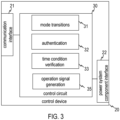
- FIG. 3 shows a control device 20.
- Features and components described with reference to Figures 1 and 2 are designated with the same reference signs as in Figures 1 and 2 .
- the control device 20 may further comprise authentication circuitry 32.
- the authentication circuitry 32 may be configured to determine, based on data received at the at least one communication interface 21, whether the data or request received at the at least one communication interface 21 originates from a user authorized to trigger a change in control mode.
- the authentication circuitry 32 may be configured to process the data received from the mobile device at the at least one communication interface 21 to retrieve therefrom an authentication key or other authentication data.
- the authentication circuitry 32 may be configured to compare the received authentication data to authentication data stored in a non-volatile manner in a storage 24 of the control device 20.
- the control device 20 may be configured such that the at least one control circuit 30 sets the control device 20 to the local control mode based on the data if the authentication circuitry 32 determines that the user of the mobile device is authorized to set the control device 20 to a local control mode.
- the authentication circuitry 32 may further be configured to process a request that may be received from a supervisory system to determine whether the request originates from the user of the mobile device will cause the control device 20 to be set to a local control mode.
- the authentication circuitry 32 may be configured to store the authentication data in a non-volatile control device storage 24 for subsequent use when an identity of the user has to be as ascertained.
- the authentication circuitry 32 may store authentication data received from the mobile device in the storage 24.
- the authentication circuitry 32 may retrieve the stored authentication data when processing the request that is received when the user is at the second location remote to the control device 20.
- the control device 20 may further be configured such that it limits the possibility to set the control device 20 to the remote control mode from the second location remote to the control device 20.
- the control device 20 may use various criteria, such as, without limitation, time-based criteria to limit the possibility to set the control device 20 to the remote control mode from the second location.
- the control device 20 may comprise a time condition verification circuitry 33 configured to check whether the request is received within a given time interval after the control device 20 has been set to the local control mode.
- the time condition verification circuitry 33 may comprise a timer that is started when the control device 20 set to the local control mode based on the received data.
- the time condition verification circuitry 33 may be configured to compare the time elapsed since the control device has been set to the local control mode to the given time interval.
- the control circuit 30 is configured to set the control device 20 to the remote control mode based on the request if the request is received within the given time interval.
- the control device 20 may be configured such that a duration of the given time interval is adjustable.
- the duration of the given time interval may be set when configuring or commissioning the control device 20.
- the duration of the given time interval may be adjustable by an operator of the electric power system during field use of the control device 20.
- Figure 4 shows a control device 20.
- Features and components described with reference to Figures 1 to 3 are designated with the same reference signs as in Figures 1 to 3 .
- the control device 20 may further comprise code generation circuitry 34.
- the code generation circuitry 34 may be configured to generate and output a code comprising at least one of parameters of a communication channel via which the data are received from the mobile device.
- the code may comprise both parameters of a communication channel via which the data are received and a unique control device identifier.
- the code may comprise a wireless secure key and identifier for the control device 20.
- the code may be configured to enable the mobile device and control device to establish a communication channel via which the control device 20 receives the data.
- the control device 20 may be configured such that the code defines parameters for a communication channel that is a temporary point-to-point wireless connection between the mobile device and the control device 20. Thereby, the control device 20 can provide information required for generation of the data and the request to the mobile device.
- the code may comprise a visual code.
- the control device 20 may further comprise an optical output interface 25 configured to output the code.
- the control device 20 can provide information required for generation of the data and/or the request to the mobile device while ensuring that the mobile device must be at the first location (e.g., within viewing distance from the control device 20).
- the optical output interface 25 may be a control device display arranged within a housing of the control device 20 so as to expose a display area for reading the code.
- the code generation circuitry 34 and the optical output interface 25 may be configured such that the code comprises a graphical code.
- the graphical code may comprise a two-dimensional graphical code and/or a barcode.
- the graphical code may comprise a two-dimensional barcode.
- the at least one communication interface of the control device 20 may comprise more than one communication interface.
- the control device 20 may have a first communication interface 21 and a second communication interface 24.
- the first communication interface 21 may be configured to receive the data from the mobile device via a wireless communication channel.
- the wireless communication channel may be a communication channel of a wireless point-to-point connection.
- the control device 20 may be configured to transmit confirmation data to the mobile device via the first communication interface 24 while the mobile device is at the first location local to the control device 20.
- the second communication interface 24 may but does not need to be configured to receive data directly from the mobile device.
- the second communication interface 24 may be configured to communicatively interface the control device 20 with a supervisory system, such as a Supervisory Control and Data Acquisition (SCADA) system and/or a fleet management (FLM) system.
- SCADA Supervisory Control and Data Acquisition
- FLM fleet management
- the second communication interface 24 may be a wired interface.
- the control device 20 may be configured to receive the data from the mobile device via the first communication interface 21.
- the control device 20 may be configured to receive the request to set the control device 20 to the remote control mode via the second communication interface 24, if the request is generated remotely to the control device 20.
- the control device 20 may further be configured to receive the request to set the control device 20 to the remote control mode via the first communication interface 21, if the request is generated locally to the control device 20.
- Figure 5 is a flow chart of a method 40 of operating a control device for at least one electric power system component. The method 40 may be performed automatically by the control device 20.
- At process block 41 at least one control circuit of the control device receives data from a communication interface.
- the data may be received at the communication interface via a wireless communication channel, such as a wireless point-to-point connection.
- the at least one control circuit sets the control device to a local control mode based on the received data.
- Setting the control device to a local control mode may comprise authenticating a user of the mobile device based on the received data.
- Information on an identity of the user, such as authentication data for the user or a unique use identifier may be stored in the control device for subsequent use.
- the control device receives a request to set the control device to a remote control mode.
- the request may but does not have to be received via a wireless interface.
- the request may be received from a SCADA or FLM system.
- At process block 44 at least one control circuit sets the control device to the remote control mode based on the received request.
- Setting the control device to the remote control mode may comprise verifying that the request originates from the user of the mobile device who caused the data received at process block 41 to be transmitted to the control device.
- the control device may be configured such that it can also be set to the remote control mode using a request that originates from the first location local to the control device (e.g., within the substation in which the control device is installed).
- Figure 6 is a flow chart of a method 50 of operating a control device for at least one electric power system component.
- the method 50 may be performed automatically by the control device 20.
- the method 50 may be performed to set the control device to the local control mode.
- the method 50 may be performed to implement process block 42 of method 40.
- the control device generates and outputs a code.
- the code may comprise both parameters of a communication channel via which the data are received and a unique control device identifier.
- the code may comprise a wireless secure key and identifier for the control device.
- the code may be configured to enable the mobile device and control device to establish a communication channel via which the control device receives the data.
- the control device may be configured such that the code defines parameters for a communication channel that is a temporary point-to-point wireless connection between the mobile device and the control device. Thereby, the control device can provide information required for generation of the data and the request to the mobile device.
- the code may comprise a visual code. Outputting the code may comprise outputting the visual code via a display of the control device.
- the visual code may comprise a graphical code.
- the graphical code may comprise a two-dimensional graphical code and/or a barcode.
- the graphical code may comprise a two-dimensional barcode.
- the control device obtains information about an identity of a user of a mobile device located at a first location local to the control device.
- Obtaining the information about the identity of the user may comprise retrieving authentication data, based on data received at an interface of the control device.
- the data received at the interface may be data transmitted by the mobile device in accordance with communication parameters specified in the code generated and output at process block 51.
- Determining whether uses authenticated to change the control mode may comprise determining, based on the received data, whether authentication data included in the received data matches authentication data start locally in the control device.
- control mode is set to the local control mode.
- control mode may be maintained as remote control mode.
- control device may provide information required for generation of the data and/or the request to the mobile device while ensuring that the mobile device must be within viewing distance.
- the control device may be configured to store information included in the code in association with an identifier for the user in a non-volatile control device storage and/or remotely in a supervisory system.
- the stored information may comprise an authentication key included in the data and a code generated by the control device to enable the control device and the mobile device to establish a communication channel.
- control device can ensure that the request to set the control device to the remote control mode originates from the user of the mobile device who used the mobile device when the control device was set to the local control mode.
- Figure 7 is a flow chart of a method 60 of operating a control device for at least one electric power system component.
- the method 60 may be performed automatically by the control device 20.
- the method 60 may be performed to set the control device to the remote control mode.
- the method 60 may comprise performing another user authentication before the control device is set to the remote control mode.
- the method 60 may be performed to implement process block 44 of method 40.
- the control device ascertains an identity of the user based on a received request.
- the request may be a request to set the control device to a remote control mode.
- the request may be received from a second location remote to the control device.
- the request may be received from a supervisory system device arranged remotely to the control device, e.g. arranged outside a substation in which the control device is provided.
- Authentication data may be retrieved from the request. The authentication data may be uniquely assigned to one user.
- the control device determines whether the ascertained user identity conforms with a previously stored user identity.
- the previously stored user identity may comprise data that uniquely identifies the user of a mobile device which triggered the control device to be set to the local control mode.
- the previously stored user identity may be stored locally in the control device or remotely from the control device, e.g., in a supervisory system.
- the control device may optionally determine whether a time-based criterion is fulfilled.
- the time-based criterion may comprise a timeout criterion.
- the time-based criterion may comprise checking whether a time period that has elapsed from a local control mode transition time at which the control device was set to the local control mode (e.g., from receipt of the data from the communication interface or from the time at which the at least one control circuit set the control device to the local control mode) is less than a threshold upon receipt of the request.
- the threshold may be settable. The time-based criterion mitigates the risk of inadvertent control mode changes.
- control device is set to the remote control mode.
- the local control mode of the control device is maintained.
- the user of the mobile device can set the control device to the remote control mode by visiting the first location local to the control device.
- the control device 20 may be an Intelligent Electronic Device (IED).
- the control device 20 may be configured to interface with data acquisition units, such as merging units (MUs), to operate the at least one electric power system component.
- the control device 20 may be configured to interface with a supervisory system, such as a SCADA or FLM system.
- the control device 20 may be configured to operate switchgear, such as a CB or switch.
- the control device 20 may be installed in a substation of an electric power system, e.g., in a substation of a high- or medium-voltage power system or a DER system.
- the control device 20 may be an lED configured to operate in a manner that is compatible with IEC 61850.
- the control device 20 is configured to communicatively interface with a mobile device. A configuration and operation of the mobile device will be explained in more detail with reference to Figures 8 to 12 .
- Figure 8 shows a mobile device 70.
- the mobile device 70 is configured to interact with a control device (such as control device 20 described with reference to any one of Figures 1 to 4 ) for at least one electric power system component.
- a control device such as control device 20 described with reference to any one of Figures 1 to 4
- the mobile device 70 comprises a mobile device communication interface 71.
- the mobile device 70 comprises at least one mobile device circuit 72.
- the mobile device circuit 72 is configured to transmit data to the control device via the mobile device communication interface 71 to cause the control device to be set to a local control mode if a user of the mobile device 70 is at a first location local to the control device.
- the mobile device circuit 72 is configured to enable the control device to be set to a remote control mode by the user of the mobile device 70 from a second location remote to the control device.
- the mobile device 70 is configured to allow the control device to be set to the local control mode while reducing the need for direct physical contact of the user with the control device at the first location.
- the mobile device 70 can act as an interface device configured to interface the user with the control device.
- the mobile device 70 is configured to allow the control device to be set to the remote control mode without requiring the user of the mobile device to be present at the first location local to the control device.
- the mobile device 70 may be configured as a token which provides data or other information required to set the control device to the remote control mode from the second location.
- the mobile device 70 is configured to enable the control device to be set to the remote control mode from a supervisory system device installed outside of a substation in which the control device is installed or another location remote to the control device.
- the mobile device 70 may additionally be configured to generate and transmit a request to set the control device to the local control mode while the mobile device 70 is at the first location local to the control device.
- the mobile device 70 may comprise mode control circuitry 73 configured to generate data to set the local device to the remote control mode.
- the mobile device 70 may be configured to transmit the generated data via the at least one mobile device communication interface 71.
- the mobile device 70 may be configured to control a mobile device wireless interface of the at least one mobile device communication interface 71 to transmit the data over a wireless point-to-point connection.
- the mode control circuitry 73 may be configured to generate and provide information that enables the control device to be set to the remote control mode. This information may but does not need to be output via the at least one mobile device communication interface 71.
- the information that enables generation of the request to set the control device to the remote control mode may be output via an interface of the mobile device under the control of the mobile device control circuit 72 via an interface different from the at least one mobile device communication interface 71, such as a graphical user interface (GUI).
- GUI graphical user interface
- the mobile device 70 may be configured to perform a biometric authentication of the user prior to generating and transmitting the data to set the control device to the remote control mode and/or prior to providing the information that enables the control device to be set to the remote control mode.
- Figure 9 shows a mobile device 70.
- Features and components described with reference to Figure 8 are designated with the same reference signs as in Figure 8 .
- the mobile device 70 comprise biometric authentication circuitry 74 configured to perform a biometric authentication of the user.
- the biometric authentication circuitry 74 may be coupled to a biometric sensor 77.
- the biometric sensor 77 may comprise an optoelectronic sensor, such as a camera sensor of the mobile device 70.
- the biometric sensor 77 may be configured to capture an image of the user of the mobile device 70.
- the biometric authentication circuitry 74 may perform a biometric authentication based on face recognition processing and/or iris signature recognition processing of the captured image. Other biometric authentication components may be used, such as a fingerprint sensor.
- the mobile device 70 may be configured such that the data is transmitted to the control device selectively based on successful biometric authentication of the user.
- the mobile device 70 may be configured such that data content of the transmitted data, such as authentication data included in the transmitted data, is dependent on an output of the biometric authentication circuitry 74.
- the mobile device 70 may be configured such that the information that enables the control device to be set to the local control mode is provided selectively based on another successful biometric authentication of the user.
- the mobile device 70 may be configured such that at least pieces of the information, such as a device identifier for the control device and/or a user identifier for the user, is dependent on an output of the biometric authentication circuitry 74.
- the mobile device 70 may be configured such that an identity of a user of the mobile device 70 is ascertained based on the another biometric authentication.
- the mobile device 70 may be configured to retrieve a unique identifier for a control device that was previously set to the local control mode by the identified user.
- the mobile device 70 may provide information that depends both on the retrieved unique identifier for the control device and the identified user to enable the control device to be set to the remote control mode.
- the at least one mobile device circuit 72 may be configured to generate and transmit the data to the control device based on a biometric authentication.
- the at least one mobile device circuit 72 may be configured to provide the user authentication data based on the biometric authentication of the user by the mobile device 70.
- the authentication data may comprise an authentication key required by the control device for authenticating the user of the mobile device 70.
- the mobile device may comprise a non-volatile storage.
- the at least one mobile device circuit 72 may be configured to identify and retrieve authentication data stored in the non-volatile storage based on the biometric authentication to provide the authentication data to the control device.
- Figure 10 shows a mobile device 70.
- Features and components described with reference to Figures 8 and 9 are designated with the same reference signs as in Figures 8 and 9 .
- the mobile device 70 further comprises a code capture sensor 78.
- the code capture sensor 78 may comprise another optoelectronic sensor, such as another camera sensor.
- the biometric sensor 77 and code capture sensor 78 may be integrated into a same camera chip or may be separate camera sensors.
- the code capture sensor 78 may comprise a first camera sensor of the mobile device 70 facing in a first viewing direction (such as a front facing camera sensor).
- the biometric sensor 77 may comprise a second camera sensor of the mobile device 70 facing a second viewing direction (such as a user-facing camera sensor) different from the first viewing direction.
- the code capture sensor 78 may be configured to capture a code output by the control device.
- the at least one mobile device circuit 72 may further comprise graphical code processing circuitry 75 configured to transmit the data to the control device based on the captured code.
- the code may comprise parameters of a communication channel via which the data are transmitted.
- the parameters of the communication channel may comprise parameters of a wireless point-to-point communication channel via which the data are transmitted.
- the parameters may comprise a wireless secure key.
- the code may be configured to enable the mobile device 70 to establish a communication channel with the control device to transmit the data to the control device.
- the communication channel may be a temporary point-to-point wireless connection between the mobile device 70 and the control device.
- the code may comprise a visual code that can be captured by a code capture sensor 78 that comprises the another optoelectronic sensor.
- the code may be embodied in other ways, such as a signal transmitted in a wired or wireless manner.
- the code may comprise a graphical code.
- the graphical code may comprise a two-dimensional graphical code and/or a barcode.
- the graphical code may comprise a two-dimensional barcode.
- the graphical code processing circuitry 75 may be configured to process the graphical code to determine the parameters of the communication channel via which the data are transmitted based on the graphical code.
- the code may also comprise a unique identifier for the control device.
- the graphical code processing circuitry 75 may be configured to process the graphical code to determine the unique identifier for the control device.
- the unique identifier for the control device may be stored in a non-volatile mobile device storage 76 for maintaining a dataset defining in a user-specific manner which control devices were set to the local control mode using the mobile device 70.
- the mobile device 70 may be configured to store information included in the code in association with an identifier for the user (such as the authentication data) in the non-volatile mobile device storage 76.
- the stored information may comprise an authentication key of the user (such as an authentication key stored back in the mobile device 70 in response to a confirmation from the control device 20) and a code captured by the mobile device.
- the mobile device may comprise a mobile device output interface.
- the mobile device output interface may comprise a GUI 79.
- the GUI may be configured to output information that identifies the control device and the user.
- the mobile device 70 is configured to be a token to ensure the identity of the user and the control device when the control device is set to the remote control mode.
- the mobile device 70 may be configured in such a manner that the mobile device 70 is required to enable the control device to be set to the remote control mode from the second location remote to the control device.
- the mobile device 70 may be configured to maintain a record in the non-volatile mobile device storage 76 which indicates, for each user, which control device or which control devices has or have been set to the local control mode by the respective user of the mobile device. Information on this control device or these control devices may be output via the GUI 79 of the mobile device.
- the GUI 79 may enable the user, after biometric authentication, to select one of the control devices recorded as having been set to the local control mode by the user.
- the mobile device 70 may be configured to generate and output information, based on the selection, which enables the selected control device to be set to the local control mode if the user is at the second location remote to the control device.
- the mobile device 70 may be configured to generate and transmit a request to the selected control device, based on the selection, to cause the control device to be set to the local control mode if the user is still at the first location local to the control device.
- the mobile device 70 of any one of Figures 8 to 10 may be a portable device.
- the mobile device 70 may be a handheld device.
- the mobile device 70 may be a terminal of a cellular communication network.
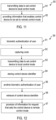
- Figure 11 is a flow chart of a method 80.
- the method 80 may be performed by the mobile device 70 of any one of Figures 8 to 10 .
- the mobile device transmits data to a control device for at least one electric power system component to set the control device to a local control mode when a user of the mobile device is at a first location local to the control device (e.g., at or in a substation in which the control device is installed).
- the data may comprise authentication data for the user.
- the data may be transmitted using parameters of a communication channel captured by the mobile device from the control device.
- the mobile device provides information that enables the control device to be set to the remote control mode when the user of the mobile device is at a second location remote to the control device (e.g., at a supervisory system device remote to the substation in which the control device is installed).
- the information may be provided via a display or other optical output device of the mobile device.
- the provided information at process block 82 may be dependent on both the control device that is to be set to the remote control mode and the user of the mobile device. This enables a check to be performed to ensure that the control device is set to the remote control mode from the remote location by the same user who set the control device to the local control mode while at the first location.
- Figure 12 is a flow chart of a method 90.
- the method 90 may be performed by the mobile device 70 of any one of Figures 8 to 10 .
- the mobile device performs a biometric authentication of a user of the mobile device.
- the biometric authentication may comprise a face recognition, fingerprint recognition, and/or iris signature recognition.
- the subsequent process blocks are performed based on the biometric authentication being successful and showing that the user of the mobile device being authenticated with the mobile device to initiate a change in control mode of a control device for at least one electric power system component.
- the mobile device captures a code from the control device.
- the code may be a visual code captured using an optoelectronic sensor of the mobile device.
- the code may comprise a graphical code, a barcode, and/or a two-dimensional barcode.
- the code may comprise parameters of a communication channel via which the mobile device can transmit data to the control device and, optionally, receive data from the control device.
- Process block 92 is performed while the user is at a first location local to the control device (e.g., at or in a substation in which the control device is installed).
- the mobile device transmits data to the control device to set the control device to a local control mode when the user of the mobile device is at the first location local to the control device.
- the data may comprise authentication data for the user.
- the data may be transmitted using parameters of the communication channel captured by the mobile device from the control device at process block 92.
- the mobile device stores a control device identifier for the control device.
- the mobile device may store the control device identifier in association with an identifier for the user authenticated at process block 91.
- the mobile device may store the control device identifier locally in the mobile device.
- the mobile device performs another biometric authentication of the user of the mobile device.
- the another biometric authentication may comprise another face recognition, another fingerprint recognition, and/or another iris signature recognition.
- the subsequent process blocks are performed based on the another biometric authentication showing that the user of the mobile device is authenticated with the mobile device to initiate a change in control mode of the control device.
- the mobile device retrieves the control device identifier.
- the mobile device may retrieve the control device identifier based on an identity of the user ascertained in the another biometric authentication at process block 95.
- the mobile device provides information that enables the control device to be set to the remote control mode when the user of the mobile device is at a second location remote to the control device (e.g., at a supervisory system device remote to the substation in which the control device is installed).
- the information may be provided via a display or other optical output device of the mobile device for acquisition by an acquisition device of a supervisory system (such as a SCADA or FLM system).
- a supervisory system such as a SCADA or FLM system.
- the provided information at process block 97 may be dependent on both the control device that is to be set to the remote control mode and the user of the mobile device. This enables a check to be performed to ensure that the control device is set to the remote control mode from the remote location by the same user who set the control device to the local control mode while at the first location.
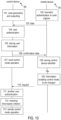
- Figure 13 is a diagram of a system comprising the control device 20 and the mobile device 70.
- the control device 20 may have any of the configurations and functions disclosed in association with Figures 1 to 7 .
- the mobile device 70 may have any of the configurations and functions disclosed in association with Figures 8 to 12 .
- control device 20 generates and output a code.
- the code may be output via a control device display or other optical output device of the control device 20.
- the code may comprise communication parameters of a communication channel via which the control device 20 can receive data from the mobile device 70.
- the mobile device 70 performs a biometric authentication of a user of the mobile device and captures the code.
- the biometric authentication may comprise a face recognition, fingerprint recognition, and/or iris signature recognition of the user.
- the mobile device 70 generates data for transmission to the control device 20 based on a result of the biometric authentication.
- the data may be generated to include an authentication key or other authentication data which is stored in the mobile device for the user identified by the biometric authentication.
- the data may also be dependent on the communication parameters in the captured code, e.g., when the communication parameters comprise a secure key to be used for generating the data.
- the mobile device 70 transmits the data 103 to set the control device to the local control mode. Modulation of the data 103 into a signal may also be dependent on the communication parameters included in the code output by the control device 20 at 101.
- the data may comprise the authentication key or other authentication data for the user to authenticate the user of the mobile device with the control device 20.
- the control device performs an authentication of the user.
- the authentication at 104 is different from the biometric authentication at 102.
- the authentication at 104 may be performed based on the data 103.
- the authentication at 104 may be performed based on an authentication key or other authentication data of the user of the mobile device included in the data 103.
- the control device stores user information of the user of the mobile device.
- the user information may be any unique identifier for the user, such as the authentication key or other authentication data included in the data 103.
- the control device may store the user information locally at the control device or in a supervisory system.
- the control device outputs confirmation data.
- the confirmation data may indicate that the user is authenticated not only with the mobile device 70 but also with the control device 20.
- the confirmation data may include the unique identifier for the user which may thereby be stored back in the mobile device 70.
- control device is set to the local control mode.
- the control device 20 may be set to the local control mode responsive to the data 103 if the user is authenticated with the control device or responsive to a further transmission from the mobile device 70 (not shown in Figure 13 ).
- the mobile device may store a unique control device identifier for the control device.
- the unique control device identifier may be included in the code captured at 102.
- the unique control device identifier may be stored in association with the user identified in the biometric authentication at 102.
- the mobile device provides information that enables the control device to be set to the remote control mode.
- the provision of the information may be dependent on that the mobile device is being used by the same user as at process block 102.
- Another biometric authentication may be performed by the mobile device 70 to ascertain the identity of the user of the mobile device.
- Provision of the information may comprise outputting the information (e.g., via a mobile device display) for acquisition and use by a supervisory system.
- the control device receives a request 110 to set the control device to the remote control mode.
- the request 110 may but does not need to be generated by the mobile device 70.
- the mobile device may output the information at 109 via a mobile device display for acquisition by a supervisory system.
- a supervisory system device of the supervisory system may then generate the request 110.
- the request 110 may include an authentication key or other authentication data of the user.
- the control device 20 may perform another user authentication.
- the further user authentication may be performed based on the authentication key or other authentication data of the user included in the request 110.
- the another user authentication may comprise checking, based on the request 110, that the user of the mobile device providing the information at 109 is authenticated with the control device 20 to request a change in control mode.
- the another user authentication may comprise verifying, based on the authentication key or other authentication data of the user included in the request 110, that the user of the mobile device providing the information at 109 is the same user who caused the control device 20 to be set to the local control mode and whose identity was stored at 105.
- the control device 20 may optionally check that a time-based criterion is fulfilled.
- the request 110 may be processed selectively based on whether the request 110 is received within a given time period after the data 103 was received or after the local control mode operation was initiated at 107.
- control device 20 is set to the remote control mode if both the another user authentication at 111 and the time-based criterion at 112 have been successful.
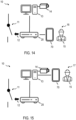
- FIGS 14 and 15 show a system 10.
- the system 10 comprises at least one electric power system component 11.
- the at least electric power system component 11 may comprise switchgear, such as a CB, a switch, or a disconnector.
- the switchgear may comprise switchgear of a high- or medium voltage electric power system or of a DER system, without being limited thereto.
- the system 10 comprises a control device 20 configured to operate the at least one electric power system component 11 by issuing an operation signal or command 12.
- the control device 20 may have a configuration and functionality as described in association with any one of Figures 1 to 7 or 13 .
- the system 10 comprises a mobile device 70 configured to interact with the control device 20.
- the mobile device 70 may also be configured to interact with a supervisory system.
- the mobile device 70 may have a configuration and functionality as described in association with any one of Figures 8 to 13 .
- the system 10 comprises a supervisory system having a supervisory system device 13.
- An acquisition device 14, such as a camera, may be comprised by or coupled to the supervisory system device 13.
- the control device 20 and mobile device 70 may be configured such that a user 15 of the mobile device 70 can set the control device 20 to a local control mode using the mobile device 70 when the user 15 is at a first location 16 local to the control device (e.g., at a first location at or in a substation in which the control device 20 is installed), as illustrated in Figure 14 .
- Setting the control device 20 to the local control mode may involve an authentication process.
- the authentication process may comprise a multi-stage authentication process, comprising a biometric authentication of the user 15 at the mobile device 70 and an authentication of the user 15 at the control device 20 based on authentication data received by the control device 20 from the mobile device 70.
- the control device 20 and mobile device 70 may be configured such that the user 15 of the mobile device 70 can set the control device 20 to the remote control mode using the mobile device 70 when the user 15 is at a second location 17 remote to the control device (e.g., at a supervisory system device 13 outside the substation in which the control device 20 is installed), as illustrated in Figure 15 .
- Setting the control device 20 to the remote control mode may involve an authentication process.
- the authentication process may comprise a multi-stage authentication process, comprising another biometric authentication of the user 15 at the mobile device 70 and an authentication of the user 15 at the control device 20 based on authentication data received by the control device 20 from the supervisory system device 13.
- the supervisory system device 13 may be configured to process information output by the mobile device and acquired by the acquisition device 14.
- the supervisory system device 13 may be configured to ascertain an identity of the user and a unique control device identifier based on the information output by the mobile device and acquired by the acquisition device 14, to generate the request that causes the control device 20 to be set to the remote control mode
- Setting the control device 20 to the remote control mode from the second location 17 may be selectively enabled based on whether a time-based criterion is fulfilled. For illustration, setting the control device 20 to the remote control mode from the second location 17 may be selectively enabled within a time period after the control device has been set to the local control mode. The time period may be fixed or may be configurable, e.g., upon commissioning or configuring of the electric power system.
- the control device 20 and mobile device 70 may optionally be configured such that the user 15 of the mobile device 70 can set the control device 20 to the remote control mode using the mobile device 70 when the user 15 is at the first location 16 local to the control device (e.g., at a first location at or in a substation in which the control device 20 is installed), as illustrated in Figure 14 .
- a communication channel (such as a wireless point-to-point communication channel) that was established between the mobile device 70 and the control device 20 to set the control device 20 to the local control mode may be re-established to set the control device 20 to the remote control mode using the mobile device 70 when the user 15 is at the first location 16.
- the supervisory system device 13 comprises or is coupled to the acquisition device 14.
- the acquisition device 14 is configured to capture information output by the mobile device 70, wherein the output information includes a control device identifier and a user identifier.
- the supervisory system device 13 comprises at least one supervisory system device circuit configured to generate, based on the acquired information, a request that causes the control device 20 identified by the control device identifier to be set to a remote control mode.
- the supervisory system device 13 may comprise a SCADA or FLM system device.
- the acquisition device 14 may comprise an optoelectronic sensor, such as a camera, configured to capture the information from a mobile device display of the mobile device 70.
- the supervisory system device 13 may be configured to receive, from the control device 20, reference information that depends on the control device identifier and the user identifier.
- the supervisory system device may be configured to generate the request based on a comparison of the reference information and the acquired information.
- the supervisory system device 13 may be configured to determine, based on the acquired information, the control device 20.
- the supervisory system device 13 may be configured to provide, based on the information, the user identifier to the control device 20.
- the disclosed devices, systems, and methods allow a control mode of a control device for at least one electric power system component to be set.
- the devices, systems, and methods reduce the need for physical contact of the user 15 with the control device 20.
- the devices, systems, and methods provide enhanced versatility in setting the control mode of the control device 20.
- the devices, systems, and methods allow the user 15 to get authenticated at the second location 17 to change the control mode of the control device 20 from the second location 17.
- the devices, systems, and methods are configured to guarantee that the very same user who set the lED to the local control mode is the one who can set the lED to the remote control mode from the second location 17 or, optionally, also from the first location 16.
- the devices, systems, and methods are configured to provide an authentication scheme which ensures that the person who changes the control mode to the local control mode can set the control mode to the remote control mode.
- the user 15 can set the control device 20 to the local control mode by establishing a wireless connection from the mobile device 70 to the control device 20.
- biometric authentication may be required to grant the user 15 access to data required for setting the control mode of the control device 20.
- the biometric authentication may comprise a face recognition process, a fingerprint recognition, and/or iris signature recognition, which is a unique identifier for the user.
- the connection to the control device 20 may be set to a temporary wireless connection mode, which may be performed as follows.
- the control device 20 may generate and display a code (such as a barcode) which comprises connection parameters in a coded form including an identifier of the control device 20.
- the mobile device 70 may read the code.
- a point-to-point connection may be established between the mobile device 70 and the control device 20.
- the connection may be established based on if the person identified on the authentication system of the mobile device 70 and the control device 20 authentication match. This means that the user's authentication is already provided on the control device 20. If successful, the mobile device 70 shares again the authentication code with the control device 20. After matching on control device 20, the mobile device 70 can cause the control device 20 to be set to the local control mode.
- the authentication code and the control device 20 identifier may be stored back on the mobile device 70. This creates an overview of which control devices were set to the local control mode by the user 15 and are still in the local control mode.
- the information allows the control device 20 to be set to the remote control mode from the second location 17 in a secure way.
- another biometric authentication may be performed by the mobile device 70.
- the mobile device 70 is configured to allow the user 15 to select the control device 15 from among one or more control devices operating in local control mode as stored in the mobile device 70.
- the mobile device 70 may re-establish the point-to-point wireless communication.
- the control device 20 may be set to the remote control mode, based on successful another authentication of the user
- the mobile device 70 may output another code (which may be another graphical code, such as another barcode).
- the another code may comprise a combination of the control device identifier and the communication parameters from the control device 20 previously captured by the mobile device 70.
- the another code may be scanned by the FLM or SCADA system and grants access to the control device 20 from the second location 17.
- the status of the control device 20 can be set back from the local control mode to the remote control mode via the FLM or SCADA system.
- a state overview may show the control device 20 operating in the remote control mode.
- the process for setting the control device 20 to the remote control mode may be time-constrained, to mitigate the risk that the control device 20 is set to the remote control mode inadvertently during longer maintenance work.
- control device may be a control device for switchgear
- the devices, systems, and methods may be used in association with control devices for electric power system components other than switchgear.
- the code comprising parameters for a communication channel does not need to be a graphical code.
- the code may comprise a modulated signal.
- the mobile device outputs another code in graphical form for authenticating the user from the second location remote to the control device
- the another code does not need to be a graphical code.
- the another may comprise a modulated signal.
- the control device stores the data required for authenticating the user from the second location remote to the control device, this data may also be stored in the supervisory system.
- Embodiments may be used in association with electric power system components of an electric power system which may comprise an electric power grid, such as a medium or high voltage grid. Embodiments may be used in association with electric power generation, transmission, and/or distribution systems, including renewable energy systems (such as DERs).
- an electric power grid such as a medium or high voltage grid.
- Embodiments may be used in association with electric power generation, transmission, and/or distribution systems, including renewable energy systems (such as DERs).
- the devices, systems, and methods reduce the need for physical contact of the user 15 with the control device.
- the devices, systems, and methods provide enhanced versatility in setting the control mode of the control device.
- the disclosure also covers all further features shown in the Figures individually although they may not have been described in the afore or following description. Also, single alternatives of the embodiments described in the Figures and the description and single alternatives of features thereof can be disclaimed from the subject matter of the invention or from disclosed subject matter.
- the disclosure comprises subject matter consisting of the features defined in the claims or the exemplary embodiments as well as subject matter comprising said features.
- a machine-readable instruction code may be stored/distributed on a suitable medium, such as an optical storage medium or a solid-state medium supplied together with or as part of other hardware, but may also be distributed in other forms, such as via a wide area network or other wired or wireless telecommunication systems.
- a machine-readable instruction code can also be a data structure product or a signal for embodying a specific method such as the method according to embodiments.
Landscapes
- Engineering & Computer Science (AREA)
- Power Engineering (AREA)
- Signal Processing (AREA)
- Computer Networks & Wireless Communication (AREA)
- Computer Security & Cryptography (AREA)
- Computer Hardware Design (AREA)
- Computing Systems (AREA)
- General Engineering & Computer Science (AREA)
- Health & Medical Sciences (AREA)
- General Health & Medical Sciences (AREA)
- Physics & Mathematics (AREA)
- General Physics & Mathematics (AREA)
- Automation & Control Theory (AREA)
- Biomedical Technology (AREA)
- Selective Calling Equipment (AREA)
- Human Computer Interaction (AREA)
Abstract
A control device (20) for at least one electric power system component (11) comprises at least one control circuit (30), configured to be coupled to a communication interface (21) and the at least one electric power system component (11). The at least one control circuit (30) is further configured to receive data from the communication interface (21), set the control device (20) to a local control mode based on the received data if a user of a mobile device is at a first location (16) local to the control device (20), and set the control device (20) to a remote control mode in response to a request of the user of the mobile device from a second location remote to the control device (20). A mobile device configured to interact with the control device (20) is also provided.
Description
- Embodiments of the invention relate to a control device for at least one electric power system component and devices, systems, and methods associated with such a control device. Embodiments of the invention relate in particular to a control device for at least one electric power system component having different control modes, a mobile device configured to interact with such a control device, and a method of controlling operation of such a control device.
- Electric power systems are important infrastructure components. Electric power systems, such as power generation, transmission, and/or a distribution systems, comprise electric power system components. Switchgear, such as switches or circuit breakers, is exemplary for electric power system components in a primary system.
- Modern systems employ control devices to operate the electric power system components. Intelligent electronic devices (lEDs) are an implementation of such control devices.
- Control devices may have different control modes. The provision of such different control modes is useful for safeguarding the safety of engineers that may have to be deployed to perform work, such as maintenance work, locally at the control device. The different control modes may prevent a control device from being controlled remotely while the control device is set to a local control mode by an engineer at the control device.
- Changing the control mode can be effected by a mechanism which requires physical interaction of the engineer with the control device. The use of a physical key that can be engaged with the control device or the entering of a code by pushing user interface elements of the control device are examples of such techniques which require physical interaction of the engineer that the control device.
- Several shortcomings are associated with a mechanism that requires physical interaction of the engineer with a control device to change their control mode. The need for physical interaction may expose the engineer to a danger in case there is a fault condition in the control device or otherwise in an electric power system substation in which the control device is arranged. The need for physical interaction also makes it more cumbersome to return the control device to a remote control mode if the engineer has left the site at which the control device is arranged while inadvertently leaving it in a local control mode.
- It is an object of the invention to provide devices, systems and methods that address one or more of the above-described shortcomings. It is also an optional object of the invention to provide a control device and a mobile device configured to interact with the control device, which provide enhanced safety for an engineer. It is also an optional object of the invention to provide a control device and a mobile device configured to interact with the control device, which facilitate setting the control device to a remote control mode even when the engineer is no longer present on site.
- A control device, a mobile device, and a method as recited in the independent claims are provided. The dependent claims define preferred embodiments.
- According to an embodiment, there is provided a control device for at least one electric power system component. The control device comprises at least one control circuit, configured to be coupled to a communication interface and the at least one electric power system component. The at least one control circuit is further configured to receive data from the communication interface; set the control device to a local control mode based on the received data if a user of a mobile device is at a first location local to the control device; and set the control device to a remote control mode in response to a request of the user of the mobile device from a second location remote to the control device.
- Such a control device provides various effects. The at least one control circuit is configured to set the control device to the local control mode based on the received data from the communication interface, without necessarily requiring physical interaction of the user of the mobile device with the control device. The at least one control circuit is configured to set the control device to the remote control mode even when the user of the mobile device is at the second location remote to the control device. The need for physical presence at the control device for setting the control device to the remote control mode is thereby relaxed, provided that the request originates from the user of the mobile device.
- The communication interface may comprise a wireless interface.
- This allows the control device to interact with the user via the mobile device and without requiring physical interaction with the control device.
- The control device may be configured to receive the data via the wireless interface.
- This allows a change in a control mode to be triggered by the user of the mobile device over a wireless connection and without requiring physical interaction with the control device.
- The at least one control circuit may be configured to authenticate, based on the received data, the user of the mobile device for setting the control device to the local control mode.
- The authentication further enhances safety. Information on an identity of the user may be acquired in the authentication and stored for subsequent use, e.g., to ensure that the control device is set by the at least one control circuit to the remote control mode based on the request of the very same user of the mobile device who initiated setting the control device to the local control mode.
- The received data may comprise an authentication key. The at least one control circuit may be configured authenticate, based on the received data, the user of the mobile device for setting the control device to the local control mode.
- The authentication further enhances safety.
- The at least one control circuit may be configured to perform another authentication of the user, based on user information stored on the control device, and to set the control device to the remote control mode based on the another authentication.
- The another authentication further enhances safety. The control device may be configured to perform the another authentication to ensure that the control device is set by the at least one control circuit to the remote control mode by the very same user of the mobile device who initiated setting the control device to the local control mode.
- The control device may be configured to set the control device to the local control mode after a successful biometric authentication of the user. The at least one control circuit may be configured to determine, based on the data, that the biometric authentication of the user has been successfully performed. The control device may be configured to interface, via the at least one communication interface, with the mobile device for the biometric authentication. The biometric authentication may comprise a face recognition, fingerprint recognition, and/or iris signature recognition.
- Thereby, safety is further enhanced. Biometric authentication techniques may be employed to check that the user of the mobile device is authenticated to trigger a change in control mode and to ascertain an identity of the user of the mobile device.
- The control device may be configured to generate and output a code comprising at least one of parameters of a communication channel via which the data are received and a unique control device identifier.
- Thereby, the control device may provide information required for generation of the data and/or the request to the mobile device.
- The code may comprise both parameters of a communication channel via which the data are received and a unique control device identifier.
- Thereby, the control device can provide information required for generation of the data and the request to the mobile device.
- The code may comprise a wireless secure key and identifier for the control device. The code may be configured to enable the mobile device and control device to establish a communication channel via which the control device receives the data. The communication channel may be a temporary point-to-point wireless connection between the mobile device and the control device.
- Thereby, the control device can provide information required for generation of the data and the request to the mobile device.
- The code may comprise a visual code.
- Thereby, the control device may provide information required for generation of the data and/or the request to the mobile device while ensuring that the mobile device must be within viewing distance.
- The code may comprise a graphical code. The graphical code may comprise a two-dimensional graphical code and/or a barcode. The graphical code may comprise a two-dimensional barcode.
- Thereby, the control device may provide information required for generation of the data and/or the request to the mobile device while ensuring that the mobile device must be within viewing distance.
- The control device may comprise an output interface configured to output the code. The output interface may comprise a display. The at least one control circuit may be configured to control the output interface to output the code.
- Thereby, the control device may provide information required for generation of the data and/or the request to the mobile device while ensuring that the mobile device must be within viewing distance.
- The control device may be configured to store information included in the code in association with an identifier for the user in a non-volatile control device storage and/or remotely in a supervisory system. The stored information may comprise an authentication key included in the data and a code generated by the control device to enable the control device and the mobile device to establish a communication channel.
- Thereby, the control device can ensure that the request to set the control device to the remote control mode originates from the user of the mobile device who used the mobile device when the control device was set to the local control mode.
- The at least one control circuit may be configured to set the control device to the remote control mode in response to the request if a time condition is fulfilled.
- Provision of such a time condition which is checked by the at least one control circuit before setting the control device to the remote control mode may further enhance safety. The risk of inadvertent changes in control modes is reduced.
- The at least one control circuit may be configured to set the control device to the remote control mode in response to the request if the request is received within a time period after the control device has been set to the local control mode. The at least one control circuit may be configured to monitor a time that has elapsed since the control device has been set to the local control mode and to determine whether the request is received before the time reaches a timeout value.
- Provision of such a time-based criterion which is checked by the at least one control circuit before setting the control device to the remote control mode may further enhance safety. The risk of inadvertent changes in control modes is reduced.
- The at least one control circuit may be configured to adjust the timeout value.
- Thereby, the control device can be adapted to different deployment scenarios and use cases.
- The at least one control circuit may be configured such that the timeout value may be adjustable during configuration and/or commissioning of the control device. Alternatively or additionally, the at least one control circuit may be configured to adjust the timeout value in response to a command.
- Thereby, the configuration of the control device may be adjusted as appropriate for the deployment scenario of the control device, e.g., depending on the configuration of an electric power system substation in which the control device is deployed.
- The at least one control circuit may further be configured to set the control device to the remote control mode based on another request from the user of the mobile device if the user of the mobile device is at the first location local to the control device.
- This allows the control device to be set to the remote control mode either by the request that may be received while the user of the mobile device is at the second location remote to the control device or by the another request that may be received while the user of the mobile device is at the first location local to the control device. Versatility is enhanced by providing various options for setting the control device to the remote control mode.
- The control device may be configured to receive the data via a wireless communication channel.
- Thereby, interaction of the user of the mobile device with the control device is facilitated. The need for physical interaction of the user with the control device is reduced.
- The control device may be configured to receive the data via a wireless point-to-point communication channel.
- Thereby, interaction of the user of the mobile device with the control device is facilitated. The need for physical interaction of the user with the control device is reduced.
- The control device may be configured to receive the request via a supervisory system, such as a Supervisory Control and Data Acquisition (SCADA) system and/or a fleet management (FLM) system, at the at least one communication interface.
- Thereby, safety is enhanced further. The control device can receive the request via a communication interface of the at least one communication interface at which it receives commands from the supervisory system, such as a SCADA and/or FLM system.
- The communication interface may comprise a first communication interface and a second communication interface. The control device may be configured to receive the data at the first communication interface and the request at the second communication interface.
- Thereby, different interface implementations may be provided for setting the control device to local control mode and to remote control mode.
- The first communication interface may comprise or may be a first wireless interface. The first wireless communication may be configured for receiving the data via a wireless point-to-point link.
- Thereby, safety is enhanced further. Parameters for the wireless point-to-point link may be provided locally by the control device to determine that the user of the mobile device is at the first location local to the control device when setting the control device to the local control mode.
- The second communication interface may comprise or may be a second wired or wireless interface. The second communication interface may be configured for communication in accordance with IEC 61850. The second communication interface may be compatible with IEC 61850-7 and/or IEC TR 61850-90.
- Thereby, setting the control device to the remote control mode may be initiated via communication techniques that provide the reliability and responsiveness required for electric power systems.
- The at least one control circuit may be configured to operate the at least one electric power system component.
- Thereby, the control device may be configured to perform control functions in an electric power system, e.g., in a substation automation (SA) system or other industrial automation and control system (IACS).
- The at least one control circuit may be configured such that, when the control device is in the local control mode, the at least one control circuit is configured to operate the at least one electric power system component locally (e.g., responsive to an input performed at the control device or received from the mobile device at the at least one communication interface while the user of the mobile device is at the first location).
- Thereby, the at least one electric power system component may be operated by an engineer present on-site at the installation in which the control device is provided. This ensures that the engineer can have visual control over what is happening in the primary system and further enhances safety.
- The at least one control circuit may be configured such that, when the control device is in the local control mode, the at least one control circuit is configured such that it reduces or eliminates the possibility of the at least one electric power system component being operated remotely (e.g., responsive to a command received via a supervisory system).
- Thereby, safety is enhanced further.
- The at least one control circuit may be configured such that, when the control device is in the remote control mode, the at least one control circuit is configured to operate the at least one electric power system component remotely (e.g., responsive to a command received from a supervisory system).
- Thereby, the at least one electric power system component may be operated via a supervisory system when in remote control mode.
- The at least one control circuit may be configured such that, when the control device is in the remote control mode, the at least one control circuit is configured such that it reduces or eliminates the possibility of the at least one electric power system component being operated locally (e.g., by a command received from the mobile device via a wireless point-to-point connection).
- Thereby, the at least one electric power system component may be operated via a supervisory system when in remote control mode.
- The at least one control circuit may be configured to trip switchgear.
- Thereby, the control device may be implemented as a control device for switchgear, such as a circuit breaker (CB), switch, or other switchgear of an electric power system generation, distribution, and/or transmission system.
- The at least one control circuit may be configured to generate an operation signal or operation command for operating the at least one electric power system component.
- Thereby, the control device may be implemented as a component of a SA system or other IACS.
- The operation signal or operation command may comprise a trip signal or a trip command.
- Thereby, the control device may be implemented as a control device for switchgear, such as a CB, switch, or other switchgear of an electric power system generation, distribution, and/or transmission system.
- The at least one control circuit may be configured to output the operating signal or operating command to the at least one electric power system component.
- Thereby, the control device may be implemented as a device separate from but coupled to the electric power system component.
- The control device may be or may comprise an intelligent electronic device (IED). The lED may be configured to operate in accordance with IEC 61850.
- According to another embodiment, there is provided a mobile device configured to interact with a control device for at least one electric power system component. The mobile device comprises a mobile device communication interface; and at least one mobile device circuit configured to transmit data to the control device via the mobile device communication interface to cause the control device to be set to a local control mode if a user of the mobile device is at a first location local to the control device, and enable the control device to be set to a remote control mode by the user of the mobile device from a second location remote to the control device.
- Such a mobile device is configured to enable the user to interface with the control device without necessarily requiring physical interaction of the user with the control device. Safety is enhanced thereby. The mobile device also enables the control device to be set to a remote control mode by the user of the mobile device from a second location remote to the control device, providing greater versatility in returning the control device to the remote control mode. For illustration, the control device can be set to the remote control mode without requiring physical presence of the user of the mobile device at the control device.
- The at least one mobile device circuit may be configured to provide user authentication data to the control device.
- Thereby, the mobile device is configured to interface the user of the mobile device with the control device.
- The at least one mobile device circuit may be configured to provide the user authentication data based on a biometric authentication of the user by the mobile device.
- Thereby, the mobile device may be configured as an authentication device interfacing with the control device. Safety is enhanced by using biometric authentication.
- The biometric authentication may comprise a face recognition, fingerprint recognition, and/or iris signature recognition. The mobile device may comprise an optoelectronic sensor, such as a camera sensor, to capture an image of the user and the at least one mobile device circuit may be configured to process the image of the user to perform the biometric authentication.
- Safety is enhanced by using face recognition, fingerprint recognition, and/or iris signature recognition to determine an identity of the user.
- The authentication data may comprise an authentication key required by the control device for authenticating the user of the mobile device.
- Thereby, the mobile device may be configured to unlock a function of changing a control mode in the control device while ensuring authentication without requiring physical interaction of the user with the control device.
- The mobile device may comprise a non-volatile storage. The at least one mobile device circuit may be configured to identify and retrieve authentication data stored in the non-volatile storage based on the biometric authentication to provide the authentication data to the control device.
- The mobile device interface may comprise a mobile device wireless interface configured to provide the data.
- Thereby, the data can be provided via a wireless communication channel, further reducing the need for physical interaction with the control device.
- The mobile device may further comprise a sensor configured to capture a code output by the control device, the at least one mobile device circuit further configured to transmit the data to the control device based on the code.
- Thereby, the mobile device may capture the information required for generation of the data and/or the request.
- The code may comprise both parameters of a communication channel via which the data are transmitted and a unique control device identifier.
- Thereby, the mobile device can capture information required for generation of the data and the request.
- The code may comprise a wireless secure key and identifier for the control device. The code may be configured to enable the mobile device and control device to establish a communication channel via which the control device receives the data. The communication channel may be a temporary point-to-point wireless connection between the mobile device and the control device.
- Thereby, the mobile device can capture information required for generation of the data and the request.
- The code may comprise a visual code.
- Thereby, the mobile device may capture information required for generation of the data and/or the request to the mobile device while ensuring that the mobile device.
- The code may comprise a graphical code. The graphical code may comprise a two-dimensional graphical code and/or a barcode. The graphical code may comprise a two-dimensional barcode.
- Thereby, the mobile device may capture information required for generation of the data and/or the request to the mobile device while ensuring that the mobile device.
- The sensor configured to capture the code may comprise an optoelectronic sensor. The optoelectronic sensor may further be configured to capture an image of the user to perform the biometric authentication. At least two optoelectronic sensors may be provided and configured to capture the code and the image of the user.
- Thereby, the information required to transmit the data and generate the request may be captured in an efficient manner using one or several optoelectronic sensor(s), such as one or several cameras.
- The mobile device may be configured to store information included in the code in association with an identifier for the user (such as the authentication data) in a non-volatile mobile device storage. The stored information may comprise an authentication key included in the data and a code captured by the mobile device.
- Thereby, the mobile device can store the information that identifies the control device and the user for generation of the request. The mobile device can retrieve this stored information for use as a token that the request to set the control device to the remote control mode originates from the user of the mobile device who used the mobile device when the control device was set to the local control mode.
- The mobile device may be configured to receive the identifier for the user (such as the authentication data) via the mobile device communication interface.
- Thereby, the mobile device can store the information that identifies the control device and the user selectively if the control device confirms that the user is authenticated with the control device.
- The mobile device may comprise a mobile device output interface configured to output the information that identifies the control device and the user. The mobile device output interface may comprise a mobile device wireless interface and/or a mobile device display.
- Thereby, the mobile device may output the information that acts as a token to ensure the identity of the user and the control device when the control device is set to the remote control mode. Safety is enhanced by the token that depends on both the user and the control device to allow the control device to be set back to the remote control mode from the second location by the same user who set the control device to the local control mode from the first location.
- The mobile device may be configured to transmit the data via a wireless point-to-point communication channel.
- Thereby, interaction of the user of the mobile device with the control device is facilitated. The need for physical interaction of the user with the control device is reduced.
- According to another embodiment, there is provided a supervisory system device for an electric power system. The supervisory system device comprises or is configured to be coupled to an acquisition device configured to capture information output by a mobile device, wherein the information includes a control device identifier and a user identifier. The supervisory system device comprises at least one supervisory system device circuit configured to generate, based on the acquired information, a request that causes a control device identified by the control device identifier to be set to a remote control mode.
- Thereby, the control device may be set to the remote control mode remotely via the supervisory system.
- The supervisory system device may comprise a Supervisory Control and Data Acquisition (SCADA) system and/or a fleet management (FLM) system device.
- The acquisition device may comprise an optoelectronic sensor, such as a camera, configured to capture the information from a mobile device display.
- Thereby, presence of the user and his/her mobile device within viewing distance of the supervisory system device may be ensured to generate the request.
- The supervisory system device may be configured to receive, from the control device, reference information that depends on the control device identifier and the user identifier. The supervisory system device may be configured to generate the request based on a comparison of the reference information and the acquired information.
- Thereby, it can be ensured that the control device is set to the remote control mode remotely by the user who caused the control device to be set to the local control mode.
- The supervisory system device may be configured to determine, based on the acquired information, the control device. The supervisory system device may be configured to provide, based on the information, the user identifier to the control device.
- Thereby, it can be ensured that the control device is set to the remote control mode remotely by the user who caused the control device to be set to the local control mode.
- A system according to an embodiment comprises the control device according to an embodiment and the mobile device according to an embodiment and/or the at least one electric power system component.
- The system may be an electric power system. The at least one electric power system component may be or may comprise a primary power system component. The at least one electric power system component may be or may comprise switchgear, such as a circuit breaker (CB), switch, disconnector, or other component configured to open and close an electric power connection.
- The electric power system may be or may comprise a medium or high voltage power system, without being limited thereto. The electric power system may be or may comprise a renewables power system or a distributed energy resources (DER) system, without being limited thereto.
- The system may comprise a Supervisory Control and Data Acquisition (SCADA) system and/or a fleet management (FLM) system comprising a supervisory system device according to an embodiment.
- A method of controlling operation of a control device for an electric power system component. The method comprises receiving, by the control device, data from a mobile device; setting the control device to a local control mode based on the received data if a user of a mobile device is at a first location local to the control device; and setting the control device to a remote control mode in response to an action of the user of the mobile device from a second location remote to the control device.
- Such a control method provides various effects. The control device is set to the local control mode based on the received data from the communication interface, without necessary requiring physical interaction of the user of the mobile device with the control device. The control device can be set to the remote control mode even when the user of the mobile device is at the second location remote to the control device. The need for physical presence at the control device for setting the control device to the remote control mode is thereby relaxed, provided that the request originates from the user of the mobile device.
- The method may be performed by the control device according to an embodiment.
- Optional features of the method of controlling operation of a control device and the effects attained thereby correspond to the features described in greater detail with reference to the control device.
- According to another embodiment, there is provided a method of changing a control mode of a control device for at least one electric power system component by a mobile device configured to interact with the control device. The method comprises transmitting data to the control device via the mobile device communication interface to cause the control device to be set to a local control mode if a user of the mobile device is at a first location local to the control device. The method comprises enabling the control device to be set to a remote control mode by the user of the mobile device from a second location remote to the control device.
- Such a method enables the user to interface with the control device without necessarily requiring physical interaction of the user with the control device. Safety is enhanced thereby. The method also enables the control device to be set to a remote control mode by the user of the mobile device from a second location remote to the control device, providing greater versatility in returning the control device to the remote control mode. For illustration, the control device can be set to the remote control mode without requiring physical presence of the user of the mobile device at the control device.
- The method may be performed by the mobile device according to an embodiment.
- Optional features of the method of changing a control mode of a control device and the effects attained thereby correspond to the features described in greater detail with reference to the mobile device.
- According to another embodiment, there is provided a method of changing a control mode of a control device by a supervisory system device for an electric power system. The method comprises capturing information output by a mobile device, wherein the information includes a control device identifier and a user identifier. The method comprises generating, based on the acquired information, a request that causes a control device identified by the control device identifier to be set to a remote control mode.
- The method has the effect that the control device may be set to the remote control mode remotely via the supervisory system.
- The method may be performed by the supervisory system device according to an embodiment.
- Optional features of the method of changing a control mode of a control device and the effects attained thereby correspond to the features described in greater detail with reference to the supervisory system device and/or the supervisory system.
- According to further embodiments, there is provided machine-readable instruction code which, when executed by at least one programmable circuit, causes the programmable circuit to perform the method according to an embodiment.
- According to further embodiments, there is provided a non-transitory storage medium having stored thereon machine-readable instruction code which, when executed by at least one programmable circuit, causes the programmable circuit to perform the method according to an embodiment.
- Various effects and advantages are attained by embodiments of the invention. For illustration, the devices, systems, and methods according to embodiments allow a control device to be set to a local control mode without necessarily requiring a physical contact of a user (e.g., maintenance engineer) with the control device. Safety is enhanced thereby. The devices, systems, and methods according to embodiments also provide a mechanism to set the control device to a remote control mode from a location remote to the control device. Thereby, the need for physical presence of the user (e.g., maintenance engineer) at the control device is reduced, which further increases efficiency and safety. The devices, systems, and methods according to embodiments may also allow the control device to be set to the remote control mode from the first location, thereby providing enhanced versatility in how the user of the mobile device can interact with the control device.
- The devices, systems, and methods can be used for changing a control mode of a control device of an IACS, such as a SA system, without being limited thereto.
- Embodiments of the invention will be described with reference to the drawings in which similar or identical reference signs designate elements with similar or identical configuration and/or function.
-
Figure 1 is a block diagram of a control device for at least one electric power system component. -
Figure 2 is a block diagram of a control device for at least one electric power system component. -
Figure 3 is a block diagram of a control device for at least one electric power system component. -
Figure 4 is a block diagram of a control device for at least one electric power system component. -
Figure 5 is a flow chart of a method performed by a control device. -
Figure 6 is a flow chart of a method performed by a control device. -
Figure 7 is a flow chart of a method performed by a control device. -
Figure 8 is a block diagram of a mobile device. -
Figure 9 is a block diagram of a mobile device. -
Figure 10 is a block diagram of a mobile device. -
Figure 11 is a flow chart of a method performed by a mobile device. -
Figure 12 is a flow chart of a method performed by a mobile device. -
Figure 13 is a diagram showing operation of a system. -
Figure 14 is a view of a system when a user is at a first location local to a control device. -
Figure 15 is a view of the system when the user is at a second location remote to the control device. - Embodiments of the invention will be described with reference to the drawings. In the drawings, similar or identical reference signs designate elements with similar or identical configuration and/or function.
- While embodiments will be described in association with control devices configured to control switchgear, the embodiments are not limited thereto.
- The features of embodiments may be combined with each other unless specifically stated otherwise.
-
Figure 1 shows acontrol device 20 for at least one electric power system component. Thecontrol device 20 comprises at least onecontrol circuit 30. The at least onecontrol circuit 30 is configured to be coupled to acommunication interface 21. The at least onecontrol circuit 30 is configured to be coupled to the at least one electric power system component. - The
control device 20 has different control modes. The different control modes may comprise a local control mode and a remote control mode. - The at least one
control circuit 30 is configured to perform transitions between different control modes of thecontrol device 20. The at least onecontrol circuit 30 is configured to receive data from thecommunication interface 21 and set thecontrol device 20 to the local control mode based on the received data if a user of a mobile device is at a first location local to thecontrol device 20. - The at least one
control circuit 30 is further configured to set the control device to the remote control mode in response to a request of the user of the mobile device from a second location remote to thecontrol device 20. - The at least one
control circuit 30 may further be configured to set thecontrol device 20 to the remote control mode in response to a request of the user of the mobile device from the first location local to thecontrol device 20. Thus, the at least onecontrol circuit 30 may be configured to or set thecontrol device 20 to the remote control mode in response to a request from the user of the mobile device which may be generated either at the first location local to the control device or at the second location remote to the control device. - The at least one
control circuit 30 may comprise any one or any combination of integrated circuits, integrated semiconductor circuits, processors, controllers, application specific integrated circuits (ASICs), field programmable gate arrays (FPGAs), circuit(s) including quantum bits (qubits) and/or quantum gates, without being limited thereto. - The at least one
control circuit 30 may comprise a controlmode transitions circuitry 31 configured to control transitions between the control modes of thecontrol device 20. A change in control mode may be performed based on a determination that a user of a mobile device interacting with thecontrol device 20 is authenticated to trigger the change in control mode. The at least onecontrol circuit 30 may perform additional authentication operations when a request to set thecontrol device 20 to the remote control mode is received from the second location remote to thecontrol device 20. These additional authentication operations may be performed to ensure that thecontrol device 20 set to the remote control mode from the second location remote to thecontrol device 20 by the user who caused thecontrol device 20 to be set to the local control mode from the first location local to thecontrol device 20. - The
control device 20 may be configured to perform different actions to operate the at least one electric power system component, depending on the control mode of thecontrol device 20. For illustration, and as will be explained in more detail below, thecontrol device 20 may be configured to react differently to incoming signals, data, commands, or requests, depending on whether thecontrol device 20 is in the local control mode or in the remote control mode. -
Figure 2 shows acontrol device 20. Features and components described with reference toFigure 1 are designated with the same reference signs as inFigure 1 . - The
control device 20 further comprises a powersystem component interface 22 configured to be communicatively coupled to the at least one electric power system component. - The
control device 20 may further be configured to generate and output operation signals or operation commands that operate the at least one electric power system component. The operation signals or operation commands may cause switchgear of the at least one electric power system component to trip. For illustration, thecontrol device 20 may cause a circuit breaker (CB), switch, or other switchgear to trip. - The at least one
control circuit 30 may comprise operationsignal generation circuity 35 configured to generate operation signals or operation commands for outputting via the powersystem component interface 22. - The at least one
control circuit 30 may be configured such that, when thecontrol device 20 is in the local control mode, the operationsignal generation circuity 35 operates the at least one electric power system component responsive to signals or commands from the first location proximal to thecontrol device 20. The first location may comprise or may be a substation in which thecontrol device 20 is installed. - The at least one
control circuit 30 may be configured such that, when thecontrol device 20 is in the remote control mode, the operationsignal generation circuity 35 operates the at least one electric power system component responsive to signals or commands from a second location remote to the control device. The second location may be arranged outside of the substation in which thecontrol device 20 is installed. For illustration, the second location may be at a control center or another location at which a supervisory system of the electric power system allows a user to interface with the supervisory system. -
Figure 3 shows acontrol device 20. Features and components described with reference toFigures 1 and 2 are designated with the same reference signs as inFigures 1 and 2 . - The
control device 20 may further compriseauthentication circuitry 32. Theauthentication circuitry 32 may be configured to determine, based on data received at the at least onecommunication interface 21, whether the data or request received at the at least onecommunication interface 21 originates from a user authorized to trigger a change in control mode. - The
authentication circuitry 32 may be configured to process the data received from the mobile device at the at least onecommunication interface 21 to retrieve therefrom an authentication key or other authentication data. Theauthentication circuitry 32 may be configured to compare the received authentication data to authentication data stored in a non-volatile manner in astorage 24 of thecontrol device 20. Thecontrol device 20 may be configured such that the at least onecontrol circuit 30 sets thecontrol device 20 to the local control mode based on the data if theauthentication circuitry 32 determines that the user of the mobile device is authorized to set thecontrol device 20 to a local control mode. Theauthentication circuitry 32 may further be configured to process a request that may be received from a supervisory system to determine whether the request originates from the user of the mobile device will cause thecontrol device 20 to be set to a local control mode. - The
authentication circuitry 32 may be configured to store the authentication data in a non-volatilecontrol device storage 24 for subsequent use when an identity of the user has to be as ascertained. For illustration, theauthentication circuitry 32 may store authentication data received from the mobile device in thestorage 24. Theauthentication circuitry 32 may retrieve the stored authentication data when processing the request that is received when the user is at the second location remote to thecontrol device 20. - The
control device 20 may further be configured such that it limits the possibility to set thecontrol device 20 to the remote control mode from the second location remote to thecontrol device 20. Thecontrol device 20 may use various criteria, such as, without limitation, time-based criteria to limit the possibility to set thecontrol device 20 to the remote control mode from the second location. Thecontrol device 20 may comprise a timecondition verification circuitry 33 configured to check whether the request is received within a given time interval after thecontrol device 20 has been set to the local control mode. The timecondition verification circuitry 33 may comprise a timer that is started when thecontrol device 20 set to the local control mode based on the received data. When the request is received, the timecondition verification circuitry 33 may be configured to compare the time elapsed since the control device has been set to the local control mode to the given time interval. Thecontrol circuit 30 is configured to set thecontrol device 20 to the remote control mode based on the request if the request is received within the given time interval. - The
control device 20 may be configured such that a duration of the given time interval is adjustable. The duration of the given time interval may be set when configuring or commissioning thecontrol device 20. The duration of the given time interval may be adjustable by an operator of the electric power system during field use of thecontrol device 20. -
Figure 4 shows acontrol device 20. Features and components described with reference toFigures 1 to 3 are designated with the same reference signs as inFigures 1 to 3 . - The
control device 20 may further comprisecode generation circuitry 34. Thecode generation circuitry 34 may be configured to generate and output a code comprising at least one of parameters of a communication channel via which the data are received from the mobile device. The code may comprise both parameters of a communication channel via which the data are received and a unique control device identifier. The code may comprise a wireless secure key and identifier for thecontrol device 20. The code may be configured to enable the mobile device and control device to establish a communication channel via which thecontrol device 20 receives the data. Thecontrol device 20 may be configured such that the code defines parameters for a communication channel that is a temporary point-to-point wireless connection between the mobile device and thecontrol device 20. Thereby, thecontrol device 20 can provide information required for generation of the data and the request to the mobile device. - The code may comprise a visual code. The
control device 20 may further comprise an optical output interface 25 configured to output the code. Thereby, thecontrol device 20 can provide information required for generation of the data and/or the request to the mobile device while ensuring that the mobile device must be at the first location (e.g., within viewing distance from the control device 20). The optical output interface 25 may be a control device display arranged within a housing of thecontrol device 20 so as to expose a display area for reading the code. - The
code generation circuitry 34 and the optical output interface 25 may be configured such that the code comprises a graphical code. The graphical code may comprise a two-dimensional graphical code and/or a barcode. The graphical code may comprise a two-dimensional barcode. - The at least one communication interface of the
control device 20 may comprise more than one communication interface. For illustration, thecontrol device 20 may have afirst communication interface 21 and asecond communication interface 24. Thefirst communication interface 21 may be configured to receive the data from the mobile device via a wireless communication channel. The wireless communication channel may be a communication channel of a wireless point-to-point connection. Thecontrol device 20 may be configured to transmit confirmation data to the mobile device via thefirst communication interface 24 while the mobile device is at the first location local to thecontrol device 20. - The
second communication interface 24 may but does not need to be configured to receive data directly from the mobile device. Thesecond communication interface 24 may be configured to communicatively interface thecontrol device 20 with a supervisory system, such as a Supervisory Control and Data Acquisition (SCADA) system and/or a fleet management (FLM) system. Thesecond communication interface 24 may be a wired interface. - The
control device 20 may be configured to receive the data from the mobile device via thefirst communication interface 21. Thecontrol device 20 may be configured to receive the request to set thecontrol device 20 to the remote control mode via thesecond communication interface 24, if the request is generated remotely to thecontrol device 20. Thecontrol device 20 may further be configured to receive the request to set thecontrol device 20 to the remote control mode via thefirst communication interface 21, if the request is generated locally to thecontrol device 20. -
Figure 5 is a flow chart of amethod 40 of operating a control device for at least one electric power system component. Themethod 40 may be performed automatically by thecontrol device 20. - At
process block 41, at least one control circuit of the control device receives data from a communication interface. The data may be received at the communication interface via a wireless communication channel, such as a wireless point-to-point connection. - At
process block 42, the at least one control circuit sets the control device to a local control mode based on the received data. Setting the control device to a local control mode may comprise authenticating a user of the mobile device based on the received data. Information on an identity of the user, such as authentication data for the user or a unique use identifier may be stored in the control device for subsequent use. - At
process block 43, the control device receives a request to set the control device to a remote control mode. The request may but does not have to be received via a wireless interface. The request may be received from a SCADA or FLM system. - At process block 44, at least one control circuit sets the control device to the remote control mode based on the received request. Setting the control device to the remote control mode may comprise verifying that the request originates from the user of the mobile device who caused the data received at
process block 41 to be transmitted to the control device. - While the request at
process block 43 can originate from a second location remote to the control device, the control device may be configured such that it can also be set to the remote control mode using a request that originates from the first location local to the control device (e.g., within the substation in which the control device is installed). -
Figure 6 is a flow chart of amethod 50 of operating a control device for at least one electric power system component. Themethod 50 may be performed automatically by thecontrol device 20. Themethod 50 may be performed to set the control device to the local control mode. Themethod 50 may be performed to implement process block 42 ofmethod 40. - At process block 51, the control device generates and outputs a code. The code may comprise both parameters of a communication channel via which the data are received and a unique control device identifier. The code may comprise a wireless secure key and identifier for the control device. The code may be configured to enable the mobile device and control device to establish a communication channel via which the control device receives the data. The control device may be configured such that the code defines parameters for a communication channel that is a temporary point-to-point wireless connection between the mobile device and the control device. Thereby, the control device can provide information required for generation of the data and the request to the mobile device.
- The code may comprise a visual code. Outputting the code may comprise outputting the visual code via a display of the control device. The visual code may comprise a graphical code. The graphical code may comprise a two-dimensional graphical code and/or a barcode. The graphical code may comprise a two-dimensional barcode.
- At
process block 52, the control device obtains information about an identity of a user of a mobile device located at a first location local to the control device. Obtaining the information about the identity of the user may comprise retrieving authentication data, based on data received at an interface of the control device. The data received at the interface may be data transmitted by the mobile device in accordance with communication parameters specified in the code generated and output at process block 51. - At
process block 53, it is determined whether uses authenticated to change the control mode of the control device. Determining whether uses authenticated to change the control mode may comprise determining, based on the received data, whether authentication data included in the received data matches authentication data start locally in the control device. - At
process block 54, if the user is authenticated to effect a change in control mode, information on the identity of the user is stored in the control device for subsequent use. The control mode is set to the local control mode. - At
process block 55, if the user is determined to be not authorized to effect a change in control mode, there control mode may be maintained as remote control mode. - Thereby, the control device may provide information required for generation of the data and/or the request to the mobile device while ensuring that the mobile device must be within viewing distance.
- The control device may be configured to store information included in the code in association with an identifier for the user in a non-volatile control device storage and/or remotely in a supervisory system. The stored information may comprise an authentication key included in the data and a code generated by the control device to enable the control device and the mobile device to establish a communication channel.
- Thereby, the control device can ensure that the request to set the control device to the remote control mode originates from the user of the mobile device who used the mobile device when the control device was set to the local control mode.
-
Figure 7 is a flow chart of amethod 60 of operating a control device for at least one electric power system component. Themethod 60 may be performed automatically by thecontrol device 20. Themethod 60 may be performed to set the control device to the remote control mode. Themethod 60 may comprise performing another user authentication before the control device is set to the remote control mode. Themethod 60 may be performed to implement process block 44 ofmethod 40. - At
process block 61, the control device ascertains an identity of the user based on a received request. The request may be a request to set the control device to a remote control mode. The request may be received from a second location remote to the control device. The request may be received from a supervisory system device arranged remotely to the control device, e.g. arranged outside a substation in which the control device is provided. Authentication data may be retrieved from the request. The authentication data may be uniquely assigned to one user. - At
process block 62, the control device determines whether the ascertained user identity conforms with a previously stored user identity. The previously stored user identity may comprise data that uniquely identifies the user of a mobile device which triggered the control device to be set to the local control mode. The previously stored user identity may be stored locally in the control device or remotely from the control device, e.g., in a supervisory system. - At
process block 63, if the ascertained user identity conforms with the stored user identity of the user, the control device may optionally determine whether a time-based criterion is fulfilled. The time-based criterion may comprise a timeout criterion. The time-based criterion may comprise checking whether a time period that has elapsed from a local control mode transition time at which the control device was set to the local control mode (e.g., from receipt of the data from the communication interface or from the time at which the at least one control circuit set the control device to the local control mode) is less than a threshold upon receipt of the request. The threshold may be settable. The time-based criterion mitigates the risk of inadvertent control mode changes. - At
process block 64, if the ascertained user identity conforms with the stored user identity and if the time-based criterion is fulfilled, the control device is set to the remote control mode. - At
process block 65, if the ascertained user identity does not conform with the stored user identity or if the time-based criterion is not fulfilled, the local control mode of the control device is maintained. In this case, the user of the mobile device can set the control device to the remote control mode by visiting the first location local to the control device. - The
control device 20 according to any one ofFigures 1 to 4 , which may perform the method of any one ofFigures 5 to 7 , may be an Intelligent Electronic Device (IED). Thecontrol device 20 may be configured to interface with data acquisition units, such as merging units (MUs), to operate the at least one electric power system component. Thecontrol device 20 may be configured to interface with a supervisory system, such as a SCADA or FLM system. Thecontrol device 20 may be configured to operate switchgear, such as a CB or switch. Thecontrol device 20 may be installed in a substation of an electric power system, e.g., in a substation of a high- or medium-voltage power system or a DER system. Thecontrol device 20 may be an lED configured to operate in a manner that is compatible with IEC 61850. - The
control device 20 is configured to communicatively interface with a mobile device. A configuration and operation of the mobile device will be explained in more detail with reference toFigures 8 to 12 . -
Figure 8 shows amobile device 70. Themobile device 70 is configured to interact with a control device (such ascontrol device 20 described with reference to any one ofFigures 1 to 4 ) for at least one electric power system component. - The
mobile device 70 comprises a mobiledevice communication interface 71. Themobile device 70 comprises at least onemobile device circuit 72. - The
mobile device circuit 72 is configured to transmit data to the control device via the mobiledevice communication interface 71 to cause the control device to be set to a local control mode if a user of themobile device 70 is at a first location local to the control device. - The
mobile device circuit 72 is configured to enable the control device to be set to a remote control mode by the user of themobile device 70 from a second location remote to the control device. - Thus, the
mobile device 70 is configured to allow the control device to be set to the local control mode while reducing the need for direct physical contact of the user with the control device at the first location. Themobile device 70 can act as an interface device configured to interface the user with the control device. - The
mobile device 70 is configured to allow the control device to be set to the remote control mode without requiring the user of the mobile device to be present at the first location local to the control device. Themobile device 70 may be configured as a token which provides data or other information required to set the control device to the remote control mode from the second location. For illustration, themobile device 70 is configured to enable the control device to be set to the remote control mode from a supervisory system device installed outside of a substation in which the control device is installed or another location remote to the control device. - The
mobile device 70 may additionally be configured to generate and transmit a request to set the control device to the local control mode while themobile device 70 is at the first location local to the control device. - The
mobile device 70 may comprisemode control circuitry 73 configured to generate data to set the local device to the remote control mode. Themobile device 70 may be configured to transmit the generated data via the at least one mobiledevice communication interface 71. Themobile device 70 may be configured to control a mobile device wireless interface of the at least one mobiledevice communication interface 71 to transmit the data over a wireless point-to-point connection. - The
mode control circuitry 73 may be configured to generate and provide information that enables the control device to be set to the remote control mode. This information may but does not need to be output via the at least one mobiledevice communication interface 71. The information that enables generation of the request to set the control device to the remote control mode may be output via an interface of the mobile device under the control of the mobiledevice control circuit 72 via an interface different from the at least one mobiledevice communication interface 71, such as a graphical user interface (GUI). - The
mobile device 70 may be configured to perform a biometric authentication of the user prior to generating and transmitting the data to set the control device to the remote control mode and/or prior to providing the information that enables the control device to be set to the remote control mode. -
Figure 9 shows amobile device 70. Features and components described with reference toFigure 8 are designated with the same reference signs as inFigure 8 . - The
mobile device 70 comprisebiometric authentication circuitry 74 configured to perform a biometric authentication of the user. Thebiometric authentication circuitry 74 may be coupled to abiometric sensor 77. Thebiometric sensor 77 may comprise an optoelectronic sensor, such as a camera sensor of themobile device 70. Thebiometric sensor 77 may be configured to capture an image of the user of themobile device 70. Thebiometric authentication circuitry 74 may perform a biometric authentication based on face recognition processing and/or iris signature recognition processing of the captured image. Other biometric authentication components may be used, such as a fingerprint sensor. - The
mobile device 70 may be configured such that the data is transmitted to the control device selectively based on successful biometric authentication of the user. Themobile device 70 may be configured such that data content of the transmitted data, such as authentication data included in the transmitted data, is dependent on an output of thebiometric authentication circuitry 74. - The
mobile device 70 may be configured such that the information that enables the control device to be set to the local control mode is provided selectively based on another successful biometric authentication of the user. Themobile device 70 may be configured such that at least pieces of the information, such as a device identifier for the control device and/or a user identifier for the user, is dependent on an output of thebiometric authentication circuitry 74. - For illustration, the
mobile device 70 may be configured such that an identity of a user of themobile device 70 is ascertained based on the another biometric authentication. Themobile device 70 may be configured to retrieve a unique identifier for a control device that was previously set to the local control mode by the identified user. Themobile device 70 may provide information that depends both on the retrieved unique identifier for the control device and the identified user to enable the control device to be set to the remote control mode. - The at least one
mobile device circuit 72 may be configured to generate and transmit the data to the control device based on a biometric authentication. The at least onemobile device circuit 72 may be configured to provide the user authentication data based on the biometric authentication of the user by themobile device 70. The authentication data may comprise an authentication key required by the control device for authenticating the user of themobile device 70. The mobile device may comprise a non-volatile storage. The at least onemobile device circuit 72 may be configured to identify and retrieve authentication data stored in the non-volatile storage based on the biometric authentication to provide the authentication data to the control device. -
Figure 10 shows amobile device 70. Features and components described with reference toFigures 8 and 9 are designated with the same reference signs as inFigures 8 and 9 . - The
mobile device 70 further comprises acode capture sensor 78. Thecode capture sensor 78 may comprise another optoelectronic sensor, such as another camera sensor. Thebiometric sensor 77 andcode capture sensor 78 may be integrated into a same camera chip or may be separate camera sensors. For illustration, thecode capture sensor 78 may comprise a first camera sensor of themobile device 70 facing in a first viewing direction (such as a front facing camera sensor). Thebiometric sensor 77 may comprise a second camera sensor of themobile device 70 facing a second viewing direction (such as a user-facing camera sensor) different from the first viewing direction. - The
code capture sensor 78 may be configured to capture a code output by the control device. The at least onemobile device circuit 72 may further comprise graphicalcode processing circuitry 75 configured to transmit the data to the control device based on the captured code. The code may comprise parameters of a communication channel via which the data are transmitted. The parameters of the communication channel may comprise parameters of a wireless point-to-point communication channel via which the data are transmitted. The parameters may comprise a wireless secure key. The code may be configured to enable themobile device 70 to establish a communication channel with the control device to transmit the data to the control device. The communication channel may be a temporary point-to-point wireless connection between themobile device 70 and the control device. - The code may comprise a visual code that can be captured by a
code capture sensor 78 that comprises the another optoelectronic sensor. The code may be embodied in other ways, such as a signal transmitted in a wired or wireless manner. - The code may comprise a graphical code. The graphical code may comprise a two-dimensional graphical code and/or a barcode. The graphical code may comprise a two-dimensional barcode. The graphical
code processing circuitry 75 may be configured to process the graphical code to determine the parameters of the communication channel via which the data are transmitted based on the graphical code. - The code may also comprise a unique identifier for the control device. The graphical
code processing circuitry 75 may be configured to process the graphical code to determine the unique identifier for the control device. The unique identifier for the control device may be stored in a non-volatilemobile device storage 76 for maintaining a dataset defining in a user-specific manner which control devices were set to the local control mode using themobile device 70. - The
mobile device 70 may be configured to store information included in the code in association with an identifier for the user (such as the authentication data) in the non-volatilemobile device storage 76. The stored information may comprise an authentication key of the user (such as an authentication key stored back in themobile device 70 in response to a confirmation from the control device 20) and a code captured by the mobile device. - The mobile device may comprise a mobile device output interface. The mobile device output interface may comprise a
GUI 79. The GUI may be configured to output information that identifies the control device and the user. By provision of the information that identifies the control device and the user, themobile device 70 is configured to be a token to ensure the identity of the user and the control device when the control device is set to the remote control mode. Themobile device 70 may be configured in such a manner that themobile device 70 is required to enable the control device to be set to the remote control mode from the second location remote to the control device. - The
mobile device 70 may be configured to maintain a record in the non-volatilemobile device storage 76 which indicates, for each user, which control device or which control devices has or have been set to the local control mode by the respective user of the mobile device. Information on this control device or these control devices may be output via theGUI 79 of the mobile device. - The
GUI 79 may enable the user, after biometric authentication, to select one of the control devices recorded as having been set to the local control mode by the user. Themobile device 70 may be configured to generate and output information, based on the selection, which enables the selected control device to be set to the local control mode if the user is at the second location remote to the control device. Themobile device 70 may be configured to generate and transmit a request to the selected control device, based on the selection, to cause the control device to be set to the local control mode if the user is still at the first location local to the control device. - The
mobile device 70 of any one ofFigures 8 to 10 may be a portable device. Themobile device 70 may be a handheld device. Themobile device 70 may be a terminal of a cellular communication network. -
Figure 11 is a flow chart of amethod 80. Themethod 80 may be performed by themobile device 70 of any one ofFigures 8 to 10 . - At
process block 81, the mobile device transmits data to a control device for at least one electric power system component to set the control device to a local control mode when a user of the mobile device is at a first location local to the control device (e.g., at or in a substation in which the control device is installed). The data may comprise authentication data for the user. The data may be transmitted using parameters of a communication channel captured by the mobile device from the control device. - At
process block 82, the mobile device provides information that enables the control device to be set to the remote control mode when the user of the mobile device is at a second location remote to the control device (e.g., at a supervisory system device remote to the substation in which the control device is installed). - The information may be provided via a display or other optical output device of the mobile device.
- The provided information at
process block 82 may be dependent on both the control device that is to be set to the remote control mode and the user of the mobile device. This enables a check to be performed to ensure that the control device is set to the remote control mode from the remote location by the same user who set the control device to the local control mode while at the first location. -
Figure 12 is a flow chart of amethod 90. Themethod 90 may be performed by themobile device 70 of any one ofFigures 8 to 10 . - At
process block 91, the mobile device performs a biometric authentication of a user of the mobile device. The biometric authentication may comprise a face recognition, fingerprint recognition, and/or iris signature recognition. The subsequent process blocks are performed based on the biometric authentication being successful and showing that the user of the mobile device being authenticated with the mobile device to initiate a change in control mode of a control device for at least one electric power system component. - At
process block 92, the mobile device captures a code from the control device. The code may be a visual code captured using an optoelectronic sensor of the mobile device. The code may comprise a graphical code, a barcode, and/or a two-dimensional barcode. The code may comprise parameters of a communication channel via which the mobile device can transmit data to the control device and, optionally, receive data from the control device.Process block 92 is performed while the user is at a first location local to the control device (e.g., at or in a substation in which the control device is installed). - At
process block 93, the mobile device transmits data to the control device to set the control device to a local control mode when the user of the mobile device is at the first location local to the control device. The data may comprise authentication data for the user. The data may be transmitted using parameters of the communication channel captured by the mobile device from the control device atprocess block 92. - At
process block 94, the mobile device stores a control device identifier for the control device. The mobile device may store the control device identifier in association with an identifier for the user authenticated atprocess block 91. The mobile device may store the control device identifier locally in the mobile device. - At
process block 95, the mobile device performs another biometric authentication of the user of the mobile device. The another biometric authentication may comprise another face recognition, another fingerprint recognition, and/or another iris signature recognition. The subsequent process blocks are performed based on the another biometric authentication showing that the user of the mobile device is authenticated with the mobile device to initiate a change in control mode of the control device. - At
process block 96, the mobile device retrieves the control device identifier. The mobile device may retrieve the control device identifier based on an identity of the user ascertained in the another biometric authentication atprocess block 95. - At
process block 97, the mobile device provides information that enables the control device to be set to the remote control mode when the user of the mobile device is at a second location remote to the control device (e.g., at a supervisory system device remote to the substation in which the control device is installed). - At
process block 97, the information may be provided via a display or other optical output device of the mobile device for acquisition by an acquisition device of a supervisory system (such as a SCADA or FLM system). - The provided information at
process block 97 may be dependent on both the control device that is to be set to the remote control mode and the user of the mobile device. This enables a check to be performed to ensure that the control device is set to the remote control mode from the remote location by the same user who set the control device to the local control mode while at the first location. -
Figure 13 is a diagram of a system comprising thecontrol device 20 and themobile device 70. Thecontrol device 20 may have any of the configurations and functions disclosed in association withFigures 1 to 7 . Themobile device 70 may have any of the configurations and functions disclosed in association withFigures 8 to 12 . - At 101, the
control device 20 generates and output a code. The code may be output via a control device display or other optical output device of thecontrol device 20. The code may comprise communication parameters of a communication channel via which thecontrol device 20 can receive data from themobile device 70. - At 102, the
mobile device 70 performs a biometric authentication of a user of the mobile device and captures the code. The biometric authentication may comprise a face recognition, fingerprint recognition, and/or iris signature recognition of the user. Themobile device 70 generates data for transmission to thecontrol device 20 based on a result of the biometric authentication. For illustration, the data may be generated to include an authentication key or other authentication data which is stored in the mobile device for the user identified by the biometric authentication. The data may also be dependent on the communication parameters in the captured code, e.g., when the communication parameters comprise a secure key to be used for generating the data. - At 103, the
mobile device 70 transmits thedata 103 to set the control device to the local control mode. Modulation of thedata 103 into a signal may also be dependent on the communication parameters included in the code output by thecontrol device 20 at 101. The data may comprise the authentication key or other authentication data for the user to authenticate the user of the mobile device with thecontrol device 20. - At 104, the control device performs an authentication of the user. The authentication at 104 is different from the biometric authentication at 102. The authentication at 104 may be performed based on the
data 103. The authentication at 104 may be performed based on an authentication key or other authentication data of the user of the mobile device included in thedata 103. - At 105, the control device stores user information of the user of the mobile device. The user information may be any unique identifier for the user, such as the authentication key or other authentication data included in the
data 103. The control device may store the user information locally at the control device or in a supervisory system. - At 106, the control device outputs confirmation data. The confirmation data may indicate that the user is authenticated not only with the
mobile device 70 but also with thecontrol device 20. The confirmation data may include the unique identifier for the user which may thereby be stored back in themobile device 70. - At 107, the control device is set to the local control mode. The
control device 20 may be set to the local control mode responsive to thedata 103 if the user is authenticated with the control device or responsive to a further transmission from the mobile device 70 (not shown inFigure 13 ). - At 108, the mobile device may store a unique control device identifier for the control device. The unique control device identifier may be included in the code captured at 102. The unique control device identifier may be stored in association with the user identified in the biometric authentication at 102.
- At 109, the mobile device provides information that enables the control device to be set to the remote control mode. The provision of the information may be dependent on that the mobile device is being used by the same user as at
process block 102. Another biometric authentication may be performed by themobile device 70 to ascertain the identity of the user of the mobile device. Provision of the information may comprise outputting the information (e.g., via a mobile device display) for acquisition and use by a supervisory system. - At 110, the control device receives a
request 110 to set the control device to the remote control mode. Therequest 110 may but does not need to be generated by themobile device 70. For illustration, the mobile device may output the information at 109 via a mobile device display for acquisition by a supervisory system. A supervisory system device of the supervisory system may then generate therequest 110. Therequest 110 may include an authentication key or other authentication data of the user. - At 111, the
control device 20 may perform another user authentication. The further user authentication may be performed based on the authentication key or other authentication data of the user included in therequest 110. The another user authentication may comprise checking, based on therequest 110, that the user of the mobile device providing the information at 109 is authenticated with thecontrol device 20 to request a change in control mode. The another user authentication may comprise verifying, based on the authentication key or other authentication data of the user included in therequest 110, that the user of the mobile device providing the information at 109 is the same user who caused thecontrol device 20 to be set to the local control mode and whose identity was stored at 105. - At 112, the
control device 20 may optionally check that a time-based criterion is fulfilled. For illustration, therequest 110 may be processed selectively based on whether therequest 110 is received within a given time period after thedata 103 was received or after the local control mode operation was initiated at 107. - At 113, the
control device 20 is set to the remote control mode if both the another user authentication at 111 and the time-based criterion at 112 have been successful. -
Figures 14 and 15 show asystem 10. Thesystem 10 comprises at least one electricpower system component 11. The at least electricpower system component 11 may comprise switchgear, such as a CB, a switch, or a disconnector. The switchgear may comprise switchgear of a high- or medium voltage electric power system or of a DER system, without being limited thereto. - The
system 10 comprises acontrol device 20 configured to operate the at least one electricpower system component 11 by issuing an operation signal orcommand 12. Thecontrol device 20 may have a configuration and functionality as described in association with any one ofFigures 1 to 7 or13 . - The
system 10 comprises amobile device 70 configured to interact with thecontrol device 20. Themobile device 70 may also be configured to interact with a supervisory system. Themobile device 70 may have a configuration and functionality as described in association with any one ofFigures 8 to 13 . - The
system 10 comprises a supervisory system having asupervisory system device 13. Anacquisition device 14, such as a camera, may be comprised by or coupled to thesupervisory system device 13. - The
control device 20 andmobile device 70 may be configured such that auser 15 of themobile device 70 can set thecontrol device 20 to a local control mode using themobile device 70 when theuser 15 is at afirst location 16 local to the control device (e.g., at a first location at or in a substation in which thecontrol device 20 is installed), as illustrated inFigure 14 . Setting thecontrol device 20 to the local control mode may involve an authentication process. The authentication process may comprise a multi-stage authentication process, comprising a biometric authentication of theuser 15 at themobile device 70 and an authentication of theuser 15 at thecontrol device 20 based on authentication data received by thecontrol device 20 from themobile device 70. - The
control device 20 andmobile device 70 may be configured such that theuser 15 of themobile device 70 can set thecontrol device 20 to the remote control mode using themobile device 70 when theuser 15 is at asecond location 17 remote to the control device (e.g., at asupervisory system device 13 outside the substation in which thecontrol device 20 is installed), as illustrated inFigure 15 . Setting thecontrol device 20 to the remote control mode may involve an authentication process. The authentication process may comprise a multi-stage authentication process, comprising another biometric authentication of theuser 15 at themobile device 70 and an authentication of theuser 15 at thecontrol device 20 based on authentication data received by thecontrol device 20 from thesupervisory system device 13. Thesupervisory system device 13 may be configured to process information output by the mobile device and acquired by theacquisition device 14. Thesupervisory system device 13 may be configured to ascertain an identity of the user and a unique control device identifier based on the information output by the mobile device and acquired by theacquisition device 14, to generate the request that causes thecontrol device 20 to be set to the remote control mode. - Setting the
control device 20 to the remote control mode from thesecond location 17 may be selectively enabled based on whether a time-based criterion is fulfilled. For illustration, setting thecontrol device 20 to the remote control mode from thesecond location 17 may be selectively enabled within a time period after the control device has been set to the local control mode. The time period may be fixed or may be configurable, e.g., upon commissioning or configuring of the electric power system. - The
control device 20 andmobile device 70 may optionally be configured such that theuser 15 of themobile device 70 can set thecontrol device 20 to the remote control mode using themobile device 70 when theuser 15 is at thefirst location 16 local to the control device (e.g., at a first location at or in a substation in which thecontrol device 20 is installed), as illustrated inFigure 14 . A communication channel (such as a wireless point-to-point communication channel) that was established between themobile device 70 and thecontrol device 20 to set thecontrol device 20 to the local control mode may be re-established to set thecontrol device 20 to the remote control mode using themobile device 70 when theuser 15 is at thefirst location 16. - The
supervisory system device 13 comprises or is coupled to theacquisition device 14. Theacquisition device 14 is configured to capture information output by themobile device 70, wherein the output information includes a control device identifier and a user identifier. Thesupervisory system device 13 comprises at least one supervisory system device circuit configured to generate, based on the acquired information, a request that causes thecontrol device 20 identified by the control device identifier to be set to a remote control mode. Thesupervisory system device 13 may comprise a SCADA or FLM system device. - The
acquisition device 14 may comprise an optoelectronic sensor, such as a camera, configured to capture the information from a mobile device display of themobile device 70. Thesupervisory system device 13 may be configured to receive, from thecontrol device 20, reference information that depends on the control device identifier and the user identifier. The supervisory system device may be configured to generate the request based on a comparison of the reference information and the acquired information. - The
supervisory system device 13 may be configured to determine, based on the acquired information, thecontrol device 20. Thesupervisory system device 13 may be configured to provide, based on the information, the user identifier to thecontrol device 20. - As has been explained with reference to
Figures 1 to 15 , the disclosed devices, systems, and methods allow a control mode of a control device for at least one electric power system component to be set. The devices, systems, and methods reduce the need for physical contact of theuser 15 with thecontrol device 20. The devices, systems, and methods provide enhanced versatility in setting the control mode of thecontrol device 20. - To ensure compliance with safety requirements when the
user 15 is at thelocation 17 control, the devices, systems, and methods allow theuser 15 to get authenticated at thesecond location 17 to change the control mode of thecontrol device 20 from thesecond location 17. The devices, systems, and methods are configured to guarantee that the very same user who set the lED to the local control mode is the one who can set the lED to the remote control mode from thesecond location 17 or, optionally, also from thefirst location 16. The devices, systems, and methods are configured to provide an authentication scheme which ensures that the person who changes the control mode to the local control mode can set the control mode to the remote control mode. - The
user 15 can set thecontrol device 20 to the local control mode by establishing a wireless connection from themobile device 70 to thecontrol device 20. On themobile device 70, biometric authentication may be required to grant theuser 15 access to data required for setting the control mode of thecontrol device 20. The biometric authentication may comprise a face recognition process, a fingerprint recognition, and/or iris signature recognition, which is a unique identifier for the user. - The connection to the
control device 20 may be set to a temporary wireless connection mode, which may be performed as follows. Thecontrol device 20 may generate and display a code (such as a barcode) which comprises connection parameters in a coded form including an identifier of thecontrol device 20. Themobile device 70 may read the code. A point-to-point connection may be established between themobile device 70 and thecontrol device 20. The connection may be established based on if the person identified on the authentication system of themobile device 70 and thecontrol device 20 authentication match. This means that the user's authentication is already provided on thecontrol device 20. If successful, themobile device 70 shares again the authentication code with thecontrol device 20. After matching oncontrol device 20, themobile device 70 can cause thecontrol device 20 to be set to the local control mode. - The authentication code and the
control device 20 identifier may be stored back on themobile device 70. This creates an overview of which control devices were set to the local control mode by theuser 15 and are still in the local control mode. The information allows thecontrol device 20 to be set to the remote control mode from thesecond location 17 in a secure way. To verify that the change in control mode from thesecond location 17 is authorized by thesame user 15, another biometric authentication may be performed by themobile device 70. - To set the
control device 20 to the remote control mode when theuser 15 is still at thefirst location 16, themobile device 70 is configured to allow theuser 15 to select thecontrol device 15 from among one or more control devices operating in local control mode as stored in themobile device 70. Themobile device 70 may re-establish the point-to-point wireless communication. Thecontrol device 20 may be set to the remote control mode, based on successful another authentication of the user - To set the
control device 20 to the remote control mode when theuser 15 is at thesecond location 17, access to thecontrol device 20 for setting thecontrol device 20 to the remote control mode may be implemented in a manner which ensures that theuser 15 at thesecond location 17 is the same as the user who previously set thecontrol device 20 to the local control mode. Themobile device 70 may output another code (which may be another graphical code, such as another barcode). The another code may comprise a combination of the control device identifier and the communication parameters from thecontrol device 20 previously captured by themobile device 70. The another code may be scanned by the FLM or SCADA system and grants access to thecontrol device 20 from thesecond location 17. The status of thecontrol device 20 can be set back from the local control mode to the remote control mode via the FLM or SCADA system. When successful, a state overview may show thecontrol device 20 operating in the remote control mode. The process for setting thecontrol device 20 to the remote control mode may be time-constrained, to mitigate the risk that thecontrol device 20 is set to the remote control mode inadvertently during longer maintenance work. - While embodiments have been described with reference to the drawings, modifications and alterations may be implemented in other embodiments.
- For illustration, while embodiments have been described in which the control device may be a control device for switchgear, the devices, systems, and methods may be used in association with control devices for electric power system components other than switchgear.
- While embodiments have been described in which the control device outputs a code in graphical form and the mobile device captures the code using an optoelectronic sensor, the code comprising parameters for a communication channel does not need to be a graphical code. For illustration, the code may comprise a modulated signal. While embodiments have been described in which the mobile device outputs another code in graphical form for authenticating the user from the second location remote to the control device, the another code does not need to be a graphical code. For illustration, the another may comprise a modulated signal. While embodiments have been described in which the control device stores the data required for authenticating the user from the second location remote to the control device, this data may also be stored in the supervisory system.
- Embodiments may be used in association with electric power system components of an electric power system which may comprise an electric power grid, such as a medium or high voltage grid. Embodiments may be used in association with electric power generation, transmission, and/or distribution systems, including renewable energy systems (such as DERs).
- Various effects and advantages are attained by embodiments of the invention. For illustration, the devices, systems, and methods reduce the need for physical contact of the
user 15 with the control device. The devices, systems, and methods provide enhanced versatility in setting the control mode of the control device. - This description and the accompanying drawings that illustrate aspects and embodiments of the present invention should not be taken as limiting-the claims defining the protected invention. In other words, while the invention has been illustrated and described in detail in the drawings and foregoing description, such illustration and description are to be considered illustrative or exemplary and not restrictive. Various mechanical, compositional, structural, electrical, and operational changes may be made without departing from the spirit and scope of this description and the claims. In some instances, well-known circuits, structures and techniques have not been shown in detail in order not to obscure the invention. Thus, it will be understood that changes and modifications may be made by those of ordinary skill within the scope and spirit of the following claims. In particular, the present invention covers further embodiments with any combination of features from different embodiments described above and below.
- The disclosure also covers all further features shown in the Figures individually although they may not have been described in the afore or following description. Also, single alternatives of the embodiments described in the Figures and the description and single alternatives of features thereof can be disclaimed from the subject matter of the invention or from disclosed subject matter. The disclosure comprises subject matter consisting of the features defined in the claims or the exemplary embodiments as well as subject matter comprising said features.
- The term "comprising" does not exclude other elements or process blocks, and the indefinite article "a" or "an" does not exclude a plurality. A single unit or process block may fulfil the functions of several features recited in the claims. The mere fact that certain measures are recited in mutually different dependent claims does not indicate that a combination of these measures cannot be used to advantage. Components described as coupled or connected may be electrically or mechanically directly coupled, or they may be indirectly coupled via one or more intermediate components. Any reference signs in the claims should not be construed as limiting the scope.
- A machine-readable instruction code may be stored/distributed on a suitable medium, such as an optical storage medium or a solid-state medium supplied together with or as part of other hardware, but may also be distributed in other forms, such as via a wide area network or other wired or wireless telecommunication systems. Furthermore, a machine-readable instruction code can also be a data structure product or a signal for embodying a specific method such as the method according to embodiments.
Claims (15)
- A control device (20) for at least one electric power system component (11), the control device (20) comprising:
at least one control circuit (30), configured to be coupled to a communication interface (21) and the at least one electric power system component (11), the at least one control circuit (30) further configured to:receive data (103) from the communication interface (21);set the control device (20) to a local control mode based on the received data if a user (15) of a mobile device (70) is at a first location (16) local to the control device (20); andset the control device (20) to a remote control mode in response to a request of the user (15) of the mobile device (70) from a second location (17) remote to the control device (20). - The control device (20) of claim 1, wherein the communication interface (21) comprises a wireless interface.
- The control device (20) of claim 1 or claim 2, wherein the at least one control circuit (30) is configured authenticate, based on the received data, the user (15) of the mobile device (70) for setting the control device (20) to the local control mode.
- The control device (20) of claim of claim 3, wherein the at least one control circuit (30) is configured to perform another authentication of the user (15), based on user information acquired by the control device (20), and to set the control device (20) to the remote control mode based on the another authentication.
- The control device (20) of any one of the preceding claims, wherein the control device (20) is configured to generate and output a code comprising at least one of:parameters of a communication channel via which the data (103) are received; anda unique control device identifier.
- The control device (20) of claim 5, wherein the code comprises a graphical code, optionally wherein the graphical code comprises a two-dimensional graphical code and/or optionally wherein the graphical code comprises a barcode.
- The control device (20) of any one of the preceding claims, wherein the control device (20) is configured to receive the request via a SCADA system (13) at the at least one communication interface (21).
- The control device (20) of any one of the preceding claims, wherein the at least one control circuit (30) is configured to operate the at least one electric power system component (11),
optionally wherein the at least one control circuit (30) is configured to generate an operating signal or command (12) and output the operating signal or command (12) to the at least one electric power system component (11), further optionally wherein the operating signal or command (12) comprises a trip signal or command. - A mobile device (70), configured to interact with a control device (20) for at least one electric power system component, the mobile device (70) comprising:a mobile device communication interface (71); andat least one mobile device circuit (72) configured totransmit data (103) to the control device (20) via the mobile device communication interface (71) to cause the control device (20) to be set to a local control mode if a user (15) of the mobile device (70) is at a first location (16) local to the control device (20); andenable the control device (20) to be set to a remote control mode by the user (15) of the mobile device (70) from a second location (17) remote to the control device (20).
- The mobile device of claim 9, wherein the at least one mobile device circuit (72) is configured to provide user authentication data to the control device (20).
- The mobile device of claim 10, wherein at least one mobile device circuit (72) is configured to provide the user authentication data based on a biometric authentication of the user (15) by the mobile device (70).
- The mobile device of any one of claims 9 to 11, further comprising a sensor (78) configured to capture a code output by the control device (20), the at least one mobile device circuit (72) further configured to transmit the data (103) to the control device (20) based on the code.
- An electric power system (10), comprising:the control device (20) of any one of claims 1 to 8; andthe mobile device (70) of any one of claims 9 to 12.
- A method of controlling operation of a control device (20) for an electric power system component (11), the method comprising:
receiving, by the control device (20), data (103) from a mobile device (70);setting the control device (20) to a local control mode based on the received data (103) if a user of a mobile device (70) is at a first location (16) local to the control device (20); andsetting the control device (20) to a remote control mode in response to an action of the user of the mobile device from a second location (17) remote to the control device (20). - The method of claim 14, which is performed by the control device (20) of any one of claims 1 to 8.
Priority Applications (5)
| Application Number | Priority Date | Filing Date | Title |
|---|---|---|---|
| EP22211372.2A EP4383023A1 (en) | 2022-12-05 | 2022-12-05 | Control device for at least one electric power system component, mobile device, and method of controlling operation of a control device |
| US19/135,530 US20260005545A1 (en) | 2022-12-05 | 2023-12-02 | Control device for at least one electric power system component, mobile device, and method of controlling operation of a control device |
| EP23814225.1A EP4605798B1 (en) | 2022-12-05 | 2023-12-02 | Control device for at least one electric power system component, mobile device, and method of controlling operation of a control device |
| PCT/EP2023/084024 WO2024121011A1 (en) | 2022-12-05 | 2023-12-02 | Control device for at least one electric power system component, mobile device, and method of controlling operation of a control device |
| CN202380083690.9A CN120322737B (en) | 2022-12-05 | 2023-12-02 | A control device, a mobile device, and a method for operating the control device for at least one power system component |
Applications Claiming Priority (1)
| Application Number | Priority Date | Filing Date | Title |
|---|---|---|---|
| EP22211372.2A EP4383023A1 (en) | 2022-12-05 | 2022-12-05 | Control device for at least one electric power system component, mobile device, and method of controlling operation of a control device |
Publications (1)
| Publication Number | Publication Date |
|---|---|
| EP4383023A1 true EP4383023A1 (en) | 2024-06-12 |
Family
ID=84439825
Family Applications (2)
| Application Number | Title | Priority Date | Filing Date |
|---|---|---|---|
| EP22211372.2A Pending EP4383023A1 (en) | 2022-12-05 | 2022-12-05 | Control device for at least one electric power system component, mobile device, and method of controlling operation of a control device |
| EP23814225.1A Active EP4605798B1 (en) | 2022-12-05 | 2023-12-02 | Control device for at least one electric power system component, mobile device, and method of controlling operation of a control device |
Family Applications After (1)
| Application Number | Title | Priority Date | Filing Date |
|---|---|---|---|
| EP23814225.1A Active EP4605798B1 (en) | 2022-12-05 | 2023-12-02 | Control device for at least one electric power system component, mobile device, and method of controlling operation of a control device |
Country Status (4)
| Country | Link |
|---|---|
| US (1) | US20260005545A1 (en) |
| EP (2) | EP4383023A1 (en) |
| CN (1) | CN120322737B (en) |
| WO (1) | WO2024121011A1 (en) |
Citations (2)
| Publication number | Priority date | Publication date | Assignee | Title |
|---|---|---|---|---|
| US20130024542A1 (en) * | 2011-07-20 | 2013-01-24 | Rockwell Automation Technologies, Inc. | Software, systems, and methods for mobile visualization of industrial automation environments |
| US20220129510A1 (en) * | 2020-10-22 | 2022-04-28 | Cornell Pump Company | Remote equipment monitoring and control system |
Family Cites Families (5)
| Publication number | Priority date | Publication date | Assignee | Title |
|---|---|---|---|---|
| JP2008042262A (en) * | 2006-08-01 | 2008-02-21 | Sharp Corp | Controlled device, remote control system, and control method of controlled device |
| CN103630868A (en) * | 2013-09-23 | 2014-03-12 | 中国电子科技集团公司第二十七研究所 | Remote substation electrical energy metering information detection system |
| CN104808600B (en) * | 2014-01-26 | 2017-07-07 | 广东美的制冷设备有限公司 | Controlled terminal multi-control modes self-adaptation control method, system and control terminal |
| JP6776167B2 (en) * | 2017-03-30 | 2020-10-28 | セコム株式会社 | Security systems, mobile terminals, security devices, security methods and programs |
| CN108363352A (en) * | 2018-02-16 | 2018-08-03 | 广西建工集团智慧制造有限公司 | Intelligent reinforcing steel bar hoop bending machine people's tele-control system |
-
2022
- 2022-12-05 EP EP22211372.2A patent/EP4383023A1/en active Pending
-
2023
- 2023-12-02 WO PCT/EP2023/084024 patent/WO2024121011A1/en not_active Ceased
- 2023-12-02 EP EP23814225.1A patent/EP4605798B1/en active Active
- 2023-12-02 CN CN202380083690.9A patent/CN120322737B/en active Active
- 2023-12-02 US US19/135,530 patent/US20260005545A1/en active Pending
Patent Citations (2)
| Publication number | Priority date | Publication date | Assignee | Title |
|---|---|---|---|---|
| US20130024542A1 (en) * | 2011-07-20 | 2013-01-24 | Rockwell Automation Technologies, Inc. | Software, systems, and methods for mobile visualization of industrial automation environments |
| US20220129510A1 (en) * | 2020-10-22 | 2022-04-28 | Cornell Pump Company | Remote equipment monitoring and control system |
Also Published As
| Publication number | Publication date |
|---|---|
| CN120322737B (en) | 2026-03-20 |
| EP4605798B1 (en) | 2026-02-25 |
| EP4605798A1 (en) | 2025-08-27 |
| CN120322737A (en) | 2025-07-15 |
| WO2024121011A1 (en) | 2024-06-13 |
| US20260005545A1 (en) | 2026-01-01 |
Similar Documents
| Publication | Publication Date | Title |
|---|---|---|
| CN104504796B (en) | A kind of machine room intelligent gate inhibition open method and open system based on wireless network | |
| KR101242122B1 (en) | Method for remotely controlling doorlock apparatus using smart phone and the doorlock appratus | |
| CN104167039A (en) | access control system | |
| CN107403496A (en) | Recognition of face intelligent lock system and recognition of face control method based on mobile device | |
| KR101138924B1 (en) | method and system for controlling of door lock | |
| KR20160128644A (en) | Disital door remote control device | |
| CN106707978B (en) | Method and address book for transferring control of smart home through address book | |
| EP4605798B1 (en) | Control device for at least one electric power system component, mobile device, and method of controlling operation of a control device | |
| CN106097490B (en) | A kind of intelligent lock, the door-locking system and method for unlocking being made of lockset | |
| CN105488966A (en) | Smart home remote alarm system | |
| EP3666044A1 (en) | Methods and apparatus for detecting connection or disconnection of an auxiliary load to a driver | |
| KR101407443B1 (en) | User authentication system and method using near field communication | |
| CN106657048A (en) | Improved smart home center control server | |
| CN111063073B (en) | Access control system, control method and device thereof | |
| CN104284153A (en) | Distribution room safety and synchronous operation monitoring intercom system and operation method thereof | |
| CN108257045A (en) | A kind of verification method based on household services | |
| KR20100116124A (en) | The remote identification method and apparatus in video phone call between computer and mobile phone | |
| CN114155634B (en) | Misoperation-preventing intelligent control method based on visual intelligent lock | |
| CN205247190U (en) | Intelligent building control system | |
| KR20150003025A (en) | Applied to distribution automation system, intelligent door system that includes monitoring and control unit (RTU) communication module for SCADA data security, information security system | |
| KR101111200B1 (en) | Indoor control system and method using door lock for collective light off | |
| CN208314480U (en) | Portable laser device intelligence control device | |
| CN109309608A (en) | A wide-area dynamic unlocking system for smart home IoT network | |
| CN109358520A (en) | A smart home IoT network local dynamic unlocking system | |
| CN111083146A (en) | Operation authorization system of electric primary equipment |
Legal Events
| Date | Code | Title | Description |
|---|---|---|---|
| PUAI | Public reference made under article 153(3) epc to a published international application that has entered the european phase |
Free format text: ORIGINAL CODE: 0009012 |
|
| STAA | Information on the status of an ep patent application or granted ep patent |
Free format text: STATUS: THE APPLICATION HAS BEEN PUBLISHED |
|
| AK | Designated contracting states |
Kind code of ref document: A1 Designated state(s): AL AT BE BG CH CY CZ DE DK EE ES FI FR GB GR HR HU IE IS IT LI LT LU LV MC ME MK MT NL NO PL PT RO RS SE SI SK SM TR |
|
| STAA | Information on the status of an ep patent application or granted ep patent |
Free format text: STATUS: REQUEST FOR EXAMINATION WAS MADE |
|
| 17P | Request for examination filed |
Effective date: 20241211 |