EP4382883A1 - Hydroplaning detection method and system - Google Patents
Hydroplaning detection method and system Download PDFInfo
- Publication number
- EP4382883A1 EP4382883A1 EP23213834.7A EP23213834A EP4382883A1 EP 4382883 A1 EP4382883 A1 EP 4382883A1 EP 23213834 A EP23213834 A EP 23213834A EP 4382883 A1 EP4382883 A1 EP 4382883A1
- Authority
- EP
- European Patent Office
- Prior art keywords
- tire
- radial acceleration
- sensor unit
- hydroplaning
- acceleration data
- Prior art date
- Legal status (The legal status is an assumption and is not a legal conclusion. Google has not performed a legal analysis and makes no representation as to the accuracy of the status listed.)
- Pending
Links
Images

Classifications
-
- G—PHYSICS
- G01—MEASURING; TESTING
- G01M—TESTING STATIC OR DYNAMIC BALANCE OF MACHINES OR STRUCTURES; TESTING OF STRUCTURES OR APPARATUS, NOT OTHERWISE PROVIDED FOR
- G01M17/00—Testing of vehicles
- G01M17/007—Wheeled or endless-tracked vehicles
- G01M17/02—Tyres
-
- B—PERFORMING OPERATIONS; TRANSPORTING
- B60—VEHICLES IN GENERAL
- B60R—VEHICLES, VEHICLE FITTINGS, OR VEHICLE PARTS, NOT OTHERWISE PROVIDED FOR
- B60R16/00—Electric or fluid circuits specially adapted for vehicles and not otherwise provided for; Arrangement of elements of electric or fluid circuits specially adapted for vehicles and not otherwise provided for
- B60R16/02—Electric or fluid circuits specially adapted for vehicles and not otherwise provided for; Arrangement of elements of electric or fluid circuits specially adapted for vehicles and not otherwise provided for electric constitutive elements
- B60R16/023—Electric or fluid circuits specially adapted for vehicles and not otherwise provided for; Arrangement of elements of electric or fluid circuits specially adapted for vehicles and not otherwise provided for electric constitutive elements for transmission of signals between vehicle parts or subsystems
- B60R16/0231—Circuits relating to the driving or the functioning of the vehicle
- B60R16/0232—Circuits relating to the driving or the functioning of the vehicle for measuring vehicle parameters and indicating critical, abnormal or dangerous conditions
-
- B—PERFORMING OPERATIONS; TRANSPORTING
- B60—VEHICLES IN GENERAL
- B60T—VEHICLE BRAKE CONTROL SYSTEMS OR PARTS THEREOF; BRAKE CONTROL SYSTEMS OR PARTS THEREOF, IN GENERAL; ARRANGEMENT OF BRAKING ELEMENTS ON VEHICLES IN GENERAL; PORTABLE DEVICES FOR PREVENTING UNWANTED MOVEMENT OF VEHICLES; VEHICLE MODIFICATIONS TO FACILITATE COOLING OF BRAKES
- B60T8/00—Arrangements for adjusting wheel-braking force to meet varying vehicular or ground-surface conditions, e.g. limiting or varying distribution of braking force
- B60T8/17—Using electrical or electronic regulation means to control braking
- B60T8/172—Determining control parameters used in the regulation, e.g. by calculations involving measured or detected parameters
- B60T8/1725—Using tyre sensors, e.g. Sidewall Torsion sensors [SWT]
-
- B—PERFORMING OPERATIONS; TRANSPORTING
- B60—VEHICLES IN GENERAL
- B60C—VEHICLE TYRES; TYRE INFLATION; TYRE CHANGING; CONNECTING VALVES TO INFLATABLE ELASTIC BODIES IN GENERAL; DEVICES OR ARRANGEMENTS RELATED TO TYRES
- B60C19/00—Tyre parts or constructions not otherwise provided for
- B60C2019/004—Tyre sensors other than for detecting tyre pressure
-
- B—PERFORMING OPERATIONS; TRANSPORTING
- B60—VEHICLES IN GENERAL
- B60C—VEHICLE TYRES; TYRE INFLATION; TYRE CHANGING; CONNECTING VALVES TO INFLATABLE ELASTIC BODIES IN GENERAL; DEVICES OR ARRANGEMENTS RELATED TO TYRES
- B60C2200/00—Tyres specially adapted for particular applications
- B60C2200/04—Tyres specially adapted for particular applications for road vehicles, e.g. passenger cars
-
- B—PERFORMING OPERATIONS; TRANSPORTING
- B60—VEHICLES IN GENERAL
- B60T—VEHICLE BRAKE CONTROL SYSTEMS OR PARTS THEREOF; BRAKE CONTROL SYSTEMS OR PARTS THEREOF, IN GENERAL; ARRANGEMENT OF BRAKING ELEMENTS ON VEHICLES IN GENERAL; PORTABLE DEVICES FOR PREVENTING UNWANTED MOVEMENT OF VEHICLES; VEHICLE MODIFICATIONS TO FACILITATE COOLING OF BRAKES
- B60T2210/00—Detection or estimation of road or environment conditions; Detection or estimation of road shapes
- B60T2210/10—Detection or estimation of road conditions
- B60T2210/13—Aquaplaning, hydroplaning
Definitions
- the invention relates generally to tire monitoring systems. More particularly, the invention relates to systems that monitor the radial acceleration of a rolling tire. Specifically, the invention is directed to a system and method for detecting a state of hydroplaning of a tire based on radial acceleration measures of the tire.
- the tires When a layer of water builds up between the tires of a driving road vehicle and the ground surface on which the vehicle is driving, the tires may enter a state of hydroplaning, which is also referred to as aquaplaning.
- a loss of traction occurs, which prevents the vehicle from responding to control inputs. If this occurs to all wheels simultaneously, the vehicle becomes an uncontrolled sled, and a hazard to passengers of the vehicle as well as to other road users.
- the grooves of a rubber tire are designed to disperse water from beneath the tire, providing high friction even in wet conditions.
- Hydroplaning occurs when a tire encounters more water than it can dissipate. Water pressure in front of the wheel forces a wedge of water under the leading edge of the tire, causing it to lift from the road. The tire then skates on a sheet of water with little, if any, direct road contact, and loss of control results.
- Vehicle mounted control systems may detect hydroplaning if a loss of traction is detected. However, at that stage the affected tire is likely already beyond control. The earlier the state of hydroplaning is detected, the more effectively any known countermeasures may take effect, as they may be triggered earlier and ahead of a loss of traction and control.
- the invention relates to a method in accordance with claim 1, to a system in accordance with claim 6 and to a tire in accordance with claim 13.
- a computer implemented method for detecting hydroplaning of a tire supporting a vehicle comprises obtaining radial acceleration data from a tire-mounted sensor unit, wherein the radial acceleration data provides an indication of the evolution of the tire's radial acceleration while the tire is rolling on a ground surface.
- the method further comprises a step of generating a hydroplaning detection signal based on the radial acceleration data.
- the hydroplaning detection signal may preferably indicate a presence of hydroplaning if the obtained radial acceleration data indicates a plurality of values that are lower than a predetermined threshold value within a predetermined amount of time.
- the signal may preferably be a binary signal.
- the predetermined threshold value may be a negative radial acceleration value when the radial axis of the accelerometer is pointing in a radially inward direction, which is to the outside of the tire cavity.
- the acceleration values are negative, in which case the aquaplaning detection employs a positive threshold.
- the predetermined amount of time may preferably correspond to at least four full revolution periods of the tire.
- the step of obtaining radial acceleration data may preferably comprise obtaining samples indicating the tire's radial acceleration at a rate of at least 1 kHz from the tire-mounted sensor unit.
- the step of obtaining radial acceleration data may comprise storing a history of consecutively obtained sample values of the radial acceleration data in a memory element having a predetermined storage capacity.
- the step of generating a hydroplaning signal may preferably comprise indicating the presence of hydroplaning based on an evaluation of a function of the sample values stored in said memory element.
- the function may comprise an averaging function or a thresholding function.
- a computer program comprising computer readable code means, which, when run on a computer, causes the computer to carry out the method according to an aspect of the invention.
- a computer program product which comprises a computer-readable medium on which the computer program according to an aspect of the invention is stored.
- a hydroplaning detection system comprises a vehicle, a tire supporting the vehicle, a sensor unit being mounted on the tire, the sensor unit including a radial acceleration sensor to measure radial acceleration data while the tire is rolling on a ground surface, a memory element storing at least part of the acceleration data, and a processor in electronic communication with the sensor unit and with the memory element, the processor being configured to obtain radial acceleration data from the memory element, and to generate a hydroplaning detection signal based on the radial acceleration data.
- the sensor unit is preferably attached to an innerliner of the tire.
- the sensor unit may include a transmitter having an antenna for wireless data transmission to said processor.
- the processor may preferably include a transmitter to transmit the hydroplaning detection signal to at least one of a display device or to a vehicle control system.
- the sensor unit preferably comprises an accelerometer that is arranged so that an acceleration measuring direction of the accelerometer corresponds to the tire's radial direction.
- the sensor unit may preferably be configured to measure samples of the tire's radial acceleration at a rate of at least 1 kHz.
- the processor may be configured to indicate the presence of hydroplaning in the hydroplaning detection signal if the radial acceleration data indicates a plurality of values that are lower than a predetermined threshold value within a predetermined amount of time.
- the memory element may preferably be structured to store a history of consecutively obtained sample values of the radial acceleration data.
- the memory element may operate as a shift register.
- a tire comprising a sensor unit attached to an innerliner of the tire, wherein the sensor unit includes a radial acceleration sensor to measure radial acceleration data while the tire is rolling on a ground surface.
- the tire further comprises a memory element in electronic communication with the sensor unit, to store at least part of the acceleration data.
- the sensor unit may preferably comprise a transmitter having an antenna for wireless data transmission to a processor.
- Axial and “axially” means lines or directions that are parallel to the axis of rotation of the tire.
- CAN bus is an abbreviation for controller area network.
- “Circumferential” means lines or directions extending along the perimeter of the surface of the annular tread perpendicular to the axial direction.
- Equatorial centerplane means the plane perpendicular to the tire's axis of rotation and passing through the center of the tread.
- “Footprint” means the contact patch or area of contact created by the tire tread with a flat surface as the tire rotates or rolls.
- Inboard side means the side of the tire nearest the vehicle when the tire is mounted on a wheel and the wheel is mounted on the vehicle.
- “Lateral” means an axial direction.
- Outboard side means the side of the tire farthest away from the vehicle when the tire is mounted on a wheel and the wheel is mounted on the vehicle.
- Ring and radially means directions radially toward or away from the axis of rotation of the tire.
- Ring means a circumferentially extending strip of rubber on the tread which is defined by at least one circumferential groove and either a second such groove or a lateral edge, the strip being laterally undivided by full-depth grooves.
- Thread element or “traction element” means a rib or a block element defined by a shape having adjacent grooves.
- the hydroplaning system 100 and accompanying method attempts to overcome challenges posed by prior art methods.
- the hydroplaning phenomenon is a sudden event and requires a prompt warning, so that indicators of hydroplaning that are easy to obtain and/or quick to be compute are of foremost interest.
- the proposed method is based on the minimum radial acceleration level observed using a tire-mounted accelerometer over several last wheel revolutions. It has been observed in experimental data that in a case of hydroplaning, the radial acceleration of an affected tire drops to significant negative values.
- the physical root cause is the deformation of the crown of the tire in the footprint.
- the negative acceleration values reflect a noticeable concave deformation of the tire due to the speed and the presence of a front-water wave at the entry of the footprint.
- the system 100 aims at detecting the state of hydroplaning of each tire 110 supporting a vehicle 10 as it drives on a ground surface. While the vehicle 10 is depicted as a passenger car, the invention is not to be so restricted. The principles of the invention find application in other vehicle categories, such as commercial trucks, in which vehicles may be supported by more or fewer tires than those shown in Figure 1 .
- the tires 110 are of conventional construction, and each tire is mounted on a respective wheel 20 as known to those skilled in the art.
- Each tire 110 includes a pair of sidewalls 111, of which only one is shown, that extend to a circumferential tread 112, which wears with age from road abrasion.
- An innerliner 113 is disposed on the inner surface of the tire 110, and when the tire is mounted on the wheel 20, an internal cavity 24 is formed, which is filled with a pressurized fluid, such as air.
- a sensor unit 130 is attached to the innerliner 113 of each tire 110 by means such as an adhesive.
- the sensor unit 130 is preferably attached to the innerliner 113 at an equatorial centerplane or centerline 114 of the tire 110.
- the sensor unit 130 comprises a sensor such as an accelerometer, which is able to measure acceleration along at least one radial axis 133.
- Microeletromechanical systems (MEMS) configured as three-axis accelerometers having a sensitivity of -400g to +400g are for example known in the art, although a lower sensitivity is sufficient for the present invention.
- the sensor unit 130 is mounted on the tire 110 in such a way that at least one of the measuring axis 133 corresponds with a radial direction of the tire. Thereby, the accelerometer is able to measure the radial acceleration 132 of the tire 110 as it rolls at an angular velocity 115, causing the linear movement 11 of the vehicle 10.
- the sensor unit 130 also advantageously includes an electronic memory capacity 140 for storing a history of measured radial acceleration values 132.
- a memory element 140 is attached separately to the innerliner 113 of the tire 110, in electronic communication with the sensor unit 130.
- a processor is configured to read and treat the acceleration data 132 gathered by the sensor unit 130 and stored in the memory element 140.
- Figure 1 shows a single sensor unit 130 mounted on the tire 110, this is to be understood as a minimal configuration.
- multiple equivalent sensor units 130 may be mounted along the circumference of the tire 110, for example at a mutual radial distance of 90° without departing from the scope of the invention.
- Figure 2 shows the evolution of measured acceleration values 132 by a system 100 as shown in Figure 1 , while the tire 110 is rolling on a ground surface, without the incidence of hydroplaning.
- the gathered data 132 provides a periodic signal, the period corresponding to a period of revolution of the tire, which depends on its angular rotation speed, and thus on the linear velocity of the vehicle 10.
- the depicted signal 132 has been measured at a frequency of 1 kHz, but higher sampling frequencies, may provide even better results.
- the mounting point of the sensor unit 130 As the tire 110 revolves, so does the mounting point of the sensor unit 130. Each data point within on period of revolution is thus gathered at a different position relative to the ground.
- the radial acceleration 132 drops to substantially zero for the short time that the corresponding region of the tire tread 112 is translating (pure linear motion) along the surface of the ground. This happens after an initial increase in the acceleration levels due to the deformation to which the tire is subjected during passage from a circumferential to a flat configuration, at the beginning of the contact region between the tire and the ground. It is during the flat region (contact patch, footprint) where the measured acceleration data 132 is lowest and corresponds to the depicted footprint level. A further increase in the acceleration levels is encountered when the tire exits from the contact region at the end of the depicted period of revolution. As soon as the passage in the contact patch terminates, the measured signal 132 indicates the centripetal acceleration of the tire 110, with superimposed noise.
- Figure 3 shows the evolution of measured acceleration values 132 by a system 100 as shown in Figure 1 , while the tire 110 is rolling on a ground surface covered by water, so that the tire enters a state of hydroplaning.
- FIG. 4 an explanation of the occurrence of the negative acceleration values is provided.
- the tire 111 evolves at a linear velocity 11 while rolling at an angular velocity 115 on a ground surface 20, it enters on a portion of ground surface that is covered by water 30.
- the front wave caused by the water 30 at the entry of the footprint is pushing toward the tire's envelope, locally causing a concavely shaped deformation of the tire.
- This pushing towards the center of the tire by the water that wedges between the tire 11 and the ground surface 20 may be modelled by an acceleration component 32 acting against the centripetal acceleration of the tire, which, as previously discussed, is nearly zero in the footprint area of the tire, where the acceleration if mostly linear.
- the resulting values 132 of the footprint's radial acceleration when water is on the ground therefore become negative. These values are picked up by the sensor unit 132 shown in Figure 1 .
- the detection of negative values in the acceleration data 132 therefore provides a robust indication of the presence of hydroplaning, which is available immediately as the tire starts rolling on a sheet of water 30 on the ground surface 20.
- aspects of the proposed hydroplaning detection method that aims at detecting these negative signal values 132 are executed on a processor, which enables input of data from the memory element 140, and which enables execution of specific analysis and algorithms, which are stored in a suitable storage medium and are also in electronic communication with the processor.
- the hydroplaning detection system 110 comprises a vehicle 10 supported by tires 110.
- Each tire 110 is equipped as previously described with at least one sensor unit 130 that measures radial acceleration values as the vehicle evolves at a linear velocity 11 and as the tires 110 roll on a ground surface.
- the resulting signal values provide an evolution of the tire's radial acceleration as shown in Figure 2 (no hydroplaning) and Figure 3 (hydroplaning) respectively.
- the sensor unit may preferably be directly coupled to an electronic memory capacity 140, as indicated by the dashed line in Figure 6
- the system may also use a processor 120 that is configured to write the radial acceleration values 132 into the memory element 140.
- the sensor unit 130 measures acceleration data 132 and transmits them to the processor 120 using a wireless data transmitter 134.
- the memory element eventually stores a history of the evolution of the signal radial acceleration values 132.
- a processor 120 having read access to the memory element is capable of reading out all the acceleration data 132, 133 stored in the memory element 140 at any given time.
- the step of obtaining radial acceleration data 132, 133 from the tire-mounted sensor unit 130, wherein the radial acceleration data provides an indication of the evolution of the tire's radial acceleration while the tire is rolling on a ground surface corresponds to step 01 in Figure 5 .
- the memory element 140 is preferably structured either logically or physically as a shift register memory. With each arriving value or sample 132 from the sensor unit 130, all previously stored values are shifted to the right by one memory register 141. While the oldest value (in the right-most register) is lost, the newest sample 132 is stored in the left-most memory register 141. All values 133 are read out in parallel by the processor 120, thereby providing a short-term snapshot of the evolution of the signal 132. Shift registers are well known in the art and may for example by implemented by cascaded and synchronized flip-flop memory elements. Alternatively, a general-purpose memory element such as a solid-state memory element may be configured to provide this function by appropriate software code without further inventive skill.
- the memory element 140 has a predetermined storage capacity, for storing the radial acceleration data 133 corresponding to of several tire revolutions.
- the memory element 140 may store the radial acceleration data 133 covering 3, 4, up to 10 or up to 20 tire revolutions.
- the processor 120 generates a hydroplaning detection signal based on the radial acceleration data 132, 133.
- the hydroplaning detection signal is for example a binary signal indicating either the presence or absence of hydroplaning at any given time.
- the output signal 121 is transmitted using a transmitter 122 to a control unit of the vehicle 10, which may for example trigger an anti-slippage system, or combine the signal 121 with other available hydroplaning detection signals.
- the processor 120 may be provided within the vehicle 10, so that the processor is capable of communicating the signal 121 to a vehicle control unit through the vehicle's CAN bus or other suitable data transmission channels.
- the processor In order to detect hydroplaning from the acceleration data 132,133 the processor is configured to detect negative valued acceleration data 132 in the data corresponding to at least one tire revolution 133. If negative acceleration data 132 are detected, the signal 121 is switched to indicate the presence of hydroplaning.
- the values 133 covering several tire revolutions are compared by the processor 120 against a predetermined negative threshold value, for example in the range or-10g to -100g. If a predetermined number of values 132 of the overall radial acceleration data 133 are lower-valued than then predetermined threshold value, the signal 121 is switched to indicate the presence of hydroplaning.
- the threshold used to detect hydroplaning is negative if the radial axis of the accelerometer is pointing radially inwardly, or to the outside of the tire cavity. If the radial axis is pointing radially outwardly, or in the direction of the center of the wheel, the acceleration values are negative, in which case the aquaplaning detection employs a positive threshold.
- the values 133 may be filtered by the processor 120, for example by denoising or averaging functions, and the detection signal 121 is switched to indicate the presence of hydroplaning based on a result of such a filtering function.
- the memory element 140 may in some embodiments store all measured radial acceleration values 132 that correspond to a predetermined number of tire revolutions, including the majority of values that do not correspond to footprint contacting areas. As previously explained, the salient features of the measured radial acceleration signals (see Figure 2 and Figure 3 ) only occur at specific instants: when the area of tire 110 in which the sensor unit 130 is mounted enters in contact with the ground surface.
- the values 132 may be pre-filtered prior to storing them in the memory element, so that only radial acceleration values 132 corresponding to contact periods, where hydroplaning is capable of being detected, are stored in the memory element.
- This may for example be implemented by a pre-thresholding algorithm implemented by the processor 120, which only stores acceleration data 132 that are lower than a predetermined positive threshold (e.g., 50 g or 20 g) in the memory element 140. While the processing of the stored acceleration data 132, 133 remains the same, the required memory capacity is thereby greatly reduced.
- hydroplaning alert system may be altered or rearranged, or components or steps known to those skilled in the art omitted or added, without affecting the overall concept or operation of the invention.
- electronic communication may be through a wired connection or wireless communication without affecting the overall concept or operation of the invention.
- wireless communications include radio frequency (RF) and Bluetooth ® communications.
Landscapes
- Engineering & Computer Science (AREA)
- Mechanical Engineering (AREA)
- Transportation (AREA)
- Automation & Control Theory (AREA)
- Physics & Mathematics (AREA)
- General Physics & Mathematics (AREA)
- Tires In General (AREA)
- Arrangements For Transmission Of Measured Signals (AREA)
Abstract
Description
- The invention relates generally to tire monitoring systems. More particularly, the invention relates to systems that monitor the radial acceleration of a rolling tire. Specifically, the invention is directed to a system and method for detecting a state of hydroplaning of a tire based on radial acceleration measures of the tire.
- When a layer of water builds up between the tires of a driving road vehicle and the ground surface on which the vehicle is driving, the tires may enter a state of hydroplaning, which is also referred to as aquaplaning. In the state of hydroplaning, a loss of traction occurs, which prevents the vehicle from responding to control inputs. If this occurs to all wheels simultaneously, the vehicle becomes an uncontrolled sled, and a hazard to passengers of the vehicle as well as to other road users.
- Every vehicle function that changes direction or speed relies on friction between the tires and the road surface. The grooves of a rubber tire are designed to disperse water from beneath the tire, providing high friction even in wet conditions. Hydroplaning occurs when a tire encounters more water than it can dissipate. Water pressure in front of the wheel forces a wedge of water under the leading edge of the tire, causing it to lift from the road. The tire then skates on a sheet of water with little, if any, direct road contact, and loss of control results. Vehicle mounted control systems may detect hydroplaning if a loss of traction is detected. However, at that stage the affected tire is likely already beyond control. The earlier the state of hydroplaning is detected, the more effectively any known countermeasures may take effect, as they may be triggered earlier and ahead of a loss of traction and control.
- Therefore, there is a need in the art for a method and system that reliably and quickly detects a state of hydroplaning of a tire, so that a resulting detection signal may be quickly used to trigger vehicle controls that are able to take required countermeasures, or to alert the driver.
- The invention relates to a method in accordance with claim 1, to a system in accordance with
claim 6 and to a tire in accordance with claim 13. - Dependent claims refer to preferred embodiments of the invention.
- According to a preferred aspect of the invention, a computer implemented method for detecting hydroplaning of a tire supporting a vehicle is provided. The method is remarkable in that it comprises obtaining radial acceleration data from a tire-mounted sensor unit, wherein the radial acceleration data provides an indication of the evolution of the tire's radial acceleration while the tire is rolling on a ground surface. The method further comprises a step of generating a hydroplaning detection signal based on the radial acceleration data.
- The hydroplaning detection signal may preferably indicate a presence of hydroplaning if the obtained radial acceleration data indicates a plurality of values that are lower than a predetermined threshold value within a predetermined amount of time.
- The signal may preferably be a binary signal.
- The predetermined threshold value may be a negative radial acceleration value when the radial axis of the accelerometer is pointing in a radially inward direction, which is to the outside of the tire cavity. When the radial axis is pointing radially outwardly, or in the direction of the center of the wheel, the acceleration values are negative, in which case the aquaplaning detection employs a positive threshold.
- The predetermined amount of time may preferably correspond to at least four full revolution periods of the tire.
- The step of obtaining radial acceleration data may preferably comprise obtaining samples indicating the tire's radial acceleration at a rate of at least 1 kHz from the tire-mounted sensor unit.
- Preferably, the step of obtaining radial acceleration data may comprise storing a history of consecutively obtained sample values of the radial acceleration data in a memory element having a predetermined storage capacity.
- The step of generating a hydroplaning signal may preferably comprise indicating the presence of hydroplaning based on an evaluation of a function of the sample values stored in said memory element. The function may comprise an averaging function or a thresholding function.
- According to another preferred aspect of the invention, a computer program comprising computer readable code means is provided, which, when run on a computer, causes the computer to carry out the method according to an aspect of the invention.
- According to a further preferred aspect of the invention, a computer program product is provided, which comprises a computer-readable medium on which the computer program according to an aspect of the invention is stored.
- According to yet another preferred aspect of the invention, a hydroplaning detection system is provided. The hydroplaning system is remarkable in that it comprises a vehicle, a tire supporting the vehicle, a sensor unit being mounted on the tire, the sensor unit including a radial acceleration sensor to measure radial acceleration data while the tire is rolling on a ground surface, a memory element storing at least part of the acceleration data, and a processor in electronic communication with the sensor unit and with the memory element, the processor being configured to obtain radial acceleration data from the memory element, and to generate a hydroplaning detection signal based on the radial acceleration data.
- The sensor unit is preferably attached to an innerliner of the tire.
- Preferably, the sensor unit may include a transmitter having an antenna for wireless data transmission to said processor.
- The processor may preferably include a transmitter to transmit the hydroplaning detection signal to at least one of a display device or to a vehicle control system.
- The sensor unit preferably comprises an accelerometer that is arranged so that an acceleration measuring direction of the accelerometer corresponds to the tire's radial direction.
- The sensor unit may preferably be configured to measure samples of the tire's radial acceleration at a rate of at least 1 kHz.
- Preferably, the processor may be configured to indicate the presence of hydroplaning in the hydroplaning detection signal if the radial acceleration data indicates a plurality of values that are lower than a predetermined threshold value within a predetermined amount of time.
- The memory element may preferably be structured to store a history of consecutively obtained sample values of the radial acceleration data.
- Preferably, the memory element may operate as a shift register.
- According to a final aspect of the invention, a tire comprising a sensor unit attached to an innerliner of the tire is provided, wherein the sensor unit includes a radial acceleration sensor to measure radial acceleration data while the tire is rolling on a ground surface. The tire further comprises a memory element in electronic communication with the sensor unit, to store at least part of the acceleration data.
- The sensor unit may preferably comprise a transmitter having an antenna for wireless data transmission to a processor.
- "Axial" and "axially" means lines or directions that are parallel to the axis of rotation of the tire.
- "CAN bus" is an abbreviation for controller area network.
- "Circumferential" means lines or directions extending along the perimeter of the surface of the annular tread perpendicular to the axial direction.
- "Equatorial centerplane" means the plane perpendicular to the tire's axis of rotation and passing through the center of the tread.
- "Footprint" means the contact patch or area of contact created by the tire tread with a flat surface as the tire rotates or rolls.
- "Inboard side" means the side of the tire nearest the vehicle when the tire is mounted on a wheel and the wheel is mounted on the vehicle.
- "Lateral" means an axial direction.
- "Outboard side" means the side of the tire farthest away from the vehicle when the tire is mounted on a wheel and the wheel is mounted on the vehicle.
- "Radial" and "radially" means directions radially toward or away from the axis of rotation of the tire.
- "Rib" means a circumferentially extending strip of rubber on the tread which is defined by at least one circumferential groove and either a second such groove or a lateral edge, the strip being laterally undivided by full-depth grooves.
- "Tread element" or "traction element" means a rib or a block element defined by a shape having adjacent grooves.
- The invention will be described by way of example and with reference to the accompanying drawings in which:
-
FIG. 1 is a schematic perspective view of a vehicle that includes a tire employing an embodiment of the hydroplaning detection system in accordance with the present invention; -
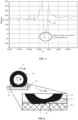
FIG. 2 is a graphical representation of data showing measured radial acceleration of a tire as a function of time, while a tire rolls on the ground without hydroplaning; -
FIG. 3 is a graphical representation of data showing measured radial acceleration of a tire as a function of time, while a tire rolls on the ground with building hydroplaning; -
FIG. 4 is a schematic diagram illustrating the phenomenon of hydroplaning while a tire rolls on a ground surface covered with water; -
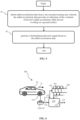
FIG. 5 is a workflow illustrating the main steps of an embodiment of the method in accordance with the present invention; -
FIG. 6 is a schematic diagram showing aspects of an embodiment of the hydroplaning detection system in accordance with the present invention. - With reference of
Figure 1 through 6 , an exemplary embodiment of the hydroplaningdetection system 100 of the present invention is presented. - The
hydroplaning system 100 and accompanying method attempts to overcome challenges posed by prior art methods. The hydroplaning phenomenon is a sudden event and requires a prompt warning, so that indicators of hydroplaning that are easy to obtain and/or quick to be compute are of foremost interest. In accordance with aspects of the invention, the proposed method is based on the minimum radial acceleration level observed using a tire-mounted accelerometer over several last wheel revolutions. It has been observed in experimental data that in a case of hydroplaning, the radial acceleration of an affected tire drops to significant negative values. The physical root cause is the deformation of the crown of the tire in the footprint. The negative acceleration values reflect a noticeable concave deformation of the tire due to the speed and the presence of a front-water wave at the entry of the footprint. Since the water is pressing against the tire at the entry of the footprint, it is pushing the tire envelope so as to deform it with a concave shape. The method that will be described in further details only requires a buffer that keeps, in a minimal configuration, only the history of the minimum measured radial acceleration values observed over a short past period. When such signals drop below a given threshold, a hydroplaning warning can promptly be sent to the vehicle and/or to the vehicle's driver. Data processing is kept low, so as to guarantee quick detection of the state of hydroplaning. Since the aquaplaning occurs at high speeds, one might argue that saturation of the accelerometer might affect the method. However, since the proposed method is based on the minimum acceleration, the sensor saturation is not a problem. - With reference to
Figure 1 , thesystem 100 aims at detecting the state of hydroplaning of eachtire 110 supporting avehicle 10 as it drives on a ground surface. While thevehicle 10 is depicted as a passenger car, the invention is not to be so restricted. The principles of the invention find application in other vehicle categories, such as commercial trucks, in which vehicles may be supported by more or fewer tires than those shown inFigure 1 . - The
tires 110 are of conventional construction, and each tire is mounted on arespective wheel 20 as known to those skilled in the art. Eachtire 110 includes a pair ofsidewalls 111, of which only one is shown, that extend to acircumferential tread 112, which wears with age from road abrasion. Aninnerliner 113 is disposed on the inner surface of thetire 110, and when the tire is mounted on thewheel 20, aninternal cavity 24 is formed, which is filled with a pressurized fluid, such as air. - A sensor unit 130 is attached to the
innerliner 113 of eachtire 110 by means such as an adhesive. The sensor unit 130 is preferably attached to theinnerliner 113 at an equatorial centerplane orcenterline 114 of thetire 110. The sensor unit 130 comprises a sensor such as an accelerometer, which is able to measure acceleration along at least oneradial axis 133. Microeletromechanical systems (MEMS) configured as three-axis accelerometers having a sensitivity of -400g to +400g are for example known in the art, although a lower sensitivity is sufficient for the present invention. The sensor unit 130 is mounted on thetire 110 in such a way that at least one of the measuringaxis 133 corresponds with a radial direction of the tire. Thereby, the accelerometer is able to measure theradial acceleration 132 of thetire 110 as it rolls at anangular velocity 115, causing thelinear movement 11 of thevehicle 10. - The sensor unit 130 also advantageously includes an
electronic memory capacity 140 for storing a history of measured radial acceleration values 132. Alternatively, such amemory element 140 is attached separately to theinnerliner 113 of thetire 110, in electronic communication with the sensor unit 130. As will be described further on, a processor is configured to read and treat theacceleration data 132 gathered by the sensor unit 130 and stored in thememory element 140. - While
Figure 1 shows a single sensor unit 130 mounted on thetire 110, this is to be understood as a minimal configuration. By way of a non-limiting example, multiple equivalent sensor units 130 may be mounted along the circumference of thetire 110, for example at a mutual radial distance of 90° without departing from the scope of the invention. -
Figure 2 shows the evolution of measured acceleration values 132 by asystem 100 as shown inFigure 1 , while thetire 110 is rolling on a ground surface, without the incidence of hydroplaning. It is appreciated that the gathereddata 132 provides a periodic signal, the period corresponding to a period of revolution of the tire, which depends on its angular rotation speed, and thus on the linear velocity of thevehicle 10. The depictedsignal 132 has been measured at a frequency of 1 kHz, but higher sampling frequencies, may provide even better results. As thetire 110 revolves, so does the mounting point of the sensor unit 130. Each data point within on period of revolution is thus gathered at a different position relative to the ground. - When the sensor unit 130 on the tire comes closest to the ground, i.e., when it is in the footprint region of the tire on the ground, the
radial acceleration 132 drops to substantially zero for the short time that the corresponding region of thetire tread 112 is translating (pure linear motion) along the surface of the ground. This happens after an initial increase in the acceleration levels due to the deformation to which the tire is subjected during passage from a circumferential to a flat configuration, at the beginning of the contact region between the tire and the ground. It is during the flat region (contact patch, footprint) where the measuredacceleration data 132 is lowest and corresponds to the depicted footprint level. A further increase in the acceleration levels is encountered when the tire exits from the contact region at the end of the depicted period of revolution. As soon as the passage in the contact patch terminates, the measuredsignal 132 indicates the centripetal acceleration of thetire 110, with superimposed noise. -
Figure 3 shows the evolution of measured acceleration values 132 by asystem 100 as shown inFigure 1 , while thetire 110 is rolling on a ground surface covered by water, so that the tire enters a state of hydroplaning. - When the sensor unit 130 on the
tire 110 comes closest to the ground, i.e., when it is in the footprint region of the tire on the wet ground surface, substantially negative radial acceleration values 132 are observed in the signal, as indicated by the marker onFigure 3 , where the measured acceleration values drop to about -50g, whereas the corresponding values in the case where no water is on the ground surface (seeFigure 2 ) remained positive. Embodiments of the invention exploit this signal feature to detect the occurrence of the state of hydroplaning. - Turning to
Figure 4 , an explanation of the occurrence of the negative acceleration values is provided. As thetire 111 evolves at alinear velocity 11 while rolling at anangular velocity 115 on aground surface 20, it enters on a portion of ground surface that is covered bywater 30. The front wave caused by thewater 30 at the entry of the footprint is pushing toward the tire's envelope, locally causing a concavely shaped deformation of the tire. This pushing towards the center of the tire by the water that wedges between thetire 11 and theground surface 20 may be modelled by anacceleration component 32 acting against the centripetal acceleration of the tire, which, as previously discussed, is nearly zero in the footprint area of the tire, where the acceleration if mostly linear. Going back to the signal depicted inFigure 3 , the resultingvalues 132 of the footprint's radial acceleration when water is on the ground therefore become negative. These values are picked up by thesensor unit 132 shown inFigure 1 . The detection of negative values in theacceleration data 132 therefore provides a robust indication of the presence of hydroplaning, which is available immediately as the tire starts rolling on a sheet ofwater 30 on theground surface 20. - Aspects of the proposed hydroplaning detection method that aims at detecting these
negative signal values 132 are executed on a processor, which enables input of data from thememory element 140, and which enables execution of specific analysis and algorithms, which are stored in a suitable storage medium and are also in electronic communication with the processor. - The method steps in accordance with aspects of the invention are described with reference to
Figure 5 and Figure 6 . The hydroplaningdetection system 110 comprises avehicle 10 supported bytires 110. Eachtire 110 is equipped as previously described with at least one sensor unit 130 that measures radial acceleration values as the vehicle evolves at alinear velocity 11 and as thetires 110 roll on a ground surface. The resulting signal values provide an evolution of the tire's radial acceleration as shown inFigure 2 (no hydroplaning) andFigure 3 (hydroplaning) respectively. While the sensor unit may preferably be directly coupled to anelectronic memory capacity 140, as indicated by the dashed line inFigure 6 , the system may also use aprocessor 120 that is configured to write the radial acceleration values 132 into thememory element 140. In that case the sensor unit 130measures acceleration data 132 and transmits them to theprocessor 120 using a wireless data transmitter 134. In all embodiments, the memory element eventually stores a history of the evolution of the signal radial acceleration values 132. Aprocessor 120 having read access to the memory element is capable of reading out all theacceleration data memory element 140 at any given time. The step of obtainingradial acceleration data Figure 5 . - The
memory element 140 is preferably structured either logically or physically as a shift register memory. With each arriving value or sample 132 from the sensor unit 130, all previously stored values are shifted to the right by onememory register 141. While the oldest value (in the right-most register) is lost, thenewest sample 132 is stored in theleft-most memory register 141. Allvalues 133 are read out in parallel by theprocessor 120, thereby providing a short-term snapshot of the evolution of thesignal 132. Shift registers are well known in the art and may for example by implemented by cascaded and synchronized flip-flop memory elements. Alternatively, a general-purpose memory element such as a solid-state memory element may be configured to provide this function by appropriate software code without further inventive skill. - The
memory element 140 has a predetermined storage capacity, for storing theradial acceleration data 133 corresponding to of several tire revolutions. By way of non-limiting examples, thememory element 140 may store theradial acceleration data 133 covering 3, 4, up to 10 or up to 20 tire revolutions. - At
step 02 ofFigure 5 , theprocessor 120 generates a hydroplaning detection signal based on theradial acceleration data output signal 121 is transmitted using atransmitter 122 to a control unit of thevehicle 10, which may for example trigger an anti-slippage system, or combine thesignal 121 with other available hydroplaning detection signals. - The
processor 120 may be provided within thevehicle 10, so that the processor is capable of communicating thesignal 121 to a vehicle control unit through the vehicle's CAN bus or other suitable data transmission channels. - In order to detect hydroplaning from the acceleration data 132,133 the processor is configured to detect negative valued
acceleration data 132 in the data corresponding to at least onetire revolution 133. Ifnegative acceleration data 132 are detected, thesignal 121 is switched to indicate the presence of hydroplaning. - In a preferred embodiment, the
values 133 covering several tire revolutions are compared by theprocessor 120 against a predetermined negative threshold value, for example in the range or-10g to -100g. If a predetermined number ofvalues 132 of the overallradial acceleration data 133 are lower-valued than then predetermined threshold value, thesignal 121 is switched to indicate the presence of hydroplaning. It is to be understood that the threshold used to detect hydroplaning is negative if the radial axis of the accelerometer is pointing radially inwardly, or to the outside of the tire cavity. If the radial axis is pointing radially outwardly, or in the direction of the center of the wheel, the acceleration values are negative, in which case the aquaplaning detection employs a positive threshold. - In further embodiments, the
values 133 may be filtered by theprocessor 120, for example by denoising or averaging functions, and thedetection signal 121 is switched to indicate the presence of hydroplaning based on a result of such a filtering function. - The
memory element 140 may in some embodiments store all measured radial acceleration values 132 that correspond to a predetermined number of tire revolutions, including the majority of values that do not correspond to footprint contacting areas. As previously explained, the salient features of the measured radial acceleration signals (seeFigure 2 andFigure 3 ) only occur at specific instants: when the area oftire 110 in which the sensor unit 130 is mounted enters in contact with the ground surface. - Therefore, in some embodiments the
values 132 may be pre-filtered prior to storing them in the memory element, so that only radial acceleration values 132 corresponding to contact periods, where hydroplaning is capable of being detected, are stored in the memory element. This may for example be implemented by a pre-thresholding algorithm implemented by theprocessor 120, which only storesacceleration data 132 that are lower than a predetermined positive threshold (e.g., 50 g or 20 g) in thememory element 140. While the processing of the storedacceleration data - It is to be understood that the structure and method of the above-described hydroplaning alert system may be altered or rearranged, or components or steps known to those skilled in the art omitted or added, without affecting the overall concept or operation of the invention. For example, electronic communication may be through a wired connection or wireless communication without affecting the overall concept or operation of the invention. Such wireless communications include radio frequency (RF) and Bluetooth® communications.
Claims (14)
- A computer implemented method for detecting hydroplaning of a tire supporting a vehicle, the method comprising:obtaining radial acceleration data from a tire-mounted sensor unit, wherein the radial acceleration data provides an indication of the evolution of the tire's radial acceleration while the tire is rolling on a ground surface; andgenerating a hydroplaning detection signal based on the radial acceleration data.
- The method of claim 1, wherein the hydroplaning detection signal indicates a presence of hydroplaning if the obtained radial acceleration data indicates a plurality of values that are lower than a predetermined threshold value within a predetermined amount of time, and, optionally, wherein the predetermined threshold value is a negative radial acceleration value when a radial axis of the sensor unit is directed in a radially inward direction.
- The method of claim 1 or 2, wherein the predetermined amount of time corresponds to at least four full revolution periods of the tire.
- The method of at least one of the previous claims, wherein the step of obtaining radial acceleration data comprises obtaining samples indicating the tire's radial acceleration at a rate of at least 1 kHz from the tire-mounted sensor unit.
- The method of at least one of the previous claims, wherein the step of obtaining radial acceleration data comprises storing a history of consecutively obtained sample values of the radial acceleration data in a memory element including a predetermined storage capacity, and, optionally, wherein the step of generating a hydroplaning signal comprises indicating the presence of hydroplaning based on an evaluation of a function of the sample values stored in said memory element.
- A hydroplaning detection system comprising:a vehicle;a tire supporting the vehicle;a sensor unit being mounted on the tire, the sensor unit including a radial acceleration sensor to measure radial acceleration data while the tire is rolling on a ground surface;a memory element storing at least part of the acceleration data; anda processor in electronic communication with the sensor unit and with the memory element, the processor being configured to obtain radial acceleration data from the memory element, and to generate a hydroplaning detection signal based on the radial acceleration data.
- The system of claim 6, wherein the sensor unit is attached to an innerliner of the tire proximate a centerline of the tread.
- The system of claim 6 or 7, wherein the sensor unit includes a transmitter including an antenna for wireless data transmission to said processor, and/or wherein the processor includes a transmitter to transmit the hydroplaning detection signal to at least one of a display device or to a vehicle control system.
- The system of at least one of the claims 6 to 8, wherein the sensor unit comprises an accelerometer that is arranged so that an acceleration measuring direction of the accelerometer corresponds to a radial axis of the tire, and, optionally, wherein the sensor unit is configured to measure samples of the tire's radial acceleration at a rate of at least 1 kHz.
- The system of at least one of the claims 6 to 9, wherein the processor is configured to indicate the presence of hydroplaning in the hydroplaning detection signal if the radial acceleration data indicates a plurality of values that are lower than a predetermined threshold value within a predetermined amount of time, and, optionally, wherein the predetermined threshold value is a negative radial acceleration value when a radial axis of the sensor unit is directed in a radially inward direction and the threshold value is a positive radial acceleration value when the radial axis of the sensor unit is directed in a radially outward direction.
- The system of at least one of the claims 6 to 10, wherein the predetermined amount of time corresponds to at least four full revolution periods of the tire.
- The system of at least one of the claims 6 to 11, wherein the memory element is structured to store a history of consecutively obtained sample values of the radial acceleration data and/or wherein the memory element operates as a shift register.
- A tire comprising a sensor unit attached to an innerliner of the tire, the sensor unit including a radial acceleration sensor to measure radial acceleration data while the tire is rolling on a ground surface, and a memory element in electronic communication with the sensor unit, to store at least part of the acceleration data.
- The tire of claim 13, wherein the sensor unit comprises a transmitter including an antenna for wireless data transmission to a processor.
Applications Claiming Priority (2)
| Application Number | Priority Date | Filing Date | Title |
|---|---|---|---|
| US202263386547P | 2022-12-08 | 2022-12-08 | |
| US18/519,736 US20240190366A1 (en) | 2022-12-08 | 2023-11-27 | Hydroplaning detection method and system |
Publications (1)
| Publication Number | Publication Date |
|---|---|
| EP4382883A1 true EP4382883A1 (en) | 2024-06-12 |
Family
ID=89073147
Family Applications (1)
| Application Number | Title | Priority Date | Filing Date |
|---|---|---|---|
| EP23213834.7A Pending EP4382883A1 (en) | 2022-12-08 | 2023-12-01 | Hydroplaning detection method and system |
Country Status (2)
| Country | Link |
|---|---|
| US (1) | US20240190366A1 (en) |
| EP (1) | EP4382883A1 (en) |
Families Citing this family (1)
| Publication number | Priority date | Publication date | Assignee | Title |
|---|---|---|---|---|
| IT202100017588A1 (en) * | 2021-07-02 | 2023-01-02 | Easy Rain I S P A | PROCEDURE FOR DETERMINING THE INTERFACE CONDITIONS BETWEEN TIRE AND GROUND, PARTICULARLY FOR DETERMINING THE EMERGENCE OF AQUAPLANING PHENOMENA |
Citations (2)
| Publication number | Priority date | Publication date | Assignee | Title |
|---|---|---|---|---|
| US20110199201A1 (en) * | 2008-10-24 | 2011-08-18 | Massimo Brusarosco | Method and system for signaling an aquaplaning condition of a tyre fitted on a vehicle (as amended) |
| EP3727966B1 (en) | 2017-12-21 | 2021-10-27 | Pirelli Tyre S.p.A. | Method and system for signalling an aquaplane condition of a tyre mounted on a vehicle |
Family Cites Families (13)
| Publication number | Priority date | Publication date | Assignee | Title |
|---|---|---|---|---|
| FR2914743B1 (en) * | 2007-04-06 | 2009-05-15 | Michelin Soc Tech | METHOD FOR DETECTING AND ESTIMATING A HYDROPLANING PHENOMENON OF A PNEUMATIC ON A WETTED ROAD |
| US8371159B2 (en) * | 2007-07-11 | 2013-02-12 | Kabushiki Kaisha Bridgestone | Method for estimating the wear of a tire |
| CN101932460B (en) * | 2007-12-20 | 2013-07-17 | 倍耐力轮胎股份公司 | Method and system for managing data transmission from a plurality of sensor devices included in a tyre |
| JP5657917B2 (en) * | 2010-05-19 | 2015-01-21 | 株式会社ブリヂストン | Road surface condition estimation method |
| JP5447442B2 (en) * | 2011-06-15 | 2014-03-19 | 株式会社デンソー | Wheel position detecting device and tire air pressure detecting device having the same |
| EP3166138B1 (en) * | 2014-07-04 | 2020-11-11 | Riken | Magnetic element, skyrmion memory, solid-state electronic device, data recording device, data processor and communication device |
| JP6627670B2 (en) * | 2016-07-13 | 2020-01-08 | 株式会社デンソー | Tire mount sensor and road surface condition estimation device including the same |
| JP7009098B2 (en) * | 2017-07-19 | 2022-01-25 | 株式会社ブリヂストン | Road surface condition estimation method |
| GB2565051A (en) * | 2017-07-27 | 2019-02-06 | Continental Automotive Gmbh | Method and device for monitoring a behavior of a tire of a vehicle |
| EP3715151B1 (en) * | 2019-03-29 | 2021-07-14 | Nokian Renkaat Oyj | A tire |
| CN112537314A (en) * | 2019-09-20 | 2021-03-23 | 大陆汽车有限公司 | System and method for determining wet road condition |
| EP4046832B1 (en) * | 2021-02-17 | 2025-07-23 | Melexis Technologies SA | Safe measurement of tire characteristics |
| IT202200003239A1 (en) * | 2022-02-22 | 2023-08-22 | Pirelli | METHOD AND SYSTEM OF CONTROL OF A VEHICLE IN THE PRESENCE OF A WATER PLANE |
-
2023
- 2023-11-27 US US18/519,736 patent/US20240190366A1/en active Pending
- 2023-12-01 EP EP23213834.7A patent/EP4382883A1/en active Pending
Patent Citations (2)
| Publication number | Priority date | Publication date | Assignee | Title |
|---|---|---|---|---|
| US20110199201A1 (en) * | 2008-10-24 | 2011-08-18 | Massimo Brusarosco | Method and system for signaling an aquaplaning condition of a tyre fitted on a vehicle (as amended) |
| EP3727966B1 (en) | 2017-12-21 | 2021-10-27 | Pirelli Tyre S.p.A. | Method and system for signalling an aquaplane condition of a tyre mounted on a vehicle |
Also Published As
| Publication number | Publication date |
|---|---|
| US20240190366A1 (en) | 2024-06-13 |
Similar Documents
| Publication | Publication Date | Title |
|---|---|---|
| US7673505B2 (en) | Tire footprint determination apparatuses, systems and methods | |
| EP4029707B1 (en) | System and method for auto-location of tires | |
| JP5956250B2 (en) | Tire uneven wear detection method and tire uneven wear detection device | |
| JP5165603B2 (en) | Tire running state estimation method, steady running state estimation device, tire wear estimation method and apparatus | |
| EP2137010B1 (en) | Tire pressure classification based tire pressure monitoring | |
| US8584517B2 (en) | Load based wheel position determination | |
| JP2007153034A (en) | Tire wear state judgment device | |
| EP3856538B1 (en) | Tire damage detection system and method | |
| JP2010023546A (en) | Device and method for detecting decrease in tire air pressure, and program for detecting decrease in tire air pressure | |
| US11472430B2 (en) | System and method for determining a wet road condition | |
| EP4382883A1 (en) | Hydroplaning detection method and system | |
| JP3724892B2 (en) | Tire pressure drop detection method and apparatus | |
| JP4414154B2 (en) | Tire inflation monitoring system | |
| JP4964328B2 (en) | Tire pressure drop detection device, method and program | |
| EP3802157B1 (en) | Tire damage detection system and method | |
| GB2587613A (en) | System and method for determining a wet road condition | |
| CN114636509A (en) | System and method for estimating tire pressure | |
| CN115402039A (en) | Method, system, equipment, storage medium and automobile for monitoring tire eccentric wear | |
| JP3659169B2 (en) | Tire pressure abnormal wheel judgment device | |
| EP4375094A1 (en) | Loose sensor detection | |
| EP4140838B1 (en) | Road condition monitoring system and method | |
| JP2004340801A (en) | Initial correction coefficient calculation apparatus and method, and program for initial correction coefficient calculation | |
| CN115782473B (en) | Reverse deflection load estimation system for tire | |
| EP4151436B1 (en) | Counter-deflection load estimation system and method | |
| JP4764913B2 (en) | Tire pressure drop detection device and method, and tire pressure drop detection program |
Legal Events
| Date | Code | Title | Description |
|---|---|---|---|
| PUAI | Public reference made under article 153(3) epc to a published international application that has entered the european phase |
Free format text: ORIGINAL CODE: 0009012 |
|
| STAA | Information on the status of an ep patent application or granted ep patent |
Free format text: STATUS: THE APPLICATION HAS BEEN PUBLISHED |
|
| AK | Designated contracting states |
Kind code of ref document: A1 Designated state(s): AL AT BE BG CH CY CZ DE DK EE ES FI FR GB GR HR HU IE IS IT LI LT LU LV MC ME MK MT NL NO PL PT RO RS SE SI SK SM TR |
|
| STAA | Information on the status of an ep patent application or granted ep patent |
Free format text: STATUS: REQUEST FOR EXAMINATION WAS MADE |
|
| 17P | Request for examination filed |
Effective date: 20241119 |
|
| RBV | Designated contracting states (corrected) |
Designated state(s): AL AT BE BG CH CY CZ DE DK EE ES FI FR GB GR HR HU IE IS IT LI LT LU LV MC ME MK MT NL NO PL PT RO RS SE SI SK SM TR |
|
| TPAC | Observations filed by third parties |
Free format text: ORIGINAL CODE: EPIDOSNTIPA |
|
| STAA | Information on the status of an ep patent application or granted ep patent |
Free format text: STATUS: EXAMINATION IS IN PROGRESS |
|
| 17Q | First examination report despatched |
Effective date: 20250602 |
|
| TPAC | Observations filed by third parties |
Free format text: ORIGINAL CODE: EPIDOSNTIPA |
|
| GRAP | Despatch of communication of intention to grant a patent |
Free format text: ORIGINAL CODE: EPIDOSNIGR1 |
|
| STAA | Information on the status of an ep patent application or granted ep patent |
Free format text: STATUS: GRANT OF PATENT IS INTENDED |
|
| INTG | Intention to grant announced |
Effective date: 20260312 |