EP4382324A2 - Independent corner lift system for vehicles - Google Patents
Independent corner lift system for vehicles Download PDFInfo
- Publication number
- EP4382324A2 EP4382324A2 EP23210861.3A EP23210861A EP4382324A2 EP 4382324 A2 EP4382324 A2 EP 4382324A2 EP 23210861 A EP23210861 A EP 23210861A EP 4382324 A2 EP4382324 A2 EP 4382324A2
- Authority
- EP
- European Patent Office
- Prior art keywords
- hydraulic
- supply pump
- manifold
- fluid
- height adjustment
- Prior art date
- Legal status (The legal status is an assumption and is not a legal conclusion. Google has not performed a legal analysis and makes no representation as to the accuracy of the status listed.)
- Pending
Links
Images















Classifications
-
- B—PERFORMING OPERATIONS; TRANSPORTING
- B60—VEHICLES IN GENERAL
- B60G—VEHICLE SUSPENSION ARRANGEMENTS
- B60G17/00—Resilient suspensions having means for adjusting the spring or vibration-damper characteristics, for regulating the distance between a supporting surface and a sprung part of vehicle or for locking suspension during use to meet varying vehicular or surface conditions, e.g. due to speed or load
- B60G17/02—Spring characteristics, e.g. mechanical springs and mechanical adjusting means
- B60G17/04—Spring characteristics, e.g. mechanical springs and mechanical adjusting means fluid spring characteristics
- B60G17/056—Regulating distributors or valves for hydropneumatic systems
-
- B—PERFORMING OPERATIONS; TRANSPORTING
- B60—VEHICLES IN GENERAL
- B60G—VEHICLE SUSPENSION ARRANGEMENTS
- B60G17/00—Resilient suspensions having means for adjusting the spring or vibration-damper characteristics, for regulating the distance between a supporting surface and a sprung part of vehicle or for locking suspension during use to meet varying vehicular or surface conditions, e.g. due to speed or load
- B60G17/015—Resilient suspensions having means for adjusting the spring or vibration-damper characteristics, for regulating the distance between a supporting surface and a sprung part of vehicle or for locking suspension during use to meet varying vehicular or surface conditions, e.g. due to speed or load the regulating means comprising electric or electronic elements
- B60G17/0152—Resilient suspensions having means for adjusting the spring or vibration-damper characteristics, for regulating the distance between a supporting surface and a sprung part of vehicle or for locking suspension during use to meet varying vehicular or surface conditions, e.g. due to speed or load the regulating means comprising electric or electronic elements characterised by the action on a particular type of suspension unit
-
- B—PERFORMING OPERATIONS; TRANSPORTING
- B60—VEHICLES IN GENERAL
- B60G—VEHICLE SUSPENSION ARRANGEMENTS
- B60G2202/00—Indexing codes relating to the type of spring, damper or actuator
- B60G2202/10—Type of spring
- B60G2202/12—Wound spring
-
- B—PERFORMING OPERATIONS; TRANSPORTING
- B60—VEHICLES IN GENERAL
- B60G—VEHICLE SUSPENSION ARRANGEMENTS
- B60G2202/00—Indexing codes relating to the type of spring, damper or actuator
- B60G2202/10—Type of spring
- B60G2202/15—Fluid spring
- B60G2202/154—Fluid spring with an accumulator
-
- B—PERFORMING OPERATIONS; TRANSPORTING
- B60—VEHICLES IN GENERAL
- B60G—VEHICLE SUSPENSION ARRANGEMENTS
- B60G2202/00—Indexing codes relating to the type of spring, damper or actuator
- B60G2202/40—Type of actuator
- B60G2202/41—Fluid actuator
- B60G2202/413—Hydraulic actuator
-
- B—PERFORMING OPERATIONS; TRANSPORTING
- B60—VEHICLES IN GENERAL
- B60G—VEHICLE SUSPENSION ARRANGEMENTS
- B60G2202/00—Indexing codes relating to the type of spring, damper or actuator
- B60G2202/40—Type of actuator
- B60G2202/41—Fluid actuator
- B60G2202/416—Fluid actuator using a pump, e.g. in the line connecting the lower chamber to the upper chamber of the actuator
-
- B—PERFORMING OPERATIONS; TRANSPORTING
- B60—VEHICLES IN GENERAL
- B60G—VEHICLE SUSPENSION ARRANGEMENTS
- B60G2204/00—Indexing codes related to suspensions per se or to auxiliary parts
- B60G2204/80—Interactive suspensions; arrangement affecting more than one suspension unit
- B60G2204/83—Type of interconnection
- B60G2204/8304—Type of interconnection using a fluid
-
- B—PERFORMING OPERATIONS; TRANSPORTING
- B60—VEHICLES IN GENERAL
- B60G—VEHICLE SUSPENSION ARRANGEMENTS
- B60G2500/00—Indexing codes relating to the regulated action or device
- B60G2500/02—Supply or exhaust flow rates; Pump operation
-
- B—PERFORMING OPERATIONS; TRANSPORTING
- B60—VEHICLES IN GENERAL
- B60G—VEHICLE SUSPENSION ARRANGEMENTS
- B60G2500/00—Indexing codes relating to the regulated action or device
- B60G2500/20—Spring action or springs
- B60G2500/203—Distributor valve units comprising several elements, e.g. valves, pump or accumulators
-
- B—PERFORMING OPERATIONS; TRANSPORTING
- B60—VEHICLES IN GENERAL
- B60G—VEHICLE SUSPENSION ARRANGEMENTS
- B60G2500/00—Indexing codes relating to the regulated action or device
- B60G2500/30—Height or ground clearance
-
- B—PERFORMING OPERATIONS; TRANSPORTING
- B60—VEHICLES IN GENERAL
- B60G—VEHICLE SUSPENSION ARRANGEMENTS
- B60G2800/00—Indexing codes relating to the type of movement or to the condition of the vehicle and to the end result to be achieved by the control action
- B60G2800/90—System Controller type
- B60G2800/91—Suspension Control
- B60G2800/912—Attitude Control; levelling control
Definitions
- the present disclosure relates generally to systems for adjusting the height of a vehicle. More specifically, the present disclosure pertains to an electro-hydraulic system for independently adjusting heights of different corners of a vehicle.
- U.S. Patent 6,902,045 describes one such example of a system for adjusting vehicle height.
- the system and apparatus of U.S. Patent 6,902,045 may be used to adjust the height of a front end of a vehicle having a coil-over shock suspension.
- the present disclosure provides a height adjustment system for a vehicle.
- the height adjustment system includes: a reservoir configured to hold hydraulic fluid; at least one lift actuator operably disposed between a wheel and a chassis element of the vehicle for adjusting the height of the vehicle; a supply pump having an inlet port in fluid communication with the reservoir and configured to transfer the hydraulic fluid to the at least one lift actuator via a manifold; a supply check valve configured to allow fluid flow from an outlet of the supply pump to the manifold while blocking fluid flow in an opposite direction; and at least one of: a supply pump isolation valve configured to selectively bypass hydraulic fluid around the supply check valve, or a secondary actuator isolation valve configured to selectively control fluid flow between the at least one lift actuator and the inlet port of the supply pump.
- the present disclosure provides a height adjustment system for a vehicle.
- the height adjustment system includes: a reservoir configured to hold hydraulic fluid; at least one lift actuator operably disposed between a wheel and a chassis element of the vehicle for adjusting the height of the vehicle; a piston pump assembly including a pump piston movable through a cylinder to supply hydraulic fluid to each of a first manifold and a second manifold; an actuator isolation valve configured to selectively control fluid flow between the first manifold and the at least one lift actuator; and a second actuator isolation valve configured to selectively control fluid flow between the second manifold and the at least one lift actuator.
- the present disclosure provides a hydraulic control unit for a height adjustment system of a vehicle.
- the hydraulic control unit includes: a supply passage configured to attach to a reservoir for transmitting a hydraulic fluid; a manifold; a supply pump having an inlet port in fluid communication with the reservoir via the supply passage and configured to transfer the hydraulic fluid to the at least one lift actuator via the manifold; a supply check valve configured to allow fluid flow from an outlet of the supply pump to the manifold while blocking fluid flow in an opposite direction; and at least one of: a supply pump isolation valve configured to selectively bypass hydraulic fluid around the supply check valve, or a secondary actuator isolation valve configured to selectively control fluid flow between the at least one lift actuator and the inlet port of the supply pump.
- FIG. 1 An independent corner lift (ICL) system 10 for a vehicle 20 such as a passenger car or truck is shown in FIG. 1 .
- the vehicle 20 includes a body 22 and four wheels 24a, 24b, 24c, 24d attached thereto.
- the ICL system 10 provides for independent control of the height of the body 22 at each of the four wheels 24a, 24b, 24c, 24d.
- the ICL system 10 may, therefore, raise or lower the entire body or portions thereof.
- the ICL system 10 may control pitch and roll of the body 22.
- the ICL system 10 may provide additional features, such as weight measurement at each of the four wheels 24a, 24b, 24c, 24d.
- the ICL system 10 includes a left-front lift actuator 26a operably disposed between a left-front wheel 24a and a corresponding point on the body 22.
- the ICL system 10 also includes a right-front lift actuator 26b operably disposed between a right-front wheel 24b and a corresponding point on the body 22.
- the ICL system 10 also includes a left-rear lift actuator 26c operably disposed between a left-rear wheel 24c, and a corresponding point on the body 22.
- the ICL system 10 also includes a right-rear lift actuator 26d operably disposed between a right-rear wheel 24d and a corresponding point on the body 22.
- the ICL system 10 also includes four height sensors 28, each of the height sensors 28 is configured to measure a height of a point on the body 22 relative to a corresponding one of the four wheels 24a, 24b, 24c, 24d.
- the height sensors 28 may each measure an extension of a corresponding one of the lift actuators 26a, 26b, 26c, 26d.
- the ICL system 10 also includes an intelligent lift controller 30, 31, 32 configured to control operation of each of the lift actuators 26a, 26b, 26c, 26d.
- the intelligent lift controller 30, 31, 32 includes a lift electronic control unit (LECU) 30 and a lift electro-hydraulic control unit (LEHCU) 31, 32.
- the LEHCU 31, 32 includes a lift electrical interface (LEI) 31 and a lift hydraulic control unit (LHCU) 32.
- the LECU 30 includes a controller, such as an electronic control unit, configured to command operation of the lift actuators 26a, 26b, 26c, 26d based on settings for corner heights of the vehicle 10 and based on feedback signals from sensors, such as the height sensors 28.
- the LHCU 32 controls hydraulic fluid flow to each of the lift actuators 26a, 26b, 26c, 26d.
- the LHCU 32 may include one or more control devices, such as pumps and/or valves to control the hydraulic fluid flow in response to control signals from the LECU 30.
- the LEI 31 may include one or more electrical devices, such as solenoid coils and/or one or more electric motors for actuating or otherwise controlling corresponding devices in the LHCU 32.
- the vehicle 20 also includes a power distributer 34, such as an electrical bus, configured to supply electrical power to the intelligent lift controller 30, 32.
- the vehicle 20 also includes an original equipment manufacturer (OEM) electrical control unit (ECU) 36, such as a body control module (BCM) that sends a level control signal to the LECU 30 via a communications network 38.
- the communications network 38 may include, for example, an Ethernet interface or a controller area network (CAN) interface.
- the level control signal may indicate a desired height and/or attitude (e.g. pitch and/or roll) for the vehicle 20.
- the OEM ECU 36 may be in communication with one or more other ECUs 40, such as a powertrain control module (PCM) or a traction control module (TCM), and the OEM ECU 36 may be configured to use data from the one or more other ECUs 40 for generating the level control signal.
- PCM powertrain control module
- TCM traction control module
- the LECU 30 may include actuator control software 60 for generating the commands for operating the one or more control devices of the LHCU 32 based on the signals from the sensors and based on the level control signal from the OEM ECU 36.
- FIG. 2 shows a schematic block diagram of a controller 50 for the LECU 30 of the ICL system 10.
- the controller 50 includes a processor 52 coupled to a storage memory 54.
- the storage memory 54 includes an instruction storage 56 storing instructions, such as program code for execution by the processor 52.
- the storage memory 54 also includes a data storage 56 for holding data for use by the processor 52.
- the data storage 56 may record, for example, values of the parameters measured by one or more sensors and/or the outcome of functions calculated by the processor 52.
- the instruction storage 56 includes the actuator control software 60, which may be executed by the processor 52 to interpret the signals from the sensors, such as the height sensors 28, and to generate the commands for operating the one or more control devices of the LHCU 32.
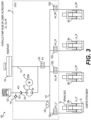
- FIG. 3 shows a schematic diagram of a first hydraulic arrangement 100 for the ICL system 10 of the present disclosure.
- the first hydraulic arrangement 100 includes a standard reservoir 110, such as a tank, that holds hydraulic fluid.
- the standard reservoir 110 may be open to atmosphere.
- the standard reservoir 110 functions to store hydraulic fluid for operation.
- the standard reservoir 110 may have a maximum volume determined by system operating characteristics, such as volumes of actuator, HCU and lines, and thermal expansion.
- the standard reservoir 110 may include a flow-back damping feature to avoid cap stress.
- the standard reservoir 110 may be configured to provide a flow rate to match a flow demand of a pump of the first hydraulic arrangement 100, plus some additional safety margin.
- the first hydraulic arrangement 100 also includes the LHCU 32 which defines a supply passage 111 that is fluidly connected to the standard reservoir 110.
- the first hydraulic arrangement 100 also includes a supply pump (SP) 112 having an inlet port in fluid communication with the standard reservoir 110 via the supply passage 111.
- the supply pump is configured to pump hydraulic fluid from the standard reservoir 110 and to the lift actuators 26a, 26b, 26c, 26d.
- a supply pump motor (SPM) 114 is coupled to the supply pump 112 and functions to convert electrical energy to a mechanical energy by producing torque to drive a shaft of the supply pump 112.
- the supply pump 112 may include a vane pump, although other types of hydraulic pumps may be used.
- the first hydraulic arrangement 100 also includes a supply check valve (SCV) 116 that allows fluid flow from the supply pump 112 to a first manifold 118 while blocking fluid flow in an opposite direction.
- the SCV 116 may function to isolate the supply pump 112 to prevent the supply pump 112 from being driven to rotate during a lowering phase.
- the SCV 116 may function to isolate the supply pump 112 from jounce pressure spike and/or to filter or smooth pressure variation from the supply pump 112.
- the first hydraulic arrangement 100 also includes a pressure sensor 120 configured to measure a pressure of hydraulic fluid in the first manifold 118 and to communicate a signal indicative of that pressure to the LECU 30.
- the first hydraulic arrangement 100 also includes a first hydraulic accumulator 122 and an accumulator check valve (ACV) 124.
- the first hydraulic accumulator 122 includes a chamber in fluid communication with the first manifold 118 through SCV 116 with an accumulator piston disposed therein.
- the accumulator piston is movable in the chamber of the first hydraulic accumulator 122 a volume of fluid therein changes.
- a spring biases the piston of the first hydraulic accumulator 122 to push fluid out of the chamber of the first hydraulic accumulator 122.
- the first hydraulic accumulator 122 may function to maintain and stabilize pressure in the first manifold 118.
- the first hydraulic accumulator 122 may also damp pressure spikes during pump start and stop.
- the first hydraulic accumulator 122 may have a pressure design that is lower than weight pressure during rebound of corners.
- the ACV 124 is configured to allow fluid flow from the supply pump 112 to the first hydraulic accumulator 122 while blocking fluid flow in an opposite direction.
- the ACV 124 may function to lower leak rate of the AIVs 132a, 132b, 132c, 132d by delta P reduction holding.
- the first hydraulic arrangement 100 also includes a reservoir isolation valve (RIV) 130 configure to selectively control fluid flow between the first manifold 118 and the supply passage 111, which may be at an ambient pressure due it is fluid communication with the standard reservoir 110.
- RIV 130 may function to reduce pressure in the first manifold 118 by bleeding-off fluid to the supply passage 111.
- the RIV 130 may include a solenoid valve, which may be a normally-closed valve.
- the RIV 130 functions to allow or isolate hydraulic flow between the lift actuators 26a, 26b, 26c, 26d and the standard reservoir 110.
- the RIV 130 may have a self-locking orientation from the actuator side (i.e. from the first manifold 118).
- the RIV 130 may be configured to withstand a maximum differential pressure (maximum DeltaP) that corresponds to a 2g jounce on corners while raising the lift actuators 26a, 26b, 26c, 26d.
- the RIV 130 may have a cracking pressure that is based on the maximum DeltaP.
- the first hydraulic arrangement 100 also includes a plurality of actuator isolation valves (AIV) 132a, 132b, 132c, 132d, with each of the AIVs 132a, 132b, 132c, 132d configured to selectively control fluid flow between the first manifold 118 and a corresponding one of the lift actuators 26a, 26b, 26c, 26d.
- the AIVs 132a, 132b, 132c, 132d may each include a solenoid valve, which may have a normally-closed configuration.
- the AIVs 132a, 132b, 132c, 132d may each function to allow or isolate hydraulic flow between the supply pump 112 and the corresponding one of the lift actuators 26a, 26b, 26c, 26d.
- the AIVs 132a, 132b, 132c, 132d may each also function to allow or isolate hydraulic flow between the corresponding one of the lift actuators 26a, 26b, 26c, 26d and the standard reservoir 110.
- the AIVs 132a, 132b, 132c, 132d may have a self-locking orientation from the actuator side (i.e. from the corresponding one of the lift actuators 26a, 26b, 26c, 26d).
- Each of the AIVs 132a, 132b, 132c, 132d may be configured to withstand a maximum differential pressure (maximum DeltaP) in a downstream to upstream direction that corresponds to a 2g jounce and 0 bar upstream.
- Each of the AIVs 132a, 132b, 132c, 132d may be configured to withstand a maximum differential pressure (maximum DeltaP) in an upstream to downstream direction that corresponds to a 2g jounce on one corner while raising only this corner and rebound on another corner with 20bar suspension spring preload.
- Each of the AIVs 132a, 132b, 132c, 132d may have a cracking pressure that is based on the maximum DeltaP.
- Each of the lift actuators 26a, 26b, 26c, 26d may have a similar or identical configuration. As illustratively shown on the left-front lift actuator 26a, the lift actuators 26a, 26b, 26c, 26d may be disposed between a spring seat 70 and a damper attachment 72 of the corresponding corner of the vehicle 20. By moving between a retracted position and an extended position, the lift actuators 26a, 26b, 26c, 26d may change a distance between the spring seat 70 and the damper attachment 72, and thereby adjust the height of the corresponding corner of the vehicle 20.
- each of the lift actuators 26a, 26b, 26c, 26d may function to modify a distance between the corresponding one of the four wheels 24a, 24b, 24c, 24d and a corresponding spring seat or body and suspension top mount, which is connected to the body 22, and based on a volume of hydraulic fluid therein.
- the LHCU 32 defines the supply passage 111 and the first manifold 118 and contains the supply pump 112, the SCV 116, and each of the actuated valves 130, 132a, 132b, 132c, 132d of the first hydraulic arrangement 100.
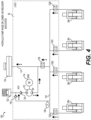
- FIG. 4 shows a schematic diagram of the first hydraulic arrangement 100 in a safe state, with no electrical power.
- the safe state all valves 130, 132a, 132b, 132c, 132d are closed, and the supply pump 112 is inactive.
- the safe state leakage by any of the valves is flowing back fluid to the standard reservoir 110 by the RIV 130 and the SCV 116.
- the first hydraulic arrangement 100 may have a leakage profile ⁇ 0.12cc/minute, inducing a loss ⁇ 1.8mm/hour. Such leakage may correspond to a full lowering in > 55 hours for 100mm lift and 100cm3 per lift.
- FIG. 5 shows a schematic diagram of the first hydraulic arrangement 100 in a raising mode, with the RIV 130 closed, and with each of the AIVs 132a, 132b, 132c, 132d opened.
- Arrows indicate that the supply pump 112 is turning to pump hydraulic fluid from the standard reservoir 110 and into each of the lift actuators 26a, 26b, 26c, 26d via the first manifold 118.
- the fluid is mainly flowing to the corner with the lowest pressure induced by the corner load.
- the AIVs 132a, 132b, 132c, 132d may be cycled between Opened and Closed states to minimize the side to side and front rear elevation dispersion.
- the AIVs 132a, 132b, 132c, 132d may be cycled using a period in the range of 200ms.
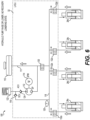
- FIG. 6 shows a schematic diagram of the first hydraulic arrangement 100 in a lowering mode with the RIV 130 is opened and each of the AIVs 132a, 132b, 132c, 132d are opened.
- the supply pump 112 is off, and hydraulic fluid flows from each of the lift actuators 26a, 26b, 26c, 26d to the standard reservoir 110.
- a corner of the vehicle 20 with the highest pressure induced by corner load is flowing more than the others.
- the AIVs 132a, 132b, 132c, 132d may be cycled between Opened and Closed states to minimize the side to side and front rear elevation dispersion.
- the AIVs 132a, 132b, 132c, 132d may be cycled using a period in the range of 200ms.
- FIG. 7 shows a schematic diagram of the first hydraulic arrangement 100 in a hold state, in which the RIV 130 is closed and each of the AIVs 132a, 132b, 132c, 132d are closed.
- the supply pump 112 is off.
- Valve leakage is flowing back fluid to the standard reservoir 110 by the RIV 130 and the SCV 116.
- the first hydraulic arrangement 100 may have a leakage profile ⁇ 0.12cc/minute, inducing a loss ⁇ 1.8mm/hour. Such leakage may correspond to a full lowering in > 55 hours for 100mm lift and 100cm3 per lift.
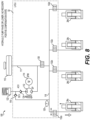
- FIG. 8 shows a schematic diagram of the first hydraulic arrangement 100 in a positive compensation state, with the RIV 130 closed, and with each of the AIVs 132a, 132b, 132c, 132d opened or closed to lift the corresponding corner.
- Arrows indicate that the supply pump 112 is turning to pump hydraulic fluid from the standard reservoir 110 and into the left-front lift actuator 26a via the first manifold 118 and the left-front AIV 132a, which is opened.
- the supply pump 112 generates pressure inducing fluid flow to lift against the load on one or more of the lift actuators 26a, 26b, 26c, 26d.
- the AIVs 132a, 132b, 132c, 132d are opened and then Closed when a desired volume is accumulated in the corresponding one of the lift actuators 26a, 26b, 26c, 26d.
- the compensation may be estimated based on a body to wheel position variation over time combined with weight pressure measurements. The measurements may be performed during a static use case combined with slope estimation and dynamic use cases combined with constant velocity and slope estimation.
- FIG. 9 shows a schematic diagram of the first hydraulic arrangement 100 in a negative compensation state, with the supply pump 112 off, the RIV 130 opened, and with each of the AIVs 132a, 132b, 132c, 132d opened or closed to lower the corresponding corner.
- Arrows indicate that hydraulic fluid flows from the left-front lift actuator 26a to the standard reservoir 110 via the first manifold 118 and the left-front AIV 132a, which is opened.
- excess pressure in one or more of the lift actuators 26a, 26b, 26c, 26d which may result from thermal expansion or overshoot in raising mode or positive compensation state, can be adjusted.
- the RIV 130 and one or more of the AIVs 132a, 132b, 132c, 132d are opened and then closed when a desired volume is accumulated in the corresponding one of the lift actuators 26a, 26b, 26c, 26d.
- the compensation may be estimated based on a body to wheel position variation over time combined with weight pressure measurements. The measurements may be performed during a static use case combined with slope estimation and dynamic use cases combined with constant velocity and slope estimation.
- FIG. 10 shows a schematic diagram of the first hydraulic arrangement of 100 in a corner weight measurement mode, with the supply pump 112 off, the RIV 130 closed, and with each of the AIVs 132a, 132b, 132c, 132d opened or closed to measure a weight of the corresponding corner.
- the corner weight measurement may be performed with the vehicle 20 in static on flat or with slope compensation or while the vehicle 20 is moving with steady velocity (no acceleration) on flat or with slope compensation.
- the fluid pressure corresponding to the weight on a corner is measured by opening the AIVs 132a, 132b, 132c, 132d of each corner one-by-one and in sequence.
- the pressure sensor 120 may measure the fluid pressure in the first manifold 118 during a time when each of the AIVs 132a, 132b, 132c, 132d is opened to measure the fluid pressure corresponding to the weights in each of the corners of the vehicle 20.
- the HCU compliance being low, this measure does not create perturbation on corner height. All other corner being isolated, road profiles or initial cornering situations are not impacting vehicle dynamic.
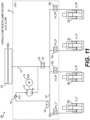
- FIG. 11 shows a schematic diagram of a second hydraulic arrangement 200 for the ICL system 10 of the present disclosure.
- the second hydraulic arrangement 200 may be similar or identical to the first hydraulic arrangement 100, except for the substitution of a Hydraulic Energy Storage Device (HESD) 210 in place of the standard reservoir 110.
- the HESD 210 may function to store hydraulic energy based on inlet flow energy.
- the HESD 210 may include a compressible fluid (i.e. a gas) in a sealed compartment to store hydraulic energy based on the inlet flow of the hydraulic fluid.
- the HESD 210 may include diaphragm separating the hydraulic fluid from the compressible fluid.
- FIG. 12 shows a schematic diagram of the second hydraulic arrangement 200 in a Lowering with Hydraulic Recovery State, with hydraulic fluid flowing from one or more of the lift actuators 26a, 26b, 26c, 26d and to the HESD 210.
- the lowering pressure has to be higher than the maximum HESD pressure with full fluid volume with a margin factor.
- the minimum lowering pressure is given by the suspension spring preload. Recovery may be dependent on the suspension characteristics for this design with direct recovery from one or more of the lift actuators 26a, 26b, 26c, 26d to the HESD 210, which functions as a hydraulic accumulator.
- FIG. 13 shows a schematic diagram of the second hydraulic arrangement 200 in a raising mode, with hydraulic fluid flowing into the lift actuators 26a, 26b, 26c, 26d.
- the supply pump 112 In the raising mode, the supply pump 112 generates pressure inducing fluid flow to lift against the load on the lift actuators 26a, 26b, 26c, 26d.
- the supply pump 112 is preloaded by the HESD 210.
- the net torque required to run the supply pump motor 114 to raise is lower compared to a standard reservoir 110 at atmospheric pressure.
- FIG. 14 shows a schematic diagram of a third hydraulic arrangement 300 for the ICL system 10 of the present disclosure.
- the third hydraulic arrangement 300 may be similar or identical to the first hydraulic arrangement 100, except for the addition of a supply pump isolation valve (SPIV) 302 configured to bypass hydraulic fluid around the SCV 116.
- the SPIV 302 may include a solenoid valve, which may be a normally-closed valve.
- the SPIV 302 may function to allow corner pressure measurement without losses in the supply pump 112.
- the SPIV 302 may authorize reverse flow through the supply pump 112, in certain cases.
- the SPIV 302 can provide increased flow from the supply pump 112, when compared to the first hydraulic arrangement 100 in which all flow from the supply pump 112 is directed through the SCV 116. As shown in FIG.
- the LHCU 32 defines the supply passage 111 and the first manifold 118 and contains the supply pump 112, the SCV 116, the ACV 124, and each of the actuated valves 130, 132a, 132b, 132c, 132d, and 302 of the third hydraulic arrangement 300.
- FIG. 15 shows a schematic diagram of the third hydraulic arrangement 300 in a Lowering with Hydraulic Recovery mode, with hydraulic fluid flowing from one or more of the lift actuators 26a, 26b, 26c, 26d and to the standard reservoir 110.
- the lowering pressure causes a flow of the hydraulic fluid through the supply pump 112, turning the supply pump 112 in reverse.
- the pump motor 114 is operable as a generator to recover hydraulic energy as electrical energy during the lowering mode, with the supply pump 112 being driven in the reverse direction by the flow of the hydraulic fluid therethrough. Flowing the hydraulic fluid through the supply pump 112 in the reverse direction may require the ACV 124 to be omitted and/or bypassed.
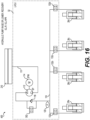
- FIG. 16 shows a schematic diagram of a fourth hydraulic arrangement 400 for the ICL system 10 of the present disclosure.
- the fourth hydraulic arrangement 400 may be similar or identical to the third hydraulic arrangement 300, except for the substitution of the Hydraulic Energy Storage Device (HESD) 210 in place of the standard reservoir 110.
- HESD Hydraulic Energy Storage Device
- FIG. 17 shows a schematic diagram of the fourth hydraulic arrangement 400 in a lowering with hydraulic recovery mode, with hydraulic fluid flowing from one or more of the lift actuators 26a, 26b, 26c, 26d and to the HESD 210.
- the lowering pressure from the lift actuators 26a, 26b, 26c, 26d pressurizes the pump inlet to flow the fluid back against the pressurized fluid storage of the HESD 210.
- FIG. 18 shows a schematic diagram of the fourth hydraulic arrangement of FIG. 16 , in a raising mode, in which the supply pump 112 generates pressure inducing fluid flow to lift against the load on the lift actuators 26a, 26b, 26c, 26d.
- the supply pump 112 is preloaded by the HESD 210.
- the net torque required to run the supply pump motor 114 to raise the body 22 of the vehicle 20 is lower compared to a standard reservoir 110 at atmospheric pressure.
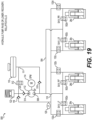
- FIG. 19 shows a schematic diagram of a fifth hydraulic arrangement 500 for the ICL system 10 of the present disclosure.
- the fifth hydraulic arrangement 500 may be similar or identical to the first hydraulic arrangement 100, except for a few additional features described herein.
- the fifth hydraulic arrangement 500 includes a Secondary Actuator Isolation Valve (SAIV) 502a, 502b, 502c, 502d coupled to each of the lift actuators 26a, 26b, 26c, 26d and configured to selectively control fluid flow between the lift actuators 26a, 26b, 26c, 26d and a return fluid passage 504 in fluid communication with an inlet port 506 of the supply pump 112.
- SAIV Secondary Actuator Isolation Valve
- Each of the SAIVs 502a, 502b, 502c, 502d may include a solenoid valve, which may be a normally-closed valve.
- the SAIVs 502a, 502b, 502c, 502d may function to selectively allow or isolate hydraulic flow between the inlet port 506 of the supply pump 112 and the lift actuators 26a, 26b, 26c, 26d.
- the SAIVs 502a, 502b, 502c, 502d may have a self-locking orientation from the actuator side (i.e. from the corresponding one of the lift actuators 26a, 26b, 26c, 26d).
- Each of the SAIVs 502a, 502b, 502c, 502d may be configured to withstand a maximum differential pressure (maximum DeltaP) in a downstream to upstream direction that corresponds to a 2g jounce and 0 bar upstream.
- Each of the SAIVs 502a, 502b, 502c, 502d may be configured to withstand a maximum differential pressure (maximum DeltaP) in an upstream to downstream direction that corresponds to a 2g jounce on one corner while raising only this corner and rebound on another corner with 20bar suspension spring preload.
- Each of the SAIVs 502a, 502b, 502c, 502d may have a cracking pressure that is based on the maximum DeltaP.
- the fifth hydraulic arrangement 500 also includes a return check valve 510 configured to allow fluid flow from the supply passage 111 and to the return fluid passage 504, while blocking fluid flow in an opposite direction.
- the fifth hydraulic arrangement 500 also includes a supply control valve 512 configured to selectively control fluid flow between an outlet port 514 of the supply pump 112 and the supply passage 111.
- the supply control valve 512 may include a solenoid valve, which may have a normally-closed configuration.
- FIG. 20 shows a schematic diagram of the fifth hydraulic arrangement 500, in a raising mode.
- Each of the AIVs 132a, 132b, 132c, 132d are opened to allow hydraulic fluid to flow therethrough and into the lift actuators 26a, 26b, 26c, 26d.
- the supply pump 112 In the raising mode, the supply pump 112 generates pressure inducing fluid flow to lift against the load on the lift actuators 26a, 26b, 26c, 26d.
- Each of the SAIVs 502a, 502b, 502c, 502d may remain closed during the raising mode.
- FIG. 21 shows a schematic diagram of the fifth hydraulic arrangement 500, raising only one corner, with the supply pump 112 running, and only one of the AIVs 132a, 132b, 132c, 132d is opened to allow hydraulic fluid to flow therethrough and into a corresponding one of the lift actuators 26a, 26b, 26c, 26d.
- FIG. 22 shows a schematic diagram of the fifth hydraulic arrangement 500, in a lowering mode, with each of the AIVs 132a, 132b, 132c, 132d closed and with the supply control valve 512 and each of the SAIVs 502a, 502b, 502c, 502d opened to direct fluid flow from the lift actuators 26a, 26b, 26c, 26d to the standard reservoir 110 through the supply pump 112 and further through the supply control valve 512.
- the lowering pressure turns the supply pump 112, thereby driving the supply pump motor 114, which may act as a generator for recovering the hydraulic energy as electrical energy.
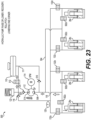
- FIG. 23 shows a schematic diagram of the fifth hydraulic arrangement 500, lowering only one corner.
- a corresponding one of the SAIVs 502a, 502b, 502c, 502d may be opened to release hydraulic fluid from a corresponding one of the lift actuators 26a, 26b, 26c, 26d.
- the hydraulic fluid may flow therefrom back to the standard reservoir 110 similarly to the lowering mode of FIG. 22 , and hydraulic energy may be similarly recovered as electrical energy.
- Different corners of the vehicle 20 may be lowered at different times for roll and/or pitch control by selectively commanding the SAIVs 502a, 502b, 502c, 502d to open.
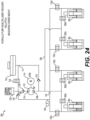
- FIG. 24 shows a schematic diagram of the fifth hydraulic arrangement 500, measuring weight on a first corner.
- the supply control valve 512 and each of the SAIVs 502a, 502b, 502c, 502d are maintained in a closed state, and one of the AIVs 132a, 132b, 132c, 132d is opened at a given time to provide fluid communication between a corresponding one of lift actuators 26a, 26b, 26c, 26d and the first manifold 118.
- the pressure sensor 120 may measure the fluid pressure in the first manifold 118 during a time when each of the AIVs 132a, 132b, 132c, 132d is opened to measure the fluid pressure corresponding to the weights in each of the corners of the vehicle 20.
- the weight measuring mode of fifth hydraulic arrangement 500 may otherwise be similar or identical to the weight measuring mode of the first hydraulic arrangement 100 described herein with reference to FIG. 10 .
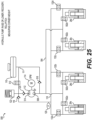
- FIG. 25 shows a schematic diagram of the fifth hydraulic arrangement 500, measuring weight on a second corner, with the second AIV 132b opened with the other ones of the AIVs 132a, 132b, 132c, 132d closed for measuring fluid pressure in the right-front lift actuator 26b for determining weight on the right-front corner of the vehicle 20.
- FIG. 26 shows a schematic diagram of the fifth hydraulic arrangement 500, in a roll compensation mode, with a left-front AIV 132a associated with the left-front lift actuator 26a and a right-front SAIV 502b associated with the right-front lift actuator 26a each opened.
- the supply control valve 512 and all of the other ones of the AIVs 132a, 132b, 132c, 132d and all of the other ones of the SAIVs 502a, 502b, 502c, 502d are maintained in a closed state.
- the supply pump 112 is energized to pump fluid from the right-front lift actuator 26b and into the left-front lift actuator 26a, thereby lifting the left-front corner while lowering the right-front corner of the vehicle 20. This lifting and lowering may compensate for other roll forces on the vehicle 20, such as cornering force and/or from the vehicle 20 being operated on a surface with a left/right slope.
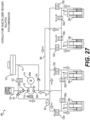
- FIG. 27 shows a schematic diagram of the fifth hydraulic arrangement 500, in a pitch compensation mode, with the left-front AIV 132a and the right-front AIV 132b associated with the left-front lift actuator 26a and the right-front lift actuator 26b, respectively, each being opened.
- the left-rear SAIV 502c and the right-rear SAIV 502d associated with the left-rear lift actuator 26c and the right-rear lift actuator 26d, respectively, are also opened.
- the supply control valve 512 and all of the other ones of the AIVs 132a, 132b, 132c, 132d and all of the other ones of the SAIVs 502a, 502b, 502c, 502d are maintained in a closed state.
- the supply pump 112 is energized to pump fluid from the rear lift actuators 26c, 26d and into the front lift actuators 26a, 26b for lifting the front of the vehicle 20 while lowering the rear of the vehicle 20 and for controlling a pitch of the vehicle 20.
- the AIVs 132a, 132b, 132c, 132d and the SAIVs 502a, 502b, 502c, 502d may be operated in an opposite configuration for lifting the rear of the vehicle 20 while lowering the front of the vehicle 20 and for controlling pitch of the vehicle 20 in an opposite direction.
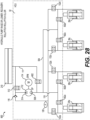
- FIG. 28 shows a schematic diagram of a sixth hydraulic arrangement 600 for the ICL system 10 of the present disclosure.
- the sixth hydraulic arrangement 600 may be similar or identical to the fifth hydraulic arrangement 500, except for a few additional features described herein.
- the sixth hydraulic arrangement 600 includes a Hydraulic Energy Storage Device (HESD) 210 in place of the standard reservoir 110.
- the sixth hydraulic arrangement 600 also includes a return control valve 602 in place of the return check valve 510.
- the return control valve 602 may include a solenoid valve, which may be a normally-closed valve.
- the return control valve 602 functions to selectively control fluid flow between the supply passage 111 and the return fluid passage 504.
- FIG. 29 shows a schematic diagram of the sixth hydraulic arrangement 600, in a raising mode, with the supply control valve 512 and all of the SAIVs 502a, 502b, 502c, 502d closed, and with the return control valve 602 and each of the AIVs 132a, 132b, 132c, 132d opened.
- Arrows indicate that the supply pump 112 is turning to pump hydraulic fluid from the HESD 210 through the return control valve 602 and into each of the lift actuators 26a, 26b, 26c, 26d via the first manifold 118.
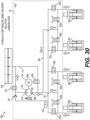
- FIG. 30 shows a schematic diagram of the sixth hydraulic arrangement 600, in a lowering mode, with the supply control valve 512 and all of the SAIVs 502a, 502b, 502c, 502d opened, and with the return control valve 602 and each of the AIVs 132a, 132b, 132c, 132d closed.
- Arrows indicate that the supply pump 112 is turning to pump hydraulic fluid from each of the lift actuators 26a, 26b, 26c, 26d through the supply control valve 512 and into the HESD 210.
- FIG. 31 shows a schematic diagram of a seventh hydraulic arrangement 700 for the ICL system 10 of the present disclosure, and in a pressure locking mode.
- the seventh hydraulic arrangement 700 may be similar or identical to the first hydraulic arrangement 100, except for the addition of a locking valve (LV) 702 and a secondary leveling chamber 704 in fluid communication with each of the lift actuators 26a, 26b, 26c, 26d.
- the LHCU 32 may define, at least partially, the secondary leveling chamber 704.
- the LV 702 may include a solenoid valve, which may be a normally-closed valve.
- the LV 702 is configured to selectively conduct hydraulic fluid between the lift actuators 26a, 26b, 26c, 26d and the standard reservoir 110 via the secondary leveling chamber 704.
- the LV 702 functions to allow or isolate flow of hydraulic fluid between the standard reservoir 110 and the secondary leveling chamber 704.
- the LV 702 may have a self-locking orientation from the actuator side (i.e. from the secondary leveling chamber 704).
- the LV 702 may be configured to withstand a maximum differential pressure (maximum DeltaP) in a downstream to upstream direction that corresponds to a 2g jounce and 0 bar upstream.
- the LV 702 may be configured to withstand a maximum differential pressure (maximum DeltaP) in an upstream to downstream direction that corresponds to a 2g jounce on one corner while raising only this corner and rebound on another corner with 20bar suspension spring preload.
- the LV 702 may have a cracking pressure that is based on the maximum DeltaP.
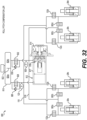
- FIG. 32 shows a schematic diagram of an eighth hydraulic arrangement 800 for the ICL system 10 of the present disclosure.
- the eighth hydraulic arrangement 800 may be similar or identical to the fifth hydraulic arrangement 500, except for a few differences described herein.
- the eighth hydraulic arrangement 800 includes a divided reservoir 810 in place of the standard reservoir 110.
- the eighth hydraulic arrangement 800 also includes a piston pump assembly 812 in place of the supply pump 112, and a piston actuator motor 814 in place of the supply pump motor 114.
- the piston pump assembly 812 may include a ball screw actuator and/or a reduction gearset to convert rotational torque produced by the piston actuator motor 814 into linear force for moving a pump piston 816 through a cylinder 817, and thereby pumping the hydraulic fluid.
- the piston pump assembly 812 supplies hydraulic fluid to each of the first manifold 118 and a second manifold 818, with each of the manifolds 118, 818 being coupled to a corresponding chamber in the piston pump assembly 812, with the chambers separated by the piston 816 that translates linearly through the cylinder 817 in response to actuation by the piston actuator motor 814.
- the eighth hydraulic arrangement 800 also includes a pressure sensor 120 configured to measure a pressure of hydraulic fluid in the first manifold 118, and a second pressure sensor 820 configured to measure a pressure of hydraulic fluid in the second manifold 818.
- Each of the pressure sensors 120, 820 may communicate signals indicative of the measured pressure to the LECU 30.
- the eighth hydraulic arrangement 800 includes a plurality of actuator isolation valves (AIV) 132a, 132b, 132c, 132d, with each of the AIVs 132a, 132b, 132c, 132d configured to selectively control fluid flow between the first manifold 118 and a corresponding one of the lift actuators 26a, 26b, 26c, 26d.
- the eighth hydraulic arrangement 800 includes a plurality of second actuator isolation valves 802a, 802b, 802c, 802d, with each of the second actuator isolation valves 802a, 802b, 802c, 802d configured to selectively control fluid flow between the second manifold 818 and a corresponding one of the lift actuators 26a, 26b, 26c, 26d.
- the divided reservoir 810 includes a partition 822 to separate an internal space into a first container 824a and a second container 824b.
- the partition 822 may extend only part-way up so the containers 824a, 824b can be filled together, but which keeps fluid in the containers 824a, 824b separate when a fluid level in the divided reservoir 810 is below a given level, such as a top of the partition 822.
- the eighth hydraulic arrangement 800 also includes a first circuit check valve 826 in parallel with a first circuit isolation valve 828, and each fluidly connected in a parallel arrangement between the first container 824a of the divided reservoir 810 and the first manifold 118.
- the first circuit check valve 826 is configured to allow fluid flow from the first container 824a of the divided reservoir 810 and into the first manifold, while blocking fluid flow in an opposite direction.
- the first circuit isolation valve 828 selectively allows fluid flow from the first manifold 118 to the first container 824a of the divided reservoir 810.
- the first circuit isolation valve 828 may include a solenoid valve, which may be a normally-closed valve.
- the SCV 116 and the SPIV 302 may function similarly to the SCV 116 and the SPIV 302, respectively, in the third hydraulic arrangement 300.
- the eighth hydraulic arrangement 800 also includes a second circuit check valve 830 in parallel with a second circuit isolation valve 832, and each fluidly connected in a parallel arrangement between the second container 824b of the divided reservoir 810 and the second manifold 818.
- the second circuit check valve 830 and the second circuit isolation valve 832 may have similar or identical construction and function as the first circuit check valve 826 and the first circuit isolation valve 828, respectively.
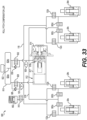
- FIG. 33 shows a schematic diagram of a ninth hydraulic arrangement 900 for the ICL system 10 of the present disclosure.
- the ninth hydraulic arrangement 900 may be similar or identical to the eighth hydraulic arrangement 800, except for the addition of a second hydraulic accumulator 902 and an accumulator isolation valve 910.
- the second hydraulic accumulator 902 includes a chamber in fluid communication with the first manifold 118 with an accumulator piston disposed therein.
- the accumulator piston is movable in the chamber of the second hydraulic accumulator 902 as a volume of fluid therein changes.
- a spring biases the accumulator piston of the second hydraulic accumulator 902 to push fluid out of the chamber of the second hydraulic accumulator 902.
- the second hydraulic accumulator 902 may function to maintain and stabilize pressure in the first manifold 118.
- the accumulator isolation valve 910 is configured to selectively allow fluid flow between the first manifold 118 and the second hydraulic accumulator 902.
- the accumulator isolation valve 910 may include a solenoid
- FIG. 34 shows a schematic diagram of a tenth hydraulic arrangement 1000 for the ICL system 10 of the present disclosure.
- the tenth hydraulic arrangement 1000 may be similar or identical to the eighth hydraulic arrangement 800, except with only two of the lift actuators 26a, 26b, 26c, 26d (i.e. without the right-front lift actuator 26b and the right-rear lift actuator 26d, and without the control valves 802b, 832b, 802d, 832d associated with those lift actuators 26b, 26d.
- the tenth hydraulic arrangement 1000 may be used on a two-wheel vehicle, such as a motorcycle.
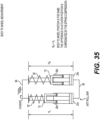
- FIG. 35 shows a schematic diagram showing body-to-wheel measurement in an ICL system 10.
- FIG. 35 includes the left-front lift actuator 26a operably disposed between the left-front wheel 24a and a chassis element 80 of the vehicle 20.
- the chassis element 80 may include, for example, a body, a frame, or a subframe assembly.
- the principles illustrated on FIG. 35 may be applicable to either or both of a set of front wheels 24a, 24b or rear wheels 24c, 24d of the vehicle 20.
- a coil spring 82 extends between the spring seat 70 of each of the lift actuators 26a, 26b and the chassis element 80 of the vehicle 20.
- a left-side height H L which may be measured by a corresponding one of the height sensors 28, indicates a height of the chassis element 80 relative to the left-front wheel 24a.
- a right-side height H R which may be measured by a corresponding one of the height sensors 28, indicates a height of the chassis element 80 relative to the right-front wheel 24b.
- An anti-roll bar 84 which may also be called a sway bar, connects the left-front wheel 24a and the right-front wheel 24b. As shown on FIG.
- differences in positions of the left-front lift actuator 26a and the right-front actuator 26b may be compensated by different compression lengths of the corresponding coil springs 82, thereby maintaining the left-side height H L equal to or approximately equal to the right-side height H R .
- the body-to-wheel measurement illustrated in FIG. 35 may be applied to any of the hydraulic arrangements of the present disclosure.
- a corner height of the vehicle 10 may be impacted by both spring height and actuator height.
- Actuator height i.e. extension position of a corresponding one of the lift actuators 26a, 26b, 26c, 26d
- spring height may be determined based on spring height and corner height (which may be measured using a corresponding one of the height sensors 28) and spring height can be estimated based on corner weight, as described herein with reference to FIG. 35 .
Landscapes
- Engineering & Computer Science (AREA)
- Mechanical Engineering (AREA)
- Vehicle Body Suspensions (AREA)
Abstract
Description
- The present disclosure relates generally to systems for adjusting the height of a vehicle. More specifically, the present disclosure pertains to an electro-hydraulic system for independently adjusting heights of different corners of a vehicle.
- Systems capable of changing vehicle height can enable additional functionalities and play important role to improve vehicles energy efficiency. However, development of electro- hydraulic solutions for adjusting vehicle ride height encounter number of technical and cost challenges.
-
U.S. Patent 6,902,045 describes one such example of a system for adjusting vehicle height. The system and apparatus ofU.S. Patent 6,902,045 may be used to adjust the height of a front end of a vehicle having a coil-over shock suspension. - The present disclosure provides a height adjustment system for a vehicle. The height adjustment system includes: a reservoir configured to hold hydraulic fluid; at least one lift actuator operably disposed between a wheel and a chassis element of the vehicle for adjusting the height of the vehicle; a supply pump having an inlet port in fluid communication with the reservoir and configured to transfer the hydraulic fluid to the at least one lift actuator via a manifold; a supply check valve configured to allow fluid flow from an outlet of the supply pump to the manifold while blocking fluid flow in an opposite direction; and at least one of: a supply pump isolation valve configured to selectively bypass hydraulic fluid around the supply check valve, or a secondary actuator isolation valve configured to selectively control fluid flow between the at least one lift actuator and the inlet port of the supply pump.
- The present disclosure provides a height adjustment system for a vehicle. The height adjustment system includes: a reservoir configured to hold hydraulic fluid; at least one lift actuator operably disposed between a wheel and a chassis element of the vehicle for adjusting the height of the vehicle; a piston pump assembly including a pump piston movable through a cylinder to supply hydraulic fluid to each of a first manifold and a second manifold; an actuator isolation valve configured to selectively control fluid flow between the first manifold and the at least one lift actuator; and a second actuator isolation valve configured to selectively control fluid flow between the second manifold and the at least one lift actuator.
- The present disclosure provides a hydraulic control unit for a height adjustment system of a vehicle. The hydraulic control unit includes: a supply passage configured to attach to a reservoir for transmitting a hydraulic fluid; a manifold; a supply pump having an inlet port in fluid communication with the reservoir via the supply passage and configured to transfer the hydraulic fluid to the at least one lift actuator via the manifold; a supply check valve configured to allow fluid flow from an outlet of the supply pump to the manifold while blocking fluid flow in an opposite direction; and at least one of: a supply pump isolation valve configured to selectively bypass hydraulic fluid around the supply check valve, or a secondary actuator isolation valve configured to selectively control fluid flow between the at least one lift actuator and the inlet port of the supply pump.
- Further details, features and advantages of designs of the invention result from the following description of embodiment examples in reference to the associated drawings.
-
FIG. 1 shows a schematic block diagram of a vehicle with an independent corner lift (ICL) system, in accordance with an aspect of the present disclosure; -
FIG. 2 shows a schematic block diagram of a controller for a lift electronic control unit of the ICL system of the present disclosure; -
FIG. 3 shows a schematic diagram of a first hydraulic arrangement for the ICL system of the present disclosure; -
FIG. 4 shows a schematic diagram of the first hydraulic arrangement ofFIG. 3 in a safe state; -
FIG. 5 shows a schematic diagram of the first hydraulic arrangement ofFIG. 3 in a raising mode; -
FIG. 6 shows a schematic diagram of the first hydraulic arrangement ofFIG. 3 in a lowering mode; -
FIG. 7 shows a schematic diagram of the first hydraulic arrangement ofFIG. 3 in a hold state; -
FIG. 8 shows a schematic diagram of the first hydraulic arrangement ofFIG. 3 in a positive compensation state; -
FIG. 9 shows a schematic diagram of the first hydraulic arrangement ofFIG. 3 in a negative compensation state; -
FIG. 10 shows a schematic diagram of the first hydraulic arrangement ofFIG. 3 in a corner weight measurement mode; -
FIG. 11 shows a schematic diagram of a second hydraulic arrangement for the ICL system of the present disclosure; -
FIG. 12 shows a schematic diagram of the second hydraulic arrangement ofFIG. 11 in a Lowering with Hydraulic Recovery State; -
FIG. 13 shows a schematic diagram of the second hydraulic arrangement ofFIG. 11 in a raising mode; -
FIG. 14 shows a schematic diagram of a third hydraulic arrangement for the ICL system of the present disclosure; -
FIG. 15 shows a schematic diagram of the third hydraulic arrangement ofFIG. 14 in a lowering mode; -
FIG. 16 shows a schematic diagram of a fourth hydraulic arrangement for the ICL system of the present disclosure; -
FIG. 17 shows a schematic diagram of the fourth hydraulic arrangement ofFIG. 16 , in a lowering with hydraulic recovery mode; -
FIG. 18 shows a schematic diagram of the fourth hydraulic arrangement ofFIG. 16 , in a raising mode; -
FIG. 19 shows a schematic diagram of a fifth hydraulic arrangement for the ICL system of the present disclosure; -
FIG. 20 shows a schematic diagram of the fifth hydraulic arrangement ofFIG. 19 , in a raising mode; -
FIG. 21 shows a schematic diagram of the fifth hydraulic arrangement ofFIG. 19 , raising only one corner; -
FIG. 22 shows a schematic diagram of the fifth hydraulic arrangement ofFIG. 19 , in a lowering mode; -
FIG. 23 shows a schematic diagram of the fifth hydraulic arrangement ofFIG. 19 , lowering only one corner; -
FIG. 24 shows a schematic diagram of the fifth hydraulic arrangement ofFIG. 19 , measuring weight on a first corner; -
FIG. 25 shows a schematic diagram of the fifth hydraulic arrangement ofFIG. 19 , measuring weight on a second corner; -
FIG. 26 shows a schematic diagram of the fifth hydraulic arrangement ofFIG. 19 , in a roll compensation mode; -
FIG. 27 shows a schematic diagram of the fifth hydraulic arrangement ofFIG. 19 , in a pitch compensation mode; -
FIG. 28 shows a schematic diagram of a sixth hydraulic arrangement for the ICL system of the present disclosure; -
FIG. 29 shows a schematic diagram of the sixth hydraulic arrangement ofFIG. 28 , in a raising mode; -
FIG. 30 shows a schematic diagram of the sixth hydraulic arrangement ofFIG. 28 , in a lowering mode; -
FIG. 31 shows a schematic diagram of a seventh hydraulic arrangement for the ICL system of the present disclosure and in a pressure locking mode; -
FIG. 32 shows a schematic diagram of an eighth hydraulic arrangement for the ICL system of the present disclosure; -
FIG. 33 shows a schematic diagram of a ninth hydraulic arrangement for the ICL system of the present disclosure; -
FIG. 34 shows a schematic diagram of a tenth hydraulic arrangement for an ICL system, in accordance with an aspect of the present disclosure; and -
FIG. 35 shows a schematic diagram showing body to wheel measurement in an ICL system, in accordance with an aspect of the present disclosure. - Referring to the drawings, the present invention will be described in detail in view of following embodiments.
- An independent corner lift (ICL)
system 10 for avehicle 20 such as a passenger car or truck is shown inFIG. 1 . Thevehicle 20 includes abody 22 and fourwheels system 10 provides for independent control of the height of thebody 22 at each of the fourwheels ICL system 10 may, therefore, raise or lower the entire body or portions thereof. For example, the ICLsystem 10 may control pitch and roll of thebody 22. The ICLsystem 10 may provide additional features, such as weight measurement at each of the fourwheels - As shown in
FIG. 1 , the ICLsystem 10 includes a left-front lift actuator 26a operably disposed between a left-front wheel 24a and a corresponding point on thebody 22. The ICLsystem 10 also includes a right-front lift actuator 26b operably disposed between a right-front wheel 24b and a corresponding point on thebody 22. The ICLsystem 10 also includes a left-rear lift actuator 26c operably disposed between a left-rear wheel 24c, and a corresponding point on thebody 22. The ICLsystem 10 also includes a right-rear lift actuator 26d operably disposed between a right-rear wheel 24d and a corresponding point on thebody 22. TheICL system 10 also includes fourheight sensors 28, each of theheight sensors 28 is configured to measure a height of a point on thebody 22 relative to a corresponding one of the fourwheels height sensors 28 may each measure an extension of a corresponding one of thelift actuators - The
ICL system 10 also includes anintelligent lift controller lift actuators intelligent lift controller LEHCU 31, 32 includes a lift electrical interface (LEI) 31 and a lift hydraulic control unit (LHCU) 32. TheLECU 30 includes a controller, such as an electronic control unit, configured to command operation of thelift actuators vehicle 10 and based on feedback signals from sensors, such as theheight sensors 28. TheLHCU 32 controls hydraulic fluid flow to each of thelift actuators LHCU 32 may include one or more control devices, such as pumps and/or valves to control the hydraulic fluid flow in response to control signals from theLECU 30. The LEI 31 may include one or more electrical devices, such as solenoid coils and/or one or more electric motors for actuating or otherwise controlling corresponding devices in theLHCU 32. - The
vehicle 20 also includes apower distributer 34, such as an electrical bus, configured to supply electrical power to theintelligent lift controller vehicle 20 also includes an original equipment manufacturer (OEM) electrical control unit (ECU) 36, such as a body control module (BCM) that sends a level control signal to theLECU 30 via acommunications network 38. Thecommunications network 38 may include, for example, an Ethernet interface or a controller area network (CAN) interface. The level control signal may indicate a desired height and/or attitude (e.g. pitch and/or roll) for thevehicle 20. TheOEM ECU 36 may be in communication with one or moreother ECUs 40, such as a powertrain control module (PCM) or a traction control module (TCM), and theOEM ECU 36 may be configured to use data from the one or moreother ECUs 40 for generating the level control signal. - The
LECU 30 may includeactuator control software 60 for generating the commands for operating the one or more control devices of theLHCU 32 based on the signals from the sensors and based on the level control signal from theOEM ECU 36. -
FIG. 2 shows a schematic block diagram of acontroller 50 for theLECU 30 of theICL system 10. Thecontroller 50 includes aprocessor 52 coupled to astorage memory 54. Thestorage memory 54 includes aninstruction storage 56 storing instructions, such as program code for execution by theprocessor 52. Thestorage memory 54 also includes adata storage 56 for holding data for use by theprocessor 52. Thedata storage 56 may record, for example, values of the parameters measured by one or more sensors and/or the outcome of functions calculated by theprocessor 52. Theinstruction storage 56 includes theactuator control software 60, which may be executed by theprocessor 52 to interpret the signals from the sensors, such as theheight sensors 28, and to generate the commands for operating the one or more control devices of theLHCU 32. -
FIG. 3 shows a schematic diagram of a firsthydraulic arrangement 100 for theICL system 10 of the present disclosure. The firsthydraulic arrangement 100 includes astandard reservoir 110, such as a tank, that holds hydraulic fluid. Thestandard reservoir 110 may be open to atmosphere. Thestandard reservoir 110 functions to store hydraulic fluid for operation. Thestandard reservoir 110 may have a maximum volume determined by system operating characteristics, such as volumes of actuator, HCU and lines, and thermal expansion. Thestandard reservoir 110 may include a flow-back damping feature to avoid cap stress. Thestandard reservoir 110 may be configured to provide a flow rate to match a flow demand of a pump of the firsthydraulic arrangement 100, plus some additional safety margin. - The first
hydraulic arrangement 100 also includes theLHCU 32 which defines asupply passage 111 that is fluidly connected to thestandard reservoir 110. The firsthydraulic arrangement 100 also includes a supply pump (SP) 112 having an inlet port in fluid communication with thestandard reservoir 110 via thesupply passage 111. The supply pump is configured to pump hydraulic fluid from thestandard reservoir 110 and to thelift actuators supply pump 112 and functions to convert electrical energy to a mechanical energy by producing torque to drive a shaft of thesupply pump 112. Thesupply pump 112 may include a vane pump, although other types of hydraulic pumps may be used. - The first
hydraulic arrangement 100 also includes a supply check valve (SCV) 116 that allows fluid flow from thesupply pump 112 to afirst manifold 118 while blocking fluid flow in an opposite direction. TheSCV 116 may function to isolate thesupply pump 112 to prevent thesupply pump 112 from being driven to rotate during a lowering phase. TheSCV 116 may function to isolate thesupply pump 112 from jounce pressure spike and/or to filter or smooth pressure variation from thesupply pump 112. - The first
hydraulic arrangement 100 also includes apressure sensor 120 configured to measure a pressure of hydraulic fluid in thefirst manifold 118 and to communicate a signal indicative of that pressure to theLECU 30. - In some embodiments, and as shown in
FIG. 3 , the firsthydraulic arrangement 100 also includes a firsthydraulic accumulator 122 and an accumulator check valve (ACV) 124. The firsthydraulic accumulator 122 includes a chamber in fluid communication with thefirst manifold 118 throughSCV 116 with an accumulator piston disposed therein. The accumulator piston is movable in the chamber of the first hydraulic accumulator 122 a volume of fluid therein changes. A spring biases the piston of the firsthydraulic accumulator 122 to push fluid out of the chamber of the firsthydraulic accumulator 122. The firsthydraulic accumulator 122 may function to maintain and stabilize pressure in thefirst manifold 118. The firsthydraulic accumulator 122 may also damp pressure spikes during pump start and stop. The firsthydraulic accumulator 122 may have a pressure design that is lower than weight pressure during rebound of corners. TheACV 124 is configured to allow fluid flow from thesupply pump 112 to the firsthydraulic accumulator 122 while blocking fluid flow in an opposite direction. TheACV 124 may function to lower leak rate of the AIVs 132a, 132b, 132c, 132d by delta P reduction holding. - The first
hydraulic arrangement 100 also includes a reservoir isolation valve (RIV) 130 configure to selectively control fluid flow between thefirst manifold 118 and thesupply passage 111, which may be at an ambient pressure due it is fluid communication with thestandard reservoir 110. Thus, theRIV 130 may function to reduce pressure in thefirst manifold 118 by bleeding-off fluid to thesupply passage 111. TheRIV 130 may include a solenoid valve, which may be a normally-closed valve. TheRIV 130 functions to allow or isolate hydraulic flow between thelift actuators standard reservoir 110. TheRIV 130 may have a self-locking orientation from the actuator side (i.e. from the first manifold 118). TheRIV 130 may be configured to withstand a maximum differential pressure (maximum DeltaP) that corresponds to a 2g jounce on corners while raising thelift actuators RIV 130 may have a cracking pressure that is based on the maximum DeltaP. - The first
hydraulic arrangement 100 also includes a plurality of actuator isolation valves (AIV) 132a, 132b, 132c, 132d, with each of the AIVs 132a, 132b, 132c, 132d configured to selectively control fluid flow between thefirst manifold 118 and a corresponding one of thelift actuators AIVs AIVs supply pump 112 and the corresponding one of thelift actuators AIVs lift actuators standard reservoir 110. TheAIVs lift actuators - Each of the
lift actuators front lift actuator 26a, thelift actuators spring seat 70 and adamper attachment 72 of the corresponding corner of thevehicle 20. By moving between a retracted position and an extended position, thelift actuators spring seat 70 and thedamper attachment 72, and thereby adjust the height of the corresponding corner of thevehicle 20. In other words, each of thelift actuators wheels body 22, and based on a volume of hydraulic fluid therein. - As shown in
FIG. 3 , theLHCU 32 defines thesupply passage 111 and thefirst manifold 118 and contains thesupply pump 112, theSCV 116, and each of the actuatedvalves hydraulic arrangement 100. -
FIG. 4 shows a schematic diagram of the firsthydraulic arrangement 100 in a safe state, with no electrical power. In the safe state, allvalves supply pump 112 is inactive. In the safe state, leakage by any of the valves is flowing back fluid to thestandard reservoir 110 by theRIV 130 and theSCV 116. The firsthydraulic arrangement 100 may have a leakage profile < 0.12cc/minute, inducing a loss < 1.8mm/hour. Such leakage may correspond to a full lowering in > 55 hours for 100mm lift and 100cm3 per lift. -
FIG. 5 shows a schematic diagram of the firsthydraulic arrangement 100 in a raising mode, with theRIV 130 closed, and with each of the AIVs 132a, 132b, 132c, 132d opened. Arrows indicate that thesupply pump 112 is turning to pump hydraulic fluid from thestandard reservoir 110 and into each of thelift actuators first manifold 118. The fluid is mainly flowing to the corner with the lowest pressure induced by the corner load. TheAIVs AIVs -
FIG. 6 shows a schematic diagram of the firsthydraulic arrangement 100 in a lowering mode with theRIV 130 is opened and each of the AIVs 132a, 132b, 132c, 132d are opened. In the lowering mode, thesupply pump 112 is off, and hydraulic fluid flows from each of thelift actuators standard reservoir 110. A corner of thevehicle 20 with the highest pressure induced by corner load is flowing more than the others. TheAIVs AIVs -
FIG. 7 shows a schematic diagram of the firsthydraulic arrangement 100 in a hold state, in which theRIV 130 is closed and each of the AIVs 132a, 132b, 132c, 132d are closed. In the hold state, thesupply pump 112 is off. Valve leakage is flowing back fluid to thestandard reservoir 110 by theRIV 130 and theSCV 116. The firsthydraulic arrangement 100 may have a leakage profile < 0.12cc/minute, inducing a loss < 1.8mm/hour. Such leakage may correspond to a full lowering in > 55 hours for 100mm lift and 100cm3 per lift. -
FIG. 8 shows a schematic diagram of the firsthydraulic arrangement 100 in a positive compensation state, with theRIV 130 closed, and with each of the AIVs 132a, 132b, 132c, 132d opened or closed to lift the corresponding corner. Arrows indicate that thesupply pump 112 is turning to pump hydraulic fluid from thestandard reservoir 110 and into the left-front lift actuator 26a via thefirst manifold 118 and the left-front AIV 132a, which is opened. Thesupply pump 112 generates pressure inducing fluid flow to lift against the load on one or more of thelift actuators AIVs lift actuators -
FIG. 9 shows a schematic diagram of the firsthydraulic arrangement 100 in a negative compensation state, with thesupply pump 112 off, theRIV 130 opened, and with each of the AIVs 132a, 132b, 132c, 132d opened or closed to lower the corresponding corner. Arrows indicate that hydraulic fluid flows from the left-front lift actuator 26a to thestandard reservoir 110 via thefirst manifold 118 and the left-front AIV 132a, which is opened. In the negative compensation state, excess pressure in one or more of thelift actuators RIV 130 and one or more of the AIVs 132a, 132b, 132c, 132d are opened and then closed when a desired volume is accumulated in the corresponding one of thelift actuators -
FIG. 10 shows a schematic diagram of the first hydraulic arrangement of 100 in a corner weight measurement mode, with thesupply pump 112 off, theRIV 130 closed, and with each of the AIVs 132a, 132b, 132c, 132d opened or closed to measure a weight of the corresponding corner. The corner weight measurement may be performed with thevehicle 20 in static on flat or with slope compensation or while thevehicle 20 is moving with steady velocity (no acceleration) on flat or with slope compensation. The fluid pressure corresponding to the weight on a corner is measured by opening theAIVs pressure sensor 120 may measure the fluid pressure in thefirst manifold 118 during a time when each of the AIVs 132a, 132b, 132c, 132d is opened to measure the fluid pressure corresponding to the weights in each of the corners of thevehicle 20. The HCU compliance being low, this measure does not create perturbation on corner height. All other corner being isolated, road profiles or initial cornering situations are not impacting vehicle dynamic. -
FIG. 11 shows a schematic diagram of a secondhydraulic arrangement 200 for theICL system 10 of the present disclosure. The secondhydraulic arrangement 200 may be similar or identical to the firsthydraulic arrangement 100, except for the substitution of a Hydraulic Energy Storage Device (HESD) 210 in place of thestandard reservoir 110. TheHESD 210 may function to store hydraulic energy based on inlet flow energy. For example, theHESD 210 may include a compressible fluid (i.e. a gas) in a sealed compartment to store hydraulic energy based on the inlet flow of the hydraulic fluid. TheHESD 210 may include diaphragm separating the hydraulic fluid from the compressible fluid. -
FIG. 12 shows a schematic diagram of the secondhydraulic arrangement 200 in a Lowering with Hydraulic Recovery State, with hydraulic fluid flowing from one or more of thelift actuators HESD 210. In this mode, the lowering pressure has to be higher than the maximum HESD pressure with full fluid volume with a margin factor. The minimum lowering pressure is given by the suspension spring preload. Recovery may be dependent on the suspension characteristics for this design with direct recovery from one or more of thelift actuators HESD 210, which functions as a hydraulic accumulator. -
FIG. 13 shows a schematic diagram of the secondhydraulic arrangement 200 in a raising mode, with hydraulic fluid flowing into thelift actuators supply pump 112 generates pressure inducing fluid flow to lift against the load on thelift actuators supply pump 112 is preloaded by theHESD 210. The net torque required to run thesupply pump motor 114 to raise is lower compared to astandard reservoir 110 at atmospheric pressure. -
FIG. 14 shows a schematic diagram of a thirdhydraulic arrangement 300 for theICL system 10 of the present disclosure. The thirdhydraulic arrangement 300 may be similar or identical to the firsthydraulic arrangement 100, except for the addition of a supply pump isolation valve (SPIV) 302 configured to bypass hydraulic fluid around theSCV 116. TheSPIV 302 may include a solenoid valve, which may be a normally-closed valve. TheSPIV 302 may function to allow corner pressure measurement without losses in thesupply pump 112. TheSPIV 302 may authorize reverse flow through thesupply pump 112, in certain cases. TheSPIV 302 can provide increased flow from thesupply pump 112, when compared to the firsthydraulic arrangement 100 in which all flow from thesupply pump 112 is directed through theSCV 116. As shown inFIG. 14 , theLHCU 32 defines thesupply passage 111 and thefirst manifold 118 and contains thesupply pump 112, theSCV 116, theACV 124, and each of the actuatedvalves hydraulic arrangement 300. -
FIG. 15 shows a schematic diagram of the thirdhydraulic arrangement 300 in a Lowering with Hydraulic Recovery mode, with hydraulic fluid flowing from one or more of thelift actuators standard reservoir 110. In this mode, the lowering pressure causes a flow of the hydraulic fluid through thesupply pump 112, turning thesupply pump 112 in reverse. Thepump motor 114 is operable as a generator to recover hydraulic energy as electrical energy during the lowering mode, with thesupply pump 112 being driven in the reverse direction by the flow of the hydraulic fluid therethrough. Flowing the hydraulic fluid through thesupply pump 112 in the reverse direction may require theACV 124 to be omitted and/or bypassed. -
FIG. 16 shows a schematic diagram of a fourthhydraulic arrangement 400 for theICL system 10 of the present disclosure. The fourthhydraulic arrangement 400 may be similar or identical to the thirdhydraulic arrangement 300, except for the substitution of the Hydraulic Energy Storage Device (HESD) 210 in place of thestandard reservoir 110. -
FIG. 17 shows a schematic diagram of the fourthhydraulic arrangement 400 in a lowering with hydraulic recovery mode, with hydraulic fluid flowing from one or more of thelift actuators HESD 210. In this mode, the lowering pressure from thelift actuators HESD 210. -
FIG. 18 shows a schematic diagram of the fourth hydraulic arrangement ofFIG. 16 , in a raising mode, in which thesupply pump 112 generates pressure inducing fluid flow to lift against the load on thelift actuators supply pump 112 is preloaded by theHESD 210. The net torque required to run thesupply pump motor 114 to raise thebody 22 of thevehicle 20 is lower compared to astandard reservoir 110 at atmospheric pressure. -
FIG. 19 shows a schematic diagram of a fifthhydraulic arrangement 500 for theICL system 10 of the present disclosure. The fifthhydraulic arrangement 500 may be similar or identical to the firsthydraulic arrangement 100, except for a few additional features described herein. The fifthhydraulic arrangement 500 includes a Secondary Actuator Isolation Valve (SAIV) 502a, 502b, 502c, 502d coupled to each of thelift actuators lift actuators return fluid passage 504 in fluid communication with aninlet port 506 of thesupply pump 112. Each of the SAIVs 502a, 502b, 502c, 502d may include a solenoid valve, which may be a normally-closed valve. TheSAIVs inlet port 506 of thesupply pump 112 and thelift actuators SAIVs lift actuators - The fifth
hydraulic arrangement 500 also includes areturn check valve 510 configured to allow fluid flow from thesupply passage 111 and to thereturn fluid passage 504, while blocking fluid flow in an opposite direction. The fifthhydraulic arrangement 500 also includes asupply control valve 512 configured to selectively control fluid flow between anoutlet port 514 of thesupply pump 112 and thesupply passage 111. Thesupply control valve 512 may include a solenoid valve, which may have a normally-closed configuration. -
FIG. 20 shows a schematic diagram of the fifthhydraulic arrangement 500, in a raising mode. Each of the AIVs 132a, 132b, 132c, 132d are opened to allow hydraulic fluid to flow therethrough and into thelift actuators supply pump 112 generates pressure inducing fluid flow to lift against the load on thelift actuators -
FIG. 21 shows a schematic diagram of the fifthhydraulic arrangement 500, raising only one corner, with thesupply pump 112 running, and only one of the AIVs 132a, 132b, 132c, 132d is opened to allow hydraulic fluid to flow therethrough and into a corresponding one of thelift actuators -
FIG. 22 shows a schematic diagram of the fifthhydraulic arrangement 500, in a lowering mode, with each of the AIVs 132a, 132b, 132c, 132d closed and with thesupply control valve 512 and each of the SAIVs 502a, 502b, 502c, 502d opened to direct fluid flow from thelift actuators standard reservoir 110 through thesupply pump 112 and further through thesupply control valve 512. In this mode, the lowering pressure turns thesupply pump 112, thereby driving thesupply pump motor 114, which may act as a generator for recovering the hydraulic energy as electrical energy. -
FIG. 23 shows a schematic diagram of the fifthhydraulic arrangement 500, lowering only one corner. In this mode, a corresponding one of the SAIVs 502a, 502b, 502c, 502d may be opened to release hydraulic fluid from a corresponding one of thelift actuators standard reservoir 110 similarly to the lowering mode ofFIG. 22 , and hydraulic energy may be similarly recovered as electrical energy. Different corners of thevehicle 20 may be lowered at different times for roll and/or pitch control by selectively commanding theSAIVs -
FIG. 24 shows a schematic diagram of the fifthhydraulic arrangement 500, measuring weight on a first corner. As shown inFIG. 24 , thesupply control valve 512 and each of the SAIVs 502a, 502b, 502c, 502d are maintained in a closed state, and one of the AIVs 132a, 132b, 132c, 132d is opened at a given time to provide fluid communication between a corresponding one oflift actuators first manifold 118. Thepressure sensor 120 may measure the fluid pressure in thefirst manifold 118 during a time when each of the AIVs 132a, 132b, 132c, 132d is opened to measure the fluid pressure corresponding to the weights in each of the corners of thevehicle 20. The weight measuring mode of fifthhydraulic arrangement 500 may otherwise be similar or identical to the weight measuring mode of the firsthydraulic arrangement 100 described herein with reference toFIG. 10 . -
FIG. 25 shows a schematic diagram of the fifthhydraulic arrangement 500, measuring weight on a second corner, with thesecond AIV 132b opened with the other ones of the AIVs 132a, 132b, 132c, 132d closed for measuring fluid pressure in the right-front lift actuator 26b for determining weight on the right-front corner of thevehicle 20. -
FIG. 26 shows a schematic diagram of the fifthhydraulic arrangement 500, in a roll compensation mode, with a left-front AIV 132a associated with the left-front lift actuator 26a and a right-front SAIV 502b associated with the right-front lift actuator 26a each opened. Thesupply control valve 512 and all of the other ones of the AIVs 132a, 132b, 132c, 132d and all of the other ones of the SAIVs 502a, 502b, 502c, 502d are maintained in a closed state. Thesupply pump 112 is energized to pump fluid from the right-front lift actuator 26b and into the left-front lift actuator 26a, thereby lifting the left-front corner while lowering the right-front corner of thevehicle 20. This lifting and lowering may compensate for other roll forces on thevehicle 20, such as cornering force and/or from thevehicle 20 being operated on a surface with a left/right slope. -
FIG. 27 shows a schematic diagram of the fifthhydraulic arrangement 500, in a pitch compensation mode, with the left-front AIV 132a and the right-front AIV 132b associated with the left-front lift actuator 26a and the right-front lift actuator 26b, respectively, each being opened. The left-rear SAIV 502c and the right-rear SAIV 502d associated with the left-rear lift actuator 26c and the right-rear lift actuator 26d, respectively, are also opened. Thesupply control valve 512 and all of the other ones of the AIVs 132a, 132b, 132c, 132d and all of the other ones of the SAIVs 502a, 502b, 502c, 502d are maintained in a closed state. Thesupply pump 112 is energized to pump fluid from therear lift actuators front lift actuators vehicle 20 while lowering the rear of thevehicle 20 and for controlling a pitch of thevehicle 20. TheAIVs SAIVs vehicle 20 while lowering the front of thevehicle 20 and for controlling pitch of thevehicle 20 in an opposite direction. -
FIG. 28 shows a schematic diagram of a sixthhydraulic arrangement 600 for theICL system 10 of the present disclosure. The sixthhydraulic arrangement 600 may be similar or identical to the fifthhydraulic arrangement 500, except for a few additional features described herein. The sixthhydraulic arrangement 600 includes a Hydraulic Energy Storage Device (HESD) 210 in place of thestandard reservoir 110. The sixthhydraulic arrangement 600 also includes areturn control valve 602 in place of thereturn check valve 510. Thereturn control valve 602 may include a solenoid valve, which may be a normally-closed valve. Thereturn control valve 602 functions to selectively control fluid flow between thesupply passage 111 and thereturn fluid passage 504. -
FIG. 29 shows a schematic diagram of the sixthhydraulic arrangement 600, in a raising mode, with thesupply control valve 512 and all of the SAIVs 502a, 502b, 502c, 502d closed, and with thereturn control valve 602 and each of the AIVs 132a, 132b, 132c, 132d opened. Arrows indicate that thesupply pump 112 is turning to pump hydraulic fluid from theHESD 210 through thereturn control valve 602 and into each of thelift actuators first manifold 118. -
FIG. 30 shows a schematic diagram of the sixthhydraulic arrangement 600, in a lowering mode, with thesupply control valve 512 and all of the SAIVs 502a, 502b, 502c, 502d opened, and with thereturn control valve 602 and each of the AIVs 132a, 132b, 132c, 132d closed. Arrows indicate that thesupply pump 112 is turning to pump hydraulic fluid from each of thelift actuators supply control valve 512 and into theHESD 210. -
FIG. 31 shows a schematic diagram of a seventhhydraulic arrangement 700 for theICL system 10 of the present disclosure, and in a pressure locking mode. The seventhhydraulic arrangement 700 may be similar or identical to the firsthydraulic arrangement 100, except for the addition of a locking valve (LV) 702 and asecondary leveling chamber 704 in fluid communication with each of thelift actuators LHCU 32 may define, at least partially, thesecondary leveling chamber 704. TheLV 702 may include a solenoid valve, which may be a normally-closed valve. TheLV 702 is configured to selectively conduct hydraulic fluid between thelift actuators standard reservoir 110 via thesecondary leveling chamber 704. TheLV 702 functions to allow or isolate flow of hydraulic fluid between thestandard reservoir 110 and thesecondary leveling chamber 704. - The
LV 702 may have a self-locking orientation from the actuator side (i.e. from the secondary leveling chamber 704). TheLV 702 may be configured to withstand a maximum differential pressure (maximum DeltaP) in a downstream to upstream direction that corresponds to a 2g jounce and 0 bar upstream. TheLV 702 may be configured to withstand a maximum differential pressure (maximum DeltaP) in an upstream to downstream direction that corresponds to a 2g jounce on one corner while raising only this corner and rebound on another corner with 20bar suspension spring preload. TheLV 702 may have a cracking pressure that is based on the maximum DeltaP. -
FIG. 32 shows a schematic diagram of an eighthhydraulic arrangement 800 for theICL system 10 of the present disclosure. The eighthhydraulic arrangement 800 may be similar or identical to the fifthhydraulic arrangement 500, except for a few differences described herein. The eighthhydraulic arrangement 800 includes a dividedreservoir 810 in place of thestandard reservoir 110. The eighthhydraulic arrangement 800 also includes apiston pump assembly 812 in place of thesupply pump 112, and apiston actuator motor 814 in place of thesupply pump motor 114. Thepiston pump assembly 812 may include a ball screw actuator and/or a reduction gearset to convert rotational torque produced by thepiston actuator motor 814 into linear force for moving apump piston 816 through acylinder 817, and thereby pumping the hydraulic fluid. Thepiston pump assembly 812 supplies hydraulic fluid to each of thefirst manifold 118 and asecond manifold 818, with each of themanifolds piston pump assembly 812, with the chambers separated by thepiston 816 that translates linearly through thecylinder 817 in response to actuation by thepiston actuator motor 814. - The eighth
hydraulic arrangement 800 also includes apressure sensor 120 configured to measure a pressure of hydraulic fluid in thefirst manifold 118, and asecond pressure sensor 820 configured to measure a pressure of hydraulic fluid in thesecond manifold 818. Each of thepressure sensors LECU 30. - The eighth
hydraulic arrangement 800 includes a plurality of actuator isolation valves (AIV) 132a, 132b, 132c, 132d, with each of the AIVs 132a, 132b, 132c, 132d configured to selectively control fluid flow between thefirst manifold 118 and a corresponding one of thelift actuators hydraulic arrangement 800 includes a plurality of secondactuator isolation valves actuator isolation valves second manifold 818 and a corresponding one of thelift actuators - The divided
reservoir 810 includes apartition 822 to separate an internal space into afirst container 824a and asecond container 824b. Thepartition 822 may extend only part-way up so thecontainers containers reservoir 810 is below a given level, such as a top of thepartition 822. - The eighth
hydraulic arrangement 800 also includes a firstcircuit check valve 826 in parallel with a firstcircuit isolation valve 828, and each fluidly connected in a parallel arrangement between thefirst container 824a of the dividedreservoir 810 and thefirst manifold 118. The firstcircuit check valve 826 is configured to allow fluid flow from thefirst container 824a of the dividedreservoir 810 and into the first manifold, while blocking fluid flow in an opposite direction. The firstcircuit isolation valve 828 selectively allows fluid flow from thefirst manifold 118 to thefirst container 824a of the dividedreservoir 810. The firstcircuit isolation valve 828 may include a solenoid valve, which may be a normally-closed valve. TheSCV 116 and theSPIV 302 may function similarly to theSCV 116 and theSPIV 302, respectively, in the thirdhydraulic arrangement 300. - The eighth
hydraulic arrangement 800 also includes a secondcircuit check valve 830 in parallel with a secondcircuit isolation valve 832, and each fluidly connected in a parallel arrangement between thesecond container 824b of the dividedreservoir 810 and thesecond manifold 818. The secondcircuit check valve 830 and the secondcircuit isolation valve 832 may have similar or identical construction and function as the firstcircuit check valve 826 and the firstcircuit isolation valve 828, respectively. -
FIG. 33 shows a schematic diagram of a ninthhydraulic arrangement 900 for theICL system 10 of the present disclosure. The ninthhydraulic arrangement 900 may be similar or identical to the eighthhydraulic arrangement 800, except for the addition of a secondhydraulic accumulator 902 and anaccumulator isolation valve 910. The secondhydraulic accumulator 902 includes a chamber in fluid communication with thefirst manifold 118 with an accumulator piston disposed therein. The accumulator piston is movable in the chamber of the secondhydraulic accumulator 902 as a volume of fluid therein changes. A spring biases the accumulator piston of the secondhydraulic accumulator 902 to push fluid out of the chamber of the secondhydraulic accumulator 902. The secondhydraulic accumulator 902 may function to maintain and stabilize pressure in thefirst manifold 118. Theaccumulator isolation valve 910 is configured to selectively allow fluid flow between thefirst manifold 118 and the secondhydraulic accumulator 902. Theaccumulator isolation valve 910 may include a solenoid valve, which may be a normally-open valve. -
FIG. 34 shows a schematic diagram of a tenthhydraulic arrangement 1000 for theICL system 10 of the present disclosure. The tenthhydraulic arrangement 1000 may be similar or identical to the eighthhydraulic arrangement 800, except with only two of thelift actuators front lift actuator 26b and the right-rear lift actuator 26d, and without thecontrol valves lift actuators hydraulic arrangement 1000 may be used on a two-wheel vehicle, such as a motorcycle. -
FIG. 35 shows a schematic diagram showing body-to-wheel measurement in anICL system 10.FIG. 35 includes the left-front lift actuator 26a operably disposed between the left-front wheel 24a and achassis element 80 of thevehicle 20. Thechassis element 80 may include, for example, a body, a frame, or a subframe assembly. The principles illustrated onFIG. 35 may be applicable to either or both of a set offront wheels rear wheels vehicle 20. - A
coil spring 82 extends between thespring seat 70 of each of thelift actuators chassis element 80 of thevehicle 20. A left-side height HL, which may be measured by a corresponding one of theheight sensors 28, indicates a height of thechassis element 80 relative to the left-front wheel 24a. A right-side height HR, which may be measured by a corresponding one of theheight sensors 28, indicates a height of thechassis element 80 relative to the right-front wheel 24b. Ananti-roll bar 84, which may also be called a sway bar, connects the left-front wheel 24a and the right-front wheel 24b. As shown onFIG. 35 , differences in positions of the left-front lift actuator 26a and the right-front actuator 26b may be compensated by different compression lengths of the corresponding coil springs 82, thereby maintaining the left-side height HL equal to or approximately equal to the right-side height HR. - The body-to-wheel measurement illustrated in
FIG. 35 may be applied to any of the hydraulic arrangements of the present disclosure. A corner height of thevehicle 10 may be impacted by both spring height and actuator height. Actuator height (i.e. extension position of a corresponding one of thelift actuators FIG. 35 . - The foregoing description is not intended to be exhaustive or to limit the disclosure. Individual elements or features of a particular embodiment are generally not limited to that particular embodiment, but, where applicable, are interchangeable and can be used in a selected embodiment, even if not specifically shown or described. The same may also be varied in many ways. Such variations are not to be regarded as a departure from the disclosure, and all such modifications are intended to be included within the scope of the disclosure.
Claims (15)
- A height adjustment system for a vehicle, comprising:a reservoir (110) configured to hold hydraulic fluid;at least one lift actuator (26a, 26b, 26c, 26d) operably disposed between a wheel (24a, 24b, 24c, 24d) and a chassis element of the vehicle for adjusting the height of the vehicle;a supply pump (112) having an inlet port in fluid communication with the reservoir (110) and configured to transfer the hydraulic fluid to the at least one lift actuator (26a, 26b, 26c, 26d) via a manifold (118);a supply check valve (116) configured to allow fluid flow from an outlet of the supply pump (112) to the manifold (118) while blocking fluid flow in an opposite direction; andat least one of: a supply pump isolation valve (302) configured to selectively bypass hydraulic fluid around the supply check valve (116), or a secondary actuator isolation valve (502a, 502b, 502c, 502d) configured to selectively control fluid flow between the at least one lift actuator (26a, 26b, 26c, 26d) and the inlet port of the supply pump (112).
- The height adjustment system of claim 1, further including an actuator isolation valve (132a, 132b, 132c, 132d) configured to selectively control fluid flow between the manifold (118) and the at least one lift actuator (26a, 26b, 26c, 26d).
- The height adjustment system of claim 1 or 2, wherein the at least one of the supply pump isolation valve (302) or the secondary actuator isolation valve (502a, 502b, 502c, 502d) includes the supply pump isolation valve (302) configured to selectively bypass hydraulic fluid around the supply check valve (116).
- The height adjustment system of claim 3, further including a motor (114) coupled to the supply pump (112),wherein the height adjustment system is operable in a lowering mode to transmit the hydraulic fluid from the at least one lift actuator (26a, 26b, 26c, 26d) through the supply pump isolation valve (302) and through the supply pump (112) in a reverse direction, andwherein the motor (114) is operable as a generator to recover hydraulic energy as electrical energy during the lowering mode and with the supply pump (112) being driven by the flow of the hydraulic fluid therethrough.
- The height adjustment system of claim 1 or 2, wherein the at least one of the supply pump isolation valve (302) or the secondary actuator isolation valve (502a, 502b, 502c, 502d) includes the secondary actuator isolation valve (502a, 502b, 502c, 502d) configured to selectively control fluid flow between the at least one lift actuator (26a, 26b, 26c, 26d) and the inlet port of the supply pump (112).
- The height adjustment system of claim 5, further including a motor (114) coupled to the supply pump (112),wherein the height adjustment system is operable in a lowering mode to transmit the hydraulic fluid from the at least one lift actuator (26a, 26b, 26c, 26d) through the secondary actuator isolation valve (502a, 502b, 502c, 502d) and through the supply pump (112), andwherein the motor (114) is operable as a generator to recover hydraulic energy as electrical energy during the lowering mode and with the supply pump (112) being driven by the flow of the hydraulic fluid therethrough.
- The height adjustment system of claim 1 or 2, wherein the at least one lift actuator (26a, 26b, 26c, 26d) includes a plurality of lift actuators (26a, 26b, 26c, 26d), with each lift actuator (26a, 26b, 26c, 26d) of the plurality of lift actuators (26a, 26b, 26c, 26d) operably disposed between a corresponding wheel (24a, 24b, 24c, 24d) and a corresponding chassis element of the vehicle for adjusting the height of the vehicle.
- The height adjustment system of claim 7, further including:a leveling chamber (704) providing fluid communication between each lift actuator (26a, 26b, 26c, 26d) of the plurality of lift actuators (26a, 26b, 26c, 26d); anda locking valve (702) configured to selectively conduct the hydraulic fluid between the plurality of lift actuators (26a, 26b, 26c, 26d) and the reservoir (110) via the leveling chamber (704).
- The height adjustment system of any one of claims 1 to 8, wherein the reservoir (110) includes a compressible fluid in a sealed compartment to store hydraulic energy; and/or
wherein the supply pump (112) includes a vane pump. - The height adjustment system of claim 1,wherein the height adjustment system further comprises a piston pump assembly (812) in place of a supply pump (112) and without the supply check valve (116) and at least one of the supply pump isolation valve (302) or the secondary actuator isolation valve (502a, 502b, 502c, 502d), wherein the piston pump assembly (812) includes a pump piston (816) movable through a cylinder (817) to supply hydraulic fluid to each of a first manifold (118) and a second manifold (818);wherein the height adjustment system further comprises the actuator isolation valve (132a, 132b, 132c, 132d) configured to selectively control fluid flow between the first manifold (118) and the at least one lift actuator (26a, 26b, 26c, 26d); anda second actuator isolation valve (802a, 802b, 802c, 802d) configured to selectively control fluid flow between the second manifold (818) and the at least one lift actuator (26a, 26b, 26c, 26d).
- The height adjustment system of claim 10, wherein the reservoir (110) includes a divided reservoir (810) having a first container (824a) and a second container (824b) that is separate from the first container (824a) when a fluid level in the divided reservoir (810) is below a given level,
wherein the first container (824a) is in fluid communication with the first manifold (118), and the second container (824b) is in fluid communication with the second manifold (818). - The height adjustment system of claim 11, further including:a first circuit check valve (826) configured to allow fluid flow from the first container (824a) of the divided reservoir (810) and into the first manifold (118), while blocking fluid flow in an opposite direction; anda second check valve configuredto allow fluid flow from the second container (824b) of the divided reservoir (810) and into the second manifold (818), while blocking fluid flow in an opposite direction.
- The height adjustment system of claim 12, further including:a first circuit isolation valve (828) configured to selectively allow fluid flow from the first manifold (118) to the first container (824a) of the divided reservoir (810); anda second circuit isolation valve (832) configured to selectively allow fluid flow from the second manifold (818) to the second container (824b) of the divided reservoir (810).
- The height adjustment system of any one of claims 10 to 13, further including a hydraulic accumulator (902) having a chamber in fluid communication with the first manifold (118) with an accumulator piston disposed therein and movable in the chamber of the hydraulic accumulator (902) as a volume of fluid therein changes,
in particular wherein the height adjustment system further includes an accumulator isolation valve (910) configured to selectively allow fluid flow between the first manifold (118) and the hydraulic accumulator (902). - A hydraulic control unit for the height adjustment system of a vehicle of any one claim 1 to 3 and 5, comprising:a supply passage (111) configured to attach to the reservoir (110) for transmitting a hydraulic fluid;the manifold (118);the supply pump (112) having the inlet port in fluid communication with the reservoir via the supply passage (111) and configured to transfer the hydraulic fluid to the at least one lift actuator (26a, 26b, 26c, 26d) via the manifold (118);the supply check valve (116); andat least one of: the supply pump isolation valve (302), or the secondary actuator isolation valve (502a, 502b, 502c, 502d).
Applications Claiming Priority (2)
| Application Number | Priority Date | Filing Date | Title |
|---|---|---|---|
| US202263427091P | 2022-11-21 | 2022-11-21 | |
| CN202311459586.3A CN117734360A (en) | 2022-11-21 | 2023-11-03 | Height adjustment system for vehicle and hydraulic control unit thereof |
Publications (2)
| Publication Number | Publication Date |
|---|---|
| EP4382324A2 true EP4382324A2 (en) | 2024-06-12 |
| EP4382324A3 EP4382324A3 (en) | 2024-08-14 |
Family
ID=88874712
Family Applications (1)
| Application Number | Title | Priority Date | Filing Date |
|---|---|---|---|
| EP23210861.3A Pending EP4382324A3 (en) | 2022-11-21 | 2023-11-20 | Independent corner lift system for vehicles |
Country Status (2)
| Country | Link |
|---|---|
| US (1) | US20240166007A1 (en) |
| EP (1) | EP4382324A3 (en) |
Families Citing this family (2)
| Publication number | Priority date | Publication date | Assignee | Title |
|---|---|---|---|---|
| US12330461B2 (en) * | 2022-11-28 | 2025-06-17 | Beijingwest Industries Co., Ltd. | Hydraulic lift for vehicle suspension |
| US20250196559A1 (en) * | 2023-12-13 | 2025-06-19 | Bollinger Motors Inc. | System and Method for Adjustable Hydraulic Suspension |
Citations (1)
| Publication number | Priority date | Publication date | Assignee | Title |
|---|---|---|---|---|
| US6902045B2 (en) | 2003-04-03 | 2005-06-07 | Delphi Technologies, Inc. | Apparatus, system and method for a vehicle suspension system |
Family Cites Families (17)
| Publication number | Priority date | Publication date | Assignee | Title |
|---|---|---|---|---|
| US3015345A (en) * | 1958-06-02 | 1962-01-02 | Martin Marietta Corp | Combination reservoir-accumulator arrangement for hydraulic system |
| US4295538A (en) * | 1974-03-21 | 1981-10-20 | Lewus Alexander J | Auxiliary power system for automotive vehicle |
| JPH106951A (en) * | 1996-04-26 | 1998-01-13 | Toyota Motor Corp | Vehicle control device |
| US6615786B2 (en) * | 2001-05-11 | 2003-09-09 | Honda Giken Kogyo Kabushiki Kaisha | Starter system for internal combustion engine |
| US6588859B2 (en) * | 2001-08-17 | 2003-07-08 | Delphi Technologies, Inc. | System and method for vehicle stability enhancement control with surface estimate |
| JP2004082870A (en) * | 2002-08-27 | 2004-03-18 | Nissin Kogyo Co Ltd | Vehicle brake fluid pressure control device |
| JP4506463B2 (en) * | 2004-12-28 | 2010-07-21 | トヨタ自動車株式会社 | Vehicle height adjustment device |
| US9604612B2 (en) * | 2011-09-28 | 2017-03-28 | Autoliv Nissin Brake Systems Japan Co., Ltd. | Brake hydraulic pressure control device for vehicle |
| US9809078B2 (en) * | 2013-03-15 | 2017-11-07 | ClearMotion, Inc. | Multi-path fluid diverter valve |
| KR102032450B1 (en) * | 2014-10-22 | 2019-10-21 | 주식회사 만도 | Active suspension apparatus for vehicle |
| EP3393831A4 (en) * | 2015-12-24 | 2019-09-04 | Clearmotion, Inc. | ELECTROHYDRAULIC UNITS WITH MULTIPLE INTEGRATED ACTUATORS |
| DE102017107994B4 (en) * | 2017-04-13 | 2021-04-22 | Hoerbiger Automotive Komfortsysteme Gmbh | Motor vehicle chassis |
| KR102424997B1 (en) * | 2017-09-29 | 2022-07-26 | 주식회사 만도 | Electric brake system |
| DE102019118384A1 (en) * | 2019-07-08 | 2021-01-14 | Rapa Automotive Gmbh & Co. Kg | MPE AXLE SET WITH A COMMON ECU |
| US11613453B2 (en) * | 2019-08-29 | 2023-03-28 | The Raymond Corporation | Variable hydraulic pressure relief systems and methods for a material handling vehicle |
| US11932327B2 (en) * | 2021-02-16 | 2024-03-19 | Caterpillar Paving Products Inc. | Four-legged construction machine having slope stability system with relief valves |
| US12330461B2 (en) * | 2022-11-28 | 2025-06-17 | Beijingwest Industries Co., Ltd. | Hydraulic lift for vehicle suspension |
-
2023
- 2023-11-20 EP EP23210861.3A patent/EP4382324A3/en active Pending
- 2023-11-20 US US18/515,095 patent/US20240166007A1/en active Pending
Patent Citations (1)
| Publication number | Priority date | Publication date | Assignee | Title |
|---|---|---|---|---|
| US6902045B2 (en) | 2003-04-03 | 2005-06-07 | Delphi Technologies, Inc. | Apparatus, system and method for a vehicle suspension system |
Also Published As
| Publication number | Publication date |
|---|---|
| EP4382324A3 (en) | 2024-08-14 |
| US20240166007A1 (en) | 2024-05-23 |
Similar Documents
| Publication | Publication Date | Title |
|---|---|---|
| EP4382324A2 (en) | Independent corner lift system for vehicles | |
| US11685220B2 (en) | Control systems and methods for suspension systems | |
| US12246572B1 (en) | Load dependent damper for a vehicle suspension system | |
| JP5830379B2 (en) | Multi-point hydraulic suspension system for land vehicles | |
| US11938772B2 (en) | System for grading filling of a hydraulic suspension system | |
| US10611204B1 (en) | Systems and methods for adapting tractive elements to a disabling event | |
| JP3712643B2 (en) | Hydraulic circuit for active suspension | |
| US11511592B2 (en) | Suspension system for a vehicle | |
| CN100509457C (en) | Hydraulic system for vehicle suspension | |
| US5682980A (en) | Active suspension system | |
| US6321887B1 (en) | Suspension control apparatus | |
| US11780285B2 (en) | Adaptive suspension system | |
| JP2000264034A (en) | Active suspension control device | |
| CN105835649B (en) | A kind of hydro pneumatic suspension and its control method with variable volume auxiliary chamber | |
| US11691474B2 (en) | Suspension system tank filling systems and methods | |
| KR20160026837A (en) | Active suspension with on-demand energy | |
| US20080309031A1 (en) | Damper actuated active roll control | |
| CN111055649A (en) | Hydraulic semi-active suspension for special vehicle and control method thereof | |
| WO2008147850A1 (en) | Gas suspension system and method | |
| US12522039B2 (en) | Suspension system with proportional pressure accumulator | |
| US20240262150A1 (en) | Suspension system and control method thereof, and vehicle | |
| CN217124471U (en) | Intelligent hydraulic active suspension system of automobile | |
| US20240253415A1 (en) | Bellows accumulator | |
| CN117382364A (en) | Control system and control method for vehicle air suspension | |
| CN117734360A (en) | Height adjustment system for vehicle and hydraulic control unit thereof |
Legal Events
| Date | Code | Title | Description |
|---|---|---|---|
| PUAI | Public reference made under article 153(3) epc to a published international application that has entered the european phase |
Free format text: ORIGINAL CODE: 0009012 |
|
| STAA | Information on the status of an ep patent application or granted ep patent |
Free format text: STATUS: THE APPLICATION HAS BEEN PUBLISHED |
|
| AK | Designated contracting states |
Kind code of ref document: A2 Designated state(s): AL AT BE BG CH CY CZ DE DK EE ES FI FR GB GR HR HU IE IS IT LI LT LU LV MC ME MK MT NL NO PL PT RO RS SE SI SK SM TR |
|
| PUAL | Search report despatched |
Free format text: ORIGINAL CODE: 0009013 |
|
| AK | Designated contracting states |
Kind code of ref document: A3 Designated state(s): AL AT BE BG CH CY CZ DE DK EE ES FI FR GB GR HR HU IE IS IT LI LT LU LV MC ME MK MT NL NO PL PT RO RS SE SI SK SM TR |
|
| RIC1 | Information provided on ipc code assigned before grant |
Ipc: B60G 17/056 20060101AFI20240705BHEP |
|
| STAA | Information on the status of an ep patent application or granted ep patent |
Free format text: STATUS: REQUEST FOR EXAMINATION WAS MADE |
|
| 17P | Request for examination filed |
Effective date: 20250214 |
|
| STAA | Information on the status of an ep patent application or granted ep patent |
Free format text: STATUS: EXAMINATION IS IN PROGRESS |
|
| 17Q | First examination report despatched |
Effective date: 20250901 |