EP4380258A1 - User information registration method and apparatus - Google Patents
User information registration method and apparatus Download PDFInfo
- Publication number
- EP4380258A1 EP4380258A1 EP22848091.9A EP22848091A EP4380258A1 EP 4380258 A1 EP4380258 A1 EP 4380258A1 EP 22848091 A EP22848091 A EP 22848091A EP 4380258 A1 EP4380258 A1 EP 4380258A1
- Authority
- EP
- European Patent Office
- Prior art keywords
- information
- nwdaf
- data
- registration
- location information
- Prior art date
- Legal status (The legal status is an assumption and is not a legal conclusion. Google has not performed a legal analysis and makes no representation as to the accuracy of the status listed.)
- Pending
Links
- 238000000034 method Methods 0.000 title claims abstract description 81
- 238000012517 data analytics Methods 0.000 claims abstract description 10
- 238000013523 data management Methods 0.000 claims abstract description 9
- 238000012217 deletion Methods 0.000 claims description 79
- 230000037430 deletion Effects 0.000 claims description 79
- 238000004891 communication Methods 0.000 claims description 51
- 238000012545 processing Methods 0.000 claims description 39
- 230000006870 function Effects 0.000 claims description 19
- 230000008569 process Effects 0.000 claims description 16
- 238000004590 computer program Methods 0.000 claims description 5
- 238000010586 diagram Methods 0.000 description 12
- 238000007726 management method Methods 0.000 description 10
- 238000012986 modification Methods 0.000 description 6
- 230000004048 modification Effects 0.000 description 6
- 230000000694 effects Effects 0.000 description 2
- 238000012546 transfer Methods 0.000 description 2
- 230000003190 augmentative effect Effects 0.000 description 1
- 238000013475 authorization Methods 0.000 description 1
- 230000006399 behavior Effects 0.000 description 1
- 230000005540 biological transmission Effects 0.000 description 1
- 230000008859 change Effects 0.000 description 1
- 238000013500 data storage Methods 0.000 description 1
- 238000005516 engineering process Methods 0.000 description 1
- 230000003287 optical effect Effects 0.000 description 1
- 238000001356 surgical procedure Methods 0.000 description 1
Images



Classifications
-
- H—ELECTRICITY
- H04—ELECTRIC COMMUNICATION TECHNIQUE
- H04W—WIRELESS COMMUNICATION NETWORKS
- H04W60/00—Affiliation to network, e.g. registration; Terminating affiliation with the network, e.g. de-registration
- H04W60/04—Affiliation to network, e.g. registration; Terminating affiliation with the network, e.g. de-registration using triggered events
-
- H—ELECTRICITY
- H04—ELECTRIC COMMUNICATION TECHNIQUE
- H04W—WIRELESS COMMUNICATION NETWORKS
- H04W60/00—Affiliation to network, e.g. registration; Terminating affiliation with the network, e.g. de-registration
-
- H—ELECTRICITY
- H04—ELECTRIC COMMUNICATION TECHNIQUE
- H04L—TRANSMISSION OF DIGITAL INFORMATION, e.g. TELEGRAPHIC COMMUNICATION
- H04L65/00—Network arrangements, protocols or services for supporting real-time applications in data packet communication
- H04L65/1066—Session management
- H04L65/1073—Registration or de-registration
-
- H—ELECTRICITY
- H04—ELECTRIC COMMUNICATION TECHNIQUE
- H04L—TRANSMISSION OF DIGITAL INFORMATION, e.g. TELEGRAPHIC COMMUNICATION
- H04L41/00—Arrangements for maintenance, administration or management of data switching networks, e.g. of packet switching networks
- H04L41/14—Network analysis or design
-
- H—ELECTRICITY
- H04—ELECTRIC COMMUNICATION TECHNIQUE
- H04L—TRANSMISSION OF DIGITAL INFORMATION, e.g. TELEGRAPHIC COMMUNICATION
- H04L41/00—Arrangements for maintenance, administration or management of data switching networks, e.g. of packet switching networks
- H04L41/14—Network analysis or design
- H04L41/147—Network analysis or design for predicting network behaviour
-
- H—ELECTRICITY
- H04—ELECTRIC COMMUNICATION TECHNIQUE
- H04W—WIRELESS COMMUNICATION NETWORKS
- H04W24/00—Supervisory, monitoring or testing arrangements
- H04W24/02—Arrangements for optimising operational condition
-
- H—ELECTRICITY
- H04—ELECTRIC COMMUNICATION TECHNIQUE
- H04W—WIRELESS COMMUNICATION NETWORKS
- H04W64/00—Locating users or terminals or network equipment for network management purposes, e.g. mobility management
- H04W64/003—Locating users or terminals or network equipment for network management purposes, e.g. mobility management locating network equipment
-
- H—ELECTRICITY
- H04—ELECTRIC COMMUNICATION TECHNIQUE
- H04W—WIRELESS COMMUNICATION NETWORKS
- H04W8/00—Network data management
- H04W8/02—Processing of mobility data, e.g. registration information at HLR [Home Location Register] or VLR [Visitor Location Register]; Transfer of mobility data, e.g. between HLR, VLR or external networks
-
- H—ELECTRICITY
- H04—ELECTRIC COMMUNICATION TECHNIQUE
- H04W—WIRELESS COMMUNICATION NETWORKS
- H04W8/00—Network data management
- H04W8/02—Processing of mobility data, e.g. registration information at HLR [Home Location Register] or VLR [Visitor Location Register]; Transfer of mobility data, e.g. between HLR, VLR or external networks
- H04W8/08—Mobility data transfer
-
- H—ELECTRICITY
- H04—ELECTRIC COMMUNICATION TECHNIQUE
- H04W—WIRELESS COMMUNICATION NETWORKS
- H04W8/00—Network data management
- H04W8/18—Processing of user or subscriber data, e.g. subscribed services, user preferences or user profiles; Transfer of user or subscriber data
- H04W8/20—Transfer of user or subscriber data
-
- H—ELECTRICITY
- H04—ELECTRIC COMMUNICATION TECHNIQUE
- H04L—TRANSMISSION OF DIGITAL INFORMATION, e.g. TELEGRAPHIC COMMUNICATION
- H04L41/00—Arrangements for maintenance, administration or management of data switching networks, e.g. of packet switching networks
- H04L41/08—Configuration management of networks or network elements
- H04L41/0803—Configuration setting
- H04L41/0813—Configuration setting characterised by the conditions triggering a change of settings
- H04L41/082—Configuration setting characterised by the conditions triggering a change of settings the condition being updates or upgrades of network functionality
-
- H—ELECTRICITY
- H04—ELECTRIC COMMUNICATION TECHNIQUE
- H04W—WIRELESS COMMUNICATION NETWORKS
- H04W64/00—Locating users or terminals or network equipment for network management purposes, e.g. mobility management
-
- H—ELECTRICITY
- H04—ELECTRIC COMMUNICATION TECHNIQUE
- H04W—WIRELESS COMMUNICATION NETWORKS
- H04W8/00—Network data management
- H04W8/02—Processing of mobility data, e.g. registration information at HLR [Home Location Register] or VLR [Visitor Location Register]; Transfer of mobility data, e.g. between HLR, VLR or external networks
- H04W8/06—Registration at serving network Location Register, VLR or user mobility server
-
- H—ELECTRICITY
- H04—ELECTRIC COMMUNICATION TECHNIQUE
- H04W—WIRELESS COMMUNICATION NETWORKS
- H04W8/00—Network data management
- H04W8/02—Processing of mobility data, e.g. registration information at HLR [Home Location Register] or VLR [Visitor Location Register]; Transfer of mobility data, e.g. between HLR, VLR or external networks
- H04W8/06—Registration at serving network Location Register, VLR or user mobility server
- H04W8/065—Registration at serving network Location Register, VLR or user mobility server involving selection of the user mobility server
Definitions
- the present application relates to the field of communication technology, in particular to a method for registering user information and apparatus.
- the traditional registering way of the registration information of a terminal device is unique, that is, one network element serves for one terminal device and registers the registration information of the terminal device in a database.
- the old network element will transfer the registration information of the terminal device to the new network element, and the new network element will re-register or update the registration information of the terminal device into the database.
- NWDAF When a network data analytic function (NWDAF) serves for a terminal, the NWDAF also needs to register the registration information of the terminal device in the database. Since a plurality of NWDAFs can serve for the same terminal device, when the plurality of NWDAFs register the registration information of the terminal device in the database, the registration information between different NWDAFs may overwrite each other.
- NWDAF network data analytic function
- the embodiments of the present application provide a method and apparatus for registering user information, to solve the problem that registration information overwrites each other since the plurality of NWDAFs register registration information of terminal device in a unified data management (UDM).
- UDM unified data management
- the embodiment of the present application provides a method for registering user information, including:
- the information registered by different NWDAFs can be stored in different locations in the UDM, and the registration information between different NWDAFs can be prevented from overwriting each other.
- the location information is a uniform resource identifier (URI).
- URI uniform resource identifier
- the location information further includes an analytics identifier for an event, the analytics identifier for the event is used for indicating a first service performed by the NWDAF for the terminal device, and the registration information is generated when the NWDAF provides the first service for the terminal device.
- the analytics identifier for the event is added to the location information, so that the data corresponding to different services provided by NWDAFs for the terminal device can be stored in different locations, further preventing the registration information belonging to the same analytics identifier for the event between different NWDAFs from overwriting each other.
- the method further includes: sending, by the NWDAF, an update request to the UDM in a case that the NWDAF determines that the registration information is to be updated; where the update request includes the updated registration information and the location information, and the update request is used for indicating the UDM to update the registration information in the storage path indicated by the location information to the updated registration information.
- the update of the registration information by one NWDAF may affect the registration information of other NWDAFs.
- the registration information of a specific NWDAF can be updated purposefully according to the identifier of the NWDAF contained in the location information, without affecting the registration information of other NWDAFs, so as to avoid the occurrence of update errors.
- the method further includes: sending, by the NWDAF, a deletion request to the UDM in a case that the NWDAF determines that the registration information needs to be deleted; where the deletion request includes the location information, and the deletion request is used for indicating the UDM to delete the registration information in the storage path indicated by the location information.
- the UDM since the registration information of the plurality of NWDAFs is stored in the same storage path, when the UDM deletes the registration information, the UDM may delete the registration information of the plurality of NWDAFs under the storage path.
- the UDM by adding the identifier of the NWDAF to the location information, the UDM can purposefully delete the registration information of the NWDAF that sends the deletion request according to the location information, without affecting registration information of other NWDAFs, so as to avoid a situation of mistaken deletion.
- the embodiment of the present application provides another method for registering user information, including:
- the method further includes:
- the method further includes:
- the method further includes:
- the embodiment of the present application provides a method for registering user information, including:
- the shared storage identifier associated with the second data is used for indicating that the second data is sent by the first NWDAF, and thus the shared storage identifiers used by different NWDAFs in the present application are different, so that even if the plurality of NWDAFs store the second data in the UDM, since the shared storage identifiers associated with the second data stored by different NWDAFs are different, the situation that the data overwrites each other can be avoided.
- the location information is a uniform resource identifier (URI).
- URI uniform resource identifier
- the registration information further includes third data, the third data is not associated with the shared storage identifier to indicate that the third data is stored in the storage path indicated by the location information.
- the method further includes: sending, by the first NWDAF, an update request to the UDM in a case that the first NWDAF determines that the second data is updated; where the update request includes the updated second data, the shared storage identifier associated with the second data, and the Location information; and the update request is used for indicating the UDM to update the second data in the storage path indicated by the location information to the updated second data.
- the update request sent by the first NWDAF to the UDM may carry the shared storage identifier associated with the second data, it can be indicated that the second data that needs to be updated is the second data stored by the first NWDAF.
- the UDM After receiving the update request, the UDM will update the second data previously stored by the first NWDAF, and will not update the second data stored by other NWDAFs serving for the terminal device. In this way, the occurrence of an update error can be avoided.
- the method further includes: sending, by the first NWDAF, a deletion request to the UDM in a case that the first NWDAF determines that the second data needs to be deleted; where the deletion request includes the identifier of the second data, the shared storage identifier associated with the second data, and the location information; and the deletion request is used for indicating the UDM to delete the second data in the storage path indicated by the location information.
- the UDM may delete the data stored by the first NWDAF according to the shared storage identifier used by the first NWDAF, to avoid the occurrence of mistaken deletion.
- the embodiment of the present application provides another method for registering user information, including:
- the method further includes:
- the method further includes:
- the method further includes:
- the embodiment of the present application provides a communication system, including:
- the NWDAF is further configured to send an update request to the UDM when the NWDAF determines that the registration information is to be updated; where the update request includes updated registration information and the location information; and the UDM is further configured to update the registration information in the storage path indicated by the location information to the updated registration information.
- the NWDAF is further configured to send a deletion request to the UDM when the NWDAF determines that the registration information needs to be deleted; where the deletion request includes the location information; and the UDM is further configured to delete the registration information in the storage path indicated by the location information.
- the embodiment of the present application provides another communication system, including:
- the first NWDAF is further configured to send an update request to the UDM when the first NWDAF determines that the second data is updated; where the update request includes the updated second data, the shared storage identifier associated with the second data, and the location information; and the UDM is further configured to update the second data in the storage path indicated by the location information to the updated second data.
- the first NWDAF is further configured to send a deletion request to the UDM when the first NWDAF determines that the second data needs to be deleted; where the deletion request includes the identifier of the second data, the shared storage identifier associated with the second data, and the location information; and the UDM is further configured to delete the second data in the storage path indicated by the location information.
- the system further includes a NF consumer; where after the UDM stores the second data in the storage path indicated by the location information, the NF consumer is configured to receive a service request from the terminal device, where the service request is used for indicating the service required by the terminal device;
- the embodiment of the present application provides an apparatus for registering user information, including:
- the location information is a uniform resource identifier (URI).
- URI uniform resource identifier
- the location information further includes an analytics identifier for an event, the analytics identifier for the event is used for indicating the first service performed by the NWDAF for the terminal device, and the registration information is generated when the NWDAF provides the first service for the terminal device.
- the communication unit after sending the registration request to the UDM, is further configured to: send an update request to the UDM in a case of determining that the registration information is to be updated; where the update request includes updated registration information and the location information, and the update request is used for indicating the UDM to update the registration information in the storage path indicated by the location information to the updated registration information.
- the communication unit after sending the registration request to the UDM, is further configured to: send a deletion request to the UDM in a case of determining that the registration information needs to be deleted; where the deletion request includes the location information, and the deletion request is used for indicating the UDM to delete the registration information in the storage path indicated by the location information.
- the embodiment of the present application provides another apparatus for registering user information, including:
- the communication unit is further configured to receive an update request from the NWDAF; where the update request includes updated registration information and the location information; and the processing unit is further configured to update the registration information in the storage path indicated by the location information to the updated registration information according to the update request.
- the communication unit is further configured to receive a deletion request from the NWDAF; where the deletion request includes the location information; and the processing unit is further configured to delete the registration information in the storage path indicated by the location information according to the deletion request.
- the communication unit is further configured to receive a retrieval request from a NF consumer; where the retrieval request includes the identifier of the first data and the location information; and the processing unit is further configured to send the first data in the storage path indicated by the location information to the NF consumer.
- the embodiment of the present application provides another apparatus for registering user information, including:
- the location information is a uniform resource identifier (URI).
- URI uniform resource identifier
- the registration information further includes third data, and the third data is not associated with the shared storage identifier to indicate that the third data is stored in the storage path indicated by the location information.
- the communication unit after sending the registration request to the UDM, is further configured to: send an update request to the UDM in a case of determining that the second data is updated, where the update request includes the updated second data, the shared storage identifier associated with the second data, and the location information; and the update request is used for indicating the UDM to update the second data in the storage path indicated by the location information to the updated second data.
- the communication unit after sending the registration request to the UDM, is further configured to: send a deletion request to the UDM in a case of determining that the second data needs to be deleted; where the deletion request includes the identifier of the second data, the shared storage identifier associated with the second data, and the location information; and the deletion request is used for indicating the UDM to delete the second data in the storage path indicated by the location information.
- the embodiment of the present application provides an apparatus for registering user information, including:
- the communication unit is further configured to receive an update request from the first NWDAF; where the update request includes the updated second data, the shared storage identifier associated with the second data, and the location information; and the processing unit is further configured to update the second data in the storage path indicated by the location information to the updated second data.
- the communication unit is further configured to receive a deletion request from the first NWDAF; where the deletion request includes the identifier of the second data, the shared storage identifier associated with the second data, and the location information; and the processing unit is further configured to delete the second data in the storage path indicated by the location information.
- the embodiment of the present application provides another apparatus for registering user information, including a memory and a processor; where the memory is configured to store at least one program instruction; and the processor is configured to call the at least one program instruction stored in the memory, and execute the method in any implementation of the first aspect or the third aspect according to the obtained program.
- the embodiment of the present application provides another apparatus for registering user information, including a memory and a processor; where the memory is configured to store at least one program instruction; and the processor is configured to call the at least one program instruction stored in the memory, and execute the method in any implementation of the second aspect or the fourth aspect according to the obtained program.
- the embodiment of the present application provides a computer-readable storage medium, storing at least one computer instruction; where the at least one computer instruction, when run on a computer, causes the computer to execute the above method.
- FIG. 1 illustrates a communication system architecture.
- the system architecture provided by the embodiments of the present application includes a terminal device 101, a session management function (SMF) 1021, an access and mobility management function (AMF) 1022, a NWDAF 1023, a network function consumer (NF consumer) 1024 and a unified data management (UDM) 103.
- the embodiments of the present application do not limit the numbers of terminal devices, NWDAFs, SMFs and AMFs included in the system. In FIG. 1 , only one of each is used as an example for introduction.
- the communication system may also include other network elements, for example, the communication system may also include an access network device, which is not shown in FIG. 1 .
- the terminal device 101 also referred to as a terminal, a mobile station (MS), a mobile terminal (MT), etc., and is a device that provides voice and/or data connectivity to users, for example, a hand-held device with wireless connectivity, a vehicle-mounted device, etc.
- examples of some terminals are: a mobile phone, a tablet computer, a laptop, a personal digital assistant (PDA), a mobile internet device (MID), a wearable device, a virtual reality (VR) device, an augmented reality (AR) device, a wireless terminal in industrial control, a wireless terminal in self driving, a wireless terminal in remote medical surgery, a wireless terminal in smart grid, a wireless terminal in transportation safety, a wireless terminal in smart city, a wireless terminal in smart home, etc.
- PDA personal digital assistant
- MID mobile internet device
- VR virtual reality
- AR augmented reality
- the SMF 1021 is a functional unit based on the service architecture in the 5G communication system.
- the SMF is mainly responsible for session management, such as session establishment, modification and release; and is also used for implementing functions such as assigning and managing IP addresses of terminal devices.
- the AMF 1022 is a functional unit in the 5G communication system, which is mainly responsible for the realization of functions such as registration of terminal devices and access to the core network.
- the NWDAF 1023 by collecting information such as connection management, mobility management, session management, and access services of a user's terminal device, and by using reliable analytics and prediction models, analyzes different types of users, builds user portraits and determines user mobility trajectories and service usage habits, as well as predicts user behavior; and optimizes user mobility management parameters and radio resource management parameters, etc., based on analytics and prediction data.
- the UDM 103 is an intelligent management platform for data service and data service operation, and is characterized by: simple deployment, hierarchical management of users for user and data application security, and implementation of overall security guarantees to ensure the security of data storage.
- the network element such as the SMF or AMF is unique when providing services for a terminal device, that is, one SMF (or AMF) can only serve one terminal device, so the network element currently serving a certain terminal device will register the registration information in the UDM, and therefore the registration information of the terminal device registered by the SMF and stored in the UDM is unique.
- NWDAFs since a plurality of NWDAFs can serve the same UE, when different NWDAFs register the registration information of the same terminal device in the UDM, the information registered by the previous NWDAF may be overwritten by the information registered by the latter NWDAF.
- the embodiments of the present application provide a method and apparatus for registering user information.
- the NWDAF registers user information
- the identifier of the NWDAF is added to the location information used for indicating the storage path and included in the registration request sent. Therefore, when different NWDAFs register the registration information of the same terminal device, the storage paths in the UDM are different, so as to solve the situation that the registration information is overwritten.
- FIG. 2 is a flow chart of a method for registering user information provided by the embodiment of the present application.
- the method is performed by the NWDAF, and optionally, the NWDAF performing the process may be a first NWDAF shown in FIG. 1 or the second NWDAF, which is not specifically limited in the present application.
- the method flow specifically includes the following.
- the NWDAF obtains the registration information of the terminal device.
- the registration information may include one or more of the following: the serial number or identifier of the terminal device, the identifier of the NWDAF, the analytics identifier for the event, the registration time, the context information of the terminal device (UE Context Information) or the services that NWDAF can provide for the terminal device, etc.
- the identifier of the NWDAF may include the NWDAF's instance number (NWDAF Instance Id) or the NWDAF's set number (NWDAF Set Id). It should be noted that both the instance number of the NWDAF and the set number of the NWDAF can uniquely identify the NWDAF in the communication system.
- the set number of the NWDAF is the serial number of the NWDAF in one NWDAF set.
- the set number of the NWDAF is composed of the serial number of the NWDAF set including the NWDAF and the serial number of the NWDAF in the NWDAF set.
- the analytics identifier for the event may use an analytics identifier (analytics Id) for an event, which is used for indicating the first service performed by the NWDAF for the terminal device.
- an analytics identifier an analytics identifier (analytics Id) for an event, which is used for indicating the first service performed by the NWDAF for the terminal device.
- the registration information is generated when the NWDAF provides the first service for the terminal device, and the first service is any one of the services that the NWDAF can provide for the terminal device.
- the NWDAF obtaining the registration information of the terminal device may include: the NWDAF receiving the context information of the terminal device from a NWDAF service consumer or other network elements (for example, AMF or SMF, etc.) Further, the NWDAF can generate the registration information of the terminal device according to the received context information of the terminal device. For example, after receiving the context information of the terminal device, the NWDAF can generate information such as the instance number of the NWDAF, the analytics identifier for the event, or the registration time, and use the above generated information together with the received context information of the user as the registration information of the terminal device.
- the above manner is only an example, and the NWDAF can also obtain the registration information of the terminal device by other manners, which is not specifically limited in the present application.
- the NWDAF sends a registration request to the UDM, where the registration request includes registration information and location information.
- the location information is used for identifying the storage path of the registration information in the UDM; and the location information includes the identifier of the NWDAF, for example, may include the instance number of the NWDAF or the set number of the NWDAF.
- the location information may be a uniform resource identifier (URI).
- URI uniform resource identifier
- the instance number of the NWDAF is adopted as the identifier of the NWDAF.
- the location information can be: / ⁇ ueId ⁇ /registrations/nwdaf-registration/nwdafIstanceId, where "ueld” is used for identifying that it is which terminal device's registration information, "registrations” is used for indicating that the registration request is one registration request, “nwdaf-registration” is used for indicating that the registration request is a registration request from the NWDAF, and "nwdaflnstanceld” is the instance number of the NWDAF.
- the UDM receives the registration request, and stores the registration information in the storage path indicated by the location information.
- the UDM may determine a storage path according to the location information in the registration request, and store the registration information included in the registration request in the storage path.
- the UDM may also return indication information for indicating successful registration to the NWDAF.
- the indication information may be: "200 OK", "201 Created” or "204 Content”.
- the indication information may also carry an identifier of successful registration or registration information. Therefore, the NWDAF can know which registration information is successfully registered.
- the UDM may return indication information for indicating registration failure.
- the indication information may include a status code of the hyper text transfer protocol (HTTP) for indicating the current transmission status, such as "403 Forbidden” or "404 Not Found", for indicating that the registration information is not received or processed by the UDM.
- HTTP hyper text transfer protocol
- the indication information may also carry error information (problem details).
- the location information sent by the NWDAF to the UDM may also include an analytics identifier for an event, which is used for indicating the first service performed by the NWDAF for the terminal device.
- the first service is one of the services that NWDAF can provide for the terminal device.
- the analytics identifier for the event may be represented by an analytics identifier (analytics Id) for an event, and the location information may be represented as: / ⁇ ueld ⁇ /registrations/nwdaf-registration/nwdaflnstanceld/ ⁇ analyticsld ⁇ , where the contents represented by “ueld”, “registrations”, “nwdaf-registration” and “nwdaflnstanceId” can refer to the relevant introduction in the above step 202 of FIG. 2 , and will not be repeated here.
- the “analytics Id” is used for indicating the analytics identifier for the event of the service performed by the NWDAF for the terminal device.
- Scenario 1 an update scenario.
- the NWDAF determines that the registration information of the terminal device is to be updated. For example, when the service capability of the NWDAF changes, such as a certain service is added, or when the terminal device no longer needs the NWDAF to provide a certain service, the registration information of the terminal device will be updated.
- the NWDAF may send an update request to the UDM, where the update request includes the updated registration information and the location information.
- the location information can be found in the above example and will not be repeated here.
- the UDM can delete the registration information in the storage path indicated by the location information included in the update request, and store the updated registration information included in the update request in the storage path indicated by the location information.
- the NWDAF may also update only one or several pieces of data in the registration information. The following takes a change of data A in the registration information as an example for introduction.
- the NWDAF may also send an update request to the UDM, where the update request may include the updated data A, the identifier of the data A, and the location information.
- the UDM may determine, according to the identifier of the data A, that the data A stored in the storage path indicated by the location information needs to be updated. Further, the UDM may delete the data A in the storage path indicated by the location information, and store the updated data A in the storage path indicated by the location information.
- the UDM may return indication information for indicating the successful update to the NWDAF, for example, the indication information may be "204 No Content", etc.
- the UDM may also return the successfully updated data, or the successfully updated identifier, or the successfully updated data and the successfully updated identifier to the NWDAF along with the indication information.
- the UDM cannot update the data, and the UDM can return indication information indicating the update failure to the NWDAF, such as "404 Not Found".
- the UDM can also return the error information together with the indication information to the NWDAF.
- the error information is used for indicating the reason for the update failure.
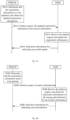
- a specific update process may refer to the process shown in FIG. 3A . It should be noted that, the process shown in FIG. 3A is described by an example that the entire registration information is updated and the update is successful, and specifically includes the following.
- the NWDAF determines that the registration information is to be updated, and obtains the updated registration information.
- the NWDAF sends an update request to the UDM, where the update request includes the updated registration information and the location information.
- the location information may refer to the introduction in the above embodiments, which will not be repeated here.
- the UDM receives the update request and updates the registration information.
- the UDM may replace the registration information in the storage path indicated with the location information with the updated registration information.
- the UDM returns indication information for indicating the successful update to the NWDAF.
- Scenario 2 a deletion scenario.
- the NWDAF determines that the registration information of the terminal device needs to be deleted. For example, when the service provided by the NWDAF for the terminal device has been completed, or the terminal device has left the service scope of the NWDAF, the NWDAF determines that the registration information of the terminal device needs to be deleted.
- the NWDAF may send a deletion request to the UDM, where the deletion request includes the location information.
- the location information may refer to the introduction in the foregoing embodiments, which will not be repeated here.
- the UDM may delete the registration information in the storage path indicated by the location information included in the deletion request, and may return indication information for indicating successful deletion to the NWDAF.
- the indication information may also carry an identifier of successful deletion.
- the UDM may return indication information for indicating the deletion failure to the NWDAF, and the indication information may also carry error information at the same time to indicate the reason for the deletion failure.
- the specific deletion process may also refer to the flow chart shown in FIG. 3B . It should be noted that the flow chart shown in FIG. 3B is introduced by an example of the successful deletion, and specifically includes the following.
- the NWDAF determines that the registration information needs to be deleted.
- the NWDAF sends a deletion request to the UDM, where the deletion request includes the location information.
- the UDM receives the deletion request, and deletes the registration information in the storage path indicated by the location information.
- the UDM returns indication information for indicating the successful deletion to the NWDAF.
- Scenario 3 a retrieval scenario.
- a network function consumer can first determine that the registration information or one or several pieces of data included in the registration information needs to be obtained. For example, when the terminal device sends a service request to the NF consumer (for example, it can be the AMF, and of course, it can also be other network elements in the communication system), the NF consumer can send a retrieval request to the UDM according to the service request from the terminal device.
- the retrieval request is used for requesting the NWDAF that provides services for the terminal device and the registration information that the NWDAF registers in the UDM or the data included in the registration information.
- the following is described as an example in which the NF consumer needs to obtain the first data included in the registration information, where the first data is any one piece of the data included in the registration information.
- the NF consumer may send a retrieval request to the UDM, where the retrieval request includes the identifier of the first data and the location information.
- the UDM may obtain the first data from the storage path indicated by the location information according to the retrieval request. Further, the UDM may return indication information for indicating that the successful retrieval to the NF consumer, such as "200 OK", and the indication information carries the obtained first data. In another case, if the UDM retrieves no first data in the storage path indicated by the location information, the UDM may return indication information for indicating the retrieval failure to the NF consumer, such as "404 Not Found", and the indication information carries error information.
- the specific retrieval process may refer to the flow chart shown in FIG. 3C . It should be noted that the flow chart shown in FIG. 3C is introduced by an example of the successful retrieval, and specifically includes the following.
- the NF consumer determines that the first data included in the registration information needs to be obtained.
- the NF consumer sends a retrieval request to the UDM, where the retrieval request includes the identifier of the first data and the location information.
- the UDM receives the retrieval request, and obtains the first data from the storage path indicated by the location information.
- the UDM returns the indication information for indicating the successful retrieval and the first data to the NF consumer.
- the registration information may overwrite each other.
- FIG. 4 is a flow chart of another method for registering user information provided by the embodiment of the present application.
- the method is performed by the first NWDAF, and the first NWDAF is any one of the plurality of NWDAFs serving for the terminal device.
- the method flow specifically includes the following.
- the first NWDAF obtains the registration information of the terminal device.
- the registration information of the terminal device may refer to the relevant introduction in step 201 in FIG. 2 , which will not be repeated here.
- the first NWDAF sends a registration request to the UDM, where the registration request includes the registration information and location information.
- the registration information includes the second data
- the second data is associated with a shared storage identifier
- the shared storage identifier indicates that the second data belongs to the first NWDAF.
- the location information is a uniform resource identifier (URI).
- URI uniform resource identifier
- the location information can be expressed as: / ⁇ ueld ⁇ /registrations/nwdaf-registration, where the content represented by each item can refer to the introduction in step 202 in FIG. 2 , and will not be repeated here.
- the location information may also include an analytics identifier for an event, which is used for indicating the first service performed by the first NWDAF for the terminal device.
- the analytics identifier for the event adopts the "analyticsld”
- the location information may be expressed as: / ⁇ ueId ⁇ /registrations/nwdaf-registration/ ⁇ analyticsId ⁇ , where the content represented by each item can refer to the above-mentioned embodiments, and will not be repeated here.
- the UDM stores the second data in the storage path indicated by the location information.
- the UDM may store all the received registration information in the storage path indicated by the location information, where the second data included in the registration information is associated with the shared data identifier.
- the registration information may also include other data not associated with the shared data identifier.
- the UDM may also establish a sub-path under the storage path indicated by the location information, and the sub-path may be used as a path shared by at least one NWDAF serving for the terminal device.
- the sub-path is called the shared path in the following.
- the UDM may also store other data not associated with the shared storage identifier except for the second data in the registration information in the storage path indicated by the location information.
- the UDM may also store other data not associated with the shared storage identifier except for the second data in the registration information in the storage path indicated by the location information.
- the UDM will store the third data in the storage path indicated by the location information.
- the UDM may return indication information for indicating successful registration to the first NWDAF.
- the indication information may refer to the descriptions in the foregoing embodiments, and will not be repeated here.
- the UDM may return indication information for indicating registration failure to the first NWDAF, and the indication information carries error information at the same time to indicate the reason for registration failure.
- Scenario 4 an update scenario.
- the first NWDAF after the first NWDAF determines that the second data included in the registration information of the terminal device has been updated, the first NWDAF sends an update request to the UDM.
- the update request includes the updated second data, the shared storage identifier associated with the second data and the location information.
- the location information may refer to the example in step 402 in FIG. 4 , and will not be repeated here.
- the UDM may determine that the updated second data included in the update request needs to be stored in the shared path included in the storage path indicated by the location information according to the shared storage identifier associated with the second data included in the update request.
- the UDM may delete the second data in the shared path, and store the updated second data in the shared path, to complete the update of the second data.
- the UDM may return indication information for indicating the successful update to the first NWDAF.
- the UDM may return indication information for indicating the update failure to the first NWDAF.
- the specific indication information and the reason for update failure may refer to the description in scenario 1, and will not be repeated here.
- a specific update process may refer to the process shown in FIG. 5A . It should be noted that, the process shown in FIG. 5A is introduced by taking the successful update of the second data as an example, and specifically includes the following.
- the first NWDAF determines that the second data included in the registration information is to be updated, and obtains the updated second data.
- the first NWDAF sends an update request to the UDM, where the update request includes the updated second data, a shared storage identifier associated with the second data, and location information.
- the UDM receives the update request, and updates the second data.
- the UDM determines, according to the location information and the shared storage identifier associated with the second data, that the second data in the shared path in the storage path indicated by the location information needs to be updated. Further, the UDM may delete the second data stored in the shared path, and store the updated second data included in the update request in the shared path.
- the UDM returns indication information for indicating the successful update to the first NWDAF.
- Scenario 5 a deletion scenario.
- the first NWDAF may send a deletion request to the UDM, where the deletion request includes the identifier of the second data, the shared storage identifier associated with the second data, and location information.
- the UDM may delete the second data under the shared path in the storage path indicated by the location information according to the deletion request, and may return indication information for indicating the successful deletion to the first NWDAF, where the indication information may also carry an identifier of successful deletion.
- the UDM may return indication information for indicating deletion failure to the first NWDAF, and the indication information may also carry error information at the same time.
- the specific deletion process may also refer to the flowchart shown in FIG. 5B . It should be noted that the flowchart shown in FIG. 5B is introduced by taking the successful deletion as an example, and specifically includes the following.
- the first NWDAF determines that the second data included in the registration information needs to be deleted.
- the first NWDAF sends a deletion request to the UDM, where the deletion request includes the identifier of the second data, the shared storage identifier associated with the second data, and location information.
- the UDM receives the deletion request, and deletes the second data in the shared path.
- the UDM determines, according to the deletion request, that the second data in the shared path under the storage path indicated by the location information needs to be deleted, and performs the deletion operation.
- the UDM returns indication information for indicating successful deletion to the first NWDAF.
- Scenario 6 a retrieval scenario.
- the NF consumer first determines that the registration information or the data included in the registration information needs to be obtained, and details refer to the description in scenario 3, which will not be repeated here. After the determination, the NF consumer can send a retrieval request to the UDM, where the retrieval request includes the identifier of the data to be obtained, the shared storage identifier associated with the data, and location information. As an example, the following is described as an example in which the NF consumer needs to obtain the second data included in the registration information. When the NF consumer determines that the second data included in the registration information needs to be obtained, the NF consumer may send the retrieval request to the UDM, where the retrieval request includes the identifier of the second data, the shared storage identifier associated with the second data, and location information.
- the UDM may obtain the second data from the storage path indicated by the location information according to the retrieval request. Then the UDM may return the obtained second data to the NF consumer, where the obtained second data may carry indication information for indicating successful retrieval. In another case, if the UDM retrieves no second data from the shared data, the UDM may return indication information indicating the retrieval failure to the NF consumer, where the indication information may also carry error information.
- the retrieval request sent to the UDM may carry the shared storage identifier used by the first NWDAF and associated with the second data, so that the NF consumer can accurately obtain the second data stored by the first NWDAF, so as to improve the retrieval efficiency.
- the specific retrieval process may refer to the flowchart shown in FIG. 5C . It should be noted that the flowchart shown in FIG. 5C is introduced by taking the successful retrieval as an example, and specifically includes the following.
- the NF consumer determines that the second data included in the registration information needs to be obtained.
- the NF consumer sends a retrieval request to the UDM, where the retrieval request includes the identifier of the second data, the shared storage identifier associated with the second data, and location information.
- the shared storage identifier associated with the second data is used for indicating that the second data is stored in the storage path indicated by the location information.
- the UDM receives the retrieval request, and obtains the second data from the storage path indicated by the location information.
- the UDM returns indication information for indicating the successful retrieval and the second data to the NF consumer.
- an embodiment of the present application provides an apparatus 600 for registering user information.
- the apparatus 600 can perform each step in the above method, and details are not described here again to avoid repetition.
- the apparatus 600 includes: a processing unit 601 and a communication unit 602.
- the processing unit 601 is configured to obtain registration information of the terminal device; and the communication unit 602 is configured to send a registration request to the UDM; where the registration request includes the registration information and location information for identifying the storage path of the registration information in the UDM, and the location information includes an identifier of the NWDAF.
- the location information is a uniform resource identifier (URI).
- URI uniform resource identifier
- the location information further includes an analytics identifier for an event, the analytics identifier for the event is used for indicating the first service performed by the NWDAF for the terminal device, and the registration information is generated when the NWDAF provides the first service for the terminal device.
- the communication unit 602 is further configured to: send an update request to the UDM in a case of determining that the registration information is to be updated; where the update request includes updated registration information and the location information, and the update request is used for indicating the UDM to update the registration information in the storage path indicated by the location information to the updated registration information.
- the communication unit 602 is further configured to: send a deletion request to the UDM in a case of determining that the registration information needs to be deleted; where the deletion request includes the location information, and the deletion request is used for indicating the UDM to delete the registration information in the storage path indicated by the location information.
- the processing unit 601 is configured to obtain registration information of the terminal device; and the communication unit 602 is configured to send a registration request to the UDM; where the registration request includes the registration information and location information for identifying a storage path of the registration information in the UDM; and the registration information includes second data, the second data is associated with a shared storage identifier, and the shared storage identifier is used for indicating that the second data belongs to the first NWDAF.
- the location information is a uniform resource identifier (URI).
- URI uniform resource identifier
- the registration information further includes third data, and the third data is not associated with the shared storage identifier to indicate that the third data is stored in the storage path indicated by the location information.
- the communication unit 602 is further configured to: send an update request to the UDM in a case of determining that the second data is to be updated; where the update request includes the updated second data, the shared storage identifier associated with the second data, and the location information; and the update request is used for indicating the UDM to update the second data in the storage path indicated by the location information to the updated second data.
- the communication unit 602 is further configured to: send a deletion request to the UDM in a case of determining that the second data needs to be deleted; where the deletion request includes the identifier of the second data, the shared storage identifier associated with the second data, and the location information; and the deletion request is used for indicating the UDM to delete the second data in the storage path indicated by the location information.
- the communication unit 602 is configured to receive a registration request from the NWDAF; where the registration request includes registration information of the terminal device and location information for identifying the storage path of the registration information in the apparatus, and the location information includes an identifier of the NWDAF; and the processing unit 601 is configured to store the registration information in the storage path indicated by the location information.
- the location information is a uniform resource identifier (URI).
- URI uniform resource identifier
- the location information further includes an analytics identifier for an event, the analytics identifier for the event is used for indicating a first service performed by the NWDAF for the terminal device, and the registration information is generated when the NWDAF provides the first service for the terminal device.
- the communication unit 602 is further configured to receive an update request from the NWDAF; where the update request includes updated registration information and the location information; and the processing unit 601 is further configured to update the registration information in the storage path indicated by the location information to the updated registration information according to the update request.
- the communication unit 602 is further configured to receive a deletion request from the NWDAF; where the deletion request includes the location information; and the processing unit 601 is further configured to delete the registration information in the storage path indicated by the location information according to the deletion request.
- the communication unit 602 is further configured to receive a retrieval request from a NF consumer; where the retrieval request includes the identifier of the first data and the location information; and the processing unit 601 is further configured to send the first data in the storage path indicated by the location information to the NF consumer.
- the communication unit 602 is configured to receive a registration request from the first NWDAF; where the registration request includes registration information of the terminal device and location information for identifying the storage path of the registration information in the apparatus; the registration information is obtained by the NWDAF during a process of registering the terminal device to a core network; the registration information includes second data, the second data is associated with a shared storage identifier, and the shared storage identifier is used for indicating that the second data belongs to the first NWDAF; and the first NWDAF is any one of at least one of NWDAFs serving for the terminal device; and the processing unit 601 is configured to store the second data in the storage path indicated by the location information.
- the location information is a uniform resource identifier (URI).
- URI uniform resource identifier
- the registration information further includes third data, and the third data is not associated with the shared storage identifier to indicate that the third data is stored in the storage path indicated by the location information.
- the communication unit 602 is further configured to receive an update request from the first NWDAF; where the update request includes the updated second data, the shared storage identifier associated with the second data, and the location information; and the processing unit 601 is further configured to update the second data in the storage path indicated by the location information to the updated second data.
- the communication unit 602 is further configured to receive a deletion request from the first NWDAF; where the deletion request includes the identifier of the second data, the shared storage identifier associated with the second data, and the location information; and the processing unit 601 is further configured to delete the second data in the storage path indicated by the location information.
- the communication unit 602 is further configured to receive a retrieval request from a NF consumer; where the retrieval request includes an identifier of the second data, a shared storage identifier associated with the second data, and the location information; and the processing unit 601 is further configured to send the second data in the storage path indicated by the location information to the NF consumer.
- the embodiment of the present application also provides another apparatus 700 for registering user information, as shown in FIG. 7 , and including: a communication interface 701, a memory 702 and a processor 703; where, the registration apparatus 700 communicates with other devices through the communication interface 701, such as sending and receiving messages; the memory 702 is configured to store at least one program instruction; and the processor 703 is configured to call the at least one program instruction stored in the memory 702, execute any method provided in the above embodiments according to an obtained program.
- the embodiments of the present application do not limit the specific connection medium among the communication interface 701, the memory 702, and the processor 703, such as a bus, which can be divided into an address bus, a data bus, and a control bus.
- the processor may be a general-purpose processor, a digital signal processor, an application specific integrated circuit, a field programmable gate array or other programmable logic devices, a discrete gate or transistor logic device, or discrete hardware component, and can implement or execute the methods, steps, and logical block diagrams disclosed in the embodiments of the present application.
- the general-purpose processor may be a microprocessor or any conventional processor or the like.
- the steps of the method disclosed in combination with the embodiments of the present application may be directly embodied as being executed and completed by a hardware processor, or executed and completed by a combination of hardware and software modules in the processor.
- the memory may be a non-volatile memory, such as a hard disk drive (HDD) or a solid-state disk (solid-state drive, SSD), etc., may also be a volatile memory, such as random-access memory (RAM).
- the memory may also be any other medium that can be configured to carry or store desired program codes in the form of instructions or data structures and that can be accessed by a computer, but is not limited thereto.
- the memory in the embodiments of the present application may also be a circuit or any other apparatus capable of realizing a storage function for storing program instructions and/or data.
- the embodiments of the present application also provide a computer-readable storage medium, including program codes.
- the program codes when run on the computer, cause the computer to execute the steps of the method provided in the above embodiments of the present application.
- the embodiments of the present application may be provided as a method, a system or a computer program product. Therefore, the present application can adopt forms of full hardware embodiments, full software embodiments, or embodiments combining software and hardware aspects. Moreover, the present application can adopt a form of the computer program products implemented on one or more computer available storage mediums (including but not limited to a disk memory, compact disc read only memory (CD-ROM), an optical memory and the like) containing computer available program codes.
- a computer available storage mediums including but not limited to a disk memory, compact disc read only memory (CD-ROM), an optical memory and the like
- These computer program instructions may also be loaded to the computer or other programmable data processing devices, so that a series of operating steps are executed on the computer or other programmable devices to generate computer-implemented processing, such that the instructions executed on the computer or other programmable devices provide steps for implementing the functions specified in one or more flows in the flow diagrams and/or one or more blocks in the block diagrams.
Landscapes
- Engineering & Computer Science (AREA)
- Computer Networks & Wireless Communication (AREA)
- Signal Processing (AREA)
- Databases & Information Systems (AREA)
- Business, Economics & Management (AREA)
- General Business, Economics & Management (AREA)
- Multimedia (AREA)
- Telephonic Communication Services (AREA)
- Mobile Radio Communication Systems (AREA)
Abstract
Description
- The present application claims the priority to
Chinese patent application No. 202110869866.6 filed to China National Intellectual Property Administration on July 30, 2021 - The present application relates to the field of communication technology, in particular to a method for registering user information and apparatus.
- The traditional registering way of the registration information of a terminal device is unique, that is, one network element serves for one terminal device and registers the registration information of the terminal device in a database. When the terminal device is transferred between different network elements, the old network element will transfer the registration information of the terminal device to the new network element, and the new network element will re-register or update the registration information of the terminal device into the database.
- When a network data analytic function (NWDAF) serves for a terminal, the NWDAF also needs to register the registration information of the terminal device in the database. Since a plurality of NWDAFs can serve for the same terminal device, when the plurality of NWDAFs register the registration information of the terminal device in the database, the registration information between different NWDAFs may overwrite each other.
- The embodiments of the present application provide a method and apparatus for registering user information, to solve the problem that registration information overwrites each other since the plurality of NWDAFs register registration information of terminal device in a unified data management (UDM).
- In the first aspect, the embodiment of the present application provides a method for registering user information, including:
- obtaining, by a NWDAF, registration information of a terminal device; and
- sending, by the NWDAF, a registration request to a UDM; where the registration request includes the registration information and location information for identifying a storage path of the registration information in the UDM, and the location information includes an identifier of the NWDAF.
- Based on the above solution, by adding the identifier of the NWDAF to the location information sent to the UDM, the information registered by different NWDAFs can be stored in different locations in the UDM, and the registration information between different NWDAFs can be prevented from overwriting each other.
- In some embodiments, the location information is a uniform resource identifier (URI).
- In some embodiments, the location information further includes an analytics identifier for an event, the analytics identifier for the event is used for indicating a first service performed by the NWDAF for the terminal device, and the registration information is generated when the NWDAF provides the first service for the terminal device.
- Based on the above solution, the analytics identifier for the event is added to the location information, so that the data corresponding to different services provided by NWDAFs for the terminal device can be stored in different locations, further preventing the registration information belonging to the same analytics identifier for the event between different NWDAFs from overwriting each other.
- In some embodiments, after the NWDAF sends the registration request to the UDM, the method further includes:
sending, by the NWDAF, an update request to the UDM in a case that the NWDAF determines that the registration information is to be updated; where the update request includes the updated registration information and the location information, and the update request is used for indicating the UDM to update the registration information in the storage path indicated by the location information to the updated registration information. - In the prior art, since the registration information of the plurality of NWDAFs uses the same location information, the update of the registration information by one NWDAF may affect the registration information of other NWDAFs. However, in the present application, the registration information of a specific NWDAF can be updated purposefully according to the identifier of the NWDAF contained in the location information, without affecting the registration information of other NWDAFs, so as to avoid the occurrence of update errors.
- In some embodiments, after the NWDAF sends the registration request to the UDM, the method further includes:
sending, by the NWDAF, a deletion request to the UDM in a case that the NWDAF determines that the registration information needs to be deleted; where the deletion request includes the location information, and the deletion request is used for indicating the UDM to delete the registration information in the storage path indicated by the location information. - In the prior art, since the registration information of the plurality of NWDAFs is stored in the same storage path, when the UDM deletes the registration information, the UDM may delete the registration information of the plurality of NWDAFs under the storage path. In the present application, by adding the identifier of the NWDAF to the location information, the UDM can purposefully delete the registration information of the NWDAF that sends the deletion request according to the location information, without affecting registration information of other NWDAFs, so as to avoid a situation of mistaken deletion.
- In the second aspect, the embodiment of the present application provides another method for registering user information, including:
- receiving, by a UDM, a registration request from a NWDAF; where the registration request includes the registration information of the terminal device and the location information for identifying a storage path of the registration information in the UDM, and the location information includes the identifier of the NWDAF; and
- storing, by the UDM, the registration information in the storage path indicated by the location information.
- In some embodiments, after the UDM stores the registration information in the storage path indicated by the location information, the method further includes:
- receiving, by the UDM, an update request from the NWDAF; where the update request includes updated registration information and the location information; and
- updating, by the UDM, the registration information in the storage path indicated by the location information to the updated registration information according to the update request.
- In some embodiments, after the UDM stores the registration information in the storage path indicated by the location information, the method further includes:
- receiving, by the UDM, a deletion request from the NWDAF; where the deletion request includes the location information; and
- deleting, by the UDM, the registration information in the storage path indicated by the location information according to the deletion request.
- In some embodiments, after the UDM stores the registration information in the storage path indicated by the location information, the method further includes:
- receiving, by the UDM, a retrieval request from a NF consumer; where the retrieval request includes an identifier of first data in the registration information and the location information; and
- sending, by the UDM, the first data in the storage path indicated by the location information to the NF consumer.
- In the third aspect, the embodiment of the present application provides a method for registering user information, including:
- obtaining, by a first NWDAF, the registration information of the terminal device; and
- sending, by the first NWDAF, a registration request to UDM; where the registration request includes the registration information and location information for identifying a storage path of the registration information in the UDM; the registration information includes second data, the second data is associated with a shared storage identifier, and the shared storage identifier is used for indicating that the second data belongs to the first NWDAF; and the first NWDAF is any one of at least one of NWDAFs serving for the terminal device.
- Based on the above solution, the shared storage identifier associated with the second data is used for indicating that the second data is sent by the first NWDAF, and thus the shared storage identifiers used by different NWDAFs in the present application are different, so that even if the plurality of NWDAFs store the second data in the UDM, since the shared storage identifiers associated with the second data stored by different NWDAFs are different, the situation that the data overwrites each other can be avoided.
- In some embodiments, the location information is a uniform resource identifier (URI).
- In some embodiments, the registration information further includes third data, the third data is not associated with the shared storage identifier to indicate that the third data is stored in the storage path indicated by the location information.
- In some embodiments, after the first NWDAF sends a registration request to the UDM, the method further includes:
sending, by the first NWDAF, an update request to the UDM in a case that the first NWDAF determines that the second data is updated; where the update request includes the updated second data, the shared storage identifier associated with the second data, and the Location information; and the update request is used for indicating the UDM to update the second data in the storage path indicated by the location information to the updated second data. - Based on the above solution, since the update request sent by the first NWDAF to the UDM may carry the shared storage identifier associated with the second data, it can be indicated that the second data that needs to be updated is the second data stored by the first NWDAF. After receiving the update request, the UDM will update the second data previously stored by the first NWDAF, and will not update the second data stored by other NWDAFs serving for the terminal device. In this way, the occurrence of an update error can be avoided.
- In some embodiments, after the first NWDAF sends a registration request to the UDM, the method further includes:
sending, by the first NWDAF, a deletion request to the UDM in a case that the first NWDAF determines that the second data needs to be deleted; where the deletion request includes the identifier of the second data, the shared storage identifier associated with the second data, and the location information; and the deletion request is used for indicating the UDM to delete the second data in the storage path indicated by the location information. - Based on the above solution, since the shared storage identifiers used by different NWDAFs are different, when the first NWDAF sends a deletion request to the UDM, the UDM may delete the data stored by the first NWDAF according to the shared storage identifier used by the first NWDAF, to avoid the occurrence of mistaken deletion.
- In the fourth aspect, the embodiment of the present application provides another method for registering user information, including:
- receiving, by the UDM, a registration request from the first NWDAF; where the registration request includes the registration information of the terminal device and the location information for identifying the storage path of the registration information in the UDM; the registration information is obtained by the NWDAF during the process of registering the terminal device to the core network; the registration information includes second data, the second data is associated with a shared storage identifier, and the shared storage identifier is used for indicating that the second data belongs to the first NWDAF; and the first NWDAF is any one of at least one of NWDAFs serving for the terminal device; and
- storing, by the UDM, the second data in the storage path indicated by the location information.
- In some embodiments, after the UDM stores the second data in the storage path indicated by the location information, the method further includes:
- receiving, by the UDM, an update request from the first NWDAF; where the update request includes the updated second data, the shared storage identifier associated with the second data, and the location information; and
- updating, by the UDM, the second data in the storage path indicated by the location information to the updated second data.
- In some embodiments, after the UDM stores the second data in the storage path indicated by the location information, the method further includes:
- receiving, by the UDM, a deletion request from the first NWDAF; where the deletion request includes the identifier of the second data, the shared storage identifier associated with the second data, and the location information; and
- deleting, by the UDM, the second data in the storage path indicated by the location information.
- In some embodiments, after the UDM stores the registration information in the storage path indicated by the location information, the method further includes:
- receiving, by the UDM, a retrieval request from a NF consumer; where the retrieval request includes the identifier of the first data included in the registration information and the location information; and
- sending, by the UDM, the first data in the storage path indicated by the location information to the NF consumer.
- In the fifth aspect, the embodiment of the present application provides a communication system, including:
- a NWDAF, configured to obtain the registration information of the terminal device; where the NWDAF is further configured to send a registration request to the UDM; the registration request includes the registration information and location information for identifying the storage path of the registration information in the UDM; and the location information includes the identifier of the NWDAF; and
- a UDM, configured to store the registration information in the storage path indicated by the location information.
- In some embodiments, after the UDM stores the registration information in the storage path indicated by the location information, the NWDAF is further configured to send an update request to the UDM when the NWDAF determines that the registration information is to be updated; where the update request includes updated registration information and the location information; and
the UDM is further configured to update the registration information in the storage path indicated by the location information to the updated registration information. - In some embodiments, after the UDM stores the registration information in the storage path indicated by the location information, the NWDAF is further configured to send a deletion request to the UDM when the NWDAF determines that the registration information needs to be deleted; where the deletion request includes the location information; and
the UDM is further configured to delete the registration information in the storage path indicated by the location information. - In the sixth aspect, the embodiment of the present application provides another communication system, including:
- a first NWDAF, configured to obtain the registration information of the terminal device; where the first NWDAF is further configured to send a registration request to the UDM; where the registration request includes the registration information and location information for identifying the storage path of the registration information in the UDM; the registration information includes second data, the second data is associated with a shared storage identifier, and the shared storage identifier is used for indicating that the second data belongs to the first NWDAF; and the first NWDAF is any one of at least one of NWDAFs serving for the terminal device; and
- a UDM, configured to store the second data in the storage path indicated by the location information.
- In some embodiments, after the UDM stores the second data in the storage path indicated by the location information, the first NWDAF is further configured to send an update request to the UDM when the first NWDAF determines that the second data is updated; where the update request includes the updated second data, the shared storage identifier associated with the second data, and the location information; and
the UDM is further configured to update the second data in the storage path indicated by the location information to the updated second data. - In some embodiments, after the UDM stores the second data in the storage path indicated by the location information, the first NWDAF is further configured to send a deletion request to the UDM when the first NWDAF determines that the second data needs to be deleted; where the deletion request includes the identifier of the second data, the shared storage identifier associated with the second data, and the location information; and
the UDM is further configured to delete the second data in the storage path indicated by the location information. - In some embodiments, the system further includes a NF consumer; where after the UDM stores the second data in the storage path indicated by the location information, the NF consumer is configured to receive a service request from the terminal device, where the service request is used for indicating the service required by the terminal device;
- the NF consumer is further configured to determine that the second data needs to be obtained according to the service request, and send a retrieval request to the UDM; where the retrieval request includes the identifier of the second data, the shared storage identifier associated with the second data, and the location information; and
- the UDM is further configured to send the second data in the storage path indicated by the location information to the NF consumer.
- In the seventh aspect, the embodiment of the present application provides an apparatus for registering user information, including:
- a processing unit, configured to obtain registration information of the terminal device; and
- a communication unit, configured to send a registration request to the UDM; where the registration request includes the registration information and location information for identifying the storage path of the registration information in the UDM, and the location information includes the identifier of the NWDAF.
- In some embodiments, the location information is a uniform resource identifier (URI).
- In some embodiments, the location information further includes an analytics identifier for an event, the analytics identifier for the event is used for indicating the first service performed by the NWDAF for the terminal device, and the registration information is generated when the NWDAF provides the first service for the terminal device.
- In some embodiments, the communication unit, after sending the registration request to the UDM, is further configured to:
send an update request to the UDM in a case of determining that the registration information is to be updated; where the update request includes updated registration information and the location information, and the update request is used for indicating the UDM to update the registration information in the storage path indicated by the location information to the updated registration information. - In some embodiments, the communication unit, after sending the registration request to the UDM, is further configured to:
send a deletion request to the UDM in a case of determining that the registration information needs to be deleted; where the deletion request includes the location information, and the deletion request is used for indicating the UDM to delete the registration information in the storage path indicated by the location information. - In the eighth aspect, the embodiment of the present application provides another apparatus for registering user information, including:
- a communication unit, configured to receive a registration request from the NWDAF; where the registration request includes registration information of the terminal device and location information for identifying the storage path of the registration information in the apparatus, and the location information includes the identifier of the NWDAF; and
- a processing unit, configured to store the registration information in a storage path indicated by the location information.
- In some embodiments, after the processing unit is configured to store the registration information in the storage path indicated by the location information, the communication unit is further configured to receive an update request from the NWDAF; where the update request includes updated registration information and the location information; and
the processing unit is further configured to update the registration information in the storage path indicated by the location information to the updated registration information according to the update request. - In some embodiments, after the processing unit is configured to store the registration information in the storage path indicated by the location information, the communication unit is further configured to receive a deletion request from the NWDAF; where the deletion request includes the location information; and
the processing unit is further configured to delete the registration information in the storage path indicated by the location information according to the deletion request. - In some embodiments, after the processing unit is configured to store the registration information in the storage path indicated by the location information, the communication unit is further configured to receive a retrieval request from a NF consumer; where the retrieval request includes the identifier of the first data and the location information; and
the processing unit is further configured to send the first data in the storage path indicated by the location information to the NF consumer. - In the ninth aspect, the embodiment of the present application provides another apparatus for registering user information, including:
- a processing unit, configured to obtain registration information of the terminal device; and
- a communication unit, configured to send a registration request to the UDM; where the registration request includes the registration information and location information for identifying a storage path of the registration information in the UDM; and the registration information includes second data, the second data is associated with a shared storage identifier, and the shared storage identifier is used for indicating that the second data belongs to the first NWDAF.
- In some embodiments, the location information is a uniform resource identifier (URI).
- In some embodiments, the registration information further includes third data, and the third data is not associated with the shared storage identifier to indicate that the third data is stored in the storage path indicated by the location information.
- In some embodiments, the communication unit, after sending the registration request to the UDM, is further configured to:
send an update request to the UDM in a case of determining that the second data is updated, where the update request includes the updated second data, the shared storage identifier associated with the second data, and the location information; and the update request is used for indicating the UDM to update the second data in the storage path indicated by the location information to the updated second data. - In some embodiments, the communication unit, after sending the registration request to the UDM, is further configured to:
send a deletion request to the UDM in a case of determining that the second data needs to be deleted; where the deletion request includes the identifier of the second data, the shared storage identifier associated with the second data, and the location information; and the deletion request is used for indicating the UDM to delete the second data in the storage path indicated by the location information. - In the tenth aspect, the embodiment of the present application provides an apparatus for registering user information, including:
- a communication unit, configured to receive a registration request from the first NWDAF; where the registration request includes registration information of the terminal device and location information for identifying a storage path of the registration information in the apparatus; the registration information is obtained by the NWDAF during a process of registering the terminal device to a core network; the registration information includes second data, the second data is associated with a shared storage identifier, and the shared storage identifier is used for indicating that the second data belongs to the first NWDAF; and the first NWDAF is any one of at least one of NWDAFs serving for the terminal device; and
- a processing unit, configured to store the second data in the storage path indicated by the location information.
- In some embodiments, after the processing unit is configured to store the second data in the storage path indicated by the location information, the communication unit is further configured to receive an update request from the first NWDAF; where the update request includes the updated second data, the shared storage identifier associated with the second data, and the location information; and
the processing unit is further configured to update the second data in the storage path indicated by the location information to the updated second data. - In some embodiments, after the processing unit is configured to store the second data in the storage path indicated by the location information, the communication unit is further configured to receive a deletion request from the first NWDAF; where the deletion request includes the identifier of the second data, the shared storage identifier associated with the second data, and the location information; and
the processing unit is further configured to delete the second data in the storage path indicated by the location information. - In the eleventh aspect, the embodiment of the present application provides another apparatus for registering user information, including a memory and a processor;
where the memory is configured to store at least one program instruction; and the processor is configured to call the at least one program instruction stored in the memory, and execute the method in any implementation of the first aspect or the third aspect according to the obtained program. - In a twelfth aspect, the embodiment of the present application provides another apparatus for registering user information, including a memory and a processor;
where the memory is configured to store at least one program instruction; and the processor is configured to call the at least one program instruction stored in the memory, and execute the method in any implementation of the second aspect or the fourth aspect according to the obtained program. - In a thirteenth aspect, the embodiment of the present application provides a computer-readable storage medium, storing at least one computer instruction; where the at least one computer instruction, when run on a computer, causes the computer to execute the above method.
- In addition, for the technical effects brought about by any of the implementations of the second aspect, and the fourth aspect to the thirteenth aspect, reference may be made to the technical effects brought about by the different implementations of the first aspect and the third aspect, and details will not be repeated here.
-
-
FIG. 1 is a schematic diagram of a communication system architecture provided by an embodiment of the present application. -
FIG. 2 is a flow chart of a method for registering user information provided by an embodiment of the present application. -
FIG. 3A is a schematic diagram of a flow for updating user information provided by an embodiment of the present application. -
FIG. 3B is a schematic diagram of a flow for deleting user information provided by an embodiment of the present application. -
FIG. 3C is a schematic diagram of a flow for retrieve user information provided by the embodiment of the present application. -
FIG. 4 is a flow chart of another method for registering user information provided by the embodiment of the present application. -
FIG. 5A is a schematic diagram of another flow for updating user information provided by the embodiment of the present application. -
FIG. 5B is a schematic diagram of another flow for deleting user information provided by the embodiment of the present application. -
FIG. 5C is a schematic diagram of another flow for retrieve user information provided by the embodiment of the present application. -
FIG. 6 is a schematic structural diagram of an apparatus 600 for registering user information provided by an embodiment of the present application. -
FIG. 7 is a schematic structural diagram of an apparatus 700 for registering user information provided by an embodiment of the present application. - In order to make objectives, technical solutions and advantages of the present application clearer, the present application will be further described in detail below in conjunction with the accompanying drawings. Apparently, the described embodiments are only some of the embodiments of the present application, rather than all embodiments of the present application. Based on the embodiments in the present application, all other embodiments obtained by those of ordinary skill in the art without making creative efforts belong to the scope of protection of this application.
- The application scenarios described in the embodiments of the present application are to illustrate the technical solutions of the embodiments of the present application more clearly, and do not constitute limitations on the technical solutions provided by the embodiments of the present application. Those of ordinary skill in the art know that with the emergence of new application scenarios, the technical solutions provided by the embodiments of the present application are also applicable to similar technical problems. In the description of the present application, unless otherwise specified, "plurality" means two or more.
-
FIG. 1 illustrates a communication system architecture. It should be understood that the embodiments of the present application are not limited to the system shown inFIG. 1 . In addition, the apparatus inFIG. 1 may be hardware, or software divided functionally, or a combined structure of both of the above. As shown inFIG. 1 , the system architecture provided by the embodiments of the present application includes aterminal device 101, a session management function (SMF) 1021, an access and mobility management function (AMF) 1022, aNWDAF 1023, a network function consumer (NF consumer) 1024 and a unified data management (UDM) 103. The embodiments of the present application do not limit the numbers of terminal devices, NWDAFs, SMFs and AMFs included in the system. InFIG. 1 , only one of each is used as an example for introduction. Moreover, it should be noted that the communication system may also include other network elements, for example, the communication system may also include an access network device, which is not shown inFIG. 1 . - The
terminal device 101, also referred to as a terminal, a mobile station (MS), a mobile terminal (MT), etc., and is a device that provides voice and/or data connectivity to users, for example, a hand-held device with wireless connectivity, a vehicle-mounted device, etc. At present, examples of some terminals are: a mobile phone, a tablet computer, a laptop, a personal digital assistant (PDA), a mobile internet device (MID), a wearable device, a virtual reality (VR) device, an augmented reality (AR) device, a wireless terminal in industrial control, a wireless terminal in self driving, a wireless terminal in remote medical surgery, a wireless terminal in smart grid, a wireless terminal in transportation safety, a wireless terminal in smart city, a wireless terminal in smart home, etc. - The SMF 1021 is a functional unit based on the service architecture in the 5G communication system. The SMF is mainly responsible for session management, such as session establishment, modification and release; and is also used for implementing functions such as assigning and managing IP addresses of terminal devices.
- The AMF 1022 is a functional unit in the 5G communication system, which is mainly responsible for the realization of functions such as registration of terminal devices and access to the core network.
- The
NWDAF 1023, by collecting information such as connection management, mobility management, session management, and access services of a user's terminal device, and by using reliable analytics and prediction models, analyzes different types of users, builds user portraits and determines user mobility trajectories and service usage habits, as well as predicts user behavior; and optimizes user mobility management parameters and radio resource management parameters, etc., based on analytics and prediction data. - The
UDM 103 is an intelligent management platform for data service and data service operation, and is characterized by: simple deployment, hierarchical management of users for user and data application security, and implementation of overall security guarantees to ensure the security of data storage. - Since the network element such as the SMF or AMF is unique when providing services for a terminal device, that is, one SMF (or AMF) can only serve one terminal device, so the network element currently serving a certain terminal device will register the registration information in the UDM, and therefore the registration information of the terminal device registered by the SMF and stored in the UDM is unique. However, since a plurality of NWDAFs can serve the same UE, when different NWDAFs register the registration information of the same terminal device in the UDM, the information registered by the previous NWDAF may be overwritten by the information registered by the latter NWDAF.
- The embodiments of the present application provide a method and apparatus for registering user information. When the NWDAF registers user information, the identifier of the NWDAF is added to the location information used for indicating the storage path and included in the registration request sent. Therefore, when different NWDAFs register the registration information of the same terminal device, the storage paths in the UDM are different, so as to solve the situation that the registration information is overwritten.
- Next, a method for registering the user information provided by the embodiments of the present application is introduced. Referring to
FIG. 2 , which is a flow chart of a method for registering user information provided by the embodiment of the present application. The method is performed by the NWDAF, and optionally, the NWDAF performing the process may be a first NWDAF shown inFIG. 1 or the second NWDAF, which is not specifically limited in the present application. The method flow specifically includes the following. - 201. The NWDAF obtains the registration information of the terminal device.
- Optionally, the registration information may include one or more of the following: the serial number or identifier of the terminal device, the identifier of the NWDAF, the analytics identifier for the event, the registration time, the context information of the terminal device (UE Context Information) or the services that NWDAF can provide for the terminal device, etc. The identifier of the NWDAF may include the NWDAF's instance number (NWDAF Instance Id) or the NWDAF's set number (NWDAF Set Id). It should be noted that both the instance number of the NWDAF and the set number of the NWDAF can uniquely identify the NWDAF in the communication system. The set number of the NWDAF is the serial number of the NWDAF in one NWDAF set. For example, the set number of the NWDAF is composed of the serial number of the NWDAF set including the NWDAF and the serial number of the NWDAF in the NWDAF set. The analytics identifier for the event may use an analytics identifier (analytics Id) for an event, which is used for indicating the first service performed by the NWDAF for the terminal device. It should be noted that the registration information is generated when the NWDAF provides the first service for the terminal device, and the first service is any one of the services that the NWDAF can provide for the terminal device.
- As an optional manner, the NWDAF obtaining the registration information of the terminal device may include: the NWDAF receiving the context information of the terminal device from a NWDAF service consumer or other network elements (for example, AMF or SMF, etc.) Further, the NWDAF can generate the registration information of the terminal device according to the received context information of the terminal device. For example, after receiving the context information of the terminal device, the NWDAF can generate information such as the instance number of the NWDAF, the analytics identifier for the event, or the registration time, and use the above generated information together with the received context information of the user as the registration information of the terminal device. Of course, the above manner is only an example, and the NWDAF can also obtain the registration information of the terminal device by other manners, which is not specifically limited in the present application.
- 202. The NWDAF sends a registration request to the UDM, where the registration request includes registration information and location information.
- Specifically, the location information is used for identifying the storage path of the registration information in the UDM; and the location information includes the identifier of the NWDAF, for example, may include the instance number of the NWDAF or the set number of the NWDAF.
- Optionally, the location information may be a uniform resource identifier (URI). As an example, the instance number of the NWDAF is adopted as the identifier of the NWDAF. For example, the location information can be: /{ueId}/registrations/nwdaf-registration/nwdafIstanceId, where "ueld" is used for identifying that it is which terminal device's registration information, "registrations" is used for indicating that the registration request is one registration request, "nwdaf-registration" is used for indicating that the registration request is a registration request from the NWDAF, and "nwdaflnstanceld" is the instance number of the NWDAF.
- 203. The UDM receives the registration request, and stores the registration information in the storage path indicated by the location information.
- Specifically, after receiving the registration request, the UDM may determine a storage path according to the location information in the registration request, and store the registration information included in the registration request in the storage path.
- In a possible embodiment, after the UDM stores the registration information in the storage path indicated by the location information, the UDM may also return indication information for indicating successful registration to the NWDAF. For example, the indication information may be: "200 OK", "201 Created" or "204 Content". As an example, while the UDM sends the indication information for indicating successful registration to the NWDAF, the indication information may also carry an identifier of successful registration or registration information. Therefore, the NWDAF can know which registration information is successfully registered.
- In another possible embodiment, if the UDM cannot store the above registration information due to some reasons, for example, the UDM determines that the NWDAF sending the registration request cannot provide services for the terminal device according to the authorization information provided in advance by the terminal device. In this case, the UDM may return indication information for indicating registration failure. For example, the indication information may include a status code of the hyper text transfer protocol (HTTP) for indicating the current transmission status, such as "403 Forbidden" or "404 Not Found", for indicating that the registration information is not received or processed by the UDM. Optionally, while the UDM sends the indication information for indicating registration failure, the indication information may also carry error information (problem details).
- In some embodiments, the location information sent by the NWDAF to the UDM may also include an analytics identifier for an event, which is used for indicating the first service performed by the NWDAF for the terminal device. The first service is one of the services that NWDAF can provide for the terminal device. As an example, the analytics identifier for the event may be represented by an analytics identifier (analytics Id) for an event, and the location information may be represented as:
/{ueld}/registrations/nwdaf-registration/nwdaflnstanceld/{analyticsld}, where the contents represented by "ueld", "registrations", "nwdaf-registration" and "nwdaflnstanceId" can refer to the relevant introduction in theabove step 202 ofFIG. 2 , and will not be repeated here. The "analytics Id" is used for indicating the analytics identifier for the event of the service performed by the NWDAF for the terminal device. - In the following, the first method for registering user information provided in the embodiments of the present application will be introduced in combination with specific scenarios.
- The NWDAF determines that the registration information of the terminal device is to be updated. For example, when the service capability of the NWDAF changes, such as a certain service is added, or when the terminal device no longer needs the NWDAF to provide a certain service, the registration information of the terminal device will be updated.
- In some embodiments, after determining that the registration information is to be updated, the NWDAF may send an update request to the UDM, where the update request includes the updated registration information and the location information. Optionally, the location information can be found in the above example and will not be repeated here. After receiving the update request, the UDM can delete the registration information in the storage path indicated by the location information included in the update request, and store the updated registration information included in the update request in the storage path indicated by the location information.
- In some other embodiments, the NWDAF may also update only one or several pieces of data in the registration information. The following takes a change of data A in the registration information as an example for introduction. Optionally, after determining that data A is to be updated, the NWDAF may also send an update request to the UDM, where the update request may include the updated data A, the identifier of the data A, and the location information. After receiving the update request, the UDM may determine, according to the identifier of the data A, that the data A stored in the storage path indicated by the location information needs to be updated. Further, the UDM may delete the data A in the storage path indicated by the location information, and store the updated data A in the storage path indicated by the location information.
- In one possible case, if the update is successful, that is, the UDM successfully updates the data included in the update request (it can be the registration information or the data included in the registration information) to the storage path indicated by the location information, then the UDM may return indication information for indicating the successful update to the NWDAF, for example, the indication information may be "204 No Content", etc. Optionally, the UDM may also return the successfully updated data, or the successfully updated identifier, or the successfully updated data and the successfully updated identifier to the NWDAF along with the indication information.
- In another possible case, if the update is not successful, for example, when the storage path indicated by the location information received by the UDM does not exist, or the data that needs to be updated does not exist, the UDM cannot update the data, and the UDM can return indication information indicating the update failure to the NWDAF, such as "404 Not Found". Optionally, the UDM can also return the error information together with the indication information to the NWDAF. Where, the error information is used for indicating the reason for the update failure.
- Optionally, a specific update process may refer to the process shown in
FIG. 3A . It should be noted that, the process shown inFIG. 3A is described by an example that the entire registration information is updated and the update is successful, and specifically includes the following. - 301A. The NWDAF determines that the registration information is to be updated, and obtains the updated registration information.
- 302A. The NWDAF sends an update request to the UDM, where the update request includes the updated registration information and the location information.
- Optionally, the location information may refer to the introduction in the above embodiments, which will not be repeated here.
- 303A. The UDM receives the update request and updates the registration information.
- Specifically, the UDM may replace the registration information in the storage path indicated with the location information with the updated registration information.
- 304A. The UDM returns indication information for indicating the successful update to the NWDAF.
- The NWDAF determines that the registration information of the terminal device needs to be deleted. For example, when the service provided by the NWDAF for the terminal device has been completed, or the terminal device has left the service scope of the NWDAF, the NWDAF determines that the registration information of the terminal device needs to be deleted. Optionally, after the NWDAF determines that the registration information needs to be deleted, the NWDAF may send a deletion request to the UDM, where the deletion request includes the location information. Optionally, the location information may refer to the introduction in the foregoing embodiments, which will not be repeated here. In a possible case, after receiving the deletion request, the UDM may delete the registration information in the storage path indicated by the location information included in the deletion request, and may return indication information for indicating successful deletion to the NWDAF. Optionally, when the UDM sends the indication information for indicating successful deletion, the indication information may also carry an identifier of successful deletion. In another possible case, if the UDM fails to delete the registration information in the storage path indicated by the location information, the UDM may return indication information for indicating the deletion failure to the NWDAF, and the indication information may also carry error information at the same time to indicate the reason for the deletion failure.
- As an example, the specific deletion process may also refer to the flow chart shown in
FIG. 3B . It should be noted that the flow chart shown inFIG. 3B is introduced by an example of the successful deletion, and specifically includes the following. - 301B. The NWDAF determines that the registration information needs to be deleted.
- 302B. The NWDAF sends a deletion request to the UDM, where the deletion request includes the location information.
- 303B. The UDM receives the deletion request, and deletes the registration information in the storage path indicated by the location information.
- 304B. The UDM returns indication information for indicating the successful deletion to the NWDAF.
- A network function consumer (NF consumer) can first determine that the registration information or one or several pieces of data included in the registration information needs to be obtained. For example, when the terminal device sends a service request to the NF consumer (for example, it can be the AMF, and of course, it can also be other network elements in the communication system), the NF consumer can send a retrieval request to the UDM according to the service request from the terminal device. The retrieval request is used for requesting the NWDAF that provides services for the terminal device and the registration information that the NWDAF registers in the UDM or the data included in the registration information. As an example, the following is described as an example in which the NF consumer needs to obtain the first data included in the registration information, where the first data is any one piece of the data included in the registration information. After determining that the first data needs to be obtained, the NF consumer may send a retrieval request to the UDM, where the retrieval request includes the identifier of the first data and the location information. In one case, the UDM may obtain the first data from the storage path indicated by the location information according to the retrieval request. Further, the UDM may return indication information for indicating that the successful retrieval to the NF consumer, such as "200 OK", and the indication information carries the obtained first data. In another case, if the UDM retrieves no first data in the storage path indicated by the location information, the UDM may return indication information for indicating the retrieval failure to the NF consumer, such as "404 Not Found", and the indication information carries error information.
- As an example, the specific retrieval process may refer to the flow chart shown in
FIG. 3C . It should be noted that the flow chart shown inFIG. 3C is introduced by an example of the successful retrieval, and specifically includes the following. - 301C. The NF consumer determines that the first data included in the registration information needs to be obtained.
- 302C. The NF consumer sends a retrieval request to the UDM, where the retrieval request includes the identifier of the first data and the location information.
- 303C. The UDM receives the retrieval request, and obtains the first data from the storage path indicated by the location information.
- 304C. The UDM returns the indication information for indicating the successful retrieval and the first data to the NF consumer.
- Since a plurality of NWDAFs can serve the same terminal device at the same time, and the plurality of NWDAFs need to register the registration information of the terminal device in the UDM, thus the registration information may overwrite each other.
- Referring to
FIG. 4 , which is a flow chart of another method for registering user information provided by the embodiment of the present application. The method is performed by the first NWDAF, and the first NWDAF is any one of the plurality of NWDAFs serving for the terminal device. The method flow specifically includes the following. - 401. The first NWDAF obtains the registration information of the terminal device.
- Optionally, the registration information of the terminal device may refer to the relevant introduction in
step 201 inFIG. 2 , which will not be repeated here. - 402. The first NWDAF sends a registration request to the UDM, where the registration request includes the registration information and location information.
- Where, the registration information includes the second data, the second data is associated with a shared storage identifier, and the shared storage identifier indicates that the second data belongs to the first NWDAF.
- In some embodiments, the location information is a uniform resource identifier (URI). Optionally, the location information can be expressed as: /{ueld}/registrations/nwdaf-registration, where the content represented by each item can refer to the introduction in
step 202 inFIG. 2 , and will not be repeated here. - Optionally, the location information may also include an analytics identifier for an event, which is used for indicating the first service performed by the first NWDAF for the terminal device. As an example, the analytics identifier for the event adopts the "analyticsld", and the location information may be expressed as: /{ueId}/registrations/nwdaf-registration/{analyticsId}, where the content represented by each item can refer to the above-mentioned embodiments, and will not be repeated here.
- 403. The UDM stores the second data in the storage path indicated by the location information.
- In a possible case, the UDM may store all the received registration information in the storage path indicated by the location information, where the second data included in the registration information is associated with the shared data identifier. In some embodiments, the registration information may also include other data not associated with the shared data identifier. In another possible case, the UDM may also establish a sub-path under the storage path indicated by the location information, and the sub-path may be used as a path shared by at least one NWDAF serving for the terminal device. For the convenience of description, the sub-path is called the shared path in the following. When the UDM receives the second data carrying the shared data identifier, the UDM may store the second data in the shared path. In the subsequent description, an example of the UDM storing the second data in the shared path will be introduced.
- Optionally, the UDM may also store other data not associated with the shared storage identifier except for the second data in the registration information in the storage path indicated by the location information. Taking the third data as an example, if the third data included in the registration information is not associated with the shared storage identifier, the UDM will store the third data in the storage path indicated by the location information.
- In a possible case, if the UDM successfully stores the data, the UDM may return indication information for indicating successful registration to the first NWDAF. The indication information may refer to the descriptions in the foregoing embodiments, and will not be repeated here. In another possible case, if the UDM fails to store data successfully, the UDM may return indication information for indicating registration failure to the first NWDAF, and the indication information carries error information at the same time to indicate the reason for registration failure.
- Based on the above solutions, it can be seen that the shared storage identifiers used by different NWDAFs in the present application are different, so that even if different NWDAFs store the same data in the shared path, data will not overwrite each other since the shared storage identifiers associated with the data stored by different NWDAFs are different.
- In the following, the second method for registering user information provided by the present application will be introduced in combination with specific scenarios.
- In some embodiments, after the first NWDAF determines that the second data included in the registration information of the terminal device has been updated, the first NWDAF sends an update request to the UDM. The update request includes the updated second data, the shared storage identifier associated with the second data and the location information. Optionally, the location information may refer to the example in
step 402 inFIG. 4 , and will not be repeated here. After receiving the update request, the UDM may determine that the updated second data included in the update request needs to be stored in the shared path included in the storage path indicated by the location information according to the shared storage identifier associated with the second data included in the update request. The UDM may delete the second data in the shared path, and store the updated second data in the shared path, to complete the update of the second data. In a possible case, if the update is successful, that is, the UDM successfully replaces the original second data in the shared path with the updated second data, the UDM may return indication information for indicating the successful update to the first NWDAF. In another possible case, if the update fails, the UDM may return indication information for indicating the update failure to the first NWDAF. The specific indication information and the reason for update failure may refer to the description in scenario 1, and will not be repeated here. - As an example, a specific update process may refer to the process shown in
FIG. 5A . It should be noted that, the process shown inFIG. 5A is introduced by taking the successful update of the second data as an example, and specifically includes the following. - 501A. The first NWDAF determines that the second data included in the registration information is to be updated, and obtains the updated second data.
- 502A. The first NWDAF sends an update request to the UDM, where the update request includes the updated second data, a shared storage identifier associated with the second data, and location information.
- 503A. The UDM receives the update request, and updates the second data.
- Specifically, the UDM determines, according to the location information and the shared storage identifier associated with the second data, that the second data in the shared path in the storage path indicated by the location information needs to be updated. Further, the UDM may delete the second data stored in the shared path, and store the updated second data included in the update request in the shared path.
- 504A. The UDM returns indication information for indicating the successful update to the first NWDAF.
- When the first NWDAF determines that the second data in the registration information needs to be deleted, the first NWDAF may send a deletion request to the UDM, where the deletion request includes the identifier of the second data, the shared storage identifier associated with the second data, and location information. For an introduction on how to determine that the second data and location information need to be deleted, reference may be made to the description in the above scenario 2, and details will not be repeated here. In a possible case, after receiving the deletion request, the UDM may delete the second data under the shared path in the storage path indicated by the location information according to the deletion request, and may return indication information for indicating the successful deletion to the first NWDAF, where the indication information may also carry an identifier of successful deletion. In another possible case, if the UDM fails to delete the second data in the shared path successfully, the UDM may return indication information for indicating deletion failure to the first NWDAF, and the indication information may also carry error information at the same time.
- As an example, the specific deletion process may also refer to the flowchart shown in
FIG. 5B . It should be noted that the flowchart shown inFIG. 5B is introduced by taking the successful deletion as an example, and specifically includes the following. - 501B. The first NWDAF determines that the second data included in the registration information needs to be deleted.
- 502B. The first NWDAF sends a deletion request to the UDM, where the deletion request includes the identifier of the second data, the shared storage identifier associated with the second data, and location information.
- 503B. The UDM receives the deletion request, and deletes the second data in the shared path.
- Specifically, the UDM determines, according to the deletion request, that the second data in the shared path under the storage path indicated by the location information needs to be deleted, and performs the deletion operation.
- 504B. The UDM returns indication information for indicating successful deletion to the first NWDAF.
- The NF consumer first determines that the registration information or the data included in the registration information needs to be obtained, and details refer to the description in scenario 3, which will not be repeated here. After the determination, the NF consumer can send a retrieval request to the UDM, where the retrieval request includes the identifier of the data to be obtained, the shared storage identifier associated with the data, and location information. As an example, the following is described as an example in which the NF consumer needs to obtain the second data included in the registration information. When the NF consumer determines that the second data included in the registration information needs to be obtained, the NF consumer may send the retrieval request to the UDM, where the retrieval request includes the identifier of the second data, the shared storage identifier associated with the second data, and location information. In a case, the UDM may obtain the second data from the storage path indicated by the location information according to the retrieval request. Then the UDM may return the obtained second data to the NF consumer, where the obtained second data may carry indication information for indicating successful retrieval. In another case, if the UDM retrieves no second data from the shared data, the UDM may return indication information indicating the retrieval failure to the NF consumer, where the indication information may also carry error information.
- Based on the above solutions, when the NF consumer needs to retrieve the second data stored by the first NWDAF, the retrieval request sent to the UDM may carry the shared storage identifier used by the first NWDAF and associated with the second data, so that the NF consumer can accurately obtain the second data stored by the first NWDAF, so as to improve the retrieval efficiency.
- As an example, the specific retrieval process may refer to the flowchart shown in
FIG. 5C . It should be noted that the flowchart shown inFIG. 5C is introduced by taking the successful retrieval as an example, and specifically includes the following. - 501C. The NF consumer determines that the second data included in the registration information needs to be obtained.
- 502C. The NF consumer sends a retrieval request to the UDM, where the retrieval request includes the identifier of the second data, the shared storage identifier associated with the second data, and location information.
- Where, the shared storage identifier associated with the second data is used for indicating that the second data is stored in the storage path indicated by the location information.
- 503C. The UDM receives the retrieval request, and obtains the second data from the storage path indicated by the location information.
- 504C. The UDM returns indication information for indicating the successful retrieval and the second data to the NF consumer.
- Based on the same idea as the above method, referring to
FIG. 6 , an embodiment of the present application provides an apparatus 600 for registering user information. The apparatus 600 can perform each step in the above method, and details are not described here again to avoid repetition. The apparatus 600 includes: aprocessing unit 601 and acommunication unit 602. - In a possible scenario: the
processing unit 601 is configured to obtain registration information of the terminal device; and thecommunication unit 602 is configured to send a registration request to the UDM; where the registration request includes the registration information and location information for identifying the storage path of the registration information in the UDM, and the location information includes an identifier of the NWDAF. - In some embodiments, the location information is a uniform resource identifier (URI).
- In some embodiments, the location information further includes an analytics identifier for an event, the analytics identifier for the event is used for indicating the first service performed by the NWDAF for the terminal device, and the registration information is generated when the NWDAF provides the first service for the terminal device.
- In some embodiments, after sending the registration request to the UDM, the
communication unit 602 is further configured to:
send an update request to the UDM in a case of determining that the registration information is to be updated; where the update request includes updated registration information and the location information, and the update request is used for indicating the UDM to update the registration information in the storage path indicated by the location information to the updated registration information. - In some embodiments, after sending the registration request to the UDM, the
communication unit 602 is further configured to:
send a deletion request to the UDM in a case of determining that the registration information needs to be deleted; where the deletion request includes the location information, and the deletion request is used for indicating the UDM to delete the registration information in the storage path indicated by the location information. - In another possible scenario: the
processing unit 601 is configured to obtain registration information of the terminal device; and thecommunication unit 602 is configured to send a registration request to the UDM; where the registration request includes the registration information and location information for identifying a storage path of the registration information in the UDM; and the registration information includes second data, the second data is associated with a shared storage identifier, and the shared storage identifier is used for indicating that the second data belongs to the first NWDAF. - In some embodiments, the location information is a uniform resource identifier (URI).
- In some embodiments, the registration information further includes third data, and the third data is not associated with the shared storage identifier to indicate that the third data is stored in the storage path indicated by the location information.
- In some embodiments, after sending the registration request to the UDM, the
communication unit 602 is further configured to:
send an update request to the UDM in a case of determining that the second data is to be updated; where the update request includes the updated second data, the shared storage identifier associated with the second data, and the location information; and the update request is used for indicating the UDM to update the second data in the storage path indicated by the location information to the updated second data. - In some embodiments, after sending the registration request to the UDM, the
communication unit 602 is further configured to:
send a deletion request to the UDM in a case of determining that the second data needs to be deleted; where the deletion request includes the identifier of the second data, the shared storage identifier associated with the second data, and the location information; and the deletion request is used for indicating the UDM to delete the second data in the storage path indicated by the location information. - In another possible scenario: the
communication unit 602 is configured to receive a registration request from the NWDAF; where the registration request includes registration information of the terminal device and location information for identifying the storage path of the registration information in the apparatus, and the location information includes an identifier of the NWDAF; and theprocessing unit 601 is configured to store the registration information in the storage path indicated by the location information. - In some embodiments, the location information is a uniform resource identifier (URI).
- In some embodiments, the location information further includes an analytics identifier for an event, the analytics identifier for the event is used for indicating a first service performed by the NWDAF for the terminal device, and the registration information is generated when the NWDAF provides the first service for the terminal device.
- In some embodiments, after the
processing unit 601 is configured to store the registration information in the storage path indicated by the location information, thecommunication unit 602 is further configured to receive an update request from the NWDAF; where the update request includes updated registration information and the location information; and theprocessing unit 601 is further configured to update the registration information in the storage path indicated by the location information to the updated registration information according to the update request. - In some embodiments, after the
processing unit 601 is configured to store the registration information in the storage path indicated by the location information, thecommunication unit 602 is further configured to receive a deletion request from the NWDAF; where the deletion request includes the location information; and theprocessing unit 601 is further configured to delete the registration information in the storage path indicated by the location information according to the deletion request. - In some embodiments, after the
processing unit 601 is configured to store the registration information in the storage path indicated by the location information, thecommunication unit 602 is further configured to receive a retrieval request from a NF consumer; where the retrieval request includes the identifier of the first data and the location information; and theprocessing unit 601 is further configured to send the first data in the storage path indicated by the location information to the NF consumer. - In another possible scenario: the
communication unit 602 is configured to receive a registration request from the first NWDAF; where the registration request includes registration information of the terminal device and location information for identifying the storage path of the registration information in the apparatus; the registration information is obtained by the NWDAF during a process of registering the terminal device to a core network; the registration information includes second data, the second data is associated with a shared storage identifier, and the shared storage identifier is used for indicating that the second data belongs to the first NWDAF; and the first NWDAF is any one of at least one of NWDAFs serving for the terminal device; and theprocessing unit 601 is configured to store the second data in the storage path indicated by the location information. - In some embodiments, the location information is a uniform resource identifier (URI).
- In some embodiments, the registration information further includes third data, and the third data is not associated with the shared storage identifier to indicate that the third data is stored in the storage path indicated by the location information.
- In some embodiments, after the
processing unit 601 is configured to store the second data in the storage path indicated by the location information, thecommunication unit 602 is further configured to receive an update request from the first NWDAF; where the update request includes the updated second data, the shared storage identifier associated with the second data, and the location information; and theprocessing unit 601 is further configured to update the second data in the storage path indicated by the location information to the updated second data. - In some embodiments, after the
processing unit 601 is configured to store the second data in the storage path indicated by the location information, thecommunication unit 602 is further configured to receive a deletion request from the first NWDAF; where the deletion request includes the identifier of the second data, the shared storage identifier associated with the second data, and the location information; and theprocessing unit 601 is further configured to delete the second data in the storage path indicated by the location information. - In some embodiments, after the
processing unit 601 is configured to store the second data in the storage path indicated by the location information, thecommunication unit 602 is further configured to receive a retrieval request from a NF consumer; where the retrieval request includes an identifier of the second data, a shared storage identifier associated with the second data, and the location information; and theprocessing unit 601 is further configured to send the second data in the storage path indicated by the location information to the NF consumer. - The embodiment of the present application also provides another apparatus 700 for registering user information, as shown in
FIG. 7 , and including: acommunication interface 701, amemory 702 and aprocessor 703; where, the registration apparatus 700 communicates with other devices through thecommunication interface 701, such as sending and receiving messages; thememory 702 is configured to store at least one program instruction; and theprocessor 703 is configured to call the at least one program instruction stored in thememory 702, execute any method provided in the above embodiments according to an obtained program. - The embodiments of the present application do not limit the specific connection medium among the
communication interface 701, thememory 702, and theprocessor 703, such as a bus, which can be divided into an address bus, a data bus, and a control bus. - In the embodiments of the present application, the processor may be a general-purpose processor, a digital signal processor, an application specific integrated circuit, a field programmable gate array or other programmable logic devices, a discrete gate or transistor logic device, or discrete hardware component, and can implement or execute the methods, steps, and logical block diagrams disclosed in the embodiments of the present application. The general-purpose processor may be a microprocessor or any conventional processor or the like. The steps of the method disclosed in combination with the embodiments of the present application may be directly embodied as being executed and completed by a hardware processor, or executed and completed by a combination of hardware and software modules in the processor.
- In the embodiments of the present application, the memory may be a non-volatile memory, such as a hard disk drive (HDD) or a solid-state disk (solid-state drive, SSD), etc., may also be a volatile memory, such as random-access memory (RAM). The memory may also be any other medium that can be configured to carry or store desired program codes in the form of instructions or data structures and that can be accessed by a computer, but is not limited thereto. The memory in the embodiments of the present application may also be a circuit or any other apparatus capable of realizing a storage function for storing program instructions and/or data.
- The embodiments of the present application also provide a computer-readable storage medium, including program codes. The program codes, when run on the computer, cause the computer to execute the steps of the method provided in the above embodiments of the present application.
- The skilled in the art should understand that the embodiments of the present application may be provided as a method, a system or a computer program product. Therefore, the present application can adopt forms of full hardware embodiments, full software embodiments, or embodiments combining software and hardware aspects. Moreover, the present application can adopt a form of the computer program products implemented on one or more computer available storage mediums (including but not limited to a disk memory, compact disc read only memory (CD-ROM), an optical memory and the like) containing computer available program codes.
- These computer program instructions may also be loaded to the computer or other programmable data processing devices, so that a series of operating steps are executed on the computer or other programmable devices to generate computer-implemented processing, such that the instructions executed on the computer or other programmable devices provide steps for implementing the functions specified in one or more flows in the flow diagrams and/or one or more blocks in the block diagrams.
- Although the preferred embodiments of the present application have been described, those skilled in the art can make additional modifications and variations on these embodiments once they know the basic creative concept. Therefore, the appended claims intend to be explained as including the preferred embodiments and all modifications and variations falling within the scope of the present application.
- Obviously, those skilled in the art can make various modifications and variations to the present application without departing from the scope of the present application. In this way, if these modifications and variations of the present application fall within the scope of the claims of the present application and their equivalent art, the present application also intends to include these modifications and variations.
Claims (34)
- A method for registering user information, comprising:obtaining, by a network data analytic function (NWDAF), registration information of a terminal device; andsending, by the NWDAF, a registration request to a unified data management (UDM); wherein the registration request comprises the registration information and location information for identifying a storage path of the registration information in the UDM, and the location information comprises an identifier of the NWDAF.
- The method according to claim 1, wherein the location information is a uniform resource identifier (URI).
- The method according to claim 1, wherein the location information further comprises an analytics identifier for an event;
wherein the analytics identifier for the event is used for indicating a first service performed by the NWDAF for the terminal device, and the registration information is generated when the NWDAF provides the first service for the terminal device. - The method according to any one of claims 1-3, wherein after the NWDAF sends the registration request to the UDM, the method further comprises:sending, by the NWDAF, an update request to the UDM in a case that the NWDAF determines that the registration information is to be updated;wherein the update request comprises updated registration information and the location information, and the update request is used for indicating the UDM to update the registration information in the storage path indicated by the location information to the updated registration information.
- The method according to any one of claims 1-3, wherein after the NWDAF sends the registration request to the UDM, the method further comprises:sending, by the NWDAF, a deletion request to the UDM in a case that the NWDAF determines that the registration information needs to be deleted;wherein the deletion request comprises the location information, and the deletion request is used for indicating the UDM to delete the registration information in the storage path indicated by the location information.
- A method for registering user information, comprising:receiving, by a unified data management (UDM), a registration request from a network data analytic function (NWDAF); wherein the registration request comprises registration information of a terminal device and location information for identifying a storage path of the registration information in the UDM, and the location information comprises an identifier of the NWDAF; andstoring, by the UDM, the registration information in the storage path indicated by the location information.
- The method according to claim 6, wherein the location information is a uniform resource identifier (URI).
- The method according to claim 6, wherein the location information further comprises an analytics identifier for an event;
wherein the analytics identifier for the event is used for indicating a first service performed by the NWDAF for the terminal device, and the registration information is generated when the NWDAF provides the first service for the terminal device. - The method according to any one of claims 6-8, wherein after the UDM stores the registration information in the storage path indicated by the location information, the method further comprises:receiving, by the UDM, a retrieval request from a network function (NF) consumer; wherein the retrieval request comprises an identifier of first data in the registration information and the location information; andsending, by the UDM, the first data in the storage path indicated by the location information to the NF consumer.
- A method for registering user information, comprising:obtaining, by a first network data analytic function (NWDAF), registration information of a terminal device; andsending, by the first NWDAF, a registration request to a unified data management (UDM); wherein the registration request comprises the registration information and location information for identifying a storage path of the registration information in the UDM;wherein the registration information comprises second data, the second data is associated with a shared storage identifier, and the shared storage identifier is used for indicating that the second data belongs to the first NWDAF; andthe first NWDAF is any one of at least one of NWDAFs serving for the terminal device.
- The method according to claim 10, wherein the location information is a uniform resource identifier (URI).
- The method according to claim 10, wherein the registration information further comprises third data, and the third data is not associated with the shared storage identifier to indicate that the third data is stored in the storage path indicated by the location information.
- A method for registering user information, comprising:receiving, by a unified data management (UDM), a registration request from a first network data analytic function (NWDAF); wherein the registration request comprises registration information of a terminal device and location information for identifying a storage path of the registration information in the UDM, and the registration information is obtained by the NWDAF during a process of registering the terminal device to a core network; wherein the registration information comprises second data, the second data is associated with a shared storage identifier, and the shared storage identifier is used for indicating that the second data belongs to the first NWDAF; wherein the first NWDAF is any one of at least one of NWDAFs serving for the terminal device; andstoring, by the UDM, the second data in the storage path indicated by the location information.
- The method according to claim 13, wherein the location information is a uniform resource identifier (URI).
- The method according to claim 13, wherein the registration information further comprises third data, and the third data is not associated with the shared storage identifier to indicate that the third data is stored in the storage path indicated by the location information.
- An apparatus for registering user information, comprising:a processing unit, configured to obtain registration information of a terminal device; anda communication unit, configured to send a registration request to a unified data management (UDM); wherein the registration request comprises the registration information and location information for identifying a storage path of the registration information in the UDM, and the location information comprises an identifier of a network data analytic function (NWDAF).
- The apparatus according to claim 16, wherein the location information is a uniform resource identifier (URI).
- The apparatus according to claim 16, wherein the location information further comprises an analytics identifier for an event;
wherein the analytics identifier for the event is used for indicating a first service performed by the NWDAF for the terminal device, and the registration information is generated when the NWDAF provides the first service for the terminal device. - The apparatus according to any one of claims 16-18, wherein after the communication unit sends the registration request to the UDM, the communication unit is further configured to:send an update request to the UDM in a case of determining that the registration information is to be updated;wherein the update request comprises updated registration information and the location information, and the update request is used for indicating the UDM to update the registration information in the storage path indicated by the location information to the updated registration information.
- The apparatus according to any one of claims 16-18, wherein after the communication unit sends the registration request to the UDM, the communication unit is further configured to:send a deletion request to the UDM in a case of determining that the registration information needs to be deleted;wherein the deletion request comprises the location information, and the deletion request is used for indicating the UDM to delete the registration information in the storage path indicated by the location information.
- An apparatus for registering user information, comprising:a communication unit, configured to receive a registration request from a network data analytic function (NWDAF); wherein the registration request comprises registration information of a terminal device and location information for identifying a storage path of the registration information in the apparatus, and the location information comprises an identifier of the NWDAF; anda processing unit, configured to store the registration information in the storage path indicated by the location information.
- The apparatus according to claim 21, wherein the location information is a uniform resource identifier (URI).
- The apparatus according to claim 21, wherein the location information further comprises an analytics identifier for an event;
wherein the analytics identifier for the event is used for indicating a first service performed by the NWDAF for the terminal device, and the registration information is generated when the NWDAF provides the first service for the terminal device. - The apparatus according to any one of claims 21-23, wherein after the processing unit stores the registration information in the storage path indicated by the location information, the communication unit is further configured to: receive a retrieval request from a network function (NF) consumer; wherein the retrieval request comprises an identifier of first data in the registration information and the location information; and
the processing unit is configured to send the first data in the storage path indicated by the location information to the NF consumer. - An apparatus for registering user information, comprising:a processing unit, configured to obtain registration information of a terminal device; anda communication unit, configured to send a registration request to a unified data management (UDM); wherein the registration request comprises the registration information and location information for identifying a storage path of the registration information in the UDM;wherein the registration information comprises second data, the second data is associated with a shared storage identifier, and the shared storage identifier is used for indicating that the second data belongs to a first network data analytic function (NWDAF).
- The apparatus according to claim 25, wherein the location information is a uniform resource identifier (URI).
- The apparatus according to claim 25, wherein the registration information further comprises third data, and the third data is not associated with the shared storage identifier to indicate that the third data is stored in the storage path indicated by the location information.
- An apparatus for registering user information, comprising:a communication unit, configured to receive a registration request from a first network data analytic function (NWDAF); wherein the registration request comprises registration information of a terminal device and location information for identifying a storage path of the registration information in the apparatus, and the registration information is obtained by the NWDAF during a process of registering the terminal device to a core network; wherein the registration information comprises second data, the second data is associated with a shared storage identifier, and the shared storage identifier is used for indicating that the second data belongs to the first NWDAF; wherein the first NWDAF is any one of at least one of NWDAFs serving for the terminal device; anda processing unit, configured to store the second data in the storage path indicated by the location information.
- The apparatus according to claim 28, wherein the location information is a uniform resource identifier (URI).
- The apparatus according to claim 28, wherein the registration information further comprises third data, and the third data is not associated with the shared storage identifier to indicate that the third data is stored in the storage path indicated by the location information.
- An apparatus for registering user information, comprising: a memory and a processor;wherein the memory is configured to store at least one program instruction; andthe processor is configured to call the at least one program instruction stored in the memory, and execute the method of any one of claims 1-9 according to an obtained program.
- An apparatus for registering user information, comprising: a memory and a processor;wherein the memory is configured to store at least one program instruction; andthe processor is configured to call the at least one program instruction stored in the memory, and execute the method of any one of claims 10-15 according to an obtained program.
- A computer-readable storage medium, storing at least one computer instruction; wherein the at least one computer instruction, when run on a computer, causes the computer to execute the method of any one of claims 1-15.
- A computer program product, wherein the computer program product, when called by a computer, causes the computer to execute the method of any one of claims 1-15.
Applications Claiming Priority (2)
| Application Number | Priority Date | Filing Date | Title |
|---|---|---|---|
| CN202110869866.6A CN115696557A (en) | 2021-07-30 | 2021-07-30 | A method and device for registering user information |
| PCT/CN2022/099248 WO2023005484A1 (en) | 2021-07-30 | 2022-06-16 | User information registration method and apparatus |
Publications (2)
| Publication Number | Publication Date |
|---|---|
| EP4380258A1 true EP4380258A1 (en) | 2024-06-05 |
| EP4380258A4 EP4380258A4 (en) | 2024-11-20 |
Family
ID=85057831
Family Applications (1)
| Application Number | Title | Priority Date | Filing Date |
|---|---|---|---|
| EP22848091.9A Pending EP4380258A4 (en) | 2021-07-30 | 2022-06-16 | METHOD AND DEVICE FOR REGISTRATION OF USER INFORMATION |
Country Status (6)
| Country | Link |
|---|---|
| US (1) | US12294618B2 (en) |
| EP (1) | EP4380258A4 (en) |
| JP (1) | JP7698135B2 (en) |
| KR (1) | KR20240036675A (en) |
| CN (1) | CN115696557A (en) |
| WO (1) | WO2023005484A1 (en) |
Families Citing this family (1)
| Publication number | Priority date | Publication date | Assignee | Title |
|---|---|---|---|---|
| ES3034508T3 (en) * | 2022-05-13 | 2025-08-19 | Nokia Technologies Oy | Terminal device authorization for requesting analytics |
Family Cites Families (5)
| Publication number | Priority date | Publication date | Assignee | Title |
|---|---|---|---|---|
| US11140048B2 (en) * | 2019-01-11 | 2021-10-05 | Huawei Technologies Co., Ltd. | Sharable storage method and system for network data analytics |
| CN111901367B (en) * | 2019-05-06 | 2022-04-29 | 华为技术有限公司 | A kind of network data analysis method and device |
| CN110677299B (en) * | 2019-09-30 | 2024-06-28 | 中兴通讯股份有限公司 | Network data collection method, device and system |
| WO2021197773A1 (en) * | 2020-03-30 | 2021-10-07 | Nokia Solutions And Networks Oy | Enhanced data collection at a network data analytics function (nwdaf) |
| CN114079618B (en) * | 2020-08-12 | 2024-09-03 | 华为技术有限公司 | A communication method and a communication device |
-
2021
- 2021-07-30 CN CN202110869866.6A patent/CN115696557A/en active Pending
-
2022
- 2022-06-16 JP JP2024505605A patent/JP7698135B2/en active Active
- 2022-06-16 KR KR1020247006479A patent/KR20240036675A/en active Pending
- 2022-06-16 WO PCT/CN2022/099248 patent/WO2023005484A1/en not_active Ceased
- 2022-06-16 EP EP22848091.9A patent/EP4380258A4/en active Pending
- 2022-06-16 US US18/293,359 patent/US12294618B2/en active Active
Also Published As
| Publication number | Publication date |
|---|---|
| CN115696557A (en) | 2023-02-03 |
| WO2023005484A1 (en) | 2023-02-02 |
| US12294618B2 (en) | 2025-05-06 |
| EP4380258A4 (en) | 2024-11-20 |
| KR20240036675A (en) | 2024-03-20 |
| JP7698135B2 (en) | 2025-06-24 |
| US20240275827A1 (en) | 2024-08-15 |
| JP2024528134A (en) | 2024-07-26 |
Similar Documents
| Publication | Publication Date | Title |
|---|---|---|
| US7499950B2 (en) | System and method for providing data storage through a device management tree using non-device management agents | |
| CN109408132A (en) | A kind of configuration file processing method and server, user terminal, storage medium | |
| CN103458004B (en) | Internet of things equipment CAMEL-Subscription-Information variation and equipment | |
| CN106775820A (en) | The method and device of application program management | |
| US10224972B2 (en) | Systems, methods, and computer-readable media for tracking updates and loading data | |
| CN112995239B (en) | Data processing method and device | |
| CN113434293A (en) | Method and apparatus for processing repeat request, storage medium, and electronic apparatus | |
| CN112860953A (en) | Data importing method, device, equipment and storage medium of graph database | |
| EP4380258A1 (en) | User information registration method and apparatus | |
| CN108512948A (en) | Address book updating method, device, computer equipment and storage medium | |
| CN111176708A (en) | SDK file processing method and device, electronic equipment and storage medium | |
| CN113923270B (en) | Message processing method, device, equipment and readable storage medium | |
| CN100378663C (en) | Method, system and module for dynamically downloading application program to subscriber identity module | |
| JP4592694B2 (en) | Database synchronization | |
| CN113986311B (en) | Software upgrading method, device, electronic device and computer readable storage medium | |
| CN114189581B (en) | Embedded card locking method, device, storage medium and terminal | |
| CN113852919B (en) | Method and device for generating early warning message, storage medium and electronic device | |
| WO2024140228A1 (en) | Call scenario recognition method, device, and storage medium | |
| CN118210799A (en) | Index switching method, device and computer readable storage medium | |
| CN113194523B (en) | Network connection establishment method, device, terminal and storage medium | |
| CN112380411B (en) | Sensitive word processing method, device, electronic equipment, system and storage medium | |
| CN116501253A (en) | Data storage method, device, system, readable storage medium and electronic equipment | |
| CN118802434B (en) | Data auditing method and device | |
| CN113986314B (en) | Software upgrading method, device, electronic device and computer readable storage medium | |
| CN114553937B (en) | Data collection method, device, equipment and storage medium |
Legal Events
| Date | Code | Title | Description |
|---|---|---|---|
| STAA | Information on the status of an ep patent application or granted ep patent |
Free format text: STATUS: THE INTERNATIONAL PUBLICATION HAS BEEN MADE |
|
| PUAI | Public reference made under article 153(3) epc to a published international application that has entered the european phase |
Free format text: ORIGINAL CODE: 0009012 |
|
| STAA | Information on the status of an ep patent application or granted ep patent |
Free format text: STATUS: REQUEST FOR EXAMINATION WAS MADE |
|
| 17P | Request for examination filed |
Effective date: 20240228 |
|
| AK | Designated contracting states |
Kind code of ref document: A1 Designated state(s): AL AT BE BG CH CY CZ DE DK EE ES FI FR GB GR HR HU IE IS IT LI LT LU LV MC MK MT NL NO PL PT RO RS SE SI SK SM TR |
|
| REG | Reference to a national code |
Ref country code: DE Ref legal event code: R079 Free format text: PREVIOUS MAIN CLASS: H04W0060000000 Ipc: H04W0008080000 |
|
| DAV | Request for validation of the european patent (deleted) | ||
| DAX | Request for extension of the european patent (deleted) | ||
| A4 | Supplementary search report drawn up and despatched |
Effective date: 20241021 |
|
| RIC1 | Information provided on ipc code assigned before grant |
Ipc: H04W 8/06 20090101ALN20241015BHEP Ipc: H04L 41/082 20220101ALN20241015BHEP Ipc: H04W 8/20 20090101ALI20241015BHEP Ipc: H04W 64/00 20090101ALI20241015BHEP Ipc: H04W 60/00 20090101ALI20241015BHEP Ipc: H04W 24/02 20090101ALI20241015BHEP Ipc: H04W 8/08 20090101AFI20241015BHEP |