EP4379970A2 - Low profile electrical connector system with differential pair cable interface - Google Patents
Low profile electrical connector system with differential pair cable interface Download PDFInfo
- Publication number
- EP4379970A2 EP4379970A2 EP24170657.1A EP24170657A EP4379970A2 EP 4379970 A2 EP4379970 A2 EP 4379970A2 EP 24170657 A EP24170657 A EP 24170657A EP 4379970 A2 EP4379970 A2 EP 4379970A2
- Authority
- EP
- European Patent Office
- Prior art keywords
- terminals
- housing
- section
- electrical connector
- component
- Prior art date
- Legal status (The legal status is an assumption and is not a legal conclusion. Google has not performed a legal analysis and makes no representation as to the accuracy of the status listed.)
- Pending
Links
- 230000013011 mating Effects 0.000 claims abstract description 103
- 239000004020 conductor Substances 0.000 claims description 16
- 230000007423 decrease Effects 0.000 claims description 9
- 230000014759 maintenance of location Effects 0.000 claims description 4
- 239000012212 insulator Substances 0.000 claims description 3
- 230000007704 transition Effects 0.000 description 13
- 239000000463 material Substances 0.000 description 12
- 238000005476 soldering Methods 0.000 description 6
- 230000000712 assembly Effects 0.000 description 4
- 238000000429 assembly Methods 0.000 description 4
- 238000003780 insertion Methods 0.000 description 4
- 230000037431 insertion Effects 0.000 description 4
- 230000005540 biological transmission Effects 0.000 description 3
- 230000008859 change Effects 0.000 description 3
- 238000005516 engineering process Methods 0.000 description 3
- 238000000034 method Methods 0.000 description 3
- 230000008569 process Effects 0.000 description 3
- 230000000717 retained effect Effects 0.000 description 3
- 229910000679 solder Inorganic materials 0.000 description 3
- 230000008901 benefit Effects 0.000 description 2
- 238000004519 manufacturing process Methods 0.000 description 2
- 230000006855 networking Effects 0.000 description 2
- 238000013459 approach Methods 0.000 description 1
- 230000003247 decreasing effect Effects 0.000 description 1
- 230000000694 effects Effects 0.000 description 1
- 230000003993 interaction Effects 0.000 description 1
- WABPQHHGFIMREM-UHFFFAOYSA-N lead(0) Chemical compound [Pb] WABPQHHGFIMREM-UHFFFAOYSA-N 0.000 description 1
- 238000012986 modification Methods 0.000 description 1
- 230000004048 modification Effects 0.000 description 1
- 238000000465 moulding Methods 0.000 description 1
- 230000009467 reduction Effects 0.000 description 1
- 230000008054 signal transmission Effects 0.000 description 1
- 238000012546 transfer Methods 0.000 description 1
Images


















Classifications
-
- H—ELECTRICITY
- H01—ELECTRIC ELEMENTS
- H01R—ELECTRICALLY-CONDUCTIVE CONNECTIONS; STRUCTURAL ASSOCIATIONS OF A PLURALITY OF MUTUALLY-INSULATED ELECTRICAL CONNECTING ELEMENTS; COUPLING DEVICES; CURRENT COLLECTORS
- H01R13/00—Details of coupling devices of the kinds covered by groups H01R12/70 or H01R24/00 - H01R33/00
- H01R13/646—Details of coupling devices of the kinds covered by groups H01R12/70 or H01R24/00 - H01R33/00 specially adapted for high-frequency, e.g. structures providing an impedance match or phase match
- H01R13/6473—Impedance matching
- H01R13/6474—Impedance matching by variation of conductive properties, e.g. by dimension variations
-
- H—ELECTRICITY
- H01—ELECTRIC ELEMENTS
- H01R—ELECTRICALLY-CONDUCTIVE CONNECTIONS; STRUCTURAL ASSOCIATIONS OF A PLURALITY OF MUTUALLY-INSULATED ELECTRICAL CONNECTING ELEMENTS; COUPLING DEVICES; CURRENT COLLECTORS
- H01R12/00—Structural associations of a plurality of mutually-insulated electrical connecting elements, specially adapted for printed circuits, e.g. printed circuit boards [PCB], flat or ribbon cables, or like generally planar structures, e.g. terminal strips, terminal blocks; Coupling devices specially adapted for printed circuits, flat or ribbon cables, or like generally planar structures; Terminals specially adapted for contact with, or insertion into, printed circuits, flat or ribbon cables, or like generally planar structures
- H01R12/70—Coupling devices
- H01R12/71—Coupling devices for rigid printing circuits or like structures
- H01R12/72—Coupling devices for rigid printing circuits or like structures coupling with the edge of the rigid printed circuits or like structures
- H01R12/722—Coupling devices for rigid printing circuits or like structures coupling with the edge of the rigid printed circuits or like structures coupling devices mounted on the edge of the printed circuits
- H01R12/724—Coupling devices for rigid printing circuits or like structures coupling with the edge of the rigid printed circuits or like structures coupling devices mounted on the edge of the printed circuits containing contact members forming a right angle
-
- H—ELECTRICITY
- H01—ELECTRIC ELEMENTS
- H01R—ELECTRICALLY-CONDUCTIVE CONNECTIONS; STRUCTURAL ASSOCIATIONS OF A PLURALITY OF MUTUALLY-INSULATED ELECTRICAL CONNECTING ELEMENTS; COUPLING DEVICES; CURRENT COLLECTORS
- H01R12/00—Structural associations of a plurality of mutually-insulated electrical connecting elements, specially adapted for printed circuits, e.g. printed circuit boards [PCB], flat or ribbon cables, or like generally planar structures, e.g. terminal strips, terminal blocks; Coupling devices specially adapted for printed circuits, flat or ribbon cables, or like generally planar structures; Terminals specially adapted for contact with, or insertion into, printed circuits, flat or ribbon cables, or like generally planar structures
- H01R12/70—Coupling devices
- H01R12/71—Coupling devices for rigid printing circuits or like structures
- H01R12/75—Coupling devices for rigid printing circuits or like structures connecting to cables except for flat or ribbon cables
-
- H—ELECTRICITY
- H01—ELECTRIC ELEMENTS
- H01R—ELECTRICALLY-CONDUCTIVE CONNECTIONS; STRUCTURAL ASSOCIATIONS OF A PLURALITY OF MUTUALLY-INSULATED ELECTRICAL CONNECTING ELEMENTS; COUPLING DEVICES; CURRENT COLLECTORS
- H01R13/00—Details of coupling devices of the kinds covered by groups H01R12/70 or H01R24/00 - H01R33/00
- H01R13/46—Bases; Cases
- H01R13/502—Bases; Cases composed of different pieces
-
- H—ELECTRICITY
- H01—ELECTRIC ELEMENTS
- H01R—ELECTRICALLY-CONDUCTIVE CONNECTIONS; STRUCTURAL ASSOCIATIONS OF A PLURALITY OF MUTUALLY-INSULATED ELECTRICAL CONNECTING ELEMENTS; COUPLING DEVICES; CURRENT COLLECTORS
- H01R13/00—Details of coupling devices of the kinds covered by groups H01R12/70 or H01R24/00 - H01R33/00
- H01R13/646—Details of coupling devices of the kinds covered by groups H01R12/70 or H01R24/00 - H01R33/00 specially adapted for high-frequency, e.g. structures providing an impedance match or phase match
- H01R13/6473—Impedance matching
- H01R13/6477—Impedance matching by variation of dielectric properties
-
- H—ELECTRICITY
- H01—ELECTRIC ELEMENTS
- H01R—ELECTRICALLY-CONDUCTIVE CONNECTIONS; STRUCTURAL ASSOCIATIONS OF A PLURALITY OF MUTUALLY-INSULATED ELECTRICAL CONNECTING ELEMENTS; COUPLING DEVICES; CURRENT COLLECTORS
- H01R13/00—Details of coupling devices of the kinds covered by groups H01R12/70 or H01R24/00 - H01R33/00
- H01R13/648—Protective earth or shield arrangements on coupling devices, e.g. anti-static shielding
- H01R13/658—High frequency shielding arrangements, e.g. against EMI [Electro-Magnetic Interference] or EMP [Electro-Magnetic Pulse]
- H01R13/6581—Shield structure
- H01R13/6585—Shielding material individually surrounding or interposed between mutually spaced contacts
- H01R13/6586—Shielding material individually surrounding or interposed between mutually spaced contacts for separating multiple connector modules
- H01R13/6587—Shielding material individually surrounding or interposed between mutually spaced contacts for separating multiple connector modules for mounting on PCBs
-
- H—ELECTRICITY
- H01—ELECTRIC ELEMENTS
- H01R—ELECTRICALLY-CONDUCTIVE CONNECTIONS; STRUCTURAL ASSOCIATIONS OF A PLURALITY OF MUTUALLY-INSULATED ELECTRICAL CONNECTING ELEMENTS; COUPLING DEVICES; CURRENT COLLECTORS
- H01R13/00—Details of coupling devices of the kinds covered by groups H01R12/70 or H01R24/00 - H01R33/00
- H01R13/648—Protective earth or shield arrangements on coupling devices, e.g. anti-static shielding
- H01R13/658—High frequency shielding arrangements, e.g. against EMI [Electro-Magnetic Interference] or EMP [Electro-Magnetic Pulse]
- H01R13/6591—Specific features or arrangements of connection of shield to conductive members
- H01R13/6592—Specific features or arrangements of connection of shield to conductive members the conductive member being a shielded cable
- H01R13/6593—Specific features or arrangements of connection of shield to conductive members the conductive member being a shielded cable the shield being composed of different pieces
-
- B—PERFORMING OPERATIONS; TRANSPORTING
- B60—VEHICLES IN GENERAL
- B60R—VEHICLES, VEHICLE FITTINGS, OR VEHICLE PARTS, NOT OTHERWISE PROVIDED FOR
- B60R16/00—Electric or fluid circuits specially adapted for vehicles and not otherwise provided for; Arrangement of elements of electric or fluid circuits specially adapted for vehicles and not otherwise provided for
- B60R16/02—Electric or fluid circuits specially adapted for vehicles and not otherwise provided for; Arrangement of elements of electric or fluid circuits specially adapted for vehicles and not otherwise provided for electric constitutive elements
- B60R16/023—Electric or fluid circuits specially adapted for vehicles and not otherwise provided for; Arrangement of elements of electric or fluid circuits specially adapted for vehicles and not otherwise provided for electric constitutive elements for transmission of signals between vehicle parts or subsystems
- B60R16/0238—Electrical distribution centers
-
- H—ELECTRICITY
- H01—ELECTRIC ELEMENTS
- H01R—ELECTRICALLY-CONDUCTIVE CONNECTIONS; STRUCTURAL ASSOCIATIONS OF A PLURALITY OF MUTUALLY-INSULATED ELECTRICAL CONNECTING ELEMENTS; COUPLING DEVICES; CURRENT COLLECTORS
- H01R13/00—Details of coupling devices of the kinds covered by groups H01R12/70 or H01R24/00 - H01R33/00
- H01R13/40—Securing contact members in or to a base or case; Insulating of contact members
- H01R13/405—Securing in non-demountable manner, e.g. moulding, riveting
-
- H—ELECTRICITY
- H01—ELECTRIC ELEMENTS
- H01R—ELECTRICALLY-CONDUCTIVE CONNECTIONS; STRUCTURAL ASSOCIATIONS OF A PLURALITY OF MUTUALLY-INSULATED ELECTRICAL CONNECTING ELEMENTS; COUPLING DEVICES; CURRENT COLLECTORS
- H01R13/00—Details of coupling devices of the kinds covered by groups H01R12/70 or H01R24/00 - H01R33/00
- H01R13/46—Bases; Cases
- H01R13/50—Bases; Cases formed as an integral body
-
- H—ELECTRICITY
- H01—ELECTRIC ELEMENTS
- H01R—ELECTRICALLY-CONDUCTIVE CONNECTIONS; STRUCTURAL ASSOCIATIONS OF A PLURALITY OF MUTUALLY-INSULATED ELECTRICAL CONNECTING ELEMENTS; COUPLING DEVICES; CURRENT COLLECTORS
- H01R13/00—Details of coupling devices of the kinds covered by groups H01R12/70 or H01R24/00 - H01R33/00
- H01R13/646—Details of coupling devices of the kinds covered by groups H01R12/70 or H01R24/00 - H01R33/00 specially adapted for high-frequency, e.g. structures providing an impedance match or phase match
- H01R13/6461—Means for preventing cross-talk
-
- H—ELECTRICITY
- H01—ELECTRIC ELEMENTS
- H01R—ELECTRICALLY-CONDUCTIVE CONNECTIONS; STRUCTURAL ASSOCIATIONS OF A PLURALITY OF MUTUALLY-INSULATED ELECTRICAL CONNECTING ELEMENTS; COUPLING DEVICES; CURRENT COLLECTORS
- H01R13/00—Details of coupling devices of the kinds covered by groups H01R12/70 or H01R24/00 - H01R33/00
- H01R13/646—Details of coupling devices of the kinds covered by groups H01R12/70 or H01R24/00 - H01R33/00 specially adapted for high-frequency, e.g. structures providing an impedance match or phase match
- H01R13/6461—Means for preventing cross-talk
- H01R13/6463—Means for preventing cross-talk using twisted pairs of wires
-
- H—ELECTRICITY
- H01—ELECTRIC ELEMENTS
- H01R—ELECTRICALLY-CONDUCTIVE CONNECTIONS; STRUCTURAL ASSOCIATIONS OF A PLURALITY OF MUTUALLY-INSULATED ELECTRICAL CONNECTING ELEMENTS; COUPLING DEVICES; CURRENT COLLECTORS
- H01R13/00—Details of coupling devices of the kinds covered by groups H01R12/70 or H01R24/00 - H01R33/00
- H01R13/648—Protective earth or shield arrangements on coupling devices, e.g. anti-static shielding
- H01R13/658—High frequency shielding arrangements, e.g. against EMI [Electro-Magnetic Interference] or EMP [Electro-Magnetic Pulse]
- H01R13/6591—Specific features or arrangements of connection of shield to conductive members
- H01R13/65912—Specific features or arrangements of connection of shield to conductive members for shielded multiconductor cable
- H01R13/65914—Connection of shield to additional grounding conductors
-
- H—ELECTRICITY
- H01—ELECTRIC ELEMENTS
- H01R—ELECTRICALLY-CONDUCTIVE CONNECTIONS; STRUCTURAL ASSOCIATIONS OF A PLURALITY OF MUTUALLY-INSULATED ELECTRICAL CONNECTING ELEMENTS; COUPLING DEVICES; CURRENT COLLECTORS
- H01R13/00—Details of coupling devices of the kinds covered by groups H01R12/70 or H01R24/00 - H01R33/00
- H01R13/648—Protective earth or shield arrangements on coupling devices, e.g. anti-static shielding
- H01R13/658—High frequency shielding arrangements, e.g. against EMI [Electro-Magnetic Interference] or EMP [Electro-Magnetic Pulse]
- H01R13/6591—Specific features or arrangements of connection of shield to conductive members
- H01R13/65912—Specific features or arrangements of connection of shield to conductive members for shielded multiconductor cable
- H01R13/65915—Twisted pair of conductors surrounded by shield
-
- H—ELECTRICITY
- H01—ELECTRIC ELEMENTS
- H01R—ELECTRICALLY-CONDUCTIVE CONNECTIONS; STRUCTURAL ASSOCIATIONS OF A PLURALITY OF MUTUALLY-INSULATED ELECTRICAL CONNECTING ELEMENTS; COUPLING DEVICES; CURRENT COLLECTORS
- H01R2103/00—Two poles
-
- H—ELECTRICITY
- H01—ELECTRIC ELEMENTS
- H01R—ELECTRICALLY-CONDUCTIVE CONNECTIONS; STRUCTURAL ASSOCIATIONS OF A PLURALITY OF MUTUALLY-INSULATED ELECTRICAL CONNECTING ELEMENTS; COUPLING DEVICES; CURRENT COLLECTORS
- H01R2201/00—Connectors or connections adapted for particular applications
- H01R2201/04—Connectors or connections adapted for particular applications for network, e.g. LAN connectors
-
- H—ELECTRICITY
- H01—ELECTRIC ELEMENTS
- H01R—ELECTRICALLY-CONDUCTIVE CONNECTIONS; STRUCTURAL ASSOCIATIONS OF A PLURALITY OF MUTUALLY-INSULATED ELECTRICAL CONNECTING ELEMENTS; COUPLING DEVICES; CURRENT COLLECTORS
- H01R2201/00—Connectors or connections adapted for particular applications
- H01R2201/26—Connectors or connections adapted for particular applications for vehicles
Definitions
- the present invention relates to the field of electrical connectors and, in particular, multiconductor shielded and unshielded electrical connectors used in cable harnesses of vehicles.
- a connector system is provided that is used with a wire harness to interconnect these various devices.
- the connector system includes a first connector and a second connector for complete mechanical and electrical connection and utilizes a shielded twisted pair or twin-ax cabling system.
- the connectors include a pair of spatially and geometrically arranged electrical terminals configured within a shielded sub-connector or module that are retained in the first and second connecters of the connector sy stem.
- Connected Car is an umbrella term used to encompass many elements of in-car connectivity from infotainment to assisted vehicle technology and full autonomy. Additional uses include vehicles that communicate with each other and the associated outside infrastructure combined with the growing use of mobile devices and other new driver- assistance technologies.
- Ethernet technology will join together all of a cabs electronics systems, including the instrument cluster, the infotainment and the telematics systems.
- a connector system 10 for an in-vehicle Ethernet networking system.
- the connector system 10 includes a first connector assembly 15 having a first insulating housing 16 that retains a plurality of terminal modules 40 in an array and a second connector assembly 70 having a second insulating housing 71 that retains a corresponding plurality of cable plug connectors 90 in a similar array configured to mate with the first connector assembly 15 along a mating axis M.
- an embodiment of the connector system 10 is shown as a right angle arrangement but additional configurations such as a vertical arrangement or wire-to-wire configuration are contemplated.
- the first connector assembly 15 includes a housing 16, formed form an insulative material, that is configured to retain a plurality of terminal modules 25.
- the embodiment depicts four individual terminal modules 25 but any number of modules can be used.
- the housing 16 is generally rectangular in shape and includes a mating end 17 and an opposite, module mounting end 18.
- the mating end 17 includes an opening 20 for receiving a corresponding mating housing of a second connector.
- the mounting end 18 has a plurality of receiving bays 21 formed therein in which the terminal modules 25 are retained A passage extends between the opening 20 and the receiving bays.
- Each receiving bay 21 further includes a second downward facing opening 22 that communicates with a circuit board 100 to facilitate mounting each terminal module 25 to the appropriate contact pads and associated traces on the circuit board.
- the footprint 101 includes a combination of contact pads 102 and plated through holes 103.
- the footprint 101 corresponds to the termination structure of the array of modules 25 held within the housing 16 and is arranged along a longitudinal direction normal to the mating axis M.
- the contact pads 102 engage tails 45, 55 formed from the terminals 37, 38 of each module 25 and are spaced apart and adjacent each other along a line parallel to the mating direction.
- the plated through holes 103 are configured to receive integrally formed tabs 32 that are formed on the shield 26 of each module 25.
- the plated through holes 103 are arranged adjacent each contact pad 102 and positioned on alternating sides of each respective pad. The size and geometry of the contact pads and traces can be adjusted to tune the signal integrity in the launch area or the area at which each module 25 is connected to the circuit board 100.
- Terminal module 25 includes a conductive shield 26 disposed about a terminal assembly 35.
- the shield 26 includes mating end 27 and a board mount end 28 As depicted in FIG. 8 , the shield 26 includes a U-shaped base portion 30 and a cover 31 that interlock together to completely enclose the terminal assembly 35 other than at the mating end 27 and board mount end 28.
- the mating end 27 of the shield 26 is configured to engage a cooperating portion of a mating plug connector 85.
- the cover 31 can include downwardly extending tails 32 configured to be inserted into and secured within the plated through holes 103 in the circuit board 100.
- the shield 26 may include structure for retaining the terminal assembly 35 within the shield.
- the terminal assemblies 35 include a pair 36 of electrically conductive terminals arranged in a vertical fashion and aligned in an edge-to-edge manner.
- the pair 36 of terminals include an upper terminal 37 and a lower terminal 38 that define an edge coupled differential signal pair.
- Other terminal configurations are contemplated such as a horizontal arrangement with the pair 36 of terminals being electrically coupled in a broadside or body-to-body manner, or any combination of each.
- Each terminal assembly 35 further includes an insulative housing 40 disposed around each pair 36 of electrically conductive terminals.
- the insulative housing 40 may be insert molded around the terminals. To do so, a lead frame (not shown) may be formed on which the terminals are stamped and formed and held together by a carrier (not shown). A housing 40 may then be molded over or around portions of the terminals to form the terminal assembly 35. In another embodiment, the housing may be separately formed and the terminals positioned therein.
- the terminals 37, 38 of each pair 36 include specific spacing and geometry, including but not limited to varying cross-sections, cut-outs, radii and spacing gaps.
- Each geometrical configuration and position may be specifically arranged to optimize the signal integrity ("SI") performance of each differential signal pair.
- SI signal integrity
- Examples of optimized SI tuning includes adjusting the spacing between the contacting portions of the terminals to increase impedance. Notches may be formed along the terminals to match impedance and create a balance signal transmission.
- the housing 40 may also be specifically formed to tune the SI performance of each terminal module 25.
- the housing 40 may include cross holes and apertures that interact with the specific geometry' of each terminal or terminal pair to effect the optimized SI performance.
- each terminal may be exposed to air or totally enclosed by insulative material of the housing 40 with additional adjustments to material thickness by either increasing or decreasing the material in specific areas or regions.
- the dielectric constants of the insulative housing 40 and air are strategically employed to further enhance the SI performance.
- the connector system 100 has been configured to have an impedance of 100 ohms along its entire length. Although the impedance at any particular location along the electrical path may not be 100 ohms, the system is configured to optimize performance about the 100 ohm goal. Accordingly, as discussed above the shield 26, terminals 37, 38 and housing 40 are formed to optimize SI performance together with the mechanical performance and manufacturability.
- each of the terminals 37, 38 includes sequentially a tail section, a vertical section, an angled transition section, a horizontal section, and a mating interface section.
- Each of the terminals 37, 38 includes a surface mount tail 45, 55, respectively, configured to be mechanically and electrically connected to one of the contact pads 102 on the circuit board 100 such as by soldering.
- the surface mount tails 45, 55 are identically configured but extend in opposite directions from their respective horizontal sections.
- the amount of conductive material from the surface mount tails 45, 55, the contact pads, and the solder decreases the impedance, while the spacing of the contact pads 102 in the depicted embodiment of the circuit board 100 increase the impedance in that area.
- the shield 26 may not extend all of the way down to the circuit board 100 to facilitate the soldering of the tails 45, 55 to the contact pads 102.
- the lack of shielding combined with the geometry of the contact pads 102 increases the impedance at the circuit board termination area.
- the spacing of the contact pads 102 and the lack of shielding compensate to some extent for the clustering of conductive materials such as the contact pads, the surface mount tails 45, 55, and the solder material.
- the housing 40 may be further optimized to 100 ohms by providing a downward projection 41 extending between the lower portions 46, 56 of the horizontal sections of the terminals 37, 38, respectively. Further, the projection 41 also ensures that the terminals 37, 38 do not contact each other in the area adjacent the tails 45, 46.
- the projection 41 operates to decrease the impedance between the lower portions 46, 56 of the vertical sections 47, 57 of the terminals 37, 38 to compensate for the increased impedance at the interconnection between the surface mount tails 45, 55 and the contact pads 102.
- a minimum spacing may exist between the lower surface 42 of the housing 40 and the contact pads 102 in order to facilitate the soldering process.
- the remaining vertical portion 47 of the upper terminal 37 has a constant width that is the same width as that of the lower portion 46.
- the remaining vertical portion 57 of the lower terminal 38 has a stepped width that is narrower than the lower vertical portion 56
- Both of the vertical portions 47, 57 are enclosed within the housing 40.
- An aperture 43 is disposed in the housing 40 between the vertical portions 47, 57 to assist with securing the terminals 37, 38 within a mold (not shown) during the molding process.
- the aperture 43 along the vertical portions 47, 57 increases the impedance along the vertical portions. Accordingly, by providing a portion of the insulative housing 40 above and below the aperture 43 but between the vertical portions 47, 57, a decrease in impedance is provided on both sides of the aperture along the electrical path to electrically compensate for the aperture 43 in the housing.
- the angled transition sections 48, 58 of the terminals 37, 38 function to interconnect the vertical portions 47, 57 with the horizontal sections 49, 59.
- the electrical path of the angled section 48 of the upper terminal 37 is longer than the electrical path of the angled section 58 of the lower terminal 37.
- a curved portion 44 of the housing 40 extends around the angled section 58 of the lower terminal while the angled section 48 of the upper terminal 38 is surrounded by air.
- the portion 48a of the transition section 48 adjacent the vertical portion 47 of the upper terminal 38 is surrounded by air, the impedance of the terminal pair 36 increases as it exits the housing 40. Accordingly, the portion 48a of the transition section 48 adjacent the vertical portion 47 has a reduced width to achieve a desired distance between the transition section 48 of the upper terminal 37 and the transition section 58 of the lower terminal 38 to control the impedance of the pair 36 of terminals.
- the portion 50 of the transition section 48 adjacent the horizontal portion 49 of the upper terminal 37 may be wider than the other portions of the transition section as well as the horizontal section. This change in width may be provided to compensate for the change in impedance as the signal travels from the transition section 48 in air to the horizontal section 49 within the insulative housing 40.
- the distance between the horizontal portion 49 of the upper terminal 37 and the horizontal portion 59 of the lower terminal 38 is set based upon the dielectric properties of the insulative housing 40 to provide the desired 100 ohm impedance.
- the distance between the mating interface sections 51, 61 of the terminals 37, 38 is set to provide a desired distance or pitch between terminals to optimize mating and electrical performance.
- the mating ends 52, 62 of the terminals 37, 38 are configured as male pins of a low force helix "LFH" mating system. Terminals 37, 38 having other configurations are contemplated.
- the second connector assembly 70 includes an insulative housing 71 that is configured to retain a plurality of individual cable plug connector assemblies 80
- the housing 71 is configured to engage the opening 20 at the mating end 17 of the first housing 16 of the first connector assembly 15
- the housing 17 includes a plurality of openings 72 in a mating face 73 corresponding to the number of terminal modules 25 in the first connector assembly 15 and an insertion opening 74 opposite the openings of the mating face.
- Individual mounting areas are formed within the insertion opening 74 by ridges 75 and are configured to receive each of the plug connector assemblies 80 therein along the mating axis M.
- Each plug connector assembly 80 of the second connector assembly 70 includes a cable 81 and a cable connector assembly 85.
- the cable 81 has a pair of signal conductors 82 and an integral shielding layer 83 such as a shielded twisted pair cable or twin-ax cable.
- the cable connector assembly 85 includes a conductive shield 86 disposed about a terminal module 95.
- the shield 86 is generally elongated and includes a first crimp portion 87 configured to be crimped around a portion of the cable 81 and a second crimp portion 88 configured to be crimped around to mechanically and electrically connect the shield to the shielding layer 83 of the cable.
- a connector portion 89 of the shield 86 has a generally rectangular configuration with a mating end 90 opposite the crimp portions 87, 88.
- the connector portion 89 may include a U-shaped first portion 91 configured to engage a cooperating U-shaped second section 92 to fully enclose the terminal module 95 ( FIG. 21 ) within the shield 86.
- the terminal module 95 includes a pair of electrically conductive terminals 96 configured in an edge-to-edge relationship and arranged in a vertical manner to mate with the terminals 37, 38 of the first connector assembly 15.
- the terminals 96 (other than their mating interface sections 105) are identically configured except that they are a mirror image about a centerline between the two terminals. In other embodiments having a different mating interface, the first and second terminals may be symmetrically configured along their entire length.
- the terminals 96 are configured to define an edge coupled differential signal pair in the same manner as the terminals 37, 38 of the first connector assembly 15.
- the terminal module 95 further includes an insulative body housing component 106 disposed about each pair 97 of terminals 96.
- the body housing component 106 may be insert molded around the terminals 96 in a manner similar to that described above with respect to the terminals 37, 38.
- a separate mating housing component 107 is disposed within and supported by the shield 86 in a manner spaced from the body housing component and adjacent the mating end 90 of the terminals.
- the terminals 37, 38 and the mating housing component 107 are configured so that the mating ends of the terminals 96 are disposed in and spaced from the mating housing component. More specifically, the mating housing component 107 has openings in the end to permit deflection of the mating ends 105 without contacting the mating housing component.
- the terminals 96 of the second connector assembly 70 include specific spacing and geometry and interact with the housing components 106, 107 and the shield 86 to optimize SI performance of each differential signal pair.
- the terminals 96 are also configured to maintain the 100 ohm impedance of the entire connector system 10.
- the terminals 96 include sequentially a termination section 97, a body section 100, and a mating interface section 105.
- the termination section 97 is configured to be soldered or otherwise mechanically and electrically connected to the signal conductors 82 of the cable 81.
- the termination section 97 includes a first enlarged portion or projection 98 at the first end of the terminal 96 opposite the mating interface section and a second enlarged portion or projection 99 spaced from the first projection 98.
- the first projection 98 may be larger than the second projection 99.
- the first projection 98 is configured to reduce the impedance at the first end of the terminal 96. This is desirable because the length of the signal conductor 82 immediately adjacent the first end of the terminal 96 is unshielded as it exits the cable 81 and therefore has relatively high impedance. Accordingly, by providing the relatively large first projection 98 with a relatively low impedance, the first projection will compensate or offset the relatively high impedance along the unshielded portion of the signal conductors 82.
- the second projection 99 may be provided to improve the strength of the solder connection between the signal conductor 82 and the termination section 97 of the terminal 96.
- the body section 100 is depicted as having two spaced apart planar sections 101, 102 with a bend section 103 therebetween.
- the bend section 103 may be narrower than the planar sections 101, 102 to control the impedance as a result of the body housing component 106 molded over the body section 100.
- the mating interface section 105 of the terminals 96 is configured as a receptacle of a low force helix mating system in order to mate with the terminals 37, 38 of the first connector assembly 15.
- the terminals 96 are soldered to the signal conductors 82 of the cable 81.
- a dispensed or molded insulator 108 is subsequently formed around the terminated portions of the signal conductors 82 and the termination section 97 of the terminals 96.
- the terminated cable 81 and terminal module 95 may be inserted into the shield 86 and the crimped portions 87, 88 crimped to the cable 81.
- the second section 92 may be secured to the first portion 91 of the shield 86 to fully enclose the terminal module 95.
- the mating housing component 107 may be inserted into the mating end of the shield 86 prior to positioning the terminated terminal module 95 therein. In another embodiment, the mating housing component 107 may be inserted after assembling the shield 86 and terminal module 95.
- the fully assembled first connector 15 is secured to a printed circuit board 100 with the appropriate connections between the terminals of each module and shield maintaining proper electrical connection to the corresponding traces on the printed circuit board.
- the second connector 70 is mated to the first connector 15 by inserting the mating portion of the second housing into the opening formed in the first housing. Upon further insertion, the shields of the terminal modules and shields of the plug portions engage each other and, upon complete insertion, the terminals of the terminal modules and terminals of the plug portions respectively engage.
- the connector system 110 includes a first connector assembly 115 and a second connector assembly 170.
- the connector system 1 10 is similar to the connector system 10 described above in terms of the number of conductors and the operation of a plurality of 100 ohm differential pair transmission lines. Like components may be depicted with like reference numbers and the description of some components may not be repeated herein.
- the first connector assembly 115 includes a housing 116, formed of an insulative material, in which a plurality of terminal modules 125, 225 are disposed.
- the embodiment depicts four individual terminal modules 125, 225 although any number of modules can be used.
- the housing 1 16 is similar to the housing 16 described above except that the housing 116 is configured in a manner to receive the terminal modules 125, 225. As a result, the housing 1 16 is taller and narrower than the housing 16.
- the circuit board 200 includes a layout or footprint 201 having a combination of contact pads 202 and plated through holes 203 that corresponds to the footprint of the array of modules 125, 225 retained within the housing 216.
- the footprint 201 includes pairs of contact pads 202 and plated through holes 203 that are spaced apart and aligned along longitudinal lines parallel to the mating axis M.
- the first connector assembly 115 includes two relatively short right angle terminal modules 125 and two relatively tall right angle terminal modules 225 disposed within housing 1 16. As best seen in FIGS. 25-26 , one short module 125 and one tail module 225 form a nested pair of modules that are aligned parallel to the mating axis M.
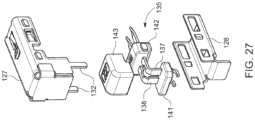
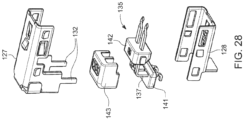
- the terminal module 125 includes a two-piece conductive shield 126 disposed about a terminal assembly 135.
- the conductive shield 126 has a first component 127 and a second component 128 and is similar to the conductive shield 26 described above except that the tails 132 of the conductive shield 126 are aligned in a direction transverse to the mating axis M.
- the terminal assembly 135 includes a pair of electrically conductive terminals 137, 138 that are bent at right angles and aligned in an edge-to-edge manner.
- the pair of terminals includes a first terminal 137 and a second terminal 138 that define an edge coupled differential signal pair.
- the first and second terminals 137, 138 (other than their mating interface sections 158) are identically configured except that they are symmetrical about a centerline extending between each pair of terminals. In other embodiments having a different mating interface, the first and second terminals may be symmetrically configured along their entire length.
- Each terminal assembly 135 further includes an insulative housing 140 configured to support the pair of electrically conductive terminals.
- the insulative housing 140 includes a first or lower housing member 141 insert molded around a length of the vertical section 146 of the terminals 37, 138 and a second or horizontal housing member 142 insert molded around a length of the horizontal section 155 of the terminals.
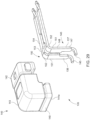
- An intermediate housing member or cover 143 is mounted on the angled section 150 of the terminals.
- the intermediate housing member 143 is formed separately from the lower housing member 141 and the horizontal housing member 142 and then mounted on the terminals.
- the intermediate housing member 143 includes a right angle bend to follow the bend in the terminals 137, 138 together with a pair of spaced apart inner channels 143a ( FIG. 31 ) along the inner surface of the housing member.
- a central projection 143b extends downward from an upper inner surface of the intermediate housing member 143 between the terminals 137, 138 to assist in positioning the housing member relative to the terminals.
- Other configurations of the housing 140 are contemplated.
- each of the housing components can be insert molded around the terminals or each can be formed as a separate component and secured to the terminals.
- the terminals 137, 138 and the housing 140 are configured to optimize SI performance with a target of 100 ohms.
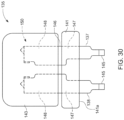
- the pair of terminals 137, 138 include sequentially a tail section 145, a vertical section 146, an angled section 150, a horizontal section 155, and a mating interface section 158.
- the terminals 137, 138 are disposed side-by-side horizontally and thus are edge coupled and have equal path lengths.
- Each of the terminals 137, 138 includes a surface mount tail 145 configured to be mechanically and electrically connected to one of the contact pads 202 on the circuit board 200 such as by soldering.
- the vertical section 146 includes sequentially a first relatively narrow lower portion 147 and a second relatively wide upper portion 148.
- the upper portions 148 of the vertical section 146 of the terminals 137, 138 are relatively wide to decrease the distance between the adjacent edges of the terminals as the terminals from the vertical section to the angled section.
- the relatively narrow gap between the upper portions 148 functions to reduce the impedance along those portions.
- the angled section 150 includes sequentially a vertical portion 151, an angled portion 152, a first horizontal portion 153, and a second horizontal portion 154.
- the vertical portion 151 extends continuously from the upper portion 148 and has the same width.
- the angled portion 152 is slightly narrower than the vertical portion 151 which results in a lower impedance.
- the first horizontal portion 153 has an even narrower width than the angled portion 152.
- the narrower width of the portion 153 has been found to be desirable to avoid an increase in impedance that is believed to result from the change in direction occurring at the angled portion 152. In other words, it is believed that a significant decrease in impedance would otherwise occur absent the reduction in width of the horizontal portion 153 and the corresponding increase in the distance between the two terminals 137, 138 at the first horizontal portions 153.
- the second horizontal portion 154 is wider than the first horizontal portion 153 to lower the impedance of the terminals 137, 138 as they transition from being partially enclosed in insulative material along the intermediate housing member 143 to being fully enclosed in insulative material within the horizontal housing component 142.
- the horizontal section 155 ( FIG. 32 ) has a first portion 156 that is the same width as the second horizontal portion 154 of the angled section and is fully enclosed within the insulative material of the horizontal housing member 142 and a second portion 157 that is narrower and operates as a transition to the mating interface section 158 of the terminals.
- the mating interface sections 158 of the terminals 137, 138 are set to provide a desired distance or pitch between the terminals to optimize both the mating and electrical performance of the connector system 110.
- the mating interface sections 158 of the terminals 137, 138 are configured with a low force helix configuration. Terminals 137, 138 having other configurations are contemplated.
- the terminal module 225 includes a conductive shield 226 disposed about a terminal assembly 235.
- the conductive shield 226 has a first component 227 and a second component 228 and is similar to the conductive shield 126 described above except that the vertical and horizontal legs of the conductive shield 226 are longer to accommodate the longer path length of the terminal module 225.
- the terminal assembly 235 includes a pair of electrically conductive terminals 237, 238 that are similar to the terminals 137, 138 and are bent at right angles and aligned in an edge-to-edge manner.
- the pair of terminals 237, 238 define an edge coupled differential signal pair.
- the first and second terminals (other than their mating interface sections 265) are identically configured except that they are symmetrical about a centerline extending between each pair of terminals. In other embodiments having a different mating interface, the first and second terminals may be symmetrically configured along their entire length.
- Each terminal assembly 235 further includes an insulative housing 240 configured to support the pair of electrically conductive terminals 237, 238
- the insulative housing 240 is similar to the housing 140 and includes a first or lower housing member 241 insert molded around a length of the vertical section 246 of the terminals 237, 238 and a second or horizontal housing member 242 insert molded around a length of the horizontal section 257 of the terminals.
- An intermediate housing member or cover 243 is mounted on the angled section 251 of the terminals.
- the lower housing member 241 is similar to the lower housing member 141 and the horizontal housing member 242 is similar to the horizontal housing member except that the housing members of the terminal assembly 235 are longer along the path of the terminals 237, 238.
- the lower housing member 241 is taller than the lower housing member 141 and the horizontal housing member 242 is longer horizontally than the horizontal housing member 142.
- the intermediate housing member 243 and the intermediate housing member 143 can be identically configured. As described above, other configurations of the housing 240 are contemplated.
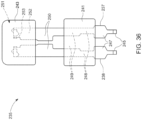
- the pair of terminals 237, 238 include sequentially a tail section 245, a vertical section 246, an angled section 251, a horizontal section 257, and a mating interface section 258.
- the terminals 237, 238 (other than their mating interface sections 265) are disposed side-by-side and have equal path lengths and thus are identically configured except that they are symmetrical about a centerline extending between each pair of terminals.
- the surface mount tails 245 are identical to the surface mount tails 145 described above.
- the vertical section 246 includes sequentially a first relatively wide lower portion 247, a relatively narrow lower intermediate portion 248, an upper intermediate portion 249, and a fourth relatively wide upper portion 250.
- the lower housing component 141 results in the lower portions 247 of the vertical section 246 of the terminals 237, 238 being relatively wide to provide a desired distance between the adjacent edges of the terminals to offset or compensate for the high impedance at the surface mount tails.
- the lower intermediate portions 248 of the terminals 237, 238 are relatively narrow to increase the distance between the adjacent edges of the terminals since those portions are completely enclosed in the plastic of the lower housing member 241.
- the upper intermediate portions 249 of the terminals 237, 238 are somewhat narrower than the lower intermediate portions 248 since a length of the intermediate portions is surrounded by plastic of the lower housing member 241 and another length is surrounded by air.
- the upper portions 250 are relatively wide to reduce the distance between the terminals and thus increase the impedance of the terminal pair in that area. This has been found to be desirable since the angled sections of the terminals 237, 238 are configured in an identical manner as the angled sections 251 of the terminals 137, 138 Accordingly, the upper portions 250 of the vertical section 246 are configured to compensate for the configuration of the angled section.
- the angled sections 25 1 of the terminals 237, 238 are configured in an identical manner as the angled sections 150 of the terminals 137, 138. Accordingly, the angled sections 251 includes sequentially a vertical portion 252, an angled portion 253, a first horizontal portion 254, and a second horizontal portion 255.
- the functionality of each of the portions together with their interaction with the intermediate housing member 243 are identical to the angled sections 150 of the terminals 137, 138 and the intermediate housing member 143 and therefore the description thereof is not repeated herein.
- the horizontal section 257 ( FIG. 37 ) is fully enclosed within the insulative material of the horizontal housing member 242 and has five sequential portions of different widths.
- the first portion 258 has the same width as the horizontal portion 255 of the angled section 251.
- a second portion 260 is narrower and operates as a transition to a narrower third portion 261.
- a fourth portion 262 is wider and functions to decrease the impedance before the terminals narrow at the fifth portion 263
- the width of the fifth portion 263 is narrower than the width of the mating interface section 265 of the terminals 237, 238.
- the mating interface sections 265 of the terminals 237, 238 provide a desired distance or pitch between the terminals to optimize both the mating and electrical performance of the connector system 110.
- the mating interface sections 265 of the terminals 237, 238 are configured to mate with the mating interface sections 158 of the terminals 137, 138.
- Each second connector assembly 170 has a connector housing 171 configured to mate with the receptacle or opening of the first connector housing 116.
- the connector housing 171 retains four plug connector assemblies 185 therein.
- each cable connector assembly 185 includes a conductive shield 186 disposed about a terminal module 195.
- the shield 186 is generally elongated and includes a first component 187 and a second component 191.
- the first component 187 includes a first crimp portion 188 configured to be crimped around a portion of the cable 81, a second crimp portion 189 configured to be crimped around to mechanically and electrically connect the shield 186 to the shielding layer 83 of the cable, and a housing retention section 190 configured to mechanically engage the housing component 210.
- the second shield component 191 has a generally rectangular configuration with a first rectangular portion 192 configured to be secured to the housing retention section 190 and a second rectangular portion 193 having a mating end 194.
- the terminal module 195 includes a pair of electrically conductive terminals 196 configured in an edge-to-edge relationship and arranged in a horizontal manner to mate with the terminals 137, 138 of the first connector assembly 115.
- the terminals 196 (other than the mating interface sections 205) are identically configured except that they are a mirror image about a centerline between the two terminals.
- the terminals 196 are configured to define an edge coupled differential signal pair in the same manner as the terminals 137, 138 of the first connector assembly 15.
- the terminal module 195 further includes an insulative body housing component 210 disposed about each pair of terminals 196.
- the insulative body housing component 210 may be insert molded around the terminals 196 in a manner similar to that described above with respect to the terminals 137, 138.
- a separate insulative mating housing component 211 is disposed within and supported by the shield 186 in a manner spaced from the body component 210 and adjacent the mating end 194 of the second rectangular portion 193.
- the terminals 196 and the mating housing component 211 are configured so that the mating ends 205 of the terminals are disposed in and spaced from the mating housing component. More specifically, the mating housing component 21 1 has openings in the end to permit deflection of the mating ends 205 without contacting the mating housing component.
- the terminals 196 of the second connector assembly 170 include specific spacing and geometry and interact with the insulative housing components 210, 21 1 and the shield 186 to optimize SI performance of each differential signal pair.
- the terminals 196 are also configured to maintain the 100 ohm impedance of the entire connector system 10. In embodiments, it may be desirable to minimize the size of the housing components 210, 211 in the mating direction to reduce the impact of housing components and the mating interface on reaching the 100 ohm target. More specifically, by providing the gap or space 213 ( Fig. 43 ) between the body housing component 210 and the mating housing component 211, the impedance along the gap 213 is increased to compensate for the decreases in capacitance due to the housing components and the mating interface.
- the terminals 196 include sequentially a termination section 197, a body section 201, and a mating interface section 205
- the termination section 197 is configured to be soldered or otherwise mechanically and electrically connected to the signal conductors 82 of the cable 81.
- the termination section 197 includes a first portion 198 at the first end 199 of the terminal 196 and a second reduced width portion 200 spaced from the first end of the terminal.
- the body section 201 is depicted as having two spaced apart planar sections 202, 203 with a bend section 204 therebetween.
- the bend section 204 and portions of the planar sections 202, 203 include a narrowed length to control the impedance as a result of the insulative housing 210 molded over the body section 201.
- the mating interface section 205 of the terminals 196 is configured as a receptacle of a low force helix mating system in order to mate with the terminals 137, 138 of the first connector assembly 115.
- the terminals 196 are soldered to the signal conductors 82 of the cable 81.
- a dispensed or molded insulator 212 is subsequently formed around the terminated portions of the signal conductors 82 and the termination section 197 of the terminals 196.
- the terminated cable 81 and terminal module 195 may be inserted into the first component 187 of the shield 186 and the crimp portions 188, 189 crimped to the cable 81.
- the second shield component 191 may be secured to the first shield component 187 to fully enclose the terminal module 195.
- the mating housing 211 may be disposed in the mating end of the second shield component 191 prior to interconnecting the first shield component 187 and the second shield component. In another embodiment, the mating housing 211 may be inserted after assembling the first shield component 187 and the second shield component 191 together.
Landscapes
- Details Of Connecting Devices For Male And Female Coupling (AREA)
- Coupling Device And Connection With Printed Circuit (AREA)
- Connector Housings Or Holding Contact Members (AREA)
Abstract
Description
- This patent application claims the benefit of
U. S. Provisional Patent Application No. 62/614,048, filed January 5, 2018 - The present invention relates to the field of electrical connectors and, in particular, multiconductor shielded and unshielded electrical connectors used in cable harnesses of vehicles.
- Typically traditional wire harness manufacturing presents a "single wire" approach to the manufacture of wire harnesses used in vehicles (i.e., a single lead wire is terminated to a terminal). With significant increases in the volume and complexity of in-car electronics, networking solutions that offer low-cost, high speed transmission and bandwidth are becoming ever more necessary. In many instances, certain applications require high data rate transfer and use of a balanced or impedance tuned differential pair transmission links is required.
- A connector system is provided that is used with a wire harness to interconnect these various devices. The connector system includes a first connector and a second connector for complete mechanical and electrical connection and utilizes a shielded twisted pair or twin-ax cabling system. The connectors include a pair of spatially and geometrically arranged electrical terminals configured within a shielded sub-connector or module that are retained in the first and second connecters of the connector sy stem.
- To better understand the above-described objectives, characteristics and advantages of the present invention, embodiments, with reference to the drawings, are provided for detailed explanations.
- The present invention is illustrated by way of example and not limited in the accompanying figures in which like reference numerals indicate similar elements and in which:
-
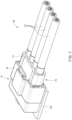
FIG. 1 depicts a perspective view' of a vehicle harness connector assembly according to a first embodiment of the present disclosure, -
FIG. 2 depicts a perspective view similar toFIG. 1 but with the vehicle harness connector assembly in an unmated condition; -
FIG. 3 depicts a perspective view' of one of the connectors of the vehicle harness connector assembly ofFIG. 1 ; -
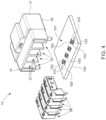
FIG. 4 depicts a partially exploded rear perspective view of the connector ofFIG 3 ; -
FIG. 5 depicts a partially exploded front perspective view of the connector ofFIG. 3 ; -
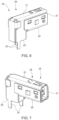
FIG 6 depicts a rear perspective view of a terminal module for use with the connector ofFIG. 3 ; -
FIG. 7 depicts a front perspective view' of the terminal module ofFIG. 6 ; -
FIG. 8 depicts an exploded rear perspective view of the terminal module ofFIG. 6 ; -
FIG. 9 depicts an exploded front perspective view' of the terminal module ofFIG. 6 -
FIG. 10 depicts an exploded rear perspective view' of a terminal assembly of the terminal module ofFIG. 6 ; -
FIG. 11 depicts an exploded front perspective view of the terminal assembly ofFIG. 10 ; -
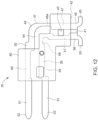
FIG. 12 depicts a side view' of the terminal assembly ofFIG. 1 1 ; -
FIG. 13 is a front perspective view' of a second connector of the vehicle harness connector assembly ofFIG. 1 ; -
FIG. 14 is a rear perspective view of the connector ofFIG. 13 ; -
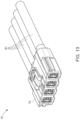
FIG. 15 is a partially exploded perspective view of the connector ofFIG. 13 ; -
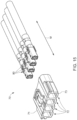
FIG. 16 is a partially exploded perspective view of the connector ofFIG. 14 ; -
FIG. 17 is a front perspective view of a cable connector assembly for use with the connector ofFIG. 13 ; -
FIG. 18 is a rear perspective view of the cable connector assembly ofFIG. 17 -
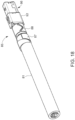
FIG. 19 is a partially exploded front perspective view of the cable connector assembly ofFIG 17 , -
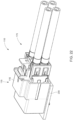
FIG. 20 is a partially exploded rear perspective view of the cable connector assembly ofFIG. 18 ; -
FIG. 21 is a top plan view of an assembled cable and terminal module of the cable connector assembly ofFIG. 17 ; -
FIG. 22 depicts a front perspective view' of a vehicle harness connector assembly according to a second embodiment of the present disclosure; -
FIG. 23 depicts a perspective view similar toFIG. 22 but with the vehicle harness connector assembly in an unmated condition; -
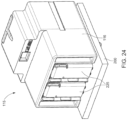
FIG. 24 depicts a rear perspective view of one of the connectors of the vehicle harness connector assembly ofFIG. 22 ; -
FIG. 25 depicts a partially exploded perspective view of the connector ofFIG. 24 ; -
FIG. 26 depicts a partially exploded front perspective view of the connector ofFIG. 24 ; -
FIG. 27 depicts an exploded rear perspective view' of a first embodiment of a terminal module for use with the connector ofFIG. 24 ; -
FIG. 28 depicts an exploded front perspective view of the terminal module ofFIG. 27 -
FIG. 29 depicts an exploded rear perspective view of a terminal assembly of the terminal module ofFIG. 27 ; -
FIG. 30 depicts a rear view of the terminal assembly ofFIG. 29 ; -
FIG. 31 is a fragmented bottom perspective view of an intermediate housing component and the terminals of the terminal assembly ofFig. 29 ; -
Fig. 32 is a top plan view of the terminal assembly ofFig. 29 ; -
FIG. 33 depicts an exploded rear perspective view of a second embodiment of a terminal module for use with the connector ofFIG. 24 ; -
FIG. 34 depicts an exploded front perspective view? of the terminal module ofFIG. 33 ; -
FIG 35 depicts an exploded rear perspective view of a terminal assembly of the terminal module ofFIG. 33 ; -
FIG. 36 depicts a rear view of the terminal assembly ofFIG. 35 ; -
Fig. 37 is a top plan view of the terminal assembly ofFig. 35 ; -
FIG 38 is a front perspective view of a second connector of the vehicle harness assembly ofFIG. 22 ; -
FIG. 39 is a rear perspective view of the connector ofFIG. 38 ; -
FIG. 40 is a partially exploded perspective view of the connector ofFIG. 39 ; -
FIG. 41 is a front perspective view of a cable connector assembly for use with the connector ofFIG. 38 ; -
FIG. 42 is a partially exploded rear perspective view of the cable connector assembly ofFIG. 41 ; and -
FIG. 43 is a top plan view of an assembled cable and terminal module of the cable connector assembly ofFIG. 42 - The detailed description that follows describes exemplary embodiments and is not intended to be limited to the expressly disclosed combination(s). Therefore, unless otherwise noted, features disclosed herein may be combined to form additional variations that were not otherwise shown for purposes of brevity.
- While the preferred embodiment of the invention have been shown and described, it will be apparent to those skilled in the art that changes and modifications may be made therein without departing from the spirit of the invention, the scope of which is defined by the appended claims. Like members are designated by like reference characters
- The term "Connected Car" is an umbrella term used to encompass many elements of in-car connectivity from infotainment to assisted vehicle technology and full autonomy. Additional uses include vehicles that communicate with each other and the associated outside infrastructure combined with the growing use of mobile devices and other new driver- assistance technologies. The use of Ethernet technology will join together all of a cabs electronics systems, including the instrument cluster, the infotainment and the telematics systems.
- As illustrated in the accompanying figures, specifically
FIGS. 1-2 , aconnector system 10 is disclosed for an in-vehicle Ethernet networking system. Theconnector system 10 includes afirst connector assembly 15 having a first insulatinghousing 16 that retains a plurality ofterminal modules 40 in an array and asecond connector assembly 70 having a second insulatinghousing 71 that retains a corresponding plurality ofcable plug connectors 90 in a similar array configured to mate with thefirst connector assembly 15 along a mating axis M. As depicted, an embodiment of theconnector system 10 is shown as a right angle arrangement but additional configurations such as a vertical arrangement or wire-to-wire configuration are contemplated. - As illustrated in
FIGS. 3-12 , thefirst connector assembly 15 is shown. The first connector includes ahousing 16, formed form an insulative material, that is configured to retain a plurality ofterminal modules 25. The embodiment depicts four individualterminal modules 25 but any number of modules can be used. Thehousing 16 is generally rectangular in shape and includes amating end 17 and an opposite,module mounting end 18. Themating end 17 includes anopening 20 for receiving a corresponding mating housing of a second connector. The mountingend 18 has a plurality of receivingbays 21 formed therein in which theterminal modules 25 are retained A passage extends between theopening 20 and the receiving bays. Each receivingbay 21 further includes a second downward facingopening 22 that communicates with acircuit board 100 to facilitate mounting eachterminal module 25 to the appropriate contact pads and associated traces on the circuit board. - An exemplar printed circuit board layout or
footprint 101 is illustrated inFIG. 4 . Thefootprint 101 includes a combination ofcontact pads 102 and plated throughholes 103. Thefootprint 101 corresponds to the termination structure of the array ofmodules 25 held within thehousing 16 and is arranged along a longitudinal direction normal to the mating axis M. Thecontact pads 102 engagetails terminals module 25 and are spaced apart and adjacent each other along a line parallel to the mating direction. The plated throughholes 103 are configured to receive integrally formedtabs 32 that are formed on theshield 26 of eachmodule 25. The plated throughholes 103 are arranged adjacent eachcontact pad 102 and positioned on alternating sides of each respective pad. The size and geometry of the contact pads and traces can be adjusted to tune the signal integrity in the launch area or the area at which eachmodule 25 is connected to thecircuit board 100. - As shown in
FIGS 6-12 , details of theterminal modules 25 are illustrated.Terminal module 25 includes aconductive shield 26 disposed about aterminal assembly 35. Theshield 26 includesmating end 27 and aboard mount end 28 As depicted inFIG. 8 , theshield 26 includes aU-shaped base portion 30 and acover 31 that interlock together to completely enclose theterminal assembly 35 other than at themating end 27 and board mountend 28. Themating end 27 of theshield 26 is configured to engage a cooperating portion of amating plug connector 85. Thecover 31 can include downwardly extendingtails 32 configured to be inserted into and secured within the plated throughholes 103 in thecircuit board 100. Theshield 26 may include structure for retaining theterminal assembly 35 within the shield. - Referring to
FIGS. 10-12 , theterminal assemblies 35 include apair 36 of electrically conductive terminals arranged in a vertical fashion and aligned in an edge-to-edge manner. Thepair 36 of terminals include anupper terminal 37 and alower terminal 38 that define an edge coupled differential signal pair. Other terminal configurations are contemplated such as a horizontal arrangement with thepair 36 of terminals being electrically coupled in a broadside or body-to-body manner, or any combination of each. - Each
terminal assembly 35 further includes aninsulative housing 40 disposed around eachpair 36 of electrically conductive terminals. In an embodiment, theinsulative housing 40 may be insert molded around the terminals. To do so, a lead frame (not shown) may be formed on which the terminals are stamped and formed and held together by a carrier (not shown). Ahousing 40 may then be molded over or around portions of the terminals to form theterminal assembly 35. In another embodiment, the housing may be separately formed and the terminals positioned therein. - As depicted in
FIGS. 10-12 , theterminals pair 36 include specific spacing and geometry, including but not limited to varying cross-sections, cut-outs, radii and spacing gaps. Each geometrical configuration and position may be specifically arranged to optimize the signal integrity ("SI") performance of each differential signal pair. Examples of optimized SI tuning includes adjusting the spacing between the contacting portions of the terminals to increase impedance. Notches may be formed along the terminals to match impedance and create a balance signal transmission. Further, thehousing 40 may also be specifically formed to tune the SI performance of eachterminal module 25. For example, thehousing 40 may include cross holes and apertures that interact with the specific geometry' of each terminal or terminal pair to effect the optimized SI performance. Accordingly, portions of each terminal may be exposed to air or totally enclosed by insulative material of thehousing 40 with additional adjustments to material thickness by either increasing or decreasing the material in specific areas or regions. The dielectric constants of theinsulative housing 40 and air are strategically employed to further enhance the SI performance. - In the depicted embodiment, the
connector system 100 has been configured to have an impedance of 100 ohms along its entire length. Although the impedance at any particular location along the electrical path may not be 100 ohms, the system is configured to optimize performance about the 100 ohm goal. Accordingly, as discussed above theshield 26,terminals housing 40 are formed to optimize SI performance together with the mechanical performance and manufacturability. - Referring to
FIGS. 10-12 , each of theterminals terminals surface mount tail contact pads 102 on thecircuit board 100 such as by soldering. The surface mounttails - The amount of conductive material from the
surface mount tails contact pads 102 in the depicted embodiment of thecircuit board 100 increase the impedance in that area. Further, theshield 26 may not extend all of the way down to thecircuit board 100 to facilitate the soldering of thetails contact pads 102. The lack of shielding combined with the geometry of thecontact pads 102 increases the impedance at the circuit board termination area. The spacing of thecontact pads 102 and the lack of shielding compensate to some extent for the clustering of conductive materials such as the contact pads, thesurface mount tails housing 40 may be further optimized to 100 ohms by providing adownward projection 41 extending between thelower portions terminals projection 41 also ensures that theterminals tails - The
projection 41 operates to decrease the impedance between thelower portions vertical sections terminals surface mount tails contact pads 102. In some embodiments, a minimum spacing may exist between thelower surface 42 of thehousing 40 and thecontact pads 102 in order to facilitate the soldering process. By only including aprojection 41 extending from thelower surface 42 between theterminals housing 40 on the soldering process may be minimized while improving the electrical performance adjacent the circuit board termination area. - The remaining
vertical portion 47 of theupper terminal 37 has a constant width that is the same width as that of thelower portion 46. However, the remainingvertical portion 57 of thelower terminal 38 has a stepped width that is narrower than the lowervertical portion 56 Both of thevertical portions housing 40. Anaperture 43 is disposed in thehousing 40 between thevertical portions terminals aperture 43 along thevertical portions insulative housing 40 above and below theaperture 43 but between thevertical portions aperture 43 in the housing. - The
angled transition sections terminals vertical portions horizontal sections section transition sections angled section 48 of theupper terminal 37 is longer than the electrical path of theangled section 58 of thelower terminal 37. in order to reduce signal skew and compensate for the difference in path lengths between theangled section 48 and theangled section 58, acurved portion 44 of thehousing 40 extends around theangled section 58 of the lower terminal while theangled section 48 of theupper terminal 38 is surrounded by air. Due to the lower dielectric constant of air as compared to that of the insulative material of theportion 44, signals traveling along theangled section 48 of theupper terminal 38 will travel faster than those traveling along theangled section 58 of thelower terminal 37, thus compensating for the difference in path length. - In addition, since the
portion 48a of thetransition section 48 adjacent thevertical portion 47 of theupper terminal 38 is surrounded by air, the impedance of theterminal pair 36 increases as it exits thehousing 40. Accordingly, theportion 48a of thetransition section 48 adjacent thevertical portion 47 has a reduced width to achieve a desired distance between thetransition section 48 of theupper terminal 37 and thetransition section 58 of thelower terminal 38 to control the impedance of thepair 36 of terminals. - In an embodiment, the
portion 50 of thetransition section 48 adjacent thehorizontal portion 49 of theupper terminal 37 may be wider than the other portions of the transition section as well as the horizontal section. This change in width may be provided to compensate for the change in impedance as the signal travels from thetransition section 48 in air to thehorizontal section 49 within theinsulative housing 40. - The distance between the
horizontal portion 49 of theupper terminal 37 and thehorizontal portion 59 of thelower terminal 38 is set based upon the dielectric properties of theinsulative housing 40 to provide the desired 100 ohm impedance. The distance between themating interface sections terminals terminals Terminals - As shown in
FIGS. 13-14 , thesecond connector assembly 70 is illustrated. Thesecond connector assembly 70 includes aninsulative housing 71 that is configured to retain a plurality of individual cableplug connector assemblies 80 Thehousing 71 is configured to engage theopening 20 at themating end 17 of thefirst housing 16 of thefirst connector assembly 15 As best shown inFIGS 15-16 , thehousing 17 includes a plurality ofopenings 72 in amating face 73 corresponding to the number ofterminal modules 25 in thefirst connector assembly 15 and aninsertion opening 74 opposite the openings of the mating face. Individual mounting areas are formed within theinsertion opening 74 byridges 75 and are configured to receive each of theplug connector assemblies 80 therein along the mating axis M. - As illustrated in
FIGS. 17-21 , aplug connector assembly 80 of thesecond connector assembly 70 is shown. Eachplug connector assembly 80 includes acable 81 and acable connector assembly 85. Thecable 81 has a pair ofsignal conductors 82 and anintegral shielding layer 83 such as a shielded twisted pair cable or twin-ax cable. - The
cable connector assembly 85 includes aconductive shield 86 disposed about aterminal module 95. Theshield 86 is generally elongated and includes afirst crimp portion 87 configured to be crimped around a portion of thecable 81 and asecond crimp portion 88 configured to be crimped around to mechanically and electrically connect the shield to theshielding layer 83 of the cable. Aconnector portion 89 of theshield 86 has a generally rectangular configuration with amating end 90 opposite thecrimp portions connector portion 89 may include a U-shapedfirst portion 91 configured to engage a cooperating U-shapedsecond section 92 to fully enclose the terminal module 95 (FIG. 21 ) within theshield 86. - The
terminal module 95 includes a pair of electricallyconductive terminals 96 configured in an edge-to-edge relationship and arranged in a vertical manner to mate with theterminals first connector assembly 15. The terminals 96 (other than their mating interface sections 105) are identically configured except that they are a mirror image about a centerline between the two terminals. In other embodiments having a different mating interface, the first and second terminals may be symmetrically configured along their entire length. Theterminals 96 are configured to define an edge coupled differential signal pair in the same manner as theterminals first connector assembly 15. - The
terminal module 95 further includes an insulativebody housing component 106 disposed about eachpair 97 ofterminals 96. In an embodiment, thebody housing component 106 may be insert molded around theterminals 96 in a manner similar to that described above with respect to theterminals mating housing component 107 is disposed within and supported by theshield 86 in a manner spaced from the body housing component and adjacent themating end 90 of the terminals. Further, theterminals mating housing component 107 are configured so that the mating ends of theterminals 96 are disposed in and spaced from the mating housing component. More specifically, themating housing component 107 has openings in the end to permit deflection of the mating ends 105 without contacting the mating housing component. - As with the
terminals first connector assembly 15, theterminals 96 of thesecond connector assembly 70 include specific spacing and geometry and interact with thehousing components shield 86 to optimize SI performance of each differential signal pair. Theterminals 96 are also configured to maintain the 100 ohm impedance of theentire connector system 10. In embodiments, it may be desirable to minimize the size of thehousing components Fig. 21 ) between thebody housing component 106 and themating housing component 107, the impedance along thegap 109 is increased to compensate for the decreases in capacitance due to the housing components and the mating interface. - Referring to
FIG. 21 , theterminals 96 include sequentially atermination section 97, abody section 100, and amating interface section 105. Thetermination section 97 is configured to be soldered or otherwise mechanically and electrically connected to thesignal conductors 82 of thecable 81. Thetermination section 97 includes a first enlarged portion orprojection 98 at the first end of the terminal 96 opposite the mating interface section and a second enlarged portion orprojection 99 spaced from thefirst projection 98. In an embodiment, thefirst projection 98 may be larger than thesecond projection 99. - The
first projection 98 is configured to reduce the impedance at the first end of the terminal 96. This is desirable because the length of thesignal conductor 82 immediately adjacent the first end of the terminal 96 is unshielded as it exits thecable 81 and therefore has relatively high impedance. Accordingly, by providing the relatively largefirst projection 98 with a relatively low impedance, the first projection will compensate or offset the relatively high impedance along the unshielded portion of thesignal conductors 82. - The
second projection 99 may be provided to improve the strength of the solder connection between thesignal conductor 82 and thetermination section 97 of the terminal 96. - The
body section 100 is depicted as having two spaced apartplanar sections bend section 103 therebetween. Thebend section 103 may be narrower than theplanar sections body housing component 106 molded over thebody section 100. - The
mating interface section 105 of theterminals 96 is configured as a receptacle of a low force helix mating system in order to mate with theterminals first connector assembly 15. - During assembly of the plug portion of the plug connector, the
terminals 96 are soldered to thesignal conductors 82 of thecable 81. A dispensed or moldedinsulator 108 is subsequently formed around the terminated portions of thesignal conductors 82 and thetermination section 97 of theterminals 96. The terminatedcable 81 andterminal module 95 may be inserted into theshield 86 and thecrimped portions cable 81. Thesecond section 92 may be secured to thefirst portion 91 of theshield 86 to fully enclose theterminal module 95. - In an embodiment, the
mating housing component 107 may be inserted into the mating end of theshield 86 prior to positioning the terminatedterminal module 95 therein. In another embodiment, themating housing component 107 may be inserted after assembling theshield 86 andterminal module 95. - In operation, the fully assembled
first connector 15 is secured to a printedcircuit board 100 with the appropriate connections between the terminals of each module and shield maintaining proper electrical connection to the corresponding traces on the printed circuit board. Thesecond connector 70 is mated to thefirst connector 15 by inserting the mating portion of the second housing into the opening formed in the first housing. Upon further insertion, the shields of the terminal modules and shields of the plug portions engage each other and, upon complete insertion, the terminals of the terminal modules and terminals of the plug portions respectively engage. - Referring to
FIGS. 22-23 , a second embodiment of aconnector system 1 10 is depicted. Theconnector system 110 includes afirst connector assembly 115 and asecond connector assembly 170. Theconnector system 1 10 is similar to theconnector system 10 described above in terms of the number of conductors and the operation of a plurality of 100 ohm differential pair transmission lines. Like components may be depicted with like reference numbers and the description of some components may not be repeated herein. - The
first connector assembly 115 includes ahousing 116, formed of an insulative material, in which a plurality ofterminal modules terminal modules housing 1 16 is similar to thehousing 16 described above except that thehousing 116 is configured in a manner to receive theterminal modules housing 1 16 is taller and narrower than thehousing 16. - The
circuit board 200 includes a layout orfootprint 201 having a combination ofcontact pads 202 and plated throughholes 203 that corresponds to the footprint of the array ofmodules footprint 201 includes pairs ofcontact pads 202 and plated throughholes 203 that are spaced apart and aligned along longitudinal lines parallel to the mating axis M. - The
first connector assembly 115 includes two relatively short rightangle terminal modules 125 and two relatively tall rightangle terminal modules 225 disposed withinhousing 1 16. As best seen inFIGS. 25-26 , oneshort module 125 and onetail module 225 form a nested pair of modules that are aligned parallel to the mating axis M. - Referring to
FIGS. 27-32 , details of theterminal module 125 are illustrated. Theterminal module 125 includes a two-piececonductive shield 126 disposed about aterminal assembly 135. Theconductive shield 126 has afirst component 127 and asecond component 128 and is similar to theconductive shield 26 described above except that thetails 132 of theconductive shield 126 are aligned in a direction transverse to the mating axis M. - The
terminal assembly 135 includes a pair of electricallyconductive terminals first terminal 137 and asecond terminal 138 that define an edge coupled differential signal pair. The first andsecond terminals 137, 138 (other than their mating interface sections 158) are identically configured except that they are symmetrical about a centerline extending between each pair of terminals. In other embodiments having a different mating interface, the first and second terminals may be symmetrically configured along their entire length. - Each
terminal assembly 135 further includes aninsulative housing 140 configured to support the pair of electrically conductive terminals. In an embodiment, theinsulative housing 140 includes a first orlower housing member 141 insert molded around a length of thevertical section 146 of theterminals horizontal housing member 142 insert molded around a length of thehorizontal section 155 of the terminals. An intermediate housing member or cover 143 is mounted on theangled section 150 of the terminals. In other words, theintermediate housing member 143 is formed separately from thelower housing member 141 and thehorizontal housing member 142 and then mounted on the terminals. - The
intermediate housing member 143 includes a right angle bend to follow the bend in theterminals inner channels 143a (FIG. 31 ) along the inner surface of the housing member. Acentral projection 143b extends downward from an upper inner surface of theintermediate housing member 143 between theterminals housing 140 are contemplated. For example, if desired, each of the housing components can be insert molded around the terminals or each can be formed as a separate component and secured to the terminals. - As described above, the
terminals housing 140 are configured to optimize SI performance with a target of 100 ohms. - Referring to
FIG. 29 , the pair ofterminals tail section 145, avertical section 146, anangled section 150, ahorizontal section 155, and amating interface section 158. Unlike theterminals terminals terminals surface mount tail 145 configured to be mechanically and electrically connected to one of thecontact pads 202 on thecircuit board 200 such as by soldering. Thevertical section 146 includes sequentially a first relatively narrowlower portion 147 and a second relatively wideupper portion 148. - A relatively large horizontal gap exists between the
contact pads 202 which results in a relatively high impedance at the termination between the surface mounttails 145 and the contact pads. While it may be desirable for thelower housing component 141 to extend downward near thecontact pads 202 to facilitate soldering of the surface mounttails 145 to the contact pads, thelower surface 141 a of the lower housing component must be at least a specified distance from the contact pads. As a result of the lack of surrounding insulative material and to offset or compensate for the high impedance at the surface mounttails 145, thelower portions 147 of thevertical section 146 of theterminals - The
upper portions 148 of thevertical section 146 of theterminals upper portions 148 functions to reduce the impedance along those portions. - The
angled section 150 includes sequentially avertical portion 151, anangled portion 152, a firsthorizontal portion 153, and a secondhorizontal portion 154. Thevertical portion 151 extends continuously from theupper portion 148 and has the same width. Theangled portion 152 is slightly narrower than thevertical portion 151 which results in a lower impedance. The firsthorizontal portion 153 has an even narrower width than theangled portion 152. The narrower width of theportion 153 has been found to be desirable to avoid an increase in impedance that is believed to result from the change in direction occurring at theangled portion 152. In other words, it is believed that a significant decrease in impedance would otherwise occur absent the reduction in width of thehorizontal portion 153 and the corresponding increase in the distance between the twoterminals horizontal portions 153. - The second
horizontal portion 154 is wider than the firsthorizontal portion 153 to lower the impedance of theterminals intermediate housing member 143 to being fully enclosed in insulative material within thehorizontal housing component 142. - The horizontal section 155 (
FIG. 32 ) has afirst portion 156 that is the same width as the secondhorizontal portion 154 of the angled section and is fully enclosed within the insulative material of thehorizontal housing member 142 and asecond portion 157 that is narrower and operates as a transition to themating interface section 158 of the terminals. Themating interface sections 158 of theterminals connector system 110. In an embodiment, themating interface sections 158 of theterminals Terminals - Referring to
FIGS. 33-37 , details of theterminal module 225 are illustrated. Theterminal module 225 includes a conductive shield 226 disposed about aterminal assembly 235. The conductive shield 226 has afirst component 227 and asecond component 228 and is similar to theconductive shield 126 described above except that the vertical and horizontal legs of the conductive shield 226 are longer to accommodate the longer path length of theterminal module 225. - The
terminal assembly 235 includes a pair of electricallyconductive terminals terminals terminals - Each
terminal assembly 235 further includes aninsulative housing 240 configured to support the pair of electricallyconductive terminals insulative housing 240 is similar to thehousing 140 and includes a first orlower housing member 241 insert molded around a length of thevertical section 246 of theterminals horizontal housing member 242 insert molded around a length of thehorizontal section 257 of the terminals. An intermediate housing member or cover 243 is mounted on theangled section 251 of the terminals. Thelower housing member 241 is similar to thelower housing member 141 and thehorizontal housing member 242 is similar to the horizontal housing member except that the housing members of theterminal assembly 235 are longer along the path of theterminals lower housing member 241 is taller than thelower housing member 141 and thehorizontal housing member 242 is longer horizontally than thehorizontal housing member 142. Theintermediate housing member 243 and theintermediate housing member 143 can be identically configured. As described above, other configurations of thehousing 240 are contemplated. - The pair of
terminals tail section 245, avertical section 246, anangled section 251, ahorizontal section 257, and amating interface section 258. As stated above, theterminals 237, 238 (other than their mating interface sections 265) are disposed side-by-side and have equal path lengths and thus are identically configured except that they are symmetrical about a centerline extending between each pair of terminals. The surface mounttails 245 are identical to the surface mounttails 145 described above. Thevertical section 246 includes sequentially a first relatively widelower portion 247, a relatively narrow lowerintermediate portion 248, an upperintermediate portion 249, and a fourth relatively wideupper portion 250. - As described above, a relatively large horizontal gap exists between the
contact pads 202 which results in a relatively high impedance at the termination between the surface mounttails 145 and the contact pads. The limitations on the configuration of thelower housing component 141 results in thelower portions 247 of thevertical section 246 of theterminals - The lower
intermediate portions 248 of theterminals lower housing member 241. The upperintermediate portions 249 of theterminals intermediate portions 248 since a length of the intermediate portions is surrounded by plastic of thelower housing member 241 and another length is surrounded by air. - The
upper portions 250 are relatively wide to reduce the distance between the terminals and thus increase the impedance of the terminal pair in that area. This has been found to be desirable since the angled sections of theterminals angled sections 251 of theterminals upper portions 250 of thevertical section 246 are configured to compensate for the configuration of the angled section. - As stated above, the
angled sections 25 1 of theterminals angled sections 150 of theterminals angled sections 251 includes sequentially avertical portion 252, anangled portion 253, a firsthorizontal portion 254, and a secondhorizontal portion 255. The functionality of each of the portions together with their interaction with theintermediate housing member 243 are identical to theangled sections 150 of theterminals intermediate housing member 143 and therefore the description thereof is not repeated herein. - The horizontal section 257 (
FIG. 37 ) is fully enclosed within the insulative material of thehorizontal housing member 242 and has five sequential portions of different widths. Thefirst portion 258 has the same width as thehorizontal portion 255 of theangled section 251. Asecond portion 260 is narrower and operates as a transition to a narrowerthird portion 261. Afourth portion 262 is wider and functions to decrease the impedance before the terminals narrow at thefifth portion 263 The width of thefifth portion 263 is narrower than the width of themating interface section 265 of theterminals mating interface sections 265 of theterminals connector system 110. Themating interface sections 265 of theterminals mating interface sections 158 of theterminals - Referring to
FIGS. 38-40 , details of thesecond connector assembly 170 are depicted. Eachsecond connector assembly 170 has aconnector housing 171 configured to mate with the receptacle or opening of thefirst connector housing 116. Theconnector housing 171 retains fourplug connector assemblies 185 therein. - Referring to
FIGS. 41-43 , eachcable connector assembly 185 includes aconductive shield 186 disposed about aterminal module 195. Theshield 186 is generally elongated and includes afirst component 187 and asecond component 191. Thefirst component 187 includes afirst crimp portion 188 configured to be crimped around a portion of thecable 81, asecond crimp portion 189 configured to be crimped around to mechanically and electrically connect theshield 186 to theshielding layer 83 of the cable, and ahousing retention section 190 configured to mechanically engage thehousing component 210. Thesecond shield component 191 has a generally rectangular configuration with a firstrectangular portion 192 configured to be secured to thehousing retention section 190 and a secondrectangular portion 193 having amating end 194. - The
terminal module 195 includes a pair of electricallyconductive terminals 196 configured in an edge-to-edge relationship and arranged in a horizontal manner to mate with theterminals first connector assembly 115. The terminals 196 (other than the mating interface sections 205) are identically configured except that they are a mirror image about a centerline between the two terminals. Theterminals 196 are configured to define an edge coupled differential signal pair in the same manner as theterminals first connector assembly 15. - The
terminal module 195 further includes an insulativebody housing component 210 disposed about each pair ofterminals 196. In an embodiment, the insulativebody housing component 210 may be insert molded around theterminals 196 in a manner similar to that described above with respect to theterminals mating housing component 211 is disposed within and supported by theshield 186 in a manner spaced from thebody component 210 and adjacent themating end 194 of the secondrectangular portion 193. Further, theterminals 196 and themating housing component 211 are configured so that the mating ends 205 of the terminals are disposed in and spaced from the mating housing component. More specifically, themating housing component 21 1 has openings in the end to permit deflection of the mating ends 205 without contacting the mating housing component. - As with the
terminals first connector assembly 115, theterminals 196 of thesecond connector assembly 170 include specific spacing and geometry and interact with theinsulative housing components shield 186 to optimize SI performance of each differential signal pair. Theterminals 196 are also configured to maintain the 100 ohm impedance of theentire connector system 10. In embodiments, it may be desirable to minimize the size of thehousing components Fig. 43 ) between thebody housing component 210 and themating housing component 211, the impedance along thegap 213 is increased to compensate for the decreases in capacitance due to the housing components and the mating interface. - Referring to
FIG. 43 , theterminals 196 include sequentially atermination section 197, abody section 201, and amating interface section 205 Thetermination section 197 is configured to be soldered or otherwise mechanically and electrically connected to thesignal conductors 82 of thecable 81. Thetermination section 197 includes afirst portion 198 at thefirst end 199 of the terminal 196 and a second reducedwidth portion 200 spaced from the first end of the terminal. - The
body section 201 is depicted as having two spaced apartplanar sections bend section 204 therebetween. Thebend section 204 and portions of theplanar sections insulative housing 210 molded over thebody section 201. - The
mating interface section 205 of theterminals 196 is configured as a receptacle of a low force helix mating system in order to mate with theterminals first connector assembly 115. - During assembly of the
cable connector assembly 185 of thesecond connector assembly 170, theterminals 196 are soldered to thesignal conductors 82 of thecable 81. A dispensed or moldedinsulator 212 is subsequently formed around the terminated portions of thesignal conductors 82 and thetermination section 197 of theterminals 196. The terminatedcable 81 andterminal module 195 may be inserted into thefirst component 187 of theshield 186 and thecrimp portions cable 81. Thesecond shield component 191 may be secured to thefirst shield component 187 to fully enclose theterminal module 195. - In an embodiment, the
mating housing 211 may be disposed in the mating end of thesecond shield component 191 prior to interconnecting thefirst shield component 187 and the second shield component. In another embodiment, themating housing 211 may be inserted after assembling thefirst shield component 187 and thesecond shield component 191 together. - It follows a list of examples:
- 1. An electrical connector for mounting to a circuit board, the circuit board including a pair of conductive contact pads, the electrical connector comprising: first and second electrically conductive terminals (38, 37), each terminal having a surface mount tail (45, 55), a vertical section (47, 57) adjacent the surface mount tail (45, 55) and a contact section, the terminals (38, 37) defining a differential signal pair, an insulative housing (40), a portion of each terminal (38, 37) disposed in the housing (40), the housing (40) having a lower surface (42) and a projection (41) extending downward from the lower surface (42) between a portion of the vertical section (47, 57) of each of the first and second terminals (38, 37); and an electrically conductive shield (26) extending around at least a portion of the first and second terminals (38, 37) and a least a portion of the housing (40).
- 2. The electrical connector of example 1, wherein the first and second electrically conductive terminals (37, 38) are right angle terminals.
- 3. The electrical connector of example 2, wherein each terminal further includes a horizontal section and an angled section connecting the vertical section and the horizontal section, the housing extending continuously over a second portion of the vertical section, the angled section, and a portion of the horizontal section of the first terminal.
- 4. The electrical connector of example 3, wherein the housing extends over a second portion of the vertical section and a portion of the horizontal section of the second terminal.
- 5. The electrical connector of example 4, wherein the housing is insert molded around the first and second terminals.
- 6. The electrical connector of example 4, wherein at least a portion of the angled section of the second terminal is not fully enclosed by the housing.
- 7. The electrical connector of example 1, wherein the second terminal is longer than the first terminal.
- 8. The electrical connector of example 7, wherein the first and second terminals are edge coupled.
- 9. The electrical connector of example 1, wherein the first and second terminals (38, 37) each have a length and the shield (26) extends around substantially the entire length of the first and second terminals (38, 37).
- 10. An electrical connector for mounting to a circuit board, the circuit board including a pair of conductive contact pads, the electrical connector comprising: first and second electrically conductive right angle terminals (137, 138), each terminal (152) having a surface mount tail (145), a vertical section (146), a horizontal section (154), an angled section (150), and a contact section, the angled section (150) connecting the vertical section (146) and the horizontal section (146), the angled section (150) having sequentially a vertical portion (151), an angled portion (152) and a horizontal portion (153), the vertical portion (151) having a first width, the angled portion (152) being narrower than the vertical portion (151), and the horizontal portion (153) being narrower than the angled portion (152), the terminals (137, 138) defining a differential signal pair,
- an insulative housing (40), a portion of each terminal (137, 138) disposed in the housing; and
- an electrically conductive shield extending around at least a portion of the first and second terminals and a least a portion of the housing.
- 11. The electrical connector of example 10, wherein the first and second terminals are a mirror image of each other about a centerline between the terminals.
- 12. The electrical connector of example 10, wherein the housing extends over a portion of the vertical section and a portion of the horizontal section of the first and second terminals.
- 13. The electrical connector of example 10, wherein the housing is insert molded around the first and second terminals.
- 14. The electrical connector of example 13, wherein the angled sections of the first and second terminals are only partially enclosed by the housing.
- 15. The electrical connector of example 14, wherein an underside of the angled section of the first and second terminals is not enclosed by the housing.
- 16. The electrical connector of example 10, wherein the first and second terminals have equal lengths
- 17. The electrical connector of example 16, wherein the first and second terminals are edge coupled.
- 18. The electrical connector of example 10, wherein the first and second terminals each have a length and the shield extends around substantially the entire length of the first and second terminals.
- 19. An electrical connector for termination to a cable, the cable including a pair of signal wires and a ground conductor, the electrical connector comprising: first and second electrically conductive terminals, each terminal having a termination end and a mating end, each terminal further including a termination section adjacent the termination end, a contact section adjacent the mating end, and a body section between the termination section and the contact section, the termination section being configured for termination to one of the signal wires, the terminals defining a differential signal pair; an insulative housing having a body component and a mating component, a portion of each terminal being supported by the body component, the mating component being spaced from the body component and aligned with but spaced from the contact section of the terminals; and an electrically conductive shield extending around at least a portion of the first and second terminals and a least a portion of the housing, the shield supporting the mating component of the housing.
- 20. The electrical connector of example 19, wherein the first and second terminals are a mirror image of each other about a centerline between the terminals.
- 21. The electrical connector of example 19, wherein the body component of the housing is insert molded around the first and second terminals.
- 22. The electrical connector of example 19, wherein the first and second terminals are edge coupled.
- 23. An electrical connector assembly, comprising:
an electrical cable, the cable including a pair of signal wires and a ground conductor; first and second electrically conductive terminals, each terminal having a termination end and a mating end, each terminal further including a termination section adjacent the termination end, a contact section adjacent the mating end, and a body section between the termination section and the contact section, each signal wire being mechanically and electrically connected to the termination section of one of the terminals, the termination section being planar and having a first portion adjacent the termination end and a second portion spaced from the termination end, the first portion having a greater width than the second portion, the terminals defining a differential signal pair; an insulative housing, a portion of each terminal disposed in the housing; and an electrically conductive shield extending around at least a portion of the first and second terminals and a least a portion of the housing. - 24. The electrical connector assembly of example 23, wherein the termination section is planar.
- 25. The electrical connector assembly of example 23, wherein the first and second terminals are a mirror image of each other about a centerline between the terminals.
- 26. The electrical connector assembly of example 23, wherein the housing is insert molded around the first and second terminals
- 27. The electrical connector assembly of example 23, wherein the housing includes a. mating housing component surrounding the mating end of the terminals.
- 28. The electrical connector assembly of example 27, wherein the mating housing component is secured to the shield and spaced from the terminals.
- 29. The electrical connector assembly of example 23, wherein the first and second terminals are edge coupled.
Claims (15)
- An electrical connector for termination to a cable (81), the cable (81) including a pair of signal wires (82) and a ground conductor, the electrical connector comprising:first and second electrically conductive terminals (196), each terminal (196) having a termination end (199) and a mating end (205), each terminal (196) further including a termination section (197) adjacent the termination end (199), a contact section (202) adjacent the mating end (205), and a body section (201) between the termination section (197) and the contact section (202), the termination section (197) being configured for termination to one of the signal wires (82), the terminals (196) defining a differential signal pair;an insulative housing (140, 240) having a body component (210) and a mating component (211), a portion of each terminal (196) being supported by the body component (210), the mating component (211) being spaced (213) from the body component (210) and aligned with but spaced from the contact section (202) of the terminals (196); andan electrically conductive shield (186) extending around at least a portion of the first and second terminals (196) and at least a portion of the housing (140, 240), the shield (186) supporting the mating component (211) of the housing (140, 240).
- The electrical connector of claim 1, wherein the first and second terminals (196) are a mirror image of each other about a centerline between the terminals (196).
- The electrical connector of claim 1, wherein the body component (210) of the housing (140, 240) is insert molded around the first and second terminals (196).
- The electrical connector of claim 1, wherein the first and second terminals (196) are edge coupled.
- The electrical connector of claim 1, wherein the shield (186) is elongated and comprises a first component (187) and a second component (191).
- The electrical connector of claim 5, wherein the first component (187) comprises a first crimp portion (188) configured to be crimped around a portion of the cable (81) and a second crimp portion (189) configured to be crimped around to mechanically and electrically connect the shield (186) to a shielding layer (83) of the cable (81).
- The electrical connector of claim 5 or 6, wherein the shield (186) further comprises a housing retention section (190) configured to mechanically engage the body component (210).
- The electrical connector of claim 7, wherein the second shield component (191) is rectangular shaped with a first rectangular portion (192) configured to be secured to the housing retention section (190) and a second rectangular portion (193) having a mating end (194).
- The electrical connector of claim 1, wherein by providing the space (213) between the body component (210) and the mating housing component (211), the impedance along the gap (213) is increased to compensate for the decreases in capacitance.
- The electrical connector of claim 1, wherein the terminal section (197) comprises a first portion (198) at the first end (199) of the terminal (196) and a second reduced width portion (200) spaced from the first end of each terminal (196).
- The electrical connector of claim 1, wherein the body section (201) has two spaced apart planar sections (202), (203) with a bend section (204) therebetween.
- The electrical connector of claim 11, wherein the bend section (204) and portions of the planar sections (202), (203) include a narrowed length to control the impedance as a result of the body component (210) being molded over the body section (201).
- The electrical connector of claim 1, wherein the mating end (205) of the first and second terminals (196) are configured as a receptacle of a low force helix mating system.
- The electrical connector of claim 1, wherein a dispensed or molded insulator (212) is formed around the terminated portions of the signal wires (82) and the termination section (197) of the first and second terminals (196).
- The electrical connector of claim 1, wherein the mating housing (211) is disposed in the mating end of the second shield component (191) prior to interconnecting the first shield component (187) and the second shield component (191).
Applications Claiming Priority (3)
| Application Number | Priority Date | Filing Date | Title |
|---|---|---|---|
| US201862614048P | 2018-01-05 | 2018-01-05 | |
| EP19735786.6A EP3735719B1 (en) | 2018-01-05 | 2019-01-04 | Low profile electrical connector system with differential pair cable interface |
| PCT/US2019/012260 WO2019136199A2 (en) | 2018-01-05 | 2019-01-04 | Low profile electrical connector system with differential pair cable interface |
Related Parent Applications (2)
| Application Number | Title | Priority Date | Filing Date |
|---|---|---|---|
| EP19735786.6A Division EP3735719B1 (en) | 2018-01-05 | 2019-01-04 | Low profile electrical connector system with differential pair cable interface |
| EP19735786.6A Division-Into EP3735719B1 (en) | 2018-01-05 | 2019-01-04 | Low profile electrical connector system with differential pair cable interface |
Publications (2)
| Publication Number | Publication Date |
|---|---|
| EP4379970A2 true EP4379970A2 (en) | 2024-06-05 |
| EP4379970A3 EP4379970A3 (en) | 2024-08-14 |
Family
ID=67143981
Family Applications (2)
| Application Number | Title | Priority Date | Filing Date |
|---|---|---|---|
| EP19735786.6A Active EP3735719B1 (en) | 2018-01-05 | 2019-01-04 | Low profile electrical connector system with differential pair cable interface |
| EP24170657.1A Pending EP4379970A3 (en) | 2018-01-05 | 2019-01-04 | Low profile electrical connector system with differential pair cable interface |
Family Applications Before (1)
| Application Number | Title | Priority Date | Filing Date |
|---|---|---|---|
| EP19735786.6A Active EP3735719B1 (en) | 2018-01-05 | 2019-01-04 | Low profile electrical connector system with differential pair cable interface |
Country Status (4)
| Country | Link |
|---|---|
| US (1) | US11563291B2 (en) |
| EP (2) | EP3735719B1 (en) |
| CN (2) | CN114284785B (en) |
| WO (1) | WO2019136199A2 (en) |
Families Citing this family (21)
| Publication number | Priority date | Publication date | Assignee | Title |
|---|---|---|---|---|
| WO2019136199A2 (en) | 2018-01-05 | 2019-07-11 | Molex, Llc | Low profile electrical connector system with differential pair cable interface |
| CN112952483A (en) * | 2019-12-11 | 2021-06-11 | 富士康(昆山)电脑接插件有限公司 | Board end connector and cable connector butted with same |
| DE102020109786A1 (en) * | 2020-04-08 | 2021-10-14 | Mts Sensor Technologie Gmbh & Co. Kg | Connection device |
| KR102355290B1 (en) * | 2020-05-25 | 2022-01-25 | 주식회사 센서뷰 | Connector assembly including receptacle connector and plug connector |
| KR102348969B1 (en) * | 2020-05-25 | 2022-01-10 | 주식회사 센서뷰 | Plug connector slidingly inserted into receptacle connector |
| WO2022147292A1 (en) * | 2020-12-30 | 2022-07-07 | Samtec, Inc. | Data communication system |
| DE102021103224A1 (en) | 2021-02-11 | 2022-08-11 | Md Elektronik Gmbh | Multi-pin multi-phase connector and method of making the same |
| KR102569847B1 (en) * | 2021-06-25 | 2023-08-23 | 주식회사 센서뷰 | Connector assembly including receptacle connector and plug connector, and plug connector |
| AU2021221638A1 (en) * | 2021-08-25 | 2023-03-16 | Redarc Technologies Pty Ltd | Dual-direction terminal block |
| CN115764383B (en) * | 2021-09-02 | 2026-02-13 | 莫列斯有限公司 | Electrical connectors |
| JP2023077187A (en) * | 2021-11-24 | 2023-06-05 | 矢崎総業株式会社 | Circuit board connector and method for manufacturing circuit board connector |
| CN217239920U (en) * | 2021-12-15 | 2022-08-19 | 华为技术有限公司 | Connector and communication equipment |
| CN216672088U (en) * | 2021-12-31 | 2022-06-03 | 泰科电子科技(苏州工业园区)有限公司 | Shield and connector |
| JP7818960B2 (en) * | 2022-01-11 | 2026-02-24 | TE Connectivity Japan合同会社 | Communication Connector |
| CN116526186A (en) * | 2022-01-24 | 2023-08-01 | 泰连服务有限公司 | Plug connector |
| JP1723716S (en) * | 2022-03-30 | 2022-08-31 | optical connector | |
| JP2024049891A (en) * | 2022-09-29 | 2024-04-10 | イリソ電子工業株式会社 | connector |
| DE102022213369A1 (en) * | 2022-12-09 | 2024-06-20 | Yamaichi Electronics Deutschland Gmbh | Connector, in particular a mini coaxial automotive connector, for connecting to a complementary connector device, and the use of the connector |
| DE102023001377A1 (en) | 2023-04-03 | 2024-10-10 | Telegärtner Karl Gärtner GmbH | connectors |
| JP1755949S (en) * | 2023-04-26 | 2023-10-23 | connector | |
| JP1758467S (en) * | 2023-05-26 | 2023-11-29 | connector housing |
Family Cites Families (20)
| Publication number | Priority date | Publication date | Assignee | Title |
|---|---|---|---|---|
| EP0600120B1 (en) | 1992-12-02 | 1997-03-12 | Molex Incorporated | Plug and socket electrical connector system |
| US5967844A (en) * | 1995-04-04 | 1999-10-19 | Berg Technology, Inc. | Electrically enhanced modular connector for printed wiring board |
| JP2942985B2 (en) * | 1995-11-16 | 1999-08-30 | モレックス インコーポレーテッド | Electrical connector |
| TW456619U (en) | 1999-07-16 | 2001-09-21 | Molex Inc | Impedance-tuned termination assembly and connectors incorporating same |
| US6749444B2 (en) | 2002-01-16 | 2004-06-15 | Tyco Electronics Corporation | Connector with interchangeable impedance tuner |
| CN2552173Y (en) * | 2002-05-18 | 2003-05-21 | 莫列斯公司 | Connector for wire or cable |
| US20040094328A1 (en) * | 2002-11-16 | 2004-05-20 | Fjelstad Joseph C. | Cabled signaling system and components thereof |
| US7497703B2 (en) | 2005-09-12 | 2009-03-03 | Tyco Electronics Corporation | Method and apparatus for providing symmetrical signal return path in differential systems |
| US7467977B1 (en) * | 2008-05-08 | 2008-12-23 | Hon Hai Precision Ind. Co., Ltd. | Electrical connector with additional mating port |
| MY174133A (en) * | 2013-01-16 | 2020-03-10 | Molex Inc | Bi-directional latch |
| CN203660126U (en) * | 2013-09-05 | 2014-06-18 | 嘉基电子科技(苏州)有限公司 | Socket electric connector, plug electric connector, and electric connector assembly |
| CN103531964B (en) * | 2013-10-24 | 2016-01-13 | 安费诺(常州)高端连接器有限公司 | High speed connector |
| US9362659B2 (en) * | 2013-12-10 | 2016-06-07 | Delphi Technologies, Inc. | Electrical connector terminal |
| CN203707480U (en) * | 2014-01-26 | 2014-07-09 | 上海莫仕连接器有限公司 | electrical connection device |
| TWM515214U (en) * | 2015-05-15 | 2016-01-01 | 宣德科技股份有限公司 | High frequency electronic connector |
| US10312609B2 (en) * | 2015-06-03 | 2019-06-04 | 3M Innovative Properties Company | Low profile electrical connector |
| JP6680359B2 (en) | 2016-06-29 | 2020-04-15 | 株式会社オートネットワーク技術研究所 | Terminal module and connector |
| CN206639956U (en) * | 2017-01-19 | 2017-11-14 | 杜强 | A kind of USB3.0 connectors |
| CN107221812B (en) | 2017-07-27 | 2023-07-07 | 安费诺电子装配(厦门)有限公司 | Connector combination for transmitting high-speed signals |
| WO2019136199A2 (en) | 2018-01-05 | 2019-07-11 | Molex, Llc | Low profile electrical connector system with differential pair cable interface |
-
2019
- 2019-01-04 WO PCT/US2019/012260 patent/WO2019136199A2/en not_active Ceased
- 2019-01-04 US US16/960,018 patent/US11563291B2/en active Active
- 2019-01-04 EP EP19735786.6A patent/EP3735719B1/en active Active
- 2019-01-04 CN CN202111596773.7A patent/CN114284785B/en active Active
- 2019-01-04 EP EP24170657.1A patent/EP4379970A3/en active Pending
- 2019-01-04 CN CN201980016680.7A patent/CN111801849B/en active Active
Also Published As
| Publication number | Publication date |
|---|---|
| EP3735719A4 (en) | 2022-01-19 |
| US20210066857A1 (en) | 2021-03-04 |
| CN111801849A (en) | 2020-10-20 |
| CN114284785B (en) | 2025-03-28 |
| US11563291B2 (en) | 2023-01-24 |
| EP3735719A2 (en) | 2020-11-11 |
| EP4379970A3 (en) | 2024-08-14 |
| EP3735719B1 (en) | 2024-06-12 |
| WO2019136199A2 (en) | 2019-07-11 |
| CN114284785A (en) | 2022-04-05 |
| CN111801849B (en) | 2021-11-19 |
| WO2019136199A3 (en) | 2019-09-12 |
Similar Documents
| Publication | Publication Date | Title |
|---|---|---|
| EP3735719B1 (en) | Low profile electrical connector system with differential pair cable interface | |
| US11901660B2 (en) | High speed, high density electrical connector | |
| US12184012B2 (en) | High speed, high density electrical connector with shielded signal paths preliminary class | |
| KR100490271B1 (en) | Impedance tuned termination assembly and connectors incorporating same | |
| US7651374B2 (en) | System and method of surface mount electrical connection | |
| US8540525B2 (en) | Resonance modifying connector | |
| US6863549B2 (en) | Impedance-tuned terminal contact arrangement and connectors incorporating same | |
| CN104094474A (en) | Midplane Orthogonal Connector System | |
| JP3990355B2 (en) | Impedance adjusted high density connector | |
| JP2005531121A (en) | Impedance tuned high density connector with modular structure | |
| KR20020020783A (en) | Impedance-tuned connector | |
| MX2008013519A (en) | Electrical connector having contact plates. | |
| US11942728B2 (en) | Electrical connector system with differential pair cable interface | |
| EP2149942B1 (en) | Electrical connector | |
| CN119009538B (en) | Cable connectors and communication systems | |
| US20250093596A1 (en) | Optoelectrical connector |
Legal Events
| Date | Code | Title | Description |
|---|---|---|---|
| PUAI | Public reference made under article 153(3) epc to a published international application that has entered the european phase |
Free format text: ORIGINAL CODE: 0009012 |
|
| STAA | Information on the status of an ep patent application or granted ep patent |
Free format text: STATUS: THE APPLICATION HAS BEEN PUBLISHED |
|
| AC | Divisional application: reference to earlier application |
Ref document number: 3735719 Country of ref document: EP Kind code of ref document: P |
|
| AK | Designated contracting states |
Kind code of ref document: A2 Designated state(s): AL AT BE BG CH CY CZ DE DK EE ES FI FR GB GR HR HU IE IS IT LI LT LU LV MC MK MT NL NO PL PT RO RS SE SI SK SM TR |
|
| REG | Reference to a national code |
Ref country code: DE Ref legal event code: R079 Free format text: PREVIOUS MAIN CLASS: H01R0013658700 Ipc: H01R0013647400 |
|
| PUAL | Search report despatched |
Free format text: ORIGINAL CODE: 0009013 |
|
| AK | Designated contracting states |
Kind code of ref document: A3 Designated state(s): AL AT BE BG CH CY CZ DE DK EE ES FI FR GB GR HR HU IE IS IT LI LT LU LV MC MK MT NL NO PL PT RO RS SE SI SK SM TR |
|
| RIC1 | Information provided on ipc code assigned before grant |
Ipc: H01R 103/00 20060101ALN20240709BHEP Ipc: H01R 13/6463 20110101ALN20240709BHEP Ipc: H01R 13/514 20060101ALN20240709BHEP Ipc: H01R 13/405 20060101ALN20240709BHEP Ipc: H01R 13/502 20060101ALI20240709BHEP Ipc: H01R 13/6593 20110101ALI20240709BHEP Ipc: H01R 12/75 20110101ALI20240709BHEP Ipc: H01R 13/6587 20110101ALI20240709BHEP Ipc: H01R 13/6477 20110101ALI20240709BHEP Ipc: H01R 13/6474 20110101AFI20240709BHEP |
|
| STAA | Information on the status of an ep patent application or granted ep patent |
Free format text: STATUS: REQUEST FOR EXAMINATION WAS MADE |
|
| 17P | Request for examination filed |
Effective date: 20250214 |