EP4379896A1 - Positive electrode for lithium-ion battery, battery core, and lithium-ion battery - Google Patents
Positive electrode for lithium-ion battery, battery core, and lithium-ion battery Download PDFInfo
- Publication number
- EP4379896A1 EP4379896A1 EP23209626.3A EP23209626A EP4379896A1 EP 4379896 A1 EP4379896 A1 EP 4379896A1 EP 23209626 A EP23209626 A EP 23209626A EP 4379896 A1 EP4379896 A1 EP 4379896A1
- Authority
- EP
- European Patent Office
- Prior art keywords
- positive electrode
- notch
- lithium
- battery
- tab
- Prior art date
- Legal status (The legal status is an assumption and is not a legal conclusion. Google has not performed a legal analysis and makes no representation as to the accuracy of the status listed.)
- Pending
Links
- HBBGRARXTFLTSG-UHFFFAOYSA-N Lithium ion Chemical compound [Li+] HBBGRARXTFLTSG-UHFFFAOYSA-N 0.000 title claims abstract description 40
- 229910001416 lithium ion Inorganic materials 0.000 title claims abstract description 40
- 238000004140 cleaning Methods 0.000 claims abstract description 70
- 238000003466 welding Methods 0.000 claims abstract description 18
- 238000004804 winding Methods 0.000 claims description 4
- 238000000034 method Methods 0.000 description 35
- 230000001351 cycling effect Effects 0.000 description 25
- 239000000463 material Substances 0.000 description 20
- WHXSMMKQMYFTQS-UHFFFAOYSA-N Lithium Chemical compound [Li] WHXSMMKQMYFTQS-UHFFFAOYSA-N 0.000 description 18
- 229910052744 lithium Inorganic materials 0.000 description 18
- 238000001556 precipitation Methods 0.000 description 17
- 230000000694 effects Effects 0.000 description 13
- 230000015572 biosynthetic process Effects 0.000 description 9
- 230000003247 decreasing effect Effects 0.000 description 9
- 238000004080 punching Methods 0.000 description 8
- 238000005520 cutting process Methods 0.000 description 7
- 238000004519 manufacturing process Methods 0.000 description 7
- 238000010586 diagram Methods 0.000 description 6
- 230000017525 heat dissipation Effects 0.000 description 5
- 238000000576 coating method Methods 0.000 description 3
- 238000004070 electrodeposition Methods 0.000 description 2
- 238000003825 pressing Methods 0.000 description 2
- XAGFODPZIPBFFR-UHFFFAOYSA-N aluminium Chemical compound [Al] XAGFODPZIPBFFR-UHFFFAOYSA-N 0.000 description 1
- 229910052782 aluminium Inorganic materials 0.000 description 1
- 239000011248 coating agent Substances 0.000 description 1
- 230000008602 contraction Effects 0.000 description 1
- 238000005516 engineering process Methods 0.000 description 1
- 239000002985 plastic film Substances 0.000 description 1
- 229920006255 plastic film Polymers 0.000 description 1
- 238000005096 rolling process Methods 0.000 description 1
Images



Classifications
-
- H—ELECTRICITY
- H01—ELECTRIC ELEMENTS
- H01M—PROCESSES OR MEANS, e.g. BATTERIES, FOR THE DIRECT CONVERSION OF CHEMICAL ENERGY INTO ELECTRICAL ENERGY
- H01M10/00—Secondary cells; Manufacture thereof
- H01M10/05—Accumulators with non-aqueous electrolyte
- H01M10/058—Construction or manufacture
- H01M10/0587—Construction or manufacture of accumulators having only wound construction elements, i.e. wound positive electrodes, wound negative electrodes and wound separators
-
- H—ELECTRICITY
- H01—ELECTRIC ELEMENTS
- H01M—PROCESSES OR MEANS, e.g. BATTERIES, FOR THE DIRECT CONVERSION OF CHEMICAL ENERGY INTO ELECTRICAL ENERGY
- H01M10/00—Secondary cells; Manufacture thereof
- H01M10/05—Accumulators with non-aqueous electrolyte
- H01M10/052—Li-accumulators
- H01M10/0525—Rocking-chair batteries, i.e. batteries with lithium insertion or intercalation in both electrodes; Lithium-ion batteries
-
- H—ELECTRICITY
- H01—ELECTRIC ELEMENTS
- H01M—PROCESSES OR MEANS, e.g. BATTERIES, FOR THE DIRECT CONVERSION OF CHEMICAL ENERGY INTO ELECTRICAL ENERGY
- H01M50/00—Constructional details or processes of manufacture of the non-active parts of electrochemical cells other than fuel cells, e.g. hybrid cells
- H01M50/50—Current conducting connections for cells or batteries
- H01M50/528—Fixed electrical connections, i.e. not intended for disconnection
-
- H—ELECTRICITY
- H01—ELECTRIC ELEMENTS
- H01M—PROCESSES OR MEANS, e.g. BATTERIES, FOR THE DIRECT CONVERSION OF CHEMICAL ENERGY INTO ELECTRICAL ENERGY
- H01M50/00—Constructional details or processes of manufacture of the non-active parts of electrochemical cells other than fuel cells, e.g. hybrid cells
- H01M50/50—Current conducting connections for cells or batteries
- H01M50/531—Electrode connections inside a battery casing
- H01M50/536—Electrode connections inside a battery casing characterised by the method of fixing the leads to the electrodes, e.g. by welding
-
- H—ELECTRICITY
- H01—ELECTRIC ELEMENTS
- H01M—PROCESSES OR MEANS, e.g. BATTERIES, FOR THE DIRECT CONVERSION OF CHEMICAL ENERGY INTO ELECTRICAL ENERGY
- H01M4/00—Electrodes
- H01M4/02—Electrodes composed of, or comprising, active material
- H01M2004/026—Electrodes composed of, or comprising, active material characterised by the polarity
- H01M2004/028—Positive electrodes
-
- Y—GENERAL TAGGING OF NEW TECHNOLOGICAL DEVELOPMENTS; GENERAL TAGGING OF CROSS-SECTIONAL TECHNOLOGIES SPANNING OVER SEVERAL SECTIONS OF THE IPC; TECHNICAL SUBJECTS COVERED BY FORMER USPC CROSS-REFERENCE ART COLLECTIONS [XRACs] AND DIGESTS
- Y02—TECHNOLOGIES OR APPLICATIONS FOR MITIGATION OR ADAPTATION AGAINST CLIMATE CHANGE
- Y02E—REDUCTION OF GREENHOUSE GAS [GHG] EMISSIONS, RELATED TO ENERGY GENERATION, TRANSMISSION OR DISTRIBUTION
- Y02E60/00—Enabling technologies; Technologies with a potential or indirect contribution to GHG emissions mitigation
- Y02E60/10—Energy storage using batteries
-
- Y—GENERAL TAGGING OF NEW TECHNOLOGICAL DEVELOPMENTS; GENERAL TAGGING OF CROSS-SECTIONAL TECHNOLOGIES SPANNING OVER SEVERAL SECTIONS OF THE IPC; TECHNICAL SUBJECTS COVERED BY FORMER USPC CROSS-REFERENCE ART COLLECTIONS [XRACs] AND DIGESTS
- Y02—TECHNOLOGIES OR APPLICATIONS FOR MITIGATION OR ADAPTATION AGAINST CLIMATE CHANGE
- Y02P—CLIMATE CHANGE MITIGATION TECHNOLOGIES IN THE PRODUCTION OR PROCESSING OF GOODS
- Y02P70/00—Climate change mitigation technologies in the production process for final industrial or consumer products
- Y02P70/50—Manufacturing or production processes characterised by the final manufactured product
Definitions
- the present invention relates to the field of battery electrode technologies, for example, a positive electrode for a lithium-ion battery, a battery core, and a lithium-ion battery.
- the tabs are usually placed in cleaning regions in middle portions of electrodes of the 3C lithium-ion battery.
- Main methods for mass production of positive electrodes are shown in FIG. 1 .
- a material region on a current collector is first cleaned at a designated position on a large electrode (i.e., a whole electrode without being cut) to obtain multiple tab grooves 6 transverse to the electrode, and only the current collector is remained in the tab grooves 6.
- rolling is carried out and the cutting is performed at a cutting position 0-5 mm from a side edge of each tab groove 6.
- the positive electrode in the related art has the following problems. After the above-formed positive electrode is wound to form a square battery, the notch 3 at edges of the square battery will cause an uneven thickness of the part, which corresponds to the notch 3, of the square battery to be more serious compared with a case where the notch 3 is not punched, and this part that corresponds to the notch 3 is affected to be formed and bonded. So, the lithium precipitation is prone to occur in the cycling process.
- the object of the present invention is to provide a positive electrode of a lithium-ion battery, an electrode core and a lithium-ion battery, so as to avoid the following problems that the positive electrode is wound to form a square battery, the notch at the edges of the square battery causes an uneven thickness of the part, which corresponds to the notch, of the square battery to be more serious compared with a case where the notch is not punched to affect this part that corresponding to the notch to be formed and bonded as well as further result in easily occurring the lithium precipitation in the cycling process.
- a positive electrode of a lithium-ion battery includes opposite cleaning regions are provided respectively on opposite sides of the positive electrode in a thickness direction of the positive electrode for welding with a welding end of a tab; a notch is formed on a side of the cleaning regions close to an edge of the positive electrode in a width direction of the positive electrode, and the notch penetrates the positive electrode in the thickness direction and a part of the tab which is corresponding to the notch in a width direction of the positive electrode is a matching part, the matching part is enabled to be provided in the notch; and D 1 is greater than D2, where D 1 represents a dimension of a part of the cleaning regions intersecting an edge of the notch in a length direction of the positive electrode, and D2 represents a maximum dimension of the notch in the length direction.
- a minimum dimension of the matching part in the length direction ranges from 2mm to 12mm.
- D1 ranges from 8mm to 30mm.
- D2 ranges from 4mm to 29mm.
- a cross section of the notch along the width direction appears as an arc-shaped opening facing outward.
- the arc-shaped opening shape may have a superior arc shape.
- a shape of the cleaning region may be rectangular, circular or trapezoidal.
- an electrode core may include a negative electrode, a separator, and the positive electrode of a lithium-ion battery as described above, in which the negative electrode, the separator, and the positive electrode of the lithium-ion battery are stacked and wound into a square winding body.
- a lithium-ion battery may include the above-mentioned electrode core.
- the present invention has the following advantageous effects.
- a positive electrode 1 for a lithium-ion battery is provided.
- opposite cleaning regions 4 provided on two sides of the positive electrode 1 in a thickness direction of the positive electrode 1.
- the cleaning regions 4 are configured for welding a welding end 21 of the tab 2.
- Portions of the cleaning regions 4 which are each close to a side of the positive electrode 1 in a width direction of the positive electrode 1 have a notch 3.
- the notch 3 penetrates through the positive electrode 1 along a thickness direction of the positive electrode 1.
- a part of the tab which is corresponding to the notch in a width direction of the positive electrode is a matching part, the matching part is enabled to be provided in the notch.
- a dimension of a part of the cleaning region 4 intersecting an edge of the notch along a length direction of the positive electrode 1 is denoted by D1.
- a maximum dimension of the notch 3 along the length direction of the positive electrode 1 is denoted by D2.
- D2 is less than D1, as shown in FIG. 6 .
- a left-right direction in FIG. 2 is a length direction of the positive electrode 1.
- a upper-lower direction in FIG. 2 is a width direction of the positive electrode 1, and an inner-outer direction in FIG. 2 is a thickness direction of the positive electrode 1.
- the cleaning region 4 corresponds to the tab groove in the related art
- the notch 3 corresponds to the notch in the related art.
- the cleaning region 4 retains only the current collector 11 in a middle portion of the positive electrode 1 in the thickness direction of the positive electrode 1, and the material region 12 on two sides of the current collector 11 is cleaned.
- the notch 3 penetrates directly through the entire positive electrode 1. That is, the current collector 11 and the material region 12 on two sides of the current collector 11 are cut away.
- sectional shapes of the cleaning region 4 and the notch 3 may not be limited.
- the notch 3 has an arc-shaped opening shape in the thickness direction of the positive electrode 1, and an opening of the arc-shaped opening shape faces outwardly, i.e., towards an upper side of FIG. 2 . In this way, generation of tip burrs during the punching operation may be avoided.
- the arc-shaped opening shape is major arc, so that a part of the tab 2 which is corresponding to the notch 3 in the width direction of the positive electrode 1 may be provided in the notch 3.
- a maximum dimension of the notch 3 in the length direction of the positive electrode 1 is less than a dimension of a part of the cleaning region 4 intersecting an edge of the notch in the length direction of the positive electrode 1.
- more material regions 12 are remained on an upper side of the cleaning region 4 as well as the left and right sides of the notch 3 in FIG. 2 . So, the flatness of the positive electrode 1 is higher, so that the battery can be better formed and bonded, and the gap between the separator and the positive electrode is smaller.
- the notch 3 with the rectangular cross-section in FIG. 8 can also be used to better reduce the risk of lithium precipitation in the negative electrode in the later period of the cycling process of the battery, comparted with the related art.
- a shape of the cleaning region 4 may be rectangular, circular or trapezoidal, and may be of other shapes.
- the shape configuration of the cleaning region 4 may avoid the cleaning region to have too small area to affect the welding effect of the tab.
- the cleaning region 4 is rectangular in cross-section, which is more convenient for the laser cleaning operation in comparison with other shapes, facilitates the welding of the tab 2, and enables the loss of energy density to be reduced.
- the punched notch in related art is generally wider than the tab groove, and the punched notch is larger, thereby resulting in a location, which is corresponding to the punched notch, of a square core to decrease a thickness of a layer of electrode. So, the region, in which the punched notch 3 is located, has a decreased thickness on a surface of the square core and thus the square core is caused to have a poor flatness. When the battery is formed, the region, in which the punched notch 3 is located, has a decreased thickness, and the formation and bonding is poor, thereby resulting in an enlargement in a gap between the separator and the positive electrode.
- the gap between the separator and the positive electrode 1 is further enlarged due to repeated expansion and contraction of the positive electrode and the negative electrode, and the impedance of the region, in which the punched notch 3 is located, is increased. So, it is more difficult for the positive electrode and the negative electrode to deintercalate lithium, and the problem of lithium precipitation of the negative electrode in the later period of the cycling process is easily caused.
- a part of the tab 2 which is corresponding to the notch 3 in a width direction of the positive electrode 1 is a matching part.
- the matching part may be provided in the notch 3, that is, the tab may be normally provided in the notch 3 and the cleaning region 4. Accordingly, the normal welding of the tab 2 in the cleaning region 4 is ensured as shown in FIG. 5 and FIG. 8 .
- the maximum dimension of the notch 3 in the length direction of the positive electrode 1 is less than the dimension of a part of the cleaning region 4 intersecting an edge of the notch in the length direction of the positive electrode 1.
- the formation and bonded effect thereof is good, and the gap between the separator and the positive electrode is smaller.
- the gaps in the partial regions are enlarged and the impedance is increased, thereby alleviating the risk of lithium precipitation of the negative electrode in the later period of the cycling process of the battery.
- a part of the tab 2 which is corresponding to the notch 3 in the width direction of the positive electrode 1 is a matching part 22.
- the matching part 22 is a segment of a middle portion of the tab in a length direction of the tab 2, and the matching part 22 is located in a space of the notch 3.
- a minimum dimension of the matching part 22 in the length direction of the positive electrode 1 is denoted by D3 and has a suitable range of 2mm-12mm.
- D3 a minimum dimension of a part, which is located in the notch 3, of the tab 2 in the left-right direction is denoted by D3.
- the dimension configure of the D3 in this example of the present invention it can avoid that when D3 is too large, an area of the material region 12 is reduced, and the loss of energy density is higher. Also, it can avoid that when D3 is too small, the battery is difficult to dissipate heat.
- a dimension of a part of the cleaning region 4 intersecting an edge of the notch along a length direction of the positive electrode 1 is denoted by D1 and has a suitable range of 8mm-30mm.
- D1 denotes a dimension of the cleaning region 4 along the length direction of the positive electrode 1.
- it can avoid that when D1 is too large, the area of the material region is reduced and more energy density is lost. Also, it can avoid that when D 1 is too small, the welding region of the tab 2 is too small, and a dimension of the tab 2 is affected. If the tab 2 is too narrow, the manufacture of the tab is difficult, and the heat dissipation of the battery is affected.
- a maximum dimension of the notch 3 along the length direction of the positive electrode 1 is denoted by D2 and has a suitable range of 4mm-29mm.
- a shape of the notch 3 is arc and is a major arc.
- D2 denotes a diameter of a circle having the arc. In the dimension configure according to this example of the present invention, it can avoid that when D2 is too large, the flatness of a region, in which the notch 3 is located, of the battery is not good to affect the formation and bonding effect. So, the gap between the separator and the positive electrode is larger.
- the problem that the gaps in the local regions are enlarged and the impedance is increased may also avoid to occur to increase the risk of lithium precipitation of the negative electrode in a later period of the cycling process of the battery. Further, it can avoid that when D2 is too small, the risk that the tab 2 coincides with the material region 12 is not prevented, so that a part of the tab 2 corresponding to the notch 3 in the width direction of the positive electrode 1 cannot be provided in the notch 3, thereby affecting the normal welding of the tab 2 in the cleaning region 4.
- a small loss of energy density and the good heat dissipation effect of the battery may be simultaneously considered;
- the small loss of energy density and a suitable dimension of the weld region of the tab 2 may be simultaneously considered so as to avoid the tab 2 to be too narrow, to avoid the manufacture of the tab to be difficult, and to avoid to affect the heat dissipation of the battery;
- the higher flatness without affecting the normal welding of the tab 2 may be simultaneously considered, thereby reducing the risk of lithium precipitation of the negative electrode in the later period of the cycling process of the battery.
- the dimension of the existing punched notch in the length direction of the positive electrode 1 is reduced in a case where the dimensions of the cleaning region 4 in the longitudinal direction of the positive electrode 1 are the same, whereas this has little effect on the difficulty in punching.
- the existing notch is usually punched from the positive electrode before this piece is manufactured, and the punching is usually performed pneumatically by using a clamping fixture for punching.
- the cutter with this dimension can be machined and used.
- an operation procedure of manufacturing the positive electrode 1 includes a coating process, a cleaning process, a cold pressing process and a striping process. It is not ensured that the striping operation is sliced just along the edge of the cleaning region, so that a edge of the positive electrode 1 is left with a part of the material region after cutting. Therefore, the punching device is required.
- an operation procedure of the negative electrode includes a coating process, a cold pressing process, a cutting process, and a cleaning process. Because material-free regions at edges can be controlled in the cleaning process, the negative electrode does not need to punch a notch 3.
- the flatness of a part of the battery which is corresponding to the punched portion of the positive electrode 1 can be improved, by optimizing a punched shape or a punched size.
- the problem of lithium precipitation is less likely to occur in the cycling process because the flatness of the positive electrode 1 is higher, so as to improve the lithium precipitation problem of the battery.
- the foregoing detailed description of some examples of the present invention is not to be construed as limitation to the present invention.
- a battery core 14 is provided, and includes a negative electrode 7, a separator 8 and the positive electrode 1 for the lithium-ion battery mentioned in Example 1.
- the negative electrode 7, the separator 8, and the positive electrode 1 for the lithium-ion battery are stacked and wound into a square winding body.
- the positive electrode for the lithium-ion battery is used, and the tab 2 can be normally arranged in the notch 3 and the cleaning region 4 to ensure the normal welding of the tab 2 in the cleaning region 4.
- the dimensions of the cleaning region 4 along the length direction of the positive electrode 1 are ensured to be the same, there is a part of the material region 12 on a side of the cleaning region 4 close to the notch 3, by reducing the dimension of the existing punched notch along the length direction of the positive electrode 1, so that uneven-thickness regions of the whole positive electrode 1 are decreased.
- the formation and bonding effect thereof is good, and the gap between the separator and the positive electrode is smaller.
- the cycling process there is no problem in that the gaps in the local regions are enlarged and the impedance is increased, thereby alleviating the risk of lithium precipitation of the negative electrode in the later period of the cycling process of the battery.
- a lithium-ion battery is provided, and includes a square housing 10, a cap 13, and the battery core 14 mentioned in Example 2, in which the square housing may be provided with a mounting groove, the battery core is arranged in the mounting groove, and an opening of the mounting groove is sealed by the cap.
- the above battery core is adopted, and the battery core adopts the above positive electrode for the lithium-ion battery.
- the tab 2 may be normally arranged in the notch 3 and the cleaning region 4, so that the tab 2 may be welded normally in the cleaning region 4.
- the dimensions of the cleaning region along the length direction of the positive electrode are ensured to be the same, there is a part of the material region 12 on a side of the cleaning region 4 close to the notch 3, by reducing the dimension of the existing punched notch along the length direction of the positive electrode 1, so that an uneven-thickness region of the whole positive electrode 1 is decreased. So, the formation and bonding effect of the battery is good, and the gap between the separator and the positive electrode is smaller.
- the cycling process there is no problem in that the gaps in the local regions are enlarged and the impedance is increased, thereby alleviating the risk of lithium precipitation of the negative electrode in the later period of the cycling process of the battery.
- a lithium-ion battery including a square pouch battery.
- the pouch battery includes the above-mentioned winding body and an aluminum plastic film.
- the above battery core is adopted, and the battery core adopts the above positive electrode for the lithium-ion battery.
- the tab 2 may be normally arranged in the notch 3 and the cleaning region 4, so that the tab 2 may be welded normally in the cleaning region 4.
- the dimensions of the cleaning region along the length direction of the positive electrode are ensured to be the same, there is a part of the material region 12 on a side of the cleaning region 4 close to the notch 3, by reducing the dimension of the existing punched notch along the length direction of the positive electrode 1, so that an uneven-thickness region of the whole positive electrode 1 is decreased. So, the formation and bonding effect of the battery is good, and the gap between the separator and the positive electrode is smaller.
- the cycling process there is no problem in that the gaps in the local regions are enlarged and the impedance is increased, thereby alleviating the risk of lithium precipitation of the negative electrode in the later period of the cycling process of the battery.
Landscapes
- Chemical & Material Sciences (AREA)
- Chemical Kinetics & Catalysis (AREA)
- Electrochemistry (AREA)
- General Chemical & Material Sciences (AREA)
- Engineering & Computer Science (AREA)
- Manufacturing & Machinery (AREA)
- Materials Engineering (AREA)
- Battery Electrode And Active Subsutance (AREA)
- Connection Of Batteries Or Terminals (AREA)
- Secondary Cells (AREA)
Abstract
A positive electrode for a lithium-ion battery is provided. Opposite cleaning regions are provided respectively on opposite sides of the positive electrode in a thickness direction thereof for welding with a welding end of a tab. A notch is formed on a side of the cleaning regions close to an edge of the positive electrode in a width direction thereof. The notch penetrates the positive electrode in the thickness direction and a part of the tab which is corresponding to the notch in a width direction of the positive electrode is a matching part, the matching part is enabled to be provided in the notch. D1 is greater than D2, where D1 represents a dimension of a part of the cleaning regions intersecting an edge of the notch in a length direction of the positive electrode, and D2 represents a maximum dimension of the notch in the length direction.
Description
- The present invention relates to the field of battery electrode technologies, for example, a positive electrode for a lithium-ion battery, a battery core, and a lithium-ion battery.
- In order to improve the charging speed of existing commercial Computer-Communication-Consumer (3C) lithium-ion batteries in related art, the tabs are usually placed in cleaning regions in middle portions of electrodes of the 3C lithium-ion battery. Main methods for mass production of positive electrodes are shown in
FIG. 1 . A material region on a current collector is first cleaned at a designated position on a large electrode (i.e., a whole electrode without being cut) to obtainmultiple tab grooves 6 transverse to the electrode, and only the current collector is remained in thetab grooves 6. Then, rolling is carried out and the cutting is performed at a cutting position 0-5 mm from a side edge of eachtab groove 6. Thecutting line 5 inFIG. 1 indicates the cutting position, which is located at an outer side of thetab groove 6, to obtain a strippedelectrode 1. Afterwards, the remaining coating material on the side of thetab groove 6 is removed by punching to form anotch 3. There is no current collector or material region in thenotch 3. Therefore, the current mass-produced products in the market all have notches on the positive tabs. If thenotch 3 is not punched, the residual material region at an un-punched portion where the notch on thewelded tab 3 is located and thewelded tab 3, will have superimposed thicknesses to have thicker thicknesses, thereby affecting electrodeposition (ED). So, mass-produced products have notches on the tabs. - The positive electrode in the related art has the following problems. After the above-formed positive electrode is wound to form a square battery, the
notch 3 at edges of the square battery will cause an uneven thickness of the part, which corresponds to thenotch 3, of the square battery to be more serious compared with a case where thenotch 3 is not punched, and this part that corresponds to thenotch 3 is affected to be formed and bonded. So, the lithium precipitation is prone to occur in the cycling process. - The object of the present invention is to provide a positive electrode of a lithium-ion battery, an electrode core and a lithium-ion battery, so as to avoid the following problems that the positive electrode is wound to form a square battery, the notch at the edges of the square battery causes an uneven thickness of the part, which corresponds to the notch, of the square battery to be more serious compared with a case where the notch is not punched to affect this part that corresponding to the notch to be formed and bonded as well as further result in easily occurring the lithium precipitation in the cycling process.
- In a first aspect, a positive electrode of a lithium-ion battery is provided and includes opposite cleaning regions are provided respectively on opposite sides of the positive electrode in a thickness direction of the positive electrode for welding with a welding end of a tab; a notch is formed on a side of the cleaning regions close to an edge of the positive electrode in a width direction of the positive electrode, and the notch penetrates the positive electrode in the thickness direction and a part of the tab which is corresponding to the notch in a width direction of the positive electrode is a matching part, the matching part is enabled to be provided in the notch; and
D 1 is greater than D2, whereD 1 represents a dimension of a part of the cleaning regions intersecting an edge of the notch in a length direction of the positive electrode, and D2 represents a maximum dimension of the notch in the length direction. - In some embodiments, a minimum dimension of the matching part in the length direction ranges from 2mm to 12mm.
- In some embodiments, D1 ranges from 8mm to 30mm.
- In some embodiments, D2 ranges from 4mm to 29mm.
- In some embodiments, a cross section of the notch along the width direction appears as an arc-shaped opening facing outward.
- In some embodiments, the arc-shaped opening shape may have a superior arc shape.
- In some embodiments, a shape of the cleaning region may be rectangular, circular or trapezoidal.
- In a second aspect, an electrode core is provided and may include a negative electrode, a separator, and the positive electrode of a lithium-ion battery as described above, in which the negative electrode, the separator, and the positive electrode of the lithium-ion battery are stacked and wound into a square winding body.
- In a third aspect, a lithium-ion battery is provided and may include the above-mentioned electrode core.
- The present invention has the following advantageous effects.
- 1. According to the positive electrode of the lithium-ion battery in some embodiments of the present invention, the tab may be normally arranged in the notch and the cleaning region, so that the tab may be welded normally in the cleaning region. When the dimensions of the cleaning region along the length direction of the positive electrode are ensured to be the same, there is a part of the material region on a side of the cleaning region close to the notch, by reducing the dimension of the punched notch in the length direction of the positive electrode, so that uneven-thickness regions of the whole positive electrode are decreased. When the battery is formed, the formation and bonded effect thereof is good, and the gap between the separator and the positive electrode is smaller. During the cycling process, there is no problem in that the gap in the local regions is enlarged and the impedance is increased, thereby alleviating the risk of lithium precipitation of the negative electrode in the later period of the cycling process of the battery.
- 2. According to the positive electrode of the lithium-ion battery in some embodiments of the present invention, the minimum dimension, which is in the length direction of the positive electrode, of the part (i.e., matching part) of the tab corresponding to the notch along the width direction of the positive electrode is 2mm-12mm. In this way, a small loss of energy density and a good heat dissipation effect of the battery may be simultaneously considered. The part of the cleaning region intersecting an edge of the notch has the dimension of 8mm-30mm along the length direction of the positive electrode. So, a small loss of energy density and a suitable dimension of the welding region of the tab may be simultaneously considered, so that the tab is avoided to be too narrow, the difficult processing of the tab is also avoided, and heat dissipation of the battery is further avoided to be affected. The maximum dimension of the notch along the length direction of the positive electrode is 4mm-29mm, so that a higher flatness may be considered at the same time without affecting the normal welding of the tab, thereby reducing the risk of lithium precipitation of the negative electrode in the later period of the cycling process of the battery. And, it may firstly consider a minimum dimension, which is in the length direction of the positive electrode, of a part (i.e., matching part) of the tab corresponding to the notch along the width direction of the positive electrode; secondly consider a dimension of a part of the cleaning region intersecting an edge of the notch along the length direction of the positive electrode; and finally consider a maximum dimension of the notch along the length direction of the positive electrode.
- 3. According to the electrode core in some embodiments of the present invention, the positive electrode of the lithium-ion battery is used, and the tab may be normally arranged in the notch and the cleaning region, so that the tab can be welded normally in the cleaning region. When the dimensions of the cleaning region along the length direction of the positive electrode are ensured to be the same, there is a part of the material region on a side of the cleaning region close to the notch, by reducing the dimension of the existing punched notch in the length direction of the positive electrode, so that uneven-thickness regions of the whole positive electrode are decreased. When the battery is formed, the formation and bonded effect thereof is good, and the gap between the separator and the positive electrode is smaller. During the cycling process, there is no problem in that the gap in the local regions is enlarged and the impedance is increased, thereby alleviating the risk of lithium precipitation of the negative electrode in the later period of the cycling process of the battery.
- 4. According to the lithium-ion battery in some embodiments of the present invention, the battery adopts the above electrode core, and the electrode core adopts the above positive electrode of the lithium-ion battery. When the battery is formed, the tab can be normally arranged in the notch and the cleaning region, so that the tab can be welded normally in the cleaning region. When the dimensions of the cleaning region along the length direction of the positive electrode are ensured to be the same, there is a part of the material region on a side of the cleaning region close to the notch, by reducing the dimension of the punched notch in the length direction of the positive electrode, so that uneven-thickness regions of the whole positive electrode are decreased. Further, the formation and bonded effect of the battery is good, and the gap between the separator and the positive electrode is smaller. During the cycling process, there is no problem in that the gaps in the local regions are enlarged and the impedance is increased, thereby alleviating the risk of lithium precipitation of the negative electrode in the later period of the cycling process of the battery.
-
-
FIG. 1 is a schematic view of a process of manufacturing a positive electrode in the related art. -
FIG. 2 is a schematic structural diagram of a positive electrode for a lithium-ion battery according to some embodiments of the present invention. -
FIG. 3 is a schematic sectional view taken along line A-A inFIG. 2 . -
FIG. 4 is a schematic sectional view taken along line B-B inFIG. 2 . -
FIG. 5 is a schematic diagram showing a state in which a tab is welded to the positive electrode for the lithium-ion battery according to some embodiments of the present invention. -
FIG. 6 is a schematic diagram showing the state in which the tab is welded to the positive electrode for the lithium-ion battery, with dimension marks. -
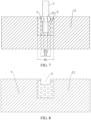
FIG. 7 is a schematic diagram showing another state in which a tab is welded to the positive electrode for the lithium-ion battery according to some embodiments of the present invention. -
FIG. 8 is another schematic sectional view of a notch in the positive electrode for the lithium-ion battery according to some embodiments of the invention. -
FIG. 9 is a schematic structural diagram of a battery core according to some embodiments of the present invention. -
FIG. 10 is a schematic structural diagram of a lithium-ion battery according to some embodiments of the present invention. - List of reference signs in the drawings: 1-positive electrode; 11-current collector; 12-material region; 2-tab; 21-welding end; 22-matching part; 3-notch; 4-cleaning region; 5-cutting line; 6-tab groove; 7-negative electrode; 8-separator; 10-square housing; 13-cap; 14-battery core.
- In this example, a
positive electrode 1 for a lithium-ion battery is provided. Referring toFIGS. 2 to 5 , opposite cleaningregions 4 provided on two sides of thepositive electrode 1 in a thickness direction of thepositive electrode 1. Thecleaning regions 4 are configured for welding awelding end 21 of thetab 2. Portions of thecleaning regions 4 which are each close to a side of thepositive electrode 1 in a width direction of thepositive electrode 1 have anotch 3. Thenotch 3 penetrates through thepositive electrode 1 along a thickness direction of thepositive electrode 1. A part of the tab which is corresponding to the notch in a width direction of the positive electrode is a matching part, the matching part is enabled to be provided in the notch. A dimension of a part of thecleaning region 4 intersecting an edge of the notch along a length direction of thepositive electrode 1 is denoted by D1. And, a maximum dimension of thenotch 3 along the length direction of thepositive electrode 1 is denoted by D2. D2 is less than D1, as shown inFIG. 6 . - In this example, taking
FIG. 2 as an example, a left-right direction inFIG. 2 is a length direction of thepositive electrode 1. A upper-lower direction inFIG. 2 is a width direction of thepositive electrode 1, and an inner-outer direction inFIG. 2 is a thickness direction of thepositive electrode 1. - In this example, the
cleaning region 4 corresponds to the tab groove in the related art, and thenotch 3 corresponds to the notch in the related art. As shown inFIG. 3 , thecleaning region 4 retains only the current collector 11 in a middle portion of thepositive electrode 1 in the thickness direction of thepositive electrode 1, and thematerial region 12 on two sides of the current collector 11 is cleaned. As shown inFIG. 4 , thenotch 3 penetrates directly through the entirepositive electrode 1. That is, the current collector 11 and thematerial region 12 on two sides of the current collector 11 are cut away. - In this example, sectional shapes of the
cleaning region 4 and thenotch 3 may not be limited. Optionally, as shown inFIG. 2 , thenotch 3 has an arc-shaped opening shape in the thickness direction of thepositive electrode 1, and an opening of the arc-shaped opening shape faces outwardly, i.e., towards an upper side ofFIG. 2 . In this way, generation of tip burrs during the punching operation may be avoided. Optionally, the arc-shaped opening shape is major arc, so that a part of thetab 2 which is corresponding to thenotch 3 in the width direction of thepositive electrode 1 may be provided in thenotch 3. A maximum dimension of thenotch 3 in the length direction of thepositive electrode 1 is less than a dimension of a part of thecleaning region 4 intersecting an edge of the notch in the length direction of thepositive electrode 1. In this configuration, as shown inFIG. 2 andFIG. 8 ,more material regions 12 are remained on an upper side of thecleaning region 4 as well as the left and right sides of thenotch 3 inFIG. 2 . So, the flatness of thepositive electrode 1 is higher, so that the battery can be better formed and bonded, and the gap between the separator and the positive electrode is smaller. And, there does not cause the problem that the gaps in the local regions are enlarged and the impedance is increased during a cycling process, so as to better reduce the risk of lithium precipitation in the negative electrode in the later period of the cycling process of the battery. Of course, thenotch 3 with the rectangular cross-section inFIG. 8 can also be used to better reduce the risk of lithium precipitation in the negative electrode in the later period of the cycling process of the battery, comparted with the related art. - In this example, a shape of the
cleaning region 4 may be rectangular, circular or trapezoidal, and may be of other shapes. The shape configuration of thecleaning region 4 may avoid the cleaning region to have too small area to affect the welding effect of the tab. Optionally, as shown inFIG. 2 , thecleaning region 4 is rectangular in cross-section, which is more convenient for the laser cleaning operation in comparison with other shapes, facilitates the welding of thetab 2, and enables the loss of energy density to be reduced. - In industry, the punched notch in related art is generally wider than the tab groove, and the punched notch is larger, thereby resulting in a location, which is corresponding to the punched notch, of a square core to decrease a thickness of a layer of electrode. So, the region, in which the punched
notch 3 is located, has a decreased thickness on a surface of the square core and thus the square core is caused to have a poor flatness. When the battery is formed, the region, in which the punchednotch 3 is located, has a decreased thickness, and the formation and bonding is poor, thereby resulting in an enlargement in a gap between the separator and the positive electrode. When the battery is charged and discharged, the gap between the separator and thepositive electrode 1 is further enlarged due to repeated expansion and contraction of the positive electrode and the negative electrode, and the impedance of the region, in which the punchednotch 3 is located, is increased. So, it is more difficult for the positive electrode and the negative electrode to deintercalate lithium, and the problem of lithium precipitation of the negative electrode in the later period of the cycling process is easily caused. - In the positive electrode for the lithium-ion battery according to this example of the present invention, a part of the
tab 2 which is corresponding to thenotch 3 in a width direction of thepositive electrode 1 is a matching part. And, the matching part may be provided in thenotch 3, that is, the tab may be normally provided in thenotch 3 and thecleaning region 4. Accordingly, the normal welding of thetab 2 in thecleaning region 4 is ensured as shown inFIG. 5 andFIG. 8 . The maximum dimension of thenotch 3 in the length direction of thepositive electrode 1 is less than the dimension of a part of thecleaning region 4 intersecting an edge of the notch in the length direction of thepositive electrode 1. In this way, when the dimensions of thecleaning region 4 in a length direction of the positive electrode are ensured to be the same, a combination of apartial material region 12 on a side of the cleaning region close to the notch and the current collector 11 is not cut off, by reducing the dimension of the punchednotch 3 in the length direction of the positive electrode. And, thispartial material region 12 and the current collector 11 are extended to a side having a notch 3 (e.g., a left side or a right side of thenotch 3 as shown inFIG. 5 ) of thepositive electrode 1. So, uneven-thickness regions of the whole positive electrode are decreased, compared with the related art. When the battery is formed, the formation and bonded effect thereof is good, and the gap between the separator and the positive electrode is smaller. During the cycling process, there is no problem in that the gaps in the partial regions are enlarged and the impedance is increased, thereby alleviating the risk of lithium precipitation of the negative electrode in the later period of the cycling process of the battery. - In addition, in this example, some dimensions of the
tab 2, thenotch 3 and thecleaning region 4 of thepositive electrode 1 are set. - As shown in
FIG. 6 andFIG. 7 , a part of thetab 2 which is corresponding to thenotch 3 in the width direction of thepositive electrode 1 is a matchingpart 22. The matchingpart 22 is a segment of a middle portion of the tab in a length direction of thetab 2, and the matchingpart 22 is located in a space of thenotch 3. A minimum dimension of the matchingpart 22 in the length direction of thepositive electrode 1 is denoted by D3 and has a suitable range of 2mm-12mm. As shown inFIG. 6 andFIG. 7 , when thetab 2 is welded to thecleaning region 4, a minimum dimension of a part, which is located in thenotch 3, of thetab 2 in the left-right direction is denoted by D3. In the dimension configure of the D3 in this example of the present invention, it can avoid that when D3 is too large, an area of thematerial region 12 is reduced, and the loss of energy density is higher. Also, it can avoid that when D3 is too small, the battery is difficult to dissipate heat. - A dimension of a part of the
cleaning region 4 intersecting an edge of the notch along a length direction of thepositive electrode 1 is denoted by D1 and has a suitable range of 8mm-30mm. As shown inFIG. 6 , when a shape of thecleaning region 4 is rectangular, D1 denotes a dimension of thecleaning region 4 along the length direction of thepositive electrode 1. In the dimension configure of this example of the present invention, it can avoid that when D1 is too large, the area of the material region is reduced and more energy density is lost. Also, it can avoid that whenD 1 is too small, the welding region of thetab 2 is too small, and a dimension of thetab 2 is affected. If thetab 2 is too narrow, the manufacture of the tab is difficult, and the heat dissipation of the battery is affected. - A maximum dimension of the
notch 3 along the length direction of thepositive electrode 1 is denoted by D2 and has a suitable range of 4mm-29mm. As shown inFIG. 6 , a shape of thenotch 3 is arc and is a major arc. D2 denotes a diameter of a circle having the arc. In the dimension configure according to this example of the present invention, it can avoid that when D2 is too large, the flatness of a region, in which thenotch 3 is located, of the battery is not good to affect the formation and bonding effect. So, the gap between the separator and the positive electrode is larger. During the cycling process, the problem that the gaps in the local regions are enlarged and the impedance is increased may also avoid to occur to increase the risk of lithium precipitation of the negative electrode in a later period of the cycling process of the battery. Further, it can avoid that when D2 is too small, the risk that thetab 2 coincides with thematerial region 12 is not prevented, so that a part of thetab 2 corresponding to thenotch 3 in the width direction of thepositive electrode 1 cannot be provided in thenotch 3, thereby affecting the normal welding of thetab 2 in thecleaning region 4. - For the above dimensions, it may firstly consider a minimum dimension D3, which is in the length direction of the
positive electrode 1, of the matching part; secondly consider a dimension D1 of a part of thecleaning region 4 intersecting an edge of the notch along the length direction of thepositive electrode 1; and finally consider a maximum dimension D2 of thenotch 3 along the length direction of thepositive electrode 1. In this way, it is possible to ensure that thetab 2 itself is suitable in size. Further, first, a small loss of energy density and the good heat dissipation effect of the battery may be simultaneously considered; second, the small loss of energy density and a suitable dimension of the weld region of thetab 2 may be simultaneously considered so as to avoid thetab 2 to be too narrow, to avoid the manufacture of the tab to be difficult, and to avoid to affect the heat dissipation of the battery; third, the higher flatness without affecting the normal welding of thetab 2 may be simultaneously considered, thereby reducing the risk of lithium precipitation of the negative electrode in the later period of the cycling process of the battery. - With the positive electrode for the lithium-ion battery according to this example of the present invention, the dimension of the existing punched notch in the length direction of the
positive electrode 1 is reduced in a case where the dimensions of thecleaning region 4 in the longitudinal direction of thepositive electrode 1 are the same, whereas this has little effect on the difficulty in punching. The existing notch is usually punched from the positive electrode before this piece is manufactured, and the punching is usually performed pneumatically by using a clamping fixture for punching. In the present example, it is only necessary to adjust a dimension of a cutter of a punching device, and this dimension of the cutter is matched with thenotch 3, so that the punching can be realized. The cutter with this dimension can be machined and used. For example, the cutter with a dimension of 6 mm can be machined. In addition, an operation procedure of manufacturing thepositive electrode 1 includes a coating process, a cleaning process, a cold pressing process and a striping process. It is not ensured that the striping operation is sliced just along the edge of the cleaning region, so that a edge of thepositive electrode 1 is left with a part of the material region after cutting. Therefore, the punching device is required. And, an operation procedure of the negative electrode includes a coating process, a cold pressing process, a cutting process, and a cleaning process. Because material-free regions at edges can be controlled in the cleaning process, the negative electrode does not need to punch anotch 3. - According to the positive electrode for the lithium-ion battery according to the present embodiments, the flatness of a part of the battery which is corresponding to the punched portion of the
positive electrode 1 can be improved, by optimizing a punched shape or a punched size. And, the problem of lithium precipitation is less likely to occur in the cycling process because the flatness of thepositive electrode 1 is higher, so as to improve the lithium precipitation problem of the battery. Moreover, without affecting the energy density of the battery at all, it is not difficult to add any manufacturing process, no additional equipment is required, and mass production is possible. Moreover, the foregoing detailed description of some examples of the present invention is not to be construed as limitation to the present invention. - In this example, a
battery core 14 is provided, and includes anegative electrode 7, aseparator 8 and thepositive electrode 1 for the lithium-ion battery mentioned in Example 1. Thenegative electrode 7, theseparator 8, and thepositive electrode 1 for the lithium-ion battery are stacked and wound into a square winding body. - In the battery core of this example, the positive electrode for the lithium-ion battery is used, and the
tab 2 can be normally arranged in thenotch 3 and thecleaning region 4 to ensure the normal welding of thetab 2 in thecleaning region 4. In addition, when the dimensions of thecleaning region 4 along the length direction of thepositive electrode 1 are ensured to be the same, there is a part of thematerial region 12 on a side of thecleaning region 4 close to thenotch 3, by reducing the dimension of the existing punched notch along the length direction of thepositive electrode 1, so that uneven-thickness regions of the wholepositive electrode 1 are decreased. When the battery is formed, the formation and bonding effect thereof is good, and the gap between the separator and the positive electrode is smaller. During the cycling process, there is no problem in that the gaps in the local regions are enlarged and the impedance is increased, thereby alleviating the risk of lithium precipitation of the negative electrode in the later period of the cycling process of the battery. - In this example, a lithium-ion battery is provided, and includes a square housing 10, a
cap 13, and thebattery core 14 mentioned in Example 2, in which the square housing may be provided with a mounting groove, the battery core is arranged in the mounting groove, and an opening of the mounting groove is sealed by the cap. - In the lithium-ion battery of this example, the above battery core is adopted, and the battery core adopts the above positive electrode for the lithium-ion battery. When the battery is formed, the
tab 2 may be normally arranged in thenotch 3 and thecleaning region 4, so that thetab 2 may be welded normally in thecleaning region 4. When the dimensions of the cleaning region along the length direction of the positive electrode are ensured to be the same, there is a part of thematerial region 12 on a side of thecleaning region 4 close to thenotch 3, by reducing the dimension of the existing punched notch along the length direction of thepositive electrode 1, so that an uneven-thickness region of the wholepositive electrode 1 is decreased. So, the formation and bonding effect of the battery is good, and the gap between the separator and the positive electrode is smaller. During the cycling process, there is no problem in that the gaps in the local regions are enlarged and the impedance is increased, thereby alleviating the risk of lithium precipitation of the negative electrode in the later period of the cycling process of the battery. - In this example, it is provided a lithium-ion battery including a square pouch battery. The pouch battery includes the above-mentioned winding body and an aluminum plastic film.
- In the lithium-ion battery of this example, the above battery core is adopted, and the battery core adopts the above positive electrode for the lithium-ion battery. When the battery is formed, the
tab 2 may be normally arranged in thenotch 3 and thecleaning region 4, so that thetab 2 may be welded normally in thecleaning region 4. When the dimensions of the cleaning region along the length direction of the positive electrode are ensured to be the same, there is a part of thematerial region 12 on a side of thecleaning region 4 close to thenotch 3, by reducing the dimension of the existing punched notch along the length direction of thepositive electrode 1, so that an uneven-thickness region of the wholepositive electrode 1 is decreased. So, the formation and bonding effect of the battery is good, and the gap between the separator and the positive electrode is smaller. During the cycling process, there is no problem in that the gaps in the local regions are enlarged and the impedance is increased, thereby alleviating the risk of lithium precipitation of the negative electrode in the later period of the cycling process of the battery.
Claims (9)
- A positive electrode (1) for a lithium-ion battery, comprising:opposite cleaning regions (4) provided respectively on opposite sides of the positive electrode (1) in a thickness direction of the positive electrode for welding with a welding end (21) of a tab (2); anda notch (3) formed on a side of the cleaning regions (4) close to an edge of the positive electrode in a width direction of the positive electrode, wherein the notch (3) penetrates the positive electrode (1) in the thickness direction and a part of the tab (2) which is corresponding to the notch in a width direction of the positive electrode (1) is a matching part (22), the matching part is enabled to be provided in the notch;wherein D1 is greater than D2, where D1 represents a dimension of a part of the cleaning regions (4) intersecting an edge of the notch in a length direction of the positive electrode (1), and D2 represents a maximum dimension of the notch (3) in the length direction.
- The positive electrode according to claim 1, wherein a minimum dimension of the matching part (22) in the length direction ranges from 2mm to 12mm.
- The positive electrode according to any one of claims 1 to 2, wherein D1 ranges from 8mm to 30mm.
- The positive electrode according to any one of claims 1 to 3, wherein D2 ranges from 4mm to 29mm.
- The positive electrode according to any one of claims 1 to 4, wherein a cross section of the notch (3) along the width direction appears as an arc-shaped opening facing outward.
- The positive electrode according to claim 5, wherein the arc-shaped opening is of a major arc.
- The positive electrode according to any one of claims 1 to 6, wherein each of the cleaning regions is rectangular, circular or trapezoidal.
- A battery core (14), comprising:a negative electrode (7);a separator (8); andthe positive electrode (1) for the lithium-ion battery comprising according to any one of claims 1 to 8;wherein the negative electrode (7), the separator (8), and the positive electrode (1) are stacked and wound into a square winding body.
- A lithium-ion battery comprising the battery core (14) according to claim 8.
Applications Claiming Priority (1)
| Application Number | Priority Date | Filing Date | Title |
|---|---|---|---|
| CN202211530075.1A CN115986049A (en) | 2022-11-30 | 2022-11-30 | A kind of lithium-ion battery positive pole piece, battery cell and lithium-ion battery |
Publications (1)
| Publication Number | Publication Date |
|---|---|
| EP4379896A1 true EP4379896A1 (en) | 2024-06-05 |
Family
ID=85971307
Family Applications (1)
| Application Number | Title | Priority Date | Filing Date |
|---|---|---|---|
| EP23209626.3A Pending EP4379896A1 (en) | 2022-11-30 | 2023-11-14 | Positive electrode for lithium-ion battery, battery core, and lithium-ion battery |
Country Status (4)
| Country | Link |
|---|---|
| US (1) | US20240178460A1 (en) |
| EP (1) | EP4379896A1 (en) |
| CN (1) | CN115986049A (en) |
| WO (1) | WO2024113581A1 (en) |
Families Citing this family (1)
| Publication number | Priority date | Publication date | Assignee | Title |
|---|---|---|---|---|
| CN223797429U (en) * | 2024-12-31 | 2026-01-13 | 浙江锂威电子科技有限公司 | Cell structure and battery |
Citations (2)
| Publication number | Priority date | Publication date | Assignee | Title |
|---|---|---|---|---|
| CN216288522U (en) * | 2021-11-18 | 2022-04-12 | 珠海冠宇电池股份有限公司 | Pole piece and battery |
| US20220328941A1 (en) * | 2015-08-31 | 2022-10-13 | Ningde Amperex Technology Limited | Secondary battery cell and winding formation system thereof |
Family Cites Families (9)
| Publication number | Priority date | Publication date | Assignee | Title |
|---|---|---|---|---|
| CN212209657U (en) * | 2020-06-11 | 2020-12-22 | 珠海冠宇电池股份有限公司 | Battery negative plate and battery roll core |
| CN113644230A (en) * | 2021-09-09 | 2021-11-12 | 珠海冠宇电池股份有限公司 | Battery pole piece, battery and battery pole piece manufacturing method |
| CN215644565U (en) * | 2021-09-22 | 2022-01-25 | 珠海冠宇电池股份有限公司 | Pole piece, electric core structure and battery |
| CN215869464U (en) * | 2021-09-27 | 2022-02-18 | 珠海冠宇电池股份有限公司 | Pole piece assembly and battery |
| CN114094044A (en) * | 2021-11-18 | 2022-02-25 | 珠海冠宇电池股份有限公司 | Pole piece and battery |
| CN216354304U (en) * | 2021-12-06 | 2022-04-19 | 珠海冠宇电池股份有限公司 | Pole piece and battery |
| CN218827228U (en) * | 2022-09-29 | 2023-04-07 | 惠州市豪鹏科技有限公司 | Pole piece and battery |
| CN218632097U (en) * | 2022-09-30 | 2023-03-14 | 比亚迪股份有限公司 | Electrodes, Batteries and Consumers |
| CN218939958U (en) * | 2022-11-14 | 2023-04-28 | 惠州市豪鹏科技有限公司 | Pole core and battery |
-
2022
- 2022-11-30 CN CN202211530075.1A patent/CN115986049A/en active Pending
-
2023
- 2023-04-03 WO PCT/CN2023/085873 patent/WO2024113581A1/en not_active Ceased
- 2023-11-14 EP EP23209626.3A patent/EP4379896A1/en active Pending
- 2023-11-22 US US18/518,337 patent/US20240178460A1/en active Pending
Patent Citations (2)
| Publication number | Priority date | Publication date | Assignee | Title |
|---|---|---|---|---|
| US20220328941A1 (en) * | 2015-08-31 | 2022-10-13 | Ningde Amperex Technology Limited | Secondary battery cell and winding formation system thereof |
| CN216288522U (en) * | 2021-11-18 | 2022-04-12 | 珠海冠宇电池股份有限公司 | Pole piece and battery |
Also Published As
| Publication number | Publication date |
|---|---|
| CN115986049A (en) | 2023-04-18 |
| WO2024113581A1 (en) | 2024-06-06 |
| US20240178460A1 (en) | 2024-05-30 |
Similar Documents
| Publication | Publication Date | Title |
|---|---|---|
| KR102929187B1 (en) | Battery electrode plates, batteries and methods for manufacturing battery electrode plates | |
| JP6505859B2 (en) | Nonaqueous electrolyte secondary battery | |
| WO2022257746A1 (en) | Lithium-ion battery | |
| WO2023088434A1 (en) | Plate and battery | |
| EP3477754A1 (en) | Method for manufacturing secondary battery and secondary battery using same | |
| WO2023088433A1 (en) | Plate and battery | |
| CN216288512U (en) | Battery pole piece and battery | |
| US10693192B2 (en) | Wound-type cell | |
| US12087900B2 (en) | Method of manufacturing electrode plate for battery, method of manufacturing battery, and battery | |
| CN115458879A (en) | Battery cell and battery cell manufacturing method | |
| US20240178460A1 (en) | Positive electrode for lithium-ion battery, battery core, and lithium-ion battery | |
| JP7545898B2 (en) | Electrode plate for secondary battery and secondary battery using same | |
| JP7518767B2 (en) | Electrode plate for secondary battery and secondary battery using same | |
| CN118099541A (en) | Reel and battery | |
| WO2020129999A1 (en) | Electrode plate for secondary cell, and secondary cell using same | |
| WO2020137714A1 (en) | Secondary battery | |
| WO2024074096A1 (en) | Electrode sheet and battery | |
| WO2013031938A1 (en) | Secondary battery | |
| CN115548460A (en) | Laminated cell structure manufacturing method and laminated cell structure | |
| CN216928675U (en) | Battery with a battery cell | |
| CN117810368A (en) | A pole piece preparation method, pole piece and battery core | |
| CN219457960U (en) | Electrode and battery | |
| EP4625517A2 (en) | Electrode assembly for secondary battery | |
| JP7398392B2 (en) | Electrode plate for secondary batteries and secondary batteries using the same | |
| CN119920812B (en) | Electrode assembly and processing method thereof, battery cell, battery, electrical device, and cutting knife assembly |
Legal Events
| Date | Code | Title | Description |
|---|---|---|---|
| PUAI | Public reference made under article 153(3) epc to a published international application that has entered the european phase |
Free format text: ORIGINAL CODE: 0009012 |
|
| STAA | Information on the status of an ep patent application or granted ep patent |
Free format text: STATUS: REQUEST FOR EXAMINATION WAS MADE |
|
| 17P | Request for examination filed |
Effective date: 20231114 |
|
| AK | Designated contracting states |
Kind code of ref document: A1 Designated state(s): AL AT BE BG CH CY CZ DE DK EE ES FI FR GB GR HR HU IE IS IT LI LT LU LV MC ME MK MT NL NO PL PT RO RS SE SI SK SM TR |