EP4379644A1 - Scenario similarity retrieval-based automatic scenario generation system and method - Google Patents
Scenario similarity retrieval-based automatic scenario generation system and method Download PDFInfo
- Publication number
- EP4379644A1 EP4379644A1 EP22216701.7A EP22216701A EP4379644A1 EP 4379644 A1 EP4379644 A1 EP 4379644A1 EP 22216701 A EP22216701 A EP 22216701A EP 4379644 A1 EP4379644 A1 EP 4379644A1
- Authority
- EP
- European Patent Office
- Prior art keywords
- scenario
- scenarios
- retrieval
- based automatic
- generation method
- Prior art date
- Legal status (The legal status is an assumption and is not a legal conclusion. Google has not performed a legal analysis and makes no representation as to the accuracy of the status listed.)
- Pending
Links
Images



Classifications
-
- G—PHYSICS
- G06—COMPUTING OR CALCULATING; COUNTING
- G06F—ELECTRIC DIGITAL DATA PROCESSING
- G06F16/00—Information retrieval; Database structures therefor; File system structures therefor
- G06F16/20—Information retrieval; Database structures therefor; File system structures therefor of structured data, e.g. relational data
- G06F16/24—Querying
- G06F16/245—Query processing
- G06F16/2457—Query processing with adaptation to user needs
- G06F16/24575—Query processing with adaptation to user needs using context
-
- B—PERFORMING OPERATIONS; TRANSPORTING
- B60—VEHICLES IN GENERAL
- B60W—CONJOINT CONTROL OF VEHICLE SUB-UNITS OF DIFFERENT TYPE OR DIFFERENT FUNCTION; CONTROL SYSTEMS SPECIALLY ADAPTED FOR HYBRID VEHICLES; ROAD VEHICLE DRIVE CONTROL SYSTEMS FOR PURPOSES NOT RELATED TO THE CONTROL OF A PARTICULAR SUB-UNIT
- B60W60/00—Drive control systems specially adapted for autonomous road vehicles
- B60W60/001—Planning or execution of driving tasks
- B60W60/0011—Planning or execution of driving tasks involving control alternatives for a single driving scenario, e.g. planning several paths to avoid obstacles
-
- G—PHYSICS
- G06—COMPUTING OR CALCULATING; COUNTING
- G06Q—INFORMATION AND COMMUNICATION TECHNOLOGY [ICT] SPECIALLY ADAPTED FOR ADMINISTRATIVE, COMMERCIAL, FINANCIAL, MANAGERIAL OR SUPERVISORY PURPOSES; SYSTEMS OR METHODS SPECIALLY ADAPTED FOR ADMINISTRATIVE, COMMERCIAL, FINANCIAL, MANAGERIAL OR SUPERVISORY PURPOSES, NOT OTHERWISE PROVIDED FOR
- G06Q50/00—Information and communication technology [ICT] specially adapted for implementation of business processes of specific business sectors, e.g. utilities or tourism
- G06Q50/40—Business processes related to the transportation industry
-
- B—PERFORMING OPERATIONS; TRANSPORTING
- B60—VEHICLES IN GENERAL
- B60W—CONJOINT CONTROL OF VEHICLE SUB-UNITS OF DIFFERENT TYPE OR DIFFERENT FUNCTION; CONTROL SYSTEMS SPECIALLY ADAPTED FOR HYBRID VEHICLES; ROAD VEHICLE DRIVE CONTROL SYSTEMS FOR PURPOSES NOT RELATED TO THE CONTROL OF A PARTICULAR SUB-UNIT
- B60W40/00—Estimation or calculation of non-directly measurable driving parameters for road vehicle drive control systems not related to the control of a particular sub unit, e.g. by using mathematical models
- B60W40/02—Estimation or calculation of non-directly measurable driving parameters for road vehicle drive control systems not related to the control of a particular sub unit, e.g. by using mathematical models related to ambient conditions
-
- G—PHYSICS
- G06—COMPUTING OR CALCULATING; COUNTING
- G06F—ELECTRIC DIGITAL DATA PROCESSING
- G06F9/00—Arrangements for program control, e.g. control units
- G06F9/06—Arrangements for program control, e.g. control units using stored programs, i.e. using an internal store of processing equipment to receive or retain programs
-
- G—PHYSICS
- G07—CHECKING-DEVICES
- G07C—TIME OR ATTENDANCE REGISTERS; REGISTERING OR INDICATING THE WORKING OF MACHINES; GENERATING RANDOM NUMBERS; VOTING OR LOTTERY APPARATUS; ARRANGEMENTS, SYSTEMS OR APPARATUS FOR CHECKING NOT PROVIDED FOR ELSEWHERE
- G07C5/00—Registering or indicating the working of vehicles
- G07C5/08—Registering or indicating performance data other than driving, working, idle, or waiting time, with or without registering driving, working, idle or waiting time
- G07C5/0841—Registering performance data
- G07C5/085—Registering performance data using electronic data carriers
Definitions
- the ODD is configured for a real environment, and accordingly, there is a need for a technology that makes a real driving situation as a scenario.
- the disclosure has been developed in order to solve the above-described problems, and an object of the disclosure is to provide a method for automatically generating various real driving situations as a scenario, and provide the following functions:
- a scenario retrieval-based automatic scenario generation method may include: retrieving scenarios similar to a query scenario from a scenario DB for an autonomous driving test; filtering only scenarios that meet a selection condition from the retrieved scenarios; and converting components of the filtered scenarios to suit a target condition.
- Retrieving may include: calculating a similarity by comparing the query scenario and scenarios stored in the DB; sorting scenarios with reference to the calculated similarity; and selecting scenarios that have a similarity greater than or equal to a predetermined level.
- Calculating the similarity may include: extracting feature values from the scenarios; and calculating a similarity between the extracted feature values.
- Extracting may include: selecting scenes from the scenarios; and extracting feature values from the selected scenes.
- Extracting may include: classifying the components of the scenarios into a plurality of groups; and extracting feature values from the classified groups.
- the selection condition may include an ODD, CP, a filtering condition.
- the filtering condition may include a scenario abstraction step, a scenario level, an effectiveness validation method, and a position where a scenario is collected.
- the scenario retrieval-based automatic scenario generation method may further include: validating effectiveness of the converted scenario; and concretizing the validated scenario.
- Concretizing may include converting an abstract scenario into a logical scenario through parameterization, and concretizing a logical scenario into a concrete scenario by sampling a specific value based on probability distribution.
- a scenario retrieval-based automatic scenario generation system may include: a scenario DB configured to test autonomous driving; and a scenario generation system configured to retrieve scenarios similar to a query scenario from the scenario DB, to filter only scenarios that meet a selection condition from the retrieved scenarios, and to convert components of the filtered scenarios to suit a target condition.
- a scenario retrieval-based automatic scenario generation method may include: retrieving scenarios similar to a query scenario from a scenario DB for an autonomous driving test; converting components of the retrieved scenarios to suit a target condition; and concretizing the converted scenarios.
- a scenario retrieval-based automatic scenario generation system may include: a scenario DB configured to test autonomous driving; and a scenario generation system configured to retrieve scenarios similar to a query scenario from the scenario DB, to convert components of the retrieved scenarios to suit a target condition, and to concretize the converted scenarios.
- a desired scenario may be automatically generated by retrieving a scenario similar to a targeted scenario, converting the retrieved scenario, and concretizing the scenario, and the following effects may be provided:
- An embodiment of the disclosure proposes a method and a system for automatic scenario generation based on scenario similarity retrieval. Specifically, the embodiment proposes a technology for automatically generating a new traffic scenario by retrieving, from a database, a traffic scenario similar to an inputted traffic scenario in terms of a driving environment, an ODD, a risk, and modifying and merging the similar traffic scenario to be used in a test.
- an environment that operates when a concept of a vehicle is designed is limited to the ODD, and scenarios possible within the limited ODD are tested and safety is validated from various aspects.
- the ODD limits an operational range of a system with respect to all factors related to driving, such as an operation on a road and a road itself.
- an ODD is compared with pre-stored scenarios and scenarios included in a proposed ODD are selected.
- a system may suffer from various risks during an operation within an ODD.
- an autonomous vehicle may have the risk of colliding with another vehicle nearby or a pedestrian, or violating the traffic law.
- it is necessary to check whether the system operates against all risk situations that it encounters during an operation within the ODD, and has preparations for the risks.
- CP risk factors
- the risk situation may be defined by CP and it may be identified whether a specific scenario includes a certain risk situation through the CP.
- CP is compared with pre-stored scenarios, and it is checked whether a scenario includes CP proposed to implement a risk situation, and a scenario including the corresponding CP is selected.
- An ontology refers to a knowledge representation format and data structure which are used for utilizing abstract information in a computation processing device in knowledge engineering.
- an adapter for reading out data based on an ontology of each group is generated in order to utilize information generated in various groups for a system.
- a functional scenario which corresponds to a concept designing step and organizes traffic situations that may occur within the ODD of a system, based on natural language and knowledge
- an abstract scenario which transforms the functional scenario to be stored in and processed by a computation device
- a logical scenario which organizes states of components of the abstract scenario according to a parameter, a range of the parameter, and probability distribution
- a concrete scenario which selects a specific value from the range of the logical scenario based on probability distribution.
- scenario components for reflecting various traffic situations on scenarios and a method for structurally organizing the scenario components are being researched.
- the components may be specifically divided to organize various factors related to traffic situations, such as a position of a road, shape, arrangements of traffic objects, and a state of each component is defined based on a parameter.
- the components may be classified and organized into groups having similar characteristics, so that the components are efficiently processed, stored and managed when they are simulated or various scenarios are managed.
- a 6 Layer model organized in the PEGASUS project is a representative method.
- components of a traffic situation are classified into 6 layers according to characteristics.
- Layer 1 includes elements related to a traffic system such as a road system and a signal system.
- Layer 2 includes structures arranged around a road such as buildings and vegetation.
- Layer 3 includes elements defining a temporary change in a target of Layer 1 and Layer 2.
- Layer 4 includes a traffic object which has its state changed such as a vehicle, a pedestrian, and an animal.
- Layer 5 includes an environmental element such as weather and illuminance
- Layer 6 includes a communication element used for autonomous driving.
- a scenario refers to data that organizes traffic situations with a normalized format and structure. Scenario generation methods which are currently being researched will be described.
- This method collects traffic situations by using systems like a traffic situation collector installed in an autonomous vehicle or an infrastructure, a portable traffic situation collector, etc.
- This method recognizes a document that organizes cases in which physical and social damages are caused, such as accident cases in which property damage and bodily injury are caused, traffic law and regulation violation cases, driving cases in which a traffic jam is caused, which are previously collected, and generates a scenario based on the document.
- An expert generates a scenario by using a generation tool based on experiment on various traffic situations.
- This method generates a scenario by randomly allocating other scenario components that include CP conditions selected in a road environment or range restricted in an ODD, and that are not previously defined.
- This method generates a new scenario by modifying and augmenting components of the pre-stored scenario.
- This method generates a scenario by collecting a traffic situation meeting a specific condition with respect to random situation, in which elements constituting a traffic situation are randomly allocated in a simulation and are implemented.
- Validation/assessment of an autonomous driving system requires a test in a scenario regarding various traffic situations.
- a scenario in which a risk is revealed during the test it is necessary to reproduce various situations where the same risk may be revealed.
- scenarios containing a risk during the test it is necessary to generate scenarios similar thereto and to test the scenarios.
- a method of generating similar scenarios may include a method of directly modifying a corresponding scenario or a method of generating a completely new scenario by using components of the corresponding scenario as materials.
- Scenarios generated according to an embodiment of the disclosure are used to validate/assess an autonomous driving system in a vehicle proving environment (proving ground) or a simulation environment where a scenario is reproduced.
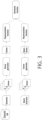
- the scenario retrieval-based automatic scenario generation method is illustrated in FIG. 1 , and is mostly divided into five steps: an adapter generation step (S 110); a scenario retrieval step (S 120), a filter step (S130), a domain adaptation step (S140); a scenario validation step (S150); and a parametrization/sampling step (S160).
- S 110 an adapter generation step
- S 120 a scenario retrieval step
- S130 a filter step
- S140 domain adaptation step
- S150 scenario validation step
- S160 parametrization/sampling step
- Used data includes an ontology, a format, a scenario, an operational design domain (ODD), criticality phenomena (CP), a filtering condition, a target condition.
- ODD operational design domain
- CP criticality phenomena
- the ontology is definition of terms and concepts of data used as an input, and an ontology regarding pre-stored data and an ontology regarding newly inputted data may be matched with each other and used. Through this, data may be used without respect to terms and concepts that are differently defined.
- the format refers to a way of indicating relationship between terms and concepts in data, listing, and storing data.
- the scenarios are differently organized according to an ontology and a format.
- the scenarios may be divided into an abstract type, a logical type, and a concrete type.
- the functional scenario may be excluded since it is not dealt with by a computation processing device.
- the ODD and the CP are not fixed like the scenario and are organized differently according to an ontology and a format.
- the filtering condition includes various elements other than the ODD and the CP that may be used when scenario components and scenarios are selected, such as a generating time, a type of an object to be treated, the number of objects.
- the target condition includes a condition regarding an output value, such as an ontology, a format to be used in a result scenario, and a storage format.
- the target condition additionally includes a specific component, and the corresponding component may be used as a condition for changing a scenario.
- the scenario, map, CP, and ODD may be described based on machine-readable language (ontology) such as OWL, RDF, etc.
- a process of generating an adapter for reading out respective data includes an ontology mapping step and an adapter generation step as shown in FIG. 2 .
- Ontology mapping This is a step of connecting ontologies pre-stored in an ontology database (DB) and a query ontology which is a basis of input data. Through this step, terms and concepts used in the input data match terms and concepts pre-stored in the DB.
- DB ontology database
- Adapter generation This is a step of receiving, as an input, a format in which an extension of input data and a material structure are organized, and generating an adapter based on pre-organized terms and concepts. Data created based on the query ontology and the format may be read out through the generated adapter.
- a similar scenario is retrieved by a method of calculating a similarity by comparing a scenario inputted as a query scenario and scenarios pre-stored in the scenario DB, sorting scenarios with reference to the similarity, and selecting scenarios having a similarity greater than or equal to a predetermined level.
- a similarity of a scenario may be calculated in various ways.
- Calculation of a similarity may include a representation function and a similarity function.
- the representation function is a part that converts data received as an input into a feature value, and extracts a feature value from input data in the form of a natural language, a graph, an image or a vector through a classical algorithm or a deep learning algorithm, and converts the feature value into a feature value in the form of a vector, a semantic feature, a graph.
- the similarity function is a part that receives the feature value converted by the representation function as an input, and calculates a similarity between the two feature values.
- the method of calculating a similarity may include a method of calculating a similarity itself by using a distance function, a method of estimating a probability of similarity, or a method of classifying groups through clustering.
- scenes are generated as a specific condition in each scenario, and a component of each scene is converted into a feature value through the representation function.
- a similarity between converted feature values for each scene is calculated by comparison through the similarity function.
- the similarity is compared with respect to a scene that is automatically selected by a selection logic from scenes of various time points constituting a scenario extracted from the database.
- a similarity is compared by using a scene that is directly selected by a user or automatically selected by a selection logic.
- the selection logic automatically extracts a scene based on a time, a position, etc. of the scene.
- Attribute groups classified by a few characteristics may be combined on a group basis, by stages, serially or in parallel, and a similarity may be calculated.
- arrangements of dynamic objects may be compared and arrangements of spatial elements (map, a static object, a structure) may be compared.
- scenarios are selected by comparing components of the retrieved scenarios and a selection condition (ODD, CP, filtering condition).
- the filtering condition may include a scenario abstraction step (abstract, logical, concrete), scenario layers (LO-L6), a verification and validation method, and a position where a scenario is collected, etc.
- the selected scenarios are modified to suit components of a target, and modified data is organized according to a targeted ontology and format.
- this is a process of modifying or merging selected scenarios to be similar to scenario components proposed in the target condition, and a target of this process may be a map or a component.
- a targeted component partially includes a scenario component.
- the selected scenarios may be modified according to the corresponding road, by replacing a road with the provided road, adjusting or deleting positions of components belonging to the road, or changing a state value.
- a specific range, probability distribution, or a probability distribution feature value is provided as a second example, existing components may be modified to the provided components.
- the scenarios of respective corresponding types are concretized through parameterization and sampling.
- parameterization a scenario of an abstract type that is not assigned parameters is concretized into a scenario of a logical type that is assigned parameters, range, probability distribution.
- sampling a value within a range in a scenario of a logical type is extracted based on probability distribution, and is concretized into a concrete type.
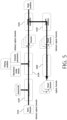
- a flow of the scenario retrieval-based automatic scenario generation method is illustrated in FIG. 5 .
- a query scenario abtract, logical concrete type
- ODD optical coaxial detector
- CP a filtering condition
- target condition a target condition
- scenarios similar to the query scenario are retrieved from the scenario DB (S120).
- scenarios are selected from the retrieved scenarios according to an ODD, CP, a filtering condition (S130).
- scenarios abtract, logical, concrete type
- S130 a filtering condition
- the filtered scenarios are converted to meet conditions proposed as the target condition (S140).
- the scenario validation step effectiveness of the scenarios is validated (S150).
- an abstract type is parameterized into a logical type through parameterization, and a logical type is concretized into a concrete type through sampling (S160).
- the generated scenarios are used to simulate in a process of assessing and validating an autonomous driving system or reproduce a traffic situation on a proving ground instance.
- FIG. 6 An execution environment of the system is illustrated in FIG. 6 .
- the system operates on a cloud and is managed in a scenario generation service system 210, and includes an ontology DB 220 and a scenario DB 230.
- the service system 210 may copy the system into a plurality of system instances 211, 212, 213 on the could, and may manage the same, and includes a function of communicating with user PCs 310, 320, 330 through a network environment, and manages connection with each system instance 211, 212, 213.
- the copied system instances 211, 212, 213 use the same ontology DB 220 and scenario DB 230.
- the technical concept of the present disclosure may be applied to a computer-readable recording medium which records a computer program for performing the functions of the apparatus and the method according to the present embodiments.
- the technical idea according to various embodiments of the present disclosure may be implemented in the form of a computer readable code recorded on the computer-readable recording medium.
- the computer-readable recording medium may be any data storage device that can be read by a computer and can store data.
- the computer-readable recording medium may be a read only memory (ROM), a random access memory (RAM), a CD-ROM, a magnetic tape, a floppy disk, an optical disk, a hard disk drive, or the like.
- a computer readable code or program that is stored in the computer readable recording medium may be transmitted via a network connected between computers.
Landscapes
- Engineering & Computer Science (AREA)
- Physics & Mathematics (AREA)
- Theoretical Computer Science (AREA)
- General Physics & Mathematics (AREA)
- General Engineering & Computer Science (AREA)
- Transportation (AREA)
- Software Systems (AREA)
- Mechanical Engineering (AREA)
- Automation & Control Theory (AREA)
- Business, Economics & Management (AREA)
- Computational Linguistics (AREA)
- Databases & Information Systems (AREA)
- Data Mining & Analysis (AREA)
- Mathematical Physics (AREA)
- Human Computer Interaction (AREA)
- Health & Medical Sciences (AREA)
- Marketing (AREA)
- Human Resources & Organizations (AREA)
- Tourism & Hospitality (AREA)
- Strategic Management (AREA)
- General Business, Economics & Management (AREA)
- Primary Health Care (AREA)
- Economics (AREA)
- General Health & Medical Sciences (AREA)
- Traffic Control Systems (AREA)
- Control Of Driving Devices And Active Controlling Of Vehicle (AREA)
- Information Retrieval, Db Structures And Fs Structures Therefor (AREA)
Abstract
Description
- This application is based on and claims priority under 35 U.S.C. § 119 to
Korean Patent Application No. 10-2022-0166795, filed on December 2, 2022 - The disclosure relates to assessing and validating an autonomous vehicle, and more particularly, to a method for generating a traffic scenario for assessing and validating functions of an autonomous vehicle in various traffic situations.
- In an approval process of an official organization to introduce vehicles having autonomous driving systems of Society of Automotive Engineers (SAE) Lv. 4 or higher mounted therein to the market, rational validation and assessment of systems are required. Researches on validation and assessment methods are proceeding with the aim of testing autonomous driving systems in various situations and statistically analyzing results of the test.
- In the test of a system, a scenario-based testing method is used. The scenario-based testing method may generate driving scenarios of various situations and test the scenarios in order to check whether there is no abnormality in operating within an operational design domain (ODD), which is a range where the system is operable, and whether there are preparations for a risk in terms of safety, law, restrictions in a driving situation through criticality phenomena (CP).
- The ODD is configured for a real environment, and accordingly, there is a need for a technology that makes a real driving situation as a scenario.
- The disclosure has been developed in order to solve the above-described problems, and an object of the disclosure is to provide a method for automatically generating various real driving situations as a scenario, and provide the following functions:
- 1) in a situation in which driving is tested on a real road, retrieving a scenario similar to the current situation from pre-stored scenarios, and generating and providing a modified scenario to merge the retrieved scenario into the current situation or a map;
- 2) in a situation in which continuous driving is tested in a large-scale simulation region, retrieving a scenario similar to the current situation from pre-stored scenario, and generating and providing a modified scenario to merge the retrieved scenario into the current situation and a map;
- 3) when there is a target scenario, retrieving a scenario similar thereto from pre-stored scenarios, and generating and providing a modified scenario to merge the retrieved scenario into the target scenario or a map, or providing the retrieved scenario without modifying;
- 4) retrieving and providing a scenario corresponding to an ODD condition by referring to an proposed ODD, CP; and
- 5) modifying a provided scenario according to a proposed target format and providing.
- According to an embodiment of the disclosure to achieve the above-described object, a scenario retrieval-based automatic scenario generation method may include: retrieving scenarios similar to a query scenario from a scenario DB for an autonomous driving test; filtering only scenarios that meet a selection condition from the retrieved scenarios; and converting components of the filtered scenarios to suit a target condition.
- Retrieving may include: calculating a similarity by comparing the query scenario and scenarios stored in the DB; sorting scenarios with reference to the calculated similarity; and selecting scenarios that have a similarity greater than or equal to a predetermined level.
- Calculating the similarity may include: extracting feature values from the scenarios; and calculating a similarity between the extracted feature values.
- Extracting may include: selecting scenes from the scenarios; and extracting feature values from the selected scenes.
- Extracting may include: classifying the components of the scenarios into a plurality of groups; and extracting feature values from the classified groups.
- The selection condition may include an ODD, CP, a filtering condition.
- The filtering condition may include a scenario abstraction step, a scenario level, an effectiveness validation method, and a position where a scenario is collected.
- According to an embodiment, the scenario retrieval-based automatic scenario generation method may further include: validating effectiveness of the converted scenario; and concretizing the validated scenario.
- Concretizing may include converting an abstract scenario into a logical scenario through parameterization, and concretizing a logical scenario into a concrete scenario by sampling a specific value based on probability distribution.
- According to another embodiment of the disclosure, a scenario retrieval-based automatic scenario generation system may include: a scenario DB configured to test autonomous driving; and a scenario generation system configured to retrieve scenarios similar to a query scenario from the scenario DB, to filter only scenarios that meet a selection condition from the retrieved scenarios, and to convert components of the filtered scenarios to suit a target condition.
- According to another embodiment of the disclosure, a scenario retrieval-based automatic scenario generation method may include: retrieving scenarios similar to a query scenario from a scenario DB for an autonomous driving test; converting components of the retrieved scenarios to suit a target condition; and concretizing the converted scenarios.
- According to another embodiment of the disclosure, a scenario retrieval-based automatic scenario generation system may include: a scenario DB configured to test autonomous driving; and a scenario generation system configured to retrieve scenarios similar to a query scenario from the scenario DB, to convert components of the retrieved scenarios to suit a target condition, and to concretize the converted scenarios.
- According to embodiments of the disclosure as described above, a desired scenario may be automatically generated by retrieving a scenario similar to a targeted scenario, converting the retrieved scenario, and concretizing the scenario, and the following effects may be provided:
- 1) an effect of selecting a scenario with reference to a proposed ODD, CP;
- 2) an effect of modifying scenario components and formats to suit a proposed target format, and providing;
- 3) an effect of generating various driving scenarios by utilizing pre-stored scenarios;
- 4) an effect of converting a driving situation of a real autonomous vehicle into a scenario and retrieving a similar scenario to the corresponding driving situation;
- 5) an effect of converting a driving situation of a real autonomous vehicle into a scenario and retrieving a scenario applicable to the corresponding driving situation; and
- 6) an effect of introducing a specific scenario regarding a certain traffic situation to the corresponding traffic situation.
- Other aspects, advantages, and salient features of the invention will become apparent to those skilled in the art from the following detailed description, which, taken in conjunction with the annexed drawings, discloses exemplary embodiments of the invention.
- Before undertaking the DETAILED DESCRIPTION OF THE INVENTION below, it may be advantageous to set forth definitions of certain words and phrases used throughout this patent document: the terms "include" and "comprise," as well as derivatives thereof, mean inclusion without limitation; the term "or," is inclusive, meaning and/or; the phrases "associated with" and "associated therewith," as well as derivatives thereof, may mean to include, be included within, interconnect with, contain, be contained within, connect to or with, couple to or with, be communicable with, cooperate with, interleave, juxtapose, be proximate to, be bound to or with, have, have a property of, or the like. Definitions for certain words and phrases are provided throughout this patent document, those of ordinary skill in the art should understand that in many, if not most instances, such definitions apply to prior, as well as future uses of such defined words and phrases.
- For a more complete understanding of the present disclosure and its advantages, reference is now made to the following description taken in conjunction with the accompanying drawings, in which like reference numerals represent like parts:
-
FIG. 1 is a view illustrating a scenario retrieval-based automatic scenario generation method according to an embodiment of the disclosure; -
FIG. 2 is a view illustrating an adapter generation process; -
FIG. 3 is a view illustrating calculating a scenario similarity through scenes; -
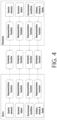
FIG. 4 is a view illustrating calculating a scenario similarity through comparison between groups having similar characteristics; -
FIG. 5 is a flowchart of a scenario retrieval-based automatic scenario generation method; -
FIG. 6 is a view illustrating a scenario retrieval-based automatic scenario generation system; and -
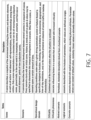
FIG. 7 is a table showing definition of terms. - Hereinafter, the disclosure will be described in more detail with reference to the accompanying drawings.
- An embodiment of the disclosure proposes a method and a system for automatic scenario generation based on scenario similarity retrieval. Specifically, the embodiment proposes a technology for automatically generating a new traffic scenario by retrieving, from a database, a traffic scenario similar to an inputted traffic scenario in terms of a driving environment, an ODD, a risk, and modifying and merging the similar traffic scenario to be used in a test.
- Complexity and uncertainty of an environment that an autonomous vehicle encounters when it travels are almost limitless. In related-art validation methods, it is checked how many hours the vehicle travels and how far the vehicle travels on a real road in order to deal with the limitless situations. However, it may be difficult to check whether all risk factors that can happen to the vehicle during driving are dealt with.
- Accordingly, in a scenario-based validation method, an environment that operates when a concept of a vehicle is designed is limited to the ODD, and scenarios possible within the limited ODD are tested and safety is validated from various aspects.
- As described above, the ODD limits an operational range of a system with respect to all factors related to driving, such as an operation on a road and a road itself.
- In an embodiment of the disclosure, an ODD is compared with pre-stored scenarios and scenarios included in a proposed ODD are selected.
- A system may suffer from various risks during an operation within an ODD. For example, an autonomous vehicle may have the risk of colliding with another vehicle nearby or a pedestrian, or violating the traffic law. In order to validate the system, it is necessary to check whether the system operates against all risk situations that it encounters during an operation within the ODD, and has preparations for the risks.
- Factors that cause a risk situation may be referred to as risk factors (CP), and the CP is pre-defined through criticality analysis which is based on a real case and a simulation.
- The risk situation may be defined by CP and it may be identified whether a specific scenario includes a certain risk situation through the CP.
- In an embodiment of the disclosure, CP is compared with pre-stored scenarios, and it is checked whether a scenario includes CP proposed to implement a risk situation, and a scenario including the corresponding CP is selected.
- An ontology refers to a knowledge representation format and data structure which are used for utilizing abstract information in a computation processing device in knowledge engineering.
- Various groups related to autonomous driving systems, such as a company which develops autonomous vehicles, an organization which analyzes a traffic situation, and a research institute which studies new technology related to autonomous driving, manage knowledge regarding traffic situations and autonomous driving systems in various ways according to their own ontologies.
- Various groups participating in development and validation of ODD, CP, scenario, traffic situation, autonomous driving system and platform deal with data based on their respective ontologies, and it is necessary to unify ontologies or to define relationship between ontologies for mutual cooperation therebetween.
- In an embodiment of the disclosure, an adapter for reading out data based on an ontology of each group is generated in order to utilize information generated in various groups for a system.
- In a scenario-based system validation method, it is necessary to systematically deal with scenarios which are applied to respective steps in the process of designing a concept of a system, developing, and testing, and to ensure traceability regarding a rationale for generating a scenario suitable to each step. In particular, as steps in the progress of an autonomous driving system proceeds, system components become concretized from an abstract concept. Accordingly, scenarios have different types according to the abstraction step of the system components.
- There are four types of scenarios according to the abstraction step: a functional scenario which corresponds to a concept designing step and organizes traffic situations that may occur within the ODD of a system, based on natural language and knowledge; an abstract scenario which transforms the functional scenario to be stored in and processed by a computation device; a logical scenario which organizes states of components of the abstract scenario according to a parameter, a range of the parameter, and probability distribution; and a concrete scenario which selects a specific value from the range of the logical scenario based on probability distribution.
- In a scenario-based test, various traffic situations necessary for the test are simulated through scenarios. Accordingly, scenario components for reflecting various traffic situations on scenarios and a method for structurally organizing the scenario components are being researched. The components may be specifically divided to organize various factors related to traffic situations, such as a position of a road, shape, arrangements of traffic objects, and a state of each component is defined based on a parameter. In addition, the components may be classified and organized into groups having similar characteristics, so that the components are efficiently processed, stored and managed when they are simulated or various scenarios are managed.
- A 6 Layer model organized in the PEGASUS project is a representative method. In this model, components of a traffic situation are classified into 6 layers according to characteristics. Layer 1 includes elements related to a traffic system such as a road system and a signal system. Layer 2 includes structures arranged around a road such as buildings and vegetation. Layer 3 includes elements defining a temporary change in a target of Layer 1 and Layer 2. Layer 4 includes a traffic object which has its state changed such as a vehicle, a pedestrian, and an animal. Layer 5 includes an environmental element such as weather and illuminance, and Layer 6 includes a communication element used for autonomous driving.
- Additionally, there is a method that adds a state element of a test target vehicle to the 6 layer model as Layer 0.
- When a value is changed or information is processed through the above-described scenario component classification method, a separate algorithm suitable to characteristics of each of pre-classified groups may be used.
- A scenario refers to data that organizes traffic situations with a normalized format and structure. Scenario generation methods which are currently being researched will be described.
- There is a method of generating a scenario from traffic situations collected in a system which has a sensor and a recognition logic mounted therein to recognize a traffic situation. This method collects traffic situations by using systems like a traffic situation collector installed in an autonomous vehicle or an infrastructure, a portable traffic situation collector, etc.
- There is a method of generating a scenario through a collected traffic situation case document. This method recognizes a document that organizes cases in which physical and social damages are caused, such as accident cases in which property damage and bodily injury are caused, traffic law and regulation violation cases, driving cases in which a traffic jam is caused, which are previously collected, and generates a scenario based on the document.
- There is a method of generating a scenario based on experts' knowledge. An expert generates a scenario by using a generation tool based on experiment on various traffic situations.
- There is a method of generating a temporary scenario based on constraints on an environment or a special condition such as an ODD and CP. This method generates a scenario by randomly allocating other scenario components that include CP conditions selected in a road environment or range restricted in an ODD, and that are not previously defined.
- There is a method of generating a scenario based on a pre-stored scenario. This method generates a new scenario by modifying and augmenting components of the pre-stored scenario.
- Lastly, there is a method of generating a scenario by implementing a certain traffic situation through a simulation. This method generates a scenario by collecting a traffic situation meeting a specific condition with respect to random situation, in which elements constituting a traffic situation are randomly allocated in a simulation and are implemented.
- Validation/assessment of an autonomous driving system requires a test in a scenario regarding various traffic situations. In particular, with respect to a scenario in which a risk is revealed during the test, it is necessary to reproduce various situations where the same risk may be revealed. Accordingly, with respect to scenarios containing a risk during the test, it is necessary to generate scenarios similar thereto and to test the scenarios. A method of generating similar scenarios may include a method of directly modifying a corresponding scenario or a method of generating a completely new scenario by using components of the corresponding scenario as materials. However, it is necessary to limit the range of generating scenarios to real cases or pre-stored data since resulting scenarios are almost limitless.
- In addition, it is necessary to select a scenario meeting an ODD condition which restricts an environment and a situation where an autonomous driving system can operate, and a CP condition in which a risk is revealed.
- Scenarios generated according to an embodiment of the disclosure are used to validate/assess an autonomous driving system in a vehicle proving environment (proving ground) or a simulation environment where a scenario is reproduced.
- The scenario retrieval-based automatic scenario generation method according to an embodiment of the disclosure is illustrated in
FIG. 1 , and is mostly divided into five steps: an adapter generation step (S 110); a scenario retrieval step (S 120), a filter step (S130), a domain adaptation step (S140); a scenario validation step (S150); and a parametrization/sampling step (S160). - Used data includes an ontology, a format, a scenario, an operational design domain (ODD), criticality phenomena (CP), a filtering condition, a target condition.
- The ontology is definition of terms and concepts of data used as an input, and an ontology regarding pre-stored data and an ontology regarding newly inputted data may be matched with each other and used. Through this, data may be used without respect to terms and concepts that are differently defined.
- The format refers to a way of indicating relationship between terms and concepts in data, listing, and storing data.
- The scenarios are differently organized according to an ontology and a format. The scenarios may be divided into an abstract type, a logical type, and a concrete type. The functional scenario may be excluded since it is not dealt with by a computation processing device.
- The ODD and the CP are not fixed like the scenario and are organized differently according to an ontology and a format.
- The filtering condition includes various elements other than the ODD and the CP that may be used when scenario components and scenarios are selected, such as a generating time, a type of an object to be treated, the number of objects.
- The target condition includes a condition regarding an output value, such as an ontology, a format to be used in a result scenario, and a storage format. The target condition additionally includes a specific component, and the corresponding component may be used as a condition for changing a scenario.
- This is a step of generating an adapter which maps ontologies and a query ontology and reads out scenario, map, CP and ODD data in various formats.
- The scenario, map, CP, and ODD may be described based on machine-readable language (ontology) such as OWL, RDF, etc. A process of generating an adapter for reading out respective data includes an ontology mapping step and an adapter generation step as shown in
FIG. 2 . - Ontology mapping: This is a step of connecting ontologies pre-stored in an ontology database (DB) and a query ontology which is a basis of input data. Through this step, terms and concepts used in the input data match terms and concepts pre-stored in the DB.
- Adapter generation: This is a step of receiving, as an input, a format in which an extension of input data and a material structure are organized, and generating an adapter based on pre-organized terms and concepts. Data created based on the query ontology and the format may be read out through the generated adapter.
- At this step, a similar scenario is retrieved by a method of calculating a similarity by comparing a scenario inputted as a query scenario and scenarios pre-stored in the scenario DB, sorting scenarios with reference to the similarity, and selecting scenarios having a similarity greater than or equal to a predetermined level. A similarity of a scenario may be calculated in various ways.
- Calculation of a similarity may include a representation function and a similarity function. The representation function is a part that converts data received as an input into a feature value, and extracts a feature value from input data in the form of a natural language, a graph, an image or a vector through a classical algorithm or a deep learning algorithm, and converts the feature value into a feature value in the form of a vector, a semantic feature, a graph.
- The similarity function is a part that receives the feature value converted by the representation function as an input, and calculates a similarity between the two feature values. The method of calculating a similarity may include a method of calculating a similarity itself by using a distance function, a method of estimating a probability of similarity, or a method of classifying groups through clustering.
- There are two examples of an input to the representation function.
- First, there is a method of calculating a similarity with reference to scenes. As shown in
FIG. 3 , scenes are generated as a specific condition in each scenario, and a component of each scene is converted into a feature value through the representation function. A similarity between converted feature values for each scene is calculated by comparison through the similarity function. - In this process, the similarity is compared with respect to a scene that is automatically selected by a selection logic from scenes of various time points constituting a scenario extracted from the database. On the other hand, for a scenario used as a query, a similarity is compared by using a scene that is directly selected by a user or automatically selected by a selection logic. The selection logic automatically extracts a scene based on a time, a position, etc. of the scene.
- There is a method of calculating a similarity by comparing groups having similar characteristics among scenario components. As shown in
FIG. 4 , groups having similar characteristics among scenario components existing in the query and the scenario DB are separated from other components, and are converted into feature values through the representation function. A similarity with feature values converted from the same target is calculated by comparison through the similarity function. All components are not always used and the components are selectively used according to a defined condition. - Attribute groups classified by a few characteristics may be combined on a group basis, by stages, serially or in parallel, and a similarity may be calculated. In one scene, arrangements of dynamic objects may be compared and arrangements of spatial elements (map, a static object, a structure) may be compared.
- At this step, scenarios are selected by comparing components of the retrieved scenarios and a selection condition (ODD, CP, filtering condition). The filtering condition may include a scenario abstraction step (abstract, logical, concrete), scenario layers (LO-L6), a verification and validation method, and a position where a scenario is collected, etc.
- At this step, the selected scenarios are modified to suit components of a target, and modified data is organized according to a targeted ontology and format. Specifically, this is a process of modifying or merging selected scenarios to be similar to scenario components proposed in the target condition, and a target of this process may be a map or a component.
- A targeted component partially includes a scenario component. When a specific road shape is provided as a targeted component as a first example of modification, the selected scenarios may be modified according to the corresponding road, by replacing a road with the provided road, adjusting or deleting positions of components belonging to the road, or changing a state value. When a specific range, probability distribution, or a probability distribution feature value is provided as a second example, existing components may be modified to the provided components.
- At this step, effectiveness of values included in the finally modified scenarios are checked, or it is checked whether the scenarios are created according to the ontology and the format proposed as the target condition.
- At this step, the scenarios of respective corresponding types are concretized through parameterization and sampling. Through parameterization, a scenario of an abstract type that is not assigned parameters is concretized into a scenario of a logical type that is assigned parameters, range, probability distribution. Through sampling, a value within a range in a scenario of a logical type is extracted based on probability distribution, and is concretized into a concrete type.
- A flow of the scenario retrieval-based automatic scenario generation method is illustrated in
FIG. 5 . As input data, a query scenario (abstract, logical concrete type), ODD, CP, a filtering condition, a target condition are used. - First, at the scenario retrieval step, scenarios similar to the query scenario are retrieved from the scenario DB (S120).
- At the filtering step, scenarios are selected from the retrieved scenarios according to an ODD, CP, a filtering condition (S130). Through this, scenarios (abstract, logical, concrete type) that are similar to the query scenario and meet a selection condition are filtered.
- At the domain adaption step, the filtered scenarios are converted to meet conditions proposed as the target condition (S140). Next, at the scenario validation step, effectiveness of the scenarios is validated (S150).
- Among the validated scenarios (abstract, logical, concrete), an abstract type is parameterized into a logical type through parameterization, and a logical type is concretized into a concrete type through sampling (S160).
- The generated scenarios are used to simulate in a process of assessing and validating an autonomous driving system or reproduce a traffic situation on a proving ground instance.
- An execution environment of the system is illustrated in
FIG. 6 . The system operates on a cloud and is managed in a scenariogeneration service system 210, and includes anontology DB 220 and ascenario DB 230. - The
service system 210 may copy the system into a plurality ofsystem instances user PCs system instance - The copied
system instances same ontology DB 220 andscenario DB 230. - Up to now, the scenario similarity retrieval-based automatic scenario generation system and method have been described with reference to preferred embodiments.
- The terms used in embodiments of the disclosure are specifically defined in
FIG. 7 . - The technical concept of the present disclosure may be applied to a computer-readable recording medium which records a computer program for performing the functions of the apparatus and the method according to the present embodiments. In addition, the technical idea according to various embodiments of the present disclosure may be implemented in the form of a computer readable code recorded on the computer-readable recording medium. The computer-readable recording medium may be any data storage device that can be read by a computer and can store data. For example, the computer-readable recording medium may be a read only memory (ROM), a random access memory (RAM), a CD-ROM, a magnetic tape, a floppy disk, an optical disk, a hard disk drive, or the like. A computer readable code or program that is stored in the computer readable recording medium may be transmitted via a network connected between computers.
- In addition, while preferred embodiments of the present disclosure have been illustrated and described, the present disclosure is not limited to the above-described specific embodiments. Various changes can be made by a person skilled in the at without departing from the scope of the present disclosure claimed in claims, and also, changed embodiments should not be understood as being separate from the technical idea or prospect of the present disclosure.
Claims (11)
- A scenario retrieval-based automatic scenario generation method comprising:retrieving scenarios similar to a query scenario from a scenario DB for an autonomous driving test;filtering only scenarios that meet a selection condition from the retrieved scenarios; andconverting components of the filtered scenarios to suit a target condition.
- The scenario retrieval-based automatic scenario generation method of claim 1, wherein retrieving comprises:calculating a similarity by comparing the query scenario and scenarios stored in the DB;sorting scenarios with reference to the calculated similarity; andselecting scenarios that have a similarity greater than or equal to a predetermined level.
- The scenario retrieval-based automatic scenario generation method of claim 2, wherein calculating the similarity comprises:extracting feature values from the scenarios; andcalculating a similarity between the extracted feature values.
- The scenario retrieval-based automatic scenario generation method of claim 3, wherein extracting comprises:selecting scenes from the scenarios; andextracting feature values from the selected scenes.
- The scenario retrieval-based automatic scenario generation method of claim 3, wherein extracting comprises:classifying the components of the scenarios into a plurality of groups; andextracting feature values from the classified groups.
- The scenario retrieval-based automatic scenario generation method of claim 1, wherein the selection condition comprises an ODD, CP, a filtering condition.
- The scenario retrieval-based automatic scenario generation method of claim 6, wherein the filtering condition comprises a scenario abstraction step, a scenario level, an effectiveness validation method, and a position where a scenario is collected.
- The scenario retrieval-based automatic scenario generation method of claim 1, further comprising:validating effectiveness of the converted scenario; andconcretizing the validated scenario.
- The scenario retrieval-based automatic scenario generation method of claim 8, wherein concretizing comprises converting an abstract scenario into a logical scenario through parameterization, and concretizing a logical scenario into a concrete scenario by sampling a specific value based on probability distribution.
- A scenario retrieval-based automatic scenario generation system comprising:a scenario DB configured to test autonomous driving; anda scenario generation system configured to retrieve scenarios similar to a query scenario from the scenario DB, to filter only scenarios that meet a selection condition from the retrieved scenarios, and to convert components of the filtered scenarios to suit a target condition.
- A scenario retrieval-based automatic scenario generation method comprising:retrieving scenarios similar to a query scenario from a scenario DB for an autonomous driving test;converting components of the retrieved scenarios to suit a target condition; andconcretizing the converted scenarios.
Applications Claiming Priority (1)
| Application Number | Priority Date | Filing Date | Title |
|---|---|---|---|
| KR1020220166795A KR20240082791A (en) | 2022-12-02 | 2022-12-02 | Scenario retrieval based automatic scenario generation system and method for autonomous driving |
Publications (1)
| Publication Number | Publication Date |
|---|---|
| EP4379644A1 true EP4379644A1 (en) | 2024-06-05 |
Family
ID=84604277
Family Applications (1)
| Application Number | Title | Priority Date | Filing Date |
|---|---|---|---|
| EP22216701.7A Pending EP4379644A1 (en) | 2022-12-02 | 2022-12-27 | Scenario similarity retrieval-based automatic scenario generation system and method |
Country Status (4)
| Country | Link |
|---|---|
| US (1) | US12430341B2 (en) |
| EP (1) | EP4379644A1 (en) |
| JP (1) | JP7566862B2 (en) |
| KR (1) | KR20240082791A (en) |
Citations (2)
| Publication number | Priority date | Publication date | Assignee | Title |
|---|---|---|---|---|
| US20210294944A1 (en) * | 2020-03-19 | 2021-09-23 | Nvidia Corporation | Virtual environment scenarios and observers for autonomous machine applications |
| EP3958129A1 (en) * | 2020-08-17 | 2022-02-23 | Volvo Car Corporation | Method and system for validating autonomous control software for a self-driving vehicle |
Family Cites Families (9)
| Publication number | Priority date | Publication date | Assignee | Title |
|---|---|---|---|---|
| US10489529B2 (en) | 2016-10-14 | 2019-11-26 | Zoox, Inc. | Scenario description language |
| US10599546B1 (en) | 2017-10-25 | 2020-03-24 | Uatc, Llc | Autonomous vehicle testing systems and methods |
| US11294800B2 (en) | 2017-12-07 | 2022-04-05 | The Johns Hopkins University | Determining performance of autonomy decision-making engines |
| US11030364B2 (en) | 2018-09-12 | 2021-06-08 | Ford Global Technologies, Llc | Evaluating autonomous vehicle algorithms |
| CN110033091B (en) * | 2018-12-13 | 2020-09-01 | 阿里巴巴集团控股有限公司 | Model-based prediction method and device |
| US12056136B2 (en) * | 2020-06-30 | 2024-08-06 | Lyft, Inc. | Systems and methods for encoding and searching scenario information |
| CN112526893B (en) | 2020-10-30 | 2024-04-02 | 长安大学 | A test system for smart cars |
| EP4256823A4 (en) | 2020-12-01 | 2024-11-06 | Ridecell, Inc. | SYSTEMS AND METHODS FOR EXTRACTING DATA FROM AUTONOMOUS VEHICLES |
| US12269507B2 (en) * | 2022-06-17 | 2025-04-08 | Baidu Usa Llc | Distributional expert demonstrations for autonomous driving |
-
2022
- 2022-12-02 KR KR1020220166795A patent/KR20240082791A/en not_active Ceased
- 2022-12-27 JP JP2022210027A patent/JP7566862B2/en active Active
- 2022-12-27 EP EP22216701.7A patent/EP4379644A1/en active Pending
- 2022-12-28 US US18/089,674 patent/US12430341B2/en active Active
Patent Citations (2)
| Publication number | Priority date | Publication date | Assignee | Title |
|---|---|---|---|---|
| US20210294944A1 (en) * | 2020-03-19 | 2021-09-23 | Nvidia Corporation | Virtual environment scenarios and observers for autonomous machine applications |
| EP3958129A1 (en) * | 2020-08-17 | 2022-02-23 | Volvo Car Corporation | Method and system for validating autonomous control software for a self-driving vehicle |
Non-Patent Citations (1)
| Title |
|---|
| JULIAN W\"ORMANN ET AL: "Knowledge Augmented Machine Learning with Applications in Autonomous Driving: A Survey", ARXIV.ORG, CORNELL UNIVERSITY LIBRARY, 201 OLIN LIBRARY CORNELL UNIVERSITY ITHACA, NY 14853, 10 May 2022 (2022-05-10), XP091223681 * |
Also Published As
| Publication number | Publication date |
|---|---|
| KR20240082791A (en) | 2024-06-11 |
| US12430341B2 (en) | 2025-09-30 |
| JP7566862B2 (en) | 2024-10-15 |
| JP2024080559A (en) | 2024-06-13 |
| US20240184787A1 (en) | 2024-06-06 |
Similar Documents
| Publication | Publication Date | Title |
|---|---|---|
| CN109816032B (en) | Unbiased mapping zero sample classification method and device based on generative countermeasure network | |
| KR20210082109A (en) | An apparatus for evaluating the value of real estates based on estimations of real transactions of the real estates | |
| CN115344504B (en) | Software test case automatic generation method and tool based on requirement specification | |
| EP2829934A2 (en) | Methods and apparatus for the creation and use of reusable fault model components | |
| Zhang et al. | Test framework for automatic test case generation and execution aimed at developing trustworthy avs from both verifiability and certifiability aspects | |
| KR20210142443A (en) | Method and system for providing continuous adaptive learning over time for real time attack detection in cyberspace | |
| CN121233738A (en) | Method and system for designing specialized questions and answers and diagnostic agents in operation and maintenance field | |
| CN119226236A (en) | A method and system for independent application of multimodal data fusion and archiving | |
| CN120562930A (en) | A constellation mission planning method and system based on fine-tuning a large language model | |
| CN120104508A (en) | A vehicle software testing method and device based on large model | |
| JP7508715B1 (en) | Asynchronous dialogue system and program | |
| US20210248464A1 (en) | Computer-implemented method and device for machine learning | |
| US12430341B2 (en) | Scenario similarity retrieval-based automatic scenario generation system and method | |
| CN112765812B (en) | A method and system for rapid evaluation of autonomous ability of unmanned system decision-making strategy | |
| CN115917557B (en) | System architecture determination based on machine learning | |
| Arif et al. | Visual attention-based comparative study on disaster detection from social media images | |
| CN118803975B (en) | A method and apparatus for calibrating the location of communication dummy resources | |
| CN119783386A (en) | A method and system for generating confrontation scenarios with customized difficulty for autonomous driving | |
| US20240303386A1 (en) | Computer-implemented method and system for creating a scenarios library | |
| US20230234603A1 (en) | Information processing system, information processing method, and program | |
| CN111177388A (en) | Processing method and computer equipment | |
| CN114817463A (en) | Autonomous traffic system scene demand analysis method and device | |
| Sohn et al. | The why, where, when, what and how of data for data-driven engineering of automotive systems | |
| Blache et al. | Toward a criticality-guided sampling strategy to reduce tests for automated driving validation | |
| CN121480669B (en) | Methods, apparatus, equipment, storage media, and program products for constructing knowledge graphs |
Legal Events
| Date | Code | Title | Description |
|---|---|---|---|
| PUAI | Public reference made under article 153(3) epc to a published international application that has entered the european phase |
Free format text: ORIGINAL CODE: 0009012 |
|
| STAA | Information on the status of an ep patent application or granted ep patent |
Free format text: STATUS: REQUEST FOR EXAMINATION WAS MADE |
|
| 17P | Request for examination filed |
Effective date: 20221227 |
|
| AK | Designated contracting states |
Kind code of ref document: A1 Designated state(s): AL AT BE BG CH CY CZ DE DK EE ES FI FR GB GR HR HU IE IS IT LI LT LU LV MC ME MK MT NL NO PL PT RO RS SE SI SK SM TR |
|
| RBV | Designated contracting states (corrected) |
Designated state(s): AL AT BE BG CH CY CZ DE DK EE ES FI FR GB GR HR HU IE IS IT LI LT LU LV MC ME MK MT NL NO PL PT RO RS SE SI SK SM TR |
|
| STAA | Information on the status of an ep patent application or granted ep patent |
Free format text: STATUS: EXAMINATION IS IN PROGRESS |
|
| 17Q | First examination report despatched |
Effective date: 20251125 |