EP4378976A1 - Highly branched polylactide resin, and method for preparing same - Google Patents
Highly branched polylactide resin, and method for preparing same Download PDFInfo
- Publication number
- EP4378976A1 EP4378976A1 EP23820026.5A EP23820026A EP4378976A1 EP 4378976 A1 EP4378976 A1 EP 4378976A1 EP 23820026 A EP23820026 A EP 23820026A EP 4378976 A1 EP4378976 A1 EP 4378976A1
- Authority
- EP
- European Patent Office
- Prior art keywords
- polylactide resin
- weight
- parts
- polylactide
- branched
- Prior art date
- Legal status (The legal status is an assumption and is not a legal conclusion. Google has not performed a legal analysis and makes no representation as to the accuracy of the status listed.)
- Pending
Links
Classifications
-
- C—CHEMISTRY; METALLURGY
- C08—ORGANIC MACROMOLECULAR COMPOUNDS; THEIR PREPARATION OR CHEMICAL WORKING-UP; COMPOSITIONS BASED THEREON
- C08G—MACROMOLECULAR COMPOUNDS OBTAINED OTHERWISE THAN BY REACTIONS ONLY INVOLVING UNSATURATED CARBON-TO-CARBON BONDS
- C08G63/00—Macromolecular compounds obtained by reactions forming a carboxylic ester link in the main chain of the macromolecule
- C08G63/02—Polyesters derived from hydroxycarboxylic acids or from polycarboxylic acids and polyhydroxy compounds
- C08G63/06—Polyesters derived from hydroxycarboxylic acids or from polycarboxylic acids and polyhydroxy compounds derived from hydroxycarboxylic acids
- C08G63/08—Lactones or lactides
-
- C—CHEMISTRY; METALLURGY
- C08—ORGANIC MACROMOLECULAR COMPOUNDS; THEIR PREPARATION OR CHEMICAL WORKING-UP; COMPOSITIONS BASED THEREON
- C08G—MACROMOLECULAR COMPOUNDS OBTAINED OTHERWISE THAN BY REACTIONS ONLY INVOLVING UNSATURATED CARBON-TO-CARBON BONDS
- C08G63/00—Macromolecular compounds obtained by reactions forming a carboxylic ester link in the main chain of the macromolecule
- C08G63/91—Polymers modified by chemical after-treatment
- C08G63/912—Polymers modified by chemical after-treatment derived from hydroxycarboxylic acids
-
- C—CHEMISTRY; METALLURGY
- C08—ORGANIC MACROMOLECULAR COMPOUNDS; THEIR PREPARATION OR CHEMICAL WORKING-UP; COMPOSITIONS BASED THEREON
- C08K—Use of inorganic or non-macromolecular organic substances as compounding ingredients
- C08K5/00—Use of organic ingredients
- C08K5/04—Oxygen-containing compounds
- C08K5/09—Carboxylic acids; Metal salts thereof; Anhydrides thereof
-
- C—CHEMISTRY; METALLURGY
- C08—ORGANIC MACROMOLECULAR COMPOUNDS; THEIR PREPARATION OR CHEMICAL WORKING-UP; COMPOSITIONS BASED THEREON
- C08K—Use of inorganic or non-macromolecular organic substances as compounding ingredients
- C08K5/00—Use of organic ingredients
- C08K5/04—Oxygen-containing compounds
- C08K5/15—Heterocyclic compounds having oxygen in the ring
- C08K5/151—Heterocyclic compounds having oxygen in the ring having one oxygen atom in the ring
- C08K5/1515—Three-membered rings
-
- C—CHEMISTRY; METALLURGY
- C08—ORGANIC MACROMOLECULAR COMPOUNDS; THEIR PREPARATION OR CHEMICAL WORKING-UP; COMPOSITIONS BASED THEREON
- C08K—Use of inorganic or non-macromolecular organic substances as compounding ingredients
- C08K5/00—Use of organic ingredients
- C08K5/49—Phosphorus-containing compounds
- C08K5/50—Phosphorus bound to carbon only
-
- C—CHEMISTRY; METALLURGY
- C08—ORGANIC MACROMOLECULAR COMPOUNDS; THEIR PREPARATION OR CHEMICAL WORKING-UP; COMPOSITIONS BASED THEREON
- C08G—MACROMOLECULAR COMPOUNDS OBTAINED OTHERWISE THAN BY REACTIONS ONLY INVOLVING UNSATURATED CARBON-TO-CARBON BONDS
- C08G2101/00—Manufacture of cellular products
-
- C—CHEMISTRY; METALLURGY
- C08—ORGANIC MACROMOLECULAR COMPOUNDS; THEIR PREPARATION OR CHEMICAL WORKING-UP; COMPOSITIONS BASED THEREON
- C08G—MACROMOLECULAR COMPOUNDS OBTAINED OTHERWISE THAN BY REACTIONS ONLY INVOLVING UNSATURATED CARBON-TO-CARBON BONDS
- C08G2230/00—Compositions for preparing biodegradable polymers
Definitions
- the present disclosure relates to a polylactide resin composition, and a highly branched polylactide resin prepared therefrom, and a method for preparing the same.
- plastic foam is widely used as a cushioning material for packaging, but in the case of EPS (Expanded polystyrene) which is most frequently used in the art, it not only does not decompose, but also causes environmental pollution such as generating toxic gases during combustion.
- EPS Expanded polystyrene
- Polylactide (or polylactic acid; PLA) resin which is a promising alternative to petroleum-based plastic materials, is prepared based on biomass materials, and is an eco-friendly material which emits less global warming gas carbon dioxide during the production process, and is degraded by a specific temperature and composting facility.
- the polylactide resin has advantages that it is inexpensive compared to other biodegradable polymers and has high tensile strength and modulus properties.
- the polylactide resin has disadvantages that it has low thermal stability and impact resistance, slow crystallization rate, and especially low melt strength, making it difficult to use for foam applications.
- various methods are known to improve the melt strength of polylactide resin.
- LCB long chain branch
- a polylactide resin composition comprising:
- polylactide resin is defined as comprehensively referring to a homopolymer or copolymer including a repeating unit represented by the following Chemical Formula.
- the polylactide resin can be prepared by a process including a step of forming the above repeating unit by the ring opening polymerization of the lactide monomer.
- the polymer obtained after the completion of such ring opening polymerization and the formation of the repeating unit can be referred to as the "polylactide resin".
- lactide monomer can be defined as follows.
- lactides can be classified into L-lactide consisting of L-lactic acid, D-lactide consisting of D-lactic acid, and meso-lactide consisting of an L-type and a D-type.
- a mixture of L-lactide and D-lactide in a ratio of 50:50 is referred to as D,L-lactide or rac-lactide.
- the polymerization proceeding only with either of L-lactide and D-lactide that have a high optical purity is known to yield an L- or D-polylactide (PLLA or PDLA) with a high stereoregularity.
- PLLA or PDLA L- or D-polylactide
- lactide monomer as used herein is defined to include all types of lactides regardless of the characteristic differences of lactides depending on their shapes and the characteristic differences of the polylactide resins obtained therefrom.
- the polylactide resin according to the present disclosure has a weight average molecular weight of 70,000 to 400,000 as an example.
- organic acid anhydride refers to a type of chemical compound derived by the removal of water molecules from an organic acid, and particularly, in the present disclosure, the organic acid anhydride reacts with the terminal hydroxy group (-OH) of the polylactide resin, which serve to make the terminal of the polylactide resin have a carboxyl group (-COOH). This further facilitates the reaction between the terminal carboxy group of the polylactide resin and the epoxy group present in the branching agent, which leads to a high degree of branching of the polylactide resin.
- the organic acid anhydride is not particularly limited as long as it is a substance that reacts with the terminal hydroxy group (-OH) of the polylactide resin and makes the terminal of the polylactide resin have a carboxyl group (-COOH).
- examples thereof include succinic anhydride, maleic anhydride, phthalic anhydride, or pyromellitic dianhydride.
- the organic acid anhydride is contained in an amount of 0.06 parts by weight or more, 0.07 parts by weight or more, 0.08 parts by weight or more, 0.09 parts by weight or more, or 0.10 parts by weight or more; and 0.9 parts by weight or less, 0.8 parts by weight or less, 0.7 parts by weight or less, 0.6 parts by weight or less, 0.5 parts by weight or less, 0.4 parts by weight or less, 0.3 parts by weight or less, or 0.2 parts by weight or less, based on 100 parts by weight of the polylactide resin.
- the branching agent of Chemical Formula 1 has a plurality of epoxy groups, and reacts with the epoxy group and the polylactide resin having a terminal carboxy group (-COOH) to enable branching of the polylactide resin.
- the branching agent of Chemical Formula 1 is contained in an amount of 0.2 parts by weight or more, 0.3 parts by weight or more, 0.4 parts by weight or more, 0.5 parts by weight or more, 0.6 parts by weight or more, 0.7 parts by weight or more, 0.8 parts by weight or more, 0.9 parts by weight or more, or 1.0 parts by weight or more; and 4.5 parts by weight or less, or 4.0 parts by weight or less, based on 100 parts by weight of the polylactide resin.
- the phosphorus-based compound acts as a nucleophile and induces ring opening of the epoxy group of the branching agent of Chemical Formula 1 to cause chain extension.
- the reaction between the polylactide resin and the branching agent of Chemical Formula 1 does not occur under general mixing conditions.
- the phosphorus-based compound is a compound represented by the following Chemical Formula 2: in Chemical Formula 2, R 1 , R 2 and R 3 are each independently a C 1-20 alkyl; a C 3-20 cycloalkyl; phenyl unsubstituted or substituted with at least one C 1-20 alkyl, or C 1-20 alkoxy; or benzyl.
- the phosphorus-based compound is triphenylphosphine, tri-m-tolylphosphine, diphenyl(para-tolyl)phosphine, tris(2,6-dimethoxyphenyl)phosphine, tris(4-methoxyphenyl)phosphine, trimesitylphosphine, tris-3,5-xylylphosphine, tricyclohexylphosphine, tribenzylphosphine, benzyldiphenylphosphine, or diphenyl-normal-propylphosphine, more preferably, triphenylphosphine.
- the phosphorus-based compound is contained in an amount of 0.06 parts by weight or more, 0.07 parts by weight or more, 0.08 parts by weight or more, 0.09 parts by weight or more, or 0.10 parts by weight or more; and 0.9 parts by weight or less, 0.8 parts by weight or less, 0.7 parts by weight or less, 0.6 parts by weight or less, 0.5 parts by weight or less, 0.4 parts by weight or less, 0.3 parts by weight or less, or 0.2 parts by weight or less, based on 100 parts by weight of the polylactide resin.
- a branched polylactide resin which is prepared by heat-treating the above-mentioned polylactide resin composition.
- the branching agent contained in in the polylactide resin composition reacts with the polylactide resin having a carboxyl group (-COOH) terminal to enable branching of the polylactide resin, and a predetermined heat treatment progresses for the above reaction.
- a specific method for preparing the branched polylactide resin will be described later.
- the branched polylactide resin has a weight average molecular weight of 70,000 to 400,000. More preferably, the weight average molecular weight of the branched polylactide resin is 80,000 or more, 90,000 or more, 100,000 or more, 110,000 or more, 120,000 or more, or 130,000 or more; and 350,000 or less, 300,000 or less, 250,000 or less, 240,000 or less, 230,000 or less, 220,000 or less, 210,000 or less, or 200,000 or less.
- the molecular weight distribution (Mw/Mn) of the branched polylactide resin is preferably 1.0 to 3.0.
- the branched polylactide resin has a Z-average molecular weight of 150,000 to 400,000. More preferably, the weight average molecular weight of the branched polylactide resin is 160,000 or more, 170,000 or more, 180,000 or more, 190,000 or more, or 200,000 or more; and 350,000 or less, 340,000 or less, 330,000 or less, 320,000 or less, 310,000 or less, 300,000 or less, 290,000 or less, or 280,000 or less.
- Step 1 is a step of reacting the terminal hydroxy group (-OH) of the polylactide resin with an organic acid anhydride to make the terminal of the polylactide resin have a carboxy group (-COOH), which is a step performed prior to the reaction of the polylactide resin and the branching agent.
- Step 2 is a step of reacting the polylactide resin that has a carboxy group (-COOH) at the terminal due to step 1, with the epoxy group of the branching agent of Chemical Formula 1, wherein the phosphorus compound is added together for ring opening of the epoxy group, to prepare the branched polylactide resin according to the present disclosure.
- the above-mentioned branched polylactide resin according to the present disclosure has a feature that it is highly branched and thus is improved in several physical properties, especially melt strength as compared to conventional polylactide resins, and can be applied to processes that were difficult to apply to conventional polylactide resins such as expanded foam.
- Branched polylactide resins were respectively prepared in the same manner as in Example 1, except that the amounts of anhydride compound, TPP (triphenylphosphine) and branching agent were changed as shown in Table 1 below.
- Polylactide resins of Comparative Examples 1 to 3 were respectively prepared in the same manner as in Example 1, except that any one or more of an anhydride compound, TPP (triphenylphosphine) and a branching agent were not used as shown in Table 1 below.
- TPP triphenylphosphine
- PLA 4032D from NatureWorks
- the degree of branching of the resins prepared in Examples and Comparative Examples were measured using MALS-GPC.
- Mw, Mz, PDI, and Mark-Houwink slopes were measured by MALS-GPC, and specific measurement conditions are as follows.
Landscapes
- Chemical & Material Sciences (AREA)
- Health & Medical Sciences (AREA)
- Chemical Kinetics & Catalysis (AREA)
- Medicinal Chemistry (AREA)
- Polymers & Plastics (AREA)
- Organic Chemistry (AREA)
- General Chemical & Material Sciences (AREA)
- Polyesters Or Polycarbonates (AREA)
- Compositions Of Macromolecular Compounds (AREA)
- Epoxy Resins (AREA)
- Biological Depolymerization Polymers (AREA)
Abstract
Description
- This application claims the benefit of
Korean Patent Application No. 10-2022-0069135 filed on June 7, 2022 Korean Patent Application No. 10-2023-0066674 filed on May 24, 2023 - The present disclosure relates to a polylactide resin composition, and a highly branched polylactide resin prepared therefrom, and a method for preparing the same.
- Conventional petroleum-based plastic materials do not naturally decompose, which causes serious environmental pollution. Thus, finding a material to replace them is the top priority research issue in recent years. In particular, plastic foam is widely used as a cushioning material for packaging, but in the case of EPS (Expanded polystyrene) which is most frequently used in the art, it not only does not decompose, but also causes environmental pollution such as generating toxic gases during combustion.
- Polylactide (or polylactic acid; PLA) resin, which is a promising alternative to petroleum-based plastic materials, is prepared based on biomass materials, and is an eco-friendly material which emits less global warming gas carbon dioxide during the production process, and is degraded by a specific temperature and composting facility. In addition, the polylactide resin has advantages that it is inexpensive compared to other biodegradable polymers and has high tensile strength and modulus properties.
- However, the polylactide resin has disadvantages that it has low thermal stability and impact resistance, slow crystallization rate, and especially low melt strength, making it difficult to use for foam applications. Thus, various methods are known to improve the melt strength of polylactide resin. As an example, a method of increasing LCB (long chain branch) of the polylactide resin to perform branching is known.
- Although various branching agents that can be applied to polylactide resins have been known in the past, they have limitations in highly branching polylactide resins. Therefore, the present inventors have found that by using a specific branching agent and anhydride-based compound in the polylactide resin as will be described later, a high degree of branching of the polylactide resin, which has not been achieved hitherto, is achieved, and completed the present disclosure.
- It is an object of the present disclosure to provide a polylactide resin composition for preparing a highly branched polylactide resin.
- It is another object of the present disclosure to provide a highly branched polylactide resin prepared from the polylactide resin composition, and a method for preparing the same
- In order to achieve the above object, according to one aspect of the present disclosure, there is provided the following polylactide resin composition:
A polylactide resin composition comprising: - 100 parts by weight of a polylactide resin,
- 0.05 to 1.0 parts by weight of an organic acid anhydride;
- 0.05 to 1.0 parts by weight of a phosphorus-based compound, and
- 0.1 to 5.0 parts by weight of a branching agent represented by the following Chemical Formula 1:

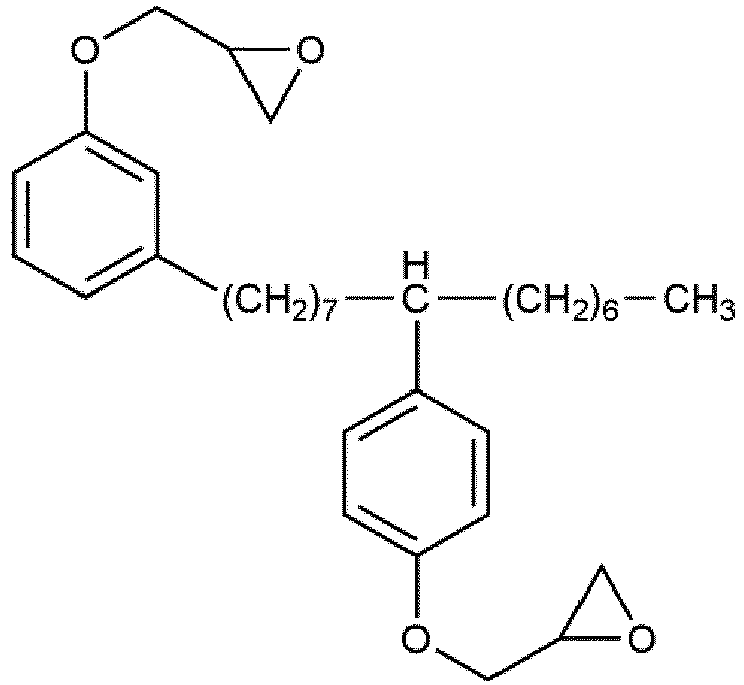
- As used herein, the term "polylactide resin" is defined as comprehensively referring to a homopolymer or copolymer including a repeating unit represented by the following Chemical Formula.

- The polylactide resin can be prepared by a process including a step of forming the above repeating unit by the ring opening polymerization of the lactide monomer. The polymer obtained after the completion of such ring opening polymerization and the formation of the repeating unit can be referred to as the "polylactide resin".
- At this time, the term "lactide monomer" can be defined as follows. Typically, lactides can be classified into L-lactide consisting of L-lactic acid, D-lactide consisting of D-lactic acid, and meso-lactide consisting of an L-type and a D-type. Also, a mixture of L-lactide and D-lactide in a ratio of 50:50 is referred to as D,L-lactide or rac-lactide. Among these lactides, the polymerization proceeding only with either of L-lactide and D-lactide that have a high optical purity is known to yield an L- or D-polylactide (PLLA or PDLA) with a high stereoregularity. Such polylactides have a faster crystallization rate and also a higher crystallinity degree than a polylactide having a low optical purity. However, the term "lactide monomer" as used herein is defined to include all types of lactides regardless of the characteristic differences of lactides depending on their shapes and the characteristic differences of the polylactide resins obtained therefrom.
- Meanwhile, the polylactide resin according to the present disclosure has a weight average molecular weight of 70,000 to 400,000 as an example.
- As used herein, the term "organic acid anhydride" refers to a type of chemical compound derived by the removal of water molecules from an organic acid, and particularly, in the present disclosure, the organic acid anhydride reacts with the terminal hydroxy group (-OH) of the polylactide resin, which serve to make the terminal of the polylactide resin have a carboxyl group (-COOH). This further facilitates the reaction between the terminal carboxy group of the polylactide resin and the epoxy group present in the branching agent, which leads to a high degree of branching of the polylactide resin.
- From this point of view, the organic acid anhydride is not particularly limited as long as it is a substance that reacts with the terminal hydroxy group (-OH) of the polylactide resin and makes the terminal of the polylactide resin have a carboxyl group (-COOH). Examples thereof include succinic anhydride, maleic anhydride, phthalic anhydride, or pyromellitic dianhydride.
- Preferably, the organic acid anhydride is contained in an amount of 0.06 parts by weight or more, 0.07 parts by weight or more, 0.08 parts by weight or more, 0.09 parts by weight or more, or 0.10 parts by weight or more; and 0.9 parts by weight or less, 0.8 parts by weight or less, 0.7 parts by weight or less, 0.6 parts by weight or less, 0.5 parts by weight or less, 0.4 parts by weight or less, 0.3 parts by weight or less, or 0.2 parts by weight or less, based on 100 parts by weight of the polylactide resin.
- The branching agent of Chemical Formula 1 has a plurality of epoxy groups, and reacts with the epoxy group and the polylactide resin having a terminal carboxy group (-COOH) to enable branching of the polylactide resin.
- Preferably, the branching agent of Chemical Formula 1 is contained in an amount of 0.2 parts by weight or more, 0.3 parts by weight or more, 0.4 parts by weight or more, 0.5 parts by weight or more, 0.6 parts by weight or more, 0.7 parts by weight or more, 0.8 parts by weight or more, 0.9 parts by weight or more, or 1.0 parts by weight or more; and 4.5 parts by weight or less, or 4.0 parts by weight or less, based on 100 parts by weight of the polylactide resin.
- The phosphorus-based compound acts as a nucleophile and induces ring opening of the epoxy group of the branching agent of Chemical Formula 1 to cause chain extension. When the phosphorus-based compound is not added, the reaction between the polylactide resin and the branching agent of Chemical Formula 1 does not occur under general mixing conditions.
- Preferably, the phosphorus-based compound is a compound represented by the following Chemical Formula 2:
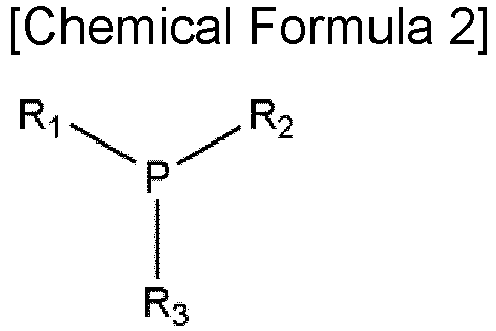
R1, R2 and R3 are each independently a C1-20 alkyl; a C3-20 cycloalkyl; phenyl unsubstituted or substituted with at least one C1-20 alkyl, or C1-20 alkoxy; or benzyl. - Preferably, the phosphorus-based compound is triphenylphosphine, tri-m-tolylphosphine, diphenyl(para-tolyl)phosphine, tris(2,6-dimethoxyphenyl)phosphine, tris(4-methoxyphenyl)phosphine, trimesitylphosphine, tris-3,5-xylylphosphine, tricyclohexylphosphine, tribenzylphosphine, benzyldiphenylphosphine, or diphenyl-normal-propylphosphine, more preferably, triphenylphosphine.
- Preferably, the phosphorus-based compound is contained in an amount of 0.06 parts by weight or more, 0.07 parts by weight or more, 0.08 parts by weight or more, 0.09 parts by weight or more, or 0.10 parts by weight or more; and 0.9 parts by weight or less, 0.8 parts by weight or less, 0.7 parts by weight or less, 0.6 parts by weight or less, 0.5 parts by weight or less, 0.4 parts by weight or less, 0.3 parts by weight or less, or 0.2 parts by weight or less, based on 100 parts by weight of the polylactide resin.
- According to another aspect of the present disclosure, there is provided a branched polylactide resin, which is prepared by heat-treating the above-mentioned polylactide resin composition.
- As described above, the branching agent contained in in the polylactide resin composition reacts with the polylactide resin having a carboxyl group (-COOH) terminal to enable branching of the polylactide resin, and a predetermined heat treatment progresses for the above reaction. A specific method for preparing the branched polylactide resin will be described later.
- Branching of the polylactide resin progresses as described above, so that the molecular weight of the branched polylactide resin is higher than that of the polylactide resin contained in the polylactide resin composition. Preferably, the branched polylactide resin has a weight average molecular weight of 70,000 to 400,000. More preferably, the weight average molecular weight of the branched polylactide resin is 80,000 or more, 90,000 or more, 100,000 or more, 110,000 or more, 120,000 or more, or 130,000 or more; and 350,000 or less, 300,000 or less, 250,000 or less, 240,000 or less, 230,000 or less, 220,000 or less, 210,000 or less, or 200,000 or less.
- Moreover, branching progresses as described above, so that the molecular weight distribution (Mw/Mn) of the branched polylactide resin is preferably 1.0 to 3.0.
- Preferably, the branched polylactide resin has a Z-average molecular weight of 150,000 to 400,000. More preferably, the weight average molecular weight of the branched polylactide resin is 160,000 or more, 170,000 or more, 180,000 or more, 190,000 or more, or 200,000 or more; and 350,000 or less, 340,000 or less, 330,000 or less, 320,000 or less, 310,000 or less, 300,000 or less, 290,000 or less, or 280,000 or less.
- According to yet another aspect of the present disclosure, there is provided a method for preparing the branched polylactide resin described above, comprising the steps of:
- 1) mixing a polylactide resin and an organic acid anhydride at 170°C to 200°C (step 1); and
- 2) mixing the product of step 1 with the branching agent of Chemical Formula 1 and the phosphorus-based compound (step 2).
- Step 1 is a step of reacting the terminal hydroxy group (-OH) of the polylactide resin with an organic acid anhydride to make the terminal of the polylactide resin have a carboxy group (-COOH), which is a step performed prior to the reaction of the polylactide resin and the branching agent.
- Step 2 is a step of reacting the polylactide resin that has a carboxy group (-COOH) at the terminal due to step 1, with the epoxy group of the branching agent of Chemical Formula 1, wherein the phosphorus compound is added together for ring opening of the epoxy group, to prepare the branched polylactide resin according to the present disclosure.
- The above-mentioned branched polylactide resin according to the present disclosure has a feature that it is highly branched and thus is improved in several physical properties, especially melt strength as compared to conventional polylactide resins, and can be applied to processes that were difficult to apply to conventional polylactide resins such as expanded foam.
- Below, embodiments of the present disclosure will be described in more detail with reference to examples. However, the following examples are for illustrative purposes only and are not intended to limit the scope of the present disclosure.
- 65 g of PLA (4032D from NatureWorks; weight average molecular weight of about 210,000), and 0.2 wt% of succinic anhydride based on the weight of the PLA was placed in a HAAKE mixer, and mixed at 60 rpm at 190°C for 2 minutes. After stopping for a while, 3 wt% of the branching agent shown in Table 1 below and 0.2 wt% of TPP based on the weight of the PLA were added thereto, and mixed for 10 minutes to prepare a branched polylactide resin.
- Branched polylactide resins were respectively prepared in the same manner as in Example 1, except that the amounts of anhydride compound, TPP (triphenylphosphine) and branching agent were changed as shown in Table 1 below.
- Polylactide resins of Comparative Examples 1 to 3 were respectively prepared in the same manner as in Example 1, except that any one or more of an anhydride compound, TPP (triphenylphosphine) and a branching agent were not used as shown in Table 1 below. In addition, PLA (4032D from NatureWorks) used in Examples was used as Comparative Example 4 as it was.
- The degree of branching of the resins prepared in Examples and Comparative Examples were measured using MALS-GPC. Mw, Mz, PDI, and Mark-Houwink slopes were measured by MALS-GPC, and specific measurement conditions are as follows.
- Column: PLgel mixed-B x 2
- Solvent: Tetrahydrofuran (Stabilized with BHT)
- Flow rate: 1.0 ml/min
- Sample concentration: 3.0 mg PLA / 1.0 mL THF
- Injection volume: 100 µl
- Column temperature: 40 °C
- Detector: Viscotek TDA 305
- Data Processing: OmniSEC
- The higher the values of Mw, Mz, and PDI, and the lower the values of the Mark-Houwink slope, show better branching, and the results are shown in Table 1 below.
[Table 1] Anhydride Branching agent TPP Mw Mz PDI Mark-Houwin k slope Type Conte nt (wt%) Type Conten t (wt%) Conte nt (wt%) Example 1 SA1) 0.2 NC-5142) 3.0 0.2 168.9k 285.2k 1.59 0.52 Example 2 SA 0.2 NC-514 4.0 0.2 159.0k 257.1k 1.36 0.57 Example 3 SA 0.2 NC-514 1.5 0.2 139.5k 202.5k 1.31 0.64 Example 4 SA 0.2 NC-514 0.5 0.2 132.3k 177.3k 1.33 0.68 Example 5 SA 0.1 NC-514 3.0 0.2 149.2k 234.5k 1.34 0.61 Example 6 SA 0.1 NC-514 4.0 0.2 145.1k 210.6k 1.31 0.64 Example 7 SA 0.1 NC-514 1.5 0.2 133.4k 183.9k 1.24 0.69 Example 8 SA 0.1 NC-514 0.5 0.2 132.3k 173.7k 1.22 0.70 Example 9 SA 0.2 NC-514 3.0 0.1 158.3k 255.3k 1.37 0.55 Example 10 SA 0.2 NC-514 4.0 0.1 148.5k 238.5k 1.33 0.59 Example 11 SA 0.2 NC-514 1.5 0.1 137.8k 193.7k 1.28 0.66 Example 12 SA 0.2 NC-514 0.5 0.1 134.1k 185.7k 1.27 0.68 Comparative Example 1 SA 0.2 NC-514 3.0 - 155.4k 219.9k 1.28 0.61 Comparative Example 2 - - NC-514 3.0 0.2 139.2k 173.6k 1.20 0.67 Comparative Example 3 - - NC-514 3.0 - 143.4k 178.9k 1.20 0.71 Comparative Example 4 - - - - - 125.2k 162.3k 1.27 0.71 1) SA: Succinic anhydride 2) NC-514: NC-514 which is Cardolite's commercial product
Claims (14)
- A polylactide resin composition comprising:100 parts by weight of a polylactide resin,0.05 to 1.0 parts by weight of an organic acid anhydride;0.05 to 1.0 parts by weight of a phosphorus-based compound, and0.1 to 5.0 parts by weight of a branching agent represented by the following Chemical Formula 1:

- The polylactide resin composition of claim 1, wherein:
the organic acid anhydride is succinic anhydride, maleic anhydride, phthalic anhydride, or pyromellitic dianhydride. - The polylactide resin composition of claim 1, wherein:
the organic acid anhydride is contained in an amount of 0.1 to 0.2 parts by weight. - The polylactide resin composition of claim 1, wherein:
the phosphorus-based compound is a compound represented by the following Chemical Formula 2:
R1, R2 and R3 are each independently a C1-20 alkyl; a C3-20 cycloalkyl; phenyl unsubstituted or substituted with at least one C1-20 alkyl, or C1-20 alkoxy; or benzyl. - The polylactide resin composition of claim 1, wherein:
the phosphorus-based compound is triphenylphosphine. - The polylactide resin composition of claim 1, wherein:
the branching agent of Chemical Formula 1 is contained in an amount of 2.0 to 4.0 parts by weight. - The polylactide resin composition of claim 1, wherein:
the polylactide resin has a weight average molecular weight of 70,000 to 400,000. - A branched polylactide resin, which is prepared by heat-treating the polylactide resin composition of any one of claims 1 to 7.
- The branched polylactide resin of claim 8, wherein:
the branched polylactide resin has a weight average molecular weight of 100,000 to 200,000. - The branched polylactide resin of claim 8, wherein:
the branched polylactide resin has a Z-average molecular weight of 150,000 to 400,000. - The branched polylactide resin of claim 8, wherein:
the branched polylactide resin has a molecular weight distribution (Mw/Mn) of 1.0 to 3.0. - A method for preparing the branched polylactide resin of claim 8, the method comprising the steps of:1) mixing a polylactide resin and an organic acid anhydride at 170°C to 200°C (step 1); and2) mixing the product of step 1 with the branching agent of Chemical Formula 1 and the phosphorus-based compound (step 2).
- The method of claim 9, wherein:
the mixing time of step 1 is 30 seconds to 3 minutes. - The method of claim 9, wherein:
the mixing time of step 2 is 3 to 15 minutes.
Applications Claiming Priority (3)
| Application Number | Priority Date | Filing Date | Title |
|---|---|---|---|
| KR20220069135 | 2022-06-07 | ||
| KR1020230066674A KR102939247B1 (en) | 2022-06-07 | 2023-05-24 | Highly branched polylactide resin, and method for preparing the same |
| PCT/KR2023/007268 WO2023239090A1 (en) | 2022-06-07 | 2023-05-26 | Highly branched polylactide resin, and method for preparing same |
Publications (2)
| Publication Number | Publication Date |
|---|---|
| EP4378976A1 true EP4378976A1 (en) | 2024-06-05 |
| EP4378976A4 EP4378976A4 (en) | 2025-01-15 |
Family
ID=89118565
Family Applications (1)
| Application Number | Title | Priority Date | Filing Date |
|---|---|---|---|
| EP23820026.5A Pending EP4378976A4 (en) | 2022-06-07 | 2023-05-26 | HIGHLY BRANCHED POLYLACTIDE RESIN AND METHOD FOR PRODUCING THE SAME |
Country Status (6)
| Country | Link |
|---|---|
| US (1) | US20240392062A1 (en) |
| EP (1) | EP4378976A4 (en) |
| JP (2) | JP2024533406A (en) |
| AU (1) | AU2023285552A1 (en) |
| CA (1) | CA3230257A1 (en) |
| WO (1) | WO2023239090A1 (en) |
Family Cites Families (3)
| Publication number | Priority date | Publication date | Assignee | Title |
|---|---|---|---|---|
| FI105922B (en) * | 1995-04-06 | 2000-10-31 | Fortum Oil & Gas Oy | Thermoplastic, biodegradable polyester, process for its production and products made of the same |
| CN103788601A (en) * | 2012-10-29 | 2014-05-14 | 中国石油化工股份有限公司 | Polylactic acid resin suitable for rapid injection moulding and preparation method thereof |
| CN113956486B (en) * | 2021-11-11 | 2022-11-01 | 中国科学院长春应用化学研究所 | Long-chain branch polylactic acid-based copolymer and preparation method thereof |
-
2023
- 2023-05-26 US US18/689,381 patent/US20240392062A1/en active Pending
- 2023-05-26 JP JP2024515493A patent/JP2024533406A/en active Pending
- 2023-05-26 CA CA3230257A patent/CA3230257A1/en active Pending
- 2023-05-26 EP EP23820026.5A patent/EP4378976A4/en active Pending
- 2023-05-26 AU AU2023285552A patent/AU2023285552A1/en active Pending
- 2023-05-26 WO PCT/KR2023/007268 patent/WO2023239090A1/en not_active Ceased
-
2025
- 2025-11-04 JP JP2025185771A patent/JP2026015353A/en active Pending
Also Published As
| Publication number | Publication date |
|---|---|
| US20240392062A1 (en) | 2024-11-28 |
| JP2026015353A (en) | 2026-01-29 |
| CA3230257A1 (en) | 2023-12-14 |
| WO2023239090A1 (en) | 2023-12-14 |
| JP2024533406A (en) | 2024-09-12 |
| AU2023285552A1 (en) | 2024-03-28 |
| EP4378976A4 (en) | 2025-01-15 |
Similar Documents
| Publication | Publication Date | Title |
|---|---|---|
| US9670314B2 (en) | Poly(2-hydroxyalkanoic acid) and method of its manufacture | |
| EP4353776B1 (en) | Highly branched polylactide resin and method for preparing the same | |
| KR102939247B1 (en) | Highly branched polylactide resin, and method for preparing the same | |
| CA3230257A1 (en) | Highly branched polylactide resin and method for preparing the same | |
| CN117940482A (en) | Highly branched polylactic acid resin and method for preparing the same | |
| US20090036600A1 (en) | Novel Process for the Preparation of Polylactic Acid | |
| EP3027670B1 (en) | A method for manufacturing poly(2-hydroxyalkanoic adic), and the poly(2-hydroxyalkanoic acid) obtainable thereby | |
| EP4332159A1 (en) | Polylactide resin composition having excellent crystallization half-time, and method for preparing same | |
| EP4678696A1 (en) | Polylactide resin composition with excellent melt strength, and method for preparing same | |
| CN117480208A (en) | Polylactide resin composition with excellent crystallinity and preparation method thereof | |
| KR101501683B1 (en) | Preparation method of polylactide resin having low acidity, and polylactide resin prepared therefrom | |
| KR20230137739A (en) | Polylactide resin composition with excellent crystallinity, and method for preparing thereof | |
| WO2021045075A1 (en) | Resin composition, molded body, and method for producing said molded body | |
| HK1110273A1 (en) | Branched polylactic acid polymers and method of preparing same | |
| HK1110273B (en) | Branched polylactic acid polymers and method of preparing same |
Legal Events
| Date | Code | Title | Description |
|---|---|---|---|
| STAA | Information on the status of an ep patent application or granted ep patent |
Free format text: STATUS: THE INTERNATIONAL PUBLICATION HAS BEEN MADE |
|
| PUAI | Public reference made under article 153(3) epc to a published international application that has entered the european phase |
Free format text: ORIGINAL CODE: 0009012 |
|
| STAA | Information on the status of an ep patent application or granted ep patent |
Free format text: STATUS: REQUEST FOR EXAMINATION WAS MADE |
|
| 17P | Request for examination filed |
Effective date: 20240226 |
|
| AK | Designated contracting states |
Kind code of ref document: A1 Designated state(s): AL AT BE BG CH CY CZ DE DK EE ES FI FR GB GR HR HU IE IS IT LI LT LU LV MC ME MK MT NL NO PL PT RO RS SE SI SK SM TR |
|
| A4 | Supplementary search report drawn up and despatched |
Effective date: 20241212 |
|
| RIC1 | Information provided on ipc code assigned before grant |
Ipc: C08K 5/50 20060101ALI20241206BHEP Ipc: C08G 63/08 20060101ALI20241206BHEP Ipc: C08L 67/04 20060101ALI20241206BHEP Ipc: C08K 5/09 20060101ALI20241206BHEP Ipc: C08K 5/1515 20060101ALI20241206BHEP Ipc: C08G 63/91 20060101AFI20241206BHEP |
|
| DAV | Request for validation of the european patent (deleted) | ||
| DAX | Request for extension of the european patent (deleted) |