EP4378841A1 - A method of manufacturing a detergent water-soluble pouch - Google Patents
A method of manufacturing a detergent water-soluble pouch Download PDFInfo
- Publication number
- EP4378841A1 EP4378841A1 EP22211206.2A EP22211206A EP4378841A1 EP 4378841 A1 EP4378841 A1 EP 4378841A1 EP 22211206 A EP22211206 A EP 22211206A EP 4378841 A1 EP4378841 A1 EP 4378841A1
- Authority
- EP
- European Patent Office
- Prior art keywords
- water
- detergent
- rotating
- soluble film
- Prior art date
- Legal status (The legal status is an assumption and is not a legal conclusion. Google has not performed a legal analysis and makes no representation as to the accuracy of the status listed.)
- Granted
Links
Images

Classifications
-
- B—PERFORMING OPERATIONS; TRANSPORTING
- B65—CONVEYING; PACKING; STORING; HANDLING THIN OR FILAMENTARY MATERIAL
- B65B—MACHINES, APPARATUS OR DEVICES FOR, OR METHODS OF, PACKAGING ARTICLES OR MATERIALS; UNPACKING
- B65B9/00—Enclosing successive articles, or quantities of material, e.g. liquids or semiliquids, in flat, folded, or tubular webs of flexible sheet material; Subdividing filled flexible tubes to form packages
- B65B9/02—Enclosing successive articles, or quantities of material between opposed webs
- B65B9/04—Enclosing successive articles, or quantities of material between opposed webs one or both webs being formed with pockets for the reception of the articles, or of the quantities of material
- B65B9/042—Enclosing successive articles, or quantities of material between opposed webs one or both webs being formed with pockets for the reception of the articles, or of the quantities of material for fluent material
-
- C—CHEMISTRY; METALLURGY
- C11—ANIMAL OR VEGETABLE OILS, FATS, FATTY SUBSTANCES OR WAXES; FATTY ACIDS THEREFROM; DETERGENTS; CANDLES
- C11D—DETERGENT COMPOSITIONS; USE OF SINGLE SUBSTANCES AS DETERGENTS; SOAP OR SOAP-MAKING; RESIN SOAPS; RECOVERY OF GLYCEROL
- C11D17/00—Detergent materials or soaps characterised by their shape or physical properties
- C11D17/04—Detergent materials or soaps characterised by their shape or physical properties combined with or containing other objects
- C11D17/041—Compositions releasably affixed on a substrate or incorporated into a dispensing means
- C11D17/042—Water soluble or water disintegrable containers or substrates containing cleaning compositions or additives for cleaning compositions
- C11D17/045—Multi-compartment
-
- B—PERFORMING OPERATIONS; TRANSPORTING
- B65—CONVEYING; PACKING; STORING; HANDLING THIN OR FILAMENTARY MATERIAL
- B65B—MACHINES, APPARATUS OR DEVICES FOR, OR METHODS OF, PACKAGING ARTICLES OR MATERIALS; UNPACKING
- B65B1/00—Packaging fluent solid material, e.g. powders, granular or loose fibrous material, loose masses of small articles, in individual containers or receptacles, e.g. bags, sacks, boxes, cartons, cans, or jars
- B65B1/02—Machines characterised by the incorporation of means for making the containers or receptacles
-
- B—PERFORMING OPERATIONS; TRANSPORTING
- B65—CONVEYING; PACKING; STORING; HANDLING THIN OR FILAMENTARY MATERIAL
- B65B—MACHINES, APPARATUS OR DEVICES FOR, OR METHODS OF, PACKAGING ARTICLES OR MATERIALS; UNPACKING
- B65B1/00—Packaging fluent solid material, e.g. powders, granular or loose fibrous material, loose masses of small articles, in individual containers or receptacles, e.g. bags, sacks, boxes, cartons, cans, or jars
- B65B1/04—Methods of, or means for, filling the material into the containers or receptacles
-
- B—PERFORMING OPERATIONS; TRANSPORTING
- B65—CONVEYING; PACKING; STORING; HANDLING THIN OR FILAMENTARY MATERIAL
- B65B—MACHINES, APPARATUS OR DEVICES FOR, OR METHODS OF, PACKAGING ARTICLES OR MATERIALS; UNPACKING
- B65B1/00—Packaging fluent solid material, e.g. powders, granular or loose fibrous material, loose masses of small articles, in individual containers or receptacles, e.g. bags, sacks, boxes, cartons, cans, or jars
- B65B1/30—Devices or methods for controlling or determining the quantity or quality or the material fed or filled
- B65B1/36—Devices or methods for controlling or determining the quantity or quality or the material fed or filled by volumetric devices or methods
-
- B—PERFORMING OPERATIONS; TRANSPORTING
- B65—CONVEYING; PACKING; STORING; HANDLING THIN OR FILAMENTARY MATERIAL
- B65B—MACHINES, APPARATUS OR DEVICES FOR, OR METHODS OF, PACKAGING ARTICLES OR MATERIALS; UNPACKING
- B65B37/00—Supplying or feeding fluent-solid, plastic, or liquid material, or loose masses of small articles, to be packaged
-
- B—PERFORMING OPERATIONS; TRANSPORTING
- B65—CONVEYING; PACKING; STORING; HANDLING THIN OR FILAMENTARY MATERIAL
- B65B—MACHINES, APPARATUS OR DEVICES FOR, OR METHODS OF, PACKAGING ARTICLES OR MATERIALS; UNPACKING
- B65B47/00—Apparatus or devices for forming pockets or receptacles in or from sheets, blanks, or webs, comprising essentially a die into which the material is pressed or a folding die through which the material is moved
- B65B47/08—Apparatus or devices for forming pockets or receptacles in or from sheets, blanks, or webs, comprising essentially a die into which the material is pressed or a folding die through which the material is moved by application of fluid pressure
- B65B47/10—Apparatus or devices for forming pockets or receptacles in or from sheets, blanks, or webs, comprising essentially a die into which the material is pressed or a folding die through which the material is moved by application of fluid pressure by vacuum
-
- B—PERFORMING OPERATIONS; TRANSPORTING
- B65—CONVEYING; PACKING; STORING; HANDLING THIN OR FILAMENTARY MATERIAL
- B65B—MACHINES, APPARATUS OR DEVICES FOR, OR METHODS OF, PACKAGING ARTICLES OR MATERIALS; UNPACKING
- B65B57/00—Automatic control, checking, warning, or safety devices
-
- B—PERFORMING OPERATIONS; TRANSPORTING
- B65—CONVEYING; PACKING; STORING; HANDLING THIN OR FILAMENTARY MATERIAL
- B65B—MACHINES, APPARATUS OR DEVICES FOR, OR METHODS OF, PACKAGING ARTICLES OR MATERIALS; UNPACKING
- B65B7/00—Closing containers or receptacles after filling
- B65B7/16—Closing semi-rigid or rigid containers or receptacles not deformed by, or not taking-up shape of, contents, e.g. boxes or cartons
- B65B7/28—Closing semi-rigid or rigid containers or receptacles not deformed by, or not taking-up shape of, contents, e.g. boxes or cartons by applying separate preformed closures, e.g. lids, covers
- B65B7/2842—Securing closures on containers
- B65B7/2878—Securing closures on containers by heat-sealing
-
- B—PERFORMING OPERATIONS; TRANSPORTING
- B65—CONVEYING; PACKING; STORING; HANDLING THIN OR FILAMENTARY MATERIAL
- B65B—MACHINES, APPARATUS OR DEVICES FOR, OR METHODS OF, PACKAGING ARTICLES OR MATERIALS; UNPACKING
- B65B9/00—Enclosing successive articles, or quantities of material, e.g. liquids or semiliquids, in flat, folded, or tubular webs of flexible sheet material; Subdividing filled flexible tubes to form packages
- B65B9/02—Enclosing successive articles, or quantities of material between opposed webs
- B65B9/04—Enclosing successive articles, or quantities of material between opposed webs one or both webs being formed with pockets for the reception of the articles, or of the quantities of material
- B65B2009/047—Rotary pocket formers
-
- B—PERFORMING OPERATIONS; TRANSPORTING
- B65—CONVEYING; PACKING; STORING; HANDLING THIN OR FILAMENTARY MATERIAL
- B65B—MACHINES, APPARATUS OR DEVICES FOR, OR METHODS OF, PACKAGING ARTICLES OR MATERIALS; UNPACKING
- B65B2220/00—Specific aspects of the packaging operation
- B65B2220/14—Adding more than one type of material or article to the same package
-
- C—CHEMISTRY; METALLURGY
- C11—ANIMAL OR VEGETABLE OILS, FATS, FATTY SUBSTANCES OR WAXES; FATTY ACIDS THEREFROM; DETERGENTS; CANDLES
- C11D—DETERGENT COMPOSITIONS; USE OF SINGLE SUBSTANCES AS DETERGENTS; SOAP OR SOAP-MAKING; RESIN SOAPS; RECOVERY OF GLYCEROL
- C11D2111/00—Cleaning compositions characterised by the objects to be cleaned; Cleaning compositions characterised by non-standard cleaning or washing processes
- C11D2111/10—Objects to be cleaned
- C11D2111/12—Soft surfaces, e.g. textile
-
- C—CHEMISTRY; METALLURGY
- C11—ANIMAL OR VEGETABLE OILS, FATS, FATTY SUBSTANCES OR WAXES; FATTY ACIDS THEREFROM; DETERGENTS; CANDLES
- C11D—DETERGENT COMPOSITIONS; USE OF SINGLE SUBSTANCES AS DETERGENTS; SOAP OR SOAP-MAKING; RESIN SOAPS; RECOVERY OF GLYCEROL
- C11D2111/00—Cleaning compositions characterised by the objects to be cleaned; Cleaning compositions characterised by non-standard cleaning or washing processes
- C11D2111/10—Objects to be cleaned
- C11D2111/14—Hard surfaces
Definitions
- the present invention relates to a continuous method of manufacturing a detergent water-soluble pouch.
- the method enables efficient and accurate dosing of detergent particles to the compartment of the detergent water-soluble pouch without decreasing the production rate of the process.
- the method uses a rotating discretizing element that rotates at varying speeds. This enables the rotational speed to be used to ensure efficient and consistent dosing, but then the rotational speed changes to ensure that the rotating discretizing element matches the frequency of the process, namely the frequency at which the cavities that form the compartment of the detergent water-soluble pouch arrive at their filling position.
- Detergent water-soluble pouches are highly desired by consumers, especially automatic dishwashing and laundry consumers. These detergent water-soluble pouches allow ease of use in that the consumer can easily and simply dose the desired number of pouches into their washing process. This is much easier compared to having pour liquid or powder into the washing process, which can be very difficult to accurately dose the correct amount of detergent, and for some consumers may also be physically difficult.
- a first water-soluble film is formed into a cavity, into which bulk detergent, such as a detergent composition, is dosed, and the cavity is sealed by a second water-soluble film.
- the process of dosing the detergent composition into the cavity can be inefficient and controlling the consistency of the chemistry that is dosed into the cavity can be challenging. This is especially problematic for those ingredients, such as enzymes, that are typically present at only very low levels in the detergent composition.
- One means of dosing detergent composition into the cavity of the first water-soluble film is by using a rotating discretizing element.
- This has the advantage that accurate and consistent dosing can be achieved but has the disadvantage in that the speed of the loading the pockets of the rotating discretizing element often become the rate limiting step of the process. This is because the process is typically continuous and the speed at which the cavities move along the process needs to be matched to the speed at which the rotating discretizing element can be operated at, e.g., the speed at which the pockets are loaded. This usually means the speed at which the cavities move is decreased. Any means that enable the speed at which the cavities move in the process to be increase increases the efficiency and production rate of the process.
- a rotating discretizing element can be used in a process to make a detergent water-soluble pouch, which provides the benefits of accurate and consistent dosing can be achieved, but that the speed of this dosing can be decoupled and divorced from the rate at which the cavities move through the process.
- the inventors have provided a process whereby the rotational speed of the rotating discretizing element is varied in that the the rotating discretizing element rotates at variable speeds
- the rotational speed that is used to control the loading the pockets to form loaded pockets can be changed, e.g., increased or decreased, to ensure that the unloading of the loaded pockets into the cavity is matched to the frequency at which the cavity passes through the position from which it can be filled from the loaded pocket.
- One particularly preferred process uses a rotating discretizing element to dose first detergent particles, such as enzyme particles, to the cavity of the first water-soluble pouch, and then combines this with a dose, preferably a subsequent dose, of second detergent ingredients, preferably second detergent composition, to the cavity of the first water-soluble film.
- first detergent particles such as enzyme particles
- second detergent ingredients preferably second detergent composition
- the present invention provides a continuous method of manufacturing a detergent water-soluble pouch, wherein the pouch comprises a first compartment that is enclosed by a first water-soluble film and a second water-soluble film, wherein the first water-soluble film is sealed to the second water-soluble film, wherein the first compartment comprises a detergent composition, wherein the detergent composition comprises first detergent particles and optionally second detergent ingredients,
- the present invention provides a continuous method of manufacturing a detergent water-soluble pouch, wherein the pouch comprises a first compartment that is enclosed by a first water-soluble film and a second water-soluble film, wherein the first water-soluble film is sealed to the second water-soluble film, wherein the first compartment comprises a detergent composition, wherein the detergent composition comprises first detergent particles and optionally second detergent ingredients,
- the rotational speed of the rotating discretizing element during the first portion of the rotating arc when the first detergent particles are dosed into the pocket to form a loaded pocket is higher than the average rotational speed of the rotating discretizing element during the remainder of the rotating arc.
- the change in rotating speed of the rotating discretizing element occurs between the steps of loading two subsequent pockets.
- the equipment for the process can be in a configuration of multiple lanes of equipment, such that from one to twenty lines can be run. This could be, from one to twenty rotating discretizing elements connected and rotating together.
- Step (a) Forming a Cavity.
- Step (a) provides a first water-soluble film moving in a first direction and forms a cavity in the first water-soluble film.
- Step (b) Forming a Loaded Pocket.
- Step (b) provides a feed of first detergent particles to a rotating discretizing element comprising at least one pocket, wherein the rotating discretizing element rotates through a rotating arc, wherein the rotating arc has a first portion and a second portion, wherein the first detergent particles are dosed into the pocket when the pocket is in a position within the first portion of the rotating arc, to form a loaded pocket.
- Step (c) Rotating the Loaded Pocket.
- Step (c) rotates the loaded pocket of the rotating discretizing element from the first portion of the rotating arc to the second portion of the rotating arc.
- This rotation can be continuous or discontinuous, preferably the rotation is a continuous rotation.
- Step (d) Forming a Loaded Cavity.
- Step (d) doses the first detergent particles from the loaded pocket to the cavity of the first water-soluble film when the loaded pocket is in a position within the second portion of the rotating arc, to form a loaded cavity.
- step (d) from 0.05g to 2.0g of first detergent particles are dosed into the cavity of the first water-soluble film.
- Step (e) is optional. Step (e) doses second detergent ingredients to the cavity of the first water-soluble film.
- step (e) is essential.
- the detergent composition comprises first detergent particles and second detergent ingredients, wherein during step (e) second detergent ingredients are dosed to the cavity of the first water-soluble film, wherein during step (g) the first water-soluble film is sealed to the second water-soluble film and entraps at least a portion of the first detergent particle and at least a portion of the second detergent ingredients to form the first compartment.
- step (e) from 5.0g to 20g of second detergent ingredients are dosed into the cavity of the first water-soluble film.
- the first detergent particles are dosed into the cavity of the first water-soluble film before the second detergent ingredients.
- Step (f) Providing a Second Water-Soluble Film.
- Step (f) provides a second water-soluble film moving in the first direction, places the second water-soluble film over the cavity of the first water-soluble film and contacts the second water-soluble film to the first water-soluble film.
- the second water-soluble film introduced in step (f) forms part of a pre-formed second compartment and wherein after the sealing step (g) the water-soluble pouch comprises a first compartment and a second compartment.
- Step (g) Forming the First Compartment.
- Step (g) seals the first water-soluble film to the second water-soluble film and entraps at least a portion of the first detergent particle and optionally at least a portion of the second detergent ingredients to form the first compartment.
- Step (h) Repeating the Above Steps (a) to (g).
- Step (h) repeating steps (a) to (g).
- the process is a continuous process.
- the rotating discretizing element rotates through a rotating arc.
- the rotating discretizing element comprises at least one pocket.
- the rotating discretizing element comprises from five to twenty pockets.
- the volume of the pocket is from 0.5 to 20 ml preferably from 1 to 3ml.
- the rotating discretizing element continuously rotates through the rotating arc.
- the rotating discretizing element (1) is typically structured so that it comprises: (a) a central rotating element (2) that comprises multiple pockets (3) that are separated by non-pocket portions (4); and (b) a non-rotating outer sheath (5).
- the outer sheath (5) typically comprises a dosing channel (6).
- the dosing channel (6) is typically a channel cut through the outer sheath (5) that allows ingredients (7), such as the first detergent particles, to be dosed from outside the outer sheath (5), through the outer sheath (5), and into the pocket (3) when a pocket (3) of the central rotating element (2) lines up with the dosing channel (6).
- the ingredients (7) wait in the dosing channel (6) until the pocket (3) of the central rotating element (2) is lined up with the dosing channel (6), at which point the ingredients (7), such as the first detergent particles, can enter the pocket (3) to form a loaded pocket.
- the ingredients (7) wait in the dosing channel (6) as they cannot move past the non-pocket portion (4) of the central rotating element (2).
- the ingredients (7), such as the first detergent particles are gravity fed into the pocket (3) of the rotating discretizing element (2).
- the speed at which the pocket (3) is lined up with the dosing channel (6) and allows the ingredients (7), such as the first detergent particles, to flow into the pocket (3) can be controlled so that the desired amount of ingredients (7), such as the first detergent particles, are loaded into the pocket (3).
- the rotating speed of the rotating discretizing element can be changed.
- This change in rotational speed can then be utilized to match the frequency at which the ingredients (7), such as the first detergent particles, can be dosed into the cavity (8).
- the rotating discretizing element comprises a transfer zone (9).
- the outer sheath (5) comprises the transfer zone (9).
- the transfer zone (9) is typically a channel cut through the outer sheath (5) that allows ingredients (7), such as the first detergent particles, to be dosed from the loaded pocket (3), through the outer sheath (5), and into the cavity (8) when the loaded pocket (3) of the central rotating element (2) lines up with the transfer zone (9).
- the rotating speed of the rotating discretizing element can be used not only to control the amount of ingredients (7), such as the first detergent particles, dosed during the process, but can also match the speed and rate at which the cavities are transferred during the process. This means that accurate dosing of the first detergent particles into the detergent composition of the detergent water-soluble pouch can be achieved whilst also avoiding that the speed of this dosing step becomes the rate limiting step of the continuous process.
- the outer sheath (5) is as flush to the central rotating element (2) as possible, whilst still allowing the central rotating element (2) to rotate freely, e.g., with little or no resistance caused by outer sheath (5).
- the rotating discretizing element (1) is typically structured so that it comprises: (a) a central rotating element (2) that comprises multiple pockets (3) that are separated by non-pocket portions (4); and (b) a non-rotating outer sheath (5).
- the outer sheath (5) typically comprises a dosing channel (6).
- the dosing channel (6) is typically a channel cut through the outer sheath (5) that allows ingredients (7), such as the first detergent particles, to be dosed from outside the outer sheath (5), through the outer sheath (5), and into the pocket (3) when a pocket (3) of the central rotating element (2) lines up with the dosing channel (6).
- the ingredients (7) wait in the dosing channel (6) until the pocket (3) of the central rotating element (2) is lined up with the dosing channel (6), at which point the ingredients (7), such as the first detergent particles, can enter the pocket (3) to form a loaded pocket.
- the ingredients (7) wait in the dosing channel (6) as they cannot move past the non-pocket portion (4) of the central rotating element (2).
- the ingredients (7), such as the first detergent particles are gravity fed into the pocket (3) of the rotating discretizing element (2).
- the speed at which the pocket (3) is lined up with the dosing channel (6) and allows the ingredients (7), such as the first detergent particles, to flow into the pocket (3) can be controlled so that the desired amount of ingredients (7), such as the first detergent particles, are loaded into the pocket (3).
- the rotating speed of the rotating discretizing element can be changed.
- This change in rotational speed can then be utilized to match the frequency at which the ingredients (7), such as the first detergent particles, can be dosed into the cavity (8).
- the rotating discretizing element comprises a transfer zone (9).
- the outer sheath (5) comprises the transfer zone (9).
- the transfer zone (9) is typically a channel cut through the outer sheath (5) that allows ingredients (7), such as the first detergent particles, to be dosed from the loaded pocket (3), through the outer sheath (5), and into the cavity (8) when the loaded pocket (3) of the central rotating element (2) lines up with the transfer zone (9).
- the detergent water-soluble pouch comprises a first compartment that is enclosed by a first water-soluble film and a second water-soluble film, wherein the first water-soluble film is sealed to the second water-soluble film, wherein the first compartment comprises detergent composition, and wherein the detergent composition comprises first detergent particles and optionally second detergent ingredients.
- the detergent water-soluble pouch can be a water-soluble automatic dishwashing detergent pouch or a water-soluble automatic laundry detergent pouch.
- the detergent water-soluble pouch is a water-soluble automatic dishwashing detergent pouch.
- the first compartment is enclosed by a first water-soluble film and a second water-soluble film.
- the first compartment is formed by sealing the first water-soluble film to the second water-soluble film.
- the first compartment comprises detergent composition, the detergent composition comprises first detergent particles and optionally second detergent ingredients.
- the second water-soluble film introduced in step (f) forms part of a pre-formed second compartment and wherein after the sealing step (g) the water-soluble pouch comprises a first compartment and a second compartment.
- the first water-soluble film is sealed to the second water-soluble film to form the first compartment.
- the second water-soluble film is sealed to the first water-soluble film to form the first compartment.
- the detergent composition comprises first detergent particles and optionally second detergent ingredients.
- the detergent composition is a detergent powder composition.
- the detergent composition can be a detergent liquid composition or a liquid gel composition.
- the second detergent ingredients can be in liquid and/or gel form when dosed to the cavity.
- step (b) a continuous feed of first detergent particles are provided to a rotating discretizing element comprising at least one pocket.
- the first detergent particles comprise enzyme.
- second detergent ingredients may be dosed to the cavity of the first water-soluble film.
- the second detergent ingredients are second detergent particles.
- the second detergent ingredients comprise chelant and/or bleach.
Landscapes
- Engineering & Computer Science (AREA)
- Mechanical Engineering (AREA)
- Chemical & Material Sciences (AREA)
- Life Sciences & Earth Sciences (AREA)
- Chemical Kinetics & Catalysis (AREA)
- Oil, Petroleum & Natural Gas (AREA)
- Wood Science & Technology (AREA)
- Organic Chemistry (AREA)
- Physics & Mathematics (AREA)
- Fluid Mechanics (AREA)
- Quality & Reliability (AREA)
- Detergent Compositions (AREA)
Abstract
Description
- The present invention relates to a continuous method of manufacturing a detergent water-soluble pouch. The method enables efficient and accurate dosing of detergent particles to the compartment of the detergent water-soluble pouch without decreasing the production rate of the process. The method uses a rotating discretizing element that rotates at varying speeds. This enables the rotational speed to be used to ensure efficient and consistent dosing, but then the rotational speed changes to ensure that the rotating discretizing element matches the frequency of the process, namely the frequency at which the cavities that form the compartment of the detergent water-soluble pouch arrive at their filling position.
- Detergent water-soluble pouches are highly desired by consumers, especially automatic dishwashing and laundry consumers. These detergent water-soluble pouches allow ease of use in that the consumer can easily and simply dose the desired number of pouches into their washing process. This is much easier compared to having pour liquid or powder into the washing process, which can be very difficult to accurately dose the correct amount of detergent, and for some consumers may also be physically difficult.
- However, the method of manufacturing detergent water-soluble pouches is complicated with many steps being required to form the water-soluble pouch and dose the required amount of ingredients into the water-soluble pouch in an efficient and consistent manner.
- Typically, a first water-soluble film is formed into a cavity, into which bulk detergent, such as a detergent composition, is dosed, and the cavity is sealed by a second water-soluble film. The process of dosing the detergent composition into the cavity can be inefficient and controlling the consistency of the chemistry that is dosed into the cavity can be challenging. This is especially problematic for those ingredients, such as enzymes, that are typically present at only very low levels in the detergent composition.
- One means of dosing detergent composition into the cavity of the first water-soluble film is by using a rotating discretizing element. This has the advantage that accurate and consistent dosing can be achieved but has the disadvantage in that the speed of the loading the pockets of the rotating discretizing element often become the rate limiting step of the process. This is because the process is typically continuous and the speed at which the cavities move along the process needs to be matched to the speed at which the rotating discretizing element can be operated at, e.g., the speed at which the pockets are loaded. This usually means the speed at which the cavities move is decreased. Any means that enable the speed at which the cavities move in the process to be increase increases the efficiency and production rate of the process.
- The inventors have found that a rotating discretizing element can be used in a process to make a detergent water-soluble pouch, which provides the benefits of accurate and consistent dosing can be achieved, but that the speed of this dosing can be decoupled and divorced from the rate at which the cavities move through the process.
- The inventors have provided a process whereby the rotational speed of the rotating discretizing element is varied in that the the rotating discretizing element rotates at variable speeds
- This means that the rotational speed that is used to control the loading the pockets to form loaded pockets, can be changed, e.g., increased or decreased, to ensure that the unloading of the loaded pockets into the cavity is matched to the frequency at which the cavity passes through the position from which it can be filled from the loaded pocket.
- One particularly preferred process uses a rotating discretizing element to dose first detergent particles, such as enzyme particles, to the cavity of the first water-soluble pouch, and then combines this with a dose, preferably a subsequent dose, of second detergent ingredients, preferably second detergent composition, to the cavity of the first water-soluble film.
- The present invention provides a continuous method of manufacturing a detergent water-soluble pouch, wherein the pouch comprises a first compartment that is enclosed by a first water-soluble film and a second water-soluble film, wherein the first water-soluble film is sealed to the second water-soluble film, wherein the first compartment comprises a detergent composition, wherein the detergent composition comprises first detergent particles and optionally second detergent ingredients,
- wherein the method comprises the steps of:
- (a) providing a first water-soluble film moving in a first direction, and forming a cavity in the first water-soluble film;
- (b) providing a feed of first detergent particles to a rotating discretizing element comprising at least one pocket, wherein the rotating discretizing element rotates through a rotating arc, wherein the rotating arc has a first portion and a second portion, wherein the first detergent particles are dosed into the pocket when the pocket is in a position within the first portion of the rotating arc, to form a loaded pocket;
- (c) rotating the loaded pocket of the rotating discretizing element from the first portion of the rotating arc to the second portion of the rotating arc,
- (d) dosing the first detergent particles from the loaded pocket to the cavity of the first water-soluble film when the loaded pocket is in a position within the second portion of the rotating arc, to form a loaded cavity;
- (e) optionally, dosing second detergent ingredients to the cavity of the first water-soluble film;
- (f) providing a second water-soluble film moving in the first direction, and placing the second water-soluble film over the cavity of the first water-soluble film and contacting the second water-soluble film to the first water-soluble film;
- (g) sealing the first water-soluble film to the second water-soluble film and entrapping at least a portion of the first detergent particle and optionally at least a portion of the second detergent ingredients to form the first compartment; and
- (h) repeating steps (a) to (g);
- wherein the rotating discretizing element rotates at variable speeds,
- wherein the rotating speed of the rotating discretizing element when the pocket is not in a position within the first portion of the rotating arc is controlled so that the dosing of the first detergent particles into the cavity during step (d) is matched to the frequency at which the cavity passes through the position from which it can be filled with first detergent particles.
-
-
Figure 1 illustrates the rotating discretizing element. -
Figure 2 illustrates the rotating discretizing element with particles. -
Figure 3 illustrates the rotating discretizing element with particles transferring to the pocket. -
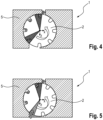
Figure 4 illustrates the rotating element with detergent particles. -
Figure 5 illustrates the rotating element with detergent particles transferring to the cavity. - The present invention provides a continuous method of manufacturing a detergent water-soluble pouch, wherein the pouch comprises a first compartment that is enclosed by a first water-soluble film and a second water-soluble film, wherein the first water-soluble film is sealed to the second water-soluble film, wherein the first compartment comprises a detergent composition, wherein the detergent composition comprises first detergent particles and optionally second detergent ingredients,
- wherein the method comprises the steps of:
- (a) providing a first water-soluble film moving in a first direction, and forming a cavity in the first water-soluble film;
- (b) providing a feed of first detergent particles to a rotating discretizing element comprising at least one pocket, wherein the rotating discretizing element rotates through a rotating arc, wherein the rotating arc has a first portion and a second portion, wherein the first detergent particles are dosed into the pocket when the pocket is in a position within the first portion of the rotating arc, to form a loaded pocket;
- (c) rotating the loaded pocket of the rotating discretizing element from the first portion of the rotating arc to the second portion of the rotating arc,
- (d) dosing the first detergent particles from the loaded pocket to the cavity of the first water-soluble film when the loaded pocket is in a position within the second portion of the rotating arc, to form a loaded cavity;
- (e) optionally, dosing second detergent ingredients to the cavity of the first water-soluble film;
- (f) providing a second water-soluble film moving in the first direction, and placing the second water-soluble film over the cavity of the first water-soluble film and contacting the second water-soluble film to the first water-soluble film;
- (g) sealing the first water-soluble film to the second water-soluble film and entrapping at least a portion of the first detergent particle and optionally at least a portion of the second detergent ingredients to form the first compartment; and
- (h) repeating steps (a) to (g);
- wherein the rotating discretizing element rotates at variable speeds,
- wherein the rotating speed of the rotating discretizing element when the pocket is not in a position within the first portion of the rotating arc is controlled so that the dosing of the first detergent particles into the cavity during step (d) is matched to the frequency at which the cavity passes through the position from which it can be filled with first detergent particles.
- Preferably, the rotational speed of the rotating discretizing element during the first portion of the rotating arc when the first detergent particles are dosed into the pocket to form a loaded pocket is higher than the average rotational speed of the rotating discretizing element during the remainder of the rotating arc.
- Typically, the change in rotating speed of the rotating discretizing element occurs between the steps of loading two subsequent pockets.
- The equipment for the process can be in a configuration of multiple lanes of equipment, such that from one to twenty lines can be run. This could be, from one to twenty rotating discretizing elements connected and rotating together.
- Step (a) provides a first water-soluble film moving in a first direction and forms a cavity in the first water-soluble film.
- Step (b) provides a feed of first detergent particles to a rotating discretizing element comprising at least one pocket, wherein the rotating discretizing element rotates through a rotating arc, wherein the rotating arc has a first portion and a second portion, wherein the first detergent particles are dosed into the pocket when the pocket is in a position within the first portion of the rotating arc, to form a loaded pocket.
- Step (c) rotates the loaded pocket of the rotating discretizing element from the first portion of the rotating arc to the second portion of the rotating arc.
- This rotation can be continuous or discontinuous, preferably the rotation is a continuous rotation.
- Step (d) doses the first detergent particles from the loaded pocket to the cavity of the first water-soluble film when the loaded pocket is in a position within the second portion of the rotating arc, to form a loaded cavity.
- Preferably, during step (d) from 0.05g to 2.0g of first detergent particles are dosed into the cavity of the first water-soluble film.
- Step (e) is optional. Step (e) doses second detergent ingredients to the cavity of the first water-soluble film.
- Preferably, step (e) is essential. Preferably, the detergent composition comprises first detergent particles and second detergent ingredients, wherein during step (e) second detergent ingredients are dosed to the cavity of the first water-soluble film, wherein during step (g) the first water-soluble film is sealed to the second water-soluble film and entraps at least a portion of the first detergent particle and at least a portion of the second detergent ingredients to form the first compartment.
- Preferably, during step (e) from 5.0g to 20g of second detergent ingredients are dosed into the cavity of the first water-soluble film.
- Preferably, the first detergent particles are dosed into the cavity of the first water-soluble film before the second detergent ingredients.
- Step (f) provides a second water-soluble film moving in the first direction, places the second water-soluble film over the cavity of the first water-soluble film and contacts the second water-soluble film to the first water-soluble film.
- Preferably, the second water-soluble film introduced in step (f) forms part of a pre-formed second compartment and wherein after the sealing step (g) the water-soluble pouch comprises a first compartment and a second compartment.
- Step (g) seals the first water-soluble film to the second water-soluble film and entraps at least a portion of the first detergent particle and optionally at least a portion of the second detergent ingredients to form the first compartment.
- Step (h) repeating steps (a) to (g). The process is a continuous process.
- The rotating discretizing element rotates through a rotating arc.
- The rotating discretizing element comprises at least one pocket. Preferably, the rotating discretizing element comprises from five to twenty pockets. Typically, the volume of the pocket is from 0.5 to 20 ml preferably from 1 to 3ml.
- Preferably, the rotating discretizing element continuously rotates through the rotating arc. Alternatively, it may be suitable for the rotating discretizing element to discontinuously rotate through the rotating arc. In this discontinuous manner, the rotating discretizing element will typically come to rest and not rotate for a portion of time (usually minimal) during it rotation around the rotation arc.
- The rotating discretizing element (1) is typically structured so that it comprises: (a) a central rotating element (2) that comprises multiple pockets (3) that are separated by non-pocket portions (4); and (b) a non-rotating outer sheath (5). The outer sheath (5) typically comprises a dosing channel (6). The dosing channel (6) is typically a channel cut through the outer sheath (5) that allows ingredients (7), such as the first detergent particles, to be dosed from outside the outer sheath (5), through the outer sheath (5), and into the pocket (3) when a pocket (3) of the central rotating element (2) lines up with the dosing channel (6). In this manner, the ingredients (7), such as the first detergent particles, wait in the dosing channel (6) until the pocket (3) of the central rotating element (2) is lined up with the dosing channel (6), at which point the ingredients (7), such as the first detergent particles, can enter the pocket (3) to form a loaded pocket. Once the pocket (3) has moved away from the dosing channel (6), the ingredients (7), such as the first detergent particles, wait in the dosing channel (6) as they cannot move past the non-pocket portion (4) of the central rotating element (2). Typically, in this configuration the ingredients (7), such as the first detergent particles, are gravity fed into the pocket (3) of the rotating discretizing element (2).
- By varying the rotational speed of the rotating discretizing element in the manner according to the present invention, the speed at which the pocket (3) is lined up with the dosing channel (6) and allows the ingredients (7), such as the first detergent particles, to flow into the pocket (3), can be controlled so that the desired amount of ingredients (7), such as the first detergent particles, are loaded into the pocket (3). Once the loaded pocket (3) moves away from the dosing channel (6), e.g., such that no more ingredients (7), such as the first detergent ingredients, can flow into the pocket (3), the rotating speed of the rotating discretizing element can be changed.
- This change in rotational speed can then be utilized to match the frequency at which the ingredients (7), such as the first detergent particles, can be dosed into the cavity (8).
- Typically, the rotating discretizing element comprises a transfer zone (9). Typically, the outer sheath (5) comprises the transfer zone (9). The transfer zone (9) is typically a channel cut through the outer sheath (5) that allows ingredients (7), such as the first detergent particles, to be dosed from the loaded pocket (3), through the outer sheath (5), and into the cavity (8) when the loaded pocket (3) of the central rotating element (2) lines up with the transfer zone (9).
- In this manner of varying the rotational speed, the rotating speed of the rotating discretizing element can be used not only to control the amount of ingredients (7), such as the first detergent particles, dosed during the process, but can also match the speed and rate at which the cavities are transferred during the process. This means that accurate dosing of the first detergent particles into the detergent composition of the detergent water-soluble pouch can be achieved whilst also avoiding that the speed of this dosing step becomes the rate limiting step of the continuous process.
- In the above configuration, the outer sheath (5) is as flush to the central rotating element (2) as possible, whilst still allowing the central rotating element (2) to rotate freely, e.g., with little or no resistance caused by outer sheath (5).
- The rotating discretizing element (1) is typically structured so that it comprises: (a) a central rotating element (2) that comprises multiple pockets (3) that are separated by non-pocket portions (4); and (b) a non-rotating outer sheath (5). The outer sheath (5) typically comprises a dosing channel (6). The dosing channel (6) is typically a channel cut through the outer sheath (5) that allows ingredients (7), such as the first detergent particles, to be dosed from outside the outer sheath (5), through the outer sheath (5), and into the pocket (3) when a pocket (3) of the central rotating element (2) lines up with the dosing channel (6). In this manner, the ingredients (7), such as the first detergent particles, wait in the dosing channel (6) until the pocket (3) of the central rotating element (2) is lined up with the dosing channel (6), at which point the ingredients (7), such as the first detergent particles, can enter the pocket (3) to form a loaded pocket. Once the pocket (3) has moved away from the dosing channel (6), the ingredients (7), such as the first detergent particles, wait in the dosing channel (6) as they cannot move past the non-pocket portion (4) of the central rotating element (2). Typically, in this configuration the ingredients (7), such as the first detergent particles, are gravity fed into the pocket (3) of the rotating discretizing element (2).
- By varying the rotational speed of the rotating discretizing element in the manner according to the present invention, the speed at which the pocket (3) is lined up with the dosing channel (6) and allows the ingredients (7), such as the first detergent particles, to flow into the pocket (3), can be controlled so that the desired amount of ingredients (7), such as the first detergent particles, are loaded into the pocket (3). Once the loaded pocket (3) moves away from the dosing channel (6), e.g., such that no more ingredients (7), such as the first detergent ingredients, can flow into the pocket (3), the rotating speed of the rotating discretizing element can be changed.
- This change in rotational speed can then be utilized to match the frequency at which the ingredients (7), such as the first detergent particles, can be dosed into the cavity (8).
- Typically, the rotating discretizing element comprises a transfer zone (9). Typically, the outer sheath (5) comprises the transfer zone (9). The transfer zone (9) is typically a channel cut through the outer sheath (5) that allows ingredients (7), such as the first detergent particles, to be dosed from the loaded pocket (3), through the outer sheath (5), and into the cavity (8) when the loaded pocket (3) of the central rotating element (2) lines up with the transfer zone (9).
- The detergent water-soluble pouch comprises a first compartment that is enclosed by a first water-soluble film and a second water-soluble film, wherein the first water-soluble film is sealed to the second water-soluble film, wherein the first compartment comprises detergent composition, and wherein the detergent composition comprises first detergent particles and optionally second detergent ingredients.
- The detergent water-soluble pouch can be a water-soluble automatic dishwashing detergent pouch or a water-soluble automatic laundry detergent pouch. Preferably, the detergent water-soluble pouch is a water-soluble automatic dishwashing detergent pouch.
- The first compartment is enclosed by a first water-soluble film and a second water-soluble film. The first compartment is formed by sealing the first water-soluble film to the second water-soluble film. The first compartment comprises detergent composition, the detergent composition comprises first detergent particles and optionally second detergent ingredients.
- Preferably, the second water-soluble film introduced in step (f) forms part of a pre-formed second compartment and wherein after the sealing step (g) the water-soluble pouch comprises a first compartment and a second compartment.
- The first water-soluble film is sealed to the second water-soluble film to form the first compartment.
- The second water-soluble film is sealed to the first water-soluble film to form the first compartment.
- The detergent composition comprises first detergent particles and optionally second detergent ingredients. Preferably, the detergent composition is a detergent powder composition.
- Alternatively, the detergent composition can be a detergent liquid composition or a liquid gel composition. In this manner, the second detergent ingredients can be in liquid and/or gel form when dosed to the cavity.
- During step (b) a continuous feed of first detergent particles are provided to a rotating discretizing element comprising at least one pocket.
- Preferably, the first detergent particles comprise enzyme.
- During the optional step (e) second detergent ingredients may be dosed to the cavity of the first water-soluble film.
- Preferably, the second detergent ingredients are second detergent particles.
- Preferably, the second detergent ingredients comprise chelant and/or bleach.
-
- 1. A continuous method of manufacturing a detergent water-soluble pouch, wherein the pouch comprises a first compartment that is enclosed by a first water-soluble film and a second water-soluble film, wherein the first water-soluble film is sealed to the second water-soluble film, wherein the first compartment comprises detergent composition, wherein the detergent composition comprises first detergent particles and optionally second detergent ingredients, wherein the method comprises the steps of:
- (a) providing a first water-soluble film moving in a first direction, and forming a cavity in the first water-soluble film;
- (b) providing a feed of first detergent particles to a rotating discretizing element comprising at least one pocket, wherein the rotating discretizing element rotates through a rotating arc, wherein the rotating arc has a first portion and a second portion, wherein the first detergent particles are dosed into the pocket when the pocket is in a position within the first portion of the rotating arc, to form a loaded pocket;
- (c) rotating the loaded pocket of the rotating discretizing element from the first portion of the rotating arc to the second portion of the rotating arc,
- (d) dosing the first detergent particles from the loaded pocket to the cavity of the first water-soluble film when the loaded pocket is in a position within the second portion of the rotating arc, to form a loaded cavity;
- (e) optionally, dosing second detergent ingredients to the cavity of the first water-soluble film;
- (f) providing a second water-soluble film moving in the first direction, and placing the second water-soluble film over the cavity of the first water-soluble film and contacting the second water-soluble film to the first water-soluble film;
- (g) sealing the first water-soluble film to the second water-soluble film and entrapping the first detergent particles and optionally the second detergent ingredients to form the first compartment; and
- (h) repeating steps (a) to (g);
- wherein the rotating discretizing element rotates at variable speeds,
- wherein the rotating speed of the rotating discretizing element when the pocket is not in a position within the first portion of the rotating arc is controlled so that the dosing of the first detergent particles into the cavity during step (d) is matched to the frequency at which the cavity passes through the position from which it can be filled with first detergent particles.
- 2. A method according to
embodiment 1, wherein the detergent composition comprises first detergent particles and second detergent ingredients, wherein during step (e) second detergent ingredients are dosed to the cavity of the first water-soluble film, wherein during step (g)
the first water-soluble film is sealed to the second water-soluble film and entraps the first detergent particles and the second detergent ingredients to form the first compartment. - 3. A method according to any preceding embodiment, wherein the second detergent ingredients are second detergent particles.
- 4. A method according to any preceding embodiment, wherein the first detergent particles are dosed into the cavity of the first water-soluble film before the second detergent ingredients.
- 5. A method according to any preceding embodiment, wherein the first detergent particles comprise enzyme.
- 6. A method according to any preceding embodiment, wherein the second detergent ingredients comprise chelant and/or bleach.
- 7. A method according to any preceding embodiment, wherein during step (d) from 0.05g to 2.0g of first detergent particles are dosed into the cavity of the first water-soluble film.
- 8. A method according to any preceding embodiment, wherein during step (e) from 5.0g to 20g of second detergent ingredients are dosed into the cavity of the first water-soluble film.
- 9. A method according to any preceding embodiment, wherein the rotational speed of the rotating discretizing element during the first portion of the rotating arc when the first detergent particles are dosed into the pocket to form a loaded pocket is higher than the average rotational speed of the rotating discretizing element during the remainder of the rotating arc.
- 10. A method according to any preceding embodiment, wherein the second water-soluble film introduced in step (f) forms part of a pre-formed second compartment and wherein after the sealing step (g) the water-soluble pouch comprises a first compartment and a second compartment.
- 11. A method according to any preceding embodiment, wherein the rotating discretizing element comprises from five to twenty pockets.
- 12. A method according to any preceding embodiment, wherein the change in rotating speed of the rotating discretizing element occurs between the steps of loading two subsequent pockets.
- 13. A method according to any preceding embodiment, wherein the rotating discretizing element continuously rotates through the rotating arc.
- 14. A method according to any preceding embodiment, wherein the water-soluble pouch is a water-soluble automatic dishwashing detergent pouch.
- 15. A method according to any of embodiments 1-13, wherein the water-soluble pouch is a water-soluble automatic laundry detergent pouch.
Claims (15)
- A continuous method of manufacturing a detergent water-soluble pouch, wherein the pouch comprises a first compartment that is enclosed by a first water-soluble film and a second water-soluble film, wherein the first water-soluble film is sealed to the second water-soluble film, wherein the first compartment comprises detergent composition, wherein the detergent composition comprises first detergent particles and optionally second detergent ingredients,
wherein the method comprises the steps of:(a) providing a first water-soluble film moving in a first direction, and forming a cavity in the first water-soluble film;(b) providing a feed of first detergent particles to a rotating discretizing element comprising at least one pocket, wherein the rotating discretizing element rotates through a rotating arc, wherein the rotating arc has a first portion and a second portion, wherein the first detergent particles are dosed into the pocket when the pocket is in a position within the first portion of the rotating arc, to form a loaded pocket;(c) rotating the loaded pocket of the rotating discretizing element from the first portion of the rotating arc to the second portion of the rotating arc,(d) dosing the first detergent particles from the loaded pocket to the cavity of the first water-soluble film when the loaded pocket is in a position within the second portion of the rotating arc, to form a loaded cavity;(e) optionally, dosing second detergent ingredients to the cavity of the first water-soluble film;(f) providing a second water-soluble film moving in the first direction, and placing the second water-soluble film over the cavity of the first water-soluble film and contacting the second water-soluble film to the first water-soluble film;(g) sealing the first water-soluble film to the second water-soluble film and entrapping the first detergent particles and optionally the second detergent ingredients to form the first compartment; and(h) repeating steps (a) to (g);wherein the rotating discretizing element rotates at variable speeds,wherein the rotating speed of the rotating discretizing element when the pocket is not in a position within the first portion of the rotating arc is controlled so that the dosing of the first detergent particles into the cavity during step (d) is matched to the frequency at which the cavity passes through the position from which it can be filled with first detergent particles. - A method according to claim 1, wherein the detergent composition comprises first detergent particles and second detergent ingredients, wherein during step (e) second detergent ingredients are dosed to the cavity of the first water-soluble film, wherein during step (g) the first water-soluble film is sealed to the second water-soluble film and entraps the first detergent particles and the second detergent ingredients to form the first compartment.
- A method according to any preceding claims, wherein the second detergent ingredients are second detergent particles.
- A method according to any preceding claim, wherein the first detergent particles are dosed into the cavity of the first water-soluble film before the second detergent ingredients.
- A method according to any preceding claim, wherein the first detergent particles comprise enzyme.
- A method according to any preceding claim, wherein the second detergent ingredients comprise chelant and/or bleach.
- A method according to any preceding claim, wherein during step (d) from 0.05g to 2.0g of first detergent particles are dosed into the cavity of the first water-soluble film.
- A method according to any preceding claim, wherein during step (e) from 5.0g to 20g of second detergent ingredients are dosed into the cavity of the first water-soluble film.
- A method according to any preceding claim, wherein the rotational speed of the rotating discretizing element during the first portion of the rotating arc when the first detergent particles are dosed into the pocket to form a loaded pocket is higher than the average rotational speed of the rotating discretizing element during the remainder of the rotating arc.
- A method according to any preceding claim, wherein the second water-soluble film introduced in step (f) forms part of a pre-formed second compartment and wherein after the sealing step (g) the water-soluble pouch comprises a first compartment and a second compartment.
- A method according to any preceding claim, wherein the rotating discretizing element comprises from five to twenty pockets.
- A method according to any preceding claim, wherein the change in rotating speed of the rotating discretizing element occurs between the steps of loading two subsequent pockets.
- A method according to any preceding claim, wherein the rotating discretizing element continuously rotates through the rotating arc.
- A method according to any preceding claim, wherein the water-soluble pouch is a water-soluble automatic dishwashing detergent pouch.
- A method according to any of claims 1-13, wherein the water-soluble pouch is a water-soluble automatic laundry detergent pouch.
Priority Applications (2)
| Application Number | Priority Date | Filing Date | Title |
|---|---|---|---|
| EP22211206.2A EP4378841B1 (en) | 2022-12-02 | 2022-12-02 | A method of manufacturing a detergent water-soluble pouch |
| US18/521,214 US20240182824A1 (en) | 2022-12-02 | 2023-11-28 | Method of manufacturing a detergent water-soluble pouch |
Applications Claiming Priority (1)
| Application Number | Priority Date | Filing Date | Title |
|---|---|---|---|
| EP22211206.2A EP4378841B1 (en) | 2022-12-02 | 2022-12-02 | A method of manufacturing a detergent water-soluble pouch |
Publications (2)
| Publication Number | Publication Date |
|---|---|
| EP4378841A1 true EP4378841A1 (en) | 2024-06-05 |
| EP4378841B1 EP4378841B1 (en) | 2025-07-09 |
Family
ID=84387752
Family Applications (1)
| Application Number | Title | Priority Date | Filing Date |
|---|---|---|---|
| EP22211206.2A Active EP4378841B1 (en) | 2022-12-02 | 2022-12-02 | A method of manufacturing a detergent water-soluble pouch |
Country Status (2)
| Country | Link |
|---|---|
| US (1) | US20240182824A1 (en) |
| EP (1) | EP4378841B1 (en) |
Citations (4)
| Publication number | Priority date | Publication date | Assignee | Title |
|---|---|---|---|---|
| EP0432126B1 (en) * | 1989-12-04 | 1994-10-12 | Cloud Corporation | Forming, filling, and sealing apparatus and method |
| US20040144064A1 (en) * | 2001-01-31 | 2004-07-29 | The Procter & Gamble Company | Process for making pouches |
| JP2008296951A (en) * | 2007-05-30 | 2008-12-11 | Kyocera Corp | Feed roll and granular material supply device using the same |
| US20170101204A1 (en) * | 2015-10-07 | 2017-04-13 | Cloud Packaging Solutions, LLC | System for Forming Packages From Film Material |
Family Cites Families (5)
| Publication number | Priority date | Publication date | Assignee | Title |
|---|---|---|---|---|
| US3218776A (en) * | 1961-09-11 | 1965-11-23 | Cloud Machine Corp | Packaging method and apparatus |
| PL2380966T5 (en) | 2008-02-08 | 2022-05-30 | The Procter And Gamble Company | Process for making a water-soluble pouch |
| EP2933194B1 (en) * | 2014-04-14 | 2019-06-12 | The Procter and Gamble Company | An apparatus for producing pouches |
| CA2871901C (en) | 2014-10-24 | 2021-07-20 | Multi-Pack Solutions | Systems and methods for forming dual layer water soluble packets |
| NL2018707B1 (en) | 2017-04-13 | 2018-10-24 | Eme Engel Machf En Engineering B V | Packaging system for producing pouches |
-
2022
- 2022-12-02 EP EP22211206.2A patent/EP4378841B1/en active Active
-
2023
- 2023-11-28 US US18/521,214 patent/US20240182824A1/en active Pending
Patent Citations (4)
| Publication number | Priority date | Publication date | Assignee | Title |
|---|---|---|---|---|
| EP0432126B1 (en) * | 1989-12-04 | 1994-10-12 | Cloud Corporation | Forming, filling, and sealing apparatus and method |
| US20040144064A1 (en) * | 2001-01-31 | 2004-07-29 | The Procter & Gamble Company | Process for making pouches |
| JP2008296951A (en) * | 2007-05-30 | 2008-12-11 | Kyocera Corp | Feed roll and granular material supply device using the same |
| US20170101204A1 (en) * | 2015-10-07 | 2017-04-13 | Cloud Packaging Solutions, LLC | System for Forming Packages From Film Material |
Also Published As
| Publication number | Publication date |
|---|---|
| US20240182824A1 (en) | 2024-06-06 |
| EP4378841B1 (en) | 2025-07-09 |
Similar Documents
| Publication | Publication Date | Title |
|---|---|---|
| JP4568737B2 (en) | Apparatus and method for closed loop level control and controlled discharge of paste mass | |
| EP2201341B1 (en) | Apparatus for metering and mixing pourable material components | |
| CA2874893C (en) | Method for filling bags with a metered quantity of bulk material, apparatus and automatic machine for implementing the method | |
| CA2574339C (en) | Filling machine and method of feeding paste masses from a hopper into a conveying mechanism | |
| JP5818770B2 (en) | Powder supply device | |
| EP4378841B1 (en) | A method of manufacturing a detergent water-soluble pouch | |
| CZ20002348A3 (en) | Apparatus for producing bulk product and use thereof | |
| TWI286061B (en) | A method and an apparatus for feeding food material, and apparatus for thereby extruding bar-like double-layered food material, and an apparatus for enveloping food material | |
| JP4949309B2 (en) | Powder and particle mixing equipment | |
| US20170101204A1 (en) | System for Forming Packages From Film Material | |
| CA2521559C (en) | Fluidization of particles for encapsulation in oral dosage pharmaceutical products | |
| CN102850149A (en) | Static emulsification-pumped latex matrix on-line continuous sensitized emulsion explosive manufacturing process | |
| CN207536280U (en) | A kind of industrial material packaging facilities with weighing function | |
| CN103998120B (en) | Continuous feeding metering device | |
| JPS58216508A (en) | Weighing, filling and packing machine for kneaded powdered or pasty foodstuff | |
| WO1999058005A1 (en) | Methods and apparatus for applying coating material | |
| JP2013252889A (en) | Charging packaging apparatus and powder agent dropping charging method for the charging packaging apparatus | |
| WO2012153145A1 (en) | Filler device for a flexible bag | |
| CN115782288A (en) | Filling device, rotary press and system for continuously processing powdery products | |
| US20170029218A1 (en) | Dosing method and dosing device for particles of bulk material | |
| CN205998437U (en) | A kind of blockage resisting automatic liquid packaging machine | |
| CN205418624U (en) | Powder feeder of high accuracy measurement | |
| EP3618646B1 (en) | Apparatus and method for coating product in flavouring | |
| CN114104357B (en) | A wheel section of thick bamboo structure of weighing for organic fertilizer ration packing | |
| JP2004196333A (en) | Powder seal sealing method and apparatus |
Legal Events
| Date | Code | Title | Description |
|---|---|---|---|
| PUAI | Public reference made under article 153(3) epc to a published international application that has entered the european phase |
Free format text: ORIGINAL CODE: 0009012 |
|
| STAA | Information on the status of an ep patent application or granted ep patent |
Free format text: STATUS: THE APPLICATION HAS BEEN PUBLISHED |
|
| AK | Designated contracting states |
Kind code of ref document: A1 Designated state(s): AL AT BE BG CH CY CZ DE DK EE ES FI FR GB GR HR HU IE IS IT LI LT LU LV MC ME MK MT NL NO PL PT RO RS SE SI SK SM TR |
|
| STAA | Information on the status of an ep patent application or granted ep patent |
Free format text: STATUS: REQUEST FOR EXAMINATION WAS MADE |
|
| 17P | Request for examination filed |
Effective date: 20241202 |
|
| RBV | Designated contracting states (corrected) |
Designated state(s): AL AT BE BG CH CY CZ DE DK EE ES FI FR GB GR HR HU IE IS IT LI LT LU LV MC ME MK MT NL NO PL PT RO RS SE SI SK SM TR |
|
| GRAP | Despatch of communication of intention to grant a patent |
Free format text: ORIGINAL CODE: EPIDOSNIGR1 |
|
| STAA | Information on the status of an ep patent application or granted ep patent |
Free format text: STATUS: GRANT OF PATENT IS INTENDED |
|
| INTG | Intention to grant announced |
Effective date: 20250131 |
|
| GRAS | Grant fee paid |
Free format text: ORIGINAL CODE: EPIDOSNIGR3 |
|
| GRAA | (expected) grant |
Free format text: ORIGINAL CODE: 0009210 |
|
| STAA | Information on the status of an ep patent application or granted ep patent |
Free format text: STATUS: THE PATENT HAS BEEN GRANTED |
|
| AK | Designated contracting states |
Kind code of ref document: B1 Designated state(s): AL AT BE BG CH CY CZ DE DK EE ES FI FR GB GR HR HU IE IS IT LI LT LU LV MC ME MK MT NL NO PL PT RO RS SE SI SK SM TR |
|
| P01 | Opt-out of the competence of the unified patent court (upc) registered |
Free format text: CASE NUMBER: APP_25859/2025 Effective date: 20250530 |
|
| REG | Reference to a national code |
Ref country code: GB Ref legal event code: FG4D |
|
| REG | Reference to a national code |
Ref country code: CH Ref legal event code: EP |
|
| REG | Reference to a national code |
Ref country code: DE Ref legal event code: R096 Ref document number: 602022017264 Country of ref document: DE |
|
| REG | Reference to a national code |
Ref country code: IE Ref legal event code: FG4D |
|
| REG | Reference to a national code |
Ref country code: NL Ref legal event code: MP Effective date: 20250709 |
|
| PG25 | Lapsed in a contracting state [announced via postgrant information from national office to epo] |
Ref country code: PT Free format text: LAPSE BECAUSE OF FAILURE TO SUBMIT A TRANSLATION OF THE DESCRIPTION OR TO PAY THE FEE WITHIN THE PRESCRIBED TIME-LIMIT Effective date: 20251110 |
|
| PG25 | Lapsed in a contracting state [announced via postgrant information from national office to epo] |
Ref country code: NL Free format text: LAPSE BECAUSE OF FAILURE TO SUBMIT A TRANSLATION OF THE DESCRIPTION OR TO PAY THE FEE WITHIN THE PRESCRIBED TIME-LIMIT Effective date: 20250709 |
|
| REG | Reference to a national code |
Ref country code: AT Ref legal event code: MK05 Ref document number: 1811664 Country of ref document: AT Kind code of ref document: T Effective date: 20250709 |
|
| PG25 | Lapsed in a contracting state [announced via postgrant information from national office to epo] |
Ref country code: IS Free format text: LAPSE BECAUSE OF FAILURE TO SUBMIT A TRANSLATION OF THE DESCRIPTION OR TO PAY THE FEE WITHIN THE PRESCRIBED TIME-LIMIT Effective date: 20251109 |
|
| PG25 | Lapsed in a contracting state [announced via postgrant information from national office to epo] |
Ref country code: NO Free format text: LAPSE BECAUSE OF FAILURE TO SUBMIT A TRANSLATION OF THE DESCRIPTION OR TO PAY THE FEE WITHIN THE PRESCRIBED TIME-LIMIT Effective date: 20251009 |
|
| REG | Reference to a national code |
Ref country code: LT Ref legal event code: MG9D |
|
| PG25 | Lapsed in a contracting state [announced via postgrant information from national office to epo] |
Ref country code: AT Free format text: LAPSE BECAUSE OF FAILURE TO SUBMIT A TRANSLATION OF THE DESCRIPTION OR TO PAY THE FEE WITHIN THE PRESCRIBED TIME-LIMIT Effective date: 20250709 |
|
| PG25 | Lapsed in a contracting state [announced via postgrant information from national office to epo] |
Ref country code: FI Free format text: LAPSE BECAUSE OF FAILURE TO SUBMIT A TRANSLATION OF THE DESCRIPTION OR TO PAY THE FEE WITHIN THE PRESCRIBED TIME-LIMIT Effective date: 20250709 |
|
| PG25 | Lapsed in a contracting state [announced via postgrant information from national office to epo] |
Ref country code: HR Free format text: LAPSE BECAUSE OF FAILURE TO SUBMIT A TRANSLATION OF THE DESCRIPTION OR TO PAY THE FEE WITHIN THE PRESCRIBED TIME-LIMIT Effective date: 20250709 |
|
| PG25 | Lapsed in a contracting state [announced via postgrant information from national office to epo] |
Ref country code: GR Free format text: LAPSE BECAUSE OF FAILURE TO SUBMIT A TRANSLATION OF THE DESCRIPTION OR TO PAY THE FEE WITHIN THE PRESCRIBED TIME-LIMIT Effective date: 20251010 |
|
| PG25 | Lapsed in a contracting state [announced via postgrant information from national office to epo] |
Ref country code: SE Free format text: LAPSE BECAUSE OF FAILURE TO SUBMIT A TRANSLATION OF THE DESCRIPTION OR TO PAY THE FEE WITHIN THE PRESCRIBED TIME-LIMIT Effective date: 20250709 |
|
| PG25 | Lapsed in a contracting state [announced via postgrant information from national office to epo] |
Ref country code: LV Free format text: LAPSE BECAUSE OF FAILURE TO SUBMIT A TRANSLATION OF THE DESCRIPTION OR TO PAY THE FEE WITHIN THE PRESCRIBED TIME-LIMIT Effective date: 20250709 |
|
| PG25 | Lapsed in a contracting state [announced via postgrant information from national office to epo] |
Ref country code: BG Free format text: LAPSE BECAUSE OF FAILURE TO SUBMIT A TRANSLATION OF THE DESCRIPTION OR TO PAY THE FEE WITHIN THE PRESCRIBED TIME-LIMIT Effective date: 20250709 Ref country code: PL Free format text: LAPSE BECAUSE OF FAILURE TO SUBMIT A TRANSLATION OF THE DESCRIPTION OR TO PAY THE FEE WITHIN THE PRESCRIBED TIME-LIMIT Effective date: 20250709 |
|
| PG25 | Lapsed in a contracting state [announced via postgrant information from national office to epo] |
Ref country code: RS Free format text: LAPSE BECAUSE OF FAILURE TO SUBMIT A TRANSLATION OF THE DESCRIPTION OR TO PAY THE FEE WITHIN THE PRESCRIBED TIME-LIMIT Effective date: 20251009 |
|
| PG25 | Lapsed in a contracting state [announced via postgrant information from national office to epo] |
Ref country code: ES Free format text: LAPSE BECAUSE OF FAILURE TO SUBMIT A TRANSLATION OF THE DESCRIPTION OR TO PAY THE FEE WITHIN THE PRESCRIBED TIME-LIMIT Effective date: 20250709 |
|
| PG25 | Lapsed in a contracting state [announced via postgrant information from national office to epo] |
Ref country code: RO Free format text: LAPSE BECAUSE OF FAILURE TO SUBMIT A TRANSLATION OF THE DESCRIPTION OR TO PAY THE FEE WITHIN THE PRESCRIBED TIME-LIMIT Effective date: 20250709 |
|
| PG25 | Lapsed in a contracting state [announced via postgrant information from national office to epo] |
Ref country code: SM Free format text: LAPSE BECAUSE OF FAILURE TO SUBMIT A TRANSLATION OF THE DESCRIPTION OR TO PAY THE FEE WITHIN THE PRESCRIBED TIME-LIMIT Effective date: 20250709 |
|
| REG | Reference to a national code |
Ref country code: DE Ref legal event code: R026 Ref document number: 602022017264 Country of ref document: DE |
|
| PG25 | Lapsed in a contracting state [announced via postgrant information from national office to epo] |
Ref country code: DK Free format text: LAPSE BECAUSE OF FAILURE TO SUBMIT A TRANSLATION OF THE DESCRIPTION OR TO PAY THE FEE WITHIN THE PRESCRIBED TIME-LIMIT Effective date: 20250709 |
|
| PG25 | Lapsed in a contracting state [announced via postgrant information from national office to epo] |
Ref country code: IT Free format text: LAPSE BECAUSE OF FAILURE TO SUBMIT A TRANSLATION OF THE DESCRIPTION OR TO PAY THE FEE WITHIN THE PRESCRIBED TIME-LIMIT Effective date: 20250709 |
|
| PLAN | Information deleted related to communication of a notice of opposition and request to file observations + time limit |
Free format text: ORIGINAL CODE: EPIDOSDOBS2 |
|
| PLAX | Notice of opposition and request to file observation + time limit sent |
Free format text: ORIGINAL CODE: EPIDOSNOBS2 |
|
| PLBI | Opposition filed |
Free format text: ORIGINAL CODE: 0009260 |
|
| PG25 | Lapsed in a contracting state [announced via postgrant information from national office to epo] |
Ref country code: CZ Free format text: LAPSE BECAUSE OF FAILURE TO SUBMIT A TRANSLATION OF THE DESCRIPTION OR TO PAY THE FEE WITHIN THE PRESCRIBED TIME-LIMIT Effective date: 20250709 |
|
| REG | Reference to a national code |
Ref country code: CH Ref legal event code: L10 Free format text: ST27 STATUS EVENT CODE: U-0-0-L10-L00 (AS PROVIDED BY THE NATIONAL OFFICE) Effective date: 20260423 |
|
| PG25 | Lapsed in a contracting state [announced via postgrant information from national office to epo] |
Ref country code: SK Free format text: LAPSE BECAUSE OF FAILURE TO SUBMIT A TRANSLATION OF THE DESCRIPTION OR TO PAY THE FEE WITHIN THE PRESCRIBED TIME-LIMIT Effective date: 20250709 Ref country code: EE Free format text: LAPSE BECAUSE OF FAILURE TO SUBMIT A TRANSLATION OF THE DESCRIPTION OR TO PAY THE FEE WITHIN THE PRESCRIBED TIME-LIMIT Effective date: 20250709 |