EP4377557B1 - Turbomachine with cooling and lubrication system using lubrication oil - Google Patents
Turbomachine with cooling and lubrication system using lubrication oil Download PDFInfo
- Publication number
- EP4377557B1 EP4377557B1 EP22747793.2A EP22747793A EP4377557B1 EP 4377557 B1 EP4377557 B1 EP 4377557B1 EP 22747793 A EP22747793 A EP 22747793A EP 4377557 B1 EP4377557 B1 EP 4377557B1
- Authority
- EP
- European Patent Office
- Prior art keywords
- turbomachine
- channel
- spray
- main channel
- lubricating oil
- Prior art date
- Legal status (The legal status is an assumption and is not a legal conclusion. Google has not performed a legal analysis and makes no representation as to the accuracy of the status listed.)
- Active
Links
Images

Classifications
-
- F—MECHANICAL ENGINEERING; LIGHTING; HEATING; WEAPONS; BLASTING
- F01—MACHINES OR ENGINES IN GENERAL; ENGINE PLANTS IN GENERAL; STEAM ENGINES
- F01D—NON-POSITIVE DISPLACEMENT MACHINES OR ENGINES, e.g. STEAM TURBINES
- F01D25/00—Component parts, details, or accessories, not provided for in, or of interest apart from, other groups
- F01D25/08—Cooling; Heating; Heat-insulation
- F01D25/12—Cooling
- F01D25/125—Cooling of bearings
-
- F—MECHANICAL ENGINEERING; LIGHTING; HEATING; WEAPONS; BLASTING
- F01—MACHINES OR ENGINES IN GENERAL; ENGINE PLANTS IN GENERAL; STEAM ENGINES
- F01D—NON-POSITIVE DISPLACEMENT MACHINES OR ENGINES, e.g. STEAM TURBINES
- F01D25/00—Component parts, details, or accessories, not provided for in, or of interest apart from, other groups
- F01D25/18—Lubricating arrangements
- F01D25/183—Sealing means
-
- F—MECHANICAL ENGINEERING; LIGHTING; HEATING; WEAPONS; BLASTING
- F02—COMBUSTION ENGINES; HOT-GAS OR COMBUSTION-PRODUCT ENGINE PLANTS
- F02C—GAS-TURBINE PLANTS; AIR INTAKES FOR JET-PROPULSION PLANTS; CONTROLLING FUEL SUPPLY IN AIR-BREATHING JET-PROPULSION PLANTS
- F02C6/00—Plural gas-turbine plants; Combinations of gas-turbine plants with other apparatus; Adaptations of gas-turbine plants for special use
- F02C6/04—Gas-turbine plants providing heated or pressurised working fluid for other apparatus, e.g. without mechanical power output
- F02C6/10—Gas-turbine plants providing heated or pressurised working fluid for other apparatus, e.g. without mechanical power output supplying working fluid to a user, e.g. a chemical process, which returns working fluid to a turbine of the plant
- F02C6/12—Turbochargers, i.e. plants for augmenting mechanical power output of internal-combustion piston engines by increase of charge pressure
-
- F—MECHANICAL ENGINEERING; LIGHTING; HEATING; WEAPONS; BLASTING
- F02—COMBUSTION ENGINES; HOT-GAS OR COMBUSTION-PRODUCT ENGINE PLANTS
- F02C—GAS-TURBINE PLANTS; AIR INTAKES FOR JET-PROPULSION PLANTS; CONTROLLING FUEL SUPPLY IN AIR-BREATHING JET-PROPULSION PLANTS
- F02C7/00—Features, components parts, details or accessories, not provided for in, or of interest apart form groups F02C1/00 - F02C6/00; Air intakes for jet-propulsion plants
- F02C7/06—Arrangements of bearings; Lubricating
-
- F—MECHANICAL ENGINEERING; LIGHTING; HEATING; WEAPONS; BLASTING
- F05—INDEXING SCHEMES RELATING TO ENGINES OR PUMPS IN VARIOUS SUBCLASSES OF CLASSES F01-F04
- F05D—INDEXING SCHEME FOR ASPECTS RELATING TO NON-POSITIVE-DISPLACEMENT MACHINES OR ENGINES, GAS-TURBINES OR JET-PROPULSION PLANTS
- F05D2220/00—Application
- F05D2220/40—Application in turbochargers
-
- F—MECHANICAL ENGINEERING; LIGHTING; HEATING; WEAPONS; BLASTING
- F05—INDEXING SCHEMES RELATING TO ENGINES OR PUMPS IN VARIOUS SUBCLASSES OF CLASSES F01-F04
- F05D—INDEXING SCHEME FOR ASPECTS RELATING TO NON-POSITIVE-DISPLACEMENT MACHINES OR ENGINES, GAS-TURBINES OR JET-PROPULSION PLANTS
- F05D2240/00—Components
- F05D2240/10—Stators
- F05D2240/12—Fluid guiding means, e.g. vanes
- F05D2240/128—Nozzles
-
- F—MECHANICAL ENGINEERING; LIGHTING; HEATING; WEAPONS; BLASTING
- F05—INDEXING SCHEMES RELATING TO ENGINES OR PUMPS IN VARIOUS SUBCLASSES OF CLASSES F01-F04
- F05D—INDEXING SCHEME FOR ASPECTS RELATING TO NON-POSITIVE-DISPLACEMENT MACHINES OR ENGINES, GAS-TURBINES OR JET-PROPULSION PLANTS
- F05D2240/00—Components
- F05D2240/50—Bearings
- F05D2240/52—Axial thrust bearings
-
- F—MECHANICAL ENGINEERING; LIGHTING; HEATING; WEAPONS; BLASTING
- F05—INDEXING SCHEMES RELATING TO ENGINES OR PUMPS IN VARIOUS SUBCLASSES OF CLASSES F01-F04
- F05D—INDEXING SCHEME FOR ASPECTS RELATING TO NON-POSITIVE-DISPLACEMENT MACHINES OR ENGINES, GAS-TURBINES OR JET-PROPULSION PLANTS
- F05D2240/00—Components
- F05D2240/50—Bearings
- F05D2240/54—Radial bearings
-
- F—MECHANICAL ENGINEERING; LIGHTING; HEATING; WEAPONS; BLASTING
- F05—INDEXING SCHEMES RELATING TO ENGINES OR PUMPS IN VARIOUS SUBCLASSES OF CLASSES F01-F04
- F05D—INDEXING SCHEME FOR ASPECTS RELATING TO NON-POSITIVE-DISPLACEMENT MACHINES OR ENGINES, GAS-TURBINES OR JET-PROPULSION PLANTS
- F05D2240/00—Components
- F05D2240/55—Seals
-
- F—MECHANICAL ENGINEERING; LIGHTING; HEATING; WEAPONS; BLASTING
- F05—INDEXING SCHEMES RELATING TO ENGINES OR PUMPS IN VARIOUS SUBCLASSES OF CLASSES F01-F04
- F05D—INDEXING SCHEME FOR ASPECTS RELATING TO NON-POSITIVE-DISPLACEMENT MACHINES OR ENGINES, GAS-TURBINES OR JET-PROPULSION PLANTS
- F05D2260/00—Function
- F05D2260/20—Heat transfer, e.g. cooling
- F05D2260/232—Heat transfer, e.g. cooling characterized by the cooling medium
-
- F—MECHANICAL ENGINEERING; LIGHTING; HEATING; WEAPONS; BLASTING
- F05—INDEXING SCHEMES RELATING TO ENGINES OR PUMPS IN VARIOUS SUBCLASSES OF CLASSES F01-F04
- F05D—INDEXING SCHEME FOR ASPECTS RELATING TO NON-POSITIVE-DISPLACEMENT MACHINES OR ENGINES, GAS-TURBINES OR JET-PROPULSION PLANTS
- F05D2260/00—Function
- F05D2260/98—Lubrication
-
- Y—GENERAL TAGGING OF NEW TECHNOLOGICAL DEVELOPMENTS; GENERAL TAGGING OF CROSS-SECTIONAL TECHNOLOGIES SPANNING OVER SEVERAL SECTIONS OF THE IPC; TECHNICAL SUBJECTS COVERED BY FORMER USPC CROSS-REFERENCE ART COLLECTIONS [XRACs] AND DIGESTS
- Y02—TECHNOLOGIES OR APPLICATIONS FOR MITIGATION OR ADAPTATION AGAINST CLIMATE CHANGE
- Y02T—CLIMATE CHANGE MITIGATION TECHNOLOGIES RELATED TO TRANSPORTATION
- Y02T10/00—Road transport of goods or passengers
- Y02T10/10—Internal combustion engine [ICE] based vehicles
- Y02T10/12—Improving ICE efficiencies
Definitions
- the present invention relates to a turbomachine equipped with an innovative cooling and lubrication system. More specifically, the cooling and lubrication system is based on oil jets and is particularly suitable for turbochargers of internal combustion engines.
- turbomachines are machines in which the exchange of energy with the fluid takes place thanks to the rotation of a wheel, also known as a rotor or impeller, splined to a shaft, equipped at the periphery with blades, and housed in a case (known as a stator) which may also be equipped with blades.
- turbocharger In the context of turbomachinery, the turbocharger (or turbo-unit or, more simply, turbo) has as its main purpose the supercharging of the internal combustion engine.
- the turbocharger is defined by the coupling of a centripetal turbine and a centrifugal compressor.
- the turbine constitutes the 'hot' or exhaust side of the turbo-compressor, where the high temperature exhaust gases are received, while the centrifugal compressor is the 'cold' or intake side, where the air to be compressed is drawn in. It constitutes the most common method of turbocharging endothermic engines, particularly those for motor vehicles.
- the cooling of the most critical areas of a turbocharger's core body is done indirectly by circulating only the lubrication oil intended to support the bearing load, which at the same time also removes the necessary heat. Cooling can also occur through a combination of oil circulation and water circulation, the latter in a dedicated circuit.
- the adoption of the water circuit usually applies to compression-ignition and spark-ignition engines where combustion conditions involve exhaust gas temperatures so high that the structural strength of the mechanical components is compromised.
- the aim of the present invention is to realize a turbo-machine equipped with a cooling and lubrication system which does not require the adoption of a water-cooling circuit.
- cooling and lubrication system is dedicated to the most critical areas of the central body of a turbocharger - bearing unit and sealing means - and is based on a suitable oil sprayer with well-defined and optimized dimensioning and positioning.
- a turbomachine having a cooling and lubrication system having the characteristics set forth in claim 1.
Landscapes
- Engineering & Computer Science (AREA)
- Mechanical Engineering (AREA)
- General Engineering & Computer Science (AREA)
- Chemical & Material Sciences (AREA)
- Combustion & Propulsion (AREA)
- Chemical Kinetics & Catalysis (AREA)
- General Chemical & Material Sciences (AREA)
- Supercharger (AREA)
- Turbine Rotor Nozzle Sealing (AREA)
Description
- The present invention relates to a turbomachine equipped with an innovative cooling and lubrication system. More specifically, the cooling and lubrication system is based on oil jets and is particularly suitable for turbochargers of internal combustion engines.
- As is known, turbomachines are machines in which the exchange of energy with the fluid takes place thanks to the rotation of a wheel, also known as a rotor or impeller, splined to a shaft, equipped at the periphery with blades, and housed in a case (known as a stator) which may also be equipped with blades.
- In the context of turbomachinery, the turbocharger (or turbo-unit or, more simply, turbo) has as its main purpose the supercharging of the internal combustion engine. The turbocharger is defined by the coupling of a centripetal turbine and a centrifugal compressor. The turbine constitutes the 'hot' or exhaust side of the turbo-compressor, where the high temperature exhaust gases are received, while the centrifugal compressor is the 'cold' or intake side, where the air to be compressed is drawn in. It constitutes the most common method of turbocharging endothermic engines, particularly those for motor vehicles.
- The temperatures reached on the hot side of the turbocharger, related to the high enthalpy of the exhaust gases, are of the order of several hundred degrees Celsius and require reliable cooling systems that remove heat from the components subjected to these high temperatures, especially the sealing media on the turbine side.
- The cooling of the most critical areas of a turbocharger's core body is done indirectly by circulating only the lubrication oil intended to support the bearing load, which at the same time also removes the necessary heat. Cooling can also occur through a combination of oil circulation and water circulation, the latter in a dedicated circuit. The adoption of the water circuit usually applies to compression-ignition and spark-ignition engines where combustion conditions involve exhaust gas temperatures so high that the structural strength of the mechanical components is compromised.
- The adoption of a water-cooling circuit is necessary not only during the operating conditions of the internal combustion engine, but also immediately after it has been switched off. In fact, once the endothermic engine is switched off, the turbine transmits a heat wave to the entire turbocharger casing inside which, in the meantime, no more oil circulates. This creates excessive overheating of the bearings and especially the turbine seals. The use of the water-cooling circuit is effective because water has the advantage over oil that, due to the thermosiphon effect, it continues to circulate even after the internal combustion engine is switched off and thus continues its heat-removal function.
- On the other hand, the addition of water circulation entails a considerable complication in the design of the turbocharger, in particular in the design of the central body, and an increase in costs for tooling and layout of the water channels. In addition, the piping required to bring water to the turbocharger also represents a non-negligible cost.
- There is therefore a need to solve the technical problem mentioned above by means of an innovative solution that avoids the use of a specific water cooling circuit to cool the turbocharger even in the highest performance engine applications.
- Turbomachines having seal systems cooled by sprayed lubrication oil are disclosed for example in
documents EP 2 743 460 andEP 3 073 135 - The aim of the present invention is to realize a turbo-machine equipped with a cooling and lubrication system which does not require the adoption of a water-cooling circuit.
- More specifically, the cooling and lubrication system according to the present invention is dedicated to the most critical areas of the central body of a turbocharger - bearing unit and sealing means - and is based on a suitable oil sprayer with well-defined and optimized dimensioning and positioning.
- Accordingly, according to an aspect of the present invention a turbomachine is provided having a cooling and lubrication system having the characteristics set forth in
claim 1. - Further preferred and/or particularly advantageous embodiments of the invention are described according to the features set forth in the dependent claims.
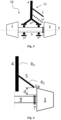
- The invention will now be described with reference to the appended drawings, which illustrate a non-limiting example embodiment, wherein:
-
Figure 1 schematically illustrates the cooling and lubrication system of a turbomachinery according to a first embodiment of the present invention, -
Figure 2 schematically illustrates the cooling and lubrication system in a second embodiment of the present invention, -
Figure 3 schematically illustrates the cooling and lubrication system in a third embodiment of the present invention, and -
Figure 4 is a detail, in enlargement and with parts removed for clarity, of the forms of implementation referred to inFigures 1 to 3 . - As already mentioned, the present invention is a turbo-machine and, in particular, a turbocharger for turbocharging high-performance endothermic engines, in which the cooling of the turbocharger is, according to known technique, also entrusted to a water circuit in addition to the lubrication oil. However, the present invention is any type of turbo-machine in which the use of a water cooling circuit is to be avoided.
- With reference to
Figure 1 , denotes aturbomachine 10 for endothermic engines of a known type, schematically shown in its essential components. In particular, theturbomachine 10 may have an axisymmetric geometry about an axis of rotation X and comprises: - a
compressor 1 provided with a relative impeller, for compressing the air supply of the endothermic engine (or other suitable fluid), when the air to be compressed has been sucked in, - a
turbine 2 equipped with its turbine wheel, for the expansion of the exhaust gases of the endothermic engine, - a
rotatable shaft 9 connecting the turbine and the compressor, - support means 3, 3*, 8, 8* of
shaft 9. A semi-floating plain bearing 3 in which the floating ring does not rotate and athrust ring 8* is schematically shown infigure 1 , - sealing means 7, on the
turbine 2 side to seal the lubrication oil to theturbine 2 impeller and prevent the hot gases of the endothermic engine from escaping from the "hot" side of the turbocharger, i.e. theturbine 2 wheel, - a
cooling 11 and lubrication system of theturbomachine 10. - According to the invention, the
cooling 11 and lubrication system is realized within the central body of the turbocharger (of a known type and for this reason not shown in the diagrams ofFigures 1-4 ) and comprises: - a main oil supply channel 4 (also used for lubrication of the turbocharger, as well as for its cooling). The
main channel 4, as schematized infigure 1 , can deliver a flow of oil to the semi-floating plain bearing 3 directly or by means of further channels not shown for simplicity, - a
branch 6 which takes some of the oil flow from themain channel 4 and adds it to thethrust ring 8*. In this configuration, thethrust ring 8* could also be integrated into the semi-floating plain bearing 3, - at least one spray-
channel media 7. The spray-channel Figure 1 in two exemplary positions, draws a flow of oil, directly or indirectly, from themain channel 4, to which it is connected, and terminates with aspray nozzle 5a whose diameter φ5 and distance d from the sealing means 7 are predetermined as will be better described below. Thespray nozzle 5a is therefore in the distal position of spray-channel main channel 4. - With reference to
Figure 2 , theturbomachine 10 differs in that the support means comprise a pair of floating plain bearings 3 (in which, that is, the corresponding floating rings rotate) and athrust ring 8. - According to the invention, the
cooling 11 and lubrication system implemented within theturbomachine 10 body comprises: - a main oil supply channel 4 (also serving to lubricate the turbocharger, as well as to cool it). The
main channel 4 delivers a flow of oil to the floatingplain bearings 3 by means offurther channels 4*, - a
branch 6 which takes a part of the oil flow of themain channel 4 and feeds it to thethrust ring 8, - at least one spray-
channel - With reference to
figure 3 ,turbomachine 10 differs in that the bearings comprise a pair ofrolling bearings 3* capable of supporting radial and axial loads. For this reason, the turbocharger in this configuration does not require thrust rings. Of course, if rolling bearings capable of withstanding only radial loads were to be used, a thrust ring would also have to be provided, but this form of implementation will also be covered by the present invention. - According to the invention, the
turbomachine cooling 11 and lubrication system implemented within the turbocharger body comprises: - a main oil supply channel 4 (also serving the lubrication of the turbocharger, as well as its cooling). The
main channel 4 delivers a flow of oil to the rollingbearings 3* by means offurther channels 4*, - at least one spray-
channel channel Figure 3 is illustrated as an example in two positions, draws a flow of oil, directly or indirectly, from themain channel 4, to which it is connected, and terminates with aspray nozzle 5a whose diameter φ5 and distance d from the sealing means 7 are predetermined. Also, in this example of implementation, the spray nozzle is located at the distal position of the spray-channel main channel 4. - According to the present invention, the spray-
channel central body 10. The spray-channel is suitably oriented so as to direct the oil jet towards the oil sealing means 7 from theturbine side 2, without, however, directly hitting them, and is fed by a flow spill from the mainoil supply channel 4 of the turbocharger or from thefurther oil channels 4* for thebearings - It is evident that the embodiments of the invention, described above, represent non-limiting examples: in particular, the type, arrangement and load carrying capacities of the bearings presented are not intended to limit the invention to the examples described, any architecture of turbocharger shaft support elements may be adopted within the same inventive concept.
- With reference to
Figure 4 , it should be noted that it is important for the purposes of the present invention to dimension the spray-channel main channel 4, and with regard to the distance from the sealing means 7, which will determine the effectiveness of heat removal by the flow rate of oil tapped from the spray-channel. - Regarding the diameter φ5 of spray-
channel main channel 4. Advantageously, the effectiveness of the solution is achieved if diameter φ5 of spray-channel main channel 4. Since the diameter φ4 ofmain channel 4, in high-performance endothermic engine applications, takes values between 5 mm and 6 mm, an optimal range for diameter sizing φ5 of the spray-channel channel - The distance d of the end portion of the spray-
channel spray nozzle 5a, from the sealing means 7 is another important parameter for the correct dimensioning of the cooling system 11: with a very small distance there is a risk that the oil will directly and at high speed invade the sealing means 7, impairing their very functionality. - On the contrary, oil must never be directed onto the sealing rings while being sprayed in an area facing them. Preferably, it would be useful to protect the area of the sealing means from any direct contact with the lubrication oil by means of a suitable deflector, which can be made from the same casting as the turbine body. Conversely, an excessive distance would make the heat removal function of the sealing
media 7 ineffective. It is therefore advisable, depending on the application, to relate the distance d to the diameter φ5 of the spray-channel 
spray nozzle 5a and turbine-side sealing medium 7 between five and twelve times the diameter φ5 of thespray channel
The adoption of the channel-sprayer makes it possible to achieve cooling of the most critical areas (oil seal media on the turbine side) comparable to the indirect cooling obtainable with water circulation.
In other words, this solution allows the use of a water-cooling circuit to be avoided where possible, by retaining the entire cooling of the turbomachine to the lubrication oil alone. This is certainly advantageous from an economic point of view, but not only: - many of today's engine architectures require the turbo to be located in the upper portion of the engine compartment. This does away with the thermosiphon effect mentioned in the introduction and also eliminates the residual advantage of using water cooling;
- oil cooling, according to the present invention, allows the heat wave (which occurs when the engine is switched off) to start from lower temperatures, so that the temperature limits are not exceeded. Thus, with this type of cooling, the same principle is used as with water cooling, making the latter no longer necessary.
- In addition to the form of the invention as described above, it must be understood that there are numerous other variants. It must also be understood that these forms of embodiment are merely illustrative and do not limit either the scope of the invention, its applications or its possible configurations. On the contrary, although the above description allows the skilled person to implement the present invention at least according to one exemplary form of embodiment thereof, it should be understood that many variations of the described components are possible, without thereby departing from the scope of the invention as defined in the appended claims.
Claims (8)
- Turbomachine (10) comprising:- a turbine (2) provided with a turbine wheel,- a compressor (1),- a shaft (9), rotatable, connecting the turbine (2) and the compressor (1),- support means (3, 3*, 8, 8*) of the shaft (9),- a cooling and lubrication system (11) exclusively based on heat removal by lubricating oil, which system (11) includes a main channel (4) for feeding the lubricating oil to the support means (3, 3*, 8, 8*) of the shaft (9),- sealing means (7) on the turbine side, configured to avoid lubricating oil entering the turbine wheel,
wherein- the cooling and lubrication system (11) comprises at least one spray-channel (5, 5*) for cooling the sealing means (7), fluid-dynamically connected to the main channel (4) and able to supply a flow of lubricating oil fed directly or indirectly, from the main channel (4);- the spray-channel (5, 5*) is provided, in a distal position with respect to the main channel (4), with a spray nozzle (5a) facing the sealing means (7),the turbomachine (10) being characterized by the fact that a distance (d) of the spray nozzle (5a) from the sealing means (7) is between five and twelve times the diameter (φ5) of the spray-channel (5, 5*). - Turbomachine (10) according to claim 1, wherein a diameter (φ5) of the spray-channel (5, 5*) is between 10% and 25% of a diameter (φ4) of the main channel (4).
- Turbomachine (10) according to claim 2, wherein for values of the diameter (φ4) of the main channel (4) between 5 mm and 6 mm, corresponding values of the diameter (φ5) of the spray-channel (5, 5*) are between 0.7 mm and 1.3 mm.
- Turbomachine (10) according to claim 3, comprising a body provided with a deflector, which is made from the same casting as the turbomachine body and is designed to protect sealing means (7) from direct contact with the lubricating oil.
- Turbomachine (10) according to any of the preceding claims, in which there is a branch (6) fluid-dynamically connected to the main channel (4), containing a lubricating oil flow coming from the main channel (4) and fed to a thrust ring (8, 8*), which belongs to the support means of the shaft (9).
- Turbomachine (10) according to claim 5, in which the main channel (4) is provided with further channels (4*) for supplying lubricating oil to floating plain bearings (3), which belong to the support means of the shaft (9).
- Turbomachine (10) according to one of claims 1 to 3, in which the main channel (4) is provided with further channels (4*) for supplying lubricating oil to rolling bearings (3*) which belong to the support means of the shaft (9).
- Turbomachine (10) according to any of the preceding claims, in which inside the spray-channel (5, 5*), the lubricating oil pressure assumes values not exceeding 10 bar.
Applications Claiming Priority (2)
| Application Number | Priority Date | Filing Date | Title |
|---|---|---|---|
| IT102021000020378A IT202100020378A1 (en) | 2021-07-29 | 2021-07-29 | COOLING SYSTEM FOR TURBOMACHINES |
| PCT/IB2022/056942 WO2023007396A1 (en) | 2021-07-29 | 2022-07-27 | Turbomachine with cooling system using lubrication oil |
Publications (2)
| Publication Number | Publication Date |
|---|---|
| EP4377557A1 EP4377557A1 (en) | 2024-06-05 |
| EP4377557B1 true EP4377557B1 (en) | 2025-04-16 |
Family
ID=78649578
Family Applications (1)
| Application Number | Title | Priority Date | Filing Date |
|---|---|---|---|
| EP22747793.2A Active EP4377557B1 (en) | 2021-07-29 | 2022-07-27 | Turbomachine with cooling and lubrication system using lubrication oil |
Country Status (4)
| Country | Link |
|---|---|
| US (1) | US20240309780A1 (en) |
| EP (1) | EP4377557B1 (en) |
| IT (1) | IT202100020378A1 (en) |
| WO (1) | WO2023007396A1 (en) |
Family Cites Families (7)
| Publication number | Priority date | Publication date | Assignee | Title |
|---|---|---|---|---|
| DE3923239A1 (en) * | 1988-07-19 | 1990-01-25 | Barmag Barmer Maschf | Vehicular turbocharger with hydrodynamic or hydrostatic bearings - which are supplied with oil at constant pressure 2 bar limit below |
| DE4330380A1 (en) * | 1993-09-08 | 1995-03-09 | Abb Management Ag | Exhaust turbocharger with multi-part bearing housing |
| US7946118B2 (en) * | 2009-04-02 | 2011-05-24 | EcoMotors International | Cooling an electrically controlled turbocharger |
| EP2743460B1 (en) * | 2012-12-14 | 2017-04-05 | ABB Turbo Systems AG | Shaft seal |
| US9752616B2 (en) * | 2015-03-27 | 2017-09-05 | Pratt & Withney Canada Corp. | Bearing system with bearing damper |
| US10683798B2 (en) * | 2015-12-04 | 2020-06-16 | Mitsubishi Heavy Industries Engine & Turbocharger, Ltd. | Turbocharger, engine system, and control method for turbocharger |
| CN107869364B (en) * | 2017-12-08 | 2024-05-28 | 湖南天雁机械有限责任公司 | Turbocharger bearing body assembly |
-
2021
- 2021-07-29 IT IT102021000020378A patent/IT202100020378A1/en unknown
-
2022
- 2022-07-27 WO PCT/IB2022/056942 patent/WO2023007396A1/en not_active Ceased
- 2022-07-27 EP EP22747793.2A patent/EP4377557B1/en active Active
- 2022-07-27 US US18/578,290 patent/US20240309780A1/en not_active Abandoned
Also Published As
| Publication number | Publication date |
|---|---|
| US20240309780A1 (en) | 2024-09-19 |
| IT202100020378A1 (en) | 2023-01-29 |
| EP4377557A1 (en) | 2024-06-05 |
| WO2023007396A1 (en) | 2023-02-02 |
Similar Documents
| Publication | Publication Date | Title |
|---|---|---|
| EP1979579B1 (en) | Vtg mechanism assembly using wave spring | |
| US6416281B1 (en) | Method and arrangement for cooling the flow in radial gaps formed between rotors and stators of turbomachines | |
| US8011884B1 (en) | Fan blade assembly for a gas turbine engine | |
| EP1262634B1 (en) | Integral nozzle and shroud segment | |
| EP2964898B1 (en) | Gas turbine engine with soft mounted pre-swirl nozzle | |
| US8992168B2 (en) | Rotating vane seal with cooling air passages | |
| CN110857629A (en) | Spline seal with cooling features for turbine engines | |
| CN108730038B (en) | Method and system for cooling fluid distribution | |
| CN101952603A (en) | Impeller and turbocharger | |
| US11976562B2 (en) | System for controlling blade clearances within a gas turbine engine | |
| EP3312402B1 (en) | Impeller back surface cooling structure and supercharger | |
| EP2889455A1 (en) | Water cooled turbocharger with heat insulation | |
| WO2013148486A1 (en) | Turbocharger bearing housing with integrated heat shield | |
| US6305155B1 (en) | System for compensating for a pressure loss in the cooling-air ducting in a gas turbine plant | |
| EP3421736A1 (en) | Cooling of bearing chambers in a gas turbine engine | |
| KR102554216B1 (en) | Nozzle ring for turbocharger | |
| EP4377557B1 (en) | Turbomachine with cooling and lubrication system using lubrication oil | |
| EP3530953A1 (en) | Compressor section of a turbocharger with a cooled compressor housing | |
| US11879347B2 (en) | Turbine housing cooling device | |
| EP3810901B1 (en) | Turbocharger and method of operating turbocharger | |
| US12421870B1 (en) | Pin mounted ceramic matrix composite heat shields with impingement cooling | |
| US10077712B2 (en) | Venting system for a bearing housing thermal dam of a turbocharger | |
| CN222976889U (en) | Turbocharger housing, turbocharger and vehicle | |
| US12516611B2 (en) | Turbocharger bearing housing | |
| JP3727706B2 (en) | Ultra-high speed small gas turbine |
Legal Events
| Date | Code | Title | Description |
|---|---|---|---|
| STAA | Information on the status of an ep patent application or granted ep patent |
Free format text: STATUS: UNKNOWN |
|
| STAA | Information on the status of an ep patent application or granted ep patent |
Free format text: STATUS: THE INTERNATIONAL PUBLICATION HAS BEEN MADE |
|
| PUAI | Public reference made under article 153(3) epc to a published international application that has entered the european phase |
Free format text: ORIGINAL CODE: 0009012 |
|
| STAA | Information on the status of an ep patent application or granted ep patent |
Free format text: STATUS: REQUEST FOR EXAMINATION WAS MADE |
|
| 17P | Request for examination filed |
Effective date: 20240130 |
|
| AK | Designated contracting states |
Kind code of ref document: A1 Designated state(s): AL AT BE BG CH CY CZ DE DK EE ES FI FR GB GR HR HU IE IS IT LI LT LU LV MC MK MT NL NO PL PT RO RS SE SI SK SM TR |
|
| RAP3 | Party data changed (applicant data changed or rights of an application transferred) |
Owner name: DUMAREY AUTOMOTIVE ITALIA S.P.A. |
|
| DAV | Request for validation of the european patent (deleted) | ||
| DAX | Request for extension of the european patent (deleted) | ||
| GRAP | Despatch of communication of intention to grant a patent |
Free format text: ORIGINAL CODE: EPIDOSNIGR1 |
|
| STAA | Information on the status of an ep patent application or granted ep patent |
Free format text: STATUS: GRANT OF PATENT IS INTENDED |
|
| INTG | Intention to grant announced |
Effective date: 20241122 |
|
| GRAS | Grant fee paid |
Free format text: ORIGINAL CODE: EPIDOSNIGR3 |
|
| GRAA | (expected) grant |
Free format text: ORIGINAL CODE: 0009210 |
|
| STAA | Information on the status of an ep patent application or granted ep patent |
Free format text: STATUS: THE PATENT HAS BEEN GRANTED |
|
| AK | Designated contracting states |
Kind code of ref document: B1 Designated state(s): AL AT BE BG CH CY CZ DE DK EE ES FI FR GB GR HR HU IE IS IT LI LT LU LV MC MK MT NL NO PL PT RO RS SE SI SK SM TR |
|
| REG | Reference to a national code |
Ref country code: GB Ref legal event code: FG4D |
|
| REG | Reference to a national code |
Ref country code: CH Ref legal event code: EP Ref country code: DE Ref legal event code: R096 Ref document number: 602022013294 Country of ref document: DE |
|
| REG | Reference to a national code |
Ref country code: IE Ref legal event code: FG4D |
|
| REG | Reference to a national code |
Ref country code: NL Ref legal event code: MP Effective date: 20250416 |
|
| PG25 | Lapsed in a contracting state [announced via postgrant information from national office to epo] |
Ref country code: NL Free format text: LAPSE BECAUSE OF FAILURE TO SUBMIT A TRANSLATION OF THE DESCRIPTION OR TO PAY THE FEE WITHIN THE PRESCRIBED TIME-LIMIT Effective date: 20250416 |
|
| REG | Reference to a national code |
Ref country code: AT Ref legal event code: MK05 Ref document number: 1785823 Country of ref document: AT Kind code of ref document: T Effective date: 20250416 |
|
| PG25 | Lapsed in a contracting state [announced via postgrant information from national office to epo] |
Ref country code: FI Free format text: LAPSE BECAUSE OF FAILURE TO SUBMIT A TRANSLATION OF THE DESCRIPTION OR TO PAY THE FEE WITHIN THE PRESCRIBED TIME-LIMIT Effective date: 20250416 Ref country code: PT Free format text: LAPSE BECAUSE OF FAILURE TO SUBMIT A TRANSLATION OF THE DESCRIPTION OR TO PAY THE FEE WITHIN THE PRESCRIBED TIME-LIMIT Effective date: 20250818 Ref country code: ES Free format text: LAPSE BECAUSE OF FAILURE TO SUBMIT A TRANSLATION OF THE DESCRIPTION OR TO PAY THE FEE WITHIN THE PRESCRIBED TIME-LIMIT Effective date: 20250416 |
|
| PGFP | Annual fee paid to national office [announced via postgrant information from national office to epo] |
Ref country code: DE Payment date: 20250715 Year of fee payment: 4 |
|
| REG | Reference to a national code |
Ref country code: LT Ref legal event code: MG9D |
|
| PG25 | Lapsed in a contracting state [announced via postgrant information from national office to epo] |
Ref country code: GR Free format text: LAPSE BECAUSE OF FAILURE TO SUBMIT A TRANSLATION OF THE DESCRIPTION OR TO PAY THE FEE WITHIN THE PRESCRIBED TIME-LIMIT Effective date: 20250717 Ref country code: NO Free format text: LAPSE BECAUSE OF FAILURE TO SUBMIT A TRANSLATION OF THE DESCRIPTION OR TO PAY THE FEE WITHIN THE PRESCRIBED TIME-LIMIT Effective date: 20250716 |
|
| PG25 | Lapsed in a contracting state [announced via postgrant information from national office to epo] |
Ref country code: PL Free format text: LAPSE BECAUSE OF FAILURE TO SUBMIT A TRANSLATION OF THE DESCRIPTION OR TO PAY THE FEE WITHIN THE PRESCRIBED TIME-LIMIT Effective date: 20250416 |
|
| PG25 | Lapsed in a contracting state [announced via postgrant information from national office to epo] |
Ref country code: BG Free format text: LAPSE BECAUSE OF FAILURE TO SUBMIT A TRANSLATION OF THE DESCRIPTION OR TO PAY THE FEE WITHIN THE PRESCRIBED TIME-LIMIT Effective date: 20250416 |
|
| PGFP | Annual fee paid to national office [announced via postgrant information from national office to epo] |
Ref country code: BE Payment date: 20250715 Year of fee payment: 4 |
|
| PG25 | Lapsed in a contracting state [announced via postgrant information from national office to epo] |
Ref country code: HR Free format text: LAPSE BECAUSE OF FAILURE TO SUBMIT A TRANSLATION OF THE DESCRIPTION OR TO PAY THE FEE WITHIN THE PRESCRIBED TIME-LIMIT Effective date: 20250416 |
|
| PG25 | Lapsed in a contracting state [announced via postgrant information from national office to epo] |
Ref country code: AT Free format text: LAPSE BECAUSE OF FAILURE TO SUBMIT A TRANSLATION OF THE DESCRIPTION OR TO PAY THE FEE WITHIN THE PRESCRIBED TIME-LIMIT Effective date: 20250416 |
|
| PGFP | Annual fee paid to national office [announced via postgrant information from national office to epo] |
Ref country code: FR Payment date: 20250712 Year of fee payment: 4 |
|
| PGFP | Annual fee paid to national office [announced via postgrant information from national office to epo] |
Ref country code: CH Payment date: 20250801 Year of fee payment: 4 |
|
| PG25 | Lapsed in a contracting state [announced via postgrant information from national office to epo] |
Ref country code: RS Free format text: LAPSE BECAUSE OF FAILURE TO SUBMIT A TRANSLATION OF THE DESCRIPTION OR TO PAY THE FEE WITHIN THE PRESCRIBED TIME-LIMIT Effective date: 20250716 |
|
| PG25 | Lapsed in a contracting state [announced via postgrant information from national office to epo] |
Ref country code: IS Free format text: LAPSE BECAUSE OF FAILURE TO SUBMIT A TRANSLATION OF THE DESCRIPTION OR TO PAY THE FEE WITHIN THE PRESCRIBED TIME-LIMIT Effective date: 20250816 |
|
| PG25 | Lapsed in a contracting state [announced via postgrant information from national office to epo] |
Ref country code: LV Free format text: LAPSE BECAUSE OF FAILURE TO SUBMIT A TRANSLATION OF THE DESCRIPTION OR TO PAY THE FEE WITHIN THE PRESCRIBED TIME-LIMIT Effective date: 20250416 |
|
| PG25 | Lapsed in a contracting state [announced via postgrant information from national office to epo] |
Ref country code: SM Free format text: LAPSE BECAUSE OF FAILURE TO SUBMIT A TRANSLATION OF THE DESCRIPTION OR TO PAY THE FEE WITHIN THE PRESCRIBED TIME-LIMIT Effective date: 20250416 Ref country code: DK Free format text: LAPSE BECAUSE OF FAILURE TO SUBMIT A TRANSLATION OF THE DESCRIPTION OR TO PAY THE FEE WITHIN THE PRESCRIBED TIME-LIMIT Effective date: 20250416 |
|
| REG | Reference to a national code |
Ref country code: DE Ref legal event code: R097 Ref document number: 602022013294 Country of ref document: DE |
|
| PG25 | Lapsed in a contracting state [announced via postgrant information from national office to epo] |
Ref country code: CZ Free format text: LAPSE BECAUSE OF FAILURE TO SUBMIT A TRANSLATION OF THE DESCRIPTION OR TO PAY THE FEE WITHIN THE PRESCRIBED TIME-LIMIT Effective date: 20250416 |
|
| PG25 | Lapsed in a contracting state [announced via postgrant information from national office to epo] |
Ref country code: EE Free format text: LAPSE BECAUSE OF FAILURE TO SUBMIT A TRANSLATION OF THE DESCRIPTION OR TO PAY THE FEE WITHIN THE PRESCRIBED TIME-LIMIT Effective date: 20250416 |
|
| PG25 | Lapsed in a contracting state [announced via postgrant information from national office to epo] |
Ref country code: SK Free format text: LAPSE BECAUSE OF FAILURE TO SUBMIT A TRANSLATION OF THE DESCRIPTION OR TO PAY THE FEE WITHIN THE PRESCRIBED TIME-LIMIT Effective date: 20250416 |
|
| PG25 | Lapsed in a contracting state [announced via postgrant information from national office to epo] |
Ref country code: IT Free format text: LAPSE BECAUSE OF FAILURE TO SUBMIT A TRANSLATION OF THE DESCRIPTION OR TO PAY THE FEE WITHIN THE PRESCRIBED TIME-LIMIT Effective date: 20250416 |
|
| PLBE | No opposition filed within time limit |
Free format text: ORIGINAL CODE: 0009261 |
|
| STAA | Information on the status of an ep patent application or granted ep patent |
Free format text: STATUS: NO OPPOSITION FILED WITHIN TIME LIMIT |
|
| REG | Reference to a national code |
Ref country code: CH Ref legal event code: L10 Free format text: ST27 STATUS EVENT CODE: U-0-0-L10-L00 (AS PROVIDED BY THE NATIONAL OFFICE) Effective date: 20260225 |
|
| PG25 | Lapsed in a contracting state [announced via postgrant information from national office to epo] |
Ref country code: RO Free format text: LAPSE BECAUSE OF FAILURE TO SUBMIT A TRANSLATION OF THE DESCRIPTION OR TO PAY THE FEE WITHIN THE PRESCRIBED TIME-LIMIT Effective date: 20250416 |
|
| PG25 | Lapsed in a contracting state [announced via postgrant information from national office to epo] |
Ref country code: LU Free format text: LAPSE BECAUSE OF NON-PAYMENT OF DUE FEES Effective date: 20250727 |
|
| 26N | No opposition filed |
Effective date: 20260119 |