EP4376181A1 - Cabinet for receiving energy storage apparatus - Google Patents
Cabinet for receiving energy storage apparatus Download PDFInfo
- Publication number
- EP4376181A1 EP4376181A1 EP23202941.3A EP23202941A EP4376181A1 EP 4376181 A1 EP4376181 A1 EP 4376181A1 EP 23202941 A EP23202941 A EP 23202941A EP 4376181 A1 EP4376181 A1 EP 4376181A1
- Authority
- EP
- European Patent Office
- Prior art keywords
- concrete
- plate
- plates
- edge
- flange
- Prior art date
- Legal status (The legal status is an assumption and is not a legal conclusion. Google has not performed a legal analysis and makes no representation as to the accuracy of the status listed.)
- Pending
Links
Images









Classifications
-
- C—CHEMISTRY; METALLURGY
- C04—CEMENTS; CONCRETE; ARTIFICIAL STONE; CERAMICS; REFRACTORIES
- C04B—LIME, MAGNESIA; SLAG; CEMENTS; COMPOSITIONS THEREOF, e.g. MORTARS, CONCRETE OR LIKE BUILDING MATERIALS; ARTIFICIAL STONE; CERAMICS; REFRACTORIES; TREATMENT OF NATURAL STONE
- C04B28/00—Compositions of mortars, concrete or artificial stone, containing inorganic binders or the reaction product of an inorganic and an organic binder, e.g. polycarboxylate cements
- C04B28/02—Compositions of mortars, concrete or artificial stone, containing inorganic binders or the reaction product of an inorganic and an organic binder, e.g. polycarboxylate cements containing hydraulic cements other than calcium sulfates
- C04B28/04—Portland cements
-
- H—ELECTRICITY
- H01—ELECTRIC ELEMENTS
- H01M—PROCESSES OR MEANS, e.g. BATTERIES, FOR THE DIRECT CONVERSION OF CHEMICAL ENERGY INTO ELECTRICAL ENERGY
- H01M50/00—Constructional details or processes of manufacture of the non-active parts of electrochemical cells other than fuel cells, e.g. hybrid cells
- H01M50/20—Mountings; Secondary casings or frames; Racks, modules or packs; Suspension devices; Shock absorbers; Transport or carrying devices; Holders
- H01M50/244—Secondary casings; Racks; Suspension devices; Carrying devices; Holders characterised by their mounting method
-
- H—ELECTRICITY
- H01—ELECTRIC ELEMENTS
- H01M—PROCESSES OR MEANS, e.g. BATTERIES, FOR THE DIRECT CONVERSION OF CHEMICAL ENERGY INTO ELECTRICAL ENERGY
- H01M50/00—Constructional details or processes of manufacture of the non-active parts of electrochemical cells other than fuel cells, e.g. hybrid cells
- H01M50/20—Mountings; Secondary casings or frames; Racks, modules or packs; Suspension devices; Shock absorbers; Transport or carrying devices; Holders
- H01M50/204—Racks, modules or packs for multiple batteries or multiple cells
-
- H—ELECTRICITY
- H01—ELECTRIC ELEMENTS
- H01M—PROCESSES OR MEANS, e.g. BATTERIES, FOR THE DIRECT CONVERSION OF CHEMICAL ENERGY INTO ELECTRICAL ENERGY
- H01M50/00—Constructional details or processes of manufacture of the non-active parts of electrochemical cells other than fuel cells, e.g. hybrid cells
- H01M50/20—Mountings; Secondary casings or frames; Racks, modules or packs; Suspension devices; Shock absorbers; Transport or carrying devices; Holders
- H01M50/218—Mountings; Secondary casings or frames; Racks, modules or packs; Suspension devices; Shock absorbers; Transport or carrying devices; Holders characterised by the material
- H01M50/22—Mountings; Secondary casings or frames; Racks, modules or packs; Suspension devices; Shock absorbers; Transport or carrying devices; Holders characterised by the material of the casings or racks
- H01M50/222—Inorganic material
-
- H—ELECTRICITY
- H01—ELECTRIC ELEMENTS
- H01M—PROCESSES OR MEANS, e.g. BATTERIES, FOR THE DIRECT CONVERSION OF CHEMICAL ENERGY INTO ELECTRICAL ENERGY
- H01M50/00—Constructional details or processes of manufacture of the non-active parts of electrochemical cells other than fuel cells, e.g. hybrid cells
- H01M50/20—Mountings; Secondary casings or frames; Racks, modules or packs; Suspension devices; Shock absorbers; Transport or carrying devices; Holders
- H01M50/218—Mountings; Secondary casings or frames; Racks, modules or packs; Suspension devices; Shock absorbers; Transport or carrying devices; Holders characterised by the material
- H01M50/22—Mountings; Secondary casings or frames; Racks, modules or packs; Suspension devices; Shock absorbers; Transport or carrying devices; Holders characterised by the material of the casings or racks
- H01M50/229—Composite material consisting of a mixture of organic and inorganic materials
-
- H—ELECTRICITY
- H01—ELECTRIC ELEMENTS
- H01M—PROCESSES OR MEANS, e.g. BATTERIES, FOR THE DIRECT CONVERSION OF CHEMICAL ENERGY INTO ELECTRICAL ENERGY
- H01M50/00—Constructional details or processes of manufacture of the non-active parts of electrochemical cells other than fuel cells, e.g. hybrid cells
- H01M50/20—Mountings; Secondary casings or frames; Racks, modules or packs; Suspension devices; Shock absorbers; Transport or carrying devices; Holders
- H01M50/233—Mountings; Secondary casings or frames; Racks, modules or packs; Suspension devices; Shock absorbers; Transport or carrying devices; Holders characterised by physical properties of casings or racks, e.g. dimensions
- H01M50/24—Mountings; Secondary casings or frames; Racks, modules or packs; Suspension devices; Shock absorbers; Transport or carrying devices; Holders characterised by physical properties of casings or racks, e.g. dimensions adapted for protecting batteries from their environment, e.g. from corrosion
-
- H—ELECTRICITY
- H01—ELECTRIC ELEMENTS
- H01M—PROCESSES OR MEANS, e.g. BATTERIES, FOR THE DIRECT CONVERSION OF CHEMICAL ENERGY INTO ELECTRICAL ENERGY
- H01M50/00—Constructional details or processes of manufacture of the non-active parts of electrochemical cells other than fuel cells, e.g. hybrid cells
- H01M50/20—Mountings; Secondary casings or frames; Racks, modules or packs; Suspension devices; Shock absorbers; Transport or carrying devices; Holders
- H01M50/251—Mountings; Secondary casings or frames; Racks, modules or packs; Suspension devices; Shock absorbers; Transport or carrying devices; Holders specially adapted for stationary devices, e.g. power plant buffering or backup power supplies
-
- H—ELECTRICITY
- H01—ELECTRIC ELEMENTS
- H01M—PROCESSES OR MEANS, e.g. BATTERIES, FOR THE DIRECT CONVERSION OF CHEMICAL ENERGY INTO ELECTRICAL ENERGY
- H01M50/00—Constructional details or processes of manufacture of the non-active parts of electrochemical cells other than fuel cells, e.g. hybrid cells
- H01M50/20—Mountings; Secondary casings or frames; Racks, modules or packs; Suspension devices; Shock absorbers; Transport or carrying devices; Holders
- H01M50/262—Mountings; Secondary casings or frames; Racks, modules or packs; Suspension devices; Shock absorbers; Transport or carrying devices; Holders with fastening means, e.g. locks
- H01M50/264—Mountings; Secondary casings or frames; Racks, modules or packs; Suspension devices; Shock absorbers; Transport or carrying devices; Holders with fastening means, e.g. locks for cells or batteries, e.g. straps, tie rods or peripheral frames
-
- C—CHEMISTRY; METALLURGY
- C04—CEMENTS; CONCRETE; ARTIFICIAL STONE; CERAMICS; REFRACTORIES
- C04B—LIME, MAGNESIA; SLAG; CEMENTS; COMPOSITIONS THEREOF, e.g. MORTARS, CONCRETE OR LIKE BUILDING MATERIALS; ARTIFICIAL STONE; CERAMICS; REFRACTORIES; TREATMENT OF NATURAL STONE
- C04B2201/00—Mortars, concrete or artificial stone characterised by specific physical values
- C04B2201/50—Mortars, concrete or artificial stone characterised by specific physical values for the mechanical strength
- C04B2201/52—High compression strength concretes, i.e. with a compression strength higher than about 55 N/mm2, e.g. reactive powder concrete [RPC]
-
- H—ELECTRICITY
- H01—ELECTRIC ELEMENTS
- H01M—PROCESSES OR MEANS, e.g. BATTERIES, FOR THE DIRECT CONVERSION OF CHEMICAL ENERGY INTO ELECTRICAL ENERGY
- H01M2220/00—Batteries for particular applications
- H01M2220/10—Batteries in stationary systems, e.g. emergency power source in plant
-
- Y—GENERAL TAGGING OF NEW TECHNOLOGICAL DEVELOPMENTS; GENERAL TAGGING OF CROSS-SECTIONAL TECHNOLOGIES SPANNING OVER SEVERAL SECTIONS OF THE IPC; TECHNICAL SUBJECTS COVERED BY FORMER USPC CROSS-REFERENCE ART COLLECTIONS [XRACs] AND DIGESTS
- Y02—TECHNOLOGIES OR APPLICATIONS FOR MITIGATION OR ADAPTATION AGAINST CLIMATE CHANGE
- Y02E—REDUCTION OF GREENHOUSE GAS [GHG] EMISSIONS, RELATED TO ENERGY GENERATION, TRANSMISSION OR DISTRIBUTION
- Y02E60/00—Enabling technologies; Technologies with a potential or indirect contribution to GHG emissions mitigation
- Y02E60/10—Energy storage using batteries
Definitions
- the present disclosure essentially relates to a cabinet for receiving an energy storage apparatus. More specifically, the present disclosure relates to a cabinet including a concrete structure and receiving a battery system.
- the present disclosure provides a cabinet for receiving a battery system, including a plurality of first edge bars substantially extending in a direction, a plurality of second edge bars substantially extending vertically with respect to the first edge bars, and a plurality of third edge bars substantially extending vertically with respect to the first edge bars.
- the first edge bars, the second edge bars, and the third edge bars co-form a substantially cube-shaped frame.
- the cabinet further includes a plurality of concrete side plates, a concrete bottom plate, and a concrete top plate. Each of the concrete side plates is surrounded by the first edge bar, the second edge bar, and the third edge bar.
- the concrete bottom plate is surrounded by the second edge bars.
- the concrete top plate is surrounded by the third edge bar.
- the concrete side plates, the concrete bottom plate, and the concrete top plate surround a space configured to receive the battery system.
- the present disclosure provides a storage cabinet, including a plurality of concrete plates, a plurality of edge bars configured to be connected together, and a accommodating space co-formed by the concrete plates.
- a storage cabinet including a plurality of concrete plates, a plurality of edge bars configured to be connected together, and a accommodating space co-formed by the concrete plates.
- Each of the edge bars extends between two adjacent concrete plates, and the accommodating space is configured to receive a battery system.
- the present disclosure provides a storage cabinet, including a substantially cube-shaped frame and a plurality of sheet-shaped concrete structures attached to the frame.
- the sheet-shaped concrete structure includes ultra-high performance concrete (UHPC).
- first member above or on a second member
- additional members may be formed between the first member and the second member so that the first member and the second member may not be in direct contact
- present disclosure may repeat element symbols and/or letters in various examples. This repetition is intended to be simple and clear and does not indicate a relationship between various embodiments and/or configurations discussed.
- spatial relative terms such as “beneath”, “below”, “under”, “above”, “on”, “over”, and similar terms
- spatial relative terms may be used herein to describe a relationship of one element or member to another (some) elements or members, as illustrated in the figures.
- the spatial relative terms are also intended to encompass different orientations of an apparatus in use or operation.
- the apparatus may be oriented in other ways (rotating by 90 degrees or otherwise), and spatial relative descriptors used herein may also be interpreted accordingly.
- first,” “second,” and “third” describe various elements, components, regions, layers, and/or sections, and such elements, components, regions, layers, and/or sections should not be limited by such terms. These terms may be used only to distinguish elements, components, regions, layers, or sections from each other.
- the terms may refer to instances in which the event or condition occurs precisely and instances in which the event or condition occurs very approximately.
- the terms may refer to a range of variations less than or equal to ⁇ 10% of the value, such as less than or equal to ⁇ 5%, less than or equal to ⁇ 4%, less than or equal to ⁇ 3%, less than or equal to ⁇ 2%, less than or equal to ⁇ 1%, less than or equal to ⁇ 0.5%, less than or equal to ⁇ 0.1%, or less than or equal to ⁇ 0.05%.
- a difference between two values is less than or equal to ⁇ 10% of an average of the values (such as less than or equal to ⁇ 5%, less than or equal to ⁇ 4%, less than or equal to ⁇ 3%, less than or equal to ⁇ 2%, less than or equal to ⁇ 1%, less than or equal to ⁇ 0.5%, less than or equal to ⁇ 0.1%, or less than or equal to ⁇ 0.05%), the values may be considered to be "essentially" the same or equal.
- "essentially" parallel may refer to a range of angular variations less than or equal to ⁇ 10° relative to 0°, such as less than or equal to ⁇ 5°, less than or equal to ⁇ 4°, less than or equal to ⁇ 3°, less than or equal to ⁇ 2°, less than or equal to ⁇ 1°, less than or equal to ⁇ 0.5°, less than or equal to ⁇ 0.1°, or less than or equal to 0.05°.
- "essentially" vertical may refer to a range of angular variations less than or equal to ⁇ 10° relative to 90°, such as less than or equal to ⁇ 5°, less than or equal to ⁇ 4°, less than or equal to ⁇ 3°, less than or equal to ⁇ 2°, less than or equal to ⁇ 1°, less than or equal to ⁇ 0.5°, less than or equal to ⁇ 0.1°, or less than or equal to 0.05°.
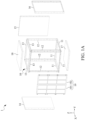
- FIG. 1A is a schematic exploded view of a cabinet for receiving an energy storage apparatus according to an embodiment of the present disclosure.
- FIG. 1B is a schematic perspective view of a cabinet for accommodating an energy storage apparatus according to an embodiment of the present disclosure.
- a cabinet 1 may include a frame 10, a plurality of concrete plates 14, 15, 16, 17, and 18 including concrete materials, and a door 19.
- the cabinet 1 may be a storage cabinet for storing one or more energy storage apparatuses such as battery systems.
- the frame 10 may include a plurality of edge bars 11 and 13 substantially extending parallel to an X-Y plane and a plurality of edge bars 12 substantially extending in a Z direction.
- the plurality of edge bars 11 are connected to each other to form a roughly rectangular frame.
- the plurality of edge bars 13 are connected to each other to form a substantially rectangular frame.
- the rectangular frame formed by connecting the edge bars 11 and the rectangular frame formed by connecting the edge bars 13 are spaced by a distance.
- Two ends of each of the edge bars 12 are respectively connected to the rectangular frame formed by the connection of the edge bars 11 and the rectangular frame formed by the connection of the edge bars 13. In this way, the edge bars 11, 12, and 13 co-form the frame 10.
- the frame 10 is a cube-shaped frame.
- the concrete plates 14, 15, 16, 17, and 18 are arranged in the frame 10.
- the concrete plates 14, 15, 16, 17, and 18 include substantially sheet-shaped concrete structures.
- the concrete plates 14, 15, 16, 17, and 18 each have a thickness less than or equal to about 5 cm.
- the concrete plates 14, 15, 16, 17, and 18 each have a thickness less than or equal to about 2.5 cm.
- the concrete plate 14 is substantially parallel to an X-Z plane and connected to the edge bars 11, 12, and 13 of the frame 10 and thereby to form a side wall of the cabinet 10.
- the concrete plate 14 is substantially surrounded by the edge bars 11, 12, and 13.
- the concrete plate 15 is substantially parallel to a Y-Z plane and connected to the edge bars 11, 12, and 13 of the frame 10 and thereby form a side wall of the cabinet 10. In some embodiments, the concrete plate 15 is substantially surrounded by the edge bars 11, 12, and 13.
- the concrete plate 16 is substantially parallel to the X-Z plane and connected to the edge bars 11, 12, and 13 of the frame 10 and thereby form a side wall of the cabinet 10. In some embodiments, the concrete plate 16 is substantially surrounded by the edge bars 11, 12, and 13.
- the concrete plate 17 is substantially parallel to the X-Y plane and connected to the edge bar 11 of the frame 10 and thereby form a bottom plate of the cabinet 10. In some embodiments, the concrete plate 17 is substantially surrounded by the edge bar 11.
- the concrete plate 18 is substantially parallel to the X-Y plane and connected to the edge bar 13 of the frame 10 and therebyo form a top plate of the cabinet 10.
- the concrete plate 18 is substantially surrounded by the edge bar 13. Therefore, the edge bar 11 passes between the concrete plate 17 parallel to the X-Y plane and the concrete plate 15 or 16 parallel to the Y-Z plane or the concrete plate 14 parallel to the X-Z plane.
- the edge bar 13 passes between the concrete plate 18 parallel to the X-Y plane and the concrete plate 15 or 16 parallel to the Y-Z plane or the concrete plate 14 parallel to the X-Z plane.
- the edge bar 12 passes between the concrete plate 14 parallel to the X-Z plane and the concrete plate 15 or 16 parallel to the Y-Z plane.
- the concrete plates 14, 15, 16, 17, and 18 are arranged on the frame 10 to co-form a accommodating space 100 of the cabinet 1.
- the accommodating space 100 of the cabinet 1 is configured to accommodate an energy storage apparatus 301, such as a battery system.
- the concrete plates 14, 15, 16, 17, and 18 may include synthetic fibers.
- the length of the synthetic fiber is about 4 mm to about 20 mm, and the diameter of the synthetic fiber is about 0.2 mm.
- the content of the synthetic fibers in the concrete plates 14, 15, 16, 17, and 18 is about 30 kg/m 3 to about 60 kg/m 3 .
- the synthetic fibers may enhance the bending strength of the concrete plates 14, 15, 16, 17, and 18.
- the concrete plates 14, 15, 16, 17, and 18 include ultra-high performance concrete (UHPC).
- UHPC ultra-high performance concrete
- the concrete plates 14, 15, 16, 17, and 18 since the concrete plates 14, 15, 16, 17, and 18 include the aforementioned synthetic fibers and/or are formed from the ultra-high performance concrete, the concrete plates 14, 15, 16, 17, and 18 may have a bending resistance similar to that of an ordinary reinforced concrete without needing to arrange a rebar structure (such as a rebar cage and/or a rebar assembly composed of a plurality of stirrups) in the concrete plates 14, 15, 16, 17, and 18.
- a rebar structure such as a rebar cage and/or a rebar assembly composed of a plurality of stirrups
- the concrete plates 14, 15, 16, 17, and 18 since there is no need to arrange the rebar structure in the concrete plates 14, 15, 16, 17, and 18 for improving the bending strength, the concrete plates 14, 15, 16, 17, and 18 may have a smaller wall thickness. Therefore, the overall weight of the cabinet 1 can be reduced and the transportation and movement of the cabinet 1 is facilitated.
- the concrete plates 14, 15, 16, 17, and 18 may further include one or more type of cement having different compositions, numerous different granules, oxides, and numerous different additives.
- the concrete plates 14, 15, 16, 17, and 18 may include Portland cement, silica fume (having a size characterized as powder), silica sand (having a size or particle size less than about 2 cm), quartz powder (having a size or particle size of about 20 mm to about 30 mm), slag powder (having a specific surface area of 450-550 m 2 /kg), water reducer, defoamer, sweller, or any random combination thereof.
- the concrete plates 14, 15, 16, 17, and 18 may include one or more of Portland Type I cement, Portland Type II cement, Portland Type III cement, Portland Type IV cement, and Portland Type V cement in a content of about 800 kg/m 3 to about 900 kg/m 3 .
- the concrete plates 14, 15, 16, 17, and 18 may include one of Portland Type I cement, Portland Type II cement, Portland Type III cement, Portland Type IV cement, and Portland Type V cement in a content of about 400 kg/m 3 to about 500 kg/m 3 and another of Portland Type I cement, Portland Type II cement, Portland Type III cement, Portland Type IV cement, and Portland Type V cement in a content of about 400 kg/m 3 to about 500 kg/m 3 .
- the concrete plates 14, 15, 16, 17, and 18 may include silica fume in a content of about 120 kg/m 3 to about 250 kg/m 3 . In some embodiments, the concrete plates 14, 15, 16, 17, and 18 may include silica sand in a content of about 900 kg/m 3 to about 1000 kg/m 3 . In some embodiments, the concrete plates 14, 15, 16, 17, and 18 may include quartz powder or slag powder in a content of about 50 kg/m 3 to about 300 kg/m 3 . In some embodiments, due to the above combination of silica fume and quartz powder, the concrete plates 14, 15, 16, 17, and 18 have a higher compressive strength than the ordinary concrete. In some embodiments, the oxides may be added to adjust the exterior color of the concrete plates 14, 15, 16, 17, and 18.
- the concrete plates 14, 15, 16, 17, and 18 may include water reducer in a content of about 10 kg/m 3 to about 20 kg/m 3 . In some embodiments, the concrete plates 14, 15, 16, 17, and 18 may include defoamer in a content equal to or less than 10 kg/m 3 and sweller in a content equal to or less than 25 kg/m 3 .
- the unit structural weight of the concrete plates 14, 15, 16, 17, and 18 is equal to or greater than about 2300 kg/m 3 . In some embodiments, the unit structural weight of the concrete plates 14, 15, 16, 17, and 18 is about 2300 kg/m 3 to 2700 kg/m 3 . In some embodiments, the compressive strength of the concrete plates 14, 15, 16, 17, and 18 is equal to or greater than about 120 MPa. In some embodiments, the compressive strength of the concrete plates 14, 15, 16, 17, and 18 is about 120 MPa to about 180 MPa. In some embodiments, the ultimate bending strength of the concrete plates 14, 15, 16, 17, and 18 is greater than about 15 MPa.
- the reinforcement assembly in the concrete plates 14, 15, 16, 17, and 18, so that the concrete plates 14, 15, 16, 17, and 18 may have a smaller wall thickness, thereby reducing the overall weight of the cabinet 1.
- the concrete plates 14, 15, 16, 17, and 18 may provide high compressive strength and high bending strength for the cabinet 1 and may thus be applied in more extreme environments (such as environments that withstand high temperature flames) while still maintaining the integrity of the overall structure.
- the thermal conductivity of the concrete plates 14, 15, 16, 17, and 18 is equal to or less than about 1.8 W/m ⁇ K. In some embodiments, the thermal conductivity of the concrete plates 14, 15, 16, 17, and 18 is about 1.6 W/m ⁇ K to about 1.8 W/m ⁇ K.
- the concrete plates 14, 15, 16, 17, and 18 of the present disclosure have a better thermal insulation effect compared to metallic materials or ordinary concrete (having a thermal conductivity of about 1.9 W/m ⁇ K to about 2.1 W/m ⁇ K, which is beneficial to reduce thermal conduction between the inside of the accommodating space 100 and the outside of the concrete plates 14, 15, 16, 17, and 18.
- the good thermal insulation effect of the concrete plates 14, 15, 16, 17, and 18 is beneficial to reduce energy required by an air-conditioning apparatus, which can thereby reduce the cost, and additionally achieve effects of environmental protection, energy saving, and carbon reduction.
- the door 19 may be pivotally attached to the frame 10. In some embodiments of the present disclosure, the door 19 is arranged on and/or pivotally attached to the edge bar 12. In some embodiments of the present disclosure, the door 19 includes two door panels 191 and 192. In some embodiments of the present disclosure, the door 19 has the same or similar material included in the concrete plates 14, 15, 16, 17, and 18.
- an energy storage apparatus 301 such as a battery system, may be received in the accommodating space 100 of the cabinet 1.
- the energy storage apparatus 301 received in the accommodating space 100 may be fixed to the concrete plate 17.
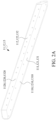
- FIG. 2A is a schematic perspective view of edge bars 11, 12, and 13 of a frame 10 according to an embodiment of the present disclosure.
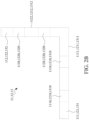
- FIG. 2B is a schematic cross-sectional view of edge bars 11, 12, and 13 of a frame 10 according to an embodiment of the present disclosure.
- the edge bars 11, 12, and 13 have a substantially L-shaped cross-sectional structure.
- the edge bars 11, 12, and 13 are made of a bent metal sheet.
- the edge bars 11, 12, and 13 have an L-shaped steel.
- the edge bars 11, 12, and 13 have first sheet portions 111, 121, and 131 and second sheet portions 112, 122, and 132.
- the first sheet portions 111, 121, and 131 and the second sheet portions 112, 122, and 132 are connected to each other and intersect each other substantially vertically.
- the first sheet portions 111, 121, and 131 and the second sheet portions 112, 122, and 132 have the same material and are substantially integrated.
- Surfaces 1111, 1211, and 1311 of the first sheet portions 111, 121, and 131 and surfaces 1112, 1212, and 1312 of the second sheet portions 112, 122, and 132 of the edge bars 11, 12, and 13 may be connected and/or attached to the concrete plates 14, 15, 16, 17, and 18.
- the first sheet portions 111, 121, and 131 of the edge bars 11, 12, and 13 have a plurality of through holes 1110, 1210, and 1310 allowing passage of bolts
- the second sheet portions thereof have a plurality of through holes 1120, 1220, and 1320 allowing passage of bolts.
- FIG. 3 is a schematic perspective view of concrete plates 14, 15, and 16 according to an embodiment of the present disclosure.
- the concrete plates 14, 15, and 16 have plate portions 141, 151, and 161 and flanges 143, 153, and 163.
- the flanges 143, 153, and 163 are formed on the surfaces 140, 150, and 160 of the concrete plates 14, 15, and 16 facing away from the accommodating space 100. That is, the flanges 143, 153, and 163 are formed on outer surfaces of the concrete plates 14, 15, and 16 and extend and protrude outward. Referring to FIG.
- the flanges 143, 153, and 163 extend substantially at the periphery of the concrete plates 14, 15, and 16 and surround the plate portions 141, 151, and 161 of the concrete plates 14, 15, and 16, and the flanges 143, 153, and 163 have through holes 1430, 1530, and 1630 allowing passage of bolts.
- the flanges 143, 153, and 163 substantially abut against the edge bars 11, 12, and 13 of the frame 10, and the through holes 1430, 1530, and 1630 of the flanges 143, 153, and 163 may be substantially aligned with the through holes 1110, 1210, 1310, 1120, 1220, and 1320 of the edge bars 11, 12, and 13.
- the plate portions 141, 151, and 161 and the flanges 143, 153, and 163 of the concrete plates 14, 15, and 16 are formed in the same process.
- the plate portions 141, 151, and 161 and the flanges 143, 153, and 163 of the concrete plates 14, 15, and 16 are formed simultaneously when concrete slurry is poured into a mold to form the concrete plates 14, 15, and 16. Therefore, the plate portions 141, 151, and 161 and the flanges 143, 153, and 163 of the concrete plates 14, 15, and 16 are integrally formed.
- the through holes 1430, 1530, and 1630 of the flanges 143, 153, and 163 are formed when the concrete slurry is poured into the mold to form the concrete plates 14, 15, and 16.
- the thickness of the flanges 143, 153, and 163 of the concrete plates 14, 15, and 16 is greater than the thickness of the plate portions 141, 151, and 161.
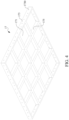
- FIG. 4 is a schematic perspective view of a concrete plate 17 according to an embodiment of the present disclosure.
- the concrete plate 17 has a plate portion 171, a flange 173, and a plurality of ribs 175 extending in a mutually interlaced manner.
- the flange 173 and the rib 175 are formed on a surface 170 of the concrete plate 17 facing away from the accommodating space 100. That is, the flange 173 and the rib 175 are formed on a bottom (outer) surface of the concrete plate 17 and extend downward (outward). Referring to FIG.
- the flange 173 extends substantially at the periphery of the concrete plate 17 and surround the plate portion 171 of the concrete plate 17, and the flange 173 has a through hole 1730 allowing passage of a bolt.
- the flange 173 substantially abuts against the edge bar 11 of the frame 10
- the through hole 1730 of the flange 173 may be substantially aligned with the through hole 1110 or 1120 of the edge bar 11.
- a plurality of ribs 175 extend on the concrete plate 17 in a interlaced manner.
- two ribs 175 extending in different directions may be interlaced substantially vertically to each other.
- the rib 175 is connected to the flange 173.
- the thickness of the plate portion 171 of the concrete plate 17 is smaller (for example, about 2.5 cm), and the thickness of the rib 175 is greater than the thickness of the plate portion.
- the thickness of the flange 173 of the concrete plate 17 is greater than the thickness of the plate portion 171.
- the plate portion 171, the flange 173, and the rib 175 of the concrete plate 17 are formed in the same process.
- the plate portion 171, the flange 173, and the rib 175 of the concrete plate 17 are formed simultaneously when concrete slurry is poured into a mold to form the concrete plate 17. Therefore, the plate portion 171, the flange 173, and the rib 175 of the concrete plate 17 are integrally formed.
- the through hole 1730 of the flange 173 is formed when the concrete slurry is poured into the mold to form the concrete plate 17.
- FIG. 5 is a schematic perspective view of a concrete plate 18 according to an embodiment of the present disclosure.
- the concrete plate 18 has a plate portion 181 and a flange 183.
- the flange 183 is formed on a surface 180 of the concrete plate 17 facing the accommodating space 100. That is, the flange 183 is formed on a bottom (inner) surface of the concrete plate 18 and extend downward (inward).
- the flange 183 extends substantially at the periphery of the concrete plate 18 and surround the plate portion 181 of the concrete plate 18, and the flange 183 has a through hole 1830 allowing passage of a bolt.
- the flange 183 substantially abuts closely against the edge bar 12 of the frame 10, and the through hole 1830 of the flange 183 may be substantially aligned with the through hole 1210 or 1220 of the edge bar 12.
- the plate portion 181 and the flange 183 of the concrete plate 18 are formed in the same process.
- the plate portion 171 and the flange 183 of the concrete plate 18 are formed simultaneously when concrete slurry is poured into a mold to form the concrete plate 18. Therefore, the plate portion 181 and the flange 183 of the concrete plate 18 are integrally formed.
- the through hole 1830 of the flange 183 is formed when the concrete slurry is poured into the mold to form the concrete plate 18.
- the thickness of the flange 183 of the concrete plate 18 is greater than the thickness of the plate portion 181.
- FIG. 6 is a front view of a door 19 according to an embodiment of the present disclosure.
- the door 19 has two door panels 191 and 192.
- the door panels 191 and 192 have door frames 1910 and 1920, concrete structures 1912 and 1922, and pivot members 1913 and 1923.
- the door frames 1910 and 1920 are made of metallic materials.
- the concrete structures 1912 and 1922 are arranged in the door frames 1910 and 1920.
- the concrete structures 1912 and 1922 include the same or similar materials that make or form the concrete plates 14, 15, 16, 17, and 18.
- the concrete structures 1912 and 1922 include ultra-high performance concrete (UHPC).
- the pivot members 1913 and 1923 are configured to connect the door panels 191 and 192 to the edge bar 12 of the frame 10.
- the cabinet 1 has a bifold door 19.
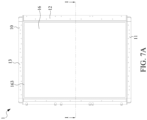
- FIG. 7A is a schematic side view of a cabinet 1 for receiving an energy storage apparatus according to an embodiment of the present disclosure.
- the concrete plate 16 is arranged on the frame 10, which is substantially surrounded by the edge bars 11, 12, and 13 of the frame 10, and the flange 163 of the concrete plate 16 substantially abuts closely against the edge bars 11, 12, and 13 of the frame 10.
- FIG. 7B is a schematic view of cross-section I-I of FIG. 7A .
- the flanges 143, 153, and 163 on both sides of the concrete plates 14, 15, and 16 abut closely against the edge bar 12 of the frame 10.
- the door panels 191 and 192 of the door 19 are connected to the edge bar 12 via the pivot members 1913 and 1923.
- the accommodating space 100 of the cabinet 1 is substantially surrounded by the concrete plates 14, 15, and 16 and the door 19.
- FIG. 7C is a schematic enlarged view of part A in FIG. 7B .
- the flange 143 of the concrete plate 14 and the flange 153 of the concrete plate 15 abut closely against the edge bar 12. As shown in FIG. 7C , the flange 143 of the concrete plate 14 and the flange 153 of the concrete plate 15 abut closely against the edge bar 12. As shown in FIG. 7C , the flange 143 of the concrete plate 14 and the flange 153 of the concrete plate 15 abut closely against the edge bar 12. As shown in FIG.
- the flange 143 of the concrete plate 14 abuts against a surface 1211 of the first sheet portion 121 of the edge bar 12, and the through hole 1430 of the flange 143 is substantially aligned with the through hole 1210 of the first sheet portion 121, while a bolt 149 passes through the through hole 1430 of the flange 143 and the through hole 1210 of the first sheet portion 121 to fasten the flange 143 of the concrete plate 14 together with the first sheet portion 121 of the edge bar 12, thus fixing the concrete plate 14 to the edge bar 12.
- fasteners may be used for fastening the flange 143 of the concrete plate 14 and the first sheet portion 121 of the edge bar 12 by the through hole 1430 of the flange 143 and the through hole 1210 of the first sheet portion 121 or in other manners, so that the concrete plate 14 is fixed to the edge bar 12.
- the flange 153 of the concrete plate 15 abuts closely against a surface 1221 of the second sheet portion 122 of the edge bar 12, and the through hole 1530 of the flange 153 is substantially aligned with the through hole 1220 of the second sheet portion 122, while a bolt 159 passes through the through hole 1530 of the flange 153 and the through hole 1220 of the second sheet portion 122 to fasten the flange 153 of the concrete plate 15 together with the second sheet portion 122 of the edge bar 12, thus fixing the concrete plate 15 to the edge bar 12.
- fasteners may be used for fastening the flange 153 of the concrete plate 15 and the second sheet portion 122 of the edge bar 12 by means of the through hole 1530 of the flange 153 and the through hole 1220 of the second sheet portion 122 or via other methods, so that the concrete plate 15 is fixed to the edge bar 12.
- the concrete plate 16 may also be fixed to the edge bar 12 in the same or similar manner as described above.
- FIG. 8A is a schematic top view of a cabinet 1 for receiving an energy storage apparatus according to an embodiment of the present disclosure. As shown in FIG. 8A , the concrete plate 18 is arranged on the frame 10, which is substantially surrounded by the edge bar 13 of the frame 10.
- FIG. 8B is a schematic view of cross-section II-II of FIG. 8A .
- the upper and lower flanges 153 of the concrete plate 15 abut against the edge bars 11 and 13 of the frame 10.
- the flange 173 of the concrete plate 17 abuts against the edge bar 11 of the frame 10, and the flange 183 of the concrete plate 18 abuts against the edge bar 13 of the frame 10.
- the accommodating space 100 of the cabinet 1 is substantially surrounded by the concrete plates 15, 16, 17, and 18.
- FIG. 8C is a schematic enlarged view of part B of FIG. 8B .
- the flange 183 of the concrete plate 18 and the flange 153 of the concrete plate 15 abut against the edge bar 13. As shown in FIG. 8C , the flange 183 of the concrete plate 18 and the flange 153 of the concrete plate 15 abut against the edge bar 13. As shown in FIG. 8C , the flange 183 of the concrete plate 18 and the flange 153 of the concrete plate 15 abut against the edge bar 13. As shown in FIG.
- the flange 183 of the concrete plate 18 abuts against a surface 1311 of the first sheet portion 131 of the edge bar 13, and the through hole 1830 of the flange 183 is substantially aligned with the through hole 1310 of the first sheet portion 131, while a bolt 189 passes through the through hole 1830 of the flange 183 and the through hole 1310 of the first sheet portion 131 to fasten the flange 183 of the concrete plate 18 together with the first sheet portion 131 of the edge bar 13, thus fixing the concrete plate 18 to the edge bar 13.
- fasteners may be used for fastening the flange 183 of the concrete plate 18 and the first sheet portion 131 of the edge bar 13 by mneas of the through hole 1830 of the flange 183 and the through hole 1310 of the first sheet portion 131 or via other methods, so that the concrete plate 18 is fixed to the edge bar 13.
- the flange 153 of the concrete plate 15 abuts against a surface 1321 of the second sheet portion 132 of the edge bar 13, and the through hole 1530 of the flange 153 is substantially aligned with the through hole 1320 of the second sheet portion 132, while a bolt 159 passes through the through hole 1530 of the flange 153 and the through hole 1320 of the second sheet portion 132 to fasten the flange 153 of the concrete plate 15 together with the second sheet portion 132 of the edge bar 13, thus fixing the concrete plate 15 to the edge bar 13.
- fasteners may be used for fastening the flange 153 of the concrete plate 15 and the second sheet portion 132 of the edge bar 13 by means of the through hole 1530 of the flange 153 and the through hole 1320 of the second sheet portion 132 or via other methods, so that the concrete plate 15 is fixed to the edge bar 13.
- the concrete plates 14 and 16 may also be fixed to the edge bar 13 in the same or similar manner as described above.
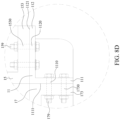
- FIG. 8D is a schematic enlarged view of part C of FIG. 8B .
- the flange 173 of the concrete plate 17 and the flange 153 of the concrete plate 15 abut against the edge bar 11. As shown in FIG. 8D , the flange 173 of the concrete plate 17 and the flange 153 of the concrete plate 15 abut against the edge bar 11. As shown in FIG. 8D , the flange 173 of the concrete plate 17 and the flange 153 of the concrete plate 15 abut against the edge bar 11. As shown in FIG.
- the flange 173 of the concrete plate 17 abuts against a surface 1111 of the first sheet portion 111 of the edge bar 11, and the through hole 1730 of the flange 173 is substantially aligned with the through hole 1110 of the first sheet portion 111, while a bolt 179 passes through the through hole 1730 of the flange 173 and the through hole 1110 of the first sheet portion 111 to fasten the flange 173 of the concrete plate 17 together with the first sheet portion 171 of the edge bar 11, thus fixing the concrete plate 17 to the edge bar 11.
- fasteners may be used for fastening the flange 173 of the concrete plate 17 and the first sheet portion 111 of the edge bar 11 by means of the through hole 1730 of the flange 173 and the through hole 1110 of the first sheet portion 111 or via other methods, so that the concrete plate 17 is fixed to the edge bar 11.
- the flange 153 of the concrete plate 15 abuts against a surface 1121 of the second sheet portion 112 of the edge bar 11, and the through hole 1530 of the flange 153 is substantially aligned with the through hole 1120 of the second sheet portion 112, while a bolt 159 passes through the through hole 1530 of the flange 153 and the through hole 1120 of the second sheet portion 112 to fasten the flange 153 of the concrete plate 15 together with the second sheet portion 112 of the edge bar 11, thus fixing the concrete plate 15 to the edge bar 11.
- fasteners may be used for fastening the flange 153 of the concrete plate 15 and the second sheet portion 112 of the edge bar 11 by means of the through hole 1530 of the flange 153 and the through hole 1120 of the second sheet portion 112 or via other methods, so that the concrete plate 15 is fixed to the edge bar 11.
- the concrete plates 14 and 16 may also be fixed to the edge bar 11 in the same or similar manner as described above.
- FIG. 8E is a schematic enlarged view of part D of FIG. 8B .
- the concrete plate 17 has the rib 175 extending downward.
- the rib 175 has an embedded hole 1750.
- the embedded hole 1750 may receive a fastener.
- the fastener is arranged in the embedded hole 1750, extends out of the upper surface of the concrete plate 17, and is configured to engage a battery system placed in the accommodating space 100 of the cabinet 1 and on the upper surface of the concrete plate 17, so that the battery system is fixed in the accommodating space 100 without relative movement with the concrete plate 17.
- FIG. 9A is a schematic exploded view of a cabinet for receiving an energy storage apparatus according to an embodiment of the present disclosure.
- FIG. 9B is a schematic perspective view of a cabinet for receiving an energy storage apparatus according to an embodiment of the present disclosure.
- a cabinet 2 may include a frame 20, a plurality of concrete plates 24, 25, 26, 27, and 28 including concrete materials, and a door 29.
- the concrete plates 24, 25, 26, 27, and 28 include substantially sheet-shaped concrete structures.
- the cabinet 2 may be a storage cabinet which has a accommodating space 200 and is configured to store one or more energy storage apparatuses such as battery systems.
- the frame 20 of the cabinet 2 is the same as or similar to the frame 10 of the cabinet 1.
- the concrete plate 27 of the cabinet 2 is the same as or similar to the concrete plate 17 of the cabinet 1.
- the door 29 of the cabinet 2 is the same as or similar to the door 19 of the cabinet 1.
- the concrete plates 24, 25, 26, 27, and 28 of the cabinet 2 include or are constituted by the same or similar material as the concrete plates 14, 15, 16, 17, and 18 of the cabinet 1.
- the concrete plates 24, 25, 26, 27, and 28 and the door 29 are arranged on the frame 20 in the same or similar manner as or to the manner in which the concrete plates 14, 15, 16, 17, and 18 and the door 19 are arranged on the frame 10.
- the cabinet 2 differs from the cabinet 1 in that each of the concrete plates 24, 25, and 26 further has three sub-concrete plates 241, 242, 243, 251, 252, 253, 261, 262, and 263, which abut against each other side by side.
- the concrete plate 28 has four sub-concrete plates 281, 282, 283, and 284, which abut against each other side by side.
- the concrete plate 24 may further include three sub-concrete plates 241, 242, and 243.
- Each of the concrete plates 241, 242, and 243 has plate portions 2411, 2421, and 2431 and flanges 2413, 2423, and 2433.
- the flanges 2413, 2423, and 2433 are formed on surfaces of the sub-concrete plates 241, 242, and 243 facing away from the accommodating space 200. That is, the flanges 2413, 2423, and 2433 are formed on outer surfaces of the sub-concrete plates 241, 242, and 243 and extend outward. Referring to FIG.
- the flanges 2413, 2423, and 2433 substantially extend at the periphery of the sub-concrete plates 241, 242, and 243 and surround the plate portions 2411, 2421, and 2431 of the concrete plates 241, 242, and 243, and the flanges 2413, 2423, and 2433 have through holes 2415, 2425, and 2435 for passage of bolts.
- the through hole 2415 of the sub-concrete plate 241 may be substantially aligned with the through hole 2425 of the sub-concrete plate 242, and the through hole 2425 of the sub-concrete plate 242 may be substantially aligned with the through hole 2435 of the sub-concrete plate 243.
- the plate portions 2411, 2421, and 2431 and the flanges 2413, 2423, and 2433 of the sub-concrete plates 241, 242, and 243 are formed simultaneously when concrete slurry is poured into a mold to form the sub-concrete plates 241, 242, and 243. Therefore, the plate portions 2411, 2421, and 2431 and the flanges 2413, 2423, and 2433 of the concrete plates 241, 242, and 243 are integrally formed.
- the through holes 2415, 2425, and 2435 of the flanges 2413, 2423, and 2433 are formed when the concrete slurry is poured into the mold to form the sub-concrete plates 241, 242, and 243.
- the thickness of the flanges 2413, 2423, and 2433 of the concrete plates 241, 242, and 243 is greater than the thickness of the plate portions 241, 242, and 243.
- FIG. 10B is a schematic partially enlarged view revealing that sub-concrete plates 241 and 242 of a concrete plate 24 abut against each other. As shown in FIG. 10B , the flange 2413 of the sub-concrete plate 241 and the flange 2423 of the sub-concrete plate 242 may abut against each other, and the through hole 2415 of the sub-concrete plate 241 may be substantially aligned with the through hole 2425 of the sub-concrete plate 242.
- the bolt 249 passes through the through hole 2415 of the flange 2413 and the through hole 2425 of the flange 2423 to fasten the flange 2413 of the sub-concrete plate 241 and the flange 2423 of the sub-concrete plate 242 together, so that the sub-concrete plates 241 and 242 are fixed together.
- other fasteners may be used for fastening the flange 2413 of the sub-concrete plate 241 and the flange 2423 of the sub-concrete plate 242 by the through hole 2415 of the flange 2413 and the through hole 2425 of the flange 2423 or in other manners, so that the sub-concrete plates 241 and 242 are fixed together.
- the sub-concrete plate 242 and the sub-concrete plate 243 may be fixed together in the same or similar manner as described above.
- the concrete plates 25 and 26 are of the same or similar structure as or to the concrete plate 24.
- the concrete plate 28 may further include four sub-concrete plates 281, 282, 283, and 284.
- Each of the sub-concrete plates 281, 282, 283, and 284 has plate portions 2811, 2821, 2831, and 2841 and flanges 2813, 2823, 2833, and 2843.
- the flanges 2813, 2823, 2833, and 2843 are formed on surfaces of the sub-concrete plates 281, 282, 283, and 284 facing the accommodating space 200. That is, the flanges 2813, 2823, 2833, and 2843 are formed on lower (inner) surfaces of the sub-concrete plates 281, 282, 283, and 284 and extend downward (inward). Referring to FIG.
- the flanges 2813, 2823, 2833, and 2843 substantially extend at the periphery of the sub-concrete plates 281, 282, 283, and 284 and surround the plate portions 2811, 2821, 2831, and 2841 of the concrete plates 281, 282, 283, and 284, and the flanges 2813, 2823, 2833, and 2843 have through holes 2815, 2825, 2835, and 2845 for passage of bolts.
- the through hole 2815 of the sub-concrete plate 281 may be substantially aligned with the through hole 2825 of the sub-concrete plate 282
- the through hole 2825 of the sub-concrete plate 282 may be substantially aligned with the through hole 2835 of the sub-concrete plate 283
- the through hole 2835 of the sub-concrete plate 283 may be substantially aligned with the through hole 2845 of the sub-concrete plate 284.
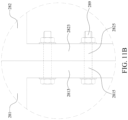
- FIG. 11B is a schematic partially enlarged view revealing that sub-concrete plates 281 and 282 of a concrete plate 28 abut against each other. As shown in FIG. 11B , the flange 2813 of the sub-concrete plate 281 and the flange 2823 of the sub-concrete plate 282 may abut against each other, and the through hole 2815 of the sub-concrete plate 281 may be substantially aligned with the through hole 2825 of the sub-concrete plate 282.
- the bolt 289 passes through the through hole 2815 of the flange 2813 and the through hole 2825 of the flange 2823 to fasten the flange 2813 of the sub-concrete plate 281 and the flange 2823 of the sub-concrete plate 282 together, so that the sub-concrete plates 281 and 282 are fixed together.
- other fasteners may be used for fastening the flange 2813 of the sub-concrete plate 281 and the flange 2823 of the sub-concrete plate 282 by the through hole 2815 of the flange 2813 and the through hole 2825 of the flange 2823 or in other manners, so that the sub-concrete plates 281 and 282 are fixed together.
- the sub-concrete plate 282 and the sub-concrete plate 283 may be fixed together in the same or similar manner as described above, and the sub-concrete plate 283 and the sub-concrete plate 284 may be fixed together in the same or similar manner as described above.
- the cement, the granules, the oxides, and the additives of the embodiment shown in Table 1 are mixed with water in proportion and stirred for several minutes.
- synthetic fibers are added and then stirred uniformly.
- the slurry is poured into the mold.
- the slurry is cured for three days at the curing temperature of 22°C to 24°C and the humidity of 50 to 95%, and the mold is removed. After the mold is removed, the mechanical properties of the finished product must be tested 28 days later.
- the test results are shown in Table 2.
- the concrete materials according to some embodiments of the present disclosure have good mechanical properties compared to the ordinary concrete.
- the concrete materials of some embodiments of the present disclosure have a unit structural weight of about 2300 kg/m 3 to about 2700 kg/m 3 , a compressive strength greater than about 120 MPa, and an ultimate bending strength greater than about 15 MPa.
- the concrete materials of some embodiments of the present disclosure have a first crack bending strength greater than about 15 MPa, an elastic coefficient greater than about 35 GPa, and a tensile strength greater than about 5 MPa.
- the concrete materials of some embodiments of the present disclosure have a shrinkage factor less than about 300 mm/m, a diffusion coefficient of chloride ion less than about 5 ⁇ 10 -13 m 2 /sec, and a thermal conductivity of about 1.6 W/m ⁇ K to about 1.8 W/m ⁇ K.
- Table 3 presents a comparison of the weight and compressive strength of the concrete materials according to some embodiments of the present disclosure with a variety of other materials.
- Embodiment E3 of Tables 1-2 is adopted for the concrete materials
- Embodiment C1 of Tables 1-2 is adopted for the ordinary concrete.
- Table 3 Volume Weight Compressive strength (MPa) Height (cm) Width (cm) Concrete material 40x40x2 cm 3 8.4 kg Ordinary concrete 40x40x2 cm 3 9.3 kg Concrete body 100 37 32 Prestressed concrete 100 70 35 Reinforced concrete 100 70 60
- the concrete materials according to some embodiments of the present disclosure are lighter than the ordinary concrete, thereby facilitating the fabrication of lighter cabinets. Furthermore, the concrete materials according to some embodiments of the present disclosure have a smaller thickness at the same compressive strength than the prestressed concrete and the reinforced concrete, thereby facilitating the fabrication of thinner concrete plates.
- the cabinets 1 and 2 of the present disclosure may be used for providing solid accommodating spaces 100 and 200 for receiving or storing the energy storage apparatus.
- the frames 10 and 20 of the cabinets 1 and 2 may further strengthen the overall strength of the cabinets 1 and 2.
Landscapes
- Chemical & Material Sciences (AREA)
- Chemical Kinetics & Catalysis (AREA)
- Electrochemistry (AREA)
- General Chemical & Material Sciences (AREA)
- Inorganic Chemistry (AREA)
- Engineering & Computer Science (AREA)
- Ceramic Engineering (AREA)
- Materials Engineering (AREA)
- Composite Materials (AREA)
- Structural Engineering (AREA)
- Organic Chemistry (AREA)
- Battery Mounting, Suspending (AREA)
- Building Environments (AREA)
- Refuse Collection And Transfer (AREA)
- Separation By Low-Temperature Treatments (AREA)
- Charge And Discharge Circuits For Batteries Or The Like (AREA)
Abstract
Description
- The present disclosure essentially relates to a cabinet for receiving an energy storage apparatus. More specifically, the present disclosure relates to a cabinet including a concrete structure and receiving a battery system.
- In order to improve efficiency and flexibility of use of energy, the development of energy storage apparatuses has become a trend in recent years. With the development and maturation of battery technology (such as lithium battery), a battery energy storage apparatus has become one of the mainstream energy storage apparatuses. At present, metal containers commonly used in international shipping are used as energy storage cabinets for the energy storage apparatuses due to the considerations of convenient loading and transportation and weatherability.
- However, during the storage or transportation of a battery, various factors (such as overcharge, impact, electronic control system errors, operating environment, or process defects) may lead to the breakage of a spacer film in the battery, which makes a positive electrode contact with a negative electrode and forms a short circuit, resulting in a high thermal chemical reaction and ignition of combustible organic components in the battery. High temperature caused by thermal runaway of the battery may further lead to the damage of adjacent apparatuses of the battery energy storage apparatus and the occurrence of fire accidents.
- In some embodiments, the present disclosure provides a cabinet for receiving a battery system, including a plurality of first edge bars substantially extending in a direction, a plurality of second edge bars substantially extending vertically with respect to the first edge bars, and a plurality of third edge bars substantially extending vertically with respect to the first edge bars. The first edge bars, the second edge bars, and the third edge bars co-form a substantially cube-shaped frame. The cabinet further includes a plurality of concrete side plates, a concrete bottom plate, and a concrete top plate. Each of the concrete side plates is surrounded by the first edge bar, the second edge bar, and the third edge bar. The concrete bottom plate is surrounded by the second edge bars. The concrete top plate is surrounded by the third edge bar. The concrete side plates, the concrete bottom plate, and the concrete top plate surround a space configured to receive the battery system.
- In some embodiments, the present disclosure provides a storage cabinet, including a plurality of concrete plates, a plurality of edge bars configured to be connected together, and a accommodating space co-formed by the concrete plates. Each of the edge bars extends between two adjacent concrete plates, and the accommodating space is configured to receive a battery system.
- In some embodiments, the present disclosure provides a storage cabinet, including a substantially cube-shaped frame and a plurality of sheet-shaped concrete structures attached to the frame. The sheet-shaped concrete structure includes ultra-high performance concrete (UHPC).
- The technical features of the present disclosure have been summarized broadly above to enable better understanding of the following detailed description of the present disclosure. Other technical features that constitute the subject matter of the patent application scope of the present disclosure will be described below. Those of ordinary skill in the art to which the present disclosure pertains will appreciate that the concepts and specific embodiments disclosed below may be used easily to modify or design other structures or processes to achieve the same purposes as the present disclosure. Those of ordinary skill in the art to which the present disclosure pertains will also appreciate that such equivalent constructions cannot depart from the spirit and scope of the present disclosure as defined in the appended application patent scope.
- The patterns of the present disclosure will be better understood from the following implementations together with the accompanying drawings. It should be noted that various features are not drawn to actual scale according to the standard practice of the industry. In fact, for clarity, the dimensions of various feature members may be enlarged or reduced at will.
-
FIG. 1A is a schematic exploded view of a cabinet for receiving an energy storage apparatus according to an embodiment of the present disclosure. -
FIG. 1B is a schematic perspective view of a cabinet for receiving an energy storage apparatus according to an embodiment of the present disclosure. -
FIG. 1C is a schematic view of a use state of a cabinet for receiving an energy storage apparatus according to an embodiment of the present disclosure. -
FIG. 2A is a schematic perspective view of a edge bar of a frame of a cabinet according to an embodiment of the present disclosure. -
FIG. 2B is a schematic cross-sectional view of a edge bar of a frame of a cabinet according to an embodiment of the present disclosure. -
FIG. 3 is a schematic perspective view of a concrete plate of a cabinet according to an embodiment of the present disclosure. -
FIG. 4 is a schematic perspective view of a concrete plate of a cabinet according to an embodiment of the present disclosure. -
FIG. 5 is a schematic perspective view of a concrete plate of a cabinet according to an embodiment of the present disclosure. -
FIG. 6 is a front view of a door of a cabinet according to an embodiment of the present disclosure. -
FIG. 7A is a schematic side view of a cabinet for receiving an energy storage apparatus according to an embodiment of the present disclosure. -
FIG. 7B is a schematic view of cross-section I-I ofFIG. 7A . -
FIG. 7C is a schematic enlarged view of part A ofFIG. 7B . -
FIG. 8A is a schematic top view of a cabinet for receiving an energy storage apparatus according to an embodiment of the present disclosure. -
FIG. 8B is a schematic view of cross-section II-II ofFIG. 8A . -
FIG. 8C is a schematic enlarged view of part B ofFIG. 8B . -
FIG. 8D is a schematic enlarged view of part C ofFIG. 8B . -
FIG. 8E is a schematic enlarged view of part D ofFIG. 8B . -
FIG. 9A is a schematic exploded view of a cabinet for receiving an energy storage apparatus according to another embodiment of the present disclosure. -
FIG. 9B is a schematic perspective view of a cabinet for receiving an energy storage apparatus according to another embodiment of the present disclosure. -
FIG. 10A is a schematic perspective view of a concrete plate of a cabinet according to an embodiment of the present disclosure. -
FIG. 10B is a schematic partially enlarged view of a concrete plate of a cabinet according to an embodiment of the present disclosure. -
FIG. 11A is a schematic perspective view of a concrete plate of a cabinet according to an embodiment of the present disclosure. -
FIG. 11B is a schematic partially enlarged view of a concrete plate of a cabinet according to an embodiment of the present disclosure. - The following disclosure provides many different embodiments or examples for implementing different features of the subject matter provided. Specific examples of elements and configurations will be described below to simplify the present disclosure. Definitely, these are examples only and are not intended to be limiting. For example, in the following description, "forming a first member above or on a second member" may include embodiments in which the first member and the second member are in direct contact, and may also include embodiments in which additional members may be formed between the first member and the second member so that the first member and the second member may not be in direct contact. In addition, the present disclosure may repeat element symbols and/or letters in various examples. This repetition is intended to be simple and clear and does not indicate a relationship between various embodiments and/or configurations discussed.
- Furthermore, for ease of description, spatial relative terms (such as "beneath", "below", "under", "above", "on", "over", and similar terms) may be used herein to describe a relationship of one element or member to another (some) elements or members, as illustrated in the figures. In addition to the orientations depicted in the figures, the spatial relative terms are also intended to encompass different orientations of an apparatus in use or operation. The apparatus may be oriented in other ways (rotating by 90 degrees or otherwise), and spatial relative descriptors used herein may also be interpreted accordingly.
- As used herein, terms such as "first," "second," and "third" describe various elements, components, regions, layers, and/or sections, and such elements, components, regions, layers, and/or sections should not be limited by such terms. These terms may be used only to distinguish elements, components, regions, layers, or sections from each other. The terms such as "first," "second," and "third," as used herein, do not imply a sequence or order unless clearly indicated in the context.
- As used herein, terms "substantially", "essentially", "essence", and "about" are used for describing and explaining minor variations. When used in conjunction with an event or condition, the terms may refer to instances in which the event or condition occurs precisely and instances in which the event or condition occurs very approximately. For example, when used in conjunction with a value, the terms may refer to a range of variations less than or equal to ±10% of the value, such as less than or equal to ±5%, less than or equal to ±4%, less than or equal to ±3%, less than or equal to ±2%, less than or equal to ±1%, less than or equal to ±0.5%, less than or equal to ±0.1%, or less than or equal to ±0.05%. For example, if a difference between two values is less than or equal to ±10% of an average of the values (such as less than or equal to ±5%, less than or equal to ±4%, less than or equal to ±3%, less than or equal to ±2%, less than or equal to ±1%, less than or equal to ±0.5%, less than or equal to ±0.1%, or less than or equal to ±0.05%), the values may be considered to be "essentially" the same or equal. For example, "essentially" parallel may refer to a range of angular variations less than or equal to ±10° relative to 0°, such as less than or equal to ±5°, less than or equal to ±4°, less than or equal to ±3°, less than or equal to ±2°, less than or equal to ±1°, less than or equal to ±0.5°, less than or equal to ±0.1°, or less than or equal to 0.05°. For example, "essentially" vertical may refer to a range of angular variations less than or equal to ±10° relative to 90°, such as less than or equal to ±5°, less than or equal to ±4°, less than or equal to ±3°, less than or equal to ±2°, less than or equal to ±1°, less than or equal to ±0.5°, less than or equal to ±0.1°, or less than or equal to 0.05°.
-
FIG. 1A is a schematic exploded view of a cabinet for receiving an energy storage apparatus according to an embodiment of the present disclosure.FIG. 1B is a schematic perspective view of a cabinet for accommodating an energy storage apparatus according to an embodiment of the present disclosure. As shown inFIG. 1A andFIG. 1B , acabinet 1 may include aframe 10, a plurality ofconcrete plates door 19. In some embodiments of the present disclosure, thecabinet 1 may be a storage cabinet for storing one or more energy storage apparatuses such as battery systems. - Referring to
FIG. 1A , theframe 10 may include a plurality of edge bars 11 and 13 substantially extending parallel to an X-Y plane and a plurality of edge bars 12 substantially extending in a Z direction. The plurality of edge bars 11 are connected to each other to form a roughly rectangular frame. The plurality of edge bars 13 are connected to each other to form a substantially rectangular frame. The rectangular frame formed by connecting the edge bars 11 and the rectangular frame formed by connecting the edge bars 13 are spaced by a distance. Two ends of each of the edge bars 12 are respectively connected to the rectangular frame formed by the connection of the edge bars 11 and the rectangular frame formed by the connection of the edge bars 13. In this way, the edge bars 11, 12, and 13 co-form theframe 10. In some embodiments of the present disclosure, theframe 10 is a cube-shaped frame. - The
concrete plates frame 10. In some embodiments of the present disclosure, theconcrete plates concrete plates concrete plates FIG. 1A andFIG. 1B , theconcrete plate 14 is substantially parallel to an X-Z plane and connected to the edge bars 11, 12, and 13 of theframe 10 and thereby to form a side wall of thecabinet 10. In some embodiments, theconcrete plate 14 is substantially surrounded by the edge bars 11, 12, and 13. Theconcrete plate 15 is substantially parallel to a Y-Z plane and connected to the edge bars 11, 12, and 13 of theframe 10 and thereby form a side wall of thecabinet 10. In some embodiments, theconcrete plate 15 is substantially surrounded by the edge bars 11, 12, and 13. Theconcrete plate 16 is substantially parallel to the X-Z plane and connected to the edge bars 11, 12, and 13 of theframe 10 and thereby form a side wall of thecabinet 10. In some embodiments, theconcrete plate 16 is substantially surrounded by the edge bars 11, 12, and 13. Theconcrete plate 17 is substantially parallel to the X-Y plane and connected to theedge bar 11 of theframe 10 and thereby form a bottom plate of thecabinet 10. In some embodiments, theconcrete plate 17 is substantially surrounded by theedge bar 11. Theconcrete plate 18 is substantially parallel to the X-Y plane and connected to theedge bar 13 of theframe 10 and therebyo form a top plate of thecabinet 10. In some embodiments, theconcrete plate 18 is substantially surrounded by theedge bar 13. Therefore, theedge bar 11 passes between theconcrete plate 17 parallel to the X-Y plane and theconcrete plate concrete plate 14 parallel to the X-Z plane. Theedge bar 13 passes between theconcrete plate 18 parallel to the X-Y plane and theconcrete plate concrete plate 14 parallel to the X-Z plane. Theedge bar 12 passes between theconcrete plate 14 parallel to the X-Z plane and theconcrete plate FIG. 1C , theconcrete plates frame 10 to co-form aaccommodating space 100 of thecabinet 1. Theaccommodating space 100 of thecabinet 1 is configured to accommodate anenergy storage apparatus 301, such as a battery system. - In some embodiments, the
concrete plates concrete plates concrete plates concrete plates - According to some embodiments of the present disclosure, since the
concrete plates concrete plates concrete plates concrete plates concrete plates cabinet 1 can be reduced and the transportation and movement of thecabinet 1 is facilitated. - In some embodiments, the
concrete plates concrete plates - In some embodiments, the
concrete plates concrete plates concrete plates concrete plates concrete plates concrete plates concrete plates - In some embodiments, the
concrete plates concrete plates - In some embodiments, the unit structural weight of the
concrete plates concrete plates concrete plates concrete plates concrete plates concrete plates concrete plates cabinet 1. Moreover, theconcrete plates cabinet 1 and may thus be applied in more extreme environments (such as environments that withstand high temperature flames) while still maintaining the integrity of the overall structure. - In some embodiments, the thermal conductivity of the
concrete plates concrete plates concrete plates accommodating space 100 and the outside of theconcrete plates accommodating space 100 needs to stay at a particular high or low temperature, the good thermal insulation effect of theconcrete plates - The
door 19 may be pivotally attached to theframe 10. In some embodiments of the present disclosure, thedoor 19 is arranged on and/or pivotally attached to theedge bar 12. In some embodiments of the present disclosure, thedoor 19 includes twodoor panels door 19 has the same or similar material included in theconcrete plates - As shown in
FIG. 1C , anenergy storage apparatus 301, such as a battery system, may be received in theaccommodating space 100 of thecabinet 1. In some embodiments of the present disclosure, theenergy storage apparatus 301 received in theaccommodating space 100 may be fixed to theconcrete plate 17. -
FIG. 2A is a schematic perspective view of edge bars 11, 12, and 13 of aframe 10 according to an embodiment of the present disclosure.FIG. 2B is a schematic cross-sectional view of edge bars 11, 12, and 13 of aframe 10 according to an embodiment of the present disclosure. The edge bars 11, 12, and 13 have a substantially L-shaped cross-sectional structure. In some embodiments of the present disclosure, the edge bars 11, 12, and 13 are made of a bent metal sheet. In some embodiments of the present disclosure, the edge bars 11, 12, and 13 have an L-shaped steel. As shown inFIG. 2A andFIG. 2B , the edge bars 11, 12, and 13 havefirst sheet portions second sheet portions first sheet portions second sheet portions first sheet portions second sheet portions Surfaces first sheet portions second sheet portions concrete plates first sheet portions holes holes -
FIG. 3 is a schematic perspective view ofconcrete plates FIG. 3 , theconcrete plates flanges flanges concrete plates accommodating space 100. That is, theflanges concrete plates FIG. 3 , theflanges concrete plates concrete plates flanges holes 1430, 1530, and 1630 allowing passage of bolts. Thus, when theconcrete plates frame 10, theflanges frame 10, and the throughholes 1430, 1530, and 1630 of theflanges holes - In some embodiments of the present disclosure, the plate portions 141, 151, and 161 and the
flanges concrete plates flanges concrete plates concrete plates flanges concrete plates holes 1430, 1530, and 1630 of theflanges concrete plates flanges concrete plates -
FIG. 4 is a schematic perspective view of aconcrete plate 17 according to an embodiment of the present disclosure. As shown inFIG. 4 , theconcrete plate 17 has aplate portion 171, aflange 173, and a plurality ofribs 175 extending in a mutually interlaced manner. Theflange 173 and therib 175 are formed on a surface 170 of theconcrete plate 17 facing away from theaccommodating space 100. That is, theflange 173 and therib 175 are formed on a bottom (outer) surface of theconcrete plate 17 and extend downward (outward). Referring toFIG. 4 , theflange 173 extends substantially at the periphery of theconcrete plate 17 and surround theplate portion 171 of theconcrete plate 17, and theflange 173 has a throughhole 1730 allowing passage of a bolt. Thus, when theconcrete plate 17 is arranged on theframe 10, theflange 173 substantially abuts against theedge bar 11 of theframe 10, and the throughhole 1730 of theflange 173 may be substantially aligned with the throughhole edge bar 11. - Referring again to
FIG. 4 , a plurality ofribs 175 extend on theconcrete plate 17 in a interlaced manner. In some embodiments of the present disclosure, tworibs 175 extending in different directions may be interlaced substantially vertically to each other. In some embodiments of the present disclosure, therib 175 is connected to theflange 173. In some embodiments of the present disclosure, the thickness of theplate portion 171 of theconcrete plate 17 is smaller (for example, about 2.5 cm), and the thickness of therib 175 is greater than the thickness of the plate portion. In this way, when a battery system is accommodated in theaccommodating space 100 of thecabinet 1 and placed on an upper surface of theconcrete plate 17, a plurality of interlacedribs 175 enhance the bending strength of theconcrete plate 17 against the downward pressure of theconcrete plate 17 by the weight of the battery system. In some embodiments of the present disclosure, the thickness of theflange 173 of theconcrete plate 17 is greater than the thickness of theplate portion 171. - In some embodiments of the present disclosure, the
plate portion 171, theflange 173, and therib 175 of theconcrete plate 17 are formed in the same process. Theplate portion 171, theflange 173, and therib 175 of theconcrete plate 17 are formed simultaneously when concrete slurry is poured into a mold to form theconcrete plate 17. Therefore, theplate portion 171, theflange 173, and therib 175 of theconcrete plate 17 are integrally formed. In some embodiments of the present disclosure, the throughhole 1730 of theflange 173 is formed when the concrete slurry is poured into the mold to form theconcrete plate 17. -
FIG. 5 is a schematic perspective view of aconcrete plate 18 according to an embodiment of the present disclosure. As shown inFIG. 5 , theconcrete plate 18 has aplate portion 181 and aflange 183. Theflange 183 is formed on a surface 180 of theconcrete plate 17 facing theaccommodating space 100. That is, theflange 183 is formed on a bottom (inner) surface of theconcrete plate 18 and extend downward (inward). Referring toFIG. 5 , theflange 183 extends substantially at the periphery of theconcrete plate 18 and surround theplate portion 181 of theconcrete plate 18, and theflange 183 has a throughhole 1830 allowing passage of a bolt. Thus, when theconcrete plate 18 is arranged on theframe 10, theflange 183 substantially abuts closely against theedge bar 12 of theframe 10, and the throughhole 1830 of theflange 183 may be substantially aligned with the throughhole edge bar 12. - In some embodiments of the present disclosure, the
plate portion 181 and theflange 183 of theconcrete plate 18 are formed in the same process. Theplate portion 171 and theflange 183 of theconcrete plate 18 are formed simultaneously when concrete slurry is poured into a mold to form theconcrete plate 18. Therefore, theplate portion 181 and theflange 183 of theconcrete plate 18 are integrally formed. In some embodiments of the present disclosure, the throughhole 1830 of theflange 183 is formed when the concrete slurry is poured into the mold to form theconcrete plate 18. In some embodiments of the present disclosure, the thickness of theflange 183 of theconcrete plate 18 is greater than the thickness of theplate portion 181. -
FIG. 6 is a front view of adoor 19 according to an embodiment of the present disclosure. In some embodiments of the present disclosure, thedoor 19 has twodoor panels door panels door frames concrete structures pivot members door frames concrete structures door frames concrete structures concrete plates concrete structures pivot members door panels edge bar 12 of theframe 10. Thus, thecabinet 1 has abifold door 19. -
FIG. 7A is a schematic side view of acabinet 1 for receiving an energy storage apparatus according to an embodiment of the present disclosure. As shown inFIG. 7A , theconcrete plate 16 is arranged on theframe 10, which is substantially surrounded by the edge bars 11, 12, and 13 of theframe 10, and theflange 163 of theconcrete plate 16 substantially abuts closely against the edge bars 11, 12, and 13 of theframe 10. -
FIG. 7B is a schematic view of cross-section I-I ofFIG. 7A . As shown inFIG. 7B , theflanges concrete plates edge bar 12 of theframe 10. Thedoor panels door 19 are connected to theedge bar 12 via thepivot members accommodating space 100 of thecabinet 1 is substantially surrounded by theconcrete plates door 19. -
FIG. 7C is a schematic enlarged view of part A inFIG. 7B . Referring toFIG. 7C , theflange 143 of theconcrete plate 14 and theflange 153 of theconcrete plate 15 abut closely against theedge bar 12. As shown inFIG. 7C , theflange 143 of theconcrete plate 14 abuts against asurface 1211 of thefirst sheet portion 121 of theedge bar 12, and the through hole 1430 of theflange 143 is substantially aligned with the throughhole 1210 of thefirst sheet portion 121, while abolt 149 passes through the through hole 1430 of theflange 143 and the throughhole 1210 of thefirst sheet portion 121 to fasten theflange 143 of theconcrete plate 14 together with thefirst sheet portion 121 of theedge bar 12, thus fixing theconcrete plate 14 to theedge bar 12. In addition to thebolt 149, other fasteners may be used for fastening theflange 143 of theconcrete plate 14 and thefirst sheet portion 121 of theedge bar 12 by the through hole 1430 of theflange 143 and the throughhole 1210 of thefirst sheet portion 121 or in other manners, so that theconcrete plate 14 is fixed to theedge bar 12. - Also, the
flange 153 of theconcrete plate 15 abuts closely against asurface 1221 of thesecond sheet portion 122 of theedge bar 12, and the throughhole 1530 of theflange 153 is substantially aligned with the throughhole 1220 of thesecond sheet portion 122, while abolt 159 passes through the throughhole 1530 of theflange 153 and the throughhole 1220 of thesecond sheet portion 122 to fasten theflange 153 of theconcrete plate 15 together with thesecond sheet portion 122 of theedge bar 12, thus fixing theconcrete plate 15 to theedge bar 12. In addition to thebolt 159, other fasteners may be used for fastening theflange 153 of theconcrete plate 15 and thesecond sheet portion 122 of theedge bar 12 by means of the throughhole 1530 of theflange 153 and the throughhole 1220 of thesecond sheet portion 122 or via other methods, so that theconcrete plate 15 is fixed to theedge bar 12. - The
concrete plate 16 may also be fixed to theedge bar 12 in the same or similar manner as described above. -
FIG. 8A is a schematic top view of acabinet 1 for receiving an energy storage apparatus according to an embodiment of the present disclosure. As shown inFIG. 8A , theconcrete plate 18 is arranged on theframe 10, which is substantially surrounded by theedge bar 13 of theframe 10. -
FIG. 8B is a schematic view of cross-section II-II ofFIG. 8A . As shown inFIG. 8B , the upper andlower flanges 153 of theconcrete plate 15 abut against the edge bars 11 and 13 of theframe 10. Theflange 173 of theconcrete plate 17 abuts against theedge bar 11 of theframe 10, and theflange 183 of theconcrete plate 18 abuts against theedge bar 13 of theframe 10. Theaccommodating space 100 of thecabinet 1 is substantially surrounded by theconcrete plates -
FIG. 8C is a schematic enlarged view of part B ofFIG. 8B . Referring toFIG. 8C , theflange 183 of theconcrete plate 18 and theflange 153 of theconcrete plate 15 abut against theedge bar 13. As shown inFIG. 8C , theflange 183 of theconcrete plate 18 abuts against asurface 1311 of thefirst sheet portion 131 of theedge bar 13, and the throughhole 1830 of theflange 183 is substantially aligned with the throughhole 1310 of thefirst sheet portion 131, while abolt 189 passes through the throughhole 1830 of theflange 183 and the throughhole 1310 of thefirst sheet portion 131 to fasten theflange 183 of theconcrete plate 18 together with thefirst sheet portion 131 of theedge bar 13, thus fixing theconcrete plate 18 to theedge bar 13. In addition to thebolt 189, other fasteners may be used for fastening theflange 183 of theconcrete plate 18 and thefirst sheet portion 131 of theedge bar 13 by mneas of the throughhole 1830 of theflange 183 and the throughhole 1310 of thefirst sheet portion 131 or via other methods, so that theconcrete plate 18 is fixed to theedge bar 13. - Also, the
flange 153 of theconcrete plate 15 abuts against asurface 1321 of thesecond sheet portion 132 of theedge bar 13, and the throughhole 1530 of theflange 153 is substantially aligned with the throughhole 1320 of thesecond sheet portion 132, while abolt 159 passes through the throughhole 1530 of theflange 153 and the throughhole 1320 of thesecond sheet portion 132 to fasten theflange 153 of theconcrete plate 15 together with thesecond sheet portion 132 of theedge bar 13, thus fixing theconcrete plate 15 to theedge bar 13. In addition to thebolt 159, other fasteners may be used for fastening theflange 153 of theconcrete plate 15 and thesecond sheet portion 132 of theedge bar 13 by means of the throughhole 1530 of theflange 153 and the throughhole 1320 of thesecond sheet portion 132 or via other methods, so that theconcrete plate 15 is fixed to theedge bar 13. - The
concrete plates edge bar 13 in the same or similar manner as described above. -
FIG. 8D is a schematic enlarged view of part C ofFIG. 8B . Referring toFIG. 8D , theflange 173 of theconcrete plate 17 and theflange 153 of theconcrete plate 15 abut against theedge bar 11. As shown inFIG. 8D , theflange 173 of theconcrete plate 17 abuts against asurface 1111 of thefirst sheet portion 111 of theedge bar 11, and the throughhole 1730 of theflange 173 is substantially aligned with the throughhole 1110 of thefirst sheet portion 111, while abolt 179 passes through the throughhole 1730 of theflange 173 and the throughhole 1110 of thefirst sheet portion 111 to fasten theflange 173 of theconcrete plate 17 together with thefirst sheet portion 171 of theedge bar 11, thus fixing theconcrete plate 17 to theedge bar 11. In addition to thebolt 179, other fasteners may be used for fastening theflange 173 of theconcrete plate 17 and thefirst sheet portion 111 of theedge bar 11 by means of the throughhole 1730 of theflange 173 and the throughhole 1110 of thefirst sheet portion 111 or via other methods, so that theconcrete plate 17 is fixed to theedge bar 11. - Also, the
flange 153 of theconcrete plate 15 abuts against asurface 1121 of thesecond sheet portion 112 of theedge bar 11, and the throughhole 1530 of theflange 153 is substantially aligned with the throughhole 1120 of thesecond sheet portion 112, while abolt 159 passes through the throughhole 1530 of theflange 153 and the throughhole 1120 of thesecond sheet portion 112 to fasten theflange 153 of theconcrete plate 15 together with thesecond sheet portion 112 of theedge bar 11, thus fixing theconcrete plate 15 to theedge bar 11. In addition to thebolt 159, other fasteners may be used for fastening theflange 153 of theconcrete plate 15 and thesecond sheet portion 112 of theedge bar 11 by means of the throughhole 1530 of theflange 153 and the throughhole 1120 of thesecond sheet portion 112 or via other methods, so that theconcrete plate 15 is fixed to theedge bar 11. - The
concrete plates edge bar 11 in the same or similar manner as described above. -
FIG. 8E is a schematic enlarged view of part D ofFIG. 8B . Referring toFIG. 8E , theconcrete plate 17 has therib 175 extending downward. In some embodiments, therib 175 has an embeddedhole 1750. The embeddedhole 1750 may receive a fastener. The fastener is arranged in the embeddedhole 1750, extends out of the upper surface of theconcrete plate 17, and is configured to engage a battery system placed in theaccommodating space 100 of thecabinet 1 and on the upper surface of theconcrete plate 17, so that the battery system is fixed in theaccommodating space 100 without relative movement with theconcrete plate 17. -
FIG. 9A is a schematic exploded view of a cabinet for receiving an energy storage apparatus according to an embodiment of the present disclosure.FIG. 9B is a schematic perspective view of a cabinet for receiving an energy storage apparatus according to an embodiment of the present disclosure. As shown inFIG. 9A andFIG. 9B , acabinet 2 may include aframe 20, a plurality ofconcrete plates door 29. In some embodiments of the present disclosure, theconcrete plates cabinet 2 may be a storage cabinet which has aaccommodating space 200 and is configured to store one or more energy storage apparatuses such as battery systems. - In some embodiments of the present disclosure, the
frame 20 of thecabinet 2 is the same as or similar to theframe 10 of thecabinet 1. In some embodiments of the present disclosure, theconcrete plate 27 of thecabinet 2 is the same as or similar to theconcrete plate 17 of thecabinet 1. In some embodiments of the present disclosure, thedoor 29 of thecabinet 2 is the same as or similar to thedoor 19 of thecabinet 1. In some embodiments of the present disclosure, theconcrete plates cabinet 2 include or are constituted by the same or similar material as theconcrete plates cabinet 1. - Furthermore, in some embodiments of the present disclosure, the
concrete plates door 29 are arranged on theframe 20 in the same or similar manner as or to the manner in which theconcrete plates door 19 are arranged on theframe 10. - In some embodiments of the present disclosure, the
cabinet 2 differs from thecabinet 1 in that each of theconcrete plates sub-concrete plates concrete plate 28 has foursub-concrete plates - As shown in
FIG. 10A , theconcrete plate 24 may further include threesub-concrete plates concrete plates plate portions flanges flanges sub-concrete plates accommodating space 200. That is, theflanges sub-concrete plates FIG. 10A , theflanges sub-concrete plates plate portions concrete plates flanges holes sub-concrete plates hole 2415 of thesub-concrete plate 241 may be substantially aligned with the throughhole 2425 of thesub-concrete plate 242, and the throughhole 2425 of thesub-concrete plate 242 may be substantially aligned with the throughhole 2435 of thesub-concrete plate 243. - In some embodiments of the present disclosure, the
plate portions flanges sub-concrete plates sub-concrete plates plate portions flanges concrete plates holes flanges sub-concrete plates flanges concrete plates plate portions -
FIG. 10B is a schematic partially enlarged view revealing thatsub-concrete plates concrete plate 24 abut against each other. As shown inFIG. 10B , theflange 2413 of thesub-concrete plate 241 and theflange 2423 of thesub-concrete plate 242 may abut against each other, and the throughhole 2415 of thesub-concrete plate 241 may be substantially aligned with the throughhole 2425 of thesub-concrete plate 242. Thebolt 249 passes through the throughhole 2415 of theflange 2413 and the throughhole 2425 of theflange 2423 to fasten theflange 2413 of thesub-concrete plate 241 and theflange 2423 of thesub-concrete plate 242 together, so that thesub-concrete plates bolt 249, other fasteners may be used for fastening theflange 2413 of thesub-concrete plate 241 and theflange 2423 of thesub-concrete plate 242 by the throughhole 2415 of theflange 2413 and the throughhole 2425 of theflange 2423 or in other manners, so that thesub-concrete plates - In some embodiments of the present disclosure, the
sub-concrete plate 242 and thesub-concrete plate 243 may be fixed together in the same or similar manner as described above. - In some embodiments of the present disclosure, the
concrete plates concrete plate 24. - As shown in
FIG. 11A , theconcrete plate 28 may further include foursub-concrete plates sub-concrete plates plate portions flanges flanges sub-concrete plates accommodating space 200. That is, theflanges sub-concrete plates FIG. 11A , theflanges sub-concrete plates plate portions concrete plates flanges holes sub-concrete plates hole 2815 of thesub-concrete plate 281 may be substantially aligned with the throughhole 2825 of thesub-concrete plate 282, the throughhole 2825 of thesub-concrete plate 282 may be substantially aligned with the throughhole 2835 of thesub-concrete plate 283, and the throughhole 2835 of thesub-concrete plate 283 may be substantially aligned with the throughhole 2845 of thesub-concrete plate 284. -
FIG. 11B is a schematic partially enlarged view revealing thatsub-concrete plates concrete plate 28 abut against each other. As shown inFIG. 11B , theflange 2813 of thesub-concrete plate 281 and theflange 2823 of thesub-concrete plate 282 may abut against each other, and the throughhole 2815 of thesub-concrete plate 281 may be substantially aligned with the throughhole 2825 of thesub-concrete plate 282. Thebolt 289 passes through the throughhole 2815 of theflange 2813 and the throughhole 2825 of theflange 2823 to fasten theflange 2813 of thesub-concrete plate 281 and theflange 2823 of thesub-concrete plate 282 together, so that thesub-concrete plates bolt 289, other fasteners may be used for fastening theflange 2813 of thesub-concrete plate 281 and theflange 2823 of thesub-concrete plate 282 by the throughhole 2815 of theflange 2813 and the throughhole 2825 of theflange 2823 or in other manners, so that thesub-concrete plates - In some embodiments of the present disclosure, the
sub-concrete plate 282 and thesub-concrete plate 283 may be fixed together in the same or similar manner as described above, and thesub-concrete plate 283 and thesub-concrete plate 284 may be fixed together in the same or similar manner as described above. - The following presents experimental results of exemplary embodiments for further presenting characteristics and advantages of concrete materials for the
cabinets Granule 1" is silica fume. "Granule 2" is quartz powder or slag powder. "Granule 3" is silica sand. "Additive 1" is water reducer. "Additive 2" is defoamer. "Additive 3" is sweller.Table 1 Cement I Cement II Synthetic fiber Granule 1 Granule 2Granule 3Oxide Additive 1 Additive 2Additive 3kg/m3 kg/m3 Length (mm) Diameter (mm) kg/m3 kg/m3 kg/m3 kg/m3 kg/m3 kg/m3 kg/m3 kg/m3 E1 800-900 0 4-20 0.2 30-60 120-180 50-300 900-1000 0-70 10-20 0-10 0-25 E2 400-500 400-500 E3 400-500 400-500 E4 400-500 400-500 C1 200-400 - - - - - - 600-800 - 2-5 - - C2 350-500 - - - - - - 800-1000 - 4-8 - - - The cement, the granules, the oxides, and the additives of the embodiment shown in Table 1 are mixed with water in proportion and stirred for several minutes. When slurry is uniform and pasty, synthetic fibers are added and then stirred uniformly. Then, the slurry is poured into the mold. Then, the slurry is cured for three days at the curing temperature of 22°C to 24°C and the humidity of 50 to 95%, and the mold is removed. After the mold is removed, the mechanical properties of the finished product must be tested 28 days later. The test results are shown in Table 2.
Table 2 Unit weight (kg/m3) Compressive strength (MPa) Ultimate bending strength (MPa) First crack bending strength (MPa) Elastic coefficient (GPa) Tensile strength (MPa) Shrinkage factor (mm/m) Diffusion coefficient of chloride ion (m2/sec) Thermal conductivity (W/m·K) E1 2300 120 ≧15 ≧10 ≧35 >5 < 300 ≦5x10-13 1.60-1.80 E2 2400 150 ≧20 E3 2500 180 ≧25 E4 2500 160 ≧22 C1 2300 28 1.90-2.10 C2 2400 40 - From the results presented in Table 2, it is apparent that the concrete materials according to some embodiments of the present disclosure have good mechanical properties compared to the ordinary concrete. The concrete materials of some embodiments of the present disclosure have a unit structural weight of about 2300 kg/m3 to about 2700 kg/m3, a compressive strength greater than about 120 MPa, and an ultimate bending strength greater than about 15 MPa. Also, the concrete materials of some embodiments of the present disclosure have a first crack bending strength greater than about 15 MPa, an elastic coefficient greater than about 35 GPa, and a tensile strength greater than about 5 MPa. Furthermore, the concrete materials of some embodiments of the present disclosure have a shrinkage factor less than about 300 mm/m, a diffusion coefficient of chloride ion less than about 5×10-13 m2/sec, and a thermal conductivity of about 1.6 W/m·K to about 1.8 W/m·K.
- In addition, Table 3 presents a comparison of the weight and compressive strength of the concrete materials according to some embodiments of the present disclosure with a variety of other materials. Embodiment E3 of Tables 1-2 is adopted for the concrete materials, and Embodiment C1 of Tables 1-2 is adopted for the ordinary concrete.
Table 3 Volume Weight Compressive strength (MPa) Height (cm) Width (cm) Concrete material 40x40x2 cm3 8.4 kg Ordinary concrete 40x40x2 cm3 9.3 kg Concrete body 100 37 32 Prestressed concrete 100 70 35 Reinforced concrete 100 70 60 - From the results presented in Table 3, it is apparent that the concrete materials according to some embodiments of the present disclosure are lighter than the ordinary concrete, thereby facilitating the fabrication of lighter cabinets. Furthermore, the concrete materials according to some embodiments of the present disclosure have a smaller thickness at the same compressive strength than the prestressed concrete and the reinforced concrete, thereby facilitating the fabrication of thinner concrete plates.
- The
cabinets accommodating spaces frames cabinets cabinets - The features of several embodiments have been summarized above so that the patterns of the present disclosure may be better understood by those skilled in the art. Those skilled in the art will appreciate that the present disclosure may readily be used as a basis for designing or modifying other procedures and structures to achieve the same purposes and/or achieve the same advantages of the embodiments introduced herein. Those skilled in the art should also realize that such equivalent constructions should not depart from the spirit and scope of the present disclosure and may make various changes, substitutions, and alterations herein.
Claims (11)
- A cabinet (1,2) for receiving a battery system, comprising:a plurality of first edge bars (11) substantially extending in a direction;a plurality of second edge bars (12) substantially extending vertically to the first edge bars;a plurality of third edge bars (13) substantially extending vertically to the first edge bars, wherein the first edge bars, the second edge bars, and the third edge bars co-form a substantially cube-shaped frame, the frame defining a accommodating space;a plurality of concrete side plates (14,15,16,17,18), a flange (143,153,163,173,183) being formed on a surface of each concrete side plate facing away from the accommodating space, wherein the flange of each of the concrete side plates abuts against the first edge bar, the second edge bar, and the third edge bar so that the concrete side plates being surrounded by the first edge bar, the second edge bar, and the third edge bar;a concrete bottom plate, wherein the concrete bottom plate is surrounded by the second edge bars;a concrete top plate, wherein the concrete top plate is surrounded by the third edge bar; anda space surrounded by the concrete side plates, the concrete bottom plate, and the concrete top plate and configured to receive the battery system.
- The cabinet according to claim 1, wherein the concrete side plate, the concrete bottom plate, and/or the concrete top plate comprise(s) an ultra-high performance concrete (UHPC).
- The cabinet according to claim 1 or 2, wherein the concrete side plate, the concrete bottom plate, and/or the concrete top plate comprise(s) silica fume in a content of 120 kg/m3 to 250 kg/m3 and quartz powder or slag powder in a content of 30 kg/m3 to 300 kg/m3.
- The cabinet according to any of the claims 1 to 3, wherein the unit structural weight of the concrete side plate, the concrete bottom plate, and/or the concrete top plate is about 2300 kg/m3 to about 2700 kg/m3, and the thermal conductivity of the concrete side plate, the concrete bottom plate, and/or the concrete top plate is about 1.6 W/m·K to about 1.8 W/m·K.
- The cabinet according to any of the claims 1 to 4, wherein the concrete side plate, the concrete bottom plate, and/or the concrete top plate comprise(s) synthetic fibers in a content of 30 kg/m3 to 60 kg/m3, and the thickness is less than or equal to about 2.5 cm.
- The cabinet according to any of the claims 1 to 5, wherein the concrete side plate, the concrete bottom plate, and/or the concrete top plate comprise(s) silica fume, quartz powder, slag powder, synthetic fibers, or a random combination thereof.
- The cabinet according to claim 1, wherein the first edge bar, the second edge bar, and/or the third edge bar comprise(s) a substantially L-shaped cross-section structure.
- The cabinet according to claim 1, wherein the concrete side plate has at least two sub-plates abutting against each other.
- The cabinet according to claim 8, wherein a surface of each of the sub-plates facing away from the accommodating space has a flange, the flanges of the sub-plates abutting against each other, and a first fastener being arranged on the flanges of the sub-plates and configured to connect the sub-plates.
- The cabinet according to claim 1, wherein the concrete bottom plate has a surface facing away from the accommodating space, and the surface has a plurality of ribs extending in a mutually interlaced manner.
- The cabinet according to claim 10, wherein the rib of the concrete bottom plate has a through hole, the through hole being configured to receive a second fastener for fixing the battery system into the accommodating space.
Applications Claiming Priority (1)
| Application Number | Priority Date | Filing Date | Title |
|---|---|---|---|
| TW111145031A TWI818816B (en) | 2022-11-24 | 2022-11-24 | Cabinet for receiving energy storage apparatus |
Publications (1)
| Publication Number | Publication Date |
|---|---|
| EP4376181A1 true EP4376181A1 (en) | 2024-05-29 |
Family
ID=88372531
Family Applications (1)
| Application Number | Title | Priority Date | Filing Date |
|---|---|---|---|
| EP23202941.3A Pending EP4376181A1 (en) | 2022-11-24 | 2023-10-11 | Cabinet for receiving energy storage apparatus |
Country Status (4)
| Country | Link |
|---|---|
| US (1) | US20240178498A1 (en) |
| EP (1) | EP4376181A1 (en) |
| CN (1) | CN118073750A (en) |
| TW (1) | TWI818816B (en) |
Citations (5)
| Publication number | Priority date | Publication date | Assignee | Title |
|---|---|---|---|---|
| US5573348A (en) * | 1991-09-11 | 1996-11-12 | Morgan; J. P. Pat | Structural members |
| GB2346626A (en) * | 1999-02-11 | 2000-08-16 | Schal International Management | A building panel |
| US20160168844A1 (en) * | 2013-07-03 | 2016-06-16 | Joao Vasconcelos Teixeiro D LAGO DE CARVALHO | Structural Arrangement |
| CN106368309A (en) * | 2016-09-30 | 2017-02-01 | 厦门源利达环保科技股份有限公司 | Fabricated wing-room |
| US10584503B2 (en) * | 2015-12-16 | 2020-03-10 | Taikong Intelligent Construction Co., Ltd. | Container-type combination house and construction method thereof |
Family Cites Families (9)
| Publication number | Priority date | Publication date | Assignee | Title |
|---|---|---|---|---|
| US7849648B2 (en) * | 2004-12-30 | 2010-12-14 | United States Gypsum Company | Non-combustible reinforced cementitious lightweight panels and metal frame system for flooring |
| US8756896B1 (en) * | 2012-12-31 | 2014-06-24 | Specialty Hardware L.P. | Roof panel for protection against airborne threats |
| TWI641747B (en) * | 2017-04-07 | 2018-11-21 | 賴建成 | Hollow wall structure and construction method |
| CN110439117A (en) * | 2019-08-26 | 2019-11-12 | 海纳百川(沈阳)模块化房屋建筑工程有限公司 | Dismountable box light steel structure house |
| CN110778154A (en) * | 2019-10-31 | 2020-02-11 | 山东汇富建设集团建筑工业有限公司 | Integral prefabricated toilet |
| CN110984367B (en) * | 2019-12-16 | 2025-01-21 | 南宁职业技术学院 | Prefabricated building frame structure component and construction method thereof |
| CN212154276U (en) * | 2020-04-08 | 2020-12-15 | 湛江浩工建筑工程有限公司 | Outdoor cement steel bar movable plank house |
| CN212836115U (en) * | 2020-06-03 | 2021-03-30 | 浙江亚厦装饰股份有限公司 | Bottom box assembly and bottom box installation assembly |
| CN112942730A (en) * | 2021-04-14 | 2021-06-11 | 广东博智林机器人有限公司 | Integrated bathroom |
-
2022
- 2022-11-24 TW TW111145031A patent/TWI818816B/en active
-
2023
- 2023-10-11 EP EP23202941.3A patent/EP4376181A1/en active Pending
- 2023-10-17 US US18/488,065 patent/US20240178498A1/en active Pending
- 2023-10-17 CN CN202311343045.4A patent/CN118073750A/en active Pending
Patent Citations (5)
| Publication number | Priority date | Publication date | Assignee | Title |
|---|---|---|---|---|
| US5573348A (en) * | 1991-09-11 | 1996-11-12 | Morgan; J. P. Pat | Structural members |
| GB2346626A (en) * | 1999-02-11 | 2000-08-16 | Schal International Management | A building panel |
| US20160168844A1 (en) * | 2013-07-03 | 2016-06-16 | Joao Vasconcelos Teixeiro D LAGO DE CARVALHO | Structural Arrangement |
| US10584503B2 (en) * | 2015-12-16 | 2020-03-10 | Taikong Intelligent Construction Co., Ltd. | Container-type combination house and construction method thereof |
| CN106368309A (en) * | 2016-09-30 | 2017-02-01 | 厦门源利达环保科技股份有限公司 | Fabricated wing-room |
Also Published As
| Publication number | Publication date |
|---|---|
| US20240178498A1 (en) | 2024-05-30 |
| TWI818816B (en) | 2023-10-11 |
| CN118073750A (en) | 2024-05-24 |
| TW202422995A (en) | 2024-06-01 |
Similar Documents
| Publication | Publication Date | Title |
|---|---|---|
| US20240198148A1 (en) | Movable cabinet and energy storage apparatus | |
| CN116130859A (en) | Movable cabinet body and energy storage equipment | |
| EP3846247A1 (en) | Insulating sheet and battery pack | |
| EP4368788A1 (en) | Cabinet unit and cabinet system | |
| EP4376181A1 (en) | Cabinet for receiving energy storage apparatus | |
| KR20190032073A (en) | Insulating Block for Building Having Vacuum Insulation Panel and Manufacturing method the same | |
| KR101938968B1 (en) | Light weigh wall using fly ash and bottom ash | |
| US10792512B1 (en) | Metallic modules and assembly system for the formation of shielded walls, floor and ceiling for rooms used for radiotherapy | |
| KR102538696B1 (en) | Expolosion-proof complex panel and Expolosion-proof structure | |
| EP4478503A1 (en) | Cabinet | |
| CN115354776B (en) | Building wall body connecting node device | |
| HK40111467A (en) | Cabinet for receiving energy storage apparatus | |
| HK40085641A (en) | Movable cabinet and energy storage apparatus | |
| EP3167127A1 (en) | Compression transfer member | |
| KR20140137744A (en) | Construction view panel structure of access floor panel and manufacturing method thereof | |
| KR20230151370A (en) | Urethane with improved insulation performance and refrigerator using the same | |
| KR101570513B1 (en) | Sealing composite for flat solid oxide fuel cell stack and fuel cell stack using the same | |
| TW202247996A (en) | Composite structure, method of forming the same, crossarm and brace comprising the same | |
| CN221702791U (en) | Composite wall | |
| CN219710744U (en) | Composite board for cold storage enclosure | |
| CN218867782U (en) | Inside corner intensity additional strengthening of electrical equipment is aerifyd to box | |
| CN221103894U (en) | Energy storage outdoor cabinet | |
| CN113756459B (en) | Anti-knock and anti-impact composite explosion-proof plate for building protection | |
| CN218323258U (en) | Silicon rock heat insulation board for building | |
| CN115419193A (en) | Movable plug-in type explosion-proof wall |
Legal Events
| Date | Code | Title | Description |
|---|---|---|---|
| PUAI | Public reference made under article 153(3) epc to a published international application that has entered the european phase |
Free format text: ORIGINAL CODE: 0009012 |
|
| STAA | Information on the status of an ep patent application or granted ep patent |
Free format text: STATUS: THE APPLICATION HAS BEEN PUBLISHED |
|
| AK | Designated contracting states |
Kind code of ref document: A1 Designated state(s): AL AT BE BG CH CY CZ DE DK EE ES FI FR GB GR HR HU IE IS IT LI LT LU LV MC ME MK MT NL NO PL PT RO RS SE SI SK SM TR |
|
| STAA | Information on the status of an ep patent application or granted ep patent |
Free format text: STATUS: REQUEST FOR EXAMINATION WAS MADE |
|
| 17P | Request for examination filed |
Effective date: 20241129 |
|
| RBV | Designated contracting states (corrected) |
Designated state(s): AL AT BE BG CH CY CZ DE DK EE ES FI FR GB GR HR HU IE IS IT LI LT LU LV MC ME MK MT NL NO PL PT RO RS SE SI SK SM TR |
|
| STAA | Information on the status of an ep patent application or granted ep patent |
Free format text: STATUS: EXAMINATION IS IN PROGRESS |
|
| 17Q | First examination report despatched |
Effective date: 20250416 |