EP4375900A1 - Method for updating risk analysis parameters of a technical system - Google Patents
Method for updating risk analysis parameters of a technical system Download PDFInfo
- Publication number
- EP4375900A1 EP4375900A1 EP22209727.1A EP22209727A EP4375900A1 EP 4375900 A1 EP4375900 A1 EP 4375900A1 EP 22209727 A EP22209727 A EP 22209727A EP 4375900 A1 EP4375900 A1 EP 4375900A1
- Authority
- EP
- European Patent Office
- Prior art keywords
- value
- failure mode
- nne
- technical system
- computer
- Prior art date
- Legal status (The legal status is an assumption and is not a legal conclusion. Google has not performed a legal analysis and makes no representation as to the accuracy of the status listed.)
- Granted
Links
Images


Classifications
-
- G—PHYSICS
- G06—COMPUTING OR CALCULATING; COUNTING
- G06F—ELECTRIC DIGITAL DATA PROCESSING
- G06F11/00—Error detection; Error correction; Monitoring
- G06F11/008—Reliability or availability analysis
-
- G—PHYSICS
- G06—COMPUTING OR CALCULATING; COUNTING
- G06Q—INFORMATION AND COMMUNICATION TECHNOLOGY [ICT] SPECIALLY ADAPTED FOR ADMINISTRATIVE, COMMERCIAL, FINANCIAL, MANAGERIAL OR SUPERVISORY PURPOSES; SYSTEMS OR METHODS SPECIALLY ADAPTED FOR ADMINISTRATIVE, COMMERCIAL, FINANCIAL, MANAGERIAL OR SUPERVISORY PURPOSES, NOT OTHERWISE PROVIDED FOR
- G06Q10/00—Administration; Management
- G06Q10/06—Resources, workflows, human or project management; Enterprise or organisation planning; Enterprise or organisation modelling
- G06Q10/063—Operations research, analysis or management
- G06Q10/0635—Risk analysis of enterprise or organisation activities
-
- G—PHYSICS
- G16—INFORMATION AND COMMUNICATION TECHNOLOGY [ICT] SPECIALLY ADAPTED FOR SPECIFIC APPLICATION FIELDS
- G16H—HEALTHCARE INFORMATICS, i.e. INFORMATION AND COMMUNICATION TECHNOLOGY [ICT] SPECIALLY ADAPTED FOR THE HANDLING OR PROCESSING OF MEDICAL OR HEALTHCARE DATA
- G16H20/00—ICT specially adapted for therapies or health-improving plans, e.g. for handling prescriptions, for steering therapy or for monitoring patient compliance
- G16H20/40—ICT specially adapted for therapies or health-improving plans, e.g. for handling prescriptions, for steering therapy or for monitoring patient compliance relating to mechanical, radiation or invasive therapies, e.g. surgery, laser therapy, dialysis or acupuncture
-
- G—PHYSICS
- G06—COMPUTING OR CALCULATING; COUNTING
- G06F—ELECTRIC DIGITAL DATA PROCESSING
- G06F11/00—Error detection; Error correction; Monitoring
- G06F11/07—Responding to the occurrence of a fault, e.g. fault tolerance
- G06F11/0703—Error or fault processing not based on redundancy, i.e. by taking additional measures to deal with the error or fault not making use of redundancy in operation, in hardware, or in data representation
- G06F11/0766—Error or fault reporting or storing
-
- G—PHYSICS
- G06—COMPUTING OR CALCULATING; COUNTING
- G06F—ELECTRIC DIGITAL DATA PROCESSING
- G06F16/00—Information retrieval; Database structures therefor; File system structures therefor
- G06F16/30—Information retrieval; Database structures therefor; File system structures therefor of unstructured textual data
- G06F16/33—Querying
- G06F16/332—Query formulation
-
- G—PHYSICS
- G06—COMPUTING OR CALCULATING; COUNTING
- G06F—ELECTRIC DIGITAL DATA PROCESSING
- G06F16/00—Information retrieval; Database structures therefor; File system structures therefor
- G06F16/30—Information retrieval; Database structures therefor; File system structures therefor of unstructured textual data
- G06F16/35—Clustering; Classification
-
- G—PHYSICS
- G16—INFORMATION AND COMMUNICATION TECHNOLOGY [ICT] SPECIALLY ADAPTED FOR SPECIFIC APPLICATION FIELDS
- G16H—HEALTHCARE INFORMATICS, i.e. INFORMATION AND COMMUNICATION TECHNOLOGY [ICT] SPECIALLY ADAPTED FOR THE HANDLING OR PROCESSING OF MEDICAL OR HEALTHCARE DATA
- G16H70/00—ICT specially adapted for the handling or processing of medical references
- G16H70/20—ICT specially adapted for the handling or processing of medical references relating to practices or guidelines
Definitions
- the invention relates to the field of risk analysis of technical systems, more particularly of technical systems which are used in the field of healthcare such as radiation therapy for example.
- the invention more particularly relates to a method for updating risk analysis parameters of a technical system and to a computer program product storing executable instructions for executing such method.
- FMEA Failure Modes and Effects Analysis
- the apparatus includes an incident input unit for inputting the incident report, a report database for accumulating the incident reports, a screening unit for screening only the incident reports of which the effect has reached the patient, an FMEA table and a data table for storing the occurrence, detectability, severity, and crisis rate.
- an incident input unit for inputting the incident report
- a report database for accumulating the incident reports
- a screening unit for screening only the incident reports of which the effect has reached the patient
- an FMEA table for storing the occurrence, detectability, severity, and crisis rate.
- a computer-based method for updating risk analysis parameters associated to an FMEA risk analysis of a technical system comprising the steps of:
- the value of occurrence (O) associated with a failure mode is for example a ranking number reflecting the likelihood that the failure mode and its associated cause will be present in the technical system under study.
- This ranking number for (O) may for example be a number from 1 to 10 wherein 1 represents a low likelihood that the failure mode and its associated cause will be present in the system under study and wherein 10 represents a high likelihood that the failure mode and its associated cause will be present in the system under study.
- the expected failure occurrence rate or failure occurrence rate (Ro) associated with a failure mode is an expected rate at which the failure mode will be present in the system under study (expressed in number of times per unit of time).
- Ro is a function of O for a given technical system and a given failure mode and vice-versa, so that the value of Ro may be determined in function of the value of O and vice-versa.
- the value of O and/or of Ro which are initially set more or less subjectively (or derived one from another) by a user of the technical system, are thereafter automatically adjusted in function of the real behavior of the system.
- the value of O and/or of Ro are moreover automatically adjusted by taking also into account near events, which often precede damage producing events, but were ignored in conventional systems and methods because no injury, damage, or loss actually occurred.
- an "event” means something that happened within the technical system and which resulted in the technical system having an unwanted effect. If the technical system is for example a medical device to treat a patient, an event may for example be something that happened within the medical device and which resulted in unintended harm to the patient by an act of commission or omission by the medical device rather than by the underlying disease or condition of the patient or by treatment-related side effects.
- a near event means something that happened within the technical system and which could have resulted in the technical system having an unwanted effect, but wherein the unwanted effect eventually didn't occur. If the technical system is for example a medical device to treat a patient, a near event may for example be something that happened within the medical device and which could have resulted in unintended harm to the patient but which eventually didn't reach the patient and was hence without consequence for the patient.
- a non-event is defined as being an incident from an incident report relative to the use of the technical system subsequently to said FMEA analysis and which is neither an event nor a near-event, such as a false alarm for example.
- step b)iii of a method according to the invention either each incident associated to said given failure mode is classified as an event or as a near event, or each incident associated to said given failure mode is classified as an event or as a near event or as a non-event.
- O and/or of Ro are moreover automatically adjusted independently from other risk parameters associated to the system such as D and/or Rd for example.
- Such measures may for example be the addition of barriers and/or preventions to the failure modes associated to the technical system.
- the method according to the invention allows furthermore to perform such measures iteratively, namely by repeating the method several times.
- step b) further comprises a step: b)vii. Triggering an alarm and/or providing an information to a user of the technical system if (Ne+Nne) ⁇ ⁇ t ⁇ Ro
- Triggering such alarm and/or providing an information to a user in case the total number of reported events and near events associated with a given failure mode is different from the (previously) expected total number of events and near events is of course useful for the user to take appropriate preventive and/or corrective measures.
- step b)vi the value of the occurrence (O) associated to said given failure mode is amended by either increasing the value of the occurrence (O) if (Ne+Nne) is greater than ⁇ t ⁇ Ro, or by decreasing the value of the occurrence (O) if (Ne+Nne) is smaller than ⁇ t ⁇ Ro, and/or in step b)vi, the value of the occurrence rate (Ro) associated to said given failure mode is amended by either increasing the value of the occurrence rate (Ro) if (Ne+Nne) is greater than ⁇ t ⁇ Ro, or by decreasing the value of the occurrence rate (Ro) if (Ne+Nne) is smaller than ⁇ t ⁇ Ro.
- step a) further includes retrieving stored data from the FMEA analysis of the technical system, said stored data including a value of an expected failure detection rate (Rd) and/or of a detectability (D) associated with the at least one given failure mode of said set of failure modes
- step b)v further includes the step of comparing the number of near events (Nne) with the value of ⁇ t ⁇ Rd and/or of comparing the number of events (Ne) with the value of ⁇ t ⁇ (Ro - Rd)
- step b)vi further includes the step of, in the stored data of the FMEA analysis of the technical system, amending the value of the expected failure detection rate (Rd) and/or of the detectability (D) associated to said given failure mode in function of the result of the comparison of step b)v.
- the value of detectability (D) is a ranking number reflecting the likelihood that a failure mode will be detected before it reaches the end-user of the technical system under study.
- This ranking number for (D) may for example be a number from 1 to 10 wherein 0 represents a high likelihood that the failure mode will be detected before it reaches the end-user of the system and 10 represents a low likelihood that that the failure mode will be detected before it reaches the end-user of the system.
- the expected failure detection rate or failure detection rate is an expected rate at which a failure mode will be detected before it reaches the end-user of the system under study (expressed in number of times per unit of time).
- Rd is a function of D for a given technical system and a given failure mode and vice-versa, so that the value of Rd may be determined in function of the value of D and vice-versa.
- the value of D and/or of Rd which are initially set more or less subjectively (or derived one from another) by a user of the technical system, are thereafter automatically adjusted in function of the real behavior of the system.
- the value of D and/or of Rd are moreover automatically adjusted by taking also into account near events, which often precede damage producing events, but were ignored in conventional systems and methods because no injury, damage, or loss actually occurred.
- step b) further comprises a step: b)viii Triggering an alarm and/or providing an information to a user of the technical system if Nne ⁇ ⁇ t ⁇ Rd and/or if Ne ⁇ ⁇ t ⁇ (Ro - Rd).
- step b)vi the value of detectability (D) associated to said given failure mode is amended by either decreasing the value of the detectability (D) if Nne is greater than ⁇ t ⁇ Rd, or by increasing the value of the detectability (D) if Nne is smaller than ⁇ t ⁇ Rd, and/or by either increasing the value of the detectability (D) if Ne is greater than ⁇ t ⁇ (Ro - Rd), or by decreasing the value of the detectability (D) if Ne is smaller than ⁇ t ⁇ (Ro - Rd), and/or, in step b)vi, the value of the expected failure detection rate (Rd) associated to said given failure mode is amended by either increasing the value of the expected failure detection rate (Rd) if Nne is greater than ⁇ t ⁇ Rd, or by decreasing the value of the expected failure detection rate (Rd) if Nne is smaller than ⁇ t ⁇ Rd, and/or by either decreasing the value of the expected failure
- the step b)ii of associating a given failure mode to those retrieved incidents which are relative to said given failure mode, if any, is performed by requesting a user to establish and to input said associations.
- the step b)iii of classifying each incident associated to a given failure mode is performed by requesting a user to establish and to input said classification.
- a computer-based method for updating risk analysis parameters associated to a risk analysis of a technical system more particularly of an FMEA analysis of a technical system.
- the terms "computer-based”, “generating”, “determining” or “configuring” are meant to refer to the action and/or processes of a computer that processes and/or transforms data into other data.
- the term “computer” is meant to designate any electronic device with data processing capabilities.
- the term “module” is meant to refer to a processor and/or a memory unit storing computer readable instructions.
- the term "technical system” is meant to designate any technical system with a plurality of technical components possibly interacting with each other.
- Exemplary technical systems for use herein include, but are not limited to, healthcare technical systems or power plants.
- the technical system for use herein is a healthcare technical system, in particular for clinical use such as for example a particle therapy system.
- Fig.1 shows a an exemplary FMEA table of an exemplary technical system to which a method according to the invention can be applied.
- the technical system performs three process steps when in operation, each step having sub-steps as indicated.
- To each step or sub-step are associated a number of failure modes and to each failure mode is associated a value of occurrence (O) and optionally a value of detectability (D).
- the values of O and D are supposed to be initial values as for example determined and input initially by a user of the method.
- O and optionally D are the risk parameters whose values that will be re-evaluated retrospectively by a method according to the invention, based on incidents reports.
- the FMEA table may contain a value of expected failure occurrence rate (Ro) and optionally a value of expected failure detection rate (Rd) associated to a failure mode.
- Ro and of Rd are supposed to be initial values as for example determined and input initially by a user of the method, and, as will also become clear, Ro and optionally Rd are risk parameters whose values will be re-evaluated retrospectively by a method according to the invention, based on incidents reports.
- Ro is a function of O for a given technical system and a given failure mode and vice-versa, so that the value of Ro may be determined in function of the value of O and vice-versa
- Rd is a function of D for a given technical system and a given failure mode and vice-versa, so that the value of Rd may be determined in function of the value of D and vice-versa.
- the functional relationship between Ro and O as well as between Rd and D are as follows and take into account the fact that in general a certain process step or sub-step of the technical system under study is not performed for all runs of the technical system, and that other process steps or sub-steps could be repeated more than once :
- Values of T, R and F provide a statistical description of the process steps or sub-steps performed by the technical system to which the method is applied and can for example be provided (input) by a user before starting the risk analysis.
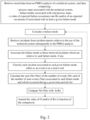
- Fig.2 shows a flow diagram of an exemplary embodiment of a method according to the invention.
- the method is a computer-based method for updating risk analysis parameters associated to an FMEA risk analysis of a technical system, and it comprises the steps of:
- An incident report is, as its name indicates, a report containing information relative to incidents which occurred during an operation of the technical system.
- Such an incident report can be created in different ways. It may for instance be created by a person who discovered the incident(s) and who inputs corresponding incident data directly into a computer file via a user interface. It may alternatively be created by a person going through available incident reports (paper forms, emails%) and who inputs corresponding incident data into a computer file via a user interface. It may alternatively be created by a software which parses available incident reports (pdf forms, emails%) and/or which reads incident data exported from other computer systems and which automatically creates a computer file with said incident data.
- the step b)i of retrieving incidents from incident reports may be a step of retrieving incidents from said computer files by the computer system executing the method.
- the step b)ii of associating a given failure mode to those retrieved incidents which are relative to said given failure mode, if any, is performed by requesting a user to establish and to input said associations via a user interface.
- the association can for example be stored in the form of a first table whose data are accessible to the computer executing the method.
- the step b)iii of classifying each incident associated to a given failure mode is performed by requesting a user to establish and to input said classification via a user interface.
- the association can for example be stored in the form of a second table whose data are accessible to the computer executing the method.
- time period ( ⁇ t) used herein is the same time period as used for the evaluation of the throughput "T" in the above formula used to calculate Ro and may for example be a period of one month or of several months, typically of one year.
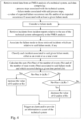
- Fig.3 shows a flow diagram of another exemplary embodiment of a method according to the invention.
- step b) of the method further comprises a step: b)vii. Triggering an alarm and/or providing an information to a user of the technical system if (Ne+Nne) is different from ⁇ t ⁇ Ro.
- Fig.4 shows a flow diagram of yet another exemplary embodiment of a method according to the invention.
- the value of the occurrence (O) associated to said given failure mode is amended by either increasing the value of the occurrence (O) if (Ne+Nne) is greater than ⁇ t ⁇ Ro, or by decreasing the value of the occurrence (O) if (Ne+Nne) is smaller than ⁇ t ⁇ Ro
- the value of the occurrence rate (Ro) associated to said given failure mode is amended by either increasing the value of the occurrence rate (Ro) if (Ne+Nne) is greater than ⁇ t ⁇ Ro, or by decreasing the value of the occurrence rate (Ro) if (Ne+Nne) is smaller than ⁇ t ⁇ Ro.
- the computer may amend the value of Ro associated with said given failure mode of said set of failure modes and calculate the corresponding value of O with the formula disclosed hereinabove, or vice versa.
- time period ( ⁇ t) used herein is the same time period as used for the evaluation of the throughput "T" in the above formula used to calculate Ro and may for example be a period of one month or of several months, typically of one year.
- the values of expected failure detection rate (Rd) and/or of detectability (D) are initial values as for example set and input initially by a user in charge of performing the risk analysis.
- the initial value of Rd is set and input by the user and D can be calculated by the user or by the computer executing the method, as explained hereinabove, or vice-versa.
- these values may be values as amended by the method itself (see step b.vi) in case of an iterative use of the method.
- step b) further comprises a step: b)viii Triggering an alarm and/or providing an information to a user of the technical system if Nne ⁇ ⁇ t ⁇ Rd and/or if Ne ⁇ ⁇ t ⁇ (Ro - Rd).
- step b)vi the value of detectability (D) associated to said given failure mode is amended by either decreasing the value of the detectability (D) if Nne is greater than ⁇ t ⁇ Rd, or by increasing the value of the detectability (D) if Nne is smaller than ⁇ t ⁇ Rd, and/or by either increasing the value of the detectability (D) if Ne is greater than ⁇ t ⁇ (Ro - Rd), or by decreasing the value of the detectability (D) if Ne is smaller than ⁇ t ⁇ (Ro - Rd), and/or in step b)vi, the value of the expected failure detection rate (Rd) associated to said given failure mode is amended by either increasing the value of the expected failure detection rate (Rd) if Nne is greater than ⁇ t ⁇ Rd, or by decreasing the value of the expected failure detection rate (Rd) if Nne is smaller than ⁇ t ⁇ Rd, and/or by either decreasing the value of the expected failure detection
- the computer executing the method may amend the value of Rd associated with said given failure mode of said set of failure modes and calculate the corresponding value of D with the formula disclosed hereinabove, or vice versa.
- a computer program product storing executable instructions, which, when executed by a computer, cause the computer to perform the method disclosed herein.
- the invention may also be described as follows: a computer-based method for updating risk analysis parameters of a proactive risk analysis of a technical system, such as of an FMEA analysis for example.
- the method uses incident report data obtained during posterior operation of the technical system, compares these incident report data with data of the proactive risk analysis, and updates the said risk analysis parameters in function of said comparison.
Landscapes
- Engineering & Computer Science (AREA)
- Theoretical Computer Science (AREA)
- Physics & Mathematics (AREA)
- General Physics & Mathematics (AREA)
- Business, Economics & Management (AREA)
- Quality & Reliability (AREA)
- General Engineering & Computer Science (AREA)
- Health & Medical Sciences (AREA)
- Human Resources & Organizations (AREA)
- Strategic Management (AREA)
- Economics (AREA)
- Data Mining & Analysis (AREA)
- Epidemiology (AREA)
- General Health & Medical Sciences (AREA)
- Medical Informatics (AREA)
- Primary Health Care (AREA)
- Public Health (AREA)
- Entrepreneurship & Innovation (AREA)
- Databases & Information Systems (AREA)
- Marketing (AREA)
- Urology & Nephrology (AREA)
- Educational Administration (AREA)
- Mathematical Physics (AREA)
- Game Theory and Decision Science (AREA)
- Bioethics (AREA)
- Tourism & Hospitality (AREA)
- Development Economics (AREA)
- Computational Linguistics (AREA)
- General Business, Economics & Management (AREA)
- Nuclear Medicine, Radiotherapy & Molecular Imaging (AREA)
- Surgery (AREA)
- Operations Research (AREA)
- Debugging And Monitoring (AREA)
Abstract
Description
- The invention relates to the field of risk analysis of technical systems, more particularly of technical systems which are used in the field of healthcare such as radiation therapy for example.
- The invention more particularly relates to a method for updating risk analysis parameters of a technical system and to a computer program product storing executable instructions for executing such method.
- Risk analysis is well known in several industries and a number of methods and computer-based tools have been developed to assist a user in performing such analysis. Currently, Failure Modes and Effects Analysis (hereafter "FMEA"), which is a predictive risk assessment method, is frequently used to this end. This known method allows a user to associate a failure mode of a technical system to risk analysis parameters such as the well known parameters of occurrence (hereafter "O") and detectability (hereafter "D") of a failure mode and/or of corresponding parameters such as failure occurrence rate (Ro) and failure detection rate (Rd).
- The problem with such analysis is that the values of O, D, Ro and Rd are estimated by a human being based on his personal judgement and generally before actual operation of the technical system, so that they may not always correspond to the reality and hence result in a lack of accuracy of the FMEA analysis. Various methods have therefore been developed to retroactively correct these parameters.
- Habraken (Kessels-Habraken, M, Tjerk Schaaf, J. Jonge, C Rutte, and K Kerkvliet. "Integration of Prospective and Retrospective Methods for Risk Analysis in Hospitals."- International Journal for Quality in Health Care : Journal of the International Society for Quality in Health Care / ISQua 21 - December 1, 2009 : 427-32) presents a comparison between prospective and retrospective analysis of the same process. Failure modes are aggregated and the number of expected process deviations are compared with reported process deviations. However, attempts were neither made to evaluate individual failure modes, nor to correct the prospective analysis. Detectability and/or failure detection rate were not considered either.
- In Paradis (Paradis, Kelly C., Katherine Woch Naheedy, Martha M. Matuszak, Rojano Kashani, Pamela Burger, and Jean M. Moran. "The Fusion of Incident Learning and Failure Mode and Effects Analysis for Data-Driven Patient Safety Improvements." - Practical Radiation Oncology, no. 0 - March 19, 2020), the FMEA technique is used to investigate reported incidents. However, a comparison between reported incidents and a corresponding prospective risk analysis is not discussed in this paper. Yang (Yang, F., N. Cao, L. Young, J. Howard, W. Logan, T. Arbuckle, P. Sponseller, T. Korssjoen, J. Meyer, and E. Ford. "Validating FMEA Output against Incident Learning Data: A Study in Stereotactic Body Radiation Therapy." - Medical Physics 42, no. 6 - June 2015: 2777-85) anticipates the idea to validate FMEA prospective results against retrospective incident data. However, they simply compare the anticipated failure modes with the reported incidents to see which kind of failures/incidents were missing in the data sets.
US20080275747A1 describes an incident report analysis apparatus able to carry out a FMEA with incident data. The apparatus includes an incident input unit for inputting the incident report, a report database for accumulating the incident reports, a screening unit for screening only the incident reports of which the effect has reached the patient, an FMEA table and a data table for storing the occurrence, detectability, severity, and crisis rate. However, it is problematic that only "events" are taken into account for the update of the occurrence and the detectability factors of the FMEA. Thus, many opportunities to prevent an accident or adverse incident are lost. In addition, it is problematic that the method ofUS20080275747A1 does not offer a way to validate O and D independently; it basically compares the reported events (incidents with level 0b or higher in the language of this patent) with the expectation (occurrence probability x probability that the failure is not detected). What is validated is the pair (O,D). - It is an object of the invention to provide a computer-based method to update risk analysis parameter(s) of a technical system which addresses the problems of the known methods.
- The invention is defined by the independent claims. The dependent claims define advantageous embodiments.
- According to the invention, there is provided a computer-based method for updating risk analysis parameters associated to an FMEA risk analysis of a technical system, the method comprising the steps of:
- a) Retrieving stored data from the FMEA analysis of the technical system, said stored data including:
- a set of process steps associated with the technical system,
- a set of failure modes associated with said process steps,
- a value of an expected failure occurrence rate (Ro) and/or of an occurrence (O) associated with at least one given failure mode of said set of failure modes;
- b) For the at least one given failure mode of said set of failure modes:
- i. Retrieving incidents from incident reports relative to the use of the technical system subsequently to said FMEA analysis;
- ii. Associating said given failure mode to those retrieved incidents which are relative to said given failure mode, if any;
- iii. Classifying each incident associated to said given failure mode, either as an event or as a near event or optionally as a non-event;
- iv. Calculating the sum (Ne+Nne) of the number of events (Ne) and of the number of near events (Nne) associated to said given failure mode and which occurred during a given time period (Δt);
- v. Comparing said sum (Ne+Nne) with the value of Δt·Ro;
- vi. In the stored data of the FMEA analysis of the technical system, amend the value of the occurrence rate (Ro) and/or of the occurrence (O) associated to said given failure mode in function of the result of the comparison of step b)v.
- As is generally known, the value of occurrence (O) associated with a failure mode is for example a ranking number reflecting the likelihood that the failure mode and its associated cause will be present in the technical system under study. This ranking number for (O) may for example be a number from 1 to 10 wherein 1 represents a low likelihood that the failure mode and its associated cause will be present in the system under study and wherein 10 represents a high likelihood that the failure mode and its associated cause will be present in the system under study.
- The expected failure occurrence rate or failure occurrence rate (Ro) associated with a failure mode is an expected rate at which the failure mode will be present in the system under study (expressed in number of times per unit of time). As will be detailed hereafter, Ro is a function of O for a given technical system and a given failure mode and vice-versa, so that the value of Ro may be determined in function of the value of O and vice-versa.
- With a method according to the invention, the value of O and/or of Ro, which are initially set more or less subjectively (or derived one from another) by a user of the technical system, are thereafter automatically adjusted in function of the real behavior of the system. The value of O and/or of Ro are moreover automatically adjusted by taking also into account near events, which often precede damage producing events, but were ignored in conventional systems and methods because no injury, damage, or loss actually occurred.
- In the context of the present disclosure, an "event" means something that happened within the technical system and which resulted in the technical system having an unwanted effect. If the technical system is for example a medical device to treat a patient, an event may for example be something that happened within the medical device and which resulted in unintended harm to the patient by an act of commission or omission by the medical device rather than by the underlying disease or condition of the patient or by treatment-related side effects.
- In the context of the present disclosure, a "near event" means something that happened within the technical system and which could have resulted in the technical system having an unwanted effect, but wherein the unwanted effect eventually didn't occur. If the technical system is for example a medical device to treat a patient, a near event may for example be something that happened within the medical device and which could have resulted in unintended harm to the patient but which eventually didn't reach the patient and was hence without consequence for the patient.
- In the context of the present disclosure, a non-event is defined as being an incident from an incident report relative to the use of the technical system subsequently to said FMEA analysis and which is neither an event nor a near-event, such as a false alarm for example.
- In step b)iii of a method according to the invention, either each incident associated to said given failure mode is classified as an event or as a near event, or each incident associated to said given failure mode is classified as an event or as a near event or as a non-event.
- The value of O and/or of Ro are moreover automatically adjusted independently from other risk parameters associated to the system such as D and/or Rd for example.
- This ultimately results in a more accurate risk analysis of the technical system under study, which allows users and/or designers to take better preventive and/or corrective measures to improve the safety of the technical system. Such measures may for example be the addition of barriers and/or preventions to the failure modes associated to the technical system. The method according to the invention allows furthermore to perform such measures iteratively, namely by repeating the method several times.
- In some embodiments of the method according to the invention, step b) further comprises a step:
b)vii. Triggering an alarm and/or providing an information to a user of the technical system if (Ne+Nne) ≠ Δt·Ro - Triggering such alarm and/or providing an information to a user in case the total number of reported events and near events associated with a given failure mode is different from the (previously) expected total number of events and near events is of course useful for the user to take appropriate preventive and/or corrective measures.
- In some embodiments of the method according to the invention, in step b)vi, the value of the occurrence (O) associated to said given failure mode is amended by either increasing the value of the occurrence (O) if (Ne+Nne) is greater than Δt·Ro, or by decreasing the value of the occurrence (O) if (Ne+Nne) is smaller than Δt·Ro, and/or in step b)vi, the value of the occurrence rate (Ro) associated to said given failure mode is amended by either increasing the value of the occurrence rate (Ro) if (Ne+Nne) is greater than Δt·Ro, or by decreasing the value of the occurrence rate (Ro) if (Ne+Nne) is smaller than Δt·Ro.
- This reflects in more detail how the values of O and/or of Ro are amended in function of the comparison between the total number of reported events and near events associated with a given failure mode and the number of expected events and near events. Amending these values as indicated results in a more accurate risk analysis of the technical system under study.
- In some embodiments of the method according to the invention, step a) further includes retrieving stored data from the FMEA analysis of the technical system, said stored data including a value of an expected failure detection rate (Rd) and/or of a detectability (D) associated with the at least one given failure mode of said set of failure modes, and step b)v further includes the step of comparing the number of near events (Nne) with the value of Δt·Rd and/or of comparing the number of events (Ne) with the value of Δt·(Ro - Rd), and step b)vi further includes the step of, in the stored data of the FMEA analysis of the technical system, amending the value of the expected failure detection rate (Rd) and/or of the detectability (D) associated to said given failure mode in function of the result of the comparison of step b)v.
- As is generally known, the value of detectability (D) is a ranking number reflecting the likelihood that a failure mode will be detected before it reaches the end-user of the technical system under study. This ranking number for (D) may for example be a number from 1 to 10 wherein 0 represents a high likelihood that the failure mode will be detected before it reaches the end-user of the system and 10 represents a low likelihood that that the failure mode will be detected before it reaches the end-user of the system.
- The expected failure detection rate or failure detection rate (Rd) is an expected rate at which a failure mode will be detected before it reaches the end-user of the system under study (expressed in number of times per unit of time). As will be detailed hereafter, Rd is a function of D for a given technical system and a given failure mode and vice-versa, so that the value of Rd may be determined in function of the value of D and vice-versa.
- With such an embodiment of a method according to the invention, the value of D and/or of Rd, which are initially set more or less subjectively (or derived one from another) by a user of the technical system, are thereafter automatically adjusted in function of the real behavior of the system. The value of D and/or of Rd are moreover automatically adjusted by taking also into account near events, which often precede damage producing events, but were ignored in conventional systems and methods because no injury, damage, or loss actually occurred.
- In some embodiments of the method according to the invention, step b) further comprises a step:
b)viii Triggering an alarm and/or providing an information to a user of the technical system if Nne ≠ Δt·Rd and/or if Ne ≠ Δt·(Ro - Rd). - In some embodiments of the method according to the invention, in step b)vi, the value of detectability (D) associated to said given failure mode is amended by either decreasing the value of the detectability (D) if Nne is greater than Δt·Rd, or by increasing the value of the detectability (D) if Nne is smaller than Δt·Rd, and/or by either increasing the value of the detectability (D) if Ne is greater than Δt·(Ro - Rd), or by decreasing the value of the detectability (D) if Ne is smaller than Δt· (Ro - Rd), and/or, in step b)vi, the value of the expected failure detection rate (Rd) associated to said given failure mode is amended by either increasing the value of the expected failure detection rate (Rd) if Nne is greater than Δt·Rd, or by decreasing the value of the expected failure detection rate (Rd) if Nne is smaller than Δt·Rd, and/or by either decreasing the value of the expected failure detection rate (Rd) if Ne is greater than Δt·(Ro - Rd), or by increasing the value of the expected failure detection rate (Rd) if Ne is smaller than Δt· (Ro - Rd).
- This reflects in more detail how the values of D and/or of Rd are amended in function of the comparison between the number of reported events and/or near events associated with a given failure mode and/or the number of expected events and/or of near events. Amending these values as indicated results in a more accurate risk analysis of the technical system under study.
- In some embodiments of the method according to the invention, the step b)ii of associating a given failure mode to those retrieved incidents which are relative to said given failure mode, if any, is performed by requesting a user to establish and to input said associations.
- In some embodiments of the method according to the invention, the step b)iii of classifying each incident associated to a given failure mode, either as an event or as a near event, is performed by requesting a user to establish and to input said classification.
- It is another object of the invention to provide a computer program product storing executable instructions, which when executed by a computer, cause the computer to perform a method as described herein.
- These and further aspects of the invention will be explained in greater detail by way of examples and with reference to the accompanying drawings in which:
- Fig.1
- shows a an exemplary FMEA table of an exemplary technical system to which a method according to the invention can be applied;
- Fig.2
- shows a flow diagram of an exemplary embodiment of a method according to the invention;
- Fig.3
- shows a flow diagram of another exemplary embodiment of a method according to the invention;
- Fig.4
- shows a flow diagram of yet another exemplary embodiment of a method according to the invention.
- The drawings of the figures are neither drawn to scale nor proportioned. Generally, similar or identical components are denoted by the same reference numerals in the figures.
- Reference will now be made to some particular embodiments of the present invention, examples of which are illustrated in the accompanying figures. The accompanying figures are intended to provide a better understanding of the embodiments. They show schematics of embodiments and serve in conjunction with the description to explain principles and concepts of the disclosed subject matter.
- According to a first aspect of the invention, there is provided a computer-based method for updating risk analysis parameters associated to a risk analysis of a technical system, more particularly of an FMEA analysis of a technical system.
- As used herein, the terms "computer-based", "generating", "determining" or "configuring" are meant to refer to the action and/or processes of a computer that processes and/or transforms data into other data. The term "computer" is meant to designate any electronic device with data processing capabilities. The term "module" is meant to refer to a processor and/or a memory unit storing computer readable instructions.
- The term "technical system" is meant to designate any technical system with a plurality of technical components possibly interacting with each other. Exemplary technical systems for use herein include, but are not limited to, healthcare technical systems or power plants. Preferably, the technical system for use herein is a healthcare technical system, in particular for clinical use such as for example a particle therapy system.
-
Fig.1 shows a an exemplary FMEA table of an exemplary technical system to which a method according to the invention can be applied. As shown in this table, the technical system performs three process steps when in operation, each step having sub-steps as indicated. To each step or sub-step are associated a number of failure modes and to each failure mode is associated a value of occurrence (O) and optionally a value of detectability (D). The values of O and D are supposed to be initial values as for example determined and input initially by a user of the method. As will become clear, O and optionally D are the risk parameters whose values that will be re-evaluated retrospectively by a method according to the invention, based on incidents reports. - Alternatively to O and optionally D, or in addition to these parameters, the FMEA table may contain a value of expected failure occurrence rate (Ro) and optionally a value of expected failure detection rate (Rd) associated to a failure mode. In that case, the values of Ro and of Rd are supposed to be initial values as for example determined and input initially by a user of the method, and, as will also become clear, Ro and optionally Rd are risk parameters whose values will be re-evaluated retrospectively by a method according to the invention, based on incidents reports.
- It is to be noted that Ro is a function of O for a given technical system and a given failure mode and vice-versa, so that the value of Ro may be determined in function of the value of O and vice-versa, and that Rd is a function of D for a given technical system and a given failure mode and vice-versa, so that the value of Rd may be determined in function of the value of D and vice-versa. The functional relationship between Ro and O as well as between Rd and D are as follows and take into account the fact that in general a certain process step or sub-step of the technical system under study is not performed for all runs of the technical system, and that other process steps or sub-steps could be repeated more than once :
- O is associated to an occurrence probability Pocc, for instance the probability that a failure mode occurs during a run of the technical system :
Pocc=Pocc(O); - D is associated to a non-detection probability, i.e. the probability Pmiss that the failure mode will be not detected before generating its effect:
Pmiss=Pmiss(D). - Under the reasonable assumption that O and D are statistically independent, we have that: Ro=Pocc ·T·R·F and Rd=Ro· (1-Pmiss),
wherein: - T ("throughput") is the number of runs of the technical system per unit of time Δt (e.g. number of runs per year);
- R is the average number of repetitions of the process step or sub-step for one run of the technical system; and
- F is the fraction of runs of the technical system during which the process step is performed (typically a % value).
- Values of T, R and F provide a statistical description of the process steps or sub-steps performed by the technical system to which the method is applied and can for example be provided (input) by a user before starting the risk analysis.
-
Fig.2 shows a flow diagram of an exemplary embodiment of a method according to the invention. As shown in the example ofFig.2 the method is a computer-based method for updating risk analysis parameters associated to an FMEA risk analysis of a technical system, and it comprises the steps of: - a. Retrieving stored data from the FMEA analysis of the technical system, said stored data including:
- a set of process steps associated with the technical system,
- a set of failure modes associated with said process steps,
- a value of an expected failure occurrence rate (Ro) and/or of an occurrence (O) associated with at least one given failure mode of said set of failure modes;
- b. For the at least one given failure mode of said set of failure modes:
- i. Retrieving incidents from incident reports relative to the use of the technical system subsequently to said FMEA analysis;
- ii. Associating said given failure mode to those retrieved incidents which are relative to said given failure mode, if any;
- iii. Classifying each incident associated to said given failure mode, either as an event or as a near event or optionally as a non-event;
- iv. Calculating the sum (Ne+Nne) of the number of events (Ne) and of the number of near events (Nne) associated to said given failure mode and which occurred during a given time period (Δt);
- v. Comparing said sum (Ne+Nne) with the value of Δt·Ro;
- vi. In the stored data of the FMEA analysis of the technical system, amend the value of the occurrence rate (Ro) and/or of the occurrence (O) associated to said given failure mode in function of the result of the comparison of step b)v.
- An incident report is, as its name indicates, a report containing information relative to incidents which occurred during an operation of the technical system. Such an incident report can be created in different ways. It may for instance be created by a person who discovered the incident(s) and who inputs corresponding incident data directly into a computer file via a user interface. It may alternatively be created by a person going through available incident reports (paper forms, emails...) and who inputs corresponding incident data into a computer file via a user interface. It may alternatively be created by a software which parses available incident reports (pdf forms, emails...) and/or which reads incident data exported from other computer systems and which automatically creates a computer file with said incident data.
- In some examples, the step b)i of retrieving incidents from incident reports may be a step of retrieving incidents from said computer files by the computer system executing the method.
- In some examples, the step b)ii of associating a given failure mode to those retrieved incidents which are relative to said given failure mode, if any, is performed by requesting a user to establish and to input said associations via a user interface. The association can for example be stored in the form of a first table whose data are accessible to the computer executing the method.
- In some examples, the step b)iii of classifying each incident associated to a given failure mode, either as an event or as a near event, is performed by requesting a user to establish and to input said classification via a user interface. The association can for example be stored in the form of a second table whose data are accessible to the computer executing the method.
- It is to be noted that the time period (Δt) used herein is the same time period as used for the evaluation of the throughput "T" in the above formula used to calculate Ro and may for example be a period of one month or of several months, typically of one year.
-
Fig.3 shows a flow diagram of another exemplary embodiment of a method according to the invention. In this example, step b) of the method further comprises a step:
b)vii. Triggering an alarm and/or providing an information to a user of the technical system if (Ne+Nne) is different from Δt·Ro. -
Fig.4 shows a flow diagram of yet another exemplary embodiment of a method according to the invention. In this example, in step b)vi, the value of the occurrence (O) associated to said given failure mode is amended by either increasing the value of the occurrence (O) if (Ne+Nne) is greater than Δt·Ro, or by decreasing the value of the occurrence (O) if (Ne+Nne) is smaller than Δt·Ro, and/or, in step b)vi, the value of the occurrence rate (Ro) associated to said given failure mode is amended by either increasing the value of the occurrence rate (Ro) if (Ne+Nne) is greater than Δt·Ro, or by decreasing the value of the occurrence rate (Ro) if (Ne+Nne) is smaller than Δt·Ro. - In some examples, the computer may amend the value of Ro associated with said given failure mode of said set of failure modes and calculate the corresponding value of O with the formula disclosed hereinabove, or vice versa.
- In some examples of a method according to the invention:
- step a) further includes retrieving stored data from the FMEA analysis of the technical system, said stored data including a value of an expected failure detection rate (Rd) and/or of a detectability (D) associated with the at least one given failure mode of said set of failure modes;
- step b)v further includes the step of comparing the number of near events (Nne) with the value of Δt·Rd and/or of comparing the number of events (Ne) with the value of Δt·(Ro - Rd),
- step b)vi further includes the step of, in the stored data of the FMEA analysis of the technical system, amending the value of the expected failure detection rate (Rd) and/or of the detectability (D) associated to said given failure mode in function of the result of the comparison of step b)v.
- It is to be noted that the time period (Δt) used herein is the same time period as used for the evaluation of the throughput "T" in the above formula used to calculate Ro and may for example be a period of one month or of several months, typically of one year.
- In step a), the values of expected failure detection rate (Rd) and/or of detectability (D) are initial values as for example set and input initially by a user in charge of performing the risk analysis. In some examples, the initial value of Rd is set and input by the user and D can be calculated by the user or by the computer executing the method, as explained hereinabove, or vice-versa. Alternatively, these values may be values as amended by the method itself (see step b.vi) in case of an iterative use of the method.
- In some examples, step b) further comprises a step:
b)viii Triggering an alarm and/or providing an information to a user of the technical system if Nne ≠ Δt·Rd and/or if Ne ≠ Δt·(Ro - Rd). - In some examples of a method according to the invention, in step b)vi, the value of detectability (D) associated to said given failure mode is amended by either decreasing the value of the detectability (D) if Nne is greater than Δt·Rd, or by increasing the value of the detectability (D) if Nne is smaller than Δt·Rd, and/or by either increasing the value of the detectability (D) if Ne is greater than Δt·(Ro - Rd), or by decreasing the value of the detectability (D) if Ne is smaller than Δt· (Ro - Rd), and/or in step b)vi, the value of the expected failure detection rate (Rd) associated to said given failure mode is amended by either increasing the value of the expected failure detection rate (Rd) if Nne is greater than Δt·Rd, or by decreasing the value of the expected failure detection rate (Rd) if Nne is smaller than Δt·Rd, and/or by either decreasing the value of the expected failure detection rate (Rd) if Ne is greater than Δt·(Ro - Rd), or by increasing the value of the expected failure detection rate (Rd) if Ne is smaller than Δt· (Ro - Rd).
- In some examples, the computer executing the method may amend the value of Rd associated with said given failure mode of said set of failure modes and calculate the corresponding value of D with the formula disclosed hereinabove, or vice versa.
- According to a second aspect of the invention, there is provided a computer program product storing executable instructions, which, when executed by a computer, cause the computer to perform the method disclosed herein.
- The present invention has been described in terms of specific embodiments, which are illustrative of the invention and not to be construed as limiting. More generally, it will be appreciated by persons skilled in the art that the present invention is not limited by what has been particularly shown and/or described hereinabove.
- Reference numerals in the claims do not limit their protective scope. Use of the verbs "to comprise", "to include", "to be composed of", or any other variant, as well as their respective conjugations, does not exclude the presence of elements other than those stated. Use of the article "a", "an" or "the" preceding an element does not exclude the presence of a plurality of such elements.
- The invention may also be described as follows: a computer-based method for updating risk analysis parameters of a proactive risk analysis of a technical system, such as of an FMEA analysis for example. The method uses incident report data obtained during posterior operation of the technical system, compares these incident report data with data of the proactive risk analysis, and updates the said risk analysis parameters in function of said comparison.
Claims (11)
- Computer-based method for updating risk analysis parameters associated to an FMEA risk analysis of a technical system, the method comprising the steps of:a. Retrieving stored data from the FMEA analysis of the technical system, said stored data including:- a set of process steps associated with the technical system,- a set of failure modes associated with said process steps,- a value of an expected failure occurrence rate (Ro) and/or of an occurrence (O) associated with at least one given failure mode of said set of failure modes;b. For the at least one given failure mode of said set of failure modes:i. Retrieving incidents from incident reports relative to the use of the technical system subsequently to said FMEA analysis;ii. Associating said given failure mode to those retrieved incidents which are relative to said given failure mode, if any;iii. Classifying each incident associated to said given failure mode, either as an event or as a near event, or optionally as a non-event;iv. Calculating the sum (Ne+Nne) of the number of events (Ne) and of the number of near events (Nne) associated to said given failure mode and which occurred during a given time period (Δt);v. Comparing said sum (Ne+Nne) with the value of Δt·Ro;vi. In the stored data of the FMEA analysis of the technical system, amend the value of the occurrence rate (Ro) and/or of the occurrence (O) associated to said given failure mode in function of the result of the comparison of step b)v.
- Computer-based method according to claim 1, characterized in that step b) further comprises a step:
b)vii. Triggering an alarm and/or providing an information to a user of the technical system if (Ne+Nne) ≠ Δt·Ro - Computer-based method according to claim 1 or 2, characterized in that, in step b)vi, the value of the occurrence (O) associated to said given failure mode is amended by either increasing the value of the occurrence (O) if (Ne+Nne) is greater than Δt·Ro, or by decreasing the value of the occurrence (O) if (Ne+Nne) is smaller than Δt·Ro,
and/or in that
in step b)vi, the value of the occurrence rate (Ro) associated to said given failure mode is amended by either increasing the value of the occurrence rate (Ro) if (Ne+Nne) is greater than Δt·Ro, or by decreasing the value of the occurrence rate (Ro) if (Ne+Nne) is smaller than Δt·Ro. - Computer based method according to any of claims 1 to 3, characterized in that the value of the occurrence (O) associated with said given failure mode of said set of failure modes is derived from the value of the expected failure occurrence rate (Ro) and/or vice versa.
- Computer-based method according to any of claims 1 to 4, characterized in that:- step a) further includes retrieving stored data from the FMEA analysis of the technical system, said stored data including a value of an expected failure detection rate (Rd) and/or of a detectability (D) associated with the at least one given failure mode of said set of failure modes;- step b)v further includes the step of comparing the number of near events (Nne) with the value of Δt·Rd and/or of comparing the number of events (Ne) with the value of Δt·(Ro - Rd),- step b)vi further includes the step of, in the stored data of the FMEA analysis of the technical system, amending the value of the expected failure detection rate (Rd) and/or of the detectability (D) associated to said given failure mode in function of the result of the comparison of step b)v.
- Computer-based method according to claim 5, characterized in that step b) further comprises a step: b)viii : Triggering an alarm and/or providing an information to a user of the technical system if Nne ≠ Δt·Rd and/or if Ne ≠ Δt·(Ro - Rd).
- Computer-based method according to any of claims 5 or 6, characterized in that, in step b)vi, the value of detectability (D) associated to said given failure mode is amended by either decreasing the value of the detectability (D) if Nne is greater than Δt·Rd, or by increasing the value of the detectability (D) if Nne is smaller than Δt·Rd, and/or by either increasing the value of the detectability (D) if Ne is greater than Δt·(Ro - Rd), or by decreasing the value of the detectability (D) if Ne is smaller than Δt· (Ro - Rd),and/or in that in step b)vi, the value of the expected failure detection rate (Rd) associated to said given failure mode is amended by either increasing the value of the expected failure detection rate (Rd) if Nne is greater than Δt·Rd, or by decreasing the value of the expected failure detection rate (Rd) if Nne is smaller than Δt·Rd, and/or by either decreasing the value of the expected failure detection rate (Rd) if Ne is greater than Δt·(Ro - Rd), or by increasing the value of the expected failure detection rate (Rd) if Ne is smaller than Δt· (Ro - Rd).
- Computer based method according to any of claims 5 to 7, characterized in that the value of the detectability (D) associated with said given failure mode of said set of failure modes is derived from the value of the expected failure detection rate (Rd) and/or vice versa.
- Computer-based method according to any of the preceding claims, characterized in that the step b)ii of associating a given failure mode to those retrieved incidents which are relative to said given failure mode, if any, is performed by requesting a user to establish and to input said associations.
- Computer-based method according to any of the preceding claims, characterized in that the step b)iii of classifying each incident associated to a given failure mode, either as an event or as a near event, is performed by requesting a user to establish and to input said classification.
- A computer program product storing executable instructions, which, when executed by a computer, cause the computer to perform the method according to any of claims 1 to 10.
Priority Applications (4)
| Application Number | Priority Date | Filing Date | Title |
|---|---|---|---|
| EP22209727.1A EP4375900B1 (en) | 2022-11-25 | 2022-11-25 | Method for updating risk analysis parameters of a technical system |
| JP2023193443A JP2024076981A (en) | 2022-11-25 | 2023-11-14 | How to update risk analysis parameters of technical systems |
| US18/518,923 US12579015B2 (en) | 2022-11-25 | 2023-11-24 | Method for updating risk analysis parameters of a technical system |
| CN202311580911.1A CN118098504A (en) | 2022-11-25 | 2023-11-24 | Method for updating risk analysis parameters of a technical system |
Applications Claiming Priority (1)
| Application Number | Priority Date | Filing Date | Title |
|---|---|---|---|
| EP22209727.1A EP4375900B1 (en) | 2022-11-25 | 2022-11-25 | Method for updating risk analysis parameters of a technical system |
Publications (3)
| Publication Number | Publication Date |
|---|---|
| EP4375900A1 true EP4375900A1 (en) | 2024-05-29 |
| EP4375900B1 EP4375900B1 (en) | 2025-06-04 |
| EP4375900C0 EP4375900C0 (en) | 2025-06-04 |
Family
ID=84362993
Family Applications (1)
| Application Number | Title | Priority Date | Filing Date |
|---|---|---|---|
| EP22209727.1A Active EP4375900B1 (en) | 2022-11-25 | 2022-11-25 | Method for updating risk analysis parameters of a technical system |
Country Status (4)
| Country | Link |
|---|---|
| US (1) | US12579015B2 (en) |
| EP (1) | EP4375900B1 (en) |
| JP (1) | JP2024076981A (en) |
| CN (1) | CN118098504A (en) |
Citations (1)
| Publication number | Priority date | Publication date | Assignee | Title |
|---|---|---|---|---|
| US20080275747A1 (en) | 2007-04-20 | 2008-11-06 | Kabushiki Kaisha Toshiba | Incident/accident report analysis apparatus and method |
Family Cites Families (5)
| Publication number | Priority date | Publication date | Assignee | Title |
|---|---|---|---|---|
| EP1980964B1 (en) * | 2007-04-13 | 2016-03-23 | Yogitech Spa | Method and computer program product for performing failure mode and effects analysis of an integrated circuit |
| EP4220322B1 (en) * | 2022-01-28 | 2024-08-07 | Ion Beam Applications | Method for generating an fta fault tree from an fmea table of a technical system or vice versa |
| US12536016B2 (en) * | 2022-03-25 | 2026-01-27 | Intel Corporation | Evaluation of software programs for compliance with functional safety |
| US20230315954A1 (en) * | 2022-04-05 | 2023-10-05 | Accenture Global Solutions Limited | Method and device for dynamic failure mode effect analysis and recovery process recommendation for cloud computing applications |
| US20230342538A1 (en) * | 2022-04-25 | 2023-10-26 | Arteris, Inc. | Model-driven approach for failure mode, effects, and diagnostic analysis (fmeda) automation for hardware intellectual property of complex electronic systems |
-
2022
- 2022-11-25 EP EP22209727.1A patent/EP4375900B1/en active Active
-
2023
- 2023-11-14 JP JP2023193443A patent/JP2024076981A/en active Pending
- 2023-11-24 CN CN202311580911.1A patent/CN118098504A/en active Pending
- 2023-11-24 US US18/518,923 patent/US12579015B2/en active Active
Patent Citations (1)
| Publication number | Priority date | Publication date | Assignee | Title |
|---|---|---|---|---|
| US20080275747A1 (en) | 2007-04-20 | 2008-11-06 | Kabushiki Kaisha Toshiba | Incident/accident report analysis apparatus and method |
Non-Patent Citations (5)
| Title |
|---|
| KESSELS-HABRAKENM, TJERK SCHAAFJ. JONGEC RUTTEK KERKVLIET: "Integration of Prospective and Retrospective Methods for Risk Analysis in Hospitals", INTERNATIONAL JOURNAL FOR QUALITY IN HEALTH CARE : JOURNAL OF THE INTERNATIONAL SOCIETY FOR QUALITY IN HEALTH CARE / ISQUA 21, 1 December 2009 (2009-12-01), pages 427 - 32 |
| NN: "Failure mode and effects analysis", 18 November 2022 (2022-11-18), XP093038691, Retrieved from the Internet <URL:https://en.wikipedia.org/w/index.php?title=Failure_mode_and_effects_analysis&oldid=1122569547> [retrieved on 20230412] * |
| PARADISKELLY C.KATHERINE WOCH NAHEEDYMARTHA M. MATUSZAKROJANO KASHANIPAMELA BURGERJEAN M. MORAN: "The Fusion of Incident Learning and Failure Mode and Effects Analysis for Data-Driven Patient Safety Improvements", PRACTICAL RADIATION ONCOLOGY, no. 0, 19 March 2020 (2020-03-19) |
| YANG CHUNSHENG ET AL: "APU FMEA Validation Using Operation and Maintenance Data", PROCEEDINGS OF THE ANNUAL CONFERENCE OF THE PROGNOSTICS AND HEALTH MANAGEMENT SOCIETY, 1 October 2009 (2009-10-01), XP093036679, Retrieved from the Internet <URL:https://papers.phmsociety.org/index.php/phmconf/article/download/1466/432> [retrieved on 20230331] * |
| YANG, F.N. CAOL. YOUNGJ. HOWARDW. LOGANT. ARBUCKLEP. SPONSELLERT. KORSSJOENJ. MEYERE. FORD: "Validating FMEA Output against Incident Learning Data: A Study in Stereotactic Body Radiation Therapy", MEDICAL PHYSICS, vol. 42, no. 6, June 2015 (2015-06-01), pages 2777 - 85, XP012197487, DOI: 10.1118/1.4919440 |
Also Published As
| Publication number | Publication date |
|---|---|
| US12579015B2 (en) | 2026-03-17 |
| JP2024076981A (en) | 2024-06-06 |
| EP4375900B1 (en) | 2025-06-04 |
| CN118098504A (en) | 2024-05-28 |
| US20240176687A1 (en) | 2024-05-30 |
| EP4375900C0 (en) | 2025-06-04 |
Similar Documents
| Publication | Publication Date | Title |
|---|---|---|
| Srivastava et al. | Mathematical notions vs. human perception of fairness: A descriptive approach to fairness for machine learning | |
| Bunyaminu et al. | The effect of health expenditure on average life expectancy: does government effectiveness play a moderating role? | |
| Barrett | Structural equation modelling: Adjudging model fit | |
| US20190279111A1 (en) | Systems and methods for providing machine learning model evaluation by using decomposition | |
| US10213149B2 (en) | Systems and methods for assessing human cognition, including a quantitative approach to assessing executive function | |
| JP2019194807A (en) | Dangerous action prediction device, prediction model generation device, and program for dangerous action prediction | |
| US20170316180A1 (en) | Behavior prediction apparatus, behavior prediction apparatus controlling method, and behavior prediction apparatus controlling program | |
| EP4220322A1 (en) | Method for generating an fta fault tree from an fmea table of a technical system or vice versa | |
| Brachman et al. | Reliance and automation for human-ai collaborative data labeling conflict resolution | |
| Rizvi et al. | Is artificial intelligence the cost-saving lens to diabetic retinopathy screening in low-and middle-income countries? | |
| Kazemi et al. | A hybrid methodology for modeling risk of adverse events in complex health‐care settings | |
| CN110134939A (en) | Ruling based on ontology and rule | |
| Mansi et al. | Legally-informed explainable ai | |
| EP4375900B1 (en) | Method for updating risk analysis parameters of a technical system | |
| KR20220157330A (en) | Method for predicting dementia by incubation period based on machine learning and apparatus implementing the same method | |
| Balgos | A systems theoretic application to design for the safety of medical diagnostic devices | |
| JP6875445B2 (en) | Information processing equipment, information processing methods and programs | |
| von Eye et al. | Configural Frequency Analysis under multinormality | |
| Shaposhnyk et al. | Probabilistic causal graphs as categorical data synthesizers: Do they do better than Gaussian Copulas and Conditional Tabular GANs? | |
| Emakhu et al. | Failure type prediction in software-related medical device recalls | |
| Veazie et al. | A simple goodness-of-fit test for continuous conditional distributions | |
| Müller et al. | Personalisable Clinical Decision Support System. | |
| Yesmin | AI Chatbots for Dengue Symptom Triage in Bangladesh: A Decision Tree Classifier Approach | |
| US20260134370A1 (en) | Risk Analysis Method and Risk Analysis System | |
| THURAKA et al. | AI TECHNIQUES REVOLUTIONIZING HEALTH INFORMATICS AND DISEASE PREDICTION AND ANALYSIS |
Legal Events
| Date | Code | Title | Description |
|---|---|---|---|
| PUAI | Public reference made under article 153(3) epc to a published international application that has entered the european phase |
Free format text: ORIGINAL CODE: 0009012 |
|
| STAA | Information on the status of an ep patent application or granted ep patent |
Free format text: STATUS: REQUEST FOR EXAMINATION WAS MADE |
|
| 17P | Request for examination filed |
Effective date: 20240418 |
|
| AK | Designated contracting states |
Kind code of ref document: A1 Designated state(s): AL AT BE BG CH CY CZ DE DK EE ES FI FR GB GR HR HU IE IS IT LI LT LU LV MC ME MK MT NL NO PL PT RO RS SE SI SK SM TR |
|
| RBV | Designated contracting states (corrected) |
Designated state(s): AL AT BE BG CH CY CZ DE DK EE ES FI FR GB GR HR HU IE IS IT LI LT LU LV MC ME MK MT NL NO PL PT RO RS SE SI SK SM TR |
|
| GRAP | Despatch of communication of intention to grant a patent |
Free format text: ORIGINAL CODE: EPIDOSNIGR1 |
|
| STAA | Information on the status of an ep patent application or granted ep patent |
Free format text: STATUS: GRANT OF PATENT IS INTENDED |
|
| INTG | Intention to grant announced |
Effective date: 20250227 |
|
| GRAS | Grant fee paid |
Free format text: ORIGINAL CODE: EPIDOSNIGR3 |
|
| GRAA | (expected) grant |
Free format text: ORIGINAL CODE: 0009210 |
|
| STAA | Information on the status of an ep patent application or granted ep patent |
Free format text: STATUS: THE PATENT HAS BEEN GRANTED |
|
| AK | Designated contracting states |
Kind code of ref document: B1 Designated state(s): AL AT BE BG CH CY CZ DE DK EE ES FI FR GB GR HR HU IE IS IT LI LT LU LV MC ME MK MT NL NO PL PT RO RS SE SI SK SM TR |
|
| REG | Reference to a national code |
Ref country code: GB Ref legal event code: FG4D |
|
| REG | Reference to a national code |
Ref country code: CH Ref legal event code: EP |
|
| REG | Reference to a national code |
Ref country code: DE Ref legal event code: R096 Ref document number: 602022015439 Country of ref document: DE |
|
| REG | Reference to a national code |
Ref country code: IE Ref legal event code: FG4D |
|
| U01 | Request for unitary effect filed |
Effective date: 20250626 |
|
| U07 | Unitary effect registered |
Designated state(s): AT BE BG DE DK EE FI FR IT LT LU LV MT NL PT RO SE SI Effective date: 20250702 |
|
| PG25 | Lapsed in a contracting state [announced via postgrant information from national office to epo] |
Ref country code: ES Free format text: LAPSE BECAUSE OF FAILURE TO SUBMIT A TRANSLATION OF THE DESCRIPTION OR TO PAY THE FEE WITHIN THE PRESCRIBED TIME-LIMIT Effective date: 20250604 |
|
| PG25 | Lapsed in a contracting state [announced via postgrant information from national office to epo] |
Ref country code: NO Free format text: LAPSE BECAUSE OF FAILURE TO SUBMIT A TRANSLATION OF THE DESCRIPTION OR TO PAY THE FEE WITHIN THE PRESCRIBED TIME-LIMIT Effective date: 20250904 Ref country code: GR Free format text: LAPSE BECAUSE OF FAILURE TO SUBMIT A TRANSLATION OF THE DESCRIPTION OR TO PAY THE FEE WITHIN THE PRESCRIBED TIME-LIMIT Effective date: 20250905 |
|
| PG25 | Lapsed in a contracting state [announced via postgrant information from national office to epo] |
Ref country code: PL Free format text: LAPSE BECAUSE OF FAILURE TO SUBMIT A TRANSLATION OF THE DESCRIPTION OR TO PAY THE FEE WITHIN THE PRESCRIBED TIME-LIMIT Effective date: 20250604 |
|
| PG25 | Lapsed in a contracting state [announced via postgrant information from national office to epo] |
Ref country code: HR Free format text: LAPSE BECAUSE OF FAILURE TO SUBMIT A TRANSLATION OF THE DESCRIPTION OR TO PAY THE FEE WITHIN THE PRESCRIBED TIME-LIMIT Effective date: 20250604 |
|
| PG25 | Lapsed in a contracting state [announced via postgrant information from national office to epo] |
Ref country code: RS Free format text: LAPSE BECAUSE OF FAILURE TO SUBMIT A TRANSLATION OF THE DESCRIPTION OR TO PAY THE FEE WITHIN THE PRESCRIBED TIME-LIMIT Effective date: 20250904 |
|
| U20 | Renewal fee for the european patent with unitary effect paid |
Year of fee payment: 4 Effective date: 20251126 |
|
| PG25 | Lapsed in a contracting state [announced via postgrant information from national office to epo] |
Ref country code: IS Free format text: LAPSE BECAUSE OF FAILURE TO SUBMIT A TRANSLATION OF THE DESCRIPTION OR TO PAY THE FEE WITHIN THE PRESCRIBED TIME-LIMIT Effective date: 20251004 |
|
| PG25 | Lapsed in a contracting state [announced via postgrant information from national office to epo] |
Ref country code: SM Free format text: LAPSE BECAUSE OF FAILURE TO SUBMIT A TRANSLATION OF THE DESCRIPTION OR TO PAY THE FEE WITHIN THE PRESCRIBED TIME-LIMIT Effective date: 20250604 |
|
| PG25 | Lapsed in a contracting state [announced via postgrant information from national office to epo] |
Ref country code: CZ Free format text: LAPSE BECAUSE OF FAILURE TO SUBMIT A TRANSLATION OF THE DESCRIPTION OR TO PAY THE FEE WITHIN THE PRESCRIBED TIME-LIMIT Effective date: 20250604 |
|
| PG25 | Lapsed in a contracting state [announced via postgrant information from national office to epo] |
Ref country code: SK Free format text: LAPSE BECAUSE OF FAILURE TO SUBMIT A TRANSLATION OF THE DESCRIPTION OR TO PAY THE FEE WITHIN THE PRESCRIBED TIME-LIMIT Effective date: 20250604 |
|
| PLBE | No opposition filed within time limit |
Free format text: ORIGINAL CODE: 0009261 |
|
| STAA | Information on the status of an ep patent application or granted ep patent |
Free format text: STATUS: NO OPPOSITION FILED WITHIN TIME LIMIT |
|
| REG | Reference to a national code |
Ref country code: CH Ref legal event code: L10 Free format text: ST27 STATUS EVENT CODE: U-0-0-L10-L00 (AS PROVIDED BY THE NATIONAL OFFICE) Effective date: 20260416 |
|
| 26N | No opposition filed |
Effective date: 20260305 |