EP4375618A1 - Dynamic gravity vector estimation for memory constrained devices - Google Patents
Dynamic gravity vector estimation for memory constrained devices Download PDFInfo
- Publication number
- EP4375618A1 EP4375618A1 EP23207357.7A EP23207357A EP4375618A1 EP 4375618 A1 EP4375618 A1 EP 4375618A1 EP 23207357 A EP23207357 A EP 23207357A EP 4375618 A1 EP4375618 A1 EP 4375618A1
- Authority
- EP
- European Patent Office
- Prior art keywords
- acceleration
- gravity vector
- vector
- estimated
- versor
- Prior art date
- Legal status (The legal status is an assumption and is not a legal conclusion. Google has not performed a legal analysis and makes no representation as to the accuracy of the status listed.)
- Pending
Links
Images




Classifications
-
- G—PHYSICS
- G01—MEASURING; TESTING
- G01C—MEASURING DISTANCES, LEVELS OR BEARINGS; SURVEYING; NAVIGATION; GYROSCOPIC INSTRUMENTS; PHOTOGRAMMETRY OR VIDEOGRAMMETRY
- G01C21/00—Navigation; Navigational instruments not provided for in groups G01C1/00 - G01C19/00
- G01C21/10—Navigation; Navigational instruments not provided for in groups G01C1/00 - G01C19/00 by using measurements of speed or acceleration
- G01C21/12—Navigation; Navigational instruments not provided for in groups G01C1/00 - G01C19/00 by using measurements of speed or acceleration executed aboard the object being navigated; Dead reckoning
- G01C21/16—Navigation; Navigational instruments not provided for in groups G01C1/00 - G01C19/00 by using measurements of speed or acceleration executed aboard the object being navigated; Dead reckoning by integrating acceleration or speed, i.e. inertial navigation
- G01C21/183—Compensation of inertial measurements, e.g. for temperature effects
- G01C21/185—Compensation of inertial measurements, e.g. for temperature effects for gravity
-
- G—PHYSICS
- G06—COMPUTING OR CALCULATING; COUNTING
- G06F—ELECTRIC DIGITAL DATA PROCESSING
- G06F3/00—Input arrangements for transferring data to be processed into a form capable of being handled by the computer; Output arrangements for transferring data from processing unit to output unit, e.g. interface arrangements
- G06F3/01—Input arrangements or combined input and output arrangements for interaction between user and computer
- G06F3/03—Arrangements for converting the position or the displacement of a member into a coded form
- G06F3/033—Pointing devices displaced or positioned by the user, e.g. mice, trackballs, pens or joysticks; Accessories therefor
- G06F3/0346—Pointing devices displaced or positioned by the user, e.g. mice, trackballs, pens or joysticks; Accessories therefor with detection of the device orientation or free movement in a three-dimensional [3D] space, e.g. 3D mice, 6-DOF [six degrees of freedom] pointers using gyroscopes, accelerometers or tilt-sensors
-
- G—PHYSICS
- G01—MEASURING; TESTING
- G01V—GEOPHYSICS; GRAVITATIONAL MEASUREMENTS; DETECTING MASSES OR OBJECTS; TAGS
- G01V7/00—Measuring gravitational fields or waves; Gravimetric prospecting or detecting
- G01V7/02—Details
- G01V7/06—Analysis or interpretation of gravimetric records
Definitions
- the present invention generally relates to gravity vector estimation, for example in portable electronic devices.
- Electronic devices such as smartphones, laptops, smart bands, smart watches, smart pens, etc., often use position, orientation, gesture, motion, location and other information to facilitate the control and operation of the devices.
- the electronic devices may typically include multiple sensors, such as accelerometers, gyroscopes, pressure sensors, etc., to sense such position, gesture, motion, location and other information.
- sensed information may be used to determine or estimate a three-dimensional vector indicating the direction and magnitude of gravity, e.g., a gravity vector.
- estimation/computation of the gravity vector requires relatively high computational and memory resources, in particular when high accuracy is required. There is therefore the need for a solution to estimate/compute an accurate gravity vector with low computational and memory resources.
- the present invention relates to a method and a device, in particular for gravity vector estimation or computation, as defined in the annexed claims.
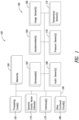
- FIG. 1 is a functional block diagram of an embodiment of an electronic device or system 100.
- the system 100 comprises one or more processing cores or circuits 102.
- the processing cores 102 comprise, for example, one or more processors, a state machine, a microprocessor, a programmable logic circuit, discrete circuitry, logic gates, registers, etc., and various combinations thereof.
- the processing cores control overall operation of the system 100, execution of application programs by the system 100 (e.g., programs which uses position, orientation, gesture, motion, gravity vectors, location and other information, and various combinations thereof, to perform various functions), etc.
- the system 100 includes one or more memories 104, such as one or more volatile and/or non-volatile memories which store, for example, all or part of instructions and data related to control of the system 100, applications and operations performed by the system 100, etc.
- One or more of the memories 104 include a memory array, which, in operation, is shared by one or more processes executed by the system 100.
- the system 100 includes one or more sensors 160, as illustrated, one or more gyroscopes 162, one or more accelerometers 164, one or more image sensors 166, one or more audio sensors 168, one or more pressure sensors 170, one or more temperature sensors 172, etc., one or more interfaces 175 (e.g., wireless communication interfaces, wired communication interfaces, etc.), and other functional circuits 180, which include antennas, power supplies, one or more built-in self-test (BIST) circuits, etc., and a main bus system 190.
- the main bus system 190 includes one or more data, address, power and/or control buses coupled to the various components of the system 100.
- the one or more gyroscopes 162 in operation, generate rotational data, and typically provide an output in the form of a rotational velocity measurements vector indicating a rotational velocity with respect to, for example, three axes of movement.
- the one or more gyroscopes 162 typically comprise a micro-electro-mechanical system (MEMS) device that measures the rate of rotation of an object around one or more axis.
- MEMS micro-electro-mechanical system
- the one or more accelerometers 164 in operation, generate acceleration data, and typically provide an output in the form of an acceleration measurements vector indicating acceleration along, for example, three axes of movement.
- the one or more accelerometers 164 typically comprise a MEMS device that measures the acceleration of an object along one or more axis.
- the one or more image sensors 166 in operation, generate digital or analog signals based on optical images.
- the image sensors 166 typically include a photosensitive element which generates a signal in response to light waves, and typically provide digital signal in the form of pixel values.
- the one or more audio sensors 168 in operation, generate digital or analog signals based on sound waves.
- the audio sensors 168 typically comprise a MEMS device which converts sound waves into electrical signals.
- the one or more pressure sensors 170 in operation, generate digital or analog signals based on an ambient pressure.
- the pressure sensors 170 typically comprise a MEMS device, such as a capacitive sensor, a piezoresistive sensor, etc., which converts an indication of pressure or a pressure change into electrical signals.
- the one or more temperature sensors 172 in operation, generate digital or analog signals based on an ambient temperature, temperature differences, etc.
- the temperature sensors 172 typically comprise a resistance temperature detector, a semiconductor detector, a junction detector, etc, which converts an indication of a temperature or a temperature change into electrical signals.
- the system 100 also includes dynamic gravity vector estimation circuitry 110 which, in operation, estimates a dynamic gravity vector associated with the device based on sensor data, such as sensor data generated by a gyroscope 162 and an accelerometer 164 of the one or more sensors 160, for example, as discussed in more detail below with reference to Figures 2-5 .
- sensor data such as sensor data generated by a gyroscope 162 and an accelerometer 164 of the one or more sensors 160, for example, as discussed in more detail below with reference to Figures 2-5 .
- FIG. 2 is a conceptual diagram illustrating a gravity vector associated with a device, as illustrated, a smart phone.
- Static gravity vector estimation is obtained by low-pass filtering accelerometer data. Such static gravity vector estimates, however, lack bandwidth and have high latency due to the low-pass filtering, and are not robust against accelerations different from gravity.
- a dynamic gravity vector is employed instead, and use of dynamic gravity vectors is required in some operational frameworks (e.g., Android TM operating system environments).
- a dynamic gravity vector is used as an input, for example, to various algorithms, such as tilt or inclination estimation, tilt compensation in pointing devices, smart pens, etc., control of self-balancing robots, virtual joysticks, gaming devices, etc.
- a dynamic gravity vector is conventionally estimated using attitude filter algorithms based on quaternion algebra. For example, based on filtered sensor data, a state of a three-dimensional (3D) orientation is represented as a Quaternion, a yaw, pitch and roll (e.g., Euler's angles), or a rotation matrix. A gravity vector is then estimated by rotating an ideal gravity vector (e.g., [0,0,1]) based on the current 3D orientation estimation.
- an ideal gravity vector e.g., [0,0,1]
- the applicant have realized that in many instances, only an estimation of the gravity vector is needed by an application, and that first generating a representation of a 3D orientation in order to estimate the gravity vector uses substantial memory and computational resources.
- a dynamic gravity vector is instead directly estimated based on gyroscope sensor data (e.g., data from a gyroscope 162 of Figure 1 ).
- the estimated dynamic gravity vector is then corrected based on a linear acceleration correction factor estimated based on accelerometer data (e.g., data from an accelerometer 164 of Figure 1 ), without having to generate a representation of a 3D orientation before estimating the dynamic gravity vector. This is done, for example, using the dynamic gravity vector estimation circuitry 110 of Figure 1 .
- Embodiments of the system 100 of Figure 1 may include more components than illustrated, may include fewer components than illustrated, may combine components, may separate components into sub-components, and various combination thereof.
- the gravity vector estimator 110 includes a gyroscope 162 and an accelerometer 164 in some embodiments, the gravity vector estimator 110 is integrated into or implemented by the processing core 102 in some embodiments, a sensor comprises a combined gyroscope and accelerometer, an inertial measurement unit or device (IMU) package includes an accelerometer, a gyroscope and embedded processing circuitry, which, in operation, implements dynamic gravity vector estimation (see Figure 6 ), etc., and various combinations thereof.
- IMU inertial measurement unit or device
- FIG 3 is a functional block diagram of a dynamic gravity vector estimator 300 according to an embodiment.
- the gravity vector estimator 300 is employed, for example, as the gravity vector estimator 110 of Figure 1 .
- the gravity vector estimator 300 includes an angular rate of change block or circuit 312, an angular rate normalization block or circuit 314, a gravity vector propagation block or circuit 316, a dynamic gravity vector correction block or circuit 318, a linear acceleration block or circuit 320, an acceleration normalization block or circuit 322, a correction factor block or circuit 324, and an error determination block or circuit 326.
- a signal dtime is provided as an input to the angular rate of change block 312.
- the signal dtime is a time measure represented in second, and indicative of the time elapsed between two consecutive input data samples (e.g., 0.01 seconds if gyroscope data is generated at 100 Hz).
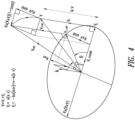
- Figure 4 is a conceptual diagram illustrating the vector geometry of Rodrigues' rotation formula, from which the above example of estimating a current gravity vector is derived.
- a dynamic gravity vector is estimated using gyroscope data, and then corrected based on accelerometer data.
- the correction factor ⁇ may be viewed as a coefficient of a complementary filter used to generate the current dynamic gravity vector g t .
- the correction can be applied using spherical linear interpolation.
- the linear acceleration block or circuit 320 receives accelerometer data a , which is typically an acceleration measurements vector indicating acceleration along three axes of movement, generated by, for example, an accelerometer (see accelerometer 164 of Figure 1 ), and generates an estimated linear acceleration a l , which is typically a scalar value, for example equal to or based on a magnitude of the acceleration measurements data,
- the estimated linear acceleration a l also may be determined based on a variance of the accelerometer data a , such as the variance of the magnitude of the acceleration, the variance of the components of an acceleration measurements vector, etc.
- x is the signal (e.g., one of the components of the acceleration measurements vector or the magnitude of the acceleration measurements vector)
- ⁇ is an approximation of the mean
- ⁇ is an approximation of the variance
- ⁇ s is a smoothing factor for controlling the virtual window / number of samples used to estimate the mean and variance.
- the correction factor block or circuit 324 determines a correction factor a based on the estimated linear acceleration a l generated by the linear acceleration block 320.
- the correction factor ⁇ is typically a positive scalar value between zero and one, and is typically a small value, e.g., 0.02.
- the correction factor is determined, for example, by comparing the estimated linear acceleration a l to one or more thresholds.
- the correction factor ⁇ is set to a value a low (indicating a low level of trust in the accelerometer data in estimating the dynamic gravity vector, for example zero in case the accelerometer data is not trusted at all); if the estimated linear acceleration a l is less than a low threshold a low , the correction factor ⁇ is set to a value ⁇ high (indicating a high level of trust in the accelerometer data in estimating the dynamic gravity vector); if the estimated linear acceleration a l is between the high threshold a high and the low threshold a low , the correction factor ⁇ is set to a value ⁇ mid (indicating a normal level of trust in the accelerometer data in estimating the dynamic gravity vector), or has a variable value set as a function of a l within a normal range. Setting the correction factor to a high value when the estimated linear acceleration is low facilitates a fast convergence of the estimated gravity vector.
- Embodiments of the dynamic gravity vector estimator 300 of Figure 3 may include more components than illustrated, may include fewer components than illustrated, may combine components, may separate components into sub-components, and various combination thereof.
- the gravity vector estimator 300 includes a gyroscope (see gyroscope 162 of Figure 1 ) or an accelerometer (see accelerometer 164 of Figure 1 ) in some embodiments, includes one or more processing cores (see processing core 102 of Figure 1 ) or memories (see memory 104 of Figure 1 ) in some embodiments, which implements one or more of the components of the dynamic gravity vector estimator 300, etc., and various combinations thereof.
- Figure 5 illustrates an embodiment of a method 500 of generating a dynamic gravity vector, that is employed by various devices and systems, such as, for example, the dynamic gravity vector estimator 110 of the system of Figure 1 , the dynamic gravity vector estimator 300 of Figure 3 , etc.
- Figure 5 will be described with reference to the system 100 of Figure 1 and the dynamic gravity vector estimator 300 of Figure 3 .
- the method 500 starts at 502, for example, in response to a request from an application executing on the processor 102 to provide a dynamic gravity vector.
- the method 500 proceeds from 502 to 504.
- the process 500 would typically be executed in a loop processing sample by sample the sensor data, generating a continuous dynamic gravity vector output g t .
- the method 500 proceeds from 504 to 506.
- the method 500 proceeds from 506 to 508.
- the method 500 proceeds from 508 to 510.
- the method 500 estimates a linear acceleration a l based on accelerometer data a , which is typically an acceleration measurements vector generated by an accelerometer, such as the accelerometer 164.
- the estimated linear acceleration a l is typically a scalar value, for example equal to or based on a magnitude of the acceleration measurements data,
- the method 500 proceeds from 510 to 512.
- the method 500 proceeds from 512 to 514.
- the method 500 determines a correction factor ⁇ based on the estimated linear acceleration a l determined at 510. This is done, for example, using thresholds, as discussed above with reference to the linear acceleration block 320 of Figure 3 . The method 500 proceeds from 514 to 516.
- the method 500 proceeds from block 516 to block 518.
- the method 500 returns to 504 to continue the dynamic gravity vector generation process 500, or proceeds to 520 when it is determined that generation of a dynamic gravity vector is no longer desired (e.g., in response to deactivation of an enable signal, in response to expiration of a threshold period of time, in response to a defined event, etc.), or combinations thereof (e.g., proceeds to 520 and returns to 504).
- the method 500 may perform other processes, perform an operation of a calling application using the dynamic gravity vector, etc.
- Embodiments of the foregoing processes and methods may contain additional acts not shown in Figure 5 , may not contain all of the acts shown in Figure 5 , may perform acts shown in Figure 5 in various orders, may combine acts, may split acts into separate acts, and may be otherwise modified in various respects.
- Figure 5 can be modified to combine acts 504 and 506, to combine acts 510 and 512, to perform acts 504, 506, 510 and 512 in parallel, to include an explicit determination of whether to return to 504 after 518 or proceed to 520, etc, and various combinations thereof.
- FIG. 6 is a functional block diagram of an inertial measurement unit or device (IMU) package 600.
- the IMU package 600 comprises a gyroscope 662, an accelerometer 664 and embedded processing circuitry 610.
- the gyroscope 662 in operation, generates rotational data, and typically provides an output in the form of a rotational velocity measurements vector indicating a rotational velocity with respect to, for example, three axes of movement.
- the gyroscope 662 typically comprises a micro-electro-mechanical system (MEMS) device that measures the rate of rotation of an object around one or more axis.
- MEMS micro-electro-mechanical system
- the accelerometer 664 in operation, generates acceleration data, and typically provides an output in the form of an acceleration measurements vector indicating acceleration along, for example, three axes of movement.
- the accelerometer 664 typically comprises a MEMS device that measures the acceleration of an object along one or more axis.
- the embedded processing circuitry 610 estimates a dynamic gravity vector associated with the device 600 based on sensor data, such as sensor data generated by the gyroscope 662 and the accelerometer 664, for example, as discussed in more detail above with reference to Figures 2-5 .
- Embodiments of the device 600 of Figure 6 may include more components than illustrated, may include fewer components than illustrated, may combine components, may separate components into sub-components, and various combination thereof.
- additional sensors such as additional gyroscopes or accelerometers, other types of sensors, etc., may be included in the IMU package 600 in some embodiments.
- Simulations and tests indicate embodiments of the methods, devices and systems disclosed herein provides a 46% improvement in execution time while reducing the amount of ROM needed by a factor of 6.4 and the amount of RAM needed by a factor of 8.9, as compared to conventional low-power implementations using attitude filter algorithms based on quaternion algebra to generate a dynamic gravity vector.
- a device comprises: a memory; and processing circuitry coupled to the memory.
- the processing circuitry in operation: estimates an angular rate of change based on rotational data; determines a rotational versor based on the rotational data; estimates a gravity vector based on the angular rate of change and the rotational versor; estimates a linear acceleration based on acceleration data; determines an acceleration versor based on the acceleration data; determines a correction factor based on the linear acceleration; estimates an error in the estimated gravity vector based on the acceleration versor; and generates a dynamic gravity vector based on the estimated gravity vector, the correction factor and the estimated error in the estimated gravity vector.
- the device comprises: a gyroscope, which, in operation, generates the rotational data; and an accelerometer, which, in operation, generates the acceleration data.
- the gyroscope in operation, generates a rotational velocity measurements vector indicating a rotational velocity with respect to three axes of movement; and the accelerometer, in operation, generates an acceleration measurements vector indicating acceleration along the three axes of movement.
- the processing circuitry in operation, estimates the linear acceleration based on a magnitude of the acceleration measurements vector.
- the processing circuitry in operation, estimates the linear acceleration based on a variance of the acceleration data.
- the processing circuitry, in operation applies exponential smoothing to estimate the linear acceleration.
- the correction factor is a value between 0 and 1, and the processing circuitry, in operation, determines the correction factor based on a comparison of the estimated linear acceleration to one or more thresholds.
- the processing circuitry in operation: in response to the comparison indicating the estimated linear acceleration exceeds a first threshold, sets the correction factor to a first correction value; and in response to the comparison indicating the estimated linear acceleration is less than a second threshold, sets the correction factor to a second correction value, wherein the first threshold is higher than the second threshold and the first value is lower than the second value.
- the processing circuitry in operation: in response to the comparison indicating the estimated linear acceleration is between the first threshold and the second threshold, sets the correction factor to a third correction value between the first correction value and the second correction value.
- a system comprises: one or more sensors, which, in operation, generate rotational data and acceleration data; and processing circuitry coupled to the one or more sensors.
- the processing circuitry in operation: estimates an angular rate of change based on the rotational data; determines a rotational versor based on the rotational data; estimates a gravity vector based on the angular rate of change and the rotational versor; estimates a linear acceleration based on the acceleration data; determines an acceleration versor based on the acceleration data; determines a correction factor based on the linear acceleration; estimates an error in the estimated gravity vector based on the acceleration versor; and generates a dynamic gravity vector based on the estimated gravity vector, the correction factor and the estimated error in the estimated gravity vector.
- the one or more sensors comprise: a gyroscope, which, in operation, generates the rotational data as a rotational velocity measurements vector indicating a rotational velocity with respect to three axes of movement; and an accelerometer, which, in operation, generates the acceleration data as an acceleration measurements vector indicating acceleration along the three axes of movement.
- the correction factor is a value between 0 and 1, and the processing circuitry, in operation, determines the correction factor based on a comparison of the estimated linear acceleration to one or more thresholds.
- the processing circuitry, in operation, estimates the error in the estimated gravity vector according to: e g prop ⁇ a ⁇ . where e is the error in the estimated gravity vector g prop and â is the acceleration versor.
- a method comprises: estimating an angular rate of change based on rotational data; determining a rotational versor based on the rotational data; estimating a gravity vector based on the angular rate of change and the rotational versor; estimating a linear acceleration based on acceleration data; determining an acceleration versor based on the acceleration data; determining a correction factor based on the linear acceleration; estimating an error in the estimated gravity vector based on the acceleration versor; generating a dynamic gravity vector based on the estimated gravity vector, the correction factor and the estimated error in the estimated gravity vector; and using the dynamic gravity vector to perform an operation of a software application.
- the method comprises: generating the rotational data as a rotational velocity measurements vector indicating a rotational velocity with respect to three axes of movement; and generating the acceleration data as an acceleration measurements vector indicating acceleration along the three axes of movement.
- is a magnitude of the rotational velocity measurements vector w and dtime is a delta-time interval; determining the rotational versor according to: w ⁇ w w , where ⁇ is the determined rotational versor, w is the rotational velocity measurements vector and
- is a magnitude of the rotational velocity measurements vector; estimating the gravity vector according to: g prop g t ⁇ 1 cos ⁇ + g t ⁇ 1 ⁇ w ⁇ sin ⁇ + w ⁇ g t ⁇ 1 ⁇ w ⁇ 1 ⁇ cos
- a non-transitory computer-readable medium's contents configure processing circuitry to perform a method, the method comprising: estimating an angular rate of change based on rotational data; determining a rotational versor based on the rotational data; estimating a gravity vector based on the angular rate of change and the rotational versor; estimating a linear acceleration based on acceleration data; determining an acceleration versor based on the acceleration data; determining a correction factor based on the linear acceleration; estimating an error in the estimated gravity vector based on the acceleration versor; generating a dynamic gravity vector based on the estimated gravity vector, the correction factor and the estimated error in the estimated gravity vector; and using the dynamic gravity vector to perform an operation of a software application.
- the method comprises: generating the rotational data as a rotational velocity measurements vector indicating a rotational velocity with respect to three axes of movement; and generating the acceleration data as an acceleration measurements vector indicating acceleration along the three axes of movement.
- is a magnitude of the rotational velocity measurements vector w and dtime is a delta-time interval; determining the rotational versor according to: w ⁇ w w , where ⁇ is the determined rotational versor, w is the rotational velocity measurements vector and
- is a magnitude of the rotational velocity measurements vector; estimating the gravity vector according to: g prop g t ⁇ 1 cos ⁇ + g t ⁇ 1 ⁇ w ⁇ sin ⁇ + w ⁇ g t ⁇ 1 ⁇ w ⁇ 1 ⁇ cos
- Some embodiments may take the form of or comprise computer program products.
- the method disclosed can be implemented as software instructions that can be loaded into a computer-readable medium and executed by the processing circuitry.
- a computer readable medium comprising a computer program adapted to perform one or more of the methods or functions described above.
- the medium may be a physical storage medium, such as for example a Read Only Memory (ROM) chip, or a disk such as a Digital Versatile Disk (DVD-ROM), Compact Disk (CD-ROM), a hard disk, a memory, a network, or a portable media article to be read by an appropriate drive or via an appropriate connection, including as encoded in one or more barcodes or other related codes stored on one or more such computer-readable mediums and being readable by an appropriate reader device.
- ROM Read Only Memory
- DVD-ROM Digital Versatile Disk
- CD-ROM Compact Disk
- some or all of the methods and/or functionality may be implemented or provided in other manners, such as at least partially in firmware and/or hardware, including, but not limited to, one or more application-specific integrated circuits (ASICs), digital signal processors, discrete circuitry, logic gates, standard integrated circuits, controllers ( e . g ., by executing appropriate instructions, and including microcontrollers and/or embedded controllers), field-programmable gate arrays (FPGAs), complex programmable logic devices (CPLDs), etc., as well as devices that employ RFID technology, and various combinations thereof.
- ASICs application-specific integrated circuits
- DSPs digital signal processors
- discrete circuitry e.g ., digital signal processors
- logic gates e. g ., logic gates, standard integrated circuits
- controllers e . g ., by executing appropriate instructions, and including microcontrollers and/or embedded controllers
- FPGAs field-programmable gate arrays
- CPLDs complex programmable logic devices
Landscapes
- Engineering & Computer Science (AREA)
- Theoretical Computer Science (AREA)
- General Engineering & Computer Science (AREA)
- General Physics & Mathematics (AREA)
- Physics & Mathematics (AREA)
- Radar, Positioning & Navigation (AREA)
- Remote Sensing (AREA)
- Human Computer Interaction (AREA)
- Geophysics (AREA)
- General Life Sciences & Earth Sciences (AREA)
- Life Sciences & Earth Sciences (AREA)
- Automation & Control Theory (AREA)
- Gyroscopes (AREA)
Abstract
Description
- The present invention generally relates to gravity vector estimation, for example in portable electronic devices.
- Electronic devices, such as smartphones, laptops, smart bands, smart watches, smart pens, etc., often use position, orientation, gesture, motion, location and other information to facilitate the control and operation of the devices. The electronic devices may typically include multiple sensors, such as accelerometers, gyroscopes, pressure sensors, etc., to sense such position, gesture, motion, location and other information.
- For example, sensed information may be used to determine or estimate a three-dimensional vector indicating the direction and magnitude of gravity, e.g., a gravity vector.
- In the known art, estimation/computation of the gravity vector requires relatively high computational and memory resources, in particular when high accuracy is required. There is therefore the need for a solution to estimate/compute an accurate gravity vector with low computational and memory resources.
- The present invention relates to a method and a device, in particular for gravity vector estimation or computation, as defined in the annexed claims.
- One or more embodiments are described hereinafter with reference to the accompanying drawings.
-
Figure 1 is a functional block diagram of an embodiment of an electronic device or system. -
Figure 2 is a conceptual diagram illustrating a gravity vector associated with an electronic device. -
Figure 3 is a functional block diagram of a dynamic gravity vector estimator according to an embodiment. -
Figure 4 is a conceptual diagram illustrating the vector geometry of Rodrigues' rotation formula. -
Figure 5 is a flow diagram illustrating an embodiment of a method of estimating a dynamic gravity vector. -
Figure 6 is a functional block diagram of an embodiment of an inertial measurement unit or device (IMU) package. - The following description, along with the accompanying drawings, sets forth certain specific details in order to provide a thorough understanding of various disclosed embodiments. However, one skilled in the relevant art will recognize that the disclosed embodiments may be practiced in various combinations, with or without one or more of these specific details, or with other methods, components, devices, materials, etc. In other instances, well-known structures or components that are associated with the environment of the present disclosure, including but not limited to interfaces, power supplies, accelerometers, gyroscopes, physical component layout, processing circuitry, etc., have not been shown or described in order to avoid unnecessarily obscuring descriptions of the embodiments. Additionally, the various embodiments may be methods, systems, devices, computer program products, etc.
- Throughout the specification, claims, and drawings, the following terms take the meaning associated herein, unless the context indicates otherwise. The term "herein" refers to the specification, claims, and drawings associated with the current application. The phrases "in one embodiment," "in another embodiment," "in various embodiments," "in some embodiments," "in other embodiments," and other variations thereof refer to one or more features, structures, functions, limitations, or characteristics of the present disclosure, and are not limited to the same or different embodiments unless the context indicates otherwise. As used herein, the term "or" is an inclusive "or" operator, and is equivalent to the phrases "A or B, or both" or "A or B or C, or any combination thereof," and lists with additional elements are similarly treated. The term "based on" is not exclusive and allows for being based on additional features, functions, aspects, or limitations not described, unless the context indicates otherwise. In addition, throughout the specification, the meaning of "a," "an," and "the" include singular and plural references.
-
Figure 1 is a functional block diagram of an embodiment of an electronic device orsystem 100. Thesystem 100 comprises one or more processing cores orcircuits 102. Theprocessing cores 102 comprise, for example, one or more processors, a state machine, a microprocessor, a programmable logic circuit, discrete circuitry, logic gates, registers, etc., and various combinations thereof. The processing cores control overall operation of thesystem 100, execution of application programs by the system 100 (e.g., programs which uses position, orientation, gesture, motion, gravity vectors, location and other information, and various combinations thereof, to perform various functions), etc. - The
system 100 includes one ormore memories 104, such as one or more volatile and/or non-volatile memories which store, for example, all or part of instructions and data related to control of thesystem 100, applications and operations performed by thesystem 100, etc. One or more of thememories 104 include a memory array, which, in operation, is shared by one or more processes executed by thesystem 100. - The
system 100 includes one ormore sensors 160, as illustrated, one ormore gyroscopes 162, one ormore accelerometers 164, one ormore image sensors 166, one ormore audio sensors 168, one ormore pressure sensors 170, one ormore temperature sensors 172, etc., one or more interfaces 175 (e.g., wireless communication interfaces, wired communication interfaces, etc.), and otherfunctional circuits 180, which include antennas, power supplies, one or more built-in self-test (BIST) circuits, etc., and amain bus system 190. Themain bus system 190 includes one or more data, address, power and/or control buses coupled to the various components of thesystem 100. - The one or
more gyroscopes 162, in operation, generate rotational data, and typically provide an output in the form of a rotational velocity measurements vector indicating a rotational velocity with respect to, for example, three axes of movement. The one ormore gyroscopes 162 typically comprise a micro-electro-mechanical system (MEMS) device that measures the rate of rotation of an object around one or more axis. - The one or
more accelerometers 164, in operation, generate acceleration data, and typically provide an output in the form of an acceleration measurements vector indicating acceleration along, for example, three axes of movement. The one ormore accelerometers 164 typically comprise a MEMS device that measures the acceleration of an object along one or more axis. - The one or
more image sensors 166, in operation, generate digital or analog signals based on optical images. Theimage sensors 166 typically include a photosensitive element which generates a signal in response to light waves, and typically provide digital signal in the form of pixel values. - The one or
more audio sensors 168, in operation, generate digital or analog signals based on sound waves. Theaudio sensors 168 typically comprise a MEMS device which converts sound waves into electrical signals. - The one or
more pressure sensors 170, in operation, generate digital or analog signals based on an ambient pressure. Thepressure sensors 170 typically comprise a MEMS device, such as a capacitive sensor, a piezoresistive sensor, etc., which converts an indication of pressure or a pressure change into electrical signals. - The one or
more temperature sensors 172, in operation, generate digital or analog signals based on an ambient temperature, temperature differences, etc. Thetemperature sensors 172 typically comprise a resistance temperature detector, a semiconductor detector, a junction detector, etc, which converts an indication of a temperature or a temperature change into electrical signals. - The
system 100 also includes dynamic gravityvector estimation circuitry 110 which, in operation, estimates a dynamic gravity vector associated with the device based on sensor data, such as sensor data generated by agyroscope 162 and anaccelerometer 164 of the one ormore sensors 160, for example, as discussed in more detail below with reference toFigures 2-5 . -
Figure 2 is a conceptual diagram illustrating a gravity vector associated with a device, as illustrated, a smart phone. Static gravity vector estimation is obtained by low-pass filtering accelerometer data. Such static gravity vector estimates, however, lack bandwidth and have high latency due to the low-pass filtering, and are not robust against accelerations different from gravity. A dynamic gravity vector is employed instead, and use of dynamic gravity vectors is required in some operational frameworks (e.g., Android™ operating system environments). A dynamic gravity vector is used as an input, for example, to various algorithms, such as tilt or inclination estimation, tilt compensation in pointing devices, smart pens, etc., control of self-balancing robots, virtual joysticks, gaming devices, etc. - A dynamic gravity vector is conventionally estimated using attitude filter algorithms based on quaternion algebra. For example, based on filtered sensor data, a state of a three-dimensional (3D) orientation is represented as a Quaternion, a yaw, pitch and roll (e.g., Euler's angles), or a rotation matrix. A gravity vector is then estimated by rotating an ideal gravity vector (e.g., [0,0,1]) based on the current 3D orientation estimation.
- The applicant have realized that in many instances, only an estimation of the gravity vector is needed by an application, and that first generating a representation of a 3D orientation in order to estimate the gravity vector uses substantial memory and computational resources. The applicant also have realized that a dynamic gravity vector is instead directly estimated based on gyroscope sensor data (e.g., data from a
gyroscope 162 ofFigure 1 ). The estimated dynamic gravity vector is then corrected based on a linear acceleration correction factor estimated based on accelerometer data (e.g., data from anaccelerometer 164 ofFigure 1 ), without having to generate a representation of a 3D orientation before estimating the dynamic gravity vector. This is done, for example, using the dynamic gravityvector estimation circuitry 110 ofFigure 1 . - Embodiments of the
system 100 ofFigure 1 may include more components than illustrated, may include fewer components than illustrated, may combine components, may separate components into sub-components, and various combination thereof. For example, thegravity vector estimator 110 includes agyroscope 162 and anaccelerometer 164 in some embodiments, thegravity vector estimator 110 is integrated into or implemented by theprocessing core 102 in some embodiments, a sensor comprises a combined gyroscope and accelerometer, an inertial measurement unit or device (IMU) package includes an accelerometer, a gyroscope and embedded processing circuitry, which, in operation, implements dynamic gravity vector estimation (seeFigure 6 ), etc., and various combinations thereof. -
Figure 3 is a functional block diagram of a dynamicgravity vector estimator 300 according to an embodiment. Thegravity vector estimator 300 is employed, for example, as thegravity vector estimator 110 ofFigure 1 . - As illustrated, the
gravity vector estimator 300 includes an angular rate of change block orcircuit 312, an angular rate normalization block orcircuit 314, a gravity vector propagation block orcircuit 316, a dynamic gravity vector correction block orcircuit 318, a linear acceleration block orcircuit 320, an acceleration normalization block orcircuit 322, a correction factor block orcircuit 324, and an error determination block orcircuit 326. - The angular rate of
change block 312, in operation, receives rotational data w, which is typically a rotational velocity measurements vector indicating a rotational velocity with respect to three axes of movement, generated by, for example, a gyroscope (seegyroscope 162 ofFigure 1 ), and generates an estimated angular rate of change θ, which is typically a scalar value, determined, for example, according to:
change block 312. The signal dtime is a time measure represented in second, and indicative of the time elapsed between two consecutive input data samples (e.g., 0.01 seconds if gyroscope data is generated at 100 Hz). - The rotational data w also is provided to an angular rate normalization block or
circuit 314, which, in operation, generates a rotational versor ŵ, for example, according to:
- The gravity vector propagation block or
circuit 316, in operation, generates a current estimated gravity vector gprop based on the estimated angular rate of change θ, the rotational versor ŵ, and a previously determined dynamic gravity vector gt-1, for example, according to:
-
Figure 4 is a conceptual diagram illustrating the vector geometry of Rodrigues' rotation formula, from which the above example of estimating a current gravity vector is derived. Rodrigues' rotation formula is set forth below for convenience:
- As mentioned above, a dynamic gravity vector is estimated using gyroscope data, and then corrected based on accelerometer data. The gravity
vector correction block 318, in operation, generates a current dynamic gravity vector gt based on a correction factor α (which is generated based on acceleration data as discussed below), an error vector e (which is generated based on normalized acceleration data and gprop, as discussed below), and the current estimated gravity vector gprop. This is done, for example, according to:
- The correction factor α may be viewed as a coefficient of a complementary filter used to generate the current dynamic gravity vector gt . As an alternative, the correction can be applied using spherical linear interpolation.
- The linear acceleration block or
circuit 320, in operation, receives accelerometer data a, which is typically an acceleration measurements vector indicating acceleration along three axes of movement, generated by, for example, an accelerometer (seeaccelerometer 164 ofFigure 1 ), and generates an estimated linear acceleration al, which is typically a scalar value, for example equal to or based on a magnitude of the acceleration measurements data, |a|. The estimated linear acceleration al also may be determined based on a variance of the accelerometer data a, such as the variance of the magnitude of the acceleration, the variance of the components of an acceleration measurements vector, etc. Exponential smoothing can be employed to compute an estimate of the variance, for example, according to:


- The accelerometer data a also is provided to the acceleration normalization block or
circuit 322, which, in operation, generates an acceleration versor â, for example, according to: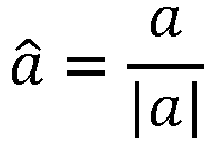
- The correction factor block or
circuit 324, in operation, determines a correction factor a based on the estimated linear acceleration al generated by thelinear acceleration block 320. The correction factor α is typically a positive scalar value between zero and one, and is typically a small value, e.g., 0.02. The correction factor is determined, for example, by comparing the estimated linear acceleration al to one or more thresholds. For example, if the estimated linear acceleration al exceeds a high threshold ahigh, the correction factor α is set to a value alow (indicating a low level of trust in the accelerometer data in estimating the dynamic gravity vector, for example zero in case the accelerometer data is not trusted at all); if the estimated linear acceleration al is less than a low threshold alow, the correction factor α is set to a value αhigh (indicating a high level of trust in the accelerometer data in estimating the dynamic gravity vector); if the estimated linear acceleration al is between the high threshold ahigh and the low threshold alow, the correction factor α is set to a value αmid (indicating a normal level of trust in the accelerometer data in estimating the dynamic gravity vector), or has a variable value set as a function of al within a normal range. Setting the correction factor to a high value when the estimated linear acceleration is low facilitates a fast convergence of the estimated gravity vector. - The error determination block or
circuit 326, in operation, estimates an error vector e in the current estimated gravity vector gprop based on the acceleration versor â, for example, according to:
- As mentioned above, the gravity
vector correction block 318, in operation, generates a current dynamic gravity vector gt based on the correction factor α, the error vector e, and the current estimated gravity vector gprop. This is done, for example, according to:
- Embodiments of the dynamic
gravity vector estimator 300 ofFigure 3 may include more components than illustrated, may include fewer components than illustrated, may combine components, may separate components into sub-components, and various combination thereof. For example, thegravity vector estimator 300 includes a gyroscope (seegyroscope 162 ofFigure 1 ) or an accelerometer (seeaccelerometer 164 ofFigure 1 ) in some embodiments, includes one or more processing cores (seeprocessing core 102 ofFigure 1 ) or memories (seememory 104 ofFigure 1 ) in some embodiments, which implements one or more of the components of the dynamicgravity vector estimator 300, etc., and various combinations thereof. -
Figure 5 illustrates an embodiment of amethod 500 of generating a dynamic gravity vector, that is employed by various devices and systems, such as, for example, the dynamicgravity vector estimator 110 of the system ofFigure 1 , the dynamicgravity vector estimator 300 ofFigure 3 , etc. For convenience,Figure 5 will be described with reference to thesystem 100 ofFigure 1 and the dynamicgravity vector estimator 300 ofFigure 3 . - The
method 500 starts at 502, for example, in response to a request from an application executing on theprocessor 102 to provide a dynamic gravity vector. Themethod 500 proceeds from 502 to 504. Although themethod 500 is illustrated as a sequential process, theprocess 500 would typically be executed in a loop processing sample by sample the sensor data, generating a continuous dynamic gravity vector output gt. - At 504, the
method 500 estimates an angular rate of change θ. This is done, for example, according to
change block 312 ofFigure 3 , based on rotational data generated by, for example, thegyroscope 162 ofFigure 1 . Themethod 500 proceeds from 504 to 506. - At 506, the
method 500 generates a rotational versor ŵ. This is done, for example, according to
rate normalization block 314 ofFigure 2 , based on rotational data w generated by, for example, thegyroscope 162 ofFigure 1 . Themethod 500 proceeds from 506 to 508. - At 508, the
method 500 generates a current estimated gravity vector gprop based on the estimated angular rate of change θ determined at 504, the rotational versor ŵ determined at 506, and a previously determined dynamic gravity vector gt-1, for example, according to:
vector propagation block 316 ofFigure 1 . Themethod 500 proceeds from 508 to 510. - At 510, the
method 500 estimates a linear acceleration al based on accelerometer data a, which is typically an acceleration measurements vector generated by an accelerometer, such as theaccelerometer 164. The estimated linear acceleration al, is typically a scalar value, for example equal to or based on a magnitude of the acceleration measurements data, |a|, or based on a variance of the accelerometer data a, for example, as discussed above with reference to thelinear acceleration block 320 ofFigure 3 . Themethod 500 proceeds from 510 to 512. - At 512, the
method 500 determines an acceleration versor â, for example, according to: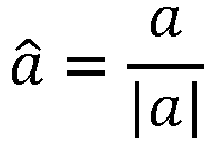
acceleration normalization block 322 ofFigure 3 , based on acceleration data a generated by, for example, theaccelerometer 164 ofFigure 1 . Themethod 500 proceeds from 512 to 514. - At 514, the
method 500 determines a correction factor α based on the estimated linear acceleration al determined at 510. This is done, for example, using thresholds, as discussed above with reference to thelinear acceleration block 320 ofFigure 3 . Themethod 500 proceeds from 514 to 516. - At 516, the
method 500 estimates an error vector e in the current estimated gravity vector gprop determined at 508 based on the acceleration versor â determined at 512, , for example, according to:
Figure 3 . Themethod 500 proceeds fromblock 516 to block 518. - At
block 518, themethod 500 generates a dynamic gravity vector gt based on the correction factor α determined at 514, the error vector e determined at 516, and the current estimated gravity vector gprop determined at 508. This is done, for example, according to:
vector correction circuit 318. - The
method 500 returns to 504 to continue the dynamic gravityvector generation process 500, or proceeds to 520 when it is determined that generation of a dynamic gravity vector is no longer desired (e.g., in response to deactivation of an enable signal, in response to expiration of a threshold period of time, in response to a defined event, etc.), or combinations thereof (e.g., proceeds to 520 and returns to 504). At 520, themethod 500 may perform other processes, perform an operation of a calling application using the dynamic gravity vector, etc. - Embodiments of the foregoing processes and methods may contain additional acts not shown in
Figure 5 , may not contain all of the acts shown inFigure 5 , may perform acts shown inFigure 5 in various orders, may combine acts, may split acts into separate acts, and may be otherwise modified in various respects. For example,Figure 5 can be modified to combineacts acts acts -
Figure 6 is a functional block diagram of an inertial measurement unit or device (IMU)package 600. TheIMU package 600 comprises agyroscope 662, anaccelerometer 664 and embeddedprocessing circuitry 610. - The
gyroscope 662, in operation, generates rotational data, and typically provides an output in the form of a rotational velocity measurements vector indicating a rotational velocity with respect to, for example, three axes of movement. Thegyroscope 662 typically comprises a micro-electro-mechanical system (MEMS) device that measures the rate of rotation of an object around one or more axis. Theaccelerometer 664, in operation, generates acceleration data, and typically provides an output in the form of an acceleration measurements vector indicating acceleration along, for example, three axes of movement. Theaccelerometer 664 typically comprises a MEMS device that measures the acceleration of an object along one or more axis. - The embedded
processing circuitry 610, in operation, estimates a dynamic gravity vector associated with thedevice 600 based on sensor data, such as sensor data generated by thegyroscope 662 and theaccelerometer 664, for example, as discussed in more detail above with reference toFigures 2-5 . - Embodiments of the
device 600 ofFigure 6 may include more components than illustrated, may include fewer components than illustrated, may combine components, may separate components into sub-components, and various combination thereof. For example, additional sensors, such as additional gyroscopes or accelerometers, other types of sensors, etc., may be included in theIMU package 600 in some embodiments. - Simulations and tests indicate embodiments of the methods, devices and systems disclosed herein provides a 46% improvement in execution time while reducing the amount of ROM needed by a factor of 6.4 and the amount of RAM needed by a factor of 8.9, as compared to conventional low-power implementations using attitude filter algorithms based on quaternion algebra to generate a dynamic gravity vector.
- In an embodiment, a device comprises: a memory; and processing circuitry coupled to the memory. The processing circuitry, in operation: estimates an angular rate of change based on rotational data; determines a rotational versor based on the rotational data; estimates a gravity vector based on the angular rate of change and the rotational versor; estimates a linear acceleration based on acceleration data; determines an acceleration versor based on the acceleration data; determines a correction factor based on the linear acceleration; estimates an error in the estimated gravity vector based on the acceleration versor; and generates a dynamic gravity vector based on the estimated gravity vector, the correction factor and the estimated error in the estimated gravity vector. In an embodiment, the device comprises: a gyroscope, which, in operation, generates the rotational data; and an accelerometer, which, in operation, generates the acceleration data. In an embodiment, the gyroscope, in operation, generates a rotational velocity measurements vector indicating a rotational velocity with respect to three axes of movement; and the accelerometer, in operation, generates an acceleration measurements vector indicating acceleration along the three axes of movement. In an embodiment, the processing circuitry, in operation, estimates the angular rate of change according to:


- In an embodiment, a system comprises: one or more sensors, which, in operation, generate rotational data and acceleration data; and processing circuitry coupled to the one or more sensors. The processing circuitry, in operation: estimates an angular rate of change based on the rotational data; determines a rotational versor based on the rotational data; estimates a gravity vector based on the angular rate of change and the rotational versor; estimates a linear acceleration based on the acceleration data; determines an acceleration versor based on the acceleration data; determines a correction factor based on the linear acceleration; estimates an error in the estimated gravity vector based on the acceleration versor; and generates a dynamic gravity vector based on the estimated gravity vector, the correction factor and the estimated error in the estimated gravity vector. In an embodiment, the one or more sensors comprise: a gyroscope, which, in operation, generates the rotational data as a rotational velocity measurements vector indicating a rotational velocity with respect to three axes of movement; and an accelerometer, which, in operation, generates the acceleration data as an acceleration measurements vector indicating acceleration along the three axes of movement. In an embodiment, the processing circuitry, in operation, estimates the angular rate of change according to:





- In an embodiment, a method comprises: estimating an angular rate of change based on rotational data; determining a rotational versor based on the rotational data; estimating a gravity vector based on the angular rate of change and the rotational versor; estimating a linear acceleration based on acceleration data; determining an acceleration versor based on the acceleration data; determining a correction factor based on the linear acceleration; estimating an error in the estimated gravity vector based on the acceleration versor; generating a dynamic gravity vector based on the estimated gravity vector, the correction factor and the estimated error in the estimated gravity vector; and using the dynamic gravity vector to perform an operation of a software application. In an embodiment, the method comprises: generating the rotational data as a rotational velocity measurements vector indicating a rotational velocity with respect to three axes of movement; and generating the acceleration data as an acceleration measurements vector indicating acceleration along the three axes of movement. In an embodiment, the method comprises: estimating the angular rate of change according to:


- In an embodiment, a non-transitory computer-readable medium's contents configure processing circuitry to perform a method, the method comprising: estimating an angular rate of change based on rotational data; determining a rotational versor based on the rotational data; estimating a gravity vector based on the angular rate of change and the rotational versor; estimating a linear acceleration based on acceleration data; determining an acceleration versor based on the acceleration data; determining a correction factor based on the linear acceleration; estimating an error in the estimated gravity vector based on the acceleration versor; generating a dynamic gravity vector based on the estimated gravity vector, the correction factor and the estimated error in the estimated gravity vector; and using the dynamic gravity vector to perform an operation of a software application. In an embodiment, the method comprises: generating the rotational data as a rotational velocity measurements vector indicating a rotational velocity with respect to three axes of movement; and generating the acceleration data as an acceleration measurements vector indicating acceleration along the three axes of movement. In an embodiment, the method comprises: estimating the angular rate of change according to:


- Some embodiments may take the form of or comprise computer program products.
- The method disclosed can be implemented as software instructions that can be loaded into a computer-readable medium and executed by the processing circuitry.
- For example, according to one embodiment there is provided a computer readable medium comprising a computer program adapted to perform one or more of the methods or functions described above. The medium may be a physical storage medium, such as for example a Read Only Memory (ROM) chip, or a disk such as a Digital Versatile Disk (DVD-ROM), Compact Disk (CD-ROM), a hard disk, a memory, a network, or a portable media article to be read by an appropriate drive or via an appropriate connection, including as encoded in one or more barcodes or other related codes stored on one or more such computer-readable mediums and being readable by an appropriate reader device.
- Furthermore, in some embodiments, some or all of the methods and/or functionality may be implemented or provided in other manners, such as at least partially in firmware and/or hardware, including, but not limited to, one or more application-specific integrated circuits (ASICs), digital signal processors, discrete circuitry, logic gates, standard integrated circuits, controllers (e.g., by executing appropriate instructions, and including microcontrollers and/or embedded controllers), field-programmable gate arrays (FPGAs), complex programmable logic devices (CPLDs), etc., as well as devices that employ RFID technology, and various combinations thereof.
- The various embodiments described above can be combined to provide further embodiments. These and other changes can be made to the embodiments in light of the above-detailed description. In general, in the following claims, the terms used should not be construed to limit the claims to the specific embodiments disclosed in the specification and the claims, but should be construed to include all possible embodiments along with the full scope of equivalents to which such claims are entitled. Accordingly, the claims are not limited by the disclosure.
Claims (18)
- A method, comprising the steps of:- estimating (504) an angular rate of change based on rotational data;- determining (506) a rotational versor based on the rotational data;- estimating (508) a gravity vector based on the angular rate of change and the rotational versor;- estimating (510) a linear acceleration based on acceleration data;- determining (512) an acceleration versor based on the acceleration data;- determining (514) a correction factor based on the linear acceleration;- estimating (516) an error in the estimated gravity vector based on the acceleration versor;- generating (518) a dynamic gravity vector based on the estimated gravity vector, the correction factor and the estimated error in the estimated gravity vector.
- The method according to claim 1, further comprising the steps of:- generating said rotational data as a rotational velocity measurements vector indicating a rotational velocity with respect to three axes of movement; and- generating said acceleration data as an acceleration measurements vector indicating acceleration along the three axes of movement.
- The method according to claim 2, wherein said estimating (504) the angular rate of change comprises:
estimating the angular rate of change according to:
- The method according to anyone of the preceding claims, wherein said determining (506) the rotational versor comprises:
determining the rotational versor according to: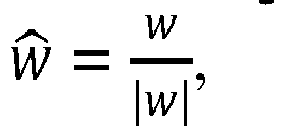 where ŵ is the determined rotational versor, w is the rotational velocity measurements vector and|w| is a magnitude of the rotational velocity measurements vector.
 - The method according to anyone of the preceding claims, wherein said estimating (508) the gravity vector comprises:
estimating the gravity vector according to:
- The method according to anyone of the preceding claims, wherein said generating (518) the dynamic gravity vector comprises:
generating the dynamic gravity vector according to:
- The method according to anyone of the preceding claims, wherein said determining (512) the acceleration versor comprises:
determining the acceleration versor according to:
- The method according to anyone of the preceding claims, wherein said estimating (516) the error in the estimated gravity vector comprises:
estimating the error in the estimated gravity vector according to:
- The method according to anyone of the preceding claims, further comprising the step of:
using the dynamic gravity vector to perform an operation of a software application. - The method according to anyone of the preceding claims, wherein said estimating (510) the linear acceleration comprises one among:estimating the linear acceleration based on a magnitude of the acceleration measurements vector;estimating the linear acceleration based on a variance of the acceleration data;estimating the linear acceleration by applying exponential smoothing.
- The method according to anyone of the preceding claims, wherein the correction factor is a value between 0 and 1, and the processing circuitry, in operation, determines the correction factor based on a comparison of the estimated linear acceleration to one or more thresholds.
- The method according to claim 11, further comprising the steps of:setting the correction factor to a first correction value in response to the comparison indicating the estimated linear acceleration exceeds a first threshold; andsetting the correction factor to a second correction value, wherein the first threshold is higher than the second threshold and the first value is lower than the second value in response to the comparison indicating the estimated linear acceleration is less than a second threshold.
- The method according to claim 12, further comprising the step of:
setting the correction factor to a third correction value between the first correction value and the second correction value in response to the comparison indicating the estimated linear acceleration is between the first threshold and the second threshold. - A device (100; 160), comprising:a memory (104); andprocessing circuitry (102; 610) coupled to the memory, wherein the processing circuitry, in operation:- estimates (504) an angular rate of change based on rotational data;- determines (506) a rotational versor based on the rotational data;- estimates (508)a gravity vector based on the angular rate of change and the rotational versor;- estimates (510) a linear acceleration based on acceleration data;- determines (512) an acceleration versor based on the acceleration data;- determines (514) a correction factor based on the linear acceleration;- estimates (516) an error in the estimated gravity vector based on the acceleration versor; and- generates (518) a dynamic gravity vector based on the estimated gravity vector, the correction factor and the estimated error in the estimated gravity vector.
- The device according to claim 1, comprising:a gyroscope (162; 662), which, in operation, generates the rotational data; andan accelerometer (164; 664), which, in operation, generates the acceleration data, wherein, optionally:the gyroscope (162; 662), in operation, further generates a rotational velocity measurements vector indicating a rotational velocity with respect to three axes of movement; andthe accelerometer (164; 664), in operation, further generates an acceleration measurements vector indicating acceleration along the three axes of movement.
- The device according to claim 15, wherein the processing circuitry (102; 610), in operation:- estimates the angular rate of change according to:
 - determines the rotational versor according to:
 where ŵ is the determined rotational versor, w is the rotational velocity measurements vector and|w| is a magnitude of the rotational velocity measurements vector; and/or- estimates the gravity vector according to:
 - generates the dynamic gravity vector according to:
 - determines the acceleration versor according to:
- The device according to anyone of claims 14-16, wherein the processing circuitry (102), in operation:- estimates the linear acceleration based on a magnitude of the acceleration measurements vector; or- estimates the linear acceleration based on a variance of the acceleration data; or- applies exponential smoothing to estimate the linear acceleration.
- A computer program product storable into a computer-readable medium, said computer program being designed so that, when executed by a processing circuitry, the processing circuitry becomes configured to implement a method according to anyone of claims 1-13.
Applications Claiming Priority (1)
| Application Number | Priority Date | Filing Date | Title |
|---|---|---|---|
| US18/059,214 US12164705B2 (en) | 2022-11-28 | 2022-11-28 | Dynamic gravity vector estimation for memory constrained devices |
Publications (1)
| Publication Number | Publication Date |
|---|---|
| EP4375618A1 true EP4375618A1 (en) | 2024-05-29 |
Family
ID=88689482
Family Applications (1)
| Application Number | Title | Priority Date | Filing Date |
|---|---|---|---|
| EP23207357.7A Pending EP4375618A1 (en) | 2022-11-28 | 2023-11-02 | Dynamic gravity vector estimation for memory constrained devices |
Country Status (3)
| Country | Link |
|---|---|
| US (2) | US12164705B2 (en) |
| EP (1) | EP4375618A1 (en) |
| CN (1) | CN118092685A (en) |
Families Citing this family (1)
| Publication number | Priority date | Publication date | Assignee | Title |
|---|---|---|---|---|
| US12164705B2 (en) | 2022-11-28 | 2024-12-10 | Stmicroelectronics S.R.L. | Dynamic gravity vector estimation for memory constrained devices |
Family Cites Families (7)
| Publication number | Priority date | Publication date | Assignee | Title |
|---|---|---|---|---|
| US9068843B1 (en) | 2014-09-26 | 2015-06-30 | Amazon Technologies, Inc. | Inertial sensor fusion orientation correction |
| US10114464B2 (en) * | 2015-06-30 | 2018-10-30 | Stmicroelectronics S.R.L. | Device and method for determination of angular position in three-dimensional space, and corresponding electronic apparatus |
| IT201900013422A1 (en) | 2019-07-31 | 2021-01-31 | St Microelectronics Srl | REDUCED POWER POINTING METHOD AND ELECTRONIC DEVICE IMPLEMENTING THE POINTING METHOD |
| IT202000001933A1 (en) | 2020-01-31 | 2021-07-31 | St Microelectronics Srl | ELECTRONIC POINTING DEVICE WITH RAPID RECOVERY IN START-UP AND CORRESPONDING METHOD |
| US11592911B2 (en) | 2020-03-13 | 2023-02-28 | Stmicroelectronics S.R.L. | Predictive data-reconstruction system and method for a pointing electronic device |
| CN113280816A (en) | 2021-05-18 | 2021-08-20 | 深圳市佑运安智能科技有限公司 | Riding posture confirmation method and device, computer equipment and storage medium |
| US12164705B2 (en) | 2022-11-28 | 2024-12-10 | Stmicroelectronics S.R.L. | Dynamic gravity vector estimation for memory constrained devices |
-
2022
- 2022-11-28 US US18/059,214 patent/US12164705B2/en active Active
-
2023
- 2023-11-02 EP EP23207357.7A patent/EP4375618A1/en active Pending
- 2023-11-24 CN CN202311580263.XA patent/CN118092685A/en active Pending
-
2024
- 2024-10-15 US US18/916,262 patent/US12436624B2/en active Active
Non-Patent Citations (2)
| Title |
|---|
| LIGORIO GABRIELE ET AL: "A Novel Kalman Filter for Human Motion Tracking With an Inertial-Based Dynamic Inclinometer", IEEE TRANSACTIONS ON BIOMEDICAL ENGINEERING, IEEE, USA, vol. 62, no. 8, 1 August 2015 (2015-08-01), pages 2033 - 2043, XP011663053, ISSN: 0018-9294, [retrieved on 20150715], DOI: 10.1109/TBME.2015.2411431 * |
| MANOS ADI ET AL: "Gravity-Based Methods for Heading Computation in Pedestrian Dead Reckoning", SENSORS, vol. 19, no. 5, 7 March 2019 (2019-03-07), CH, pages 1170, XP093144049, ISSN: 1424-8220, DOI: 10.3390/s19051170 * |
Also Published As
| Publication number | Publication date |
|---|---|
| US20240176427A1 (en) | 2024-05-30 |
| US20250036213A1 (en) | 2025-01-30 |
| CN118092685A (en) | 2024-05-28 |
| US12436624B2 (en) | 2025-10-07 |
| US12164705B2 (en) | 2024-12-10 |
Similar Documents
| Publication | Publication Date | Title |
|---|---|---|
| EP3491334B1 (en) | Method and system for calibrating components of an inertial measurement unit (imu) using scene-captured data | |
| CN108958362B (en) | Computing system and method implementing an algorithm that fuses data from inertial sensors | |
| US10207719B2 (en) | Use of multiple internal sensors for measurements validation | |
| US10788324B2 (en) | Method and apparatus for calculation of angular velocity using acceleration sensor and geomagnetic sensor | |
| US9465044B2 (en) | Angular velocity estimation using a magnetometer and accelerometer | |
| WO2013112230A1 (en) | In-use automatic calibration methodology for sensors in mobile devices | |
| US20250181120A1 (en) | Lid angle detection | |
| US12436624B2 (en) | Dynamic gravity vector estimation for memory constrained devices | |
| US20250035669A1 (en) | Lid angle detection | |
| US20240085960A1 (en) | Lid angle detection | |
| CN120721120A (en) | Attitude estimation method based on adaptive Kalman filtering of gravity and magnetic dual-mode detection | |
| CN114964214B (en) | Extended Kalman filtering attitude calculation method of attitude heading reference system | |
| Kannan et al. | Adaptive sensor fusion technology for mobile and wearable applications | |
| CN115825481A (en) | Calibration parameter verification method, device, computer equipment and medium for smart glasses | |
| CN116533287B (en) | Robot jitter testing method, system, equipment and storage medium | |
| EP4687003A1 (en) | Lid angle detection | |
| EP4407277A1 (en) | Inertial axis fusion device, system and method | |
| CN113203413B (en) | A pose fusion estimation method, device and storage medium | |
| EP3985354B1 (en) | Direction presentation apparatus, direction presentation method, and program | |
| CN121877054A (en) | Positioning method, apparatus and computer-readable storage medium | |
| CN117128917A (en) | Cover angle detection | |
| CN121917799A (en) | Method, apparatus, device and program product for measuring speed | |
| KR20250012354A (en) | Method and System for Measuring Relative Positioning using a Single IMU based on a Neural Network | |
| CN119058718A (en) | Driver hands-off detection method, device, equipment and storage medium | |
| CN108627151A (en) | Corner measuring apparatus, method based on Inertial Measurement Unit and electronic equipment |
Legal Events
| Date | Code | Title | Description |
|---|---|---|---|
| PUAI | Public reference made under article 153(3) epc to a published international application that has entered the european phase |
Free format text: ORIGINAL CODE: 0009012 |
|
| STAA | Information on the status of an ep patent application or granted ep patent |
Free format text: STATUS: THE APPLICATION HAS BEEN PUBLISHED |
|
| AK | Designated contracting states |
Kind code of ref document: A1 Designated state(s): AL AT BE BG CH CY CZ DE DK EE ES FI FR GB GR HR HU IE IS IT LI LT LU LV MC ME MK MT NL NO PL PT RO RS SE SI SK SM TR |
|
| STAA | Information on the status of an ep patent application or granted ep patent |
Free format text: STATUS: REQUEST FOR EXAMINATION WAS MADE |
|
| 17P | Request for examination filed |
Effective date: 20240917 |
|
| RBV | Designated contracting states (corrected) |
Designated state(s): AL AT BE BG CH CY CZ DE DK EE ES FI FR GB GR HR HU IE IS IT LI LT LU LV MC ME MK MT NL NO PL PT RO RS SE SI SK SM TR |
|
| STAA | Information on the status of an ep patent application or granted ep patent |
Free format text: STATUS: EXAMINATION IS IN PROGRESS |
|
| 17Q | First examination report despatched |
Effective date: 20250926 |