EP4375493B1 - Method for producing a nonwoven fabric used as an engine hood insulator material - Google Patents
Method for producing a nonwoven fabric used as an engine hood insulator material Download PDFInfo
- Publication number
- EP4375493B1 EP4375493B1 EP24152746.4A EP24152746A EP4375493B1 EP 4375493 B1 EP4375493 B1 EP 4375493B1 EP 24152746 A EP24152746 A EP 24152746A EP 4375493 B1 EP4375493 B1 EP 4375493B1
- Authority
- EP
- European Patent Office
- Prior art keywords
- semi
- thermoset
- thermoplastic
- acrylic
- elastomer
- Prior art date
- Legal status (The legal status is an assumption and is not a legal conclusion. Google has not performed a legal analysis and makes no representation as to the accuracy of the status listed.)
- Active
Links
Images


Classifications
-
- D—TEXTILES; PAPER
- D04—BRAIDING; LACE-MAKING; KNITTING; TRIMMINGS; NON-WOVEN FABRICS
- D04H—MAKING TEXTILE FABRICS, e.g. FROM FIBRES OR FILAMENTARY MATERIAL; FABRICS MADE BY SUCH PROCESSES OR APPARATUS, e.g. FELTS, NON-WOVEN FABRICS; COTTON-WOOL; WADDING ; NON-WOVEN FABRICS FROM STAPLE FIBRES, FILAMENTS OR YARNS, BONDED WITH AT LEAST ONE WEB-LIKE MATERIAL DURING THEIR CONSOLIDATION
- D04H1/00—Non-woven fabrics formed wholly or mainly of staple fibres or like relatively short fibres
- D04H1/40—Non-woven fabrics formed wholly or mainly of staple fibres or like relatively short fibres from fleeces or layers composed of fibres without existing or potential cohesive properties
- D04H1/58—Non-woven fabrics formed wholly or mainly of staple fibres or like relatively short fibres from fleeces or layers composed of fibres without existing or potential cohesive properties by applying, incorporating or activating chemical or thermoplastic bonding agents, e.g. adhesives
- D04H1/64—Non-woven fabrics formed wholly or mainly of staple fibres or like relatively short fibres from fleeces or layers composed of fibres without existing or potential cohesive properties by applying, incorporating or activating chemical or thermoplastic bonding agents, e.g. adhesives the bonding agent being applied in wet state, e.g. chemical agents in dispersions or solutions
- D04H1/68—Non-woven fabrics formed wholly or mainly of staple fibres or like relatively short fibres from fleeces or layers composed of fibres without existing or potential cohesive properties by applying, incorporating or activating chemical or thermoplastic bonding agents, e.g. adhesives the bonding agent being applied in wet state, e.g. chemical agents in dispersions or solutions the bonding agent being applied in the form of foam
-
- D—TEXTILES; PAPER
- D04—BRAIDING; LACE-MAKING; KNITTING; TRIMMINGS; NON-WOVEN FABRICS
- D04H—MAKING TEXTILE FABRICS, e.g. FROM FIBRES OR FILAMENTARY MATERIAL; FABRICS MADE BY SUCH PROCESSES OR APPARATUS, e.g. FELTS, NON-WOVEN FABRICS; COTTON-WOOL; WADDING ; NON-WOVEN FABRICS FROM STAPLE FIBRES, FILAMENTS OR YARNS, BONDED WITH AT LEAST ONE WEB-LIKE MATERIAL DURING THEIR CONSOLIDATION
- D04H1/00—Non-woven fabrics formed wholly or mainly of staple fibres or like relatively short fibres
- D04H1/40—Non-woven fabrics formed wholly or mainly of staple fibres or like relatively short fibres from fleeces or layers composed of fibres without existing or potential cohesive properties
- D04H1/44—Non-woven fabrics formed wholly or mainly of staple fibres or like relatively short fibres from fleeces or layers composed of fibres without existing or potential cohesive properties the fleeces or layers being consolidated by mechanical means, e.g. by rolling
- D04H1/46—Non-woven fabrics formed wholly or mainly of staple fibres or like relatively short fibres from fleeces or layers composed of fibres without existing or potential cohesive properties the fleeces or layers being consolidated by mechanical means, e.g. by rolling by needling or like operations to cause entanglement of fibres
- D04H1/48—Non-woven fabrics formed wholly or mainly of staple fibres or like relatively short fibres from fleeces or layers composed of fibres without existing or potential cohesive properties the fleeces or layers being consolidated by mechanical means, e.g. by rolling by needling or like operations to cause entanglement of fibres in combination with at least one other method of consolidation
-
- D—TEXTILES; PAPER
- D04—BRAIDING; LACE-MAKING; KNITTING; TRIMMINGS; NON-WOVEN FABRICS
- D04H—MAKING TEXTILE FABRICS, e.g. FROM FIBRES OR FILAMENTARY MATERIAL; FABRICS MADE BY SUCH PROCESSES OR APPARATUS, e.g. FELTS, NON-WOVEN FABRICS; COTTON-WOOL; WADDING ; NON-WOVEN FABRICS FROM STAPLE FIBRES, FILAMENTS OR YARNS, BONDED WITH AT LEAST ONE WEB-LIKE MATERIAL DURING THEIR CONSOLIDATION
- D04H1/00—Non-woven fabrics formed wholly or mainly of staple fibres or like relatively short fibres
- D04H1/40—Non-woven fabrics formed wholly or mainly of staple fibres or like relatively short fibres from fleeces or layers composed of fibres without existing or potential cohesive properties
- D04H1/44—Non-woven fabrics formed wholly or mainly of staple fibres or like relatively short fibres from fleeces or layers composed of fibres without existing or potential cohesive properties the fleeces or layers being consolidated by mechanical means, e.g. by rolling
- D04H1/46—Non-woven fabrics formed wholly or mainly of staple fibres or like relatively short fibres from fleeces or layers composed of fibres without existing or potential cohesive properties the fleeces or layers being consolidated by mechanical means, e.g. by rolling by needling or like operations to cause entanglement of fibres
- D04H1/48—Non-woven fabrics formed wholly or mainly of staple fibres or like relatively short fibres from fleeces or layers composed of fibres without existing or potential cohesive properties the fleeces or layers being consolidated by mechanical means, e.g. by rolling by needling or like operations to cause entanglement of fibres in combination with at least one other method of consolidation
- D04H1/488—Non-woven fabrics formed wholly or mainly of staple fibres or like relatively short fibres from fleeces or layers composed of fibres without existing or potential cohesive properties the fleeces or layers being consolidated by mechanical means, e.g. by rolling by needling or like operations to cause entanglement of fibres in combination with at least one other method of consolidation in combination with bonding agents
-
- D—TEXTILES; PAPER
- D04—BRAIDING; LACE-MAKING; KNITTING; TRIMMINGS; NON-WOVEN FABRICS
- D04H—MAKING TEXTILE FABRICS, e.g. FROM FIBRES OR FILAMENTARY MATERIAL; FABRICS MADE BY SUCH PROCESSES OR APPARATUS, e.g. FELTS, NON-WOVEN FABRICS; COTTON-WOOL; WADDING ; NON-WOVEN FABRICS FROM STAPLE FIBRES, FILAMENTS OR YARNS, BONDED WITH AT LEAST ONE WEB-LIKE MATERIAL DURING THEIR CONSOLIDATION
- D04H1/00—Non-woven fabrics formed wholly or mainly of staple fibres or like relatively short fibres
- D04H1/40—Non-woven fabrics formed wholly or mainly of staple fibres or like relatively short fibres from fleeces or layers composed of fibres without existing or potential cohesive properties
- D04H1/58—Non-woven fabrics formed wholly or mainly of staple fibres or like relatively short fibres from fleeces or layers composed of fibres without existing or potential cohesive properties by applying, incorporating or activating chemical or thermoplastic bonding agents, e.g. adhesives
- D04H1/587—Non-woven fabrics formed wholly or mainly of staple fibres or like relatively short fibres from fleeces or layers composed of fibres without existing or potential cohesive properties by applying, incorporating or activating chemical or thermoplastic bonding agents, e.g. adhesives characterised by the bonding agents used
-
- D—TEXTILES; PAPER
- D04—BRAIDING; LACE-MAKING; KNITTING; TRIMMINGS; NON-WOVEN FABRICS
- D04H—MAKING TEXTILE FABRICS, e.g. FROM FIBRES OR FILAMENTARY MATERIAL; FABRICS MADE BY SUCH PROCESSES OR APPARATUS, e.g. FELTS, NON-WOVEN FABRICS; COTTON-WOOL; WADDING ; NON-WOVEN FABRICS FROM STAPLE FIBRES, FILAMENTS OR YARNS, BONDED WITH AT LEAST ONE WEB-LIKE MATERIAL DURING THEIR CONSOLIDATION
- D04H1/00—Non-woven fabrics formed wholly or mainly of staple fibres or like relatively short fibres
- D04H1/40—Non-woven fabrics formed wholly or mainly of staple fibres or like relatively short fibres from fleeces or layers composed of fibres without existing or potential cohesive properties
- D04H1/58—Non-woven fabrics formed wholly or mainly of staple fibres or like relatively short fibres from fleeces or layers composed of fibres without existing or potential cohesive properties by applying, incorporating or activating chemical or thermoplastic bonding agents, e.g. adhesives
- D04H1/64—Non-woven fabrics formed wholly or mainly of staple fibres or like relatively short fibres from fleeces or layers composed of fibres without existing or potential cohesive properties by applying, incorporating or activating chemical or thermoplastic bonding agents, e.g. adhesives the bonding agent being applied in wet state, e.g. chemical agents in dispersions or solutions
- D04H1/66—Non-woven fabrics formed wholly or mainly of staple fibres or like relatively short fibres from fleeces or layers composed of fibres without existing or potential cohesive properties by applying, incorporating or activating chemical or thermoplastic bonding agents, e.g. adhesives the bonding agent being applied in wet state, e.g. chemical agents in dispersions or solutions at spaced points or locations
-
- D—TEXTILES; PAPER
- D04—BRAIDING; LACE-MAKING; KNITTING; TRIMMINGS; NON-WOVEN FABRICS
- D04H—MAKING TEXTILE FABRICS, e.g. FROM FIBRES OR FILAMENTARY MATERIAL; FABRICS MADE BY SUCH PROCESSES OR APPARATUS, e.g. FELTS, NON-WOVEN FABRICS; COTTON-WOOL; WADDING ; NON-WOVEN FABRICS FROM STAPLE FIBRES, FILAMENTS OR YARNS, BONDED WITH AT LEAST ONE WEB-LIKE MATERIAL DURING THEIR CONSOLIDATION
- D04H18/00—Needling machines
- D04H18/02—Needling machines with needles
-
- D—TEXTILES; PAPER
- D06—TREATMENT OF TEXTILES OR THE LIKE; LAUNDERING; FLEXIBLE MATERIALS NOT OTHERWISE PROVIDED FOR
- D06C—FINISHING, DRESSING, TENTERING OR STRETCHING TEXTILE FABRICS
- D06C25/00—Treating selvedges or other edges, e.g. stiffening
-
- D—TEXTILES; PAPER
- D06—TREATMENT OF TEXTILES OR THE LIKE; LAUNDERING; FLEXIBLE MATERIALS NOT OTHERWISE PROVIDED FOR
- D06C—FINISHING, DRESSING, TENTERING OR STRETCHING TEXTILE FABRICS
- D06C15/00—Calendering, pressing, ironing, glossing or glazing textile fabrics
- D06C15/02—Calendering, pressing, ironing, glossing or glazing textile fabrics between co-operating press or calender rolls
-
- F—MECHANICAL ENGINEERING; LIGHTING; HEATING; WEAPONS; BLASTING
- F02—COMBUSTION ENGINES; HOT-GAS OR COMBUSTION-PRODUCT ENGINE PLANTS
- F02B—INTERNAL-COMBUSTION PISTON ENGINES; COMBUSTION ENGINES IN GENERAL
- F02B77/00—Component parts, details or accessories, not otherwise provided for
- F02B77/11—Thermal or acoustic insulation
Definitions
- This invention relates to the innovation in the nonwoven textile of an engine hood insulator.
- the invention particularly relates to the production method which provides advantages in terms of cost, lightness and health (carcinogenic effect) in the process of connecting the two layers of nonwoven-based insulator positioned on the inside of the engine hood, which is used in the automotive industry and consists of two layers.
- this method is the production technique about the coating of adhesives used in laminating the first layer with a thinner and lighter second layer which is responsible in protecting the first layer against combustion and substances such as water and oil.
- the purpose of using insulation material in internal combustion engine vehicles is to provide sound and thermal insulation.
- This insulation material usually consists of two layers: The first layer (the part adhered to the hood) is made up of polyurethane foam or a nonwoven textile containing natural/synthetic fiber (polyester, cotton and glass fibers), and the second layer (the surface seen when the hood is open) is made up of nonwoven fabrics generally produced by needle punching, water jet or spunbond methods.
- the first layer plays an active role in the sound and thermal insulation while the second layer is responsible for protecting against combustion and substances such as water and oil. Since the insulators used in the state of the art are multilayered, there are disadvantages such as the weight of the material used, the cost of production and the high carcinogenic effect.
- the invention of the said patent is an insulating material comprising layers obtained by coating a duroplastic foam on materials such as glass fiber, carbon fiber, polyester fiber, ceramic fiber, and then coating it by at least one nonwoven material.
- the object of the invention is to eliminate the structure of the nonwoven-based engine hood insulators seen in the state of the art that has high production cost and carcinogenic substance content and instead, obtain an efficient structure that costs less, and where the carcinogenic material content is minimized.
- the present invention relates to a method for producing an insulation material from a semi-finished nonwoven fabric, as defined in claim 1. Embodiments of this method are defined in dependent claims 2-5.
- One of the advantages of the insulator produced by the method of the present invention is that coating the nonwoven material in semi-finished form (the product obtained after completing stage 110) with the thermoplastic, thermoset or elastomer material in powder form by a scattering method after the fixing procedure in stage 110, enables a lighter, low-cost and less hazardous (to health) insulator to be obtained by using less production material through vacuuming a specific part of the material (those not adhering to the polymer emulsion applied by rotary screen printing) with vacuum technologies.
- thermoplastic, thermoset or elastomer coating comprises a part of the surface due to the vacuuming process.
- Another advantage of the insulator produced by the method of the present invention is that a product that is less hazardous to humans and the environment is obtained, as less carcinogenic substance-containing thermoset material (such as phenol etc.) is used on the second layer during the lamination of the first and the second layer.
- a product that is less hazardous to humans and the environment is obtained, as less carcinogenic substance-containing thermoset material (such as phenol etc.) is used on the second layer during the lamination of the first and the second layer.
- the insulation material produced by the method of the present invention is a nonwoven- technical textile essentially used in engine hoods. Said insulation material can both be produced inline by being combined with nonwoven production techniques and offline by being handled as a separate process after the production in a semi-finished form.
- the invention comprises a process for the production of the second layer of the insulation material in hood insulators used in the automotive industry.
- the insulation material of the present invention is obtained by being passed through basic stages in the production process of Figure 1 . These basic stages are as follows:
- the abovementioned stages include the stages until the production of semi-finished nonwoven starting from opening and blending the fibers and then intended insulation material of layer the present invention, i.e. the second layer (6).
- the second layer (6) is a second protective layer laid on top of hood insulation material.
- the second layer (6) of the insulation material of the present invention can be produced by applying particular processes (some of the aforementioned processes) to a semi-finished nonwoven (1) layer meeting the necessary conditions.
- the second layer (6) of the present invention can be produced from semi-finished nonwoven (1) as well as fibers.
- a plurality of production stages (“plurality” is used here because there are no limitations) can be produced in different conditions.
- the production stages of the insulation material i.e. the second layer (6) are as follows:
- the fibers in bale form enter the bale opening unit.
- At least one of the fiber types such as polyester, viscose, bicomponent fiber, polyacrylonitrile oxide should enter.
- the fibers are mixed by the air in the blending unit.
- the blended fibers are dosed therein so that their average weight is between 40 and 150 gr/m 2 .
- the weight per square meter may change depending on the structure of the first layer.
- the fibers are made into web form in the carding machine.
- the webs are laid on top of each other in the cross layer.
- the drafting procedure is applied in the drafting unit.
- the web form is needle punched in order to intertwine the fibers to provide mechanical bonding.
- the hyper punch and the standard needle punch methods will be used together as the punching method.
- the needle punched fabric is passed through the hot calender in order to adjust its surface smoothness and thickness.
- the nonwoven fabric is coated with chlorofluorocarbon and flame retardant materials (salt, organophosphate etc.).
- the chemical materials for water repellency and/or flame retardancy can be applied to the nonwoven fabric with either the kiss roll, the padding or the spray coating methods instead of the foam method.
- the water repellent and/or flame retardant coated nonwoven fabric is passed through the cylinders and is subjected to a partial drying by the removal of water.
- the chemical material applied to the semi-finished is cross linked to the fabric surface by fixing in the drum dryer.
- the material is now a semi-finished nonwoven (1).
- semi-finished nonwoven (1) fabric can be prepared separately as in the state of the art until this stage and the processes comprising the critical superiorities of the product which are next stages, can be applied.
- the polymer emulsion is applied as in dots on the semi-finished nonwoven (1) fabric by rotary screen-printing method (template, tram cylinder etc.) so that there are gaps in between.
- the polymer emulsion will be done with acrylic (2) .
- Pure acrylic will be used as the acrylic material.
- at least one of acrylic copolymers, SBR, NBR, EVA, VAE, HDPE and PU materials can be used.
- the partial application of the said acrylic material (2) (in the form of spots) to the surface is the key step.
- Thermoplastic and/or thermoset and/or elastomer (3) is scattered in powder form on the whole surface of the acrylic coated semi-finished nonwoven (1) fabric.
- the powder coated semi-finished nonwoven fabric is represented in Figure 3a .
- Polyethylene is the preferred substance as thermoplastic and phenol is the preferred substance as thermoset.
- phenol is the preferred substance as thermoset.
- coPES copolyester
- coPA copolyamide
- TPU TePU
- EVA thermoplastic material
- Epoxy, Polyurethane, Polyester, Melamine, Acrylic and Silicone groups can be used as thermoset.
- EPDM as an elastomer can be used as a third component alongside with the powders of thermoplastic and thermoset substances.
- Scattering thermoplastic and/or thermoset and/or elastomer (3) in powder form on the whole surface is known as the "scattering method" in the state of the art.
- the thermoplastic and/or thermoset and/or elastomer (3) in powder form is scattered on the surface, the thermoplastic and/or thermoset and/or elastomer (3) is partially vacuumed.
- thermoplastic and/or thermoset and/or elastomer (3) powder applied onto the acrylic material (2) powder is not vacuumed but only the free powder (acrylic uncoated part of the fabric that powder falls to the uncoated ground) is vacuumed. Therefore, only the thermoplastic and/or thermoset and/or (3) powder scattered on the adhesive acrylic material (2) with the rotary screen-printing method remains.
- This part is named acrylic-coated ridges (4) for a better understanding of the subject.
- the upper sections of these acrylic-coated ridges (3) comprise the thermoplastic and/or thermoset and/or elastomer (4).
- Other parts are named as surfaces without acrylic (5) where the thermoplastic and/or thermoset and/or elastomer is vacuumed. This surface appears to have spots. However, if desired, it may be formed in two different ways. This is shown in the representative drawing in Figure-3b.
- the semi-finished nonwoven (1) produced elsewhere can only start in the aforementioned stage, i.e. the partial surface coating (120) stage, and continue the process in order to become the second layer of the insulation material.
- the partial surface coating (120) stage i.e. the partial surface coating (120) stage
- the semi-finished nonwoven (1) which partially has thermoplastic and/or thermoset (3) powder in the form of spots thereon is passed through the infrared heater and the powder is melted and adhered to the surface.
- the semi-finished nonwoven (1) material is passed through the cold calender under pressure and the second layer (6) of the insulation material with the thermoplastic and/or thermoset (preferably polyethylene and/or phenol) surface is obtained partially on the surface in the form of spots (in different forms if desired).
- thermoplastic and/or thermoset preferably polyethylene and/or phenol
- the second layer of the insulation material (6) is winded on the winding benches to be ready to be combined with the other layer.
- acrylic copolymers SBR, NBR, EVA, VAE, HDPE and PU materials
- SBR, NBR, EVA, VAE, HDPE and PU materials can be used.
- polyethylene LDPE, LLDPE, HDPE, MDPE
- coPES copolyester
- coPA copolyamide
- TPU thermoplastic material
- EPDM of elastomers can be used as a third group. Again, as stated above, pure acrylic will be used as the acrylic material.
- the flow chart of obtaining second layer of the insulation material (6) from a semi-finished nonwoven (1) can be defined as follows:
- this procedure is not a completely separate procedure. It just comprises a semi-finished nonwoven fabric that is already obtained. In other words, it comprises obtaining a semi-finished nonwoven by performing the stages comprising the production stage of the semi-finished nonwoven starting from the bale opening (10) stage, which comprises opening the fibers, to the partial surface coating (120) stage (not including partial surface coating (120)) in part or whole elsewhere. It shows obtaining the second layer of the insulation material (6) by providing the thermoplastic and/or thermoset (or elastomer) locally as desired on the semi-finished nonwoven (1).
- the details of the processes above are as follows.
- the acrylic material (2) is a polymer emulsion. Pure acrylic will be used as the acrylic material. However, if desired, alternatively, at least one of acrylic copolymers, SBR, NBR, EVA, VAE, HDPE and PU materials can be used.
- the template (6), the tram cylinder and the like can be the alternatives for the rotary screen-printing procedure.
- the template (6) is a system or a method comprising the chemical rotary screen printing method. For rotary screen printing application the suitable systems will be selected as stated in the state of the art.
- This locally applied acrylic (2) is preferably in the form of acrylic-coated ridges (4).
- thermoplastic and/or thermoset powder Scattering the thermoplastic and/or thermoset powder on the acrylic coated semi-finished nonwoven fabric (210)
- All semi-finished nonwoven (1) including the locally acrylic (2) coated surface is provided with the thermoplastic and/or thermoset and/or elastomer (3) scattering.
- Polyethylene is the preferred substance as thermoplastic and phenol is the preferred substance as thermoset.
- phenol is the preferred substance as thermoset.
- coPES copolyester
- coPA copolyamide
- TPU thermoplastic material
- Epoxy, Polyurethane, Polyester, Melamine, Acrylic and Silicone groups can be used.
- EPDM of elastomers and/or polyurethane can be used as a third group, if desired.
- thermoplastic and/or thermoset and/or elastomer (3) only to the acrylic material (2) is provided by making the other regions without thermoplastic and/or thermoset and/or elastomer (3) free.
- the powder scattering procedure is carried out in the powder scattering unit (8).
- thermoplastic and/or thermoset (3) material which is not adhered to the acrylic material (2) or is loosely present on the surface of the semi-finished nonwoven (1) is vacuumed and removed from the region.
- the vacuuming procedure is carried out in the vacuuming unit (9). Therefore, the region comprises both the surfaces without acrylic (5) and the regions without the thermoplastic and/or thermoset (3) materials.
- this allows obtaining the desired material which is lighter and cheaper, has less thermoplastic and/or thermoset and a minimized carcinogenic effect but provides the same insulation efficiency.
- thermoplastic and/or thermoset dots Fixing the thermoplastic and/or thermoset dots on the surface by heating (230)
- thermoplastic and/or thermoset (3) coating obtained on the acrylic-coated ridges (4) which are on a part of the said semi-finished nonwoven (1) are made permanent by being fixed in the infrared heater after the partial surface coating procedure of the semi-finished nonwoven (1) material.
- the fixing procedure is carried out in the infrared oven (10).
- the temperature therein may change between 120 and 220°C and the time between 0.5 and 5 minutes.
- the fixing step may comprise the use of a stenter frame.
- the second layer of the insulation material (6) partially coated with the thermoplastic and/or thermoset and/or elastomer (3) is provided to be cold and permanent by being passed through the cold calender.
- the second layer of the insulation material (6) is ready for shipment after winding in the winding machines or, if desired, for being transported to be wrapped with another material.
- the aforementioned process allows obtaining the second layer of the insulation material with the desired features by carding and needle punching the fibers and producing a semi-finished nonwoven (1) and then partially coating this surface with polyethylene or phenol, or partially coating a semi-finished nonwoven (1) fabric produced elsewhere with polyethylene or phenol by the said process.
- the second layer of the insulation material produced by the method of the present invention can be used essentially in the automotive industry, particularly as a sound and heat insulation material in engine hoods. However, it can also be used in other fields such as major appliances, in fields where heating, cooling or sound is produced.
Landscapes
- Engineering & Computer Science (AREA)
- Textile Engineering (AREA)
- Chemical & Material Sciences (AREA)
- General Chemical & Material Sciences (AREA)
- Chemical Kinetics & Catalysis (AREA)
- Dispersion Chemistry (AREA)
- Mechanical Engineering (AREA)
- Physics & Mathematics (AREA)
- Acoustics & Sound (AREA)
- Combustion & Propulsion (AREA)
- General Engineering & Computer Science (AREA)
- Laminated Bodies (AREA)
- Nonwoven Fabrics (AREA)
- Treatments For Attaching Organic Compounds To Fibrous Goods (AREA)
Description
- This invention relates to the innovation in the nonwoven textile of an engine hood insulator. The invention particularly relates to the production method which provides advantages in terms of cost, lightness and health (carcinogenic effect) in the process of connecting the two layers of nonwoven-based insulator positioned on the inside of the engine hood, which is used in the automotive industry and consists of two layers. In brief, this method is the production technique about the coating of adhesives used in laminating the first layer with a thinner and lighter second layer which is responsible in protecting the first layer against combustion and substances such as water and oil.
- Today, technical textiles are used in numerous fields. One of these is the automotive industry. In the automotive industry, nonwoven materials are used both in internal components (floor covering, luggage parts etc.) as an upholstery material and in external components as an insulating material.
- The purpose of using insulation material in internal combustion engine vehicles is to provide sound and thermal insulation. This insulation material usually consists of two layers: The first layer (the part adhered to the hood) is made up of polyurethane foam or a nonwoven textile containing natural/synthetic fiber (polyester, cotton and glass fibers), and the second layer (the surface seen when the hood is open) is made up of nonwoven fabrics generally produced by needle punching, water jet or spunbond methods. The first layer plays an active role in the sound and thermal insulation while the second layer is responsible for protecting against combustion and substances such as water and oil. Since the insulators used in the state of the art are multilayered, there are disadvantages such as the weight of the material used, the cost of production and the high carcinogenic effect.
- There is an EU patent no.
EP2628837 in the state of the art. The said patent discloses an insulation material consisting of nonwoven materials having fibers of different intensity. - Another patent in the state of the art is the US patent no.
US6749929 . The invention of the said patent is an insulating material comprising layers obtained by coating a duroplastic foam on materials such as glass fiber, carbon fiber, polyester fiber, ceramic fiber, and then coating it by at least one nonwoven material. - Another patent in the state of the art is the international patent application no
WO2004080710 . An automotive internal component obtained with different layers of fiber materials is disclosed in this patent. It is mentioned related to the said material that it is generally used for thermal and sound insulation of the vehicle. - In the state of the art, there are numerous engine hood insulator materials produced with the nonwoven production technique comprising natural or synthetic materials. However, mostly these are either thicker or they contain high amount of carcinogenic substances or they are expensive due to the cost of the used material is high.
- The object of the invention is to eliminate the structure of the nonwoven-based engine hood insulators seen in the state of the art that has high production cost and carcinogenic substance content and instead, obtain an efficient structure that costs less, and where the carcinogenic material content is minimized.
- The present invention relates to a method for producing an insulation material from a semi-finished nonwoven fabric, as defined in
claim 1. Embodiments of this method are defined in dependent claims 2-5. - One of the advantages of the insulator produced by the method of the present invention is that coating the nonwoven material in semi-finished form (the product obtained after completing stage 110) with the thermoplastic, thermoset or elastomer material in powder form by a scattering method after the fixing procedure in
stage 110, enables a lighter, low-cost and less hazardous (to health) insulator to be obtained by using less production material through vacuuming a specific part of the material (those not adhering to the polymer emulsion applied by rotary screen printing) with vacuum technologies. - Another advantage of the insulator produced by the method of the present invention is the reduced cost as the thermoplastic, thermoset or elastomer coating comprises a part of the surface due to the vacuuming process.
- Another advantage of the insulator produced by the method of the present invention is that a product that is less hazardous to humans and the environment is obtained, as less carcinogenic substance-containing thermoset material (such as phenol etc.) is used on the second layer during the lamination of the first and the second layer.
- In order to better understand the system of the present invention, the following figures will be utilized.
-
-
Figure 1 is the flow chart showing the production process from the raw material of the second layer of the insulator material of the present invention to the end product. -
Figure 2 is a drawing schematically showing how the semi-finished nonwoven fabric of the second layer of the insulator material produced by the method of the present invention is coated with thermoplastic, thermoset or elastomer materials in powder form and how a specific part of them is vacuumed. -
Figure 3a is a drawing schematically showing the thermoplastic, thermoset or elastomer materials scattered on the semi-finished nonwoven fabric of the second layer of the insulator material produced by the method of the present invention. -
Figure 3b is a drawing schematically showing the semi-finished nonwoven fabric of the second layer of the insulator material produced by the method of the present invention after a specific part of these thermoplastic, thermoset or elastomer materials is vacuumed. -
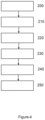
Figure 4 is the flow chart of the production processes from the semi-finished nonwoven fabric of the second layer of the insulator material to the end product. -
- 1- Semi-finished nonwoven
- 2- Acrylic material
- 3- Thermoplastic and/or thermoset
- 4- Acrylic-coated ridges
- 5- Surface without acrylic
- 6- Second layer
- 7- Template
- 8- Powder scattering unit
- 9- Vacuuming unit
- 10- Infrared oven
- 10- Bale opening
- 20- Blending
- 30- Dosing
- 40- Carding
- 50- Cross laying
- 60- Drafting
- 70- Needle punching
- 80- Calendering
- 90- Application of chemicals by foaming
- 100- Pre-drying
- 110- Drum drying
- 120- Partial surface coating
- 130- Infrared heating
- 140- Cooling
- 150- Passing through cold calender
- 160- Winding
- 200- Application of acrylic on semi-finished nonwoven fabric
- 210- Scattering thermoplastic and/or thermoset and/or elastomer powder on the polymer emulsion coated semi-finished nonwoven fabric
- 220- Vacuuming a part of the powder material from the thermoplastic and/or thermoset and/or elastomer-coated semi-finished nonwoven fabric
- 230- Fixing the thermoplastic and/or thermoset and/or elastomer on the surface in the form of spots by heating
- 240- Passing through cold calender and shaping
- 250- Winding the second layer of the insulation material
- The insulation material produced by the method of the present invention is a nonwoven- technical textile essentially used in engine hoods. Said insulation material can both be produced inline by being combined with nonwoven production techniques and offline by being handled as a separate process after the production in a semi-finished form. The invention comprises a process for the production of the second layer of the insulation material in hood insulators used in the automotive industry.
- The insulation material of the present invention is obtained by being passed through basic stages in the production process of
Figure 1 . These basic stages are as follows: - Bale opening (10)
- Blending (20)
- Dosing (30)
- Carding(40)
- Cross laying (50)
- Drafting (60)
- Needle punching (70)
- Calendering (80)
- Application of chemicals by foaming (90)
- Pre-drying (100)
- Drum drying (110)
- Partial surface coating (120)
- Infrared heating (130)
- Cooling (140)
- Passing through cold calender (150)
- Winding (160)
- The abovementioned stages include the stages until the production of semi-finished nonwoven starting from opening and blending the fibers and then intended insulation material of layer the present invention, i.e. the second layer (6). As stated above, the second layer (6) is a second protective layer laid on top of hood insulation material. As the following process details will describe, the second layer (6) of the insulation material of the present invention can be produced by applying particular processes (some of the aforementioned processes) to a semi-finished nonwoven (1) layer meeting the necessary conditions. In other words, the second layer (6) of the present invention can be produced from semi-finished nonwoven (1) as well as fibers. Moreover, while there can only be an inline production starting from the semi-finished or the main raw material to the end product, a plurality of production stages ("plurality" is used here because there are no limitations) can be produced in different conditions.
- The production stages of the insulation material, i.e. the second layer (6) are as follows:
- In this stage, the fibers in bale form enter the bale opening unit. At least one of the fiber types such as polyester, viscose, bicomponent fiber, polyacrylonitrile oxide should enter.
- The fibers are mixed by the air in the blending unit.
- The blended fibers are dosed therein so that their average weight is between 40 and 150 gr/m2. The weight per square meter may change depending on the structure of the first layer.
- In this stage, the fibers are made into web form in the carding machine.
- In this stage, the webs are laid on top of each other in the cross layer.
- In this stage, in order to improve the mechanical features of the cross-laid semi-finished web, the drafting procedure is applied in the drafting unit.
- In this stage, the web form is needle punched in order to intertwine the fibers to provide mechanical bonding. Preferably, the hyper punch and the standard needle punch methods will be used together as the punching method.
- In this stage, the needle punched fabric is passed through the hot calender in order to adjust its surface smoothness and thickness.
- In this stage, in order to provide the features of water repellency and/or flame retardancy, the nonwoven fabric is coated with chlorofluorocarbon and flame retardant materials (salt, organophosphate etc.).
- The chemical materials for water repellency and/or flame retardancy can be applied to the nonwoven fabric with either the kiss roll, the padding or the spray coating methods instead of the foam method.
- The water repellent and/or flame retardant coated nonwoven fabric is passed through the cylinders and is subjected to a partial drying by the removal of water..
- The chemical material applied to the semi-finished is cross linked to the fabric surface by fixing in the drum dryer. The material is now a semi-finished nonwoven (1).
- If desired, semi-finished nonwoven (1) fabric can be prepared separately as in the state of the art until this stage and the processes comprising the critical superiorities of the product which are next stages, can be applied.
- After the drum drying stage, as shown in the representative production scheme in
Figure 2 , the polymer emulsion is applied as in dots on the semi-finished nonwoven (1) fabric by rotary screen-printing method (template, tram cylinder etc.) so that there are gaps in between. Preferably, the polymer emulsion will be done with acrylic (2) . Pure acrylic will be used as the acrylic material. Alternatively, at least one of acrylic copolymers, SBR, NBR, EVA, VAE, HDPE and PU materials can be used. The partial application of the said acrylic material (2) (in the form of spots) to the surface is the key step. Thermoplastic and/or thermoset and/or elastomer (3) is scattered in powder form on the whole surface of the acrylic coated semi-finished nonwoven (1) fabric. The powder coated semi-finished nonwoven fabric is represented inFigure 3a . Polyethylene is the preferred substance as thermoplastic and phenol is the preferred substance as thermoset. In addition to Polyethylene (LDPE, LLDPE, HDPE, MDPE), at least one of copolyester (coPES), copolyamide (coPA), TPU and EVA can be used as thermoplastic material. In addition to phenol, Epoxy, Polyurethane, Polyester, Melamine, Acrylic and Silicone groups can be used as thermoset. If desired, EPDM as an elastomer can be used as a third component alongside with the powders of thermoplastic and thermoset substances. Scattering thermoplastic and/or thermoset and/or elastomer (3) in powder form on the whole surface is known as the "scattering method" in the state of the art. However, it is used for the first time in the automotive industry particularly in the production of hood insulators in the manner described below, and this is an important superiority of the invention. This superiority is that in the process or production, when thermoplastic and/or thermoset and/or elastomer (3) in powder form is scattered on the surface, the thermoplastic and/or thermoset and/or elastomer (3) is partially vacuumed. However, another feature of this vacuuming procedure is that the thermoplastic and/or thermoset and/or elastomer (3) powder applied onto the acrylic material (2) powder is not vacuumed but only the free powder (acrylic uncoated part of the fabric that powder falls to the uncoated ground) is vacuumed. Therefore, only the thermoplastic and/or thermoset and/or (3) powder scattered on the adhesive acrylic material (2) with the rotary screen-printing method remains. This part is named acrylic-coated ridges (4) for a better understanding of the subject. The upper sections of these acrylic-coated ridges (3) comprise the thermoplastic and/or thermoset and/or elastomer (4). Other parts are named as surfaces without acrylic (5) where the thermoplastic and/or thermoset and/or elastomer is vacuumed. This surface appears to have spots. However, if desired, it may be formed in two different ways. This is shown in the representative drawing in Figure-3b. - The semi-finished nonwoven (1) produced elsewhere can only start in the aforementioned stage, i.e. the partial surface coating (120) stage, and continue the process in order to become the second layer of the insulation material. The descriptions related to these will be given below.
- In this stage, the semi-finished nonwoven (1) which partially has thermoplastic and/or thermoset (3) powder in the form of spots thereon is passed through the infrared heater and the powder is melted and adhered to the surface.
- In the previous stage, the thermoplastic and/or thermoset (3) powder was scattered on the semi-finished nonwoven (1) and the nonwoven adhered by these by going through the infrared heater is now cooled in the cooling cylinder.
- The semi-finished nonwoven (1) material is passed through the cold calender under pressure and the second layer (6) of the insulation material with the thermoplastic and/or thermoset (preferably polyethylene and/or phenol) surface is obtained partially on the surface in the form of spots (in different forms if desired).
- The second layer of the insulation material (6) is winded on the winding benches to be ready to be combined with the other layer.
- In the aforementioned process, in addition to obtaining a semi-finished nonwoven (1) starting from a fiber raw material and the later procedures of the present invention, they can also be applied to an already produced semi-finished nonwoven (1) material. When the provision of the acrylic with the rotary screen printing method and then adding the thermoplastic and/or thermoset and/or elastomer (3) in powder form with the scattering method (if desired, elastomers can also be added as mentioned above) to the semi-finished nonwoven (1) and the later procedures are handled as a separate process, the production method in the flow chart in
Figure 4 is defined. In other words, pure acrylic will be used as the acrylic material. However, if desired, alternatively, at least one of acrylic copolymers, SBR, NBR, EVA, VAE, HDPE and PU materials can be used. Again, in addition to Polyethylene (LDPE, LLDPE, HDPE, MDPE), at least one of copolyester (coPES), copolyamide (coPA), TPU and EVA can be used as the thermoplastic material. In addition to phenol; Epoxy, Polyurethane, Polyester, Melamine, Acrylic and Silicone groups can be used. In addition to the thermoplastic and thermoset materials as powder groups, EPDM of elastomers can be used as a third group. Again, as stated above, pure acrylic will be used as the acrylic material. However, if desired, alternatively, at least one of acrylic copolymers, SBR, NBR, EVA, VAE, HDPE and PU materials can be used. Although this method is not a completely separate method, it can be handled as the procedures after carding and needle punching stages in an inline/continuous plant and making a semi-finished nonwoven (1) or after the production of the semi-finished nonwoven (1) in a separate plant. According to this, the flow chart of obtaining second layer of the insulation material (6) from a semi-finished nonwoven (1) can be defined as follows: - Application of acrylic on semi-finished nonwoven fabric (200)
- Scattering the thermoplastic and/or thermoset and/or elastomer powder on the acrylic coated semi-finished nonwoven fabric (210)
- Vacuuming a part of the powder material from the thermoplastic and/or thermoset and/or elastomer-coated semi-finished nonwoven fabric (220)
- Fixing the thermoplastic and/or thermoset on the surface in the form of spots by heating (230)
- Passing through cold calender and shaping (240)
- Winding the second layer of the insulation material (250)
- As stated above, this procedure is not a completely separate procedure. It just comprises a semi-finished nonwoven fabric that is already obtained. In other words, it comprises obtaining a semi-finished nonwoven by performing the stages comprising the production stage of the semi-finished nonwoven starting from the bale opening (10) stage, which comprises opening the fibers, to the partial surface coating (120) stage (not including partial surface coating (120)) in part or whole elsewhere. It shows obtaining the second layer of the insulation material (6) by providing the thermoplastic and/or thermoset (or elastomer) locally as desired on the semi-finished nonwoven (1). The details of the processes above are as follows.
- It comprises the procedure of locally applied acrylic (2) with the rotary screen-printing method (7) to the semi-finished nonwoven (1). The acrylic material (2) is a polymer emulsion. Pure acrylic will be used as the acrylic material. However, if desired, alternatively, at least one of acrylic copolymers, SBR, NBR, EVA, VAE, HDPE and PU materials can be used. The template (6), the tram cylinder and the like can be the alternatives for the rotary screen-printing procedure. The template (6) is a system or a method comprising the chemical rotary screen printing method. For rotary screen printing application the suitable systems will be selected as stated in the state of the art. This locally applied acrylic (2) is preferably in the form of acrylic-coated ridges (4).
- All semi-finished nonwoven (1) including the locally acrylic (2) coated surface is provided with the thermoplastic and/or thermoset and/or elastomer (3) scattering. Polyethylene is the preferred substance as thermoplastic and phenol is the preferred substance as thermoset. However, as mentioned above, in addition to Polyethylene (LDPE, LLDPE, HDPE, MDPE), at least one of copolyester (coPES), copolyamide (coPA), TPU and EVA can be used as the thermoplastic material. In addition to phenol as thermoset, Epoxy, Polyurethane, Polyester, Melamine, Acrylic and Silicone groups can be used. In addition to the thermoplastic and thermoset materials as powder groups, EPDM of elastomers and/or polyurethane can be used as a third group, if desired. This powder scattering procedure will be carried out with the scattering method. In this procedure, the provision of the thermoplastic and/or thermoset and/or elastomer (3) only to the acrylic material (2) is provided by making the other regions without thermoplastic and/or thermoset and/or elastomer (3) free. The powder scattering procedure is carried out in the powder scattering unit (8).
- The thermoplastic and/or thermoset (3) material which is not adhered to the acrylic material (2) or is loosely present on the surface of the semi-finished nonwoven (1) is vacuumed and removed from the region. The vacuuming procedure is carried out in the vacuuming unit (9). Therefore, the region comprises both the surfaces without acrylic (5) and the regions without the thermoplastic and/or thermoset (3) materials.
- Hence, this allows obtaining the desired material which is lighter and cheaper, has less thermoplastic and/or thermoset and a minimized carcinogenic effect but provides the same insulation efficiency.
- The thermoplastic and/or thermoset (3) coating obtained on the acrylic-coated ridges (4) which are on a part of the said semi-finished nonwoven (1) are made permanent by being fixed in the infrared heater after the partial surface coating procedure of the semi-finished nonwoven (1) material. The fixing procedure is carried out in the infrared oven (10). The temperature therein may change between 120 and 220°C and the time between 0.5 and 5 minutes. The fixing step may comprise the use of a stenter frame.
- The second layer of the insulation material (6) partially coated with the thermoplastic and/or thermoset and/or elastomer (3) is provided to be cold and permanent by being passed through the cold calender.
- The second layer of the insulation material (6) is ready for shipment after winding in the winding machines or, if desired, for being transported to be wrapped with another material.
- The aforementioned process allows obtaining the second layer of the insulation material with the desired features by carding and needle punching the fibers and producing a semi-finished nonwoven (1) and then partially coating this surface with polyethylene or phenol, or partially coating a semi-finished nonwoven (1) fabric produced elsewhere with polyethylene or phenol by the said process.
- The second layer of the insulation material produced by the method of the present invention can be used essentially in the automotive industry, particularly as a sound and heat insulation material in engine hoods. However, it can also be used in other fields such as major appliances, in fields where heating, cooling or sound is produced.
Claims (5)
- A production method of an insulation material from a semi-finished nonwoven fabric characterized by the method which has the following production stages:- Local application of a polymer emulsion comprising at least one polymer material selected from the group consisting of acrylic, acrylic copolymers, SBR, NBR, EVA, VAE, HDPE and PU materials with the rotary screen-printing method to the semi-finished nonwoven- Scattering a thermoplastic and/or thermoset and/or elastomer in powder form onto the polymer emulsion-coated semi-finished nonwoven fabric- Vacuuming the thermoplastic and/or thermoset and/or elastomer that is not adhered to the polymer emulsion material or is loosely present on the surface of the semi-finished nonwoven (1) and removing it from the area- Fixing the thermoplastic and/or thermoset and/or elastomer coating obtained on the polymer-emulsion coated ridges which are on a part of the said semi-finished nonwoven (1) at a temperature of 120-220 °C and at a time of 0,5-5 minutes, in an infrared heater- Providing shaping to the partially coated nonwoven with the thermoplastic and/or thermoset (3) and/or elastomer, which is obtained from the previous step, by being passed through the cold calender and ensuring the adhesion of the coating to the nonwoven surface- Winding of the cold-calendered material.
- A production method according to Claim 1 characterized in that the local applied polymeric emulsion is acrylic which is preferably in the form of acrylic-coated ridges (4).
- A production method according to Claim 1 or Claim 2, characterized in that the thermoplastic is one selected from the group consisting of polyethylene, copolyesters, copolyamides, TPU and EVA.
- A production method according to anyone of claims 1-3 characterized in that the thermoset is one selected from the group consisting of phenol, epoxy, polyurethane, polyester, melamine, acrylic, silicone.
- A production method according to anyone of claims 1-4 characterized in that the elastomer is EPDM and/or polyurethane.
Applications Claiming Priority (4)
| Application Number | Priority Date | Filing Date | Title |
|---|---|---|---|
| TR2018/21007A TR201821007A2 (en) | 2018-12-28 | 2018-12-28 | INNOVATION IN THE MANUFACTURING TECHNIQUE OF THE NON-WOVEN TEXTILE SURFACE OF THE ENGINE HOOD INSULATOR |
| TR201913785 | 2019-09-11 | ||
| EP19853293.9A EP3902989B1 (en) | 2018-12-28 | 2019-10-22 | Method for producing a nonwoven fabric used as an engine hood insulator material |
| PCT/TR2019/050887 WO2020139235A1 (en) | 2018-12-28 | 2019-10-22 | Method for producing a nonwoven fabric used as an engine hood insulator material |
Related Parent Applications (2)
| Application Number | Title | Priority Date | Filing Date |
|---|---|---|---|
| EP19853293.9A Division EP3902989B1 (en) | 2018-12-28 | 2019-10-22 | Method for producing a nonwoven fabric used as an engine hood insulator material |
| EP19853293.9A Division-Into EP3902989B1 (en) | 2018-12-28 | 2019-10-22 | Method for producing a nonwoven fabric used as an engine hood insulator material |
Publications (3)
| Publication Number | Publication Date |
|---|---|
| EP4375493A1 EP4375493A1 (en) | 2024-05-29 |
| EP4375493B1 true EP4375493B1 (en) | 2025-05-28 |
| EP4375493C0 EP4375493C0 (en) | 2025-05-28 |
Family
ID=69650686
Family Applications (2)
| Application Number | Title | Priority Date | Filing Date |
|---|---|---|---|
| EP19853293.9A Active EP3902989B1 (en) | 2018-12-28 | 2019-10-22 | Method for producing a nonwoven fabric used as an engine hood insulator material |
| EP24152746.4A Active EP4375493B1 (en) | 2018-12-28 | 2019-10-22 | Method for producing a nonwoven fabric used as an engine hood insulator material |
Family Applications Before (1)
| Application Number | Title | Priority Date | Filing Date |
|---|---|---|---|
| EP19853293.9A Active EP3902989B1 (en) | 2018-12-28 | 2019-10-22 | Method for producing a nonwoven fabric used as an engine hood insulator material |
Country Status (7)
| Country | Link |
|---|---|
| US (2) | US12467173B2 (en) |
| EP (2) | EP3902989B1 (en) |
| CN (1) | CN113195879B (en) |
| ES (1) | ES2975380T3 (en) |
| HU (1) | HUE066369T2 (en) |
| PL (1) | PL3902989T3 (en) |
| WO (1) | WO2020139235A1 (en) |
Families Citing this family (1)
| Publication number | Priority date | Publication date | Assignee | Title |
|---|---|---|---|---|
| CN118773821A (en) * | 2024-07-23 | 2024-10-15 | 香港越纖科技有限公司 | A kind of nonwoven fabric for food grade packaging and preparation method thereof |
Family Cites Families (20)
| Publication number | Priority date | Publication date | Assignee | Title |
|---|---|---|---|---|
| DE2034536A1 (en) * | 1970-07-11 | 1972-02-03 | ||
| DE2142239A1 (en) * | 1970-09-08 | 1973-03-08 | Feldmuehle Anlagen Prod | PROCESS FOR MANUFACTURING POROESE, HIGHLY ABSORBENT AREAS |
| EP0657572B1 (en) * | 1993-12-08 | 1998-07-08 | TEXIL S.p.A. | Method for producing a woven/non-woven thermoadhesive product particularly for interfacings comprising dots melting at differential temperature, and a plant for implementing the method |
| US6277241B1 (en) * | 1997-11-14 | 2001-08-21 | Kimberly-Clark Worldwide, Inc. | Liquid absorbent base web |
| DE19821532A1 (en) * | 1998-05-14 | 1999-11-25 | Hp Chemie Pelzer Res & Dev | Lower cost, heat and noise absorbing shroud, manufacturing method and use of shroud in an engine vehicle compartment |
| WO2003021096A1 (en) * | 2001-09-04 | 2003-03-13 | Hp-Chemie Pelzer Research And Development Ltd. | Heat-insulating and sound-absorbing lining for the engine compartment of motor vehicles |
| EP1606100A2 (en) | 2003-03-12 | 2005-12-21 | Collins & Aikman Products Co. | Improved methods of forming vehicle interior components which include a decoupler layer |
| DE10312817A1 (en) * | 2003-03-22 | 2004-10-07 | Carl Freudenberg Kg | Cover layer for engine compartment lining |
| DE10347665A1 (en) * | 2003-10-09 | 2005-05-19 | Degussa Ag | Crosslinkable base layer for fixation inserts according to the double-point method |
| CA2603421C (en) * | 2005-04-01 | 2013-05-21 | James R. Gross | Nonwoven material for acoustic insulation, and process for manufacture |
| US20060246797A1 (en) * | 2005-04-27 | 2006-11-02 | Rabasco John J | Sound absorbing laminates |
| EP2203587B1 (en) * | 2007-10-25 | 2013-08-28 | Kufner Textil GmbH | Heat-sealable sheet-like textile structure, production of the same and use |
| DE102007062865B4 (en) * | 2007-11-09 | 2009-10-15 | Carl Freudenberg Kg | Textile fixable fabric |
| JP5757661B2 (en) * | 2011-08-08 | 2015-07-29 | アイシン化工株式会社 | Heat insulating sound absorbing material, method for producing the same, and heat insulating sound absorbing structure |
| CN104903152B (en) * | 2012-11-06 | 2017-06-13 | 现代自动车株式会社 | The manufacture method of heat-resistant sound-insulation sound-absorbing material high |
| KR101439067B1 (en) * | 2013-12-19 | 2014-09-05 | 현대자동차주식회사 | Noise absorbent fabric and manufacturing method for the same |
| DE102014005819B4 (en) * | 2014-04-24 | 2016-08-04 | Carl Freudenberg Kg | Thermally fixable sheet and method for its production |
| DE102015101945A1 (en) * | 2015-02-11 | 2016-08-11 | Carcoustics Techconsult Gmbh | Three-dimensionally contoured, acoustically effective heat shield for a motor vehicle and method for its production |
| IT201600082894A1 (en) * | 2016-08-05 | 2018-02-05 | Fisi Fibre Sintetiche Spa | PROCEDURE FOR MANUFACTURING AN ABSTRACT RETAINER INCLUDING AT LEAST ONE SURFACE TO RECEIVE PRINTING AND THE RELEVANT COMPREHENSIVE PART OF THE PROCEDURE, IN PARTICULAR FOR THE USE IN PADDING OF CLOTHING ARTICLES AS WIND JACKETS AND SHOES |
| CN108214980B (en) * | 2017-12-12 | 2021-08-03 | 华东理工大学 | A kind of equipment and method for preparing continuous fiber reinforced thermoplastic prepreg tape |
-
2019
- 2019-10-22 CN CN201980084280.XA patent/CN113195879B/en active Active
- 2019-10-22 EP EP19853293.9A patent/EP3902989B1/en active Active
- 2019-10-22 PL PL19853293.9T patent/PL3902989T3/en unknown
- 2019-10-22 WO PCT/TR2019/050887 patent/WO2020139235A1/en not_active Ceased
- 2019-10-22 ES ES19853293T patent/ES2975380T3/en active Active
- 2019-10-22 US US17/413,717 patent/US12467173B2/en active Active
- 2019-10-22 HU HUE19853293A patent/HUE066369T2/en unknown
- 2019-10-22 EP EP24152746.4A patent/EP4375493B1/en active Active
-
2025
- 2025-09-03 US US19/317,322 patent/US20260022503A1/en active Pending
Also Published As
| Publication number | Publication date |
|---|---|
| CN113195879A (en) | 2021-07-30 |
| US20220025565A1 (en) | 2022-01-27 |
| PL3902989T3 (en) | 2024-06-24 |
| ES2975380T3 (en) | 2024-07-04 |
| HUE066369T2 (en) | 2024-07-28 |
| EP3902989A1 (en) | 2021-11-03 |
| EP4375493C0 (en) | 2025-05-28 |
| US20260022503A1 (en) | 2026-01-22 |
| US12467173B2 (en) | 2025-11-11 |
| WO2020139235A1 (en) | 2020-07-02 |
| EP3902989B1 (en) | 2024-03-20 |
| CN113195879B (en) | 2022-12-16 |
| EP3902989C0 (en) | 2024-03-20 |
| EP4375493A1 (en) | 2024-05-29 |
Similar Documents
| Publication | Publication Date | Title |
|---|---|---|
| US20260022503A1 (en) | Method for producing a nonwoven fabric used as an engine hood insulator material | |
| US5175042A (en) | Multilayer textile composites based on fibrous sheets having different characteristics | |
| US7351673B1 (en) | Laminates including two or more layers of organic synthetic filament non-wovens and glass fiber webs and scrims | |
| CA2154669C (en) | Nonwoven fiber fabrication process, and nonwoven fiber obtained thereof | |
| CN106739226B (en) | A kind of sound-adsorbing sound-insulating hung needle punched non-woven fabrics for automobile interiors and preparation method thereof | |
| RU2719989C2 (en) | Multilayer acoustic and/or reinforcing non-woven material | |
| IE55177B1 (en) | Process for the treatment of non-woven sheets and the product obtained | |
| EP3202974B1 (en) | Napped leather-like sheet and method for producing the same | |
| JP2006517267A (en) | Composite comprising glass fiber dry veil and organic fiber nonwoven | |
| US20030073368A1 (en) | Two-layer laminate | |
| US20040192139A1 (en) | Cover layer for engine compartment lining | |
| EP1914121B1 (en) | Method for manufacturing a heat insulation | |
| CZ303261B6 (en) | Nonwoven composite and process for producing thereof | |
| CN106854793A (en) | A kind of preparation method of self-bonded nonwoven cloth | |
| EP2922990B1 (en) | Method for making a thin padding from stabilized fibers, for clothing articles, quilts and sleeping bags | |
| US11900907B2 (en) | Dual density acoustic insulation | |
| CN111844969A (en) | Composite needle-punched non-woven fabric for automotive interior and manufacturing process thereof | |
| US12620383B2 (en) | Acoustic insulation material | |
| TR2023003376A2 (en) | CONTINUOUS FORM PLASTIC COATING METHOD ON FABRIC | |
| GB2542344A (en) | Vinyl-coated material and method of manufacture thereof | |
| JP2025034573A (en) | Synthetic leather and manufacturing method thereof | |
| JPH01174658A (en) | Production of interior substrate for automobile | |
| JPH0821640A (en) | Electric carpet | |
| JPH0995863A (en) | Nonwoven sheet and method and apparatus for manufacturing the same |
Legal Events
| Date | Code | Title | Description |
|---|---|---|---|
| PUAI | Public reference made under article 153(3) epc to a published international application that has entered the european phase |
Free format text: ORIGINAL CODE: 0009012 |
|
| STAA | Information on the status of an ep patent application or granted ep patent |
Free format text: STATUS: THE APPLICATION HAS BEEN PUBLISHED |
|
| AC | Divisional application: reference to earlier application |
Ref document number: 3902989 Country of ref document: EP Kind code of ref document: P |
|
| AK | Designated contracting states |
Kind code of ref document: A1 Designated state(s): AL AT BE BG CH CY CZ DE DK EE ES FI FR GB GR HR HU IE IS IT LI LT LU LV MC MK MT NL NO PL PT RO RS SE SI SK SM TR |
|
| STAA | Information on the status of an ep patent application or granted ep patent |
Free format text: STATUS: REQUEST FOR EXAMINATION WAS MADE |
|
| 17P | Request for examination filed |
Effective date: 20241106 |
|
| RBV | Designated contracting states (corrected) |
Designated state(s): AL AT BE BG CH CY CZ DE DK EE ES FI FR GB GR HR HU IE IS IT LI LT LU LV MC MK MT NL NO PL PT RO RS SE SI SK SM TR |
|
| GRAP | Despatch of communication of intention to grant a patent |
Free format text: ORIGINAL CODE: EPIDOSNIGR1 |
|
| STAA | Information on the status of an ep patent application or granted ep patent |
Free format text: STATUS: GRANT OF PATENT IS INTENDED |
|
| RIC1 | Information provided on ipc code assigned before grant |
Ipc: D04H 1/68 20120101ALI20241209BHEP Ipc: D04H 1/66 20120101ALI20241209BHEP Ipc: D04H 1/587 20120101ALI20241209BHEP Ipc: F02B 77/11 20060101AFI20241209BHEP |
|
| INTG | Intention to grant announced |
Effective date: 20250108 |
|
| GRAS | Grant fee paid |
Free format text: ORIGINAL CODE: EPIDOSNIGR3 |
|
| GRAA | (expected) grant |
Free format text: ORIGINAL CODE: 0009210 |
|
| STAA | Information on the status of an ep patent application or granted ep patent |
Free format text: STATUS: THE PATENT HAS BEEN GRANTED |
|
| AC | Divisional application: reference to earlier application |
Ref document number: 3902989 Country of ref document: EP Kind code of ref document: P |
|
| AK | Designated contracting states |
Kind code of ref document: B1 Designated state(s): AL AT BE BG CH CY CZ DE DK EE ES FI FR GB GR HR HU IE IS IT LI LT LU LV MC MK MT NL NO PL PT RO RS SE SI SK SM TR |
|
| REG | Reference to a national code |
Ref country code: GB Ref legal event code: FG4D |
|
| REG | Reference to a national code |
Ref country code: CH Ref legal event code: EP |
|
| REG | Reference to a national code |
Ref country code: IE Ref legal event code: FG4D Ref country code: DE Ref legal event code: R096 Ref document number: 602019070664 Country of ref document: DE |
|
| U01 | Request for unitary effect filed |
Effective date: 20250610 |
|
| U07 | Unitary effect registered |
Designated state(s): AT BE BG DE DK EE FI FR IT LT LU LV MT NL PT RO SE SI Effective date: 20250616 |
|
| PG25 | Lapsed in a contracting state [announced via postgrant information from national office to epo] |
Ref country code: ES Free format text: LAPSE BECAUSE OF FAILURE TO SUBMIT A TRANSLATION OF THE DESCRIPTION OR TO PAY THE FEE WITHIN THE PRESCRIBED TIME-LIMIT Effective date: 20250528 |
|
| PG25 | Lapsed in a contracting state [announced via postgrant information from national office to epo] |
Ref country code: NO Free format text: LAPSE BECAUSE OF FAILURE TO SUBMIT A TRANSLATION OF THE DESCRIPTION OR TO PAY THE FEE WITHIN THE PRESCRIBED TIME-LIMIT Effective date: 20250828 Ref country code: GR Free format text: LAPSE BECAUSE OF FAILURE TO SUBMIT A TRANSLATION OF THE DESCRIPTION OR TO PAY THE FEE WITHIN THE PRESCRIBED TIME-LIMIT Effective date: 20250829 |
|
| PG25 | Lapsed in a contracting state [announced via postgrant information from national office to epo] |
Ref country code: PL Free format text: LAPSE BECAUSE OF FAILURE TO SUBMIT A TRANSLATION OF THE DESCRIPTION OR TO PAY THE FEE WITHIN THE PRESCRIBED TIME-LIMIT Effective date: 20250528 |
|
| PG25 | Lapsed in a contracting state [announced via postgrant information from national office to epo] |
Ref country code: HR Free format text: LAPSE BECAUSE OF FAILURE TO SUBMIT A TRANSLATION OF THE DESCRIPTION OR TO PAY THE FEE WITHIN THE PRESCRIBED TIME-LIMIT Effective date: 20250528 |
|
| PG25 | Lapsed in a contracting state [announced via postgrant information from national office to epo] |
Ref country code: RS Free format text: LAPSE BECAUSE OF FAILURE TO SUBMIT A TRANSLATION OF THE DESCRIPTION OR TO PAY THE FEE WITHIN THE PRESCRIBED TIME-LIMIT Effective date: 20250828 |
|
| PG25 | Lapsed in a contracting state [announced via postgrant information from national office to epo] |
Ref country code: IS Free format text: LAPSE BECAUSE OF FAILURE TO SUBMIT A TRANSLATION OF THE DESCRIPTION OR TO PAY THE FEE WITHIN THE PRESCRIBED TIME-LIMIT Effective date: 20250928 |
|
| U20 | Renewal fee for the european patent with unitary effect paid |
Year of fee payment: 7 Effective date: 20251030 |
|
| PG25 | Lapsed in a contracting state [announced via postgrant information from national office to epo] |
Ref country code: SM Free format text: LAPSE BECAUSE OF FAILURE TO SUBMIT A TRANSLATION OF THE DESCRIPTION OR TO PAY THE FEE WITHIN THE PRESCRIBED TIME-LIMIT Effective date: 20250528 |
|
| PG25 | Lapsed in a contracting state [announced via postgrant information from national office to epo] |
Ref country code: CZ Free format text: LAPSE BECAUSE OF FAILURE TO SUBMIT A TRANSLATION OF THE DESCRIPTION OR TO PAY THE FEE WITHIN THE PRESCRIBED TIME-LIMIT Effective date: 20250528 |
|
| PG25 | Lapsed in a contracting state [announced via postgrant information from national office to epo] |
Ref country code: SK Free format text: LAPSE BECAUSE OF FAILURE TO SUBMIT A TRANSLATION OF THE DESCRIPTION OR TO PAY THE FEE WITHIN THE PRESCRIBED TIME-LIMIT Effective date: 20250528 |
|
| PLBE | No opposition filed within time limit |
Free format text: ORIGINAL CODE: 0009261 |
|
| STAA | Information on the status of an ep patent application or granted ep patent |
Free format text: STATUS: NO OPPOSITION FILED WITHIN TIME LIMIT |
|
| REG | Reference to a national code |
Ref country code: CH Ref legal event code: L10 Free format text: ST27 STATUS EVENT CODE: U-0-0-L10-L00 (AS PROVIDED BY THE NATIONAL OFFICE) Effective date: 20260409 |