EP4372949A1 - Converter control system and method - Google Patents
Converter control system and method Download PDFInfo
- Publication number
- EP4372949A1 EP4372949A1 EP22914682.4A EP22914682A EP4372949A1 EP 4372949 A1 EP4372949 A1 EP 4372949A1 EP 22914682 A EP22914682 A EP 22914682A EP 4372949 A1 EP4372949 A1 EP 4372949A1
- Authority
- EP
- European Patent Office
- Prior art keywords
- alternating voltage
- vector
- converter
- dqpn
- voltage reference
- Prior art date
- Legal status (The legal status is an assumption and is not a legal conclusion. Google has not performed a legal analysis and makes no representation as to the accuracy of the status listed.)
- Pending
Links
Images


Classifications
-
- H—ELECTRICITY
- H02—GENERATION; CONVERSION OR DISTRIBUTION OF ELECTRIC POWER
- H02M—APPARATUS FOR CONVERSION BETWEEN AC AND AC, BETWEEN AC AND DC, OR BETWEEN DC AND DC, AND FOR USE WITH MAINS OR SIMILAR POWER SUPPLY SYSTEMS; CONVERSION OF DC OR AC INPUT POWER INTO SURGE OUTPUT POWER; CONTROL OR REGULATION THEREOF
- H02M1/00—Details of apparatus for conversion
- H02M1/32—Means for protecting converters other than automatic disconnection
-
- H—ELECTRICITY
- H02—GENERATION; CONVERSION OR DISTRIBUTION OF ELECTRIC POWER
- H02J—ELECTRIC POWER NETWORKS; CIRCUIT ARRANGEMENTS OR SYSTEMS FOR SUPPLYING OR DISTRIBUTING ELECTRIC POWER; SYSTEMS FOR STORING ELECTRIC ENERGY
- H02J3/00—Circuit arrangements for AC mains or AC distribution networks
- H02J3/38—Arrangements for feeding a single network from two or more generators or sources in parallel; Arrangements for feeding already energised networks from additional generators or sources in parallel
-
- H—ELECTRICITY
- H02—GENERATION; CONVERSION OR DISTRIBUTION OF ELECTRIC POWER
- H02J—ELECTRIC POWER NETWORKS; CIRCUIT ARRANGEMENTS OR SYSTEMS FOR SUPPLYING OR DISTRIBUTING ELECTRIC POWER; SYSTEMS FOR STORING ELECTRIC ENERGY
- H02J3/00—Circuit arrangements for AC mains or AC distribution networks
- H02J3/38—Arrangements for feeding a single network from two or more generators or sources in parallel; Arrangements for feeding already energised networks from additional generators or sources in parallel
- H02J3/381—Dispersed generators
-
- H—ELECTRICITY
- H02—GENERATION; CONVERSION OR DISTRIBUTION OF ELECTRIC POWER
- H02J—ELECTRIC POWER NETWORKS; CIRCUIT ARRANGEMENTS OR SYSTEMS FOR SUPPLYING OR DISTRIBUTING ELECTRIC POWER; SYSTEMS FOR STORING ELECTRIC ENERGY
- H02J3/00—Circuit arrangements for AC mains or AC distribution networks
- H02J3/38—Arrangements for feeding a single network from two or more generators or sources in parallel; Arrangements for feeding already energised networks from additional generators or sources in parallel
- H02J3/40—Synchronisation of generators for connection to a network or to another generator
-
- H—ELECTRICITY
- H02—GENERATION; CONVERSION OR DISTRIBUTION OF ELECTRIC POWER
- H02J—ELECTRIC POWER NETWORKS; CIRCUIT ARRANGEMENTS OR SYSTEMS FOR SUPPLYING OR DISTRIBUTING ELECTRIC POWER; SYSTEMS FOR STORING ELECTRIC ENERGY
- H02J3/00—Circuit arrangements for AC mains or AC distribution networks
- H02J3/38—Arrangements for feeding a single network from two or more generators or sources in parallel; Arrangements for feeding already energised networks from additional generators or sources in parallel
- H02J3/46—Controlling the sharing of generated power between the generators, sources or networks
-
- H—ELECTRICITY
- H02—GENERATION; CONVERSION OR DISTRIBUTION OF ELECTRIC POWER
- H02M—APPARATUS FOR CONVERSION BETWEEN AC AND AC, BETWEEN AC AND DC, OR BETWEEN DC AND DC, AND FOR USE WITH MAINS OR SIMILAR POWER SUPPLY SYSTEMS; CONVERSION OF DC OR AC INPUT POWER INTO SURGE OUTPUT POWER; CONTROL OR REGULATION THEREOF
- H02M1/00—Details of apparatus for conversion
- H02M1/08—Circuits specially adapted for the generation of control voltages for semiconductor devices incorporated in static converters
-
- H—ELECTRICITY
- H02—GENERATION; CONVERSION OR DISTRIBUTION OF ELECTRIC POWER
- H02M—APPARATUS FOR CONVERSION BETWEEN AC AND AC, BETWEEN AC AND DC, OR BETWEEN DC AND DC, AND FOR USE WITH MAINS OR SIMILAR POWER SUPPLY SYSTEMS; CONVERSION OF DC OR AC INPUT POWER INTO SURGE OUTPUT POWER; CONTROL OR REGULATION THEREOF
- H02M7/00—Conversion of AC power input into DC power output; Conversion of DC power input into AC power output
- H02M7/66—Conversion of AC power input into DC power output; Conversion of DC power input into AC power output with possibility of reversal
- H02M7/68—Conversion of AC power input into DC power output; Conversion of DC power input into AC power output with possibility of reversal by static converters
- H02M7/72—Conversion of AC power input into DC power output; Conversion of DC power input into AC power output with possibility of reversal by static converters using discharge tubes with control electrode or semiconductor devices with control electrode
- H02M7/79—Conversion of AC power input into DC power output; Conversion of DC power input into AC power output with possibility of reversal by static converters using discharge tubes with control electrode or semiconductor devices with control electrode using devices of a triode or transistor type requiring continuous application of a control signal
- H02M7/797—Conversion of AC power input into DC power output; Conversion of DC power input into AC power output with possibility of reversal by static converters using discharge tubes with control electrode or semiconductor devices with control electrode using devices of a triode or transistor type requiring continuous application of a control signal using semiconductor devices only
-
- Y—GENERAL TAGGING OF NEW TECHNOLOGICAL DEVELOPMENTS; GENERAL TAGGING OF CROSS-SECTIONAL TECHNOLOGIES SPANNING OVER SEVERAL SECTIONS OF THE IPC; TECHNICAL SUBJECTS COVERED BY FORMER USPC CROSS-REFERENCE ART COLLECTIONS [XRACs] AND DIGESTS
- Y02—TECHNOLOGIES OR APPLICATIONS FOR MITIGATION OR ADAPTATION AGAINST CLIMATE CHANGE
- Y02E—REDUCTION OF GREENHOUSE GAS [GHG] EMISSIONS, RELATED TO ENERGY GENERATION, TRANSMISSION OR DISTRIBUTION
- Y02E60/00—Enabling technologies; Technologies with a potential or indirect contribution to GHG emissions mitigation
- Y02E60/60—Arrangements for transfer of electric power between AC networks or generators via a high voltage DC link [HVCD]
Definitions
- the present application relates to the technical field of power electronics, in particular to a converter control system and method.
- Power electronic converters have the advantage of flexible control, but in weak systems with large-scale new energy sources, requirements for system support are imposed on the power electronic converters. In order to enable the power grid to have supporting capabilities, it is necessary to avoid the use of phase-locked loops and equip the power electronic converters with voltage source characteristics.
- a typical example is a voltage source converter employing amplitude-phase control (indirect current control) or power synchronization control (including virtual synchronous machine control).
- CN106786733B and CN106356884B propose different forms of control systems for virtual synchronous generators, but both adopt current inner loops for converter control.
- direct current feedback is introduced to a virtual impedance loop to enhance the anti-impact capability of the converter.
- the direct current feedback in existing virtual synchronous generator control methods introduces harmonic components, leading to negative impedance in certain frequency bands, increasing the risk of oscillations.
- not adopting current closed-loop control would fail to address the issue of limited overcurrent capacity of the converter.
- the present application aims to propose a converter control system and method which can maintain voltage source characteristics without using current closed-loop control under steady-state and small perturbation conditions, to achieve a reduction in the risk of oscillations, and to mimic grid support characteristics consistent with synchronous generators in both a steady state and a transient state, while realizing active adjustment of the impedance of the converter and improving grid adaptability.
- a converter control system for controlling a converter to mimic a synchronous generator, and comprising a power synchronization control unit, an alternating voltage reference vector calculation unit and an alternating voltage command generation unit, wherein
- the alternating voltage reference vector calculation unit is configured to:
- the alternating voltage reference vector calculation unit is configured to:
- the virtual impedance X v is configured to simulat impedance of the generator:
- an alternating voltage control unit AVR configured to realize alternating voltage regulation of a grid connection point of the converter and output a positive sequence d-axis component E dp of an internal potential, and a positive sequence q-axis component E qp , a negative sequence d-axis component E dn and a negative sequence q-axis component E qn of the internal potential are 0.
- a control error compensation unit is further provided and configured to:
- a fault current limiting unit is further provided, the fault current limiting unit is activated during a transient overcurrent state to generate a fault current limiting control value according to a deviation between an alternating current limiting command and an actual alternating current of the converter, the fault current limiting control value is added to the alternating voltage reference vector Uc dqpn to serve as the alternating voltage reference vector of the converter, so as to control an alternating current amplitude to be a maximum alternating current amplitude limit Imax, and a direction thereof is 90 degrees behind a voltage drop of the virtual impedance X v .
- the fault current limiting unit is configured to be activated for a short time during a transient overcurrent state, and the short time is specifically 1 ms-1 s.
- control system is configured to be used for at least one of a DC transmission converter, an energy storage converter, a microgrid converter, a photovoltaic inverter and a wind power converter.
- a converter control method for controlling a converter to mimic a synchronous generator, using the converter control system as described in any one of the preceding statements, and comprising:
- the alternating voltage reference vector calculation unit is configured to:
- the alternating voltage reference vector calculation unit is configured to:
- the method further comprises: realizing, by an alternating voltage control unit AVR, alternating voltage regulation of a grid connection point of the converter and outputting a positive sequence d-axis component E dp of an internal potential, and a positive sequence q-axis component E qp , a negative sequence d-axis component E dn and a negative sequence q-axis component E qn of the internal potential are 0.
- the converter control method further comprise performing the following operations by a control error compensation unit:
- the converter control method further comprises: activating a fault current limiting unit during a transient overcurrent state to generate a fault current limiting control value according to a deviation between an alternating current limiting command and an actual alternating current of the converter, which is added to the alternating voltage reference vector Uc dqpn to serve as the alternating voltage reference vector of the converter, so as to control an alternating current amplitude to be a maximum alternating current amplitude limit Imax, wherein a direction thereof is 90 degrees behind a voltage drop of the virtual impedance X v .
- the fault current limiting unit is configured to be activated for a short time during a transient overcurrent state, and the short time is specifically 1 ms-1 s.
- a program product comprising the converter control system as described in any one of the preceding statements.
- an electronic device comprising the program product as described above.
- the technical scheme according to some embodiments of the present application may have one or more of the following beneficial effects.
- a device embodiment of the application is described below, which can be used to execute the method embodiment of the application.
- the method embodiment of the application please refer to the method embodiment of the application.
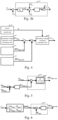
- Fig. 1a is a block diagram of a converter control system according to an exemplary embodiment of the present application.
- a converter control system is configured to control a converter to mimic a synchronous generator, and comprise a power synchronization control unit 1, an alternating voltage reference vector calculation unit 2 and an alternating voltage command generation unit 3.
- the power synchronization control unit 1 is configured to mimic a speed controller and a mechanical inertia link of a generator to generate a reference phase ⁇ ;
- the alternating voltage reference vector calculation unit 2 is configured to calculate an alternating voltage reference vector Uc dqpn of the converter; and the alternating voltage command generation unit 3 generates a three-phase alternating voltage control command Uc abc according to the alternating voltage reference vector Uc dqpn and the reference phase ⁇ .
- Fig. 1b is a block diagram of an implementation method of a converter control system according to an exemplary embodiment of the present application.
- Fig. 1b shows a detailed implementation method of a converter control system provided by the present invention.
- the power synchronization control unit 1 adopts a generator swing equation shown in Formula (1) to mimic the speed controller and the mechanical inertia link of the generator, where ⁇ is an angular velocity, H is an inertia time constant, P ref is an active command, P s is an electromagnetic active power, K f is a proportional coefficient of the speed controller, and ⁇ ⁇ is an angular velocity deviation.
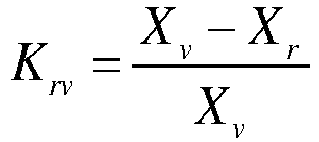
- the alternating voltage reference vector calculation unit 2 calculates the alternating voltage reference vector Uc dqpn of the converter according to the proportional coefficient K rv , an internal potential vector E dqpn and an acquired alternating voltage vector Us dqpn :
- Uc dqpn E dqpn + K rv Us dqpn ⁇ E dqpn
- K r ⁇ X ⁇ ⁇ X r X ⁇
- the alternating voltage command generation unit 3 obtains the synthesized three-phase alternating voltage control command vector Uc abc according to the positive and negative sequence components in the alternating voltage reference vector Uc dqpn and the reference phase ⁇ :
- Uc abc Uc dp + jUc qp e j ⁇ + Uc dn + jUc qn e ⁇ j ⁇
- Fig. 2 is a positive sequence vector diagram in which a converter control system in an exemplary embodiment of the present application realizes converter control.
- Is p Is dp + jIs qn is a positive sequence vector of alternating current.
- the above vectors are relative to the reference phase ⁇ .
- Formula (2) can be obtained from Formulas (9) and (10). By using Formula (2) to calculate the alternating voltage reference vector Uc dqpn , alternating current signals are avoided, so the risk of oscillations can be effectively reduced. Because a vector diagram is consistent with the synchronous generator, grid support characteristics consistent with the synchronous generator can be mimicked.
- the virtual impedance X v is 0 to 1 times of a rated impedance, and it is preferable to make the virtual impedance X v equal to the real impedance xr; and when an overcurrent is caused by a large perturbation such as a fault, the converter enters a transient operation state, and the internal potential of the converter is kept stable by increasing the virtual impedance X v , that is, when Us p or Us n changes greatly, by increasing the virtual impedance X v , the vector relationship shown in Fig. 2 or an equivalent negative sequence vector relationship enables the simulation of different generator impedances.
- Fig. 3a is a schematic diagram of an alternating voltage control unit AVR according to an exemplary embodiment of the present application.
- a schematic diagram of an alternating voltage control unit AVR is provided.
- the alternating voltage control unit AVR is used for realizing alternating voltage regulation of a grid connection point of the converter.
- a positive sequence d-axis component E dp of the internal potential is calculated by the AVR unit 31.
- a positive sequence q-axis component E dp , a negative sequence d-axis component E dn and a negative sequence q-axis component E qn of the internal potential are all 0.
- Fig. 3b is a block diagram of an implementation method of an alternating voltage control unit AVR according to an exemplary embodiment of the present application.
- Fig. 3b is a detailed embodiment of an AVR unit 31 provided by the present application.
- the deviation between the alternating voltage command value U ref and the alternating voltage actual value U is multiplied by a voltage droop coefficient K U to obtain a reactive power regulation value ⁇ Q.
- a reactive power command Q ref is added to the reactive power regulation value ⁇ Q and then subtracted from reactive power Q s of the converter to obtain an alternating voltage regulation value ⁇ E through a PI controller.
- the alternating voltage regulation value ⁇ E is added to a rated alternating voltage E 0 to obtain the positive sequence d-axis component E dp of the internal potential.
- Fig. 4 shows another embodiment of a block diagram of a converter control system exemplified by the present application.
- the converter control system also comprises a control error compensation unit 4 and a fault current limiting unit 5. Due to control delays, capacitor voltage fluctuations and other factors, a deviation exists between an actual output voltage of the converter and the reference vector Uc dqpn .
- the control error compensation unit 4 can be additionally arranged to reduce this deviation. According to the deviation between the alternating voltage reference vector Uc dqpn and an actual alternating voltage vector of the converter, a control error compensation value ⁇ Uc dqpn_com is generated, which is added to the alternating voltage reference vector Uc dqpn to serve as the alternating voltage reference vector of the converter.
- the fault current limiting unit 5 which can be activated during a transient overcurrent state and generate a fault current limiting control value ⁇ Uc dqpn_ilim according to a deviation between an alternating current limiting command and an actual alternating current of the converter, which is added to the original alternating voltage reference vector of the converter to serve as the alternating voltage reference vector of the converter.
- an alternating current amplitude is near a maximum alternating current amplitude limit I max , avoiding overcurrent tripping of the converter.
- An amplitude of an alternating voltage limit command is I max , and a direction is 90 degrees behind a voltage drop on the virtual impedance.
- Fig. 5 is a block diagram of a control error compensation unit according to an exemplary embodiment of the present application.
- the control error compensation unit 4 is used for control error compensation of a modular multilevel converter.
- a lower-bridge arm positive and negative sequence dq axis vector Vn dqpn is obtained.
- an upper-bridge arm positive and negative sequence dq axis vector Vp dqpn is obtained.
- Subtracting Vp dqpn from Vn dqpn and multiplying by 0.5, the actual alternating voltage vector of the converter Uc dqpn_m is obtained.
- the control error compensation value ⁇ Uc dqpn_com is obtained through a first-order inertia link 41.
- the control error compensation value is added to the alternating voltage reference vector Uc dqpn to serve as the alternating voltage reference vector of the converter, so as to minimize the error between the alternating voltage reference vector Uc dqpn and the actual alternating voltage vector of the converter Uc dqpn_m .
- Fig. 6 is a block diagram of a fault current limiting unit according to an exemplary embodiment of the present application.
- the fault current limiting control value ⁇ Uc dqpn_ilim is obtained from the deviation between the alternating current limiting command Isref dqpn and the actual alternating current of the converter Is dqpn through the PI controller, which is added to the original alternating voltage reference vector of the converter to serve as the alternating voltage reference vector of the converter, so that the alternating current amplitude is near the maximum alternating current amplitude limit I max .
- the fault current limiting unit 5 can be configured to be activated for a short time during a transient overcurrent state only, and the short time is specifically 1 ms-1 s.
- Fig. 7 is a flowchart of a converter control method according to an exemplary embodiment of the present application.
- step 701 a power synchronization control unit generates a reference phase ⁇ .
- the reference phase ⁇ is generated, and a speed controller and a mechanical inertia link of a generator are mimicked.
- an alternating voltage control unit calculates an alternating voltage reference vector of the converter Uc dqpn .
- the alternating voltage reference vector of the converter Uc dqpn is calculated according to a proportional coefficient K rv , an internal potential E dqpn and an acquired alternating voltage vector Us dqpn :
- an alternating voltage command generation unit generates a three-phase alternating voltage control command.
- the three-phase alternating voltage control command is obtained according to Formula (5).
- Figs. 8a and 8b are fault ride-through effect diagrams of a converter control method according to an exemplary embodiment of the present application.
- Fig. 8a shows a fault ride-through effect when the control system shown in Fig. 1a is adopted, where current closed-loop control is not used in the whole steady-state and fault transient-state processes, and initial current is relatively large.
- alternating current is around 1.2 times the rated current of the maximum alternating current amplitude limit. Therefore, the generator characteristics can be completely mimicked without introducing current closed-loop control, but it requires a certain capability to withstand short-term overloads in the converter.
- Fig. 8b shows a fault ride-through effect when the control system shown in Fig. 4 is adopted, where a control error compensation unit is provided, and during the fault transient period, a fault current limiting unit is temporarily activated. After a fault occurs, the alternating current can be quickly reduced to 1.2 times the rated current of the maximum alternating current amplitude limit. Because a current command of the fault current limiting unit is consistent with the current of the generator, the generator characteristics can still be well mimicked.
- vectors are represented by the dq axis components.
Landscapes
- Engineering & Computer Science (AREA)
- Power Engineering (AREA)
- Control Of Eletrric Generators (AREA)
- Inverter Devices (AREA)
- Supply And Distribution Of Alternating Current (AREA)
Abstract
Description
- The present application relates to the technical field of power electronics, in particular to a converter control system and method.
- In order to achieve the carbon peaking and carbon neutrality goals, new energy and other non-synchronous machine sources will account for a very high proportion in a power grid of a future new power system. However, the current power system in China is not yet able to support the large-scale integration of new energy sources. The main reason is that as the penetration rate of new energy generation increases, the low inertia and lack of damping characteristics of power electronic converters will have a negative impact on the stable operation of the system, posing challenges to the stable operation of the grid. In the future new power system mainly featuring new energy sources, with the increasing integration of new energy sources with "zero" moment of inertia, stability issues related to power angle, voltage, frequency, and wideband resonance will arise.
- Power electronic converters have the advantage of flexible control, but in weak systems with large-scale new energy sources, requirements for system support are imposed on the power electronic converters. In order to enable the power grid to have supporting capabilities, it is necessary to avoid the use of phase-locked loops and equip the power electronic converters with voltage source characteristics. A typical example is a voltage source converter employing amplitude-phase control (indirect current control) or power synchronization control (including virtual synchronous machine control).
-
CN106786733B andCN106356884B propose different forms of control systems for virtual synchronous generators, but both adopt current inner loops for converter control. InCN107528495B , direct current feedback is introduced to a virtual impedance loop to enhance the anti-impact capability of the converter. However, due to control delays, the direct current feedback in existing virtual synchronous generator control methods introduces harmonic components, leading to negative impedance in certain frequency bands, increasing the risk of oscillations. However, not adopting current closed-loop control would fail to address the issue of limited overcurrent capacity of the converter. - The above information disclosed in the background art section is only used to enhance the understanding of the background of the invention, so it may contain information that does not constitute the prior art known to those of ordinary skill in the art.
- The present application aims to propose a converter control system and method which can maintain voltage source characteristics without using current closed-loop control under steady-state and small perturbation conditions, to achieve a reduction in the risk of oscillations, and to mimic grid support characteristics consistent with synchronous generators in both a steady state and a transient state, while realizing active adjustment of the impedance of the converter and improving grid adaptability.
- According to one aspect of the present application, a converter control system is provided for controlling a converter to mimic a synchronous generator, and comprising a power synchronization control unit, an alternating voltage reference vector calculation unit and an alternating voltage command generation unit, wherein
- the power synchronization control unit is configured to mimic a speed controller and a mechanical inertia link of a synchronous generator to generate a reference phase;
- the alternating voltage reference vector calculation unit acquires an internal potential vector and an alternating voltage vector to generate an alternating voltage reference vector;
- the alternating voltage command generation unit generates a three-phase alternating voltage control command according to the alternating voltage reference vector and the reference phase; and
- the internal potential vector is determined according to characteristics of the mimicked synchronous generator.
- According to some embodiments, the alternating voltage reference vector calculation unit is configured to:
- according to a proportional coefficient Krv , the internal potential vector Edqpn and the alternating voltage vector Usdqpn, calculate the alternating voltage reference vector Ucdqpn :

- the proportional coefficient Krv is determined according to a virtual impedance Xv of the converter and a real impedance X, of the converter:
- the internal potential vector Edqpn, the alternating voltage vector Usdqpn and the alternating voltage reference vector Ucdqpn are all four-dimensional vectors, corresponding to dq axis components in positive and negative sequences; and
- any vector xdqpn is defined as: xdqpn = [xdp ,xqp ,xdn ,xqn ] T , xdp is a positive sequence d-axis component, xqp is a positive sequence q-axis component, xdn is a negative sequence d-axis component, and xqn is a negative sequence d-axis component.
- According to some embodiments, the alternating voltage reference vector calculation unit is configured to:
- according to a proportional coefficient Krv , the internal potential vector Eαβpn and the alternating voltage vector Usαβpn , calculate the alternating voltage reference vector Ucαβpn :

- the proportional coefficient Krv is determined according to a virtual impedance Xv of the converter and a real impedance X, of the converter:

- the internal potential vector Eαβpn , the alternating voltage vector Usαβpn and the alternating voltage reference vector Ucαβpn are all four-dimensional vectors, corresponding to αβ axis components in positive and negative sequences; and
- any vector xαβpn is defined as: xαβpn = [xαp ,xβp ,xαn ,xβn] T , xαp is a positive sequence α-axis component, xβp is a positive sequence β-axis component, xαn is a negative sequence α-axis component, and xβn is a negative sequence β-axis component.
- According to some embodiments, the virtual impedance Xv is configured to simulat impedance of the generator:
- in steady-state operation, the virtual impedance Xv is 0 to 1 times of a rated impedance; and
- in transient-state operation, the virtual impedance Xv is increased to keep an internal potential stable.
- According to some embodiments, further comprising an alternating voltage control unit AVR configured to realize alternating voltage regulation of a grid connection point of the converter and output a positive sequence d-axis component Edp of an internal potential, and a positive sequence q-axis component Eqp , a negative sequence d-axis component Edn and a negative sequence q-axis component Eqn of the internal potential are 0.
- According to some embodiments, a control error compensation unit is further provided and configured to:
- according to a deviation between the alternating voltage reference vector Ucdqpn and an actual alternating voltage vector Ucdppn_m of the converter, generate a control error compensation value; and
- add the control error compensation value to the alternating voltage reference vector Ucdqpn to obtain the alternating voltage reference vector of the converter.
- According to some embodiments, a fault current limiting unit is further provided,
the fault current limiting unit is activated during a transient overcurrent state to generate a fault current limiting control value according to a deviation between an alternating current limiting command and an actual alternating current of the converter, the fault current limiting control value is added to the alternating voltage reference vector Ucdqpn to serve as the alternating voltage reference vector of the converter, so as to control an alternating current amplitude to be a maximum alternating current amplitude limit Imax, and a direction thereof is 90 degrees behind a voltage drop of the virtual impedance Xv . - According to some embodiments, the fault current limiting unit is configured to be activated for a short time during a transient overcurrent state, and the short time is specifically 1 ms-1 s.
- According to some embodiments, the control system is configured to be used for at least one of a DC transmission converter, an energy storage converter, a microgrid converter, a photovoltaic inverter and a wind power converter.
- According to another aspect of the present application, a converter control method is provided for controlling a converter to mimic a synchronous generator, using the converter control system as described in any one of the preceding statements, and comprising:
- simulating, by the power synchronization control unit, a speed controller and a mechanical inertia link of a generator to generate a reference phase;
- acquiring, by the alternating voltage reference vector calculation unit, an internal potential vector and an alternating voltage vector to generate an alternating voltage reference vector; and
- generating, by the alternating voltage command generation unit, a three-phase alternating voltage control command according to the alternating voltage reference vector and the reference phase;
- wherein, the internal potential vector is determined according to characteristics of the mimicked synchronous generator.
- According to some embodiments, the alternating voltage reference vector calculation unit is configured to:
- according to a proportional coefficient Krv , the internal potential vector Edqpn and the alternating voltage vector Usdqpn , calculate the alternating voltage reference vector Ucdqpn :

- the proportional coefficient Krv is determined according to a virtual impedance Xv of the converter and a real impedance Xr of the converter:

- the virtual impedance Xv is used for simulating impedance of the generator; in steady-state operation, the virtual impedance Xv is 0 to 1 times of a rated impedance; and in transient-state operation, the virtual impedance Xv is increased to keep the internal potential stable.
- According to some embodiments, the alternating voltage reference vector calculation unit is configured to:
- according to a proportional coefficient Krv , the internal potential vector Eαβpn and the alternating voltage vector Usαβpn, calculate the alternating voltage reference vector Ucαβpn:

- the proportional coefficient Krv is determined according to a virtual impedance Xv of the converter and a real impedance Xr of the converter:

- the internal potential vector Eαβpn , the alternating voltage vector Usαβpn and the alternating voltage reference vector Ucαβpn are all four-dimensional vectors, corresponding to αβ axis components in positive and negative sequences; and
- any vector xαβpn is defined as: xαβpn = [xap ,xβp ,xαn ,xβn] T , xαp is a positive sequence α-axis component, xβp is a positive sequence β-axis component, xαn is a negative sequence α-axis component, and xβn is a negative sequence β-axis component.
- According to some embodiments, the method further comprises:
realizing, by an alternating voltage control unit AVR, alternating voltage regulation of a grid connection point of the converter and outputting a positive sequence d-axis component Edp of an internal potential, and a positive sequence q-axis component Eqp , a negative sequence d-axis component Edn and a negative sequence q-axis component Eqn of the internal potential are 0. - According to some embodiments, the converter control method further comprise performing the following operations by a control error compensation unit:
- according to a deviation between the alternating voltage reference vector Ucdqpn and an actual alternating voltage vector Ucdppn_m of the converter, generating a control error compensation value; and
- adding the control error compensation value to the alternating voltage reference vector Ucdqpn to obtain the alternating voltage reference vector of the converter.
- According to some embodiments, the converter control method further comprises:
activating a fault current limiting unit during a transient overcurrent state to generate a fault current limiting control value according to a deviation between an alternating current limiting command and an actual alternating current of the converter, which is added to the alternating voltage reference vector Ucdqpn to serve as the alternating voltage reference vector of the converter, so as to control an alternating current amplitude to be a maximum alternating current amplitude limit Imax, wherein a direction thereof is 90 degrees behind a voltage drop of the virtual impedance Xv . - According to some embodiments, the fault current limiting unit is configured to be activated for a short time during a transient overcurrent state, and the short time is specifically 1 ms-1 s.
- According to another aspect of the present application, a program product is provided, comprising the converter control system as described in any one of the preceding statements.
- According to another aspect of the present application, an electronic device is provided, comprising the program product as described above.
- The technical scheme according to some embodiments of the present application may have one or more of the following beneficial effects.
- 1. The converter control system and method provided by the present application do not adopt current closed-loop control under steady-state and small perturbation conditions, effectively reducing the risk of oscillations.
- 2. The converter control system and method provided by the present application can mimic grid support characteristics consistent with synchronous generators.
- 3. The converter control system and method provided by the present application can realize active adjustment of the virtual impedance of the converter without using current closed-loop control, improve grid adaptability, and reduce fault currents in a fault condition.
- 4. The converter control system and method provided by the present application do not require the configuration of a fault current limiting unit when the overcurrent capability of the converter is satisfactory. When the overcurrent capability of the converter is lower than a fault current, the converter enters transient operation after a fault overcurrent, and the fault current limiting unit is engaged to avoid overcurrent tripping, enabling adaptability to converters with different capabilities.
- It should be understood that the above general description and the following detailed description are only exemplary, and do not limit the application.
- The above and other objects, features and advantages of the application will become more apparent by describing in detail exemplary embodiments with reference to the accompanying drawings. The drawings described below only illustrate some embodiments of the application, and do not limit the application.
-
Fig. 1a is a block diagram of a converter control system according to an exemplary embodiment of the present application; -
Fig. 1b is a block diagram of an implementation method of a converter control system according to an exemplary embodiment of the present application; -
Fig. 2 is a positive sequence vector diagram in which a converter control system in an exemplary embodiment of the present application realizes converter control; -
Fig. 3a is a schematic diagram of an alternating voltage control unit AVR according to an exemplary embodiment of the present application; -
Fig. 3b is a block diagram of an implementation method of an alternating voltage control unit AVR according to an exemplary embodiment of the present application; -
Fig. 4 shows another embodiment of a block diagram of a converter control system exemplified by the present application; -
Fig. 5 is a block diagram of a control error compensation unit according to an exemplary embodiment of the present application; -
Fig. 6 is a block diagram of a fault current limiting unit according to an exemplary embodiment of the present application; -
Fig. 7 is a flowchart of a converter control method according to an exemplary embodiment of the present application; and -
Figs. 8a and 8b are fault ride-through effect diagrams of a converter control method according to an exemplary embodiment of the present application. - Exemplary embodiments will now be described more fully with reference to the accompanying drawings. However, the exemplary embodiments can be implemented in various forms and should not be construed as limited to the embodiments set forth herein. These embodiments are provided to make this application more thorough and complete, and to fully convey the concept of the exemplary embodiments to those skilled in the art. In the drawings, the same reference numerals refer to the same or similar parts, so repeated descriptions will be omitted.
- The described features, structures, or characteristics may be combined in any suitable manner in one or more embodiments. In the following description, numerous specific details are provided to give a thorough understanding of the embodiments of the disclosure. However, those skilled in the art will realize that the technical solution of the disclosure can be practiced without one or more of these specific details, or other ways, components, materials or devices can be adopted. In these cases, well-known structures, methods, devices, implementations, materials or operations will not be shown or described in detail.
- The flowchart shown in the drawings is only an exemplary illustration, and does not necessarily include all contents and operations/steps, nor does it have to be executed in the described order. For example, some operations/steps can be decomposed, while others can be merged or partially merged, so the actual execution order may change according to the actual situation.
- Terms such as "first" and "second" in the specification and claims of this application and the drawings are used to distinguish different objects, but not to describe a specific order. Further, the terms "comprise" and "have" and any variations thereof are intended to cover non-exclusive inclusion. For example, a process, method, system, product or device comprising a series of steps or units is not limited to the listed steps or units, but optionally comprises steps or units not listed, or optionally comprises other steps or units inherent to the process, method, product or device.
- Those skilled in the art can understand that the drawings are only diagrams of the exemplary embodiments. The modules or processes in the drawings are not necessarily a must for the implementation of this application, so they cannot be used to limit the scope of protection of this application.
- A device embodiment of the application is described below, which can be used to execute the method embodiment of the application. For details not disclosed in the device embodiment of the application, please refer to the method embodiment of the application.
-
Fig. 1a is a block diagram of a converter control system according to an exemplary embodiment of the present application. - As shown in
Fig. 1a , a converter control system is configured to control a converter to mimic a synchronous generator, and comprise a powersynchronization control unit 1, an alternating voltage reference vector calculation unit 2 and an alternating voltagecommand generation unit 3. The powersynchronization control unit 1 is configured to mimic a speed controller and a mechanical inertia link of a generator to generate a reference phase θ; the alternating voltage reference vector calculation unit 2 is configured to calculate an alternating voltage reference vector Ucdqpn of the converter; and the alternating voltagecommand generation unit 3 generates a three-phase alternating voltage control command Ucabc according to the alternating voltage reference vector Ucdqpn and the reference phase θ. -
Fig. 1b is a block diagram of an implementation method of a converter control system according to an exemplary embodiment of the present application. -
Fig. 1b shows a detailed implementation method of a converter control system provided by the present invention. The powersynchronization control unit 1 adopts a generator swing equation shown in Formula (1) to mimic the speed controller and the mechanical inertia link of the generator, where ω is an angular velocity, H is an inertia time constant, Pref is an active command, Ps is an electromagnetic active power, Kf is a proportional coefficient of the speed controller, and Δω is an angular velocity deviation.
- The alternating voltage reference vector calculation unit 2 calculates the alternating voltage reference vector Ucdqpn of the converter according to the proportional coefficient Krv , an internal potential vector Edqpn and an acquired alternating voltage vector Usdqpn:

where the proportional coefficient Krv is determined according to a virtual impedance Xv of the converter and a real impedance X, of the converter:
- Edqpn, Usdqpn and Ucdqpn are all four-dimensional vectors, corresponding to dq axis components in positive and negative sequences; and any vector x is defined as: xdqpn = [xdp ,xqp ,xdn ,xqn ] T , xdp is a positive sequence d-axis component, xqp is a positive sequence q-axis component, xdn is a negative sequence d-axis component, and xqn is a negative sequence d-axis component.
- The alternating voltage
command generation unit 3 obtains the synthesized three-phase alternating voltage control command vector Ucabc according to the positive and negative sequence components in the alternating voltage reference vector Ucdqpn and the reference phase θ:
- According to Formula (4), the three-phase alternating voltage control command can be obtained as follows:


-
Fig. 2 is a positive sequence vector diagram in which a converter control system in an exemplary embodiment of the present application realizes converter control. - As shown in
Fig. 2 , Ep =Edp +j0 is a positive sequence vector of an internal potential, Usp =Usdp +jUsqp is a positive sequence vector of alternating voltage, Ucp =Ucdp +jUcqp is a positive sequence vector of an alternating voltage reference value, and Isp =Isdp +jIsqn is a positive sequence vector of alternating current. The above vectors are relative to the reference phase θ. In a voltage source control mode, Isp represents current flowing through the virtual impedance Xv , which will lag behind a voltage drop Usp-Ep across an inductor by 90 degrees according to inductance characteristics, so:
- For the real impedance X, of the converter, the inductance characteristics are also satisfied:

- It can be seen from Formulas (7) and (8) that Isp is eliminated, and thus Ucp is calculated according to Usp , Ep , Xv and Xr , namely:

- Similarly, the relationship between negative sequence vectors can also be obtained as follows:

where En =0 is a negative sequence vector of the internal potential, Usn =Usdn +jUsqn is a negative sequence vector of the alternating voltage, Ucn =Ucdn +jUcqn is a negative sequence vector of the alternating voltage reference value, and Isn =Isdn +jIsqn is a negative sequence vector of the alternating current. The above vectors are relative to the reference phase θ. - Formula (2) can be obtained from Formulas (9) and (10). By using Formula (2) to calculate the alternating voltage reference vector Ucdqpn , alternating current signals are avoided, so the risk of oscillations can be effectively reduced. Because a vector diagram is consistent with the synchronous generator, grid support characteristics consistent with the synchronous generator can be mimicked.
- Different generator impedances can be mimicked by adjusting the virtual impedance Xv . In steady-state operation, the virtual impedance Xv is 0 to 1 times of a rated impedance, and it is preferable to make the virtual impedance Xv equal to the real impedance xr; and when an overcurrent is caused by a large perturbation such as a fault, the converter enters a transient operation state, and the internal potential of the converter is kept stable by increasing the virtual impedance Xv , that is, when Usp or Usn changes greatly, by increasing the virtual impedance Xv , the vector relationship shown in
Fig. 2 or an equivalent negative sequence vector relationship enables the simulation of different generator impedances. -
Fig. 3a is a schematic diagram of an alternating voltage control unit AVR according to an exemplary embodiment of the present application. - As shown in
Fig. 3a , a schematic diagram of an alternating voltage control unit AVR is provided. The alternating voltage control unit AVR is used for realizing alternating voltage regulation of a grid connection point of the converter. Through a deviation between an alternating voltage command value Uref and an alternating voltage actual value U, a positive sequence d-axis component Edp of the internal potential is calculated by the AVR unit 31. According to generator characteristics, a positive sequence q-axis component Edp, a negative sequence d-axis component Edn and a negative sequence q-axis component Eqn of the internal potential are all 0. -
Fig. 3b is a block diagram of an implementation method of an alternating voltage control unit AVR according to an exemplary embodiment of the present application. -
Fig. 3b is a detailed embodiment of an AVR unit 31 provided by the present application. The deviation between the alternating voltage command value Uref and the alternating voltage actual value U is multiplied by a voltage droop coefficient KU to obtain a reactive power regulation value ΔQ. A reactive power command Qref is added to the reactive power regulation value ΔQ and then subtracted from reactive power Qs of the converter to obtain an alternating voltage regulation value ΔE through a PI controller. The alternating voltage regulation value ΔE is added to a rated alternating voltage E0 to obtain the positive sequence d-axis component Edp of the internal potential. -
Fig. 4 shows another embodiment of a block diagram of a converter control system exemplified by the present application. - As shown in
Fig. 4 , the converter control system also comprises a control error compensation unit 4 and a fault current limitingunit 5. Due to control delays, capacitor voltage fluctuations and other factors, a deviation exists between an actual output voltage of the converter and the reference vector Ucdqpn . Preferably, the control error compensation unit 4 can be additionally arranged to reduce this deviation. According to the deviation between the alternating voltage reference vector Ucdqpn and an actual alternating voltage vector of the converter, a control error compensation value ΔUcdqpn_com is generated, which is added to the alternating voltage reference vector Ucdqpn to serve as the alternating voltage reference vector of the converter. - When the overcurrent capacity of the converter is limited, it is preferable to add the fault current limiting
unit 5, which can be activated during a transient overcurrent state and generate a fault current limiting control value ΔUcdqpn_ilim according to a deviation between an alternating current limiting command and an actual alternating current of the converter, which is added to the original alternating voltage reference vector of the converter to serve as the alternating voltage reference vector of the converter. In this way, an alternating current amplitude is near a maximum alternating current amplitude limit Imax , avoiding overcurrent tripping of the converter. An amplitude of an alternating voltage limit command is Imax , and a direction is 90 degrees behind a voltage drop on the virtual impedance. -
Fig. 5 is a block diagram of a control error compensation unit according to an exemplary embodiment of the present application. - As shown in
Fig. 5 , the control error compensation unit 4 is used for control error compensation of a modular multilevel converter. According to an acquired three-phase lower-bridge arm voltage, by positive and negative sequence decomposition and Park's transformation, a lower-bridge arm positive and negative sequence dq axis vector Vndqpn is obtained. According to an acquired three-phase upper-bridge arm voltage, by positive and negative sequence decomposition and Park's transformation, an upper-bridge arm positive and negative sequence dq axis vector Vpdqpn is obtained. Subtracting Vpdqpn from Vndqpn and multiplying by 0.5, the actual alternating voltage vector of the converter Ucdqpn_m is obtained. Subtracting Ucdqpn_m from the alternating voltage reference vector Ucdqpn , the control error compensation value ΔUcdqpn_com is obtained through a first-order inertia link 41. The control error compensation value is added to the alternating voltage reference vector Ucdqpn to serve as the alternating voltage reference vector of the converter, so as to minimize the error between the alternating voltage reference vector Ucdqpn and the actual alternating voltage vector of the converter Ucdqpn_m. -
Fig. 6 is a block diagram of a fault current limiting unit according to an exemplary embodiment of the present application. -
Fig. 6 is a detailed embodiment of the fault current limitingunit 5. Because the voltage drop on the virtual impedance is Usdqpn-Edqpn, and the amplitude of the alternating current limiting command Isrefdqpn is Imax , which lags behind the voltage drop on the virtual impedance by 90 degrees,
where J is a 90-degree lag operator of a four-dimensional vector and satisfies:
- The fault current limiting control value ΔUcdqpn_ilim is obtained from the deviation between the alternating current limiting command Isrefdqpn and the actual alternating current of the converter Isdqpn through the PI controller, which is added to the original alternating voltage reference vector of the converter to serve as the alternating voltage reference vector of the converter, so that the alternating current amplitude is near the maximum alternating current amplitude limit Imax. The fault current limiting
unit 5 can be configured to be activated for a short time during a transient overcurrent state only, and the short time is specifically 1 ms-1 s. -
Fig. 7 is a flowchart of a converter control method according to an exemplary embodiment of the present application. - In
step 701, a power synchronization control unit generates a reference phase θ. - According to Formula (1), the reference phase θ is generated, and a speed controller and a mechanical inertia link of a generator are mimicked.
- In
step 702, an alternating voltage control unit calculates an alternating voltage reference vector of the converter Ucdqpn. - According to Formula (2), the alternating voltage reference vector of the converter Ucdqpn is calculated according to a proportional coefficient Krv , an internal potential Edqpn and an acquired alternating voltage vector Usdqpn:
- In
step 703, an alternating voltage command generation unit generates a three-phase alternating voltage control command. - According to the alternating voltage reference vector Ucdqpn and the reference phase θ, the three-phase alternating voltage control command is obtained according to Formula (5).
-
Figs. 8a and 8b are fault ride-through effect diagrams of a converter control method according to an exemplary embodiment of the present application. -
Fig. 8a shows a fault ride-through effect when the control system shown inFig. 1a is adopted, where current closed-loop control is not used in the whole steady-state and fault transient-state processes, and initial current is relatively large. By increasing the virtual impedance, after about 50 ms, alternating current is around 1.2 times the rated current of the maximum alternating current amplitude limit. Therefore, the generator characteristics can be completely mimicked without introducing current closed-loop control, but it requires a certain capability to withstand short-term overloads in the converter. -
Fig. 8b shows a fault ride-through effect when the control system shown inFig. 4 is adopted, where a control error compensation unit is provided, and during the fault transient period, a fault current limiting unit is temporarily activated. After a fault occurs, the alternating current can be quickly reduced to 1.2 times the rated current of the maximum alternating current amplitude limit. Because a current command of the fault current limiting unit is consistent with the current of the generator, the generator characteristics can still be well mimicked. - In the above embodiment, vectors are represented by the dq axis components. Vectors can also be represented by αβ components. The corresponding relationship is as follows:

- It should be clearly understood that this application describes how to form and use specific examples, but this application is not limited to any details of these examples. On the contrary, based on the teachings of the disclosure, these principles can be applied to many other embodiments.
- In addition, it should be noted that the above drawings only illustrate processes included in the method according to the exemplary embodiments of the application, and are not for limiting purposes. It is easy to understand that the processes shown in the above figures do not indicate or limit the time sequence of these processes. In addition, it is also easy to understand that these processes can be performed synchronously or asynchronously in multiple modules, for example.
- Exemplary embodiments of the application have been particularly shown and described above. It should be understood that this application is not limited to the detailed structure, arrangement or implementation described here; on the contrary, this application is intended to cover various modifications and equivalent arrangements included within the spirit and scope of the appended claims.
Claims (18)
- A converter control system, being configured to control a converter to mimic a synchronous generator, and comprising a power synchronization control unit, an alternating voltage reference vector calculation unit and an alternating voltage command generation unit, whereinthe power synchronization control unit is configured to mimic a speed controller and a mechanical inertia link of a synchronous generator to generate a reference phase;the alternating voltage reference vector calculation unit acquires an internal potential vector and an alternating voltage vector to generate an alternating voltage reference vector;the alternating voltage command generation unit generates a three-phase alternating voltage control command according to the alternating voltage reference vector and the reference phase; andthe internal potential vector is determined according to characteristics of the mimicked synchronous generator.
- The control system according to claim 1, wherein the alternating voltage reference vector calculation unit is configured to:according to a proportional coefficient Krv , the internal potential vector Edqpn and the alternating voltage vector Usdqpn, calculate the alternating voltage reference vector Ucdqpn :
 the proportional coefficient Krv is determined according to a virtual impedance Xv of the converter and a real impedance Xr of the converter:
 the internal potential vector Edqpn, the alternating voltage vector Usdqpn and the alternating voltage reference vector Ucdqpn are all four-dimensional vectors, corresponding to dq axis components in positive and negative sequences; andany vector xdqpn is defined as: xdqpn = [xdp ,xqp ,xdn ,xqn ] T , xdp is a positive sequence d-axis component, xqp is a positive sequence q-axis component, xdn is a negative sequence d-axis component, and xqn is a negative sequence d-axis component.
 - The control system according to claim 1, wherein the alternating voltage reference vector calculation unit is configured to:according to a proportional coefficient Krv , the internal potential vector Eαβpn and the alternating voltage vector Usαβpn, calculate the alternating voltage reference vector Ucαβpn:
 the proportional coefficient Krv is determined according to a virtual impedance Xv of the converter and a real impedance X, of the converter:
 the internal potential vector Eαβpn, the alternating voltage vector Usαβpn and the alternating voltage reference vector Ucαβpn are all four-dimensional vectors, corresponding to αβ axis components in positive and negative sequences; and Tany vector xαβpn is defined as: xαβpn = [xαp, xβp, xαn, xβn] T , xαp is a positive sequence α-axis component, xβp is a positive sequence β-axis component, xαn is a negative sequence α-axis component, and xβn is a negative sequence β-axis component.
 - The control system according to claim 2, wherein the virtual impedance Xv is configured to mimic impedance of the generator:in steady-state operation, the virtual impedance Xv is 0 to 1 times of the rated impedance; andin transient-state operation, the virtual impedance Xv is increased to keep an internal potential stable.
- The control system according to claim 2, further comprising an alternating voltage control unit AVR configured to realize alternating voltage regulation of a grid connection point of the converter and output a positive sequence d-axis component Edp of an internal potential, wherein a positive sequence q-axis component Eqp , a negative sequence d-axis component Edn and a negative sequence q-axis component Eqn of the internal potential are 0.
- The control system according to claim 2, further comprising a control error compensation unit configured to:according to a deviation between the alternating voltage reference vector Ucdqpn and an actual alternating voltage vector Ucdppn_m of the converter, generate a control error compensation value; andadd the control error compensation value to the alternating voltage reference vector Ucdqpn to obtain the alternating voltage reference vector of the converter.
- The control system according to claim 6, further comprising a fault current limiting unit, wherein
the fault current limiting unit is activated during a transient overcurrent state to generate a fault current limiting control value according to a deviation between an alternating current limiting command and an actual alternating current of the converter, the fault current limiting control value is added to the alternating voltage reference vector Ucdqpn to serve as the alternating voltage reference vector of the converter, so as to control an alternating current amplitude to be a maximum alternating current amplitude limit Imax, and a direction thereof is 90 degrees behind a voltage drop of the virtual impedance Xv . - The control system according to claim 7, wherein the fault current limiting unit is configured to be activated for a short time during a transient overcurrent state, and the short time is specifically 1 ms-1 s.
- The control system according to claim 1, wherein the control system is configured to be used for at least one of a DC transmission converter, an energy storage converter, a microgrid converter, a photovoltaic inverter and a wind power converter.
- A converter control method, being configured to control a converter to mimic a synchronous generator, use the converter control system according to any one of claims 1-9, and comprise:mimicking, by the power synchronization control unit, a speed controller and a mechanical inertia link of a generator to generate a reference phase;acquiring, by the alternating voltage reference vector calculation unit, an internal potential vector and an alternating voltage vector to generate an alternating voltage reference vector; andgenerating, by the alternating voltage command generation unit, a three-phase alternating voltage control command according to the alternating voltage reference vector and the reference phase;wherein the internal potential vector is determined according to characteristics of the mimicked synchronous generator.
- The control method according to claim 10, wherein the alternating voltage reference vector calculation unit is configured to:according to a proportional coefficient Krv , the internal potential vector Edqpn and the alternating voltage vector Usdqpn, calculate the alternating voltage reference vector Ucdqpn :
 the proportional coefficient Krv is determined according to a virtual impedance Xv of the converter and a real impedance X, of the converter:
 the virtual impedance Xv is used for simulating impedance of the generator; in steady-state operation, the virtual impedance Xv is 0 to 1 times of a rated impedance; and in transient-state operation, the virtual impedance Xv is increased to keep the internal potential stable.
 - The control method according to claim 10, wherein the alternating voltage reference vector calculation unit is configured to:according to a proportional coefficient Krv , the internal potential vector Eαβpn and the alternating voltage vector Usαβpn, calculate the alternating voltage reference vector Ucαβpn:
 the proportional coefficient Krv is determined according to a virtual impedance Xv of the converter and a real impedance Xr of the converter:
 the internal potential vector Eαβpn, the alternating voltage vector Usαβpn and the alternating voltage reference vector Ucαβpn are all four-dimensional vectors, corresponding to αβ axis components in positive and negative sequences; andany vector xαβpn is defined as: xαβpn = [xαp ,xβp ,xαn ,xβn] T , xαp is a positive sequence α-axis component, xβp is a positive sequence β-axis component, xαn is a negative sequence α-axis component, and xβn is a negative sequence β-axis component.
 - The control method according to claim 10, further comprising:
realizing, by an alternating voltage control unit AVR, alternating voltage regulation of a grid connection point of the converter and outputting a positive sequence d-axis component Edp of an internal potential, and a positive sequence q-axis component Eqp , a negative sequence d-axis component Edn and a negative sequence q-axis component Eqn of the internal potential are 0. - The control method according to claim 11, further comprising performing the following operations by a control error compensation unit:according to a deviation between the alternating voltage reference vector Ucdqpn and an actual alternating voltage vector Ucdppn_m of the converter, generating a control error compensation value; andadding the control error compensation value to the alternating voltage reference vector Ucdqpn to obtain the alternating voltage reference vector of the converter.
- The control method according to claim 14, further comprising:
activating a fault current limiting unit during a transient overcurrent state to generate a fault current limiting control value according to a deviation between an alternating current limiting command and an actual alternating current of the converter, which is added to the alternating voltage reference vector Ucdqpn to serve as the alternating voltage reference vector of the converter, so as to control an alternating current amplitude to be a maximum alternating current amplitude limit Imax, wherein a direction thereof is 90 degrees behind a voltage drop of the virtual impedance Xv . - The control method according to claim 15, wherein the fault current limiting unit is configured to be activated for a short time during a transient overcurrent, and the short time is specifically 1 ms-1 s.
- A program product, comprising the converter control system according to any one of claims 1-9.
- An electronic device, comprising the program product according to claim 17.
Applications Claiming Priority (2)
| Application Number | Priority Date | Filing Date | Title |
|---|---|---|---|
| CN202111613297.5A CN116365576B (en) | 2021-12-27 | 2021-12-27 | Converter control system and method |
| PCT/CN2022/141977 WO2023125428A1 (en) | 2021-12-27 | 2022-12-26 | Converter control system and method |
Publications (2)
| Publication Number | Publication Date |
|---|---|
| EP4372949A1 true EP4372949A1 (en) | 2024-05-22 |
| EP4372949A4 EP4372949A4 (en) | 2025-06-04 |
Family
ID=86928659
Family Applications (1)
| Application Number | Title | Priority Date | Filing Date |
|---|---|---|---|
| EP22914682.4A Pending EP4372949A4 (en) | 2021-12-27 | 2022-12-26 | CONVERTER CONTROL SYSTEM AND METHOD |
Country Status (4)
| Country | Link |
|---|---|
| EP (1) | EP4372949A4 (en) |
| CN (1) | CN116365576B (en) |
| MX (1) | MX2024002089A (en) |
| WO (1) | WO2023125428A1 (en) |
Families Citing this family (5)
| Publication number | Priority date | Publication date | Assignee | Title |
|---|---|---|---|---|
| CN116865223B (en) * | 2023-07-04 | 2024-11-05 | 南方电网科学研究院有限责任公司 | Fault current limiting method and device for grid-structured fan converter and storage medium |
| CN119864823A (en) * | 2023-10-19 | 2025-04-22 | 宁德时代未来能源(上海)研究院有限公司 | Energy storage variable-flow series compensation system, stability analysis method thereof and damping controller |
| CN118412877B (en) * | 2024-02-05 | 2025-06-03 | 中国电力科学研究院有限公司 | Voltage source type SVG reconstruction method and system for inhibiting transient overvoltage of new energy field station |
| CN118625697B (en) * | 2024-08-13 | 2024-12-06 | 南京南瑞继保电气有限公司 | High-power converter hybrid closed-loop control simulation system and method |
| CN119864818A (en) * | 2024-12-27 | 2025-04-22 | 国网冀北电力有限公司电力科学研究院 | Net construction type control method and device with voltage supporting capability and current limiting requirement |
Family Cites Families (12)
| Publication number | Priority date | Publication date | Assignee | Title |
|---|---|---|---|---|
| CN105896614A (en) * | 2016-04-12 | 2016-08-24 | 许继集团有限公司 | Photovoltaic inverter steady-state voltage balance control method and system thereof |
| CN106130424B (en) * | 2016-06-24 | 2018-09-04 | 西安交通大学 | Virtual synchronous Generator Damping coefficient self-adaptation control method based on unified damping ratio |
| CN106356884B (en) | 2016-09-09 | 2019-08-09 | 许继集团有限公司 | A photovoltaic grid-connected control method, device and system based on a virtual synchronous machine |
| CN106786733B (en) * | 2016-12-05 | 2019-03-29 | 广东电网有限责任公司电力科学研究院 | A kind of control method of virtual synchronous generator, apparatus and system |
| CN107528495B (en) | 2017-09-25 | 2019-11-08 | 中国电力科学研究院 | A control method and system for improving the anti-shock ability of a PWM inverter |
| CN109936169A (en) * | 2017-12-15 | 2019-06-25 | 台达电子企业管理(上海)有限公司 | Uneven and harmonic power distribution control method and device between shunt chopper |
| CN108390396B (en) * | 2018-01-29 | 2019-08-27 | 合肥工业大学 | Control Method of Virtual Synchronous Generator Based on Dynamic Virtual Reactance |
| CN110518626A (en) * | 2019-05-22 | 2019-11-29 | 国网辽宁省电力有限公司电力科学研究院 | A kind of photovoltaic combining inverter active support and control method based on synchronous generator standard third-order model |
| AU2020330794B2 (en) * | 2019-08-09 | 2023-03-30 | Meidensha Corporation | System interconnection power conversion device |
| AU2020433062B2 (en) * | 2020-03-05 | 2024-01-25 | Meidensha Corporation | Power conversion device control system |
| CN112217239B (en) * | 2020-09-30 | 2022-07-26 | 郑州轻工业大学 | Energy storage electromechanical transient modeling method based on virtual synchronous generator technology |
| CN112803440A (en) * | 2021-03-23 | 2021-05-14 | 广东电网有限责任公司电力科学研究院 | A VSG control method, device, equipment and medium |
-
2021
- 2021-12-27 CN CN202111613297.5A patent/CN116365576B/en active Active
-
2022
- 2022-12-26 MX MX2024002089A patent/MX2024002089A/en unknown
- 2022-12-26 EP EP22914682.4A patent/EP4372949A4/en active Pending
- 2022-12-26 WO PCT/CN2022/141977 patent/WO2023125428A1/en not_active Ceased
Also Published As
| Publication number | Publication date |
|---|---|
| MX2024002089A (en) | 2024-05-08 |
| EP4372949A4 (en) | 2025-06-04 |
| CN116365576A (en) | 2023-06-30 |
| CN116365576B (en) | 2024-08-13 |
| WO2023125428A1 (en) | 2023-07-06 |
Similar Documents
| Publication | Publication Date | Title |
|---|---|---|
| EP4372949A1 (en) | Converter control system and method | |
| Li et al. | Frequency and voltage stability analysis of grid-forming virtual synchronous generator attached to weak grid | |
| Hu et al. | Modeling and enhanced control of DFIG under unbalanced grid voltage conditions | |
| Alawasa et al. | Modeling, analysis, and suppression of the impact of full-scale wind-power converters on subsynchronous damping | |
| Song et al. | Analysis of middle frequency resonance in DFIG system considering phase-locked loop | |
| Cheng et al. | Collaborative control of DFIG system during network unbalance using reduced-order generalized integrators | |
| Du et al. | Analytical examination of oscillatory stability of a grid-connected PMSG wind farm based on the block diagram model | |
| Yang et al. | Synchronization instability mechanism and damping enhancement control for DFIG-based wind turbine during grid faults | |
| Guo et al. | Grid-forming control strategy for PMSG wind turbines connected to the low-frequency AC transmission system | |
| CN112583050A (en) | Control method and system for multi-VSG inverter loop current suppression and fault handling | |
| CN112467783A (en) | Photovoltaic VSG low-voltage ride-through method with smooth switching function | |
| JP7263156B2 (en) | Converter control device and converter control method for simulating virtual impedance | |
| Zhao et al. | Transient stability enhancement with high shares of grid-following converters in a 100% converter grid | |
| Liu et al. | DC-link power ripple mitigation of three-phase grid-tied inverters with virtual phase-current regulation | |
| Sepehr et al. | Control of grid-tied converters for integration of renewable energy sources into the weak grids | |
| CN108565897A (en) | Power electronics generates electricity by way of merging two or more grid systems the Transient Stability Control method and system of unit | |
| Eslahi et al. | A comparative study of control methods for grid side converters in PMSG-based wind energy conversion systems | |
| Lazrak et al. | An improved control strategy for DFIG wind turbine to ride-through voltage dips | |
| Dash et al. | Power quality improvement of grid connected wind system with STATCOM | |
| Yu et al. | Research on grid-connected and off-grid smooth switching strategy of PMSG converter based on grid forming control | |
| Li et al. | The Research on Pre-Synchronization Control for Virtual Synchronous Generator Inverter | |
| Sivasankar et al. | Improving low voltage ride through capability of wind generators using dynamic voltage restorer | |
| CN120262943B (en) | Phase-locked loop-free current source inverter control system and method based on frequency support | |
| Chen et al. | Research on the Renewable Power Phase-Locked Stability Considering the Influence of Reactive Power Compensation Device | |
| Liu et al. | Stability Improvement for Grid-Following Inverter by Virtual Damping Enhancement With Current Compensation |
Legal Events
| Date | Code | Title | Description |
|---|---|---|---|
| STAA | Information on the status of an ep patent application or granted ep patent |
Free format text: STATUS: THE INTERNATIONAL PUBLICATION HAS BEEN MADE |
|
| PUAI | Public reference made under article 153(3) epc to a published international application that has entered the european phase |
Free format text: ORIGINAL CODE: 0009012 |
|
| STAA | Information on the status of an ep patent application or granted ep patent |
Free format text: STATUS: REQUEST FOR EXAMINATION WAS MADE |
|
| 17P | Request for examination filed |
Effective date: 20240207 |
|
| AK | Designated contracting states |
Kind code of ref document: A1 Designated state(s): AL AT BE BG CH CY CZ DE DK EE ES FI FR GB GR HR HU IE IS IT LI LT LU LV MC ME MK MT NL NO PL PT RO RS SE SI SK SM TR |
|
| DAV | Request for validation of the european patent (deleted) | ||
| DAX | Request for extension of the european patent (deleted) | ||
| A4 | Supplementary search report drawn up and despatched |
Effective date: 20250507 |
|
| RIC1 | Information provided on ipc code assigned before grant |
Ipc: H02M 7/797 20060101ALI20250429BHEP Ipc: H02M 1/32 20070101ALI20250429BHEP Ipc: H02J 3/46 20060101ALI20250429BHEP Ipc: H02J 3/40 20060101ALI20250429BHEP Ipc: H02J 3/38 20060101AFI20250429BHEP |