EP4372884A1 - Mobile battery device, connectable electric apparatus, and mobile electrical device - Google Patents
Mobile battery device, connectable electric apparatus, and mobile electrical device Download PDFInfo
- Publication number
- EP4372884A1 EP4372884A1 EP22841941.2A EP22841941A EP4372884A1 EP 4372884 A1 EP4372884 A1 EP 4372884A1 EP 22841941 A EP22841941 A EP 22841941A EP 4372884 A1 EP4372884 A1 EP 4372884A1
- Authority
- EP
- European Patent Office
- Prior art keywords
- battery
- electric equipment
- connection part
- side connection
- equipment
- Prior art date
- Legal status (The legal status is an assumption and is not a legal conclusion. Google has not performed a legal analysis and makes no representation as to the accuracy of the status listed.)
- Pending
Links
Images




Classifications
-
- H—ELECTRICITY
- H01—ELECTRIC ELEMENTS
- H01M—PROCESSES OR MEANS, e.g. BATTERIES, FOR THE DIRECT CONVERSION OF CHEMICAL ENERGY INTO ELECTRICAL ENERGY
- H01M50/00—Constructional details or processes of manufacture of the non-active parts of electrochemical cells other than fuel cells, e.g. hybrid cells
- H01M50/50—Current conducting connections for cells or batteries
-
- H—ELECTRICITY
- H01—ELECTRIC ELEMENTS
- H01M—PROCESSES OR MEANS, e.g. BATTERIES, FOR THE DIRECT CONVERSION OF CHEMICAL ENERGY INTO ELECTRICAL ENERGY
- H01M50/00—Constructional details or processes of manufacture of the non-active parts of electrochemical cells other than fuel cells, e.g. hybrid cells
- H01M50/10—Primary casings; Jackets or wrappings
- H01M50/14—Primary casings; Jackets or wrappings for protecting against damage caused by external factors
- H01M50/141—Primary casings; Jackets or wrappings for protecting against damage caused by external factors for protecting against humidity
-
- H—ELECTRICITY
- H01—ELECTRIC ELEMENTS
- H01M—PROCESSES OR MEANS, e.g. BATTERIES, FOR THE DIRECT CONVERSION OF CHEMICAL ENERGY INTO ELECTRICAL ENERGY
- H01M50/00—Constructional details or processes of manufacture of the non-active parts of electrochemical cells other than fuel cells, e.g. hybrid cells
- H01M50/10—Primary casings; Jackets or wrappings
- H01M50/102—Primary casings; Jackets or wrappings characterised by their shape or physical structure
- H01M50/107—Primary casings; Jackets or wrappings characterised by their shape or physical structure having curved cross-section, e.g. round or elliptic
-
- H—ELECTRICITY
- H01—ELECTRIC ELEMENTS
- H01M—PROCESSES OR MEANS, e.g. BATTERIES, FOR THE DIRECT CONVERSION OF CHEMICAL ENERGY INTO ELECTRICAL ENERGY
- H01M50/00—Constructional details or processes of manufacture of the non-active parts of electrochemical cells other than fuel cells, e.g. hybrid cells
- H01M50/20—Mountings; Secondary casings or frames; Racks, modules or packs; Suspension devices; Shock absorbers; Transport or carrying devices; Holders
- H01M50/202—Casings or frames around the primary casing of a single cell or a single battery
-
- H—ELECTRICITY
- H01—ELECTRIC ELEMENTS
- H01M—PROCESSES OR MEANS, e.g. BATTERIES, FOR THE DIRECT CONVERSION OF CHEMICAL ENERGY INTO ELECTRICAL ENERGY
- H01M50/00—Constructional details or processes of manufacture of the non-active parts of electrochemical cells other than fuel cells, e.g. hybrid cells
- H01M50/20—Mountings; Secondary casings or frames; Racks, modules or packs; Suspension devices; Shock absorbers; Transport or carrying devices; Holders
- H01M50/247—Mountings; Secondary casings or frames; Racks, modules or packs; Suspension devices; Shock absorbers; Transport or carrying devices; Holders specially adapted for portable devices, e.g. mobile phones, computers, hand tools or pacemakers
-
- H—ELECTRICITY
- H01—ELECTRIC ELEMENTS
- H01M—PROCESSES OR MEANS, e.g. BATTERIES, FOR THE DIRECT CONVERSION OF CHEMICAL ENERGY INTO ELECTRICAL ENERGY
- H01M50/00—Constructional details or processes of manufacture of the non-active parts of electrochemical cells other than fuel cells, e.g. hybrid cells
- H01M50/20—Mountings; Secondary casings or frames; Racks, modules or packs; Suspension devices; Shock absorbers; Transport or carrying devices; Holders
- H01M50/296—Mountings; Secondary casings or frames; Racks, modules or packs; Suspension devices; Shock absorbers; Transport or carrying devices; Holders characterised by terminals of battery packs
-
- H—ELECTRICITY
- H01—ELECTRIC ELEMENTS
- H01M—PROCESSES OR MEANS, e.g. BATTERIES, FOR THE DIRECT CONVERSION OF CHEMICAL ENERGY INTO ELECTRICAL ENERGY
- H01M50/00—Constructional details or processes of manufacture of the non-active parts of electrochemical cells other than fuel cells, e.g. hybrid cells
- H01M50/50—Current conducting connections for cells or batteries
- H01M50/543—Terminals
-
- H—ELECTRICITY
- H02—GENERATION; CONVERSION OR DISTRIBUTION OF ELECTRIC POWER
- H02J—ELECTRIC POWER NETWORKS; CIRCUIT ARRANGEMENTS OR SYSTEMS FOR SUPPLYING OR DISTRIBUTING ELECTRIC POWER; SYSTEMS FOR STORING ELECTRIC ENERGY
- H02J7/00—Circuit arrangements for charging or discharging batteries or for supplying loads from batteries
- H02J7/70—Circuit arrangements for charging or discharging batteries or for supplying loads from batteries characterised by the mechanical construction
-
- H—ELECTRICITY
- H05—ELECTRIC TECHNIQUES NOT OTHERWISE PROVIDED FOR
- H05K—PRINTED CIRCUITS; CASINGS OR CONSTRUCTIONAL DETAILS OF ELECTRIC APPARATUS; MANUFACTURE OF ASSEMBLAGES OF ELECTRICAL COMPONENTS
- H05K5/00—Casings, cabinets or drawers for electric apparatus
- H05K5/02—Details
-
- H—ELECTRICITY
- H01—ELECTRIC ELEMENTS
- H01M—PROCESSES OR MEANS, e.g. BATTERIES, FOR THE DIRECT CONVERSION OF CHEMICAL ENERGY INTO ELECTRICAL ENERGY
- H01M2220/00—Batteries for particular applications
- H01M2220/30—Batteries in portable systems, e.g. mobile phone, laptop
-
- Y—GENERAL TAGGING OF NEW TECHNOLOGICAL DEVELOPMENTS; GENERAL TAGGING OF CROSS-SECTIONAL TECHNOLOGIES SPANNING OVER SEVERAL SECTIONS OF THE IPC; TECHNICAL SUBJECTS COVERED BY FORMER USPC CROSS-REFERENCE ART COLLECTIONS [XRACs] AND DIGESTS
- Y02—TECHNOLOGIES OR APPLICATIONS FOR MITIGATION OR ADAPTATION AGAINST CLIMATE CHANGE
- Y02E—REDUCTION OF GREENHOUSE GAS [GHG] EMISSIONS, RELATED TO ENERGY GENERATION, TRANSMISSION OR DISTRIBUTION
- Y02E60/00—Enabling technologies; Technologies with a potential or indirect contribution to GHG emissions mitigation
- Y02E60/10—Energy storage using batteries
Definitions
- the present invention relates to a mobile battery device, a connectable electric equipment that is connectable to the mobile battery device, and a mobile electric device equipped with the mobile battery device and the connectable electric equipment connectable to the mobile battery device.
- the mobile battery device includes a power supply terminal that is exposed on one end surface in a longitudinal direction of a body case for housing a secondary battery and configured to supply power to an electric equipment, and a body cover that is configured to be fitted to one end of the body case in order to close a surface on which the power supply terminal of the body case is provided.
- the mobile battery device can be used as a flashlight by inserting a cap part into the body cover, the cap part including a connector to be connected to the power supply terminal and an LED that is lit up by the power supplied to the connector (see, for example, Patent Literature 1).
- the body cover and the cap part are coupled with each other by merely inserting the cap part into the body cover, which sometimes causes the cap part to slip out of the body cover.
- water or rainwater may enter the inside of the body case from the body cover, which makes the mobile battery device unusable.
- Patent Literature 1 JP 2012-205371 A
- an object of the present invention is to provide a mobile battery device, a connectable electric equipment, and a mobile electric device which can prevent the penetration of water.
- a mobile battery device of the present invention includes a body case having a housing space for housing a battery, the body case including, at certain places: a battery-side terminal that serves as an output terminal of the battery; and a battery-side connection part that is connectable to an electric equipment-side connection part of an electric equipment that operates by receiving power of the battery, the electric equipment-side connection part including an equipment-side terminal that is electrically connectable to the battery-side terminal, the battery-side connection part including: a battery-side slip-out prevention part for forming a slip-out prevention structure at a connection portion between the battery-side connection part and the equipment-side connection part; and a battery-side water-stop part for forming a water stop structure at the connection portion between the battery-side connection part and the equipment-side connection part.
- a connectable electric equipment of the present invention includes an electric equipment that is connectable to a mobile battery device housing a battery and that operates by receiving power of the battery, the electric equipment including, at a certain place, an electric equipment-side connection part, in which the electric equipment-side connection part is connectable to a battery-side connection part of the mobile battery device, the electric equipment-side connection part includes an equipment-side terminal that is electrically connectable to a battery-side terminal that serves as an output terminal of the battery of the battery-side connection part, and the electric equipment-side connection part includes: an equipment-side slip-out prevention part for forming a slip-out prevention structure at a connection portion between the electric equipment-side connection part and the battery-side connection part; and an equipment-side water-stop part for forming a water stop structure at the connection portion between the electric equipment-side connection part and the battery-side connection part.
- a mobile electric device of the present invention includes: a mobile battery device including a body case having a housing space for housing a battery; and a connectable electric equipment including an electric equipment that is connectable to the mobile battery device and operate by receiving power of the battery, in which the body case of the mobile battery device includes, at certain places, a battery-side terminal that serves as an output terminal of the battery, and a battery-side connection part, the electric equipment of the connectable electric equipment includes, at a certain place, an electric equipment-side connection part including an electric equipment-side terminal that is electrically connectable to the battery-side terminal, the battery-side connection part includes: a battery-side slip-out prevention part that is connectable to the electric equipment-side connection part and forms a slip-out prevention structure at a connection portion between the battery-side connection part and the equipment-side connection part; and a battery-side water-stop part for forming a water stop structure at the connection portion between the battery-side connection part and the equipment-side connection part, and the electric equipment-side connection part includes: an electric equipment
- the mobile battery device of this embodiment is used as a direct-current power source necessary when connected with an electric equipment for use of the electric equipment.
- the mobile battery device is mainly used in the outdoor, but can be used inside the room.
- the mobile battery device 1 includes a body case 2, and a cap part 3 that is detachably attached to the body case 2 to cover an opening 2A (see Fig. 2 ) of the body case 2.
- the mobile battery device 1 further includes a coupling member 4 having one end configured to be attached to the body case 2.
- the cap part 3 is rotatably coupled to the other end of the coupling member 4. Thereby, it is possible to prevent the cap part 3 from being lost when the cap part 3 is detached from the body case 2.
- the opening 2A includes two openings 2a, 2b (see Fig. 3 ) into which a first USB terminal 8 and a second USB terminal 9 (described later) are inserted to be supported.
- the body case 2 is made of a synthetic resin (or can be made of, for example, wood or metal).
- the body case 2 has a bottomed cylindrical shape elongated in an axial direction and includes a housing space 2K (see Fig. 2 ) for housing a secondary battery 5.
- the secondary battery 5 is covered with a cover member 6 that is made of a silicon resin or formed by a material having an elasticity such as an elastomer resin or a synthetic rubber and that has a large number of holes 6A formed therein.
- the cover member 6 is configured to moderate impact force applied to the secondary battery 5 to thereby prevent breakage of the secondary battery 5.
- the cover member 6 covering the secondary battery 5 is additionally covered with a protection case 7 that can be divided in a radial direction into two pieces.
- the body case 2 includes a battery-side connection part 11 at a certain position (at one end in a longitudinal direction (i.e., axial direction) as an example of this embodiment).
- the battery-side connection part 11 has a lateral side wall part 10 protruding upward from an upper surface of a flange 10F formed in the body case 2.
- the lateral side wall part 10 includes the first USB terminal 8 and the second USB terminal 9 inside thereof.
- the first USB terminal 8 is an input-output terminal that enables not only the input of the power for charging the secondary battery 5, but also the output of the power of the secondary battery 5 to a connectable electric equipment 21 (see Fig. 5 ).
- the second USB terminal 9 is an output terminal for outputting the power of the secondary battery 5 to the connectable electric equipment 21 (see Fig. 5 ).
- the first USB terminal 8 and the second USB terminal 9 each are a battery-side terminal.
- the battery-side connection part 11 is connectable with a USB connector 27 (see Fig. 6 ) that is an equipment-side terminal of an electric equipment-side connection part 34 to be described later.
- Various types of power sources such as a handy-type battery or a fordable solar panel are used as an external power source for charging the secondary battery 5.
- the body case 2 includes two case parts (i.e., first case part 12, second case part 13) in the longitudinal direction (i.e., axial direction) of the body case 2.
- the first case part 12 has a bottomed cylindrical shape with a bottom part 12A having an arc shape.
- the second case part 13 is fitted and fixed to an opening part 12B of the first case part 12 (see Fig. 3 ).
- the body case 2 further includes a seal member 14 at a connection part between the first case part 12 and the second case part 13, the seal member 14 having an annular shape and elasticity for sealing the connection part.
- the second case part 13 has the lateral side wall part 10 at one end on the opposite side to the first case part 12.
- the mobile battery device 1 can be configured to be kept in upright position by, for example, a tripod stand through threaded engagement between a screw hole 12N provided at a center (see Fig. 2 ) of the bottom part 12A and a threaded shaft provided at the central portion of the tripod stand (not shown) to be threaded into the screw hole 12N.
- the second case part 13 includes a switch 15, a power lamp 16, and a plurality of indicators 17 (5 indicators in Fig. 1 ).
- the switch 15 is long pressed to thereby switch the connection state from a connected state, in which the secondary battery 5 and the two USB terminals 8, 9 are electrically connected to each other, to a non-contacted state, in which the secondary battery 5 and the two USB terminals 8, 9 are not electrically connected to each other. Accordingly, the secondary battery 5 is started to be charged or the connectable electric equipment 21 is activated (for example, a light-emitting diode 30 to be described later is lit up) only by the electrical connection between the USB connector 27 of the connectable electric equipment 21 and either one of two USB terminals 8, 9.
- the connectable electric equipment 21 for example, a light-emitting diode 30 to be described later is lit up
- the plurality of indicators 17 are provided to indicate the residual capacity of the secondary battery 5. In the indicators 17, the more the number of lights, the higher the residual capacity.
- the cap part 3 is made of a synthetic resin (or can be made of, for example, wood or metal). As shown in Fig. 2 and Fig. 3 , the cap part 3 includes a top part 18 having a circular plate shape, and a skirt part 19 having a cylindrical shape and extending downward from an outer circumferential edge of the top part 18.
- the top part 18 has a locking part 18A protruding from its upper surface. The locking part 18A locks the other end of the coupling member 4 while the other end passes through the locking part 18A (see Fig. 2 ).
- the locking part 18A includes a columnar shaft part 18a that passes through a hole 4A formed on the other end of the coupling member 4 and extending upward, and a large diameter part 18b that radially extends from the upper end of the shaft part 18a and has a larger diameter than the shaft part 18a.
- the large diameter part 18b is configured to prevent the other end of the coupling member 4 from slipping out of the shaft part 18a.
- the skirt part 19 has an inner surface provided with a threaded part 19N to be described later.
- the coupling member 4 has a hole 4B at one end. The one end of the coupling member 4 is attached to the second case part 13 with the second case part 13 passing through the hole 4B.
- the lateral side wall part 10 has an outer surface provided with a female (or male) threaded part 10N, with which the male (or female) threaded part 19N formed on the skirt part 19 of the cap part 3 can come into threaded engagement.
- the lateral side wall part 10 includes a water stop structure to stop water between the cap part 3 and the lateral side wall part 10 in a state where the threaded part 19N of the cap part 3 is in threaded engagement with the threaded part 10N of the lateral side wall part 10.
- the water stop structure is composed of an annular seal member 20 having a circular shape in a cross section and having elasticity.
- the seal member 20 is locked by an annular-shaped groove 10M that is formed on the outer surface of the lateral side wall part 10. Accordingly, the cap part 3 is rotated to cause the threaded part 19N of the cap part 3 to be brought into threaded engagement with the threaded part 10N (i.e., battery-side slip-out prevention part to be described later).
- This treaded engagement enables the seal member 20 to reliably stop water between the cap part 3 and the lateral side wall part 10, while enabling the cap part 3 to be fixed to the lateral side wall part 10 so as not to slip out of the lateral side wall part 10.
- the connectable electric equipment 21 includes an electric equipment 23 that operates by receiving power, and an electric equipment-side connection part 34 that has the USB connector 27.
- the electric equipment-side connection part 34 is connected to a certain place (in the example of this embodiment, one end (a lower end in Fig. 8 ) of the electric equipment 23).
- the USB connector 27 is an equipment-side terminal that is electrically connectable to the second USB terminal 9 that is a battery-side terminal of the battery-side connection part 11, and located in the electric equipment-side connection part 34, while protruding downward.
- the mobile electric device 33 of this embodiment includes a cylindrical relay member 22 for connecting between the battery-side connection part 11 and the electric equipment-side connection part 34.
- the mobile electric device 33 includes the mobile battery device 1, the connectable electric equipment 21, and the relay member 22 (see Fig. 5 ).
- the electric equipment-side connection part 34 is formed by a side wall part that protrudes downward from the lower end of a body part 24 to be described later and having a diameter somewhat smaller than that of the body part 24.
- the USB connector (i.e., equipment-side terminal) 27 protrudes downward from the electric equipment-side connection part 34.
- the connectable electric equipment 21 further includes a locking part 28 to be described later, which is an electric equipment-side slip-out prevention part. The locking part 28 is located to face the lateral side of the electric equipment-side connection part 34.
- the relay member 22 is made of a synthetic resin (or can be made of, for example, wood or metal). As shown in Fig. 5 and Fig. 6 , the relay member 22 has an inner surface and an outer surface, the inner surface being provided with a threaded part (i.e., relaying battery-side slip-out prevention part) 22N configured to come into threaded engagement with the threaded part (i.e., battery-side slip-out prevention part) 10N provided on the outer surface of the lateral side wall part 10 of the body case 2, and the outer surface being provided with a locked part (i.e., relaying electric equipment-side slip-out prevention part) 22A configured to be locked by a locking part (i.e., electric equipment-side slip-out prevention part) 28 provided in the electric equipment 23.
- a threaded part i.e., relaying battery-side slip-out prevention part
- a locked part i.e., relaying electric equipment-side slip-out prevention part
- a locking part i.e.
- the locked part 22A is an annular-shaped recess formed on the outer surface on the upper side of the relay member 22.
- the recess has an inclined surface 22a that is located on the lower side of the recess to come close to the inward side in the radial direction toward the upper side, a flat surface 22b extending straight upward from the upper end of the inclined surface 22a, and a horizontal surface 22c extending straight toward the outer side in the radial direction from the upper end of the flat surface 22b.
- the electric equipment 23 includes a cylindrical body part 24 that is mounted to the upper end of the body case 2 via the relay member, an equipment part 25 that is connected to the upper end while being held in a water stopped state (while being sealed), and that has a larger diameter than the diameter of the body part 24, and the electric equipment-side connection part 34 that extends downward from the lower end of the body part 24 and that is connected to the battery-side connection part 11.
- the mobile electric device 33 includes a water stop structure to stop water between the relay member 22 and the body case 2 and between the relay member 22 and the electric equipment 23.
- the water stop structure includes a seal member (first seal member) 26 having an annular shape in a cross section and having elasticity disposed in an annular groove 24M formed at the upper end of the electric equipment-side connection part 34 of the electric equipment 23, and the seal member (second seal member) 20 having an annular shape in a cross section and having elasticity disposed in the annular groove 10M formed in the lateral side wall part 10.
- first seal member 26 is press-contacted to an area between the relay member 22 and the electric equipment-side connection part 34 of the electric equipment 23 to seal between the relay member 22 and the electric equipment-side connection part 34
- second seal member 20 is press-contacted to an area between the relay member 22 and the battery-side connection part 11 to seal between the relay member 22 and the battery-side connection part 11.
- the first seal member 26 is an electric equipment-side water-stop part provided in the electric equipment-side connection part 34 in order to form the water stop structure at a connection portion between the battery-side connection part 11 and the electric equipment-side connection part 34.
- a relaying electric equipment-side water-stop part that engages or abuts with the first seal member (i.e., electric equipment-side water-stop part) 26 to form the water stop structure is a surface (area) on the upper side of an inner side surface 22e of the relay member 22 (see Fig. 6 ).
- the second seal member 20 is a battery-side water-stop part provided in the battery-side connection part 11 in order to form the water stop structure at a connection portion between the electric equipment-side connection part 34 and the battery-side connection part 11.
- a relaying battery-side water-stop part that engages or abuts with the second seal member (i.e., battery-side water-stop part) 20 to form the water stop structure is a surface (area) on the lower side of the inner side surface 22e of the relay member 22.
- the electric equipment-side connection part 34 includes the USB connector 27 that is fixed to the bod part 24, while protruding downward from the lower end of the body part 24.
- the USB connector 27 is an equipment-side terminal configured to be inserted into the second USB terminal 9 so as to be electrically connectable to the second USB terminal 9.
- the electric equipment-side connection part 34 includes protrusions 24T at 3 places in a peripheral direction on the peripheral edge of the lower end.
- the protrusions 24T have a substantially trapezoidal shape in a bottom view and fit in and locked by recesses 2B having a substantially trapezoidal shape in plan view that are recessed radially inward and formed at 3 places in the peripheral direction on the upper end of the lateral side wall part 10 (i.e., battery-side connection part 11) of the body case 2.
- the protrusions 24T of the body part 24 are locked to the recesses 2B of the lateral side wall part 10 (i.e., battery-side connection part 11), so that the connectable electric equipment 21 can be stably mounted to (attached to) the upper end of the lateral side wall part 10 (i.e., battery-side connection part 11), while the connectable electric equipment 21 can be prevented from rotating relative to the body case 2 (i.e., battery-side connection part 11).
- the protrusions 24T of the electric equipment-side connection part 34 (the number of the protrusions 24T in Fig.
- the recesses 2B of the lateral side wall part 10 i.e., battery-side connection part 11
- the protrusions 24T are locked together form a rotation prevention mechanism that prevents the rotation of the battery-side terminal 9 and the equipment-side terminal 27 in a connection direction.
- the body part 24 of the electric equipment 23 includes a U-shaped frame portion 24A that protrudes radially outward from one place in the peripheral direction of the outer surface, and a locking part 28 that is attached to the frame portion 24A to be pivotally movable around a horizontal axis X on the lower end of the frame portion 24A.
- the locking part 28 is configured to come into locking engagement with the locked part 22A of the relay member 22 in the state where the electric equipment 23 is mounted to the body case 2, to thereby prevent the electric equipment-side connection part 34 of the connectable electric equipment 21 from slipping out of the battery-side connection part 11 of the mobile battery device 1 via the relay member 22. Thereby, it is possible to prevent the damage of the electric equipment 23 due to the slipping out of the body case 2.
- the locking part 28 is made of a synthetic resin (or can be made of, for example, wood or metal). As shown in Fig. 4 to Fig. 8 , the locking part 28 is formed into a vertically elongated shape and has an upper side portion 28A, a lower side portion 28B, and a bent portion 28C.
- the upper side portion 28A is formed into a rectangular shape vertically elongated to enter the frame part 24A.
- the lower side portion 28B is located radially inward of the upper side portion 28A via the bent portion 28C that is bent radially inward, and extend straight downward therefrom.
- the lower side portion 28B has a claw 29 on the inner surface of the lower end.
- the claw 29 has an inclined surface 29a located radially inward as it advances upward from the lower end, a vertical surface 29b extending straight upward from the upper end of the inclined surface 29a, and a horizontal surface 29c extending radially outward from the upper end of the vertical surface 29b.
- the horizontal surface 29c comes into contact with a horizontal surface 22c of the locked part 22A, to thereby prevent the electric equipment 23 from moving in a direction (upward) to disengage from the body case 2.
- a tongue piece 28a is integrally formed with a radially inner surface of the upper side portion 28A to serve as an urging part that comes into contact with the outer surface of the body part 24 to urge the upper side portion 28A to the side away from the body part 24A.
- the tongue piece 28a extends to moderately curve so as to come close to the radially inner side as it advances upward from a substantially central portion in the vertical direction of the radially inner surface of the upper side portion 28A.
- the tongue piece 28a urges the locking part 28 to cause it to turn around the horizontal axis X (see Fig. 5 ) in anticlockwise direction. This urging force enables the claw 29 of the locking part 28 to be kept locked to the locked part 22A of the relay member 22.
- the upper part of the locking part 28 is pressed radially inward to turn the claw 29 radially outward around the horizontal axis X. Thereby, the locking is released.
- the equipment part 25 includes a base plate 31 to which a plurality of light-emitting diodes 30 are fixed.
- the base plate 31 and the USB connector 27 are connected to each other with wire (not shown). Accordingly, when the connectable electric equipment 21 is mounted to the mobile battery device 1 via the relay member 22 with the USB connector 27 being connected to the second USB terminal 9, and the rotary switch 32 provided in the connectable electric equipment 21 (see Fig. 4 ) is in ON, the plurality of light-emitting diodes 30 light up.
- the mobile battery device 1 and the connectable electric equipment 21 connected to each other can be used as a lighting instrument that is an example of the mobile electric device.
- the lighting instrument i.e., the mobile electric device
- the mobile electric device is formed by mounting the connectable electric equipment 21 to the mobile battery device 1, but the mobile electric device such as a flush device or an electric fan can be formed by mounting a flush, a fan, or the like to the mobile battery device 1.
- the relay member is first brought into threaded engagement with the threaded part 10N of the lateral side wall part 10 at the upper end of the body case 2, to cause the second seal member 20 to seal between the relay member 22 and the lateral side wall part 10.
- the USB connector 27 of the electric equipment 23 is connected to the second USB terminal 9 of the mobile battery device 1.
- the electric equipment-side connection part 34 of the connectable electric equipment 21 enters inside the relay member 22 to cause the first seal member 26 to seal between the electric equipment-side connection part 34 and the relay member 22.
- the locking part 28 of the connectable electric equipment 21 is pressed to the locked part 22A of the relay member 22 in a direction in which the locking part 28 locks the locked part 22A of the relay member 22.
- the connectable electric equipment 21 is prevented from slipping out of the mobile battery device 1, and water is prevented from entering between the connectable electric equipment 21 and the mobile battery device 1 by the first seal member 26 and the second seal member 20.
- the relaying battery-side slip-out prevention part 22N engages with the battery-side slip-out prevention part 10N, so that the battery-side connection part 11 can be prevented from slipping out of the relay member 22.
- the electric equipment-side slip-out prevention part 28 engages with the relaying electric equipment-side slip-out prevention part 22A so that the relay member 22 prevents the connectable electric equipment 21 from slipping out of the mobile battery device 1. That is, the relay member 22 can prevent the battery-side connection part 11 from slipping out of the electric equipment-side connection part 34.
- the electric equipment-side water-stop part 26 engaging or abutting with the relaying battery-side water-stop part (i.e., surface on the upper side of the inner surface 22e of the relay member 22)
- the penetration of water through a gap between the battery-side connection part 11 and the relay member 22 can be prevented.
- the battery-side water-stop part 20 engages or abuts with the relaying electric equipment-side water-stop part (i.e., surface on the lower side of the inner surface 22e of the relay member 22) so that the penetration of water through a gap between the electric equipment-side connection part 34 and the relay member 22 can be prevented.
- the relay member 22 can prevent the penetration of water from a gap between the battery-side connection part 11 and the electric equipment-side connection part 34.
- the water-stop part prevents the penetration of not only water, but also dirt or dust.
- the USB connector 27 of the electric equipment 23 is kept fixed to the electric equipment 23, while the present invention can be configured such that the USB connector 27 is connected to the electric equipment 23 with, for example, an extensible or retractable wiring to allow the USB connector 27 to be freely movable. According to this configuration, it is possible to prevent the breakage of the second USB terminal 9 because the USB connector 27 does not rotate even when the electric equipment 23 rotates in a state where the USB connector 27 is connected to the second USB terminal 9 of the body case 2.
- the relay member is omitted, and the electric equipment 23 and the body case 2 are provided with a water stop structure and a slip-out prevention structure to prevent the penetration of water and the slip-out in a state where the electric equipment 23 is mounted to the body case 2.
- the electric equipment 23 includes the rotary switch 32, but can include a push-button switch instead.
- the mobile electric device 33 can be configured such that the operation and non-operation of the electric equipment 23 can be switched by ON/OFF of a switch on the body case 2 side, while the rotary switch 32 of the electric equipment 23 is omitted.
- the mobile battery device of the aforementioned embodiment houses one secondary battery 5, but can be configured to house any number, such as two or more secondary batteries.
- the shape and size of the body case 2 for housing two or more secondary batteries are changed.
- the mobile battery device 1 of the aforementioned embodiment includes an input terminal (i.e., power receiving terminal) to receive power for charging the secondary battery, it can be configured to omit the input terminal.
- the body case is configured to allow a non-rechargeable battery to be detachably mounted to the body case, in which the battery with the remaining battery capacity being eliminated or reduced is removed from the body case, and a new battery is mounted to the body case.
Landscapes
- General Chemical & Material Sciences (AREA)
- Chemical & Material Sciences (AREA)
- Chemical Kinetics & Catalysis (AREA)
- Electrochemistry (AREA)
- Engineering & Computer Science (AREA)
- Life Sciences & Earth Sciences (AREA)
- Biophysics (AREA)
- Computer Hardware Design (AREA)
- Microelectronics & Electronic Packaging (AREA)
- Power Engineering (AREA)
- Battery Mounting, Suspending (AREA)
- Casings For Electric Apparatus (AREA)
- Charge And Discharge Circuits For Batteries Or The Like (AREA)
- Connection Of Batteries Or Terminals (AREA)
Abstract
Description
- This application claims priority to
Japanese Patent Application No. 2021-118276 Japanese Patent Application No. 2021-118276 - The present invention relates to a mobile battery device, a connectable electric equipment that is connectable to the mobile battery device, and a mobile electric device equipped with the mobile battery device and the connectable electric equipment connectable to the mobile battery device.
- The mobile battery device includes a power supply terminal that is exposed on one end surface in a longitudinal direction of a body case for housing a secondary battery and configured to supply power to an electric equipment, and a body cover that is configured to be fitted to one end of the body case in order to close a surface on which the power supply terminal of the body case is provided. The mobile battery device can be used as a flashlight by inserting a cap part into the body cover, the cap part including a connector to be connected to the power supply terminal and an LED that is lit up by the power supplied to the connector (see, for example, Patent Literature 1).
- In the aforementioned conventional configuration, the body cover and the cap part are coupled with each other by merely inserting the cap part into the body cover, which sometimes causes the cap part to slip out of the body cover. In particular, when the cap part slips out of the body cover during the outdoor use, water or rainwater may enter the inside of the body case from the body cover, which makes the mobile battery device unusable. Thus, there has been a room for improvement.
- Patent Literature 1:
JP 2012-205371 A - In view of the aforementioned circumstances, an object of the present invention is to provide a mobile battery device, a connectable electric equipment, and a mobile electric device which can prevent the penetration of water.
- A mobile battery device of the present invention includes a body case having a housing space for housing a battery, the body case including, at certain places: a battery-side terminal that serves as an output terminal of the battery; and a battery-side connection part that is connectable to an electric equipment-side connection part of an electric equipment that operates by receiving power of the battery, the electric equipment-side connection part including an equipment-side terminal that is electrically connectable to the battery-side terminal, the battery-side connection part including: a battery-side slip-out prevention part for forming a slip-out prevention structure at a connection portion between the battery-side connection part and the equipment-side connection part; and a battery-side water-stop part for forming a water stop structure at the connection portion between the battery-side connection part and the equipment-side connection part.
- A connectable electric equipment of the present invention includes an electric equipment that is connectable to a mobile battery device housing a battery and that operates by receiving power of the battery, the electric equipment including, at a certain place, an electric equipment-side connection part, in which the electric equipment-side connection part is connectable to a battery-side connection part of the mobile battery device, the electric equipment-side connection part includes an equipment-side terminal that is electrically connectable to a battery-side terminal that serves as an output terminal of the battery of the battery-side connection part, and the electric equipment-side connection part includes: an equipment-side slip-out prevention part for forming a slip-out prevention structure at a connection portion between the electric equipment-side connection part and the battery-side connection part; and an equipment-side water-stop part for forming a water stop structure at the connection portion between the electric equipment-side connection part and the battery-side connection part.
- A mobile electric device of the present invention includes: a mobile battery device including a body case having a housing space for housing a battery; and a connectable electric equipment including an electric equipment that is connectable to the mobile battery device and operate by receiving power of the battery, in which the body case of the mobile battery device includes, at certain places, a battery-side terminal that serves as an output terminal of the battery, and a battery-side connection part, the electric equipment of the connectable electric equipment includes, at a certain place, an electric equipment-side connection part including an electric equipment-side terminal that is electrically connectable to the battery-side terminal, the battery-side connection part includes: a battery-side slip-out prevention part that is connectable to the electric equipment-side connection part and forms a slip-out prevention structure at a connection portion between the battery-side connection part and the equipment-side connection part; and a battery-side water-stop part for forming a water stop structure at the connection portion between the battery-side connection part and the equipment-side connection part, and the electric equipment-side connection part includes: an electric equipment-side slip-out prevention part for forming the slip-out prevention structure; and an electric equipment-side water-stop part for forming the water stop structure.
-
-
Fig. 1 is a perspective view of a mobile battery device when viewed from diagonally above. -
Fig. 2 is a longitudinal sectional view of the mobile battery device. -
Fig. 3 is an exploded perspective view of the mobile battery device. -
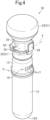
Fig. 4 is a perspective view of a mobile electric device when viewed from diagonally above. -
Fig. 5 is a longitudinal sectional view of the mobile electric device. -
Fig. 6 is an enlarged view of a main part of the mobile electric device inFig. 5 . -
Fig. 7 is an exploded perspective view of the mobile electric device. -
Fig. 8 is a perspective view showing a state immediately before a connectable electric equipment is attached to the mobile battery device. - Hereinafter, a mobile battery device of the present invention will be described on the basis of
Fig. 1 to Fig. 3 . The mobile battery device of this embodiment is used as a direct-current power source necessary when connected with an electric equipment for use of the electric equipment. The mobile battery device is mainly used in the outdoor, but can be used inside the room. - As shown in
Fig. 1 andFig. 2 , the mobile battery device 1 includes abody case 2, and acap part 3 that is detachably attached to thebody case 2 to cover anopening 2A (seeFig. 2 ) of thebody case 2. The mobile battery device 1 further includes acoupling member 4 having one end configured to be attached to thebody case 2. Thecap part 3 is rotatably coupled to the other end of thecoupling member 4. Thereby, it is possible to prevent thecap part 3 from being lost when thecap part 3 is detached from thebody case 2. The opening 2A includes twoopenings Fig. 3 ) into which afirst USB terminal 8 and a second USB terminal 9 (described later) are inserted to be supported. - The
body case 2 is made of a synthetic resin (or can be made of, for example, wood or metal). Thebody case 2 has a bottomed cylindrical shape elongated in an axial direction and includes ahousing space 2K (seeFig. 2 ) for housing asecondary battery 5. As is also shown inFig. 3 , thesecondary battery 5 is covered with acover member 6 that is made of a silicon resin or formed by a material having an elasticity such as an elastomer resin or a synthetic rubber and that has a large number ofholes 6A formed therein. Thecover member 6 is configured to moderate impact force applied to thesecondary battery 5 to thereby prevent breakage of thesecondary battery 5. Thecover member 6 covering thesecondary battery 5 is additionally covered with aprotection case 7 that can be divided in a radial direction into two pieces. - As is also shown in
Fig. 3 , thebody case 2 includes a battery-side connection part 11 at a certain position (at one end in a longitudinal direction (i.e., axial direction) as an example of this embodiment). The battery-side connection part 11 has a lateralside wall part 10 protruding upward from an upper surface of aflange 10F formed in thebody case 2. The lateralside wall part 10 includes thefirst USB terminal 8 and thesecond USB terminal 9 inside thereof. Thefirst USB terminal 8 is an input-output terminal that enables not only the input of the power for charging thesecondary battery 5, but also the output of the power of thesecondary battery 5 to a connectable electric equipment 21 (seeFig. 5 ). Thesecond USB terminal 9 is an output terminal for outputting the power of thesecondary battery 5 to the connectable electric equipment 21 (seeFig. 5 ). Thefirst USB terminal 8 and thesecond USB terminal 9 each are a battery-side terminal. The battery-side connection part 11 is connectable with a USB connector 27 (seeFig. 6 ) that is an equipment-side terminal of an electric equipment-side connection part 34 to be described later. Various types of power sources such as a handy-type battery or a fordable solar panel are used as an external power source for charging thesecondary battery 5. - As shown in
Fig. 1 andFig. 2 , thebody case 2 includes two case parts (i.e.,first case part 12, second case part 13) in the longitudinal direction (i.e., axial direction) of thebody case 2. Thefirst case part 12 has a bottomed cylindrical shape with abottom part 12A having an arc shape. Thesecond case part 13 is fitted and fixed to anopening part 12B of the first case part 12 (seeFig. 3 ). Thebody case 2 further includes aseal member 14 at a connection part between thefirst case part 12 and thesecond case part 13, theseal member 14 having an annular shape and elasticity for sealing the connection part. Thesecond case part 13 has the lateralside wall part 10 at one end on the opposite side to thefirst case part 12. The mobile battery device 1 can be configured to be kept in upright position by, for example, a tripod stand through threaded engagement between ascrew hole 12N provided at a center (seeFig. 2 ) of thebottom part 12A and a threaded shaft provided at the central portion of the tripod stand (not shown) to be threaded into thescrew hole 12N. - As shown in
Fig. 1 , thesecond case part 13 includes aswitch 15, apower lamp 16, and a plurality of indicators 17 (5 indicators inFig. 1 ). Theswitch 15 is long pressed to thereby switch the connection state from a connected state, in which thesecondary battery 5 and the twoUSB terminals secondary battery 5 and the twoUSB terminals secondary battery 5 is started to be charged or the connectableelectric equipment 21 is activated (for example, a light-emitting diode 30 to be described later is lit up) only by the electrical connection between theUSB connector 27 of the connectableelectric equipment 21 and either one of twoUSB terminals switch 15 is long pressed for a certain time or more to thereby stop the started charging or turn off the light-emittingdiode 30 that is being lit up. At this time, arotary switch 32 to be described later needs to be kept in an ON state. The plurality ofindicators 17 are provided to indicate the residual capacity of thesecondary battery 5. In theindicators 17, the more the number of lights, the higher the residual capacity. - The
cap part 3 is made of a synthetic resin (or can be made of, for example, wood or metal). As shown inFig. 2 andFig. 3 , thecap part 3 includes atop part 18 having a circular plate shape, and askirt part 19 having a cylindrical shape and extending downward from an outer circumferential edge of thetop part 18. Thetop part 18 has alocking part 18A protruding from its upper surface. The lockingpart 18A locks the other end of thecoupling member 4 while the other end passes through the lockingpart 18A (seeFig. 2 ). The lockingpart 18A includes acolumnar shaft part 18a that passes through ahole 4A formed on the other end of thecoupling member 4 and extending upward, and alarge diameter part 18b that radially extends from the upper end of theshaft part 18a and has a larger diameter than theshaft part 18a. Thelarge diameter part 18b is configured to prevent the other end of thecoupling member 4 from slipping out of theshaft part 18a. Theskirt part 19 has an inner surface provided with a threadedpart 19N to be described later. Thecoupling member 4 has ahole 4B at one end. The one end of thecoupling member 4 is attached to thesecond case part 13 with thesecond case part 13 passing through thehole 4B. - As shown in
Fig. 2 , the lateralside wall part 10 has an outer surface provided with a female (or male) threadedpart 10N, with which the male (or female) threadedpart 19N formed on theskirt part 19 of thecap part 3 can come into threaded engagement. The lateralside wall part 10 includes a water stop structure to stop water between thecap part 3 and the lateralside wall part 10 in a state where the threadedpart 19N of thecap part 3 is in threaded engagement with the threadedpart 10N of the lateralside wall part 10. - The water stop structure is composed of an
annular seal member 20 having a circular shape in a cross section and having elasticity. Theseal member 20 is locked by an annular-shapedgroove 10M that is formed on the outer surface of the lateralside wall part 10. Accordingly, thecap part 3 is rotated to cause the threadedpart 19N of thecap part 3 to be brought into threaded engagement with the threadedpart 10N (i.e., battery-side slip-out prevention part to be described later). This treaded engagement enables theseal member 20 to reliably stop water between thecap part 3 and the lateralside wall part 10, while enabling thecap part 3 to be fixed to the lateralside wall part 10 so as not to slip out of the lateralside wall part 10. - Next, the description will be given on a connectable
electric equipment 21 that is detachably mounted to the body case. - As shown in
Fig. 8 , the connectableelectric equipment 21 includes anelectric equipment 23 that operates by receiving power, and an electric equipment-side connection part 34 that has theUSB connector 27. The electric equipment-side connection part 34 is connected to a certain place (in the example of this embodiment, one end (a lower end inFig. 8 ) of the electric equipment 23). TheUSB connector 27 is an equipment-side terminal that is electrically connectable to thesecond USB terminal 9 that is a battery-side terminal of the battery-side connection part 11, and located in the electric equipment-side connection part 34, while protruding downward. The mobileelectric device 33 of this embodiment (seeFig. 5 ) includes acylindrical relay member 22 for connecting between the battery-side connection part 11 and the electric equipment-side connection part 34. That is, the mobileelectric device 33 includes the mobile battery device 1, the connectableelectric equipment 21, and the relay member 22 (seeFig. 5 ). The electric equipment-side connection part 34 is formed by a side wall part that protrudes downward from the lower end of abody part 24 to be described later and having a diameter somewhat smaller than that of thebody part 24. The USB connector (i.e., equipment-side terminal) 27 protrudes downward from the electric equipment-side connection part 34. The connectableelectric equipment 21 further includes a lockingpart 28 to be described later, which is an electric equipment-side slip-out prevention part. The lockingpart 28 is located to face the lateral side of the electric equipment-side connection part 34. - The
relay member 22 is made of a synthetic resin (or can be made of, for example, wood or metal). As shown inFig. 5 andFig. 6 , therelay member 22 has an inner surface and an outer surface, the inner surface being provided with a threaded part (i.e., relaying battery-side slip-out prevention part) 22N configured to come into threaded engagement with the threaded part (i.e., battery-side slip-out prevention part) 10N provided on the outer surface of the lateralside wall part 10 of thebody case 2, and the outer surface being provided with a locked part (i.e., relaying electric equipment-side slip-out prevention part) 22A configured to be locked by a locking part (i.e., electric equipment-side slip-out prevention part) 28 provided in theelectric equipment 23. The lockedpart 22A is an annular-shaped recess formed on the outer surface on the upper side of therelay member 22. The recess has aninclined surface 22a that is located on the lower side of the recess to come close to the inward side in the radial direction toward the upper side, aflat surface 22b extending straight upward from the upper end of theinclined surface 22a, and ahorizontal surface 22c extending straight toward the outer side in the radial direction from the upper end of theflat surface 22b. - The
electric equipment 23 includes acylindrical body part 24 that is mounted to the upper end of thebody case 2 via the relay member, anequipment part 25 that is connected to the upper end while being held in a water stopped state (while being sealed), and that has a larger diameter than the diameter of thebody part 24, and the electric equipment-side connection part 34 that extends downward from the lower end of thebody part 24 and that is connected to the battery-side connection part 11. - The mobile electric device 33 (see
Fig. 5 ) includes a water stop structure to stop water between therelay member 22 and thebody case 2 and between therelay member 22 and theelectric equipment 23. Specifically, as shown inFig. 5 andFig. 6 , the water stop structure includes a seal member (first seal member) 26 having an annular shape in a cross section and having elasticity disposed in anannular groove 24M formed at the upper end of the electric equipment-side connection part 34 of theelectric equipment 23, and the seal member (second seal member) 20 having an annular shape in a cross section and having elasticity disposed in theannular groove 10M formed in the lateralside wall part 10. Accordingly, thefirst seal member 26 is press-contacted to an area between therelay member 22 and the electric equipment-side connection part 34 of theelectric equipment 23 to seal between therelay member 22 and the electric equipment-side connection part 34, and thesecond seal member 20 is press-contacted to an area between therelay member 22 and the battery-side connection part 11 to seal between therelay member 22 and the battery-side connection part 11. - The
first seal member 26 is an electric equipment-side water-stop part provided in the electric equipment-side connection part 34 in order to form the water stop structure at a connection portion between the battery-side connection part 11 and the electric equipment-side connection part 34. A relaying electric equipment-side water-stop part that engages or abuts with the first seal member (i.e., electric equipment-side water-stop part) 26 to form the water stop structure is a surface (area) on the upper side of aninner side surface 22e of the relay member 22 (seeFig. 6 ). Thesecond seal member 20 is a battery-side water-stop part provided in the battery-side connection part 11 in order to form the water stop structure at a connection portion between the electric equipment-side connection part 34 and the battery-side connection part 11. A relaying battery-side water-stop part that engages or abuts with the second seal member (i.e., battery-side water-stop part) 20 to form the water stop structure is a surface (area) on the lower side of theinner side surface 22e of therelay member 22. - As shown in
Fig. 8 , the electric equipment-side connection part 34 includes theUSB connector 27 that is fixed to thebod part 24, while protruding downward from the lower end of thebody part 24. TheUSB connector 27 is an equipment-side terminal configured to be inserted into thesecond USB terminal 9 so as to be electrically connectable to thesecond USB terminal 9. The electric equipment-side connection part 34 includesprotrusions 24T at 3 places in a peripheral direction on the peripheral edge of the lower end. Theprotrusions 24T have a substantially trapezoidal shape in a bottom view and fit in and locked byrecesses 2B having a substantially trapezoidal shape in plan view that are recessed radially inward and formed at 3 places in the peripheral direction on the upper end of the lateral side wall part 10 (i.e., battery-side connection part 11) of thebody case 2. Accordingly, theprotrusions 24T of thebody part 24 are locked to therecesses 2B of the lateral side wall part 10 (i.e., battery-side connection part 11), so that the connectableelectric equipment 21 can be stably mounted to (attached to) the upper end of the lateral side wall part 10 (i.e., battery-side connection part 11), while the connectableelectric equipment 21 can be prevented from rotating relative to the body case 2 (i.e., battery-side connection part 11). Theprotrusions 24T of the electric equipment-side connection part 34 (the number of theprotrusions 24T inFig. 8 is 3, but can be any number such as 1, 2, or 4 or more) and therecesses 2B of the lateral side wall part 10 (i.e., battery-side connection part 11) to which theprotrusions 24T are locked together form a rotation prevention mechanism that prevents the rotation of the battery-side terminal 9 and the equipment-side terminal 27 in a connection direction. - As shown in
Fig. 4 to Fig. 8 , thebody part 24 of theelectric equipment 23 includes aU-shaped frame portion 24A that protrudes radially outward from one place in the peripheral direction of the outer surface, and a lockingpart 28 that is attached to theframe portion 24A to be pivotally movable around a horizontal axis X on the lower end of theframe portion 24A. The lockingpart 28 is configured to come into locking engagement with the lockedpart 22A of therelay member 22 in the state where theelectric equipment 23 is mounted to thebody case 2, to thereby prevent the electric equipment-side connection part 34 of the connectableelectric equipment 21 from slipping out of the battery-side connection part 11 of the mobile battery device 1 via therelay member 22. Thereby, it is possible to prevent the damage of theelectric equipment 23 due to the slipping out of thebody case 2. - The locking
part 28 is made of a synthetic resin (or can be made of, for example, wood or metal). As shown inFig. 4 to Fig. 8 , the lockingpart 28 is formed into a vertically elongated shape and has anupper side portion 28A, alower side portion 28B, and abent portion 28C. Theupper side portion 28A is formed into a rectangular shape vertically elongated to enter theframe part 24A. Thelower side portion 28B is located radially inward of theupper side portion 28A via thebent portion 28C that is bent radially inward, and extend straight downward therefrom. Thelower side portion 28B has aclaw 29 on the inner surface of the lower end. - As shown in
Fig. 6 , theclaw 29 has aninclined surface 29a located radially inward as it advances upward from the lower end, avertical surface 29b extending straight upward from the upper end of theinclined surface 29a, and ahorizontal surface 29c extending radially outward from the upper end of thevertical surface 29b. Thehorizontal surface 29c comes into contact with ahorizontal surface 22c of the lockedpart 22A, to thereby prevent theelectric equipment 23 from moving in a direction (upward) to disengage from thebody case 2. Further, atongue piece 28a is integrally formed with a radially inner surface of theupper side portion 28A to serve as an urging part that comes into contact with the outer surface of thebody part 24 to urge theupper side portion 28A to the side away from thebody part 24A. - The
tongue piece 28a extends to moderately curve so as to come close to the radially inner side as it advances upward from a substantially central portion in the vertical direction of the radially inner surface of theupper side portion 28A. InFig. 5 , thetongue piece 28a urges the lockingpart 28 to cause it to turn around the horizontal axis X (seeFig. 5 ) in anticlockwise direction. This urging force enables theclaw 29 of the lockingpart 28 to be kept locked to the lockedpart 22A of therelay member 22. When the locking is to be released, the upper part of the lockingpart 28 is pressed radially inward to turn theclaw 29 radially outward around the horizontal axis X. Thereby, the locking is released. - As shown in
Fig. 5 , theequipment part 25 includes abase plate 31 to which a plurality of light-emittingdiodes 30 are fixed. Thebase plate 31 and theUSB connector 27 are connected to each other with wire (not shown). Accordingly, when the connectableelectric equipment 21 is mounted to the mobile battery device 1 via therelay member 22 with theUSB connector 27 being connected to thesecond USB terminal 9, and therotary switch 32 provided in the connectable electric equipment 21 (seeFig. 4 ) is in ON, the plurality of light-emittingdiodes 30 light up. Thereby, the mobile battery device 1 and the connectableelectric equipment 21 connected to each other can be used as a lighting instrument that is an example of the mobile electric device. When the light-emittingdiodes 30 are to be turned out, the rotary switch 32 (seeFig. 4 ) is rotated, or theswitch 15 is long pressed. Thereby, the light-emittingdiodes 30 are turned OFF. In this embodiment, the lighting instrument (i.e., the mobile electric device) is formed by mounting the connectableelectric equipment 21 to the mobile battery device 1, but the mobile electric device such as a flush device or an electric fan can be formed by mounting a flush, a fan, or the like to the mobile battery device 1. - In the case of forming the mobile
electric device 33 shown inFig. 4 from the state inFig. 8 , the relay member is first brought into threaded engagement with the threadedpart 10N of the lateralside wall part 10 at the upper end of thebody case 2, to cause thesecond seal member 20 to seal between therelay member 22 and the lateralside wall part 10. Subsequently, theUSB connector 27 of theelectric equipment 23 is connected to thesecond USB terminal 9 of the mobile battery device 1. At this time, the electric equipment-side connection part 34 of the connectableelectric equipment 21 enters inside therelay member 22 to cause thefirst seal member 26 to seal between the electric equipment-side connection part 34 and therelay member 22. Simultaneously, the lockingpart 28 of the connectableelectric equipment 21 is pressed to the lockedpart 22A of therelay member 22 in a direction in which the lockingpart 28 locks the lockedpart 22A of therelay member 22. Thereby, the connectableelectric equipment 21 is prevented from slipping out of the mobile battery device 1, and water is prevented from entering between the connectableelectric equipment 21 and the mobile battery device 1 by thefirst seal member 26 and thesecond seal member 20. - Accordingly, when the battery-
side connection part 11 and the electric equipment-side connection part 34 are connected to each other via therelay member 22, the relaying battery-side slip-out prevention part 22N engages with the battery-side slip-out prevention part 10N, so that the battery-side connection part 11 can be prevented from slipping out of therelay member 22. Further, the electric equipment-side slip-out prevention part 28 engages with the relaying electric equipment-side slip-out prevention part 22A so that therelay member 22 prevents the connectableelectric equipment 21 from slipping out of the mobile battery device 1. That is, therelay member 22 can prevent the battery-side connection part 11 from slipping out of the electric equipment-side connection part 34. Moreover, with the configuration having the electric equipment-side water-stop part 26 engaging or abutting with the relaying battery-side water-stop part (i.e., surface on the upper side of theinner surface 22e of the relay member 22), the penetration of water through a gap between the battery-side connection part 11 and therelay member 22 can be prevented. Further, the battery-side water-stop part 20 engages or abuts with the relaying electric equipment-side water-stop part (i.e., surface on the lower side of theinner surface 22e of the relay member 22) so that the penetration of water through a gap between the electric equipment-side connection part 34 and therelay member 22 can be prevented. That is, therelay member 22 can prevent the penetration of water from a gap between the battery-side connection part 11 and the electric equipment-side connection part 34. In this embodiment, it is a matter of course that the water-stop part prevents the penetration of not only water, but also dirt or dust. - The present invention is not limited to the aforementioned embodiment, and various modifications can be made without departing from the gist of the present invention.
- According to the connectable
electric equipment 21 of the aforementioned embodiment, theUSB connector 27 of theelectric equipment 23 is kept fixed to theelectric equipment 23, while the present invention can be configured such that theUSB connector 27 is connected to theelectric equipment 23 with, for example, an extensible or retractable wiring to allow theUSB connector 27 to be freely movable. According to this configuration, it is possible to prevent the breakage of thesecond USB terminal 9 because theUSB connector 27 does not rotate even when theelectric equipment 23 rotates in a state where theUSB connector 27 is connected to thesecond USB terminal 9 of thebody case 2. Accordingly, in this configuration, the relay member is omitted, and theelectric equipment 23 and thebody case 2 are provided with a water stop structure and a slip-out prevention structure to prevent the penetration of water and the slip-out in a state where theelectric equipment 23 is mounted to thebody case 2. - Also in this embodiment, the
electric equipment 23 includes therotary switch 32, but can include a push-button switch instead. Further, the mobileelectric device 33 can be configured such that the operation and non-operation of theelectric equipment 23 can be switched by ON/OFF of a switch on thebody case 2 side, while therotary switch 32 of theelectric equipment 23 is omitted. - Further, the mobile battery device of the aforementioned embodiment houses one
secondary battery 5, but can be configured to house any number, such as two or more secondary batteries. In this case, the shape and size of thebody case 2 for housing two or more secondary batteries are changed. - Further, although the mobile battery device 1 of the aforementioned embodiment includes an input terminal (i.e., power receiving terminal) to receive power for charging the secondary battery, it can be configured to omit the input terminal. In this case, the body case is configured to allow a non-rechargeable battery to be detachably mounted to the body case, in which the battery with the remaining battery capacity being eliminated or reduced is removed from the body case, and a new battery is mounted to the body case.
- In order to describe the present invention, the present invention is appropriately and sufficiently explained through the embodiment with reference to the drawings in the above description. However, it should be recognized that the revision and/or modification of the aforementioned embodiment can be easily achieved by those skilled in the art. Accordingly, the revised form or the modified form carried out by those skilled in the art is interpreted to be included in the scope of the claimed invention as long as the revised form or the modified form is not located at the level departing the scope of the claimed invention described in the claims.
-
- 1: Mobile battery device
- 2: Body case
- 2A: Opening
- 2B: Recess
- 2K: Housing space
- 2a, 2b: Opening
- 3: Cap part
- 4: Coupling member
- 4A, 4B: Hole
- 5: Secondary battery
- 6: Cover member
- 6A: Hole
- 7: Protection case
- 8: First USB terminal
- 9: Second USB terminal (battery-side terminal)
- 10: Lateral side wall part
- 10F: Flange
- 10M: Groove
- 10N: Threaded part (battery-side slip-out prevention part)
- 11: Battery-side connection part
- 12: First case part
- 13: Second case part
- 12A: Bottom part
- 12B: Opening part
- 12N: Screw hole
- 14: Seal member
- 15: Switch
- 16: Power lamp
- 17: Indicator
- 18: Top part
- 18A: Locking part
- 18a: Shaft part
- 18b: Large diameter part
- 19: Skirt part
- 19N: Threaded part
- 20: Seal member (Second seal member, battery-side water-stop part)
- 21: Connecting electric equipment
- 22: Relay member
- 22e: Inner surface
- 22A: Locked part (relaying electric equipment-side slip-out prevention part)
- 22N: Threaded part (relaying battery-side slip-out prevention part)
- 22a: Inclined surface
- 22b: Flat surface
- 22c: Horizontal surface
- 23: Electric equipment
- 24: Body part
- 24A: Frame portion
- 24M: Groove
- 24T: Protrusion
- 25: Equipment part
- 26: Seal member (first seal member, electric equipment-side water-stop part)
- 27: USB connector (equipment-side terminal)
- 28: Locking part (electric equipment-side slip-out prevention part)
- 28A: Upper side portion
- 28B: Lower side portion
- 28C: Bent portion
- 28A: Tongue piece
- 29: Claw
- 29A: Inclined surface
- 29a: Inclined surface
- 29b: Vertical surface
- 29c: Horizontal surface
- 30: Light-emitting diode
- 31: Base plate
- 32: Rotary switch
- 33: Mobile electric device
- 34: Electric equipment-side connection part
- X: Horizontal axis
Claims (3)
- A mobile battery device comprising a body case having a housing space for housing a battery, the body case comprising, at certain places:a battery-side terminal that serves as an output terminal of the battery; anda battery-side connection part that is connectable to an electric equipment-side connection part of an electric equipment that is configured to operate by receiving power of the battery, the electric equipment-side connection part comprising an equipment-side terminal that is electrically connectable to the battery-side terminal,the battery-side connection part comprising:a battery-side slip-out prevention part for forming an slip-out prevention structure at a connection portion between the battery-side connection part and the equipment-side connection part; anda battery-side water-stop part for forming a water stop structure at the connection portion between the battery-side connection part and the equipment-side connection part.
- A connectable electric equipment comprising an electric equipment that is connectable to a mobile battery device housing a battery and that operates by receiving power of the battery,the electric equipment comprising, at a certain place, an electric equipment-side connection part, whereinthe electric equipment-side connection part is connectable to a battery-side connection part of the mobile battery device,the electric equipment-side connection part comprises an equipment-side terminal that is electrically connectable to a battery-side terminal that serves as an output terminal of the battery of the battery-side connection part, andthe electric equipment-side connection part comprises:an equipment-side slip-out prevention part for forming a slip-out prevention structure at a connection portion between the electric equipment-side connection part and the battery-side connection part; andan equipment-side water-stop part for forming a water stop structure at the connection portion between the electric equipment-side connection part and the battery-side connection part.
- A mobile electric device comprising:a mobile battery device comprising a body case having a housing space for housing a battery; anda connectable electric equipment comprising an electric equipment that is connectable to the mobile battery device and operates by receiving power of the battery, whereinthe body case of the mobile battery device comprises, at certain places, a battery-side terminal that serves as an output terminal of the battery, and a battery-side connection part,the electric equipment of the connectable electric equipment comprises, at a certain place, an electric equipment-side connection part comprising an electric equipment-side terminal that is electrically connectable to the battery-side terminal,the battery-side connection part comprises:a battery-side slip-out prevention part that is connectable to the electric equipment-side connection part and forms a slip-out prevention structure at a connection portion between the battery-side connection part and the equipment-side connection part; anda battery-side water-stop part for forming a water stop structure at the connection portion between the battery-side connection part and the equipment-side connection part, andthe electric equipment-side connection part comprises:an electric equipment-side slip-out prevention part for forming the slip-out prevention structure; andan electric equipment-side water-stop part for forming the water stop structure.
Applications Claiming Priority (2)
| Application Number | Priority Date | Filing Date | Title |
|---|---|---|---|
| JP2021118276A JP7015958B1 (en) | 2021-07-16 | 2021-07-16 | Portable battery equipment, connected electrical equipment, and portable electrical equipment |
| PCT/JP2022/025885 WO2023286597A1 (en) | 2021-07-16 | 2022-06-29 | Mobile battery device, connectable electric apparatus, and mobile electrical device |
Publications (2)
| Publication Number | Publication Date |
|---|---|
| EP4372884A1 true EP4372884A1 (en) | 2024-05-22 |
| EP4372884A4 EP4372884A4 (en) | 2025-01-15 |
Family
ID=80808977
Family Applications (1)
| Application Number | Title | Priority Date | Filing Date |
|---|---|---|---|
| EP22841941.2A Pending EP4372884A4 (en) | 2021-07-16 | 2022-06-29 | Mobile battery device, connectable electric apparatus, and mobile electrical device |
Country Status (6)
| Country | Link |
|---|---|
| US (1) | US20240234880A1 (en) |
| EP (1) | EP4372884A4 (en) |
| JP (1) | JP7015958B1 (en) |
| KR (1) | KR20240032906A (en) |
| CN (1) | CN115836433A (en) |
| WO (1) | WO2023286597A1 (en) |
Families Citing this family (1)
| Publication number | Priority date | Publication date | Assignee | Title |
|---|---|---|---|---|
| CN222146638U (en) * | 2024-04-07 | 2024-12-10 | 深圳得道未来科技有限公司 | Power supply mechanism with threaded connection |
Family Cites Families (15)
| Publication number | Priority date | Publication date | Assignee | Title |
|---|---|---|---|---|
| US4203150A (en) * | 1977-10-18 | 1980-05-13 | Shamlian Ralph B | Rechargeable modular component light with quick-disconnect connection |
| JPH06176745A (en) * | 1992-12-04 | 1994-06-24 | Toto Ltd | Battery box |
| JPH1196802A (en) * | 1997-04-11 | 1999-04-09 | Wilson Greatbatch Ltd | Flashlight having low magnetic susceptibility |
| JP3855870B2 (en) * | 2002-07-16 | 2006-12-13 | 松下電器産業株式会社 | Portable power system |
| JP4843270B2 (en) * | 2004-12-24 | 2011-12-21 | グローブライド株式会社 | Battery device for fishing |
| US7771077B2 (en) * | 2006-05-03 | 2010-08-10 | Miller Rodney H | Mechanism and cap for an electrically powered device, electrically powered device and lighting device with such a cap |
| JP2012205371A (en) * | 2011-03-24 | 2012-10-22 | Sanyo Electric Co Ltd | Portable power supply device |
| EP2885113B1 (en) * | 2012-08-14 | 2024-11-20 | Koki Holdings Co., Ltd. | Electric device, battery pack, and electric apparatus |
| US9239161B2 (en) * | 2013-05-07 | 2016-01-19 | Surefire Llc. | Coupling for a sealed, lockable battery pack and power adapter and a high intensity search light |
| WO2015039275A1 (en) * | 2013-09-17 | 2015-03-26 | 吉瑞高新科技股份有限公司 | Battery component and electronic cigarette |
| JP2017168184A (en) * | 2014-08-07 | 2017-09-21 | 三洋電機株式会社 | Power supply device |
| WO2017073004A1 (en) * | 2015-10-30 | 2017-05-04 | ソニー株式会社 | Battery pack, electric apparatus, and charging apparatus |
| US20190181407A1 (en) * | 2017-12-11 | 2019-06-13 | Romeo Systems, Inc. | Shock absorbant and water-resistant portable energy storage device |
| US10605418B2 (en) * | 2018-07-26 | 2020-03-31 | E. Mishan & Sons, Inc. | Rechargeable flashlight |
| JP7370259B2 (en) | 2020-01-27 | 2023-10-27 | 東京エレクトロン株式会社 | Substrate processing equipment |
-
2021
- 2021-07-16 JP JP2021118276A patent/JP7015958B1/en active Active
-
2022
- 2022-06-29 US US18/009,085 patent/US20240234880A1/en active Pending
- 2022-06-29 WO PCT/JP2022/025885 patent/WO2023286597A1/en not_active Ceased
- 2022-06-29 EP EP22841941.2A patent/EP4372884A4/en active Pending
- 2022-06-29 CN CN202280005068.1A patent/CN115836433A/en active Pending
- 2022-06-29 KR KR1020247003748A patent/KR20240032906A/en active Pending
Also Published As
| Publication number | Publication date |
|---|---|
| JP2023013839A (en) | 2023-01-26 |
| EP4372884A4 (en) | 2025-01-15 |
| JP7015958B1 (en) | 2022-02-03 |
| CN115836433A (en) | 2023-03-21 |
| US20240234880A1 (en) | 2024-07-11 |
| WO2023286597A1 (en) | 2023-01-19 |
| KR20240032906A (en) | 2024-03-12 |
Similar Documents
| Publication | Publication Date | Title |
|---|---|---|
| US9239161B2 (en) | Coupling for a sealed, lockable battery pack and power adapter and a high intensity search light | |
| CN104930473B (en) | Lamp fixing device | |
| JP4895037B2 (en) | Guide light | |
| US11276957B2 (en) | Electrical connection point | |
| CN107606588A (en) | A kind of light fixture fixed seat and light fitting connecting seat and a kind of lamp fixing device | |
| TW201338300A (en) | Power supply control device | |
| EP4372884A1 (en) | Mobile battery device, connectable electric apparatus, and mobile electrical device | |
| US10316851B2 (en) | Connector for electrical devices | |
| CN110630939A (en) | Ceiling lamp and method of use thereof | |
| JP3199822U (en) | Charging socket | |
| KR200493089Y1 (en) | Lighting with easy connection and separation of switched mode power supply | |
| US7374309B2 (en) | Waterproof, miniature light-emitting diode (LED) device | |
| US20130155662A1 (en) | Modular Lighting System | |
| HK40087557A (en) | Mobile battery device, connectable electric apparatus, and mobile electrical device | |
| JP2016066496A (en) | Lighting device | |
| JP2016066498A (en) | Luminaire | |
| AU2021107525A4 (en) | A housing assembly for an emergency light and an emergency light including the same | |
| JP2604453Y2 (en) | Lighting fixture mounting device | |
| KR200368350Y1 (en) | Battery cell for lantern having emergency bulb | |
| JP6534575B2 (en) | Straight tube lamp and lighting device | |
| JP6701537B2 (en) | Lighting equipment | |
| KR101685988B1 (en) | Power distribution structure for LED laid wall ing apartment house | |
| JP4258628B2 (en) | Lighting device | |
| TWI614389B (en) | Locking device with charging module | |
| KR200353049Y1 (en) | An apparatus for mounting lighting |
Legal Events
| Date | Code | Title | Description |
|---|---|---|---|
| STAA | Information on the status of an ep patent application or granted ep patent |
Free format text: STATUS: THE INTERNATIONAL PUBLICATION HAS BEEN MADE |
|
| PUAI | Public reference made under article 153(3) epc to a published international application that has entered the european phase |
Free format text: ORIGINAL CODE: 0009012 |
|
| STAA | Information on the status of an ep patent application or granted ep patent |
Free format text: STATUS: REQUEST FOR EXAMINATION WAS MADE |
|
| 17P | Request for examination filed |
Effective date: 20240131 |
|
| AK | Designated contracting states |
Kind code of ref document: A1 Designated state(s): AL AT BE BG CH CY CZ DE DK EE ES FI FR GB GR HR HU IE IS IT LI LT LU LV MC MK MT NL NO PL PT RO RS SE SI SK SM TR |
|
| DAV | Request for validation of the european patent (deleted) | ||
| DAX | Request for extension of the european patent (deleted) | ||
| A4 | Supplementary search report drawn up and despatched |
Effective date: 20241218 |
|
| RIC1 | Information provided on ipc code assigned before grant |
Ipc: H05K 5/02 20060101ALI20241212BHEP Ipc: H02J 7/00 20060101ALI20241212BHEP Ipc: H01M 50/50 20210101ALI20241212BHEP Ipc: H01M 50/202 20210101ALI20241212BHEP Ipc: H01M 50/247 20210101AFI20241212BHEP |