EP4372750A1 - Method and system for gene expression prediction-based screening of drug-like molecules - Google Patents
Method and system for gene expression prediction-based screening of drug-like molecules Download PDFInfo
- Publication number
- EP4372750A1 EP4372750A1 EP23204631.8A EP23204631A EP4372750A1 EP 4372750 A1 EP4372750 A1 EP 4372750A1 EP 23204631 A EP23204631 A EP 23204631A EP 4372750 A1 EP4372750 A1 EP 4372750A1
- Authority
- EP
- European Patent Office
- Prior art keywords
- molecules
- profiles
- gene expression
- machine learning
- hardware processors
- Prior art date
- Legal status (The legal status is an assumption and is not a legal conclusion. Google has not performed a legal analysis and makes no representation as to the accuracy of the status listed.)
- Pending
Links
Images



Classifications
-
- G—PHYSICS
- G16—INFORMATION AND COMMUNICATION TECHNOLOGY [ICT] SPECIALLY ADAPTED FOR SPECIFIC APPLICATION FIELDS
- G16C—COMPUTATIONAL CHEMISTRY; CHEMOINFORMATICS; COMPUTATIONAL MATERIALS SCIENCE
- G16C20/00—Chemoinformatics, i.e. ICT specially adapted for the handling of physicochemical or structural data of chemical particles, elements, compounds or mixtures
- G16C20/50—Molecular design, e.g. of drugs
-
- G—PHYSICS
- G16—INFORMATION AND COMMUNICATION TECHNOLOGY [ICT] SPECIALLY ADAPTED FOR SPECIFIC APPLICATION FIELDS
- G16B—BIOINFORMATICS, i.e. INFORMATION AND COMMUNICATION TECHNOLOGY [ICT] SPECIALLY ADAPTED FOR GENETIC OR PROTEIN-RELATED DATA PROCESSING IN COMPUTATIONAL MOLECULAR BIOLOGY
- G16B15/00—ICT specially adapted for analysing two-dimensional [2D] or three-dimensional [3D] molecular structures, e.g. structural or functional relations or structure alignment
- G16B15/30—Drug targeting using structural data; Docking or binding prediction
-
- G—PHYSICS
- G16—INFORMATION AND COMMUNICATION TECHNOLOGY [ICT] SPECIALLY ADAPTED FOR SPECIFIC APPLICATION FIELDS
- G16B—BIOINFORMATICS, i.e. INFORMATION AND COMMUNICATION TECHNOLOGY [ICT] SPECIALLY ADAPTED FOR GENETIC OR PROTEIN-RELATED DATA PROCESSING IN COMPUTATIONAL MOLECULAR BIOLOGY
- G16B20/00—ICT specially adapted for functional genomics or proteomics, e.g. genotype-phenotype associations
-
- G—PHYSICS
- G16—INFORMATION AND COMMUNICATION TECHNOLOGY [ICT] SPECIALLY ADAPTED FOR SPECIFIC APPLICATION FIELDS
- G16B—BIOINFORMATICS, i.e. INFORMATION AND COMMUNICATION TECHNOLOGY [ICT] SPECIALLY ADAPTED FOR GENETIC OR PROTEIN-RELATED DATA PROCESSING IN COMPUTATIONAL MOLECULAR BIOLOGY
- G16B25/00—ICT specially adapted for hybridisation; ICT specially adapted for gene or protein expression
- G16B25/10—Gene or protein expression profiling; Expression-ratio estimation or normalisation
-
- G—PHYSICS
- G16—INFORMATION AND COMMUNICATION TECHNOLOGY [ICT] SPECIALLY ADAPTED FOR SPECIFIC APPLICATION FIELDS
- G16B—BIOINFORMATICS, i.e. INFORMATION AND COMMUNICATION TECHNOLOGY [ICT] SPECIALLY ADAPTED FOR GENETIC OR PROTEIN-RELATED DATA PROCESSING IN COMPUTATIONAL MOLECULAR BIOLOGY
- G16B40/00—ICT specially adapted for biostatistics; ICT specially adapted for bioinformatics-related machine learning or data mining, e.g. knowledge discovery or pattern finding
- G16B40/20—Supervised data analysis
-
- G—PHYSICS
- G16—INFORMATION AND COMMUNICATION TECHNOLOGY [ICT] SPECIALLY ADAPTED FOR SPECIFIC APPLICATION FIELDS
- G16C—COMPUTATIONAL CHEMISTRY; CHEMOINFORMATICS; COMPUTATIONAL MATERIALS SCIENCE
- G16C20/00—Chemoinformatics, i.e. ICT specially adapted for the handling of physicochemical or structural data of chemical particles, elements, compounds or mixtures
- G16C20/70—Machine learning, data mining or chemometrics
-
- G—PHYSICS
- G16—INFORMATION AND COMMUNICATION TECHNOLOGY [ICT] SPECIALLY ADAPTED FOR SPECIFIC APPLICATION FIELDS
- G16H—HEALTHCARE INFORMATICS, i.e. INFORMATION AND COMMUNICATION TECHNOLOGY [ICT] SPECIALLY ADAPTED FOR THE HANDLING OR PROCESSING OF MEDICAL OR HEALTHCARE DATA
- G16H70/00—ICT specially adapted for the handling or processing of medical references
- G16H70/40—ICT specially adapted for the handling or processing of medical references relating to drugs, e.g. their side effects or intended usage
Definitions
- the disclosure herein generally relates to screening of drug-like molecules, and, more particularly, to a method and system for machine learning based screening of potential drugs.
- Phenotype-based drug screening requires differential gene expression data of a large number of molecules for different combinations of cell-line, time point and dosage. Experimentally obtaining gene expression data for all these combinations is again a heavily resource intensive process requiring large amount of time and cost.
- Computational prediction models overcome these factors and provide an alternative for initial screening of drug-like small molecules. The technical challenge in conventional methods that use prediction models is that they depend largely on the data processing and representation.
- a processor implemented method is provided.
- a plurality of small molecules and a reference dataset comprising gene expression profiles are received, via one or more hardware processors, as input data.
- a plurality of molecular representations are generated, via the one or more hardware processors, for the plurality of small molecules.
- a Characteristic Distribution (CD) profile of a plurality of gene expressions in the reference dataset is generated.
- CD Characteristic Distribution
- a p-value of the CD profiles of the plurality of gene expressions is calculated, via the one or more hardware processors, wherein the p-value represents quality of the CD profiles.
- a plurality of CD profiles having the p-value exceeding a threshold of p-value are filtered to obtain a plurality of high quality CD profiles of gene expressions, via the one or more hardware processors.
- one or more machine learning models are generated using the plurality of molecular representations and the filtered CD profiles as training data, via the one or more hardware processors.
- one of the machine learning models that has been identified as a best performing model is used for screening a plurality of drug-like molecules.
- the screening includes the following steps. Initially, a dataset comprising a plurality of molecules is received. Further, the CD profile representing gene expression of each of the plurality of molecules is predicted using the best performing model. Further, a reversibility score between each of the predicted CD profiles and a plurality of disease signature expression profiles is determined. Further, one or more molecules are selected from among the plurality of molecules as potential drug-like molecules to treat one or more diseases having a signature among the plurality of disease signature expression profiles, if the determined reversibility score between associated CD profile and disease signature is exceeding a threshold of reversibility score.
- a system in yet another aspect, includes one or more hardware processors, a communication interface, and a memory storing a plurality of instructions.
- the plurality of instructions cause the one or more hardware processors to receive a plurality of small molecules and a reference dataset comprising gene expression profiles, as input data. Further, a plurality of molecular representations are generated, via the one or more hardware processors, for the plurality of small molecules. Further, a Characteristic Distribution (CD) profile of a plurality of gene expressions in the reference dataset is generated. Further, a p-value of the CD profiles of the plurality of gene expressions is calculated, via the one or more hardware processors, wherein the p-value represents quality of the CD profiles.
- CD Characteristic Distribution
- a plurality of CD profiles having the p-value lower than a threshold of p-value are filtered to obtain a plurality of high quality CD profiles of gene expressions, via the one or more hardware processors.
- one or more machine learning models are generated using the plurality of molecular representations and the filtered CD profiles as training data, via the one or more hardware processors.
- the system identifies one of the machine learning models that has been identified as a best performing model for screening a plurality of drug-like molecules, by executing the following steps. Initially, a dataset comprising a plurality of drug-like molecules is received. Further, the CD profile representing gene expression of each of the plurality of drug-like molecules is predicted using the best performing model. Further, a reversibility score between each of the predicted CD profiles and a plurality of disease signature expression profiles is determined. Further, one or more molecules are selected from among the plurality of drug-like molecules as potential drugs to treat one or more diseases having a signature among the plurality of disease signature expression profiles, if the determined reversibility score between associated CD profile and disease signature is exceeding a threshold of reversibility score.
- a non-transitory computer readable medium includes a plurality of instructions, which when executed, cause the one or more hardware processors to initially receive a plurality of small molecules and a reference dataset comprising gene expression profiles as input data. Further, a plurality of molecular representations are generated, via the one or more hardware processors, for the plurality of small molecules. Further, a Characteristic Distribution (CD) profile of a plurality of gene expressions in the reference dataset is generated. Further, a p-value of the CD profiles of the plurality of gene expressions is calculated, via the one or more hardware processors, wherein the p-value represents quality of the CD profiles.
- CD Characteristic Distribution
- a plurality of CD profiles having the p-value exceeding a threshold of p-value are filtered to obtain a plurality of high quality CD profiles of gene expressions, via the one or more hardware processors.
- one or more machine learning models are generated using the plurality of molecular representations and the filtered CD profiles as training data, via the one or more hardware processors.
- the non-transitory computer readable medium causes the one or more hardware processors to identify one of the machine learning models that has been identified as a best performing model and further use it for screening a plurality of drug-like molecules.
- the screening includes the following steps. Initially, a dataset comprising a plurality of small molecules is received. Further, the CD profile representing gene expression of each of the plurality of small molecules is predicted using the best performing model. Further, a reversibility score between each of the predicted CD profiles and a plurality of disease signature expression profiles is determined.
- one or more molecules are selected from among the plurality of small molecules as potential drug-like molecules to treat one or more diseases having a signature among the plurality of disease signature expression profiles, if the determined reversibility score between associated CD profile and disease signature is exceeding a threshold of reversibility score.
- Phenotype-based drug screening requires differential gene expression data of a large number of molecules for different combinations of cell-line, time point and dosage. Experimentally obtaining gene expression data for all these combinations is again a heavily resource intensive process requiring large amount of time and cost.
- Computational prediction models overcome these factors and provide an alternative for initial screening of drug-like small molecules. The technical challenge in conventional methods that use prediction models is that they depend largely on the data processing and representation.
- Method and system disclosed herein provide a small molecule-induced gene expression prediction based approach for generating machine learning models. From among the machine learning models built, one machine learning model is identified as best performing model, which is further used to receive and process a dataset comprising a plurality of drug-like molecules, and perform screening of drugs.
- FIG. 1 through FIG. 5 where similar reference characters denote corresponding features consistently throughout the figures, there are shown preferred embodiments and these embodiments are described in the context of the following exemplary system and/or method.
- FIG. 1 illustrates an exemplary system for generating a data model and for screening drugs, according to some embodiments of the present disclosure.
- the system 100 includes or is otherwise in communication with hardware processors 102, at least one memory such as a memory 104, an I/O interface 112.
- the hardware processors 102, memory 104, and the Input /Output (I/O) interface 112 may be coupled by a system bus such as a system bus 108 or a similar mechanism.
- the hardware processors 102 can be one or more hardware processors.
- the I/O interface 112 may include a variety of software and hardware interfaces, for example, a web interface, a graphical user interface, and the like.
- the I/O interface 112 may include a variety of software and hardware interfaces, for example, interfaces for peripheral device(s), such as a keyboard, a mouse, an external memory, a printer and the like. Further, the I/O interface 112 may enable the system 100 to communicate with other devices, such as web servers, and external databases.
- the I/O interface 112 can facilitate multiple communications within a wide variety of networks and protocol types, including wired networks, for example, local area network (LAN), cable, etc., and wireless networks, such as Wireless LAN (WLAN), cellular, or satellite.
- the I/O interface 112 may include one or more ports for connecting several computing systems with one another or to another server computer.
- the I/O interface 112 may include one or more ports for connecting several devices to one another or to another server.
- the one or more hardware processors 102 may be implemented as one or more microprocessors, microcomputers, microcontrollers, digital signal processors, central processing units, node machines, logic circuitries, and/or any devices that manipulate signals based on operational instructions.
- the one or more hardware processors 102 is configured to fetch and execute computer-readable instructions stored in the memory 104.
- the memory 104 may include any computer-readable medium known in the art including, for example, volatile memory, such as static random-access memory (SRAM) and dynamic random-access memory (DRAM), and/or non-volatile memory, such as read only memory (ROM), erasable programmable ROM, flash memories, hard disks, optical disks, and magnetic tapes.
- volatile memory such as static random-access memory (SRAM) and dynamic random-access memory (DRAM)
- non-volatile memory such as read only memory (ROM), erasable programmable ROM, flash memories, hard disks, optical disks, and magnetic tapes.
- ROM read only memory
- erasable programmable ROM erasable programmable ROM
- flash memories hard disks
- optical disks optical disks
- magnetic tapes magnetic tapes
- the plurality of modules 106 include programs or coded instructions that supplement applications or functions performed by the system 100 for executing different steps involved in the process of switching between hardware accelerators for model training, being performed by the system 100.
- the plurality of modules 106 can include routines, programs, objects, components, and data structures, which performs particular tasks or implement particular abstract data types.
- the plurality of modules 106 may also be used as, signal processor(s), node machine(s), logic circuitries, and/or any other device or component that manipulates signals based on operational instructions.
- the plurality of modules 106 can be used by hardware, by computer-readable instructions executed by the one or more hardware processors 102, or by a combination thereof.
- the plurality of modules 106 can include various sub-modules (not shown).
- the plurality of modules 106 may include computer-readable instructions that supplement applications or functions performed by the system 100 for the switching between hardware accelerators for model training.
- the data repository (or repository) 110 may include a plurality of abstracted piece of code for refinement and data that is processed, received, or generated as a result of the execution of the plurality of modules in the module(s) 106.
- the data repository 110 is shown internal to the system 100, it will be noted that, in alternate embodiments, the data repository 110 can also be implemented external to the system 100, where the data repository 110 may be stored within a database (repository 110) communicatively coupled to the system 100.
- the data contained within such external database may be periodically updated. For example, new data may be added into the database (not shown in FIG. 1 ) and/or existing data may be modified and/or non-useful data may be deleted from the database.
- the data may be stored in an external system, such as a Lightweight Directory Access Protocol (LDAP) directory and a Relational Database Management System (RDBMS).
- LDAP Lightweight Directory Access Protocol
- RDBMS Relational Database Management System
- FIG. 2 is a flow diagram depicting steps involved in the process of generating a machine learning model for screening drugs, by the system of FIG. 1 , according to some embodiments of the present disclosure.
- the system 100 comprises one or more data storage devices or the memory 104 operatively coupled to the processor(s) 102 and is configured to store instructions for execution of steps of the method 200 by the processor(s) or one or more hardware processors 102.
- the steps of the method 200 of the present disclosure will now be explained with reference to the components or blocks of the system 100 as depicted in FIG. 1 and the steps of flow diagram as depicted in FIG. 2 .
- process steps, method steps, techniques or the like may be described in a sequential order, such processes, methods, and techniques may be configured to work in alternate orders. In other words, any sequence or order of steps that may be described does not necessarily indicate a requirement that the steps to be performed in that order.
- the steps of processes described herein may be performed in any order practical. Further, some steps may be performed simultaneously.
- the system 100 receives, from one or more associated sources, a plurality of small molecules and a reference dataset comprising gene expression profiles, via the one or more hardware processors 102, as input data.
- Small molecule is a term used to indicate organic compound having low molecular weight ( ⁇ 1000 daltons) that may regulate a biological process, with a size on the order of 1 nm.
- the reference database used maybe library of integrated network-based cellular signatures (LINCS) L1000 that provides differential gene expression profiles of chemically perturbed human cell lines based on Luminex bead technology.
- LINCS integrated network-based cellular signatures
- the system 100 generates a plurality of molecular representations, via the one or more hardware processors, for the plurality of small molecules.
- Molecular representation reduces the dimensionality of a molecular structure into a chemically meaningful format that relays important chemical information.
- the system 100 generates the molecular representations by representing the plurality of small molecules using one of a Simplified Molecular-Input Line-Entry System (SMILES) and an Extended-Connectivity Fingerprints (ECFPs). In an embodiment, any other suitable technique maybe used.
- SILES Simplified Molecular-Input Line-Entry System
- ECFPs Extended-Connectivity Fingerprints
- any other suitable technique maybe used.
- the gene expression profiles are generated by administering the plurality of small molecules on different cell lines with different concentrations, measured at different time instances. Distribution of small molecule induced gene expression data across a) cell line, b) time points, and c) small molecule dose, are depicted in FIG. 5 (a), (b), and (c
- the system 100 generates a Characteristic Distribution (CD) profile of a plurality of gene expressions in the reference dataset.
- the CD uses geometrical separation between the two groups to identify significant genes.
- An example of a subset of the CD profile, the molecule Cosmosiin (BRD-K13642330) on VCAP cell line for 10 ⁇ M concentration dose and 6hrs of exposure is given in Table. 1 below: Table.
- the system 100 calculates a p-value of the CD profiles of the plurality of gene expressions, via the one or more hardware processors 102, wherein the p-value represents quality of the CD profiles.
- the system 100 may use any suitable technique such as but not limited to Fisher's exact test, to calculate the p-value. Lower p-values indicate that consistent differential expressions were observed across all replicates for which expression values were considered for calculating the p-values.
- the system 100 filters a plurality of CD profiles having the p-value lower than a threshold of p-value, and the CD profiles that remain, which have p-value lower than the threshold of p-value, are considered to be high quality profiles of gene expression, and are obtained by the system 100 in this manner, via the one or more hardware processors 102.
- the p-value used is 0.05.
- the system 100 generates one or more machine learning models using the plurality of molecular representations and the filtered CD profiles as training data, via the one or more hardware processors 102.
- the machine learning models are generated to predict the gene expression profile corresponding to a small molecule perturbagen, cell type, dosage and time of exposure.
- Different types of machine learning models such as but not limited to Decision Tree, Random Forest, K-Nearest Neighbors, Linear Regression, Ridge Regressor, Lasso Regressor, Vanilla Neural Network, and Graph Convolutional Network maybe generated.
- a model having highest performance is identified as a best performing model.
- the performance of each of the plurality of models is determined with respect to capability to correctly predict gene expression profile for known drug-like molecules, for a test data or for a portion of real-time data input.
- one of the machine learning models that has been identified as a best performing model is used for screening a plurality of drug-like molecules.
- the screening includes the following steps, which are depicted in method 300 in FIG. 3 .
- a dataset comprising a plurality of molecules is received.
- the system 100 predicts, using the best performing model, the CD profile representing gene expression of each of the plurality of molecules.
- the system 100 uses small molecule information in a suitable format (for example, SMILES format), cell type, dosage and time point, as inputs. Further, a reversibility score between each of the predicted CD profiles and a plurality of disease signature expression profiles is determined.
- a suitable format for example, SMILES format
- SMILES format small molecule information
- cell type for example, cell type
- dosage for example, cell type
- time point for example, cell type
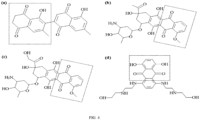
- Beta'-dihydrodiospyrin contains the naphthoquinone moiety, which is present in known anti-cancer drugs like daunorubicin, doxorubicin and mitoxantrone.
- FIG. 4 shows the naphthoquinone moiety in beta'-dihydrodiospyrin and known anti-cancer drugs daunorubicin, doxorubicin and mitoxantrone.
- beta'-dihydrodiospyrin is a dimeric naphthoquinone, which is a class of compounds known to exhibit prostate cancer cytotoxicity.
- the approach described here has made it possible to screen a database of NPs and identify a select few NPs that may show anti-cancer activity. The approach disclosed herein thus can be used to screen libraries of molecules and identify molecules that are of therapeutic interest.
- the reversibility score is determined as cosine distance between each of the predicted CD profiles and a plurality of disease signature expression profiles.
- the predicted small molecule-induced gene expression profile is compared with the differential gene expression profile of the disease state based on the reversibility score.
- the reversibility score captures the ability of the molecule to reverse the phenotypic effect of a disease. If the gene expression profile induced by a small molecule is the reverse of the gene expression profile corresponding to the disease, then the molecule's effect can take a diseased cell back to its healthy state.
- the reversibility score ranges between 0 to 2, where higher reversibility score indicates better drug.
- the reversibility score of a molecule for a particular disease state may be considered as a computational screening step to evaluate its phenotypic effectiveness.
- one or more molecules are selected from among the plurality of drug-like molecules as potential drugs to treat one or more diseases having a signature among the plurality of disease signature expression profiles, if the determined reversibility score between associated CD profile and disease signature is exceeding a threshold of reversibility score.
- the cell lines considered in this study were MCF7, VCAP and PC3.
- VCAP and PC3 are prostate cancer cell lines while MCF7 is a breast cancer cell line. Therefore, the disease signatures were obtained for prostate and breast cancers.
- the Gene Expression Omnibus (GEO) repository was explored to identify suitable studies where high-throughput Ribonucleic acid (RNA) sequencing was performed to measure the differential gene expression of cancer cells.
- the experimental study with GEO id GSE133626 provides gene expression data for complete transcriptome of prostate cancer samples and matched control samples. This data was used to obtain the prostate cancer signature of differential gene expression using the characteristic direction method.
- breast cancer signature was obtained from the RNA sequencing study with GEO id GSE60182.
- the LINCS L1000 repository stores the experimentally obtained gene expression profiles for small molecules that were administered on different cell lines with different concentrations and measured after different time points.
- the prediction models took the small molecule representation and time point as input, and predicted the small molecule-induced gene expression profile in the form of characteristic direction (CD).
- the small molecule-induced gene expression profiles in the form of CD were obtained from the L1000CDS2 portal.
- the models were trained separately for three different cell lines - MCF7, VCAP and PC3, keeping the dosage constant at 10 ⁇ M concentration.
- the prediction models were developed for specific cell types and dosage.
- the models take the small molecule information in SMILES format, cell type, dosage and time point, as input.
- the output of the model is gene expression profile in the form of characteristic direction for 978 landmark genes.
- the predicted small molecule-induced gene expression profile is compared with the differential gene expression profile of the disease state based on the cosine distance, which is denoted as the ⁇ Reversibility score'.
- the reversibility score captures the ability of the drug to reverse the phenotypic effect of a disease. If the gene expression profile induced by a drug is the reverse of the gene expression profile corresponding to the disease, then the drug's effect can take a diseased cell back to its healthy state.
- the reversibility score ranges between 0 to 2, where higher reversibility score indicates better drug.
- the reversibility score of a molecule for a particular disease state may be considered as a computational screening step to evaluate its phenotypic effectiveness.
- the use case for screening natural products is based on screening of the COCONUT natural product database to find anti-prostate cancer molecules. All natural products that had an annotation level of 5 (i.e., fully annotated) were extracted for screening; this resulted in ⁇ 60K natural products. Characteristic direction profiles corresponding to the extracted natural products were predicted for the VCAP cell line using the random forest model. VCAP, being a prostate cancer cell line, was chosen here since the screening was to be performed for identifying anti-prostate cancer molecules. Upon obtaining the predicted characteristic direction profiles for the natural products, the ability of a natural product to reverse the state of a prostate cancer cell was quantified by means of a reversibility score.
- the reversibility score used in this example was the cosine distance between the predicted characteristic direction profile for the natural product and the disease signature profile for prostate cancer. The higher the reversibility score, the better the natural product is at reversing the disease state. Thus, the natural products were sorted based on their reversibility score. Among the top ten natural products obtained after the sorting, three belonged to chemical classes that have previously been shown to exhibit anti-cancer activity. Furthermore, one of the natural products contained a moiety that is known to occur in certain anti-prostate cancer drugs. Thus, the method 200 was capable of identifying potent anti-prostate cancer natural products from a library of ⁇ 60K molecules.
- the embodiments of present disclosure herein address unresolved problem of screening of drugs.
- the embodiment thus provides a mechanism of a small molecule-induced gene expression prediction based on machine learning models.
- the embodiments herein further provide a mechanism of screening of drug-like molecules using the machine learning model(s).
- Graphical representation supporting data used in the experimental setup are depicted in FIGS. 4 through 6.
- Such computer-readable storage means contain program-code means for implementation of one or more steps of the method, when the program runs on a server or mobile device or any suitable programmable device.
- the hardware device can be any kind of device which can be programmed including e.g., any kind of computer like a server or a personal computer, or the like, or any combination thereof.
- the device may also include means which could be e.g., hardware means like e.g., an application-specific integrated circuit (ASIC), a field-programmable gate array (FPGA), or a combination of hardware and software means, e.g., an ASIC and an FPGA, or at least one microprocessor and at least one memory with software processing components located therein.
- the means can include both hardware means and software means.
- the method embodiments described herein could be implemented in hardware and software.
- the device may also include software means. Alternatively, the embodiments may be implemented on different hardware devices, e.g., using a plurality of CPUs.
- the embodiments herein can comprise hardware and software elements.
- the embodiments that are implemented in software include but are not limited to, firmware, resident software, microcode, etc.
- the functions performed by various components described herein may be implemented in other components or combinations of other components.
- a computer-usable or computer readable medium can be any apparatus that can comprise, store, communicate, propagate, or transport the program for use by or in connection with the instruction execution system, apparatus, or device.
- a computer-readable storage medium refers to any type of physical memory on which information or data readable by a processor may be stored.
- a computer-readable storage medium may store instructions for execution by one or more processors, including instructions for causing the processor(s) to perform steps or stages consistent with the embodiments described herein.
- the term "computer-readable medium” should be understood to include tangible items and exclude carrier waves and transient signals, i.e., be non-transitory. Examples include random access memory (RAM), read-only memory (ROM), volatile memory, nonvolatile memory, hard drives, CD ROMs, DVDs, flash drives, disks, and any other known physical storage media.
Landscapes
- Engineering & Computer Science (AREA)
- Health & Medical Sciences (AREA)
- Life Sciences & Earth Sciences (AREA)
- Bioinformatics & Cheminformatics (AREA)
- Physics & Mathematics (AREA)
- Medical Informatics (AREA)
- General Health & Medical Sciences (AREA)
- Chemical & Material Sciences (AREA)
- Theoretical Computer Science (AREA)
- Bioinformatics & Computational Biology (AREA)
- Spectroscopy & Molecular Physics (AREA)
- Data Mining & Analysis (AREA)
- Biophysics (AREA)
- Biotechnology (AREA)
- Evolutionary Biology (AREA)
- Computer Vision & Pattern Recognition (AREA)
- Crystallography & Structural Chemistry (AREA)
- Software Systems (AREA)
- Evolutionary Computation (AREA)
- Databases & Information Systems (AREA)
- Artificial Intelligence (AREA)
- Computing Systems (AREA)
- Medicinal Chemistry (AREA)
- Epidemiology (AREA)
- Public Health (AREA)
- Pharmacology & Pharmacy (AREA)
- Genetics & Genomics (AREA)
- Bioethics (AREA)
- Molecular Biology (AREA)
- Toxicology (AREA)
- Primary Health Care (AREA)
- Analytical Chemistry (AREA)
- Proteomics, Peptides & Aminoacids (AREA)
- Investigating Or Analysing Biological Materials (AREA)
Abstract
Description
- The present application claims priority to
Indian application no. 202221066851, filed on November 21, 2022 - The disclosure herein generally relates to screening of drug-like molecules, and, more particularly, to a method and system for machine learning based screening of potential drugs.
- Traditional drug discovery methods are target-based. They are time and resource intensive processes because a lot of resources are required for the initial hit molecule identification. Phenotype-based drug screening requires differential gene expression data of a large number of molecules for different combinations of cell-line, time point and dosage. Experimentally obtaining gene expression data for all these combinations is again a heavily resource intensive process requiring large amount of time and cost. Computational prediction models overcome these factors and provide an alternative for initial screening of drug-like small molecules. The technical challenge in conventional methods that use prediction models is that they depend largely on the data processing and representation.
- Embodiments of the present disclosure present technological improvements as solutions to one or more of the above-mentioned technical problems recognized by the inventors in conventional systems. For example, in one embodiment, a processor implemented method is provided. In this method, initially a plurality of small molecules and a reference dataset comprising gene expression profiles are received, via one or more hardware processors, as input data. Further, a plurality of molecular representations are generated, via the one or more hardware processors, for the plurality of small molecules. Further, a Characteristic Distribution (CD) profile of a plurality of gene expressions in the reference dataset is generated. Further, a p-value of the CD profiles of the plurality of gene expressions is calculated, via the one or more hardware processors, wherein the p-value represents quality of the CD profiles. Further, a plurality of CD profiles having the p-value exceeding a threshold of p-value are filtered to obtain a plurality of high quality CD profiles of gene expressions, via the one or more hardware processors. Further, one or more machine learning models are generated using the plurality of molecular representations and the filtered CD profiles as training data, via the one or more hardware processors.
- In another aspect, one of the machine learning models that has been identified as a best performing model is used for screening a plurality of drug-like molecules. The screening includes the following steps. Initially, a dataset comprising a plurality of molecules is received. Further, the CD profile representing gene expression of each of the plurality of molecules is predicted using the best performing model. Further, a reversibility score between each of the predicted CD profiles and a plurality of disease signature expression profiles is determined. Further, one or more molecules are selected from among the plurality of molecules as potential drug-like molecules to treat one or more diseases having a signature among the plurality of disease signature expression profiles, if the determined reversibility score between associated CD profile and disease signature is exceeding a threshold of reversibility score.
- In yet another aspect, a system is provided. The system includes one or more hardware processors, a communication interface, and a memory storing a plurality of instructions. The plurality of instructions cause the one or more hardware processors to receive a plurality of small molecules and a reference dataset comprising gene expression profiles, as input data. Further, a plurality of molecular representations are generated, via the one or more hardware processors, for the plurality of small molecules. Further, a Characteristic Distribution (CD) profile of a plurality of gene expressions in the reference dataset is generated. Further, a p-value of the CD profiles of the plurality of gene expressions is calculated, via the one or more hardware processors, wherein the p-value represents quality of the CD profiles. Further, a plurality of CD profiles having the p-value lower than a threshold of p-value are filtered to obtain a plurality of high quality CD profiles of gene expressions, via the one or more hardware processors. Further, one or more machine learning models are generated using the plurality of molecular representations and the filtered CD profiles as training data, via the one or more hardware processors.
- In yet another aspect, the system identifies one of the machine learning models that has been identified as a best performing model for screening a plurality of drug-like molecules, by executing the following steps. Initially, a dataset comprising a plurality of drug-like molecules is received. Further, the CD profile representing gene expression of each of the plurality of drug-like molecules is predicted using the best performing model. Further, a reversibility score between each of the predicted CD profiles and a plurality of disease signature expression profiles is determined. Further, one or more molecules are selected from among the plurality of drug-like molecules as potential drugs to treat one or more diseases having a signature among the plurality of disease signature expression profiles, if the determined reversibility score between associated CD profile and disease signature is exceeding a threshold of reversibility score.
- In yet another aspect, a non-transitory computer readable medium is provided. The non-transitory computer readable medium includes a plurality of instructions, which when executed, cause the one or more hardware processors to initially receive a plurality of small molecules and a reference dataset comprising gene expression profiles as input data. Further, a plurality of molecular representations are generated, via the one or more hardware processors, for the plurality of small molecules. Further, a Characteristic Distribution (CD) profile of a plurality of gene expressions in the reference dataset is generated. Further, a p-value of the CD profiles of the plurality of gene expressions is calculated, via the one or more hardware processors, wherein the p-value represents quality of the CD profiles. Further, a plurality of CD profiles having the p-value exceeding a threshold of p-value are filtered to obtain a plurality of high quality CD profiles of gene expressions, via the one or more hardware processors. Further, one or more machine learning models are generated using the plurality of molecular representations and the filtered CD profiles as training data, via the one or more hardware processors.
- In yet another aspect, the non-transitory computer readable medium causes the one or more hardware processors to identify one of the machine learning models that has been identified as a best performing model and further use it for screening a plurality of drug-like molecules. The screening includes the following steps. Initially, a dataset comprising a plurality of small molecules is received. Further, the CD profile representing gene expression of each of the plurality of small molecules is predicted using the best performing model. Further, a reversibility score between each of the predicted CD profiles and a plurality of disease signature expression profiles is determined. Further, one or more molecules are selected from among the plurality of small molecules as potential drug-like molecules to treat one or more diseases having a signature among the plurality of disease signature expression profiles, if the determined reversibility score between associated CD profile and disease signature is exceeding a threshold of reversibility score.
- It is to be understood that both the foregoing general description and the following detailed description are exemplary and explanatory only and are not restrictive of the invention, as claimed.
- The accompanying drawings, which are incorporated in and constitute a part of this disclosure, illustrate exemplary embodiments and, together with the description, serve to explain the disclosed principles:
-
FIG. 1 illustrates an exemplary system for generating a data model ad for screening drugs, according to some embodiments of the present disclosure. -
FIG. 2 is a flow diagram depicting steps involved in the process of generating a machine learning model for screening drugs, by the system ofFIG. 1 , according to some embodiments of the present disclosure. -
FIG. 3 is a flow diagram depicting steps involved in the process of screening drugs using the machine learning model, by the system ofFIG. 1 , according to some embodiments of the present disclosure. -
FIGS. 4 , and5 , depict example figures supporting experimental data, according to some embodiments of the present disclosure. - Exemplary embodiments are described with reference to the accompanying drawings. In the figures, the left-most digit(s) of a reference number identifies the figure in which the reference number first appears. Wherever convenient, the same reference numbers are used throughout the drawings to refer to the same or like parts. While examples and features of disclosed principles are described herein, modifications, adaptations, and other implementations are possible without departing from the scope of the disclosed embodiments.
- Traditional drug discovery methods are target-based. They are time and resource intensive processes because a lot of resources are required for the initial hit molecule identification. Phenotype-based drug screening requires differential gene expression data of a large number of molecules for different combinations of cell-line, time point and dosage. Experimentally obtaining gene expression data for all these combinations is again a heavily resource intensive process requiring large amount of time and cost. Computational prediction models overcome these factors and provide an alternative for initial screening of drug-like small molecules. The technical challenge in conventional methods that use prediction models is that they depend largely on the data processing and representation.
- Method and system disclosed herein provide a small molecule-induced gene expression prediction based approach for generating machine learning models. From among the machine learning models built, one machine learning model is identified as best performing model, which is further used to receive and process a dataset comprising a plurality of drug-like molecules, and perform screening of drugs.
- Referring now to the drawings, and more particularly to
FIG. 1 through FIG. 5 , where similar reference characters denote corresponding features consistently throughout the figures, there are shown preferred embodiments and these embodiments are described in the context of the following exemplary system and/or method. -
FIG. 1 illustrates an exemplary system for generating a data model and for screening drugs, according to some embodiments of the present disclosure. Thesystem 100 includes or is otherwise in communication withhardware processors 102, at least one memory such as amemory 104, an I/O interface 112. Thehardware processors 102,memory 104, and the Input /Output (I/O)interface 112 may be coupled by a system bus such as asystem bus 108 or a similar mechanism. In an embodiment, thehardware processors 102 can be one or more hardware processors. - The I/
O interface 112 may include a variety of software and hardware interfaces, for example, a web interface, a graphical user interface, and the like. The I/O interface 112 may include a variety of software and hardware interfaces, for example, interfaces for peripheral device(s), such as a keyboard, a mouse, an external memory, a printer and the like. Further, the I/O interface 112 may enable thesystem 100 to communicate with other devices, such as web servers, and external databases. - The I/
O interface 112 can facilitate multiple communications within a wide variety of networks and protocol types, including wired networks, for example, local area network (LAN), cable, etc., and wireless networks, such as Wireless LAN (WLAN), cellular, or satellite. For the purpose, the I/O interface 112 may include one or more ports for connecting several computing systems with one another or to another server computer. The I/O interface 112 may include one or more ports for connecting several devices to one another or to another server. - The one or
more hardware processors 102 may be implemented as one or more microprocessors, microcomputers, microcontrollers, digital signal processors, central processing units, node machines, logic circuitries, and/or any devices that manipulate signals based on operational instructions. Among other capabilities, the one ormore hardware processors 102 is configured to fetch and execute computer-readable instructions stored in thememory 104. - The
memory 104 may include any computer-readable medium known in the art including, for example, volatile memory, such as static random-access memory (SRAM) and dynamic random-access memory (DRAM), and/or non-volatile memory, such as read only memory (ROM), erasable programmable ROM, flash memories, hard disks, optical disks, and magnetic tapes. In an embodiment, thememory 104 includes a plurality ofmodules 106. - The plurality of
modules 106 include programs or coded instructions that supplement applications or functions performed by thesystem 100 for executing different steps involved in the process of switching between hardware accelerators for model training, being performed by thesystem 100. The plurality ofmodules 106, amongst other things, can include routines, programs, objects, components, and data structures, which performs particular tasks or implement particular abstract data types. The plurality ofmodules 106 may also be used as, signal processor(s), node machine(s), logic circuitries, and/or any other device or component that manipulates signals based on operational instructions. Further, the plurality ofmodules 106 can be used by hardware, by computer-readable instructions executed by the one ormore hardware processors 102, or by a combination thereof. The plurality ofmodules 106 can include various sub-modules (not shown). The plurality ofmodules 106 may include computer-readable instructions that supplement applications or functions performed by thesystem 100 for the switching between hardware accelerators for model training. - The data repository (or repository) 110 may include a plurality of abstracted piece of code for refinement and data that is processed, received, or generated as a result of the execution of the plurality of modules in the module(s) 106.
- Although the
data repository 110 is shown internal to thesystem 100, it will be noted that, in alternate embodiments, thedata repository 110 can also be implemented external to thesystem 100, where thedata repository 110 may be stored within a database (repository 110) communicatively coupled to thesystem 100. The data contained within such external database may be periodically updated. For example, new data may be added into the database (not shown inFIG. 1 ) and/or existing data may be modified and/or non-useful data may be deleted from the database. In one example, the data may be stored in an external system, such as a Lightweight Directory Access Protocol (LDAP) directory and a Relational Database Management System (RDBMS). Functions of the components of thesystem 100 are now explained with reference to the steps in flow diagrams inFIG. 2 andFIG. 3 , and the example diagrams inFIGS. 4 through 6. -
FIG. 2 is a flow diagram depicting steps involved in the process of generating a machine learning model for screening drugs, by the system ofFIG. 1 , according to some embodiments of the present disclosure. In an embodiment, thesystem 100 comprises one or more data storage devices or thememory 104 operatively coupled to the processor(s) 102 and is configured to store instructions for execution of steps of themethod 200 by the processor(s) or one ormore hardware processors 102. The steps of themethod 200 of the present disclosure will now be explained with reference to the components or blocks of thesystem 100 as depicted inFIG. 1 and the steps of flow diagram as depicted inFIG. 2 . Although process steps, method steps, techniques or the like may be described in a sequential order, such processes, methods, and techniques may be configured to work in alternate orders. In other words, any sequence or order of steps that may be described does not necessarily indicate a requirement that the steps to be performed in that order. The steps of processes described herein may be performed in any order practical. Further, some steps may be performed simultaneously. - At
step 202 ofmethod 200 inFIG. 2 , thesystem 100 receives, from one or more associated sources, a plurality of small molecules and a reference dataset comprising gene expression profiles, via the one ormore hardware processors 102, as input data. Small molecule is a term used to indicate organic compound having low molecular weight (≤ 1000 daltons) that may regulate a biological process, with a size on the order of 1 nm. The reference database used maybe library of integrated network-based cellular signatures (LINCS) L1000 that provides differential gene expression profiles of chemically perturbed human cell lines based on Luminex bead technology. Further, atstep 204 of themethod 200, thesystem 100 generates a plurality of molecular representations, via the one or more hardware processors, for the plurality of small molecules. Molecular representation reduces the dimensionality of a molecular structure into a chemically meaningful format that relays important chemical information. Thesystem 100 generates the molecular representations by representing the plurality of small molecules using one of a Simplified Molecular-Input Line-Entry System (SMILES) and an Extended-Connectivity Fingerprints (ECFPs). In an embodiment, any other suitable technique maybe used. Similarly, the gene expression profiles are generated by administering the plurality of small molecules on different cell lines with different concentrations, measured at different time instances. Distribution of small molecule induced gene expression data across a) cell line, b) time points, and c) small molecule dose, are depicted inFIG. 5 (a), (b), and (c ) respectively. - Further, at
step 206 of themethod 200, thesystem 100 generates a Characteristic Distribution (CD) profile of a plurality of gene expressions in the reference dataset. The CD uses geometrical separation between the two groups to identify significant genes. An example of a subset of the CD profile, the molecule Cosmosiin (BRD-K13642330) on VCAP cell line for 10µM concentration dose and 6hrs of exposure is given in Table. 1 below:Table. 1 Gene ID Gene Name Characteristic Direction 5720 PSME1 -0.0142 466 ATF1 -0.0167 6009 RHEB 0.0037 2309 FOXO3 -0.0187 387 RHOA -0.0166 3553 IL1B 0.0082 427 ASAH1 -0.0172 5898 RALA 0.0206 23365 ARHGEF12 -0.0376 6657 SOX2 0.0276 5054 SERPINE1 -0.0407 3108 HLA-DMA -0.0178 1950 EGF 0.0114 351 APP -0.0047 4846 NOS3 0.0363 1452 CSNK1A1 -0.0011 4776 NFATC4 -0.0087 6908 TBP -0.0084 672 BRCA1 -0.0305 5710 PSMD4 -0.0161 2115 ETV1 -0.0108 7015 TERT 0.0054 8726 EED -0.0170 - Further, at
step 208 of themethod 200, thesystem 100 calculates a p-value of the CD profiles of the plurality of gene expressions, via the one ormore hardware processors 102, wherein the p-value represents quality of the CD profiles. In an embodiment, thesystem 100 may use any suitable technique such as but not limited to Fisher's exact test, to calculate the p-value. Lower p-values indicate that consistent differential expressions were observed across all replicates for which expression values were considered for calculating the p-values. Further, atstep 210 of themethod 200, thesystem 100 filters a plurality of CD profiles having the p-value lower than a threshold of p-value, and the CD profiles that remain, which have p-value lower than the threshold of p-value, are considered to be high quality profiles of gene expression, and are obtained by thesystem 100 in this manner, via the one ormore hardware processors 102. For example, the p-value used is 0.05. Further, atstep 212 of themethod 200, thesystem 100 generates one or more machine learning models using the plurality of molecular representations and the filtered CD profiles as training data, via the one ormore hardware processors 102. The machine learning models are generated to predict the gene expression profile corresponding to a small molecule perturbagen, cell type, dosage and time of exposure. Different types of machine learning models, such as but not limited to Decision Tree, Random Forest, K-Nearest Neighbors, Linear Regression, Ridge Regressor, Lasso Regressor, Vanilla Neural Network, and Graph Convolutional Network maybe generated. - From among the plurality of machine learning models, a model having highest performance is identified as a best performing model. In an embodiment, the performance of each of the plurality of models is determined with respect to capability to correctly predict gene expression profile for known drug-like molecules, for a test data or for a portion of real-time data input. In another aspect, one of the machine learning models that has been identified as a best performing model is used for screening a plurality of drug-like molecules. The screening includes the following steps, which are depicted in
method 300 inFIG. 3 . Atstep 302 of themethod 300, a dataset comprising a plurality of molecules is received. Further, atstep 304 of themethod 300, thesystem 100 predicts, using the best performing model, the CD profile representing gene expression of each of the plurality of molecules. At this stage, for generating predictions, thesystem 100 uses small molecule information in a suitable format (for example, SMILES format), cell type, dosage and time point, as inputs. Further, a reversibility score between each of the predicted CD profiles and a plurality of disease signature expression profiles is determined. Consider the example inFIG. 4 . In this example, Beta'-dihydrodiospyrin belongs to the class of naphthoquinones, sibiriquinone B belongs to diterpenoids and chaetoindicin B belongs to aryl ketones. All of these classes were shown to exhibit anti-cancer activity in studies conducted. Beta'-dihydrodiospyrin contains the naphthoquinone moiety, which is present in known anti-cancer drugs like daunorubicin, doxorubicin and mitoxantrone.FIG. 4 shows the naphthoquinone moiety in beta'-dihydrodiospyrin and known anti-cancer drugs daunorubicin, doxorubicin and mitoxantrone. Interestingly, beta'-dihydrodiospyrin is a dimeric naphthoquinone, which is a class of compounds known to exhibit prostate cancer cytotoxicity. In summary, the approach described here has made it possible to screen a database of NPs and identify a select few NPs that may show anti-cancer activity. The approach disclosed herein thus can be used to screen libraries of molecules and identify molecules that are of therapeutic interest. - Against a given disease, in an embodiment, the reversibility score is determined as cosine distance between each of the predicted CD profiles and a plurality of disease signature expression profiles. The predicted small molecule-induced gene expression profile is compared with the differential gene expression profile of the disease state based on the reversibility score. The reversibility score captures the ability of the molecule to reverse the phenotypic effect of a disease. If the gene expression profile induced by a small molecule is the reverse of the gene expression profile corresponding to the disease, then the molecule's effect can take a diseased cell back to its healthy state. The reversibility score ranges between 0 to 2, where higher reversibility score indicates better drug. Thus, the reversibility score of a molecule for a particular disease state may be considered as a computational screening step to evaluate its phenotypic effectiveness.
- Further, one or more molecules are selected from among the plurality of drug-like molecules as potential drugs to treat one or more diseases having a signature among the plurality of disease signature expression profiles, if the determined reversibility score between associated CD profile and disease signature is exceeding a threshold of reversibility score.
- As this approach facilitates drug screening based on the phenotypic effect of the drug, it helps in analyzing the cellular dynamics of the effect of the drug as it considers several factors that determine the effect of a drug in a disease state.
- The cell lines considered in this study were MCF7, VCAP and PC3. VCAP and PC3 are prostate cancer cell lines while MCF7 is a breast cancer cell line. Therefore, the disease signatures were obtained for prostate and breast cancers. The Gene Expression Omnibus (GEO) repository was explored to identify suitable studies where high-throughput Ribonucleic acid (RNA) sequencing was performed to measure the differential gene expression of cancer cells. The experimental study with GEO id GSE133626 provides gene expression data for complete transcriptome of prostate cancer samples and matched control samples. This data was used to obtain the prostate cancer signature of differential gene expression using the characteristic direction method. Similarly, breast cancer signature was obtained from the RNA sequencing study with GEO id GSE60182.
- The LINCS L1000 repository stores the experimentally obtained gene expression profiles for small molecules that were administered on different cell lines with different concentrations and measured after different time points. The prediction models took the small molecule representation and time point as input, and predicted the small molecule-induced gene expression profile in the form of characteristic direction (CD). The small molecule-induced gene expression profiles in the form of CD were obtained from the L1000CDS2 portal. The models were trained separately for three different cell lines - MCF7, VCAP and PC3, keeping the dosage constant at 10 µM concentration.
- The prediction models were developed for specific cell types and dosage. The models take the small molecule information in SMILES format, cell type, dosage and time point, as input. The output of the model is gene expression profile in the form of characteristic direction for 978 landmark genes. The predicted small molecule-induced gene expression profile is compared with the differential gene expression profile of the disease state based on the cosine distance, which is denoted as the `Reversibility score'. The reversibility score captures the ability of the drug to reverse the phenotypic effect of a disease. If the gene expression profile induced by a drug is the reverse of the gene expression profile corresponding to the disease, then the drug's effect can take a diseased cell back to its healthy state. The reversibility score ranges between 0 to 2, where higher reversibility score indicates better drug. Thus, the reversibility score of a molecule for a particular disease state may be considered as a computational screening step to evaluate its phenotypic effectiveness.
- The use case for screening natural products is based on screening of the COCONUT natural product database to find anti-prostate cancer molecules. All natural products that had an annotation level of 5 (i.e., fully annotated) were extracted for screening; this resulted in ~60K natural products. Characteristic direction profiles corresponding to the extracted natural products were predicted for the VCAP cell line using the random forest model. VCAP, being a prostate cancer cell line, was chosen here since the screening was to be performed for identifying anti-prostate cancer molecules. Upon obtaining the predicted characteristic direction profiles for the natural products, the ability of a natural product to reverse the state of a prostate cancer cell was quantified by means of a reversibility score. The reversibility score used in this example was the cosine distance between the predicted characteristic direction profile for the natural product and the disease signature profile for prostate cancer. The higher the reversibility score, the better the natural product is at reversing the disease state. Thus, the natural products were sorted based on their reversibility score. Among the top ten natural products obtained after the sorting, three belonged to chemical classes that have previously been shown to exhibit anti-cancer activity. Furthermore, one of the natural products contained a moiety that is known to occur in certain anti-prostate cancer drugs. Thus, the
method 200 was capable of identifying potent anti-prostate cancer natural products from a library of ~60K molecules. - The written description describes the subject matter herein to enable any person skilled in the art to make and use the embodiments. The scope of the subject matter embodiments is defined by the claims and may include other modifications that occur to those skilled in the art. Such other modifications are intended to be within the scope of the claims if they have similar elements that do not differ from the literal language of the claims or if they include equivalent elements with insubstantial differences from the literal language of the claims.
- The embodiments of present disclosure herein address unresolved problem of screening of drugs. The embodiment, thus provides a mechanism of a small molecule-induced gene expression prediction based on machine learning models. Moreover, the embodiments herein further provide a mechanism of screening of drug-like molecules using the machine learning model(s). Graphical representation supporting data used in the experimental setup are depicted in
FIGS. 4 through 6. - It is to be understood that the scope of the protection is extended to such a program and in addition to a computer-readable means having a message therein; such computer-readable storage means contain program-code means for implementation of one or more steps of the method, when the program runs on a server or mobile device or any suitable programmable device. The hardware device can be any kind of device which can be programmed including e.g., any kind of computer like a server or a personal computer, or the like, or any combination thereof. The device may also include means which could be e.g., hardware means like e.g., an application-specific integrated circuit (ASIC), a field-programmable gate array (FPGA), or a combination of hardware and software means, e.g., an ASIC and an FPGA, or at least one microprocessor and at least one memory with software processing components located therein. Thus, the means can include both hardware means and software means. The method embodiments described herein could be implemented in hardware and software. The device may also include software means. Alternatively, the embodiments may be implemented on different hardware devices, e.g., using a plurality of CPUs.
- The embodiments herein can comprise hardware and software elements. The embodiments that are implemented in software include but are not limited to, firmware, resident software, microcode, etc. The functions performed by various components described herein may be implemented in other components or combinations of other components. For the purposes of this description, a computer-usable or computer readable medium can be any apparatus that can comprise, store, communicate, propagate, or transport the program for use by or in connection with the instruction execution system, apparatus, or device.
- The illustrated steps are set out to explain the exemplary embodiments shown, and it should be anticipated that ongoing technological development will change the manner in which particular functions are performed. These examples are presented herein for purposes of illustration, and not limitation. Further, the boundaries of the functional building blocks have been arbitrarily defined herein for the convenience of the description. Alternative boundaries can be defined so long as the specified functions and relationships thereof are appropriately performed. Alternatives (including equivalents, extensions, variations, deviations, etc., of those described herein) will be apparent to persons skilled in the relevant art(s) based on the teachings contained herein. Such alternatives fall within the scope of the disclosed embodiments. Also, the words "comprising," "having," "containing," and "including," and other similar forms are intended to be equivalent in meaning and be open ended in that an item or items following any one of these words is not meant to be an exhaustive listing of such item or items, or meant to be limited to only the listed item or items. It must also be noted that as used herein and in the appended claims, the singular forms "a," "an," and "the" include plural references unless the context clearly dictates otherwise.
- Furthermore, one or more computer-readable storage media may be utilized in implementing embodiments consistent with the present disclosure. A computer-readable storage medium refers to any type of physical memory on which information or data readable by a processor may be stored. Thus, a computer-readable storage medium may store instructions for execution by one or more processors, including instructions for causing the processor(s) to perform steps or stages consistent with the embodiments described herein. The term "computer-readable medium" should be understood to include tangible items and exclude carrier waves and transient signals, i.e., be non-transitory. Examples include random access memory (RAM), read-only memory (ROM), volatile memory, nonvolatile memory, hard drives, CD ROMs, DVDs, flash drives, disks, and any other known physical storage media.
- It is intended that the disclosure and examples be considered as exemplary only, with a true scope of disclosed embodiments being indicated by the following claims.
Claims (15)
- A processor implemented method (200), comprising:receiving (202), via one or more hardware processors, a plurality of small molecules and a reference dataset comprising gene expression profiles, as input data;generating (204), via the one or more hardware processors, a plurality of molecular representations for the plurality of small molecules;generating (206), via the one or more hardware processors, a Characteristic Distribution (CD) profile of a plurality of gene expressions in the reference dataset;calculating (208), via the one or more hardware processors, a p-value of the CD profiles of the plurality of gene expressions, wherein the p-value represents quality of the CD profiles;filtering (210), via the one or more hardware processors, a plurality of CD profiles having the p-value exceeding a threshold of p-value, to obtain a plurality of high quality CD profiles of gene expressions; andgenerating (212), via the one or more hardware processors, one or more machine learning models, using the plurality of molecular representations and the filtered CD profiles as training data.
- The processor implemented method as claimed in claim 1, wherein from among the one or more machine learning models a machine learning model having highest value of performance from among the one or more machine learning models is determined as a best performing model.
- The processor implemented method as claimed in claim 2, wherein the best performing model is used for screening a plurality of drug-like molecules, comprising:receiving (302) a dataset comprising a plurality of molecules;predicting (304) the CD profile representing gene expression of each of the plurality of molecules using the best performing model;determining (306) a reversibility score between each of the predicted CD profiles and a plurality of disease signature expression profiles; andselecting (308) one or more molecules from among the plurality of molecules as potential drug like molecules to treat one or more diseases having a signature among the plurality of disease signature expression profiles, if the determined reversibility score between associated CD profile and disease signature is exceeding a threshold of reversibility score.
- The processor implemented method as claimed in claim 1, wherein the gene expression profiles are obtained by administering the plurality of small molecules on different cell lines with different concentrations, measured at different time instances.
- The processor implemented method as claimed in claim 1, wherein the molecular representations are obtained by representing the plurality of small molecules using one of a Simplified Molecular-Input Line-Entry System (SMILES) and an Extended-Connectivity Fingerprints (ECFPs).
- A system (100), comprising:one or more hardware processors (102);a communication interface (112); anda memory (104) storing a plurality of instructions, wherein the plurality of instructions cause the one or more hardware processors to:receive a plurality of small molecules and a reference dataset comprising gene expression profiles, as input data;generate a plurality of molecular representations for the plurality of small molecules;generate a Characteristic Distribution (CD) profile of a plurality of gene expressions in the reference dataset;calculate a p-value of the CD profiles of the plurality of gene expressions, wherein the p-value represents quality of the CD profiles;filter a plurality of CD profiles having the p-value exceeding a threshold of p-value, to obtain a plurality of high quality CD profiles of gene expressions; andgenerate one or more machine learning models, using the plurality of molecular representations and the filtered CD profiles as training data.
- The system as claimed in claim 6, wherein the one or more hardware processors are configured to determine a machine learning model having a highest value of performance from among the one or more machine learning models as a best performing model.
- The system as claimed in claim 7, wherein the one or more hardware processors are configured to screen a plurality of drug-like molecules using the best performing model, by:receiving a dataset comprising a plurality of molecules;predicting the CD profile representing gene expression of each of the plurality of molecules using the best performing model;determining reversibility score between each of the predicted CD profiles and a plurality of disease signature expression profiles; andselecting one or more molecules from among the plurality of molecules as potential drug-like molecules to treat one or more diseases having a signature among the plurality of disease signature expression profiles, if the determined reversibility score between associated CD profile and disease signature is exceeding a threshold of reversibility score.
- The system as claimed in claim 6, wherein the one or more hardware processors are configured to obtain the gene expression profiles by administering the plurality of small molecules on different cell lines with different concentrations, measured at different time instances.
- The system as claimed in claim 6, wherein the one or more hardware processors are configured to obtain the molecular representations by representing the plurality of small molecules using one of a Simplified Molecular-Input Line-Entry System (SMILES) and an Extended-Connectivity Fingerprints (ECFPs).
- One or more non-transitory machine-readable information storage mediums comprising one or more instructions which when executed by one or more hardware processors cause:receiving a plurality of small molecules and a reference dataset comprising gene expression profiles, as input data;generating a plurality of molecular representations for the plurality of small molecules;generating a Characteristic Distribution (CD) profile of a plurality of gene expressions in the reference dataset;calculating a p-value of the CD profiles of the plurality of gene expressions, wherein the p-value represents quality of the CD profiles;filtering a plurality of CD profiles having the p-value exceeding a threshold of p-value, to obtain a plurality of high quality CD profiles of gene expressions; andgenerating one or more machine learning models, using the plurality of molecular representations and the filtered CD profiles as training data.
- The one or more non-transitory machine-readable information storage mediums as claimed in claim 11, wherein from among the one or more machine learning models a machine learning model having highest value of performance from among the one or more machine learning models is determined as a best performing model.
- The one or more non-transitory machine-readable information storage mediums as claimed in claim 12, wherein the best performing model is used for screening a plurality of drug-like molecules, comprising:receiving a dataset comprising a plurality of molecules;predicting the CD profile representing gene expression of each of the plurality of molecules using the best performing model;determining a reversibility score between each of the predicted CD profiles and a plurality of disease signature expression profiles; andselecting one or more molecules from among the plurality of molecules as potential drug like molecules to treat one or more diseases having a signature among the plurality of disease signature expression profiles, if the determined reversibility score between associated CD profile and disease signature is exceeding a threshold of reversibility score.
- The one or more non-transitory machine-readable information storage mediums as claimed in claim 11, wherein the gene expression profiles are obtained by administering the plurality of small molecules on different cell lines with different concentrations, measured at different time instances.
- The one or more non-transitory machine-readable information storage mediums as claimed in claim 11, wherein the molecular representations are obtained by representing the plurality of small molecules using one of a Simplified Molecular-Input Line-Entry System (SMILES) and an Extended-Connectivity Fingerprints (ECFPs).
Applications Claiming Priority (1)
| Application Number | Priority Date | Filing Date | Title |
|---|---|---|---|
| IN202221066851 | 2022-11-21 |
Publications (1)
| Publication Number | Publication Date |
|---|---|
| EP4372750A1 true EP4372750A1 (en) | 2024-05-22 |
Family
ID=88505087
Family Applications (1)
| Application Number | Title | Priority Date | Filing Date |
|---|---|---|---|
| EP23204631.8A Pending EP4372750A1 (en) | 2022-11-21 | 2023-10-19 | Method and system for gene expression prediction-based screening of drug-like molecules |
Country Status (2)
| Country | Link |
|---|---|
| US (1) | US20240170108A1 (en) |
| EP (1) | EP4372750A1 (en) |
-
2023
- 2023-10-19 US US18/490,025 patent/US20240170108A1/en active Pending
- 2023-10-19 EP EP23204631.8A patent/EP4372750A1/en active Pending
Non-Patent Citations (2)
| Title |
|---|
| DEVIPRIYA S ET AL: "Drug Efficacy Score Prediction using Signature Based Approaches for Amyotrophic Lateral Sclerosis Disorder: A Review", 2022 4TH INTERNATIONAL CONFERENCE ON INVENTIVE RESEARCH IN COMPUTING APPLICATIONS (ICIRCA), IEEE, 21 September 2022 (2022-09-21), pages 1474 - 1481, XP034260696, DOI: 10.1109/ICIRCA54612.2022.9985468 * |
| DUAN QIAONAN ET AL: "L1000CDS2: LINCS L1000 characteristic direction signatures search engine", NPJ SYSTEMS BIOLOGY AND APPLICATIONS, vol. 2, no. 1, 4 August 2016 (2016-08-04), XP093078769, Retrieved from the Internet <URL:https://www.nature.com/articles/npjsba201615.pdf> DOI: 10.1038/npjsba.2016.15 * |
Also Published As
| Publication number | Publication date |
|---|---|
| US20240170108A1 (en) | 2024-05-23 |
Similar Documents
| Publication | Publication Date | Title |
|---|---|---|
| Haghighi et al. | High-dimensional gene expression and morphology profiles of cells across 28,000 genetic and chemical perturbations | |
| Narayan et al. | Assessing single-cell transcriptomic variability through density-preserving data visualization | |
| Chiu et al. | Deep learning of pharmacogenomics resources: moving towards precision oncology | |
| Spies et al. | Comparative analysis of differential gene expression tools for RNA sequencing time course data | |
| Jalili et al. | Using combined evidence from replicates to evaluate ChIP-seq peaks | |
| Boileau et al. | Exploring high-dimensional biological data with sparse contrastive principal component analysis | |
| Gaiteri et al. | Identifying robust communities and multi-community nodes by combining top-down and bottom-up approaches to clustering | |
| Yin et al. | A convolutional neural network model for survival prediction based on prognosis-related cascaded Wx feature selection | |
| de Boer et al. | BROCKMAN: deciphering variance in epigenomic regulators by k-mer factorization | |
| Johnson et al. | LAmbDA: label ambiguous domain adaptation dataset integration reduces batch effects and improves subtype detection | |
| CN113597645A (en) | Methods and systems for reconstructing drug response and disease networks and uses thereof | |
| Ren et al. | SSCC: a novel computational framework for rapid and accurate clustering large-scale single cell RNA-seq data | |
| Wang et al. | GLDM: hit molecule generation with constrained graph latent diffusion model | |
| Giecold et al. | Robust lineage reconstruction from high-dimensional single-cell data | |
| Cisar et al. | A unified pipeline for FISH spatial transcriptomics | |
| Dunkler et al. | Statistical analysis principles for Omics data | |
| Musa et al. | Systems pharmacogenomic landscape of drug similarities from LINCS data: Drug Association Networks | |
| Zhu et al. | Integrative analysis of relative abundance data and presence–absence data of the microbiome using the LDM | |
| CN117275579B (en) | Methods for eRNA identification, regulatory target prediction, and functional annotation based on high-throughput transcriptome sequencing data | |
| Li et al. | Intrinsic entropy model for feature selection of scRNA-seq data | |
| Sun et al. | Inferring cell diversity in single cell data using consortium-scale epigenetic data as a biological anchor for cell identity | |
| Wang et al. | DOSE-L1000: unveiling the intricate landscape of compound-induced transcriptional changes | |
| EP4372750A1 (en) | Method and system for gene expression prediction-based screening of drug-like molecules | |
| Zelig et al. | KMD clustering: robust general-purpose clustering of biological data | |
| Choi et al. | Application of computational algorithms for single-cell RNA-seq and ATAC-seq in neurodegenerative diseases |
Legal Events
| Date | Code | Title | Description |
|---|---|---|---|
| PUAI | Public reference made under article 153(3) epc to a published international application that has entered the european phase |
Free format text: ORIGINAL CODE: 0009012 |
|
| STAA | Information on the status of an ep patent application or granted ep patent |
Free format text: STATUS: THE APPLICATION HAS BEEN PUBLISHED |
|
| AK | Designated contracting states |
Kind code of ref document: A1 Designated state(s): AL AT BE BG CH CY CZ DE DK EE ES FI FR GB GR HR HU IE IS IT LI LT LU LV MC ME MK MT NL NO PL PT RO RS SE SI SK SM TR |
|
| STAA | Information on the status of an ep patent application or granted ep patent |
Free format text: STATUS: REQUEST FOR EXAMINATION WAS MADE |
|
| 17P | Request for examination filed |
Effective date: 20240801 |
|
| RBV | Designated contracting states (corrected) |
Designated state(s): AL AT BE BG CH CY CZ DE DK EE ES FI FR GB GR HR HU IE IS IT LI LT LU LV MC ME MK MT NL NO PL PT RO RS SE SI SK SM TR |