EP4372580A1 - Distributed database for segregation of concerns - Google Patents
Distributed database for segregation of concerns Download PDFInfo
- Publication number
- EP4372580A1 EP4372580A1 EP23209883.0A EP23209883A EP4372580A1 EP 4372580 A1 EP4372580 A1 EP 4372580A1 EP 23209883 A EP23209883 A EP 23209883A EP 4372580 A1 EP4372580 A1 EP 4372580A1
- Authority
- EP
- European Patent Office
- Prior art keywords
- databases
- data
- access request
- performance
- integrity
- Prior art date
- Legal status (The legal status is an assumption and is not a legal conclusion. Google has not performed a legal analysis and makes no representation as to the accuracy of the status listed.)
- Pending
Links
Images


Classifications
-
- G—PHYSICS
- G06—COMPUTING OR CALCULATING; COUNTING
- G06F—ELECTRIC DIGITAL DATA PROCESSING
- G06F16/00—Information retrieval; Database structures therefor; File system structures therefor
- G06F16/20—Information retrieval; Database structures therefor; File system structures therefor of structured data, e.g. relational data
- G06F16/25—Integrating or interfacing systems involving database management systems
- G06F16/256—Integrating or interfacing systems involving database management systems in federated or virtual databases
-
- G—PHYSICS
- G06—COMPUTING OR CALCULATING; COUNTING
- G06F—ELECTRIC DIGITAL DATA PROCESSING
- G06F16/00—Information retrieval; Database structures therefor; File system structures therefor
- G06F16/20—Information retrieval; Database structures therefor; File system structures therefor of structured data, e.g. relational data
- G06F16/24—Querying
- G06F16/245—Query processing
- G06F16/2458—Special types of queries, e.g. statistical queries, fuzzy queries or distributed queries
- G06F16/2471—Distributed queries
-
- G—PHYSICS
- G06—COMPUTING OR CALCULATING; COUNTING
- G06F—ELECTRIC DIGITAL DATA PROCESSING
- G06F11/00—Error detection; Error correction; Monitoring
- G06F11/30—Monitoring
- G06F11/34—Recording or statistical evaluation of computer activity, e.g. of down time, of input/output operation ; Recording or statistical evaluation of user activity, e.g. usability assessment
- G06F11/3409—Recording or statistical evaluation of computer activity, e.g. of down time, of input/output operation ; Recording or statistical evaluation of user activity, e.g. usability assessment for performance assessment
-
- G—PHYSICS
- G06—COMPUTING OR CALCULATING; COUNTING
- G06F—ELECTRIC DIGITAL DATA PROCESSING
- G06F16/00—Information retrieval; Database structures therefor; File system structures therefor
- G06F16/20—Information retrieval; Database structures therefor; File system structures therefor of structured data, e.g. relational data
- G06F16/24—Querying
- G06F16/245—Query processing
- G06F16/2458—Special types of queries, e.g. statistical queries, fuzzy queries or distributed queries
- G06F16/2462—Approximate or statistical queries
-
- G—PHYSICS
- G06—COMPUTING OR CALCULATING; COUNTING
- G06F—ELECTRIC DIGITAL DATA PROCESSING
- G06F16/00—Information retrieval; Database structures therefor; File system structures therefor
- G06F16/20—Information retrieval; Database structures therefor; File system structures therefor of structured data, e.g. relational data
- G06F16/25—Integrating or interfacing systems involving database management systems
Definitions
- avionics applications utilize a variety of databases.
- Avionics systems also have numerous, disparate data requirements. Different instantiations of database offer different safety, integrity, or latency metrics that may not be suitable for every avionics application.
- Fixed database architectures do not have the flexibility to meet every requirement of every end instantiation of client applications.
- database systems that can accommodate strict requirements in even one metric may be cost prohibitive.
- a unified, cost-effective system and method to access database data is desirable to simplify application access to data and ensure data is stored and processed in ways that meet security and safety requirements.
- embodiments of the inventive concepts disclosed herein are directed to a system and method for accessing data to meet disparate security, integrity, and latency requirements.
- Multiple databases are instantiated in the system with different performance attributes.
- the system receives a data access request from a client application.
- the system determines one or more data access requirements associated with the data access request and identify a database or set of databases that conform to those requirements.
- the system then submits the data access request to the identified databases and returns the result to the client application.
- system may determine a data integrity threshold for the data access request, and submit the data access request to two or more databases simultaneously.
- inventive concepts are not limited in their application to the arrangement of the components or steps or methodologies set forth in the following description or illustrated in the drawings.
- inventive concepts disclosed herein may be practiced without these specific details.
- well-known features may not be described in detail to avoid unnecessarily complicating the instant disclosure.
- inventive concepts disclosed herein are capable of other embodiments or of being practiced or carried out in various ways. Also, it is to be understood that the phraseology and terminology employed herein is for the purpose of description and should not be regarded as limiting.
- a letter following a reference numeral is intended to reference an embodiment of a feature or element that may be similar, but not necessarily identical, to a previously described element or feature bearing the same reference numeral (e.g., 1, 1a, 1b).
- reference numeral e.g. 1, 1a, 1b
- Such shorthand notations are used for purposes of convenience only, and should not be construed to limit the inventive concepts disclosed herein in any way unless expressly stated to the contrary.
- any reference to "one embodiment,” or “some embodiments” means that a particular element, feature, structure, or characteristic described in connection with the embodiment is included in at least one embodiment of the inventive concepts disclosed herein.
- the appearances of the phrase “in at least one embodiment” in the specification does not necessarily refer to the same embodiment.
- Embodiments of the inventive concepts disclosed may include one or more of the features expressly described or inherently present herein, or any combination or sub-combination of two or more such features.
- embodiments of the inventive concepts disclosed herein are directed to a system and method for accessing data to meet disparate security, integrity, and latency requirements.
- Multiple databases are instantiated in the system with different performance attributes.
- the system receives a data access request from a client application.
- the system determines one or more data access requirements associated with the data access request and identify a database or set of databases that conform to those requirements.
- the system then submits the data access request to the identified databases and returns the result to the client application.
- the system may determine a data integrity threshold for the data access request, and submit the data access request to two or more databases simultaneously.
- the data access request may be associated with a data integrity metric.
- the data integrity metric may be associated with the type of data requested or the identity of the client application 100, or the client application 100 may define a data integrity metric based on some algorithm internal to the client application 100, and submit the data integrity metric along with the data access request.
- a Client API 1 04 is interposed in the data path between the client application 100 and the data source 102.
- the client API 104 receives the data integrity metric associated the data access request and determines if the data integrity metric exceeds some predefined threshold.
- the client API 104 may access one database 106, 108 in the data source 102 according to a load balancing algorithm to service data access requests with minimal bandwidth usage.
- the client API 104 may submit the data access request to two or more databases 106, 108 in the data source 102 to increase overall data integrity.
- the client API 104 may receive data packets from the two or more databases 106, 108 and compare them to each other before forwarding the data to the client application 100.
- comparing data packets may include the data contained in the data packets or other identifying data such as cyclic redundancy checks (CRC), some hash function output, a signature value, etc., and may comprise a simple comparison to determine if the data packets are identical, and if not, re-querying the two or more databases 106, 108.
- CRC cyclic redundancy checks
- the client API 104 may utilize the multiple data packets to facilitate robust data integrity checks.
- the client API 104 may utilize the data integrity metric to determine a number of databases 106, 108 to query in a sliding scale instead of, or in addition to, a data integrity metric threshold value.
- the data access request may be associated with one or more performance and integrity attributes.
- the one or more performance and integrity attributes may be associated with the type of data requested or the identity of the client application 200, or the client application 200 may define one or more performance and integrity attributes based on some algorithm internal to the client application 200, and submit the one or more performance and integrity attributes along with the data access request.
- Such one or more performance and integrity attributes may be defined by a desired latency, integrity, security, storage, etc.
- a client API 206 receives the data access request from the client application 200.
- the client API 206 identifies one or more data sources 202, 204 conforming to those one or more performance and integrity attributes, and submits the data access request to one or more databases 208, 210, 212, 214 corresponding to the identified data source 202, 204.
- the client API 206 may determine one or more performance and integrity attributes based on the identity of the client application 200, the type of data being requested, some external factor such a flight phase, etc. It may be appreciated that different database technology offers different technical advantages and corresponding tradeoffs.
- a first data source 202 may include databases 208, 210 employing low latency database technology (i.e., high-speed storage media, high-speed routing / switching devices, etc.) while a second data source 204 may include databases 212, 214 may employ cheaper or more robust database technology.
- the client API 206 may route that data access request to one or more databases 208, 210 in the first data source 202.
- the client API 206 may route that data access request to one or more databases 212, 214 in the second data source 204 (where the second data source 204 is configured with high integrity database technology).
- databases 208, 210, 212, 214 made by different manufacturers are unlikely to fail contemporaneously, at least in their software implementation, without some external source; therefore including a plurality of databases 208, 210, 212, 214 from different manufacturers and featuring different technologies is inherently more robust.
- the state of a landing gear in an aircraft is critical.
- the client API 206 may select a database 208, 210, 212, 214 of a particularly very high integrity.
- database 208, 210, 212, 214 may be very costly per unit of storage.
- a system for reporting available cabin services does not require especially fast or robust databases 208, 210, 212, 214.
- Embodiments of the present application provide a single data connection point to multiple client applications 200 without a system architect having to individually select and assign databases 208, 210, 212, 214 to particular applications.
- the client API 206 may write data to database 208, 210, 212, 214 based on performance and integrity attributes associated with the data, or the client application 200, or both. Such capability provides some redundant capacity as bulk storage may be used if faster, or otherwise more expensive storage becomes unavailable.
- the client API 206 may submit the data access request to two or more databases 208, 210, 212, 214 in the corresponding data source 202, 204 to increase overall data integrity.
- the client API 206 may receive data packets from the two or more databases 208, 210, 212, 214 and compare them to each other before forwarding the data to the client application 200.
- comparing data packets may comprise a simple comparison to determine if the data packets are identical, and if not, re-querying the two or more databases 208, 210, 212, 214.
- the client API 206 may utilize the multiple data packets to facilitate robust data integrity checks.
- the client API 206 may receive or determine one or more performance and integrity attributes that are unserviceable from a single data source 202, 204.
- the client API 206 may submit data access requests to multiple data sources 202, 204, each specifically configured to accommodate some of the one or more performance and integrity attributes.
- the client API 206 may query each connected database 208, 210, 212, 214 to discover each database's corresponding capabilities, including dynamically as databases 208, 210, 212, 214 are added. Client applications may expect to have their performance and integrity attributes met, even in an embedded environment.
- a client API is interposed in a data pathway between one or more client applications and one or more data sources.
- the client API receives 300 a data access request from one of the client applications.
- the data access request may include one or more performance and integrity attributes such as a desired maximum latency, a desired minimum data integrity, etc.
- the client API determines 302 a data integrity requirement and / or determines 304 a data latency requirement associated with the data access request.
- the data latency requirement and / or data integrity requirement may be received directly from the client application.
- the client API may determine 302, 304 the integrity and latency requirements based on the identity of the client application, the nature of the data access request, etc.
- the client API identifies 306 one or more data sources to process the data access request within the requirements dictated by the one or more performance and integrity attributes, and potentially one or more databases within those data sources.
- the client API then executes 308 the data access request and returns the resulting data to the client application.
- the client API routes data request to the proper database instance to meet the required performance in a manner transparent to the client application.
- Each client application may address the client API as a single data source and otherwise treat the client API as a data source.
- Embodiments of the present application facilitate high-integrity and low latency in a cost-effective manner by allowing the use of both bulk and high-speed storage in a transparent manner.
- a client API according to the present application may improve startup time by removing the need for each separate client application to establish an independent database connection.
Landscapes
- Engineering & Computer Science (AREA)
- Theoretical Computer Science (AREA)
- Physics & Mathematics (AREA)
- Databases & Information Systems (AREA)
- General Engineering & Computer Science (AREA)
- General Physics & Mathematics (AREA)
- Data Mining & Analysis (AREA)
- Probability & Statistics with Applications (AREA)
- Fuzzy Systems (AREA)
- Mathematical Physics (AREA)
- Software Systems (AREA)
- Computational Linguistics (AREA)
- Computer Hardware Design (AREA)
- Quality & Reliability (AREA)
- Information Retrieval, Db Structures And Fs Structures Therefor (AREA)
Abstract
Description
- In avionics applications, systems utilize a variety of databases. Avionics systems also have numerous, disparate data requirements. Different instantiations of database offer different safety, integrity, or latency metrics that may not be suitable for every avionics application. Fixed database architectures do not have the flexibility to meet every requirement of every end instantiation of client applications. Furthermore, database systems that can accommodate strict requirements in even one metric may be cost prohibitive. A unified, cost-effective system and method to access database data is desirable to simplify application access to data and ensure data is stored and processed in ways that meet security and safety requirements.
- In one aspect, embodiments of the inventive concepts disclosed herein are directed to a system and method for accessing data to meet disparate security, integrity, and latency requirements. Multiple databases are instantiated in the system with different performance attributes. The system receives a data access request from a client application. The system determines one or more data access requirements associated with the data access request and identify a database or set of databases that conform to those requirements. The system then submits the data access request to the identified databases and returns the result to the client application.
- In a further aspect, the system may determine a data integrity threshold for the data access request, and submit the data access request to two or more databases simultaneously.
- It is to be understood that both the foregoing general description and the following detailed description are exemplary and explanatory only and should not restrict the scope of the claims. The accompanying drawings, which are incorporated in and constitute a part of the specification, illustrate exemplary embodiments of the inventive concepts disclosed herein and together with the general description, serve to explain the principles.
- The numerous advantages of the embodiments of the inventive concepts disclosed herein may be better understood by those skilled in the art by reference to the accompanying figures in which:
- FIG. 1
- shows a block diagram of a system suitable for implementing an exemplary embodiment of the present disclosure;
- FIG. 2
- shows a block diagram of a system suitable for implementing an exemplary embodiment of the present disclosure;
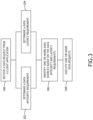
- FIG. 3
- shows a flowchart of a method according to an exemplary embodiment of the present disclosure;
- Before explaining various embodiments of the inventive concepts disclosed herein in detail, it is to be understood that the inventive concepts are not limited in their application to the arrangement of the components or steps or methodologies set forth in the following description or illustrated in the drawings. In the following detailed description of embodiments of the instant inventive concepts, numerous specific details are set forth in order to provide a more thorough understanding of the inventive concepts. However, it will be apparent to one of ordinary skill in the art having the benefit of the instant disclosure that the inventive concepts disclosed herein may be practiced without these specific details. In other instances, well-known features may not be described in detail to avoid unnecessarily complicating the instant disclosure. The inventive concepts disclosed herein are capable of other embodiments or of being practiced or carried out in various ways. Also, it is to be understood that the phraseology and terminology employed herein is for the purpose of description and should not be regarded as limiting.
- As used herein a letter following a reference numeral is intended to reference an embodiment of a feature or element that may be similar, but not necessarily identical, to a previously described element or feature bearing the same reference numeral (e.g., 1, 1a, 1b). Such shorthand notations are used for purposes of convenience only, and should not be construed to limit the inventive concepts disclosed herein in any way unless expressly stated to the contrary.
- Further, unless expressly stated to the contrary, "or" refers to an inclusive or and not to an exclusive or. For example, a condition A or B is satisfied by anyone of the following: A is true (or present) and B is false (or not present), A is false (or not present) and B is true (or present), and both A and B are true (or present).
- In addition, use of "a" or "an" are employed to describe elements and components of embodiments of the instant inventive concepts. This is done merely for convenience and to give a general sense of the inventive concepts, and "a" and "an" are intended to include one or at least one and the singular also includes the plural unless it is obvious that it is meant otherwise.
- Also, while various components may be depicted as being connected directly, direct connection is not a requirement. Components may be in data communication with intervening components that are not illustrated or described.
- Finally, as used herein any reference to "one embodiment," or "some embodiments" means that a particular element, feature, structure, or characteristic described in connection with the embodiment is included in at least one embodiment of the inventive concepts disclosed herein. The appearances of the phrase "in at least one embodiment" in the specification does not necessarily refer to the same embodiment. Embodiments of the inventive concepts disclosed may include one or more of the features expressly described or inherently present herein, or any combination or sub-combination of two or more such features.
- Broadly, embodiments of the inventive concepts disclosed herein are directed to a system and method for accessing data to meet disparate security, integrity, and latency requirements. Multiple databases are instantiated in the system with different performance attributes. The system receives a data access request from a client application. The system determines one or more data access requirements associated with the data access request and identify a database or set of databases that conform to those requirements. The system then submits the data access request to the identified databases and returns the result to the client application. The system may determine a data integrity threshold for the data access request, and submit the data access request to two or more databases simultaneously.
- Referring to
FIG. 1 , a block diagram of a system suitable for implementing an exemplary embodiment of the present disclosure is shown. Where aclient application 100 attempts to access data from adata source 102, the data access request may be associated with a data integrity metric. The data integrity metric may be associated with the type of data requested or the identity of theclient application 100, or theclient application 100 may define a data integrity metric based on some algorithm internal to theclient application 100, and submit the data integrity metric along with the data access request. - A Client API 1 04 is interposed in the data path between the
client application 100 and thedata source 102. In at least one embodiment, theclient API 104 receives the data integrity metric associated the data access request and determines if the data integrity metric exceeds some predefined threshold. When the data integrity metric is below the predefined threshold, theclient API 104 may access onedatabase data source 102 according to a load balancing algorithm to service data access requests with minimal bandwidth usage. When the data integrity metric is above the predefined threshold, theclient API 104 may submit the data access request to two ormore databases data source 102 to increase overall data integrity. Theclient API 104 may receive data packets from the two ormore databases client application 100. In at least one embodiment, comparing data packets may include the data contained in the data packets or other identifying data such as cyclic redundancy checks (CRC), some hash function output, a signature value, etc., and may comprise a simple comparison to determine if the data packets are identical, and if not, re-querying the two ormore databases client API 104 may utilize the multiple data packets to facilitate robust data integrity checks. - In at least one embodiment, the
client API 104 may utilize the data integrity metric to determine a number ofdatabases - Referring to
FIG. 2 , a block diagram of a system suitable for implementing an exemplary embodiment of the present disclosure is shown. Where aclient application 200 attempts to access data, the data access request may be associated with one or more performance and integrity attributes. In at least one embodiment, the one or more performance and integrity attributes may be associated with the type of data requested or the identity of theclient application 200, or theclient application 200 may define one or more performance and integrity attributes based on some algorithm internal to theclient application 200, and submit the one or more performance and integrity attributes along with the data access request. Such one or more performance and integrity attributes may be defined by a desired latency, integrity, security, storage, etc. - A
client API 206 receives the data access request from theclient application 200. In at least one embodiment, where the data access request includes one or more performance and integrity attributes, theclient API 206 identifies one ormore data sources more databases data source client API 206 may determine one or more performance and integrity attributes based on the identity of theclient application 200, the type of data being requested, some external factor such a flight phase, etc. It may be appreciated that different database technology offers different technical advantages and corresponding tradeoffs. - In at least one embodiment, a
first data source 202 may includedatabases second data source 204 may includedatabases client API 206 may route that data access request to one ormore databases first data source 202. Alternatively, where a data access request is associated with one or more performance and integrity attributes indicating a need for high integrity, theclient API 206 may route that data access request to one ormore databases second data source 204 is configured with high integrity database technology). Furthermore,databases databases - For example, the state of a landing gear in an aircraft is critical. When a query pertaining to the state of the landing gear is received, the
client API 206 may select adatabase such database robust databases multiple client applications 200 without a system architect having to individually select and assigndatabases - In at least one embodiment, the
client API 206 may write data todatabase client application 200, or both. Such capability provides some redundant capacity as bulk storage may be used if faster, or otherwise more expensive storage becomes unavailable. - In at least one embodiment, the
client API 206 may submit the data access request to two ormore databases data source client API 206 may receive data packets from the two ormore databases client application 200. In at least one embodiment, comparing data packets may comprise a simple comparison to determine if the data packets are identical, and if not, re-querying the two ormore databases client API 206 may utilize the multiple data packets to facilitate robust data integrity checks. - In at least one embodiment, the
client API 206 may receive or determine one or more performance and integrity attributes that are unserviceable from asingle data source client API 206 may submit data access requests tomultiple data sources - In at least one embodiment, the
client API 206 may query eachconnected database databases - Referring to
FIG. 3 , a flowchart of a method according to an exemplary embodiment of the present disclosure is shown. A client API is interposed in a data pathway between one or more client applications and one or more data sources. The client API receives 300 a data access request from one of the client applications. The data access request may include one or more performance and integrity attributes such as a desired maximum latency, a desired minimum data integrity, etc. - In at least one embodiment, the client API determines 302 a data integrity requirement and / or determines 304 a data latency requirement associated with the data access request. The data latency requirement and / or data integrity requirement may be received directly from the client application. Alternatively, or in addition, the client API may determine 302, 304 the integrity and latency requirements based on the identity of the client application, the nature of the data access request, etc.
- The client API identifies 306 one or more data sources to process the data access request within the requirements dictated by the one or more performance and integrity attributes, and potentially one or more databases within those data sources. The client API then executes 308 the data access request and returns the resulting data to the client application.
- The client API routes data request to the proper database instance to meet the required performance in a manner transparent to the client application. Each client application may address the client API as a single data source and otherwise treat the client API as a data source.
- Embodiments of the present application facilitate high-integrity and low latency in a cost-effective manner by allowing the use of both bulk and high-speed storage in a transparent manner. A client API according to the present application may improve startup time by removing the need for each separate client application to establish an independent database connection.
- It is believed that the inventive concepts disclosed herein and many of their attendant advantages will be understood by the foregoing description of embodiments of the inventive concepts, and it will be apparent that various changes may be made in the form, construction, and arrangement of the components thereof without departing from the broad scope of the inventive concepts disclosed herein or without sacrificing all of their material advantages; and individual features from various embodiments may be combined to arrive at other embodiments. The forms herein before described being merely explanatory embodiments thereof, it is the intention of the following claims to encompass and include such changes. Furthermore, any of the features disclosed in relation to any of the individual embodiments may be incorporated into any other embodiment.
Claims (15)
- A computer apparatus comprising:a plurality of databases (208-214); andat least one processor in data communication with a memory storing processor executable code for configuring the at least one processor to:establish a data connection to each of the plurality of databases;receive a data access request from a client application;determine one or more performance and integrity attributes associated with the data access request;identify one or more databases on the plurality of databases that conform to the one or more performance and integrity attributes;execute the data access request on at least one of the one or more databases; anddeliver a resulting data packet to the client application.
- The computer apparatus of Claim 1, wherein the at least one processor is further configured to:query every database in the plurality of databases (208-214) to determine a set of capabilities associated with each database; andmaintain the sets of capabilities associated with each database.
- The computer apparatus of Claim 2, wherein the at least one processor is further configured to:characterize each database according to common sets of capabilities; andorganize the plurality of databases into data sources (202, 204) of multiple databases based on the common sets of capabilities.
- The computer apparatus of Claim 3, wherein a first data source (202) comprises databases (208, 210) employing low latency database technology and a second data source (204) comprises databases (212, 214) employing bulk storage database technology and/or wherein the at least one processor is further configured to:determine that a data integrity metric associated with the data access request is beyond a certain predefined threshold; andexecute the data access request on at least two databases within a data source.
- The computer apparatus of any preceding Claim, wherein determining the one or more performance and integrity attributes comprises identifying the client application and identifying a set of one or more performance and integrity attributes associated with the client application and/or wherein determining the one or more performance and integrity attributes comprises identifying one or more performance and integrity attributes associated with a type of data requested.
- A method comprising:establishing a data connection to each of a plurality of databases;receiving a data access request from a client application;determining one or more performance and integrity attributes associated with the data access request;identifying one or more databases on the plurality of databases that conform to the one or more performance and integrity attributes;executing the data access request on at least one of the one or more databases; anddelivering a resulting data packet to the client application.
- The method of Claim 6, further comprising:querying every database in the plurality of databases to determine a set of capabilities associated with each database; andmaintaining the sets of capabilities associated with each database.
- The method of Claim 7, further comprising:characterizing each database according to common sets of capabilities; andorganizing the plurality of databases into data sources of multiple databases based on the common sets of capabilities.
- The method of Claim 8, wherein a first data source comprises databases employing low latency database technology and a second data source comprises databases employing bulk storage database technology; and/or wherein the method further comprises:determining that a data integrity metric associated with the data access request is beyond a certain predefined threshold; andexecuting the data access request on at least two databases within a data source.
- The method of Claim 6, 7, 8 or 9, wherein determining the one or more performance and integrity attributes comprises identifying one or more performance and integrity attributes associated with a type of data requested.
- An avionics system comprising:a plurality of databases (208-214); andat least one processor in data communication with a memory storing processor executable code for configuring the at least one processor to:establish a data connection to each of the plurality of databases;receive a data access request from a client application;determine one or more performance and integrity attributes associated with the data access request;identify one or more databases on the plurality of databases that conform to the one or more performance and integrity attributes;execute the data access request on at least one of the one or more databases; anddeliver a resulting data packet to the client application.
- The avionics system of Claim 11, wherein the at least one processor is further configured to:query every database in the plurality of databases (208-214) to determine a set of capabilities associated with each database; andmaintain the sets of capabilities associated with each database.
- The avionics system of Claim 12, wherein the at least one processor is further configured to:characterize each database according to common sets of capabilities; andorganize the plurality of databases into data sources (202, 204) of multiple databases based on the common sets of capabilities.
- The avionics system of Claim 13, wherein a first data source (202) comprises databases (208, 210) employing low latency database technology and a second data source (204) comprises databases (212, 214) employing bulk storage database technology and/or wherein the at least one processor is further configured to:determine that a data integrity metric associated with the data access request is beyond a certain predefined threshold; andexecute the data access request on at least two databases (208-214) within a data source (202, 204).
- The avionics system of any of Claims 11 to 14, wherein determining the one or more performance and integrity attributes comprises identifying the client application and identifying a set of one or more performance and integrity attributes associated with the client application; and/or wherein determining the one or more performance and integrity attributes comprises identifying one or more performance and integrity attributes associated with a type of data requested.
Applications Claiming Priority (1)
| Application Number | Priority Date | Filing Date | Title |
|---|---|---|---|
| US17/990,062 US12153599B2 (en) | 2022-11-18 | 2022-11-18 | Distributed database for segregation of concerns |
Publications (1)
| Publication Number | Publication Date |
|---|---|
| EP4372580A1 true EP4372580A1 (en) | 2024-05-22 |
Family
ID=88833979
Family Applications (1)
| Application Number | Title | Priority Date | Filing Date |
|---|---|---|---|
| EP23209883.0A Pending EP4372580A1 (en) | 2022-11-18 | 2023-11-14 | Distributed database for segregation of concerns |
Country Status (2)
| Country | Link |
|---|---|
| US (1) | US12153599B2 (en) |
| EP (1) | EP4372580A1 (en) |
Citations (3)
| Publication number | Priority date | Publication date | Assignee | Title |
|---|---|---|---|---|
| GB2496173A (en) * | 2011-11-04 | 2013-05-08 | Performance Horizon Group | Database system for manipulating data |
| US20140101100A1 (en) * | 2012-10-05 | 2014-04-10 | Oracle International Corporation | Providing services across systems that manage distributed replicas |
| US20170147656A1 (en) * | 2010-12-28 | 2017-05-25 | Citrix Systems, Inc. | Systems and methods for database proxy request switching |
Family Cites Families (9)
| Publication number | Priority date | Publication date | Assignee | Title |
|---|---|---|---|---|
| US6804662B1 (en) | 2000-10-27 | 2004-10-12 | Plumtree Software, Inc. | Method and apparatus for query and analysis |
| US7882268B1 (en) * | 2007-02-01 | 2011-02-01 | Google Inc. | UDP transport for web services |
| US8843803B2 (en) * | 2011-04-01 | 2014-09-23 | Cleversafe, Inc. | Utilizing local memory and dispersed storage memory to access encoded data slices |
| US20120260037A1 (en) * | 2011-04-11 | 2012-10-11 | Jibbe Mahmoud K | Smart hybrid storage based on intelligent data access classification |
| US11153065B2 (en) * | 2017-07-25 | 2021-10-19 | Telefonaktiebolaget Lm Ericsson (Publ) | Methods, apparatus and computer-readable media for synchronization over an optical network |
| JP6908844B2 (en) * | 2017-07-28 | 2021-07-28 | 富士通セミコンダクターメモリソリューション株式会社 | Semiconductor storage device with wireless communication function and application control method |
| CN114885419A (en) * | 2018-01-12 | 2022-08-09 | 华为技术有限公司 | Transmission method of uplink control information, access network equipment and terminal equipment |
| JP6517385B1 (en) * | 2018-02-07 | 2019-05-22 | ウィンボンド エレクトロニクス コーポレーション | Semiconductor memory device |
| US10885018B2 (en) * | 2018-05-07 | 2021-01-05 | Microsoft Technology Licensing, Llc | Containerization for elastic and scalable databases |
-
2022
- 2022-11-18 US US17/990,062 patent/US12153599B2/en active Active
-
2023
- 2023-11-14 EP EP23209883.0A patent/EP4372580A1/en active Pending
Patent Citations (3)
| Publication number | Priority date | Publication date | Assignee | Title |
|---|---|---|---|---|
| US20170147656A1 (en) * | 2010-12-28 | 2017-05-25 | Citrix Systems, Inc. | Systems and methods for database proxy request switching |
| GB2496173A (en) * | 2011-11-04 | 2013-05-08 | Performance Horizon Group | Database system for manipulating data |
| US20140101100A1 (en) * | 2012-10-05 | 2014-04-10 | Oracle International Corporation | Providing services across systems that manage distributed replicas |
Also Published As
| Publication number | Publication date |
|---|---|
| US12153599B2 (en) | 2024-11-26 |
| US20240168970A1 (en) | 2024-05-23 |
Similar Documents
| Publication | Publication Date | Title |
|---|---|---|
| US10848552B2 (en) | Determining whether to perform address translation to forward a service request or deny a service request based on blocked service attributes in an IP table in a container-based computing cluster management system | |
| US7480658B2 (en) | Distributed database system and method having nodes co-ordinated in a decentralized manner | |
| KR101928529B1 (en) | Code Distributed Hash Table based MapReduce System and Method | |
| US20110041136A1 (en) | Method and system for distributed computation | |
| US9552326B2 (en) | Cache system and cache service providing method using network switch | |
| US9037618B2 (en) | Distributed, unified file system operations | |
| EP2564306A1 (en) | System and methods for mapping and searching objects in multidimensional space | |
| US9158714B2 (en) | Method and system for multi-layer differential load balancing in tightly coupled clusters | |
| US7506074B2 (en) | Method, system, and program for processing a packet to transmit on a network in a host system including a plurality of network adaptors having multiple ports | |
| CN105791381A (en) | Access control method and apparatus | |
| CN113076212A (en) | Cluster management method, device and equipment and computer readable storage medium | |
| US10637918B2 (en) | Load balancing content delivery servers | |
| JP2007529066A (en) | Method and system for affinity management | |
| US12153599B2 (en) | Distributed database for segregation of concerns | |
| KR20130130295A (en) | System and method for assigining server to terminal and efficiently delivering messages to the terminal | |
| US10193790B2 (en) | Systems and methods for an intelligent, distributed, autonomous, and scalable resource discovery, management, and stitching | |
| US8694618B2 (en) | Maximizing data transfer through multiple network devices | |
| CN114443267A (en) | Resource acquisition method, system, device and storage medium | |
| US8099550B1 (en) | System and method for single instance storage | |
| US20120265801A1 (en) | Out of order assembling of data packets | |
| US10819775B2 (en) | Systems and methods for server failover and load balancing | |
| US8041748B2 (en) | Method and apparatus for managing a web cache system | |
| US20250335399A1 (en) | Returning a prioritized list of services to clients to enable feature-specific redirection | |
| US12367070B1 (en) | Method for managing storage instances in a multi cluster environment and a system thereof | |
| Haim et al. | Reliable and time-efficient virtualized function placement |
Legal Events
| Date | Code | Title | Description |
|---|---|---|---|
| PUAI | Public reference made under article 153(3) epc to a published international application that has entered the european phase |
Free format text: ORIGINAL CODE: 0009012 |
|
| STAA | Information on the status of an ep patent application or granted ep patent |
Free format text: STATUS: THE APPLICATION HAS BEEN PUBLISHED |
|
| AK | Designated contracting states |
Kind code of ref document: A1 Designated state(s): AL AT BE BG CH CY CZ DE DK EE ES FI FR GB GR HR HU IE IS IT LI LT LU LV MC ME MK MT NL NO PL PT RO RS SE SI SK SM TR |
|
| STAA | Information on the status of an ep patent application or granted ep patent |
Free format text: STATUS: REQUEST FOR EXAMINATION WAS MADE |
|
| 17P | Request for examination filed |
Effective date: 20241121 |
|
| RBV | Designated contracting states (corrected) |
Designated state(s): AL AT BE BG CH CY CZ DE DK EE ES FI FR GB GR HR HU IE IS IT LI LT LU LV MC ME MK MT NL NO PL PT RO RS SE SI SK SM TR |