EP4372398A1 - Method and device for calibrating soc at tail end of charging or discharging of energy storage system - Google Patents
Method and device for calibrating soc at tail end of charging or discharging of energy storage system Download PDFInfo
- Publication number
- EP4372398A1 EP4372398A1 EP23186836.5A EP23186836A EP4372398A1 EP 4372398 A1 EP4372398 A1 EP 4372398A1 EP 23186836 A EP23186836 A EP 23186836A EP 4372398 A1 EP4372398 A1 EP 4372398A1
- Authority
- EP
- European Patent Office
- Prior art keywords
- calibration
- soc
- battery unit
- voltage
- battery
- Prior art date
- Legal status (The legal status is an assumption and is not a legal conclusion. Google has not performed a legal analysis and makes no representation as to the accuracy of the status listed.)
- Pending
Links
Images


Classifications
-
- G—PHYSICS
- G01—MEASURING; TESTING
- G01R—MEASURING ELECTRIC VARIABLES; MEASURING MAGNETIC VARIABLES
- G01R31/00—Arrangements for testing electric properties; Arrangements for locating electric faults; Arrangements for electrical testing characterised by what is being tested not provided for elsewhere
- G01R31/36—Arrangements for testing, measuring or monitoring the electrical condition of accumulators or electric batteries, e.g. capacity or state of charge [SoC]
- G01R31/382—Arrangements for monitoring battery or accumulator variables, e.g. SoC
- G01R31/3842—Arrangements for monitoring battery or accumulator variables, e.g. SoC combining voltage and current measurements
-
- G—PHYSICS
- G01—MEASURING; TESTING
- G01R—MEASURING ELECTRIC VARIABLES; MEASURING MAGNETIC VARIABLES
- G01R31/00—Arrangements for testing electric properties; Arrangements for locating electric faults; Arrangements for electrical testing characterised by what is being tested not provided for elsewhere
- G01R31/36—Arrangements for testing, measuring or monitoring the electrical condition of accumulators or electric batteries, e.g. capacity or state of charge [SoC]
- G01R31/367—Software therefor, e.g. for battery testing using modelling or look-up tables
-
- G—PHYSICS
- G01—MEASURING; TESTING
- G01R—MEASURING ELECTRIC VARIABLES; MEASURING MAGNETIC VARIABLES
- G01R35/00—Testing or calibrating of apparatus covered by the other groups of this subclass
- G01R35/005—Calibrating; Standards or reference devices, e.g. voltage or resistance standards, "golden" references
-
- H—ELECTRICITY
- H02—GENERATION; CONVERSION OR DISTRIBUTION OF ELECTRIC POWER
- H02J—ELECTRIC POWER NETWORKS; CIRCUIT ARRANGEMENTS OR SYSTEMS FOR SUPPLYING OR DISTRIBUTING ELECTRIC POWER; SYSTEMS FOR STORING ELECTRIC ENERGY
- H02J7/00—Circuit arrangements for charging or discharging batteries or for supplying loads from batteries
- H02J7/80—Circuit arrangements for charging or discharging batteries or for supplying loads from batteries including monitoring or indicating arrangements
- H02J7/82—Control of state of charge [SOC]
-
- G—PHYSICS
- G01—MEASURING; TESTING
- G01R—MEASURING ELECTRIC VARIABLES; MEASURING MAGNETIC VARIABLES
- G01R31/00—Arrangements for testing electric properties; Arrangements for locating electric faults; Arrangements for electrical testing characterised by what is being tested not provided for elsewhere
- G01R31/36—Arrangements for testing, measuring or monitoring the electrical condition of accumulators or electric batteries, e.g. capacity or state of charge [SoC]
- G01R31/382—Arrangements for monitoring battery or accumulator variables, e.g. SoC
- G01R31/3835—Arrangements for monitoring battery or accumulator variables, e.g. SoC involving only voltage measurements
-
- Y—GENERAL TAGGING OF NEW TECHNOLOGICAL DEVELOPMENTS; GENERAL TAGGING OF CROSS-SECTIONAL TECHNOLOGIES SPANNING OVER SEVERAL SECTIONS OF THE IPC; TECHNICAL SUBJECTS COVERED BY FORMER USPC CROSS-REFERENCE ART COLLECTIONS [XRACs] AND DIGESTS
- Y02—TECHNOLOGIES OR APPLICATIONS FOR MITIGATION OR ADAPTATION AGAINST CLIMATE CHANGE
- Y02E—REDUCTION OF GREENHOUSE GAS [GHG] EMISSIONS, RELATED TO ENERGY GENERATION, TRANSMISSION OR DISTRIBUTION
- Y02E60/00—Enabling technologies; Technologies with a potential or indirect contribution to GHG emissions mitigation
- Y02E60/10—Energy storage using batteries
Definitions
- the present application relates to the technical field of battery technology, and in particular to a method and device for calibrating an SOC at tail end of charging or discharging of energy storage system.
- a battery management system is an important part of an energy storage system. Main functions of the battery management system include data collection, state estimation, charging and discharging control, battery energy equalization, and so on. Battery parameter collection and the state estimation provide important parameters for the battery management system.
- a State of Charge (SOC) is one of core parameters of a battery. Whether an SOC can be acquired in a timely and accurate manner is crucial to improving life and safety of the battery.
- a method and a device for calibrating an SOC at tail end of charging or discharging of energy storage system are provided according to the present application, which improves the accuracy of the SOC of the battery unit, avoids an SOC jump caused by a large difference between the SOC of the battery unit and the actual SOC at the tail end of charging or discharging, and effectively improves user experience.
- a method for calibrating an SOC at tail end of charging or discharging of energy storage system includes:
- acquiring the pre-calibrated calibration SOC at the tail end of charging or discharging and the calibration voltage includes:
- determining whether the battery unit meets the SOC calibration condition during charging of the battery unit includes:
- the voltage of the battery unit is a highest voltage of voltages of cells in the battery unit during charging of the battery unit.
- determining whether the battery unit meets the SOC calibration condition during discharging of the battery unit includes:
- the voltage of the battery unit is a lowest voltage of voltages of cells in the battery unit during discharging of the battery unit.
- a device for calibrating an SOC at a tail end of charging or discharging of an energy storage system includes:
- the calibration parameter acquisition unit is configured to:
- the calibration determination unit is configured to:
- the voltage of the battery unit is a highest voltage of voltages of cells in the battery unit during charging of the battery unit.
- the calibration determination unit is configured to:
- the voltage of the battery unit is a lowest voltage of voltages of cells in the battery unit during discharging of the battery unit.
- a method and a device for calibrating an SOC at a tail end of charging or discharging of an energy storage system are disclosed by the present application.
- the SOC and the voltage of the battery unit are acquired in real time.
- Whether the battery unit meets the SOC calibration condition is determined by comparing the SOC of the battery unit with the pre-calibrated calibration SOC at the tail end of charging or discharging and comparing the voltage of the battery unit with the calibration voltage, so that the SOC of the battery unit is timely calibrated under the situation that the SOC calibration condition is met, to improve the accuracy of the SOC of the battery unit, avoid an SOC jump caused by a large difference between the SOC of the battery unit and the actual SOC at the tail end of charging or discharging, and effectively improve user experience.
- the SOC is usually estimated by combining the ampere-hour integration method and the open-circuit voltage method.
- the ampere-hour integration method relies on a given initial SOC, and the value of the initial SOC is prone to error.
- the SOC estimated by the ampere-hour integration method has certain error also due to current sampling errors and current accumulation errors.
- the open-circuit voltage refers to a terminal voltage of the battery measured when the battery reaches the electrochemical equilibrium state after being left standing for an enough time.
- the open-circuit voltage method refers to an estimation of the SOC of the battery by using a function relationship between the open-circuit voltage and the SOC of the battery.
- the function relationship is obtained based on a factory test environment under a rated working condition, which may be different from the actual working condition. Therefore, the SOC estimated by the open-circuit voltage method also has certain error, and the SOC is estimated after the battery is left standing for more than 2 hours to reach an internal electrochemical equilibrium. The error between the estimated SOC and the actual SOC becomes increasingly large especially at the tail end of charging or discharging of the energy storage system.
- a method and a device for calibrating an SOC at a tail end of charging or discharging of an energy storage system are provided according to the present application, which are applied to a battery control unit in the energy storage system, and used to perform SOC calibration at the tail end of charging or discharging for a battery unit.
- the battery unit may be a single battery, a battery module/cluster (PACK), battery clusters (RACK), and so on, which is not specifically limited in the present application.
- a method for calibrating an SOC at a tail end of charging or discharging of an energy storage system is disclosed according to an embodiment.
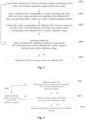
- the method includes the following steps S101 to S104.
- step S101 battery parameters of a battery unit are acquired during charging or discharging of the battery unit, and the battery parameters include an SOC and a voltage.
- the battery parameters may also include parameters such as a current and an internal resistance.
- step S102 a pre-calibrated calibration SOC at the tail end of charging or discharging and a calibration voltage are acquired.
- At least one calibration SOC at a tail end of charging is pre-calibrated during charging.
- At least one calibration SOC at a tail end of discharging is pre-calibrated during discharging.
- a battery voltage curve under a standard operating condition is pre-determined.
- the standard operating condition refers to a battery voltage curve under a standard rate and a specific temperature.
- the pre-calibrated calibration SOC at the tail end of charging or discharging and the calibration voltage are determined based on the pre-determined battery voltage curve under the standard operating condition.
- a voltage corresponding to the calibration SOC in the battery voltage curve under the standard operating condition may be determined as the calibration voltage. If the actual operating condition of the battery unit is not consistent with the standard operating condition, the voltage corresponding to the calibration SOC is required to be calibrated, and the calibrated voltage is determined as the calibration voltage, to improve calibration accuracy.
- step S103 whether the battery unit meets a SOC calibration condition is determined by comparing the SOC of the battery unit with the calibration SOC and comparing the voltage of the battery unit with the calibration voltage.
- the voltage and the SOC are positively correlated. A greater voltage leads to a greater SOC. If the voltage of the battery unit is greater than the calibration voltage, the SOC of the battery unit should be greater than the calibration SOC. In this way, the SOC is relatively accurate. On the contrary, if the voltage of the battery unit is greater than the calibration voltage, and the SOC of the battery unit is less than the calibration SOC, the SOC has an error. Therefore, the SOC of the battery unit is compared with the calibration SOC and the voltage of the battery unit is compared with the calibration voltage, and then whether the two comparison results are consistent is determined, so as to determine whether the battery unit meets the SOC calibration condition.
- the SOC calibration condition to be met by the battery unit during charging may be different from the SOC calibration condition to be met by the battery unit during discharging.
- S 104 is executed to calibrate the SOC of the battery unit to the calibration SOC.
- the method for calibrating an SOC at a tail end of charging or discharging of an energy storage system is disclosed according to the above embodiment.
- the SOC and the voltage of the battery unit are acquired in real time during charging or discharging of a battery unit. Whether the battery unit meets the SOC calibration condition is determined by comparing the SOC of the battery unit with the pre-calibrated calibration SOC at the tail end of charging or discharging and comparing the voltage of the battery unit and the calibration voltage, so that the SOC of the battery unit is timely calibrated if the SOC calibration condition is met, and the SOC calibration can be performed even if the battery unit is in a non-static state, thereby improving the accuracy of the SOC of the battery unit, avoiding an SOC jump caused by a large difference between the SOC of the battery unit and the actual SOC at the tail end of charging or discharging, and effectively improving user experience.
- the method for calibrating an SOC at a tail end of charging or discharging of an energy storage system disclosed according to the embodiment does not require additional hardware and can be realized by optimizing algorithms on a commonly used battery management system (BMS) hardware platform in the conventional technology.
- BMS battery management system
- the step S 102 includes: selecting the calibration SOC corresponding to a charging or discharging state of the battery unit, and a voltage and a current that are corresponding to the calibration SOC, from a pre-determined battery voltage curve under a standard operating condition; and calibrating the voltage corresponding to the calibration SOC, based on a current of the battery unit, an internal resistance of the battery unit, and the current corresponding to the calibration SOC, to obtain the calibration voltage.
- a method for calibrating SOC at a tail end of charging or discharging of an energy storage system includes the following steps S201 to S205.
- step S201 battery parameters of a battery unit are acquired during charging or discharging of the battery unit, and the battery parameters include an SOC and a voltage.
- step S202 the calibration SOC corresponding to a charging or discharging state of the battery unit, and a voltage and a current that are corresponding to the calibration SOC are selected from a pre-determined battery voltage curve under a standard operating condition.
- step S203 the voltage corresponding to the calibration SOC is calibrated based on a current of the battery unit, an internal resistance of the battery unit, and the current corresponding to the calibration SOC, to obtain the calibration voltage.
- V_new_chgcalib the calibration voltage
- V_ chgcalib the voltage corresponding to the calibration SOC
- R is the internal resistance of the battery unit
- I is the current of the battery unit.
- V _ new_chgcalib ⁇ I * R + V_chgcalib
- ⁇ I is a difference between the current of the battery unit and the current corresponding to the calibration SOC.
- step S204 whether the battery unit meets a SOC calibration condition is determined by comparing the SOC of the battery unit with the calibration SOC and comparing the voltage of the battery unit with the calibration voltage.
- S205 is executed to calibrate the SOC of the battery unit to the calibration SOC.
- the accuracy of the calibration voltage is improved, and the influence of errors between the battery voltage curves under the actual operating condition and under the standard operating condition on subsequent determination of whether the battery unit meets the SOC calibration condition is avoided.
- the calibration SOC is a calibration SOC at the tail end of charging, and is generally set to a relatively large value, such as 95%. If the SOC of the battery unit is greater than the calibration SOC, no SOC jump occurs when the battery unit is fully charged. Therefore it is required to determine whether a calibration is needed only when the SOC of the battery unit is less than the calibration SOC. If the voltage of the battery unit is greater than the calibration voltage and the SOC of the battery unit is less than the calibration SOC, it indicates that the SOC of the battery unit has an error and is required to be calibrated.
- step S 103 during charging an optional implementation of step S 103 is as the following steps S301 to S304.
- step S301 whether the SOC of the battery unit is less than a sum of the calibration SOC and a charge calibration return difference threshold is determined.
- the charge calibration return difference threshold is a negative value.
- the SOC of the battery unit being less than the sum of the calibration SOC and the charge calibration return difference threshold indicates that the SOC of the battery unit is less than the calibration SOC and has a certain difference from the calibration SOC.
- S302 is executed to determine that the battery unit does not meet the SOC calibration condition.
- S303 is executed to determine that whether the voltage of the battery unit is greater than the calibration voltage.
- S302 is executed to determine that the battery unit does not meet the SOC calibration condition.
- S304 is executed to determine that the battery unit meets the SOC calibration condition.
- the SOC of the battery unit should also be greater than the calibration SOC. If the voltage of the battery unit is greater than the calibration voltage, and the SOC of the battery unit is less than the calibration SOC and has a certain difference from the calibration SOC, it indicates that the SOC has an error at this time. In the embodiment, whether the battery unit meets the SOC calibration condition can be accurately determined by comparing the SOC of the battery unit with the calibration SOC and comparing the voltage of the battery unit with the calibration voltage.
- the cell with a highest voltage first reaches a full charge state during charging.
- the voltage of the battery unit is the highest voltage of the cells in the battery unit during charging of the battery unit.
- the calibration SOC is a calibration SOC at the tail end of discharging, and is generally set to a relatively small value, such as 5%. If the SOC of the battery unit is less than the calibration SOC, no SOC jump occurs when the battery unit is fully discharged. It is required to determine whether a calibration is needed only when the SOC of the battery unit is greater than the calibration SOC. If the voltage of the battery unit is less than the calibration voltage and the SOC of the battery unit is greater than the calibration SOC, it indicates that the SOC of the battery unit has an error and is required to be calibrated.
- step S103 is as the following steps S401to S404.
- step S401 whether the SOC of the battery unit is greater than a sum of the calibration SOC and a discharge calibration return difference threshold is determined.
- the discharge calibration return difference threshold is a positive value.
- the SOC of the battery unit being greater than the sum of the calibration SOC and the charge calibration return difference threshold indicates that the SOC of the battery unit is greater than the calibration SOC and has a certain difference from the calibration SOC.
- S402 is executed to determine that the battery unit does not meet the SOC calibration condition.
- S403 is executed to determine whether the voltage of the battery unit is less than the calibration voltage.
- S402 is executed to determine that the battery unit does not meet the SOC calibration condition.
- S404 is executed to determine that the battery unit meets the SOC calibration condition.
- the cell with a lowest voltage first reaches a full discharge state in the discharge state.
- the voltage of the battery unit is the lowest voltage of the cells in the battery unit during discharging of the battery unit.
- the SOC calibration may be performed when a depth of charge (DOD) is about 90% or a depth of discharge is about 90%. That is, the calibration SOC at the tail end of charging may be set to 90%, and the calibration SOC at the tail end of discharging may be set to 10%. That is to say, the calibration SOC may be flexibly calibrated in advance according to different application scenarios.
- DOD depth of charge
- multiple calibration SOCs may be calibrated at the tail end of charging and the tail end of discharging, for example, 90% and 95% are set as the calibration SOCs at the tail end of charging, and 10% and 5% are set as the calibration SOCs at the tail end of discharging, thereby achieving SOC classification calibration and further improving the accuracy of the SOC.
- a device for calibrating a SOC at a tail end of charging or discharging of an energy storage system is provided according to an embodiment of the present disclosure.
- the device may refer to the above method for calibrating a SOC at a tail end of charging or discharging of an energy storage system.
- the device includes:
- the calibration parameter acquisition unit 502 is configured to:
- the calibration determination unit 503 is configured to:
- the voltage of the battery unit is a highest voltage of voltages of cells in the battery unit during charging of the battery unit.
- the calibration determination unit 503 is configured to:
- the voltage of the battery unit is a lowest voltage of voltages of cells in the battery unit during discharging of the battery unit.
- the SOC and the voltage of the battery unit are acquired in real time during charging/discharge of a battery unit. Whether the battery unit meets the SOC calibration condition is determined by comparing the SOC of the battery unit with the pre-calibrated calibration SOC at the tail end of charging or discharging and comparing the voltage of the battery unit with the calibration voltage, so that the SOC of the battery unit is timely calibrated if the SOC calibration condition is met, thereby improving the accuracy of the SOC of the battery unit, avoiding a SOC jump caused by a large difference between the SOC of the battery unit and the actual SOC of the battery unit at the tail end of charging or discharging, and effectively improving user experience.
- the steps of the method or algorithms described in combination with the embodiments disclosed herein may be directly implemented by hardware, a software module executed by a processor, or a combination of both.
- the software module may be placed in random access memory (RAM), internal storage, read-only memory (ROM), electrically-programmable ROM, electrically erasable programmable ROM, register, hard disk, removable disk, CD-ROM, or any other storage medium known in the conventional technology.
Landscapes
- Physics & Mathematics (AREA)
- General Physics & Mathematics (AREA)
- Engineering & Computer Science (AREA)
- Power Engineering (AREA)
- Charge And Discharge Circuits For Batteries Or The Like (AREA)
- Secondary Cells (AREA)
Abstract
A method and a device for calibrating an SOC at tail end of charging or discharging of an energy storage system are provided. An SOC and a voltage of a battery unit are acquired in real time during charging or discharging of the battery unit. Whether the battery unit meets an SOC calibration condition is determined by comparing the SOC of the battery unit with a pre-calibrated calibration SOC at the tail end of charging/discharge and comparing the voltage of the battery unit with a calibration voltage, so that the SOC of the battery unit is timely calibrated if the SOC calibration condition is met, thereby improving accuracy of the SOC of the battery unit, avoiding a SOC jump caused by a large difference between the SOC of the battery unit and the actual SOC at the tail end of charging or discharging, and effectively improving user experience.
Description
- The present application relates to the technical field of battery technology, and in particular to a method and device for calibrating an SOC at tail end of charging or discharging of energy storage system.
- A battery management system is an important part of an energy storage system. Main functions of the battery management system include data collection, state estimation, charging and discharging control, battery energy equalization, and so on. Battery parameter collection and the state estimation provide important parameters for the battery management system. A State of Charge (SOC) is one of core parameters of a battery. Whether an SOC can be acquired in a timely and accurate manner is crucial to improving life and safety of the battery.
- As an internal parameter of the battery, the SOC cannot be directly measured, and can only be estimated through various estimation methods. At present, the SOC is usually estimated by combining the ampere-hour integration method and the open-circuit voltage method. However, this SOC estimation method has certain error, and as the energy storage system continues to operate for a long time, the error between the estimated SOC and the actual SOC becomes increasingly large. Especially, the SOC is directly calibrated to 100% when the energy storage system is fully charged, and the SOC is directly calibrated to 0% when the energy storage system is fully discharged. If the error between the estimated SOC displayed by a meter and the actual SOC is large at this time, the SOC displayed by the meter may directly jump to 100% or 0%, which affects user experience.
- A method and a device for calibrating an SOC at tail end of charging or discharging of energy storage system are provided according to the present application, which improves the accuracy of the SOC of the battery unit, avoids an SOC jump caused by a large difference between the SOC of the battery unit and the actual SOC at the tail end of charging or discharging, and effectively improves user experience.
- A method for calibrating an SOC at tail end of charging or discharging of energy storage system includes:
- acquiring battery parameters of a battery unit during charging or discharging of the battery unit, wherein the battery parameters comprise an SOC and a voltage;
- acquiring a pre-calibrated calibration SOC at the tail end of charging or discharging and a calibration voltage;
- determining whether the battery unit meets an SOC calibration condition, by comparing the SOC of the battery unit with the calibration SOC and comparing the voltage of the battery unit with the calibration voltage; and
- calibrating the SOC of the battery unit to the calibration SOC, in responding to determining that the battery unit meets the SOC calibration condition.
- In an embodiment, acquiring the pre-calibrated calibration SOC at the tail end of charging or discharging and the calibration voltage includes:
- selecting the calibration SOC corresponding to a charging or discharging state of the battery unit, and a voltage and a current that are corresponding to the calibration SOC, from a pre- determined battery voltage curve under a standard operating condition;
- calibrating the voltage corresponding to the calibration SOC, based on a current of the battery unit, an internal resistance of the battery unit, and the current corresponding to the calibration SOC, to obtain the calibration voltage.
- In an embodiment, determining whether the battery unit meets the SOC calibration condition during charging of the battery unit includes:
- determining whether the SOC of the battery unit is less than a sum of the calibration SOC and a charge calibration return difference threshold, wherein the charge calibration return difference threshold is a negative value;
- determining that the battery unit does not meet the SOC calibration condition, in response to the SOC of the battery unit being not less than the sum of the calibration SOC and the charge calibration return difference threshold;
- determining whether the voltage of the battery unit is greater than the calibration voltage, in response to the SOC of the battery unit being less than the sum of the calibration SOC and the charge calibration return difference threshold;
- determining that the battery unit does not meet the SOC calibration condition, in response to the voltage of the battery unit being not greater than the calibration voltage;
- determining that the battery unit meets the SOC calibration condition, in response to the voltage of the battery unit being greater than the calibration voltage.
- In an embodiment, the voltage of the battery unit is a highest voltage of voltages of cells in the battery unit during charging of the battery unit.
- In an embodiment, determining whether the battery unit meets the SOC calibration condition during discharging of the battery unit includes:
- determining whether the SOC of the battery unit is greater than a sum of the calibration SOC and a discharge calibration return difference threshold, wherein the discharge calibration return difference threshold is a positive value;
- determining that the battery unit does not meet the SOC calibration condition, in response to the SOC of the battery unit being not greater than the sum of the calibration SOC and the discharge calibration return difference threshold;
- determining whether the voltage of the battery unit is less than the calibration voltage, in response to the SOC of the battery unit being greater than the sum of the calibration SOC and the discharge calibration return difference threshold;
- determining that the battery unit does not meet the SOC calibration condition, in response to the voltage of the battery unit being not less than the calibration voltage;
- determining that the battery unit meets the SOC calibration condition, in response to the voltage of the battery unit being less than the calibration voltage.
- In an embodiment, the voltage of the battery unit is a lowest voltage of voltages of cells in the battery unit during discharging of the battery unit.
- A device for calibrating an SOC at a tail end of charging or discharging of an energy storage system includes:
- a battery parameter acquisition unit, configured to acquire battery parameters of a battery unit during charging or discharging of the battery unit, wherein the battery parameters comprise an SOC and a voltage;
- a calibration parameter acquisition unit, configured to acquire a pre-calibrated calibration SOC at the tail end of charging or discharging and a calibration voltage;
- a calibration determination unit, configured to determine whether the battery unit meets an SOC calibration condition by comparing the SOC of the battery unit with the calibration SOC and comparing the voltage of the battery unit with the calibration voltage; and
- an SOC calibration unit, configured to calibrating the SOC of the battery unit to the calibration SOC in responding to determining that the battery unit meets the SOC calibration condition.
- In an embodiment, the calibration parameter acquisition unit is configured to:
- select the calibration SOC corresponding to a charging or discharging state of the battery unit, and a voltage and a current that are corresponding to the calibration SOC, from a pre-determined battery voltage curve under a standard operating condition;
- calibrate the voltage corresponding to the calibration SOC based on a current of the battery unit, an internal resistance of the battery unit, and the current corresponding to the calibration SOC, to obtain the calibration voltage.
- In an embodiment, during charging of the battery unit, the calibration determination unit is configured to:
- determine whether the SOC of the battery unit is less than a sum of the calibration SOC and a charge calibration return difference threshold, wherein the charge calibration return difference threshold is a negative value;
- determine that the battery unit does not meet the SOC calibration condition, in response to the SOC of the battery unit being not less than the sum of the calibration SOC and the charge calibration return difference threshold;
- determine whether the voltage of the battery unit is greater than the calibration voltage, in response to the SOC of the battery unit being less than the sum of the calibration SOC and the charge calibration return difference threshold;
- determine that the battery unit does not meet the SOC calibration condition, in response to the voltage of the battery unit being not greater than the calibration voltage;
- determine that the battery unit meets the SOC calibration condition, in response to the voltage of the battery unit being greater than the calibration voltage.
- In an embodiment, the voltage of the battery unit is a highest voltage of voltages of cells in the battery unit during charging of the battery unit.
- In an embodiment, during discharging of the battery unit, the calibration determination unit is configured to:
- determine whether the SOC of the battery unit is greater than a sum of the calibration SOC and a discharge calibration return difference threshold, wherein the discharge calibration return difference threshold is a positive value;
- determine that the battery unit does not meet the SOC calibration condition, in response to the SOC of the battery unit being not greater than the sum of the calibration SOC and the discharge calibration return difference threshold;
- determine whether the voltage of the battery unit is less than the calibration voltage, in response to the SOC of the battery unit being greater than the sum of the calibration SOC and the discharge calibration return difference threshold;
- determine that the battery unit does not meet the SOC calibration condition, in response to the voltage of the battery unit being not less than the calibration voltage;
- determine that the battery unit meets the SOC calibration condition, in response to the voltage of the battery unit being less than the calibration voltage.
- In an embodiment, the voltage of the battery unit is a lowest voltage of voltages of cells in the battery unit during discharging of the battery unit.
- A method and a device for calibrating an SOC at a tail end of charging or discharging of an energy storage system are disclosed by the present application. During charging or discharging of the battery unit, the SOC and the voltage of the battery unit are acquired in real time. Whether the battery unit meets the SOC calibration condition is determined by comparing the SOC of the battery unit with the pre-calibrated calibration SOC at the tail end of charging or discharging and comparing the voltage of the battery unit with the calibration voltage, so that the SOC of the battery unit is timely calibrated under the situation that the SOC calibration condition is met, to improve the accuracy of the SOC of the battery unit, avoid an SOC jump caused by a large difference between the SOC of the battery unit and the actual SOC at the tail end of charging or discharging, and effectively improve user experience.
- In order to illustrate technical solutions in embodiments of the present application or the conventional technology, the accompanying drawings used in the description of the embodiments or the conventional technology is briefly described below. It is apparent that the accompanying drawings in the following description are only for the embodiments of the present application. For those skilled in the art, other drawings can be obtained based on the provided accompanying drawings without creative efforts.
-
Figure 1 is a schematic flowchart of a method for calibrating an SOC at a tail end of charging or discharging of an energy storage system according to an embodiment of the present application; -
Figure 2 is a schematic flowchart of another method for calibrating an SOC at a tail end of charging or discharging of an energy storage system according to an embodiment of the present application; -
Figure 3 is a schematic flowchart of some steps of a method for calibrating an SOC at a tail end of charging or discharging of an energy storage system according to an embodiment of the present application; -
Figure 4 is a schematic flowchart of some steps of a method for calibrating an SOC at a tail end of charging or discharging of an energy storage system according to an embodiment of the present application; and -
Figure 5 is a structural schematic diagram of a device for calibrating an SOC at a tail end of charging or discharging of an energy storage system according to an embodiment of the present application. - The technical solutions according to the embodiments of the present application are described below in conjunction with the accompanying drawings of the embodiments of the present application. Obviously, the described embodiments are only a part of the embodiments of the present application, not all of them. All other embodiments obtained by those skilled in the art based on the embodiments of the present application without creative efforts are within the protection scope of the present application.
- Currently the SOC is usually estimated by combining the ampere-hour integration method and the open-circuit voltage method. The ampere-hour integration method relies on a given initial SOC, and the value of the initial SOC is prone to error. In addition, the SOC estimated by the ampere-hour integration method has certain error also due to current sampling errors and current accumulation errors. The open-circuit voltage refers to a terminal voltage of the battery measured when the battery reaches the electrochemical equilibrium state after being left standing for an enough time. The open-circuit voltage method refers to an estimation of the SOC of the battery by using a function relationship between the open-circuit voltage and the SOC of the battery. However, the function relationship is obtained based on a factory test environment under a rated working condition, which may be different from the actual working condition. Therefore, the SOC estimated by the open-circuit voltage method also has certain error, and the SOC is estimated after the battery is left standing for more than 2 hours to reach an internal electrochemical equilibrium. The error between the estimated SOC and the actual SOC becomes increasingly large especially at the tail end of charging or discharging of the energy storage system.
- In order to solve the above technical problems, a method and a device for calibrating an SOC at a tail end of charging or discharging of an energy storage system are provided according to the present application, which are applied to a battery control unit in the energy storage system, and used to perform SOC calibration at the tail end of charging or discharging for a battery unit. The battery unit may be a single battery, a battery module/cluster (PACK), battery clusters (RACK), and so on, which is not specifically limited in the present application.
- Referring to
Figure 1 , a method for calibrating an SOC at a tail end of charging or discharging of an energy storage system is disclosed according to an embodiment. The method includes the following steps S101 to S104. - In step S101, battery parameters of a battery unit are acquired during charging or discharging of the battery unit, and the battery parameters include an SOC and a voltage.
- The battery parameters may also include parameters such as a current and an internal resistance.
- In step S102, a pre-calibrated calibration SOC at the tail end of charging or discharging and a calibration voltage are acquired.
- At least one calibration SOC at a tail end of charging, such as 95%, is pre-calibrated during charging. At least one calibration SOC at a tail end of discharging, such as 5%, is pre-calibrated during discharging.
- A battery voltage curve under a standard operating condition is pre-determined. The standard operating condition refers to a battery voltage curve under a standard rate and a specific temperature. The pre-calibrated calibration SOC at the tail end of charging or discharging and the calibration voltage are determined based on the pre-determined battery voltage curve under the standard operating condition.
- If the actual operating condition of the battery unit is consistent with the standard operating condition, a voltage corresponding to the calibration SOC in the battery voltage curve under the standard operating condition may be determined as the calibration voltage. If the actual operating condition of the battery unit is not consistent with the standard operating condition, the voltage corresponding to the calibration SOC is required to be calibrated, and the calibrated voltage is determined as the calibration voltage, to improve calibration accuracy.
- In step S103, whether the battery unit meets a SOC calibration condition is determined by comparing the SOC of the battery unit with the calibration SOC and comparing the voltage of the battery unit with the calibration voltage.
- In general, the voltage and the SOC are positively correlated. A greater voltage leads to a greater SOC. If the voltage of the battery unit is greater than the calibration voltage, the SOC of the battery unit should be greater than the calibration SOC. In this way, the SOC is relatively accurate. On the contrary, if the voltage of the battery unit is greater than the calibration voltage, and the SOC of the battery unit is less than the calibration SOC, the SOC has an error. Therefore, the SOC of the battery unit is compared with the calibration SOC and the voltage of the battery unit is compared with the calibration voltage, and then whether the two comparison results are consistent is determined, so as to determine whether the battery unit meets the SOC calibration condition.
- It should be noted that the SOC calibration condition to be met by the battery unit during charging may be different from the SOC calibration condition to be met by the battery unit during discharging.
- If the battery unit meets the SOC calibration condition,
S 104 is executed to calibrate the SOC of the battery unit to the calibration SOC. - If the battery unit does not meet the SOC calibration condition, S 101 is returned to and executed.
- The method for calibrating an SOC at a tail end of charging or discharging of an energy storage system is disclosed according to the above embodiment. In the method, the SOC and the voltage of the battery unit are acquired in real time during charging or discharging of a battery unit. Whether the battery unit meets the SOC calibration condition is determined by comparing the SOC of the battery unit with the pre-calibrated calibration SOC at the tail end of charging or discharging and comparing the voltage of the battery unit and the calibration voltage, so that the SOC of the battery unit is timely calibrated if the SOC calibration condition is met, and the SOC calibration can be performed even if the battery unit is in a non-static state, thereby improving the accuracy of the SOC of the battery unit, avoiding an SOC jump caused by a large difference between the SOC of the battery unit and the actual SOC at the tail end of charging or discharging, and effectively improving user experience.
- In addition, the method for calibrating an SOC at a tail end of charging or discharging of an energy storage system disclosed according to the embodiment does not require additional hardware and can be realized by optimizing algorithms on a commonly used battery management system (BMS) hardware platform in the conventional technology.
- In one embodiment, the
step S 102 includes: selecting the calibration SOC corresponding to a charging or discharging state of the battery unit, and a voltage and a current that are corresponding to the calibration SOC, from a pre-determined battery voltage curve under a standard operating condition; and calibrating the voltage corresponding to the calibration SOC, based on a current of the battery unit, an internal resistance of the battery unit, and the current corresponding to the calibration SOC, to obtain the calibration voltage. Referring toFigure 2 , a method for calibrating SOC at a tail end of charging or discharging of an energy storage system according to the embodiment includes the following steps S201 to S205. - In step S201, battery parameters of a battery unit are acquired during charging or discharging of the battery unit, and the battery parameters include an SOC and a voltage.
- In step S202, the calibration SOC corresponding to a charging or discharging state of the battery unit, and a voltage and a current that are corresponding to the calibration SOC are selected from a pre-determined battery voltage curve under a standard operating condition.
- In step S203, the voltage corresponding to the calibration SOC is calibrated based on a current of the battery unit, an internal resistance of the battery unit, and the current corresponding to the calibration SOC, to obtain the calibration voltage.
- Specifically, the voltage corresponding to the calibration SOC may be calibrated through the following function relationship:

- An optional implementation of the function is:

- The above is only an optional way to calculate the calibration voltage, and the present application does not specifically limit the expression of the above function.
- In step S204, whether the battery unit meets a SOC calibration condition is determined by comparing the SOC of the battery unit with the calibration SOC and comparing the voltage of the battery unit with the calibration voltage.
- If the battery unit meets the SOC calibration condition, S205 is executed to calibrate the SOC of the battery unit to the calibration SOC.
- If the battery unit does not meet the SOC calibration condition, S201 is returned to and executed.
- In the method for calibrating an SOC at a tail end of charging or discharging of an energy storage system disclosed according to the embodiment, by calibrating the voltage corresponding to the calibration SOC, the accuracy of the calibration voltage is improved, and the influence of errors between the battery voltage curves under the actual operating condition and under the standard operating condition on subsequent determination of whether the battery unit meets the SOC calibration condition is avoided.
- It can be understood that, during charging, the calibration SOC is a calibration SOC at the tail end of charging, and is generally set to a relatively large value, such as 95%. If the SOC of the battery unit is greater than the calibration SOC, no SOC jump occurs when the battery unit is fully charged. Therefore it is required to determine whether a calibration is needed only when the SOC of the battery unit is less than the calibration SOC. If the voltage of the battery unit is greater than the calibration voltage and the SOC of the battery unit is less than the calibration SOC, it indicates that the SOC of the battery unit has an error and is required to be calibrated.
- Referring to
Figure 3 , during charging an optional implementation ofstep S 103 is as the following steps S301 to S304. - In step S301, whether the SOC of the battery unit is less than a sum of the calibration SOC and a charge calibration return difference threshold is determined.
- It should be noted that the charge calibration return difference threshold is a negative value. The SOC of the battery unit being less than the sum of the calibration SOC and the charge calibration return difference threshold indicates that the SOC of the battery unit is less than the calibration SOC and has a certain difference from the calibration SOC.
- If the SOC of the battery unit is not less than the sum of the calibration SOC and the charge calibration return difference threshold, S302 is executed to determine that the battery unit does not meet the SOC calibration condition.
- If the SOC of the battery unit is less than the sum of the calibration SOC and the charge calibration return difference threshold, S303 is executed to determine that whether the voltage of the battery unit is greater than the calibration voltage.
- If the voltage of the battery unit is not greater than the calibration voltage, S302 is executed to determine that the battery unit does not meet the SOC calibration condition.
- If the voltage of the battery unit is greater than the calibration voltage, S304 is executed to determine that the battery unit meets the SOC calibration condition.
- In general, if the voltage of the battery unit is greater than the calibration voltage, the SOC of the battery unit should also be greater than the calibration SOC. If the voltage of the battery unit is greater than the calibration voltage, and the SOC of the battery unit is less than the calibration SOC and has a certain difference from the calibration SOC, it indicates that the SOC has an error at this time. In the embodiment, whether the battery unit meets the SOC calibration condition can be accurately determined by comparing the SOC of the battery unit with the calibration SOC and comparing the voltage of the battery unit with the calibration voltage.
- In a case that the battery unit includes multiple cells, the cell with a highest voltage first reaches a full charge state during charging. In order to avoid overcharge, preferably, the voltage of the battery unit is the highest voltage of the cells in the battery unit during charging of the battery unit.
- It can be understood that, during discharging the calibration SOC is a calibration SOC at the tail end of discharging, and is generally set to a relatively small value, such as 5%. If the SOC of the battery unit is less than the calibration SOC, no SOC jump occurs when the battery unit is fully discharged. It is required to determine whether a calibration is needed only when the SOC of the battery unit is greater than the calibration SOC. If the voltage of the battery unit is less than the calibration voltage and the SOC of the battery unit is greater than the calibration SOC, it indicates that the SOC of the battery unit has an error and is required to be calibrated.
- Referring to
Figure 4 , during discharging an optional implementation of step S103 is as the following steps S401to S404. - In step S401, whether the SOC of the battery unit is greater than a sum of the calibration SOC and a discharge calibration return difference threshold is determined.
- It should be noted that the discharge calibration return difference threshold is a positive value. The SOC of the battery unit being greater than the sum of the calibration SOC and the charge calibration return difference threshold indicates that the SOC of the battery unit is greater than the calibration SOC and has a certain difference from the calibration SOC.
- If the SOC of the battery unit is not greater than the sum of the calibration SOC and the discharge calibration return difference threshold, S402 is executed to determine that the battery unit does not meet the SOC calibration condition.
- If the SOC of the battery unit is greater than the sum of the calibration SOC and the discharge calibration return difference threshold, S403 is executed to determine whether the voltage of the battery unit is less than the calibration voltage.
- If the voltage of the battery unit is not less than the calibration voltage, S402 is executed to determine that the battery unit does not meet the SOC calibration condition.
- If the voltage of the battery unit is less than the calibration voltage, S404 is executed to determine that the battery unit meets the SOC calibration condition.
- In a case that the battery unit includes multiple cells, the cell with a lowest voltage first reaches a full discharge state in the discharge state. In order to avoid over discharge of the battery, preferably, the voltage of the battery unit is the lowest voltage of the cells in the battery unit during discharging of the battery unit.
- Furthermore, in some application scenarios, such as in a scenario that the accuracy of the SOC is abnormal due to a long-term operation of a large-scale energy storage system, the SOC calibration may be performed when a depth of charge (DOD) is about 90% or a depth of discharge is about 90%. That is, the calibration SOC at the tail end of charging may be set to 90%, and the calibration SOC at the tail end of discharging may be set to 10%. That is to say, the calibration SOC may be flexibly calibrated in advance according to different application scenarios.
- In addition, multiple calibration SOCs may be calibrated at the tail end of charging and the tail end of discharging, for example, 90% and 95% are set as the calibration SOCs at the tail end of charging, and 10% and 5% are set as the calibration SOCs at the tail end of discharging, thereby achieving SOC classification calibration and further improving the accuracy of the SOC.
- A device for calibrating a SOC at a tail end of charging or discharging of an energy storage system is provided according to an embodiment of the present disclosure. The device may refer to the above method for calibrating a SOC at a tail end of charging or discharging of an energy storage system. Referring to
Figure 5 , the device includes: - a battery
parameter acquisition unit 501, configured to acquire battery parameters of a battery unit during charging or discharging of the battery unit, wherein the battery parameters comprise an SOC and a voltage; - a calibration
parameter acquisition unit 502, configured to acquire a pre-calibrated calibration SOC at the tail end of charging or discharging and a calibration voltage; - a
calibration determination unit 503, configured to determine whether the battery unit meets an SOC calibration condition by comparing the SOC of the battery unit with the calibration SOC and comparing the voltage of the battery unit with the calibration voltage; and - an
SOC calibration unit 504, configured to calibrate the SOC of the battery unit to the calibration SOC in responding to determining that the battery unit meets the SOC calibration condition. - In an embodiment, the calibration
parameter acquisition unit 502 is configured to: - select the calibration SOC corresponding to a charging or discharging state of the battery unit, and a voltage and a current that are corresponding to the calibration SOC, from a pre-determined battery voltage curve under a standard operating condition; and
- calibrate the voltage corresponding to the calibration SOC based on a current of the battery unit, an internal resistance of the battery unit, and the current corresponding to the calibration SOC, to obtain the calibration voltage.
- In an embodiment, during charging of the battery unit, the
calibration determination unit 503 is configured to: - determine whether the SOC of the battery unit is less than a sum of the calibration SOC and a charge calibration return difference threshold, wherein the charge calibration return difference threshold is a negative value;
- determine that the battery unit does not meet the SOC calibration condition, in response to the SOC of the battery unit being not less than the sum of the calibration SOC and the charge calibration return difference threshold;
- determine whether the voltage of the battery unit is greater than the calibration voltage, in response to the SOC of the battery unit being less than the sum of the calibration SOC and the charge calibration return difference threshold;
- determine that the battery unit does not meet the SOC calibration condition, in response to the voltage of the battery unit being not greater than the calibration voltage;
- determine that the battery unit meets the SOC calibration condition, in response to the voltage of the battery unit being greater than the calibration voltage.
- In an embodiment, the voltage of the battery unit is a highest voltage of voltages of cells in the battery unit during charging of the battery unit.
- In an embodiment, during discharging of the battery unit, the
calibration determination unit 503 is configured to: - determine whether the SOC of the battery unit is greater than a sum of the calibration SOC and a discharge calibration return difference threshold, wherein the discharge calibration return difference threshold is a positive value;
- determine that the battery unit does not meet the SOC calibration condition, in response to the SOC of the battery unit being not greater than the sum of the calibration SOC and the discharge calibration return difference threshold;
- determine whether the voltage of the battery unit is less than the calibration voltage, in response to the SOC of the battery unit being greater than the sum of the calibration SOC and the discharge calibration return difference threshold;
- determine that the battery unit does not meet the SOC calibration condition, in response to the voltage of the battery unit being not less than the calibration voltage;
- determine that the battery unit meets the SOC calibration condition, in response to the voltage of the battery unit being less than the calibration voltage.
- In an embodiment, the voltage of the battery unit is a lowest voltage of voltages of cells in the battery unit during discharging of the battery unit.
- For the device for calibrating a SOC at a tail end of charging or discharging of an energy storage system, the SOC and the voltage of the battery unit are acquired in real time during charging/discharge of a battery unit. Whether the battery unit meets the SOC calibration condition is determined by comparing the SOC of the battery unit with the pre-calibrated calibration SOC at the tail end of charging or discharging and comparing the voltage of the battery unit with the calibration voltage, so that the SOC of the battery unit is timely calibrated if the SOC calibration condition is met, thereby improving the accuracy of the SOC of the battery unit, avoiding a SOC jump caused by a large difference between the SOC of the battery unit and the actual SOC of the battery unit at the tail end of charging or discharging, and effectively improving user experience.
- In the description, the embodiments are described in a progressive manner, and focus on the differences from other embodiments. For same and similar parts of the various embodiments, reference may be made to each other. For the device disclosed by the embodiment, since the device corresponds to the method disclosed by the embodiment, the description is relatively simple. For the related part, reference may be made to the description of the method.
- It should be noted that, relational terms such as "first" and "second" in the description are only used to distinguish one entity or operation from another entity or operation, and do not necessarily require or imply that any actual relationship or order exists between the entities or operations. Moreover, terms such as "comprise", "include", or any other variation thereof are intended to cover non-exclusive inclusion, such that a process, method, article or device that includes a series of elements not only includes the series of elements, but also includes other elements not explicitly listed, or also includes elements inherent in the process, method, article or device. Without further limitations, an element defined by a statement "comprise a..." does not exclude the existence of other identical element in the process, method, article or device that includes the element.
- The steps of the method or algorithms described in combination with the embodiments disclosed herein may be directly implemented by hardware, a software module executed by a processor, or a combination of both. The software module may be placed in random access memory (RAM), internal storage, read-only memory (ROM), electrically-programmable ROM, electrically erasable programmable ROM, register, hard disk, removable disk, CD-ROM, or any other storage medium known in the conventional technology.
- The above embodiments may be combined arbitrarily. For the above description of the embodiments, features described in the embodiments of the description may be replaced or combined with each other, so that those skilled in the art can implement or use the present application.
- The above description of the embodiments enables those skilled in the art to implement or use the present application. Various modifications to the embodiments are apparent to those skilled in the art. The general principles defined herein may be implemented in other embodiments without departing from the spirit or scope of the present application. Therefore, the present application is not limited to the embodiments shown herein, and shall conform to the widest scope consistent with the principles and novel features disclosed herein.
Claims (13)
- A method for calibrating a State of Charge (SOC) at a tail end of charging or discharging of an energy storage system, comprising:acquiring (S101) battery parameters of a battery unit during charging or discharging of the battery unit, wherein the battery parameters comprise an SOC and a voltage;acquiring (S102) a pre-calibrated calibration SOC at the tail end of charging or discharging and a calibration voltage;determining (S103) whether the battery unit meets an SOC calibration condition, by comparing the SOC of the battery unit with the calibration SOC and comparing the voltage of the battery unit with the calibration voltage; andcalibrating (S104) the SOC of the battery unit to the calibration SOC, in responding to determining that the battery unit meets the SOC calibration condition.
- The method according to claim 1, wherein acquiring the pre-calibrated calibration SOC at the tail end of charging or discharging and the calibration voltage comprises:selecting the calibration SOC corresponding to a charging state or a discharging state of the battery unit, and a voltage and a current that are corresponding to the calibration SOC, from a pre-determined battery voltage curve under a standard operating condition; andcalibrating the voltage corresponding to the calibration SOC, based on a current of the battery unit, an internal resistance of the battery unit, and the current corresponding to the calibration SOC, to obtain the calibration voltage.
- The method according to claim 1, wherein determining whether the battery unit meets the SOC calibration condition during charging of the battery unit comprises:determining whether the SOC of the battery unit is less than a sum of the calibration SOC and a charge calibration return difference threshold, wherein the charge calibration return difference threshold is a negative value;determining that the battery unit does not meet the SOC calibration condition, in response to the SOC of the battery unit being not less than the sum of the calibration SOC and the charge calibration return difference threshold;determining whether the voltage of the battery unit is greater than the calibration voltage, in response to the SOC of the battery unit being less than the sum of the calibration SOC and the charge calibration return difference threshold;determining that the battery unit does not meet the SOC calibration condition, in response to the voltage of the battery unit being not greater than the calibration voltage;determining that the battery unit meets the SOC calibration condition, in response to the voltage of the battery unit being greater than the calibration voltage.
- The method according to claim 3, wherein the voltage of the battery unit is a highest voltage of voltages of cells in the battery unit during charging of the battery unit.
- The method according to claim 1, wherein determining whether the battery unit meets the SOC calibration condition during discharging of the battery unit comprises:determining whether the SOC of the battery unit is greater than a sum of the calibration SOC and a discharge calibration return difference threshold, wherein the discharge calibration return difference threshold is a positive value;determining that the battery unit does not meet the SOC calibration condition, in response to the SOC of the battery unit being not greater than the sum of the calibration SOC and the discharge calibration return difference threshold;determining whether the voltage of the battery unit is less than the calibration voltage, in response to the SOC of the battery unit being greater than the sum of the calibration SOC and the discharge calibration return difference threshold;determining that the battery unit does not meet the SOC calibration condition, in response to the voltage of the battery unit being not less than the calibration voltage;determining that the battery unit meets the SOC calibration condition, in response to the voltage of the battery unit being less than the calibration voltage.
- The method according to claim 5, wherein the voltage of the battery unit is a lowest voltage of voltages of cells in the battery unit during discharging of the battery unit.
- A device for calibrating a State of Charge (SOC) at a tail end of charging or discharging of an energy storage system, comprising:a battery parameter acquisition unit (501), configured to acquire battery parameters of a battery unit during charging or discharging of the battery unit, wherein the battery parameters comprise an SOC and a voltage;a calibration parameter acquisition unit (502), configured to acquire a pre-calibrated calibration SOC at the tail end of charging or discharging and a calibration voltage;a calibration determination unit (503), configured to determine whether the battery unit meets an SOC calibration condition by comparing the SOC of the battery unit with the calibration SOC and comparing the voltage of the battery unit with the calibration voltage; andan SOC calibration unit (504), configured to calibrate the SOC of the battery unit to the calibration SOC in responding to determining that the battery unit meets the SOC calibration condition.
- The device according to claim 7, wherein the calibration parameter acquisition unit is configured to:select the calibration SOC corresponding to a charging state or a discharging state of the battery unit, and a voltage and a current that are corresponding to the calibration SOC, from a pre-determined battery voltage curve under a standard operating condition; andcalibrate the voltage corresponding to the calibration SOC based on a current of the battery unit, an internal resistance of the battery unit, and the current corresponding to the calibration SOC, to obtain the calibration voltage.
- The device according to claim 7, wherein during charging of the battery unit, the calibration determination unit is configured to:determine whether the SOC of the battery unit is less than a sum of the calibration SOC and a charge calibration return difference threshold, wherein the charge calibration return difference threshold is a negative value;determine that the battery unit does not meet the SOC calibration condition, in response to the SOC of the battery unit being not less than the sum of the calibration SOC and the charge calibration return difference threshold;determine whether the voltage of the battery unit is greater than the calibration voltage, in response to the SOC of the battery unit being less than the sum of the calibration SOC and the charge calibration return difference threshold;determine that the battery unit does not meet the SOC calibration condition, in response to the voltage of the battery unit being not greater than the calibration voltage;determine that the battery unit meets the SOC calibration condition, in response to the voltage of the battery unit being greater than the calibration voltage.
- The device according to claim 9, wherein the voltage of the battery unit is a highest voltage of voltages of cells in the battery unit during charging of the battery unit.
- The device according to claim 7, wherein during discharging of the battery unit, the calibration determination unit is configured to:determine whether the SOC of the battery unit is greater than a sum of the calibration SOC and a discharge calibration return difference threshold, wherein the discharge calibration return difference threshold is a positive value;determine that the battery unit does not meet the SOC calibration condition, in response to the SOC of the battery unit being not greater than the sum of the calibration SOC and the discharge calibration return difference threshold;determine whether the voltage of the battery unit is less than the calibration voltage, in response to the SOC of the battery unit being greater than the sum of the calibration SOC and the discharge calibration return difference threshold;determine that the battery unit does not meet the SOC calibration condition, in response to the voltage of the battery unit being not less than the calibration voltage;determine that the battery unit meets the SOC calibration condition, in response to the voltage of the battery unit being less than the calibration voltage.
- The device according to claim 11, wherein the voltage of the battery unit is a lowest voltage of voltages of cells in the battery unit during discharging of the battery unit.
- A computer device, comprising a memory and one or more processors, the memory storing computer-readable instructions, and the computer-readable instructions, when executed by the one or more processors, causing the one or more processors to perform the method according to any one of claims 1 to 6.
Applications Claiming Priority (1)
| Application Number | Priority Date | Filing Date | Title |
|---|---|---|---|
| CN202211432343.6A CN115754736A (en) | 2022-11-15 | 2022-11-15 | SOC calibration method and device for charging and discharging tail ends of energy storage system |
Publications (1)
| Publication Number | Publication Date |
|---|---|
| EP4372398A1 true EP4372398A1 (en) | 2024-05-22 |
Family
ID=85371657
Family Applications (1)
| Application Number | Title | Priority Date | Filing Date |
|---|---|---|---|
| EP23186836.5A Pending EP4372398A1 (en) | 2022-11-15 | 2023-07-20 | Method and device for calibrating soc at tail end of charging or discharging of energy storage system |
Country Status (4)
| Country | Link |
|---|---|
| US (1) | US20240159836A1 (en) |
| EP (1) | EP4372398A1 (en) |
| CN (1) | CN115754736A (en) |
| AU (1) | AU2023208067B2 (en) |
Cited By (1)
| Publication number | Priority date | Publication date | Assignee | Title |
|---|---|---|---|---|
| CN121091121A (en) * | 2025-11-10 | 2025-12-09 | 云储新能源科技有限公司 | SOC calibration method for dynamic reconfigurable energy storage battery system |
Families Citing this family (4)
| Publication number | Priority date | Publication date | Assignee | Title |
|---|---|---|---|---|
| CN116345648B (en) * | 2023-05-31 | 2023-08-01 | 苏州精控能源科技有限公司 | Battery cluster SOC balance method, equipment and storage medium for large-scale energy storage system |
| CN116505621B (en) * | 2023-06-25 | 2024-05-03 | 广汽埃安新能源汽车股份有限公司 | Battery equalization control method and device |
| CN118630885B (en) * | 2024-08-13 | 2024-12-24 | 上海思格新能源技术有限公司 | Method and device for determining state of charge of energy storage system and energy storage system |
| CN118962477B (en) * | 2024-10-10 | 2025-05-09 | 合众新能源汽车股份有限公司 | Method and device for calibrating residual electric quantity of battery and computer storage medium |
Citations (9)
| Publication number | Priority date | Publication date | Assignee | Title |
|---|---|---|---|---|
| US9188649B2 (en) * | 2011-10-21 | 2015-11-17 | Simplo Technology Company, Ltd. | Voltage calibration method |
| US9797960B2 (en) * | 2010-02-12 | 2017-10-24 | Poweroasis Limited | Management of battery charging through coulomb counting |
| DE102013214292B4 (en) * | 2013-07-22 | 2018-12-27 | Siemens Aktiengesellschaft | Charge state detection of electrochemical storage |
| CN112305432A (en) * | 2020-09-18 | 2021-02-02 | 傲普(上海)新能源有限公司 | SOC calibration method for large energy storage system battery |
| EP3783377A1 (en) * | 2019-06-24 | 2021-02-24 | Contemporary Amperex Technology Co., Limited | Battery state of charge determination method and device, management system and storage medium |
| CN113933711A (en) * | 2020-07-13 | 2022-01-14 | 浙江正泰电器股份有限公司 | SOC calibration algorithm |
| DE102020130732A1 (en) * | 2020-11-20 | 2022-05-25 | Audi Aktiengesellschaft | Method for determining a value of a parameter of a battery cell, control device and motor vehicle |
| CN115015763A (en) * | 2022-06-02 | 2022-09-06 | 上海瑞浦青创新能源有限公司 | SOC estimation calibration method, apparatus and medium |
| CN115079026A (en) * | 2022-06-02 | 2022-09-20 | 国网江苏省电力有限公司电力科学研究院 | SOC automatic calibration method and device suitable for high-voltage energy storage system |
Family Cites Families (10)
| Publication number | Priority date | Publication date | Assignee | Title |
|---|---|---|---|---|
| JP4292721B2 (en) * | 2001-02-14 | 2009-07-08 | 株式会社日本自動車部品総合研究所 | Battery state control method for hybrid vehicle |
| JP4772137B2 (en) * | 2009-06-02 | 2011-09-14 | トヨタ自動車株式会社 | Control device for battery-powered equipment |
| US9651624B2 (en) * | 2012-12-17 | 2017-05-16 | Qualcomm Incorporated | Systems and methods for state of charge estimation |
| JP6610558B2 (en) * | 2014-11-19 | 2019-11-27 | 株式会社Gsユアサ | Secondary battery management device and secondary battery management method |
| GB2582347A (en) * | 2019-03-20 | 2020-09-23 | Dyson Technology Ltd | Estimating a remaining runtime of a battery |
| CN110988690B (en) * | 2019-04-25 | 2021-03-09 | 宁德时代新能源科技股份有限公司 | Battery state of health correction method, device, management system and storage medium |
| CN110967646B (en) * | 2019-05-24 | 2021-03-30 | 宁德时代新能源科技股份有限公司 | SOC correction method and device, battery management system and storage medium |
| CN112147513A (en) * | 2020-09-23 | 2020-12-29 | 南京工程学院 | Power battery SOC multidimensional calibration method |
| CN114384431A (en) * | 2022-02-17 | 2022-04-22 | 中国电力科学研究院有限公司 | Battery cluster SOC and SOH calibration method, system, equipment and storage medium |
| CN115061045B (en) * | 2022-07-08 | 2024-10-18 | 青岛乾程科技股份有限公司 | A method and device for SOC charge and discharge terminal calibration applied in BMS |
-
2022
- 2022-11-15 CN CN202211432343.6A patent/CN115754736A/en active Pending
-
2023
- 2023-07-18 US US18/354,199 patent/US20240159836A1/en active Pending
- 2023-07-20 EP EP23186836.5A patent/EP4372398A1/en active Pending
- 2023-07-24 AU AU2023208067A patent/AU2023208067B2/en active Active
Patent Citations (9)
| Publication number | Priority date | Publication date | Assignee | Title |
|---|---|---|---|---|
| US9797960B2 (en) * | 2010-02-12 | 2017-10-24 | Poweroasis Limited | Management of battery charging through coulomb counting |
| US9188649B2 (en) * | 2011-10-21 | 2015-11-17 | Simplo Technology Company, Ltd. | Voltage calibration method |
| DE102013214292B4 (en) * | 2013-07-22 | 2018-12-27 | Siemens Aktiengesellschaft | Charge state detection of electrochemical storage |
| EP3783377A1 (en) * | 2019-06-24 | 2021-02-24 | Contemporary Amperex Technology Co., Limited | Battery state of charge determination method and device, management system and storage medium |
| CN113933711A (en) * | 2020-07-13 | 2022-01-14 | 浙江正泰电器股份有限公司 | SOC calibration algorithm |
| CN112305432A (en) * | 2020-09-18 | 2021-02-02 | 傲普(上海)新能源有限公司 | SOC calibration method for large energy storage system battery |
| DE102020130732A1 (en) * | 2020-11-20 | 2022-05-25 | Audi Aktiengesellschaft | Method for determining a value of a parameter of a battery cell, control device and motor vehicle |
| CN115015763A (en) * | 2022-06-02 | 2022-09-06 | 上海瑞浦青创新能源有限公司 | SOC estimation calibration method, apparatus and medium |
| CN115079026A (en) * | 2022-06-02 | 2022-09-20 | 国网江苏省电力有限公司电力科学研究院 | SOC automatic calibration method and device suitable for high-voltage energy storage system |
Cited By (1)
| Publication number | Priority date | Publication date | Assignee | Title |
|---|---|---|---|---|
| CN121091121A (en) * | 2025-11-10 | 2025-12-09 | 云储新能源科技有限公司 | SOC calibration method for dynamic reconfigurable energy storage battery system |
Also Published As
| Publication number | Publication date |
|---|---|
| AU2023208067B2 (en) | 2025-03-13 |
| CN115754736A (en) | 2023-03-07 |
| US20240159836A1 (en) | 2024-05-16 |
| AU2023208067A1 (en) | 2024-05-30 |
Similar Documents
| Publication | Publication Date | Title |
|---|---|---|
| EP4372398A1 (en) | Method and device for calibrating soc at tail end of charging or discharging of energy storage system | |
| US12181533B2 (en) | Method and device for determining available capacity of battery, management system, and storage medium | |
| US11899071B2 (en) | Method and apparatus for determining state of charge of battery, management system and storage medium | |
| WO2020216082A1 (en) | Method and apparatus for correcting state of health of battery, and management system and storage medium | |
| US12438385B2 (en) | Method and device for estimating SOC of battery pack, and battery management system | |
| CN113097582B (en) | Method and device for estimating SOH value of battery monomer | |
| US11668755B2 (en) | Method and apparatus for determining available energy of battery, management system, and storage medium | |
| US12050252B2 (en) | State-of-charge cut-off control method, apparatus and system, and storage medium | |
| KR20240121779A (en) | Method, device and storage medium for determining battery capacity | |
| CN114035083A (en) | Method, device and system for calculating total capacity of battery and storage medium | |
| CN112394290B (en) | Battery pack SOH estimation method, device, computer equipment and storage medium | |
| CN117452240A (en) | A method and device for measuring the state of charge of a battery pack | |
| CN118914891A (en) | Initial value calibration method and equipment for charge state of battery pack | |
| CN114740373B (en) | Methods, devices, and electronic equipment for estimating SOC value during charging. | |
| CN119001477B (en) | Battery display SOC calibration method, device, electronic device and readable medium | |
| CN112731187A (en) | Battery capacity correction method and battery management system | |
| KR102888925B1 (en) | Battery diagnostic device and method | |
| CN118777889B (en) | A battery capacity prediction method, prediction device and related equipment | |
| CN120394395A (en) | Method, device and control system for grading batteries | |
| CN120405467A (en) | Battery DC resistance testing method, device and testing equipment | |
| CN120993247A (en) | Methods, devices, media, and electronic equipment for determining the state of charge of electric vehicle batteries | |
| KR20250028579A (en) | Initial state-of-charge correction method by estimating the state of the li-ion battery before | |
| CN121276334A (en) | Method, system, device, medium, and program product for evaluating secondary battery SOC | |
| CN118777877A (en) | Battery SOC correction method, device and computer readable storage medium | |
| CN118330460A (en) | Real-time calculation method and device for battery available power state and storage medium |
Legal Events
| Date | Code | Title | Description |
|---|---|---|---|
| PUAI | Public reference made under article 153(3) epc to a published international application that has entered the european phase |
Free format text: ORIGINAL CODE: 0009012 |
|
| STAA | Information on the status of an ep patent application or granted ep patent |
Free format text: STATUS: REQUEST FOR EXAMINATION WAS MADE |
|
| 17P | Request for examination filed |
Effective date: 20230720 |
|
| AK | Designated contracting states |
Kind code of ref document: A1 Designated state(s): AL AT BE BG CH CY CZ DE DK EE ES FI FR GB GR HR HU IE IS IT LI LT LU LV MC ME MK MT NL NO PL PT RO RS SE SI SK SM TR |