EP4371798A1 - Method for controlling at least one user interface of a vehicle - Google Patents
Method for controlling at least one user interface of a vehicle Download PDFInfo
- Publication number
- EP4371798A1 EP4371798A1 EP22208361.0A EP22208361A EP4371798A1 EP 4371798 A1 EP4371798 A1 EP 4371798A1 EP 22208361 A EP22208361 A EP 22208361A EP 4371798 A1 EP4371798 A1 EP 4371798A1
- Authority
- EP
- European Patent Office
- Prior art keywords
- data
- user interface
- user
- vehicle
- user input
- Prior art date
- Legal status (The legal status is an assumption and is not a legal conclusion. Google has not performed a legal analysis and makes no representation as to the accuracy of the status listed.)
- Granted
Links
Images


Classifications
-
- G—PHYSICS
- G06—COMPUTING OR CALCULATING; COUNTING
- G06F—ELECTRIC DIGITAL DATA PROCESSING
- G06F3/00—Input arrangements for transferring data to be processed into a form capable of being handled by the computer; Output arrangements for transferring data from processing unit to output unit, e.g. interface arrangements
- G06F3/01—Input arrangements or combined input and output arrangements for interaction between user and computer
- G06F3/048—Interaction techniques based on graphical user interfaces [GUI]
- G06F3/0487—Interaction techniques based on graphical user interfaces [GUI] using specific features provided by the input device, e.g. functions controlled by the rotation of a mouse with dual sensing arrangements, or of the nature of the input device, e.g. tap gestures based on pressure sensed by a digitiser
- G06F3/0488—Interaction techniques based on graphical user interfaces [GUI] using specific features provided by the input device, e.g. functions controlled by the rotation of a mouse with dual sensing arrangements, or of the nature of the input device, e.g. tap gestures based on pressure sensed by a digitiser using a touch-screen or digitiser, e.g. input of commands through traced gestures
-
- G—PHYSICS
- G06—COMPUTING OR CALCULATING; COUNTING
- G06F—ELECTRIC DIGITAL DATA PROCESSING
- G06F3/00—Input arrangements for transferring data to be processed into a form capable of being handled by the computer; Output arrangements for transferring data from processing unit to output unit, e.g. interface arrangements
- G06F3/01—Input arrangements or combined input and output arrangements for interaction between user and computer
- G06F3/03—Arrangements for converting the position or the displacement of a member into a coded form
- G06F3/041—Digitisers, e.g. for touch screens or touch pads, characterised by the transducing means
- G06F3/0416—Control or interface arrangements specially adapted for digitisers
- G06F3/0418—Control or interface arrangements specially adapted for digitisers for error correction or compensation, e.g. based on parallax, calibration or alignment
- G06F3/04186—Touch location disambiguation
-
- B—PERFORMING OPERATIONS; TRANSPORTING
- B60—VEHICLES IN GENERAL
- B60K—ARRANGEMENT OR MOUNTING OF PROPULSION UNITS OR OF TRANSMISSIONS IN VEHICLES; ARRANGEMENT OR MOUNTING OF PLURAL DIVERSE PRIME-MOVERS IN VEHICLES; AUXILIARY DRIVES FOR VEHICLES; INSTRUMENTATION OR DASHBOARDS FOR VEHICLES; ARRANGEMENTS IN CONNECTION WITH COOLING, AIR INTAKE, GAS EXHAUST OR FUEL SUPPLY OF PROPULSION UNITS IN VEHICLES
- B60K35/00—Instruments specially adapted for vehicles; Arrangement of instruments in or on vehicles
- B60K35/10—Input arrangements, i.e. from user to vehicle, associated with vehicle functions or specially adapted therefor
-
- B—PERFORMING OPERATIONS; TRANSPORTING
- B60—VEHICLES IN GENERAL
- B60K—ARRANGEMENT OR MOUNTING OF PROPULSION UNITS OR OF TRANSMISSIONS IN VEHICLES; ARRANGEMENT OR MOUNTING OF PLURAL DIVERSE PRIME-MOVERS IN VEHICLES; AUXILIARY DRIVES FOR VEHICLES; INSTRUMENTATION OR DASHBOARDS FOR VEHICLES; ARRANGEMENTS IN CONNECTION WITH COOLING, AIR INTAKE, GAS EXHAUST OR FUEL SUPPLY OF PROPULSION UNITS IN VEHICLES
- B60K35/00—Instruments specially adapted for vehicles; Arrangement of instruments in or on vehicles
- B60K35/20—Output arrangements, i.e. from vehicle to user, associated with vehicle functions or specially adapted therefor
- B60K35/29—Instruments characterised by the way in which information is handled, e.g. showing information on plural displays or prioritising information according to driving conditions
-
- B—PERFORMING OPERATIONS; TRANSPORTING
- B60—VEHICLES IN GENERAL
- B60K—ARRANGEMENT OR MOUNTING OF PROPULSION UNITS OR OF TRANSMISSIONS IN VEHICLES; ARRANGEMENT OR MOUNTING OF PLURAL DIVERSE PRIME-MOVERS IN VEHICLES; AUXILIARY DRIVES FOR VEHICLES; INSTRUMENTATION OR DASHBOARDS FOR VEHICLES; ARRANGEMENTS IN CONNECTION WITH COOLING, AIR INTAKE, GAS EXHAUST OR FUEL SUPPLY OF PROPULSION UNITS IN VEHICLES
- B60K35/00—Instruments specially adapted for vehicles; Arrangement of instruments in or on vehicles
- B60K35/80—Arrangements for controlling instruments
- B60K35/81—Arrangements for controlling instruments for controlling displays
-
- G—PHYSICS
- G06—COMPUTING OR CALCULATING; COUNTING
- G06F—ELECTRIC DIGITAL DATA PROCESSING
- G06F3/00—Input arrangements for transferring data to be processed into a form capable of being handled by the computer; Output arrangements for transferring data from processing unit to output unit, e.g. interface arrangements
- G06F3/01—Input arrangements or combined input and output arrangements for interaction between user and computer
- G06F3/011—Arrangements for interaction with the human body, e.g. for user immersion in virtual reality
-
- G—PHYSICS
- G06—COMPUTING OR CALCULATING; COUNTING
- G06F—ELECTRIC DIGITAL DATA PROCESSING
- G06F3/00—Input arrangements for transferring data to be processed into a form capable of being handled by the computer; Output arrangements for transferring data from processing unit to output unit, e.g. interface arrangements
- G06F3/01—Input arrangements or combined input and output arrangements for interaction between user and computer
- G06F3/03—Arrangements for converting the position or the displacement of a member into a coded form
- G06F3/041—Digitisers, e.g. for touch screens or touch pads, characterised by the transducing means
- G06F3/0416—Control or interface arrangements specially adapted for digitisers
- G06F3/04166—Details of scanning methods, e.g. sampling time, grouping of sub areas or time sharing with display driving
-
- G—PHYSICS
- G06—COMPUTING OR CALCULATING; COUNTING
- G06F—ELECTRIC DIGITAL DATA PROCESSING
- G06F3/00—Input arrangements for transferring data to be processed into a form capable of being handled by the computer; Output arrangements for transferring data from processing unit to output unit, e.g. interface arrangements
- G06F3/01—Input arrangements or combined input and output arrangements for interaction between user and computer
- G06F3/03—Arrangements for converting the position or the displacement of a member into a coded form
- G06F3/041—Digitisers, e.g. for touch screens or touch pads, characterised by the transducing means
- G06F3/0416—Control or interface arrangements specially adapted for digitisers
- G06F3/0418—Control or interface arrangements specially adapted for digitisers for error correction or compensation, e.g. based on parallax, calibration or alignment
-
- G—PHYSICS
- G06—COMPUTING OR CALCULATING; COUNTING
- G06F—ELECTRIC DIGITAL DATA PROCESSING
- G06F3/00—Input arrangements for transferring data to be processed into a form capable of being handled by the computer; Output arrangements for transferring data from processing unit to output unit, e.g. interface arrangements
- G06F3/01—Input arrangements or combined input and output arrangements for interaction between user and computer
- G06F3/03—Arrangements for converting the position or the displacement of a member into a coded form
- G06F3/041—Digitisers, e.g. for touch screens or touch pads, characterised by the transducing means
- G06F3/0416—Control or interface arrangements specially adapted for digitisers
- G06F3/0418—Control or interface arrangements specially adapted for digitisers for error correction or compensation, e.g. based on parallax, calibration or alignment
- G06F3/04182—Filtering of noise external to the device and not generated by digitiser components
-
- G—PHYSICS
- G06—COMPUTING OR CALCULATING; COUNTING
- G06F—ELECTRIC DIGITAL DATA PROCESSING
- G06F3/00—Input arrangements for transferring data to be processed into a form capable of being handled by the computer; Output arrangements for transferring data from processing unit to output unit, e.g. interface arrangements
- G06F3/01—Input arrangements or combined input and output arrangements for interaction between user and computer
- G06F3/048—Interaction techniques based on graphical user interfaces [GUI]
- G06F3/0484—Interaction techniques based on graphical user interfaces [GUI] for the control of specific functions or operations, e.g. selecting or manipulating an object, an image or a displayed text element, setting a parameter value or selecting a range
-
- G—PHYSICS
- G06—COMPUTING OR CALCULATING; COUNTING
- G06F—ELECTRIC DIGITAL DATA PROCESSING
- G06F3/00—Input arrangements for transferring data to be processed into a form capable of being handled by the computer; Output arrangements for transferring data from processing unit to output unit, e.g. interface arrangements
- G06F3/01—Input arrangements or combined input and output arrangements for interaction between user and computer
- G06F3/048—Interaction techniques based on graphical user interfaces [GUI]
- G06F3/0487—Interaction techniques based on graphical user interfaces [GUI] using specific features provided by the input device, e.g. functions controlled by the rotation of a mouse with dual sensing arrangements, or of the nature of the input device, e.g. tap gestures based on pressure sensed by a digitiser
- G06F3/0488—Interaction techniques based on graphical user interfaces [GUI] using specific features provided by the input device, e.g. functions controlled by the rotation of a mouse with dual sensing arrangements, or of the nature of the input device, e.g. tap gestures based on pressure sensed by a digitiser using a touch-screen or digitiser, e.g. input of commands through traced gestures
- G06F3/04886—Interaction techniques based on graphical user interfaces [GUI] using specific features provided by the input device, e.g. functions controlled by the rotation of a mouse with dual sensing arrangements, or of the nature of the input device, e.g. tap gestures based on pressure sensed by a digitiser using a touch-screen or digitiser, e.g. input of commands through traced gestures by partitioning the display area of the touch-screen or the surface of the digitising tablet into independently controllable areas, e.g. virtual keyboards or menus
-
- G—PHYSICS
- G06—COMPUTING OR CALCULATING; COUNTING
- G06N—COMPUTING ARRANGEMENTS BASED ON SPECIFIC COMPUTATIONAL MODELS
- G06N20/00—Machine learning
-
- G—PHYSICS
- G06—COMPUTING OR CALCULATING; COUNTING
- G06V—IMAGE OR VIDEO RECOGNITION OR UNDERSTANDING
- G06V20/00—Scenes; Scene-specific elements
- G06V20/50—Context or environment of the image
- G06V20/59—Context or environment of the image inside of a vehicle, e.g. relating to seat occupancy, driver state or inner lighting conditions
-
- G—PHYSICS
- G06—COMPUTING OR CALCULATING; COUNTING
- G06V—IMAGE OR VIDEO RECOGNITION OR UNDERSTANDING
- G06V40/00—Recognition of biometric, human-related or animal-related patterns in image or video data
- G06V40/20—Movements or behaviour, e.g. gesture recognition
- G06V40/28—Recognition of hand or arm movements, e.g. recognition of deaf sign language
-
- B—PERFORMING OPERATIONS; TRANSPORTING
- B60—VEHICLES IN GENERAL
- B60K—ARRANGEMENT OR MOUNTING OF PROPULSION UNITS OR OF TRANSMISSIONS IN VEHICLES; ARRANGEMENT OR MOUNTING OF PLURAL DIVERSE PRIME-MOVERS IN VEHICLES; AUXILIARY DRIVES FOR VEHICLES; INSTRUMENTATION OR DASHBOARDS FOR VEHICLES; ARRANGEMENTS IN CONNECTION WITH COOLING, AIR INTAKE, GAS EXHAUST OR FUEL SUPPLY OF PROPULSION UNITS IN VEHICLES
- B60K2360/00—Indexing scheme associated with groups B60K35/00 or B60K37/00 relating to details of instruments or dashboards
- B60K2360/143—Touch sensitive instrument input devices
- B60K2360/1438—Touch screens
-
- B—PERFORMING OPERATIONS; TRANSPORTING
- B60—VEHICLES IN GENERAL
- B60K—ARRANGEMENT OR MOUNTING OF PROPULSION UNITS OR OF TRANSMISSIONS IN VEHICLES; ARRANGEMENT OR MOUNTING OF PLURAL DIVERSE PRIME-MOVERS IN VEHICLES; AUXILIARY DRIVES FOR VEHICLES; INSTRUMENTATION OR DASHBOARDS FOR VEHICLES; ARRANGEMENTS IN CONNECTION WITH COOLING, AIR INTAKE, GAS EXHAUST OR FUEL SUPPLY OF PROPULSION UNITS IN VEHICLES
- B60K2360/00—Indexing scheme associated with groups B60K35/00 or B60K37/00 relating to details of instruments or dashboards
- B60K2360/143—Touch sensitive instrument input devices
- B60K2360/1438—Touch screens
- B60K2360/1442—Emulation of input devices
-
- B—PERFORMING OPERATIONS; TRANSPORTING
- B60—VEHICLES IN GENERAL
- B60K—ARRANGEMENT OR MOUNTING OF PROPULSION UNITS OR OF TRANSMISSIONS IN VEHICLES; ARRANGEMENT OR MOUNTING OF PLURAL DIVERSE PRIME-MOVERS IN VEHICLES; AUXILIARY DRIVES FOR VEHICLES; INSTRUMENTATION OR DASHBOARDS FOR VEHICLES; ARRANGEMENTS IN CONNECTION WITH COOLING, AIR INTAKE, GAS EXHAUST OR FUEL SUPPLY OF PROPULSION UNITS IN VEHICLES
- B60K2360/00—Indexing scheme associated with groups B60K35/00 or B60K37/00 relating to details of instruments or dashboards
- B60K2360/18—Information management
- B60K2360/186—Displaying information according to relevancy
- B60K2360/1868—Displaying information according to relevancy according to driving situations
-
- B—PERFORMING OPERATIONS; TRANSPORTING
- B60—VEHICLES IN GENERAL
- B60K—ARRANGEMENT OR MOUNTING OF PROPULSION UNITS OR OF TRANSMISSIONS IN VEHICLES; ARRANGEMENT OR MOUNTING OF PLURAL DIVERSE PRIME-MOVERS IN VEHICLES; AUXILIARY DRIVES FOR VEHICLES; INSTRUMENTATION OR DASHBOARDS FOR VEHICLES; ARRANGEMENTS IN CONNECTION WITH COOLING, AIR INTAKE, GAS EXHAUST OR FUEL SUPPLY OF PROPULSION UNITS IN VEHICLES
- B60K2360/00—Indexing scheme associated with groups B60K35/00 or B60K37/00 relating to details of instruments or dashboards
- B60K2360/18—Information management
- B60K2360/186—Displaying information according to relevancy
- B60K2360/1876—Displaying information according to relevancy according to vehicle situations
Definitions
- the present disclosure relates to a method for controlling at least one user interface of a vehicle, a system for controlling at least one user interface of a vehicle, a vehicle with a system for controlling at least one user interface, a computing device and a computer program element.
- Known vehicles comprise at least one user interface configured in order to display information of the vehicle and to acquire information of a user of the vehicle by means of a touch interaction between the user of the vehicle and the at least one user interface, for example, the at least one user interface comprises a touchscreen.
- control elements in the interior of the vehicle are reduced and functions of the vehicle are controlled by means of touch interactions with the at least one user interface.
- an operation of the touchscreen is simple and accurate when the vehicle is stationary, however, different lateral, vertical and/or longitudinal forces may occur during the movement of the vehicle, which lead to movements in the user's body and thus to incorrect entries on the touchscreen, such that required functions of the vehicle are not activated in time and accidents may occur.
- a computer-implemented method for controlling at least one user interface of a vehicle comprising:
- the at least one user interface may be configured as an output and/or input device for outputting information to the at least one user and/or for receiving information from the at least one user.
- the at least one user interface may comprise a display and/or a sensor for outputting and/or receiving information, in particular, the at least one user interface may comprise a touch screen.
- the user interface data may comprise, for example, information for displaying and/or configuring graphics and input area for the at least one user interface, in particular a graphical user interface (GUI) for the at least one user interface.
- GUI graphical user interface
- the user interface data may at least configure the GUI properties, structure, and/or function for the at least one user interface.
- the user input data may comprise, for example, information about an input of the at least one user to the at least one user interface, such as areas of the input and/or coordinates of the input.
- the information may be xy-coordinates of the input on the at least one user interface, whereby the at least one user interface may comprise xy-coordinates to determine the position of the input and associate the xy-coordinates with the input, such as the xy-coordinates are used on a touch screen.
- the input may in particular be a touch of the at least one user on the at least one user interface and the information may comprise an intensity of the touch.
- the method may be configured to interpret an input from the at least one user to determine whether the input from the at least one user was intended or unintended. If the input of the at least one user was unintended, the at least one user interface may be controlled to correct the unintended input of the at least one user and replace the unintended input with an intended input of the at least one user interface.
- the method may be configured to interpret interaction of the at least one user with the help of data of sensors of the vehicle and the method to filter out unintended or wrong touches by accident. Therefore, the method may use the GUI components of the at least one user interface together with the data of the sensors in order to improve the interacting experience of the at least one user of the at least one user interface, in particular while the vehicle driving.
- the method may be used in various vehicles that have user interfaces and sensors, as there is no need for explicit control units for the disclosed method.
- the disclosed method may be configured to improve the touch accuracy of the at least one user, in particular while the vehicle is in motion and different lateral forces, vibrations, and wobble occur.
- the method may further assist the driver to focus on driving.
- the user input model may comprise a machine learning algorithm configured to analyze the user input data based on the user interface data and the sensor data of the vehicle.
- the machine learning algorithm may improve the interaction between the at least one user and the at least one user interface, whereby in particular the accuracy of touch inputs by the at least one user to the at least one user interface may be improved by correcting unintended touch inputs.
- the machine learning algorithm may be trained by an initial personal calibration data, a generalizing augmented touch data, an initial machine learning model data and/or an augmentation over time data.
- the initial personal calibration data may be obtained, for example, by means of a setup in which the at least one user is asked to press at specific locations of the at least one interface unit.
- the initial personal calibration data may compensate for an individual offset of at least each user of the at least one user interface, whereby the touch inputs of at least each user from the at least one user interface and user viewing angle of at least each user are taken into account.
- the initial personal calibration may be set and/or adjusted in at least the vehicle's settings.
- the generalized augmented touch data may be received, for example, from a separate database that comprises generalized augmented touch data from different users.
- the different generalized augmented touch data may for example be initial personal calibration data and/or collected data during real drive cycles while different users are interacting with the at least one user interface.
- the initial machine learning model data may for example be received from a separate database containing data pre-trained by different users and/or test persons.
- the initial machine learning model data can be tested before it is provided by the separate database, whereby A/B testing may be used, for example. Further, it may be possible to have different machine learning model data available to the at least one user.
- the initial machine learning model data may include sensor data, touch input data, user angle of view, and data on GUI components used. Thereby, the initial machine learning model data may be collected for example while driving and while a test person is asked to perform various tasks of using the GUI.
- the initial machine learning model data may represent non-personalized model data that may be customized and/or enhanced by the at least one user during use and/or taking into account, for example, the viewpoint of the at least one user, whereby the customized and/or enhanced non-personalized model may be re-customized and/or enhanced for each user of the vehicle.
- non-personalized model data may comprise data about a user's viewing angle and/or other sensor data specific to the user. Therefore, the non-personalized model data may become individual for each user during the usage time of the at least one user interface.
- the augmentation over time data may be obtained, for example, through an analysis of the user's continuous interaction with the at least one user interface.
- training patterns may be characterized based on subsequent behavior of the at least one user and labelled based on the behavior, for example, if the at least one user presses outside next to an input component of the GUI and then presses on the respective input component and/or if the at least one user presses an input component of the GUI to start a function of the vehicle, subsequently stops the function, and subsequently presses another input component of the GUI adjacent to the input component.
- data from at least one sensor of the vehicle and/or label data for each training pattern may also be associated with the augmentation data over time.
- the label data may comprise whether the at least one user touched a correct or incorrect input component of the GUI.
- touching the correct input component of the GUI may be detected based on the user's continued interaction with the GUI.
- a touch of the incorrect input component of the GUI may be detected based on an abort of the function triggered thereby.
- the generalizing augmented touch data may be manually and/or automatically labeled, whereby automated labeling may be inferred from a behavior of the at least one user, for example if the at least one user touched correct or incorrect.
- the machine learning algorithm may be at least configured to compensate a deviation of the user input data with respect to the user interface data.
- the deviation of the user input data may for example be understood as a wrong input and/or unintended input of the at least one user. Likewise, this incorrect input and/or unintended input of the at least one user may unintentionally activate a function of the vehicle which, in an unfavorable case, impedes the use of the vehicle of a driver.
- the machine learning algorithm may, for example, use the initial personal calibration data, the generalizing augmented touch data, the initial machine learning model data, and/or the augmentation over time data to determine whether the input of the at least one user represent an intended input or an unintended input. Further, in the case of an unintended input, the machine learning algorithm may correct that unintended input to match to an intended input of the at least one user.
- the machine learning algorithm may compensate for the user input data by determining whether the input of the at least one user is intended or unintended, wherein the compensating may be, for example, correcting the user input data to preferably to perform a desired function of the vehicle.
- the machine learning algorithm may be configured to compensate a faulty usage of an input component of the GUI of the at least one user, in particular in case different input component are provided by GUI, e.g. in case the different input components are arranged closely to each other.
- the sensor data may comprise movement, speed and/or acceleration values provided by a movement, speed and/or an accelerometer sensor of the vehicle.
- the sensor data may comprise movement data of the movement of the vehicle, which may be used to compensate for hand movements of the at least one user due to the movement data while using the at least one user interface.
- the sensor data may comprise view angle values may be provided based on an optical sensor of the vehicle.
- the sensor data may further comprise seating data of the seating of the at least one user, which may be used to compensate for an angle of view of the at least one user, whereby an offset angle may be calculated.
- the optical sensor may comprise a camera unit that is used in particular to determine the interior of the vehicle.
- the sensor data may comprise hand and/or arm movement values of the at least one user based on an optical sensor of the vehicle.
- the optical sensor may be further configured to detect small hand movements of the at least one user.
- the user input model may be further configured to analyze side offset values to compensate for an offset of a touch to an upper, lower, left and/or right side of a button of the at least one user of the at least one user interface.
- the machine learning algorithm may, for example, use the initial personal calibration data, the generalizing augmented touch data, the initial machine learning model data, and/or the augmentation over time data to determine whether xy-coordinates of the input of the at least one user represent an intended input or an unintended input. Further, in the case of an unintended input, the machine learning algorithm may correct the xy-coordinates of the input in order to adjust respective values of the xy-coordinates of the input to match an intended input. In this respect, the deviation of the user input may for example be achieved by correcting the respective x and y values of the input.
- the machine learning algorithm may compensate the xy-coordinates of the input of the at least one user by determining whether the input of the at least one user is intended or unintended, wherein the compensating may be, for example, correcting the xy-coordinates to preferably perform a desired function of the vehicle.
- the sensor data may comprise grip values with respect to grip intensities of the at least one user of the at least one user interface onto the at least one user interface.
- the sensor data may comprise the intensity of a touch of the at least one user on the at least one user interface, for example, the lightness or hardness of the touch of the at least one user. Further, the sensor data may comprise the extent of the pressure area due to the touch on the at least one user interface.
- the user input model may be configured to further analyze the user input data based on a user profile.
- the machine learning algorithm may use sensory data to improve the accuracy, whereby the machine learning algorithm may compensate for a seated viewing angle of the at least one user by calculating an offset value for the at least one user interface, for a blocking view angle of the at least one user if the view of the at least one user of the at least one user interface is blocked, for example, by the user's finger, and a touch input is given to a side of a button of the GUI by calculating an offset value for the at least one user interface and/or any touch input given by the at least one user.
- the machine learning algorithm may compensate for vibrations of the vehicle, hand movements of the at least one user in the air, and/or any small movements of the vehicle and/or the at least one user.
- the GUI may further comprise input and/or output components, whereby these input and/or output components are configured as graphical areas within the GUI, for example.
- the input components may for example be configured to detect touch inputs of the at least one user in order to control a function of the vehicle.
- the output components may for example be used to display functions of the vehicle.
- the machine learning algorithm may compensate for incorrect touch inputs due to vibration, for example, of the vehicle if different input and/or output components of the GUI are too close to each other and/or incorrect touch inputs from smaller input components of the GUI. Furthermore, the machine learning algorithm may extend the touch range around an input component of the GUI, for example, if an input touch to an specific input component is expected and/or the at least one user approaches to a specific input component.
- the method may adapt the machine learning algorithm to better detect user intent in collected data samples of the initial personal calibration data, the generalizing augmented touch, the initial machine learning model data and/or the augmentation over time data, whereby the method may in particular be robust to noisy labels.
- Data samples may be collected for both training and testing purposes, for example, using the latter data samples as tests.
- a new machine learning algorithm may be used instead of an old machine learning algorithm.
- a further aspect of the present disclosure relates to a system for controlling at least one user interface of a vehicle, comprising:
- system may further comprise a machine learning algorithm unit configured to analyze the user input data based on the user interface data and the sensor data of the vehicle.
- a further aspect of the present disclosure relates to a vehicle comprising the disclosed system for controlling at least one user interface of the vehicle.
- a further aspect of the present disclosure relates to a computer program element with instructions, which, when executed on a computing device of a computing environment, is configured to carry out the steps of the disclosed method in the disclosed system.
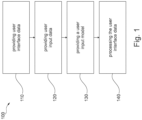
- Fig. 1 shows an example of a diagram of the disclosed method for controlling at least one user interface 100 of a vehicle, comprising: providing user interface data 110 of the at least one user interface; providing user input data 120 of an input of at least one user of the at least one user interface; providing a user input model 130 configured to analyze the user input data based on the user interface data and sensor data of the vehicle; and processing the user interface data 140, the user input data by means of the user input model and generating user interface control data.
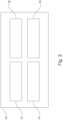
- Fig. 2 shows a schematic illustration showing an overview of an implementation of the disclosed system 10 for controlling at least one user interface of a vehicle, comprising: a first providing unit 12 configured to provide user interface data of the at least one user interface; a second providing unit 14 configured to provide user input data of the at least one user interface; a third providing unit 16 configured to provide a user input model configured to analyze the user input data based on the user interface data and sensor data of the vehicle; and a processing unit 18 configured to process the user interface data, the user input data by means of the user input model and generating user interface control data.
- system 10 comprising a machine learning algorithm unit 20 configured to analyze the user input data based on the user interface data and the sensor data of the vehicle.
- Fig. 3 shows a schematic diagram of an example of the disclosed system in a vehicle 30, whereby an interior of the vehicle 30 is shown in which at least one user interface 31 is arranged. Furthermore, at least one hand of at least one user is shown using the at least one user interface, whereby in the user interface a GUI is presented that comprises various input and/or output components.
- Fig. 4 shows a schematic illustration of an example of the used machine learning algorithm 200, whereby the machine learning algorithm 200 is provided with data input from the touch display 210 of the at least one user interface, input from sensors 220 of the vehicle, in particular the acceleration sensors, input from user profiles 230, input from calibrations 240, for example touch intensity and/or view angle calibration, and input from GUI 250 of the at least one user interface, for example how the GUI is structured and which functions it provides.
- the machine learning algorithm analyze the provided input information/data to calculate control data for the at least one user interface in order to be able to correct the detected touch inputs of the at least one user.
- the calculated control data are transmitted to at least the at least one user interface.
Landscapes
- Engineering & Computer Science (AREA)
- Theoretical Computer Science (AREA)
- General Engineering & Computer Science (AREA)
- General Physics & Mathematics (AREA)
- Physics & Mathematics (AREA)
- Human Computer Interaction (AREA)
- Software Systems (AREA)
- Computer Vision & Pattern Recognition (AREA)
- Mechanical Engineering (AREA)
- Transportation (AREA)
- Combustion & Propulsion (AREA)
- Chemical & Material Sciences (AREA)
- Mathematical Physics (AREA)
- Artificial Intelligence (AREA)
- Medical Informatics (AREA)
- Data Mining & Analysis (AREA)
- Evolutionary Computation (AREA)
- Computing Systems (AREA)
- Multimedia (AREA)
- Health & Medical Sciences (AREA)
- General Health & Medical Sciences (AREA)
- Psychiatry (AREA)
- Social Psychology (AREA)
- User Interface Of Digital Computer (AREA)
Abstract
Description
- The present disclosure relates to a method for controlling at least one user interface of a vehicle, a system for controlling at least one user interface of a vehicle, a vehicle with a system for controlling at least one user interface, a computing device and a computer program element.
- Known vehicles comprise at least one user interface configured in order to display information of the vehicle and to acquire information of a user of the vehicle by means of a touch interaction between the user of the vehicle and the at least one user interface, for example, the at least one user interface comprises a touchscreen. Thus, control elements in the interior of the vehicle are reduced and functions of the vehicle are controlled by means of touch interactions with the at least one user interface. Thereby, an operation of the touchscreen is simple and accurate when the vehicle is stationary, however, different lateral, vertical and/or longitudinal forces may occur during the movement of the vehicle, which lead to movements in the user's body and thus to incorrect entries on the touchscreen, such that required functions of the vehicle are not activated in time and accidents may occur.
- In view of this, it is found that a further need exists to provide a method for controlling at least one user interface of a vehicle.
- In the view of the above, it is an object of the present disclosure to provide a method controlling at least one user interface of a vehicle.
- The problem is at least partially solved or alleviated by the subject matter of the independent claims of the present disclosure, whereby further examples are incorporated in the dependent claims.
- According to a first aspect, a computer-implemented method for controlling at least one user interface of a vehicle, comprising:
- providing user interface data of the at least one user interface;
- providing user input data of an input of at least one user of the at least one user interface;
- providing a user input model configured to analyze the user input data based on the user interface data and sensor data of the vehicle; and
- processing the user interface data, the user input data by means of the user input model and generating user interface control data.
- The at least one user interface may be configured as an output and/or input device for outputting information to the at least one user and/or for receiving information from the at least one user. Furthermore, the at least one user interface may comprise a display and/or a sensor for outputting and/or receiving information, in particular, the at least one user interface may comprise a touch screen.
- The user interface data may comprise, for example, information for displaying and/or configuring graphics and input area for the at least one user interface, in particular a graphical user interface (GUI) for the at least one user interface. For example, the user interface data may at least configure the GUI properties, structure, and/or function for the at least one user interface.
- The user input data may comprise, for example, information about an input of the at least one user to the at least one user interface, such as areas of the input and/or coordinates of the input. For example, the information may be xy-coordinates of the input on the at least one user interface, whereby the at least one user interface may comprise xy-coordinates to determine the position of the input and associate the xy-coordinates with the input, such as the xy-coordinates are used on a touch screen. Further, the input may in particular be a touch of the at least one user on the at least one user interface and the information may comprise an intensity of the touch.
- By processing the provided data and model, the method may be configured to interpret an input from the at least one user to determine whether the input from the at least one user was intended or unintended. If the input of the at least one user was unintended, the at least one user interface may be controlled to correct the unintended input of the at least one user and replace the unintended input with an intended input of the at least one user interface.
- In other words, the method may be configured to interpret interaction of the at least one user with the help of data of sensors of the vehicle and the method to filter out unintended or wrong touches by accident. Therefore, the method may use the GUI components of the at least one user interface together with the data of the sensors in order to improve the interacting experience of the at least one user of the at least one user interface, in particular while the vehicle driving. In addition, the method may be used in various vehicles that have user interfaces and sensors, as there is no need for explicit control units for the disclosed method.
- Therefore, the disclosed method may be configured to improve the touch accuracy of the at least one user, in particular while the vehicle is in motion and different lateral forces, vibrations, and wobble occur. In addition, the method may further assist the driver to focus on driving.
- In an implementation, the user input model may comprise a machine learning algorithm configured to analyze the user input data based on the user interface data and the sensor data of the vehicle.
- The machine learning algorithm may improve the interaction between the at least one user and the at least one user interface, whereby in particular the accuracy of touch inputs by the at least one user to the at least one user interface may be improved by correcting unintended touch inputs.
- In an implementation, the machine learning algorithm may be trained by an initial personal calibration data, a generalizing augmented touch data, an initial machine learning model data and/or an augmentation over time data.
- The initial personal calibration data may be obtained, for example, by means of a setup in which the at least one user is asked to press at specific locations of the at least one interface unit.
- In other words, the initial personal calibration data may compensate for an individual offset of at least each user of the at least one user interface, whereby the touch inputs of at least each user from the at least one user interface and user viewing angle of at least each user are taken into account. Furthermore, the initial personal calibration may be set and/or adjusted in at least the vehicle's settings.
- The generalized augmented touch data may be received, for example, from a separate database that comprises generalized augmented touch data from different users. The different generalized augmented touch data may for example be initial personal calibration data and/or collected data during real drive cycles while different users are interacting with the at least one user interface.
- The initial machine learning model data may for example be received from a separate database containing data pre-trained by different users and/or test persons. In addition, the initial machine learning model data can be tested before it is provided by the separate database, whereby A/B testing may be used, for example. Further, it may be possible to have different machine learning model data available to the at least one user.
- Further, the initial machine learning model data may include sensor data, touch input data, user angle of view, and data on GUI components used. Thereby, the initial machine learning model data may be collected for example while driving and while a test person is asked to perform various tasks of using the GUI.
- Furthermore, the initial machine learning model data may represent non-personalized model data that may be customized and/or enhanced by the at least one user during use and/or taking into account, for example, the viewpoint of the at least one user, whereby the customized and/or enhanced non-personalized model may be re-customized and/or enhanced for each user of the vehicle.
- In addition, the non-personalized model data may comprise data about a user's viewing angle and/or other sensor data specific to the user. Therefore, the non-personalized model data may become individual for each user during the usage time of the at least one user interface.
- The augmentation over time data may be obtained, for example, through an analysis of the user's continuous interaction with the at least one user interface. Thereby, training patterns may be characterized based on subsequent behavior of the at least one user and labelled based on the behavior, for example, if the at least one user presses outside next to an input component of the GUI and then presses on the respective input component and/or if the at least one user presses an input component of the GUI to start a function of the vehicle, subsequently stops the function, and subsequently presses another input component of the GUI adjacent to the input component.
- In addition, data from at least one sensor of the vehicle and/or label data for each training pattern may also be associated with the augmentation data over time. For example, the label data may comprise whether the at least one user touched a correct or incorrect input component of the GUI. In this regard, touching the correct input component of the GUI may be detected based on the user's continued interaction with the GUI. Thereby, a touch of the incorrect input component of the GUI may be detected based on an abort of the function triggered thereby.
- Furthermore, the generalizing augmented touch data may be manually and/or automatically labeled, whereby automated labeling may be inferred from a behavior of the at least one user, for example if the at least one user touched correct or incorrect.
- In an implementation, the machine learning algorithm may be at least configured to compensate a deviation of the user input data with respect to the user interface data.
- The deviation of the user input data may for example be understood as a wrong input and/or unintended input of the at least one user. Likewise, this incorrect input and/or unintended input of the at least one user may unintentionally activate a function of the vehicle which, in an unfavorable case, impedes the use of the vehicle of a driver.
- The machine learning algorithm may, for example, use the initial personal calibration data, the generalizing augmented touch data, the initial machine learning model data, and/or the augmentation over time data to determine whether the input of the at least one user represent an intended input or an unintended input. Further, in the case of an unintended input, the machine learning algorithm may correct that unintended input to match to an intended input of the at least one user.
- For example, the machine learning algorithm may compensate for the user input data by determining whether the input of the at least one user is intended or unintended, wherein the compensating may be, for example, correcting the user input data to preferably to perform a desired function of the vehicle.
- In other words, the machine learning algorithm may be configured to compensate a faulty usage of an input component of the GUI of the at least one user, in particular in case different input component are provided by GUI, e.g. in case the different input components are arranged closely to each other.
- In an implementation, the sensor data may comprise movement, speed and/or acceleration values provided by a movement, speed and/or an accelerometer sensor of the vehicle.
- The sensor data may comprise movement data of the movement of the vehicle, which may be used to compensate for hand movements of the at least one user due to the movement data while using the at least one user interface.
- In an implementation, the sensor data may comprise view angle values may be provided based on an optical sensor of the vehicle.
- The sensor data may further comprise seating data of the seating of the at least one user, which may be used to compensate for an angle of view of the at least one user, whereby an offset angle may be calculated.
- The optical sensor may comprise a camera unit that is used in particular to determine the interior of the vehicle.
- In an implementation, the sensor data may comprise hand and/or arm movement values of the at least one user based on an optical sensor of the vehicle.
- The optical sensor may be further configured to detect small hand movements of the at least one user.
- In an implementation, the user input model may be further configured to analyze side offset values to compensate for an offset of a touch to an upper, lower, left and/or right side of a button of the at least one user of the at least one user interface.
- The machine learning algorithm may, for example, use the initial personal calibration data, the generalizing augmented touch data, the initial machine learning model data, and/or the augmentation over time data to determine whether xy-coordinates of the input of the at least one user represent an intended input or an unintended input. Further, in the case of an unintended input, the machine learning algorithm may correct the xy-coordinates of the input in order to adjust respective values of the xy-coordinates of the input to match an intended input. In this respect, the deviation of the user input may for example be achieved by correcting the respective x and y values of the input.
- For example, the machine learning algorithm may compensate the xy-coordinates of the input of the at least one user by determining whether the input of the at least one user is intended or unintended, wherein the compensating may be, for example, correcting the xy-coordinates to preferably perform a desired function of the vehicle.
- In an implementation, the sensor data may comprise grip values with respect to grip intensities of the at least one user of the at least one user interface onto the at least one user interface.
- In other words, the sensor data may comprise the intensity of a touch of the at least one user on the at least one user interface, for example, the lightness or hardness of the touch of the at least one user. Further, the sensor data may comprise the extent of the pressure area due to the touch on the at least one user interface.
- In an implementation, the user input model may be configured to further analyze the user input data based on a user profile.
- In other words, the machine learning algorithm may use sensory data to improve the accuracy, whereby the machine learning algorithm may compensate for a seated viewing angle of the at least one user by calculating an offset value for the at least one user interface, for a blocking view angle of the at least one user if the view of the at least one user of the at least one user interface is blocked, for example, by the user's finger, and a touch input is given to a side of a button of the GUI by calculating an offset value for the at least one user interface and/or any touch input given by the at least one user.
- In addition, the machine learning algorithm may compensate for vibrations of the vehicle, hand movements of the at least one user in the air, and/or any small movements of the vehicle and/or the at least one user.
- In other words, The GUI may further comprise input and/or output components, whereby these input and/or output components are configured as graphical areas within the GUI, for example. Furthermore, the input components may for example be configured to detect touch inputs of the at least one user in order to control a function of the vehicle. Moreover, the output components may for example be used to display functions of the vehicle.
- Moreover, the machine learning algorithm may compensate for incorrect touch inputs due to vibration, for example, of the vehicle if different input and/or output components of the GUI are too close to each other and/or incorrect touch inputs from smaller input components of the GUI. Furthermore, the machine learning algorithm may extend the touch range around an input component of the GUI, for example, if an input touch to an specific input component is expected and/or the at least one user approaches to a specific input component.
- Furthermore, the method may adapt the machine learning algorithm to better detect user intent in collected data samples of the initial personal calibration data, the generalizing augmented touch, the initial machine learning model data and/or the augmentation over time data, whereby the method may in particular be robust to noisy labels. Data samples may be collected for both training and testing purposes, for example, using the latter data samples as tests. Further, if a new version of the machine learning algorithm performs better on the test cases, a new machine learning algorithm may be used instead of an old machine learning algorithm.
- A further aspect of the present disclosure relates to a system for controlling at least one user interface of a vehicle, comprising:
- a first providing unit configured to provide user interface data of the at least one user interface;
- a second providing unit configured to provide user input data of the at least one user interface;
- a third providing unit configured to provide a user input model configured to analyze the user input data based on the user interface data and sensor data of the vehicle; and
- a processing unit configured to process the user interface data, the user input data by means of the user input model and generating user interface control data.
- In an implementation, the system may further comprise a machine learning algorithm unit configured to analyze the user input data based on the user interface data and the sensor data of the vehicle.
- A further aspect of the present disclosure relates to a vehicle comprising the disclosed system for controlling at least one user interface of the vehicle.
- A further aspect of the present disclosure relates to a computer program element with instructions, which, when executed on a computing device of a computing environment, is configured to carry out the steps of the disclosed method in the disclosed system.
- In the following, the disclosure is described exemplarily with reference to the enclosed figures, in which:
- Fig. 1
- is an example of a diagram of the disclosed method;
- Fig. 2
- is a schematic illustration showing an overview of an implementation of the disclosed system;
- Fig. 3
- is a schematic illustration of an example of the disclosed system in a vehicle; and
- Fig. 4
- is a schematic illustration of an example of the used machine learning algorithm.
- Notably, the figures are merely schematic representations and serve only to illustrate examples of the present disclosure. Identical or equivalent elements are in principle provided with the same reference signs.
-
Fig. 1 shows an example of a diagram of the disclosed method for controlling at least oneuser interface 100 of a vehicle, comprising: providinguser interface data 110 of the at least one user interface; providinguser input data 120 of an input of at least one user of the at least one user interface; providing auser input model 130 configured to analyze the user input data based on the user interface data and sensor data of the vehicle; and processing theuser interface data 140, the user input data by means of the user input model and generating user interface control data. -
Fig. 2 shows a schematic illustration showing an overview of an implementation of the disclosedsystem 10 for controlling at least one user interface of a vehicle, comprising: a first providingunit 12 configured to provide user interface data of the at least one user interface; a second providingunit 14 configured to provide user input data of the at least one user interface; a third providingunit 16 configured to provide a user input model configured to analyze the user input data based on the user interface data and sensor data of the vehicle; and aprocessing unit 18 configured to process the user interface data, the user input data by means of the user input model and generating user interface control data. - Further, the
system 10 comprising a machine learning algorithm unit 20 configured to analyze the user input data based on the user interface data and the sensor data of the vehicle. -
Fig. 3 shows a schematic diagram of an example of the disclosed system in avehicle 30, whereby an interior of thevehicle 30 is shown in which at least oneuser interface 31 is arranged. Furthermore, at least one hand of at least one user is shown using the at least one user interface, whereby in the user interface a GUI is presented that comprises various input and/or output components. - Further units of the system for controlling the at least one
user interface 31 of thevehicle 30 are not apparent to the at least one user and are not shown inFig. 3 , whereby these are required to implement the disclosed method. -
Fig. 4 shows a schematic illustration of an example of the used machine learning algorithm 200, whereby the machine learning algorithm 200 is provided with data input from the touch display 210 of the at least one user interface, input from sensors 220 of the vehicle, in particular the acceleration sensors, input from user profiles 230, input from calibrations 240, for example touch intensity and/or view angle calibration, and input from GUI 250 of the at least one user interface, for example how the GUI is structured and which functions it provides. - Thereby, the machine learning algorithm analyze the provided input information/data to calculate control data for the at least one user interface in order to be able to correct the detected touch inputs of the at least one user. The calculated control data are transmitted to at least the at least one user interface.
- Other variations to the disclosed examples may be understood and effected by those skilled in the art in practicing the claimed subject matter, from the study of the figures, the disclosure, and the appended claims. In particular, respective parts/functions of the respective example described above may also be combined with each other. In particular, the present disclosure is not limited to specific modules, vehicle functions, user interfaces, user interface areas/fields and/or communication methods. In the claims, the word "comprising" does not exclude other elements or steps and the indefinite article "a" or "an" does not exclude a plurality. The mere fact that certain measures are recited in mutually different dependent claims does not indicate that a combination of these measures may not be used to advantage. Any reference signs in the claims should not be construed as limiting the scope of the claims.
-
- 10
- System for providing route data
- 12
- First providing unit
- 14
- Second providing unit
- 16
- Third providing unit
- 18
- Processing unit
- 20
- Machine learning unit
- 30
- Vehicle
- 31
- User interface
- 100
- Method for providing route data
- 110
- Providing user interface data
- 120
- Providing user input data
- 130
- Providing a user input model
- 140
- Processing the user interface data
- 200
- Augmented Touch Algorithm
- 210
- Input from touch display
- 220
- Input from sensor
- 230
- Input from user profile
- 240
- Input from calibration
- 250
- Input from GUI
- 260
- Output calculated control data
Claims (14)
- A computer-implemented method for controlling at least one user interface of a vehicle, comprising:providing user interface data (110) of the at least one user interface;providing user input data (120) of an input of at least one user of the at least one user interface;providing a user input model (130) configured to analyze the user input data based on the user interface data and sensor data of the vehicle; andprocessing the user interface data (140), the user input data by means of the user input model and generating user interface control data.
- The method according claim 1, whereby the user input model is comprising a machine learning algorithm configured to analyze the user input data based on the user interface data and the sensor data of the vehicle.
- The method according claim 2, whereby the machine learning algorithm is trained by an initial personal calibration data, a generalizing augmented touch, an initial machine learning model data and/or an augmentation over time data.
- The method according to any one of the claims 2 or 3, whereby the machine learning algorithm is at least configured to compensate a deviation of the user input data with respect to the user interface data.
- The method according to any one of the preceding claims, whereby the sensor data is comprising movement, speed and/or acceleration values provided by a movement, speed and/or an accelerometer sensor of the vehicle.
- The method according to any one of the preceding claims, whereby the sensor data is comprising view angle values provided based on an optical sensor of the vehicle.
- The method according to any one of the preceding claims, whereby the sensor data is comprising hand and/or arm movement values of the at least one user based on an optical sensor of the vehicle.
- The method according to any one of the preceding claims, whereby the user input model is further configured to analyze side offset values to compensate for an offset of a touch to a upper, lower, left and/or right side of a button of the at least one user of the at least one user interface.
- The method according to any one of the preceding claims, whereby the sensor data is comprising grip values with respect to grip intensities of the at least one user of the at least one user interface onto the at least one user interface.
- The method according to any one of the preceding claims, whereby the user input model is configured to further analyze the user input data based on a user profile.
- A system for controlling at least one user interface of a vehicle, comprising:a first providing unit (12) configured to provide user interface data of the at least one user interface;a second providing unit (14) configured to provide user input data of the at least one user interface;a third providing unit (16) configured to provide a user input model configured to analyze the user input data based on the user interface data and sensor data of the vehicle; anda processing unit (18) configured to process the user interface data, the user input data by means of the user input model and generating user interface control data.
- The system according to claim 11, whereby the user input model is comprising a machine learning algorithm unit (20) configured to analyze the user input data based on the user interface data and the sensor data of the vehicle.
- A vehicle comprising a system for controlling at least one user interface of the vehicle according to claim 11 or claim 12.
- A computer program element with instructions, which, when executed on a computing device, is configured to carry out the steps of the method according to any one of the claims 1 to 10 in a system according to claim 11 or claim 12.
Priority Applications (3)
| Application Number | Priority Date | Filing Date | Title |
|---|---|---|---|
| EP22208361.0A EP4371798B1 (en) | 2022-11-18 | 2022-11-18 | Method for controlling at least one user interface of a vehicle |
| CN202311531361.4A CN118057281A (en) | 2022-11-18 | 2023-11-16 | Method for controlling at least one user interface of a vehicle |
| US18/512,209 US20240168589A1 (en) | 2022-11-18 | 2023-11-17 | Controlling a user interface of a vehicle |
Applications Claiming Priority (1)
| Application Number | Priority Date | Filing Date | Title |
|---|---|---|---|
| EP22208361.0A EP4371798B1 (en) | 2022-11-18 | 2022-11-18 | Method for controlling at least one user interface of a vehicle |
Publications (2)
| Publication Number | Publication Date |
|---|---|
| EP4371798A1 true EP4371798A1 (en) | 2024-05-22 |
| EP4371798B1 EP4371798B1 (en) | 2026-01-28 |
Family
ID=84387809
Family Applications (1)
| Application Number | Title | Priority Date | Filing Date |
|---|---|---|---|
| EP22208361.0A Active EP4371798B1 (en) | 2022-11-18 | 2022-11-18 | Method for controlling at least one user interface of a vehicle |
Country Status (3)
| Country | Link |
|---|---|
| US (1) | US20240168589A1 (en) |
| EP (1) | EP4371798B1 (en) |
| CN (1) | CN118057281A (en) |
Families Citing this family (1)
| Publication number | Priority date | Publication date | Assignee | Title |
|---|---|---|---|---|
| TWI816500B (en) * | 2022-08-03 | 2023-09-21 | 和碩聯合科技股份有限公司 | Picture selection method applied to model retraining |
Citations (2)
| Publication number | Priority date | Publication date | Assignee | Title |
|---|---|---|---|---|
| US20180217717A1 (en) * | 2017-01-31 | 2018-08-02 | Toyota Research Institute, Inc. | Predictive vehicular human-machine interface |
| US20220300072A1 (en) * | 2021-03-19 | 2022-09-22 | Nvidia Corporation | Personalized calibration functions for user gaze detection in autonomous driving applications |
Family Cites Families (8)
| Publication number | Priority date | Publication date | Assignee | Title |
|---|---|---|---|---|
| US6888537B2 (en) * | 2002-02-13 | 2005-05-03 | Siemens Technology-To-Business Center, Llc | Configurable industrial input devices that use electrically conductive elastomer |
| US9165280B2 (en) * | 2005-02-22 | 2015-10-20 | International Business Machines Corporation | Predictive user modeling in user interface design |
| JP4746085B2 (en) * | 2008-12-25 | 2011-08-10 | 京セラ株式会社 | Input device |
| US10065502B2 (en) * | 2015-04-14 | 2018-09-04 | Ford Global Technologies, Llc | Adaptive vehicle interface system |
| US11392131B2 (en) * | 2018-02-27 | 2022-07-19 | Nauto, Inc. | Method for determining driving policy |
| US11789442B2 (en) * | 2019-02-07 | 2023-10-17 | Ford Global Technologies, Llc | Anomalous input detection |
| US11568560B2 (en) * | 2020-04-28 | 2023-01-31 | Tobii Ab | Calibration of an eye tracking system |
| US11535256B2 (en) * | 2020-10-06 | 2022-12-27 | Ford Global Technologies, Llc | Chionophobia intervention systems and methods |
-
2022
- 2022-11-18 EP EP22208361.0A patent/EP4371798B1/en active Active
-
2023
- 2023-11-16 CN CN202311531361.4A patent/CN118057281A/en active Pending
- 2023-11-17 US US18/512,209 patent/US20240168589A1/en not_active Abandoned
Patent Citations (2)
| Publication number | Priority date | Publication date | Assignee | Title |
|---|---|---|---|---|
| US20180217717A1 (en) * | 2017-01-31 | 2018-08-02 | Toyota Research Institute, Inc. | Predictive vehicular human-machine interface |
| US20220300072A1 (en) * | 2021-03-19 | 2022-09-22 | Nvidia Corporation | Personalized calibration functions for user gaze detection in autonomous driving applications |
Also Published As
| Publication number | Publication date |
|---|---|
| US20240168589A1 (en) | 2024-05-23 |
| CN118057281A (en) | 2024-05-21 |
| EP4371798B1 (en) | 2026-01-28 |
Similar Documents
| Publication | Publication Date | Title |
|---|---|---|
| KR101338043B1 (en) | Cognitive Rehabilitation System and Method Using Tangible Interaction | |
| US9442619B2 (en) | Method and device for providing a user interface, in particular in a vehicle | |
| US9043042B2 (en) | Method to map gaze position to information display in vehicle | |
| JP4274997B2 (en) | Operation input device and operation input method | |
| Ahmad et al. | Intelligent interactive displays in vehicles with intent prediction: A Bayesian framework | |
| CA2773636C (en) | Method and apparatus for using generic software applications by ocular control and suitable methods of interaction | |
| KR20180122012A (en) | An operating device including a snow tracker unit and a method for calibrating an eye tracker unit of the operating device | |
| CN103373294B (en) | Method and apparatus for displaying a hand of an operator of an operating element of a vehicle | |
| CN106427571A (en) | Interactive manipulator and method for operating the same | |
| CN111552383A (en) | Finger identification method and system of virtual augmented reality interaction equipment and interaction equipment | |
| KR101341481B1 (en) | System for controlling robot based on motion recognition and method thereby | |
| EP4371798B1 (en) | Method for controlling at least one user interface of a vehicle | |
| KR20160076488A (en) | Apparatus and method of measuring the probability of muscular skeletal disease | |
| EP3796147A1 (en) | Method for coordinating an electronic control unit and a touch screen input device in a motor vehicle and vehicle operating apparatus and motor vehicle | |
| CN109669536A (en) | A kind of man-machine visual interactive system of cockpit | |
| US11009963B2 (en) | Sign language inputs to a vehicle user interface | |
| CN105882521A (en) | Control device and control method for activating corresponding zone of vehicle-mounted display screen according to watched zone of driver | |
| JP2022126057A (en) | Display processing device, training system, and display processing method | |
| JP2022038225A (en) | Face information acquisition apparatus and face information acquisition method | |
| KR20150056322A (en) | Apparatus for controlling menu of head-up display and method thereof | |
| KR102141644B1 (en) | Vital information obtaining apparatus, vehicle and method of controlling thereof | |
| JPH0546309A (en) | Sight line recognizing device | |
| RU115937U1 (en) | USER INPUT DEVICE | |
| JP2016115039A (en) | System, program, and method enabling pointer operation on head-mounted display with touch panel type device | |
| RU2784675C1 (en) | Method for adaptive navigation in multidimensional space of computer models |
Legal Events
| Date | Code | Title | Description |
|---|---|---|---|
| PUAI | Public reference made under article 153(3) epc to a published international application that has entered the european phase |
Free format text: ORIGINAL CODE: 0009012 |
|
| STAA | Information on the status of an ep patent application or granted ep patent |
Free format text: STATUS: REQUEST FOR EXAMINATION WAS MADE |
|
| 17P | Request for examination filed |
Effective date: 20230927 |
|
| AK | Designated contracting states |
Kind code of ref document: A1 Designated state(s): AL AT BE BG CH CY CZ DE DK EE ES FI FR GB GR HR HU IE IS IT LI LT LU LV MC ME MK MT NL NO PL PT RO RS SE SI SK SM TR |
|
| STAA | Information on the status of an ep patent application or granted ep patent |
Free format text: STATUS: EXAMINATION IS IN PROGRESS |
|
| 17Q | First examination report despatched |
Effective date: 20250116 |
|
| REG | Reference to a national code |
Ref country code: DE Ref country code: DE Ref legal event code: R079 Ref document number: 602022029209 Country of ref document: DE Free format text: PREVIOUS MAIN CLASS: B60K0037060000 Ipc: B60K0035100000 |
|
| GRAP | Despatch of communication of intention to grant a patent |
Free format text: ORIGINAL CODE: EPIDOSNIGR1 |
|
| STAA | Information on the status of an ep patent application or granted ep patent |
Free format text: STATUS: GRANT OF PATENT IS INTENDED |
|
| RIC1 | Information provided on ipc code assigned before grant |
Ipc: B60K 35/10 20240101AFI20250820BHEP Ipc: B60K 35/29 20240101ALI20250820BHEP Ipc: B60K 35/81 20240101ALI20250820BHEP Ipc: G06F 3/0488 20220101ALI20250820BHEP Ipc: G06F 3/041 20060101ALI20250820BHEP Ipc: G06V 20/59 20220101ALI20250820BHEP Ipc: G06V 40/20 20220101ALI20250820BHEP |
|
| INTG | Intention to grant announced |
Effective date: 20250911 |
|
| GRAS | Grant fee paid |
Free format text: ORIGINAL CODE: EPIDOSNIGR3 |
|
| GRAA | (expected) grant |
Free format text: ORIGINAL CODE: 0009210 |
|
| STAA | Information on the status of an ep patent application or granted ep patent |
Free format text: STATUS: THE PATENT HAS BEEN GRANTED |
|
| AK | Designated contracting states |
Kind code of ref document: B1 Designated state(s): AL AT BE BG CH CY CZ DE DK EE ES FI FR GB GR HR HU IE IS IT LI LT LU LV MC ME MK MT NL NO PL PT RO RS SE SI SK SM TR |
|
| REG | Reference to a national code |
Ref country code: CH Ref legal event code: F10 Free format text: ST27 STATUS EVENT CODE: U-0-0-F10-F00 (AS PROVIDED BY THE NATIONAL OFFICE) Effective date: 20260128 Ref country code: GB Ref legal event code: FG4D |
|
| REG | Reference to a national code |
Ref country code: DE Ref legal event code: R096 Ref document number: 602022029209 Country of ref document: DE |
|
| P01 | Opt-out of the competence of the unified patent court (upc) registered |
Free format text: CASE NUMBER: UPC_APP_0001682_4371798/2026 Effective date: 20260119 |
|
| REG | Reference to a national code |
Ref country code: IE Ref legal event code: FG4D |