EP4371614A2 - Arginase inhibitors and methods of use thereof - Google Patents
Arginase inhibitors and methods of use thereof Download PDFInfo
- Publication number
- EP4371614A2 EP4371614A2 EP24162089.7A EP24162089A EP4371614A2 EP 4371614 A2 EP4371614 A2 EP 4371614A2 EP 24162089 A EP24162089 A EP 24162089A EP 4371614 A2 EP4371614 A2 EP 4371614A2
- Authority
- EP
- European Patent Office
- Prior art keywords
- dodecan
- aza
- oxa
- boraspiro
- hydroxy
- Prior art date
- Legal status (The legal status is an assumption and is not a legal conclusion. Google has not performed a legal analysis and makes no representation as to the accuracy of the status listed.)
- Pending
Links
Images




Classifications
-
- C—CHEMISTRY; METALLURGY
- C07—ORGANIC CHEMISTRY
- C07F—ACYCLIC, CARBOCYCLIC OR HETEROCYCLIC COMPOUNDS CONTAINING ELEMENTS OTHER THAN CARBON, HYDROGEN, HALOGEN, OXYGEN, NITROGEN, SULFUR, SELENIUM OR TELLURIUM
- C07F5/00—Compounds containing elements of Groups 3 or 13 of the Periodic Table
- C07F5/02—Boron compounds
- C07F5/025—Boronic and borinic acid compounds
-
- A—HUMAN NECESSITIES
- A61—MEDICAL OR VETERINARY SCIENCE; HYGIENE
- A61K—PREPARATIONS FOR MEDICAL, DENTAL OR TOILETRY PURPOSES
- A61K33/00—Medicinal preparations containing inorganic active ingredients
- A61K33/22—Boron compounds
-
- A—HUMAN NECESSITIES
- A61—MEDICAL OR VETERINARY SCIENCE; HYGIENE
- A61K—PREPARATIONS FOR MEDICAL, DENTAL OR TOILETRY PURPOSES
- A61K31/00—Medicinal preparations containing organic active ingredients
- A61K31/69—Boron compounds
-
- A—HUMAN NECESSITIES
- A61—MEDICAL OR VETERINARY SCIENCE; HYGIENE
- A61P—SPECIFIC THERAPEUTIC ACTIVITY OF CHEMICAL COMPOUNDS OR MEDICINAL PREPARATIONS
- A61P29/00—Non-central analgesic, antipyretic or antiinflammatory agents, e.g. antirheumatic agents; Non-steroidal antiinflammatory drugs [NSAID]
-
- A—HUMAN NECESSITIES
- A61—MEDICAL OR VETERINARY SCIENCE; HYGIENE
- A61P—SPECIFIC THERAPEUTIC ACTIVITY OF CHEMICAL COMPOUNDS OR MEDICINAL PREPARATIONS
- A61P35/00—Antineoplastic agents
-
- C—CHEMISTRY; METALLURGY
- C07—ORGANIC CHEMISTRY
- C07B—GENERAL METHODS OF ORGANIC CHEMISTRY; APPARATUS THEREFOR
- C07B2200/00—Indexing scheme relating to specific properties of organic compounds
- C07B2200/13—Crystalline forms, e.g. polymorphs
Definitions
- Arginase is a manganese metalloenzyme that catalyzes the conversion of L-arginine to urea and L-ornithine.
- L-arginine is not an essential amino acid as it can be provided through protein turnover in healthy adults, increased expression and secretion of arginases results in reduced L-arginine levels in various physiologic and pathologic conditions (e.g ., pregnancy, auto-immune diseases, cancer).
- Immune cells are sensitive to reduced L-arginine levels. T-cells, when faced with a low L-arginine microenvironment, reduce their proliferation rate and lower the expression of CD3 ⁇ chain, IFN ⁇ , and lytic enzymes resulting in impaired T-cell responsiveness.
- Dendritic cells respond to low L-arginine conditions by reducing their ability to present antigens, and natural killer cells reduce both proliferation and expression of lytic enzymes.
- Tumors use multiple immune suppressive mechanisms to evade the immune system.
- One of these is the reduction of L-arginine through increased levels of circulating arginase, increased expression and secretion of arginase by tumor cells, and recruitment of arginase expressing and secreting myeloid derived suppressor cells. Together, these lead to a reduction of L-arginine in the tumor microenvironment and an immune-suppressive phenotype.
- Pharmacologic inhibition of arginase activity has been shown to reverse the low L-arginine induced immune suppression in animal models.
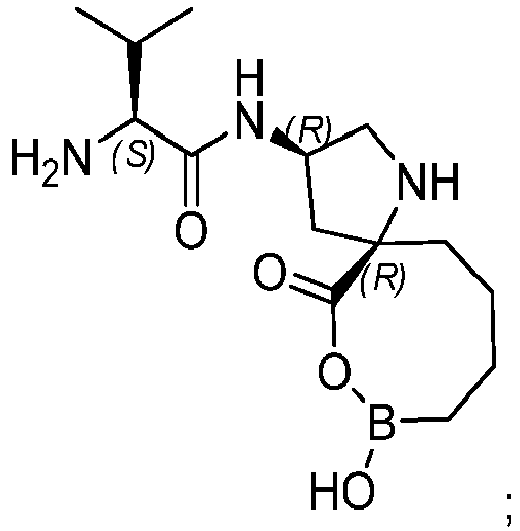
- crystalline (S)-2-amino-N-((3R,5R)-8-hydroxy-6-oxo-7-oxa-1-aza-8-boraspiro[4.7]dodecan-3-yl)-3-methylbutanamide (chemical structure shown below) in Form D and in Form E:
- a pharmaceutical composition comprising crystalline (S)-2-amino-N-((3R,5R)-8-hydroxy-6-oxo-7-oxa-1-aza-8-boraspiro[4.7]dodecan-3-yl)-3-methylbutanamide Form D or Form E, and a pharmaceutically acceptable carrier.
- a method of treating cancer comprising administering to a subject in need thereof crystalline (S)-2-amino-N-((3R,5R)-8-hydroxy-6-oxo-7-oxa-1-aza-8-boraspiro[4.7]dodecan-3-yl)-3-methylbutanamide Form D or Form E.
- composition for treating cancer comprising crystalline (S)-2-amino-N-((3R,5R)-8-hydroxy-6-oxo-7-oxa-1-aza-8-boraspiro[4.7]dodecan-3-yl)-3-methylbutanamide Form D or Form E.
- crystalline (S)-2-amino-N-((3R,5R)-8-hydroxy-6-oxo-7-oxa-1-aza-8-boraspiro[4.7]dodecan-3-yl)-3-methylbutanamide Form D or Form E in the manufacture of a medicament for treating cancer.
- a pharmaceutical composition comprising (3R,5R)-8-hydroxy-3-((S)-4-isopropyl-2,2-dimethyl-5-oxoimidazolidin-1-yl)-7-oxa-1-aza-8-boraspiro[4.7]dodecan-6-one or a pharmaceutically acceptable salt thereof or the crystalline Form 1 and a pharmaceutically acceptable carrier.
- a method of treating cancer comprising administering to a subject an effective amount of (3R,5R)-8-hydroxy-3-((S)-4-isopropyl-2,2-dimethyl-5-oxoimidazolidin-1-yl)-7-oxa-1-aza-8-boraspiro[4.7]dodecan-6-one or a pharmaceutically acceptable salt thereof or the crystalline Form 1.
- composition for treating cancer comprising (3R,5R)-8-hydroxy-3-((S)-4-isopropyl-2,2-dimethyl-5-oxoimidazolidin-1-yl)-7-oxa-1-aza-8-boraspiro[4.7]dodecan-6-one or a pharmaceutically acceptable salt thereof or the crystalline Form 1.
- crystalline (S)-2-amino-N-((3R,5R)-8-hydroxy-6-oxo-7-oxa-1-aza-8-boraspiro[4.7]dodecan-3-yl)-3-methylbutanamide (chemical structure shown below) in Form D and in Form E:
- Form D has an XRPD pattern comprising at least one peak expressed as 2 ⁇ 0.2° at about 7.8°.
- Form D has an XRPD pattern comprising at least one peak expressed as 2 ⁇ 0.2° at about 19.2°.
- Form D has an XRPD pattern comprising at least one peak expressed as 2 ⁇ 0.2° at about 15.0°.
- Form D has an XRPD pattern comprising at least one peak expressed as 2 ⁇ 0.2° at about 7.8° or at about 19.2°.
- Form D has an XRPD pattern comprising at least one peak expressed as 2 ⁇ 0.2° at about 7.8° or at about 15.0°.
- Form D has an XRPD pattern comprising at least one peak expressed as 2 ⁇ 0.2° at about 15.0° or at about 19.2°.
- Form D has an XRPD pattern comprising at least one peak expressed as 2 ⁇ 0.2° selected from about 7.8°, about 19.2° and about 15.0°.
- Form D has an XRPD pattern comprising at least one peak expressed as 2 ⁇ 0.2° selected from the peaks listed in Table 1.
- Form D has an XRPD pattern substantially similar to Figure 1 .
- Form D characterized by an X-ray powder diffraction pattern comprises peaks with the following 2 ⁇ 0.2° values: 7.8, 19.2, and 15.0 degree.
- Form D has the X-ray powder diffraction pattern further comprising peaks at 16.4, 13.1, and 13.7 degree 2-theta ⁇ 0.2°.
- Form D characterized by an X-ray powder diffraction pattern comprises at least 3 peaks selected from 7.8, 19.2, 15.0, 16.4, 13.1, 13.7, 26.4, 19.8, 17.9, and 22.5 degree 2 ⁇ 0.2°.
- Form D characterized by an X-ray powder diffraction pattern comprises at least 5 peaks selected from 7.8, 19.2, 15.0, 16.4, 13.1, 13.7, 26.4, 19.8, 17.9, and 22.5 degree 2 ⁇ 0.2°.
- Form D characterized by an X-ray powder diffraction pattern comprises at least 7 peaks selected from 7.8, 19.2, 15.0, 16.4, 13.1, 13.7, 26.4, 19.8, 17.9, and 22.5 degree 2 ⁇ 0.2°.
- Form D characterized by an X-ray powder diffraction pattern comprises at least 9 peaks selected from 7.8, 19.2, 15.0, 16.4, 13.1, 13.7, 26.4, 19.8, 17.9, and 22.5 degree 2 ⁇ 0.2°.
- Form D is characterized by a differential scanning calorimetry (DSC) curve that comprises an endotherm at about 214 °C.
- Form D has a DSC thermogram comprising an endotherm of dehydration with an onset at about 213 °C and a peak at about 214 °C.
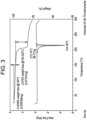
- Form D has a DSC thermogram substantially similar to Figure 3 .
- Form D has a TGA thermogram exhibiting a mass loss of about 0.4 % upon heating from about 25 °C to about 150 °C and a mass loss of about 3.1 % upon heating from about 150 °C to about 225 °C.
- Form D has a TGA thermogram substantially similar to Figure 3 .
- Form D absorbs less than about 2% water at the relative humility (RH) of about 70% and starts to deliquesce after about 80% RH.
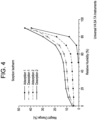
- Form D has a GVS trace substantially similar to Figure 4 .
- compositions comprising an effective amount of crystalline (S)-2-amino-N-((3R,5R)-8-hydroxy-6-oxo-7-oxa-1-aza-8-boraspiro[4.7]dodecan-3-yl)-3-methylbutanamide Form D and a pharmaceutically acceptable carrier.
- compositions comprising an effective amount of (S)-2-amino-N-((3R,5R)-8-hydroxy-6-oxo-7-oxa-1-aza-8-boraspiro[4.7]dodecan-3-yl)-3-methylbutanamide and a pharmaceutically acceptable carrier, wherein at least about 85% of (S)-2-amino-N-((3R,5R)-8-hydroxy-6-oxo-7-oxa-1-aza-8-boraspiro[4.7]dodecan-3-yl)-3-methylbutanamide is in Form D.
- compositions comprising an effective amount of (S)-2-amino-N-((3R,5R)-8-hydroxy-6-oxo-7-oxa-1-aza-8-boraspiro[4.7]dodecan-3-yl)-3-methylbutanamide and a pharmaceutically acceptable carrier, wherein at least about 90% of (S)-2-amino-N-((3R,5R)-8-hydroxy-6-oxo-7-oxa-1-aza-8-boraspiro[4.7]dodecan-3-yl)-3-methylbutanamide is in Form D.
- compositions comprising an effective amount of (S)-2-amino-N-((3R,5R)-8-hydroxy-6-oxo-7-oxa-1-aza-8-boraspiro[4.7]dodecan-3-yl)-3-methylbutanamide and a pharmaceutically acceptable carrier, wherein at least about 95% of (S)-2-amino-N-((3R,5R)-8-hydroxy-6-oxo-7-oxa-1-aza-8-boraspiro[4.7]dodecan-3-yl)-3-methylbutanamide is in Form D.
- compositions comprising an effective amount of (S)-2-amino-N-((3R,5R)-8-hydroxy-6-oxo-7-oxa-1-aza-8-boraspiro[4.7]dodecan-3-yl)-3-methylbutanamide and a pharmaceutically acceptable carrier, wherein at least about 96% of (S)-2-amino-N-((3R,5R)-8-hydroxy-6-oxo-7-oxa-1-aza-8-boraspiro[4.7]dodecan-3-yl)-3-methylbutanamide is in Form D.
- compositions comprising an effective amount of (S)-2-amino-N-((3R,5R)-8-hydroxy-6-oxo-7-oxa-1-aza-8-boraspiro[4.7]dodecan-3-yl)-3-methylbutanamide and a pharmaceutically acceptable carrier, wherein at least about 97% of (S)-2-amino-N-((3R,5R)-8-hydroxy-6-oxo-7-oxa-1-aza-8-boraspiro[4.7]dodecan-3-yl)-3-methylbutanamide is in Form D.
- compositions comprising an effective amount of (S)-2-amino-N-((3R,5R)-8-hydroxy-6-oxo-7-oxa-1-aza-8-boraspiro[4.7]dodecan-3-yl)-3-methylbutanamide and a pharmaceutically acceptable carrier, wherein at least about 98% of (S)-2-amino-N-((3R,5R)-8-hydroxy-6-oxo-7-oxa-1-aza-8-boraspiro[4.7]dodecan-3-yl)-3-methylbutanamide is in Form D.
- compositions comprising an effective amount of (S)-2-amino-N-((3R,5R)-8-hydroxy-6-oxo-7-oxa-1-aza-8-boraspiro[4.7]dodecan-3-yl)-3-methylbutanamide and a pharmaceutically acceptable carrier, wherein at least about 99% of (S)-2-amino-N-((3R,5R)-8-hydroxy-6-oxo-7-oxa-1-aza-8-boraspiro[4.7]dodecan-3-yl)-3-methylbutanamide is in Form D.
- compositions comprising an effective amount of (S)-2-amino-N-((3R,5R)-8-hydroxy-6-oxo-7-oxa-1-aza-8-boraspiro[4.7]dodecan-3-yl)-3-methylbutanamide and a pharmaceutically acceptable carrier, wherein at least about 99.5% of (S)-2-amino-N-((3R,5R)-8-hydroxy-6-oxo-7-oxa-1-aza-8-boraspiro[4.7]dodecan-3-yl)-3-methylbutanamide is in Form D.
- Form E has an XRPD pattern comprising at least one peak expressed as 2 ⁇ 0.2° at about 12.3°.
- Form E has an XRPD pattern comprising at least one peak expressed as 2 ⁇ 0.2° at about 18.8°.
- Form E has an XRPD pattern comprising at least one peak expressed as 2 ⁇ 0.2° at about 9.3°.
- Form E has an XRPD pattern comprising at least one peak expressed as 2 ⁇ 0.2° at about 12.3° or at about 18.8°.
- Form E has an XRPD pattern comprising at least one peak expressed as 2 ⁇ 0.2° at about 12.3° or at about 9.3°.
- Form E has an XRPD pattern comprising at least one peak expressed as 2 ⁇ 0.2° at about 18.8° or at about 9.3°.
- Form E has an XRPD pattern comprising at least one peak expressed as 2 ⁇ 0.2° selected from about 12.3°, about 18.8° and about 9.3°.
- Form E has an XRPD pattern comprising at least one peak expressed as 2 ⁇ 0.2° selected from the peaks listed in Table 1.
- Form E has an XRPD pattern substantially similar to Figure 9 .
- Form E characterized by an X-ray powder diffraction pattern comprises peaks with the following 2 ⁇ 0.2° values: 12.3, 18.8, and 9.3 degree.
- Form E has the X-ray powder diffraction pattern further comprising peaks at 14.2, 14.1, and 19.8 degree 2-theta ⁇ 0.2°.
- Form E characterized by an X-ray powder diffraction pattern comprises at least 3 peaks selected from 12.3, 18.8, 9.3, 14.2, 14.1, 19.8, 26.2, 17.3, 7.1 and 25.4 degree 2 ⁇ 0.2°.
- Form E characterized by an X-ray powder diffraction pattern comprises at least 5 peaks selected from 12.3, 18.8, 9.3, 14.2, 14.1, 19.8, 26.2, 17.3, 7.1 and 25.4 degree 2 ⁇ 0.2°.
- Form E characterized by an X-ray powder diffraction pattern comprises at least 7 peaks selected from 12.3, 18.8, 9.3, 14.2, 14.1, 19.8, 26.2, 17.3, 7.1 and 25.4 degree 2 ⁇ 0.2°.
- Form E characterized by an X-ray powder diffraction pattern comprises at least 9 peaks selected from 12.3, 18.8, 9.3, 14.2, 14.1, 19.8, 26.2, 17.3, 7.1 and 25.4 degree 2 ⁇ 0.2°.
- Form E is characterized by a differential scanning calorimetry (DSC) curve that comprises an endotherm at about 125 °C.
- Form E has a DSC thermogram comprising an endotherm of dehydration with an onset at about 105 °C and a peak at about 125 °C.
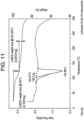
- Form E has a DSC thermogram substantially similar to Figure 11 .
- Form E has a TGA thermogram exhibiting a mass loss of about 6.0 % upon heating from about 25 °C to about 135 °C and a mass loss of about 3.0 % upon heating from about 125 °C to about 225 °C.
- Form E has a TGA thermogram substantially similar to Figure 11 .
- Form E absorbs less than about 2% water at the relative humility (RH) of about 80%.
- Form D has a GVS trace substantially similar to Figure 12 .
- compositions comprising an effective amount of crystalline (S)-2-amino-N-((3R,5R)-8-hydroxy-6-oxo-7-oxa-1-aza-8-boraspiro[4.7]dodecan-3-yl)-3-methylbutanamide Form E and a pharmaceutically acceptable carrier.
- compositions comprising an effective amount of (S)-2-amino-N-((3R,5R)-8-hydroxy-6-oxo-7-oxa-1-aza-8-boraspiro[4.7]dodecan-3-yl)-3-methylbutanamide and a pharmaceutically acceptable carrier, wherein at least about 85% of (S)-2-amino-N-((3R,5R)-8-hydroxy-6-oxo-7-oxa-1-aza-8-boraspiro[4.7]dodecan-3-yl)-3-methylbutanamide is in Form E.
- compositions comprising an effective amount of (S)-2-amino-N-((3R,5R)-8-hydroxy-6-oxo-7-oxa-1-aza-8-boraspiro[4.7]dodecan-3-yl)-3-methylbutanamide and a pharmaceutically acceptable carrier, wherein at least about 90% of (S)-2-amino-N-((3R,5R)-8-hydroxy-6-oxo-7-oxa-1-aza-8-boraspiro[4.7]dodecan-3-yl)-3-methylbutanamide is in Form E.
- compositions comprising an effective amount of (S)-2-amino-N-((3R,5R)-8-hydroxy-6-oxo-7-oxa-1-aza-8-boraspiro[4.7]dodecan-3-yl)-3-methylbutanamide and a pharmaceutically acceptable carrier, wherein at least about 95% of (S)-2-amino-N-((3R,5R)-8-hydroxy-6-oxo-7-oxa-1-aza-8-boraspiro[4.7]dodecan-3-yl)-3-methylbutanamide is in Form E.
- compositions comprising an effective amount of (S)-2-amino-N-((3R,5R)-8-hydroxy-6-oxo-7-oxa-1-aza-8-boraspiro[4.7]dodecan-3-yl)-3-methylbutanamide and a pharmaceutically acceptable carrier, wherein at least about 96% of (S)-2-amino-N-((3R,5R)-8-hydroxy-6-oxo-7-oxa-1-aza-8-boraspiro[4.7]dodecan-3-yl)-3-methylbutanamide is in Form E.
- compositions comprising an effective amount of (S)-2-amino-N-((3R,5R)-8-hydroxy-6-oxo-7-oxa-1-aza-8-boraspiro[4.7]dodecan-3-yl)-3-methylbutanamide and a pharmaceutically acceptable carrier, wherein at least about 97% of (S)-2-amino-N-((3R,5R)-8-hydroxy-6-oxo-7-oxa-1-aza-8-boraspiro[4.7]dodecan-3-yl)-3-methylbutanamide is in Form E.
- compositions comprising an effective amount of (S)-2-amino-N-((3R,5R)-8-hydroxy-6-oxo-7-oxa-1-aza-8-boraspiro[4.7]dodecan-3-yl)-3-methylbutanamide and a pharmaceutically acceptable carrier, wherein at least about 98% of (S)-2-amino-N-((3R,5R)-8-hydroxy-6-oxo-7-oxa-1-aza-8-boraspiro[4.7]dodecan-3-yl)-3-methylbutanamide is in Form E.
- compositions comprising an effective amount of (S)-2-amino-N-((3R,5R)-8-hydroxy-6-oxo-7-oxa-1-aza-8-boraspiro[4.7]dodecan-3-yl)-3-methylbutanamide and a pharmaceutically acceptable carrier, wherein at least about 99% of (S)-2-amino-N-((3R,5R)-8-hydroxy-6-oxo-7-oxa-1-aza-8-boraspiro[4.7]dodecan-3-yl)-3-methylbutanamide is in Form E.
- compositions comprising an effective amount of (S)-2-amino-N-((3R,5R)-8-hydroxy-6-oxo-7-oxa-1-aza-8-boraspiro[4.7]dodecan-3-yl)-3-methylbutanamide and a pharmaceutically acceptable carrier, wherein at least about 99.5% of (S)-2-amino-N-((3R,5R)-8-hydroxy-6-oxo-7-oxa-1-aza-8-boraspiro[4.7]dodecan-3-yl)-3-methylbutanamide is in Form E.
- the compound can be amorphous, crystalline, or a mixture thereof.
- Form 1 has an XRPD pattern comprising at least one peak expressed as 2 ⁇ 0.2° at about 11.6°.
- Form 1 has an XRPD pattern comprising at least one peak expressed as 2 ⁇ 0.2° at about 8.2°.
- Form 1 has an XRPD pattern comprising at least one peak expressed as 2 ⁇ 0.2° at about 13.3°.
- Form 1 has an XRPD pattern comprising at least one peak expressed as 2 ⁇ 0.2° at about 11.6° or at about 8.2°.
- Form 1 has an XRPD pattern comprising at least one peak expressed as 2 ⁇ 0.2° at about 11.6° or at about 13.3°.
- Form 1 has an XRPD pattern comprising at least one peak expressed as 2 ⁇ 0.2° at about 8.2° or at about 13.3°.
- Form 1 has an XRPD pattern comprising at least one peak expressed as 2 ⁇ 0.2° selected from about 11.6°, about 8.2° and about 13.3°.
- Form 1 has an XRPD pattern comprising at least one peak expressed as 2 ⁇ 0.2° selected from the peaks listed in Table 1.
- crystalline (3R,5R)-8-hydroxy-3-((S)-4-isopropyl-2,2-dimethyl-5-oxoimidazolidin-1-yl)-7-oxa-1-aza-8-boraspiro[4.7]dodecan-6-one Form 1 has an XRPD pattern substantially similar to Figure 5 .
- Form 1 characterized by an X-ray powder diffraction pattern comprises at least 3 peaks selected from 11.6, 8.2, 13.3, 16.4, 12.9, 17.4, 19.5, 16.6, 22.6 and 15.9 degree 2 ⁇ 0.2°.
- Form 1 characterized by an X-ray powder diffraction pattern comprises at least 5 peaks selected from 11.6, 8.2, 13.3, 16.4, 12.9, 17.4, 19.5, 16.6, 22.6 and 15.9 degree 2 ⁇ 0.2°.
- Form 1 characterized by an X-ray powder diffraction pattern comprises at least 7 peaks selected from 11.6, 8.2, 13.3, 16.4, 12.9, 17.4, 19.5, 16.6, 22.6 and 15.9 degree 2 ⁇ 0.2°.
- Form 1 characterized by an X-ray powder diffraction pattern comprises at least 9 peaks selected from 11.6, 8.2, 13.3, 16.4, 12.9, 17.4, 19.5, 16.6, 22.6 and 15.9 degree 2 ⁇ 0.2°.
- Form 1 has a DSC thermogram comprising an endotherm of dehydration with an onset at about 82°C and a peak at about 122°C.
- crystalline (3R,5R)-8-hydroxy-3-((S)-4-isopropyl-2,2-dimethyl-5-oxoimidazolidin-1-yl)-7-oxa-1-aza-8-boraspiro[4.7]dodecan-6-one Form 1 has a DSC thermogram substantially similar to Figure 7 .
- Form 1 has a TGA thermogram exhibiting a mass loss of about 5.5% upon heating from about 25°C to about 150°C and a mass loss of about 3.2 % upon heating from about 150 °C to about 225 °C.
- crystalline (3R,5R)-8-hydroxy-3-((S)-4-isopropyl-2,2-dimethyl-5--oxoimidazolidin-1-yl)-7-oxa-1-aza-8-boraspiro[4.7]dodecan-6-one has a TGA thermogram substantially similar to
- crystalline (3R,5R)-8-hydroxy-3-((S)-4-isopropyl-2,2-dimethyl-5-oxoimidazolidin-1-yl)-7-oxa-1-aza-8-boraspiro[4.7]dodecan-6-one Form 1 absorbs less than about 2% water at the relative humility (RH) of about 80%.
- crystalline (3R,5R)-8-hydroxy-3-((S)-4-isopropyl-2,2-dimethyl-5-oxoimidazolidin-1-yl)-7-oxa-1-aza-8-boraspiro[4.7]dodecan-6-one Form 1 has a GVS trace substantially similar to Figure 8 .
- compositions comprising an effective amount of (3R,5R)-8-hydroxy-3-((S)-4-isopropyl-2,2-dimethyl-5-oxoimidazolidin-1-yl)-7-oxa-1-aza-8-boraspiro[4.7]dodecan-6-one or a pharmaceutically acceptable salt thereof or the crystalline Form 1 and a pharmaceutically acceptable carrier.
- compositions comprising an effective amount of (3R,5R)-8-hydroxy-3-((S)-4-isopropyl-2,2-dimethyl-5-oxoimidazolidin-1-yl)-7-oxa-1-aza-8-boraspiro[4.7]dodecan-6-one or a pharmaceutically acceptable salt thereof and a pharmaceutically acceptable carrier, wherein at least about 85% of (3R,5R)-8-hydroxy-3-((S)-4-isopropyl-2,2-dimethyl-5-oxoimidazolidin-1-yl)-7-oxa-1-aza-8-boraspiro[4.7]dodecan-6-one is in Form 1.
- compositions comprising an effective amount of (3R,5R)-8-hydroxy-3-((S)-4-isopropyl-2,2-dimethyl-5-oxoimidazolidin-1-yl)-7-oxa-1-aza-8-boraspiro[4.7]dodecan-6-one and a pharmaceutically acceptable carrier, wherein at least about 90% of (3R,5R)-8-hydroxy-3-((S)-4-isopropyl-2,2-dimethyl-5-oxoimidazolidin-1-yl)-7-oxa-1-aza-8-boraspiro[4.7]dodecan-6-one is in Form 1.
- compositions comprising an effective amount of (3R,5R)-8-hydroxy-3-((S)-4-isopropyl-2,2-dimethyl-5-oxoimidazolidin-1-yl)-7-oxa-1-aza-8-boraspiro[4.7]dodecan-6-one and a pharmaceutically acceptable carrier, wherein at least about 95% of (3R,5R)-8-hydroxy-3-((S)-4-isopropyl-2,2-dimethyl-5-oxoimidazolidin-1-yl)-7-oxa-1-aza-8-boraspiro[4.7]dodecan-6-one is in Form 1.
- compositions comprising an effective amount of (3R,5R)-8-hydroxy-3-((S)-4-isopropyl-2,2-dimethyl-5-oxoimidazolidin-1-yl)-7-oxa-1-aza-8-boraspiro[4.7]dodecan-6-one and a pharmaceutically acceptable carrier, wherein at least about 96% of (3R,5R)-8-hydroxy-3-((S)-4-isopropyl-2,2-dimethyl-5-oxoimidazolidin-1-yl)-7-oxa-1-aza-8-boraspiro[4.7]dodecan-6-one is in Form 1.
- compositions comprising an effective amount of (3R,5R)-8-hydroxy-3-((S)-4-isopropyl-2,2-dimethyl-5-oxoimidazolidin-1-yl)-7-oxa-1-aza-8-boraspiro[4.7]dodecan-6-one and a pharmaceutically acceptable carrier, wherein at least about 97% of (3R,5R)-8-hydroxy-3-((S)-4-isopropyl-2,2-dimethyl-5-oxoimidazolidin-1-yl)-7-oxa-1-aza-8-boraspiro[4.7]dodecan-6-one is in Form 1.
- compositions comprising an effective amount of (3R,5R)-8-hydroxy-3-((S)-4-isopropyl-2,2-dimethyl-5-oxoimidazolidin-1-yl)-7-oxa-1-aza-8-boraspiro[4.7]dodecan-6-one and a pharmaceutically acceptable carrier, wherein at least about 98% of (3R,5R)-8-hydroxy-3-((S)-4-isopropyl-2,2-dimethyl-5-oxoimidazolidin-1-yl)-7-oxa-1-aza-8-boraspiro[4.7]dodecan-6-is in Form 1.
- compositions comprising an effective amount of (3R,5R)-8-hydroxy-3-((S)-4-isopropyl-2,2-dimethyl-5-oxoimidazolidin-1-yl)-7-oxa-1-aza-8-boraspiro[4.7]dodecan-6-one and a pharmaceutically acceptable carrier, wherein at least about 99% of (3R,5R)-8-hydroxy-3-((S)-4-isopropyl-2,2-dimethyl-5-oxoimidazolidin-1-yl)-7-oxa-1-aza-8-boraspiro[4.7]dodecan-6-one is in Form 1.
- compositions comprising an effective amount of (3R,5R)-8-hydroxy-3-((S)-4-isopropyl-2,2-dimethyl-5-oxoimidazolidin-1-yl)-7-oxa-1-aza-8-boraspiro[4.7]dodecan-6-one and a pharmaceutically acceptable carrier, wherein at least about 99.5% of (3R,5R)-8-hydroxy-3-((S)-4-isopropyl-2,2-dimethyl-5-oxoimidazolidin-1-yl)-7-oxa-1-aza-8-boraspiro[4.7]dodecan-6-one is in Form 1.
- pharmaceutically acceptable carrier includes compounds, materials, compositions, and/or dosage forms which are, within the scope of sound medical judgment, suitable for use in contact with the tissues of human beings and animals without excessive toxicity, irritation, allergic response, or other problem or complication, as ascertained by one of skill in the art.
- compositions may be in a form suitable for oral use (for example, as tablets, lozenges, hard or soft capsules, aqueous or oily suspensions, emulsions, dispersible powders or granules, syrups or elixirs), for topical use (for example, as creams, ointments, gels, or aqueous or oily solutions or suspensions), for administration by inhalation (for example, as a finely divided powder or a liquid aerosol), for administration by insufflation (for example, as a finely divided powder) or for parenteral administration (for example, as a sterile aqueous or oily solution for intravenous, subcutaneous, intramuscular or intramuscular dosing or as a suppository for rectal dosing).
- oral use for example, as tablets, lozenges, hard or soft capsules, aqueous or oily suspensions, emulsions, dispersible powders or granules, syrups or e
- the amount of active ingredient that is combined with one or more pharmaceutically acceptable carriers to produce a single dosage form will necessarily vary depending upon the host treated and the particular route of administration.
- Routes of Administration and Dosage Regimes the reader is referred to Chapter 25.3 in Volume 5 of Comprehensive Medicinal Chemistry (Corwin Hansch; Chairman of Editorial Board), Pergamon Press 1990 .
- a subject in need thereof comprising administering to the subject an effective amount (S)-2-amino-N-((3R,5R)-8-hydroxy-6-oxo-7-oxa-1-aza-8-boraspiro[4.7]dodecan-3-yl)-3-methylbutanamide Form D or Form E.
- compositions comprising (S)-2-amino-N-((3R,5R)-8-hydroxy-6-oxo-7-oxa-1-aza-8-boraspiro[4.7]dodecan-3-yl)-3-methylbutanamide Form D or Form E for use in treating cancer.
- метод ⁇ ии in a subject in need thereof, comprising administering to the subject an effective amount (3R,5R)-8-hydroxy-3-((S)-4-isopropyl-2,2-dimethyl-5-oxoimidazolidin-1-yl)-7-oxa-1-aza-8-boraspiro[4.7]dodecan-6-one or a pharmaceutically acceptable salt thereof or the crystalline Form 1.
- compositions comprising (3R,5R)-8-hydroxy-3-((S)-4-isopropyl-2,2-dimethyl-5-oxoimidazolidin-1-yl)-7-oxa-1-aza-8-boraspiro[4.7]dodecan-6-one or a pharmaceutically acceptable salt thereof or the crystalline Form 1 for use in treating cancer.
- cancer includes, for example, renal cell carcinoma, head and neck squamous cell carcinoma, lung cancer (e.g., small cell lung cancer (SCLC), non-small cell lung cancer (NSCLC), mesothelioma), pancreatic cancer, colorectal cancer, breast cancer, acute myeloid leukemia (AML), prostate cancer, gastric cancer, bladder cancer, melanoma, renal cancer and ovarian cancer.
- lung cancer e.g., small cell lung cancer (SCLC), non-small cell lung cancer (NSCLC), mesothelioma
- pancreatic cancer colorectal cancer
- breast cancer e.g., acute myeloid leukemia (AML), prostate cancer, gastric cancer, bladder cancer, melanoma, renal cancer and ovarian cancer.
- AML acute myeloid leukemia
- prostate cancer gastric cancer
- bladder cancer melanoma
- renal cancer ovarian cancer
- the cancer has metastasized.
- the cancer is associated with Arginase
- the cancer is associated with increased plasma Arginase 1 levels. In some embodiments, the cancer is associated with decreased plasma arginine levels. In some embodiments, the cancer is associated with both increased plasma Arginase 1 levels and decreased plasma arginine levels. In some embodiments, the cancer associated with increased plasma Arginase 1 levels and/or decreased plasma arginine levels includes renal cell carcinoma, head and neck squamous cell carcinoma, lung cancer (e.g., small cell lung cancer (SCLC), non-small cell lung cancer (NSCLC), mesothelioma), pancreatic cancer, colorectal cancer and breast cancer.
- SCLC small cell lung cancer
- NSCLC non-small cell lung cancer
- mesothelioma pancreatic cancer
- colorectal cancer and breast cancer ectal cancer and breast cancer.
- the cancer secretes Arginase 2, for example, acute myeloid leukemia and prostate cancer.
- the cancer is associated with Arginase 1 positive tumor infiltrating immune cells, for example, lung cancer (small cell lung cancer (SCLC), non-small cell lung cancer (NSCLC), gastric cancer, bladder cancer, colorectal cancer, melanoma, head and neck squamous cell carcinoma, breast cancer, prostate cancer, ovarian cancer, pancreatic cancer and renal cancer.
- lung cancer small cell lung cancer (SCLC), non-small cell lung cancer (NSCLC), gastric cancer, bladder cancer, colorectal cancer, melanoma, head and neck squamous cell carcinoma, breast cancer, prostate cancer, ovarian cancer, pancreatic cancer and renal cancer.
- SCLC small cell lung cancer
- NSCLC non-small cell lung cancer
- gastric cancer gastric cancer
- bladder cancer colorectal cancer
- melanoma melanoma
- pancreatic cancer pancreatic cancer and renal cancer.
- compositions comprising (S)-2-amino-N-((3R,5R)-8-hydroxy-6-oxo-7-oxa-1-aza-8-boraspiro[4.7]dodecan-3-yl)-3-methylbutanamide Form D or Form E for use in inhibiting arginase.
- метод ⁇ ии comprising administering to the subject an effective amount of (3R,5R)-8-hydroxy-3-((S)-4-isopropyl-2,2-dimethyl-5-oxoimidazolidin-1-yl)-7-oxa-1-aza-8-boraspiro[4.7]dodecan-6-one or the crystalline Form 1.
- compositions comprising (3R,5R)-8-hydroxy-3-((S)-4-isopropyl-2,2-dimethyl-5-oxoimidazolidin-1-yl)-7-oxa-1-aza-8-boraspiro[4.7]dodecan-6-one or a pharmaceutically acceptable salt thereof or the crystalline Form 1 for use in inhibiting arginase.
- arginase includes manganese-containing enzymes belonging to the ureahydrolase family that catalyze the fifth and final step in the urea cycle converting L-arginine into L-ornithine and urea.
- the term “arginase” includes the two isozymes of the enzyme, e.g., Arginase 1, which functions in the urea cycle, and is located primarily in the cytoplasm of the liver, and Arginase 2, which is located in the mitochondria of several tissues in the body and is implicated in the regulation of arginine/ornithine concentrations in the cell.
- (S)-2-amino-N-((3R,5R)-8-hydroxy-6-oxo-7-oxa-1-aza-8-boraspiro[4.7]dodecan-3-yl)-3-methylbutanamide Form D or Form E is selective for Arginase 1.
- (S)-2-amino-N-((3R,5R)-8-hydroxy-6-oxo-7-oxa-1-aza-8-boraspiro[4.7]dodecan-3-yl)-3-methylbutanamide Form D or Form E is selective for Arginase 2.
- Form D or Form E inhibit both Arginase 1 and Arginase 2.
- (3R,5R)-8-hydroxy-3-((S)-4-isopropyl-2,2-dimethyl-5-oxoimidazolidin-1-yl)-7-oxa-1-aza-8-boraspiro[4.7]dodecan-6-one or a pharmaceutically acceptable salt thereof or the crystalline Form 1 is selective for Arginase 1.
- (3R,5R)-8-hydroxy-3-((S)-4-isopropyl-2,2-dimethyl-5-oxoimidazolidin-1-yl)-7-oxa-1-aza-8-boraspiro[4.7]dodecan-6-one or a pharmaceutically acceptable salt thereof or the crystalline Form 1 is selective for Arginase 2.
- (3R,5R)-8-hydroxy-3-((S)-4-isopropyl-2,2-dimethyl-5-oxoimidazolidin-1-yl)-7-oxa-1-aza-8-boraspiro[4.7]dodecan-6-one or a pharmaceutically acceptable salt thereof or the crystalline Form 1 inhibit both Arginase 1 and Arginase 2.
- the language "effective amount” includes an amount of (S)-2-amino-N-((3R,5R)-8-hydroxy-6-oxo-7-oxa-1-aza-8-boraspiro[4.7]dodecan-3-yl)-3-methylbutanamide Form D or Form E or (3R,5R)-8-hydroxy-3-((S)-4-isopropyl-2,2-dimethyl-5-oxoimidazolidin-1-yl)-7-oxa-1-aza-8-boraspiro[4.7]dodecan-6-one or a pharmaceutically acceptable salt thereof or the crystalline Form 1, that will elicit a biological or medical response in a subject, for example, the reduction or inhibition of enzyme or protein activity related to arginase or cancer, amelioration of symptoms of cancer or the slowing or delaying of progression of cancer.
- the language "effective amount” includes the amount of (S)-2-amino-N-((3R,5R)-8-hydroxy-6-oxo-7-oxa-1-aza-8-boraspiro[4.7]dodecan-3-yl)-3-methylbutanamide Form D or Form E or (3R,5R)-8-hydroxy-3-((S)-4-isopropyl-2,2-dimethyl-5-oxoimidazolidin-1-yl)-7-oxa-1-aza-8-boraspiro[4.7]dodecan-6-one or a pharmaceutically acceptable salt thereof or the crystalline Form 1 that when administered to a subject, is effective to at least partially alleviate, inhibit, and/or ameliorate cancer or inhibit arginase, and/or reduce or inhibit the growth of a tumor or proliferation of cancerous cells in a subject.
- the term "subject” includes warm blooded mammals, for example, primates, dogs, cats, rabbits, rats, and mice.
- the subject is a primate, for example, a human.
- the subject is suffering from cancer.
- the subject is in need of treatment (e.g., the subject would benefit biologically or medically from treatment).
- the patient is suffering from cancer.
- the subject has increased plasma Arginase 1 levels.
- the subject has decreased arginine levels.
- the patient has both increased plasma Arginase 1 levels and decreased arginine levels.
- the subject has a cancer secreting Arginase 2 (e.g., acute myeloid leukemia or prostate cancer).
- the subject has Arginase 1 positive tumor infiltrating immune cells.
- inhibitor includes a decrease in the baseline activity of a biological activity or process
- the language “treat,” “treating” and “treatment” includes the reduction or inhibition of enzyme or protein activity related to arginase or in a subject, amelioration of one or more symptoms of a cancer, or the slowing or delaying of progression of cancer in a subject.
- the language “treat,” “treating” and “treatment” also includes the reduction or inhibition of the growth of a tumor or proliferation of cancerous cells in a subject.
- the present compounds e.g., (S)-2-amino-N-((3R,5R)-8-hydroxy-6-oxo-7-oxa-1-aza-8-boraspiro[4.7]dodecan-3-yl)-3-methylbutanamide and (3R,5R)-8-hydroxy-3-((S)-4-isopropyl-2,2-dimethyl-5-oxoimidazolidin-1-yl)-7-oxa-1-aza-8-boraspiro[4.7]dodecan-6-one, show interconversion of structures between a free boronic acid and a boronate ester, as illustrated in Scheme 1 below.
- the present compounds e.g., (S)-2-amino-N-((3R,5R)-8-hydroxy-6-oxo-7-oxa-1-aza-8-boraspiro[4.7]dodecan-3-yl)-3-methylbutanamide and (3R,5R)-8-hydroxy-3-((S)-4-isopropyl-2,2-dimethyl-5-oxoimidazolidin-1-yl)-7-oxa-1-aza-8-boraspiro[4.7]dodecan-6-one, can be in a form where a dative bond is formed between the nitrogen atom of the pyrrolidine moiety and the boron atom.
- each atom supplies one electron to the bond, while in a dative bond (also known as coordinate bond), both electrons come from the same atom.
- a dative bond also known as coordinate bond
- the dative bond between the nitrogen and boron atoms in the present compound is formed by sharing the pair of electrons from the nitrogen atom.
- Bis(1,5-cyclooctadiene)diiridium(I) dichloride (772 mg, 1.15 mmol) and bis(diphenylphosphino)methane (883 mg, 2.30 mmol) were added to an oven-dried roundbottom flask. The flask was sealed and purged with N 2 . The solids were dissolved in DCM (66 mL) and 4,4,5,5-tetramethyl-1,3,2-dioxaborolane (3.67 mL, 25.3 mmol) was slowly added to the solution. The reaction stirred at room temperature for 10 min.
- Triethylamine (0.21 mL, 1.5 mmol) and HATU (254 mg, 0.668 mmol) were added sequentially to a solution of Boc-Val-OH (145 mg, 0.668 mmol) in DMF (2.9 mL) and the reaction was stirred at room temperature for 30 min.
- (2R,4R)-4-amino-1-( tert -butoxycarbonyl)-2-(4-(4,4,5,5-tetramethyl-1,3,2-dioxaborolan-2-yl)butyl)pyrrolidine-2-carboxylic acid (Intermediate 7, 250 mg, 0.606 mmol) was added to the reaction mixture as a solution in DMF (2.9 mL).
- Trifluoroacetic acid (0.63 mL, 8.2 mmol) was added to a solution (2 R ,4 R )-1-( tert- butoxycarbonyl)-4-(( S )-2-( tert -butoxycarbonylamino)-3-methylbutanamido)-2-(4-(4,4,5,5-tetramethyl-1,3,2-dioxaborolan-2-yl)butyl)pyrrolidine-2-carboxylic acid ( Intermediate 8, 250 mg, 0.409 mmol) in DCM (4 mL). The resulting solution stirred at room temperature for 1 h and was then concentrated under vacuum.
- Example 1 was analyzed by XRPD and the results are tabulated below (Table 1) and shown in Figure 1 .
- Table 1 XRPD Peaks for Form D Angle (2 ⁇ ⁇ 0.2°) Intensity (%) 7.8 100.0 19.2 33.1 15.0 27.7 16.4 18.0 13.1 18.0 13.7 12.5 26.4 6.0 19.8 5.6 17.9 4.9 22.5 4.1
- Example 1 was characterized in providing at least one of the following 2 ⁇ 0.2° values measured using CuKa radiation: 7.8, 19.2, and 15.0°.
- Example 1 Single crystals of Example 1 were obtained from slow evaporation of an acetonitrile solution and single crystal structure analysis confirmed that Example 1 is an anhydrous form.
- the molecular structure of Example 1 is shown in Figure 2 .
- Example 1 was analyzed by thermal techniques. DSC analysis indicated that Form D had an endotherm event of dehydrate with an onset at about 213 °C and a peak at about 214 °C. TGA indicated that Example 1 exhibited a mass loss of about 0.4 % upon heating from about 25 °C to about 150 °C and a mass loss of about 3.1 % upon heating from about 150 °C to about 225 °C. A representative DSC/TGA thermogram of Example 1 is shown in Figure 3 .
- Example 1 was analyzed by gravity vapor sorption. GVS analysis indicated that Example 1 absorbed less than 2% water at the relative humility (RH) of 70% and started to deliquesce after 80% RH. A representative GVS thermogram of Example 1 is shown in Figure 4 .
- Example 2 was analyzed by XRPD and the results are tabulated below (Table 2) and shown in Figure 5 .
- Table 2 XRPD Peaks for the acetone adduct Angle (2 ⁇ 0.2°) Intensity (%) 11.6 100.0 8.2 84.7 13.3 70.0 16.4 52.3 12.9 41.7 17.4 41.2 19.5 29.6 16.6 28.5 22.6 27.4 15.9 27.3
- Example 2 was characterized in providing at least one of the following 2 ⁇ 0.2° values measured using CuKa radiation: 11.6, 8.2, and 13.3°.
- Example 2 was analyzed by thermal techniques. DSC analysis indicated that the acetone adduct had an endotherm event of dehydrate with an onset at 82 °C and a peak at 122 °C. Another endotherm event of dehydrate was also identified with an onset at 177 °C and a peak at 182 °C. TGA indicated that the acetone adduct exhibits a mass loss of about 5.5 % upon heating from about 25 °C to about 150 °C and a mass loss of about 3.2 % upon heating from about 150 °C to about 225 °C. A representative DSC/TGA thermogram of the acetone is shown in Figure 7 .
- Example 2 was analyzed by gravity vapor sorption. GVS analysis indicated that the acetone adduct absorbs less than 2% water at the relative humility (RH) of 80%. A representative GVS thermogram of acetone adduct is shown in Figure 8 .
- Example 3 was analyzed by XRPD and the results are tabulated below (Table 3) and shown in Figure 9 .
- Table 3 XRPD Peaks for Form E Angle (2 ⁇ ⁇ 0.2°) Intensity (%) 12.3 100.0 18.8 64.1 9.3 46.9 14.2 35.9 14.1 35.2 19.8 26.1 26.2 19.5 17.3 17.5 7.1 14.0 25.4 13.4
- Example 3 was characterized in providing at least one of the following 2 ⁇ 0.2° values measured using CuKa radiation: 12.3, 18.8, and 9.3°.
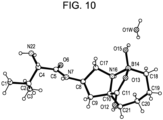
- Example 3 Single crystals of Example 3 were obtained from slow evaporation of the clear solution with a mixture solvent of acetonitrile/water (ratio 20:1) and single crystal structure analysis confirmed that Example 3 is a monohydrate form.
- the molecular structure of Example 3 is shown in Figure 10 .
- Example 3 was analyzed by thermal techniques. DSC analysis indicated that Form E had an endotherm event of dehydrate with an onset at about 105 °C and a peak at about 125 °C. Another endotherm event of dehydrate was also identified with a broad range between about 125 °C to about 225 °C. TGA indicated that Example 3 exhibits a mass loss of about 6.0 % upon heating from about 25 °C to about 135 °C and a mass loss of about 3.0 % upon heating from about 125 °C to about 225 °C. A representative DSC/TGA thermogram of the acetone is shown in Figure 11 .
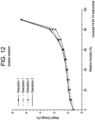
- Example 3 was analyzed by gravity vapor sorption. GVS analysis indicated that Example 3 absorbed less than 2% water at the relative humility (RH) of 80%. A representative GVS thermogram of Example 3 is shown in Figure 12 .
- Crystalline materials Form D (Example 1), Form 1 (Example 2) and Form E (Example 3) convert to the same active chemical moiety when dissolved in an aqueous medium, e.g., at the physiological condition.
- the inhibitory effects of Example 1 on the activity of Human Arginase 1 and Arginase 2 activity were quantified by measuring the formation of the thiol group from thioarginine using recombinant Arginase 1 or Arginase 2 produced from E . coli.
- the thiol group was detected with Ellman's reagent, 5,5' -dithiobis(2-nitrobenzoic acid) (DTNB).
- DTNB reacts with the thiol to give the mixed disulfide and 2-nitro-5-thiobenzoic acid (TNB) which is quantified by the absorbance of the anion (TNB 2- ) at 412 nm.
- Example 1 in 300 nL DMSO were dispensed to assay plates using an Echo acoustic dispenser immediately followed by plate sealing and centrifugation.
- Pre-mixes Two pre-mixes were prepared from reagents thawed immediately before addition to assay plates.
- Pre-mix one comprised human Arginase 1 or human Arginase 2, at a final concentration of 5 nM and 0.5mM DTNB in assay buffer, 45mM HEPES pH7.5, brij 35, 0.045% (w/v) and 100 ⁇ M MnCl 2 .
- Pre-mix two comprised freshly thawed 0.5mM thioarginine in assay buffer. Fifteen microlitres of pre-mix one was dispensed to assay plates containing Example 1, centrifuged and incubated for 30 minutes at room temperature prior to adding fifteen microlitres of pre-mix two.
- Example 1 concentration of Example 1 that inhibited the activity by 50% (i.e. , the IC 50 ) was calculated by plotting the % effect versus test compound concentration and fitting the data using the Genedata Screener Smart fit algorithm.
- the IC 50 of Example 1 for Arginase 1 was 0.222 ⁇ M and 0.282 for Arginase 2.
Landscapes
- Health & Medical Sciences (AREA)
- Chemical & Material Sciences (AREA)
- Organic Chemistry (AREA)
- Life Sciences & Earth Sciences (AREA)
- General Health & Medical Sciences (AREA)
- Veterinary Medicine (AREA)
- Public Health (AREA)
- Pharmacology & Pharmacy (AREA)
- Medicinal Chemistry (AREA)
- Animal Behavior & Ethology (AREA)
- Chemical Kinetics & Catalysis (AREA)
- General Chemical & Material Sciences (AREA)
- Nuclear Medicine, Radiotherapy & Molecular Imaging (AREA)
- Epidemiology (AREA)
- Pain & Pain Management (AREA)
- Rheumatology (AREA)
- Inorganic Chemistry (AREA)
- Pharmaceuticals Containing Other Organic And Inorganic Compounds (AREA)
Abstract
Description
- This application claims the benefit of priority to
US Provisional Application No. 62/721,113, filed on 22 August 2018 - Arginase is a manganese metalloenzyme that catalyzes the conversion of L-arginine to urea and L-ornithine. Two isoforms exist: Arginase 1 is a cytosolic enzyme predominantly found in hepatocytes where it plays a critical role in removing ammonia through urea synthesis, and Arginase 2, a mitochondrial enzyme highly expressed in kidney involved in production of ornithine, a precursor for polyamines and prolines important for cell proliferation and collagen production, respectively.
- Although L-arginine is not an essential amino acid as it can be provided through protein turnover in healthy adults, increased expression and secretion of arginases results in reduced L-arginine levels in various physiologic and pathologic conditions (e.g., pregnancy, auto-immune diseases, cancer). Immune cells, in particular, are sensitive to reduced L-arginine levels. T-cells, when faced with a low L-arginine microenvironment, reduce their proliferation rate and lower the expression of CD3ζ chain, IFNγ, and lytic enzymes resulting in impaired T-cell responsiveness. Dendritic cells respond to low L-arginine conditions by reducing their ability to present antigens, and natural killer cells reduce both proliferation and expression of lytic enzymes.
- Tumors use multiple immune suppressive mechanisms to evade the immune system. One of these is the reduction of L-arginine through increased levels of circulating arginase, increased expression and secretion of arginase by tumor cells, and recruitment of arginase expressing and secreting myeloid derived suppressor cells. Together, these lead to a reduction of L-arginine in the tumor microenvironment and an immune-suppressive phenotype. Pharmacologic inhibition of arginase activity has been shown to reverse the low L-arginine induced immune suppression in animal models. As such, there is a need for potent and selective arginase inhibitors to reverse immune suppression and re-activate anti-cancer immunity in patients, either as single agent, or in combination with therapies reversing additional immune-suppressive mechanisms.
- In some embodiments, disclosed are crystalline (S)-2-amino-N-((3R,5R)-8-hydroxy-6-oxo-7-oxa-1-aza-8-boraspiro[4.7]dodecan-3-yl)-3-methylbutanamide (chemical structure shown below) in Form D and in Form E:

- In some embodiments, disclosed is a pharmaceutical composition comprising crystalline (S)-2-amino-N-((3R,5R)-8-hydroxy-6-oxo-7-oxa-1-aza-8-boraspiro[4.7]dodecan-3-yl)-3-methylbutanamide Form D or Form E, and a pharmaceutically acceptable carrier.
- In some embodiments, disclosed is a method of treating cancer comprising administering to a subject in need thereof crystalline (S)-2-amino-N-((3R,5R)-8-hydroxy-6-oxo-7-oxa-1-aza-8-boraspiro[4.7]dodecan-3-yl)-3-methylbutanamide Form D or Form E.
- In some embodiments, disclosed is a pharmaceutical composition for treating cancer comprising crystalline (S)-2-amino-N-((3R,5R)-8-hydroxy-6-oxo-7-oxa-1-aza-8-boraspiro[4.7]dodecan-3-yl)-3-methylbutanamide Form D or Form E.
- In some embodiments, disclosed is the use of crystalline (S)-2-amino-N-((3R,5R)-8-hydroxy-6-oxo-7-oxa-1-aza-8-boraspiro[4.7]dodecan-3-yl)-3-methylbutanamide Form D or Form E in the manufacture of a medicament for treating cancer.
- In some embodiments, disclosed is crystalline (S)-2-amino-N-((3R,5R)-8-hydroxy-6-oxo-7-oxa-1-aza-8-boraspiro[4.7]dodecan-3-yl)-3-methylbutanamide Form D or Form E, for treating cancer.
- In some embodiments, disclosed is (3R,5R)-8-hydroxy-3-((S)-4-isopropyl-2,2-dimethyl-5-oxoimidazolidin-1-yl)-7-oxa-1-aza-8-boraspiro[4.7]dodecan-6-one (chemical structure shown below) or a pharmaceutically acceptable salt thereof.

- In some embodiments, disclosed is crystalline (3R,5R)-8-hydroxy-3-((S)-4-isopropyl-2,2-dimethyl-5-oxoimidazolidin-1-yl)-7-oxa-1-aza-8-boraspiro[4.7]dodecan-6-one in
Form 1. - In some embodiments, disclosed is a pharmaceutical composition comprising (3R,5R)-8-hydroxy-3-((S)-4-isopropyl-2,2-dimethyl-5-oxoimidazolidin-1-yl)-7-oxa-1-aza-8-boraspiro[4.7]dodecan-6-one or a pharmaceutically acceptable salt thereof or the
crystalline Form 1 and a pharmaceutically acceptable carrier. - In some embodiments, disclosed is a method of treating cancer comprising administering to a subject an effective amount of (3R,5R)-8-hydroxy-3-((S)-4-isopropyl-2,2-dimethyl-5-oxoimidazolidin-1-yl)-7-oxa-1-aza-8-boraspiro[4.7]dodecan-6-one or a pharmaceutically acceptable salt thereof or the
crystalline Form 1. - In some embodiments, disclosed is pharmaceutical composition for treating cancer comprising (3R,5R)-8-hydroxy-3-((S)-4-isopropyl-2,2-dimethyl-5-oxoimidazolidin-1-yl)-7-oxa-1-aza-8-boraspiro[4.7]dodecan-6-one or a pharmaceutically acceptable salt thereof or the
crystalline Form 1. - In some embodiments, disclosed is (3R,5R)-8-hydroxy-3-((S)-4-isopropyl-2,2-dimethyl-5-oxoimidazolidin-1-yl)-7-oxa-1-aza-8-boraspiro[4.7]dodecan-6-one or a pharmaceutically acceptable salt thereof or the
crystalline Form 1 for treating cancer. - In some embodiments, disclosed is the use of (3R,5R)-8-hydroxy-3-((S)-4-isopropyl-2,2-dimethyl-5-oxoimidazolidin-1-yl)-7-oxa-1-aza-8-boraspiro[4.7]dodecan-6-one or a pharmaceutically acceptable salt thereof or the
crystalline Form 1 in the manufacture of a medicament for treating cancer. -
-
Figure 1 illustrates the powder X-ray diffraction diagram of (S)-2-amino-N-((3R,5R)-8-hydroxy-6-oxo-7-oxa-1-aza-8-boraspiro[4.7]dodecan-3-yl)-3-methylbutanamide Form D. -
Figure 2 illustrates the single crystal structure of (S)-2-amino-N-((3R,5R)-8-hydroxy-6-oxo-7-oxa-1-aza-8-boraspiro[4.7]dodecan-3-yl)-3-methylbutanamide Form D. -
Figure 3 illustrates the differential scanning calorimetry (DSC) and thermogravimetric analysis (TGA) traces of (S)-2-amino-N-((3R,5R)-8-hydroxy-6-oxo-7-oxa-1-aza-8-boraspiro[4.7]dodecan-3-yl)-3-methylbutanamide Form D. -
Figure 4 illustrates the gravity vapor sorption (GVS) traces of (S)-2-amino-N-((3R,5R)-8-hydroxy-6-oxo-7-oxa-1-aza-8-boraspiro[4.7]dodecan-3-yl)-3-methylbutanamide Form D. -
Figure 5 illustrates the powder X-ray diffraction diagram of (3R,5R)-8-hydroxy-3-((S)-4-isopropyl-2,2-dimethyl-5-oxoimidazolidin-1-yl)-7-oxa-1-aza-8-boraspiro[4.7]dodecan-6-oneForm 1. -
Figure 6 illustrates the single crystal structure of (3R,5R)-8-hydroxy-3-((S)-4-isopropyl-2,2-dimethyl-5-oxoimidazolidin-1-yl)-7-oxa-1-aza-8-boraspiro[4.7]dodecan-6-oneForm 1. -
Figure 7 illustrates the differential scanning calorimetry (DSC) and thermogravimetric analysis (TGA) traces of (3R,5R)-8-hydroxy-3-((S)-4-isopropyl-2,2-dimethyl-5-oxoimidazolidin-1-yl)-7-oxa-1-aza-8-boraspiro[4.7]dodecan-6-oneForm 1. -
Figure 8 illustrates the gravity vapor sorption (GVS) traces of (3R,5R)-8-hydroxy-3-((S)-4-isopropyl-2,2-dimethyl-5-oxoimidazolidin-1-yl)-7-oxa-1-aza-8-boraspiro[4.7]dodecan-6-oneForm 1. -
Figure 9 illustrates the powder X-ray diffraction diagram of (S)-2-amino-N-((3R,5R)-8-hydroxy-6-oxo-7-oxa-1-aza-8-boraspiro[4.7]dodecan-3-yl)-3-methylbutanamide Form E. -
Figure 10 illustrates the single crystal structure of (S)-2-amino-N-((3R,5R)-8-hydroxy-6-oxo-7-oxa-1-aza-8-boraspiro[4.7]dodecan-3-yl)-3-methylbutanamide Form E. -
Figure 11 illustrates the differential scanning calorimetry (DSC) and thermogravimetric analysis (TGA) traces of (S)-2-amino-N-((3R,5R)-8-hydroxy-6-oxo-7-oxa-1-aza-8-boraspiro[4.7]dodecan-3-yl)-3-methylbutanamide Form E. -
Figure 12 illustrates the gravity vapor sorption (GVS) traces of (S)-2-amino-N-((3R,5R)-8-hydroxy-6-oxo-7-oxa-1-aza-8-boraspiro[4.7]dodecan-3-yl)-3-methylbutanamide Form E. - In some embodiments, disclosed are crystalline (S)-2-amino-N-((3R,5R)-8-hydroxy-6-oxo-7-oxa-1-aza-8-boraspiro[4.7]dodecan-3-yl)-3-methylbutanamide (chemical structure shown below) in Form D and in Form E:

- In some embodiments, crystalline (S)-2-amino-N-((3R,5R)-8-hydroxy-6-oxo-7-oxa-1-aza-8-boraspiro[4.7]dodecan-3-yl)-3-methylbutanamide Form D has an XRPD pattern comprising at least one peak expressed as 2Θ±0.2° at about 7.8°. In some embodiments, crystalline (S)-2-am ino-N-((3 R, 5 R)-8-hydroxy-6-oxo-7-oxa-1-aza-8-boraspi ro[4.7]dodecan-3-yl)-3-methylbutanamide Form D has an XRPD pattern comprising at least one peak expressed as 2Θ±0.2° at about 19.2°. In some embodiments, crystalline (S)-2-amino-N-((3R,5R)-8-hydroxy-6-oxo-7-oxa-1-aza-8-boraspiro[4.7]dodecan-3-yl)-3-methylbutanamide Form D has an XRPD pattern comprising at least one peak expressed as 2Θ±0.2° at about 15.0°. In some embodiments, crystalline (S)-2-amino-N-((3R,5R)-8-hydroxy-6-oxo-7-oxa-1-aza-8-boraspiro[4.7]dodecan-3-yl)-3-methylbutanamide Form D has an XRPD pattern comprising at least one peak expressed as 2Θ±0.2° at about 7.8° or at about 19.2°. In some embodiments, crystalline (S)-2-amino-N-((3R,5R)-8-hydroxy-6-oxo-7-oxa-1-aza-8-boraspiro[4.7]dodecan-3-yl)-3-methylbutanamide Form D has an XRPD pattern comprising at least one peak expressed as 2Θ±0.2° at about 7.8° or at about 15.0°. In some embodiments, crystalline (S)-2-amino-N-((3R,5R)-8-hydroxy-6-oxo-7-oxa-1-aza-8-boraspiro[4.7]dodecan-3-yl)-3-methylbutanamide Form D has an XRPD pattern comprising at least one peak expressed as 2Θ±0.2° at about 15.0° or at about 19.2°. In some embodiments, crystalline (S)-2-amino-N-((3R,5R)-8-hydroxy-6-oxo-7-oxa-1-aza-8-boraspiro[4.7]dodecan-3-yl)-3-methylbutanamide Form D has an XRPD pattern comprising at least one peak expressed as 2Θ±0.2° selected from about 7.8°, about 19.2° and about 15.0°. In some embodiments, crystalline (S)-2-amino-N-((3R,5R)-8-hydroxy-6-oxo-7-oxa-1-aza-8-boraspiro[4.7]dodecan-3-yl)-3-methylbutanamide Form D has an XRPD pattern comprising at least one peak expressed as 2Θ±0.2° selected from the peaks listed in Table 1. In some embodiments, crystalline (S)-2-amino-N-((3R,5R)-8-hydroxy-6-oxo-7-oxa-1-aza-8-boraspiro[4.7]dodecan-3-yl)-3-methylbutanamide Form D has an XRPD pattern substantially similar to
Figure 1 . - In some embodiments, crystalline (S)-2-amino-N-((3R,5R)-8-hydroxy-6-oxo-7-oxa-1-aza-8-boraspiro[4.7]dodecan-3-yl)-3-methylbutanamide Form D characterized by an X-ray powder diffraction pattern comprises peaks with the following 2Θ±0.2° values: 7.8, 19.2, and 15.0 degree. In some embodiments, crystalline (S)-2-amino-N-((3R,5R)-8-hydroxy-6-oxo-7-oxa-1-aza-8-boraspiro[4.7]dodecan-3-yl)-3-methylbutanamide Form D has the X-ray powder diffraction pattern further comprising peaks at 16.4, 13.1, and 13.7 degree 2-theta ±0.2°.
- In some embodiments, crystalline (S)-2-amino-N-((3R,5R)-8-hydroxy-6-oxo-7-oxa-1-aza-8-boraspiro[4.7]dodecan-3-yl)-3-methylbutanamide Form D characterized by an X-ray powder diffraction pattern comprises at least 3 peaks selected from 7.8, 19.2, 15.0, 16.4, 13.1, 13.7, 26.4, 19.8, 17.9, and 22.5 degree 2Θ±0.2°. In some embodiments, crystalline (S)-2-amino-N-((3R,5R)-8-hydroxy-6-oxo-7-oxa-1-aza-8-boraspiro[4.7]dodecan-3-yl)-3-methylbutanamide Form D characterized by an X-ray powder diffraction pattern comprises at least 5 peaks selected from 7.8, 19.2, 15.0, 16.4, 13.1, 13.7, 26.4, 19.8, 17.9, and 22.5 degree 2Θ±0.2°. In some embodiments, crystalline (S)-2-amino-N-((3R,5R)-8-hydroxy-6-oxo-7-oxa-1-aza-8-boraspiro[4.7]dodecan-3-yl)-3-methylbutanamide Form D characterized by an X-ray powder diffraction pattern comprises at least 7 peaks selected from 7.8, 19.2, 15.0, 16.4, 13.1, 13.7, 26.4, 19.8, 17.9, and 22.5 degree 2Θ±0.2°. In some embodiments, crystalline (S)-2-amino-N-((3R,5R)-8-hydroxy-6-oxo-7-oxa-1-aza-8-boraspiro[4.7]dodecan-3-yl)-3-methylbutanamide Form D characterized by an X-ray powder diffraction pattern comprises at least 9 peaks selected from 7.8, 19.2, 15.0, 16.4, 13.1, 13.7, 26.4, 19.8, 17.9, and 22.5 degree 2Θ±0.2°.
- In some embodiments, crystalline (S)-2-amino-N-((3R,5R)-8-hydroxy-6-oxo-7-oxa-1-aza-8-boraspiro[4.7]dodecan-3-yl)-3-methylbutanamide Form D is characterized by a differential scanning calorimetry (DSC) curve that comprises an endotherm at about 214 °C. In some embodiments, crystalline (S)-2-amino-N-((3R,5R)-8-hydroxy-6-oxo-7-oxa-1-aza-8-boraspiro[4.7]dodecan-3-yl)-3-methylbutanamide Form D has a DSC thermogram comprising an endotherm of dehydration with an onset at about 213 °C and a peak at about 214 °C. In some embodiments, crystalline (S)-2-amino-N-((3R,5R)-8-hydroxy-6-oxo-7-oxa-1-aza-8-boraspiro[4.7]dodecan-3-yl)-3-methylbutanamide Form D has a DSC thermogram substantially similar to
Figure 3 . - In some embodiments, crystalline (S)-2-amino-N-((3R,5R)-8-hydroxy-6-oxo-7-oxa-1-aza-8-boraspiro[4.7]dodecan-3-yl)-3-methylbutanamide Form D has a TGA thermogram exhibiting a mass loss of about 0.4 % upon heating from about 25 °C to about 150 °C and a mass loss of about 3.1 % upon heating from about 150 °C to about 225 °C. In some embodiments, crystalline (S)-2-amino-N-((3R,5R)-8-hydroxy-6-oxo-7-oxa-1-aza-8-boraspiro[4.7]dodecan-3-yl)-3-methylbutanamide Form D has a TGA thermogram substantially similar to
Figure 3 . - In some embodiments, crystalline (S)-2-amino-N-((3R,5R)-8-hydroxy-6-oxo-7-oxa-1-aza-8-boraspiro[4.7]dodecan-3-yl)-3-methylbutanamide Form D absorbs less than about 2% water at the relative humility (RH) of about 70% and starts to deliquesce after about 80% RH. In some embodiments, crystalline (S)-2-amino-N-((3R,5R)-8-hydroxy-6-oxo-7-oxa-1-aza-8-boraspiro[4.7]dodecan-3-yl)-3-methylbutanamide Form D has a GVS trace substantially similar to
Figure 4 . - In some embodiments, disclosed are pharmaceutical compositions comprising an effective amount of crystalline (S)-2-amino-N-((3R,5R)-8-hydroxy-6-oxo-7-oxa-1-aza-8-boraspiro[4.7]dodecan-3-yl)-3-methylbutanamide Form D and a pharmaceutically acceptable carrier. In some embodiments, disclosed are pharmaceutical compositions comprising an effective amount of (S)-2-amino-N-((3R,5R)-8-hydroxy-6-oxo-7-oxa-1-aza-8-boraspiro[4.7]dodecan-3-yl)-3-methylbutanamide and a pharmaceutically acceptable carrier, wherein at least about 85% of (S)-2-amino-N-((3R,5R)-8-hydroxy-6-oxo-7-oxa-1-aza-8-boraspiro[4.7]dodecan-3-yl)-3-methylbutanamide is in Form D. In some embodiments, disclosed are pharmaceutical compositions comprising an effective amount of (S)-2-amino-N-((3R,5R)-8-hydroxy-6-oxo-7-oxa-1-aza-8-boraspiro[4.7]dodecan-3-yl)-3-methylbutanamide and a pharmaceutically acceptable carrier, wherein at least about 90% of (S)-2-amino-N-((3R,5R)-8-hydroxy-6-oxo-7-oxa-1-aza-8-boraspiro[4.7]dodecan-3-yl)-3-methylbutanamide is in Form D. In some embodiments, disclosed are pharmaceutical compositions comprising an effective amount of (S)-2-amino-N-((3R,5R)-8-hydroxy-6-oxo-7-oxa-1-aza-8-boraspiro[4.7]dodecan-3-yl)-3-methylbutanamide and a pharmaceutically acceptable carrier, wherein at least about 95% of (S)-2-amino-N-((3R,5R)-8-hydroxy-6-oxo-7-oxa-1-aza-8-boraspiro[4.7]dodecan-3-yl)-3-methylbutanamide is in Form D. In some embodiments, disclosed are pharmaceutical compositions comprising an effective amount of (S)-2-amino-N-((3R,5R)-8-hydroxy-6-oxo-7-oxa-1-aza-8-boraspiro[4.7]dodecan-3-yl)-3-methylbutanamide and a pharmaceutically acceptable carrier, wherein at least about 96% of (S)-2-amino-N-((3R,5R)-8-hydroxy-6-oxo-7-oxa-1-aza-8-boraspiro[4.7]dodecan-3-yl)-3-methylbutanamide is in Form D. In some embodiments, disclosed are pharmaceutical compositions comprising an effective amount of (S)-2-amino-N-((3R,5R)-8-hydroxy-6-oxo-7-oxa-1-aza-8-boraspiro[4.7]dodecan-3-yl)-3-methylbutanamide and a pharmaceutically acceptable carrier, wherein at least about 97% of (S)-2-amino-N-((3R,5R)-8-hydroxy-6-oxo-7-oxa-1-aza-8-boraspiro[4.7]dodecan-3-yl)-3-methylbutanamide is in Form D. In some embodiments, disclosed are pharmaceutical compositions comprising an effective amount of (S)-2-amino-N-((3R,5R)-8-hydroxy-6-oxo-7-oxa-1-aza-8-boraspiro[4.7]dodecan-3-yl)-3-methylbutanamide and a pharmaceutically acceptable carrier, wherein at least about 98% of (S)-2-amino-N-((3R,5R)-8-hydroxy-6-oxo-7-oxa-1-aza-8-boraspiro[4.7]dodecan-3-yl)-3-methylbutanamide is in Form D. In some embodiments, disclosed are pharmaceutical compositions comprising an effective amount of (S)-2-amino-N-((3R,5R)-8-hydroxy-6-oxo-7-oxa-1-aza-8-boraspiro[4.7]dodecan-3-yl)-3-methylbutanamide and a pharmaceutically acceptable carrier, wherein at least about 99% of (S)-2-amino-N-((3R,5R)-8-hydroxy-6-oxo-7-oxa-1-aza-8-boraspiro[4.7]dodecan-3-yl)-3-methylbutanamide is in Form D. In some embodiments, disclosed are pharmaceutical compositions comprising an effective amount of (S)-2-amino-N-((3R,5R)-8-hydroxy-6-oxo-7-oxa-1-aza-8-boraspiro[4.7]dodecan-3-yl)-3-methylbutanamide and a pharmaceutically acceptable carrier, wherein at least about 99.5% of (S)-2-amino-N-((3R,5R)-8-hydroxy-6-oxo-7-oxa-1-aza-8-boraspiro[4.7]dodecan-3-yl)-3-methylbutanamide is in Form D.
- In some embodiments, crystalline (S)-2-amino-N-((3R,5R)-8-hydroxy-6-oxo-7-oxa-1-aza-8-boraspiro[4.7]dodecan-3-yl)-3-methylbutanamide Form E has an XRPD pattern comprising at least one peak expressed as 2Θ±0.2° at about 12.3°. In some embodiments, crystalline (S)-2-amino-N-((3R,5R)-8-hydroxy-6-oxo-7-oxa-1-aza-8-boraspiro[4.7]dodecan-3-yl)-3-methylbutanamide Form E has an XRPD pattern comprising at least one peak expressed as 2Θ±0.2° at about 18.8°. In some embodiments, crystalline (S)-2-amino-N-((3R,5R)-8-hydroxy-6-oxo-7-oxa-1-aza-8-boraspiro[4.7]dodecan-3-yl)-3-methylbutanamide Form E has an XRPD pattern comprising at least one peak expressed as 2Θ±0.2° at about 9.3°. In some embodiments, crystalline (S)-2-amino-N-((3R,5R)-8-hydroxy-6-oxo-7-oxa-1-aza-8-boraspiro[4.7]dodecan-3-yl)-3-methylbutanamide Form E has an XRPD pattern comprising at least one peak expressed as 2Θ±0.2° at about 12.3° or at about 18.8°. In some embodiments, crystalline (S)-2-amino-N-((3R,5R)-8-hydroxy-6-oxo-7-oxa-1-aza-8-boraspiro[4.7]dodecan-3-yl)-3-methylbutanamide Form E has an XRPD pattern comprising at least one peak expressed as 2Θ±0.2° at about 12.3° or at about 9.3°. In some embodiments, crystalline (S)-2-amino-N-((3R,5R)-8-hydroxy-6-oxo-7-oxa-1-aza-8-boraspiro[4.7]dodecan-3-yl)-3-methylbutanamide Form E has an XRPD pattern comprising at least one peak expressed as 2Θ±0.2° at about 18.8° or at about 9.3°. In some embodiments, crystalline (S)-2-amino-N-((3R,5R)-8-hydroxy-6-oxo-7-oxa-1-aza-8-boraspiro[4.7]dodecan-3-yl)-3-methylbutanamide Form E has an XRPD pattern comprising at least one peak expressed as 2Θ±0.2° selected from about 12.3°, about 18.8° and about 9.3°. In some embodiments, crystalline (S)-2-amino-N-((3R,5R)-8-hydroxy-6-oxo-7-oxa-1-aza-8-boraspiro[4.7]dodecan-3-yl)-3-methylbutanamide Form E has an XRPD pattern comprising at least one peak expressed as 2Θ±0.2° selected from the peaks listed in Table 1. In some embodiments, crystalline (S)-2-amino-N-((3R,5R)-8-hydroxy-6-oxo-7-oxa-1-aza-8-boraspiro[4.7]dodecan-3-yl)-3-methylbutanamide Form E has an XRPD pattern substantially similar to
Figure 9 . - In some embodiments, crystalline (S)-2-amino-N-((3R,5R)-8-hydroxy-6-oxo-7-oxa-1-aza-8-boraspiro[4.7]dodecan-3-yl)-3-methylbutanamide Form E characterized by an X-ray powder diffraction pattern comprises peaks with the following 2Θ±0.2° values: 12.3, 18.8, and 9.3 degree. In some embodiments, crystalline (S)-2-amino-N-((3R,5R)-8-hydroxy-6-oxo-7-oxa-1-aza-8-boraspiro[4.7]dodecan-3-yl)-3-methylbutanamide Form E has the X-ray powder diffraction pattern further comprising peaks at 14.2, 14.1, and 19.8 degree 2-theta ±0.2°.
- In some embodiments, crystalline (S)-2-amino-N-((3R,5R)-8-hydroxy-6-oxo-7-oxa-1-aza-8-boraspiro[4.7]dodecan-3-yl)-3-methylbutanamide Form E characterized by an X-ray powder diffraction pattern comprises at least 3 peaks selected from 12.3, 18.8, 9.3, 14.2, 14.1, 19.8, 26.2, 17.3, 7.1 and 25.4 degree 2Θ±0.2°. In some embodiments, crystalline (S)-2-amino-N-((3R,5R)-8-hydroxy-6-oxo-7-oxa-1-aza-8-boraspiro[4.7]dodecan-3-yl)-3-methylbutanamide Form E characterized by an X-ray powder diffraction pattern comprises at least 5 peaks selected from 12.3, 18.8, 9.3, 14.2, 14.1, 19.8, 26.2, 17.3, 7.1 and 25.4 degree 2θ±0.2°. In some embodiments, crystalline (S)-2-amino-N-((3R,5R)-8-hydroxy-6-oxo-7-oxa-1-aza-8-boraspiro[4.7]dodecan-3-yl)-3-methylbutanamide Form E characterized by an X-ray powder diffraction pattern comprises at least 7 peaks selected from 12.3, 18.8, 9.3, 14.2, 14.1, 19.8, 26.2, 17.3, 7.1 and 25.4 degree 2Θ±0.2°. In some embodiments, crystalline (S)-2-amino-N-((3R,5R)-8-hydroxy-6-oxo-7-oxa-1-aza-8-boraspiro[4.7]dodecan-3-yl)-3-methylbutanamide Form E characterized by an X-ray powder diffraction pattern comprises at least 9 peaks selected from 12.3, 18.8, 9.3, 14.2, 14.1, 19.8, 26.2, 17.3, 7.1 and 25.4 degree 2Θ±0.2°.
- In some embodiments, crystalline (S)-2-amino-N-((3R,5R)-8-hydroxy-6-oxo-7-oxa-1-aza-8-boraspiro[4.7]dodecan-3-yl)-3-methylbutanamide Form E is characterized by a differential scanning calorimetry (DSC) curve that comprises an endotherm at about 125 °C. In some embodiments, crystalline (S)-2-amino-N-((3R,5R)-8-hydroxy-6-oxo-7-oxa-1-aza-8-boraspiro[4.7]dodecan-3-yl)-3-methylbutanamide Form E has a DSC thermogram comprising an endotherm of dehydration with an onset at about 105 °C and a peak at about 125 °C. In some embodiments, crystalline (S)-2-amino-N-((3R,5R)-8-hydroxy-6-oxo-7-oxa-1-aza-8-boraspiro[4.7]dodecan-3-yl)-3-methylbutanamide Form E has a DSC thermogram substantially similar to
Figure 11 . - In some embodiments, crystalline (S)-2-amino-N-((3R,5R)-8-hydroxy-6-oxo-7-oxa-1-aza-8-boraspiro[4.7]dodecan-3-yl)-3-methylbutanamide Form E has a TGA thermogram exhibiting a mass loss of about 6.0 % upon heating from about 25 °C to about 135 °C and a mass loss of about 3.0 % upon heating from about 125 °C to about 225 °C. In some embodiments, crystalline (S)-2-amino-N-((3R,5R)-8-hydroxy-6-oxo-7-oxa-1-aza-8-boraspiro[4.7]dodecan-3-yl)-3-methylbutanamide Form E has a TGA thermogram substantially similar to
Figure 11 . - In some embodiments, crystalline (S)-2-amino-N-((3R,5R)-8-hydroxy-6-oxo-7-oxa-1-aza-8-boraspiro[4.7]dodecan-3-yl)-3-methylbutanamide Form E absorbs less than about 2% water at the relative humility (RH) of about 80%. In some embodiments, crystalline (S)-2-amino-N-((3R,5R)-8-hydroxy-6-oxo-7-oxa-1-aza-8-boraspiro[4.7]dodecan-3-yl)-3-methylbutanamide Form D has a GVS trace substantially similar to
Figure 12 . - In some embodiments, disclosed are pharmaceutical compositions comprising an effective amount of crystalline (S)-2-amino-N-((3R,5R)-8-hydroxy-6-oxo-7-oxa-1-aza-8-boraspiro[4.7]dodecan-3-yl)-3-methylbutanamide Form E and a pharmaceutically acceptable carrier. In some embodiments, disclosed are pharmaceutical compositions comprising an effective amount of (S)-2-amino-N-((3R,5R)-8-hydroxy-6-oxo-7-oxa-1-aza-8-boraspiro[4.7]dodecan-3-yl)-3-methylbutanamide and a pharmaceutically acceptable carrier, wherein at least about 85% of (S)-2-amino-N-((3R,5R)-8-hydroxy-6-oxo-7-oxa-1-aza-8-boraspiro[4.7]dodecan-3-yl)-3-methylbutanamide is in Form E. In some embodiments, disclosed are pharmaceutical compositions comprising an effective amount of (S)-2-amino-N-((3R,5R)-8-hydroxy-6-oxo-7-oxa-1-aza-8-boraspiro[4.7]dodecan-3-yl)-3-methylbutanamide and a pharmaceutically acceptable carrier, wherein at least about 90% of (S)-2-amino-N-((3R,5R)-8-hydroxy-6-oxo-7-oxa-1-aza-8-boraspiro[4.7]dodecan-3-yl)-3-methylbutanamide is in Form E. In some embodiments, disclosed are pharmaceutical compositions comprising an effective amount of (S)-2-amino-N-((3R,5R)-8-hydroxy-6-oxo-7-oxa-1-aza-8-boraspiro[4.7]dodecan-3-yl)-3-methylbutanamide and a pharmaceutically acceptable carrier, wherein at least about 95% of (S)-2-amino-N-((3R,5R)-8-hydroxy-6-oxo-7-oxa-1-aza-8-boraspiro[4.7]dodecan-3-yl)-3-methylbutanamide is in Form E. In some embodiments, disclosed are pharmaceutical compositions comprising an effective amount of (S)-2-amino-N-((3R,5R)-8-hydroxy-6-oxo-7-oxa-1-aza-8-boraspiro[4.7]dodecan-3-yl)-3-methylbutanamide and a pharmaceutically acceptable carrier, wherein at least about 96% of (S)-2-amino-N-((3R,5R)-8-hydroxy-6-oxo-7-oxa-1-aza-8-boraspiro[4.7]dodecan-3-yl)-3-methylbutanamide is in Form E. In some embodiments, disclosed are pharmaceutical compositions comprising an effective amount of (S)-2-amino-N-((3R,5R)-8-hydroxy-6-oxo-7-oxa-1-aza-8-boraspiro[4.7]dodecan-3-yl)-3-methylbutanamide and a pharmaceutically acceptable carrier, wherein at least about 97% of (S)-2-amino-N-((3R,5R)-8-hydroxy-6-oxo-7-oxa-1-aza-8-boraspiro[4.7]dodecan-3-yl)-3-methylbutanamide is in Form E. In some embodiments, disclosed are pharmaceutical compositions comprising an effective amount of (S)-2-amino-N-((3R,5R)-8-hydroxy-6-oxo-7-oxa-1-aza-8-boraspiro[4.7]dodecan-3-yl)-3-methylbutanamide and a pharmaceutically acceptable carrier, wherein at least about 98% of (S)-2-amino-N-((3R,5R)-8-hydroxy-6-oxo-7-oxa-1-aza-8-boraspiro[4.7]dodecan-3-yl)-3-methylbutanamide is in Form E. In some embodiments, disclosed are pharmaceutical compositions comprising an effective amount of (S)-2-amino-N-((3R,5R)-8-hydroxy-6-oxo-7-oxa-1-aza-8-boraspiro[4.7]dodecan-3-yl)-3-methylbutanamide and a pharmaceutically acceptable carrier, wherein at least about 99% of (S)-2-amino-N-((3R,5R)-8-hydroxy-6-oxo-7-oxa-1-aza-8-boraspiro[4.7]dodecan-3-yl)-3-methylbutanamide is in Form E. In some embodiments, disclosed are pharmaceutical compositions comprising an effective amount of (S)-2-amino-N-((3R,5R)-8-hydroxy-6-oxo-7-oxa-1-aza-8-boraspiro[4.7]dodecan-3-yl)-3-methylbutanamide and a pharmaceutically acceptable carrier, wherein at least about 99.5% of (S)-2-amino-N-((3R,5R)-8-hydroxy-6-oxo-7-oxa-1-aza-8-boraspiro[4.7]dodecan-3-yl)-3-methylbutanamide is in Form E.
- In some embodiments, disclosed is compound (3R,5R)-8-hydroxy-3-((S)-4-isopropyl-2,2-dimethyl-5-oxoimidazolidin-1-yl)-7-oxa-1-aza-8-boraspiro[4.7]dodecan-6-one (chemical structure shown below) or a pharmaceutically acceptable salt thereof. The compound can be amorphous, crystalline, or a mixture thereof.

- In some embodiments, disclosed is crystalline (3R,5R)-8-hydroxy-3-((S)-4-isopropyl-2,2-dimethyl-5-oxoimidazolidin-1-yl)-7-oxa-1-aza-8-boraspiro[4.7]dodecan-6-one
Form 1. - In some embodiments, crystalline (3R,5R)-8-hydroxy-3-((S)-4-isopropyl-2,2-dimethyl-5-oxoimidazolidin-1-yl)-7-oxa-1-aza-8-boraspiro[4.7]dodecan-6-one
Form 1 has an XRPD pattern comprising at least one peak expressed as 2Θ±0.2° at about 11.6°. In some embodiments, crystalline (3R,5R)-8-hydroxy-3-((S)-4-isopropyl-2,2-dimethyl-5-oxoimidazolidin-1-yl)-7-oxa-1-aza-8-boraspiro[4.7]dodecan-6-oneForm 1 has an XRPD pattern comprising at least one peak expressed as 2Θ±0.2° at about 8.2°. In some embodiments, crystalline (3R,5R)-8-hydroxy-3-((S)-4-isopropyl-2,2-dimethyl-5-oxoimidazolidin-1-yl)-7-oxa-1-aza-8-boraspiro[4.7]dodecan-6-oneForm 1 has an XRPD pattern comprising at least one peak expressed as 2Θ±0.2° at about 13.3°. In some embodiments, crystalline (3R,5R)-8-hydroxy-3-((S)-4-isopropyl-2,2-dimethyl-5-oxoimidazolidin-1-yl)-7-oxa-1-aza-8-boraspiro[4.7]dodecan-6-oneForm 1 has an XRPD pattern comprising at least one peak expressed as 2Θ±0.2° at about 11.6° or at about 8.2°. In some embodiments, crystalline (3R,5R)-8-hydroxy-3-((S)-4-isopropyl-2,2-dimethyl-5-oxoimidazolidin-1-yl)-7-oxa-1-aza-8-boraspiro[4.7]dodecan-6-oneForm 1 has an XRPD pattern comprising at least one peak expressed as 2Θ±0.2° at about 11.6° or at about 13.3°. In some embodiments, crystalline (3R,5R)-8-hydroxy-3-((S)-4-isopropyl-2,2-dimethyl-5-oxoimidazolidin-1-yl)-7-oxa-1-aza-8-boraspiro[4.7]dodecan-6-oneForm 1 has an XRPD pattern comprising at least one peak expressed as 2Θ±0.2° at about 8.2° or at about 13.3°. In some embodiments, crystalline (3R,5R)-8-hydroxy-3-((S)-4-isopropyl-2,2-dimethyl-5-oxoimidazolidin-1-yl)-7-oxa-1-aza-8-boraspiro[4.7]dodecan-6-oneForm 1 has an XRPD pattern comprising at least one peak expressed as 2θ±0.2° selected from about 11.6°, about 8.2° and about 13.3°. In some embodiments, crystalline (3R,5R)-8-hydroxy-3-((S)-4-isopropyl-2,2-dimethyl-5-oxoimidazolidin-1-yl)-7-oxa-1-aza-8-boraspiro[4.7]dodecan-6-oneForm 1 has an XRPD pattern comprising at least one peak expressed as 2Θ±0.2° selected from the peaks listed in Table 1. In some embodiments, crystalline (3R,5R)-8-hydroxy-3-((S)-4-isopropyl-2,2-dimethyl-5-oxoimidazolidin-1-yl)-7-oxa-1-aza-8-boraspiro[4.7]dodecan-6-oneForm 1 has an XRPD pattern substantially similar toFigure 5 . - In some embodiments, crystalline (3R,5R)-8-hydroxy-3-((S)-4-isopropyl-2,2-dimethyl-5-oxoimidazolidin-1-yl)-7-oxa-1-aza-8-boraspiro[4.7]dodecan-6-one
Form 1 characterized by an X-ray powder diffraction pattern comprises at least 3 peaks selected from 11.6, 8.2, 13.3, 16.4, 12.9, 17.4, 19.5, 16.6, 22.6 and 15.9 degree 2Θ±0.2°. In some embodiments, crystalline (3R,5R)-8-hydroxy-3-((S)-4-isopropyl-2,2-dimethyl-5-oxoimidazolidin-1-yl)-7-oxa-1-aza-8-boraspiro[4.7]dodecan-6-oneForm 1 characterized by an X-ray powder diffraction pattern comprises at least 5 peaks selected from 11.6, 8.2, 13.3, 16.4, 12.9, 17.4, 19.5, 16.6, 22.6 and 15.9 degree 2Θ±0.2°. In some embodiments, crystalline (3R,5R)-8-hydroxy-3-((S)-4-isopropyl-2,2-dimethyl-5-oxoimidazolidin-1-yl)-7-oxa-1-aza-8-boraspiro[4.7]dodecan-6-oneForm 1 characterized by an X-ray powder diffraction pattern comprises at least 7 peaks selected from 11.6, 8.2, 13.3, 16.4, 12.9, 17.4, 19.5, 16.6, 22.6 and 15.9 degree 2Θ±0.2°. In some embodiments, crystalline (3R,5R)-8-hydroxy-3-((S)-4-isopropyl-2,2-dimethyl-5-oxoimidazolidin-1-yl)-7-oxa-1-aza-8-boraspiro[4.7]dodecan-6-oneForm 1 characterized by an X-ray powder diffraction pattern comprises at least 9 peaks selected from 11.6, 8.2, 13.3, 16.4, 12.9, 17.4, 19.5, 16.6, 22.6 and 15.9 degree 2Θ±0.2°. - In some embodiments, crystalline (3R,5R)-8-hydroxy-3-((S)-4-isopropyl-2,2-dimethyl-5-oxoimidazolidin-1-yl)-7-oxa-1-aza-8-boraspiro[4.7]dodecan-6-one
Form 1 has a DSC thermogram comprising an endotherm of dehydration with an onset at about 82°C and a peak at about 122°C. In some embodiments, crystalline (3R,5R)-8-hydroxy-3-((S)-4-isopropyl-2,2-dimethyl-5-oxoimidazolidin-1-yl)-7-oxa-1-aza-8-boraspiro[4.7]dodecan-6-oneForm 1 has a DSC thermogram substantially similar toFigure 7 . - In some embodiments, crystalline (3R,5R)-8-hydroxy-3-((S)-4-isopropyl-2,2-dimethyl-5-oxoimidazolidin-1-yl)-7-oxa-1-aza-8-boraspiro[4.7]dodecan-6-one
Form 1 has a TGA thermogram exhibiting a mass loss of about 5.5% upon heating from about 25°C to about 150°C and a mass loss of about 3.2 % upon heating from about 150 °C to about 225 °C. In some embodiments, crystalline (3R,5R)-8-hydroxy-3-((S)-4-isopropyl-2,2-dimethyl-5--oxoimidazolidin-1-yl)-7-oxa-1-aza-8-boraspiro[4.7]dodecan-6-one has a TGA thermogram substantially similar to - In some embodiments, crystalline (3R,5R)-8-hydroxy-3-((S)-4-isopropyl-2,2-dimethyl-5-oxoimidazolidin-1-yl)-7-oxa-1-aza-8-boraspiro[4.7]dodecan-6-one
Form 1 absorbs less than about 2% water at the relative humility (RH) of about 80%. In some embodiments, crystalline (3R,5R)-8-hydroxy-3-((S)-4-isopropyl-2,2-dimethyl-5-oxoimidazolidin-1-yl)-7-oxa-1-aza-8-boraspiro[4.7]dodecan-6-oneForm 1 has a GVS trace substantially similar toFigure 8 . - In some embodiments, disclosed are pharmaceutical compositions comprising an effective amount of (3R,5R)-8-hydroxy-3-((S)-4-isopropyl-2,2-dimethyl-5-oxoimidazolidin-1-yl)-7-oxa-1-aza-8-boraspiro[4.7]dodecan-6-one or a pharmaceutically acceptable salt thereof or the
crystalline Form 1 and a pharmaceutically acceptable carrier. In some embodiments, disclosed are pharmaceutical compositions comprising an effective amount of (3R,5R)-8-hydroxy-3-((S)-4-isopropyl-2,2-dimethyl-5-oxoimidazolidin-1-yl)-7-oxa-1-aza-8-boraspiro[4.7]dodecan-6-one or a pharmaceutically acceptable salt thereof and a pharmaceutically acceptable carrier, wherein at least about 85% of (3R,5R)-8-hydroxy-3-((S)-4-isopropyl-2,2-dimethyl-5-oxoimidazolidin-1-yl)-7-oxa-1-aza-8-boraspiro[4.7]dodecan-6-one is inForm 1. In some embodiments, disclosed are pharmaceutical compositions comprising an effective amount of (3R,5R)-8-hydroxy-3-((S)-4-isopropyl-2,2-dimethyl-5-oxoimidazolidin-1-yl)-7-oxa-1-aza-8-boraspiro[4.7]dodecan-6-one and a pharmaceutically acceptable carrier, wherein at least about 90% of (3R,5R)-8-hydroxy-3-((S)-4-isopropyl-2,2-dimethyl-5-oxoimidazolidin-1-yl)-7-oxa-1-aza-8-boraspiro[4.7]dodecan-6-one is inForm 1. In some embodiments, disclosed are pharmaceutical compositions comprising an effective amount of (3R,5R)-8-hydroxy-3-((S)-4-isopropyl-2,2-dimethyl-5-oxoimidazolidin-1-yl)-7-oxa-1-aza-8-boraspiro[4.7]dodecan-6-one and a pharmaceutically acceptable carrier, wherein at least about 95% of (3R,5R)-8-hydroxy-3-((S)-4-isopropyl-2,2-dimethyl-5-oxoimidazolidin-1-yl)-7-oxa-1-aza-8-boraspiro[4.7]dodecan-6-one is inForm 1. In some embodiments, disclosed are pharmaceutical compositions comprising an effective amount of (3R,5R)-8-hydroxy-3-((S)-4-isopropyl-2,2-dimethyl-5-oxoimidazolidin-1-yl)-7-oxa-1-aza-8-boraspiro[4.7]dodecan-6-one and a pharmaceutically acceptable carrier, wherein at least about 96% of (3R,5R)-8-hydroxy-3-((S)-4-isopropyl-2,2-dimethyl-5-oxoimidazolidin-1-yl)-7-oxa-1-aza-8-boraspiro[4.7]dodecan-6-one is inForm 1. In some embodiments, disclosed are pharmaceutical compositions comprising an effective amount of (3R,5R)-8-hydroxy-3-((S)-4-isopropyl-2,2-dimethyl-5-oxoimidazolidin-1-yl)-7-oxa-1-aza-8-boraspiro[4.7]dodecan-6-one and a pharmaceutically acceptable carrier, wherein at least about 97% of (3R,5R)-8-hydroxy-3-((S)-4-isopropyl-2,2-dimethyl-5-oxoimidazolidin-1-yl)-7-oxa-1-aza-8-boraspiro[4.7]dodecan-6-one is inForm 1. In some embodiments, disclosed are pharmaceutical compositions comprising an effective amount of (3R,5R)-8-hydroxy-3-((S)-4-isopropyl-2,2-dimethyl-5-oxoimidazolidin-1-yl)-7-oxa-1-aza-8-boraspiro[4.7]dodecan-6-one and a pharmaceutically acceptable carrier, wherein at least about 98% of (3R,5R)-8-hydroxy-3-((S)-4-isopropyl-2,2-dimethyl-5-oxoimidazolidin-1-yl)-7-oxa-1-aza-8-boraspiro[4.7]dodecan-6-is inForm 1. In some embodiments, disclosed are pharmaceutical compositions comprising an effective amount of (3R,5R)-8-hydroxy-3-((S)-4-isopropyl-2,2-dimethyl-5-oxoimidazolidin-1-yl)-7-oxa-1-aza-8-boraspiro[4.7]dodecan-6-one and a pharmaceutically acceptable carrier, wherein at least about 99% of (3R,5R)-8-hydroxy-3-((S)-4-isopropyl-2,2-dimethyl-5-oxoimidazolidin-1-yl)-7-oxa-1-aza-8-boraspiro[4.7]dodecan-6-one is inForm 1. In some embodiments, disclosed are pharmaceutical compositions comprising an effective amount of (3R,5R)-8-hydroxy-3-((S)-4-isopropyl-2,2-dimethyl-5-oxoimidazolidin-1-yl)-7-oxa-1-aza-8-boraspiro[4.7]dodecan-6-one and a pharmaceutically acceptable carrier, wherein at least about 99.5% of (3R,5R)-8-hydroxy-3-((S)-4-isopropyl-2,2-dimethyl-5-oxoimidazolidin-1-yl)-7-oxa-1-aza-8-boraspiro[4.7]dodecan-6-one is inForm 1. - The language "pharmaceutically acceptable carrier" includes compounds, materials, compositions, and/or dosage forms which are, within the scope of sound medical judgment, suitable for use in contact with the tissues of human beings and animals without excessive toxicity, irritation, allergic response, or other problem or complication, as ascertained by one of skill in the art.
- The disclosed compositions may be in a form suitable for oral use (for example, as tablets, lozenges, hard or soft capsules, aqueous or oily suspensions, emulsions, dispersible powders or granules, syrups or elixirs), for topical use (for example, as creams, ointments, gels, or aqueous or oily solutions or suspensions), for administration by inhalation (for example, as a finely divided powder or a liquid aerosol), for administration by insufflation (for example, as a finely divided powder) or for parenteral administration (for example, as a sterile aqueous or oily solution for intravenous, subcutaneous, intramuscular or intramuscular dosing or as a suppository for rectal dosing).
- The amount of active ingredient that is combined with one or more pharmaceutically acceptable carriers to produce a single dosage form will necessarily vary depending upon the host treated and the particular route of administration. For further information on Routes of Administration and Dosage Regimes the reader is referred to Chapter 25.3 in .
- In one aspect, disclosed are methods for treating cancer in a subject in need thereof, comprising administering to the subject an effective amount (S)-2-amino-N-((3R,5R)-8-hydroxy-6-oxo-7-oxa-1-aza-8-boraspiro[4.7]dodecan-3-yl)-3-methylbutanamide Form D or Form E.
- In one aspect, disclosed is (S)-2-amino-N-((3R,5R)-8-hydroxy-6-oxo-7-oxa-1-aza-8-boraspiro[4.7]dodecan-3-yl)-3-methylbutanamide Form D or Form E for use in treating cancer.
- In one aspect, disclosed is the use of (S)-2-amino-N-((3R,5R)-8-hydroxy-6-oxo-7-oxa-1-aza-8-boraspiro[4.7]dodecan-3-yl)-3-methylbutanamide Form D or Form E in the manufacture of a medicament for treating cancer.
- In one aspect, disclosed is a pharmaceutical compositions comprising (S)-2-amino-N-((3R,5R)-8-hydroxy-6-oxo-7-oxa-1-aza-8-boraspiro[4.7]dodecan-3-yl)-3-methylbutanamide Form D or Form E for use in treating cancer.
- In one aspect, disclosed are methods for treating cancer in a subject in need thereof, comprising administering to the subject an effective amount (3R,5R)-8-hydroxy-3-((S)-4-isopropyl-2,2-dimethyl-5-oxoimidazolidin-1-yl)-7-oxa-1-aza-8-boraspiro[4.7]dodecan-6-one or a pharmaceutically acceptable salt thereof or the
crystalline Form 1. - In one aspect, disclosed is (3R,5R)-8-hydroxy-3-((S)-4-isopropyl-2,2-dimethyl-5-oxoimidazolidin-1-yl)-7-oxa-1-aza-8-boraspiro[4.7]dodecan-6-one or a pharmaceutically acceptable salt thereof or the
crystalline Form 1 for use in treating cancer. - In one aspect, disclosed is the use of (3R,5R)-8-hydroxy-3-((S)-4-isopropyl-2,2-dimethyl-5-oxoimidazolidin-1-yl)-7-oxa-1-aza-8-boraspiro[4.7]dodecan-6-one or a pharmaceutically acceptable salt thereof or the
crystalline Form 1 in the manufacture of a medicament for treating cancer. - In one aspect, disclosed is a pharmaceutical compositions comprising (3R,5R)-8-hydroxy-3-((S)-4-isopropyl-2,2-dimethyl-5-oxoimidazolidin-1-yl)-7-oxa-1-aza-8-boraspiro[4.7]dodecan-6-one or a pharmaceutically acceptable salt thereof or the
crystalline Form 1 for use in treating cancer. - The term "cancer" includes, for example, renal cell carcinoma, head and neck squamous cell carcinoma, lung cancer (e.g., small cell lung cancer (SCLC), non-small cell lung cancer (NSCLC), mesothelioma), pancreatic cancer, colorectal cancer, breast cancer, acute myeloid leukemia (AML), prostate cancer, gastric cancer, bladder cancer, melanoma, renal cancer and ovarian cancer. In some embodiments, the cancer has metastasized. In some embodiments, the cancer is associated with
Arginase 1 and/orArginase 2 modulation. - In some embodiments, the cancer is associated with increased
plasma Arginase 1 levels. In some embodiments, the cancer is associated with decreased plasma arginine levels. In some embodiments, the cancer is associated with both increasedplasma Arginase 1 levels and decreased plasma arginine levels. In some embodiments, the cancer associated with increasedplasma Arginase 1 levels and/or decreased plasma arginine levels includes renal cell carcinoma, head and neck squamous cell carcinoma, lung cancer (e.g., small cell lung cancer (SCLC), non-small cell lung cancer (NSCLC), mesothelioma), pancreatic cancer, colorectal cancer and breast cancer. - In some embodiments, the cancer secretes
Arginase 2, for example, acute myeloid leukemia and prostate cancer. - In some embodiments, the cancer is associated with
Arginase 1 positive tumor infiltrating immune cells, for example, lung cancer (small cell lung cancer (SCLC), non-small cell lung cancer (NSCLC), gastric cancer, bladder cancer, colorectal cancer, melanoma, head and neck squamous cell carcinoma, breast cancer, prostate cancer, ovarian cancer, pancreatic cancer and renal cancer. - In one aspect, disclosed are methods for inhibiting arginase to a subject in need thereof, comprising administering to the subject an effective amount of (S)-2-amino-N-((3R,5R)-8-hydroxy-6-oxo-7-oxa-1-aza-8-boraspiro[4.7]dodecan-3-yl)-3-methylbutanamide Form D or Form E.
- In one aspect, disclosed is (S)-2-amino-N-((3R,5R)-8-hydroxy-6-oxo-7-oxa-1-aza-8-boraspiro[4.7]dodecan-3-yl)-3-methylbutanamide Form D or Form E for use in inhibiting arginase.
- In one aspect, disclosed is the use of (S)-2-amino-N-((3R,5R)-8-hydroxy-6-oxo-7-oxa-1-aza-8-boraspiro[4.7]dodecan-3-yl)-3-methylbutanamide Form D or Form E in the manufacture of a medicament for inhibiting arginase.
- In one aspect, disclosed are pharmaceutical compositions comprising (S)-2-amino-N-((3R,5R)-8-hydroxy-6-oxo-7-oxa-1-aza-8-boraspiro[4.7]dodecan-3-yl)-3-methylbutanamide Form D or Form E for use in inhibiting arginase.
- In one aspect, disclosed are methods for inhibiting arginase to a subject in need thereof, comprising administering to the subject an effective amount of (3R,5R)-8-hydroxy-3-((S)-4-isopropyl-2,2-dimethyl-5-oxoimidazolidin-1-yl)-7-oxa-1-aza-8-boraspiro[4.7]dodecan-6-one or the
crystalline Form 1. - In one aspect, disclosed is (3R,5R)-8-hydroxy-3-((S)-4-isopropyl-2,2-dimethyl-5-oxoimidazolidin-1-yl)-7-oxa-1-aza-8-boraspiro[4.7]dodecan-6-one or a pharmaceutically acceptable salt thereof or the
crystalline Form 1 for use in inhibiting arginase. - In one aspect, disclosed is the use of (3R,5R)-8-hydroxy-3-((S)-4-isopropyl-2,2-dimethyl-5-oxoimidazolidin-1-yl)-7-oxa-1-aza-8-boraspiro[4.7]dodecan-6-one or a pharmaceutically acceptable salt thereof or the
crystalline Form 1 in the manufacture of a medicament for inhibiting arginase. - In one aspect, disclosed are pharmaceutical compositions comprising (3R,5R)-8-hydroxy-3-((S)-4-isopropyl-2,2-dimethyl-5-oxoimidazolidin-1-yl)-7-oxa-1-aza-8-boraspiro[4.7]dodecan-6-one or a pharmaceutically acceptable salt thereof or the
crystalline Form 1 for use in inhibiting arginase. - The term "arginase" includes manganese-containing enzymes belonging to the ureahydrolase family that catalyze the fifth and final step in the urea cycle converting L-arginine into L-ornithine and urea. The term "arginase" includes the two isozymes of the enzyme, e.g.,
Arginase 1, which functions in the urea cycle, and is located primarily in the cytoplasm of the liver, andArginase 2, which is located in the mitochondria of several tissues in the body and is implicated in the regulation of arginine/ornithine concentrations in the cell. In some embodiments, (S)-2-amino-N-((3R,5R)-8-hydroxy-6-oxo-7-oxa-1-aza-8-boraspiro[4.7]dodecan-3-yl)-3-methylbutanamide Form D or Form E is selective forArginase 1. In some embodiments, (S)-2-amino-N-((3R,5R)-8-hydroxy-6-oxo-7-oxa-1-aza-8-boraspiro[4.7]dodecan-3-yl)-3-methylbutanamide Form D or Form E is selective forArginase 2. In some embodiments, (S)-2-amino-N-((3R,5R)-8-hydroxy-6-oxo-7-oxa-1-aza-8-boraspiro[4.7]dodecan-3-yl)-3-methylbutanamide Form D or Form E inhibit bothArginase 1 andArginase 2. In some embodiments, (3R,5R)-8-hydroxy-3-((S)-4-isopropyl-2,2-dimethyl-5-oxoimidazolidin-1-yl)-7-oxa-1-aza-8-boraspiro[4.7]dodecan-6-one or a pharmaceutically acceptable salt thereof or thecrystalline Form 1 is selective forArginase 1. In some embodiments, (3R,5R)-8-hydroxy-3-((S)-4-isopropyl-2,2-dimethyl-5-oxoimidazolidin-1-yl)-7-oxa-1-aza-8-boraspiro[4.7]dodecan-6-one or a pharmaceutically acceptable salt thereof or thecrystalline Form 1 is selective forArginase 2. In some embodiments, (3R,5R)-8-hydroxy-3-((S)-4-isopropyl-2,2-dimethyl-5-oxoimidazolidin-1-yl)-7-oxa-1-aza-8-boraspiro[4.7]dodecan-6-one or a pharmaceutically acceptable salt thereof or thecrystalline Form 1 inhibit bothArginase 1 andArginase 2. - The language "effective amount" includes an amount of (S)-2-amino-N-((3R,5R)-8-hydroxy-6-oxo-7-oxa-1-aza-8-boraspiro[4.7]dodecan-3-yl)-3-methylbutanamide Form D or Form E or (3R,5R)-8-hydroxy-3-((S)-4-isopropyl-2,2-dimethyl-5-oxoimidazolidin-1-yl)-7-oxa-1-aza-8-boraspiro[4.7]dodecan-6-one or a pharmaceutically acceptable salt thereof or the
crystalline Form 1, that will elicit a biological or medical response in a subject, for example, the reduction or inhibition of enzyme or protein activity related to arginase or cancer, amelioration of symptoms of cancer or the slowing or delaying of progression of cancer. In some embodiments, the language "effective amount" includes the amount of (S)-2-amino-N-((3R,5R)-8-hydroxy-6-oxo-7-oxa-1-aza-8-boraspiro[4.7]dodecan-3-yl)-3-methylbutanamide Form D or Form E or (3R,5R)-8-hydroxy-3-((S)-4-isopropyl-2,2-dimethyl-5-oxoimidazolidin-1-yl)-7-oxa-1-aza-8-boraspiro[4.7]dodecan-6-one or a pharmaceutically acceptable salt thereof or thecrystalline Form 1 that when administered to a subject, is effective to at least partially alleviate, inhibit, and/or ameliorate cancer or inhibit arginase, and/or reduce or inhibit the growth of a tumor or proliferation of cancerous cells in a subject. - The term "subject" includes warm blooded mammals, for example, primates, dogs, cats, rabbits, rats, and mice. In some embodiments, the subject is a primate, for example, a human. In some embodiments, the subject is suffering from cancer. In some embodiments, the subject is in need of treatment (e.g., the subject would benefit biologically or medically from treatment). In some embodiments, the patient is suffering from cancer. In some embodiments, the subject has increased
plasma Arginase 1 levels. In some embodiments, the subject has decreased arginine levels. In some embodiments, the patient has both increasedplasma Arginase 1 levels and decreased arginine levels. In some embodiments, the subject has a cancer secreting Arginase 2 (e.g., acute myeloid leukemia or prostate cancer). In some embodiments, the subject hasArginase 1 positive tumor infiltrating immune cells. - The language "inhibit," "inhibition" or "inhibiting" includes a decrease in the baseline activity of a biological activity or process
- The language "treat," "treating" and "treatment" includes the reduction or inhibition of enzyme or protein activity related to arginase or in a subject, amelioration of one or more symptoms of a cancer, or the slowing or delaying of progression of cancer in a subject. The language "treat," "treating" and "treatment" also includes the reduction or inhibition of the growth of a tumor or proliferation of cancerous cells in a subject.
- In some embodiments, the present compounds, e.g., (S)-2-amino-N-((3R,5R)-8-hydroxy-6-oxo-7-oxa-1-aza-8-boraspiro[4.7]dodecan-3-yl)-3-methylbutanamide and (3R,5R)-8-hydroxy-3-((S)-4-isopropyl-2,2-dimethyl-5-oxoimidazolidin-1-yl)-7-oxa-1-aza-8-boraspiro[4.7]dodecan-6-one, show interconversion of structures between a free boronic acid and a boronate ester, as illustrated in
Scheme 1 below. -
Scheme 1. Interconversion of the free boronic acid and boronate ester of Form D.
- In some embodiments, the present compounds, e.g., (S)-2-amino-N-((3R,5R)-8-hydroxy-6-oxo-7-oxa-1-aza-8-boraspiro[4.7]dodecan-3-yl)-3-methylbutanamide and (3R,5R)-8-hydroxy-3-((S)-4-isopropyl-2,2-dimethyl-5-oxoimidazolidin-1-yl)-7-oxa-1-aza-8-boraspiro[4.7]dodecan-6-one, can be in a form where a dative bond is formed between the nitrogen atom of the pyrrolidine moiety and the boron atom. In the formation of a conventional covalent bond, each atom supplies one electron to the bond, while in a dative bond (also known as coordinate bond), both electrons come from the same atom. For example, the dative bond between the nitrogen and boron atoms in the present compound is formed by sharing the pair of electrons from the nitrogen atom. The dative bond in (S)-2-amino-N-((3R,5R)-8-hydroxy-6-oxo-7-oxa-1-aza-8-boraspiro[4.7]dodecan-3-yl)-3-methylbutanamide and (3R,5R)-8-hydroxy-3-((S)-4-isopropyl-2,2-dimethyl-5-oxoimidazolidin-1-yl)-7-oxa-1-aza-8-boraspiro[4.7]dodecan-6-one, can be represented by an arrowed line in the following structural formula, respectively:

- Aspects of the present disclosure can be further defined by reference to the following nonlimiting examples, which describe in detail preparation of certain compounds and intermediates of the present disclosure and methods for using compounds of the present disclosure. It will be apparent to those skilled in the art that many modifications, both to materials and methods, can be practiced without departing from the scope of the present disclosure.
- Unless stated otherwise:
- (i) all syntheses were carried out at ambient temperature, i.e. in the range 17 to 25°C and under an atmosphere of an inert gas such as nitrogen unless otherwise stated;
- (ii) evaporations were carried out by rotary evaporation or utilising Genevac equipment or Biotage v10 evaporator in vacuo and work-up procedures were carried out after removal of residual solids by filtration;
- (iii) flash chromatography purifications were performed on an automated Teledyne Isco CombiFlash® Rf or Teledyne Isco CombiFlash® Companion® using prepacked RediSep Rf Gold™ Silica Columns (20-40 µm, spherical particles), GraceResolv™ Cartridges (Davisil® silica) or Silicycle cartridges (40 - 63 µm).
- (iv) preparative chromatography was performed on a Gilson prep HPLC instrument with UV collection; alternatively, preparative chromatography was performed on a Waters AutoPurification HPLC-MS instrument with MS- and UV- triggered collection;
- (v) chiral preparative chromatography was performed on a Gilson instrument with UV collection (233 injector / fraction collector, 333 & 334 pumps, 155 UV detector) or a Varian Prep Star instrument (2 × SD1 pumps, 325 UV detector, 701 fraction collector) pump running with Gilson 305 injection; alternatively, chiral preparative chromatography was performed on a
Waters Prep 100 SFC-MS instrument with MS- and UV- triggered collection or a Thar MultiGram III SFC instrument with UV collection. - (vi) yields, where present, are not necessarily the maximum attainable;
- (vii) in general, the structures of end-products of the Formula I were confirmed by nuclear magnetic resonance (NMR) spectroscopy; NMR chemical shift values were measured on the delta scale [proton magnetic resonance spectra were determined using a Bruker Avance 500 (500 MHz), Bruker Avance 400 (400 MHz), Bruker Avance 300 (300 MHz) or Bruker DRX (300 MHz) instrument]; measurements were taken at ambient temperature unless otherwise specified; the following abbreviations have been used: s, singlet; d, doublet; t, triplet; q, quartet; m, multiplet; dd, doublet of doublets; ddd, doublet of doublet of doublet; dt, doublet of triplets; bs, broad signal.
- (viii) in general, end-products of the Formula I were also characterized by mass spectroscopy following liquid chromatography (LCMS or UPLC); UPLC was carried out using a Waters UPLC fitted with a Waters SQ mass spectrometer (
Column temp 40 °C, UV = 220-300 nm or 190-400 nm, Mass Spec = ESI with positive/negative switching) at a flow rate of 1 mL/min using a solvent system of 97% A + 3% B to 3% A + 97% B over 1.50 min (total run time with equilibration back to starting conditions, etc., 1.70 min), where A = 0.1% formic acid or 0.05% trifluoroacetic acid in water (for acidic work) or 0.1% ammonium hydroxide in water (for basic work) and B = acetonitrile. For acidic analysis the column used was a Waters Acquity HSS T3 (1.8 µm, 2.1x 50 mm), for basic analysis the column used was a Waters Acquity BEH C18 (1.7 µm 2.1x50 mm). Alternatively, UPLC was carried out using a Waters UPLC fitted with a Waters SQ mass spectrometer (Column temp 30 °C, UV = 210-400 nm, Mass Spec = ESI with positive/negative switching) at a flow rate of 1mL/min using a solvent gradient of 2 to 98% B over 1.5 mins (total run time with equilibration back to startingconditions 2 min), where A = 0.1% formic acid in water and B = 0.1% formic acid in acetonitrile (for acidic work) or A = 0.1% ammonium hydroxide in water and B = acetonitrile (for basic work). For acidic analysis the column used was a Waters Acquity HSS T3 (1.8 µm, 2.1x30 mm), for basic analysis the column used was a Waters Acquity BEH C18 (1.7 µm, 2.1x30 mm); LCMS was carried out using a Waters Alliance HT (2795) fitted with a Waters ZQ ESCi mass spectrometer and a Phenomenex Gemini-NX C18 (5 µm, 110A, 2.1x50 mm column at a flow rate of 1.1 mL/min 95% A to 95% B over 4 min with a 0.5 min hold where A = 0.1% formic acid and B = 0.1% formic acid in acetonitrile (for acidic work) or A = 0.1% ammonium hydroxide in water and B = acetonitrile (for basic work). Additionally, LCMS was carried out using a Shimadzu UFLC fitted with a Shimadzu LCMS-2020 mass spectrometer and a Waters HSS C18 (1.8 µm, 2.1x50 mm) or Shim-pack XR-ODS (2.2 µm, 3.0x50 mm) or Phenomenex Gemini-NX C18 (3 µm, 3.0×50 mm) column at a flow rate of 0.7mL/min (for Waters HSS C18 column), 1.0mL/min (for Shim-pack XR-ODS column) or 1.2mL/min (for Phenomenex Gemini-NX C18), 95% A to 95% B over 2.2 min with a 0.6 min hold, where A = 0.1% formic acid or 0.05% trifluoroacetic acid in water (for acidic work) or 0.1 % ammonium hydroxide or 6.5 mM ammonium carbonate in water (for basic work) and B = acetonitrile. The reported molecular ion corresponds to the [M+H]+ unless otherwise specified; for molecules with multiple isotopic patterns (Br, Cl, etc.) the reported value is the one obtained for the lowest isotope mass unless otherwise specified. - (ix) ion exchange purification was generally performed using an SCX-2 (Biotage) cartridge.
- (x) intermediate purity was assessed by thin layer chromatographic, mass spectroscopy, LCMS, UPLC/MS, HPLC (high performance liquid chromatography) and/or NMR analysis;
- (xi) the following abbreviations have been used:-
- EtOAc:
- ethyl acetate
- DMSO:
- dimethylsulfoxide
- KHMDS:
- potassium hexamethyldisilazane
- MeOH:
- methanol
- MeCN:
- acetonitrile
- LCMS:
- liquid chromatography-mass spectrometry
- rt or RT:
- room temperature
- aq:
- aqueous
- THF:
- tetrahydrofuran
- DCM:
- dichloromethane
- DMF:
- dimethylformamide
- HATU:
- (1-[Bis(dimethylamino)methylene]-1H-1,2,3-triazolo[4,5-b]pyridinium 3-oxid hexafluorophosphate)
- HEPES:
- (4-(2-hydroxyethyl)-1-piperazineethanesulfonic acid)
- XRPD
- X-ray powder diffraction
- DSC
- differential scanning calorimetry
- TGA
- thermogravimetric analysis
- GVS
- gravity vapor sorption
-

- Methanesulfonyl chloride (2.86 mL, 36.7 mmol) was added dropwise to a solution of (2S,4S)-1-tert-butyl 2-methyl 4-hydroxypyrrolidine-1,2-dicarboxylate (7.50 g, 30.6 mmol) and triethylamine (5.11 mL, 36.7 mmol) in DCM (38 mL) at 0 °C. The reaction mixture stirred at 0 °C for 1 h before warming to room temperature with stirring for an additional 1 h. The reaction mixture was diluted with dichloromethane and washed with water. The organic layer was dried over Na2SO4, filtered and concentrated to dryness to afford afford 1-(tert-butyl) 2-methyl (2S,4S)-4-((methylsulfonyl)oxy)pyrrolidine-1,2-dicarboxylate (9.9 g, 100% yield) which was used without further purification. m/z (ES+) [M+NH4]+ = 341.
- Sodium azide (5.96 g, 91.7 mmol) was added to a solution of 1-(tert-butyl) 2-methyl (2S,4S)-4-((methylsulfonyl)oxy)pyrrolidine-1,2-dicarboxylate (9.89 g, 30.6 mmol) in DMF (30 mL). The reaction mixture was heated to 50 °C and stirred overnight. The reaction mixture was cooled to room temperature and concentrated. The resulting residue was diluted with EtOAc and washed with water. The organic layer was dried over Na2SO4, filtered and concentrated to dryness. Crude material was purified by silica gel chromatography (hexanes/EtOAc) to afford the product (
Intermediate 1, 5.95 g, 72% yield) as a mixture of rotamers. 1H NMR (300MHz, DMSO-d6) δ 1.33 and 1.40 (9H, s x2) rotamers, 2.08 - 2.22 (1H, m), 2.26- 2.41 (1H, m), 3.41 (1H, dt), 3.48 - 3.61 (1H, m), 3.65 and 3.68 (3H, s x2) rotamers, 4.22 (1H, dd), 4.30 - 4.43 (1H, m); m/z (ES+) [M+H]+ = 271. -

- A solution of sodium hydroxide (5.28 g, 132 mmol) in water (22 mL) was added dropwise to a solution of (2S,4R)-1-tert-butyl 2-methyl 4-azidopyrrolidine-1,2-dicarboxylate (
Intermediate 1, 5.95 g, 22.0 mmol) in THF (44 mL) and MeOH (22 mL) at 0 °C. The reaction mixture was stirred overnight while slowly warming to room temperature. The volatiles were removed in vacuo and the aqueous layer was acidified to pH ~3 with 5 M HCl and extracted with DCM. The combined organics were dried over Na2SO4, filtered and concentrated to dryness to afford (2S,4R)-4-azido-1-(tert-butoxycarbonyl)pyrrolidine-2-carboxylic acid (5.64 g, 100% yield) as a mixture of rotamers which was used without further purification. 1H NMR (300MHz, DMSO-d6) δ 1.35 and 1.40 (9H, s x2) rotamers, 2.07 - 2.18 (1H, m), 2.26- 2.38 (1H, m), 3.34 - 3.44 (1H, m), 3.48 - 3.63 (1H, m), 4.09-4.17 (1H, m), 4.30 - 4.37 (1H, m); m/z (ES-) [M+HCOO]- = 301. - Benzyl bromide (2.83 mL, 23.8 mmol) was added dropwise to a solution of (2S,4R)-4-azido-1-(tert-butoxycarbonyl)pyrrolidine-2-carboxylic acid (5.19 g, 19.9 mmol) and triethylamine (3.46 mL, 24.8 mmol) in DMF (60 mL) and the reaction mixture stirred overnight at room temperature. The volatiles were removed in vacuo and the resulting residue was dissolved in EtOAc and washed with water. The organic layer was dried over Na2SO4, filtered and concentrated to dryness. Crude material was purified by silica gel chromatography (hexanes/EtOAc) to afford the product (
Intermediate 2, 5.09 g, 74% yield). 1H NMR (300MHz, DMSO-d6) δ 1.26 and 1.39 (9H, s x2) rotamers, 2.11- 2.23 (1H, m), 2.31-2.43 (1H, m), 3.43 (1H, ddd), 3.50 -3.59 (1H, m), 4.25-4.40 (2H, m), 5.07-5.22 (2H, m), 7.31 -7.40 (5H, m); m/z (ES+) [M+H]+ = 347. -

- (2S,4R)-2-benzyl 1-tert-butyl 4-azidopyrrolidine-1,2-dicarboxylate (
Intermediate 2, 5.09 g, 14.7 mmol) and crotyl bromide (2.27 mL, 22.0 mmol) were dissolved in THF (100 mL) and the solution was cooled to - 78 °C under an atmosphere of N2. The solution was treated with dropwise addition of a solution of KHMDS (0.5M in toluene, 44.1 mL, 22.0 mmol). The reaction mixture was slowly warmed to room temperature and stirred for 3 h. The crude reaction mixture was quenched with water and the volatiles were removed in vacuo. The crude mixture was diluted in DCM and the layers were separated. The organic layer was washed with water, dried over Na2SO4, filtered and concentrated to dryness. The crude material was purified by silica gel chromatography (hexanes/EtOAc) to afford the product (Intermediate 3, 4.6 g, 78% yield) as a mixture of rotamers and E/Z olefins. 1H NMR (300MHz, DMSO-d6) δ 1.26 - 1.43 (9H, m), 1.59 - 1.66 (3H, m), 2.07 - 2.17 (1H, m), 2.32 - 2.48 (2H, m), 2.57 - 3.12 (2H, m), 3.35 - 3.82 (1H, m), 4.20 - 4.38 (1H, m), 5.02 - 5.22 (2H, m), 5.24 - 5.41 (1H, m), 5.46 - 5.68 (1H, m), 7.28 - 7.42 (5H, m); m/z (ES+) [M+H]+ = 401. -

- Bis(1,5-cyclooctadiene)diiridium(I) dichloride (772 mg, 1.15 mmol) and bis(diphenylphosphino)methane (883 mg, 2.30 mmol) were added to an oven-dried roundbottom flask. The flask was sealed and purged with N2. The solids were dissolved in DCM (66 mL) and 4,4,5,5-tetramethyl-1,3,2-dioxaborolane (3.67 mL, 25.3 mmol) was slowly added to the solution. The reaction stirred at room temperature for 10 min. (4R)-2-benzyl 1-tert-butyl 4-azido-2-(but-2-enyl)pyrrolidine-1,2-dicarboxylate (Intermediate 3, 4.60 g, 11.5 mmol) was added to the reaction as a solution in DCM (44 mL) and the reaction mixture stirred overnight. The reaction mixture was diluted with DCM and quenched with water. The layers were separated and the aqueous layer was extracted with DCM. The combined organics were dried over Na2SO4, filtered and concentrated to dryness. The crude material was purified by silica gel chromatography (hexanes/EtOAc) to afford (4R)-2-benzyl 1-tert-butyl 4-azido-2-(4-(4,4,5,5-tetramethyl-1,3,2-dioxaborolan-2-yl)butyl)pyrrolidine-1,2-dicarboxylate (
Intermediate 4, 2.7 g, 44% yield). -
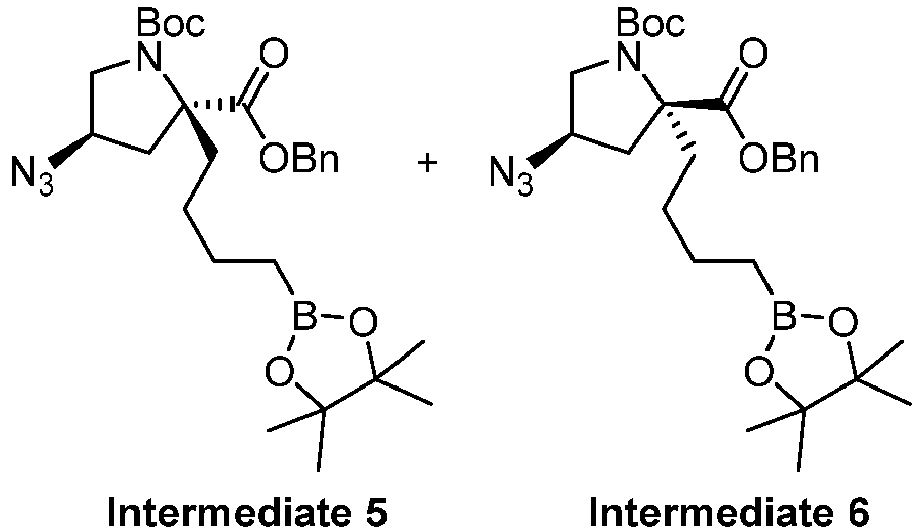
- The purified material obtained from the synthesis of
Intermediate 4 was subjected to chiral SFC (Chiralpak IG column, 21.2 × 250 mm, 5 µm, Temperature = 23 °C, Mobile phase = 0-7% MeOH (w/ 0.2% NH4OH):CO2, UV detection @ 220 nm, loading = 16.8 mg/inj, conc = 112.5 ng/mL in MeOH, flow rate = 70 mL/min, Outlet Pressure = 100 bar] to give two diastereomers. The stereochemistry for themajor diastereomer Intermediate 6 was assigned as the anti-addition product and the minor diastereomer Intermediate 5 the syn-addition product. - Intermediate 5 (436 mg): (2S,4R)-2-benzyl 1-tert-butyl 4-azido-2-(4-(4,4,5,5-tetramethyl-1,3,2-dioxaborolan-2-yl)butyl)pyrrolidine-1,2-dicarboxylate. 1H NMR (400MHz, DMSO-d6) δ 0.58 - 0.70 (2H, m), 1.17 (12H, s), 1.25 -1.40 (13 H, m), 1.74-1.83 (1H, s), 2.00 - 2.11 (2H, m), 2.38-2.47 (1H, m), 3.07 - 3.16 (1H, m), 3.81 (1H, m), 4.29 - 4.34 (1H, m), 5.04 - 5.17 (2H, m), 7.34 - 7.39 (m, 5H); m/z (ES+) [M+H]+ = 529.
- Intermediate 6 (1.60 g): (2R,4R)-2-benzyl 1-tert-butyl 4-azido-2-(4-(4,4,5,5-tetramethyl-1,3,2-dioxaborolan-2-yl)butyl)pyrrolidine-1,2-dicarboxylate. 1H NMR (400MHz, DMSO-d6) δ 0.56 - 0.73 (2H, m), 0.98 - 1.13 (1H, m), 1.17 (12H, s), 1.26 - 1.37 (13H, m), 1.66 - 1.79 (1H, m), 2.01 - 2.22 (2H, m), 2.34 - 2.47 (1H, m), 3.60 (1H, br dd), 4.29 - 4.35 (1H, m), 5.04 - 5.18 (2H, m), 7.31 - 7.40 (5H, m); m/z (ES+) [M+H]+ = 529.
-

- (2R,4R)-2-benzyl 1-tert-butyl 4-azido-2-(4-(4,4,5,5-tetramethyl-1,3,2-dioxaborolan-2-yl)butyl)pyrrolidine-1,2-dicarboxylate (
Intermediate 6, 688 mg, 1.30 mmol) was dissolved in ethyl acetate (13 mL) and methanol (4 mL) and treated with Pd/C (10% wt, 346 mg, 0.325 mmol). The flask was equipped with a balloon of H2 and the suspension stirred overnight at room temperature. The reaction mixture was filtered through diatomaceous earth and rinsed with methanol. The filtrate was concentrated under reduced pressure to afford the product (Intermediate 7, 500 mg, 93% yield) which was used without further purification. 1H NMR (300MHz, DMSO-d6) δ 0.67 (2H, t), 0.94-1.00 (1H, m), 1.17 (12H, s), 1.22 -1.38 (11H, m), 1.43 - 1.53 (1H, m), 1.85 (1H, d), 2.00 - 2.15 (2H, m), 3.23 (2H, dd), 3.58 - 3.61 (1H, m), 3.80 - 3.88 (1H, m), 8.96 (2H, m); m/z (ES+) [M+H]+ = 413. -

- Triethylamine (0.21 mL, 1.5 mmol) and HATU (254 mg, 0.668 mmol) were added sequentially to a solution of Boc-Val-OH (145 mg, 0.668 mmol) in DMF (2.9 mL) and the reaction was stirred at room temperature for 30 min. (2R,4R)-4-amino-1-(tert-butoxycarbonyl)-2-(4-(4,4,5,5-tetramethyl-1,3,2-dioxaborolan-2-yl)butyl)pyrrolidine-2-carboxylic acid (
Intermediate 7, 250 mg, 0.606 mmol) was added to the reaction mixture as a solution in DMF (2.9 mL). The reaction stirred at room temperature overnight. The crude reaction mixture was concentrated and directly purified by silica gel chromatography (hexanes/EtOAc) to afford the product (Intermediate -

- Trifluoroacetic acid (0.63 mL, 8.2 mmol) was added to a solution (2R,4R)-1-(tert-butoxycarbonyl)-4-((S)-2-(tert-butoxycarbonylamino)-3-methylbutanamido)-2-(4-(4,4,5,5-tetramethyl-1,3,2-dioxaborolan-2-yl)butyl)pyrrolidine-2-carboxylic acid (
Intermediate PoraPak Rxn CX 60 cc column). The desired product was eluted from the column using 2M ammonia/methanol. The obtained material was further purified by reverse phase chromatography (RediSep Rf Gold® C18Aq, 0 to 10% acetonitrile in water) to afford (2R,4R)-4-((S)-2-amino-3-methylbutanamido)-2-(4-boronobutyl)pyrrolidine-2-carboxylic acid (Intermediate 9, 28 mg, 20% yield) as a white solid and a mixture of rotamers. 1H NMR (300MHz, D2O) δ 0.66 - 0.76 (2H, m), 0.85 (6H, dd), 1.07 - 1.43 (4H, m), 1.55 - 1.68 (1H, m), 1.77 - 1.97 (2H, m), 2.13 - 2.33 (2H, m), 3.07 (1H, d), 3.08 - 3.16 (1H, m), 3.37 - 3.48 (1H, m), 4.27 - 4.40 (1H, m); m/z (ES+) [M+H]+ = 330. -

- An amount of 20.5 mg of Intermediate 9 was suspended in 0.50 mL of MeCN. The suspension was heated to 75 °C and stirred at 75 °C for 1 hour. The suspension was then cooled down to the ambient temperature and the solid was filtered and dried in air. Crystalline material with needle/rod crystals was obtained and designated as (S)-2-amino-N-((3R,5R)-8-hydroxy-6-oxo-7-oxa-1-aza-8-boraspiro[4.7]dodecan-3-yl)-3-methylbutanamide Form D.
- Example 1 was analyzed by XRPD and the results are tabulated below (Table 1) and shown in
Figure 1 .Table 1. XRPD Peaks for Form D Angle (2θ±0.2°) Intensity (%) 7.8 100.0 19.2 33.1 15.0 27.7 16.4 18.0 13.1 18.0 13.7 12.5 26.4 6.0 19.8 5.6 17.9 4.9 22.5 4.1 - Example 1 was characterized in providing at least one of the following 2Θ±0.2° values measured using CuKa radiation: 7.8, 19.2, and 15.0°.
- Single crystals of Example 1 were obtained from slow evaporation of an acetonitrile solution and single crystal structure analysis confirmed that Example 1 is an anhydrous form. The molecular structure of Example 1 is shown in
Figure 2 . Crystallographic data: Space grouporthorhombic P2 12121, unit cell dimensions: a = 10.9250(6) Å, b = 12.9532(8) Å, c = 23.8051(14) Å, V = 3368.7(3) Å3. - Example 1 was analyzed by thermal techniques. DSC analysis indicated that Form D had an endotherm event of dehydrate with an onset at about 213 °C and a peak at about 214 °C. TGA indicated that Example 1 exhibited a mass loss of about 0.4 % upon heating from about 25 °C to about 150 °C and a mass loss of about 3.1 % upon heating from about 150 °C to about 225 °C. A representative DSC/TGA thermogram of Example 1 is shown in
Figure 3 . - Example 1 was analyzed by gravity vapor sorption. GVS analysis indicated that Example 1 absorbed less than 2% water at the relative humility (RH) of 70% and started to deliquesce after 80% RH. A representative GVS thermogram of Example 1 is shown in
Figure 4 . -
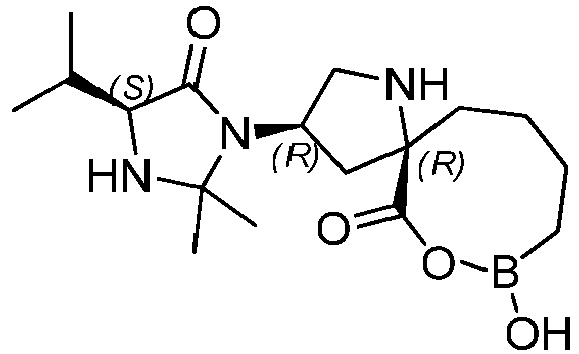
- An amount of 20.3 mg of Intermediate 9 was suspended in 2.0 ml of acetone. The solid was dissolved after 200 µl of H2O was added. The solvent was removed by evaporation in the ambient condition. The resulting solid was suspended in 1.0 ml of acetone and stirred at the ambient temperature for 3 days. After the solvent was dried in air, crystalline material (rod-like crystals) of the acetone adduct was obtained and designated as (3R,5R)-8-hydroxy-3-((S)-4-isopropyl-2,2-dimethyl-5-oxoimidazolidin-1-yl)-7-oxa-1-aza-8-boraspiro[4.7]dodecan-6-one.
- Example 2 was analyzed by XRPD and the results are tabulated below (Table 2) and shown in
Figure 5 .Table 2. XRPD Peaks for the acetone adduct Angle (2ϑ±0.2°) Intensity (%) 11.6 100.0 8.2 84.7 13.3 70.0 16.4 52.3 12.9 41.7 17.4 41.2 19.5 29.6 16.6 28.5 22.6 27.4 15.9 27.3 - Example 2 was characterized in providing at least one of the following 2Θ±0.2° values measured using CuKa radiation: 11.6, 8.2, and 13.3°.
- Single crystals of Example 2 were obtained from slow evaporation of an acetone/H2O solution. Single crystal structure analysis confirmed that the acetone is a monohydrate. The molecular structure of the acetone adduct is shown in
Figure 6 . Crystallographic data: Space grouporthorhombic P2 12121, unit cell dimensions: a = 8.4752(8) Å, b = 13.7561(14) Å, c = 17.6681(16) Å, V= 2059.8(3) Å3. - Example 2 was analyzed by thermal techniques. DSC analysis indicated that the acetone adduct had an endotherm event of dehydrate with an onset at 82 °C and a peak at 122 °C. Another endotherm event of dehydrate was also identified with an onset at 177 °C and a peak at 182 °C. TGA indicated that the acetone adduct exhibits a mass loss of about 5.5 % upon heating from about 25 °C to about 150 °C and a mass loss of about 3.2 % upon heating from about 150 °C to about 225 °C. A representative DSC/TGA thermogram of the acetone is shown in
Figure 7 . - Example 2 was analyzed by gravity vapor sorption. GVS analysis indicated that the acetone adduct absorbs less than 2% water at the relative humility (RH) of 80%. A representative GVS thermogram of acetone adduct is shown in
Figure 8 . - An amount of 30 mg of Intermediate 9 was suspended in 0.50 mL of ethyl acetate, previously saturated with water. The suspension was heated to 75 °C and stirred at 75 °C for 1 hour. The suspension was then cooled down to the ambient temperature and the solid was filtered and dried in air. Crystalline material with needle/rod crystals was obtained and designated as (S)-2-amino-N-((3R,5R)-8-hydroxy-6-oxo-7-oxa-1-aza-8-boraspiro[4.7]dodecan-3-yl)-3-methylbutanamide Form E.
- Example 3 was analyzed by XRPD and the results are tabulated below (Table 3) and shown in
Figure 9 .Table 3. XRPD Peaks for Form E Angle (2θ±0.2°) Intensity (%) 12.3 100.0 18.8 64.1 9.3 46.9 14.2 35.9 14.1 35.2 19.8 26.1 26.2 19.5 17.3 17.5 7.1 14.0 25.4 13.4 - Example 3 was characterized in providing at least one of the following 2Θ±0.2° values measured using CuKa radiation: 12.3, 18.8, and 9.3°.
- Single crystals of Example 3 were obtained from slow evaporation of the clear solution with a mixture solvent of acetonitrile/water (ratio 20:1) and single crystal structure analysis confirmed that Example 3 is a monohydrate form. The molecular structure of Example 3 is shown in
Figure 10 . Crystallographic data: Space group hexagonal P61, unit cell dimensions: a = 14.4509(4) Å, b = 14.4509(4) Å, c = 14.6815(10) Å, V = 2655.2(2) Å3. - Example 3 was analyzed by thermal techniques. DSC analysis indicated that Form E had an endotherm event of dehydrate with an onset at about 105 °C and a peak at about 125 °C. Another endotherm event of dehydrate was also identified with a broad range between about 125 °C to about 225 °C. TGA indicated that Example 3 exhibits a mass loss of about 6.0 % upon heating from about 25 °C to about 135 °C and a mass loss of about 3.0 % upon heating from about 125 °C to about 225 °C. A representative DSC/TGA thermogram of the acetone is shown in
Figure 11 . - Example 3 was analyzed by gravity vapor sorption. GVS analysis indicated that Example 3 absorbed less than 2% water at the relative humility (RH) of 80%. A representative GVS thermogram of Example 3 is shown in
Figure 12 . - Crystalline materials Form D (Example 1), Form 1 (Example 2) and Form E (Example 3) convert to the same active chemical moiety when dissolved in an aqueous medium, e.g., at the physiological condition. The inhibitory effects of Example 1 on the activity of
Human Arginase 1 andArginase 2 activity were quantified by measuring the formation of the thiol group from thioarginine usingrecombinant Arginase 1 orArginase 2 produced from E. coli. The thiol group was detected with Ellman's reagent, 5,5' -dithiobis(2-nitrobenzoic acid) (DTNB). DTNB reacts with the thiol to give the mixed disulfide and 2-nitro-5-thiobenzoic acid (TNB) which is quantified by the absorbance of the anion (TNB2-) at 412 nm. - The assays were run in clear 384 well plates (Greiner cat no: 781101). Various concentrations of Example 1 in 300 nL DMSO were dispensed to assay plates using an Echo acoustic dispenser immediately followed by plate sealing and centrifugation.
- Two pre-mixes were prepared from reagents thawed immediately before addition to assay plates. Pre-mix one comprised
human Arginase 1 orhuman Arginase 2, at a final concentration of 5 nM and 0.5mM DTNB in assay buffer, 45mM HEPES pH7.5, brij 35, 0.045% (w/v) and 100 µM MnCl2. Pre-mix two comprised freshly thawed 0.5mM thioarginine in assay buffer. Fifteen microlitres of pre-mix one was dispensed to assay plates containing Example 1, centrifuged and incubated for 30 minutes at room temperature prior to adding fifteen microlitres of pre-mix two. - Assay plates were centrifuged prior to reading absorbance at 412nm in a Pherastar multi-mode plate reader to collect data at time point 0 (T0). The plates were incubated at room temperature for 60 min prior to reading again to collect data at time point 1 (T1). Data is derived by subtracting the A412 signal measured at T0 (time point 0) from that measured at T1 (time point 1). The data was transformed to % effect using the equation:

- The concentration of Example 1 that inhibited the activity by 50% (i.e., the IC50) was calculated by plotting the % effect versus test compound concentration and fitting the data using the Genedata Screener Smart fit algorithm. The IC50 of Example 1 for
Arginase 1 was 0.222 µM and 0.282 forArginase 2. - Aspects and features of the present disclosure are set out in the following numbered embodiments which contain the subject matter of the claims of the PCT application as filed:
-
Embodiment 1. Crystalline (S)-2-amino-N-((3R,5R)-8-hydroxy-6-oxo-7-oxa-1-aza-8-boraspiro[4.7]dodecan-3-yl)-3-methylbutanamide Form D characterized by an X-ray powder diffraction pattern comprising peaks with the following 2Θ±0.2° values: 7.8, 19.2, and 15.0 degree. -
Embodiment 2. Crystalline (S)-2-amino-N-((3R,5R)-8-hydroxy-6-oxo-7-oxa-1-aza-8-boraspiro[4.7]dodecan-3-yl)-3-methylbutanamide Form D according toEmbodiment 1, wherein the X-ray powder diffraction pattern further comprises peaks at 16.4, 13.1, and 13.7 degree 2-theta ±0.2°. - Embodiment 3. Crystalline (S)-2-amino-N-((3R,5R)-8-hydroxy-6-oxo-7-oxa-1-aza-8-boraspiro[4.7]dodecan-3-yl)-3-methylbutanamide Form D according to
Embodiment 2, wherein the X-ray powder diffraction pattern is substantially as shown inFIG 1 . -
Embodiment 4. Crystalline (S)-2-amino-N-((3R,5R)-8-hydroxy-6-oxo-7-oxa-1-aza-8-boraspiro[4.7]dodecan-3-yl)-3-methylbutanamide Form D characterized by an X-ray powder diffraction pattern comprising at least 3 peaks selected from 7.8, 19.2, 15.0, 16.4, 13.1, 13.7, 26.4, 19.8, 17.9, and 22.5 degree 2Θ±0.2°. -
Embodiment 5. Crystalline (S)-2-amino-N-((3R,5R)-8-hydroxy-6-oxo-7-oxa-1-aza-8-boraspiro[4.7]dodecan-3-yl)-3-methylbutanamide Form D characterized by an X-ray powder diffraction pattern comprising at least 5 peaks selected from 7.8, 19.2, 15.0, 16.4, 13.1, 13.7, 26.4, 19.8, 17.9, and 22.5 degree 2Θ±0.2°. -
Embodiment 6. Crystalline (S)-2-amino-N-((3R,5R)-8-hydroxy-6-oxo-7-oxa-1-aza-8-boraspiro[4.7]dodecan-3-yl)-3-methylbutanamide Form D according to any one of theEmbodiments 1 to 5, further characterized by a differential scanning calorimetry (DSC) curve that comprises an endotherm at about 214 °C. - Embodiment 7. Crystalline (S)-2-amino-N-((3R,5R)-8-hydroxy-6-oxo-7-oxa-1-aza-8-boraspiro[4.7]dodecan-3-yl)-3-methylbutanamide Form D according to
Embodiment 6, wherein the DSC curve is substantially as shown inFIG. 3 . -
Embodiment 8. A pharmaceutical composition comprising crystalline (S)-2-amino-N-((3R,5R)-8-hydroxy-6-oxo-7-oxa-1-aza-8-boraspiro[4.7]dodecan-3-yl)-3-methylbutanamide Form D according to any one ofEmbodiments 1 to 7 and a pharmaceutically acceptable carrier. - Embodiment 9. A pharmaceutical composition comprising an effective amount of (S)-2-amino-N-((3R,5R)-8-hydroxy-6-oxo-7-oxa-1-aza-8-boraspiro[4.7]dodecan-3-yl)-3-methylbutanamide according to any one of
Embodiments 1 to 7 and a pharmaceutically acceptable carrier, wherein at least about 85%, or at least about 90%, or at least about 95%, or at least about 96%, or at least about 97%, or at least about 98%, or at least about 99%, or at least about 99.5% of (S)-2-amino-N-((3R,5R)-8-hydroxy-6-oxo-7-oxa-1-aza-8-boraspiro[4.7]dodecan-3-yl)-3-methylbutanamide is in Form D. -
Embodiment 10. A method of treating cancer comprising administering to a subject an effective amount of crystalline ((S)-2-amino-N-((3R,5R)-8-hydroxy-6-oxo-7-oxa-1-aza-8-boraspiro[4.7]dodecan-3-yl)-3-methylbutanamide Form D according to any one ofEmbodiments 1 to 7. - Embodiment 11. A pharmaceutical composition for treating cancer comprising an effective amount of crystalline (S)-2-amino-N-((3R,5R)-8-hydroxy-6-oxo-7-oxa-1-aza-8-boraspiro[4.7]dodecan-3-yl)-3-methylbutanamide Form D according to any one of
Embodiments 1 to 7. - Embodiment 12. Crystalline (S)-2-amino-N-((3R,5R)-8-hydroxy-6-oxo-7-oxa-1-aza-8-boraspiro[4.7]dodecan-3-yl)-3-methylbutanamide Form D according to any one of
Embodiment 1 to 7 for treating cancer. - Embodiment 13. Crystalline (S)-2-amino-N-((3R,5R)-8-hydroxy-6-oxo-7-oxa-1-aza-8-boraspiro[4.7]dodecan-3-yl)-3-methylbutanamide Form D according to any one of
Embodiments 1 to 7, in the manufacture of a medicament for treating cancer. - Embodiment 14. Crystalline (S)-2-amino-N-((3R,5R)-8-hydroxy-6-oxo-7-oxa-1-aza-8-boraspiro[4.7]dodecan-3-yl)-3-methylbutanamide Form E characterized by an X-ray powder diffraction pattern comprising peaks with the following 2Θ±0.2° values: 12.3, 18.8, and 9.3 degree.
- Embodiment 15. Crystalline (S)-2-amino-N-((3R,5R)-8-hydroxy-6-oxo-7-oxa-1-aza-8-boraspiro[4.7]dodecan-3-yl)-3-methylbutanamide Form E according to Embodiment 13, wherein the X-ray powder diffraction pattern further comprises peaks at 14.2, 14.1, and 19.8 degree 2-theta ±0.2°.
- Embodiment 16. Crystalline (S)-2-amino-N-((3R,5R)-8-hydroxy-6-oxo-7-oxa-1-aza-8-boraspiro[4.7]dodecan-3-yl)-3-methylbutanamide Form E according to Embodiment 15, wherein the X-ray powder diffraction pattern is substantially as shown in
FIG 9 . - Embodiment 17. Crystalline (S)-2-amino-N-((3R,5R)-8-hydroxy-6-oxo-7-oxa-1-aza-8-boraspiro[4.7]dodecan-3-yl)-3-methylbutanamide Form E characterized by an X-ray powder diffraction pattern comprising at least 3 peaks selected from 12.3, 18.8, 9.3, 14.2, 14.1, 19.8, 26.2, 17.3, 7.1 and 25.4 degree 2θ±0.2°.
- Embodiment 18. Crystalline (S)-2-amino-N-((3R,5R)-8-hydroxy-6-oxo-7-oxa-1-aza-8-boraspiro[4.7]dodecan-3-yl)-3-methylbutanamide Form E characterized by an X-ray powder diffraction pattern comprising at least 5 peaks selected from 12.3, 18.8, 9.3, 14.2, 14.1, 19.8, 26.2, 17.3, 7.1 and 25.4 degree 2θ±0.2°.
- Embodiment 19. Crystalline (S)-2-amino-N-((3R,5R)-8-hydroxy-6-oxo-7-oxa-1-aza-8-boraspiro[4.7]dodecan-3-yl)-3-methylbutanamide Form E according to any one of the Embodiments 14 to 18, further characterized by a differential scanning calorimetry (DSC) curve that comprises an endotherm at about 125 °C.
-
Embodiment 20. Crystalline (S)-2-amino-N-((3R,5R)-8-hydroxy-6-oxo-7-oxa-1-aza-8-boraspiro[4.7]dodecan-3-yl)-3-methylbutanamide Form E according to Embodiment 19, wherein the DSC curve is substantially as shown inFIG. 11 . - Embodiment 21. A pharmaceutical composition comprising crystalline (S)-2-amino-N-((3R,5R)-8-hydroxy-6-oxo-7-oxa-1-aza-8-boraspiro[4.7]dodecan-3-yl)-3-methylbutanamide Form E according to any one of Embodiments 14 to 20 and a pharmaceutically acceptable carrier.
- Embodiment 22. A pharmaceutical composition comprising an effective amount of (S)-2-amino-N-((3R,5R)-8-hydroxy-6-oxo-7-oxa-1-aza-8-boraspiro[4.7]dodecan-3-yl)-3-methylbutanamide Form E according to any one of Embodiments 14 to 20 and a pharmaceutically acceptable carrier, wherein at least about 85%, or at least about 90%, or at least about 95%, or at least about 96%, or at least about 97%, or at least about 98%, or at least about 99%, or at least about 99.5% of (S)-2-amino-N-((3R,5R)-8-hydroxy-6-oxo-7-oxa-1-aza-8-boraspiro[4.7]dodecan-3-yl)-3-methylbutanamide is in Form E.
- Embodiment 23. A method of treating cancer comprising administering to a subject an effective amount of crystalline ((S)-2-amino-N-((3R,5R)-8-hydroxy-6-oxo-7-oxa-1-aza-8-boraspiro[4.7]dodecan-3-yl)-3-methylbutanamide Form E according to any one of Embodiments 14 to 20.
- Embodiment 24. A pharmaceutical composition for treating cancer comprising an effective amount of crystalline (S)-2-amino-N-((3R,5R)-8-hydroxy-6-oxo-7-oxa-1-aza-8-boraspiro[4.7]dodecan-3-yl)-3-methylbutanamide Form E according to any one of Embodiments 14 to 20.
- Embodiment 25. Crystalline (S)-2-amino-N-((3R,5R)-8-hydroxy-6-oxo-7-oxa-1-aza-8-boraspiro[4.7]dodecan-3-yl)-3-methylbutanamide Form E according to any one of Embodiments 14 to 20 for treating cancer.
- Embodiment 26. Crystalline (S)-2-amino-N-((3R,5R)-8-hydroxy-6-oxo-7-oxa-1-aza-8-boraspiro[4.7]dodecan-3-yl)-3-methylbutanamide Form E according to any one of Embodiments 14 to 20, in the manufacture of a medicament for treating cancer.
- Embodiment 27. A compound: (3R,5R)-8-hydroxy-3-((S)-4-isopropyl-2,2-dimethyl-5-oxoimidazolidin-1-yl)-7-oxa-1-aza-8-boraspiro[4.7]dodecan-6-one, or a pharmaceutically acceptable salt thereof.
- Embodiment 28. Crystalline (3R,5R)-8-hydroxy-3-((S)-4-isopropyl-2,2-dimethyl-5-oxoimidazolidin-1-yl)-7-oxa-1-aza-8-boraspiro[4.7]dodecan-6-one
Form 1 characterized by an X-ray powder diffraction pattern comprising peaks with the following 2Θ±0.2° values: 11.6, 8.2, and 13.3 degree. - Embodiment 29. Crystalline (3R,5R)-8-hydroxy-3-((S)-4-isopropyl-2,2-dimethyl-5-oxoimidazolidin-1-yl)-7-oxa-1-aza-8-boraspiro[4.7]dodecan-6-one
Form 1 according to Embodiment 28, wherein the X-ray powder diffraction pattern further comprises peaks at 16.4, 12.9, and 17.4 degree 2-theta ±0.2°. -
Embodiment 30. Crystalline (3R,5R)-8-hydroxy-3-((S)-4-isopropyl-2,2-dimethyl-5-oxoimidazolidin-1-yl)-7-oxa-1-aza-8-boraspiro[4.7]dodecan-6-oneForm 1 according to Embodiment 28, wherein the X-ray powder diffraction pattern is substantially as shown inFIG 5 . - Embodiment 31. Crystalline (3R,5R)-8-hydroxy-3-((S)-4-isopropyl-2,2-dimethyl-5-oxoimidazolidin-1-yl)-7-oxa-1-aza-8-boraspiro[4.7]dodecan-6-one
Form 1 characterized by an X-ray powder diffraction pattern comprising at least 3 peaks selected from 11.6, 8.2, 13.3, 16.4, 12.9, 17.4, 19.5, 16.6, 22.6, and 15.9 degree 2Θ±0.2°. - Embodiment 32. Crystalline (3R,5R)-8-hydroxy-3-((S)-4-isopropyl-2,2-dimethyl-5-oxoimidazolidin-1-yl)-7-oxa-1-aza-8-boraspiro[4.7]dodecan-6-one
Form 1 characterized by an X-ray powder diffraction pattern comprising at least 5 peaks selected from 11.6, 8.2, 13.3, 16.4, 12.9, 17.4, 19.5, 16.6, 22.6, and 15.9 degree 2Θ±0.2°. - Embodiment 33. Crystalline (3R,5R)-8-hydroxy-3-((S)-4-isopropyl-2,2-dimethyl-5-oxoimidazolidin-1-yl)-7-oxa-1-aza-8-boraspiro[4.7]dodecan-6-one
Form 1 according to any one of the Embodiments 28 to 32, further characterized by a differential scanning calorimetry (DSC) curve that comprises an endotherm at about 122 °C. - Embodiment 34. Crystalline ((3R,5R)-8-hydroxy-3-((S)-4-isopropyl-2,2-dimethyl-5-oxoimidazolidin-1-yl)-7-oxa-1-aza-8-boraspiro[4.7]dodecan-6-one
Form 1 according to Embodiment 33, wherein the DSC curve is substantially as shown inFIG. 7 . - Embodiment 35. A pharmaceutical composition comprising (3R,5R)-8-hydroxy-3-((S)-4-isopropyl-2,2-dimethyl-5-oxoimidazolidin-1-yl)-7-oxa-1-aza-8-boraspiro[4.7]dodecan-6-one or a pharmaceutically acceptable salt thereof according to any one of Embodiments 27 to 34 and a pharmaceutically acceptable carrier.
- Embodiment 36. A pharmaceutical composition comprising an effective amount of (3R,5R)-8-hydroxy-3-((S)-4-isopropyl-2,2-dimethyl-5-oxoimidazolidin-1-yl)-7-oxa-1-aza-8-boraspiro[4.7]dodecan-6-one or a pharmaceutically acceptable salt thereof according to any one of Embodiments 27 to 34 and a pharmaceutically acceptable carrier, wherein at least about 85%, or at least about 90%, or at least about 95%, or at least about 96%, or at least about 97%, or at least about 98%, or at least about 99%, or at least about 99.5% of (3R,5R)-8-hydroxy-3-((S)-4-isopropyl-2,2-dimethyl-5-oxoimidazolidin-1-yl)-7-oxa-1-aza-8-boraspiro[4.7]dodecan-6-one is in
Form 1. - Embodiment 37. A method of treating cancer comprising administering to a subject an effective amount of (3R,5R)-8-hydroxy-3-((S)-4-isopropyl-2,2-dimethyl-5-oxoimidazolidin-1-yl)-7-oxa-1-aza-8-boraspiro[4.7]dodecan-6-one or a pharmaceutically acceptable salt thereof according to any one of Embodiments 27 to 34.
- Embodiment 38. A pharmaceutical composition for treating cancer comprising an effective amount of (3R,5R)-8-hydroxy-3-((S)-4-isopropyl-2,2-dimethyl-5-oxoimidazolidin-1-yl)-7-oxa-1-aza-8-boraspiro[4.7]dodecan-6-one or a pharmaceutically acceptable salt thereof according to any one of Embodiments 27 to 34.
- Embodiment 39. (3R,5R)-8-hydroxy-3-((S)-4-isopropyl-2,2-dimethyl-5-oxoimidazolidin-1-yl)-7-oxa-1-aza-8-boraspiro[4.7]dodecan-6-one or a pharmaceutically acceptable salt thereof according to any one of Embodiments 27 to 34 for treating cancer.
-
Embodiment 40. (3R,5R)-8-hydroxy-3-((S)-4-isopropyl-2,2-dimethyl-5-oxoimidazolidin-1-yl)-7-oxa-1-aza-8-boraspiro[4.7]dodecan-6-one or a pharmaceutically acceptable salt thereof according to any one of Embodiments 27 to 34, in the manufacture of a medicament for treating cancer.
Claims (16)
- Crystalline (S)-2-amino-N-((3R,5R)-8-hydroxy-6-oxo-7-oxa-1-aza-8-boraspiro[4.7]dodecan-3-yl)-3-methylbutanamide Form D characterized by an X-ray powder diffraction pattern comprising peaks with the following 2Θ±0.2° values: 7.8, 19.2, and 15.0 degree.
- Crystalline (S)-2-amino-N-((3R,5R)-8-hydroxy-6-oxo-7-oxa-1-aza-8-boraspiro[4.7]dodecan-3-yl)-3-methylbutanamide Form D according to claim 1, wherein the X-ray powder diffraction pattern further comprises peaks at 16.4, 13.1, and 13.7 degree 2-theta ±0.2°.
- Crystalline (S)-2-amino-N-((3R,5R)-8-hydroxy-6-oxo-7-oxa-1-aza-8-boraspiro[4.7]dodecan-3-yl)-3-methylbutanamide Form D according to claim 1 or 2, further characterized by a differential scanning calorimetry (DSC) curve that comprises an endotherm at about 214 °C.
- Crystalline (S)-2-amino-N-((3R,5R)-8-hydroxy-6-oxo-7-oxa-1-aza-8-boraspiro[4.7]dodecan-3-yl)-3-methylbutanamide Form D according to any one of claims 1 to 3, wherein a dative bond is formed between the nitrogen atom of the pyrrolidine moiety and the boron atom, as represented by an arrowed line in the following structural formula:

- A pharmaceutical composition comprising:(a) crystalline (S)-2-amino-N-((3R,5R)-8-hydroxy-6-oxo-7-oxa-1-aza-8-boraspiro[4.7]dodecan-3-yl)-3-methylbutanamide Form D according to any one of claims 1 to 4 and a pharmaceutically acceptable carrier; or(b) an effective amount of (S)-2-amino-N-((3R,5R)-8-hydroxy-6-oxo-7-oxa-1-aza-8-boraspiro[4.7]dodecan-3-yl)-3-methylbutanamide according to any one of claims 1 to 4 and a pharmaceutically acceptable carrier, wherein at least about 85%, or at least about 90%, or at least about 95%, or at least about 96%, or at least about 97%, or at least about 98%, or at least about 99%, or at least about 99.5% of (S)-2-amino-N-((3R,5R)-8-hydroxy-6-oxo-7-oxa-1-aza-8-boraspiro[4.7]dodecan-3-yl)-3-methylbutanamide is in Form D.
- A pharmaceutical composition for use in treating cancer comprising an effective amount of crystalline (S)-2-amino-N-((3R,5R)-8-hydroxy-6-oxo-7-oxa-1-aza-8-boraspiro[4.7]dodecan-3-yl)-3-methylbutanamide Form D according to any one of claims 1 to 4.
- Crystalline (S)-2-amino-N-((3R,5R)-8-hydroxy-6-oxo-7-oxa-1-aza-8-boraspiro[4.7]dodecan-3-yl)-3-methylbutanamide Form D according to any one of claims 1 to 4 for use in therapy.
- Crystalline (S)-2-amino-N-((3R,5R)-8-hydroxy-6-oxo-7-oxa-1-aza-8-boraspiro[4.7]dodecan-3-yl)-3-methylbutanamide Form D according to any one of claims 1 to 4 for use in treating cancer.
- Crystalline (S)-2-amino-N-((3R,5R)-8-hydroxy-6-oxo-7-oxa-1-aza-8-boraspiro[4.7]dodecan-3-yl)-3-methylbutanamide Form E characterized by an X-ray powder diffraction pattern comprising peaks with the following 2Θ±0.2° values: 12.3, 18.8, and 9.3 degree.
- Crystalline (S)-2-amino-N-((3R,5R)-8-hydroxy-6-oxo-7-oxa-1-aza-8-boraspiro[4.7]dodecan-3-yl)-3-methylbutanamide Form E according to claim 9, wherein the X-ray powder diffraction pattern further comprises peaks at 14.2, 14.1, and 19.8 degree 2-theta ±0.2°.
- Crystalline (S)-2-amino-N-((3R,5R)-8-hydroxy-6-oxo-7-oxa-1-aza-8-boraspiro[4.7]dodecan-3-yl)-3-methylbutanamide Form E according to claim 9 or 10, further characterized by a differential scanning calorimetry (DSC) curve that comprises an endotherm at about 125 °C.
- Crystalline (S)-2-amino-N-((3R,5R)-8-hydroxy-6-oxo-7-oxa-1-aza-8-boraspiro[4.7]dodecan-3-yl)-3-methylbutanamide Form E according to any one of claims 9 to 11, wherein a dative bond is formed between the nitrogen atom of the pyrrolidine moiety and the boron atom, as represented by an arrowed line in the following structural formula:

- A pharmaceutical composition comprising:(a) crystalline (S)-2-amino-N-((3R,5R)-8-hydroxy-6-oxo-7-oxa-1-aza-8-boraspiro[4.7]dodecan-3-yl)-3-methylbutanamide Form E according to any one of claims 9 to 12 and a pharmaceutically acceptable carrier; or(b) an effective amount of (S)-2-amino-N-((3R,5R)-8-hydroxy-6-oxo-7-oxa-1-aza-8-boraspiro[4.7]dodecan-3-yl)-3-methylbutanamide Form E according to any one of claims 9 to 12 and a pharmaceutically acceptable carrier, wherein at least about 85%, or at least about 90%, or at least about 95%, or at least about 96%, or at least about 97%, or at least about 98%, or at least about 99%, or at least about 99.5% of (S)-2-amino-N-((3R,5R)-8-hydroxy-6-oxo-7-oxa-1-aza-8-boraspiro[4.7]dodecan-3-yl)-3-methylbutanamide is in Form E.
- A pharmaceutical composition for use in treating cancer comprising an effective amount of crystalline (S)-2-amino-N-((3R,5R)-8-hydroxy-6-oxo-7-oxa-1-aza-8-boraspiro[4.7]dodecan-3-yl)-3-methylbutanamide Form E according to any one of claims 9 to 12.
- Crystalline (S)-2-amino-N-((3R,5R)-8-hydroxy-6-oxo-7-oxa-1-aza-8-boraspiro[4.7]dodecan-3-yl)-3-methylbutanamide Form E according to any one of claims 9 to 12 for use in therapy.
- Crystalline (S)-2-amino-N-((3R,5R)-8-hydroxy-6-oxo-7-oxa-1-aza-8-boraspiro[4.7]dodecan-3-yl)-3-methylbutanamide Form E according to any one of claims 9 to 12 for use in treating cancer.
Applications Claiming Priority (3)
| Application Number | Priority Date | Filing Date | Title |
|---|---|---|---|
| US201862721113P | 2018-08-22 | 2018-08-22 | |
| PCT/EP2019/072341 WO2020038983A1 (en) | 2018-08-22 | 2019-08-21 | Arginase inhibitors and methods of use thereof |
| EP19758683.7A EP3840837B1 (en) | 2018-08-22 | 2019-08-21 | Arginase inhibitors and methods of use thereof |
Related Parent Applications (1)
| Application Number | Title | Priority Date | Filing Date |
|---|---|---|---|
| EP19758683.7A Division EP3840837B1 (en) | 2018-08-22 | 2019-08-21 | Arginase inhibitors and methods of use thereof |
Publications (2)
| Publication Number | Publication Date |
|---|---|
| EP4371614A2 true EP4371614A2 (en) | 2024-05-22 |
| EP4371614A3 EP4371614A3 (en) | 2025-09-24 |
Family
ID=67742403
Family Applications (2)
| Application Number | Title | Priority Date | Filing Date |
|---|---|---|---|
| EP24162089.7A Pending EP4371614A3 (en) | 2018-08-22 | 2019-08-21 | Arginase inhibitors and methods of use thereof |
| EP19758683.7A Active EP3840837B1 (en) | 2018-08-22 | 2019-08-21 | Arginase inhibitors and methods of use thereof |
Family Applications After (1)
| Application Number | Title | Priority Date | Filing Date |
|---|---|---|---|
| EP19758683.7A Active EP3840837B1 (en) | 2018-08-22 | 2019-08-21 | Arginase inhibitors and methods of use thereof |
Country Status (25)
| Country | Link |
|---|---|
| US (1) | US11952392B2 (en) |
| EP (2) | EP4371614A3 (en) |
| JP (1) | JP7441210B2 (en) |
| KR (1) | KR102668252B1 (en) |
| CN (1) | CN112584900B (en) |
| AU (1) | AU2019323663B2 (en) |
| CA (1) | CA3109100A1 (en) |
| CL (1) | CL2021000430A1 (en) |
| DK (1) | DK3840837T3 (en) |
| EA (1) | EA202190532A1 (en) |
| ES (1) | ES2980252T3 (en) |
| FI (1) | FI3840837T3 (en) |
| HR (1) | HRP20240694T1 (en) |
| HU (1) | HUE066903T2 (en) |
| IL (1) | IL280924B2 (en) |
| LT (1) | LT3840837T (en) |
| MA (1) | MA53427B1 (en) |
| MX (1) | MX2021002042A (en) |
| PL (1) | PL3840837T3 (en) |
| PT (1) | PT3840837T (en) |
| RS (1) | RS65608B1 (en) |
| SG (1) | SG11202101618PA (en) |
| SI (1) | SI3840837T1 (en) |
| SM (1) | SMT202400221T1 (en) |
| WO (1) | WO2020038983A1 (en) |
Families Citing this family (6)
| Publication number | Priority date | Publication date | Assignee | Title |
|---|---|---|---|---|
| AU2019227607C1 (en) | 2018-02-27 | 2023-07-20 | Incyte Corporation | Imidazopyrimidines and triazolopyrimidines as A2A / A2B inhibitors |
| EP3810610A1 (en) | 2018-05-18 | 2021-04-28 | Incyte Corporation | Fused pyrimidine derivatives as a2a / a2b inhibitors |
| CN117304191A (en) | 2018-07-05 | 2023-12-29 | 因赛特公司 | Fused pyrazine derivatives as A2A/A2B inhibitors |
| TWI829857B (en) | 2019-01-29 | 2024-01-21 | 美商英塞特公司 | Pyrazolopyridines and triazolopyridines as a2a / a2b inhibitors |
| MY206577A (en) * | 2019-02-08 | 2024-12-24 | Astrazeneca Ab | Arginase inhibitors and methods of use thereof |
| EP4239652A4 (en) | 2020-12-25 | 2024-06-05 | Sumitomo Riko Company Limited | ELECTRICALLY CONDUCTIVE COMPOSITION, FILM-SHAPED FLEXIBLE ELECTRODE COMPRISING THE SAME AND METHOD FOR PRODUCING THE ELECTRODE |
Family Cites Families (7)
| Publication number | Priority date | Publication date | Assignee | Title |
|---|---|---|---|---|
| EP2560978B1 (en) | 2010-04-22 | 2019-01-30 | Mars, Incorporated | Inhibitors of arginase and their therapeutic applications |
| AU2016281620B2 (en) * | 2015-06-23 | 2021-07-22 | Calithera Biosciences, Inc. | Compositions and methods for inhibiting arginase activity |
| US11291674B2 (en) * | 2016-11-08 | 2022-04-05 | Calithera Biosciences, Inc. | Arginase inhibitor combination therapies |
| WO2018119440A1 (en) | 2016-12-22 | 2018-06-28 | Calithera Biosciences, Inc. | Compositions and methods for inhibiting arginase activity |
| SG11202007739XA (en) | 2018-02-17 | 2020-09-29 | Astrazeneca Ab | Arginase inhibitors and methods of use thereof |
| US12215116B2 (en) | 2018-03-13 | 2025-02-04 | Merck Sharp & Dohme Llc | Arginase inhibitors and methods of use |
| WO2019205979A1 (en) | 2018-04-27 | 2019-10-31 | 四川科伦博泰生物医药股份有限公司 | Non-natural amino acid derivative, pharmaceutical composition comprising same, method for preparing same, and use of same |
-
2019
- 2019-08-21 MA MA53427A patent/MA53427B1/en unknown
- 2019-08-21 PL PL19758683.7T patent/PL3840837T3/en unknown
- 2019-08-21 SI SI201930758T patent/SI3840837T1/en unknown
- 2019-08-21 RS RS20240642A patent/RS65608B1/en unknown
- 2019-08-21 CA CA3109100A patent/CA3109100A1/en active Pending
- 2019-08-21 EA EA202190532A patent/EA202190532A1/en unknown
- 2019-08-21 KR KR1020217007915A patent/KR102668252B1/en active Active
- 2019-08-21 EP EP24162089.7A patent/EP4371614A3/en active Pending
- 2019-08-21 FI FIEP19758683.7T patent/FI3840837T3/en active
- 2019-08-21 CN CN201980055111.3A patent/CN112584900B/en active Active
- 2019-08-21 ES ES19758683T patent/ES2980252T3/en active Active
- 2019-08-21 HR HRP20240694TT patent/HRP20240694T1/en unknown
- 2019-08-21 IL IL280924A patent/IL280924B2/en unknown
- 2019-08-21 WO PCT/EP2019/072341 patent/WO2020038983A1/en not_active Ceased
- 2019-08-21 EP EP19758683.7A patent/EP3840837B1/en active Active
- 2019-08-21 PT PT197586837T patent/PT3840837T/en unknown
- 2019-08-21 JP JP2021509794A patent/JP7441210B2/en active Active
- 2019-08-21 DK DK19758683.7T patent/DK3840837T3/en active
- 2019-08-21 AU AU2019323663A patent/AU2019323663B2/en active Active
- 2019-08-21 SM SM20240221T patent/SMT202400221T1/en unknown
- 2019-08-21 LT LTEPPCT/EP2019/072341T patent/LT3840837T/en unknown
- 2019-08-21 US US17/269,569 patent/US11952392B2/en active Active
- 2019-08-21 HU HUE19758683A patent/HUE066903T2/en unknown
- 2019-08-21 MX MX2021002042A patent/MX2021002042A/en unknown
- 2019-08-21 SG SG11202101618PA patent/SG11202101618PA/en unknown
-
2021
- 2021-02-19 CL CL2021000430A patent/CL2021000430A1/en unknown
Non-Patent Citations (1)
| Title |
|---|
| "Comprehensive Medicinal Chemistry", vol. 5, 1990, PERGAMON PRESS |
Also Published As
Similar Documents
| Publication | Publication Date | Title |
|---|---|---|
| EP3840837B1 (en) | Arginase inhibitors and methods of use thereof | |
| JP7699171B2 (en) | Arginase inhibitors and methods of use thereof | |
| EP4039688A2 (en) | Substituted pyrrolopyrimidine and pyrazolopyrimidine as bruton's tyrosine kinase (btk) degraders | |
| EP1940817B1 (en) | Cholinergic enhancers with improved blood-brain barrier permeability for the treatment of diseases accompanied by cognitive impairment | |
| EP3929185A1 (en) | Nitrogen-containing fused cyclic compound, preparation method therefor and use thereof | |
| CN112457365B (en) | A class of functional molecules targeting proteolysis pathway and its preparation and application | |
| HK40110939A (en) | Arginase inhibitors and methods of use thereof | |
| HK40055578A (en) | Arginase inhibitors and methods of use thereof | |
| HK40055578B (en) | Arginase inhibitors and methods of use thereof | |
| EP3921033A1 (en) | Arginase inhibitors and methods of use thereof | |
| EA042333B1 (en) | ARGINASE INHIBITORS AND METHODS OF THEIR APPLICATION | |
| HK40042067B (en) | Arginase inhibitors and methods of use thereof | |
| HK40042067A (en) | Arginase inhibitors and methods of use thereof | |
| AU2020319132A1 (en) | Arginase inhibitors and methods of use thereof |
Legal Events
| Date | Code | Title | Description |
|---|---|---|---|
| PUAI | Public reference made under article 153(3) epc to a published international application that has entered the european phase |
Free format text: ORIGINAL CODE: 0009012 |
|
| STAA | Information on the status of an ep patent application or granted ep patent |
Free format text: STATUS: THE APPLICATION HAS BEEN PUBLISHED |
|
| AC | Divisional application: reference to earlier application |
Ref document number: 3840837 Country of ref document: EP Kind code of ref document: P |
|
| AK | Designated contracting states |
Kind code of ref document: A2 Designated state(s): AL AT BE BG CH CY CZ DE DK EE ES FI FR GB GR HR HU IE IS IT LI LT LU LV MC MK MT NL NO PL PT RO RS SE SI SK SM TR |
|
| REG | Reference to a national code |
Ref country code: HK Ref legal event code: DE Ref document number: 40110939 Country of ref document: HK |
|
| REG | Reference to a national code |
Ref country code: DE Ref legal event code: R079 Free format text: PREVIOUS MAIN CLASS: A61P0035000000 Ipc: C07F0005020000 |
|
| PUAL | Search report despatched |
Free format text: ORIGINAL CODE: 0009013 |
|
| AK | Designated contracting states |
Kind code of ref document: A3 Designated state(s): AL AT BE BG CH CY CZ DE DK EE ES FI FR GB GR HR HU IE IS IT LI LT LU LV MC MK MT NL NO PL PT RO RS SE SI SK SM TR |
|
| RIC1 | Information provided on ipc code assigned before grant |
Ipc: C07F 5/02 20060101AFI20250818BHEP Ipc: A61P 29/00 20060101ALI20250818BHEP Ipc: A61K 31/69 20060101ALI20250818BHEP Ipc: A61P 35/00 20060101ALI20250818BHEP Ipc: A61K 33/22 20060101ALI20250818BHEP |
|
| STAA | Information on the status of an ep patent application or granted ep patent |
Free format text: STATUS: REQUEST FOR EXAMINATION WAS MADE |
|
| 17P | Request for examination filed |
Effective date: 20260324 |
|
| RAV | Requested validation state of the european patent: fee paid |
Extension state: MA Effective date: 20260324 Extension state: TN Effective date: 20260324 |
|
| RAX | Requested extension states of the european patent have changed |
Extension state: BA Payment date: 20260324 Extension state: ME Payment date: 20260324 |