EP4369323A1 - Autonomous driving safety system for sharing risk-based operation design domain and method thereof - Google Patents
Autonomous driving safety system for sharing risk-based operation design domain and method thereof Download PDFInfo
- Publication number
- EP4369323A1 EP4369323A1 EP23179382.9A EP23179382A EP4369323A1 EP 4369323 A1 EP4369323 A1 EP 4369323A1 EP 23179382 A EP23179382 A EP 23179382A EP 4369323 A1 EP4369323 A1 EP 4369323A1
- Authority
- EP
- European Patent Office
- Prior art keywords
- design domain
- operation design
- odd
- risk
- autonomous
- Prior art date
- Legal status (The legal status is an assumption and is not a legal conclusion. Google has not performed a legal analysis and makes no representation as to the accuracy of the status listed.)
- Pending
Links
Images


Classifications
-
- B—PERFORMING OPERATIONS; TRANSPORTING
- B60—VEHICLES IN GENERAL
- B60W—CONJOINT CONTROL OF VEHICLE SUB-UNITS OF DIFFERENT TYPE OR DIFFERENT FUNCTION; CONTROL SYSTEMS SPECIALLY ADAPTED FOR HYBRID VEHICLES; ROAD VEHICLE DRIVE CONTROL SYSTEMS FOR PURPOSES NOT RELATED TO THE CONTROL OF A PARTICULAR SUB-UNIT
- B60W60/00—Drive control systems specially adapted for autonomous road vehicles
- B60W60/001—Planning or execution of driving tasks
- B60W60/0015—Planning or execution of driving tasks specially adapted for safety
-
- G—PHYSICS
- G08—SIGNALLING
- G08G—TRAFFIC CONTROL SYSTEMS
- G08G1/00—Traffic control systems for road vehicles
- G08G1/01—Detecting movement of traffic to be counted or controlled
- G08G1/0104—Measuring and analyzing of parameters relative to traffic conditions
- G08G1/0108—Measuring and analyzing of parameters relative to traffic conditions based on the source of data
- G08G1/0112—Measuring and analyzing of parameters relative to traffic conditions based on the source of data from the vehicle, e.g. floating car data [FCD]
-
- G—PHYSICS
- G08—SIGNALLING
- G08G—TRAFFIC CONTROL SYSTEMS
- G08G1/00—Traffic control systems for road vehicles
- G08G1/01—Detecting movement of traffic to be counted or controlled
- G08G1/0104—Measuring and analyzing of parameters relative to traffic conditions
- G08G1/0108—Measuring and analyzing of parameters relative to traffic conditions based on the source of data
- G08G1/0116—Measuring and analyzing of parameters relative to traffic conditions based on the source of data from roadside infrastructure, e.g. beacons
-
- G—PHYSICS
- G08—SIGNALLING
- G08G—TRAFFIC CONTROL SYSTEMS
- G08G1/00—Traffic control systems for road vehicles
- G08G1/01—Detecting movement of traffic to be counted or controlled
- G08G1/0104—Measuring and analyzing of parameters relative to traffic conditions
- G08G1/0125—Traffic data processing
- G08G1/0129—Traffic data processing for creating historical data or processing based on historical data
-
- G—PHYSICS
- G08—SIGNALLING
- G08G—TRAFFIC CONTROL SYSTEMS
- G08G1/00—Traffic control systems for road vehicles
- G08G1/01—Detecting movement of traffic to be counted or controlled
- G08G1/0104—Measuring and analyzing of parameters relative to traffic conditions
- G08G1/0125—Traffic data processing
- G08G1/0133—Traffic data processing for classifying traffic situation
-
- G—PHYSICS
- G08—SIGNALLING
- G08G—TRAFFIC CONTROL SYSTEMS
- G08G1/00—Traffic control systems for road vehicles
- G08G1/01—Detecting movement of traffic to be counted or controlled
- G08G1/0104—Measuring and analyzing of parameters relative to traffic conditions
- G08G1/0137—Measuring and analyzing of parameters relative to traffic conditions for specific applications
- G08G1/0141—Measuring and analyzing of parameters relative to traffic conditions for specific applications for traffic information dissemination
-
- G—PHYSICS
- G08—SIGNALLING
- G08G—TRAFFIC CONTROL SYSTEMS
- G08G1/00—Traffic control systems for road vehicles
- G08G1/09—Arrangements for giving variable traffic instructions
- G08G1/0962—Arrangements for giving variable traffic instructions having an indicator mounted inside the vehicle, e.g. giving voice messages
- G08G1/0967—Systems involving transmission of highway information, e.g. weather, speed limits
- G08G1/096708—Systems involving transmission of highway information, e.g. weather, speed limits where the received information might be used to generate an automatic action on the vehicle control
- G08G1/096725—Systems involving transmission of highway information, e.g. weather, speed limits where the received information might be used to generate an automatic action on the vehicle control where the received information generates an automatic action on the vehicle control
-
- G—PHYSICS
- G08—SIGNALLING
- G08G—TRAFFIC CONTROL SYSTEMS
- G08G1/00—Traffic control systems for road vehicles
- G08G1/09—Arrangements for giving variable traffic instructions
- G08G1/0962—Arrangements for giving variable traffic instructions having an indicator mounted inside the vehicle, e.g. giving voice messages
- G08G1/0967—Systems involving transmission of highway information, e.g. weather, speed limits
- G08G1/096733—Systems involving transmission of highway information, e.g. weather, speed limits where a selection of the information might take place
- G08G1/096741—Systems involving transmission of highway information, e.g. weather, speed limits where a selection of the information might take place where the source of the transmitted information selects which information to transmit to each vehicle
-
- G—PHYSICS
- G08—SIGNALLING
- G08G—TRAFFIC CONTROL SYSTEMS
- G08G1/00—Traffic control systems for road vehicles
- G08G1/09—Arrangements for giving variable traffic instructions
- G08G1/0962—Arrangements for giving variable traffic instructions having an indicator mounted inside the vehicle, e.g. giving voice messages
- G08G1/0967—Systems involving transmission of highway information, e.g. weather, speed limits
- G08G1/096766—Systems involving transmission of highway information, e.g. weather, speed limits where the system is characterised by the origin of the information transmission
- G08G1/096775—Systems involving transmission of highway information, e.g. weather, speed limits where the system is characterised by the origin of the information transmission where the origin of the information is a central station
-
- B—PERFORMING OPERATIONS; TRANSPORTING
- B60—VEHICLES IN GENERAL
- B60W—CONJOINT CONTROL OF VEHICLE SUB-UNITS OF DIFFERENT TYPE OR DIFFERENT FUNCTION; CONTROL SYSTEMS SPECIALLY ADAPTED FOR HYBRID VEHICLES; ROAD VEHICLE DRIVE CONTROL SYSTEMS FOR PURPOSES NOT RELATED TO THE CONTROL OF A PARTICULAR SUB-UNIT
- B60W2552/00—Input parameters relating to infrastructure
- B60W2552/05—Type of road, e.g. motorways, local streets, paved or unpaved roads
-
- B—PERFORMING OPERATIONS; TRANSPORTING
- B60—VEHICLES IN GENERAL
- B60W—CONJOINT CONTROL OF VEHICLE SUB-UNITS OF DIFFERENT TYPE OR DIFFERENT FUNCTION; CONTROL SYSTEMS SPECIALLY ADAPTED FOR HYBRID VEHICLES; ROAD VEHICLE DRIVE CONTROL SYSTEMS FOR PURPOSES NOT RELATED TO THE CONTROL OF A PARTICULAR SUB-UNIT
- B60W2552/00—Input parameters relating to infrastructure
- B60W2552/10—Number of lanes
-
- B—PERFORMING OPERATIONS; TRANSPORTING
- B60—VEHICLES IN GENERAL
- B60W—CONJOINT CONTROL OF VEHICLE SUB-UNITS OF DIFFERENT TYPE OR DIFFERENT FUNCTION; CONTROL SYSTEMS SPECIALLY ADAPTED FOR HYBRID VEHICLES; ROAD VEHICLE DRIVE CONTROL SYSTEMS FOR PURPOSES NOT RELATED TO THE CONTROL OF A PARTICULAR SUB-UNIT
- B60W2552/00—Input parameters relating to infrastructure
- B60W2552/30—Road curve radius
-
- B—PERFORMING OPERATIONS; TRANSPORTING
- B60—VEHICLES IN GENERAL
- B60W—CONJOINT CONTROL OF VEHICLE SUB-UNITS OF DIFFERENT TYPE OR DIFFERENT FUNCTION; CONTROL SYSTEMS SPECIALLY ADAPTED FOR HYBRID VEHICLES; ROAD VEHICLE DRIVE CONTROL SYSTEMS FOR PURPOSES NOT RELATED TO THE CONTROL OF A PARTICULAR SUB-UNIT
- B60W2552/00—Input parameters relating to infrastructure
- B60W2552/40—Coefficient of friction
-
- B—PERFORMING OPERATIONS; TRANSPORTING
- B60—VEHICLES IN GENERAL
- B60W—CONJOINT CONTROL OF VEHICLE SUB-UNITS OF DIFFERENT TYPE OR DIFFERENT FUNCTION; CONTROL SYSTEMS SPECIALLY ADAPTED FOR HYBRID VEHICLES; ROAD VEHICLE DRIVE CONTROL SYSTEMS FOR PURPOSES NOT RELATED TO THE CONTROL OF A PARTICULAR SUB-UNIT
- B60W2554/00—Input parameters relating to objects
- B60W2554/20—Static objects
-
- B—PERFORMING OPERATIONS; TRANSPORTING
- B60—VEHICLES IN GENERAL
- B60W—CONJOINT CONTROL OF VEHICLE SUB-UNITS OF DIFFERENT TYPE OR DIFFERENT FUNCTION; CONTROL SYSTEMS SPECIALLY ADAPTED FOR HYBRID VEHICLES; ROAD VEHICLE DRIVE CONTROL SYSTEMS FOR PURPOSES NOT RELATED TO THE CONTROL OF A PARTICULAR SUB-UNIT
- B60W2554/00—Input parameters relating to objects
- B60W2554/40—Dynamic objects, e.g. animals, windblown objects
-
- B—PERFORMING OPERATIONS; TRANSPORTING
- B60—VEHICLES IN GENERAL
- B60W—CONJOINT CONTROL OF VEHICLE SUB-UNITS OF DIFFERENT TYPE OR DIFFERENT FUNCTION; CONTROL SYSTEMS SPECIALLY ADAPTED FOR HYBRID VEHICLES; ROAD VEHICLE DRIVE CONTROL SYSTEMS FOR PURPOSES NOT RELATED TO THE CONTROL OF A PARTICULAR SUB-UNIT
- B60W2554/00—Input parameters relating to objects
- B60W2554/40—Dynamic objects, e.g. animals, windblown objects
- B60W2554/402—Type
- B60W2554/4029—Pedestrians
-
- B—PERFORMING OPERATIONS; TRANSPORTING
- B60—VEHICLES IN GENERAL
- B60W—CONJOINT CONTROL OF VEHICLE SUB-UNITS OF DIFFERENT TYPE OR DIFFERENT FUNCTION; CONTROL SYSTEMS SPECIALLY ADAPTED FOR HYBRID VEHICLES; ROAD VEHICLE DRIVE CONTROL SYSTEMS FOR PURPOSES NOT RELATED TO THE CONTROL OF A PARTICULAR SUB-UNIT
- B60W2554/00—Input parameters relating to objects
- B60W2554/80—Spatial relation or speed relative to objects
- B60W2554/804—Relative longitudinal speed
-
- B—PERFORMING OPERATIONS; TRANSPORTING
- B60—VEHICLES IN GENERAL
- B60W—CONJOINT CONTROL OF VEHICLE SUB-UNITS OF DIFFERENT TYPE OR DIFFERENT FUNCTION; CONTROL SYSTEMS SPECIALLY ADAPTED FOR HYBRID VEHICLES; ROAD VEHICLE DRIVE CONTROL SYSTEMS FOR PURPOSES NOT RELATED TO THE CONTROL OF A PARTICULAR SUB-UNIT
- B60W2555/00—Input parameters relating to exterior conditions, not covered by groups B60W2552/00, B60W2554/00
- B60W2555/20—Ambient conditions, e.g. wind or rain
-
- B—PERFORMING OPERATIONS; TRANSPORTING
- B60—VEHICLES IN GENERAL
- B60W—CONJOINT CONTROL OF VEHICLE SUB-UNITS OF DIFFERENT TYPE OR DIFFERENT FUNCTION; CONTROL SYSTEMS SPECIALLY ADAPTED FOR HYBRID VEHICLES; ROAD VEHICLE DRIVE CONTROL SYSTEMS FOR PURPOSES NOT RELATED TO THE CONTROL OF A PARTICULAR SUB-UNIT
- B60W2555/00—Input parameters relating to exterior conditions, not covered by groups B60W2552/00, B60W2554/00
- B60W2555/60—Traffic rules, e.g. speed limits or right of way
-
- B—PERFORMING OPERATIONS; TRANSPORTING
- B60—VEHICLES IN GENERAL
- B60W—CONJOINT CONTROL OF VEHICLE SUB-UNITS OF DIFFERENT TYPE OR DIFFERENT FUNCTION; CONTROL SYSTEMS SPECIALLY ADAPTED FOR HYBRID VEHICLES; ROAD VEHICLE DRIVE CONTROL SYSTEMS FOR PURPOSES NOT RELATED TO THE CONTROL OF A PARTICULAR SUB-UNIT
- B60W2556/00—Input parameters relating to data
- B60W2556/10—Historical data
-
- B—PERFORMING OPERATIONS; TRANSPORTING
- B60—VEHICLES IN GENERAL
- B60W—CONJOINT CONTROL OF VEHICLE SUB-UNITS OF DIFFERENT TYPE OR DIFFERENT FUNCTION; CONTROL SYSTEMS SPECIALLY ADAPTED FOR HYBRID VEHICLES; ROAD VEHICLE DRIVE CONTROL SYSTEMS FOR PURPOSES NOT RELATED TO THE CONTROL OF A PARTICULAR SUB-UNIT
- B60W2556/00—Input parameters relating to data
- B60W2556/45—External transmission of data to or from the vehicle
-
- G—PHYSICS
- G08—SIGNALLING
- G08G—TRAFFIC CONTROL SYSTEMS
- G08G1/00—Traffic control systems for road vehicles
- G08G1/09—Arrangements for giving variable traffic instructions
- G08G1/0962—Arrangements for giving variable traffic instructions having an indicator mounted inside the vehicle, e.g. giving voice messages
- G08G1/0967—Systems involving transmission of highway information, e.g. weather, speed limits
- G08G1/096708—Systems involving transmission of highway information, e.g. weather, speed limits where the received information might be used to generate an automatic action on the vehicle control
- G08G1/096716—Systems involving transmission of highway information, e.g. weather, speed limits where the received information might be used to generate an automatic action on the vehicle control where the received information does not generate an automatic action on the vehicle control
-
- G—PHYSICS
- G08—SIGNALLING
- G08G—TRAFFIC CONTROL SYSTEMS
- G08G1/00—Traffic control systems for road vehicles
- G08G1/09—Arrangements for giving variable traffic instructions
- G08G1/0962—Arrangements for giving variable traffic instructions having an indicator mounted inside the vehicle, e.g. giving voice messages
- G08G1/0967—Systems involving transmission of highway information, e.g. weather, speed limits
- G08G1/096766—Systems involving transmission of highway information, e.g. weather, speed limits where the system is characterised by the origin of the information transmission
- G08G1/096783—Systems involving transmission of highway information, e.g. weather, speed limits where the system is characterised by the origin of the information transmission where the origin of the information is a roadside individual element
Definitions
- the present disclosure relates to an autonomous driving safety system for sharing a risk-based operation design domain and a method thereof capable of designing a risk-based operation design domain and sharing the designed operation design domain through an edge infrastructure.
- Level 4 autonomous vehicle production safety guidelines defines an operation design domain (ODD) as an operation domain (road, weather, traffic, etc.) in which a function of an autonomous driving system may be performed normally and safely, and recommends to clearly present the operation design domain related to a safe operation of autonomous driving system.
- ODD operation design domain
- the above safety guideline clearly presents the operation design domain and at the same time, presents status information of the system when it is out of the operation design domain, and includes a road type, a geographical range, a weather environment, a speed range, and other constraints in the operation design domain.
- each autonomous driving system recommends to define and document an ODD for testing or deployment to be used on public roads.
- ODD operation design domain
- the operation design domain recommends to design the operation design domain (ODD) to secure autonomous driving operation and functional safety based on real roads, but is a part requiring complementary settings such as classification for each layer and definition of detailed attribute values for the operation design domain (ODD).
- an autonomous driving operation on a real road may be divided into a static operation design domain (static ODD) and a dynamic operation design domain (dynamic ODD).
- static ODD static operation design domain
- dynamic ODD dynamic operation design domain
- width and lanes of roads, signs, and structures may be regarded as characteristics of static (static ODD) characteristics
- objects people, vehicles, etc.
- weather environment may be regarded as dynamic (dynamic ODD) characteristics.
- ODD operation design domain
- ODD operation design domain
- the present disclosure has been derived to solve the above conventional problems, and an object of the present disclosure provides an autonomous driving safety system for sharing a risk-based operation design domain and a method thereof capable of securing autonomous driving safety by complementing different operation design domains (ODDs) for each autonomous vehicle using a method of calculating a risk of an operation design domain (ODD) and vehicle-to-vehicle communication technology.
- ODDs operation design domains
- ODD vehicle-to-vehicle communication technology
- an autonomous driving safety system for sharing a risk-based operation design domain including: an autonomous driving system 110 configured to control a vehicle driving unit 140 according to information detected by a sensor unit 120 to perform autonomous driving, in which the autonomous driving system 110 includes an operation design domain (ODD) update unit 111 configured to evaluate a risk of at least one of a static operation design domain and a dynamic operation design domain recognized by the sensor unit 120 while driving to update the operation design domain (ODD)
- the autonomous driving system may transmit the updated operation design domain (ODD) to at least one of a roadside unit, other autonomous vehicles, and a control server, and share the updated operation design domain (ODD).
- the autonomous driving system may include: a layer-specific attribute information DB configured to layer the operation design domains into a plurality of layers and stores attributes for each layer and weights set for each attribute; a risk calculation module configured to calculate risks for each layer by applying the weight of the attributes stored in the layer-specific attribute information DB according to the recognized operation design domain, and calculates a final risk by summing the risks for each layer; and an update module configured to update the risk calculated by the risk calculation module to the operation design domain.
- a layer-specific attribute information DB configured to layer the operation design domains into a plurality of layers and stores attributes for each layer and weights set for each attribute
- a risk calculation module configured to calculate risks for each layer by applying the weight of the attributes stored in the layer-specific attribute information DB according to the recognized operation design domain, and calculates a final risk by summing the risks for each layer
- an update module configured to update the risk calculated by the risk calculation module to the operation design domain.
- the autonomous driving system may be classified into: a road geometry layer that is classified into an operation design domain (ODD) of a road structure, a road type, a road shape and form, and a shape, type, and condition of a road surface; a social infrastructure layer that is classified into the operation design domain of a traffic signal and structure; a temporary restricted area layer that is classified into an unexpected situation caused by a traffic accident, a construction section, and an emergency stop vehicle, and an operation design domain of a protected zone; an object layer that is classified into an operation design domain of a static object, a dynamic object, and an unexpected object on and around a road; an environmental condition layer that is classified into an operation design domain of season, weather (climate), and a light source; and a connectivity (communication) layer that is classified into an operation design domain of communication and control.
- ODD operation design domain
- the temporary restricted area layer may have an attribute set as at least one of a distance between start and end points of the protected zone and the autonomous vehicle, a type of protected zone, a distance between the autonomous vehicle and an unexpected section, left and right lane positions between the unexpected sections from the autonomous vehicle, a relative position of the unexpected section from autonomous vehicle, and a type of the unexpected section.
- the operation design domain of a type of the road structure may have an attribute set as an accident rate and fatality, and the accident rate and fatality may be weighted differently depending on a degree of death and injury.
- the operation design domain of the road shape may have an attribute set as at least one of a lane width, the total number of lanes on a road, a lane number on which the autonomous vehicle 100 is driving, a radius of curvature of a road, and a road design speed.
- the operation design domain of the road surface may have an attribute set as at least one of a road surface material type, a road surface friction coefficient ( ⁇ ), a damage type, road surface damage severity (high, medium, low), and a distance between the autonomous vehicle and a road surface damage section.
- a risk of the operation design domain of the type of the road structure may be calculated according to Equation below.
- Risk fatal accident ⁇ 1 + serious accident ⁇ 0.7 + minor accident ⁇ 0.3 number of traffic accidents
- a weight of 1 may be set for a fatal accident
- a weight of 0.7 may be set for a serious accident
- a weight of 0.3 may be set for a minor accident.
- the operation design domain of the weather may set a cloud ratio, a wind speed, precipitation, snowfall, a visibility range as an attribute
- the cloud ratio may be set as a ratio occupied by clouds in sunny and cloudy conditions
- wind, rain, and snow may be classified and set into multiple categories based on the amount
- fog may be classified into multiple types based on the visibility range.
- the object layer may be classified into an operation design domain of a vehicle, a pedestrian, and an animal
- the operation design domain of the vehicle may have an attribute set as at least one of left/right lane positions of a target vehicle from the autonomous vehicle, a surrounding position of the target vehicle from the autonomous vehicle, an absolute speed (X and Y axes), a relative speed (X and Y axes) from the autonomous vehicle, a distance (X and Y axes), a travel angle (direction), detection coordinates, and a type of a vehicle
- the operation design domain of the pedestrian and animal may have an attribute set as at least one of the relative speed, absolute speed, distance, travel angle, detection coordinates, and type from the autonomous vehicle.
- the curve radius may be a curve radius of a road, and the longitudinal slope is a longitudinal slope of a road.
- an autonomous driving safety system for sharing a risk-based operation design domain including: a control server configured to collect an operation design domain (ODD) from a plurality of autonomous vehicles and roadside units in real time, in which the control server may transmit an operation design domain (ODD) including risk to the plurality of autonomous vehicles and roadside units to update the operation design domain.
- ODD operation design domain
- the control server may receive the risk-based operation design domain from the autonomous vehicle, and compare and evaluate the collected operation design domain to transmit the updated operation design domain to the autonomous vehicle in which the risk is missing or erroneous.
- the control server may include: an information collection unit configured to collect an operation design domain (ODD) and road and surrounding situation information from the plurality of roadside units and autonomous vehicles ; an operation design domain design unit configured to model an operation design domain including at least one of a static operation design domain and a dynamic operation design domain collected from the autonomous vehicle ; and a server communication unit configured to transmit the operation design domain (ODD) modeled by the operation design domain design unit to the plurality of autonomous vehicles and roadside units.
- ODD operation design domain
- server communication unit configured to transmit the operation design domain (ODD) modeled by the operation design domain design unit to the plurality of autonomous vehicles and roadside units.
- An operation design domain in this specification refers to an automated domain (e.g., road, weather, traffic, etc.) where functions of an autonomous driving system may be performed normally and safely, as suggested by the Ministry of Land, Infrastructure and Transport's "Level 4 Autonomous Vehicle Manufacturing, Safety Guidelines.”
- FIG. 1 is a block diagram schematically illustrating an autonomous driving safety system for sharing a risk-based operation design domain and a method thereof according to the present disclosure.
- the present disclosure may include a control server 200, a plurality of autonomous vehicles 100, and a roadside unit 300.
- the plurality of autonomous vehicles 100 may autonomously drive on a road while detecting situations of a roadside, recognize elements of an operation design domain (ODD) while driving to evaluate risk, update the operation design domain with the risk, share the updated operation design domain through infrastructure (e.g., edge infrastructure).
- ODD operation design domain
- infrastructure e.g., edge infrastructure
- a roadside unit is composed of a plurality of devices capable of communicating and generating and transmitting/receiving traffic information so as to configure, for example, a V2X infrastructure, and is well known.
- the roadside unit 300 may share information through an autonomous vehicle and infrastructure, and may relay the shared information to an autonomous vehicle capable of communication, other roadside units 300, and a control server 200 of a control center.
- the control server 200 collects information of operation design domains (ODDs) from an autonomous vehicle and a roadside unit in real time, and compares and evaluates the information of the collected operation design domains (ODD). In addition, the control server 200 transmits the updated operation design domain to an autonomous vehicle in which an error or omission of risk for the operation design domain (ODD) is found among the autonomous vehicles to update the operation design domain of the corresponding autonomous vehicle.
- ODDs operation design domains
- control server 200 may model a risk-based operation design domain, and compare and evaluate operation design domains of autonomous vehicles collected based on the result.
- autonomous vehicles have operation design domains (static operation design domain and dynamic operation design domain) set according to different formats and standards depending on manufacturers or vehicle models, and some or all of the autonomous vehicles should update their own initially designed operation design domains (ODDs) according to a passage of time (change in characteristics of the operation design domain according to day and night, deformation of structures over time, etc.) and a change in traffic (traffic volume, unexpected objects, etc.).
- ODDs operation design domains
- the operation design domain may not be updated due to various factors, such as individual circumstances of vehicle owners, a difference in autonomous driving systems, a difference in vehicle models, and circumstances of manufacturers.
- control server 200 transmits an operation design domain (ODD) designed according to the up-to-date information to the autonomous vehicle 100 in which an operation design domain (ODD) that does not match the current situation is set.
- ODD operation design domain
- the updated operation design domain (ODD) may be received through autonomous vehicle 100 and/or infrastructure, or may be designed by the control server itself.
- control server 200 may compare and evaluate the operation design domain (ODD) designed by itself and the operation design domain (ODD) of the received autonomous vehicle 100 to calculate the up-to-date information, and transmit the calculated up-to-date information to the autonomous vehicle, the roadside unit 300, etc., that are not updated to the corresponding operation design domain (ODD).
- ODD operation design domain
- ODD operation design domain
- FIG. 2 is a block diagram of an autonomous vehicle in the present disclosure.
- the autonomous vehicle 100 includes an autonomous driving system 110, a sensor unit 120, a communication unit 130, and a vehicle driving unit 140.
- the sensor unit 120 is composed of a plurality of sensors capable of detecting objects or surrounding conditions in front and rear and/or left and right sides of the autonomous vehicle 100, such as a Lidar sensor, a radar sensor, temperature, humidity, and a rain sensor.
- the communication unit 130 performs communication with the control server 200, the roadside unit 300, and other autonomous vehicles 100.
- the vehicle driving unit 140 is composed of devices that perform unique functions of a vehicle, such as steering, driving, deceleration, and braking. Here, the vehicle driving unit 140 is operated under the control of the autonomous driving system 110.
- the autonomous driving system 110 includes a driving control unit 112 that performs autonomous driving by controlling the vehicle driving unit 140 through scenarios set according to various situations and information detected by the sensor unit 120, and an operation design domain update unit 111 that evaluates and updates the risk of the recognized operation design domain (ODD).
- a driving control unit 112 that performs autonomous driving by controlling the vehicle driving unit 140 through scenarios set according to various situations and information detected by the sensor unit 120
- an operation design domain update unit 111 that evaluates and updates the risk of the recognized operation design domain (ODD).
- the driving control unit 112 corresponds to the known autonomous driving system 110 and sets a route to the input destination and controls the vehicle driving unit 140 to perform autonomous driving.
- the driving control unit 112 controls a vehicle driving unit 140 through a scenario that is set according to various surrounding environments, such as weather (snow, rain, and fog) detected while driving, road surface conditions (wetting, drying, freezing, and damage), unexpected objects (vehicle, pedestrian, animal, rock fall on a road), and road structures (tunnel, second lane, third lane, overpass, back road, pavement, non-pavement), and static or dynamic operation design domains D1, D2, and D3 (see FIG. 9 ) detected in real time.
- weather snow, rain, and fog
- road surface conditions wetting, drying, freezing, and damage
- unexpected objects vehicle, pedestrian, animal, rock fall on a road
- road structures tunnel structures
- static or dynamic operation design domains D1, D2, and D3 see FIG. 9
- the operation design domain update unit 111 models the static or dynamic operation design domain detected by the sensor unit 120 based on risk to update the operation design domain.
- the operation design domain update unit 111 updates the shared operation design domain (ODD) from other autonomous vehicles 100 and/or the control server 200 through the communication unit 130 to the up-to-date operation design domain according to the passage of time and the change in traffic.
- ODD shared operation design domain
- the operation design domain update unit 111 will be described with reference to FIG. 3 .
- FIG. 3 is a block diagram illustrating an operation design domain update unit.
- the operation design domain update unit 111 may include a layer-specific attribute information DB 111a storing attribute information of the operation design domain, a risk calculation module 111b, and an update module 111c.
- the layer-specific attribute information DB 111a layers the operation design domains (ODDs) and stores attribute and weight information set for each layer.
- ODD operation design domain
- the risk was defined as the total risk of each single layer.
- the classification of the operation design domains for each layer classifies each layer into road geometry, social infrastructure, a temporary restricted area, an object, an environmental condition, and connectivity (communication), and classifies operation design domain for each layer.
- Layer 1 Road geometry Road structure (type) Road shape (form) Road surface (condition)
- Layer 2 Infrastructure Traffic signal Structure
- Layer 3 Temporary restricted area
- Layer 4 Object Object (static, dynamic, unexpected)
- Layer 5 Environmental condition Season Weather (Climate)
- Light source Layer 6: Connectivity V2X (Edge Infra) Control Others
- Tables 2 to 7 below are classification tables in which attributes for each layer in Table 1 are set. Specifically, Table 2 describes the road geometry layer, Table 3 describes the infrastructure layer, Table 4 describes the temporary restricted area layer, Table 5 describes the object layer, Table 6 describes the environment, and Table 7 describes the detailed classification and properties of the connectivity (communication) layer.
- Table 2 the attributes of the operation design domain for the road structure are set as accident rate and fatality, so the risk is calculated according to the accident rates and fatalities for each road section.
- the risks according to the risk factors of the road structure are shown in Table 2-1 below.
- Table 2-1 classifies the fatality rates for each road section, Ministry of Land, Infrastructure and Transport standards, and risk sections for each EPDO.
- the operation design domain of the type (single road, intersection, back road, etc.) of road structure is classified by type of single roads such as in tunnel, on bridge, over overpass, underpass, and back road, and intersections such as 3-way, 4-way, multiple, and rotation intersections.
- the risk may be calculated by combining the fatality rates, the EPDO, and the Ministry of Land, Infrastructure and Transport standards for each type.
- the operation design domain of the road shape sets a lane width according to a curvature or slope of a lane and each road, the total number of lanes on a road, a radius of curvature of a road, a road design speed, a road type (flatland or mountainous district) longitudinal slope, and a road design speed as attributes.
- risk may take into account the radius of curvature, the longitudinal slope, and the driving speed.
- risk may be calculated according to the radius of curvature and longitudinal slope of the current road on which the autonomous vehicle 100 is driving, and the current driving speed of the autonomous vehicle 100.
- An example thereof is introduced in Table 2-2 below.[Table 2-2] Highway (100km, longitudinal slope 5%) risk grade by driving speed Risk grade AMF Curve radius Driving speed 1 1-1.1876 460m Less than 68 km/h 2 1.1877-1.3752 68 to less than 83 km/h 3 1.3753-1.5628 80 to less than 90 km/h 4 1.5629-1.7504 90 to less than 95 km/h 5 1.7505 or more 95 km/h or more
- Table 2-2 above sets risk grades for each driving speed on a highway with a longitudinal slope of 5%, and the risk is set high when the driving speed and the longitudinal slope AMF values are low.
- the operation design domain of the road surface and condition is classified into a pavement, a road surface condition, and a lane.
- the road surface friction coefficient according to the type (e.g., asphalt, concrete, block, non-pavement) of pavement is set as an attribute.
- the road surface conditions are subdivided into drying, wetting, snowfall, freezing, and damage.
- the drying, wetting, snowfall, and freezing sets the road surface friction coefficient as an attribute.
- the friction coefficients of the drying, wetting, snowfall, and freezing may have different values depending on the type of pavement.
- an asphalt paved road may be assigned attributes of drying (0.8), wetting (0.6 to 0.7), snowfall (0.3 to 0.6), and freezing (0.05 to 0.3)
- a concrete paved road may be assigned attributes of drying (0.8), wetting (0.4 to 0.6), snowfall (0.3 to 0.6), and freezing (0.05 to 0.3)
- a block paved road may be assigned attributes of drying (0.7), wetting (0.3 to 0.4), snowfall (0.3 to 0.6), and freezing (0.05 to 0.2)
- unpaved road may be assigned may be assigned attributes of drying (0.5), wetting (0.3 to 0.4), snowfall (0.3 to 0.6), and freezing (0.05 to 0.2).
- the above friction coefficient is applied to a calculation of a stoppable distance for each driving speed while driving on the road under the corresponding road surface condition of the autonomous vehicle 100.
- the calculated stoppable distance is applied as an evaluation criterion for the risk calculation.
- Attributes of a lane type e.g., solid line, dotted line, double solid line, solid line, dotted line, zigzag lane, bus only lane
- a lane condition normal or abnormal
- the abnormality of the lane condition means a situation in which the lane is not clearly visually confirmed, such as disappearance or obscurity of a lane.
- Table 3 below subdivides the social infrastructure layer and sets the attributes according to each classification.
- the medium category of the traffic signal may be classified into a caution sign, an indication sign, and a road surface sign.
- the caution sign includes caution signs such as a protected zone (e.g., crosswalks, children protection, wildlife protection), a slope (e.g., uphill, downhill), an accident risk zone, a habitual congestion section, left and right merge roads, left and right diverging roads, an intersection, a median strip start/end road width limit, disappearance of a lane, two way traffic, a speed bump, a priority road, a rock fall road, a construction section, a railway crossing, a tunnel, a bridge, and cross wind.
- a regulatory sign and an indication sign each have attributes set as the type or details of the sign and the sign coordinates, respectively.
- a road surface marking type For the road marking, a road surface marking type, a road surface marking details, a distance, and sign coordinates were set as attributes.
- the small category of the structure is subdivided into structures on and around a road, such as a traffic signal sign, a guardrail, a median strip, a streetlight, a bump, an electric pole, cones, a curb, and a manhole, and the attributes of each subclass were set as the type, distance, and size of the road facility, and structure coordinates.
- the temporary restricted area layer is classified into a protected zone and an operation design domain related to an unexpected situation as shown in Table 4 below, and each attribute is set.
- the protected zones e.g., silver zone, school zone, and school zone protected zone
- the type e.g., speed reduction, attention
- the unexpected situation means a traffic accident, a construction section, and an emergency stop vehicle, and attributes are set as a distance between an autonomous vehicle 100 and an unexpected section, a position of the unexpected section, a relative position, and a type of unexpected section.
- the object layer includes an object that may appear while driving on the road, as shown in Table 5 below, and is classified into a vehicle, a pedestrian, an animal, etc.
- Table 5 Large category Medium categor Y Small category Attribute Object (L 4) Object( L4-1) Vehicle Relative lane position (left/right lane position of target vehicle from the Ego vehicle), Relative position (surrounding position of target vehicle from Ego vehicle), Absolute speed (X and Y axes), Relative speed from Ego vehicle (X, Y axis), Distance (X, Y axis), Travel angle (direction), Detection coordinate (detection coordinate of object), Type (commercial, passenger, etc.) pedes trian General Adult Relative speed from Ego vehicle (X, Y axis), Absolute speed (X, Y axis), Distance (X, Y axis), Travel angle (direction), Detection coordinate (detection coordinate of object), Type (pedestrian, animal, etc.
- the vehicle includes, for example, a commercial vehicle, a passenger vehicle, agricultural machinery, a two-wheeled vehicle, a motor vehicle, a bicycle, a special vehicle, a truck, a police cars, and special vehicles such as a fire truck, and sets a relative lane position, a lane position, an absolute speed, a relative speed, a travel angle, detection coordinates, etc.
- the pedestrian may also be classified as an adult, a senior, a child, and others, such as officials performing public duties such as police officers or workers during construction.
- the relative speed from the autonomous vehicle 100, the absolute speed, the distance, the travel angle, the detection coordinates, the type, etc. are set as attributes.
- the environment layer is a layer for the road driving environment of the autonomous vehicle 100 and may be classified as season, weather, and a light source as shown in Table 6 below.
- Table 6 Large category Medium category Small category Attribute Environm ent (L5) Season (L5 -1) Spring, summer, fall, winter Weather (climate) (L5-2) Sunny cloud ratio Cloudy Wind Wind speed Rain Precipitation Snow Snowfall Fog Visibility range
- the cloud ratio is a value for determining sunny and cloudy conditions as a cloud ratio.
- an attribute is assigned as having clouds in the entire sky at a rate of 0 to 50%
- an attribute is assigned as having clouds at a rate of 9 to 10%.
- wind is a wind speed (for example, strong: 25 m/s or more, middle: 20-25 m/s, low: 15 m/s) set as an attribute
- rain is precipitation (for example, strong: 30 mm or more, middle: 15 to 30mm, low 1 to 15mm) set as an attribute
- snow is snowfall (e.g., strong: 30mm or more, medium: 15 to 30mm, low: 1 to 15mm) set as an attribute
- fog is a visibility range (e.g., strong: 40m or less, medium 40 to 200m, low: 200 to 1000 m) set as an attribute.
- the connectivity (communication) layer is a layer for communication with the control server 200 and/or surrounding infrastructure for the operation of the autonomous driving system 110, and the classification and attributes are set as shown in Table 7 below.[Table 7] ODD classification Variable Attribute Connectivit y/communica tion (L6) V2V Communication rangeAverage throughput Packet error rate Average latency V2I Edge Infra Control - Communication shadow area Distance from shadow area Shadow area length
- the risk calculation module 111b models the operation design domain (ODD) based on risk depending on whether the static operation design domain or the dynamic operation design domain is recognized while driving, updates the operation design domain to suit the field, and reflects the updated operation design domain on the existing installed operation design domain.
- ODD operation design domain
- Such a risk calculation module will be described through an embodiment of calculating risk in a road geometry layer as an example.
- the risk calculation module 111b may apply weights in risk calculation according to the attributes for each layer described above.
- risk may be calculated through formula such as Equation 1 below.
- ⁇ w k weight
- L k SingleLayerRiskValue
- the risk (total layer risk value) of the operation design domain situation recognized while driving the autonomous vehicle 100 corresponds to the sum of risks (single layer risk values) for each layer.
- the risks (single layer risk values) for each layer are classified according to variables for each layer, and a weight is applied to the calculated attribute value (ODDelement) .
- the update module 111c updates the risk evaluation result by the risk calculation module 111b to the current operation design domain.
- the autonomous driving unit 112 drives the autonomous vehicle as the best scenario based on the risk included in the updated operation design domain (ODD).
- the final risk is determined by the sum of risks for each layer, but the embodiment describes only some of layers selected from the entire 6-layers as an example.
- Example 1 The risk according to a road structure (type) of road geometry layer can be calculated by applying different weights for each traffic accident, for example, a fatal accident, a serious accident, and a minor accident.
- Equation 2 a weight of 1 was set for a fatal accident, a weight of 0.7 was set for a serious accident, and a weight of 0.3 was set for a minor accident.
- EPDO equivalent property damage only
- weights in Equation 2 and Equation 3 above are weights applied when the Road Traffic Authority selects accident-prone points. This is not limiting as applied to one example. In other words, the weight may be modified according to the designer's or operator's intention, traffic regulations, and characteristics of roads or regions.
- Table 8 summarizes an example of calculating the fatality rate on a single road and intersection among road types, the risk according to traffic risk, and the risk according to EPDO (number of accidents).
- Classification Traffic risk EPDO Single road In tunnel 9.91 7.12 On bridge 8.13 5.75 On overpass 7.51 5.38 Underpass 7.33 4.93 Others (general) 6.72 4.60 Crossroad 3-way 6.80 4.51 4-way 6.96 4.72 Multiple 6.75 4.69 Roundabou t 6.37 4.64 Others ⁇ Auxiliary 6.05 0.19
- the risk calculation module 111b evaluates the risk in consideration of both the above traffic risk and the result value of the EPDO, and reflects the evaluated risk when there is a difference from the existing operation design domain (ODD). Such an update of the operation design domain may change the set scenario according to the recognized risk.
- ODD operation design domain
- the scenario according to the existing operation design domain was set to reduce a driving speed of 100 km to 70% or less when a vehicle-to-vehicle distance is 50M, but when the risk is evaluated as high in the updated operation design domain (ODD), the scenario may be changed to reduce the driving speed to 30% or less or to stop.
- ODD updated operation design domain
- the present disclosure may improve safety of autonomous driving by evaluating risk according to an operation design domain (ODD) situation of a road site and updating the operation design domain (ODD).
- ODD operation design domain
- a risk calculation module calculates risk according to a curve radius through an accident modification factor according to the curve radius, which is calculated through the accident modification factor formula in Table 9.[Table 9]
- Accident modification factor (risk) formula according to curve radius 1.0 + 0.97 0.147 V 4 1.47 V 2 32.2
- R 2 L C L - V Speed limit [mph] -
- Lc Curve length [mile) - L: Section length [mile] -
- R Curve radius [ft]
- the risk calculation module may calculate the risk through the accident modification factor according to the longitudinal slope.
- Table 11 shows examples of values calculated according to curve radius and longitudinal slope. [Table 11] Rule on Road Structure and Facility Standard Radius (m) Longitudinal slope(%) Highway 120 km/h 710 5 110 km/h 600 100 km/h 460 Arterial road 80 km/h 280 7 Local road 50 km/h 90 14
- the risk calculation module calculates the road type risk using the above curve radius and the longitudinal slope AMF score.
- the road type risk may be finally calculated as shown in Table 9 below.
- the table below evaluates a risk for each driving speed of 110 km/h and 100 km/h on the highway in the second lane. The higher the score, the higher the risk.
- [Table 13] Highway Risk of road form in highway in second lane No. Scor e No. Scor e No. Scor e No. Scor e No. Scor e No.
- Example 3 Risk that may be issued due to a road surface pavement material and road surface conditions occurs due to an increase in a stopping distance due to a change in frictional force of a road surface.
- the risk calculation module 111b calculates the risk through a stopping distance by applying friction coefficients for each road surface condition (drying, wetting, freezing).
- the stopping distance according to the road surface conditions for each driving speed is shown in Table 10 below.
- Driving speed [ km/h] Stopping distance [m] Drying Wetting Freezing 20 16.3 17.5 24.4 30 26.4 28.9 44.5 40 37.8 43.5 69.8 50 50.9 62.1 100.3 60 65.3 84.6 136.2 70 81.3 108.9 177.2 80 100.0 136.8 223.5 90 118.4 168.8 275.1 100 139.7 200.7 331.9 110 163.0 240.7 394.0 120 188.3 278.8 461.3
- the driving speed [km/h] risk calculation module may set the risk higher as the stopping distance increases according to the driving speed and road surface condition.
- the risk calculation module sums up the results of Examples 1 to 3 to finally calculate the risk for the currently detected state of the operation design domain (ODD).
- ODD operation design domain
- an update module 111c updates the operation design domain (ODD) according to the above risk. Therefore, a driving control unit 120 may control autonomous driving as a scenario suitable for the site according to the operation design domain (ODD) in which the risk is reflected by the update module 111c.
- the control server 200 will be described in more detail with reference to FIGS 4 and 5 .
- FIG. 4 is a block diagram illustrating a control server
- FIG. 5 is a block diagram illustrating an operation design domain design unit.
- control server 200 may include an information collection unit 210, an operation design domain design unit 220, and a server communication unit 130.
- the information collection unit 210 collects information from a roadside unit 300 and an autonomous vehicle 100.
- the collected information may be information on operation design domain situations recognized while the autonomous vehicle 100 is driving on the road.
- the information collection unit 210 is capable of collecting various information including the shared operation design domain and roadside and traffic conditions from the autonomous vehicle and the roadside unit.
- the operation design domain design unit 220 models an operation design domain (ODD) including situations of ODDs (e.g., static ODD, dynamic ODD, or a combination of static and dynamic ODD) collected from autonomous vehicles.
- ODD operation design domain
- the operation design domain design unit 220 may include an operation design domain design module 221, an evaluation module 222, and an information providing module 223.
- the operation design domain design module 221 models a risk-based operation design domain (ODD).
- ODD risk-based operation design domain
- the process or method may be performed in the same way as the modeling process of the operation design domain (ODD) of the autonomous vehicle 100 described above (e.g., the sum of risks for each 6-layer).
- the evaluation module 222 compares and evaluates the result values modeled by the operation design domain design module 221 and the operation design domains of the autonomous vehicles and the roadside units 300.
- the evaluation module 222 compares the collected operation design domain (ODD) and the operation design domain (ODD) modeled by the operation design domain design module 221 to extract the operation design domain (ODD) in which the up-to-date update information such as risk evaluation is missing.
- the evaluation module 222 compares the operation design domain design module 221 and the operation design domain (ODD) of the autonomous vehicle 100, and when the operation design domain (ODD) of the autonomous vehicle is more up-to-date information, updates the operation design domain designed by itself to the operation design domain (ODD) of the corresponding autonomous vehicle.
- the information providing module 223 provides information to the autonomous vehicle 100 and the roadside unit 300.
- the provided information may include information including real-time accidents, traffic volume, weather, and the like, and up-to-date update information designed in the operation design domain design module.
- the information providing module 223 may transmit the up-to-date update information of the operation design domain (ODD) to the autonomous vehicle 100 from which the up-to-date update information is missing in the previously collected operation design domain (ODD).
- ODD operation design domain
- the present disclosure includes an autonomous driving method capable of updating an operation design domain (ODD) achieved through the above configuration.
- ODD operation design domain
- the autonomous driving method capable of updating an operation design domain will be described below.
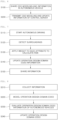
- FIG. 6 is a flowchart illustrating an autonomous driving method capable of updating an operation design domain according to the present disclosure
- FIG. 7 is a flowchart illustrating step S100.
- the present disclosure includes a step S100 of sharing ODD modeling and information in the autonomous vehicle 100 and a step S200 of transmitting ODD modeling and updated ODD modeling information of the control server 200.
- step S100 is a step of evaluating the risk according to the operation design domain (ODD) recognized in the field by the autonomous vehicle 100, and thus, updating the operation design domain (ODD) to perform autonomous driving through a scenario according to the risk of the field situation.
- ODD operation design domain
- step S100 includes step S110 of autonomous driving in the autonomous vehicle, step S120 of detecting surrounding situations and objects, step S130 of calculating risks for each layer set according to the situations recognized while driving, a step S140 of updating the risk-based operation design domain, and a step S150 of sharing update information.
- Step S110 is a step of starting autonomous driving in the autonomous vehicle 100.
- the autonomous driving system sets a route according to the input destination and starts driving to a destination by controlling the vehicle driving unit 140.
- Step S120 is a step of detecting an event defined in the operation design domain (ODD) while the autonomous vehicle 100 is driving.
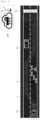
- the autonomous vehicle 100 has a construction section D1 in which a worker is present in a front lane on which the autonomous vehicle 100 is driving, and an emergency stop vehicle D3 is present in front of the construction section, and detects a bump D2 on the front of the emergency stop vehicle.
- the construction section D1 corresponds to a dynamic ODD classified into a temporary restricted area
- the emergency stop vehicle D3 corresponds to a dynamic ODD/event as an unexpected object
- the bump D2 corresponds to a static ODD as social infrastructure.
- Step S130 is a step of calculating the risks for the static and dynamic ODDs in which the driving of the autonomous vehicle 100 is detected.
- the construction section D1 is classified as the temporary restricted section
- the emergency stop vehicle D3 is classified as an unexpected object
- the bump D2 is classified as a social infrastructure facility.
- the autonomous vehicle 100 searches for attributes for each layer classified into 6-layers, such as road surface condition of a road, structure, type, and weather of a road, and wind, and applies the set weight.
- the autonomous vehicle 100 calculates a final result value by summing the risks for each layer.
- Step S140 is a step of updating the operation design domain based on risk in the autonomous vehicle 100.
- the autonomous vehicle 100 updates the previously installed operation design domain by applying the calculated risk.
- the updated operation design domain included a higher grade risk than the front construction section D1 as the emergency stopped unexpected object D3 and the bump D2 continuously existed.
- the autonomous driving system 110 when the autonomous driving system 110 is set to move and drive to the next car by decelerating to 80% when reaching set distance a of the corresponding point when there is a construction section in the front lane in the existing scenario, the autonomous driving system decelerates from a longer distance according to the risk grade and controls the driving in a scenario in which the vehicle passes the corresponding section while driving slowly at a speed of 10 km/h or less.
- Step S150 is a step in which the autonomous vehicle 100 shares the updated operation design domain (ODD).
- the autonomous vehicle 100 transmits the updated operation design domain ODD to other surrounding autonomous vehicles 100, the roadside unit 300, and the control server 200.
- the transmitted information may be evaluated by the control server 200 and retransmitted to other autonomous vehicles 100 to be shared. Alternatively, the information is directly shared through one-to-one communication with other autonomous vehicles 100.
- Step S200 will be described with reference to the flowchart of FIG. 8 .
- FIG. 8 is a flowchart illustrating step S200.
- step S200 includes step S210 of collecting, by the control server 200, information from the autonomous vehicle 100 and the roadside unit 300, step S220 of modeling the operation design domain, step S230 of evaluating the operation design domain of the autonomous vehicles 100, and step S240 of updating the operation design domain.
- Step S210 is a step of collecting information from the control server 200.
- the control server 200 collects information such as traffic accidents, traffic volumes, and weather or events around roads, including the operation design domain (ODD), through infrastructure such as the autonomous vehicle 100 and the roadside unit 300.
- ODD operation design domain
- Step S220 is a step of modeling, by the control server 200, the operation design domain.
- the control server 200 designs and/or shares the operation design domain in various ways.
- control server 200 may model the operation design domain according to information of a specific road section and store the modeled operation design domain by itself.
- control server 200 may collect the information of the operation design domain (ODD) collected in step S210 to check whether there is an event on the road and the surrounding situation, and model the operation design domain according to the information of the section in which the event occurred.
- ODD operation design domain
- the control server 200 may collect the road section and surrounding information (information classified into 6-layer layers and corresponding to attributes) collected through the infrastructure such as the plurality of autonomous vehicles 100 and roadside units 300 in step S210, model the operation design domain (ODD), and model the corresponding operation design domain whenever information different from the existing information is collected.
- Step S230 is a step of evaluating, by the control server 200, whether the collected operation design domain of the autonomous vehicles 100 has been updated to the up-to-date information. As the autonomous vehicles 100 may have different operation design domains (ODD) installed depending on manufacturers and product specifications, the update to the static or dynamic operation design domain may be delayed due to the event, weather, or road type or structure.
- ODD operation design domains
- the control server 200 may evaluate whether the operation design domain has been updated with the up-to-date information after collecting the operation design domain from the plurality of autonomous vehicles 100 in this way.
- the comparison target is either the operation design domain (ODD) modeled by itself through the information collected in real time from the control server 200 or the operation design domain according to the up-to-date road information collected from the autonomous vehicle 100, or compares and evaluates the collected operation design domains (ODDs) to derive the operation design domain (ODD) updated to the most up-to-date information.
- Step S240 is a step of comparing and evaluating, by the control server 200, the collected operation design domains (ODDs) and transmitting the updated operation design domains to the autonomous vehicles 100 that have not been updated to the up-to-date information.
- ODDs collected operation design domains
- control server 200 may transmit the up-to-date operation design domain received through the operation design domain (ODD) modeled by itself or the infrastructure to other autonomous vehicles 100 to provide the up-to-date operation design domain (ODD) capable of responding to the static and dynamic operation design domains, such as an unexpected situation in a road or an unexpected object due to a surrounding situation.
- ODD operation design domain
- the control server 200 may transmit the up-to-date operation design domain received through the operation design domain (ODD) modeled by itself or the infrastructure to other autonomous vehicles 100 to provide the up-to-date operation design domain (ODD) capable of responding to the static and dynamic operation design domains, such as an unexpected situation in a road or an unexpected object due to a surrounding situation.
- ODD operation design domain
- the present disclosure may solve the conventional problems of the autonomous vehicles 100, which are difficult to update due to various reasons such as systems or manufacturers, and create the safer autonomous driving environment.
- an operation design domain by evaluating risk according to road conditions recognized in real time in an autonomous vehicle, and to update the operation design domain regardless of a vehicle model, system specifications, and model year since the updated operation design domain may be shared with other autonomous vehicles and roadside units.
Landscapes
- Physics & Mathematics (AREA)
- General Physics & Mathematics (AREA)
- Chemical & Material Sciences (AREA)
- Analytical Chemistry (AREA)
- Engineering & Computer Science (AREA)
- Life Sciences & Earth Sciences (AREA)
- Atmospheric Sciences (AREA)
- Transportation (AREA)
- Mechanical Engineering (AREA)
- Automation & Control Theory (AREA)
- Human Computer Interaction (AREA)
- Traffic Control Systems (AREA)
- Control Of Driving Devices And Active Controlling Of Vehicle (AREA)
- Mathematical Physics (AREA)
Abstract
The present disclosure relates to an autonomous driving safety system for sharing a risk-based operation design domain including: an autonomous driving system 110 configured to control a vehicle driving unit 140 according to information detected by a sensor unit 120 to perform autonomous driving, in which the autonomous driving system 110 includes an operation design domain (ODD) update unit 111 configured to evaluate a risk of at least one of a static operation design domain and a dynamic operation design domain recognized by the sensor unit 120 while driving to update the operation design domain (ODD).
Description
- The present disclosure relates to an autonomous driving safety system for sharing a risk-based operation design domain and a method thereof capable of designing a risk-based operation design domain and sharing the designed operation design domain through an edge infrastructure.
- According to Ministry of Land, Infrastructure and Transport "Level 4 autonomous vehicle production safety guidelines" defines an operation design domain (ODD) as an operation domain (road, weather, traffic, etc.) in which a function of an autonomous driving system may be performed normally and safely, and recommends to clearly present the operation design domain related to a safe operation of autonomous driving system.
- In addition, the above safety guideline clearly presents the operation design domain and at the same time, presents status information of the system when it is out of the operation design domain, and includes a road type, a geographical range, a weather environment, a speed range, and other constraints in the operation design domain.
- In addition, according to NHTSA's Automated driving systems: A Vision for Safety 2.0 in the United States, each autonomous driving system (ADS) recommends to define and document an ODD for testing or deployment to be used on public roads.
- In addition, the operation design domain (ODD) should describe specific conditions under which the given ADS or function is intended to operate, and the ADS should be able to operate safely within the designed ODD.
- However, the operation design domain (ODD) recommends to design the operation design domain (ODD) to secure autonomous driving operation and functional safety based on real roads, but is a part requiring complementary settings such as classification for each layer and definition of detailed attribute values for the operation design domain (ODD).
- In addition, an autonomous driving operation on a real road may be divided into a static operation design domain (static ODD) and a dynamic operation design domain (dynamic ODD). For example, width and lanes of roads, signs, and structures may be regarded as characteristics of static (static ODD) characteristics, and objects (people, vehicles, etc.) and a weather environment may be regarded as dynamic (dynamic ODD) characteristics.
- The dynamic and static characteristics of the operation design domain (ODD) require updating and complementing initially designed ODD design according to a passage of time (changes in ODD characteristics according to day and night, structural deformation over time, etc.) and changes in traffic (traffic volume, unexpected objects, etc.).
- However, in the relate art, the lack of update of the operation design domain (ODD) or subsequent complementation after the update has become a factor that reduces safety.
- In addition, since the operation design domain (ODD) has different design conditions and response strategies for each vehicle, there is a cumbersome problem of having to changing characteristics of different operation design domains (ODDs).
-
KR 1020200101517 A(August 28, 2020 - The present disclosure has been derived to solve the above conventional problems, and an object of the present disclosure provides an autonomous driving safety system for sharing a risk-based operation design domain and a method thereof capable of securing autonomous driving safety by complementing different operation design domains (ODDs) for each autonomous vehicle using a method of calculating a risk of an operation design domain (ODD) and vehicle-to-vehicle communication technology.
- The present disclosure may include the following embodiments in order to achieve the above object. According to an embodiment of the present disclosure, there may be provided an autonomous driving safety system for sharing a risk-based operation design domain including: an
autonomous driving system 110 configured to control avehicle driving unit 140 according to information detected by asensor unit 120 to perform autonomous driving, in which theautonomous driving system 110 includes an operation design domain (ODD)update unit 111 configured to evaluate a risk of at least one of a static operation design domain and a dynamic operation design domain recognized by thesensor unit 120 while driving to update the operation design domain (ODD) The autonomous driving system may transmit the updated operation design domain (ODD) to at least one of a roadside unit, other autonomous vehicles, and a control server, and share the updated operation design domain (ODD). - The autonomous driving system may include: a layer-specific attribute information DB configured to layer the operation design domains into a plurality of layers and stores attributes for each layer and weights set for each attribute; a risk calculation module configured to calculate risks for each layer by applying the weight of the attributes stored in the layer-specific attribute information DB according to the recognized operation design domain, and calculates a final risk by summing the risks for each layer; and an update module configured to update the risk calculated by the risk calculation module to the operation design domain.
- The autonomous driving system may be classified into: a road geometry layer that is classified into an operation design domain (ODD) of a road structure, a road type, a road shape and form, and a shape, type, and condition of a road surface; a social infrastructure layer that is classified into the operation design domain of a traffic signal and structure; a temporary restricted area layer that is classified into an unexpected situation caused by a traffic accident, a construction section, and an emergency stop vehicle, and an operation design domain of a protected zone; an object layer that is classified into an operation design domain of a static object, a dynamic object, and an unexpected object on and around a road; an environmental condition layer that is classified into an operation design domain of season, weather (climate), and a light source; and a connectivity (communication) layer that is classified into an operation design domain of communication and control.
- The temporary restricted area layer may have an attribute set as at least one of a distance between start and end points of the protected zone and the autonomous vehicle, a type of protected zone, a distance between the autonomous vehicle and an unexpected section, left and right lane positions between the unexpected sections from the autonomous vehicle, a relative position of the unexpected section from autonomous vehicle, and a type of the unexpected section.
- In addition, the operation design domain of a type of the road structure may have an attribute set as an accident rate and fatality, and the accident rate and fatality may be weighted differently depending on a degree of death and injury.
- In addition, the operation design domain of the road shape may have an attribute set as at least one of a lane width, the total number of lanes on a road, a lane number on which the
autonomous vehicle 100 is driving, a radius of curvature of a road, and a road design speed. - In addition, the operation design domain of the road surface may have an attribute set as at least one of a road surface material type, a road surface friction coefficient (µ), a damage type, road surface damage severity (high, medium, low), and a distance between the autonomous vehicle and a road surface damage section.
- In the above embodiment, a risk of the operation design domain of the type of the road structure may be calculated according to Equation below.

- The operation design domain of the weather may set a cloud ratio, a wind speed, precipitation, snowfall, a visibility range as an attribute, the cloud ratio may be set as a ratio occupied by clouds in sunny and cloudy conditions, and wind, rain, and snow may be classified and set into multiple categories based on the amount, and fog may be classified into multiple types based on the visibility range.
- The object layer may be classified into an operation design domain of a vehicle, a pedestrian, and an animal, the operation design domain of the vehicle may have an attribute set as at least one of left/right lane positions of a target vehicle from the autonomous vehicle, a surrounding position of the target vehicle from the autonomous vehicle, an absolute speed (X and Y axes), a relative speed (X and Y axes) from the autonomous vehicle, a distance (X and Y axes), a travel angle (direction), detection coordinates, and a type of a vehicle, and the operation design domain of the pedestrian and animal may have an attribute set as at least one of the relative speed, absolute speed, distance, travel angle, detection coordinates, and type from the autonomous vehicle.
- In the above embodiment, a risk of the operation design domain of the road shape may be calculated by Equation below.Risk of road shape = AMFcurve radius × AMFlongitudinal slope The curve radius may be a curve radius of a road, and the longitudinal slope is a longitudinal slope of a road.
- According to another embodiment of the present disclosure, there may be provided an autonomous driving safety system for sharing a risk-based operation design domain including: a control server configured to collect an operation design domain (ODD) from a plurality of autonomous vehicles and roadside units in real time, in which the control server may transmit an operation design domain (ODD) including risk to the plurality of autonomous vehicles and roadside units to update the operation design domain.
- The control server may receive the risk-based operation design domain from the autonomous vehicle, and compare and evaluate the collected operation design domain to transmit the updated operation design domain to the autonomous vehicle in which the risk is missing or erroneous.
- The control server may include: an information collection unit configured to collect an operation design domain (ODD) and road and surrounding situation information from the plurality of roadside units and autonomous vehicles ; an operation design domain design unit configured to model an operation design domain including at least one of a static operation design domain and a dynamic operation design domain collected from the autonomous vehicle ; and a server communication unit configured to transmit the operation design domain (ODD) modeled by the operation design domain design unit to the plurality of autonomous vehicles and roadside units.
-
-
FIG. 1 is a block diagram schematically illustrating an autonomous driving safety system for sharing a risk-based operation design domain and a method thereof according to the present disclosure. -
FIG. 2 is a block diagram of an autonomous vehicle in the present disclosure. -
FIG. 3 is a block diagram illustrating an operation design domain update unit. -
FIG. 4 is a block diagram illustrating a control server. -
FIG. 5 is a block diagram illustrating an operation design domain design unit. -
FIG. 6 is a flowchart illustrating an autonomous driving method of sharing a risk-based operation design domain according to the present disclosure. -
FIG. 7 is a flowchart illustrating step S100. -
FIG. 8 is a flowchart illustrating step S200. -
FIG. 9 is a diagram illustrating a response scenario according to an embodiment of the present disclosure. - The present disclosure may be variously modified and have several exemplary embodiments. Therefore, specific exemplary embodiments of the present disclosure will be illustrated in the accompanying drawings and be described in detail. This is not intended to limit the present disclosure to specific embodiments, and it should be understood that this corresponds to any one of all modifications, equivalents or substitutes included in the spirit and scope of the present disclosure for connecting and/or fixing structures extending in different directions.
- Terms used in the present specification are used only in order to describe specific exemplary embodiments rather than limiting the present disclosure. Singular forms are intended to include plural forms unless the context clearly indicates otherwise.
- It should be further understood that terms "include" or "have" used in the present specification specify the presence of features, numerals, steps, operations, components, parts mentioned in the present specification, or combinations thereof, but do not preclude the presence or addition of one or more other features, numerals, steps, operations, components, parts, or combinations thereof.
- An operation design domain (ODD) in this specification refers to an automated domain (e.g., road, weather, traffic, etc.) where functions of an autonomous driving system may be performed normally and safely, as suggested by the Ministry of Land, Infrastructure and Transport's "Level 4 Autonomous Vehicle Manufacturing, Safety Guidelines."
- Hereinafter, preferred embodiments of an autonomous driving safety system for sharing a risk-based operation design domain and a method thereof according to the present disclosure will be described with reference to the accompanying drawings.
-
FIG. 1 is a block diagram schematically illustrating an autonomous driving safety system for sharing a risk-based operation design domain and a method thereof according to the present disclosure. - Referring to
FIG. 1 , the present disclosure may include acontrol server 200, a plurality ofautonomous vehicles 100, and aroadside unit 300. - The plurality of
autonomous vehicles 100 may autonomously drive on a road while detecting situations of a roadside, recognize elements of an operation design domain (ODD) while driving to evaluate risk, update the operation design domain with the risk, share the updated operation design domain through infrastructure (e.g., edge infrastructure). A detailed configuration description thereof will be described later. - A roadside unit (RSU) is composed of a plurality of devices capable of communicating and generating and transmitting/receiving traffic information so as to configure, for example, a V2X infrastructure, and is well known.
- Here, the
roadside unit 300 may share information through an autonomous vehicle and infrastructure, and may relay the shared information to an autonomous vehicle capable of communication,other roadside units 300, and acontrol server 200 of a control center. - The
control server 200 collects information of operation design domains (ODDs) from an autonomous vehicle and a roadside unit in real time, and compares and evaluates the information of the collected operation design domains (ODD). In addition, thecontrol server 200 transmits the updated operation design domain to an autonomous vehicle in which an error or omission of risk for the operation design domain (ODD) is found among the autonomous vehicles to update the operation design domain of the corresponding autonomous vehicle. - Here, the
control server 200 may model a risk-based operation design domain, and compare and evaluate operation design domains of autonomous vehicles collected based on the result. - For example, autonomous vehicles have operation design domains (static operation design domain and dynamic operation design domain) set according to different formats and standards depending on manufacturers or vehicle models, and some or all of the autonomous vehicles should update their own initially designed operation design domains (ODDs) according to a passage of time (change in characteristics of the operation design domain according to day and night, deformation of structures over time, etc.) and a change in traffic (traffic volume, unexpected objects, etc.).
- However, the operation design domain may not be updated due to various factors, such as individual circumstances of vehicle owners, a difference in autonomous driving systems, a difference in vehicle models, and circumstances of manufacturers.
- Therefore, the
control server 200 transmits an operation design domain (ODD) designed according to the up-to-date information to theautonomous vehicle 100 in which an operation design domain (ODD) that does not match the current situation is set. In this case, the updated operation design domain (ODD) may be received throughautonomous vehicle 100 and/or infrastructure, or may be designed by the control server itself. - Preferably, the
control server 200 may compare and evaluate the operation design domain (ODD) designed by itself and the operation design domain (ODD) of the receivedautonomous vehicle 100 to calculate the up-to-date information, and transmit the calculated up-to-date information to the autonomous vehicle, theroadside unit 300, etc., that are not updated to the corresponding operation design domain (ODD). -
FIG. 2 is a block diagram of an autonomous vehicle in the present disclosure. - Referring to
FIG. 2 , theautonomous vehicle 100 includes anautonomous driving system 110, asensor unit 120, acommunication unit 130, and avehicle driving unit 140. - The
sensor unit 120 is composed of a plurality of sensors capable of detecting objects or surrounding conditions in front and rear and/or left and right sides of theautonomous vehicle 100, such as a Lidar sensor, a radar sensor, temperature, humidity, and a rain sensor. - The
communication unit 130 performs communication with thecontrol server 200, theroadside unit 300, and otherautonomous vehicles 100. - The
vehicle driving unit 140 is composed of devices that perform unique functions of a vehicle, such as steering, driving, deceleration, and braking. Here, thevehicle driving unit 140 is operated under the control of theautonomous driving system 110. - The
autonomous driving system 110 includes a drivingcontrol unit 112 that performs autonomous driving by controlling thevehicle driving unit 140 through scenarios set according to various situations and information detected by thesensor unit 120, and an operation designdomain update unit 111 that evaluates and updates the risk of the recognized operation design domain (ODD). - The driving
control unit 112 corresponds to the knownautonomous driving system 110 and sets a route to the input destination and controls thevehicle driving unit 140 to perform autonomous driving. Here, the drivingcontrol unit 112 controls avehicle driving unit 140 through a scenario that is set according to various surrounding environments, such as weather (snow, rain, and fog) detected while driving, road surface conditions (wetting, drying, freezing, and damage), unexpected objects (vehicle, pedestrian, animal, rock fall on a road), and road structures (tunnel, second lane, third lane, overpass, back road, pavement, non-pavement), and static or dynamic operation design domains D1, D2, and D3 (seeFIG. 9 ) detected in real time. - The operation design
domain update unit 111 models the static or dynamic operation design domain detected by thesensor unit 120 based on risk to update the operation design domain. In addition, the operation designdomain update unit 111 updates the shared operation design domain (ODD) from otherautonomous vehicles 100 and/or thecontrol server 200 through thecommunication unit 130 to the up-to-date operation design domain according to the passage of time and the change in traffic. - The operation design
domain update unit 111 will be described with reference toFIG. 3 . -
FIG. 3 is a block diagram illustrating an operation design domain update unit. - Referring to
FIG. 3 , the operation designdomain update unit 111 may include a layer-specificattribute information DB 111a storing attribute information of the operation design domain, arisk calculation module 111b, and anupdate module 111c. - The layer-specific
attribute information DB 111a layers the operation design domains (ODDs) and stores attribute and weight information set for each layer.In the present disclosure, the operation design domain (ODD) is layered into 6-layers, and each layer is divided into a single layer. The risk was defined as the total risk of each single layer. - As shown in Table 1 below, the classification of the operation design domains for each layer classifies each layer into road geometry, social infrastructure, a temporary restricted area, an object, an environmental condition, and connectivity (communication), and classifies operation design domain for each layer.
[Table 1] 6-Layer Operation design domain classification Layer 1: Road geometry Road structure (type) Road shape (form) Road surface (condition) Layer 2: Infrastructure Traffic signal Structure Layer 3: Temporary restricted area General Unexpected situation Layer 4: Object Object (static, dynamic, unexpected) Layer 5: Environmental condition Season Weather (Climate) Light source Layer 6: Connectivity V2X (Edge Infra) Control Others - In addition, the present disclosure classifies operation design domains for each layer into large, medium, and small categories by applying criteria such as type, shape, state, and kind, and sets attributes for judgment of risk evaluation for each small category. Tables 2 to 7 below are classification tables in which attributes for each layer in Table 1 are set. Specifically, Table 2 describes the road geometry layer, Table 3 describes the infrastructure layer, Table 4 describes the temporary restricted area layer, Table 5 describes the object layer, Table 6 describes the environment, and Table 7 describes the detailed classification and properties of the connectivity (communication) layer.
[Table 2] Large catego ry Medium category Small category Attribute Road geomet ry (L1) Road structure { }(type) (L1-1) Single road, Intersection, Auxiliary, Others (ex, back road) Accident rate Fatality Road shape (form) (L1-2) Lane Single lane Lane width Total number of lanes on road Multilane Lane number on which Ego vehicle is driving Characte ristic Curvatur e Radius of curvature of road Road design speed Slope Road type (flatland, mountainous district, etc.) Longitudinal slope Road design speed Road Pavement Road surface material surface (conditio n) (L1-3) Road surface condition type Road surface friction coefficient (µ) Damage type (potholes, cracks, etc.) Road surface damage severity (good, average, bad) Distance between Ego vehicle and damaged road surface Lane Lane condition - Lane type - Land parameter (offset, heading angle, etc.) - Left/right position of lane from Ego vehicle - Lane condition abnormal (unclear) - Among the contents of Table 2, the attributes of the operation design domain for the road structure are set as accident rate and fatality, so the risk is calculated according to the accident rates and fatalities for each road section. The risks according to the risk factors of the road structure are shown in Table 2-1 below. Table 2-1 classifies the fatality rates for each road section, Ministry of Land, Infrastructure and Transport standards, and risk sections for each EPDO.
[Table 2-1] Score Risk level Fatality rate Ministry of Land, Infrastruct ure and Transport standard EPDO 1 Common 0 to less than 0.8 6.05 to less than 6.82 0 to less than 1.42 2 Caution 0.8 to less than 1.6 6.82 to less than 7.59 1.42 to less than 2.85 3 Somewhat risk 1.6 to less than 2.4 7.59 to less than 8.37 2.85 to less than 4.27 4 Risk 2.4 to less than 3.2 8.37 to less than 9.14 4.27 to less than 5.70 5 Very risk 3.2 to 4.0 or more 9.14 to 9.91 or more 5.70 to 7.12 or more - In addition, the operation design domain of the type (single road, intersection, back road, etc.) of road structure is classified by type of single roads such as in tunnel, on bridge, over overpass, underpass, and back road, and intersections such as 3-way, 4-way, multiple, and rotation intersections. The risk may be calculated by combining the fatality rates, the EPDO, and the Ministry of Land, Infrastructure and Transport standards for each type.
- In addition, the operation design domain of the road shape (form) sets a lane width according to a curvature or slope of a lane and each road, the total number of lanes on a road, a radius of curvature of a road, a road design speed, a road type (flatland or mountainous district) longitudinal slope, and a road design speed as attributes.
- With these attributes, risk may take into account the radius of curvature, the longitudinal slope, and the driving speed. For example, risk may be calculated according to the radius of curvature and longitudinal slope of the current road on which the
autonomous vehicle 100 is driving, and the current driving speed of theautonomous vehicle 100. An example thereof is introduced in Table 2-2 below.[Table 2-2]Highway (100km, longitudinal slope 5%) risk grade by driving speed Risk grade AMF Curve radius Driving speed 1 1-1.1876 460m Less than 68 km/h 2 1.1877-1.3752 68 to less than 83 km/h 3 1.3753-1.5628 80 to less than 90 km/h 4 1.5629-1.7504 90 to less than 95 km/h 5 1.7505 or more 95 km/h or more - Table 2-2 above sets risk grades for each driving speed on a highway with a longitudinal slope of 5%, and the risk is set high when the driving speed and the longitudinal slope AMF values are low.
- In addition, the operation design domain of the road surface and condition is classified into a pavement, a road surface condition, and a lane. Among those, the road surface friction coefficient according to the type (e.g., asphalt, concrete, block, non-pavement) of pavement is set as an attribute.
- Among those, the road surface conditions are subdivided into drying, wetting, snowfall, freezing, and damage. Among those, the drying, wetting, snowfall, and freezing sets the road surface friction coefficient as an attribute. The friction coefficients of the drying, wetting, snowfall, and freezing may have different values depending on the type of pavement.
- For example, for the road surface friction coefficients, an asphalt paved road may be assigned attributes of drying (0.8), wetting (0.6 to 0.7), snowfall (0.3 to 0.6), and freezing (0.05 to 0.3), a concrete paved road may be assigned attributes of drying (0.8), wetting (0.4 to 0.6), snowfall (0.3 to 0.6), and freezing (0.05 to 0.3), a block paved road may be assigned attributes of drying (0.7), wetting (0.3 to 0.4), snowfall (0.3 to 0.6), and freezing (0.05 to 0.2), and unpaved road may be assigned may be assigned attributes of drying (0.5), wetting (0.3 to 0.4), snowfall (0.3 to 0.6), and freezing (0.05 to 0.2).
- The above friction coefficient is applied to a calculation of a stoppable distance for each driving speed while driving on the road under the corresponding road surface condition of the
autonomous vehicle 100. The calculated stoppable distance is applied as an evaluation criterion for the risk calculation. - Attributes of a lane type (e.g., solid line, dotted line, double solid line, solid line, dotted line, zigzag lane, bus only lane), left/right positions of a lane in the
autonomous vehicle 100, a lane condition (normal or abnormal) are set for a lane. Here, the abnormality of the lane condition means a situation in which the lane is not clearly visually confirmed, such as disappearance or obscurity of a lane. - Table 3 below subdivides the social infrastructure layer and sets the attributes according to each classification.
[Table 3] Large category Medium category Small category Attribute Infrastructure (L2) Traffic signal (L2-1) Caution sign Regulatory sign Directional regulation, No entry, Speed limit Sign type Sign details Distance [m] Sign coordinates [X, Y] Indicat ion sign Exclusive road Directional indication Parking, Stop Protection indication Road surface sign Prohibited, Center line, U-turn zone line, Lane, Bus-only lane, Road edge zone line, Restricted lane, Road barrier, Speed limit, Slow speed, Temporary stop, Concession, Guide line, Stop line, Safety zone, Crosswalk, Protected zone, Heading direction, Lane change, Slope, Auxiliary sign, Signal Road surface marking type Road surface marking details Distance [m] Sign coordinates [X, Y] Structure (L2-2) Traffic signal sign Road facility type Distance and size [m] Structure coordinates [X, Y] Guardrail Median strip Streetlight Bump Electric pole Cones Curb Manhole - Among the above contents, the medium category of the traffic signal may be classified into a caution sign, an indication sign, and a road surface sign. Here, the caution sign includes caution signs such as a protected zone (e.g., crosswalks, children protection, wildlife protection), a slope (e.g., uphill, downhill), an accident risk zone, a habitual congestion section, left and right merge roads, left and right diverging roads, an intersection, a median strip start/end road width limit, disappearance of a lane, two way traffic, a speed bump, a priority road, a rock fall road, a construction section, a railway crossing, a tunnel, a bridge, and cross wind.
- For the above caution sign, a regulatory sign and an indication sign each have attributes set as the type or details of the sign and the sign coordinates, respectively.
- For the road marking, a road surface marking type, a road surface marking details, a distance, and sign coordinates were set as attributes.
- In addition, as described in the above Table, the small category of the structure is subdivided into structures on and around a road, such as a traffic signal sign, a guardrail, a median strip, a streetlight, a bump, an electric pole, cones, a curb, and a manhole, and the attributes of each subclass were set as the type, distance, and size of the road facility, and structure coordinates.
- The temporary restricted area layer is classified into a protected zone and an operation design domain related to an unexpected situation as shown in Table 4 below, and each attribute is set. Among those, the protected zones (e.g., silver zone, school zone, and school zone protected zone) have start and end points of each protected zone, a distance between the
autonomous vehicle 100 and the corresponding protected zone, and the type (e.g., speed reduction, attention) of protected zone set as attributes.[Table 4] Large category Medium category Small category Attribute Temporar y restrict ed area (L3) General (L3-1) Protected zone (ex, silver zone, school zone, school zone protection area) Distance between start/end point of protected zone and the Ego vehicle Protected zone type Unexpected situation (ex, traffic accident, construction section, emergency stop vehicle) Distance between Ego vehicle and unexpected section Position of left/right lanes in unexpected section from Ego vehicle Relative position: Surrounding position of unexpected section from Ego vehicle Type of unexpected section - The unexpected situation means a traffic accident, a construction section, and an emergency stop vehicle, and attributes are set as a distance between an
autonomous vehicle 100 and an unexpected section, a position of the unexpected section, a relative position, and a type of unexpected section. - The object layer includes an object that may appear while driving on the road, as shown in Table 5 below, and is classified into a vehicle, a pedestrian, an animal, etc.
[Table 5] Large category Medium categor Y Small category Attribute Object (L 4) Object( L4-1) Vehicle Relative lane position (left/right lane position of target vehicle from the Ego vehicle), Relative position (surrounding position of target vehicle from Ego vehicle), Absolute speed (X and Y axes), Relative speed from Ego vehicle (X, Y axis), Distance (X, Y axis), Travel angle (direction), Detection coordinate (detection coordinate of object), Type (commercial, passenger, etc.) pedes trian General Adult Relative speed from Ego vehicle (X, Y axis), Absolute speed (X, Y axis), Distance (X, Y axis), Travel angle (direction), Detection coordinate (detection coordinate of object), Type (pedestrian, animal, etc.) Elder Childr en Others (police officer, etc.) Animal Mammalia Birds Others - Among those, the vehicle includes, for example, a commercial vehicle, a passenger vehicle, agricultural machinery, a two-wheeled vehicle, a motor vehicle, a bicycle, a special vehicle, a truck, a police cars, and special vehicles such as a fire truck, and sets a relative lane position, a lane position, an absolute speed, a relative speed, a travel angle, detection coordinates, etc.
- In addition, the pedestrian may also be classified as an adult, a senior, a child, and others, such as officials performing public duties such as police officers or workers during construction. For the pedestrian and animal, the relative speed from the
autonomous vehicle 100, the absolute speed, the distance, the travel angle, the detection coordinates, the type, etc., are set as attributes. - The environment layer is a layer for the road driving environment of the
autonomous vehicle 100 and may be classified as season, weather, and a light source as shown in Table 6 below.[Table 6] Large category Medium category Small category Attribute Environm ent (L5) Season (L5 -1) Spring, summer, fall, winter Weather (climate) (L5-2) Sunny cloud ratio Cloudy Wind Wind speed Rain Precipitation Snow Snowfall Fog Visibility range Light source(L5 -3) Natural Dawn Standard time: 00 to 06 hours Morning Standard time: 06 to 09 hours Daytime Standard time: 09 to 18 hours Evening Standard time: 18 to 21 hours Night Standard time: 21 to 24 hours Artific ial Vehicle lamp (high beam, etc.) - Traffic light Streetlight Others - Among the above contents, a cloud ratio, a wind speed, precipitation, snowfall, and visibility range were set as attributes for weather. Here, the cloud ratio is a value for determining sunny and cloudy conditions as a cloud ratio. For example, for the sunny condition, an attribute is assigned as having clouds in the entire sky at a rate of 0 to 50%, and for the cloudy state, an attribute is assigned as having clouds at a rate of 9 to 10%.
- In addition, among the weather attributes, wind is a wind speed (for example, strong: 25 m/s or more, middle: 20-25 m/s, low: 15 m/s) set as an attribute, rain is precipitation (for example, strong: 30 mm or more, middle: 15 to 30mm, low 1 to 15mm) set as an attribute, snow is snowfall (e.g., strong: 30mm or more, medium: 15 to 30mm, low: 1 to 15mm) set as an attribute, and fog is a visibility range (e.g., strong: 40m or less, medium 40 to 200m, low: 200 to 1000 m) set as an attribute.
- The connectivity (communication) layer is a layer for communication with the
control server 200 and/or surrounding infrastructure for the operation of theautonomous driving system 110, and the classification and attributes are set as shown in Table 7 below.[Table 7]ODD classification Variable Attribute Connectivit y/communica tion (L6) V2V Communication rangeAverage throughput Packet error rate Average latency V2I Edge Infra Control - Communication shadow area Distance from shadow area Shadow area length - The
risk calculation module 111b models the operation design domain (ODD) based on risk depending on whether the static operation design domain or the dynamic operation design domain is recognized while driving, updates the operation design domain to suit the field, and reflects the updated operation design domain on the existing installed operation design domain. Such a risk calculation module will be described through an embodiment of calculating risk in a road geometry layer as an example. - The
risk calculation module 111b may apply weights in risk calculation according to the attributes for each layer described above. Here, risk may be calculated through formula such as Equation 1 below.
- In the present disclosure, the risk (total layer risk value) of the operation design domain situation recognized while driving the
autonomous vehicle 100 corresponds to the sum of risks (single layer risk values) for each layer. - In addition, the risks (single layer risk values) for each layer are classified according to variables for each layer, and a weight is applied to the calculated attribute value (ODDelement) .
- The
update module 111c updates the risk evaluation result by therisk calculation module 111b to the current operation design domain. Theautonomous driving unit 112 drives the autonomous vehicle as the best scenario based on the risk included in the updated operation design domain (ODD). - Hereinafter, an embodiment of the above risk calculation and/or evaluation process will be described. However, the final risk is determined by the sum of risks for each layer, but the embodiment describes only some of layers selected from the entire 6-layers as an example.
- Example 1 The risk according to a road structure (type) of road geometry layer can be calculated by applying different weights for each traffic accident, for example, a fatal accident, a serious accident, and a minor accident. In this case, the risk may be calculated by Equation 2 as follows.[Equation 2] Risk =

- In Equation 2 above, a weight of 1 was set for a fatal accident, a weight of 0.7 was set for a serious accident, and a weight of 0.3 was set for a minor accident.
- In addition, the risk according to the accident severity according to the road type is calculated by applying the equivalent property damage only (EPDO) methodology for each average number of accidents. This is calculated by Equation 3 below.

- Here, a weight of 12 was applied to a fatal accident and a weight of 3 was applied to an injury accident.The weights in Equation 2 and Equation 3 above are weights applied when the Road Traffic Authority selects accident-prone points. This is not limiting as applied to one example. In other words, the weight may be modified according to the designer's or operator's intention, traffic regulations, and characteristics of roads or regions.
- Risk reflecting the result values of Equation 2 and Equation 3 above may be calculated as shown in Table 8 below.
- Table 8 summarizes an example of calculating the fatality rate on a single road and intersection among road types, the risk according to traffic risk, and the risk according to EPDO (number of accidents).
[Table 8] Classification Traffic risk EPDO Single road In tunnel 9.91 7.12 On bridge 8.13 5.75 On overpass 7.51 5.38 Underpass 7.33 4.93 Others (general) 6.72 4.60 Crossroad 3-way 6.80 4.51 4-way 6.96 4.72 Multiple 6.75 4.69 Roundabou t 6.37 4.64 Others · Auxiliary 6.05 0.19 - The
risk calculation module 111b evaluates the risk in consideration of both the above traffic risk and the result value of the EPDO, and reflects the evaluated risk when there is a difference from the existing operation design domain (ODD). Such an update of the operation design domain may change the set scenario according to the recognized risk. - For example, the scenario according to the existing operation design domain was set to reduce a driving speed of 100 km to 70% or less when a vehicle-to-vehicle distance is 50M, but when the risk is evaluated as high in the updated operation design domain (ODD), the scenario may be changed to reduce the driving speed to 30% or less or to stop.
- That is, the present disclosure may improve safety of autonomous driving by evaluating risk according to an operation design domain (ODD) situation of a road site and updating the operation design domain (ODD).
- Example 2 In road shape elements, elements (attributes) that may affect vehicle driving safety are a curve radius and a longitudinal slope. Therefore, a risk calculation module calculates risk according to a curve radius through an accident modification factor according to the curve radius, which is calculated through the accident modification factor formula in Table 9.[Table 9]
Accident modification factor (risk) formula according to curve radius Variable 
- V: Speed limit [mph] - Lc: Curve length [mile) - L: Section length [mile] - R: Curve radius [ft] - In addition, the risk calculation module may calculate the risk through the accident modification factor according to the longitudinal slope. The accident modification factor according to the longitudinal slope is calculated through the formula in Table 10 below.
[Table 10] Formula Variable AMFlongitudinal slope = c0.016g or c0.019g g: Longitudinal slope(%) - Table 11 shows examples of values calculated according to curve radius and longitudinal slope.
[Table 11] Rule on Road Structure and Facility Standard Radius (m) Longitudinal slope(%) Highway 120 km/h 710 5 110 km/h 600 100 km/h 460 Arterial road 80 km/h 280 7 Local road 50 km/h 90 14 - In addition, in order to calculate the risk grade by the curve radius on a highway with many vehicles driving at 100 km/h or more, the curve radius AMF scores obtained by calculating the accident modification factors for speeds of 110 km/h and 100 km/h are shown in Table 12 below.
[Table 12] Highway Radius (m) AMF(Accident Modification Factors) 110 km/h 600 1.7937 693 1.5953 849 1.3968 1200 1.1984 1.0000 100 km/h 460 1.7622 531 1.5716 651 1.3811 920 1.1905 1.0000 - In addition, the risk calculation module calculates the road type risk using the above curve radius and the longitudinal slope AMF score. The road type risk is calculated by Equation 4 below.

- Therefore, the road type risk may be finally calculated as shown in Table 9 below. The table below evaluates a risk for each driving speed of 110 km/h and 100 km/h on the highway in the second lane. The higher the score, the higher the risk.
[Table 13] Highway Risk of road form in highway in second lane No. Scor e No. Scor e No. Scor e No. Scor e No. Scor e 110 km/h 1 1.00 0 6 1.19 8 11 1.39 7 16 1.59 5 21 1.79 4 2 1.02 4 7 1.22 7 12 1.43 0 17 1.63 4 22 1.83 7 3 1.04 9 8 1.25 7 13 1.46 5 18 1.67 3 23 1.88 1 4 1.07 4 9 1.28 7 14 1.50 0 19 1.71 3 24 1.92 6 5 1.10 0 10 1.31 8 15 1.53 6 20 1.75 4 25 1.97 3 100 km/h 1 1.00 0 6 1.19 1 11 1.38 1 16 1.57 2 21 1.76 2 2 1.02 4 7 1.21 9 12 1.41 4 17 1.60 9 22 1.80 4 3 1.04 9 8 1.24 8 13 1.44 8 18 1.64 8 23 1.84 8 4 1.07 4 9 1.27 8 14 1.48 3 19 1.68 8 24 1.89 2 5 1.10 0 10 1.30 9 15 1.51 9 20 1.72 8 25 1.93 8 - Example 3 Risk that may be issued due to a road surface pavement material and road surface conditions occurs due to an increase in a stopping distance due to a change in frictional force of a road surface.
- Therefore, the
risk calculation module 111b calculates the risk through a stopping distance by applying friction coefficients for each road surface condition (drying, wetting, freezing). First, the stopping distance according to the road surface conditions for each driving speed is shown in Table 10 below.[Table 14] Driving speed [ km/h] Stopping distance [m] Drying Wetting Freezing 20 16.3 17.5 24.4 30 26.4 28.9 44.5 40 37.8 43.5 69.8 50 50.9 62.1 100.3 60 65.3 84.6 136.2 70 81.3 108.9 177.2 80 100.0 136.8 223.5 90 118.4 168.8 275.1 100 139.7 200.7 331.9 110 163.0 240.7 394.0 120 188.3 278.8 461.3 - The driving speed [km/h] risk calculation module may set the risk higher as the stopping distance increases according to the driving speed and road surface condition.
- In addition, the risk calculation module sums up the results of Examples 1 to 3 to finally calculate the risk for the currently detected state of the operation design domain (ODD). However, the above description is based on Examples 1 to 3 for convenience, and the final value for the actual risk is determined by the sum of the risks of all related layers according to the recognized ODD.
- In addition, an
update module 111c updates the operation design domain (ODD) according to the above risk. Therefore, a drivingcontrol unit 120 may control autonomous driving as a scenario suitable for the site according to the operation design domain (ODD) in which the risk is reflected by theupdate module 111c. - The
control server 200 will be described in more detail with reference toFIGS 4 and 5 . -
FIG. 4 is a block diagram illustrating a control server, andFIG. 5 is a block diagram illustrating an operation design domain design unit. - Referring to
FIGS 4 and 5 , thecontrol server 200 may include aninformation collection unit 210, an operation designdomain design unit 220, and aserver communication unit 130. - The
information collection unit 210 collects information from aroadside unit 300 and anautonomous vehicle 100. The collected information may be information on operation design domain situations recognized while theautonomous vehicle 100 is driving on the road. - In addition, the
information collection unit 210 is capable of collecting various information including the shared operation design domain and roadside and traffic conditions from the autonomous vehicle and the roadside unit. - The operation design
domain design unit 220 models an operation design domain (ODD) including situations of ODDs (e.g., static ODD, dynamic ODD, or a combination of static and dynamic ODD) collected from autonomous vehicles. - To this end, the operation design
domain design unit 220 may include an operation designdomain design module 221, anevaluation module 222, and aninformation providing module 223. - The operation design
domain design module 221 models a risk-based operation design domain (ODD). The process or method may be performed in the same way as the modeling process of the operation design domain (ODD) of theautonomous vehicle 100 described above (e.g., the sum of risks for each 6-layer). - The
evaluation module 222 compares and evaluates the result values modeled by the operation designdomain design module 221 and the operation design domains of the autonomous vehicles and theroadside units 300. Here, theevaluation module 222 compares the collected operation design domain (ODD) and the operation design domain (ODD) modeled by the operation designdomain design module 221 to extract the operation design domain (ODD) in which the up-to-date update information such as risk evaluation is missing.Alternatively, theevaluation module 222 compares the operation designdomain design module 221 and the operation design domain (ODD) of theautonomous vehicle 100, and when the operation design domain (ODD) of the autonomous vehicle is more up-to-date information, updates the operation design domain designed by itself to the operation design domain (ODD) of the corresponding autonomous vehicle. - The
information providing module 223 provides information to theautonomous vehicle 100 and theroadside unit 300. In this case, the provided information may include information including real-time accidents, traffic volume, weather, and the like, and up-to-date update information designed in the operation design domain design module. - In particular, the
information providing module 223 may transmit the up-to-date update information of the operation design domain (ODD) to theautonomous vehicle 100 from which the up-to-date update information is missing in the previously collected operation design domain (ODD). - The present disclosure includes an autonomous driving method capable of updating an operation design domain (ODD) achieved through the above configuration. The autonomous driving method capable of updating an operation design domain will be described below.
-
FIG. 6 is a flowchart illustrating an autonomous driving method capable of updating an operation design domain according to the present disclosure, andFIG. 7 is a flowchart illustrating step S100. - Referring to
FIGS 6 and 7 , the present disclosure includes a step S100 of sharing ODD modeling and information in theautonomous vehicle 100 and a step S200 of transmitting ODD modeling and updated ODD modeling information of thecontrol server 200. - Among those, step S100 is a step of evaluating the risk according to the operation design domain (ODD) recognized in the field by the
autonomous vehicle 100, and thus, updating the operation design domain (ODD) to perform autonomous driving through a scenario according to the risk of the field situation. - Describing in more detail, step S100 includes step S110 of autonomous driving in the autonomous vehicle, step S120 of detecting surrounding situations and objects, step S130 of calculating risks for each layer set according to the situations recognized while driving, a step S140 of updating the risk-based operation design domain, and a step S150 of sharing update information.
- Step S110 is a step of starting autonomous driving in the
autonomous vehicle 100. The autonomous driving system sets a route according to the input destination and starts driving to a destination by controlling thevehicle driving unit 140. - Step S120 is a step of detecting an event defined in the operation design domain (ODD) while the
autonomous vehicle 100 is driving. For example, as illustrated inFIG. 9 , theautonomous vehicle 100 has a construction section D1 in which a worker is present in a front lane on which theautonomous vehicle 100 is driving, and an emergency stop vehicle D3 is present in front of the construction section, and detects a bump D2 on the front of the emergency stop vehicle. - Here, the construction section D1 corresponds to a dynamic ODD classified into a temporary restricted area, the emergency stop vehicle D3 corresponds to a dynamic ODD/event as an unexpected object, and the bump D2 corresponds to a static ODD as social infrastructure.
- Step S130 is a step of calculating the risks for the static and dynamic ODDs in which the driving of the
autonomous vehicle 100 is detected. For example, the construction section D1 is classified as the temporary restricted section, the emergency stop vehicle D3 is classified as an unexpected object, and the bump D2 is classified as a social infrastructure facility. - Therefore, the
autonomous vehicle 100 searches for attributes for each layer classified into 6-layers, such as road surface condition of a road, structure, type, and weather of a road, and wind, and applies the set weight. Theautonomous vehicle 100 calculates a final result value by summing the risks for each layer. - Step S140 is a step of updating the operation design domain based on risk in the
autonomous vehicle 100. Theautonomous vehicle 100 updates the previously installed operation design domain by applying the calculated risk. - For example, the updated operation design domain (ODD) included a higher grade risk than the front construction section D1 as the emergency stopped unexpected object D3 and the bump D2 continuously existed.
- Therefore, when the
autonomous driving system 110 is set to move and drive to the next car by decelerating to 80% when reaching set distance a of the corresponding point when there is a construction section in the front lane in the existing scenario, the autonomous driving system decelerates from a longer distance according to the risk grade and controls the driving in a scenario in which the vehicle passes the corresponding section while driving slowly at a speed of 10 km/h or less. - Step S150 is a step in which the
autonomous vehicle 100 shares the updated operation design domain (ODD). Theautonomous vehicle 100 transmits the updated operation design domain ODD to other surroundingautonomous vehicles 100, theroadside unit 300, and thecontrol server 200. The transmitted information may be evaluated by thecontrol server 200 and retransmitted to otherautonomous vehicles 100 to be shared. Alternatively, the information is directly shared through one-to-one communication with otherautonomous vehicles 100. - Step S200 will be described with reference to the flowchart of
FIG. 8 . -
FIG. 8 is a flowchart illustrating step S200.Referring toFIG. 8 , step S200 includes step S210 of collecting, by thecontrol server 200, information from theautonomous vehicle 100 and theroadside unit 300, step S220 of modeling the operation design domain, step S230 of evaluating the operation design domain of theautonomous vehicles 100, and step S240 of updating the operation design domain. - Step S210 is a step of collecting information from the
control server 200. Thecontrol server 200 collects information such as traffic accidents, traffic volumes, and weather or events around roads, including the operation design domain (ODD), through infrastructure such as theautonomous vehicle 100 and theroadside unit 300. - Step S220 is a step of modeling, by the
control server 200, the operation design domain. Here, thecontrol server 200 designs and/or shares the operation design domain in various ways. - For example, before step S210, the
control server 200 may model the operation design domain according to information of a specific road section and store the modeled operation design domain by itself. - Alternatively, the
control server 200 may collect the information of the operation design domain (ODD) collected in step S210 to check whether there is an event on the road and the surrounding situation, and model the operation design domain according to the information of the section in which the event occurred. - Alternatively, the
control server 200 may collect the road section and surrounding information (information classified into 6-layer layers and corresponding to attributes) collected through the infrastructure such as the plurality ofautonomous vehicles 100 androadside units 300 in step S210, model the operation design domain (ODD), and model the corresponding operation design domain whenever information different from the existing information is collected. Step S230 is a step of evaluating, by thecontrol server 200, whether the collected operation design domain of theautonomous vehicles 100 has been updated to the up-to-date information. As theautonomous vehicles 100 may have different operation design domains (ODD) installed depending on manufacturers and product specifications, the update to the static or dynamic operation design domain may be delayed due to the event, weather, or road type or structure. - Accordingly, the
control server 200 may evaluate whether the operation design domain has been updated with the up-to-date information after collecting the operation design domain from the plurality ofautonomous vehicles 100 in this way. In this case, the comparison target is either the operation design domain (ODD) modeled by itself through the information collected in real time from thecontrol server 200 or the operation design domain according to the up-to-date road information collected from theautonomous vehicle 100, or compares and evaluates the collected operation design domains (ODDs) to derive the operation design domain (ODD) updated to the most up-to-date information. - Step S240 is a step of comparing and evaluating, by the
control server 200, the collected operation design domains (ODDs) and transmitting the updated operation design domains to theautonomous vehicles 100 that have not been updated to the up-to-date information. - That is, the
control server 200 may transmit the up-to-date operation design domain received through the operation design domain (ODD) modeled by itself or the infrastructure to otherautonomous vehicles 100 to provide the up-to-date operation design domain (ODD) capable of responding to the static and dynamic operation design domains, such as an unexpected situation in a road or an unexpected object due to a surrounding situation. - Therefore, the present disclosure may solve the conventional problems of the
autonomous vehicles 100, which are difficult to update due to various reasons such as systems or manufacturers, and create the safer autonomous driving environment. - According to the present disclosure, it is easy to update an operation design domain by evaluating risk according to road conditions recognized in real time in an autonomous vehicle, and to update the operation design domain regardless of a vehicle model, system specifications, and model year since the updated operation design domain may be shared with other autonomous vehicles and roadside units.
- In addition, according to the present disclosure, it is easy to design an operation design domain that includes risk through information collected in real time from a control server communication-connected through infrastructure, and to update the operation design domain since the designed operation design domain may be shared with the autonomous vehicles and roadside units through the infrastructure.
- The exemplary embodiments of the present disclosure have been described hereinabove, but those skilled in the art may variously modify and alter the present disclosure by adding, changing or deleting components without departing from the spirit and scope of the present disclosure defined in the claims, and it is to be considered that these modifications and alterations fall in the scope of the present disclosure.
Claims (20)
- An autonomous driving safety system for sharing a risk-based operation design domain, comprising:
an autonomous driving system 110 configured to control a vehicle driving unit 140 according to information detected by a sensor unit 120 to perform autonomous driving, wherein the autonomous driving system 110 includes an operation design domain (ODD) update unit 111 configured to evaluate a risk of at least one of a static operation design domain and a dynamic operation design domain recognized by the sensor unit 120 while driving to update the operation design domain (ODD). - The autonomous driving safety system of claim 1, wherein the autonomous driving system 110 shares the updated operation design domain (ODD) with at least one of a roadside unit 300, other autonomous vehicles 100, and a control server 200.
- The autonomous driving safety system of claim 1, wherein the autonomous driving system 110 includes:a layer-specific attribute information DB 111a configured to layer the operation design domains (ODD) into a plurality of layers and stores attributes for each layer and weights set for each attribute; a risk calculation module 111b configured to calculate risks for each layer by applying the weight of the attributes stored in the layer-specific attribute information DB 111a according to the recognized operation design domain (ODD), and calculates a final risk by summing the risks for each layer; andan update module 111c configured to update the risk calculated by the risk calculation module 111b to the operation design domain (ODD).
- The autonomous driving safety system of claim 3, wherein the autonomous driving system 110 is classified into: a road geometry layer that is classified into an operation design domain (ODD) of a road structure, a road type, a road shape and form, and a shape, type, and condition of a road surface; a social infrastructure layer that is classified into the operation design domain (ODD) of a traffic signal and structure;a temporary restricted area layer that is classified into an unexpected situation caused by a traffic accident, a construction section, and an emergency stop vehicle, and an operation design domain (ODD) of a protected zone; an object layer that is classified into an operation design domain (ODD) of a static object, a dynamic object, and an unexpected object on and around a road; an environmental condition layer that is classified into an operation design domain (ODD) of season, weather (climate), and a light source; anda connectivity (communication) layer that is classified into an operation design domain (ODD) of communication and control.
- The autonomous driving safety system of claim 4, wherein the temporary restricted area layer has an attribute set as at least one of a distance between start and end points of the protected zone and the autonomous vehicle 100, a type of protected zone, a distance between an autonomous vehicle 100 and an unexpected section, left and right lane positions between the unexpected sections from the autonomous vehicle 100, a relative position of the unexpected section from autonomous vehicle 100, and a type of the unexpected section.
- The autonomous driving safety system of claim 4, wherein the operation design domain (ODD) of a type of the road structure has an attribute set as an accident rate and fatality, and the accident rate and fatality are weighted differently depending on a degree of death and injury.
- The autonomous driving safety system of claim 4, wherein the operation design domain (ODD) of the road shape has an attribute set as at least one of a lane width, the total number of lanes on a road, a lane number on which the autonomous vehicle 100 is driving, a radius of curvature of a road, and a road design speed.
- The autonomous driving safety system of claim 4, wherein the operation design domain (ODD) of the road surface has an attribute set as at least one of a road surface material type, a road surface friction coefficient (µ), a damage type, road surface damage severity (high, medium, low), and a distance between the autonomous vehicle 100 and a road surface damage section.
- The autonomous driving safety system of claim 4, wherein a risk of the operation design domain (ODD) of the type of the road structure is calculated according to Equation below.

- The autonomous driving safety system of claim 4, wherein the operation design domain (ODD) of the weather sets a cloud ratio, a wind speed, precipitation, snowfall, a visibility range as an attribute,
the cloud ratio is set as a ratio occupied by clouds in sunny and cloudy conditions, wind, rain, and snow are classified and set into multiple categories based on the amount, and fog is classified into multiple types based on the visibility range. - The autonomous driving safety system of claim 4, wherein the object layer is classified into an operation design domain (ODD) of a vehicle, a pedestrian, and an animal,the operation design domain of the vehicle has an attribute set as at least one of left/right lane positions of a target vehicle from the autonomous vehicle 100, a surrounding position of the target vehicle from the autonomous vehicle 100, an absolute speed (X and Y axes), a relative speed (X and Y axes) from the autonomous vehicle 100, a distance (X and Y axes), a travel angle (direction), detection coordinates, and a type of a vehicle, andthe operation design domain (ODD) of the pedestrian and animal has an attribute set as at least one of the relative speed, absolute speed, distance, travel angle, detection coordinates, and type from the autonomous vehicle 100.
- The autonomous driving safety system of claim 4, wherein a risk of the operation design domain (ODD) of the road shape is calculated by Equation below. Risk of road shape = AMFcurve radius × AMFlongitudinal slope the curve radius is a curve radius of a road, and the longitudinal slope is a longitudinal slope of a road.
- An autonomous driving safety system of sharing a risk-based design domain, comprising: a control server 200 configured to collect an operation design domain (ODD) from a plurality of autonomous vehicles 100 and roadside units in real time,
wherein the control server 200 transmits an operation design domain (ODD) including risk to the plurality of autonomous vehicles 100 and roadside units 300 to update the operation design domain. - The autonomous driving safety system of claim 13, wherein the control server 200 receives the risk-based operation design domain from the autonomous vehicle 100, and compares and evaluates the collected operation design domain to transmit the updated operation design domain to the autonomous vehicle 100 in which the risk is missing or erroneous.
- The autonomous driving safety system of claim 13, wherein the control server 200 includes: an information collection unit 210 configured to collect an operation design domain (ODD) and road and surrounding situation information from the plurality of roadside units 300 and autonomous vehicles 100;
an operation design domain design unit 220 configured to model an operation design domain including at least one of a static operation design domain and a dynamic operation design domain collected from the autonomous vehicle (100); and a server communication unit 230 configured to transmit the operation design domain (ODD) modeled by the operation design domain design unit 220 to the plurality of autonomous vehicles 100 and roadside units 300. - The autonomous driving safety system of claim 15, wherein the operation design domain design unit 220 includes:an operation design domain design module configured to model the risk-based operation design domain (ODD); an evaluation module configured to compare and evaluate the operation design domain (ODD) modeled by the operation design domain design module and the operation design domain (ODD) collected from the autonomous vehicles 100 and the roadside units 300 to extract an operation design domain not including risk; and
an information providing module configured to transmit the updated operation design domain (ODD) to the autonomous vehicle 100 and the roadside unit 300 through the server communication unit 230. - An autonomous driving control method of sharing a risk-based design domain, comprising: a) recognizing an operation design domain (ODD) in real time while an autonomous vehicle 100 is driving, evaluating risk, and updating the operation design domain; andb) transmitting the operation design domain (ODD) updated by the autonomous vehicle 100 to at least one of a control server 200, and other autonomous vehicles 100 and roadside units 300 and sharing the operation design domain (ODD).
- The autonomous driving control method of claim 17, wherein step a) includes: a-1) autonomous driving in the autonomous vehicle 100; a-2) detecting an event defined in the operation design domain (ODD) while the autonomous vehicle 100 is autonomously driving; a-3) calculating a risk of an event including at least one of a static operation design domain and a dynamic operation design domain detected while the autonomous vehicle 100 is driving; and
a-4) calculating a risk of the operation design domain recognized by the autonomous vehicle 100 to update the operation design domain, and performing autonomous driving through a scenario set as the updated operation design domain. - The autonomous driving control method of claim 17, further comprising:
receiving, by the control server 200, the updated operation design domain (ODD) and transmitting the updated operation design domain (ODD) to the other autonomous vehicles 100 and roadside units 300. - The autonomous driving control method of claim 17, further comprising:
collecting, by the control sever 200, the operation design domain (ODD) from the plurality of autonomous vehicles 100 and roadside units 300 in real time, evaluating and updating the risk of the collected operation design domain (ODD), and comparing and evaluating the collected operation design domain (ODD) to transmit the updated operation design domain to the autonomous vehicle 100 and the roadside unit 300 transmitting the operation design domain (ODD) in which the risk is missing or erroneous.
Applications Claiming Priority (1)
| Application Number | Priority Date | Filing Date | Title |
|---|---|---|---|
| KR1020220148668A KR102523600B1 (en) | 2022-11-09 | 2022-11-09 | Autonomous driving safety system capable of sharing a risk-based operational design area and the method thereof |
Publications (1)
| Publication Number | Publication Date |
|---|---|
| EP4369323A1 true EP4369323A1 (en) | 2024-05-15 |
Family
ID=86143787
Family Applications (1)
| Application Number | Title | Priority Date | Filing Date |
|---|---|---|---|
| EP23179382.9A Pending EP4369323A1 (en) | 2022-11-09 | 2023-06-15 | Autonomous driving safety system for sharing risk-based operation design domain and method thereof |
Country Status (4)
| Country | Link |
|---|---|
| US (1) | US12397825B2 (en) |
| EP (1) | EP4369323A1 (en) |
| JP (1) | JP7771128B2 (en) |
| KR (1) | KR102523600B1 (en) |
Families Citing this family (3)
| Publication number | Priority date | Publication date | Assignee | Title |
|---|---|---|---|---|
| US20250074453A1 (en) * | 2023-08-29 | 2025-03-06 | GM Global Technology Operations LLC | Rigorous development and analysys of autonomous driving requirements and test cases using multi-domain ontologies |
| DE102023209736A1 (en) * | 2023-10-05 | 2025-04-10 | Siemens Aktiengesellschaft | Method for providing an operating framework for an autonomous vehicle, computer program and data carrier |
| KR102809484B1 (en) * | 2024-12-26 | 2025-05-21 | (주)헤르메시스 | Ai-based method and apparatus for predicting traffic accidents risk level due to freezing |
Citations (6)
| Publication number | Priority date | Publication date | Assignee | Title |
|---|---|---|---|---|
| KR20200010654A (en) * | 2018-06-29 | 2020-01-31 | 현대엠엔소프트 주식회사 | Apparatus for controlling autonomous vehicle and method thereof |
| KR20200101517A (en) | 2019-01-30 | 2020-08-28 | 한국자동차연구원 | Method for autonomous cooperative driving based on vehicle-road infrastructure information fusion and apparatus for the same |
| US20210223788A1 (en) * | 2020-01-22 | 2021-07-22 | Danson Evan Lu Garcia | System, device and method of identifying and updating the operational design domain of an autonomous vehicle |
| CN114407915A (en) * | 2021-12-14 | 2022-04-29 | 高德软件有限公司 | Method and device for processing operation design domain ODD and storage medium |
| KR20220067874A (en) * | 2020-11-18 | 2022-05-25 | 아주대학교산학협력단 | Dynamic autonomous driving assistant system using v2i communication |
| EP4050583A1 (en) * | 2019-11-28 | 2022-08-31 | Huawei Technologies Co., Ltd. | Operational design domain (odd) determination method and apparatus and related device |
Family Cites Families (12)
| Publication number | Priority date | Publication date | Assignee | Title |
|---|---|---|---|---|
| JP2018207154A (en) | 2017-05-30 | 2018-12-27 | 住友電気工業株式会社 | Communication control device, communication control method, and computer program |
| JP2019168438A (en) | 2018-03-26 | 2019-10-03 | パイオニア株式会社 | Data structure, information processing device, and map generating device |
| KR102485352B1 (en) * | 2018-04-11 | 2023-01-05 | 현대자동차주식회사 | Vehicle apparatus, system having the same and method for changing automatically operable range thereof |
| CN114073108A (en) | 2019-06-21 | 2022-02-18 | 英特尔公司 | For implementing collective awareness in a vehicle network |
| JP7276072B2 (en) * | 2019-10-22 | 2023-05-18 | 株式会社デンソー | Remote support system, in-vehicle device, remote support method, and remote support program |
| EP3822140B1 (en) * | 2019-11-18 | 2022-06-22 | Zenuity AB | Operational design domain validation coverage for road and lane type |
| WO2021252174A1 (en) | 2020-06-08 | 2021-12-16 | Intel Corporation | Collective perception service enhancements in intelligent transport systems |
| WO2022054712A1 (en) | 2020-09-09 | 2022-03-17 | 株式会社デンソー | Map server, map delivery method, map data structure, and vehicular device |
| EP4006784A1 (en) * | 2020-11-26 | 2022-06-01 | Zenuity AB | Methods and systems for automated driving system experience monitoring and/or management |
| KR102667338B1 (en) * | 2021-01-07 | 2024-05-21 | 주식회사 티큐에스코리아 | Autonomous vehicle driving control method and system using infrastructure information, driving information of nearby vehicles and pre-learning information |
| US12187319B2 (en) * | 2021-10-29 | 2025-01-07 | Tusimple, Inc. | Autonomous vehicle navigation in response to a stopped vehicle at a railroad crossing |
| KR20230124815A (en) * | 2022-02-18 | 2023-08-28 | 현대자동차주식회사 | Apparatus for controlling autonomous, system having the same, and method thereof |
-
2022
- 2022-11-09 KR KR1020220148668A patent/KR102523600B1/en active Active
-
2023
- 2023-05-30 US US18/203,176 patent/US12397825B2/en active Active
- 2023-06-12 JP JP2023096321A patent/JP7771128B2/en active Active
- 2023-06-15 EP EP23179382.9A patent/EP4369323A1/en active Pending
Patent Citations (6)
| Publication number | Priority date | Publication date | Assignee | Title |
|---|---|---|---|---|
| KR20200010654A (en) * | 2018-06-29 | 2020-01-31 | 현대엠엔소프트 주식회사 | Apparatus for controlling autonomous vehicle and method thereof |
| KR20200101517A (en) | 2019-01-30 | 2020-08-28 | 한국자동차연구원 | Method for autonomous cooperative driving based on vehicle-road infrastructure information fusion and apparatus for the same |
| EP4050583A1 (en) * | 2019-11-28 | 2022-08-31 | Huawei Technologies Co., Ltd. | Operational design domain (odd) determination method and apparatus and related device |
| US20210223788A1 (en) * | 2020-01-22 | 2021-07-22 | Danson Evan Lu Garcia | System, device and method of identifying and updating the operational design domain of an autonomous vehicle |
| KR20220067874A (en) * | 2020-11-18 | 2022-05-25 | 아주대학교산학협력단 | Dynamic autonomous driving assistant system using v2i communication |
| CN114407915A (en) * | 2021-12-14 | 2022-04-29 | 高德软件有限公司 | Method and device for processing operation design domain ODD and storage medium |
Also Published As
| Publication number | Publication date |
|---|---|
| US12397825B2 (en) | 2025-08-26 |
| JP2024069132A (en) | 2024-05-21 |
| JP7771128B2 (en) | 2025-11-17 |
| US20240157971A1 (en) | 2024-05-16 |
| KR102523600B1 (en) | 2023-04-20 |
Similar Documents
| Publication | Publication Date | Title |
|---|---|---|
| US20230145399A1 (en) | System and method for general driving behavior for an autonomous vehicle | |
| EP4369323A1 (en) | Autonomous driving safety system for sharing risk-based operation design domain and method thereof | |
| Schurr et al. | Relationship of design, operating, and posted speeds on horizontal curves of rural two-lane highways in Nebraska | |
| Robinson | Examples of variable speed limit applications: Speed management workshop | |
| Kopelias et al. | Urban freeway crash analysis: Geometric, operational, and weather effects on crash number and severity | |
| CN106652562A (en) | Road traffic safety pre-warning method for expressway | |
| Zhang et al. | Identifying and assessing key weather-related parameters and their impacts on traffic operations using simulation | |
| CN111376912A (en) | Speed control method, system and vehicle for autonomous vehicle | |
| Rau et al. | Approach for deriving scenarios for safety of the intended functionality | |
| Pesti et al. | Traffic control strategies for congested freeways and work zones. | |
| Sun | The Design of Operational Design Condition for Automated Driving System | |
| Smith | Temporary speed hump impact evaluation | |
| Chimba et al. | Likelihood parameterization of bicycle crash injury severities | |
| Qidong et al. | The research on the identification of ACC SOTIF triggering conditions based on scenario analysis | |
| Jiang et al. | Speed Harmonization--Design Speed vs. Operating Speed | |
| Gross et al. | Two low-cost safety concepts for two-way, stop-controlled intersections in rural areas | |
| Kim et al. | A study on the method for managing hazard factors to support operation of automated driving vehicles on road infrastructure | |
| Buddemeyer et al. | Variable speed limit system for Elk mountain corridor | |
| Tarko et al. | Analysis and methods of improvement of safety at high-speed rural intersections | |
| Tate et al. | Implementation scenarios | |
| RU2774261C1 (en) | Method for controlling the movement of vehicles with driver assistance systems in the environment "intelligent transport system - vehicle - driver" | |
| Nazemetz et al. | Motorcycle crash causation study: Volume 2—Coding manual | |
| Schurr et al. | Predicted 95th percentile speeds on curved alignments approaching a stop | |
| Zhang et al. | Research on construction method and application of autonomous driving test scenario database | |
| Carson et al. | Development and evaluation of an active warning device for school bus loading and unloading points in areas of limited visibility |
Legal Events
| Date | Code | Title | Description |
|---|---|---|---|
| PUAI | Public reference made under article 153(3) epc to a published international application that has entered the european phase |
Free format text: ORIGINAL CODE: 0009012 |
|
| STAA | Information on the status of an ep patent application or granted ep patent |
Free format text: STATUS: REQUEST FOR EXAMINATION WAS MADE |
|
| 17P | Request for examination filed |
Effective date: 20230615 |
|
| AK | Designated contracting states |
Kind code of ref document: A1 Designated state(s): AL AT BE BG CH CY CZ DE DK EE ES FI FR GB GR HR HU IE IS IT LI LT LU LV MC ME MK MT NL NO PL PT RO RS SE SI SK SM TR |
|
| GRAP | Despatch of communication of intention to grant a patent |
Free format text: ORIGINAL CODE: EPIDOSNIGR1 |
|
| STAA | Information on the status of an ep patent application or granted ep patent |
Free format text: STATUS: GRANT OF PATENT IS INTENDED |
|
| INTG | Intention to grant announced |
Effective date: 20260203 |