EP4368582A1 - Composition for removing pharmaceuticals and heavy metals from polluted water - Google Patents
Composition for removing pharmaceuticals and heavy metals from polluted water Download PDFInfo
- Publication number
- EP4368582A1 EP4368582A1 EP22383090.2A EP22383090A EP4368582A1 EP 4368582 A1 EP4368582 A1 EP 4368582A1 EP 22383090 A EP22383090 A EP 22383090A EP 4368582 A1 EP4368582 A1 EP 4368582A1
- Authority
- EP
- European Patent Office
- Prior art keywords
- pectin
- cross
- film
- composition
- linked
- Prior art date
- Legal status (The legal status is an assumption and is not a legal conclusion. Google has not performed a legal analysis and makes no representation as to the accuracy of the status listed.)
- Withdrawn
Links
- XLYOFNOQVPJJNP-UHFFFAOYSA-N water Substances O XLYOFNOQVPJJNP-UHFFFAOYSA-N 0.000 title claims abstract description 55
- 239000000203 mixture Substances 0.000 title claims abstract description 41
- 229910001385 heavy metal Inorganic materials 0.000 title claims abstract description 33
- 239000003814 drug Substances 0.000 title claims abstract description 29
- 229920001277 pectin Polymers 0.000 claims abstract description 101
- 235000010987 pectin Nutrition 0.000 claims abstract description 101
- 239000001814 pectin Substances 0.000 claims abstract description 100
- 238000000034 method Methods 0.000 claims abstract description 31
- 238000005886 esterification reaction Methods 0.000 claims abstract description 29
- 230000032050 esterification Effects 0.000 claims abstract description 28
- 230000008569 process Effects 0.000 claims abstract description 15
- 229910052693 Europium Inorganic materials 0.000 claims abstract description 13
- 239000004098 Tetracycline Substances 0.000 claims description 36
- 229960002180 tetracycline Drugs 0.000 claims description 36
- 229930101283 tetracycline Natural products 0.000 claims description 36
- 235000019364 tetracycline Nutrition 0.000 claims description 36
- 239000000243 solution Substances 0.000 claims description 34
- 150000003522 tetracyclines Chemical class 0.000 claims description 20
- 239000003431 cross linking reagent Substances 0.000 claims description 18
- OFVLGDICTFRJMM-WESIUVDSSA-N tetracycline Chemical compound C1=CC=C2[C@](O)(C)[C@H]3C[C@H]4[C@H](N(C)C)C(O)=C(C(N)=O)C(=O)[C@@]4(O)C(O)=C3C(=O)C2=C1O OFVLGDICTFRJMM-WESIUVDSSA-N 0.000 claims description 16
- DBAKFASWICGISY-BTJKTKAUSA-N Chlorpheniramine maleate Chemical compound OC(=O)\C=C/C(O)=O.C=1C=CC=NC=1C(CCN(C)C)C1=CC=C(Cl)C=C1 DBAKFASWICGISY-BTJKTKAUSA-N 0.000 claims description 13
- 229940046978 chlorpheniramine maleate Drugs 0.000 claims description 13
- 239000000126 substance Substances 0.000 claims description 12
- 239000007864 aqueous solution Substances 0.000 claims description 10
- IEDVJHCEMCRBQM-UHFFFAOYSA-N trimethoprim Chemical compound COC1=C(OC)C(OC)=CC(CC=2C(=NC(N)=NC=2)N)=C1 IEDVJHCEMCRBQM-UHFFFAOYSA-N 0.000 claims description 10
- 238000001035 drying Methods 0.000 claims description 7
- 239000008367 deionised water Substances 0.000 claims description 6
- 229910021641 deionized water Inorganic materials 0.000 claims description 6
- 238000002360 preparation method Methods 0.000 claims description 5
- 238000005406 washing Methods 0.000 claims description 4
- 238000005266 casting Methods 0.000 claims description 3
- 238000004090 dissolution Methods 0.000 claims description 3
- 238000007654 immersion Methods 0.000 claims description 2
- 238000003756 stirring Methods 0.000 claims description 2
- AEMOLEFTQBMNLQ-YMDCURPLSA-N D-galactopyranuronic acid Chemical group OC1O[C@H](C(O)=O)[C@H](O)[C@H](O)[C@H]1O AEMOLEFTQBMNLQ-YMDCURPLSA-N 0.000 claims 1
- 238000001179 sorption measurement Methods 0.000 abstract description 45
- 239000011575 calcium Substances 0.000 abstract description 26
- 239000000463 material Substances 0.000 abstract description 17
- 229910052791 calcium Inorganic materials 0.000 abstract description 12
- OYPRJOBELJOOCE-UHFFFAOYSA-N Calcium Chemical compound [Ca] OYPRJOBELJOOCE-UHFFFAOYSA-N 0.000 abstract description 11
- OGPBJKLSAFTDLK-UHFFFAOYSA-N europium atom Chemical compound [Eu] OGPBJKLSAFTDLK-UHFFFAOYSA-N 0.000 abstract description 9
- 239000000945 filler Substances 0.000 abstract description 6
- BHPQYMZQTOCNFJ-UHFFFAOYSA-N Calcium cation Chemical compound [Ca+2] BHPQYMZQTOCNFJ-UHFFFAOYSA-N 0.000 description 29
- 229910001424 calcium ion Inorganic materials 0.000 description 24
- 238000004132 cross linking Methods 0.000 description 20
- PXHVJJICTQNCMI-UHFFFAOYSA-N Nickel Chemical compound [Ni] PXHVJJICTQNCMI-UHFFFAOYSA-N 0.000 description 18
- HEMHJVSKTPXQMS-UHFFFAOYSA-M Sodium hydroxide Chemical compound [OH-].[Na+] HEMHJVSKTPXQMS-UHFFFAOYSA-M 0.000 description 15
- 239000002105 nanoparticle Substances 0.000 description 14
- 239000011701 zinc Substances 0.000 description 14
- HCHKCACWOHOZIP-UHFFFAOYSA-N Zinc Chemical compound [Zn] HCHKCACWOHOZIP-UHFFFAOYSA-N 0.000 description 13
- 229910052725 zinc Inorganic materials 0.000 description 13
- PEDCQBHIVMGVHV-UHFFFAOYSA-N Glycerine Chemical compound OCC(O)CO PEDCQBHIVMGVHV-UHFFFAOYSA-N 0.000 description 12
- 230000009977 dual effect Effects 0.000 description 12
- 239000003242 anti bacterial agent Substances 0.000 description 11
- 229960005069 calcium Drugs 0.000 description 11
- 238000002474 experimental method Methods 0.000 description 11
- IAJILQKETJEXLJ-RSJOWCBRSA-N aldehydo-D-galacturonic acid Chemical group O=C[C@H](O)[C@@H](O)[C@@H](O)[C@H](O)C(O)=O IAJILQKETJEXLJ-RSJOWCBRSA-N 0.000 description 9
- 229940088710 antibiotic agent Drugs 0.000 description 9
- 235000013305 food Nutrition 0.000 description 9
- OKTJSMMVPCPJKN-UHFFFAOYSA-N Carbon Chemical compound [C] OKTJSMMVPCPJKN-UHFFFAOYSA-N 0.000 description 8
- 239000003463 adsorbent Substances 0.000 description 8
- 229910052759 nickel Inorganic materials 0.000 description 8
- 239000000356 contaminant Substances 0.000 description 7
- 230000003115 biocidal effect Effects 0.000 description 6
- 230000007613 environmental effect Effects 0.000 description 6
- 239000003344 environmental pollutant Substances 0.000 description 6
- 239000012528 membrane Substances 0.000 description 6
- 231100000719 pollutant Toxicity 0.000 description 6
- XEEYBQQBJWHFJM-UHFFFAOYSA-N Iron Chemical compound [Fe] XEEYBQQBJWHFJM-UHFFFAOYSA-N 0.000 description 5
- 150000001768 cations Chemical class 0.000 description 5
- 229910052751 metal Inorganic materials 0.000 description 5
- 239000002184 metal Substances 0.000 description 5
- 229920000642 polymer Polymers 0.000 description 5
- 238000002525 ultrasonication Methods 0.000 description 5
- GRYLNZFGIOXLOG-UHFFFAOYSA-N Nitric acid Chemical compound O[N+]([O-])=O GRYLNZFGIOXLOG-UHFFFAOYSA-N 0.000 description 4
- 229910052788 barium Inorganic materials 0.000 description 4
- DSAJWYNOEDNPEQ-UHFFFAOYSA-N barium atom Chemical compound [Ba] DSAJWYNOEDNPEQ-UHFFFAOYSA-N 0.000 description 4
- 238000009616 inductively coupled plasma Methods 0.000 description 4
- 150000002500 ions Chemical class 0.000 description 4
- 239000011133 lead Substances 0.000 description 4
- 229910017604 nitric acid Inorganic materials 0.000 description 4
- 238000005067 remediation Methods 0.000 description 4
- 239000007787 solid Substances 0.000 description 4
- 229960001082 trimethoprim Drugs 0.000 description 4
- 238000004065 wastewater treatment Methods 0.000 description 4
- RYGMFSIKBFXOCR-UHFFFAOYSA-N Copper Chemical compound [Cu] RYGMFSIKBFXOCR-UHFFFAOYSA-N 0.000 description 3
- BUGBHKTXTAQXES-UHFFFAOYSA-N Selenium Chemical compound [Se] BUGBHKTXTAQXES-UHFFFAOYSA-N 0.000 description 3
- 239000004411 aluminium Substances 0.000 description 3
- 229910052782 aluminium Inorganic materials 0.000 description 3
- XAGFODPZIPBFFR-UHFFFAOYSA-N aluminium Chemical compound [Al] XAGFODPZIPBFFR-UHFFFAOYSA-N 0.000 description 3
- 239000000739 antihistaminic agent Substances 0.000 description 3
- 230000008901 benefit Effects 0.000 description 3
- 229910052793 cadmium Inorganic materials 0.000 description 3
- BDOSMKKIYDKNTQ-UHFFFAOYSA-N cadmium atom Chemical compound [Cd] BDOSMKKIYDKNTQ-UHFFFAOYSA-N 0.000 description 3
- 238000011088 calibration curve Methods 0.000 description 3
- 229910052799 carbon Inorganic materials 0.000 description 3
- 125000003178 carboxy group Chemical group [H]OC(*)=O 0.000 description 3
- 238000011109 contamination Methods 0.000 description 3
- 239000010949 copper Substances 0.000 description 3
- 229910052802 copper Inorganic materials 0.000 description 3
- 229910021645 metal ion Inorganic materials 0.000 description 3
- 238000011160 research Methods 0.000 description 3
- 229910052711 selenium Inorganic materials 0.000 description 3
- 239000011669 selenium Substances 0.000 description 3
- 238000000870 ultraviolet spectroscopy Methods 0.000 description 3
- UXVMQQNJUSDDNG-UHFFFAOYSA-L Calcium chloride Chemical compound [Cl-].[Cl-].[Ca+2] UXVMQQNJUSDDNG-UHFFFAOYSA-L 0.000 description 2
- GUGOEEXESWIERI-UHFFFAOYSA-N Terfenadine Chemical compound C1=CC(C(C)(C)C)=CC=C1C(O)CCCN1CCC(C(O)(C=2C=CC=CC=2)C=2C=CC=CC=2)CC1 GUGOEEXESWIERI-UHFFFAOYSA-N 0.000 description 2
- GWEVSGVZZGPLCZ-UHFFFAOYSA-N Titan oxide Chemical compound O=[Ti]=O GWEVSGVZZGPLCZ-UHFFFAOYSA-N 0.000 description 2
- PTFCDOFLOPIGGS-UHFFFAOYSA-N Zinc dication Chemical compound [Zn+2] PTFCDOFLOPIGGS-UHFFFAOYSA-N 0.000 description 2
- 238000010521 absorption reaction Methods 0.000 description 2
- 230000002378 acidificating effect Effects 0.000 description 2
- 235000010443 alginic acid Nutrition 0.000 description 2
- 229920000615 alginic acid Polymers 0.000 description 2
- 230000001387 anti-histamine Effects 0.000 description 2
- 150000001720 carbohydrates Chemical class 0.000 description 2
- 235000014633 carbohydrates Nutrition 0.000 description 2
- 235000020971 citrus fruits Nutrition 0.000 description 2
- 229910017052 cobalt Inorganic materials 0.000 description 2
- 239000010941 cobalt Substances 0.000 description 2
- GUTLYIVDDKVIGB-UHFFFAOYSA-N cobalt atom Chemical compound [Co] GUTLYIVDDKVIGB-UHFFFAOYSA-N 0.000 description 2
- 238000013461 design Methods 0.000 description 2
- 239000000539 dimer Substances 0.000 description 2
- 239000003651 drinking water Substances 0.000 description 2
- 235000020188 drinking water Nutrition 0.000 description 2
- 235000013399 edible fruits Nutrition 0.000 description 2
- 230000000694 effects Effects 0.000 description 2
- 230000008030 elimination Effects 0.000 description 2
- 238000003379 elimination reaction Methods 0.000 description 2
- 231100000584 environmental toxicity Toxicity 0.000 description 2
- 238000001914 filtration Methods 0.000 description 2
- 238000001879 gelation Methods 0.000 description 2
- 230000036541 health Effects 0.000 description 2
- 239000000416 hydrocolloid Substances 0.000 description 2
- 239000003317 industrial substance Substances 0.000 description 2
- 229910010272 inorganic material Inorganic materials 0.000 description 2
- 239000011147 inorganic material Substances 0.000 description 2
- 229910052742 iron Inorganic materials 0.000 description 2
- 230000007246 mechanism Effects 0.000 description 2
- 150000002739 metals Chemical class 0.000 description 2
- GRVDJDISBSALJP-UHFFFAOYSA-N methyloxidanyl Chemical group [O]C GRVDJDISBSALJP-UHFFFAOYSA-N 0.000 description 2
- 239000002086 nanomaterial Substances 0.000 description 2
- 235000016709 nutrition Nutrition 0.000 description 2
- 239000002245 particle Substances 0.000 description 2
- 239000000575 pesticide Substances 0.000 description 2
- 239000000825 pharmaceutical preparation Substances 0.000 description 2
- 229940127557 pharmaceutical product Drugs 0.000 description 2
- BASFCYQUMIYNBI-UHFFFAOYSA-N platinum Chemical compound [Pt] BASFCYQUMIYNBI-UHFFFAOYSA-N 0.000 description 2
- 229920001282 polysaccharide Polymers 0.000 description 2
- 238000000746 purification Methods 0.000 description 2
- 239000009754 rhamnogalacturonan I Substances 0.000 description 2
- 239000002594 sorbent Substances 0.000 description 2
- 239000012086 standard solution Substances 0.000 description 2
- JBQYATWDVHIOAR-UHFFFAOYSA-N tellanylidenegermanium Chemical compound [Te]=[Ge] JBQYATWDVHIOAR-UHFFFAOYSA-N 0.000 description 2
- 210000001519 tissue Anatomy 0.000 description 2
- 239000002351 wastewater Substances 0.000 description 2
- 238000003911 water pollution Methods 0.000 description 2
- YHPMRHPLAQSPHJ-UHFFFAOYSA-N 3-chloropyrazine-2-carboxamide Chemical compound NC(=O)C1=NC=CN=C1Cl YHPMRHPLAQSPHJ-UHFFFAOYSA-N 0.000 description 1
- FHVDTGUDJYJELY-UHFFFAOYSA-N 6-{[2-carboxy-4,5-dihydroxy-6-(phosphanyloxy)oxan-3-yl]oxy}-4,5-dihydroxy-3-phosphanyloxane-2-carboxylic acid Chemical compound O1C(C(O)=O)C(P)C(O)C(O)C1OC1C(C(O)=O)OC(OP)C(O)C1O FHVDTGUDJYJELY-UHFFFAOYSA-N 0.000 description 1
- 208000035285 Allergic Seasonal Rhinitis Diseases 0.000 description 1
- 241000894006 Bacteria Species 0.000 description 1
- 208000035143 Bacterial infection Diseases 0.000 description 1
- 229920001661 Chitosan Polymers 0.000 description 1
- VYZAMTAEIAYCRO-UHFFFAOYSA-N Chromium Chemical compound [Cr] VYZAMTAEIAYCRO-UHFFFAOYSA-N 0.000 description 1
- 241000207199 Citrus Species 0.000 description 1
- 239000004971 Cross linker Substances 0.000 description 1
- 241000196324 Embryophyta Species 0.000 description 1
- 102000004190 Enzymes Human genes 0.000 description 1
- 108090000790 Enzymes Proteins 0.000 description 1
- -1 Europium cation Chemical class 0.000 description 1
- IAJILQKETJEXLJ-UHFFFAOYSA-N Galacturonsaeure Natural products O=CC(O)C(O)C(O)C(O)C(O)=O IAJILQKETJEXLJ-UHFFFAOYSA-N 0.000 description 1
- GYHNNYVSQQEPJS-UHFFFAOYSA-N Gallium Chemical compound [Ga] GYHNNYVSQQEPJS-UHFFFAOYSA-N 0.000 description 1
- 206010020751 Hypersensitivity Diseases 0.000 description 1
- DGAQECJNVWCQMB-PUAWFVPOSA-M Ilexoside XXIX Chemical compound C[C@@H]1CC[C@@]2(CC[C@@]3(C(=CC[C@H]4[C@]3(CC[C@@H]5[C@@]4(CC[C@@H](C5(C)C)OS(=O)(=O)[O-])C)C)[C@@H]2[C@]1(C)O)C)C(=O)O[C@H]6[C@@H]([C@H]([C@@H]([C@H](O6)CO)O)O)O.[Na+] DGAQECJNVWCQMB-PUAWFVPOSA-M 0.000 description 1
- FYYHWMGAXLPEAU-UHFFFAOYSA-N Magnesium Chemical compound [Mg] FYYHWMGAXLPEAU-UHFFFAOYSA-N 0.000 description 1
- ZOKXTWBITQBERF-UHFFFAOYSA-N Molybdenum Chemical compound [Mo] ZOKXTWBITQBERF-UHFFFAOYSA-N 0.000 description 1
- 206010028980 Neoplasm Diseases 0.000 description 1
- KJTLSVCANCCWHF-UHFFFAOYSA-N Ruthenium Chemical compound [Ru] KJTLSVCANCCWHF-UHFFFAOYSA-N 0.000 description 1
- VYPSYNLAJGMNEJ-UHFFFAOYSA-N Silicium dioxide Chemical compound O=[Si]=O VYPSYNLAJGMNEJ-UHFFFAOYSA-N 0.000 description 1
- FAPWRFPIFSIZLT-UHFFFAOYSA-M Sodium chloride Chemical compound [Na+].[Cl-] FAPWRFPIFSIZLT-UHFFFAOYSA-M 0.000 description 1
- ATJFFYVFTNAWJD-UHFFFAOYSA-N Tin Chemical compound [Sn] ATJFFYVFTNAWJD-UHFFFAOYSA-N 0.000 description 1
- RTAQQCXQSZGOHL-UHFFFAOYSA-N Titanium Chemical compound [Ti] RTAQQCXQSZGOHL-UHFFFAOYSA-N 0.000 description 1
- QCWXUUIWCKQGHC-UHFFFAOYSA-N Zirconium Chemical compound [Zr] QCWXUUIWCKQGHC-UHFFFAOYSA-N 0.000 description 1
- 238000002835 absorbance Methods 0.000 description 1
- 239000002250 absorbent Substances 0.000 description 1
- 230000002745 absorbent Effects 0.000 description 1
- 239000000654 additive Substances 0.000 description 1
- 230000002776 aggregation Effects 0.000 description 1
- 238000004220 aggregation Methods 0.000 description 1
- 229940072056 alginate Drugs 0.000 description 1
- 208000026935 allergic disease Diseases 0.000 description 1
- 230000007815 allergy Effects 0.000 description 1
- 230000004075 alteration Effects 0.000 description 1
- 238000004458 analytical method Methods 0.000 description 1
- 230000000844 anti-bacterial effect Effects 0.000 description 1
- 230000000843 anti-fungal effect Effects 0.000 description 1
- 229940121375 antifungal agent Drugs 0.000 description 1
- 229940125715 antihistaminic agent Drugs 0.000 description 1
- 229910052787 antimony Inorganic materials 0.000 description 1
- WATWJIUSRGPENY-UHFFFAOYSA-N antimony atom Chemical compound [Sb] WATWJIUSRGPENY-UHFFFAOYSA-N 0.000 description 1
- 238000013459 approach Methods 0.000 description 1
- 239000012736 aqueous medium Substances 0.000 description 1
- 229910052785 arsenic Inorganic materials 0.000 description 1
- RQNWIZPPADIBDY-UHFFFAOYSA-N arsenic atom Chemical compound [As] RQNWIZPPADIBDY-UHFFFAOYSA-N 0.000 description 1
- 208000022362 bacterial infectious disease Diseases 0.000 description 1
- XDFCIPNJCBUZJN-UHFFFAOYSA-N barium(2+) Chemical compound [Ba+2] XDFCIPNJCBUZJN-UHFFFAOYSA-N 0.000 description 1
- 239000004621 biodegradable polymer Substances 0.000 description 1
- 229920002988 biodegradable polymer Polymers 0.000 description 1
- 239000012620 biological material Substances 0.000 description 1
- 229920001222 biopolymer Polymers 0.000 description 1
- 229910052797 bismuth Inorganic materials 0.000 description 1
- JCXGWMGPZLAOME-UHFFFAOYSA-N bismuth atom Chemical compound [Bi] JCXGWMGPZLAOME-UHFFFAOYSA-N 0.000 description 1
- 239000001110 calcium chloride Substances 0.000 description 1
- 235000011148 calcium chloride Nutrition 0.000 description 1
- 229940050560 calcium chloride anhydrous Drugs 0.000 description 1
- 201000011510 cancer Diseases 0.000 description 1
- 239000002041 carbon nanotube Substances 0.000 description 1
- 229910021393 carbon nanotube Inorganic materials 0.000 description 1
- 239000003575 carbonaceous material Substances 0.000 description 1
- 210000002421 cell wall Anatomy 0.000 description 1
- 230000008859 change Effects 0.000 description 1
- 238000001311 chemical methods and process Methods 0.000 description 1
- 239000003795 chemical substances by application Substances 0.000 description 1
- 238000004587 chromatography analysis Methods 0.000 description 1
- 229910052804 chromium Inorganic materials 0.000 description 1
- 239000011651 chromium Substances 0.000 description 1
- 210000001072 colon Anatomy 0.000 description 1
- 239000012612 commercial material Substances 0.000 description 1
- 150000001875 compounds Chemical class 0.000 description 1
- 238000007796 conventional method Methods 0.000 description 1
- 201000003146 cystitis Diseases 0.000 description 1
- 230000034994 death Effects 0.000 description 1
- 231100000517 death Toxicity 0.000 description 1
- 238000010612 desalination reaction Methods 0.000 description 1
- 238000003745 diagnosis Methods 0.000 description 1
- 238000010790 dilution Methods 0.000 description 1
- 239000012895 dilution Substances 0.000 description 1
- HNPSIPDUKPIQMN-UHFFFAOYSA-N dioxosilane;oxo(oxoalumanyloxy)alumane Chemical class O=[Si]=O.O=[Al]O[Al]=O HNPSIPDUKPIQMN-UHFFFAOYSA-N 0.000 description 1
- 230000006806 disease prevention Effects 0.000 description 1
- 229940079593 drug Drugs 0.000 description 1
- 238000012377 drug delivery Methods 0.000 description 1
- 239000000975 dye Substances 0.000 description 1
- 230000009881 electrostatic interaction Effects 0.000 description 1
- 238000005516 engineering process Methods 0.000 description 1
- LNBHUCHAFZUEGJ-UHFFFAOYSA-N europium(3+) Chemical compound [Eu+3] LNBHUCHAFZUEGJ-UHFFFAOYSA-N 0.000 description 1
- AWDWVTKHJOZOBQ-UHFFFAOYSA-K europium(3+);trichloride;hexahydrate Chemical compound O.O.O.O.O.O.[Cl-].[Cl-].[Cl-].[Eu+3] AWDWVTKHJOZOBQ-UHFFFAOYSA-K 0.000 description 1
- 239000003337 fertilizer Substances 0.000 description 1
- 235000013373 food additive Nutrition 0.000 description 1
- 239000002778 food additive Substances 0.000 description 1
- 239000005417 food ingredient Substances 0.000 description 1
- 239000013505 freshwater Substances 0.000 description 1
- 235000013376 functional food Nutrition 0.000 description 1
- 125000000524 functional group Chemical group 0.000 description 1
- 229910052733 gallium Inorganic materials 0.000 description 1
- 230000002496 gastric effect Effects 0.000 description 1
- 210000004392 genitalia Anatomy 0.000 description 1
- 229910052732 germanium Inorganic materials 0.000 description 1
- GNPVGFCGXDBREM-UHFFFAOYSA-N germanium atom Chemical compound [Ge] GNPVGFCGXDBREM-UHFFFAOYSA-N 0.000 description 1
- PCHJSUWPFVWCPO-UHFFFAOYSA-N gold Chemical compound [Au] PCHJSUWPFVWCPO-UHFFFAOYSA-N 0.000 description 1
- 229910052737 gold Inorganic materials 0.000 description 1
- 239000010931 gold Substances 0.000 description 1
- 229910052735 hafnium Inorganic materials 0.000 description 1
- VBJZVLUMGGDVMO-UHFFFAOYSA-N hafnium atom Chemical compound [Hf] VBJZVLUMGGDVMO-UHFFFAOYSA-N 0.000 description 1
- 239000000383 hazardous chemical Substances 0.000 description 1
- 239000003845 household chemical Substances 0.000 description 1
- 230000007062 hydrolysis Effects 0.000 description 1
- 238000006460 hydrolysis reaction Methods 0.000 description 1
- 230000003301 hydrolyzing effect Effects 0.000 description 1
- 230000002209 hydrophobic effect Effects 0.000 description 1
- 229910052738 indium Inorganic materials 0.000 description 1
- APFVFJFRJDLVQX-UHFFFAOYSA-N indium atom Chemical compound [In] APFVFJFRJDLVQX-UHFFFAOYSA-N 0.000 description 1
- 208000015181 infectious disease Diseases 0.000 description 1
- 238000009309 intensive farming Methods 0.000 description 1
- 210000000936 intestine Anatomy 0.000 description 1
- 229910052741 iridium Inorganic materials 0.000 description 1
- GKOZUEZYRPOHIO-UHFFFAOYSA-N iridium atom Chemical compound [Ir] GKOZUEZYRPOHIO-UHFFFAOYSA-N 0.000 description 1
- 229910052746 lanthanum Inorganic materials 0.000 description 1
- FZLIPJUXYLNCLC-UHFFFAOYSA-N lanthanum atom Chemical compound [La] FZLIPJUXYLNCLC-UHFFFAOYSA-N 0.000 description 1
- 239000010410 layer Substances 0.000 description 1
- 238000002386 leaching Methods 0.000 description 1
- 238000012417 linear regression Methods 0.000 description 1
- 239000007788 liquid Substances 0.000 description 1
- 210000001165 lymph node Anatomy 0.000 description 1
- 229920002521 macromolecule Polymers 0.000 description 1
- 239000011777 magnesium Substances 0.000 description 1
- 229910052749 magnesium Inorganic materials 0.000 description 1
- 238000003760 magnetic stirring Methods 0.000 description 1
- 238000007726 management method Methods 0.000 description 1
- WPBNNNQJVZRUHP-UHFFFAOYSA-L manganese(2+);methyl n-[[2-(methoxycarbonylcarbamothioylamino)phenyl]carbamothioyl]carbamate;n-[2-(sulfidocarbothioylamino)ethyl]carbamodithioate Chemical compound [Mn+2].[S-]C(=S)NCCNC([S-])=S.COC(=O)NC(=S)NC1=CC=CC=C1NC(=S)NC(=O)OC WPBNNNQJVZRUHP-UHFFFAOYSA-L 0.000 description 1
- 238000004519 manufacturing process Methods 0.000 description 1
- QSHDDOUJBYECFT-UHFFFAOYSA-N mercury Chemical compound [Hg] QSHDDOUJBYECFT-UHFFFAOYSA-N 0.000 description 1
- 229910052753 mercury Inorganic materials 0.000 description 1
- 229910044991 metal oxide Inorganic materials 0.000 description 1
- 150000004706 metal oxides Chemical class 0.000 description 1
- 229910052752 metalloid Inorganic materials 0.000 description 1
- 150000002738 metalloids Chemical class 0.000 description 1
- 238000006198 methoxylation reaction Methods 0.000 description 1
- 238000001471 micro-filtration Methods 0.000 description 1
- 244000005700 microbiome Species 0.000 description 1
- 238000005065 mining Methods 0.000 description 1
- 230000000116 mitigating effect Effects 0.000 description 1
- 238000002156 mixing Methods 0.000 description 1
- 229910052750 molybdenum Inorganic materials 0.000 description 1
- 239000011733 molybdenum Substances 0.000 description 1
- 238000012544 monitoring process Methods 0.000 description 1
- 238000001728 nano-filtration Methods 0.000 description 1
- 201000009240 nasopharyngitis Diseases 0.000 description 1
- 229910052758 niobium Inorganic materials 0.000 description 1
- 239000010955 niobium Substances 0.000 description 1
- GUCVJGMIXFAOAE-UHFFFAOYSA-N niobium atom Chemical compound [Nb] GUCVJGMIXFAOAE-UHFFFAOYSA-N 0.000 description 1
- 230000035764 nutrition Effects 0.000 description 1
- 230000003287 optical effect Effects 0.000 description 1
- 238000005457 optimization Methods 0.000 description 1
- 229910052762 osmium Inorganic materials 0.000 description 1
- SYQBFIAQOQZEGI-UHFFFAOYSA-N osmium atom Chemical compound [Os] SYQBFIAQOQZEGI-UHFFFAOYSA-N 0.000 description 1
- 230000003647 oxidation Effects 0.000 description 1
- 238000007254 oxidation reaction Methods 0.000 description 1
- 238000004806 packaging method and process Methods 0.000 description 1
- SWELZOZIOHGSPA-UHFFFAOYSA-N palladium silver Chemical compound [Pd].[Ag] SWELZOZIOHGSPA-UHFFFAOYSA-N 0.000 description 1
- 238000009304 pastoral farming Methods 0.000 description 1
- 230000035699 permeability Effects 0.000 description 1
- 238000005191 phase separation Methods 0.000 description 1
- 238000007146 photocatalysis Methods 0.000 description 1
- 230000001699 photocatalysis Effects 0.000 description 1
- 230000000704 physical effect Effects 0.000 description 1
- 229910052697 platinum Inorganic materials 0.000 description 1
- 229910052699 polonium Inorganic materials 0.000 description 1
- HZEBHPIOVYHPMT-UHFFFAOYSA-N polonium atom Chemical compound [Po] HZEBHPIOVYHPMT-UHFFFAOYSA-N 0.000 description 1
- 239000011148 porous material Substances 0.000 description 1
- 238000004321 preservation Methods 0.000 description 1
- 102000004169 proteins and genes Human genes 0.000 description 1
- 108090000623 proteins and genes Proteins 0.000 description 1
- 210000002345 respiratory system Anatomy 0.000 description 1
- 238000001223 reverse osmosis Methods 0.000 description 1
- 238000012552 review Methods 0.000 description 1
- 229910052702 rhenium Inorganic materials 0.000 description 1
- WUAPFZMCVAUBPE-UHFFFAOYSA-N rhenium atom Chemical compound [Re] WUAPFZMCVAUBPE-UHFFFAOYSA-N 0.000 description 1
- 229910052703 rhodium Inorganic materials 0.000 description 1
- 239000010948 rhodium Substances 0.000 description 1
- MHOVAHRLVXNVSD-UHFFFAOYSA-N rhodium atom Chemical compound [Rh] MHOVAHRLVXNVSD-UHFFFAOYSA-N 0.000 description 1
- 229910052707 ruthenium Inorganic materials 0.000 description 1
- 229910052706 scandium Inorganic materials 0.000 description 1
- SIXSYDAISGFNSX-UHFFFAOYSA-N scandium atom Chemical compound [Sc] SIXSYDAISGFNSX-UHFFFAOYSA-N 0.000 description 1
- 239000013535 sea water Substances 0.000 description 1
- 238000004062 sedimentation Methods 0.000 description 1
- 239000000741 silica gel Substances 0.000 description 1
- 229910002027 silica gel Inorganic materials 0.000 description 1
- 239000002356 single layer Substances 0.000 description 1
- 210000003491 skin Anatomy 0.000 description 1
- 239000011734 sodium Substances 0.000 description 1
- 229910052708 sodium Inorganic materials 0.000 description 1
- 239000002904 solvent Substances 0.000 description 1
- 238000001228 spectrum Methods 0.000 description 1
- 229910052712 strontium Inorganic materials 0.000 description 1
- CIOAGBVUUVVLOB-UHFFFAOYSA-N strontium atom Chemical compound [Sr] CIOAGBVUUVVLOB-UHFFFAOYSA-N 0.000 description 1
- 235000000346 sugar Nutrition 0.000 description 1
- 150000008163 sugars Chemical class 0.000 description 1
- 208000024891 symptom Diseases 0.000 description 1
- 229920001059 synthetic polymer Polymers 0.000 description 1
- 229910052715 tantalum Inorganic materials 0.000 description 1
- GUVRBAGPIYLISA-UHFFFAOYSA-N tantalum atom Chemical compound [Ta] GUVRBAGPIYLISA-UHFFFAOYSA-N 0.000 description 1
- 229910052713 technetium Inorganic materials 0.000 description 1
- GKLVYJBZJHMRIY-UHFFFAOYSA-N technetium atom Chemical compound [Tc] GKLVYJBZJHMRIY-UHFFFAOYSA-N 0.000 description 1
- 229910052714 tellurium Inorganic materials 0.000 description 1
- PORWMNRCUJJQNO-UHFFFAOYSA-N tellurium atom Chemical compound [Te] PORWMNRCUJJQNO-UHFFFAOYSA-N 0.000 description 1
- 229910052718 tin Inorganic materials 0.000 description 1
- 229910052719 titanium Inorganic materials 0.000 description 1
- 239000010936 titanium Substances 0.000 description 1
- 231100001234 toxic pollutant Toxicity 0.000 description 1
- WFKWXMTUELFFGS-UHFFFAOYSA-N tungsten Chemical compound [W] WFKWXMTUELFFGS-UHFFFAOYSA-N 0.000 description 1
- 229910052721 tungsten Inorganic materials 0.000 description 1
- 239000010937 tungsten Substances 0.000 description 1
- 210000001635 urinary tract Anatomy 0.000 description 1
- 229910052720 vanadium Inorganic materials 0.000 description 1
- GPPXJZIENCGNKB-UHFFFAOYSA-N vanadium Chemical compound [V]#[V] GPPXJZIENCGNKB-UHFFFAOYSA-N 0.000 description 1
- 235000013311 vegetables Nutrition 0.000 description 1
- 229910052727 yttrium Inorganic materials 0.000 description 1
- VWQVUPCCIRVNHF-UHFFFAOYSA-N yttrium atom Chemical compound [Y] VWQVUPCCIRVNHF-UHFFFAOYSA-N 0.000 description 1
- 239000010457 zeolite Substances 0.000 description 1
- 229910052726 zirconium Inorganic materials 0.000 description 1
Images



Classifications
-
- C—CHEMISTRY; METALLURGY
- C02—TREATMENT OF WATER, WASTE WATER, SEWAGE, OR SLUDGE
- C02F—TREATMENT OF WATER, WASTE WATER, SEWAGE, OR SLUDGE
- C02F1/00—Treatment of water, waste water, or sewage
- C02F1/28—Treatment of water, waste water, or sewage by sorption
- C02F1/286—Treatment of water, waste water, or sewage by sorption using natural organic sorbents or derivatives thereof
-
- C—CHEMISTRY; METALLURGY
- C02—TREATMENT OF WATER, WASTE WATER, SEWAGE, OR SLUDGE
- C02F—TREATMENT OF WATER, WASTE WATER, SEWAGE, OR SLUDGE
- C02F2101/00—Nature of the contaminant
- C02F2101/10—Inorganic compounds
- C02F2101/20—Heavy metals or heavy metal compounds
-
- C—CHEMISTRY; METALLURGY
- C02—TREATMENT OF WATER, WASTE WATER, SEWAGE, OR SLUDGE
- C02F—TREATMENT OF WATER, WASTE WATER, SEWAGE, OR SLUDGE
- C02F2101/00—Nature of the contaminant
- C02F2101/10—Inorganic compounds
- C02F2101/20—Heavy metals or heavy metal compounds
- C02F2101/206—Manganese or manganese compounds
-
- C—CHEMISTRY; METALLURGY
- C02—TREATMENT OF WATER, WASTE WATER, SEWAGE, OR SLUDGE
- C02F—TREATMENT OF WATER, WASTE WATER, SEWAGE, OR SLUDGE
- C02F2101/00—Nature of the contaminant
- C02F2101/10—Inorganic compounds
- C02F2101/20—Heavy metals or heavy metal compounds
- C02F2101/22—Chromium or chromium compounds, e.g. chromates
-
- C—CHEMISTRY; METALLURGY
- C02—TREATMENT OF WATER, WASTE WATER, SEWAGE, OR SLUDGE
- C02F—TREATMENT OF WATER, WASTE WATER, SEWAGE, OR SLUDGE
- C02F2101/00—Nature of the contaminant
- C02F2101/30—Organic compounds
- C02F2101/306—Pesticides
-
- C—CHEMISTRY; METALLURGY
- C02—TREATMENT OF WATER, WASTE WATER, SEWAGE, OR SLUDGE
- C02F—TREATMENT OF WATER, WASTE WATER, SEWAGE, OR SLUDGE
- C02F2101/00—Nature of the contaminant
- C02F2101/30—Organic compounds
- C02F2101/34—Organic compounds containing oxygen
-
- C—CHEMISTRY; METALLURGY
- C02—TREATMENT OF WATER, WASTE WATER, SEWAGE, OR SLUDGE
- C02F—TREATMENT OF WATER, WASTE WATER, SEWAGE, OR SLUDGE
- C02F2101/00—Nature of the contaminant
- C02F2101/30—Organic compounds
- C02F2101/36—Organic compounds containing halogen
-
- C—CHEMISTRY; METALLURGY
- C02—TREATMENT OF WATER, WASTE WATER, SEWAGE, OR SLUDGE
- C02F—TREATMENT OF WATER, WASTE WATER, SEWAGE, OR SLUDGE
- C02F2101/00—Nature of the contaminant
- C02F2101/30—Organic compounds
- C02F2101/38—Organic compounds containing nitrogen
Definitions
- This invention describes a new material or composition for removing chemicals, pharmaceuticals, and heavy metals from polluted water.
- Said composition is based on a low degree of esterification pectin film cross-linked with europium. Therefore, the invention belongs to the field of wastewater treatment in environmental protection.
- Water pollution is the release of substances into water bodies (oceans, seas, lakes, rivers, streams, canals, etc.) that make water unsafe for aquatic ecosystems or human use.
- contamination is observed in almost all sources of available water bodies.
- a fundamental environmental challenge posed by water contamination is the presence of emerging contaminants (such as medicines, pharmaceutical products, industrial chemicals, heavy metals, metalloids, and pesticides), which drastically reduce drinking water quality.
- emerging contaminants such as medicines, pharmaceutical products, industrial chemicals, heavy metals, metalloids, and pesticides
- Contaminated water can be remediated or cleaned to some extent for its reuse.
- the different contaminants can be removed using both traditional and modern methods.
- filtration water passes through a column of bed and bank materials
- phase separation such as sedimentation
- biological and chemical processes such as oxidation
- leaching photocatalysis
- hydrolysis hydrolysis
- Water and environmental contamination from pharmaceutical products can occur throughout their life cycle (from manufacturing to disposal). Pharmaceuticals are found at concentrations ranging from ng/L to ⁇ g/L, and the highest concentration is found in rivers and lakes that receive treated water from wastewater treatment plants ( McGrane, S. J. Hydrological Sciences Journal 2016, 61 (13), 2295-2311 ; Campanha, M. B. Environmental Science and Pollution Research 2015, 22 (10), 7936-7947 ). This wastewater also includes antibiotic-resistant bacteria (this resistance appears because of antibiotics in water), which can cause as many deaths as cancer. In addition to pharmaceuticals, other emerging contaminants can harm aquatic life and human health. They were previously unknown to be significant in freshwater ( Farré, M. Journal of Chromatography A 2012, 1259, 86-99 ), and most are not yet included in routine monitoring programs.
- Adsorption is one of the most convenient wastewater purification techniques for removing pollutants from contaminated aqueous media because of its relatively straightforward design, cost-effectiveness, operation, and energy efficiency. Adsorption occurs when a molecule in a liquid binds itself to the surface of a solid substance.
- the most frequently used sorbents are active carbon, natural or synthetic zeolites, and silica gel. Compared with these traditional adsorption methods, bio-sorption is considered a very suitable method in which the role of the adsorbent is critical.
- Commonly used bio-sorbents include chitosan, pectin, alginate, etc., which are widely available, easy to obtain, and eco-friendly.
- nano-filters have high efficiency, have a large surface area, and remove pollutants more efficiently than traditional methods.
- membranes for water treatment based on reverse osmosis, nano-, ultra, micro-filtration, and particle filtration. The performance of a membrane is principally ruled by the structure of its pores and the chemical/physical properties of the material.
- nano-filters are functionalized with nanoparticles to overcome the hydrophobicity problem in the nano-filtration organic membranes.
- NPs nanoparticles
- these nano-filters are functionalized with nanoparticles to overcome the hydrophobicity problem in the nano-filtration organic membranes.
- NPs nanoparticles
- these nanoparticles pose challenges related to eco-toxicity since they might be released into the environment, where they can accumulate for years. Therefore, the use of NPs is non-viable.
- the present invention provides an adsorbent based on low esterification degree pectin and without the use of nanoparticles, making it more suitable for removing pharmaceuticals and heavy metal polluted water bodies.
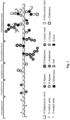
- Pectin is a hetero-polymer present in plant cell walls. Pectin is particularly predominant in fruit peels, especially in citrus fruits and apple pomace. Its backbone chain is composed of D-galacturonic acid residues linked by ⁇ 1-4 glycosidic bond (homogalacuronan domain), the main and most abundant domain ( Gawkowska, Cybulska, & Zdunek, Pol., 2018,10 (7 )) (around 60%). Additionally, as shown in Fig. 1 , which belongs to the state of the art, it has different domains branched, such as rhamnogalacturonan I (RGI) and sugars ( Zdunek, Pieczywek, & Cybulska, Comp. Rev. Food Scien. Food Saf., 2021, 20 (1),1101-1117 ).
- rhamnogalacturonan I rhamnogalacturonan I
- sugars Zdunek, Pieczywek, & Cybulska, Comp. Rev. Food Scien
- the carbon 6 of the D-galacturonic residues can be methyl-esterified (COOCH 3 ) or carboxylated (COO - , in its deprotonated form), as indicated in Fig. 2 belonging to the state of the art.
- COOCH 3 methyl-esterified
- COO - carboxylated
- pectin shows a different degree of esterification (DE).
- Carboxyl groups are hydrophilic and can coordinate with metal ions, whereas methyl-esterified are phobic. Therefore, maximizing the number of COO - (i.e., low degree of esterification), the adsorption of metal ions is very high compared with pectin with a high level of COOCH 3 groups.
- HM high methoxyl pectins
- LM low methoxyl
- pectin is a watersoluble biopolymer. Therefore, to be used in aqueous environments, it should become insoluble. This is achieved by crosslinking the pectin with various crosslinking agents.
- crosslink agents were used for pectin of low DE, being positive divalent (Ca +2 , Cu +2 , Sr +2 Ni +2 Zn +2 Cd +2 Pb +2 or Mg 2+ ) or trivalent (Al 3+ , La 3+ , and Fe 3+ ) ions the most used ( Munarin, F. International Journal of Biological Macromolecules 2012, 51 (4), 681-689 ; McKenna, B. A. Carbohydrate Research 2010, 345 (9), 1174-1179 ).
- the crosslinking or gelation of pectin with low DE involves ionic linkages via calcium bridges between carboxyl groups ( Cao, L., et al. (2020). Carbohydrate Polymers, 242(April), 116389 ).
- Divalent cations such as Ca 2+ or trivalent cations such as Al 3+ can bind between two carboxyl groups of adjacent galacturonic acid chains.
- Gelation of low methoxylated pectin with calcium ions occurs by forming junction zones according to the so-called "egg-box" model ( Grant, G. T. FEBS Letters 1973, 32 (1), 195-198 ), which has been initially described for alginates (see Fig. 3 belonging to the state of the art).
- pectin As it is a natural component of vegetables and fruits, it is an exceptionally safe multifunctional food additive (E440). Therefore, the practical uses of pectin are in the food and pharmaceutical industries ( Thakur, B. R. et al. (1997). Critical Reviews in Food Science and Nutrition, 37(1), 47-73 ).
- pectin is popular in several scientific fields because of its availability, safety, relatively low price, and functionality. Specific structural characteristics developed by pectin's functional groups or attachment of chemicals on the molecule make it a good candidate for several purposes, such as food innovations, nutritional remediation, drug delivery, illness treatment, tissue engineering, and other approaches.
- pectin is resistant to gastrointestinal hydrolyzing enzymes and acidic/alkaline media, favouring its application in colon delivery via an oral route under a specific condition.
- pectin with a low level of esterification, also has a high application value and broad application prospects as a functional food ingredient ( Moslemi, M. Carbohydrate Polymers 2021, 254, 117324 ). It also has been studied as a forthcoming biomaterial for tissue engineering and biomedical applications ( Reichembach, L. H. et al. Food Hydrocolloids 2021, 118, 106824 ). Pectin films have also been used in packaging, although their limitations because of their inadequate mechanical properties and high hydrophilicity of the pectin films ( Oliva-Moreno, E. et al. Materials Letters 2021, 290, 129488 ; Espitia, P. J. P. et al.
- Another application is the use of water purification for the removal of toxic pollutants such as metal ions and dyes ( Thakur, S. et al. Journal of Environmental Management 2019, 238, 210-223 ; Wang, R. et al. Trends Food Sci. Technol. 2019, 91, 319-329 ) and sea-water desalination ( Rampun, E. L. A. et al. Membrane Technology 2019, 2019 (12), 5-9 ).
- toxic pollutants such as metal ions and dyes
- the present invention proposes a new composition based on low esterification degree pectin useful for removing both pharmaceuticals and heavy metal polluted water bodies. This property contrasts with pectin cross-linked with calcium, which can only remediate heavy metals.
- the inventors of the present invention have found a new material or composition and a process for removing chemicals, pharmaceuticals, and heavy metals from contaminated water based on adsorption in a pectin film of a low degree of esterification cross-linked with europium (Eu(III)) or with a combination of europium and calcium (Ca(II)).
- Pectin is a biodegradable polymer that can be rendered insoluble by cross-linking with said cross-linking agents.
- the first aspect of the invention relates to a composition (composition of the invention) comprising pectin of a low degree of esterification cross-linked with a cross linking agent comprising Europium (III), wherein the composition is in the form of a film.
- composition of the invention comprising pectin of a low degree of esterification cross-linked with a cross linking agent comprising Europium (III), wherein the composition is in the form of a film.
- the cross-linking agent also comprises Calcium (II).
- the cross-linking agent consists of Eu (III) or a combination of Eu(III) and Ca(II).
- pectin with a low degree of esterification is a pectin wherein less than 50% of the galacturonic acid residues are methoxylated.
- Pectin, with a low degree of esterification is a commercially available product.
- the galacturonic acid residues are methoxylated. In a more preferred embodiment, only 9.9 % of the galacturonic acid residues are methoxylated.
- film in the present invention refers to a thin solid layer of material, preferably between 0.01 and 1 cm thickness, typically in a planar structure. In a more preferred embodiment, the film has a thickness between 0.01 and 0,5 cm and, even more preferably, between 0.01 and 0.25 mm.
- the composition comprises between 10 and 55 mg of Eu (III) in 1 gr of the composition (film) if Eu(III) is the only cross-linking agent.
- the composition comprises between 10 and 110 mg of Eu (III) in 1 gr of the composition (film) if only both Eu(III) and Ca(ll) are cross-linking agents.
- the composition comprises between 5 and 20 mg of Ca (II) in 1 gr of the composition (film).
- composition or material of the present invention is in the form of a film, so it is not in the form of nanoparticles and does not contain nanoparticles. This fact implies advantages concerning adsorbents known on the state of the art based on the use of nanoparticles, as these pose challenges related to eco-toxicity since they might be released into the environment where they can accumulate for years.
- the composition of the present does not contain any filler.
- Some of the fillers used in the prior art are: carbonaceous materials (activated carbon bio-char or carbon nanotubes), metal, and metal oxide engineered nanomaterials (nanoscale zero-valent iron (nZVI), TiO 2 , Ag, and ZnO), or magnetic-core nanoparticles (iron, nickel, cobalt or their oxides).
- nZVI nanoscale zero-valent iron
- TiO 2 titanium oxide
- Ag Ag
- ZnO zinc oxide
- magnetic-core nanoparticles iron, nickel, cobalt or their oxides.
- the composition of the invention does not comprise any filler.
- Nanoparticles or “nanomaterials” refers to particles whose largest dimension is less than 100 nm.
- the composition of the invention consists essentially of a pectin of low degree of esterification and the cross-linking agent.
- compositions of the invention contain substantially no other components, but some water molecules derived from the preparation method may be present. This is because the material is hydrophilic, and even after drying, some water molecules (less than 0.05 wt. % of water with respect to the composition) remain in the structure, depending on the relative humidity.
- Eu(III) and Eu 3+ are used interchangeably to refer to the trivalent Europium cation.
- Ca(ll) and Ca 2+ refer to the divalent Calcium cation.
- Another aspect of the invention refers to the process to prepare a composition, as described in the first aspect of the invention.
- the process comprises the next steps:
- the preparation of the water solution of pectin is carried out in presence of glycerol for better manipulation of the film to be obtained.
- the amount of glycerol in the solution is between 5 and 15 w/v %, more preferably, 6 w/v % ("w/v %" refers to number of grams of the compound in 100 ml of solution).
- the preparation of the water solution of pectin is carried out at a temperature between 40 and 90 oC under stirring until complete dissolution, more preferably, at a temperature between 60 and 70 oC and even more preferably, at 70 oC.
- the amount of pectin in the solution is between 1 to 8 w/v % more preferably, 3% w/v.
- the water solution of pectin of low degree of esterification is subjected to ultra-sonication in ultra-sonication bath before pouring it into a container.
- the ultra-sonication step allows to both homogenize and maximize the bubble elimination from the viscous solution.
- the ultra-sonication is preferably carried out at a temperature between 40 and 95 oC, more preferably at 70 oC, and /or for at least 1 h, more preferably between 1 and 2 h, and, even more preferably, for 1.5 h.
- between 0.05 and 0.2 ml of the solution in step a) is poured per 1 cm 2 of the container.
- the solution poured in a container is dried on air for 12 hours.
- the film prepared in step a) is immersed in a Eu(III) aqueous solution wherein the concentration of Eu(III) is between 100 and 1000 ppm, more preferably, 500 ppm.
- the film is immersed in the Eu(III) aqueous solution for at least 10 min, more preferably between 10 min to 5 hours, and even more preferably for 40 min. The longer the time, the higher the degree of crosslinking obtained.
- the process comprises a step b') of obtention of a pectin film cross-linked with Ca(II), between steps a) and b).
- This step b') is similar to step b), but uses Ca(ll) instead of Eu(III). That is, step b') comprises: obtaining a cross-linked pectin film by a method comprising:
- the concentration of Ca(ll) aqueous solution in step b') is between 100 and 1000 ppm, more preferably, 500 ppm.
- the film is immersed in the Ca(ll) aqueous solution in step b') for at least 10 min, more preferably between 10 min to 5 hours, and even more preferably for 40 min.
- the present invention also refers to the film of pectin of low degree of esterification cross-linked with Eu(III) or with Ca(II) and Eu(III) obtained by the process previously described.
- a last aspect of the present invention refers to the use of the composition described in the first aspect of the invention to remove chemicals, pharmaceuticals, and/or heavy metals from water. Chemicals, pharmaceuticals, and heavy metals contribute to water pollution.
- the composition of the invention is of great utility for the removal of these components from polluted water.
- chemicals includes solvents, pesticides, fertilizers, industrial and household chemicals and the like.
- pharmaceuticals are defined as any chemical used for the diagnosis, treatment (cure/mitigation), alteration, or prevention of disease, health condition, or structure/function of the body.
- the term "heavy metal” denotes a metal having an atomic weight greater than that of sodium. It includes, but is not limited to, magnesium, aluminium, calcium, scandium, titanium, vanadium, chromium, manganese, iron, cobalt, nickel, copper, zinc, gallium, germanium, arsenic, selenium, strontium, yttrium, zirconium, niobium, molybdenum, technetium, ruthenium, rhodium, palladium silver, cadmium, indium, antimony, tin, barium, lanthanum, hafnium, tantalum, tungsten, rhenium, osmium, iridium, platinum, gold, mercury, tellurium, lead, bismuth, and polonium. In particular, it includes divalent and trivalent ions of these metals, particularly those of copper, zinc, cadmium, nickel, barium, lead, aluminium, and selenium.
- the present invention refers to the use of the composition described in the first aspect of the invention to remove pharmaceuticals and/or heavy metals from water.
- the present invention refers to the use of the composition described in the first aspect of the invention comprising or consisting of pectin of low degree of esterification cross-linked with a cross-linking agent comprising or consisting of Eu (III) to remove pharmaceuticals from polluted water.
- the present invention refers to the use of the composition described in the first aspect of the invention comprising or consisting of pectin of low degree of esterification cross-linked with a cross-linking agent comprising or consisting of a combination of Eu(III) and Ca(II) to remove pharmaceuticals and/or heavy metals from polluted water.
- the pharmaceuticals are antibiotics and/or antihistamines, more preferably, the pharmaceuticals are selected from Trimethoprim (TMP), Tetracycline (TC), and Chlorpheniramine maleate (CPH).
- TMP Trimethoprim
- TC Tetracycline
- CPH Chlorpheniramine maleate
- the heavy metal is a divalent or trivalent heavy metal.
- the heavy metal is selected form: Copper, Zinc, Cadmium, Nickel, Barium, Lead, Aluminium, and Selenium.
- compositions according to the present invention are provided.
- the pectin used is extracted from citrus peels with a DE of 9.9% (Herbrasih & Fox). In addition, it has been used glycerol ( ⁇ 99%, Merck), calcium chloride anhydrous granular ( ⁇ 93%, Merck), europium chloride hexahydrate (212881, Merck) and deionized MiliQ water.
- TMP Trimethoprim
- TC Tetracycline
- CPH Chlorpheniramine maleate
- Pectin films were cross-linked using three different crosslinking agents:
- the procedure to crosslink the films is the following:
- the antibiotic concentration was determined using a UV-Vis spectrophotometer (Agilent 8453A).
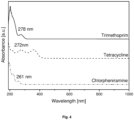
- Fig. 4 shows the full scan spectrum of tetracycline, Chlorpheniramine maleate, and trimethoprim in the wavelength range of 190 to 800 nm determined by UV-Vis spectrophotometry.
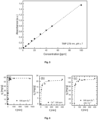
- a calibration curve ( Fig. 5 ) was generated before measuring the antibiotic concentration profile during the experiments, and a linear regression R-value of 0.999 was observed.
- ICP-AES inductively coupled plasma Atomic Emission Spectrometer
- Adsorption isotherms were measured at varying concentrations of a given pollutant, ranging from 5 mg/L to 60 mg/L (pharmaceutical), 25 mg/L to 1500 mg/L for heavy metals.
- Equilibrium pollutant concentration (C eq ) was measured using UV-Vis spectroscopy for pharmaceuticals whereas for metals (Eu 3+ , Ca 2+ , Ba 2+ , or Zn 2+ ), we have used an inductively coupled plasma Atomic Emission Spectrometer (ICP-AES) (Horiba Yobin Yvon Activa).
- R % c 0 ⁇ c e c 0 ⁇ 100 %
- Fig. 6a Kinetics experiments were performed to study the time when the crosslinking was produced in a Eu 3+ 500 ppm solution (see Fig. 6a).
- the sorption of Eu 3+ was rapid in the first 30 min. After that, it proceeded at a relatively slower rate and finally reached equilibrium after ⁇ 200 min.
- the same behavior is observed using calcium as a crosslinking agent (Fig. 6b).
- Fig. 6c shows the kinetic when the pectin is cross-linked with calcium and then with europium. In this last case, the crosslinking is even more effective than that produced only with Eu +3 .
- Adsorption kinetics follows the pseudo-second order model (see eq. 5) with a linear correlation coefficient of 0.99. This suggests that chemisorption is the main adsorption mechanism ( Wang, R.-S. et al. Polymers 2021, 13 (15), 2453 ).
- TC tetracycline
- TMP trimethoprim
- CPH chlorpheniramine maleate
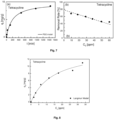
- Fig. 7b shows the amounts of removal rate corresponding to the different equilibrium concentrations. The results showed that the percentage of tetracycline removed is maximum (68 %) at 10 ppm of TC. It is also expected to increase at lower concentrations of TC in water.
- Fig. 8 show the adsorption isotherms with initial concentration in the range of 0 to 60 mg/L.
- the data were fitted with the Langmuir model (see Table 2 where the parameters are shown). Table 2. Isotherm fit results using Langmuir models.
- the coefficient R2 was calculated on the linearized forms. Sample q M [mg/g] k R 2 Crosslinking with Eu +3 24.0 ⁇ 3.4 0.013 ⁇ 0.003 0.99
- Fig. 9 shows the adsorption isotherms, i.e., the amounts of adsorbed nickel (a) or zinc (b) versus time. Note that in Fig 9a, the nickel concentration is 446 ppb whereas for Zinc we have used a higher concentration of 500 ppm. In both cases, we can observe that in some minutes, the removal efficiency is very high.
- Pharmaceutical Removal Efficiency [%] Initial concentration (ppm) Nickel (Ni) 99.8 1.6 Zinc (Zn) 100.0 1.9 Barium (Ba) 96.7 22.6
- This section presents the pectin film's results cross-linked with Eu 3+ and Ca 2+ .
- pectin when pectin is cross-linked with Eu 3+ , it can adsorb pharmaceuticals, and if it is cross-linked with Ca 2+ , it can adsorb heavy metals. Therefore, we expect that films cross-linked with Eu 3+ and Ca 2+ can remove antibiotics and heavy metals at the same time. This is important because, typically, water is polluted with more than a single contaminant.
- Fig. 10 shows the kinetic experiments (a) and the removal rate (b) for the adsorption of tetracycline on pectin films cross-linked with the dual system (Eu 3+ and Ca 2+ ).
- the adsorption capacity of TC is higher for the dual crosslinking system.
- the q value for the TC removal is 57% higher for the dual system (14 mg/g) than the Eu 3+ cross-linked film (8 mg/g).
- Fig. 11 shows the kinetic experiments (a) and the removal rate (b) for the adsorption of Zinc on pectin films cross-linked with the dual system (Eu 3+ and Ca 2+ ).
- the adsorption capacity of Zinc is clearly higher for the dual crosslinking system.
- Fig. 12 shows the kinetic experiments (a) and the removal rate (b) for the adsorption of the two pollutants (tetracycline and Zinc) at the same time.
- the removal rate is very high in both cases as seen in Fig. 12b.
Landscapes
- Life Sciences & Earth Sciences (AREA)
- Hydrology & Water Resources (AREA)
- Engineering & Computer Science (AREA)
- Environmental & Geological Engineering (AREA)
- Water Supply & Treatment (AREA)
- Chemical & Material Sciences (AREA)
- Organic Chemistry (AREA)
- Polysaccharides And Polysaccharide Derivatives (AREA)
Abstract
The present invention refers to a new material or composition for removing pharmaceuticals and heavy metals from contaminated water based on adsorption in a pectin film of a low degree of esterification without any filler. Pectin is crosslinked with europium or with a combination of europium and calcium. Additionally, the present invention refers to the process of preparing the composition and to the use thereof.
Description
- This invention describes a new material or composition for removing chemicals, pharmaceuticals, and heavy metals from polluted water. Said composition is based on a low degree of esterification pectin film cross-linked with europium. Therefore, the invention belongs to the field of wastewater treatment in environmental protection.
- Water pollution is the release of substances into water bodies (oceans, seas, lakes, rivers, streams, canals, etc.) that make water unsafe for aquatic ecosystems or human use. Nowadays, contamination is observed in almost all sources of available water bodies. A fundamental environmental challenge posed by water contamination is the presence of emerging contaminants (such as medicines, pharmaceutical products, industrial chemicals, heavy metals, metalloids, and pesticides), which drastically reduce drinking water quality. These emerging contaminants are gaining notable prominence in water remediation research because they possess an intricate molecular nature, are not routinely monitored, and are very hard to detect and remove.
- Contaminated water can be remediated or cleaned to some extent for its reuse. The different contaminants can be removed using both traditional and modern methods. Among conventional methods, we can mention filtration (water passes through a column of bed and bank materials), phase separation (such as sedimentation), biological and chemical processes (such as oxidation), leaching, photocatalysis, and hydrolysis. These methods are typically used in wastewater treatment plants (WWTPs), and they play a crucial role in environmental preservation and are essential for modern urban life. However, the design of WWTPs is based on the need to reduce organic and suspended solids, but they are not planned to remove emerging contaminants. Remediation efficiencies in WWTPs can be less than 10% in the case of pharmaceuticals or heavy metals. Its removal has rarely been considered an objective, but this must now be of primary concern when water is used, for instance, for agriculture.
- Water and environmental contamination from pharmaceutical products can occur throughout their life cycle (from manufacturing to disposal). Pharmaceuticals are found at concentrations ranging from ng/L to µg/L, and the highest concentration is found in rivers and lakes that receive treated water from wastewater treatment plants (McGrane, S. J. Hydrological Sciences Journal 2016, 61 (13), 2295-2311; Campanha, M. B. Environmental Science and Pollution Research 2015, 22 (10), 7936-7947). This wastewater also includes antibiotic-resistant bacteria (this resistance appears because of antibiotics in water), which can cause as many deaths as cancer. In addition to pharmaceuticals, other emerging contaminants can harm aquatic life and human health. They were previously unknown to be significant in freshwater (Farré, M. Journal of Chromatography A 2012, 1259, 86-99), and most are not yet included in routine monitoring programs.
- Adsorption is one of the most convenient wastewater purification techniques for removing pollutants from contaminated aqueous media because of its relatively straightforward design, cost-effectiveness, operation, and energy efficiency. Adsorption occurs when a molecule in a liquid binds itself to the surface of a solid substance. The most frequently used sorbents are active carbon, natural or synthetic zeolites, and silica gel. Compared with these traditional adsorption methods, bio-sorption is considered a very suitable method in which the role of the adsorbent is critical. Commonly used bio-sorbents include chitosan, pectin, alginate, etc., which are widely available, easy to obtain, and eco-friendly.
- The entry of nanotechnology into wastewater treatment engineering implied a noteworthy advancement, and it is a promising alternative to traditional water treatment methods. The main advantages of using nano-filters (as opposed to conventional systems) are that nano-particles have high efficiency, have a large surface area, and remove pollutants more efficiently than traditional methods. There are several types of membranes for water treatment (based on reverse osmosis, nano-, ultra, micro-filtration, and particle filtration). The performance of a membrane is principally ruled by the structure of its pores and the chemical/physical properties of the material.
- The most commonly used commercial materials are organic synthetic polymers or inorganic materials such as zeolites or activated carbon. However, inorganic materials are expensive, with high operational costs, and water permeability is often lower than that of polymeric ones. On the other hand, the main problem of polymeric membranes is that they are hydrophobic with a high fouling tendency (fouling is caused by microorganisms or proteins deposited on the surface of the membrane).
- These nano-filters are functionalized with nanoparticles to overcome the hydrophobicity problem in the nano-filtration organic membranes. In fact, several types of materials containing nanoparticles (NPs) have been studied for possible remediation applications, as they possess a high level of adsorption. However, nanoparticles pose challenges related to eco-toxicity since they might be released into the environment, where they can accumulate for years. Therefore, the use of NPs is non-viable.
- Regarding the mentioned inconveniences of the prior art, the present invention provides an adsorbent based on low esterification degree pectin and without the use of nanoparticles, making it more suitable for removing pharmaceuticals and heavy metal polluted water bodies.
- Pectin is a hetero-polymer present in plant cell walls. Pectin is particularly predominant in fruit peels, especially in citrus fruits and apple pomace. Its backbone chain is composed of D-galacturonic acid residues linked by α 1-4 glycosidic bond (homogalacuronan domain), the main and most abundant domain (Gawkowska, Cybulska, & Zdunek, Pol., 2018,10 (7)) (around 60%). Additionally, as shown in
Fig. 1 , which belongs to the state of the art, it has different domains branched, such as rhamnogalacturonan I (RGI) and sugars (Zdunek, Pieczywek, & Cybulska, Comp. Rev. Food Scien. Food Saf., 2021, 20 (1),1101-1117). - The carbon 6 of the D-galacturonic residues can be methyl-esterified (COOCH3) or carboxylated (COO-, in its deprotonated form), as indicated in
Fig. 2 belonging to the state of the art. Depending on the ratio of methyl-esterification of these residues, pectin shows a different degree of esterification (DE). Carboxyl groups are hydrophilic and can coordinate with metal ions, whereas methyl-esterified are phobic. Therefore, maximizing the number of COO- (i.e., low degree of esterification), the adsorption of metal ions is very high compared with pectin with a high level of COOCH3 groups. - DE is related to the gelling mechanism of the pectin and classifies pectin into two groups: high methoxyl pectins (HM), where more than 50% of the galacturonic acid residues are esterified and low methoxyl (LM) pectins, where less than 50% of the galacturonic acid residues are methoxylated. Independent of the DE, pectin is a watersoluble biopolymer. Therefore, to be used in aqueous environments, it should become insoluble. This is achieved by crosslinking the pectin with various crosslinking agents.
- Different crosslink agents were used for pectin of low DE, being positive divalent (Ca+2, Cu+2, Sr+2 Ni+2 Zn+2 Cd+2 Pb+2 or Mg2+) or trivalent (Al3+, La3+, and Fe3+) ions the most used (Munarin, F. International Journal of Biological Macromolecules 2012, 51 (4), 681-689; McKenna, B. A. Carbohydrate Research 2010, 345 (9), 1174-1179). The crosslinking or gelation of pectin with low DE involves ionic linkages via calcium bridges between carboxyl groups (Cao, L., et al. (2020). Carbohydrate Polymers, 242(April), 116389).
- Divalent cations such as Ca2+ or trivalent cations such as Al3+ can bind between two carboxyl groups of adjacent galacturonic acid chains. Gelation of low methoxylated pectin with calcium ions occurs by forming junction zones according to the so-called "egg-box" model (Grant, G. T. FEBS Letters 1973, 32 (1), 195-198), which has been initially described for alginates (see
Fig. 3 belonging to the state of the art). The lower the pectin esterification degree, the more divalent cation binding sites will be in the molecule, therefore, the ability to absorb more quantities of divalent cations. - Regarding previous uses of pectin, as it is a natural component of vegetables and fruits, it is an exceptionally safe multifunctional food additive (E440). Therefore, the practical uses of pectin are in the food and pharmaceutical industries (Thakur, B. R. et al. (1997). Critical Reviews in Food Science and Nutrition, 37(1), 47-73). In addition, pectin is popular in several scientific fields because of its availability, safety, relatively low price, and functionality. Specific structural characteristics developed by pectin's functional groups or attachment of chemicals on the molecule make it a good candidate for several purposes, such as food innovations, nutritional remediation, drug delivery, illness treatment, tissue engineering, and other approaches. Notably, pectin is resistant to gastrointestinal hydrolyzing enzymes and acidic/alkaline media, favouring its application in colon delivery via an oral route under a specific condition.
- In particular, pectin, with a low level of esterification, also has a high application value and broad application prospects as a functional food ingredient (Moslemi, M. Carbohydrate Polymers 2021, 254, 117324). It also has been studied as a forthcoming biomaterial for tissue engineering and biomedical applications (Reichembach, L. H. et al. Food Hydrocolloids 2021, 118, 106824). Pectin films have also been used in packaging, although their limitations because of their inadequate mechanical properties and high hydrophilicity of the pectin films (Oliva-Moreno, E. et al. Materials Letters 2021, 290, 129488; Espitia, P. J. P. et al. ). This issue can be resolved by blending with other polymers (Huang, S. et al. Food Chemistry 2021, 361, 129832) or incorporating crosslinkers and/or filler material (Makaremi, M. et al. ACS Applied Materials & Interfaces 2017, 9 (20), 17476-17488).
- Another application is the use of water purification for the removal of toxic pollutants such as metal ions and dyes (Thakur, S. et al. Journal of Environmental Management 2019, 238, 210-223; Wang, R. et al. Trends Food Sci. Technol. 2019, 91, 319-329) and sea-water desalination (Rampun, E. L. A. et al. Membrane Technology 2019, 2019 (12), 5-9).
- The present invention proposes a new composition based on low esterification degree pectin useful for removing both pharmaceuticals and heavy metal polluted water bodies. This property contrasts with pectin cross-linked with calcium, which can only remediate heavy metals.
- Increasing demand for clean water due to population growth, urbanization, intensive farming and mining, abuse and misuse, and climate change have become vital global issues. Today, purifying water is expensive and energy-consuming. Moreover, conventional drinking water treatment is inefficient in removing many emerging contaminants such as pharmaceuticals, heavy metals, and other small chemicals.
- Therefore, new technical solutions are required to meet different treatment challenges.
- The inventors of the present invention have found a new material or composition and a process for removing chemicals, pharmaceuticals, and heavy metals from contaminated water based on adsorption in a pectin film of a low degree of esterification cross-linked with europium (Eu(III)) or with a combination of europium and calcium (Ca(II)). Pectin is a biodegradable polymer that can be rendered insoluble by cross-linking with said cross-linking agents.
- Then, the first aspect of the invention relates to a composition (composition of the invention) comprising pectin of a low degree of esterification cross-linked with a cross linking agent comprising Europium (III), wherein the composition is in the form of a film.
- In a preferred embodiment, the cross-linking agent also comprises Calcium (II).
- In a preferred embodiment, the cross-linking agent consists of Eu (III) or a combination of Eu(III) and Ca(II).
- As indicated in the state of the art, pectin with a low degree of esterification is a pectin wherein less than 50% of the galacturonic acid residues are methoxylated. Pectin, with a low degree of esterification is a commercially available product.
- In a preferred embodiment, less than 20 % of the galacturonic acid residues are methoxylated. In a more preferred embodiment, only 9.9 % of the galacturonic acid residues are methoxylated.
- The term "film" in the present invention refers to a thin solid layer of material, preferably between 0.01 and 1 cm thickness, typically in a planar structure. In a more preferred embodiment, the film has a thickness between 0.01 and 0,5 cm and, even more preferably, between 0.01 and 0.25 mm.
- In a preferred embodiment, the composition comprises between 10 and 55 mg of Eu (III) in 1 gr of the composition (film) if Eu(III) is the only cross-linking agent.
- In a preferred embodiment, the composition comprises between 10 and 110 mg of Eu (III) in 1 gr of the composition (film) if only both Eu(III) and Ca(ll) are cross-linking agents.
- In a preferred embodiment, the composition comprises between 5 and 20 mg of Ca (II) in 1 gr of the composition (film).
- As previously indicated, the composition or material of the present invention is in the form of a film, so it is not in the form of nanoparticles and does not contain nanoparticles. This fact implies advantages concerning adsorbents known on the state of the art based on the use of nanoparticles, as these pose challenges related to eco-toxicity since they might be released into the environment where they can accumulate for years.
- Different from some adsorbent compositions of state of the art, the composition of the present does not contain any filler. Some of the fillers used in the prior art are: carbonaceous materials (activated carbon bio-char or carbon nanotubes), metal, and metal oxide engineered nanomaterials (nanoscale zero-valent iron (nZVI), TiO2, Ag, and ZnO), or magnetic-core nanoparticles (iron, nickel, cobalt or their oxides). The main reason to use these nanoparticles or fillers in some absorbents of state of the art is because of their capability to enhance the adsorption capacity and, in some cases, antifungal and antibacterial activities. Advantageously, the composition of the invention does not comprise any filler.
- "Nanoparticles" or "nanomaterials" refers to particles whose largest dimension is less than 100 nm.
- In a preferred embodiment, the composition of the invention consists essentially of a pectin of low degree of esterification and the cross-linking agent.
- By the term "consist essentially of", we mean that the compositions of the invention contain substantially no other components, but some water molecules derived from the preparation method may be present. This is because the material is hydrophilic, and even after drying, some water molecules (less than 0.05 wt. % of water with respect to the composition) remain in the structure, depending on the relative humidity.
- In the present invention, Eu(III) and Eu3+ are used interchangeably to refer to the trivalent Europium cation. Similarly, both Ca(ll) and Ca2+ refer to the divalent Calcium cation.
- Another aspect of the invention refers to the process to prepare a composition, as described in the first aspect of the invention. The process comprises the next steps:
- a) obtaining a pectin film by a casting method comprising:
- preparing a water solution of pectin of low degree of esterification and
- pouring the solution of a pectin of low degree of esterification in a container and drying, preferably on air, to form a film;
- b) obtaining a cross-linked pectin film by a method comprising:
- immersing the dried film prepared in step a) in a Eu(III) aqueous solution to obtain a film of pectin cross-linked with Eu(III),
- washing the film of pectin cross-linked with Eu(III) with deionized water to clean any Eu(III) excess that may remain from the cross-linking process and drying said film, preferably at room temperature (20 - 25 ºC), thus obtaining the composition of the present invention in the form of a film of solid consistency.
- In a preferred embodiment, the preparation of the water solution of pectin is carried out in presence of glycerol for better manipulation of the film to be obtained. In a more preferred embodiment, the amount of glycerol in the solution is between 5 and 15 w/v %, more preferably, 6 w/v % ("w/v %" refers to number of grams of the compound in 100 ml of solution).
- In a preferred embodiment, the preparation of the water solution of pectin is carried out at a temperature between 40 and 90 ºC under stirring until complete dissolution, more preferably, at a temperature between 60 and 70 ºC and even more preferably, at 70 ºC.
- In a preferred embodiment, the amount of pectin in the solution is between 1 to 8 w/v % more preferably, 3% w/v.
- In a preferred embodiment, the water solution of pectin of low degree of esterification is subjected to ultra-sonication in ultra-sonication bath before pouring it into a container. The ultra-sonication step allows to both homogenize and maximize the bubble elimination from the viscous solution. The ultra-sonication is preferably carried out at a temperature between 40 and 95 ºC, more preferably at 70 ºC, and /or for at least 1 h, more preferably between 1 and 2 h, and, even more preferably, for 1.5 h.
- In a preferred embodiment, between 0.05 and 0.2 ml of the solution in step a) is poured per 1 cm2 of the container.
- In a preferred embodiment, the solution poured in a container is dried on air for 12 hours.
- In a preferred embodiment, the film prepared in step a) is immersed in a Eu(III) aqueous solution wherein the concentration of Eu(III) is between 100 and 1000 ppm, more preferably, 500 ppm.
- In a preferred embodiment, the film is immersed in the Eu(III) aqueous solution for at least 10 min, more preferably between 10 min to 5 hours, and even more preferably for 40 min. The longer the time, the higher the degree of crosslinking obtained.
- In a preferred embodiment the process comprises a step b') of obtention of a pectin film cross-linked with Ca(II), between steps a) and b). This step b') is similar to step b), but uses Ca(ll) instead of Eu(III). That is, step b') comprises: obtaining a cross-linked pectin film by a method comprising:
- immersion of the dried film prepared in the previous step a) in a Ca(II) aqueous solution to obtain a film of pectin cross-linked with Ca(II),
- washing the film of pectin cross-linked with Ca(ll) obtained in the previous step with deionized water and drying said film, preferably at room temperature (20-25ºC).
- In a preferred embodiment, the concentration of Ca(ll) aqueous solution in step b') is between 100 and 1000 ppm, more preferably, 500 ppm.
- In a preferred embodiment, the film is immersed in the Ca(ll) aqueous solution in step b') for at least 10 min, more preferably between 10 min to 5 hours, and even more preferably for 40 min.
- The present invention also refers to the film of pectin of low degree of esterification cross-linked with Eu(III) or with Ca(II) and Eu(III) obtained by the process previously described.
- A last aspect of the present invention refers to the use of the composition described in the first aspect of the invention to remove chemicals, pharmaceuticals, and/or heavy metals from water. Chemicals, pharmaceuticals, and heavy metals contribute to water pollution. The composition of the invention is of great utility for the removal of these components from polluted water.
- The term "chemicals", as used herein, includes solvents, pesticides, fertilizers, industrial and household chemicals and the like.
- As used herein, the term "pharmaceuticals" are defined as any chemical used for the diagnosis, treatment (cure/mitigation), alteration, or prevention of disease, health condition, or structure/function of the body.
- As used herein, the term "heavy metal" denotes a metal having an atomic weight greater than that of sodium. It includes, but is not limited to, magnesium, aluminium, calcium, scandium, titanium, vanadium, chromium, manganese, iron, cobalt, nickel, copper, zinc, gallium, germanium, arsenic, selenium, strontium, yttrium, zirconium, niobium, molybdenum, technetium, ruthenium, rhodium, palladium silver, cadmium, indium, antimony, tin, barium, lanthanum, hafnium, tantalum, tungsten, rhenium, osmium, iridium, platinum, gold, mercury, tellurium, lead, bismuth, and polonium. In particular, it includes divalent and trivalent ions of these metals, particularly those of copper, zinc, cadmium, nickel, barium, lead, aluminium, and selenium.
- In a preferred embodiment, the present invention refers to the use of the composition described in the first aspect of the invention to remove pharmaceuticals and/or heavy metals from water.
- In a preferred embodiment, the present invention refers to the use of the composition described in the first aspect of the invention comprising or consisting of pectin of low degree of esterification cross-linked with a cross-linking agent comprising or consisting of Eu (III) to remove pharmaceuticals from polluted water.
- In a preferred embodiment, the present invention refers to the use of the composition described in the first aspect of the invention comprising or consisting of pectin of low degree of esterification cross-linked with a cross-linking agent comprising or consisting of a combination of Eu(III) and Ca(II) to remove pharmaceuticals and/or heavy metals from polluted water.
- In a preferred embodiment, the pharmaceuticals are antibiotics and/or antihistamines, more preferably, the pharmaceuticals are selected from Trimethoprim (TMP), Tetracycline (TC), and Chlorpheniramine maleate (CPH).
- In a preferred embodiment, the heavy metal is a divalent or trivalent heavy metal.
- In another preferred embodiment, the heavy metal is selected form: Copper, Zinc, Cadmium, Nickel, Barium, Lead, Aluminium, and Selenium.
- Pharmaceuticals and heavy metals can be removed from water with high efficiency if the pectin is cross-linked with both europium and calcium. This material can be reused up to 6 times without almost losing effectiveness. Finally, the material is completely biodegradable and without the use of nanoparticles.
- Unless otherwise defined, all technical and scientific terms used herein have the same meaning as commonly understood by one of ordinary skilled in the art to which this invention belongs. Methods and materials similar or equivalent to those described herein can be used in the practice of the present invention. Throughout the description and claims, the word "comprise" and its variations are not intended to exclude other technical features, additives, components, or steps. Additional objects, advantages, and features of the invention will become apparent to those skilled in the art upon examination of the description or may be learned by practice of the invention. The following examples and drawings are provided by way of illustration and are not intended to be limiting to the present invention.
-
-
Fig. 1 . Schematic representation of pectin molecule. In the legend, the monomeric carbohydrates that form the molecule are mentioned. -
Fig. 2 . Homogalacturonan chain composed by galacturonic acid residues (pectin backbone) (Zegada Franco, V. Y., Investigación & ). The carbon 6 of these residues can be methyl-esterified (COOCH3) or carboxylated (COO-). -
Fig. 3 . Schematic representation of calcium bound to galacturonic acid polymers a) "egg-box" model dimer; b) aggregation of dimers; c) "egg-box" model cavity calcium cation binding site to polymer (Grant, G. T. et al. FEBS Letters 1973, 32 (1), 195-198). -
Fig. 4 . Example of UV-VIS for tetracycline, Chlorpheniramine maleate and Trimethoprim. -
Fig. 5 . Example calibration curve of TMP for a solution at pH = 7 and using the peak at 278 nm. -
Fig. 6 . Adsorption kinetics of pectin in solutions with an initial Eu+3 or Ca2+ concentration of 500 ppm. (a) Kinetics corresponding to Eu3+. (b) Kinetics corresponding to Ca2+. (c) Dual crosslinking, first pectin was crosslinked with Ca2+ and, thereafter with Eu3+. The dashed lines in each figure represents the fitting using the Pseudo First Order model (PFO) for Eu3+ and the Pseudo Second Order model (PSO) for both Ca2+ and dual crosslinking (Both models are described in: J. Wang, X. Guo, Journal of Hazardous Materials 390 (2020) 122156). -
Fig. 7 . Adsorption kinetics of pectin cross-linked with Eu3+. Initial tetracycline concentration was 50 mg/L andpH 7 fixed using a HNO3 solution. Dashed line represents the fitting using the PSO model. -
Fig. 8 . Adsorption isotherms of tetracycline modeled with the Langmuir model (see Table S2 where the parameters are shown). The initial tetracycline concentration ranged from 1 to 60 mg/L. The dosage of adsorbent was 2.5 g/L and the initial pH = 7. -
Fig. 9 . Adsorption kinetics of pectin. (a) Initial Nickel concentration was 446 ppb (µg/L) and pH = 7 fixed using a NaOH solution. (b) Initial Zinc concentration was 500 ppm (mg/L) and pH = 7 fixed using a NaOH solution. Dashed line represents the fitting using the PSO model. -
Fig 10 . Adsorption kinetics (a) and removal rate (b) of pectin film cross-linked with the dual system (black points) and cross-linked only with Ca2+. Initial tetracycline concentration was 50 ppm, pH = 7 was fixed using a HNO3 solution and the dose was 2.5 g/L. -
Fig 11 . Adsorption kinetics (a) and removal rate (b) of pectin film cross-linked with the dual system (red points) and cross-linked only with Eu3+. Initial Zinc concentration was 150 ppm, pH = 7 was fixed using a NaOH solution and the dose was 2.5 g/L. -
Fig 12 . Adsorption kinetics (a) and removal rate (b) of pectin film cross-linked with the dual system (black points). Initial concentration was 30 ppm for tetracycline and for Zinc respectively. pH = 7 was fixed using a NaOH and HNO3 solutions. The dose was 2.5 g/L. - Next, illustrative examples of preparation of compositions according to the present invention and their use are provided.
- 1.1 Materials: The pectin used is extracted from citrus peels with a DE of 9.9% (Herbstreith & Fox). In addition, it has been used glycerol (≥ 99%, Merck), calcium chloride anhydrous granular (≥ 93%, Merck), europium chloride hexahydrate (212881, Merck) and deionized MiliQ water.
- Two antibiotics (Trimethoprim (TMP) and Tetracycline (TC)) have been used. Trimethoprim (TMP) is an antibiotic used mainly in the treatment of bladder infections whereas Tetracycline (TC) is an antibiotic that fights infections caused by many different bacterial infections of the skin, intestines, respiratory tract, urinary tract, genitals, lymph nodes, and other body systems. TC is also used in livestock farming. In addition, Chlorpheniramine maleate (CPH) has been used. It is an antihistamine that relieves allergy symptoms, hay fever, and the common cold.


- For zinc, dilutions, it has been used a 1000 mg/L Zn standard solution for ICP (18562, Sigma Aldrich), 1000 mg/L Ni standard solution for ICP (28944, Sigma Aldrich) and deionized water.
-
- 1. A 6% w/v glycerol and 3% w/v pectin water solution is prepared in an Erlenmeyer flask under vigorous magnetic stirring at 70 ºC until complete dissolution (about 1.5 hours).
- 2. The flask is then transferred to an ultra-sonication bath at 70 ºC for 1.5 hours to both homogenize and maximize the bubble elimination from the viscous solution.
- 3. 10 ml of the solution is poured onto a petri dish (10 cm diameter) and dried on air for 12 hours.
- Pectin films were cross-linked using three different crosslinking agents:
- Europium (III) chloride hexahydrate.
- Calcium (II) chloride.
- A combination of Europium (III) and Calcium (II).
- The procedure to crosslink the films is the following:
- 1. The film prepared in 1.4 is immersed in a 500 ppm Eu3+ (or Ca2+) aqueous solution for 40 min.
- 2. After cross-link, the films are washed four times with 200 ml of deionized water to clean any Eu3+ (or Ca2+) excess that may remain from the cross-linking process.
- 3. Films are dried at room temperature under vacuum and stored at 4º C for further analysis.
- When pectin films were cross-linked using both Eu3+ and Ca2+, the procedure is to crosslink at first with calcium and thereafter with europium.
- The antibiotic concentration was determined using a UV-Vis spectrophotometer (Agilent 8453A).
Fig. 4 shows the full scan spectrum of tetracycline, Chlorpheniramine maleate, and trimethoprim in the wavelength range of 190 to 800 nm determined by UV-Vis spectrophotometry. A calibration curve (Fig. 5 ) was generated before measuring the antibiotic concentration profile during the experiments, and a linear regression R-value of 0.999 was observed. Antibiotic concentration was determined with this calibration curve according to the Lambert-Beer law (A = ε c I, where A is the absorbance (a.u.), ε is the molar absorption coefficient (M-1 cm-1), c is the molar concentration (M) and I is the optical path length (cm). - Two major absorption peaks were observed for tetracycline at 272 and 359 nm wavelengths. The equilibrium concentration of tetracycline in the solution was measured at 272 nm whereas for trimethoprim at 278 nm, and Chlorpheniramine maleate at 261nm.
- To measure the concentration of heavy metals, we have used inductively coupled plasma Atomic Emission Spectrometer (ICP-AES) (Horiba Yobin Yvon Activa).
- All adsorption experiments were performed in 5 mL solutions using a dose of 2.5 g/L under orbital shaking at 125 rpm and at room temperature (25 ± 1 °C). The pH of solutions was kept constant to pH = 7 using a 0.1 M NaOH solution and 0.1M HNO3 solutions.
- Adsorption isotherms were measured at varying concentrations of a given pollutant, ranging from 5 mg/L to 60 mg/L (pharmaceutical), 25 mg/L to 1500 mg/L for heavy metals. Equilibrium pollutant concentration (Ceq) was measured using UV-Vis spectroscopy for pharmaceuticals whereas for metals (Eu3+, Ca2+, Ba2+, or Zn2+), we have used an inductively coupled plasma Atomic Emission Spectrometer (ICP-AES) (Horiba Yobin Yvon Activa).
- The batch adsorption experiments at 24 h were used to measure the concentration at equilibrium (Ceq) and the adsorption capacity (qe) (mg/g) was calculated as:

- The removal efficiency (R) was calculated as:

- Regarding the adsorption isotherms, they were fitted using the Langmuir and Freundlich models (Equations (3) and (4), respectively):


- For kinetic experiments, we measured pharmaceutical or heavy metal concentration between 10 min and 24 h at the fixed concentration of 50 mg/L (50 ppm). Data were analysed using non-linear fittings of the pseudo second order (PSO) model

- Kinetics experiments were performed to study the time when the crosslinking was produced in a Eu3+ 500 ppm solution (see Fig. 6a). The sorption of Eu3+ was rapid in the first 30 min. After that, it proceeded at a relatively slower rate and finally reached equilibrium after ~200 min. The same behavior is observed using calcium as a crosslinking agent (Fig. 6b). In addition, Fig. 6c shows the kinetic when the pectin is cross-linked with calcium and then with europium. In this last case, the crosslinking is even more effective than that produced only with Eu+3.
- Adsorption kinetics follows the pseudo-second order model (see eq. 5) with a linear correlation coefficient of 0.99. This suggests that chemisorption is the main adsorption mechanism (Wang, R.-S. et al. Polymers 2021, 13 (15), 2453).
- In pure water with pH of 7, low methoxylated pectin has many negative centers, because pKa of pectin is about 3.5. The degree of esterification has a crucial importance for an electrostatic interaction between pectin and ions. The low DE causes a high available number of acidic groups, which can bind with more cations. Thus, the lower the degree of esterification of pectin, the higher number of junction zones. Therefore, the formed film is stable. Table 1 shows the PSO parameters of the fitting.
Table 1. Adsorption kinetics fit results using PSO model for the data in Fig. 6. Sample qM [mg/g] k R2 Crosslinking with Eu+3 PFO 58.51 ± 4.08 0.024 ±0.007 0.8868 Crosslinking with Ca+2 PSO 21.22 ± 0.66 0.006 ± 0.001 0.98652 Crosslinking with Eu+3 and Ca+2 PSO 114.52 ±2.52 0.0020 ± 0.0005 0.98522 - From the results in
Fig. 6 , we can conclude that the removal efficiency after 40 min in a solution with an initial concentration of 500 ppm was 18, 14, and 54 % for Eu3+, Ca2+, and Eu3+ when the film was previously cross-linked with Ca2+, respectively. This means that the dual crosslinking system has more efficiency and more Eu+3 ions are captured by the film. - The adsorption kinetics was investigated for three different pharmaceuticals (tetracycline (TC), trimethoprim (TMP) and chlorpheniramine maleate (CPH)).
- The experiments for the effects of contact time were carried out at varying contact times ranging from 10 min to 1500 min at an adsorbent dose of 2.5 g/L, at room temperature (25 °C), and pH = 7. Optimization of contact time is essential for the adsorption studies to ensure complete equilibrium between the film and TC.
Fig. 7 shows the effect of the contact time of the pectin film and TC. It was found that TC removal was fast during the first 100 min reaching the equilibrium after -500 min. This may be because, in the initial stage, adsorption sites are highly available, but over time, there is a depletion of the adsorption sites. - Fig. 7b shows the amounts of removal rate corresponding to the different equilibrium concentrations. The results showed that the percentage of tetracycline removed is maximum (68 %) at 10 ppm of TC. It is also expected to increase at lower concentrations of TC in water.
-
Fig. 8 show the adsorption isotherms with initial concentration in the range of 0 to 60 mg/L. The data were fitted with the Langmuir model (see Table 2 where the parameters are shown).Table 2. Isotherm fit results using Langmuir models. The coefficient R2 was calculated on the linearized forms. Sample qM [mg/g] k R2 Crosslinking with Eu+3 24.0 ± 3.4 0.013 ± 0.003 0.99 - At an initial concentration of 10 ppm of antibiotics in water, the removal efficiency is shown in Table 3. We reached values higher than 50% for a dose of the adsorbent of 2.5 g/L. It is important to note that in real water, the concentration of antibiotics is much lower (about 1 ppb); therefore, the removal efficiency will reach very high values.
Table 3. Removal efficiency and adsorption capacity of pectin cross-linked with Eu3+ for different pharmaceuticals. The dosage was 2.5 g/L and the pH was maintained at 7. Pharmaceutical Removal Efficiency at 10 ppm [%] Tetracycline (TC) 68 Trimethoprim (TMP) 46 Chlorpheniramine maleate (CPH) 51 -
Fig. 9 shows the adsorption isotherms, i.e., the amounts of adsorbed nickel (a) or zinc (b) versus time. Note that in Fig 9a, the nickel concentration is 446 ppb whereas for Zinc we have used a higher concentration of 500 ppm. In both cases, we can observe that in some minutes, the removal efficiency is very high. Table 4 shows the removal efficiencies for three different heavy metals at the initial concentration shown in the Table.Table 4. Removal efficiency at the initial concentration showed in the table of pectin cross-linked with Ca2+ for different heavy metals. The dosage was 2.5 g/L and the pH =7. Pharmaceutical Removal Efficiency [%] Initial concentration (ppm) Nickel (Ni) 99.8 1.6 Zinc (Zn) 100.0 1.9 Barium (Ba) 96.7 22.6 - This section presents the pectin film's results cross-linked with Eu3+ and Ca2+. We have already seen that when pectin is cross-linked with Eu3+, it can adsorb pharmaceuticals, and if it is cross-linked with Ca2+, it can adsorb heavy metals. Therefore, we expect that films cross-linked with Eu3+ and Ca2+ can remove antibiotics and heavy metals at the same time. This is important because, typically, water is polluted with more than a single contaminant.
-
Fig. 10 shows the kinetic experiments (a) and the removal rate (b) for the adsorption of tetracycline on pectin films cross-linked with the dual system (Eu3+ and Ca2+). The adsorption capacity of TC is higher for the dual crosslinking system. The q value for the TC removal is 57% higher for the dual system (14 mg/g) than the Eu3+ cross-linked film (8 mg/g). - Similar to
Fig. 10 ,Fig. 11 shows the kinetic experiments (a) and the removal rate (b) for the adsorption of Zinc on pectin films cross-linked with the dual system (Eu3+ and Ca2+). As in the case of TC, the adsorption capacity of Zinc is clearly higher for the dual crosslinking system. - Finally,
Fig. 12 shows the kinetic experiments (a) and the removal rate (b) for the adsorption of the two pollutants (tetracycline and Zinc) at the same time. The removal rate is very high in both cases as seen in Fig. 12b.Table 5. Removal efficiency of pectin cross-linked with Eu3+ and Ca2+ for an initial concentration of 5 ppm of tetracycline and Zinc respectively. The dosage was 2.5 g/L and the pH = 7. Removal Efficiency Tetracycline (TC) 87 Zinc (Zn) 96 - In conclusion, we have shown a novel way to crosslink pectin with low degree of methoxylation via Eu3+. Moreover, we can use a dual crosslinking system of Eu+3 and Ca2+. With this strategy, we can reach remarkable pharmaceuticals and heavy metals adsorption, as discussed above.
Claims (15)
- Composition comprising pectin of low degree of esterification cross-linked with a cross linking agent comprising Eu(III) wherein the composition is in the form of a film.
- Composition, according to claim 1, wherein the cross-linking agent also comprises Ca(II).
- Composition, according to claim 1, wherein the cross-linking agent consists of Eu (III) or of a combination of Eu(III) and Ca(II).
- Composition, according to any of the preceding claims, wherein the pectin of a low degree of esterification comprises less than 20% of methoxylated galacturonic acid residues.
- Composition, according to any of the preceding claims, which consists essentially of pectin of a low degree of esterification and the cross-linking agent.
- Process to prepare a composition as described in any of claims 1 to 5 that comprises the next steps:a) obtaining a pectin film by a casting method comprising:- preparing a water solution of pectin of low degree of esterification- pouring the solution of pectin of low degree of esterification in a container and drying to form a film;b) obtaining a cross-linked pectin film by a method comprising:- immersing the dried film prepared in step a) in a Eu(III) aqueous solution to obtain a film of pectin cross-linked with Eu(III),- washing the film of pectin cross-linked with Eu(III) with deionized water and drying said film.
- Process according to claim 6, wherein the preparation of the water solution of pectin is carried out at a temperature between 40 and 90 ºC under stirring until complete dissolution.
- Process, according to claim 6 or 7, wherein the amount of pectin in the water solution is between 1 to 8 w/v %.
- Process, according to any of claims 6 to 8, wherein the film prepared in step a) is immersed in a Eu(III) aqueous solution having a concentration of Eu(III) between 100 and 1000 ppm.
- Process, according to any of claims 6 to 9, wherein the process comprises a step b') of obtention of a pectin film cross-linked with Ca(II), between steps a) and b), wherein step b') comprises:- immersion of the dried film prepared in the previous step a) in a Ca(II) aqueous solution to obtain a film of pectin cross-linked with Ca(II),- washing the film of pectin cross-linked with Ca(II) obtained in the previous step with deionized water and drying said film.
- Use of the composition described in any of previous claims 1 to 5 to remove chemicals, pharmaceuticals and/or heavy metals from water.
- Use, according to claim 11, wherein the composition comprises or consists of pectin of low degree of esterification cross-linked with a cross-linking agent comprising or consisting of Eu (III) to remove pharmaceuticals from polluted water.
- Use, according to claim 11, wherein the composition comprises or consists of pectin of low degree of esterification cross-linked with a cross-linking agent comprising or consisting of a combination of Eu(III) and Ca(II) to remove pharmaceuticals and/or heavy metals from polluted water.
- Use, according to claim 11 or 12, wherein the pharmaceuticals are selected from Trimethoprim (TMP), Tetracycline (TC) and Chlorpheniramine maleate (CPH).
- Use, according to claim 11 or 13, wherein the heavy metal is selected form divalent or trivalent heavy metals.
Priority Applications (1)
| Application Number | Priority Date | Filing Date | Title |
|---|---|---|---|
| EP22383090.2A EP4368582A1 (en) | 2022-11-11 | 2022-11-11 | Composition for removing pharmaceuticals and heavy metals from polluted water |
Applications Claiming Priority (1)
| Application Number | Priority Date | Filing Date | Title |
|---|---|---|---|
| EP22383090.2A EP4368582A1 (en) | 2022-11-11 | 2022-11-11 | Composition for removing pharmaceuticals and heavy metals from polluted water |
Publications (1)
| Publication Number | Publication Date |
|---|---|
| EP4368582A1 true EP4368582A1 (en) | 2024-05-15 |
Family
ID=84370211
Family Applications (1)
| Application Number | Title | Priority Date | Filing Date |
|---|---|---|---|
| EP22383090.2A Withdrawn EP4368582A1 (en) | 2022-11-11 | 2022-11-11 | Composition for removing pharmaceuticals and heavy metals from polluted water |
Country Status (1)
| Country | Link |
|---|---|
| EP (1) | EP4368582A1 (en) |
Citations (1)
| Publication number | Priority date | Publication date | Assignee | Title |
|---|---|---|---|---|
| CN109174031A (en) * | 2018-10-16 | 2019-01-11 | 西安交通大学 | A kind of polysaccharide-based heavy-metal adsorption material and preparation method thereof |
-
2022
- 2022-11-11 EP EP22383090.2A patent/EP4368582A1/en not_active Withdrawn
Patent Citations (1)
| Publication number | Priority date | Publication date | Assignee | Title |
|---|---|---|---|---|
| CN109174031A (en) * | 2018-10-16 | 2019-01-11 | 西安交通大学 | A kind of polysaccharide-based heavy-metal adsorption material and preparation method thereof |
Non-Patent Citations (23)
| Title |
|---|
| CAMPANHA, M. B, ENVIRONMENTAL SCIENCE AND POLLUTION RESEARCH, vol. 22, no. 10, 2015, pages 7936 - 7947 |
| ESPITIA, P. J. P ET AL., FOOD HYDROCOLLOIDS, vol. 35, 2014, pages 287 - 296 |
| FARRE, M, JOURNAL OF CHROMATOGRAPHY A, vol. 1259, 2012, pages 86 - 99 |
| GRANT, G. T ET AL., FEBS LETTERS, vol. 32, no. 1, 1973, pages 195 - 198 |
| HUANG, S ET AL., FOOD CHEMISTRY, vol. 361, 2021, pages 129832 |
| J. WANG, X.GUO, JOURNAL OF HAZARDOUS MATERIALS, vol. 390, 2020, pages 122156 |
| LI FEN ET AL: "Preparation and characterization of Ca(II) cross-linking modified pectin microspheres for Pb(II) adsorption", WATER SCIENCE & TECHNOLOGY, vol. 79, no. 8, 15 April 2019 (2019-04-15), pages 1484 - 1493, XP093019013, ISSN: 0273-1223, Retrieved from the Internet <URL:https://watermark.silverchair.com/wst079081484.pdf?token=AQECAHi208BE49Ooan9kkhW_Ercy7Dm3ZL_9Cf3qfKAc485ysgAAA4wwggOIBgkqhkiG9w0BBwagggN5MIIDdQIBADCCA24GCSqGSIb3DQEHATAeBglghkgBZQMEAS4wEQQMpHVHr4Frkz_hpYskAgEQgIIDP9mUP_UTAhXvI5UqfKXw9skUeTFM0fU7Y0okPSIY42Q07jxmoulSGLrfX69YfQiLT2RUrbZoX1YwxXOdFlV4pha> [retrieved on 20230130], DOI: 10.2166/wst.2019.151 * |
| MAKAREMI, M ET AL., ACS APPLIED MATERIALS & INTERFACES, vol. 9, no. 20, 2017, pages 17476 - 17488 |
| MCGRANE, S. J, HYDROLOGICAL SCIENCES JOURNA/, vol. 61, no. 13, 2016, pages 2295 - 2311 |
| MCKENNA, B. A, CARBOHYDRATE RESEARCH, vol. 345, no. 9, 2010, pages 1174 - 1179 |
| MOSLEMI, M, CARBOHYDRATE POLYMERS, vol. 254, 2021, pages 117324 |
| MUNARIN, F, INTERNATIONAL JOURNAL OF BIOLOGICAL MACROMOLECULES, vol. 51, no. 4, 2012, pages 681 - 689 |
| OLIVA-MORENO, E ET AL., MATERIALS LETTERS, vol. 290, 2021, pages 129488 |
| RAMPUN, E. L. A ET AL., MEMBRANE TECHNOLOGY, vol. 2019, no. 12, 2019, pages 5 - 9 |
| REICHEMBACH, L. H ET AL., FOOD HYDROCOLLOIDS, vol. 118, 2021, pages 106824 |
| THAKUR SOURBH ET AL: "Progress in pectin based hydrogels for water purification: Trends and challenges", JOURNAL OF ENVIRONMENTAL MANAGEMENT, vol. 238, 7 March 2019 (2019-03-07), pages 210 - 223, XP085639106, ISSN: 0301-4797, DOI: 10.1016/J.JENVMAN.2019.03.002 * |
| THAKUR, B. R ET AL., CRITICAL REVIEWS IN FOOD SCIENCE AND NUTRITION, vol. 37, no. 1, 1997, pages 47 - 73 |
| THAKUR, S. ET AL., JOURNAL OF ENVIRONMENTAL MANAGEMENT, vol. 238, 2019, pages 210 - 223 |
| WANG RISI ET AL: "Pectin-based adsorbents for heavy metal ions: A review", TRENDS IN FOOD SCIENCE & TECHNOLOGY, ELSEVIER SCIENCE PUBLISHERS, GB, vol. 91, 27 July 2019 (2019-07-27), pages 319 - 329, XP085782889, ISSN: 0924-2244, [retrieved on 20190727], DOI: 10.1016/J.TIFS.2019.07.033 * |
| WANG, R ET AL., TRENDS FOOD SCI. TECHNOL., vol. 91, 2019, pages 319 - 329 |
| WANG, R.-S ET AL., POLYMERS, vol. 13, no. 15, 2021, pages 2453 |
| ZDUNEKPIECZYWEKCYBULSKA, COMP. REV. FOOD SCIEN. FOOD SAF., vol. 20, no. 1, 2021, pages 1101 - 1117 |
| ZEGADA FRANCO, V. Y., INVESTIGATION & DESARROLLO, vol. 1, 2015, pages 65 - 76 |
Similar Documents
| Publication | Publication Date | Title |
|---|---|---|
| Abdelhamid et al. | Cellulose-based materials for water remediation: adsorption, catalysis, and antifouling | |
| Oyewo et al. | Sawdust-based cellulose nanocrystals incorporated with ZnO nanoparticles as efficient adsorption media in the removal of methylene blue dye | |
| Zhao et al. | Transition metal dichalcogenide–silk nanofibril membrane for one-step water purification and precious metal recovery | |
| Pathania et al. | Novel guar gum/Al2O3 nanocomposite as an effective photocatalyst for the degradation of malachite green dye | |
| Khalil et al. | Synthesis and catalytic evaluation of silver@ nickel oxide and alginate biopolymer nanocomposite hydrogel beads | |
| Karthikeyan et al. | In-situ fabrication of zirconium entrenched biopolymeric hybrid membrane for the removal of toxic anions from aqueous medium | |
| Hamid et al. | Sustainable removal of phenol from wastewater using a biopolymer hydrogel adsorbent comprising crosslinked chitosan and κ-carrageenan | |
| Sánchez et al. | Biopolymers applied to remove metal ions through ultrafiltration. A review | |
| De et al. | Water purification by green synthesized nanomaterials | |
| Naim et al. | Application of silver-, iron-, and chitosan-nanoparticles in wastewater treatment | |
| Ashraf et al. | Chitosan-based nanomaterials for pharmaceutical waste remediation | |
| Sivasuriyan et al. | Fabrication of polymeric CS-OM-nZVI hydrogel beads for the effective removal of ciprofloxacin from aqueous media: Toward sustainable pharmaceutical wastewater treatment and environmental safety | |
| Tonu et al. | Removal of lead and mercury from water using nanoparticles: a concise review on adsorption | |
| Fernandes Pereira et al. | Insights in the adsorption of eco-friendly starch hydrogel | |
| Abbas et al. | Graphene and graphene oxide-based nanomaterials as a promising tool for the mitigation of heavy metals from water and wastewater | |
| NiŃã et al. | The adsorption of heavy metal ions on porous calcium alginate microparticles | |
| Islam et al. | Antibacterial composite films of oxidized alginate-chitosan-ZnO anchored Cu nanoparticles for the degradation of organic pollutants | |
| Wani et al. | Chitin and Chitosan in Wastewater Treatment | |
| Sivalingam et al. | Low-cost adsorbent from biomass for removal of Fe (II) and Mn (II) for water treatment: batch and column adsorption study | |
| Esmaeili | Wastewater treatment application of nanofibers and their composites | |
| Bhandari et al. | Devising and exploiting functionalities of nanocomposites for removal of organic pollutants and for disinfection | |
| Soriano et al. | Nanocellulose as promising material for environmental applications | |
| Ayouch et al. | Wastewater Treatment: Use of Biopolymers as a Sustainable Approach | |
| Akbar et al. | Characterization of sodium alginate beads and degradation of pollutants: a critical approach | |
| Azeez et al. | Implications of green nanomaterials for environmental remediation |
Legal Events
| Date | Code | Title | Description |
|---|---|---|---|
| PUAI | Public reference made under article 153(3) epc to a published international application that has entered the european phase |
Free format text: ORIGINAL CODE: 0009012 |
|
| STAA | Information on the status of an ep patent application or granted ep patent |
Free format text: STATUS: THE APPLICATION HAS BEEN PUBLISHED |
|
| AK | Designated contracting states |
Kind code of ref document: A1 Designated state(s): AL AT BE BG CH CY CZ DE DK EE ES FI FR GB GR HR HU IE IS IT LI LT LU LV MC ME MK MT NL NO PL PT RO RS SE SI SK SM TR |
|
| STAA | Information on the status of an ep patent application or granted ep patent |
Free format text: STATUS: THE APPLICATION IS DEEMED TO BE WITHDRAWN |
|
| 18D | Application deemed to be withdrawn |
Effective date: 20241116 |