EP4365669A1 - Soft contact lens solution - Google Patents
Soft contact lens solution Download PDFInfo
- Publication number
- EP4365669A1 EP4365669A1 EP22833005.6A EP22833005A EP4365669A1 EP 4365669 A1 EP4365669 A1 EP 4365669A1 EP 22833005 A EP22833005 A EP 22833005A EP 4365669 A1 EP4365669 A1 EP 4365669A1
- Authority
- EP
- European Patent Office
- Prior art keywords
- contact lens
- copolymer
- solution
- examples
- soft contact
- Prior art date
- Legal status (The legal status is an assumption and is not a legal conclusion. Google has not performed a legal analysis and makes no representation as to the accuracy of the status listed.)
- Pending
Links
Classifications
-
- G—PHYSICS
- G02—OPTICS
- G02C—SPECTACLES; SUNGLASSES OR GOGGLES INSOFAR AS THEY HAVE THE SAME FEATURES AS SPECTACLES; CONTACT LENSES
- G02C7/00—Optical parts
- G02C7/02—Lenses; Lens systems ; Methods of designing lenses
- G02C7/04—Contact lenses for the eyes
-
- C—CHEMISTRY; METALLURGY
- C09—DYES; PAINTS; POLISHES; NATURAL RESINS; ADHESIVES; COMPOSITIONS NOT OTHERWISE PROVIDED FOR; APPLICATIONS OF MATERIALS NOT OTHERWISE PROVIDED FOR
- C09K—MATERIALS FOR MISCELLANEOUS APPLICATIONS, NOT PROVIDED FOR ELSEWHERE
- C09K3/00—Materials not provided for elsewhere
-
- C—CHEMISTRY; METALLURGY
- C11—ANIMAL OR VEGETABLE OILS, FATS, FATTY SUBSTANCES OR WAXES; FATTY ACIDS THEREFROM; DETERGENTS; CANDLES
- C11D—DETERGENT COMPOSITIONS; USE OF SINGLE SUBSTANCES AS DETERGENTS; SOAP OR SOAP-MAKING; RESIN SOAPS; RECOVERY OF GLYCEROL
- C11D3/00—Other compounding ingredients of detergent compositions covered in group C11D1/00
- C11D3/0005—Other compounding ingredients characterised by their effect
- C11D3/0078—Compositions for cleaning contact lenses, spectacles or lenses
-
- A—HUMAN NECESSITIES
- A61—MEDICAL OR VETERINARY SCIENCE; HYGIENE
- A61L—METHODS OR APPARATUS FOR STERILISING MATERIALS OR OBJECTS IN GENERAL; DISINFECTION, STERILISATION OR DEODORISATION OF AIR; CHEMICAL ASPECTS OF BANDAGES, DRESSINGS, ABSORBENT PADS OR SURGICAL ARTICLES; MATERIALS FOR BANDAGES, DRESSINGS, ABSORBENT PADS OR SURGICAL ARTICLES
- A61L12/00—Methods or apparatus for disinfecting or sterilising contact lenses; Accessories therefor
- A61L12/08—Methods or apparatus for disinfecting or sterilising contact lenses; Accessories therefor using chemical substances
- A61L12/14—Organic compounds not covered by groups A61L12/10 or A61L12/12
-
- C—CHEMISTRY; METALLURGY
- C11—ANIMAL OR VEGETABLE OILS, FATS, FATTY SUBSTANCES OR WAXES; FATTY ACIDS THEREFROM; DETERGENTS; CANDLES
- C11D—DETERGENT COMPOSITIONS; USE OF SINGLE SUBSTANCES AS DETERGENTS; SOAP OR SOAP-MAKING; RESIN SOAPS; RECOVERY OF GLYCEROL
- C11D1/00—Detergent compositions based essentially on surface-active compounds; Use of these compounds as a detergent
- C11D1/008—Polymeric surface-active agents
-
- C—CHEMISTRY; METALLURGY
- C11—ANIMAL OR VEGETABLE OILS, FATS, FATTY SUBSTANCES OR WAXES; FATTY ACIDS THEREFROM; DETERGENTS; CANDLES
- C11D—DETERGENT COMPOSITIONS; USE OF SINGLE SUBSTANCES AS DETERGENTS; SOAP OR SOAP-MAKING; RESIN SOAPS; RECOVERY OF GLYCEROL
- C11D3/00—Other compounding ingredients of detergent compositions covered in group C11D1/00
- C11D3/16—Organic compounds
- C11D3/37—Polymers
- C11D3/3703—Macromolecular compounds obtained otherwise than by reactions only involving carbon-to-carbon unsaturated bonds
- C11D3/3707—Polyethers, e.g. polyalkyleneoxides
-
- C—CHEMISTRY; METALLURGY
- C11—ANIMAL OR VEGETABLE OILS, FATS, FATTY SUBSTANCES OR WAXES; FATTY ACIDS THEREFROM; DETERGENTS; CANDLES
- C11D—DETERGENT COMPOSITIONS; USE OF SINGLE SUBSTANCES AS DETERGENTS; SOAP OR SOAP-MAKING; RESIN SOAPS; RECOVERY OF GLYCEROL
- C11D3/00—Other compounding ingredients of detergent compositions covered in group C11D1/00
- C11D3/16—Organic compounds
- C11D3/37—Polymers
- C11D3/3746—Macromolecular compounds obtained by reactions only involving carbon-to-carbon unsaturated bonds
- C11D3/3784—(Co)polymerised monomers containing phosphorus
-
- G—PHYSICS
- G02—OPTICS
- G02C—SPECTACLES; SUNGLASSES OR GOGGLES INSOFAR AS THEY HAVE THE SAME FEATURES AS SPECTACLES; CONTACT LENSES
- G02C13/00—Assembling; Repairing; Cleaning
-
- A—HUMAN NECESSITIES
- A61—MEDICAL OR VETERINARY SCIENCE; HYGIENE
- A61L—METHODS OR APPARATUS FOR STERILISING MATERIALS OR OBJECTS IN GENERAL; DISINFECTION, STERILISATION OR DEODORISATION OF AIR; CHEMICAL ASPECTS OF BANDAGES, DRESSINGS, ABSORBENT PADS OR SURGICAL ARTICLES; MATERIALS FOR BANDAGES, DRESSINGS, ABSORBENT PADS OR SURGICAL ARTICLES
- A61L12/00—Methods or apparatus for disinfecting or sterilising contact lenses; Accessories therefor
- A61L12/08—Methods or apparatus for disinfecting or sterilising contact lenses; Accessories therefor using chemical substances
Definitions
- the present disclosure relates to a soft contact lens solution that imparts surface hydrophilicity, lubricity, and a lipid adhesion-suppressing ability to a soft contact lens.
- a method involving subjecting a contact lens to surface treatment, and the like have been developed.
- a method involving subjecting a hydrophilic monomer to graft polymerization on a surface of a plasma-treated contact lens, to thereby impart surface hydrophilicity and an antifouling property to the surface of the contact lens, and the like Patent Literature 1.
- a method of producing a contact lens having high hydrophilicity and high lubricity by coating a surface of a contact lens with a polymer Patent Literature 2.
- An object of the present disclosure is to provide a soft contact lens solution that imparts surface hydrophilicity, lubricity, and a lipid adhesion-suppressing ability to a soft contact lens.
- the inventors have made extensive investigations in order to achieve the above-mentioned object. As a result, the inventors have found that a solution containing two specific kinds of copolymers and a buffering agent can achieve the above-mentioned object. Thus, the inventors have completed a soft contact lens solution of the present disclosure.
- the soft contact lens solution of the present disclosure can impart surface hydrophilicity, lubricity, and a lipid adhesion-suppressing ability to a soft contact lens.
- a soft contact lens solution of the present disclosure includes: 0.001 w/v% to 1.0 w/v% of a copolymer (P) containing constituent units represented by the following general formulae (1a) to (1c), having a ratio "na:nb:nc" of numbers of the constituent units of 100:10 to 400:2 to 50, and having a weight-average molecular weight of from 5,000 to 2,000,000; 0.002 w/v% to 2.0 w/v% of a copolymer (Q) being a polyoxyethylene-polyoxypropylene block copolymer, having a number of moles added of ethylene oxide (EO) of from 120 to 200 and a number of moles added of propylene oxide (PO) of from 10 to 70, and having a content of the EO of from 60 wt% to 90 wt%; and a buffering agent.
- EO ethylene oxide
- PO propylene oxide
- R 1 , R 2 , and R 5 each independently represent a hydrogen atom or a methyl group
- R 3 and R 4 each independently represent a hydrogen atom, a methyl group, or an ethyl group, or are bonded to each other to represent a morpholino group
- R 6 represents a monovalent hydrocarbon group having 12 to 24 carbon atoms.
- (meth)acrylate means "acrylate or methacrylate, " and the same applies to the other similar terms.
- a preferred numerical range e.g., range of concentration or weight-average molecular weight
- respective lower limit values and upper limit values may be independently combined with each other.
- the “preferred lower limit value: 10” and the “more preferred upper limit value: 90” may be combined to be referred as “10 or more and 90 or less.”
- the description "preferably from 10 to 100, more preferably from 20 to 90” may be similarly referred to as "from 10 to 90.”
- the copolymer (P) is a copolymer containing constituent units represented by the general formulae (1a) to (1c), having a ratio "na:nb:nc" of numbers of the constituent units of 100:10 to 400:2 to 50, and having a weight-average molecular weight of from 5,000 to 2,000,000.
- the constituent unit means a unit of a compound included in a polymer based on each monomer or derived from each monomer.
- the copolymer (P) contains a constituent unit having a phosphorylcholine structure of the following formula (1a) (hereinafter also referred to as "PC constituent unit").
- PC constituent unit a constituent unit having a phosphorylcholine structure of the following formula (1a)
- the copolymer (P) has hydrophilicity and can impart lubricity and a lipid adhesion-suppressing ability to a contact lens.
- the R 1 represents a hydrogen atom or a methyl group.
- the copolymer (P) containing the PC constituent unit may be obtained, for example, by copolymerizing a phosphorylcholine group-containing monomer represented by the following general formula (1a') (hereinafter also referred to as "PC monomer").
- the PC monomer is preferably 2-((meth)acryloyloxy)ethyl-2-(trimethylammonio)ethyl phosphate, more preferably 2-(methacryloyloxy)ethyl-2-(trimethylammonio)ethyl phosphate represented by the following formula (1a") (hereinafter also referred to as "2-methacryloyloxyethyl phosphorylcholine").
- the PC monomer may be produced by a known method. For example, reference may be made to a method described in JP 54-63025 . There is given a method involving subjecting a hydroxy group-containing polymerizable monomer and 2-bromoethylphosphoryl dichloride to a reaction in the presence of a tertiary base, and then causing the resultant compound to react with a tertiary amine. In addition, reference may also be made to a method described in JP 58-154591 or the like.
- the copolymer (P) contains a constituent unit represented by the following general formula (1b) (hereinafter also referred to as "amide constituent unit").
- amide constituent unit a constituent unit represented by the following general formula (1b)
- the adhesiveness of the copolymer (P) to a contact lens can be improved.
- R 2 represents a hydrogen atom or a methyl group
- R 3 and R 4 each independently represent a hydrogen atom, a methyl group, or an ethyl group, or are bonded to each other to represent a morpholino group.
- a ratio of the amide constituent unit in the copolymer (P) is as described below.
- a ratio n b of the number of the amide constituent units when a ratio n a of the number of the PC constituent units is set to 100, a ratio "n b /n a " is from 10 to 400/100, preferably from 30 to 250/100.
- n b is too large, biocompatibility is not sufficient.
- the n b is too small, the intended effects are not expected to be imparted to a contact lens.
- the amide constituent unit in the copolymer (P) is obtained from (meth)acrylamide or a (meth)acrylamide derivative that is a monomer represented by the following formula (1b') to be used at the time of polymerization of the copolymer (P).
- R 2 , R 3 , and R 4 in the formula (1b') are the same as R 2 , R 3 , and R 4 in the formula (1b), respectively.
- Examples of (meth)acrylamide or the (meth)acrylamide derivative represented by the formula (1b') include N,N-dimethyl (meth)acrylamide, N,N-diethyl (meth)acrylamide, and N-acryloyl morpholine.
- a preferred example of the amide constituent unit may be N,N-dimethyl acrylamide.
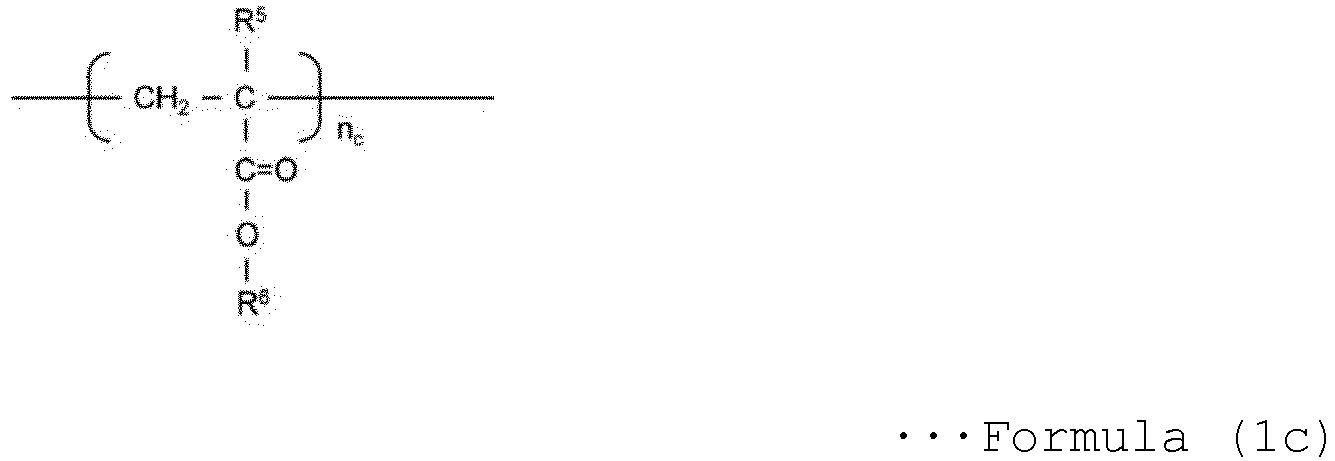
- the copolymer (P) contains a constituent unit represented by the following general formula (1c) (hereinafter also referred to as "hydrophobic constituent unit").
- the hydrophobic constituent unit in the copolymer (P) is introduced in order to increase adsorptivity to a contact lens and impart the intended effects to the contact lens.
- R 5 represents a hydrogen atom or a methyl group
- R 6 represents a monovalent hydrocarbon group having 12 to 24, 12 to 22, or 12 to 18 carbon atoms.
- R 6 may be linear or branched, but is preferably linear. Specific examples thereof include a lauryl group, a stearyl group, and a behenyl group.
- a ratio of the hydrophobic constituent unit in the copolymer (P) is as described below.
- a ratio n c of the number of the hydrophobic constituent units when the ratio n a of the number of the PC constituent units is set to 100, a ratio "n c /n a " is from 2 to 50/100, preferably from 5 to 25/100.
- the hydrophilicity of the copolymer (P) is decreased to lower the solubility in an aqueous solution, and it may be difficult to produce a contact lens solution.
- a physical cross-linking gel forming ability based on a hydrophobic interaction is decreased to lower the adhesiveness to the surface of a contact lens, and the intended effects may not be continuously imparted to a contact lens.
- the hydrophobic constituent unit in the copolymer (P) is obtained from a hydrophobic monomer represented by the following formula (1c') to be used at the time of polymerization of the copolymer (P).
- R 5 and R 6 in the formula (1c') are the same as R 5 and R 6 in the formula (1c), respectively.
- hydrophobic monomer represented by the formula (1c') examples include linear alkyl (meth)acrylates, such as lauryl (meth)acrylate, stearyl (meth)acrylate, and behenyl (meth)acrylate.
- Preferred examples of the hydrophobic constituent unit may include stearyl methacrylate and lauryl methacrylate.
- Constituent units except the constituent units represented by the formulae (1a) to (1c) may be introduced into the copolymer (P) to be used in the soft contact lens solution of the present disclosure to such an extent that the effects of the solution are not impaired.
- the blending ratio thereof may be appropriately selected to such an extent that the effects of the solution are not influenced.
- the blending ratio is preferably 50 or less in terms of molar ratio.
- Examples of the other polymerizable monomers that may be used for synthesis of the copolymer (P) may include a linear or branched alkyl (meth)acrylate, a cyclic alkyl (meth)acrylate, an aromatic group-containing (meth)acrylate, a styrene-based monomer, a vinyl ether monomer, a vinyl ester monomer, a hydrophilic hydroxy group-containing (meth)acrylate, an acid group-containing monomer, a nitrogen-containing group-containing monomer, an amino group-containing monomer, and a cationic group-containing monomer.
- linear or branched alkyl (meth)acrylate examples include methyl (meth)acrylate, ethyl (meth)acrylate, butyl (meth)acrylate, and 2-ethylhexyl (meth)acrylate.
- cyclic alkyl (meth)acrylate is cyclohexyl (meth)acrylate.
- aromatic group-containing (meth)acrylate examples include benzyl (meth)acrylate and phenoxyethyl (meth)acrylate.
- styrene-based monomer examples include styrene, methylstyrene, and chloromethylstyrene.
- vinyl ether monomer examples include methyl vinyl ether, butyl vinyl ether, diethylene glycol monovinyl ether, and ethylene glycol monovinyl ether.
- Examples of the vinyl ester monomer include vinyl acetate and vinyl propionate.
- hydrophilic hydroxy group-containing (meth)acrylate examples include polyethylene glycol (meth)acrylate, polypropylene glycol (meth)acrylate, 2-hydroxyethyl (meth)acrylate, 2-hydroxybutyl (meth)acrylate, 4-hydroxybutyl (meth)acrylate, and 2-hydroxypropyl (meth)acrylate.
- Examples of the acid group-containing monomer include (meth)acrylic acid, styrenesulfonic acid, and (meth)acryloyloxyphosphonic acid.
- nitrogen-containing group-containing monomer examples include N-vinylpyrrolidone, N-vinylacetamide, and N-methyl-N-vinylacetamide.
- amino group-containing monomer examples include aminoethyl (meth)acrylate, dimethylaminoethyl (meth)acrylate, and N,N-dimethylaminopropyl (meth)acrylamide.
- cationic group-containing monomer 2-hydroxy-3-(meth)acryloyloxypropyltrimethylammonium chloride.
- the copolymer (P) to be used in the soft contact lens solution of the present disclosure is a polymer having a weight-average molecular weight of from 5,000 to 2,000,000, preferably from 100,000 to 1,500,000.
- the weight-average molecular weight is less than 5,000, the adsorptivity of the copolymer to the surface of a contact lens is not sufficient, and hence the intended effects (surface hydrophilicity, lubricity, and a lipid adhesion-suppressing ability) may not be expected.
- the weight-average molecular weight is more than 2,000,000, it may be difficult to perform aseptic filtration required for producing a contact lens solution.
- the copolymer (P) to be used in the soft contact lens solution of the present disclosure may be obtained by subjecting a blend of the above-mentioned monomers to radial polymerization.
- the synthesis of the copolymer (P) may be performed, for example, by subjecting a composition of the above-mentioned monomers to radical polymerization in the presence of a radical polymerization initiator under purging with an inert gas, such as nitrogen, carbon dioxide, argon, or helium, or under an atmosphere of the inert gas.
- the radical polymerization method may be performed by a known method, such as bulk polymerization, suspension polymerization, emulsion polymerization, or solution polymerization.
- the radial polymerization method is preferably solution polymerization from the viewpoint of, for example, purification.
- the copolymer (P) may be purified by a known purification method, such as a reprecipitation method, a dialysis method, or an ultrafiltration method.
- radical polymerization initiator may include an azo-based radical polymerization initiator, an organic peroxide, and a persulfate.
- azo-based radical polymerization initiator examples include 2,2-azobis(2-diaminopropyl) dihydrochloride, 2,2-azobis(2-(5-methyl-2-imidazolin-2-yl)propane) dihydrochloride, 4,4-azobis-(4-cyanovaleric acid), 2,2-azobisisobutylamide dihydrate, 2,2-azobis(2,4-dimethylvaleronitrile), and 2,2-azobisisobutyronitrile (AIBN).
- persulfate examples include ammonium persulfate, potassium persulfate, and sodium persulfate.
- radical polymerization initiators may be used alone or as a mixture thereof.
- a usage amount of the polymerization initiator is usually from 0.001 part by mass to 10 parts by mass, preferably from 0.01 part by mass to 5.0 parts by mass with respect to 100 parts by mass of the monomer composition.
- the synthesis of the copolymer (P) may be performed in the presence of a solvent.
- a solvent Any solvent may be used as the solvent as long as the solvent dissolves the monomer composition and does not react therewith, and examples thereof may include water, an alcohol-based solvent, a ketone-based solvent, an ester-based solvent, a linear or cyclic ether-based solvent, and a nitrogen-containing solvent.
- Preferred examples of the solvent include water, an alcohol, and a mixed solvent thereof.
- Examples of the alcohol-based solvent include methanol, ethanol, n-propanol, and isopropanol.
- ketone-based solvent examples include acetone, methyl ethyl ketone, and diethyl ketone.
- ester-based solvent is ethyl acetate.
- linear or cyclic ether-based solvent examples include ethyl cellosolve and tetrahydrofuran.
- nitrogen-containing solvent examples include acetonitrile, nitromethane, and N-methyl pyrrolidone.
- the copolymer (Q) to be used in the soft contact lens solution of the present disclosure is a polyoxyethylene-polyoxypropylene block copolymer, has a number of moles added of ethylene oxide (EO) of from 120 to 200 and a number of moles added of propylene oxide (PO) of from 10 to 70, and has a content of the EO of from 60 to 90.
- EO ethylene oxide
- PO propylene oxide
- polyoxyethylene-polyoxypropylene block copolymer examples include a polyoxyethylene-polyoxypropylene-polyoxyethylene triblock copolymer and a polyoxypropylene-polyoxyethylene-polyoxypropylene triblock copolymer. Of those, a polyoxyethylene-polyoxypropylene-polyoxyethylene triblock copolymer is preferred.
- the number of moles added of the ethylene oxide (EO) in the copolymer (Q) falls within a range of preferably from 120 to 200, more preferably from 140 to 180.
- the number of moles added of the propylene oxide (PO) in the copolymer (Q) falls within a range of preferably from 10 to 70, more preferably from 20 to 40.
- the ranges (e.g., preferred ranges, more preferred ranges) of the number of moles added of the ethylene oxide (EO) and the number of moles added of the propylene oxide (PO) may be combined or changed.
- the preferred range of the number of moles added of the ethylene oxide (EO) and the more preferred range of the number of moles added of the propylene oxide (PO) may be selected.
- the copolymer (Q) may become so small as to enter into the contact lens to cause deformation.
- the viscosity of the contact lens solution may be increased to make it difficult to perform aseptic filtration.
- the content of the EO in the copolymer (Q) is preferably from 60 wt% to 90 wt%, more preferably from 70 wt% to 80 wt%.
- the content of the EO is less than 60 wt%, it becomes difficult to impart sufficient effects (in particular, surface hydrophilicity and lubricity) to a contact lens.
- the content of the EO is more than 90 wt%, the adsorptivity to a contact lens may be decreased.
- a buffering agent that may be used in a general contact lens solution and the like may be used as the buffering agent to be used in the soft contact lens solution of the present disclosure.
- Specific examples thereof may include hydrochloric acid, acetic acid, citric acid, sodium hydroxide, boric acid, a borate (e.g., borax), a phosphate (e.g., monosodium phosphate, disodium phosphate, monopotassium phosphate, or dipotassium phosphate), a citrate (e.g., sodium citrate), tris(hydroxymethyl)aminomethane, and hydrates thereof, and two or more kinds of these buffering agents are preferably used in combination.
- a phosphate buffer to be used in the soft contact lens solution of the present disclosure is not particularly limited as long as the phosphate buffer is a buffering agent that is dissolved in the soft contact lens solution so that phosphoric acid (phosphoric acid ions) is incorporated into the solution, and is preferably a buffer containing monosodium phosphate and disodium phosphate, or hydrates thereof.
- the concentration of the buffering agent is from 0.01 w/v% to 1.5 w/v%, and more preferably falls within a range of from 0.05 w/v% to 1.0 w/v%. It is not preferred that the concentration be less than 0.01 w/v% because the buffering capacity of the buffering agent is low and it becomes difficult to control the pH of the contact lens solution. It is not preferred that the concentration be more than 1.5 w/v% because the solubility of other components is impaired. In addition, from the viewpoints of reducing irritation during wearing of the contact lenses and improving wearing comfort, it is preferred that the buffering agent be blended at any ratio so that the pH of the contact lens solution becomes from 3 to 9, more preferably from 4 to 8.
- the pH of the contact lens solution as used herein means a value measured in accordance with The Japanese Pharmacopoeia Seventeenth Edition, General Tests 2.54, pH Determination.
- the soft contact lens solution of the present disclosure may be obtained by dissolving 0.001 w/v% to 1.0 w/v% of the copolymer (P), 0.002 w/v% to 2.0 w/v% of the copolymer (Q), and the buffering agent in water or a mixed solution of an alcohol, such as ethanol, n-propanol, or isopropanol, and water.
- an alcohol such as ethanol, n-propanol, or isopropanol
- the copolymer (P), the copolymer (Q), and the buffering agent are incorporated into the soft contact lens solution, lubricity, hydrophilicity, and a lipid adhesion-suppressing ability can be imparted to a contact lens, and hence satisfactory wearing comfort can be given to a contact lens wearer.
- a tonicity agent in addition to the copolymer (P) and the copolymer (Q), a tonicity agent, vitamins, amino acids, saccharides, a thickening agent, a refreshing agent, inorganic salts, an antioxidant, a stabilizer, a preservative, and the like, which may be used in a general contact lens solution and the like, may be blended as required in the soft contact lens solution of the present disclosure.
- the blending amount of those components except the copolymer (P) and the copolymer (Q) is not particularly limited, and is preferably from 0.01 w/v% to 5.0 w/v%, more preferably from 0.05 w/v% to 4.0 w/v%, still more preferably from 0.1 w/v% to 3.0 w/v%.
- tonicity agent is sodium chloride.
- vitamins examples include flavin adenine dinucleotide sodium, cyanocobalamin, retinol acetate, retinol palmitate, pyridoxine hydrochloride, panthenol, sodium pantothenate, and calcium pantothenate.
- amino acids examples include aspartic acid or salts thereof, and aminoethylsulfonic acid.
- saccharides examples include glucose, mannitol, sorbitol, xylitol, and trehalose.
- thickening agent examples include hydroxypropyl methylcellulose and hydroxyethyl cellulose.
- Examples of the refreshing agent include menthol and camphor.
- inorganic salts examples include sodium chloride, potassium chloride, and sodium dihydrogen phosphate anhydride.
- antioxidants examples include tocopherol acetate, sodium hydrogen sulfite, sodium sulfite, ascorbic acid, and dibutyl hydroxytoluene.
- Examples of the stabilizer include sodium edetate and glycine.
- preservative examples include benzalkonium chloride, chlorhexidine gluconate, potassium sorbate, and polyhexanide hydrochloride.
- the contact lens shipping solution means a solution in which a contact lens is immersed when a contact lens product is shipped.
- the contact lens care product is not particularly limited as long as the care product is a solution to be used for the care of a soft contact lens product, and means, for example, a disinfecting solution, a cleaning solution, a storage solution, a cleaning storage solution, a disinfecting cleaning storage solution, or a wetting solution for a soft contact lens.
- each of the constituent unit represented by the formula (1a), the constituent unit represented by the formula (1b), and the constituent unit represented by the formula (1c) in each of the above-mentioned combinations may be changed to the constituent unit in another combination to form the copolymer (P) included in the contact lens solution of the present disclosure.
- One embodiment of the present disclosure is also directed to the above-mentioned surface treatment method for a soft contact lens including the step of bringing the soft contact lens solution of the present invention into contact with the surface of a soft contact lens.
- Examples of the contact may include immersing a soft contact lens in the soft contact lens solution of the present disclosure and spraying the soft contact lens solution of the present disclosure to the surface of a soft contact lens, but the contact is not particularly limited thereto.
- One embodiment of the present disclosure is also directed to the above-mentioned use of the copolymer (P), the copolymer (Q), and the buffering agent for production of the soft contact lens solution of the present disclosure.
- the soft contact lens solution of the present disclosure is described below in more detail by way of Examples and Comparative Examples, but the soft contact lens solution of the present disclosure is not limited thereto.
- copolymer (P1) to copolymer (P4) were each used as the copolymer (P).
- the weight-average molecular weight of the copolymer (P) was determined by dissolving 5 mg of each of the resultant copolymers in a methanol/chloroform mixed liquid (80:20) to provide a sample solution. The following analysis conditions were used.
- PC monomer PC constituent unit
- N,N-dimethylacrylamide serving as an amide monomer
- stearyl methacrylate serving as a hydrophobic monomer (hydrophobic constituent unit)
- the following polymers (A) to (C) were each used as a polymer for comparison to the copolymer (P).
- N,N-dimethylacrylamide homopolymer Poly(N,N-dimethylacrylamide), DDMAT Terminated (product name) manufactured by Sigma-Aldrich Japan, number-average molecular weight: 10,000
- copolymers (Q1) to (Q3) were used as the copolymer (Q).
- polyoxyethylene-polyoxypropylene-polyoxyethylene block copolymer (PLONON (Registered trademark) #188P (product name) manufactured by NOF CORPORATION, number of moles added of EO: 160, number of moles added of PO: 30, content of EO: 80 wt%)
- polyoxyethylene-polyoxypropylene-polyoxyethylene block copolymer (PLONON (Registered trademark) #208 (product name) manufactured by NOF CORPORATION, number of moles added of EO: 150, number of moles added of PO: 35, content of EO: 80 wt%)
- polyoxyethylene-polyoxypropylene-polyoxyethylene block copolymer (UNILUBE (Registered trademark) 70DP-950B (product name) manufactured by NOF CORPORATION, number of moles added of EO: 200, number of moles added of PO: 70, content of EO: 70 wt%)
- Sterile contact lens solutions were prepared in accordance with the same procedure as that in Example 1 except that components of the kinds and amounts shown in Tables 1 and 2 were used.
- the appearance and properties of the contact lens solution of each of Examples 2 to 15 are shown in Tables 1 and 2.
- Lubricity was evaluated on a scale of 1 to 10 points.
- the evaluation point in the case of the evaluation of "most excellent in lubricity” was defined as 10, and the evaluation point in the case of the evaluation of "there is no lubricity” was defined as 1.
- the value of 6.0 or more was evaluated as “excellent in surface lubricity,” and the value of 8.5 or more was evaluated as "particularly excellent in surface lubricity.”
- the BUT of 10 seconds or more was evaluated as “excellent in surface hydrophilicity,” and the BUT of 15 seconds or more was evaluated as “particularly excellent in surface hydrophilicity.”
- the resultant absorbance was checked against a calibration curve to calculate the lipid adhesion amount of lipid to the contact lens.
- the lipid adhesion-suppressing rate was calculated based on the lipid adhesion amount performed in the same manner through use of ISO physiological saline as a control solution of the contact lens solution.
- the case of the lipid adhesion-suppressing rate of 10% or more was evaluated as "there is an adhesion-suppressing ability," and the case of the lipid adhesion-suppressing rate of more than 15% was evaluated as "excellent in adhesion-suppressing ability.”
- the surface lubricity of the contact lens treated with the contact lens solution of each of Examples 1 to 15 resulted in being excellent or most excellent even at the start of wearing and during wearing.
- the surface lubricity of the contact lens treated with the contact lens solution of Example 4 resulted in being most excellent in lubricity even at the start of wearing and during wearing. Further, it was recognized that the contact lens solution did not impart deformability to a contact lens.
- the contact lens solution of each of Examples 1 to 15 can impart (durable) excellent surface lubricity to a contact lens even during wearing.
- the surface hydrophilicity of the contact lens treated with the contact lens solution of each of Examples 1 to 15 resulted in being excellent or most excellent even at the start of wearing and during wearing.
- the contact lens solution of each of Examples 1 to 15 can impart (durable) excellent surface hydrophilicity to a contact lens even during wearing.
- the contact lens solution of each of Examples 1 to 15 can impart a lipid adhesion-suppressing ability to a contact lens.
- the contact lens solution of the present disclosure can impart durable surface hydrophilicity, durable lubricity, and a lipid adhesion-suppressing ability to a contact lens through simple treatment (e.g., immersion of the contact lens in the solution), and hence can impart satisfactory wearing comfort to a contact lens wearer during wearing. Further, this satisfactory wearing comfort can be continued for a long period of time.
- the contact lens solution that imparts surface hydrophilicity, lubricity, and a lipid adhesion-suppressing ability to a contact lens can be provided.
Landscapes
- Chemical & Material Sciences (AREA)
- Chemical Kinetics & Catalysis (AREA)
- Life Sciences & Earth Sciences (AREA)
- Engineering & Computer Science (AREA)
- Organic Chemistry (AREA)
- Health & Medical Sciences (AREA)
- Oil, Petroleum & Natural Gas (AREA)
- Wood Science & Technology (AREA)
- Physics & Mathematics (AREA)
- General Health & Medical Sciences (AREA)
- Ophthalmology & Optometry (AREA)
- General Chemical & Material Sciences (AREA)
- Public Health (AREA)
- Veterinary Medicine (AREA)
- Epidemiology (AREA)
- Animal Behavior & Ethology (AREA)
- General Physics & Mathematics (AREA)
- Optics & Photonics (AREA)
- Materials Engineering (AREA)
- Addition Polymer Or Copolymer, Post-Treatments, Or Chemical Modifications (AREA)
- Eyeglasses (AREA)
- Treatments Of Macromolecular Shaped Articles (AREA)
Abstract
Description
- The present disclosure relates to a soft contact lens solution that imparts surface hydrophilicity, lubricity, and a lipid adhesion-suppressing ability to a soft contact lens.
- The present application claims priority from
Japanese Patent Application No. 2021-107493 - The number of contact lens wearers is rapidly increasing because of the ease and convenience of a contact lens, and the contact lens has become a medical device that is widely and generally used at present. However, because of discomfort associated with wearing of contact lenses, there is a large number of cases of discontinuation of wearing, and it cannot be said that sufficient research has been conducted on improvement of wearing comfort.
- It has been known that wettability and an antifouling property are closely related to the above-mentioned discomfort, and there is a demand for a method of improving the surface hydrophilicity of a contact lens, a method of imparting an antifouling property, and the like. In addition, in recent years, a friction coefficient of a surface of a contact lens has also been regarded important, and a contact lens having a high friction coefficient may cause not only discomfort during wearing but also conjunctivitis and the like (see: Non Patent Literature 1 and Non Patent Literature 2).
- In order to solve the above-mentioned problems, a method involving subjecting a contact lens to surface treatment, and the like have been developed. For example, there are disclosed a method involving subjecting a hydrophilic monomer to graft polymerization on a surface of a plasma-treated contact lens, to thereby impart surface hydrophilicity and an antifouling property to the surface of the contact lens, and the like (Patent Literature 1). In addition, there is disclosed a method of producing a contact lens having high hydrophilicity and high lubricity by coating a surface of a contact lens with a polymer (Patent Literature 2).
- However, these surface treatments require complicated steps and are not desired for mass production.
-
- [PTL 1]
JP 2018-022174 A - [PTL 2]
JP 06-122779 A -
- [NPL 1] Roba, M. et al., Friction Measurements on Contact Lenses In Their Operating Environment, Tribol. Lett., 2011, 44(3), 387-397.
- [NPL 2] Norihiko Yokoi, Mechanisms of Eye Dryness Due to Contact Lens Wear, Journal of Japan Contact Lens Society, 2009, 51(3), S33-S35.
- An object of the present disclosure is to provide a soft contact lens solution that imparts surface hydrophilicity, lubricity, and a lipid adhesion-suppressing ability to a soft contact lens.
- The inventors have made extensive investigations in order to achieve the above-mentioned object. As a result, the inventors have found that a solution containing two specific kinds of copolymers and a buffering agent can achieve the above-mentioned object. Thus, the inventors have completed a soft contact lens solution of the present disclosure.
- 1. A soft contact lens solution, including: 0.001 w/v% to 1.0 w/v% of a copolymer (P) containing constituent units represented by the following formulae (1a) to (1c), having a ratio "na:nb:nc" of numbers of the constituent units of 100:10 to 400:2 to 50, and having a weight-average molecular weight of from 5,000 to 2,000,000; 0.002 w/v% to 2.0 w/v% of a copolymer (Q) being a polyoxyethylene-polyoxypropylene block copolymer, having a number of moles added of ethylene oxide (EO) of from 120 to 200 and a number of moles added of propylene oxide (PO) of from 10 to 70, and having a content of the EO of from 60 wt% to 90 wt%; and a buffering agent:


- 2. The soft contact lens solution according to the above-mentioned item 1, wherein the buffering agent is a phosphate buffer.
- 3. The soft contact lens solution according to the above-mentioned item 1 or 2, wherein the constituent unit represented by the formula (1a) is a constituent unit based on 2-(methacryloyloxy)ethyl 2-(trimethylammonio)ethyl phosphate, the constituent unit represented by the formula (1b) is a constituent unit based on N,N-dimethylacrylamide, and the constituent unit represented by the formula (1c) is a constituent unit based on stearyl methacrylate.
- 4. The soft contact lens solution according to the above-mentioned item 1 or 2, wherein the constituent unit represented by the formula (1a) is a constituent unit based on 2-(methacryloyloxy)ethyl 2-(trimethylammonio)ethyl phosphate, the constituent unit represented by the formula (1b) is a constituent unit based on N,N-dimethylacrylamide, and the constituent unit represented by the formula (1c) is a constituent unit based on lauryl methacrylate.
- 5. A surface treatment method for a soft contact lens, including a step of bringing a soft contact lens solution into contact with a surface of a soft contact lens, the soft contact lens solution including: 0.001 w/v% to 1.0 w/v% of a copolymer (P) containing constituent units represented by the following formulae (1a) to (1c), having a ratio "na:nb:nc" of numbers of the constituent units of 100:10 to 400:2 to 50, and having a weight-average molecular weight of from 5,000 to 2,000,000; 0.002 w/v% to 2.0 w/v% of a copolymer (Q) being a polyoxyethylene-polyoxypropylene block copolymer, having a number of moles added of ethylene oxide (EO) of from 120 to 200 and a number of moles added of propylene oxide (PO) of from 10 to 70, and having a content of the EO of from 60 wt% to 90 wt%; and a buffering agent:


- 6. A use of: a copolymer (P) containing constituent units represented by the following formulae (1a) to (1c), having a ratio "na:nb:nc" of numbers of the constituent units of 100:10 to 400:2 to 50, and having a weight-average molecular weight of from 5,000 to 2,000,000; a copolymer (Q) being a polyoxyethylene-polyoxypropylene block copolymer, having a number of moles added of ethylene oxide (EO) of from 120 to 200 and a number of moles added of propylene oxide (PO) of from 10 to 70, and having a content of the EO of from 60 wt% to 90 wt%; and a buffering agent, for production of a soft lens solution:


- The soft contact lens solution of the present disclosure can impart surface hydrophilicity, lubricity, and a lipid adhesion-suppressing ability to a soft contact lens.
- A soft contact lens solution of the present disclosure includes: 0.001 w/v% to 1.0 w/v% of a copolymer (P) containing constituent units represented by the following general formulae (1a) to (1c), having a ratio "na:nb:nc" of numbers of the constituent units of 100:10 to 400:2 to 50, and having a weight-average molecular weight of from 5,000 to 2,000,000; 0.002 w/v% to 2.0 w/v% of a copolymer (Q) being a polyoxyethylene-polyoxypropylene block copolymer, having a number of moles added of ethylene oxide (EO) of from 120 to 200 and a number of moles added of propylene oxide (PO) of from 10 to 70, and having a content of the EO of from 60 wt% to 90 wt%; and a buffering agent.


- R1, R2, and R5 each independently represent a hydrogen atom or a methyl group, R3 and R4 each independently represent a hydrogen atom, a methyl group, or an ethyl group, or are bonded to each other to represent a morpholino group, and R6 represents a monovalent hydrocarbon group having 12 to 24 carbon atoms.
- A configuration of the soft contact lens solution of the present disclosure is described below.
- As used herein, the term "(meth)acrylate" means "acrylate or methacrylate, " and the same applies to the other similar terms.
- In addition, as used herein, when a preferred numerical range (e.g., range of concentration or weight-average molecular weight) is described in stages, respective lower limit values and upper limit values may be independently combined with each other. For example, in the description "preferably 10 or more, more preferably 20 or more, and preferably 100 or less, more preferably 90 or less," the "preferred lower limit value: 10" and the "more preferred upper limit value: 90" may be combined to be referred as "10 or more and 90 or less." In addition, for example, the description "preferably from 10 to 100, more preferably from 20 to 90" may be similarly referred to as "from 10 to 90."
- The copolymer (P) is a copolymer containing constituent units represented by the general formulae (1a) to (1c), having a ratio "na:nb:nc" of numbers of the constituent units of 100:10 to 400:2 to 50, and having a weight-average molecular weight of from 5,000 to 2,000,000.
- The constituent unit means a unit of a compound included in a polymer based on each monomer or derived from each monomer.
- The copolymer (P) contains a constituent unit having a phosphorylcholine structure of the following formula (1a) (hereinafter also referred to as "PC constituent unit"). When the copolymer (P) contains a PC constituent unit, the copolymer (P) has hydrophilicity and can impart lubricity and a lipid adhesion-suppressing ability to a contact lens.

- The R1 represents a hydrogen atom or a methyl group.
- The copolymer (P) containing the PC constituent unit may be obtained, for example, by copolymerizing a phosphorylcholine group-containing monomer represented by the following general formula (1a') (hereinafter also referred to as "PC monomer").

- From the viewpoint of ease of availability, the PC monomer is preferably 2-((meth)acryloyloxy)ethyl-2-(trimethylammonio)ethyl phosphate, more preferably 2-(methacryloyloxy)ethyl-2-(trimethylammonio)ethyl phosphate represented by the following formula (1a") (hereinafter also referred to as "2-methacryloyloxyethyl phosphorylcholine").

- The PC monomer may be produced by a known method. For example, reference may be made to a method described in
JP 54-63025 JP 58-154591 - The copolymer (P) contains a constituent unit represented by the following general formula (1b) (hereinafter also referred to as "amide constituent unit"). When the copolymer (P) contains an amide constituent unit, the adhesiveness of the copolymer (P) to a contact lens can be improved.

- In the formula (1b), R2 represents a hydrogen atom or a methyl group, and R3 and R4 each independently represent a hydrogen atom, a methyl group, or an ethyl group, or are bonded to each other to represent a morpholino group.
- A ratio of the amide constituent unit in the copolymer (P) is as described below. Regarding a ratio nb of the number of the amide constituent units, when a ratio na of the number of the PC constituent units is set to 100, a ratio "nb/na" is from 10 to 400/100, preferably from 30 to 250/100. When the nb is too large, biocompatibility is not sufficient. When the nb is too small, the intended effects are not expected to be imparted to a contact lens.
- The amide constituent unit in the copolymer (P) is obtained from (meth)acrylamide or a (meth)acrylamide derivative that is a monomer represented by the following formula (1b') to be used at the time of polymerization of the copolymer (P).
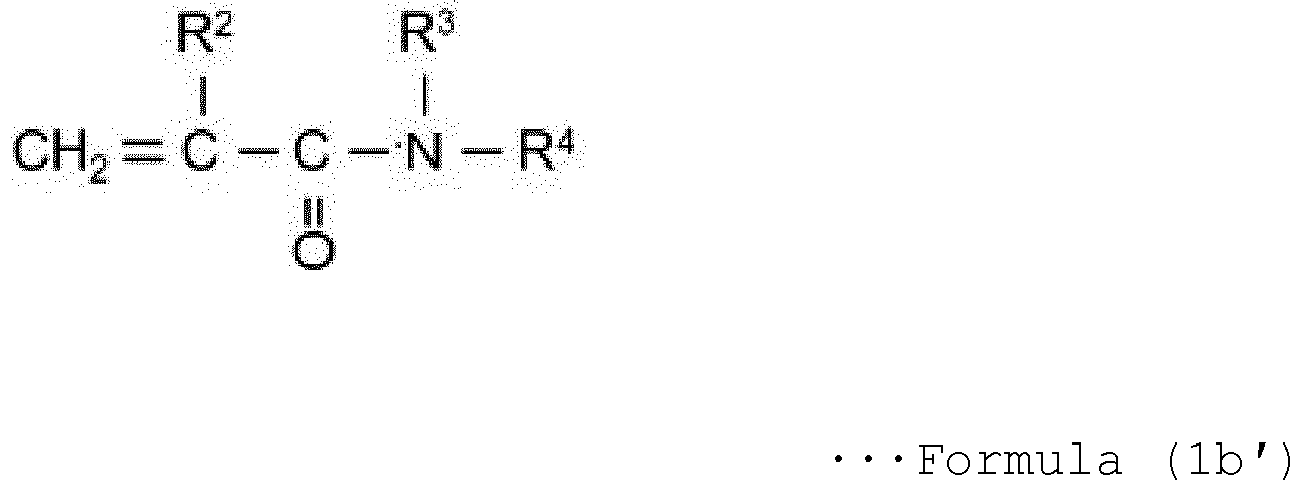
- R2, R3, and R4 in the formula (1b') are the same as R2, R3, and R4 in the formula (1b), respectively.
- Examples of (meth)acrylamide or the (meth)acrylamide derivative represented by the formula (1b') include N,N-dimethyl (meth)acrylamide, N,N-diethyl (meth)acrylamide, and N-acryloyl morpholine. A preferred example of the amide constituent unit may be N,N-dimethyl acrylamide.
- The copolymer (P) contains a constituent unit represented by the following general formula (1c) (hereinafter also referred to as "hydrophobic constituent unit"). The hydrophobic constituent unit in the copolymer (P) is introduced in order to increase adsorptivity to a contact lens and impart the intended effects to the contact lens.

- In the formula (1c), R5 represents a hydrogen atom or a methyl group, and R6 represents a monovalent hydrocarbon group having 12 to 24, 12 to 22, or 12 to 18 carbon atoms.
- R6 may be linear or branched, but is preferably linear. Specific examples thereof include a lauryl group, a stearyl group, and a behenyl group.
- A ratio of the hydrophobic constituent unit in the copolymer (P) is as described below. Regarding a ratio nc of the number of the hydrophobic constituent units, when the ratio na of the number of the PC constituent units is set to 100, a ratio "nc/na" is from 2 to 50/100, preferably from 5 to 25/100. When the nc is too large, the hydrophilicity of the copolymer (P) is decreased to lower the solubility in an aqueous solution, and it may be difficult to produce a contact lens solution. When the nc is too small, a physical cross-linking gel forming ability based on a hydrophobic interaction is decreased to lower the adhesiveness to the surface of a contact lens, and the intended effects may not be continuously imparted to a contact lens.
- The hydrophobic constituent unit in the copolymer (P) is obtained from a hydrophobic monomer represented by the following formula (1c') to be used at the time of polymerization of the copolymer (P).

- R5 and R6 in the formula (1c') are the same as R5 and R6 in the formula (1c), respectively.
- Examples of the hydrophobic monomer represented by the formula (1c') include linear alkyl (meth)acrylates, such as lauryl (meth)acrylate, stearyl (meth)acrylate, and behenyl (meth)acrylate. Preferred examples of the hydrophobic constituent unit may include stearyl methacrylate and lauryl methacrylate.
- Constituent units except the constituent units represented by the formulae (1a) to (1c) may be introduced into the copolymer (P) to be used in the soft contact lens solution of the present disclosure to such an extent that the effects of the solution are not impaired. When other polymerizable monomers (other constituent units) described below are blended with the monomer composition to be used for synthesis of the copolymer (P), the blending ratio thereof may be appropriately selected to such an extent that the effects of the solution are not influenced. For example, when the na represented in the formula (1a) forming the copolymer (P) is set to 100, the blending ratio is preferably 50 or less in terms of molar ratio.
- Examples of the other polymerizable monomers that may be used for synthesis of the copolymer (P) may include a linear or branched alkyl (meth)acrylate, a cyclic alkyl (meth)acrylate, an aromatic group-containing (meth)acrylate, a styrene-based monomer, a vinyl ether monomer, a vinyl ester monomer, a hydrophilic hydroxy group-containing (meth)acrylate, an acid group-containing monomer, a nitrogen-containing group-containing monomer, an amino group-containing monomer, and a cationic group-containing monomer.
- Examples of the linear or branched alkyl (meth)acrylate include methyl (meth)acrylate, ethyl (meth)acrylate, butyl (meth)acrylate, and 2-ethylhexyl (meth)acrylate.
- An example of the cyclic alkyl (meth)acrylate is cyclohexyl (meth)acrylate.
- Examples of the aromatic group-containing (meth)acrylate include benzyl (meth)acrylate and phenoxyethyl (meth)acrylate.
- Examples of the styrene-based monomer include styrene, methylstyrene, and chloromethylstyrene.
- Examples of the vinyl ether monomer include methyl vinyl ether, butyl vinyl ether, diethylene glycol monovinyl ether, and ethylene glycol monovinyl ether.
- Examples of the vinyl ester monomer include vinyl acetate and vinyl propionate.
- Examples of the hydrophilic hydroxy group-containing (meth)acrylate include polyethylene glycol (meth)acrylate, polypropylene glycol (meth)acrylate, 2-hydroxyethyl (meth)acrylate, 2-hydroxybutyl (meth)acrylate, 4-hydroxybutyl (meth)acrylate, and 2-hydroxypropyl (meth)acrylate.
- Examples of the acid group-containing monomer include (meth)acrylic acid, styrenesulfonic acid, and (meth)acryloyloxyphosphonic acid.
- Examples of the nitrogen-containing group-containing monomer include N-vinylpyrrolidone, N-vinylacetamide, and N-methyl-N-vinylacetamide.
- Examples of the amino group-containing monomer include aminoethyl (meth)acrylate, dimethylaminoethyl (meth)acrylate, and N,N-dimethylaminopropyl (meth)acrylamide.
- An example of the cationic group-containing monomer is 2-hydroxy-3-(meth)acryloyloxypropyltrimethylammonium chloride.
- The copolymer (P) to be used in the soft contact lens solution of the present disclosure is a polymer having a weight-average molecular weight of from 5,000 to 2,000,000, preferably from 100,000 to 1,500,000. When the weight-average molecular weight is less than 5,000, the adsorptivity of the copolymer to the surface of a contact lens is not sufficient, and hence the intended effects (surface hydrophilicity, lubricity, and a lipid adhesion-suppressing ability) may not be expected. When the weight-average molecular weight is more than 2,000,000, it may be difficult to perform aseptic filtration required for producing a contact lens solution.
- The copolymer (P) to be used in the soft contact lens solution of the present disclosure may be obtained by subjecting a blend of the above-mentioned monomers to radial polymerization. The synthesis of the copolymer (P) may be performed, for example, by subjecting a composition of the above-mentioned monomers to radical polymerization in the presence of a radical polymerization initiator under purging with an inert gas, such as nitrogen, carbon dioxide, argon, or helium, or under an atmosphere of the inert gas. The radical polymerization method may be performed by a known method, such as bulk polymerization, suspension polymerization, emulsion polymerization, or solution polymerization. The radial polymerization method is preferably solution polymerization from the viewpoint of, for example, purification. The copolymer (P) may be purified by a known purification method, such as a reprecipitation method, a dialysis method, or an ultrafiltration method.
- Examples of the radical polymerization initiator may include an azo-based radical polymerization initiator, an organic peroxide, and a persulfate.
- Examples of the azo-based radical polymerization initiator include 2,2-azobis(2-diaminopropyl) dihydrochloride, 2,2-azobis(2-(5-methyl-2-imidazolin-2-yl)propane) dihydrochloride, 4,4-azobis-(4-cyanovaleric acid), 2,2-azobisisobutylamide dihydrate, 2,2-azobis(2,4-dimethylvaleronitrile), and 2,2-azobisisobutyronitrile (AIBN).
- Examples of the organic peroxide include t-butyl peroxyneodecanoate, benzoyl peroxide, diisopropyl peroxydicarbonate, t-butyl peroxy-2-ethylhexanoate, t-butyl peroxypivalate, t-butyl peroxydiisobutyrate, lauroyl peroxide, t-butyl peroxydecanoate, and succinic acid peroxide (=succinyl peroxide).
- Examples of the persulfate include ammonium persulfate, potassium persulfate, and sodium persulfate.
- Those radical polymerization initiators may be used alone or as a mixture thereof. A usage amount of the polymerization initiator is usually from 0.001 part by mass to 10 parts by mass, preferably from 0.01 part by mass to 5.0 parts by mass with respect to 100 parts by mass of the monomer composition.
- The synthesis of the copolymer (P) may be performed in the presence of a solvent. Any solvent may be used as the solvent as long as the solvent dissolves the monomer composition and does not react therewith, and examples thereof may include water, an alcohol-based solvent, a ketone-based solvent, an ester-based solvent, a linear or cyclic ether-based solvent, and a nitrogen-containing solvent. Preferred examples of the solvent include water, an alcohol, and a mixed solvent thereof.
- Examples of the alcohol-based solvent include methanol, ethanol, n-propanol, and isopropanol.
- Examples of the ketone-based solvent include acetone, methyl ethyl ketone, and diethyl ketone.
- An example of the ester-based solvent is ethyl acetate.
- Examples of the linear or cyclic ether-based solvent include ethyl cellosolve and tetrahydrofuran.
- Examples of the nitrogen-containing solvent include acetonitrile, nitromethane, and N-methyl pyrrolidone.
- The copolymer (Q) to be used in the soft contact lens solution of the present disclosure is a polyoxyethylene-polyoxypropylene block copolymer, has a number of moles added of ethylene oxide (EO) of from 120 to 200 and a number of moles added of propylene oxide (PO) of from 10 to 70, and has a content of the EO of from 60 to 90.
- Examples of the polyoxyethylene-polyoxypropylene block copolymer include a polyoxyethylene-polyoxypropylene-polyoxyethylene triblock copolymer and a polyoxypropylene-polyoxyethylene-polyoxypropylene triblock copolymer. Of those, a polyoxyethylene-polyoxypropylene-polyoxyethylene triblock copolymer is preferred.
- The number of moles added of the ethylene oxide (EO) in the copolymer (Q) falls within a range of preferably from 120 to 200, more preferably from 140 to 180. In addition, the number of moles added of the propylene oxide (PO) in the copolymer (Q) falls within a range of preferably from 10 to 70, more preferably from 20 to 40. In addition, the ranges (e.g., preferred ranges, more preferred ranges) of the number of moles added of the ethylene oxide (EO) and the number of moles added of the propylene oxide (PO) may be combined or changed. For example, the preferred range of the number of moles added of the ethylene oxide (EO) and the more preferred range of the number of moles added of the propylene oxide (PO) may be selected. When those numbers of moles added are too small, the copolymer (Q) may become so small as to enter into the contact lens to cause deformation. When those numbers of moles added are too large, the viscosity of the contact lens solution may be increased to make it difficult to perform aseptic filtration.
- In addition, the content of the EO in the copolymer (Q) is preferably from 60 wt% to 90 wt%, more preferably from 70 wt% to 80 wt%. When the content of the EO is less than 60 wt%, it becomes difficult to impart sufficient effects (in particular, surface hydrophilicity and lubricity) to a contact lens. When the content of the EO is more than 90 wt%, the adsorptivity to a contact lens may be decreased.
- A buffering agent that may be used in a general contact lens solution and the like may be used as the buffering agent to be used in the soft contact lens solution of the present disclosure. Specific examples thereof may include hydrochloric acid, acetic acid, citric acid, sodium hydroxide, boric acid, a borate (e.g., borax), a phosphate (e.g., monosodium phosphate, disodium phosphate, monopotassium phosphate, or dipotassium phosphate), a citrate (e.g., sodium citrate), tris(hydroxymethyl)aminomethane, and hydrates thereof, and two or more kinds of these buffering agents are preferably used in combination. A phosphate buffer to be used in the soft contact lens solution of the present disclosure is not particularly limited as long as the phosphate buffer is a buffering agent that is dissolved in the soft contact lens solution so that phosphoric acid (phosphoric acid ions) is incorporated into the solution, and is preferably a buffer containing monosodium phosphate and disodium phosphate, or hydrates thereof.
- The concentration of the buffering agent is from 0.01 w/v% to 1.5 w/v%, and more preferably falls within a range of from 0.05 w/v% to 1.0 w/v%. It is not preferred that the concentration be less than 0.01 w/v% because the buffering capacity of the buffering agent is low and it becomes difficult to control the pH of the contact lens solution. It is not preferred that the concentration be more than 1.5 w/v% because the solubility of other components is impaired. In addition, from the viewpoints of reducing irritation during wearing of the contact lenses and improving wearing comfort, it is preferred that the buffering agent be blended at any ratio so that the pH of the contact lens solution becomes from 3 to 9, more preferably from 4 to 8.
- The pH of the contact lens solution as used herein means a value measured in accordance with The Japanese Pharmacopoeia Seventeenth Edition, General Tests 2.54, pH Determination.
- The soft contact lens solution of the present disclosure may be obtained by dissolving 0.001 w/v% to 1.0 w/v% of the copolymer (P), 0.002 w/v% to 2.0 w/v% of the copolymer (Q), and the buffering agent in water or a mixed solution of an alcohol, such as ethanol, n-propanol, or isopropanol, and water.
- When the copolymer (P), the copolymer (Q), and the buffering agent are incorporated into the soft contact lens solution, lubricity, hydrophilicity, and a lipid adhesion-suppressing ability can be imparted to a contact lens, and hence satisfactory wearing comfort can be given to a contact lens wearer.
- In addition to the copolymer (P) and the copolymer (Q), a tonicity agent, vitamins, amino acids, saccharides, a thickening agent, a refreshing agent, inorganic salts, an antioxidant, a stabilizer, a preservative, and the like, which may be used in a general contact lens solution and the like, may be blended as required in the soft contact lens solution of the present disclosure.
- The blending amount of those components except the copolymer (P) and the copolymer (Q) is not particularly limited, and is preferably from 0.01 w/v% to 5.0 w/v%, more preferably from 0.05 w/v% to 4.0 w/v%, still more preferably from 0.1 w/v% to 3.0 w/v%.
- An example of the tonicity agent is sodium chloride.
- Examples of the vitamins include flavin adenine dinucleotide sodium, cyanocobalamin, retinol acetate, retinol palmitate, pyridoxine hydrochloride, panthenol, sodium pantothenate, and calcium pantothenate.
- Examples of the amino acids include aspartic acid or salts thereof, and aminoethylsulfonic acid.
- Examples of the saccharides include glucose, mannitol, sorbitol, xylitol, and trehalose.
- Examples of the thickening agent include hydroxypropyl methylcellulose and hydroxyethyl cellulose.
- Examples of the refreshing agent include menthol and camphor.
- Examples of the inorganic salts include sodium chloride, potassium chloride, and sodium dihydrogen phosphate anhydride.
- Examples of the antioxidant include tocopherol acetate, sodium hydrogen sulfite, sodium sulfite, ascorbic acid, and dibutyl hydroxytoluene.
- Examples of the stabilizer include sodium edetate and glycine.
- Examples of the preservative include benzalkonium chloride, chlorhexidine gluconate, potassium sorbate, and polyhexanide hydrochloride.
- The following forms may be given as specific examples of product forms of the soft contact lens solution of the present disclosure. The specific examples include a contact lens shipping solution, a contact lens care product, a contact lens storage solution, a contact lens cleaning solution, and a contact lens cleaning storage solution. As used herein, the contact lens shipping solution means a solution in which a contact lens is immersed when a contact lens product is shipped. In addition, as used herein, the contact lens care product is not particularly limited as long as the care product is a solution to be used for the care of a soft contact lens product, and means, for example, a disinfecting solution, a cleaning solution, a storage solution, a cleaning storage solution, a disinfecting cleaning storage solution, or a wetting solution for a soft contact lens.
- Combinations of the respective constituent units of the copolymer (P) included in the contact lens solution of the present disclosure are exemplified below, but are not limited thereto.
- Constituent unit represented by the formula (1a): constituent unit represented by the formula (1b): constituent unit represented by the formula (1c)
- 2-(Methacryloyloxy)ethyl 2-(trimethylammonio)ethyl phosphate: N,N-dimethylacrylamide: stearyl methacrylate
- 2-(Methacryloyloxy)ethyl 2-(trimethylammonio)ethyl phosphate: N,N-dimethylacrylamide: lauryl methacrylate
- In addition, each of the constituent unit represented by the formula (1a), the constituent unit represented by the formula (1b), and the constituent unit represented by the formula (1c) in each of the above-mentioned combinations may be changed to the constituent unit in another combination to form the copolymer (P) included in the contact lens solution of the present disclosure.
- One embodiment of the present disclosure is also directed to the above-mentioned surface treatment method for a soft contact lens including the step of bringing the soft contact lens solution of the present invention into contact with the surface of a soft contact lens. Examples of the contact may include immersing a soft contact lens in the soft contact lens solution of the present disclosure and spraying the soft contact lens solution of the present disclosure to the surface of a soft contact lens, but the contact is not particularly limited thereto.
- One embodiment of the present disclosure is also directed to the above-mentioned use of the copolymer (P), the copolymer (Q), and the buffering agent for production of the soft contact lens solution of the present disclosure.
- The soft contact lens solution of the present disclosure is described below in more detail by way of Examples and Comparative Examples, but the soft contact lens solution of the present disclosure is not limited thereto.
- The following copolymer (P1) to copolymer (P4) were each used as the copolymer (P).
- In Examples, the weight-average molecular weight of the copolymer (P) was determined by dissolving 5 mg of each of the resultant copolymers in a methanol/chloroform mixed liquid (80:20) to provide a sample solution. The following analysis conditions were used.
- Column: PLgel-mixed-C
- Standard reference material: polyethylene glycol
- Detector: differential refractometer RI-8020 (manufactured by Tosoh Corporation)
- Calculation method for weight-average molecular weight: molecular weight calculation program (GPC program for SC-8020)
- Flow rate: 1 mL per minute
- Injection amount: 100 µL
- Column oven: constant temperature around 40°C
- A copolymer using, as constituent units, 2-(methacryloyloxy)ethyl 2-(trimethylammonio)ethyl phosphate represented by the general formula (1a") serving as a PC monomer (PC constituent unit), N,N-dimethylacrylamide serving as an amide monomer (amide constituent unit), and stearyl methacrylate serving as a hydrophobic monomer (hydrophobic constituent unit)
- Ratio of numbers of constituent units: [(1a)/(1b)/(1c)]=100/90/10
- Weight-average molecular weight: 1,000,000 [Copolymer (P2)]
- A copolymer using, as constituent units, 2-(methacryloyloxy)ethyl 2-(trimethylammonio)ethyl phosphate represented by the general formula (1a") serving as a PC monomer, N,N-dimethylacrylamide serving as an amide monomer, and stearyl methacrylate serving as a hydrophobic monomer
- Ratio of numbers of constituent units: [(1a)/(1b)/(1c)]|=100/223/10
- Weight-average molecular weight: 1,200,000 [Copolymer (P3)]
- A copolymer using, as constituent units, 2-(methacryloyloxy)ethyl 2-(trimethylammonio)ethyl phosphate represented by the general formula (1a") serving as a PC monomer, N,N-dimethylacrylamide serving as an amide monomer, and stearyl methacrylate serving as a hydrophobic monomer
- Ratio of numbers of constituent units: [(1a)/(1b)/(1c)]|=100/34/9
- Weight-average molecular weight: 700,000 [Copolymer (P4)]
- A copolymer using, as constituent units, 2-(methacryloyloxy)ethyl 2-(trimethylammonio)ethyl phosphate represented by the general formula (1a") serving as a PC monomer, N,N-dimethylacrylamide serving as an amide monomer, and lauryl methacrylate serving as a hydrophobic monomer
- Ratio of numbers of constituent units: [(1a)/(1b)/(1c)]|=100/90/20
- Weight-average molecular weight: 1,000,000
- The following polymers (A) to (C) were each used as a polymer for comparison to the copolymer (P).
- 2-Methacryloyloxyethyl phosphorylcholine homopolymer (weight-average molecular weight: 200,000) obtained by the method described in Examples of
JP 08-333421 A - Commercially available N,N-dimethylacrylamide homopolymer (Poly(N,N-dimethylacrylamide), DDMAT Terminated (product name) manufactured by Sigma-Aldrich Japan, number-average molecular weight: 10,000)
- Commercially available lauryl methacrylate homopolymer (Lauryl polymethacrylate (product name) manufactured by Sigma-Aldrich Japan, weight-average molecular weight: 470,000)
- The following copolymers (Q1) to (Q3) were used as the copolymer (Q).
- Commercially available polyoxyethylene-polyoxypropylene-polyoxyethylene block copolymer (PLONON (Registered trademark) #188P (product name) manufactured by NOF CORPORATION, number of moles added of EO: 160, number of moles added of PO: 30, content of EO: 80 wt%)
- Commercially available polyoxyethylene-polyoxypropylene-polyoxyethylene block copolymer (PLONON (Registered trademark) #208 (product name) manufactured by NOF CORPORATION, number of moles added of EO: 150, number of moles added of PO: 35, content of EO: 80 wt%)
- Commercially available polyoxyethylene-polyoxypropylene-polyoxyethylene block copolymer (UNILUBE (Registered trademark) 70DP-950B (product name) manufactured by NOF CORPORATION, number of moles added of EO: 200, number of moles added of PO: 70, content of EO: 70 wt%)
- The following polymers (D) and (E) were each used as a polymer for comparison to the copolymer (Q).
- Commercially available ethylene glycol homopolymer (Polyethylene glycol 10000 (product name) manufactured by Sigma-Aldrich Japan, weight-average molecular weight: 9,000)
- Commercially available propylene glycol homopolymer (Polypropylene glycol 4,000 (product name) manufactured by Alfa Aesar), weight-average molecular weight: 4,000)
- About 80 g of purified water was weighed, and 0.01 g of the copolymer (P1), 0.02 g of the copolymer (Q1), and 0.83 g of sodium chloride, 0.599 g of sodium hydrogen phosphate dodecahydrate, and 0.053 g of sodium dihydrogen phosphate dihydrate each serving as a buffering agent were dissolved in the purified water to provide a total amount of 100 mL. The resultant was filtered to provide a sterile contact lens solution. The appearance and properties of the contact lens solution of Example 1 are shown in Table 1.
- Sterile contact lens solutions were prepared in accordance with the same procedure as that in Example 1 except that components of the kinds and amounts shown in Tables 1 and 2 were used. The appearance and properties of the contact lens solution of each of Examples 2 to 15 are shown in Tables 1 and 2.
- Sterile contact lens solutions were prepared in accordance with the same procedure as that in Example 1 except that components of the kinds and amounts shown in Table 3 were used. The appearance and properties of the contact lens solution of each of Comparative Examples 1 to 5 are shown in Table 3.
Table 1 Example 1 Example 2 Example 3 Example 4 Example 5 Example 6 Example 7 Copolymer (P) Copolymer (P1) 0.01 g 0.01 g 0.01 g 1.0 g 0.1 g 0.001 g 0.01 g Copolymer (P2) Copolymer (P3) Copolymer (P4) Polymer for comparison to copolymer (P) Polymer (A) Polymer (B) Polymer (C) Copolymer (Q) Copolymer (Q1) 0.02 g 0.02 g 0.02 g 0.02 g 2.0 g Copolymer (Q2) 0.02 g Copolymer (Q3) 0.02 g Polymer for comparison to copolymer (Q) Polymer (D) Polymer (E) Buffering agent Sodium hydrogen phosphate dodecahydrate 0.599 g 0.599 g 0.599 g 0.599 g 0.599 g 0.599 g 0.599 g Sodium dihydrogen phosphate dihydrate 0.053 g 0.053 g 0.053 g 0.053 g 0.053 g 0.053 g 0.053 g Boric acid Borax Others Sodium chloride 0.83 g 0.83 g 0.83 g 0.83 g 0.83 g 0.83 g 0.83 g Purified water Total amount is set to 100 mL Analysis results Properties·appearance Colorless and transparent Colorless and transparent Colorless and transparent Colorless and transparent Colorless and transparent Colorless and transparent Colorless and transparent Evaluation results Surface lubricity (assuming start of wearing) 7 8 6 10 9 6 6 Surface lubricity (assuming during wearing) 7 6 6 10 8 6 6 Surface hydrophilicity (assuming start of wearing) 23 24 17 31 29 17 25 Surface hydrophilicity (assuming during wearing) 14 13 11 23 19 11 12 Lipid adhesion-suppressing rate (%) 14 15 22 20 16 14 51 Table 2 Example 8 Example 9 Example 10 Example 11 Example 12 Example 13 Example 14 Example 15 Copolymer (P) Copolymer (P1) 0.01 g 0.01 g 0.01 g 0.01 g Copolymer (P2) 0.01 g 0.01 g Copolymer (P3) 0.01 g Copolymer (P4) 0.01 g Polymer for comparison to copolymer (P) Polymer (A) Polymer (B) Polymer (C) Copolymer (Q) Copolymer (Q1) 0.2 g 0.002 g 0.02 g 0.02 g 0.02 g 0.02 g 0.02 g Copolymer (Q2) 0.02 g Copolymer (Q3) Polymer for comparison to copolymer (Q) Polymer (D) Polymer (E) Buffering agent Sodium hydrogen phosphate dodecahydrate 0.599 g 0.599 g 0.599 g 0.599 g 0.599 g Sodium dihydrogen phosphate dihydrate 0.053 g 0.053 g 0.053 g 0.053 g 0.053 g Boric acid 0.4 g 0.4 g 0.4 g Borax 0.0198 g 0.0198 g 0.0198 g Others Sodium chloride 0.83 g 0.83 g 0.83 g 0.83 g 0.83 g 0.7 g 0.7 g 0.7 g Purified water Total amount is set to 100 mL Analysis results Properties·appearance Colorless and transparen t Colorless and transparen t Colorless and transparen t Colorless and transparen t Colorless and transparen t Colorless and transparen t Colorless and transparen t Colorless and transparen t Evaluation results Surface lubricity (assuming start of wearing) 6 7 6 6 6 7 7 7 Surface lubricity (assuming during wearing) 6 6 6 6 6 6 6 7 Surface hydrophilicity (assuming start of wearing) 22 22 19 21 19 24 21 20 Surface hydrophilicity (assuming during wearing) 11 10 11 12 11 14 13 11 Lipid adhesion-suppressing rate (%) 37 11 20 19 12 14 13 14 Table 3 Comparative Example 1 Comparative Example 2 Comparative Example 3 Comparative Example 4 Comparative Example 5 Copolymer (P) Copolymer (P1) Copolymer (P2) Copolymer (P3) Copolymer (P4) Polymer for comparison to copolymer (P) Polymer (A) 0.01 g 0.01 g 0.1 g Polymer (B) 0.01 g Polymer (C) 0.01 g Copolymer (Q) Copolymer (Q1) Copolymer (Q2) Copolymer (Q3) Polymer for comparison to copolymer (Q) Polymer (D) 0.02 g 0.02 g 0.2 g Polymer (E) 0.02 g 0.02 g Buffering agent Sodium hydrogen phosphate dodecahydrate 0.599 g 0.599 g 0.599 g 0.599 g Sodium dihydrogen phosphate dihydrate 0.053 g 0.053 g 0.053 g 0.053 g Boric acid 0.4 g Borax 0.0198 g Others Sodium chloride 0.83 g 0.83 g 0.83 g 0.83 g 0.7 g Purified water Total amount is set to 100 mL Analysis results Properties·appearance Colorless and transparent Insoluble Colorless and transparent Insoluble Colorless and transparent Evaluation results Surface lubricity (assuming start of wearing) 4 - 2 - 5 Surface lubricity (assuming during wearing) 1 - 1 - 2 Surface hydrophilicity (assuming start of wearing) 6 - 5 - 7 Surface hydrophilicity (assuming during wearing) 2 - 2 - 1 Lipid adhesion-suppressing rate (%) 5 - 2 - 7 - Sodium chloride: manufactured by Otsuka Pharmaceutical Co., Ltd.
- Sodium hydrogen phosphate dodecahydrate: manufactured by FUJIFILM Wako Pure Chemical Corporation
- Sodium dihydrogen phosphate dihydrate: manufactured by FUJIFILM Wako Pure Chemical Corporation
- Boric acid: manufactured by FUJIFILM Wako Pure Chemical Corporation
- Borax: manufactured by FUJIFILM Wako Pure Chemical Corporation
- Purified water: manufactured by KENEI Pharmaceutical Co., Ltd.
- The evaluation of the improvement in lubricity of a contact lens by the contact lens solution of each of Examples and Comparative Examples was performed in accordance with the following procedure. Menicon 1Day (Registered trademark) (manufactured by Menicon Co., Ltd.) was used for evaluating the improvement in lubricity of a contact lens.
-
- 1) The contact lens solution of Example 1 was prepared.
- 2) One contact lens was taken out from a blister pack and placed in a 15 mL centrifuge tube.
- 3) 10 mL of ISO physiological saline was added to the centrifuge tube of the step 2), and the tube was shaken overnight.
- 4) After the shaking in the step 3), the ISO physiological saline was removed, and 10 mL of the contact lens solution prepared in the step 1) was added to the resultant.
- 5) Autoclave treatment was performed under the conditions of 121°C for 20 minutes.
- 6) After the resultant was cooled to room temperature, the contact lens was taken out, placed on an index finger, and subjected to evaluation of lubricity assuming start of wearing of the contact lens.
- 7) After the step 6), the contact lens was temporarily immersed in the solution prepared in the step 1), a water film on the surface of the contact lens was wiped off, and the contact lens was placed on an index finger and subjected to evaluation of lubricity assuming during wearing of the contact lens.
-
Sodium chloride 8.3 g Sodium hydrogen phosphate dodecahydrate 0.528 g Sodium dihydrogen phosphate dihydrate 0.528 g Ion-exchanged water Total amount is set to 100 mL - Lubricity was evaluated on a scale of 1 to 10 points. The evaluation point in the case of the evaluation of "most excellent in lubricity" was defined as 10, and the evaluation point in the case of the evaluation of "there is no lubricity" was defined as 1. The value of 6.0 or more was evaluated as "excellent in surface lubricity," and the value of 8.5 or more was evaluated as "particularly excellent in surface lubricity."
- The contact lens solutions of Examples 2 to 15 and Comparative Examples 1 to 5 were also evaluated in accordance with the above-mentioned procedure.
- The evaluation of the improvement in surface hydrophilicity of a contact lens by the contact lens solution of each of Examples and Comparative Examples was performed in accordance with the following procedure. Menicon 1Day (Registered trademark) (manufactured by Menicon Co., Ltd.) was used for evaluating the improving effect on surface hydrophilicity of a contact lens.
-
- 1) The same procedure as that in each of the steps 1) to 5) described in the <Recognition of Improving Effect on Lubricity of Contact Lens> section was performed.
- 2) A contact lens was taken out, and the time until the water film on the surface of the lens was broken (tear film breakup time (BUT)) was measured with a stopwatch. The measurement result was used as the evaluation of surface hydrophilicity assuming start of wearing of the contact lens.
- 3) Another contact lens was immersed in 2 mL of ISO physiological saline, and the tube was shaken for 6 hours.
- 4) After 6 hours, the contact lens was taken out, and the BUT was measured with a stopwatch. The measurement result was used as the evaluation of surface hydrophilicity assuming during wearing of the contact lens.
- The BUT of 10 seconds or more was evaluated as "excellent in surface hydrophilicity," and the BUT of 15 seconds or more was evaluated as "particularly excellent in surface hydrophilicity."
- The contact lens solutions of Examples 2 to 15 and Comparative Examples 1 to 5 were also evaluated in accordance with the above-mentioned procedure.
- The evaluation of the lipid adhesion-suppressing ability of a contact lens by the contact lens solution of each of Examples and Comparative Examples was performed in accordance with the following procedure. CLARITI 1Day (Registered trademark) (manufactured by CooperVision Japan) was used for investigating the improving effect on the lipid adhesion-suppressing ability of a contact lens.
-
- 1) 0.5 g of mixed lipid having the following composition was mixed into 100 mL of a phosphate-borate buffer described below.
- 2) The mixture was suspended at 60°C with a homomixer.
- 3) The resultant was adjusted to a pH of 7.0 with 1 N hydrochloric acid.
-
Oleic acid 0.06 g Linolenic acid 0.06 g Palmitic acid 0.06 g Tripalmitic acid 0.81 g Cetyl alcohol 0.20 g Cetyl myristate 0.81 g Cholesterol 0.08 g Cholesterol palmitate 0.08 g Lecithin (derived from egg) 2.83 g -
Sodium chloride 2.25 g Potassium dihydrogen phosphate 1.25 g Sodium tetraborate decahydrate 5.65 g Ion-exchanged water Total amount is set to 250 mL - Reference: Kaoru Iwai; Mari Moriyama; Masaki Imayasu; Hidenari Tanaka: Lipid Adsorption to Contact Lens Materials., Journal of Japan Contact Lens Society, 1995, 37(1), 58-61.
-
- 1) The same procedure as that in each of the steps 1) to 5) described in the <Recognition of Improving Effect on Surface Lubricity of Contact Lens> section was performed.
- 2) After the contact lens was cooled to room temperature, the contact lens was immersed in 4 mL of artificial eye lipid per contact lens for 4 hours.
- 3) The contact lens was taken out and lightly rinsed with the ISO physiological saline described above, and moisture was removed.
- 4) The contact lens was immersed in 3 mL of an extract liquid (ethanol/diethyl ether=1/1 (v/v)).
- 5) Ultrasonic treatment was performed for 10 minutes.
- 6) 2 mL of the extract liquid was taken into a test tube, and the solvent was evaporated at 90°C.
- 7) 0.4 g of concentrated sulfuric acid was added to the test tube of the step 6), and the mixture was heated at 90°C for 15 minutes.
- 8) After the test tube of the step 7) was cooled to room temperature, 2.5 mL of the following vanillin solution was added to the test tube.
- 9) After the resultant was held at 37°C for 10 minutes, an absorbance at 540 nm was measured.
-
Vanillin 0.12 g Ion-exchanged water 20 mL Phosphoric acid 80 mL - The resultant absorbance was checked against a calibration curve to calculate the lipid adhesion amount of lipid to the contact lens. The lipid adhesion-suppressing rate was calculated based on the lipid adhesion amount performed in the same manner through use of ISO physiological saline as a control solution of the contact lens solution. The case of the lipid adhesion-suppressing rate of 10% or more was evaluated as "there is an adhesion-suppressing ability," and the case of the lipid adhesion-suppressing rate of more than 15% was evaluated as "excellent in adhesion-suppressing ability."
- The contact lens solutions of Examples 2 to 15 and Comparative Examples 1 to 5 were also evaluated in accordance with the above-mentioned procedure.
- The surface lubricity of the contact lens treated with the contact lens solution of each of Examples 1 to 15 resulted in being excellent or most excellent even at the start of wearing and during wearing. In particular, the surface lubricity of the contact lens treated with the contact lens solution of Example 4 resulted in being most excellent in lubricity even at the start of wearing and during wearing. Further, it was recognized that the contact lens solution did not impart deformability to a contact lens.
- Meanwhile, the improvement in surface lubricity of the contact lens treated with the contact lens solution of each of Comparative Examples 1 to 5 could not be recognized.
- Thus, the contact lens solution of each of Examples 1 to 15 can impart (durable) excellent surface lubricity to a contact lens even during wearing.
- The surface hydrophilicity of the contact lens treated with the contact lens solution of each of Examples 1 to 15 resulted in being excellent or most excellent even at the start of wearing and during wearing.
- Meanwhile, the improvement in surface hydrophilicity of the contact lens treated with the contact lens solution of each of Comparative Examples 1 to 5 could not be recognized.
- Thus, the contact lens solution of each of Examples 1 to 15 can impart (durable) excellent surface hydrophilicity to a contact lens even during wearing.
- The lipid adhesion-suppressing ability of the contact lens treated with the contact lens solution of each of Example 1 to 15 resulted in being "excellent" or "present".
- Meanwhile, the lipid adhesion-suppressing ability of the contact lens treated with the contact lens solution of each of Comparative Examples 1 to 5 could not be recognized.
- Thus, the contact lens solution of each of Examples 1 to 15 can impart a lipid adhesion-suppressing ability to a contact lens.
- As described above, the contact lens solution of the present disclosure can impart durable surface hydrophilicity, durable lubricity, and a lipid adhesion-suppressing ability to a contact lens through simple treatment (e.g., immersion of the contact lens in the solution), and hence can impart satisfactory wearing comfort to a contact lens wearer during wearing. Further, this satisfactory wearing comfort can be continued for a long period of time.
- The contact lens solution that imparts surface hydrophilicity, lubricity, and a lipid adhesion-suppressing ability to a contact lens can be provided.
Claims (2)
- A soft contact lens solution, comprising:0.001 w/v% to 1.0 w/v% of a copolymer (P) containing constituent units represented by the following formulae (1a) to (1c), having a ratio "na:nb:nc" of numbers of the constituent units of 100:10 to 400:2 to 50, and having a weight-average molecular weight of from 5,000 to 2,000,000;0.002 w/v% to 2.0 w/v% of a copolymer (Q) being a polyoxyethylene-polyoxypropylene block copolymer, having a number of moles added of ethylene oxide (EO) of from 120 to 200 and a number of moles added of propylene oxide (PO) of from 10 to 70, and having a content of the EO of from 60 wt% to 90 wt%; anda buffering agent:

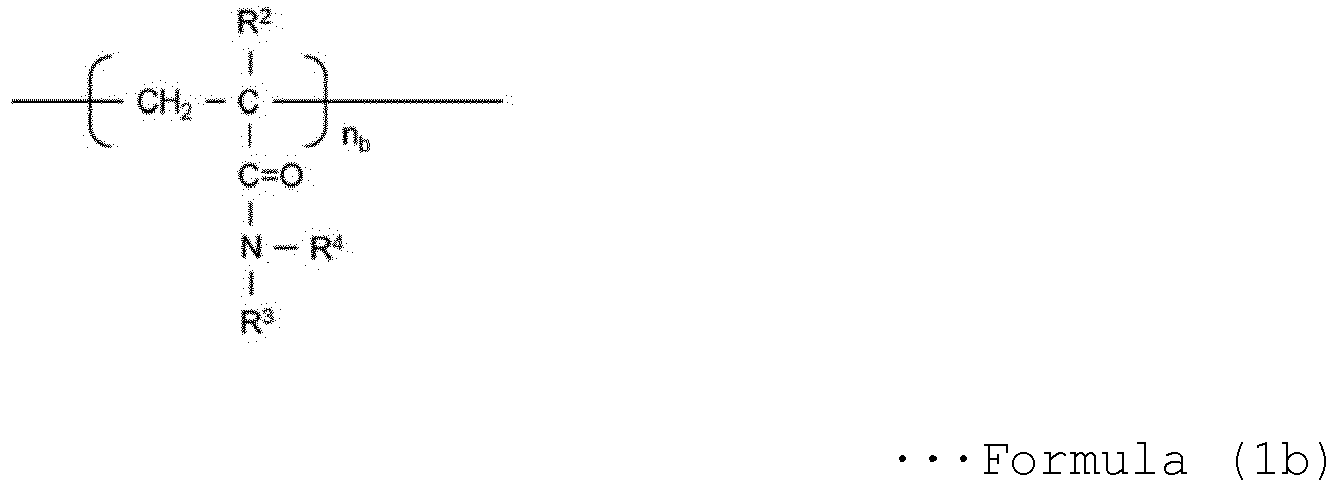

- The soft contact lens solution according to claim 1, wherein the buffering agent is a phosphate buffer.
Applications Claiming Priority (2)
| Application Number | Priority Date | Filing Date | Title |
|---|---|---|---|
| JP2021107493 | 2021-06-29 | ||
| PCT/JP2022/025211 WO2023276858A1 (en) | 2021-06-29 | 2022-06-24 | Soft contact lens solution |
Publications (2)
| Publication Number | Publication Date |
|---|---|
| EP4365669A1 true EP4365669A1 (en) | 2024-05-08 |
| EP4365669A4 EP4365669A4 (en) | 2025-06-04 |
Family
ID=84691312
Family Applications (1)
| Application Number | Title | Priority Date | Filing Date |
|---|---|---|---|
| EP22833005.6A Pending EP4365669A4 (en) | 2021-06-29 | 2022-06-24 | Soft contact lens solution |
Country Status (7)
| Country | Link |
|---|---|
| US (1) | US20240336876A1 (en) |
| EP (1) | EP4365669A4 (en) |
| JP (1) | JP7800544B2 (en) |
| KR (1) | KR20240025599A (en) |
| CN (1) | CN117561473A (en) |
| TW (1) | TW202317745A (en) |
| WO (1) | WO2023276858A1 (en) |
Families Citing this family (1)
| Publication number | Priority date | Publication date | Assignee | Title |
|---|---|---|---|---|
| WO2026083884A1 (en) * | 2024-10-15 | 2026-04-23 | 日油株式会社 | Treatment liquid for contact lenses |
Family Cites Families (17)
| Publication number | Priority date | Publication date | Assignee | Title |
|---|---|---|---|---|
| JPS6021599B2 (en) | 1977-10-28 | 1985-05-28 | 株式会社クラレ | 2-methacryloxyethylphosphorylcholine |
| JPS58154591A (en) | 1982-03-09 | 1983-09-14 | Tadao Nakaya | Preparation of monomer analogous to phospholipid |
| JP3324156B2 (en) | 1992-10-12 | 2002-09-17 | セイコーエプソン株式会社 | contact lens |
| JP3532692B2 (en) | 1995-04-03 | 2004-05-31 | 日本油脂株式会社 | Phosphorylcholine group-containing polymer aqueous solution and production method |
| US6037328A (en) * | 1998-12-22 | 2000-03-14 | Bausch & Lomb Incorporated | Method and composition for rewetting and preventing deposits on contact lens |
| TW200300448A (en) * | 2001-11-21 | 2003-06-01 | Novartis Ag | Conditioning solution for contact lenses |
| US9295747B2 (en) * | 2010-10-20 | 2016-03-29 | Nof Corporation | Contact lens care preparation and packaging solution |
| KR101797275B1 (en) * | 2012-03-02 | 2017-11-13 | 니치유 가부시키가이샤 | Contact lens care preparation and packaging solution |
| US9395468B2 (en) | 2012-08-27 | 2016-07-19 | Ocular Dynamics, Llc | Contact lens with a hydrophilic layer |
| WO2015119256A1 (en) * | 2014-02-06 | 2015-08-13 | Jsr株式会社 | Lens solution, contact lens, and production method therefor |
| JP6223890B2 (en) * | 2014-03-31 | 2017-11-01 | 株式会社メニコン | Ophthalmic composition liquid and method of use thereof |
| TWI748993B (en) * | 2016-02-23 | 2021-12-11 | 日商日油股份有限公司 | Use of solution for soft contact lenses in inhibiting protein adhesion to the soft contact lenses |
| JP7017030B2 (en) * | 2017-05-25 | 2022-02-08 | 日油株式会社 | Solution for silicone hydrogel contact lenses |
| JP7228119B2 (en) * | 2017-12-04 | 2023-02-24 | 日油株式会社 | Treatment liquid for soft contact lenses |
| CN112601987A (en) * | 2018-08-10 | 2021-04-02 | 鲍希与洛姆伯股份有限公司 | High water content ophthalmic devices |
| JP7218689B2 (en) * | 2019-07-24 | 2023-02-07 | 日油株式会社 | eye drops |
| JP7474592B2 (en) | 2019-12-27 | 2024-04-25 | 太陽ホールディングス株式会社 | Curable resin composition, dry film, resin-coated copper foil, cured product, and electronic component |
-
2022
- 2022-06-24 WO PCT/JP2022/025211 patent/WO2023276858A1/en not_active Ceased
- 2022-06-24 CN CN202280045459.6A patent/CN117561473A/en active Pending
- 2022-06-24 US US18/574,427 patent/US20240336876A1/en active Pending
- 2022-06-24 JP JP2023531884A patent/JP7800544B2/en active Active
- 2022-06-24 TW TW111123666A patent/TW202317745A/en unknown
- 2022-06-24 EP EP22833005.6A patent/EP4365669A4/en active Pending
- 2022-06-24 KR KR1020247001074A patent/KR20240025599A/en active Pending
Also Published As
| Publication number | Publication date |
|---|---|
| JP7800544B2 (en) | 2026-01-16 |
| EP4365669A4 (en) | 2025-06-04 |
| WO2023276858A1 (en) | 2023-01-05 |
| CN117561473A (en) | 2024-02-13 |
| JPWO2023276858A1 (en) | 2023-01-05 |
| TW202317745A (en) | 2023-05-01 |
| US20240336876A1 (en) | 2024-10-10 |
| KR20240025599A (en) | 2024-02-27 |
Similar Documents
| Publication | Publication Date | Title |
|---|---|---|
| TWI748993B (en) | Use of solution for soft contact lenses in inhibiting protein adhesion to the soft contact lenses | |
| EP2821841B1 (en) | Contact lens care preparation and packaging solution | |
| JP5707843B2 (en) | Contact lens care formulation and packaging solution | |
| EP3266468B1 (en) | Eyedrops | |
| US11746308B2 (en) | Soft contact lens treatment solution | |
| EP3480283B1 (en) | Slipperiness-imparting agent and slipperiness-imparting method | |
| JP5609525B2 (en) | Contact lens care formulation and packaging solution | |
| US9295747B2 (en) | Contact lens care preparation and packaging solution | |
| EP4043947A1 (en) | Surface treatment agent for soft contact lens | |
| US20240336876A1 (en) | Soft contact lens solution | |
| TW201900786A (en) | Solution for silicone hydrogel contact lens and distribution solution including the same improving the surface hydrophilicity and surface lubricity of a silicone hydrogel contact lens | |
| JP2019060917A (en) | Solution for storing soft contact lenses | |
| US20250206863A1 (en) | Copolymer and contact lens treatment solution | |
| JP7855167B2 (en) | Treatment solution for soft contact lenses | |
| JP2019219620A (en) | Contact lens solution | |
| JP7099077B2 (en) | Contact lens solution | |
| CN115125066A (en) | Preserving fluid for contact lenses | |
| TW202438545A (en) | Copolymer and contact lens treatment solution | |
| TW202540326A (en) | Copolymer and ophthalmic composition using the same | |
| TW202440691A (en) | Copolymer and ophthalmic composition using the same | |
| JP2019060916A (en) | Solution for storing soft contact lenses |
Legal Events
| Date | Code | Title | Description |
|---|---|---|---|
| STAA | Information on the status of an ep patent application or granted ep patent |
Free format text: STATUS: THE INTERNATIONAL PUBLICATION HAS BEEN MADE |
|
| PUAI | Public reference made under article 153(3) epc to a published international application that has entered the european phase |
Free format text: ORIGINAL CODE: 0009012 |
|
| STAA | Information on the status of an ep patent application or granted ep patent |
Free format text: STATUS: REQUEST FOR EXAMINATION WAS MADE |
|
| 17P | Request for examination filed |
Effective date: 20240109 |
|
| AK | Designated contracting states |
Kind code of ref document: A1 Designated state(s): AL AT BE BG CH CY CZ DE DK EE ES FI FR GB GR HR HU IE IS IT LI LT LU LV MC MK MT NL NO PL PT RO RS SE SI SK SM TR |
|
| DAV | Request for validation of the european patent (deleted) | ||
| DAX | Request for extension of the european patent (deleted) | ||
| RIN1 | Information on inventor provided before grant (corrected) |
Inventor name: IWAKIRI, NORIO Inventor name: KAWASAKI, HIROKO |
|
| A4 | Supplementary search report drawn up and despatched |
Effective date: 20250508 |
|
| RIC1 | Information provided on ipc code assigned before grant |
Ipc: C11D 3/37 20060101ALI20250430BHEP Ipc: C11D 1/00 20060101ALI20250430BHEP Ipc: G02C 13/00 20060101AFI20250430BHEP |