EP4362261A1 - Converter control method and control system, computer device, and storage medium - Google Patents
Converter control method and control system, computer device, and storage medium Download PDFInfo
- Publication number
- EP4362261A1 EP4362261A1 EP22848484.6A EP22848484A EP4362261A1 EP 4362261 A1 EP4362261 A1 EP 4362261A1 EP 22848484 A EP22848484 A EP 22848484A EP 4362261 A1 EP4362261 A1 EP 4362261A1
- Authority
- EP
- European Patent Office
- Prior art keywords
- current
- converter
- reference value
- voltage
- grid
- Prior art date
- Legal status (The legal status is an assumption and is not a legal conclusion. Google has not performed a legal analysis and makes no representation as to the accuracy of the status listed.)
- Pending
Links
Images


Classifications
-
- H—ELECTRICITY
- H02—GENERATION; CONVERSION OR DISTRIBUTION OF ELECTRIC POWER
- H02M—APPARATUS FOR CONVERSION BETWEEN AC AND AC, BETWEEN AC AND DC, OR BETWEEN DC AND DC, AND FOR USE WITH MAINS OR SIMILAR POWER SUPPLY SYSTEMS; CONVERSION OF DC OR AC INPUT POWER INTO SURGE OUTPUT POWER; CONTROL OR REGULATION THEREOF
- H02M1/00—Details of apparatus for conversion
- H02M1/32—Means for protecting converters other than automatic disconnection
-
- H—ELECTRICITY
- H02—GENERATION; CONVERSION OR DISTRIBUTION OF ELECTRIC POWER
- H02J—ELECTRIC POWER NETWORKS; CIRCUIT ARRANGEMENTS OR SYSTEMS FOR SUPPLYING OR DISTRIBUTING ELECTRIC POWER; SYSTEMS FOR STORING ELECTRIC ENERGY
- H02J3/00—Circuit arrangements for AC mains or AC distribution networks
- H02J3/38—Arrangements for feeding a single network from two or more generators or sources in parallel; Arrangements for feeding already energised networks from additional generators or sources in parallel
- H02J3/40—Synchronisation of generators for connection to a network or to another generator
-
- H—ELECTRICITY
- H02—GENERATION; CONVERSION OR DISTRIBUTION OF ELECTRIC POWER
- H02M—APPARATUS FOR CONVERSION BETWEEN AC AND AC, BETWEEN AC AND DC, OR BETWEEN DC AND DC, AND FOR USE WITH MAINS OR SIMILAR POWER SUPPLY SYSTEMS; CONVERSION OF DC OR AC INPUT POWER INTO SURGE OUTPUT POWER; CONTROL OR REGULATION THEREOF
- H02M1/00—Details of apparatus for conversion
- H02M1/0003—Details of control, feedback or regulation circuits
-
- H—ELECTRICITY
- H02—GENERATION; CONVERSION OR DISTRIBUTION OF ELECTRIC POWER
- H02M—APPARATUS FOR CONVERSION BETWEEN AC AND AC, BETWEEN AC AND DC, OR BETWEEN DC AND DC, AND FOR USE WITH MAINS OR SIMILAR POWER SUPPLY SYSTEMS; CONVERSION OF DC OR AC INPUT POWER INTO SURGE OUTPUT POWER; CONTROL OR REGULATION THEREOF
- H02M1/00—Details of apparatus for conversion
- H02M1/0003—Details of control, feedback or regulation circuits
- H02M1/0009—Devices or circuits for detecting current in a converter
-
- Y—GENERAL TAGGING OF NEW TECHNOLOGICAL DEVELOPMENTS; GENERAL TAGGING OF CROSS-SECTIONAL TECHNOLOGIES SPANNING OVER SEVERAL SECTIONS OF THE IPC; TECHNICAL SUBJECTS COVERED BY FORMER USPC CROSS-REFERENCE ART COLLECTIONS [XRACs] AND DIGESTS
- Y02—TECHNOLOGIES OR APPLICATIONS FOR MITIGATION OR ADAPTATION AGAINST CLIMATE CHANGE
- Y02E—REDUCTION OF GREENHOUSE GAS [GHG] EMISSIONS, RELATED TO ENERGY GENERATION, TRANSMISSION OR DISTRIBUTION
- Y02E60/00—Enabling technologies; Technologies with a potential or indirect contribution to GHG emissions mitigation
- Y02E60/60—Arrangements for transfer of electric power between AC networks or generators via a high voltage DC link [HVCD]
Definitions
- This application relates to the field of flexible direct-current power transmission systems of power systems, and specifically, to a control method and a control system for a converter, a computer device, and a storage medium.
- the flexible direct-current power transmission technology has advantages of being flexible in control and being large in controllable range, and can effectively implement wide-range new energy grid connection, to ensure efficient aggregation and flexible transmission of new energy.
- control over converters is mainly divided into two types: grid following control and grid forming control.
- External characteristics of a power source of a converter of the grid following control are represented by current source characteristics.
- Typical representatives include a conventional grid commutation converter, a doubly-fed induction generator, and a voltage source converter with direct current control.
- External characteristics of a power source of a converter of the grid forming control are represented by voltage source characteristics.
- Typical representatives include a voltage source converter with amplitude-phase control (or referred to as indirect current control) or power synchronization control (including virtual synchronous generator control).
- the grid forming control improves output characteristics of the converter with reference to the running principle of the conventional synchronous generator.
- Typical grid forming control is a virtual synchronous generator (VSG, virtual synchronous generator) technology.
- the converter in the flexible direct-current power transmission technology is weak in overcurrent capability in a fault. Therefore, when the grid has a fault, it is necessary to perform current-limiting control regardless of being the grid following control or the grid forming control, to prevent a short-circuit current from burning out a switching device.
- regular overcurrent limiting manners include three types: equal-proportion limiting of the axis-d and axis-q currents, prioritized limiting of the axis-d current, and prioritized limiting of the axis-q current.
- the converter becomes a current source, and is incapable of having the characteristics of the virtual synchronous generator.
- To enable the converter to maintain voltage source characteristics similar to those of the synchronous generator in each of a stable state and a fault is one of to-be-resolved problems of flexibly direct-current accessing the novel power system where new energy dominates.
- Exemplary embodiments of this application provide a control method and a control system for a converter, a computer device, and a storage medium, to avoid a problem in a conventional current-limiting method that a converter is caused to enter a current source and consequently control characteristics are insufficient.
- a control method for a converter is provided, where the control method is applied to a flexible direct-current power transmission system, the flexible direct-current power transmission system includes one or more voltage source converters, and the control method includes:
- a value of an amplitude of the inner potential of the converter ranges from 0 pu to 2 pu;
- the amplitude of the inner potential of the converter is obtained by performing calculation according to determined function relationships such as droop characteristics and based on a terminal voltage or reactive power.
- control method further includes:
- control method further includes: when an actual current is greater than the current limiting value I max , the converter is in the instruction current-limiting mode.
- the step of calculating the current instruction reference value in the instruction current-limiting mode according to the series inductance characteristics of the positive sequence voltage source includes:
- the constant impedance value X Lset when the converter is in the instruction current-limiting mode, is the current-limiting impedance X L ; and when the converter is not in the instruction current-limiting mode, the constant impedance value X Lset ranges from 0 pu to 5 pu.
- the step of calculating the current-limiting impedance X L in the instruction current-limiting mode according to the current limiting value I max includes: calculating a voltage vector of the current-limiting impedance X L according to a vector difference between the grid-side voltage U s and the inner potential amplitude E, and then obtaining the current-limiting impedance X L by dividing a modulus of the voltage vector by the current limiting value I max of the converter.
- the step of calculating the current instruction reference value I sref according to the error between the voltage reference value U sref of the connection bus and the grid-side voltage U s includes: using a PI controller in the step 3, where input is the error between the voltage reference value U sref of the connection bus and the grid-side voltage U s , output is the current instruction reference value I sref , and when the converter is in the instruction current-limiting mode, the current instruction reference value I sref is the current instruction reference value that is output in the overcurrent limiting unit.
- a PI controller is used in the step 3, a reference voltage instruction is obtained using the current instruction reference value I sref and the grid-side current I s of the converter, inverse Park transformation is performed on the reference voltage instruction to obtain a three-phase reference voltage instruction U Cabc , and the three-phase reference voltage instruction U Cabc is sent to a subsequent converter valve control link to control the converter.
- a control method for a converter is provided, where the control method is applied to a flexible direct-current power transmission system, the flexible direct-current power transmission system includes one or more voltage source converters, and the control method includes:
- a value of an amplitude of the inner potential of the converter ranges from 0 pu to 2 pu
- P m mechanical power
- P e electromagnetic power
- J virtual inertia
- D is a virtual damping factor
- ⁇ is a rotor angular frequency of the virtual synchronous generator
- ⁇ 0 is a system rated rotor angular frequency.
- the amplitude of the inner potential of the converter is obtained by performing calculation according to determined function relationships such as droop characteristics and based on a terminal voltage or reactive power.
- the step of calculating the current instruction reference value I sref in the instruction current-limiting mode according to the series inductance characteristics of the positive sequence voltage source includes:
- a computer device including a memory, a processor, and a computer program stored in the memory and executable on the processor, where when the processor executes the computer program, the steps in the control method described above are implemented.
- a computer-readable storage medium storing a computer program, where when the computer program is executed by a processor, the steps in the method described above are implemented.
- the converter in the flexible direct-current power transmission technology is weak in overcurrent capability in a fault. Therefore, when the grid has a fault, it is necessary to perform current-limiting control regardless of being the grid following control or the grid forming control, to prevent a short-circuit current from burning out a switching device.
- regular overcurrent limiting manners include three types: equal-proportion limiting of the axis-d and axis-q currents, prioritized limiting of the axis-d current, and prioritized limiting of the axis-q current.
- a control method and a control system for a converter, a computer device, and a storage medium in which current limiting is performed according to series inductance characteristics of a positive sequence voltage source are provided according to exemplary embodiments of this application, to avoid a problem in a conventional current-limiting method that a converter is caused to enter a current source and consequently control characteristics are insufficient.
- external characteristics of the control system for a converter provided according to some embodiments of this application in stable and transient whole processes are series controlled inductance characteristics of the positive sequence voltage source, thereby providing inertia support for the grid consistent with that for the synchronous generator in a fault.
- a capacitive reactive current may be injected into a fault point, to facilitate an increase in protection of action sensitivity.
- the pu in this application refers to the unit of a per-unit value in a per-unit system (per-unit system).
- FIG. 1 is a schematic diagram of a relationship between modules of a control system for a converter according to an exemplary embodiment of this application.
- FIG. 1 shows a control system for a converter according to an exemplary embodiment of this application, including a system parameter obtaining module 1, a reference voltage generation module 2, a voltage outer-loop module 3, a current inner-loop module 4, and an overcurrent limiting module 5.
- u dqpn used is in the form of a vector including a positive sequence axis-d component U sdp , a positive sequence axis-q component U sqp , a negative sequence axis-d component U sdn , and a negative sequence axis-q component U sqn of a grid-side voltage U s
- the grid-side current I s of the converter refers to a current on an alternating-current side (namely, three-phase grid-side) of the converter.
- the collected three-phase grid-side voltage u s of the converter undergoes sequence decomposition and park (abc/dq) transformation (Park Transformation) to obtain the positive sequence axis-d component U sdp of the grid-side voltage, the positive sequence axis-q component U sqp of the grid-side voltage, the negative sequence axis-d component U sdn of the grid-side voltage, and the negative sequence axis-q component U sqn of the grid-side voltage.
- the collected three-phase grid-side current I s of the converter undergoes sequence decomposition and park (abc/dq) transformation to obtain the positive sequence axis-d component I sdp of the alternating-current current, the positive sequence axis-q component I sqp of the alternating-current current, the negative sequence axis-d component I sdn of the alternating-current current, and the negative sequence axis-q component I sqn of the alternating-current current.
- a value of an amplitude E of the inner potential of the system parameter obtaining module 1 ranges from 0 pu to 2 pu, and optionally is 1 pu.
- the amplitude E of the inner potential may alternatively be obtained by performing calculation according to determined function relationships such as droop characteristics and based on a terminal voltage or reactive power.
- a rotor motion equation of a virtual synchronous generator of a phase ⁇ of the inner potential is shown in Formula (2).
- P m mechanical power
- P e electromagnetic power
- J virtual inertia
- D a virtual damping factor
- ⁇ a rotor angular frequency of the virtual synchronous generator
- ⁇ 0 is a system rated rotor angular frequency.
- the overcurrent limiting module 5 is configured to calculate a current instruction reference value when the converter is in an instruction current-limiting mode.
- Input of the overcurrent limiting module 5 is the inner potential amplitude E, a current limiting value I max of the converter, and the grid-side voltage u dqpn .
- a current-limiting impedance X L less than the current limiting value I max of the converter may be obtained through calculation.
- the current instruction reference value i dqpn ref 1 after instruction limiting may be calculated according to series inductance characteristics of a positive sequence voltage source and according to the inner potential amplitude E, the grid-side voltage u dqpn , and the current-limiting impedance X L .
- the constant impedance value X Lset is the current-limiting impedance X L .
- X Lset is equal to a constant value X L0 determined according to system research.
- the constant value X L0 ranges from 0 pu to 5 pu.
- the constant impedance value X Lset is 0.1 pu.
- the reference voltage generation module 2 is configured to calculate a voltage reference value u dqpn ref of a connection bus of the converter.
- Input of the reference voltage generation module 2 is the inner potential amplitude E, the constant impedance value X Lset , and the sampling current i dqpn .
- the voltage reference value u dqpn ref of the connection bus of the converter satisfying the series inductance characteristics of the positive sequence voltage source is calculated according to Formula (3).
- u dqpn ref is a four-dimensional vector [ U srefdp , U srefqp , U srefdn , U srefqn ] and corresponds to u dqpn .
- the voltage outer-loop module 3 is configured to calculate a current instruction reference value when the converter is not in the instruction current-limiting mode.
- the voltage outer-loop module 3 generates, according to a deviation between u dqpn ref and u dqpn , a current instruction reference value i dqpn ref 2 satisfying the series inductance characteristics of the positive sequence voltage source in a non-current-limiting case.
- the voltage outer-loop module 3 may be a PI controller.
- a final current instruction reference value is determined according to whether the converter is in the instruction current-limiting mode.
- the current instruction reference value i dqpn ref is i dqpn ref 1 that is output by the overcurrent limiting module 5.
- the current instruction reference value is i dqpn ref 2 that is output by the voltage outer-loop module 3.
- controller amplitude limiting needs to be further performed using i dqpn ref 1 .
- the current inner-loop module 4 is configured to obtain a reference voltage instruction.
- the current inner-loop module 4 obtains the reference voltage instruction according to a deviation between the current instruction reference value i dqpn ref and the sampling current i dqpn .
- the reference voltage instruction that is output by the current inner-loop module 4 undergoes inverse Park (dq/abc) transformation to obtain a three-phase reference voltage instruction U Cabc , and U Cabc is sent to a subsequent converter valve control link to control the converter.
- dq/abc inverse Park
- FIG. 2 is a flowchart of a control method for a converter according to an exemplary embodiment of this application. A control method for a converter according to an exemplary embodiment of this application is described below with reference to FIG. 2 .
- control method shown in FIG. 2 is applied to a flexible direct-current power transmission system, and the flexible direct-current power transmission system includes one or more voltage source converters.
- Step S201 Determine an inner potential amplitude E of the converter, a phase ⁇ of the inner potential, a grid-side voltage U s , a grid-side current I s of the converter, a constant impedance value X Lset , and a current limiting value I max of the converter.
- a value of the inner potential amplitude E of the converter ranges from 0 pu to 2 pu.
- a value of the inner potential amplitude E of the converter is 1 pu.
- the value of E may alternatively be adjusted by adding an exciter similar to a synchronous generator or a reactive regulation policy.
- a rotor motion equation of a virtual synchronous generator of a phase ⁇ of the inner potential of the converter is shown in Formula (2).
- the constant impedance value X Lset ranges from 0 pu to 5 pu.
- the constant impedance value X Lset is 0.1 pu.
- FIG. 3 is a block diagram of generating a phase ⁇ of an inner potential amplitude E of a converter according to an exemplary embodiment of this application.
- Input P m is mechanical power, and is equivalent to an active power instruction value for the converter.
- Input P e is electromagnetic power, and is active power obtained by collecting terminal voltage and current of the converter and performing calculation, J is virtual inertia, D is a virtual damping factor, ⁇ is the phase of the inner potential of the converter, ⁇ is a rotor angular frequency of a virtual synchronous generator, and ⁇ 0 is a system rated rotor angular frequency.
- the virtual inertia J and the virtual damping factor D are determined according to system research.
- Step S203 Calculate a voltage reference value U sref of a connection bus of the converter according to the inner potential amplitude E, the phase ⁇ , the constant impedance value X Lset , and the grid-side current I s of the converter.
- the voltage reference value U sref includes a positive sequence axis-d component U srefdp , a positive sequence axis-q component U srefqp , a negative sequence axis-d component U srefdn , and a negative sequence axis-q component U srefqn , and satisfies Formula (3).
- I sdp is a positive sequence axis-d component of the grid-side current I s of the converter
- I sqp is a positive sequence axis-q component of the grid-side current I s of the converter
- I sdn is a negative sequence axis-d component of the grid-side current I s of the converter
- I sqn is a negative sequence axis-q component of the grid-side current I s of the converter.
- Step S205 Calculate a current instruction reference value I sref according to an error between the voltage reference value U sref of the connection bus and the grid-side voltage U s .
- the current instruction reference value I sref includes a current positive sequence axis-d reference value I srefdp , a current positive sequence axis-q reference value I srefqp , a current negative sequence axis-d reference value I srefdn , and a current negative sequence axis-q reference value I srefqn .
- the current instruction reference value I sref is obtained with a PI controller and according to the error between the voltage reference value U sref of the connection bus and the grid-side voltage U s .
- a current-limiting impedance X L for implementing current limiting is first calculated.
- the current instruction reference value I sref after instruction limiting is calculated according to the series inductance characteristics of the positive sequence voltage source.
- Park transformation is performed on the grid-side voltage U s according to the phase ⁇ , and a positive sequence axis-d component U sdp of the grid-side voltage U s , a positive sequence axis-q component U sqp of the grid-side voltage U s , a negative sequence axis-d component U sdn of the grid-side voltage U s , and a negative sequence axis-q component U sqn of the grid-side voltage U s are calculated.
- a voltage vector of the current-limiting impedance X L is calculated according to a vector difference between the grid-side voltage U s and the inner potential amplitude E, and then the current-limiting impedance X L is obtained by dividing a modulus of the voltage vector by the current limiting value I max of the converter.
- a current vector on the current-limiting impedance X L is calculated according to the voltage vector of the current-limiting impedance X L and the current-limiting impedance X L and according to the series inductance characteristics of the positive sequence voltage source, and is used as the current instruction reference value I sref .
- I srefdp is a current positive sequence axis-d reference value of the current instruction reference value I sref
- I srefqp is a current positive sequence axis-q reference value of the current instruction reference value I sref
- I srefdn is a current negative sequence axis-d reference value of the current instruction reference value I sref
- I srefqn is a current negative sequence axis-q reference value of the current instruction reference value I sref .
- Step S207 Control, according to the current instruction reference value I sref , a current of the converter to follow the current instruction reference value I sref .
- the controlling a current of the converter to follow the current instruction reference value I sref means that when the current instruction reference value I sref increases, the current of the converter may be controlled to increase; and when the current instruction reference value I sref decreases, the current of the converter may be controlled to decrease.
- a reference voltage instruction is obtained with the current instruction reference value I sref and the grid-side current I s .
- a reference voltage instruction is obtained with a PI controller and with the current instruction reference value I sref and the grid-side current I s .
- inverse Park (dq/abc) transformation is performed on the reference voltage instruction to obtain a three-phase reference voltage instruction U Cabc , and U Cabc is sent to a subsequent converter valve control link to control the converter.
- a current-limiting method for performing current limiting according to series inductance characteristics of a positive sequence voltage source is provided, to avoid a problem in a conventional current-limiting method that a converter is caused to enter a current source and consequently control characteristics are insufficient.
- external characteristics of the control system in stable and transient whole processes are series controlled inductance characteristics of the positive sequence voltage source, thereby providing inertia support for the grid consistent with that for the synchronous generator in a fault.
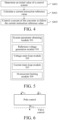
- FIG. 4 is a flowchart of a control method for a converter according to an exemplary embodiment of this application. A control method for a converter according to an exemplary embodiment of this application is described in detail below with reference to FIG. 4 .
- Step S401 Determine an inner potential amplitude E of the converter, a phase ⁇ of the inner potential, a grid-side voltage U s , a grid-side current I s of the converter, a constant impedance value X Lset , and a current limiting value I max of the converter.
- a value of the inner potential amplitude E of the converter ranges from 0 pu to 2 pu.
- a value of the inner potential amplitude E of the converter is 1 pu.
- the value of E may alternatively be adjusted by adding an exciter similar to a synchronous generator or a reactive regulation policy.
- a rotor motion equation of a virtual synchronous generator of the phase ⁇ is shown in Formula (2).
- the constant impedance value X Lset ranges from 0 pu to 5 pu.
- the constant impedance value X Lset is 0.1 pu.
- Step S403 Calculate a current instruction reference value I sref in an instruction current-limiting mode according to series inductance characteristics of a positive sequence voltage source and according to the grid-side voltage U s , the inner potential amplitude E, the phase ⁇ , and the current limiting value I max .
- Park transformation is performed on the grid-side voltage U s according to the phase ⁇ , and a positive sequence axis-d component U sdp of the grid-side voltage U s , a positive sequence axis-q component U sqp of the grid-side voltage U s , a negative sequence axis-d component U sdn of the grid-side voltage U s , and a negative sequence axis-q component U sqn of the grid-side voltage U s are calculated.
- a current-limiting impedance X L in the instruction current-limiting mode is calculated according to the current limiting value I max .
- a voltage vector U L of the current-limiting impedance is calculated according to a vector difference between the grid-side voltage U s and the inner potential amplitude E, and then the current-limiting impedance X L is obtained by dividing a modulus of U L by the current limiting value I max of the converter.
- the current instruction reference value I sref after instruction limiting is calculated according to the series inductance characteristics of the positive sequence voltage source.
- the current instruction reference value I sref includes a current positive sequence axis-d reference value I srefdp , a current positive sequence axis-q reference value I srefqp , a current negative sequence axis-d reference value I srefdn , and a current negative sequence axis-q reference value I srefqn .
- a current vector on the current-limiting impedance X L is calculated according to the voltage vector U L of the current-limiting impedance and the current-limiting impedance X L , and is used as the current instruction reference value I sref , which includes a current positive sequence axis-d reference value I srefdp , a current positive sequence axis-q reference value I srefqp , a current negative sequence axis-d reference value I srefdn , and a current negative sequence axis-q reference value I srefqn .
- S405 Control, according to the current instruction reference value I sref , a current of the converter to follow the current instruction reference value I sref .
- the controlling a current of the converter to follow the current instruction reference value I sref means that when the current instruction reference value I sref increases, the current of the converter may be controlled to increase; and when the current instruction reference value I sref decreases, the current of the converter may be controlled to decrease.
- a reference voltage instruction is obtained with the current instruction reference value I sref and the grid-side current I s .
- a reference voltage instruction is obtained with a PI controller and with the current instruction reference value I sref and the grid-side current I s .
- inverse Park (dq/abc) transformation is performed on the reference voltage instruction to obtain a three-phase reference voltage instruction U Cabc , and U Cabc is sent to a subsequent converter valve control link to control the converter.
- FIG. 5 is a block diagram of a control system for a converter according to an exemplary embodiment of this application.
- a control system for a converter according to an exemplary embodiment of this application is described in detail below with reference to FIG. 5 .
- the control system includes a system parameter obtaining module 501, a reference voltage generation module 503, a voltage outer-loop module 505, a current inner-loop module 507, and an overcurrent limiting module 509.
- the system parameter obtaining module 501 is configured to obtain an inner potential amplitude E of the converter, a phase ⁇ of the inner potential, a constant impedance value X Lset , a grid-side voltage U s , a grid-side current I s of the converter, and a current limiting value I max .
- a value of an amplitude of the inner potential of the converter ranges from 0 pu to 2 pu
- the reference voltage generation module 503 is configured to calculate a voltage reference value U sref of a connection bus of the converter according to the inner potential amplitude E, the phase ⁇ , the constant impedance value X Lset , and the grid-side current I s of the converter;
- FIG. 6 shows a control system for a converter according to an embodiment of this application.
- the control system performs inverse Park (dq/abc) transformation on the reference voltage instruction that is output by the current inner-loop module 4 to obtain a three-phase reference voltage instruction U Cabc , and sends U Cabc to subsequent valve control (namely, converter valve control link) to control the converter.
- dq/abc inverse Park
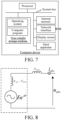
- FIG. 7 shows a computer device according to an embodiment of this application.
- the computer device shown in FIG. 7 includes a memory, a processor, and a computer program stored in the memory and executable on the processor.
- control logics shown in FIG. 2 and FIG. 4 that are specifically steps S201 to S 107 and steps S401 to S405 are implemented.
- control method is not limited to the foregoing exemplary embodiments, but additional and optional other operations /steps may be, for example, further implemented.
- additional and optional other operations /steps may be, for example, further implemented.
- some operations/steps may be further divided, while some operations/steps may be combined or partially combined. Therefore, an actual execution order may vary depending on an actual situation.
- the computer device may be a terminal, and a diagram of an internal structure thereof may be shown in FIG. 7 .
- the computer device may include a processor, a memory, a network interface, a display screen, and an input apparatus that are connected by using a system bus.
- the processor of the computer device is configured to provide computing and control capabilities.
- the memory of the computer device includes a non-volatile storage medium and an internal memory.
- the non-volatile storage medium stores an operating system and a computer program.
- the internal memory provides an environment for running of the operating system and the computer program in the non-volatile storage medium.
- the computer device may include a network interface.
- the network interface is configured to connect to and communicate with an external terminal by using a network.
- the computer program is executed by the processor to implement the foregoing control method for a converter.
- the computer device may further include a display screen.
- the display screen may be a liquid crystal display screen or an electronic ink display screen.
- the input apparatus of the computer device may be a touch layer covering the display screen, or may be a key, a trackball, or a touch pad disposed on a housing of the computer device, or may be an external keyboard, a touch pad, a mouse, or the like.
- FIG. 7 is only a block diagram of a part of a structure related to a solution of this application and does not limit the computer device to which the solution of this application is applied.
- the computer device may include more or fewer members than those in the drawings, or include a combination of some members, or include different member layouts.
- Exemplary embodiments of this application further provide a computer-readable storage medium, storing a computer program, where steps of the control method for a converter provided in the embodiments of this application are implemented when the computer program is executed by a processor. It may be understood that the implemented steps of the control method are not limited to the foregoing exemplary embodiments, but additional and optional other operations /steps may be, for example, further implemented. In addition, some operations/steps may be further divided, while some operations/steps may be combined or partially combined. Therefore, an actual execution order may vary depending on an actual situation.
- FIG. 8 is a diagram of an equivalent circuit of controlling a converter with a control method for a converter according to an embodiment of this application.
- X REAL is an impedance actually existing in a system
- X Lset -X REAL is an impedance obtained through the foregoing control method for a converter
- E e j ⁇ is a positive sequence voltage source. Therefore, by using the foregoing control method for a converter, the converter presents characteristics of the series inductance X Lset of the positive sequence voltage source E e j ⁇ .
- FIG. 9 shows a fault ride-through effect of a control method for a converter according to an embodiment of this application.
- U saref , U sbref , and U scref are voltage reference values of a three-phase connection bus that are calculated according to Formula (3)
- U sa , U sb , and U sc are sampling voltage of the three-phase connection bus. It may be learned from FIG. 9 that, a single-phase grounding fault occurs at a moment 3s, the voltages of the three-phase bus temporarily deviate from an instruction value. Subsequently, each of the voltages of the three-phase bus can be maintained to follow the instruction value. Therefore, after temporarily losing voltage source control characteristics, the converter shown in FIG. 9 can quickly return to a voltage source control state.
- a novel current-limiting method in which current limiting is performed according to series inductance characteristics of a positive sequence voltage source is provided according to exemplary embodiments provided in this application, to avoid a problem in a conventional current-limiting method that a converter is caused to enter a current source and consequently control characteristics are insufficient.
- a control system for a converter provided according to exemplary embodiments of this application can have external characteristics that are series controlled inductance characteristics of a positive sequence voltage source in stable and transient whole processes, and can provide inertia support for the grid consistent with that for the synchronous generator in a fault.
- a capacitive reactive current may be injected into a fault point, to facilitate an increase in protection of action sensitivity.
Landscapes
- Engineering & Computer Science (AREA)
- Power Engineering (AREA)
- Inverter Devices (AREA)
- Control Of Voltage And Current In General (AREA)
- Supply And Distribution Of Alternating Current (AREA)
- Rectifiers (AREA)
- Control Of Eletrric Generators (AREA)
Abstract
Description
- This application claims priority to
Chinese Patent Application No. 2021108502453, filed with the China National Intellectual Property Administration on July 27, 2021 - This application relates to the field of flexible direct-current power transmission systems of power systems, and specifically, to a control method and a control system for a converter, a computer device, and a storage medium.
- With continuous increases in the electric energy yield, the proportion, and the utilization level of new energy, asynchronous generator power sources such as the new energy account for a very high proportion in a grid. As a result, running characteristics of power systems have essential changes.
- With an increase in the power generation penetration rate of the new energy, characteristics of power electronics converters such as low inertia and non-damping adversely affect stable running of the system, and consequently bring a challenge to stable running of the grid. Currently, the power system still cannot support access from a large-scale new energy power source.
- In a novel power system where a new energy power source dominates, because the investment proportion of synchronous generators is reduced, inertia of the synchronous generators is insufficient to ensure a same frequency between all synchronous generator power sources and asynchronous generator power sources in the entire grid, and there is a problem of power stability.
- The flexible direct-current power transmission technology has advantages of being flexible in control and being large in controllable range, and can effectively implement wide-range new energy grid connection, to ensure efficient aggregation and flexible transmission of new energy.
- Currently, in the flexible direct-current power transmission technology, control over converters is mainly divided into two types: grid following control and grid forming control. External characteristics of a power source of a converter of the grid following control are represented by current source characteristics. Typical representatives include a conventional grid commutation converter, a doubly-fed induction generator, and a voltage source converter with direct current control. External characteristics of a power source of a converter of the grid forming control are represented by voltage source characteristics. Typical representatives include a voltage source converter with amplitude-phase control (or referred to as indirect current control) or power synchronization control (including virtual synchronous generator control). The grid forming control improves output characteristics of the converter with reference to the running principle of the conventional synchronous generator. Typical grid forming control is a virtual synchronous generator (VSG, virtual synchronous generator) technology.
- The converter in the flexible direct-current power transmission technology is weak in overcurrent capability in a fault. Therefore, when the grid has a fault, it is necessary to perform current-limiting control regardless of being the grid following control or the grid forming control, to prevent a short-circuit current from burning out a switching device.
- Currently, regular overcurrent limiting manners include three types: equal-proportion limiting of the axis-d and axis-q currents, prioritized limiting of the axis-d current, and prioritized limiting of the axis-q current. When the foregoing current-limiting solution is used, the converter becomes a current source, and is incapable of having the characteristics of the virtual synchronous generator. To enable the converter to maintain voltage source characteristics similar to those of the synchronous generator in each of a stable state and a fault is one of to-be-resolved problems of flexibly direct-current accessing the novel power system where new energy dominates.
- Exemplary embodiments of this application provide a control method and a control system for a converter, a computer device, and a storage medium, to avoid a problem in a conventional current-limiting method that a converter is caused to enter a current source and consequently control characteristics are insufficient.
- According to an aspect of this application, a control method for a converter is provided, where the control method is applied to a flexible direct-current power transmission system, the flexible direct-current power transmission system includes one or more voltage source converters, and the control method includes:
- step 1: determining an inner potential amplitude E of the converter, a phase θ of the inner potential, a grid-side voltage Us, a grid-side current Is of the converter, a constant impedance value XLset, and a current limiting value Imax of the converter;
- step 2: calculating a voltage reference value Usref of a connection bus of the converter according to the inner potential amplitude E, the phase θ, the constant impedance value XLset, and the grid-side current Is of the converter;
- step 3: calculating a current instruction reference value Isref according to an error between the voltage reference value Usref of the connection bus and the grid-side voltage Us; and
- step 4: controlling, according to the current instruction reference value Isref, a current of the converter to follow the current instruction reference value Isref,
- where the control method further includes an overcurrent limiting unit, and when the converter is in an instruction current-limiting mode, a current instruction reference value in the instruction current-limiting mode is calculated according to series inductance characteristics of a positive sequence voltage source and according to the grid-side voltage Us, the inner potential amplitude E, the phase θ, and the current limiting value Imax of the converter, and is used as the current instruction reference value Isref in the step 3.
- In an embodiment, a value of an amplitude of the inner potential of the converter ranges from 0 pu to 2 pu; and
- a rotor motion equation of a virtual synchronous generator of the phase θ is:

- where Pm is mechanical power, Pe is electromagnetic power, J is virtual inertia, D is a virtual damping factor, ω is a rotor angular frequency of the virtual synchronous generator, and ω0 is a system rated rotor angular frequency.
- In an embodiment, the amplitude of the inner potential of the converter is obtained by performing calculation according to determined function relationships such as droop characteristics and based on a terminal voltage or reactive power.
- In an embodiment, the voltage reference value Usref includes a positive sequence axis-d component Usrefdp, a positive sequence axis-q component Usrefqp, a negative sequence axis-d component Usrefdn, and a negative sequence axis-q component Usrefqn, and satisfies:

- In an embodiment, the control method further includes:
- when an amplitude of the current instruction reference value Isref calculated in the step 3 is greater than the current limiting value Imax, namely, the following formula is satisfied, the converter is in the instruction current-limiting mode:

- where Isrefdp is a current positive sequence axis-d reference value of the current instruction reference value Isref, Isrefqp is a current positive sequence axis-q reference value of the current instruction reference value Isref, Isrefdn is a current negative sequence axis-d reference value of the current instruction reference value Isref, and Isrefqn is a current negative sequence axis-q reference value of the current instruction reference value Isref.
- In an embodiment, the control method further includes: when an actual current is greater than the current limiting value Imax, the converter is in the instruction current-limiting mode.
- In an embodiment, the step of calculating the current instruction reference value in the instruction current-limiting mode according to the series inductance characteristics of the positive sequence voltage source includes:
- performing Park transformation on the grid-side voltage Us according to the phase θ, to calculate a voltage vector including a positive sequence axis-d component Usdp of the grid-side voltage Us, a positive sequence axis-q component Usqp of the grid-side voltage Us, a negative sequence axis-d component Usdn of the grid-side voltage Us, and a negative sequence axis-q component Usqn of the grid-side voltage Us;
- calculating a current-limiting impedance XL in the instruction current-limiting mode according to the current limiting value Imax; and
- calculating, based on the series inductance characteristics of the positive sequence voltage source, the current instruction reference value Isref after instruction limiting according to the voltage vector of the grid-side voltage Us, the inner potential amplitude E, and the current-limiting impedance XL, where the current instruction reference value Isref includes a current positive sequence axis-d reference value Isrefdp, a current positive sequence axis-q reference value Isrefqp, a current negative sequence axis-d reference value Isrefdn, and a current negative sequence axis-q reference value Isrefqn.
- In an embodiment, when the converter is in the instruction current-limiting mode, the constant impedance value XLset is the current-limiting impedance XL; and
when the converter is not in the instruction current-limiting mode, the constant impedance value XLset ranges from 0 pu to 5 pu. - In an embodiment, the step of calculating the current-limiting impedance XL in the instruction current-limiting mode according to the current limiting value Imax includes:
calculating a voltage vector of the current-limiting impedance XL according to a vector difference between the grid-side voltage Us and the inner potential amplitude E, and then obtaining the current-limiting impedance XL by dividing a modulus of the voltage vector by the current limiting value Imax of the converter. - In an embodiment, when the current-limiting impedance XL is greater than the constant impedance value XLset, it is determined that the converter is in the instruction current-limiting mode.
- In an embodiment, the step of calculating the current instruction reference value Isref according to the error between the voltage reference value Usref of the connection bus and the grid-side voltage Us includes:
using a PI controller in the step 3, where input is the error between the voltage reference value Usref of the connection bus and the grid-side voltage Us, output is the current instruction reference value Isref, and when the converter is in the instruction current-limiting mode, the current instruction reference value Isref is the current instruction reference value that is output in the overcurrent limiting unit. - In an embodiment, a PI controller is used in the step 3, a reference voltage instruction is obtained using the current instruction reference value Isref and the grid-side current Is of the converter, inverse Park transformation is performed on the reference voltage instruction to obtain a three-phase reference voltage instruction UCabc, and the three-phase reference voltage instruction UCabc is sent to a subsequent converter valve control link to control the converter.
- According to an aspect of this application, a control method for a converter is provided, where the control method is applied to a flexible direct-current power transmission system, the flexible direct-current power transmission system includes one or more voltage source converters, and the control method includes:
- determining an inner potential amplitude E of the converter, a phase θ of the inner potential, a grid-side voltage Us, a grid-side current Is of the converter, a constant impedance value XLset, and a current limiting value Imax of the converter;
- calculating a current instruction reference value Isref in an instruction current-limiting mode according to series inductance characteristics of a positive sequence voltage source and according to the grid-side voltage Us, the inner potential amplitude E, the phase θ, and the current limiting value Imax; and
- controlling, according to the current instruction reference value Isref, a current of the converter to follow the current instruction reference value Isref.
- In an embodiment, a value of an amplitude of the inner potential of the converter ranges from 0 pu to 2 pu, and a rotor motion equation of a virtual synchronous generator of the phase θ is:

- In an embodiment, the amplitude of the inner potential of the converter is obtained by performing calculation according to determined function relationships such as droop characteristics and based on a terminal voltage or reactive power.
- In an embodiment, the step of calculating the current instruction reference value Isref in the instruction current-limiting mode according to the series inductance characteristics of the positive sequence voltage source includes:
- performing Park transformation on the grid-side voltage Us according to the phase θ, to calculate a voltage vector including a positive sequence axis-d component Usdp of the grid-side voltage Us, a positive sequence axis-q component Usqp of the grid-side voltage Us, a negative sequence axis-d component Usdn of the grid-side voltage Us, and a negative sequence axis-q component Usqn of the grid-side voltage Us;
- calculating a current-limiting impedance XL in the instruction current-limiting mode according to the current limiting value Imax; and
- calculating, based on the series inductance characteristics of the positive sequence voltage source, the current instruction reference value Isref after instruction limiting according to the voltage vector of the grid-side voltage Us, the inner potential amplitude E, and the current-limiting impedance XL, where the current instruction reference value Isref includes a current positive sequence axis-d reference value Isrefdp, a current positive sequence axis-q reference value Isrefqp, a current negative sequence axis-d reference value Isrefdn, and a current negative sequence axis-q reference value Isrefqn.
- In an embodiment, calculating a voltage vector of the current-limiting impedance XL according to a vector difference between the grid-side voltage Us and the inner potential amplitude E, and then obtaining the current-limiting impedance XL by dividing a modulus of the voltage vector by the current limiting value Imax of the converter.
- According to an aspect of this application, a control system for a converter is provided, where
- the control system includes a system parameter obtaining module, a reference voltage generation module, a voltage outer-loop module, a current inner-loop module, and an overcurrent limiting module, where
- the system parameter obtaining module is configured to obtain an inner potential amplitude E of the converter, a phase θ of the inner potential, a constant impedance value XLset, a grid-side voltage Us, a grid-side current Is of the converter, and a current limiting value Imax, where a value of an amplitude of the inner potential amplitude E ranges from 0 pu to 2 pu, and a rotor motion equation of a virtual synchronous generator of the phase θ is:

- the reference voltage generation module is configured to calculate a voltage reference value Usref of a connection bus of the converter according to the inner potential amplitude E, the phase θ, the constant impedance value XLset, and the grid-side current Is of the converter;
- the voltage outer-loop module is configured to calculate a current instruction reference value Isref according to an error between the voltage reference value Usref of the connection bus and the collected grid-side voltage Us;
- the current inner-loop module is configured to control, according to the current instruction reference value Isref, a current of the converter to follow the current instruction reference value Isref, and
- the overcurrent limiting module is configured to calculate, when the current instruction reference value Isref of the converter is greater than the current limiting value Imax or an actual current is greater than the current limiting value Imax of the converter, a current instruction reference value Isref in an instruction current-limiting mode according to the collected grid-side voltage Us, the inner potential amplitude E, the phase θ, and the current limiting value Imax of the converter and according to the series inductance characteristics of the positive sequence voltage source, where the current instruction reference value Isref is used as input of the current inner-loop module.
- According to an aspect of this application, a computer device is provided, including a memory, a processor, and a computer program stored in the memory and executable on the processor, where when the processor executes the computer program, the steps in the control method described above are implemented.
- According to another aspect of this application, a computer-readable storage medium is provided, storing a computer program, where when the computer program is executed by a processor, the steps in the method described above are implemented.
- The converter in the flexible direct-current power transmission technology is weak in overcurrent capability in a fault. Therefore, when the grid has a fault, it is necessary to perform current-limiting control regardless of being the grid following control or the grid forming control, to prevent a short-circuit current from burning out a switching device.
- Currently, regular overcurrent limiting manners include three types: equal-proportion limiting of the axis-d and axis-q currents, prioritized limiting of the axis-d current, and prioritized limiting of the axis-q current.
- The inventor finds that, when the foregoing current-limiting solution is used, the converter becomes a current source, and is incapable of having the characteristics of the virtual synchronous generator. Therefore, to enable the converter to maintain voltage source characteristics similar to those of the synchronous generator in each of a stable state and a fault is one of to-be-resolved problems of flexibly direct-current accessing the novel power system where new energy dominates.
- A control method and a control system for a converter, a computer device, and a storage medium in which current limiting is performed according to series inductance characteristics of a positive sequence voltage source are provided according to exemplary embodiments of this application, to avoid a problem in a conventional current-limiting method that a converter is caused to enter a current source and consequently control characteristics are insufficient. In addition, external characteristics of the control system for a converter provided according to some embodiments of this application in stable and transient whole processes are series controlled inductance characteristics of the positive sequence voltage source, thereby providing inertia support for the grid consistent with that for the synchronous generator in a fault. In addition, when the alternating-current system has a fault, a capacitive reactive current may be injected into a fault point, to facilitate an increase in protection of action sensitivity.
- To describe the technical solutions of the embodiments of this application or the related art more clearly, the following briefly introduces the accompanying drawings required for describing the embodiments or the related art. Apparently, the accompanying drawings in the following description show only some embodiments of this application, and a person of ordinary skill in the art may still derive other accompanying drawings from these accompanying drawings without creative efforts.
-
FIG. 1 is a schematic diagram of a relationship between modules of a control system for a converter according to an embodiment of this application. -
FIG. 2 is a flowchart of a control method for a converter according to an embodiment of this application. -
FIG. 3 is a block diagram of generating a phase θ of an inner potential of a converter according to an embodiment of this application. -
FIG. 4 is a flowchart of a control method for a converter according to an embodiment of this application. -
FIG. 5 is a block diagram of a control system for a converter according to an embodiment of this application. -
FIG. 6 shows a control system for a converter according to an embodiment of this application. -
FIG. 7 is a diagram of an internal structure of a computer device according to an embodiment of this application. -
FIG. 8 is a diagram of an equivalent circuit of controlling a converter with a control method for a converter according to an embodiment of this application. -
FIG. 9 is a diagram of a fault ride-through effect of a control method for a converter according to an embodiment of this application. - Exemplary embodiments will be described more comprehensively with reference to the accompanying drawings. However, the exemplary embodiments can be implemented in a plurality of forms, and it should not be understood as being limited to the embodiments described herein. Conversely, the embodiments are provided to make this application more comprehensive and complete, and comprehensively convey the idea of the examples of the embodiments to a person skilled in the art. A same reference numeral in the accompanying drawings represents same or similar components, and therefore repeated descriptions of the components are appropriately omitted.
- The described features, structures, or characteristics may be combined in one or more embodiments in any appropriate manner. In the following descriptions, a lot of specific details are provided to give a full understanding of the embodiments of this application. However, a person of skill in the art should be aware that, the technical solutions in the present disclosure may be implemented without one or more of the particular details, or another manner, element, material, apparatus, operation, or the like may be used. In the cases, well-known structures, methods, apparatuses, implementations, materials, or operations are not shown or described in detail.
- The flowcharts shown in the accompanying drawings are merely examples for descriptions, do not necessarily include all content and operations/steps, and are not necessarily performed in the described orders. For example, some operations/steps may be further divided, while some operations/steps may be combined or partially combined. Therefore, an actual execution order may vary depending on an actual situation.
- In the specification, claims, and accompanying drawings of this application, the terms "first", "second", and so on are intended to distinguish between different objects but do not indicate a particular order. In addition, terms "include" and "have" and any variation thereof are intended to cover non-exclusive including. For example, a process, a method, a system, a product, or a device that includes a series of steps or units is not limited to the listed steps or units, but optionally further includes an unlisted step or unit, or optionally further includes another inherent step or unit of the process, the method, the product, or the device.
- The pu in this application refers to the unit of a per-unit value in a per-unit system (per-unit system).
- The following describes specific embodiments of this application in detail with reference to the accompanying drawings.
-
FIG. 1 is a schematic diagram of a relationship between modules of a control system for a converter according to an exemplary embodiment of this application. - A relationship between modules of a control system for a converter according to an exemplary embodiment of this application is described in detail below with reference to
FIG. 1 . -
FIG. 1 shows a control system for a converter according to an exemplary embodiment of this application, including a systemparameter obtaining module 1, a referencevoltage generation module 2, a voltage outer-loop module 3, a current inner-loop module 4, and anovercurrent limiting module 5. - In
FIG. 1 , udqpn used is in the form of a vector including a positive sequence axis-d component Usdp, a positive sequence axis-q component Usqp, a negative sequence axis-d component Usdn, and a negative sequence axis-q component Usqn of a grid-side voltage Us, and idqpn used is in the form of a vector including a positive sequence axis-d component Isdp, a positive sequence axis-q component Isqp, a negative sequence axis-d component Isdn, and a negative sequence axis-q component Isqn of a grid-side current Is of the converter, namely:
- The grid-side current Is of the converter refers to a current on an alternating-current side (namely, three-phase grid-side) of the converter.
- In Formula (1), the collected three-phase grid-side voltage us of the converter undergoes sequence decomposition and park (abc/dq) transformation (Park Transformation) to obtain the positive sequence axis-d component Usdp of the grid-side voltage, the positive sequence axis-q component Usqp of the grid-side voltage, the negative sequence axis-d component Usdn of the grid-side voltage, and the negative sequence axis-q component Usqn of the grid-side voltage. Similarly, the collected three-phase grid-side current Is of the converter undergoes sequence decomposition and park (abc/dq) transformation to obtain the positive sequence axis-d component Isdp of the alternating-current current, the positive sequence axis-q component Isqp of the alternating-current current, the negative sequence axis-d component Isdn of the alternating-current current, and the negative sequence axis-q component Isqn of the alternating-current current.
- A value of an amplitude E of the inner potential of the system
parameter obtaining module 1 ranges from 0 pu to 2 pu, and optionally is 1 pu. The amplitude E of the inner potential may alternatively be obtained by performing calculation according to determined function relationships such as droop characteristics and based on a terminal voltage or reactive power. - A rotor motion equation of a virtual synchronous generator of a phase θ of the inner potential is shown in Formula (2).

- The
overcurrent limiting module 5 is configured to calculate a current instruction reference value when the converter is in an instruction current-limiting mode. - Input of the
overcurrent limiting module 5 is the inner potential amplitude E, a current limiting value Imax of the converter, and the grid-side voltage udqpn. According to a circuit principle, a current-limiting impedance XL less than the current limiting value Imax of the converter may be obtained through calculation. Subsequently, the current instruction reference value
- When the converter is in the instruction current-limiting mode, the constant impedance value XLset is the current-limiting impedance XL. When the converter is not in the instruction current-limiting mode, XLset is equal to a constant value XL0 determined according to system research. The constant value XL0 ranges from 0 pu to 5 pu. For example, the constant impedance value XLset is 0.1 pu.
- The reference
voltage generation module 2 is configured to calculate a voltage reference value
- Input of the reference
voltage generation module 2 is the inner potential amplitude E, the constant impedance value XLset, and the sampling current idqpn. The voltage reference value

- The voltage outer-loop module 3 is configured to calculate a current instruction reference value when the converter is not in the instruction current-limiting mode.
- The voltage outer-loop module 3 generates, according to a deviation between


- A final current instruction reference value is determined according to whether the converter is in the instruction current-limiting mode. To be specific, when the converter is in the instruction current-limiting mode, the current instruction reference value


overcurrent limiting module 5. When the converter is not in the instruction current-limiting mode, the current instruction reference value is

- The current inner-loop module 4 is configured to obtain a reference voltage instruction.
- The current inner-loop module 4 obtains the reference voltage instruction according to a deviation between the current instruction reference value

- With the PI controller, the reference voltage instruction that is output by the current inner-loop module 4 undergoes inverse Park (dq/abc) transformation to obtain a three-phase reference voltage instruction UCabc, and UCabc is sent to a subsequent converter valve control link to control the converter.
-
FIG. 2 is a flowchart of a control method for a converter according to an exemplary embodiment of this application. A control method for a converter according to an exemplary embodiment of this application is described below with reference toFIG. 2 . - In an embodiment, the control method shown in
FIG. 2 is applied to a flexible direct-current power transmission system, and the flexible direct-current power transmission system includes one or more voltage source converters. - Step S201: Determine an inner potential amplitude E of the converter, a phase θ of the inner potential, a grid-side voltage Us, a grid-side current Is of the converter, a constant impedance value XLset, and a current limiting value Imax of the converter.
- In an embodiment, a value of the inner potential amplitude E of the converter ranges from 0 pu to 2 pu. For example, a value of the inner potential amplitude E of the converter is 1 pu. In an embodiment, the value of E may alternatively be adjusted by adding an exciter similar to a synchronous generator or a reactive regulation policy.
- In an embodiment, a rotor motion equation of a virtual synchronous generator of a phase θ of the inner potential of the converter is shown in Formula (2).
- In an embodiment, the constant impedance value XLset ranges from 0 pu to 5 pu. For example, the constant impedance value XLset is 0.1 pu.
-
FIG. 3 is a block diagram of generating a phase θ of an inner potential amplitude E of a converter according to an exemplary embodiment of this application. Input Pm is mechanical power, and is equivalent to an active power instruction value for the converter. Input Pe is electromagnetic power, and is active power obtained by collecting terminal voltage and current of the converter and performing calculation, J is virtual inertia, D is a virtual damping factor, θ is the phase of the inner potential of the converter, ω is a rotor angular frequency of a virtual synchronous generator, and ω0 is a system rated rotor angular frequency. The virtual inertia J and the virtual damping factor D are determined according to system research. - Step S203: Calculate a voltage reference value Usref of a connection bus of the converter according to the inner potential amplitude E, the phase θ, the constant impedance value XLset, and the grid-side current Is of the converter.
- In an embodiment, the voltage reference value Usref includes a positive sequence axis-d component Usrefdp, a positive sequence axis-q component Usrefqp, a negative sequence axis-d component Usrefdn, and a negative sequence axis-q component Usrefqn, and satisfies Formula (3).

- Step S205: Calculate a current instruction reference value Isref according to an error between the voltage reference value Usref of the connection bus and the grid-side voltage Us.
- In an embodiment, the current instruction reference value Isref includes a current positive sequence axis-d reference value Isrefdp, a current positive sequence axis-q reference value Isrefqp, a current negative sequence axis-d reference value Isrefdn, and a current negative sequence axis-q reference value Isrefqn.
- According to some embodiments of this application, when the converter is not in the instruction current-limiting mode, the current instruction reference value Isref is obtained with a PI controller and according to the error between the voltage reference value Usref of the connection bus and the grid-side voltage Us.
- According to some embodiments of this application, when the converter is in the instruction current-limiting mode, a current-limiting impedance XL for implementing current limiting is first calculated. The current instruction reference value Isref after instruction limiting is calculated according to the series inductance characteristics of the positive sequence voltage source.
- In an embodiment, when the converter is in the instruction current-limiting mode, Park transformation is performed on the grid-side voltage Us according to the phase θ, and a positive sequence axis-d component Usdp of the grid-side voltage Us, a positive sequence axis-q component Usqp of the grid-side voltage Us, a negative sequence axis-d component Usdn of the grid-side voltage Us, and a negative sequence axis-q component Usqn of the grid-side voltage Us are calculated. A voltage vector of the current-limiting impedance XL is calculated according to a vector difference between the grid-side voltage Us and the inner potential amplitude E, and then the current-limiting impedance XL is obtained by dividing a modulus of the voltage vector by the current limiting value Imax of the converter.
- In an embodiment, when the converter is in the instruction current-limiting mode, a current vector on the current-limiting impedance XL is calculated according to the voltage vector of the current-limiting impedance XL and the current-limiting impedance XL and according to the series inductance characteristics of the positive sequence voltage source, and is used as the current instruction reference value Isref.
- In an embodiment, when the amplitude of the calculated current instruction reference value Isref is greater than the current limiting value Imax of the converter, namely, Formula (4) is satisfied, it is determined that the converter is in the instruction current-limiting mode:

- In an embodiment, when the calculated current-limiting impedance XL is greater than the constant impedance value XLset, it is determined that the converter is in the instruction current-limiting mode.
- Step S207: Control, according to the current instruction reference value Isref, a current of the converter to follow the current instruction reference value Isref.
- The controlling a current of the converter to follow the current instruction reference value Isref means that when the current instruction reference value Isref increases, the current of the converter may be controlled to increase; and when the current instruction reference value Isref decreases, the current of the converter may be controlled to decrease.
- In an embodiment, a reference voltage instruction is obtained with the current instruction reference value Isref and the grid-side current Is. For example, a reference voltage instruction is obtained with a PI controller and with the current instruction reference value Isref and the grid-side current Is.
- In an embodiment, inverse Park (dq/abc) transformation is performed on the reference voltage instruction to obtain a three-phase reference voltage instruction UCabc, and UCabc is sent to a subsequent converter valve control link to control the converter.
- In an embodiment, a current-limiting method for performing current limiting according to series inductance characteristics of a positive sequence voltage source is provided, to avoid a problem in a conventional current-limiting method that a converter is caused to enter a current source and consequently control characteristics are insufficient. Additionally, in an embodiment, external characteristics of the control system in stable and transient whole processes are series controlled inductance characteristics of the positive sequence voltage source, thereby providing inertia support for the grid consistent with that for the synchronous generator in a fault.
-
FIG. 4 is a flowchart of a control method for a converter according to an exemplary embodiment of this application. A control method for a converter according to an exemplary embodiment of this application is described in detail below with reference toFIG. 4 . - Step S401: Determine an inner potential amplitude E of the converter, a phase θ of the inner potential, a grid-side voltage Us, a grid-side current Is of the converter, a constant impedance value XLset, and a current limiting value Imax of the converter.
- In an embodiment, a value of the inner potential amplitude E of the converter ranges from 0 pu to 2 pu. For example, a value of the inner potential amplitude E of the converter is 1 pu. In an embodiment, the value of E may alternatively be adjusted by adding an exciter similar to a synchronous generator or a reactive regulation policy.
- In an embodiment, a rotor motion equation of a virtual synchronous generator of the phase θ is shown in Formula (2).
- In an embodiment, the constant impedance value XLset ranges from 0 pu to 5 pu. For example, the constant impedance value XLset is 0.1 pu.
- Step S403: Calculate a current instruction reference value Isref in an instruction current-limiting mode according to series inductance characteristics of a positive sequence voltage source and according to the grid-side voltage Us, the inner potential amplitude E, the phase θ, and the current limiting value Imax.
- In an embodiment, Park transformation is performed on the grid-side voltage Us according to the phase θ, and a positive sequence axis-d component Usdp of the grid-side voltage Us, a positive sequence axis-q component Usqp of the grid-side voltage Us, a negative sequence axis-d component Usdn of the grid-side voltage Us, and a negative sequence axis-q component Usqn of the grid-side voltage Us are calculated.
- In an embodiment, a current-limiting impedance XL in the instruction current-limiting mode is calculated according to the current limiting value Imax. For example, a voltage vector UL of the current-limiting impedance is calculated according to a vector difference between the grid-side voltage Us and the inner potential amplitude E, and then the current-limiting impedance XL is obtained by dividing a modulus of UL by the current limiting value Imax of the converter.
- In an embodiment, the current instruction reference value Isref after instruction limiting is calculated according to the series inductance characteristics of the positive sequence voltage source. The current instruction reference value Isref includes a current positive sequence axis-d reference value Isrefdp, a current positive sequence axis-q reference value Isrefqp, a current negative sequence axis-d reference value Isrefdn, and a current negative sequence axis-q reference value Isrefqn. For example, a current vector on the current-limiting impedance XL is calculated according to the voltage vector UL of the current-limiting impedance and the current-limiting impedance XL, and is used as the current instruction reference value Isref, which includes a current positive sequence axis-d reference value Isrefdp, a current positive sequence axis-q reference value Isrefqp, a current negative sequence axis-d reference value Isrefdn, and a current negative sequence axis-q reference value Isrefqn.
- S405: Control, according to the current instruction reference value Isref, a current of the converter to follow the current instruction reference value Isref.
- The controlling a current of the converter to follow the current instruction reference value Isref means that when the current instruction reference value Isref increases, the current of the converter may be controlled to increase; and when the current instruction reference value Isref decreases, the current of the converter may be controlled to decrease.
- In an embodiment, a reference voltage instruction is obtained with the current instruction reference value Isref and the grid-side current Is. For example, a reference voltage instruction is obtained with a PI controller and with the current instruction reference value Isref and the grid-side current Is.
- In an embodiment, inverse Park (dq/abc) transformation is performed on the reference voltage instruction to obtain a three-phase reference voltage instruction UCabc, and UCabc is sent to a subsequent converter valve control link to control the converter.
-
FIG. 5 is a block diagram of a control system for a converter according to an exemplary embodiment of this application. - A control system for a converter according to an exemplary embodiment of this application is described in detail below with reference to
FIG. 5 . - The control system includes a system
parameter obtaining module 501, a referencevoltage generation module 503, a voltage outer-loop module 505, a current inner-loop module 507, and anovercurrent limiting module 509. - The system
parameter obtaining module 501 is configured to obtain an inner potential amplitude E of the converter, a phase θ of the inner potential, a constant impedance value XLset, a grid-side voltage Us, a grid-side current Is of the converter, and a current limiting value Imax. - In an embodiment, a value of an amplitude of the inner potential of the converter ranges from 0 pu to 2 pu, and a rotor motion equation of a virtual synchronous generator of the phase θ of the converter is:

- The reference
voltage generation module 503 is configured to calculate a voltage reference value Usref of a connection bus of the converter according to the inner potential amplitude E, the phase θ, the constant impedance value XLset, and the grid-side current Is of the converter; - the voltage outer-
loop module 505 is configured to calculate a current instruction reference value Isref according to an error between the voltage reference value Usref of the connection bus and the collected grid-side voltage Us; - the current inner-
loop module 507 is configured to control, according to the current instruction reference value Isref, a current of the converter to follow the current instruction reference value Isref; and - the
overcurrent limiting module 509 is configured to calculate, when the current instruction reference value Isref of the converter is greater than the current limiting value Imax or an actual current is greater than the current limiting value Imax of the converter, a current instruction reference value Isref in an instruction current-limiting mode according to the collected grid-side voltage Us, the inner potential amplitude E, the phase θ, and the current limiting value Imax of the converter and according to the series inductance characteristics of the positive sequence voltage source, where the current instruction reference value Isref is used as input of the current inner-loop module. -
FIG. 6 shows a control system for a converter according to an embodiment of this application. In this embodiment, the control system performs inverse Park (dq/abc) transformation on the reference voltage instruction that is output by the current inner-loop module 4 to obtain a three-phase reference voltage instruction UCabc, and sends UCabc to subsequent valve control (namely, converter valve control link) to control the converter. -
FIG. 7 shows a computer device according to an embodiment of this application. The computer device shown inFIG. 7 includes a memory, a processor, and a computer program stored in the memory and executable on the processor. When the processor shown inFIG. 7 executes the computer program, control logics shown inFIG. 2 andFIG. 4 that are specifically steps S201 to S 107 and steps S401 to S405 are implemented. - It may be understood that the implemented steps of the control method are not limited to the foregoing exemplary embodiments, but additional and optional other operations /steps may be, for example, further implemented. In addition, some operations/steps may be further divided, while some operations/steps may be combined or partially combined. Therefore, an actual execution order may vary depending on an actual situation.
- It may be understood that the computer device may be a terminal, and a diagram of an internal structure thereof may be shown in
FIG. 7 . The computer device may include a processor, a memory, a network interface, a display screen, and an input apparatus that are connected by using a system bus. The processor of the computer device is configured to provide computing and control capabilities. The memory of the computer device includes a non-volatile storage medium and an internal memory. The non-volatile storage medium stores an operating system and a computer program. The internal memory provides an environment for running of the operating system and the computer program in the non-volatile storage medium. The computer device may include a network interface. The network interface is configured to connect to and communicate with an external terminal by using a network. The computer program is executed by the processor to implement the foregoing control method for a converter. The computer device may further include a display screen. The display screen may be a liquid crystal display screen or an electronic ink display screen. The input apparatus of the computer device may be a touch layer covering the display screen, or may be a key, a trackball, or a touch pad disposed on a housing of the computer device, or may be an external keyboard, a touch pad, a mouse, or the like. - A person skilled in the art may understand that, the structure shown in
FIG. 7 is only a block diagram of a part of a structure related to a solution of this application and does not limit the computer device to which the solution of this application is applied. Specifically, the computer device may include more or fewer members than those in the drawings, or include a combination of some members, or include different member layouts. - Exemplary embodiments of this application further provide a computer-readable storage medium, storing a computer program, where steps of the control method for a converter provided in the embodiments of this application are implemented when the computer program is executed by a processor. It may be understood that the implemented steps of the control method are not limited to the foregoing exemplary embodiments, but additional and optional other operations /steps may be, for example, further implemented. In addition, some operations/steps may be further divided, while some operations/steps may be combined or partially combined. Therefore, an actual execution order may vary depending on an actual situation.
-
FIG. 8 is a diagram of an equivalent circuit of controlling a converter with a control method for a converter according to an embodiment of this application. XREAL is an impedance actually existing in a system, XLset-XREAL is an impedance obtained through the foregoing control method for a converter, and Ee jθ is a positive sequence voltage source. Therefore, by using the foregoing control method for a converter, the converter presents characteristics of the series inductance XLset of the positive sequence voltage source Ee jθ . -
FIG. 9 shows a fault ride-through effect of a control method for a converter according to an embodiment of this application. Usaref, Usbref, and Uscref are voltage reference values of a three-phase connection bus that are calculated according to Formula (3), and Usa, Usb, and Usc are sampling voltage of the three-phase connection bus. It may be learned fromFIG. 9 that, a single-phase grounding fault occurs at a moment 3s, the voltages of the three-phase bus temporarily deviate from an instruction value. Subsequently, each of the voltages of the three-phase bus can be maintained to follow the instruction value. Therefore, after temporarily losing voltage source control characteristics, the converter shown inFIG. 9 can quickly return to a voltage source control state. - A novel current-limiting method in which current limiting is performed according to series inductance characteristics of a positive sequence voltage source is provided according to exemplary embodiments provided in this application, to avoid a problem in a conventional current-limiting method that a converter is caused to enter a current source and consequently control characteristics are insufficient.
- A control system for a converter provided according to exemplary embodiments of this application can have external characteristics that are series controlled inductance characteristics of a positive sequence voltage source in stable and transient whole processes, and can provide inertia support for the grid consistent with that for the synchronous generator in a fault. In addition, in a fault, a capacitive reactive current may be injected into a fault point, to facilitate an increase in protection of action sensitivity.
- The embodiments of this application are described in detail above. The principle and implementations of this application are described herein through specific examples. The description about the embodiments of the present invention is merely provided to help understand the method and core ideas of this application. In addition, all changes or variations made by a person skilled in the art based on the specific implementations and application scopes of this application and according to the idea of this application fall within the protection scope of this application. In conclusion, content of this specification should not be understood as a limitation of this application.
Claims (20)
- A control method for a converter, wherein the control method is applied to a flexible direct-current power transmission system, the flexible direct-current power transmission system comprises one or more voltage source converters, and the control method comprises:step 1: determining an inner potential amplitude E of the converter, a phase θ of the inner potential, a grid-side voltage Us, a grid-side current Is of the converter, a constant impedance value XLset, and a current limiting value Imax of the converter;step 2: calculating a voltage reference value Usref of a connection bus of the converter according to the inner potential amplitude E, the phase θ, the constant impedance value XLset, and the grid-side current Is of the converter;step 3: calculating a current instruction reference value Isref according to an error between the voltage reference value Usref of the connection bus and the grid-side voltage Us; andstep 4: controlling, according to the current instruction reference value Isref, a current of the converter to follow the current instruction reference value Isref,wherein the control method further comprises an overcurrent limiting unit, and when the converter is in an instruction current-limiting mode, a current instruction reference value in the instruction current-limiting mode is calculated according to series inductance characteristics of a positive sequence voltage source and according to the grid-side voltage Us, the inner potential amplitude E, the phase θ, and the current limiting value Imax of the converter, and is used as the current instruction reference value Isref in the step 3.
- The control method according to claim 1, whereina value of an amplitude of the inner potential of the converter ranges from 0 pu to 2 pu; anda rotor motion equation of a virtual synchronous generator of the phase θ is:
 wherein Pm is mechanical power, Pe is electromagnetic power, J is virtual inertia, D is a virtual damping factor, ω is a rotor angular frequency of the virtual synchronous generator, and ω0 is a system rated rotor angular frequency.
 - The control method according to claim 2, wherein the amplitude of the inner potential of the converter is obtained by performing calculation according to determined function relationships such as droop characteristics and based on a terminal voltage or reactive power.
- The control method according to claim 1, whereinthe voltage reference value Usref comprises a positive sequence axis-d component Usrefdp, a positive sequence axis-q component Usrefqp, a negative sequence axis-d component Usrefdn, and a negative sequence axis-q component Usrefqn, and satisfies:
 wherein Isdp is a positive sequence axis-d component of the grid-side current Is of the converter, Isqp is a positive sequence axis-q component of the grid-side current Is of the converter, Isdn is a negative sequence axis-d component of the grid-side current Is of the converter, and Isqn is a negative sequence axis-q component of the grid-side current Is of the converter.
 - The control method according to claim 1, wherein the control method further comprises:when an amplitude of the current instruction reference value Isref calculated in the step 3 is greater than the current limiting value Imax, namely, the following formula is satisfied, the converter is in the instruction current-limiting mode:
 wherein Isrefdp is a current positive sequence axis-d reference value of the current instruction reference value Isref, Isrefqp is a current positive sequence axis-q reference value of the current instruction reference value Isref, Isrefdn is a current negative sequence axis-d reference value of the current instruction reference value Isref, and Isrefqn is a current negative sequence axis-q reference value of the current instruction reference value Isref.
 - The control method according to claim 1, wherein the control method further comprises: when an actual current is greater than the current limiting value Imax, the converter is in the instruction current-limiting mode.
- The control method according to claim 1, wherein the step of calculating the current instruction reference value in the instruction current-limiting mode according to the series inductance characteristics of the positive sequence voltage source comprises:performing Park transformation on the grid-side voltage Us according to the phase θ, to calculate a voltage vector comprising a positive sequence axis-d component Usdp of the grid-side voltage Us, a positive sequence axis-q component Usqp of the grid-side voltage Us, a negative sequence axis-d component Usdn of the grid-side voltage Us, and a negative sequence axis-q component Usqn of the grid-side voltage Us;calculating a current-limiting impedance XL in the instruction current-limiting mode according to the current limiting value Imax; andcalculating, based on the series inductance characteristics of the positive sequence voltage source, the current instruction reference value Isref after instruction limiting according to the voltage vector of the grid-side voltage Us, the inner potential amplitude E, and the current-limiting impedance XL, wherein the current instruction reference value Isref comprises a current positive sequence axis-d reference value Isrefdp, a current positive sequence axis-q reference value Isrefqp, a current negative sequence axis-d reference value Isrefdn, and a current negative sequence axis-q reference value Isrefqn.
- The control method according to claim 7, wherein when the converter is in the instruction current-limiting mode, the constant impedance value XLset is the current-limiting impedance XL; and
when the converter is not in the instruction current-limiting mode, the constant impedance value XLset ranges from 0 pu to 5 pu. - The control method according to claim 7, wherein the step of calculating the current-limiting impedance XL in the instruction current-limiting mode according to the current limiting value Imax comprises:
calculating a voltage vector of the current-limiting impedance XL according to a vector difference between the grid-side voltage Us and the inner potential amplitude E, and then obtaining the current-limiting impedance XL by dividing a modulus of the voltage vector by the current limiting value Imax of the converter. - The control method according to any one of claims 7 to 9, wherein when the current-limiting impedance XL is greater than the constant impedance value XLset, it is determined that the converter is in the instruction current-limiting mode.
- The control method according to claim 1, wherein the step of calculating the current instruction reference value Isref according to the error between the voltage reference value Usref of the connection bus and the grid-side voltage Us comprises:
using a PI controller in the step 3, wherein input is the error between the voltage reference value Usref of the connection bus and the grid-side voltage Us, output is the current instruction reference value Isref, and when the converter is in the instruction current-limiting mode, the current instruction reference value Isref is the current instruction reference value that is output in the overcurrent limiting unit. - The control method according to claim 1, wherein a PI controller is used in the step 3, a reference voltage instruction is obtained using the current instruction reference value Isref and the grid-side current Is of the converter, inverse Park transformation is performed on the reference voltage instruction to obtain a three-phase reference voltage instruction UCabc, and the three-phase reference voltage instruction UCabc is sent to a subsequent converter valve control link to control the converter.
- A control method for a converter, wherein the control method is applied to a flexible direct-current power transmission system, the flexible direct-current power transmission system comprises one or more voltage source converters, and the control method comprises:determining an inner potential amplitude E of the converter, a phase θ of the inner potential, a grid-side voltage Us, a grid-side current Is of the converter, a constant impedance value XLset, and a current limiting value Imax of the converter;calculating a current instruction reference value Isref in an instruction current-limiting mode according to series inductance characteristics of a positive sequence voltage source and according to the grid-side voltage Us, the inner potential amplitude E, the phase θ, and the current limiting value Imax; andcontrolling, according to the current instruction reference value Isref, a current of the converter to follow the current instruction reference value Isref.
- The control method according to claim 13, whereina value of an amplitude of the inner potential of the converter ranges from 0 pu to 2 pu, and a rotor motion equation of a virtual synchronous generator of the phase θ is:
 wherein Pm is mechanical power, Pe is electromagnetic power, J is virtual inertia, D is a virtual damping factor, ω is a rotor angular frequency of the virtual synchronous generator, and ω0 is a system rated rotor angular frequency.
 - The control method according to claim 14, wherein the amplitude of the inner potential of the converter is obtained by performing calculation according to determined function relationships such as droop characteristics and based on a terminal voltage or reactive power.
- The control method according to claim 14, wherein the step of calculating the current instruction reference value Isref in the instruction current-limiting mode according to the series inductance characteristics of the positive sequence voltage source comprises:performing Park transformation on the grid-side voltage Us according to the phase θ, to calculate a voltage vector comprising a positive sequence axis-d component Usdp of the grid-side voltage Us, a positive sequence axis-q component Usqp of the grid-side voltage Us, a negative sequence axis-d component Usdn of the grid-side voltage Us, and a negative sequence axis-q component Usqn of the grid-side voltage Us;calculating a current-limiting impedance XL in the instruction current-limiting mode according to the current limiting value Imax; andcalculating, based on the series inductance characteristics of the positive sequence voltage source, the current instruction reference value Isref after instruction limiting according to the voltage vector of the grid-side voltage Us, the inner potential amplitude E, and the current-limiting impedance XL, wherein the current instruction reference value Isref comprises a current positive sequence axis-d reference value Isrefdp, a current positive sequence axis-q reference value Isrefqp, a current negative sequence axis-d reference value Isrefdn, and a current negative sequence axis-q reference value Isrefqn.
- The control method according to claim 16, wherein calculating a voltage vector of the current-limiting impedance XL according to a vector difference between the grid-side voltage Us and the inner potential amplitude E, and then obtaining the current-limiting impedance XL by dividing a modulus of the voltage vector by the current limiting value Imax of the converter.
- A control system for a converter, whereinthe control system comprises a system parameter obtaining module, a reference voltage generation module, a voltage outer-loop module, a current inner-loop module, and an overcurrent limiting module, whereinthe system parameter obtaining module is configured to obtain an inner potential amplitude E of the converter, a phase θ of the inner potential, a constant impedance value XLset, a grid-side voltage Us, a grid-side current Is of the converter, and a current limiting value Imax, wherein a value of an amplitude of the inner potential amplitude E ranges from 0 pu to 2 pu, and a rotor motion equation of a virtual synchronous generator of the phase θ is:
 the reference voltage generation module is configured to calculate a voltage reference value Usref of a connection bus of the converter according to the inner potential amplitude E, the phase θ, the constant impedance value XLset, and the grid-side current Is of the converter;the voltage outer-loop module is configured to calculate a current instruction reference value Isref according to an error between the voltage reference value Usref of the connection bus and the collected grid-side voltage Us;the current inner-loop module is configured to control, according to the current instruction reference value Isref, a current of the converter to follow the current instruction reference value Isref, andthe overcurrent limiting module is configured to calculate, when the current instruction reference value Isref of the converter is greater than the current limiting value Imax or an actual current is greater than the current limiting value Imax of the converter, a current instruction reference value Isref in an instruction current-limiting mode according to the collected grid-side voltage Us, the inner potential amplitude E, the phase θ, and the current limiting value Imax of the converter and according to the series inductance characteristics of the positive sequence voltage source, wherein the current instruction reference value Isref is used as input of the current inner-loop module.
 - A computer device, comprising a memory, a processor, and a computer program stored in the memory and executable on the processor, wherein when the processor executes the computer program, the steps in the control method according to any one of claims 1 to 17 are implemented.
- A computer-readable storage medium, storing a computer program, wherein when the computer program is executed by a processor, the steps in the method according to any one of claims 1 to 17 are implemented.
Applications Claiming Priority (2)
| Application Number | Priority Date | Filing Date | Title |
|---|---|---|---|
| CN202110850245.3A CN115700957B (en) | 2021-07-27 | 2021-07-27 | Control method and control system of converter |
| PCT/CN2022/107634 WO2023005879A1 (en) | 2021-07-27 | 2022-07-25 | Converter control method and control system, computer device, and storage medium |
Publications (2)
| Publication Number | Publication Date |
|---|---|
| EP4362261A1 true EP4362261A1 (en) | 2024-05-01 |
| EP4362261A4 EP4362261A4 (en) | 2025-03-12 |
Family
ID=85086292
Family Applications (1)
| Application Number | Title | Priority Date | Filing Date |
|---|---|---|---|
| EP22848484.6A Pending EP4362261A4 (en) | 2021-07-27 | 2022-07-25 | Converter control method and control system, computer device and storage medium |
Country Status (5)
| Country | Link |
|---|---|
| EP (1) | EP4362261A4 (en) |
| CN (1) | CN115700957B (en) |
| BR (1) | BR112023027254A2 (en) |
| MX (1) | MX2024000580A (en) |
| WO (1) | WO2023005879A1 (en) |
Cited By (1)
| Publication number | Priority date | Publication date | Assignee | Title |
|---|---|---|---|---|
| CN120511706A (en) * | 2025-07-22 | 2025-08-19 | 国网浙江省电力有限公司电力科学研究院 | Equivalent inertia evaluation method and device for offshore wind power flexible direct delivery system |
Families Citing this family (12)
| Publication number | Priority date | Publication date | Assignee | Title |
|---|---|---|---|---|
| CN117353338B (en) * | 2023-12-06 | 2024-04-02 | 广东电网有限责任公司珠海供电局 | A virtual synchronous machine active support control system and device based on M3C |
| CN117526397B (en) * | 2024-01-04 | 2024-04-26 | 国网经济技术研究院有限公司 | Flexible DC non-inner-loop grid-type control method and system with current limiting function |
| CN118174384B (en) * | 2024-05-14 | 2024-07-23 | 国电南瑞科技股份有限公司 | Station control system and method with heel and network construction control switching capability |
| CN119543269B (en) * | 2024-07-09 | 2025-09-05 | 南京南瑞继保电气有限公司 | A multi-converter independent network control method |
| CN119093471B (en) * | 2024-08-12 | 2025-11-18 | 中国能源建设集团广东省电力设计研究院有限公司 | A fault ride-through control method and control circuit for a flexible low-frequency power transmission system |
| CN119003932B (en) * | 2024-10-23 | 2025-01-10 | 内蒙古电力(集团)有限责任公司内蒙古电力科学研究院分公司 | Fault short-circuit current calculation method based on virtual synchronous generator VSG control |
| CN119726948B (en) * | 2024-12-03 | 2026-01-02 | 国网福建省电力有限公司电力科学研究院 | A current limiting control method and system based on voltage source operation of energy storage inverter |
| CN119401555B (en) * | 2024-12-31 | 2025-03-18 | 合肥工业大学 | Grid-connected method of DC voltage synchronous grid-connected converter based on active disturbance rejection control |
| CN120454154B (en) * | 2025-07-09 | 2025-09-12 | 南方电网科学研究院有限责任公司 | Reactive voltage cooperative control method and related equipment for photovoltaic island flexible direct-current transmission system |
| CN120810775B (en) * | 2025-09-10 | 2025-11-14 | 东方电气自动控制工程有限公司 | A bidirectional, disturbance-free switching method and system for doubly-fed generator unit grid connection and grid construction control |
| CN120855553B (en) * | 2025-09-25 | 2025-12-12 | 上海交通大学 | Dual-mode parallel competitive dominant self-synchronous voltage source centralized photovoltaic system and method |
| CN121055505B (en) * | 2025-10-29 | 2026-02-13 | 思源清能电气电子有限公司 | Self-adaptive parameter adjustment method and system for inhibiting negative sequence current under asymmetric fault |
Family Cites Families (14)
| Publication number | Priority date | Publication date | Assignee | Title |
|---|---|---|---|---|
| US7804184B2 (en) * | 2009-01-23 | 2010-09-28 | General Electric Company | System and method for control of a grid connected power generating system |
| JP4850279B2 (en) * | 2009-11-27 | 2012-01-11 | 三菱電機株式会社 | Power converter |
| US8310214B2 (en) * | 2010-06-28 | 2012-11-13 | General Electric Company | System and method for control of multiphase power converters |
| CN102904272B (en) * | 2011-07-29 | 2015-07-29 | 通用电气公司 | There is energy conversion system and the method for the transient affair ride-through capability of improvement |
| CN104811064B (en) * | 2014-01-27 | 2020-07-03 | 通用电气公司 | Energy conversion system, photovoltaic energy conversion system and method |
| CN104578736B (en) * | 2014-12-16 | 2018-03-09 | 国家电网公司 | The control method and current transformer of current transformer current-limiting protection based on motion vector amplitude limit |
| CN107017614B (en) * | 2016-01-27 | 2019-09-20 | 特变电工新疆新能源股份有限公司 | Valve side alternating current bus current overcurrent suppression method during alternating current power grid fault |
| CN107123981B (en) * | 2017-03-31 | 2021-08-06 | 全球能源互联网研究院 | Electromechanical transient simulation method and system for flexible DC and DC power grid based on MMC |
| CN107482684A (en) * | 2017-09-19 | 2017-12-15 | 南京南瑞继保电气有限公司 | A kind of converter Control method |
| EP3534522B1 (en) * | 2018-02-28 | 2021-04-28 | ABB Schweiz AG | Method and control system for controlling a voltage source converter using power-synchronisation control |
| CN110137977B (en) * | 2019-06-04 | 2022-07-22 | 南京南瑞继保电气有限公司 | Converter station series connection adjusting system and control method |
| CN110867896B (en) * | 2019-11-26 | 2021-04-13 | 全球能源互联网研究院有限公司 | A control method and system for a converter |
| CN112600234B (en) * | 2020-12-08 | 2021-08-03 | 广东电网有限责任公司阳江供电局 | A control method and device for improving the equivalent impedance of a flexible DC converter |
| CN112886556B (en) * | 2021-03-04 | 2022-12-16 | 中国南方电网有限责任公司 | Single-phase earth fault control protection method for flexible direct current transmission alternating current connection line area |
-
2021
- 2021-07-27 CN CN202110850245.3A patent/CN115700957B/en active Active
-
2022
- 2022-07-25 BR BR112023027254A patent/BR112023027254A2/en unknown
- 2022-07-25 EP EP22848484.6A patent/EP4362261A4/en active Pending
- 2022-07-25 MX MX2024000580A patent/MX2024000580A/en unknown
- 2022-07-25 WO PCT/CN2022/107634 patent/WO2023005879A1/en not_active Ceased
Cited By (1)
| Publication number | Priority date | Publication date | Assignee | Title |
|---|---|---|---|---|
| CN120511706A (en) * | 2025-07-22 | 2025-08-19 | 国网浙江省电力有限公司电力科学研究院 | Equivalent inertia evaluation method and device for offshore wind power flexible direct delivery system |
Also Published As
| Publication number | Publication date |
|---|---|
| BR112023027254A2 (en) | 2024-03-12 |
| EP4362261A4 (en) | 2025-03-12 |
| CN115700957B (en) | 2024-08-13 |
| WO2023005879A1 (en) | 2023-02-02 |
| MX2024000580A (en) | 2024-01-29 |
| CN115700957A (en) | 2023-02-07 |
Similar Documents
| Publication | Publication Date | Title |
|---|---|---|
| EP4362261A1 (en) | Converter control method and control system, computer device, and storage medium | |
| Wu et al. | Sequence-impedance-based stability comparison between VSGs and traditional grid-connected inverters | |
| Shi et al. | Low‐voltage ride through control strategy of virtual synchronous generator based on the analysis of excitation state | |
| US10784683B2 (en) | Method of controlling electrical power system and apparatus using the same | |
| Wu et al. | Transient angle stability analysis of grid-connected converters with the first-order active power loop | |
| Gupta et al. | Power quality improvement of single phase weak grid interfaced hybrid solar PV and wind system using double fundamental signal extracter‐based control | |
| EP4712287A1 (en) | Grid-connected inverter and overvoltage suppression method therefor | |
| Zha et al. | Resilient power converter: A grid-connected converter with disturbance/attack resiliency via multi-timescale current limiting scheme | |
| CN118539454A (en) | Inverter-supported grid voltage control method and system for reactive power synchronous control | |
| Luo et al. | Design-oriented analysis and transient control for VSG with current saturation unit | |
| Wang et al. | Transient stability enhancement control strategy for droop-controlled voltage source converter | |
| Ji et al. | Increased LVRT capability for VSG-based grid-tied converters | |
| Fan et al. | Transient stability analysis of grid-forming converter in current limiting mode based on hamiltonian theory | |
| CN120300893A (en) | A transient stability recovery method, device, terminal equipment and storage medium for a multi-converter grid-connected system | |
| Luo et al. | Stability region estimation and decentralized transient control for parallel grid-tied grid-forming inverters | |
| CN119518653A (en) | Current limiting control method and system for grid-connected converter based on virtual impedance regulation | |
| Wu et al. | Current and power quality multi-objective control of virtual synchronous generators under unbalanced grid conditions: J. Wu et al. | |
| CN118694152A (en) | A method and system for current limiting control of AC/DC converter in distribution network under fault | |
| Xian et al. | A comprehensive LPF-droop control based on virtual impedance and matching power command switching in DFIG | |
| Chang et al. | Impact of nonlinearity on type-3 WT's fault current | |
| Zhen et al. | Quantitative Analysis Method for Overcurrent Capability Requirements of Grid-Forming Converters | |
| Yu et al. | Research on Pre-synchronization Control Strategy for the Integration of Individual Microgrid into Microgrid Clusters | |
| Shi et al. | The phasor type model of SMES | |
| CN121172800B (en) | Variable parameter control method and device for wind power plant flexible direct current transmission system | |
| US20250373025A1 (en) | Stability enhancement control systems for inverter-based technologies |
Legal Events
| Date | Code | Title | Description |
|---|---|---|---|
| STAA | Information on the status of an ep patent application or granted ep patent |
Free format text: STATUS: THE INTERNATIONAL PUBLICATION HAS BEEN MADE |
|
| PUAI | Public reference made under article 153(3) epc to a published international application that has entered the european phase |
Free format text: ORIGINAL CODE: 0009012 |
|
| STAA | Information on the status of an ep patent application or granted ep patent |
Free format text: STATUS: REQUEST FOR EXAMINATION WAS MADE |
|
| 17P | Request for examination filed |
Effective date: 20240124 |
|
| AK | Designated contracting states |
Kind code of ref document: A1 Designated state(s): AL AT BE BG CH CY CZ DE DK EE ES FI FR GB GR HR HU IE IS IT LI LT LU LV MC MK MT NL NO PL PT RO RS SE SI SK SM TR |
|
| DAV | Request for validation of the european patent (deleted) | ||
| DAX | Request for extension of the european patent (deleted) | ||
| A4 | Supplementary search report drawn up and despatched |
Effective date: 20250207 |
|
| RIC1 | Information provided on ipc code assigned before grant |
Ipc: H02M 1/32 20070101ALI20250203BHEP Ipc: H02M 1/00 20060101ALI20250203BHEP Ipc: H02J 3/40 20060101ALI20250203BHEP Ipc: H02J 3/18 20060101ALI20250203BHEP Ipc: H02J 3/16 20060101AFI20250203BHEP |
|
| STAA | Information on the status of an ep patent application or granted ep patent |
Free format text: STATUS: EXAMINATION IS IN PROGRESS |
|
| 17Q | First examination report despatched |
Effective date: 20260115 |