EP4361636A1 - Analyzing method for rna - Google Patents
Analyzing method for rna Download PDFInfo
- Publication number
- EP4361636A1 EP4361636A1 EP23204019.6A EP23204019A EP4361636A1 EP 4361636 A1 EP4361636 A1 EP 4361636A1 EP 23204019 A EP23204019 A EP 23204019A EP 4361636 A1 EP4361636 A1 EP 4361636A1
- Authority
- EP
- European Patent Office
- Prior art keywords
- matrix
- sample
- mixed
- rna
- thap
- Prior art date
- Legal status (The legal status is an assumption and is not a legal conclusion. Google has not performed a legal analysis and makes no representation as to the accuracy of the status listed.)
- Pending
Links
- 238000000034 method Methods 0.000 title claims description 45
- 239000011159 matrix material Substances 0.000 claims abstract description 186
- GNGACRATGGDKBX-UHFFFAOYSA-N dihydroxyacetone phosphate Chemical compound OCC(=O)COP(O)(O)=O GNGACRATGGDKBX-UHFFFAOYSA-N 0.000 claims abstract description 142
- XLEYFDVVXLMULC-UHFFFAOYSA-N 2',4',6'-trihydroxyacetophenone Chemical compound CC(=O)C1=C(O)C=C(O)C=C1O XLEYFDVVXLMULC-UHFFFAOYSA-N 0.000 claims abstract description 84
- KLAKIAVEMQMVBT-UHFFFAOYSA-N p-hydroxy-phenacyl alcohol Natural products OCC(=O)C1=CC=C(O)C=C1 KLAKIAVEMQMVBT-UHFFFAOYSA-N 0.000 claims abstract description 82
- 238000004949 mass spectrometry Methods 0.000 claims abstract description 27
- 238000003795 desorption Methods 0.000 claims abstract description 23
- SULYEHHGGXARJS-UHFFFAOYSA-N 2',4'-dihydroxyacetophenone Chemical compound CC(=O)C1=CC=C(O)C=C1O SULYEHHGGXARJS-UHFFFAOYSA-N 0.000 claims abstract description 22
- 239000000523 sample Substances 0.000 claims description 96
- 101100377506 Drosophila melanogaster 14-3-3zeta gene Proteins 0.000 claims description 73
- HATRDXDCPOXQJX-UHFFFAOYSA-N Thapsigargin Natural products CCCCCCCC(=O)OC1C(OC(O)C(=C/C)C)C(=C2C3OC(=O)C(C)(O)C3(O)C(CC(C)(OC(=O)C)C12)OC(=O)CCC)C HATRDXDCPOXQJX-UHFFFAOYSA-N 0.000 claims description 73
- 239000000203 mixture Substances 0.000 claims description 69
- 238000005259 measurement Methods 0.000 claims description 45
- 239000012488 sample solution Substances 0.000 claims description 27
- 238000005040 ion trap Methods 0.000 claims description 19
- KLOIYEQEVSIOOO-UHFFFAOYSA-N carbocromen Chemical compound CC1=C(CCN(CC)CC)C(=O)OC2=CC(OCC(=O)OCC)=CC=C21 KLOIYEQEVSIOOO-UHFFFAOYSA-N 0.000 claims description 8
- 239000000654 additive Substances 0.000 claims description 7
- 230000000996 additive effect Effects 0.000 claims description 7
- 238000001035 drying Methods 0.000 claims description 7
- 238000002156 mixing Methods 0.000 claims description 7
- 238000001514 detection method Methods 0.000 abstract description 41
- 238000004458 analytical method Methods 0.000 abstract description 25
- 238000000816 matrix-assisted laser desorption--ionisation Methods 0.000 abstract description 13
- 239000000243 solution Substances 0.000 description 81
- 108091032973 (ribonucleotides)n+m Proteins 0.000 description 72
- 150000002500 ions Chemical class 0.000 description 42
- 230000035945 sensitivity Effects 0.000 description 33
- 239000002585 base Substances 0.000 description 30
- BRARRAHGNDUELT-UHFFFAOYSA-N 3-hydroxypicolinic acid Chemical compound OC(=O)C1=NC=CC=C1O BRARRAHGNDUELT-UHFFFAOYSA-N 0.000 description 26
- 239000013078 crystal Substances 0.000 description 21
- 238000001819 mass spectrum Methods 0.000 description 16
- 229950005564 patisiran Drugs 0.000 description 16
- 238000002360 preparation method Methods 0.000 description 16
- 230000008030 elimination Effects 0.000 description 13
- 238000003379 elimination reaction Methods 0.000 description 13
- 108091081021 Sense strand Proteins 0.000 description 11
- 239000013076 target substance Substances 0.000 description 11
- 102000040650 (ribonucleotides)n+m Human genes 0.000 description 10
- WEVYAHXRMPXWCK-UHFFFAOYSA-N Acetonitrile Chemical compound CC#N WEVYAHXRMPXWCK-UHFFFAOYSA-N 0.000 description 9
- 102000039446 nucleic acids Human genes 0.000 description 9
- 108020004707 nucleic acids Proteins 0.000 description 9
- 150000007523 nucleic acids Chemical class 0.000 description 9
- 230000000692 anti-sense effect Effects 0.000 description 8
- 108020004414 DNA Proteins 0.000 description 7
- 239000013614 RNA sample Substances 0.000 description 7
- 239000007864 aqueous solution Substances 0.000 description 6
- 238000009826 distribution Methods 0.000 description 5
- 239000000126 substance Substances 0.000 description 5
- PVNIIMVLHYAWGP-UHFFFAOYSA-N Niacin Chemical compound OC(=O)C1=CC=CN=C1 PVNIIMVLHYAWGP-UHFFFAOYSA-N 0.000 description 4
- RWZYAGGXGHYGMB-UHFFFAOYSA-N anthranilic acid Chemical compound NC1=CC=CC=C1C(O)=O RWZYAGGXGHYGMB-UHFFFAOYSA-N 0.000 description 4
- TZRFSLHOCZEXCC-HIVFKXHNSA-N chembl2219536 Chemical compound N1([C@H]2C[C@@H]([C@H](O2)COP(O)(=O)S[C@@H]2[C@H](O[C@H](C2)N2C3=C(C(NC(N)=N3)=O)N=C2)COP(O)(=O)S[C@@H]2[C@H](O[C@H](C2)N2C(NC(=O)C(C)=C2)=O)COP(O)(=O)S[C@@H]2[C@H](O[C@H](C2)N2C(N=C(N)C(C)=C2)=O)COP(O)(=O)S[C@@H]2[C@H](O[C@H](C2)N2C(NC(=O)C(C)=C2)=O)COP(O)(=O)S[C@@H]2[C@H](O[C@H](C2)N2C3=C(C(NC(N)=N3)=O)N=C2)COP(O)(=O)S[C@@H]2[C@H](O[C@H](C2)N2C3=NC=NC(N)=C3N=C2)COP(O)(=O)S[C@H]2[C@H]([C@@H](O[C@@H]2COP(O)(=O)S[C@H]2[C@H]([C@@H](O[C@@H]2COP(O)(=O)S[C@H]2[C@H]([C@@H](O[C@@H]2COP(O)(=O)S[C@H]2[C@H]([C@@H](O[C@@H]2COP(O)(=O)S[C@H]2[C@H]([C@@H](O[C@@H]2CO)N2C3=C(C(NC(N)=N3)=O)N=C2)OCCOC)N2C(N=C(N)C(C)=C2)=O)OCCOC)N2C(N=C(N)C(C)=C2)=O)OCCOC)N2C(NC(=O)C(C)=C2)=O)OCCOC)N2C(N=C(N)C(C)=C2)=O)OCCOC)SP(O)(=O)OC[C@H]2O[C@H](C[C@@H]2SP(O)(=O)OC[C@H]2O[C@H](C[C@@H]2SP(O)(=O)OC[C@H]2O[C@H](C[C@@H]2SP(O)(=O)OC[C@@H]2[C@H]([C@H]([C@@H](O2)N2C3=C(C(NC(N)=N3)=O)N=C2)OCCOC)SP(O)(=O)OC[C@H]2[C@@H]([C@@H]([C@H](O2)N2C(N=C(N)C(C)=C2)=O)OCCOC)SP(O)(=O)OC[C@H]2[C@@H]([C@@H]([C@H](O2)N2C3=NC=NC(N)=C3N=C2)OCCOC)SP(O)(=O)OC[C@H]2[C@@H]([C@@H]([C@H](O2)N2C(N=C(N)C(C)=C2)=O)OCCOC)SP(O)(=O)OC[C@H]2[C@H](O)[C@@H]([C@H](O2)N2C(N=C(N)C(C)=C2)=O)OCCOC)N2C(N=C(N)C(C)=C2)=O)N2C(NC(=O)C(C)=C2)=O)N2C(NC(=O)C(C)=C2)=O)C=C(C)C(N)=NC1=O TZRFSLHOCZEXCC-HIVFKXHNSA-N 0.000 description 4
- 238000000534 ion trap mass spectrometry Methods 0.000 description 4
- 108091060283 mipomersen Proteins 0.000 description 4
- 229960004778 mipomersen Drugs 0.000 description 4
- 239000002904 solvent Substances 0.000 description 4
- SXUXMRMBWZCMEN-UHFFFAOYSA-N 2'-O-methyl uridine Natural products COC1C(O)C(CO)OC1N1C(=O)NC(=O)C=C1 SXUXMRMBWZCMEN-UHFFFAOYSA-N 0.000 description 3
- LFQSCWFLJHTTHZ-UHFFFAOYSA-N Ethanol Chemical compound CCO LFQSCWFLJHTTHZ-UHFFFAOYSA-N 0.000 description 3
- OKKJLVBELUTLKV-UHFFFAOYSA-N Methanol Chemical compound OC OKKJLVBELUTLKV-UHFFFAOYSA-N 0.000 description 3
- PBCJIPOGFJYBJE-UHFFFAOYSA-N acetonitrile;hydrate Chemical compound O.CC#N PBCJIPOGFJYBJE-UHFFFAOYSA-N 0.000 description 3
- KRKNYBCHXYNGOX-UHFFFAOYSA-N citric acid Chemical class OC(=O)CC(O)(C(O)=O)CC(O)=O KRKNYBCHXYNGOX-UHFFFAOYSA-N 0.000 description 3
- 238000007796 conventional method Methods 0.000 description 3
- 238000011033 desalting Methods 0.000 description 3
- 230000000694 effects Effects 0.000 description 3
- 230000005684 electric field Effects 0.000 description 3
- 238000000746 purification Methods 0.000 description 3
- 238000012827 research and development Methods 0.000 description 3
- SXUXMRMBWZCMEN-ZOQUXTDFSA-N 2'-O-methyluridine Chemical compound CO[C@@H]1[C@H](O)[C@@H](CO)O[C@H]1N1C(=O)NC(=O)C=C1 SXUXMRMBWZCMEN-ZOQUXTDFSA-N 0.000 description 2
- DWRXFEITVBNRMK-UHFFFAOYSA-N Beta-D-1-Arabinofuranosylthymine Natural products O=C1NC(=O)C(C)=CN1C1C(O)C(O)C(CO)O1 DWRXFEITVBNRMK-UHFFFAOYSA-N 0.000 description 2
- KRKNYBCHXYNGOX-UHFFFAOYSA-K Citrate Chemical compound [O-]C(=O)CC(O)(CC([O-])=O)C([O-])=O KRKNYBCHXYNGOX-UHFFFAOYSA-K 0.000 description 2
- 108091034117 Oligonucleotide Proteins 0.000 description 2
- IQFYYKKMVGJFEH-XLPZGREQSA-N Thymidine Natural products O=C1NC(=O)C(C)=CN1[C@@H]1O[C@H](CO)[C@@H](O)C1 IQFYYKKMVGJFEH-XLPZGREQSA-N 0.000 description 2
- ISAKRJDGNUQOIC-UHFFFAOYSA-N Uracil Chemical compound O=C1C=CNC(=O)N1 ISAKRJDGNUQOIC-UHFFFAOYSA-N 0.000 description 2
- JLCPHMBAVCMARE-UHFFFAOYSA-N [3-[[3-[[3-[[3-[[3-[[3-[[3-[[3-[[3-[[3-[[3-[[5-(2-amino-6-oxo-1H-purin-9-yl)-3-[[3-[[3-[[3-[[3-[[3-[[5-(2-amino-6-oxo-1H-purin-9-yl)-3-[[5-(2-amino-6-oxo-1H-purin-9-yl)-3-hydroxyoxolan-2-yl]methoxy-hydroxyphosphoryl]oxyoxolan-2-yl]methoxy-hydroxyphosphoryl]oxy-5-(5-methyl-2,4-dioxopyrimidin-1-yl)oxolan-2-yl]methoxy-hydroxyphosphoryl]oxy-5-(6-aminopurin-9-yl)oxolan-2-yl]methoxy-hydroxyphosphoryl]oxy-5-(6-aminopurin-9-yl)oxolan-2-yl]methoxy-hydroxyphosphoryl]oxy-5-(6-aminopurin-9-yl)oxolan-2-yl]methoxy-hydroxyphosphoryl]oxy-5-(6-aminopurin-9-yl)oxolan-2-yl]methoxy-hydroxyphosphoryl]oxyoxolan-2-yl]methoxy-hydroxyphosphoryl]oxy-5-(5-methyl-2,4-dioxopyrimidin-1-yl)oxolan-2-yl]methoxy-hydroxyphosphoryl]oxy-5-(4-amino-2-oxopyrimidin-1-yl)oxolan-2-yl]methoxy-hydroxyphosphoryl]oxy-5-(5-methyl-2,4-dioxopyrimidin-1-yl)oxolan-2-yl]methoxy-hydroxyphosphoryl]oxy-5-(5-methyl-2,4-dioxopyrimidin-1-yl)oxolan-2-yl]methoxy-hydroxyphosphoryl]oxy-5-(6-aminopurin-9-yl)oxolan-2-yl]methoxy-hydroxyphosphoryl]oxy-5-(6-aminopurin-9-yl)oxolan-2-yl]methoxy-hydroxyphosphoryl]oxy-5-(4-amino-2-oxopyrimidin-1-yl)oxolan-2-yl]methoxy-hydroxyphosphoryl]oxy-5-(4-amino-2-oxopyrimidin-1-yl)oxolan-2-yl]methoxy-hydroxyphosphoryl]oxy-5-(4-amino-2-oxopyrimidin-1-yl)oxolan-2-yl]methoxy-hydroxyphosphoryl]oxy-5-(6-aminopurin-9-yl)oxolan-2-yl]methoxy-hydroxyphosphoryl]oxy-5-(4-amino-2-oxopyrimidin-1-yl)oxolan-2-yl]methyl [5-(6-aminopurin-9-yl)-2-(hydroxymethyl)oxolan-3-yl] hydrogen phosphate Polymers Cc1cn(C2CC(OP(O)(=O)OCC3OC(CC3OP(O)(=O)OCC3OC(CC3O)n3cnc4c3nc(N)[nH]c4=O)n3cnc4c3nc(N)[nH]c4=O)C(COP(O)(=O)OC3CC(OC3COP(O)(=O)OC3CC(OC3COP(O)(=O)OC3CC(OC3COP(O)(=O)OC3CC(OC3COP(O)(=O)OC3CC(OC3COP(O)(=O)OC3CC(OC3COP(O)(=O)OC3CC(OC3COP(O)(=O)OC3CC(OC3COP(O)(=O)OC3CC(OC3COP(O)(=O)OC3CC(OC3COP(O)(=O)OC3CC(OC3COP(O)(=O)OC3CC(OC3COP(O)(=O)OC3CC(OC3COP(O)(=O)OC3CC(OC3COP(O)(=O)OC3CC(OC3COP(O)(=O)OC3CC(OC3COP(O)(=O)OC3CC(OC3CO)n3cnc4c(N)ncnc34)n3ccc(N)nc3=O)n3cnc4c(N)ncnc34)n3ccc(N)nc3=O)n3ccc(N)nc3=O)n3ccc(N)nc3=O)n3cnc4c(N)ncnc34)n3cnc4c(N)ncnc34)n3cc(C)c(=O)[nH]c3=O)n3cc(C)c(=O)[nH]c3=O)n3ccc(N)nc3=O)n3cc(C)c(=O)[nH]c3=O)n3cnc4c3nc(N)[nH]c4=O)n3cnc4c(N)ncnc34)n3cnc4c(N)ncnc34)n3cnc4c(N)ncnc34)n3cnc4c(N)ncnc34)O2)c(=O)[nH]c1=O JLCPHMBAVCMARE-UHFFFAOYSA-N 0.000 description 2
- 229910001413 alkali metal ion Inorganic materials 0.000 description 2
- -1 ammonium ions Chemical class 0.000 description 2
- 230000001174 ascending effect Effects 0.000 description 2
- IQFYYKKMVGJFEH-UHFFFAOYSA-N beta-L-thymidine Natural products O=C1NC(=O)C(C)=CN1C1OC(CO)C(O)C1 IQFYYKKMVGJFEH-UHFFFAOYSA-N 0.000 description 2
- OPTASPLRGRRNAP-UHFFFAOYSA-N cytosine Chemical compound NC=1C=CNC(=O)N=1 OPTASPLRGRRNAP-UHFFFAOYSA-N 0.000 description 2
- 239000005547 deoxyribonucleotide Substances 0.000 description 2
- 238000013467 fragmentation Methods 0.000 description 2
- 238000006062 fragmentation reaction Methods 0.000 description 2
- 238000001906 matrix-assisted laser desorption--ionisation mass spectrometry Methods 0.000 description 2
- KQSABULTKYLFEV-UHFFFAOYSA-N naphthalene-1,5-diamine Chemical compound C1=CC=C2C(N)=CC=CC2=C1N KQSABULTKYLFEV-UHFFFAOYSA-N 0.000 description 2
- 229960003512 nicotinic acid Drugs 0.000 description 2
- 235000001968 nicotinic acid Nutrition 0.000 description 2
- 239000011664 nicotinic acid Substances 0.000 description 2
- 239000002773 nucleotide Substances 0.000 description 2
- 229940104230 thymidine Drugs 0.000 description 2
- XIROXSOOOAZHLL-UHFFFAOYSA-N 2',3',4'-Trihydroxyacetophenone Chemical compound CC(=O)C1=CC=C(O)C(O)=C1O XIROXSOOOAZHLL-UHFFFAOYSA-N 0.000 description 1
- RFCQJGFZUQFYRF-UHFFFAOYSA-N 2'-O-Methylcytidine Natural products COC1C(O)C(CO)OC1N1C(=O)N=C(N)C=C1 RFCQJGFZUQFYRF-UHFFFAOYSA-N 0.000 description 1
- RFCQJGFZUQFYRF-ZOQUXTDFSA-N 2'-O-methylcytidine Chemical compound CO[C@@H]1[C@H](O)[C@@H](CO)O[C@H]1N1C(=O)N=C(N)C=C1 RFCQJGFZUQFYRF-ZOQUXTDFSA-N 0.000 description 1
- OKTJSMMVPCPJKN-UHFFFAOYSA-N Carbon Chemical compound [C] OKTJSMMVPCPJKN-UHFFFAOYSA-N 0.000 description 1
- 108020004459 Small interfering RNA Proteins 0.000 description 1
- 150000003863 ammonium salts Chemical class 0.000 description 1
- 230000015572 biosynthetic process Effects 0.000 description 1
- 229910052799 carbon Inorganic materials 0.000 description 1
- 239000003153 chemical reaction reagent Substances 0.000 description 1
- UHZZMRAGKVHANO-UHFFFAOYSA-M chlormequat chloride Chemical compound [Cl-].C[N+](C)(C)CCCl UHZZMRAGKVHANO-UHFFFAOYSA-M 0.000 description 1
- 235000009508 confectionery Nutrition 0.000 description 1
- 229940104302 cytosine Drugs 0.000 description 1
- 238000007405 data analysis Methods 0.000 description 1
- 229940079593 drug Drugs 0.000 description 1
- 239000003814 drug Substances 0.000 description 1
- 125000004435 hydrogen atom Chemical group [H]* 0.000 description 1
- 238000000752 ionisation method Methods 0.000 description 1
- 238000004519 manufacturing process Methods 0.000 description 1
- 238000001840 matrix-assisted laser desorption--ionisation time-of-flight mass spectrometry Methods 0.000 description 1
- 238000000691 measurement method Methods 0.000 description 1
- 238000007884 metabolite profiling Methods 0.000 description 1
- 125000002496 methyl group Chemical group [H]C([H])([H])* 0.000 description 1
- 239000011259 mixed solution Substances 0.000 description 1
- 238000012544 monitoring process Methods 0.000 description 1
- 239000005445 natural material Substances 0.000 description 1
- 239000002777 nucleoside Substances 0.000 description 1
- 150000003833 nucleoside derivatives Chemical class 0.000 description 1
- 125000003729 nucleotide group Chemical group 0.000 description 1
- 229940046166 oligodeoxynucleotide Drugs 0.000 description 1
- 239000003960 organic solvent Substances 0.000 description 1
- 238000006116 polymerization reaction Methods 0.000 description 1
- 238000011002 quantification Methods 0.000 description 1
- 150000003839 salts Chemical class 0.000 description 1
- 238000012163 sequencing technique Methods 0.000 description 1
- 239000004055 small Interfering RNA Substances 0.000 description 1
- 229910001220 stainless steel Inorganic materials 0.000 description 1
- 239000010935 stainless steel Substances 0.000 description 1
- 238000003786 synthesis reaction Methods 0.000 description 1
- 238000001269 time-of-flight mass spectrometry Methods 0.000 description 1
- 229940035893 uracil Drugs 0.000 description 1
Images


Classifications
-
- C—CHEMISTRY; METALLURGY
- C12—BIOCHEMISTRY; BEER; SPIRITS; WINE; VINEGAR; MICROBIOLOGY; ENZYMOLOGY; MUTATION OR GENETIC ENGINEERING
- C12Q—MEASURING OR TESTING PROCESSES INVOLVING ENZYMES, NUCLEIC ACIDS OR MICROORGANISMS; COMPOSITIONS OR TEST PAPERS THEREFOR; PROCESSES OF PREPARING SUCH COMPOSITIONS; CONDITION-RESPONSIVE CONTROL IN MICROBIOLOGICAL OR ENZYMOLOGICAL PROCESSES
- C12Q1/00—Measuring or testing processes involving enzymes, nucleic acids or microorganisms; Compositions therefor; Processes of preparing such compositions
- C12Q1/68—Measuring or testing processes involving enzymes, nucleic acids or microorganisms; Compositions therefor; Processes of preparing such compositions involving nucleic acids
- C12Q1/6869—Methods for sequencing
- C12Q1/6872—Methods for sequencing involving mass spectrometry
-
- C—CHEMISTRY; METALLURGY
- C12—BIOCHEMISTRY; BEER; SPIRITS; WINE; VINEGAR; MICROBIOLOGY; ENZYMOLOGY; MUTATION OR GENETIC ENGINEERING
- C12Q—MEASURING OR TESTING PROCESSES INVOLVING ENZYMES, NUCLEIC ACIDS OR MICROORGANISMS; COMPOSITIONS OR TEST PAPERS THEREFOR; PROCESSES OF PREPARING SUCH COMPOSITIONS; CONDITION-RESPONSIVE CONTROL IN MICROBIOLOGICAL OR ENZYMOLOGICAL PROCESSES
- C12Q1/00—Measuring or testing processes involving enzymes, nucleic acids or microorganisms; Compositions therefor; Processes of preparing such compositions
- C12Q1/68—Measuring or testing processes involving enzymes, nucleic acids or microorganisms; Compositions therefor; Processes of preparing such compositions involving nucleic acids
- C12Q1/6869—Methods for sequencing
-
- G—PHYSICS
- G01—MEASURING; TESTING
- G01N—INVESTIGATING OR ANALYSING MATERIALS BY DETERMINING THEIR CHEMICAL OR PHYSICAL PROPERTIES
- G01N27/00—Investigating or analysing materials by the use of electric, electrochemical, or magnetic means
- G01N27/62—Investigating or analysing materials by the use of electric, electrochemical, or magnetic means by investigating the ionisation of gases, e.g. aerosols; by investigating electric discharges, e.g. emission of cathode
- G01N27/64—Investigating or analysing materials by the use of electric, electrochemical, or magnetic means by investigating the ionisation of gases, e.g. aerosols; by investigating electric discharges, e.g. emission of cathode using wave or particle radiation to ionise a gas, e.g. in an ionisation chamber
-
- G—PHYSICS
- G01—MEASURING; TESTING
- G01N—INVESTIGATING OR ANALYSING MATERIALS BY DETERMINING THEIR CHEMICAL OR PHYSICAL PROPERTIES
- G01N1/00—Sampling; Preparing specimens for investigation
- G01N1/28—Preparing specimens for investigation including physical details of (bio-)chemical methods covered elsewhere, e.g. G01N33/50, C12Q
- G01N1/38—Diluting, dispersing or mixing samples
-
- H—ELECTRICITY
- H01—ELECTRIC ELEMENTS
- H01J—ELECTRIC DISCHARGE TUBES OR DISCHARGE LAMPS
- H01J49/00—Particle spectrometers or separator tubes
- H01J49/02—Details
- H01J49/10—Ion sources; Ion guns
- H01J49/16—Ion sources; Ion guns using surface ionisation, e.g. field-, thermionic- or photo-emission
- H01J49/161—Ion sources; Ion guns using surface ionisation, e.g. field-, thermionic- or photo-emission using photoionisation, e.g. by laser
- H01J49/164—Laser desorption/ionisation, e.g. matrix-assisted laser desorption/ionisation [MALDI]
-
- G—PHYSICS
- G01—MEASURING; TESTING
- G01N—INVESTIGATING OR ANALYSING MATERIALS BY DETERMINING THEIR CHEMICAL OR PHYSICAL PROPERTIES
- G01N2560/00—Chemical aspects of mass spectrometric analysis of biological material
-
- H—ELECTRICITY
- H01—ELECTRIC ELEMENTS
- H01J—ELECTRIC DISCHARGE TUBES OR DISCHARGE LAMPS
- H01J49/00—Particle spectrometers or separator tubes
- H01J49/02—Details
- H01J49/04—Arrangements for introducing or extracting samples to be analysed, e.g. vacuum locks; Arrangements for external adjustment of electron- or ion-optical components
- H01J49/0409—Sample holders or containers
- H01J49/0418—Sample holders or containers for laser desorption, e.g. matrix-assisted laser desorption/ionisation [MALDI] plates or surface enhanced laser desorption/ionisation [SELDI] plates
Definitions
- the present invention relates to a method for analyzing an RNA.
- a mass spectrometry method employing matrix assisted laser desorption/ionization has been known as one of the methods for mass spectrometric analyses of nucleic acids (DNA and RNA).
- MALDI mass spectrometry an ionization assistant reagent called the matrix is used for ionizing a substance that barely absorbs laser light or a substance that easily undergoes damage due to laser light.
- Non Patent Literature 1 describes that 3-hydroxypicolinic acid (3-HPA) and 1,5-diaminonaphthalene (1,5-DAN) are used as matrices.
- Non Patent Literature 2 describes that 2,4-dihydroxyacetophenone (2,4-DHAP) is used as a matrix.
- Non Patent Literature 3 describes that a mixed matrix containing 2,4,6-trihydroxyacetophenone (2,4,6-THAP) and 2,3,4-trihydroxyacetophenone (2,3,4-THAP), as well as a mixed matrix containing anthranilic acid (AA) and nicotinic acid (NA), are used as matrices.
- AA anthranilic acid
- NA nicotinic acid
- a matrix is normally prepared as a matrix solution in which the matrix is dissolved in a predetermined solvent, and this solution is to be mixed, by various methods, with a sample containing an analysis-target substance.
- a matrix solution and a sample solution are previously mixed together to prepare a sample/matrix mixture solution.
- sample/matrix mixture solution is dropped onto one of the wells formed on a metallic plate called a "sample plate" (the wells are sample-receiving portions, each of which is, for example, a circle of approximately 2 mm in diameter with its outer edge grounded, or a circle of approximately 2 mm in diameter with the surface of its inner area entirely treated), and is dried to form a sample/matrix mixture crystal consisting of the analysis-target substance and the matrix mixed together on the well.
- the matrix solution and the sample solution are separately dropped onto a well, mixed on the same well, and dried to form a sample/matrix mixture crystal. In any of these cases, the sample/matrix mixture crystal is subjected to a MALDI mass spectrometric analysis as an analysis sample.
- Non Patent Literature 1 Nathan A. Hagan and five other authors, “Enhanced In-Source Fragmentation in MALDI-TOF-MS of Oligonucleotides Using 1,5-Diaminonapthalene", Journal of the American Society for Mass Spectrometry, (USA), 2012, 23, pp.773-777
- Non Patent Literature 2 H. Shimizu and six other authors, "Application of high-resolution ESI and MALDI mass spectrometry to metabolite profiling of small interfering RNA duplex", Journal of Mass Spectrometry, (USA), 2012, 47, pp. 1015-1022
- Non Patent Literature 3 Li-Kang Zhang and another author, "Matrix-assisted laser desorption/ionization mass spectrometry methods for oligodeoxynucleotides: Improvements in matrix, detection limits, quantification, and sequencing", Journal of the American Society for Mass Spectrometry, (USA), 2000, 11, pp. 854-865
- a satisfactory peak of the molecular-related ion can still be detected with a sufficient level of sensitivity when the laser light is successfully delivered onto a site of the well where the sample/matrix mixture crystal is formed and where the ion of the sample molecule as the analysis-target substance is relatively easy to be detected (such a site is called a "sweet spot").
- a site is called a "sweet spot"
- a raster scan function can be used to perform the laser irradiation on a sample/matrix mixture crystal formed on a well, whereby the mass spectrometric analysis of the analysis-target substance contained in the sample/matrix mixture crystal can be performed more easily and speedily.
- the amount of ion generated from the analysis-target substance tends to vary depending on the irradiation position, which causes, for example, a situation in which the molecular-related ion of the analysis-target substance is excessively produced, or conversely, a sufficient amount of molecular-related ion cannot be produced, depending on the irradiation position.
- RNA has fewer kinds of matrices reported to be available for MALDI mass spectrometry. Additionally, the previously described problems are more likely to occur with the conventional matrices reported for RNA analyses. Thus, a technique which enables a sensitive and rapid analysis of RNAs has been demanded.
- the problem for the present invention is to provide a technique which enables a sensitive, easy, and rapid detection of a molecular-related ion in an analysis of an RNA by means of MALDI mass spectrometry.
- a method for analyzing an RNA according to the present invention developed for solving the previously described problem is a method in which a mixed matrix containing 2,4-dihydroxyacetophenone (DHAP) and 2,4,6-trihydroxyacetophenone monohydrate (THAP) is used as a matrix to analyze an RNA contained in a sample by a matrix-assisted laser desorption/ionization mass spectrometer.
- DHAP 2,4-dihydroxyacetophenone
- THAP 2,4,6-trihydroxyacetophenone monohydrate
- a matrix for matrix-assisted laser desorption/ionization mass spectrometry for RNA according to the present invention developed for solving the previously described problem is a matrix containing 2,4-dihydroxyacetophenone (DHAP) and 2,4,6-trihydroxyacetophenone monohydrate (THAP).
- DHAP 2,4-dihydroxyacetophenone
- THAP 2,4,6-trihydroxyacetophenone monohydrate
- RNA contained in a sample is analyzed by means of a matrix-assisted laser desorption/ionization mass spectrometer, a comparatively uniform sample/matrix mixture crystal can be created, so that a molecular-related ion can be detected sensitively, easily, and speedily.
- RNA in the sample can be satisfactorily analyzed.
- RNAs which are analysis-target substances in the present embodiment may be natural substances obtained from living organisms or processed products of those substances, or alternatively, they may be artificial synthetic nucleic acids obtained by chemical synthesis.
- RNAs include RNA-related substances, such as modified RNAs, RNA derivatives, and RNA drugs.
- degree of polymerization (base length) of the RNAs although oligonucleotides with several to tens of nucleotides polymerized are preferable. Since the analysis method according to the present embodiment particularly enables a sensitive analysis of high-molecular RNAs, the molecular weights of the RNAs may preferably be equal to or greater than 3000, and particularly, equal to or greater than 6000.
- An analysis sample is prepared by mixing a sample containing an RNA which is an analysis-target substance, with 2,4-dihydroxyacetophenone (hereinafter denoted as DHAP) and 2,4,6-trihydroxyacetophenone monohydrate (hereinafter denoted as THAP) as the matrix.
- DHAP 2,4-dihydroxyacetophenone
- THAP 2,4,6-trihydroxyacetophenone monohydrate
- a sample solution and a mixed matrix solution containing DHAP and THAP are prepared and mixed together beforehand to prepare a sample/mixed-matrix mixture solution, or alternatively, a sample solution, a matrix solution containing DHAP, and a matrix solution containing THAP are prepared and mixed together beforehand to prepare a sample/mixed-matrix mixture solution, and the sample/mixed-matrix mixture solution is dropped onto a well and dried (this method is called the "pre-mix method").
- the sample solution and the mixed matrix solution may also be separately dropped onto a well, mixed together on the well and dried, or alternatively, the sample solution, the matrix solution containing DHAP, and the matrix solution containing THAP may be separately dropped onto a well, mixed together on the well and dried (this method is called the "on-target method").
- this method is called the "on-target method"
- a sample/mixed-matrix mixture crystal which is a mixture crystal of the analysis-target substance and the mixed matrix (and corresponds to the sample/mixed-matrix mixture) is formed on the well.
- the matrix, or the matrix solution may additionally contain diammonium hydrogen citrate as a matrix additive.
- diammonium hydrogen citrate there are several kinds of ammonium salts of citric acid depending on the number of ammonium ions binding to a citrate ion, of which a salt with two ammonium ions binding to one citrate ion is preferable for use in the present embodiment.
- the concentration of the diammonium hydrogen citrate in the matrix solution should preferably be within a range from 20 to 100 mM since this enables a sensitive analysis of the molecular-related ion of the RNA.
- the solvent of the matrix solution any solvent commonly used as a solvent of a matrix solution may be used.
- an aqueous solution containing 20-80% organic solvent such as acetonitrile, methanol, or ethanol
- an aqueous solution containing 50-70% acetonitrile is preferable to use, and more specifically, an aqueous solution containing 50% acetonitrile is particularly preferable to use.
- the matrix additive may be added to a matrix solution containing DHAP or THAP, or it may also be added to a mixed matrix solution containing DHAP and THAP.
- the analysis method according to the present embodiment uses a mass spectrometer having an ion source employing a MALDI method (MALDI-MS).
- MALDI-MS examples include a MALDI-TOFMS, which is a time of flight (TOF) type of device, and a MALDI-ITMS, which is an ion trap (IT) type of device.
- the "ion trap type" in the present context means a type of MALDI-ITMS having an ion trap for capturing ions, including a mass spectrometer in which ions captured within the ion trap are sequentially ejected in ascending order of their mass-to-charge ratios (m/z) by a mass-separating function of the ion trap itself and are detected by a detector located outside the ion trap, as well as a mass spectrometer in which ions simultaneously ejected from the ion trap are separated from each other according to their mass-to-charge ratios by a mass separator, such as a time-of-flight mass separator, located outside the ion trap and are detected by a detector which is also located outside the ion trap.
- a mass separator such as a time-of-flight mass separator
- the ion trap of the MALDI-ITMS is an RF trap which captures and ejects ions by means of a radiofrequency (RF) electric field
- it may be an ion trap configured to capture ions by means of an electric field generated by applying a sinusoidal RF voltage to a ring electrode, or a digital ion trap configured to capture ions by means of an electric field generated by applying, to a ring electrode, a rectangular voltage produced by switching between two different voltages at high speeds.
- the m/z range of the ions that can be captured is controlled by changing the frequency of the rectangular voltage while constantly maintaining its amplitude (voltage value).
- Scanning a frequency range toward the lower-frequency end causes the trapped ions to be sequentially ejected in ascending order of their m/z.
- a mass spectrum can be acquired. It is preferable to use a digital ion trap type of MALDI ITMS as the mass spectrometer.
- the mass spectrometer may be provided with the function of a measurement by a raster scan.
- a measurement by a raster scan is a measurement technique in which a set of measurement data is obtained by performing the laser-light irradiation a specified number of times at each of the many measurement points previously set at different positions on a well, and all sets of measurement data are accumulated to derive an ultimate set of measurement data. Since the laser irradiation position is mechanically shifted, the influence of the variation in measurement result due to a difference in the laser irradiation position is reduced in the accumulated data. Since the measurement by a raster scan does not require manually changing the irradiation position, an easy and quick measurement is possible. Additionally, since the measurement by a raster scan is an automatic measurement function with no human intervention for the selection of measurement positions, a more objective and reproducible data acquisition is possible.
- the setting conditions of the raster scan may be appropriately tuned according to the well diameter of the sample plate, diameter of the laser beam and other parameters of the used device.
- the laser irradiation should be performed a sufficient number of times for the peak detection so as to maximally avoid an overlap of the laser irradiation positions on the well of the sample plate as well as on the sample/mixed-matrix mixture crystal on the well.
- the set values of the setting conditions of the raster scan may specifically be as follows: 25 points per one well (which indicates that the number of laser irradiation positions on the wells is 25 per one well); 4 shots/point (which indicates that the laser irradiation is performed four times per one laser irradiation position); spacing, 0.2 mm (which indicates that the spatial interval of the laser irradiation positions is 0.2 mm); and size, 0.8 mm (which indicates that the scan direction is turned every time the horizontal scan length reaches 0.8 mm during the laser irradiation of the 25 aforementioned points, or in other words, the value shows the length of the horizontal axis within a square type of laser irradiation area).
- a 20-pmol/ ⁇ L aqueous solution of patisiran (5'-G-Um-A-A-Cm-Cm-A-A-G-A-G-Um-A-Um-Um-Cm-Cm-A-Um-dT-dT-3', where dT represents thymidine deoxyribonucleotide, Cm represents 2'-O-methylcytidine, and Um represents 2'-O-methyluridine; Sequence Number 1) was prepared. (This sample was obtained through the desalting purification of a synthetic nucleic acid for research and development.
- patisiran is originally a double-stranded RNA consisting of the sense and antisense strands, only the sense strand was used in the present example.
- the sense strand had the entire length of 21 bases and a core sequence of 19 bases, with a DNA overhang of two bases (dTdT) at the 3' terminal; MW 6764).
- the prepared DHAP and THAP solutions were mixed together at each of the mixture ratios of 30:1, 20:1, 15:1, 10:1, 5:1, 3:1, 1:1, 1:3, 1:5 and 1:10 (v/v) to prepare mixed matrix solutions.
- the sample solution prepared in Step 1 and the matrix solution prepared in Step 2 were mixed at 1:1 (v/v), and 1 ⁇ L of the obtained mixed solution was dropped onto a well of a sample plate (stainless steel plate). After the solutions had been dropped, the sample plate was placed in an ultra-low humidity drying box (product name: McDry, manufactured by ERC Co., Ltd.) and dried.
- an ultra-low humidity drying box product name: McDry, manufactured by ERC Co., Ltd.
- a MALDI digital ion trap mass spectrometer (MALDI-DITMS; product name: MALDImini-1, manufactured by Shimadzu Corporation) was used.
- the sample plate in Step 3 was set in the MALDI-DITMS, and a measurement was performed in the positive mode, using the raster scan function.
- the setting conditions of the raster scan were 4 shots/point and 25 points.
- the laser power the optimum value for each matrix was used.
- the laser power depends on the matrix; THAP requires a higher amount of laser power for the peak detection than DHAP.
- the optimum value of the laser power for each matrix was set by monitoring the state of the peak detection. Specifically, a condition which yielded comparatively high sensitivity and resolution was searched for. It was the mixed matrix that had the lowest optimum value of laser power.
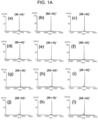
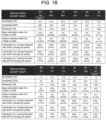
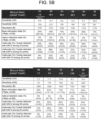
- Fig. 1 shows mass spectra of the sense strand of patisiran as well as a table showing the state of the [M+H] + peak detection (sensitivity, resolution, base elimination state, adduct detection state, and uniformity of the peak detection by the raster scan measurement) in the case where DHAP, THAP and mixed matrices (DHAP+THAP) which contained DHAP and THAP at their respective mixture ratios were used as matrices.
- a mixture ratio of 1:0 shows the case where DHAP was solely used, while a mixture ratio of 0:1 shows the case where THAP was solely used.
- the base loss in the base elimination state refers to a phenomenon in which a base is lost from the molecular-related ion ([M+H + ]) in the ionization process.
- the ease of occurrence of this phenomenon varies depending on the characteristics of each matrix. For example, a matrix which causes soft ionization is unlikely to cause base loss. On the other hand, a matrix which causes hard ionization is likely to cause base loss.
- the adducts may include oxidized forms (e.g., [M+O] + ), alkali metal ion adducts (e.g., [M+Na] + , [M+O+Na] + and [M+2Na] + ), base adducts (e.g., [M+B+H] + ) and matrix ion adducts (e.g., [M+m+H] + ).
- oxidized forms e.g., [M+O] +
- alkali metal ion adducts e.g., [M+Na] + , [M+O+Na] + and [M+2Na] +
- base adducts e.g., [M+B+H] +
- matrix ion adducts e.g., [M+m+H] +
- An adduct which is not originally present in the sample and yet is produced due to an influence of some kind of foreign substance may have been produced during the process of preparation or ionization, with the ease of its production varying depending on the characteristics of each matrix.
- the affinity of the matrix for the sample, alkali metal ion or the like may also be a related factor, although no details have been clarified yet.
- the ionization of the nucleic acid molecule as the analysis target will produce not only the molecular-related ion ([M+H] + ) but also a plurality of ion species and will be detected in the form of multiple separate peaks of different species, which will consequently cause a decrease in the sensitivity with which the molecular-related ion is detected. Furthermore, the detection of the ion peaks of the multiple species makes the data analysis more complex. Therefore, a matrix with which the base loss and adduct peak detection will be suppressed more is preferred.
- Each mass spectrum in Fig. 1 is a mass spectrum to be ultimately obtained in the measurement by a raster scan (i.e., a mass spectrum obtained by accumulating all sets of mass spectrum data at each measurement point).
- the sensitivity, resolution, base elimination state, adduct detection state in the table are based on the mass spectrum data shown in Fig. 1 .
- the base elimination state was evaluated by the ratio (%) of the signal-to-noise ratio (S/N) value of a representative base-loss ion peak resulting from the base elimination to the S/N value of the [M+H] + peak (specific S/N values are shown in the parentheses in the table).
- the adduct detection state was evaluated by the ratio (%) of the S/N value of a representative adduct peak resulting from the base elimination to the S/N value of the [M+H] + peak (specific S/N values are shown in the parentheses in the table).
- the uniformity of the peak detection by the raster scan was evaluated by the ratios (%) of the number of measurement points at which the [M+H] + peak was detected with a sensitivity of S/N>2, the number of measurement points at which the [M+H] + peak was detected with a sensitivity of S/N>5, and the number of measurement points at which the [M+H] + peak was detected with a sensitivity of S/N>10, to the total number of measurement points (in the present example, 25 points) in the raster scan (the specific numbers of measurement points are shown in the parentheses in the table).
- the molecular-related ion [M+H] + of the RNA was detected with a high sensitivity, particularly when the mixed matrices (DHAP+THAP) in which DHAP and THAP were mixed at ratios from 30:1 to 10:1 were used.
- DHAP mixed matrices
- the measurement points at which [M+H] + was detected with a sensitivity of, for example, S/N> 10 were approximately 60% of the measurement points at which the measurement by the raster scan was performed ((a) in Fig. 1 ).
- the measurement points at which [M+H] + was detected with a sensitivity of S/N>10 were approximately 20% of the measurement points at which the measurement by the raster scan was performed ((1) in Fig. 1 ).
- the mixed matrices DHAP+THAP, with mixture ratios from 30:1 to 10:1
- the [M+H] + peak was detected with a sensitivity of S/N>10 at equal to or more than 90% of the measurement points at which the measurement by the raster scan was performed ((b)-(e) in Fig. 1 ).
- the resolution was at roughly equal levels in all matrices.
- the base elimination state as well as the adduct peak detection state were suppressed to roughly equal levels in all matrices.
- the use of the mixed matrix improves the detection sensitivity of the molecular-related ion of the RNA as well as improves the uniformity of the measurement by a raster scan as compared to the conventional method in which DHAP or THAP is solely used.
- RNA sense strand of patisiran
- DHAP and THAP solutions were mixed together at each of the mixture ratios of 100:1, 50:1, 30:1, 20:1, 15:1, 10:1, 5:1 and 1:1 (v/v) to prepare mixed matrix solutions.
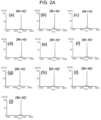
- Fig. 2 shows mass spectra of the sense strand of patisiran as well as a table showing the state of the [M+H] + peak detection (sensitivity, resolution, base elimination state, adduct detection state, and uniformity of the peak detection by the raster scan measurement) in the case where DHAP, THAP and mixed matrices (DHAP+THAP) which contained DHAP and THAP at the respective mixture ratios were used as matrices.
- the measurement of the second example was performed on a different day from the first example.
- RNA antisense strand of patisiran
- a 20-pmol/ ⁇ L aqueous solution of patisiran (5'-A-U-G-G-A-A-Um-A-C-U-C-U-U-G-G-U-Um-A-C-dT-dT-3', where dT represents thymidine deoxyribonucleotide and Um represents 2'-O-methyluridine; Sequence Number 2) was prepared.
- This sample was obtained through the desalting purification of a synthetic nucleic acid for research and development.
- patisiran is originally a double-stranded RNA consisting of the sense and antisense strands, only the antisense strand was used in the present example.
- the antisense strand had the entire length of 21 bases and a core sequence of 19 bases, with a DNA overhang of two bases (dTdT) at the 3' terminal; MW 6660).
- the DHAP and THAP solutions were prepared as matrix solutions.
- the prepared DHAP and THAP solutions were mixed together at each of the mixture ratios of 30:1 and 20:1 (v/v) to prepare mixed matrix solutions.
- a 40mg/mL-50% acetonitrile-water solution of 3-hydroxypicolinic acid (3-HPA) containing 70 mM of diammonium hydrogen citrate as a matrix additive (3-HPA solution) was prepared as a matrix solution.
- Fig. 3 shows mass spectra of the antisense strand of patisiran as well as a table showing the state of the [M+H] + peak detection (sensitivity, resolution, base elimination state, adduct detection state, and uniformity of the peak detection by the raster scan measurement) in the case where DHAP, THAP, mixed matrices (DHAP+THAP) which contained DHAP and THAP at the respective mixture ratios, as well as 3-HPA were used as matrices.
- the use of the mixed matrices (DHAP+THAP, with mixture ratios of 30:1 and 20:1) also enables the detection of [M+H] + with high sensitivity and uniformity as well as sufficient resolution, base elimination state and adduct detection state for the antisense strand in addition to the sense strand of patisiran which was the RNA subjected to the measurement in the first example.
- RNA sense strand of patisiran
- the DHAP and THAP solutions were prepared as matrix solutions by a similar method to the first example.
- the prepared DHAP and THAP solutions were mixed together at each of the mixture ratios of 30:1 and 20:1 (v/v) to prepare mixed matrix solutions.
- the 3-HPA solution was prepared by a similar method to the third example.
- the prepared 3-HPA and THAP solutions were mixed together at each of the mixture ratios of 1:1 and 1:3 (v/v) to prepare mixed matrix solutions.
- Fig. 4 shows mass spectra of the sense strand of patisiran as well as a table showing the state of the [M+H] + peak detection (sensitivity, resolution, base elimination state, adduct detection state, and uniformity of the peak detection by the raster scan measurement) in the case where the DHAP, the mixed matrices (DHAP+THAP) which contained DHAP and THAP at the respective mixture ratios, as well as the mixed matrices (3-HPA+THAP) which contained 3-HPA and THAP at the respective mixture ratios were used as matrices.
- a comparison of DHAP+THAP and 3-HPA+THAP demonstrated that [M+H] + was detected with higher sensitivity and uniformity when DHAP+THAP was used.
- the resolution, base elimination state and adduct detection state the two mixed matrices were comparable to each other.
- the combination of DHAP and THAP is particularly effective for improving the sensitivity and uniformity in RNA analysis.
- a mass spectrometric analysis of a DNA was performed by a similar method to the first example except for ⁇ 1. Preparation of Sample Solution> and ⁇ 2. Preparation of Matrix Solutions> .
- a 20-pmol/ ⁇ L aqueous solution of mipomersen (5'-MG-MC-MC-MU-MC-dA-dG-dT-dC-dT-dG-dC-dT-dT-dC-MG-MC-MA-MC-MC-3' where M represents 2'-O-(2-methoxyethyl)nucleoside and d represents 2'-deoxynucleoside; the C5 carbon of cytosine and uracil are replaced by the methyl group, while the phosphodiester bonds at all inter-nucleotide sections are replaced by the phosphorothioate bonds; Sequence Number 3) was prepared. (This sample was obtained through the desalting purification of a synthetic nucleic acid for research and development; DNA, with the entire length of 20 bases; MW 7177).
- the DHAP and THAP solutions were prepared as matrix solutions by a similar method to the first example.
- the prepared DHAP and THAP solutions were mixed together at each of the mixture ratios of 50:1, 30:1, 20:1, 10:1, 5:1, 1:1, 1:5, 1:10 and 1:30 (v/v) to prepare mixed matrix solutions.
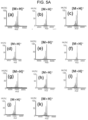
- Fig. 5 shows mass spectra of mipomersen as well as a table showing the state of the [M+H] + peak detection (sensitivity, resolution, base elimination state, adduct detection state, and uniformity of the peak detection by the raster scan measurement) in the case where DHAP, THAP and mixed matrices (DHAP+THAP) which contained DHAP and THAP at the respective mixture ratios were used as matrices.
- DHAP+THAP mixed matrices
- a method for analyzing an RNA according to one mode of the present invention is a method in which a mixed matrix containing 2,4-dihydroxyacetophenone (DHAP) and 2,4,6-trihydroxyacetophenone monohydrate (THAP) is used as a matrix to analyze an RNA contained in a sample by a matrix-assisted laser desorption/ionization mass spectrometer.
- DHAP 2,4-dihydroxyacetophenone
- THAP 2,4,6-trihydroxyacetophenone monohydrate
- the use of the mixed matrix containing 2,4-dihydroxyacetophenone and 2,4,6-trihydroxyacetophenone monohydrate improves the homogeneity of the sample/mixed-matrix mixture crystal to be formed as an analysis sample, consisting of an RNA-containing sample and the matrix, as well as the uniformity of the distribution of the RNA sample within the mixture crystal. Therefore, when an RNA contained in a sample is analyzed by means of a matrix-assisted laser desorption/ionization mass spectrometer, an appropriate amount of molecular-related ion of an analysis-target sample can be produced regardless of the laser irradiation position, so that the RNA can be satisfactorily analyzed in a comparatively uniform fashion, and therefore, easily and speedily.
- the molecular-related ion of the RNA can be detected with a comparatively high sensitivity. Furthermore, the detection of the molecular-related ion can be achieved with a sufficient level of resolution while suppressing the base loss and adduct peak detection.
- the mixture ratio of DHAP and THAP in the mixed matrix may be within a range from 30:1 to 10:1.
- RNA can be satisfactorily analyzed easily and speedily.
- diammonium hydrogen citrate may be used as a matrix additive to the mixed matrix to analyze the RNA contained in the sample.
- Diammonium hydrogen citrate particularly contributes to an improvement of the sensitivity for high-mass molecules. This enables an analysis of an RNA with an even higher sensitivity.
- the method for analyzing an RNA according to Clauses 1-3 may be a method in which a sample/mixed-matrix mixture solution is prepared by mixing a sample solution containing an RNA, a matrix solution containing DHAP and a matrix solution containing THAP, or a sample/mixed-matrix mixture solution is prepared by mixing a sample solution containing an RNA and a mixed matrix solution containing DHAP and THAP, and a sample/mixed matrix mixture prepared by dropping the sample/mixed-matrix mixture solution onto a sample plate and drying the same solution is subjected to a measurement by the matrix-assisted laser desorption/ionization mass spectrometer.
- RNA contained in a sample is analyzed by means of a matrix-assisted laser desorption/ionization mass spectrometer, an appropriate amount of molecular-related ion of an RNA sample can be produced regardless of the laser irradiation position, so that the RNA can be satisfactorily analyzed in a comparatively uniform fashion, and therefore, easily and speedily, with an even higher sensitivity.
- the method for analyzing an RNA according to Clauses 1-3 may be a method in which a sample solution which contains an RNA, and a mixed matrix solution which contains DHAP and THAP, are separately dropped onto a sample plate to prepare a sample/mixed-matrix solution on the sample plate, and a sample/mixed-matrix mixture prepared by drying the sample/mixed-matrix solution is subjected to a measurement by the matrix-assisted laser desorption/ionization mass spectrometer.
- the RNA molecule can be detected in a comparatively uniform fashion, and therefore, easily and speedily, with an even higher sensitivity.
- the method for analyzing an RNA according to Clauses 1-3 may be a method in which a sample solution containing an RNA, a matrix solution containing DHAP and a matrix solution containing THAP are separately dropped onto a sample plate to prepare a sample/mixed-matrix solution on the sample plate, and a sample/mixed-matrix mixture prepared by drying the sample/mixed-matrix solution is subjected to a measurement by the matrix-assisted laser desorption/ionization mass spectrometer to analyze the RNA contained in the sample.
- RNA molecule can be detected in a comparatively uniform fashion, and therefore, easily and speedily, with an even higher sensitivity.
- the matrix-assisted laser desorption/ionization mass spectrometer may be a digital ion trap type.
- fragmentation is more likely to occur than in a time-of-flight type of device. Furthermore, its sensitivity and resolution are likely to be affected by the amount of ions. Accordingly, the effects of the present invention are more easily obtained, and the RNA can be more effectively analyzed.
- a matrix for matrix-assisted laser desorption/ionization mass spectrometry for RNA is a matrix containing 2,4-dihydroxyacetophenone (DHAP) and 2,4,6-trihydroxyacetophenone monohydrate (THAP).
- DHAP 2,4-dihydroxyacetophenone
- THAP 2,4,6-trihydroxyacetophenone monohydrate
- RNA contained in a sample is analyzed by means of a matrix-assisted laser desorption/ionization mass spectrometer
- this matrix makes it possible to produce an appropriate amount of molecular-related ion of an RNA sample in a comparatively uniform fashion and detect it with a higher sensitivity, so that the RNA can be satisfactorily analyzed.
Landscapes
- Chemical & Material Sciences (AREA)
- Life Sciences & Earth Sciences (AREA)
- Physics & Mathematics (AREA)
- Proteomics, Peptides & Aminoacids (AREA)
- Health & Medical Sciences (AREA)
- Organic Chemistry (AREA)
- Engineering & Computer Science (AREA)
- Analytical Chemistry (AREA)
- Zoology (AREA)
- Wood Science & Technology (AREA)
- Immunology (AREA)
- General Health & Medical Sciences (AREA)
- Biochemistry (AREA)
- Optics & Photonics (AREA)
- Biophysics (AREA)
- Genetics & Genomics (AREA)
- Biotechnology (AREA)
- Microbiology (AREA)
- Molecular Biology (AREA)
- General Engineering & Computer Science (AREA)
- Bioinformatics & Cheminformatics (AREA)
- Pathology (AREA)
- General Physics & Mathematics (AREA)
- Spectroscopy & Molecular Physics (AREA)
- Plasma & Fusion (AREA)
- Toxicology (AREA)
- Chemical Kinetics & Catalysis (AREA)
- Electrochemistry (AREA)
- Other Investigation Or Analysis Of Materials By Electrical Means (AREA)
Abstract
[OBJECT] To enable a more sensitive and uniform detection of a molecular-related ion in an analysis of an RNA contained in a sample by means of MALDI mass spectrometry. [MEANS FOR SOLVING PROBLEM] A mixed matrix containing 2,4-dihydroxyacetophenone (DHAP) and 2,4,6-trihydroxyacetophenone monohydrate (TRAP) is used as a matrix to analyze an RNA contained in a sample by a matrix-assisted laser desorption/ionization mass spectrometer.
Description
- The present invention relates to a method for analyzing an RNA.
- A mass spectrometry method employing matrix assisted laser desorption/ionization (MALDI; this method is hereinafter called the MALDI mass spectrometry) has been known as one of the methods for mass spectrometric analyses of nucleic acids (DNA and RNA). In the MALDI mass spectrometry, an ionization assistant reagent called the matrix is used for ionizing a substance that barely absorbs laser light or a substance that easily undergoes damage due to laser light.
- For example, in the MALDI mass spectrometry for nucleic acids,
Non Patent Literature 1 describes that 3-hydroxypicolinic acid (3-HPA) and 1,5-diaminonaphthalene (1,5-DAN) are used as matrices.Non Patent Literature 2 describes that 2,4-dihydroxyacetophenone (2,4-DHAP) is used as a matrix.Non Patent Literature 3 describes that a mixed matrix containing 2,4,6-trihydroxyacetophenone (2,4,6-THAP) and 2,3,4-trihydroxyacetophenone (2,3,4-THAP), as well as a mixed matrix containing anthranilic acid (AA) and nicotinic acid (NA), are used as matrices. - A matrix is normally prepared as a matrix solution in which the matrix is dissolved in a predetermined solvent, and this solution is to be mixed, by various methods, with a sample containing an analysis-target substance. For example, a matrix solution and a sample solution are previously mixed together to prepare a sample/matrix mixture solution. This sample/matrix mixture solution is dropped onto one of the wells formed on a metallic plate called a "sample plate" (the wells are sample-receiving portions, each of which is, for example, a circle of approximately 2 mm in diameter with its outer edge grounded, or a circle of approximately 2 mm in diameter with the surface of its inner area entirely treated), and is dried to form a sample/matrix mixture crystal consisting of the analysis-target substance and the matrix mixed together on the well. Alternatively, the matrix solution and the sample solution are separately dropped onto a well, mixed on the same well, and dried to form a sample/matrix mixture crystal. In any of these cases, the sample/matrix mixture crystal is subjected to a MALDI mass spectrometric analysis as an analysis sample.
- Non Patent Literature 1: Nathan A. Hagan and five other authors, "Enhanced In-Source Fragmentation in MALDI-TOF-MS of Oligonucleotides Using 1,5-Diaminonapthalene", Journal of the American Society for Mass Spectrometry, (USA), 2012, 23, pp.773-777
- Non Patent Literature 2: H. Shimizu and six other authors, "Application of high-resolution ESI and MALDI mass spectrometry to metabolite profiling of small interfering RNA duplex", Journal of Mass Spectrometry, (USA), 2012, 47, pp. 1015-1022
- Non Patent Literature 3: Li-Kang Zhang and another author, "Matrix-assisted laser desorption/ionization mass spectrometry methods for oligodeoxynucleotides: Improvements in matrix, detection limits, quantification, and sequencing", Journal of the American Society for Mass Spectrometry, (USA), 2000, 11, pp. 854-865
- Conventionally, when an analysis sample is prepared by using a matrix commonly known as a matrix for MALDI mass spectrometry of nucleic acids, it is often the case that the sample/matrix mixture crystal is non-uniformly formed on the well. Therefore, when a beam of laser light is delivered onto the well to obtain a "molecular-related ion" ([M+H]+ or [M-H]-, where M is a molecule and H is a hydrogen atom) of a nucleic acid which is the analysis-target substance, it may be impossible to produce a sufficient amount of molecular-related ion at some of the irradiation positions. A satisfactory peak of the molecular-related ion can still be detected with a sufficient level of sensitivity when the laser light is successfully delivered onto a site of the well where the sample/matrix mixture crystal is formed and where the ion of the sample molecule as the analysis-target substance is relatively easy to be detected (such a site is called a "sweet spot"). However, for an unskilled measurement operator, it is difficult to quickly locate such a site, and the analysis requires a considerable amount of time.
- A raster scan function can be used to perform the laser irradiation on a sample/matrix mixture crystal formed on a well, whereby the mass spectrometric analysis of the analysis-target substance contained in the sample/matrix mixture crystal can be performed more easily and speedily. However, when the sample/matrix mixture crystal is non-uniformly formed on the well, causing the crystal site on the well to be uneven in size, or when the sample/matrix mixture crystal is non-uniform and the distribution (location) of the sample within the mixture crystal is considerably uneven, the amount of ion generated from the analysis-target substance tends to vary depending on the irradiation position, which causes, for example, a situation in which the molecular-related ion of the analysis-target substance is excessively produced, or conversely, a sufficient amount of molecular-related ion cannot be produced, depending on the irradiation position.
- Furthermore, as compared to DNA, RNA has fewer kinds of matrices reported to be available for MALDI mass spectrometry. Additionally, the previously described problems are more likely to occur with the conventional matrices reported for RNA analyses. Thus, a technique which enables a sensitive and rapid analysis of RNAs has been demanded.
- The problem for the present invention is to provide a technique which enables a sensitive, easy, and rapid detection of a molecular-related ion in an analysis of an RNA by means of MALDI mass spectrometry.
- A method for analyzing an RNA according to the present invention developed for solving the previously described problem is a method in which a mixed matrix containing 2,4-dihydroxyacetophenone (DHAP) and 2,4,6-trihydroxyacetophenone monohydrate (THAP) is used as a matrix to analyze an RNA contained in a sample by a matrix-assisted laser desorption/ionization mass spectrometer.
- A matrix for matrix-assisted laser desorption/ionization mass spectrometry for RNA according to the present invention developed for solving the previously described problem is a matrix containing 2,4-dihydroxyacetophenone (DHAP) and 2,4,6-trihydroxyacetophenone monohydrate (THAP).
- By the method for analyzing an RNA according to the present invention, when an RNA contained in a sample is analyzed by means of a matrix-assisted laser desorption/ionization mass spectrometer, a comparatively uniform sample/matrix mixture crystal can be created, so that a molecular-related ion can be detected sensitively, easily, and speedily. By preparing an analysis sample of an RNA-containing sample using the matrix for matrix-assisted laser desorption/ionization mass spectrometry for RNA according to the present invention, a comparatively uniform sample/matrix mixture crystal can be created for performing a matrix-assisted laser desorption/ionization mass spectrometric analysis, so that a molecular-related ion can be detected sensitively, easily, and speedily. Therefore, the RNA in the sample can be satisfactorily analyzed.
-
- [
Fig. 1] Fig. 1 shows mass spectra of patisiran (sense strand) and a table showing the state of the detection of the molecular-related ion, in the case where various kinds of matrices were used in the first example. - [
Fig. 2] Fig. 2 shows mass spectra of patisiran (sense strand) and a table showing the state of the detection of the molecular-related ion, in the case where various kinds of matrices were used in the second example. - [
Fig. 3] Fig. 3 shows mass spectra of patisiran (antisense strand) and a table showing the state of the detection of the molecular-related ion, in the case where various kinds of matrices were used in the third example. - [
Fig. 4] Fig. 4 shows mass spectra of patisiran (sense strand) and a table showing the state of the detection of the molecular-related ion, in the case where various kinds of matrices were used in the fourth example. - [
Fig. 5] Fig. 5 shows mass spectra of mipomersen and a table showing the state of the detection of the molecular-related ion, in the case where various kinds of matrices were used in the first reference example. - Hereinafter, one embodiment of the method for analyzing an RNA according to the present invention is described.
- RNAs which are analysis-target substances in the present embodiment may be natural substances obtained from living organisms or processed products of those substances, or alternatively, they may be artificial synthetic nucleic acids obtained by chemical synthesis. RNAs include RNA-related substances, such as modified RNAs, RNA derivatives, and RNA drugs. There is no specific limitation on the degree of polymerization (base length) of the RNAs, although oligonucleotides with several to tens of nucleotides polymerized are preferable. Since the analysis method according to the present embodiment particularly enables a sensitive analysis of high-molecular RNAs, the molecular weights of the RNAs may preferably be equal to or greater than 3000, and particularly, equal to or greater than 6000.
- An analysis sample is prepared by mixing a sample containing an RNA which is an analysis-target substance, with 2,4-dihydroxyacetophenone (hereinafter denoted as DHAP) and 2,4,6-trihydroxyacetophenone monohydrate (hereinafter denoted as THAP) as the matrix. Specifically, for example, a sample solution and a mixed matrix solution containing DHAP and THAP are prepared and mixed together beforehand to prepare a sample/mixed-matrix mixture solution, or alternatively, a sample solution, a matrix solution containing DHAP, and a matrix solution containing THAP are prepared and mixed together beforehand to prepare a sample/mixed-matrix mixture solution, and the sample/mixed-matrix mixture solution is dropped onto a well and dried (this method is called the "pre-mix method"). The sample solution and the mixed matrix solution may also be separately dropped onto a well, mixed together on the well and dried, or alternatively, the sample solution, the matrix solution containing DHAP, and the matrix solution containing THAP may be separately dropped onto a well, mixed together on the well and dried (this method is called the "on-target method"). Thus, a sample/mixed-matrix mixture crystal which is a mixture crystal of the analysis-target substance and the mixed matrix (and corresponds to the sample/mixed-matrix mixture) is formed on the well.
- The mixture ratio of the DHAP and THAP in the mixed matrix (or in the mixed matrix solution) should preferably be such that DHAP:THAP falls within a range from 30:1 to 10:1, and more preferably, from 30:1 to 15:1, since this improves the homogeneity of the mixture crystal as well as enables a sensitive analysis of RNAs.
- The matrix, or the matrix solution, may additionally contain diammonium hydrogen citrate as a matrix additive. There are several kinds of ammonium salts of citric acid depending on the number of ammonium ions binding to a citrate ion, of which a salt with two ammonium ions binding to one citrate ion is preferable for use in the present embodiment. The concentration of the diammonium hydrogen citrate in the matrix solution should preferably be within a range from 20 to 100 mM since this enables a sensitive analysis of the molecular-related ion of the RNA. There is no specific limitation on the solvent of the matrix solution; any solvent commonly used as a solvent of a matrix solution may be used. For example, an aqueous solution containing 20-80% organic solvent, such as acetonitrile, methanol, or ethanol, can be used. Among other things, an aqueous solution containing 50-70% acetonitrile is preferable to use, and more specifically, an aqueous solution containing 50% acetonitrile is particularly preferable to use. The matrix additive may be added to a matrix solution containing DHAP or THAP, or it may also be added to a mixed matrix solution containing DHAP and THAP.
- The analysis method according to the present embodiment uses a mass spectrometer having an ion source employing a MALDI method (MALDI-MS). Examples of the MALDI-MS include a MALDI-TOFMS, which is a time of flight (TOF) type of device, and a MALDI-ITMS, which is an ion trap (IT) type of device. The "ion trap type" in the present context means a type of MALDI-ITMS having an ion trap for capturing ions, including a mass spectrometer in which ions captured within the ion trap are sequentially ejected in ascending order of their mass-to-charge ratios (m/z) by a mass-separating function of the ion trap itself and are detected by a detector located outside the ion trap, as well as a mass spectrometer in which ions simultaneously ejected from the ion trap are separated from each other according to their mass-to-charge ratios by a mass separator, such as a time-of-flight mass separator, located outside the ion trap and are detected by a detector which is also located outside the ion trap.
- In the case where the ion trap of the MALDI-ITMS is an RF trap which captures and ejects ions by means of a radiofrequency (RF) electric field, it may be an ion trap configured to capture ions by means of an electric field generated by applying a sinusoidal RF voltage to a ring electrode, or a digital ion trap configured to capture ions by means of an electric field generated by applying, to a ring electrode, a rectangular voltage produced by switching between two different voltages at high speeds. In the digital ion trap, the m/z range of the ions that can be captured is controlled by changing the frequency of the rectangular voltage while constantly maintaining its amplitude (voltage value). Scanning a frequency range toward the lower-frequency end causes the trapped ions to be sequentially ejected in ascending order of their m/z. By detecting those ions with a detector, a mass spectrum can be acquired. It is preferable to use a digital ion trap type of MALDI ITMS as the mass spectrometer.
- The mass spectrometer may be provided with the function of a measurement by a raster scan. A measurement by a raster scan is a measurement technique in which a set of measurement data is obtained by performing the laser-light irradiation a specified number of times at each of the many measurement points previously set at different positions on a well, and all sets of measurement data are accumulated to derive an ultimate set of measurement data. Since the laser irradiation position is mechanically shifted, the influence of the variation in measurement result due to a difference in the laser irradiation position is reduced in the accumulated data. Since the measurement by a raster scan does not require manually changing the irradiation position, an easy and quick measurement is possible. Additionally, since the measurement by a raster scan is an automatic measurement function with no human intervention for the selection of measurement positions, a more objective and reproducible data acquisition is possible.
- There is no specific limitation on the setting conditions of the raster scan; they may be appropriately tuned according to the well diameter of the sample plate, diameter of the laser beam and other parameters of the used device. The laser irradiation should be performed a sufficient number of times for the peak detection so as to maximally avoid an overlap of the laser irradiation positions on the well of the sample plate as well as on the sample/mixed-matrix mixture crystal on the well. For example, for a circular well having a diameter of 2 mm, the set values of the setting conditions of the raster scan may specifically be as follows: 25 points per one well (which indicates that the number of laser irradiation positions on the wells is 25 per one well); 4 shots/point (which indicates that the laser irradiation is performed four times per one laser irradiation position); spacing, 0.2 mm (which indicates that the spatial interval of the laser irradiation positions is 0.2 mm); and size, 0.8 mm (which indicates that the scan direction is turned every time the horizontal scan length reaches 0.8 mm during the laser irradiation of the 25 aforementioned points, or in other words, the value shows the length of the horizontal axis within a square type of laser irradiation area). A square area with 5×5 = 25 points automatically calculated from those settings is subjected to the raster scan.
- Hereinafter, a description of the method for analyzing an RNA according to the present invention is given by means of specific examples. These examples are merely illustrative, and the present invention should not be limited to them.
- As a sample solution, a 20-pmol/µL aqueous solution of patisiran (5'-G-Um-A-A-Cm-Cm-A-A-G-A-G-Um-A-Um-Um-Cm-Cm-A-Um-dT-dT-3', where dT represents thymidine deoxyribonucleotide, Cm represents 2'-O-methylcytidine, and Um represents 2'-O-methyluridine; Sequence Number 1) was prepared. (This sample was obtained through the desalting purification of a synthetic nucleic acid for research and development. Although patisiran is originally a double-stranded RNA consisting of the sense and antisense strands, only the sense strand was used in the present example. The sense strand had the entire length of 21 bases and a core sequence of 19 bases, with a DNA overhang of two bases (dTdT) at the 3' terminal; MW 6764).
- A 40mg/mL-50% acetonitrile-water solution of 2,4-dihydroxyacetophenone (DHAP) containing 70 mM of diammonium hydrogen citrate as a matrix additive (DHAP solution), and a 40mg/mL-50% acetonitrile-water solution of 2,4,6-trihydroxyacetophenone monohydrate (THAP) containing 70 mM of diammonium hydrogen citrate as a matrix additive (THAP solution), were prepared as matrix solutions. The prepared DHAP and THAP solutions were mixed together at each of the mixture ratios of 30:1, 20:1, 15:1, 10:1, 5:1, 3:1, 1:1, 1:3, 1:5 and 1:10 (v/v) to prepare mixed matrix solutions.
- The sample solution prepared in
Step 1 and the matrix solution prepared inStep 2 were mixed at 1:1 (v/v), and 1 µL of the obtained mixed solution was dropped onto a well of a sample plate (stainless steel plate). After the solutions had been dropped, the sample plate was placed in an ultra-low humidity drying box (product name: McDry, manufactured by ERC Co., Ltd.) and dried. - For the mass spectrometric analysis, a MALDI digital ion trap mass spectrometer (MALDI-DITMS; product name: MALDImini-1, manufactured by Shimadzu Corporation) was used. The sample plate in
Step 3 was set in the MALDI-DITMS, and a measurement was performed in the positive mode, using the raster scan function. The setting conditions of the raster scan were 4 shots/point and 25 points. As for the laser power, the optimum value for each matrix was used. The laser power depends on the matrix; THAP requires a higher amount of laser power for the peak detection than DHAP. The optimum value of the laser power for each matrix was set by monitoring the state of the peak detection. Specifically, a condition which yielded comparatively high sensitivity and resolution was searched for. It was the mixed matrix that had the lowest optimum value of laser power. -
Fig. 1 shows mass spectra of the sense strand of patisiran as well as a table showing the state of the [M+H]+ peak detection (sensitivity, resolution, base elimination state, adduct detection state, and uniformity of the peak detection by the raster scan measurement) in the case where DHAP, THAP and mixed matrices (DHAP+THAP) which contained DHAP and THAP at their respective mixture ratios were used as matrices. A mixture ratio of 1:0 shows the case where DHAP was solely used, while a mixture ratio of 0:1 shows the case where THAP was solely used. - The base loss in the base elimination state refers to a phenomenon in which a base is lost from the molecular-related ion ([M+H+]) in the ionization process. The ease of occurrence of this phenomenon varies depending on the characteristics of each matrix. For example, a matrix which causes soft ionization is unlikely to cause base loss. On the other hand, a matrix which causes hard ionization is likely to cause base loss.
- As for the adduct in the adduct detection state, no detailed analysis was performed. Inferred from the m/z values, the adducts may include oxidized forms (e.g., [M+O]+), alkali metal ion adducts (e.g., [M+Na]+, [M+O+Na]+ and [M+2Na]+), base adducts (e.g., [M+B+H]+) and matrix ion adducts (e.g., [M+m+H]+). An adduct which is not originally present in the sample and yet is produced due to an influence of some kind of foreign substance may have been produced during the process of preparation or ionization, with the ease of its production varying depending on the characteristics of each matrix. The affinity of the matrix for the sample, alkali metal ion or the like may also be a related factor, although no details have been clarified yet.
- When the base loss and/or adduct detection easily occurs, the ionization of the nucleic acid molecule as the analysis target will produce not only the molecular-related ion ([M+H]+) but also a plurality of ion species and will be detected in the form of multiple separate peaks of different species, which will consequently cause a decrease in the sensitivity with which the molecular-related ion is detected. Furthermore, the detection of the ion peaks of the multiple species makes the data analysis more complex. Therefore, a matrix with which the base loss and adduct peak detection will be suppressed more is preferred.
- Each mass spectrum in
Fig. 1 is a mass spectrum to be ultimately obtained in the measurement by a raster scan (i.e., a mass spectrum obtained by accumulating all sets of mass spectrum data at each measurement point). The sensitivity, resolution, base elimination state, adduct detection state in the table are based on the mass spectrum data shown inFig. 1 . - In the present example, the base elimination state was evaluated by the ratio (%) of the signal-to-noise ratio (S/N) value of a representative base-loss ion peak resulting from the base elimination to the S/N value of the [M+H]+ peak (specific S/N values are shown in the parentheses in the table). The adduct detection state was evaluated by the ratio (%) of the S/N value of a representative adduct peak resulting from the base elimination to the S/N value of the [M+H]+ peak (specific S/N values are shown in the parentheses in the table).
- The uniformity of the peak detection by the raster scan was evaluated by the ratios (%) of the number of measurement points at which the [M+H]+ peak was detected with a sensitivity of S/N>2, the number of measurement points at which the [M+H]+ peak was detected with a sensitivity of S/N>5, and the number of measurement points at which the [M+H]+ peak was detected with a sensitivity of S/N>10, to the total number of measurement points (in the present example, 25 points) in the raster scan (the specific numbers of measurement points are shown in the parentheses in the table).
- As shown in
Fig. 1 , the molecular-related ion [M+H]+ of the RNA was detected with a high sensitivity, particularly when the mixed matrices (DHAP+THAP) in which DHAP and THAP were mixed at ratios from 30:1 to 10:1 were used. When DHAP was solely used, the measurement points at which [M+H]+ was detected with a sensitivity of, for example, S/N> 10 were approximately 60% of the measurement points at which the measurement by the raster scan was performed ((a) inFig. 1 ). When THAP was solely used, the measurement points at which [M+H]+ was detected with a sensitivity of S/N>10 were approximately 20% of the measurement points at which the measurement by the raster scan was performed ((1) inFig. 1 ). By comparison, when the mixed matrices (DHAP+THAP, with mixture ratios from 30:1 to 10:1) were used, the [M+H]+ peak was detected with a sensitivity of S/N>10 at equal to or more than 90% of the measurement points at which the measurement by the raster scan was performed ((b)-(e) inFig. 1 ). The resolution was at roughly equal levels in all matrices. The base elimination state as well as the adduct peak detection state were suppressed to roughly equal levels in all matrices. - Thus, it was confirmed that the use of the mixed matrix (DHAP+THAP, with a mixture ratio from 30:1 to 10:1) improves the detection sensitivity of the molecular-related ion of the RNA as well as improves the uniformity of the measurement by a raster scan as compared to the conventional method in which DHAP or THAP is solely used.
- A mass spectrometric analysis of an RNA (sense strand of patisiran) was performed by a similar method to the first example except for <2. Preparation of Matrix Solutions>, in which the DHAP and THAP solutions were mixed together at each of the mixture ratios of 100:1, 50:1, 30:1, 20:1, 15:1, 10:1, 5:1 and 1:1 (v/v) to prepare mixed matrix solutions.
-
Fig. 2 shows mass spectra of the sense strand of patisiran as well as a table showing the state of the [M+H]+ peak detection (sensitivity, resolution, base elimination state, adduct detection state, and uniformity of the peak detection by the raster scan measurement) in the case where DHAP, THAP and mixed matrices (DHAP+THAP) which contained DHAP and THAP at the respective mixture ratios were used as matrices. The measurement of the second example was performed on a different day from the first example. - In
Fig. 2 , it was similarly confirmed that the use of the mixed matrix (DHAP+THAP, with a mixture ratio from 30:1 to 10:1) improves the sensitivity and uniformity as compared to the conventional method in which DHAP or THAP is solely used. - A mass spectrometric analysis of an RNA (antisense strand of patisiran) was performed by a similar method to the first example except for <1. Preparation of Sample Solution> and <2. Preparation of Matrix Solutions>.
- As a sample solution, a 20-pmol/µL aqueous solution of patisiran (5'-A-U-G-G-A-A-Um-A-C-U-C-U-U-G-G-U-Um-A-C-dT-dT-3', where dT represents thymidine deoxyribonucleotide and Um represents 2'-O-methyluridine; Sequence Number 2) was prepared. (This sample was obtained through the desalting purification of a synthetic nucleic acid for research and development. Although patisiran is originally a double-stranded RNA consisting of the sense and antisense strands, only the antisense strand was used in the present example. The antisense strand had the entire length of 21 bases and a core sequence of 19 bases, with a DNA overhang of two bases (dTdT) at the 3' terminal; MW 6660).
- Similar to the first example, the DHAP and THAP solutions were prepared as matrix solutions. The prepared DHAP and THAP solutions were mixed together at each of the mixture ratios of 30:1 and 20:1 (v/v) to prepare mixed matrix solutions. Additionally, a 40mg/mL-50% acetonitrile-water solution of 3-hydroxypicolinic acid (3-HPA) containing 70 mM of diammonium hydrogen citrate as a matrix additive (3-HPA solution) was prepared as a matrix solution.
-
Fig. 3 shows mass spectra of the antisense strand of patisiran as well as a table showing the state of the [M+H]+ peak detection (sensitivity, resolution, base elimination state, adduct detection state, and uniformity of the peak detection by the raster scan measurement) in the case where DHAP, THAP, mixed matrices (DHAP+THAP) which contained DHAP and THAP at the respective mixture ratios, as well as 3-HPA were used as matrices. - As shown in
Fig. 3 , when the mixed matrices (DHAP+THAP, with mixture ratios of 30:1 and 20:1) were used, [M+H]+ was detected with high sensitivity as compared to the conventional method in which the DHAP, THAP or 3-HPA was solely used. Additionally, when the mixed matrices were used, the [M+H]+ peak was detected with a sensitivity of S/N> 10 at equal to or more than 90% of the measurement points at which the measurement by the raster scan was performed. Furthermore, when the mixed matrices were used, the base loss and adduct peak detection were suppressed to comparatively low levels, while the resolutuion was comparable to the levels achieved with the DHAP, THAP or 3-HPA matrix. - Thus, it was confirmed that the use of the mixed matrices (DHAP+THAP, with mixture ratios of 30:1 and 20:1) also enables the detection of [M+H]+ with high sensitivity and uniformity as well as sufficient resolution, base elimination state and adduct detection state for the antisense strand in addition to the sense strand of patisiran which was the RNA subjected to the measurement in the first example.
- A mass spectrometric analysis of an RNA (sense strand of patisiran) was performed by a similar method to the first example except for <2. Preparation of Matrix Solutions>.
- The DHAP and THAP solutions were prepared as matrix solutions by a similar method to the first example. The prepared DHAP and THAP solutions were mixed together at each of the mixture ratios of 30:1 and 20:1 (v/v) to prepare mixed matrix solutions. Additionally, the 3-HPA solution was prepared by a similar method to the third example. The prepared 3-HPA and THAP solutions were mixed together at each of the mixture ratios of 1:1 and 1:3 (v/v) to prepare mixed matrix solutions.
-
Fig. 4 shows mass spectra of the sense strand of patisiran as well as a table showing the state of the [M+H]+ peak detection (sensitivity, resolution, base elimination state, adduct detection state, and uniformity of the peak detection by the raster scan measurement) in the case where the DHAP, the mixed matrices (DHAP+THAP) which contained DHAP and THAP at the respective mixture ratios, as well as the mixed matrices (3-HPA+THAP) which contained 3-HPA and THAP at the respective mixture ratios were used as matrices. - As shown in
Fig. 4 , a comparison of DHAP+THAP and 3-HPA+THAP demonstrated that [M+H]+ was detected with higher sensitivity and uniformity when DHAP+THAP was used. As for the resolution, base elimination state and adduct detection state, the two mixed matrices were comparable to each other. Thus, it was confirmed that the combination of DHAP and THAP is particularly effective for improving the sensitivity and uniformity in RNA analysis. - A mass spectrometric analysis of a DNA was performed by a similar method to the first example except for <1. Preparation of Sample Solution> and <2. Preparation of Matrix Solutions> .
- As a sample solution, a 20-pmol/µL aqueous solution of mipomersen (5'-MG-MC-MC-MU-MC-dA-dG-dT-dC-dT-dG-dC-dT-dT-dC-MG-MC-MA-MC-MC-3' where M represents 2'-O-(2-methoxyethyl)nucleoside and d represents 2'-deoxynucleoside; the C5 carbon of cytosine and uracil are replaced by the methyl group, while the phosphodiester bonds at all inter-nucleotide sections are replaced by the phosphorothioate bonds; Sequence Number 3) was prepared. (This sample was obtained through the desalting purification of a synthetic nucleic acid for research and development; DNA, with the entire length of 20 bases; MW 7177).
- The DHAP and THAP solutions were prepared as matrix solutions by a similar method to the first example. The prepared DHAP and THAP solutions were mixed together at each of the mixture ratios of 50:1, 30:1, 20:1, 10:1, 5:1, 1:1, 1:5, 1:10 and 1:30 (v/v) to prepare mixed matrix solutions.
-
Fig. 5 shows mass spectra of mipomersen as well as a table showing the state of the [M+H]+ peak detection (sensitivity, resolution, base elimination state, adduct detection state, and uniformity of the peak detection by the raster scan measurement) in the case where DHAP, THAP and mixed matrices (DHAP+THAP) which contained DHAP and THAP at the respective mixture ratios were used as matrices. - As shown in
Fig. 5 , the effects of the sensitivity improvement and uniformity improvement by the mixed matrices (DHAP+THAP) were not recognized for mipomersen, which is a DNA. Thus, it was confirmed that DHAP+THAP is a matrix which is particularly effective in RNA analysis. - It is evident for a person skilled in the art that the previously described illustrative embodiment is a specific example of the following modes of the present invention.
- (Clause 1) A method for analyzing an RNA according to one mode of the present invention is a method in which a mixed matrix containing 2,4-dihydroxyacetophenone (DHAP) and 2,4,6-trihydroxyacetophenone monohydrate (THAP) is used as a matrix to analyze an RNA contained in a sample by a matrix-assisted laser desorption/ionization mass spectrometer.
- The use of the mixed matrix containing 2,4-dihydroxyacetophenone and 2,4,6-trihydroxyacetophenone monohydrate improves the homogeneity of the sample/mixed-matrix mixture crystal to be formed as an analysis sample, consisting of an RNA-containing sample and the matrix, as well as the uniformity of the distribution of the RNA sample within the mixture crystal. Therefore, when an RNA contained in a sample is analyzed by means of a matrix-assisted laser desorption/ionization mass spectrometer, an appropriate amount of molecular-related ion of an analysis-target sample can be produced regardless of the laser irradiation position, so that the RNA can be satisfactorily analyzed in a comparatively uniform fashion, and therefore, easily and speedily. Additionally, the molecular-related ion of the RNA can be detected with a comparatively high sensitivity. Furthermore, the detection of the molecular-related ion can be achieved with a sufficient level of resolution while suppressing the base loss and adduct peak detection.
- (Clause 2) In the method for analyzing an RNA according to
Clause 1, the mixture ratio of DHAP and THAP in the mixed matrix may be within a range from 30:1 to 10:1. - This enables an analysis of an RNA with an even higher sensitivity. Furthermore, an appropriate amount of molecular-related ion of the RNA sample can be produced more uniformly. Therefore, the RNA can be satisfactorily analyzed easily and speedily.
- (Clause 3) In the method for analyzing an RNA according to
Clause 1, diammonium hydrogen citrate may be used as a matrix additive to the mixed matrix to analyze the RNA contained in the sample. - Diammonium hydrogen citrate particularly contributes to an improvement of the sensitivity for high-mass molecules. This enables an analysis of an RNA with an even higher sensitivity.
- (Clause 4) The method for analyzing an RNA according to Clauses 1-3 may be a method in which a sample/mixed-matrix mixture solution is prepared by mixing a sample solution containing an RNA, a matrix solution containing DHAP and a matrix solution containing THAP, or a sample/mixed-matrix mixture solution is prepared by mixing a sample solution containing an RNA and a mixed matrix solution containing DHAP and THAP, and a sample/mixed matrix mixture prepared by dropping the sample/mixed-matrix mixture solution onto a sample plate and drying the same solution is subjected to a measurement by the matrix-assisted laser desorption/ionization mass spectrometer.
- Preparing a sample/mixed-matrix mixture solution by previously mixing a sample solution containing an RNA, a matrix solution containing DHAP and a matrix solution containing THAP, or preparing a sample/mixed-matrix mixture solution by previously mixing a sample solution containing an RNA and a mixed matrix solution containing DHAP and THAP, further improves the homogeneity of the mixture crystal consisting of the RNA-containing sample and the mixed matrix (sample/mixed-matrix mixture) to be formed as an analysis sample on a sample plate, as well as the uniformity of the distribution of the RNA sample within the mixture crystal. Therefore, when an RNA contained in a sample is analyzed by means of a matrix-assisted laser desorption/ionization mass spectrometer, an appropriate amount of molecular-related ion of an RNA sample can be produced regardless of the laser irradiation position, so that the RNA can be satisfactorily analyzed in a comparatively uniform fashion, and therefore, easily and speedily, with an even higher sensitivity.
- (Clause 5) The method for analyzing an RNA according to Clauses 1-3 may be a method in which a sample solution which contains an RNA, and a mixed matrix solution which contains DHAP and THAP, are separately dropped onto a sample plate to prepare a sample/mixed-matrix solution on the sample plate, and a sample/mixed-matrix mixture prepared by drying the sample/mixed-matrix solution is subjected to a measurement by the matrix-assisted laser desorption/ionization mass spectrometer.
- By previously preparing the sample solution and the mixed matrix solution, and subsequently preparing the sample/mixed-matrix mixture, it becomes more likely that the matrices in the mixed matrix as well as the mixed matrix and the RNA will be uniformly mixed, so that the uniformity of the formation of the sample/mixed-matrix mixture as well as the uniformity of the distribution of the RNA sample within the same mixture will be further improved. Therefore, the RNA molecule can be detected in a comparatively uniform fashion, and therefore, easily and speedily, with an even higher sensitivity.
- (Clause 6) The method for analyzing an RNA according to Clauses 1-3 may be a method in which a sample solution containing an RNA, a matrix solution containing DHAP and a matrix solution containing THAP are separately dropped onto a sample plate to prepare a sample/mixed-matrix solution on the sample plate, and a sample/mixed-matrix mixture prepared by drying the sample/mixed-matrix solution is subjected to a measurement by the matrix-assisted laser desorption/ionization mass spectrometer to analyze the RNA contained in the sample.
- By previously preparing the sample solution and the matrix solutions, and subsequently preparing the sample/mixed-matrix mixture, it becomes more likely that the matrices in the mixed matrix as well as the mixed matrix and the RNA will be uniformly mixed, so that the homogeneity of the sample/mixed-matrix mixture as well as the uniformity of the distribution of the RNA sample within the same mixture will be further improved. Therefore, the RNA molecule can be detected in a comparatively uniform fashion, and therefore, easily and speedily, with an even higher sensitivity.
- (Clause 7) In the method for analyzing an RNA according to Clauses 1-6, the matrix-assisted laser desorption/ionization mass spectrometer may be a digital ion trap type.
- In a digital ion trap type of mass spectrometer, fragmentation is more likely to occur than in a time-of-flight type of device. Furthermore, its sensitivity and resolution are likely to be affected by the amount of ions. Accordingly, the effects of the present invention are more easily obtained, and the RNA can be more effectively analyzed.
- (Clause 8) A matrix for matrix-assisted laser desorption/ionization mass spectrometry for RNA according to one mode of the present invention is a matrix containing 2,4-dihydroxyacetophenone (DHAP) and 2,4,6-trihydroxyacetophenone monohydrate (THAP).
- When an RNA contained in a sample is analyzed by means of a matrix-assisted laser desorption/ionization mass spectrometer, the use of this matrix makes it possible to produce an appropriate amount of molecular-related ion of an RNA sample in a comparatively uniform fashion and detect it with a higher sensitivity, so that the RNA can be satisfactorily analyzed.
Claims (8)
- A method for analyzing an RNA, wherein a mixed matrix containing 2,4-dihydroxyacetophenone (DHAP) and 2,4,6-trihydroxyacetophenone monohydrate (THAP) is used as a matrix to analyze an RNA contained in a sample by a matrix-assisted laser desorption/ionization mass spectrometer.
- The method for analyzing an RNA according to claim 1, wherein a mixture ratio of DHAP and THAP in the mixed matrix is within a range from 30:1 to 10:1.
- The method for analyzing an RNA according to claim 1, wherein diammonium hydrogen citrate is used as a matrix additive to the mixed matrix to analyze the RNA contained in the sample.
- The method for analyzing an RNA according to one of claims 1-3, wherein a sample/mixed-matrix mixture solution is prepared by mixing a sample solution containing an RNA, a matrix solution containing DHAP and a matrix solution containing THAP, or a sample/mixed-matrix mixture solution is prepared by mixing a sample solution containing an RNA and a mixed matrix solution containing DHAP and THAP, and a sample/mixed matrix mixture prepared by dropping the sample/mixed-matrix mixture solution onto a sample plate and drying the same solution is subjected to a measurement by the matrix-assisted laser desorption/ionization mass spectrometer.
- The method for analyzing an RNA according to one of claims 1-3, wherein a sample solution which contains an RNA, and a mixed matrix solution which contains DHAP and THAP, are separately dropped onto a sample plate to prepare a sample/mixed-matrix solution on the sample plate, and a sample/mixed-matrix mixture prepared by drying the sample/mixed-matrix solution is subjected to a measurement by the matrix-assisted laser desorption/ionization mass spectrometer.
- The method for analyzing an RNA according to one of claims 1-3, wherein a sample solution containing an RNA, a matrix solution containing DHAP and a matrix solution containing THAP are separately dropped onto a sample plate to prepare a sample/mixed-matrix solution on the sample plate, and a sample/mixed-matrix mixture prepared by drying the sample/mixed-matrix solution is subjected to a measurement by the matrix-assisted laser desorption/ionization mass spectrometer.
- The method for analyzing an RNA according to one of claims 1-3, wherein the matrix-assisted laser desorption/ionization mass spectrometer is a digital ion trap type.
- A matrix for matrix-assisted laser desorption/ionization mass spectrometry for RNA, wherein the matrix contains 2,4-dihydroxyacetophenone (DHAP) and 2,4,6-trihydroxyacetophenone monohydrate (THAP).
Applications Claiming Priority (1)
| Application Number | Priority Date | Filing Date | Title |
|---|---|---|---|
| JP2022172722A JP2024064265A (en) | 2022-10-27 | 2022-10-27 | RNA Analysis Method |
Publications (1)
| Publication Number | Publication Date |
|---|---|
| EP4361636A1 true EP4361636A1 (en) | 2024-05-01 |
Family
ID=89168138
Family Applications (1)
| Application Number | Title | Priority Date | Filing Date |
|---|---|---|---|
| EP23204019.6A Pending EP4361636A1 (en) | 2022-10-27 | 2023-10-17 | Analyzing method for rna |
Country Status (4)
| Country | Link |
|---|---|
| US (1) | US20240141423A1 (en) |
| EP (1) | EP4361636A1 (en) |
| JP (1) | JP2024064265A (en) |
| CN (1) | CN117949525A (en) |
Families Citing this family (1)
| Publication number | Priority date | Publication date | Assignee | Title |
|---|---|---|---|---|
| WO2025216296A1 (en) * | 2024-04-12 | 2025-10-16 | 株式会社島津製作所 | Method for analyzing morpholine ring-containing oligonucleotide |
Citations (5)
| Publication number | Priority date | Publication date | Assignee | Title |
|---|---|---|---|---|
| US20120080591A1 (en) * | 2010-08-31 | 2012-04-05 | Shimadzu Corporation | Method for Sequencing RNA by In-source Decay Using Matrix Assisted Laser Desorption Ionization Time of Flight Mass Spectrometer |
| US20130040395A1 (en) * | 2010-03-04 | 2013-02-14 | Johann Wolfgang Goethe-Universität | Use of halogenated derivatives of the cyanocinnamic acid as matrices in maldi mass spectrometry |
| JP2014215173A (en) * | 2013-04-25 | 2014-11-17 | 株式会社島津製作所 | Maldi ion trap mass spectrometry apparatus |
| US20190369115A1 (en) * | 2018-05-31 | 2019-12-05 | Shimadzu Corporation | Mass spectrometry method using mixed matrix |
| WO2023234372A1 (en) * | 2022-05-31 | 2023-12-07 | 株式会社島津製作所 | Nucleic acid mass spectrometry method |
-
2022
- 2022-10-27 JP JP2022172722A patent/JP2024064265A/en active Pending
-
2023
- 2023-10-17 EP EP23204019.6A patent/EP4361636A1/en active Pending
- 2023-10-25 US US18/494,008 patent/US20240141423A1/en active Pending
- 2023-10-27 CN CN202311404041.2A patent/CN117949525A/en active Pending
Patent Citations (5)
| Publication number | Priority date | Publication date | Assignee | Title |
|---|---|---|---|---|
| US20130040395A1 (en) * | 2010-03-04 | 2013-02-14 | Johann Wolfgang Goethe-Universität | Use of halogenated derivatives of the cyanocinnamic acid as matrices in maldi mass spectrometry |
| US20120080591A1 (en) * | 2010-08-31 | 2012-04-05 | Shimadzu Corporation | Method for Sequencing RNA by In-source Decay Using Matrix Assisted Laser Desorption Ionization Time of Flight Mass Spectrometer |
| JP2014215173A (en) * | 2013-04-25 | 2014-11-17 | 株式会社島津製作所 | Maldi ion trap mass spectrometry apparatus |
| US20190369115A1 (en) * | 2018-05-31 | 2019-12-05 | Shimadzu Corporation | Mass spectrometry method using mixed matrix |
| WO2023234372A1 (en) * | 2022-05-31 | 2023-12-07 | 株式会社島津製作所 | Nucleic acid mass spectrometry method |
Non-Patent Citations (5)
| Title |
|---|
| H. SHIMIZU: "Application of high-resolution ESI and MALDI mass spectrometry to metabolite profiling of small interfering RNA duplex", JOURNAL OF MASS SPECTROMETRY, vol. 47, 2012, pages 1015 - 1022 |
| LASTOVICKOVA M ET AL: "The combination of simple MALDI matrices for the improvement of intact glycoproteins and glycans analysis", INTERNATIONAL JOURNAL OF MASS SPECTROMETRY, ELSEVIER SCIENCE PUBLISHERS , AMSTERDAM, NL, vol. 281, no. 1-2, 15 March 2009 (2009-03-15), pages 82 - 88, XP025915735, ISSN: 1387-3806, [retrieved on 20081231], DOI: 10.1016/J.IJMS.2008.12.017 * |
| LI-KANG ZHANG: "Matrix-assisted laser desorption/ionization mass spectrometry methods for oligodeoxynucleotides: Improvements in matrix, detection limits, quantification, and sequencing", JOURNAL OF THE AMERICAN SOCIETY FOR MASS SPECTROMETRY, vol. 11, 2000, pages 854 - 865, XP004212313, DOI: 10.1016/S1044-0305(00)00161-6 |
| NATHAN A. HAGAN: "Enhanced In-Source Fragmentation in MALDI-TOF-MS of Oligonucleotides Using 1,5-Diaminonapthalene", JOURNAL OF THE AMERICAN SOCIETY FOR MASS SPECTROMETRY, vol. 23, 2012, pages 773 - 777 |
| ZHOU LI-HUA ET AL: "A binary matrix for improved detection of phosphopeptides in matrix-assisted laser desorption/ionization mass spectrometry", RAPID COMMUNICATIONS IN MASS SPECTROMETRY, vol. 23, no. 15, 25 June 2009 (2009-06-25), GB, pages 2264 - 2272, XP093141306, ISSN: 0951-4198, Retrieved from the Internet <URL:https://api.wiley.com/onlinelibrary/tdm/v1/articles/10.1002%2Frcm.4139> DOI: 10.1002/rcm.4139 * |
Also Published As
| Publication number | Publication date |
|---|---|
| CN117949525A (en) | 2024-04-30 |
| US20240141423A1 (en) | 2024-05-02 |
| JP2024064265A (en) | 2024-05-14 |
Similar Documents
| Publication | Publication Date | Title |
|---|---|---|
| US8581179B2 (en) | Protein sequencing with MALDI mass spectrometry | |
| CA2834917C (en) | Method and apparatus for mass analysis | |
| US8410424B2 (en) | Multiple ion injection in mass spectrometry | |
| JP2009282038A (en) | Method and system for high-throughput quantitation of small molecule using laser desorption and multiple-reaction-monitoring | |
| EP4361636A1 (en) | Analyzing method for rna | |
| US9455128B2 (en) | Methods of operating a fourier transform mass analyzer | |
| WO2023234372A1 (en) | Nucleic acid mass spectrometry method | |
| EP4711755A1 (en) | Method for analyzing double-stranded oligonucleotide | |
| CN121420195A (en) | Analytical methods for oligonucleotides | |
| JP7726393B2 (en) | Method for structural analysis of sample molecules | |
| WO2023234374A1 (en) | Nucleic acid analysis method and matrix using same | |
| JP7785009B2 (en) | Three-stage atmospheric/vacuum transition mass spectrometer inlet with additional cluster separation in the third stage | |
| JP7736181B2 (en) | Nucleic acid structural analysis method | |
| JP7641417B2 (en) | Tandem mass spectrometer and method for tandem mass analysis | |
| Wilson et al. | Reduction of internal standard signals in quantitative MALDI-TOF mass spectrometry | |
| WO2025216296A1 (en) | Method for analyzing morpholine ring-containing oligonucleotide | |
| KR20250043512A (en) | Method and device for monitoring and controlling performance of ion source |
Legal Events
| Date | Code | Title | Description |
|---|---|---|---|
| PUAI | Public reference made under article 153(3) epc to a published international application that has entered the european phase |
Free format text: ORIGINAL CODE: 0009012 |
|
| STAA | Information on the status of an ep patent application or granted ep patent |
Free format text: STATUS: REQUEST FOR EXAMINATION WAS MADE |
|
| 17P | Request for examination filed |
Effective date: 20231019 |
|
| AK | Designated contracting states |
Kind code of ref document: A1 Designated state(s): AL AT BE BG CH CY CZ DE DK EE ES FI FR GB GR HR HU IE IS IT LI LT LU LV MC ME MK MT NL NO PL PT RO RS SE SI SK SM TR |
|
| RBV | Designated contracting states (corrected) |
Designated state(s): AL AT BE BG CH CY CZ DE DK EE ES FI FR GB GR HR HU IE IS IT LI LT LU LV MC ME MK MT NL NO PL PT RO RS SE SI SK SM TR |