EP4358183A1 - Battery and method for preparing battery - Google Patents
Battery and method for preparing battery Download PDFInfo
- Publication number
- EP4358183A1 EP4358183A1 EP23171767.9A EP23171767A EP4358183A1 EP 4358183 A1 EP4358183 A1 EP 4358183A1 EP 23171767 A EP23171767 A EP 23171767A EP 4358183 A1 EP4358183 A1 EP 4358183A1
- Authority
- EP
- European Patent Office
- Prior art keywords
- battery
- lithium
- electrolyte
- experimental group
- electrode active
- Prior art date
- Legal status (The legal status is an assumption and is not a legal conclusion. Google has not performed a legal analysis and makes no representation as to the accuracy of the status listed.)
- Granted
Links
Classifications
-
- H—ELECTRICITY
- H01—ELECTRIC ELEMENTS
- H01M—PROCESSES OR MEANS, e.g. BATTERIES, FOR THE DIRECT CONVERSION OF CHEMICAL ENERGY INTO ELECTRICAL ENERGY
- H01M10/00—Secondary cells; Manufacture thereof
- H01M10/05—Accumulators with non-aqueous electrolyte
- H01M10/052—Li-accumulators
- H01M10/0525—Rocking-chair batteries, i.e. batteries with lithium insertion or intercalation in both electrodes; Lithium-ion batteries
-
- H—ELECTRICITY
- H01—ELECTRIC ELEMENTS
- H01M—PROCESSES OR MEANS, e.g. BATTERIES, FOR THE DIRECT CONVERSION OF CHEMICAL ENERGY INTO ELECTRICAL ENERGY
- H01M10/00—Secondary cells; Manufacture thereof
- H01M10/05—Accumulators with non-aqueous electrolyte
- H01M10/058—Construction or manufacture
- H01M10/0587—Construction or manufacture of accumulators having only wound construction elements, i.e. wound positive electrodes, wound negative electrodes and wound separators
-
- H—ELECTRICITY
- H01—ELECTRIC ELEMENTS
- H01M—PROCESSES OR MEANS, e.g. BATTERIES, FOR THE DIRECT CONVERSION OF CHEMICAL ENERGY INTO ELECTRICAL ENERGY
- H01M4/00—Electrodes
- H01M4/02—Electrodes composed of, or comprising, active material
- H01M4/36—Selection of substances as active materials, active masses, active liquids
- H01M4/362—Composites
- H01M4/364—Composites as mixtures
-
- H—ELECTRICITY
- H01—ELECTRIC ELEMENTS
- H01M—PROCESSES OR MEANS, e.g. BATTERIES, FOR THE DIRECT CONVERSION OF CHEMICAL ENERGY INTO ELECTRICAL ENERGY
- H01M4/00—Electrodes
- H01M4/02—Electrodes composed of, or comprising, active material
- H01M4/36—Selection of substances as active materials, active masses, active liquids
- H01M4/38—Selection of substances as active materials, active masses, active liquids of elements or alloys
- H01M4/386—Silicon or alloys based on silicon
-
- H—ELECTRICITY
- H01—ELECTRIC ELEMENTS
- H01M—PROCESSES OR MEANS, e.g. BATTERIES, FOR THE DIRECT CONVERSION OF CHEMICAL ENERGY INTO ELECTRICAL ENERGY
- H01M4/00—Electrodes
- H01M4/02—Electrodes composed of, or comprising, active material
- H01M4/36—Selection of substances as active materials, active masses, active liquids
- H01M4/48—Selection of substances as active materials, active masses, active liquids of inorganic oxides or hydroxides
- H01M4/50—Selection of substances as active materials, active masses, active liquids of inorganic oxides or hydroxides of manganese
- H01M4/505—Selection of substances as active materials, active masses, active liquids of inorganic oxides or hydroxides of manganese of mixed oxides or hydroxides containing manganese for inserting or intercalating light metals, e.g. LiMn2O4 or LiMn2OxFy
-
- H—ELECTRICITY
- H01—ELECTRIC ELEMENTS
- H01M—PROCESSES OR MEANS, e.g. BATTERIES, FOR THE DIRECT CONVERSION OF CHEMICAL ENERGY INTO ELECTRICAL ENERGY
- H01M4/00—Electrodes
- H01M4/02—Electrodes composed of, or comprising, active material
- H01M4/36—Selection of substances as active materials, active masses, active liquids
- H01M4/48—Selection of substances as active materials, active masses, active liquids of inorganic oxides or hydroxides
- H01M4/52—Selection of substances as active materials, active masses, active liquids of inorganic oxides or hydroxides of nickel, cobalt or iron
- H01M4/525—Selection of substances as active materials, active masses, active liquids of inorganic oxides or hydroxides of nickel, cobalt or iron of mixed oxides or hydroxides containing iron, cobalt or nickel for inserting or intercalating light metals, e.g. LiNiO2, LiCoO2 or LiCoOxFy
-
- H—ELECTRICITY
- H01—ELECTRIC ELEMENTS
- H01M—PROCESSES OR MEANS, e.g. BATTERIES, FOR THE DIRECT CONVERSION OF CHEMICAL ENERGY INTO ELECTRICAL ENERGY
- H01M4/00—Electrodes
- H01M4/02—Electrodes composed of, or comprising, active material
- H01M4/36—Selection of substances as active materials, active masses, active liquids
- H01M4/58—Selection of substances as active materials, active masses, active liquids of inorganic compounds other than oxides or hydroxides, e.g. sulfides, selenides, tellurides, halogenides or LiCoFy; of polyanionic structures, e.g. phosphates, silicates or borates
- H01M4/5825—Oxygenated metallic salts or polyanionic structures, e.g. borates, phosphates, silicates, olivines
-
- H—ELECTRICITY
- H01—ELECTRIC ELEMENTS
- H01M—PROCESSES OR MEANS, e.g. BATTERIES, FOR THE DIRECT CONVERSION OF CHEMICAL ENERGY INTO ELECTRICAL ENERGY
- H01M4/00—Electrodes
- H01M4/02—Electrodes composed of, or comprising, active material
- H01M4/36—Selection of substances as active materials, active masses, active liquids
- H01M4/58—Selection of substances as active materials, active masses, active liquids of inorganic compounds other than oxides or hydroxides, e.g. sulfides, selenides, tellurides, halogenides or LiCoFy; of polyanionic structures, e.g. phosphates, silicates or borates
- H01M4/583—Carbonaceous material, e.g. graphite-intercalation compounds or CFx
- H01M4/587—Carbonaceous material, e.g. graphite-intercalation compounds or CFx for inserting or intercalating light metals
-
- Y—GENERAL TAGGING OF NEW TECHNOLOGICAL DEVELOPMENTS; GENERAL TAGGING OF CROSS-SECTIONAL TECHNOLOGIES SPANNING OVER SEVERAL SECTIONS OF THE IPC; TECHNICAL SUBJECTS COVERED BY FORMER USPC CROSS-REFERENCE ART COLLECTIONS [XRACs] AND DIGESTS
- Y02—TECHNOLOGIES OR APPLICATIONS FOR MITIGATION OR ADAPTATION AGAINST CLIMATE CHANGE
- Y02E—REDUCTION OF GREENHOUSE GAS [GHG] EMISSIONS, RELATED TO ENERGY GENERATION, TRANSMISSION OR DISTRIBUTION
- Y02E60/00—Enabling technologies; Technologies with a potential or indirect contribution to GHG emissions mitigation
- Y02E60/10—Energy storage using batteries
Definitions
- the disclosure belongs to the technical field of batteries, and in particular, relates to a battery and a method for preparing the battery.
- secondary batteries represented by lithium-ion batteries are new types of batteries with high energy density and have become important and indispensable power accessories for communication products such as mobile phones, mobile DVDs, and handheld computers.
- the internal structure of the lithium-ion battery is generally positioned and protected by the battery shell.
- the core of the internal structure of a lithium-ion battery is formed by the interaction of a dry electrode core and an electrolyte.
- the battery needs to be charged and activated for the first time.
- a solid electrolyte interface or SEI film will be formed on the surface of the negative electrode active material wetted by the electrolyte.
- a series of electrochemical reactions are accompanied, and the electrolyte generates gas, so that the internal pressure of the battery increases.
- the battery may be deformed, and such deformation may adversely affect the thickness and safety of the battery.
- the internal pressure of the gas generated by the electrolyte in the battery shell reaches the opening pressure of the safety valve of the battery, the safety valve of the battery will open, and the battery capacity may thus drop significantly.
- the disclosure aims to provide a battery and a method for preparing the battery, so that the battery product exhibits both good electrical performance and safety performance.
- the disclosure provides a battery including a battery shell, a cell assembly, and an electrolyte.
- the electrolyte and the cell assembly are disposed in a containing space of the battery shell, and the electrolyte remaining in the containing space is a free electrolyte.
- a volume of the containing space is V0
- a volume of the cell assembly is V1
- a volume of the free electrolyte is Vt
- the free electrolyte refers to the electrolyte solution remaining in the containing space of the battery shell, specifically, the electrolyte that can flow out from the battery shell after the battery shell is opened and the battery shell is turned upside down and left to stand for a certain period of time.
- the battery generates gas during the charging and discharging cycle, and the gas is stored in the battery shell.
- the battery shell is also provided with free electrolyte, which occupies part of the space of the casing.
- the electrolyte loading capacity is moderate. In this way, the lithium-ion battery maintains good cycle performance, and enough gas storage space is left for subsequent gas production.
- the safety valve is prevented from opening prematurely due to excessive internal pressure reaching the opening pressure of the explosion-proof valve, so that the battery product exhibits both good cycle characteristics and safety.
- a battery including a battery shell, a cell assembly, and an electrolyte is provided.
- the electrolyte and the cell assembly are disposed in a containing space of the battery shell, and the electrolyte remaining in the containing space is a free electrolyte.
- a volume of the containing space is V0
- a volume of the cell assembly is V1
- a volume of the free electrolyte is Vt
- a positive pole piece includes a positive electrode active material, and the positive electrode active material includes at least one of lithium iron phosphate, lithium cobalt oxide, lithium manganate, lithium nickel cobalt manganese oxide, lithium manganese iron phosphate, and lithium nickel manganese oxide.
- the negative pole piece includes a negative electrode active material, and the negative electrode active material comprises graphite.
- the negative electrode active material is graphite
- the positive electrode active material is lithium iron phosphate
- the negative electrode active material is graphite
- the positive electrode active material is lithium nickel cobalt manganese oxide.
- the negative electrode active material further includes a silicon-based material, and a content of the silicon-based material in the negative electrode active material is 3% to 10% calculated by mass percentage.
- the silicon-based material includes at least one of silicon oxide, nano silicon, silicon carbon, and silicon alloy.
- the general formula of the silicon oxide is SiO x , 0 ⁇ x ⁇ 2.
- the positive electrode active material is lithium nickel cobalt manganese oxide.
- a method for measuring the volume of the cell assembly (including measurement of a total volume of the winding cell, tab assembly, connecting sheet assembly, and insulating component) is provided as follows.
- a ruler is used to measure a length and a width of the winding cell (thickness is a thickness of the winding cell after formation into a constant volume), and the volume of the winding cell is calculated.
- the tab assembly, connecting sheet assembly, insulating component, etc. are removed, and a weight is weighed with a balance, and the volume of each assembly is calculated according to material density.
- a sum of the calculated volume of the winding cell and the total volume of the tab assembly, the battery switching piece, and other components is treated as the total volume of the cell assembly.
- a corner cross-section of the wound battery is semicircular, which needs to be considered when calculating the volume of the cell.
- a lithium-ion battery is prepared according to the following method:
- different experimental groups and comparative experimental groups are set by changing the volume V0 of the containing space of the battery shell, the total volume of the cell assembly, and the injection volume of the electrolyte as variables.
- the product information of each experimental group and each comparative experimental group is shown in Table 1.
- the external dimensions of the batteries and the cell dimensions of the experimental group 1-1, the experimental group 1-2, the experimental group 1-3, the experimental group 1-5, the comparative experimental group 1-1, and the comparative experimental group 1-2 are all the same.
- the external dimensions of the batteries, the dimensions of the inner cavities of the battery shells, and the dimensions of the cells of the experimental group 1-4, the experimental group 1-6, the experimental group 1-7, the comparative experimental group 1-3, and the comparative experimental group 1-4 are all the same.
- Table 1 product information of each experimental group and each comparative experimental group in this example Group Cell Assembly Process Containing space Volume VO/mL Total Volume of Cell Assembly Vl/mL Electrolyte Injection Volume/mL Experimental Group 1-1 winding 1012 935.6 395 Experimental Group 1-2 winding 1012 935.6 401 Experimental Group 1-3 winding 1012 935.6 409 Experimental Group 1-4 stacking 998 932.4 388 Experimental Group 1-5 winding 1012 935.6 426 Experimental Group 1-6 stacking 998 932.4 475 Experimental Group 1-7 stacking 998 932.4 490 Comparative Experimental Group 1-1 winding 1012 935.6 388 Comparative Experimental Group 1-2 winding 1012 935.6 426 Comparative Experimental Group 1-3 stacking 998 932.4 460 Comparative Experimental Group 1-4 stacking 998 932.4 500
- the lithium-ion battery prepared in Example 1 was used as the test object of this test example.
- the upper part of the lithium-ion battery as the test object was opened with a small opening, and the lithium-ion battery was placed upside down and left to stand for 30 minutes.
- the free electrolyte in the containing space of the battery shell was allowed to completely flow into a container, a balance was used to weigh the weight of the electrolyte flowing out, and a densitometer was used to measure the density to calculate the free electrolyte volume Vt.
- the lithium-ion battery as the test object was charged at a rate of 1C and discharged at a rate of 1C, and a full-charging and full-discharging cycle test was performed until the capacity of the lithium-ion battery decayed to 80% of the initial capacity. The number of cycles was recorded, and it was observed whether the battery exhaust valve opened in the EOL state. The purpose of cycling at high temperature was to speed up aging and gas production.
- the product structure parameters and performance indicators of the test objects in the examples are shown in Table 2. It can be seen from the data shown in Table 2 that the product structures of the lithium-ion batteries prepared in the comparative experimental groups 1-1 to 1-4 do not satisfy the relational formula 5 % ⁇ Vt V 0 ⁇ V 1 ⁇ 50 % . During the test process of the test examples, the abovementioned test products experienced valve opening, a rapid drop in capacity, or both. This shows that the working stability of these test products is poor.
- the lithium-ion batteries of the comparative experimental group 1-1 and the comparative experimental group 1-3 belong to the product structure of Vt V 0 ⁇ V 1 ⁇ 5 % .
- the amount of free electrolyte in the battery shells of these two groups of lithium-ion batteries is relatively small, and the lithium-ion transmission rate becomes poor, so lithium-ion precipitation is likely to occur at the negative electrode after these two groups of lithium-ion batteries are put into work.
- lithium at the negative electrode accumulates to a certain extent, lithium dendrites may form, and a risk of lithium dendrites penetrating the separator film and causing direct short-circuiting of the positive and negative electrodes may occur.
- the lithium-ion batteries of the comparative experimental group 1-2 and the comparative experimental group 1-4 belong to the product structure of Vt V 0 ⁇ V 1 > 50%.
- the product structures of the lithium-ion batteries prepared in the experimental groups 1-1 to 1-7 satisfy the relational formula 5 % ⁇ Vt V 0 ⁇ V 1 ⁇ 50 % , and all of the batteries exhibit good cycle characteristics.
- the safety valves of the abovementioned test products did not open, and there was no rapid drop in battery capacity. This shows that these test products exhibit good safety and working stability.
- the structural parameter corresponding to the lithium-ion battery of the experimental group 1-4 is Vt V 0 ⁇ V 1 ⁇ 20 % .
- the number of cycles corresponding to this test product is significantly lower than that of the test product of the experimental group 1-6 with the same battery shell specifications and cell assembly specifications.
- Table 2 product structures and performance indicators of the test subjects in test example 1
- a lithium-ion battery is prepared according to the following method:
- different experimental groups and comparative experimental groups are set by changing the volume V0 of the containing space of the battery shell, the total volume of the cell assembly, and the injection volume of the electrolyte as variables.
- the product information of each experimental group and each comparative experimental group is shown in Table 3.
- the groups the external dimensions of the batteries, the dimensions of the inner cavities of the battery shells, and the dimensions of the cells of the experimental group 2-1, the experimental group 2-2, the experimental group 2-3, the experimental group 2-4, and the experimental group 2-5 are all the same.
- Table 3 product information of each experimental group and each comparative experimental group in this example Group Cell Assembly Process Containing space Volume VO/mL Total Volume of Cell Assembly Vl/mL Electrolyte Injection Volume /mL Experimental Group 2-1 winding 1012 935.6 391 Experimental Group 2-2 winding 1012 935.6 395 Experimental Group 2-3 winding 1012 935.6 400 Experimental Group 2-4 winding 1012 935.6 385 Experimental Group 2-5 winding 1012 935.6 418
- the lithium-ion battery prepared in Example 2 was used as the test object of this test example.
- the upper part of the lithium-ion battery as the test object was opened with a small opening, and the lithium-ion battery was placed upside down and left to stand for 30 minutes.
- the free electrolyte in the containing space of the battery shell was allowed to completely flow into a container, a balance was used to weigh the weight of the electrolyte flowing out, and a densitometer was used to measure the density to calculate the free electrolyte volume Vt.
- the lithium-ion battery as the test object was charged at a rate of 1C and discharged at a rate of 1C, and a full-charging and full-discharging cycle test was performed until the capacity of the lithium-ion battery decayed to 80% of the initial capacity. The number of cycles was recorded, and it was observed whether the battery exhaust valve opened in the EOL state. The purpose of cycling at high temperature was to speed up aging and gas production.
- the product structure parameters and performance indicators of the test objects in the examples are shown in Table 4.
- the product structures of the lithium-ion batteries prepared in the experimental groups 2-1 to 2-5 satisfy the relational formula 5 % ⁇ Vt V 0 ⁇ V 1 ⁇ 50 % , and all of the batteries exhibit good cycle characteristics.
- the safety valves of the abovementioned test products did not open. This shows that these test products exhibit good safety and working stability.
- the structural parameter Vt V 0 ⁇ V 1 of the experimental group 2-4 corresponding to the lithium-ion battery is ⁇ 15%, while the structural parameter Vt V 0 ⁇ V 1 of the experimental group 2-5>40%.
- the number of cycles corresponding to the lithium-ion batteries of these two groups is relatively small. It can thus be explained that when LiNi 0.8 Co 0.1 Mn 0.1 O 2 is used as the positive electrode active material and graphite is used as the negative electrode active material, by setting the structure of the lithium-ion battery to satisfy 15 % ⁇ Vt V 0 ⁇ V 1 ⁇ 40 % , the number of cycles of the lithium-ion battery can be increased to further improve its cycle performance.
- Table 4 product structures and performance indicators of the test subjects in test example 2
- a lithium-ion battery is prepared according to the following method:
- different experimental groups and comparative experimental groups are set by changing the volume V0 of the containing space of the battery shell, the total volume of the cell assembly, and the injection volume of the electrolyte as variables.
- the product information of each experimental group and each comparative experimental group is shown in Table 5.
- the external dimensions of the batteries, the dimensions of the inner cavities of the battery shells, and the dimensions of the cells of the experimental group 3-1, the experimental group 3-2, the experimental group 3-3, and the experimental group 3-4 are all the same.
- Table 5 product information of each experimental group and each comparative experimental group in this example Group Cell Assembly Process Containing space Volume VO/mL Total Volume of Cell Assembly V1/mL Electrolyte Injection Volume/mL Experimental Group 3-1 stacking 998 932.4 320 Experimental Group 3-2 stacking 998 932.4 340 Experimental Group 3-3 stacking 998 932.4 310 Experimental Group 3-4 stacking 998 932.4 350
- the lithium-ion battery prepared in Example 3 was used as the test object of this test example.
- the upper part of the lithium-ion battery as the test object was opened with a small opening, and the lithium-ion battery was placed upside down and left to stand for 30 minutes.
- the free electrolyte in the containing space of the battery shell was allowed to completely flow into a container, a balance was used to weigh the weight of the electrolyte flowing out, and a densitometer was used to measure the density to calculate the free electrolyte volume Vt.
- the lithium-ion battery as the test object was charged at a rate of 1C and discharged at a rate of 1C, and a full-charging and full-discharging cycle test was performed until the capacity of the lithium-ion battery decayed to 80% of the initial capacity. The number of cycles was recorded, and it was observed whether the battery exhaust valve opened in the EOL state. The purpose of cycling at high temperature was to speed up aging and gas production.
- the product structure parameters and performance indicators of the test objects in the examples are shown in Table 6.
- the product structure parameters and performance indicators of the test objects in the examples are shown in Table 4.
- the product structures of the lithium-ion batteries prepared in the experimental groups 2-1 to 2-5 satisfy the relational formula 5 % ⁇ Vt V 0 ⁇ V 1 ⁇ 50 % , and all of the batteries exhibit good cycle characteristics.
- the safety valves of the abovementioned test products did not open. This shows that these test products exhibit good safety and working stability.
- Table 6 product structures and performance indicators of the test subjects in test example 3
- Experimental Group 3-1 998 932.4 7 10.67% 1230 no valve opening during cycle Experimental Group 3-2
- Experimental Group 3-3 998 932.4 3.5 5.34% 1190 no valve opening during cycle
- a lithium-ion battery is prepared according to the following method:
- different experimental groups and comparative experimental groups are set by changing the volume V0 of the containing space of the battery shell, the total volume of the cell assembly, and the injection volume of the electrolyte as variables.
- the product information of each experimental group and each comparative experimental group is shown in Table 7.
- the external dimensions of the batteries, the dimensions of the inner cavities of the battery shells, and the dimensions of the cells of the experimental group 4-1, the experimental group 4-2, the comparative experimental group 4-1, and the comparative experimental group 4-2 are all the same.
- Table 7 product information of each experimental group and each comparative experimental group in this example Group Cell Assembly Process Containing space Volume VO/mL Total Volume of Cell Assembly Vl/mL Electrolyte Injection Volume/mL Experimental Group 4-1 winding 1012 935.6 419 Experimental Group 4-2 winding 1012 935.6 433 Comparative Experimental Group 4-1 winding 1012 935.6 402 Comparative Experimental Group 4-2 winding 1012 935.6 440
- the lithium-ion battery prepared in Example 4 was used as the test object of this test example.
- the upper part of the lithium-ion battery as the test object was opened with a small opening, and the lithium-ion battery was placed upside down and left to stand for 30 minutes.
- the free electrolyte in the containing space of the battery shell was allowed to completely flow into a container, a balance was used to weigh the weight of the electrolyte flowing out, and a densitometer was used to measure the density to calculate the free electrolyte volume Vt.
- the lithium-ion battery as the test object was charged at a rate of 1C and discharged at a rate of 1C, and a full-charging and full-discharging cycle test was performed until the capacity of the lithium-ion battery decayed to 80% of the initial capacity. The number of cycles was recorded, and it was observed whether the battery exhaust valve opened in the EOL state. The purpose of cycling at high temperature was to speed up aging and gas production.
- the product structure parameters and performance indicators of the test objects in the examples are shown in Table 8. It can be seen from the data shown in Table 8 that the product structures of the lithium-ion batteries prepared in the comparative experimental group 4-1 and the comparative experimental group 4-2 do not satisfy the relational formula 5 % ⁇ Vt V 0 ⁇ V 1 ⁇ 50 % . During the test process of the test examples, the abovementioned test products experienced valve opening, a rapid drop in capacity, or both. This shows that the working stability of these test products is poor. The product structures of the lithium-ion batteries prepared in the experimental group 4-1 and the experimental group 4-2 satisfy the relational formula 5 % ⁇ Vt V 0 ⁇ V 1 ⁇ 50 % , and both the batteries exhibit good cycle characteristics.
- Table 8 product structures and performance indicators of the test subjects in test example 4 Test Product V0 /mL V1 /mL Volume of Free Electrolyte Vt(mL) Vt V 0 ⁇ V 1 Cycle Performance/ Cycles Remark Experimental Group 4-1 1012 935.6 25 32.72% 1520 no valve opening during cycle Experimental Group 4-2 1012 935.6 38 49.74% 1630 no valve opening during cycle Comparative Experimental Group 4-1 1012 935.6 3.6 4.71% 860 no valve opening during cycle, but capacity drops rapidly Comparative Experimental Group 4-2 1012 935.6 46 60.21% 810 valve opening during cycle, and capacity drops rapidly
- a lithium-ion battery is prepared according to the following method:
- different experimental groups and comparative experimental groups are set by changing the volume V0 of the containing space of the battery shell, the total volume of the cell assembly, and the injection volume of the electrolyte as variables.
- the product information of each experimental group and each comparative experimental group is shown in Table 9.
- the external dimensions of the batteries, the dimensions of the inner cavities of the battery shells, and the dimensions of the cells of the experimental group 5-1, the experimental group 5-2, the comparative experimental group 5-1, and the comparative experimental group 5-2 are all the same.
- Table 9 product information of each experimental group and each comparative experimental group in this example Group Cell Assembly Process Containing space Volume V0/mL Total Volume of Cell Assembly Vl/mL Electrolyte Injection Volume/mL Experimental Group 5-1 winding 123 110.55 50 Experimental Group 5-2 winding 123 110.55 52 Comparative Experimental Group 5-1 winding 123 110.55 48 Comparative Experimental Group 5-2 winding 123 110.55 55
- the lithium-ion battery prepared in Example 5 was used as the test object of this test example.
- the upper part of the lithium-ion battery as the test object was opened with a small opening, and the lithium-ion battery was placed upside down and left to stand for 30 minutes.
- the free electrolyte in the containing space of the battery shell was allowed to completely flow into a container, a balance was used to weigh the weight of the electrolyte flowing out, and a densitometer was used to measure the density to calculate the free electrolyte volume Vt.
- the lithium-ion battery as the test object was charged at a rate of 1C and discharged at a rate of 1C, and a full-charging and full-discharging cycle test was performed until the capacity of the lithium-ion battery decayed to 80% of the initial capacity. The number of cycles was recorded, and it was observed whether the battery exhaust valve opened in the EOL state. The purpose of cycling at high temperature was to speed up aging and gas production.
- the product structure parameters and performance indicators of the test objects in the examples are shown in Table 10. It can be seen from the data shown in Table 10 that the product structures of the lithium-ion batteries prepared in the comparative experimental group 5-1 and the comparative experimental group 5-2 do not satisfy the relational formula 5 % ⁇ Vt V 0 ⁇ V 1 ⁇ 50 % . During the test process of the test examples, the abovementioned test products experienced valve opening, a rapid drop in capacity, or both. This shows that the working stability of these test products is poor. The product structures of the lithium-ion batteries prepared in the experimental group 5-1 and the experimental group 5-2 satisfy the relational formula 5 % ⁇ Vt V 0 ⁇ V 1 ⁇ 50 % , and both the batteries exhibit good cycle characteristics.
Landscapes
- Chemical & Material Sciences (AREA)
- Chemical Kinetics & Catalysis (AREA)
- Electrochemistry (AREA)
- General Chemical & Material Sciences (AREA)
- Engineering & Computer Science (AREA)
- Manufacturing & Machinery (AREA)
- Inorganic Chemistry (AREA)
- Materials Engineering (AREA)
- Composite Materials (AREA)
- Crystallography & Structural Chemistry (AREA)
- Secondary Cells (AREA)
Abstract
Description
- The disclosure belongs to the technical field of batteries, and in particular, relates to a battery and a method for preparing the battery.
- At present, secondary batteries represented by lithium-ion batteries are new types of batteries with high energy density and have become important and indispensable power accessories for communication products such as mobile phones, mobile DVDs, and handheld computers.
- In a lithium-ion battery, the internal structure of the lithium-ion battery is generally positioned and protected by the battery shell. The core of the internal structure of a lithium-ion battery is formed by the interaction of a dry electrode core and an electrolyte. During the manufacturing process of a lithium-ion battery, the battery needs to be charged and activated for the first time. In the first charging reaction of the battery (that is, the formation reaction of the battery), a solid electrolyte interface or SEI film will be formed on the surface of the negative electrode active material wetted by the electrolyte. During the formation process of the battery, a series of electrochemical reactions are accompanied, and the electrolyte generates gas, so that the internal pressure of the battery increases. If the amount of gas generated is excessively large, the battery may be deformed, and such deformation may adversely affect the thickness and safety of the battery. When the internal pressure of the gas generated by the electrolyte in the battery shell reaches the opening pressure of the safety valve of the battery, the safety valve of the battery will open, and the battery capacity may thus drop significantly.
- The disclosure aims to provide a battery and a method for preparing the battery, so that the battery product exhibits both good electrical performance and safety performance.
- According to the first aspect of the disclosure, the disclosure provides a battery including a battery shell, a cell assembly, and an electrolyte. The electrolyte and the cell assembly are disposed in a containing space of the battery shell, and the electrolyte remaining in the containing space is a free electrolyte. A volume of the containing space is V0, a volume of the cell assembly is V1, a volume of the free electrolyte is Vt, and the battery satisfies

- The battery generates gas during the charging and discharging cycle, and the gas is stored in the battery shell. The battery shell is also provided with free electrolyte, which occupies part of the space of the casing. In the battery product provided by the disclosure, the electrolyte loading capacity is moderate. In this way, the lithium-ion battery maintains good cycle performance, and enough gas storage space is left for subsequent gas production. Further, in the containing space of the battery shell, the safety valve is prevented from opening prematurely due to excessive internal pressure reaching the opening pressure of the explosion-proof valve, so that the battery product exhibits both good cycle characteristics and safety.
- According to the first aspect of the disclosure, a battery including a battery shell, a cell assembly, and an electrolyte is provided. The electrolyte and the cell assembly are disposed in a containing space of the battery shell, and the electrolyte remaining in the containing space is a free electrolyte. A volume of the containing space is V0, a volume of the cell assembly is V1, a volume of the free electrolyte is Vt, and the battery satisfies

- Preferably, a positive pole piece includes a positive electrode active material, and the positive electrode active material includes at least one of lithium iron phosphate, lithium cobalt oxide, lithium manganate, lithium nickel cobalt manganese oxide, lithium manganese iron phosphate, and lithium nickel manganese oxide. The negative pole piece includes a negative electrode active material, and the negative electrode active material comprises graphite.
- In the battery provided by the disclosure, the negative electrode active material is graphite, the positive electrode active material is lithium iron phosphate, and the battery satisfies

- Preferably, the negative electrode active material is graphite, and the positive electrode active material is lithium nickel cobalt manganese oxide. A material composition of the lithium nickel cobalt manganese oxide satisfies the following general formula LiNixCoyMn(1-x-y)O2, in the general formula, 0.5≤x≤0.9 and 0.05≤y≤0.2, and the battery satisfies

- Preferably, in the general formula LiNixCoyMn(1-x-y)O2, 0.5≤x≤0.7, and the battery satisfies

- Preferably, in the general formula LiNixCoyMn(1-x-y)O2, 0.7 < x≤0.9, and the battery satisfies
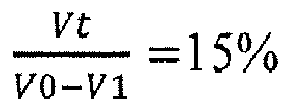
- In the battery provided by the disclosure, the negative electrode active material further includes a silicon-based material, and a content of the silicon-based material in the negative electrode active material is 3% to 10% calculated by mass percentage.
- Preferably, the silicon-based material includes at least one of silicon oxide, nano silicon, silicon carbon, and silicon alloy. Herein, the general formula of the silicon oxide is SiOx, 0<x<2.
- Preferably, the positive electrode active material is lithium iron phosphate, and the battery satisfies

- Preferably, the positive electrode active material is lithium nickel cobalt manganese oxide. The material composition of the lithium nickel cobalt manganese oxide satisfies the following general formula LiNixCoyMn(1-x-y)O2, in the general formula, 0.5≤x≤0.9 and 0.05≤y≤0.2, and the battery satisfies

- Preferably, in the general formula LiNixCoyMn(1-x-y)O2, 0.5≤x≤0.7, and the battery satisfies

- Preferably, in the general formula LiNixCoyMn(1-x-y)O2, 0.7 < x≤0.9, and the battery satisfies

- In order to enable a person having ordinary skill in the art to better understand the solutions of the disclosure, the technical solutions in the embodiments of the disclosure will be clearly and completely described below. Apparently, the described embodiments are only some of the embodiments of the disclosure, not all of the embodiments.
- In the following examples, a method for measuring the volume of the cell assembly (including measurement of a total volume of the winding cell, tab assembly, connecting sheet assembly, and insulating component) is provided as follows. A ruler is used to measure a length and a width of the winding cell (thickness is a thickness of the winding cell after formation into a constant volume), and the volume of the winding cell is calculated. The tab assembly, connecting sheet assembly, insulating component, etc. are removed, and a weight is weighed with a balance, and the volume of each assembly is calculated according to material density. A sum of the calculated volume of the winding cell and the total volume of the tab assembly, the battery switching piece, and other components is treated as the total volume of the cell assembly. Herein, in the examples or comparative examples in which the cell assembly is obtained by the winding process, a corner cross-section of the wound battery is semicircular, which needs to be considered when calculating the volume of the cell.
- In this example, a lithium-ion battery is prepared according to the following method:
- 1) Preparation of the positive electrode: the positive electrode active material LiNi0.6Co0.1Mn0.3O2, the conductive agent acetylene black, and the binder PVDF were mixed in a mass ratio of 97:1:2, and then the solvent NMP was added to the resulting mixed material. The mixture was stirred under the action of a vacuum mixer until the system was uniform, and the positive electrode slurry was obtained. The positive electrode slurry was evenly coated on a positive electrode current collector, dried at room temperature, transferred to an oven for further drying, and then cold pressed and cut according to the required specifications to obtain a positive pole piece.
- 2) Preparation of the negative electrode: the negative electrode active material graphite, the conductive agent acetylene black, the thickener CMC, and the binder SBR were mixed in a mass ratio of 96.2:0.8:1.2:1.8, and then the solvent deionized water was added to the resulting mixed material. The mixture was stirred under the action of a vacuum mixer until the system was uniform, and the negative electrode slurry was obtained. The negative electrode slurry was evenly coated on a negative electrode current collector, dried at room temperature, transferred to an oven for further drying, and then cold pressed and cut according to required specifications to obtain a negative pole piece.
- 3) Assembly of the cell assembly: the positive pole piece, the separator film, and the negative pole piece were stacked in sequence so that the separator film was placed between the positive and negative pole pieces for isolation, and the cell assembly was then obtained through the process of winding or stacking.
- 4) Liquid injection, chemical formation, and constant volume formation: the cell assembly was placed in the containing space of the battery shell, and after drying, the electrolyte was injected into the containing space of the battery shell. The lithium-ion battery of this example was obtained through processes such as vacuum packaging, standing still, formation, and shaping.
- According to the above method, different experimental groups and comparative experimental groups are set by changing the volume V0 of the containing space of the battery shell, the total volume of the cell assembly, and the injection volume of the electrolyte as variables. The product information of each experimental group and each comparative experimental group is shown in Table 1. Among the groups, the external dimensions of the batteries and the cell dimensions of the experimental group 1-1, the experimental group 1-2, the experimental group 1-3, the experimental group 1-5, the comparative experimental group 1-1, and the comparative experimental group 1-2 are all the same. The external dimensions of the batteries, the dimensions of the inner cavities of the battery shells, and the dimensions of the cells of the experimental group 1-4, the experimental group 1-6, the experimental group 1-7, the comparative experimental group 1-3, and the comparative experimental group 1-4 are all the same.
Table 1: product information of each experimental group and each comparative experimental group in this example Group Cell Assembly Process Containing space Volume VO/mL Total Volume of Cell Assembly Vl/mL Electrolyte Injection Volume/mL Experimental Group 1-1 winding 1012 935.6 395 Experimental Group 1-2 winding 1012 935.6 401 Experimental Group 1-3 winding 1012 935.6 409 Experimental Group 1-4 stacking 998 932.4 388 Experimental Group 1-5 winding 1012 935.6 426 Experimental Group 1-6 stacking 998 932.4 475 Experimental Group 1-7 stacking 998 932.4 490 Comparative Experimental Group 1-1 winding 1012 935.6 388 Comparative Experimental Group 1-2 winding 1012 935.6 426 Comparative Experimental Group 1-3 stacking 998 932.4 460 Comparative Experimental Group 1-4 stacking 998 932.4 500 - The lithium-ion battery prepared in Example 1 was used as the test object of this test example.
- The upper part of the lithium-ion battery as the test object was opened with a small opening, and the lithium-ion battery was placed upside down and left to stand for 30 minutes. The free electrolyte in the containing space of the battery shell was allowed to completely flow into a container, a balance was used to weigh the weight of the electrolyte flowing out, and a densitometer was used to measure the density to calculate the free electrolyte volume Vt.
- At 45°C, the lithium-ion battery as the test object was charged at a rate of 1C and discharged at a rate of 1C, and a full-charging and full-discharging cycle test was performed until the capacity of the lithium-ion battery decayed to 80% of the initial capacity. The number of cycles was recorded, and it was observed whether the battery exhaust valve opened in the EOL state. The purpose of cycling at high temperature was to speed up aging and gas production.
- The product structure parameters and performance indicators of the test objects in the examples are shown in Table 2. It can be seen from the data shown in Table 2 that the product structures of the lithium-ion batteries prepared in the comparative experimental groups 1-1 to 1-4 do not satisfy the relational formula


Table 2: product structures and performance indicators of the test subjects in test example 1 Test Product V0 /mL V1/mL Volume of Free Electrolyte Vt (mL) 
Cycle Performance/ Cycles Remark Experimental Group 1-1 1012 935.6 17 22.25% 1320 no valve opening during cycle Experimental Group 1-2 1012 935.6 23 30.10% 1410 no valve opening during cycle Experimental Group 1-3 1012 935.6 31 40.58% 1220 no valve opening during cycle Experimental Group 1-4 998 932.4 9 13.72% 1110 no valve opening during cycle Experimental Group 1-5 1012 935.6 38 49.74% 1210 no valve opening during cycle Experimental Group 1-6 998 932.4 14 21.34% 1320 no valve opening during cycle Experimental Group 1-7 998 932.4 26 39.63% 1228 no valve opening during cycle Comparative Experimental Group1-1 1012 935.6 3 3.93% 820 no valve opening during cycle, but capacity drops rapidly Comparative Experimental Group 1-2 1012 935.6 42 54.97% 880 valve opening during cycle, and capacity drops rapidly Comparative Experimental Group1-3 998 932.4 3 4.57% 910 no valve opening during cycle, but capacity drops rapidly Comparative Experimental Group1-4 998 932.4 40 60.98% 820 valve opening during cycle, and capacity drops rapidly - In this example, a lithium-ion battery is prepared according to the following method:
- 1) Preparation of the positive electrode: the positive electrode active material LiNi0.8Co0.1Mn0.1O2, the conductive agent acetylene black, and the binder PVDF were mixed in a mass ratio of 97:1:2, and then the solvent NMP was added to the resulting mixed material. The mixture was stirred under the action of a vacuum mixer until the system was uniform, and the positive electrode slurry was obtained. The positive electrode slurry was evenly coated on a positive electrode current collector, dried at room temperature, transferred to an oven for further drying, and then cold pressed and cut according to the required specifications to obtain a positive pole piece.
- 2) Preparation of the negative electrode: the negative electrode active material graphite, the conductive agent acetylene black, the thickener CMC, and the binder SBR were mixed in a mass ratio of 96.2:0.8:1.2:1.8, and then the solvent deionized water was added to the resulting mixed material. The mixture was stirred under the action of a vacuum mixer until the system was uniform, and the negative electrode slurry was obtained. The negative electrode slurry was evenly coated on a negative electrode current collector, dried at room temperature, transferred to an oven for further drying, and then cold pressed and cut according to required specifications to obtain a negative pole piece.
- 3) Assembly of the cell assembly: the positive pole piece, the separator film, and the negative pole piece were stacked in sequence so that the separator film was placed between the positive and negative pole pieces for isolation, and the cell assembly was then obtained through the process of winding.
- 4) Liquid injection, chemical formation, and constant volume formation: the cell assembly was placed in the containing space of the battery shell, and after drying, the electrolyte was injected into the containing space of the battery shell. The lithium-ion battery of this example was obtained through processes such as vacuum packaging, standing still, formation, and shaping.
- According to the above method, different experimental groups and comparative experimental groups are set by changing the volume V0 of the containing space of the battery shell, the total volume of the cell assembly, and the injection volume of the electrolyte as variables. The product information of each experimental group and each comparative experimental group is shown in Table 3. Among the groups, the external dimensions of the batteries, the dimensions of the inner cavities of the battery shells, and the dimensions of the cells of the experimental group 2-1, the experimental group 2-2, the experimental group 2-3, the experimental group 2-4, and the experimental group 2-5 are all the same.
Table 3: product information of each experimental group and each comparative experimental group in this example Group Cell Assembly Process Containing space Volume VO/mL Total Volume of Cell Assembly Vl/mL Electrolyte Injection Volume /mL Experimental Group 2-1 winding 1012 935.6 391 Experimental Group 2-2 winding 1012 935.6 395 Experimental Group 2-3 winding 1012 935.6 400 Experimental Group 2-4 winding 1012 935.6 385 Experimental Group 2-5 winding 1012 935.6 418 - The lithium-ion battery prepared in Example 2 was used as the test object of this test example.
- The upper part of the lithium-ion battery as the test object was opened with a small opening, and the lithium-ion battery was placed upside down and left to stand for 30 minutes. The free electrolyte in the containing space of the battery shell was allowed to completely flow into a container, a balance was used to weigh the weight of the electrolyte flowing out, and a densitometer was used to measure the density to calculate the free electrolyte volume Vt.
- At 45°C, the lithium-ion battery as the test object was charged at a rate of 1C and discharged at a rate of 1C, and a full-charging and full-discharging cycle test was performed until the capacity of the lithium-ion battery decayed to 80% of the initial capacity. The number of cycles was recorded, and it was observed whether the battery exhaust valve opened in the EOL state. The purpose of cycling at high temperature was to speed up aging and gas production.
- The product structure parameters and performance indicators of the test objects in the examples are shown in Table 4. The product structures of the lithium-ion batteries prepared in the experimental groups 2-1 to 2-5 satisfy the relational formula
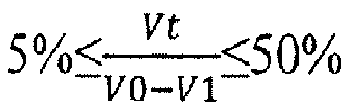


Table 4: product structures and performance indicators of the test subjects in test example 2 Test Product V0 /mL V1 /mL Volume of Free Electrolyte Vt(mL) 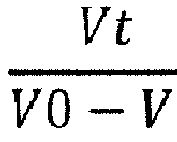
Remark Experimental Group 2-1 1012 935.6 12 15.71 % 1020 no valve opening during cycle Experimental Group 2-2 1012 935.6 17 22.25 % 1100 no valve opening during cycle Experimental Group 2-3 1012 935.6 21 27.49 % 1160 no valve opening during cycle Experimental Group 2-4 1012 935.6 6 7.85% 880 no valve opening during cycle, but capacity drops rapidly Experimental Group 2-5 1012 935.6 36 47.12 % 900 no valve opening during cycle - In this example, a lithium-ion battery is prepared according to the following method:
- 1) Preparation of the positive electrode: the positive electrode active material LiNi0.8Co0.1Mn0.1O2, the conductive agent acetylene black, and the binder PVDF were mixed in a mass ratio of 97:1:2, and then the solvent NMP was added to the resulting mixed material. The mixture was stirred under the action of a vacuum mixer until the system was uniform, and the positive electrode slurry was obtained. The positive electrode slurry was evenly coated on a positive electrode current collector, dried at room temperature, transferred to an oven for further drying, and then cold pressed and cut according to the required specifications to obtain a positive pole piece.
- 2) Preparation of the negative electrode: the negative electrode active material (graphite 93% + silicon-based material 7%), the conductive agent acetylene black, the thickener CMC, and the binder SBR were mixed in a mass ratio of 96.2:0.8:1.2:1.8, and then the solvent deionized water was added to the resulting mixed material. The mixture was stirred under the action of a vacuum mixer until the system was uniform, and the negative electrode slurry was obtained. The negative electrode slurry was evenly coated on a negative electrode current collector, dried at room temperature, transferred to an oven for further drying, and then cold pressed and cut according to required specifications to obtain a negative pole piece.
- 3) Assembly of the cell assembly: the positive pole piece, the separator film, and the negative pole piece were stacked in sequence so that the separator film was placed between the positive and negative pole pieces for isolation, and the cell assembly was then obtained through the process of stacking.
- 4) Liquid injection, chemical formation, and constant volume formation: the cell assembly was placed in the containing space of the battery shell, and after drying, the electrolyte was injected into the containing space of the battery shell. The lithium-ion battery of this example was obtained through processes such as vacuum packaging, standing still, formation, and shaping.
- According to the above method, different experimental groups and comparative experimental groups are set by changing the volume V0 of the containing space of the battery shell, the total volume of the cell assembly, and the injection volume of the electrolyte as variables. The product information of each experimental group and each comparative experimental group is shown in Table 5. Among the groups, the external dimensions of the batteries, the dimensions of the inner cavities of the battery shells, and the dimensions of the cells of the experimental group 3-1, the experimental group 3-2, the experimental group 3-3, and the experimental group 3-4 are all the same.
Table 5: product information of each experimental group and each comparative experimental group in this example Group Cell Assembly Process Containing space Volume VO/mL Total Volume of Cell Assembly V1/mL Electrolyte Injection Volume/mL Experimental Group 3-1 stacking 998 932.4 320 Experimental Group 3-2 stacking 998 932.4 340 Experimental Group 3-3 stacking 998 932.4 310 Experimental Group 3-4 stacking 998 932.4 350 - The lithium-ion battery prepared in Example 3 was used as the test object of this test example.
- The upper part of the lithium-ion battery as the test object was opened with a small opening, and the lithium-ion battery was placed upside down and left to stand for 30 minutes. The free electrolyte in the containing space of the battery shell was allowed to completely flow into a container, a balance was used to weigh the weight of the electrolyte flowing out, and a densitometer was used to measure the density to calculate the free electrolyte volume Vt.
- At 45°C, the lithium-ion battery as the test object was charged at a rate of 1C and discharged at a rate of 1C, and a full-charging and full-discharging cycle test was performed until the capacity of the lithium-ion battery decayed to 80% of the initial capacity. The number of cycles was recorded, and it was observed whether the battery exhaust valve opened in the EOL state. The purpose of cycling at high temperature was to speed up aging and gas production.
- The product structure parameters and performance indicators of the test objects in the examples are shown in Table 6. The product structure parameters and performance indicators of the test objects in the examples are shown in Table 4. The product structures of the lithium-ion batteries prepared in the experimental groups 2-1 to 2-5 satisfy the relational formula

Table 6: product structures and performance indicators of the test subjects in test example 3 Test Product V0 /mL V1 /mL Volume of Free Electrolyte Vt(mL) 
Cycle Performance/ Cycles Remark Experimental Group 3-1 998 932.4 7 10.67% 1230 no valve opening during cycle Experimental Group 3-2 998 932.4 20 30.49% 1120 no valve opening during cycle Experimental Group 3-3 998 932.4 3.5 5.34% 1190 no valve opening during cycle Experimental Group 3-4 998 932.4 30 45.73% 950 no valve opening during cycle - In this example, a lithium-ion battery is prepared according to the following method:
- 1) Preparation of the positive electrode: the positive electrode active material lithium iron phosphate, the conductive agent acetylene black, and the binder PVDF were mixed in a mass ratio of 97:1:2, and then the solvent NMP was added to the resulting mixed material. The mixture was stirred under the action of a vacuum mixer until the system was uniform, and the positive electrode slurry was obtained. The positive electrode slurry was evenly coated on a positive electrode current collector, dried at room temperature, transferred to an oven for further drying, and then cold pressed and cut according to the required specifications to obtain a positive pole piece.
- 2) Preparation of the negative electrode: the negative electrode active material graphite, the conductive agent acetylene black, the thickener CMC, and the binder SBR were mixed in a mass ratio of 96.2:0.8:1.2:1.8, and then the solvent deionized water was added to the resulting mixed material. The mixture was stirred under the action of a vacuum mixer until the system was uniform, and the negative electrode slurry was obtained. The negative electrode slurry was evenly coated on a negative electrode current collector, dried at room temperature, transferred to an oven for further drying, and then cold pressed and cut according to required specifications to obtain a negative pole piece.
- 3) Assembly of the cell assembly: the positive pole piece, the separator film, and the negative pole piece were stacked in sequence so that the separator film was placed between the positive and negative pole pieces for isolation, and the cell assembly was then obtained through the process of winding.
- 4) Liquid injection, chemical formation, and constant volume formation: the cell assembly was placed in the containing space of the battery shell, and after drying, the electrolyte was injected into the containing space of the battery shell. The lithium-ion battery of this example was obtained through processes such as vacuum packaging, standing still, formation, and shaping.
- According to the above method, different experimental groups and comparative experimental groups are set by changing the volume V0 of the containing space of the battery shell, the total volume of the cell assembly, and the injection volume of the electrolyte as variables. The product information of each experimental group and each comparative experimental group is shown in Table 7. Among the groups, the external dimensions of the batteries, the dimensions of the inner cavities of the battery shells, and the dimensions of the cells of the experimental group 4-1, the experimental group 4-2, the comparative experimental group 4-1, and the comparative experimental group 4-2 are all the same.
Table 7: product information of each experimental group and each comparative experimental group in this example Group Cell Assembly Process Containing space Volume VO/mL Total Volume of Cell Assembly Vl/mL Electrolyte Injection Volume/mL Experimental Group 4-1 winding 1012 935.6 419 Experimental Group 4-2 winding 1012 935.6 433 Comparative Experimental Group 4-1 winding 1012 935.6 402 Comparative Experimental Group 4-2 winding 1012 935.6 440 - The lithium-ion battery prepared in Example 4 was used as the test object of this test example.
- The upper part of the lithium-ion battery as the test object was opened with a small opening, and the lithium-ion battery was placed upside down and left to stand for 30 minutes. The free electrolyte in the containing space of the battery shell was allowed to completely flow into a container, a balance was used to weigh the weight of the electrolyte flowing out, and a densitometer was used to measure the density to calculate the free electrolyte volume Vt.
- At 45°C, the lithium-ion battery as the test object was charged at a rate of 1C and discharged at a rate of 1C, and a full-charging and full-discharging cycle test was performed until the capacity of the lithium-ion battery decayed to 80% of the initial capacity. The number of cycles was recorded, and it was observed whether the battery exhaust valve opened in the EOL state. The purpose of cycling at high temperature was to speed up aging and gas production.
- The product structure parameters and performance indicators of the test objects in the examples are shown in Table 8. It can be seen from the data shown in Table 8 that the product structures of the lithium-ion batteries prepared in the comparative experimental group 4-1 and the comparative experimental group 4-2 do not satisfy the relational formula


Table 8: product structures and performance indicators of the test subjects in test example 4 Test Product V0 /mL V1 /mL Volume of Free Electrolyte Vt(mL) 
Cycle Performance/ Cycles Remark Experimental Group 4-1 1012 935.6 25 32.72% 1520 no valve opening during cycle Experimental Group 4-2 1012 935.6 38 49.74% 1630 no valve opening during cycle Comparative Experimental Group 4-1 1012 935.6 3.6 4.71% 860 no valve opening during cycle, but capacity drops rapidly Comparative Experimental Group 4-2 1012 935.6 46 60.21% 810 valve opening during cycle, and capacity drops rapidly - In this example, a lithium-ion battery is prepared according to the following method:
- 1) Preparation of the positive electrode: the positive electrode active material lithium iron phosphate, the conductive agent acetylene black, and the binder PVDF were mixed in a mass ratio of 97:1:2, and then the solvent NMP was added to the resulting mixed material. The mixture was stirred under the action of a vacuum mixer until the system was uniform, and the positive electrode slurry was obtained. The positive electrode slurry was evenly coated on a positive electrode current collector, dried at room temperature, transferred to an oven for further drying, and then cold pressed and cut according to the required specifications to obtain a positive pole piece.
- 2) Preparation of the negative electrode: the negative electrode active material graphite, the conductive agent acetylene black, the thickener CMC, and the binder SBR were mixed in a mass ratio of 96.2:0.8:1.2:1.8, and then the solvent deionized water was added to the resulting mixed material. The mixture was stirred under the action of a vacuum mixer until the system was uniform, and the negative electrode slurry was obtained. The negative electrode slurry was evenly coated on a negative electrode current collector, dried at room temperature, transferred to an oven for further drying, and then cold pressed and cut according to required specifications to obtain a negative pole piece.
- 3) Assembly of the cell assembly: the positive pole piece, the separator film, and the negative pole piece were stacked in sequence so that the separator film was placed between the positive and negative pole pieces for isolation, and the cell assembly was then obtained through the process of winding.
- 4) Liquid injection, chemical formation, and constant volume formation: the cell assembly was placed in the containing space of the battery shell, and after drying, the electrolyte was injected into the containing space of the battery shell. The lithium-ion battery of this example was obtained through processes such as vacuum packaging, standing still, formation, and shaping.
- According to the above method, different experimental groups and comparative experimental groups are set by changing the volume V0 of the containing space of the battery shell, the total volume of the cell assembly, and the injection volume of the electrolyte as variables. The product information of each experimental group and each comparative experimental group is shown in Table 9. Among the groups, the external dimensions of the batteries, the dimensions of the inner cavities of the battery shells, and the dimensions of the cells of the experimental group 5-1, the experimental group 5-2, the comparative experimental group 5-1, and the comparative experimental group 5-2 are all the same.
Table 9: product information of each experimental group and each comparative experimental group in this example Group Cell Assembly Process Containing space Volume V0/mL Total Volume of Cell Assembly Vl/mL Electrolyte Injection Volume/mL Experimental Group 5-1 winding 123 110.55 50 Experimental Group 5-2 winding 123 110.55 52 Comparative Experimental Group 5-1 winding 123 110.55 48 Comparative Experimental Group 5-2 winding 123 110.55 55 - The lithium-ion battery prepared in Example 5 was used as the test object of this test example.
- The upper part of the lithium-ion battery as the test object was opened with a small opening, and the lithium-ion battery was placed upside down and left to stand for 30 minutes. The free electrolyte in the containing space of the battery shell was allowed to completely flow into a container, a balance was used to weigh the weight of the electrolyte flowing out, and a densitometer was used to measure the density to calculate the free electrolyte volume Vt.
- At 45°C, the lithium-ion battery as the test object was charged at a rate of 1C and discharged at a rate of 1C, and a full-charging and full-discharging cycle test was performed until the capacity of the lithium-ion battery decayed to 80% of the initial capacity. The number of cycles was recorded, and it was observed whether the battery exhaust valve opened in the EOL state. The purpose of cycling at high temperature was to speed up aging and gas production.
- The product structure parameters and performance indicators of the test objects in the examples are shown in Table 10. It can be seen from the data shown in Table 10 that the product structures of the lithium-ion batteries prepared in the comparative experimental group 5-1 and the comparative experimental group 5-2 do not satisfy the relational formula


Table 10: product structures and performance indicators of the test subjects in test example 5 Test Product V0 /mL V1 /mL Volume of Free Electrolyte Vt(mL) 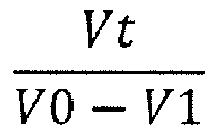
Cycle Performance/ Cycles Remark Experimental Group 5-1 123 110.55 4 32.13% 1380 no valve opening during cycle Experimental Group 5-2 123 110.55 6 48.19% 1400 no valve opening during cycle Comparative Experimental Group 5-1 123 110.55 0.4 3.21% 760 no valve opening during cycle, but capacity drops rapidly Comparative Experimental Group 5-2 123 110.55 7.5 60.24% 730 valve opening during cycle, and capacity drops rapidly
Claims (12)
- A battery, comprising a battery shell, a cell assembly, and an electrolyte the electrolyte and the cell assembly are disposed in a containing space of the battery shell, the electrolyte remaining in the containing space is a free electrolyte, a volume of the containing space is V0, a volume of the cell assembly is V1, a volume of the free electrolyte is Vt, and the battery satisfies

- The battery according to claim 1, wherein the cell assembly comprises a positive pole piece and a negative pole piece, wherein:
the positive pole piece comprises a positive electrode active material, the positive electrode active material comprises at least one of lithium iron phosphate, lithium cobalt oxide, lithium manganate, lithium nickel cobalt manganese oxide, lithium manganese iron phosphate, and lithium nickel manganese oxide, the negative pole piece comprises a negative electrode active material, and the negative electrode active material comprises graphite. - The battery according to claim 2, wherein: the negative electrode active material is graphite, the positive electrode active material is lithium iron phosphate, and the battery satisfies

- The battery according to claim 2, wherein: the negative electrode active material is graphite, the positive electrode active material is lithium nickel cobalt manganese oxide, a material composition of the lithium nickel cobalt manganese oxide satisfies the following general formula LiNixCoyMn(1-x-y)O2, in the general formula, 0.5≤x≤0.9 and 0.05≤y≤0.2, and the battery satisfies

- The battery according to claim 4, wherein: in the general formula LiNixCoyMn(1-x-y)O2, 0.5≤x≤0.7, and the battery satisfies

- The battery according to claim 4, wherein: in the general formula LiNixCoyMn(1-x-y)O2, 0.7 <x≤0.9, and the battery satisfies

- The battery according to claim 2, wherein: the negative electrode active material further comprises a silicon-based material, and a content of the silicon-based material in the negative electrode active material is 3% to 10% calculated by mass percentage.
- The battery according to claim 7, wherein: the silicon-based material comprises at least one of silicon oxide, nano silicon, silicon carbon, and silicon alloy, wherein the general formula of the silicon oxide is SiOx, 0<x<2.
- The battery according to claim 7, wherein: the positive electrode active material is lithium iron phosphate, the battery satisfies

- The battery according to claim 7, wherein: the positive electrode active material is lithium nickel cobalt manganese oxide, a material composition of the lithium nickel cobalt manganese oxide satisfies the following general formula LiNixCoyMn(1-x-y)O2, in the general formula, 0.5≤x≤0.9 and 0.05≤y≤0.2, and the battery satisfies

- The battery according to claim 10, wherein: in the general formula LiNixCoyMn(1-x-y)O2, 0.5≤x≤0.7, and the battery satisfies

- The battery according to claim 10, wherein: in the general formula LiNixCoyMn(1-x-y)O2, 0.7 < x≤0.9, and the battery satisfies

Applications Claiming Priority (1)
| Application Number | Priority Date | Filing Date | Title |
|---|---|---|---|
| CN202211286730.3A CN115360438B (en) | 2022-10-20 | 2022-10-20 | Battery with a battery cell |
Publications (2)
| Publication Number | Publication Date |
|---|---|
| EP4358183A1 true EP4358183A1 (en) | 2024-04-24 |
| EP4358183B1 EP4358183B1 (en) | 2025-08-13 |
Family
ID=84007619
Family Applications (1)
| Application Number | Title | Priority Date | Filing Date |
|---|---|---|---|
| EP23171767.9A Active EP4358183B1 (en) | 2022-10-20 | 2023-05-05 | Battery and method for preparing battery |
Country Status (2)
| Country | Link |
|---|---|
| EP (1) | EP4358183B1 (en) |
| CN (1) | CN115360438B (en) |
Cited By (1)
| Publication number | Priority date | Publication date | Assignee | Title |
|---|---|---|---|---|
| CN119812173A (en) * | 2024-08-29 | 2025-04-11 | 比亚迪股份有限公司 | Pole piece and design method thereof, pole core, battery cell, battery assembly and electrical equipment |
Families Citing this family (2)
| Publication number | Priority date | Publication date | Assignee | Title |
|---|---|---|---|---|
| CN119994257A (en) * | 2024-09-26 | 2025-05-13 | 宁德时代新能源科技股份有限公司 | A charging method |
| CN120879017A (en) * | 2025-09-24 | 2025-10-31 | 中国科学院合肥物质科学研究院 | Method for improving battery cycle performance |
Citations (3)
| Publication number | Priority date | Publication date | Assignee | Title |
|---|---|---|---|---|
| US20170170512A1 (en) * | 2014-02-10 | 2017-06-15 | Lg Chem, Ltd. | Electrochemical device |
| JP2018147594A (en) * | 2017-03-01 | 2018-09-20 | 株式会社東芝 | Nonaqueous electrolyte battery |
| EP3958362A1 (en) * | 2019-09-27 | 2022-02-23 | Contemporary Amperex Technology Co., Limited | Secondary battery, and battery module, battery pack, and device comprising the secondary battery |
Family Cites Families (5)
| Publication number | Priority date | Publication date | Assignee | Title |
|---|---|---|---|---|
| JP4081833B2 (en) * | 1997-08-01 | 2008-04-30 | 宇部興産株式会社 | Sealed non-aqueous electrolyte secondary battery |
| JP2000294295A (en) * | 1999-04-08 | 2000-10-20 | Hitachi Maxell Ltd | Non-aqueous electrolyte secondary battery |
| JP2001155762A (en) * | 1999-11-26 | 2001-06-08 | Shin Kobe Electric Mach Co Ltd | Sealed lead batteries for automobiles |
| JP2014036010A (en) * | 2012-08-10 | 2014-02-24 | Toyota Motor Corp | Nonaqueous electrolyte secondary battery |
| JP7216696B2 (en) * | 2020-12-08 | 2023-02-01 | プライムプラネットエナジー&ソリューションズ株式会社 | Battery manufacturing method |
-
2022
- 2022-10-20 CN CN202211286730.3A patent/CN115360438B/en active Active
-
2023
- 2023-05-05 EP EP23171767.9A patent/EP4358183B1/en active Active
Patent Citations (3)
| Publication number | Priority date | Publication date | Assignee | Title |
|---|---|---|---|---|
| US20170170512A1 (en) * | 2014-02-10 | 2017-06-15 | Lg Chem, Ltd. | Electrochemical device |
| JP2018147594A (en) * | 2017-03-01 | 2018-09-20 | 株式会社東芝 | Nonaqueous electrolyte battery |
| EP3958362A1 (en) * | 2019-09-27 | 2022-02-23 | Contemporary Amperex Technology Co., Limited | Secondary battery, and battery module, battery pack, and device comprising the secondary battery |
Non-Patent Citations (2)
| Title |
|---|
| AN SEONG JIN ET AL: "Electrolyte Volume Effects on Electrochemical Performance and Solid Electrolyte Interphase in Si-Graphite/NMC Lithium-Ion Pouch Cells", APPLIED MATERIALS & INTERFACES, vol. 9, no. 22, 15 May 2017 (2017-05-15), US, pages 18799 - 18808, XP093137178, ISSN: 1944-8244, DOI: 10.1021/acsami.7b03617 * |
| LANDA-MEDRANO IMANOL ET AL: "Insights into the Electrochemical Performance of 1.8 Ah Pouch and 18650 Cylindrical NMC:LFP|Si:C Blend Li-ion Cells", BATTERIES, vol. 8, no. 8, 18 August 2022 (2022-08-18), pages 97, XP093137587, ISSN: 2313-0105, DOI: 10.3390/batteries8080097 * |
Cited By (1)
| Publication number | Priority date | Publication date | Assignee | Title |
|---|---|---|---|---|
| CN119812173A (en) * | 2024-08-29 | 2025-04-11 | 比亚迪股份有限公司 | Pole piece and design method thereof, pole core, battery cell, battery assembly and electrical equipment |
Also Published As
| Publication number | Publication date |
|---|---|
| CN115360438B (en) | 2023-03-24 |
| CN115360438A (en) | 2022-11-18 |
| EP4358183B1 (en) | 2025-08-13 |
Similar Documents
| Publication | Publication Date | Title |
|---|---|---|
| CN114824269B (en) | Composite positive electrode material, preparation method and application thereof, sodium ion battery pack and equipment | |
| US20240097124A1 (en) | Positive active material, positive electrode plate and lithium-ion secondary battery | |
| EP4358183B1 (en) | Battery and method for preparing battery | |
| US11605816B2 (en) | Lithium secondary battery and battery module, battery pack, and electric apparatus containing same | |
| CN111422919B (en) | Quaternary positive electrode material and preparation method thereof, positive electrode, battery | |
| CN114695856B (en) | Positive electrode material of sodium ion battery, preparation method, pole piece and battery | |
| EP4350833A1 (en) | Electrolyte, electrochemical device thereof, and electronic device | |
| EP2736104A1 (en) | Lithium-rich solid solution positive electrode composite material and method for preparing same, lithium ion battery positive electrode plate and lithium ion battery | |
| CN103682356A (en) | Lithium ion battery anode material and preparation method thereof | |
| CN108807928B (en) | Synthesis of metal oxide and lithium ion battery | |
| EP4293777A1 (en) | Secondary battery, battery module, battery pack, and electric device | |
| US20260031350A1 (en) | Positive electrode active material and preparation method therefor, positive electrode plate, battery, and electrical apparatus | |
| EP4593121A1 (en) | Semi-solid-state lithium battery and terminal comprising same | |
| CN116666789A (en) | Negative pressure formation method of lithium manganese iron phosphate battery and battery using same | |
| EP4636868A1 (en) | Modified lithium manganese iron phosphate positive electrode material, and preparation method therefor and use thereof | |
| EP4280301A1 (en) | Positive electrode sheet, secondary battery, battery module, battery pack, and electric apparatus | |
| EP4521479A1 (en) | Lithium manganese iron phosphate modified material, and positive electrode and lithium-ion battery applying the same | |
| CN105576219B (en) | With three-dimensional Li+Self-healing layered cathode material of diffusion admittance and preparation method thereof | |
| EP4265622A1 (en) | Electrolyte containing nitrogen-based salt structure, preparation method therefor and use thereof | |
| CN116247293A (en) | A kind of electrolyte solution and lithium ion secondary battery | |
| EP3641026A1 (en) | Secondary battery | |
| EP4618184A1 (en) | Positive electrode material composition, secondary battery, and electrical device | |
| US6221529B1 (en) | Positive electrode for lithium battery and lithium battery | |
| CN111900473A (en) | Lithium ion battery electrolyte for improving performance of anode material and lithium ion battery | |
| CN113871623B (en) | High-nickel anode material slurry for lithium ion battery, preparation method of slurry and lithium ion battery |
Legal Events
| Date | Code | Title | Description |
|---|---|---|---|
| PUAI | Public reference made under article 153(3) epc to a published international application that has entered the european phase |
Free format text: ORIGINAL CODE: 0009012 |
|
| STAA | Information on the status of an ep patent application or granted ep patent |
Free format text: STATUS: REQUEST FOR EXAMINATION WAS MADE |
|
| 17P | Request for examination filed |
Effective date: 20230505 |
|
| AK | Designated contracting states |
Kind code of ref document: A1 Designated state(s): AL AT BE BG CH CY CZ DE DK EE ES FI FR GB GR HR HU IE IS IT LI LT LU LV MC ME MK MT NL NO PL PT RO RS SE SI SK SM TR |
|
| GRAP | Despatch of communication of intention to grant a patent |
Free format text: ORIGINAL CODE: EPIDOSNIGR1 |
|
| STAA | Information on the status of an ep patent application or granted ep patent |
Free format text: STATUS: GRANT OF PATENT IS INTENDED |
|
| INTG | Intention to grant announced |
Effective date: 20250403 |
|
| GRAS | Grant fee paid |
Free format text: ORIGINAL CODE: EPIDOSNIGR3 |
|
| GRAA | (expected) grant |
Free format text: ORIGINAL CODE: 0009210 |
|
| STAA | Information on the status of an ep patent application or granted ep patent |
Free format text: STATUS: THE PATENT HAS BEEN GRANTED |
|
| AK | Designated contracting states |
Kind code of ref document: B1 Designated state(s): AL AT BE BG CH CY CZ DE DK EE ES FI FR GB GR HR HU IE IS IT LI LT LU LV MC ME MK MT NL NO PL PT RO RS SE SI SK SM TR |
|
| REG | Reference to a national code |
Ref country code: GB Ref legal event code: FG4D |
|
| REG | Reference to a national code |
Ref country code: CH Ref legal event code: EP |
|
| REG | Reference to a national code |
Ref country code: DE Ref legal event code: R096 Ref document number: 602023005611 Country of ref document: DE |
|
| REG | Reference to a national code |
Ref country code: IE Ref legal event code: FG4D |
|
| REG | Reference to a national code |
Ref country code: NL Ref legal event code: MP Effective date: 20250813 |
|
| PG25 | Lapsed in a contracting state [announced via postgrant information from national office to epo] |
Ref country code: IS Free format text: LAPSE BECAUSE OF FAILURE TO SUBMIT A TRANSLATION OF THE DESCRIPTION OR TO PAY THE FEE WITHIN THE PRESCRIBED TIME-LIMIT Effective date: 20251213 |
|
| PG25 | Lapsed in a contracting state [announced via postgrant information from national office to epo] |
Ref country code: NO Free format text: LAPSE BECAUSE OF FAILURE TO SUBMIT A TRANSLATION OF THE DESCRIPTION OR TO PAY THE FEE WITHIN THE PRESCRIBED TIME-LIMIT Effective date: 20251113 |
|
| REG | Reference to a national code |
Ref country code: LT Ref legal event code: MG9D |
|
| PG25 | Lapsed in a contracting state [announced via postgrant information from national office to epo] |
Ref country code: PT Free format text: LAPSE BECAUSE OF FAILURE TO SUBMIT A TRANSLATION OF THE DESCRIPTION OR TO PAY THE FEE WITHIN THE PRESCRIBED TIME-LIMIT Effective date: 20251215 |
|
| PG25 | Lapsed in a contracting state [announced via postgrant information from national office to epo] |
Ref country code: FI Free format text: LAPSE BECAUSE OF FAILURE TO SUBMIT A TRANSLATION OF THE DESCRIPTION OR TO PAY THE FEE WITHIN THE PRESCRIBED TIME-LIMIT Effective date: 20250813 |
|
| PG25 | Lapsed in a contracting state [announced via postgrant information from national office to epo] |
Ref country code: HR Free format text: LAPSE BECAUSE OF FAILURE TO SUBMIT A TRANSLATION OF THE DESCRIPTION OR TO PAY THE FEE WITHIN THE PRESCRIBED TIME-LIMIT Effective date: 20250813 Ref country code: NL Free format text: LAPSE BECAUSE OF FAILURE TO SUBMIT A TRANSLATION OF THE DESCRIPTION OR TO PAY THE FEE WITHIN THE PRESCRIBED TIME-LIMIT Effective date: 20250813 |
|
| PG25 | Lapsed in a contracting state [announced via postgrant information from national office to epo] |
Ref country code: GR Free format text: LAPSE BECAUSE OF FAILURE TO SUBMIT A TRANSLATION OF THE DESCRIPTION OR TO PAY THE FEE WITHIN THE PRESCRIBED TIME-LIMIT Effective date: 20251114 |
|
| PG25 | Lapsed in a contracting state [announced via postgrant information from national office to epo] |
Ref country code: SE Free format text: LAPSE BECAUSE OF FAILURE TO SUBMIT A TRANSLATION OF THE DESCRIPTION OR TO PAY THE FEE WITHIN THE PRESCRIBED TIME-LIMIT Effective date: 20250813 |
|
| PG25 | Lapsed in a contracting state [announced via postgrant information from national office to epo] |
Ref country code: LV Free format text: LAPSE BECAUSE OF FAILURE TO SUBMIT A TRANSLATION OF THE DESCRIPTION OR TO PAY THE FEE WITHIN THE PRESCRIBED TIME-LIMIT Effective date: 20250813 |
|
| PG25 | Lapsed in a contracting state [announced via postgrant information from national office to epo] |
Ref country code: PL Free format text: LAPSE BECAUSE OF FAILURE TO SUBMIT A TRANSLATION OF THE DESCRIPTION OR TO PAY THE FEE WITHIN THE PRESCRIBED TIME-LIMIT Effective date: 20250813 Ref country code: BG Free format text: LAPSE BECAUSE OF FAILURE TO SUBMIT A TRANSLATION OF THE DESCRIPTION OR TO PAY THE FEE WITHIN THE PRESCRIBED TIME-LIMIT Effective date: 20250813 |
|
| PG25 | Lapsed in a contracting state [announced via postgrant information from national office to epo] |
Ref country code: RS Free format text: LAPSE BECAUSE OF FAILURE TO SUBMIT A TRANSLATION OF THE DESCRIPTION OR TO PAY THE FEE WITHIN THE PRESCRIBED TIME-LIMIT Effective date: 20251113 |
|
| PG25 | Lapsed in a contracting state [announced via postgrant information from national office to epo] |
Ref country code: ES Free format text: LAPSE BECAUSE OF FAILURE TO SUBMIT A TRANSLATION OF THE DESCRIPTION OR TO PAY THE FEE WITHIN THE PRESCRIBED TIME-LIMIT Effective date: 20250813 |
|
| REG | Reference to a national code |
Ref country code: AT Ref legal event code: MK05 Ref document number: 1825700 Country of ref document: AT Kind code of ref document: T Effective date: 20250813 |
|
| PG25 | Lapsed in a contracting state [announced via postgrant information from national office to epo] |
Ref country code: SM Free format text: LAPSE BECAUSE OF FAILURE TO SUBMIT A TRANSLATION OF THE DESCRIPTION OR TO PAY THE FEE WITHIN THE PRESCRIBED TIME-LIMIT Effective date: 20250813 |
|
| PG25 | Lapsed in a contracting state [announced via postgrant information from national office to epo] |
Ref country code: DK Free format text: LAPSE BECAUSE OF FAILURE TO SUBMIT A TRANSLATION OF THE DESCRIPTION OR TO PAY THE FEE WITHIN THE PRESCRIBED TIME-LIMIT Effective date: 20250813 |
|
| PG25 | Lapsed in a contracting state [announced via postgrant information from national office to epo] |
Ref country code: AT Free format text: LAPSE BECAUSE OF FAILURE TO SUBMIT A TRANSLATION OF THE DESCRIPTION OR TO PAY THE FEE WITHIN THE PRESCRIBED TIME-LIMIT Effective date: 20250813 |
|
| PG25 | Lapsed in a contracting state [announced via postgrant information from national office to epo] |
Ref country code: IT Free format text: LAPSE BECAUSE OF FAILURE TO SUBMIT A TRANSLATION OF THE DESCRIPTION OR TO PAY THE FEE WITHIN THE PRESCRIBED TIME-LIMIT Effective date: 20250813 |
|
| PG25 | Lapsed in a contracting state [announced via postgrant information from national office to epo] |
Ref country code: CZ Free format text: LAPSE BECAUSE OF FAILURE TO SUBMIT A TRANSLATION OF THE DESCRIPTION OR TO PAY THE FEE WITHIN THE PRESCRIBED TIME-LIMIT Effective date: 20250813 |
|
| PG25 | Lapsed in a contracting state [announced via postgrant information from national office to epo] |
Ref country code: EE Free format text: LAPSE BECAUSE OF FAILURE TO SUBMIT A TRANSLATION OF THE DESCRIPTION OR TO PAY THE FEE WITHIN THE PRESCRIBED TIME-LIMIT Effective date: 20250813 Ref country code: SK Free format text: LAPSE BECAUSE OF FAILURE TO SUBMIT A TRANSLATION OF THE DESCRIPTION OR TO PAY THE FEE WITHIN THE PRESCRIBED TIME-LIMIT Effective date: 20250813 |