EP4357456A1 - Treatment of liver cancer or liver fibrosis - Google Patents
Treatment of liver cancer or liver fibrosis Download PDFInfo
- Publication number
- EP4357456A1 EP4357456A1 EP23204596.3A EP23204596A EP4357456A1 EP 4357456 A1 EP4357456 A1 EP 4357456A1 EP 23204596 A EP23204596 A EP 23204596A EP 4357456 A1 EP4357456 A1 EP 4357456A1
- Authority
- EP
- European Patent Office
- Prior art keywords
- minivector
- dna
- liver
- ultrapure
- parent
- Prior art date
- Legal status (The legal status is an assumption and is not a legal conclusion. Google has not performed a legal analysis and makes no representation as to the accuracy of the status listed.)
- Withdrawn
Links
- 208000019425 cirrhosis of liver Diseases 0.000 title claims abstract description 21
- 201000007270 liver cancer Diseases 0.000 title claims abstract description 15
- 208000014018 liver neoplasm Diseases 0.000 title claims abstract description 14
- 238000011282 treatment Methods 0.000 title description 14
- 239000000203 mixture Substances 0.000 claims abstract description 9
- 108020004414 DNA Proteins 0.000 claims description 46
- 108090000623 proteins and genes Proteins 0.000 claims description 38
- 239000013612 plasmid Substances 0.000 claims description 27
- 238000000034 method Methods 0.000 claims description 22
- 230000006798 recombination Effects 0.000 claims description 21
- 238000005215 recombination Methods 0.000 claims description 21
- 210000004185 liver Anatomy 0.000 claims description 19
- 108010008599 Forkhead Box Protein M1 Proteins 0.000 claims description 13
- 102100023374 Forkhead box protein M1 Human genes 0.000 claims description 13
- 238000002523 gelfiltration Methods 0.000 claims description 12
- 108010011005 STAT6 Transcription Factor Proteins 0.000 claims description 11
- 102100023980 Signal transducer and activator of transcription 6 Human genes 0.000 claims description 11
- 101000635938 Homo sapiens Transforming growth factor beta-1 proprotein Proteins 0.000 claims description 9
- 102000017274 MDM4 Human genes 0.000 claims description 9
- 108050005300 MDM4 Proteins 0.000 claims description 9
- 230000001580 bacterial effect Effects 0.000 claims description 9
- 102000039446 nucleic acids Human genes 0.000 claims description 9
- 108020004707 nucleic acids Proteins 0.000 claims description 9
- 150000007523 nucleic acids Chemical class 0.000 claims description 9
- 102100024155 Cadherin-11 Human genes 0.000 claims description 8
- 238000001556 precipitation Methods 0.000 claims description 8
- 102000012199 E3 ubiquitin-protein ligase Mdm2 Human genes 0.000 claims description 7
- 108050002772 E3 ubiquitin-protein ligase Mdm2 Proteins 0.000 claims description 7
- 101000762236 Homo sapiens Cadherin-11 Proteins 0.000 claims description 7
- 102000003743 Relaxin Human genes 0.000 claims description 7
- 108090000103 Relaxin Proteins 0.000 claims description 7
- 238000011109 contamination Methods 0.000 claims description 7
- 239000006227 byproduct Substances 0.000 claims description 6
- 102100030742 Transforming growth factor beta-1 proprotein Human genes 0.000 claims description 5
- 239000011347 resin Substances 0.000 claims description 5
- 229920005989 resin Polymers 0.000 claims description 5
- LFQSCWFLJHTTHZ-UHFFFAOYSA-N Ethanol Chemical compound CCO LFQSCWFLJHTTHZ-UHFFFAOYSA-N 0.000 claims description 4
- 230000003115 biocidal effect Effects 0.000 claims description 4
- 238000002360 preparation method Methods 0.000 claims description 4
- 230000010076 replication Effects 0.000 claims description 4
- 108020004638 Circular DNA Proteins 0.000 claims description 3
- 108010042407 Endonucleases Proteins 0.000 claims description 3
- 108010017324 STAT3 Transcription Factor Proteins 0.000 claims description 3
- 102100024040 Signal transducer and activator of transcription 3 Human genes 0.000 claims description 3
- 238000005571 anion exchange chromatography Methods 0.000 claims description 3
- 239000003242 anti bacterial agent Substances 0.000 claims description 3
- 238000003776 cleavage reaction Methods 0.000 claims description 3
- 238000001727 in vivo Methods 0.000 claims description 3
- 230000007017 scission Effects 0.000 claims description 3
- 238000009295 crossflow filtration Methods 0.000 claims description 2
- 238000002347 injection Methods 0.000 claims description 2
- 239000007924 injection Substances 0.000 claims description 2
- 230000004952 protein activity Effects 0.000 claims 4
- 230000007717 exclusion Effects 0.000 claims 3
- 238000010186 staining Methods 0.000 claims 3
- 102000004533 Endonucleases Human genes 0.000 claims 2
- 239000003937 drug carrier Substances 0.000 claims 2
- 238000001502 gel electrophoresis Methods 0.000 claims 2
- 230000035945 sensitivity Effects 0.000 claims 2
- 239000011248 coating agent Substances 0.000 claims 1
- 238000000576 coating method Methods 0.000 claims 1
- PCHJSUWPFVWCPO-UHFFFAOYSA-N gold Chemical compound [Au] PCHJSUWPFVWCPO-UHFFFAOYSA-N 0.000 claims 1
- 239000010931 gold Substances 0.000 claims 1
- 229910052737 gold Inorganic materials 0.000 claims 1
- 238000001415 gene therapy Methods 0.000 abstract description 8
- 230000007774 longterm Effects 0.000 abstract description 2
- 208000037265 diseases, disorders, signs and symptoms Diseases 0.000 description 24
- 230000014509 gene expression Effects 0.000 description 22
- 108091032973 (ribonucleotides)n+m Proteins 0.000 description 21
- 108091027967 Small hairpin RNA Proteins 0.000 description 21
- 201000010099 disease Diseases 0.000 description 18
- 210000004027 cell Anatomy 0.000 description 17
- 239000000047 product Substances 0.000 description 16
- 239000004055 small Interfering RNA Substances 0.000 description 15
- 230000009368 gene silencing by RNA Effects 0.000 description 14
- 206010028980 Neoplasm Diseases 0.000 description 12
- 238000003197 gene knockdown Methods 0.000 description 12
- 206010016654 Fibrosis Diseases 0.000 description 11
- 108091030071 RNAI Proteins 0.000 description 11
- 102000004169 proteins and genes Human genes 0.000 description 11
- 230000001225 therapeutic effect Effects 0.000 description 11
- 102100025064 Cellular tumor antigen p53 Human genes 0.000 description 10
- 239000002202 Polyethylene glycol Substances 0.000 description 9
- 239000002679 microRNA Substances 0.000 description 9
- 229920001223 polyethylene glycol Polymers 0.000 description 9
- 241000894007 species Species 0.000 description 9
- 241000701022 Cytomegalovirus Species 0.000 description 8
- 102000046299 Transforming Growth Factor beta1 Human genes 0.000 description 8
- 101800002279 Transforming growth factor beta-1 Proteins 0.000 description 8
- 230000007882 cirrhosis Effects 0.000 description 8
- 239000002105 nanoparticle Substances 0.000 description 8
- 238000002560 therapeutic procedure Methods 0.000 description 8
- 229940099456 transforming growth factor beta 1 Drugs 0.000 description 8
- FAPWRFPIFSIZLT-UHFFFAOYSA-M Sodium chloride Chemical compound [Na+].[Cl-] FAPWRFPIFSIZLT-UHFFFAOYSA-M 0.000 description 7
- 108091046869 Telomeric non-coding RNA Proteins 0.000 description 7
- 201000011510 cancer Diseases 0.000 description 7
- 230000002452 interceptive effect Effects 0.000 description 7
- 108091070501 miRNA Proteins 0.000 description 7
- 210000001519 tissue Anatomy 0.000 description 7
- 208000035475 disorder Diseases 0.000 description 6
- 239000003623 enhancer Substances 0.000 description 6
- 238000000746 purification Methods 0.000 description 6
- 239000000243 solution Substances 0.000 description 6
- 102000040650 (ribonucleotides)n+m Human genes 0.000 description 5
- 108020005198 Long Noncoding RNA Proteins 0.000 description 5
- 230000006870 function Effects 0.000 description 5
- 206010073071 hepatocellular carcinoma Diseases 0.000 description 5
- 231100000844 hepatocellular carcinoma Toxicity 0.000 description 5
- 230000001965 increasing effect Effects 0.000 description 5
- 208000024891 symptom Diseases 0.000 description 5
- 230000002103 transcriptional effect Effects 0.000 description 5
- 239000013603 viral vector Substances 0.000 description 5
- 102100036981 Interferon regulatory factor 1 Human genes 0.000 description 4
- KFZMGEQAYNKOFK-UHFFFAOYSA-N Isopropanol Chemical compound CC(C)O KFZMGEQAYNKOFK-UHFFFAOYSA-N 0.000 description 4
- 241000829100 Macaca mulatta polyomavirus 1 Species 0.000 description 4
- 101100366887 Mus musculus Stat6 gene Proteins 0.000 description 4
- 101100206400 Mus musculus Tgfb1 gene Proteins 0.000 description 4
- 241000714474 Rous sarcoma virus Species 0.000 description 4
- VYPSYNLAJGMNEJ-UHFFFAOYSA-N Silicium dioxide Chemical compound O=[Si]=O VYPSYNLAJGMNEJ-UHFFFAOYSA-N 0.000 description 4
- 238000009739 binding Methods 0.000 description 4
- 239000000356 contaminant Substances 0.000 description 4
- 238000012217 deletion Methods 0.000 description 4
- 230000037430 deletion Effects 0.000 description 4
- 238000011161 development Methods 0.000 description 4
- 230000018109 developmental process Effects 0.000 description 4
- 102000053909 human TGFB1 Human genes 0.000 description 4
- 150000002632 lipids Chemical class 0.000 description 4
- 208000008338 non-alcoholic fatty liver disease Diseases 0.000 description 4
- 239000000546 pharmaceutical excipient Substances 0.000 description 4
- 229920000642 polymer Polymers 0.000 description 4
- 108090000765 processed proteins & peptides Proteins 0.000 description 4
- 230000009467 reduction Effects 0.000 description 4
- 238000000926 separation method Methods 0.000 description 4
- 239000011780 sodium chloride Substances 0.000 description 4
- 102100033770 Alpha-amylase 1C Human genes 0.000 description 3
- 241000588724 Escherichia coli Species 0.000 description 3
- 108091005904 Hemoglobin subunit beta Proteins 0.000 description 3
- 241000282412 Homo Species 0.000 description 3
- 101000779869 Homo sapiens Alpha-amylase 1C Proteins 0.000 description 3
- 102100034343 Integrase Human genes 0.000 description 3
- 108010061833 Integrases Proteins 0.000 description 3
- 102100037935 Polyubiquitin-C Human genes 0.000 description 3
- 108020004459 Small interfering RNA Proteins 0.000 description 3
- 241000700605 Viruses Species 0.000 description 3
- 210000001015 abdomen Anatomy 0.000 description 3
- 230000000692 anti-sense effect Effects 0.000 description 3
- 230000006907 apoptotic process Effects 0.000 description 3
- 230000015572 biosynthetic process Effects 0.000 description 3
- 238000005119 centrifugation Methods 0.000 description 3
- 230000007423 decrease Effects 0.000 description 3
- 239000003814 drug Substances 0.000 description 3
- 229940079593 drug Drugs 0.000 description 3
- 210000001808 exosome Anatomy 0.000 description 3
- -1 exosomes Substances 0.000 description 3
- 230000004761 fibrosis Effects 0.000 description 3
- 210000005046 glial fibrillary acidic protein Anatomy 0.000 description 3
- 230000010354 integration Effects 0.000 description 3
- 208000019423 liver disease Diseases 0.000 description 3
- 239000000463 material Substances 0.000 description 3
- 230000001404 mediated effect Effects 0.000 description 3
- 238000002483 medication Methods 0.000 description 3
- 206010053219 non-alcoholic steatohepatitis Diseases 0.000 description 3
- 239000002773 nucleotide Substances 0.000 description 3
- 125000003729 nucleotide group Chemical group 0.000 description 3
- 230000030648 nucleus localization Effects 0.000 description 3
- 230000009437 off-target effect Effects 0.000 description 3
- 230000032361 posttranscriptional gene silencing Effects 0.000 description 3
- 238000001356 surgical procedure Methods 0.000 description 3
- 238000013518 transcription Methods 0.000 description 3
- 230000035897 transcription Effects 0.000 description 3
- 238000002054 transplantation Methods 0.000 description 3
- 108010085238 Actins Proteins 0.000 description 2
- 101710187578 Alcohol dehydrogenase 1 Proteins 0.000 description 2
- 102100034035 Alcohol dehydrogenase 1A Human genes 0.000 description 2
- 208000022309 Alcoholic Liver disease Diseases 0.000 description 2
- 108091023037 Aptamer Proteins 0.000 description 2
- 206010003827 Autoimmune hepatitis Diseases 0.000 description 2
- 108010041052 DNA Topoisomerase IV Proteins 0.000 description 2
- 108010067770 Endopeptidase K Proteins 0.000 description 2
- 101000834253 Gallus gallus Actin, cytoplasmic 1 Proteins 0.000 description 2
- 108700028146 Genetic Enhancer Elements Proteins 0.000 description 2
- 102000053171 Glial Fibrillary Acidic Human genes 0.000 description 2
- 101710193519 Glial fibrillary acidic protein Proteins 0.000 description 2
- 102100021519 Hemoglobin subunit beta Human genes 0.000 description 2
- 206010019670 Hepatic function abnormal Diseases 0.000 description 2
- 208000005176 Hepatitis C Diseases 0.000 description 2
- 108010056307 Hin recombinase Proteins 0.000 description 2
- 101000998020 Homo sapiens Keratin, type I cytoskeletal 18 Proteins 0.000 description 2
- 108010000521 Human Growth Hormone Proteins 0.000 description 2
- 108091092195 Intron Proteins 0.000 description 2
- 108060005987 Kallikrein Proteins 0.000 description 2
- 102100033421 Keratin, type I cytoskeletal 18 Human genes 0.000 description 2
- 108700011259 MicroRNAs Proteins 0.000 description 2
- 241000699666 Mus <mouse, genus> Species 0.000 description 2
- 241000699670 Mus sp. Species 0.000 description 2
- 108091028043 Nucleic acid sequence Proteins 0.000 description 2
- 108091007412 Piwi-interacting RNA Proteins 0.000 description 2
- 229920002594 Polyethylene Glycol 8000 Polymers 0.000 description 2
- 102000009572 RNA Polymerase II Human genes 0.000 description 2
- 108010009460 RNA Polymerase II Proteins 0.000 description 2
- 102000014450 RNA Polymerase III Human genes 0.000 description 2
- 108010078067 RNA Polymerase III Proteins 0.000 description 2
- 238000012228 RNA interference-mediated gene silencing Methods 0.000 description 2
- 239000012506 Sephacryl® Substances 0.000 description 2
- 230000004075 alteration Effects 0.000 description 2
- 150000001413 amino acids Chemical class 0.000 description 2
- 210000003719 b-lymphocyte Anatomy 0.000 description 2
- 210000000013 bile duct Anatomy 0.000 description 2
- HVYWMOMLDIMFJA-DPAQBDIFSA-N cholesterol Chemical compound C1C=C2C[C@@H](O)CC[C@]2(C)[C@@H]2[C@@H]1[C@@H]1CC[C@H]([C@H](C)CCCC(C)C)[C@@]1(C)CC2 HVYWMOMLDIMFJA-DPAQBDIFSA-N 0.000 description 2
- 230000034994 death Effects 0.000 description 2
- 230000003247 decreasing effect Effects 0.000 description 2
- 239000012530 fluid Substances 0.000 description 2
- 230000030279 gene silencing Effects 0.000 description 2
- 208000007386 hepatic encephalopathy Diseases 0.000 description 2
- 208000002672 hepatitis B Diseases 0.000 description 2
- 230000001939 inductive effect Effects 0.000 description 2
- 230000002401 inhibitory effect Effects 0.000 description 2
- 230000037356 lipid metabolism Effects 0.000 description 2
- 239000011159 matrix material Substances 0.000 description 2
- 238000005259 measurement Methods 0.000 description 2
- 239000005543 nano-size silicon particle Substances 0.000 description 2
- 108091027963 non-coding RNA Proteins 0.000 description 2
- 102000042567 non-coding RNA Human genes 0.000 description 2
- 210000000056 organ Anatomy 0.000 description 2
- 230000036961 partial effect Effects 0.000 description 2
- 230000008569 process Effects 0.000 description 2
- 108020003175 receptors Proteins 0.000 description 2
- 102000005962 receptors Human genes 0.000 description 2
- 201000002793 renal fibrosis Diseases 0.000 description 2
- 238000011160 research Methods 0.000 description 2
- 231100000241 scar Toxicity 0.000 description 2
- 230000011664 signaling Effects 0.000 description 2
- 239000000377 silicon dioxide Substances 0.000 description 2
- 230000008685 targeting Effects 0.000 description 2
- 238000001890 transfection Methods 0.000 description 2
- RUDATBOHQWOJDD-UHFFFAOYSA-N (3beta,5beta,7alpha)-3,7-Dihydroxycholan-24-oic acid Natural products OC1CC2CC(O)CCC2(C)C2C1C1CCC(C(CCC(O)=O)C)C1(C)CC2 RUDATBOHQWOJDD-UHFFFAOYSA-N 0.000 description 1
- 102100028734 1,4-alpha-glucan-branching enzyme Human genes 0.000 description 1
- 102100022900 Actin, cytoplasmic 1 Human genes 0.000 description 1
- 102100022712 Alpha-1-antitrypsin Human genes 0.000 description 1
- 208000008439 Biliary Liver Cirrhosis Diseases 0.000 description 1
- 101150111062 C gene Proteins 0.000 description 1
- XMWRBQBLMFGWIX-UHFFFAOYSA-N C60 fullerene Chemical compound C12=C3C(C4=C56)=C7C8=C5C5=C9C%10=C6C6=C4C1=C1C4=C6C6=C%10C%10=C9C9=C%11C5=C8C5=C8C7=C3C3=C7C2=C1C1=C2C4=C6C4=C%10C6=C9C9=C%11C5=C5C8=C3C3=C7C1=C1C2=C4C6=C2C9=C5C3=C12 XMWRBQBLMFGWIX-UHFFFAOYSA-N 0.000 description 1
- 101100097985 Caenorhabditis elegans mars-1 gene Proteins 0.000 description 1
- 108010003721 Calcium-Calmodulin-Dependent Protein Kinase Type 2 Proteins 0.000 description 1
- 102000004657 Calcium-Calmodulin-Dependent Protein Kinase Type 2 Human genes 0.000 description 1
- 102100034279 Calcium-binding mitochondrial carrier protein Aralar2 Human genes 0.000 description 1
- 102100033093 Calcium/calmodulin-dependent protein kinase type II subunit alpha Human genes 0.000 description 1
- 206010007558 Cardiac failure chronic Diseases 0.000 description 1
- 102100026548 Caspase-8 Human genes 0.000 description 1
- 108010076667 Caspases Proteins 0.000 description 1
- 102000011727 Caspases Human genes 0.000 description 1
- 102100028914 Catenin beta-1 Human genes 0.000 description 1
- 102100037182 Cation-independent mannose-6-phosphate receptor Human genes 0.000 description 1
- 102000019034 Chemokines Human genes 0.000 description 1
- 108010012236 Chemokines Proteins 0.000 description 1
- 206010008609 Cholangitis sclerosing Diseases 0.000 description 1
- 208000000419 Chronic Hepatitis B Diseases 0.000 description 1
- 206010057573 Chronic hepatic failure Diseases 0.000 description 1
- 208000006154 Chronic hepatitis C Diseases 0.000 description 1
- 108020004705 Codon Proteins 0.000 description 1
- 208000034656 Contusions Diseases 0.000 description 1
- 102100027591 Copper-transporting ATPase 2 Human genes 0.000 description 1
- 108010051219 Cre recombinase Proteins 0.000 description 1
- 102000004127 Cytokines Human genes 0.000 description 1
- 108090000695 Cytokines Proteins 0.000 description 1
- 102000053602 DNA Human genes 0.000 description 1
- 238000012270 DNA recombination Methods 0.000 description 1
- 230000033616 DNA repair Effects 0.000 description 1
- 108090000204 Dipeptidase 1 Proteins 0.000 description 1
- 101100118093 Drosophila melanogaster eEF1alpha2 gene Proteins 0.000 description 1
- 102100040068 E3 ubiquitin-protein ligase TRIM37 Human genes 0.000 description 1
- 208000010334 End Stage Liver Disease Diseases 0.000 description 1
- 102100031780 Endonuclease Human genes 0.000 description 1
- 108010046276 FLP recombinase Proteins 0.000 description 1
- 102100027560 Focadhesin Human genes 0.000 description 1
- 102100022272 Fructose-bisphosphate aldolase B Human genes 0.000 description 1
- 108700039691 Genetic Promoter Regions Proteins 0.000 description 1
- 108700007698 Genetic Terminator Regions Proteins 0.000 description 1
- 108020005004 Guide RNA Proteins 0.000 description 1
- 206010019663 Hepatic failure Diseases 0.000 description 1
- 208000002972 Hepatolenticular Degeneration Diseases 0.000 description 1
- 208000033981 Hereditary haemochromatosis Diseases 0.000 description 1
- 101001058479 Homo sapiens 1,4-alpha-glucan-branching enzyme Proteins 0.000 description 1
- 101000756632 Homo sapiens Actin, cytoplasmic 1 Proteins 0.000 description 1
- 101000823116 Homo sapiens Alpha-1-antitrypsin Proteins 0.000 description 1
- 101000944249 Homo sapiens Calcium/calmodulin-dependent protein kinase type II subunit alpha Proteins 0.000 description 1
- 101000983528 Homo sapiens Caspase-8 Proteins 0.000 description 1
- 101000916173 Homo sapiens Catenin beta-1 Proteins 0.000 description 1
- 101001028831 Homo sapiens Cation-independent mannose-6-phosphate receptor Proteins 0.000 description 1
- 101000936280 Homo sapiens Copper-transporting ATPase 2 Proteins 0.000 description 1
- 101000610400 Homo sapiens E3 ubiquitin-protein ligase TRIM37 Proteins 0.000 description 1
- 101000861534 Homo sapiens Focadhesin Proteins 0.000 description 1
- 101000755933 Homo sapiens Fructose-bisphosphate aldolase B Proteins 0.000 description 1
- 101000899111 Homo sapiens Hemoglobin subunit beta Proteins 0.000 description 1
- 101000998011 Homo sapiens Keratin, type I cytoskeletal 19 Proteins 0.000 description 1
- 101001008946 Homo sapiens Kinesin-like protein KIF12 Proteins 0.000 description 1
- 101000955481 Homo sapiens Phosphatidylcholine translocator ABCB4 Proteins 0.000 description 1
- 101000605639 Homo sapiens Phosphatidylinositol 4,5-bisphosphate 3-kinase catalytic subunit alpha isoform Proteins 0.000 description 1
- 101000579123 Homo sapiens Phosphoglycerate kinase 1 Proteins 0.000 description 1
- 101000692464 Homo sapiens Platelet-derived growth factor receptor-like protein Proteins 0.000 description 1
- 101001091094 Homo sapiens Prorelaxin H1 Proteins 0.000 description 1
- 101001091088 Homo sapiens Prorelaxin H2 Proteins 0.000 description 1
- 101000655540 Homo sapiens Protransforming growth factor alpha Proteins 0.000 description 1
- 101000635958 Homo sapiens Transforming growth factor beta-2 proprotein Proteins 0.000 description 1
- 102000002265 Human Growth Hormone Human genes 0.000 description 1
- 239000000854 Human Growth Hormone Substances 0.000 description 1
- 241000701024 Human betaherpesvirus 5 Species 0.000 description 1
- 206010020772 Hypertension Diseases 0.000 description 1
- 208000026350 Inborn Genetic disease Diseases 0.000 description 1
- 102000014150 Interferons Human genes 0.000 description 1
- 108010050904 Interferons Proteins 0.000 description 1
- 102000015696 Interleukins Human genes 0.000 description 1
- 108010063738 Interleukins Proteins 0.000 description 1
- 208000005016 Intestinal Neoplasms Diseases 0.000 description 1
- 206010023126 Jaundice Diseases 0.000 description 1
- 102000001399 Kallikrein Human genes 0.000 description 1
- 102100033420 Keratin, type I cytoskeletal 19 Human genes 0.000 description 1
- 108010066327 Keratin-18 Proteins 0.000 description 1
- 108010066302 Keratin-19 Proteins 0.000 description 1
- 102100027616 Kinesin-like protein KIF12 Human genes 0.000 description 1
- 102000008072 Lymphokines Human genes 0.000 description 1
- 108010074338 Lymphokines Proteins 0.000 description 1
- 208000001145 Metabolic Syndrome Diseases 0.000 description 1
- 241001465754 Metazoa Species 0.000 description 1
- 102000016943 Muramidase Human genes 0.000 description 1
- 108010014251 Muramidase Proteins 0.000 description 1
- 108010062010 N-Acetylmuramoyl-L-alanine Amidase Proteins 0.000 description 1
- 101100084627 Neurospora crassa (strain ATCC 24698 / 74-OR23-1A / CBS 708.71 / DSM 1257 / FGSC 987) pcb-4 gene Proteins 0.000 description 1
- 208000008589 Obesity Diseases 0.000 description 1
- 108700026244 Open Reading Frames Proteins 0.000 description 1
- 241000283973 Oryctolagus cuniculus Species 0.000 description 1
- 101100153768 Oryza sativa subsp. japonica TPR2 gene Proteins 0.000 description 1
- 101150020457 PBC1 gene Proteins 0.000 description 1
- KJWZYMMLVHIVSU-IYCNHOCDSA-N PGK1 Chemical compound CCCCC[C@H](O)\C=C\[C@@H]1[C@@H](CCCCCCC(O)=O)C(=O)CC1=O KJWZYMMLVHIVSU-IYCNHOCDSA-N 0.000 description 1
- 102000023984 PPAR alpha Human genes 0.000 description 1
- 108010011536 PTEN Phosphohydrolase Proteins 0.000 description 1
- 102000014160 PTEN Phosphohydrolase Human genes 0.000 description 1
- 102000010292 Peptide Elongation Factor 1 Human genes 0.000 description 1
- 108010077524 Peptide Elongation Factor 1 Proteins 0.000 description 1
- 102100039032 Phosphatidylcholine translocator ABCB4 Human genes 0.000 description 1
- 102100038332 Phosphatidylinositol 4,5-bisphosphate 3-kinase catalytic subunit alpha isoform Human genes 0.000 description 1
- 102100028251 Phosphoglycerate kinase 1 Human genes 0.000 description 1
- 102000041193 Piwi family Human genes 0.000 description 1
- 108091061182 Piwi family Proteins 0.000 description 1
- 102100026554 Platelet-derived growth factor receptor-like protein Human genes 0.000 description 1
- 208000012654 Primary biliary cholangitis Diseases 0.000 description 1
- 102100034945 Prorelaxin H1 Human genes 0.000 description 1
- 102100034949 Prorelaxin H2 Human genes 0.000 description 1
- 108010029485 Protein Isoforms Proteins 0.000 description 1
- 102000001708 Protein Isoforms Human genes 0.000 description 1
- 102100032350 Protransforming growth factor alpha Human genes 0.000 description 1
- 108091008109 Pseudogenes Proteins 0.000 description 1
- 102000057361 Pseudogenes Human genes 0.000 description 1
- 101150102021 REL2 gene Proteins 0.000 description 1
- 102000000574 RNA-Induced Silencing Complex Human genes 0.000 description 1
- 108010016790 RNA-Induced Silencing Complex Proteins 0.000 description 1
- 108010091086 Recombinases Proteins 0.000 description 1
- 102000018120 Recombinases Human genes 0.000 description 1
- 108091006418 SLC25A13 Proteins 0.000 description 1
- XUIMIQQOPSSXEZ-UHFFFAOYSA-N Silicon Chemical compound [Si] XUIMIQQOPSSXEZ-UHFFFAOYSA-N 0.000 description 1
- 101001099217 Thermotoga maritima (strain ATCC 43589 / DSM 3109 / JCM 10099 / NBRC 100826 / MSB8) Triosephosphate isomerase Proteins 0.000 description 1
- 108010083659 Tn21 resolvase Proteins 0.000 description 1
- 108010010574 Tn3 resolvase Proteins 0.000 description 1
- 102100030737 Transforming growth factor beta-2 proprotein Human genes 0.000 description 1
- 102000056172 Transforming growth factor beta-3 Human genes 0.000 description 1
- 108090000097 Transforming growth factor beta-3 Proteins 0.000 description 1
- 108700019146 Transgenes Proteins 0.000 description 1
- 108060008682 Tumor Necrosis Factor Proteins 0.000 description 1
- 108010078814 Tumor Suppressor Protein p53 Proteins 0.000 description 1
- 102000044159 Ubiquitin Human genes 0.000 description 1
- 108090000848 Ubiquitin Proteins 0.000 description 1
- 108010056354 Ubiquitin C Proteins 0.000 description 1
- 208000004608 Ureteral Obstruction Diseases 0.000 description 1
- 206010047141 Vasodilatation Diseases 0.000 description 1
- 206010047700 Vomiting Diseases 0.000 description 1
- 208000018839 Wilson disease Diseases 0.000 description 1
- 230000003187 abdominal effect Effects 0.000 description 1
- 201000000690 abdominal obesity-metabolic syndrome Diseases 0.000 description 1
- 208000020560 abdominal swelling Diseases 0.000 description 1
- 230000002159 abnormal effect Effects 0.000 description 1
- 230000035508 accumulation Effects 0.000 description 1
- 238000009825 accumulation Methods 0.000 description 1
- 230000004913 activation Effects 0.000 description 1
- 239000000443 aerosol Substances 0.000 description 1
- 238000001042 affinity chromatography Methods 0.000 description 1
- 210000004102 animal cell Anatomy 0.000 description 1
- 238000005349 anion exchange Methods 0.000 description 1
- 229940124977 antiviral medication Drugs 0.000 description 1
- 230000004596 appetite loss Effects 0.000 description 1
- 238000013459 approach Methods 0.000 description 1
- QVGXLLKOCUKJST-UHFFFAOYSA-N atomic oxygen Chemical compound [O] QVGXLLKOCUKJST-UHFFFAOYSA-N 0.000 description 1
- 230000002238 attenuated effect Effects 0.000 description 1
- 230000003305 autocrine Effects 0.000 description 1
- 239000011324 bead Substances 0.000 description 1
- 102000006635 beta-lactamase Human genes 0.000 description 1
- 230000002457 bidirectional effect Effects 0.000 description 1
- 230000000740 bleeding effect Effects 0.000 description 1
- 238000009534 blood test Methods 0.000 description 1
- 210000004204 blood vessel Anatomy 0.000 description 1
- 239000000872 buffer Substances 0.000 description 1
- 210000000234 capsid Anatomy 0.000 description 1
- 230000015556 catabolic process Effects 0.000 description 1
- 238000011072 cell harvest Methods 0.000 description 1
- 210000002421 cell wall Anatomy 0.000 description 1
- 230000008859 change Effects 0.000 description 1
- 238000006243 chemical reaction Methods 0.000 description 1
- 239000003795 chemical substances by application Substances 0.000 description 1
- 230000010109 chemoembolization Effects 0.000 description 1
- 210000000349 chromosome Anatomy 0.000 description 1
- 208000011444 chronic liver failure Diseases 0.000 description 1
- 238000010367 cloning Methods 0.000 description 1
- 238000002648 combination therapy Methods 0.000 description 1
- 230000000295 complement effect Effects 0.000 description 1
- 239000002299 complementary DNA Substances 0.000 description 1
- 238000009109 curative therapy Methods 0.000 description 1
- 230000009089 cytolysis Effects 0.000 description 1
- 238000006731 degradation reaction Methods 0.000 description 1
- 238000004925 denaturation Methods 0.000 description 1
- 230000036425 denaturation Effects 0.000 description 1
- 238000013461 design Methods 0.000 description 1
- 238000003745 diagnosis Methods 0.000 description 1
- 238000002059 diagnostic imaging Methods 0.000 description 1
- 235000014113 dietary fatty acids Nutrition 0.000 description 1
- 230000004069 differentiation Effects 0.000 description 1
- 230000029087 digestion Effects 0.000 description 1
- 239000003534 dna topoisomerase inhibitor Substances 0.000 description 1
- 230000034431 double-strand break repair via homologous recombination Effects 0.000 description 1
- 230000002222 downregulating effect Effects 0.000 description 1
- 230000003828 downregulation Effects 0.000 description 1
- 230000035622 drinking Effects 0.000 description 1
- 230000004064 dysfunction Effects 0.000 description 1
- 230000008482 dysregulation Effects 0.000 description 1
- 230000000694 effects Effects 0.000 description 1
- 238000001962 electrophoresis Methods 0.000 description 1
- 230000002708 enhancing effect Effects 0.000 description 1
- 230000001973 epigenetic effect Effects 0.000 description 1
- 230000010502 episomal replication Effects 0.000 description 1
- 210000003238 esophagus Anatomy 0.000 description 1
- 239000000194 fatty acid Substances 0.000 description 1
- 229930195729 fatty acid Natural products 0.000 description 1
- 150000004665 fatty acids Chemical class 0.000 description 1
- 230000003176 fibrotic effect Effects 0.000 description 1
- 238000001914 filtration Methods 0.000 description 1
- 238000005194 fractionation Methods 0.000 description 1
- 229910003472 fullerene Inorganic materials 0.000 description 1
- 238000001641 gel filtration chromatography Methods 0.000 description 1
- 238000012226 gene silencing method Methods 0.000 description 1
- 208000016361 genetic disease Diseases 0.000 description 1
- 230000002068 genetic effect Effects 0.000 description 1
- 210000004602 germ cell Anatomy 0.000 description 1
- 239000003102 growth factor Substances 0.000 description 1
- 238000003306 harvesting Methods 0.000 description 1
- 230000036541 health Effects 0.000 description 1
- 208000010710 hepatitis C virus infection Diseases 0.000 description 1
- 235000009200 high fat diet Nutrition 0.000 description 1
- 102000044172 human KRT18 Human genes 0.000 description 1
- 239000000017 hydrogel Substances 0.000 description 1
- 230000028993 immune response Effects 0.000 description 1
- 230000003308 immunostimulating effect Effects 0.000 description 1
- 238000011534 incubation Methods 0.000 description 1
- 239000003112 inhibitor Substances 0.000 description 1
- 230000000977 initiatory effect Effects 0.000 description 1
- 230000003993 interaction Effects 0.000 description 1
- 229940047124 interferons Drugs 0.000 description 1
- 229940047122 interleukins Drugs 0.000 description 1
- 210000000936 intestine Anatomy 0.000 description 1
- 238000004255 ion exchange chromatography Methods 0.000 description 1
- 230000005722 itchiness Effects 0.000 description 1
- 210000003734 kidney Anatomy 0.000 description 1
- 208000010729 leg swelling Diseases 0.000 description 1
- 239000003446 ligand Substances 0.000 description 1
- 230000006372 lipid accumulation Effects 0.000 description 1
- 239000002502 liposome Substances 0.000 description 1
- 238000012317 liver biopsy Methods 0.000 description 1
- 208000007903 liver failure Diseases 0.000 description 1
- 231100000835 liver failure Toxicity 0.000 description 1
- 235000021266 loss of appetite Nutrition 0.000 description 1
- 208000019017 loss of appetite Diseases 0.000 description 1
- 239000006166 lysate Substances 0.000 description 1
- 239000004325 lysozyme Substances 0.000 description 1
- 229960000274 lysozyme Drugs 0.000 description 1
- 235000010335 lysozyme Nutrition 0.000 description 1
- 230000003211 malignant effect Effects 0.000 description 1
- 210000004962 mammalian cell Anatomy 0.000 description 1
- 238000004519 manufacturing process Methods 0.000 description 1
- 230000007246 mechanism Effects 0.000 description 1
- 108020004999 messenger RNA Proteins 0.000 description 1
- 239000002184 metal Substances 0.000 description 1
- 238000012986 modification Methods 0.000 description 1
- 230000004048 modification Effects 0.000 description 1
- OGJPXUAPXNRGGI-UHFFFAOYSA-N norfloxacin Chemical compound C1=C2N(CC)C=C(C(O)=O)C(=O)C2=CC(F)=C1N1CCNCC1 OGJPXUAPXNRGGI-UHFFFAOYSA-N 0.000 description 1
- 229960001180 norfloxacin Drugs 0.000 description 1
- 235000020824 obesity Nutrition 0.000 description 1
- 108010000953 osteoblast cadherin Proteins 0.000 description 1
- 230000003647 oxidation Effects 0.000 description 1
- 238000007254 oxidation reaction Methods 0.000 description 1
- 229910052760 oxygen Inorganic materials 0.000 description 1
- 239000001301 oxygen Substances 0.000 description 1
- 238000012753 partial hepatectomy Methods 0.000 description 1
- 239000002245 particle Substances 0.000 description 1
- 230000037361 pathway Effects 0.000 description 1
- 108091008725 peroxisome proliferator-activated receptors alpha Proteins 0.000 description 1
- 230000002688 persistence Effects 0.000 description 1
- 230000000144 pharmacologic effect Effects 0.000 description 1
- 238000002205 phenol-chloroform extraction Methods 0.000 description 1
- 230000007859 posttranscriptional regulation of gene expression Effects 0.000 description 1
- 230000002028 premature Effects 0.000 description 1
- 201000000742 primary sclerosing cholangitis Diseases 0.000 description 1
- 102000004196 processed proteins & peptides Human genes 0.000 description 1
- 238000012545 processing Methods 0.000 description 1
- 238000004393 prognosis Methods 0.000 description 1
- 230000000750 progressive effect Effects 0.000 description 1
- 230000035755 proliferation Effects 0.000 description 1
- 230000000644 propagated effect Effects 0.000 description 1
- 230000000069 prophylactic effect Effects 0.000 description 1
- 238000011321 prophylaxis Methods 0.000 description 1
- 230000010110 radioembolization Effects 0.000 description 1
- 238000011084 recovery Methods 0.000 description 1
- 238000002271 resection Methods 0.000 description 1
- 230000002441 reversible effect Effects 0.000 description 1
- 208000010157 sclerosing cholangitis Diseases 0.000 description 1
- 229910052710 silicon Inorganic materials 0.000 description 1
- 239000010703 silicon Substances 0.000 description 1
- 150000003384 small molecules Chemical class 0.000 description 1
- 239000002904 solvent Substances 0.000 description 1
- 230000021595 spermatogenesis Effects 0.000 description 1
- 150000003431 steroids Chemical class 0.000 description 1
- 210000002784 stomach Anatomy 0.000 description 1
- 235000000346 sugar Nutrition 0.000 description 1
- 150000008163 sugars Chemical class 0.000 description 1
- 239000006228 supernatant Substances 0.000 description 1
- 230000004083 survival effect Effects 0.000 description 1
- 230000008961 swelling Effects 0.000 description 1
- 238000003786 synthesis reaction Methods 0.000 description 1
- 238000002626 targeted therapy Methods 0.000 description 1
- 230000003867 tiredness Effects 0.000 description 1
- 208000016255 tiredness Diseases 0.000 description 1
- 230000017423 tissue regeneration Effects 0.000 description 1
- 229940044693 topoisomerase inhibitor Drugs 0.000 description 1
- 230000009466 transformation Effects 0.000 description 1
- 230000007704 transition Effects 0.000 description 1
- 102000003390 tumor necrosis factor Human genes 0.000 description 1
- 208000001072 type 2 diabetes mellitus Diseases 0.000 description 1
- 238000000108 ultra-filtration Methods 0.000 description 1
- 241000701161 unidentified adenovirus Species 0.000 description 1
- 238000011144 upstream manufacturing Methods 0.000 description 1
- RUDATBOHQWOJDD-UZVSRGJWSA-N ursodeoxycholic acid Chemical compound C([C@H]1C[C@@H]2O)[C@H](O)CC[C@]1(C)[C@@H]1[C@@H]2[C@@H]2CC[C@H]([C@@H](CCC(O)=O)C)[C@@]2(C)CC1 RUDATBOHQWOJDD-UZVSRGJWSA-N 0.000 description 1
- 229960001661 ursodiol Drugs 0.000 description 1
- 230000002477 vacuolizing effect Effects 0.000 description 1
- 238000010200 validation analysis Methods 0.000 description 1
- 239000013598 vector Substances 0.000 description 1
- 210000003462 vein Anatomy 0.000 description 1
- 108700026220 vif Genes Proteins 0.000 description 1
- 239000011800 void material Substances 0.000 description 1
- 230000004580 weight loss Effects 0.000 description 1
- 230000029663 wound healing Effects 0.000 description 1
Images

Classifications
-
- A—HUMAN NECESSITIES
- A61—MEDICAL OR VETERINARY SCIENCE; HYGIENE
- A61K—PREPARATIONS FOR MEDICAL, DENTAL OR TOILETRY PURPOSES
- A61K48/00—Medicinal preparations containing genetic material which is inserted into cells of the living body to treat genetic diseases; Gene therapy
- A61K48/0008—Medicinal preparations containing genetic material which is inserted into cells of the living body to treat genetic diseases; Gene therapy characterised by an aspect of the 'non-active' part of the composition delivered, e.g. wherein such 'non-active' part is not delivered simultaneously with the 'active' part of the composition
- A61K48/0016—Medicinal preparations containing genetic material which is inserted into cells of the living body to treat genetic diseases; Gene therapy characterised by an aspect of the 'non-active' part of the composition delivered, e.g. wherein such 'non-active' part is not delivered simultaneously with the 'active' part of the composition wherein the nucleic acid is delivered as a 'naked' nucleic acid, i.e. not combined with an entity such as a cationic lipid
-
- C—CHEMISTRY; METALLURGY
- C12—BIOCHEMISTRY; BEER; SPIRITS; WINE; VINEGAR; MICROBIOLOGY; ENZYMOLOGY; MUTATION OR GENETIC ENGINEERING
- C12N—MICROORGANISMS OR ENZYMES; COMPOSITIONS THEREOF; PROPAGATING, PRESERVING, OR MAINTAINING MICROORGANISMS; MUTATION OR GENETIC ENGINEERING; CULTURE MEDIA
- C12N15/00—Mutation or genetic engineering; DNA or RNA concerning genetic engineering, vectors, e.g. plasmids, or their isolation, preparation or purification; Use of hosts therefor
- C12N15/09—Recombinant DNA-technology
- C12N15/63—Introduction of foreign genetic material using vectors; Vectors; Use of hosts therefor; Regulation of expression
- C12N15/79—Vectors or expression systems specially adapted for eukaryotic hosts
- C12N15/85—Vectors or expression systems specially adapted for eukaryotic hosts for animal cells
-
- A—HUMAN NECESSITIES
- A61—MEDICAL OR VETERINARY SCIENCE; HYGIENE
- A61K—PREPARATIONS FOR MEDICAL, DENTAL OR TOILETRY PURPOSES
- A61K38/00—Medicinal preparations containing peptides
- A61K38/16—Peptides having more than 20 amino acids; Gastrins; Somatostatins; Melanotropins; Derivatives thereof
- A61K38/17—Peptides having more than 20 amino acids; Gastrins; Somatostatins; Melanotropins; Derivatives thereof from animals; from humans
- A61K38/1703—Peptides having more than 20 amino acids; Gastrins; Somatostatins; Melanotropins; Derivatives thereof from animals; from humans from vertebrates
- A61K38/1709—Peptides having more than 20 amino acids; Gastrins; Somatostatins; Melanotropins; Derivatives thereof from animals; from humans from vertebrates from mammals
- A61K38/1758—Peptides having more than 20 amino acids; Gastrins; Somatostatins; Melanotropins; Derivatives thereof from animals; from humans from vertebrates from mammals p53
-
- A—HUMAN NECESSITIES
- A61—MEDICAL OR VETERINARY SCIENCE; HYGIENE
- A61K—PREPARATIONS FOR MEDICAL, DENTAL OR TOILETRY PURPOSES
- A61K38/00—Medicinal preparations containing peptides
- A61K38/16—Peptides having more than 20 amino acids; Gastrins; Somatostatins; Melanotropins; Derivatives thereof
- A61K38/17—Peptides having more than 20 amino acids; Gastrins; Somatostatins; Melanotropins; Derivatives thereof from animals; from humans
- A61K38/22—Hormones
- A61K38/2221—Relaxins
-
- A—HUMAN NECESSITIES
- A61—MEDICAL OR VETERINARY SCIENCE; HYGIENE
- A61K—PREPARATIONS FOR MEDICAL, DENTAL OR TOILETRY PURPOSES
- A61K48/00—Medicinal preparations containing genetic material which is inserted into cells of the living body to treat genetic diseases; Gene therapy
- A61K48/005—Medicinal preparations containing genetic material which is inserted into cells of the living body to treat genetic diseases; Gene therapy characterised by an aspect of the 'active' part of the composition delivered, i.e. the nucleic acid delivered
- A61K48/0058—Nucleic acids adapted for tissue specific expression, e.g. having tissue specific promoters as part of a contruct
-
- A—HUMAN NECESSITIES
- A61—MEDICAL OR VETERINARY SCIENCE; HYGIENE
- A61K—PREPARATIONS FOR MEDICAL, DENTAL OR TOILETRY PURPOSES
- A61K48/00—Medicinal preparations containing genetic material which is inserted into cells of the living body to treat genetic diseases; Gene therapy
- A61K48/0091—Purification or manufacturing processes for gene therapy compositions
-
- C—CHEMISTRY; METALLURGY
- C12—BIOCHEMISTRY; BEER; SPIRITS; WINE; VINEGAR; MICROBIOLOGY; ENZYMOLOGY; MUTATION OR GENETIC ENGINEERING
- C12N—MICROORGANISMS OR ENZYMES; COMPOSITIONS THEREOF; PROPAGATING, PRESERVING, OR MAINTAINING MICROORGANISMS; MUTATION OR GENETIC ENGINEERING; CULTURE MEDIA
- C12N15/00—Mutation or genetic engineering; DNA or RNA concerning genetic engineering, vectors, e.g. plasmids, or their isolation, preparation or purification; Use of hosts therefor
- C12N15/09—Recombinant DNA-technology
- C12N15/10—Processes for the isolation, preparation or purification of DNA or RNA
- C12N15/1003—Extracting or separating nucleic acids from biological samples, e.g. pure separation or isolation methods; Conditions, buffers or apparatuses therefor
- C12N15/1006—Extracting or separating nucleic acids from biological samples, e.g. pure separation or isolation methods; Conditions, buffers or apparatuses therefor by means of a solid support carrier, e.g. particles, polymers
- C12N15/101—Extracting or separating nucleic acids from biological samples, e.g. pure separation or isolation methods; Conditions, buffers or apparatuses therefor by means of a solid support carrier, e.g. particles, polymers by chromatography, e.g. electrophoresis, ion-exchange, reverse phase
-
- C—CHEMISTRY; METALLURGY
- C12—BIOCHEMISTRY; BEER; SPIRITS; WINE; VINEGAR; MICROBIOLOGY; ENZYMOLOGY; MUTATION OR GENETIC ENGINEERING
- C12N—MICROORGANISMS OR ENZYMES; COMPOSITIONS THEREOF; PROPAGATING, PRESERVING, OR MAINTAINING MICROORGANISMS; MUTATION OR GENETIC ENGINEERING; CULTURE MEDIA
- C12N15/00—Mutation or genetic engineering; DNA or RNA concerning genetic engineering, vectors, e.g. plasmids, or their isolation, preparation or purification; Use of hosts therefor
- C12N15/09—Recombinant DNA-technology
- C12N15/63—Introduction of foreign genetic material using vectors; Vectors; Use of hosts therefor; Regulation of expression
- C12N15/70—Vectors or expression systems specially adapted for E. coli
-
- G—PHYSICS
- G01—MEASURING; TESTING
- G01N—INVESTIGATING OR ANALYSING MATERIALS BY DETERMINING THEIR CHEMICAL OR PHYSICAL PROPERTIES
- G01N27/00—Investigating or analysing materials by the use of electric, electrochemical, or magnetic means
- G01N27/26—Investigating or analysing materials by the use of electric, electrochemical, or magnetic means by investigating electrochemical variables; by using electrolysis or electrophoresis
- G01N27/416—Systems
- G01N27/447—Systems using electrophoresis
- G01N27/44704—Details; Accessories
- G01N27/44717—Arrangements for investigating the separated zones, e.g. localising zones
- G01N27/44721—Arrangements for investigating the separated zones, e.g. localising zones by optical means
- G01N27/44726—Arrangements for investigating the separated zones, e.g. localising zones by optical means using specific dyes, markers or binding molecules
-
- G—PHYSICS
- G01—MEASURING; TESTING
- G01N—INVESTIGATING OR ANALYSING MATERIALS BY DETERMINING THEIR CHEMICAL OR PHYSICAL PROPERTIES
- G01N30/00—Investigating or analysing materials by separation into components using adsorption, absorption or similar phenomena or using ion-exchange, e.g. chromatography or field flow fractionation
- G01N30/02—Column chromatography
- G01N30/88—Integrated analysis systems specially adapted therefor, not covered by a single one of the groups G01N30/04 - G01N30/86
-
- A—HUMAN NECESSITIES
- A61—MEDICAL OR VETERINARY SCIENCE; HYGIENE
- A61K—PREPARATIONS FOR MEDICAL, DENTAL OR TOILETRY PURPOSES
- A61K48/00—Medicinal preparations containing genetic material which is inserted into cells of the living body to treat genetic diseases; Gene therapy
-
- A—HUMAN NECESSITIES
- A61—MEDICAL OR VETERINARY SCIENCE; HYGIENE
- A61K—PREPARATIONS FOR MEDICAL, DENTAL OR TOILETRY PURPOSES
- A61K48/00—Medicinal preparations containing genetic material which is inserted into cells of the living body to treat genetic diseases; Gene therapy
- A61K48/005—Medicinal preparations containing genetic material which is inserted into cells of the living body to treat genetic diseases; Gene therapy characterised by an aspect of the 'active' part of the composition delivered, i.e. the nucleic acid delivered
-
- B—PERFORMING OPERATIONS; TRANSPORTING
- B01—PHYSICAL OR CHEMICAL PROCESSES OR APPARATUS IN GENERAL
- B01D—SEPARATION
- B01D15/00—Separating processes involving the treatment of liquids with solid sorbents; Apparatus therefor
- B01D15/08—Selective adsorption, e.g. chromatography
- B01D15/26—Selective adsorption, e.g. chromatography characterised by the separation mechanism
- B01D15/34—Size-selective separation, e.g. size-exclusion chromatography; Gel filtration; Permeation
-
- B—PERFORMING OPERATIONS; TRANSPORTING
- B01—PHYSICAL OR CHEMICAL PROCESSES OR APPARATUS IN GENERAL
- B01D—SEPARATION
- B01D15/00—Separating processes involving the treatment of liquids with solid sorbents; Apparatus therefor
- B01D15/08—Selective adsorption, e.g. chromatography
- B01D15/26—Selective adsorption, e.g. chromatography characterised by the separation mechanism
- B01D15/36—Selective adsorption, e.g. chromatography characterised by the separation mechanism involving ionic interaction, e.g. ion-exchange, ion-pair, ion-suppression or ion-exclusion
- B01D15/361—Ion-exchange
- B01D15/363—Anion-exchange
-
- C—CHEMISTRY; METALLURGY
- C12—BIOCHEMISTRY; BEER; SPIRITS; WINE; VINEGAR; MICROBIOLOGY; ENZYMOLOGY; MUTATION OR GENETIC ENGINEERING
- C12N—MICROORGANISMS OR ENZYMES; COMPOSITIONS THEREOF; PROPAGATING, PRESERVING, OR MAINTAINING MICROORGANISMS; MUTATION OR GENETIC ENGINEERING; CULTURE MEDIA
- C12N2800/00—Nucleic acids vectors
- C12N2800/30—Vector systems comprising sequences for excision in presence of a recombinase, e.g. loxP or FRT
-
- C—CHEMISTRY; METALLURGY
- C12—BIOCHEMISTRY; BEER; SPIRITS; WINE; VINEGAR; MICROBIOLOGY; ENZYMOLOGY; MUTATION OR GENETIC ENGINEERING
- C12N—MICROORGANISMS OR ENZYMES; COMPOSITIONS THEREOF; PROPAGATING, PRESERVING, OR MAINTAINING MICROORGANISMS; MUTATION OR GENETIC ENGINEERING; CULTURE MEDIA
- C12N2830/00—Vector systems having a special element relevant for transcription
- C12N2830/46—Vector systems having a special element relevant for transcription elements influencing chromatin structure, e.g. scaffold/matrix attachment region, methylation free island
-
- G—PHYSICS
- G01—MEASURING; TESTING
- G01N—INVESTIGATING OR ANALYSING MATERIALS BY DETERMINING THEIR CHEMICAL OR PHYSICAL PROPERTIES
- G01N30/00—Investigating or analysing materials by separation into components using adsorption, absorption or similar phenomena or using ion-exchange, e.g. chromatography or field flow fractionation
- G01N30/02—Column chromatography
- G01N30/88—Integrated analysis systems specially adapted therefor, not covered by a single one of the groups G01N30/04 - G01N30/86
- G01N2030/8809—Integrated analysis systems specially adapted therefor, not covered by a single one of the groups G01N30/04 - G01N30/86 analysis specially adapted for the sample
- G01N2030/8813—Integrated analysis systems specially adapted therefor, not covered by a single one of the groups G01N30/04 - G01N30/86 analysis specially adapted for the sample biological materials
- G01N2030/8827—Integrated analysis systems specially adapted therefor, not covered by a single one of the groups G01N30/04 - G01N30/86 analysis specially adapted for the sample biological materials involving nucleic acids
Definitions
- the disclosure generally relates to methods and materials for treating liver cancer or liver fibrosis. More particularly, it relates to methods of making DNA MiniVectors and compositions comprising MiniVectors that comprises liver modulating sequences.
- Cirrhosis also known as liver cirrhosis or hepatic cirrhosis, and end-stage liver disease, is the impaired liver function caused by the formation of scar tissue known as "fibrosis" due to damage caused by liver disease. Damage causes tissue repair and subsequent formation of scar tissue, which over time can replace normal functioning tissue leading to the impaired liver function of cirrhosis and ultimately lead to cancer and/or death.
- the disease typically develops slowly over months or years. Early symptoms may include tiredness, weakness, loss of appetite, unexplained weight loss, nausea and vomiting, and discomfort in the right upper quadrant of the abdomen. As the disease worsens, symptoms may include itchiness, swelling in the lower legs, fluid build-up in the abdomen, jaundice, bruising easily, and the development of spider-like blood vessels in the skin. The fluid build-up in the abdomen may become spontaneously infected. More serious complications include hepatic encephalopathy, bleeding from dilated veins in the esophagus, stomach, or intestines, and liver cancer.
- Diagnosis is based on blood tests, medical imaging, and liver biopsy. Cirrhosis is most commonly caused by alcoholic liver disease, non-alcoholic steatohepatitis (NASH) - (the progressive form of non-alcoholic fatty liver disease), chronic hepatitis B, and chronic hepatitis C. Heavy drinking over a number of years can cause alcoholic liver disease. NASH has many causes, including obesity, high blood pressure, abnormal levels of cholesterol, type 2 diabetes, and metabolic syndrome.
- NASH non-alcoholic steatohepatitis
- cirrhosis Less common causes of cirrhosis include autoimmune hepatitis, primary biliary cholangitis, and primary sclerosing cholangitis that disrupts bile duct function, genetic disorders such as Wilson's disease and hereditary hemochromatosis, and chronic heart failure with liver congestion.
- Hepatitis B and C may be treatable with antiviral medications.
- Autoimmune hepatitis may be treated with steroid medications.
- Ursodiol may be useful if the disease is due to blockage of the bile duct.
- Other medications may be useful for complications such as abdominal or leg swelling, hepatic encephalopathy, and dilated esophageal veins. If cirrhosis leads to liver failure, a liver transplant may be one treatment option.
- Hepatocellular carcinoma is the most common type of primary liver cancer in adults and is currently the most common cause of death in people with cirrhosis.
- HCC Hepatocellular carcinoma
- the treatment and prognosis of HCC vary depending on the specifics of tumor histology, size, how far the cancer has spread, and overall health.
- hepatocellular carcinoma Treatment of hepatocellular carcinoma varies by the stage of disease, a person's likelihood to tolerate surgery, and availability of liver transplant, as follows:
- Curative intention for limited disease, when the cancer is limited to one or more areas of within the liver, surgically removing the malignant cells may be curative. This may be accomplished by resection of the affected portion of the liver (partial hepatectomy) or in some cases by orthotopic liver transplantation of the entire organ.
- “Bridging” intention for limited disease which qualifies for potential liver transplantation, the person may undergo targeted treatment of some or all of the known tumor while waiting for a donor organ to become available.
- “Downstaging” intention for moderately advanced disease that has not spread beyond the liver, but is too advanced to qualify for curative treatment.
- the person may be treated by targeted therapies in order to reduce the size or number of active tumors, with the goal of once again qualifying for liver transplant after this treatment.
- Palliative intention for more advanced disease, including spread of cancer beyond the liver or in persons who may not tolerate surgery, treatment intended to decrease symptoms of disease and maximize duration of survival.
- Loco-regional therapy refers to any one of several minimally-invasive treatment techniques to focally target HCC within the liver. These procedures are alternatives to surgery, and may be considered in combination with other strategies, such as a later liver transplantation. Generally, these treatment procedures are performed by interventional radiologists or surgeons, in coordination with a medical oncologist. Loco-regional therapy may refer to either percutaneous therapies (e.g. cryoablation), or arterial catheter-based therapies (chemoembolization or radioembolization).
- percutaneous therapies e.g. cryoablation
- arterial catheter-based therapies chemoembolization or radioembolization
- This invention addresses one or more of those needs.
- the payload or "liver modulating sequence” may function to: Upregulate P53 (UniProt P04637); Upregulate Relaxin (aka REL2 or rln2 at UniProt P04090); Knock down FOXM1 (Forkhead box protein M1 at UniProt Q08050); Knock down CAD11(cadherin 11 or CDH11 at UniProt P55287); Knock down MDM2 (E3 ubiquitin-protein ligase Mdm2 at UniProt Q00987); Knock down MDM4 (at UniProt 015151); Knock down STATS (Signal transducer and activator of transcription 3 at UniProt P40763); Knock down STAT6 (UniProt P42226); Knock down TGFB1 (UniProt P01137) or
- MiniVector cassettes could encode for one or more payloads on a single MiniVector.
- the treatment could comprise different MiniVectors for the different payloads.
- MiniVectors could be delivered in an array of excipients (e.g., lipid nanoparticles, polymer nanoparticles, exosomes, silicon nanoparticles, mesoporous silica nanoparticles). They may also employ excipients with one or more targeting moieties or conjugate groups (e.g., aptamers, GalNac) to improve therapy specificity.
- excipients e.g., lipid nanoparticles, polymer nanoparticles, exosomes, silicon nanoparticles, mesoporous silica nanoparticles.
- excipients e.g., lipid nanoparticles, polymer nanoparticles, exosomes, silicon nanoparticles, mesoporous silica nanoparticles. They may also employ excipients with one or more targeting moieties or conjugate groups (e.g., aptamers, GalNac) to improve therapy specificity.
- MiniVectors plus excipients could be delivered via IV, aerosol, direct injection, surgical methods, or other pharmaceutically acceptable routes of administration.
- the MiniVector will have less than 0.1%, or even less than 0.02% contamination by parent plasmid sequences, including unrecombined parent plasmid and the "miniplasmid" byproduct which contains the unwanted part of the plasmid that is not incorporated into the MiniVector.
- the extremely high purity optionally combined with CpG minimization and/or human condon usage allows repeated usage over a period of months, something that is usually not possible in other gene therapies.
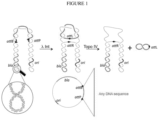
- FIG. 1 shows a general schematic for making MiniVectors.
- FIG. 2 schematizes the modularity of MiniVectors.
- a MiniVector consisting of (A) the hybrid DNA recombination sequences, att L or att R , that are products of the site-specific recombination, (B) a mammalian promoter, (C) the therapeutic DNA sequence (aka payload) to be expressed, and (D) a transcriptional terminator.
- the MiniVector contains, for example, DNA encoding merely the transgene expression cassette (including promoter and a sequence of interest, wherein the payload sequence may be, for example, a gene, or a segment of a gene, a sequence encoding an interfering RNA (e.g ., shRNA, IhRNA, miRNA, shRNA-embedded miRNA, IncRNA, piRNA), or a template for e.g ., homology-directed repair, alteration, or replacement of the targeted DNA sequence).
- the MiniVector is almost completely devoid of bacterial-originated sequences.
- MiniVectors are also preferably designed to contain limited or no homology to the human genome. They are also typically much shorter in length than plasmids. Therefore, the frequency of integration is at least as low as the 5 ⁇ 10 -6 rate of plasmid integration and likely much lower. Designed to be preferably delivered locally, any non-target would have to have MiniVector in the non-target cells/tissue to cause an off-target effect. In that way, then, MiniVectors should not have off-target effects. By contrast, many viruses are designed to integrate into the genome, and therefore there is a major risk of off-target integration with viral vectors.
- a “MiniVector” is a double-stranded, supercoiled circular DNA typically lacking a bacterial origin of replication or an antibiotic selection gene, and having a length of about 250 bp - 500 bp (exclusive of payload), and having much higher purity than minicircles.
- recombinant side products include the miniplasmid that contains the unwanted bacterial sequences (origin of replication and antibiotic selection gene).
- the miniplasmid is considered the "deletion product” following the intramolecular site-specific recombination and contains all the unwanted sequences of the original parent plasmid minus the MiniVector sequence.
- the miniplasmid is typically very large (> 3 kb) compared to the MiniVector and is removed through the purification steps of e.g., polyethylene glycol (PEG) precipitation and gel filtration.
- PEG polyethylene glycol
- MiniVectors also sometimes generates double-length or even triple-length MiniVectors (or higher multimers), especially for very small MiniVectors.
- These multimeric forms result from intermolecular site-specific recombination between sites on two separate plasmids prior to intramolecular recombination between sites on the same plasmid. These multimers do not constitute "contaminants" because they still contain only the therapeutic sequence, but are merely double (or triple, etc.) the desired length.
- Increasing the size of the MiniVectors decreases the likelihood of multimers forming (Fogg et al. 2006).
- an extra gel filtration step typically separates higher multimers from single unit-sized MiniVector.
- the "payload” refers to the therapeutic sequence being delivered by the MiniVector and it can be e.g., a gene or portion thereof or an inhibitory RNA.
- the term “expressible payload sequence” includes the payload plus any sequences needed for mammalian expression, such as promoters, terminators, enhancers and the like.
- parent sequences are the originating sequences from which the MiniVector was designed and made.
- a MiniVector will have originated from parent plasmid sequences, plus the payload itself and its various expression components such as promoters, terminators and the like, will each have a parent sequence.
- Each of these parent sequences can be modified to reduce CpG motifs and/or be codon optimized for use in humans.
- a "catenane” is a complex organic molecule (e.g., DNA) containing two or more macrocyclic ring structures intertwined like links of a chain.
- RNA interference refers to the process whereby sequence-specific, post-transcriptional gene silencing is initiated by an RNA that is homologous in sequence to the silenced gene.
- RNAi which occurs in a wide variety of living organisms and their cells, from plants to humans, has also been referred to as post-transcriptional gene silencing and co-suppression in different biological systems.
- sequence-specific degradation of mRNA observed in RNAi is mediated by small (or short) interfering RNAs (siRNAs).
- interfering RNA means an RNA molecule capable of decreasing the expression of a gene having a nucleotide sequence at least a portion of which is substantially the same as that of the interfering RNA.
- interfering RNAs can be "small interfering RNAs," or siRNAs, composed of two complementary single-stranded RNAs that form an intermolecular duplex.
- Interfering RNAs can also be “short hairpin RNAs", or shRNAs, expressed as a single RNA strand which folds upon itself to form a hairpin.
- Interfering RNAs can also be "long hairpin RNAs," or IhRNAs, which are shRNA-like molecules with longer intramolecular duplexes and contain more than one siRNA sequence within the duplex region.
- gene silencing refers to a reduction in the expression product of a target gene. Silencing may be complete, in that no final gene product is detectable, or partial, in that a substantial reduction in the amount of gene product occurs.
- shRNA is short hairpin RNA or small hairpin RNA
- IhRNA is long hairpin RNA, both of which can be used to silence target gene expression via RNAi.
- miRNA is microRNA-a small non-coding RNA molecule (containing about 22 nucleotides) found in plants, animals, and some viruses, that functions in RNA silencing and post-transcriptional regulation of gene expression.
- a contiguous duplex shRNA is an shRNA sequence embedded in a microRNA stem loop (e.g., MiRE), which may be used because it can be processed more efficiently in mammalian cells leading to more robust knockdown of the expression of the target gene.
- a microRNA stem loop e.g., MiRE
- the more efficient processing of the microRNA stemloop relies on both Drosha and Dicer, whereas the contiguous duplex shRNA relies only on Dicer to cut the guide RNA that will be inserted into the RNA-induced silencing complex.
- lncRNA are long non-coding RNAs. These lncRNAs are a large and diverse class of transcribed RNA molecules with a length of more than 200 nucleotides that do not encode proteins (or lack >100 amino acid open reading frame). lncRNAs are thought to encompass nearly 30,000 different transcripts in humans, hence lncRNA transcripts account for a major part of the non-coding transcriptome. lncRNA discovery is still at a preliminary stage, but there are many specialized lncRNA databases, which are organized and centralized through RNAcentral (rnacentral.org). lncRNAs can be transcribed as whole or partial natural antisense transcripts to coding genes, or located between genes or within introns.
- lncRNAs originate from pseudogenes. lncRNAs may be classified into different subtypes (Antisense, Intergenic, Overlapping, Intronic, Bidirectional, and Processed) according to the position and direction of transcription in relation to other genes.
- subtypes Antisense, Intergenic, Overlapping, Intronic, Bidirectional, and Processed
- Piwi-interacting RNA or "piRNA” is the largest class of small non-coding RNA molecules expressed in animal cells. piRNAs form RNA-protein complexes through interactions with PIWI family proteins. These piRNA complexes have been linked to both epigenetic and post-transcriptional gene silencing of retrotransposons and other genetic elements in germ line cells, particularly those in spermatogenesis. They are distinct from miRNA in size (26-31 nt rather than 21-24 nt), lack of sequence conservation, and increased complexity.
- treating includes both therapeutic treatment and prophylactic treatment (reducing the likelihood of disease development).
- the term means decrease, suppress, attenuate, diminish, arrest, or stabilize the development or progression of a disease (e.g., a disease or disorder delineated herein), lessen the severity of the disease, or improve the symptoms associated with the disease.
- MiniVectors can be delivered in a variety of "pharmaceutically acceptable excipients" including saline, a solvent, a branched or linear polymer (e.g., Star polymer, a liposome, a hydrogel, a lipid nanoparticle, a silicon nanoparticle, a mesoporous silica nanoparticle, a naturally occurring vesicle (e.g., an exosome), hybrids of the foregoing, or others.
- pharmaceutically acceptable excipients including saline, a solvent, a branched or linear polymer (e.g., Star polymer, a liposome, a hydrogel, a lipid nanoparticle, a silicon nanoparticle, a mesoporous silica nanoparticle, a naturally occurring vesicle (e.g., an exosome), hybrids of the foregoing, or others.
- MiniVectors can be conjugated with a variety of ligands, agents, sugars (e.g., GalNac), nucleic acids, peptides, proteins, DNA cages, aptamers, hybrids, or other moieties to improve transfection and/or facilitate specific delivery.
- agents e.g., GalNac
- nucleic acids e.g., peptides, proteins, DNA cages, aptamers, hybrids, or other moieties to improve transfection and/or facilitate specific delivery.
- the MiniVector for use in gene therapy is present in an effective amount to treat some disease.
- the term "effective amount” refers to an amount which, when administered in a proper dosing regimen, is sufficient to treat (therapeutically or prophylactically) the target disorder or symptoms of the target disorder.
- an effective amount is sufficient to reduce or ameliorate the severity, duration, or progression of the disorder being treated, prevent the advancement of the disorder being treated, cause the regression of the disorder being treated, or enhance or improve the prophylactic or therapeutic effect(s) of another therapy.
- reducing or “knocking down” the expression of a target protein, we mean a reduction of at least 10%, as the body's own immune response may thereby be sufficient to target and kill cancer cells, particularly in a combination therapy combined with an immune-boosting treatment, such as CpG motifs, cytokines (chemokines, interferons, interleukins, lymphokines, and tumor necrosis factors).
- an immune-boosting treatment such as CpG motifs, cytokines (chemokines, interferons, interleukins, lymphokines, and tumor necrosis factors).
- the reduction is at least 20%, 30% or 40%, but typically a complete knockout is not required, and indeed, can contribute to unwanted side effects.
- upregulating or “increasing” the expression of a target protein, we mean an increase of at least 10%. Preferably the increase is at least 20%, 25%, 30% or 40%, or even greater.
- Nanoparticles are understood to comprise particles in any dimension that are less than 500 nanometers, more preferably less than 300 nanometers, and most preferably less than 150 nanometers.
- the nanoparticle can be a viral vector, a component of a viral vector (e.g., a capsid), a non-viral vector (e.g., a plasmid or RNA or MiniVector), a cell, a fullerene and its variants, a small molecule, a peptide, metal and oxides thereof, linear and branched polymers, lipid nanoparticles, hybrids, exosomes, silicon, etc.
- a viral vector e.g., a capsid
- a non-viral vector e.g., a plasmid or RNA or MiniVector
- the disclosure provides ultrapure MiniVectors that are sufficiently pure for use in gene therapy to treat liver cirrhosis or liver cancer.
- MiniVector DNA is generated in bacterial cells using in vivo site-specific recombination as described previously in US7622252 .
- parent plasmids contain att B and att P (recognition sites for ⁇ -integrase) oriented in the same direction. Site-specific recombination between the att B and att P sites exchanges the sequences between the two sites results in two product circles that are linked together (catenated) because of supercoiling in the parent plasmid. One of these product circles is the minivector. The other circle is the "miniplasmid", which contains the unwanted bacterial sequences.
- the recombination reaction also results in two new integrase sites, att L and attR, which are hybrid sites each containing sequences from att B and att P . If attB comes first on the parent plasmid, followed by att P , with the minivector sequence in between, the larger ( ⁇ 180 bp) attR site will end up on the minivector and the smaller (-100 bp) att L site is on the miniplasmid. Conversely, if att P comes first, followed by att B , then the att L site will be on the minivector. The intervening sequence between the att B and att P sites becomes incorporated into the minivector.
- any sequence can be engineered into a minivector by simply cloning between the integrase sites on the parent plasmid.
- the system was first tested with pMC339 with att B preceding att P on the parent plasmid, which generates a 339 bp minivector containing an attR site and otherwise random sequence.
- MiniVectors are generated using engineered Escherichia coli strains (examples include but are not limited to LZ31 and LZ54. These strains express, ⁇ -integrase ( ⁇ -Int) under the tight control of the temperature-sensitive cI857 repressor. The Escherichia coli strain is transformed with the relevant parent plasmid. When cells are grown at 30° C., no ⁇ -Int is expressed because of the tight control afforded by the cI857 repressor. This prevents premature recombination which would result in excision of the minivector sequence from the parent plasmid. An aliquot of the transformed strain is grown up at 30° C. in shaker flasks and used to inoculate a fermenter containing modified terrific broth medium.
- ⁇ -Int expression is induced by shifting the culture to 43° C. for -30 minutes to induce ⁇ -Int expression.
- the increased temperature leads to denaturation of the cI857 repressor, which prevents ⁇ -Int expression at lower temperatures.
- ⁇ -Int is not active at the higher 43° C. temperature, therefore the culture is subsequently shifted down to 30° C. to allow recombination to proceed for about an hour (1-4 hrs).
- norfloxacin is added to the fermenter prevent decatenation of the recombination products by topoisomerase IV.
- Step 1 The first step in purification is to harvest the cells containing MiniVector by centrifugation.
- Step 2 Cells are first incubated with lysozyme to break down the bacterial cell walls and then lysed using a standard alkaline lysis procedure.
- Step 3 The nucleic acid (DNA and RNA) in the lysate is precipitated with isopropanol then resuspended to reduce the volume per usual procedures. Nucleic acid solution is then incubated with RNaseA to degrade the RNA, followed by incubation with proteinase K to degrade any residual proteins.
- Step 4 Nucleic acid solution is incubated with polyethylene glycol (PEG) and NaCl and incubated on ice for ⁇ 15 minutes.
- PEG polyethylene glycol
- NaCl polyethylene glycol
- PEG precipitation is quick and has high capacity but has low resolution and can only separate DNA species significantly different in size (two-fold or more). It is used to remove a majority of the unwanted large circle (miniplasmid) recombination byproduct and any unrecombined parent plasmid. Reducing the mass of contaminating large DNA species makes subsequent downstream purification steps much more efficient.
- Step 5 DNA is then further purified using anion-exchange chromatography, although other methods are available.
- the major purpose of this step is to remove the (degraded) RNA and other (non-nucleic acid) contaminants, and it does not differentiate between different sized DNA species.
- anion-exchange the DNA is again precipitated with isopropanol and resuspended in a small volume for gel-filtration chromatography.
- Step 6 Gel-filtration. This step completely removes any remaining large DNA contaminants, separating DNA according to size (larger DNA species eluting first).
- the contaminating DNA species are not able to enter the beads in the gel filtration matrix and are typically eluted in the "void volume," while the MiniVector DNA elutes later.
- two or three columns are connected in series such that when DNA is eluted from one column it enters the next column in the series. This significantly increases the separation of DNA species.
- Using multiple columns in series also allows different combinations of gel filtration resin to be used, thus optimizing size separation.
- Sephacryl S-500 is best for separating MiniVector DNA from the parent plasmid.
- Sephacryl S-400 provides better separation of monomeric MiniVector from any multimeric length byproducts.
- Target sequences currently under development for gene therapy uses to treat liver cirrhosis and liver cancer include P53 + , Relaxin + FOXM1 - , CAD11 - , MDM2 - , MDM4- and STATS-.
- the + sign means the protein/gene is upregulated in the therapy, usually by adding a copy of the gene under a strong promoter, or by upregulating the endogenous promoter, and the - sign meaning the protein/gene is downregulated, usually by adding an RNAi or by downregulating the endogenous promoter.
- transforming growth factor beta 1 OMIM 190180
- STAT6 signal transducer and activator of transcription 6
- TGFB is a multifunctional peptide that controls proliferation, differentiation, and other functions in many cell types. TGFB acts synergistically with TGFA (OMIM 190170) in inducing transformation. It also acts as a negative autocrine growth factor. Dysregulation of TGFB activation and signaling may result in apoptosis. Many cells synthesize TGFB and almost all of them have specific receptors for this peptide. TGFB1, TGFB2 (190220), and TGFB3 (190230) all function through the same receptor signaling systems. TGFB is known to be important in wound healing and fibrosis is associated with increased expression of TGFB, making it a logical target, and the other members of the pathway may also prove useful.
- liver specific targets that have known associations with liver disease, such as HGF (OMIM 604375), ATP7B (OMIM 606882), ABCB4 (OMIM 171060), ALDOB (OMIM 612724, GBE1 (OMIM 607839), FAH (OMIM 613871), ASL (OMIM 608310), SLC25A13 (OMIM 603859), LIPA (OMIM 613497), SERPINA1 (OMIM 107400), CFTR (602421), HFE (OMIM 613609), KRT18 (OMIM 215600), possibly MTDPS4A (OMIM 215600), CASP8 (OMIM 601763), CTNNB1 (OMIM 116806), PIK3CA(OMIM 171834), APC (OMIM 611731), IGF2R (OMIM 147280), MET (OMIM 164860), PDGFRL (OMIM 604584), AXIN (OMIM 603816), TP53 (OMIM
- RNAi databases such as RNACentral, GenomeRNAi.org, the RNAi Consortium's SHRNA library (stocks distributed by SigmaAldrich), the RNAiAtlas, DocleraWiki, NCBI, the RNAi Codex, to name just a few.
- One payload for which we already have significant efficacy data is the FOXM1 shRNA (targeting 5'- ATAATTAGAGGATAATTTG-3' SEQ ID NO. 1). Additional shRNA payloads of strong interest are CDH11, and MDM2 and 4. Other payloads encode genes that promote apoptosis (e.g., p53).
- any shRNAs or other RNAi sequences can be designed using freely available, open access, algorithms (e.g., siRNA Wizard TM Software, siDESIGN Center, etc.) and then screened for off-target effects using NCBI-BLAST.
- siRNA Wizard TM Software e.g., siRNA Wizard TM Software, siDESIGN Center, etc.
- NCBI-BLAST NCBI-BLAST
- SigmaAldrich for example has more than 200,000 individual sequences available, including more than 20,000 prescreened human specific sequences from the TRC1.5 and TRC2 collections.
- the promoter will likely be U6 or H1 or another promoter recognized by mammalian RNA polymerase III. If said therapeutic sequence is a gene (p53, p16, p21, p27, E2F genes, PTEN, caspase, or another apoptosis inducing gene), the promoter will be CMV, EF1 ⁇ , or another promoter for mammalian RNA polymerase II. Tables 1-6 show exemplary payload and MiniVector sequences. Additional sequences and various disease targets are discussed in US Serial No. 16/180,046 , incorporated by reference in its entirety for all purposes. Table 1.
- Payload therapeutic sequences that may be encoded on an ultrapure MiniVector SEQ ID NO Gene Description Dharmacon Cat. No. Mature Antisense 1.
- FOXM1 Forkhead box protein M1 Q08050 V2LHS_283849 ATAATTAGAGGATAATTTG 2.
- FOXM1 V3LHS_396939 ATTGTTGATAGTGCAGCCT 3.
- FOXM1 V3LHS_396937 TGAATCACAAGCATTTCCG
- FOXM1 V3LHS_396941 TGATGGTCATGTTCCGGCG 5.
- FOXM1 V3LHS_396940 AATAATCTTGATCCCAGCT 6.
- FOXM1 V3LHS_314369 TACTGAGGAATATTGTGCT 7.
- MiniVector elements Module Element Description Use A ⁇ -att L att L from the ⁇ -integrase system Recombination sites (product of site-specific recombination used to generate MiniVector). Sequences listed in Table 3.
- ALDH1 alcohol dehydrogenase 1
- Synthetic hybrid promoter made from a) the CMV early enhancer element, b) the promoter, the first exon and the first intron of chicken beta-actin gene, and c) the splice acceptor of the rabbit beta-globin gene Cyto-keratin 18 and 19 Cell-specific promoters of the human keratin 18 and 19 genes EF1 ⁇ Strong expression promoter from human elongation factor 1 alpha GFAP Tissue-specific promoter of the glial fibrillary acidic protein (GFAP) Promoter from the human polymerase III RNA promoter Kallikrein Tissue-specific promoter of the kallikrein gene.
- GFAP glial fibrillary acidic protein
- NFK- ⁇ Nuclear factor kappa-light-chain-enhancer of activated B cells PGK1 Promoter from human or mouse phosphoglycerate kinase gene (PGK) RSV Long terminal repeat (LTR) of the rous sarcoma virus (RSV) SV40 Mammalian expression promoter from the simian vacuolating virus 40
- UBC Promoter of the human ubiquitin C gene (UBC)
- RNA interference miRNA DNA sequence encoding micro-RNA (miRNA) transcript IhRNA (DNA) sequence encoding long hairpin RNA (IhRNA) transcript IncRNA (DNA) sequence encoding long non-coding RNA (lncRNA) transcript Knockdown of gene expression (not RNAi) piRNA (DNA) sequence encoding piwi-interacting (piRNA) RNA transcript D Transcriptional terminator sequence (Any can be used)
- E S/MAR Scaffold/matrix attached region from eukaryotic chromosomes (Sequences in Table 5) Episomal replication CpG motifs Unmethylated deoxycytidyl-deoxyguanosine (CpG) dinucleotides: (Sequences in Table 5) Immunostimulatory activity
- F/G ⁇ -globin intron Intron of the human ⁇ globin gene 130 bp
- Gene expression enhancer HGH intron Intron of the human growth hormone gene (262 b
- GGTGCGCGCAAGATCCATTATGTTAAAC Table 4 Complete sequences for element B (promoters) SEQ ID NO Promoter Sequence (5'-3') 28. CMV 29. mini-CMV 30. RSV 31. CAG 32. EF1a 33. EFS 34. Human ⁇ -actin 35. NFK- ⁇ 36. Ubiquitin-C 37. SV40 38. PGK 39. H1 40. U6 Table 5 . Complete sequences for elements E, F and G (accessory sequences) SEQ ID NO Element Sequence (5'-3') 41. 250 bp S/MAR 42. 439 bp S/MAR 43.
- TTCAAGAGA The bold underlined TTCAAGAGA is the 9-mer loop of the stemloop of the shRNA structure. This sequence is from pSUPER.
- AAGACAGCCACTCAGGCGT TTCAAGAGA ACGCCTGAGTGGCTGTCTT Mouse TGFB1 62.
Landscapes
- Health & Medical Sciences (AREA)
- Life Sciences & Earth Sciences (AREA)
- Chemical & Material Sciences (AREA)
- Engineering & Computer Science (AREA)
- Genetics & Genomics (AREA)
- General Health & Medical Sciences (AREA)
- Biotechnology (AREA)
- Zoology (AREA)
- Bioinformatics & Cheminformatics (AREA)
- Molecular Biology (AREA)
- Biomedical Technology (AREA)
- Biochemistry (AREA)
- Pharmacology & Pharmacy (AREA)
- Medicinal Chemistry (AREA)
- Veterinary Medicine (AREA)
- Public Health (AREA)
- Animal Behavior & Ethology (AREA)
- Epidemiology (AREA)
- General Engineering & Computer Science (AREA)
- Wood Science & Technology (AREA)
- Organic Chemistry (AREA)
- Physics & Mathematics (AREA)
- Immunology (AREA)
- Analytical Chemistry (AREA)
- Plant Pathology (AREA)
- Microbiology (AREA)
- Biophysics (AREA)
- Gastroenterology & Hepatology (AREA)
- Proteomics, Peptides & Aminoacids (AREA)
- Pathology (AREA)
- General Physics & Mathematics (AREA)
- Endocrinology (AREA)
- Marine Sciences & Fisheries (AREA)
- Spectroscopy & Molecular Physics (AREA)
- Chemical Kinetics & Catalysis (AREA)
- Manufacturing & Machinery (AREA)
- Crystallography & Structural Chemistry (AREA)
- Electrochemistry (AREA)
- Medicines That Contain Protein Lipid Enzymes And Other Medicines (AREA)
Abstract
Compositions containing MiniVectors and gene therapy uses, including long term repeated gene therapy uses, to treat liver fibrosis or liver cancer.
Description
- Not applicable.
- The application contains a Sequence Listing which has been submitted electronically in .XML, format and is hereby incorporated by reference in its entirety. Said .XML copy, created on December 1, 2022, is names "TWISTER-004US02.xml" and is 88,732 bytes in size. The sequence listing contained in this .XML file is part of the specification and is hereby incorporated by reference in its entirety.
- The disclosure generally relates to methods and materials for treating liver cancer or liver fibrosis. More particularly, it relates to methods of making DNA MiniVectors and compositions comprising MiniVectors that comprises liver modulating sequences.
- Cirrhosis, also known as liver cirrhosis or hepatic cirrhosis, and end-stage liver disease, is the impaired liver function caused by the formation of scar tissue known as "fibrosis" due to damage caused by liver disease. Damage causes tissue repair and subsequent formation of scar tissue, which over time can replace normal functioning tissue leading to the impaired liver function of cirrhosis and ultimately lead to cancer and/or death.
- The disease typically develops slowly over months or years. Early symptoms may include tiredness, weakness, loss of appetite, unexplained weight loss, nausea and vomiting, and discomfort in the right upper quadrant of the abdomen. As the disease worsens, symptoms may include itchiness, swelling in the lower legs, fluid build-up in the abdomen, jaundice, bruising easily, and the development of spider-like blood vessels in the skin. The fluid build-up in the abdomen may become spontaneously infected. More serious complications include hepatic encephalopathy, bleeding from dilated veins in the esophagus, stomach, or intestines, and liver cancer.
- Diagnosis is based on blood tests, medical imaging, and liver biopsy. Cirrhosis is most commonly caused by alcoholic liver disease, non-alcoholic steatohepatitis (NASH) - (the progressive form of non-alcoholic fatty liver disease), chronic hepatitis B, and chronic hepatitis C. Heavy drinking over a number of years can cause alcoholic liver disease. NASH has many causes, including obesity, high blood pressure, abnormal levels of cholesterol, type 2 diabetes, and metabolic syndrome. Less common causes of cirrhosis include autoimmune hepatitis, primary biliary cholangitis, and primary sclerosing cholangitis that disrupts bile duct function, genetic disorders such as Wilson's disease and hereditary hemochromatosis, and chronic heart failure with liver congestion.
- No specific treatment for cirrhosis is known, but many of the underlying causes may be treated by a number of medications that may slow or prevent worsening of the condition. Avoiding alcohol is recommended in all cases. Hepatitis B and C may be treatable with antiviral medications. Autoimmune hepatitis may be treated with steroid medications. Ursodiol may be useful if the disease is due to blockage of the bile duct. Other medications may be useful for complications such as abdominal or leg swelling, hepatic encephalopathy, and dilated esophageal veins. If cirrhosis leads to liver failure, a liver transplant may be one treatment option.
- However, cirrhosis often proceeds to liver cancer. Hepatocellular carcinoma (HCC) is the most common type of primary liver cancer in adults and is currently the most common cause of death in people with cirrhosis. As with any cancer, the treatment and prognosis of HCC vary depending on the specifics of tumor histology, size, how far the cancer has spread, and overall health.
- Treatment of hepatocellular carcinoma varies by the stage of disease, a person's likelihood to tolerate surgery, and availability of liver transplant, as follows:
- Curative intention: for limited disease, when the cancer is limited to one or more areas of within the liver, surgically removing the malignant cells may be curative. This may be accomplished by resection of the affected portion of the liver (partial hepatectomy) or in some cases by orthotopic liver transplantation of the entire organ.
- "Bridging" intention: for limited disease which qualifies for potential liver transplantation, the person may undergo targeted treatment of some or all of the known tumor while waiting for a donor organ to become available.
- "Downstaging" intention: for moderately advanced disease that has not spread beyond the liver, but is too advanced to qualify for curative treatment. The person may be treated by targeted therapies in order to reduce the size or number of active tumors, with the goal of once again qualifying for liver transplant after this treatment.
- Palliative intention: for more advanced disease, including spread of cancer beyond the liver or in persons who may not tolerate surgery, treatment intended to decrease symptoms of disease and maximize duration of survival.
- Loco-regional therapy (also referred to as liver-directed therapy) refers to any one of several minimally-invasive treatment techniques to focally target HCC within the liver. These procedures are alternatives to surgery, and may be considered in combination with other strategies, such as a later liver transplantation. Generally, these treatment procedures are performed by interventional radiologists or surgeons, in coordination with a medical oncologist. Loco-regional therapy may refer to either percutaneous therapies (e.g. cryoablation), or arterial catheter-based therapies (chemoembolization or radioembolization).
- Although we have treatment options, each year in the United States, about 24,500 men and 10,000 women get liver cancer, and about 18,600 men and 9,000 women die from the disease. Thus, what is needed in the art are better methods of treating the fibrosis and cancer resulting from liver disease. The ideal method would delay or even reverse the progression of the disease.
- This invention addresses one or more of those needs.
- This application focuses on the preparation and usage of MiniVectors having one or more of the following payloads used to treat liver fibrosis and/or cancer. The payload or "liver modulating sequence" ("LMS") may function to: Upregulate P53 (UniProt P04637); Upregulate Relaxin (aka REL2 or rln2 at UniProt P04090); Knock down FOXM1 (Forkhead box protein M1 at UniProt Q08050); Knock down CAD11(cadherin 11 or CDH11 at UniProt P55287); Knock down MDM2 (E3 ubiquitin-protein ligase Mdm2 at UniProt Q00987); Knock down MDM4 (at UniProt 015151); Knock down STATS (Signal transducer and activator of transcription 3 at UniProt P40763); Knock down STAT6 (UniProt P42226); Knock down TGFB1 (UniProt P01137) or combinations thereof.
- In addition, the MiniVector cassettes could encode for one or more payloads on a single MiniVector. Alternatively, the treatment could comprise different MiniVectors for the different payloads.
- The MiniVectors could be delivered in an array of excipients (e.g., lipid nanoparticles, polymer nanoparticles, exosomes, silicon nanoparticles, mesoporous silica nanoparticles). They may also employ excipients with one or more targeting moieties or conjugate groups (e.g., aptamers, GalNac) to improve therapy specificity.
- The MiniVectors plus excipients could be delivered via IV, aerosol, direct injection, surgical methods, or other pharmaceutically acceptable routes of administration.
- Ideally, the MiniVector will have less than 0.1%, or even less than 0.02% contamination by parent plasmid sequences, including unrecombined parent plasmid and the "miniplasmid" byproduct which contains the unwanted part of the plasmid that is not incorporated into the MiniVector.
- The extremely high purity, optionally combined with CpG minimization and/or human condon usage allows repeated usage over a period of months, something that is usually not possible in other gene therapies.
-
FIG. 1 shows a general schematic for making MiniVectors. -
FIG. 2 schematizes the modularity of MiniVectors. On the left is shown the simplest embodiment of a MiniVector consisting of (A) the hybrid DNA recombination sequences, attL or attR, that are products of the site-specific recombination, (B) a mammalian promoter, (C) the therapeutic DNA sequence (aka payload) to be expressed, and (D) a transcriptional terminator. - The MiniVector contains, for example, DNA encoding merely the transgene expression cassette (including promoter and a sequence of interest, wherein the payload sequence may be, for example, a gene, or a segment of a gene, a sequence encoding an interfering RNA (e.g., shRNA, IhRNA, miRNA, shRNA-embedded miRNA, IncRNA, piRNA), or a template for e.g., homology-directed repair, alteration, or replacement of the targeted DNA sequence). Importantly, the MiniVector is almost completely devoid of bacterial-originated sequences.
- MiniVectors are also preferably designed to contain limited or no homology to the human genome. They are also typically much shorter in length than plasmids. Therefore, the frequency of integration is at least as low as the 5 × 10⁻⁶ rate of plasmid integration and likely much lower. Designed to be preferably delivered locally, any non-target would have to have MiniVector in the non-target cells/tissue to cause an off-target effect. In that way, then, MiniVectors should not have off-target effects. By contrast, many viruses are designed to integrate into the genome, and therefore there is a major risk of off-target integration with viral vectors.
- As used herein, a "MiniVector" is a double-stranded, supercoiled circular DNA typically lacking a bacterial origin of replication or an antibiotic selection gene, and having a length of about 250 bp - 500 bp (exclusive of payload), and having much higher purity than minicircles.
- As used herein, "recombinant side products" include the miniplasmid that contains the unwanted bacterial sequences (origin of replication and antibiotic selection gene). The miniplasmid is considered the "deletion product" following the intramolecular site-specific recombination and contains all the unwanted sequences of the original parent plasmid minus the MiniVector sequence. The miniplasmid is typically very large (> 3 kb) compared to the MiniVector and is removed through the purification steps of e.g., polyethylene glycol (PEG) precipitation and gel filtration.
- The recombination process that generates MiniVectors also sometimes generates double-length or even triple-length MiniVectors (or higher multimers), especially for very small MiniVectors. These multimeric forms result from intermolecular site-specific recombination between sites on two separate plasmids prior to intramolecular recombination between sites on the same plasmid. These multimers do not constitute "contaminants" because they still contain only the therapeutic sequence, but are merely double (or triple, etc.) the desired length. Increasing the size of the MiniVectors decreases the likelihood of multimers forming (Fogg et al. 2006). Furthermore, if a homogenous preparation of single-length MiniVector is desired, an extra gel filtration step typically separates higher multimers from single unit-sized MiniVector.
- As used herein, the "payload" refers to the therapeutic sequence being delivered by the MiniVector and it can be e.g., a gene or portion thereof or an inhibitory RNA. The term "expressible payload sequence" includes the payload plus any sequences needed for mammalian expression, such as promoters, terminators, enhancers and the like.
- As used herein, "parent" sequences are the originating sequences from which the MiniVector was designed and made. A MiniVector will have originated from parent plasmid sequences, plus the payload itself and its various expression components such as promoters, terminators and the like, will each have a parent sequence. Each of these parent sequences can be modified to reduce CpG motifs and/or be codon optimized for use in humans.
- As used herein, a "catenane" is a complex organic molecule (e.g., DNA) containing two or more macrocyclic ring structures intertwined like links of a chain.
- As used herein, the term "RNA interference," or "RNAi," refers to the process whereby sequence-specific, post-transcriptional gene silencing is initiated by an RNA that is homologous in sequence to the silenced gene. RNAi, which occurs in a wide variety of living organisms and their cells, from plants to humans, has also been referred to as post-transcriptional gene silencing and co-suppression in different biological systems. The sequence-specific degradation of mRNA observed in RNAi is mediated by small (or short) interfering RNAs (siRNAs).
- As used herein, the term "interfering RNA" means an RNA molecule capable of decreasing the expression of a gene having a nucleotide sequence at least a portion of which is substantially the same as that of the interfering RNA. As known in the art, interfering RNAs can be "small interfering RNAs," or siRNAs, composed of two complementary single-stranded RNAs that form an intermolecular duplex. Interfering RNAs can also be "short hairpin RNAs", or shRNAs, expressed as a single RNA strand which folds upon itself to form a hairpin. Interfering RNAs can also be "long hairpin RNAs," or IhRNAs, which are shRNA-like molecules with longer intramolecular duplexes and contain more than one siRNA sequence within the duplex region.
- As used herein, the term "gene silencing" refers to a reduction in the expression product of a target gene. Silencing may be complete, in that no final gene product is detectable, or partial, in that a substantial reduction in the amount of gene product occurs.
- As used herein, "shRNA" is short hairpin RNA or small hairpin RNA, and "IhRNA" is long hairpin RNA, both of which can be used to silence target gene expression via RNAi.
- As used herein, "miRNA" is microRNA-a small non-coding RNA molecule (containing about 22 nucleotides) found in plants, animals, and some viruses, that functions in RNA silencing and post-transcriptional regulation of gene expression. Alternative to a contiguous duplex shRNA is an shRNA sequence embedded in a microRNA stem loop (e.g., MiRE), which may be used because it can be processed more efficiently in mammalian cells leading to more robust knockdown of the expression of the target gene. The more efficient processing of the microRNA stemloop relies on both Drosha and Dicer, whereas the contiguous duplex shRNA relies only on Dicer to cut the guide RNA that will be inserted into the RNA-induced silencing complex.
- As used herein, "lncRNA" are long non-coding RNAs. These lncRNAs are a large and diverse class of transcribed RNA molecules with a length of more than 200 nucleotides that do not encode proteins (or lack >100 amino acid open reading frame). lncRNAs are thought to encompass nearly 30,000 different transcripts in humans, hence lncRNA transcripts account for a major part of the non-coding transcriptome. lncRNA discovery is still at a preliminary stage, but there are many specialized lncRNA databases, which are organized and centralized through RNAcentral (rnacentral.org). lncRNAs can be transcribed as whole or partial natural antisense transcripts to coding genes, or located between genes or within introns. Some lncRNAs originate from pseudogenes. lncRNAs may be classified into different subtypes (Antisense, Intergenic, Overlapping, Intronic, Bidirectional, and Processed) according to the position and direction of transcription in relation to other genes.
- Piwi-interacting RNA or "piRNA" is the largest class of small non-coding RNA molecules expressed in animal cells. piRNAs form RNA-protein complexes through interactions with PIWI family proteins. These piRNA complexes have been linked to both epigenetic and post-transcriptional gene silencing of retrotransposons and other genetic elements in germ line cells, particularly those in spermatogenesis. They are distinct from miRNA in size (26-31 nt rather than 21-24 nt), lack of sequence conservation, and increased complexity.
- The term "treating" includes both therapeutic treatment and prophylactic treatment (reducing the likelihood of disease development). The term means decrease, suppress, attenuate, diminish, arrest, or stabilize the development or progression of a disease (e.g., a disease or disorder delineated herein), lessen the severity of the disease, or improve the symptoms associated with the disease.
- MiniVectors can be delivered in a variety of "pharmaceutically acceptable excipients" including saline, a solvent, a branched or linear polymer (e.g., Star polymer, a liposome, a hydrogel, a lipid nanoparticle, a silicon nanoparticle, a mesoporous silica nanoparticle, a naturally occurring vesicle (e.g., an exosome), hybrids of the foregoing, or others. MiniVectors can be conjugated with a variety of ligands, agents, sugars (e.g., GalNac), nucleic acids, peptides, proteins, DNA cages, aptamers, hybrids, or other moieties to improve transfection and/or facilitate specific delivery.
- As described herein, the MiniVector for use in gene therapy is present in an effective amount to treat some disease. As used herein, the term "effective amount" refers to an amount which, when administered in a proper dosing regimen, is sufficient to treat (therapeutically or prophylactically) the target disorder or symptoms of the target disorder. For example, an effective amount is sufficient to reduce or ameliorate the severity, duration, or progression of the disorder being treated, prevent the advancement of the disorder being treated, cause the regression of the disorder being treated, or enhance or improve the prophylactic or therapeutic effect(s) of another therapy.
- By "reducing" or "knocking down" the expression of a target protein, we mean a reduction of at least 10%, as the body's own immune response may thereby be sufficient to target and kill cancer cells, particularly in a combination therapy combined with an immune-boosting treatment, such as CpG motifs, cytokines (chemokines, interferons, interleukins, lymphokines, and tumor necrosis factors). Preferably the reduction is at least 20%, 30% or 40%, but typically a complete knockout is not required, and indeed, can contribute to unwanted side effects.
- By "upregulating" or "increasing" the expression of a target protein, we mean an increase of at least 10%. Preferably the increase is at least 20%, 25%, 30% or 40%, or even greater.
- "Nanoparticles" are understood to comprise particles in any dimension that are less than 500 nanometers, more preferably less than 300 nanometers, and most preferably less than 150 nanometers. The nanoparticle can be a viral vector, a component of a viral vector (e.g., a capsid), a non-viral vector (e.g., a plasmid or RNA or MiniVector), a cell, a fullerene and its variants, a small molecule, a peptide, metal and oxides thereof, linear and branched polymers, lipid nanoparticles, hybrids, exosomes, silicon, etc.
- The use of the word "a" or "an" when used in conjunction with the term "comprising" in the claims or the specification means either one or more than one, unless the context dictates otherwise. The term "about" means the stated value plus or minus the margin of error of measurement or plus or minus 25% if no method of measurement is indicated. The use of the term "or" in the claims is used to mean "and/or" unless explicitly indicated to refer to alternatives only or if the alternatives are mutually exclusive.
- The terms "comprise," "have," "include," and "contain" (and their variants) are open-ended linking verbs and allow the addition of other elements when used in a claim. The phrase "consisting of" is closed, and excludes all additional elements. The phrase "consisting essentially of" excludes additional material elements but allows the inclusions of non-material elements that do not substantially change the nature of the invention, such as instructions for use, buffers, and the like. Any claim or claim element introduced with the open transition term "comprising," may also be narrowed to use the phrases "consisting essentially of" or "consisting of," and vice versa. However, the entirety of claim language is not repeated verbatim in the interest of brevity herein.
-
-
FIG. 1 . Generation of MiniVector DNA by λ-integrase-mediated site-specific recombination. Parent plasmid containing the sequence to be delivered flanked by attB and attP, the target sites for recombination. The parent plasmid is propagated in the special E. coli bacterial host strain, LZ54 or LZ31, harboring λ-integrase (Int) under the control of the temperature sensitive cI857 repressor. When the cells have reached a suitable density, expression of Int is switched on by a temperature switch. Recombination results in a catenated product containing the MiniVector. The products are decatenated, either by endonuclease cleavage of the large circle deletion product ex vivo, or by topoisomerase IV-mediated unlinking subsequent to the removal of topoisomerase inhibitor following the cell harvest. The deletion product containing the undesired bacterial sequences is removed, yielding pure, supercoiled MiniVector product. If desired, the MiniVector can encode attR and the deletion product can contain attL by switching the positions of attB and attP in the parent plasmid. bla = beta lactamase. -
FIG. 2 . Modular design of MiniVectors. On the left is shown the minimal therapeutic unit, consisting only of A) attL or attR site (these sites are the products of recombination by integrase), B) a promoter, C) the therapeutic sequence (e.g., Table 1), and D) a transcriptional terminator. The intervening regions can include any other sequence and can range in length from none to several thousand base pairs. On the right is shown a modified version containing additional modules that may be added to provide long-term persistence and expression, improve transfection, and/or facilitate nuclear localization. Any combination of these additional modules may be added to the essential modules. E) S/MAR sequence, if incorporated into the MiniVector, will be placed upstream of the transcriptional unit to utilize the dynamic negative supercoiling generated by transcription or elsewhere on the molecule. F, G) Enhancer sequences may be positioned in a number of locations, depending on the identity of the enhancer. H) Nuclear localization sequences, if incorporated, will be placed downstream of the transcriptional unit. Potential sequences for these various components are listed in Tables 2-7. - The disclosure provides ultrapure MiniVectors that are sufficiently pure for use in gene therapy to treat liver cirrhosis or liver cancer.
- MiniVector DNA is generated in bacterial cells using in vivo site-specific recombination as described previously in
US7622252 . In more detail, parent plasmids contain attB and attP (recognition sites for λ-integrase) oriented in the same direction. Site-specific recombination between the attB and attP sites exchanges the sequences between the two sites results in two product circles that are linked together (catenated) because of supercoiling in the parent plasmid. One of these product circles is the minivector. The other circle is the "miniplasmid", which contains the unwanted bacterial sequences. The recombination reaction also results in two new integrase sites, attL and attR, which are hybrid sites each containing sequences from attB and attP. If attB comes first on the parent plasmid, followed by attP, with the minivector sequence in between, the larger (~180 bp) attR site will end up on the minivector and the smaller (-100 bp) attL site is on the miniplasmid. Conversely, if attP comes first, followed by attB, then the attL site will be on the minivector. The intervening sequence between the attB and attP sites becomes incorporated into the minivector. Therefore, any sequence can be engineered into a minivector by simply cloning between the integrase sites on the parent plasmid. The system was first tested with pMC339 with attB preceding attP on the parent plasmid, which generates a 339 bp minivector containing an attR site and otherwise random sequence. - MiniVectors are generated using engineered Escherichia coli strains (examples include but are not limited to LZ31 and LZ54. These strains express, λ-integrase (λ-Int) under the tight control of the temperature-sensitive cI857 repressor. The Escherichia coli strain is transformed with the relevant parent plasmid. When cells are grown at 30° C., no λ-Int is expressed because of the tight control afforded by the cI857 repressor. This prevents premature recombination which would result in excision of the minivector sequence from the parent plasmid. An aliquot of the transformed strain is grown up at 30° C. in shaker flasks and used to inoculate a fermenter containing modified terrific broth medium.
- Cells are grown at 30° C., maintaining the pH at 7 and the dissolved oxygen concentration above 60%, to ensure the cells remain in exponential phase. Once cells have reached mid-exponential phase, λ-Int expression is induced by shifting the culture to 43° C. for -30 minutes to induce λ-Int expression. The increased temperature leads to denaturation of the cI857 repressor, which prevents λ-Int expression at lower temperatures. λ-Int is not active at the higher 43° C. temperature, therefore the culture is subsequently shifted down to 30° C. to allow recombination to proceed for about an hour (1-4 hrs). Prior to the temperature shift back to the lower temperature, norfloxacin is added to the fermenter prevent decatenation of the recombination products by topoisomerase IV.
- Step 1: The first step in purification is to harvest the cells containing MiniVector by centrifugation.
- Step 2: Cells are first incubated with lysozyme to break down the bacterial cell walls and then lysed using a standard alkaline lysis procedure.
- Step 3: The nucleic acid (DNA and RNA) in the lysate is precipitated with isopropanol then resuspended to reduce the volume per usual procedures. Nucleic acid solution is then incubated with RNaseA to degrade the RNA, followed by incubation with proteinase K to degrade any residual proteins.
- Step 4: Nucleic acid solution is incubated with polyethylene glycol (PEG) and NaCl and incubated on ice for ~15 minutes. By carefully controlling the concentration of PEG, larger DNA species are selectively precipitated while the smaller minivector DNA stays in solution. For the 339 bp MiniVector exemplified herein a solution containing an equal volume of 10% PEG-8000, 1.6 M NaCl was added to the nucleic acid solution (final concentrations: 5% PEG-8000, 0.8M NaCl). For larger MiniVectors lower concentrations of PEG are used. The precipitated larger DNA species is thus pelleted by centrifugation. The smaller nucleic acid (DNA and RNA) species in the supernatant are subsequently precipitated with ethanol to remove the PEG.
- PEG precipitation is quick and has high capacity but has low resolution and can only separate DNA species significantly different in size (two-fold or more). It is used to remove a majority of the unwanted large circle (miniplasmid) recombination byproduct and any unrecombined parent plasmid. Reducing the mass of contaminating large DNA species makes subsequent downstream purification steps much more efficient.
- Step 5: DNA is then further purified using anion-exchange chromatography, although other methods are available. We use Qiagen plasmid purification kits for this (e.g., Maxiprep kit or Gigaprep Kit) but columns from other manufacturers may be used. The major purpose of this step is to remove the (degraded) RNA and other (non-nucleic acid) contaminants, and it does not differentiate between different sized DNA species. Following anion-exchange the DNA is again precipitated with isopropanol and resuspended in a small volume for gel-filtration chromatography.
- Step 6: Gel-filtration. This step completely removes any remaining large DNA contaminants, separating DNA according to size (larger DNA species eluting first). Although described in the original
US7622252 patent, we have made several modifications since that patent was filed. - The contaminating DNA species are not able to enter the beads in the gel filtration matrix and are typically eluted in the "void volume," while the MiniVector DNA elutes later. Here, instead of using a single gel filtration column, two or three columns are connected in series such that when DNA is eluted from one column it enters the next column in the series. This significantly increases the separation of DNA species. Using multiple columns in series also allows different combinations of gel filtration resin to be used, thus optimizing size separation. For example, Sephacryl S-500 is best for separating MiniVector DNA from the parent plasmid. Sephacryl S-400 provides better separation of monomeric MiniVector from any multimeric length byproducts.
- Using different columns in decreasing size separation range sequentially like this allows ultrapure monomeric MiniVector to be isolated and the recovery efficiency of DNA from gel-filtration is very high. Essentially all the DNA loaded onto the columns is eluted (provided that the DNA stays in solution). Therefore, there is no penalty in terms of yield for running the same DNA through the gel-filtration columns multiple times. To further remove any remaining contaminants, the DNA may simply be loaded again through the series of gel filtration columns.
- Other purification methods can also be used in various combination(s), including high density centrifugation, dead end filtration, cross flow filtration, ultrafiltration, precipitations, binding to various resins, phenol-chloroform extraction; proteinase K digestion, electrophoresis, ion exchange chromatography, affinity chromatography, and the like, as well as techniques to be developed in the future.
- Target sequences currently under development for gene therapy uses to treat liver cirrhosis and liver cancer include P53+, Relaxin+ FOXM1-, CAD11-, MDM2-, MDM4- and STATS-. Herein, the + sign means the protein/gene is upregulated in the therapy, usually by adding a copy of the gene under a strong promoter, or by upregulating the endogenous promoter, and the - sign meaning the protein/gene is downregulated, usually by adding an RNAi or by downregulating the endogenous promoter.
- Additional targets that will be tested in the near future include transforming growth factor beta 1 (TGFB) (OMIM 190180) and signal transducer and activator of transcription 6 (STAT6) (OMIM 601512), which can be downregulated using an RNAi approach, possibly both in conjunction with other targets.
- TGFB is a multifunctional peptide that controls proliferation, differentiation, and other functions in many cell types. TGFB acts synergistically with TGFA (OMIM 190170) in inducing transformation. It also acts as a negative autocrine growth factor. Dysregulation of TGFB activation and signaling may result in apoptosis. Many cells synthesize TGFB and almost all of them have specific receptors for this peptide. TGFB1, TGFB2 (190220), and TGFB3 (190230) all function through the same receptor signaling systems. TGFB is known to be important in wound healing and fibrosis is associated with increased expression of TGFB, making it a logical target, and the other members of the pathway may also prove useful.
- Lipid metabolism, especially fatty acid oxidation (FAO) dysfunction, is a major driver of renal fibrosis; however, until recently the mechanisms remained unclear. Recently, scientists demonstrated an association between STAT6 and tubular lipid metabolism in fibrotic kidneys. Specifically, STAT6 was activated along with the accumulation of lipids via the downregulation of FAO-related genes when mice were subj ected to unilateral ureteral obstruction or high-fat diet challenge. Tubular-specific depletion, or pharmacologic inhibitor of STAT6 in mice, and STAT6 knockdown in cultured tubular cells attenuated lipid accumulation and renal fibrosis by enhancing FAO. Mechanistically, STAT6 transcriptionally inhibited the expression of PPARα (OMIM 170998) and its FAO-related target genes through a sis-inducible element located in the promoter region of the protein.
- Although we focused initially on the above targets, there are many known liver specific targets that have known associations with liver disease, such as HGF (OMIM 604375), ATP7B (OMIM 606882), ABCB4 (OMIM 171060), ALDOB (OMIM 612724, GBE1 (OMIM 607839), FAH (OMIM 613871), ASL (OMIM 608310), SLC25A13 (OMIM 603859), LIPA (OMIM 613497), SERPINA1 (OMIM 107400), CFTR (602421), HFE (OMIM 613609), KRT18 (OMIM 215600), possibly MTDPS4A (OMIM 215600), CASP8 (OMIM 601763), CTNNB1 (OMIM 116806), PIK3CA(OMIM 171834), APC (OMIM 611731), IGF2R (OMIM 147280), MET (OMIM 164860), PDGFRL (OMIM 604584), AXIN (OMIM 603816), TP53 (OMIM 191170), FOCAD (OMIM 614606), MU (OMIM 613282), TRIM37 (OMIM 605073), MARS 1 (OMIM 156560), PBC1 (OMIM 109720), LBR (OMIM 600024), KIF12 (OMIM 611278), PBC3 (OMIM 613008), PCB4 (OMIM 614220), PCB5 (OMIM 614221), to name a few. There is insufficient time and space to describe each of these liver cirrhosis/cancer targets in detail, but each OMIM entry cited (and their links) are incorporated by reference in their entireties for all purposes. Further, the OMIM entries are hyperlinked to the relevant DNA and protein sequences, for use as targets in the MiniVectors described herein. Various inhibitory RNA sequences to these targets can be found in the many RNAi databases, such as RNACentral, GenomeRNAi.org, the RNAi Consortium's SHRNA library (stocks distributed by SigmaAldrich), the RNAiAtlas, DocleraWiki, NCBI, the RNAi Codex, to name just a few.
- One payload for which we already have significant efficacy data is the FOXM1 shRNA (targeting 5'- ATAATTAGAGGATAATTTG-3' SEQ ID NO. 1). Additional shRNA payloads of strong interest are CDH11, and MDM2 and 4. Other payloads encode genes that promote apoptosis (e.g., p53).
- Any shRNAs or other RNAi sequences can be designed using freely available, open access, algorithms (e.g., siRNA Wizard™ Software, siDESIGN Center, etc.) and then screened for off-target effects using NCBI-BLAST. Alternatively, there are significant numbers of commercially available sequences that can be used for initial proof of concept work. SigmaAldrich, for example has more than 200,000 individual sequences available, including more than 20,000 prescreened human specific sequences from the TRC1.5 and TRC2 collections.
- Note that if the therapeutic sequence is shRNA, the promoter will likely be U6 or H1 or another promoter recognized by mammalian RNA polymerase III. If said therapeutic sequence is a gene (p53, p16, p21, p27, E2F genes, PTEN, caspase, or another apoptosis inducing gene), the promoter will be CMV, EF1α, or another promoter for mammalian RNA polymerase II. Tables 1-6 show exemplary payload and MiniVector sequences. Additional sequences and various disease targets are discussed in
US Serial No. 16/180,046 , incorporated by reference in its entirety for all purposes.Table 1. Payload therapeutic sequences that may be encoded on an ultrapure MiniVector SEQ ID NO Gene Description Dharmacon Cat. No. Mature Antisense 1. FOXM1 Forkhead box protein M1 Q08050 V2LHS_283849 ATAATTAGAGGATAATTTG 2. FOXM1 V3LHS_396939 ATTGTTGATAGTGCAGCCT 3. FOXM1 V3LHS_396937 TGAATCACAAGCATTTCCG 4. FOXM1 V3LHS_396941 TGATGGTCATGTTCCGGCG 5. FOXM1 V3LHS_396940 AATAATCTTGATCCCAGCT 6. FOXM1 V3LHS_314369 TACTGAGGAATATTGTGCT 7. MDM4 O15151 V2LHS_11941 TATGTACTGACCTAAATAG 8. MDM4 V2LHS_151660 ATCTGAATACCAATCCTTC 9. MDM4 V3LHS_356802: TGAACACTGAGCAGAGGTG 10. MDM4 V3LHS_356797: AACAGTGAACATTTCACCT Table 2. MiniVector elements Table 2. MiniVector elements Module Element Description Use A λ-attL attL from the λ-integrase system Recombination sites (product of site-specific recombination used to generate MiniVector). Sequences listed in Table 3. λ-attR attR from the λ-integrase system λ-attB attB from the λ-integrase system λ-attP attP from the λ-integrase system loxP loxP site for Cre recombinase γδ-res res site for the γδ (Tn1000) resolvase FRT FRT site for Flp recombinase hixL hixL site for Hin recombinase hixR hixR site for Hin recombinase Tn3 res res site for Tn3 resolvase Tn21 res res site for Tn21 resolvase cer cer site for XerCD system psi psi site for XerCD B Tissue-specific promoter of alcohol dehydrogenase 1 (ALDH1) Initiation of transcription. Includes promoters for RNA polymerase II and RNA polymerase III. Full sequences of selected promoters provided in Table 4. AMY1C Tissue-specific promoter of human amylase alpha 1C (AMY1C) β-actin Promoter from the (human) beta actin gene CaMKIIα Ca2+/calmodulin-dependent protein kinase II alpha promoter CMV Promoter from the human cytomegalovirus (CMV) Mini CMV Minimized version of CMV CAG CMV early enhancer/chicken β actin promoter (CAG). Synthetic hybrid promoter made from a) the CMV early enhancer element, b) the promoter, the first exon and the first intron of chicken beta-actin gene, and c) the splice acceptor of the rabbit beta-globin gene Cyto-keratin 18 and 19 Cell-specific promoters of the human keratin 18 and 19 genes EF1α Strong expression promoter from human elongation factor 1 alpha GFAP Tissue-specific promoter of the glial fibrillary acidic protein (GFAP) Promoter from the human polymerase III RNA promoter Kallikrein Tissue-specific promoter of the kallikrein gene. NFK-β Nuclear factor kappa-light-chain-enhancer of activated B cells (NF-Kβ) PGK1 Promoter from human or mouse phosphoglycerate kinase gene (PGK) RSV Long terminal repeat (LTR) of the rous sarcoma virus (RSV) SV40 Mammalian expression promoter from the simian vacuolating virus 40 UBC Promoter of the human ubiquitin C gene (UBC) U6 Promoter from the human U6 small nuclear promoter C shRNA (DNA) sequence encoding short hairpin RNA (shRNA) transcript. Sequences for use in target validation are listed in Table 1. Potential therapeutic sequences will be designed de novo and optimized for knockdown efficiency. Knockdown of gene expression through RNA interference miRNA (DNA) sequence encoding micro-RNA (miRNA) transcript IhRNA (DNA) sequence encoding long hairpin RNA (IhRNA) transcript IncRNA (DNA) sequence encoding long non-coding RNA (lncRNA) transcript Knockdown of gene expression (not RNAi) piRNA (DNA) sequence encoding piwi-interacting (piRNA) RNA transcript D Transcriptional terminator sequence (Any can be used) E S/MAR Scaffold/matrix attached region from eukaryotic chromosomes (Sequences in Table 5) Episomal replication CpG motifs Unmethylated deoxycytidyl-deoxyguanosine (CpG) dinucleotides: (Sequences in Table 5) Immunostimulatory activity F/G β-globin intron Intron of the human β globin gene (130 bp) Gene expression enhancer HGH intron Intron of the human growth hormone gene (262 bp) H SV40 early promoter Simian virus 40 early promoter (351 bp) Nuclear localization NF-κβ Binding site of nuclear factor kappa-light-chain-enhancer of activated B cells (55 bp (5 repeats of GGGGACTTTCC SEQ ID NO 11)) p53 NLS Binding site of tumor protein 53 (p53): AGACTGGGCATGTCTGGGCA SEQ ID NO 12 p53 NLS Binding site of tumor protein 53 (p53): GAACATGTCCCAACATGTTG SEQ ID NO 13 Adenovirus major late promoter GGGGCTATAAAAGGG SEQ ID NO 14 Table 3. Complete sequences for element A (underline = recombination sites) SEQ ID NO Site Sequence (5'-3') 15. λ-attL 
16. λ-attR 
17. λ-attB TCCGTTGAAGCCTGCTTTTTTATACTAACTTGAGCGAAACG 18. λ-attP 
19. loxP ATAACTTCGTATAGCATACATTATACGAAGTTAT 20. γδ-res 
21. FRT GAAGTTCCTATTCTCTAGAAAGTATAGGAACTTC 22. hixL TTCTTGAAAACCAAGGTTTTTGATAA 23. hixR TTTTCCTTTTGGAAGGTTTTTGATAA 24. Tn3 res 
25. Tn21 res 
26. GGTGCGTACAATTAAGGGATTATGGTAAAT 27. GGTGCGCGCAAGATCCATTATGTTAAAC Table 4. Complete sequences for element B (promoters) SEQ ID NO Promoter Sequence (5'-3') 28. CMV 
29. mini-CMV 
30. RSV 
31. CAG 
32. EF1a 

33. EFS 
34. Human β-actin 
35. NFK-β 
36. Ubiquitin-C 

37. SV40 
38. PGK 
39. H1 
40. U6 
Table 5. Complete sequences for elements E, F and G (accessory sequences) SEQ ID NO Element Sequence (5'-3') 41. 250 bp S/MAR 
42. 439 bp S/MAR 
43. (45 bp) Type A 44. Cpg motif (24 bp) Type B Cpg motif TCGTCGTTTTGTCGTTTTGTCGTT 45. (21 bp) Type C CpG motif TCGTCGAACGTTCGAGATGAT 46. β-globin intron 
47. Human growth hormone intron 
Table 6: Relaxin and P53 sequences SEQ ID No cDNA Sequence (5' to 3') RLN2 (human) 48. 
RLN1 (mouse) 49. 
SEQ ID No Amino Acid Sequence (5' to 3') P53 isoform a 50. 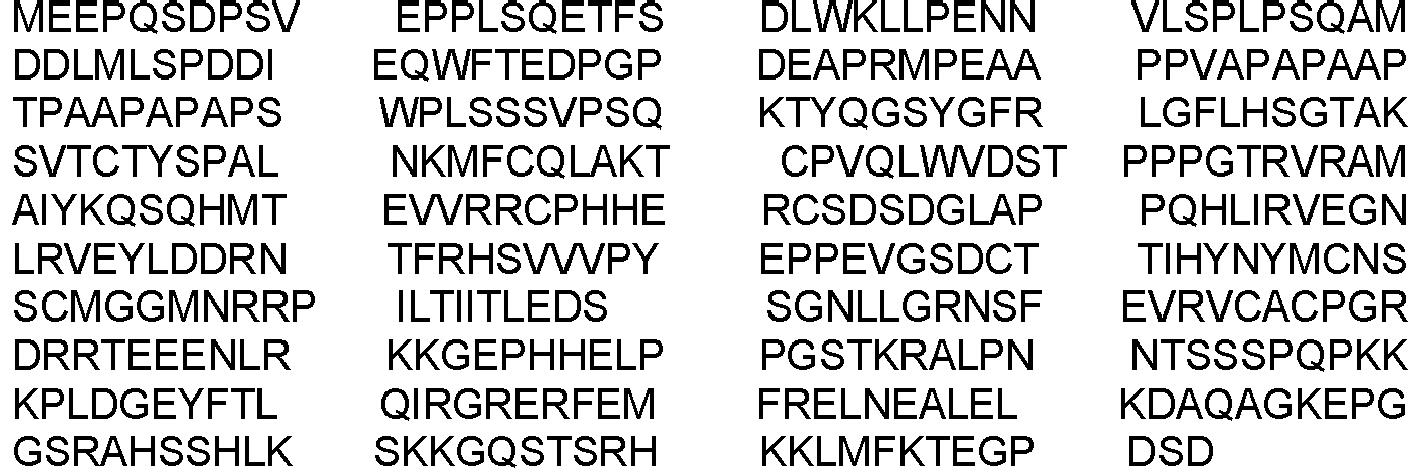
51. 
Table 7: Additional expression sequences for STAT6 and TGFB1 targets Gene SEQ ID NO The bold underlined TTCAAGAGA is the 9-mer loop of the stemloop of the shRNA structure. This sequence is from pSUPER. Mouse STAT6 52. AGACCTGTCCATTCGCTCA TTCAAGAGA TGAGCGAATGGACAGGTCT Mouse STAT6 53. CTGATGTGCGGCAAGATGC TTCAAGAGA GCATCTTGCCGCACATCAG Mouse STAT6 54. AGCCGGGTCTCCCTTACTC TTCAAGAGA GAGTAAGGGAGACCCGGCT Mouse STAT6 55. GTTGCATGGAAGCATCAGG TTCAAGAGA CCTGATGCTTCCATGCAAC Human TGFB1 56. CAATTCCTGGCGATACCTC TTCAAGAGA GAGGTATCGCCAGGAATTG Human TGFB1 57. GAGCGCACGATCATGTTGG TTCAAGAGA CCAACATGATCGTGCGCTC Human TGFB1 58. TGCCGCACGCAGCAGTTCT TTCAAGAGA AGAACTGCTGCGTGCGGCA Human TGFB1 59. AAGATAACCACTCTGGCGA TTCAAGAGA TCGCCAGAGTGGTTATCTT Mouse TGFB1 60. TCCCGAATGTCTGACGTAT TTCAAGAGA ATACGTCAGACATTCGGGA Mouse TGFB1 61. AAGACAGCCACTCAGGCGT TTCAAGAGA ACGCCTGAGTGGCTGTCTT Mouse TGFB1 62. TTCGATGCGCTTCCGTTTC TTCAAGAGA GAAACGGAAGCGCATCGAA Mouse TGFB1 63. TTGGCATGGTAGCCCTTGG TTCAAGAGA CCAAGGGCTACCATGCCAA - The following references are incorporated by reference in their entirety for all purposes.
- Catanese, D.J., et al., Supercoiled MiniVector DNA resists shear forces associated with gene therapy delivery, Gene Ther. 19(1): 94-100 (2012).
- Darquet A.M., et al., Minicircle: an improved DNA molecule for in vitro and in vivo gene transfer, Gene Ther., 6: 209-218 (1999).
- Fogg, J.M., et al., Exploring writhe in supercoiled minicircle DNA. J. Phys.-Condes. Matter, 18: S145-S159 (2006).
- Hardee, C.L., Advances in non-viral DNA vectors for gene therapy, Genes 8, 65 (2017)
- Hornstein, B.D., et al., Effects of circular DNA length on transfection efficiency by electroporation into HeLa cells, PLoS One. 11(12): e0167537 (2016).
- Lis and Schleif, Size fractionation of double-stranded DNA by precipitation with polyethylene glycol. Nucleic Acids Research. 2, 383-389 (1975).
-
US20150376645 ,US20140056868 ,61/653,279, filed May 30, 2012 -
US8460924 ,US8729044 ,US9267150 US20110160284 ,US20120302625 ,US20130316449 ,61/252,455, filed Oct. 16, 2009 -
US7622252 ,US20070020659 ,60/689,298, filed Jun. 10, 2005 -
63/243,087 -
US20060211117 Methods of making minicircles -
WO1994009127 Supercoiled minicircle DNA as a unitary promoter vector -
WO2002083889 Methods for the production of minicircles - Ramamoorth M., & Narvekar, A., Non viral vectors in gene therapy- An overview, J. Clinical & Diagnostic Res. 2015 Jan, Vol-9(1): GE01-GE06.
- Hidai C., & Kitano, H., Nonviral gene therapy for cancer: A review, Diseases 2018, 6, 57.
- The following UniProt cites include all sequences taught/linked therein:
P04637, P04090, Q08050, P55287, Q00987, 015151, P40763.
Claims (15)
- A composition comprising a MiniVector plus a pharmaceutically acceptable carrier, said MiniVector being a double-stranded, supercoiled circular DNA lacking a bacterial origin of replication or an antibiotic selection gene, having a length of about 250-600 base pairs exclusive of expressible payload and having < 1% contamination by a parent plasmid DNA, said expressible payload being a sequence selected from one or more that upregulates one or more of P53 or relaxin, or downregulates one or more of FOXM1, CAD11, MDM2, MDM4, or STATS.
- The ultrapure MiniVector of claim 1, wherein contamination by parent DNA is <0.1%.
- The ultrapure MiniVector of claim 1, wherein contamination by parent DNA is <0.02% and is assessed by gel electrophoresis and staining at a sensitivity of ≤ 0.1 ng, or preferably ≤ 0.01 ng.
- The ultrapure MiniVector of claim 1, wherein contamination by parent DNA is <0.02% and is assessed by gel electrophoresis and staining with SYBR Gold staining at a sensitivity of ≤ 0.1 ng.
- The ultrapure MiniVector of claim 1, wherein said MiniVector is separated from said parent plasmid and recombination side-products on the basis of size, and does not use sequence-specific endonuclease cleavage in vivo for preparation of said MiniVector.
- The ultrapure MiniVector of claim 1, wherein contamination by parent DNA is <0.02% and wherein said MiniVector is separated from said parent plasmid and recombination side-products on the basis of size, and does not use sequence-specific endonuclease cleavage in vivo for preparation of said MiniVector.
- The ultrapure MiniVector of claim 1, wherein said MiniVector is purified by cross flow filtration or by PEG precipitation of large DNA or by at least two passes through multiple gel-filtration columns using progressively smaller size range size exclusion resins or by a combination thereof.
- The ultrapure MiniVector of claim 1, wherein said MiniVector is purified by PEG precipitation of larger DNA species followed by anion exchange chromatography to remove RNA and non-nucleic acid components, followed by at least two passes through multiple gel-filtration columns using progressively smaller size range size exclusion resins.
- The ultrapure MiniVector of claim 1, wherein said MiniVector is purified by PEG precipitation, anion exchange chromatography, and at least two passes through multiple gel-filtration columns using progressively smaller size range size exclusion resins, and one or more alcohol precipitations.
- The ultrapure MiniVector of claim 1, comprising a promoter operably connected to said payload operably connected to a terminator.
- The MiniVector of claim 1, wherein said MiniVector is ≤500 bp in length, excluding said payload.
- A composition of claim 1 for use in a method of treating liver fibrosis or liver cancer, wherein the method comprises administering the composition to a patient having liver fibrosis or liver cancer in an amount sufficient to upregulate one or more of P53 or relaxin by at least 10% as assessed by protein activity, or in an amount sufficient to downregulate one or more of FOXM1, CAD11, MDM2, MDM4, or STATS by at least 10% as assessed by protein activity.
- The composition for the use of claim 12, wherein said administration is by injection into or onto a liver of said patient; orwherein said administration is by surgical entry into a liver of said patient; orwherein said administration is by IV delivery, lavage of a liver, or surface coating of the liver; orwherein said administration occurs a plurality of times; orwherein said administration occurs a plurality of times 1-4 weeks apart.
- A composition comprising a MiniVector plus a pharmaceutically acceptable carrier, said MiniVector being a double-stranded, supercoiled circular DNA lacking a bacterial origin of replication or an antibiotic selection gene, having a length of about 250-600 base pairs exclusive of expressible payload and having < 1% contamination by a parent plasmid DNA, said expressible payload being a sequence selected from one or more that upregulates one or more of P53 or relaxin, or downregulates one or more of FOXM1, CAD11, MDM2, MDM4, STAT3, STAT6 or TGFB1.
- The composition of claim 14 for use in a method of treating liver fibrosis or liver cancer, wherein the method comprises administering the composition of any of claim 18 to a patient having liver fibrosis or liver cancer in an amount sufficient to upregulate one or more of P53 or relaxin by at least 10% as assessed by protein activity, or in an amount sufficient to downregulate one or more of FOXM1, CAD11, MDM2, MDM4, STAT3, STAT6 or TGFB1 by at least 10% as assessed by protein activity.
Applications Claiming Priority (2)
| Application Number | Priority Date | Filing Date | Title |
|---|---|---|---|
| US202163270114P | 2021-10-21 | 2021-10-21 | |
| US18/048,267 US20230190955A1 (en) | 2021-10-21 | 2022-10-20 | Treatment of liver cancer or liver fibrosis |
Publications (1)
| Publication Number | Publication Date |
|---|---|
| EP4357456A1 true EP4357456A1 (en) | 2024-04-24 |
Family
ID=86766938
Family Applications (1)
| Application Number | Title | Priority Date | Filing Date |
|---|---|---|---|
| EP23204596.3A Withdrawn EP4357456A1 (en) | 2021-10-21 | 2023-10-19 | Treatment of liver cancer or liver fibrosis |
Country Status (3)
| Country | Link |
|---|---|
| US (1) | US20230190955A1 (en) |
| EP (1) | EP4357456A1 (en) |
| CA (1) | CA3214204A1 (en) |
Citations (7)
| Publication number | Priority date | Publication date | Assignee | Title |
|---|---|---|---|---|
| WO1994009127A2 (en) | 1992-10-16 | 1994-04-28 | The Government Of The United States Of America As Represented By The Secretary, Department Of Healthand Human Services | Supercoiled minicircle dna as as a unitary promoter vector |
| WO2002083889A2 (en) | 2001-04-10 | 2002-10-24 | Imperial College Innovations Limited | Methods for the production of minicircles |
| US20060211117A1 (en) | 2001-04-10 | 2006-09-21 | Bigger Brian W | Methods of making minicircles |
| US20070020659A1 (en) | 2005-06-10 | 2007-01-25 | Lynn Zechiedrich | Generation of minicircle DNA with physiological supercoiling |
| US20110160284A1 (en) | 2009-10-16 | 2011-06-30 | Baylor College Of Medicine | Supercoiled minicircle dna for gene therapy applications |
| US20140056868A1 (en) | 2012-05-30 | 2014-02-27 | University of Washington Center for Commercialization | Supercoiled MiniVectors as a Tool for DNA Repair, Alteration and Replacement |
| US20200048716A1 (en) * | 2017-11-03 | 2020-02-13 | Twister Biotech, Inc | Using minivectors to treat ovarian cancer |
-
2022
- 2022-10-20 US US18/048,267 patent/US20230190955A1/en not_active Abandoned
-
2023
- 2023-09-27 CA CA3214204A patent/CA3214204A1/en active Pending
- 2023-10-19 EP EP23204596.3A patent/EP4357456A1/en not_active Withdrawn
Patent Citations (14)
| Publication number | Priority date | Publication date | Assignee | Title |
|---|---|---|---|---|
| WO1994009127A2 (en) | 1992-10-16 | 1994-04-28 | The Government Of The United States Of America As Represented By The Secretary, Department Of Healthand Human Services | Supercoiled minicircle dna as as a unitary promoter vector |
| WO2002083889A2 (en) | 2001-04-10 | 2002-10-24 | Imperial College Innovations Limited | Methods for the production of minicircles |
| US20060211117A1 (en) | 2001-04-10 | 2006-09-21 | Bigger Brian W | Methods of making minicircles |
| US20070020659A1 (en) | 2005-06-10 | 2007-01-25 | Lynn Zechiedrich | Generation of minicircle DNA with physiological supercoiling |
| US7622252B2 (en) | 2005-06-10 | 2009-11-24 | Baylor College Of Medicine | Generation of minicircle DNA with physiological supercoiling |
| US20120302625A1 (en) | 2009-10-16 | 2012-11-29 | Baylor College Of Medicine | Supercoiled minicircle dna for gene therapy applications |
| US20110160284A1 (en) | 2009-10-16 | 2011-06-30 | Baylor College Of Medicine | Supercoiled minicircle dna for gene therapy applications |
| US8460924B2 (en) | 2009-10-16 | 2013-06-11 | Baylor College Of Medicine | Supercoiled minivectors™ for gene therapy applications |
| US20130316449A1 (en) | 2009-10-16 | 2013-11-28 | Baylor College Of Medicine | Supercoiled minicircle dna for gene therapy applications |
| US8729044B2 (en) | 2009-10-16 | 2014-05-20 | Baylor College Of Medicine | Supercoiled minivectors for gene therapy applications |
| US9267150B2 (en) | 2009-10-16 | 2016-02-23 | Baylor College Of Medicine | Supercoiled minicircle DNA for gene therapy applications |
| US20140056868A1 (en) | 2012-05-30 | 2014-02-27 | University of Washington Center for Commercialization | Supercoiled MiniVectors as a Tool for DNA Repair, Alteration and Replacement |
| US20150376645A1 (en) | 2012-05-30 | 2015-12-31 | Baylor College Of Medicine | Supercoiled minivectors as a tool for dna repair, alteration and replacement |
| US20200048716A1 (en) * | 2017-11-03 | 2020-02-13 | Twister Biotech, Inc | Using minivectors to treat ovarian cancer |
Non-Patent Citations (19)
| Title |
|---|
| "UniProt", Database accession no. P01137 |
| ARÉVALO-SOLIZ LIRIO M ET AL: "Improving therapeutic potential of non-viral minimized DNA vectors", CELL AND GENE THERAPY INSIGHTS, vol. 6, no. 10, 23 October 2020 (2020-10-23), pages 1489 - 1505, XP093137969, ISSN: 2059-7800, Retrieved from the Internet <URL:https://www.ncbi.nlm.nih.gov/pmc/articles/PMC8095377/pdf/nihms-1693899.pdf> DOI: 10.18609/cgti.2020.163 * |
| CAO HUI ET AL: "The role of MDM2-p53 axis dysfunction in the hepatocellular carcinoma transformation", CELL DEATH DISCOVERY, vol. 6, no. 1, 19 June 2020 (2020-06-19), UK, XP093138171, ISSN: 2058-7716, Retrieved from the Internet <URL:https://www.nature.com/articles/s41420-020-0287-y> DOI: 10.1038/s41420-020-0287-y * |
| CATANESE, D.J ET AL.: "Supercoiled MiniVector DNA resists shear forces associated with gene therapy delivery", GENE THER., vol. 19, no. 1, 2012, pages 94 - 100, XP055228433, DOI: 10.1038/gt.2011.77 |
| DARQUET A.M. ET AL.: "Minicircle: an improved DNA molecule for in vitro and in vivo gene transfer", GENE THER., vol. 6, 1999, pages 209 - 218, XP037770550, DOI: 10.1038/sj.gt.3300816 |
| FOGG, J.M. ET AL.: "Exploring writhe in supercoiled minicircle DNA", J. PHYS.-CONDES. MATTER, vol. 18, 2006, pages S 145 - S 159 |
| HARDEE, C.L.: "Advances in non-viral DNA vectors for gene therapy", GENES, vol. 8, 2007, pages 65 |
| HIDAI C.KITANO, H.: "Nonviral gene therapy for cancer: A review", DISEASES, vol. 6, 2018, pages 57 |
| HORNSTEIN, B.D. ET AL.: "Effects of circular DNA length on transfection efficiency by electroporation into HeLa cells", PLOS ONE, vol. 11, no. 12, 2016, pages e0167537, XP055672088, DOI: 10.1371/journal.pone.0167537 |
| HU MENGYING ET AL: "Relaxin gene delivery mitigates liver metastasis and synergizes with check point therapy", NATURE COMMUNICATIONS, vol. 10, no. 1, 5 July 2019 (2019-07-05), UK, pages 1 - 13, XP093138184, ISSN: 2041-1723, Retrieved from the Internet <URL:https://www.ncbi.nlm.nih.gov/pmc/articles/PMC6611764/pdf/41467_2019_Article_10893.pdf> DOI: 10.1038/s41467-019-10893-8 * |
| JIN XIULI ET AL: "High Expression of TGF-[beta]1 Contributes to Hepatocellular Carcinoma Prognosis via Regulating Tumor Immunity", FRONTIERS IN ONCOLOGY, vol. 12, 25 April 2022 (2022-04-25), CH, XP093138180, ISSN: 2234-943X, DOI: 10.3389/fonc.2022.861601 * |
| KARKI ANJU ET AL: "MDM4 expression in fibrolamellar hepatocellular carcinoma", ONCOLOGY REPORTS, 18 July 2019 (2019-07-18), XP093138190, ISSN: 1021-335X, DOI: 10.3892/or.2019.7241 * |
| LEE CAROL ET AL: "STAT3: An Emerging Therapeutic Target for Hepatocellular Carcinoma", CANCERS, vol. 11, no. 11, 25 October 2019 (2019-10-25), CH, pages 1646, XP093137676, ISSN: 2072-6694, DOI: 10.3390/cancers11111646 * |
| LISSCHLEIF: "Size fractionation of double-stranded DNA by precipitation with polyethylene glycol", NUCLEIC ACIDS RESEARCH, vol. 2, 1975, pages 383 - 389 |
| N ZHAO ET AL: "Transfection of shRNA-encoding Minivector DNA of a few hundred base pairs to regulate gene expression in lymphoma cells", GENE THERAPY, vol. 18, no. 3, 21 October 2010 (2010-10-21), GB, pages 220 - 224, XP055672084, ISSN: 0969-7128, DOI: 10.1038/gt.2010.123 * |
| QING TIAN ET AL: "STAT6 silencing induces hepatocellular carcinoma-derived cell apoptosis and growth inhibition by decreasing the RANKL expression", BIOMEDICINE & PHARMACOTHERAPY, ELSEVIER, FR, vol. 92, 16 May 2017 (2017-05-16), pages 1 - 6, XP085093324, ISSN: 0753-3322, DOI: 10.1016/J.BIOPHA.2017.05.029 * |
| RAMAMOORTH M.NARVEKAR, A: "Non viral vectors in gene therapy- An overview", J. CLINICAL & DIAGNOSTIC RES, vol. 9, no. 1, January 2015 (2015-01-01) |
| SCHULLER STEFANIE ET AL: "HELLS Is Negatively Regulated by Wild-Type P53 in Liver Cancer by a Mechanism Involving P21 and FOXM1", CANCERS, vol. 14, no. 2, 17 January 2022 (2022-01-17), CH, pages 459, XP093137988, ISSN: 2072-6694, Retrieved from the Internet <URL:https://www.ncbi.nlm.nih.gov/pmc/articles/PMC8773711/pdf/cancers-14-00459.pdf> DOI: 10.3390/cancers14020459 * |
| SILVA-SANTOS A RITA ET AL: "A process for supercoiled plasmid DNA purification based on multimodal chromatography", SEPARATION AND PURIFICATION TECHNOLOGY, vol. 182, 12 July 2017 (2017-07-12), pages 94 - 100, XP029985622, ISSN: 1383-5866, DOI: 10.1016/J.SEPPUR.2017.03.042 * |
Also Published As
| Publication number | Publication date |
|---|---|
| CA3214204A1 (en) | 2024-04-20 |
| US20230190955A1 (en) | 2023-06-22 |
Similar Documents
| Publication | Publication Date | Title |
|---|---|---|
| US10538763B2 (en) | Compounds and methods for modulation of DUX4 | |
| JP7049262B2 (en) | Treatment of idiopathic alveolar fibrosis with RNA complexes targeting connective tissue growth factors | |
| US9464292B2 (en) | Sense oligonucleotide capable of controlling the expression of INOS and composition comprising the same | |
| Imbert et al. | Lowering mutant huntingtin using tricyclo-DNA antisense oligonucleotides as a therapeutic approach for Huntington's disease | |
| EP2246432A2 (en) | Methods and compositions capable of causing post-transcriptional silencing of gene expression in a synergic manner | |
| CN111918968A (en) | Inhibitors of Micro-RNA 22 | |
| EP4728074A2 (en) | Systems, methods, and compositions for de-repressing pkd1 | |
| JP2023002469A (en) | Novel mRNA composition used for antiviral and anticancer vaccines and method for producing the same | |
| CN105861551A (en) | Vector for jointly expressing MicroRNAs to inhibit breast cancer cell proliferation and construction method and application thereof | |
| US20230190955A1 (en) | Treatment of liver cancer or liver fibrosis | |
| EP1668144B1 (en) | Nucleotide sequences promoting the trans-membrane transport of nucleic acids | |
| CN104245936B (en) | For the shRNA suppressing TGF-β 2 to express | |
| US8193158B2 (en) | Use of apoptosis-specific eIF-5A siRNA to down regulate expression of proinflammatory cytokines to treat sepsis | |
| JP2025519109A (en) | Methods for Treating, Alleviating, and/or Preventing Polycystic Kidney Disease and Polycystic Liver Disease | |
| EP4335924A1 (en) | Ultrapure minivectors for gene therapy | |
| KR20230022167A (en) | Nucleic Acid Molecules Targeting the MITF Gene and Uses Thereof | |
| Puri et al. | Targeting lncRNAs with CRISPR/Cas9 for kidney therapeutics: A review | |
| US20240150764A1 (en) | Therapeutic splice-switching oligonucleotides for cancer | |
| WO2025007951A1 (en) | Sacas9 sgrna targeting ttr and modification mode thereof | |
| WO2025162482A1 (en) | Aso for prevention and treatment of cancer metastasis and use thereof | |
| CN119082107A (en) | An IRES-like pentamer combined translation promoter, multi-gene translatable circular messenger RNA, multi-target nucleic acid drug, and preparation method and application thereof | |
| CN116814618A (en) | siRNA or shRNA that specifically inhibits ATG16L1 expression | |
| CN118240824A (en) | ShRNA for inhibiting the expression of hsa_circ_0099132 and its application | |
| WO2025195381A1 (en) | Sirna targeting inhbe gene expression, and conjugate and use thereof | |
| CN119391697A (en) | A sequence for improving circular RNA expression efficiency, sequence combination and use thereof |
Legal Events
| Date | Code | Title | Description |
|---|---|---|---|
| PUAI | Public reference made under article 153(3) epc to a published international application that has entered the european phase |
Free format text: ORIGINAL CODE: 0009012 |
|
| STAA | Information on the status of an ep patent application or granted ep patent |
Free format text: STATUS: THE APPLICATION HAS BEEN PUBLISHED |
|
| AK | Designated contracting states |
Kind code of ref document: A1 Designated state(s): AL AT BE BG CH CY CZ DE DK EE ES FI FR GB GR HR HU IE IS IT LI LT LU LV MC ME MK MT NL NO PL PT RO RS SE SI SK SM TR |
|
| STAA | Information on the status of an ep patent application or granted ep patent |
Free format text: STATUS: THE APPLICATION IS DEEMED TO BE WITHDRAWN |
|
| 18D | Application deemed to be withdrawn |
Effective date: 20241025 |