EP4357006A1 - Production of a biosurfactant extract from corn steep liquor - Google Patents
Production of a biosurfactant extract from corn steep liquor Download PDFInfo
- Publication number
- EP4357006A1 EP4357006A1 EP22824356.4A EP22824356A EP4357006A1 EP 4357006 A1 EP4357006 A1 EP 4357006A1 EP 22824356 A EP22824356 A EP 22824356A EP 4357006 A1 EP4357006 A1 EP 4357006A1
- Authority
- EP
- European Patent Office
- Prior art keywords
- biosurfactants
- corn
- washing liquors
- biosurfactant
- extract
- Prior art date
- Legal status (The legal status is an assumption and is not a legal conclusion. Google has not performed a legal analysis and makes no representation as to the accuracy of the status listed.)
- Pending
Links
Images


Classifications
-
- C—CHEMISTRY; METALLURGY
- C09—DYES; PAINTS; POLISHES; NATURAL RESINS; ADHESIVES; COMPOSITIONS NOT OTHERWISE PROVIDED FOR; APPLICATIONS OF MATERIALS NOT OTHERWISE PROVIDED FOR
- C09K—MATERIALS FOR MISCELLANEOUS APPLICATIONS, NOT PROVIDED FOR ELSEWHERE
- C09K23/00—Use of substances as emulsifying, wetting, dispersing, or foam-producing agents
- C09K23/52—Natural or synthetic resins or their salts
-
- B—PERFORMING OPERATIONS; TRANSPORTING
- B01—PHYSICAL OR CHEMICAL PROCESSES OR APPARATUS IN GENERAL
- B01D—SEPARATION
- B01D61/00—Processes of separation using semi-permeable membranes, e.g. dialysis, osmosis or ultrafiltration; Apparatus, accessories or auxiliary operations specially adapted therefor
- B01D61/24—Dialysis ; Membrane extraction
-
- C—CHEMISTRY; METALLURGY
- C09—DYES; PAINTS; POLISHES; NATURAL RESINS; ADHESIVES; COMPOSITIONS NOT OTHERWISE PROVIDED FOR; APPLICATIONS OF MATERIALS NOT OTHERWISE PROVIDED FOR
- C09K—MATERIALS FOR MISCELLANEOUS APPLICATIONS, NOT PROVIDED FOR ELSEWHERE
- C09K23/00—Use of substances as emulsifying, wetting, dispersing, or foam-producing agents
-
- C—CHEMISTRY; METALLURGY
- C09—DYES; PAINTS; POLISHES; NATURAL RESINS; ADHESIVES; COMPOSITIONS NOT OTHERWISE PROVIDED FOR; APPLICATIONS OF MATERIALS NOT OTHERWISE PROVIDED FOR
- C09K—MATERIALS FOR MISCELLANEOUS APPLICATIONS, NOT PROVIDED FOR ELSEWHERE
- C09K23/00—Use of substances as emulsifying, wetting, dispersing, or foam-producing agents
- C09K23/017—Mixtures of compounds
-
- C—CHEMISTRY; METALLURGY
- C11—ANIMAL OR VEGETABLE OILS, FATS, FATTY SUBSTANCES OR WAXES; FATTY ACIDS THEREFROM; DETERGENTS; CANDLES
- C11D—DETERGENT COMPOSITIONS; USE OF SINGLE SUBSTANCES AS DETERGENTS; SOAP OR SOAP-MAKING; RESIN SOAPS; RECOVERY OF GLYCEROL
- C11D7/00—Compositions of detergents based essentially on non-surface-active compounds
- C11D7/22—Organic compounds
- C11D7/40—Products in which the composition is not well defined
- C11D7/44—Vegetable products
-
- B—PERFORMING OPERATIONS; TRANSPORTING
- B01—PHYSICAL OR CHEMICAL PROCESSES OR APPARATUS IN GENERAL
- B01D—SEPARATION
- B01D61/00—Processes of separation using semi-permeable membranes, e.g. dialysis, osmosis or ultrafiltration; Apparatus, accessories or auxiliary operations specially adapted therefor
- B01D61/24—Dialysis ; Membrane extraction
- B01D61/243—Dialysis
Definitions
- the present invention pertains to obtaining detergents of natural origin in which clean technologies are also applied to obtain them.
- the main objective of this invention is to obtain a biosurfactant extract from the liquid fraction of corn washing liquors by means of physical separation processes, without the use of organic solvents or buffer solutions.
- biosurfactant extracts can be obtained with numerous applications in different industrial fields.
- the extracts obtained and evaluated until 2020 were obtained by liquid-liquid extraction using different organic solvents.
- the extraction and uses as well as the composition of these extracts are protected under the following patents: ES2424399B2 , ES2435324B2 , WO2014044876A1 , ES2527366B1 .
- This extract has a different composition to the extract obtained from corn washing liquors using organic solvents, possibly because it contains biosurfactant compounds extracted from the plasma membrane of the microorganisms that make up the solid fraction of corn washing liquors.
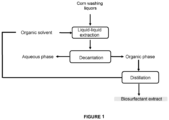
- Figure 1 and Figure 2 show the scheme for the production of biosurfactants from corn washing liquors following the technology set out in patents ES2435324B2 and WO2014044876A1 ( figure 1 ) and in patent ES2795574A1 ( figure 2 ).
- the biosurfactant extract obtained from corn washing liquors using ethyl acetate has been evaluated for use in the food industry, demonstrating that it favors the growth of probiotic microorganisms ( López-Prieto et al. 2019, Journal of the Science of Food and Agriculture ); that it has antimicrobial power ( López-Prieto et al. 2019, Foods ; López-Prieto et al. 2020, Foods ) and that favors the extraction of colored compounds during the winemaking processes in the maceration stage of red wine ( Scalzini et al. 2020, Foods ).
- Aneurinibacillus aneurinilyticus strain ( López-Prieto et al. 2019, CyTA - Journal of Food ; López-Prieto et al. 2021, Microbiological Research ).
- This strain is a bacterium capable of forming spores that resist the conditions of the maceration process that takes place during the fractionation of corn by the wet route, capable of producing 2 types of different extracts with different properties, an extracellular biosurfactant extract and a cell-bound biosurfactant extract adhered to its plasma membrane.
- This two-step ultrafiltration method consisted of a first step where membranes of a high molecular weight cut-off are used to isolate the micelles contained in the concentrate, which is subsequently diluted with alcohol (to break the micelles) and the obtained solution is subjected to ultrafiltration again using a low molecular weight cut-off membrane to separate the biosurfactant from any component of the medium occluded by the micelle structure.
- the retentate contained proteins and other macromolecules, while the permeate contained a pure biosurfactant solution.
- Isa et al. (2007) proposed the same two-stage ultrafiltration process for the surfactin purification process.
- Coutte et al. (2013) proposed recovering the surfactin from the culture media after applying the microfiltration and ultrafiltration processes, obtaining a biosurfactant extract with a purity of up to 95%.
- Single-step ultrafiltration must be carried out at concentrations below the critical micelle concentration of the biosurfactants otherwise the micelles (and therefore most of the biosurfactant) would be removed due to their larger size.
- micelle formation has been used as an advantage in a slightly more complex two-step ultrafiltration method (Isa et al. 2007; Baker & Chen, 2010).
- Ciandrini et al. (2016) have obtained a biosurfactant extract after fermenting the commercial media Man Rogosa and Shape (MRS) agar (Oxoid, UK) at 37°C for 24-48 h under microaerobic conditions (5% O2; 10% CO 2; 85% N 2), using different lactic bacteria.
- MRS Man Rogosa and Shape
- the medium, once fermented, was centrifuged at 17000 rpm for 15 min at 4°C and filtered with a 0.22 ⁇ m Millipore filter to finally dialyze it with a 1 and 6 kDa Spectra/Por MR membrane.
- Biosurfactants obtained from lactic bacteria are classified as glycolipids or glycolipopeptides ( Sharma et al. 2016, Springer Briefs in Microbiology ) with a different nature to the biosurfactants contained in corn washing liquors consisting mainly of lipopeptides and phospholipids ( Rodriguez-Lopez et al. 2020, Separation and Purification Technology ).
- Chandran and Das (2012) have separated biosurfactants produced by Candidad tropicalis from a fermented medium under controlled conditions by solid-liquid extraction using a silica gel column followed by dialysis.
- biosurfactants present in this extract have a different nature from the biosurfactants contained in corn wash liquors.
- dialysis processes have been routinely applied, in the recovery of biosurfactants, to the aqueous extract obtained after subjecting the microbial biomass, mainly lactic bacteria, to an extraction process with phosphate buffer ( Gudi ⁇ a et al., 2010, Colloids and Surfaces B: Biointerfaces ; Gudi ⁇ a et al., 2015, RSC Advances ; Ferreira et al. 2017, Colloids and Surfaces B: Biointerfaces ; Vecino et al. 2017, Journal of Industrial and Engineering Chemistry ; Satpute et al. 2019, BMC Microbiology ).
- the publication that is closest to the proposed technology is the patent ( ES2795574A1 ), but it should be noted that the dialysis process, in this case, is applied to a totally different matrix.
- the dialysis process is applied to the aqueous phase of the corn washing liquors directly after removing the solids, while in the patent ( ES2795574A1 ), already published, the dialysis process is applied to a buffer solution containing the biosurfactants extracted from the solid fraction present in the corn washing liquors.
- a process is proposed for obtaining biosurfactants from corn washing liquors, generated during the wet fractionation of corn, using only physical separation processes.
- the biosurfactant extract obtained has properties similar to the extract obtained from the solid fraction of corn washing liquors, by solid-liquid extraction, based on mass spectrophotometry analyses it can be corroborated that its composition is different.
- the corn washing liquors were taken and subjected to a pretreatment consisting of several centrifugation steps (50-5000 rpm, 4-40°C) and/or filtration, using ream paper (grammage up to 60 g/m 2 ) and filters of size up to 0.45 ⁇ m. Subsequently, the aqueous fraction of the corn washing liquors was adjusted to pH values between 2 and 6 and subjected to several dialysis processes at different temperatures (4-25°C) and with different membranes, between 8 kDa and 1 kDa, in order to optimize the operating conditions and select that extract with the best biosurfactant properties.
- FIG. 3 shows, by way of example, the scheme of one of the processes proposed to obtain a biosurfactant extract from the corn washing liquors by applying physical separation processes.
- This scheme comprises a process involving 3 separation steps: centrifugation, filtration and dialysis.
- the extract obtained from the corn washing liquors by means of 2 processes (centrifugation or filtration, followed by dialysis) has properties similar to that obtained by the sequential application of centrifugation, filtration and dialysis processes, the latter sequence of processes is selected as optimal in order to obtain a biosurfactant extract free of microbial biomass and as sanitized as possible.
- the aqueous fraction rich in biosurfactants is freeze-dried for storage.
- the characterization analyses of the biosurfactant extract were performed once it was lyophilized.
- Extractions were made to corn washing liquors supplied by FeedStimulants (Utrecht, Netherlands).
- the extract object of this invention was obtained, from corn washing liquors, after sequentially applying different physical separation processes comprising centrifugation, filtration and dialysis.
- the selected process does not include any pH adjustment, although separation processes at different pHs were also tested, as shown in Table 1.
- the sequential application of centrifugation and dialysis is also proposed, but in this way a more impure biosurfactant extract is obtained.
- a biosurfactant extract capable of reducing the surface tension of the medium by more than 16 units (considering the surface tension of water of 72 mN/m as a control) and with a critical micelle concentration of less than 0.13 g/L is obtained.
- the molecular weights of the compounds that make up these extracts the presence of biomarkers between 210 and 1422 m/z as well as high molecular weight proteins detected by electrophoresis is observed.
- the elemental analysis of the biosurfactant extracts obtained they have a carbon content of between 34-36% and a nitrogen content of 8-9%, observing a nitrogen enrichment.
- the biosurfactant extracts obtained in the present invention reduce the surface tension of water to a lesser extent than the biosurfactant extract obtained by liquid-liquid extraction processes with organic solvents (surface tension reductions between 28-33 units) with a lower CMC (0.12 to 0.31 g/L)
- CMC surface tension reductions between 28-33 units
- the biosurfactant extract of the present invention has an ability to reduce the surface tension of water similar to the biosurfactant extract obtained from the solids contained in the corn washing liquors, by means of solid-liquid extraction with buffer solutions (between 16-20 units), but the latter has a higher CMC (0.42 g/L) (patent ES2795574A1 ).
- the biosurfactants are obtained from the solid fraction contained in the corn washing liquors, which is a differentiating element with respect to the present invention, where the biosurfactants are obtained from the aqueous fraction of the corn washing liquors.
- the process proposed to obtain the biosurfactants from the corn washing liquors according to patent ES2795574A1 comprises a solid-liquid extraction process with different buffers, resulting in a buffer solution rich in biosurfactants that were adhered to the microbial biomass of the corn washing liquors, which does not overlap with the process proposed in the present invention based solely on physical separation processes to separate and/or concentrate the biosurfactants produced extracellularly by the microorganisms that grow naturally in the corn washing liquors.
Landscapes
- Chemical & Material Sciences (AREA)
- Engineering & Computer Science (AREA)
- Organic Chemistry (AREA)
- Materials Engineering (AREA)
- Chemical Kinetics & Catalysis (AREA)
- Health & Medical Sciences (AREA)
- Wood Science & Technology (AREA)
- Oil, Petroleum & Natural Gas (AREA)
- Life Sciences & Earth Sciences (AREA)
- Urology & Nephrology (AREA)
- Water Supply & Treatment (AREA)
- Coloring Foods And Improving Nutritive Qualities (AREA)
- Compounds Of Unknown Constitution (AREA)
- Extraction Or Liquid Replacement (AREA)
- Medicines Containing Plant Substances (AREA)
- Preparation Of Compounds By Using Micro-Organisms (AREA)
Abstract
Description
- Obtaining a biosurfactant extract from corn washing liquors through physical separation processes
- The present invention pertains to obtaining detergents of natural origin in which clean technologies are also applied to obtain them.
- The main objective of this invention is to obtain a biosurfactant extract from the liquid fraction of corn washing liquors by means of physical separation processes, without the use of organic solvents or buffer solutions.
- It has been shown that from corn washing liquors biosurfactant extracts can be obtained with numerous applications in different industrial fields. The extracts obtained and evaluated until 2020 were obtained by liquid-liquid extraction using different organic solvents. The extraction and uses as well as the composition of these extracts are protected under the following patents:
ES2424399B2 ES2435324B2 WO2014044876A1 ,ES2527366B1 - On the other hand, a new patent (
ES2795574A1 - This extract has a different composition to the extract obtained from corn washing liquors using organic solvents, possibly because it contains biosurfactant compounds extracted from the plasma membrane of the microorganisms that make up the solid fraction of corn washing liquors.
Figure 1 andFigure 2 show the scheme for the production of biosurfactants from corn washing liquors following the technology set out in patentsES2435324B2 WO2014044876A1 (figure 1 ) and in patentES2795574A1 figure 2 ). - If a chronological study is carried out, the first publication on the surfactant capacity of corn washing liquors was in the Journal of Agricultural and Food Chemistry in 2014 (Vecino et al. 2014) followed by several publications where a biosurfactant extract obtained by liquid-liquid extraction with chloroform was obtained (Vecino et al. 2015, Bioprocess and Biosystems Engineering) applied in the formulation of bioadsorbents (Pérez Ameneiro et al. 2015, Carbohydrate Polymers); to the decontamination of sludge and soils (Vecino et al. 2015, Jounal of Agricultural and Food Chemistry; Bustos et al. 2018, Agrociencia); to nanoparticle formulations (Gómez-Graña et al. 2017, Nanomaterials); to cosmetic and personal care formulations (Rincón-Fontán et al. 2016, RSC Advances; Rincón-Fontán et al. 2017, RSC Advances; Rincón-Fontán et al. 2018, Powder Technology; Rincón-Fontán et al. 2019, Journal of Colloid and Interface Science; Rincón-Fontán et al. 2020, ACS Omega; Rincón-Fontán et al. 2020, Sustainable Chemistry and Pharmacy); as well as pharmaceutical formulations (Rodriguez-Lopez et al. 2019, Journal of Pharmaceutical Sciences; Rodriguez-Lopez et al. 2020, Journal of Dermatological Treatment).
- On the other hand, the biosurfactant extract obtained from corn washing liquors using ethyl acetate has been evaluated for use in the food industry, demonstrating that it favors the growth of probiotic microorganisms (López-Prieto et al. 2019, Journal of the Science of Food and Agriculture); that it has antimicrobial power (López-Prieto et al. 2019, Foods; López-Prieto et al. 2020, Foods) and that favors the extraction of colored compounds during the winemaking processes in the maceration stage of red wine (Scalzini et al. 2020, Foods).
- It has also been shown that one of the microorganisms responsible for the appearance of these biosurfactants in corn washing liquors is the Aneurinibacillus aneurinilyticus strain (López-Prieto et al. 2019, CyTA - Journal of Food; López-Prieto et al. 2021, Microbiological Research). This strain is a bacterium capable of forming spores that resist the conditions of the maceration process that takes place during the fractionation of corn by the wet route, capable of producing 2 types of different extracts with different properties, an extracellular biosurfactant extract and a cell-bound biosurfactant extract adhered to its plasma membrane.
- Regarding the existing work on the separation and/or purification of surfactants and/or biosurfactants using membranes, please note that the existing bibliographic data refer to chemically synthesized surfactants or biosurfactants produced in controlled fermentations and of a different nature from those obtained from corn washing liquors. Kertész et al. (2008) used a nanofiltration membrane for the separation of an anionic surfactant CL80 (in concentrations between 0.5 to 5 g/L), with yields of 94%. Kaya et al. (2006) also used ultrafiltration membranes for the separation of chemically synthesized nonionic surfactants.
- Fernández et al. (2005) published that it is possible to remove 70% of sodium dodecyl sulfate with the Membralox ceramic ultrafiltration membrane. Klimonda and Kowalska (2019) studied the removal of cationic surfactants (cetrimonium bromide, benzalkonium chloride and Tequat LC90i) by using polymeric membranes in ultrafiltration and nanofiltration processes (in concentrations between 50 and 3000 mg/L). These authors observed that the efficiency of the process is affected by the concentration of surfactant, the type of membrane polymer and the size of its pores. The separation of cetrimonium bromide exceeded 90% with both types of processes, with 70% being the maximum retention for benzalkonium chloride with nanofiltration membranes, while the separation of Tequat LC90i was very high and reached up to 100% with the use of ultrafiltration membranes.
- Regarding studies with membranes applied to biosurfactants, Mulligan and Gibbs (1990) were the first to use ultrafiltration membranes for the separation of biosurfactants, produced in controlled fermentations, including surfactin and rhamnolipids. Subsequently, Witek-Krowiak et al. (2011) proposed a two-step ultrafiltration process to separate and purify rhamnolipids from culture media. This two-step ultrafiltration method consisted of a first step where membranes of a high molecular weight cut-off are used to isolate the micelles contained in the concentrate, which is subsequently diluted with alcohol (to break the micelles) and the obtained solution is subjected to ultrafiltration again using a low molecular weight cut-off membrane to separate the biosurfactant from any component of the medium occluded by the micelle structure. As a result, the retentate contained proteins and other macromolecules, while the permeate contained a pure biosurfactant solution.
- In addition, Isa et al. (2007) proposed the same two-stage ultrafiltration process for the surfactin purification process. In addition, Coutte et al. (2013) proposed recovering the surfactin from the culture media after applying the microfiltration and ultrafiltration processes, obtaining a biosurfactant extract with a purity of up to 95%. Single-step ultrafiltration must be carried out at concentrations below the critical micelle concentration of the biosurfactants otherwise the micelles (and therefore most of the biosurfactant) would be removed due to their larger size. However, micelle formation has been used as an advantage in a slightly more complex two-step ultrafiltration method (Isa et al. 2007; Baker & Chen, 2010).
- In relation to the use of dialysis processes for the separation of biosurfactants from fermented aqueous media, Ciandrini et al. (2016) have obtained a biosurfactant extract after fermenting the commercial media Man Rogosa and Shape (MRS) agar (Oxoid, UK) at 37°C for 24-48 h under microaerobic conditions (5% O2; 10% CO 2; 85% N 2), using different lactic bacteria. In these studies, the medium, once fermented, was centrifuged at 17000 rpm for 15 min at 4°C and filtered with a 0.22 µm Millipore filter to finally dialyze it with a 1 and 6 kDa Spectra/PorMR membrane. Biosurfactants obtained from lactic bacteria are classified as glycolipids or glycolipopeptides (Sharma et al. 2016, Springer Briefs in Microbiology) with a different nature to the biosurfactants contained in corn washing liquors consisting mainly of lipopeptides and phospholipids (Rodriguez-Lopez et al. 2020, Separation and Purification Technology). On the other hand, Chandran and Das (2012) have separated biosurfactants produced by Candidad tropicalis from a fermented medium under controlled conditions by solid-liquid extraction using a silica gel column followed by dialysis.
- The biosurfactants present in this extract have a different nature from the biosurfactants contained in corn wash liquors. Until now, dialysis processes have been routinely applied, in the recovery of biosurfactants, to the aqueous extract obtained after subjecting the microbial biomass, mainly lactic bacteria, to an extraction process with phosphate buffer (Gudiña et al., 2010, Colloids and Surfaces B: Biointerfaces; Gudiña et al., 2015, RSC Advances; Ferreira et al. 2017, Colloids and Surfaces B: Biointerfaces; Vecino et al. 2017, Journal of Industrial and Engineering Chemistry; Satpute et al. 2019, BMC Microbiology).
- It should be noted that these processes are totally different from the technology contained in the present invention, since in the present invention the dialysis process is applied directly to a fermented medium and not to the aqueous extract obtained after washing and subjecting the biomass to an extraction process with phosphate buffer. On the other hand, it should be noted that all the processes described above and that contemplate the use of membranes have been applied to fermented media under controlled conditions with a specific microorganism and that in no case was the use of a dialysis process to recover and/or separate biosurfactants from a secondary industrial stream such as corn washing liquors contemplated.
- In this sense, the publication that is closest to the proposed technology is the patent (
ES2795574A1 ES2795574A1 - A process is proposed for obtaining biosurfactants from corn washing liquors, generated during the wet fractionation of corn, using only physical separation processes. The biosurfactant extract obtained has properties similar to the extract obtained from the solid fraction of corn washing liquors, by solid-liquid extraction, based on mass spectrophotometry analyses it can be corroborated that its composition is different.
- The corn washing liquors were taken and subjected to a pretreatment consisting of several centrifugation steps (50-5000 rpm, 4-40°C) and/or filtration, using ream paper (grammage up to 60 g/m2) and filters of size up to 0.45 µm. Subsequently, the aqueous fraction of the corn washing liquors was adjusted to pH values between 2 and 6 and subjected to several dialysis processes at different temperatures (4-25°C) and with different membranes, between 8 kDa and 1 kDa, in order to optimize the operating conditions and select that extract with the best biosurfactant properties.
-
Figure 3 shows, by way of example, the scheme of one of the processes proposed to obtain a biosurfactant extract from the corn washing liquors by applying physical separation processes. This scheme comprises a process involving 3 separation steps: centrifugation, filtration and dialysis. Although the extract obtained from the corn washing liquors, by means of 2 processes (centrifugation or filtration, followed by dialysis) has properties similar to that obtained by the sequential application of centrifugation, filtration and dialysis processes, the latter sequence of processes is selected as optimal in order to obtain a biosurfactant extract free of microbial biomass and as sanitized as possible. - After completing the dialysis process, the aqueous fraction rich in biosurfactants is freeze-dried for storage. The characterization analyses of the biosurfactant extract were performed once it was lyophilized.
- To complement the description made and in order to help a better understanding of the characteristics of the invention, a set of drawings is attached as an integral part of said description, in which, with an illustrative and non-limiting nature, the following has been represented:
-
Figure 1 . Scheme of the process proposed for obtaining biosurfactants from corn washing liquors using organic solvents. The extraction process is applied to the two fractions that make up the liquid and solid corn wash liquors. With this methodology, a biosurfactant extract with an oily appearance is obtained. -
Figure 2 . Scheme proposed for obtaining biosurfactants from the solid fraction of corn washing liquors. The process includes centrifugation of the corn wash liquors, washing of the solid fraction and solid-liquid extraction of the washed solid fraction with different buffer solutions. In this way, the biosurfactant compounds that are adhered to the plasma membrane of the microbial biomass that make up the corn washing liquors are obtained. The biosurfactant extract obtained after freeze-drying has a white powder appearance and has foaming capacity. -
Figure 3 . Scheme proposed in this invention for obtaining biosurfactants from corn washing liquors by means of physical separation processes. The corn washing liquors are centrifuged and filtered to remove the solid fraction that makes up the corn washing liquors, including the microbial biomass, and subsequently the aqueous fraction is subjected to a dialysis process in order to obtain an extract concentrated in biosurfactants, produced extracellularly by the microorganisms that grow in the corn washing liquors naturally. After freeze-drying this extract, it appears in the form of a yellow-white powder, with a limited ability to form a foam, but with good surfactant properties. - Extractions were made to corn washing liquors supplied by FeedStimulants (Utrecht, Netherlands). The extract object of this invention was obtained, from corn washing liquors, after sequentially applying different physical separation processes comprising centrifugation, filtration and dialysis. The selected process does not include any pH adjustment, although separation processes at different pHs were also tested, as shown in Table 1. Alternatively, the sequential application of centrifugation and dialysis is also proposed, but in this way a more impure biosurfactant extract is obtained. In addition, among the alternative processes for obtaining this biosurfactant extract, a pH adjustment pretreatment between 2-6 is contemplated, although the surfactant properties of the obtained biosurfactant are not greatly improved with respect to the preferred process selected where the pH of the corn washing liquors was not altered (Table 1).
Table 1. Steps used during the process of obtaining the biosurfactant extract through physical separation processes. No. of separation Centrifugation Filtration Dialysis PH adjustment 3 Yes YES Yes No 3 Yes Yes Yes acidification 3 Yes Yes Yes basification 2 Yes No Yes No 2 Yes No Yes acidification 2 Yes No Yes basification 2 No Yes Yes No 2 No Yes Yes acidification 2 No Yes Yes basification - After freeze-drying the aqueous fraction obtained from the corn washing liquors subjected to the physical separation processes included in Table 3, a biosurfactant extract capable of reducing the surface tension of the medium by more than 16 units (considering the surface tension of water of 72 mN/m as a control) and with a critical micelle concentration of less than 0.13 g/L is obtained. Regarding the molecular weights of the compounds that make up these extracts, the presence of biomarkers between 210 and 1422 m/z as well as high molecular weight proteins detected by electrophoresis is observed. As for the elemental analysis of the biosurfactant extracts obtained, they have a carbon content of between 34-36% and a nitrogen content of 8-9%, observing a nitrogen enrichment.
- In comparison with the biosurfactant extracts obtained from the corn washing liquors by other methods reported in the literature, the biosurfactant extracts obtained in the present invention reduce the surface tension of water to a lesser extent than the biosurfactant extract obtained by liquid-liquid extraction processes with organic solvents (surface tension reductions between 28-33 units) with a lower CMC (0.12 to 0.31 g/L) (Rincón-Fontán et al. 2016, CSR Advances; Lopez-Rodriguez et al. 2018, Tenside Surfactants and Detergents;
Rincón-Fontán et al. 2018, Powder Technology; Lopez-Rodriguez et al. 2019, Journal of Pharmaceutical Sciences; Rincón-Fontán et al. 2020, ACS Omega; Lopez-Rodriguez et al. 2020, Journal of Dermatological Treatment; López-Prieto et al. 2019, Foods; López-Prieto et al. 2020, Foods). - On the other hand, the biosurfactant extract of the present invention has an ability to reduce the surface tension of water similar to the biosurfactant extract obtained from the solids contained in the corn washing liquors, by means of solid-liquid extraction with buffer solutions (between 16-20 units), but the latter has a higher CMC (0.42 g/L) (patent
ES2795574A1 - Of the 2 processes contemplated above for obtaining biosurfactants from corn washing liquors, it should be noted, in chronological order, that in the first of them (
Figure 1 ) said biosurfactants are obtained from the solid and liquid joint fraction of the corn washing liquors by applying a separation process by liquid-liquid extraction with organic solvents that does not overlap with the process proposed in the present invention, where biosurfactants are concentrated from the liquid fraction of said liquors (free of solids), by dialysis of the aqueous fraction, thus obtaining a biosurfactant extract with properties very different from that obtained by applying the liquid-liquid extraction processes included in the patents (ES2435324B2 WO2014044876A1 ). - Regarding the second process contemplated (
Figure 2 ), it should be noted that the biosurfactants, referred to the patent (ES2795574A1 ES2795574A1
Claims (5)
- A process for the extraction of biosurfactants from corn washing liquors comprising the steps of separating the liquid fraction from the corn washing liquors by means of physical separation processes comprising centrifugation and/or filtration followed by dialysis of said liquid fraction.
- The process for extracting biosurfactants from corn wash liquors according to claim 1, further comprising adjusting the pH to a value between 2-6 prior to dialysis.
- Use or application of the biosurfactants obtained from the liquid fraction of the corn washing liquors, after subjecting them to the separation processes, according to claim 1 or 2, as a surfactant and/or emulsifying agent in the food, cosmetic, pharmaceutical, agrochemical or environmental industry.
- Use or application of the biosurfactants obtained from the liquid fraction of the corn washing liquors, after subjecting them to the separation processes, according to claim 1 or 2, as a surfactant and/or emulsifying agent in the cleaning of surfaces.
- Use or application of the biosurfactants obtained from the liquid fraction of the corn washing liquors, after subjecting them to the separation processes, according to claim 1 or 2, to improve the permeability of those formulas, containing active ingredients, through the cell membranes, intended for cosmetic, pharmaceutical and agrochemical uses.
Applications Claiming Priority (2)
| Application Number | Priority Date | Filing Date | Title |
|---|---|---|---|
| ES202100059A ES2931088B2 (en) | 2021-06-16 | 2021-06-16 | Obtaining a biosurfactant extract from corn washing liquors through physical separation processes |
| PCT/ES2022/070373 WO2022263696A1 (en) | 2021-06-16 | 2022-06-14 | Production of a biosurfactant extract from corn steep liquor |
Publications (2)
| Publication Number | Publication Date |
|---|---|
| EP4357006A1 true EP4357006A1 (en) | 2024-04-24 |
| EP4357006A4 EP4357006A4 (en) | 2025-05-21 |
Family
ID=84526904
Family Applications (1)
| Application Number | Title | Priority Date | Filing Date |
|---|---|---|---|
| EP22824356.4A Pending EP4357006A4 (en) | 2021-06-16 | 2022-06-14 | PRODUCTION OF A BIOSURFACE EXTRACT FROM CORN STEW WATER |
Country Status (3)
| Country | Link |
|---|---|
| EP (1) | EP4357006A4 (en) |
| ES (1) | ES2931088B2 (en) |
| WO (1) | WO2022263696A1 (en) |
Families Citing this family (1)
| Publication number | Priority date | Publication date | Assignee | Title |
|---|---|---|---|---|
| ES2996007B2 (en) * | 2023-08-04 | 2025-06-11 | Univ Vigo | Protocol for obtaining a biosurfactant extract from corn wash liquors, by liquid-solid extraction, using solid polymeric matrices |
Family Cites Families (4)
| Publication number | Priority date | Publication date | Assignee | Title |
|---|---|---|---|---|
| ES2424399B2 (en) * | 2012-03-27 | 2014-01-20 | Universidade De Vigo | Application of corn washing liquors ("corn steep liquid") as a surfactant |
| ES2435324B2 (en) | 2012-06-18 | 2014-04-23 | Universidade De Vigo | Procedure for separating the surfactants present from corn washing liquors and uses |
| ES2527366B1 (en) | 2013-07-22 | 2015-11-02 | Universidade De Vigo | Detergent composition comprising a biosurfactant of plant origin |
| ES2795574B2 (en) * | 2019-05-21 | 2021-06-03 | Univ Vigo | Process for the aqueous extraction of biosurfactants from corn washing liquors or "corn steep liquor" |
-
2021
- 2021-06-16 ES ES202100059A patent/ES2931088B2/en active Active
-
2022
- 2022-06-14 EP EP22824356.4A patent/EP4357006A4/en active Pending
- 2022-06-14 WO PCT/ES2022/070373 patent/WO2022263696A1/en not_active Ceased
Also Published As
| Publication number | Publication date |
|---|---|
| WO2022263696A1 (en) | 2022-12-22 |
| ES2931088B2 (en) | 2024-03-22 |
| EP4357006A4 (en) | 2025-05-21 |
| ES2931088A1 (en) | 2022-12-23 |
Similar Documents
| Publication | Publication Date | Title |
|---|---|---|
| Najmi et al. | In situ downstream strategies for cost‐effective bio/surfactant recovery | |
| Chen et al. | Separation of surfactin from fermentation broths by acid precipitation and two-stage dead-end ultrafiltration processes | |
| GB2415136A (en) | Obtaining olive polyphenol concentrate from a by-product of olive oil extraction using membrane separation techniques | |
| Taleghani et al. | Thin film composite nanofiltration membrane for lactic acid production in membrane bioreactor | |
| EP3974044B1 (en) | Process for the aqueous extraction of biosurfactants from corn steep liquor | |
| KR20160134657A (en) | Method for thermal permeabilization of a microalgae biomass | |
| WO2016031885A1 (en) | Lactase solution and milk using same | |
| ES2931088B2 (en) | Obtaining a biosurfactant extract from corn washing liquors through physical separation processes | |
| CN106008211A (en) | Method for extraction of cynarin from cynara scolymus by membrane integration technology | |
| MX2011004080A (en) | Hydrophobin solution containing antifoam. | |
| KR102376108B1 (en) | Purification method of lactonic sophorolipid | |
| EP0201017A2 (en) | Process to solubilize enzymes and an enzyme liquid product produced thereby | |
| AU2020207576B2 (en) | Process for extracting phycocyanins | |
| CN108586727B (en) | A method of utilizing aqueous two-phase separation and Extraction epsilon-polylysine | |
| CN102835652B (en) | Method for extracting cordyceps hirsutella sinensis mycelia on basis of membrane technology | |
| US20240376141A1 (en) | Method for Purifying Sophorolipid | |
| Templin et al. | Membrane separation of solids from corn processing streams | |
| Asenjo | Cell disruption and removal of insolubles | |
| CN103060385B (en) | Preparation method for producing promoter by ceramide and/or glucosylceramide | |
| KR20230022172A (en) | Method for separating biomass from a solution comprising biomass and at least one aromatic compound | |
| CN112137071A (en) | Method for reducing salt content in soy sauce based on membrane filtration technology | |
| Bazinet et al. | Recent patented applications of ion-exchange membranes in the agrifood sector | |
| EP3549958A1 (en) | Process for the purification of complex biocompositions | |
| Díaz-Montes et al. | Separation of bioactive compounds from fermentation broths using membranes | |
| CN103060384B (en) | Making method of ceramide and/or glucosylceramide generation accelerator |
Legal Events
| Date | Code | Title | Description |
|---|---|---|---|
| STAA | Information on the status of an ep patent application or granted ep patent |
Free format text: STATUS: THE INTERNATIONAL PUBLICATION HAS BEEN MADE |
|
| PUAI | Public reference made under article 153(3) epc to a published international application that has entered the european phase |
Free format text: ORIGINAL CODE: 0009012 |
|
| STAA | Information on the status of an ep patent application or granted ep patent |
Free format text: STATUS: REQUEST FOR EXAMINATION WAS MADE |
|
| 17P | Request for examination filed |
Effective date: 20231115 |
|
| AK | Designated contracting states |
Kind code of ref document: A1 Designated state(s): AL AT BE BG CH CY CZ DE DK EE ES FI FR GB GR HR HU IE IS IT LI LT LU LV MC MK MT NL NO PL PT RO RS SE SI SK SM TR |
|
| DAV | Request for validation of the european patent (deleted) | ||
| DAX | Request for extension of the european patent (deleted) | ||
| A4 | Supplementary search report drawn up and despatched |
Effective date: 20250425 |
|
| RIC1 | Information provided on ipc code assigned before grant |
Ipc: C09K 23/00 20220101ALI20250417BHEP Ipc: C11D 7/44 20060101ALI20250417BHEP Ipc: B01D 61/24 20060101AFI20250417BHEP |
|
| GRAP | Despatch of communication of intention to grant a patent |
Free format text: ORIGINAL CODE: EPIDOSNIGR1 |
|
| STAA | Information on the status of an ep patent application or granted ep patent |
Free format text: STATUS: GRANT OF PATENT IS INTENDED |
|
| INTG | Intention to grant announced |
Effective date: 20260409 |